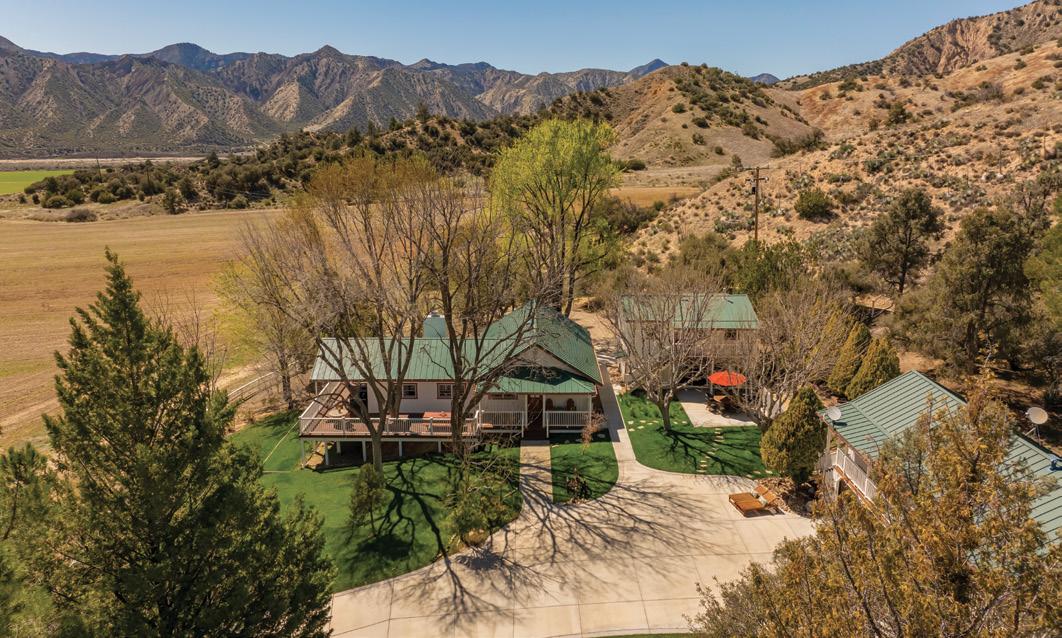
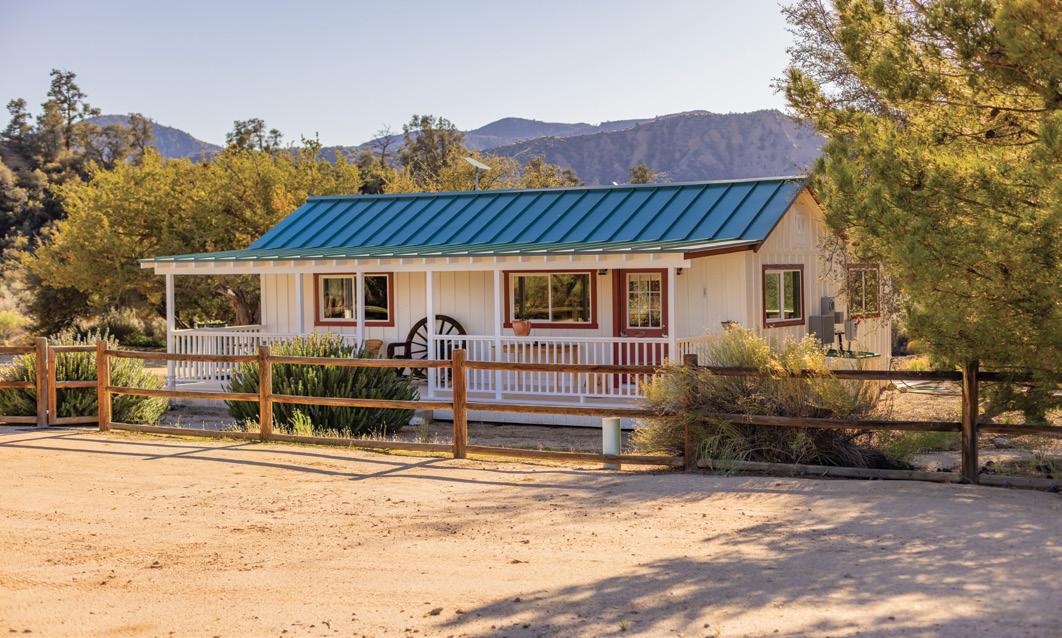
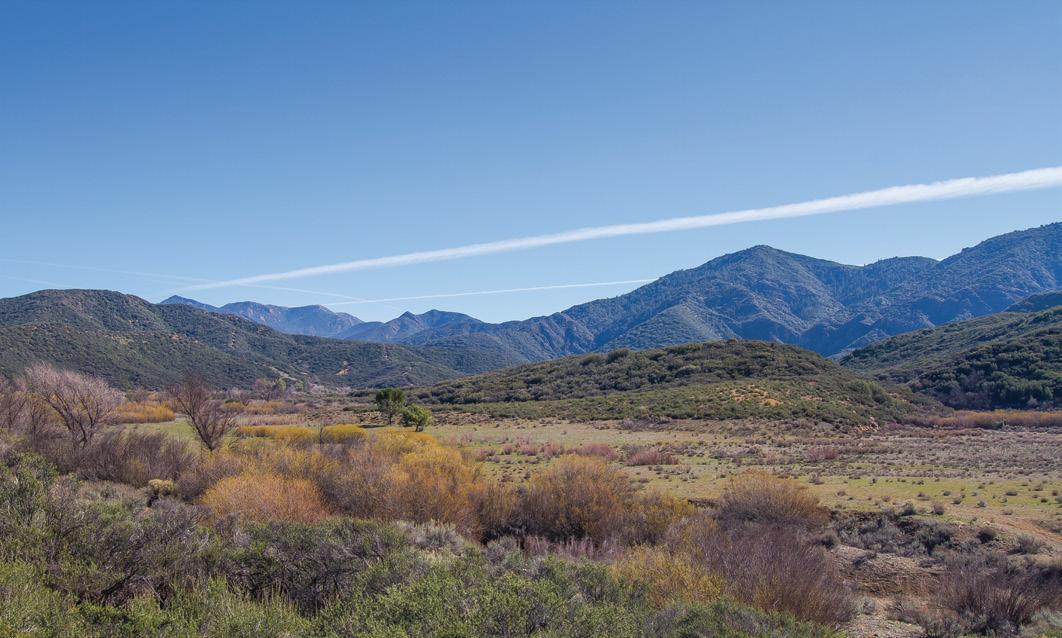
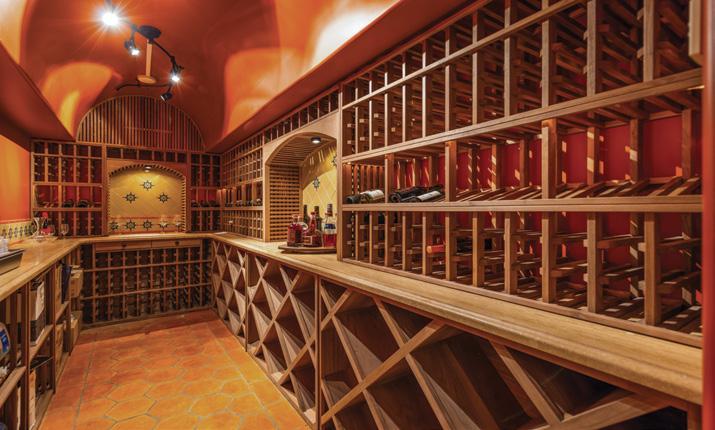
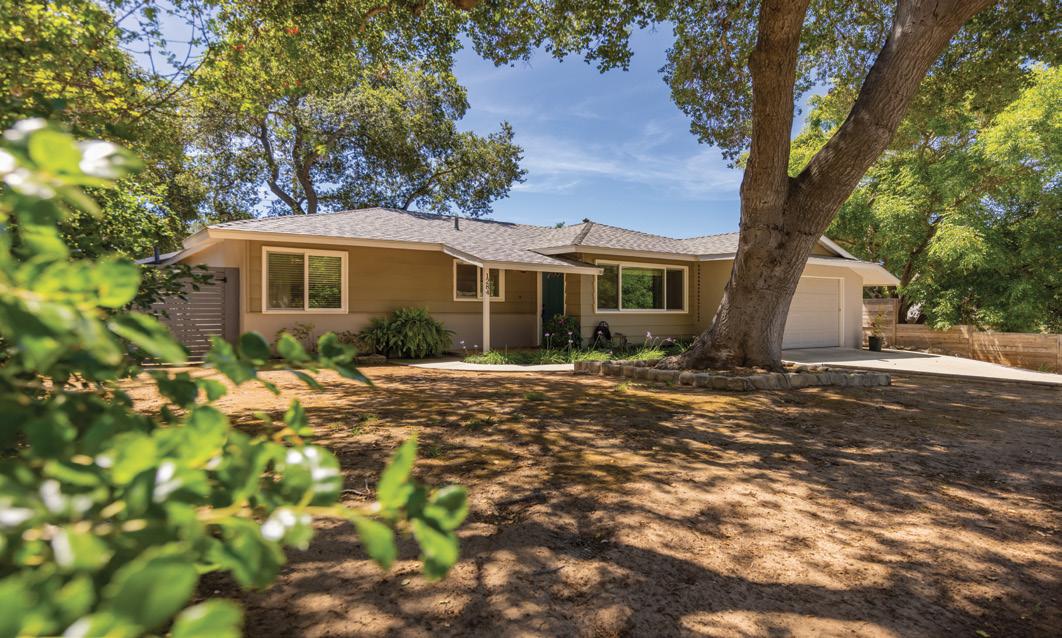
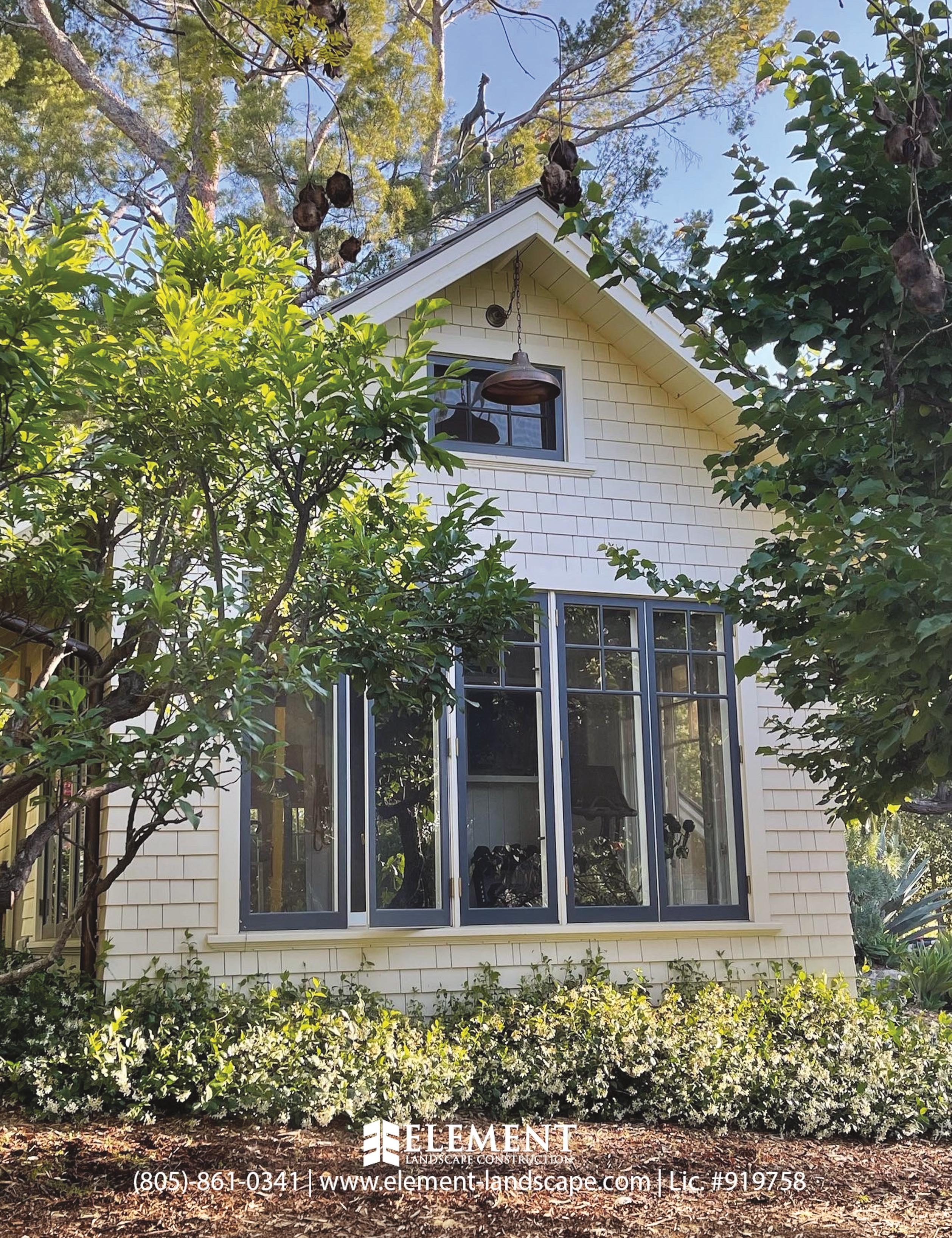
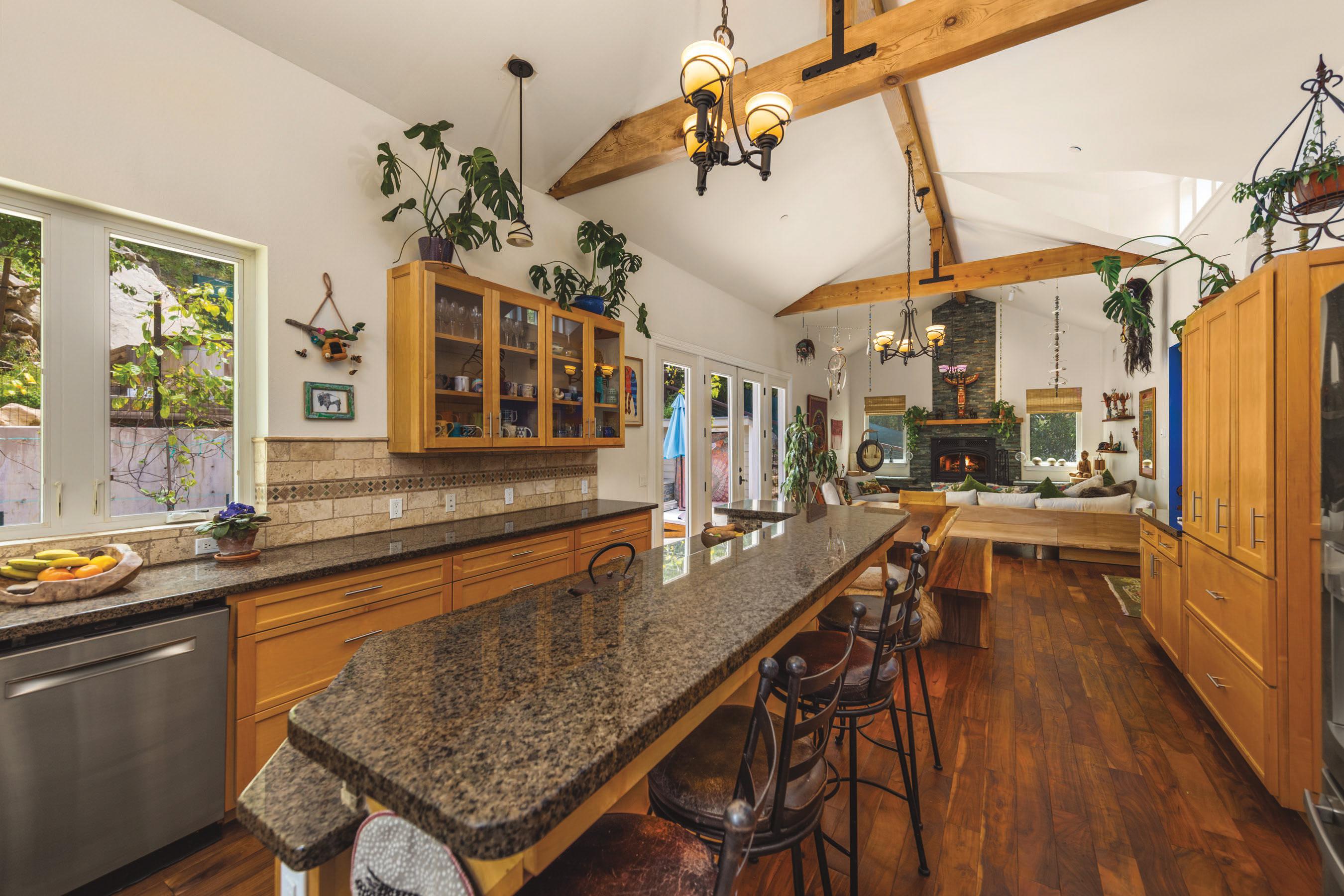
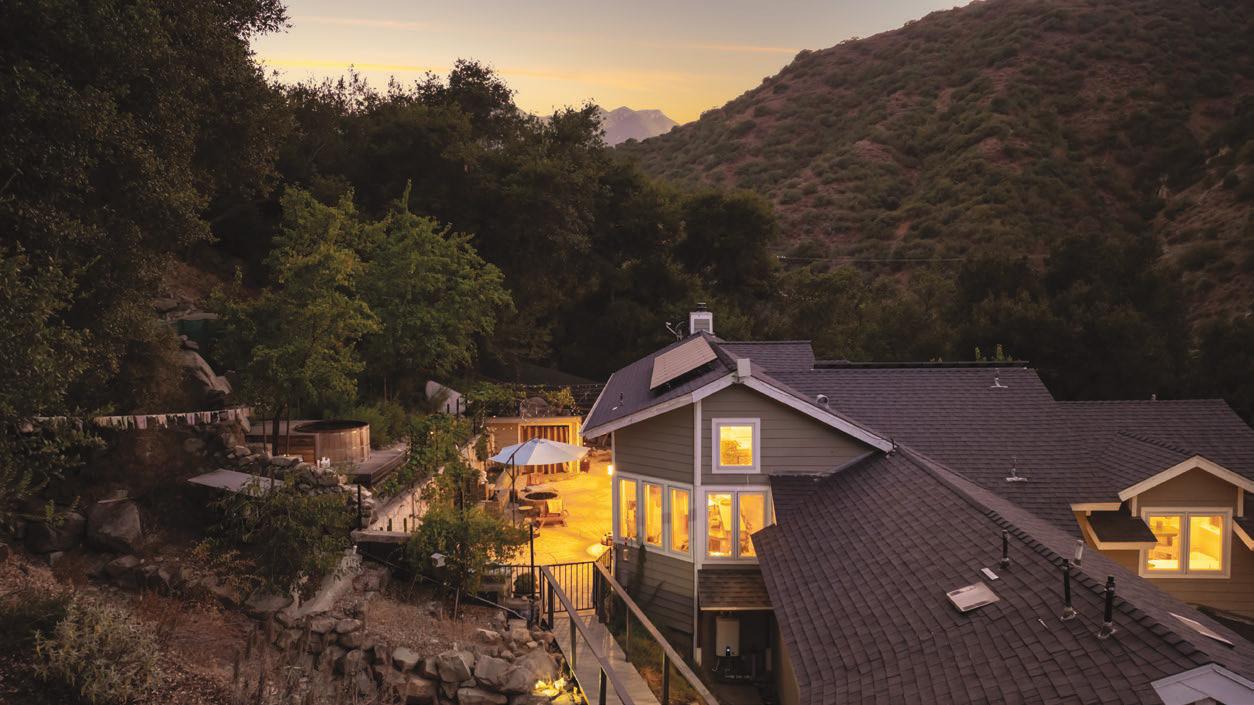
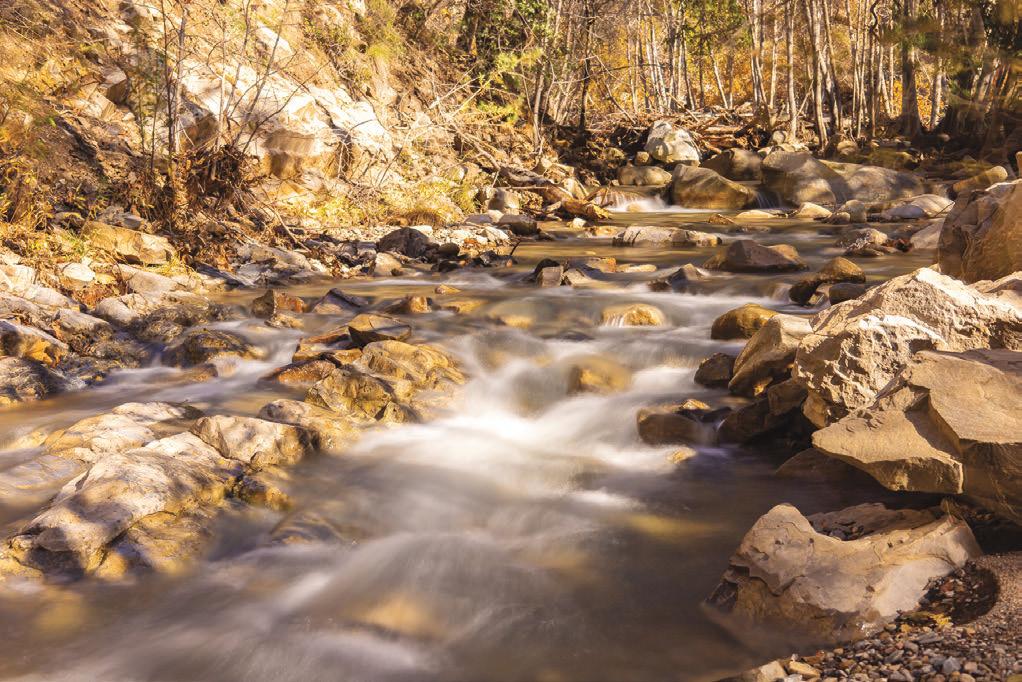
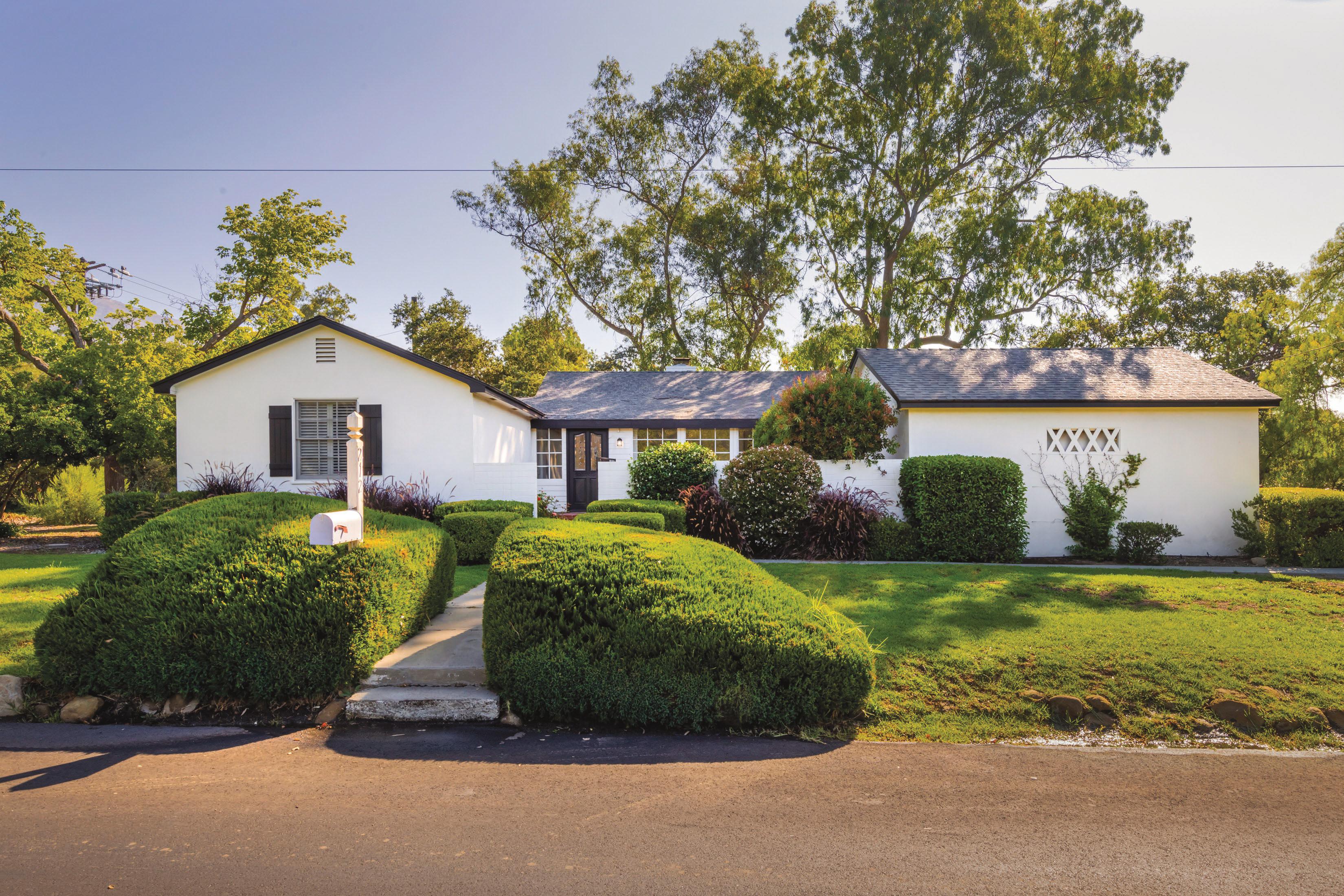
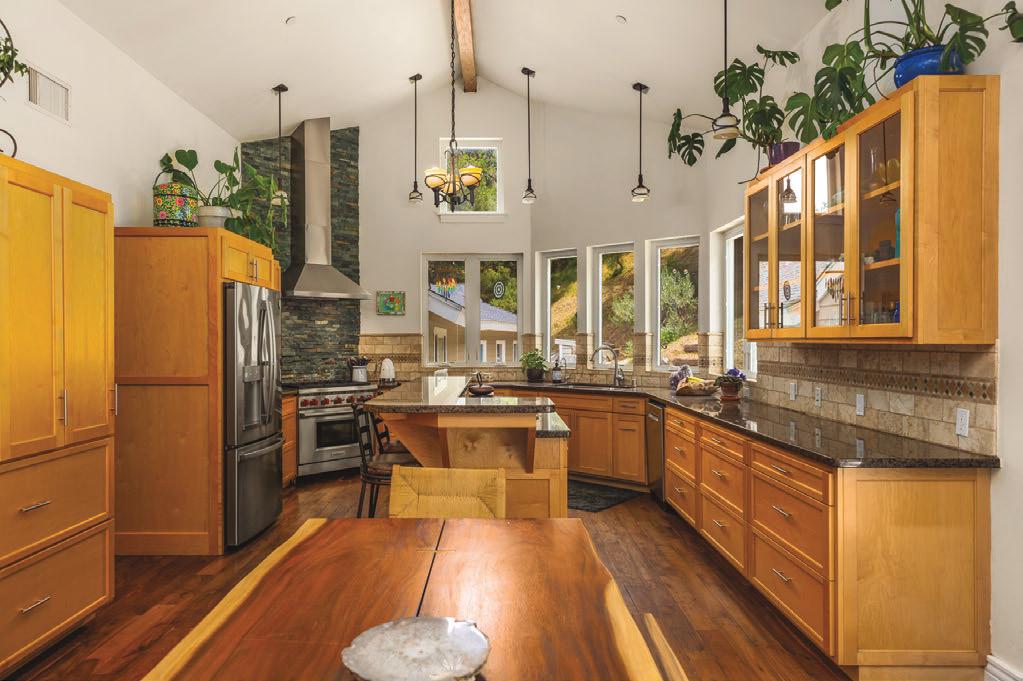
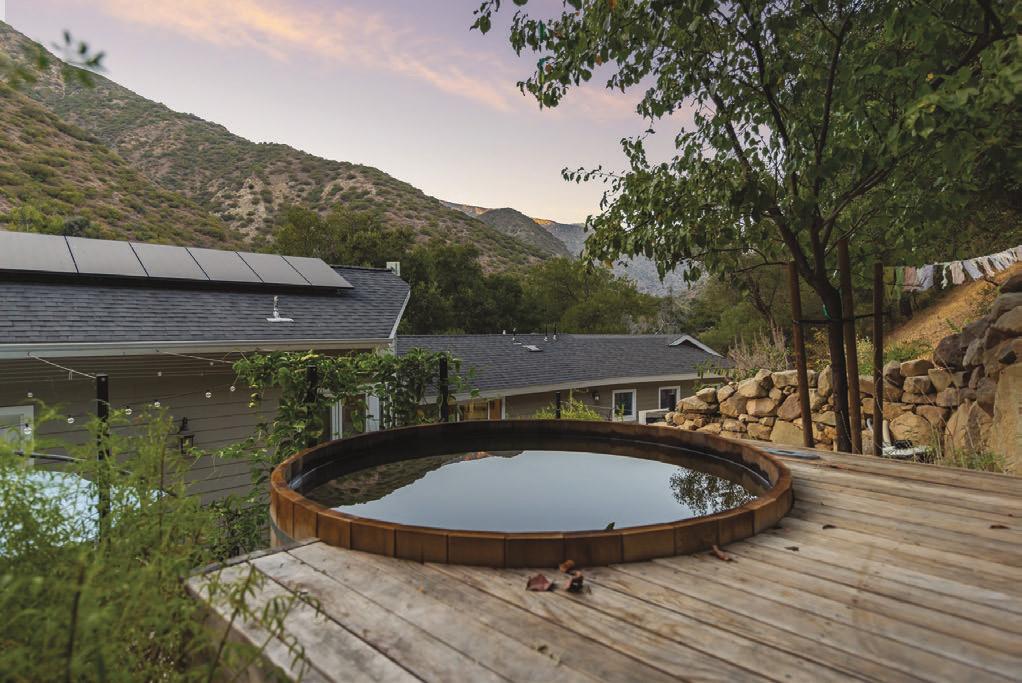
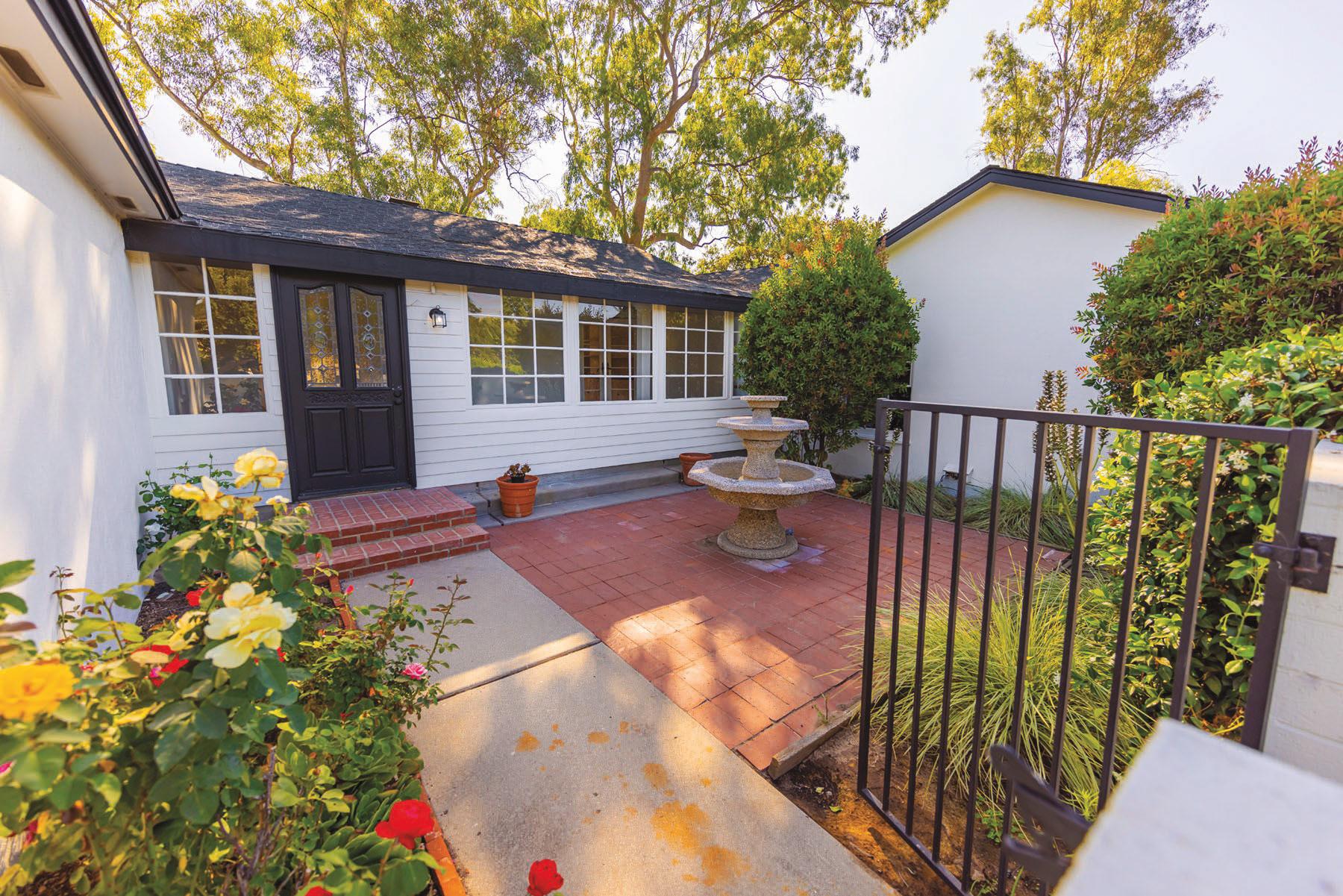
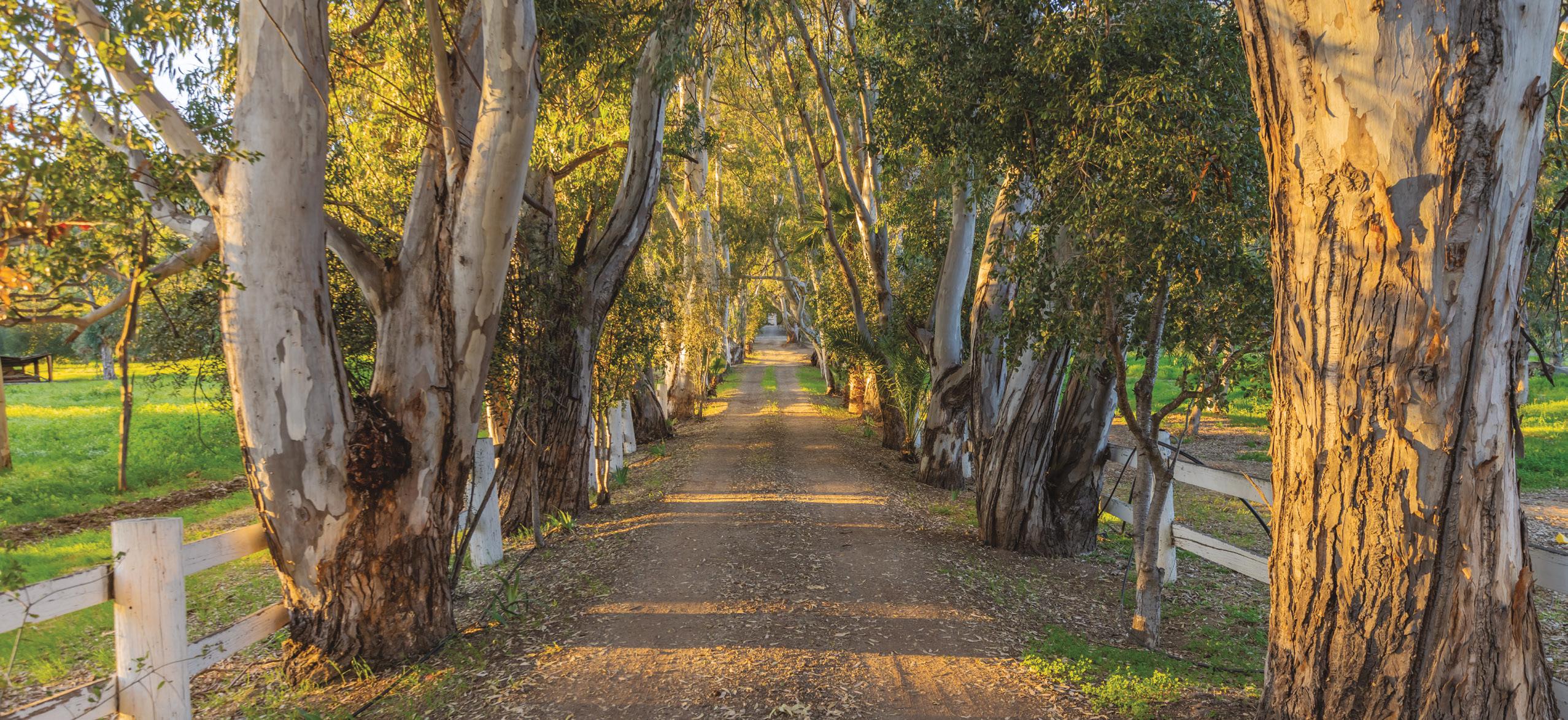
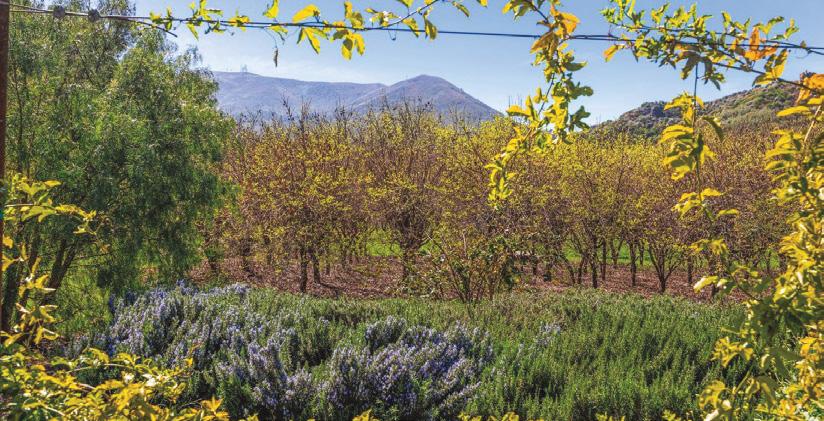
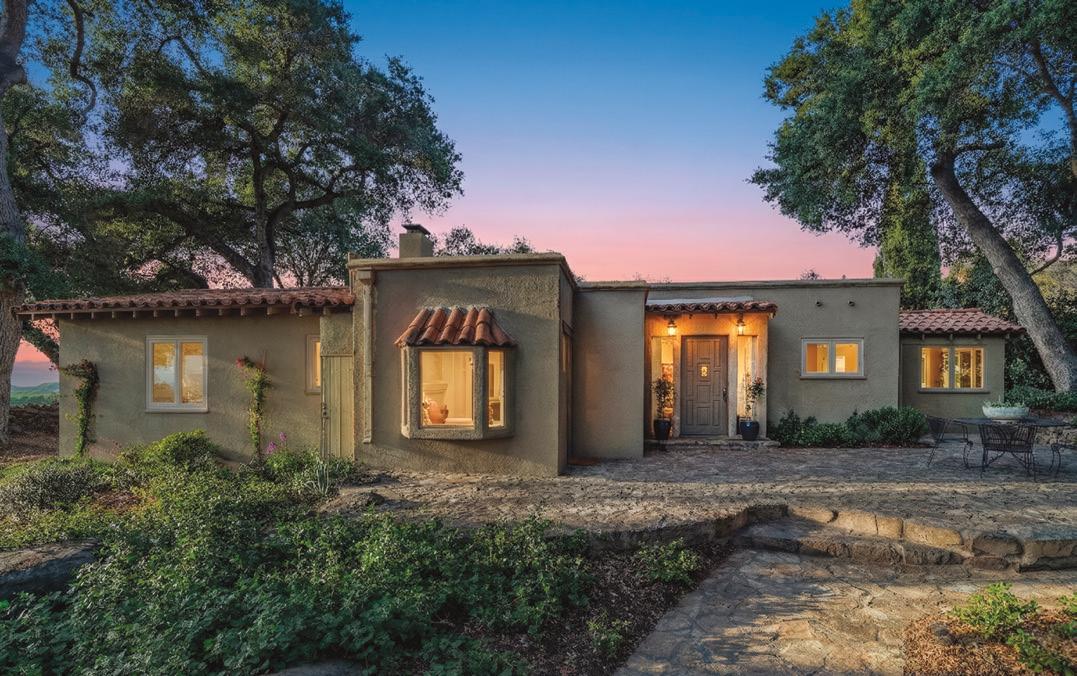
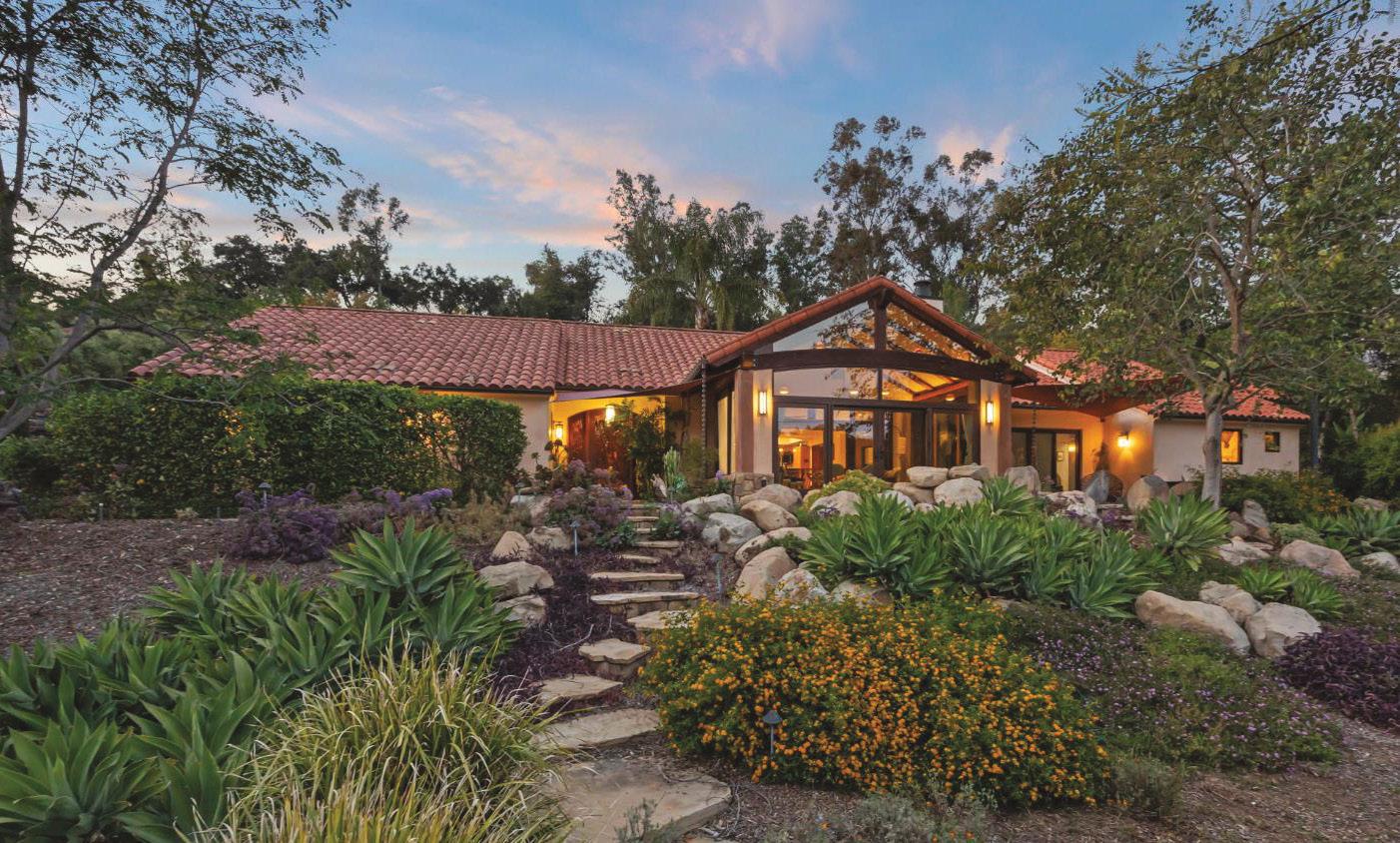
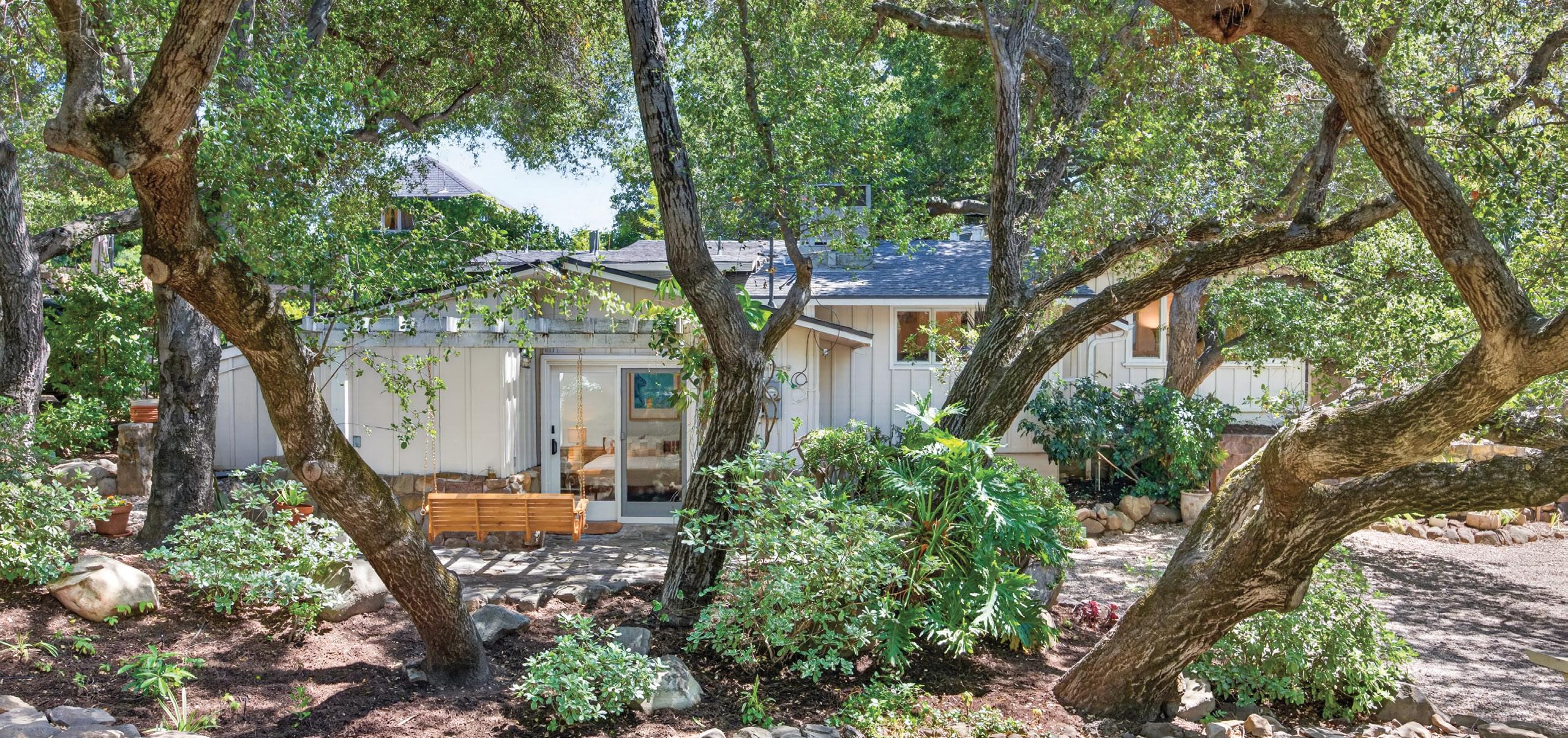
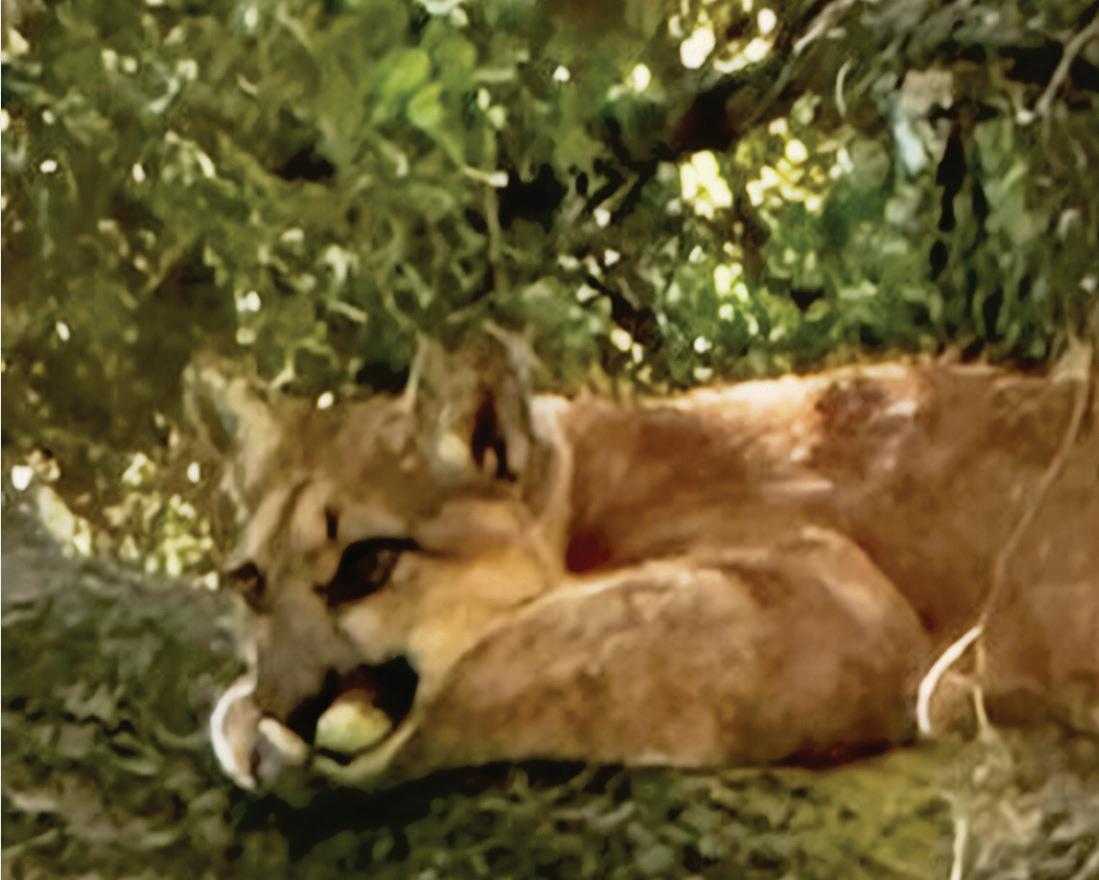
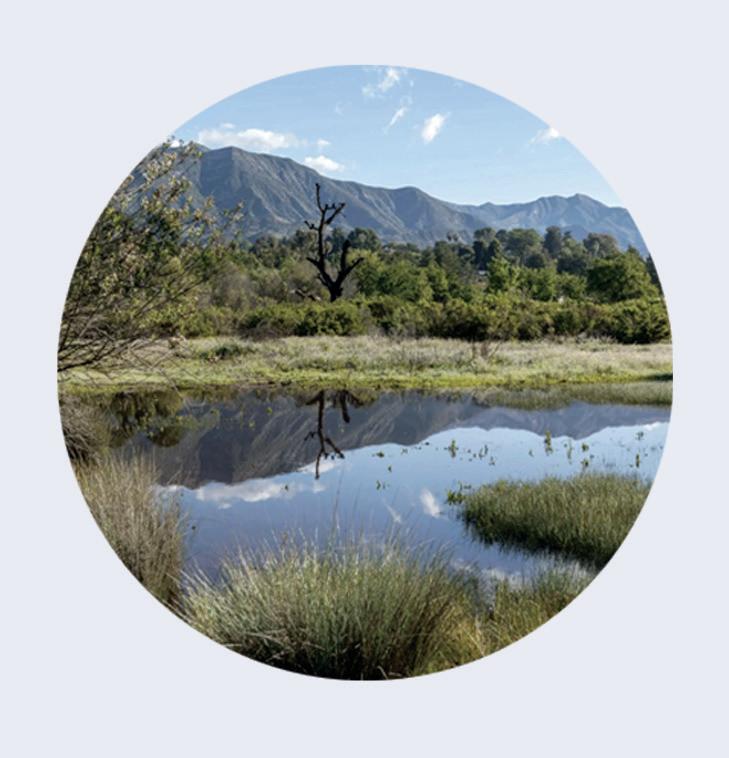
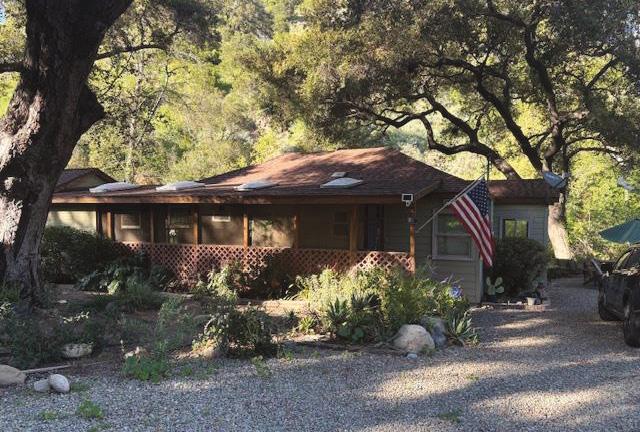
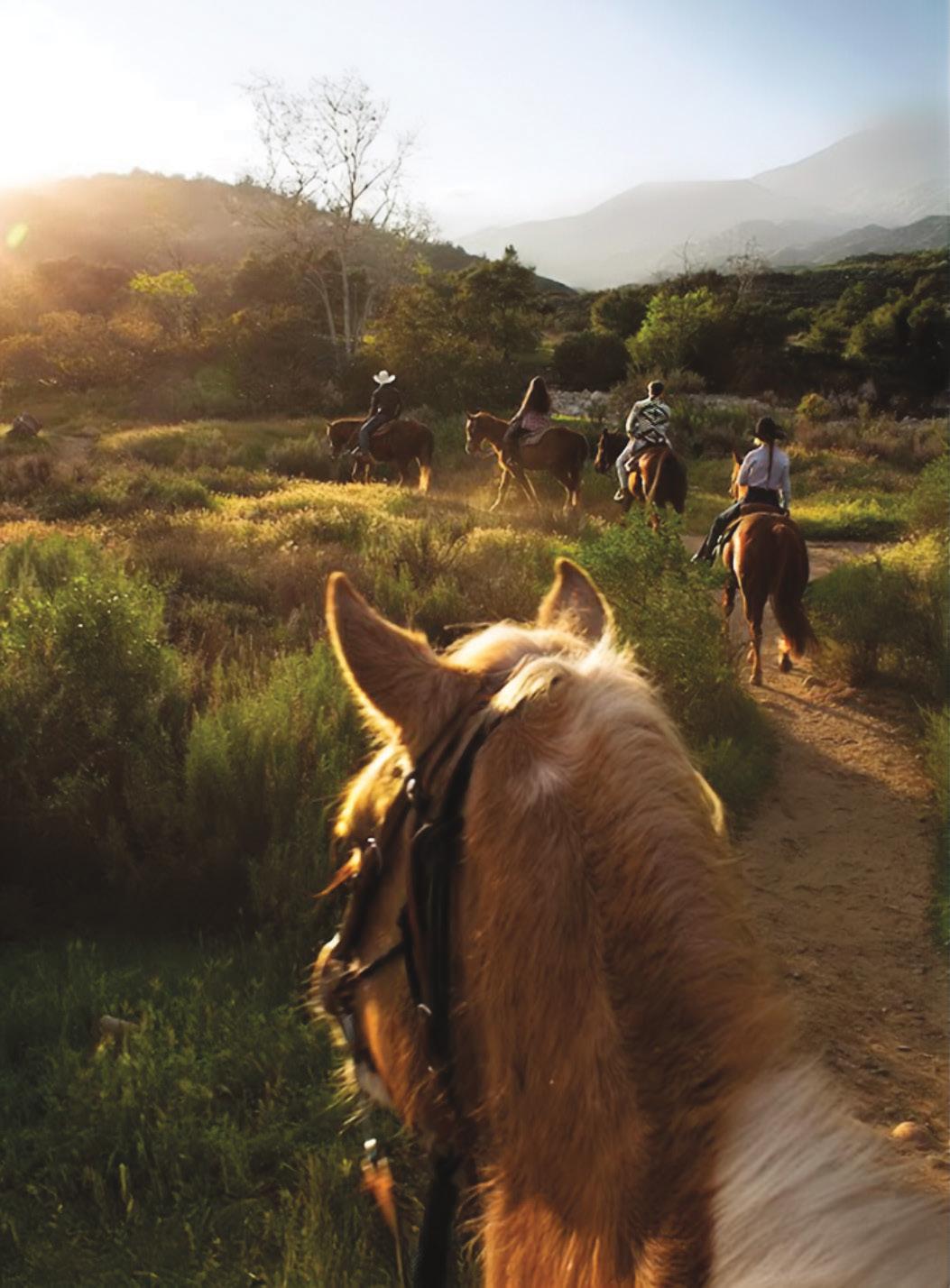
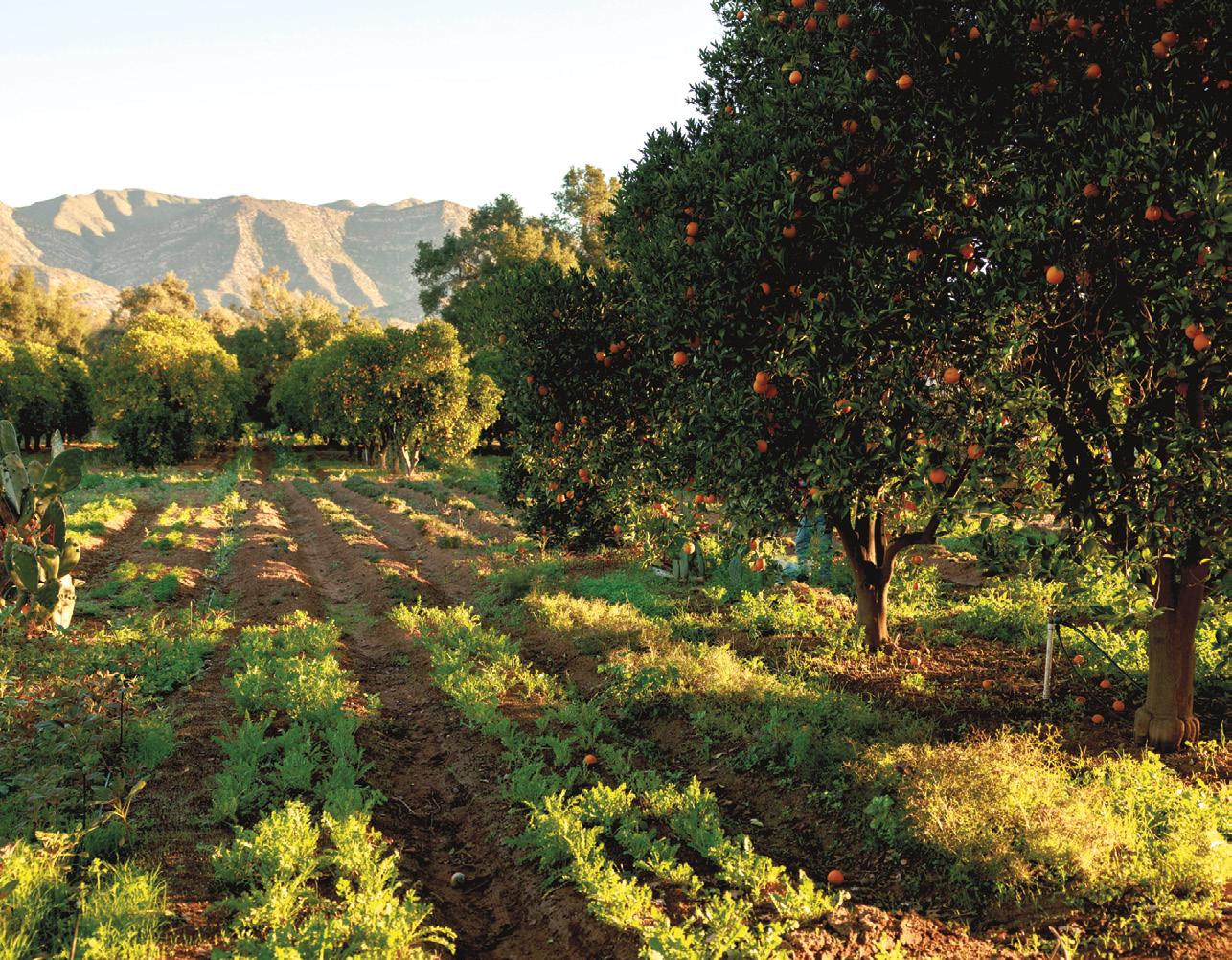
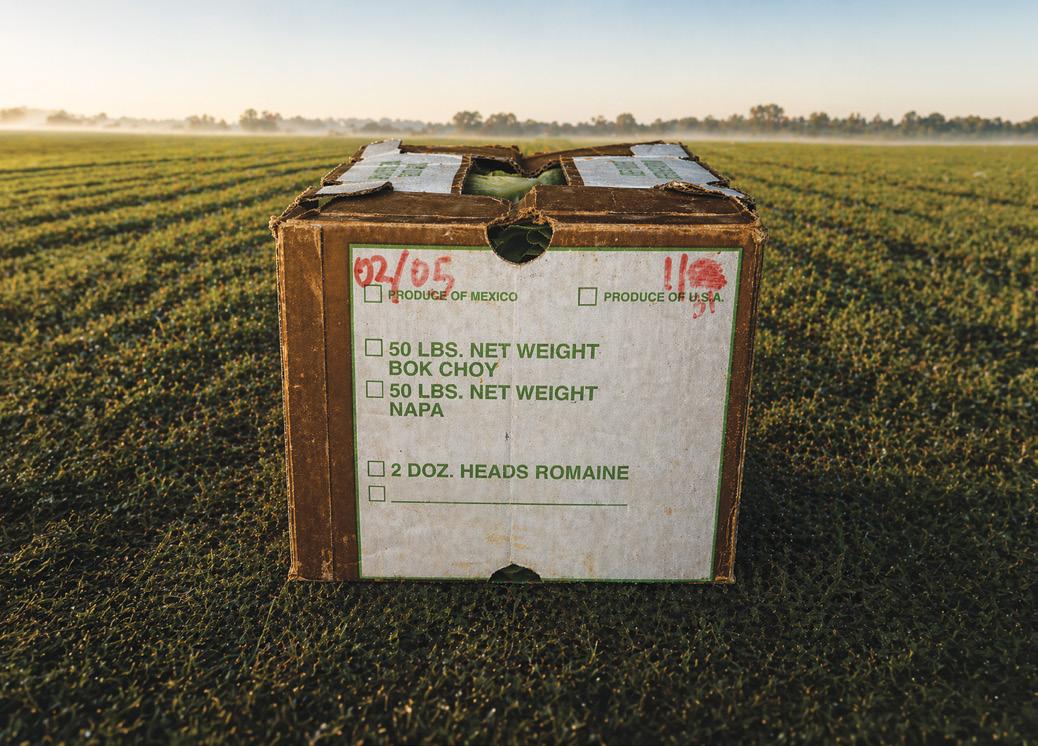
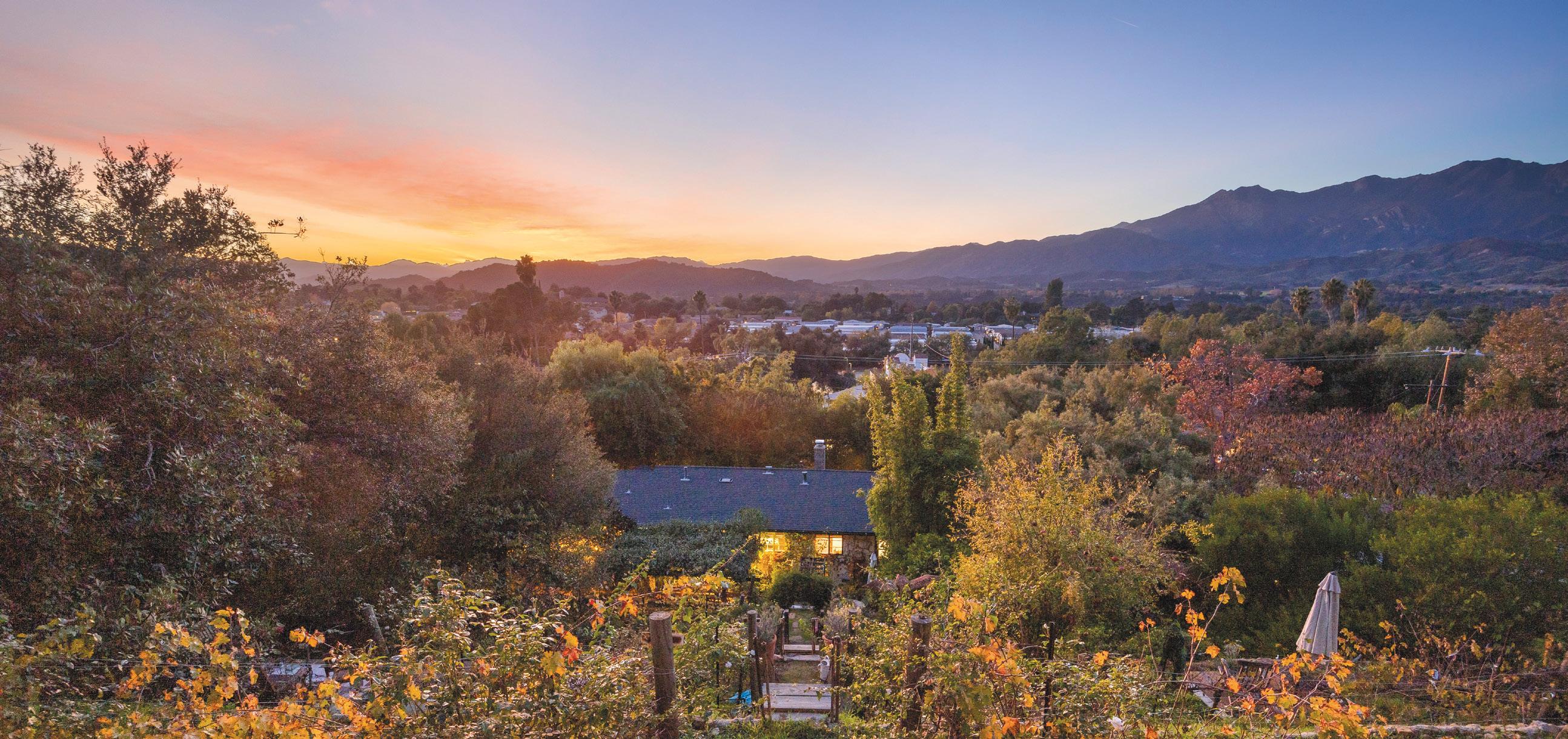
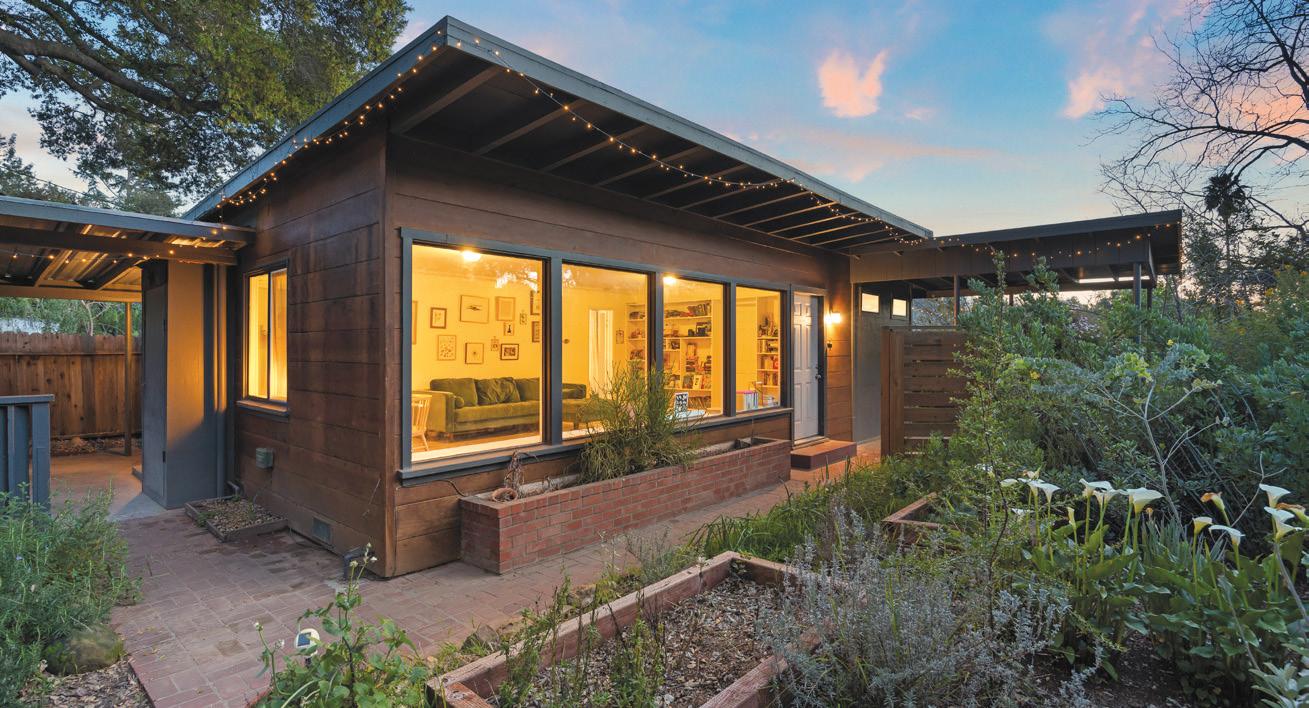
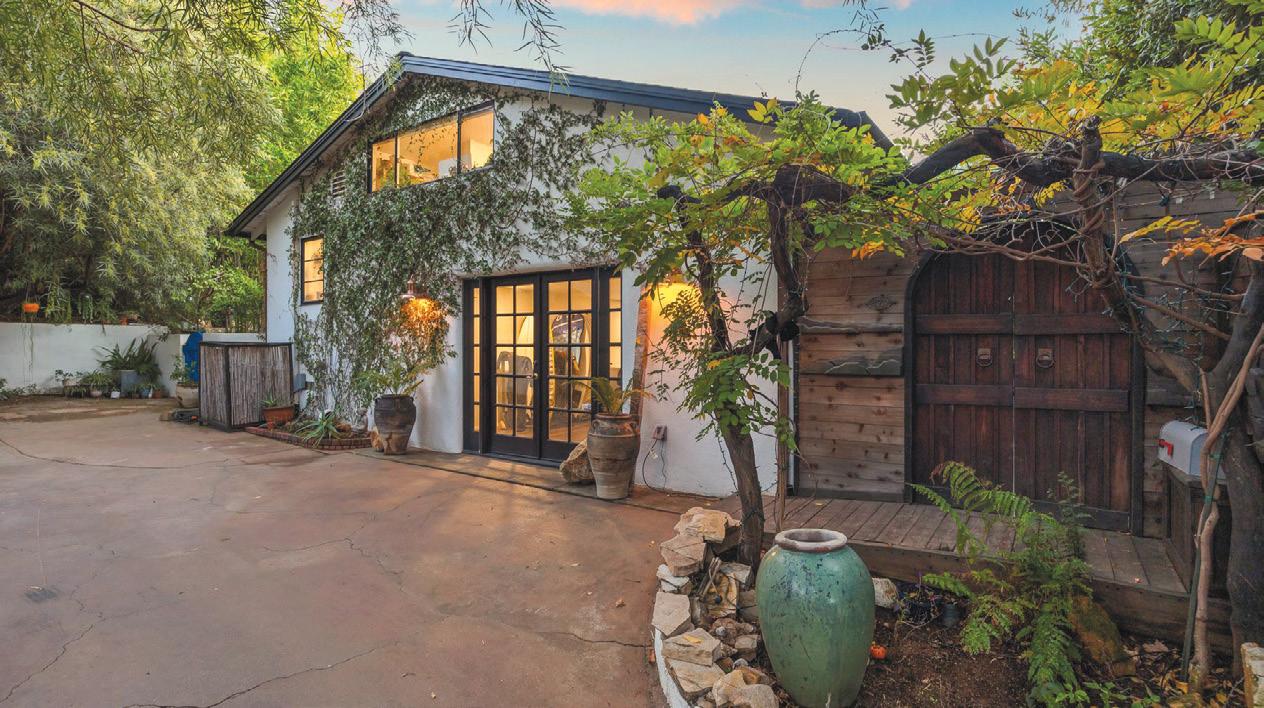
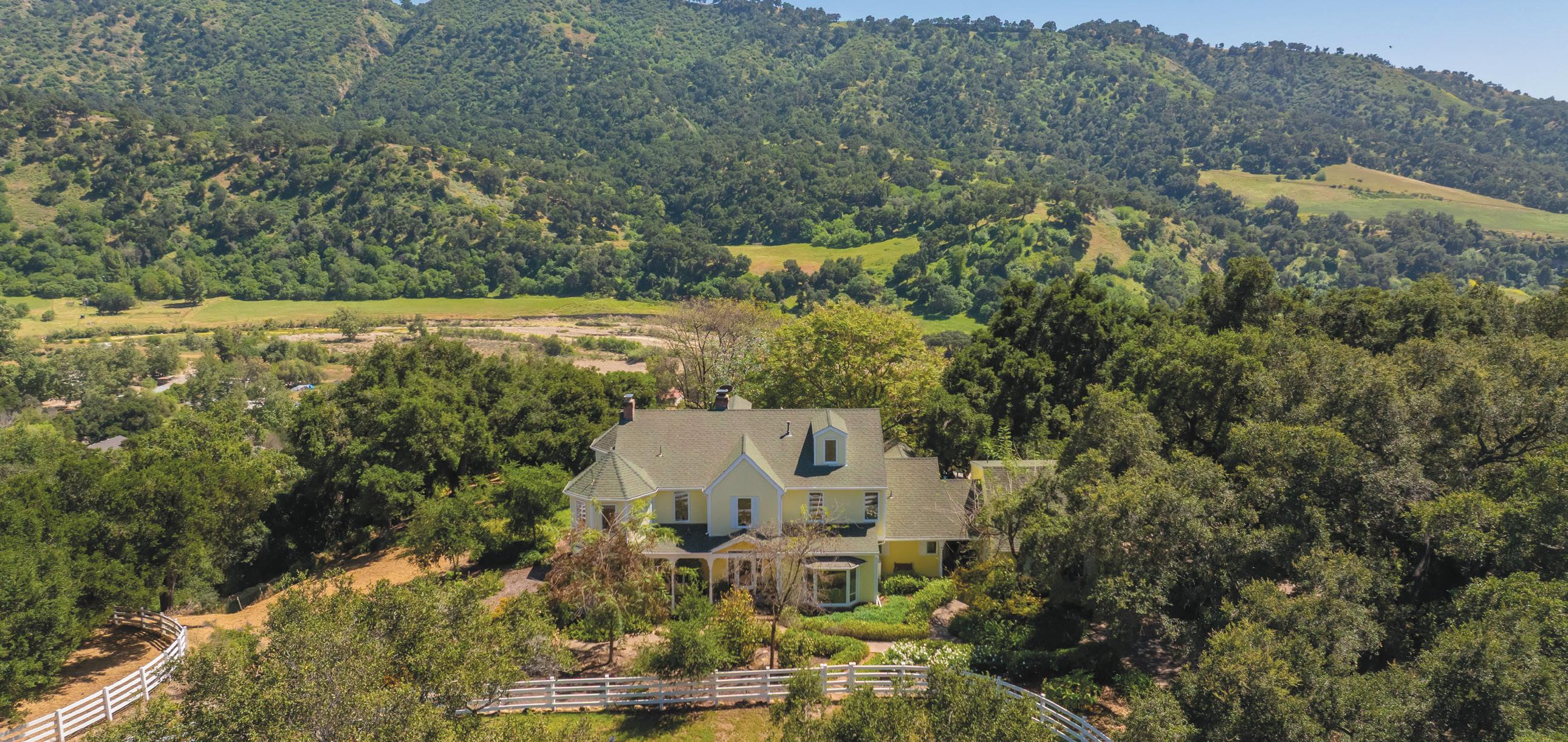
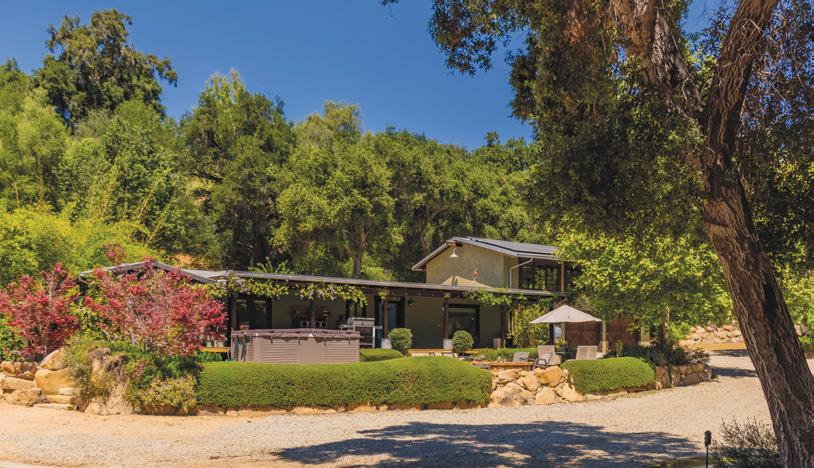
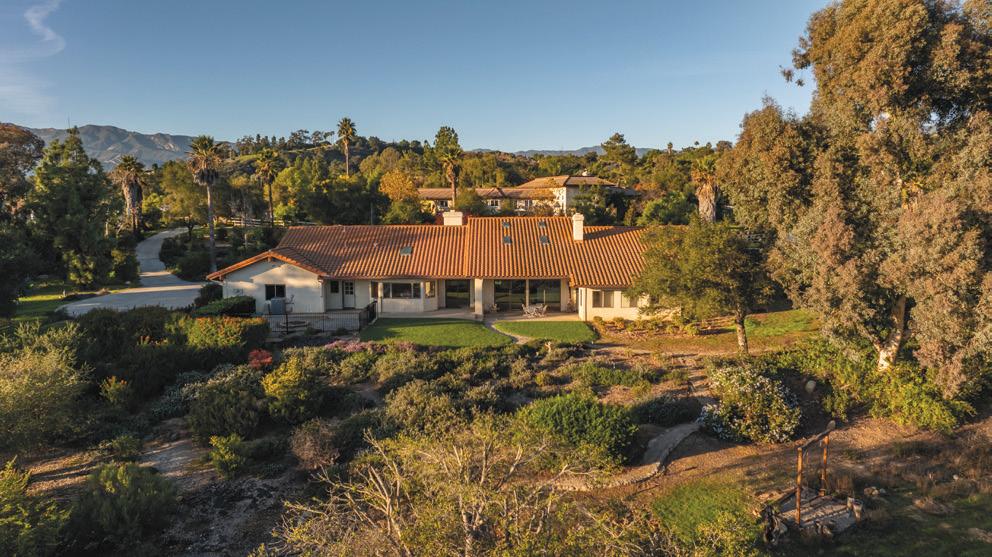
Corral Canyon Ranch - 277+ Acre Ranch in Cuyama Valley with 5 Recently Renovated Houses, Equestrian Facilities, Fenced Pastures, Hay Fields, Riding Trails, Stunning Views Surrounded by Los Padres National Forest. 29443hwy33.com | $4,250,000
ROYAL OAKS
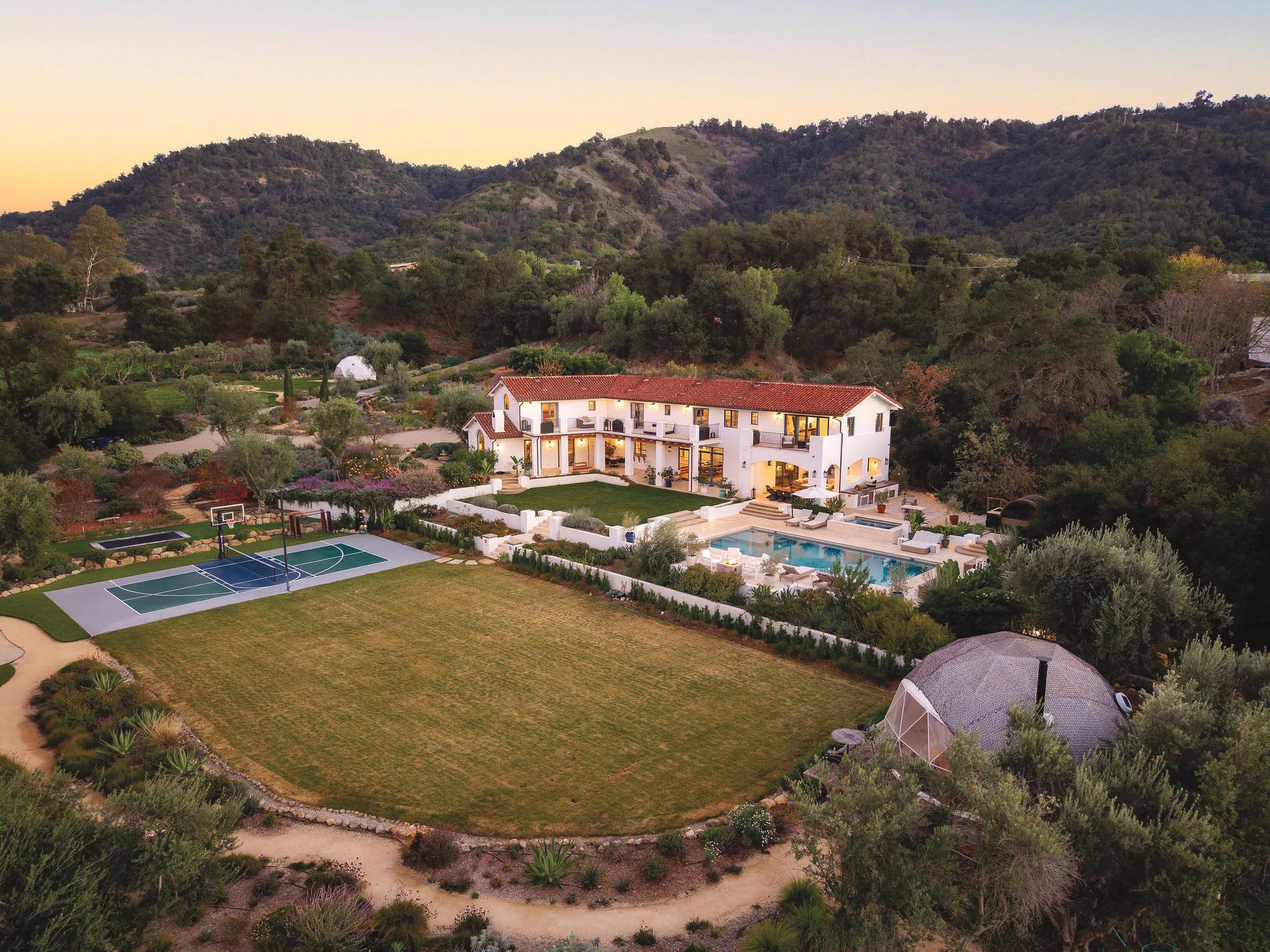
5 Bedrooms, Upscale Finishes Throughout, Media Room, Wine Cellar, Tasting Room, Gym/Massage Room, Pool & Spa, Putting Green, Well, Six-Car Garage, Bocce Court, Views, and So Much More. RoyalOaksRanchOjai.com | Price Upon Request
VALLEY LAND
Create an off-grid, country retreat on 40 acres with mountain views, trails, and a natural spring in Rose Valley in the Los Padres National Forest $1,200,000
509 NORTH BLANCHE STREET
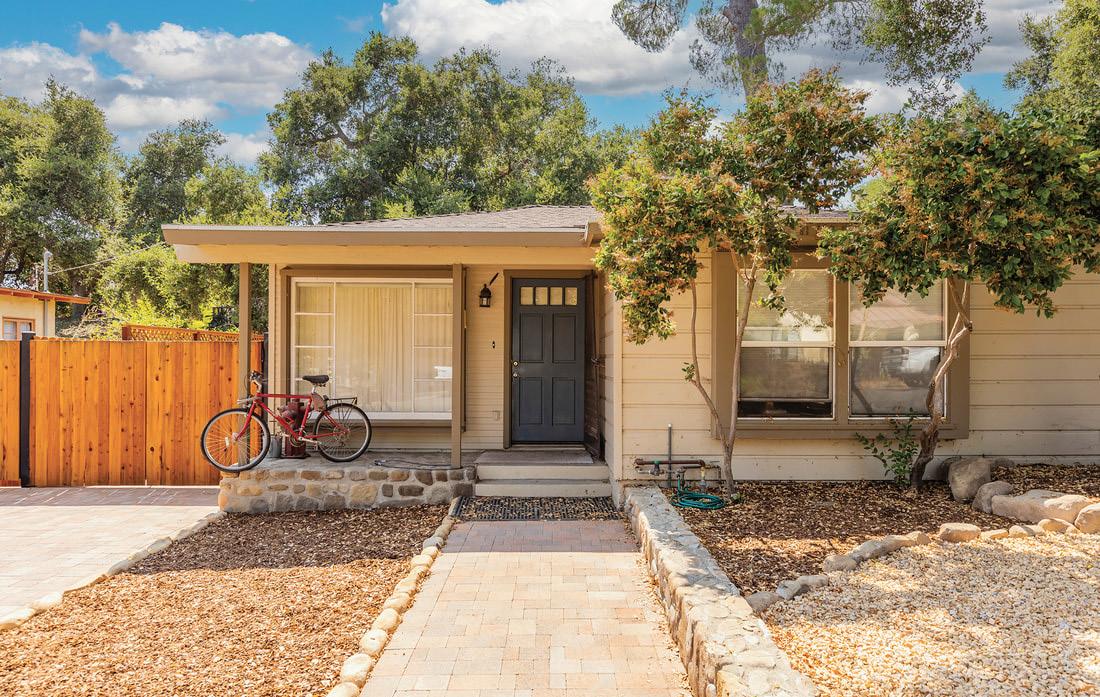
Three units, located four blocks from Ojai Avenue; a 1BD/1BA + office with private laundry, a 1BD/1BA, and studio with shared laundry hook-ups. $1,595,000
ROSE
CASA
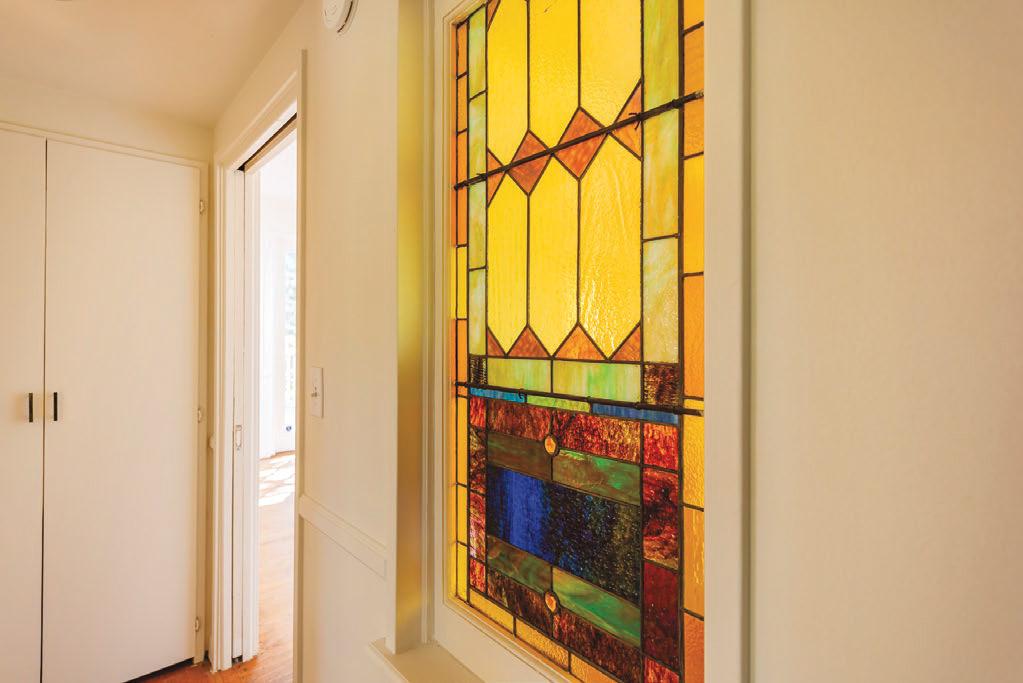
Set amid approximately 3.8 acres of serene grounds, this Marc Whitman-designed home blends Old-World charm with modern comfort. Custom fireplaces, one-of-a-kind stained glass, walnut finishes, expansive terraces, and resort-style amenities. CasaVistaLindaOjai.com | $9,850,000
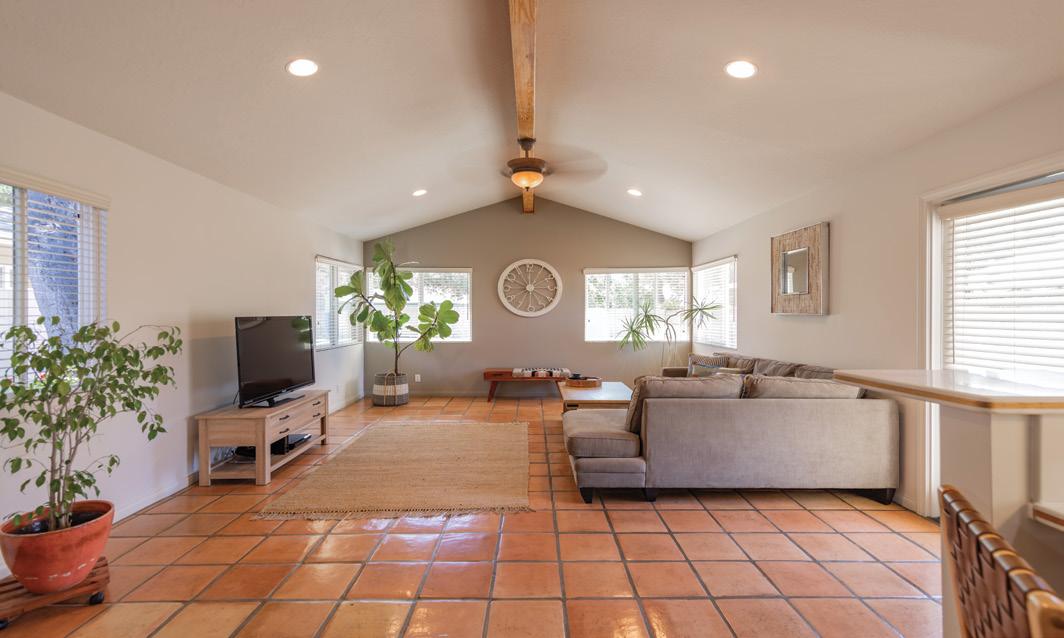
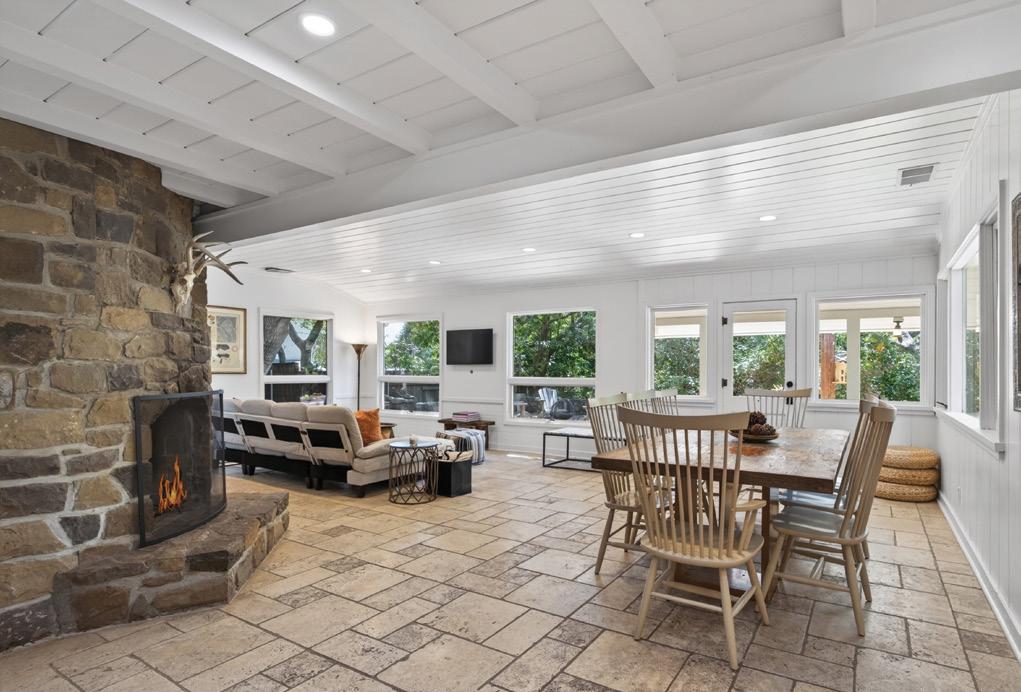
Oaks West 3 bedroom, 3 bathroom home with vaulted ceilings, natural light, mountain views, large primary suite, Saltillo tile, guest bedroom with en suite, and large patio minutes from downtown Ojai, Lake Casitas, and hiking trails. FerraraOaks.com | $1,259,000
FERRARA OAKS
VISTA LINDA
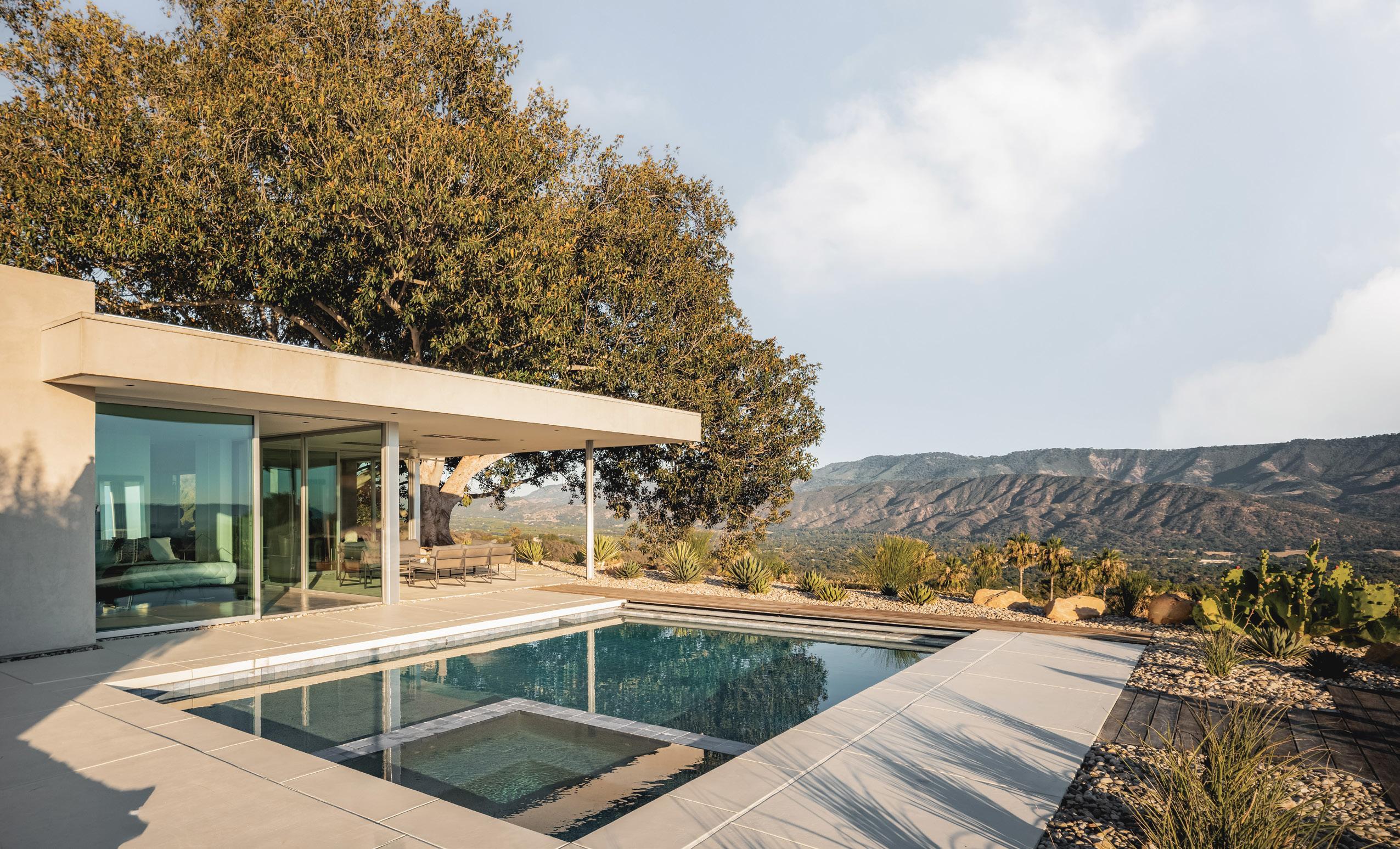
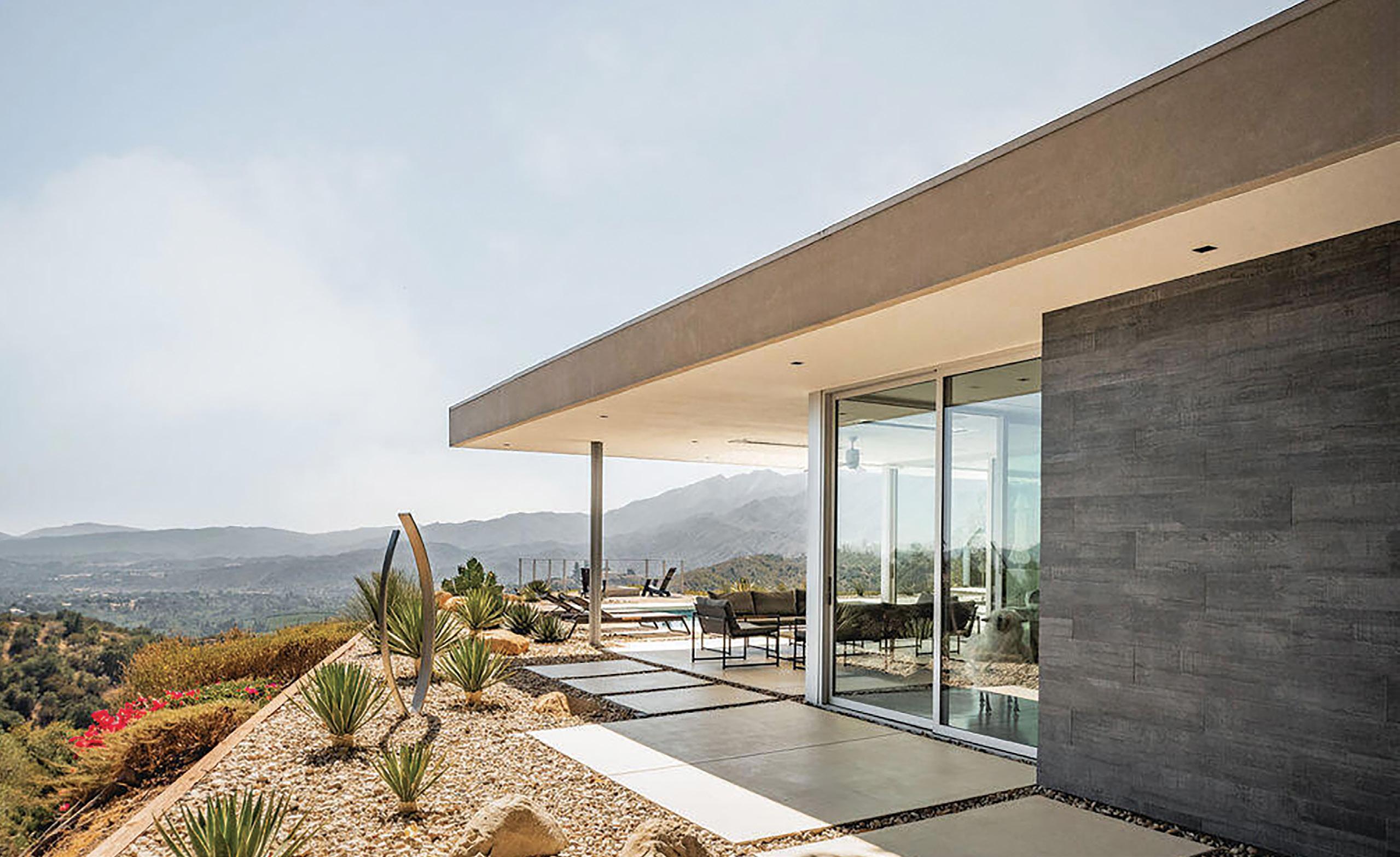
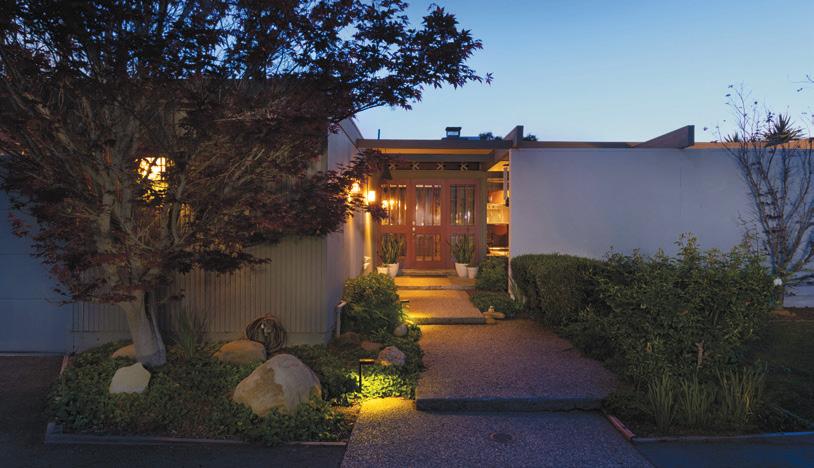
GLASS HOUSE 1465 FOOTHILL ROAD, OJAI • $6,500,000
Perched along Ojai’s iconic Foothill Road, this glass-walled architectural sanctuary is defined by light, serenity, and expansive 270° views. Built in 2017 and thoughtfully re-imagined in 2022, the 3,154± sqft single level home pairs minimalist design with seamless indoor-outdoor living. A 1,117± sqft pavilion with showcase parking, welness studio, and sauna, along with additional creative retreats completes a private compound set on 1.87± acres with pool, spa, and mesmerizing epic sunsets.
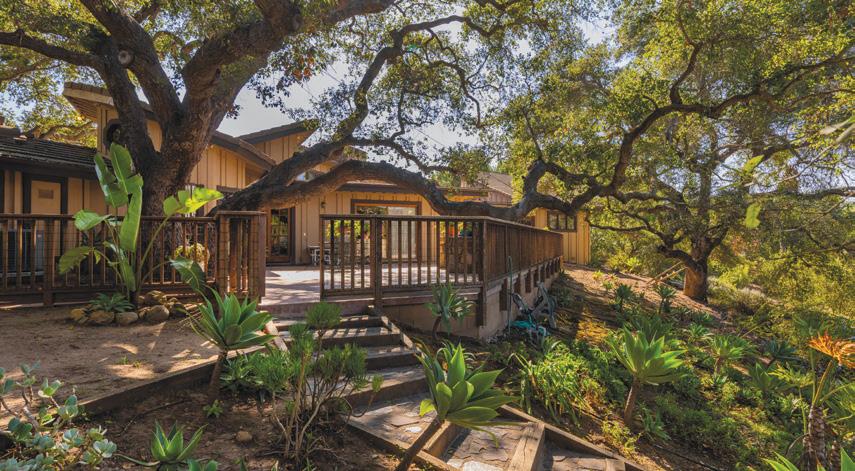
FOOTHILL ROAD, OJAI • $5,995,000
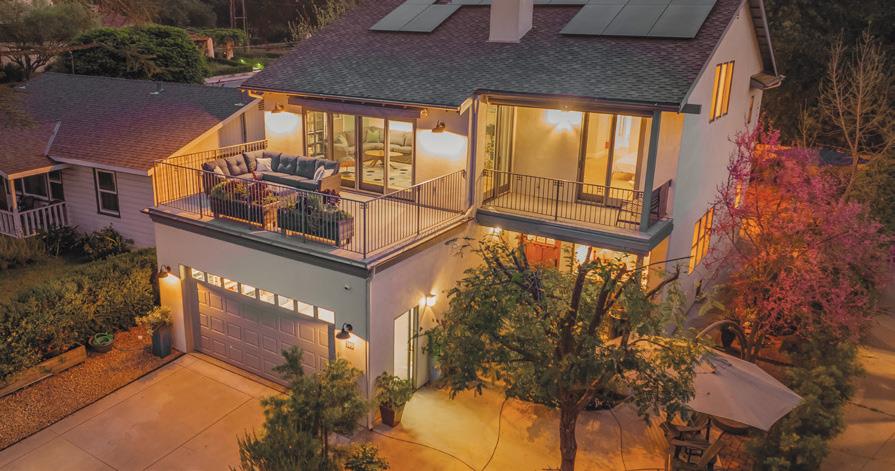
Enshrouded in nature, this extraordinary compound features a 3,207 sqft, 4br/3ba main residence with double-height vaulted ceilings, exposed wood beams, a dramatic stone fireplace and expansive windows that provide ample natural light. The primary suite has a private treetop balcony and personal cedar sauna. The property includes 2 fully equipped, private guest houses for a total of 4,722sqft of
1950’S COTTAGE
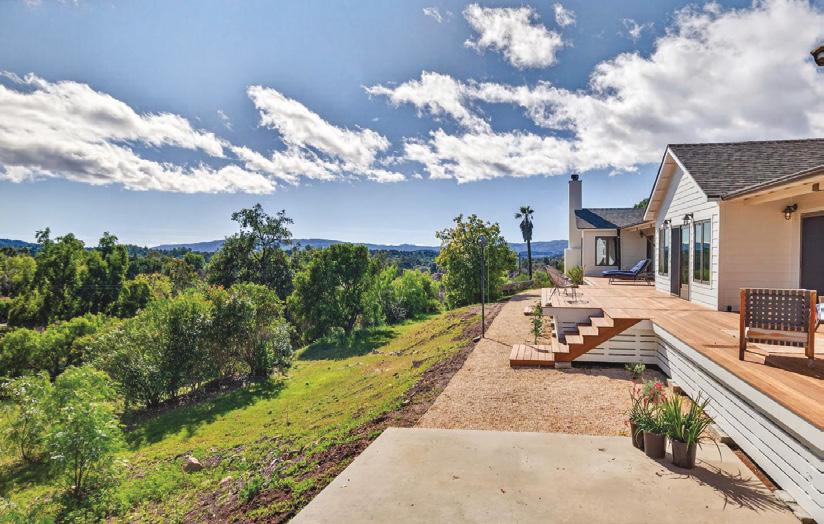
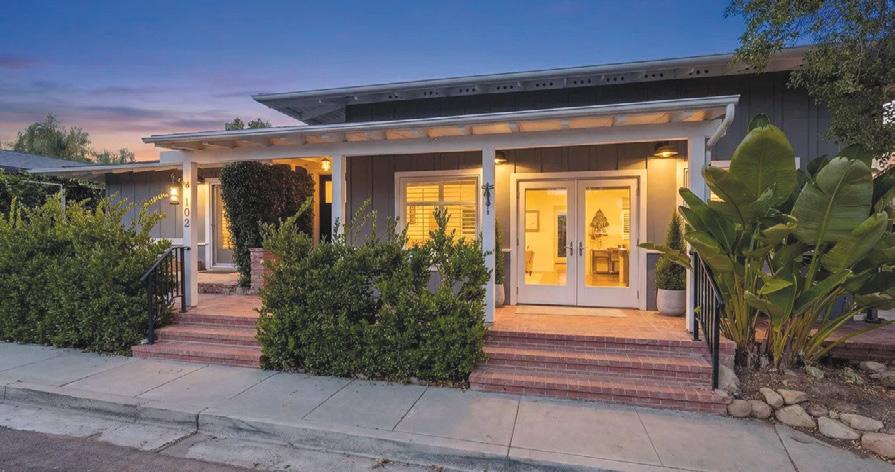
On Ojai’s prestigious Foothill Road, this charming home, filled with light and character, captures the essence of California living. With 2 bedrooms, 2 bathrooms, a garage and a versatile flex space ideal for a home office or studio, this thoughtfully refreshed home offers both timeless appeal and modern convenience. Original hardwood floors exude warmth and authenticity, the kitchen has been tastefully updated and a 1,256 square foot deck offers the perfect environment for alfresco dining or quiet morning coffee. Only minutes from downtown, this property has infinite potential, including room for a pool or an ADU. Offered at $1,725,000
EDITOR’S NOTE - 24
COVER STORY
Capturing the Uncanny: Bob Debris
By Grant Phillips - 30
ART & CULTURE
Mahjong Mania - 38
By Bob Asher
American Mosaic: Semiquincentennial - 46
By Perry Van Houten
BIG ISSUES
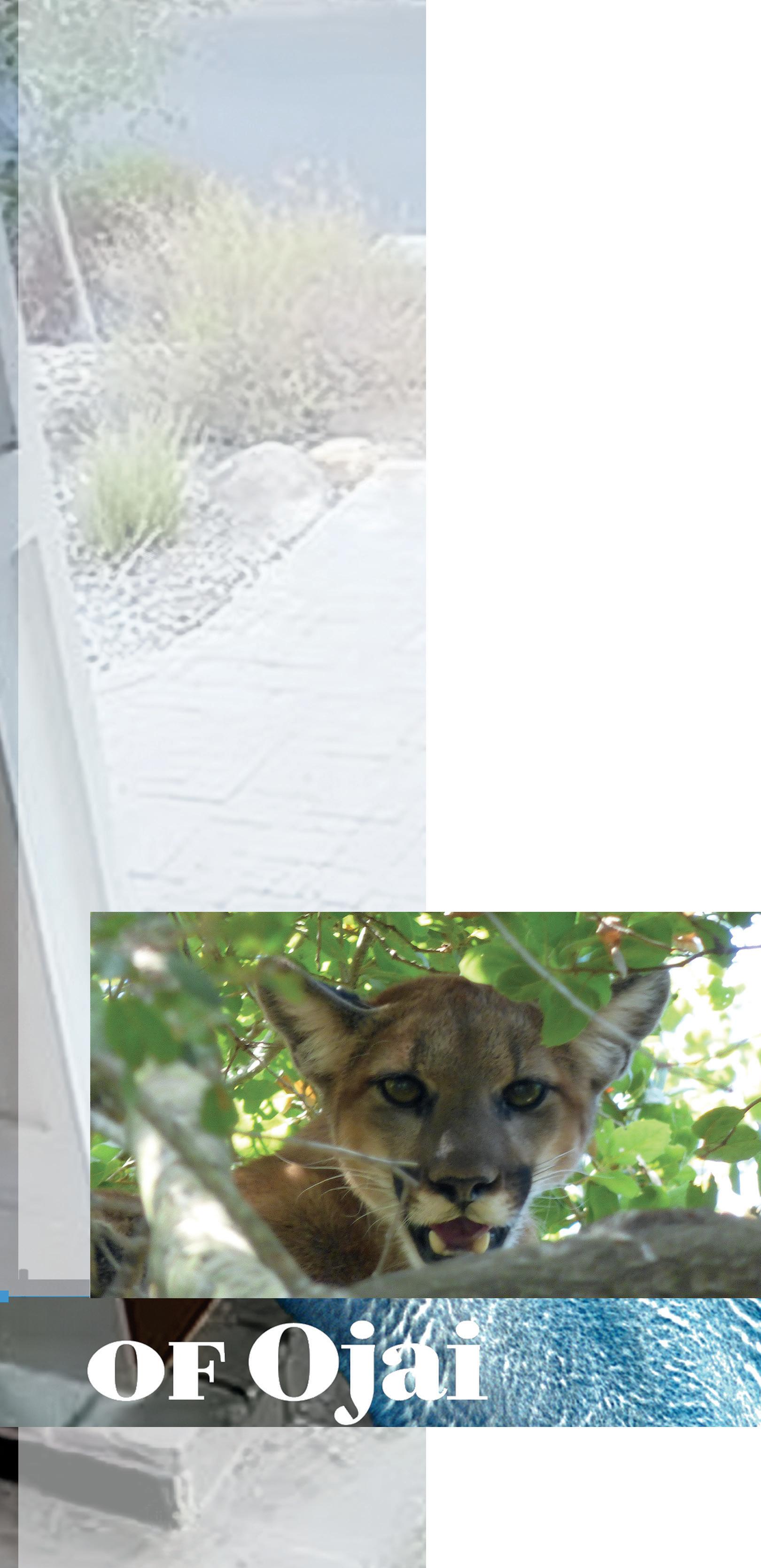
Mountain Lions of Ojai - 58
By Peter Deneen
Sails into Shelters - 66
By Kim Lamb Gregory
MINDFULNESS & EDUCATION
Talon & Flight Falconry - 76
By Mimi Walker
Widow’s Keys - 86
By Devorah Cutler
OUTDOORS
Lanny’s 50 Years of Herb Walks - 96
By Kit Stolz
Ventura Seastars - 124
By Holly Roberts
CALENDAR - 92
FOOD & FARM
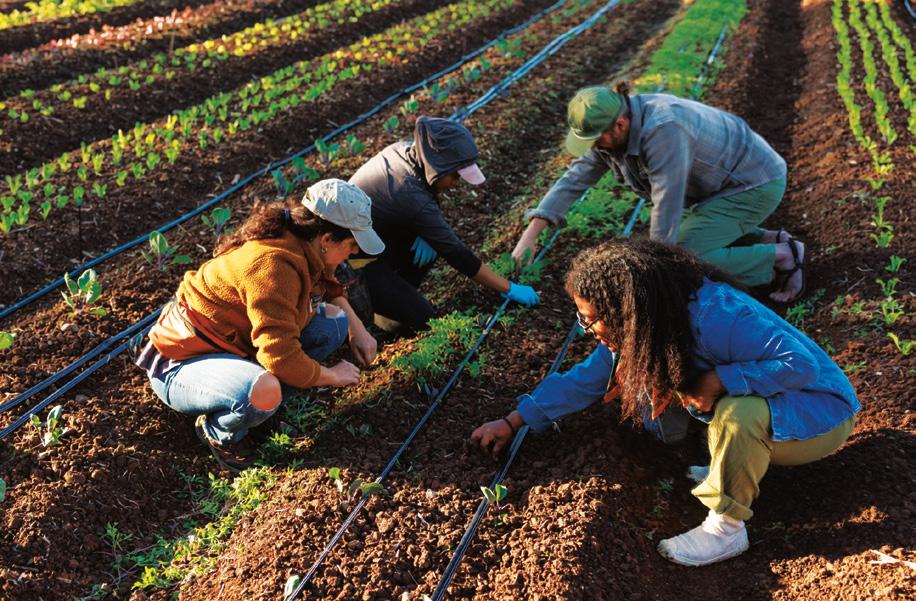
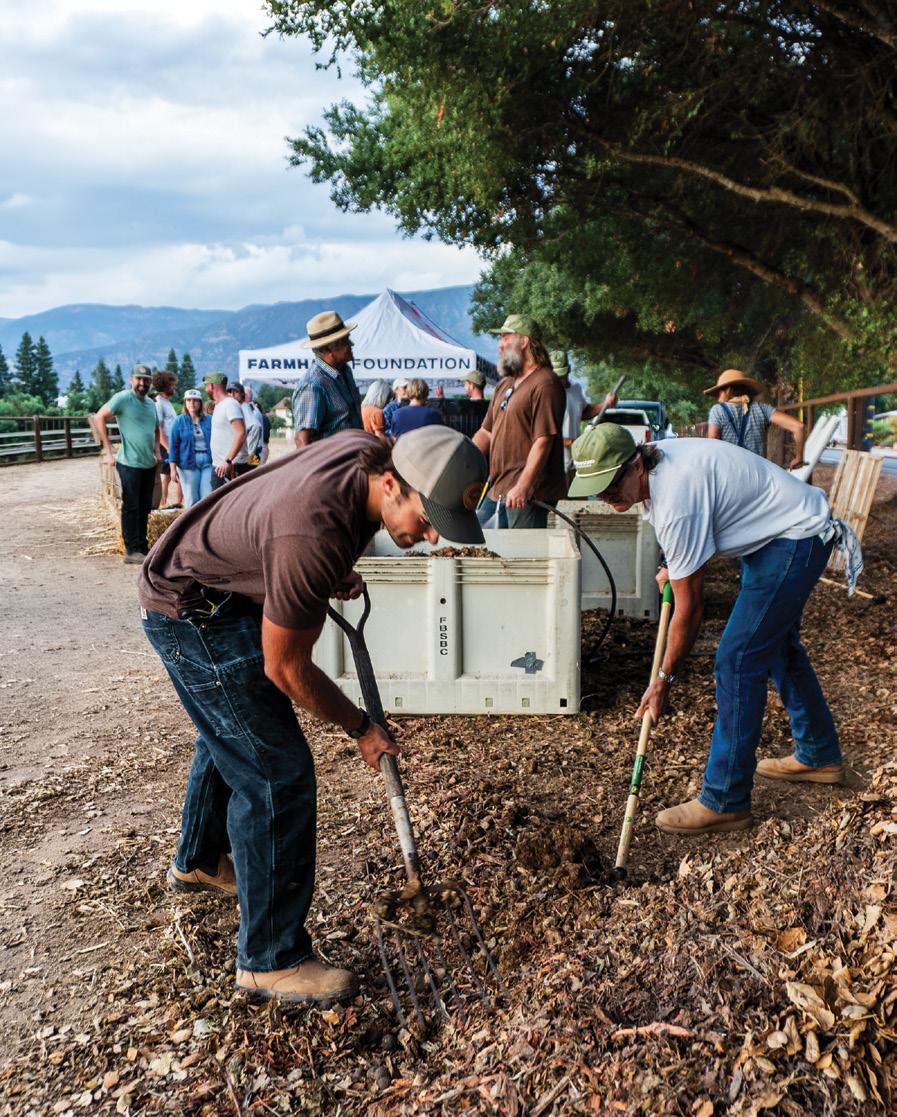
Farmhand Foundation - 104
By John Fonteyn
Blame it on Pascagoula - 113
By Steve Sprinkel
Eggplant Excellence! - 118
By Sharon Palmer
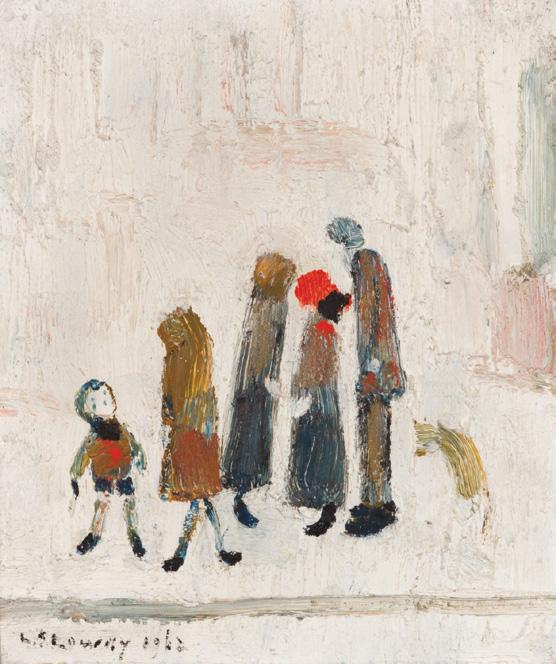
l.s. lowry
april 30 – june 21
l.s. lowry, people talking, 1962
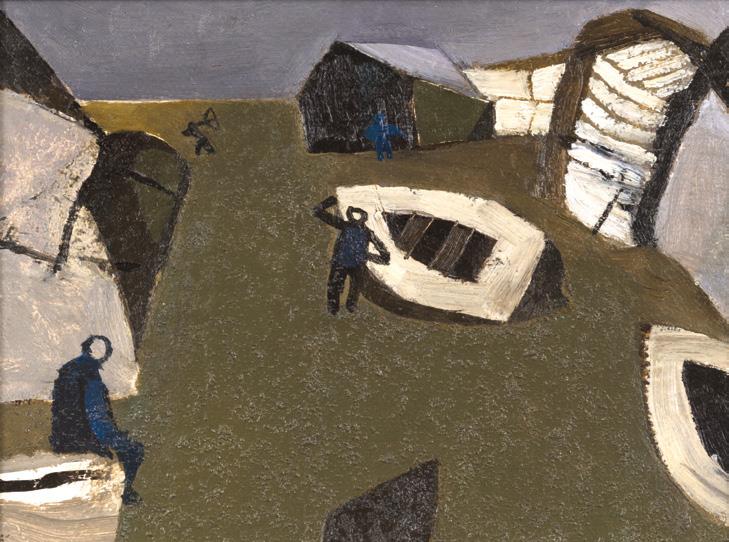
keith vaughan
july 2 – august 16
located in a classic california bungalow a short walk from the arcade, canvas and paper is a small art museum with a focus on 20th century modernism. exhibits change every two months. admission is free.
311 n. montgomery street thursday – sunday noon – 5pm canvasandpaper.org
keith vaughan, grey shore seascape, 1950
Editor’s Note: Summer 2026
In a tiny corner of the world, Ojai contemplates the semiquincentennial anniversary year with the rest of the USA. Recent years have brought our nation and our community to a place of uncertainty and division. Even while tucked inside our Ojai Valley nest, big change is in the air, and people seem on edge about it. Even as we feel grounded by our beautiful natural surroundings and slow-motion life, calm suddenly slips out from under us and our peaceful mind is lost.
Our leaders are failing us. The gears of economic interest grind and turn us away from our own essential needs and values. And with that clarity, we become aware that our survival will depend on our ability to care for ourselves — in community. Check around the cabin, reach out to those nearby, because whatever happens — insert scary list here — our best outcomes lie in the power of our own resources and the spirit and bond we share.
It may seem counterintuitive to be expansive when fear drives us to pull inward. But for Ojai, the connections between us, the stories we share, the neighbors we know, the kindness we demonstrate, will prove to be key to our greatest challenges. Whatever the threat, every neighborly reach, every casual conversation, every community gathering, service organization event, public meeting, sing-along, and party like it’s 2019 is a building block of Ojai’s resilience.
This summer, let’s rise above the national trend of walling off and hunkering down. In this moment of confusion and instability, our magical valley can come together — despite differences — find fellow humans, have a care, congregate in the chaparral, lend an ear, teach a friend a skill, commune, celebrate, cut a rug, and, for heaven’s sake, find common ground. The ability to survive and to thrive begins at home with each other.
Naturally, a read of Summer Ojai Magazine is a great way to kick off the season’s community connection, because our stories are about the life and times of our valley. Then consider holding a house party for resilience this summer. Go outside, talk to strangers, because no one is coming to save our nation, our state, or our city … we’re already here.
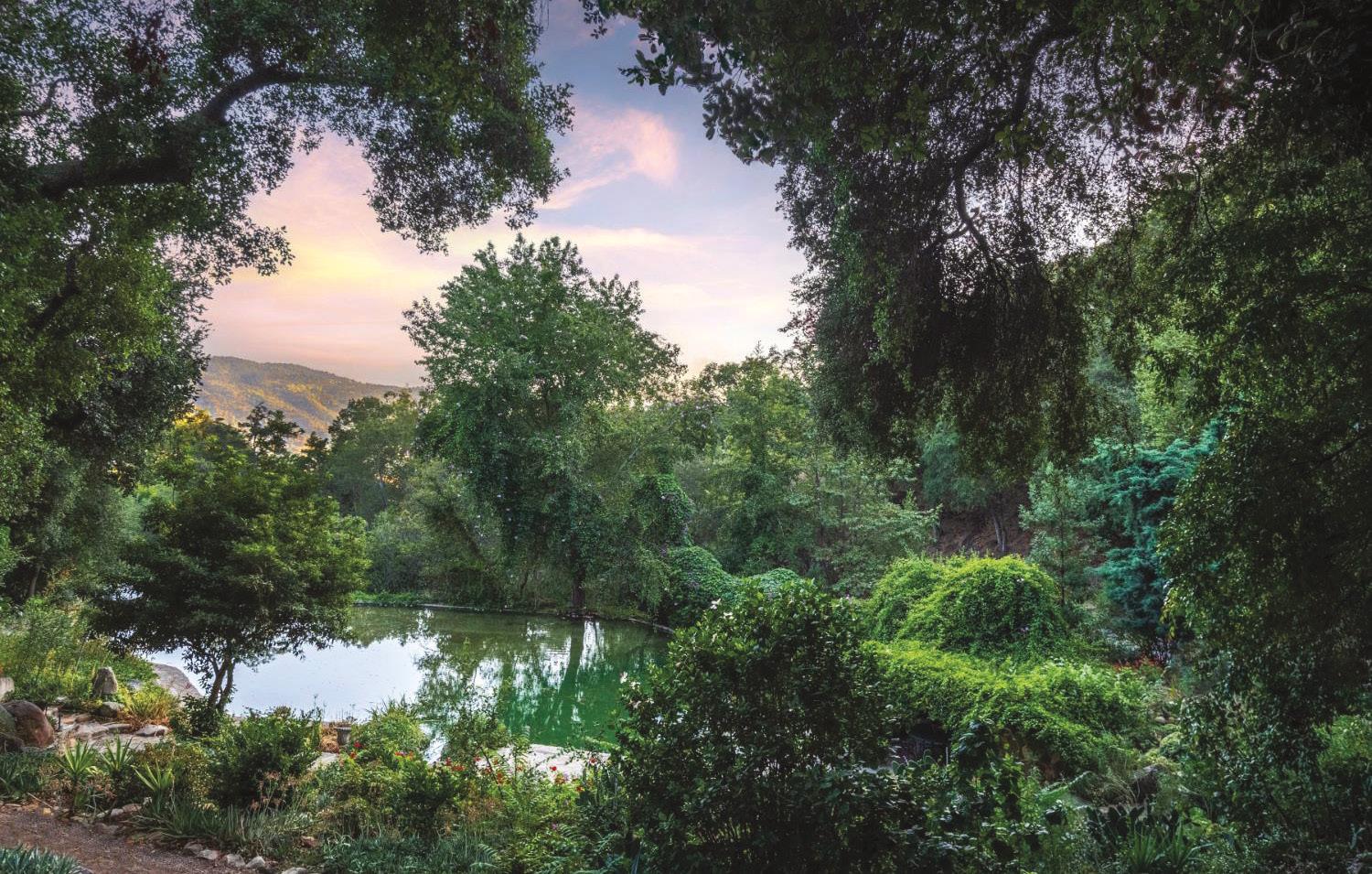
An extraordinary estate where heritage oaks, open skies, and natural beauty define the
Spanning 18.34 acres across five legal parcels, this rare property combines exceptional privacy with
4620 CASITAS PASS ROAD, VENTURA
Discover your dream retreat at this stunning 40+ acre ranch with two charming homes, a flourishing avocado & persimmon orchard, fertile land, a solar-powered 100 GPM well providing 27,000 gallons of water storage, and both agricultural and domestic water meters
Offered for $2,699,000
10920 VENTURA AVENUE, OJAI
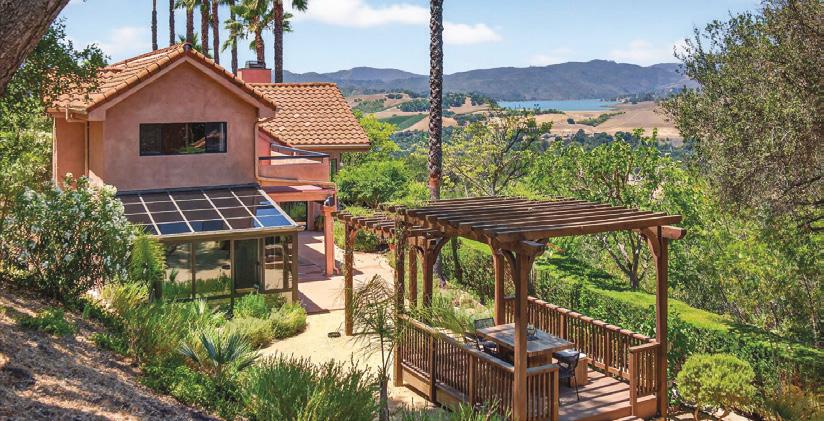
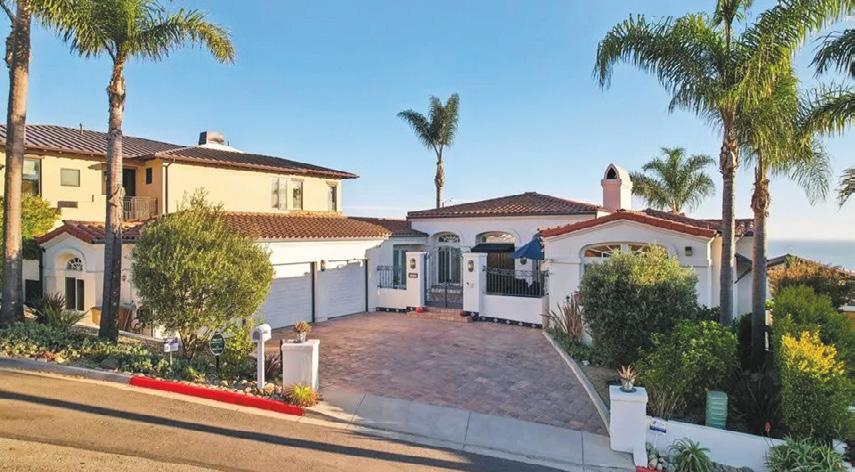
This Mediterranean-style gem with 3BD & 4BA, designed by acclaimed architect Marc Whitman, is one of the rare few in the Ojai Valley to offer panoramic views of Lake Casitas and the surrounding mountains.
Offered for $1,685,000
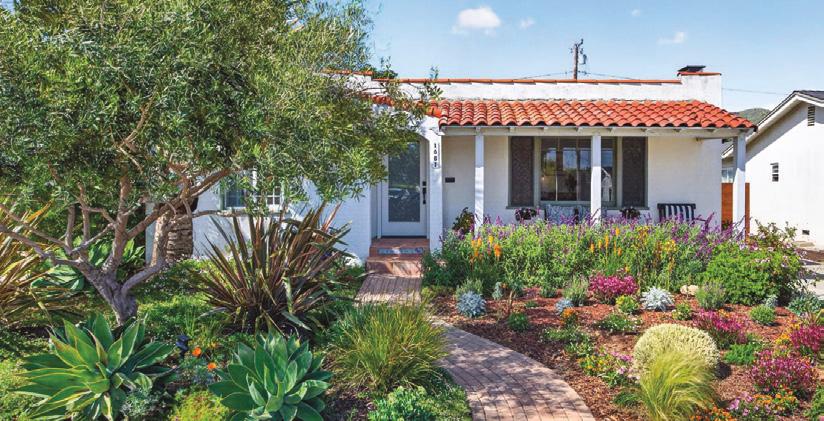
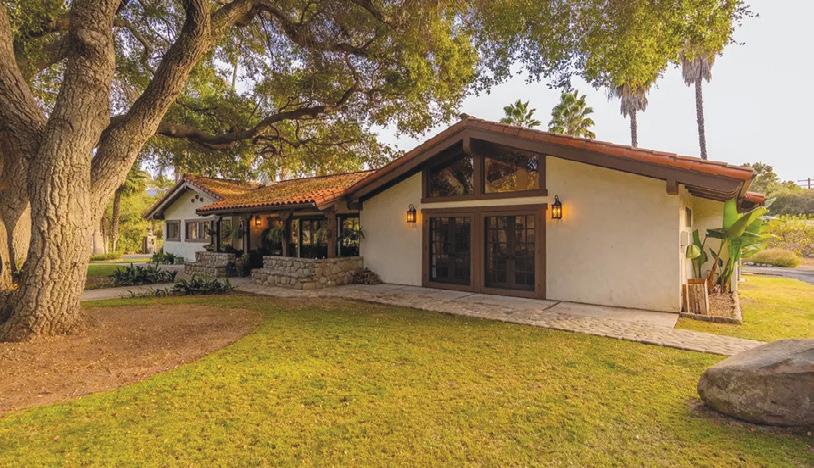
1681 SAN NICHOLAS STREET, VENTURA
Located in one of Ventura’s most desirable neighborhoods, this beautiful 3BD, 2BA Spanish charmer blends timeless character with thoughtful modern updates. Offered for $1,325,000
Offered for $4,250,000
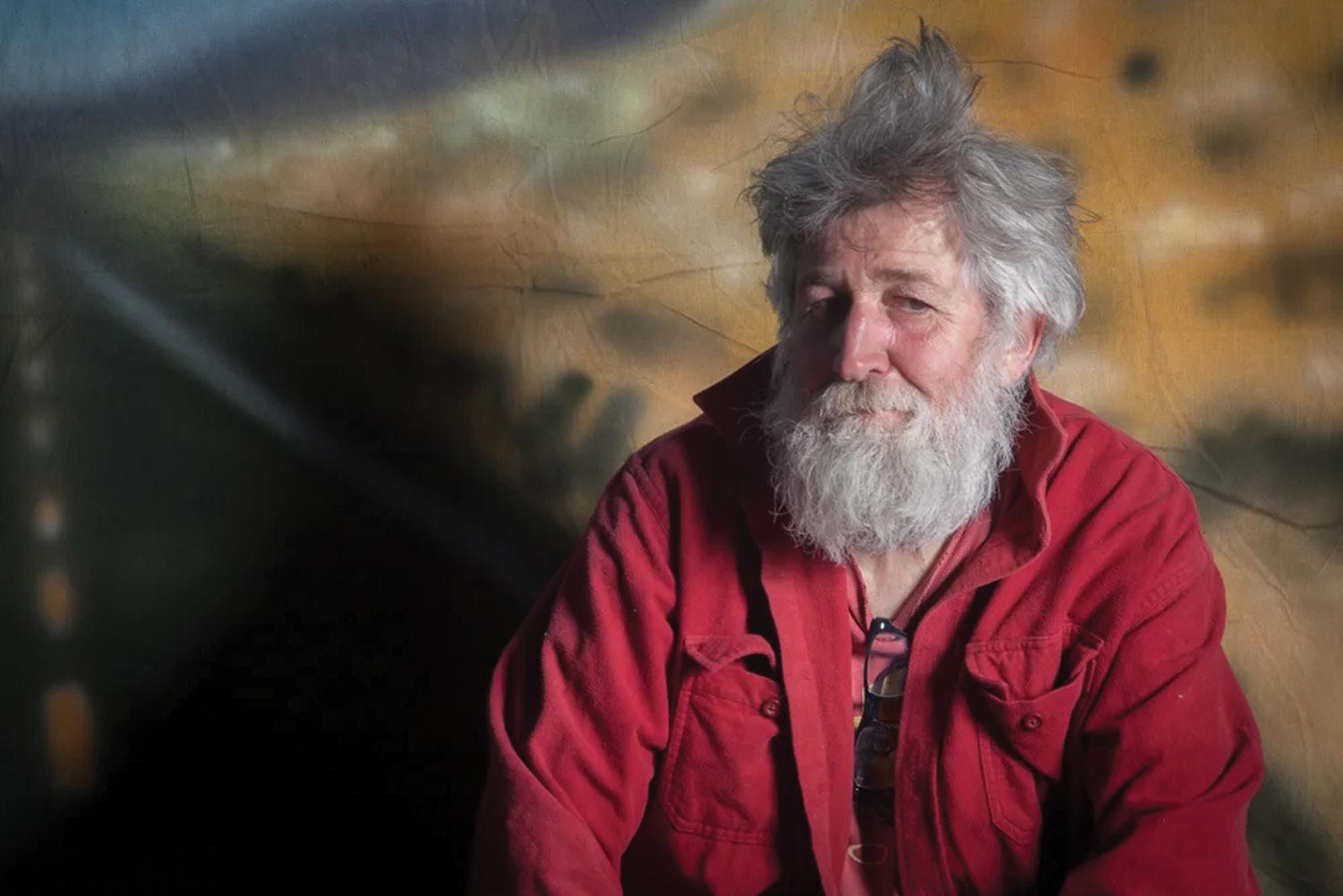
BoB DEBris
Capturing the uncanny
by GRANT PHILLIPS
DEBRIS
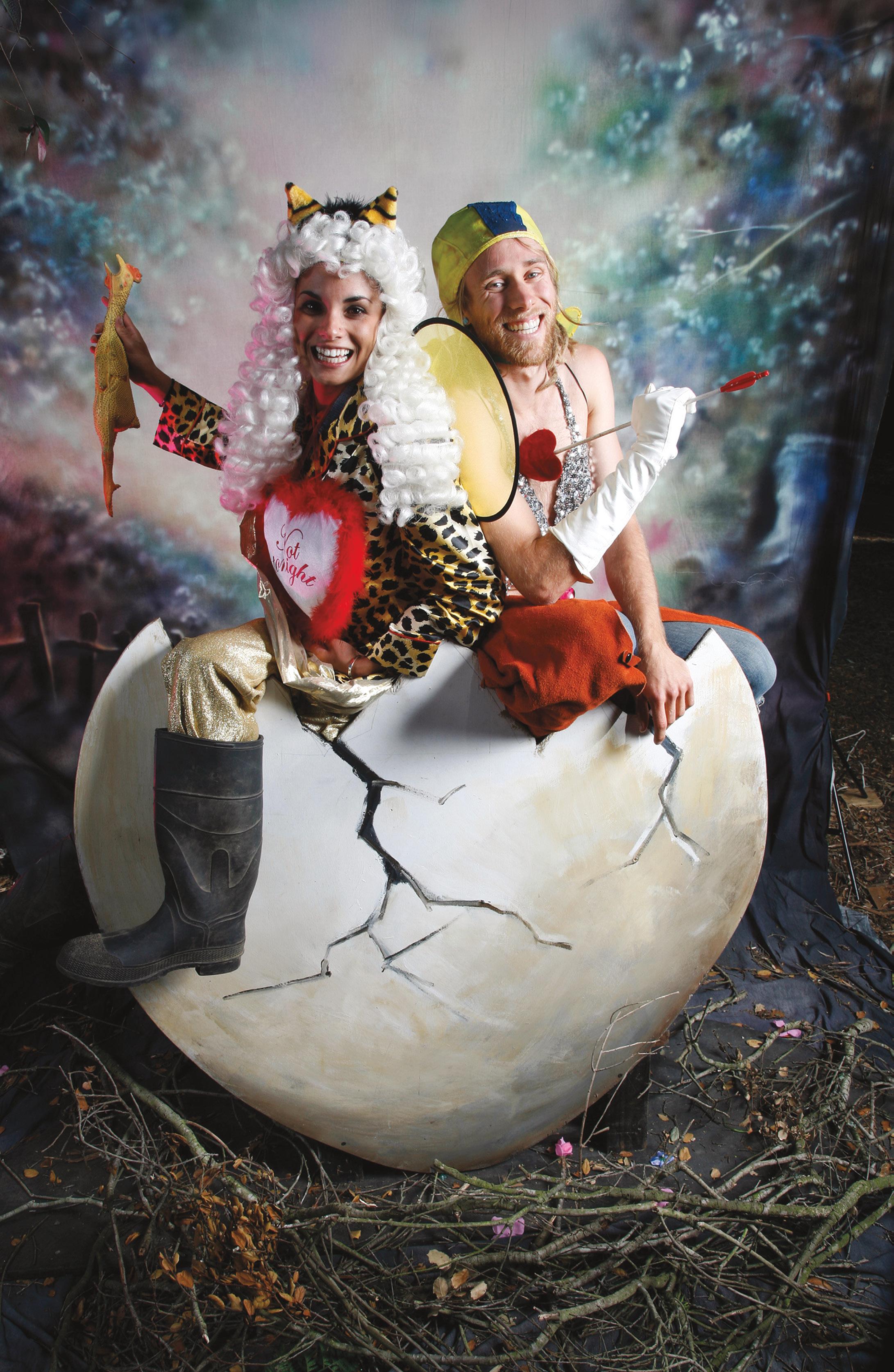
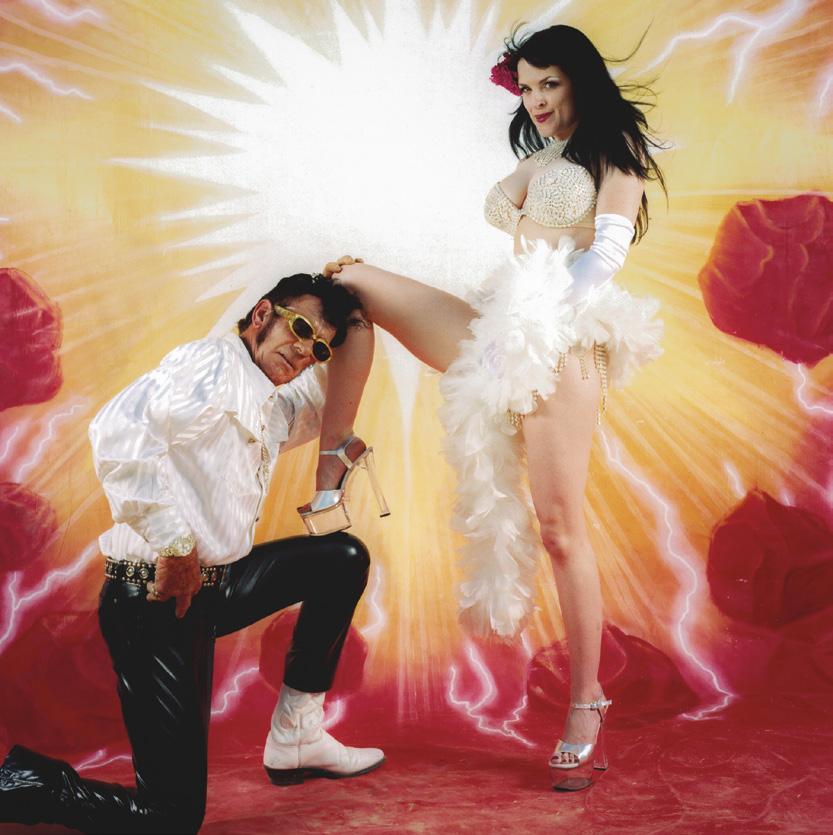
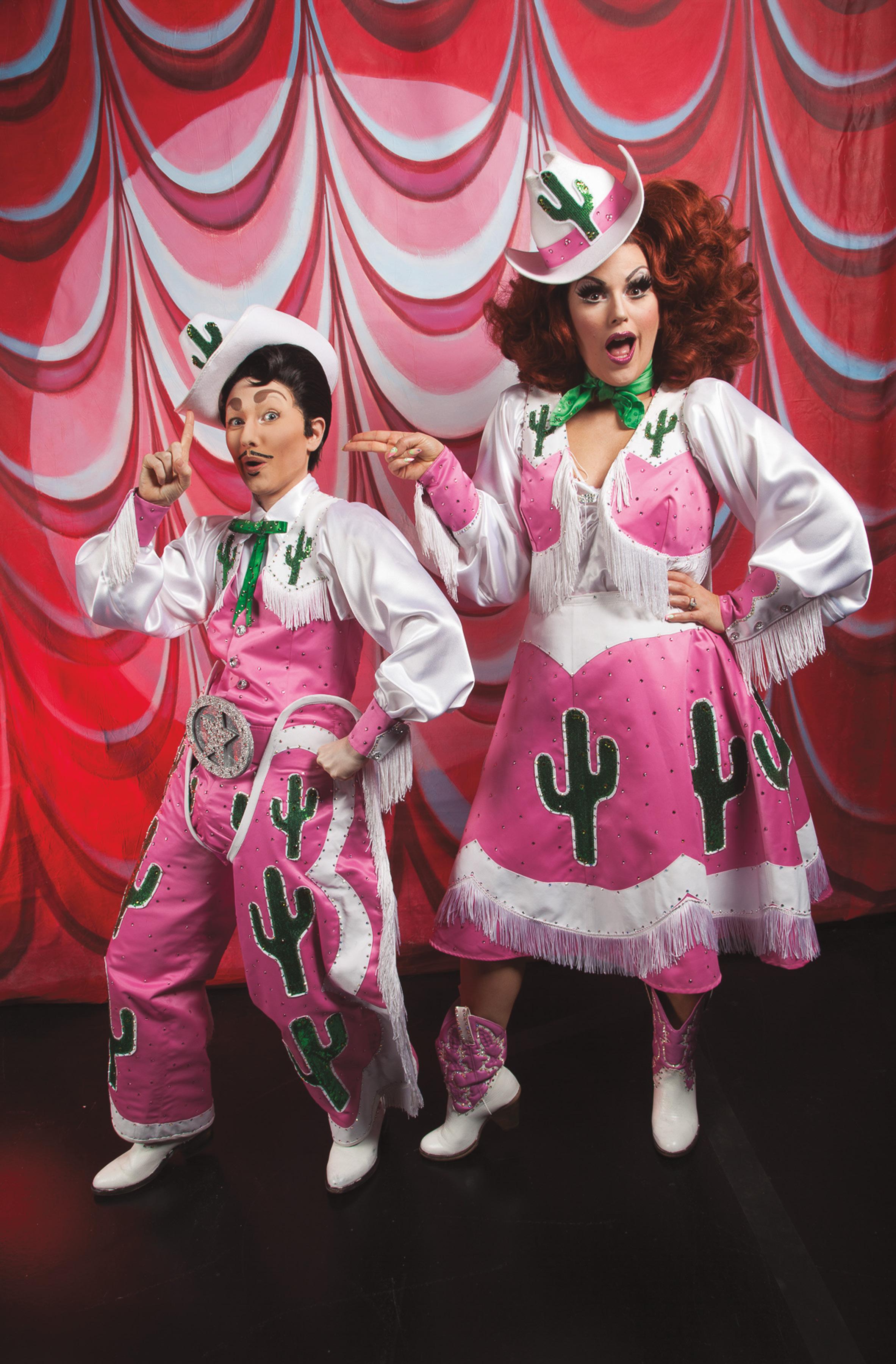
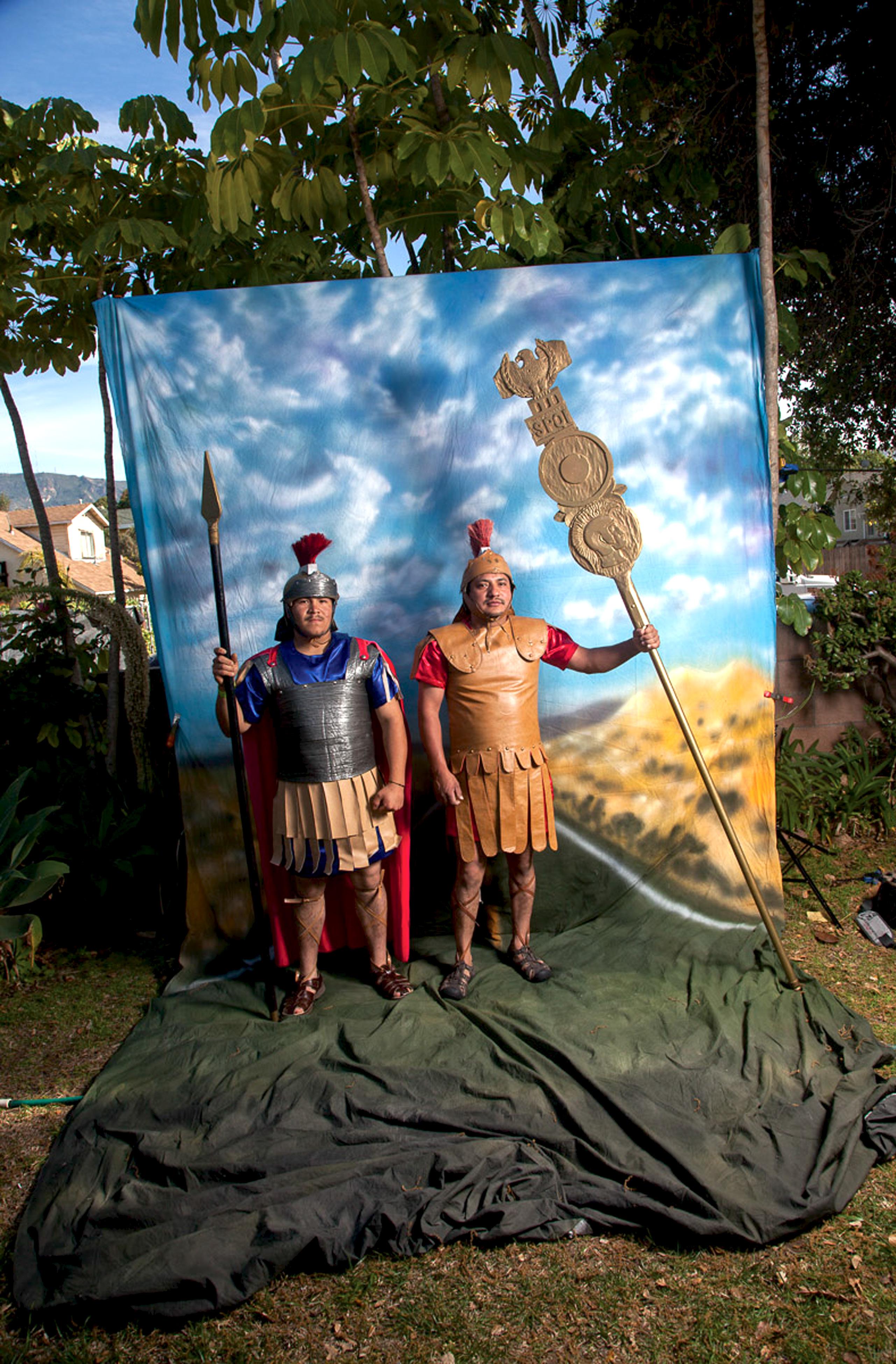
Throughout his career as a photographer, Oak View-based artist Bob Debris has developed a knack for capturing surreal characters within their subcultures.
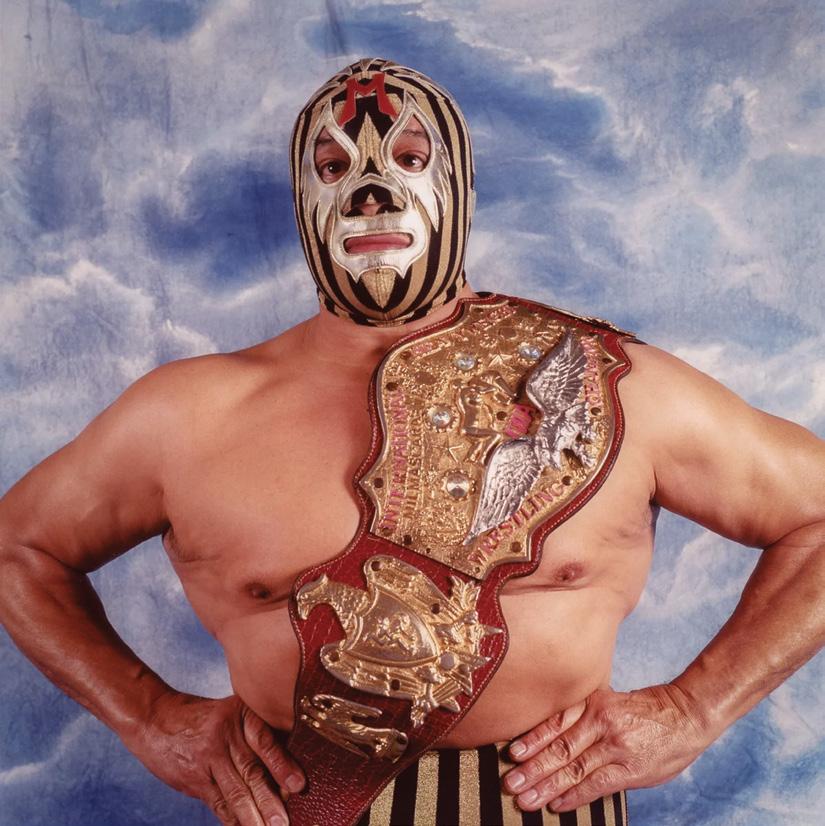
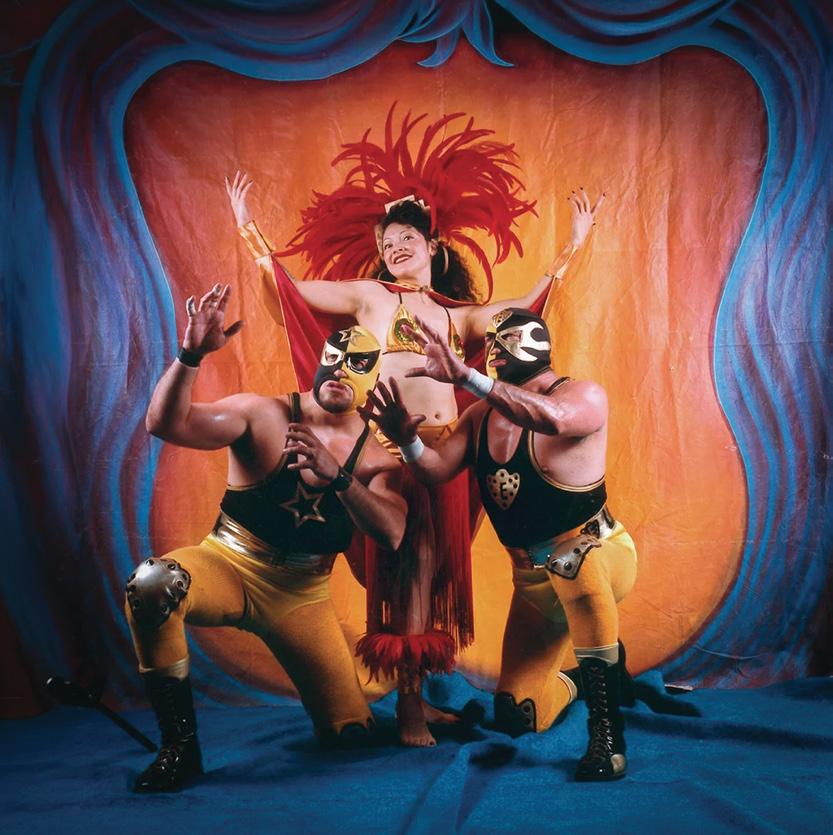
There’s Burlesque performers at Exotic World, Lucha Libra wrestlers at his show at the Mexican Consulate, Passion Play performers in Oxnard, Lotusland attendees in Santa Barbara, Civil War reenactors in Southern California, as well as a laundry list of crazy characters from around the U.S. — people dressed as space aliens in Roswell, ventriloquists from Kentucky, anime cosplayers in Ventura, and Elvis impersonators at Graceland.
Debris has seen and photographed it all, capturing the stars of these subcultures, who may be unknown to the masses, but who are recognized and celebrated as cultural icons and celebrities within their niche worlds, and among their chosen families.
“Nothing was ever planned, and I was just sort of a billiard ball, bouncing from one side to the other,” Debris said of his life and his work. “I was just there at the right time.”
Debris is from Oshawa in Ontario Canada, a place he describes as a factory town, where people get married, go to work in the factories, and stay put. But a bicycle trip through the U.K. got him out.
“I went on a bicycle trip to France and England, and I brought my camera with me and had it on the front of my bicycle,” he said. “I printed stuff that I did, and I got scholarships to go to art school.”
He studied at Banff Centre for Arts and Creativity in Canada, and started his career in filmmaking.
Some of his favorite teachers from that time were from Czechoslovakia, fleeing a Communist-controlled state during the Cold War.
“They had this weird perspective on the world,” he said. “And they were the ones who kind of taught me about kitsch, about the enjoyment of bad taste.”
He married an American artist, Annie Hamilton, who attended Yale University, and Debris hopped along with her and started auditing classes without having to be enrolled.
“She went to school at Yale, so I sort of discreetly went to school, everyone thought I was in a different department,” Debris said of the experience. “Photo department thought I was part of the graphics department, graphics department thought I was part of film, so I was just in these classes.”
Hamilton became a MacArthur fellow, and settled in Santa Barbara to teach, and Debris went along for the ride.
It was in Santa Barbara where he met a new collective of artists pursuing the uncanny, including one he knew as Dr. Tang.
photos by BOB
Right: From Lotusland, 2009
“I kept calling him Dr. Tang, but apparently, that was the name of his cat,” Debris laughed.
Debris and Dr. Tang went to Exotic World together, a legendary ranch in the Mojave Desert run by famed burlesque performer Jennie Lee.
And every year, Debris would go and photograph the performers with their costumes, props and unconventional routines.
He would say he was with “fiasco productions,” a fictional production team to get him clearance, and would document the surreal.
“Year after year, you’re showing up and there’s a trust,” he said, noting some of the burlesque performances involved a 96-year-old woman, or a group called the Grant Avenue Follies, where 20-30 older women from San Francisco would perform for the sake of the art itself, not caring about the economic aspect of the experience.
“They’re a very supportive group,” Debris said. “It’s a wonderful thing to see that kind of stuff, it touches me.”
In Santa Barbara, he met his second wife, a fellow artist named Caroline Allen, and the two eventually moved to Oak View, where he built a studio for each of them, and where both still work to this day.
An Ojai resident for roughly two decades, Debris was re-welcomed to the community when he hosted the exhibit “Debris Flow,” at the Ojai Art Center from February 7 to March 6 in 2025.
The exhibit featured some of Debris’ iconic shots of burlesque shows and Lucha Libre wrestling matches, but also dove into his affinity for roadside attractions, folk art installations, obscure museums and programmatic architecture, showcasing the surreal outer boundaries of the U.S. landscape.
“There’s nothing like that in Canada,” Debris said of the roadside attractions. “I’m pulling off at every exit through the desert and finding buildings that have been transformed by people with their paintings [and] I’m knocked out by why the hell they are even doing this? It’s in the middle of nowhere.”
Debris found his role, a documenter of the unseen.
“Somebody has to document this stuff,” Debris said. “I think of my role as this archivist, this guy who actually has a space where all that stuff is secure and organized, to an extent.”
That work is shared on his varying websites, including https://tinyurl.com/34927fe3 for his books, bobdebris.com/ for his portfolio, and debris.smugmug.com/ for his ongoing photo drops.
And when it comes to the events he photographs, whether its small-town parades or the Day of the Dead celebration at Hollywood Forever Cemetery or the Passion Play in Oxnard,
Right: Kitten N Lou at Exotic World, 2015
where participants reenact the last days of Christ, he said it’s the moments before and after the excitement that intrigue him the most. People getting into character, adjusting costumes, or celebrating the success of the experience.
“What these groups have in common is that each performer adopts a persona connected to something in themselves, be it an aspiration, a fear, a belief, or a personal or cultural affinity,” Debris wrote in a grant proposal for Canada’s Governor General’s Award. “Playing a character in a live performance allows them to bring out qualities in themselves that go unexpressed or unacknowledged. These performers are storytellers of myths, of histories, of fantasies, of the human condition.”
And as someone who has been photographing the subcultures for decades, he’s seeing changes.
As he describes it, those changes include Mexicans and Mexican-Americans celebrating cultural traditions in the streets of Los Angeles and Oxnard, while also being targeted by ICE agents in the strawberry fields and Home Depot parking lots.
It’s non-binary teenagers and adults cosplaying at anime conventions, choosing characters capable of changing their genders, while politicians agonize over trans individuals using public bathrooms.
It’s burlesque having a renaissance of both performance and scholarly interest, stretching its boundaries to include not just female performers, but male and trans performers, while many politicians and evangelical Christian leaders are trying to shut down freedom of sexual expression and crack down on birth control, women’s rights, and drag queens reading children stories at public libraries.
“The photographs taken of these performers present a time of relative innocence,” Debris said in the application. “America was living up to its promise of liberty and freedom in ways the founders might never have imagined. The burlesque dancers parodying sexual appetite, the teenage girls dressed as futuristic warrior boys, the families from small villages in Oaxaca dancing traditional dances with coded celebrations of the mixing of the races— all of these reflect the freedoms we’ve enjoyed these past few decades. In them, I see the grand human desire to express something of oneself that needs to be seen, acknowledged, and celebrated. Something different, distinct, sometimes bizarre and outrageous, sometimes profoundly spiritual, but always something that drives the spirit toward self-exploration and performance. With the current administration and Supreme Court’s reversal of many of the progressive rights we’ve enjoyed, it feels all the more urgent to continue documenting these beautiful manifestations of freedom, creativity, and diversity.”
Even though Debris didn’t get the grant, at the age of 72, he continues his work, capturing the uncanny.
Mil Mascaras
Chivos Brothers with Miss Bunnypants
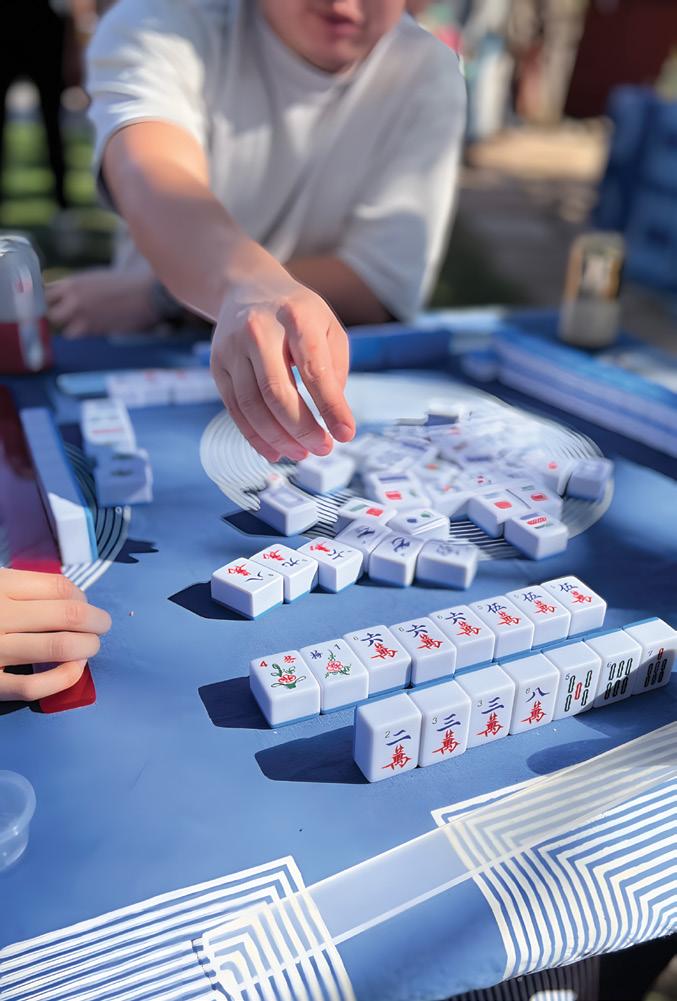
After 200 years mahjong is having its moment in 2026. The 19th century Chinese tile game that came to America in the 1920s is now hotter than ever. Mahjong groups on Facebook have hundreds of thousands of members. Hollywood celebs like Julia Roberts, Blake Lively, and Meghan Markle are hooked. And in Ojai, players of all ages have discovered the joys of the game and the connections it cultivates.
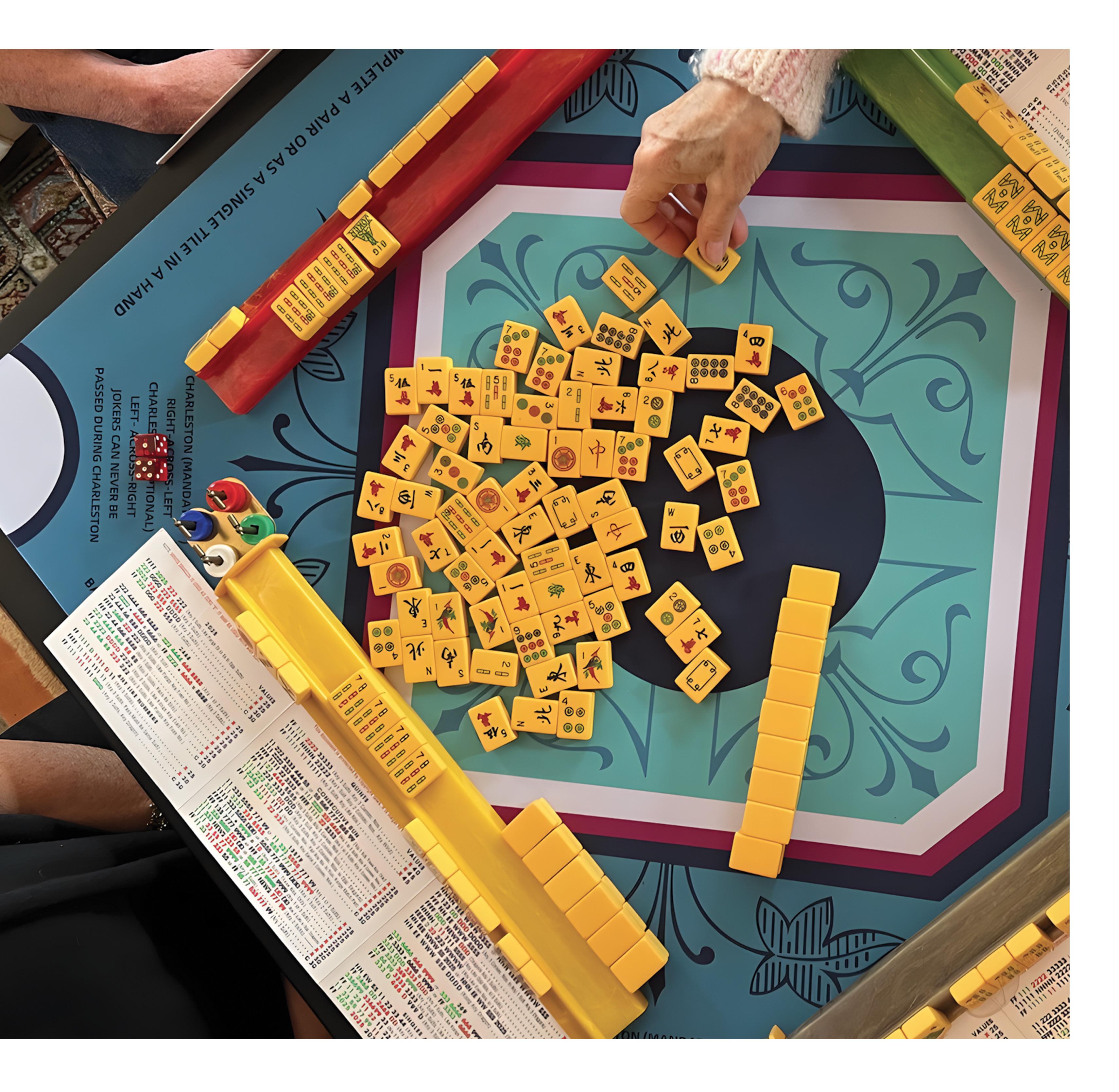
This is not a story about the rules of mahjong; that would be a much much longer article. Generally speaking, mahjong is like a more complicated form of gin rummy. Players make sets and sequences from patterned tiles they hold in a rack like Scrabble letters.
American mahjong and traditional Chinese mahjong each have slightly different rules. American mahjong involves a printed card of winning hands and eight jokers, while Chinese mahjong has neither. But observe both versions and you get the same vibe: people having in-person, analog fun in a world filled with digital distractions.
Sabrina Teiger left her regular mahjong squad behind after moving to Ojai from L.A. in 2022. “When I got to Ojai, I put a post on Facebook to see if there were any mahjong players here,” she says. “I got no response.”
Eager for a game, Sabrina started teaching friends and new acquaintances from the dog park (where all the best connections are unleashed). “My intention has been to create community,” she says. “As a new person in Ojai, that was important to me. I love the game and want to teach people who truly want to learn.”
Apparently, lots of Ojai residents are eager to learn. In just the last year, Sabrina has taught 16 students American mahjong. They now meet weekly to compete and hone their skills.
At a recent Monday afternoon game in the Arbolada, Sabrina sat with nine other people at three tables. After some small talk, the game started and the atmosphere grew quiet because the game takes focus. Sabrina loves it all: “The beauty of the tiles, the mental patterning, the challenge. It’s not as much about winning, though I do like to win. It’s about creating a hand out of nothing.”
Sabrina, like many others who play, collects mahjong sets. She’s up to 13 and counting. “I love the beauty of the sets,” she says. “They’re magical. I used to collect wine, but I let that go. Mahjong sets are my thing.”
She’s not alone. A recent search for “mahjong” on eBay yielded thousands of results, with some sets selling for more than $10,000. If you add the racks, table mats, custom cases, and other mahjong swag, thousands more listings pop up.
The virtual mahjong world is also buzzing, with mahjong influencers, apps, and web-based simulators so you can play 24/7. Sabrina urges her students to play online vs. other people or bots because the game is difficult and requires practice: “You can’t play once a week and expect to get better.”
Adventurous players can pack their bags and tiles for mahjong retreats and cruises to destinations from Europe to the Caribbean. People are embracing mahjong for many reasons. Some respond to the joy of in-person connection and community. Others want to spark interest in Chinese culture. Many like the competition and occasional gambling. A few even think mahjong might prevent mental decline.
Lisa Hacker, bent over her tiles at the Arbolada game, says: “My mom had dementia. I think about that. I’m aware of trying to keep everything I have and learn new things, so maybe it helps. It’s a challenging game to play well. You need to think. There is luck involved, but there’s also a lot of strategy.”
Lisa and other players attach nostalgia to the game. “My mom played mahjong,” Lisa says. “It makes me feel close to her when I play.”
The longest-running game in Ojai is Wednesday afternoons at HELP of Ojai, where Roz Kraus has been playing for 35 years. She’s noticed a big surge in interest recently: “We have a lot of newer people who have never played with us before.”
The weekly game is welcoming to all players, including rookies, she says. “It’s a friendly game; we’re all friendly people.
story and photos by BOB
ASHER
Mahjong Mania
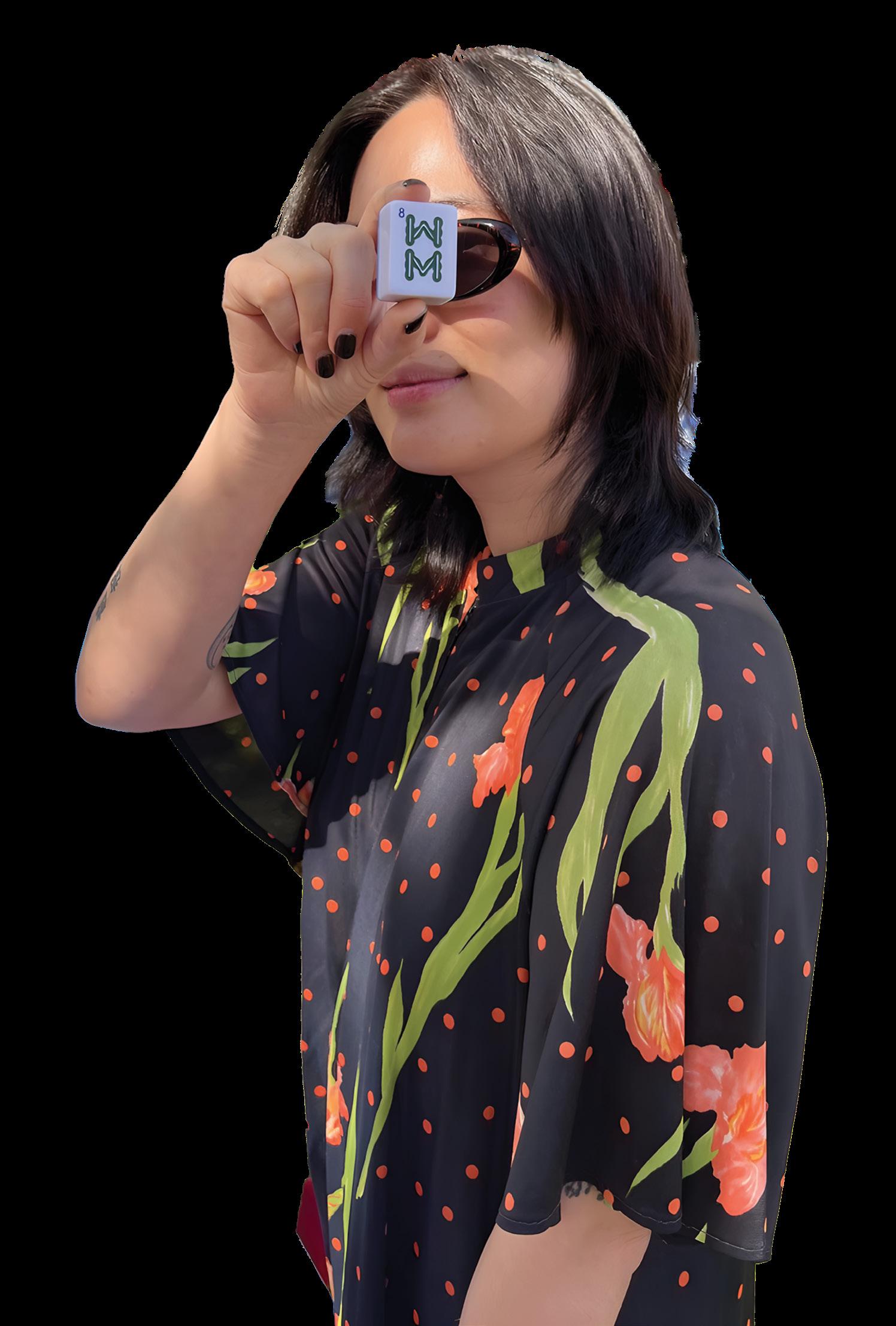
Angie Lin, 35, founder of Eastneverloses.com, a website dedicated to spreading the gospel of mahjong to a new generation, quit her day job to focus on mahjong full time.
“My card says ‘mahjong consultant,’ which is a new role I’ve created for myself,” Angie says. “I basically help different brands and companies create their own mahjong communities and events as well as teach. And I do my own big events as well.”
Angie’s passion for the game goes deeper than just trying to win. “I’m really trying to promote and reclaim … Chinese mahjong,” she says, because the history of mahjong in America is actually very complicated and interesting. Jewish American women in the 1940s really took to mahjong, so there’s that culture of American-style mahjong. But there hasn’t really been this moment in America for Chinese-style mahjong.” She wants to not only promote mahjong, but also Chinese or Asian culture through mahjong, such as combining the game with Chinese food or traditional Chinese music.
The social aspect of the game is important to Angie, too. In fact, mahjong changed her life. “I met my fiancé at the mahjong tables,” she says. “It’s a great way to meet people. I know multiple mahjong couples. I sometimes do mahjong matchmaking, which is really fun.” Angie recently teamed with Kenny Osehan for the first Lunar New Year mahjong event
at the Ojai Rancho Inn, one of the chic local hotel properties Kenny owns under the Shelter Social Club brand. “It’s about celebrating Chinese culture,” Kenny says. “And this year, Lunar New Year celebrations seem to be more popular than ever.”
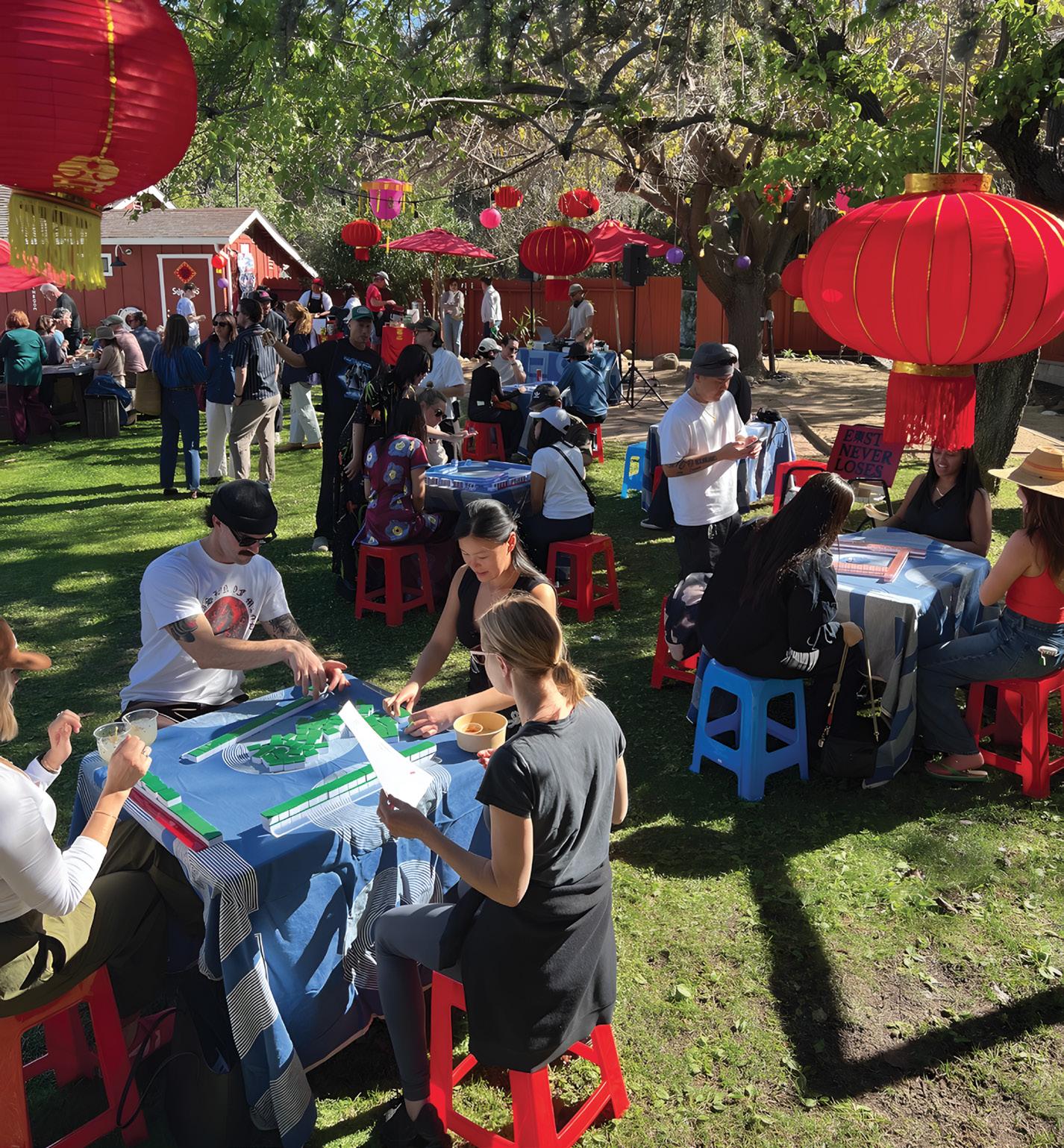
When I arrived at the Ojai Rancho Inn five empty mahjong tables were set up under gently swaying red lanterns. An hour later, enthusiastic players of all ages filled the seats. Some were playing for the first time; others had serious game. It was hard to tell the newcomers from those who already knew each other.
Angie says social mixing is part of the beauty of open mahjong events. “It’s sort of like musical chairs for meeting friends,” she says.
Post-COVID, a desire for in-person socializing has touched every age group, especially younger people who are changing their entertainment habits.
Justin Fung, 38, says he believes that “people aren’t drinking as much, but want community and don’t want to spend a lot of money,” so they “have fun with mahjong.”
Angie agrees that the rise of mahjong is tied to the need for social connection.
“I think we’re all pretty desperate for that,” she says. “TikTok [and] Instagram kind of take our attention away… especially with Gen Z, and I think that’s why mahjong has really attracted the younger audience.”
As tiles clicked and people focused on their hands, I suddenly realized something was missing: phones. No one was texting or scrolling their social media feeds. Instead, people were present and playing an ancient game in an old-fashioned way.
Whether mahjong can lead you to a love connection or ward off dementia is hard to know. But what it can do for all is build enduring connections and community.
To play or learn mahjong, contact Sabrina Teiger at ojaimahj@gmail.com, Angie Lin at eastneverloses.com, or HELP of Ojai at 805-646-5122.
Mahjong gamers gather to compete at Ojai Rancho Inn’s Feb. 22 Chinese Lunar New Year event. Photo: Bob Asher
12615 Koenigstein Road | $7,850,000
Rancho Del Oso — an iconic 1939 Upper Valley estate — spanning 10 private acres with a historic stone lodge, guest cabin, spring-fed pool, and cinematic views steeped in Hollywood-era legacy.
5390 Rincon Beach Park Drive | $5,495,000
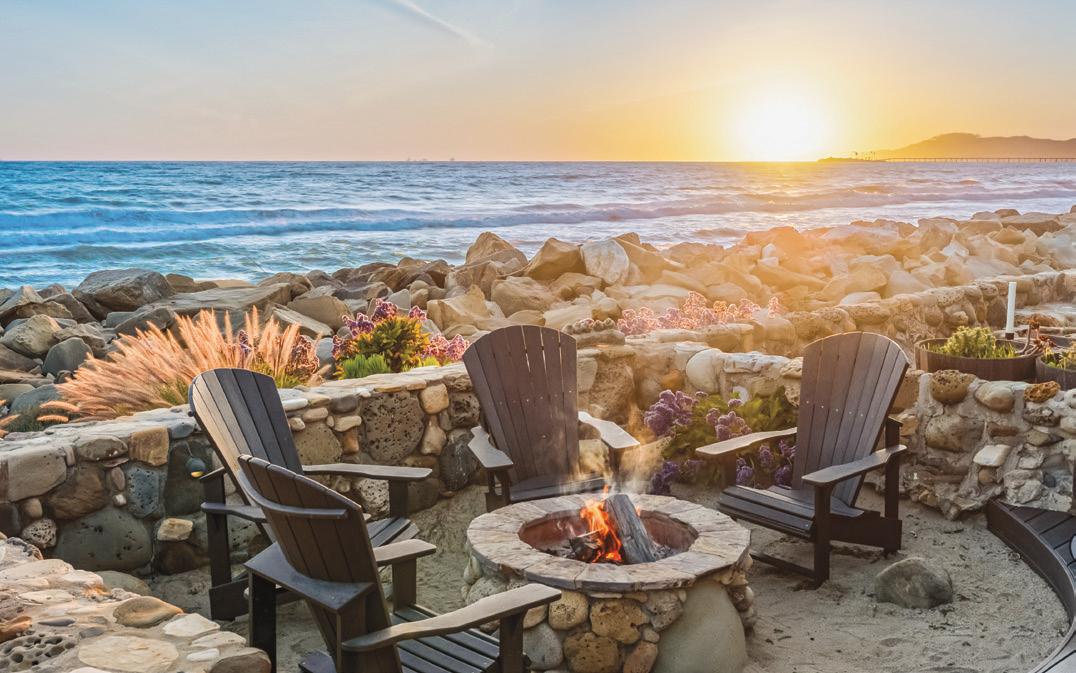
Oceanfront living in the gated enclave of Rincon Beach Park — a refined 3-bedroom retreat with en suites, custom alderwood details, and expansive decks with spa, fire pit, and views to the Santa Barbara Mesa.
3741 Grand Avenue | $1,990,000
Timeless 1935 Spanish Revival in Ojai’s coveted East End — set on over half an acre with 2 beds, 2 baths, original character, mature oaks and citrus, historic stonework, and detached garage with ADU potential just minutes to downtown Ojai.
Cathy Titus
805.798.0960
DRE 01173283
cathytitusojai@gmail
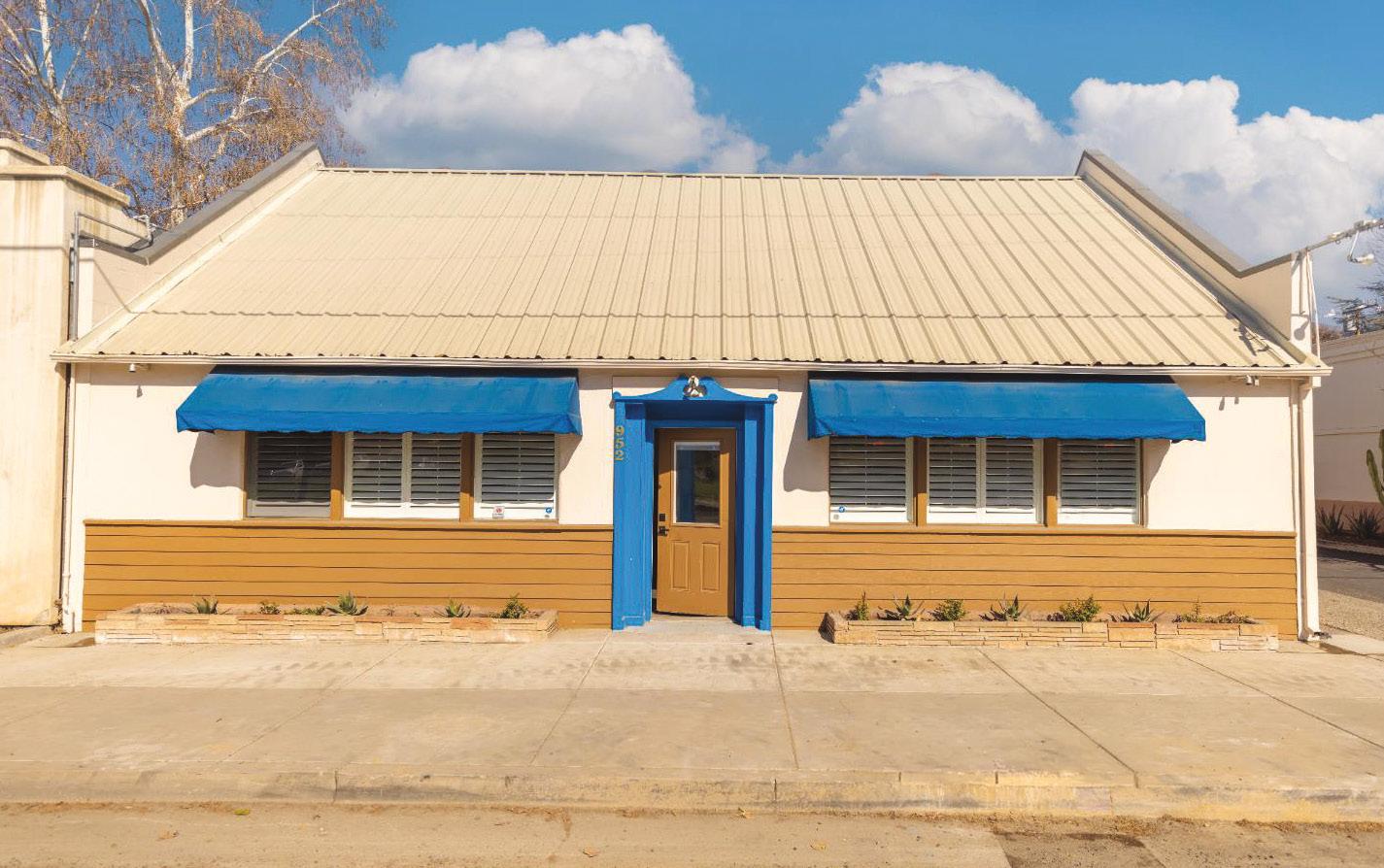
952 East Ojai Avenue | $2,170,000
40+ feet of prime Ojai Ave frontage — 3,580 sq. ft. of flexible commercial space with split configurations for multi-tenant use, detached roll-up building, alley access, polished concrete floors, and ample on-site parking.
The 250th anniversary of America will be celebrated at the Hollywood Bowl on Tuesday, Aug. 18.
American Mosaic, co-created by Ojai photo historian Joe Sohm and composer Peter Boyer, is a musical-visual celebration of America’s birthday in 1776.
The narration for the concert, scheduled in a dozen cities across the United States this year, is based on an opening quote by Ben Franklin: “I have sometimes almost wished it had been my destiny to be born two or three centuries hence.”
“If you split the difference in that, it would be July 4, 2026,” says Sohm, an Ojai resident for more than 30 years.
With music, imagery, and quotes from throughout America’s history, American Mosaic illustrates our country 250 years “hence.”
“It’s an opportunity to see what we have collectively done over years, over decades, over centuries,” Sohm says. “It’s not about red states or blue states. It’s not about politics. It’s completely nonpartisan. It’s evidence, imagery, and the sounds of democracy that answer Ben Franklin’s question.”
For decades, Sohm has been attempting to photograph America while asking one driving question: How do you photograph democracy?
No single photo can capture such a broad idea, according to Sohm. “It has to be hundreds, thousands, tens of thousands of images and, collectively, when you put them all together, they’re more like a Seurat painting,” he says. “And that’s where the word ‘mosaic’ comes from.” And how do you capture a country as big as the United States? “I ultimately came down to this theory that there’s probably 500 to 750 great, iconic locations in America, and over my life I pretty much nailed them,” Sohm says.
Sohm and Boyer first met in 2009 when the Boston Pops performed Sohm’s Visions of America, composed by Ojai’s Roger Kellaway, along with Boyer’s premiere of The Dream Lives On: A Portrait of the Kennedy Brothers.
A decade passed, with Sohm’s wife, Ojai Studio Artist Leslie Plimpton, told her husband that Boyer’s music, “hearing Peter’s music all the time on Sirius radio … sounds like what your images look like,” Sohm recalls.
A
M eric A n Mos A ic
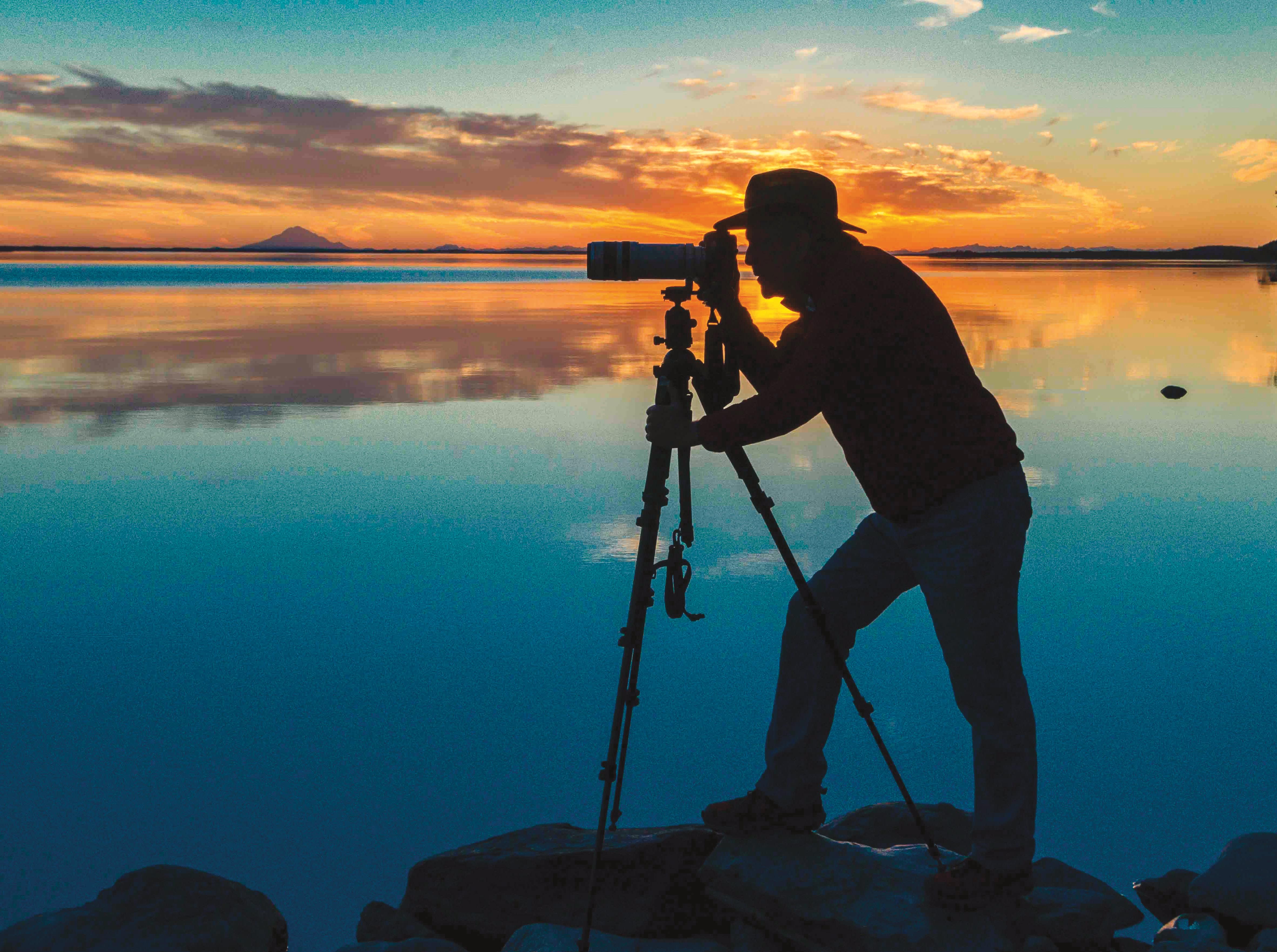
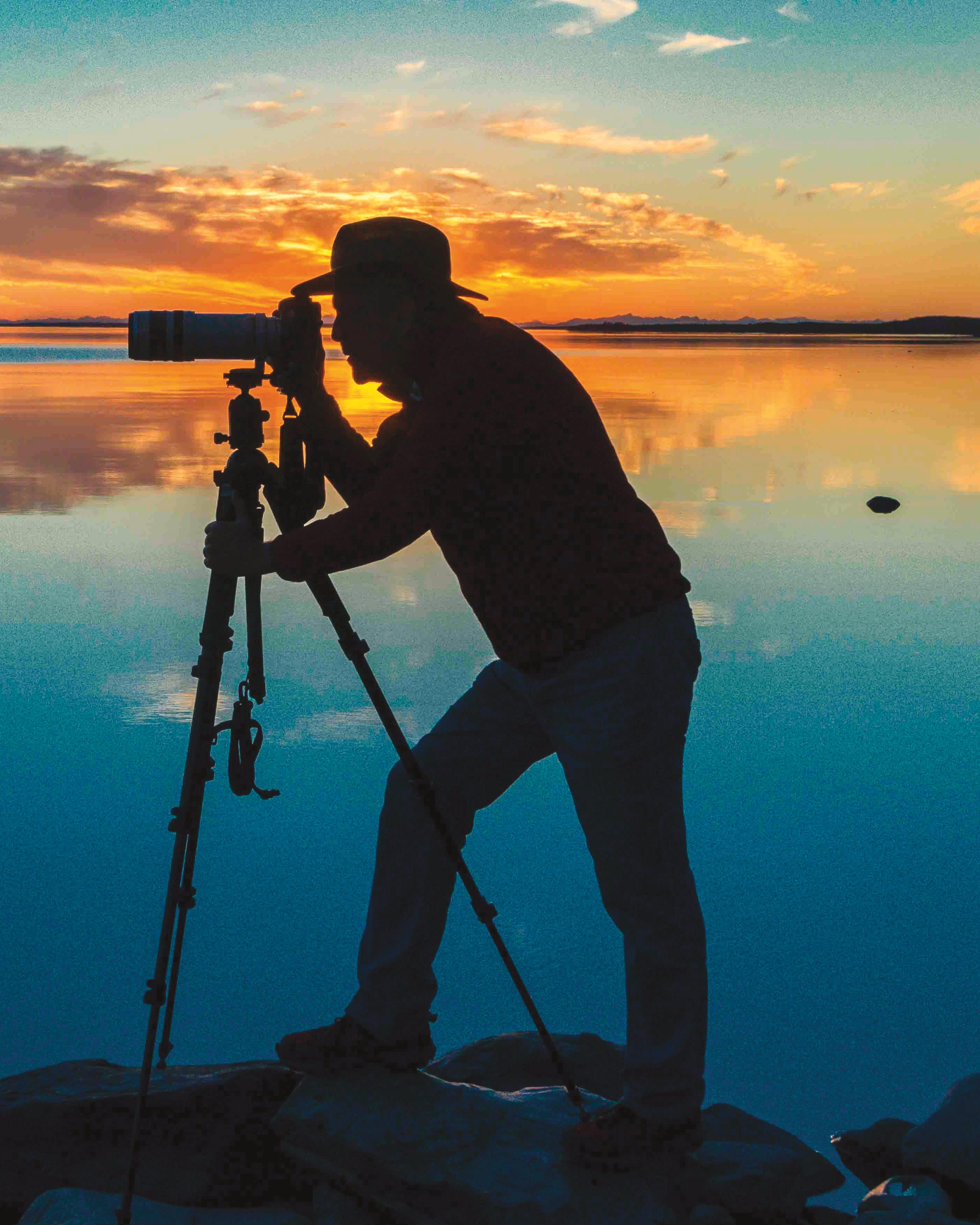
Joe Sohm takes an Alaskan landscape at sunset at Mount Redoubt Volcano on Sept 1, 2016.
“He’d been listening on his own and came to the conclusion that I was the right composer for this project that he was envisioning,” Boyer says. “When he proposed this project to me, where we would use my music and his images, and … create narration and …a work to celebrate America 250, at that point it was three years out from the actual anniversary, which now approaches.”
Right away, Boyer saw the potential in Sohm’s idea. “I immediately felt that, yes, he’s right about this,” he said. “If we put my music and his images together we’re really going to be onto something that might be greater than the sum of its parts.” The imagery in American Mosaic is largely aerial and time-lapse video depicting all 50 states, nearly every major American city, and most of the country’s famous landmarks. “It’s obviously a large brushstroke,” Sohm says. “That’s why it’s taken me 40 years to do this. It’s typical of an overly ambitious younger person.”
Sohm’s love affair with America began in his early 20s when he taught American history. Having grown up in the small town of Webster Groves, Missouri (a suburb of St. Louis), he feels right at home in a small town like Ojai. “When you see the piece, it’s very reflective of my childhood,” he says.
In American Mosaic, Sohm’s camera records a 12-year-old boy riding a bicycle
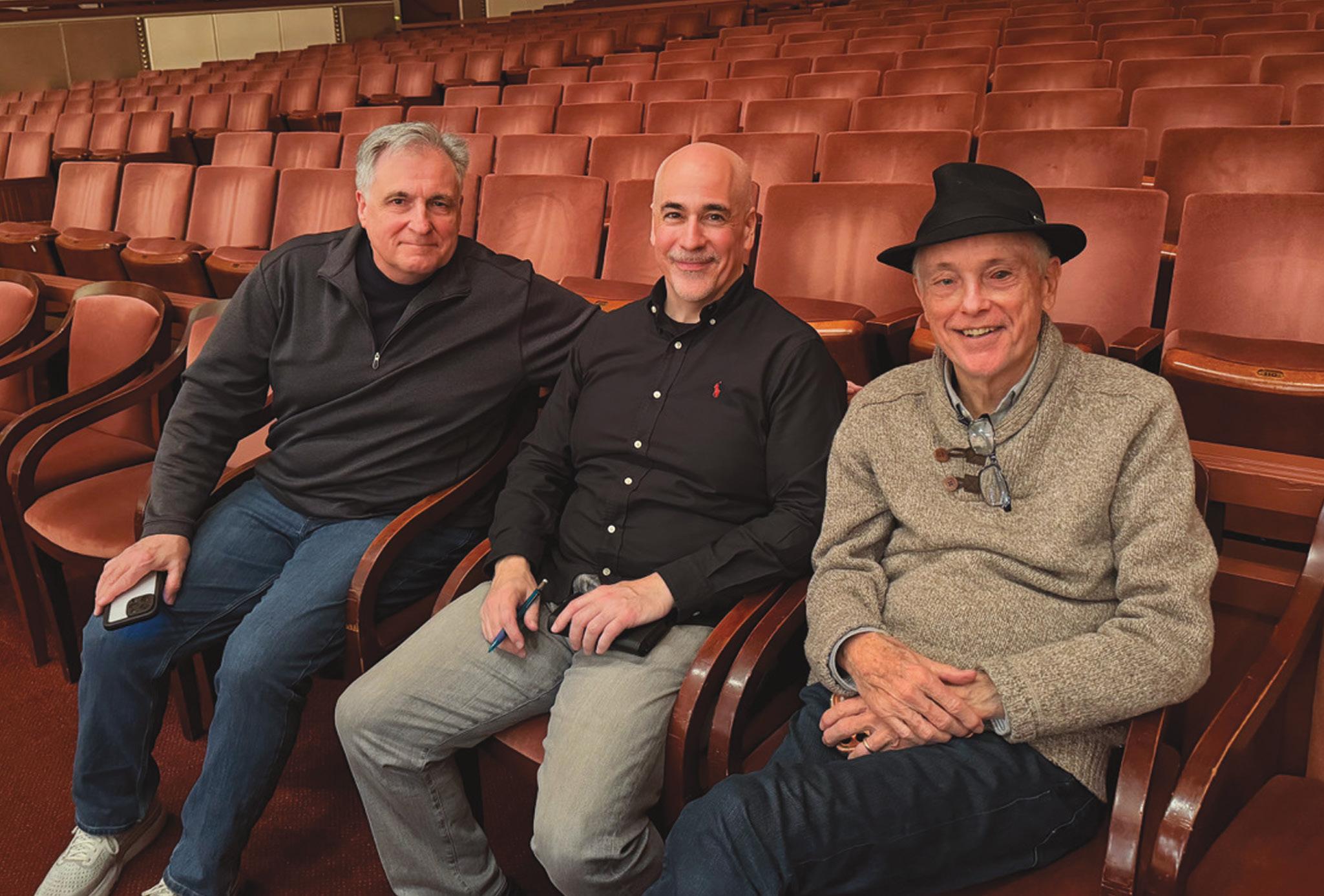
Above: (left to right) John Milewski, Peter Boyer and Joe Sohm at the John F. Kennedy Performing Arts Center Concert Hall rehearsal of American Mosaic on Feb.17, 2026.
Photo: Leslie Plimpton
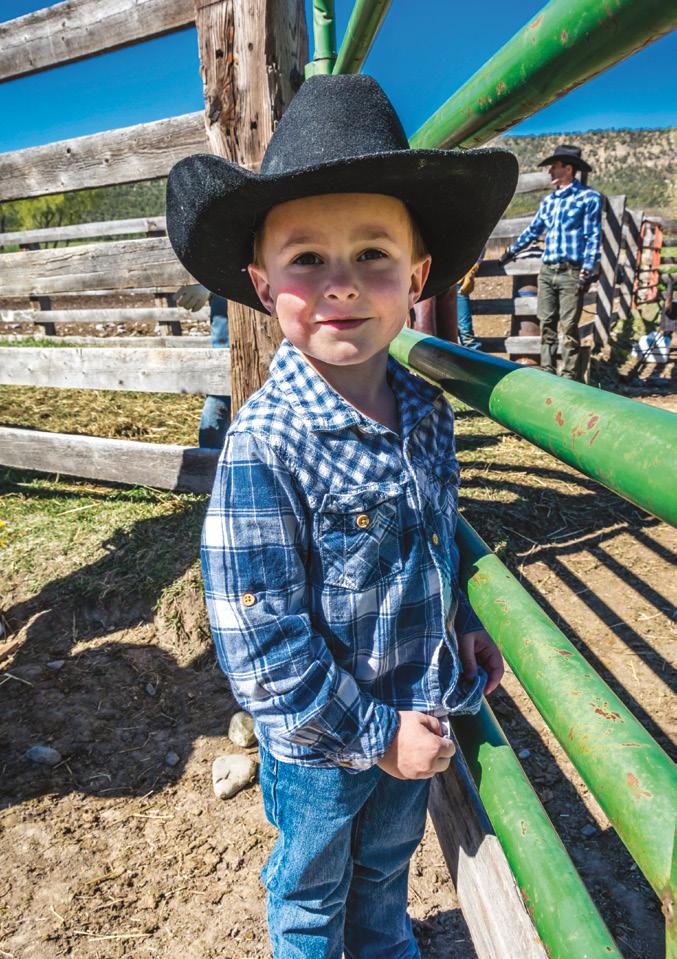
Below: A little cowboy cattle branding April 22, 2017 at Ridgway/Montrose, Colorado.
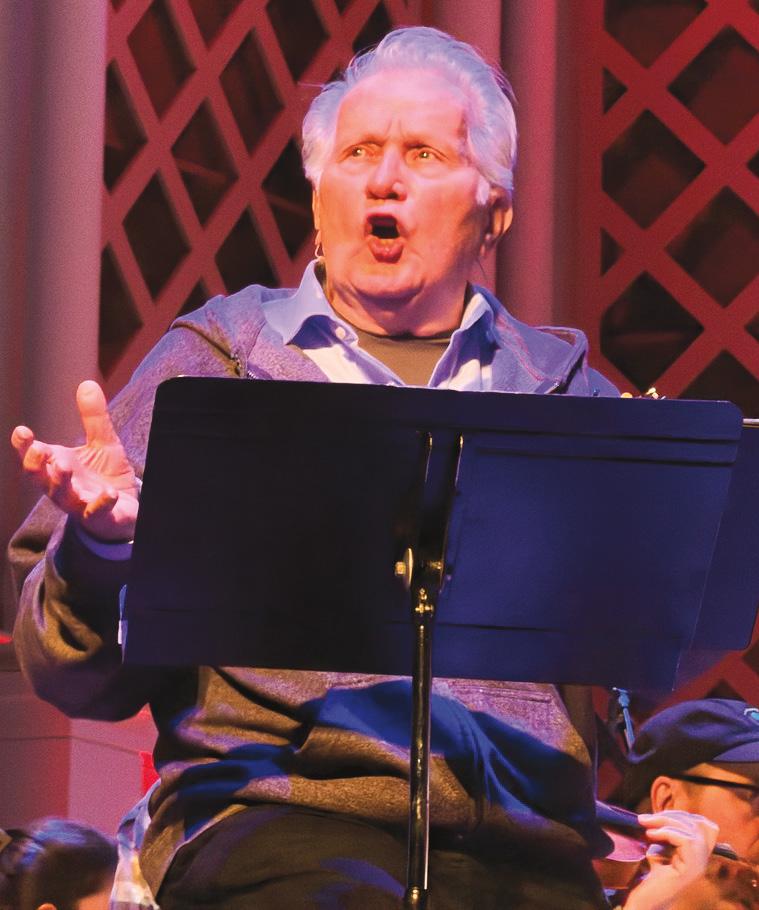
Martin Sheen rehearses for the reading of the American Mosaic narration at Cincinnati Music Hall in Ohio.
Right: British Redcoats charge Colonial Patriots at the American Revolutionary War Reenactment, Battle of Bunker Hill, on June 21, 2025.
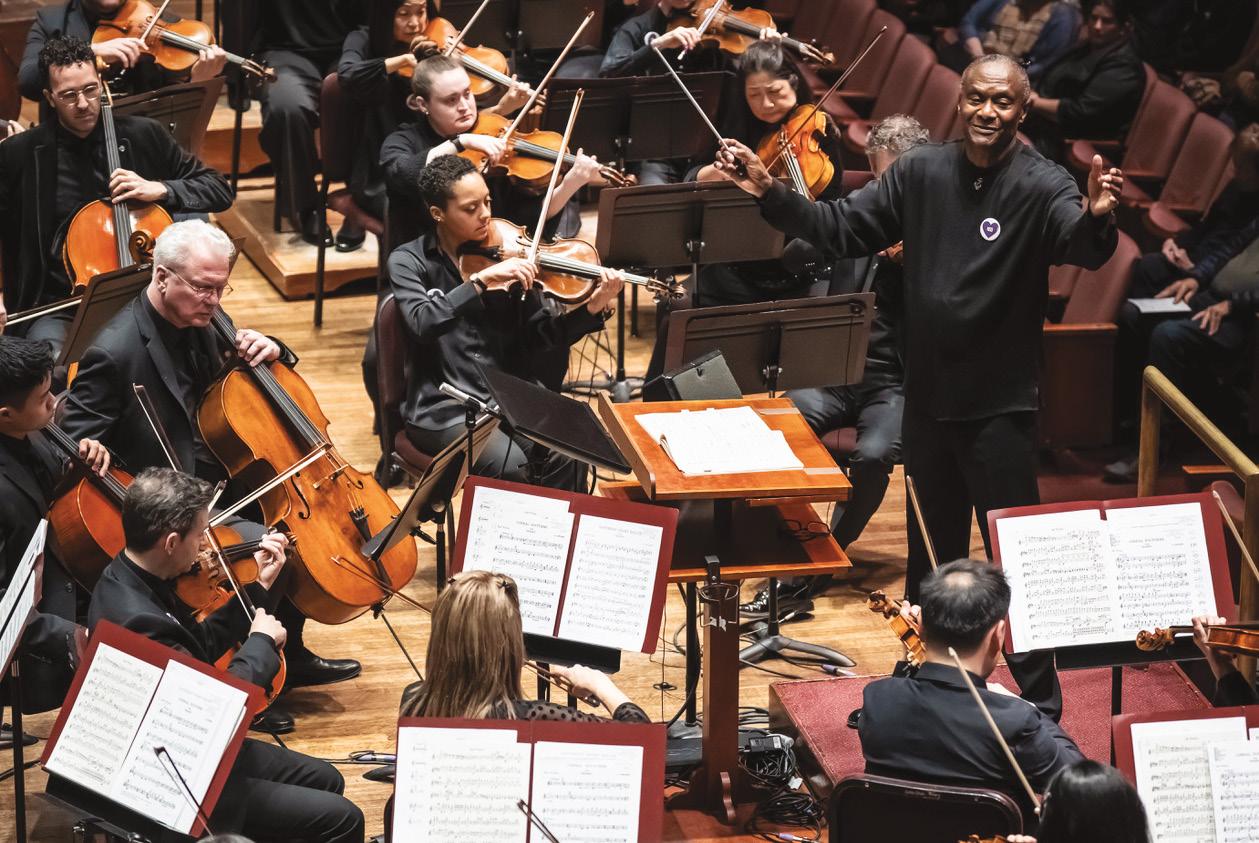
National Symphony Orchestra, conducted by Maestro Thomas Wilkins, John F. Kennedy Center for the Performing Arts, Feb. 18, 2026
The New York City skyline at sunset from New Jersey, with a view of Freedom Tower, where previously stood the World Trade Towers, June 4, 2018
down a dirt road under a canopy of trees in the South. Accompanied by Boyer’s music, the video “captures a boy’s youth and the joy of being on a bicycle. It’s like a symbol of freedom,” Sohm says. The film emphasizes multicultural America.
From the start, it was clear to Boyer that he and Sohm had a great deal of common interest in the history of the United States. “It was also just clear to me that this is somebody who is extraordinarily dedicated to his work and has a very compelling vision for all of this,” Boyer says. “He’s so devoted to this task that he’s set for himself.”
American Mosaic premiered in mid-February at the Trump Kennedy Center for the Performing Arts in Washington, D.C. The performance by the National Symphony Orchestra featured conductor Thomas Wilkins, artistic director for the Hollywood Bowl Orchestra, with narration by John Milewski, director of digital programming for the Wilson Center in Washington, D.C.
“The audience was extremely enthusiastic,” Sohm says. “The musicians were exceptional. Peter and I were pretty well blown away by the musicianship. These are some of the top musicians in the United States.”
Both the Kennedy Center performances and concerts in March by the Cincinnati Pops Orchestra received standing ovations, according to Sohm: “People were very emotionally moved. Not a single person in Washington or Cincinnati had any political comments. Everything was about, ‘This is the America I love, this is the America I grew up in, this is the America I want to have in my life.’”
The narrator for the Cincinnati Music Hall performances was actor and Ohio native Martin Sheen, who walked on stage to a standing ovation and was joined by Boyer and Sohm.
“To have Martin Sheen, who is an extraordinary and beloved actor, appear on stage and stand in front of an 80-piece symphony orchestra and deliver this narration was fantastic,” Boyer says. “The audience response just to him was so strong, but then the audience response to him with this piece took it to a whole other level.”
When he embarked on his journey to photograph America four decades ago, Sohm told himself he would “avoid shooting clichés.” He eventually discovered that viewers wanted the familiar. What set his images apart, he says, “was I was shooting them in all formats, in perfect lighting and in the right season, with the latest, most advanced cameras possible.”
Other stops on the American Mosaic tour included Williamsburg, Virginia; Costa Mesa, California; and Yorktown, Virginia.
Upcoming performances include Nashville, Tennessee; Des Moines, Iowa; Dearborn, Michigan; Vienna, Virginia; and St. Louis, Missouri.
The Aug. 18 performance of American Mosaic at the Hollywood Bowl will feature the National Symphony Orchestra conducted by Gianandrea Noseda. “The Hollywood Bowl is arguably the greatest outdoor venue in the world,” Sohm says. “We’re just tickled pink to be able to perform there.”
“This is a really tremendous thing,” Boyer says. “The National Symphony Orchestra has never in its existence performed at the Hollywood Bowl. To be the sole, living American composer at a historic moment alongside the music of George Gershwin, alongside the music of Leonard Bernstein, is a huge thing and wonderful for me as a composer and wonderful for Joe as the creator of the visuals.”
Other possible concerts include performances by the Cleveland Symphony Orchestra in Miami, Florida, and Provo, Utah.
“People in the orchestra world can see that Joe Sohm’s imagery, Peter Boyer’s music, and American 250 is a very natural thing,” Boyer says. “It’s an attractive project to people, and that’s a consequence of the way in which his body of work and my body of work are complementary.”
When he talks about the piece onstage, Boyer is quick to tell the audience that for most of the projects he’s done in his career, the idea was his. “But not this one,” he says. “This was Joe’s idea. He came to me and he convinced me, and I’m glad he did.”
Earlier this year, Sohm was finalizing plans with the Ojai Film Festival to turn American Mosaic from a live orchestra performance into a film.
Are any images of the Ojai Valley woven into American Mosaic? Most certainly, according to Sohm. “Ojai is probably the most-shot subject matter that’s not, say, New York or Los Angeles, because it’s my back yard,” he says.
Approximately 150,000 people will experience American Mosaic this year, Sohm says.
When you combine the music, imagery, and narration, not only is the 33-minute performance a mosaic, “it’s hopefully a goose-bump journey through the 50 states,” Sohm says, “and a reminder of the legacy that we have all inherited and the responsibility of us, collectively, whatever political party we are, to carry this forward through the next 250 years.”
Sunrise at the U.S. Capitol, Washington D.C, March 27, 2018
199 FAIRVIEW ROAD
A private Ojai retreat on 1.69 acres with gardens, pool, spa, and seamless indoor-outdoor living. Approx. 2,867 sq.ft., 3 beds, 2.5 baths plus ~900 sq ft workshop/guest space. Mediterranean with an artistic East–West influence.
Offered for $3,690,000
1130 RANCHO DRIVE
Rare gated hillside estate on over 2.5 acres, completely rebuilt to new-home standards with sweeping 360° mountain, valley, and sky views. Approx. 3,000 sq.ft., 4 beds, 3 baths, expansive decks, three-car garage plus separate two-car garage.
Offered for $3,000,000
805.340.8928
TeresaRooney@bhhscal.com
DRE: 05994439
805.218.8117
AmandaStanworth@bhhscal.com
DRE: 01262333
STELLA
805.575.6088
StellaStanworth@bhhscal.com
DRE: 02283655
4222 THACHER ROAD
Bathe in a Natural Wonder of Your Own
Your dream Ojai hideaway in the woods on prestigious Thacher Road. All the charm of a rustic cottage with the modern updates you’ll appreciate... a well-planned cook’s kitchen with newer appliances, updated baths, plenty of room inside and out to relax, meditate, and exhale. The great room features a hand-built stone replace and plenty of windows to the quiet world outside. On the same level, you’ll nd a comfortable bedroom with adjacent bath. A reading nook is carved out of the great room where you can get cozy on cool nights... or use it as guest room with trundle bed. The primary suite on the lower level o ers plenty of privacy, and its own lovely bath. You won’t want to leave your romantic cabin in the woods... and if you act quickly, you won’t have to.
O ered at $1,495,000
Photo: Katrina Rice-Schmidt
One early January morning in 2024, I found myself charging directly at a mountain lion in Sisar Canyon. A lion held my friend’s 50-pound husky-pit mix by the back of the neck and dragged him off the trail. Startled by the two fast-approaching humans, the big cat dropped the dog at the last possible moment, leapt onto the trunk of a leaning oak tree, lost its footing, fell to the ground, and vanished into the creek. Everyone escaped unscathed except the dog, who ran 3 miles back to my home with a degloved ear dangling from his head and more than 20 wounds to his neck and face.
Our encounter wasn’t an anomaly. Lately, Ojai has seen a striking number of interactions between people, their domestic animals, and mountain lions.
Less than a year earlier, in February 2023, a mountain lion ambushed 67-year-old Ojai resident Jill Borgeson and her 35-pound poodle terrier from behind in broad daylight while they were on a walk in their Ladera Road neighborhood. Borgeson described a struggle for her dog that lasted so long she lost her voice screaming for help: “What I felt first was just this gust of wind. A split
second later it was on Milton.” After a protracted struggle, Borgeson said, she and the lion finally locked eyes. “We both looked at each other and I felt like we were realizing the same thing. Like, we need a shift here. This isn’t working.”
Borgeson hadn’t considered her own life might be at risk until that moment. “I just didn’t think of it,” she said. “The lion didn’t show any interest in me.”
The same week, an injured mountain lion sunbathing along Sisar Road evaded Fish and Wildlife biologists, later appearing on a resident’s patio, then in a downtown Ojai yard where a homeowner fed it steak until officials arrived. Like many lions, she had rodenticide in her system. Before the end of the month, another dead lion was discovered in a citrus orchard off Camino Cielo, and two more lions were killed on Ventura County roads.
With so many sightings, deaths, and close calls — both before my own encounter and in the two years since — my curiosity about Ojai’s big cats deepened. What is going on with Ojai’s mountain lions? Are we seeing more? What’s driving the apparent rise in human-lion encounters? I gathered stories from the community and spoke with the experts. Here’s what I learned.
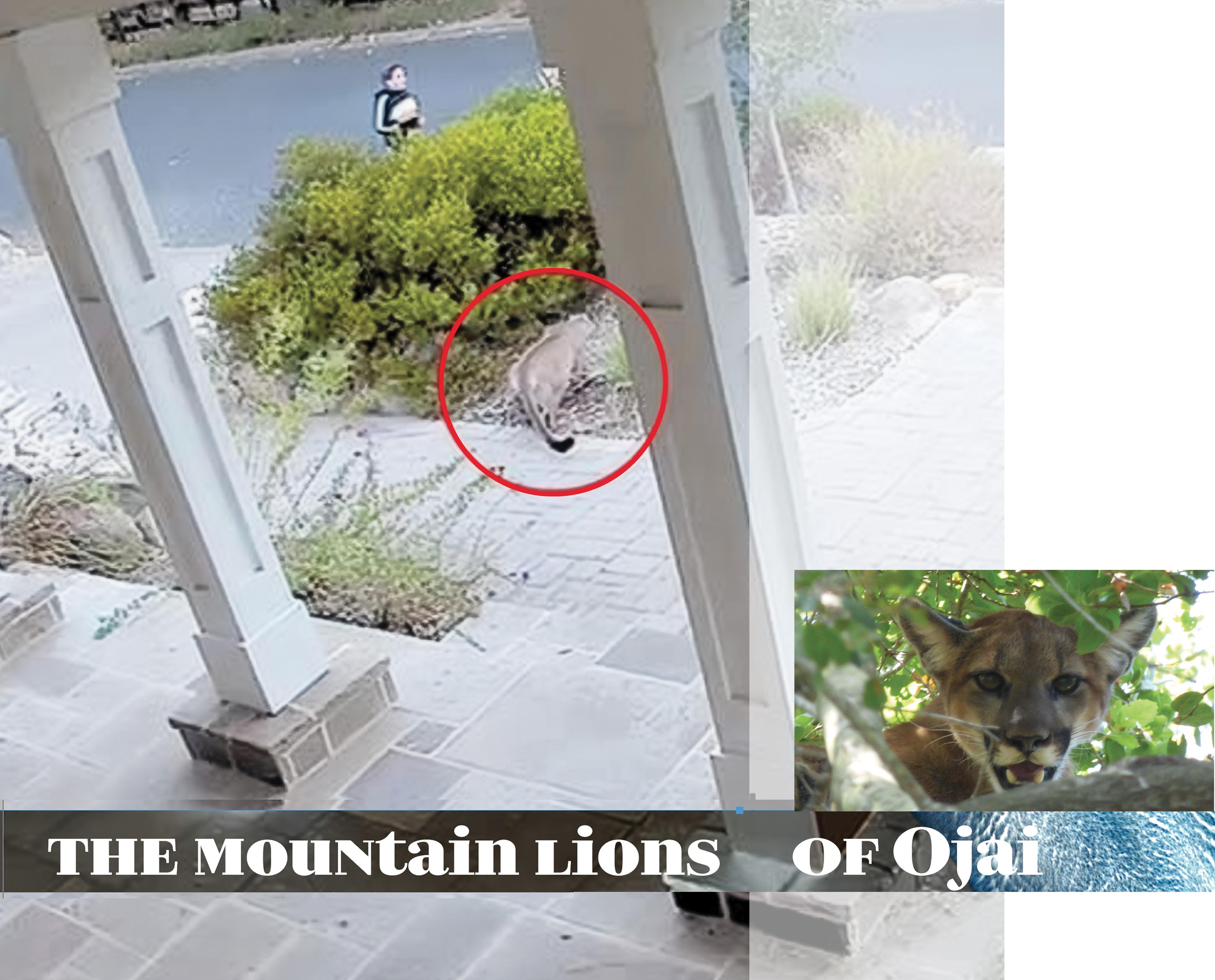
The ubiquity of cameras is the most obvious factor shaping the perception that Ojai is thick with lions. Smartphones, security systems, and wildlife cameras are revealing how much we overlap. Mountain lions have become more visible just as their population rebounds.
In a 56-year bounty program that lasted until 1963, an estimated 12,500 mountain lions were killed across California. As the species began to recover in the latter half of the 20th century, lions encountered a rapidly transforming landscape, encroached on by a swelling human population, fragmented by freeways burgeoning with quieter, faster vehicles, and a food chain laced with rodenticides.
Although mountain lions prefer to spend the majority of their time in unaltered landscapes, when they make excursions into neighborhoods, a lens often awaits. The resulting imagery tends to make the news and rise to the top of social media algorithms, fueling fascination and fear in equal measure.
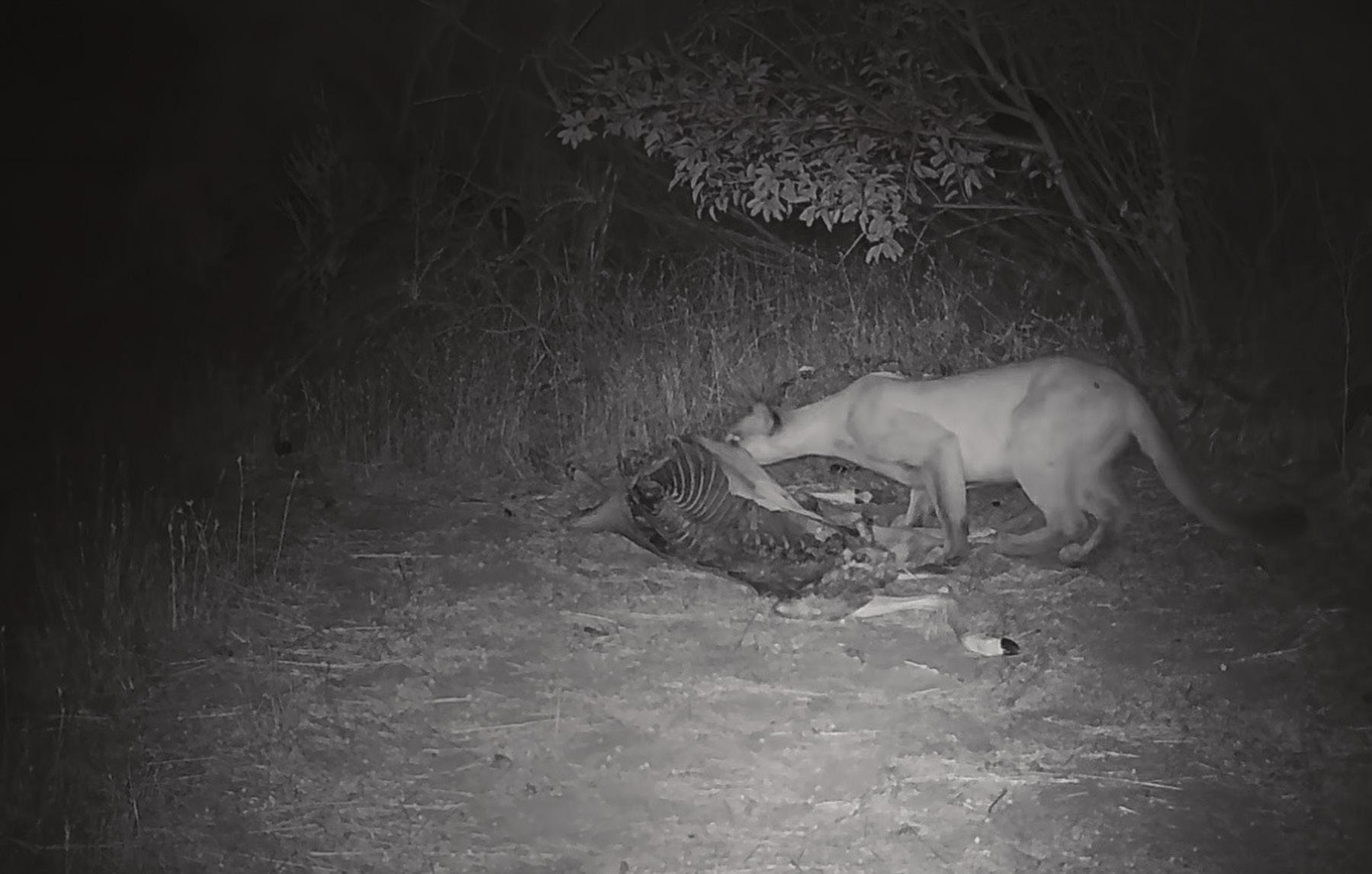
Several Ojai lion encounters have made viral rounds in recent years. In one video, a lion crouches behind a shrub on Eucalyptus Street in downtown Ojai as a jogger unknowingly passes within feet of it. In the same month as my encounter, Sulphur Mountain resident Lacie Adams was jolted awake at dawn by a lion slamming into her trailer in pursuit of a deer, which it caught and killed just feet from her bedroom window. Adams captured a cinematic recording of the lion dragging the deer back to a den in the oak forest near her home, where four cubs made quick work of it.
Last July, Ojai resident Cortney Rasura recorded an encounter with a mountain lion while hiking down Gridley Trail. At first, the lion stepped off the trail to avoid her, but a cliff cut off its escape. In Rasura’s video, she repeats “No, no, no!” as the lion approaches a second time before leaving the trail again to slip past the cliff. “Thank you,” Rasura says, audibly relieved.
by PETER DENEEN
Photo: California Department of Fish and Wildlife
Rasura reflected on the encounter months later. “Why was I so panicked?” she wondered. “It wasn’t aggressive. It wasn’t growling. It was just the novelty. I’d never seen one before.” She continued, “You know attacks are rare, but there’s that little voice asking: What if something’s wrong with it?”
That fall, a partially consumed deer carcass was found on a trail in the Ventura
“Communities want practical guidance when wildlife is seen in neighborhoods and on trails.”
via text message. “Which makes the area around the Ojai Valley special.”
In February, lions were granted “threatened species” status in and around Ojai, one of six subregions within Southern California and the Central Coast. In a forthcoming assessment, the CDFW estimates a population of roughly 4,500 mountain lions statewide — healthy, but not uniformly across all geographies.
River Preserve. Local conservationist
Devlin Gandy met three lions in the river bottom chaparral after dusk as he was setting up a camera trap. His footage later showed a family group dragging the carcass off the trail. Days later, one of those lions darted between a group of children from the Ojai Riders Club who were mountain biking in Wills Canyon.
So how are our lions doing? It depends where you look.
Jessica West, a California Department of Fish and Wildlife biologist who specializies in human-wildlife conflict, said the region around Ojai is considered a “source population” for mountain lions, meaning the birth rate of lions here exceeds the death rate. “Los Padres National Forest is the closest suitable habitat for lions with contiguous open space that provides a stronghold for lions to disperse out elsewhere,” West told me
One to two lions are killed on California roads each week, according to the Road Ecology Center at UC Davis, which analyzed roadkill data from 2015 to 2022.
The director of the center, Fraser Shilling, told me the 535 lions recorded during the study period likely represent only half the true number of mortalities.
Although the dataset is too small to draw sweeping conclusions, it does show a recent decline in lion road deaths. At first glance, that might sound like good news. But researchers caution that roadkill rates often reflect overall population health, which means fewer road deaths might signal fewer lions.
The two-lane highways surrounding Ojai are far less lethal than the multilane freeways that hem in much of Southern California’s lion habitat. Ojai also sits adjacent to the nation’s largest roadless area near a major metropolis, making it
somewhat of a haven for lions.
Across the Ojai Valley, the place names of roads, creeks, campgrounds, canyons, reservoirs, and school mascots testify to the long presence of mountain lions on the land. Combine this suitability with a community deeply engaged in outdoor recreation, and it’s easy to see why overlap between humans and lions is common.
Although most of California is a habitat for mountain lions, only six people have been killed by cats in the state since 1890, and zero in Ventura County.
“Direct interactions with humans, more often than not, are simply too risky,” West told me. “So we really don’t see these kinds of interactions, despite how many people live and recreate in mountain lion habitat every single day. Mountain lions are very risk-averse. Every action is carefully considered before making a decision, because their survival depends on it. It’s what has allowed their species to persist on the landscape.”
“The risk of living with mountain lions is less than living with a stepladder,” said Beth Pratt, California regional executive director for the National Wildlife Federation, speaking at Ojai Valley School in April 2023 during a symposium prompted by the spate of lion activity around town. I checked the data and Pratt is right: the U.S. sees roughly 300 ladder-related deaths each year. Nothing about Ojai’s recent lion encounters suggests mountain lions are behaving differently. What has changed is the landscape around them and the variety of prey opportunities offered by human habitation, which suits their tremendous dietary flexibility. People are also spending more time in lion habitat, increasing contact.
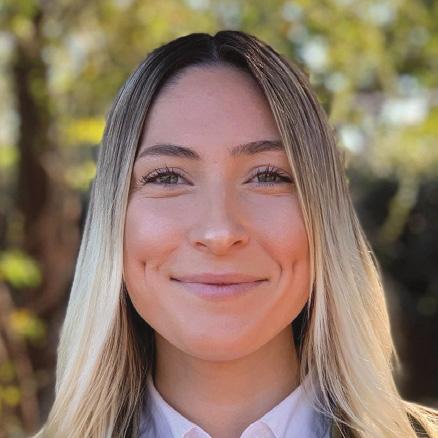
Korinna Domingo, a wildlife biologist and founder of the Cougar Conservancy, which advocates for protecting lions by reducing
Cougar Conservancy
Founder & Emeritus Executive
Director
Korinna Domingo, who founded the organization in 2020 after the legal killing of a lion caused a major uproar in the conservation community.
Photo: Devlin Gandy
conflict, is concerned about California’s decision to allow funding for the state’s wildlife coexistence program to lapse.
“Communities want practical guidance when wildlife is seen in neighborhoods and on trails,” Domingo told me via text message. “Programs that invest in education, conflict prevention, and trained response specialists help people understand what they’re seeing and what to do next to reduce potential risk.”
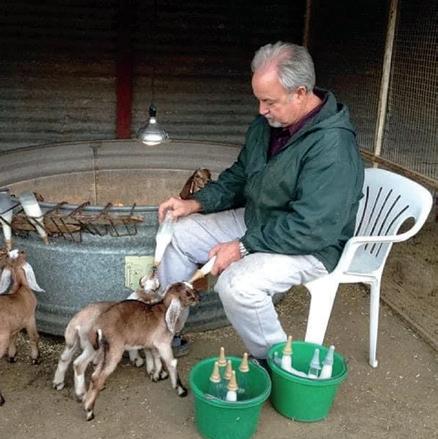
Steve Colvard, during 42 years of living and owning livestock at The Painted Pony in Upper Ojai, had not encountered
problems with lions. But over a threeday span in March, his farm lost nine of its 13 goats to a single lion, underscoring the need for managing wildlife conflict, especially as the state moves to protect the species.
“When we equip communities with the right tools and information, we can prevent, manage, and reduce conflict, and keep both people, our pets, and cougars safer in shared landscapes,” Domingo said.
In February, the California Senate introduced a bill to reestablish and enact a statewide program to manage and promote human and wildlife coexistence. For Ojai, with a source population of lions, the program is especially valuable. We are more aware than ever of how integrated their habitat is with ours. The lion population here is healthy, and it must remain that way as the species recovers in other ranges. Wildlife corridors, secure livestock enclosures, guardian animals, and social awareness will be key.
In a place like Ojai, sharing the landscape with lions isn’t an abstract idea — it’s part of everyday life. I run roughly 1,500 miles each year, almost entirely on trails in wild lands, day and night. Mountain lions are often on my mind. Leaning into that fear eventually gave way to curiosity. As I learned more, my fear transformed into a sense of how remarkable it is to share this valley with a thriving lion population. Out there in the chaparral, they are moving through the same valley we call home.
To improve our knowledge of mountain lions, readers are encouraged to report direct sightings (photos) and indirect sightings (via security camera) to the California Department of Fish and Wildlife.
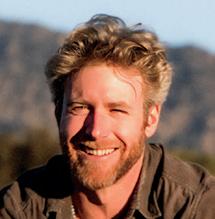
Peter Deneen is an Ojai native and executive director of Keep the Sespe Wild.
Steve Colvard feeds his baby goats at The Painted Pony Educational Family Farm.
Over a threeday span in March, his farm lost nine of its 13 goats to a single lion.
Over 219,000 acres of the Sespe National Forest provides a rich hunting ground for a growing population of lions for whom beloved family pets are on the menu when the opportunity arises.
Photos by Nathan Sparrow; courtesy of Ojai Valley Land Conservancy
Sails into shelters
story
KIM LAMB GREGORY
The first time Ojai resident Angela Abshier boarded a racing yacht off the coast of Long Beach, she was hooked.
“I was dating somebody who was a sailor, around 2018,” said Abshier, 56. “I had been on a sailboat in Nantucket but I had never sailed like this. He raced a 40-foot Farr 40 (a racing sailboat class). It’s like a Ferrari on the water.”
Fascinated with fabric and garments, she marveled at the massive sail as it snapped and billowed in the wind.
“I looked up at the sail and thought: ‘What is that? What is it made of?’” she said.
She learned it was made of tough material that can cost tens of thousands if not millions of dollars. She also learned that
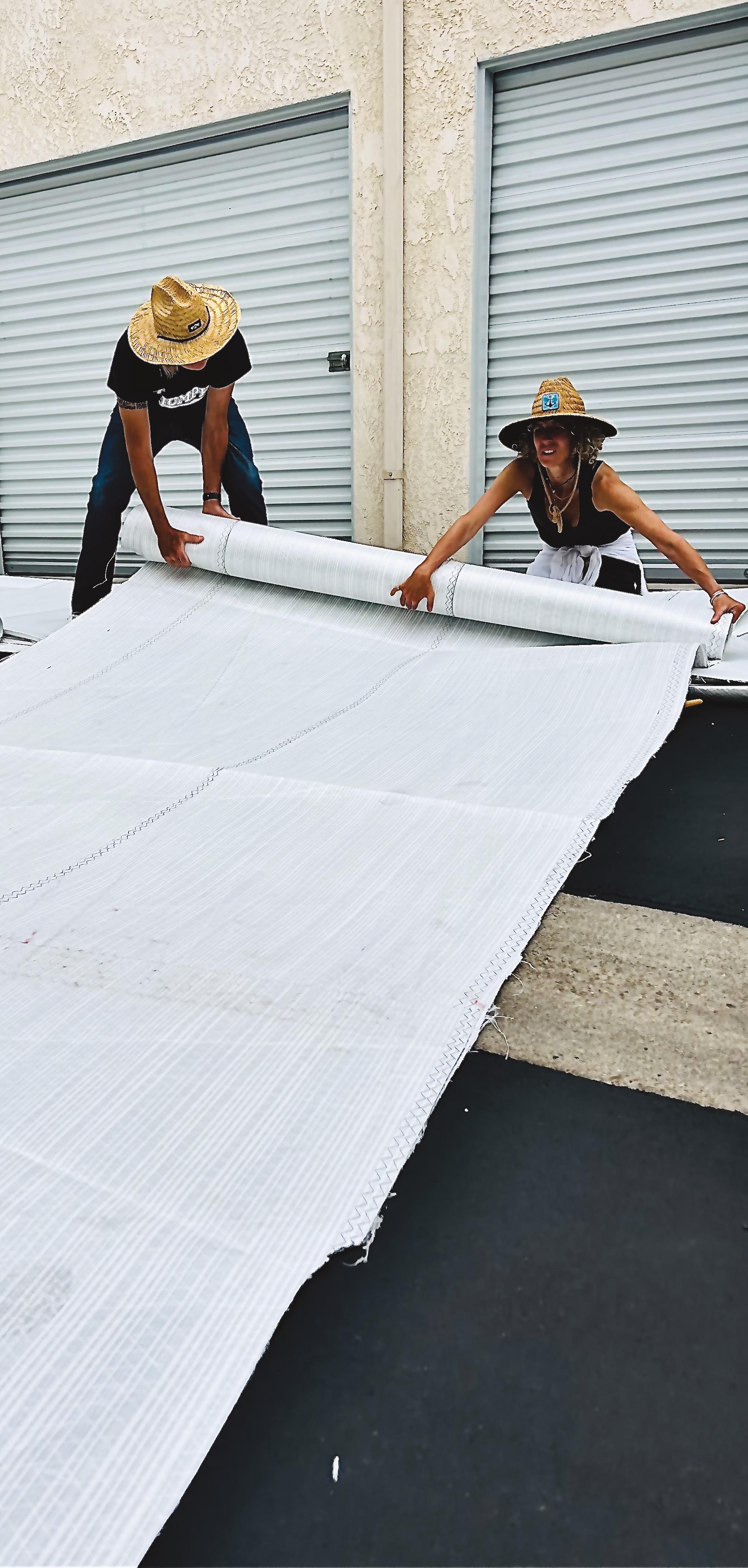
after each racing season, racers replace their sails with new ones and the old sails are “retired,” which means they are usually stored or discarded — and they are not biodegradable.
“The sails … are made of Kevlar and all sorts of polyester and laminate material and it will last forever,” Abshier said. “You put paint on it and it is essentially an indestructible thing that has been waterproofed and everything. We need to be better stewards,” she continued. “The good fortune that allows you to be on a racing yacht should come with some responsibility that the right thing is done with the sails at the end of their life.”
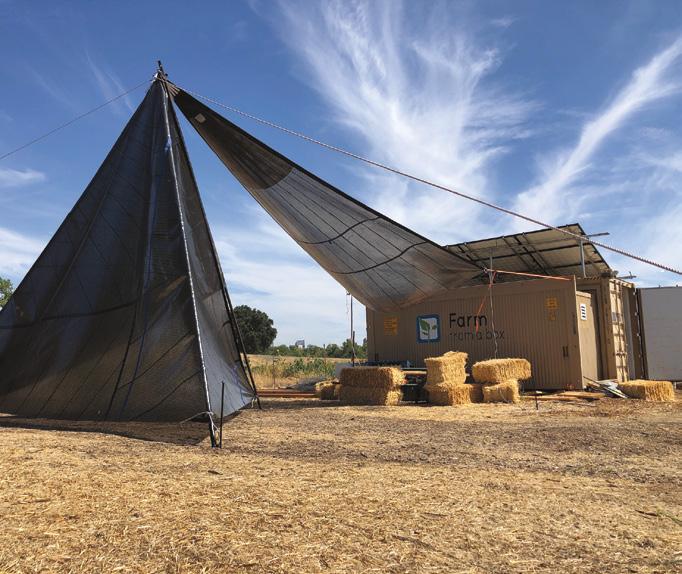
Abshier wanted to do something about the problem, so within a few years, she founded Sail to Shelter, a nonprofit organization that turns retired superyacht and racing sails into shade and shelter for humanitarian aid and disaster relief.
Since the organization opened in 2022, Sail to Shelter has created designs, sails, and rigging for organizations like World Central Kitchen in Ukraine, and survivors of the 2023 fires in Maui. More recently, she is repurposing sails for two charitable organizations in Ojai.
THE SEEDS OF SAIL TO SHELTER
Launching Sail to Shelter was an unlikely career turn, but her diverse background taught her about people, possibilities, and perseverance. Abshier and her two brothers were born and raised in Arkansas. Her dad was in the railroad business and later moved the family to Wyoming. Abshier’s mom ran a clothing store. Like her mother, Abshier loved fashion and textiles, but she also longed to go to law school.
“Part of me was always creative, but I grew up in the time where it was, ‘That’s nice, honey, but what are you actually going to do with your life?’”
Abshier enrolled in the University of Baltimore School of Law in Maryland to study intellectual property law.
“I thought I’d end up in New York in the garment industry, but then Napster happened and I was like, ‘Wait a minute, we’re just going to steal music now?’”
Abshier said. “I always loved creativity and beautiful things and music, but we’re never going to pay anybody for work?”
When her father’s health began to fail, Abshier joined him in Las Vegas, where she began designing slot machines and became vice president of marketing for a downtown s hotel, but she grew restless. After visiting Southern California with its ocean and sunshine, “it was peace out,” she said.
Abshier relocated to Los Angeles, where she began working as an intellectual property attorney while keeping her hand in the garment industry. When introduced to sailing, she was working on finding secondary markets for dead stock material — roughly 120 billion yards of discarded or unused material from the garment industry in warehouses worldwide.
“So, in my mind when I stepped on a boat, I was looking at this sail and figuring out the secondary market for it,” she said. “I thought, ‘I’ll just call all the sailing companies, ask for the deadstock, and add that to the inventory.’”
The task became an all-consuming passion. Abshier spent hours each day contacting representatives from sailmakers, humanitarian relief organizations, and architects with an emphasis on green construction.
Abshier hit pay dirt with CO Architects in Los Angeles when she met Fabian Kremkus, a design principal who grew up sailing in the North Sea near Hamburg, Germany.
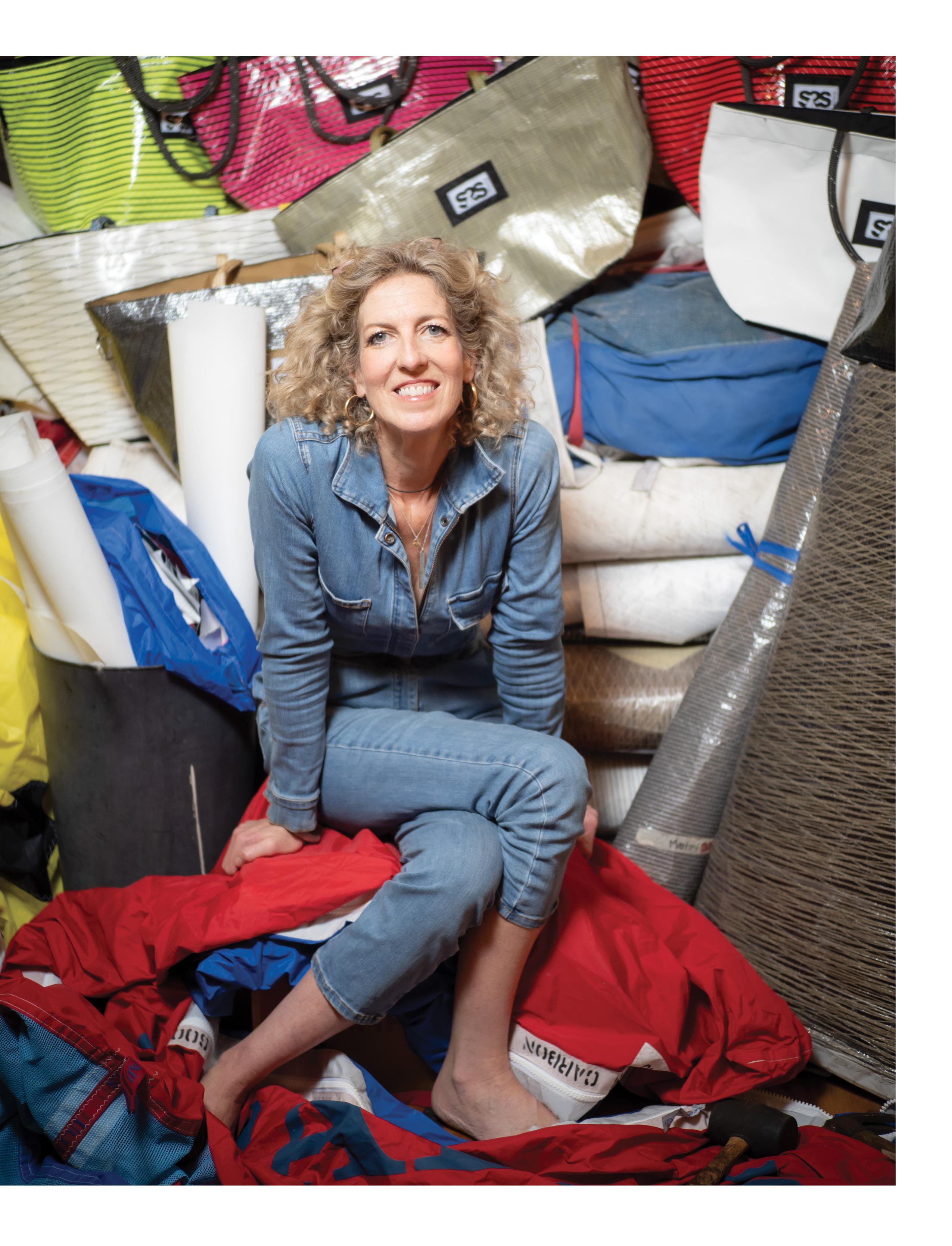
Angela in one of her storage units surrounded by materials that will not end up in landfill. Photo: Nik Blaskovich
by
photos courtesy of ANGELA ABSHIER
“It was unlike anything we had done, so it was really fun,” Kremkus said. “We always typically do some level of community or nonprofit work, so I thought that was a terrific idea she had to repurpose those race boat sails.”
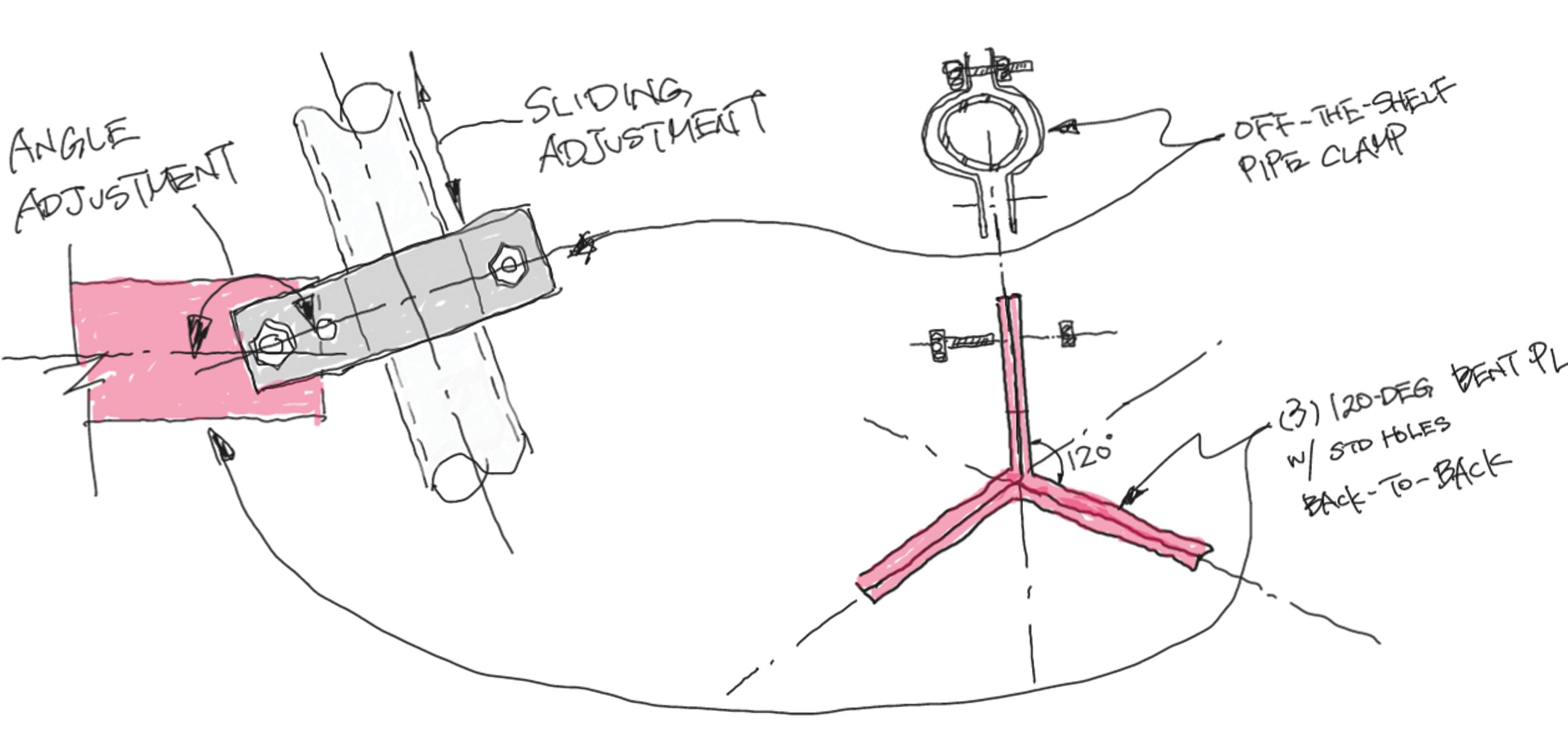
CO Architects funds pro bono work, so Kremkus and a team of architects volunteered to design a prototype. In 2020, CO Architects conducted a series of “charrettes” — group intelligence projects where the architects, engineer partners, and Abshier brainstormed about how to turn sails into a workable shelter prototype.
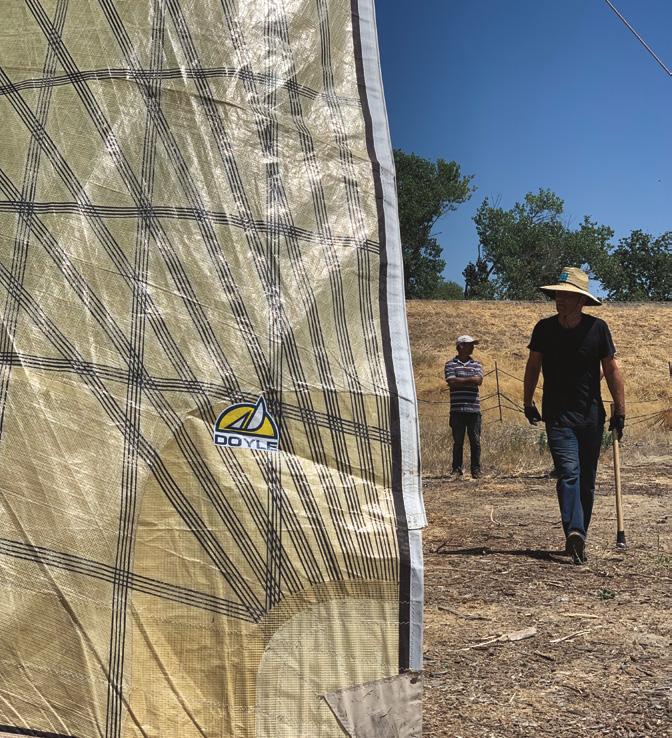
The next step was a proof-of-concept prototype. In 2022, Abshier organized an event at a Sacramento farm owned by the International Rescue Committee, an organization that constructs refugee camps.
The CO Architects consulted experts from ARUP, a community engineering company; Doyle Sails, a top sail manufacturer; and Dimension-Polyant, an East Coast sailcloth manufacturer. Then, they rolled up their sleeves and turned Abshier’s vision into a working prototype of a shelter design.
A CALL FROM WORLD CENTRAL KITCHEN
Abshier lived above Skid Row while working in Los Angeles, so her original plan was to provide shade and shelter for Los Angeles’ homeless population, but soon after the proof-of-concept event, a call for help came from World Central Kitchen, which was in Poland to help war refugees after Russia invaded Ukraine in early 2022. The organization, a nonprofit that offers humanitarian food relief, “needed a facility that was just large and dry,” Abshier said. “In a crisis, sometimes people just need dry
them there.” Although the Ukraine project failed, the experience led to a pipeline solution: Abshier regularly sends rigging and sails to an address in Ukraine from a storage facility in Palma, Mallorca.
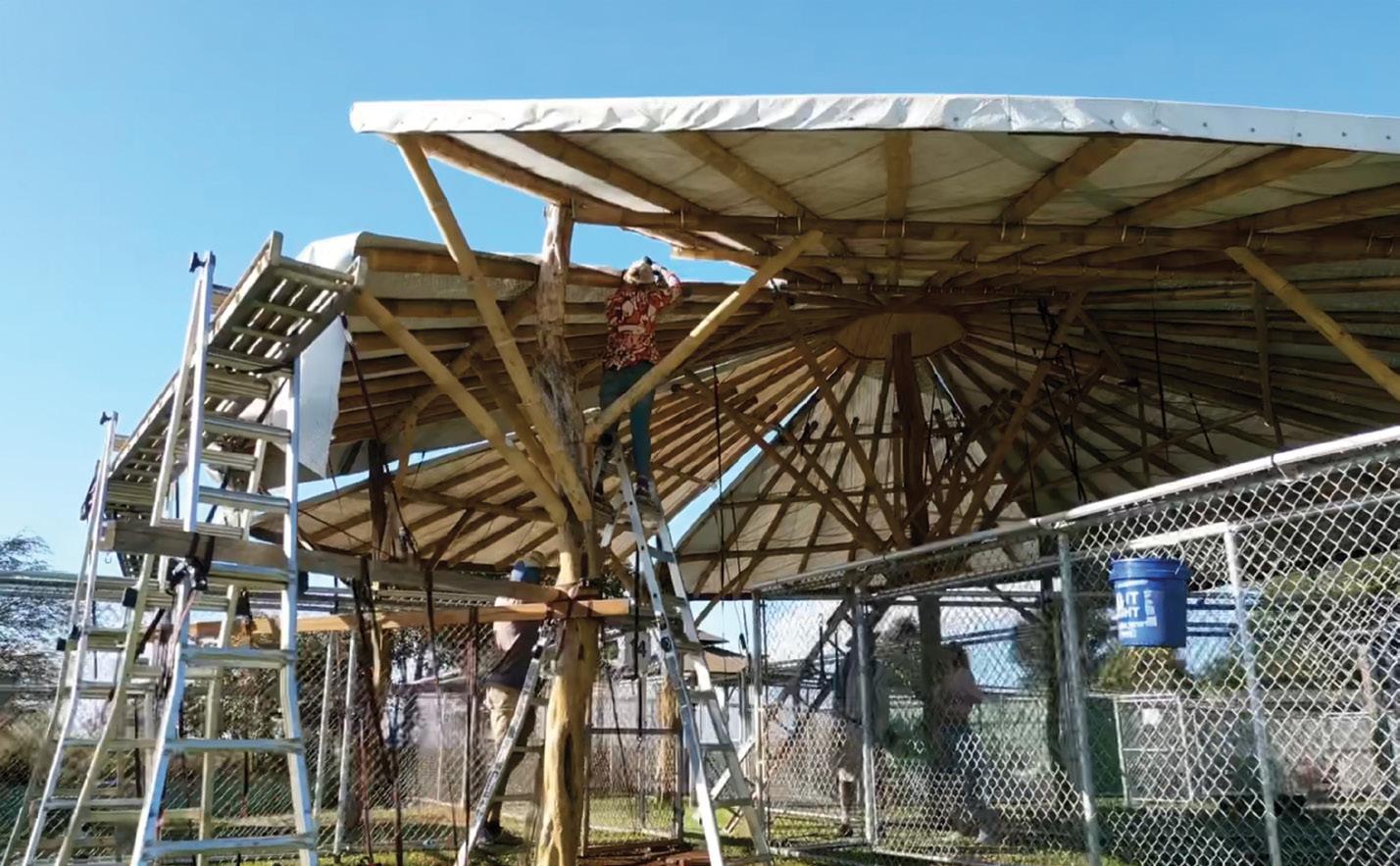
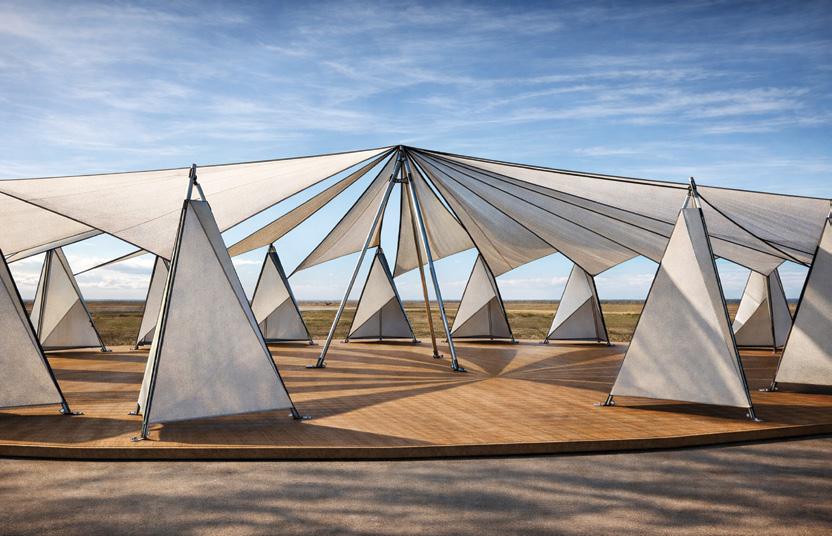
The Pinwheel is a 3,000-square-foot shade structure at the Maui Humane Society, designed to expand the capacity by creating more valuable space.
Photo: Angela Abshier
CALLED TO MAUI
The next crisis arose on the island of Maui, when wind-driven wildfires tore through Lahaina and the surrounding area in August 2023. As the fires broke out, Yayoi Hara could see the flames from the Japanese pagoda-style Jodo Mission along the shoreline of Lahaina. Hara’s family members had been caretakers of the temple for 60 years, and Hara served as mission director of programming. “We had never seen wind like this before,” Hara said. “The temple doors blew open and my neighbor and I were trying to secure the doors with a piece of plywood.”
island. Days later, when Hara and her family returned to the evacuation area, the Jodo Mission had been reduced to a field of ash and debris.
“It was so quiet. I could even hear the whales splashing in the distance,” Hara said. Abshier, armed with scissors and a grommet kit, flew to Maui eight days after the fire and met Hara through a relief organization.
With power out and most communication disabled, worried congregants — most of them elderly — gathered at Jodo Mission. “We’re starting to hear little explosions because of the propane tanks in the restaurants exploding,” Hara said. “Then came this rain of fire embers around us. It hit a coconut tree and within a minute it was engulfed.”
Hara packed 14 people into eight cars and they drove to the other side of the
“She was just dazed,” Abshier remembered. “We stood there and we didn’t even know what to say. I thought,’ I’m suddenly up against real pain and real trauma and real triage.’ And Yayoi said, ‘We’re all just walking around in somebody else’s clothes and we don’t know what’s going on.’”
Then, a sailor donated the 27,000-square-foot sloop sails from his 250-foot sloop, called an M-5. The roughly $15,000 cost to transfer the sails from Mexico was absorbed by a shipping grant through Madsen Shipping. Sail to Shelter turned the sails into shelters for animals at the Lahaina chapter of the Maui Humane Society and is now planning a project for the Jodo Mission.
The sails are beautiful and can transform space into something very special.
Fabian Kremkus, AIA, LEED GA, Principal, CO Architects and BoD Sail to Shelter Photo: CO Architects
The most basic shade can transform all sorts of temporary storage and housing facilities into much more comfortable and viable space.
“Our membership has been declining, so we are planning to build a smaller temple and a larger community space,” Hara said. “That’s where Angela comes in. We want to create a shaded area that we would rent out for parties, baby luaus, weddings, graduations. Everybody has been to a party at the Jodo Mission.”
AGAINST THE WIND
Abshier said she would be lost without Zack Clayton of Dimension-Polyant, who participated in the Sacramento event and calls himself a jack-of-all-trades for the company, which creates about 1,000 different watersport-related products, including sailcloth.
Clayton, who grew up racing sailboats in Michigan, collaborates regularly with Abshier. “It’s been quite a heroic effort on her part,” Clayton said. “I would be on a Zoom call with her and she’d be standing in a field filled with rainwater.”
He joked that he is usually the “storm cloud” for Abshier’s ideas, pointing out potential pitfalls. Getting sailors to part with the sails that pushed them over the finish line is one hurdle.
“There is an emotion attached to the sail. It’s difficult for some sailors to let them go, but they’re no good anymore as a race sail,” Clayton said. “They turn into a leaf tarp for raking in the fall or a drop cloth.”
Also, many sailors are reluctant to spend money to transfer retired sails, even if it is a greener alternative to dumping them in a landfill.
“The sailing industry and sailors … believe that by default, their sport is green already,” Clayton said. “They use the wind. They’re not polluting anything with what they do.”
The organization in need of the structure usually funds each Sail to Shelter project, but Abshier hopes the sailing industry will step in to help with funding.
In the meantime, she is figuring out other ways to fund Sail to Shelter, including a partnership with a European sustainable luggage designer, Sebastian Manes. Manes spent 19 years in charge of design and sustainability at Selfridges in London before starting his own company, Harper Collective, in 2020. Manes creates upscale luggage out of discarded fishing nets that often choke
wildlife and pollute the ocean. When another designer connected him with Abshier, Manes joked it was “love at first sight” because both had the same goal. Together they created a line of luggage and accessories out of sails and fishing nets in honor of World Ocean Month in June. The luggage and accessories range from $850 to $1,150 and come in colors like ocean blue, coral copper, and seashell gray. A portion of the proceeds benefits Sail to Shelter.
The success of Sail to Shelter will depend on Abshier getting the word out during the racing season, so she attends major sailing events to let sailors know about the program. In 2025, Abshier received The Honours Bowspirit Award, which recognizes those in the superyacht industry whose work has impact and meaning in the superyacht community and beyond.
MOVING TO OJAI
Abshier came to Ojai less than a year ago in search of a friendly town where she could keep three dogs. She inherited
two of the dogs when her partner, racing sailor Todd Stoughton, died suddenly of a heart attack about a year ago during a race in Santa Cruz.
Ojai has been an ideal place for Abshier to heal. She loves walking her dogs among the orange trees, and is working on two projects for Ojai with Sail to Shelter: construction of shade structures for the Ojai Humane Society and Mesa,
a farm on 10 acres in Ojai that provides transitional housing and more for young adults ages 18 to 24 facing homelessness.
Set against the Topatopa Mountains, Mesa has a central house and 10 tiny homes surrounded by an orange orchard. About 10 yards behind the homes, Mesa is planting an organic vegetable garden with plans to turn it into a nursery.
“The inspiration is to get these young adults putting their hands in the soil and pitch in,” said Dan Parziale, Mesa co-founder and executive director, who was thrilled when Abshier offered to design a shade to cover the garden.
“It starts with shade but it ends with job training, mentorship, and education,” Parziale said. “It’s so much more than shade. We’re creating something beautiful. We’re creating a relationship and a story we can tell.”
Abshier started Sail to Shelter with a mission to solve a waste problem, but as it evolved, she recognized the opportunity to solve a human problem: “I couldn’t be more proud to do it.”
For more information go to sailtoshelter.com.
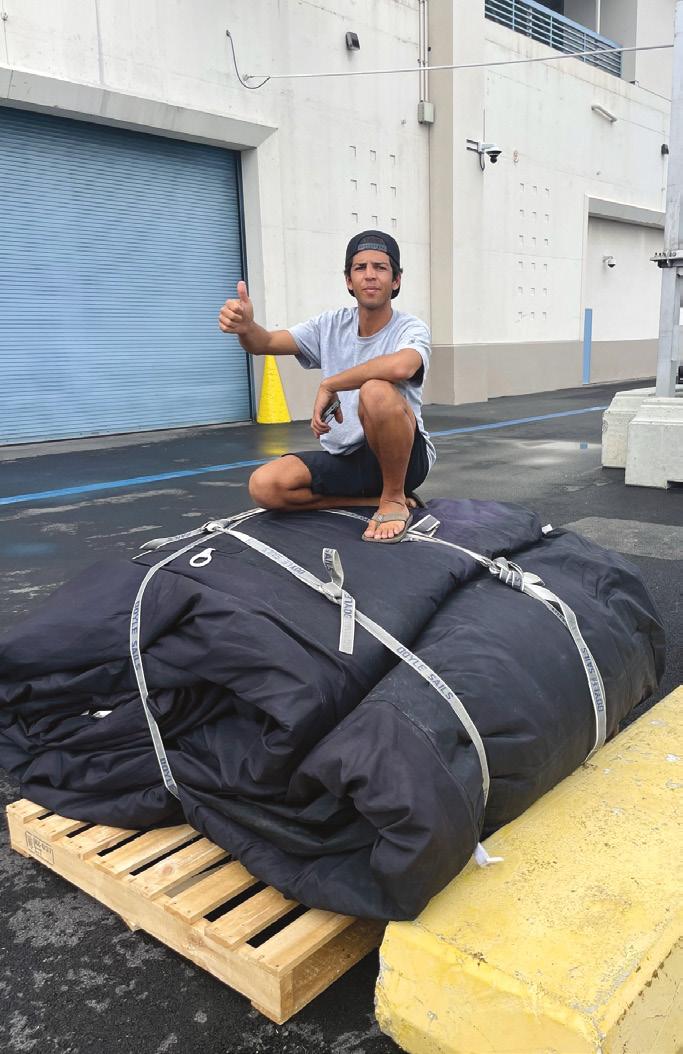
Hang-ten from Mo, crew member for SY Fidelis dropping a 5,200-square-foot retired genoa in Honolulu. This beauty will be transformed into a restorative healing center at the Jodo Mission in Lahaina, Maui, later this year.
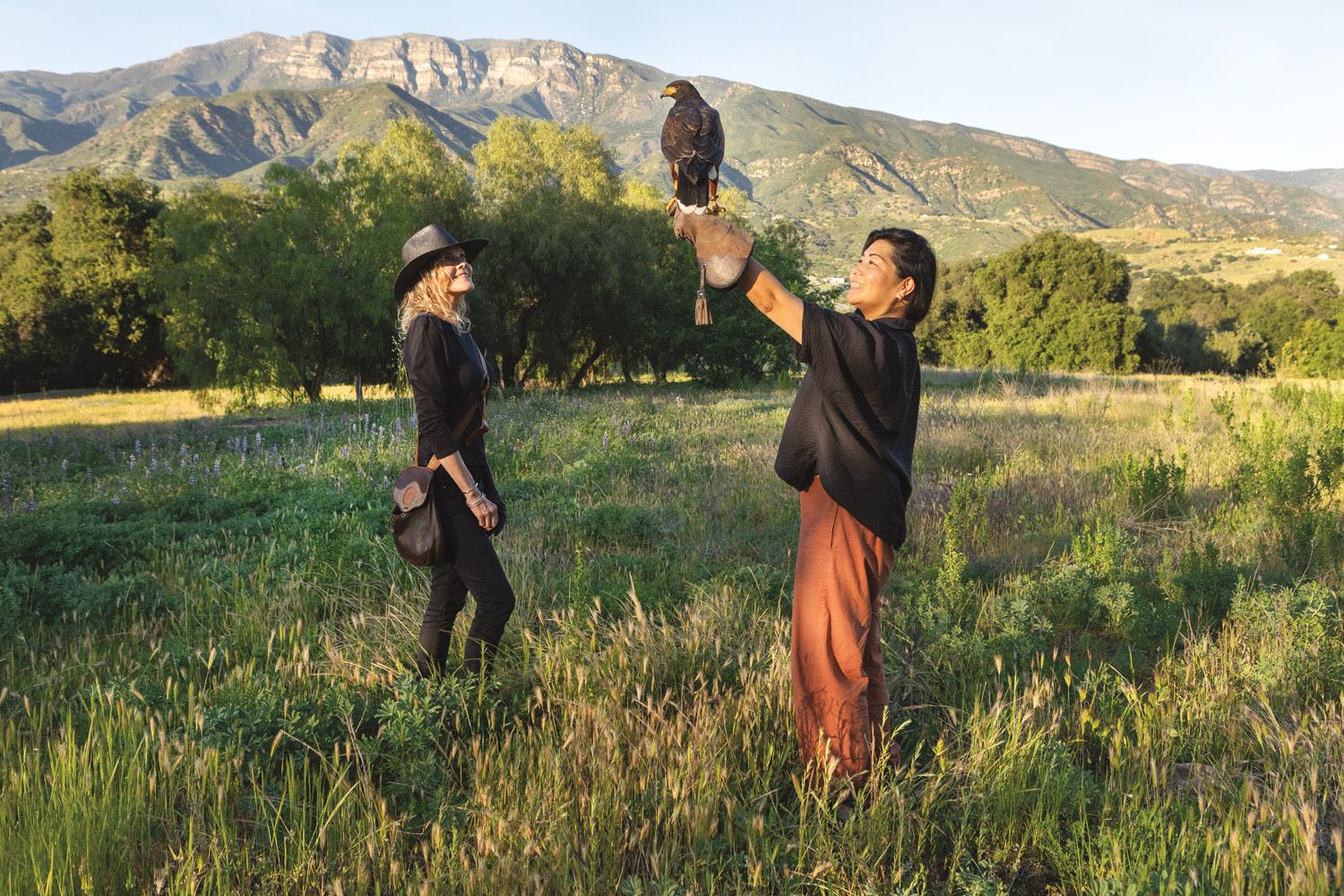
In the great blue skies above our world, the female hawk reigns supreme as alpha — her 2-pound body belying more than 400 pounds of crushing power in her talons.
In the new world of falconry taking flight in Ojai, master falconer Denise Disharoon is alpha in her field.
“You have to be very confident and selfpossessed to work with a female alpha hawk, because they are very intense,” Denise said. “It’s a practice … it really brings all of your senses into play when you are hunting and working with a predatory animal. … It makes you feel alive in a way that a lot of things don’t. It kind of taps some sort of primal part of you.”
Originally from Georgia, Denise moved to San Diego in 2010 and cofounded Sky Falconry, Southern California’s premier falconry school, over 13 years ago in Alpine. She moved to Ojai in October 2025 and one month later opened Talon & Flight Falconry school near the Ojai Valley Land Conservancy River Preserve.
“Anything that has to do with birds of prey in the United States is highly regulated, because all of our native raptor species are protected,” Denise said. “My permit is actually a special education permit that allows nonlicensed people to … have gloved interactions with birds of prey.” Falconry schools, she said, are not common.
taKes oFF in Ojai
Denise
Disharoon demonstrates the true art of falconry
story by MIMI WALKER
photos by MICAELA MALMI PHOTOGRAPHY
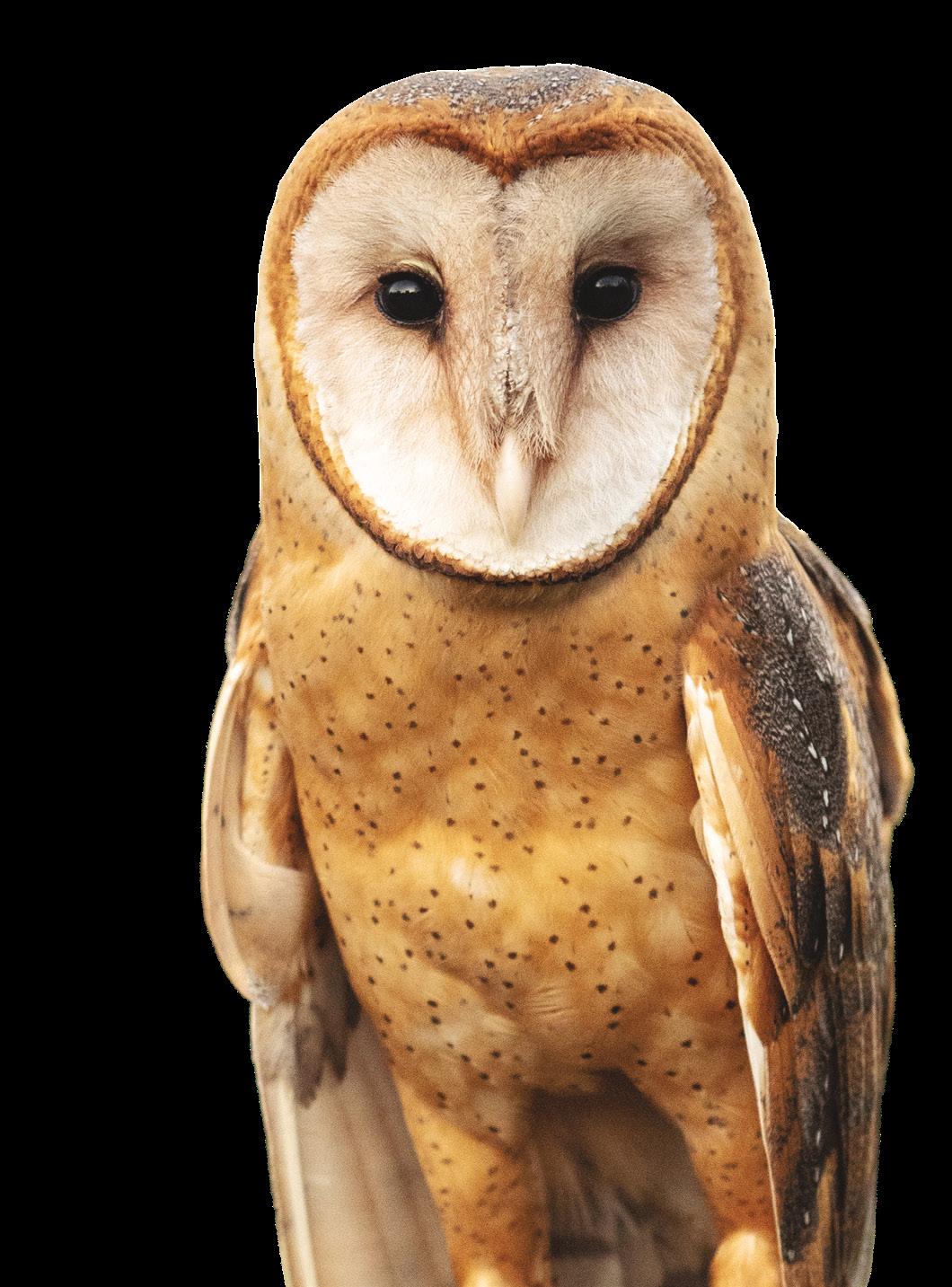
“When I say ‘school,’ it’s not that I’m teaching people how to become falconers,” but rather giving them a taste of what falconry looks like up close, depending on the bird. Basic sessions include “Intro to Hawk,” where participants can feed hawks and experience the hawk on their gloved arm as it flies to each participant. “It’s also incredibly powerful to have this wild animal choose to fly to you — that interaction is a choicebased interaction; it’s not something that I can force my birds to do,” Denise said. “I also do an owl encounter, where you can work with a great horned owl and a barn owl.”
She also offers private sessions in which people “can fly a hawk, a hawk and an owl, or a hawk and two owls — so you have the ability to … customize that experience to the birds you want to work with.”
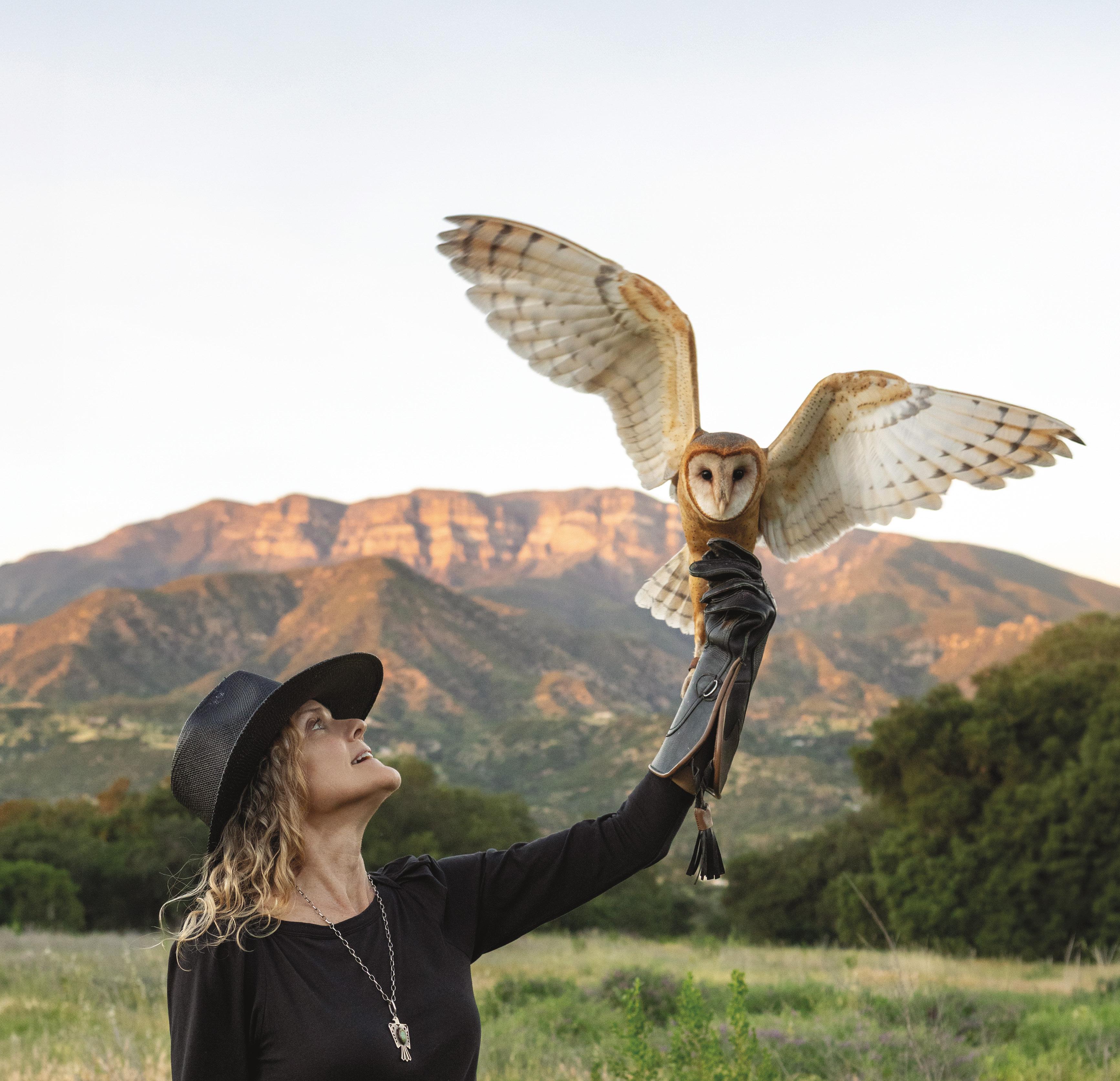
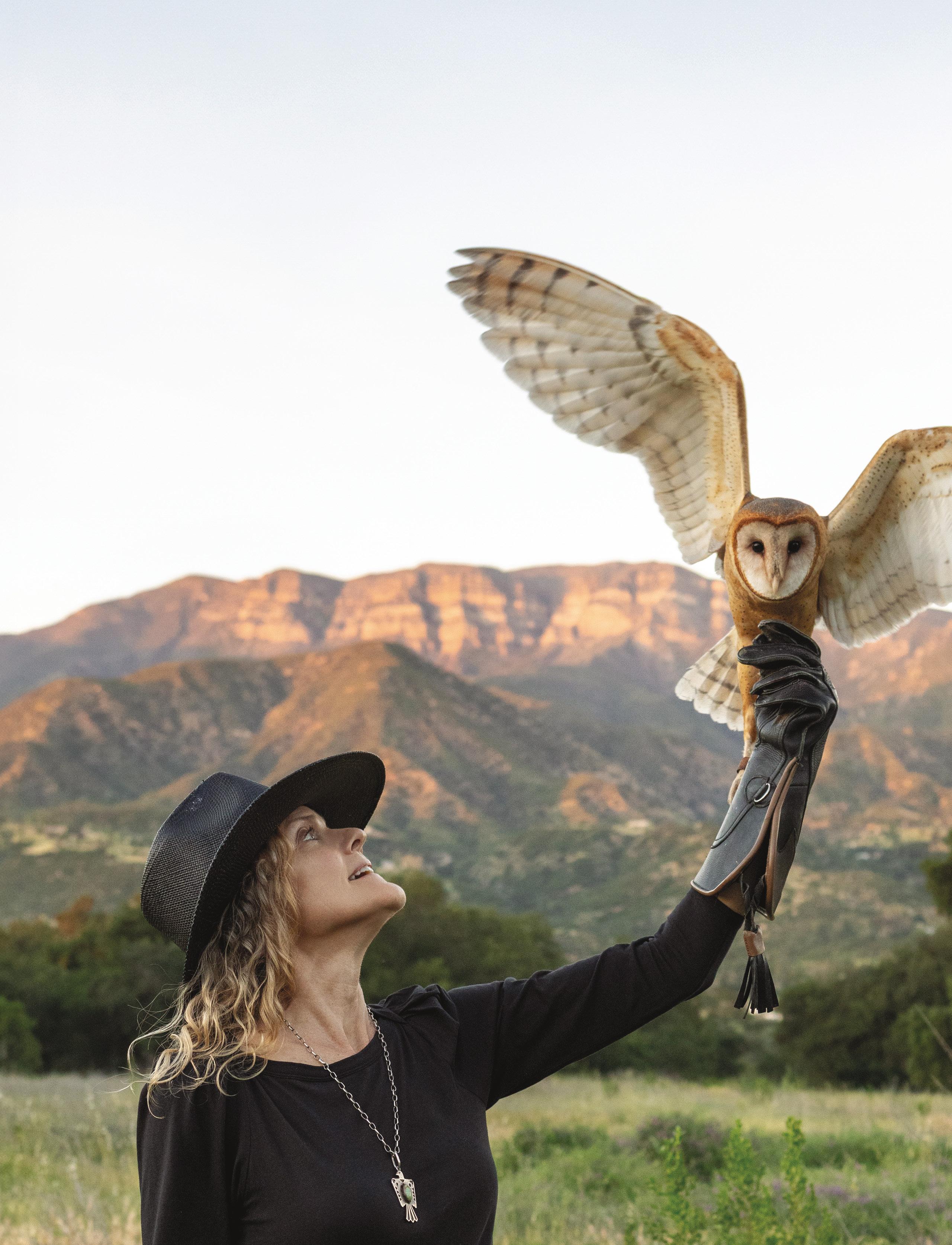
She has two Harris’s hawks, Steam (female) and Kwa Koi (male), plus great horned owl Tig and barn owl Ashera, or Ash for short.
She also does private “hawk walks,” where “you go meandering with the hawk, flying them through the trees.” In some cases, she said, “I can travel with the birds off-site if the location is amenable to flying birds safely.” She hopes to secure an auxiliary location to host larger walks with groups, and aspires to add falcons into the mix.
The Merriam-Webster dictionary defines falconry as “the art of training hawks to hunt in cooperation with a person,” or “the sport of hunting with hawks.” Falconry’s origins go back several thousand years to Mongolia, China, Korea, Japan, India, Iran, and Iraq, according to the International Association for Falconry and Conservation of Birds of Prey. UNESCO has enshrined the practice of falconry as an “Intangible Cultural Heritage of Humanity.”
Denise wants people to understand that falconry “is not a bird show, and it’s not asking the birds to do something outside of their normal behaviors.” Instead, she said, “we are out flying and hunting our birds as they would do in the wild. … If it wants to fly away, it can. And if you’re out actively flying and hunting (with) your bird, it has the opportunity to do that as often as you’re letting them go — we cannot force them to stay with us and continue the relationship. It really is their choice.”
She continued: “They do get to fly and hunt as they would in the wild, but then they get the benefit of having a human” who can offer protection at night, veterinarian care, and food if their hunt is unsuccessful. The goal of a falconer, she said, “is to trap a bird from the wild, train it … to be a really good hunter,” then release it back into the wild to teach its babies. “So you’re actually promoting a healthier, more robust population of raptors.”
Talon & Flight’s up-close bird experiences also teach the importance of conservation. “Falconry … has been key in conserving species that almost went extinct,” Denise explained.
“For example, the Peregrine Fund was founded by falconers who had falconry peregrines in captivity,” which allowed them to “breed these birds and bring them back from the brink of extinction.”
Plus, she said: “When we can observe birds of prey, they allow us to get a greater understanding of what’s happening in the ecosystem. … I want people to walk away with the knowledge of small things they can do that have a really big rippling impact on the greater environment: the choices they make and what they buy, and how they treat their weeds, or not using rodenticides, things like that.”
Denise is also an artist, ceramist, and jewelry designer who crafts “raptor- and nature-inspired” pieces out of recycled metals.
Her connection to raptors runs deep. “My father actually passed away when I was 18, and he started showing up as a red-tailed hawk — I quickly developed this special connection to red-tails and really saw them more as a spirit guide,” Denise shared. “My connection and passion for raptors in general kind of grew from that. They started showing up at very significant times in my life.”
The red-tailed hawk remains her spirit guide. “When I started pursuing falconry after my move to California in 2010, my first falconry bird was a red-tailed hawk named Ananda, which in Sanskrit means bliss and divine joy,” she said.
Her mission as a full-time falconer, Denise said, is to remind everyone they are “an intricate part of this ecosystem.”
“I feel like modern society is very disconnected from nature,” she said. “We’re fortunate here in Ojai to have a lot of access to wide-open spaces and wilderness, that we can go hike. But … we spend a lot of time on our devices, inside, at desks.” Falconry, she believes, “is a very reverent and humbling art. It forces you to be incredibly present with nature. You are not only tuned in to what’s happening with your bird, but all the elements around you, the direction of the wind, the prey, the weather, who’s in the skies.”
With that in mind, “I am developing experiences based on mindful connections to raptors,” she shared. “Through understanding their senses and perception of the world, I hope to encourage an expansion of our own ways of connecting and moving through our lives to be more a part of nature, not separate from it. I feel through this deeper connection within ourselves to nature, we will be more inspired to make conscious choices that preserve the health and well-being of not just ourselves, but the planet as a whole.”
For more information, visit talonandflight.com or follow @talonandflight on Instagram.
Master Falconer
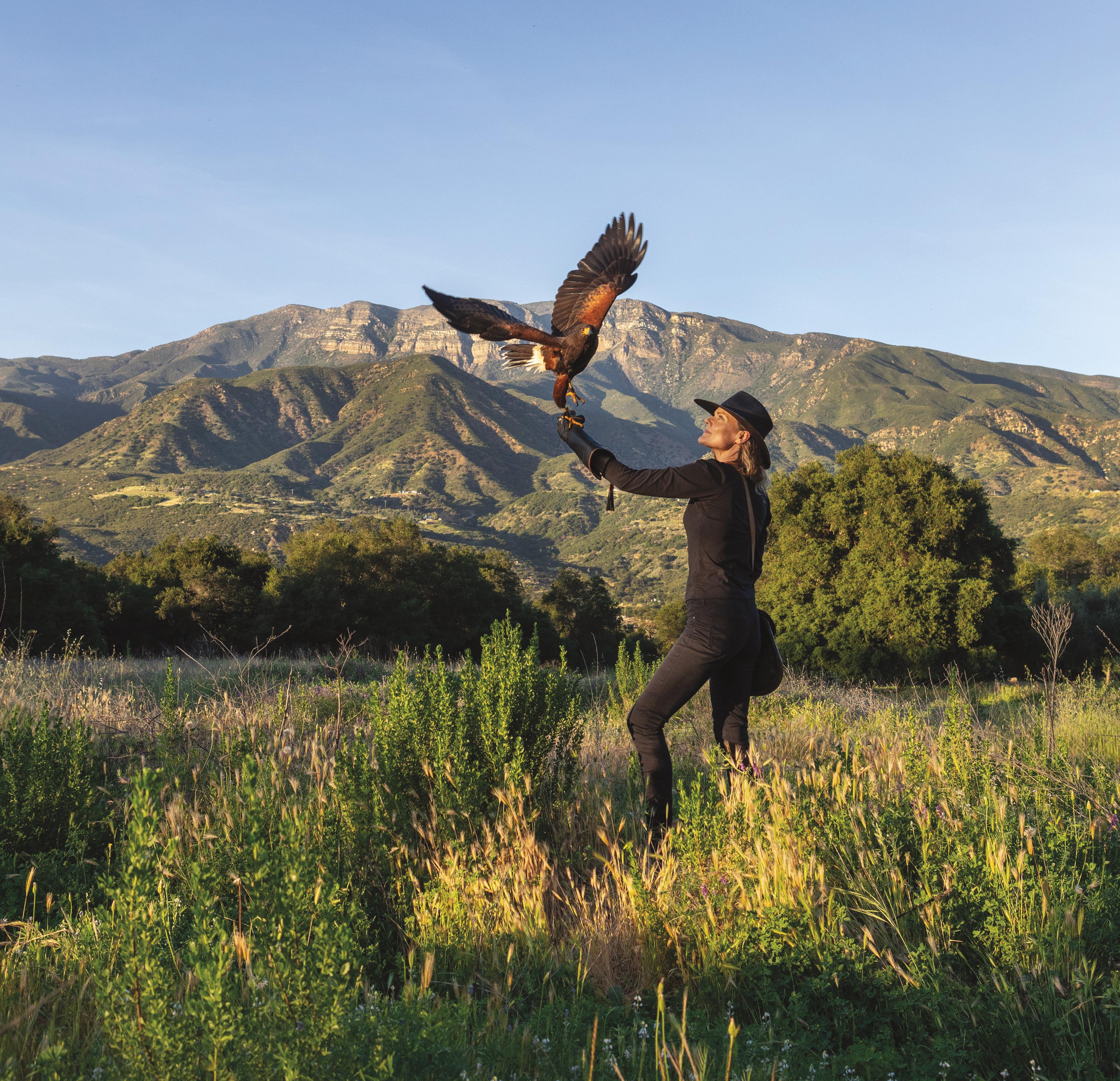
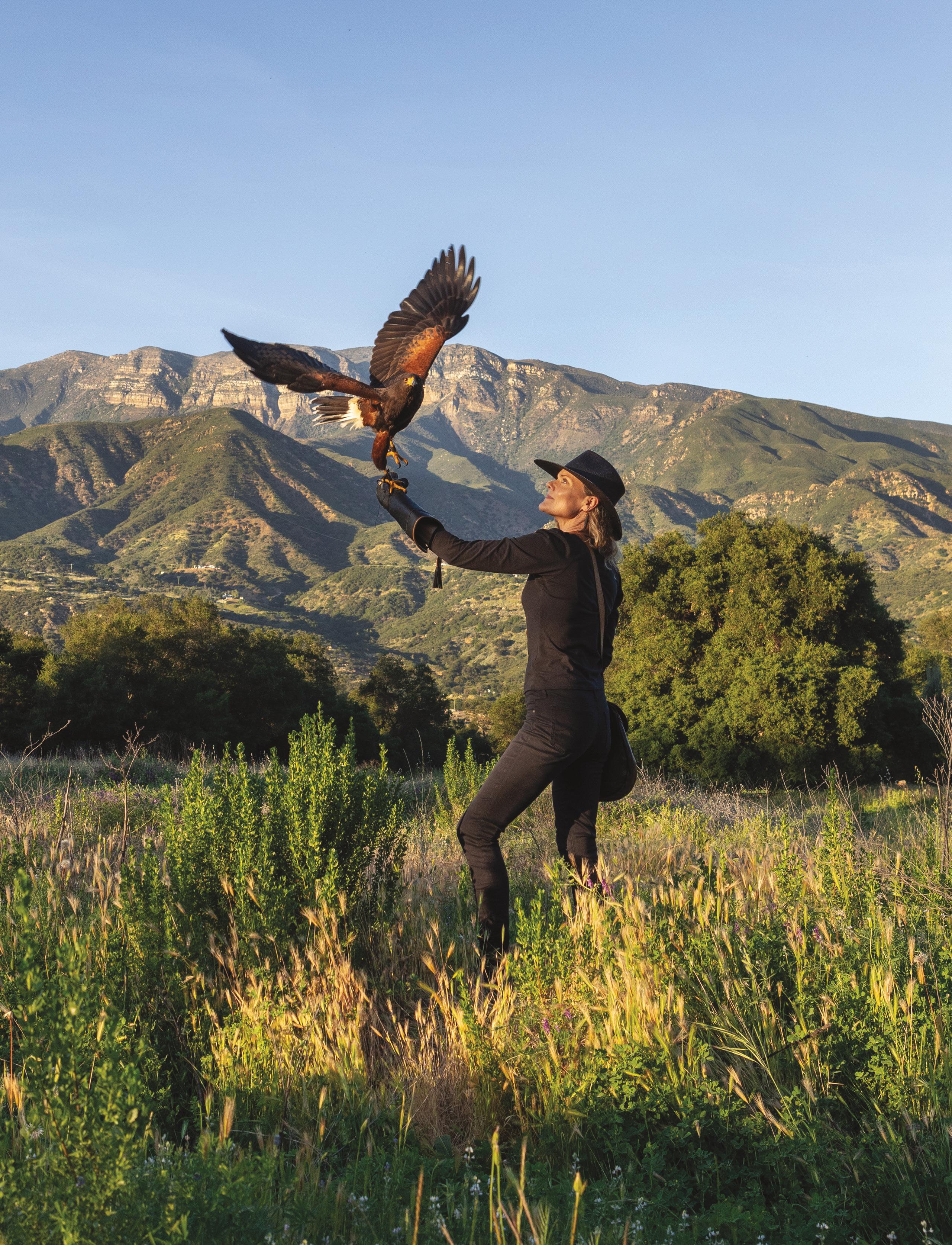
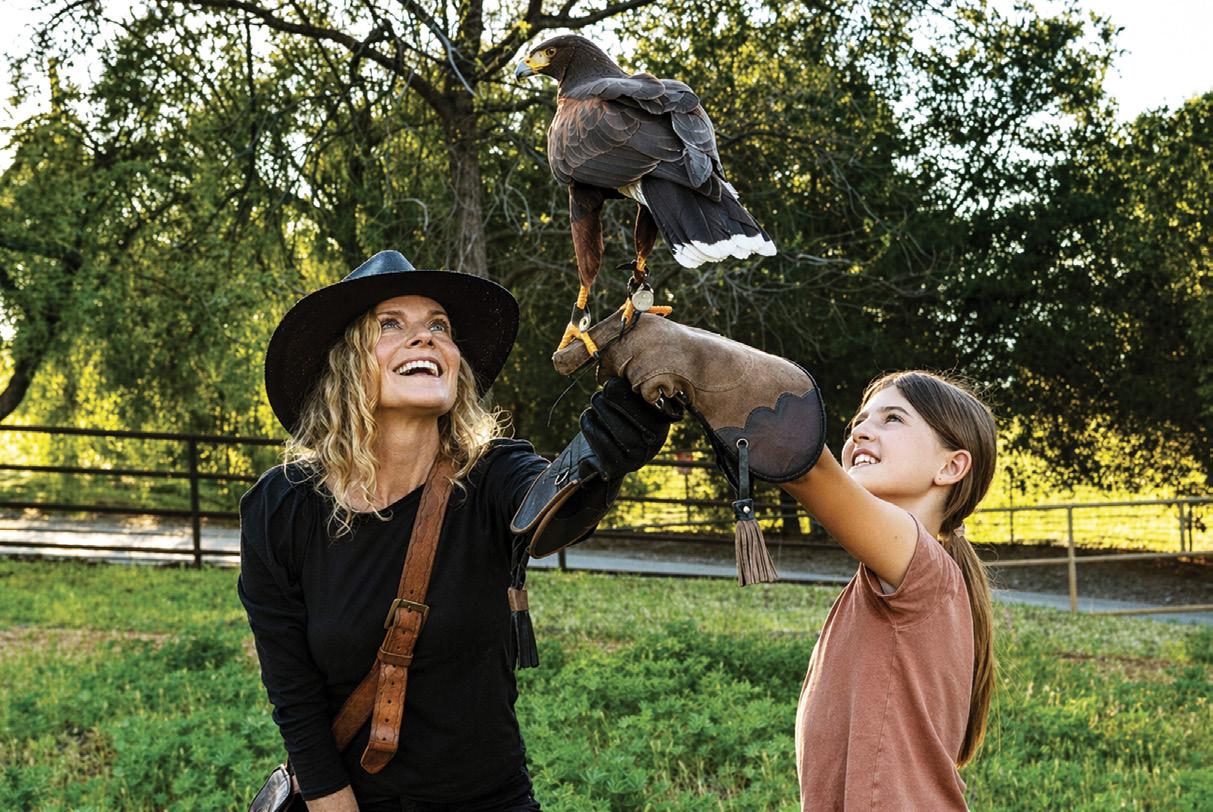
Denise Disharoon with Harris’s Hawk Steam and guest
Daisy McCarthy at Talon & Flight Falconry.
Denise Disharoon with Harris’s Hawk Steam and guest
Nina Masuda
Talon & Flight
Falconry Barn Owl, Ashera.
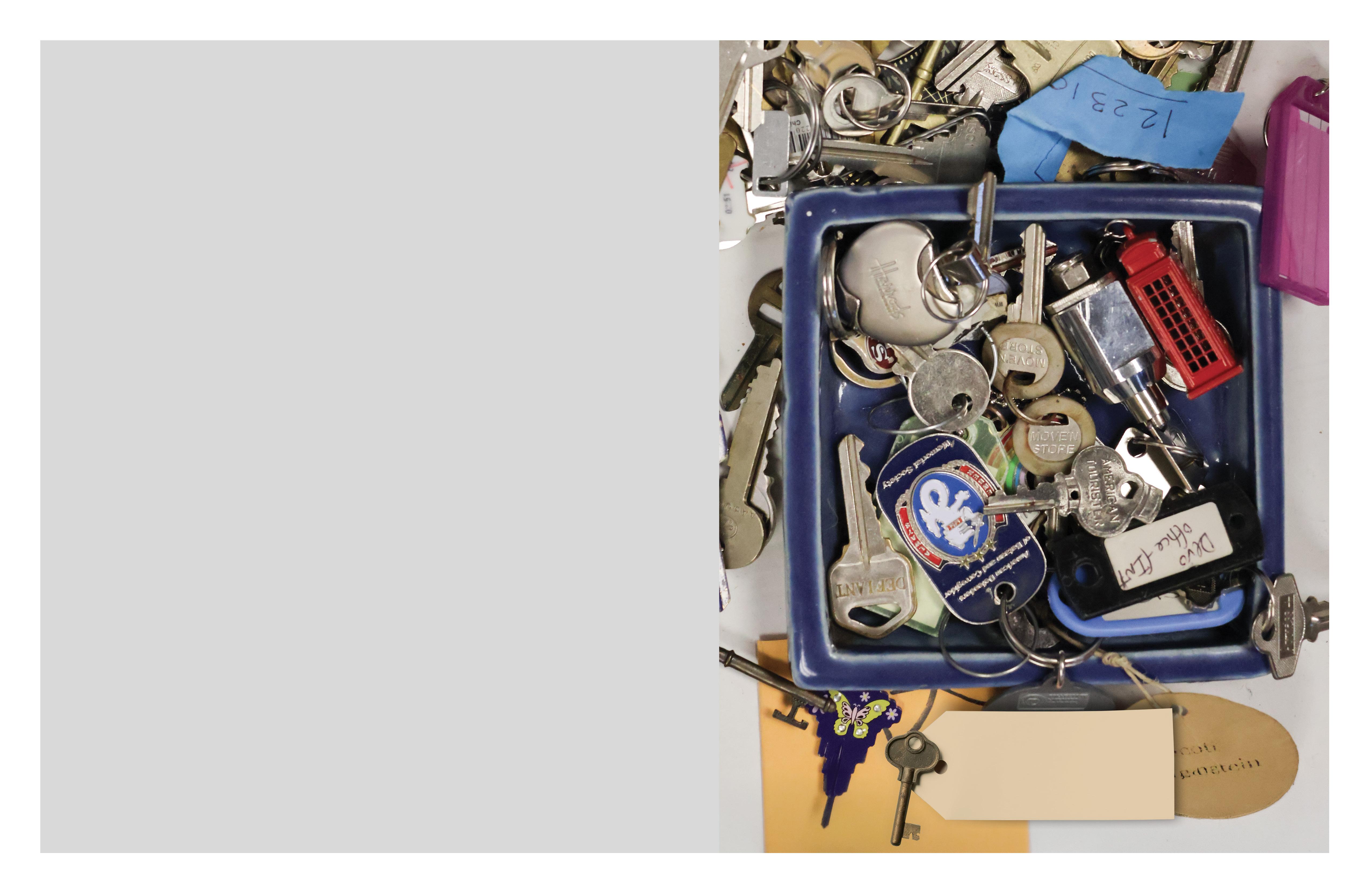
Over a lifetime, you collect more keys than you ever imagine needing.
They enter your life quietly — one lock at a time. A house key. A car key. An office key. A padlock for a shed, a storage unit, a door that sticks when the air turns cold. A key given to you by a friend in your 20s who said, “Mi casa y su casa.” You remember the moment, not the name. Keys are hardware, not symbols. Practical. Necessary. Something to keep track of … later.
Later becomes a drawer you open to find them, then a jar where they join others that no longer serve a purpose. If a key is pretty or carries a memory, you might place it in a thrift-shop canister. Eventually, all the keys end up together, clinking softly like a tiny castanet when you move them, heavier than seems reasonable for such small objects. They stay at the back of your closet. Keys wait. Patient. Unassuming.
You don’t expect them to matter. Then comes the day when you need one — the right one — the key that fits the lock you need today. At first, it feels like a simple errand, a reasonable use of an afternoon. But when you pour them onto the floor, something shifts. Keys carry memory in their teeth. They carry the weight of the experiences behind the doors they opened. You hold onto them, not for practical reasons, but because letting go feels impossible. You lift them one by one, trying to match key with lock. They could be a museum piece, maybe a project for the Ojai Art Center. Some are blue. Some have logos. Some are skeleton keys — the kind that truly link to a skeleton in the closet. Some announce themselves immediately. Others resist recognition. You turn them over, juggling them from hand to hand, trying to remember the door, the sound it made, the way it felt to open it. Many belong to places that no longer exist, or no longer belong to you. Perhaps they belong to another life, when you were another person. This is how revisiting begins. It doesn’t arrive as nostalgia. It arrives as sorting. As testing. As quiet questions you didn’t plan to ask: When was this? Who was I then? Why did I keep it so long? Does this moment of revisiting carry a lesson? The song the keys make in the canister has a sting. A feeling you cannot put your finger on. It begins as a practical task — you’re just organizing, you tell yourself. But
memory does not follow your schedule. It bursts open vaults you may have long ago closed, hoping to stuff them away forever. A familiar keychain. The weight of one key. The sound it makes when it hits the table. Suddenly, you are not in the room anymore. You are somewhere else entirely, inside a moment that once felt ordinary and now feels charged.
Grief often works this way. It doesn’t always arrive dressed in its party-best. Sometimes it comes as a smell, or sweetness. Sometimes as a bolt of sadness that envelops you, tears flowing before you know why. Sometimes it comes as confusion.
Most of the time, processing grief is like oil deep under the sea of who you are — then a current rises, triggered by something as simple as a key. Often it waits until your hands are busy and your guard is down.
If you have experienced loss — widowhood, divorce, the death of a partner or parent, the quiet collapse of a future you thought was settled — you already know this rhythm. You can move through a day feeling capable, steady, then hours later, the heaviness arrives without explanation. Only later do you realize what opened the door.
Keys are particularly good at this. They look important. They suggest future usefulness. They whisper: Don’t let me go yet. You may imagine repurposing them — turning them into art, melting them down, giving them another life. Some objects invite transformation. Others have already completed their work.
Loss complicates decision-making. When someone dies, doors open immediately — paperwork, finances, responsibilities arrive without asking. Other doors close just as abruptly. Shared decisions disappear. Even small choices carry unexpected weight. This is where revisiting quietly becomes releasing.
You notice how much energy it takes to keep things “just in case.” How many objects are held for doors you no longer approach? You don’t want to be careless. You don’t want to discard something useful. But you also don’t want to keep hauling the past around like proof. There is a particular loneliness here. No one to consult. No one to argue with. Freedom and sadness share a thin border, and you cross it more often than you realize.
Eventually, practicality steps in. Keys that
still open something are set aside. The rest — dozens of them — go into a bag. They no longer unlock anything. Their value has shifted. You tell yourself this is simply the sensible choice. And it is.
Still, later, the grief arrives.
The sadness doesn’t come during the sorting. It comes afterward, when the body realizes what just happened. When you’ve released access — not only to rooms and buildings, but also to versions of yourself. It helps when someone names it: Of course you feel this way. You just handled your entire life. All the places you lived inside of. All the doors you closed without ceremony. All the thresholds you crossed without knowing they were thresholds.
Then, almost imperceptibly, something else appears.
Space.
This is where lives are reinvented — not as dramatic declarations, but as subtle reorientation. A lighter drawer. A quieter shelf. A decision made without debate. The realization that the future does not require access to every former room. Reinventing does not erase the past. It means choosing what you carry forward. Some doors did exactly what they were meant to do. Some roads were walked as far as they could go. Holding onto the keys does not keep those lives intact. It only makes your pockets heavier.
If you are moving through loss, consider this a gentle warning: Triggers will not always look like grief. They may look like cleaning, organizing, progress. Smells count. Objects count. Sweet memories count too.
When the feeling arrives — late, confusing, unexpectedly tender — pause. Ask what you just revisited. Notice what you released. Pay attention to the space you are making.
The irony, of course, is this: The key to moving on is releasing the keys from the past. Some doors are not your future. And it is OK to stop carrying them.
story
and photo by
DEVORAH CUTLER
WIDOW’S KEYS
15667 Ojai-Santa Paula Road - Charming 2BD, 2BA cabin in a serene, forest-like setting along a peaceful creek with a beautiful deck overlooking the water.
Offered for $895,000
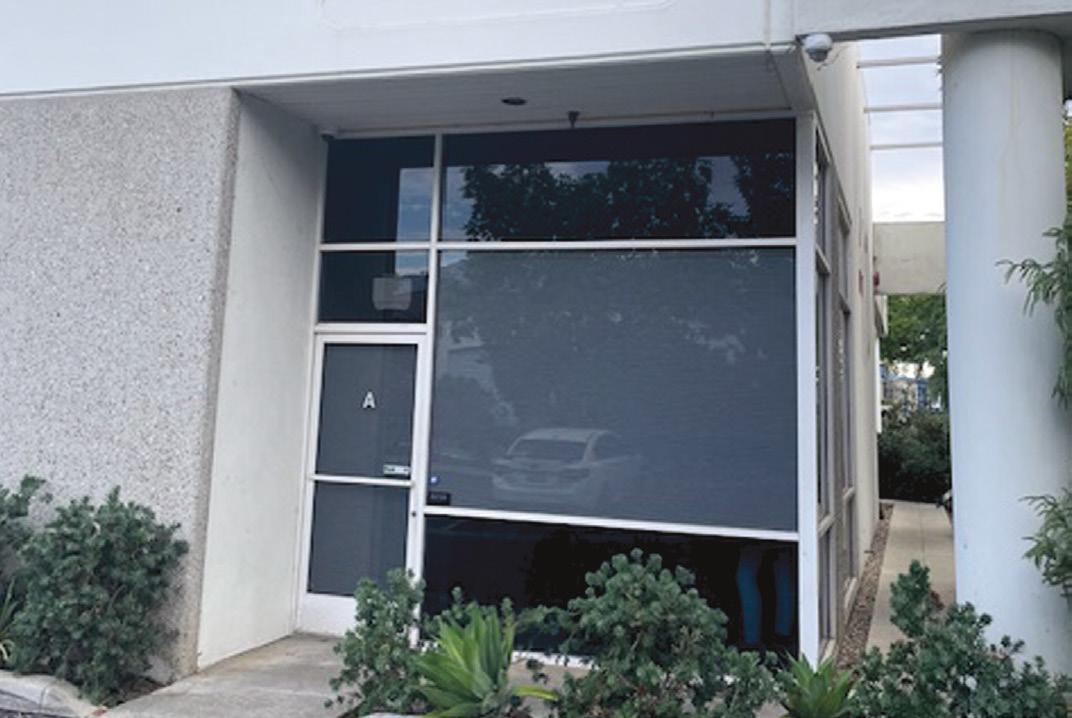
410 Bryant Circle Unit A - This unit zoned for Light Manufacturing boasts convenient roll-up doors and dramatic vaulted ceilings, offering expansive, flexible space perfect for a wide range of uses. Offered for $995,000
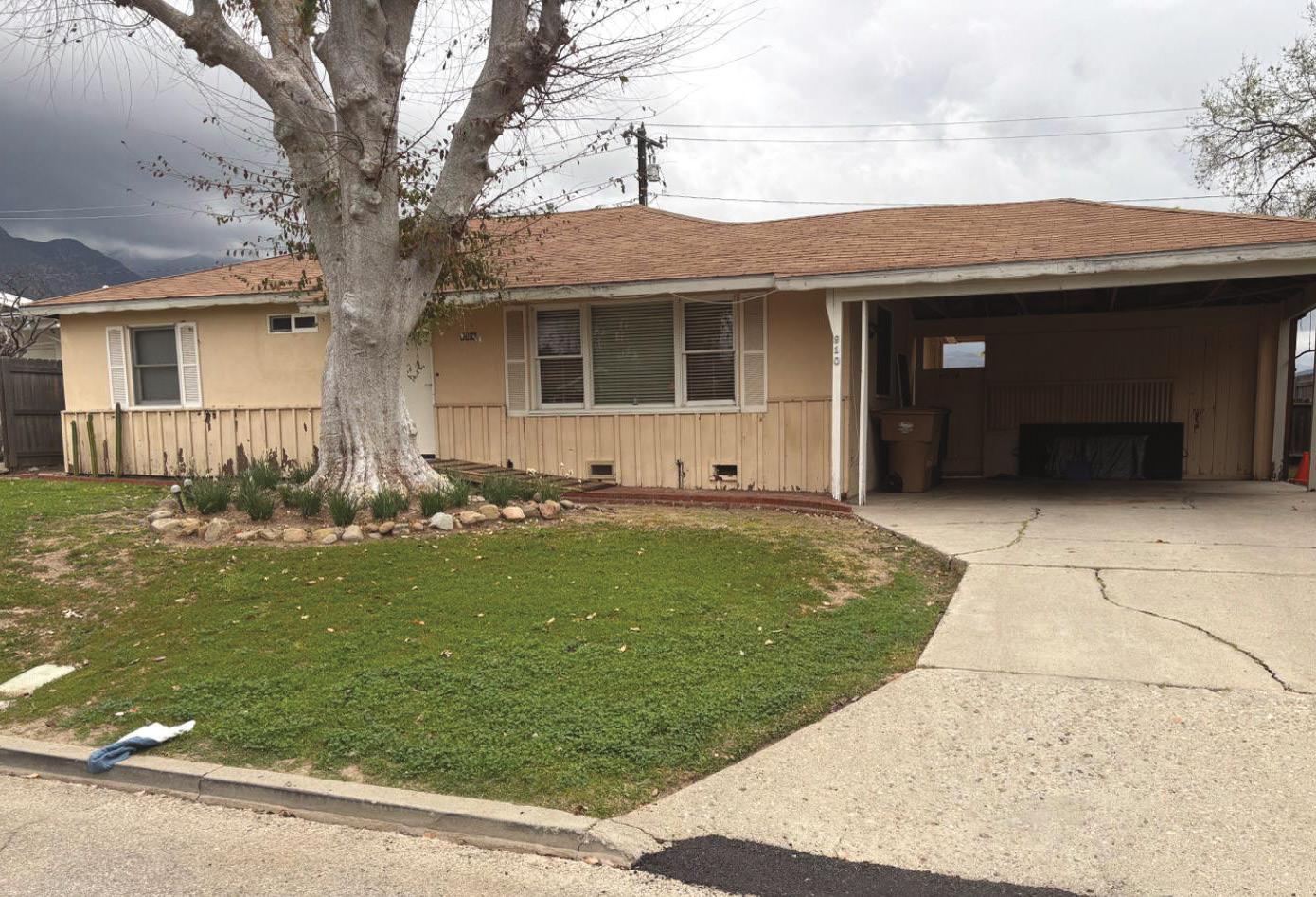
910 Mercer Avenue - 3BD, 2BA home with 1,764 sqft and incredible mountain views. The the perfect chance to add your own style and build long-term value in a great neighborhood.
Offered for $950,000
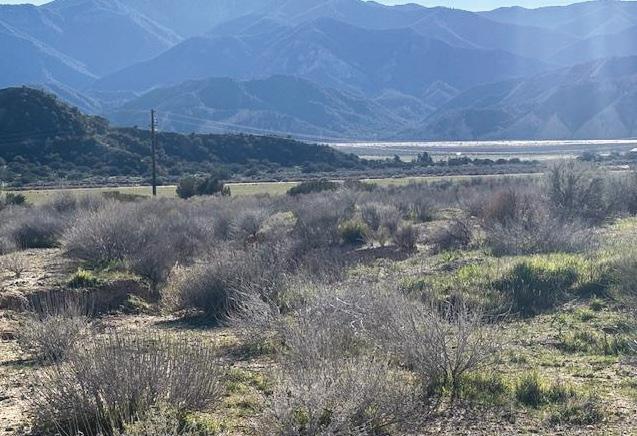
520 Quatal Canyon Road, Ventucopa - Set against the wideopen skies of the Cuyama Valley, this 38-acre property offers a rare opportunity to own a versatile slice of California’s high desert landscape. Offered for $500,000
Holly Humphrey Realtor 805-290-8379
CA DRE#00875307
Alexandra Bendorf Broker Associate 805-798-4160 CA DRE#01892408
Carol Blanton Broker 805-798-2246
CA DRE#01013216
June
Ojai Historical Walking Tours
Saturdays, June 6-27, 10:30 a.m.
Learn about Ojai’s unique history on 90-minute tours at Ojai Valley Museum, 130 W. Ojai Ave.
Tickets: Adults $10; Family $25. ojaivalleymuseum.org.
Chamber On The Mountain:
Hui Wu & Joo Kim
June 7, 3 p.m.
Beatrice Wood Center for the Arts
8585 Ojai-Santa Paula Road
Tickets: $40 chamberonthemountain.com
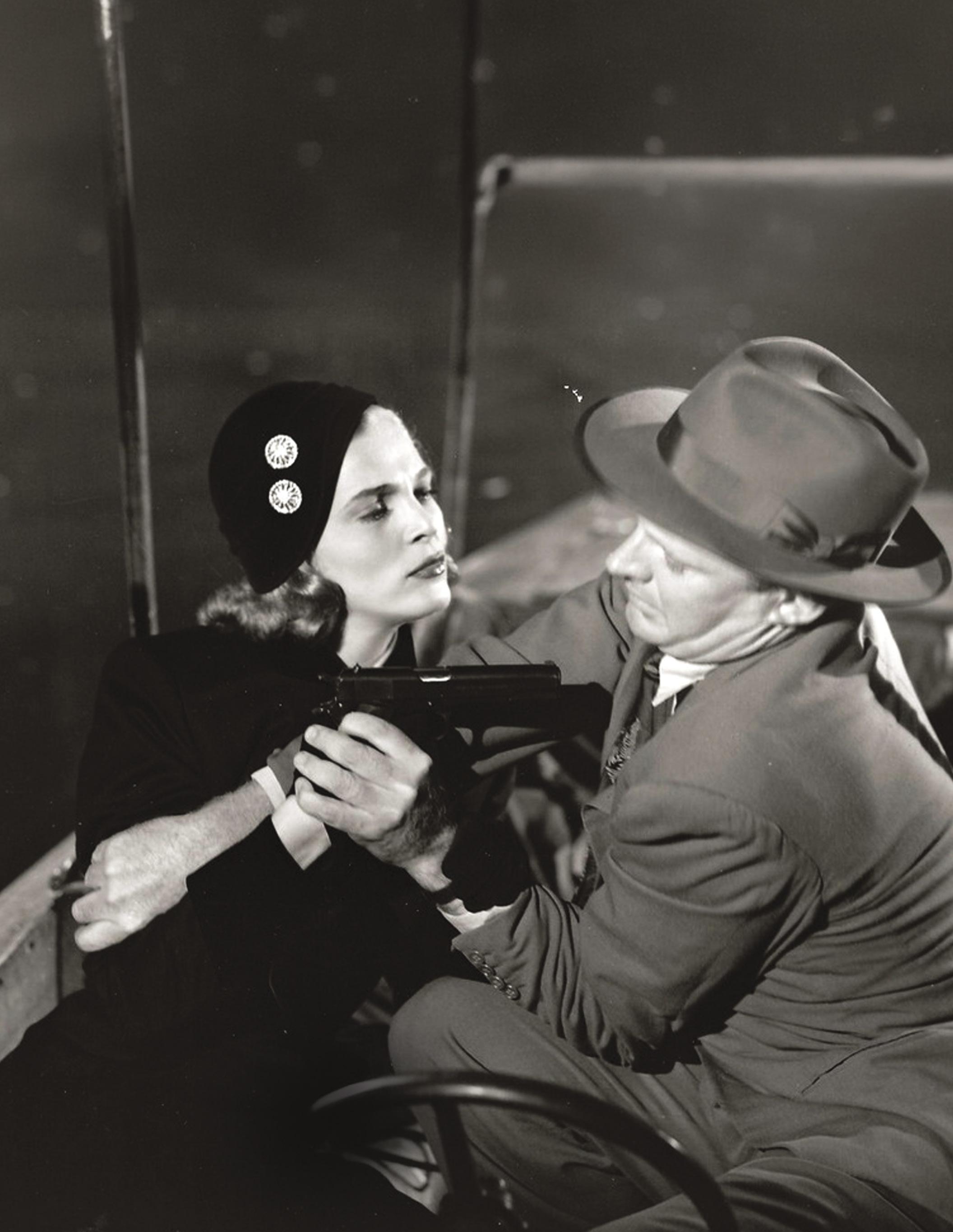
“Shadows & Secrets:
A Film Noir Series”
Sundays, June 7 – July 26, 7 p.m.
Ojai Art Center, 113 S. Montgomery St.
Tickets: $10 at the door ojaiartcenter.org
80th Ojai Music Festival
Led by Music Director Esa-Pekka Salonen
June 11-14
For full list of concerts, times and locations, and to buy tickets, ojaifestival.org
“Company”
June 12 - July 12
Ojai Art Center Theater
113 S. Montgomery St.
Fridays + Saturdays at 7:30 p.m., Sundays at 2 p.m.
Tickets: ojaiact.org
Ojai Studio Artists Second Saturday Tour
June 13, 10 a.m. to 5 p.m.
OSA art studio open tours in Upper Ojai and East End Free tickets and map: ojaistudioartists.org
Ojai Lavender Festival
June 20, 10 a.m. to 4 p.m. Libbey Park
Free, family-friendly event with lavender products, food, etc. ojaivalleychamber.org
38th Annual Ojai Wine Festival
June 20, noon to 4 p.m.
Lake Casitas Recreation Area
11093 Santa Ana Road ojaiwinefestival.com
canvas and paper works by L.S. Lowry Through June 21
Pancakes: 7-10 a.m. in Chaparral Auditorium, 450 E. Ojai Ave.
Youth Freedom Run: 9a.m. at Libbey Fountain Plaza
Parade: 10 a.m. on Ojai Avenue
(Country Club Drive to Park Rd)
Fireworks: 9p.m. at Nordhoff
Junior High & High School, 1401 Maricopa Hwy.
Tickets: ojai4thofjuly.com
Ojai Studio Artists Second Saturday Tour
July 11, 10 a.m. to 5 p.m.
OSA art studio open tours in Downtown Ojai
Free tickets and map: ojaistudioartists.org
Ojai Playwrights Conference
New Works Festival
July 30 - Aug. 2
The Thacher School
5025 Thacher Road
Buy passes from: ojaiplays.org
Santigold’s Debut Concert
July 30, 7p.m.
Libbey Bowl
Tickets: libbeybowl.org
“Seussical The Musical Jr.”
July 31 - Aug. 9
Ojai Art Center Theater
113 S. Montgomery St.
Showtimes + tickets: ojaiact.org
AuGust
Marc Maron: Yammering Into the Void Tour
Aug. 1, 8p.m.
Ojai Playhouse, 145 E. Ojai Ave.
Tickets: ojaiplayhouse.com
Modest Mouse Live in Concert Aug. 4, 7p.m. Libbey Bowl
Tickets: libbeybowl.org
The Movement & Pepper: The High Tide Tour
Aug. 16, 6p.m. Libbey Bowl
Tickets: libbeybowl.org
38th Annual Ojai Wine Festival June 20
Photo: Alejandra Scott Photography
FinDinG His Place iN tHe UniveRse
(A n D OJ ai)
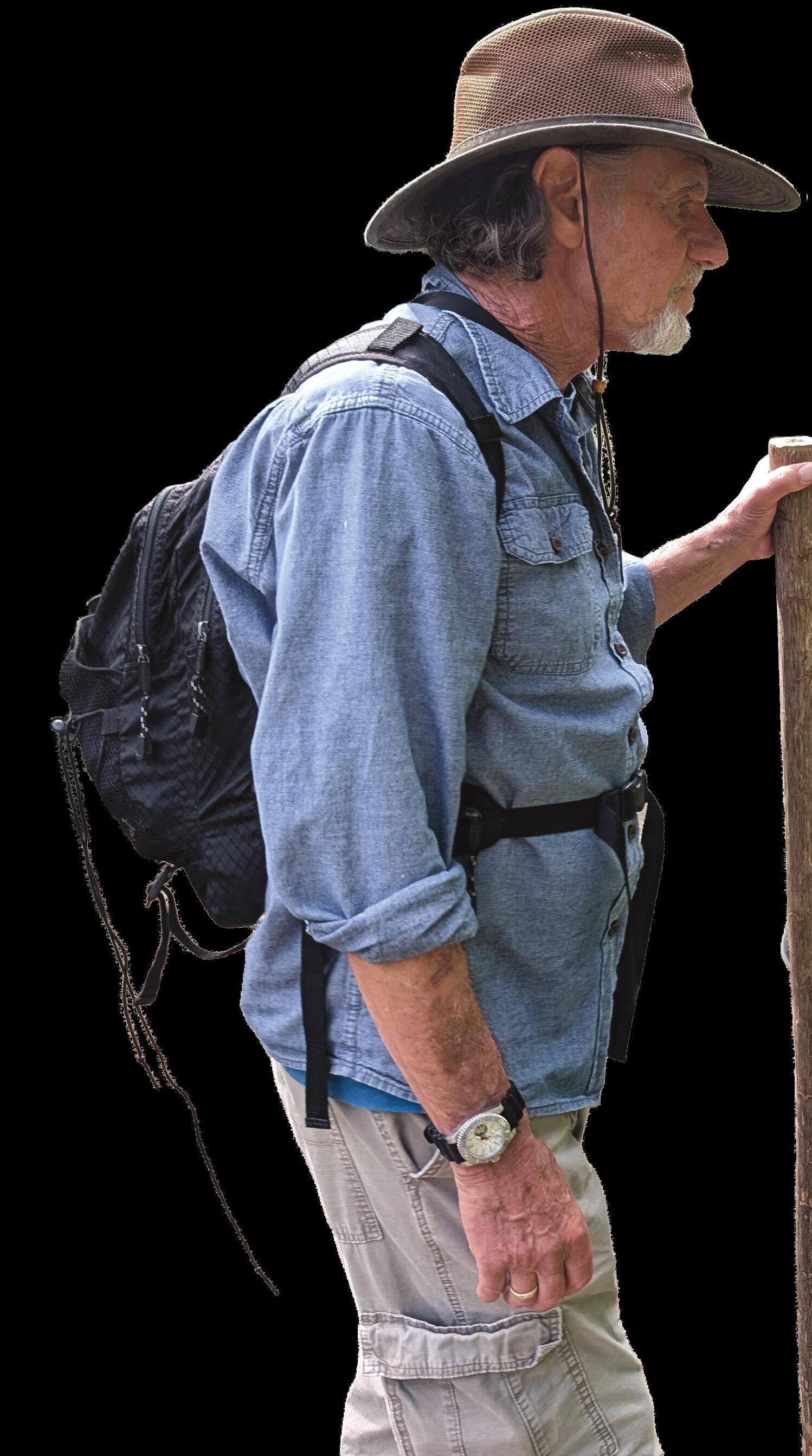
Lanny Kaufer looks pretty much like any other member of the Ojai establishment.
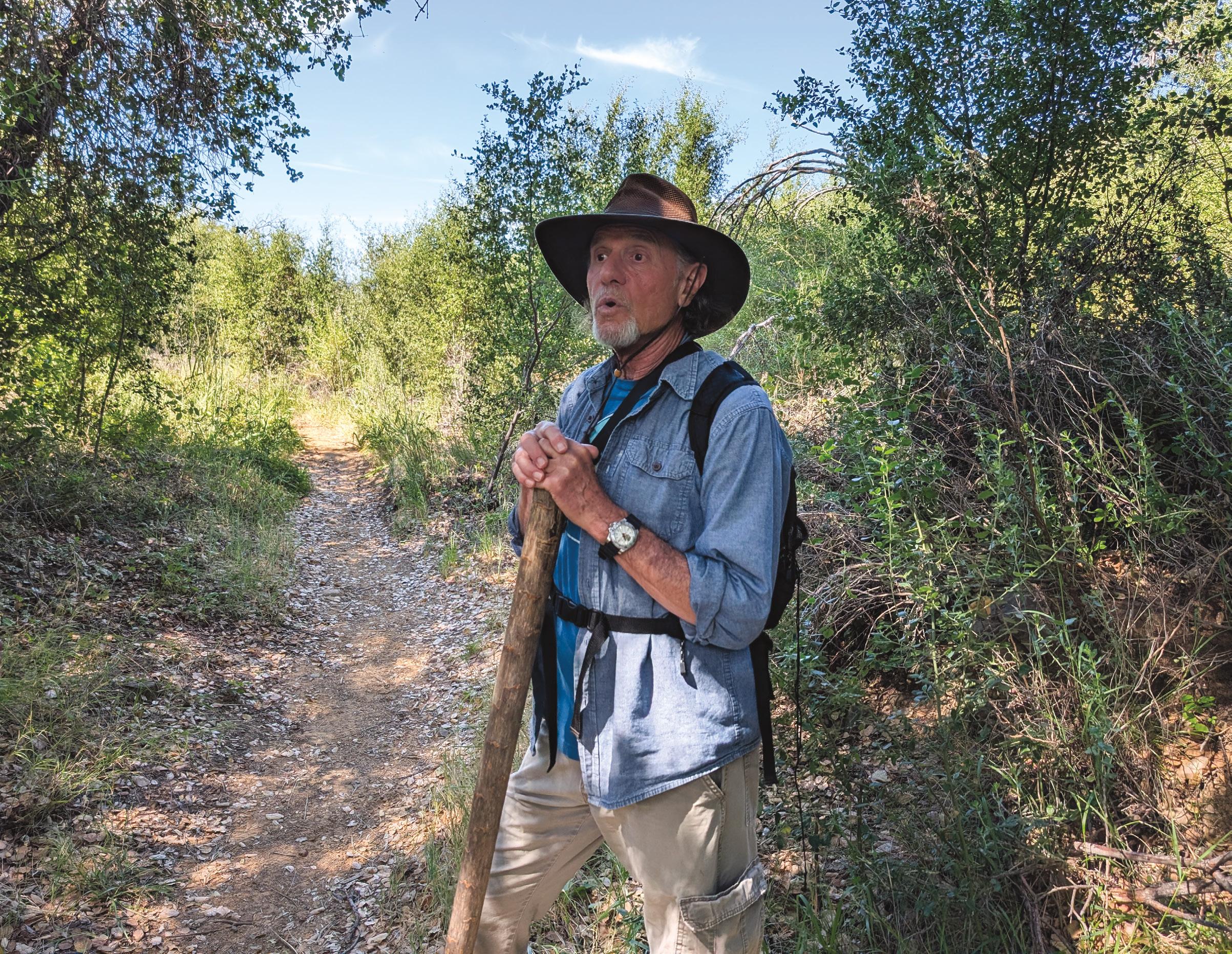
He’s all but clean-shaven, with a wispy trace of a white-haired goatee. Short brown locks of hair curl out from under a broad-brimmed trail hat. He seems to have a ready smile and maybe a quip for everyone.
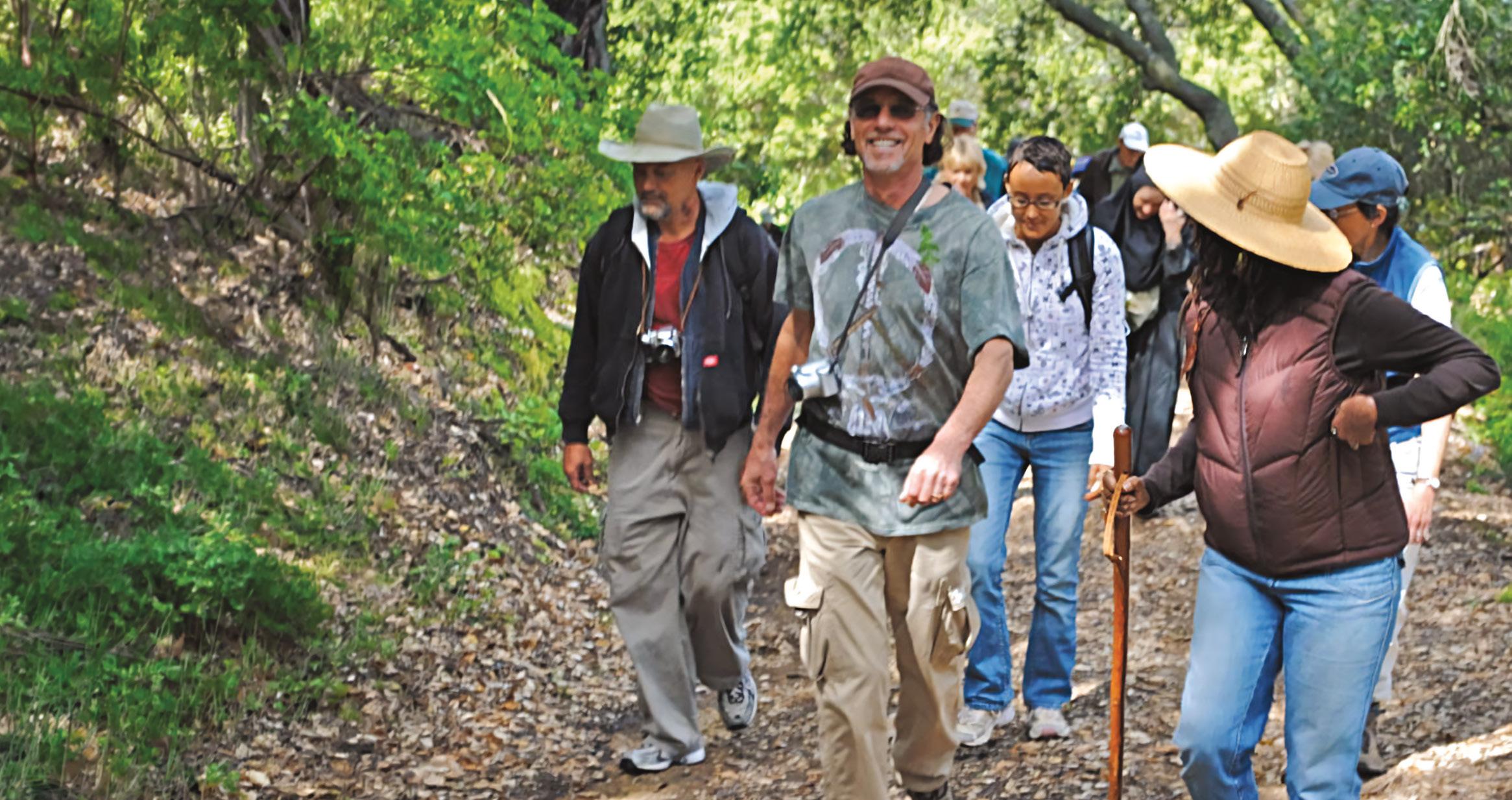
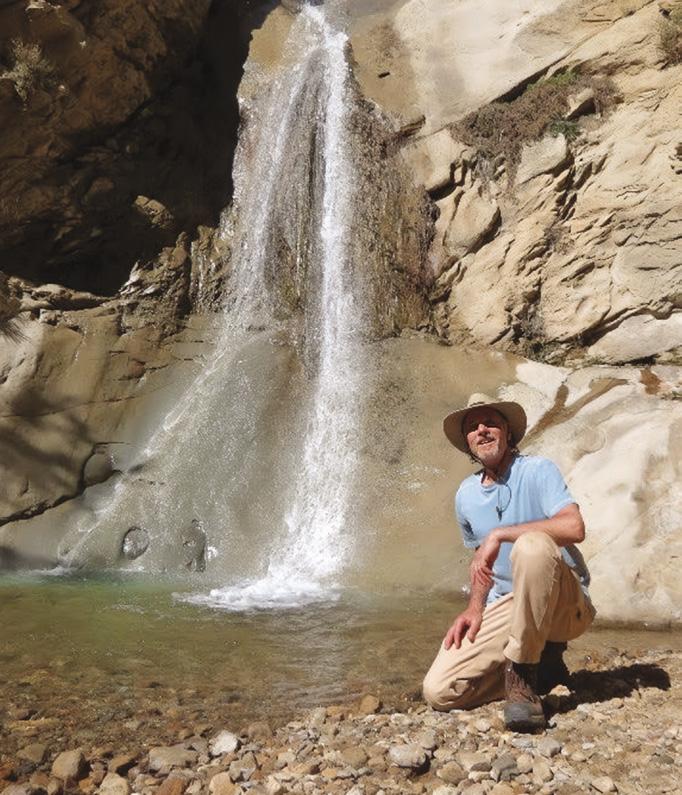
For 50 years Kaufer has been leading plant walks in Ojai’s backcountry, for medicinal and foraging purposes, that he calls Herb Walks. He is licensed for five years at a stretch as an official “outfitter and guide” with the Forest Service, the only such guide to be recognized officially in this area, he says.
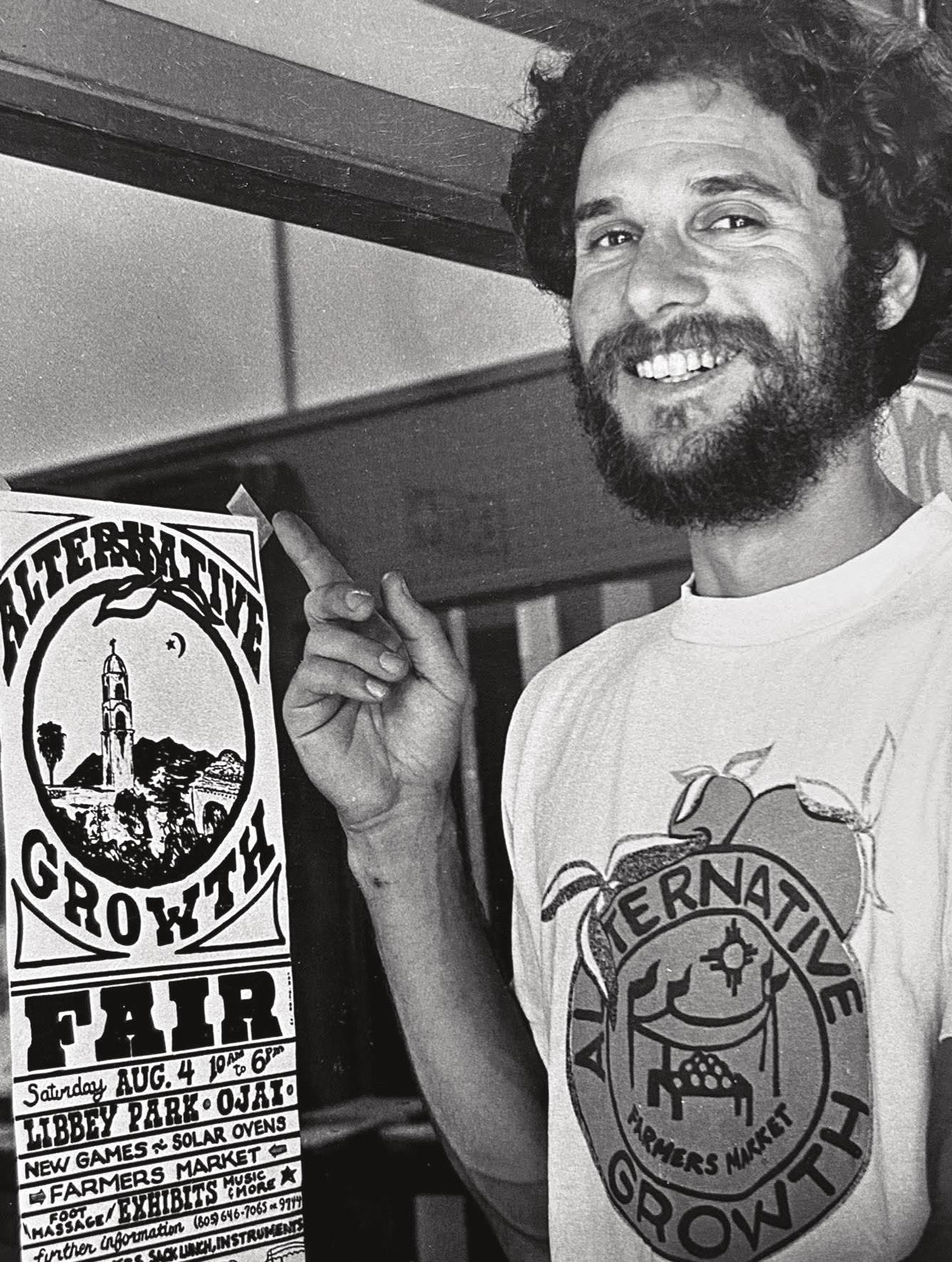
In 1976, Kaufer began leading groups of plant-curious people on trails in and around the Central Coast. At the time he was a wilder-looking man. He had a fuller beard, a lot more hair, and was just discovering wild plants and the Indigenous people who knew them best.
A personal experience sparked his curiosity. On a trip to New Mexico in 1967, Kaufer contracted a bad cold. He was staying in a native pueblo in the mountains, far from any drugstore or Western medicine. A tribal elder gave him a bag of sticks and leaves, and taught him how to make a medicinal tea from the herbs and properly inhale the steam. To Kaufer’s surprise, his cold vanished.
The experience changed his. Once a science student with a 4.0 GPA, he found himself turning toward the land. And although he disdains the word “hippie,” he admits that in the mid-’60s, he fit the profile, and leaned into the lifestyle.
Kaufer Then and Now
Kaufer sends a picture of himself — bearded, tanned, and smiling — working as an organizer of an “Alternative
Growth” gardening event in Ojai in the 1970s. He looks like a busy but happy “hippie” going back to the land, maybe because he was at the time.
In the mid-’60s, Kaufer and tens of thousands of other young people dropped out of conventional society to go to the Haight-Ashbury district in San Francisco, where the counterculture was born, in all its wild glory.
“I moved right to the Ashbury in 1966, after I dropped out of college,” he says. “I was already connected with the psychedelic music scene, and I decided to immerse myself in it. … But I found out the city life was not really for me, and the whole scene was getting kind of insane at that point.”
Kaufer went on to work on a Northern California farm, Morningstar Ranch, associated with the Diggers, a group of idealistic free spirits behind the free medical clinic in the Haight, as well as food giveaways. The Diggers over time launched several farms, and became farmers in the “back to the land” movement. Despite his dislike of the word
story by KIT STOLZ
photos
courtesy of LANNY
KAUFER
“hippie,” Kaufer believes in many of the movement’s values, and grins thinking about the time he and a dozen or so other “freaks” — as they called themselves — launched what he believes stood as the first-ever commune in Santa Barbara, back in 1966.
Kaufer also accepts peyote if the controlled substance is taken according to the sacramental and rigorously prescribed rules of the North American tribes who won the legal right to use it in their ceremonies. Kaufer says it took him 17 years to be invited to a “tipi ceremony” where peyote can be legally administered, and several more years learning
Lanny Kaufer in Ojai in 1979.
how to help in the ceremony and sing the songs. He no longer uses such drugs recreationally.
“The reason I was accepted is that from the beginning I knew I wanted to do everything just the way I saw it modeled,” he says. “There’s a certain way to dress, to conduct yourself, to pray, and you learn quickly that it’s not a matter of just showing up for the ceremony. There’s also the preparation of the tipi and the wood for the fire, and when it comes to the songs, too often people learn them like the old ‘telephone game,’ so that by the time you reach the 10th generation, the
song doesn’t sound like it’s supposed to.”
It’s a little ironic that Kaufer, who now sees peyote as a sacred medicine, was possessed by an overwhelming desire to dig in the dirt when he first took the drug in 1968.
“Everybody [in the commune] was in the house playing music and partying and I was just drawn outside,” Kaufer says. “I went out into the yard, which was just weeds, and I suddenly had this uncontrollable desire to plant a garden. I spent the whole day working on it. I didn’t actually get it planted that first day, but I got it all ready. I’ve been an organic gardener ever since.”
Lanny on the Wheeler Gorge Nature Trail
Cozy Dell Trail. Photo: Kit Stolz
A couple of years later, while on a dayslong vision quest in the backcountry, Kaufer became convinced that his purpose in life was to “speak for the plants.” (This was in 1970, more than a year before the publication of The Lorax , he points out.)
Kaufer adds that just as he is determined to correctly perform the sacrament of peyote, he brings exactitude to his work with plants.
“I make sure that every plant I identify, I give you the correct Latin name, and some of the most common use names, but definitely the right name,” he says. “So you can search the term and learn more if you wish and be sure that you’re looking at the right plant.”
Fifty years later, Kaufer continues to lead Herb Walks almost weekly on numerous trails, mostly in and around Ojai. (He co-leads full-moon walks with his wife, Rondia.) On all trails he introduces walkers to wild herbs and how they are used as food and as medicine.
Carrying a large stick made of a yucca stalk, and occasionally pounding the ground to alert any rattlesnakes, Kaufer leads the way, often stopping for plant attractions, such as the licorice-like stalk of the fennel plant, or the soap easily lathered from a flower stalk on a ceanothus plant.
Over the last five decades, Kaufer estimates he’s led hundreds of such walks — of groups as small as five, or as large as 30 — to educate and inspire.
Students Sing His Praises
Kaufer’s long-term students, many of whom repeatedly go on his walks, and those who talked him into offering a sixmonth field botany class, pour out their enthusiasm with little prompting.
Nessa Meshkaty, a board-certified doctor in internal medicine, pediatrics, and infectious disease, says Kaufer’s herbal walks helped calm her during a stressful time. She speaks warmly of “the reciprocity” and respect he shows plants.
Following the Indigenous tradition of giving thanks to all beings before a harvest, Kaufer sprinkles a pinch of dried tobacco or says a few words to a plant before taking a leaf for a closer look. Meshkaty finds his thoughtfulness for all living things,
even plants, reassuring. “I think Lanny helps us see the elders that are all around us,” Meshkaty says. “I think going from a logical and egoistic mindset, to a greater awareness of our connections to other beings, including the Chumash, leads to a different way of relating and connecting to the world.”
Meshkaty has been on Herb Walks with Kaufer for years, and recently joined a field botany course with a handful of others. She doesn’t believe an interest in medical science rules out what can be learned from herbs, or vice versa.
“A lot of people, if they see that I love plants and herbs, will automatically type me as fringe,” she says. “I’m conventionally trained. I still believe in vaccines, and I was at the bedside of patients dying of COVID. But still I believe that plants are like reminders of our lost ones, or, if they’re not reminders, they’re at least like healers.”
Lanny Kaufer and Julie Tumamait-Stenslie
Photo: Marc Alt
Kaufer, too, values science. After dropping out of UC Santa Barbara in the mid-’60s, he eventually returned to college, graduating with a degree in biology. He then studied with noted herbalists, such as William LeSassier, whom Kaufer met in the 1970s, and Indigenous teachers, notably Juanita Centeno, a Chumash elder who brought him to a deeper understanding of the medicinal herbs of our region. He also taught biology for years at Santa Paula High School and has always included scientific as well as Indigenous knowledge in his studies of wild plants.
In 2021 Kaufer published the FalconGuides book Medicinal Herbs of California, which meticulously balances a deep Indigenous understanding of wild herbs with scientific research about a plant’s beneficial compounds and health. Because not all Indigenous people use common herbs — such as mugwort, for example — in the same way, Kaufer describes their varying prescriptions and clarifies differences to allow readers to judge such methods for themselves.
“When thinking about Lanny’s Herb Walks, it’s not hard to choose my favorite part … It’s the song!” student Andrea
Clemens says. “Lanny begins each gathering with a beautiful song to welcome us, to celebrate our time together, and to say thank you to the land. I always marvel at how lovely and moving these songs are, the inexplicable way they reverberate in the middle of my chest.”
Richard Flowers, a student in Kaufer’s field botany class who works at Green Thumb Nursery in Ventura, appreciates Kaufer’s enthusiasm as well as his expertise.
“He likes to connect with people,” Flowers says. “He kind of feeds off of questions, and makes you think about what’s around you, so you don’t take it for granted. He actually makes me look at the world differently.”
Alicia Morris, a retired nurse who has volunteered with native plant societies in Southern California, agrees. “I feel as if his sharing creates a kind of web, for all of us, all these different people, to connect in a deeper way with a place,” she says. “It’s almost spiritual, but in a very practical and immediate way that’s right there. It’s like opening your eyes.”
Morris, an artist, connects with plants by drawing them. She shared via email some
of her exquisitely delicate plant portraits.
“If we really value nature we may be more likely to value or find a better way to take care of ourselves,” she says. “I think Lanny’s definitely creating that sense. It’s like the direct experience of seeing a painting, as opposed to reading the placard about it on a museum wall. That’s our nature, that sense of engagement.”
How does Kaufer cast that engaging spell? His students admit it’s a bit of a mystery.
Honor for Herb Walks
To honor the five decades of Herb Walks, on June 27, the Ojai Valley Museum will throw a garden party for Kaufer, his students, and friends, with native flowers, refreshments, snacks, and some speeches in his honor.
For a half-century Kaufer has been paying tribute to the wild plants around Ojai. Yet, although he’s built a business out of bringing people and wild plants together, he continues to insist that “Nature is the teacher” and he is only a guide to its wonders.
“We’re surrounded by nature’s bounty,” he says. “We take it for granted. As the Chumash say, ‘We are constantly walking on herbs, the virtues of which no one knows.’”
He smiles, with a bit of a twinkle, thinking of his next jaunt down the trail.
“Stay tuned,” he says, “for the next enthrallment.”
In a valley known for scenery, Farmhand Foundation is working to keep agriculture alive.
by JOHN FONTEYN
Everyone seems to have a plan for fixing agriculture. Conferences, certifications, corporate sustainability pledges, and glossy reports about the future of food. The path is paved with good intentions. But as farmer and writer Don Tipping argued in a recent essay, an uncomfortable tension exists inside the movement. A lot of money circulates around ideas about improving agriculture, yet very little reaches farmers.
Tipping describes the phenomenon bluntly as a “regenerative administrative class,” an expanding ecosystem of organizations, consultants, conferences, and messaging built around better farming. Meanwhile, many of the farmers doing the actual work remain undercapitalized. The critique lands because it contains truth. Farmers need more than conversations about soil health: They need functioning markets, infrastructure, and capital that actually reaches farms.
Good ideas don’t grow food. Farmers do.
Real change begins when ideas become infrastructure. It starts with relationships, then seeds, processing, distribution, and the steady rebuilding of systems that once connected farms to the communities around them.
Listening to farmers came first. Not arriving with our own ideas about what agriculture should look like, but paying attention to the people already tending the land and meeting farmers where they’re at. The Farmhand Foundation grew out of that discipline, not as a think tank or advocacy campaign, but as an effort grounded in the practical side of agriculture: helping farms stay viable and reconnecting local production with local markets. The Farmhand Foundation often describes its work as backing the hands that feed.
Around the farm we sometimes joke that we do the sh!t nobody else wants to do, the unglamorous middle work that actually keeps farms alive. A lot of that simply means being there: walking fi elds, asking questions, paying attention to what’s working, and backing what does work. Not advising agriculture from a distance, but spending time in the places where it actually hap pens.
You see it in practical ways: connecting producers with restaurants, schools, and distributors that want food grown close to home, building markets that keep growers economically viable, helping farmers access grant funding so they can stay on the land, supporting small olive groves, and expanding native seed production so restoration projects have access to locally adapted plants.
An early moment of beauty on Earthtrine Farm in Ojai.
Photo: Colin McCarthy
Spreading compost for the regenerative olive orchard. Left to right: Johnny Fonteyn, Whitney Clapper, Elizabeth Whitlow, Loren Luyendyk and Zach Heyman
Photo by: Liam Pickhardt
by STEVE SPRINKEL
Iwas gonna put the babibokchoy into a plastic bag, but then I thought about Venezuela and the poor people in Pascagoula, Mississippi, downwind of the Chevron plant. Are we supposed to feel guilty about Pascagoula? Blame it on Pascagoula if your babibokchoi arrived in a pitiful shrivel. I shoulda put the choi in the big bag of spinach and not blubbered all over this page. But that’s a tardy Shoulda. I had to mandate an early pick on the babibokchoi because the hot weather had provoked early flowering. I cut a whole bunch for “the house” the other day and they made it back fine. When I was repacking for Gwen I encountered the misery. The tragedy of poor post-harvest handling. All because of Pascagoula.
Then there’s Uline Inc. Every time you buy some gear from Uline you shove more money at MAGA. Sandbags, twine, CSA (community supported agriculture) packing totes. It all comes within 36 hours, and when you call they say: “Hi, Glenn. How can I help you today?” They sound like your best friend. Then they MAGA some of the cream right off the top.
So we were packing the CSA yesterday and we ran out of those nifty $19 Uline totes again. So we packed in open Dutch bulb crates and cardboard. The exposed babibokchoi began to cry in the low humidity and unseasonable broil. The brain trust gathered around the table of burritos and salad began to wail about the boxes.
We reviewed the storied storage tales. The collection of bears, fishing hooks, and cookbooks stashed in our Uline totes in the back of the garage. Then Professor Smarty pleads to end the madness: “Get rid of the totes and give them the produce in boxes that cost $2 not $20. Stop the sobbing.”
Looks like that,s where we are headed, Uline. We are down to 45 boxes. I bought $700 worth last year. I bought eight half-share Uline totes and I own one now. Maybe. I haven’t seen the babi tote recently. Hope she’s OK.
So we can move on to Day Tripper Boxes. “A one-way ticket, yeah.” Let the container be thy issue to resolve. Bring them back, if your conscience demands it, the next time you visit. Or gather them together for an exquisite bonfire if ever the weather turns cold.
The permanent box was always meant to eschew the landfill and respect the forest. Now we cut trees. We all have sinned in the name of International Paper, whose cardboard division is just over the way from Pascagoula in Pine Hill, Alabama.
Serving the Ojai Valley since 1986
Since 1986, when Boccali’s first opened its doors, three generations of the Boccali family have had a hand in building the restaurant that has become an Ojai favorite and a tradition for generations of customers’ families.
Late Spring through early Fall most vegetables served are picked fresh daily at the Boccali Ranch in Upper Ojai. The Boccali Vineyards Wines are also grown and produced at the property five miles away.
SATURDAYS & SUNDAYS 12-5 pm
3277 E. OJAI AVENUE
MONDAY- TUES: OPEN AT 4PM WEDS- SUN: OPEN AT II:45
805. 646.6116 boccalis .com boccalivineyards .com
2. Place the eggplant flesh, remaining olive oil, lemon juice, garlic, tahini, smoked paprika, thyme, black pepper, and salt into a small blender or food processor. Process a few minutes until smooth and creamy.
3. Transfer the dip to a small bowl. Stir in sliced olives. Serve with crackers, vegetables, chips, sandwiches, or wraps.
Palmer, MSFS, RDN, is an award-winning plantbased, sustainable food expert in Ojai. Follow her at SharonPalmer.com.
MEXICAN RESTARAUNT
BURRITO
Ifone could bottle joy and share it with friends, it might look and feel something like the Ventura Seastars’ pure elation and comradery of riding the changing blue Pacific Ocean waves on boogie boards. This group of extraordinary women come from all walks of life to experience the year-round freedom of catching waves together for one hour each Tuesday and Thursday afternoon at 3 p.m.
They gather at the unofficially named “Schoolyard Beach” near Pierpont Elementary School, which is fitting since many of the Seastars are current or retired teachers, including founder Becky Caron, who worked as a special education teacher at Oxnard Elementary for 31 years.
The group of about 20 women ranges in age from 50 to 92 and is open to everyone who is willing to put aside their daily concerns and remember how to play in the waves again. You don’t even need to have your own wetsuit or boogie board — they have extras!
“I remember that first wave, I rode. My first thought was, ‘I get to be a kid all over again,’” noted 59-year-old cafeteria manager Darlene Hooks.
Caron said there are only three rules to remember: One, is to have fun. Number two, is that when you take a wave with another member, you have to high-five each other because you’re just giving thanks to the ocean. And number three: at least one time during the hour they boogieboard, the group members all ride a wave together—the “party wave” of joy.
“I started boogie boarding in Ventura in 2013, and at 69 I’m still out there riding waves like I’m auditioning for ‘Senior Baywatch,’” shared retired RN Irene Mefford. “Whether there are three of us or twenty, the mix of friendship, ocean therapy, and pure ridiculous fun keeps me coming back.”
Joy
The smiles, giggles, and out loud guffaws draw plenty of attention from passersby and neighbors whose homes line the public beach. The Ventura Seastars have gained members over the past ten years purely by exhibiting too much fun to resist, and fans from folks who love their obvious joy so much they bring by beverages to share. Caron said that one man who lives on the lane nearby and hears their laughter each week told her that he nominated the group for the podcast called “This is Love.”
Caron, who lost her Ventura home in the Thomas Fire in 2017, found solace, friendship and peace playing in the ocean among strong, intelligent, caring, and adventurous women. “It was very hard and difficult after losing everything to the fire. I found that when I was in the water, in the ocean…that was where my heart was the happiest. A lot of my friends have all come around me,” Caron said.
One of those friends and neighbors was preschool teacher Kirsten Johnston, who discovered the Seastars while renting a home on Schoolyard Beach after also losing her home to the Thomas Fire. “I have always been a lake and pool girl. I just decided to try something new and boy does it bring me joy! I gotta say it is like being a kid again!” Johnston noted. “It is so healing to be in the ocean with all of these women from all walks of life and ages. Truly special.”
Ventura Seastars represent women with backgrounds ranging from teachers, to nurses, to mothers, to business owners, to hairstylists, accountants and photographers. Core member and retired Sony Pictures IT Project Manager, Suma Fong-Henry, said that life is good at any age if there is joy.
The Ventura Seastars live life to its fullest through boogie boarding in the Pacific Ocean and reigniting the joy of play and friendship. Seastars pictured from left include: Melissa Kirkegaard, Laurie Morse, Pam McLeery, Darlene Hooks, Amparo Chaney, Becky Caron, Samantha Crisp, Joy Hartzell, Suma Fong-Henry, Patty Chan, Cathy McNabb, and Irene Mefford.
Ventura Seastars capture
on a wave
photos and story by HOLLY ROBERTS
At 66, Fong-Henry explained that boogie boarding is a great physical activity in addition to the friendship and joy experienced. “There are few things more freeing than riding a wave. It’s such a beautiful and easy thing. The feeling of having the wave carry you — it’s a freedom. It’s a healing — it’s just wonderful and difficult to explain,” added Fong-Henry.
Women boogie boarders of all ages gathering in numbers for fun, adventure and play seem to be on to something important for life longevity. Pharmaceutical consultant Melissa Kirkegaard shared that participating with the Seastars has been a joyful addition to her day-to-day life: “Every time you go, the ocean shows you something new — different light, different tides, different moods. It feels so good to be reconnected to the water again.”
The Seastars have also been lifesavers to some over the years. Caron described one time she noticed a young adult woman crying in her car near the beach entrance who told her she was very depressed. Caron encouraged her to join the group of women enjoying the waves and loaned her a boogie board. “She actually boogie-boarded for about six months because she said it changed her life and it just really reset her brain chemistry,” added Caron.
Eighty-year-old Victoria Hopkins, who counts artist, woodworker, massage therapist, drummer, native flute maker, and performer among her many career incarnations, noted that she was pulled into the group while walking along the ocean last year, newly arrived from the East Coast. “I saw a wonderful group of women boogie boarding, laughing hilariously! Their Queen B (Becky) called out to me to come join them…Wow! It’s been a glorious, playful, heartwarming, ocean loving priceless BLESSING to my life ever since,” she wrote. “Being with the Seastars is a life-altering experience I would never want to be without. I LOVE riding the waves with them — with all my crazy happy heart and soul — ‘Sooooooo’ grateful!”
Seastar Patty Chan in action
Beach. Chan, 69 years young, said that she’s just getting started in her adventure-seeker era and loves sharing the waves with great friends.
Experience is certainly unnecessary. Joining the Seastars last year, retired RN Anna Green, who was new to boogie boarding, shared: “Being in the ocean, you leave all your worries back on shore.” And age is definitely not a deterrent. Teruko Fong, 92-year-old retired retail store owner, and Suma’s mom, explained it succinctly: “It’s just fun. If you can do it, go do it!”
With all that the Ventura Seastars offer the community in the way of inclusion, escape and comradery, the only two things on their wish list this holiday season would be to have a bench and an outdoor shower installed at Schoolyard Beach. This is their great hope and would be their legacy to future Seastars for years to come.
Seastars Joy Hartzell and Darlene Hooks are caught up in the joy of boogie boarding at
Beach. Hartzell said: “Life gets busy and hard at times and this is the best way to refuel, regroup and release all your worries and just enjoy and be in the moment of fun, laughter and friends.”
Caron’s rare gift for inspiring others to join the group does not go unnoticed. “We follow her lead and into the ocean we go. And once you’re in that ocean, the real you comes alive — the kid you used to be — the one who laughed freely and felt pure joy! Those moments will stay with me for a lifetime,” Director of Marketing and Business Development Samantha Crisp noted. “At 74 years young, my motto is simple: I don’t ever let that old lady in! This ritual, this community (of) Seastars, this burst of adventure — it’s one of many things that keeps me young!”
Ventura
at Schoolyard
Ventura
Schoolyard
clinton.haugan@sothebysrealty.com
clintonhauganhomes.com
131 Christopher Lane, Ojai Sold for $1,685,000 | Represented Buyer
South La Luna Avenue, Ojai Listed for $925,000
130 Olive Street, Oak View Sold for $995,000
Ojai
Over 25 years of experience matching people and property in the Ojai Valley
IMMACULATE UPPER OJAI LUXURY ESTATE
Set on 10+ private acres with unobstructed Topa Topa Mountain views, this exceptional Ojai estate blends luxury living with retreat-style versatility. The 5,200-square-foot Architectural Digest-recognized residence includes a custom Tiny House, two geodesic domes, seamless indoor-outdoor entertaining spaces, and wellness-focused features including medical-grade air filtration and an EMF-shielded primary suite. Resort-style amenities include a saltwater pool, pickleball and basketball courts, putting green, gym, orchard, solar with Tesla batteries, gated access, and extensive fire-mitigation infrastructure.