
AGNES SMEDLEY Ojai’s Radical Voice ARA’S FINAL MOVEMENT 50 Years of Music. One Last Season.
BOCCALI’S AT 40 From Soil to Table, 40 Years On RESTORING THE NORTH FORK Water Returns to Bear Creek

AGNES SMEDLEY Ojai’s Radical Voice ARA’S FINAL MOVEMENT 50 Years of Music. One Last Season.
BOCCALI’S AT 40 From Soil to Table, 40 Years On RESTORING THE NORTH FORK Water Returns to Bear Creek
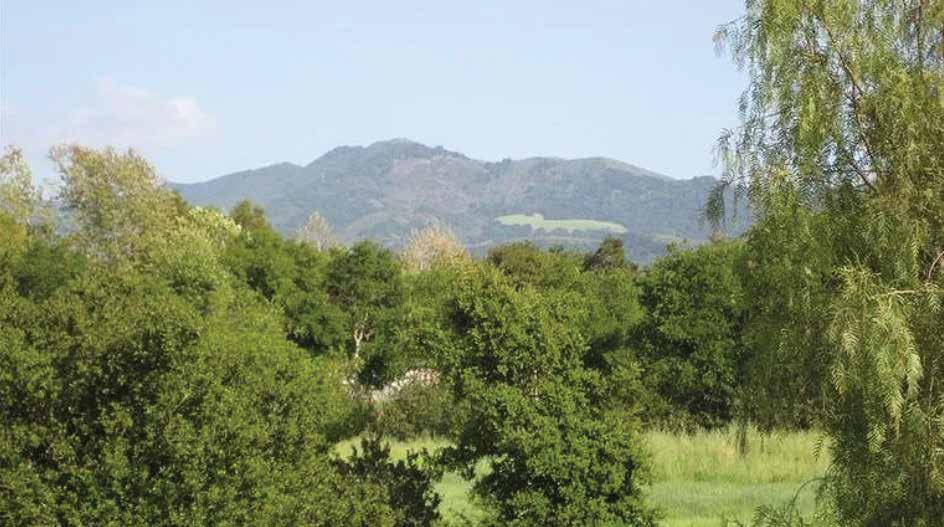
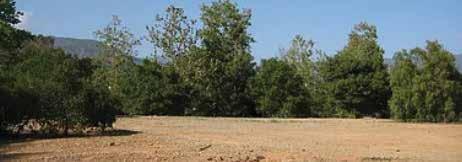
Hidden behind the gates of Rancho Matilija sits a stunning 3-acre lot with magnificent 360 degree mountain views. Surrounded by mature trees and wildlife, this lot offers a beautiful connection to nature while still being conveniently located near all the amenities, recreational parks, hiking trails, Lake Casitas, fishing and all the outdoor adventures you may be looking for as well as easy access to Ventura, LA and Santa Barbara. Don’t miss this opportunity to build your dream home with endless possibilities in this serene and picturesque setting. This gated, private community offers beauty, peace and vision to the person looking for a one-of-akind property.
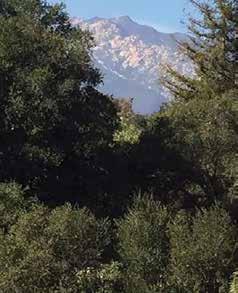







Discover a quiet East End compound offering nearly 5,000 square feet across three private homes. Originally crafted by Mr. Shippee for his family, the main house welcomes you with a walled courtyard, covered veranda, sparkling pool, and lush landscaping. Inside, acacia wood floors, an open cook’s kitchen, and a dramatic double-sided fireplace anchor the living spaces. Three bedrooms with French doors open to the gardens. A 1,400-square-foot guest house adds two bedrooms, a bath, a private courtyard, and a two-car garage — ideal for visitors or extended family. The third home features modern concrete floors, a spacious living room, kitchenette, bedroom, bath, and two secluded patios. The landscaped grounds mix drought-tolerant plantings with fruit trees — apple, citrus, fig, pomegranate — and olive trees lining the drive. A fenced paddock and turnout area make the property horse-friendly. Altogether, this rare compound blends versa-




Perched along Ojai’s iconic Foothill Road, this glass-walled architectural sanctuary is defined by light, serenity, and expansive 270° views. Built in 2017 and thoughtfully re-imagined in 2022, the 3,154 ± sqft single-level home pairs minimalist design with seamless indoor-outdoor living. A 1,117 ± sqft pavilion with showcase parking, wellness studio, and sauna—along with additional creative retreats—completes a private compound set on 1.87 ± acres with pool, spa, and unforgettable Pink Moment sunsets.
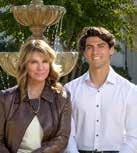














As a nonprofit healthcare system, we answer only to the community we serve.
Community Memorial Hospital – Ojai is independent, not beholden to corporate interests, government entities, or shareholders. That means every dollar we earn is reinvested into what matters most: new programs, advanced technologies, modern facilities, and exceptional talent.
Over the years, we’ve made significant investments to enhance care in the Ojai Valley. And thanks to the philanthropic support of our community, we continue to grow and adapt in these uncertain times. Providing comprehensive, high-quality care to the residents of the Ojai Valley isn’t just our mission — it’s our honor and our pride.
Learn more about our outstanding care at mycmh.org




FEATURED LISTING
VILLA TIARE VINEYARD ESTATE




1708 Orchard Drive, Ojai
3 BED | 2 BATH | 1,754* SQFT. | $1,525,000
Welcome to the Villa Tiare Vineyard Estate. Built in 1954, this exceptional estate offers a private, yet Bali like feel from the moment you enter through the wooden gate. Inside you are met with hardwood floors, a cozy fireplace and dining room The grounds are nothing less than spectacular and a rare find in the Ojai Valley.

Global Real Estate Advisor Cal DRE 02019604
805.760.2092
clinton.haugan@sothebysrealty.com
clintonhauganhomes.com



1317 Meadowbrook Road, Ojai
4 BED | 2 BATH | 1,481 SQFT. | $1,300,000
Nestled on a quiet street just moments from Downtown Ojai, this charming 4-bedroom, 2-bath home offers exceptional curb appeal and a warm, inviting atmosphere. Step inside to a beautiful living room featuring a cozy fireplace and stunning mountain views framed by classic wood-pane windows. Located in one of Ojai’s most desirable locations.




















p.34
Nazi Survivor, Top U.S. Official Sounds the Warning Bell
Story By Kit Stolz
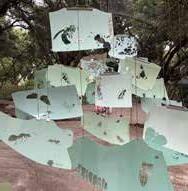
p.46
Artist Exchanges Bring New Ways of Seeing
Story By Jennie Prebor

p.19
Editor’s Note
p.20
Contributors
p.21
Ojai Podcasts & 2 Degrees
p.25
Arts Section p.53
Artists & Galleries
p.69
Yesterday & Today Section
p.80
Animal Neighbors
p.79
Healers of Ojai p.100
Hiking Map p.109
Calendar of Events

american mosaic Collage by James Jarnot (Joe Sohm Photos)

Boccali’s Marks 40 Years With Memories Story by Ilona Saari
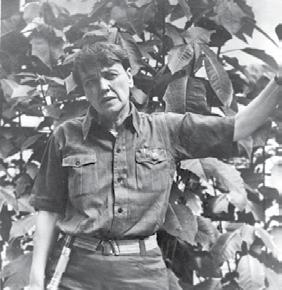
Agnes Smedley The China Problem
Story by Mark Lewis


Photos by Joe Sohm Story by Bret Bradigan




Editor & Publisher
Bret Bradigan
Director of Publications
Bret Bradigan
Creative Director
Uta Ritke
Ojai Vortex/Hub Administrator
Julia S. Weissman
Contributing Editors
Mark Lewis
Jerry Camarillo Dunn Jr.
Jesse Phelps
Columnists
Chuck Graham
Ilona Saari
Kit Stolz
Sami Zahringer
Interns
Alex Gutierrez
Emilie Harris
Circulation
John Nelson
CONTACT US: Editorial & Advertising, 805.798.0177 editor@ojaiquarterly.com
The contents of the Ojai Quarterly may not be used, reproduced or transmitted in any form or by any means without the written consent of the publisher.
SUBSCRIPTIONS:
To subscribe to the OQ, visit ojaiquarterly.com or write to 1129 Maricopa Highway, B186 Ojai, CA 93023. Subscriptions are $32.95 per year.
You can also e-mail us at editor@ojaiquarterly.com. Please recycle this magazine when you are finished.





Bathe in
This historic property was the genesis of Ojai as a wellness resort town. Since the 1800s, travelers visited Wheeler Hot Springs to ‘take the waters,’ believed to have healing qualities. For decades, the property was a busy resort featuring a lodge, spring-fed hot tubs, and a cold spring-fed swimming pool. Visitors also enjoyed massages and other treatments in cabins peppered around the grounds. There are no structures remaining today, but the abundant natural elements that made this property world famous are still flowing freely. The present owner has planted numerous redwood trees, which, combined with the palm groves, enhance the spectacular views of the mountains and the peaceful energy that surrounds you. So come experience it all, and create your own Nirvana in Ojai.
Your dream Ojai hideaway in the woods on prestigious Thacher Road. All the charm of a rustic cottage with the modern updates you’ll appreciate ... a well-planned cook’s kitchen with newer appliances, updated baths, plenty of room inside and out to relax, meditate, and exhale. The great room features a hand-built stone fireplace and plenty of windows to the quiet world outside. On the same level, you’ll find a comfortable bedroom with adjacent bath. A reading nook is carved out of the great room where you can get cozy on cool nights ... or use it as guest room with trundle bed. The primary suite on the lower level offers plenty of privacy, and its own lovely bath. You won’t want to leave your romantic cabin in the woods ... and if you act quickly, you won’t have to.
Call








“The once-calmed mind is vast.”
— Alan Watts
There are two Japanese ideas that, taken together, offer a useful way of seeing both art and community: wabi-sabi and mushin.
Wabi-sabi is the appreciation of imperfection — the weathered surface, the asymmetry, the unfinished edge that carries the mark of time. It is not a lowering of standards, but rather a shift in where we look for beauty.
Mushin — “no mind” — is the companion discipline. It is the ability to respond without rigidity, to accept change as constant, and to move with it rather than against it.
Together, they describe a kind of resilience: not the brittleness that resists pressure, but the adaptive kind that absorbs it. That is the throughline of this Summer OQ. And, more broadly, it is what defines a healthy, functioning place like Ojai.
You see it in the Ojai Music Festival (June 11-14), where Ara Guzelimian’s final season as artistic director resists tidy resolution. The festival has always treated music not as a fixed object, but as a living exchange — something shaped by place, risk, and attention in real time. It holds because it stays open. You also see it in Jennie Prebor’s story on the exchange of artists between Ojai and Minnesota, showing how creativity is less a finished identity than a continual revision. Ojai doesn’t preserve artists. It alters them.
History, too, arrives unfinished. Mark Lewis’ portrait of Agnes Smedley reveals a mind sharpened by contradiction, not simplified by it. And in Kit Stolz’s look at W. Richard Blumenthal — now 100, still speaking out on authoritarianism — we see the discipline of staying engaged, of continuing to respond rather than settling into certainty.
Elsewhere, the pattern repeats. Chuck Graham’s look at the North Fork of Matilija Creek shows restoration as an ongoing process — slow, uneven, adaptive. Ilona Saari’s chronicle of Boccali’s 40 years traces longevity not to perfection, but to adjustment. And Sami Zahringer reminds us, as always, that humor lives in the gap between how things are supposed to go and how they actually do.
What binds these stories is not polish, expertly written as they are. It is permeability — the capacity to change without losing form. To reflect Ojai as a living, breathing presence, not fixed in amber. A work in progress.
A community that insists on perfection becomes brittle and fragile. It cannot absorb stress. It fractures. A community shaped by wabi-sabi and mushin behaves differently. It builds in room for variation. It expects imperfection. It adapts. Not perfectly. Continuously.
So this issue is not seamless. It is not meant to be. It is a set of pieces in motion — each carrying its own irregularity, its own human signature.
In the Persian tradition, a small, intentional flaw is woven into the carpet to honor the notion that only Allah is perfect — a reminder, shared across cultures, that what you’re holding here, like Ojai itself, is made stronger by our human imperfections. A flawless surface doesn’t hold. A woven one does. And that is what the Ojai Quarterly sets out to do: weave together this tiny and yet vast community.
is a poet, photographer, and recovering exec, Devo mentors artists and writes about healing through art. Her Peabodynominated doc “Not Afraid to Laugh” celebrates humor’s power.
His work has appeared in Outdoor Photographer, Canoe & Kayak, Trail Runner, Men’s Journal, The Surfer’s Journal and Backpacker.

JENNIE PREBOR
is Ojai-based, with one foot in NYC, art world veteran. Prebor is a downtown art gallerist & writer, who is often seen in our Museum galleries.

is following the tug of curiosity, shaping clean visuals with a touch of delightful weird. Find her at utaculemanndesign.de and utaculemann.art
is a writer and editor based in Ojai. He can be contacted at mark lewis1898@gmail.com.
is a writer who’s worked in TV/film, rock’n’roll and political press, and as an op-ed columnist, mystery novelist and consultant for HGTV. She blogs for food: mydinnerswithrichard. blogspot.com.

RYAN SCHUDE
Is a photographer & educator from Oak View. You can find his most recent photos in the book “Also On View: Unique and Unexpected Museums of Greater Los Angeles” by Todd Lerew.
is an award-winning journalist who has written for newspapers, magazines, literary journals, and online sites. He lives in Upper Ojai and blogs at achangeinthewind.com.

is an Ojai writer and award-winning breeder of domestic American long-haired children. She has more forcemeat recipes than you.

The name “Ojai” is believed to be derived from the Ventureño Chumash word ‘awhaý, meaning “moon.” In 1837, Fernando Tico received a land grant and established a cattle ranch here. Thomas A. Scott, who had financial success with oil and railroads, bought the Ojai Valley in 1864 for oil exploration. By 1868, Scott, through his agent Thomas Bard, began selling properties to homesteaders. In 1874, R.G. Surdam plotted out the town he would call Nordhoff, renamed Ojai in 1917.
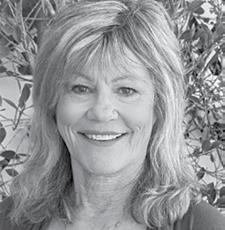
Heidi Allison shares the story of her son, Nate Rhoades. What emerged after his tragic death at 21 was a clearer picture of who Nate really was: the friend who showed up, who called, who stayed. From that realization came Nate’s Place Wellness & Recovery, a working model for peer-driven support, structure, and belonging for young people navigating addiction. (Ep. 283)
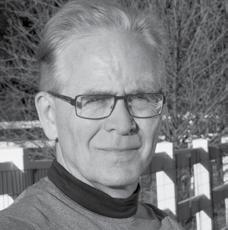
Mark Frost’s great-uncle Will Hassett, known as “The Bishop,” was a key aide of President Franklin Delano Roosevelt, and kept a diary chronicling his time serving “The Boss.” The diaries served as the inspiration for Frost’s new novel, “Yankee Sphinx,” chronicling these tumultuous times until FDR’s death in 1945, and beyond. Frost is the co-creator, with David Lynch, of “Twin Peaks” and has written 14 fiction and nonfiction books. This is his third Ojai podcast appearance. (Ep. 286)
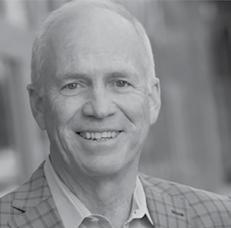
CLAY CREASEY & THE LONG GAME OF BOARDROOMS AND STAGES
From Napa Valley fields to Fortune 500 boardrooms to the Ojai stage, Clay Creasey has lived several lives — and learned how to read the terrain in each. In this candid and wide-ranging conversation, he reflects on risk, reinvention, and the difference between problems you can solve and forces you can’t. It’s part business, part theater, and entirely about perspective. (Ep. 277)
JACK PIATT ON HIGHWAY WEST’S ‘SINGERS’ HISTORIC OSCAR-WINNING MOMENT
When Jack Piatt and David Breschel of Highway West first joined the podcast last year, “Singers” was a promising short film. Now it’s an Academy Award winner, in a rare tie that marks one of the more unusual moments in Oscar
history. In this return conversation, Piatt walks through the full arc from idea to execution to Oscar night — revisiting the early instincts that shaped the film, the key decisions that gave it weight, and the long, often opaque path
ONE: In the late 1980s, at the height of his global fame following Thriller and Bad, Michael Jackson moved through the world with an almost mythic level of scrutiny — rarely still, rarely private. Yet even the most visible figure on the planet required refuge. According to a 1989 Los Angeles Times interview with his manager Frank DiLeo, that refuge sometimes came in an unexpected place: Ojai. “We’ve got a nice room set up for Michael because he spends a lot of time at my house,” DiLeo said, referring to a home he and his wife had recently purchased in the valley.
through festivals, buzz, and awards campaigning. Piatt also reflects on the shared thread of military service, and how discipline, risk tolerance, and long-term commitment inform both filmmaking and business. (Ep. 279)


MICHAEL JACKSON (1958-2009)


TWO: The image is striking — Jackson, the ultimate emblem of pop spectacle, slipping quietly into a guest room tucked beneath Ojai’s pink moment skies. His legacy is complicated: alongside epoch-defining music sits a history shadowed by serious allegations. And yet, like so many who have passed through the valley, he appears here in a different register — not onstage, not under klieg lights, but in retreat. Ojai has long drawn artists and restless spirits seeking stillness. In that sense, Jackson’s connection — fleeting but real — fits into the valley’s enduring pattern: a place where even the most public lives occasionally go quiet.


Royal Oaks - 5 Bedrooms, Upscale Finishes Throughout, Media Room, Wine Cellar, Tasting Room, Gym/Massage Room, Pool & Spa, Putting Green, Well, Six-Car Garage, Bocce Court, Views, and So Much More RoyalOaksRanchOjai.com












Bret Bradigan
By Jennie Prebor














BY BRET BRADIGAN
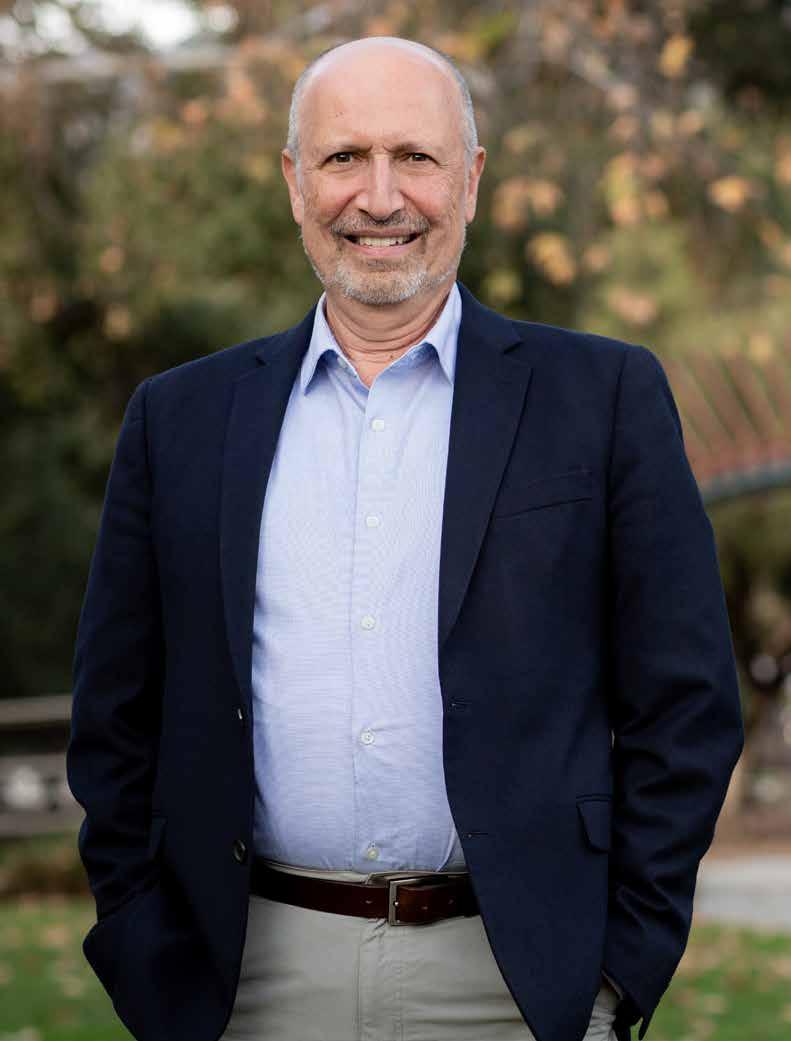
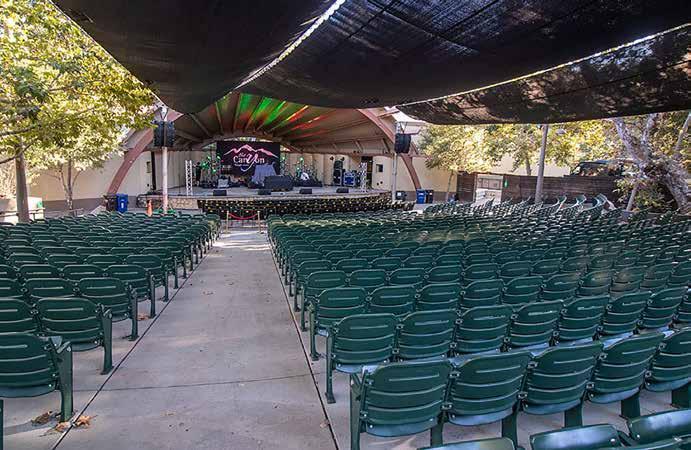
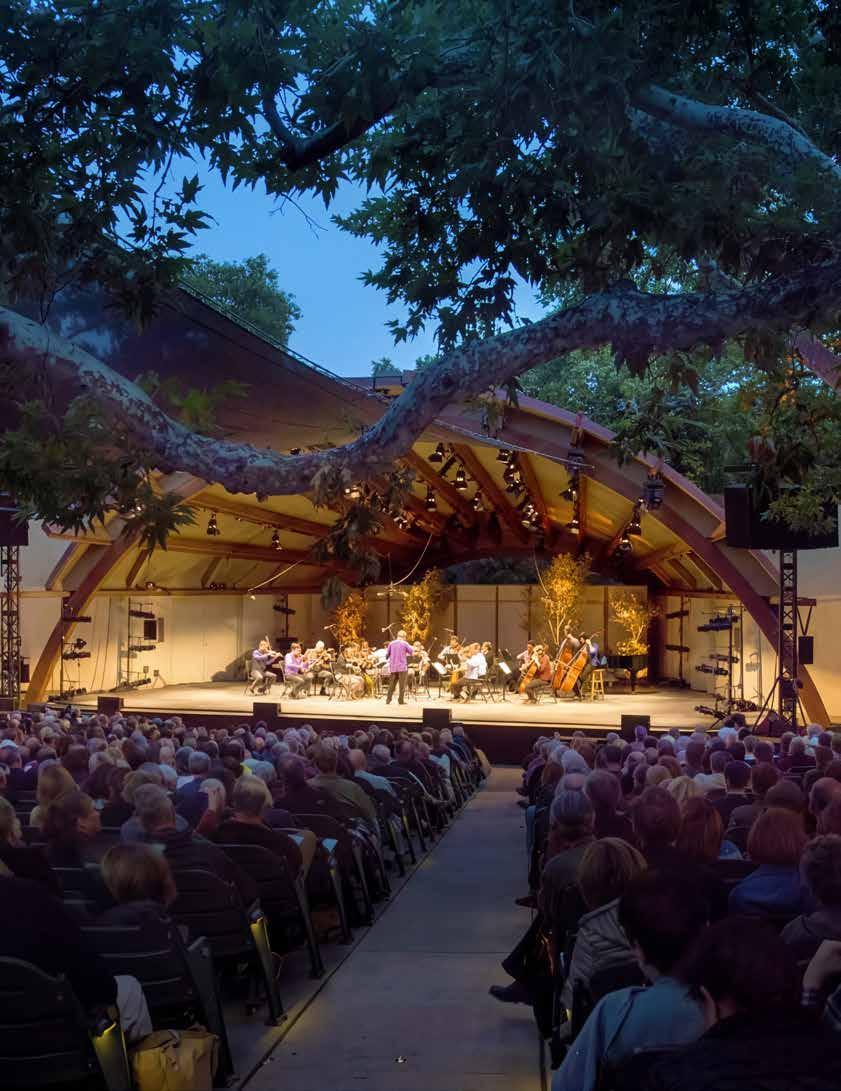
Under the oaks at Libbey Bowl, time behaves a little differently. It stretches, suspends, then folds back on itself. A note seems to hang in the warm June air longer than it would anywhere else. And silence says more than the sound that preceded it. And for nearly eight decades, the Ojai Music Festival has made a virtue of that elasticity — of risk, of curiosity, of the idea that music is not a fixed object but a living experiment.
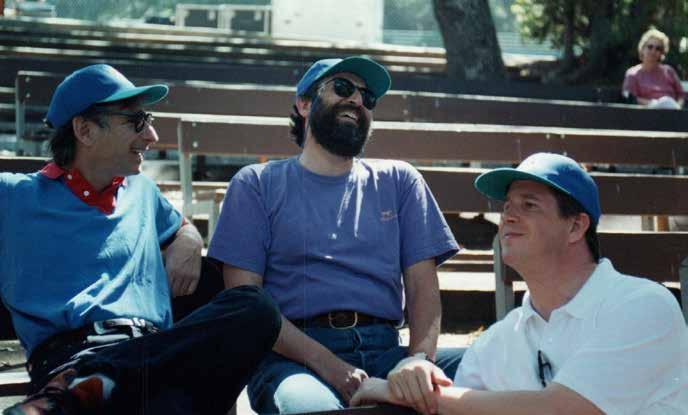
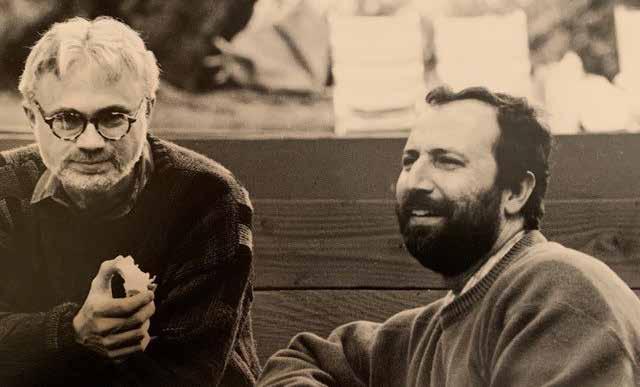
Since 2020, one of the chief architects of that experiment has been Ara Guzelimian. In 2026, he will take his final bow as artistic and executive director, closing a circle that began more than half a century ago when he first encountered the festival as a young listener.
“I see my role here,” Guzelimian says, “as part of a much larger arc.”
It is a telling phrase. In Ojai, no one owns the music. They shepherd it. They tend it like a fire that must be passed hand to hand. And it has passed through Guzelimian’s hands before: he was also the artistic director from 1992 to 1997.
Guzelimian’s résumé reads like a map of American musical centers of achievement — senior artistic roles at Carnegie Hall and the New York Philharmonic, then Dean and Provost of the Julliard School from 2006 to 2019. But Ojai is something else entirely. It is, as he and others often say, a laboratory. A place where ideas are tested not for market viability but for resonance —
emotional, intellectual, spiritual.
For four days each June, the valley fills with musicians willing to try things that might fail. That is not a bug. It is the point.
Guzelimian has spent his tenure protecting that fragile ecosystem. Not by programming chaos, but by shaping experience — concert by concert, moment by moment — into something that feels both intuitive and inevitable.
“The concerts talk to each other,” he says. Like movements in a symphony, or courses in a carefully constructed meal, each piece prepares the ear for what comes next.
It is an art form in itself: programming as composition.
His final festival carries the weight of that sensibility. It is the 80th anniversary season, and with it
comes a nod to the giants who helped define Ojai’s DNA — Igor Stravinsky and Olivier Messiaen among them. But this is no museum piece. Guzelimian has never been interested in nostalgia for its own sake. The past is useful only insofar as it refracts the present.
Consider Messiaen’s “Quartet for the End of Time,” one of the emotional anchors of the 2026 program. Written in a prisoner-of-war camp during World War II, it is a work that holds despair and transcendence in the same trembling hand. Guzelimian hears in it “one of the great expressions of the human spirit.”
In Ojai, under an open sky, that piece does something different. The birds — so central to Messiaen’s imagination — are no longer metaphor. They are present. The boundary between composition and environment dissolves.
That sensitivity to place is perhaps Guzelimian’s defining trait as a programmer. Not every work belongs at Libbey Bowl. Some require intimacy, others visual proximity. Some, he notes, simply “won’t play” in the space. The trick is not to force the music onto the venue, but to let the venue shape the music.
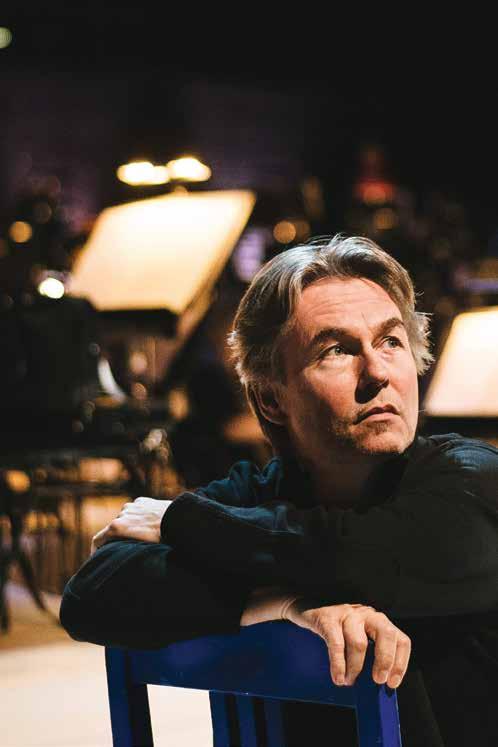
This year’s return of Esa-Pekka Salonen as music director underscores that philosophy. Salonen, a towering figure in contemporary music and a longtime Los Angeles presence, represents both continuity and renewal. For Guzelimian, the collaboration is personal — a reunion that stretches back to their shared years at the Los Angeles Philharmonic.
“It’s a full-circle moment,” he says.
Salonen’s presence also reinforces a central Ojai tenet: the dissolution of

boundaries. Composer and conductor. Performer and listener. Professional and amateur. At Ojai, these distinctions blur. Musicians sit in the audience when they are not playing. Audience members find themselves in conversation with composers over coffee. A flutist might lead a participatory meditation in a meadow at dawn.
Last year, such a gathering in the Ojai Meadows Preserve drew hundreds — an ephemeral chorus of key rings, breath, and birdsong that existed for an hour and then vanished. No recording. No artifact. Just memory.
“That’s one of the precious things,” Guzelimian reflects. “It happens, and then it’s gone.”
In an era obsessed with permanence — with streaming, archiving, capturing — Ojai remains stubbornly
committed to the fleeting. You had to be there. And if you were, you carry it with you.
This ethos extends to the community itself. Guzelimian speaks of concentric circles: the devoted audience, the collaborating musicians, and the porous boundary between them. Over four days, strangers become co-conspirators in a shared act of listening. They compare notes. They argue. They discover.
Sometimes, improbably, they discover each other — like the Ojai listener who found himself seated beside musicians from his tiny hometown (pop. 598) in rural New York. A coincidence so unlikely it feels scripted. But that is Ojai’s quiet magic: it collapses distance. As Guzelimian prepares to step aside — passing the baton to Teddy
— there is no sense of finality, only transition. The festival will continue. It always has. Each director adds a chapter, then yields to the next voice in the conversation.
That, in the end, may be his greatest legacy: not a single program or performance, but a reaffirmation of the festival’s core belief — that music should surprise us, challenge us, enlarge us.
Come, as he says, with open ears. Open heart. Open mind.
Under the oaks, something unusual will happen again.
And then, like all the best things in Ojai, it will disappear — leaving the world, if only slightly, larger than it was before.






PARTTIME OJAI RESIDENT W. MICHAEL BLUMENTHAL IS SOUNDING THE ALARM ON THE RISE OF TYRANNY, HOME AND ABROAD

FROM NAZI
TO THE U.S.
W. MICHAEL BLUMENTHAL HAS LIVED A CENTURY INSIDE HISTORY’S TURNING POINTS. AT 100, HIS WARNING CARRIES UNUSUAL WEIGHT.
BY KIT STOLZ
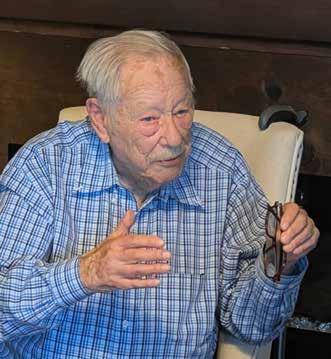
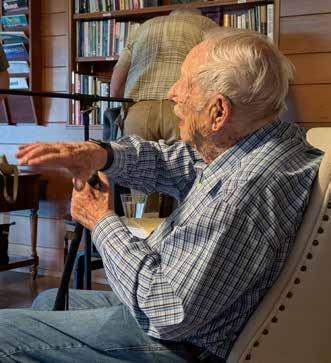
On a clear afternoon above the Ojai Valley, W. Michael Blumenthal sat in his study, a cigar between his fingers, considering what he might say the next day.
“I’m going to ask you a question,” he said, looking up. “And you must be honest with me. Do you mind if I smoke a cigar?”
He lit it without waiting long for the answer. At 100 years old — he marked the milestone in January — Blumenthal carries himself with a certain authority, the kind that doesn’t need to announce itself. The voice is steady. The mind moves quickly. Memory, when summoned, arrives intact.
The next day, at the Ojai Retreat, he would stand before a packed room and pose a question that has begun to surface more frequently, and more uneasily, in this valley and beyond: Are we sliding toward autocracy?
The question did not arise in a vacuum.
Over the past year, organizers in Ojai and across Ventura County have begun meeting more regularly, writing letters, sharing information, and building networks aimed at protecting undocumented residents and others caught in the widening reach of federal immigration enforcement — countering the increasingly unpopular Trump administration.
The shift accelerated after a large-scale ICE raid on the Glasshouse cannabis facility near Camarillo. Federal agents arrested 361 workers. The operation effectively shut down one of the largest cannabis grows in the state. In the chaos, one worker, Jaime Garcia, died after falling from the roof of a greenhouse.
In the months that followed, many of those detained were deported or left the country.
The raid rippled outward. It hardened fears. It also galvanized response.
Local groups — including Ojai Indivisible and VC Defensa — began organizing more visibly, joining a broader national wave of demonstrations and advocacy. In Ojai, the work often took quieter forms: living room meetings, handwritten letters, conversations that stretched late into the evening.
In February — alarmed by similarities between the blaming and arrest and imprisonment of migrants under the Trump administration and the blaming and arrest and imprisonment of Jews under the Hitler administration — a leading member of Ojai Indivisible, Jill Borgeson, asked her father W. Michael Blumenthal if he could give his perspective on this dark turn in our history to the Indivisible Group. As a boy, he fled Nazi Germany with his family, and later went on to an extraordinarily diverse and accomplished career in academia, business, and government.
Although Blumenthal spoke off the cuff about his life and experience with authoritarian regimes for no more than about 20 minutes, his harrowing stories and the similarities he spoke of between those dark times and ours created a buzz in progressive circles in Ojai. Borgeson and Caryn Bosson, a leader in nonprofit advocacy in Ojai, went on to arrange for Blumenthal to speak to a larger audience.
As a boy in Nazi Germany, he learned early what it meant to live inside a system that demanded obedience and erased dissent. His family fled. He spent his teenage years in Shanghai — one of the few places that would accept Jewish refugees during the war — where survival depended less on law than on
improvisation.
“There was a time,” he recalled, “when I bemoaned my ill fate. Not having enough to eat. Not having a pair of shoes. Being a nobody, a stateless person in a crazy world.”
He paused, then added, almost lightly: “With hindsight, it may have been the best thing that could have happened to me.”
That combination — privation and perspective — shaped what followed. He arrived in the United States with little and enrolled at UC Berkeley. Blumenthal told this reporter that he established in his own mind a “ten-year rule,” in which he wouldn’t do anything for more than ten years, and for that reason went from Princeton and the Council on Foreign Relations into government, later becoming a CEO of two different Fortune 50 corporations (overseeing hundreds of thousands of employees). In government, he worked for three Democratic Presidents, serving ultimately as Secretary of the Treasury for Jimmy Carter.
His signature still can be found on some dollar bills.
Along the way, he wrote — history, memoir, fiction — and eventually took on the directorship of the Jewish Museum in Berlin, returning, in a sense, to the terrain he had once fled.
Despite the résumé, he does not speak like a man reciting accomplishments. He speaks like someone who has seen systems from the inside.
At the Ojai Retreat, seated before the audience, he did not linger on biography. He went directly to the question.
“Is our democracy under attack?” he asked. “The answer is yes. Definitely. And I say that with a certain historical perspective that goes back, by definition, further than all of you — unless there’s another centenarian in the room.”
There wasn’t.
He began with memory.
“What I most remember about my time in Germany was the photograph of Hitler,” he said. “It was everywhere. There wasn’t an official room or place where he wasn’t. And the pictures were always bigger than necessary.”
Having seen all this and survived two of the most authoritarian and lethal regimes in the history of the 20th century has given Blumenthal an eye for dictatorial fashion. As a leader on the American diplomat corps negotiating normalization of relations — and business — with China, Blumenthal saw how the regime created a cult around the late Chairman Mao, and put up grandiose monuments to him and his deadly Cultural Revolution.
“I’ll give you another example, which is gigantism, the buildings that autocrats build,” Blumenthal said. “They want to build big, which is an image to themselves. It makes them feel they have the power.”
In Washington today, the Trump administration has torn down the East Wing of the White House, without
Congressional approval and despite lawsuits, and plans to build an enormous ballroom in its stead, as well as a 250-foot-tall “Triumphal Arch,” and a “Garden of Heroes” near the National Mall expected to cost at least $40 million.
Blumenthal scoffed. “So when I read that a president wants his name on things,” he said, “I think to myself — that sounds familiar.
“When I see that the President wants to tear down one wing of the White House — which I know very well, having been in and out of there every day for almost three years — to build a giant ballroom, I think of Hitler’s office,” Blumenthal said. ”It was so large, that when you were ushered in, you had to walk 30 steps to approach his desk. So this tells me that this is somebody who has a sense of self-importance, of wanting the power, and wanting to change the way
our government functions so that his enormous, enormous need to show his power is satisfied.”
If Germany offered one lesson, Shanghai offered another.
At the time, the city operated with few constraints: no visa requirements, no consistent legal structure, little enforcement beyond what power could impose. It drew refugees, opportunists, and those looking to disappear.
“Shanghai was the most open city in the world,” he said. “And also the most corrupt and squalid.” Wealth and poverty existed side by side. Mansions stood a short walk from streets where people starved. Money moved freely. So did influence.
“Anyone could be bought,” he said.
The experience left him with what
he later described as an “optimistic cynicism” — a belief in the possibility of improvement tempered by a clear-eyed view of human behavior.
“The President and his family will leave office as multi-billionaires. Just like the oligarchs in Russia, the billionaires here have created a transactional society. They back Trump. He backs them. They can enrich themselves. He can enrich himself. And the people get scraps once in a while.”
Back in Ojai, the room listened closely.
Blumenthal spoke for nearly an hour without notes. He moved between past and present, drawing connections but leaving room for interpretation. When he spoke about corruption, however, the tone sharpened.
“When I first came to this country,” he said, “it seemed clean and honest. Not
perfect — but different.”
He paused. “Today,” he continued, “we see a more transactional system. Wealth aligning with power. Power reinforcing wealth.”
Although usually Blumenthal speaks with a historian’s calm certainty, when he talks of corruption — what he saw in the International City of Shanghai during the war, and what he sees with Trump and his regime in the White House today, his tone sharpens.
“When I first came to this country, I thought it was clean and honest,” he said. “Coming from Shanghai, where corruption was in everything, when everybody could be bought and sold, this country seemed clean, even if it wasn’t quite as clean as it seemed to be.
“But today, the President and his family will leave office as multi-billionaires. Just like the oligarchs in Russia, the billionaires here have created a transactional society. They back Trump. He backs them. They can enrich themselves. He can enrich himself. And the people get scraps once in a while.”
But despite the corruption of the current administration, Blumenthal sees the 250-year-old tradition of democratic governance in the U.S. as a foundation on which resistance can stand and push back. He outlined the two principal ways in which democracies have been overthrown; one, by revolution, and
the other, by a hollowing out of the institutions which support democratic governance.
The second, he suggested, is already underway in many places. But he stopped short of fatalism.
“Relax,” he told the audience, allowing himself a brief smile. “It is very difficult to dismantle a system like this one. It would require discipline, competence, and sustained effort over many years.”
Blumenthal added that he sees no sign of such cleverness and discipline in the current White House.
“Frankly, looked at objectively, this administration does not strike me as a highly disciplined, highly focused, very careful, planning-years-ahead kind of an organization with highly competent people advising and surrounding it,” he said.
“In fact, as someone who’s been in and out of the government several times over the years, I am amazed at the degree of incompetence and unnecessary stupidity that they are constantly perpetrating and which undermine the very actions that they are trying to further.”
Afterward, the conversation returned, as it often does in Ojai, to the texture of daily life.
Blumenthal spoke about neighbors.
About small gestures.
“In Berlin,” he said, “you can live on the same floor with people for years and not know them. Here, someone moves in, and someone else brings a pie.”
He shrugged, as if the point were selfevident. “This is a friendly place. I’m proud to be an American.”
The warning, though, remained.
“I worry about attacks on the voting system,” he said. “And I worry about international instability — because frustration at home can lead to recklessness abroad.”
Wars, he noted, are easy to start. Harder to end.
For Borgeson and others working locally, the message landed close to home. Their efforts — letter writing, organizing, showing up — may seem modest measured against the scale of national politics. But Blumenthal’s life suggests that systems shift not only through force, but through accumulation: of choices, of actions, of attention.
“This is a nice place,” he said. “You want to keep it that way.”
He let the sentence sit for a moment before finishing the thought.
“You can’t accept cruelty as normal. You can’t ignore it. People have to pay attention.”
“... This administration does not strike me as a highly disciplined, highly focused, very careful, planning-years-ahead kind of an organization with highly competent people advising and surrounding it.”
— W. Richard Blumenthal




We accept applications year-round. Apply when you’re ready and start your journey on a timeline that works for you.
Challenge yourself with college-level coursework and earn credits while in high school through our dual enrollment program.

Choose the experience that fits you best . Join us as a day student or live on campus and be part of our vibrant boarding community.
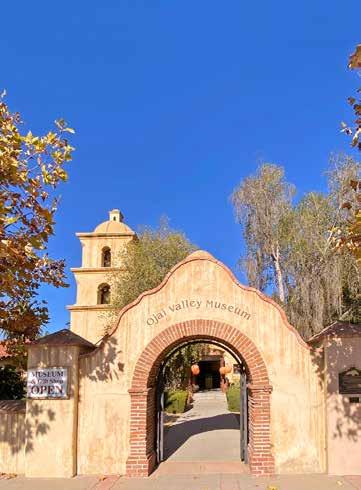
Explore Ojai Valley’s History, Art and Culture
Thursday–Sunday 10am–4pm
130 W. Ojai Ave. 805 640-1390
OjaiValleyMuseum.org

With more than 300 hours of conversation, Ojai's podcast, Talk of the Town, has barely scratched the surface of what makes this village, perched on the eastern edge of the Pacific Rim, so rich, diverse and fascinating. Listen in on conversations with legends like Malcolm McDowell and Sergio Aragonés to the people who make Ojai what it is such as Chumash elder Julie Tumamait-Stenslie and assorted newsmakers, writers, filmmakers, fishermen, musicians, rogues & scoundrels.
Available wherever you get your podcasts



I’ve painted wild places all over the world, but I always return to the Ojai ranch where I grew up…
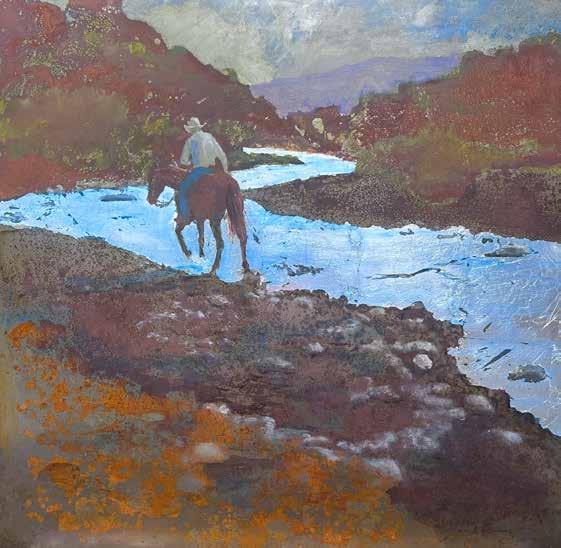
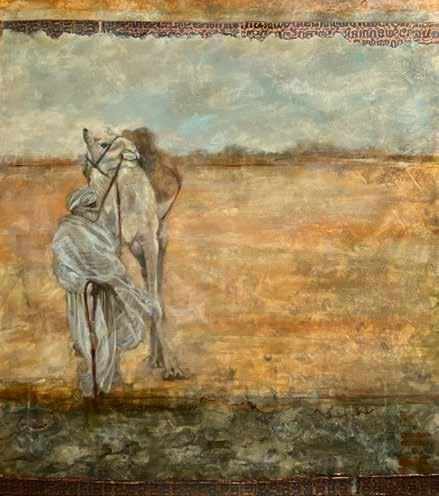
the wild place I call home

OJAI NOW AND THE QUIET AMBITION TO ORGANIZE A TOWN THAT REFUSES TO SIT STILL
BY BRET BRADIGAN

Ojai is many things — idyllic, eccentric, occasionally self-satisfied — but above all, it is busy.
Not with traffic. Not with urgency. But with life. On any given night: a concert under the oaks, a fundraiser behind a hedgerow, a gallery opening you hear about the next morning.
Always the next morning.
The paradox of Ojai is not that there’s nothing to do. It’s that there’s too much — and no reliable way to see it all at once. That gap — between abundance and awareness — is where Ojai Now lives.
The origin story doesn’t begin in Ojai. It begins, improbably, in the back rooms of Santa Barbara nightclubs — and even earlier, in Los Angeles television studios.
“I was kind of kicking around right out of high school,” Lorin Mukai says. “I had internships at TV stations in L.A. — CBS, KTTV — and then I got a job with the Dodgers as a tech assistant, feeding the exclusive broadcast to away teams. I did that for a couple of years.”
Then life intervened.
“My father passed away — he owned nightclubs in Santa
Barbara, 1129 and Oscars. I had to leave the Dodgers and take over management. I was 20.”
That pivot, sudden and unplanned, placed her squarely in the business of gathering people.
It also put her in proximity to one of the early architects of modern live music promotion.
“That’s where I met Moss Jacobs (of Goldenvoice, promoters and producers of Coachella),” she says. “We partnered to book bands — Red Hot Chili Peppers, Toad the Wet Sprocket — this was before the internet, before social media. If you wanted people to show up, you had to be creative.”
Creative meant analog. Flyers. Posters. Word of mouth. Street-level hustle.
“We were trying to figure out how to get people to come out,” Mukai says. “You had to really think about how to reach them.”
That lesson — simple, durable — never left.
OJAI,
Years later, after a career in hospitality — including opening hotels with the Biltmore corporation — Mukai landed in Ojai in 2011.
And immediately encountered a familiar problem.
“Working at the Ojai Valley Inn, guests were always asking me, ‘What’s happening now? What do we do tonight?’” she says. “And I didn’t know. I was working all the time. I didn’t know what was happening downtown.”
It wasn’t just visitors. Even locals, she would later discover, were missing things.
At Libbey Bowl, working with Sterling Productions and later Ojai Valley Music, the challenge became more acute: getting people to shows.
“There was no real way of promoting our events,” she says. “Getting people to the right ticket link — it was always an issue. It still is. Ticketing systems are fragmented. People don’t know where to go.”
The problem, in other words, hadn’t changed since her nightclub days. Only the tools had.
The breakthrough came in a deceptively simple form. “It was Dennis’ idea,” Mukai says. “Not just a list — an actual calendar.” Lorin’s husband Dennis is a prominent artist.
That distinction matters. Lists require effort. Calendars provide orientation. They show not just what’s happening, but when — and how events relate to each other in time.
From that decision flowed the structure of Ojai Now: a month-at-a-glance interface, filters by category, clean descriptions, maps, ticket links.
A system designed to eliminate what Mukai calls “the tedious searching.”
So what exactly is Ojai Now?
“We see OjaiNow.live as the number one source for events in Ojai,” Mukai says. “It’s an all-in-one calendar — concerts, shows, fundraisers, festivals — where you can search by date or category, map venues, and buy tickets.”
And the core idea behind it?
“To make it simple. To give people one place to go so they’re not missing things.”
What Mukai understood — first in nightclubs, then in Ojai — is that events don’t fail because they lack quality. They fail because they lack visibility.
In Santa Barbara, that meant getting flyers into the right hands. In Ojai, it means navigating a fractured digital landscape — Instagram posts, email blasts, scattered websites, word-of-mouth.
Different tools. Same problem.
“You can have a great event,” Mukai says, “but if people don’t know about it, it doesn’t matter.”
Ojai Now is built on that premise.
Of course, not everything belongs on a calendar. Ojai Now made a deliberate choice to focus on what Mukai calls “fun things to do in Ojai.” Concerts, theater, film, art, fundraisers. No general announcements. No meetings. No ambient noise. “We wanted it to be about experiences,” she says. “Things people can actually go to.”
That focus gives the platform clarity — but not simplicity.
“The biggest challenge has been getting accurate, up-to-date information,” Mukai says. “It still takes a lot of searching, networking, asking around.”
The calendar doesn’t populate itself. It’s built, line by line.
What’s the hardest part of running it?
“Getting the information,” Mukai says. “It’s improving — more people are reaching out now — but it still takes a lot of effort to track everything down and keep it current.”
Do you try to include everything?
“We keep it within entertainment and the arts. It’s about what people can go out and do.”
The economics, early on, were clear. Charge for listings, and you exclude smaller venues. Make it free, and you need another way to sustain it.
“We realized the only way to make it work was to make it
free — for users and for listings,” Mukai says. “That’s when we decided to become a nonprofit.”
Ojai Now operates as a 501(c)(3), supported by donations and, eventually, fundraising. It’s less a business than a piece of infrastructure. A civic tool.
If Lorin provides the engine, Dennis Mukai shapes the surface.
“As his personal brand, he loves the color orange,” Lorin says. “So that became part of the look.”
Even the logo reflects a kind of conceptual clarity. “We thought a QR code would be the best way to spread the word,” she says. “So we made it the logo.”
Scan it, and you’re in.
Perhaps the clearest validation is also the simplest. “It’s been fun to go to events we normally wouldn’t have attended,” Mukai says. “We’ve discovered things we wouldn’t have known about otherwise.”
In building the platform, they’ve expanded their own experience of the town. Which is, in the end, the point.
Ojai does not lack for culture. It lacks for coordination. The events are there. The energy is there. The people are there.
What’s been missing is the connective tissue.
Ojai Now doesn’t create anything new. It reveals what’s already happening — and arranges it in a way that makes participation possible.
Because the distance between hearing about something and being there is often the difference between a quiet night and a full room.
Lorin Mukai learned that lesson decades ago, standing outside a nightclub with a stack of flyers, trying to get people through the door.
Different town. Different tools. Same objective. Get people to show up.
Because Ojai doesn’t need more noise. It needs signal.


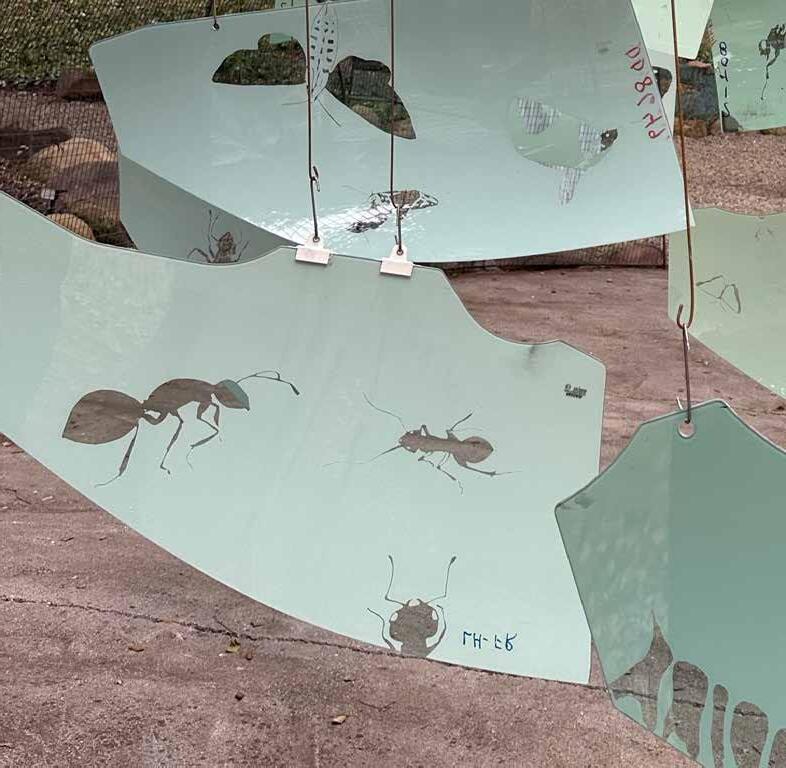
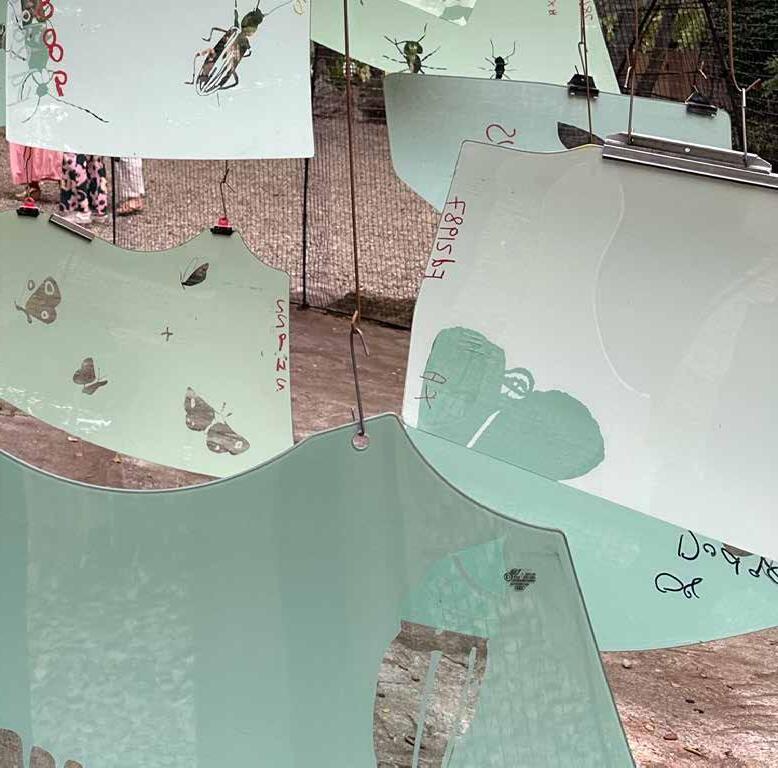
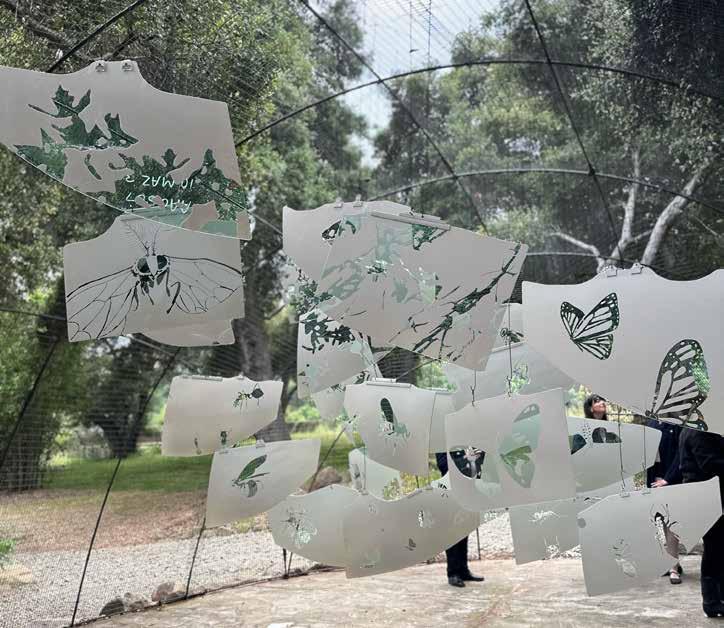
Where Landscape Becomes Language: An exchange between Ojai and Nemeth artists reveals how radically place — its water, rhythm, and scale — can transform the act of seeing
could spend this entire story talking about beavers.
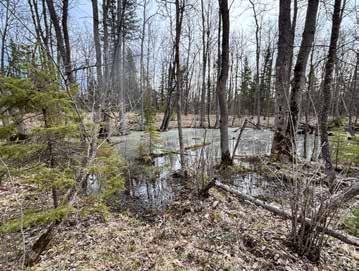
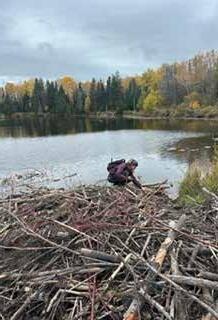
Rosemary Holliday Hall and Aaron Spangler stand at the edge of a northern pond as the animals fell saplings, stack branches, and seal gaps with mud — reshaping the land one deliberate movement at a time. Water rises. Channels shift. What looks like disorder resolves into design.
But that scene unfolds in Park Rapids, Minnesota — nearly 2,000 miles from Ojai.
That distance is the point.
Artist residencies ask a simple question: what happens when you take a trained eye and place it somewhere unfamiliar? Not conceptually, but physically — under different light, on different soil, inside a different system.
She arrives in Park Rapids at that suspended hour when the light lingers too long on the lake. Pine needles soften the ground. The air holds a cool stillness that feels almost dense after Ojai’s dry heat. After the friction of travel, the quiet presses in.
It is not her first time learning a landscape by walking it slowly.
Months earlier, she worked at Taft Gardens & Nature Preserve in the Ojai Valley — sketching among succulents, tracking shadows across stone paths, pausing on the textures of bark and leaf. The Art in Nature Residency, led by Ojai-based artist and curator Cassandra C. Jones, asks artists to spend time examining their relationship to nature.
That discipline travels.
Now it follows her north.

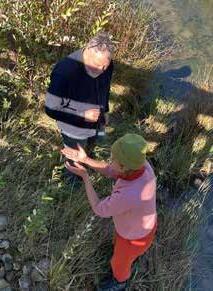
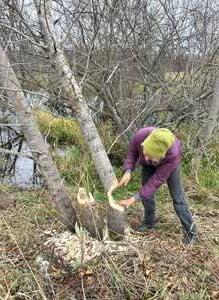
Ojai artists Stephanie Washburn and Rosemary Holliday Hall were selected by the Nemeth Art Center for month-long residencies in Park Rapids. Both arrived with practices rooted in observation — habits formed in Ojai’s sharp light and defined edges — and carried those habits into a landscape where boundaries blur.
The exchange began simply. Lila Glasoe Francese, president of the Carolyn Glasoe Bailey Foundation in Ojai, had longstanding ties to artists in Minnesota, including Spangler and chef-writer Amy Thielen. Early collaborations took the form of exhibitions. Cross-country shows introduced Nemeth artists to Ojai audiences. Over time, the idea expanded.
Why not send artists both ways?
Nemeth had space. More importantly, it offered time.
Stephanie Washburn arrived in August 2024. Rosemary Holliday Hall followed in October 2025.
The shift is immediate.
“The biggest difference is water,” Spangler says. “You feel it right away.”
Rosemary Holliday Hall agrees. For her, northern Minnesota was less a contrast to Ojai than a shift in tempo. “The biggest difference,” she reflects, “is the space — between towns, between
people — and the water that holds everything apart and together at the same time.”
In Park Rapids, Minnesota, water does not move with urgency. “It feels like the land is a sponge,” she says. “The water sits, it spreads, it moves slowly. You see reeds, then suddenly water, and you can’t even tell which direction it’s flowing.”
That slowed rhythm carried into her practice.
“You start with an idea, but once you engage with the material, it speaks back,” she says. “It takes you somewhere you never would have gone.”
Ojai trains the eye on scarcity — dry riverbeds, hard light, vegetation that holds its shape. Park Rapids operates on the opposite

In Park Rapids, Minnesota, the horizon opens slowly. Through water, trees and along long stretches of quiet road you find the Nemeth Art Center.
Nemeth holds a different kind of space. Not separate from the town, but woven into it.
Located in the heart of downtown, Nemeth operates as both gallery and gathering place. The Art Center presents exhibitions, performances, and educational programming that connect local audiences with regional and national artists. For more than fifteen years, it has served as a vital hub for contemporary art in northern Minnesota, while maintaining a distinctly personal and place-driven approach.
Here, exhibitions unfold alongside conversations, chance encounters, and the familiar cadence of a small town where people return, again and again. The work on view is never entirely separate from its surroundings. Water moves through the lakes, wetlands, sky, and that movement finds its way into the thinking, the making, the exchange. Under the guidance of Mark Weiler and long-standing involvement of Aaron Spangler and Amy Thielen, Nemeth has developed a model that prioritizes connection over scale by bringing artists into the community rather than positioning them at a distance. Its reach extends beyond the gallery walls through residencies, partnerships, and ongoing collaborations, fostering relationships that are sustained over time. Artists arrive and stay longer than expected. They return and they bring others back with them.
Through initiatives such as its exchange with the Carolyn Glasoe Bailey Foundation, Nemeth Art Center continues to expand its network while remaining grounded in its immediate landscape. It demonstrates how meaningful contemporary practice can thrive far from traditional art centers. It is rooted not in scale or speed, but in attention, continuity, and place.
It is a place where relationships take root and where art, like the landscape itself, is shaped over time.
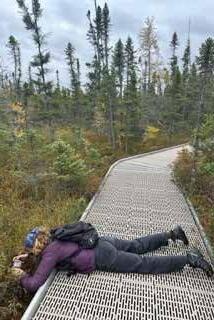
principle. Lakes connect to wetlands, wetlands feed streams, and water moves slowly enough to watch. In spring, frogs fill the air with sound. In fall, wolves call from the tree line. The ground softens. Edges dissolve.
For Washburn, the adjustment was simple, slowing down.
At Taft, she had learned to notice incremental change — the tilt of a shadow, the way wind moves through agave spines. At Nemeth, she sketches wind, the sky and the clouds; wanders the forest, observing the damp fern ground and walks for long stretches without interruption.
“It’s a very beautiful and haunting place,” she says.
Her work opens with it. Forms loosen. Compositions stretch. Space becomes less defined, more continuous.
If Ojai suggests that nature can function as a studio, Park Rapids reveals it as a system — active, layered, and always in motion.
For Holliday Hall, the change runs deeper into process.
Trained in environmental horticulture at UC Davis, Hall approaches landscape through both observation and structure — soil, water, plant systems. In Ojai, those systems present clearly: topography directs growth, light sharpens contrast, cultivated spaces frame relationships.
In northern Minnesota, those relationships soften.
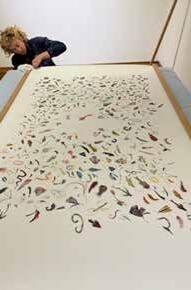
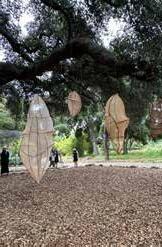
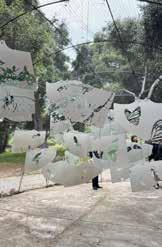
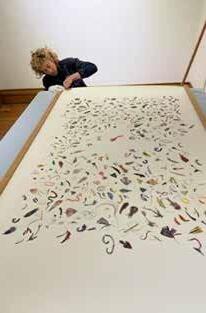
“The land feels like a sponge,” she says. “Everything is saturated, and the water moves so slowly you almost can’t see it.”
Driving through the region, she watches reeds give way to open water without warning. Flow becomes difficult to track. Surfaces reflect rather than define.
Much of that landscape, she realizes, is shaped by beavers.
They fell trees, redirect streams, and build dams that slow the entire system. Their structures appear rough — branches woven at irregular angles — but hold with precision.
“They’re incredibly sensitive to how water moves,” Hall says. “It looks chaotic, but it’s exact.”
That understanding begins to enter her work. New materials begin to reveal themselves. Edges dissolve. Layers overlap. Composition shifts from fixed structure to responsive field.
“You start with an idea,” she says, “but once you engage the material, it pushes back.”
Her return to Park Rapids in Spring 2026 deepens that exchange. While installing an exhibition at Nemeth, she also works with a developing program at the University of Minnesota Biological Station in Itasca State Park, where artists and scientists share space — observing the same systems through different methods.
For Hall, the connection is direct. Ojai’s cultivated landscapes and Minnesota’s wetlands begin to read as part of a larger continuum.
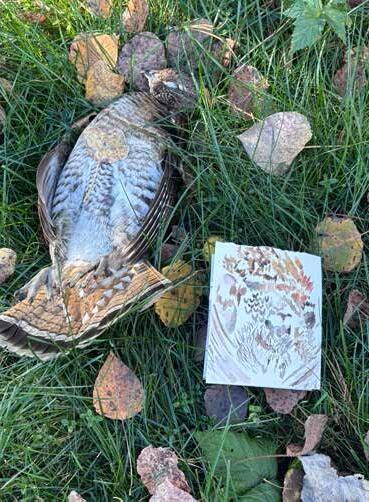
It was the morning after a full moon, when Hall opened the door to her cabin in northern Minnesota. A grouse lay just outside. It was on its back, soft belly exposed, perfectly still.
“I spent time just looking at it,” she recalls. “The patterns of the feathers, the colors, the structure.”
She brought out her watercolors and began to paint. The images that emerged were not literal. They became abstract, forms shaped less by representation than by encounter.
“The grouse is a very grounded bird,” she says. “It doesn’t fly much.”
“It felt like a sign,” she adds. “To be grounded. To get out of my head.”
In a landscape defined by water and distance, the stillness of that small body became a point of orientation — an unexpected beginning.
At the center of this exchange sits the Carolyn Glasoe Bailey Foundation.
Founded in 2016 after the death of Carolyn Glasoe Bailey, the Ojai-based foundation continues her approach: bring artists and audiences into close contact, support new work, and allow ideas to develop through conversation and proximity.
Rather than prescribe outcomes, the foundation provides structure — exhibitions, talks, residencies — and lets artists define the work.
That flexibility makes exchanges like this possible.
Back in Ojai, the results take form. Each returning artist presents new work shaped by time in Minnesota. Early this summer, Hall will install an exhibition that carries traces of Minnesota landscape into the valley: expanded compositions, softened edges, a different sense of movement.
The connection holds.
At Nemeth, visiting artists fold into daily life — meeting at coffee shops, attending local events, returning with families. The rhythm feels familiar. Like Ojai, Park Rapids is small enough to recognize faces, and large enough to sustain a creative community.
What emerges is not a program but a network — artists moving between places, carrying methods with them, translating one landscape through another.
Late afternoon settles again over Ojai.
Light moves across the mountains with familiar precision. In the studio, a brush pauses midair as color shifts across the canvas.
Somewhere inside the work, another landscape remains.
Water held in shadow. Pine underfoot. The slow architecture of beavers shaping a field.
The wind moves through the eucalyptus.
And carries, just faintly, the memory of distance.
CAROLYN GLASOE BAILEY FOUNDATION
This year, the Carolyn Glasoe Bailey Foundation celebrates ten years of championing artists and cultivating meaningful exchange.
Founded in 2016 by Chris Bailey, Lila Glasoe Francese, and Jon Smith in honor of Carolyn Glasoe Bailey, the Foundation carries forward the spirit that defined her life in the arts: a deep commitment to artists, an instinct for discovery, and a belief in the power of direct connection. Carolyn was known for bringing people into artists’ worlds, studios, conversations and creating relationships that extended far beyond the act of collecting.
Over the past decade, that spirit has taken form through exhibitions, residencies, artist talks, and travel programs connecting Ojai to a wider cultural landscape. The Foundation has presented the work of 100 national artists, offering each not only a platform, but a community.
As it enters its second decade, the Foundation looks ahead with energy — expanding its geographic reach and deepening its impact. Future collaborations include continued engagement with the Ojai Music Festival and new partnerships with the Ojai Playwrights Conference, extending its support across disciplines.
The mission remains clear: to make space for ideas, for experimentation, and for artists to grow.

Perhaps it was potter and “the Mama of Dada” Beatrice Wood’s influence, going back nearly 90 years. Maybe it even goes back further, to the Chumash people’s ingenious and astounding artistry with basketry. It’s clear that Ojai has long been a haven for artists. The natural beauty

Firestick Pottery provides classes, studio/kiln space and a gallery abundant with fine ceramics. 1804 East Ojai Avenue. Open from 10 am to 6 pm every day. Gallery Open to the Public. FirestickPottery.com 805-272-8760

NUTMEG’S OJAI HOUSE
Featuring local artists, including William Prosser and Ted Campos. American-made gifts and cards, crystals, and metaphysical goods. 304 North Montgomery nutmegsojaihouse.com 805-640-1656

OVA ARTS
40+ local artists with unique contemporary fine arts, jewelry and crafts. 238 East Ojai Ave 805-646-5682 Mon 10 a.m. to 5 p.m. Tues-Thurs, 11 a.m. to 5 p.m. Fri 10 a.m. to 8 p.m. Sat-Sun 10 a.m. Third Fridays - 5-7 p.m. with Live Music, Wine & Community OVAArtsgallery.com
JOYCE HUNTINGTON
Intuitive, visionary artist, inspired by her dreams and meditations. It is “all about the Light.” Her work may be seen at Frameworks of Ojai, 236 West Ojai Ave, where she has her studio. 805-6403601
JoyceHuntingtonArt.com
framed so well by the long arc and lush light of an east-west valley lends itself to artistic pursuits, as does the leisurely pace of life, the sturdy social fabric of a vibrant community and the abundant affection and respect for artists and their acts of creation. Come check it out for yourselves.

paintings & drawings 20th century & earlier
Thursday – Sunday noon – 5 p.m.
311 North Montgomery Street canvasandpaper.org

KAREN K. LEWIS
Paintings, prints & drawings. 515 Foothill Road, Ojai. Viewings by appointment. 805-646-8877
KarenKLewisArt.com

LESLIE CLARK
Nomad paintings from traveling the world or home on the ranch in Ojai. Studio open by appointment leslie@ nomadgal.com shop.nomadgal.com 805-216-1743

DAN SCHULTZ FINE ART
Plein air landscapes, figures and portraits in oil by nationally-acclaimed artist Dan Schultz. 106 North Signal Street | 805-317-9634
DanSchultzFineArt.com
CINDY PITOU BURTON
Photojournalist and editorial photographer, specializing in portraits, western landscapes and travel. 805-646-6263
798-1026 cell OjaiStudioArtists.org

MARC WHITMAN
Original Landscape, Figure & Portrait Paintings in Oil. Ojai Design Center Gallery.
111 W Topa Topa Street. marc@whitman-architect. com. Open weekdays 8 a.m. to 5 p.m.
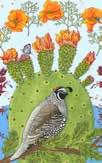
LISA SKYHEART MARSHALL
Original paintings and limited edition prints inspired by plants and flowers, birds and insects.
Info at: SkyheartArt. com and OjaiStudioArtists.com

TOM HARDCASTLE
Rich oils and lush pastel paintings from a nationally awarded local artist. 805-895-9642



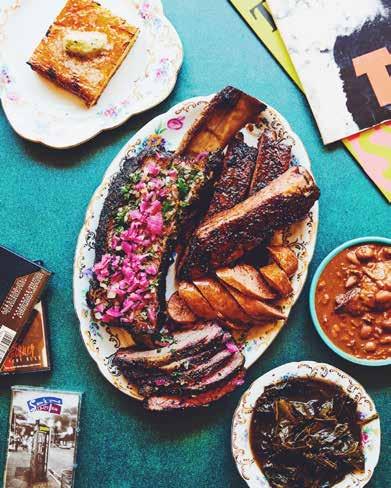









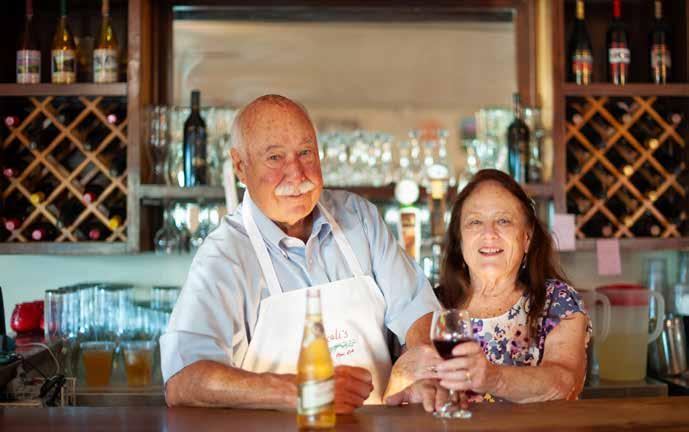
FROM A $100-A-MONTH RANCH LEASE TO AN OJAI INSTITUTION, BOCCALI’S ENDURES ON FAMILY RECIPES, VINEYARD ROWS, AND A DINING ROOM THAT STILL FEELS LIKE COMING HOME. BY
ILONA SAARI
Since I was a kid I’ve loved restaurant dining … from funky diner cheeseburgers to five-course tastings at The French Laundry. Bayside (my Queens, L.I. hometown) and much of the world were indifferent to fine dining when I was growing up in the ‘50s and ‘60s.
Fine dining was for people in Manhattan or Paris. The foodie culture was decades away. Fast food “restaurants” had yet to spread like weeds in a garden across the land, and family dining restaurant chains were few and far between. People in my town mostly ate meals at home.
“Foreign” food wasn’t on most American’s radar. Of course, there were “fancy” French restaurants, but those were in big cities and not for “everyday” folks. But even back in the American-familycuisine era of Kraft recipes, one “foreign” cuisine held ground. Italian! Like a lot of towns around the country, Bayside had a family-owned, red-sauce Italian restaurant — Sal’s.
Going out to Sal’s for dinner with my family was my “adult” restaurant experience. This was not our usual diner, Howard Johnson’s, or drive-in car hop night out, but a very grown-up outing. I even dressed in my Sunday-best. The dining room’s “exotic” décor signaled sophistication because it had a couple of framed “foreign” Italian scenic posters, red-and-white checkered tablecloths and red candle glass “globes” in plastic webbing (casting a warm glow). At Sal’s I discovered pizza (pizza chains weren’t even in their embryo stages).
Italian food wasn’t totally new to me, however. My mom made a mean spaghetti and meatball dinner and a deeply savory eggplant parmesan, but Sal’s expanded my palate with real pizza (not English muffin, sliced tomato smothered in melted Velveeta cheese “pizza” my mom made). I was introduced to pizzaiola, ravioli and lasagna.
I still cherish these childhood memories, so when my husband and I moved to Ojai and I walked into Boccali’s for the first time, those memories rushed back in full. The red-and-white checkered table cloths, the red sauce entrees on the menu and, of course, the pizza.
I had first heard about Boccali’s while living in Los Angeles. The young daughter of a friend would insist the family drive to Ojai every year to celebrate her birthday at this Ojai legacy restaurant. Her birthday cake was the restaurant’s signature dessert — strawberry shortcake.
DeWayne Boccali, the restaurant’s founder, along with his wife Marilyn, had a rather circuitous route to becoming a restaurateur: His father had leased an old house that sat on a large, arid piece of property in upper Ojai for $50 a month where he kept a few heads of cattle.
But in 1962, his dad died suddenly. DeWayne was only 15 and still in school in Ventura. His mom, a successful entrepreneur in Ventura County at a time when businesswomen were few and far between, now had control of the “ranch” lease. Her son asked if


she would keep renting the property because he wanted to take a run at managing it.
Of course, he had no idea what that meant, but DeWayne and a few of his friends seized the chance to be “ranchers,” sometimes camping out at the old house. Eventually, he assumed the lease, which had now been raised to $100 a month.
Around that time, DeWayne was also studying voice and training his operatic baritone. As he grew older, he eventually became a member of the Countrymen, a folk group. In addition to the group’s gigs, he would sing solo wherever he could earn a few dollars … local bars and restaurants usually filled the bill. One evening while singing in a pizza restaurant, strumming his guitar well enough to get by (as he describes it), he met Marilyn. They began dating and it wasn’t long before they were married.
DeWayne, who had also moved into musical theater, eventually starred in “The Most Happy Fella,” a role that led to an opportunity to do theater in New York City – an opportunity he unfortunately was unable to accept. Vietnam was raging and the draft board was closing in. He knew his civilian days were limited. He decided to join the Army Reserves where he would serve for six years, mostly at home with Marilyn after his enlistment, which allowed them to start their family. He worked the ranch by baling hay and moving it out to other ranchers and farmers for income. After Casitas Water ran pipes to the ranch in Upper Ojai, DeWayne began to plant rows of fruit orchards, tomato vines, a pumpkin patch, even a Christmas tree farm.
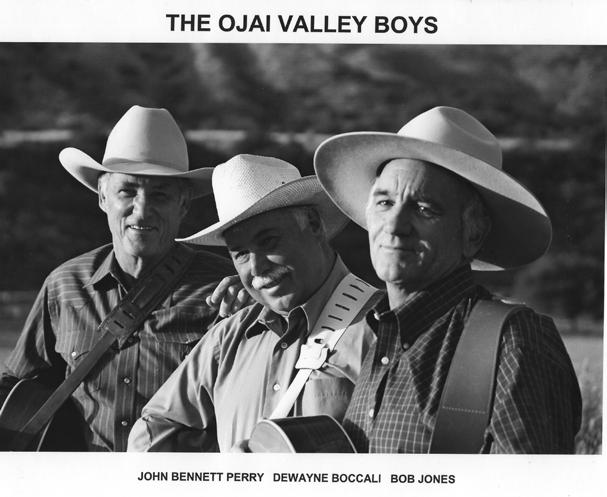
Now settled at home in Ojai, DeWayne returned to music and performed in musicals at the Ojai Art Center, including lead roles in “Brigadoon” and “Lil’ Abner.” And with John
Bennett Perry and Bob Jones, he formed The Ojai Valley Boys, a country music group that played locally and in neighboring towns. Their 15-track, 2007 live album “The Ojai Valley Boys Live at Zoey’s,” (a venue in Ventura) features such classic country-andwestern songs as “The Streets of Laredo” and “Tumblin’ Tumbleweeds.”
Meanwhile, back at the ranch:
Ever the entrepreneur like his mother, and a bit of a gambler as most entrepreneurs are, and even though they were “totally broke” as he tells it, DeWayne and Marilyn decided to open a restaurant after he was able to persuade the owner of the restaurant’s building and surrounding property to let him do so. Two miles east of downtown Ojai, Boccali’s took shape.
Renovation began and friends and neighbors showed up to help. Plumbing and electric were updated, the kitchen was reconfigured, and the interior, designed by Marilyn and DeWayne, became the cozy neighborhood Italian dining room it is today.
Backstory: It was 1898 when DeWayne’s grandfather immigrated from Lucca, Italy and settled in Santa Barbara. With him came treasured lifelong family recipes. DeWayne, who loves to cook, grew up making and enjoying those recipes. So in 1986 when he and Marilyn opened the doors of their new venture, they were inspired by those family treasures and built their menu around them. DeWayne worked the line as the restaurant’s cook and chief bottle washer, beginning with Italian favorites such as lasagna (vegetarian or meat sauces are now options on most entrees), eggplant parmesan, ravioli, spaghetti and meatballs, shrimp scampi — pasta primavera and carbonara — and, of course, their “hand-tossed” pizza, now a “build your own toppings” selection. Dine inside on
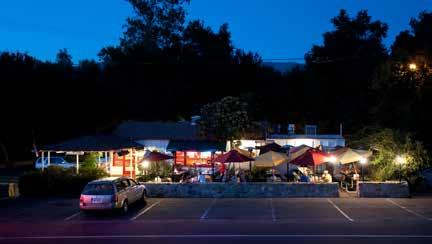
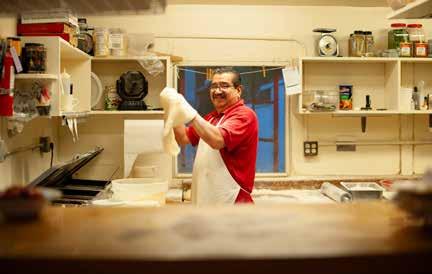
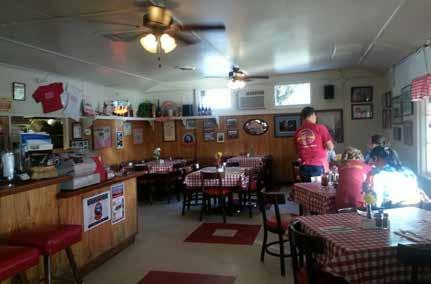
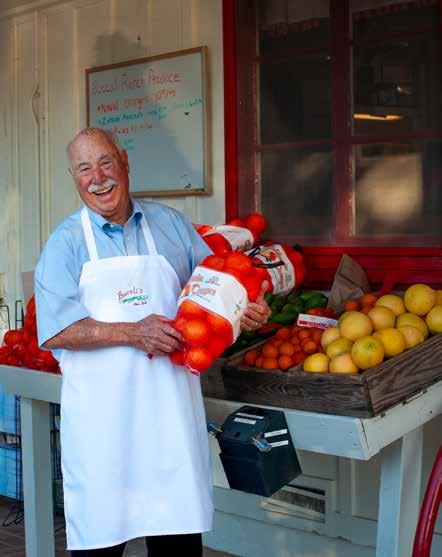
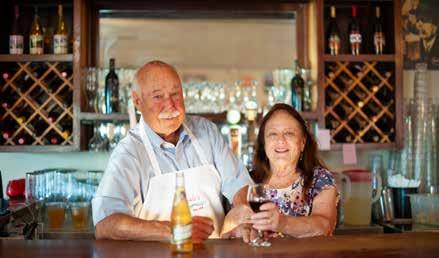
those tables covered with red-and-white checkered tablecloths or al fresco on the shaded picnic tables outside.
And if you’ve gone to see Italian movies, such as the Godfather sagas or watched Stanley Tucci trace his Italian roots on television, you know wine is the beverage of choice for most, if not all, dining experiences. To continue that tradition, in 2004 the Boccalis replaced their Christmas tree farm and planted vineyard rows.
DeWayne and his son, Joe (also a musician and music educator), became winemakers and by 2007, the first vintages were bottled and poured for the public. Each year, the family plants another wine variety in a new section of the vineyard which now includes about 5 acres and produces around 1,500 to 2,500 cases a year.
Plus, the Boccalis also grow their own produce, much of which is part of the restaurant’s seasonal farm-to-table cuisine ... its vegetable dishes, pizza toppings and sides, its sauces and its many salad selections, even its strawberries for that famous strawberry shortcake. And, folks can join the Boccalis at their annual tomato harvest/wine tasting festival.
DeWayne and Marilyn’s children (Nick and Marde who are part of the restaurant management team and Joe, the vintner) are all involved in the Boccali’s ranch, vineyards and restaurant, a true familyowned business. Proudly, on May 16th, the restaurant celebrated its 40th anniversary with wine, music and a lifetime of memories to share with all who celebrated with them. I’m sure DeWayne was a most happy fella, indeed!
Happy Anniversary to the Boccalis — here’s to another 40 years.




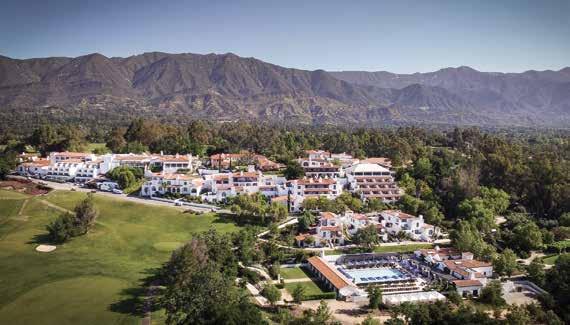




Getaway to a rare place where you can truly slow down. Where 220 acres surround our iconic Inn, offering space to unplug, cool off, and explore to your heart’s content. Dine al fresco under starlit skies, soak in the views from a dreamy poolside cabana, or pedal the trails with an artisan picnic in tow. Reset, recharge, and return to what matters. Your idyllic Ojai escape awaits.


(877) 436-1083 OjaiValleyInn.com





















BY BRET BRADIGAN
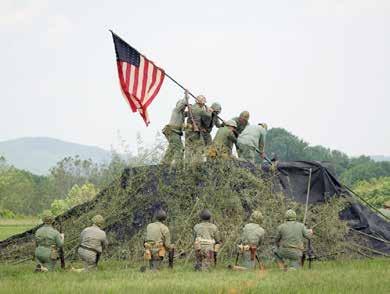
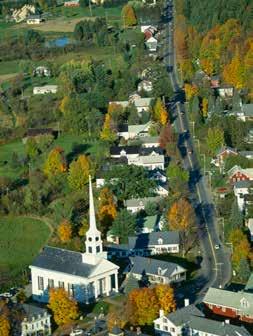
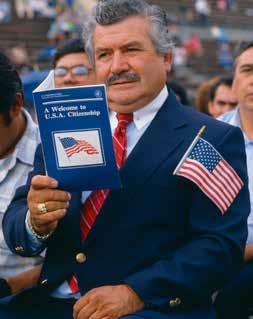
On July 4, 2026, the United States turns 250 — a number that invites both celebration and reckoning. For most of us, that anniversary will pass in fireworks and speeches. For photographer Joe Sohm and composer Peter Boyer, it became something else entirely: a sweeping act of civic art that they’ve been touring around the country.
Their collaboration, American Mosaic, is not a film, not a symphony, not quite a documentary. It is all of those at once — a 33-minute “photo-symphony” that pairs orchestral music with high-definition imagery from all 50 states, stitched together with narration and historical text. It premiered at the John F. Kennedy Center for the Performing Arts, with a full orchestra, narrator, and a visual narrative that moves as fluidly as the music itself.
What makes the project remarkable isn’t just its scale — 95 musicians, thousands of precisely timed cues — but its structure. Or rather, its inversion.
Traditional filmmaking follows a familiar logic: script, then image, then music. Sohm and Boyer reversed it entirely.


“We started with the roof,” Sohm says, only half-joking. The project’s seeds were first planted at their first meeting in the spring of 2010, when Boyer attended a Boston Pops performance of an excerpt from Sohm’s “Visions of America,” called “We the People,” with Patty Austin singing.
Since he had composed music for a somewhat similar project called “The Dream Lives On,” with film and photos of John, Robert and Edward Kennedy, it prompted Joe’s wife, the Ojai artist Leslie Plimpton, a fan of Boyer’s music, to say “‘Remember that guy we met in Boston?’ I did remember and I still had his email,” Joe said. “When I listened to Peter’s music, it sounded like my images … synesthesia, where you hear with your eyes, and see with your ears.”
Grammy-nominated Boyer, whose compositions have been performed by 300 orchestras in more than 900 public performances, says then, “So 13 years later I got a call from Joe in June 2023 … he pitched this project to me as sort of a sequel to “Visions of America,” where that was a songbased project, this was orchestral-based which changes the approach, the relationship between my music and his images.”
Boyer’s orchestral compositions came first — some newly





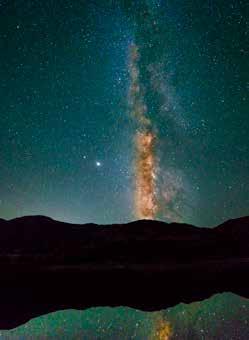

adapted, others drawn from his existing body of work. Sohm then built the imagery to match the music, traveling the country with drones and cameras, collecting footage that would eventually resolve into eleven thematic sections. Only after the music and visuals were locked into place did the script emerge.
It is, as they describe it, a “reverse architecture” — a method that feels less like construction and more like excavation, uncovering meaning rather than imposing it.
For Sohm, the turning point came while listening to Boyer’s recordings — many captured at London’s Abbey Road Studios. The music, he says, didn’t just accompany images. It was the images.
“It sounded like my photographs,” he explains. “Small towns, rivers, cities reaching skyward. It was all there already.” That synesthetic moment — hearing landscapes, seeing music — became the project’s foundation.
The finished work runs 33 minutes, divided into eleven continuous sections — what a classical composer might call movements, though here they flow without interruption. Each segment explores a different facet of the American experience: landscapes, infrastructure, history, migration, aspiration.
One sequence traces the arteries of the nation — roads, railways, rivers — likening them to the veins of a living body. Another moves westward across the Continental Divide, where mountains, snowmelt, and sky become a kind of visual overture.
Threaded throughout are carefully selected quotations from American voices across centuries. The script is spare but resonant — less narration than invocation.
One line, from naturalist John Muir, captures the project’s ethos in miniature:
“The snow is melting into music.”






















JACALYN BOOTH
Certified Colon Hydrotherapist
Ojai Digestive Health
With more than 30 years of experience in healing modalities, Jacalyn brings a deep level of caring to the art of colon hydrotherapy. Professional, nurturing, experienced. OjaiDigestiveHealth.com 805-901-3000


DR. NANCY DOREO

LESLIE BOUCHÉ, C.HT.
Cert. Hypnotherapist
Find your calm center. Release negative thinking, emotional reactivity, anxiety, fear and unhelpful behaviors. Improve sleep and comfort. Safe, loving, rapid change. It’s time to feel better! leslie@lesliebouche.com LeslieBouche.com | 805-796-1616

DR. JOHN R. GALASKA
Quintessential Mind-Body Practice. Hypnosis based on Neuroscience, boosted by EEG. Neurofeedback & Biofeedback for anxiety and insecurity. Early childhood issues. Peak performance for Arts & Sports. Strengthen Vegal Tone. Face-to-Face or online.
BeCalmOfOjai.com 805-705-5175

SECURE BEGINNINGS
Pre-birth to 3; pre/post-natal wellbeing; infant/toddler development; parent education/support. SecureBeginnings.org info@securebeginnings.org 805-646-7559
LAURIE EDGCOMB
is a naturopathic doctor and chiropractor specializing in Applied Kinesiology. Modalities include: IV therapy, Homeopathy, Flower Essences, CranialFacial Release, Gentle Manipulation, Acupuncture Meridians, Massage Therapy. DrDoreo.com 805-777-7184 itive heart each session will unlock your inner Vibrant Wellness. VibrantWellnessOjai.com 916.204.9691
Lic. Acupuncturist since 1986, voted best in Ojai! Natural medicine including Microcurrent, nutritional and herbal consultation, Facial




MICHELLE BYRNES
Elemental Nutrition
Nutrition & Wellness counseling focused on anti-aging, detoxification, personalized nutrition, & weight loss. For more information, visit elementalnutritioncoach.com 805-218-8550
LAUREL FELICE, LMT
Offers Swedish, deep tissue, reflexology, reiki, cranialsacral and pre and post natal massage with a reverent and joyous balance of hands and heart. laurelfelice54@gmail.com
805-886-3674
LLOYD MOSS that is right in front of you
• Clarify what truly matters to you
• Break through what’s been holding you back
• Take action with purpose and confidence
JULIE TUMAMAITSTENSLIE
Chumash Elder
Consultant • Storyteller • Spiritual Advisor • Workshops Weddings & Ceremonies
JTumamait@hotmail.com 805-701-6152
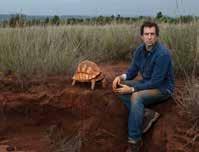
TURTLE CONSERVANCY turtleconservancy.org info@turtleconservancy.org.
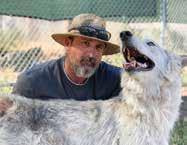
LOCKWOOD ANIMAL RESCUE CENTER info@lockwoodarc.org phone: 661-220-5505

The Turtle Conservancy, located in Ojai’s East End, is dedicated to protecting threatened turtles and tortoises and their habitats worldwide, and to countering the illegal trade in such animals, which is decimating their numbers. Working with partner organizations, they’ve purchased land and established preserves for endangered turtles in Africa, Asia and Mexico. They’ve established a captive breeding center with the ultimate goal of re-wilding species to their native habitats when it is safe to do so. The Turtle Conservancy depends on donations to fund its programs, and welcomes volunteers to help out with numerous projects at our Ojai facility.
The Lockwood Animal Rescue Center (LARC), founded by Dr. Lorin Lindner and Matt Simmons, offered a therapeutic work environment for returning combat veterans and a “forever home” to wolves, wolfdogs, coyotes, horses, parrots and other animals. Located on a 20-acre facility, they offered both the veterans and animals an opportunity to heal and thrive in a back-to-nature setting. “Though not open to the public, we cater to veterans suffering from trauma, and are welcome to participate in our work therapy program. We offer an immersion program for veterans to stay and participate, and to learn basic skills for caring for animals and self healing,” Dr. Lindner said.
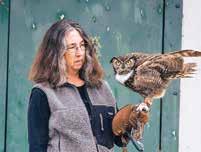
OJAI RAPTOR CENTER
animals@hsvc.org phone: 805-646-6505 or 805-656-5031 ojairaptorcenter@gmail.com phone: 805-649-6884
ORC was founded and is directed by Kimberly Stroud, who started her training at the Raptor Rehabilitation and Release Program in 1992. In 2000 she went on to found Ojai Raptor Center. First and foremost, Ojai Raptor Center is a fully functional and permitted wildlife rehabilitation center, specializing in birds of prey. Every year they take in 500 to 1,000 sick, injured or orphaned birds (including many non-raptor birds, and a small percentage of mammals) with the hopes of rehabilitating them and releasing them back to the wild. Our four-acre campus is comprised of a medical room and hospital, as well as outdoor flights, aviaries and mews. The center also features the largest flight in California.
HUMANE SOCIETY OF VENTURA COUNTY
Nestled in the rolling hills of the Ojai Valley lies a 4.4-acre hidden haven for wayward animals.
Founded in 1932, the Humane Society of Ventura County has been serving not just the animals of the Ojai Valley, but all of the animals in Ventura County. Traditionally, an animal shelter is thought of as solely a place for animals to seek refuge until a permanent home can be found. While here at the Humane Society of Ventura County they provide this safe refuge, they also strive to remedy the greater problem of animal overpopulation, abuse and neglect.












STORY BY MARK LEWIS

When the famous war correspondent Agnes Smedley moved to Ojai during World War II to write a book, she resisted her editor’s request to place herself at the center of the narrative. There were too many dark secrets about her life that she could not afford to reveal. Eventually they all came out anyway.
often prompts a person to look back on their life and take stock. But when Agnes Smedley reached that milestone on Feb. 23, 1942, she was not particularly pleased by the way things were adding up.
She had moved from Hollywood to the Ojai Valley in early January to isolate herself from distractions while she wrote a book about China’s ongoing war with Japan. She was a recognized expert on the subject, having covered the war as a foreign correspondent for four years. Now, Japan’s recent surprise attack on Pearl Harbor had made China’s war America’s as well, and
the prestigious New York publishing house Alfred A. Knopf had signed Agnes up to write “Battle Hymn of China.” The idea was to introduce Americans to their new allies, who had been holding off the Japanese since 1937 while making terrible sacrifices. But the book project, to Agnes’s annoyance, was off to a slow start.
Taking up residence in a borrowed cottage at 153 S. Padre Juan Ave. in Meiners Oaks, Agnes had quickly churned out the first 100 pages and mailed them off to her editor, Blanche Knopf, for comment. Meanwhile, she amused herself by writing snarky
letters about her new Ojai neighbors.
She found herself surrounded by spiritual seekers, health faddists, and eccentric devotees of esoteric cults. To her, they all seemed like a bunch of kooks.
“My landlady is a follower of Father Divine — there’s a gang here,” she wrote to a New York friend. “She believes also in horoscopes — many here do — and they all plant or cut their flowers by the stars. One woman nearby is a Communist and a Christian Scientist all in one and, in addition to Father Divine, my landlady has taken on the Communist Party.”
Agnes was a Communist herself, albeit not of the card-carrying variety. But she took her Communism straight, whereas her Ojai neighbors struck her as unserious dabblers, mixing and matching whichever philosophies struck their fancy. And many Ojaians, including the philosopher Jiddu Krishnamurti, were pacifists, whereas Agnes was one of nature’s warriors. She longed to see Japan crushed on the battlefield.
“Krishna Murti lives near here and conducts a summer camp in the study of the soul,” she wrote in that letter. “Sometimes when I look at Southern California, I say, ‘Let the Japanese come!’”
Perhaps Ojai reminded her too much of the small towns of her youth, places she associated with grinding poverty and limited opportunity. But she began to change her mind about Ojai when she met Aino Taylor, a young housewife with a 6-year-old daughter. Aino’s husband, John Taylor, was a history teacher at Nordhoff High School. Aino and Agnes struck up a friendship that Aino later described as the most intense she ever experienced.
“Agnes was a constant presence in the house. She would come and go at any hour of the night or day,” Aino’s son, Jon Taylor,

said in an interview. (Jon is a retired fisherman in British Columbia.) The Taylors were Theosophists, and on friendly terms with Krishnamurti. But Agnes did not seem to hold that against them. She was mellowing toward Ojai and its interesting cast of characters.
Her mood darkened, however, when she received her editor’s response to those first 100 pages. Knopf said they were too heavy on dry political theorizing and too light on Agnes herself as the narrative’s central character.
Agnes had good reasons for keeping a low profile in her own book. But she could not share them with Knopf, because they involved espionage, radical politics, and an aggressively unconventional love life. On February 22, the day before her birthday, she wrote to a friend that she was considering cancelling the book contract rather than do what Knopf asked. But that would mean returning her advance and leaving herself stranded in Ojai with no money and few prospects.
Only seven weeks earlier, she had arrived in the valley with high hopes. Knopf’s imprimatur practically guaranteed that the book would be a bestseller, and several Hollywood studios had expressed interest in turning it into a movie. For the first time in Agnes’s hardscrabble life, she had a chance to put herself on a sound financial footing. Was she really going to throw that chance away? And if she did abandon the book, what would she do instead?
One possibility was returning to the Far East as a war correspondent. Recently, her old friend Theodore H. White had visited her in Ojai. They had met in 1938 in Generalissimo Chiang Kai-shek’s wartime capital of Hankow, when the Japanese were besieging the city. Now, White was returning to China via India to cover the war for Time magazine. He had come to Ojai to ask Agnes for letters of introduction to Indian leaders she knew, including Jawaharlal Nehru.
During the visit, they presumably reminisced about dodging bombs in Hankow and fleeing for their lives when the city fell to the Japanese. But by February 23, Teddy White was on a Dutch freighter somewhere in the Pacific, dodging Japanese submarines while making his way back to the war. Agnes was stuck in her
tiny cottage in Meiners Oaks, about as far from the action as it was possible to imagine.
Some birthday. But at least Agnes had one thing to look forward to that evening. President Franklin D. Roosevelt was scheduled to deliver one of his so-called fireside chats, updating Americans on the war situation. Agnes didn’t even have a telephone, but she surely had access to a radio, perhaps at the home of her new friends Aino and John Taylor. Agnes followed the war news obsessively; she would not have missed that 7 p.m. broadcast.
February 23 was also George Washington’s birthday, so Roosevelt led off by recalling how Washington overcame “long odds and recurring defeats” during the War of Independence to eventually lead his army to victory. A timely message, given that so far America was really taking it on the chin from the Japanese. Pearl Harbor devastated, Wake Island and Guam captured — while in the Philippines, General Douglas MacArthur’s Fil-American army was trapped on the Bataan Peninsula with no hope of rescue. Roosevelt hinted at the likely outcome there by praising “the defense put up by General MacArthur [which] has magnificently exceeded the previous estimates of endurance, and he and his men are gaining eternal glory therefore.”
Agnes must have been thrilled by Roosevelt’s tribute to the Chinese, “the brave people who for four, nearly five years have withstood Japanese assault … it is essential that we help China in her magnificent defense and in her inevitable counter-offensive — for that is one important element in the ultimate defeat of Japan.”
FDR’s Ojai listeners felt far away from the war he described. But an hour after the broadcast ended, the bell in the downtown Post Office Tower began to ring. Blackout! This is not a drill! The Imperial Japanese Navy submarine I-17 had surfaced off the coast of Goleta and started shelling an oil refinery. The bombardment did little damage, but the air raid warnings that followed freaked out the entire region. Everyone knew that the Pearl Harbor raid had begun with a submarine assault, and they also knew what came next: wave after wave of warplanes launched from aircraft carriers lurking offshore.
When that bell started ringing, if Agnes had been listening to FDR’s radio chat at the Taylors’ house, she would have seen Aino Taylor rush out to report to her battle station as a member of the Ojai Company of the Ventura County Women’s Defense Battalion. In the East End, volunteer aircraft spotters at their observation post near San Antonio School scoured the night skies for Japanese bombers. Across the valley, air raid wardens wielding flashlights were out in force, enforcing the blackout.
While traveling with Red Army units fighting the Japanese, Agnes had repeatedly put herself in harm’s way, risking her life to get the story. “The bravest front-line soldier I ever knew,” General Joseph “Vinegar Joe” Stillwell would later say of her. But Agnes had been traumatized by the air raids she endured in Hankow. She can’t have enjoyed the hours she and her neighbors passed in the darkness that night, listening fearfully for the sound of airplane engines overhead. Then at midnight, several flights of airplanes passed overhead. Bombers en route to L.A? No. The all-clear alarm sounded, and the panic ended.
“For four hours last night Ventura County lay almost as still as death, waiting for the attack that never came,” the Ventura StarFree Press reported the next morning. “Ventura took quietly the blackout and the news that the war had reached the American mainland only a few miles away.”
It would turn out that I-17’s assault on Goleta was the only time World War II would reach the American mainland. But nobody knew that at the time. Possibly this false alarm gave Agnes the jolt she needed to see clearly what she had to do: buckle down and get her book done and tell America what the Chinese had been going through. She would figure out a way to put herself at the center of the narrative without revealing what she did not want to reveal.
In the weeks and months to come, as the words began to flow and the completed pages piled up, Agnes might even have offered up a silent thank-you to the captain and crew of I-17, for awakening Americans to the grim realities of war, and for ensuring that her 50th birthday ended with a bang.
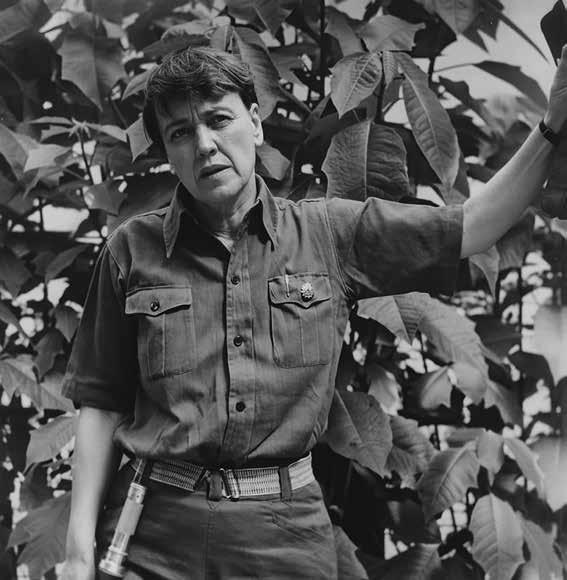
long whispered in my family, which, if true, explain the two strains that mingled when my father and my mother married.” So goes the first sentence of “Battle Hymn of China.” It launches its narrative not in China but in the smallish village of Osgood, Mo., where Agnes Smedley was born in 1892 in a two-room cabin on a tenant farm on the edge of tovwn. “One strain — my mother’s — was of a hard-working, gentle and devout folk. The other consisted of rebels, wanderers, tellers of tall tales, singers of songs.”
The teller of tales and singer of songs was her father, Charles Smedley: handsome, charming, frequently drunk, frequently absent. All her life, Agnes bitterly resented her father for failing to provide his wife and five children with a stable base of support. She also resented her mother for submitting to him, for passively deferring to him, for not standing up to him.
“The two family strains, meeting in me, made my spirit a battlefield across which a civil war raged endlessly.”
“THERE ARE TALES,
Agnes infused the book with her psychological truth, and with enough autobiographic material to satisfy Blanche Knopf. But she omitted many inconvenient truths — such as the fact that during World War I she had been jailed in New York as a secret agent for Germany.
Agnes was no fan of the Kaiser, but she had fallen in with a group of revolutionaries from India who were trying to overthrow the British Raj. Their project was funded by the German Foreign Ministry just to make trouble for the British. Agnes, a committed anti-imperialist, worked undercover to help her Indian friends to run guns to their fellow rebels back home. Unfortunately for Agnes, the U.S. soon entered the war on Britain’s side, which meant that technically she was now a spy in the pay of America’s enemy. Charged under the Espionage Act, she spent many months in jail until the war ended and the case against her eventually was dropped.
Moving on to Berlin in 1921, Agnes moved in with the Indian revolutionaries’ leader, Virendranath “Chatto” Chattopadhyaya, with whom she lived for most of the decade. She also wrote a well-received autobiographical novel, “Daughter of Earth,” now considered a feminist classic. Meanwhile, Chatto enrolled his anti-British cabal in the Comintern, a new organization created by Vladimir Lenin to foment a worldwide Communist revolution. When a Comintern talent scout recruited Agnes, she agreed to dust off her espionage skills and redeploy to China as a combination journalist and spy.
In Shanghai in 1930 she joined forces with the Soviet spy Richard Sorge. He was also her lover — as was Hotsumi Ozaki, a Japanese reporter and Communist Party member whom Agnes introduced to Sorge. A few years later, Sorge and Ozaki moved the spy ring to Tokyo. Agnes remained in Shanghai, working in secret for the Comintern while writing slanted news stories that favored the Communists led by Mao Zedong over the Nationalists led by Chiang Kai-shek. (She also wrote three books extolling the virtues of Mao’s movement.)
She spent most of 1937 in the remote Chinese Communist fastness of Yanan, where she passed the time by teaching Mao, Marshal Zhu De and Zhou En-Lai, among others, how to foxtrot. This scandalized their wives and indirectly led to a confrontation between Agnes and Madame Mao.
“Imperialist! You’re the cause of all this,” Mao’s wife screamed as she attacked Agnes with a flashlight. Always quick to anger, Agnes put up her dukes and knocked Madame Mao to the ground, right in front of her husband.
Soon after that incident, Agnes applied for membership in the Chinese Communist Party. She was crushed when they turned her down, on the grounds that she was too fiercely independent to submit to party discipline. Which actually sounds like a reasonable decision under the circumstances. (Although Mao did seize upon this kerfuffle as an excuse to divorce his wife.)
Five years later in Ojai, Agnes did not think her Comintern spying and interracial philandering constituted the kind of autobiographical detail Knopf was looking for. Carefully tiptoeing her way through this minefield, she worked on her book throughout that spring and summer of ‘42. Isolated in Ojai, she apparently did not notice that one of her secrets already was out. In May, a brief wire-service report out of Japan reported that her old lover Sorge had been arrested in Tokyo the previous fall. Her other old lover Ozaki was arrested too, and their spy ring liquidated — but not before Sorge had informed Moscow that Japan secretly had decided against attacking the Soviet Union.
This massive intelligence coup allowed the Soviets to shift their forces in the Far East back to Europe to help defend Moscow, ensuring that the Nazis would not take the capital. But Sorge and Ozaki would pay dearly for this triumph. Under torture, they gave up the entire history of the Sorge ring, including Agnes Smedley’s role in its earlier, Shanghai phase. Sorge and Ozaki were sentenced to death, and the police report containing their confessions disappeared into Japan’s counterintelligence archives, to await discovery by future American investigators.
Agnes finally was having fun. She loved to dance, especially folk dancing; she enjoyed seeing plays and hearing classical music played. All these activities were readily available at the Ojai Art
Center, where the Taylors were frequent attendees. Agnes no doubt tagged along with them.
She and Aino enjoyed taking long bicycle rides around the valley. On the morning of April 5 — Easter Sunday — their ride led them to “a small, orange-sized cantaloupe, growing on a vine under an oak tree,” wrote Smedley biographers Janice R. and Stephen R. MacKinnon, who interviewed Aino years later. “Smedley remarked on the vitality and courage with which it had grown to maturity despite the hard, acidic soil. This, she said, was a miracle ‘as great as a resurrection, and far more real.’”
Local support for China’s cause was growing. In late April, the prominent Ojai socialite Constance Wash gave a talk at a society tea to raise money for the United China Relief. Once Agnes would have sneered at any left-wing attempt to cultivate upper-crust women like Connie Wash. But she now realized that China’s advocates in America must build a broad base of support, so that Yankee aid would flow to the Communists as well as the Nationalists.
Ojai was really bustling that summer. The 2nd Battalion of the Army’s 134th Infantry Regiment, 1,000 men strong, was now encamped on the Ojai Valley Inn golf course, and the U.S.O. had commandeered the Jack Boyd Club downtown. The community went all out to keep the boys entertained.
Agnes did a little entertaining herself on June 19, as reported in The Ojai newspaper.
“On Friday afternoon, Miss Agnes Smedley, international traveler, former war correspondent in China, and novelist, entertained a group of friends at a high tea in the gardens of her home in Meiners Oaks. … After a sumptuous repast, Miss Smedley regaled the guests with interesting accounts of her wanderings in China with guerrilla bands of soldiers; and sang in impromptu fashion ancient Chinese folk melodies depicting the sorrow of the Great Wall.”
According to Aino’s son Jon, Agnes was very active on the romantic front as well. While living in Greenwich Village from 1917 through 1920, she had absorbed the bohemian approach to sex. (Her Village pals had included the anarchist and free-love advocate Emma Goldman and the birth-control activist Margaret Sanger.) Over the years, Agnes had enjoyed many casual affairs with men of many races, and with some women too. She cut something of a swath through Ojai in 1942, Jon said, and

her lovers might have included his mother. When asked about it years later, Aino responded vaguely.
“She didn’t really deny it,” Jon said. “I think it’s an open question.”
(Also in 1942, Aino helped Monica Ros set up her first school in the East End. Aino’s husband, John Taylor, later served as principal of Nordhoff, and also of Matilija Junior High. After retiring, he taught at Happy Valley School for many years.)
In the fall, Agnes completed her first draft of “Battle Hymn” and packed her bags.
“Miss Agnes Smedley of the Oaks has gone to New York City for a stay of indefinite length,” The Ojai reported on October 23. “A book about China that she has been working on went with her for publication.”
Despite her snarky initial reaction to Ojai, after almost ten months here, Agnes had grown fond of the place.
“Indeed, as Agnes made preparations to move to the East Coast, where she would do her revisions, she was of such excellent cheer that she claimed it was difficult to leave,” biographer Ruth Price wrote in “The Lives of Agnes Smedley” (2005). “Recently, she
said, she had discovered many nice things to do and people to meet in Southern California.”
Her high spirits were evident in her farewell note to Aino Taylor: “I finished my book yesterday and sent it off today. I leave Wednesday evening for New York via Salt Lake, Omaha, Chicago and trying to meet all my old lovers at every place the train stops. I expect mobs and mobs, and intend to tell them to organize a union and join the C.I.O.’”
made a big splash when it came out in September 1943. Widely and enthusiastically reviewed, it generated strong sales and made Agnes a prominent voice in the national argument over what to do about China. That argument gathered steam as the war ended and China’s Communists and Nationalists turned from fighting Japan to fighting each other.
By this point Agnes was residing at Yaddo, the artists’ retreat near Saratoga in upstate New York. She was working on a play about China and a biography of Marshal Zhu De, the Communist commander whose Red Army was rapidly gaining the upper hand over the Nationalists. Yaddo was a very pleasant place to live, “but I’ve a hankering for Ojai,” she wrote in a letter to Aino Taylor.
The Chinese Communists’ triumph in 1949 set off a rancorous “Who Lost China?” debate in America. From General Douglas MacArthur’s headquarters in occupied Tokyo came an answer: “Agnes Smedley.” MacArthur’s intelligence chief, Major General Charles Willoughby, had dug up the Japanese police account of their interrogation of Richard Sorge and Hotsumi Ozaki in 1941. If Agnes had been a member of Sorge’s Soviet spy ring in Shanghai in the early 1930s, Willoughby asked, who could say with confidence that she was not a spy today?
Agnes denied it and threatened a libel suit. But the Cold War now was in full swing, as was the Red Scare. Agnes had been openly championing the Chinese Communists’ cause for years, first in China and now in America. In the poisonous atmosphere of 1949, she soon became a pariah. The House Un-American Activities Committee (HUAC) was hot on her trail. In November 1949 she boarded a ship bound for Britain, hoping to move
on from there to the newly established People’s Republic of China. Instead, Agnes Smedley died in Britain on May 6, 1950, of complications following an operation. She was 58 years old.
But mere death would not deliver Agnes from her pursuers. Especially not from Charles Willoughby. By an odd coincidence, he happened to be in Ojai in June 1951 when he renewed his anti-Smedley campaign. He came to town to spend the weekend with erstwhile United China Relief supporter Connie Wash at her Whalerock ranch in the East End. The Ojai published a story about Willoughby in which he and Wash were described as “old friends.”
“She knew him forever,” her granddaughter and namesake, Connie Eaton, told the OQ. “She knew him very well. He gave her presents from Japan.”
Were they romantically involved?
“Possibly.”
Willoughby, a widower, evidently was in search of a wife. Possibly he came to Ojai that weekend to pop the question. If he did,

Wash turned him down. He married someone else a few months later. But it’s just possible he had come to Ojai for another reason.
As MacArthur’s intelligence chief, Willoughby had been embarrassed in December 1941 when he failed to anticipate Japan’s imminent invasion of the Philippines. He was rescued from that debacle early in ’42 when Roosevelt ordered MacArthur to evacuate Corregidor before it fell. Willoughby was among the support staff MacArthur took with him to Australia, where he proclaimed to reporters that “I shall return.” When he did return in 1944, Willoughby was with him.
Fast forward to late 1950. The Korean War was raging, and MacArthur was pushing his troops north toward the Chinese border. Willoughby, still his intelligence chief, failed to anticipate that China would respond to this provocation with a massive intervention by the Red Army. He and MacArthur were humiliated when the Chinese suddenly appeared and pushed the Americans clear out of North Korea. That Chinese army was led by Agnes Smedley’s old friend Peng Dehuai, under the overall command of her old friend Zhu De.
In the wake of this massive setback, President Harry Truman fired MacArthur in April 1951, which forced Willoughby to retire. Now, two months later, he suddenly turned up in Ojai, Agnes’s old stomping grounds. He would have known that her worshipful biography of Marshal Zhu, “The Great Road,” was being prepared for eventual publication. Had he come to Ojai to prevent Agnes’s posthumous triumph with this book, by smearing her memory? Possibly. He had dug up more evidence of her past connections to the Comintern, and he was preparing to spill the beans in his upcoming testimony before a Senate subcommittee.
“He intimated that his appearance before Congress might prove sensational in some quarters and expressed surprise at the interest which has been shown lately in the Sorge espionage case,” The Ojai reported. “His report has been vehemently protested by writer Agnes Smedley, a former Ojaian, who has since died and willed her ashes to a communist Chinese general.”
That would be Marshal Zhu. He buried those ashes in Beijing’s Babaoshan Revolutionary Cemetery, reserved for high-ranking revolutionary heroes and state leaders. Few Westerners are among them. Agnes was interred there under a headstone with an epitaph composed by Zhu himself: “In Memory of Agnes Smedley, Revolutionary American Writer and Friend of the Chinese People.” And there she remains.
Arguably, Agnes died in the nick of time. It would have been hard for her to fend off HUAC while a Red army led by her old
pals was killing Americans in large numbers. Moreover, the Russians recently had become a nuclear power, thanks in large part to the Manhattan Project physicist and atomic spy Klaus Fuchs, whose Soviet handlers included one of Agnes’s former comrades in the Sorge ring in Shanghai.
Agnes evidently had done little or no spying herself since leaving Shanghai in 1937, and she had never done any spying aimed at America. But to the end of her life, she was unrepentant about working for a worldwide socialist revolution.
“I may not be innocent,” she said, “but I’m right.”
Right or wrong, she followed her own path, which included that noteworthy 10-month stop in Ojai. Eighty-four years later, it seems unlikely that anyone is left in town who knew her. But she looms large in the memory of Aino Taylor’s son, the retired fisherman in British Columbia. Jon Taylor was not born until 1945, three years after Agnes left Ojai. But all his life he heard stories about her from his parents and his older sister.
“I grew up with Agnes’s ghost in the house,” he said. “They would always talk about her bravery and her obstinacy.”
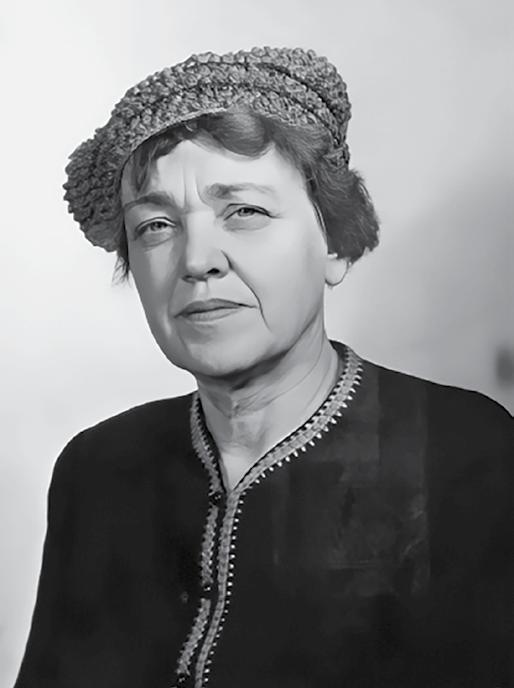










TURNER SIBLINGS, GEORGE,
WITH THEIR PIG PROJECTS.
AT OJAI’S SIMOORE GRANGE, KIDS DON’T JUST RAISE ANIMALS — THEY LEARN DISCIPLINE, RESPONSIBILITY, AND THE HARD TRUTH ABOUT WHAT IT MEANS TO CARE.
PHOTOS AND STORY BY DEVO CUTLER-RUBENSTEIN
Kind of ironic to order a vegan hamburger in downtown Ojai — but this isn’t really a story about lifestyle choices. Wherever you live, people arrive at their plates by way of belief systems, health advice, family traditions, or a quiet line they draw for themselves.
In a town like Ojai, those choices run the spectrum — vegans, vegetarians, conscious omnivores, and nutritionists who insist eating meat, at least occasionally, matters.
Even young people sense when something feels off. At Jim & Rob’s, Kali Holmes brought her food back to the counter. “This burrito has meat in it … and I don’t eat meat.”
“Why?” someone asked.
“Because I like the animals,” she said, then skipped off to join her mom.
But step a few miles outside downtown, and the conversation shifts. For generations, the Ojai Valley has been home to ranchers. Spend even a short amount of time on a ranch, and something changes in your body — an awareness shaped by the smells, labor, rhythm and sense of purpose: early mornings, feed buckets, the discipline of showing up.
A profound connection to the cycles of life takes hold. It can feel idyllic … until it isn’t.
“Everyone wants to be a cowboy until it’s time to do cowboy sh-t.” — Ross Cooper
The sun drops behind the Ojai Valley Grange. A teenage girl hums along to music leaking from her earbuds as she finishes her chores.
“It’s not that glamorous,” she says, swinging a shovel of soiled shavings and hay into an oversized bin.
At the Grange, that rhythm becomes a practice — and the kids step into it.
Over the course of a year, they raise animals that start at just a few months old — feeding them, training them, learning their rhythms and moods — while preparing for the Ventura County Fair. In the ring, confidence matters. So does discipline. And if all goes well, there’s real money on the line at auction.
But what these kids gain goes far beyond ribbons or sales.
They learn to show up for something that depends on them.
Most of us move through our days without thinking much about what connects us to the land, the animals, or the process itself. “This is delicious. Can I have the recipe?” Rarely do we pause long enough to consider where it all began.
At the Grange, that part is visible every day. “Ours is called Simoore Grange,” says Jessica Manning, club secretary. She drops off her daughter Bella, 13, at the barnyard before dawn to take care of her pig.
Bella’s day begins long before most of her classmates are awake.
Cleaning, feeding, training, administering shots, monitoring water — her current project is Ringo, a Hampshire cross. “Pigs are very weather sensitive,” Bella explains. “They don’t sweat, which is why you’ll
find them in mud.”
She adds, almost casually, “They’re very clean animals — Ringo loves his bath time.”
It’s details like that — the attention, the care — that shift the paradigm. What might seem like a “project” becomes something else entirely.
The goal is tangible: do your best, and you can win blue ribbons, cash prizes, and a bragging feather in your cowboy hat.
There are several practice competitions throughout the year. The club’s big preparatory event, the Barnyard Bonanza, creates a festival atmosphere while serving as a fundraiser. Usually held in late May, it gives both kids and animals a chance to rehearse before the Ventura County Fair.
The fair itself is where it all comes together — family, friends, judges, and buyers watching the work pay off. Concerts, rodeo events, viewing pens, rigorous competitions, and a coastal breeze all collide into one long week.
“I love the corn on the cob and the Fruity Pebble funnel cake,” one of the younger kids says. “And I’m pretty sure my pig would love that cake too, but not going to happen as it’d mess up my pig’s weigh-in.”
Founded in 1867 as a national agricultural movement, the Grange was built on the idea that caring for the land and what lives on it builds



character. Today, participation is smaller than it once was — but, as President Lyndsey Malone puts it, “small but mighty.”
Kids from about age nine to 18 take on animal projects — pigs, steers, goats, and more. They don’t just show up for the ribbon. They show up for the whole enchilada.
BEFORE SCHOOL. AFTER SCHOOL. EVERY DAY.
The air is cool and the smell unmistakable — hay, mud, and manure. At the small but mighty location near the intersection of El Roblar and Lomita, the day begins before the light has fully settled over the valley. Boots and tennis shoes crunch across gravel, carrying feed buckets.
“Pig poo smells the worst,” say the Taylor siblings — George, 13, Penelope, 12, and Bill, 10 — each raising separate pigs.
“You have to stay alert,” Penelope says.
Training matters. The lightweight whip used for guidance is flexible and gentle, helping steer pigs to lift their heads or change direction. It works best with patience. Pigs, after all, are smart — but stubborn.
Metal hits metal with a sharp clang as shovels scrape against bins. The work is immediate, physical, and unapologetic.
“We wake up around 5:45 … leave home by 6:30 … get here around 7,” Tula Turner explains. “Do chores, then go to school.”
After school?
“Come back. Walk them. Feed them. Clean. Usually like two hours.”
Every day.
“It’s always hard work — carrying buckets, mucking up — and you just get it done,” says Scarlett Malone.
Another kid adds, “They don’t really help. It’s all up to us.”
“And if you don’t walk them,” warns Bill, “they won’t build muscle. They get fat— and lazy.”
Ask what they’ve learned, and the answer comes quickly.
“Patience.”
Tula’s pig, Jazmin, leans into her, then flops over for a belly rub.
“When I first got her, she didn’t know how to walk. I had to teach her everything.”
Scarlett shares something else. “I’ve learned how to say ‘no.’ My friends are hanging out — but I can’t. I have to come here.”
Youth President Eliana Duran, 16, moves with calm authority. She’s working with a purebred Shorthorn steer named Mater.
“They’re a little smaller, more manageable,” she says, running her hand along his flank. “But this breed is

CLOCKWISE FROM TOP LEFT: BELLA WINS BUCKLES AND MONEY FOR AN ESSAY CONTEST. PENNY WALKING HER HAMPSHIRE
CROSS PIG.
SCARLETT COOLING DOWN HER PIG.
ZACH WINS GRAND CHAMPION AT THE JACKPOT SHOW (COURTESY OF GRANGE PARENTS)
GEORGE GUIDES ROCKY.



prized for its markings — and its coat.”
Hair matters.
Daily rinses. Specialized shampoos. Brushing against the grain. Then a full-body blow dry using a generatorpowered blower.
“It takes me about two and a half to three hours,” she says. “Just on his coat.”
Discipline, made visible.
“I especially like helping the younger kids,” she adds. “Because I didn’t know anything when I first started.”
“We give the pigs a good life,” Scarlett says. “They’re fed and spoiled with attention.”
For most of the year, that’s enough. But the fair changes the atmosphere.
Out here, they’re supportive. At the fair — it’s different.
“I don’t want anyone to lose,” says Zach Alvarez. “But we all want to win.”
Winning matters. Weight, musculature, health, and showmanship all affect how animals are judged — and how they sell.
And sometimes, despite the work, things still go sideways. Animals get sick. Or they just don’t perform.
“There is only so much you can control,” reflects Zach.
Once the dust settles, the animals are sold at auction. Buyers listen closely as prizes and accomplishments are announced. The attention can drive prices into the thousands.
“Once you get it, it’s yours,” Zach says. “You put it in the bank.”
For some kids, these projects become real financial assets — and sometimes scholarships.
Often, the meat is donated to food banks and families in need, extending the effort far beyond the fairgrounds.
THE
“It’s sad.”
“It gets easier … but it’s never easy.”
“We give them a good life.”
A good life.
“They’re not stressed. They’re not scared.”
“It’s really hard for the end,” Scarlett says. “But it gives you perspective. A lot of good things come to an end.”
George Turner steps into the ring and guides his pig through a figureeight.
“We have to let them go …”
No bravado. Just understanding.
So what does this do to a child?
It takes guts to care — and guts to let go. “First year, I was like a three or four,” Zach says. “Now I feel like an eight or a nine.” Not grades. Capability.
“I’ve thought about being a breeder. Or maybe a butcher.” No irony. Just clarity.
THE TENSION WE LIVE WITH
There’s a nursery rhyme we all know. This little piggy went to market. Here, there’s no metaphor. These kids know. And still — they care. Still — they show up. Whatever you feel about what’s on your plate, there’s a tension many adults avoid. At the Ojai Valley branch, Simoore Grange, that tension is not hidden. It’s felt in the early mornings. In the feeding.
In the quiet moments of connection. And in knowing that what they raise may someday feed someone in need. That doesn’t erase the difficulty. But it gives it meaning.




“We specialize in biomimetic principles. Biomimetic dentistry is the reconstruction of teeth to emulate their esthetic and natural form and function. It is the most conservative approach to treating fractured and decayed teeth — it keeps them strong and seals them from bacterial invasion. By conserving as much tooth structure as possible, we can eliminate the need for many crowns and root canals.”
1 SHELF ROAD 3.5mi
EASY | Elev. Gain: 200 ft | Overlooks downto w n Ojai.
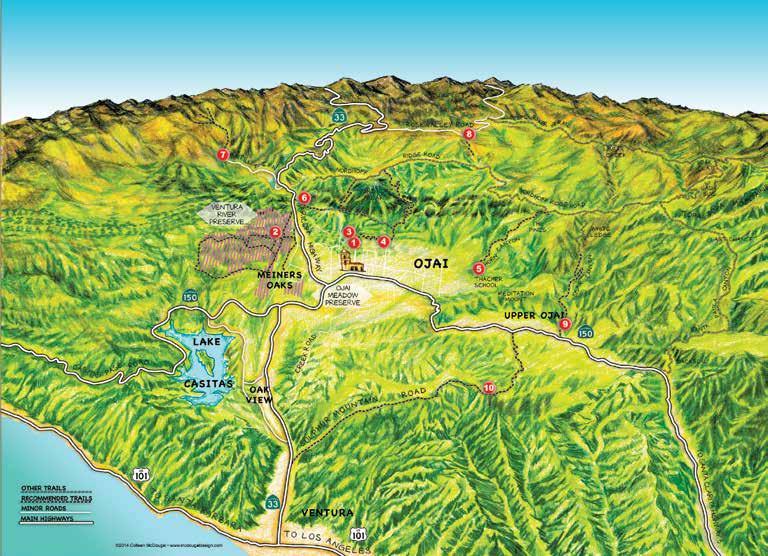
2
RIVER PRESERVE 0-7mi
VARIES | Elev. Gain: ≤ 520 ft
Wills-Rice Loop is the longest trail.
5
HORN CANYON 5.5mi
STRENUOUS | Elev. Gain: 1600 ft | Goes to the Pines.
8
ROSE VALLEY 1mi
EASY | Elev. Gain: 100 ft Rose Valley Falls.
3
PRATT TRAIL 8.8mi
STRENUOUS | Elev. Gain: 3300 ft | Goes to Nordhoff Peak.
6
COZY DELL 2.2mi
MODERATE | Elev. Gain: 740 ft | Cozy Dell Creek & Ridge.
9
SISAR CANYON 22mi
STRENUOUS | Elev. Gain: 4800 ft |Topa Topa Bluffs.
4
GRIDLEY TRAIL 6-12mi
MODERATE | 3 mi to Gridley Springs (Elev. Gain: 1200 ft) 6 mi to Nordhoff Peak.
7
MATILIJA CANYON 12mi
MODERATE | Elev. Gain: 1200ft | North Fork.
10
SULPHUR MTN. 22mi
MODERATE | Elev. Gain: 2300 ft | Sulphur Mountain Road.

















BY CHUCK GRAHAM
t might only happen once every several years. A steelhead trout Oncorhynchus mykiss irideus leaves its ocean realm, and forges an aquatic path up a river mouth, then navigates a floodplain, and eventually swims up a boulder-choked creek to lay its eggs in a pool of loose, sandy soil, the gentle ebb and flow of the creek inviting for this endangered anadromous fish.
For steelhead trout, this is difficult to come by. The aquatic passage is daunting to say the least. With roughly 187 steelhead trout left in the wild in Southern California, a true trout species that swims against the grain from the ocean to their spawning grounds in creeks of coastal ranges and forests, the ideal habitat is at a premium.
Much of the steelhead trout’s historic habitat has been wiped out by agriculture and urban sprawl. Harbors, break walls, culverts and dredging also contribute to a list of impediments that go on and on. However, it’s taking non-profits like South Coast Habitat Restoration and Ojai Valley Land Conservancy and partnering up with the U.S. Forest Service and California Department of Fish and Wildlife and others to steer a different course. It’s a passage requiring a lot of years of heavy lifting, requiring the
removal of barriers, rerouting creek flows, and native plant restoration to enhance the steelhead’s survival.
Just above Ojai, along Highway 33, 13 miles of the North Fork Matilija Creek and adjacent Bear Creek in the Los Padres National Forest have just received an aquatic facelift. It took 18 long years from the early development stages to habitat restoration in the boulder-strewn runnels to the last native flora planted in the project area, but the Wheeler Gorge Aquatic Organism Passage Project is complete. It now offers a sliver of hope to one tough fish.
“This is a watershed moment how this project came together, the partners and passion that carried this project through,” said Kim Winter, supervisor for the Los Padres National Forest. “This will be a lasting result that people will appreciate for years to come.”
Of course, conservation isn’t free. The project cost $6 million, and was funded by the Wildlife Conservation Board, California Department of Fish and Wildlife, Los Padres National Forest, National Fish and Wildlife Foundation and Patagonia. “We’ve
been working on steelhead projects for two decades,” said Mauricio Gomez, director of South Coast Habitat Restoration. “We’re thankful for our partners, and happy to complete this restoration to improve habitat for steelhead.”
What a switch hitter means to a Major League baseball team, also applies to steelhead trout within their aquatic realm. Anadromous fish such as salmon, lamprey, sturgeon and steelhead trout are migratory species where its life cycle commits most of its time to the ocean but returns to freshwater streams to spawn. Although steelheads and salmon share many traits, steelheads can spawn many times, whereas salmon only spawn once.
Steelhead trout is a subspecies of Oncorhynchus mykiss, which encompasses all rainbow trout species. This biological relationship allows steelhead and rainbow trout to spawn together. Once their offspring are swimming, each fish makes that life choice to remain in shaded freshwater creeks as a rainbow trout or venturing out into the ocean as a steelhead trout. Fortune favors the bold.
Equipped with their torpedo-shaped, streamlined bodies, steelheads are strong swimmers and are gifted with specialized kidneys allowing them to make a seamless transition between saltwater and freshwater creeks. Their sleek frames reduce drag during their arduous migrations. Adults typically measure 24-36 inches and weigh 6-20 pounds, though some exceptional steelheads have exceeded a whopping 40 pounds.
“They are the cockroaches of aquatic systems,” said Kristie Klose, fisheries biologist for Los Padres National Forest.
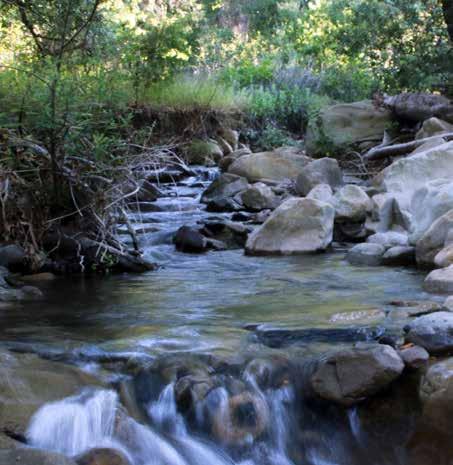
“They are tough fish, real bad asses, going back and forth, to and from the ocean.”
Consider that steelhead trout within the Los Padres National Forest has endured many recent wildfires followed by heavy rains and debris flows. Combine that with a lot of manmade hindrances, and steelheads are certainly up against it.
“We can preserve habitat above, in the forest,” continued Klose, “but not down below in urban areas. There is so much agriculture and urbanization.”
The project was finished in December 2025; two weeks before significant rain arrived. And more rain arrived midFebruary. During those heavy downpours the region received 35 inches. It was a great test to see how the newly restored site stood up against the elements.
Following those storms, Klose did stream surveys in both the North Fork Matilija and Bear Creeks searching for steelheads in the project area. There were no fish found, but in a nearby side stream she discovered steelhead trout.
When it comes to riparian corridors, the sound of water rushing over sandstone boulders is soothing. Where Bear Creek and North Fork Matilija Creek converge, the swift-flowing creeks cascade beneath a canopy of oaks and cottonwood trees. Steller’s jays, robins, dark-eyed juncos, black phoebes, and busy tree squirrels reveled in the recently restored project. Reconstructing stream channels posed
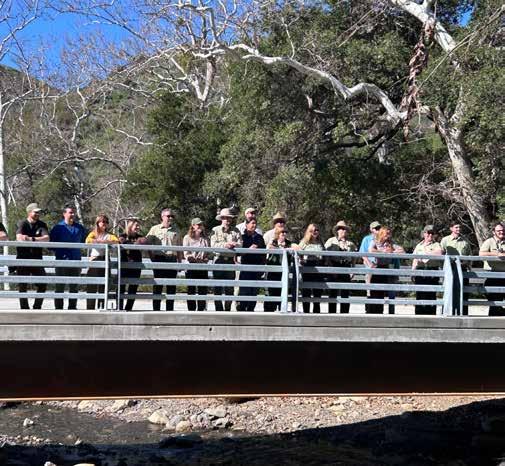


TOP LEFT: THOSE INVOLVED IN THE REWILDING OF THE NORTH FORK MATILIJA AND BEAR CREEK JUNCTION.
TOP RIGHT: BEAR CREEK MOTION BLUR.
MIDDLE RIGHT: NORTH FORK SIGNAGE ON HIGHWAY 33.
BOTTOM RIGHT: REPS FROM THE LOS PADRES NATIONAL FOREST AND SOUTH COAST HABITAT RESTORATION TALK ABOUT THEIR EFFORTS ON THE TWO CREEKS.
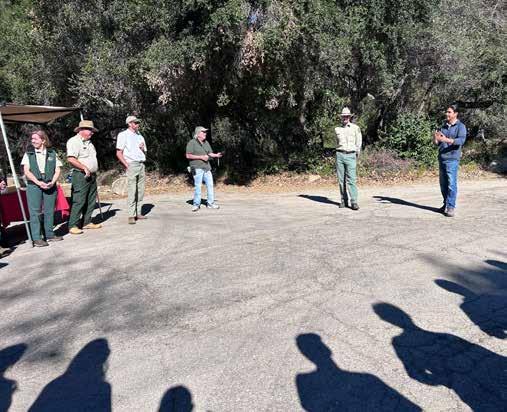
the biggest challenges to the project. Four barriers, which were also part of the old road that crossed over several vital channels of North Fork Matilija Creek, were entirely removed.
“We removed the whole road in Site 2,” said Gomez. “When you have road crossings in creeks it doesn’t allow fish to swim upslope. Riparian habitats are like kidneys. They have higher oxygen content.”
A new sturdy bridge was built over Bear Creek to accommodate steelheads and other aquatic species such as roughskinned newts and Pacific green tree frogs. Federally and State-listed species like Bell’s Vireo, California red-legged frog, and southwestern pond turtle could also benefit from restoration efforts. The bridge was built to withstand a 100-year flood, and it also enhances recreational usage in the Wheeler Gorge Campground.
Seed collecting was also vital to the project. Over 1,000 native plants were planted while recreating habitat. In all, 30 different species of native flora are found throughout the 13 stream miles of restored habitat. Some of those include white and black sage, mugwort, alder berry, willows, oak and sycamore trees.
“Plants were already established when planted,” said Sophie McLean, a native plant specialist with Ojai Valley Land Conservancy. “It’s so important to plant natives in a project like this. It helps with erosion, but it takes time to collect seeds and to recreate a canopy.”
Conservation takes many years to complete. When one project ends, another begins. Matilija Dam anyone?
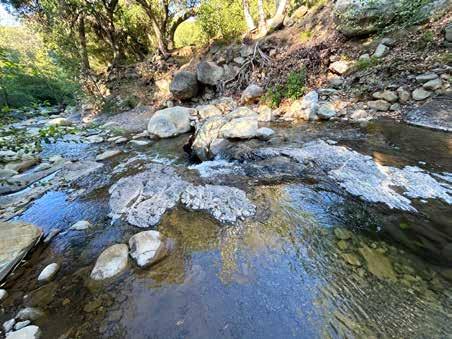
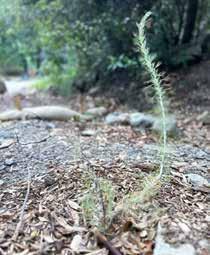
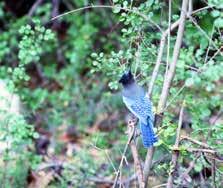
MIDDLE LEFT: CALIFORNIA SAGEBRUSH
MIDDLE RIGHT: STELLER’S JAY
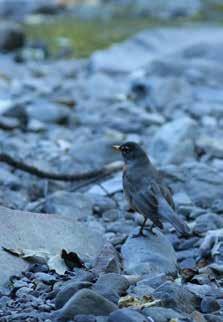
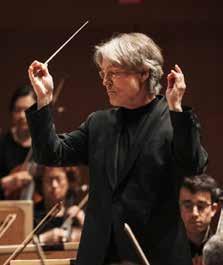
OJAI MUSIC FESTIVAL | JUNE 11-14 | OJAIFESTIVAL.ORG
MAY 31
The Psychedelic Furs
Date: Sunday Time: 7 p.m.
Contact: 805-646-5581, ext. 120 Concerts@OjaiValleyMusic.org
Pioneering British post-punk band blending moody atmospheres, driving rhythms, and Richard Butler’s distinctive, smoky vocals.
Ojai Music Festival
Dates: Thursday through Sunday Times: All day.
Contact: 805-646-2094, OjaiFestival.org
Locations: Libbey Bowl and various venues. The 2026 festival of contemporary classical music will feature renowned conductor and composer Esa-Pekka Salonen as music director. The 2026 festival boasts performances from the Colburn Orchestra, LA Phil New Music Group, Attacca Quartet, and violinist Leila Josefowicz.
20
The 38th Annual Ojai Wine Festival
Time: 12 noon to 4 p.m.
Location: Lake Casitas Recreational Area 11093 Santa Ana Road
Contact: OjaiWineFestival.org
Overlooking scenic Lake Casitas, the Ojai Wine Festival is an idyllic venue to taste award-winning wines, amazing craft beers, ciders, seltzers and fine spirits. The

OJAI WINE FESTIVAL | JUNE 20 | OJAIWINEFESTIVAL.ORG
Ojai Wine Festival is organized by Ojai Rotary-West and supports many charitable projects.
JULY 4
Fourth of July Parade & Fireworks
Times: Parade at 10 a.m., Fireworks at dusk, gates open at 5:30 p.m.
Location: Ojai Avenue for the Parade, Nordhoff High School for the Fireworks. Contact: 4thofJulyinOjai.com
Kicks off July 3 with a free concert in Libbey Bowl. Considered one of America’s finest small-town Independence Day celebrations. The Fireworks show includes food trucks and live music.
JULY 30-AUG 2
Ojai Playwrights Conference, New Works Festival Times: Varies
Location: The Thacher School
Contact: OjaiPlays.org
Playwrights will spend the first week in community with other writers, directors, and dramaturgs, reading and discussing the work and a second week in workshop (with actors) to develop their new plays, culminating in public performances.
AUGUST 14
Ani DiFranco with Valerie June
Date: Friday
Time: 6:30 p.m.
Contact: 805-646-558, ext. 120
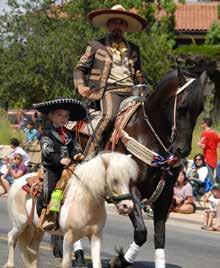
4TH OF JULY PARADE & FIREWORKS | JULY 4 | 4THOFJULYINOJAI.COM
Concerts@OjaiValleyMusic.org
Folk icon Ani DiFranco and soulful innovator Valerie June blend roots, blues, and fierce, genre-defying songwriting.
AUGUST 18
Cat Power — The Greatest Tour
Date: Tuesday Time: 8 p.m.
Contact: 805-646-558, ext. 120
Concerts@OjaiValleyMusic.org
Cat Power delivers intimate, smoky vocals and stripped-down indie-folk, blending melancholy, soul, and quietly powerful emotional depth.
RECURRING EVENTS
JUNE-JULY-AUGUST
Historical Walking Tours of Ojai
Date: Every Saturday Time: 10:30 a.m. to 11:30 a.m.
Location: Ojai Valley Museum 130 West Ojai Avenue
Contact: 640-1390
Come see why there’s so much historical hullabaloo about the “smiling vale.”
THURSDAYS
Ojai: Talk of the Town Podcast
New episodes come out Thursdays through the Ojai Vortex newsletter. Dive into Ojai’s quirkiest conversations on Talk of the Town! From artists to oddballs, we chat with the people who make this valley tick. New episodes weekly — tune in, laugh, repeat!

BY SAMI ZAHRINGER
The day was stifling hot and stormy. Hairline cracks of blue electricity flickered over the Topa Topas, and somewhere a brush-clearing goat screamed. Officer Grawlix’s hair was never the neatest, but in this sultry heat it looked like a coconut gone nova.
Officer Melanie Grawlix, 26, was the first on the scene at the Ojai Hotel, a place favored by the well-to-do for its discretion and its two resident giant tortoises, Comet and Tulip.

She was accompanied by the impos- ing figure of Officer Le Gume, a man with a head like a thumb that had been caught under a hammer. Despite a room-temperature IQ, Le Gume made a good policeman. Physically, he knew no fear and could hound down the very worst of perps with a doggedness and suicidal stupidity that marked him out for promotion.
Melanie squared her shoulders, ran a sweaty hand under her collar, and pushed through the gleaming glass and brass doors.
Which didn’t open.
With a squeak sponsored by Windex, her nose squished hard into the glass as everybody inside turned to look. Cursing the door, its mental abilities, and its sexual history, Melanie pulled it open and she and Le Gume entered.
Inside, the lobby bar was cool and genteelly cozy. The well-dressed clientele nursed cocktails while staff hovered by the bar. In fact, the
saw was a short, stocky, determined-looking officer with enormous glasses supported by a small but plucky nose. Her body did not sit well in her uniform, and no matter how long she spent on her hair she still looked like she’d just stepped off a turbulent 12-hour flight in which the door had blown off. The effect was of a piece of chewed twine on official business.
“I’m afraid I must ask you all to remain here for the course of this investigation,” she said in her most authoritative voice. Officer Le Gume, eyeing the assembled with a vegetable menace, backed her up with a growling, “Yeah.”
For one cardiac moment, Officer Grawlix remembered that she, now on her very first case, was in charge of a real live/ dead murder investigation — at least until Detective Patel could get there.
She straightened herself up. She came from a long line of colorful supporting characters whose family motto was Cum dubitas, tumultua! When in doubt, bustle. And bustle she did.


For the next hour, Officer Grawlix was busier than a stump-tailed bull in fly season. She oversaw the removal of Ms. Hazlitt’s body, set up a Situation Table with her “Tears of Criminals” mug and a favorite fern, and conducted interviews with the witnesses/suspects.
By the end she had written up the basic circumstances:
Veronica Hazlitt (28) arrived in the lobby at 2:30 p.m., whereupon she took a seat at the bar next to Mrs. Sandra Dalrymple (white, 64, visiting from Virginia), with whom she talked for some time.
Ms. Hazlitt moved to a chaise longue at about 3 p.m., whereupon the barkeep, Mr. Tom Crippen (54, appearance defies description but resembles a vandalized housing development), approached to offer refreshment.
A Mr. Felix Calloway (42, loitering, appeared to know the victim) immediately took up a table beside her and ordered two drinks for them from Mr. Crippen. Mr. Calloway produced something in a handkerchief and talked with animation to Ms. Hazlitt, who appeared to be getting unusually sleepy.
At 3:33 p.m. the lights went out — likely due to the electrical storm. Suddenly, a single gunshot rang out. There was a scream and commotion.
At 3:35 p.m., Mr. Crippen found the switch to the backup generator and the lights came back on. Ms. Veronica Hazlitt had been shot dead, and a smoking gun lay on the floor next to Mr. Calloway. More general screaming followed, and then Mrs. Dalrymple
screamed loudest of all: “My brooch! My diamond brooch is gone!” Two butlers and a housemaid fainted, and Mr. Crippen called the police.
Melanie dismissed all present except Mrs. Dalrymple, Mr. Calloway, and Mr. Crippen, and looked around at the remaining faces eyeing her with impatience or frank disdain. Clearly she was about as welcome as a porcupine at a nudist camp.
“Look, I have a plane to catch in three hours. I’ve told you all I know. How long is this going to take?” said Felix Calloway. “Mr. Calloway, a woman has been murdered. I’m afraid I must ask you all to remain here for as long as this takes.”
A wave of discontent passed through the assembled like mashed turnip through a short grandmother. Melanie ordered a large pot of tea and began summoning witnesses.
First up was Mrs. Dalrymple, in makeup that looked like a weekold trifle left next to a radiator. She approached the Situation Table, moving like a galleon under full sail, in a mink coat so enormous Melanie wondered if there was a doorway around the back.
“Mrs. Dalrymple, you were seen talking with Ms. Hazlitt for some 30 minutes at the bar.”
“Well, I wasn’t the only one! That horrible little man Felix Calloway talked to her after I did. He bought her a drink which I’m certain he’d drugged because she grew very sleepy.”
“I see,” said Officer Grawlix. “Did Ms. Hazlitt indicate that she knew Mr. Calloway?”
Mrs. Dalrymple shrugged. “Yes. She met him last night. Said he
was a little annoying. She told me, ‘He speaks ten words a second, with gusts of up to fifty, but has reassuring thighs and I like the cut of his jib.’”
“Aha,” said Melanie, licking her pencil. She wrote carefully: Suspect circumcised.
Her mind raced. Sex is a powerful motive in murder. This was going great. Question one and already she’d uncovered something it might take a lesser detective several questions to deduce. She looked up at Calloway. None of his features by themselves were attractive — small, coal-like eyes guarding a nose so sharp you could whet a knife on it — but together they sang, even if the musical genre was Smarmcore. She narrowed her eyes and scribbled: Asshole. Then, after a moment’s consideration: Bravado masks his working-class pain.
“And what is your business in town, ma’am?”
“I am here to meet some tortoise breeders. My firm deals in rare scents and high-end perfumes. Certain tortoise exudations make excellent fixatives. I myself am wearing the nasal equivalent of a Rembrandt.” She sniffed deeply, taking in great gusts of air and a few leaves of Melanie’s fern. “If my nose doesn’t deceive me, you are wearing … chocolate pudding and Lysol. And do you have a cat with a kidney infection?”
Melanie looked down at her nails, short, round, and spotless. Her eyes glinted. “Thank you for your olfactory expertise, ma’am,” she said coolly.
“Although it would be more precise to say my chosen perfume opens with three-week-old strawberries warming under a gentle sun, carries you to middle-note extracts of high-elevation lavender, and finishes with an ambergris waft of witticism and topical politics bound together in an impish bouquet.”
Mrs. Dalrymple stared for a long, scented moment, as if she’d encountered a frog that could talk. “Ah,” she said. “You must mean ‘Fine’ry’ by Target.”
“And you, ma’am,” said Melanie, “I’m detecting stale coffee, tobacco smoke, and badger oil. The effect is both animalistic and refined in a way that tickles the nose and triggers the gag reflex. Remarkable how it evokes mold spores on damp sourdough. I respect the artistry.”
Mrs. Dalrymple’s teeth glinted. “Actually, what I am wearing is less a perfume and more a concept,” she hissed.
“If I had to sum it up,” said Melanie, “it smells like if seagulls wore suits to work.”
Mrs. Dalrymple sputtered. “Well! She admired my diamond brooch, so I took it off for her to examine.”
“And she returned it?”
“She pinned it back on me — or made as if she did. All I know is that it is gone now! What must have happened is that she fakepinned it, stole it, tried to fence it to that sleazy Calloway man, they quarreled, the lights went out, and he shot her! But where is it? I want him searched!”
“That’s quite a theory, Mrs. Dalrymple,” said Melanie. “But you also claimed she grew sleepy after the drink Mr. Calloway bought her.”
“Yes! Don’t you see?”
“You mean he poisoned her and then shot her too? Don’t you think that’s a bit of — overkill?”
“Yes! I mean — no!” she shouted. “You tubby little moron!”
A hush fell.
“Good day!” boomed Detective Patel.
He entered with the authority of a man whose presence rearranged the room. He was small, solid, and possessed a gaze that made everyone feel faintly microbial.
“Report, Officer Grawlix.”
Detective Patel muttered as he read Melanie’s notes: “What’s this? ‘Idea for video game — dueling brain surgeons?’ Actually, that’s quite good. I’d play that. Oh — I see, wrong page.”
He leafed through the notes, eyebrows rising occasionally. “Mole rat … asshole … masks his working-class pain … week-old trifle …” He peered at Melanie over his glasses. “This is some very good detecting, Officer Grawlix.”
Melanie looked rapturously at him.
“That little dumpling couldn’t detect a crow in a bowl of milk!” snapped Mrs. Dalrymple.
Detective Patel turned to her and smiled the smile of a policeman, which was only slightly better than the smile of a tiger. Suddenly he swung around to Felix Calloway.
“And you — what is your business in Ojai, sir?”
Calloway smiled the smile of a man who had learned how to smile from a book. “I’m a personal injury lawyer specializing in badly spelled tattoos. One in five male tattooists suffers from premature apostrophication, you see. As educational standards fall, it’s only getting worse. Or better, if you’re in my line of work.”
“The murder weapon belongs to you, does it not?”
“Got his prints all over it,” bellowed Officer Le Gume.
“Yes, of course it does — it’s mine! A priceless Civil War piece I picked up from a collector in Solvang. She wanted to know all about it.”
“And you knew Ms. Hazlitt already?”
“We met last night and … got to know each other. She was a lovely girl.” He blinked and clenched his jaw as though determined not to cry.
“What kind of drink did you buy her?”
“A Tropical Depression.”
“And what exactly is in that, Mr. Crippen?”
Mr. Crippen sidled forward like a Gothic crab. “Guava juice and vodka muddled with mint and 60 milligrams of Prozac. It’s very popular.”
“And you, Mr. Crippen,” said Patel, consulting the notes, “are you a man who finds it hard to sleep?”
“Well — yes, actually.”
“And do you take medication?”
“I’ve got a prescription for Ambien. Picked it up today alongside the cocktail pharmaceuticals.”
“And pharmaceuticals often come in very similar containers, do they not?”
“Oh! Oh!” As the penny dropped, Crippen’s face blanched. “I did! I gave her the Ambien, not the Prozac! But it was just one tablet — not enough to kill her!”
“That accounts for the sleepiness!” roared Le Gume.
“Look, if I Ambiened her, it was an accident! Calloway’s the man
you want! Don’t trust the cannibal just because he uses a knife and fork! His ringtone is ‘The Living Years’!”
“Yes,” said Detective Patel gravely, “that is something he will have to answer for at the last trumpet.”
“I didn’t kill her!” cried Calloway.
“BUT Calloway is no murderer!” said Patel.
The room gasped.
“What you have all failed to notice is the presence of somebody else — somebody responsible for both the murder and the theft of Mrs. Dalrymple’s brooch!”
He spun around like an unbalanced washing machine and pointed to the back end of Tulip the tortoise, sticking out from under a chaise.
“Tulip! J’accuse!”
“Well — I’ll be — an — ing tortoise!” gasped Le Gume.
Detective Patel paced. A lit pipe had appeared in his hand as if from nowhere. “You may recall the playwright Aeschylus. He was killed in 456 BC when a tortoise fell from the sky and struck him dead. Tortoises can kill. I put it to you that Tulip entered the room unseen when the lights went out, knocked the table upon which the gun was sitting, causing it to discharge, and made off with the brooch.”
“Look!”
Melanie rushed toward Tulip like a fast-moving cottage loaf. “She’s still trying to chew the brooch!”
She snatched it from Tulip’s jaws and raised it triumphantly. Detective Patel slammed his hand on the bar.
“Officer Le Gume — cuff that tortoise!”




On nearly 8 usable acres in Ojai’s coveted East End, this exceptional Spanish Revival estate offers privacy, craftsmanship, and panoramic mountain views. Designed by architect Gary Heathcote, the 5,444-square-foot single-level home features 4 bedrooms, 4.5 bathrooms, soaring ceilings, a dramatic central courtyard, and seamless indoor-outdoor living. Amenities include water purification, spa, detached studio, healing garden, glamping tent, private hiking trail access, professionally designed Mediterranean landscaping and a three-car garage.
5180ReevesRdOjai.com
Offered at $7,499,000



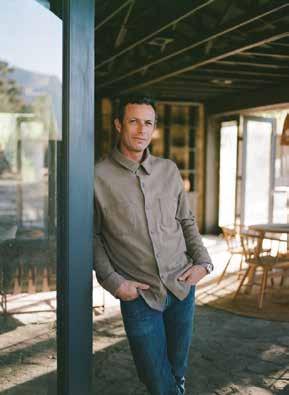



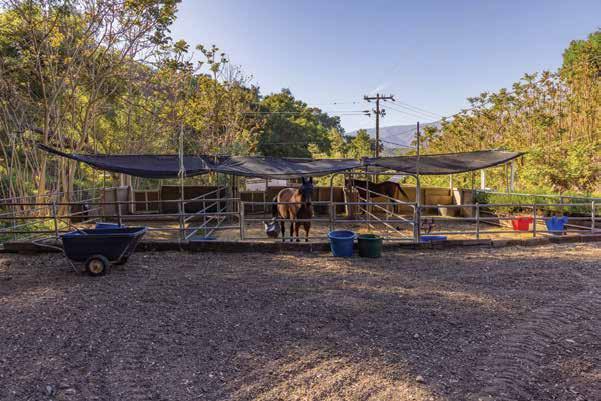

On 12.26 usable acres in Upper Ojai, this exceptional property offers space, privacy, and mountain views in a coveted setting. The approximately 4,386-square-foot residence features four bedrooms, generous natural light, updated interiors, and seamless indoor-outdoor flow. Amenities include a one-bedroom guest house, three-car garage, riding arena, equestrian facilities, mature landscaping, and a large indoor pool with adjacent gym space. A rare opportunity to own established acreage in one of Ojai’s most desirable locations.


Offered at $4,475,000



This remarkable property is set beneath the Topatopas in Upper Ojai where the architect owners designed a sustainable residential compound. Over the last sixteen years they have rewilded the landscape and developed walking trails that now vein its chaparral, oak meadowland, sage scrub and riparian habitats.
The house, guest house, pool and terraces are enfolded in the crook of a dramatic eastern ridge that provides unparalleled privacy yet affords views of the Santa Ynez Mountains, the Upper Ojai Valley and Sulphur Mountain Ridge.
Surrounded by its gravel precinct, the light-filled house sits amidst the trees and shrubs of the chaparral and
includes three bedrooms and two baths. To the North, the house opens to a 12’ X 48’ pool with views of the Topatopa foothills and beyond to the mountain’s iconic spalled face. The guesthouse and a two-car garage sit on a lower terrace.
The property is comprised of two 20+ acre parcels separated by a low ridge dotted with native walnuts, oaks, toyon, and Matilija poppies. The western parcel is bordered by the year-round Bear Creek with meadows that rise gently to a magnificent oak grove.
12179KoenigsteinRdOjai.com
Offered at $4,575,000