OHIO today

SPRING 2026
Cultivating New Knowledge
Small plants, big findings: OHIO at the forefront of botanical discovery
A Half-Century of Health Heritage College celebrates 50 years of research,care and top-tier medical education
Small plants, big findings: OHIO at the forefront of botanical discovery
A Half-Century of Health Heritage College celebrates 50 years of research,care and top-tier medical education
Dear Bobcats,
Spring is always a season of renewal at Ohio University, and it offers a moment to reflect on the progress we are making together while looking ahead to what’s next. Whether you are close to Athens or many miles away, I hope this issue of OHIO Today Magazine reconnects you with the people, purpose and momentum shaping OHIO today.
In December, we celebrated Fall Commencement by graduating nearly 1,200 new alumni, concluding the ceremony just ahead of a winter storm that underscored the resilience and determination that define our Bobcat community. Watching our graduates cross the stage is always a powerful
reminder of why this University exists: to prepare students for meaningful lives, impactful careers and lifelong connections to OHIO.
This academic year also brought important leadership transitions and accomplishments in athletics. We welcomed Slade Larscheid as our new Director of Athletics, and shortly thereafter introduced John Hauser as head football coach. Under Coach Hauser’s leadership, our Bobcats captured their seventh consecutive bowl victory, continuing a tradition of excellence that reflects the hard work and discipline of our student-athletes and the strength of our program.
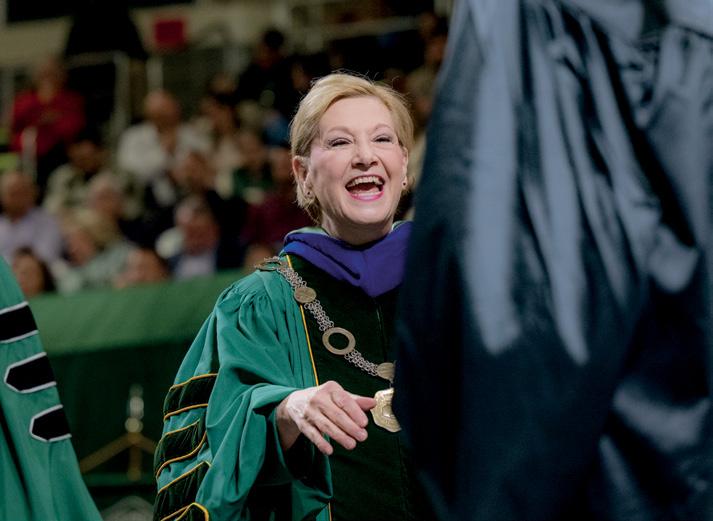

PHOTO BY BEN WIRTZ SIEGEL, BSVC ’02
Throughout this issue, you’ll read about the many ways Ohio University is advancing its mission. From national recognition for value and excellence in online education, to the launch of new academic schools and programs, to faculty research addressing critical challenges in health, sustainability and environmental science, OHIO continues to prepare students for opportunity while contributing knowledge that matters.
You’ll also see stories highlighting expanded experiential learning opportunities, innovation through our Inventors Club and research that spans from environmental biology to concussion and brain health. Together, these efforts reflect our commitment to being a university that pairs academic excellence with real-world impact.
None of this progress happens without you. Your engagement, generosity and advocacy continue to open doors for students and faculty and strengthen the University we all cherish. Thank you for remaining part of Ohio University’s story.
OHIO Forever,
FROM PRESIDENT LORI STEWART GONZALEZ
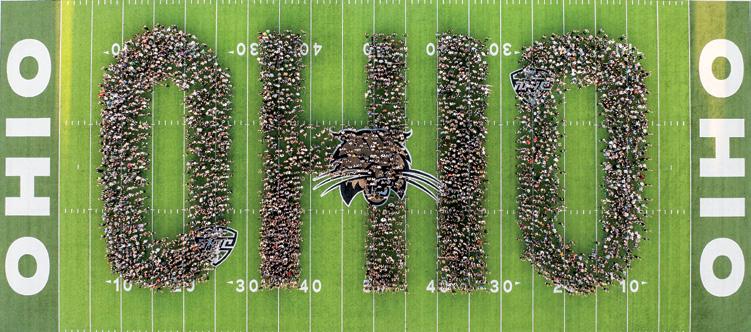
The vision for a dedicated Marching 110 practice facility, which will feature Hurley Field, emerged from years of growth, increasing demands on rehearsal space and the recognition that a band of the Marching 110’s caliber and more than 100 years of performance excellence deserves a permanent home worthy of its legacy. The facility will be the pinnacle of its kind within the Mid-American Conference, boasting state-of-the-art features tailored to the needs of the Marching 110.
Recent research shows that first-generation students make up more than 40% of all learners in fully online programs at traditional four-year universities. This growing number highlights how important online education has become for expanding access. For university leaders, it also shows a clear opportunity: Online programs can help institutions strengthen enrollment, close equity gaps and support student success at scale. At Ohio University, our online learning environment is already well designed to meet the needs of firstgeneration students.
In a small Appalachian community whose first settlers arrived in 1830, a place transformed by mining in the decades that followed, David Butcher is leading an ambitious effort to reclaim both history and hope. In partnership with OHIO’s Voinovich School of Leadership and Public Service, Butcher, founder of the Tablertown People of Color Museum, has secured approximately $1 million in combined state and federal funding to transform a contaminated former mine site into a new museum and community resource center—the most significant investment in Tablertown in generations.
Lori Stewart Gonzalez President



Broadcasting the love
The sports broadcasting program (“Live from Athens,” fall 2025) was prominent even in the early 70s. My old friend and housemate (shout out to Curt Chaplin, BSC ’74, hope you’re well) went on to work with Howard Cosell and even hosted a sports game show before it was all the rage. Go Bobcats! —Keith Reasor, via Facebook
WOUB was a big factor in my successful 42-year career in TV. I retired in 2022 and am still a proud Bobcat. —Terry Mullally, BSC ’83, via Facebook
I’m proud to be a Bobcat alumnus working in the media industry. Matt Houser, BSC ’08, via Facebook
Graduated in 1969 and had a 40year career in newspaper, radio and television news. I was fortunate to work with five Ohio University
“THE FATE OF OPHEILA”
journalism graduates over the years. —Ann Mulligan, BSJ ’69, via Facebook
Fifteen years of news broadcasting for me. Love Ohio University. —Jason Peltier, BSC ’02, via Facebook
Flame on
One of my biggest regrets in my time at OU is not taking advantage of the ceramics program courses. In my art education coursework, I took one ceramics class. Now I’m teaching ceramics 75% of my day, and I’m in love! —Elizabeth (Gilliam) Evans, BFA ’08, via Facebook
“Fanning the Flames” (fall 2025) was a great article, and I can share I still use my kiln-building skills today. Such a great program and a killer artist team allowing creativity to flourish! —Lauren (Dombrowiak) Sharifi, BFA ’07
Taylor Swift approved!
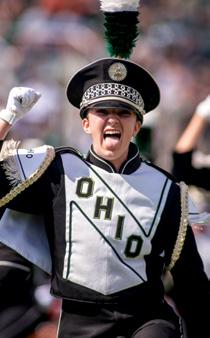
In the fall, the Ohio University Marching 110 performed “The Fate of Ophelia” from Taylor Swift’s new album, “The Life of a Showgirl.” The viral recording of the halftime performance gathered 1.4 million views across OHIO’s socials—plus, a like on Instagram from the showgirl herself! Stay connected with OHIO social channels @ohio.university and @ohioalumni.
Our world/small world
Bo, I didn’t know you went to OU (“A Full-Circle Moment,” fall 2025). My daughter is a current student! Glad to see you are doing so well. I remember you playing piano when you were younger—so talented—when I was your neighbor/babysitter! —Megan (Budzar) Henrikson, Lakewood, Ohio
loving memory
Enclosed is a donation in memory of my mother, Anna Duvall Lyons, BSED ’32, to be directed to the Appalachian Scholars General Scholarship Endowment. I always enjoy the OHIO Today Magazine great stories, and especially good photo content. —Joan Lyons-Felstead
On the MAC’s best rivalry
Go Bobcats! That was the best basketball game I’ve seen in decades. It was great to be back in Athens—the convo was rocking! Thank you OU for all of the memories past and present as I now am making them with my family. Proud to be a Bobcat! —Michael Cady, BSC ’01, via LinkedIn
Great game—we almost got ’em. —Wendy O’Donnell, BA ’90, MBA ’94, via LinkedIn
WRITE TO US: OHIO Today Magazine welcomes comments from readers. We reserve the right to edit for grammar, space, clarity and civility. Send letters by email to ohiotoday@ohio.edu or by mail to OHIO Today Magazine , Ohio University, P.O. Box 869, Athens, OH 45701-0869. We regret that we cannot publish all messages received in print or online.
The U.S. Department of Education awarded the University a five-year, $1.3 million TRIO Student Support Services (SSS) grant to expand academic, personal and professional support for students who are firstgeneration, low-income, or who have disabilities. The grant will provide services to approximately 140 students annually, improving opportunities to graduate and launch successful careers.
The Stevens Literary Center in the Patton College of Education is expanding its scope to reflect strong literacy and STEM (science, technology, engineering and math) education efforts already underway across ages and settings. The newly reimagined Stevens Center for Literacy and STEM Education reinforces OHIO’s commitment to research, collaboration and community partnerships.
In partnership with Building Bridges to Careers, Ohio University Regional Higher Education has been designated a Rural Schools
Collaborative Hub, joining a national network committed to strengthening rural schools, communities and teacher pipelines. The hub’s foundation was laid through the OHIO Rural Teacher Fellowship, which connects practicing rural teachers with communities.
Beginning in the summer of 2026, Ohio University will retire its existing academic logo and word mark and move to a one logo system, embracing the arched OHIO as its primary mark across both academics and athletics.
“Over the last two decades, most national universities have moved to single logo systems rather than utilizing distinct logos for academic and athletic programs,” says Robin Oliver, vice president for University Communications and Marketing at Ohio University. “Using one logo across all activities helps to drive broader brand recognition in the marketplace.”
The arched OHIO will serve as the “one logo” for all parts of the University. As part of this change, the design of the arched OHIO has been updated to add the word “University” underneath, and this updated mark will serve as the University’s primary logo. Ohio Athletics will continue to use the arched OHIO logo lockup featuring the “Attack Cat” as its primary logo; however, they also plan to adopt the stand-alone arched OHIO for more frequent use to further brand alignment across the University.
Ohio University’s Senior Director of Creative and Brand Aaron Harden, a 2007 Ohio University graduate, served as the lead designer for the new one logo project, which included input from various stakeholders within the University as well as focus groups with alumni with expertise in marketing, branding and design. Learn



This year, Ohio University launched the OHIO Inventors Club, a selective program of recognition for faculty and staff who have exemplified the objectives of the Dynamic Strategy’s Discover pillar by earning a U.S. patent for the University.
Inductees receive a custom coin and lapel pin, symbolizing their impact and dedication to research, technology and innovation.
“It’s a small way to acknowledge faculty for their hard work,” says Eric Muth, vice president for research and creative activity. “Not everybody gets patents; not everyone even tries. This is one of those ‘above and beyond’ things as a faculty member.”
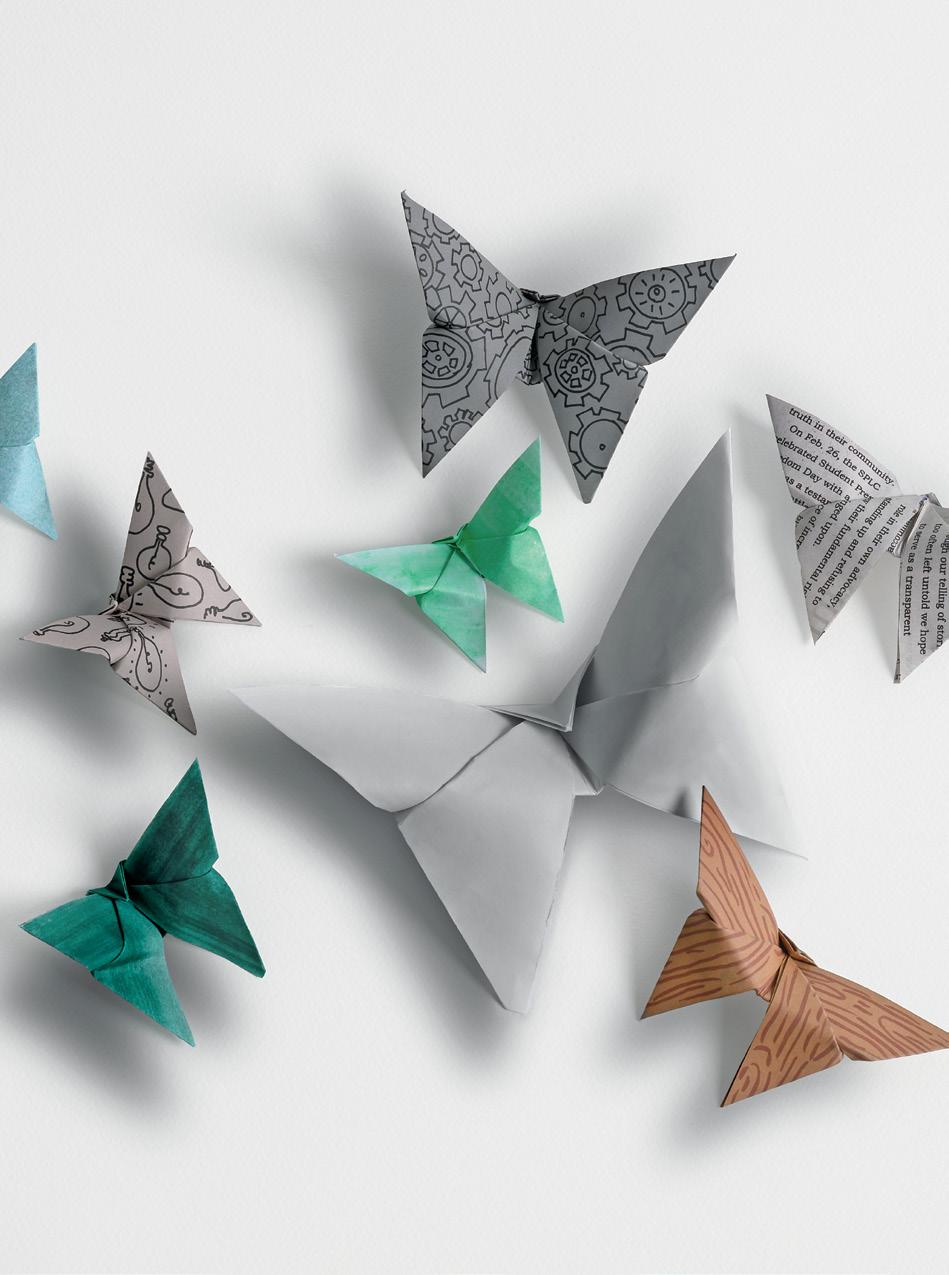
The club was built on the foundation of the annual Inventors Dinner, organized by Brian Mershon, special projects manager in the University’s Research Division. The 2025 event on Oct. 23 honored and formally recognized the club’s new inductees. The dinner’s keynote speaker, Dr. Frank Papay, AB ’75, HDS ’20, shared inspirational stories of his entrepreneurial journey and referenced the “Ohio University effect,” which Muth likens to the “butterfly effect” theory.
“A butterfly flapping its wings in the wind can have lots of ripple effects,” Muth explains. “Similarly, one’s time at OHIO as a student or faculty or staff member can have immense outcomes, too. This is how we have relevance to society, by getting our science out of the lab and into society.”
The University awarded Papay the 2025 Konneker Medal for Commercialization and Entrepreneurship last summer. He is recognized nationally as a top expert in plastic surgery and facial reconstruction and himself holds 24 patents on medical devices.
“Every year, we have new patent recipients,” Mershon says. “This program and event recognize their extraordinary hard work and serve as evidence of the University’s dedication to achievement and discovery.”
—Emma Snyder-Lovera, BS ’26
“Each
butterfly represents individuality, showing how we all come from different backgrounds but share a connection through creativity and innovation.”
—Amelia Criswell
For the sixth consecutive year, U.S. News & World Report has named Ohio University the best value public university in the state of Ohio, demonstrating this institution’s continued commitment to delivering a high-quality, affordable education for students and families.
“We are proud to once again be recognized by U.S. News & World Report for the value of an Ohio University education,” President Lori Stewart Gonzalez says. “As a public university, our mission is to open doors—expanding access and creating meaningful opportunities for students and families across Ohio. Student success is always our top priority, and we remain focused on providing the experiences, resources and support that help our students thrive in the classroom and prepare for successful careers.”
In addition to being No. 1 in the state, OHIO was ranked among the top 40 best value public universities in the nation U.S. News & World Report’s rankings methodology for best value specifically considers the ratio of quality to price, the percentage of full-time undergraduates receiving need-based scholarships or grants, the percentage of need-based aid recipients awarded scholarships or grants and the average discount covered by those scholarships or grants.
OHIO also once again saw a significant increase in total enrollment for the 2025-26 academic year, climbing to 30,682 for a 3.6% year-over-year increase. The University saw growth not only in its first-year class, welcoming a record 4,550 students, but also in its retention rate, reaching 84.7% in Athens with gains across regional campuses as well.
The University welcomed 8,195 new students in total across its undergraduate and graduate programs, including nearly 1,500 new students pursuing graduate education and nearly 250 in OHIO’s Heritage College of Osteopathic Medicine.
In recent years, OHIO has implemented multiple initiatives to ensure affordability and student success, including the OHIO Guarantee+ program, which provides a fixed cost of tuition, housing and meal plans locked for four years or 12 consecutive semesters. The program also offers an individualized graduation plan for each student that ensures they graduate on time and on plan, or the University will make it right.
Additionally, at the start of her tenure, Gonzalez implemented the President’s Opportunity Promise Award, which increases higher education access for qualifying Pell-eligible students in Athens County and all contiguous Ohio counties, with opportunities to attend OHIO tuition free. —Julia Weber, BS ’25, MAA ’26
Value isn’t the only area where OHIO is being recognized. Several of the University’s online programs, including psychology and nursing, were ranked top in the state and among the best nationally in U.S. News & World Report’s 2025 list of Best Online Programs. Of the 12 areas Ohio University was ranked in, its programs were listed in the top 100 nationally for each.
OHIO’s online Bachelor of Science in Psychology ranked No. 1 in the state and No. 9 nationally, while the online MBA program rose 105 spots to crack the top 100, ranking 88th. And the University rose 34 spots from the year prior among online bachelor’s programs for veterans in the nation, coming in at No. 31 and No. 1 in the state.
In the last several years, OHIO’s online master’s in nursing program has continued to experience a strong upward trend in the national rankings, moving up from 51st in 2022 to being tied at 12th for 2025. It also ranked No. 2 in the state of Ohio.
Elsewhere, OHIO’s online Psychiatric-Mental Health Nurse Practitioner (PMHNP) program was ranked No. 1 for 2025 by Nurse Practitioner Online, a leading resource for aspiring nurse practitioners. RegisteredNursing.org also ranked OHIO’s online nurse practitioner program as No. 1 in Ohio for 2025. And finally, OHIO’s nursing school was ranked No. 2 in Ohio by AllNurses.com. —Julia Weber, BS ’25, MAA ’26
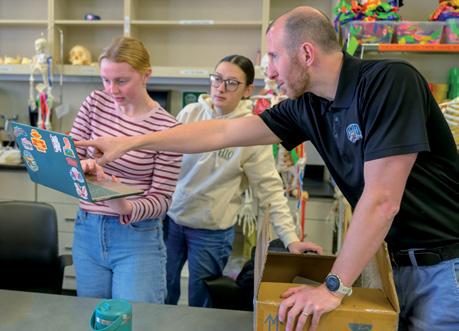
Ian Klein works with students to create engaging anatomy and health education content for social media platforms.
In the increasingly crowded space of online influencers, you might not expect to find an enthusiastic teacher of anatomy, physiology and health education. But for one Ohio University professor, creating content is a natural extension of the classroom.
Ian Klein, an associate professor of instruction for biological sciences in the College of Arts and Sciences, works with his TA team to manage a robust social presence across TikTok, YouTube and Instagram, with multiple areas of focus. His original account, @professorkleinanatomy, has grown to over 130,000 followers on TikTok and features daily quizzes, anatomy breakdowns and answers to viewer questions. Another account, @anatomymodels on TikTok, provides education using detailed anatomical models and has grown to nearly 111,000 followers and 1 million likes.
“I believe in free education,” says Klein. “A lot of students, especially in rural high schools, don’t have access to high-quality anatomy models. These are vital tools, not only for inspiring students to pursue health care careers but for helping them understand how their bodies work.”
To date, Klein has created over 300 long-form YouTube videos and more than 1,000 TikTok and Instagram posts. New videos go up almost every day as his audience continues to grow and thousands more people engage with his content each week.
“Education should be accessible to everyone,” says Klein. “I’m proud to be a part of that process.”—Samantha Pelham Kunz, BA, BSJ ’17, MAA ’21; Emma Snyder-Lovera, BS ’26, contributed
This fall, OHIO launched the new School of International Studies and Languages (SISAL). This marked the University’s commitment to international education, cross-cultural understanding and global workforce readiness.
“The launch of SISAL represents the University’s significant investment in global education,” says Haley Duschinski, the school’s founder and director.
SISAL unites four internationally focused units in the College of Arts and Sciences: the Center for International Studies, the Department of Linguistics, the Department of Modern Languages and the Ohio Program of Intensive English.
“The School of International Studies and Languages advances Ohio University’s mission to prepare students for leadership in a global society,” says President Lori Stewart Gonzalez. “It will strengthen our partnerships, expand our research and ensure that every Bobcat has access to meaningful global opportunities.”
The University celebrated the school’s opening at a celebratory dinner last fall, where Gonzalez announced a $50,000 investment from the President’s Circle Fund to support global learning experiences for SISAL students through the new SISAL International Internship Program.
This initiative, and SISAL at large, aligns with the University’s Dynamic Strategy by expanding access to experiential and global learning opportunities, deepening research partnerships and preparing students to thrive in globalized workforce environments. —Emma Snyder-Lovera, BS ’26
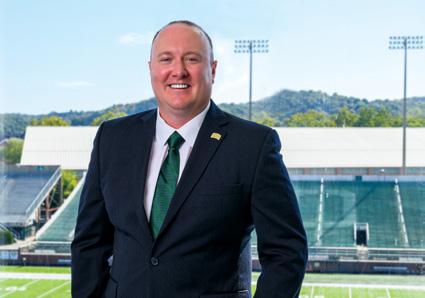
In September, Ohio University entered a new chapter in its athletic history. Slade Larscheid arrived in Athens as the University’s next Athletics Director, following six years of leadership by Julie Cromer, who departed for Louisiana State University. Larscheid came from South Dakota State, where as deputy director of athletics he oversaw 19 sports and more than 500 student-athletes, managing the daily rhythms and demands of a modern athletic department.
As he settles into Athens with his family, we sat down with Larscheid to talk about why Ohio felt like the right fit, and how he sees the next chapter of Bobcat Athletics taking shape.
You made a big move with your family, including four schoolaged children, to Athens to assume leadership of OHIO Athletics. What about Ohio University or the role made this the right fit for you? Ohio University checked all the boxes, personally and professionally. It starts with the people: President Gonzalez, our coaches and staff. Plus, a strong athletic department, a history of winning, and a university that embraces and supports athletics. I felt my background was a perfect fit to lead us into the next chapter of OHIO Athletics. To me, fit is everything. Additionally, my wife and four kids have embraced the transition, and Rufus has gained celebrity status in our household.
What are the biggest opportunities ahead, short-term or longterm, for OHIO Athletics? We are fortunate, the OHIO athletics department has done a good job establishing initiatives.
BY ELI BURRIS, BSJ ’16
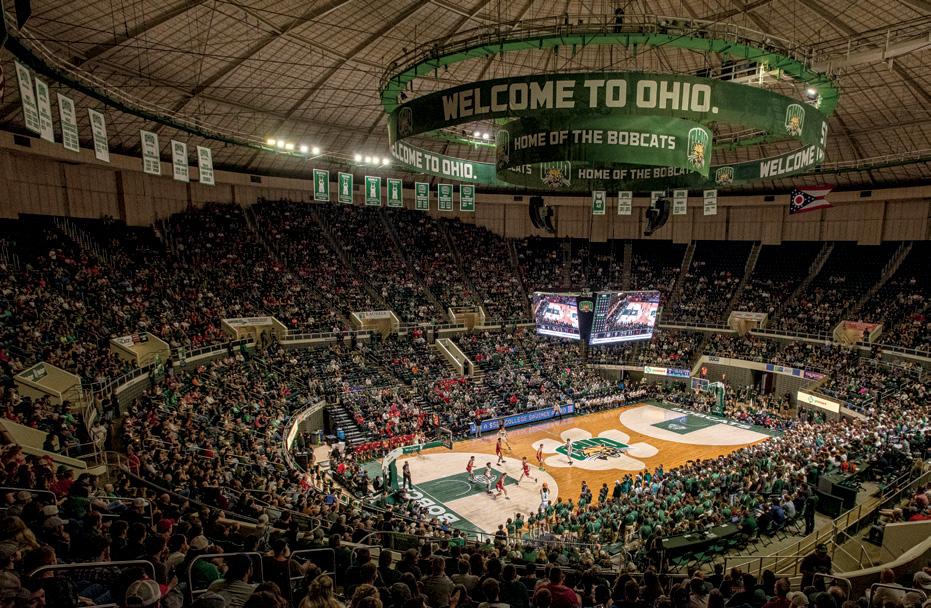
We also have an opportunity to polish areas and make positive change in the future. One example is taking a deep dive in our facility plans. Both Peden Stadium and Convocation Center are historic venues. Both have great structural bones, but we also need to address the long-term planning at each site. By developing a facility master plan for all existing spaces, it will be a guidepost for our department and share a vision to our loyal fans and future Bobcats. Additionally, facility enhancements create a first-class student-athlete experience, assist our coaches with recruitment and retention, and provide an opportunity to compete for championships.
What are some priorities on your mind for the academic year ahead (2026-27)? Our top priorities will always be student-athlete focused. We understand there are challenges in front of college athletics nationwide, and we’ve set an expectation that OHIO Athletics is prepared to take those head on. With that comes planning and execution for driving resources while maintaining fiscal management.
One of our top priorities will be building and growing our donor base. As we roll out planning, our goal is to
provide a comprehensive menu to fans on how they can participate in each of these priorities. Whether it’s becoming a season ticket holder, joining the Ohio Bobcat Club, investing in a corporate partnership, donating to a capital project like Stand Up for Ohio Football or contributing to revenue-sharing opportunities that directly benefit our student-athletes: Every single priority makes an impact for OHIO Athletics.
What message might you have for alumni about the role they play in your success and the success of our athletics programs? In my conversations with alumni, Ohio University and the community of Athens hold a special place in their hearts. That’s not the case at every university. We want to make sure we are building and bridging relationships with our alumni. Our teams, student-athletes and staff are here to be advocates on your behalf in the classroom, competition and beyond, while representing OHIO on a national scale and competing for championships.
I’m truly thankful to be a Bobcat and lead our programs into the next chapter of OHIO Athletics. You all have an open invite back to campus anytime!
Jason Trembly, Ph.D., was recognized for his work in sustainable engineering
[THIS PAGE AND OPPOSITE]
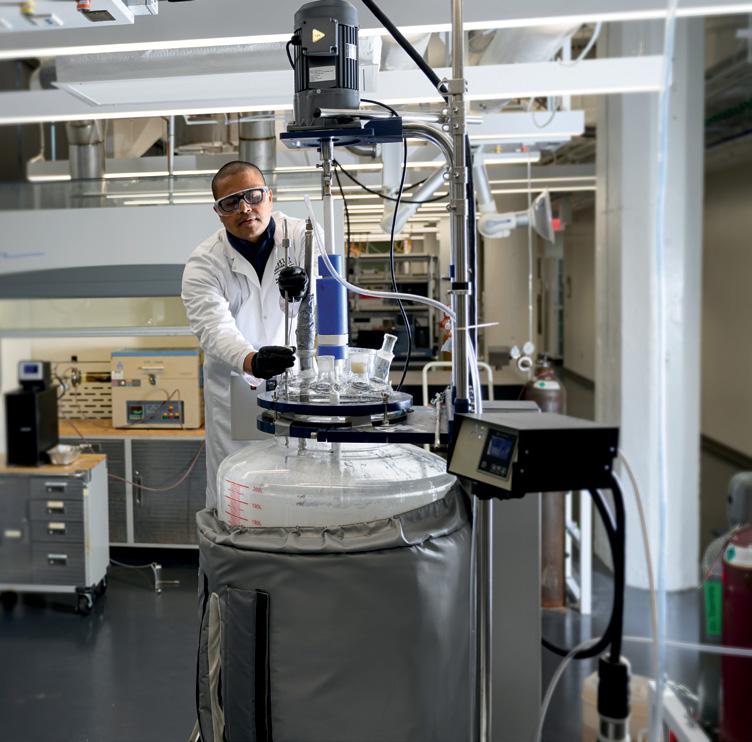
Jason Trembly (far right) and his students conduct applied research at OHIO’s Institute for Sustainable Energy and the Environment. PHOTOS BY BEN WIRTZ SIEGEL, BSVC ’02
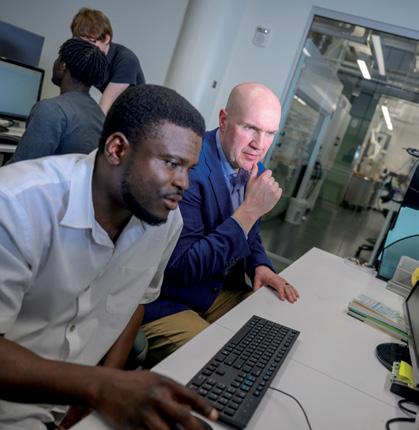
Russ Endowed Chair Jason Trembly, BSCHE ’03, MS ’05, PHD ’07, received the 2025 AIChE Lawrence K. Cecil Award in Environmental Chemical Engineering for his efforts in advancing sustainable engineering at OHIO and beyond.
Trembly’s work sits at the intersection of energy, advanced materials and environmental sustainability. As department chair of mechanical engineering in the Russ College of Engineering and Technology and director of its Institute for Sustainable Energy and the Environment (ISEE), Trembly studies waste conversion, electrochemical processing, sustainable energy systems and the development of carbon-based building materials.
“It’s humbling to be recognized with such a prestigious award and be selected by my peers, whose work I’ve deeply respected for years,” Trembly says. “I’ve never pursued my research with recognition in mind, so it’s a great honor and an unexpected, meaningful affirmation of the research my team and I have put into advancing environmental sustainability.”
The award focuses on Trembly’s efforts in advancing sustainable engineering at OHIO and his contributions to national science and policy efforts through his service on the U.S. National Academies of Sciences, Engineering, and Medicine’s Committee on Carbon Utilization Infrastructure, Markets, Research and Development.
The Cecil Award is widely considered to be the top recognition in the field of environmental chemical engineering.
Through Trembly’s efforts, OHIO’s ISEE has secured more than $34 million in external research funding, fostering a dynamic environment for cutting-edge research and professional development. This funding allows students to hone their skills in state-of-the-art facilities while engaging in innovative projects. Trembly says the ISEE is a big part of both his research and ability to collaborate widely with OHIO’s other academic institutions and with industry partners.
As a triple Bobcat alumnus, Trembly knows the possibilities students can unlock through an OHIO education. He returned to his alma mater after leading research in the industry with the goal of creating a research program that offered OHIO students the same opportunity that he had early in his career to help create and develop solutions to some of the world’s most pressing energy and environmental challenges.
Under his direction, the ISEE has extended its national leadership into new research areas, granting students more pathways to connect engineering and sustainability.
“Helping students connect their technical education to global challenges is one of my key responsibilities. One of the most rewarding parts of my job is seeing students make that connection and then launch their own ideas, developing solutions of their own,” Trembly says. “Students bring energy and new perspectives, and I learn just as much from them as they do from me.” —Alex Semancik, BSJ ’22; Julia Weber, BS ’25, MAA ’26, contributed
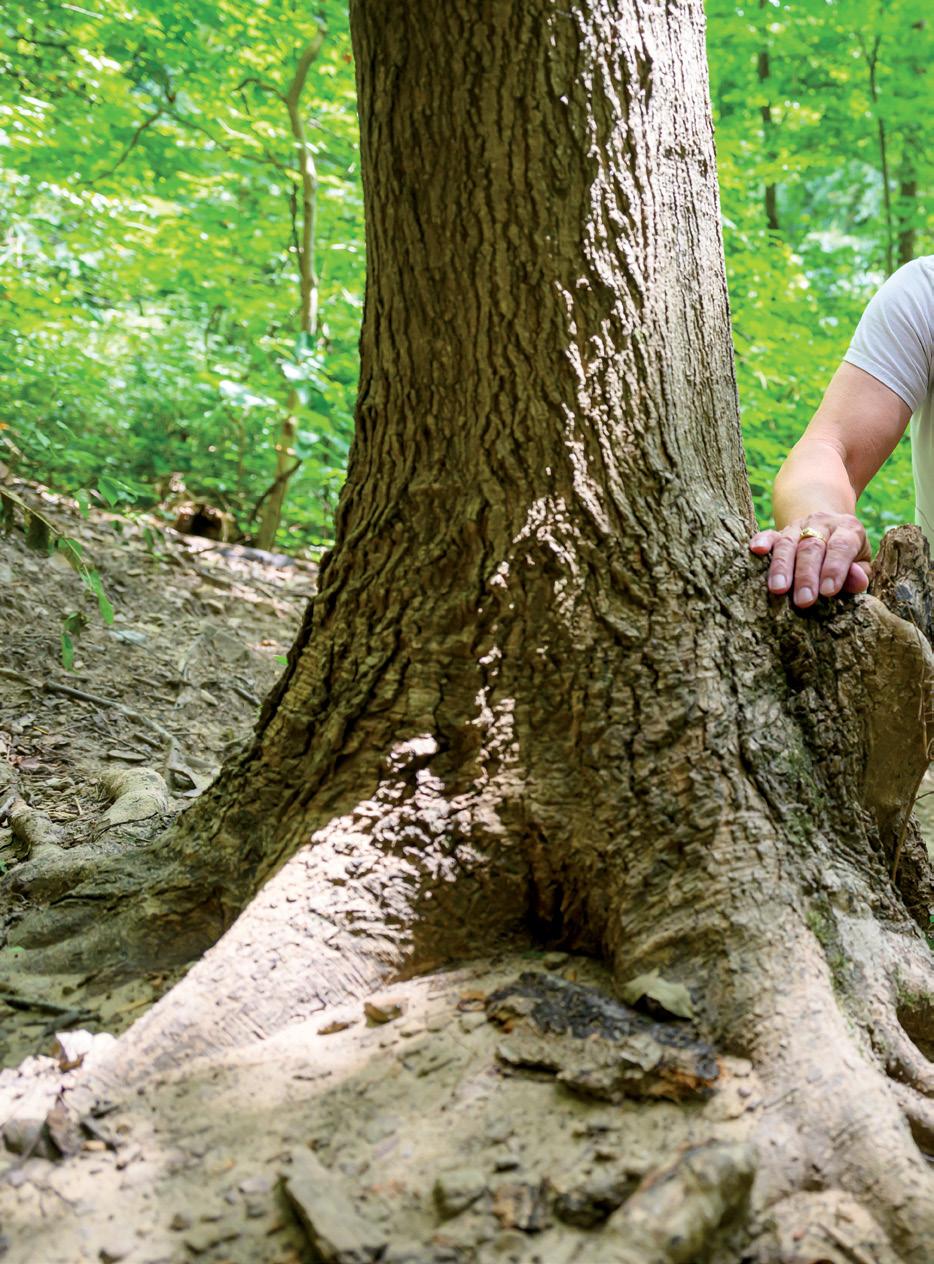
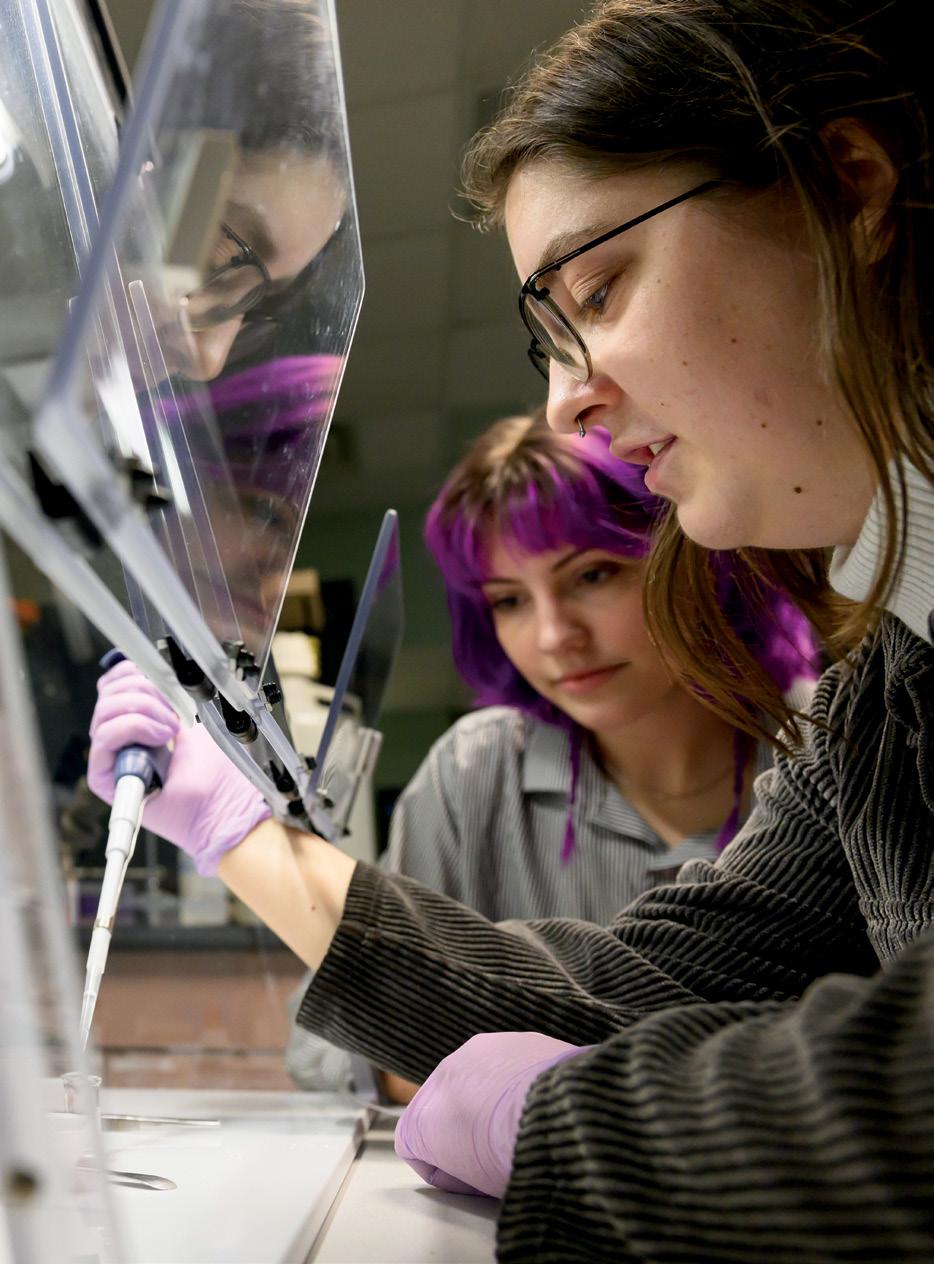
From newly discovered floral species to understanding crop resilience, OHIO’s Environmental and Plant Biology program is cultivating a culture where future scientists can thrive.
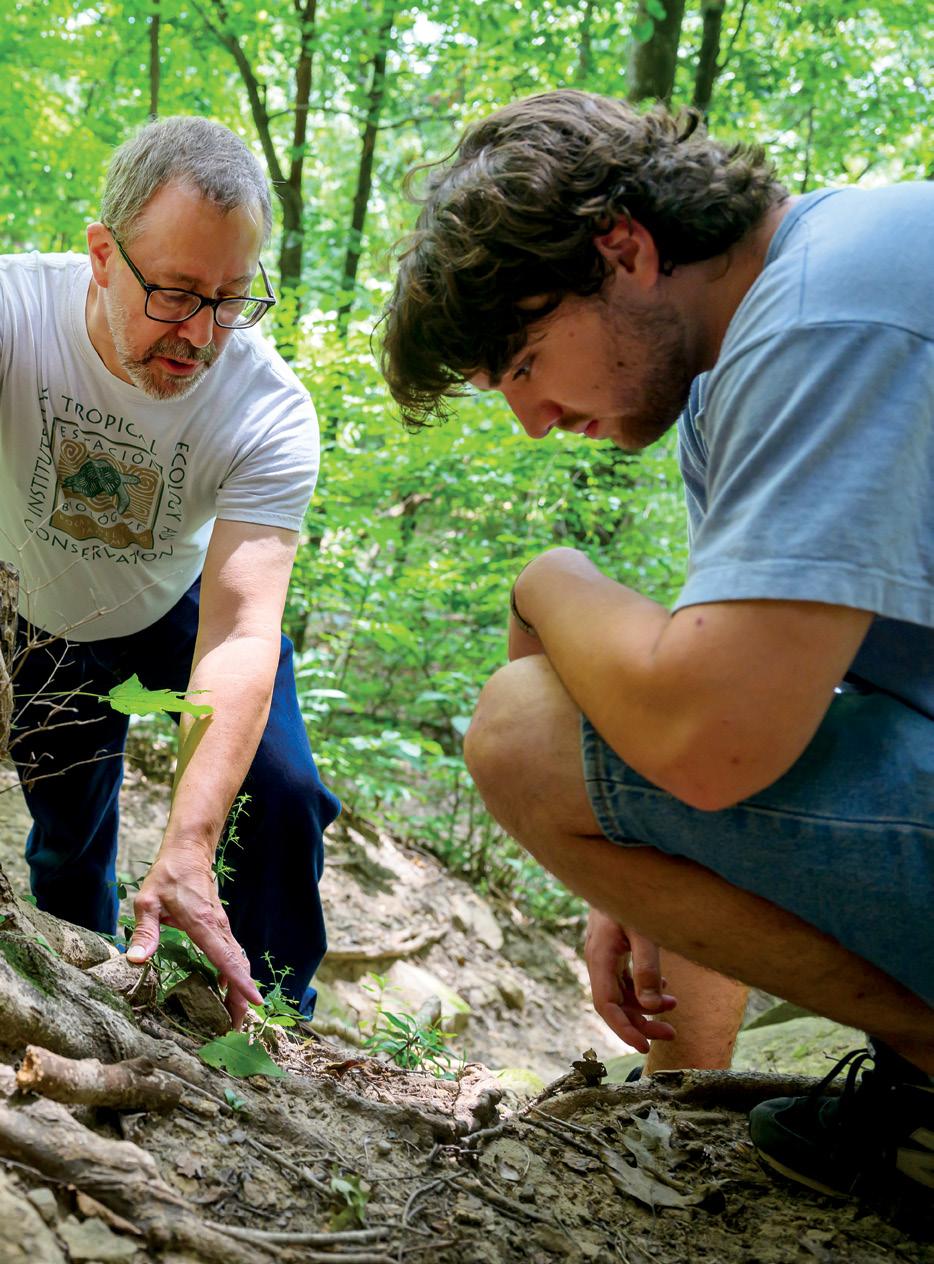
In summer 2025, Professor of Environmental and Plant Biology Harvey Ballard and his student research assistant, senior Collin Thacker, were conducting field research in Shenandoah National Park. After dinner at Big Meadows Lodge, where they were staying, they decided to botanize right outside.
“It was actually dusk; I had a little flashlight,” Ballard recalls. “We got on our hands and knees and people were kind of looking [at us], trying to figure out what we were doing.” It turns out, what the two were doing was finding a violet species that had not yet been described to science one that grows in a range smaller than the size of Ohio University’s Athens campus.
It was one of four new species they identified during their six-week research expedition. They verified their findings by comparing the size, leaf shape, seed patterns and other factors to known species. Ballard created a “common garden” for violets on campus to make sure the different characteristics weren’t simply a response to environmental factors, and he and Thacker confirmed that the species were not already collected in any herbarium, where dried plants are systematically arranged and identified.
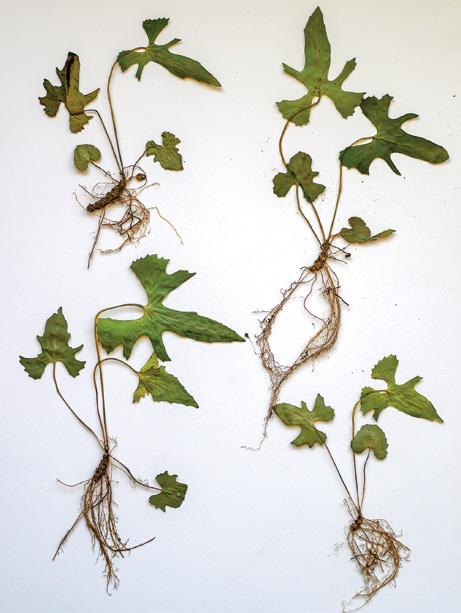
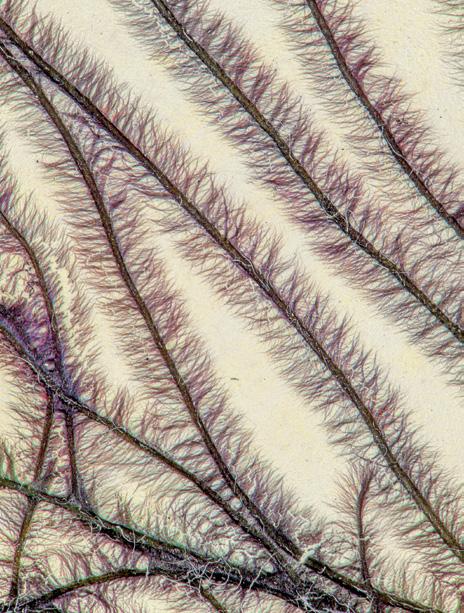
LEFT: A dried specimen of Viola shenandoah , the species of violet discovered by Ballard and Thacker during their 2025 research. RIGHT: A photo of Thorea kokosinga-pueschelii , which was discovered by Professor Morgan Vis and her student, Emily Johnston, and is named after the Kokosing River in Ohio.
Finally, for a species to be officially described to science, the information must appear in an academic journal. Ballard and Thacker described their four new violet species to science from that 2025 research. As the discoverers of the species, they get to select their names. The pair agreed on the name of the violet found near the lodge in Shenandoah National Park: Viola shenandoah.
Ballard estimates there are still 21 violet species in North America that he has yet to formally describe to science. While a few species of one type of flower may seem like a small part of the global ecosystem, Ballard says the work is vital to large-scale conservation efforts.
“We need to understand the biological diversity,” Ballard says. “It’s really easy to grossly underestimate our impact on the planet if we don’t know how many [species] have gone extinct because of our actions.”
Remarkably, Ballard is not the only faculty member in the College of Arts and Sciences’ Department of Environmental and Plant Biology—known as PBIO—to be the first to describe a new species.
Professor Morgan Vis is associate dean for research, faculty and graduate studies in the College of Arts and Sciences and a phycologist, or someone who studies algae. Vis specializes in freshwater red algae and, along with colleagues and students, she has described more than 30 red algae species to science.
But Vis has a distinction that goes a step further: She has had a species of algae named after her. When former students, who went on to become accomplished researchers themselves, described to science a red alga from the depths of Lake Huron in a scientific journal article, they dubbed it Anagnostidinema visiae.
“It really came as a surprise to me,” Vis says. The attribution for visiae in the paper reads, “named in honor of Morgan L. Vis, an American phycologist and mentor to two of the authors.”
And as if that were not enough, when Vis coauthored the definitive text “Freshwater Red Algea: Phylogeny, Taxonomy and Biogeography” with Orlando Necchi Jr., Necchi named an entire genus—Visia—after her.
“I was really honored that he did that. Again, it came as a surprise,” she says. “He realized that there were a whole bunch of species in this one genus that was actually two genera, so he then named that after me for basically all of the work that I’ve done on freshwater red algae.”
Like Ballard, much of Vis’ research is conducted outside of the lab and academic journals. As one example,
Vis has contributed to the Appalachian Watershed Research Group at Ohio University’s Voinovich School of Leadership and Public Service. The group has studied the effects of certain interventions on local streams’ water quality. When a local watershed group sought to remediate acid mine drainage in Carbondale Creek in Athens County by “dosing” it with material that has a basic (versus acidic) pH value, Vis and her students were able to look for the presence of red algae—which thrives in higher-quality water—to see if the intervention had positive effects.
“Further down the stream, the water quality is much better,” Vis reports from that experiment, and she points to similar promising results from other experiments. “There’s been some really good success stories on how many miles of stream have been reclaimed in the state.”
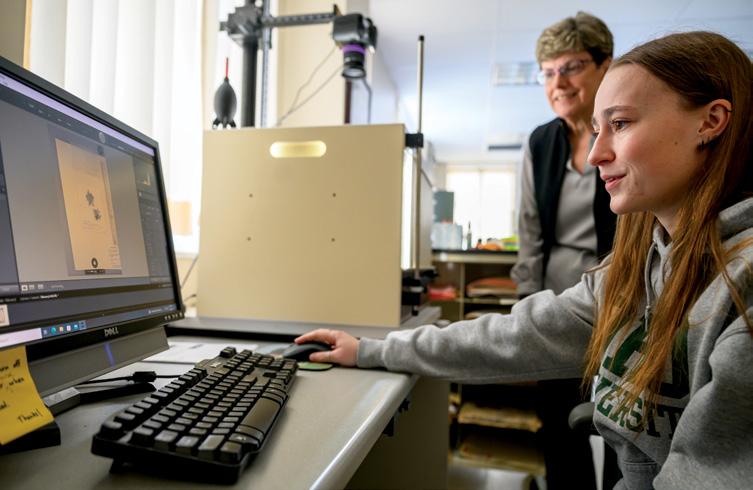
Such faculty-student relationships are an embodiment of PBIO’s culture—rooted in mentorship, nourished by curiosity. And it hardly ends with these examples. Distinguished Professor Sarah Wyatt has sent six experiments to the International Space Station to study how plants perceive gravity. Remarkably, her students’ research has gone into space as well.
“I truly believe in engaging undergrads,” says Wyatt, who has won OHIO’s Presidential Teaching award more than once. She characterizes the ISS research as “fundamental biology—fundamental knowledge on how plants respond to environmental pressures.”
All PBIO students complete internships or research. Those who work on ISS-bound research with Wyatt get to accompany her to Kennedy Space Center in Florida to watch the launch of the experiment. “There is nothing like seeing your research go up,” Wyatt says. “I go for every launch.”
Much of Wyatt’s research is funded by NASA; she looks elsewhere for funding to support launch trips and to take her students to conferences so they can see their competition and meet potential mentors. “Being in the community of researchers gives them another step into that professional life,” she adds.
One floor down in Porter Hall from Wyatt, Associate Professor John Schenk researches the abundant variety in the 350,000 flowering plants known to science. There is much that science already knows, of course, but what’s known can also lead to surprising discovery.
Those roses you buy at the store? They only have five true petals. The rest of the “petals” are actually staminodes—sterile versions of the pollen-producing organ, or stamen. In the case of cultivated roses, this is a human selection to create a more full, showy flower.
But wildflowers produce staminodes without human intervention. Schenk and a team of undergraduate and graduate students traveled to Utah to study them in Mentzelia integra, a yellow perennial desert wildflower.

Undergraduate researchers Cat Gavin (back) and Lara Fogwell (front) designed the winning project for Student Spaceflight Experiment Program (SSEP) Mission 19, which was selected to fly aboard the International Space Station and will launch May 12 from Kennedy Space Center.
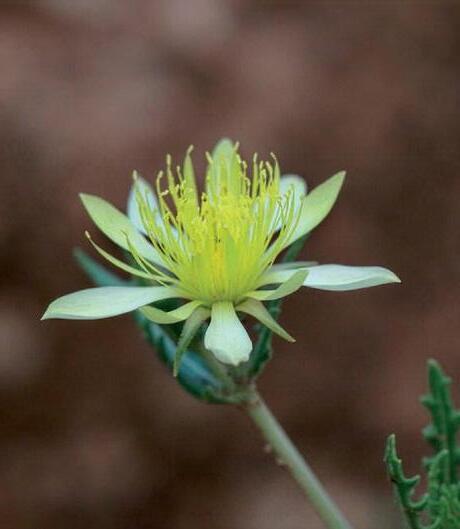
They conducted a “pair choice” experiment in which they removed staminodes on some of the flowers and left them intact on others, finding that pollinators were more attracted to the showier, staminode-laden flowers.
What’s more, the study also showed that having fewer pollen-producing stamens was compensated for by attracting more pollinators, mitigating the effects of evolution selecting for flowers with more staminodes and fewer stamens.
“The pollination of plants by insect visitors is crucial for maintaining plant biodiversity and ensuring food security,” Schenk says. “By studying the evolution and integration of traits associated with attracting pollinators, we have the potential to better understand concerns about a shrinking number of pollinators.”
Professor Jared DeForest, chair of the Environmental and Plant Biology Department, thinks a lot about the future of the PBIO program—and, like his colleagues, he thinks about the future of Earth itself. As he puts it, he wants to “put the ‘E’ into ‘environmental and plant biology.’”
He and Associate Professor Rebecca Snell are tackling this goal in part through a longitudinal research project focused on soil quality. For the last 17 years, DeForest has been taking students to three forested sites within 50 miles of Athens to study how forests respond to soil nutrient changes, both natural and those induced by the researchers.
“The core question is how forest ecosystems respond to environmental stressors, particularly nutrient imbalance and soil chemistry change,” DeForest says. “That knowledge directly informs how foresters and land managers think about forest resilience, regeneration and adaptation under climate stress.”
Such projects are a perfect fit for the “Discover” pillar of OHIO’s Dynamic Strategy, which includes a goal to focus on energy and the environment. This goal aims to help achieve a low-carbon future to mitigate the economic, ecological and social impacts of global environmental change.
A new faculty position was created to support this goal: Assistant Professor Burcu Alptekin investigates the mechanisms by which plants sense, respond to and survive in stressful environments, with emphasis on important commodity crops like wheat and barley. Her lab’s goal is to engineer plants that can withstand the environmental extremes as Earth’s climate changes, and—like her colleague, Wyatt—to develop the biological foundations for growing plants in a potential space habitat.
To support all of this research, PBIO faculty secured $2.82 million in external funding between 2020 and 2024. For a department of its size, this represents remarkable research productivity.
In addition to space-based plant growth, these grants fuel research ranging from ecological modeling and wetland biodiversity to forest ecosystem changes. While the grants, including funds from the National Science Foundation, averaged $500,000 to $800,000 per investigator, smaller grants fuel research as well. And sometimes a very small grant or even a donation (see “Nurture the Next Generation,” page 21) can mean the difference between a student presenting their research to the scientific community at a conference or letting it languish in the dark.
Located in Appalachia—one of the most biodiverse regions in the temperate world—Ohio University is home to literal on-the-ground opportunities that support R1 research right alongside education and outreach. The Ridges Land Lab is home to a number of research projects, including the Fiber and Dye Garden (see “From Field to Studio,” page 22) and deer exclosures, which allow researchers to study how deer browsing inhibits biodiversity.
Across the Hocking River from the Ridges Land Lab, on and near the main campus, are the OHIO Student Farm, the Ohio University Greenhouse, the Forest Soil Ecology Lab and the Floyd Bartley Herbarium, where you can find a specimen of Viola shenandoah, Anagnostidinema visiae and other
algae species Vis has described, and 55,000 other vascular plant specimens.
“It’s rare to have all of these integrated into teaching and research the way they are at OHIO,” DeForest says. “It’s a huge advantage for experiential learning and for embedding environmental research into coursework.”
DeForest considers PBIO’s classic botany research as the deep roots of the program, while highlighting where the department is branching out into environmentally focused, interdisciplinary collaboration.
“Rather than being ‘fully ripened,’ I’d describe PBIO as resilient and responsive,” he notes, “drawing on its history while actively evolving in response to scientific and societal needs.” —Mary Reed, BSJ ’90, MA ’93
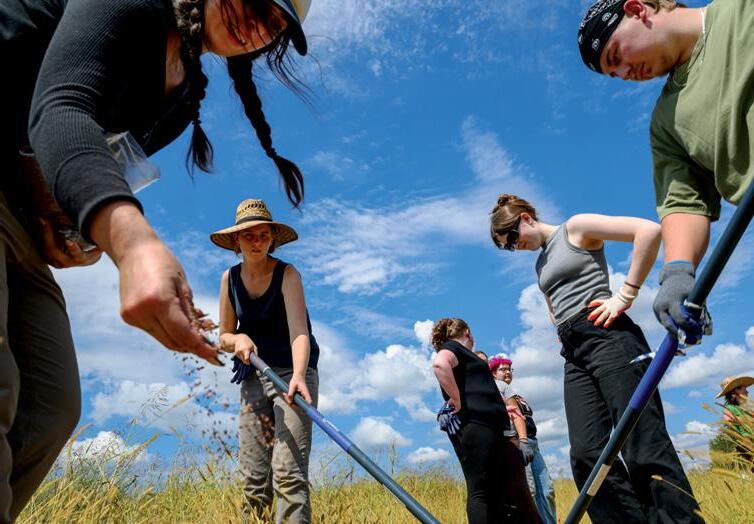
Gifts to OHIO’s Environmental and Plant Biology department support hands-on research, fieldwork opportunities, student travel, laboratory training, and innovative experiential learning initiatives. Your gift helps ensure that every student can fully participate in the transformative academic and research experiences that define the department.
“If there’s one place where additional support would make an immediate and lasting difference, it’s ensuring that every PBIO undergraduate and graduate student who conducts research can present their work at a national scientific conference,” DeForest says. “The funding currently available for travel is a fraction of what it costs to fully immerse themselves in a conference.”
Want to show your support and become a champion of student success? Make your gift to to Environmental and Plant Biology today at ohio.edu/donate-pbio
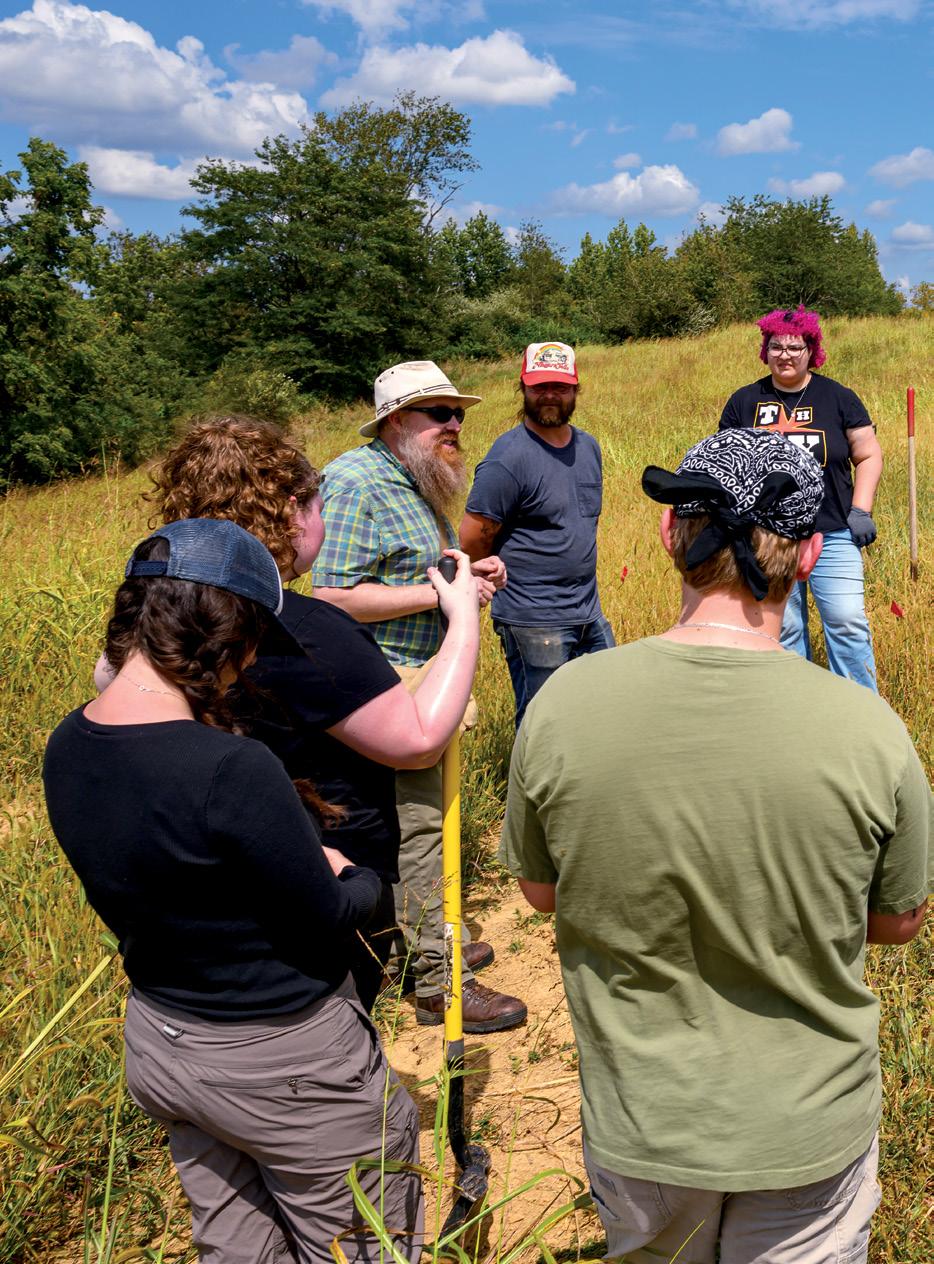
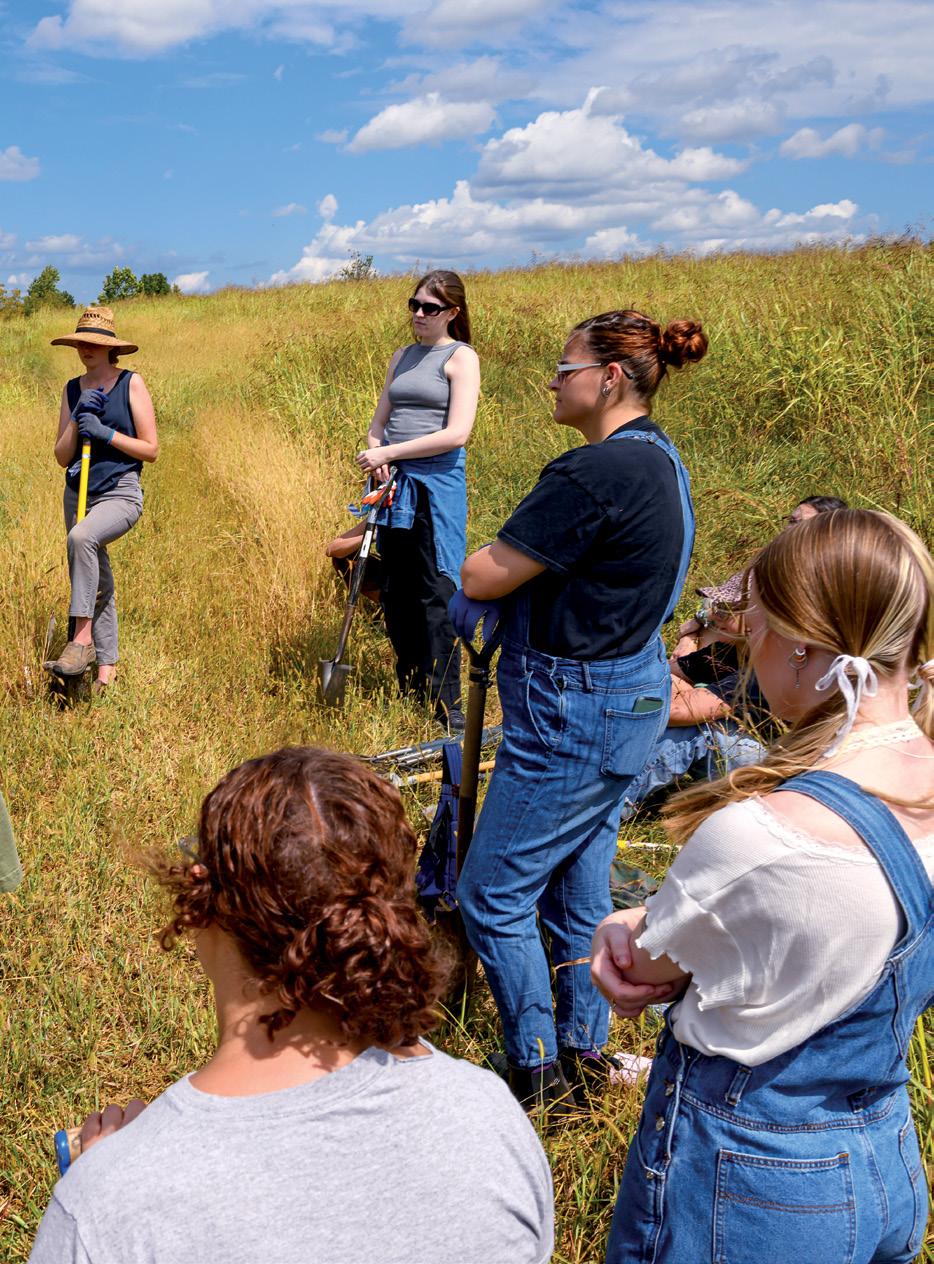
Plant biology at OHIO doesn’t flourish in isolation—it thrives on cross-pollination with other departments and colleges. One of the newest examples is the Fiber and Dye Garden, planted at The Ridges Land Lab in fall 2025 by students and faculty in plant biology programs. Students in Chaddock + Morrow College of Fine Arts’ School of Art + Design will harvest the plants—hemp and flax for fiber and indigo for dye—to use in papermaking projects, which in turn will fuel research by plant biology students and faculty on how soil conditions affect dye and fiber qualities.
“This isn’t just for us; it’s knowledge we hope to share,” says Assistant Professor of Printmaking Matthew Presutti, BFA ’05, who launched the collaboration. “I want to make a paper that’s as good as any European paper, but made entirely from materials grown within a 30-mile radius.”
In the fall, Professor Jared DeForest, chair of the Environmental and Plant Biology Department, spoke to students alongside Assistant Professor of Printmaking Matthew Presutti, BFA ’05, at the Fiber and Dye Garden.
A collective wince is almost instinctual any time a football player collapses after a hard hit, a gymnast lands awkwardly or a bone snaps on live television. These are the injuries audiences recognize—they are visible and undoubtedly painful.
But injuries that some researchers at Ohio University are focusing on aren’t visible to the naked eye. These hurts don’t always draw blood or demand a stretcher; rather, they take place inside the head and compound over time, with consequences that may not surface until years later. Concussions, and the repeated head impacts that can follow, have emerged as one of the most pressing and misunderstood health challenges facing athletes and performing artists alike, and OHIO faculty are working diligently to address this problem.
From high-profile NFL injuries to falls by stunt performers and circus artists, the risks associated with head trauma aren’t confined to the football field. Faculty across the College of Health Sciences and Professions and the
Heritage College of Osteopathic Medicine are advancing research, education and clinical care that bridge athletics, performing arts and community health, reframing how concussions and chronic traumatic encephalopathy (CTE) are understood, prevented and managed.
CTE, a progressive neurodegenerative disease associated with repeated head impacts, has become central to that conversation. According to Melissa Anderson, an assistant professor of exercise physiology and expert on concussions, CTE is marked by abnormal protein accumulation in the brain and has been linked to cognitive decline, mood disorders and behavioral changes. However, it can only be diagnosed by analyzing brain tissue during an autopsy.
“Often, people believe they have CTE without confirmation,” says Anderson. “The challenge is that CTE can’t be diagnosed in living patients, which makes prevention, education and early management incredibly important.”
Anderson emphasizes that while a single concussion does not automatically lead to long-term neurological damage, repeated concussions, and even smaller impacts that don’t meet diagnostic thresholds for concussion, can quietly erode brain health over time.
“The cumulative effects are what concern us,” Anderson says. “Multiple concussions increase the risk for depression, memory loss and other neurological challenges, especially when recovery isn’t properly managed.”
Much of Anderson’s research focuses on how concussion history influences both neurological and physical outcomes, including
balance control, reaction time and injury risk after an athlete returns to play. Her work examines how subtle neurological changes following concussion may predispose athletes to additional musculoskeletal injuries, a connection that is increasingly recognized in sports medicine but not always accounted for in return-to-play decisions.
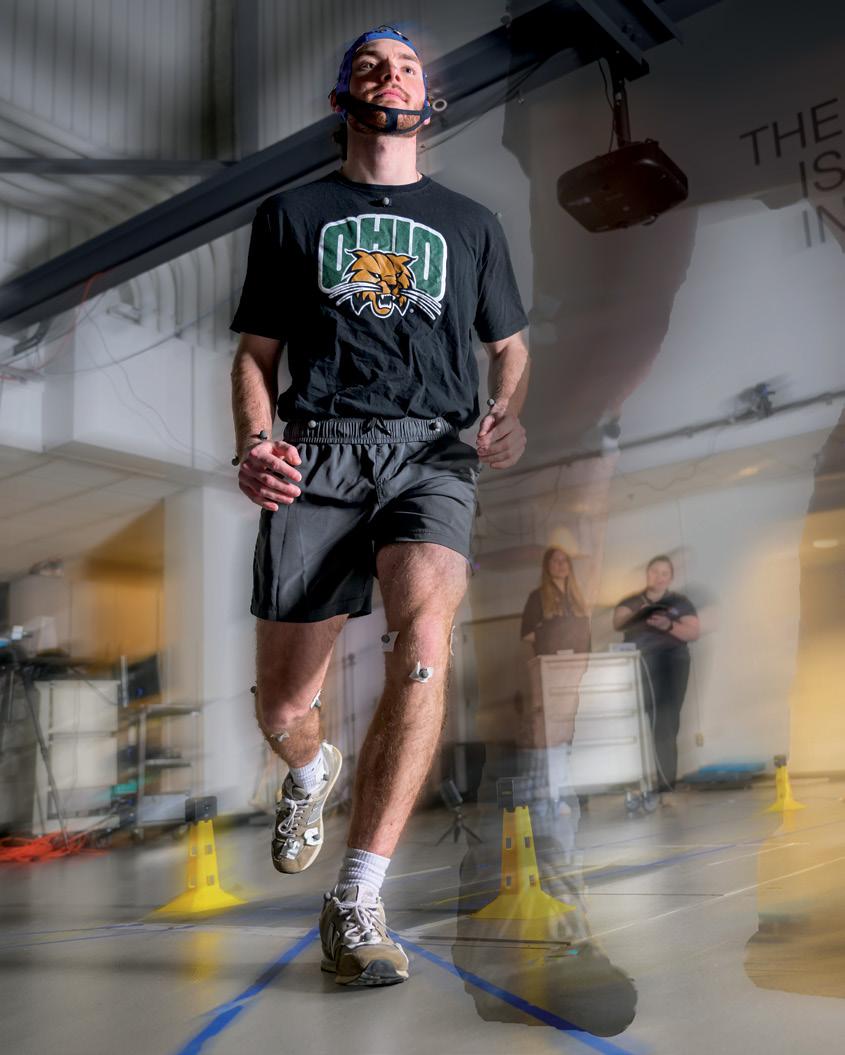
At OHIO’s Neuromuscular Biomechanics and Health Assessment Lab in the Heritage College, Anderson and her collaborators study how concussions alter movement patterns, postural stability and neuromuscular control. By combining clinical concussion assessments with biomechanical analysis, their research helps
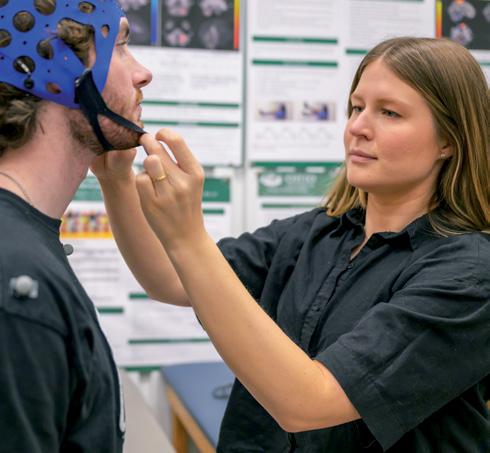
identify lingering deficits that may not appear during standard symptom checklists but can still place people at risk. This approach recognizes the brain’s central role in coordinating the entire body and underscores why concussion recovery is not simply about symptom resolution, but about restoring safe, efficient movement.
While football and contact sports are often the first activities associated with concussions and CTE, Ohio University faculty have worked to expand these conversations into industries where head trauma frequently goes underrecognized.
Jeff Russell, an associate professor of athletic training, has spent decades advocating for a population often overlooked in concussion research: performing artists. Dancers, actors, circus artists and stunt professionals face repeated physical risk, yet historically lack comparable research, medical infrastructure and reporting protections.
“When you stop and think about how influential a field is, pretty much everybody in the world watches movies and television,” Russell says. “This type of medium is an art form with a huge influence, but people don’t know what goes on behind the scenes to make it look so cool on television or on the movie screen.”
Russell’s research helped produce what he believes is the first scientific paper examining concussion risk among film and television stunt performers. His
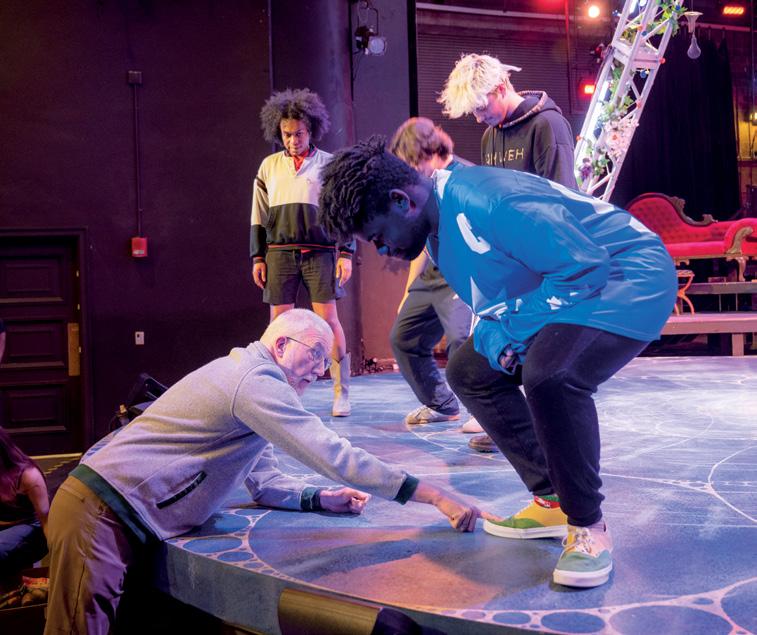
work highlights a significant gap that while performing arts are highly physical, research devoted to concussion in these fields remains extremely limited compared to sports medicine.
“Injuries to athletes happen in front of everyone,” Russell says. “Injuries to stunt performers and artists often happen behind the scenes, away from public view.”
In his research, Russell has documented that stunt performers routinely experience high-force impacts, falls and collisions
comparable to those seen in contact sports, often without consistent medical oversight. His findings also show that performers may be reluctant to report concussion symptoms due to concerns about job security, casting opportunities and industry culture.
To better understand long-term neurological risk, Russell is collaborating with the Boston University CTE Center on a groundbreaking study examining the brains of deceased stunt performers. The partnership represents one of the first efforts to explore whether
repeated head impacts sustained in film and television work may contribute to neurodegenerative changes later in life.
“Concussions are important primarily because they’re an injury to your brain,” Russell says. “If you’re not taking care of your brain, that means the rest of your body won’t work right. If you have a concussion and you don’t tell anybody, and keep doing what you’re doing, then you have another concussion on top of it—that can be a very, very dangerous situation.”
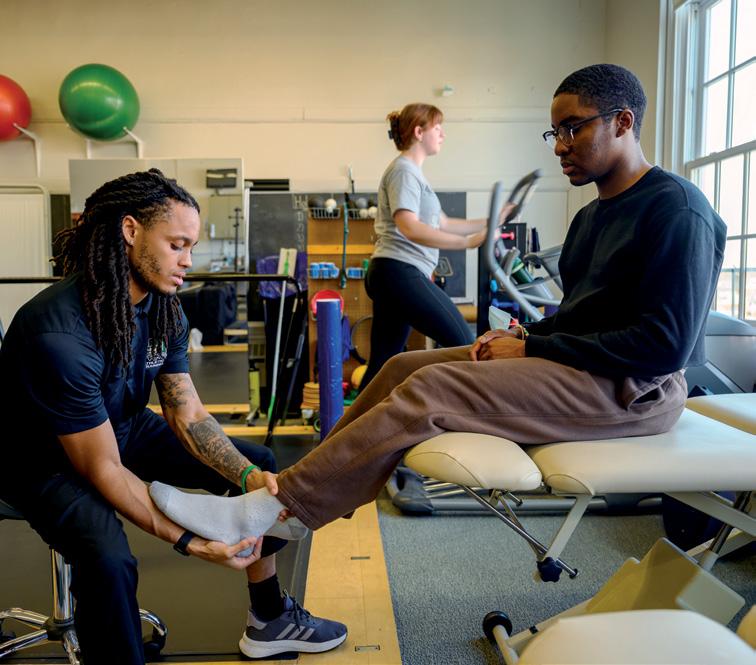
Russell’s broader body of research has examined concussion mechanisms, injury reporting behaviors and access to medical care across multiple performing arts disciplines, including dance, theater and circus arts. His work emphasizes that concussion risk is not limited to major stunts but can arise from rehearsals, repetitive choreography, falls, lifts and stage hazards.
“This is why I changed my career from sports medicine to performing arts medicine,” Russell
says. “I saw dancers and some other artists who were suffering injuries, but there was nobody to take care of them. It didn’t sit right with me.”
Most recently, Russell collaborated with Associate Dean for Research and Associate Professor of Athletic Training Janet Simon to publish a first-of-its-kind study examining concussion patterns among Cirque du Soleil performers over the course of 10 years. The research
helped identify which disciplines within the circus are most at risk, when concussions most frequently occur and how performance demands influence injury patterns.
The study is among the first to use long-term, real-world medical data from a major performing arts organization, offering insights that can improve safety protocols, training practices and concussion management in the often-overlooked industry of circus performance.
One way Russell and his team are addressing performing arts medicine is through Ohio University’s Clinic for Science and Health in Artistic Performance. Known as the SHAPe Clinic and founded by Russell in 2013, the interdisciplinary collaboration between the Chaddock + Morrow College of Fine Arts, the College of Health Sciences and Professions, and the Department of Athletic Training provides student performing artists, including those in theater, dance and the Marching 110, among others, with specialized injury prevention, evaluation and health management. The clinic mirrors the athletic training model used in sports while being tailored to the unique physical and creative demands of performance.
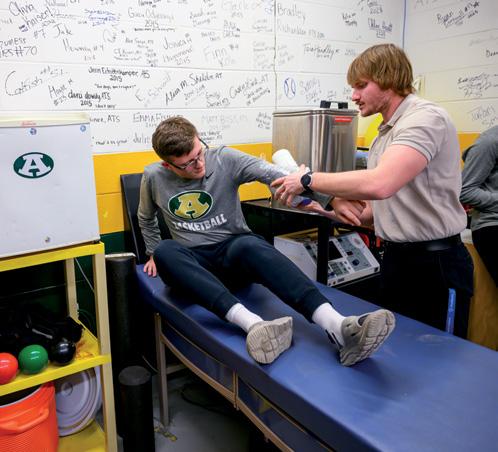
In addition to professional staff, athletic training students gain hands-on experience working alongside licensed clinicians, integrating what they’re learning in the classroom into real-world care.
Beyond campus, athletic training students also regularly serve in local high schools, providing sideline evaluations, baseline testing and concussion education for young athletes. This experiential learning not only prepares students for professional careers, but provides care in communities where access to specialized medical support is often limited.
Complementing these efforts, OHIO has also launched a Performing Arts Health and Wellness Certificate program designed to train health care professionals to meet the growing demand for specialized care in
artistic performance settings. The program reflects a broader recognition that athletes and artists share overlapping physical demands and deserve equal medical support.
Across sports, stages and screens, attitudes toward head trauma are evolving. The long-standing stigma of playing through pain or believing the show must go on is giving way to a more informed understanding of risk and recovery.
At OHIO, that shift is reflected in research that prioritizes prevention, clinical protocols emphasizing informed consent and education that empowers individuals to advocate for their health.
For Anderson, the goal is clarity without fear.
“We don’t want people to panic,” she says. “We want them to understand risk, recognize symptoms and know that early care matters.”
For Russell, the mission is deeply personal.
“Ultimately, this work is about helping people,” Russell says. “It’s about serving them, lifting them up and adding value to them. If that’s what your research is about, I don’t think you can do any better than that.” —Samantha Pelham Kunz, BA, BSJ ’17, MAA ’21

Ohio University is among the nation’s select R1 Opportunity Universities and the only university in Ohio to earn both coveted titles.
In the latest release from the nationally respected Carnegie classifications, Ohio University landed in a rare category: a major research institution also recognized for turning its world-class education into real-world opportunity. It’s one of only 21 R1 universities nationwide, and the only one in Ohio, to earn the new “Opportunity College and University” designation.
“This rare distinction tells a story that we have known about ourselves for generations—that Ohio University
holds the door open for students from all backgrounds, and we leverage all the resources of a large, public research university to set our students up for success, for life,” says OHIO President Lori Stewart Gonzalez.
After earning the R1 “Opportunity University” honor in April of 2025, OHIO was awarded Carnegie’s Community Engagement Classification in January of 2026, a recognition reserved for institutions that show sustained, measurable commitment to community engagement.
Released every three years, the Carnegie Classification of Institutions of Higher Education provides a framework for categorizing different types of higher education—from doctoral universities to special focus institutions (such as medical- or arts-focused). These classifications also serve as the basis for how U.S. News & World Report organizes its annual rankings.
Traditionally, Carnegie classifications have only reflected two primary factors: the highest degree awarded at an institution and its level of research activity. Under this umbrella, OHIO was considered a Doctoral University with Very High Research Activity—also known as “R1”—an achievement reached in 2022 when OHIO moved from R2 to R1 status.
But a recently revamped set of classifications brings even greater distinction into focus. Last April, the American Council on Education (ACE) completely redesigned the Carnegie Classifications to better reflect the diversity of today’s higher education landscape. The updated framework is more nuanced and incorporates a broader range of outcomes, such as students’ social and economic mobility and eventual earnings.
The result? New designations for OHIO that solidify its national leadership as a research institution that delivers transformational opportunity by balancing access and outcomes.

Carnegie’s new “institutional classification” considers a university’s size, the level of degrees awarded, and the types of degrees pursued by the majority of graduates.
As a doctoral-granting university with more than 30,000 students, OHIO is now one of only 40 institutions classified as “Undergraduate/Graduate-Doctorate Large” and “Professions-Focused” (alongside other national institutions such as the University of Cincinnati, the University of Kentucky, and Auburn University). The “Professions-Focused” designation signifies that more than half of undergraduate students complete preprofessional and/or career-aligned degrees.
OHIO’s “Professions-Focused” designation is driven by years of growth in health professions degrees including large online programs in nursing, along with growth in student interest in business degrees and ongoing strength in professional fields such as education and journalism. Those four fields alone make up more than 60% of degrees awarded.
Ohio University’s strength in professional education is more meaningful particularly in the face of changing perceptions about higher education among high school students and society at large.
[OPPOSITE PAGE] Students in the Scripps College of Communication gain hands-on experience with audio editing in the School of Media Arts & Studies. [THIS PAGE] OHIO’s commitment to community engagement comes to life in a number of ways.

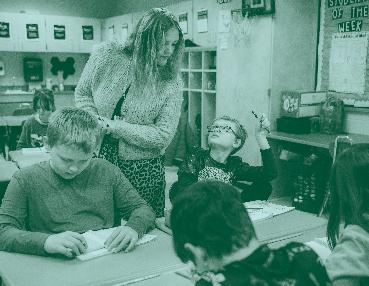
Experiences that prepare students for successful futures in their fields are paramount during their time at OHIO.
In fact, according to a Pew Research Center survey released last October, 55% of Americans give colleges and universities fair or poor ratings on preparing students for well-paying jobs in today’s economy. In this context, a “Professions-Focused” designation can play a critical role in helping students and families make informed decisions about which school to attend (or even whether to go to college).
“We know that outcomes matter to students and their families and play a significant role in our commitment to delivering on our value promise,” says Donald Leo, executive vice president and provost of Ohio University. “No matter what degree our students choose, our goal is always to ensure they have experiences during their time at OHIO that prepare them for the next step in their chosen field.”
OHIO’s focus on experience and outcomes also drives its new distinction as an “Opportunity College and University.” Carnegie’s recently introduced “Student Access and Earnings Classification” evaluates how well institutions serve Pell-eligible students and students from historically underrepresented racial and ethnic backgrounds, as well as post-graduate earnings as compared to someone without a college degree in the geographic region they serve.
Institutions that create both “Higher Access” and “Higher Earnings” compared to other similarly sized peers are now celebrated as “Opportunity Colleges and Universities.”
OHIO is one of only five R1 institutions nationwide to earn both the “Professions-Focused” and “Opportunity College” distinctions—and the only one in Ohio to do so. Among its peers, OHIO also boasts the highest earnings ratio at 2.18. (As measured in the Dynamic Strategy, the average OHIO grad makes $54,958 one year after graduation.)
Additionally, three of OHIO’s regional campuses (Chillicothe, Southern and Zanesville) were also designated as “Opportunity Colleges” among their peers. The Chillicothe campus was classified as “Professions-Focused,” while Zanesville and Southern were recognized as “Opportunity Colleges” with a special focus in nursing.
The recognition both affirms and bolsters Gonzalez’s vision of “creating pathways for more students to succeed and to serve meaningfully in the communities where they live, work and lead.”
That vision echoes the language etched into the Alumni Gateway at the entrance to College Green—“enter to learn … depart to serve”—a concept that Gonzalez ensured was captured in the University’s recently updated mission statement.

OHIO is one of only five R1 institutions nationwide to earn both the ‘Professions-Focused’ and ‘Opportunity College’ distinctions—and the only one in Ohio to do so.
Despite the University’s longtime commitment to involving students, faculty and staff in service to and engagement with regional communities as part of the learning experience, OHIO had not previously earned Carnegie’s classification as a “Community Engaged” institution. Unlike the institutional, research or access and earnings classifications, the Community Engaged designation requires the university to submit an application demonstrating its commitment to community engagement, successful outcomes of its work, and organizational structures that ensure ongoing success. In January, OHIO received this additional classification, thanks in part to renewed focus on community impact through the University’s Dynamic Strategy.
OHIO’s engagement with community comes to life in a number of ways—from the Heritage College of Osteopathic Medicine’s Mobile Clinic program, to
collaborative arts programming designed with and for the region, to support for small businesses and rural county government through the Voinovich School for Leadership and Public Service.
Now, set in motion by the Dynamic Strategy, OHIO has launched a Center for Community Impact designed to help align and amplify the University’s outreach, research and partnership efforts.
Each of these Carnegie distinctions helps to demonstrate a piece of what makes Ohio University special, but taken together they set OHIO apart from the 4,000 public and private U.S. universities classified by Carnegie: A large research university built to prepare students for professional success, accessible to all who are eager to learn, committed to uplifting communities and inspiring students to serve.
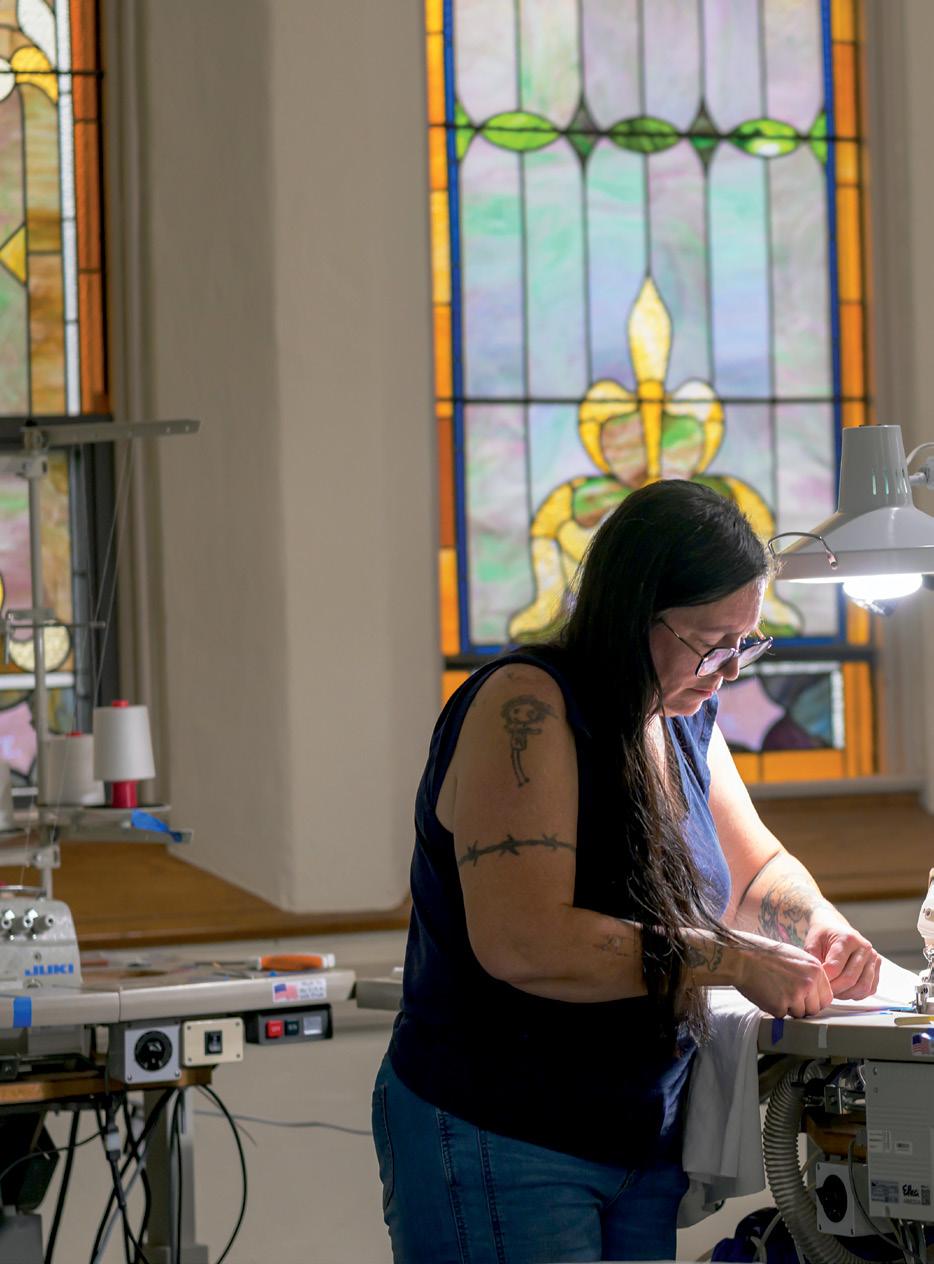
The Hocking Hills Garment Center is working to revive domestic garment manufacturing in Southeast Ohio with support from Ohio University’s Voinovich School of Leadership and Public Service.
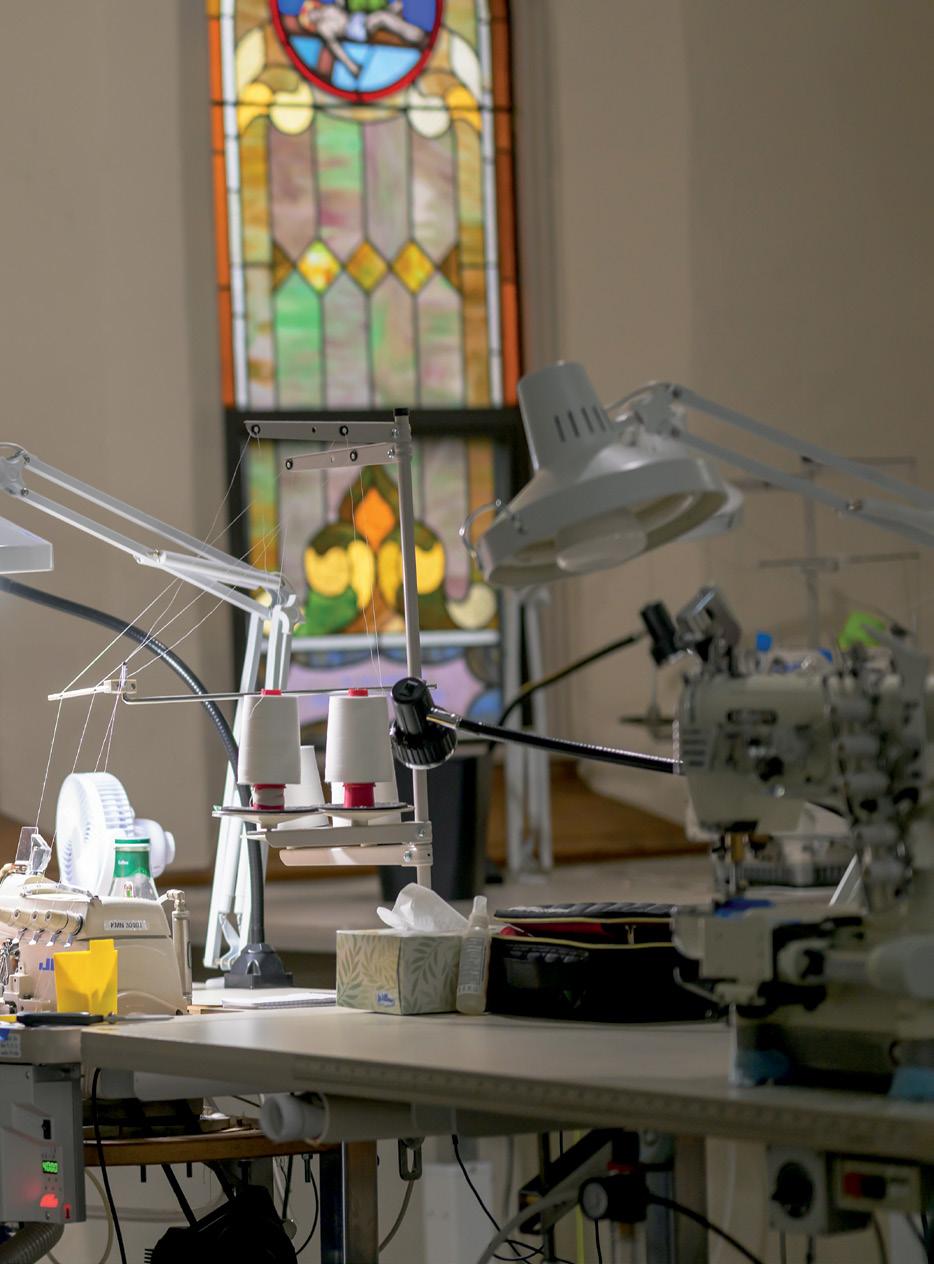
Ohio University’s Voinovich School of Leadership and Public Service develops award-winning, researchbased solutions to challenges facing communities, the economy and the environment. The goal: give business and community leaders the resources they need to advance economic development, improve infrastructure, solve environmental problems and improve the health and overall wellbeing of everyone in Ohio. In a single year, the school served more than 9,000 businesses, forged 13 state agency partnerships and advanced over 220 community projects across Ohio. What follows is one such effort.
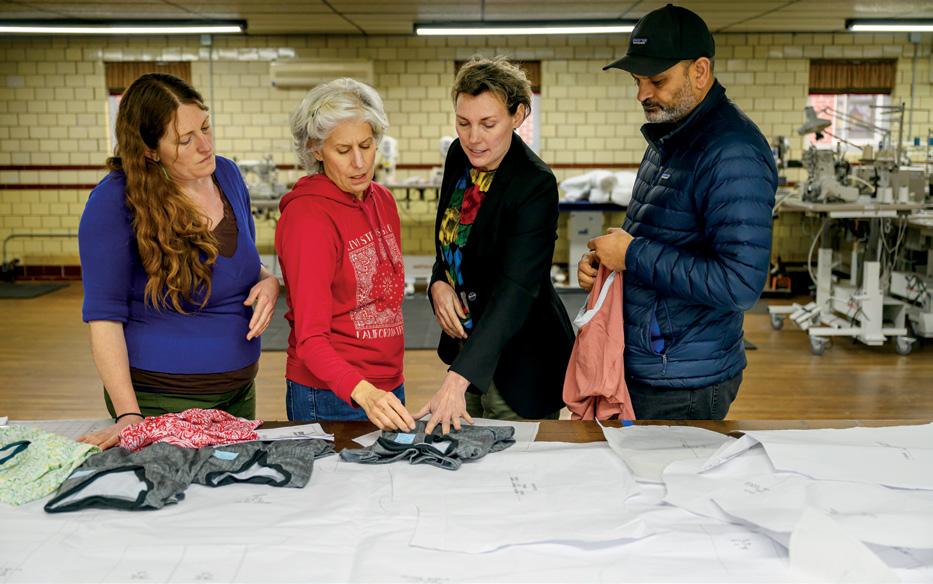
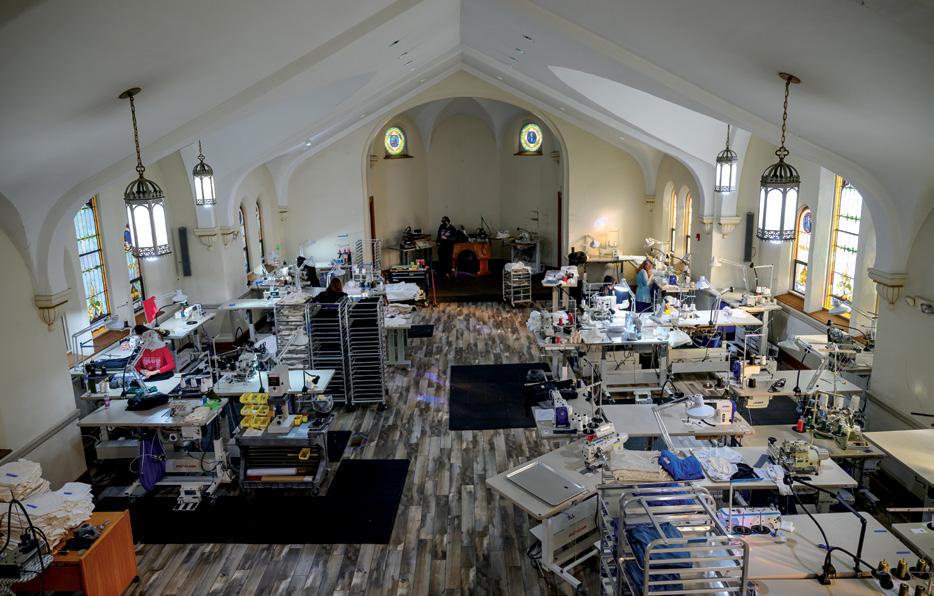
[ABOVE] Founder Betsy Franjola (third from left) reviews garment patterns and sample pieces with collaborators. [OPPOSITE PAGE] With guidance from the Voinovich School, the center has built partnerships and a business plan to sustain local manufacturing. PHOTOS BY BEN WIRTZ Siegel, BSVC ’02
The United States rarely makes its own clothes anymore. Of the roughly 460,000 apparel manufacturing facilities operating worldwide, fewer than 6,000—well under two percent—are located in the U.S., according to the Bureau of Labor Statistics and industry estimates.
Decades of offshoring gutted the domestic garment industry, and the infrastructure, expertise and workforce that once sustained it largely vanished with it. Reviving that work in Appalachian Ohio is the kind of connective challenge that Ohio University’s Voinovich School of Leadership and Public Service has made its specialty.
Now, a once-abandoned church in Buchtel, Ohio, hums with new life as the Hocking Hills Garment Center, an industrial sewing training and apparel manufacturing organization, works to revitalize American manufacturing—with critical support from the Voinovich School.
The center, which opened in 2024, produces knit and woven apparel for brands that value quality, craftsmanship and domestic production.
Reviving garment manufacturing in the United States starting in a rural county is a daring idea. Doing so with limited infrastructure and no garment industry to loop into is a daunting challenge.
Propelling founder Betsy Franjola from aspiration to manifestation was some well-timed guidance from the Voinovich School’s Impact Enterprise Team. The team offers one-on-one professional business coaching to mission-driven for-profits, nonprofits, and entrepreneurs. Franjola, an Athens native, brings more than 25 years of fashion industry experience, including stints at Juicy Couture and Abercrombie & Fitch, plus her own ventures, BFF Studio, Inc. and PREFACE. But launching the Hocking Hills Garment Center required something new: strategic partnerships, grant funding and business planning expertise at a scale she’d never needed before.
Much of economic development is behind-the-scenes work (part policy research, part community organizing, part coaching startups). The Voinovich School stands out in its successful shepherding of partners and projects that meaningfully improve life for Ohioans,
like the Raccoon Creek restoration, the Portsfuture program and expanding the broadband workforce.
“The Voinovich School is committed to rigorous, data-driven work that tackles Ohio’s most pressing challenges, from housing and economic development to watershed restoration, public health, small business growth and infrastructure,” says Dean Tracy Plouck. “Through close collaboration with partners and communities across Ohio, we turn research into practical solutions that improve lives.”
Franjola’s vision for a garment center was a natural fit for the school’s Impact Enterprise Team, which boasts $63+ million in grants, investments, loans and client revenue as a result of services since it was established in 2017.
Beginning in 2022, the team helped map the garment center’s partnerships and business plan, assistance that a startup in the region can’t always easily find on its own. Four years later, that former sanctuary houses rows of industrial sewing machines, cutting tables and space for worker training: a physical testament to Franjola’s vision to bring garment manufacturing to Southeast Ohio.
“We’re not here to compete with overseas,” Franjola asserts. “And we honestly don’t want to,” she explains. Instead, the center is seeking brands focused on quality and sustainability, with partners willing to invest in American manufacturing despite higher costs.
Franjola connected with Impact Enterprise Team Director Nathaniel Berger, BFA ’05, MA ’16, early in her planning process. She was invited to participate in a group pitch meeting, which served as practice for entrepreneurs like herself who needed to refine their presentations. After the session, Berger reached out. He thought Franjola would be a good candidate for the school’s technical assistance services and explained how they could help.
What followed were regular calls and introductions. “He would introduce me to different people,” Franjola says. “He was trying to connect me with the right not-for-profit group for that partnership and to open that door.”
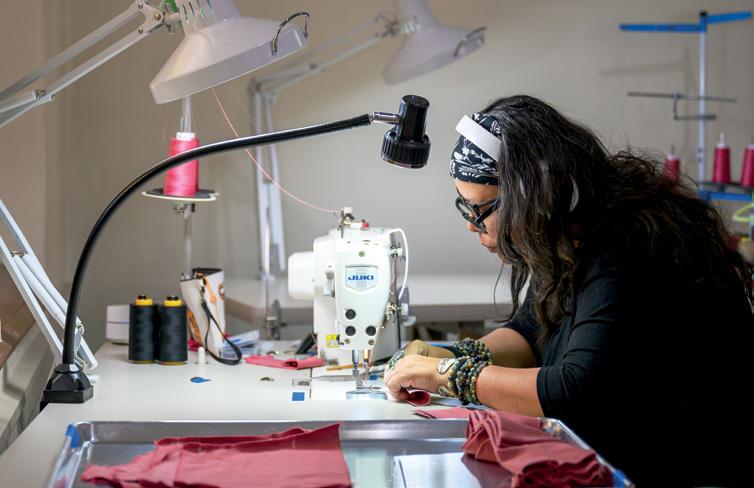

That door led to grant funding, an important opportunity for a for-profit social enterprise that Franjola largely funded herself. Berger sent Franjola across the region to various organizations, exploring potential partnerships. Eventually, she connected with the Survivor Advocacy Outreach Program (SAOP). Among other initiatives, SAOP works to provide economic assistance for survivors of sexual and domestic violence, including paid workforce development training.
“Once they found out what we were doing, and I understood what their mission was, it was just so perfectly aligned,” Franjola explains. SAOP applied for a federal Department of Labor grant that funded workforce development for three people. “That was that next catalyst of like, OK, now we have some funding, we can get going.”
When Franjola first heard about an old church for sale in Buchtel, her initial reaction was skepticism. But after virtual tours revealed two large open rooms, a parking lot, ADA-approved bathrooms, and a functional kitchen, she bought it sight unseen.
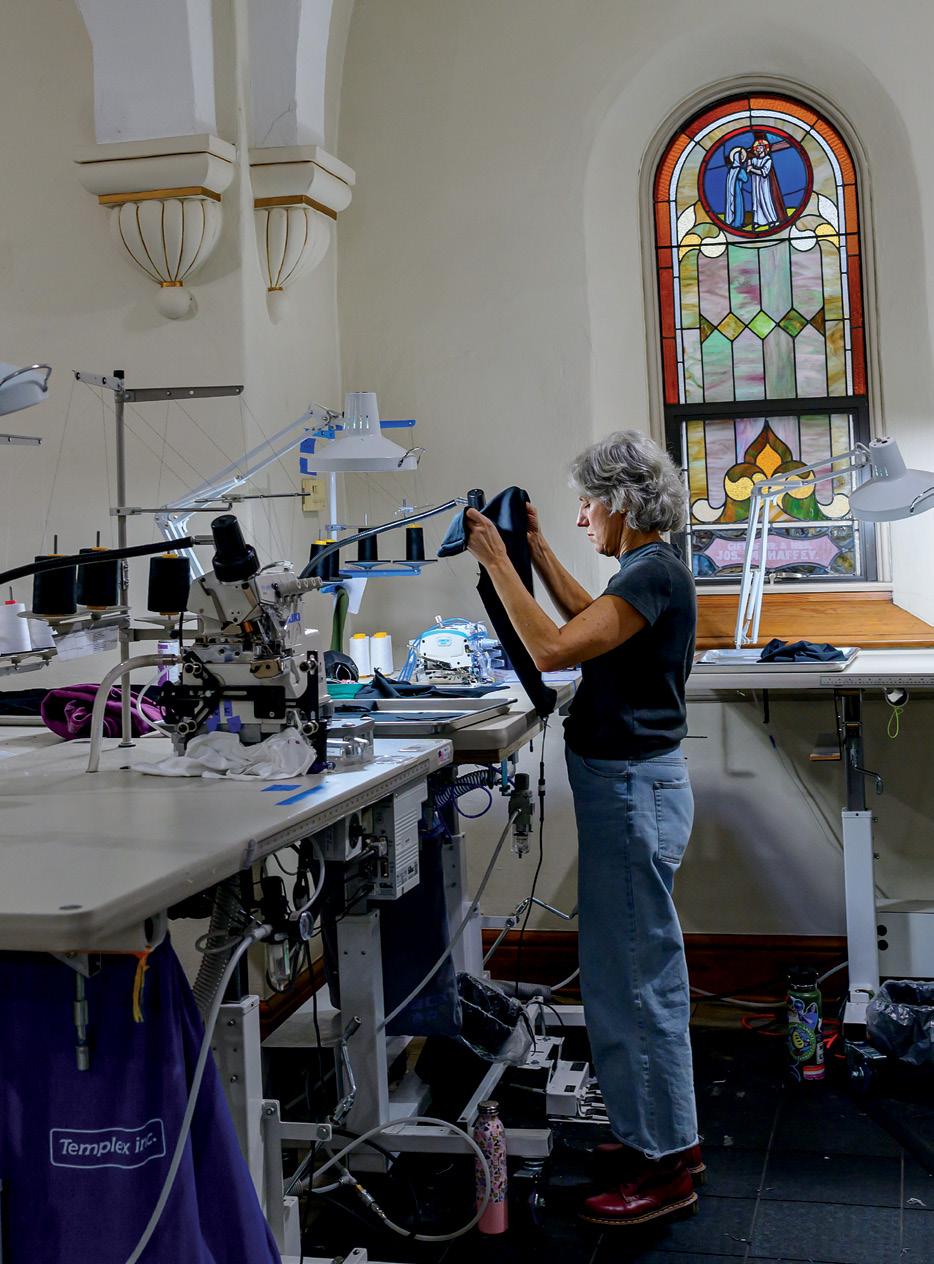
Inside the former church’s sanctuary, the transformation is striking. What once held pews now houses sewing cells, workstations where sewers learn industrial techniques. A small cutting table allows for runs of 100 pieces or fewer and sample work. Training happens in dedicated spaces, with plans to expand into the garage out back for fabric storage and shipping.
The building sits on a large lot, and Franjola dreams of adding on in the future, maybe even with space for an automatic cutting machine. “One of the challenges that we have is that we don’t have any industry partners in this region,” she explains. “Everything [that needs to be cut] has to either be done in LA and shipped to us” or cut in North Carolina and shipped north.
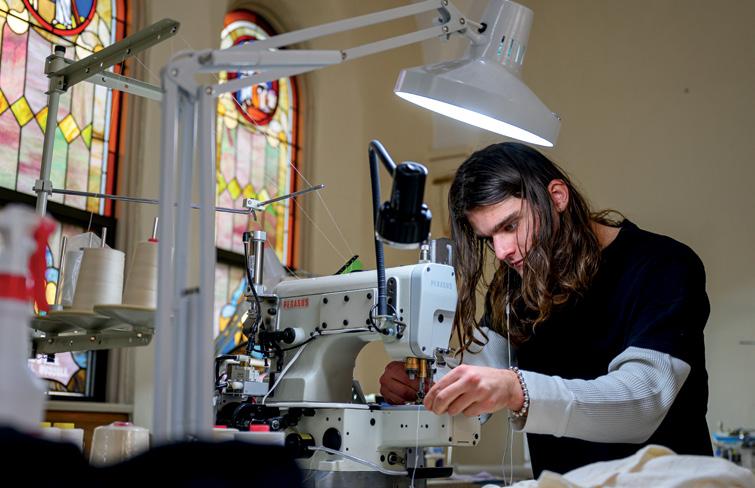
The center’s employees draw from diverse backgrounds: car seat manufacturers, home sewists, costume designers and complete beginners.
Erin Hogan, BSS ’10, a cell leader at the facility, exemplifies the center’s approach to workforce development. She learned to sew in Ohio University’s theater costume shop and now assists other sewists while developing samples.
“This is like sewing grad school,” Hogan says. Her role involves helping others learn about the products, improve speed and efficiency, and translate designers’ requests into manufacturable samples.
The Voinovich School’s support extended far beyond introductions. Impact Enterprise Team members walked through cost sheets with Franjola to ensure her numbers made sense.
“I was an entrepreneur before, but I had never approached something at this scale,” she says. “So having that official plan, not just jumping into it organically, which is what I had done before, was really incredible.”
Another mentor provided templates for financial frameworks during that crucial first year, walking Franjola through projections, business plans, and vision statements. She leaned on Berger as a sounding board throughout the process.
The Voinovich School also connected her with student designers at OHIO to develop branding—“far beyond something I would have done on my own,” she notes. That support included community connections, marketing assistance, and strategic guidance on timing and pathways for growth.
The journey hasn’t been without challenges, Franjola admits. The operation is almost entirely self-funded outside of workforce development grants.
Looking back two years to when Franjola first entered the space—machines still wrapped from shipping, the smell of old boiler water, no cutting tables—Franjola
says she would tell herself, “‘Keep going!’ Because it really is overwhelming when you think about all that needs to be done.”
She also would have preferred to secure more funding up front, though she acknowledges the paradox: initial projections suggested she needed $3 million. “Had I hit pause and waited for that, the idea could have fizzled. Maybe it never would have happened. So just leaping in is why we are where we are today.”
Despite the challenges, Franjola has connected with exciting collaborators and says the center is eager to connect with additional brands seeking domestic production partners. Among those collaborators are Future Plans Ohio and Erin Harper Films, who tell the center’s story through the documentary, “We Make Your Clothes.” The ability to share the message and find brand partners whose values align—sustainability,
quality, skilled labor—creates momentum for the center’s next steps.
“Our long-term vision extends beyond HHGC,” Franjola states. “We’re working toward a regional ecosystem that connects fiber agriculture to textile production, from wool and natural dye crops grown by local farmers to regional dyeing, knitting and garment manufacturing.”
For others considering working with the Voinovich School, Franjola’s advice is simple. “I would highly recommend it,” she says. “The resources they provide, the local contacts—for me, I grew up here, so I had some folks that I knew, but really appropriate contacts and putting all those pieces together was really beneficial.”
For Franjola, it’s a connected story: growing up in Athens, working in the fashion industry across the country, then returning home to connect those worlds. “It really feels very full circle,” she says, “which is awesome.” —Anna Jinja Mather and Sarah Filipiak BSJ ’01, BS ’23
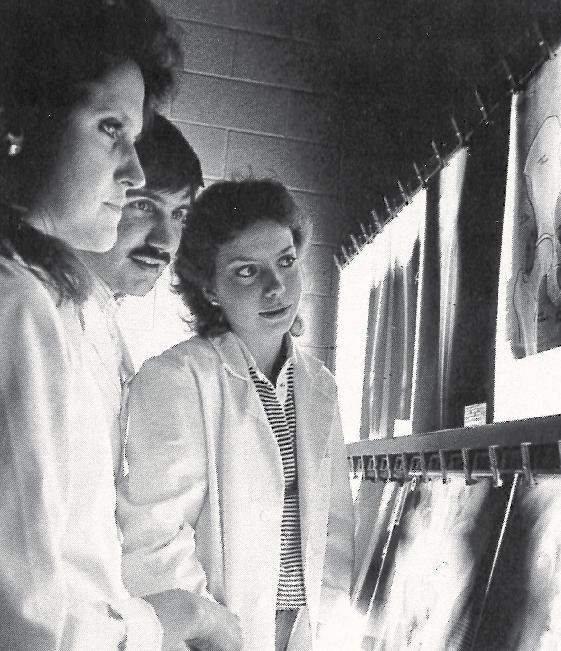
Discussions of a medical school in Athens began in 1823, when the OHIO Board of Trustees formed a committee to study the possibility and set aside land for a future facility. More than 150 years later, that dream became reality in September 1976, when 24 students became the inaugural cohort of the state’s first osteopathic medical school; 21 comprised the first graduating class four years later. By 1982, what was then called the Ohio University College of Osteopathic Medicine was enrolling 100 students each year.
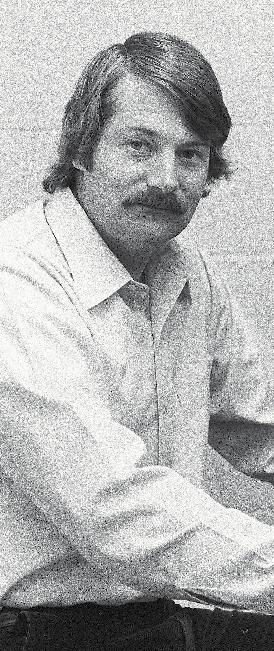
The college quickly established itself as a pioneer of medical research. In 1980, Professor Thomas Wagner led a team of researchers to develop DNA microinjection, transferring a gene from a rabbit and
into a mouse, becoming the first researchers to create a transgenic mammal, and setting a foundation for countless future biomedical breakthroughs.
A focus on holistic care and an unwavering commitment to improving the health and well-being of Ohio communities became an early hallmark of the college as well. Today, the college continues to distinguish itself through its mission dedicated to groundbreaking research, exceptional patient care and top-tier medical education.
That mission received a boost in 2011, with a landmark $105 million funding award from the Osteopathic Heritage Foundation—then the largest gift ever made
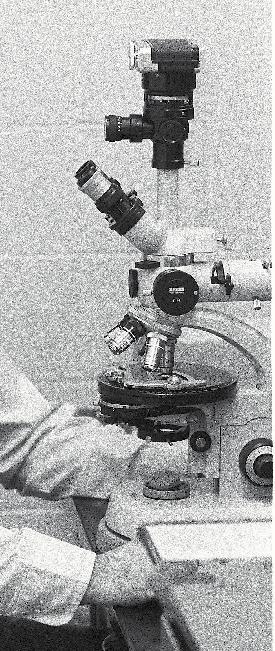
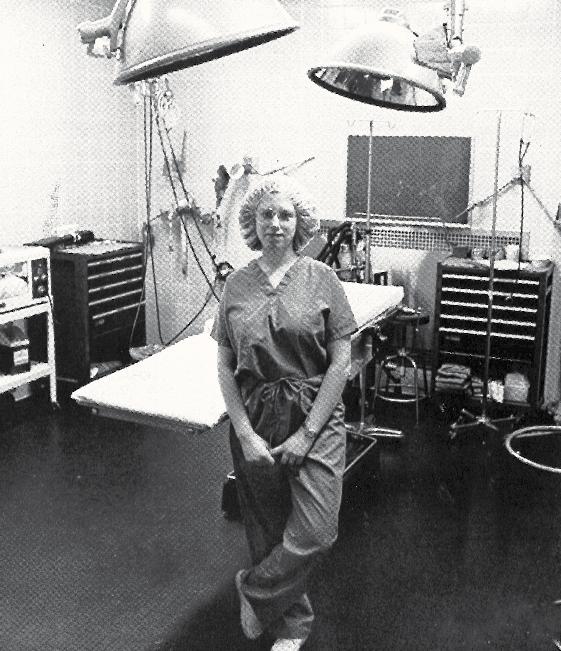
OPPOSITE PAGE: Students study X-rays to prepare for a gross anatomy exam, 1984. PHOTO COURTESY OF OHIO MEDICINE MAGAZINE. CENTER: Professor Thomas Wagner, 1980. PHOTO COURTESY OF THE MAHN ARCHIVES AND SPECIAL COLLECTIONS. ABOVE: Hinda Abramoff, the first D.O. graduate in the state, 1982. PHOTO COURTESY OF OHIO MEDICINE MAGAZINE.
to a higher education institution in Ohio. Shortly after, Trustees approved a name change to what we now know as Heritage College of Osteopathic Medicine. The grant, Vision 2020: Leading the Transformation of Primary Care in Ohio, allowed for a massive expansion of the college’s primary care, medical education and research efforts.
In 2014, Heritage College opened its second campus in Dublin, Ohio, followed quickly in 2015 by a third campus in Cleveland. In 2021, Heritage Hall, a stateof-the-art medical education facility opened on the Athens campus, and construction on the college’s new research building, the Heritage Translational Research Center, is expected to wrap up in late 2026.
The Osteopathic Heritage Foundation’s support continues: Last year, it pledged an additional $70 million, bringing its total contribution to over $193 million. Over the next decade, new funds will support 100 annual scholarships and several new endowed faculty positions, along with a new research institute focused on healthy aging.
Fifty years after its opening, Heritage College has more than 1,000 students enrolled annually across its three campuses and is the state’s leading producer of primary care physicians. In 2025, U.S. News & World Report ranked the college 21st in the nation and No. 1 in Ohio for the number of its graduates who practice in rural areas. —Cat Hofacker, BSJ ’19
Class Notes
* denotes accolades featured at ohio.edu/news or in the media
1958
John Alter, BFA ’58, received the Florida Forestry Association’s Distinguished Service Award for his longstanding dedication to forestry and environmental stewardship. Alter has been a motivated environmental educator, fundraiser and advocate for decades, leading local and statewide initiatives relating to forestry.
1964
The Military Writers Society of America honored Mark Fleisher, BSJ ’64, with a gold medal award for his book of poetry, “Incidental Moments,” at the organization’s conference in Kansas City, Missouri, last September.
1969
Award-winning journalist, novelist, poet and playwright Joan (DiLeonardo) Leotta, AB ’69, presented “Beyond Little Women: Meet Louisa May Alcott” in Athens in September— the latest of several performances of the historical reenactment.
1974
Donna (Blalock) Kelce, BSC ’74*, appeared on reality competition show The Traitors. The show follows a group of contes-
tants in a Scottish castle who compete for a cash prize and brings a mix of big names to each season.
Last summer, the U.S. Senate confirmed Ken Kies, BGS ’74*, as Treasury Assistant Secretary for tax policy. He serves as the senior advisor to the Secretary of the Treasury, who is responsible for the analysis, development and implementation of federal tax policies and programs.
Former CBS News Chicago director Debra Zimmer, BSC ’74*, was inducted into the Silver Circle last spring, honoring her career in broadcast journalism. The Silver Circle is one of the National Academy of Television Arts and Sciences’ highest honors, bestowed upon career journalists for their distinguished service.
The HistoryMakers, an online repository for the Black experience, accepted an oral history from Dale Ricardo Shields, BFA ’75, MFA ’95, into its digital archive. The HistoryMakers archive documents the life stories of thousands of individuals; its collection, including Shields’ contribution, is housed in the Library of Congress.
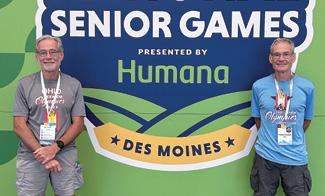
Twin brothers Timothy Vierheller, MS ’83, and Thomas Vierheller, MS ’86, PHD ’90, led the field in the 65-69 age group for the 800- and 1,500-meter runs at the Ohio Senior Olympics in both 2024 and 2025. Thomas took home four gold medals, with Timothy finishing just seconds or even milliseconds behind him to take the silver in each race—both well ahead of the respective bronze medalists, whose times lagged up to 20 seconds later. They were proud to represent Ohio on the track and field team for the 2025 National Senior Games in Des Moines, Iowa, last summer.
When they’re not competing at the state and national levels, they participate in local 25k trail races—sometimes with Timothy’s daughter, Elle—and Timothy has run the Athens Marathon many times. That race was Thomas’ first marathon, in April 2024. In the photo above, Timothy is on the left and Thomas is on the right.
The American Advertising Federation of Cleveland inducted Jean (Merritt) Gianfagna, BSJ ’76, into its Hall of Fame last year. The AAF’s annual American Advertising Awards celebrates Cleveland’s best creative work and recognizes the lifetime achievement of Hall of Fame members.
Dannette A. Render, BSHSS ’77, was recognized by Who’s Who in Black Cleveland as a 2025 Living Legend. Render is president and CEO at DAR Public Relations, Inc., and was recognized for her achievements in the Cleveland area.
The Rock and Roll Hall of Fame Library & Archives accepted more than 100 scripts, cassettes and digitized versions of The Website Show, hosted by Ed Rossman, MA ’80, on WENZ-FM from 1995 to 1998. The hour-long weekly program was loosely arranged around a 15-week workshop Rossman taught at Kent State University and focused on the music industry’s adaptation to the rise of the internet.
ESPN paid tribute to program director Paul “Scott” Johnson, BSJ ’81*, at the Men’s College World Series in baseball ahead of his retirement. In his 35-year career with the network, Johnson helped define the look and feel of college baseball’s championship event and bore witness to many historic moments in the sport.
Last June, Ohio Gov. Mike DeWine appointed Brig. Gen. Mark Arnold, BSISE ’82*, to the Ohio University Board of Trustees for a term lasting through May 2027. DeWine also appointed Megan Lashutka, BSC ’01*, to the Board of Trustees through May 2034.
Rafic “Ray” Bachnak, BSEE ’83, MSEE ’84, PHD ’89*, has been named the inaugural dean of the new College of Engineering and Sciences at University of Texas Permian Basin. Bachnak brings to the role more than three decades of experience in teaching, research and leadership.
Linda (Deitch) Resnik, BSJ ’85, has joined the staff of the Ohio Attorney General’s Law Library in Columbus, Ohio, where she is a research librarian.
Alliance for Universal Computing founder and CEO Ching “Charles” Sun, MAIA ’89, was named a 2026 Engage National Security & Enforcement 150 Honoree by OrangeSlices. Honorees are nominated by their peers for their efforts in fostering trust, collaboration and solutions across national security and enforcement communities.
Angela (Welch) Hall, BSED ’90, MED ’96, was one of five teachers selected to represent the Midwest in 2026 as a Regional Ambassador for the George Washington
Alumni Authors
OHIO alumni publish books across subjects and genres. Here are releases within the last year.
The Spirit of Ani: Reflections on Spirituality, Feminism, Music, and Freedom, memoir (Akashic Books), by Ani DiFranco and Lauren Coyle Rosen, BA, BSJ ’05 · Colors of the Sky, memoir (self-published), by Jan Crossen, MSA ’80 · Teddy Lou, Bell Guru, children’s picture book (Belle Isle Books), by Chris Demeropolis, BSJ ’08 · Find Your Food Voice: Defy Diet Culture, Declare Body Liberation, and Reclaim Your Peace, health and wellness (Sheldon Press), by Julie Duffy Dillon, BSHCS ’98 Breaking the Sound Barrier of Disease: How Human BioAcoustic Sound Healing Can Improve All Aspects of Your Health and Help Solve Today’s Growing Health Crisis, health and wellness (self-published), by Sharry (Holland) Edwards, BSC ’83, MED ’90 · Fifty Poems Five Decades Fifty Thousand Miles, poetry (self-published), by David W. Erskine, BGS ’72 · 1804, photo essay (Liars Corner), by Rich-Joseph Facun, BSVC ’01 Athens, OH 45701, photo essay (selfpublished), by Larry Gassan, BFA ’77 · The Bottle Conjuror: Book Two: Lucinda, fantasy (Beck & Branch Publishers), by John Kachuba, MA ’03, and Jack Gagliardo · Kingfisher Seven, thriller (Thomas & Mercer), by Shawn Klomparens, AB ’94 (posthumous) · Feathers on Stone, poetry (Main Street Rag Publishing Co.), by Joan (DiLeonardo) Leotta, AB ’69 · Walking on Nathan’s Grave: A Tale Traversing Heaven and Hell, thriller (self-published), by R. Luce, MA ’82, PHD ’89 · Champagne Wishes and Caviar Dreams: The Television Journey of a Lifetime, biography (self-published), by Jim Millman, BSC ’72, and Jim Cross · A Dream Deferred: The Art and Activism of Edwin Augustus Harleston, biography (University of South Carolina Press), by M. Akua McDaniel, BFA ’69, MFA ’75 Swahili for Dummies, language arts (For Dummies), by Seline Okeno, MA ’22, and Asmaha Heddi, MA ’21 · Howling at the Moon, poetry (Nirala Press), by James Ragan, MA ’67, PHD ’71 · Lincoln’s Ghost: Houdini’s War on Spiritualism and the Dark Conspiracy Against the American Presidency, narrative biography (St. Martin’s Press), by Brad Ricca, MA ’96 · Blood Debt, thriller (Skillet Press), by Bryan Richards, BSJ ’01 (pen name Bryan Michael) The Longest Staircase: An Alzheimer’s Journey, memoir (self-published), by Chet Rogenski, BSIT ’72 · Leaf Town Forever, children’s picture book (University of Minnesota Press), by Beth Rooney, BSVC ’05, and Kathleen Rooney · The Missing, horror (selfpublished), by Jim Sabin, BSJ ’95 (posthumous) · The Answer Is in the Wound, memoir (Roxane Gay Books), by Kelly Sundberg, PHD ’18 Range of Motion, comedic fiction (University of Chicago Press), by Brian Trapp, BSS ’05
Send your published work updates to ohiotoday@ohio.edu or to OHIO Today Magazine , Ohio University, P.O. Box 869, Athens, OH 457010869. And don’t forget to add your achievement to the Ohio University Alumni Association’s Bobcat Authors database at ohio.edu/alumni/ bobcat-authors.
Teacher Institute at Mount Vernon. An eighthgrade social studies teacher in the Athens City School District, Hall also earned the Mount Zion Black Cultural Center’s Beacon of Light Award last April.
Dr. Robin Whatley, BS ’90, received the Excellence in Clinical Leadership Award at the Ob Hospitalist Group’s National Clinical Leadership Meeting last fall. After years in private practice, Whatley joined OBHG in 2011 and now serves as its market medical director.
School of Visual Communication visiting professor Terrance Reimer, BFA ’92, MFA ’20, received two of OHIO’s new Learn Pillar Awards last year: one from Scripps College of Communication and its dean Scott Titsworth, and one from his students and colleagues. Reimer teaches photojournalism and commercial photography classes.
1995
Trevellya “Dr. Tee” FordAhmed, PHD ’95*, was awarded a 2025 Black Appalachian Storytellers fellowship. Ford-Ahmed is communications and media director at Mount Zion Black Cultural
Center and will receive $5,000 in unrestricted funding, some of which will go toward renovations at the center, as well as an award created by a Black Appalachian artist and an annual membership to the National Association of Black Storytellers.
Label manufacturer
ARMOR-IIMAK hired Plamen Petkov, BBA ’95, as president of its North and South American business operations last October. He brings to the role more than 20 years of experience in the thermal transfer industry and holds an MBA from the University of Chicago Booth School of Business.
The American College of Trial Lawyers inducted Alissa (Iseman) Sterling, AB ’95, to its 2025 fellowship class. This prestigious honor recognizes trial lawyers with at least 15 years’ experience who demonstrate high standards of excellence.
Sterling is an assistant U.S. Attorney in the Northern District of Ohio.
The Prospect League, a collegiate summer baseball league, announced its 2025 Organization Award winners. The league named Chillicothe Paints Director Bryan Wickline, BSSE ’95*, as Team Director of the Year for his impact on the league in the 2025 season.
Author Michael Buckley, BSS ’96*, adapted his long-running children’s fantasy book series “The Sisters Grimm” into an animated TV series for Apple TV+. The six-episode first season debuted on Oct. 3.
Heather Phipps, DO ’98*, was named site dean of the College of Osteopathic Medicine of the Pacific-Northwest at Western University of Health Sciences in California. Her previous roles at Pacific Northwest University of Health Sciences in Washington include assistant dean of clinical education, strategic partnerships and faculty development; chief of the division of surgery; and associate professor of orthopedic surgery.
Jim Pfander, BSJ ’00*, president and general manager of the Akron RubberDucks, was honored at the Minor League Baseball Business Summit as the 2025 Double-A Executive of the Year. Votes for the awards were cast by league executives and Major League Baseball staff members.
What happens if you take all the cows away? That’s
what journalists Michelle Michael, BSJ ’01, and Brandon Whitworth spent three years asking. Their resulting documentary, World Without Cows, premiered in October at the Chagrin Documentary Film Fest and explores the cultural, economic, nutritional and environmental impact of bovines across the globe.
GEDU Global Education Group CEO Vishwajeet Rana, MBA ’01*, received the 2025 Lifetime Achievement Award from the POWER 100 and British Asians Who’s Who Awards for his contributions to cultural and economic growth in the United Kingdom. GEDU strives to provide students with access to educational opportunities from kindergarten to Ph.D. and apprenticeship programs worldwide.
Last June, David Kelley, PHD ’02, was honored at the MAA Forum in Muck Business Annex for his groundbreaking contributions to sports administration education. Kelley’s doctoral dissertation on creating an advanced degree in sports administration for professionals in interscholastic athletics led to the launch of OHIO’s Master of Athletic Administration program in 2004.
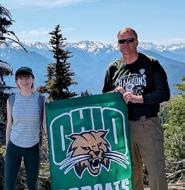
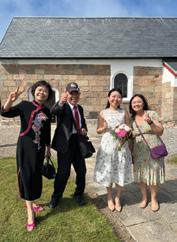
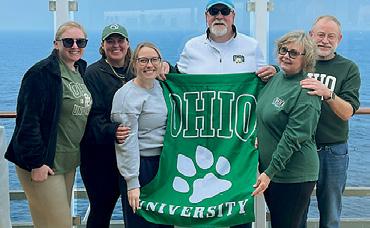
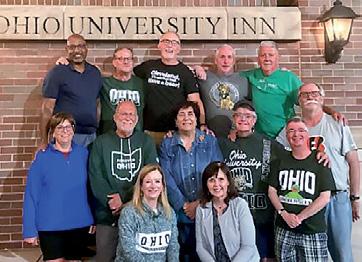
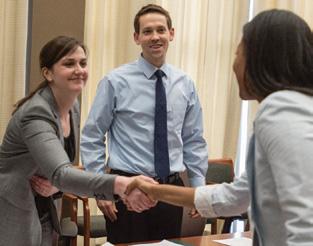

bobcatnetwork.ohio.edu
Lauren Coyle Rosen, BA, BSJ ’05*, released two albums in 2025: Purify Flame Dreamscape and Covers and Veils in Blue, both available on Spotify and Apple Music. She also recently co-authored a book with singer Ani DiFranco (see “Alumni Authors,” page 45.)
Viewers of Tyler Perry’s new series, Divorced Sistas, might recognize Robert Christopher Riley, MFA ’06*. He plays the role of Javon, a newly divorced friend of two main characters in the series. Riley is best known for his five-year portrayal of Michael Culhane in The CW’s recent reboot of Dynasty, among other roles. Divorced Sistas is streaming on BET+.
Toby Caserta, BSC ’07, has joined experiential events agency Bluewater Technologies as an account executive, bringing to the role his experience delivering high-value results for Fortune 500 companies, government and educational entities, and health care providers.
Kerwyn Flowers, DO ’07*, was appointed dean of Florida State
University’s Tallahassee Regional Campus last summer. Flowers joined the College of Medicine in 2017 and has served as its director of rural medical education since 2019.
Last year, Athens Mayor Steve Patterson named poet and singer-songwriter Becca (Rossiter) Lachman, MA ’07*, as the city’s Poet Laureate for 2026-2028. Lachman taught at OHIO for a decade and serves as the communications officer at Athens County Public Libraries.
AI cloud startup Lambda announced a new launch in Columbus, Ohio, where Robert Brooks IV, BA ’10, serves as a founding team member and vice president of revenue.
Global law firm Greenberg Taurig, LLP introduced Jill Zumbach, BA ’10, as an associate in its Public Finance & Infrastructure Practice, where she represents financial institutions, corporate clients and investment professionals.
Elizabeth (Brink) Bennett, BA ’12, is the new chief financial officer at the Ohio Department of Behavioral Health. She previously oversaw the Ohio Department of Developmental
From WOUB to hall of fame
CBS Weekend News anchor and national correspondent Jericka Duncan, BSC ’05*, was recognized for her professional accomplishments last year. In June, the NAACP Cleveland Branch honored her commitment to truth and storytelling with the President’s Award. Weeks prior, she’d been named a 2025 inductee to the Buffalo Broadcasters Hall of Fame for her contributions to western New York broadcasting. Duncan frequently covers issues of racial injustice and such high-profile topics as the #MeToo movement.
“Being recognized by your peers and to be told, ‘We see the work that you’re doing,’ and ‘We’re proud of you,’ is something that I cherish,” says Duncan, who hosted the cultural show Sauti on WOUB while at OHIO. “You don’t think about doing the work for that reason, but when someone takes the time to honor you and say thank you for your contribution to society, it means a lot.” Read more about her distinguished career at ohio.edu/duncan-awards
Disabilities’ $5 billion budget as its senior financial manager.
The Ohio Department of Veterans Services inducted Everett Woodel Jr., MBA ’14*, into its Hall of Fame Class of 2025. A U.S. Army veteran, Woodel was honored for his decades of public service and dedication to leadership and advocacy.
Laura Harbert Allen, MA ’18, PHD ’23*, is one
of three professionals selected by the Society of Professional Journalists Foundation to share the $100,000 Eugene C. Pulliam Fellowship for Public Service Journalism. Harbert Allen is the religion correspondent and vertical editor of 100 Days in Appalachia, a project that examines how AI and Christian nationalism are reshaping rural Appalachia.
The Scripps Howard Foundation selected Adriana Navarro, BSJ ’18*, as one of five Roy
W. Howard Fellows last summer. At the Howard Center at the University of Maryland, Navarro led a team investigating how lobbyists exploit legal loopholes to privately fund congressional travel, which was published by Politico and won an Investigative Reporters and Editors Award.
Natascha Toft Roelsgaard, MS ’19, PHD ’22*, was named the winner of the 2025 Rising Scholar Award by the editors of American Journalism, the peer-reviewed quarterly journal of the American Journalism Historians Association. The $2,000 award will support her archival research travel for her book project, which examines the work
of 19th- and 20th-century women reporters.
Leading growth equity firm Edison Partners promoted Hannah Kenney, BSC ’20, to marketing manager. Kenney supports the firm’s integrated marketing efforts across channels, including digital content, event programming and podcast development.
Bowling Green High School Athletic
Director Michele Wolf, MSAA ’21*, was named the Northwest Ohio Interscholastic Athletic Administrator Association Athletic Director of the Year. Since stepping into the role in 2021, Wolf has introduced new title sponsorship,
made facility improvements, provided leadership training opportunities for student athletes and mentored coaches and emerging professionals.
Married Bobcats Jason Preston, BSM ’22*, and Micaylah (Nash) Preston, BBA, BSM ’22*, are Family Feud champions after winning the show’s top prize of $20,000 on a team featuring Micaylah’s family. She received 184 of the 200 points needed to earn the final prize—the second-highest score of the season.
Rachel Recchia, BSA ’22*, was a cast member on season three of Netflix’s Perfect Match, which debuted on Aug. 1. She’s no stranger to reality TV, having previously
appeared on The Bachelor, The Bachelorette and Bachelor in Paradise
Michelle Camargo, MAA, MM ’24, released new music under the title Mambos Con Swing last fall on Spotify, Amazon Music and Apple Music. Recorded between Athens, Ohio, and Bogotá, Colombia, the project blends her Latin American roots with the musical foundation she developed at OHIO. Camargo also recently performed as a feature guest of the School of Music and as a soloist at the Athens Jazz Festival.
Send your updates to ohiotoday@ ohio.edu or to OHIO Today Magazine , Ohio University, P.O. Box 869, Athens, OH 45701-0869.
Whether you're celebrating the achievements of a beloved professor, commemorating a cherished alumnus, or memorializing a dear friend or family member, a memorial or honorary gift is a meaningful way to pay tribute to someone special. In doing so, you’re also making a difference for tomorrow’s students.

give.ohio.edu/how/tribute-gifts
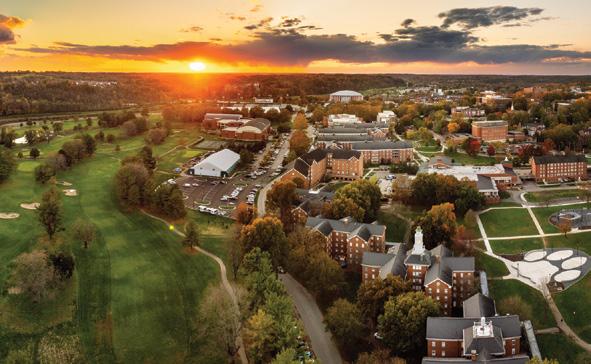
Phyllis A. (Scarff) Milliken, BSS ’43
Alice M. (Shultz) Donkin, BSED ’48
Austin J. Kaufman, BSCOM ’49
Helen “Elaine” (Pumphrey) Maurer, BSED ’49
James D. “Jim” Reigle, BSCOM ’49
Sylvia (Lakomska) Daneel, BFA ’50
Jim J. Demetrion, BSCOM ’50
Robert M. “Bob” Heipley, AB ’50
Avalon “Beebe” (Taylor) Burkhardt Schneider, BSJ ’50
Wallace W. “Wayne” Higgins, BSED ’51, MA ’53
Robert R. Rader, BSCOM ’51
Donald O. Skinner, BSED ’51
John L. “Jack” Stephens Jr., BSCOM ’51
Miriam Bower, BA ’52
Sidney A. Davis, BSJ ’52
James H. Lochary, BSED ’52, MED ’56
Arnold L. Aronson, BS ’53
Jeanetta M. (Artino) Hallaman, BFA ’53
David E. Jackson, BSED ’53
Ralph J. Lowenstein, BFA ’54
Kenneth H. Radcliffe, BSCOM ’54
Eleanora “Ellie” (Komyati) Robe, AB ’54
Henry P. Cass, BSAGR ’55
Nicholas J. DiNunzio, BSED ’55
Joan K. (Newbert) Hillenbrand, BSSS ’55
E. Patricia (Cleary) Mulroy, AB ’55
Charles H. Oestreich, MS ’56, PHD ’61
Judith F. (Swartz) Graves, AA ’57, BSS ’59
Diane C. (Snyder) Henn, BS ’57
Judith A. (Barnes) Kehl, BSHEC ’57
William V. “Bill” Clippinger, AB ’58
Barbara J. (Mann) Heitland, BSED ’58
Darlton G. Hobson, BSCOM ’58
Roger E. Stephens, BSCOM ’58
Allan F. Benz, BSCE ’59
Edward R. “Ted” Clark Sr., BSME ’59
Jean A. (McClure) Creswick, BSED ’59
Thomas A. Farrow, BSME ’59
Charles W. Gallagher, BFA ’59
Robert L. “Bob” Lenehan, BSCOM ’59
Joan (Heikkila) Rhee, BFA ’59
Ivan C. Smith Jr., BS ’59
Martha “Marty” Nolan Wood, AB ’59
John C. Wyman, BSEE ’59
Larry A. VanMeter, MA ’60
Phil G. Zimmerman, AB ’60
Ronald W. Beech, BSCHE ’61
Charles D. Frey, BSCE ’61
Virginia L. Koch, BSED ’61, MA ’69
Michael A. Moss, BSJ ’61
Bonnie M. (Townsend) Sasaki, BSED ’61
Richardson B. “Dick” Shanley, BSCOM ’61
Myrna J. (Creamer) Smith, BSHEC ’61
Charles F. “Charlie” Brown, BSED ’62
Ronald C. House, BSJ ’62
Carole J. Round, BFA ’62
Richard Carlile, BBA ’63
Mary K. (Schneider) Dickinson, BSED ’63
Janet D. Gwynn, BFA ’63
James P. “Jim” Pappas, MS ’63
Melvyn E. Resnick, BBA ’63
Mary L. (Hartman) Schuttenberg, AB ’63
Jacquelyn “Jackie” (Mohler) Warner, BSED ’63
Richard C. “Dick” Widdis, BBA ’63
Trailblazing judge, civic leader and Bobcat passes
William T. Newman Jr., BFA ’72, delivered the Spring 2024 Commencement address at his beloved alma mater, received the University’s Medal of Merit Award in 2022, and served as an Emeritus Trustee of The Ohio University Foundation Board—a fitting reflection of his lifelong devotion to OHIO. Growing up in Arlington, Virginia, Newman earned his Fine Arts degree from Ohio University before pursuing law, ultimately receiving his J.D. from Catholic University’s Columbus School of Law.
In 1987, he became the first African American elected to the Arlington County Board, later serving as its chairman. Appointed to Virginia’s 17th Judicial Circuit in 1993, he rose to chief judge in 2003 and earned recognition from Washingtonian magazine as one of the Washington area’s best trial judges. He also founded the Northern Virginia Black Attorneys Association and the Arlington Community Foundation. A member of SAG-AFTRA, he credited his Fine Arts education with shaping his courtroom presence and empathy throughout his career. He passed away Feb. 10, 2026.
James O. Wilhelm, AB ’63
Paul J. Boget, BSME ’64
Charles “Dan” Gross, BSCE ’64, MSCE ’65
Jane (Rice) Kaiser, BSHEC ’64
John J. Manfredi, BSCE ’64
James “Jim” (Radomski) Raden Sr., BS ’64
Donald F. Reed, BSED ’64
Mary L. (Girardat) Stone, AB ’64
Lawrence V. “Larry” Zielinski, BBA ’64
Nancy G. (Jadrych) Hunt, BS ’65
Doris E. (McCormick) Keeton, BSED ’65, MS ’72
James E. Kimmel, BSCHE ’65
Martha L. McFadden, AB ’65
Arthur “Richard” Nichols, MFA ’65
Gerald Solanics, AB ’65
John F. Spang, BS ’65
Carl E. Anders Jr., BBA ’66
Clark “Rich” Brown Jr., BSED ’66
Howard R. “Butch” Culver Jr., BBA ’66
Robert Dobrasz, AB ’66
Joy (Washburn) Haines, BFA ’66
Martha G. (Kellett) Hinchey, BFA ’66
John T. Patton, BBA ’66
Bruce C. Blackman, BSEE ’67
Linda L. (Kegg) Brown, BSHEC ’67
Lalinda L. (LaMotte) Egerstrom, AB ’67, AB ’75
Jeanne E. Huling, BSED ’67
Phillip G. Leonard, BSED ’67
James A. “Jim” Levero, BSED ’67, MED ’68
Kelvyn L. Moyer, BBA ’67
Gary L. Nichols, BSED ’67
Carol D. (Congos) Parsons, BSED ’67
Robert G. “Bob” Pflaumer, BSME ’67
Phillip “Gary” Vance, BSCE ’67
Mary Joe (Wagner) De Wildt, AB ’68
Jean D. Harlan, MS ’68, PHD ’78
Michael Luck, BFA ’68
Distinguished service to school and state
William R. Damschroder, BBA ’85, passed away Feb. 14, 2026. A proud Bobcat, he was the top legal adviser to the Ohio Facilities Construction Commission, managing legal aspects of the OFCC’s multi-billion-dollar K-12 school construction and renovation program, state agency projects, higher education initiatives and community facilities. Prior to OFCC, he served in legal roles at the Ohio EPA, Department of Commerce, Department of Natural Resources, Board of Nursing and Supreme Court of Ohio.
In 1995, the Ohio University Alumni Association presented him with the Distinguished Service Award, recognizing his exceptional service to the College of Business Society of Alumni & Friends and Central Ohio Chapter.
Above all, Bill was devoted to family and friends. In 1988 he married Tishia (Friel) BBA ’85, and they built a life filled with love, laughter and two wonderful sons. Their sons are proud Bobcats: Greg graduated in 2016 and Tom attended for 4 years. In true Bobcat fashion, he nurtured a lasting community of friends and leaves a legacy of public service to Ohio’s communities.
Ivan D. Marcus, BBA ’68, MED ’83
George M. Marsh, MBA ’68
Marilyn J. (Butze) Sommerfeld, BSED ’68
David A. Weaver, BBA ’68
Rosalie A. (Sandison) Wood, MA ’68
Kathleen C. (Bivens) Young, BSED ’68
Doris H. (Rogers) Childers, BSED ’69
Frederick D. “Gibby” Gibson, BSED ’69 MSPE ’88
Lynda (Locke) McInturf, BSED ’69
Lonnie “Scott” Mendenhall, BSED ’69
Gordon E. Moxley, BSED ’69
Craig S. Reich, BBA ’69
Douglas J. Rigel, BSIT ’69
Darryl Selinsky, BSIT ’69
Darrel S. Smith, BFA ’69
Joel C. Weinsheimer, MA ’69, PHD ’73
Marcia M. Donley, AB ’70
William H. “Trey” Egan III, BSC ’70
James M. Evans, BSJ ’70
James K. Holland Jr., BSED ’70
Linda L. (Ford) Johnson, BA ’70
Lewis Karstensson, MA ’70, PHD ’74
Phyllis A. (Valentine) Spurlock, MED ’70
Karen R. (Kraus) Battes, AB ’71
Robert V. Burnett Jr., BFA ’71
Barbara L. (Vinciquerra) Miller, BSED ’71, MED ’76
James W. Reader, BSJ ’71
Helen Jo (Wimer) Smith, BSED ’71
Gary R. Wilson, BSIT ’71
Roy E. Barclay, BSED ’72
Mary M. (Mears) Emmenegger, BS ’72
William G. Kulstad, BSHSS ’72
Richard W. “Dick” Mitchell, BBA ’72
John P. Montgomery, PHD ’72
Nicholaus “Mick” Paal, MS ’72, PHD ’74
Judy M. (McDaniel) Schumacher, BSED ’72, MED ’79
Philip G. Shoemaker, BSED ’72
Bonnie L. Wolfe, BSED ’72
Henry G. “Hank” Goehring Jr., MBA ’73
Frank J. Lopuszynski, BBA ’73
William J. Mulvihill, MED ’73
Lawrence “Larry” E. Nugent, BGS ’73
Philip D. Pitkin, AB ’73
Alan L. Stanfill, AB ’73
Robin A. Caire-Beacham, BGS ’74
Kenneth A. DeVeau, MS ’74
Peggy K. Doty-Schuyler, BSED ’74
Mary A. “Mamie” Fitzpatrick, BSJ ’74
Betty L. (Wolford) Myers, BSED ’74, MED ’83
James P. Farmer, BSED ’75
Lynne D. (Soukup) Odorizzi, BSHEC ’76
Terry L. Spaeth, BGS ’76
William J. Vernon III, BGS ’76
Dolores (Gurnick) Clement, MAIA ’79
Cecilia J. Graves, MA ’79
Marguerite C. “Meg” Masse, BGS ’79
William A. “Bear” Monita, BSJ ’82
John Childs Neely IV, MFA ’82
Chris T. Connell, BS ’83
Daniel S. Medvid, AB ’85
Gregory W. Quattrin, MSPE ’85
Matt Miller, BSC ’86
Randy K. Pugh, AAS ’86
Richard “Mike” Harrison, BBA ’88
Jan M. (Buitendorp) Couvillon, AB ’89
Scot G. Hindall, BSCE ’90
Michael J. Durbin, BBA ’91
Arthur “Dana” Kasler II, BSRS ’91, MSPE ’94
John L. Evener, BBA ’92
Eric L. McPherson, AB ’92
Joseph E. Epperson, AA ’93
Daryl Malarry Davidson, AA ’96, BSS ’97, PHD ’20
Brett A. Kim, BSAT ’96, MPT ’99
David B. Stebelton, BBA ’96
Jennifer L. Gibson, BSJ ’97
Richard A. White, BSJ ’97
Lindsay S. (Oliver) Burgermeister, BSC ’99
Sarah M. Harrelson, MS ’05
Lloyd R. Young, MA ’05
Darrell “Patrick” Kelley, AAS ’06
Austin W. Snyder, BBA ’07
Warren G. Black Jr., BBA ’09
Darin C. Wilson, BSISE ’12, MS ’16, MFE ’16
Alexander N. Elonen, BA ’16
Patrick W. O’Donnell, BSRS ’16
Jacob W. Roehn, BSS ’17, MSRSS ’19
Olivia Matthews, MFA ’20
Alexzandra L. West, BSN ’22
Fiona C. Spelman, BMUS ’25
Edward Baum, Lexington, Virginia; professor emeritus of political science, Oct. 18
Douglas S. Bolon, Beverly, Ohio; associate professor emeritus of health services administration, Aug. 16
Donald M. Borchert, Silver Spring, Maryland; professor emeritus of philosophy, May 30
Richard K. Brackin, MED ’65, PHD ’76, Athens, Ohio; emeritus assistant to the dean, former Hong Kong academic program director, former Bachelor of Specialized Studies program director, Aug. 27
Brian G. Burke, Roscommon, Michigan; former head football coach, Sept. 20
Ronald J. Collins, Boise, Idaho; former defensive coordinator, June 17
Ruth “B.” (White) Deahl, Athens, Ohio; former assistant professor of art, Aug. 4
William M. “Bill” Dombroski, Athens, Ohio; interior designer emeritus, June 4
Kevin L. Doughty, Albany, Ohio; former building maintenance specialist, June 2
Joan A. (Yurick) Fucci, Athens, Ohio; retired Hearing & Speech Clinic supervisor, July 28
Jimmie W. Glass, Amesville, Ohio; retired building maintenance supervisor, Oct. 8
Lynn W. Graham-Mowery, BSC ’88, Athens, Ohio; director emerita of Graduate Student Services in Education, May 2
Jeanette “Jenny” (Gecsy) Grasselli Brown, BS ’50, HDS ’78, Chagrin Falls, Ohio; former director of research enhancement, former Ohio University Board of Trustees chair, July 15
Sara L. (Roberts) Green, Athens, Ohio; retired records management assistant, June 18
Marjorie (Troller) Hagerman, BSHEC ’82, MSHEC ’83, Charlottesville, Virginia; assistant professor emerita of applied health sciences and wellness, Oct. 10
Richard H. Haning, Albany, Ohio; retired electrician, Sept. 9
John G. Horton, Albany, Ohio; former employee, July 31
Myra “Cathy” Janes, The Plains, Ohio; retired word processing specialist at Ohio University Press, Aug. 15
Edith A. “Edie” Luce, Athens, Ohio; retired library support specialist, Aug. 17
Brenda K. (Kish) Mace, Nelsonville, Ohio; retired senior printing press operator, Aug. 14
Michael F. Magyary, Athens, Ohio; former HVAC Operations assistant director, July 18
Blaine N. “Doc” Michael, The Plains, Ohio; retired storekeeper, June 10
Barbara (Sprague) Miller, BGS ’72, MHA ’93, Marietta, Ohio; former employee, May 24
Daniel E. Mooney, Ironton, Ohio; former instructor, Sept. 20
Judy G. (Shaw) Radford, New Marshfield, Ohio; retired administrative associate, May 8
Nanciann (Stalter) Rosier, BSED ’78, MED ’88, Lancaster, Ohio; former teacher and Center for Adult Learning director, Lancaster campus, July 28
Gary J. Schwindler, Alfred Station, New York; retired associate professor of art, Mar. 6
For Ken Reed, BS ’68, and his wife, Gayle, gifting to Ohio University is about honoring the people, places and experiences that contributed to his personal growth and success. A blended gift — making current gifts during their lifetimes and adding more through trusts and beneficiary designations — allows them to see the impact of their generosity.
Please contact Associate Vice President, Central Programs, Kelli Kotowski at kotowskk@ohio.edu or at 740.597.1819
Nathaniel Szewczyk, Athens, Ohio; Osteopathic Heritage Foundation
Ralph S. Licklider, D.O., Endowed Professor in Molecular Medicine and Ohio Musculoskeletal and Neurological Institute investigator, July 26
Martha J. (Adams) Vickers, Athens, Ohio; retired account clerk specialist, June 2
David L. Williams, Athens, Ohio; associate professor emeritus of political science, May 28
Jean R. (Gies) Witkowski, BBA ’86, MED ’96, Port Clinton, Ohio; assistant dean emerita of budget and administration, Oct. 6
—Includes individuals who passed away between May 1 and Oct. 31, 2025. Information provided by the University’s Office of Advancement Services and staff research.
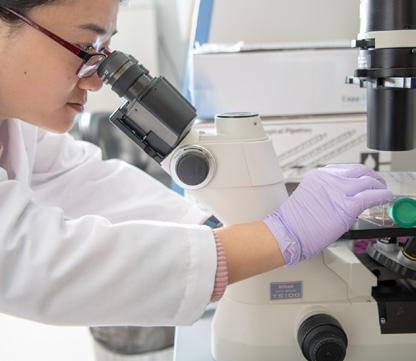
“I’ve been really blessed ... We want to do some good things. The things I’m investing in, like resources and biomedical research, seemed like the right thing to do.”
— Ken Reed, BS ’68
Division of Advancement Office of Gift Planning
MISSION STATEMENT
OHIO Today Magazine informs, celebrates and engages alumni, faculty, staff, students and friends of Ohio University.
Editor in Chief
Emma Frankart Henterly, BSJ ’10
Art Director
Sarah McDowell, BFA ’02
Contributors
Eli Burris, BJ ’16
Sammi Broering, BS ’27
Amelia Criswell, BFA ’27
Rich-Joseph Facun, BSVC ’01
Sarah Filipiak, BSJ ’01, BS ’23
Cat Hofacker, BSJ ’19
Anna Jinja Mather
Ohio University Mahn Center for Archives and Special Collections
Samantha Pelham Kunz, BA, BSJ ’17, MAA ’21
Mary Reed, BSJ ’90, MA ’93
Alex Semancik, BSJ ’23
Ben Wirtz Siegel, BSVC ’02
Emma Snyder-Lovera, BS ’26
Julia Weber, BS ‘25, MAA ’26
Ohio University President
Lori Stewart Gonzalez
Vice President of Advancement and President/CEO of The Ohio University Foundation
Gregory Simmons
OUAA Executive Director
Jennifer Shutt Bowie, BSJ ’94, MS ’99
Vice President for University Communications and Marketing
Robin Oliver
Director of Content Strategy and Publications
Sarah Filipiak, BSJ ’01, BS ’23
Printer
The Watkins Printing Co.
Errata for the Fall 2025 issue follows. OHIO Today Magazine regrets the error. In Memoriam incorrectly listed Carey J. Snyder’s job title; she was a professor of English literature.

Artifacts & Antiquities
Learn about culture, art, and history from top experts, all the while experiencing the friendship and fun of fellow Bobcats.
Land | Train Excursions
Canadian Rockies by Rail Aug. 12 – Aug. 18, 2026
OHIO Today Magazine is published two times a year. Its digital companion is ohio.edu/magazine. Both are produced by University Advancement, with funding from The Ohio University Foundation. Views expressed in them do not necessarily reflect the opinions of the staff or University policies.
Editorial office address: OHIO Today Magazine, Ohio University, P.O. Box 869, Athens, OH 45701-0869. Send questions, comments, ideas and submissions to the above address, via email to ohiotoday@ohio.edu, or by calling 740-566-0344. Make address changes at ohio.edu/ alumni or by mail via Ohio University, Advancement Services, P.O. Box 869, Athens, OH 45701-0869. Send details for the “In Memoriam” section to the latter or advinfo@ohio.edu.
Copyright © 2026 by Ohio University. Ohio University is an equal access, equal opportunity, and affirmative action institution.

@OHIOAlumni

Civil War Battlefields Oct. 4 – Oct. 8, 2026
Ocean | River Cruises
Artifacts & Antiquities Sept. 14 – 26, 2026
Florida Gulf Coast & Keys Jan. 13 – Jan. 27, 2027
European Coastal Cruise May 2 – May 11, 2027
Student | Young Alumni
Magic Morocco Aug. 29 – Sept. 8, 2026
Peru’s Inca Trail Oct. 17 – Oct. 25, 2026

CODE OR VISIT

ohio.edu/alumni/get-involved/ experiences/travel

DeQuindre Hughes is an assistant professor of instruction in Patton College of Education who joined the Department of Counseling and Higher Education last year. He foregrounds intersectional practice in both pedagogy and counseling, aspiring to ensure counseling clients and students alike feel seen, heard and empowered. As a new instructor, he’s already gaining recognition: the North Central Association for Counselor Education and Supervision named him a 2025 Emerging Leader last year.
What does it mean to be selected as an Emerging Leader? This is an opportunity for me to network within NCACES and to grow with local leaders in counselor education, connecting and learning from mentors who have been in the field longer. We also do 50 hours of service over the course of a year, we attend the NCACES conference and we work on committees.
What are some of your favorite hobbies? I really enjoy going to aquariums and museums; my wife and I see live music and travel as much as we can. I also really enjoy running; it allows me to both exercise and to relax, escape a little and think about things.
How do you approach teaching? I focus on intersectionality—I want to look at all aspects of your identity in the classroom—and use strength-based and people-aware approaches. I affirm what students
are doing well, guide them in areas where they can grow with clear, actionable suggestions, and make sure they know they are in the program for a reason. I love seeing their growth, because my purpose of being here as a professor is teaching them.
Is there anything readers should know about counseling generally? Anyone and everyone can benefit
from counseling. At its core, counseling is about empowerment and resilience: allowing people to share their voices, to feel heard and seen, to work on their specific goals. Counselors don’t fix things; we’re here to help individuals grow, see who they are and want to be, and determine how they reach that for themselves.
—Julia Weber, BS ’25, MAA ’26
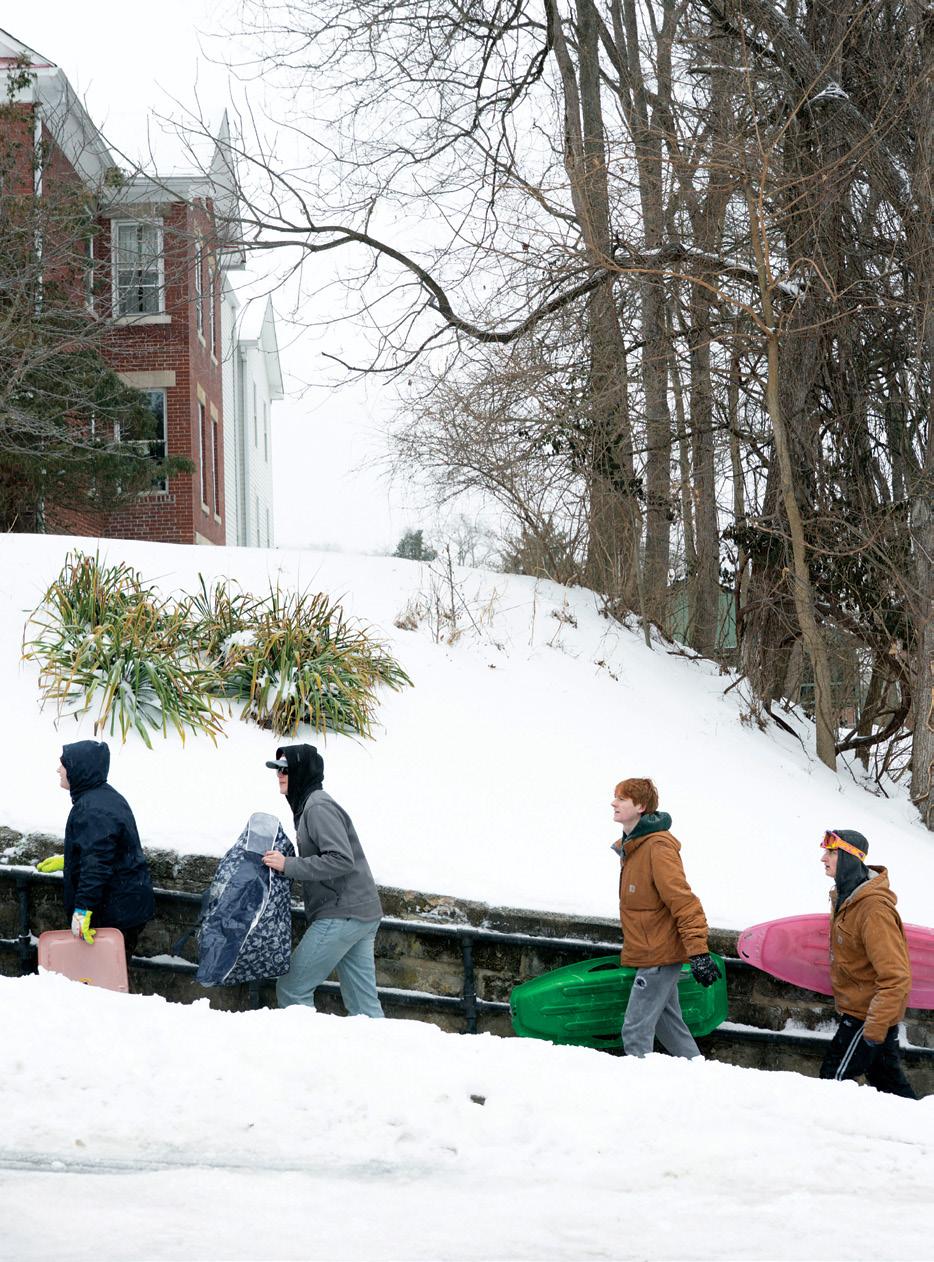
A snow emergency closed Ohio University campuses for two days during the last week of January, but the Athens campus was still bustling with students and snowballs.
After a dominant 28-6 season, OHIO club hockey stormed through the ACHA tournament, capped by a 3-1 title win over Adrian College. From an overtime escape to a statement semifinal shutout, this resilient squad delivered the program’s first national championship since 2004—proof Athens hockey is thriving again.