TheConcernGrowing
A PUBLICATION OF THE OHIO LANDSCAPE ASSOCIATION
Columbus Plant ID July 8, 2026 | Willoway
Northeast Ohio Plant ID July 15, 2026 |
Nurseries
Davis Tree Farm


Columbus Plant ID July 8, 2026 | Willoway
Northeast Ohio Plant ID July 15, 2026 |

J. Barker Landscaping Company
By the time May arrives, the landscape season is fully underway. Crews are operating at full pace, schedules are packed and the days seem to move faster with each passing week. Spring enhancements are in progress, maintenance routes are fully active, and client expectations are high as properties across our communities begin to reach their peak appearance. This is one of the busiest and most demanding times of the year for our industry. It is also one of the most important.
The energy and momentum that come with May can create tremendous opportunities for growth and success, but they can also test the systems, leadership and culture within an organization. During busy periods, it becomes easy to focus only on production and immediate demands. However, the companies that consistently perform at a high level understand that long-term success is built on maintaining discipline and excellence even when schedules are at their fullest. In many ways, May is about consistency.
Consistency in communication. Consistency in quality. Consistency in leadership. Clients may not notice every extra effort that goes into managing a property, but they immediately recognize reliability and professionalism. Delivering a consistently high-quality experience, week after week, is what separates strong companies from average ones.
One of the biggest challenges during this time of year is balancing efficiency with attention to detail. As schedules tighten and crews move quickly between properties, there can be pressure to prioritize speed over quality. But maintaining standards matters. Clean edges, proper pruning, accurate
mowing patterns and attention to overall site presentation all contribute to the client’s perception of value and professionalism. The details matter because they reflect the pride we take in our work.
Leadership also becomes increasingly important during this stage of the season. Crew leaders and supervisors are often managing multiple priorities at once while keeping teams productive and focused. Strong leadership in the field creates organization, accountability and stability even during hectic periods. When communication is clear and expectations are understood, crews operate more efficiently and confidently.
This is also the time of year when company culture becomes highly visible. The pace of spring can either strengthen a team or expose weaknesses within it. Employees look to leadership for direction, support, and consistency. Taking the time to recognize strong performance, maintain open communication, and support team members through demanding schedules can have a lasting impact on morale and retention.
on
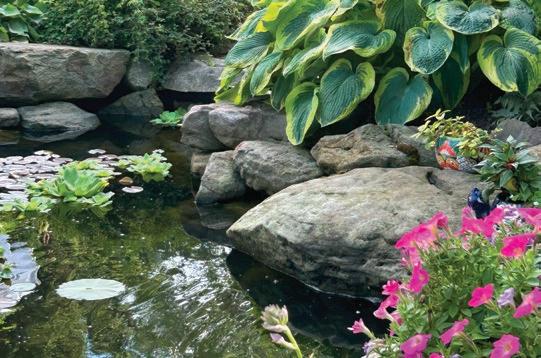
COVER: Landscape Ohio! Awards submission in the category of Water Features, Honor Award by Land Creations Landscaping, Inc.
Andropogon Gerardii FISCAL FITNESS The Power of Consistency FOR
Selling or Buying a Business?
Picea Abies Norway Spruce
FEATURE ARTICLE Creating Processes that Scale with Your Company
FEATURE
SPECIAL
OHIO’S PROFESSIONAL GREEN INDUSTRY ASSOCIATION
OHIO LANDSCAPE ASSOCIATION
9240 Broadview Road
Broadview Heights, Ohio 44147
Phone: 440-717-0002
Toll Free: 1-800-335-6521
Web: www.ohiolandscapers.org
REGULAR WRITERS
Michael J. Donnellan, M3 Wealth Management
Jim Funai, PhD, Cuyahoga Community College
Shelley Funai, Stan Hywet Hall and Gardens
Brandon Barker, J. Barker Landscaping Company
Patty Lampert, Ohio Landscape Association
Bobbie Schwartz, FAPLD, Bobbie’s Green Thumb
ADVERTISING INFORMATION
Submission deadline: 10th of the month, prior to the month of magazine publication. For advertising and ad specs, please call 440-717-0002, and ask for Patty Lampert.
DISCLAIMER
The Ohio Landscape Association, its board of directors, staff and the editor of The Growing Concern neither endorse any product(s) or attests to the validity of any statements made about products mentioned in this, past or subsequent issues of this publication. Similarly, the opinions expressed in The Growing Concern are those of the authors and do not necessarily represent the views of the Ohio Landscape Association.
OFFICERS
President
Brandon Barker
President – Elect
Matt Malone
Treasurer
Tom Rieder, LIC
Immediate Past President
Ryan Drake
DIRECTORS
Jeffrey Ardo
Jason Deuble, LIC, OCNT
Amy Gatoo
Gil Kupetz
Jess Kronenberger
Garrett McNeill
OLA STAFF
Executive Director
Patty Lampert
Membership Coordinator
Melissa Roberts
UPCOMING OLA MEETINGS, EDUCATION SEMINARS & EVENTS
JULY 8, 2026
COLUMBUS PLANT ID
Willoway Nurseries
JULY 15, 2026
CLEVELAND PLANT ID
Davis Tree Farm
AUGUST 6, 2026
GOLF OUTING
Mallard Creek
Find more information and register on the website at https://www.ohiolandscapers.org/golf-outing.html
SEPTEMBER 25, 2026
PLANT HEALTHCARE
Secrest Arboretum
OCTOBER 8, 2026
LANDSCAPE OHIO! AWARDS
Tenk West Bank
DECEMBER 4, 2026
DORMANT PRUNING
Secrest Arboretum
The OLA is delighted to welcome the following new members to the association:
REGULAR MEMBERS
Gesler Insurance 10750 Pearl Road Unit E8 Strongsville, OH 44136 440-846-5511
Michael Richard michael@geslerinsurance.com
“The OLA holds a dear place in my heart. Many of my finest mentors and greatest experiences in this industry have come
- Rob Morel Founder and President at Morel Landscaping LLC

continued from page 3
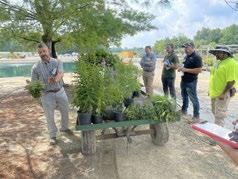
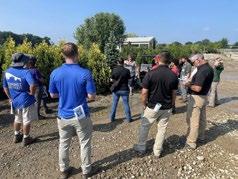
As an Association, continuing to invest in education and professional development remains one of our key priorities. This summer, we will be hosting Plant ID Clinics in both Columbus and Cleveland during the month of July. These events provide a valuable opportunity for members and their teams to strengthen their plant knowledge and sharpen one of the most fundamental skills in our industry. Whether someone is new to landscaping or has years of experience, continuing education helps improve confidence, professionalism and the quality of service we provide to clients every day.
May is also a reminder of the importance of adaptability. Weather delays, labor challenges, equipment issues and shifting client requests are all realities of the landscape business. While we cannot control every challenge, we can control how we respond to them. Companies that remain organized, proactive and solutions-focused are better equipped to navigate busy periods successfully.
Client communication remains critical as well. During highvolume periods, proactive updates and responsiveness help build trust and strengthen relationships. Clients appreciate transparency, especially when schedules or conditions change. Strong communication often prevents small issues from

Safety must remain a priority regardless of how busy operations become. Long days and fast-paced schedules can increase the risk of fatigue and oversight. Reinforcing safe work practices, encouraging hydration and ensuring equipment is properly maintained are all essential to protecting our teams throughout the season.
From an Association perspective, May is a month that highlights the professionalism and impact of our industry. Across our communities, our members are helping create outdoor spaces that enhance homes, businesses, parks, healthcare facilities and public spaces. The work being done every day by landscape professionals directly improves the environments where people live, work, and gather. That work deserves recognition and it deserves pride.
As we continue through the spring season, I encourage every member to stay focused, stay adaptable and continue investing in both people and processes. The pace of this industry will always be demanding, but strong leadership, professionalism, and teamwork create the foundation for longterm success. I look forward to seeing the continued growth and accomplishments of our members throughout the 2026 season and beyond.
Walk life-size landscape plans with your clients before installation begins. Avoid costly change orders, protect your timeline and deliver a better client experience, every time.
(216) 409-9509
Schedule your free demo or consultation today: www.walkyourplans.com





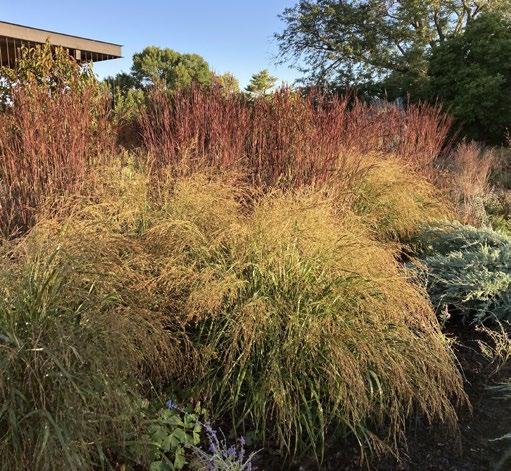

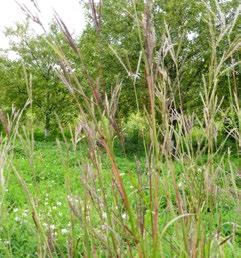
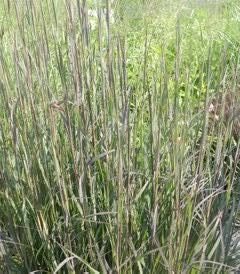
Landscape designers are always searching for something unique to add to the gardens they are working on and the Perennial Plant Association 2026 Plant of the Year may be the answer, that is Andropogon gerardii ‘Blackhawks’. Big Bluestem is one of the dominant grasses in North America’s once extensive tallgrass prairies. Its leaves and stems provide cover and nesting material for birds and serve as a larval food source for several species of skippers. It will remain a single, dense clump but may reseed in the garden. This species has no major pest or disease problems and requires no maintenance other than cutting back to the ground in late winter. Big Bluestem is extremely drought tolerant once established, which may take a few years.
continued on page 10




continued from page 8
Foliage emerges dark green, developing reddish-purple tips as the summer progresses. By fall, the near-black coloration and strong vertical habit add lots of drama to the garden. In August, three-parted “turkeyfoot” inflorescences arise and by September the leaves, stems, and blooms take on a deep purple hue. More compact than other big bluestem cultivars, ‘Blackhawks’ reaches five feet tall by two feet wide.
Hardy in zones 3-9, plant this Big Bluestem in full sun. It will do best in average to dry, well-drained soils but is likely to flop in fertile and/or moist soil.
The excellent attributes of ‘Blackhawks’ qualified it among the top-rated selections in the Chicago Botanic Garden’s comparative trial of ornamental grasses. This warm season grass is ideal for native, naturalistic, and cottage-style plantings. In
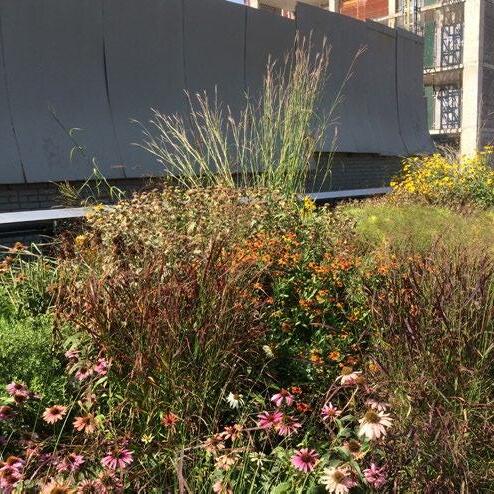
late spring and summer. The two-toned effect of ‘Blackhawks’ makes an interesting foil mingled with early flowering perennials such as Echinacea and Agastache. Later in the season, the tall flower spikes add texture and movement among fall bloomers such as Rudbeckia spp (Black-Eyed Susan), Hylotelephium spp (Tall Stonecrop), and Symphyotrichum spp. (Asters).
Looking for something unusual? Andropogon gerardii ‘Blackhawks’ could be the answer.
Bobbie Schwartz, FAPLD, owner of Bobbie’s Green Thumb in Shaker Hts., Ohio, is a landscape designer, consultant, freelance writer, and lecturer whose specialties are perennial gardens and four season landscapes. In addition to being an Ohio Landscape Association (OLA) member, she is an active member of the Ohio Nursery and Landscape Association (ONLA) and Perennial Plant Association (PPA). Bobbie is a Past President of the Association of Professional Landscape Designers (APLD).










MICHAEL J. DONNELLAN M3 Wealth Management
Most people dream of financial security — the freedom to retire comfortably, weather unexpected expenses, and leave something meaningful behind. Yet the path to that security rarely comes from a single windfall or a perfectly timed market bet. It comes from something far more accessible: investing consistently, over time, no matter what the market is doing.
At the heart of long-term investing is a concept that Albert Einstein reportedly called the eighth wonder of the world: compound interest. When your investments earn returns, those returns are reinvested and begin generating returns of their own. Over time, this creates a snowball effect that can turn modest, regular contributions into a substantial nest egg.
Consider a straightforward example. An investor who contributes $500 per month starting at age 30, earning an average annual return of 7%, will have accumulated roughly $1.2 million by age 65. The total out-of-pocket
contribution over those 35 years is only $210,000. The remaining $990,000 comes entirely from compound growth — money working on top of money, year after year.
One of the most common mistakes investors make is waiting for the “right moment” to invest. They watch market headlines, anticipate dips, and hold cash hoping to buy at the perfect low. The problem is that nobody — not professional fund managers, not economists, not Wall Street analysts — can consistently predict short-term market movements.

Research consistently shows that missing just the ten best trading days in a decade can cut long-term returns nearly in half. Those best days frequently occur during periods of market turbulence — exactly when nervous investors are sitting on the sidelines. The investor who stays the course, contributing regularly through both bull and bear markets, captures those recoveries automatically.
Investing a fixed amount on a regular schedule - whether monthly, biweekly, or with every paycheck - is a strategy known as dollar-cost averaging. When prices are high, your fixed contribution buys fewer shares. When prices drop, that same contribution buys more. Over time, this naturally lowers your average cost per share and removes the emotional pressure of trying to time purchases.
Perhaps more importantly, a regular investing habit transforms market downturns from sources of anxiety into opportunities. When the market pulls back, consistent investors are buying more shares at lower prices — setting themselves up for amplified gains when the inevitable recovery arrives.
A frequent barrier to investing is the belief that contributions must be large to matter. They don’t. What matters most is starting. An investor who begins with $200 a month in their twenties will likely far outpace someone who waits until their forties to invest $600 a month, because the earlier investor’s money has decades more to compound.
Tax-advantaged accounts like 401(k)s and IRAs amplify this further. Contributions that reduce taxable income today, or grow tax-free over time, mean more money stays invested and compounding — a meaningful advantage that grows with every passing year.
Building wealth through investing is not about picking the hottest stock or predicting the next market cycle. It is about showing up consistently, letting time do the heavy lifting, and trusting that the long arc of a diversified portfolio bends upward. The investors who reach their financial goals are usually not the most sophisticated or the most daring — they are the most consistent.
Whatever stage of life you are in, the best time to start investing regularly is now. Every month of delay is a month of compounding left on the table. Every month of consistent contribution is a step toward the financial future you’re working to build.
Scenarios illustrated are hypothetical in nature, results may vary. Investing is subject to risk which may involve loss of principal. Past performance is not indicative of future results.
The M3 Wealth Management Office does not provide legal or tax advice. Consult an attorney or tax professional regarding your specific situation. The information herein is general and educational in nature and should not be considered legal or tax advice.
Michael J. Donnellan specializes in stock selection and retirement planning. Feel free to contact him with any questions or comments at the M3 Wealth Management Office at 17601 W. 130th Street – Suite 1 in North Royalton, Ohio. (440) 652-6370 | donnellan@m3wealthmanagement.com



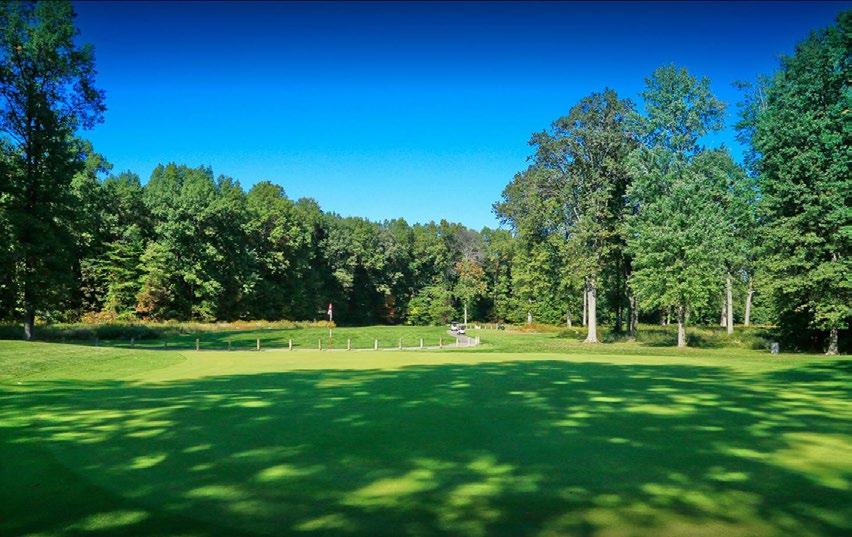
Join over 200 golfers for a fun filled day of golf, food, and fun! This is a great opportunity to build camaraderie through networking and meeting golfers from all corners of the Green Industry. We anticipate having a sold-out event, so please register as soon as possible to secure your spot!
Mallard Creek Golf Club 34500 Royalton Road Columbia Station, OH 44028
Registration & Breakfast, 7:30-8:30 am Shotgun Start, 9:00 am sharp

Email: info@ohiolandscapers.org
$130/golfer and is set up as a 4-person scramble
• Register as a team (4), as an individual, or as a partial team. For those who do not sign up 4 golfers, we will pair you up with another team.
• Each golfer receives lunch, dinner & drink tickets.
• 18 Holes of Golf
Attend Dinner Only - Join us at 2:00 pm for dinner and awards.
Golfer & Dinner Registrations close July 23, 2026.
Lunch at 10:30 am & Dinner at 2:00 served by Winking Lizard
• Closest to the Pin for women & men
• Double Your Money
• 50/50
• Hole in One
• Long Drive for women & men
• Long Putt
• Mulligans
• Putting for the Bottle
• Silent Auction

All sponsors will receive recognition in our Golf Classic marketing materials, social media, on the OLA website, golf signage, verbally at the event, and in The Growing Concern Magazine. All signage is designed by OLA.
In addition, all sponsorships $500 and above are eligible for a complementary 60-minute golf lesson from Tyler Peterson at the Ohio Golf Club. Contact Tyler at 330-409-4400 or peterson@oneillinsurance.com.
Sponsorships close: July 23, 2026 (No refunds after July 23)
$130 each
Sponsors will receive a highly visible sign with your logo on it at a tee box.
$1500 each (4 available)
Sponsors will be on the course with a sign with their logo on it near the tee box. You can set up a tent, chairs, handout giveaways, and use your company tablecloth on a provided table, or bring your own.
$3000 (1 available)
Sponsor is able to announce the top three team prize winners.
$2000 (2 available)
Sponsor is able to announce two of the game winners.
$650 (6 available)
Sponsor logo on sign attached to beverage cart.
$550 (2 available)
Sponsor can help meet & greet around registration table during breakfast.
$500 (2 available)
Sponsors will be recognized verbally at the event and on signage.
$500 (1 per contest)
Driving Range, Long Putt Contest, Trophies, Hole in One, Closest to the Pin, Long Drive, Putting Sponsors will be recognized verbally at the event and on signage.
$500 (4 available)
Sponsor can bring something to give to golfers
We are looking for great raffle prizes that are valued at $250 and above.
Not golfing? Interested in volunteering?
Contact the OLA if you are interested!
Contact Patty Lampert at patty@ohiolandscapers.org, or call 440-717-0002 with any questions about registration, sponsorships or volunteering.
Door Prize donations can be sent, dropped off, or made via credit card online in increments of $25.00.


“Successorship” or “successors in interest” are terms describing the takeover of one employer’s business by another, generally resulting from a change in ownership due to a purchase, acquisition, or merger. Both the predecessor (seller) and successor (buyer) must notify BWC of a transfer in operations. The BWC will transfer the employer’s claims experience when a new owner wholly assumes the former employer’s business. If the new owner assumes only a portion of the business, the BWC only transfers that part of the former employer’s experience to the succeeding employer.
If you’re the successor and a new employer without Ohio workers’ compensation coverage, you must complete an Application for Ohio Workers’ Compensation (U-3). If you already have Ohio workers’ compensation coverage, you only need to submit the Notification of Business Acquisition/Merger or Purchase/Sale (U-118). If you wish to maintain the predecessor employer’s policy, and the predecessor’s coverage is active, you may submit a Request to Transfer Existing Coverage to Succeeding Employer (U-115). You cannot use the U-115 if you have an active policy or if the former policy was canceled. You must submit form U-118.
To learn about the predecessor employer’s experience or outstanding financial obligations before you acquire a business, complete the Request for Business Transfer Information (AC4). Both seller and potential buyer MUST sign this form. The BWC encourages any entity considering the purchase of another entity to use this form to help discover any potential issues with the seller’s policy before purchase.
After notifying the BWC of the transfer and a request to cancel coverage, the predecessor employer has 45 days from the date of cancellation to report the final payroll, also known as true-up. Your policy must be in a canceled status to access the Payroll true-up report.
Important: If you have additional locations covered under the policy for which a portion of the business was transferred, do not complete a cancellation request. Complete the U-118 instead. More information about workers’ comp and selling or buying a business here in Ohio can be found on the Ohio Bureau of Workers’ Compensation website.
If you have plans to buy or sell a business, please contact our Sedgwick Program Manager, Dominic Potina at 614-579-4723 or dominic.potina@sedgwick.com




Ladders are common, useful tools in many workplaces, including construction sites, warehouses, offices, retail spaces and maintenance environments. While ladders may seem simple and harmless, they are involved in many workplace injuries every year. Falls from ladders can result in serious injuries such as fractures, head injuries and even fatalities. So, it is important to practice proper ladder safety which is essential for creating a safe work environment and preventing avoidable accidents. OSHA has Standards on ladder safety for General Industry (29 CFR 1910.23) and Construction (29 CFR 1926.1053).
IfMany ladder-related injuries occur due to improper use. Common causes from improper use include using the wrong type of ladder for the task, placing ladders on unstable surfaces, climbing while carrying tools, overreaching and failing to maintain three points of contact. Additionally, lack of training and rushing to complete tasks also increase the risk of falls. Employers should take the time to train employees on these actions and how they can cause injuries.
A critical component of ladder safety is selecting the appropriate ladder for the job. There are several types of ladders, including step ladders, extension ladders, and fixed ladders, each designed for specific uses. For example, it is important to choose a ladder that is tall enough to reach the working height without standing
on the top rung or step or in some cases the top two steps. Ladders must also be rated to support the worker’s weight plus any tools or materials being carried. Weight ratings, often labeled as “duty ratings”, should always be checked before use. Also, ladders should be made of materials suitable for the anticipated work environment. For example, nonconductive fiberglass ladders should be used when working near electrical sources, as metal ladders can conduct electricity and increase the risk of electrocution.
Before using a ladder, workers should perform a thorough inspection. This includes checking for cracks, dents, loose or missing rungs, damaged rails, faulty locking mechanisms as well as areas on the ladder that may cause a slip (grease, water, oils, etc.). Step ladders should open fully with spreaders locked in

place, and extension ladders should have secure rope, pulleys and rung locks. Any ladder that shows signs of damage must be taken out of service immediately and repaired or replaced, otherwise, it could result in an injury.
Proper ladder placement is essential for stability and for the safety of the employees using them. Ensure ladders are placed on firm, level surfaces. If a ladder must be used on uneven ground, use the appropriate leveling equipment, never use improvised solutions like bricks or boards. For extension ladders, a general rule is to place the base one foot away from the wall for every four feet of ladder height. The top of the ladder should extend at least three feet above the landing surface when used to access roofs or elevated work platforms.
Ladders should never be placed in front of doors that are not locked or guarded, as unexpected opening can cause the ladder to fall. Barricades or warning signs should be used when ladders are set up in high-traffic areas.
When climbing a ladder, workers should always maintain three points of contact. Three points of contact is where the employee places either two hands and one foot or two feet and one hand on the ladder at all times. It is very important to face the ladder while climbing and descending as this will help maintain balance
and control. Tools and materials should be carried using either tool belts or hoisted with a rope, as ascending or descending a ladder while holding equipment can result in a fall. Finally, never have more than one person on a ladder as this could stress the maximum capacity of the ladder and could result in instability, unless the ladder is designed for multiple users.
Effective ladder safety requires proper training and reinforcement. Employees should be trained on items such as ladder selection, inspection, setup and safe use. Regular safety talks and refresher training are great ways to keep safety at the forefront of workers’ minds. Employers also play a key role in ladder safety by setting clear expectations, correcting unsafe behaviors consistently and ensuring ladders are used appropriately.
Ladder safety is a critical component of workplace safety and should never be overlooked. By choosing the right ladder, inspecting it before use, setting it up correctly and following safe climbing practices, workers can significantly reduce the risk of falls and injuries. Employers and employees share responsibility for ensuring ladder safety through proper training, awareness and adherence to safety guidelines. Taking the time to use ladders safely protects not only individual workers but also the overall health and productivity of the workplace.
If you would like to know more about Sedgwick’s safety services or would like to schedule a confidential consultation, please contact Andy Sawan at andrew.sawan@sedgwick.com or 330-819-4728.

JIM FUNAI, PhD
Cuyahoga Community College
SHELLEY FUNAI, LIC
Stan Hywet Hall and Gardens
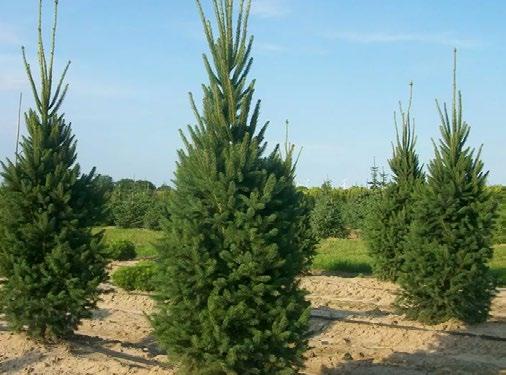
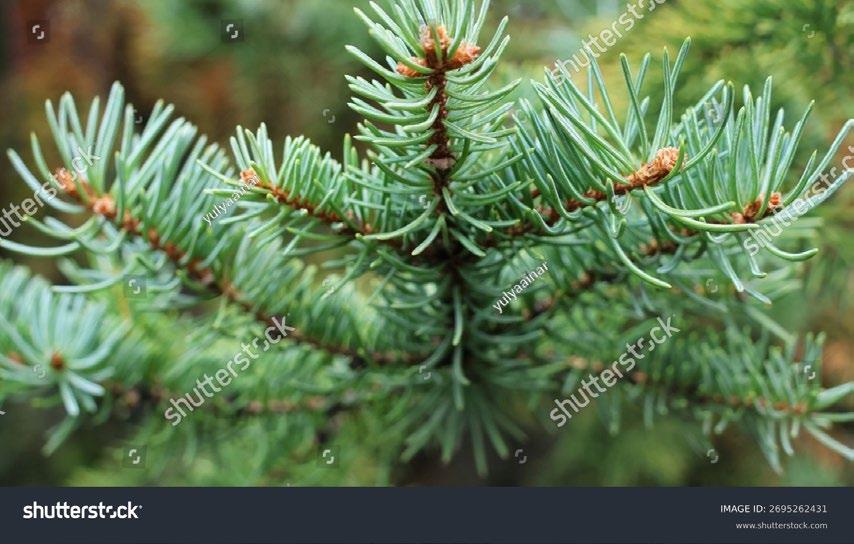
Let’s talk about this month’s plant, Picea abies, the Norway spruce. This spruce species is very common in landscapes across the world for many reasons, mostly because it grows in a wide range of conditions, is easy to propagate, and grows fast. If you were in the business of selling plants, wouldn’t those be traits you seek in your product?
Sure, this tree has been overused in some situations with the biggest offender being within 10 feet of the corner of the typical suburban home. We all know the results of this scenario as we wince at the impending doom that awaits the unsuspecting homeowner and their tree removal bill. But we ask, how does that make this a bad plant?
Perhaps you are thinking about the Norway spruce you have seen completely blown over with the root plate in the air and offer that as evidence to remove this plant from our repertoire. To that, we challenge you to count how many Norway spruce you see around you and calculate the percentage that have blown over. Now, subtract the spruce that were planted in the
wrong place (soil found on many a residential and commercial property that is compacted to a point of being nearly anaerobic). How many are left? Still think this is a terrible tree or are we planting it in the wrong place (wrong soil conditions)?
The truth is, Picea abies is a beautiful plant and offers us years of maturing beauty. One of the best features is how this tree matures from a young specimen with a dense, perfectly pyramidal habit (trained by the nursery) to a 50’ upright pyramidal tree with the most graceful, upswept, pendulous branches. The tree will maintain branches at ground level and create a powerful wind and visual screen or can be limbed up to provide an overhead canopy.
continued on page 20

TIRES & TRACKS FOR ALL YOUR EQUIPMENT ALL YEAR LONG

Landscaping crews work on real ground – not perfect conditions. All Lift Tires & Tracks helps you reduce downtime, improve performance, and get more life out of your equipment by matching the right tires and tracks to how and where you actually work. From turf to mud to snow, we deliver traction that holds up season after season.
We supply tires and tracks for landscaping, construction, forklifts and more:
>> Skid steer loaders
>> Compact track loaders (CTLs)
>> Mini excavators
>> Compact wheel loaders
>> Compact utility tractors
>> Mini skid steers/stand-on loaders
>> Snow-removal equipment
>> Forklifts, aerial equipment & more
DEDICATED TO KEEPING YOU ON TRACK Call or text Ray Schentur 440.289.9501 | rschentur@alllift.com AllLift.com/GroundGame


continued from page 18
At more than 50’ tall and up to 30’ wide, this is not a tree for a smaller property. This is best used in mass plantings on larger residential and commercial properties where a fast, full, healthy evergreen screen is requested. Are there other spruce and evergreen that can be used, sure! How about mixing it up and planting a blend of several different spruce, pine, and fir instead of just a uniform row of one plant. We realize many people have overused Norway spruce for screens and cause us to become jaded with it. But we ask, how does that make this a bad plant?
Perhaps you are not sold on the virtue of straight species Picea abies. To that we offer the selection of cultivars that create some of the most beautiful focal points when deployed properly. Picea abies ‘Pendula’ (Weeping Norway Spruce) is a treasure that allows you to become a sculptor of plants. Using the quick growth habit and some clever use of staking or wire much like in bonsai, you can build a weeping specimen with as much character as you desire. We have been pushing one up towards the sky with a small inconspicuous bamboo rod for about 5 years now and it is every bit of 10’ tall (started at 4’) and has unique branches slightly stretching out for a few feet before melting towards the ground. With a soft up light shining on ‘Pendula’ you would have a perfect focal point for the garden day and night through all seasons of the year.
You’ve likely seen and perhaps planted ‘Nidiformis’ known as the Bird’s Nest Spruce. This cultivar should stay below 3’ and get slightly wider. The top of the plant is fairly flat and perhaps dished in slightly in the middle resembling a large bird nest making it a great addition to the front of the shrub/perennial border.
‘Little Gem’ stays very dense and compact at about 24” and makes a neat little green meatball in the landscape. Have a client obsessed with making all their plants little round meatballs? Plant this and save yourself the time with the sheers to the taxus shrubs.
The moral of this month? Besides Yucca (and a handful of invasive junk) we need to learn to respect each plant’s unique offering to the landscape. Just because a plant has found heavy rotation to the point of overuse and misuse, does not mean we should give up on it. Perhaps you can be the one that sets the example and uses this plant in just the right setting that it can show off its positive attributes. Nothing silences the plant hipster like showing them the beauty of the common plant.
Jim Funai, PhD, is full-time faculty at Cuyahoga Community College, a NALP accredited associate of applied science in hoticulture degree program. He has a PhD in Landscape Engineering and Forestry and is a Licensed Arborist. Shelley Funai is Grounds Manager at Stan Hywett Hall and Gardens in Akron, Ohio, which offers a historic estate designed by Warren H. Manning and a beautiful manor house museum. She is Landscape Industry Certified in Ornamental Plant Care.


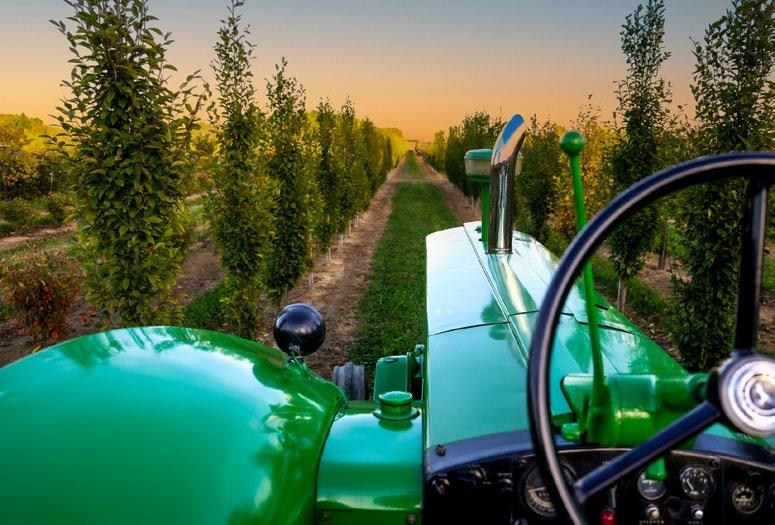









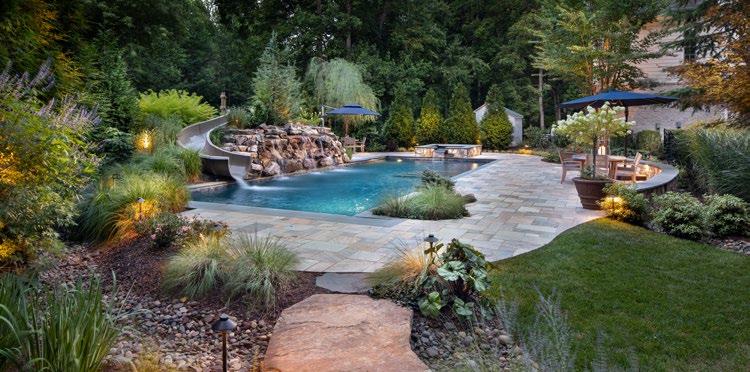
Annuals are fleeting, but how you design your client’s landscape can provide them with year-round interest in their property. There is no one set way to craft a design that provides color, structure and allure in a landscape throughout the seasons, but below are some of the different techniques and plant material to consider.
If you’re starting with a blank slate for a yard, you first need to consider what elements will provide structure in the design rather than fixating on any specific plant species.
“Think through evergreen shapes,” says Lindsay Ables, exterior designer with Ables Landscapes, based in Hollywood, South Carolina. “Think about shapes and think about what in your garden will be there year round, and create that structure so that when the perennials and the annuals and such ebb and flow throughout the year, you have these solid anchors in your space.”
Ryan Kauffman, design and sales consultant with DeSantis Landscapes, based in Salem, Oregon, agrees evergreens are the most important element to creating structure in a fourseason landscape design.
“Starting any design with structure, that’s going to ensure good winter interest,” Kauffman says. “You’re looking for things like strong structure, interesting forms and habits of plants, also looking at different textures of foliage. These are small things that a lot of people may overlook, and things that I think are really important.”
continued on page 24





Carbon
Delivery
Curbside
EZ
Sturdy
hauling
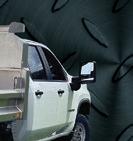


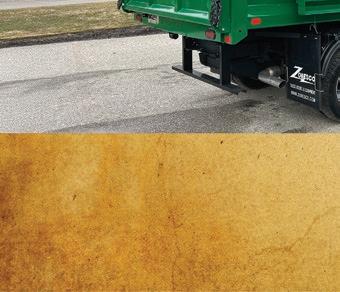
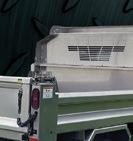
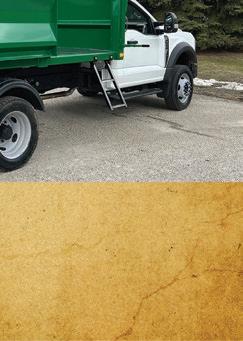
• Easier to maneuver on residential streets and tight job sites

• Lower operating costs with fewer tires and better fuel e ciency Ideal hauling capacity for mulch, soil, gravel, and debris
• Hydraulic dump body saves time and labor on every job
Drives like a pickup — works like a dump truck



continued from page 22
Aside from evergreens, ornamental grasses and trees can also provide year-round interest and structure to a space. April Sullivan, senior design and sale consultant for Rossen Landscape, based in Great Falls, Virginia, says she is fond of including a legacy tree, especially on bigger projects or a newly built house.
“Anywhere I can put a big tree that’s not for them, that’s for the family three houses from now, to enjoy,” Sullivan says. “Creating shade, creating something beautiful to look at, is so important and just giving shape to the landscape with something that is architecturally interesting, in terms of plant material, like a hornbeam or Japanese maple that has a cool shape, or something that you can put a light on and enjoy is hugely important.”
One risk of trying to create year-round interest is overloading the space with so many plants that the landscape ends up feeling too busy or cluttered. Instead, it’s best to choose a theme and stay consistent, particularly if the property you’re designing for is on the smaller side. Kauffman advises sticking with a more restrained plant palette and having repetition throughout the site. Grouping plants en masse can also help prevent a design from feeling too chaotic.
“Planting in layers is helpful,” Sullivan says. “You can have something in the background that might be doing something more in the winter and something in the foreground that might give you that spring color, and something next to it that may carry through a fall with some fall foliage. Echoing those keys throughout the property where you see that repetition, so it makes sense.”
Sullivan says an example of this would be if she uses Nepeta in the foreground and then repeats those purple and blue tones with a Vitex or a Caryopteris off in the distance, with different bloom times throughout the year. Sullivan adds that in some cases, it’s best to select plants that make sense year-round, such as amsonia.
“It’s got wonderful texture, really pretty flowers in the spring,” Sullivan says. “It gives you good texture during the summer months, but then in the fall, you get this great yellow/orange coloration to it, so it moves really well even in the fall.”
Ables notes that it’s equally important to let the eye rest and not fill every little space with plants. “You can have space where it’s just the mulch in the bed, just the pine straw, before you get to the next thing,” Ables says. They’ve also seen a shift from huge annual beds to now residential clients prefer little containers in different areas of the landscape to serve as their hit of annual color.
Ables recommends embracing the seasonal nature of different plants, as it makes each part of the year special as a new plant steps into the spotlight. One aspect Sullivan takes into consideration with her plant material is how long the plant will look interesting.
“If it’s a short-lived thing, I have to really be passionate about using it, because I know that the rest of the year it’s going to look completely different and probably not give you that wow factor,” Sullivan says.
While the viability of certain plants depends on your service area, Sullivan and Ables note you can’t go wrong with bulbs, as they tend to be one of the early indicators that spring is on its way. “Nothing makes me happier in the doldrums of February to see a yellow daffodil,” Ables says. “It’s just so happy.”
Sullivan agrees that daffodils are one of the best plants to plant en masse. Other strong spring blooming plants include azaleas, forsythia, dogwoods and redbuds. Kauffman says if you want to go beyond just bulbs, hellebores and osmanthus can bloom from late winter to early spring.
Sullivan encourages designers to plant something more unique and interesting like witch hazel or camellia. “Camellia has always surprised my clients,” Sullivan says. “They’re like, ‘I thought this was just a green bush and now there’s flowers over it.’ Something that gets them excited in the dead of winter is always something good.”
Summer is one of the months that can be overlooked and presents a challenge for plant material as it’s hot and not everything is looking its best. Kauffman says he tends to lean toward drought-tolerant summer-loving plants like Epilobium and Agastache.
Ables says some of her favorite summer plants include hydrangeas, coleus, crotons and liriope. “People treat it (liriope) like a ground cover, but come July, they put up this little purple/blue bloom, like a little spire,” Ables says.
Sullivan prefers to use natives that attract pollinators like bee balm and clethra for the summer months. She also strives to find plants that bridge the gap between common bloom times, such as Japanese snowbell, which blooms in June when the spring flush has ended, and the summer flowers haven’t started yet.
As for the fall, Kauffman notes you don’t only have to lean on fall foliage for seasonal color. He’ll look for what blooms in the fall and early winter when designing. Ables says because it is typically still warm long into the fall in her area, they will continue to use crotons as well as cabbages and pansies.
Sullivan says she tries to pick plants that bronze well with evergreens. “Itea is a really cool native because it also has killer red color in the fall,” Sullivan says. “They’re one of those really easily maintained plants that you can plant en masse. They tolerate shade. They tolerate drought. It’s a magical plant.”
Beautyberry is another good transition plant as it offers yellow leaves in the fall and bright amethyst berries that persist into the winter before being eaten by birds. Sullivan adds that Japanese maple varieties ‘Sango Kaku’ and ‘Emperor One’ provide sensational fall color as well as winter interest.
Sullivan says grasses are also severely underused for the fall. Often, these can carry over into the winter as well. For the wintertime specifically, it’s important to have maintenance conversations with both your clients and crews to prevent what you included for the purpose of winter texture being trimmed back.
Ables says if a client wants their grasses trimmed back during the winter, she suggests weaving in evergreens like boxwoods or pittosporum to provide some structure to the space.
Sullivan recommends looking for plants that are able to hold their own during the harsh winter months and provide some type of color or texture. Winterberry holly and red twig dogwood are two examples of this.
Kauffman adds that paper bark maples are a good tree that provides a lot of interest in the winter and can help anchor a landscape. Visiting local nurseries, public gardens and nearby parks, as you never know what new plant material you’ll encounter. “Go to find your favorite garden and go to it multiple times a year and see what they’re doing,”
Sullivan says. “Just because you have a great idea doesn’t mean somebody else doesn’t also have a great idea.”
This article was written by Jill Odom for the National Associations of Landscape Professional’s blog, “The Edge”.

When you’re on the smaller side, many of the processes you create work when you only have five or 10 employees. Yet as your team grows, cracks can begin to appear as bottlenecks and inconsistencies cause issues. “Strong processes allow us to grow while maintaining quality, performance, and accountability across all branches,” says Loren McIrvin, CEO of Allied Landscape, based in Livermore, California.
Greg Malmberg, owner of Process Pro, LLC, says the first step to creating scalable processes is to build them around steps and actions, not individuals.
“We get these people who are like, ‘Oh, this is how we do it because that’s how Gus does it,” Malmberg says. “But that’s never going to work if I add a new branch. It’s got to be more action-oriented, plug and play, which is very specific. These are the steps, and not, ‘We got to check with Steve.’”
Brett Gordon, COO for Focal Pointe, based in Caseyville, Illinois, recommends considering where in a process things are most likely to break down and how trainable the steps are with new hires. McIrvin agrees that if a process can’t be easily taught or repeated, it won’t scale.
Shayne Newman, president of YardScapes Landscape Professionals, based in New Milford, Connecticut, adds that the sign of a good process is one that can easily be delegated to another employee because of the level of documentation.


Sweet Peet® is a premium compost and mulch made from recycled horse bedding. Whether you're seeding lawns, feeding garden beds, or beautifying landscapes, Sweet Peet® delivers results you can count on every time.

Organic mulch
Soil-building amendment
Grass seed germinator

Enhances curb appeal
100% organic & fully composted
Packed with beneficial microbes and slow-release nutrients

Reduces callbacks
Reduces labor and fertilizer costs
Happy customers, more referrals


On May 19th, OLA Members traveled to Washington DC to discuss the Certified Seasonal Employer Designation, H2-B Caps and current requests, H-2B visa processing delays, and the lottery based allocation system with Ohio Representatives and Senators.
Pictured above, left to right is Samantha Dreslinski, McCaskey Landscaping, Ohio Senator Husted and Bill Preston, Preston Superstore.
Others members who traveled to Capitol Hill included:
• Joe Drake, J.F.D. Landscapes
• Andy Meyers, Yard Barbers
• Patty Lampert, OLA
• Ric Haury, Suncrest Gardens
• Justinea Vidic, Granite Works Stone Design
• Lori Sprague, Exscape Designs


“What if an employee’s out sick for an extended period of time, and if you don’t have a process, or things documented in the software, how can anybody fill in for them while they’re away?” Newman says. “Or if an employee quits or you’re terminating them, how difficult would it be to onboard that person if you don’t have processes documented?”
Michael Prokopchak, president of Walnut Hill Landscape Company, based in Annapolis, Maryland, says documentation is critical if you want to scale the business, and he’s recently tapped into AI to help create SOPs.
“When we started the company 20 years ago, everything was in my head; it’s still there,” Prokopchak says. “But we’re not going to grow if it stays up there. So that’s where we’re using AI every day for everything we do.”
Prokopchak also sets 30-60-90-day onboarding expectations with new hires so they understand exactly how they should perform from the start.
Another key to strong processes is having everyone on the same page with a shared vocabulary, particularly when using company software.
“This is one where people often miss, even if you think about simple things like selections for lead sources or cancellation reasons,” Malmberg says. “Simple data points that companies want to get information on, they assume their options make sense to everybody. Most often, there’s always a gray area where people interpret them or apply them differently. They should be defined. Here’s what they mean, and here’s a real-world example of how you would apply it, so everyone’s pulling in the same direction.”
Doug McDuff, president and co-owner of Landscape America, based in Wrentham, Massachusetts, says they often have to adapt their vocabulary to what’s available in the software.
“This takes time to adapt with internal communication and requires focus and having the managers lead the change,” McDuff says.
Prokopchak says they have a glossary to ensure their team members are all speaking the same language.
Even if a process currently has your business humming like a well-oiled machine at $5 million doesn’t necessarily mean it will still serve you at $10 million. Rather than waiting for things to break down, make a point to discuss with your team where a process can be fine-tuned.
McDuff says continuous improvement is part of their culture, so they are always looking for ways to improve their systems annually.
“You need structured review cycles to act on what it’s telling you,” McIrvin says. “We build in periodic reviews — both ongoing and annual — to evaluate performance and refine processes.”
Prokopchak notes that AI has been a game-changer for his company as he’s been able to save time in creating training materials and improving his processes.
“Maybe once a quarter go through the processes and definitely involve all the parties that are involved because there’s always a better way to do something,” Prokopchak says.
This article was written by Jill Odom for the National Associations of Landscape Professional’s blog, “The Edge”.











In landscaping, every detail matters. From patio layouts and outdoor kitchens to pool placement, grading and sightlines — what looks good on paper doesn’t always translate seamlessly in real life. That’s where Walk Your Plans is changing the game. Originally known for its impact on homebuilding, Walk Your Plans is now helping landscapers and their clients step into outdoor projects at full scale — before a single shovel hits the ground.
BRINGING OUTDOOR PROJECTS TO LIFE… BEFORE THEY BEGIN
Through life-size blueprint projections, Walk Your Plans allows landscapers, designers and homeowners to physically walk through outdoor spaces in real time. Patios, pathways, pools, retaining walls and more can be experienced at true scale, giving clients a clear understanding of how everything fits and flows together.
Instead of relying solely on drawings or renderings, clients can feel the space.
“We’ve always said that plans can look good on paper but walking them changes everything,” says Joe Matejka, President and Founder of Walk Your Plans. “When you apply that to outdoor living, where scale, spacing and flow are critical, the value becomes even more apparent. It’s how teams get to alignment, and get to yes much quicker.”

For landscapers, one of the biggest challenges is helping clients visualize how elements will work together, especially when projects involve multiple features and phases.
Walk Your Plans helps eliminate that uncertainty.
By walking the layout before construction begins, landscapers and clients can:
• Validate spacing between key elements like patios, seating areas, gardens and pools
• Understand traffic flow and usability
• Identify potential issues early
• Make confident decisions without back-and-forth revisions
The result is a smoother process from design to installation.
“It saves time and money. Plain and simple,” says Chris Zbin, owner of Zbin Landscaping. “Instead of going back and forth on revisions or trying to explain things on paper, my clients can actually walk their plans and understand it instantly. It speeds up decisions and helps avoid costly changes later.”
As outdoor living projects continue to grow in scale and complexity, expectations are higher than ever. Clients want confidence before committing to significant investments.
Walk Your Plans provides that confidence while also giving landscapers a clear differentiator in a competitive market.
“This isn’t just about visualization. It’s about improving the entire process,” adds Matejka. “When landscapers can bring their clients into the space before it’s built, it changes the conversation. There’s more clarity, more collaboration and ultimately better results.”
For professionals like Zbin, it’s also a business advantage.
“It elevates the entire experience for my clients,” he says. “They walk away feeling confident in their decisions and that makes the entire project run more efficiently.”
While pools, patios and outdoor kitchens are a natural fit, the applications extend across a wide range of outdoor projects from full property layouts to commercial landscapes.
Anywhere scale, spacing and flow matter, Walk Your Plans can make an impact.
Because in the end, the goal is simple: help clients see it, understand it and get it right the first time.


PATTY LAMPERT Executive Director / OLA
Join over 200 golfers – from all corners of the industry – for a fun-filled day of golf, food, and fun! This is a great opportunity to build camaraderie through networking and meeting golfers from all corners of the Green Industry. We anticipate having a sold-out event, so please register as soon as possible to secure your spot!
The location is Mallard Creek Golf Club at Columbus Station, and you can register as a 4-some or individual golfer. Everyone will play 18 holes of golf, and food will be served by Winking Lizard. New this year will be 4 Hole Sponsorships, 30-Minute Golf Lessons, and a Silent Auction. If you are not golfing and are interested in volunteering, please reach out.
In addition to our golf outing, the 29th Annual Landscape Ohio! Awards will be on October 8 at Tenk West Bank. The stage will be set to celebrate the excellence of Ohio’s landscape leaders.
We are excited to announce that Jim Funai, Ph.D., Assistant Professor: Plant Science and Landscape Technology at Cuyahoga Community College, will receive the Award For Lifetime Contributions To The Landscape Industry!
Our awards program, sponsorships and educational outreach thrive due to the generosity of OLA members like you. We are so GRATEFUL for everyone’s support, and for all of the amazing things OLA members do to help inspire and build the next generation of landscape leaders.
Thank YOU for helping us Educate, Advocate, and Elevate those around us, to create relationships, connections, and partnerships that will further everyone’s success.
Please save the date for these upcoming events. Registration will be available on the OLA website soon.
July 8
Columbus Plant ID –
July 15
Cleveland Plant ID –
August 6 Golf Outing –September 25
Plant Healthcare –October 8
Landscape Ohio! Awards

•