OHIO COOPERATIVE


Little libraries spread spring
High school students can join us for
Friday, May 29, 2026
Friday, October 23, 2026
• Try on lineworker gear
• Build a crossarm
• Locate underground conductors
• Apply line cover to power lines
Scan for registration information

Registration opens March 1, 2026
Dates are subject to change
Indoors or outdoors, the sport of rock climbing is on a rising trajectory.
Little free libraries of a different kind help spread beauty and expand habitats for pollinators.
30
An 1800s farm boy with a talent for equine affairs is still an inspiration in his Ohio hometown.
Cover image on most editions: Purple coneflowers, the only echinacea species native to Ohio, are a key source of pollen for butterflies, bees, and other insects during the summer months, and their seeds are among those available in “seed libraries” sprouting up around the state (photograph by Vladimir Sotnichenko/via Getty Images).
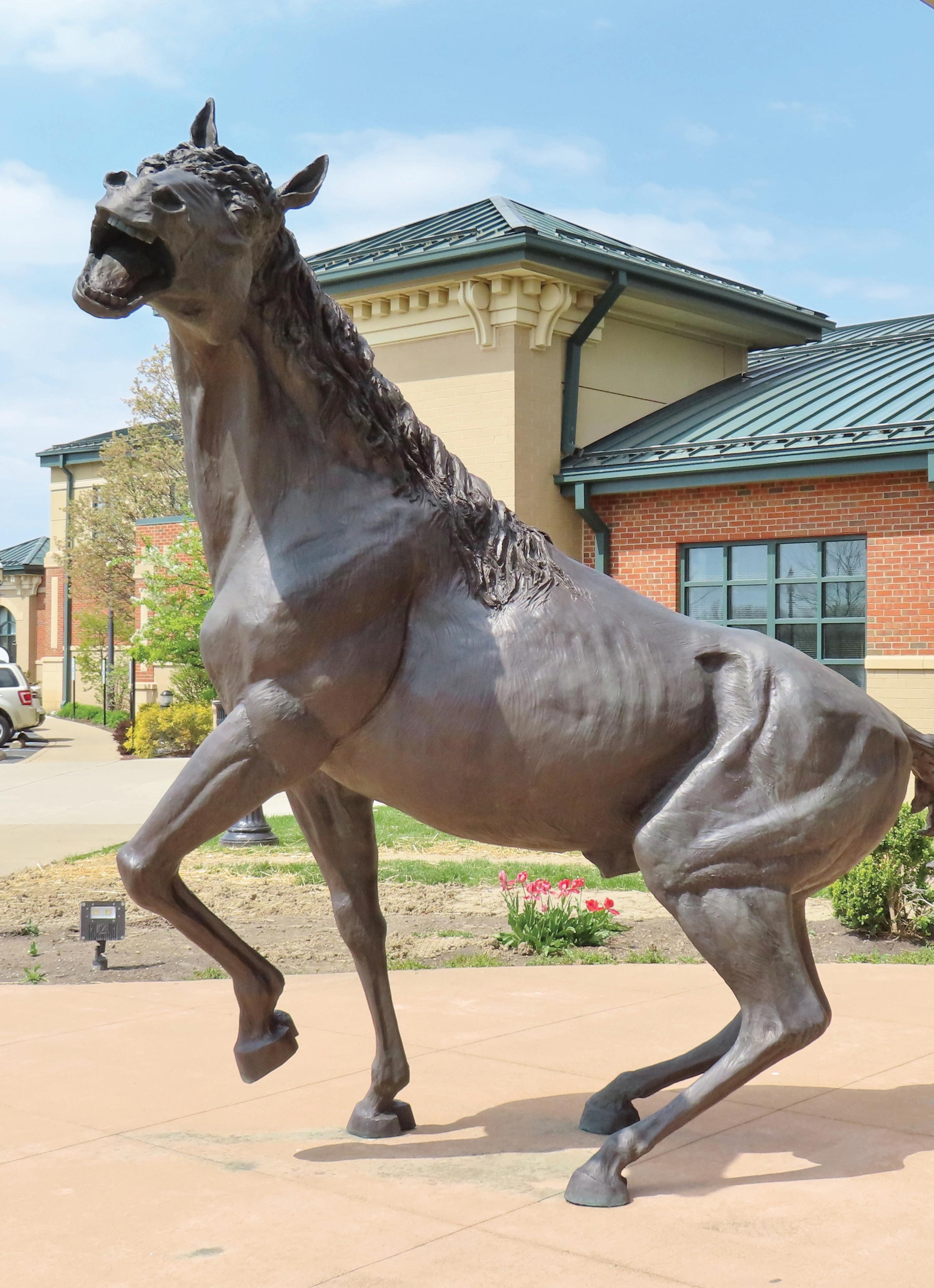
This page: A statue of Cruiser, a supposedly untamable horse, greets visitors at the community rec center in Groveport (photograph by Damaine Vonada).

When severe winter weather recently swept across Ohio and much of the eastern United States, it put significant strain on the electric grid. As temperatures dropped, electricity demand surged and fuel systems tightened. It was a challenging period that once again showed what truly matters during extreme cold: a reliable, diverse power supply that performs under pressure.
Within our 13-state region of the grid, known as the PJM Interconnection, coal, nuclear, and natural gas resources did exactly what they were built to do: keep power flowing when conditions are at their worst. Together, they supplied more than 90% of the electricity used during the coldest of those days.
The fleet of generation resources that power Ohio’s electric cooperatives stood strong as well. All three coal-fired units at our Cardinal Power Plant remained online, as did all 11 Ohio Valley Electric Corporation coal units. Natural gas plants owned by cooperative members stayed online as well, despite extremely high gas prices and heavy strain on the natural gas delivery system. That balanced mix of resources helped maintain reliability across PJM and avoided potential power shortages during some of the most extreme conditions we’ve seen in quite some time.
One of the key lessons from that weather event was the importance of readily available fuel. Coal and nuclear plants store fuel on-site, which protects against sudden price spikes and fuel delivery interruptions. We saw what a difference that made when natural gas supplies became tight and prices rose sharply. While natural gas plants owned by Ohio cooperatives do maintain limited on-site backup fuel, it’s typically only enough for a few days of operation. Coal and nuclear plants, meanwhile, store enough fuel to run for weeks or even months at a time. That’s a real safeguard that helps manage both reliability risks and spiking costs, providing a critical buffer during the prolonged severe weather.
None of that reliability happens by accident, or without people. The operations, scheduling, and dispatch teams at our coal and natural gas plants worked around the clock, in difficult conditions, to secure fuel supplies, manage pipeline flows, and monitor rapidly changing grid conditions to keep those units operating safely and reliably.
Their dedication and expertise helped keep the lights on and homes heated when Ohio families needed it most.
Coal, nuclear, and natural gas resources did exactly what they were built to do: keep power flowing when conditions are at their worst.
6677 Busch Blvd. Columbus, OH 43229 614-846-5757 www.ohiocoopliving.com
Craig Grooms President & CEO
Caryn Whitney Director of Communications
Jeff McCallister Senior Managing Editor
Amy Howat Assistant Managing Editor
Neal Kindig Graphic Designer
Contributors: Margaret Buranen, Colleen Romick Clark, Getty Images, W.H. “Chip” Gross, Catherine Murray, and Damaine Vonada.
OHIO COOPERATIVE LIVING (USPS 134-760; ISSN 2572-049X) is published monthly by Ohio Rural Electric Cooperatives, Inc. It is the official communication link between the electric cooperatives in Ohio and West Virginia and their members. Subscription cost for members ranges from $6.48 to $7.92 per year, paid from equity accruing to the member.
POSTMASTER: Send address changes to editorial and advertising offices at: 6677 Busch Boulevard, Columbus, OH 43229-1101. Periodicals postage paid at Berne, IN 46711, and at additional mailing offices. Nothing in this publication may be reproduced in any manner without written permission from Ohio Rural Electric Cooperatives, Inc. All rights reserved. The fact that a product is advertised in Ohio Cooperative Living should not be taken as an endorsement. If you find an advertisement misleading or a product unsatisfactory, please notify us or the Ohio Attorney General’s Office, Consumer Protection Section, 30 E. Broad St., Columbus, OH 43215. Periodicals postage paid at Columbus, OH, and at additional mailing offices.

The power beneath your feet: Geothermal systems take advantage of nature and physics to provide clean, efficient heating and cooling.
In search of... After many fruitless years, author’s quest for an elusive “bull can” takes a different tack.
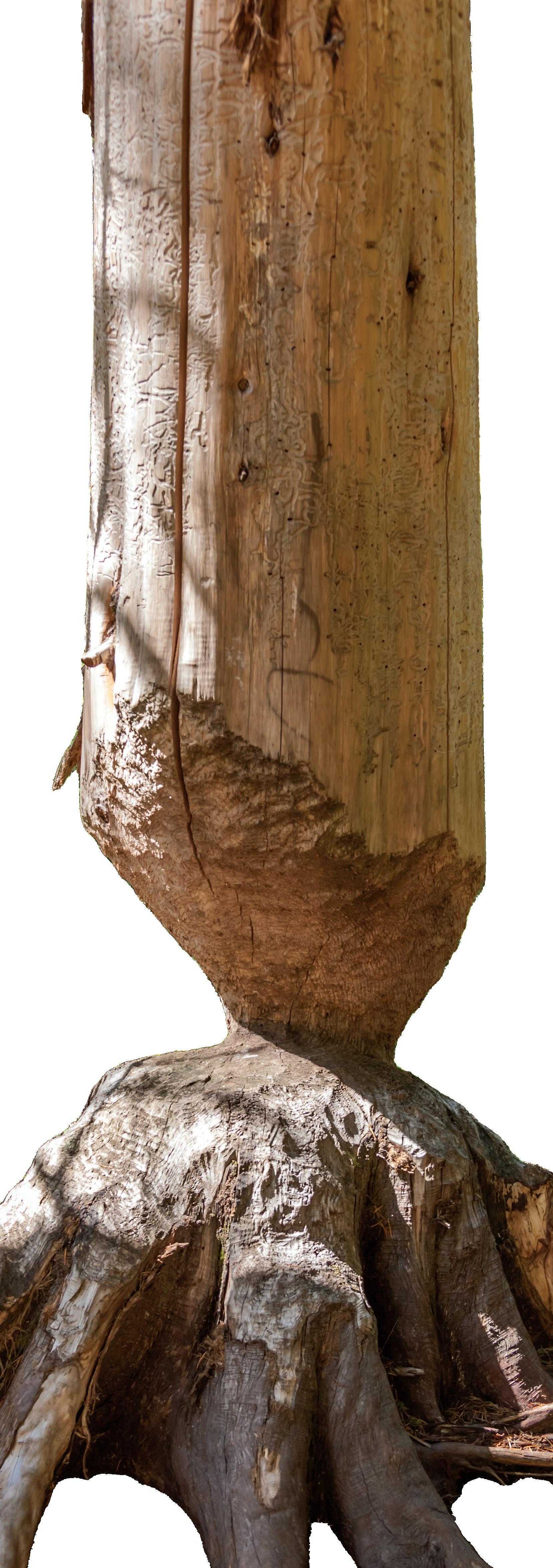
The problem with beavers: Sometimes the busy little things, cute but industrious as they are, can be a real headache.
Tea time! We all can appreciate a good cuppa, but the joys of tea don’t have to be limited to a mug.
News and other important information from your electric cooperative.
National/regional advertising inquiries, contact Cheryl Solomon American MainStreet Publications 847-612-9015 | cheryl@amp.coop or email advertising@ohioec.org
13 8 10 4 36 33
What’s happening: March/April events and other things to do around Ohio.
Tea party: Anytime can be a special occasion when you put on a kettle for friends and family — as shown in South Central Power Company member Greg Schumacher’s photo (on the right) of his setup for “high tea with the bride-to-be.”



Please report changes of address to your electric cooperative. Ohio Cooperative Living staff cannot process address changes. Visit Ohio Cooperative Living magazine online at www.ohiocoopliving.com! Read past issues and watch videos about our articles or our recipes. Our site features an expanded Member Interactive area, where you can share your stories, recipes, and photos and find content submitted by other co-op members across the state.
Alliance for Audited Media Member


BY AMY HOWAT
When people consider renewable energy sources, they tend to look up. Solar power, after all, is a common choice for someone looking to go green or potentially save money on electricity.
For some, however, it can pay to look down. Geothermal systems take advantage of the naturally consistent temperature underground to provide energy-efficient heating and cooling year-round.
“People choose geothermal for the environmental benefits and to save money,” says Tim Litton, director of marketing for WaterFurnace, an Indiana-based geothermal system manufacturer. “Geothermal is twice as efficient as any traditional heat pump, which means people can save more money on heating and cooling.”
Home geothermal systems work generally the same as the more common air-source heat pumps, which use refrigerant and a compressor to transfer heat, says Bruce Warnecke, energy service advisor at HancockWood Electric Cooperative in North Baltimore. “But
geothermal uses ground temperatures, which remain constant compared to air temperatures, which fluctuate widely,” he says.
In the Midwest, the temperature just a few feet under the ground stays at a consistent 55 degrees, no matter the air temperature above. “The system uses pipes that circulate liquid through the ground to either extract warmth to heat the refrigerant or deposit the heat to cool the refrigerant,” Warnecke says. “On a day when it’s 90 degrees outside, it’s much more efficient to use 55-degree water to cool than to use 90-degree air. If it’s 15 degrees outside, it’s much more efficient to use 50degree water than that extremely cold air.”
The harder the system works, the more electricity it uses, raising the homeowner’s electric bill. “In the winter, the colder it gets, the harder a traditional heat pump has to work to get heat from the outside air,” Litton says. Extremely cold days can push air-source heat pumps to switch to auxiliary or supplemental electric heat, which can use five or 10 times as much electricity as the normal heat-pump mode. Geothermal
heat pumps almost never use backup heat, Litton says, because of the consistent ground temperature.
Real-life application
Hancock-Wood member Doug Schwiebert of Hamler recently put a geothermal system into a newly constructed barndominium in Henry County. The choice was easy, he says, because he’d had a positive experience using geothermal in an old farmhouse.
Electric cooperatives frequently advise and educate members about energy efficiency.
When Marysville-based Union Rural Electric Cooperative built its new headquarters in 2007, the cooperative led by example, constructing a LEEDcertified green building.
A major component of its energy-efficiency plan was a geothermal system for heating and air conditioning, says Matt Zarnosky, URE’s chief operating officer and vice president of engineering.
“We have geothermal for the whole building,” he says. “We have 18 compressor units in the building for geothermal heating and air conditioning. If you put geothermal in your house, you’d have just one.”
The co-op benefits both from lower overall energy usage and from consistent costs throughout the year. “Because the temperature of the ground is always constant, we don’t see huge spikes in cost during especially hot or cold weather.”
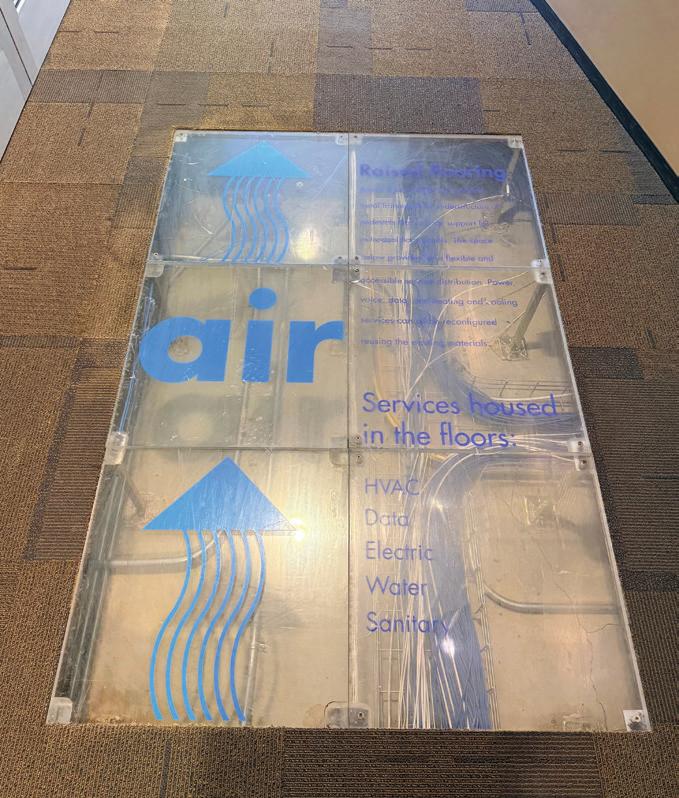
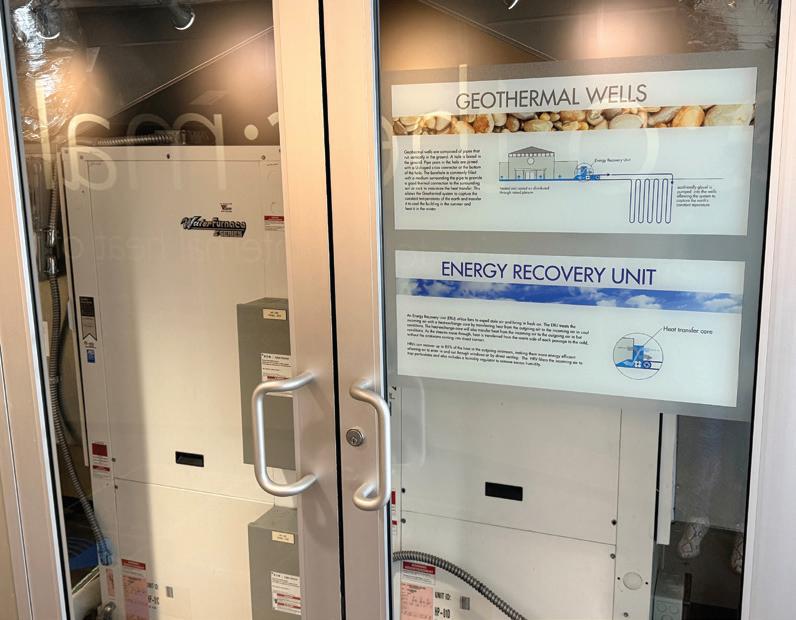
URE’s building is raised off the ground and heat comes through vents in the floor, Zarnosky says, and a glass section of flooring makes that space visible. Additionally, some of the geothermal units may be seen behind glass doors in the co-op building.
The co-op’s building also has an enthalpy wheel, an energy-recovery unit that saves heat from exhaust air.
“It transfers heat from exhaust air to intake air, and tempers the air as we’re bringing in fresh air,” Zarnosky says.
“We don’t let any heat go to waste.”

“The one in the farmhouse is 20 years old,” Schwiebert says. “When we put it in, our electric bill did drop. It’s also been really reliable. We just clean the furnace filter and we haven’t had to do anything else to it.”
Litton says longevity is another advantage of these systems. “A geothermal unit lasts about 25 years, while most other types of HVAC units are expected to last 15 to 18 years. There’s no combustion, no flames or fumes, and no outdoor components. It’s quieter and there’s no risk of carbon monoxide poisoning.”
Continued on page 6


Continued from page 5
Schwiebert’s systems use horizontal loops buried in the ground.
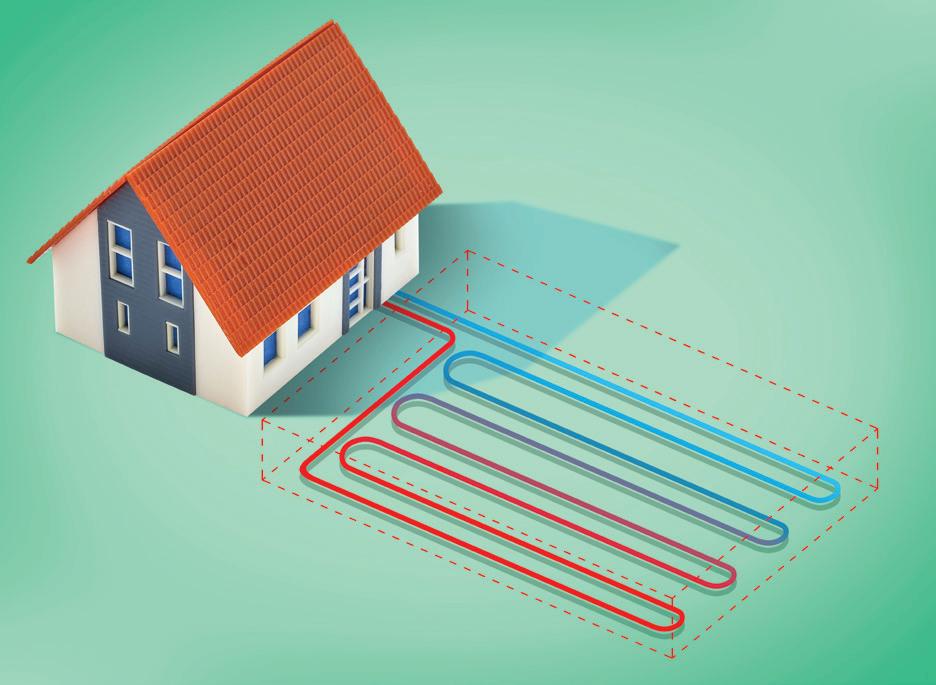
“We’re in the middle of a field, so we’ve got plenty of room here,” he says. Other configurations include vertical loops that go straight down and open-loop systems that use water from a nearby pond.
Geothermal systems can be a good option for people building new homes, especially if they have available land for a horizontal loop, which is the most costeffective option, Warnecke says. Geothermal may also be installed in existing homes. The choice makes the most sense for people who plan to stay in their homes for a significant time, he says.
“They cost more up front to purchase, often about one and a half to two times a traditional system,” he says.
“But the month-to-month energy savings will pay off.”
How long that payoff takes varies, he says, but a good contractor can provide a cost-savings analysis to help homeowners decide whether geothermal is a good investment in their particular situation.
Litton said that, on average, homeowners recoup the costs of a geothermal system in about 10 years,
depending on the initial costs, incentives, and other variables.
Another factor to consider is rebates from electricity providers and possible state or local tax credits or incentives as well. “Our cooperative offered a rebate and we also got a 30% federal tax credit,” Schwiebert says.
“That made the investment much closer to what we might have paid for another type of system.”
On its website, WaterFurnace offers a calculator to help potential customers estimate their savings and also directs them to available local incentives, Litton says.
Because geothermal systems avoid the worst energyuse spikes in extremely hot or cold weather, they keep homeowners’ bills more constant. At the same time, they don’t contribute to the energy demand surge that comes with extreme temperatures, benefiting utilities, which have prices set based on their peak energy use. For co-ops, lower peak demand means lower costs for everyone.
“For every 1,000 homes that adopt geothermal, it reduces peak demand by about 10 megawatts,” Litton says. “That’s why utilities offer geothermal incentives.”


After many fruitless years, author’s quest for an elusive ‘bull can’ takes a different tack.

Decades ago, when I was a much younger man, I was a serious waterfowl hunter. I enjoyed the history and traditions of the sport nearly as much as the hunting itself — so much so that for several years, I owned and hunted from an original Dan Kidney sneak boat, built by the legendary boatbuilder in 1919 at his shop in De Pere, Wisconsin. A buddy and I hunted from the antique wooden craft for several years, mainly offshore along the famous Lake Erie marshes that ring the lake’s Western Basin, as well as on adjoining Sandusky Bay.

One species of waterfowl, however, always seemed to elude us: the so-called king of ducks — the canvasback.
Large, handsome, fast-flying birds, canvasbacks were not exactly numerous during those years, but they were plentiful enough to be considered fair game. No matter how hard we hunted, however, we never bagged a single one.
I retired from duck hunting and sold the boat decades ago, but in truth, I never totally lost the desire to bag a “bull can,” as hunters call the male (or drake) canvasback. Recently, I realized that I’m not getting any younger, and I decided that if I’m ever going to do it, I should probably do it soon. And I knew exactly where to begin my “hunt.”
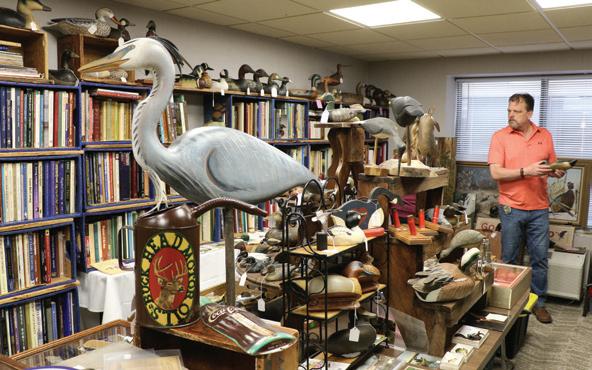
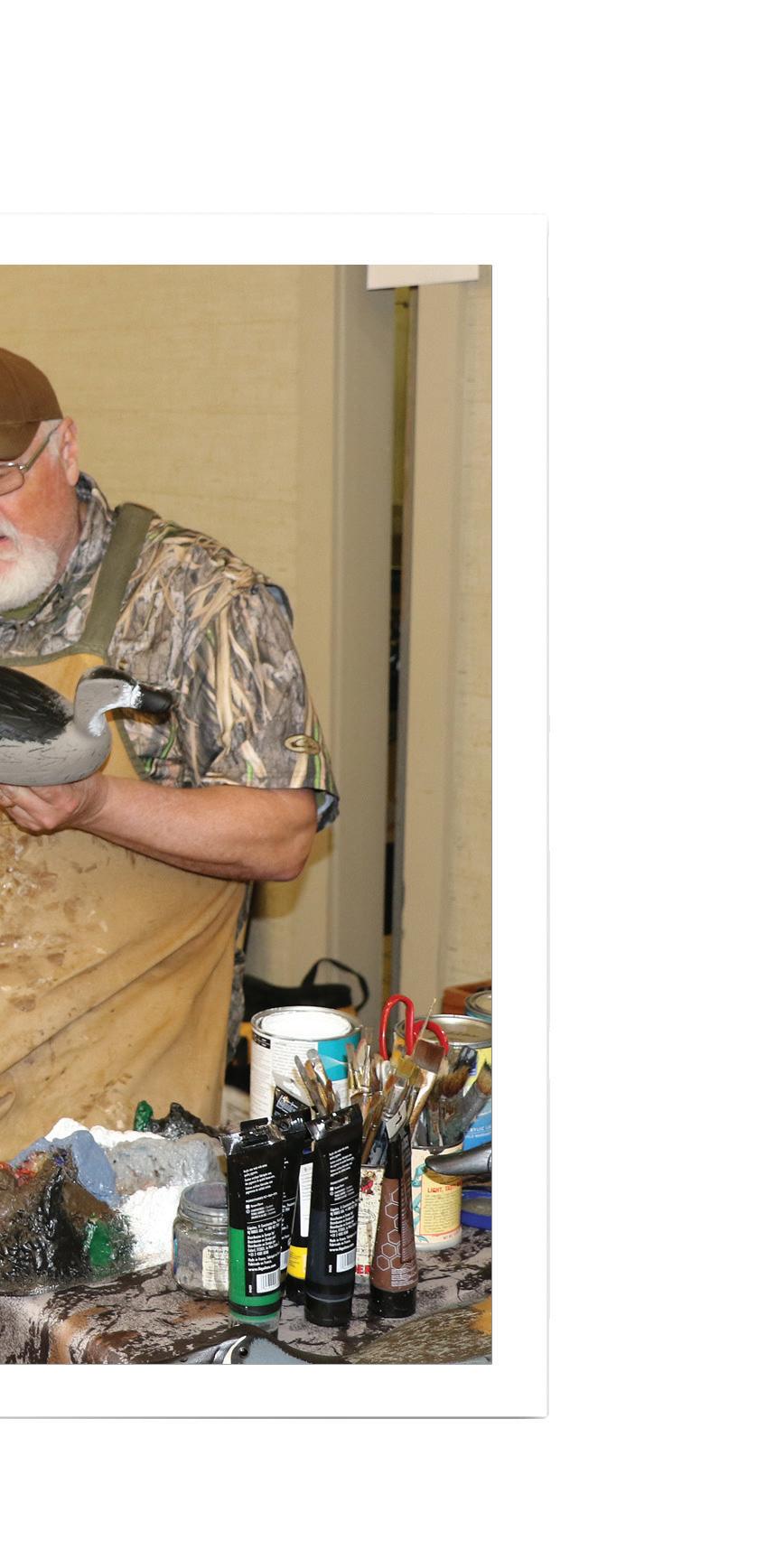
The Ohio Decoy Collectors and Carvers Association (www.odcca.net) holds its annual, weekend-long show and sale in mid-March just south of Cleveland, this year’s gathering being the 47th. Open to the public with a nominal admission charge, it’s a celebration of all things waterfowl, from vintage duck decoys to present-day, intricately carved and hand-painted nongame birds that look as if they could come alive in your hand if you picked them up. There are also decoy carving and painting demonstrations, as well as serious competitions to determine the most lifelike birds.
The yearly ODCCA show and sale runs concurrently with the annual meeting of the Great Lakes Decoy Association, so it’s really a combination of two shows in the same location at the same time, and Brad Falkinburg, the ODCCA president, tells me it’s the largest collecting and carving show in the Midwest.
Adam Grimm (www.adamgrimm.com), a full-time professional wildlife artist, will return to the event this year to meet and greet attendees and display some of his award-winning artwork. Grimm, who was born and raised in Ohio and now lives in South Dakota, is a bona fide celebrity in the field. For a wildlife artist to win the federal “Duck Stamp” art contest — the oldest and most prestigious wildlife art competition in America — even once is a career-defining moment. Grimm has won three times.
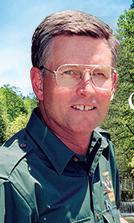
He was just 21 years old and studying at the Columbus College of Art and Design in 2000 when he won the award for the first time with a painting of a single mottled duck (he’s still the youngest artist ever to earn the award). He took the top prize again in 2014 with his rendering of a pair of canvasbacks, and he won for the third time in 2024 with a painting of a pair of spectacled eiders. I interviewed him shortly after that first win and immediately became a fan of his art, rooting him on from the sidelines ever since.
Incidentally, only two other Ohio wildlife artists have ever won the federal Duck Stamp competition: Bob Hines in 1946 and John Ruthven in 1960 — both with paintings of redhead ducks.
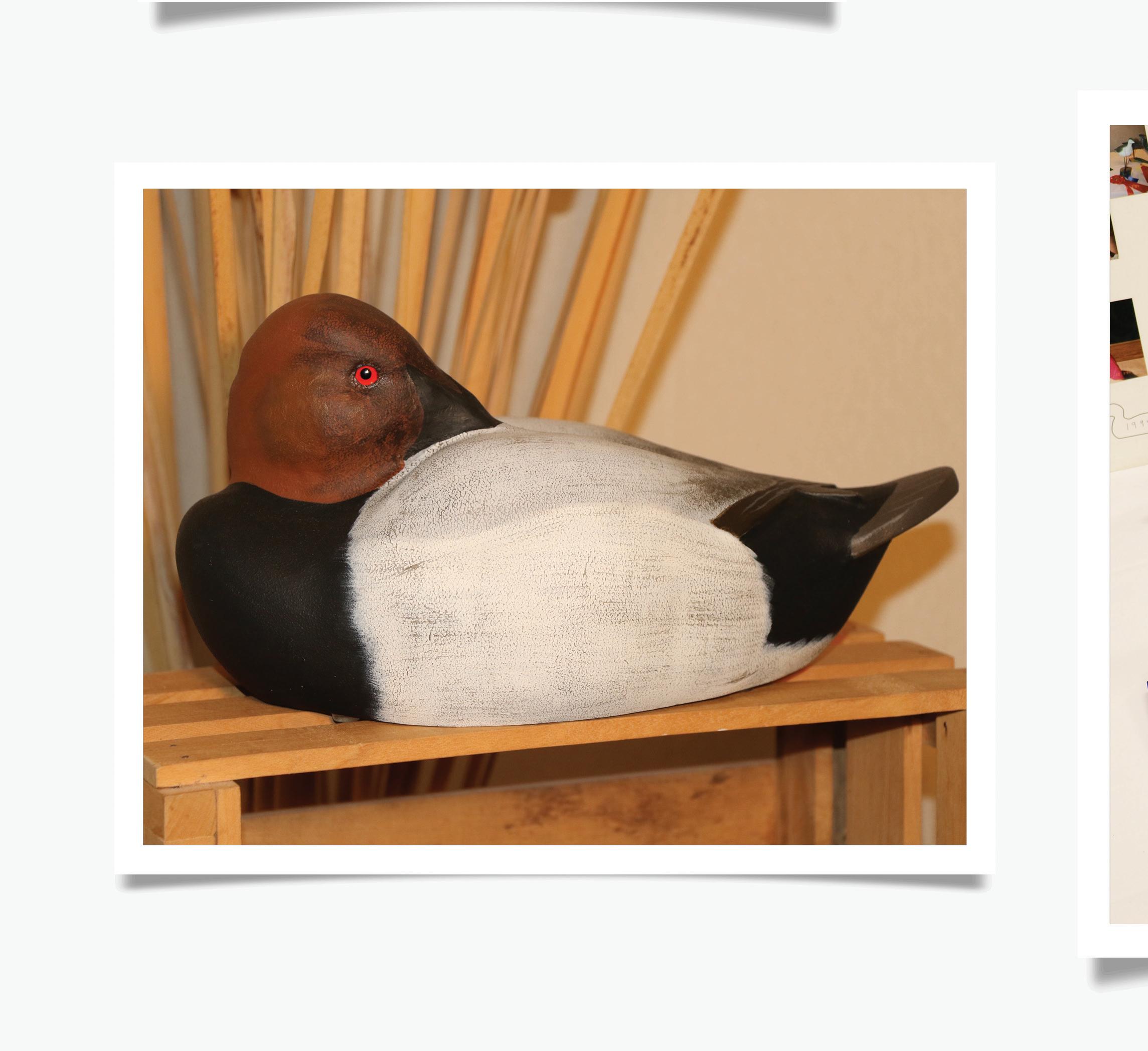
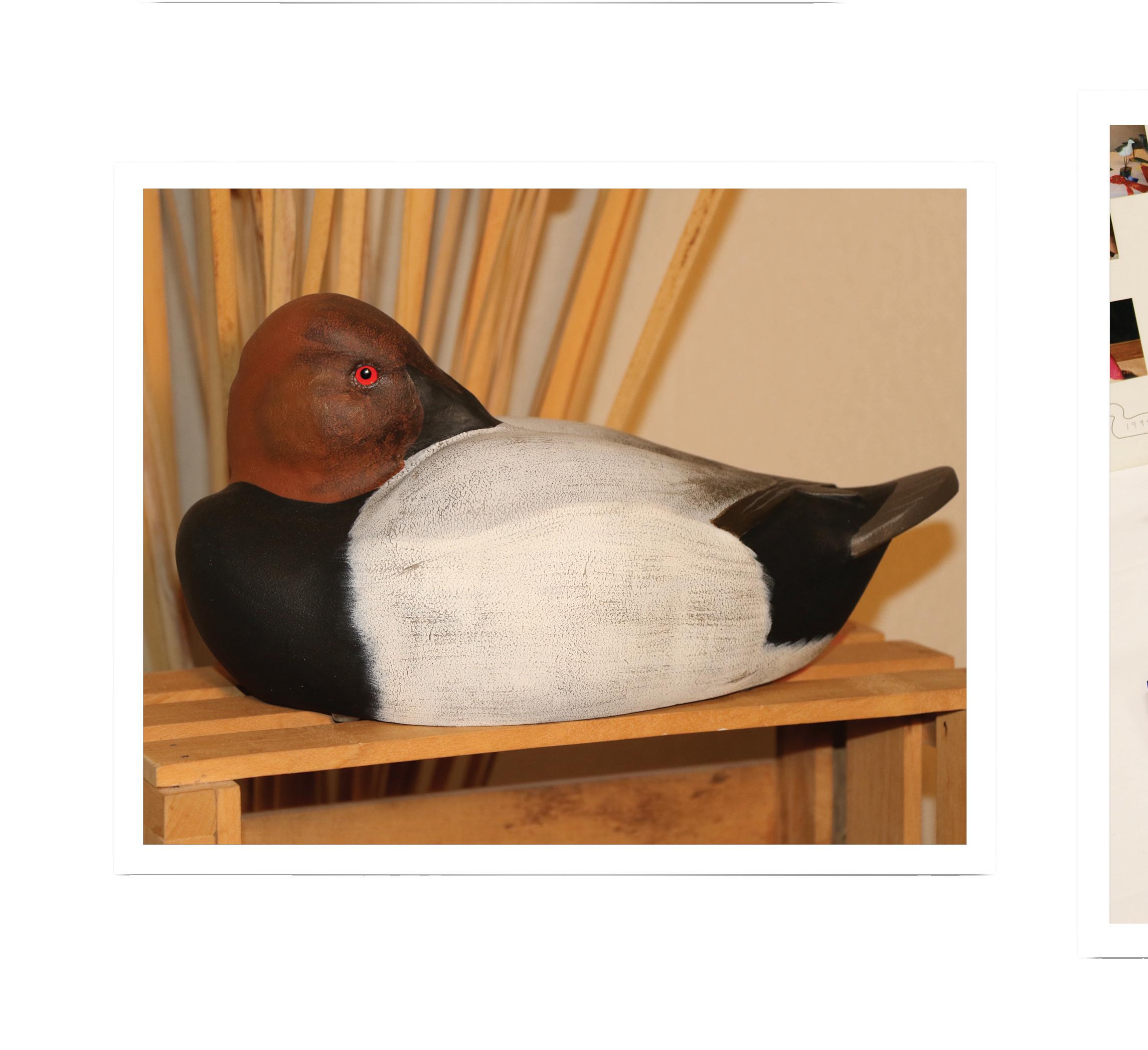
But back to my quest to bag my long-sought-after bull can. Mission accomplished! At the 2025 ODCCA show, I met Robert Lewis of Eastpointe, Michigan, who’s been carving and painting waterfowl decoys professionally for half a century. His work included a beautiful drake canvasback in a resting pose (see photo on the far left), and I ordered one then and there. The bird arrived by mail a few months later, and now sits on my writing desk, forever snoozing, with its head resting comfortably on its back.


STORY AND
WSometimes the busy little things, cute but industrious as they are, can be a real pain.
BY W.H. “CHIP” GROSS
ith the exception of humans, likely no other species on earth can control its environment like the beaver. They do so, of course, by building dams — creating habitat not only for themselves but for other wetland wildlife species as well.
The problem, however, is that the ponds beavers create can also inundate homes, roadways, crop fields, and countless other bits of human environment, causing significant damage every year.
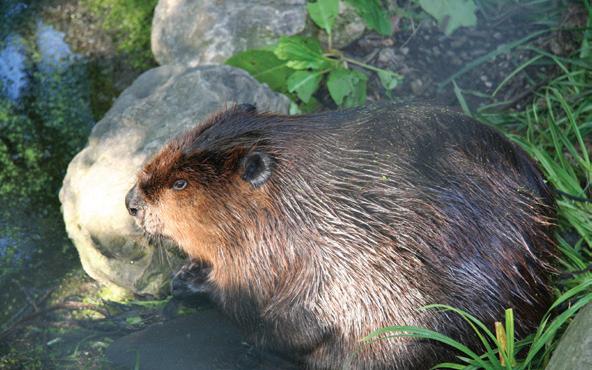
The rodents are so large (weighing up to 60 pounds) and unrelentingly industrious (“busy as a beaver,” of course), sometimes it may seem their secret motto is “Dam the Humans!”
Until recently, the main solution to beaver issues has been to do away with the beaver; eliminate the beaver and you eliminate the problem, or so goes the theory. But that kind of thinking is slowly beginning to change. Many rural landowners enjoy having beavers on their property, along with other wildlife their ponds attract — as long as the beavers and their dams can be kept under control.
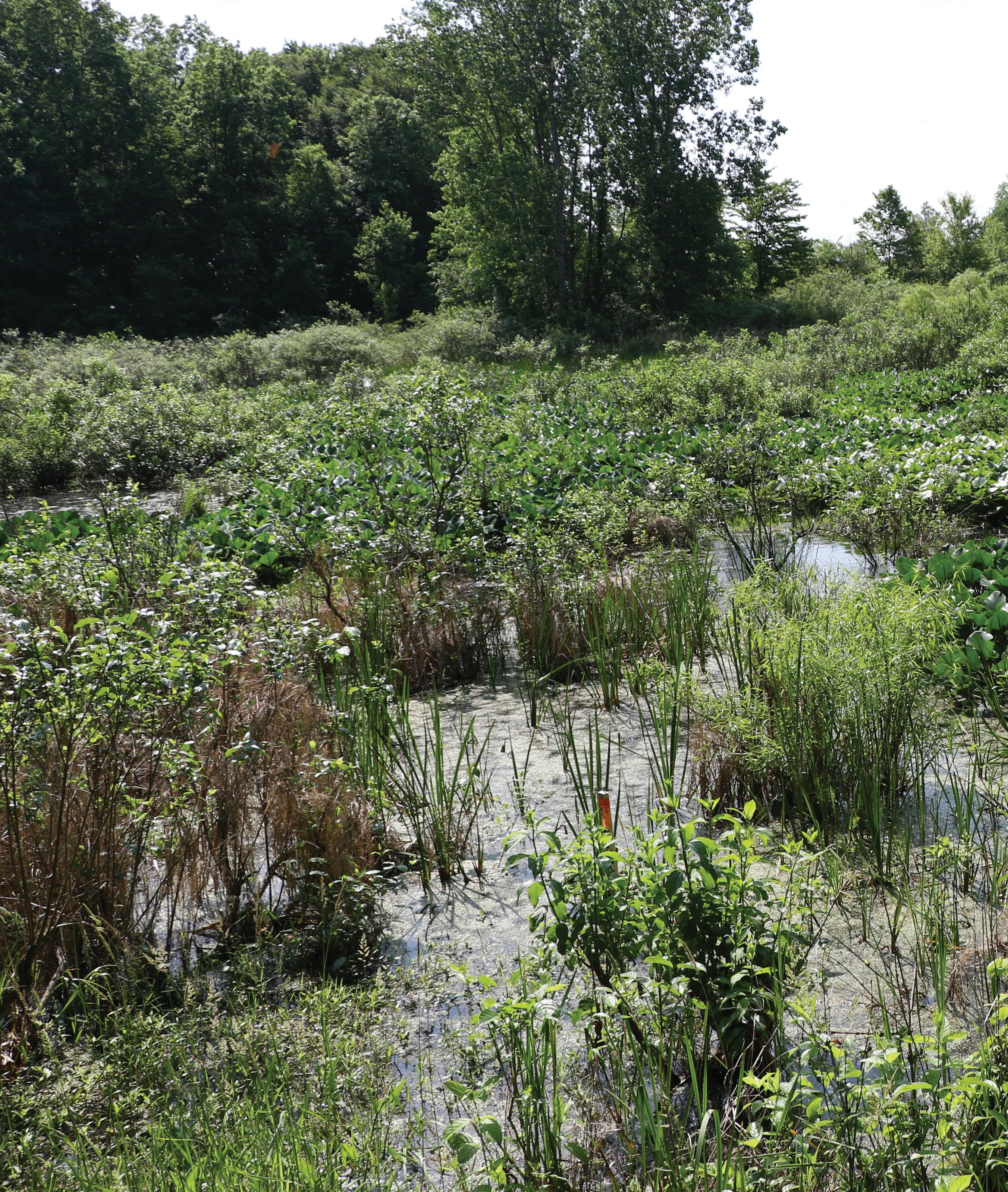
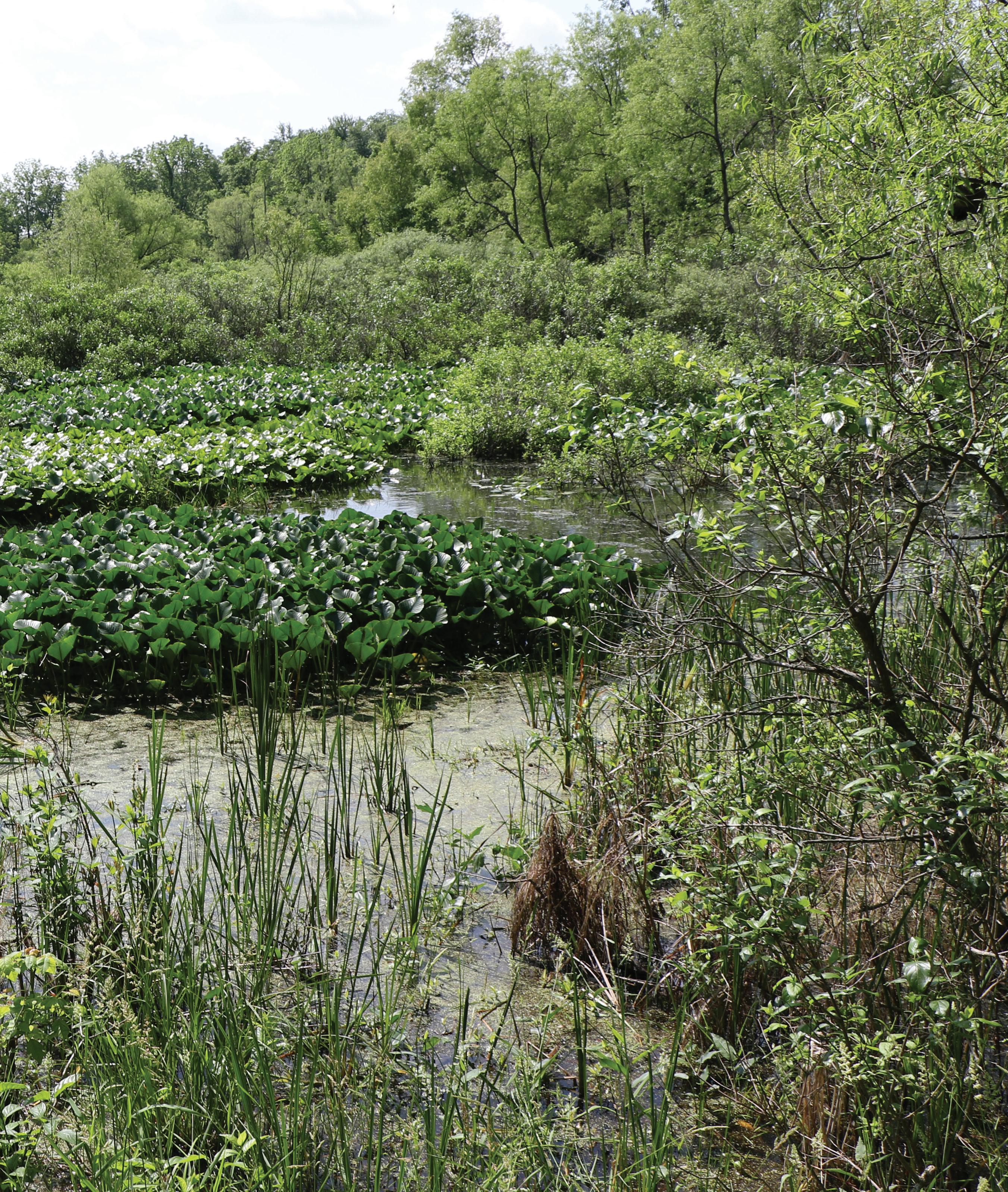
Take, for example, Chris and Hyla Skudder, members of Mount Gilead-based Consolidated Cooperative who live on 22 acres near Cardington that include a small wetland.
“Two years ago, a pair of beavers moved in and began damming the wetland to increase its size,” Hyla says. “That was unacceptable to us because our house sits near the wetland and the water level was rising toward our foundation. Each morning, we’d have to spend an hour or two tearing out the section of the dam the beavers had built the previous night. It was dirty, wet, exhausting work.”
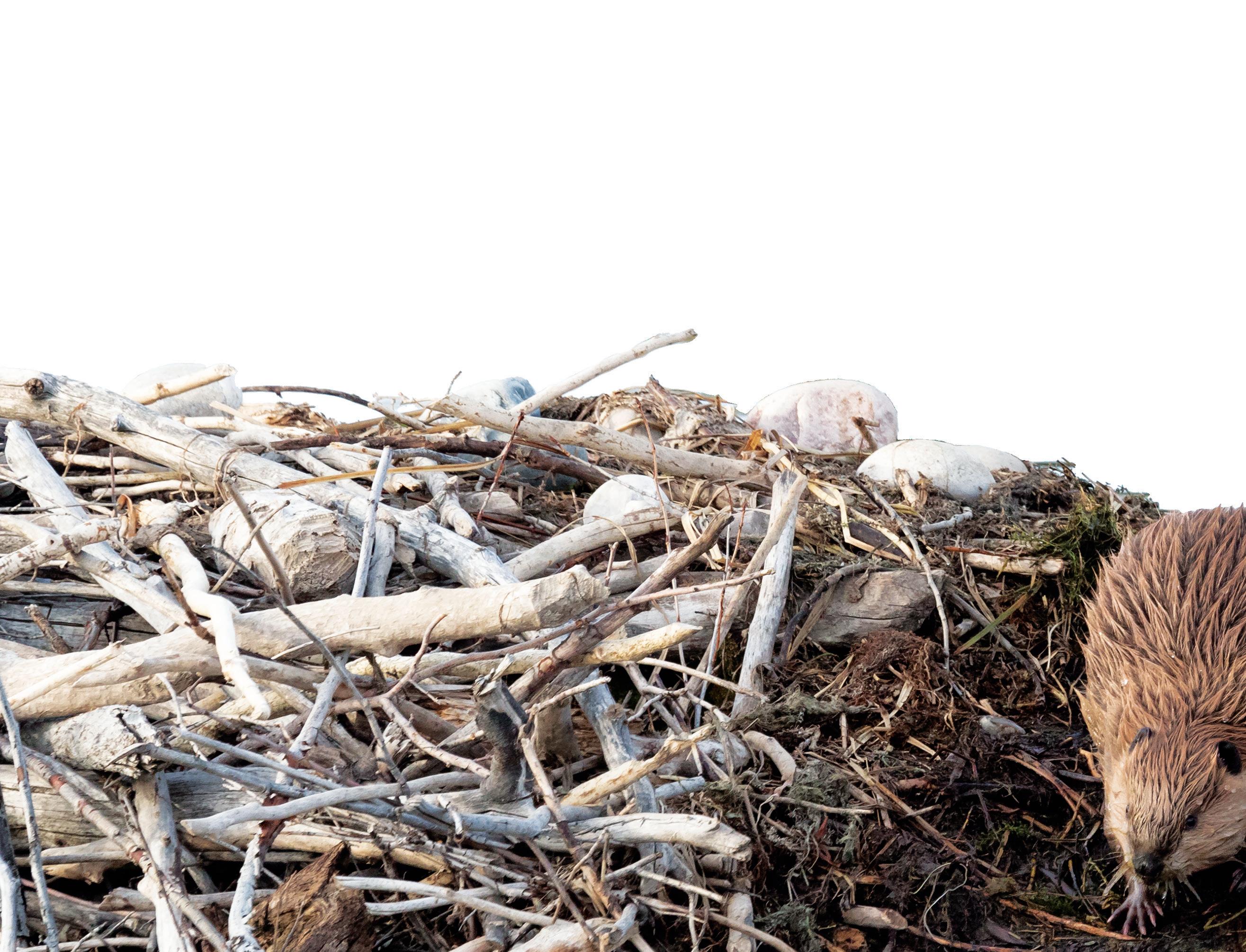
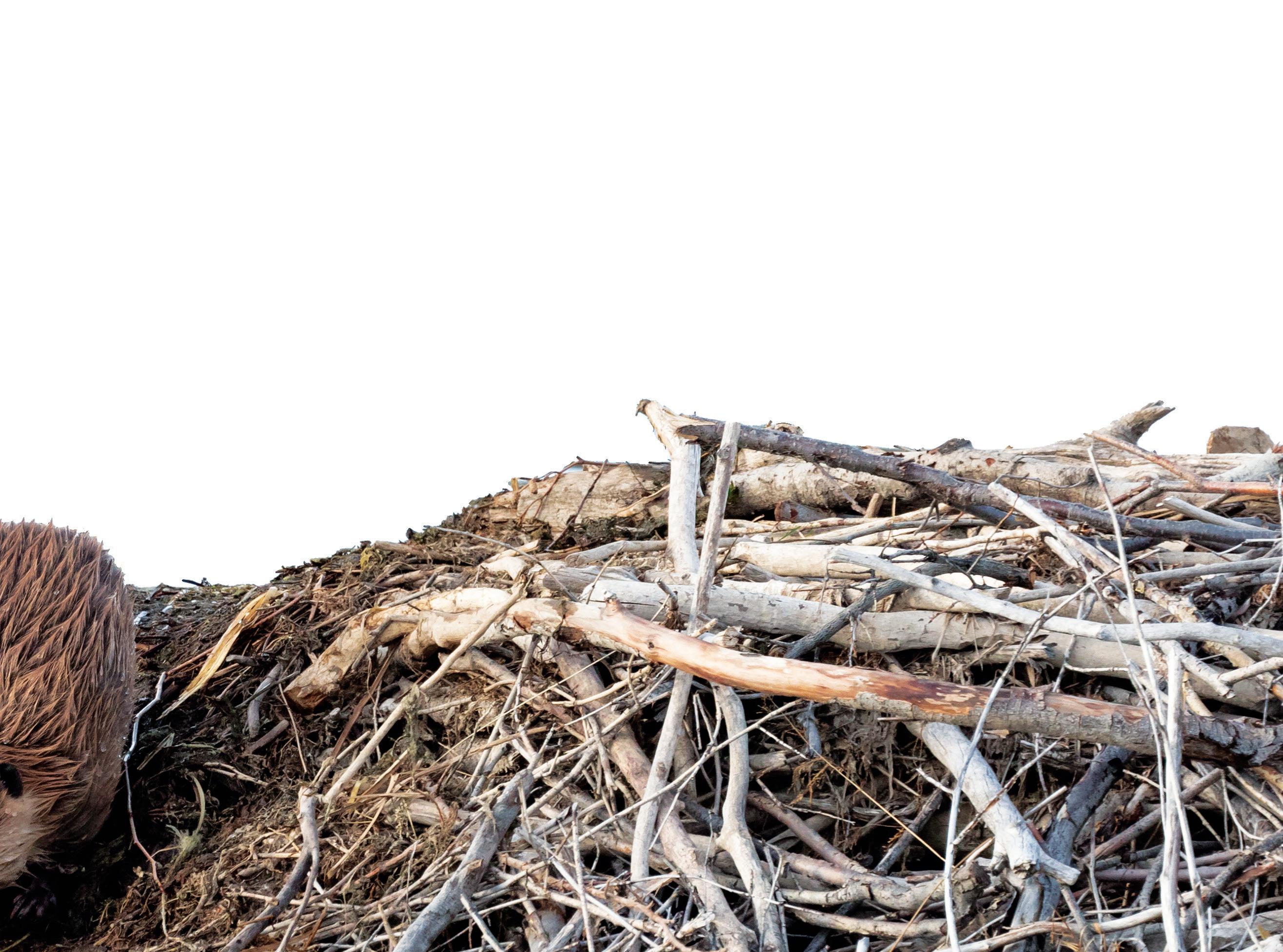
Finally, the Skudders had to admit the beavers were winning.
So they made a call to Steve Ecrement, a certified wildlife biologist, professional wetland scientist, and certified beaver coexistence professional. Ecrement and his company, Ohio Beaver Strategies, solve beaver problems for landowners. If at all possible, they do so using nonlethal methods — in other words, without killing the beaver.

“Trap and kill a beaver and all you’re doing is beginning a cycle where you’ll have to trap and kill more beavers as they move into the unoccupied habitat,” Ecrement says. “Instead, the solution is to outsmart a beaver. The goal is to stabilize the situation for both the landowner and the beaver, which solves the problem.”
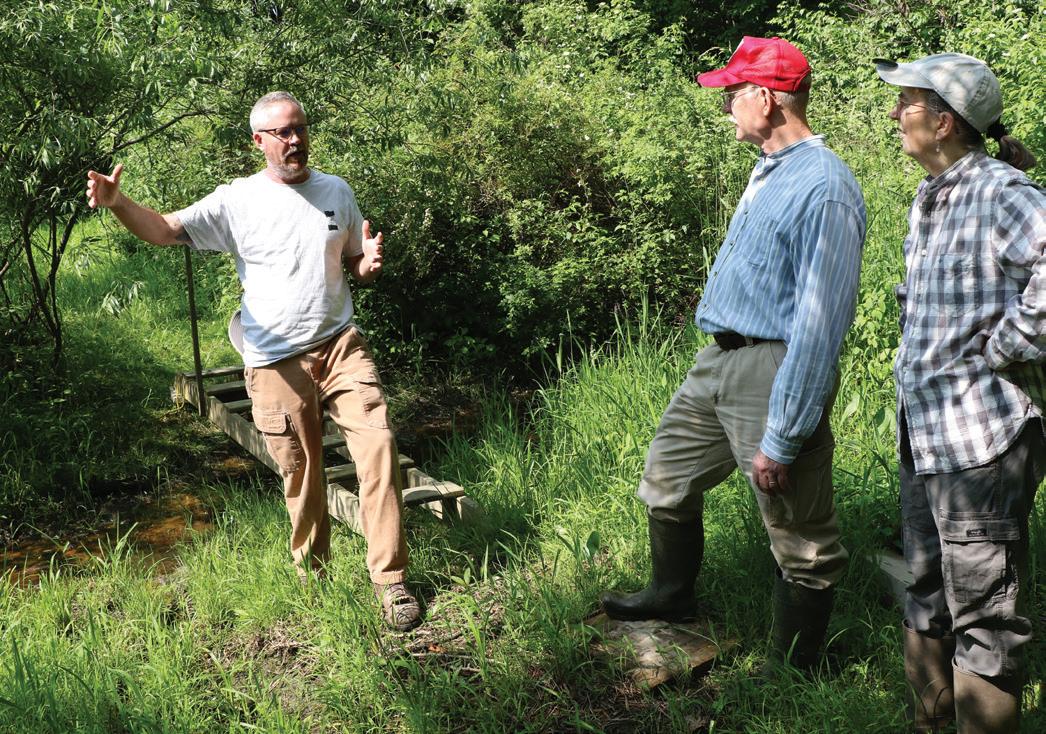
Of course, that’s easier said than done. In the case of the Skudders’ property, Ecrement installed a Flexible Pond Leveler pipe system, a flow device that creates a permanent leak through the beaver dam that beavers can’t plug. “That eliminates the need for repeated trapping despite the presence of beavers.”
In order for the pipe system to be effective, it must be designed so that beavers can’t detect the flow of water into the pipe. The Flexible Pond Leveler does this by surrounding the submerged intake of the pipe with a large cylinder of fencing that is placed in water that’s as deep as possible. As a result, beavers do not try to clog the pipe with sticks and mud, and a safe, steady water level is maintained. Ecrement said that every situation he encounters is a bit different, but he’s seen plenty of beaver damage during his career and he usually wins the battle.
“Working with Steve has been a big win for us,” says Chris Skudder. “We now have the water level in our wetland stabilized, and yet we have beavers, too.”
To contact Ohio Beaver Strategies, email steve@ohiobeaverstrategies.com or visit https://ohiobeaverstrategies.com.
Beavers could be found all over Ohio during pioneer times, but they disappeared from the Buckeye State by the late 1800s due to habitat loss and the unregulated trapping of the animals for their valuable, luxurious pelts.





We all can appreciate a relaxing cuppa, but the joys of tea don’t have to be limited to a mug.

RECIPES
Prep: 30 minutes | Soak: 2 hours | Bake: 55 minutes | Servings: 16
4 cherry hibiscus tea bags
1½ cups hot water
12 ounces dried cherries and plums, chopped zest of one lemon
1 cup packed light brown sugar
2 large eggs
1½ cups flour (spooned and leveled)
1½ heaping teaspoons baking powder
¼ heaping teaspoon salt
½ teaspoon nutmeg
½ teaspoon ginger
¼ teaspoon cinnamon
½ cup powdered sugar
Steep tea bags in the hot water for 10 minutes. In a small container with lid, mix together dried fruit, lemon zest, and 1¼ cups of the tea; cover and let soak at least 2 hours. Reserve remaining ¼ cup of tea for icing.
Preheat oven to 350 F. In a large bowl, beat brown sugar and eggs together using a wooden spoon, then stir in flour, baking powder, salt, and spices until incorporated (batter will be quite thick). Mix in teasoaked fruit until all liquid is incorporated and fruit is well dispersed. Transfer batter into an 8x8-inch greased baking dish and bake 50 to 55 minutes, until toothpick comes out clean.
Whisk together powdered sugar and 2 tablespoons of reserved tea, adding more tea until icing reaches desired consistency. Once bread has completely cooled, drizzle icing across top.
Per serving: 189 calories, 1 gram fat (0 grams saturated fat), 43 grams total carbohydrates, 23 milligrams cholesterol, 213 milligrams sodium, 1 gram fiber, 2 grams protein.

Cook: 30 minutes | Servings: 4
5 cups water
6 bags decaffeinated green tea
2 tablespoons unsalted butter
1½ cups diced yellow onion (approx. 1 medium)
1½ cups diced carrots (approx. 2 large)
1½ cups diced celery (approx. 4 stalks)
2 cloves garlic, minced
5 cups chicken stock or broth
½ teaspoon dried thyme leaves
1 bay leaf
½ teaspoon pepper
4 ounces wide egg noodles
2 cups cooked and shredded chicken
Using the 5 cups of water, prepare green tea according to package directions. Melt butter in a large stockpot over medium heat. Add onions, carrots, and celery; sauté until soft, 5 to 7 minutes. Add garlic and sauté another minute. Add green tea, chicken stock, thyme, bay leaf, and pepper. Increase heat and bring to a boil, then reduce to a simmer. Stir in noodles, cover with lid, and cook for 15 minutes. Add chicken and continue cooking uncovered until noodles are tender. Serve hot.
Per serving: 224 calories, 10 grams fat (4 grams saturated fat), 21 grams total carbohydrates, 47 milligrams cholesterol, 283 milligrams sodium, 2 grams fiber, 13 grams protein.

Prep: 10 minutes | Cook: 5 minutes | Cool: 10 minutes | Servings: 12
3 tablespoons unsalted butter
10 ounces marshmallows
3 tablespoons unsweetened matcha powder (see notes)
6 cups crispy rice cereal
Spray a 9x13-inch baking dish with cooking spray. Melt butter in a large nonstick stockpot over medium heat. Add marshmallows, stirring until fully melted. Remove from heat; stir in matcha powder until uniform in color, then stir in cereal until fully coated. Transfer mixture to prepared baking dish; coat hands with cooking spray and press mixture into an even layer. Cool 10 minutes before cutting.
NOTES: Culinary-grade matcha powder is available at most grocery stores. If powder has clumps, sift before adding. Not a fan of matcha tea? Try 2 teaspoons of a chai spice blend instead. Per serving: 149 calories, 3 grams fat (1.5 grams saturated fat), 31 grams total carbohydrates, 7 milligrams cholesterol, 141 milligrams sodium, 1 gram fiber, 2 grams protein.


Prep: 1 hour | Chill: 3 hours | Bake: 30 minutes | Servings (bite-size): 40
CUSTARD CREAM
2 cups whole milk
6 Earl Grey tea bags
¼ cup + 2 teaspoons cornstarch, divided ½ cup sugar

5 egg yolks
2 teaspoons vanilla extract pinch of salt
½ cup heavy whipping cream
1 tablespoon powdered sugar (plus more for sprinkling)
CHOUX DOUGH
½ cup unsalted butter
1 cup water
1 teaspoon sugar
pinch of salt
1 cup flour
4 large eggs, room temperature
For the custard: In a saucepan over medium heat, bring milk to a simmer. Turn off heat, add tea bags, and cover with lid to steep. In a large heat-safe bowl, whisk together ¼ cup of the cornstarch, sugar, and egg yolks until pale yellow in color. Lift tea bags from milk; with a pair of tongs, squeeze excess liquid back into saucepan and discard bags. Heat milk over medium-high heat, stirring occasionally, until temperature reaches 180 F. Remove from heat and slowly drizzle hot milk into the egg yolks while whisking constantly. Transfer back to saucepan and bring to a light boil over medium-high heat, whisking constantly until thickened. Remove from heat and whisk in vanilla and salt. Transfer back to bowl; smooth out top with a spatula and seal custard’s surface with plastic wrap. Once cooled to room temperature, refrigerate 2 hours.
For the choux dough: In a medium saucepan over medium heat, melt butter into water, then add teaspoon of sugar and pinch of salt. Bring to a boil, then remove from heat and add flour; stir vigorously with a wooden spoon until a thick paste is formed. Return to heat and cook, stirring constantly until dough pulls away from the saucepan’s sides. Transfer to the bowl of a stand mixer with paddle attachment and let cool to below 125 F. Beat in one egg at a time until dough goes from shiny/smooth to dull/coarse. Beat for 1 minute after adding the last egg; dough will be sticky and smooth.
To bake puffs: Preheat oven to 400 F. Add dough to a pastry bag tipped with a ½-inch round tip. On parchment- or silicone-lined baking sheets, pipe 2 or 3 equal-sized mounds at a time (about 1½ inches in diameter and 1 inch tall) about 2 inches apart. Dip finger in water and gently press peaks to round the tops, repeating 2 or 3 at a time with remaining dough. Bake 20 minutes, then turn oven off, leaving puffs in to continue baking to a medium brown (don’t peek, as they may deflate if oven is opened). Remove from oven and slice each puff in half horizontally to allow steam to escape. Return to oven for 5 to 10 minutes, leaving door open, until puffs don’t yield when lightly tapped.
To finish: In the bowl of a stand mixer with whisk attachment, beat heavy cream, remaining 2 teaspoons of cornstarch, and powdered sugar until peaks are just stiff enough to hold when turned upright. Remove chilled custard from fridge and loosen with a spatula (it’ll be quite thick). Fold ¼ of the whipped cream into custard to start, then fold in the rest until evenly distributed. Fill a piping bag (tipped with an open star tip) with custard cream. Generously pipe custard into the bottom half of each puff and replace their tops. Sprinkle with powdered sugar.
NOTE: Custard cream and pastry puffs can be refrigerated separately for up to 3 days before assembling. Leftover assembled cream puffs can be refrigerated for 24 hours.
Per bite-sized puff: 76 calories, 4.5 grams fat (2.5 grams saturated fat), 6.5 grams total carbohydrates, 50 milligrams cholesterol, 26 milligrams sodium, 0 grams fiber, 2 grams protein.






FROM THE
PRESIDENT/CEO
Carroll Electric maintains a vigilant tree-trimming and brush-removal program to improve power reliability and reduce outages and safety hazards. We use professional tree contractors to maintain the health of trees while ensuring adequate clearance around electric lines.
In 2010, Carroll Electric adopted a five-year maintenance rotation with the goal of clearing approximately 250 miles of line per year. We inspect facilities on an annual basis to identify any necessary repairs, deterioration, or vegetation threats that must be addressed prior to the next scheduled maintenance cycle.
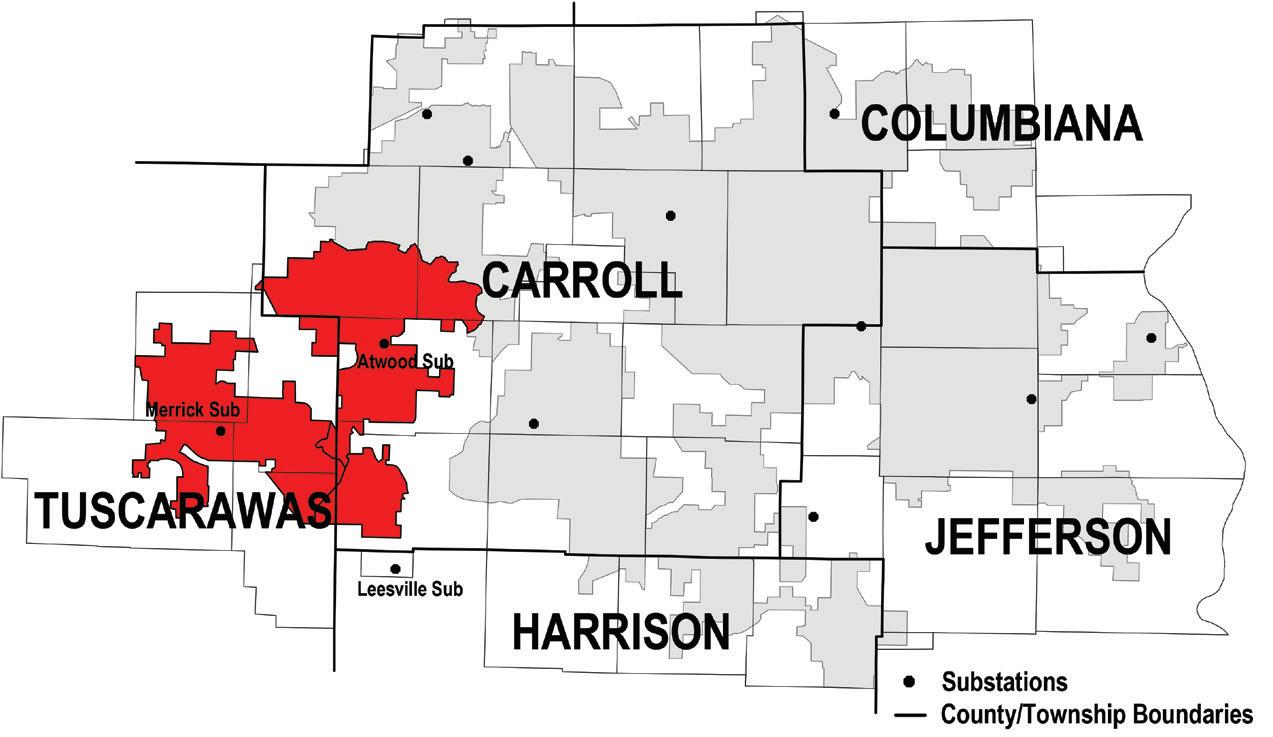
We have contracted Davey Tree Experts to work this year in the Atwood, Leesville, and Merrick substation areas. It’s a total of approximately 243 miles.
Davey works hard to contact each and every landowner and to leave our members pleased with their service.
Our electric line right-of-way includes land directly underneath the wires and between the edges of the right-of-way. The right-of-way measures 15 feet from the center line to either side of the pole and from the ground to the sky. All vegetation within this zone will be cleared, regardless of height. Tall, dead, or dying trees outside of the right-of-way may also be cut to ensure reliable service.
Maintaining the right-of-way is a critical component of reducing outages for our members. But we have an even more important reason for ensuring the area is free from hazards: the safety of our members, lineworkers, and crews.
Broken branches from a tree too close to electric lines could fall onto the line, breaking the electrical wire and causing a power outage. This power outage could be to a wide geographical area and affect a large number of people. The broken wire (which could still be “live”) could dangle from the utility line, causing hazard to those in the area. If someone touches the line or even touches the ground around the line, they could be killed instantly or severely injured.
Another potential injury could occur if someone climbs a tree that extends into a power line. The weight of their body may cause a limb to touch the electrical wires, sending electricity from the wire, through the branch, and into
the person. The person could be severely injured from the shock or knocked from the tree and injured or killed.
While outages are inconvenient and costly to the cooperative and its members, we worry most about personal injuries.
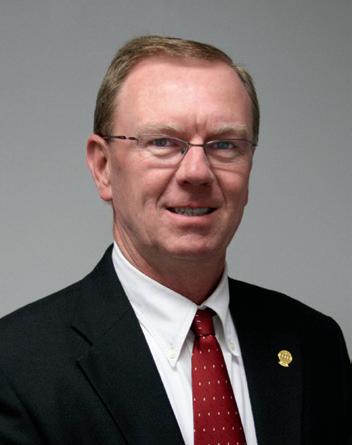
Larry Fenbers PRESIDENT/CEO
Our right-of-way program is designed to reduce safety hazards to our community.
Trees that suffer from insects, blight, or other trauma can quickly become dangerous. If you have a tree on your property that may cause a power outage, please let us know. Your neighbors will be grateful for the missed power outages, even if they don’t know it. Hazardous trees may be reported by calling 800-232-7697.
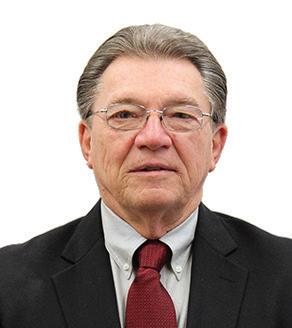
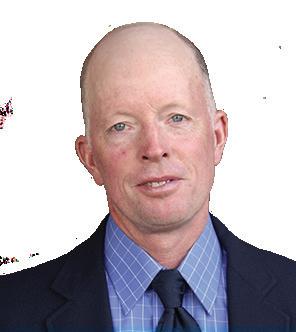
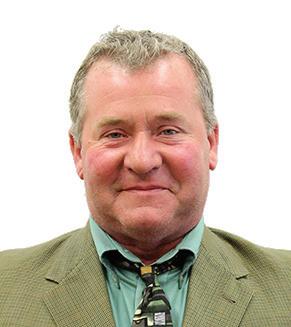
A nominating committee made up of members, just like you, nominates other members to run for the Carroll Electric Board of Trustees. The committee contacts interested members to determine eligibility, nominating up to three candidates for each district. These names are then placed on the ballot of the cooperative election.
Members may also follow guidelines set forth in the Carroll Electric Code of Regulations about petitioning to run for the board, but they must do so by April 15 to be included in all election materials, including the Ohio Cooperative Living magazine’s Carroll Electric local pages.
If you or someone you know is interested in serving on the Carroll Electric Board of Trustees, please call 800 -232 -7697 or contact a committee member. Please see page 19 for a list of nominating committee members.
Members have the opportunity to vote for board candidates by telephone, online, or by requesting a paper ballot through the mail. Voting will continue to be offered at the annual meeting.
However, you may wish to avoid the lines at the annual meeting and vote before you go.
A third-party election service provider will implement the election processes again this year.
At no time will Carroll Electric employees or board members have access to any information that will permit them to determine the voting of an individual.
As a consumer-member of Carroll Electric, you have the opportunity to become a trustee of the cooperative, nominate another member for trustee, and vote for the members who will serve the interests of all cooperative owners.
Trustees are elected to serve staggered three-year terms. Members interested in running for the Carroll Electric Board of Trustees should expect to commit no less than 26 days per calendar year to normal cooperative business operations. Trustees are expected to attend the regular monthly board meetings in addition to educational seminars, special events, and meetings where overnight travel may be involved.
Trustee candidates are required to be bona fide residents in the district they seek to represent. Candidates cannot, in any way, be employed by or financially interested in a competing business selling electric energy or supplies to the cooperative, or a business primarily engaged in selling electrical or plumbing appliances, fixtures, or supplies to the members of the cooperative.
In 2026, you will have the opportunity to vote for the representatives of districts 2, 7, and 9. Each membership may vote for each district regardless of the member’s residence.
District 2 includes all of Columbiana County along with East Township in Carroll County and Brush Creek Township in Jefferson County. District 7 includes all of Tuscarawas County, and District 9 includes all of Lake Mohawk, along with sections 32-36 of Brown Township in Carroll County.
Barring any unforeseen events, the election will be held in July via telephone, online, and paper ballots and at the cooperative’s annual meeting on Aug. 1. This year’s annual meeting will be in the Commons and Performing Arts Center at Carrollton High School at 205 Scio Rd. NW, Carrollton, OH.
If you have an interest in running for the board, please contact Carroll Electric at 800-232-7697
For a complete list of qualifications and procedures, please contact the office for a copy of the Carroll Electric Code of Regulations or download it at wwww.cecpower.coop.

District 1
All of Augusta and Brown townships in Carroll County, except Lake Mohawk and sections 32-36. All of Stark County.
District 2
All of Columbiana County along with East Township in Carroll County and Brush Creek Township in Jefferson County.
District 3
All of Fox,
District 4
Center, and Lee townships in Carroll County.
All of Jefferson County except Brush Creek Township.
District
All of Harrison County along with Orange, Perry, and
townships in Carroll County.
District
All of
District
District
and Union townships in Carroll County.
All of Rose Township in Carroll County. All of Harrison Township in Carroll County except Lake Mohawk.
District
All of Lake Mohawk, along with sections 32-36 of Brown
CHARGE is assessed to each meter and is designed to recover the cost of having facilities available to provide electric service at the point of use, regardless of how much electricity is actually used. The service availability charge includes the cost of the meter, poles, wires, transformers, and the associated maintenance of these facilities.
2026 service availability charges
Residential and seasonal
$45
Small commercial
$47
For a complete list of rates and service charges, visit www.cecpower.coop or call 800-232-7697.

After three years of maintaining our same service availability charge — the only increase being the power cost adjustment, which is based on our cost from Buckeye Power — it became evident to our board of trustees that the increasing costs in material and service were having too great an effect on our margins to not implement a rate adjustment.
Periodically, the board hires a rate consultant, Power Systems Engineering, to conduct a cost-of-service/rate study.
PSE reviews our revenue requirements with our loan agreements as well as our rates and financial revenue for all membership groups. After the last review, PSE recommended increases to the residential, seasonal, and small commercial groups.
They offered options: increasing both the service availability charge and the cost per kilowatt-hour or increasing only the service availability charge. The board selected the rate adjustment of increasing only the service availability charge, a change consistent with what they have done in the past.
While we have another review scheduled, we will not have those results for several months. Staff members have reviewed the last study and recommended another incremental change to the service availability charge. The board approved this recommendation of increasing only the service availability charge in the amount of $3 to these membership groups.
Beginning in April, the service availability charge for our residential and seasonal accounts will increase from $42 to $45 , and small commercial accounts will increase from $44 to $47 . For the average member and their usage, this represents an increase of less than 2 % to their monthly bill.
Service availability charges are designed to recover costs associated with having the facilities available to provide electric service. Ideally, this would allow Carroll Electric to recover its costs regardless of how much electricity one member uses. For that to be the case, our charge for residential members — as identified in the last PSE study three years ago — would have to be $46 .79 per month. We currently only recover part of that cost in the service availability charge. The rest is included in the energy rate.
As members themselves, our trustees understand this increase is concerning for our members who are already facing increased costs in every facet of their lives. Unfortunately, the cooperative has also seen increasing increased costs. Some of our material costs have increased 40 % to 80 % and, in some cases, even doubled in cost since our last rate adjustment.
The service availability charge for residential members and small commercial meters will increase $3 per month. For the average member, it represents a less than 2 % increase to the monthly bill.
The change will appear on your April electric bill.
If there has not been a rate increase in three years, why has my electric bill been higher this past year without any changes in my usage?
Though Carroll Electric has not had a rate adjustment in three years, the power cost adjustment — which is based on our cost from our generation provider Buckeye Power — has been higher than average within the past year. The power cost adjustment is a built-in cost added to your electric bill each month based on the price we pay for electricity.
A cost of $0 085 per kWh is included in your electric charge to cover the wholesale power costs that we purchase from Buckeye Power. If the cost for electricity from Buckeye Power is higher than $0 085 per kWh, the power cost adjustment is applied to cover the difference in the wholesale power cost.
Will there be an adjustment to the surcharge for the wholesale power cost and how will that affect my bill?
Yes. The built-in electric charge to cover the wholesale power cost from Buckeye Power will increase from $0 .085 per kWh to $0 . 10 to get our base kilowatt-hour charges closer to what we are charged each month. This adjustment will also begin in April.
However, unlike the increase to the service availability charge, the adjustment to the wholesale power cost is a neutral rate adjustment, as increasing or decreasing the base kilowatt-hour charge causes a reverse change to the wholesale power cost adjustment. The end result is that members have no change to their bill total.
The graphic on the next page shows how this adjustment is used within our bill calculations and how the increase to the built-in cost for wholesale power cost does not change the amount due for a member.
How will this increase affect the co-op’s profits?
Carroll Electric is a not-for-profit, member-owned cooperative. We exist to serve our members with reliable, affordable power, and any margins (profits) we receive are invested into the electric system, then allocated to you in the form of capital credits.
We bill on a cost-based model, meaning our rate structure is designed only to recover our costs of purchasing power and delivering it to you. A period of higher sales doesn’t mean profits; any excess revenue is allocated to you, the members of the cooperative.
As a not-for-profit electric cooperative, Carroll Electric spreads its operational costs fairly across all our members, regardless of electricity use. That is why every member pays the service availability charge to cover basic operational expenses. All residential members are charged the same amount for the cost of operation because all members benefit from the same service.
What can I do to reduce my electric bill?
The easiest way to reduce your electric bill is to decrease your electrical usage. There are many energy saving tips and rebate information available on our website at www.cecpower.coop. If you cannot pay your bill in full or need an extension beyond the due date, please call us at 800 -232 -7697 to see if you qualify for a payment arrangement.
As consumers, we may not always take the time to understand exactly what we are paying for before we comment on the price of a product or service. Many times we perceive the price to be high, because we don’t understand how the pricing structure works or what we are actually getting for the money.
Electricity, in its basic form, is priced per kilowatt-hour (kWh), but there are a wide variety of ways to charge consumers for the costs associated with providing electric service. Think about all the components of receiving electricity: meters, poles, wires, transformers, substations, etc. There are also maintenance costs and right-of-way expenses, and the list goes on.
As a not-for-profit cooperative, our goal is to recoup all of the fixed costs — the true cost of providing service
to each meter — through the service availability charge. Fairness is important to the cooperative business model. We do not want one member subsidizing another. The cooperative business model allows us to charge for the services we provide with just a small amount built in for margins. These margins help to update the electric infrastructure and pay for storm damage and other uncontrollable costs, like copper theft and vehicle accidents involving electric poles. At the end of each year, margins — money left over after expenses — are paid back to consumer-members in the form of capital credits. The allocated capital credits are invested in the cooperative and later retired and returned to consumers.
In conjunction with the $3 increase to the service availability charge, the Carroll Electric Board of Trustees also agreed to implement a neutral rate adjustment that affects our members’ wholesale power cost adjustment and the kilowatt-hour charge.
This is the “wholesale” portion of your bill, which we pay to Buckeye Power for the electricity delivered to our substations.
As a not-for-profit, member-owned cooperative, Carroll Electric recognizes that transparency and communication are pillars of our business model. That is why, even though this rate adjustment will not increase or decrease our electricity rates, we feel it is still important to inform you of this adjustment.
Some charges from Buckeye Power can vary monthly based on the fuel costs and operation expenses, and some of our Buckeye Power expenses, such as peak demand charges, are fixed. The WPCA, displayed on
your bill as Power Adj/KWH, reflects changes to the generation and transmission costs.
We take those total charges from Buckeye Power every month and divide by the total kWh sold to get the Buckeye Power component of the rate. For the past two years, we have used $0.085 per kWh as the basis for those charges and used the WPCA to adjust to the actual costs.
Since our power costs have increased over those two years, we are adjusting that component of the base rate to $0 . 10 . Thus, the future WPCA will be reduced by $0 015 to reflect the change to the base rate, negating the effects for a neutral change for the total.
Your total kilowatt-hour charge will remain the same with this adjustment.
Please refer to the two bill calculation examples for a member who uses 1,500 kWh to compare this rate adjustment. Notice the only difference is $3, which is due to the $3 increase to the service availability charge.
Service Availability Charge
First 100 kWh @ $0.143075
Next 900 kWh @ $0.123775
Over 1,000 kWh @ $0.120775
+ Power Cost Adj @ $0.0224003
Total Energy Charge
Service Availability Charge
First 100 kWh @ $0.15920
Next 900 kWh @ $0.13990
Over 1,000 kWh @ $0.13690
+ Power Cost Adj @ $0.0062753
Total Energy Charge
$42.00
This is a fixed cost that every meter is assessed
(100 kWh x $0.143075 (900 kWh x $0.123775 (500 kWh x $0.120775
(1,500 kWh x $0.0224003
This is a fixed cost that every meter is assessed
(100 kWh x $0.15920 (900 kWh x $0.13990 (500 kWh x $0.13690 (1,500 kWh x $0.0062753
= $14.3075) = $111.3975) = $60.3875) = $33.6004) = $15.92) = $125.91) = $68.45) = $9.41295)
The only increase is the $3 increase to the service availability charge.
If you have questions about your electric bill, please call the Carroll Electric office to speak to one of our member services representatives.
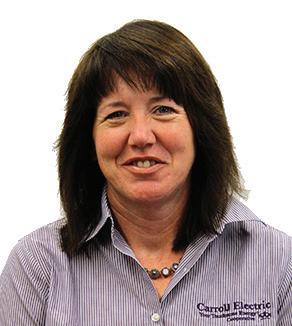
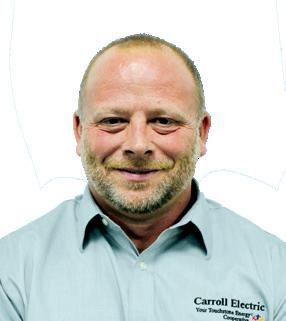
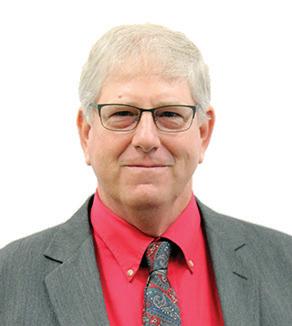
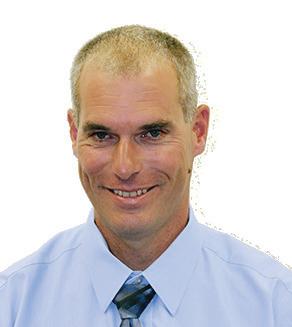
The 2026 Nominating Committee has been formed pursuant to the Carroll Electric Code of Regulations and is selecting board of trustees candidates. After approval from the nominating committee, these candidates will be placed on the Carroll Electric Board of Trustees ballot.
Candidates representing districts 2, 7, and 9 will be elected. Members wishing to be nominated as a trustee candidate must reside in one of these three districts and be a full-time resident in that district.
Members interested in running for the board of trustees may contact A.J. Atkinson at 800-232-7697 or a committee member:
1. Todd Wright 330-802-7699
2. Joe Grubbs 330-771-0767
3. Bob Wagner 330-324-7193
4. Clint Sanders 740-317-5058
5. Jason Eddy 740-946-1383
6. Todd Davis 330-575-7940
7. Bill Beans 330-343-5626
8. Larry Ledford 330-627-5025
9. Paul Mickley 330-704-1892
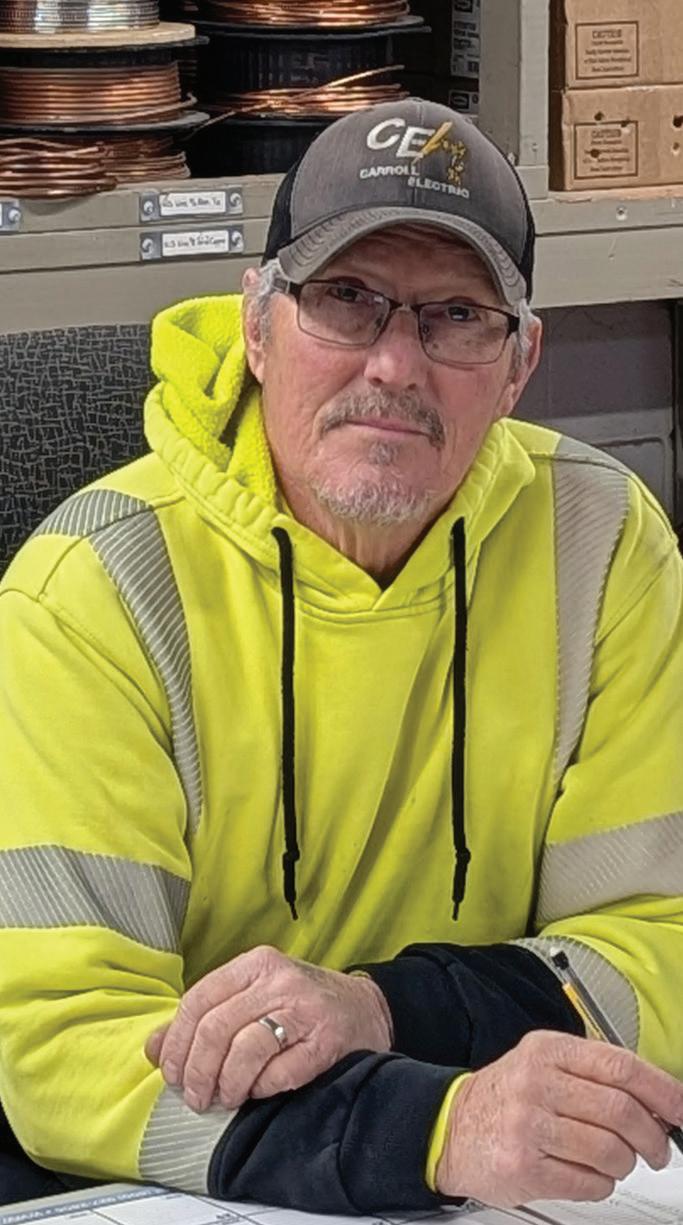
Despite nearing retirement age, Ken Richards would always tell you the plan was to continue serving the cooperative as its Warehouse Coordinator for at least five more years. As long as his body held up physically, why would he quit doing something he enjoyed?
Unfortunately, the physical component started creating more issues. After nearly a year of testing, Richards was diagnosed in December with ALS, a terminal disease also known as Lou Gehrig’s Disease. While he was still capable of completing the physical demands of the job, it benefited Richards to retire February 13
Richards’ motivation was serving others, making his employment of nearly 10 years at Carroll Electric so valuable. Even with this diagnosis, Richards remains upbeat. “It’s not what I had planned, but I will just enjoy whatever time the Man upstairs has left for me,” Richards says. “I’m not going to get down by this. I will just start my bucket list a little earlier and see how much I get done.”
We will greatly miss working with Ken and wish him and his wife, Kim, the best in this new chapter.

Carroll Electric’s budget billing program allows members with non-electric heat who own their homes to pay a set amount each month based on prior use habits. That means that you will pay a uniform amount every month for electric service, instead of paying for actual use. A uniform payment may be easier to plan for each month and can help you avoid high electric bills when more electricity is being used for heating and cooling.
The cooperative requires a budget billing agreement to be signed by the member before the account can be put onto a budget. This document allows the cooperative to remove members from the budget should the terms of the policy be violated. Once you are enrolled, Carroll Electric will use the last 12 months of electric use to calculate a monthly charge. This will be the amount you will pay each month until your account is reviewed.
The enrollment period for budget billing varies depending on the type of heat you have in your home. Members with nonelectric heat may enroll in the budget billing program now, with the first budgeted bill beginning in April. Members with electric heat may enroll in the budget billing program in July, with the first budgeted bill beginning in August. eight three nine six zero three
The cooperative works individually with members to determine eligibility and, for those who qualify, the budget payment amount.
Carroll Electric reviews budget payments periodically and may make adjustments to budget payments if the use varies from the original budget estimate. Every
CARROLL ELECTRIC COOPERATIVE, INC. CONTACT 800-232-7697 | 330-627-2116 www.cecpower.coop
REPORT OUTAGES 24/7 TO: 800-232-7697
OFFICE
350 Canton Rd. NW P.O. Box 67 Carrollton, Ohio 44615
OFFICE HOURS
7:30 a.m.–4:00 p.m.
If you have suggestions for articles in Carroll Electric Cooperative’s local pages of Ohio Cooperative Living, contact Carroll Managing Editor A.J. Atkinson at aatkinson@cecpower.coop.
12th month, Carroll Electric will adjust your payment to settle any difference between the budgeted payment and the actual use. Any payment due is collected at that time, and any overpayment is credited to the next month’s bill. This 12th month of the budget cycle is referred to as the “catch-up” month.
q I own my home (or mobile home) and the land on which the residence is located.
q The account I will sign up for budget billing is my primary, full-time residence.
q I heat my home with nonelectric heat like propane, natural gas, fuel oil, or wood. Members with electric heat may sign up in July.
q I have been a CEC member for at least 12 months.
q I have excellent credit history with Carroll Electric. Excellent credit is needed to establish and remain on the budget billing program.
If you checked all five of the boxes, you are most likely eligible for budget billing. Call 800 -2327697 during regular business hours, 7 : 30 a.m. to 4 p.m., to discuss budget billing with a member service representative. The enrollment period for nonelectric heat is March 2 to March 25 .
BOARD OF TRUSTEES
Harold Sutton Chair
Gary Snode Vice-Chair
Kevin Tullis Secretary-Treasurer
Todd Brown
William Casper
Vince Carter
Robert McCort
Diane Brown
Tim Dayton Trustees
Larry J. Fenbers President/CEO
A.J. Atkinson Carroll Electric Managing Editor

HAVE A STORY SUGGESTION? Email your ideas to: info@cecpower.coop facebook.com/CarrollElectricCoop (formerly Twitter) x.com/CarrollElectric
Check the Carroll Electric local pages of this magazine for the hidden account number. Somewhere in this section is an account number spelled out. If this number matches your account number, call the co-op office to claim your credit. You must call by the end of the month in which your account number appears.
Indoors or outdoors, the sport of rock climbing is on a rising trajectory.
BY MARGARET BURANEN




























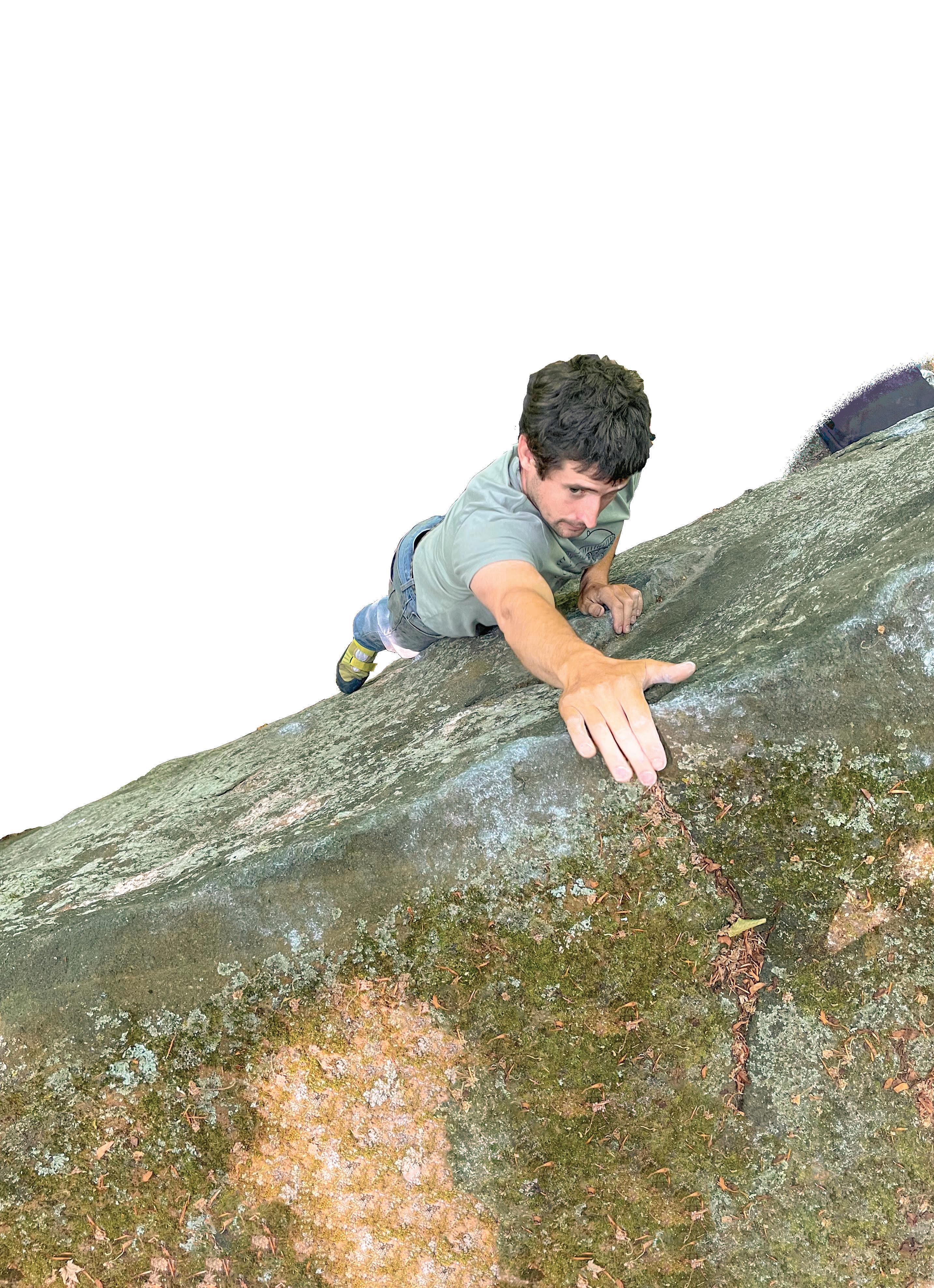




Ted Welser, a professor in the Department of Sociology and Anthropology at Ohio University, focuses his academic research on “the intersection of digital social systems, organizations, and social change.”


But when he’s not studying the evolving use of social media or digital inequality in Appalachia, he usually can be found on a rock somewhere.





Welser started climbing in 1989, while he was a student at Miami University in Oxford. “Miami had one of the few indoor climbing walls then,” he recalls. Through the years while both his CV and his family grew, so did his love for climbing, and he’s since climbed all over the world.
“Climbing combines physical activity — a sport-like activity — with a meaningful cultural experience,” he says. “It’s a reason to travel and experience new places. I’ve spent hundreds of days climbing in Ohio, Kentucky, West Virginia, and Alabama, traveling to places that are remote. I’ve enjoyed meeting people there who are climbers and not climbers.”
Shortly after he earned his Ph.D. in sociology from the University of Washington, he and his wife, Laura Black, moved to Athens with their two kids to be professors at OU.
He built a climbing wall in his garage, founded the Climb Athens nonprofit, and began working with the Ohio Climbers Coalition, for which he serves as Southeast Regional Coordinator. Even his kids have gotten in on the act, having started when each was about 2 years old. His older daughter has climbed internationally and has competed in the National Collegiate Climbing Competition.
Welser is also an ambassador of the sport, always eager to introduce more people to climbing. “It’s worth it to give it a try, if you haven’t done it,” he says. “It’s an activity that can help you find new horizons and new things you haven’t experienced.”
Of course, just a glance will tell folks that climbing appears to be a dangerous sport. For those worried that it seems like it might be too much, he understands, but has a ready answer.
“You have to understand that there is a risk, but we do what we can to follow safety practices,” Welser says. “In over 30 years of climbing, I’ve practiced to stay very safe. When I’m high off the ground, I always have a rope to catch me if I fall.”



















• The most dangerous type of climbing is free solo, where the climber has no safety equipment or anyone else to rely on. Welser says that despite the YouTube videos, it’s extremely rare because it’s beyond most people’s climbing ability and the risks of falling are so high.
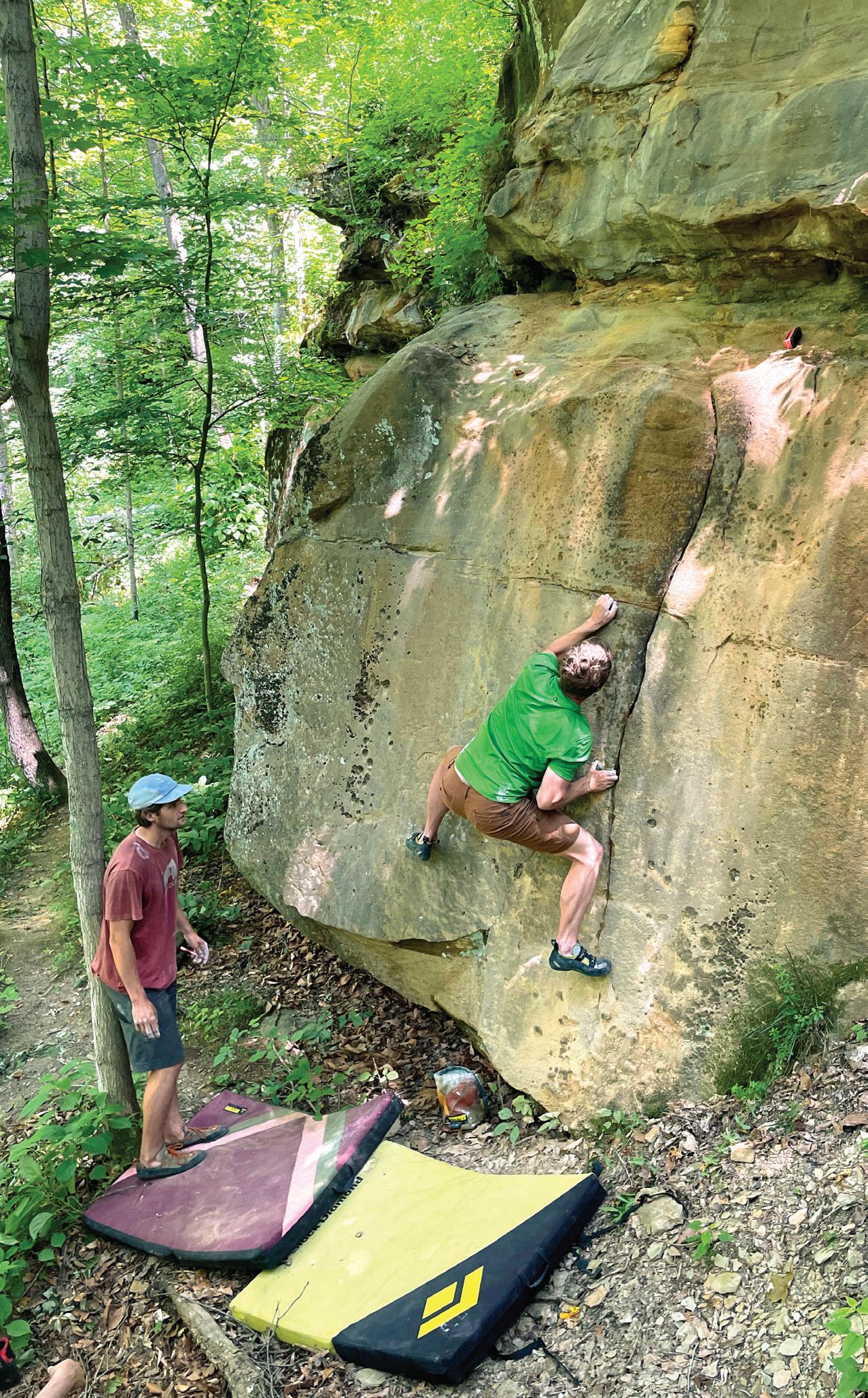
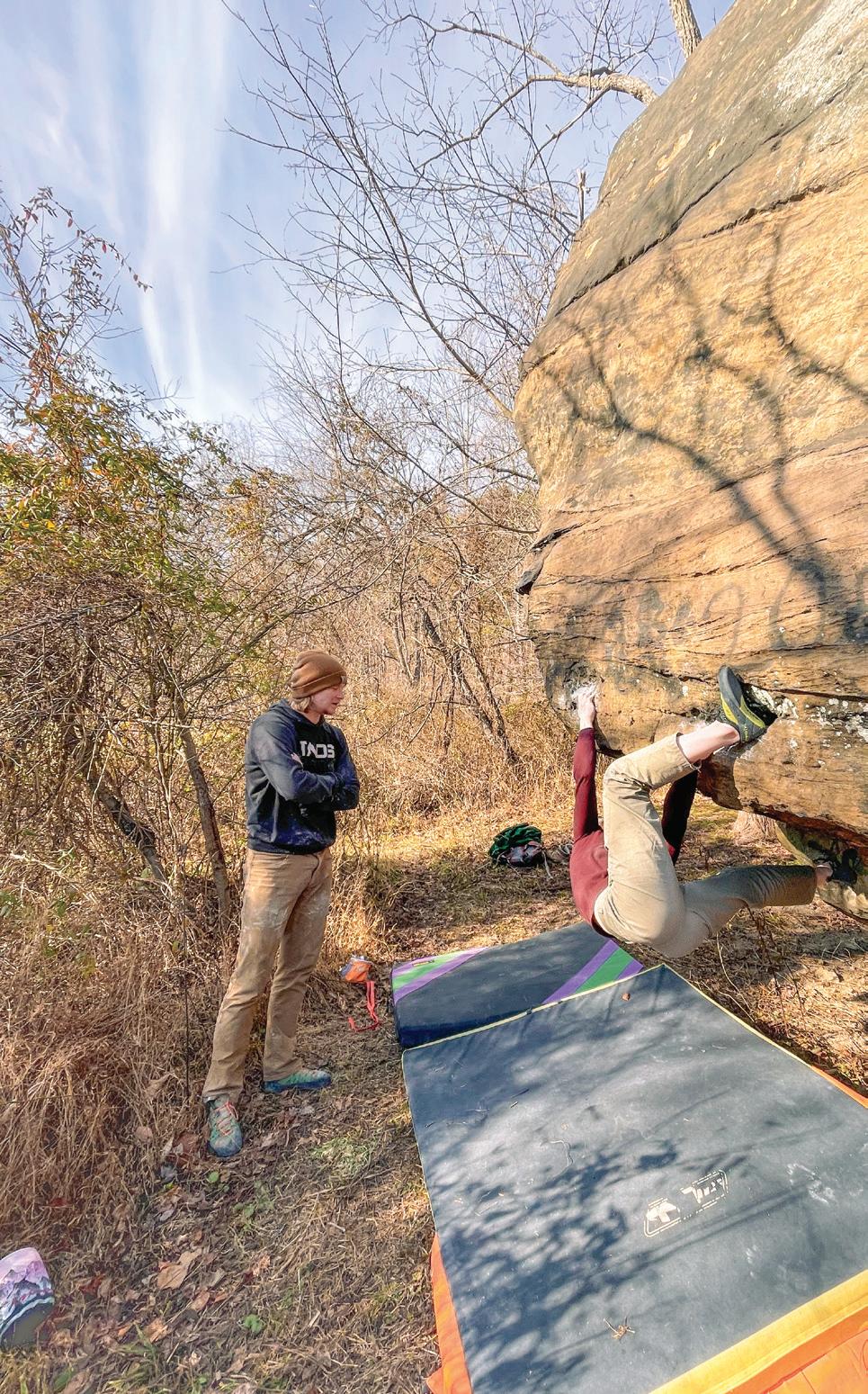
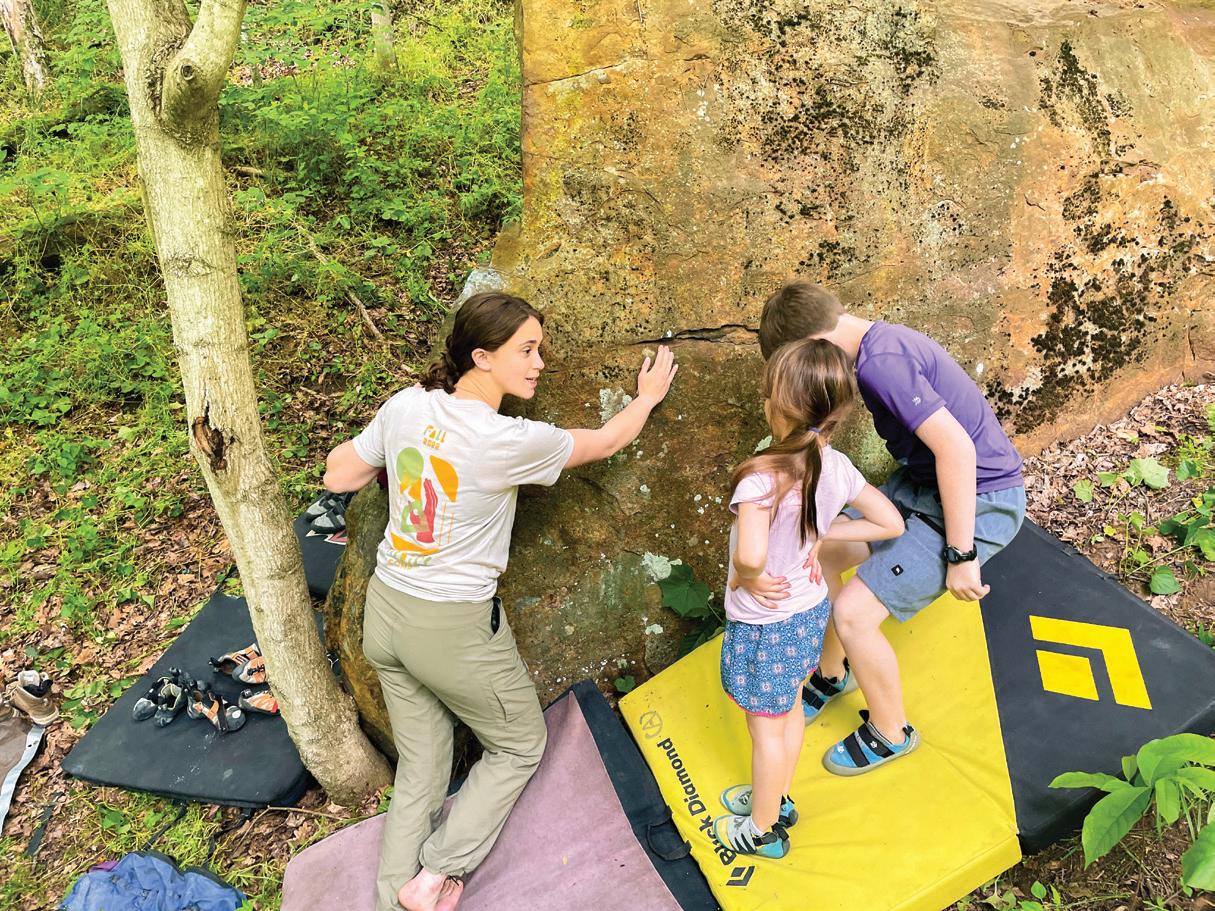
• Bouldering, as its name suggests, is climbing over large rocks within a few feet of the ground. It might sound easy, but often requires climbing sideways. “It can be very intense,” he says. “It’s like a puzzle to solve.”
Welser suggests that people who want to try climbing should visit an indoor climbing gym for some instruction. Indoor climbing walls are also common at community recreation centers and universities.
Noting that some indoor climbing gyms offer yoga classes, Welser says climbing requires “a balanced fitness — strength and flexibility.”
To begin climbing outdoors, it’s a good idea to book a professional instructor/guide. Such services are available at major climbing areas, such as Hocking Hills, New River Gorge in West Virginia, and Red River Gorge in Kentucky.
• Multi-pitch climbing is a way to climb a cliff or rock that is too tall to be climbed on one length of rope. Instead, the first climber climbs part of the way with a rope, then stops and anchors the rope to safety bolts already installed into the rock. The second climber then ascends that distance and they repeat the process until both climbers reach the top.
• Traditional, or “trad,” climbing is riskier than multi-pitch because the climber must place their own removable safety anchor points. The climber wedges cams and bolts into crevices in the rock.
• Ice — people who climb ice, such as frozen waterfalls, wear special boots that dig into the ice as they kick each foot inward. They hold a hatchetlike tool to hit into the ice for each new handhold.
Climbers are always looking for new places to climb. Welser says that many good sites in Ohio are on private land. He and other experienced climbers strive to protect climbing areas and consider access to private land as a privilege. He notes that landowners have several legal protections against any liability claims.











When you pay good money for something, you think it should last. We agree. Especially when it’s your family’s comfort.
The lifespan of even the most expensive conventional a/c is just 15-18 years. With a WaterFurnace geothermal unit, you can expect a lifespan of 25 years—sometimes even more. Plus, the life expectancy of the underground infrastructure is at least double that. Longer unit life means less cost to you and less waste in our landfills. And that makes WaterFurnace the better choice.
Geothermal is the only renewable that provides reliable operation 24 hours a day, 7 days a week, 365 days a year.

Ashland Comfort Control (419) 281-0144 comfortcontrolohio.com
Bowling Green United Home Comfort (419) 352-7092 unitedhomecomfort.com
Chillicothe
Accurate Htg & Clg (740) 775-5005 accurategeothermal.com
Coldwater Ray’s Refrigeration (419) 678-8711 raysrefrigeration.com
Defiance Schlatters Plbg & Htg (419) 393-4690 schlattersgeothermal.com
Dresden Federal Htg & Clg (740) 754-4328 federalheating.com
Findlay
Knueve & Sons Inc. (419) 420-7638 knueve.com
Gahanna Custom A/C & Htg (614) 552-4822 customairco.com/ geothermal
Groveport Patriot Air (614) 577-1577 patriotair.com
Holgate Holgate Hardware (419) 264-3012
Kalida Knueve & Sons Inc. (419) 420-7638 knueve.com
Sarka Electric (419) 532-3492 sarkaelectric.com
Mansfield Eberts Energy Center (419) 589-2000 ebertsheatingandcooling. com
Marion Wenig’s Inc. (740) 383-5012 wenigsinc.com
Medina Sisler Heating (330) 722-7101 sislerwaterfurnace.com
Mt. Vernon Cosby Htg & Clg (740) 393-4328 cosbyhc.com
New Knoxville New Knoxville Supply (419) 753-2444 newknoxvillesupply.com
Portsmouth Accurate Htg & Clg (740) 353-4328 accurategeothermal.com
Sidney Lochard Inc. (937) 492-8811
Sunbury Westin Air (614) 794-1259
geothermalcentralohio.com
Toledo Overcashier & Horst (419) 841-3333 ohcomfort.com
Wellington Wellington Indoor Comfort (440) 647-3421


$100,000 Adult Life Insurance
•
•
$3.49.
• C overage is also available for your spouse and other family members.
• B enefits will NEVER be canceled or reduced for the life of the policy if premiums are paid on time. Policy Form #SRTCV/SRTCV R13 or R17, or #SRTCV90MA in MA
Little free libraries of a different kind help spread beauty and increase habitats for pollinators.
BY MARGARET BURANEN

On a beautiful spring morning a few years ago, Randy Evans, director of Three Valley Conservation Trust in Oxford, was walking through a wooded area with the owner of the property, admiring the stunning array of wildflowers in bloom.
The woman, whose land is protected by a conservation easement secured through 3VCT, remarked how wonderful it would be if more people could enjoy the beauty of wildflowers firsthand. Suddenly, an idea began to germinate.
Evans thought of all the Little Free Libraries that were springing up at the time, offering books for anyone to take, and thought that maybe a similar program might encourage more people to plant wildflowers. It was a project, he figured, that would fit right in with 3VCT’s mission.
Three Valley Conservation Trust is a nonprofit group that promotes conservation measures in Butler, Preble, and Montgomery counties. Its 250 members mainly work to secure land conservation easements and raise awareness of the importance of protecting natural habitats and resources.
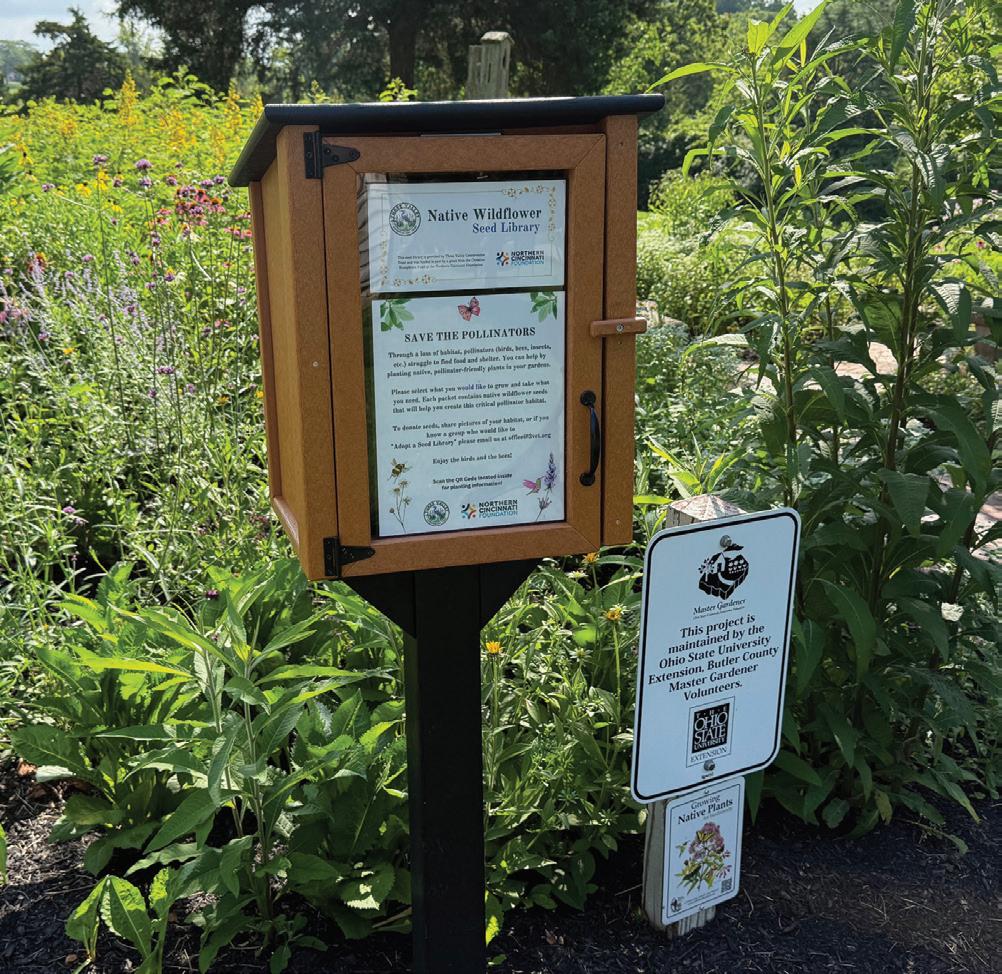
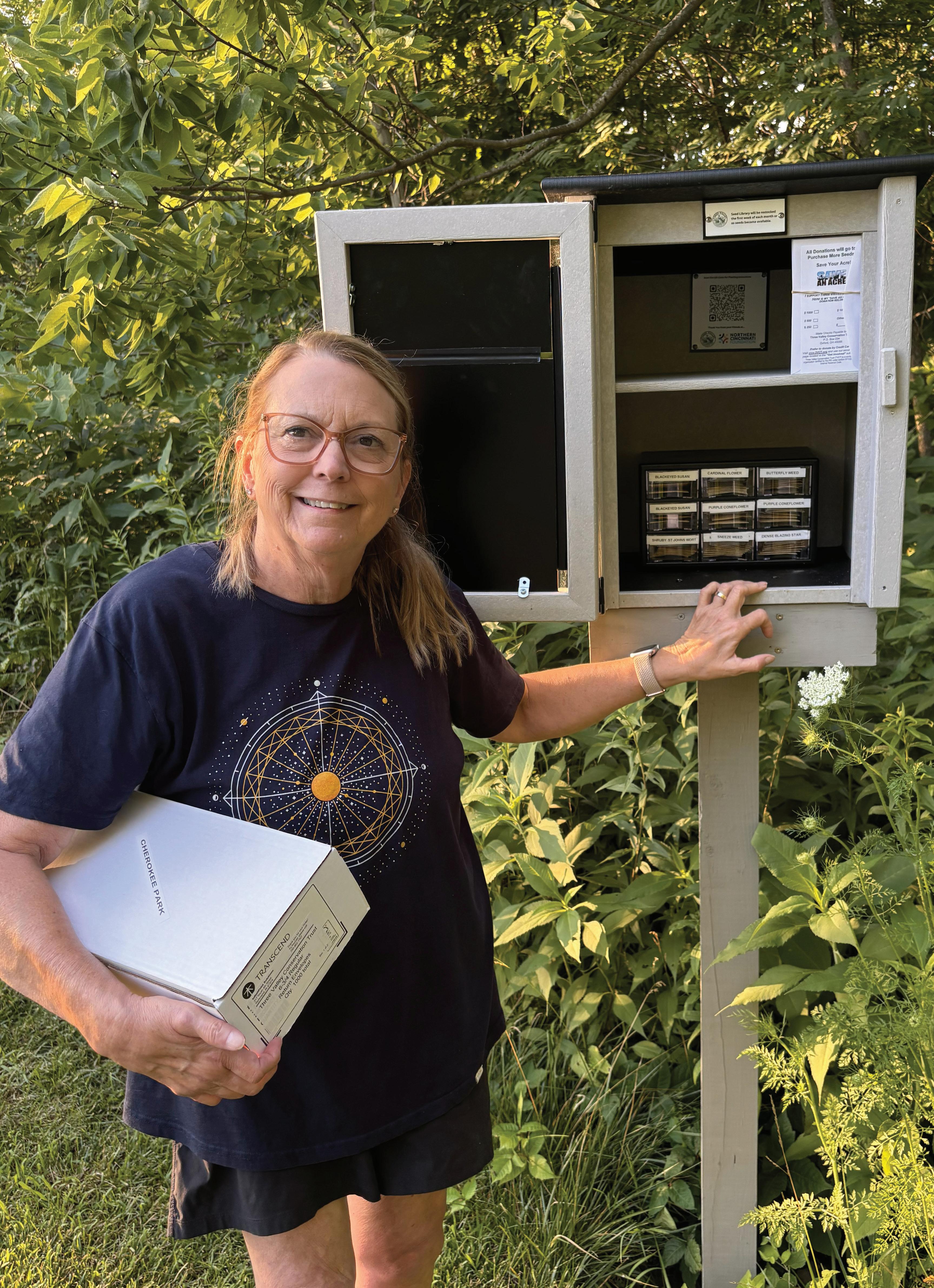
Evans and the 3VCT staff immediately jumped into some research and applied for a grant, which was approved in 2022, and “seed libraries” started springing up at various locations around Butler County in early 2023. Members of the public may take seeds from the libraries, free of charge, to plant in their backyards or wherever they choose.
“We’re creating and growing pollinator habitats throughout the community,” Evans says.
“Native plants are terrific because they take less water and are more likely to survive long-term.”
In turn, he says, those plants are a source of food and shelter for native bees and caterpillars.
“If you’ve never planted native wildflowers, you’ll be surprised at the diversity of the pollinators they attract and how easy they are to maintain.”
The 3VCT seed libraries offer seeds for 44 varieties of native Ohio wildflowers. Evans says the most popular seeds are for butterfly milkweed and other types of milkweed, cardinal flower, and blue lobelia. Other seeds available include purple coneflower, indigo, evening primrose, and columbine — stocked on a rotating basis depending on what’s available and what’s in season.
3VCT buys wildflower seeds in bulk from a seed supplier. It also receives donations of milkweed seed from the Butler County Soil and Conservation District. And now, thanks to a new Ohio law that has removed previous restrictions on collecting and sharing wildflower seeds as long as it’s for noncommercial purposes, local gardeners can also donate seeds to the cause.
Volunteers for the nonprofit divide the seeds into smaller, labeled packets and stock the libraries during the first week of every month from March until October or November.
Six 3VCD seed libraries are located in West Chester Township (at Keehner Park, Christ the King Lutheran Church, and Voice of America Park). The others are at Cherokee Park in Liberty Township, Ruder Preserve in Oxford, and Timberman Ridge in Hamilton. The MidPointe public libraries in Monroe, Trenton, Middletown, West Chester Township, and Liberty Township also have wildflower seed libraries.
Color photographs of the wildflowers in bloom are displayed on Three Valley Conservation District’s website (https://3vct.org/what-we-do/community), along with planting instructions and directions to each of the seed libraries maintained by the trust.
Evans says that increased financial donations and more volunteers would allow the nonprofit to establish additional wildflower seed libraries. “So many people call us up and thank us for doing this,” he says.
It’s likely enough there’s a free wildflower seed library near you. Some good places to find them include public libraries, local gardening clubs and Facebook groups, local chapters of Wild Ones (focuses on native plants), Soil and Water Conservation Districts, and county horticulture extension agents. A few others we found include:
¹ Watershed Stewardship Center, Parma
¹ Cleveland Public Library
¹ Holden Forests and Gardens, Kirtland
¹ Avondale Community Garden at Franklinton Farms, Columbus
¹ Nature Center at Shaker Lakes, Cleveland
¹ Westerville Public Library
¹ West Creek Conservancy, Parma
¹ Seed Vault, Annehurst






































































The best service is cultivated by a variety of backgrounds,



During National Women’s Month, Ohio’s Electric Cooperatives proudly recognizes the contributions of all our female sta in providing reliable, a ordable, and environmentally responsible electric power to our
thoughts, education, and experiences. consumer-members.






















Leave a legacy for future generations, nothing embodies this sentiment quite like the enduring gift of gold from American Gold Reserve. With its intrinsic value and historical significance, gold represents stability and prosperity across generations, making it a cherished asset to pass down. Secure your family’s future with a gift that stands the test of time, ensuring legacy of financial security and enduring value.














a





American Gold Reserve is releasing Government issued $5 Gold American Eagles completely free of dealer mark-up for only $349 each. These beautiful $5 Gold American Eagles are a perfect way to enter the gold market. They are set for immediate public release and will sell out fast.








• Teach the importance of wealth preservation.
• Great way to pass on wealth to children and grand children.
• A symbolic act of the commitment to your family.
• Gold provides your children and grandchildren with a built-in safeguard during times of financial instability.




An 1800s farm boy with a talent for equine affairs is still an inspiration in his Ohio hometown.
The name of John Solomon Rarey is known to most folks in the Franklin County town of Groveport; there’s a statue of him at the community’s rec center, after all, and his brother William was one of the original founders of the village (which at the time was called Rarey’s Port). The Rarey name graces several roads, buildings, businesses, and even a cemetery in the area.
In his day, though, John S. was a celebrity. “If he were alive today, Rarey would be world-famous,” says Rick Palsgrove, director of the Groveport Heritage Museum. “Once he trained that untamable horse, everyone knew who he was.”
Rarey cemented his reputation as one of the greatest horse trainers the world has ever known when he won a bet with England’s Earl of Dorchester. The earl owned a horse named Cruiser, reported to be the fastest in England. But the animal also was vicious — a living fury who kicked two grooms to death, and who witnesses said had snapped an inch-thick iron bar with his teeth. He was considered too dangerous to race.
Rarey was born in 1827 near what is now Groveport. His family owned several farms in the area, and from childhood, he displayed a genius for working with horses. After he “broke” his first horse at age 12, locals began soliciting him to handle their horses. By 1855, he was testing his techniques on feral horses in Texas, and soon he was demonstrating them to British officers in Canada.
The “Rarey Method” was revolutionary for its time. Instead of fear or pain, Rarey employed kindness, patience, a firm demeanor, and a soothing touch. “Rarey could train horses without hurting them,” says Palsgrove.
In 1857, Rarey ventured to England, where his abilities had attracted the attention of Queen Victoria and Prince Albert. The royal couple asked him for a command performance at the January 1858 marriage of their eldest daughter at Buckingham Palace.
The Times of London reported the “surprising and successful result” when a cream-colored horse
belonging to Her Majesty was “subjected to the manipulation of Mr. Rarey” during the event. “This particular animal has never permitted anybody to ride him,” the newspaper stated, “but he allowed Mr. Rarey to mount him without offering the least resistance.”
That horse, however, had nothing on the notorious Cruiser, and the English press challenged Rarey to conquer the fearsome dark bay. Dorchester bet Rarey a hundred pounds that he couldn’t tame Cruiser within three months.
Rarey did it in three hours.
When Rarey met Cruiser, the horse was being held in a cramped brick stable to limit his movement. Rarey boldly opened the stable’s oak door and stood before the stallion. Using a hushed voice and gentle stroking, Rarey quieted Cruiser enough to gently restrain him, and in no time the horse docilely lay down. Both Rarey and Dorchester rode Cruiser that day.
Having convinced England’s aristocracy of his prowess, Rarey embarked on a world tour. He gave lectures, did public demonstrations, rubbed shoulders with European royalty, and collected numerous accolades along the way. Queen Victoria’s courtiers danced to the “Rarey Waltz.” A new word — “Rareyfy” — was coined, meaning to tame a horse by kindness.
In 1861, newly rich, Rarey acquired Cruiser from Dorchester and returned home. There, he built a 24-room mansion he called Cedarlawn, as well as a stable and a paddock for Cruiser. Dignitaries from around the world flocked to Groveport, and Rarey flew the flags of their home countries over Cedarlawn when they did.
Rarey and Cruiser toured northern cities, performing from Boston and New York to Chicago and Cincinnati. “Rarey tamed whatever animals people brought to a show,” says Palsgrove. “Then at the end, out came Cruiser, and he’d shake hands with the horse.”




Rarey’s practices drew praise from all over. Abolitionist William Lloyd Garrison opined that Rarey provided a “lesson in substituting love for brutality.”
With the Civil War raging, the U.S. military also took notice. At the invitation of Gen. Henry Halleck, Rarey visited the Army of the Potomac in December 1862 to instruct Union cavalry officers, and even witnessed the Battle of Fredericksburg from a reconnaissance balloon.
Three years later, after a debilitating stroke, Rarey died in 1866 at age 38. After Rarey’s demise, Cruiser resumed his unruly ways, but lived out his days at Cedarlawn in accordance with his friend and master’s will. Cruiser died in 1875, and the horse was still so well known that his obituary ran in The New York Times.
Though Palsgrove delights in showing visitors the passage in Little Women where Louisa May Alcott referenced the horse whisperer, today’s world has largely forgotten Rarey and Cruiser.
But not in Groveport, where their story remains very much alive.
Not only does the Groveport Heritage Museum devote significant exhibit space to the pair, but Cruiser is featured on the city’s seal. A mural saluting Cruiser graces the side of a building on Main Street, and in front of the Groveport Recreation Center, statues by Zanesville sculptor Alan Cottrill portray Rarey and Cruiser’s fateful first meeting — Rarey with his signature top hat and muttonchop whiskers and wild-looking Cruiser with teeth bared.
Groveport’s most enduring tribute to Cruiser comes from its school district, which chose him as its mascot in the early 1900s, inspired by his strength, spirit, and discipline. The school colors were also based on the horse — “black, because Cruiser was a very dark horse, and red, for his temperament,” says Palsgrove.
Although Rarey was laid to rest in his family’s plot in Groveport Cemetery, Cruiser’s burial site is a mystery; Palsgrove says the Rarey family kept it a secret because they feared grave robbers would steal the remains and put them on display.
A middle school building now occupies the place where Cedarlawn once stood, and a football field has replaced Cruiser’s barn and paddock. “Cruiser’s grave might be somewhere beneath that field,” says Palsgrove. “But we’re not sure, and I think we’re fine not knowing.






















THROUGH MAY 31 – “The Woman Behind the Lens: Frances Benjamin Johnston and the American Presidency,” McKinley Presidential Library and Museum, 800 McKinley Monument Dr. NW, Canton. Exhibit of Johnston’s photographs of Presidents McKinley, Cleveland, Harrison, and others, as well as Southern architecture, historic gardens, and African American and Native American students. 330-455-7043 or www. mckinleymuseum.org/events.
MAR. 1–31 – Ice Wine Festival, Wineries of the Grand River Valley, 12–5 p.m. Each of the seven participating wineries will provide samples of their ice wines along with an appetizer. $10 at each location. www.grandrivercellars.com/events/2026wggrv-ice-wine-festival.
MAR. 6, 13, 20, 27 – Beginner Beekeeping Class, Life Church, 1033 Elm St., Grafton, 7–9 p.m. $50. Series of four classes offered by the Lorain County Beekeepers Association will cover topics such as beekeeping equipment, hive management, and hive care. Additionally, hands-on hive openings offered on Apr. 18 and 25. https:// loraincountybeekeepers.org.
MAR. 7–29 – Chatham’s Annual Sausage and Pancake Breakfast, presented by the Chatham Fireman’s Association, Chatham Memorial Hall (former VFW Hall), 6299 Avon Lake Rd., Chatham, Sat./Sun. 9 a.m.–3 p.m. Adults $12, Srs. $11, Children $8 Contact Steve Arters at 330-635-0958 or Frank Keeling at 330-410-6237 for additional information.
MAR. 7–29 – Show Your Stuff Art Show, Historic Fort Steuben Visitor’s Center, 120 S. 3rd St., Steubenville, Mon.–Fri. 10 a.m.–4 p.m. Free. Local Ohio Valley artists will display their works of art in various media. Don’t miss your chance to see talent up close — and maybe even take a piece of it home! Presented by the Steubenville Art Association. 740-283-1787 or www.oldfortsteuben.com.
MAR. 14 – Shreve Migration Sensation, Clinton Township Garage, 225 E. McConkey St., Shreve, 7:30 a.m.–4 p.m. Free admission. A day of birding, nature exploration, and family-friendly activities in the heart of the Killbuck Marsh Wildlife Area. www. shreveohio.com/migration-sensation.
MAR. 15 – Annual Buzzard Day Pancake Breakfast and Craft Fair, Hinckley Preparatory Academy, Hinckley, 7 a.m.–2 p.m. $10–$15; 5 and under free. This annual tradition marks the return of the turkey vultures and the arrival of spring, with food, festivities, and a nod to the town’s history. www.hinckleyohchamber.com/ happenings/#buzzardday.
MAR. 21–22 – Vintage Decoys and Wildlife Art Show and Sale, Holiday Inn Cleveland South, 6001 Rockside Rd., Independence, Sat. 9 a.m.–4 p.m., Sun. 9 a.m.–3 p.m. $5; 17 and under free. Largest venue in the Midwest for decoy collectors, competitive carvers, and wildlife/waterfowl artists. Carving contests, hands-on demos, Saturday auction, raffles, cash prizes, and more. ohiodecoycolcarvers@hotmail.com or www.odcca.net
MAR. 21–22 – Model Railroad Show, Lakeland Community College, 7700 Clocktower Dr., Kirtland (St. Rte. 306 at I-90, exit 193), 10 a.m.–4 p.m. $9–$16 (cash). Model railroad dealers and exhibitors, operating layouts, historical displays, collectibles, and more. 216-598-8842, www.facebook.com/ RailfestTrainshow, or www.railfest.org.
MAR. 22 – World Tour of Music: Larry and Joe, Akron-Summit County Public Library, 60 S. High St., Akron, 2 p.m. Free. The versatile multi-instrumentalists and singer-songwriters will perform a fusion of Venezuelan and Appalachian folk music on harp, banjo, cuatro, fiddle, maracas,
MAR. 27–29 – Wheeling Polka Festival, Oglebay Park, Wilson Lodge, Glessner Auditorium, 465 Lodge Dr., Wheeling. $25; 3-day pass, $69. Enjoy live polka bands, spirited dancing, and classic Polish fare. Tickets sold online only. www.oglebay.com/polka. APR. 11 – Civil War Symposium: “Chronicling the Fight: Art and Photography of the Civil War,” Davis & Elkins College, 535 Campus Dr., Elkins, 9 a.m.–4 p.m. $35. Topics include Matthew Brady, the famous photographer who made the horrors of war more intimate, and the stories and photographs of West Virginia soldiers. https:// beverlyheritagecenter.org/events.
guitar, and upright bass. Seating is on a firstcome, first-served basis. 419-853-6016 or www. ormaco.org.
MAR. 28 – Hop Around Millersburg, Historic Downtown Millersburg. Free. Spring open-house celebration for all ages! Adult Easter egg hunt with store coupons and gift cards, kids’ scavenger hunt, coloring contests, and open-house events at the downtown businesses! The Easter Bunny will be at Miller’s Creamery. 330-674-2412 or https:// historicdowntownmillersburg.com/event/hoparound-millersburg-march-28-2026
APR. 3 – Pretzel Day, Historic Zoar Village, 11 a.m.–4 p.m. Celebrate Good Friday like a true Zoar Separatist with pretzels, pretzels, and more pretzels! Stop by the Zoar Bakery for a fun, flavorfilled day with fresh pretzels straight from the oven or at one of the grab-and-go stations. Please be patient, as bakery wait times may be long. 330874-3011 or www.historiczoarvillage.com.
APR. 11 – Cuyahoga Falls Amateur Radio Club Hamfest and Computer Show, Emidio and Sons Expo Center, 48 E. Bath Rd., Cuyahoga Falls, 8 a.m.–1 p.m. $10 330-790-1680 or www.cfarchamfest.org.
APR. 11 – “Over Here!”: World War I Program, Fort Laurens Museum, 11067 Fort Laurens Rd., Bolivar, 10 a.m.–4 p.m. Learn about the First World War from reenactors portraying the soldiers who fought “over there.” 330-874-2059 or www. fortlaurensmuseum.org.
APR. 12 – Joe Rangel: “The Music of Bing Crosby,” Wadsworth Public Library, 132 Broad St., Wadsworth, 2–3 p.m. Free. The jazz vocalist and guitarist will showcase music performed by Bing Crosby. Not only will he sing, but he also will accompany himself on a seven-stringed guitar. Seating is on a first-come, first-served basis. 419853-6016 or www.ormaco.org.
APR. 12 – Medina Model Railroad and Toy Show, Medina Co. Fgds. Community Center, 735 Lafayette Rd. (St. Rte. 42), Medina, 9 a.m.–3 p.m. $8. Over 250 tables. New and used train sets and components from HO to G scale, operating layouts, vintage toys, and more. 330-948-4400 or www. conraddowdell.com.
Ohio Cooperative Living will not publish listings that don’t include a complete address or a number/website for more information.
MAR. 6, 13, 20, 27 – Friday Fish Fries, Saint Elizabeth Ann Seton Catholic Church, 600 Hill Road N., Pickerington, 4:30–7 p.m. Hosted by the Knights of Columbus. Featuring fried and baked fish, fresh salmon, macaroni and cheese, and more! Carryout available. See our website for more details. www.kofc11187.com/fishfry. http://kofc11187 com/FishFry.htm.
MAR. 6, APR. 3 – First Friday Art Walk, downtown Zanesville, 5–8 p.m. Come downtown on the first Friday of each month, when all our participating galleries, studios, and small businesses are open at the same time! See the Artist Colony of Zanesville’s website for a map of current participants: https:// artcoz.org/arts-district-map.
MAR. 20–22 – Open Season Sportsman’s Expo, Ohio Expo Center, Bricker Bldg., 717 E. 17th Ave., Columbus. The latest in outdoor and hunting gear, hands-on demos, trophy deer contest, expert seminar speakers, shooting and archery ranges, door prizes, and entertainment like Twiggy the Water-Skiing Squirrel! www. openseasonsportsmansexpo.com/ohio.
MAR. 20–22 – Peony Palooza, Groovy Plants Ranch, 4140 Co. Rd. 15, Marengo, 9 a.m.–6 p.m. From garden peonies to premium itohs and tree peonies, we’ll have them all! www. groovyplantsranch.com.
MAR. 21 – GCHS Band Spring Craft and Gift Bazaar, Grove City High School, 4665 Hoover Rd., Grove City, 9 a.m.–4 p.m. $5; 5 and under free. Homemade food and baked goods available for purchase. 614-801-3300 or www.gchsbands.org/ bazaar/spring-bazaar.
MAR. 21 – Ohio Boating Education Course, Alum Creek State Park, Horace R. Collins Classroom, 3307 S. Old State Rd., Delaware, 8 a.m.–5 p.m. Free. This class fulfills Ohio’s mandatory boater education law requirements. Bring a sack lunch. Register in advance by calling Alum Creek Park Office at 740-548-4631. More information available at https://ohiodnr.gov/go-and-do/plan-avisit/events-calendar (search “boating”).
MAR. 21 – Sewing Smorgasbord, Sheridan Middle School, 8660 Sheridan Rd., Thornville, 9 a.m.–3:30 p.m.; doors open 8:15 a.m. $10 (cash only). Over 30 classes, over 15 exhibitors, fabric fair, scissor sharpening, sewing machine raffle, two fat-quarter raffles, door prizes, and three “themed” basket raffles! No preregistration required for classes. Lunch available for purchase. 740-405-7891, crshuster1@gmail.com, or www.facebook.com/ osuextensionperry.
MAR. 22 – Columbus Spring Avant-Garde Art and Craft Show, Makoy Event Center, 5462 Center St., Hilliard, 10 a.m.–4 p.m. $3, under 12 free. Large show featuring artists and crafters selling their original handmade items. 440-227-8794 or www. avantgardeshows.com.
MAR. 22 – Columbus Toy and Game Show, Ohio Expo Center, Lausche Bldg., 717 E. 17th Ave., Columbus, 9 a.m.–4 p.m. $15; 10 and under free; early buyer, 8–9 a.m., $20. Buy, sell, and trade new and retro toys, video games, and collectibles. Free arcade games, celebrity guests, free family activities. www.ctspromotions.com.
MAR. 22 – Ohio Bridal and Wedding Expo, Greater Columbus Convention Center, 400 N. High St., Columbus, 1–5 p.m. Free with pass (see
THROUGH APR. 29 – Bluegrass Wednesdays, Vinoklet Winery, 11069 Colerain Ave., Cincinnati, Wed. 6:30–8:30 p.m. Enjoy dinner, wine, and an evening of free entertainment by Vernon McIntyre’s Appalachian Grass. Reservations recommended. 513-385-9309, vinokletwinery@fuse.net, or www. vinokletwines.com.
MAR. 15 – Cincinnati Spring Avant-Garde Art and Craft Show, R.S.V.P Event Center, 453 Wards Corner Rd., Loveland, 10 a.m.-4 p.m. $3; under 12 free. Kick off spring with us! This large show will feature artists and crafters selling their original handmade items. Concession stand by the venue. www.avantgardeshows.com/events.
MAR. 26–29 – Cincinnati Auto Expo, Cincinnati Convention Center, 525 Elm St., Cincinnati. $9–$11; 12 and under free with paid adult/teen admission. Compare the newest models created by your favorite manufacturers while learning more about the latest technologies that enhance driver and passenger experience. Fun for the whole family! 513-326-7100
MAR. 28 – Cabin Fever Arts Festival, Southern State Community College, Patriot Center, 100 Hobart Dr., Hillsboro, 10 a.m.–4 p.m. Free admission. Presented by the Appalachian Artisans Guild. A showcase of quality handcrafted arts and
website), or $10 at door. Find the perfect gown, DJ, photographer, reception venue, band, and honeymoon destination! Fashion show, food sampling, photo gallery, prizes and giveaways, and much more. https://bridalshowsoh-cc.com.
MAR. 27–29 – Columbus Home Improvement Show, Ohio Expo Center, Kasich Hall, 717 E. 17th Ave., Columbus, Fri. 12–6 p.m., Sat. 10 a.m.–6 p.m., Sun. 11 a.m.–5 p.m. $5; under 18 free. See the latest innovations and design trends from hundreds of exhibitors. Local remodeling and building experts will be on hand to answer your questions. www.homeshowcenter.com/overview/ columbushome2
MAR. 28 – Annie Glenn Tea and Toys, John and Annie Glenn Museum, 72 W. Main St., New Concord, 1–3 p.m. $20 per guest. Join us for a fullservice tea featuring a historic toy presentation and full tour of the museum. Spaces are limited. Email information.maem@gmail or call 740-826-3305 to reserve a seat.
MAR. 28–29 – Scott Antique Market, Ohio Expo Ctr., Bricker and Celeste Bldgs., 717 E. 17th Ave., Columbus, Sat. 9 a.m.–6 p.m., Sun. 10 a.m.–4 p.m. Free admission; $7 parking. 800 exhibit booths. info@scottantiquemarket.com or www. scottantiquemarkets.com.
APR. 9–12 – Equine Affaire, Ohio Expo Center, 717 E. 17th Ave., Columbus. $10–$20; 6 and under free. The nation’s premier equine expo and equestrian gathering, featuring training clinics, seminars, demos, exhibits, equine entertainment and competition, and much more. 740-845-0085 or www.equineaffaire.com.
APR. 11 – Sunbury Piece Corps Quilt Show, Sunbury United Methodist Church, 110 W. Cherry St., Sunbury, 9 a.m.–3 p.m. $5. Quilts on display, vendors, quilting rummage sale. Food for sale around lunchtime. Email sunburypiececorps@ aol.com.
crafts. Vendors, food truck, coffee truck, and live entertainment. www.appartguild.com
MAR. 31 – Miami University Appalachian Studies Concert, Harry T. Wilkes Conference Center, 1601 University Blvd., Hamilton, 7 p.m. Free. Enjoy an evening of lively bluegrass music by Vernon McIntyre’s Appalachian Grass, featuring lightning-fast instrumentals, close harmonies, and entertaining novelty songs. 513-785-3277 or www. facebook.com/MiamiRegionalsAppStudies.
APR. 11 – Family Trout Fishing, Caesar Creek State Park, 8570 East St. Rte. 73, Waynesville, 9 a.m.–12 p.m. Family-friendly fishing event in partnership with ODNR. Meet at the Caesar Creek Youth Pond. https://ohiodnr.gov/go-and-do/plan-avisit/find-a-property/caesar-creek-state-park.
MAR. 14 – Miller’s Automotive Swap Meet and Car Show, Ross Co. Fgds., 344 Fairgrounds Rd., Chillicothe, 9 a.m.–4 p.m. $8; under 14 free. Open to all motorsports from restoration to racing, including race cars, tools, hot rods, apparel, collectibles, rat rods, go-karts, and more. 740701-3447 (Nate), 740-701-2511 (Brian), or www. millersswapmeet.com.
MAR. 17 – RUNA: Celtic Roots Music, Peoples Bank Theatre, 222 Putnam St., Marietta, 7 p.m. $27–$67. This music “super group” interweaves the haunting melodies and exuberant tunes of Ireland and Scotland with the harmonies and rhythms of jazz, bluegrass, flamenco, and blues. www.peoplesbanktheatre.com.
MAR. 20–21 – River City Blues Festival, Lafayette Hotel, 101 Front St., Marietta. $45–$60;
THROUGH MAY 12 – Line Dancing, Delphos Eagles Aerie #471, 1600 E. Fifth St., Tues. 6–7:30 p.m. $5. Step-by-step instructions given at the beginning of each class. Everyone can learn! Private lessons also available. Taught by Kelly Jackson Kroeger (see her Facebook page). www. visitgreaterlima.com/calendar.
MAR. 7–8, APR. 4–5 – Tri-State Gun Show, Allen Co. Fgds., 2750 Harding Hwy., Lima, Sat. 8:30 a.m.–4 p.m., Sun. 8:30 a.m.–2 p.m. $8; 18 and under free. Over 400 tables of modern and antique guns, edged weapons, and sportsmen equipment. 419-647-0067 (Manetta Obringer) or www. allencofair.com/events-calendar.
MAR. 20 – The Student Prince in Old Heidelberg, The Ritz Theatre, 30 S. Washington St., Tiffin, 7:30 p.m. Join us for a free screening of this 1927 silent film. and a few surprises! 419-448-8544, info@ ritztheatre.org, or www.ritztheatre.org.
MAR. 21 – Black Swamp Spinners Guild Annual Market Day and Fiber Fair, Wood Co. Fgds., Junior Fair Bldg., 13800 W. Poe Rd., Bowling
weekend pass, $120. The festival brings together some of the most talented blues performers from around the country. For information, call Jay Phillips at 304-481-8389 days, evenings, and weekends. For lineup and schedule, visit https:// bjfm.org/blues-festival.
MAR. 20–22 – Retreat: “Bloom and Create,” Riverview Conference Center, 20 N. Plaza Blvd., Chillicothe. $130. Twigs & Twine Craft Shop is hosting a three-day spring crafting getaway! Bring your projects and enjoy a weekend full of creativity, friendship, and inspiration. www. twigsandtwinecraftshop.com.
MAR. 21 – Fearing Township Volunteer Fire Department Annual Dinner, 1975 Stanleyville Rd., Whipple, 4 p.m. For more information or questions, call 740-516-3989
MAR. 27 – “The Gambler Returns”: Kenny Rogers Tribute, Majestic Theatre, 45 E. Second St., Chillicothe, 7:30 p.m. $30–$40. Country recording artist Alan Turner re-creates the magic of a night with Kenny. This full band show will take you on a musical journey through the career of an American icon and legend. www.majesticchillicothe.net.
MAR. 28 – Flint Knapping Demonstration, Hopewell Mound Group, 4731 Sulphur Lick Rd., Chillicothe, 1–3 p.m. Ed Moreland will discuss the history of flint knapping and the knapping process, followed by a live demonstration. Learn about this ancient technology. 740-774-1126 or www. friendsofhopewell.org/events.
Green, 9 a.m.–4 p.m. $1; open to the public. Roving, fleeces, exotic fibers, handcrafted items, homespun yarns, books, dyes, spinning and weaving equipment and supplies, and demonstrations. Lunch available. For more information, email blackswampsg@gmail.com.
MAR. 21 – The Lettermen, The Ritz Theatre, 30 S. Washington St., Tiffin, 7:30 p.m. $20–$50 419-4488544, info@ritztheatre.org, or www.ritztheatre.org.
MAR. 22 – Findlay Spring Model Train Show, Northwest Ohio Railroad Preservation Inc., 12505 Co. Rd. 99, Findlay, 10 a.m.–3 p.m.; trains run until 4 p.m. $5; 12 and under free with adult admission. Vendors will be displaying and selling model trains, toy trains, and railroad memorabilia. Quarter-scale train rides available: $3 adults, $2 children. 419423-2995, www.facebook.com/nworrp, or www. nworrp.org.
MAR. 28 – Maple Syrup Festival, Williams Co. Fgds., Montpelier, 8 a.m.–12 p.m. Contact the Williams SWCD at 419-636-9395 for more information or email amichaels@williamsswcd.org.
MAR. 31 – The Music Man, Veterans Memorial Civic and Convention Center, #7 Town Square, Lima, 7:30 p.m. $62–$102. There’s trouble in River City when a fast-talking traveling salesman named Harold Hill arrives and cons the townspeople into buying instruments and uniforms for a boys’ band, but his plans to skip town are foiled when he falls for the town librarian. www.limaciviccenter.com.
APR. 4 – NWORRP Easter Egg Hunt, Northwest Ohio Railroad Preservation Inc., 12505 Co. Rd. 99, Findlay, 10 a.m.–2 p.m. $3; 12 and under, $2. A continuous scavenger egg hunt for all ages with a chance to win a “Golden Ticket” good for the 2026 season. No competition here! Just fun and treats
APR. 4 – Stanleyville Community Group Easter Egg Hunt, Fearing Township Volunteer Fire Department, 1975 Stanleyville Rd., Whipple, 10 a.m. Come hunt some eggs and get your picture taken with the Easter Bunny. For more information, call 740-336-4062 or email us at fearingtownship@ gmail.com.
APR. 11 – First Capital Lecture Series: “Ohio Moves: Transportation — The Erie Canal,” Dard Hunter Studio, 125 W. Water St., Chillicothe, 2–4 p.m. Free. Tom Troester will share the story of the canal that ran through Chillicothe from 1831 to 1907. The presentation will be in a former canal warehouse built in 1847, much of which is still original. A guided tour of a small section of the canal will be available after the lecture. www.visitchillicotheohio.com/america250rosscountyohio.
APR. 11–12 – Association of Ohio Long Rifle Collectors 51st Annual Show, Lafayette Hotel, 101 Front St., Marietta, Sat. 9 a.m.–5 p.m., Sun. 9 a.m.–2 p.m. $8; members and children under 12 free. Buy, sell, or trade. Features Ohio-made muzzleloading rifles and their accouterments from the 18th and 19th centuries; over 200 makers. Includes rifles from the late, contemporary builder Warren Offenberger and antique guns by Stilgenbauer. Also demos of leatherwork and engraving. For info, contact John Reinbolt at 419429-9825 or jreinbolt24@bright.net. Visit http:// aolrc.com or follow us on Facebook.
for all participating youngsters. Quarter-scale train rides continue until 4 p.m. 419-423-2995, www. facebook.com/nworrp, or www.nworrp.org.
APR. 5 – Lima Community Easter Dinner, Veterans Memorial Civic and Convention Center, #7 Town Square, Lima, 12:45–2 p.m. Free. Gather with the community around a common table for Easter dinner. www.limaciviccenter.com.
APR. 10–12 – McDonald’s Youth Theatre: The Hobbit, Encore Theater, 991 N. Shore Dr., Lima, Fri./Sat. 7:30 p.m., Sun. 2 p.m. $10; 10 and under, $5. You’ve read the book and seen the movies — now journey there and back again in the stage adaptation of Tolkien’s epic tale of magic, treasure, and dragons. www.amiltellers.org.
APR. 11 – F.A.C.T Pound Out Cancer Event, Tiffin University, Tiffin, 10 a.m.–3 p.m. Buy a T-shirt, join in the POUND workout, check out the vendors, silent auction, and food trucks. All proceeds go to support F.A.C.T of Seneca County. www.facebook. com/poundoutcancertiffin.
APR. 11 – Lima Symphony and Chorus: “Fate and Fortune,” Veterans Memorial Civic and Convention Center, #7 Town Square, Lima, 7:30 p.m. $15–$50 Dive into a powerful musical journey exploring the forces that shape our lives — desire, destiny, and the unpredictable tides of fortune. Don’t miss this exhilarating night of music! 419-222-5701 or www. limasymphony.com.
APR. 11 – Spring for the STARS Vendor and Craft Fair, Elida Elementary School, 300 Pioneer Rd., Elida, 9 a.m.–3 p.m. $2; free for K–5th grade. Over 40 vendors with handcrafted items and great gift ideas. Concessions available. For more information, contact Nicole Oen at noen@elida.k12.oh.us.
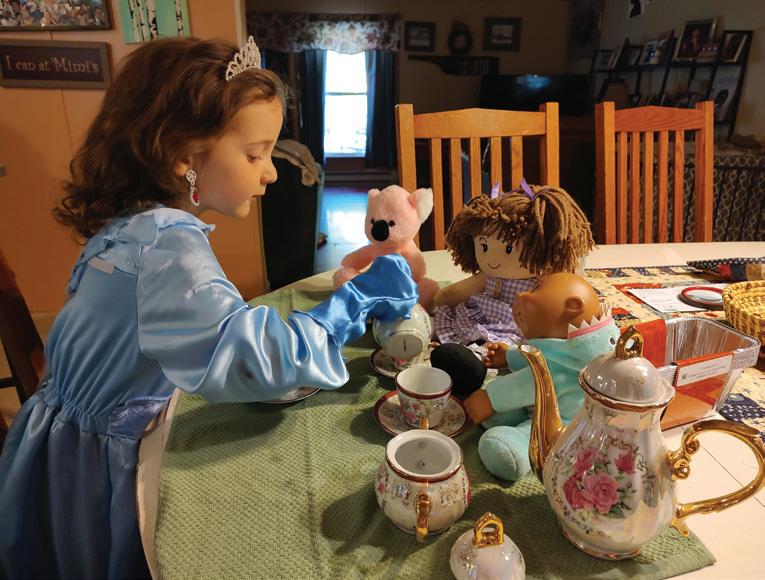
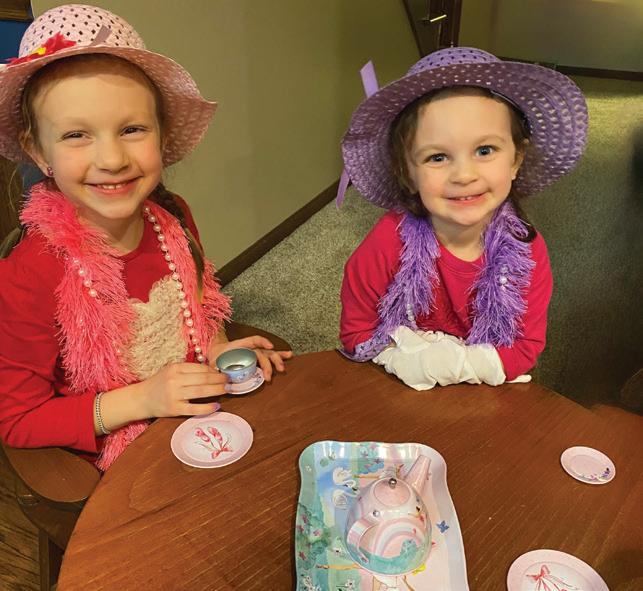
1 4 5 6 2 3
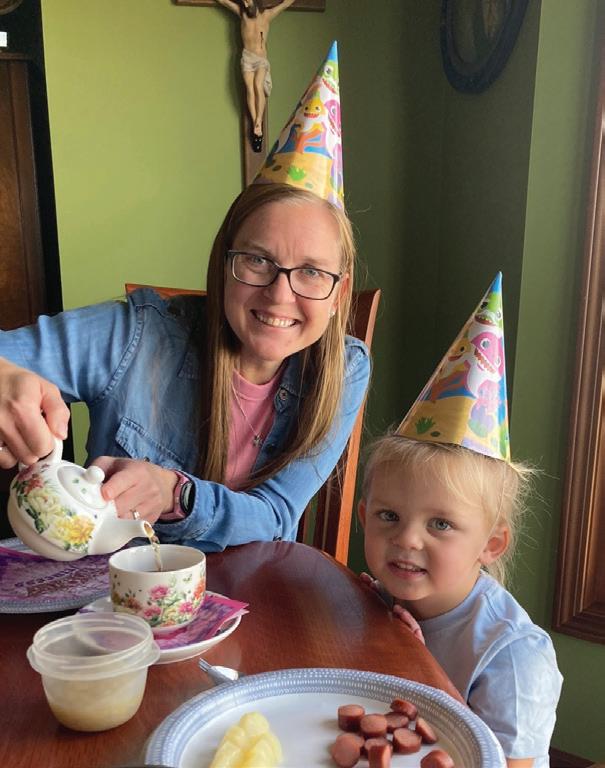
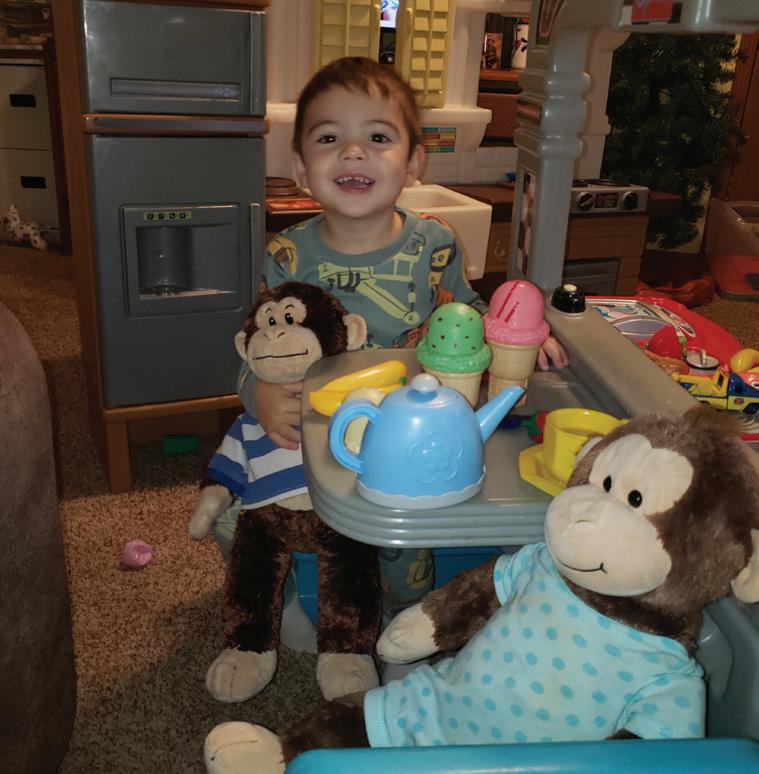
1. Lilly and friends’ tea party. Margo Wolf, Butler Rural Electric Cooperative member
2. Our granddaughters, Brynlee and Aubree, enjoying a little tea. Janet Ruffing, North Central Electric Cooperative member
3. Our daughters, Bernadette and Hattie, having a tea party with all of their favorite stuffed animals. Olivia Winner, Pioneer Electric Cooperative member
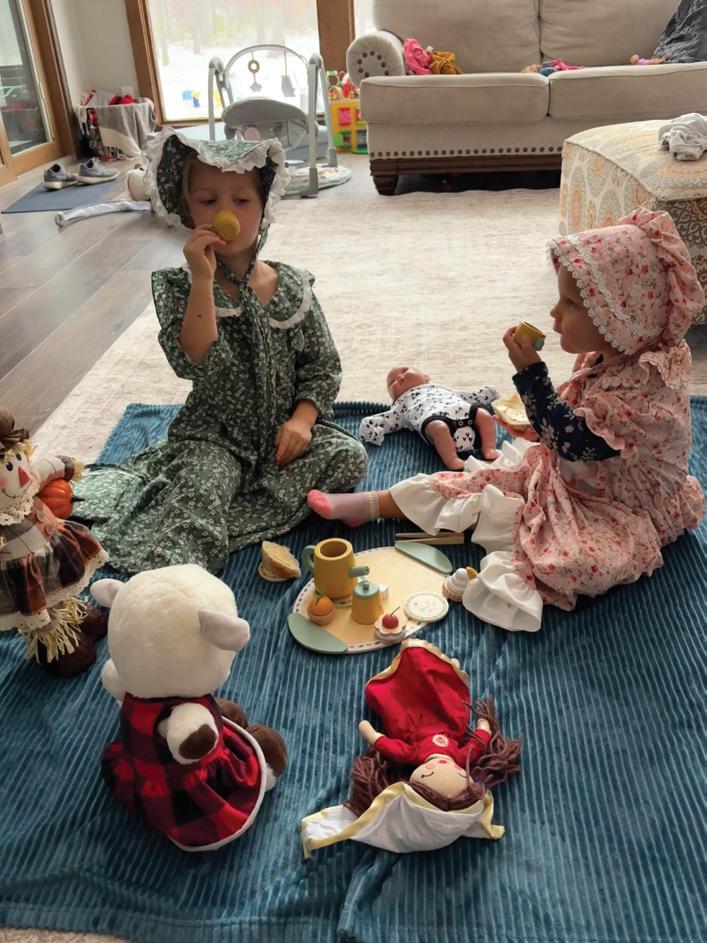
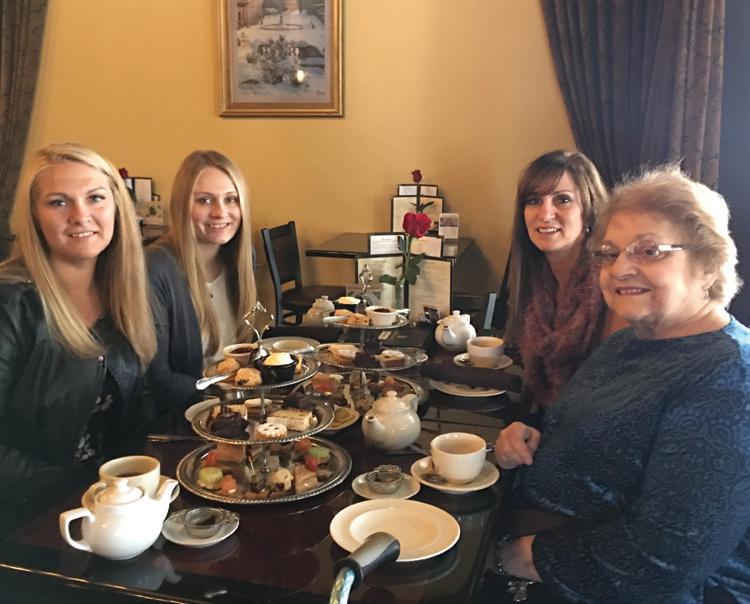
4. An afternoon lunch tea party with daughter and granddaughter. Marge Weitzel, Midwest Electric member
5. Our grandson, Owen Warnecke, enjoying his tea party with his friends. Della Wenninger, Paulding Putnam Electric Cooperative member
6. Myself, my sister Michaila, mother, Maureen, and grandmother Connie (all co-op members) out for a tea party day at a tea house in Ohio! Katherine Klaus, The Energy Cooperative member
For June, send “Roller coaster” by March 15; for July, send “America” by April 15. Upload your photos at www.ohiocoopliving.com/memberinteractive. Your photo may be featured in our magazine or on our website. Send us YOUR picture!






















There’s power in the simplest of actions, like one neighbor helping another, with everybody looking out for everybody else. Community is everything to your electric cooperative. We’re grateful for your trust to provide energy you need, giving you the power to power on.