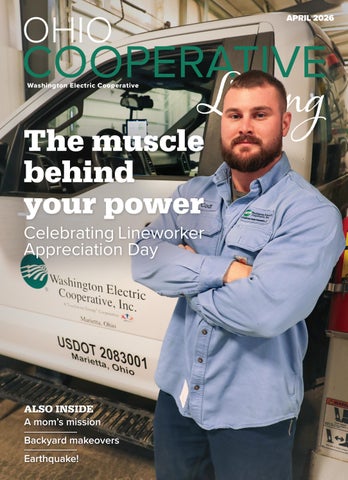
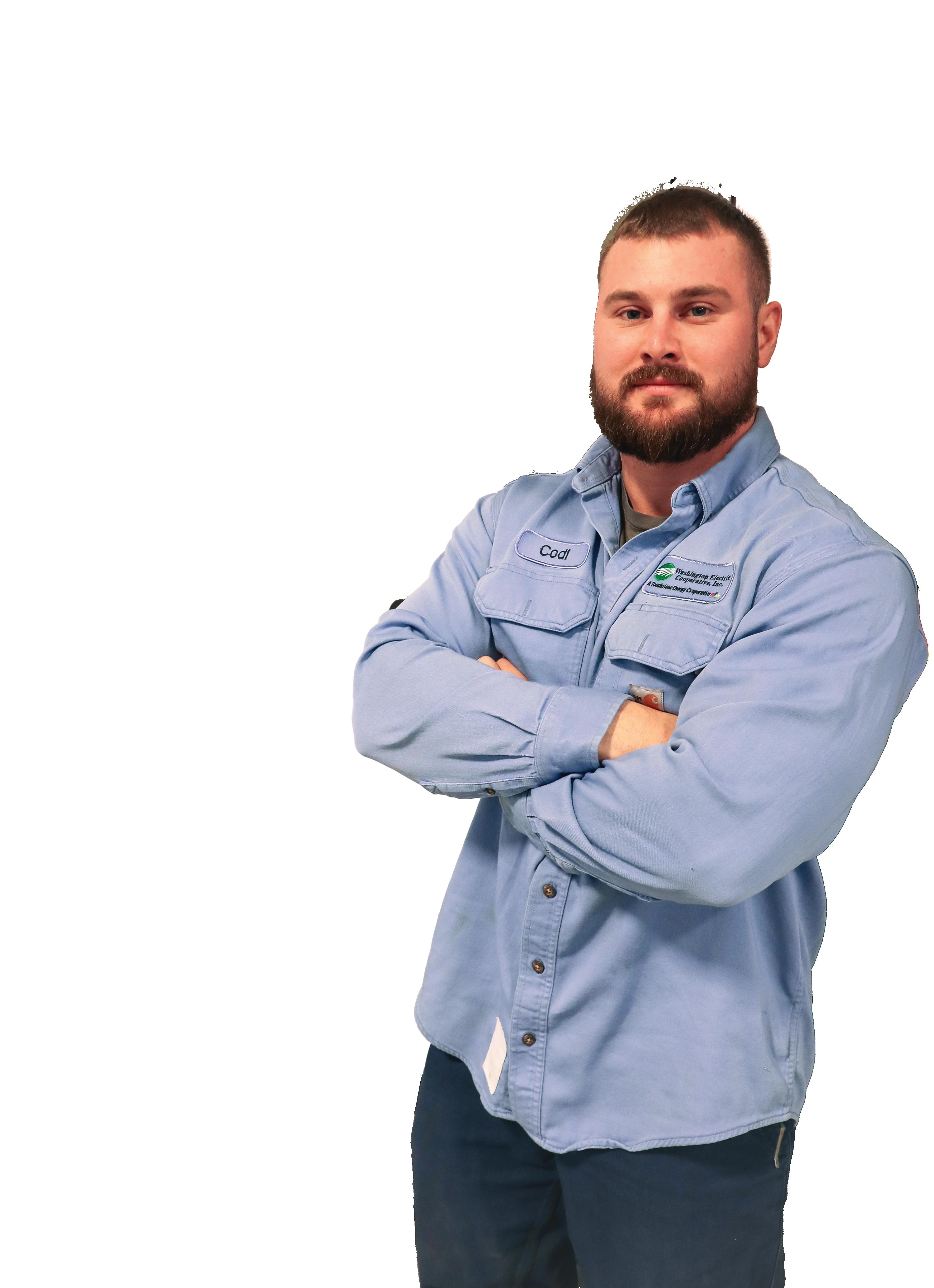
The muscle behind your
















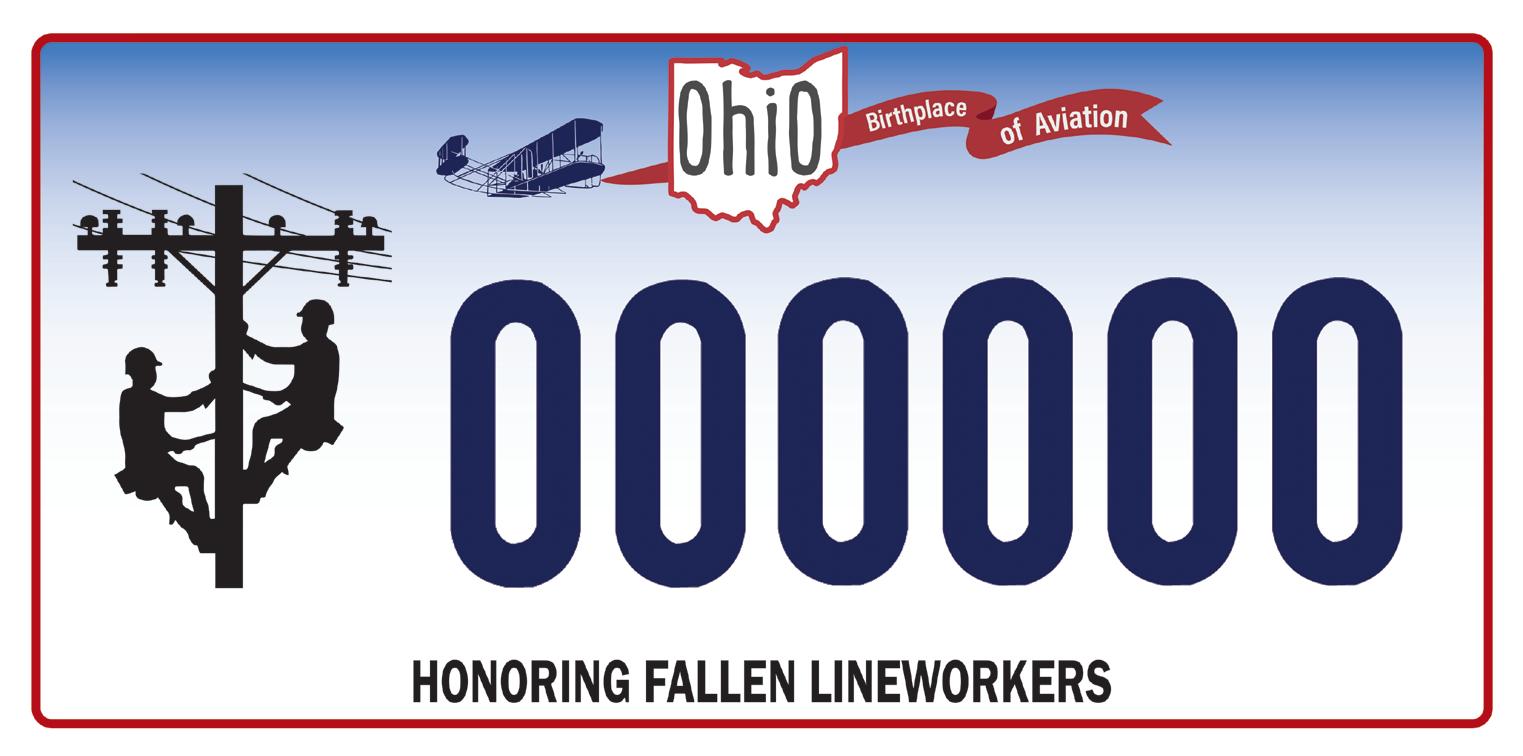












Newly fallenredesignedlineworker license plate now available









Electric lineworkers put their lives on the line to power Ohio. Honor fallen lineworkers and support their families when you renew your Ohio license plates.



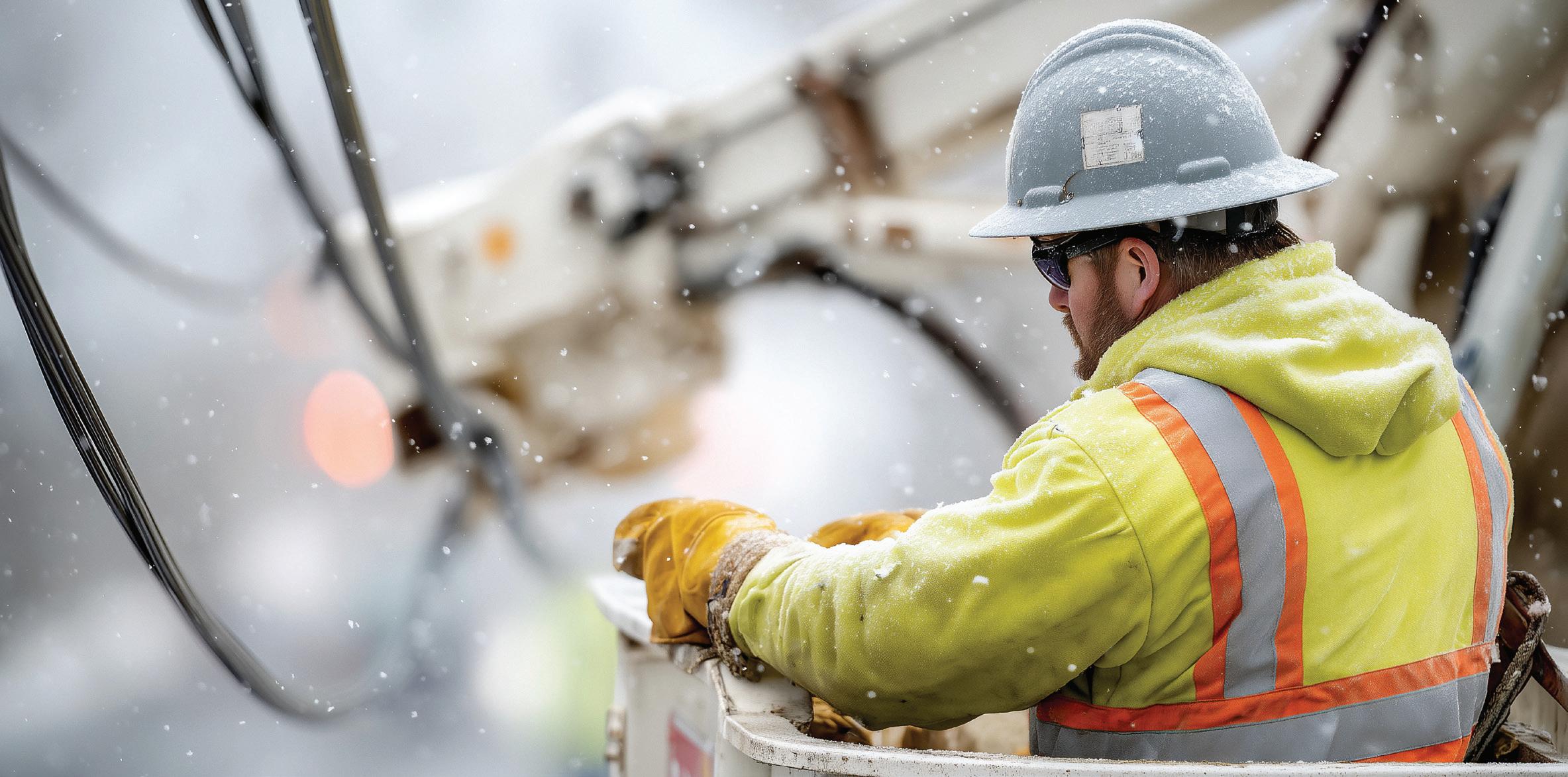
Winter warriors
April is a month that naturally invites reflection. As seasons begin to shift and routines change, it gives us an opportunity to pause and recognize the people whose work often goes unnoticed, but whose impact is felt every single day. For electric cooperatives, April 13 holds special significance because it’s Lineworker Appreciation Day — a time to recognize those who keep our electric systems running through every challenge.
This year, that appreciation carries added weight. The winter of 2025–26 has been one of the coldest in recent Ohio history. Extended periods of freezing temperatures, snow, ice, and wind created difficult, and at times dangerous, conditions for anyone working outdoors. Yet through it all, our lineworkers continued to respond, repair, and restore, ensuring reliable service when our members needed it most.
Lineworkers perform highly skilled, physically demanding work that requires constant attention to both safety and precision. Whether restoring power after a storm or maintaining infrastructure in bitter cold, they often work in conditions most of us try hard to avoid. Their willingness to be on the front lines, at all hours and in all weather, allows the rest of us to stay warm, safe, and connected.
At the same time, it’s important to recognize another group of employees who are just as critical to keeping the lights on: our power plant operators. Reliable electricity begins with reliable generation. If there’s no power generated to run through them, the condition of the lines doesn’t matter. Power plant employees work around the clock, often in demanding environments that require constant focus and technical expertise, to ensure electricity is available.
Power plant operators, like lineworkers, faced challenges that came with extreme cold and high demand this winter. Their work may be less visible to the public, but it’s no less essential. Together, the generation team and line crews form a system that must function seamlessly to serve our members, and this month is the perfect time to thank them for their hard work and dedication. Their contributions are invaluable and we are grateful for their service.
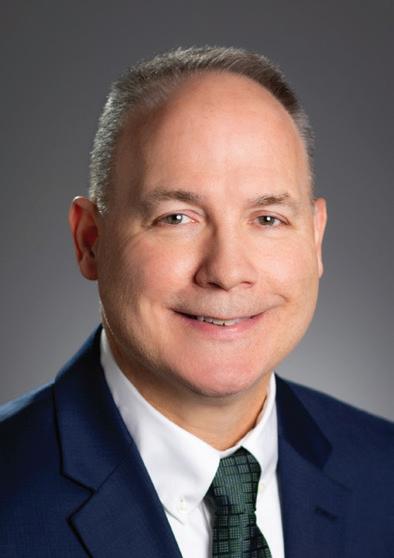
Craig Grooms PRESIDENT & CEO OHIO’S ELECTRIC COOPERATIVES
Together, the generation team and line crews form a system that must function seamlessly to serve our members.
Ohio Rural Electric Cooperatives
6677 Busch Blvd. Columbus, OH 43229 614-846-5757 www.ohiocoopliving.com
Craig Grooms President & CEO
Caryn Whitney Director of Communications
Jeff McCallister Senior Managing Editor
Amy Howat Assistant Managing Editor
Neal Kindig Graphic Designer
Contributors: Alicia Adams, Colleen Romick Clark, Getty Images, Mary Mogan Edwards, Randy Edwards, W.H. “Chip” Gross, Catherine Murray, and Kevin Williams.
OHIO COOPERATIVE LIVING (USPS 134-760; ISSN 2572-049X) is published monthly by Ohio Rural Electric Cooperatives, Inc. It is the official communication link between the electric cooperatives in Ohio and West Virginia and their members. Subscription cost for members ranges from $6.48 to $7.92 per year, paid from equity accruing to the member.
POSTMASTER: Send address changes to editorial and advertising offices at: 6677 Busch Boulevard, Columbus, OH 43229-1101. Periodicals postage paid at Berne, IN 46711, and at additional mailing offices. Nothing in this publication may be reproduced in any manner without written permission from Ohio Rural Electric Cooperatives, Inc. All rights reserved. The fact that a product is advertised in Ohio Cooperative Living should not be taken as an endorsement. If you find an advertisement misleading or a product unsatisfactory, please notify us or the Ohio Attorney General’s Office, Consumer Protection Section, 30 E. Broad St., Columbus, OH 43215. Periodicals postage paid at Columbus, OH, and at additional mailing offices.
DEPARTMENTS
4 POWER LINES
Reluctant crusader: Tragedy propels co-op mom to a new role as an advocate for lineworker safety. 8
CO-OP PEOPLE
Riding for a cause: Members’ initiative brings national awareness, support to troubled veterans.
10 WOODS, WATERS, AND WILDLIFE
What are the chances? Ohio’s most popular game animals must overcome some long odds to reach adulthood.
13 GOOD EATS
Bake my day: Nothing beats your faithful oven for cooking flavorful food with less fuss and muss.
17 LOCAL PAGES
News and important information from your electric cooperative. 32
CALENDAR
What’s happening: Events and other things to do around Ohio.
36 MEMBER INTERACTIVE
National/regional advertising inquiries, contact Cheryl Solomon
American MainStreet Publications 847-749-9015 | cheryl@amp.coop
Cooperative members:
Please report changes of address to your electric cooperative. Ohio Cooperative Living staff cannot process address changes.
Alliance for Audited Media Member

Visit Ohio Cooperative Living magazine online at www.ohiocoopliving.com! Read past issues and watch videos about our articles or our recipes. Our site features an expanded Member Interactive area, where you can share your stories, recipes, and photos and find content submitted by other co-op members across the state. 13 8 10 4 36 32

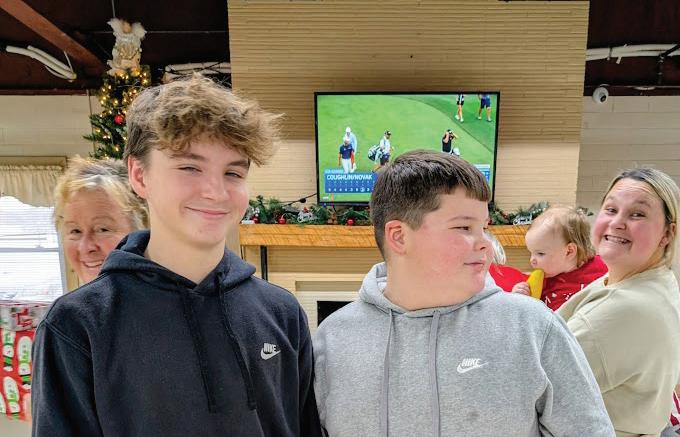
Photobombs: Unexpected faces find their way into members’ photos of friends and family, as shown at right in South Central Power Company member Katie Grubba’s pic of her great-nephew, Ethan, and grandson, Camden, being crashed by Rebekah and Aunt Helen.
CORRECTIONS: An outdated advertisement on page 29 of our March issue offered gold coins for a price that was no longer available; we regret the error. A feature in our February issue incorrectly stated that Imogene Curtis, one of the organizers of the Lincoln School marches, had not graduated from high school; in fact, she was a high school graduate and attended college.

Tragedy propels co-op mom to a new role as an advocate for lineworker safety.
BY JEFF MCCALLISTER



Brandie Hale never imagined that she ever would be any kind of an activist. As a selfdescribed introvert who doesn’t like to talk — especially to large groups — it’s just not the kind of thing she’d put her energy into. Besides, as a mom of five kids, she’s always had plenty of other things to keep her busy, thank you very much.
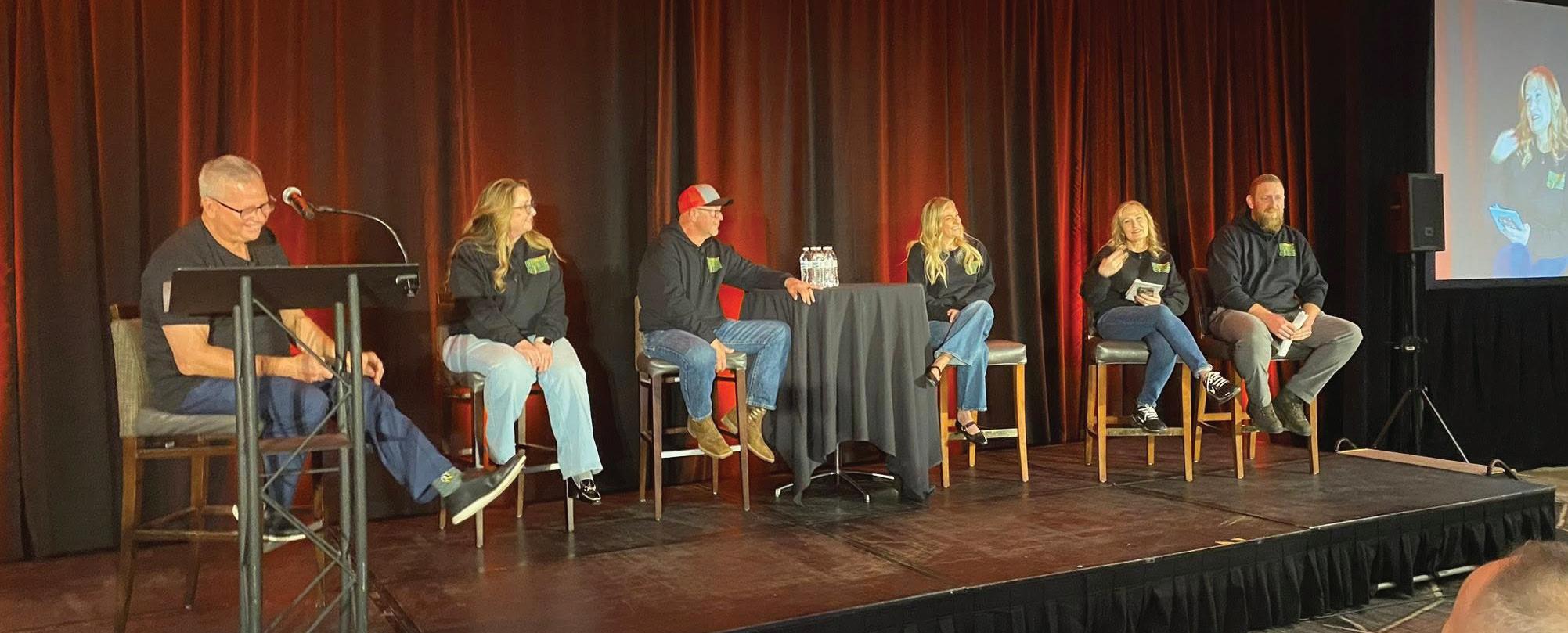
Yet there she was, under bright lights on a stage with her husband, Brandon Hale, reminding hundreds of business and cooperative leaders from around the state about the importance of workplace safety.
“Safety is everything, something that can affect our lives every single day,” she told the crowd. “I definitely don’t like to do this kind of thing, but I will do it forever if it can keep one other family, one other person, from having to live what we live now.”
Pride and joy
Brandie’s oldest child, Blake Rodgers, was born March 25, 2000, and even before his first birthday, he had learned to climb steps and could even climb up onto furniture. As he grew up, he excelled at football and baseball and at being a big brother.
Blake went to trade school for his last two years of high school, and, despite a fear of heights, enrolled in lineworker school when he graduated. “Fearless, determined, and strong-willed,” his mom says. “I was totally clueless when he told me he was going to be a lineman. I was like, ‘All right, you do what you want, good for you.’”
In July 2022, he took a job as an apprentice lineman with Buckeye Rural Electric Cooperative in Rio Grande, tasked with maintaining power lines across some of the most treacherous terrain in the state. He loved the work — he took tremendous pride in keeping the lights on — and his infectious personality made him an immediate hit with his co-workers.
And every day after work, he’d call his mom to catch up and “push her buttons.”
Everything changed
From the time he was very young, Blake also loved Christmas — the lights, the decorations, the joy in the air — and was excited as Christmas approached that first year he worked at the co-op.
But there was work to do first. Three days before the holiday, Winter Storm Elliot barreled through the Midwest, bringing high winds, blinding snowfall, Continued on page 6
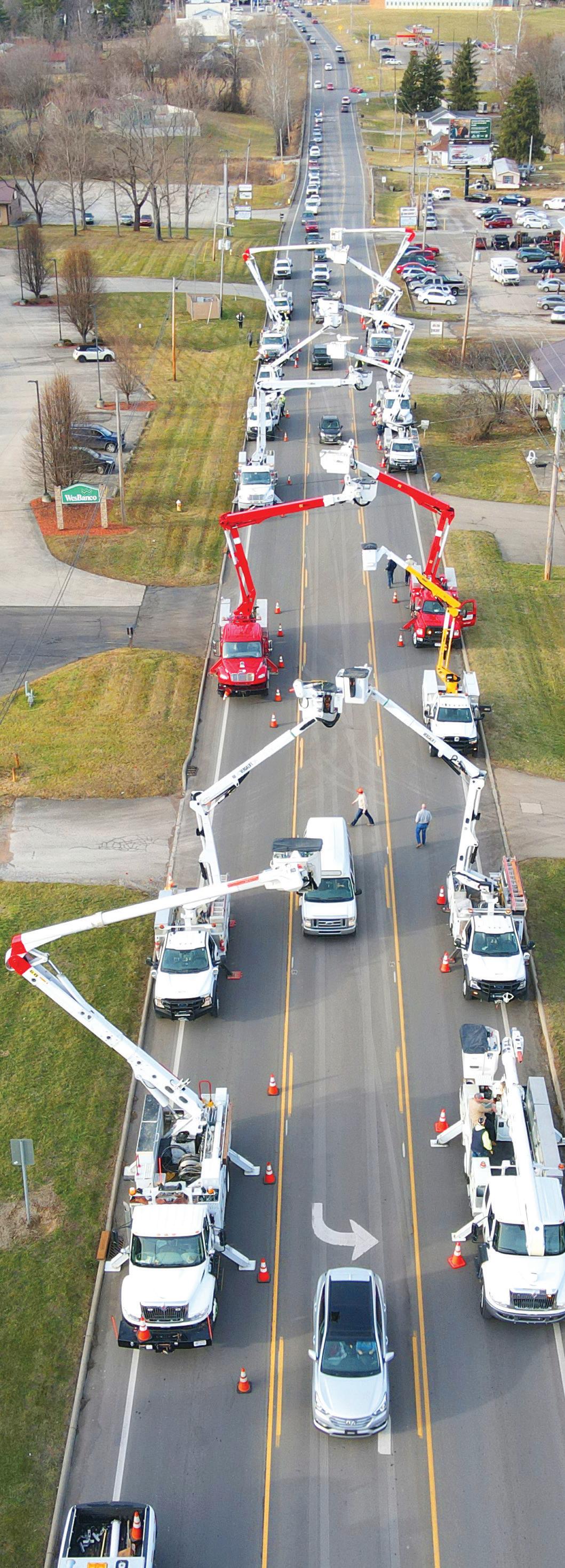
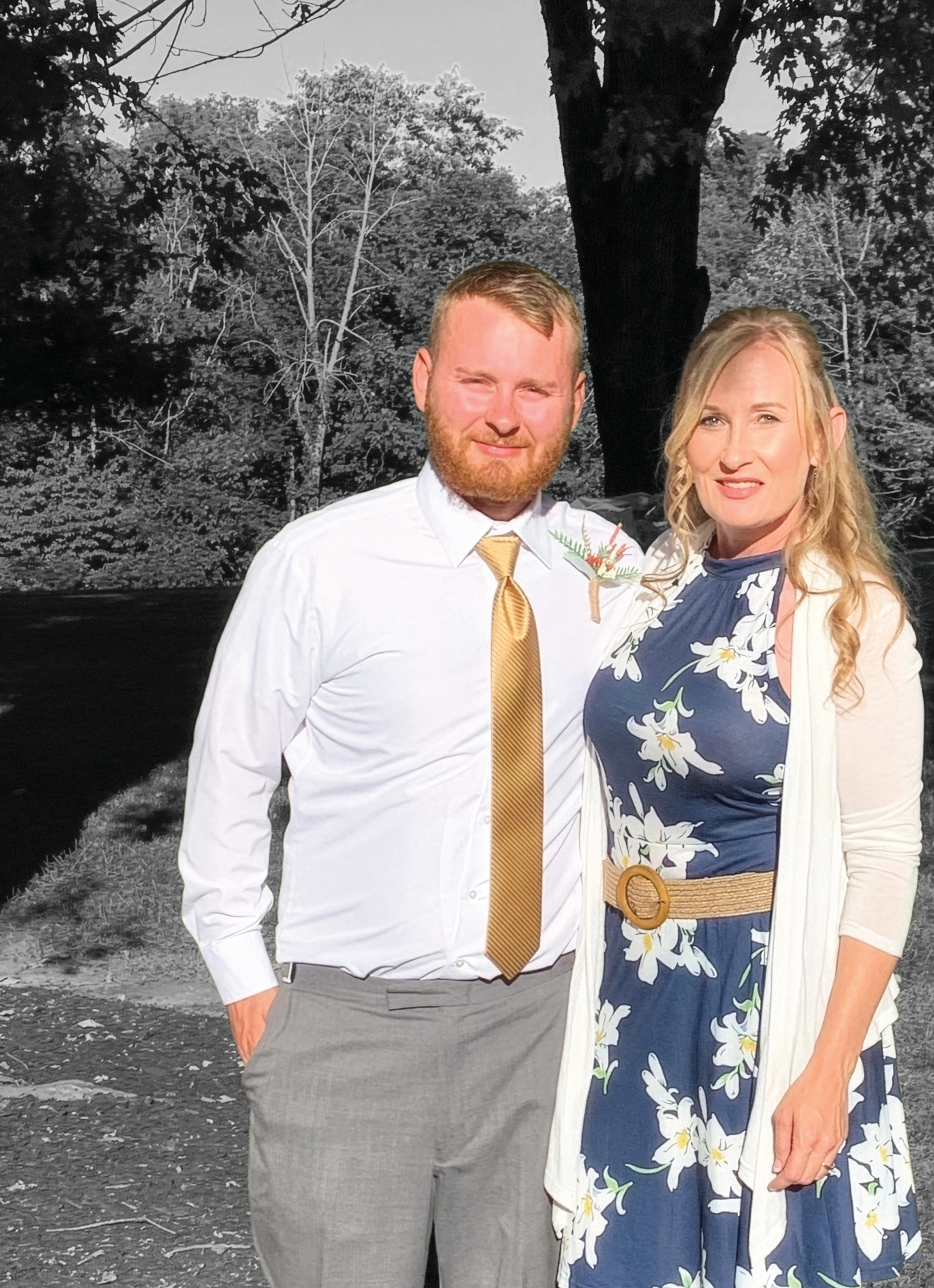
At left, Brandie Hale poses with her son, Blake Rodgers, at a friend’s wedding in 2020. Less than three years later, a miles-long procession of vehicles from around the country passed under an archway formed by bucket trucks during Blake’s funeral in December 2022.
Continued from page 5 sleet, and record cold that affected the majority of the U.S. and parts of Canada.
Temperatures dropped by 40 degrees in a two-hour span, and the sleet that fell across the southern portion of the state did a number on Buckeye Rural’s distribution system. Hundreds were left without power by the morning of Dec. 23, 2022
As they do, the co-op line crews jumped into action. At 10:20 a.m., as he was working to try to get members’ power back on in time for their holiday celebrations, Blake Rodgers made contact with a line that was energized. It was fatal.
A mother’s pain
“You don’t realize how much someone fills your life until they’re not there,” Brandie says. “I love all my children with every piece of my heart, but I never understood how deep that love ran until I lost one. Losing a child feels like a part of your heart has been torn away — a million pieces that never quite fit back together.”
Christmas, once that most magical time of year, is now something Brandie and Brandon have to brace themselves for, as the season is filled with reminders of that day and of planning Blake’s funeral. It took a long time before they could even think about the events around Blake’s death — let alone talk about them.
But there they were, under those bright lights and speaking from their hearts about workplace safety to the leaders who set the tone and define the workplace safety culture at each of Ohio’s 24 local electric distribution cooperatives. And their message was clear.
“We’re asking you to do the impossible, to seek perfection,” Brandon told them. “I know many of you
have outstanding safety records, and that’s something that you should be proud of. You can’t allow that past success to let cracks open up for future failures to seep in.
“We all have a responsibility to those that we lead to do our very best every day,” he continued. “Every organization reflects its leader, every single one. If you make safety your priority, the people who follow you will make it their priority, too.”
Moving forward
In the aftermath of the tragedy, the family felt an outpouring of support, not only from the local community, but from around the state and across the country.
“He was our son and we loved him dearly, but we had no idea how many lives he truly affected in the short time he was alive,” Brandie says. “So now we do everything we can to honor him, to keep his memory going, and to help future linemen so no other family has to live through this.”
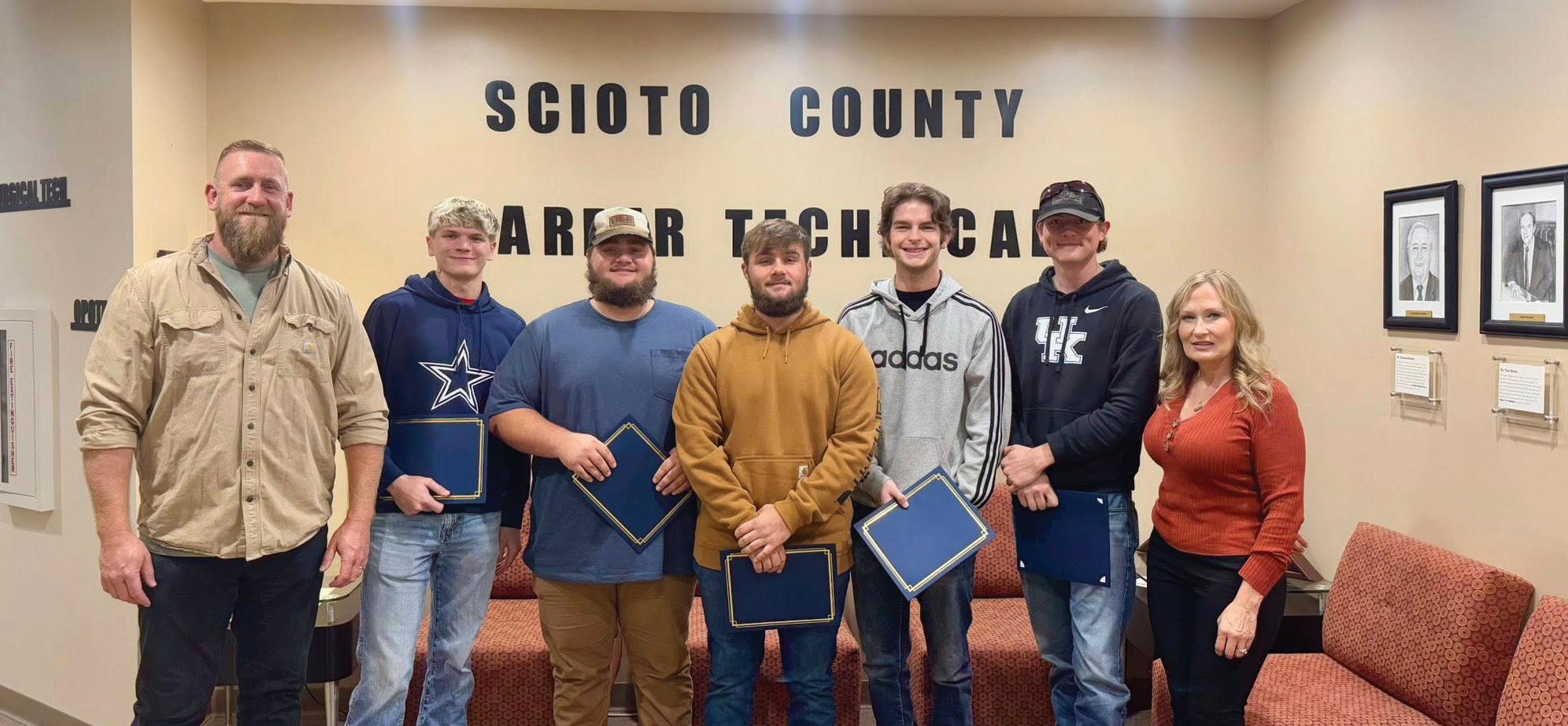
Brandie and Brandon put together an annual fundraising bash around Blake’s birthday in March that includes a memorial ride. The proceeds, along with support from the Community Foundation of Ohio’s Electric Cooperatives and the Ohio Line Supervisors Association, fund the Blake Rodgers Memorial Scholarship to support students entering lineworker training at the Scioto County Career Technical Center.
“There are limited opportunities for a lot of our young people in this part of the state, and we have been able to send seven young men through lineman school so far,” Brandon says. “We need good people in that line of work and we need to make sure they have the best training possible, so we just believe that it’s our best way that we can give back to the community that has given us so much support.”
Brandon and Brandie Hale (on the ends) present the Blake Rodgers Memorial Scholarship to 2025–26 recipients Isaiah Whitt, Hunter Campbell, Colton Campbell, Gavin Defoe, and Wyatt Woods in support of their studies at the Scioto County Career Technical Center.






























































































































































































With its innovative design, modern comforts, and guest-focused philosophy, American Encore is not just a riverboat, it’s the finest expression of American river cruising ever built. Designed to host just 180 guests, American Encore features more square feet per guest than any other small cruise ship with the largest staterooms globally.
Ship





Suicide is preventable. There is hope, help is available, and recovery is possible. If you or someone you know is struggling, call or text 988 or visit https://medicine. osu.edu/departments/psychiatry-and-behavioralhealth/strive.
Riding for
a cause
Members’ initiative brings national awareness, support to troubled veterans.
BY MARY MOGAN EDWARDS
Jason White still works every day to manage the symptoms and struggles that came home with him from Operation Desert Storm in 1993. Difficult as it can be, though, he knows that the love of his family makes him one of the lucky ones.
“My wife, my daughter, and my granddaughter are my support system,” says White, an Army veteran with a 100% disability rating based on traumatic brain injury and PTSD. “If I’m having a bad day, they’re having a bad day — they absorb that for me.”
Many struggling veterans aren’t as fortunate, and the consequences are dire: On average, 22 veterans die by suicide every day in the U.S.
White has long done what he could to help fellow vets — for years, he donated modest proceeds from his YouTube channel to veteran-related causes.
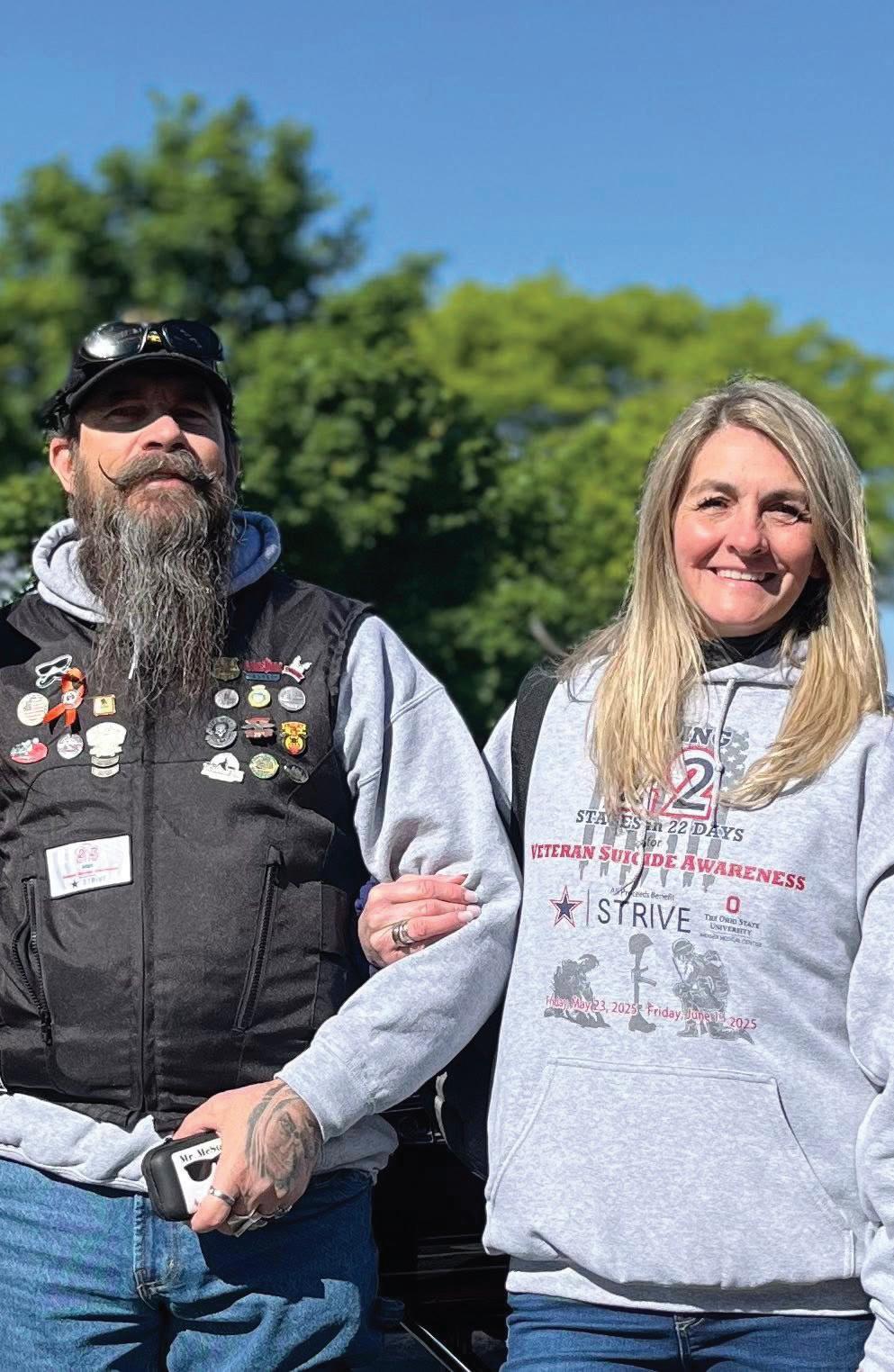
In 2022, he told his wife, Angela, “I want to do something big for veterans.” Nearly four years later (their efforts were delayed temporarily when Jason had a heart attack shortly after his inspiration), the couple is an organizing powerhouse as the full-time volunteer operators of Riding 22 in 22 VSA, a 501(c)(3) organization that marries their desire to help veterans with their love of motorcycle roadtripping.
They’re currently preparing for year two of their centerpiece event: a group ride across 22 states in 22 days — hence the name — that connects vets across the U.S., raising awareness about suicide risk and helping many get the intensive mental-health treatment they need.
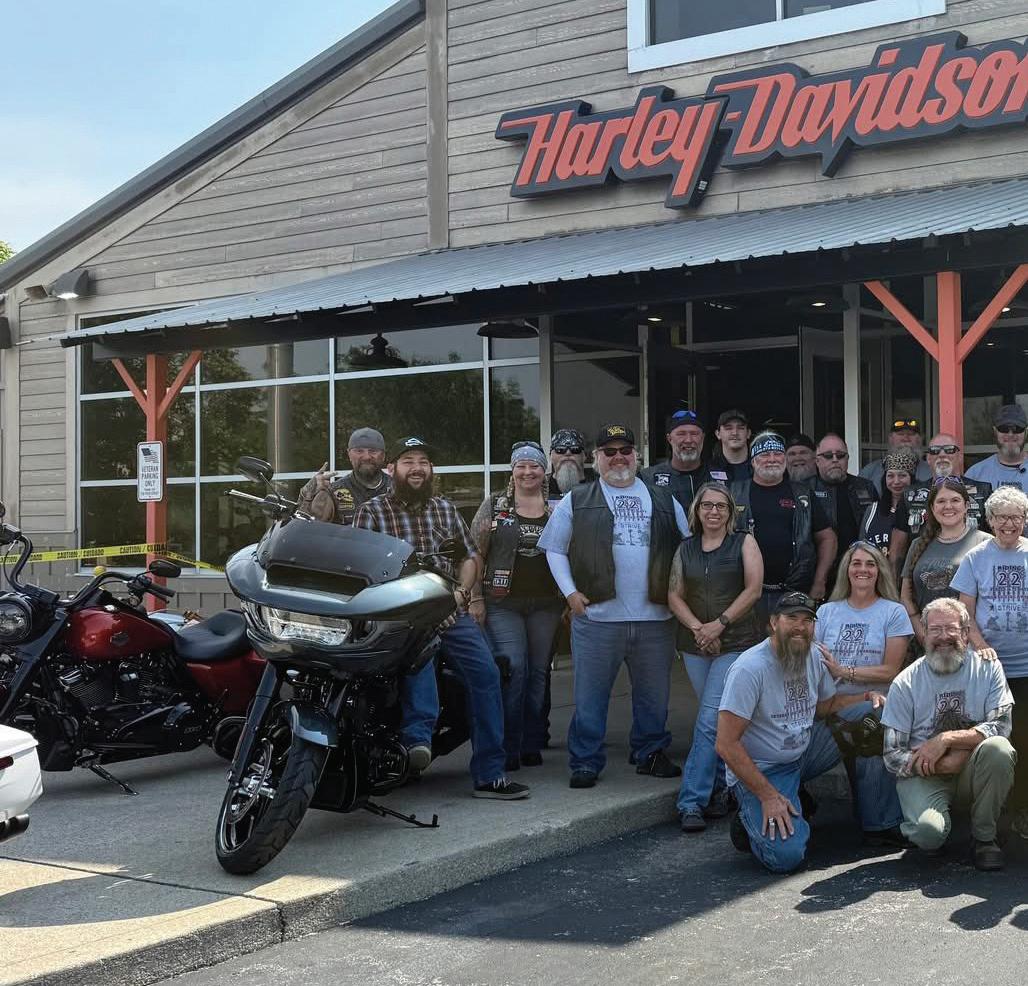
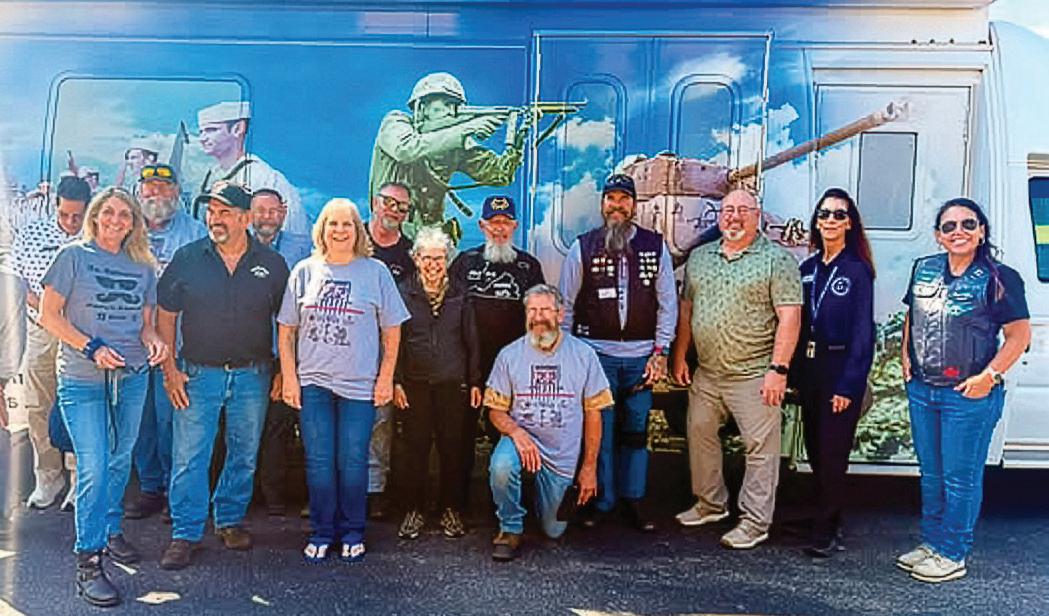
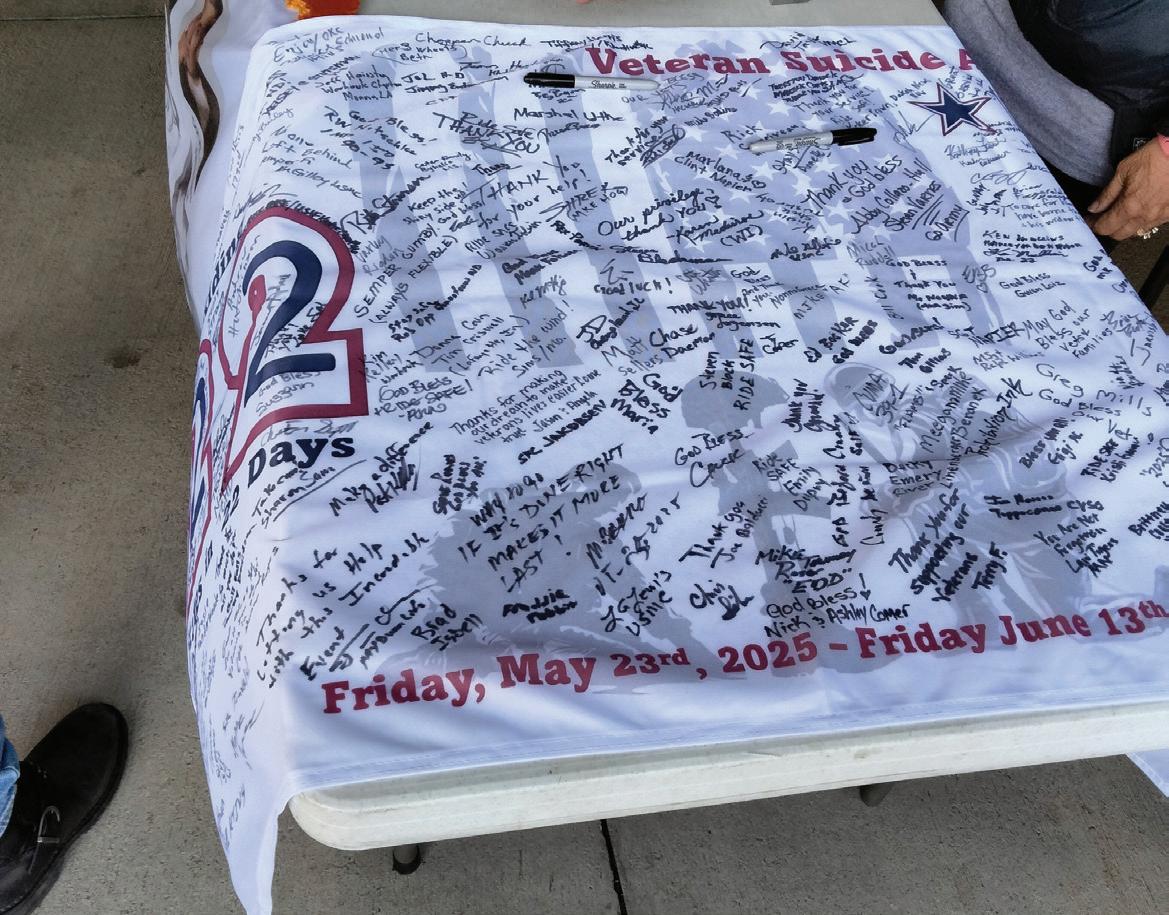
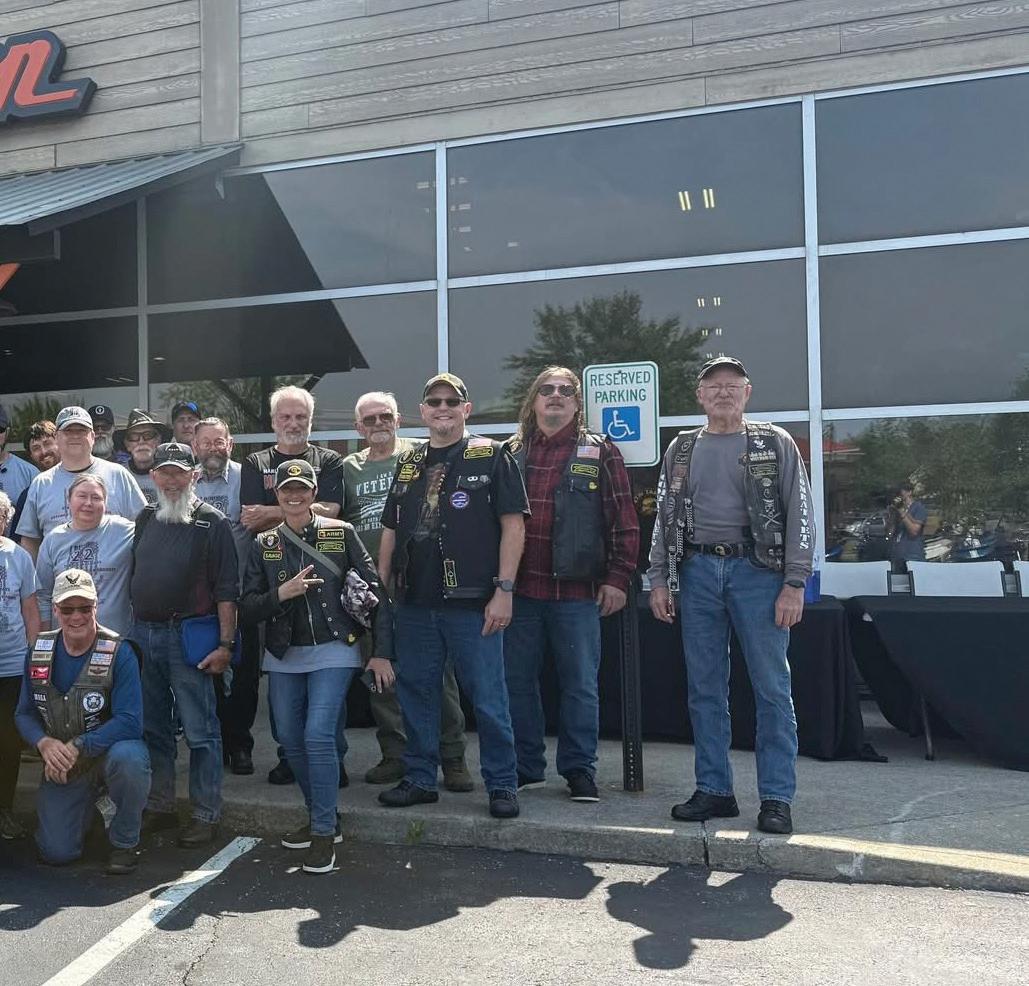
Angela contacts local news media, arranges police escorts in and out of towns, and makes sure every day features an event. It’s often a dinner hosted by a local veterans service organization or motorcycle dealership, with proceeds to benefit the cause.
Jason scouts potential routes for stops of interest. Most days feature four to five hours of riding, with stops every hour to hour and a half. The fundraising comes from suggested participant donations of $20 per rider and $10 per passenger, as well as dinner proceeds, corporate donations, and individual contributions made throughout the year.
Those efforts paid off last year when their premier event raised $11,000, which they donated to STRIVE — Ohio State University’s Suicide and Trauma Reduction Initiative. STRIVE conducts research and provides clinical treatment to people at risk of suicide. Riding 22’s donation has been used to pay travel and lodging expenses for veterans coming to Columbus for R&R, the initiative’s two-week intensive intervention for veterans with trauma and suicide risk.
The relationship with Riding 22 — not just the funding, but raising awareness among the veteran community — is critical to STRIVE’s success, according to Dr. Rosie Bauder, an OSU clinical assistant professor of psychiatry and behavioral health and principal investigator for the R&R program. “Community engagement is so important in suicide prevention,” Bauder says. “It means so much, all of their work to spread the word in ways that we wouldn’t be able to.”
Much of the proceeds from this year’s ride will again go to STRIVE, but the Whites also hope to simply help more veterans to join future rides. “Riding is therapy for a lot of veterans,” Angela says, but not all can afford the lodging and meal expenses of a three-week outing.
This year’s ride, set for May 22 to June 12, heads south to Louisiana and follows the Gulf Coast for a bit before turning north all the way to Maine, then back to Ohio for a closing ceremony. Anyone who wants to support it can join, including by car. “If you want to come with us for a day or a couple of days, for one gas stop or go for the whole 22, that’s all great,” Angela says. As the effort has gained recognition, they’ve attracted more sponsors — Harley-Davidson and Polaris are on board this year — and the Whites say those are getting generally easier to secure. This year’s goal: $22,000.
Angela knew their project was on the right track from the first night of last year’s ride, when a waitress at the kickoff dinner asked what the gathering was for. “We explained the goal,” Angela says, “and a man diagonal from our booth was listening. The couple got up and both came over to us. They were both in tears. The woman opened her jacket and her T-shirt had a military insignia and the ribbon that stands for veteran suicide awareness — they had lost a son to suicide. We’re faith-based people, and for me it was a sign from God that this is what we’re supposed to be doing.”
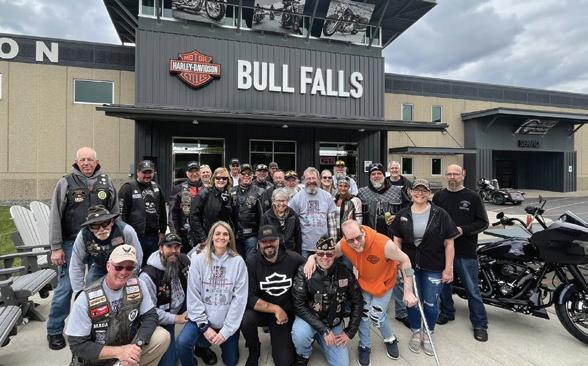
Jason and Angela White (left) founded their 22-day, 22-state ride to support veterans struggling with mental health issues. Participants are encouraged to ride as much or as little of the route as they like, and riders make frequent stops to enjoy meals together and visit with sponsor dealerships before a final celebration at the end of the journey.


WOODS, WATERS, AND WILDLIFE

What are the chances?
Ohio’s most popular game animals must overcome some long odds just to reach adulthood.
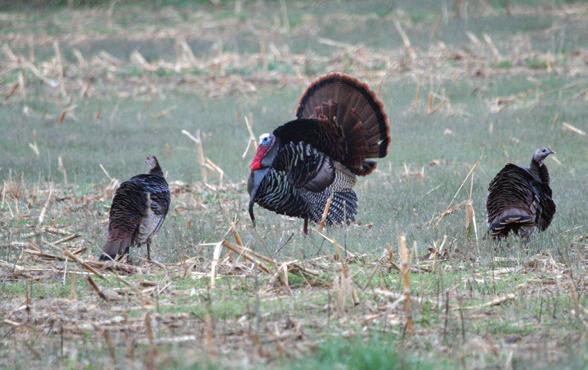
million people living within its borders — some 282 folks per square mile — our state is still known nationally for its excellent sport hunting and fishing opportunities, particularly for wild turkeys, Lake Erie walleyes, and
What makes that more impressive is that both turkeys and deer were once extirpated from the Buckeye State; both were completely gone by 1904 . Today, however, those two species are back. Huge kudos are due the Ohio Department of Natural Resources, Division of Wildlife, for restoring healthy, huntable populations of those two game animals during the 20 th century.
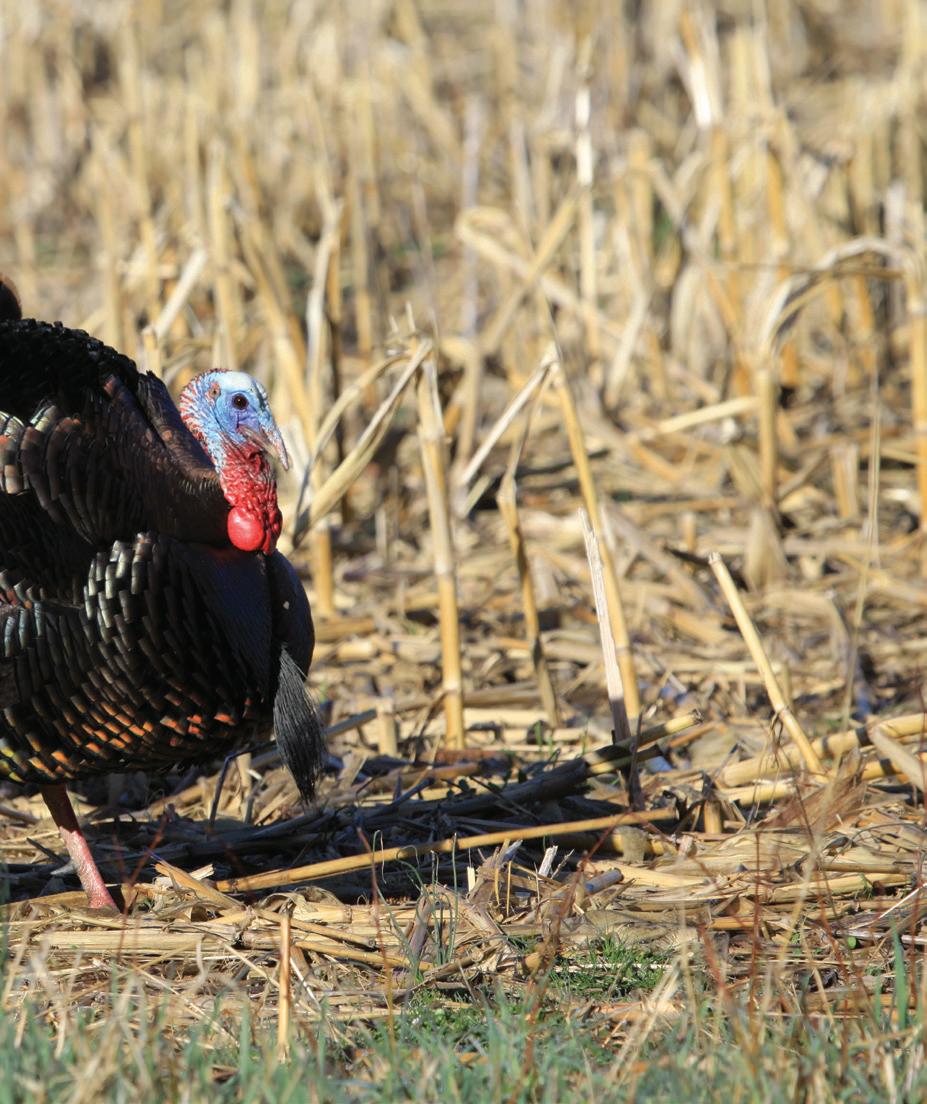
Just as amazing, however, are the staggering odds that individual wild animals face to survive to adulthood in our modern environment. Take the wild turkey, for example. Joe Hutto, author of the 1995 book Illumination in the Flatwoods (which was made into a My Life as a Turkey), put it this way:
“The odds of a wild turkey reaching maturity are small. percent of all nests are destroyed or abandoned. Among the surviving nests, some eggs will be infertile. Of the young turkeys who hatch, 70 % will not last two weeks. The attrition rate of wild turkeys who have survived into maturity can be 70 % per year. When I see an adult wild turkey now in his natural habitat, I have a new appreciation for the sheer phenomenon of his existence. It is very difficult to become a wild turkey.”
As long as those odds may be, however, walleyes have it worse. In general, a female will lay 50 ,000 to 60 ,000 eggs each spring for every 2 . 2 pounds of her body weight. Anywhere from 5 % to 20 % will hatch, and only about one of every 10 ,000 fry will survive long enough to reach adulthood.


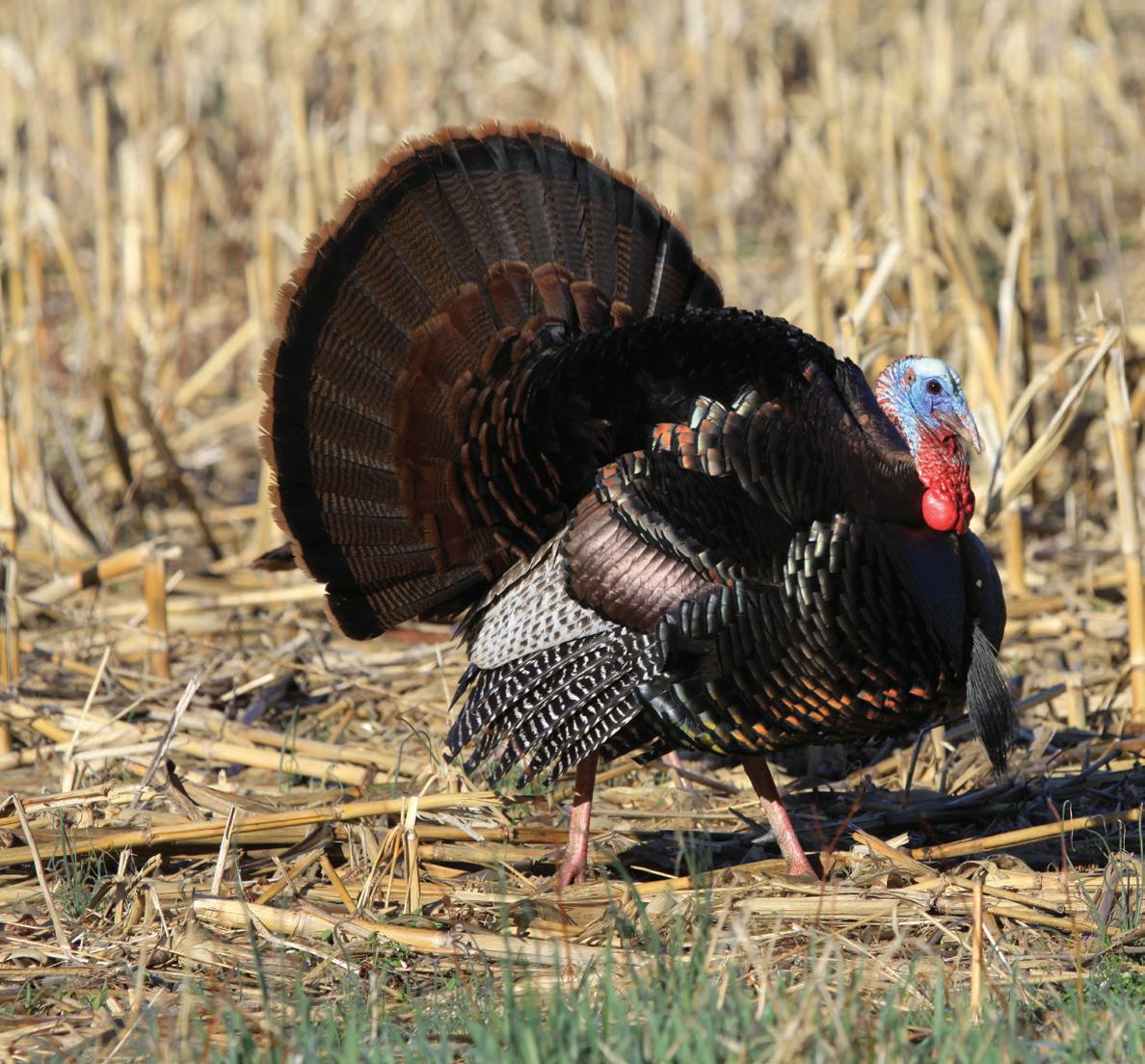
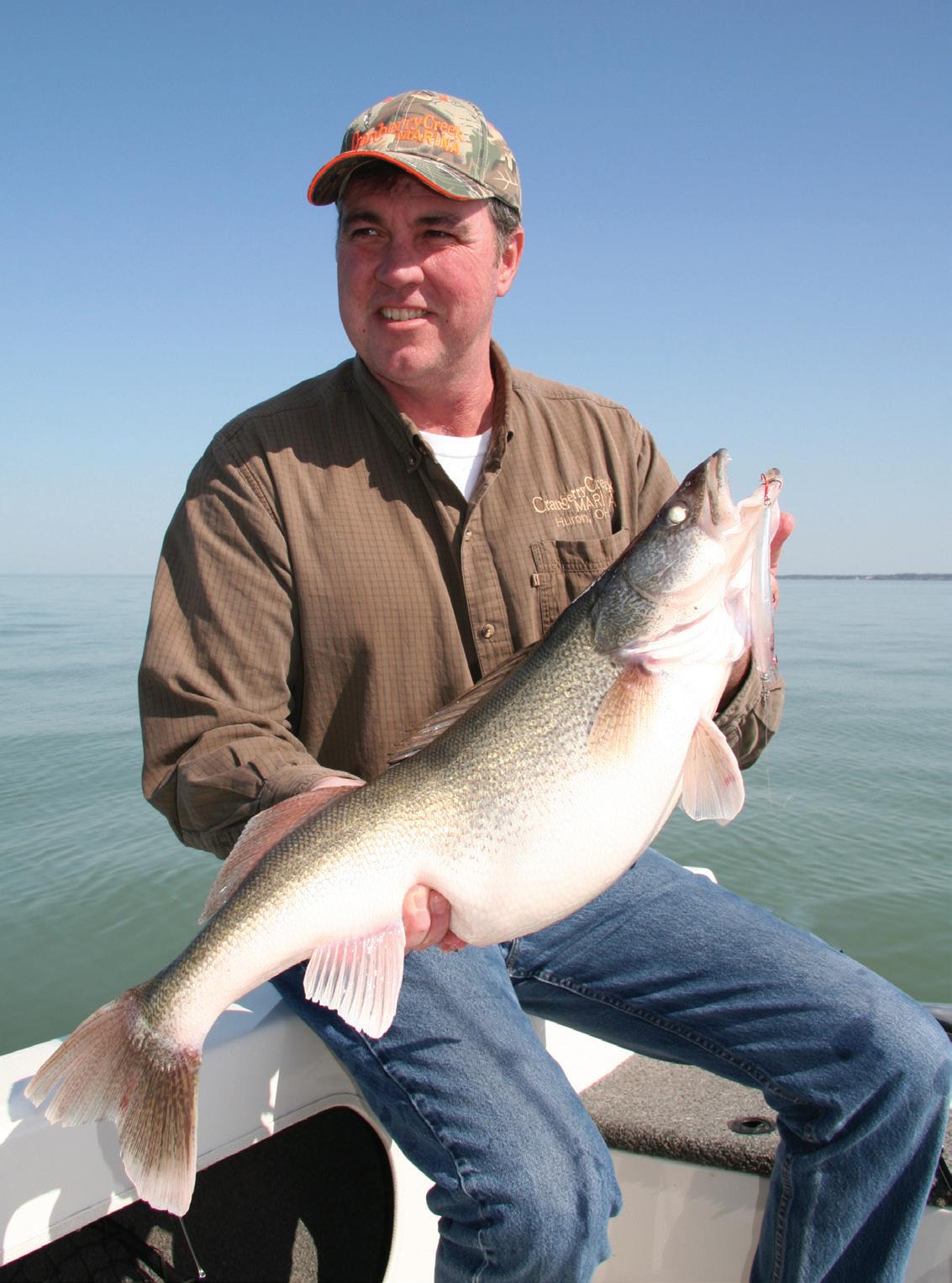








Though still certainly not a given, you have a much better chance to reach adulthood if you’re born a white-tailed deer. According to Clint McCoy, a white-tailed deer biologist with the Ohio Division of Wildlife, the last time that agency conducted a deer fawn survival study was in the early 2000 s in the southeast section of the Buckeye State.
“Over a period of three years, 2001 to 2004 , we captured, radio-collared, released, and monitored 81 fawns,” he says. “As you might imagine, the most vulnerable time for fawns was soon after birth, as about 20 % to 25 % died within the first 30 days of life. After that, the fawns were relatively safe through summer. About 65 % to 75 % of fawns survived until the various deer hunting seasons began opening in the fall.”
The annual fawn survival rate — those deer living to 1 year of age — varied during the three years of the study, with an average estimate of 58 percent survival in 2001 and 45 percent in 2002 and 2003 . McCoy says those Ohio rates are similar to what studies in other Midwestern states have found.

The survey counted deaths from natural causes (starvation, abandonment, disease), coyote and dog predation, vehicle collisions, legal hunting harvest, unretrieved hunter kills, and unknown mortality.
So, if you’re a licensed Ohio hunter or angler — we know there are about 1 2 million of you out there — what does all of this mean? If you’re fortunate enough to take a turkey this spring, waylay a walleye this summer, or down a deer this fall, make sure to appreciate the fact that you possess a true trophy, regardless of its size, in more ways than one.
W.H. “Chip” Gross is Ohio Cooperative Living’s outdoors editor. Email him with your outdoors questions at whchipgross@gmail. com. Be sure to include “Ask Chip” in the subject of the email. Your question may be answered on www.ohiocoopliving.com!









The Modern Solution
Safe, stylish, and affordable. Installs with no walls or machine room. Just smart design that fits your life.
Economical & Flexible
Compact as an armchair, plugs into a standard outlet, and uses less power than a coffee maker.

Your Forever Home
Avoid moving or renovating. Live independently and comfortably right where you belong.
It’s Never Too Soon
Install now or plan ahead. A Stiltz Homelift keeps your home ready for the future.



Homelift Specialists
Installed by certified experts from the world leader in home elevators.



I can’t imagine what we’d do without it. I wish we had installed our Stiltz Homelift several years ago!




“ – Mr. James, Roanoke, VA







Over 35,000 Homelifts Installed



GOOD EATS Bake
AND PHOTOGRAPHS BY CATHERINE
MURRAY

For food with more flavor and perfect texture, with less fuss and muss, nothing beats cooking in your faithful oven.
TWICE-BAKED AND LOADED POTATO CASSEROLE
Prep: 20 minutes | Cook: 65 to 85 minutes | Servings: 10
6 pounds similarly sized russet potatoes, scrubbed (about 10 medium-sized)
4 tablespoons salted butter, room temperature
1 cup light sour cream
1 cup 2% milk
1 teaspoon seasoned salt
½ teaspoon pepper
3 green onions, thinly sliced (whites and greens separated)
1 cup shredded Monterey or pepper jack cheese
1 cup shredded cheddar cheese
4 slices thick-cut, precooked bacon, diced
Preheat oven to 425 F. Prick potatoes with fork 4 to 5 times for steam to vent and place directly on middle rack in oven; bake 40 to 60 minutes, until soft when squeezed using an oven mitt. Lower oven temperature to 350 F.
When cooled enough to touch, remove skins from half of the potatoes and quarter the remaining half with a knife. Place potatoes and butter in a large bowl; carefully mash as steam escapes. Add sour cream and milk, mashing to incorporate. Mix in seasoned salt, pepper, white parts of onion, and jack cheese. Transfer to a greased 9x13-inch baking dish, then evenly spread shredded cheddar on top. For soft bacon, spread it on top, too. (For crispy bacon, cook to desired doneness, then spread on top when casserole is done baking.) Tent with aluminum foil and bake for 15 minutes, then remove foil and bake uncovered for another 10 minutes, or until cheese has melted. Remove from oven and top with remaining green onion (and crispy bacon).
Per serving: 375 calories, 19 grams fat (10 grams saturated fat), 39 grams total carbohydrates, 57 milligrams cholesterol, 658 milligrams sodium, 5 grams fiber, 15 grams protein. my day
RECIPES
BAKED ZITI ARRABBIATA
Cook: 45 minutes | Bake: 20 minutes | Servings: 8
2 tablespoons salted butter
1 medium yellow onion, finely diced
5 cloves garlic, minced
28-ounce can high-quality whole tomatoes
15-ounce can high-quality tomato sauce
1/3 cup dry red wine (cabernet sauvignon, Chianti)
1 teaspoon sugar
½ teaspoon crushed red pepper
1 teaspoon dried oregano
¼ teaspoon fennel
1 pound ziti pasta
8 ounces shredded mozzarella cheese
2 tablespoons grated Parmesan cheese
In a large stockpot over medium heat, melt butter and sauté onion until translucent. Add garlic and cook another minute. Stir in tomatoes, tomato sauce, wine, sugar, and spices. Break up tomatoes with spoon while bringing to a low boil, then reduce to a simmer. Cook uncovered 30 minutes, stirring regularly. Meanwhile, cook pasta according to package’s al dente directions; quickly drain and rinse.
Preheat oven to 400 F. Transfer rinsed ziti to stockpot with sauce and stir to combine. Spoon ziti into a 9x13inch baking dish. Layer mozzarella and Parmesan cheeses on top. Bake uncovered 15 to 20 minutes, until lightly browned and bubbling.
Per serving: 359 calories, 11 grams fat (6 grams saturated fat), 51 grams total carbohydrates, 31 milligrams cholesterol, 441 milligrams sodium, 5 grams fiber, 15 grams protein.
“SHAKE & BAKE” CHICKEN
Prep: 15 minutes | Cook: 30 minutes | Servings: 5
3 pounds chicken drumsticks (about 10 medium pieces)
¾ cup plain breadcrumbs
2 tablespoons cornstarch
1½ teaspoons salt
1 teaspoon pepper
1 teaspoon dried oregano
1 teaspoon garlic powder
½ teaspoon onion powder
½ teaspoon paprika (smoked or regular)
½ teaspoon ground sage
2 tablespoons olive oil
Preheat oven to 400 F. Let chicken rest on counter while prepping ingredients. Place all dry ingredients (breadcrumbs through sage) in a zip-top bag, seal, and shake to combine. Coat an oven-safe wire rack with nonstick cooking spray, then place on top of a baking tray. Pat chicken pieces dry with paper towels, then rub evenly with olive oil. A few at a time, place chicken pieces in the bag and shake to fully coat; transfer to wire rack. Bake 25 to 30 minutes, until internal temperature reaches 165 F. Serve with favorite side dishes.
Per serving: 565 calories, 32 grams fat (8 grams saturated fat), 16 grams total carbohydrates, 250 milligrams cholesterol, 1,105 milligrams sodium, 1 gram fiber, 52 grams protein.



FRESH-BAKED CINNAMON RAISIN BREAD
Prep: 45 minutes | Proof: 3½ hours | Bake: 1 hour | Servings: 16 slices
1½ cups raisins
1¼ cups boiling water
1¼ cups whole milk, plus extra for brushing
7 tablespoons unsalted butter, divided
5 tablespoons sugar, divided
5 teaspoons cinnamon, divided 1½ teaspoons salt
3½ cups + 2 tablespoons bread flour, divided
1½ teaspoons instant yeast
In a small heat-proof bowl, soak raisins in boiling water for 15 minutes, then drain and set aside. In a medium saucepan, melt 5 tablespoons of the butter into milk over medium heat until steaming. Remove from heat and whisk in 3 tablespoons of the sugar, 1 teaspoon of the cinnamon, and all of the salt. Pour mixture into the bowl of a stand mixer. Spoon and level 3½ cups of bread flour; pile on top of the milk mixture, then sprinkle yeast on top. With hook attachment on low speed, mix until flour is incorporated, then let mixer knead dough until smooth, springy, and stretchy, about 10 minutes. Stretch dough out on a clean surface, top with raisins, then fold/knead until raisins are fully incorporated. Form into a ball and return to mixer bowl; lightly coat with cooking spray, cover bowl with damp towel, and let rise in a warm place until doubled in size, about 2½ hours.
In a small bowl, whisk remaining 2 tablespoons bread flour, 2 tablespoons sugar, and 4 teaspoons cinnamon. Punch dough to release air, then roll flat to an 8x24-inch rectangle. Generously brush surface with milk, then evenly spread cinnamon mixture edge to edge. Starting at a short edge, tightly roll; brush with milk, pinch to seal, then turn seam side down. Pick up roll, bending ends down in an arch, and place ends into a 5x9-inch greased loaf pan. Press down on top to level it out. Lightly coat with cooking spray and let rise another hour, until dough is an inch above the pan.
Preheat oven to 350 F. Bake on middle rack for 50 to 60 minutes, until the internal temperature reaches 195 F (tent with foil if necessary if it starts to over-brown). Melt remaining 2 tablespoons of butter; brush over top of bread when it comes out of the oven, then turn it out onto a cooling rack. Cool completely before slicing.
Per serving: 212 calories, 6 grams fat (3 grams saturated fat), 36 grams total carbohydrates, 15 milligrams cholesterol, 230 milligrams sodium, 2 grams fiber, 4 grams protein.

Check it out! See videos of some of our mouth-watering recipes being prepared at
www.ohiocoopliving.com



















WASHINGTON ELECTRIC COOPERATIVE LOCAL PAGES
MESSAGE FROM THE GENERAL MANAGER
Called to serve, committed to care
At Washington Electric Cooperative, we know that electricity is about far more than poles and wires. It’s about people — our members, our communities, and especially the dedicated men and women who work every day to keep the lights on.
As Lineworker Appreciation Day approaches this April 13, I want to pause and speak directly to our lineworkers — the men and women who answer the call when the weather turns ugly, when families are gathered around the table, and when most of the world is seeking shelter. You work in conditions most people would never willingly face. Cold rain, blistering heat, high winds, long nights, and uncertain hazards are all part of the calling you have chosen. Yet time and again, you show up with professionalism, skill, and resolve. Your sacrifices do not go unnoticed.
You are highly trained professionals who operate in one of the most demanding and dangerous fields in the utility industry. The work you do requires constant learning, precision, and an unwavering focus on safety. Every climb, every repair, and every restoration is guided by discipline, experience, and a deep commitment to doing the job the right way — every time.
Safety is not just a rulebook at Washington Electric Cooperative; it is a shared value. You look out for one another, you follow proven procedures, and you never take shortcuts — even when conditions are difficult or when the pressure appears high. That commitment reflects wisdom, integrity, and respect for life. Your dedication to safety protects not only yourselves, but your coworkers, your families, and the members we serve.
We also recognize that power outages are inconvenient and, at times, frustrating for our members. Losing electricity disrupts daily routines, businesses, and family life. To our members, I want to say thank you — for your patience, your understanding, your encouragement, and your trust while our crews are in the field. Restoration
work takes time, and doing it safely and consistently is always our top priority.
To our lineworkers, your service is a powerful example of what it means to live out the cooperative principle of people helping people. When storms strike or emergencies arise, you respond — often at great personal sacrifice. You miss holidays, family dinners, and quiet moments at home so others may have warmth, light, and comfort. You serve not for recognition, but because you understand the responsibility placed in your hands. You know that behind every outage report is a family, a small business, a school, or a neighbor in need. In those moments, you become more than lineworkers — you become guardians of comfort, safety, and hope.
I also want to acknowledge the families who stand beside you. They share in the sacrifice every time you leave the house unsure of when you’ll return. Their prayers, support, and strength are part of every successful restoration, and we are deeply grateful for them as well.
At Washington Electric Cooperative, we are blessed to have great lineworkers who view their work not just as a job, but as a responsibility and a commitment to their communities. Please know this: You are appreciated, you are respected, and you are prayed for. We pray for your safety as you climb, repair, and restore. We pray for your families while you are away. And we give thanks for your steady hands and willing hearts.
This April 13 — and every day — thank you for your professionalism, your commitment to safety, and your selfless service. Thank you for keeping the lights on and for being a steady source of strength and stability for the communities we are honored to serve.
With sincere gratitude and respect,
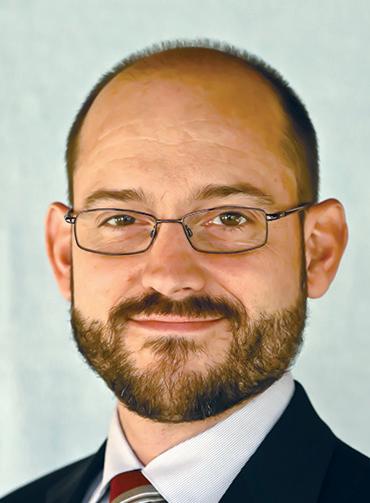
Jeff Triplett Washington Electric Cooperative
Jeff Triplett GENERAL MANAGER
Why line work?
Why did you choose line work as a career?
What does your family think about your job?
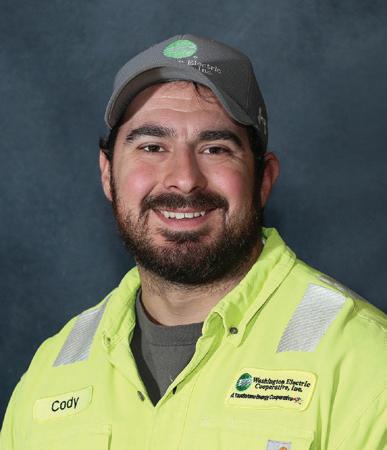
They think it’s dangerous, but they’re proud. Cody Bush Our lineworkers in their own words
As we show appreciation in April, some of our lineworkers share their perspectives
Before most of us have had our first cup of coffee, Washington Electric Cooperative’s lineworkers are already at work, checking equipment, loading their trucks, and preparing for whatever the day might bring. From blue-sky maintenance to middle-of-the-night storm restoration, they power more than homes and businesses — they power our community. In honor of National Lineworker Appreciation Day, we asked our crew to share what it takes to do this work, what they love about it, and what they want the next generation to know about a career in line work.
Because I love helping people as well as being able to work outside in the great outdoors. – Tice Curtis
What advice would you give to someone considering this career?
Be willing to work hard, and long hours. —
The reality of the work
When members see your truck roll up during an outage, what do you wish they understood about what happens next?
We have to visually look at the entire line section, even if we have a good idea about what caused the outage. We know that they’re out of power, but we have a list of safety procedures we have to go through and those take time. – Clayton Bettinger
What goes through your mind when the phone rings in the middle of the night?
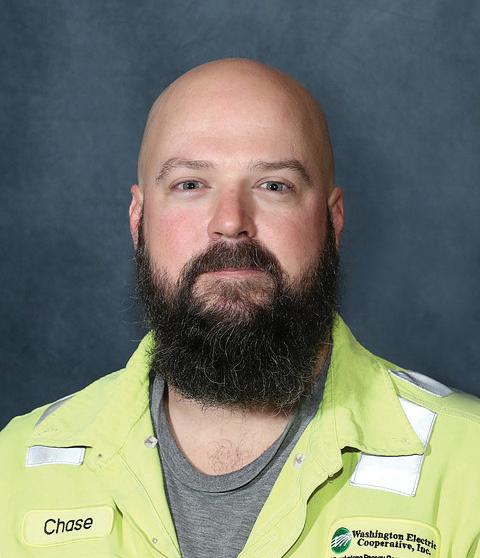
No more sleep tonight! –Chase Garvin
What keeps you motivated during a long restoration event?
Line work isn’t just about poles and wires. It’s about resilience, teamwork, and service. As our crew’s responses show, the job demands skill and sacrifice, but it also offers purpose and pride. For those who may be considering the trade, their message is clear: this career isn’t easy, but it matters. And for the rest of us, their work is a daily reminder that the strength of our cooperative begins with the people willing to answer the call.
The thought of returning home to my family. – Larry Nalley
What’s the proudest moment you’ve had at Washington Electric?
Graduating from COLT (Central Ohio Lineworker Training program). – Coty Adams
What's the most memorable storm you've worked at WEC?
The one where I ended up under a tree. – Dakota Hornak
What’s something you do on every job that members might never see?
The thought and planning that goes into each job, and all of the steps it takes to stay safe. – Jamie
What’s the biggest misconception people have about line work?
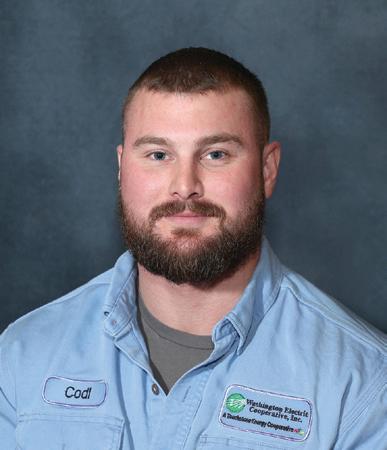
That everything is an easy or quick fix. – Codi Dornick
Hummerich
Kenneth Angle
Raising the next generation of lineworkers
It may start with a plastic bucket truck in the backyard, a hard hat that’s a little too big, or a fascination with flashing lights. For some, the dream of becoming a lineworker begins early.
The real job, however, requires far more than imagination. Behind every Washington Electric Cooperative truck on the road are years of structured education, apprenticeship, and hands-on experience. Line work is a skilled trade built on safety, precision, and teamwork — and earning the title of journeyman takes dedication long before someone climbs their first pole.
Step 1: technical training
Most future lineworkers begin with a high school diploma or GED, strong math skills, and mechanical aptitude. From there, many attend a technical training program (often called “line school”) to learn the fundamentals of the trade before applying for a job with an electric cooperative, utility, or electrical contractor.
These programs typically cover:
• Electrical theory
• Climbing techniques
• Equipment operation
• Transformer installation
• Safety and OSHA standards
Line school prepares students for the realities of the job and emphasizes safe work practices from day one.
Step 2: apprenticeship & COLT
After being hired by an electric cooperative, new lineworkers enter a formal apprenticeship program that lasts several years. During this time, they gain thousands of hours of supervised, onthe-job training while advancing through required coursework and skills evaluations.
As part of that apprenticeship, lineworkers attend training through the Central Ohio Lineworker Training program. COLT provides classroom instruction and hands-on technical education specifically for electric cooperative employees across Ohio, reinforcing safety standards, system knowledge, and advanced technical skills.
Progression through the apprenticeship program is earned through testing, demonstrated competence, and mastery of increasingly complex tasks.
Step 3: continuing education
Even after a lineworker reaches journeyman status, training continues through safety refreshers, equipment certifications, and storm response drills. The electric grid evolves — and so does the training required to maintain it.
That Little Tikes bucket truck may fit neatly in a sandbox, but the real one lifts workers high above the ground and carries tremendous responsibility. Every repair and restoration reflects years of preparation designed to protect both crew and the members they serve.
A career in line work isn’t learned overnight. It’s built step by step, through education, apprenticeship, and ongoing training. For those willing to work hard and serve their community, the path from backyard to bucket truck is clear, and it’s a career that helps power Washington Electric for generations to come.
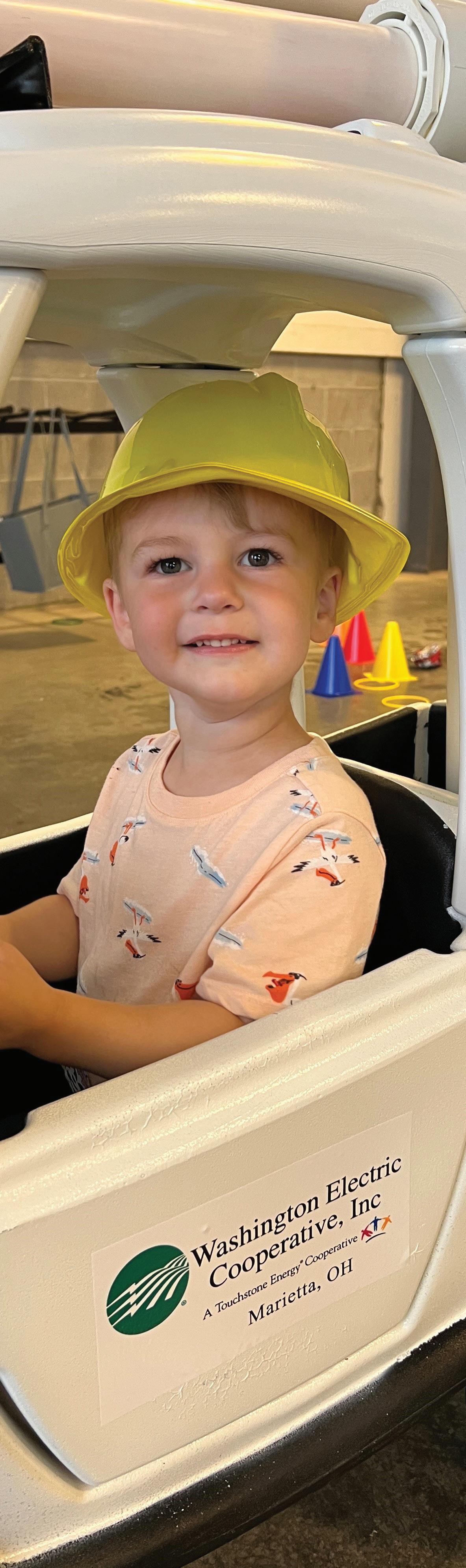
Hayden Rankin, son of WEC System Engineer Matt Rankin, pilots a pint-sized bucket truck.




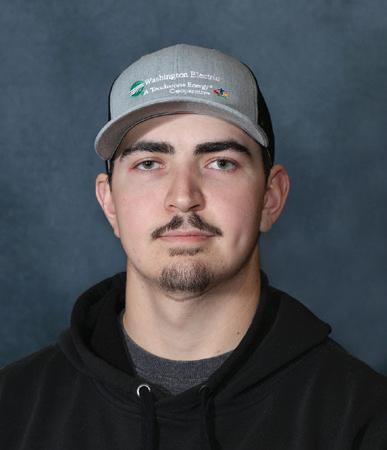
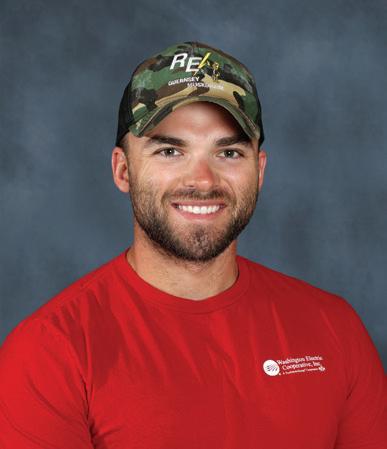
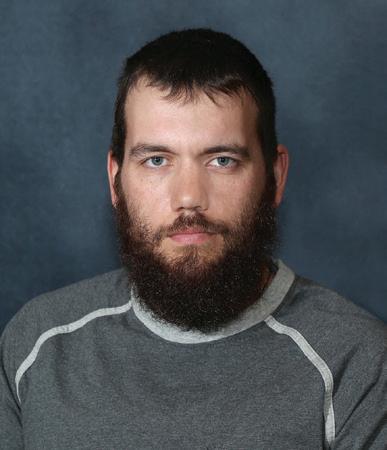


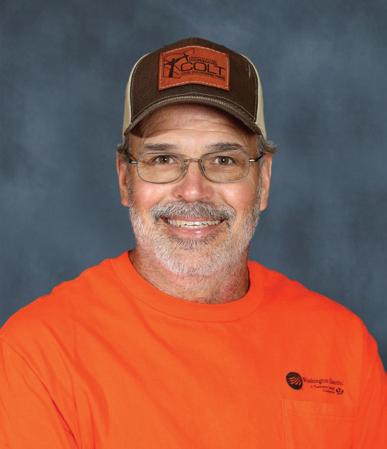
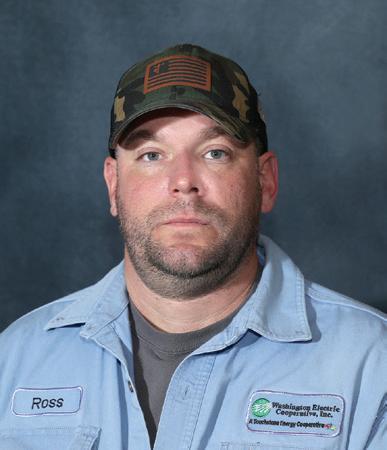

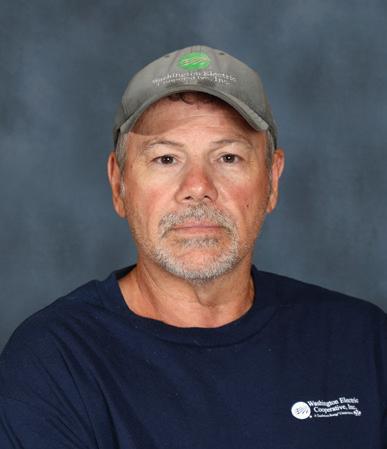
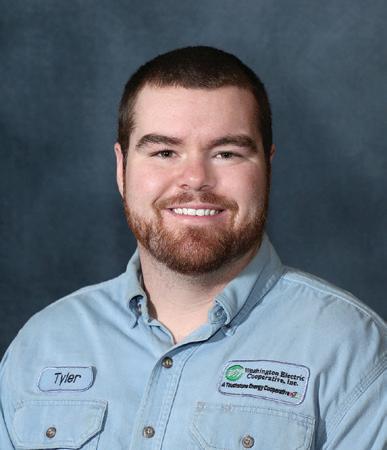
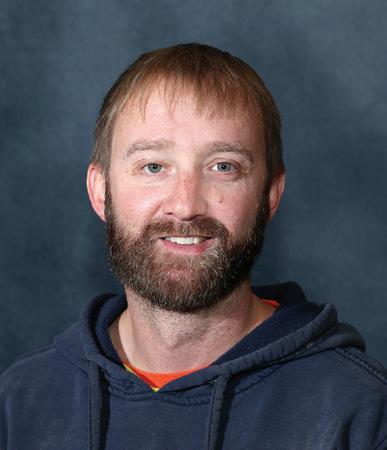
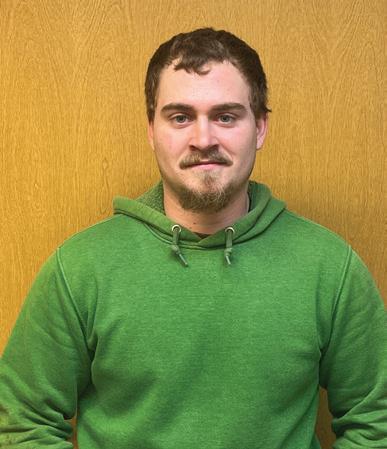


POWER STRONG TEAM STRONGER


Chase Garvin
Dakota Hornak
Clayton Bettinger
Codi Dornick
Cody Bush
Tice Curtis
Coty Adams
Nathan Bowersock
Jamie Hummerich
Kenneth Angle
Larry Nally
Ross Wallace Tyler Bullock
Raise your voice. Cast your vote.
Six co-op members seeking election to the board of trustees
At Washington Electric Cooperative, you’re more than a customer — you’re a member-owner. One of the most important rights of membership is electing the board of trustees who represent you and help guide the future of your cooperative.
Three seats are up for election this year. Candidates include incumbents Paul Fleeman of Lower Salem, Brent Smith of Caldwell, and Larry Ullman of Graysville, along with Jedd Butler of Newport, Earnest Hulsey of New Matamoras, and Michael Kiggans of New Matamoras. See page 18D for additional candidate information.
Ballots will arrive by mail in mid-April. To vote, simply mark your selections and return the ballot in the provided postagepaid envelope. Ballots must be postmarked by May 15.
To ensure a fair and secure election:
• Ballots must be mailed to the post office box listed on the return envelope.
• Ballots may not be included with payments.
• Ballots cannot be given to a co-op employee or board member. 1190805104
• Ballots will not be accepted if dropped off at the office.
These procedures protect the integrity of the election and ensure every member’s vote is counted properly.
Election results will be announced at the cooperative’s annual meeting on May 21
What does a trustee do?
Board trustees are members just like you. They are elected by the membership to provide oversight and long-term direction for the cooperative.
Trustees:
• Set policies and strategic goals
• Hire and evaluate the general manager/CEO
• Approve budgets and major financial decisions
• Help ensure rates remain fair and financially responsible
• Represent the interests of the membership
Trustees do not manage daily operations. That responsibility belongs to the cooperative’s professional staff. Instead, trustees focus on big-picture leadership to keep the co-op strong for the future.

2026 Candidates
WASHINGTON ELECTRIC COOPERATIVE LOCAL PAGES
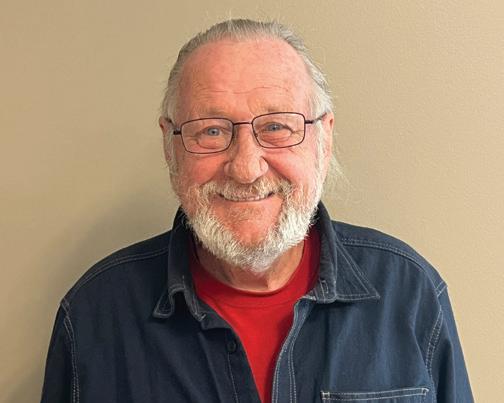
JEDD BUTLER NEWPORT
If elected to the board, what will be your priorities?
To provide assistance for the administration and supervision of projects adopted by the coop board with respect to the generation, transmission, and distribution of electric to all our members.
Is there a particular issue that motivates you to serve on the board?
My strong desire to serve on many private, public, and charitable organizations. This co-op also provides my electric; of course I’m motivated.
What experiences or skills have prepared you to serve as a board member?
I have spent the last 25 years serving on many committees and organizations, both private and public. I have most enjoyed holding the offices of public trust.
Washington Electric’s mission is to improve the quality of life for our members and community by safely and responsibly delivering reliable electric service, innovative energy solutions, and superior member service. What makes this mission
meaningful to you, and how will your values align with the cooperative’s shared values?
I stand strong with Washington Electric’s mission. Electricity has improved all of our lives. I would never want to return to the good old days (without electric). Sometimes the good old days weren’t so good. Let us help keep the lights on!
What do you see as the challenges facing this organization, and how would you contribute to overcoming them?
Politics: I have been involved in politics since I was a very young man. I know how to navigate complex situations.
Environmental: As a township trustee, I have been involved in many road repairs that also addressed environmental issues.
Trust: Trust in any organization by its members is the number one priority.
What do you see as this organization’s greatest asset, and how would you work to protect and enhance it?
Member-owned and governed! Happy employees — being part of a great family.
Latest equipment and training. The current system is working great. Let us strive to keep it that way.
Why should Washington Electric Cooperative’s members vote for you?
My involvement in many organizations and committees, both public and private, gives
me great perspective. I have confidence I am the best man for the job. Also, I have run for a position on this board every year for the last 10 years. I am persistent for sure. Give me a chance. Let’s keep the lights on for all of us.

If elected to the board, what will be your priorities?
To maintain the financial integrity of the cooperative and do everything possible to keep us locally owned and operated.
Is there a particular issue that motivates you to serve on the board?
My motive has always been to try and better the area we live in. We are lucky to have a local electric provider that is owned and operated by the members we serve.
What experiences or skills have prepared you to serve as a board member?
I’ve been an insurance agent and oil and gas producer for 50 years. I have been on the Washington Electric Cooperative board for 33 years.
Washington Electric’s mission is to improve the quality of life for our members and
PAUL FLEEMAN LOWER SALEM
community by safely and responsibly delivering reliable electric service, innovative energy solutions, and superior member service. What makes this mission meaningful to you, and how will your values align with the cooperative’s shared values?
I have been an insurance agent since 1975 and insurance is a serviceoriented business. My goal has always been to provide superior customer service, which fits with Washington Electric’s mission.
What do you see as the challenges facing this organization, and how would you contribute to overcoming them?
The major challenge to the cooperative is little-to-no economic growth in our territory. We have very little increase in kilowatt-hour sales and accounts. We have to rebuild and maintain our aging system and it is putting a financial burden on our members.
What do you see as this organization’s greatest asset, and how would you work to protect and enhance it?
The cooperative’s greatest asset is being owned by the members. We are located in the territory we serve and we all have a stake in the success of the cooperative.
Why should Washington Electric
Cooperative members vote for you?
I have gained a lot of knowledge about the cooperative business model over the 33 years I have been on the board. I have also been a self-employed business owner for 50 years and this experience has helped me make decisions that will contribute to the success of Washington Electric.
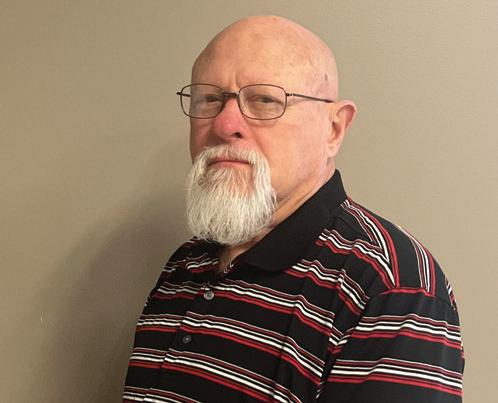
EARNEST HULSEY NEW MATAMORAS
If elected to the board, what will be your priorities?
If elected, my priorities will be to strengthen system reliability, keep rates fair and affordable, and ensure transparent communication with every member. I will support practical, costeffective innovation and maintain a strong focus on safety and responsible stewardship. My goal is to help Washington Electric remain reliable, resilient, and member-focused for the long term.
Is there a particular issue that motivates you to serve on the board?
What motivates me most is ensuring that every member has reliable, affordable electricity they can count on.
When the power goes out or costs rise unexpectedly, it affects families, farms, and small businesses across our community. I want to help strengthen our system, improve communication with members, and make sure decisions are made responsibly and transparently. Serving on the board is a way for me to contribute to the long-term stability and reliability that our members depend on every day.
What experiences or skills have prepared you to serve as a board member?
My hands-on technical experience, strong financial discipline, and practical problem-solving skills have prepared me to serve effectively on the board. I understand the importance of reliability, affordability, and transparency, and I’m committed to making decisions that put members first and strengthen our cooperative for the long term.
Washington Electric’s mission is to improve the quality of life for our members and community by safely and responsibly delivering reliable electric service, innovative energy solutions, and superior member service. What makes this mission meaningful to you, and how will your values align with the cooperative’s shared values?
This mission is meaningful
to me because it reflects the values I believe in: reliability, responsibility, innovation, and service to the community. My approach to problem-solving, financial stewardship, and transparent communication aligns naturally with the cooperative’s shared values. I want to help ensure that Washington Electric continues to deliver safe, reliable, and affordable power while preparing responsibly for the future.
What do you see as the challenges facing this organization, and how would you contribute to overcoming them?
The cooperative faces challenges such as aging infrastructure, rising costs, new technology demands, cybersecurity risks, and the need for strong member communication. I can contribute by bringing handson technical understanding, strong financial discipline, and a member-focused approach to problem-solving. My goal is to help strengthen reliability, keep rates fair, and ensure decisions are made responsibly and transparently for the long-term benefit of all members.
What do you see as this organization's greatest asset, and how would you work to protect and enhance it?
The greatest asset of this organization is the combination of its members and the dedicated employees who serve them. I would work to protect and enhance that asset by strengthening Continued on page 18F
WASHINGTON ELECTRIC COOPERATIVE LOCAL PAGES
transparency, supporting a highly trained and safetyfocused workforce, and making responsible, memberdriven decisions that keep our cooperative strong for the long term.
Why should Washington Electric Cooperative members vote for you?
Members should vote for me because I bring handson technical experience, strong financial discipline, and a commitment to transparency and member service. I will work to keep our power reliable.
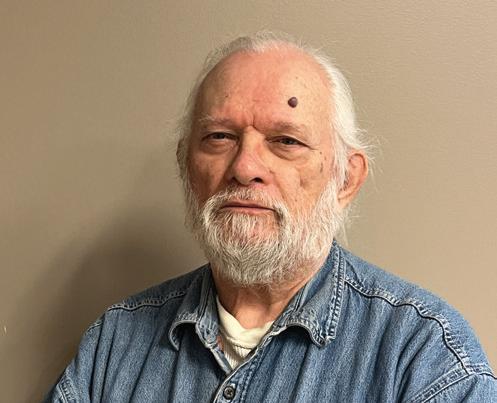
MICHAEL KIGGANS NEW MATAMORAS
If elected to the board, what will be your priorities?
I want to closely monitor electrical pricing through the AEP/PJM power systems and how it affects WECI and the rates charged to members. I want to ensure all members are charged fairly for kilowatt usage, regardless how much is consumed during on-peak hours (i.e. being charged for more kilowatt usage than normal). I also want to ensure WECI properly funds and maintains its infrastructure, including upgrades and rights-of-way maintenance, while staying within its operating budget.
Is there a particular issue that motivates you to serve on the board?
The January 2026 “Message from the General Manager” discussing potential “controlled outages” motivated me to apply. I do not want to see our country move backward in power generation, especially when demand is increasing. Reliable electricity is essential, and I believe we should be moving forward, not accepting the possibility of reduced service.
What experiences or skills have prepared you to serve as a board member?
I have 28 years of experience in the electric power industry; three years as a high-voltage substation mechanic, much of it working on energized equipment.
For 25 years, I served as a substation operator, power dispatcher, senior power system dispatcher, and power scheduler. In Pasadena, California, I oversaw and made hourly operational decisions for a 300-megawatt power grid system. I understand how power grids operate.
What makes the cooperative’s mission meaningful to you, and how will your values align?
Electricity has transformed modern life, and I want to ensure WECI members continue to have reliable power. I am concerned about the inexcusable possibility of “controlled
outages” within the PJM/AEP systems and would like to explore whether WECI could pursue its own generation if necessary, without political interference. Reliable power production remains essential to members’ quality of life, and I want to help protect that reliability.
What do you see as the challenges facing this organization, and how would you contribute to overcoming them?
One challenge is ensuring adequate generation during potential “controlled outages.” I believe WECI should explore acquiring its own generation resources to maintain service during extended grid disruptions. Natural gas may be a practical option for this area.
Other challenges include ongoing infrastructure maintenance and keeping electric rates affordable. With the growth of AI data centers and potential small modular nuclear reactors in Ohio, there may be opportunities to purchase excess power if transmission and system conditions allow through scheduling contracts.
What do you see as this organization’s greatest asset, and how would you work to protect and enhance it?
WECI’s greatest asset is its members, followed closely by its linemen and operating engineers who maintain the grid. I would support competitive wages and staffing to retain skilled lineworkers, given the
demanding and hazardous nature of the job.
Why should members vote for you?
I have decades of experience in power grid operations and understand how these systems function. I am concerned about the direction of generation policy and want to see WECI protect itself by exploring options for its own generation if needed. I bring technical knowledge and practical experience to the position.
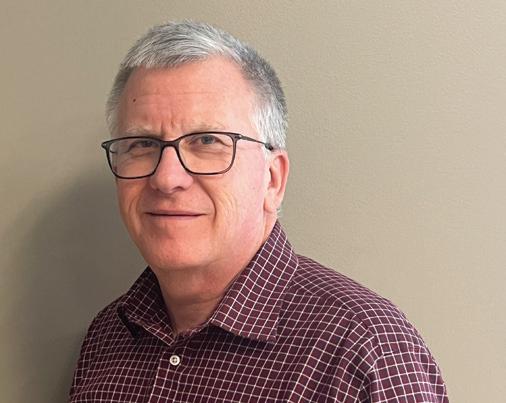
If elected to the board, what will be your priorities?
To work with the board to advance Washington Electric Cooperative. This involves improvements in infrastructure to improve system reliability and viability. I believe this must be done responsibly while keeping rates as affordable as possible.
Is there a particular issue that motivates you to serve on the board?
I am motivated to make Washington Electric Cooperative a reliable and affordable power source for the members. Improvements have been made to system infrastructure, but more
BRENT SMITH CALDWELL
must be done to replace aging facilities, including reconstruction of lines in areas of excessive outages. What experiences or skills have prepared you to serve as a board member?
As a current trustee, I have served on the board for eight years. I have gained experience and knowledge by attending board training, state, regional, and national conferences, and am the current voting delegate to the National Rural Electric Cooperatives Association.
Washington Electric’s mission is to improve the quality of life for our members and community by safely and responsibly delivering reliable electric service, innovative energy solutions, and superior member service. What makes this mission meaningful to you, and how will your values align with the cooperative’s shared values?
As a member of the cooperative, this mission affects me as well as much of my family. Rural areas are often behind in what many deem as quality of life issues. Improving the quality of life for the members is crucial to stem the tide of outmigration from the rural areas to the cities. Taking care of cooperative members must be at the top of our priorities.
What do you see as the challenges facing this organization, and how would you contribute to overcoming them?
The biggest challenges we face revolve around system growth. The larger the membership, the lower the rates. Currently, the population growth in the area is stagnant, meaning fixed costs must be borne by fewer accounts. Population density is light in the region. Therefore, each bears more costs than in more populous areas. This hinders making more of the necessary improvements to infrastructure in order to keep rate increases to a minimum.
What do you see as this organization’s greatest asset, and how would you work to protect and enhance it?
The greatest asset to Washington Electric Cooperative is its people. This includes everyone on staff at the main office and those who work in the field. Add to this the membership as well; without the members WEC would not exist.
Why should
Washington Electric Cooperative’s members vote for you?
I believe that I bring experience and knowledge of the cooperative system to the table. I also genuinely care for the members of this organization and seek to improve the quality of life throughout the area.

GRAYSVILLE
If elected to the board, what will be your priorities?
To work together with the rest of the Board of Trustees and provide funds to maintain our rights-ofway. I will work to keep our rates for our members at a reasonable level.
Is there a particular issue that motivates you to serve on the board?
I just like to be a part of an organization that serves the community with electric power.
What experiences or skills have prepared you to serve as a board member?
I believe my background in government, business, and education will help me be a better board member.
Washington Electric’s mission is to improve the quality of life for our members and community by safely and responsibly delivering reliable electric service, innovative energy solutions, and superior member service. What makes this mission
meaningful to you, and how will your values align with the cooperatives shared values?
I believe in all parts of our mission statement. My values align with the cooperative’s 100 percent.
What do you see as the challenges facing this organization, and how would you contribute to overcoming them?
There is slow growth at Washington Electric. With high inflation, it is hard to keep up. We can be a strong partner in any local economic development. We hope this will help our organization.
What do you see as this organization’s greatest asset, and how would you work to protect and enhance it?
The greatest asset of this organization is its employees. As a board member I would support the employees of Washington Electric Cooperative.
Why should Washington Electric Cooperative’s members vote for you?
I have a good background in business, government, and education. I have owned and operated a small business for over 45 years. I have served on Graysville Village Council for 58 years, and my current position is president. My education background is serving 33 years as a public school teacher.
LARRY ULLMAN
WASHINGTON
Board meeting highlights
Washington Electric Cooperative’s Board of Trustees met in regular session Feb. 26 at the cooperative’s office in Marietta.
During the meeting, the board approved new memberships to the cooperative and the retirement of capital credits to estates, as submitted by Director of Marketing and Member Services Jennifer Greene.
The board accepted the unaudited December 2025 financial reports presented by Director of Finance BJ Allen, and the February 2026 Safety Report presented by Director of Safety and Compliance Ed Hawthorne. Trustees approved modifications to Policy 509: Overtime and On Call Duty and discussed proposed revisions to Policy 520-1: Transitional Work. The board also reviewed proposed new policies, including Policy 534: Limited or Light Duty Work due to NonWork Related Injury, and Policy 535: Americans with Disabilities Act.
Under trustee training and information, the board reviewed updates from attendees of the Ohio’s Electric Cooperatives Winter Conference held Feb. 9-10 and discussed the upcoming 2026 Board Leadership Summit scheduled for April. Trustees also noted Secretary-Treasurer Betty Martin’s appointment to the OEC Member Engagement Committee, and reviewed a presentation on board actions that strengthen safety culture.
General Manger/CEO Jeff Triplett presented his monthly report, including a review of member inquiries, highlights from the February Buckeye Power Board meeting, and the activities of the co-op’s operations and engineering departments.
Washington Electric Cooperative is democratically controlled and governed by local people committed to policies that result in a safe and reliable electric system, fair rates, financial responsibility, and superior member service.
The cooperative’s next board meeting is scheduled for 9 a.m. April 23 at Washington Electric’s office at 440 Highland Ridge Road, Marietta.
Capital Credits
Washington Electric Cooperative, Inc., refunded capital credits totaling $37,302.63 to the estates of 13 members through February. If you know a deceased member, please have the executor of the estate call our office for information on the member’s capital credits.
Credit for account number
If you find the number of your account in the local (center) pages of this magazine, call the co-op office by the 16th of the month in which it is published; you will receive at least $10 credit on your electric bill. In March, a member from Marietta found her account number and received a $10 credit!
Co-op rebate programs
Water heater – rebates of $150 for qualifying 50-gallon or higher new electric water heaters.
Geothermal – rebates of $600 for newly installed ENERGY STAR-rated geothermal systems.
Air conditioners – rebates of $100 for ENERGY STARrated whole-house air conditioning systems
ENERGY STAR Appliances – $100 rebate for members who replace existing refrigerators and stand-alone freezers with a new ENERGY STAR-labeled appliance. Rebates of $25 for ENERGY STAR-labeled electric clothes washer or electric clothes dryer. Rebates available on first-come, first served basis. Call or visit our website for details.
Co-op services
Outage Reporting – Call 740-373-2141 or use the SmartHub app to report a power outages 24/7.
Outage Alerts – Use our SmartHub system to sign up for free outage alerts and other co-op information.
Online Bill Payment – Visit www.weci.org to use our secure SmartHub online payment system.
Automatic Bill Payment – Call our office for details on having your electric bill drafted from your checking or savings account each month.
Pay your bill by phone – Call 844-978-2641 to pay your electric bill with a check, credit card or debit card.
Spring into energy savings
Spring is a season of renewal — and a great time to refresh your energy habits, too! As temperatures begin to warm and daily routines shift, a few small changes around your home can add up to meaningful energy savings.
Washington Electric Cooperative is committed to helping our members use energy wisely while keeping homes comfortable year-round.
Spring is the perfect time to schedule maintenance for your heating and cooling system. Spring and fall checkups conducted by a licensed professional can help ensure your system is running efficiently, safely, and reliably before the peak seasons begin. A wellmaintained unit uses less energy, lasts longer, and helps prevent costly breakdowns when you need it most.
If you’re looking for a simple place to start saving, look no further than ceiling fans. Fans don’t actually cool or heat the air, but they help you feel more comfortable by moving it. During warmer months, make sure your ceiling fan blades are set to rotate counterclockwise. This creates a downward breeze that makes you feel cooler, allowing you to raise your thermostat a few degrees without sacrificing comfort. In cooler months, reverse the direction of fan blades to clockwise to help push warm air down from the ceiling, improving efficiency when your heating system is running.

Speaking of thermostats, adjusting the temperature just a few degrees can make a noticeable difference on your energy bill. As spring arrives, try setting your thermostat slightly higher when cooling or slightly lower when heating. Even a two- or three-degree adjustment can reduce energy use while still keeping your home comfortable — especially when combined with ceiling fans or open windows on mild, pleasant days.
Hot water use is another area where simple habits matter. Taking shorter showers can help reduce the amount of energy used to heat water, which makes up a significant portion of most energy bills. Cutting just a few minutes off each shower not only saves energy but also conserves water.
Finally, the time of day you use energy can also play a part in savings. When you run major appliances during off-peak hours (when energy demand is lower), you can take advantage of non-peak rates and help reduce pressure on the electric grid — that’s a win-win!
Washington Electric Cooperative is here to help every season, every step of the way. We offer energy-saving programs and resources designed to help you lower energy use for your home or business and manage costs. If you have questions or want to learn more about energy efficiency offerings and programs, visit www.weci.org/ Energy-Efficiency.
ENERGY EFFICIENCY
TIP OF THE MONTH
As we prepare for the seasonal shift, remember to set your ceiling fan rotation accordingly. In winter months (or whenever your home heating system is running), fan blades should rotate clockwise, which produces an updraft that pushes warm air down. In summer months (or whenever your home cooling system is running), blades should rotate counterclockwise, which produces a downdraft or windchill effect that makes you feel cooler. When used correctly, ceiling fans can boost comfort and allow you to adjust the thermostat a few degrees for energy savings.
Source: energy.gov
TIPS TO AVOID
ENERGY SCAMS
Don’t fall victim to power outage scams. When widespread outages occur, scammers may target affected utility customers. They can contact you via call, text, or email, urging you to act quickly and provide personal information to restore service. Always communicate with your utility through official channels, such as their website, mobile app, or phone number listed on your bill. Your safety and personal information are worth taking a moment to pause and verify unknown senders.

Source: ftc.org
740-373-2141 | 877-594-9324 www.weci.org
BOARD OF TRUSTEES
Paul Fleeman, CCD, BL Chairman 740-934-2306
Brent Smith, CCD, BL Vice Chairman 740-525-3085
Betty Martin, CCD, BL Secretary-Treasurer 304-904-7163
Gale DePuy, CCD, BL Assistant Secretary-Treasurer 740-473-1245
Allen Miller
740-629-5131
Brian Carter, CCD, BL 740-732-4076
Larry Ullman, CCD, BL 740-934-2561
CCD — Credentialed Cooperative Director BL — Board Leadership

pathways Pollinator

Create friendly gardens that buzz with life.
BY ALICIA ADAMS
Imagine taking a statewide road trip only to find every highway restaurant, hotel, and gas station closed. For a traveler, being tired, hungry, and in danger of running out of gas makes the journey difficult, if not impossible. For the pollinators of Ohio (bees, butterflies, moths, and hummingbirds), that’s often the reality of navigating manicured lawns and concrete.
It’s not just a problem for bugs and birds. Whether on a commercial farm or in a gardener’s backyard, many of Ohio’s crops — cucumbers, pumpkins, and tomatoes, for example — depend on a healthy pollinator population. As wild, weedy spaces become more scarce, pollinators face increasing challenges. According to Ohio State University Extension, “Animal pollinators and bees in particular are currently facing many threats, such as lack of forage (flowers for food) and lack of suitable nesting sites.”
One way humans can help is by planting a pollinator pathway, creating an environment where those farm and garden helpers don’t have to work so hard just to get by.
A pollinator pathway is a grouping of native, diverse plants that help beneficial insects and birds survive in developed areas. Made up of plants that bloom in succession, they provide corridors of food and shelter from spring to fall. Typically located
along roads, sidewalks, and yards, these pathways provide different landscapes needed to create bridges between habitat areas that might be too far apart otherwise.
Design your own pathway
Pollinator pathways don’t have to be special gardens. They can grow in everyday spaces like farm edges, small-town backyards, and roadsides between communities.
Pathways need two types of plants to create a supportive environment: nectar/pollen plants that provide food for adult pollinators and host plants for butterfly/moth caterpillars to feed on and grow. To make planting decisions easier, you can use the “three-by-three” formula: Pick three native species that bloom in each of the three seasons: spring (March–May), mid-summer (June–August), and late summer/fall (September–November). Different types of pollinators are active at different times of the year, so having a continuous bloom is critical.
When possible, it’s especially helpful if such groupings can be within 300 to 500 yards of another, creating that pathway of pit stops that pollinators need. By choosing to grow a pollinator pathway, you not only plant a vibrant, active garden but also choose to help sustain the creatures that keep farms, fields, and communities thriving.


Stagger bergamot (above), wild columbine, and New England aster (below) to provide a consistent food source for pollinators.


Pollinator-friendly plants
Here’s a season-by-season list of native plants to get you started: Spring
Willow (Salix species)
Wild columbine (Aquilegia canadensis)
Chokecherry (Prunus virginiana)
Summer
Common milkweed (Asclepias syriaca)
Purple coneflower (Echinacea purpurea)
Wild bergamot (Monarda fistulosa) species)

Symphyotrichum novae-angliae)
Lobelia cardinalis)



In times of economic uncertainty—when inflation rises, markets fluctuate, and long-term financial stability feels less predictable—many investors turn to gold as a dependable store of value. By holding a portion of your wealth in gold, you can help safeguard your portfolio and preserve longterm financial security, even when broader economic conditions are unclear.
Since 2015, gold has surged over 400% — outpacing both the S&P 500 and the Dow during the same

American Gold Reserve is releasing government-issued $5 Gold American Eagles completely free of dealer markup for only $529 each. These beautiful $5 Gold American Eagles are a perfect way to enter the gold market. Set for immediate public release, availability is limited and supplies are expected to sell out quickly.
GOVERNMENT BACKED U.S. GOLD
• Free of dealer markup.
• Gold provides protection against inflation and deflation.
• Gold offers financial cover during geopolitical and macroeconomic uncertainty.
• A strong portfolio diversifier.




Geothermal isn’t just about comfort. It’s about energy independence, grid resilience, and good jobs.
Geothermal heating and cooling doesn’t just make homes more comfortable and efficient—they’re powered by a domestic, underground energy source that’s available 24/7, rain or shine.
Made in the USA: Our geothermal systems are built right here in America, supporting advanced manufacturing jobs.
Grid-friendly: While AI, EVs, and data centers push power demand to new heights, geothermal helps reduce peak load—easing the burden on our utilities.
Job-creating: From HVAC contractors and well drillers or trenchers to engineers and architects, geothermal supports a wide network of high-paying, skilled jobs in every community it touches.
Geothermal isn’t just smart for homeowners. It’s smart for the country.



DIY
pond
Thinking about a water feature to zhuzh up your backyard landscape?
We’ve got some tips.
BY RANDY EDWARDS




When we moved into our house nearly three decades ago, there was a small pond in the backyard garden, its shape fixed by a hard plastic liner. The pond was choked with excess vegetation that hid, somewhere in the depths, a small pump that did not pump.
Yearning for the sound of running water and croaking frogs in our suburban backyard, we put rebuilding that pond at the top of our to-do list. Since money was tight and we were up for a challenge, we did it ourselves — removing the old, cracked pond liner and starting from scratch.
It was physically demanding work, and it took some trial and error to balance our water chemistry, but for more than two decades now, the pond has provided a visual and audible centerpiece to our landscape.
Even a small pond adds beauty and interest to a backyard, says Justin Miller, general manager of Aquarium Adventure in Columbus, and for the homeowner, an added value is “stress relief.”
“You sit out there with the sound and the movement of the water and it just relaxes you,” he says.
Planning a DIY pond?
Here are a few things to consider if you’re thinking about wading into a pond project of your own: Check local regulations: A permit may be required, especially if your pond will be more than 1,000 square feet at the surface. Community rules differ everywhere, though, so call before you dig. That goes for the utilities, too — dial 811 and have your utilities marked so you can avoid buried water, gas, and electric lines.
Choose a spot: Do you want to gaze out on your pond from your patio? Or practice the Japanese garden principle of miegakure (hide and reveal) and tuck the water feature behind some shrubbery, so that visitors will discover it as they walk through your yard? Either way, you’ll need an electricity source nearby, for aeration.
Aeration: Fountains or waterfalls will keep water moving, prevent mosquitoes, add oxygen to the water, and provide a pleasing murmur and splash to your pond. Some pumps are submerged in the deepest part of the pond, while others hang at the pond’s edge, doing double duty by skimming out debris. Do some research and pick the best setup for your needs.
Decide your depth and shape: If you want fish, you’ll want the water at least 2 feet deep — 3 feet for larger species like koi. Gently sloping edges will encourage frogs to visit, but fish love tadpoles, so many people choose either fish or frogs, not both.
You can hire a landscaper or a company like Aquarium Adventure to install a backyard pond, but if DIY projects spark joy for you, a small backyard pond is a doable project — as long as you have a strong back (or some friends who do).
Digging the basin is the hardest part of the project, Miller says, so many times, homeowners will hire an excavator to do that heavy lifting even if the rest of it is DIY.
Miller strongly recommends a full pond clean-out each spring. Empty the water, remove accumulated debris, and clean and inspect the liner. When you refill the pond, be sure to remove the chlorine that occurs in tap water, using a chemical detoxifier or simply by letting the water sit for several days before adding back plants or fish.
Choose a liner: Soft-sided liners will conform to the basin you dig, they’re easy to install, and Miller says 45-mil liners like those sold in his store will last decades. Preformed shell liners offer ease of installation, a clean look, and resistance to puncturing by rocks, roots, or animal burrowing.
Pond chemistry is key: Proper pH levels are key for fish and plant health. Excess nutrients will cause excess algae to grow, turning the water an unsightly green. Test your water regularly and use barley bales, chemical algicides, or UV sterilizers to keep your water clear.
Add some plants: Pond plants add beauty, provide shelter for fish, and can help balance water chemistry. Options include submerged plants, floaters, and marginals. Many are perennial and can be sunk to the bottom of the pond to weather the winter.
Mosquito-proof your pond: Proper aeration helps. Fish will eat mosquito larvae. Consider biological additives to the pond that will kill larvae but not harm fish or frogs.




Seniors get new medical alert device
Instantly connects to free unlimited nationwide help with just the push of a button with no contracts, no deposits, and no monthly bills

■ NO MONTHLY BILLS: “My wife had an old style help button that came with hefty bills every month and she was embarrassed to wear it because it made her look old,” said Frank McDonald, Canton, Ohio. “Now, we both have FastHelp™, the sleek new medical alert device that our grandkids say makes us look ‘cool’ not old,” he said. With FastHelp, seniors never have to worry about being alone and the best part is there are no monthly bills ever.
Seniors
born before 1964 get new medical alert device
Nationwide: Demand for new Medical Alert Device soars
The phone lines are ringing off the hook. That’s because for seniors born before 1964, it’s a deal too good to pass up.
Starting at precisely 8:30am today the Pre-Store Release begins for the sleek new medical alert device that comes with the exclusive FastHelp™ One-Touch 911 Button that instantly connects you to unlimited nationwide help everywhere with no contracts, no deposits and no monthly bills ever.
“It’s not like old style help buttons that make you talk to a call center, only work when you’re at home and come with hefty bills every month. FastHelp comes with state-of-the-art cellular embedded technology. That means it works at home or anywhere and everywhere cell service is available whether you’re out watering the garden, driving in a car, at church or even hundreds of miles away on a tour or at a casino. You are never alone. With just a single push of the One-Touch E Button you instantly get connected to free unlimited help nationwide with no monthly bills ever,” said Jack Lawrence, Executive Director of Product Development for U.S. based Universal Physicians.
“We’ve never seen anything like it. Consumers absolutely love the sleek new modern design and most of all, today’s instant rebate practically pays for it and no monthly bills ever,” Lawrence said.
FastHelp is the sleek new medical alert device with the best of combinations: a quality, high-tech engineered device that’s also an extremely great value because there are no monthly bills ever. ■

■ FLYING OUT THE DOOR: Trucks are being loaded with the new medical alert devices called FastHelp. They are now being delivered to lucky seniors who call the National Rebate Center Hotline at 1-800-209-4926 DEPT. FSTH145 today. Everyone is calling to get FastHelp, the sleek new medical alert device because it instantly connects you to unlimited nationwide help everywhere cell service is available.
HOW TO GET IT
BORN BEFORE 1964:
Use the rebate coupon below and call this Toll-Free Hotline: 1-800-209-4926
EXT. FSTH145
BORN AFTER 1964:
You cannot use the rebate coupon below and must pay $299 Call: 1-800-209-6405
EXT. FSTH145






■ SENIORS SNAP UP NEW MEDICAL ALERT DEVICE: Instantly connects you to free unlimited nationwide help with no contracts, no deposits and no monthly bills ever. Nothing to hook up. You don’t need a land line or cell phone. It’s ready to use right out of the box. Comes with new cellular embedded technology that works at home or anywhere you go so you are never alone.
BOTTOM LINE: You don’t need to shop around. We’ve done all the leg work, this deal is too good to pass up. With the instant FastHelp rebate, it is a real steal at just $149 and shipping. There are no monthly bills ever.
PROS: It’s the sleek new medical alert device that comes with the exclusive FastHelp One-Touch 911 Button that instantly connects you to free unlimited nationwide help with no contracts or deposits. It connects you to the vast available network of cellular towers for free and saves seniors a ton of money because there are no monthly bills ever making this deal a must have. Plus it’s the only medical alert device that makes seniors look important, not old.
CONS: Consumers can’t get FastHelp in stores until later this year. That’s why it’s so important for seniors born before 1964 to call the National Rebate Center Hotline within the next 21 days. For those who miss that deadline, the sleek little medical alert device will set you back over $300 bucks.
Hurricane Help
“We had two hurricanes recently. I had no electricity for 6 days. I fell, so I pushed the button, and they came right out and picked me up off the floor. I tell many of my friends they need to get FastHelp!” - Virginia, FL
LIFESAVER
“When I got my FastHelp I never thought I’d have to use it, but when I fell and broke my hip it saved my life.” - Harold, OH
Very appreciative of having FastHelp
“I did have an emergency. Help RESPONDED quickly and came in a few minutes.” - Irving, PA
WE LOVE THE PRODUCT
“We bought it outright with no bills ever.” - Rosemary, NY
Safe anywhere
“This little FastHelp device is my guardian angel. I’m so glad my daughter-in-law got it for me.” - Pete, FL
A+ Rating: These are unsolicited consumer feedback from satisfied customers as reported to Universal Physicians.
From a small garage to tinker on your vintage automobile to an elaborate workshop to focus on your woodworking hobby, a residential storage and hobby building designed and constructed by Morton is crafted to provide a stronger, longer-lasting, better-looking structure customized to fit your needs. Don’t settle for second best — because Morton has a quality that’s unmistakable, just like you.
Visit
or call 800-447-7436.



FOUND!
Cache of 1,193 First-Year 1964 Silver Kennedy Half Dollars
Collectors LOVE “firsts” as no collection is complete without the very first coin. First-year coins are almost always the most coveted coins and the 1964 First Year Silver Kennedy Half Dollar is no exception, especially when you consider the coin has been struck for over 60 years! But there’s something else that makes the FirstYear 1964 Kennedy Half Dollar hoarded by all…
THE ONLY SILVER KENNEDY STRUCK IN 90% SILVER
What makes the 1964 Silver Kennedy Half Dollar stand out is its silver composition. While Silver Kennedy Half Dollars were issued from 1964-1970, the 1964 Silver Half is the ONLY YEAR made in 90% silver!
PUBLIC RELEASE - ONLY 1,193 COINS AVAILABLE
Rarcoa, America’s Oldest Coin Company, is announcing the public release of 1,193 of the very first year and only 90% silver year, 1964 Silver Kennedy Half Dollars. What may be even more impressive is that each coin is in Brilliant Uncirculated condition, pristine as the day they were released.
SOLD NATIONALLY FOR AS MUCH AS $103
This same 1964 Silver Kennedy Half Dollar sells nationally for as much as $103. But thanks to Rarcoa’s buying power and deep numismatic expertise, you won’t have to pay $103. You won’t have to pay $90. You won’t even have to pay $70.



















If you call now you can secure your first-year, only 90% silver, 1964 Silver Kennedy Half Dollar for as low as $59 per coin!
1964 Silver Kennedy Half Dollar Brilliant Uncirculated 1-9 $69.95
10-19 $64.95 Save $5 or up to $95 20+ $59.00 Save $10 each or $219 or more
FREE SHIPPING on 3 or More!
Limited time only. Product total over $149 before taxes (if any). Standard domestic shipping only. Not valid on previous purchases
Please mention this code when you call.
arth
Yes, temblors happen,

even in the heart of it all.
E quake!
BY KEVIN WILLIAMS
The early hours of February 22 were typical for a Sunday morning in rural Highland County. Absent the typical weekday rush, most residents of the area in rural southwestern Ohio were still sleeping, or perhaps up and enjoying that first cup of coffee or starting to get ready for chores or church.
But then, a little before 6 a.m., something happened that was not at all typical. Dozens of posts and comments on social media forums described a sound like thunder, rattling windows, and items falling from shelves. Turns out, the shaking that caused the early wake-up call was an earthquake — a mild 2.5 temblor deep below the earth’s surface a couple of miles or so east of Hillsboro.
Ohio, of course, is not immune from seismic activity.
There are several long-dormant fault zones known as remnant strain faults underneath the Buckeye State, according to Mike Brudzinski, a geology professor and earthquake expert at Miami University in Oxford — and some of those, he says, have energy built up in them like a cocked gun.
But knowing which faults are ready to fire is still out of scientific reach.
“Over long periods of time, small changes in stress in the earth can tip a fault over the edge,” Brudzinski says. “How many cocked guns are left and how many faults are really primed? There is no way to know; we really can’t anticipate when and where they will occur. Our ability to forecast earthquakes is not great.”
While Hillsboro may have been the site of the most recent shaker, Brudzinski says that Anna, a town of 1,500 people between Dayton and Lima, is the earthquake epicenter of the Buckeye State.
Anna, which sits atop the Anna-Champaign Seismic Zone, a fault deep below the surface, frequently experiences small trembles — but also was the site of two of the largest earthquakes in Ohio’s recorded history (see list, opposite page). “You might be able to make the case that for magnitude 5 0-size events, Anna is the only place in the state,” Brudzinski says.
But it definitely isn’t the only place that shakes. Magnitude 3.0 events are a regular occurrence northeast of Cleveland, for example, though many of those are related to fracking rather than naturally occurring faults in the earth’s crust.
The biggest earthquake threat to folks in Ohio, in fact, actually comes from outside the state. The New Madrid Seismic Zone, which runs through Missouri and Illinois, spurred magnitude 7.0 earthquakes in the early 1800s that were felt as far away as Boston. Brudzinski says a hypothetical 7 5-plus event in the northeast part of that zone today likely would cause widespread disruption over the entire eastern part of the country, including much of Ohio. Damage would be greater than even a 6 0 event centered in Anna — where the damage would still be significant, but likely would be more contained to the immediate area.
Brudzinski says there is a good chance most Ohioans will not experience an earthquake in their lifetime. He says that a “big one” could happen here, “but it could happen in a lot of other places too.”
Check out www.ohiocoopliving.com to read about the author’s personal earthquake experiences and Ohio’s contribution to earthquake science.
“A deep rumbling accompanied the tremor, and those living on traffic arteries were inclined at first to believe the noise was caused by passing trucks. Because of the quietness of the hour, the quake was noticed by many more persons than the one which shook Ohio the previous Tuesday. Tumbling brick chimneys and shattered glass awakened residents of Anna, where the latest quake probably centered, similar to that of last week, seismologists reported.”
— The Bluffton News, March 11, 1937
EIGHT NOTABLE OHIO EARTHQUAKES
Anna (Shelby County), March 9, 1937, magnitude 5.4. The largest earthquake in Ohio history. Caused severe damage, including cracked buildings, toppled chimneys, and structural issues.
Anna (Shelby County), March 2, 1937, magnitude 5.0. Occurred one week before the larger quake. Damaged churches and chimneys throughout the area.
LeRoy Township (Lake County), Jan. 31, 1986, magnitude 5.0. Struck near Cleveland in Lake Erie. Felt in 10 states and southern Canada; caused broken windows and cracked plaster.
Lima (Allen County), Sept. 19, 1884, magnitude 4.8. Significant for the late 19th century.

Portsmouth (Scioto County), May 17, 1901, magnitude 4.2. Dislodged bricks from chimneys and cracked windows.
Crooksville (Perry County), June 20, 1952, magnitude 3.9. Caused minor to moderate damage.
Pomeroy (Meigs County), Nov. 5, 1926, magnitude 3.6. Caused minor to moderate damage around southeastern Ohio.
Youngstown (Mahoning County), Dec. 31, 2011, magnitude 4.0. About 2.5 miles northwest of the city.
2026 APRIL/MAY
CALENDAR
NORTHEAST
APR. 16 – Cabaret Dinner: The Belleville Trio with Gypsy Jazz from the 1930s, Corkscrew Saloon, 811 W. Liberty St., Medina, 6 p.m. $70/person; includes dinner and first drink. Enjoy a buffet dinner in a relaxed atmosphere while listening to club-style jazz from another era. Limited attendance; book now to avoid disappointment: www.ormaco.org or 419-853-6016
APR. 17 – Homeschool Day, Historic Zoar Village, 9 a.m.–2 p.m. $8; 5 and under free; 1 free adult admission per group. Learn how the Zoar Separatists and other people in the 19th century prepared for spring through hands-on activities, including a bread relay, butter churning, seed planting, and tin smithing. Reservations requested. 330-874-3011 or www. historiczoarvillage.com.
APR. 18–19 – Spring Button Show: “Hearts Full of Buttons,” Carlisle Inn, 1357 Old Rte. 39, Sugarcreek, Sat. 9 a.m.–5 p.m., Sun. 9 a.m.–2 p.m. $5; under 18 free. Open to the public. Antique, vintage, and modern garment buttons for display and sale. Sat. banquet, 6 p.m.; education programs, 7 p.m.; Sun. silent auction, 8 p.m. https://ohiobuttons.org or showinfo@buttons.org.
NORTHWEST
THROUGH MAY 12 – Line Dancing, Delphos Eagles Aerie #471, 1600 E. Fifth St., Tues. 6–7:30 p.m. $5
Step-by-step instructions given at the beginning of each class. Everyone can learn! Private lessons also available. Taught by Kelly Jackson Kroeger (see her Facebook page). www.visitgreaterlima.com/calendar.
APR. 4–5, MAY 2–3 – Tri-State Gun Show, Allen Co. Fgds., 2750 Harding Hwy., Lima, Sat. 8:30 a.m.–4 p.m., Sun. 8:30 a.m.–2 p.m. $8; 18 and under free. Over 400 tables of modern and antique guns, edged weapons, and sportsmen equipment. 419-647-0067 (Manetta Obringer) or www.allencofair.com/events-calendar.
APR. 11–12, MAY 9–10 – Findlay Flea Market, Hancock Co. Fgds., 1017 E. Sandusky St., Findlay, Sat. 9
APR. 20–MAY 3 – Spring Quilt Show, Fort Steuben Visitor Center, 120 S. 3rd St., Steubenville, Mon.–Fri. 10 a.m.–4 p.m., Sat. noon–4 p.m., or by appointment. Free. Over 25 local creations — from handstitched family heirlooms to machine-crafted modern designs — will be on display. 740-283-1787 or www.oldfortsteuben.com.
APR. 23–26 – Geauga County Maple Festival, Chardon. Oldest maple festival in the U.S. Arts and crafts show, bathtub races, grandstand entertainment, rides, lumberjack competition, two parades, pancakeeating contest, all-you-can-eat Pancakes in the Park every day, and more. 440-332-7055 or www. maplefestival.com.
MAY 2 – Magic of Moms Craft and Vendor Show, Emidio and Sons Banquet Center, 48 E. Bath Rd., Cuyahoga Falls, 10 a.m.–3 p.m. Free admission. Local vendors and crafters, raffles, 50/50, and much more! Proceeds benefit Cuyahoga Falls Amateur Baseball Association. www.facebook.com/everydaylimes/events.
MAY 2–3 – Annual Ohio Civil War Show, Richland Co. Fgds., 750 N. Home Rd., Mansfield, Sat. 9 a.m.–5 p.m., Sun. 9 a.m.–3 p.m. $8; under 12 free. Seven buildings; 800 exhibitors. Artillery show, cannon firing demos, living history campfire, fife and drum corps, WWII small arms demos, and much more. https:// ohiocivilwarshow.com.
MAY 5 – Brad Wagner and Anthony Fuoco: “A Jazzy Evening,” Canal Fulton Public Library, 154 Market St. NE, Canal Fulton, 6:30–7:30 p.m. Free. Seating is on a first-come, first-served basis. The duo will present a concert of jazz standards. Wagner plays saxophone with the Cleveland Jazz Orchestra, and Fuoco teaches piano and jazz studies at Baldwin Wallace University. 419-8536016 or www.ormaco.org.
MAY 7 – George Foley: “Music Born in America,” Medina County District Library, 210 S. Broadway St., Medina, 6:30–7:30 p.m. Free. Seating is on a first-come, first-served basis. Foley will share the story of the evolution of jazz through the early part of the twentieth century while performing this uniquely American art form as a part of the 250th American anniversary celebration. 419-853-6016 or www.ormaco.org.
MAY 7 – National Day of Prayer Event, LaGrange Global Methodist Church, 105 W. Main St,, LaGrange, noon. All are welcome. For more information, call the church office at 440-355-4561
MAY 8–9 – Maifest German Festival, Historic Zoar Village, Fri. 5:30–10 p.m., Sat. 10 a.m.–5 p.m. Free. Celebrate the coming of spring with a traditional German festival filled with beers, brats, and bands! Discounted guided tours of the village: $5/adult; 11 and under free. Car show on Saturday ($10 registration fee) will feature a variety of antique German-made vehicles. 330-874-3011, zoarinfo@zca.org, or www. historiczoarvillage.com.
MAY 9– Plant Discovery Day Sale, Secrest Welcome and Education Center, 2122 Williams Rd., Wooster, 9 a.m.–1 p.m. (Members get first pick Fri., May 8, 3–4 p.m.) Over 120 different trees and shrubs, perennials, and herbs for sale. Find rare and exotic plants, native plants, vegetables, and more. www. friendsofsecrest.com.
MAY 9 – America 250: Zoar Art Tours, downtown Zoar, 11 a.m.–4 p.m. $12. Discover the charming village of Zoar through the eyes of the artists who were inspired by its beauty. This guided tour weaves together the town’s unique 19th-century heritage with the stories of renowned painters who captured its quiet streets, lush landscapes, and historic architecture. 330-874-3011 or www.historiczoarvillage.com.
a.m.–4 p.m., Sun. 9 a.m.–3 p.m. Free admission. New, used, and vintage items, crafts, and more. Food trucks on-site. Vendors welcome! 419-619-0041 (Christine) or www.findlayfleamarket.com.
APR. 11, 25, MAY 9, 23 – Market on Main, downtown Kenton. Outdoor market showcasing vendors, makers, and growers. Shop local, discover unique goods, and enjoy the vibrant atmosphere. 419-673-4131 or www. facebook.com/marketonmainkenton.
APR. 17–19 – World War II Reenactment, AuGlaize Village 12296 Krouse Rd., Defiance. Features a camp area, open to the public, and then stations where reenactors will discuss being an Allied or Axis soldier during different points of the war. School Day on Friday and public “battles” on Saturday. America 250 Celebration additions: U.S. WWII half-track vehicles; demo showing how socks were made during WWII for the soldiers; WWII-era dance Saturday evening, open to the public. 419-990-0107, villageauglaize@gmail.com, or www.auglaizevillage.com.
APR. 18 – Lima Sister Cities Association Annual Cherry Blossom Festival, Sister Cities Garden, 202 W. Eureka St., Lima, 1–4 p.m. Celebrate the blooming of our nine cherry trees with Japanese cultural activities and entertainment. www.limasistercities.com.
MAY 2–3 – NWORRP Opening Weekend, 12505 Co. Rd. 99, Findlay, 1–4 p.m. Join us for an afternoon party to celebrate our 2026 season. Quarter-scale train rides,
carnival games, inflatables, mini-golf, and great food all available. 419-423-2995, www.facebook.com/nworrp, or www.nworrp.org.
MAY 9 – Annual Lilac Festival and Street Fair, Clinton Street, Defiance, 10 a.m.–4 p.m. Free. Celebrate the official flower of Defiance with the community’s largest arts and crafts fair. Free lilacs to the first 750 attendees. 160+ arts and crafts vendors, food vendors, children’s activities. 419-782-0739 or https://visitdefianceohio.com.
MAY 9 – Market on Main and Spring Fest, downtown Kenton, 9 a.m.–2 p.m. Free admission. Vendors, food trucks, kids’ activities, and more. 419-673-4131 or www. facebook.com/marketonmainkenton.
MAY 9–SEP. 13 – NWORPP Museum Summer Hours, 12505 Co. Rd. 99, Findlay, Sat./Sun. 1–4 p.m. $3; 12 and under, $2. Quarter-scale train rides, model train displays, museum tours, games, play area, and more. 419-423-2995, www.facebook.com/nworrp, or www. nworrp.org.
MAY 14–16 – Findlay Armed Forces Day Celebration, Hancock Co. Fgds., 1017 E. Sandusky St., Findlay, 7 a.m.–9 p.m. Free admission. Reenactments, living history displays, encampments, swap meet with over 170 vendors, weapons and military vehicles from all eras, including the American Huey 369, UH-1B Gunship 049, and M4A3E8 Sherman Tank. www. findlaymilitaryshow.org.
APR. 6, 20, MAY 11, 25 – American Sign Language Class, Betsey Mills Club, 300 4th St., Marietta, 6 p.m. Free to members; $10/class non-members. Taught by deaf instructors and interpreters. Learn ASL and deaf culture. All ages welcome. 740-373-4981 or www. betseymills.club.
APR. 7, 14, 21, 28 – Training Tuesdays: Garlic Mustard Removal, Mound City Group, Hopewell Culture
National Historical Park, 16062 St. Rte. 104, Chillicothe, 9 a.m. Attend a training on one of these dates to learn identification and safety for the removal of invasive garlic mustard from park grounds. Once trained, stop by any day in April and volunteer anytime from 9 a.m. to 3 p.m. to help. www.facebook.com/hopewellohionps/events.
APR. 7, 21, MAY 5, 19 – Mom Café, Betsey Mills Club, 300 4th St., Marietta, 10–11:30 a.m. Free to new or expectant parents. Open to all moms. Join us for discussion, self-care, and resources. Snacks provided. 740-373-4981 or www.betseymills.club.
APR. 12 – “Notable Souls of Grandview Cemetery,” Grandview Cemetery, 300 Brookside Dr., Chillicothe, 1–4 p.m. $10. Costumed guides share stories of notable Ross Countians buried here, including Nathaniel Massie,
early elected officials, and other men and women who shaped the world. 740-702-7677, 740-253-1067, or www. visitchillicotheohio.com/america250-rosscountyohio.
APR. 15 – Vision Journaling, Betsey Mills Club, 300 4th St., Marietta, 4–6 p.m. Learn to creatively collect your thoughts and create your very own vision journal using writing and images to explore your next chapter. 740-3734981 or www.betseymills.club.
APR. 18 – Earth Gathering Festival, Pump House Center for the Arts, 1 Enderlin Circle, Chillicothe, 11 a.m.–6 p.m. Free. Juried-invitational art festival with an Earth Day theme. Earth-friendly art, music, food, products, and ideas. www.visitchillicotheohio.com.
APR. 18 – Positivi-Tea Luncheon, Mr. Lee’s Restaurant (Banquet Room), 2000 E. Wheeling Ave., Cambridge, 11:30 a.m.–2 p.m. $20/person. Catered lunch, guest speaker, and basket raffles. Contact Melissa Swingle at 330-814-0188 for tickets.
MAY 2 – The Big Deal at Great Seal, Great Seal State Park, 4908 Marietta Rd., Chillicothe, 8 a.m. Trail running event includes Big Deal 100-mile, 100K, 20-mile, and 5K on a 20-mile loop with 2 road crossings and 3,000 feet of elevation gain per loop. www.runfluentevents.com.
MAY 2 – Ohio Is for Writers Book Fest, Chillicothe–Ross County Public Library Annex, 140 S. Paint St., Chillicothe, 10 a.m.–3 p.m. Meet and support Ohio authors and discover your next favorite read. 740-702-4145 or www. visitchillicotheohio.com/america250-rosscountyohio.
MAY 2 – Twitty & Lynn: “A Salute to Conway & Loretta,” Majestic Theatre, 45 E. Second St., Chillicothe, 7 p.m. $45–$65. Tribute to the famous duo by their grandchildren Tre Twitty and Tayla Lynn. www. majesticchillicothe.net.
MAY 2 – Caldwell Lake Disc Golf Tournament, 47044 Caldwell Lake Rd., Caldwell. This is one of the most
challenging and scenic disc golf courses in southeastern Ohio. Players are welcome to come and practice before the event. 740-732-4645 or golf@caldwellohio.org.
MAY 2–24 – Spring Plant Sale, Adena Mansion & Gardens, 847 Adena Rd., Chillicothe, Wed.–Sat. 9:30 a.m.–5 p.m., Sun. 12–5 p.m. Browse a selection of vegetables and flowers; get advice and information from our horticulturalist. www.adenamansion.com.
MAY 6 – Women in Business Salon, Betsey Mills Club, 300 4th St., Marietta, 6–8 p.m. $25/meet or $75/ full salon. First of a trilogy (next sessions Jun. 3, Jul. 1). Businesswomen meet once a month for three months to share insights and real-world experience. Snacks and drinks available. 740-373-4981 or www.betseymills.club.
MAY 7–9 – Wildflowers and Songbirds of Ohio’s “Deep South,” Tremper Mound Preserve, 20580 St. Rte. 73, McDermott. Join us for a late-spring wildflower immersion, exploring stunning flora. 937-794-3360, arcpreserveinfo@gmail.com, or www. arcofappalachia.org.
MAY 8–10 – Chillicothe Trade Days, Ross Co. Fgds., 344 Fairgrounds Rd., Chillicothe. Old school-style market days event. Hundreds of vendors selling antiques, livestock, plants, crafts, and more. www. chillicothetradedays.com.
MAY 9 – Ohio Creates: Arts, Culture, and Entertainment, Pump House Center for the Arts, Chillicothe, 2 p.m. Doors open 1:30 p.m. Learn about Chillicothe/Ross County’s artists of the past, while enjoying the displays of the present. Refreshments available. 740-702-7677, 740-253-1067, or www. visitchillicotheohio.com/america250-rosscountyohio.
MAY 10 – Mother’s Day Dinner, Fearing Township Fire Department, 1975 Stanleyville Rd., Whipple, starting at 11 a.m. For information, contact Jeff Lauer at 740-516-3989
















GROUND























2026 CALENDAR APRIL/MAY
SOUTHWEST
THROUGH APR. 30 – Bunny Paperweight, Neusole Glassworks, 11925 Kemper Springs Dr., Cincinnati. $50/person per 30-minute session. Reservations required; payment due at scheduling. Ages: 5 years and older. With help from our professional glass artists, sculpt your own adorable bunny paperweight from hot molten glass. Pickup in 7 days. 513-7513292, neusoleglassworks@hotmail.com, or http:// neusoleglassworks.com.
THROUGH APR. 30 – Easter Egg Paperweight, Neusole Glassworks, 11925 Kemper Springs Dr.,
us your event Submit listings AT LEAST 90 DAYS in advance to events@ohioec.org
Ohio Cooperative Living will not publish listings that don’t include a complete address or a number/website for more information.
WEST VIRGINIA
Cincinnati. $50/person per 30-minute session. Reservations required; payment due at scheduling. Ages: 5 years and older. With help from our professional glass artists, sculpt your own adorable Easter egg paperweight from hot molten glass. Pickup in 7 days. 513-751-3292, neusoleglassworks@hotmail.com, or http://neusoleglassworks.com.
THROUGH MAY 27 – Bluegrass Wednesdays, Vinoklet Winery, 11069 Colerain Ave., Cincinnati, Wed. 6:30–8:30 p.m. Enjoy dinner, wine, and an evening of free entertainment by Vernon McIntyre’s Appalachian Grass. Reservations recommended. 513-385-9309, vinokletwinery@fuse.net, or www.vinokletwines.com.
APR. 17–19 – Wildflower Pilgrimage, Highlands Nature Sanctuary, 7660 Cave Rd., Bainbridge. $225 Daylong field trips to botanical hotspots and floral showcases of our region, featuring both Arc preserves and other private and state-owned natural areas. Includes two breakfasts and one dinner, as well as evening keynote presentations at the Paxton Theatre. Register at www.arcofappalachia.org/wildflowerpilgrimage.
APR. 18 – Family Program: Wildlife and Wildflower Hike, Wagers’ Devil’s Backbone Memorial Park, 1301 OH-725 W., Camden, 10 a.m.–12 p.m. Free. Led by Savannah Ballweg from OSU Extension Office. Join us for a hike and learn to identify nature. 937962-5561, pcpdevents@gmail.com, or www. preblecountyparks.org.
APR. 18 – Wildflower Pilgrimage JR, Highlands Nature Sanctuary, 7660 Cave Rd,, Bainbridge. $20/family. For youth ages 6–10 years old and their families. Begins with a presentation, followed by a guided walk around the pond to explore beaver activity. Bring your own picnic lunch. Register at www.arcofappalachia.org/ wildflower-pilgrimage-jr.
APR. 25 – An Art Affair: Fine Art Sale and Exhibition, Tipp Center, 855 N. 3rd St., Tipp City, 10 a.m.–4 p.m. Free admission. Door prizes, food trucks, music, and 40+ fine art vendors! 937-543-5115 or www. tippcityartscouncil.com/an-art-affair or call.
APR. 30 – Historical Speaker Series: Shari Petersime, New Madison Public Library, 142 S. Main St., New
APR. 25 – Ramps and Rails Festival, Elkins Depot, 315 Railroad Ave., Elkins, 10 a.m.–4 p.m. Learn about this unique indigenous Appalachian leek while enjoying local arts and crafts, live music, and delicious ramp-themed foods. Train rides available. 304-635-7803 or www.elkinsdepot.com/events/ ramps-and-rail-festival.
MAY 9–17 – West Virginia Strawberry Festival, downtown Buckhannon. Food vendors specializing in strawberry treats of all kinds, live entertainment, craft and vendor show, three parades, carnival, games, exhibits, and much more! 304-472-9036 or www.wvstrawberryfestival.com.
Madison, 6–7 p.m. Free. Petersime will share the history of Longtown, a 19th-century, predominantly African American and multi-racial settlement in Darke County, Ohio. Reservations recommended. 937-996-1741, info@ newmadisonpubliclibrary.org, or https://mynmpl.org.
MAY 2 – Bear’s Mill Spring Open House, Historic Bear’s Mill, 6450 Arcanum Bear’s Mill Rd., Greenville, 11 a.m.–5 p.m. Check out our spring products and join us for free grinding demonstrations with the miller at 12, 2, and 4 p.m. www.bearsmill.org.
MAY 2 – Spring Women’s Walk in the Woods, Highlands Nature Sanctuary, 7660 Cave Rd., Bainbridge, 10 a.m.–4 p.m. $20. Come together with women of all ages and occupations to relax and connect in the beauty of our natural world. We will meet at the Appalachian Forest Museum to hear a presentation from a guest speaker and enjoy a packed lunch (please bring your own). We will then depart for a hike on one of the stunningly beautiful trails near the Sanctuary. www. arcofappalachia.org/walk-in-the-woods-1
MAY 8 – Taste of the Arts, 326 N. Main St., Piqua, 5–9 p.m. Join us for a delightful evening of fun, music, and food in downtown Piqua. See various demonstrations at the storefronts while enjoying a variety of live music. Choose from a wide selection of food options from local restaurants and caterers. Items range from $1 to $5 www.mainstreetpiqua.com.
MAY 9 – A Decadent Affair, Tipp Center, 855 N. 3rd St., Tipp City, 5–9 p.m. Premier event bringing together the best in local wine, art, music, and gourmet delights. VIP experience will be held from 5 to 6 p.m.: Enjoy early access, exclusive tastings, and more. Space is limited; only 150 tickets available. For tickets, call 937-543-5115 or visit www.tippcityartscouncil.com/a-decadent-affair.

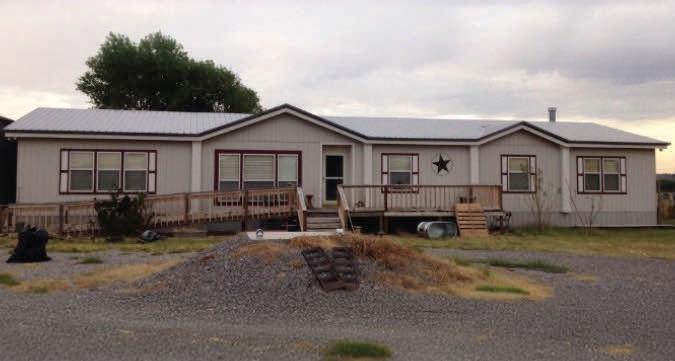



APR. 3–4 – Artisans Market, The Downtown Exchange, 527 Main St., Zanesville, Fri. 5–9 p.m., Sat. 11 a.m.–3 p.m. Arts and crafts by quality Ohio makers and artisans. Food available. www.downtown-exchange. com/DTXAM.
APR. 3, MAY 1 – First Friday Art Walk, downtown Zanesville, 5–8 p.m. Come downtown on the first Friday of each month, when galleries, studios, and small businesses are open at the same time! See the Artist Colony of Zanesville’s website for a map of participants: https://artcoz.org/arts-district-map.
APR. 17 – Malpass Brothers, Cornerstone Global Methodist Church, 207 S. Court St., Marysville. Doors open 6 p.m., concert 7 p.m. Part of the Marysville Winter Bluegrass Series, Entertainment, food, homemade pies on-site. 937-642-4712 or www. marysvillewinterbluegrass.com.
APR. 18 – Pickerington Community Chorus: Spring Concert, Epiphany Lutheran Church, 268 Hill Rd N., Pickerington, 3 p.m. Free admission; freewill offering will be taken. www.facebook.com/ Pickeringtoncommunitychorus.
APR. 18 – Quilters Market Day, Fredericktown Schools, 111 Stadium Dr., Fredericktown, 10 a.m.–3 p.m. $5. Flea market. Buy/sell quilting tools, books, patterns, fat quarters, quilted items. Fat quarter drawing. Quilt show (non-juried). For information, call Patty at 740-6946140 or visit www.fredericktown.org.
APR. 22 – Wise Lunch, Headwaters Outdoor Education Center, 151 Home Rd., Mount Gilead, 12 p.m. in the main
MARKETPLACE

building. Bring your lunch and visit; discuss building the new tiny terrarium, then make one to take home. Materials are provided and free. Call 419-946-7923 to reserve your spot.
APR. 24–26 – The Big Roadshow: “Transportation Milestones That Shaped Pickerington,” Pickerington Senior Center, 150 Hereford Dr., Pickerington, Fri. 4–7 p.m., Sat. 9 a.m.–7 p.m., Sun. 11 a.m.–5 p.m. Free. An America 250 event. Focuses on Zane’s Trace, Ohio & Erie Canal, the railroad, and I-70. Model train displays, LEGO exhibit, wood carvings, historical timeline and photos, antique vehicles, kids’ activities, and more. Food available. www.pickhistory.org.
APR. 25 – Earth Day Celebration, ECO Center, 1757 Co. Rd. 59, Caledonia, 12–3 p.m. Free. Fun-filled and educational day for the entire family! Local art, inflatables, barrel train, farm animals, kids’ arts and crafts, local produce and earth-friendly vendors, environmental exhibitors, nature scavenger hunt, mini ziplines, and outdoor nature lessons. www. ecocenterohio.com.
APR. 25 – Pickerington Train Depot Tours, Toledo & Ohio Central Train Station, 50 N. Center St., Pickerington, 9 a.m.–6 p.m. Tours on the hour. Reenactor Tony Mills will portray Clyde Leach, the depot agent during a time when Pickerington was home to both the state’s largest creamery and a major grain mill. www.pickhistory.org.
APR. 25 – Rock Your Garden: A How-To Workshop, Darby Landscape Supply, 8075 Harrisburg Pike, Orient, 10–11 a.m. Free. Discover how to use stone to add structure, texture, and visual interest to your landscape. Plus, tour of a rock production plant covering types of rocks and where they come from. All participants receive a free rock to add to their home landscape. 614809-8538 or www.darbylandscape.com.
APR. 26 – Coshocton Community Choir Spring Concert: “Still Be My Vision,” McKinley Auditorium, Coshocton High School, 1205 Cambridge Rd., Coshocton, 3–4:30 p.m. Free admission; freewill donations only. Includes the 80-voice adult choir, the Coshocton Youth Chorale, the Coshocton Singers, the Roscoe Brass, and other instrumentalists. 740-6230554 or www.coshoctoncommunitychoir.org.

APR. 26 – Marysville Toy Show, Union Co. Fgds., Beef Barn, 845 N. Main St., Marysville, 9 a.m.–3 p.m. $6; 12 and under free; early buyer (8–9 a.m.) $12 Free parking. Die-cast cars, action figures, model kits, farm toys, all toys old and new. Find us on Facebook @ Marysville Toy Show or visit www. marysvilletoyshow.com.
MAY 1 – Pickerington Chocolate Hop, Olde Pickerington Village, 6–8:30 p.m. A $5 donation gets you a map of locations around the Village where you will receive a little chocolate treat as a thank-you. Begin on the plaza at Columbus and Center Streets. Limited number of maps; donate in advance to reserve a map. www.pickeringtonvillage.com.
MAY 2 – Birds of the Preserve: Spring Migration Hike, Park District HQ, 16405 U.S. 23, South Bloomfield, 9 a.m.–noon. Free. Guided bird walk through the preserve, celebrating the return of spring neo-migrant birds. For all experience levels. We’ll follow a paved path with the possibility of off-trail exploration in the woods. Dress for the weather. Adult must accompany any child under 12. For questions, email mellis@pickawaycountyohio.gov or visit www. pickawaycountyparks.org/upcoming-events.
MAY 2–OCT. 31 – Coshocton Farmers Market, Coshocton County Maintenance Garage, 23220 Co. Rd. 621, Coshocton, Sat. 8:30 a.m.–noon. Locally grown produce, baked goods, and artisan crafts. Rain or shine. www.facebook.com/coshoctonfarmersmarket or market.manager@coshfarmmarket.org.
MAY 9 – Landscape Basic Design: A How-To Workshop, Darby Landscape Supply, 8075 Harrisburg Pike, Orient, 10–11 a.m. Free. We will cover the basics of garden design using color, height, texture, size, and hardscape vs. softscape; also animal resistance, weeds, and maintenance Each participant receives a free flower to take home and plant. 614-809-8538 or www. darbylandscape.com.
MAY 9 – Spring Fling Craft Show, Sims Farm, 11300 Chilli-Lanc. Rd., Amanda, 10 a.m.–2 p.m. Indoor and outdoor vendors. Plants and much more for Mother’s Day gifts. Silent auction of quarter beef from Hoffman Farms to benefit the Sewing Shefs 4-H Club. For more information, call 740-974-8747






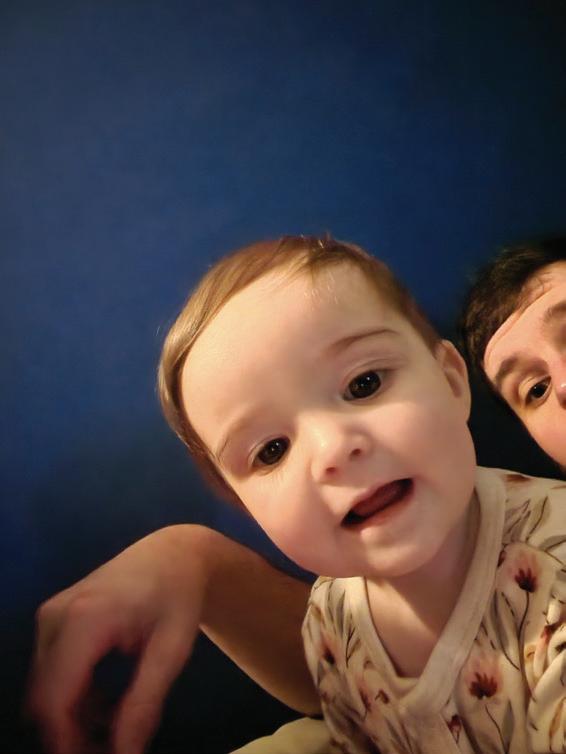
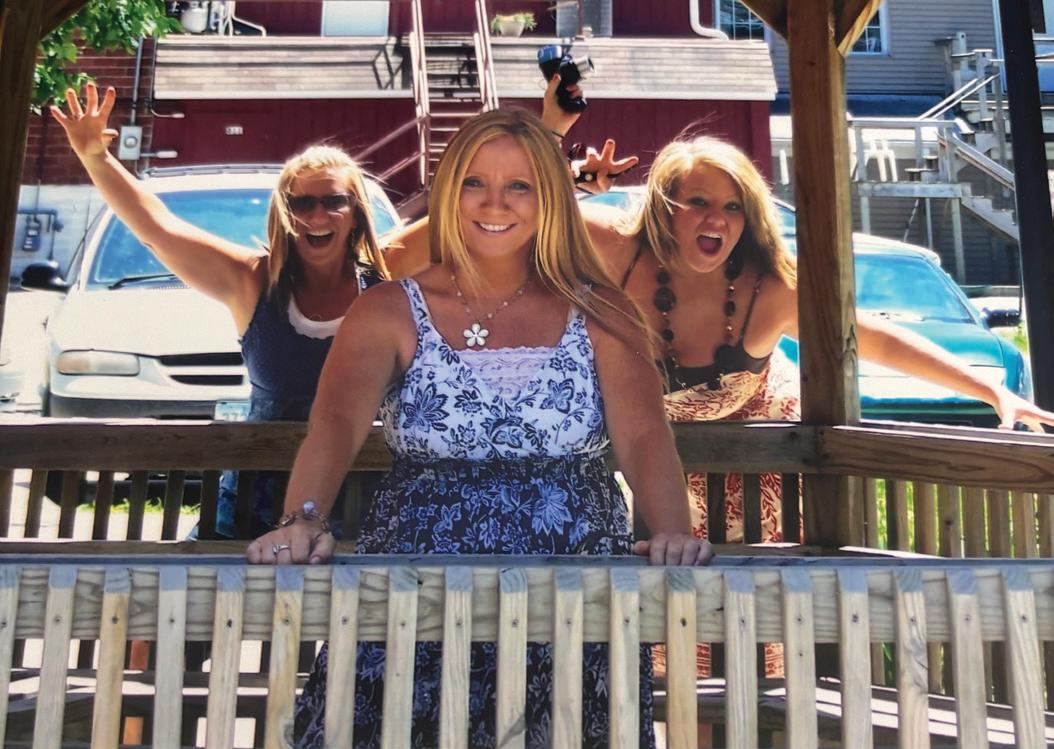


1. My daughter, Emma, loves to photobomb her daddy, my husband, Mark. Rachael Belford, Consolidated Cooperative member.
2. My twin sister, Laura Cupp, struck a pose, so my daughter, Sierra Barnette, and I took the opportunity to photobomb her! Lori Highfield, South Central Power Company member.
3. Pick me! Bailey sits so pretty while Zoey Rose photobombs with jumps in the background. Rose Edwards, Frontier Power Company member.
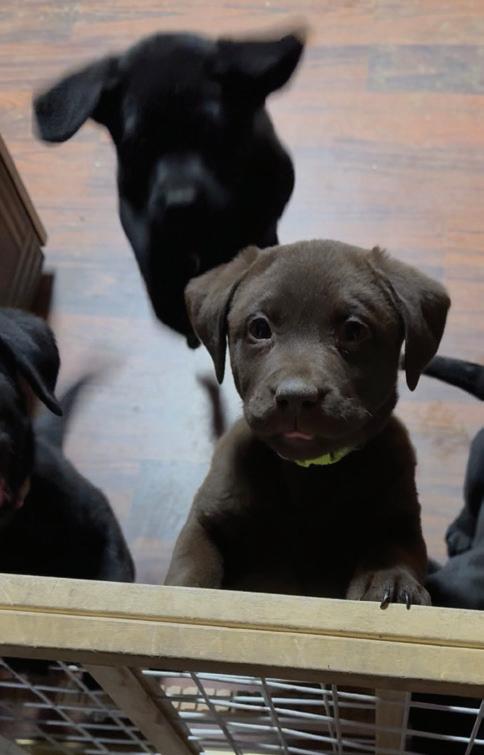
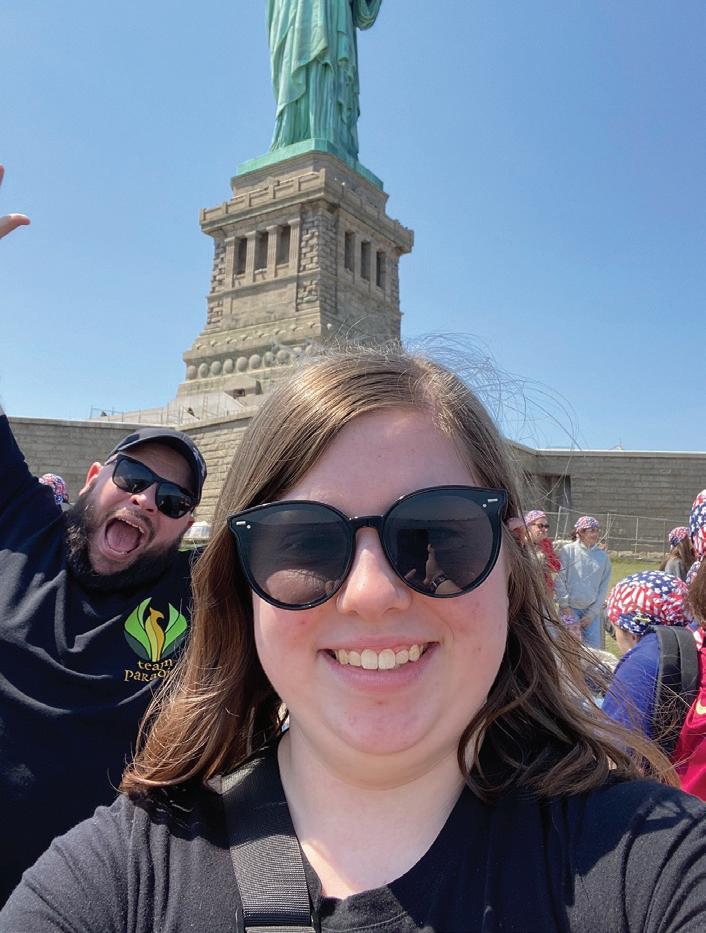
My husband photobombing the girls’ photo. Julie King, Midwest Electric member.
5. Got a group picture taken while snow skiing and later realized this random guy bombed the picture! Jennifer Huffman , Hancock-Wood Electric Cooperative member.
6. My son photobombing my granddaughter while visiting the Statue of Liberty. Janet Fox, Buckeye Rural Electric Cooperative member. 1 4 2 5 6 3

For July, send “America” by April 15. For August, send “Showtime at the fair” by May 15. Upload your photos at www.ohiocoopliving.com/memberinteractive. Your photo may be featured in our magazine or on our website. Send us YOUR picture!
4.

Call before you dig!


ohioec.org/purpose
Know what’s below—dial 811 before any project that requires digging.
Underground utilities, such as gas, water, and electric lines, can be a shovel thrust away from turning a spring project into a disaster. Play it safe by dialing 811 three days before digging to find out where utility lines run on your property. It’s free, fast—and may save a life!