
















Recognized as a Castle Connolly Top Doctor, Dr. Edward Gronet is a board-certified plastic surgeon at H/K/B Cosmetic Surgery. In Greensboro, advanced plastic surgery and modern Med Spa care are offered under one trusted name, providing refined treatments that restore balance, enhance natural beauty, and prioritize subtle, polished outcomes.



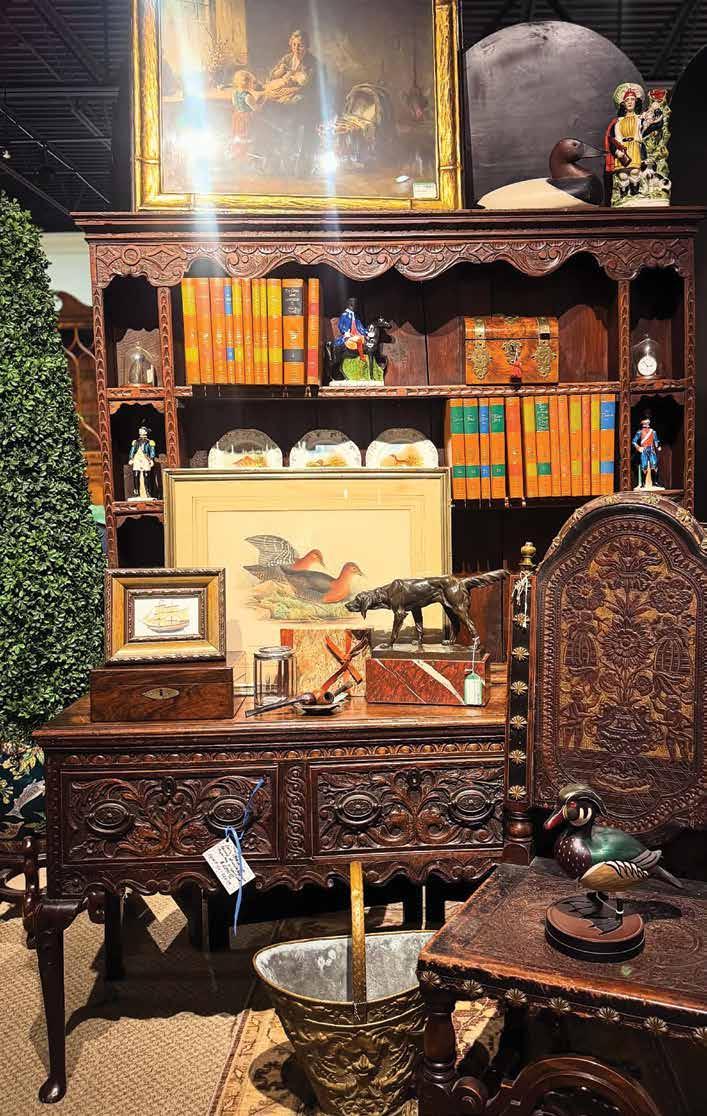
Boxwood Antique Market and TinkerSmiths Trading Company have over 85k combined square feet of Antiques, Home Decor, Collectibles, Jewelry and Art and so much more! Both stores feature a curated collection from the area’s best vendors and consignors.
We invite the public to join our family of over 3,000 consignors from the Triad and beyond. The process is so simple! Just send us photos of your items to consignment@boxwoodantiquemarket.com. Now with two stores to serve you, we can consign all varieties of goods. Or if you would like to join our talented group of vendors you may apply to become part of something special in the beautiful High Point North Carolina furniture capital of the world.



51 Julian Poem by Joseph Bathanti
52 Any Way You Slice It By David Bailey
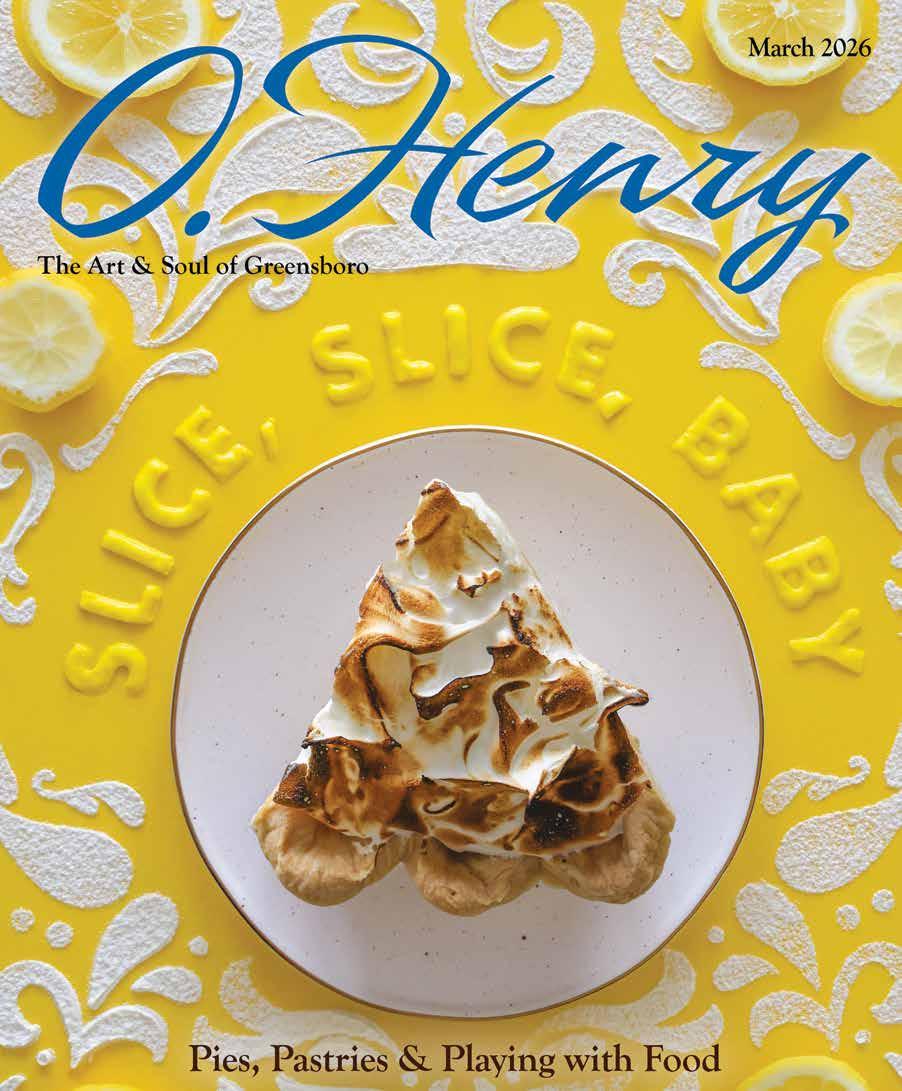
Pi Day, you say? We couldn’t think of a better way to celebrate than by stuffing ourselves silly with a local sampling.
64 Feast Your Eyes By Cassie Bustamante
Lettering artist Marley Soden serves up food for font
70 The Preservationist
and the Painter By Cynthia Adams
A marriage of opposites dances in the light on Magnolia
81 March Almanac By Ashley Walshe
15 Chaos Theory By Cassie Bustamante
19 Simple Life By Jim Dodson
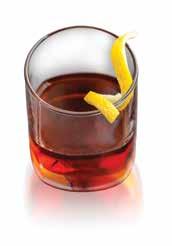
22 Sazerac
27 Tea Leaf Astrologer By Zora Stellanova
29 Life’s Funny By Maria Johnson
32 The Omnivorous Reader By Stephen E. Smith
35 Home Grown By Cynthia Adams
39 Pleasures of Life By Brian Clarey
43 Birdwatch By Susan Campbell
45 Wandering Billy By Billy Ingram
82 Events Calendar
93 GreenScene
96 O.Henry Ending By David Theall
Cover photograph by Marley Soden
This page photograph by Amy Freeman

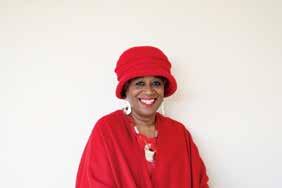

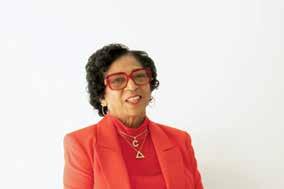
Woman of Impact is a call to action for changemakers to improve the lives of women in the communities they serve. Over nine powerful weeks, nominees and their Impact Teams will rally around women ’ s heart health by raising awareness, sharing lifesaving education, and driving change through advocacy, community engagement and fundraising.
Meet the class of changemakers bringing the Go Red for Women movement to life in their community






CHAIRMAN’S CIRCLE DIAMOND

Top ½ of 1% of the Network




CHAIRMAN’S CIRCLE PLATINUM
Top 1% of the Network


CHAIRMAN’S CIRCLE GOLD
Top 3% of the Network





Top 6% of the Network


Top 11% of the Network


HONOR SOCIETY
Top 17% of the Network



Volume 16, No. 3
“I have a fancy that every city has a voice.” www.ohenrymag.com
PUBLISHER
David Woronoff david@thepilot.com
Andie Rose, Creative Director andiesouthernpines@gmail.com
Cassie Bustamante, Editor cassie@ohenrymag.com
Joi Floyd, Assistant Editor joi@ohenrymag.com
Jim Dodson, Editor at Large jwdauthor@gmail.com
Keith Borshak, Senior Designer
Miranda Glyder, Senior Designer
CONTRIBUTING EDITORS
Cynthia Adams, David Claude Bailey, Maria Johnson
CONTRIBUTING PHOTOGRAPHERS
Betsy Blake, Lynn Donovan, Amy Freeman, John Gessner, Bert VanderVeen, Mark Wagoner
CONTRIBUTORS
Harry Blair, Anne Blythe, Susan Campbell, Brian Clarey, Ross Howell Jr., Billy Ingram, Gerry O’Neill, Stephen E. Smith, Zora Stellanova, David Theall, Ashley Walshe, Amberly Glitz Weber
ADVERTISING SALES
Lisa Allen
336.210.6921 • lisa@ohenrymag.com
Amy Grove
336.456.0827 • amy@ohenrymag.com
Brad Beard, Graphic Designer
Jennifer Bunting, Advertising Coordinator ohenrymag@ohenrymag.com
Henry Hogan, Finance Director 910.693.2497



Darlene Stark, Subscriptions & Circulation Director 910.693.2488
OWNERS
Jack Andrews, Frank Daniels III, David Woronoff In memoriam Frank Daniels Jr.
Cone Health wants to make feeling your best as simple as possible. And we deliver! Seriously. Cone Health Community Pharmacy offers home delivery, serving all community members, not just Cone Health patients. Now you can save yourself a trip to the pharmacy and focus on feeling your best.
Get started at conehealth.com/pharmacy
The Greensboro Public Library Foundation raises private funds to help the Library build and sustain an involved, diverse community of life-long learners through state-of-the-art libraries and innovative programming. Thank you for your support during 2025!
Victor & Rose Ackermann
Daryl Adams
Pamela Aikens
Erik & Holly Albright
John Alford
Carolyn Allen
Valentine Allen
John & Maria Alsup
Valerie Anders
Peter Arata
Howard & Margaret Arbuckle
Jude & Lindy Aucoin
Alexa Aycock
Geissler Baker
Kate Barret
Vance Barron
Paul Bates
Wilma Bates
Joe & Jane Beatty
Paul Bencuya
Bill & Margaret Benjamin
Loren Bennet
Sylvia Berkelhammer
Chip Berry
Margaret Birge
Bobby & Brigitte H. Blanton
Ralt & Susan Bohn
Rachel Bolten
Sandra Boren
Lucille Branson
Libby Brewington
Helen Brooks
Teresa Broome
Marshall & Anne Brown
Trip & Christine Brown
Joe & Marianne Browning
Charles & Lois Brummit
Edwin Bryan
Clifton J. Burnet
Eliza Burton
Shane Burton & Jim Bumgardner
Theresa Byrd
Patricia Byrne
Richard & Nancy Caddy
Charles Cameron
Larry Camras
Robert & Janne Cannon
Terry Carey
Joseph & Hodges Carroll
Stacey Carson

Will & April Carter
Patricia Casterlow
Katherine Catlett
David & Kristi Ceiner
Isabel Chasse
Preston & Griselda Clark
Louann Clarke
Clem Clement
Sue Ann Cole
Kathleen Collette
Stephen Colyer
Betty Cone
Sally Cone
Sam Cone
Tom & Rene Cone
Phillip Conlon
Wayland & Jane Cooke
Doug & Jean Copeland
Sharon Cornelius
Thomas Corrigan
Carol Cothern
Richard & Christine Coughlin
Sheree Crane
Brian Crean
Catherine Crowder
Dennis Crowley
Leslie Daisy
Beverly Darwin
Duane & Madeleine
Dassow
Luck Davidson
Martha Davis
Mary Davis
Shakota Davis
Kelly Dawson
Laurinda de Beck
Carolyn de Berry
Frank Delaney
Despina Demetriades
Rob & Anne Deutsch
Daniel DiAngelis
Jeri D’Lugin
Nancy Doll
Felita Donnell
James & Abby Donnelly
Barbara Dua
William Dubose
Alan Duncan
Lucilla Durham
Cathy Easter
Robert Edmunds
D. K. Edney
Jeff & Lora Farlow
Andy & Janis Fields
Karl & Deborah Fields
Gary & Ellen Fischer
Walter & Marilyn Fisher
Edmond & Thea Fitzgerald
Scott Fleming
Raymond & Carolyn Flowers
Rebecca Floyd
Steve & Nancy Fogarty
Miriam Forbis
Priscilla Fort
Carol Franklin
Dale Frederiksen
Terry & Gayle Fripp
W. Erwin & Nancy Fuller
Florence Gatten
Maribeth Geraci
David & Jane Girardi
Patricia Goeldner
Robert & Susan Good
Patricia Gray
Gordon & Sallie Grubb
Van & Rusty Gunter
Abe Guthrie
Robert & Hope Hagmann
Martin & Barbara Halbert
Frank & Jean Hall
Bob & Lucy Hamilton
Stanley & Judith Hammer
Tim & Maria Hanlin
Andrew Harding
Jonathan & Nahomi Harkavy
James & Irene Harrington
Alexander Hartman
Elwood Hartman
A. Robinson & Eloise Hassell
Stephen & Pamela Hassenfelt
Robert & Patricia Hatley
Morgan Hayworth
Robert & Patricia Hewit
Lawrence Hicks
Richard Hicks
Noah & Cat Hock
Gregory Hoffman
Linda Hoffman
Catherine Holcombe
Charlene Holler
Joe & Susan Honeycut
Gary & Marion Hosey
Helen Houser
Hugh & Lois Hoyle
Patricia Hubbard
Jacqueline Humphrey
Gilbert & Johnnie Ingold
Julee Johnson
Ron Johnson & Bill Roane
Dave & Emily Johnston
Sharon Johnston
Deborah Jones
Shirley Jones
Jeffrey Katz & Ila Rosenthal
Gary Kenton
Vickie Kilimanjaro
George & Lillian Kilpatrick
Steve & Leigh Ann Klee
Bob & Levina Kollar
Kay Krebs
Arthur & Jean Kriner
Anne Krishnan
Brent & Alexa Kulman
Ajay & Madhulika Kumar
Graham & Dana Lacy
Nora Landry
Amy Lavorini
Delores Lawrence
James & Faye Lawson
Gary & Kay Leonard
William Levin
Peter & Pat Levitin
Ann Lindberg
James & Carolyn Llewellyn
Nancy Lower
George Lush
Nancy Madden
Gustav & Mary Magrinat
Dennis & Susan Manchester
Phil & Jo Marsom
Johanna Martin
John & Kim Martin
John Martin & Marcia Mohney
Matt & Michelle Mason
Alex & Terri Maultsby
Bud & Reba Maxson
Terry & Marilyn McConnell
Amanda McGehee
Bill & Rosa McNairy
Doris Melson
Ashley Meredith
Stacy Miller
Randy & Lucy Minter
Cotten Moring
Frank M. Morley
Gregory & Gayle Morris
Todd Moton
Jane Murden
Maureen Murray
Robert & Evelyn Nadler
John & Jenny Naples
Eugene & Amy Naughton
Sandy Neerman & Ralph Gorrell
Floyd & Joann Nesbit
Loy & Connie Newby
Compton & Catherine Newman
Jim & Kathy Nolan
Kenneth Norris
Robert Norton
Jim & Melinda Ogburn
Elaine Ostrowski
Rodney Ouzts & Massimo Fantechi
Robin Pascal
Robert & Dorothy Peters
Su Peterson
Chris & Genie Petrangeli
Susan Petty
Betty K. Phipps
Pamela Piccou
Barbara Pomer
Allison Porter
Marlene Pratto
Rick & Patricia Price
Lowell Rauch
Charles & Nancy Reid
Suzanne Robbins
John Robins
Russ & Ann Robinson
Bo & Kelly Rodenbough
Hans & Ellen Roethling
Bill Ruska & Cathy Cooper-Ruska
Nancy Ryckman
Thomas & Emilie Sandin
Robert Saunders
Karen Schaede
Linda Schafer
Beatrice Schall
Jim & Kate Schlosser
Jim & Sharon Schlosser
Thomas Schumaker
Susan Schwartz
Grady Scott
John & Theresa Sears
Dr. & Mrs. Robert Sevier
Janice Shaffer
Stephen & Ashley Sharkey
Karen Sharpe
Phyllis Shavitz
Mary Ellen Shiflet
Susan Shumaker
Mickey Singletary Carter
Larry & Tennie Skladanowski
James & Tamera Slaughter
Carl Smith
Dave & Shirley Smith
Norman & Carolyn Smith
Katherine Sohn
Andrew Spainhour
Carolyn Spence
David & Pam Sprinkle
Jan Stanfield
James Staton
Mark & Boo Stauffer
Michiko Stavert
Robert Stoesen
John & Kimberly Strong
Paul & Melissa Stroup
Matthew Strupp & Evan Eakers
Betty G. Stubbins
Liz Sullivan-Yukins
Robert Synder & Srishti Bhagat
Jeanne Tannenbaum
Keith & Vanda Tate
Frances Taylor
Willie Taylor
C.E. & Alejandra Thompson
Joe & Amy Thompson
Paul & Robin Timmins
Joyce Tolbert
Mitchell & Carolyn Townsend
Patricia Vedder
Patricia Vreeland
Lynda Waldrep
Marion Ward
Sara Warren-Hill
Bobetta Waynick
Katherine & Mike Weaver
Leslie Wehmeyer
David & Brooks Westerhof
Judy Wicker
Dr. Lea Williams
Judith Wilson
Fred Wilson & Jennifer Schaal
John & Susan Wink
Ed & Sally Winslow
Grey Wood
Marsha Wood
Shawn-Marie Woodard
Jane Woodbury
Robert Woodrow
Lynn Wooten
Judie Wright
Victoria Young
Benjamin & Ann Zuraw
Anonymous Donors
Blue Cross Blue Shield of NC
BRC
Brooks, Pierce, McLendon, Humphrey & Leonard, L.L.P.
Community Foundation of Greater Greensboro
Cone Health Foundation
Ecolab Foundation
Gramercy Park Women’s Club
Honda Go
Jamestown Modern Book Club
Kintura
Lucy Barber Memorial Children’s Collection Fund
McGirt-Horton Book Club
Print Works Bistro & Proximity Hotel
Quaintance-Weaver Restaurants & Hotels
Replacements, Ltd.
Robert Wood Johnson Foundation
Sherri Forrester Estate
The Cemala Foundation
Tuesday Study Club
Wednesday Afternoon Book Club
Well-Spring



7:30 pm at the Sunset Theatre
U.S. Army LieutenantSecond Walter Joseph Marm, Jr.
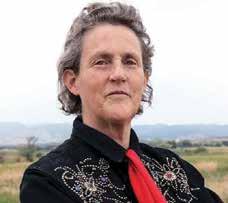
Animal Behavior Researcher and Autism Activist“GREAT MINDS ARE NOT ALL THE SAME”
*Due to overwhelming demand, please register for your free ticket to this event @ https://sunsettheatre.thundertix.com/events/259999
Medal of Honor Recipient
7:30 pm at the Sunset Theatre Dr. Temple Grandin Saturday, March 14, 2026
Elizabeth Hudson Friday, September 25, 2026
Our State Magazine Editor - “FULL CIRCLE” 7:30 pm at the Sunset Theatre presents:
Memorial Day Weekend Event, May 23, 2026

You know the rest
.
By Cassie Bustama Nte
When I first met my husband, Chris, his idea of eating veggies was to toss a couple tomato chunks in with romaine and then drown it in Caesar dressing. A strict vegetarian at the time, I was appalled. Plus, what woman hasn’t thought to herself, “I can change him.”
Challenge accepted. I started sneakily. I would make him a salad, chopping red pepper and tomato into small bits so he wouldn’t notice the intruders. Spinach leaves slowly made their appearance amidst the romaine. Maybe he noticed, but, since we were still in the “salad days” of our relationship, he said nothing. In fact, over time, he began to — dare I say — enjoy a whole rainbow of produce. Heck, he even likes Brussels sprouts now. But don’t ever put a pea on his plate.
So, when our kids were young, it came as no surprise that they inherited his picky palate. Our oldest, Sawyer, has somehow made it to 20 year of age on waffles and grilled-cheese and peanut-butter sandwiches (hold the jelly). We sometimes refer to our youngest, 7-year-old Wilder, as “Sawyer 2.0” because his mannerisms and, yes, finicky palate are eerily similar to his big brother’s. Their only veggie? Tomato sauce on pizza or pasta. Emmy, now 19, is our best eater, though that’s not saying much because Sawyer and Wilder have set the bar so low.
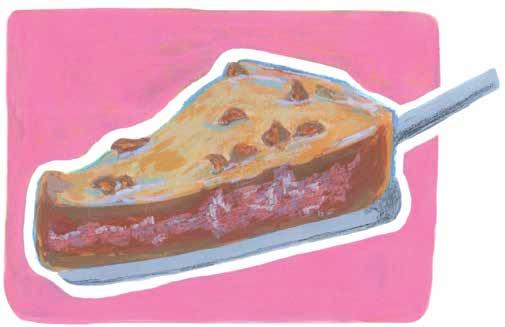
Pie to the rescue! Over 10 years ago, I came across Chocolate Covered Katie’s website and decided I’d try her deep-dish chocolate chip cookie pie. Gooey, fudgy and indulgent? Maybe, but it held a secret. This pie was comparatively
healthy — a good source of fiber and protein. I’d once been able to sneak plants past Chris’ lips and I was hopeful this might do the trick for Sawyer especially.
As Sawyer and Emmy hop on the bus headed for elementary school, I dash to the grocery store for supplies. Garbanzo beans, check. Quick oats, check. Almond butter, check. Turbinado sugar, check. At home, I’ve got homemade applesauce, chocolate chips, vanilla extract, salt and baking soda. And let’s not forget the springform pan I registered for when Chris and I married that just needs some dusting off. Actually, it might still be in its original box.
Following Katie’s instructions, I measure, blend, fold and bake. Naturally, I “taste test” the batter. (Hey, no eggs means it’s safe, right?) Without a lick of butter, I’m shocked at just how much it resembles one of my favorite food groups, raw cookie dough, and have to stop myself from spooning it all in my mouth.
When the final product comes out of the oven, its goldenbrown appearance looks like something on the cover of Southern Living, minus the dollop of whipped cream. As it cools, I remove the incriminating bean cans, taking out the trash before it tells on me. As the bus stop drop-off time approaches, I peer out the window, anxiously waiting Sawyer and Emmy’s arrival.
Finally, they walk in the kitchen door, their little noses twitching, sensing something sweet and slightly nutty in the air. Spying what appears to be a giant cookie sitting on the counter, Sawyer says, “Oooh, what is that?”
“Oh,” I say, trying to sound natural, “I found a new recipe for a deep-dish cookie pie and thought I’d try it. I’m not sure you’ll like it.”
“I’ll try it!” exclaims Emmy, who loves freshly baked goods



almost as much as her mama.
Sawyer’s big blue eyes grow even wider. “Wait, we can have it now?”
“Sure, I’ll let you both have a little pre-dinner treat this once,” I reply with a wink.
I cut into the pie, pulling out the very first wedge, followed by the second. The center is still soft and warm, the chocolate chips melty.
The kids take a seat at our kitchen island as I slide a plate loaded with a slice and a fork over to each of them. Sawyer lifts a forkful to his mouth as I stand nearby, trying my best to be nonchalant. But my energy is practically emanating off of my body — very chalant.
Sawyer’s eyes close as he savors his first bite. “Mom, this is so good! Can you pack this in my lunch for dessert tomorrow?”
“Of course,” I say casually, but inside my brain there are two little versions of me and they are jumping up and down, high-fiving each other. “We tricked the boy into eating beans!” they’re shouting.
Sawyer does, in fact, take a carefully wrapped piece of deep-dish cookie pie with him the next day, along with his usual, a PB&J, again, hold the jelly. And each day after that until nothing but crumbs are left of the pie.
On day four, as Chris and I sit in the living room watching Jeopardy!, Sawyer plops down on the sofa. He looks a little sheepish as he says, “I don’t know what my problem was in school today, but I couldn’t stop farting. Like, all day.”
I shrug. “Hmmm, no idea.” Meanwhile, I look over at Chris and give him the don’t-you-dare-say-a-word-about-beans look. “You feel OK otherwise?”
“Yeah, I feel fine,” he says. “Just gassy.”
“Well, then I wouldn’t worry about it.”
I’ve now made that recipe for years, eventually coming clean about what’s in it to Sawyer. Luckily, he was too far gone to turn back and still enjoys a slice, especially warm. As for any other vegetables? Well, I might just let that be his future partner’s problem. Maybe she can change him. OH
Cassie Bustamante is editor of O.Henry magazine.





By Jim DoDsoN
Every year as March returns and my garden springs to life, I think of the remarkable woman who changed my life.
Her name was Celetta Randolph Jones, “Randy” for short, a beloved figure in the city of Atlanta’s business, arts and philanthropic circles. Five years my senior and leagues ahead of me in terms of spiritual growth, Randy was introduced to me by my editor, Andrew Sparks, during my first week on the Atlanta Journal-Constitution Sunday Magazine staff.
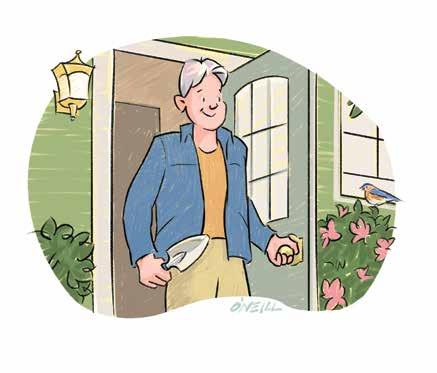
At that time in the spring of 1977, Randy was running The Georgia Trust for Historic Preservation and had stopped by the magazine to introduce herself and plumb my interest in historic preservation.
“Something tells me you two are bound to become best friends,” Andy wryly observed, a prophetic remark if there ever was one.
In short order, Randy became my best friend and confidant, the one person I felt comfortable with discussing matters of life and death, heart and soul. Our love affair was a case of what the ancients called agape, transcending romance and superficial attraction. Besides, Randy was secretly dating an Episcopal priest, which I kidded her about relentlessly. She loved to give the needle back about the young women I went out with in those seven years of our deepening friendship.
Though she never married, “Aunt Randy” was the godmother of half a dozen of her nieces and nephews and, eventually, my own daughter, Maggie.
During my first few years in the so-called “city too busy to hate,” I frequently wrote about the darker side of the booming New South — race violence, corrupt politicians, unrepentant Klansmen, the missing and murdered, and young people who flocked to the city seeking fame and fortune only to lose their
way and sometimes their lives.
A life-changing moment came one Saturday night when I was waiting for a squad from the city morgue to pick me up for a story I was working on about Atlanta’s famed medical examiner. As I stood in my darkened backyard waiting for my dog, McGee, to do her business, I witnessed my next-door neighbor, an Emory University med student, being gunned down in an alleged drug hit. He died as we waited for the ambulance to arrive.
Not surprisingly it was Randy who helped me make sense of this. The morning after my neighbor’s murder, I’d opened my Bible to the Book of Matthew for the first time in years and was struck by a reference that Jesus repeatedly makes about the “Kingdom of Heaven.” That evening at dinner, I grumbled, “So where the hell on Earth is the so-called Kingdom of Heaven?”
Randy simply smiled. “It’s already here, my love. Inside us. You just have to see it.”
I was a wee bit annoyed by her calm assurance.
Randy was a classy and calm Presbyterian with an unshakable faith in God’s grace. I was a backslid Episcopalian who hadn’t darkened a church doorway since the murder of my girlfriend during our college days.
Purely because of Randy, however, I attended services the next Sunday at historic All Saints’ Episcopal in downtown Atlanta — a place where the doors were always open to the homeless. I soon took a job writing about the suffering of the Third World for the Presiding Bishop’s Fund for World Relief, and even made a vow that, going forward, I would only write about subjects and people who had a positive impact on life. Randy Jones was my inspiration.
I lived up to that vow, and even briefly entertained taking myself off to the Episcopal Seminary until a crusty old bishop from Alabama suggested that I could “probably serve the Lord much better by writing than preaching.”
My pal Randy gave her famous, sultry laugh when I mentioned his somewhat frank comment — and she agreed with him.
During my final years in Atlanta, Randy and I met at least once a week for lunch or dinner to talk about the events of the day and the mysteries of this world. She also spent several Christmases with my family in North Carolina, attended both of my marriages, visited my young brood in Maine and joined us for a joyous spring vacation at our favorite Georgia beach.
In many ways, she became the Dodson family godmother and probably the closest I’ll ever come to knowing a living saint — though she would respond with her sultry laugh at such a silly notion.
Over the decades, as Southern springtime returned, wherever I happened to be in the world, Randy would track me down by phone. She’d finish our talk with a couple meaningful questions: So, Jim, are we any closer to the Kingdom of Heaven? And . . . How is your beautiful garden growing?
She and I had visited public gardens together many times. Randy hailed from Thomasville, a small South Georgia town known as “City of Roses,” and knew that once I’d swapped bigcity life for small-town living, I’d become a committed man of the Earth like my rural kin before me. There was no going back, she knew, on gardening or faith.
As my spiritual life grew and deepened across the years, I’d come to believe the Kingdom of Heaven might indeed be nearby.






It’s no coincidence that Jesus mentions it 32 times in the Book of Matthew. His partner, Luke, simply calls it the “Kingdom of God” and makes clear — as Randy did — that it “lies within” everyone.
My favorite reference comes from the Gospel of Thomas, when Jesus’ followers pester him to explain where the “Kingdom” exists:
Jesus said, "If those who lead you say to you, 'See, the kingdom is in the sky,' then the birds of the sky will precede you. If they say to you, 'It is in the sea,' then the fish will precede you. Rather, the kingdom is inside of you, and it is outside of you.
Wherever it exists, I have my late friend, Randy Jones, to thank for putting me on a winding path to the Kingdom within.
And I’m not alone.
Randy Jones passed away peacefully in October 2022. Her funeral service at Atlanta’s First Presbyterian Church was packed with people whose lives Randy had touched, from business leaders to artists, from church members to childhood friends, including a half a dozen godchildren and yours truly. The sanctuary overflowed with stories of her generosity and quiet wisdom, each person recalling how Randy’s kindness had shaped their own journeys. The service was a testament to the wide effect she had not only in Atlanta but in the hearts of everyone fortunate enough to know her.
Including a former backslid Episcopalian. OH
Jim Dodson is founding editor of O.Henry magazine.






"A spirited forum of Gate City food, drink, history, art, events, rumors and eccentrics worthy of our famous namesake"
Greensboro natives know that our grocery stores are the heart of our city. Locally grown and made to fit our authentic, cultivated palate, there’s no better place to feel like a true urbanite than amongst rows of colorful produce. As Condé Nast Traveler names grocery shop tourism a trend, we thought it’d be fitting to showcase our city’s hotspots. Whether you’re just visiting or a ‘Boro buff, take a tour of our markets, where you’ll find the cream of the crop.
The Fresh Market: It’s only natural that you’ll find your way to The Fresh Market. Founded in Greensboro, The Fresh Market brought European-style, intimate and personalized grocery shopping back and created a store meant for comfortability. We’re all for a cozy and homey grocery market and, as some would say, “Home is where the heart is — and where the freshly-baked pastries are.”
Bestway: Craft beer-and-wine tasting is what makes a grocery trip worth the while — oh, and groceries, too. China may have the Great Wall, but here, along with all your cooking needs, you’ll find the Wall o’ Beer. We won’t judge you if you beeline it for the brews before browsing apples and oranges — it’s called balance.
Indu Cafe: If you’re a fan of samosas, Indu Cafe is the perfect place to visit. If you’re unseasoned to the crispy vegetable and spice filled snacks, don’t knock ’em until you try ’em. This shop full of authentic Indian seasoning, flavors and ingredients satiates the city’s craving for crispy, cultural cuisine. You just may give up window shopping and find yourself caught — mid-bite — in a crunch.
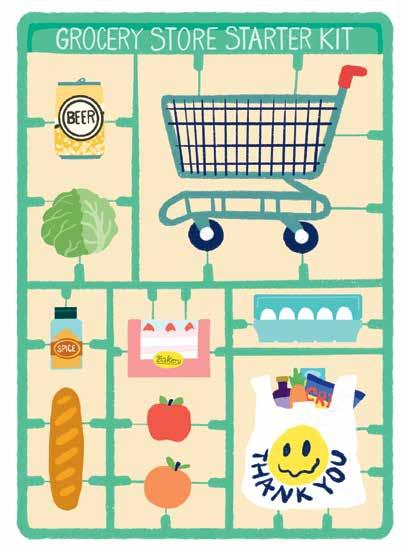
Deep Roots Market: Deep Roots Market makes it their mission to feed the needs of Greensboro and to do that you have to know Greensboro. Dating back to 1976, it began as, and still is today, a nutrition and healthconscious co-op that has fed the community by listening to it. So, you could say Deep Roots Market is rooted deep in Greensboro.
“When I was coming along, record stores were a place of community. Everyone hung out there,” Mike Moore, owner of Buffalo Boogie Records, recalls. “That’s what I wanted to bring here in Greensboro, that community feeling.”
If you’re a bit out of tune with the times, 2026 is “the year of analog.” Despite the rise of digital dominance, individuals are no longer depending on online streaming for music, instead swapping digital for tangible media. Thanks to a vinyl renaissance, a nearly lost space that fosters connection between music mavens alike has reemerged — record stores. In 2018, Moore opened Buffalo Boogie Records, aiming to share his love of records with anyone who had an ear for music. He hoped to create an environment that stirred conversation and eventually invited friendship. “Music is a way of life for a lot of people. It certainly has been for me since I was a child,” he says. “It’s a celebration of life.”
“I had no intention of opening up a record store back in the ’80s and so forth — I just loved records,” says Moore.

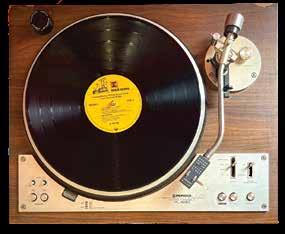
Throughout the decline of record purchasing and the rise of CDs in the mid-1980s, Moore garnered discounted or discarded albums and, over the years, acquired a buzz-worthy collection. “So at times I feel sort of like an archivist as well. I’m preserving something that’ll be passed on from generations to generations and on and on,” he says.
From seeing The Monkees in concert to making friends at his local record store, Moore, who primarily grew up in High Point, has always revolved around the music scene and is eager to see the younger

generation becoming more and more interested in vinyl.
“It seemed like 12–15 years ago, people started looking more towards vinyl as opposed to digital media. It looks like it’s going back to analog. Vinyl started getting popular again,” he says. Exhausted by the hustle and bustle that comes with browsing the internet, individuals are removing themselves from digital overload, embracing a sense of personal connection. “It kind of blows my mind that the younger generations are much enjoying the music mediums that I did when I was a child in the 1960s and as a teenager,” muses Moore.
Though much of the younger generation up-and-comers grew up with digital media platforms and will most likely continue to use it, it is encouraging to see an increase in the demand for physical media. Moore assures us that “the year of analog” will topple the digital media dominance and bring back the classics: “2026 is going to be more of a confirmation that vinyl is back.”
— Joi Floyd
A peek into a superhero’s dream: A new suit, helmet of gold and shield of armor can only save so much, little hero — even superheroes have to dream eventually. The world will wait for you. Life will not, so live it to the fullest. Dance in the crowded streets full of dreamers and non-believers. Swing your partner ’round and ’round and swoop into a kiss. Take a long, deep breath of your sweet, beautiful life made up of a jumble of moments. Those tiny, little moments are special and unique but can only follow time. And yes, time is a thief, but keep him by your side because even thieves can be good guys. For better or worse, that big, bad world will have to save itself for now, little hero. There’s so much to do, but it can wait another day — another time. So, hang that suit up and save yourself instead because even superheroes have to dream eventually.
– Joi Floyd









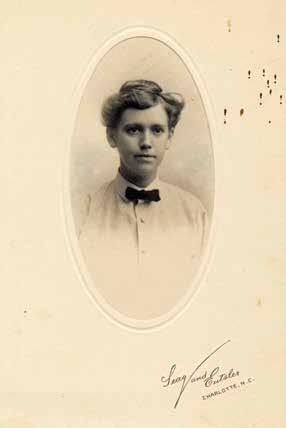
An all-male judicial system was a sign of the times in the late 1800s, and, since Women’s History Month is upon us, we thought we’d share a little about local women’s activist and change maker Louise Brevard Alexander. In 1920, Alexander became Guilford County’s first female lawyer. After serving as a juvenile detention judge until 1935, she taught political science at Woman’s College (now UNCG) and was the first to receive the O. Max Gardner Award, considered the UNC System’s highest faculty honor. Alexander pushed the boundaries of women’s rights and the rest was, well, history.
Louise B. Alexander, Historical Print Photograph Collection, UA 0104, Martha Blakeney Hodges Special Collections and University Archives, University Libraries, The University of North Carolina at Greensboro.





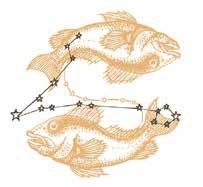
February 19 –March 20
No, you’re not going crazy. Yes, you know what you know. And, no, you don’t need to explain your so-called prophetic dreams to anyone (they’re not ready to hear them). Here’s what you should do: Cut ties with the friend who makes you feel like a doormat. Get clear on your boundaries — and honor them. And when the new moon graces your sign on March 18, inspiration for a fresh skin care routine could be the glow-up that you never saw coming. Or, maybe you did.
Aries (March 21 – April 19)
Try taking a cold shower.
Taurus (April 20 – May 20)
Two words: leafy greens.
Gemini (May 21 – June 20)
You’ll know when you know.
Cancer (June 21 – July 22)
Make a date with the sunrise.
Leo (July 23 – August 22)
The signs won’t be subtle.
Virgo (August 23 – September 22)
Pay attention to your jaw and shoulders.




MARCH 26th
5:30PM
















By maria Joh NsoN
I stumble over his Kryptonite.
On a recent visit home, my younger son — the one I used to challenge in driveway basketball, the one who now dunks the ball, guaranteeing no more mother-son pick-up games — hangs around the kitchen as I make a quick lunch for myself.
I slap together my go-to sammie of late: natural peanut butter, chunky, of course, with bread-and-butter pickles, topped with a squiggle or three of sriracha.
On pumpernickel.
Toasted.
Yes, really.
“What. Are. You. Doing?” he asks, looking over my shoulder.
“Making a sandwich,” I answer. “Want one?”
“No.”
“It’s good. Try it.”
“No way.”
I take a bite, issue a loud mmmm and hold out a cross-section of gleaming earth tones for him to examine.
“It’s pretty, too. C’mon, take a bite.”
“Nope,” he says, taking a few steps back.
“The recipe came from The New York Times cooking app,” I say, offering a pedigree.
“I don’t care,” he protests through a budding smile.
I do what any loving mother would do. I hold out the sandwich at arm’s length, wave it like a light saber, and chase him around this house with it.
“Tryyyy it! You’ll liiiike it!” I urge, echoing a 1970s AlkaSeltzer commercial in which a bistro customer recounts being pressured by a waiter to sample a new dish.
Obviously, my baby, who was born in 1997, has not seen this TV ad.
“Get away from me with that thing!” he insists, weaving and bobbing as if the sandwich might bite him.
We’re both about to fall over with laughter when he finds a door.
“I’m going to the gym,” he calls out over his shoulder.
“Saving you half, kiddo!” I holler after him.
This passes for love — and maybe motivation to exercise — in my family.
Later, as I eat his half of the sandwich, I wonder: How could he, or anyone, not like this creation? To me, it’s the perfect union of flavors and textures: warm and tangy pumpernickel slathered with the subtle sweetness of peanut butter, spiked with the sweet-tart crunch of pickles, and swaddled by an after-burn that’s relatively mild on the Scoville scale.
What more could your taste buds want than to be pleasantly surprised by an unexpected combo?
Of course, every person’s idea of “pleasant” is different.
I poll a few friends on favorite food pairings that make others cringe.
Bee likes a peanut butter sandwich with fresh tomatoes and Miracle Whip.
Trish reports that, as a child, she enjoyed post-Thanksgiving dark-meat turkey smeared with peanut butter on a saltine cracker.
“My family looked at me like I was crazy,” she says, laughing at the memory. “I wouldn’t be afraid to try it again.”
I would hop on that crazy train with her. In peanut butter we trust.
In pickles, too, though I pause when Donna reports that her late father-in-law, whom everyone called J.E., used to eat homemade cocoa pound cake with home-canned dill pickles.
How did that occur to him?
No one in the family seems to know the origin story, so Donna asks Google AI: Is eating dill pickles with cocoa pound cake a thing?
The answer: “Eating dill pickles with chocolate cake is a recognized, albeit niche and often surprising, flavor combination that has gained traction as a ‘sweet and savory’ pairing.”
J.E. was ahead of his time.
Speaking of sweet and savory, David, perhaps the most adventurous eater I know, says one of his daughters recently gave him some artisanal chocolate with anchovies.
“The salt and umami against the dark chocolate was a fortu-
nate combination,” he says.
Full disclosure: David also likes what he describes as an old Southern favorite: liver mush topped with artificial maple syrup.
Artificial maple syrup? Because real maple syrup would ruin the experience?
“Yeah, it needs to be Log Cabin,” he explains. “Made with corn syrup, of course, and a lot of artificial maple flavoring. Real maple syrup is way too mild to counter the funky mildew flavor of liver mush.”
Take that, funky mildew flavor of an optional dish.
This reminds me of a meal I once shared with a friend at a Japanese restau rant in Pinehurst. Miso soup came with dinner.
“What is this?” she asked, not en thusiastically, after sipping from a long, plastic spoon.
“Miso,” I answered. “Made with fer mented soybeans”
“Me-so-no like this,” she said. Honestly, the soup tasted a little gym-socky to me, too, but it was nicely balanced by a salty broth garnished with scallions and puffed rice.
I slurped away.
There’s no accounting for taste, as the old saying goes, but scientists do know a lot about what makes certain foods attractive to some people while others cringe at the thought.
Roberta Claro da Silva, an associate professor in the College of Agriculture and Environmental Sciences at N.C.
A&T State, says several variables — culture, psychology, genetics and age — go
“Salt breaks the astringency and makes it more sweet,” she explains.
So food culture — what’s available and eaten in your area — influences your idea of what’s appetizing. But there’s more to the recipe: memories and associations, the psychological aspects.
“If you have a very good memory of your grandma cooking food with specific spices, you will relate this with comforting food,” Silva says.
By the same token, if you’ve ever gotten sick after eating a particular food, you’ll probably avoid it because of the negative association.
Visual biases creep in, as well. People generally like foods that are aesthetically pleasing. That’s why plating is a big deal
Luck has nothing to do with it. Just ask Craig’s past clients!
“Craig was sup erb in every facet of her representation of our interests. She made a potentially stressful situation a breeze for our family. And, we loved getting to know her!”
Broker/Realtor® 336.210.5337 mobile craig.mcintosh@trmhomes.com trmhomes.com


Close with Craig!


Some parts of flavor are not as malleable. Genes partly determine the number of taste buds a person has, as well as their sensitivity. So-called “super-tasters” detect bitterness at lower thresholds than others. Often, they cannot tolerate dark choco-
Genes also influence our sense of smell, a huge contributor to what we call flavor. One genetic variation, which affects chemical receptors in the nose, determines whether a person finds the flavor of cilantro pleasantly herby or
Age figures into the stew, too. Taste buds decline, in quality and number, as the years go by. That’s why older people often lean toward stronger flavors and
The upshot: Yummy and yucky are moving targets over a lifetime.
I ask Silva an academic question: Is it possible that my son will try a peanut butter-pickle-and-sriracha sandwich one day, despite, you know, the possibly negative experience of having been chased around the house with one?
“I believe so,” she says kindly.
Saving you half, kiddo. OH
Maria Johnson is a contributing editor of . Email her at ohenrymaria@
• Special Romance Packages and Getaways at O.Henry & Proximity Book online at ohenryhotel.com or proximityhotel.com
• O.Henry LIVE Jazz! Every Thursday from 6-9 PM and Pop-Up Shows from 7-10 PM in the Social Lobby. See the schedule at ohenryhotel.com
• QW Gift Central Overnight Stays and Gift Cards. Visit qwrh.com, ohenryhotel.com, printworksbistro.com, greenvalleygrill.com or lucky32.com
• LIVE Music Every Wednesday at Lucky 32! AM rOdeO (Jessica Mashburn & Evan Olson) 6-9 PM lucky32.com
• Artist-in-Residence Chip Holton at L32! Stop by and see Chip’s retrospective! lucky32.com
• Weddings | Meetings | Retreats | Events | Group Accommodations Learn more ohenryhotel.com or proximityhotel.com




By Stephen e . Smith
The best writers, those gifted beyond the ordinary, harbor obsessions, and when producing their finest work, they transform those obsessions into prose that they share communally with readers. That’s the case with Bill Fields’ A Quick Nine Before Dark. His obsession is golf — and anyone who’s been caught up in the intricacies of the game will want to read Fields’ memoir, front to back.
Fields is a North Carolina boy. Born in Pinehurst in 1959, he attended public schools in Moore County and graduated from the University of North Carolina. For 20 years, he was a senior editor for Golf World and is the recipient of the PGA Lifetime Achievement Award.
A Quick Nine Before Dark is for golfers of all skill levels. Even if you’ve never whacked a golf ball and you surf past reruns of Shell’s Wonderful World of Golf like it’s a Progressive commercial, you’ll likely find yourself swept up by Fields’ beautifully crafted prose, and the personal twists and turns of his life as a golf writer. He comes across as a gentle, earnest and thoughtful human being who has nevertheless tackled life head-on. You’ll find no scandals, no shocking moral shortcomings, no dark musing, no vilifications of former friends — just straight-ahead storytelling at its best.
Writers have tics and twitches of style that identify them as surely as their DNA, but Fields’ flaws are few, if any, and there’s nothing about his writing more rewarding than his efficient use of descriptive prose. When he feels the need to shine, he does precisely that, as with this excerpted Golf World description of Davis Love III as he captured a major title: “The conclusion to the ninety-seventh PGA Championship was soggy and sweet, like strawberries and sponge cake. As quickly as the late afternoon rain had come on Sunday to Winged Foot Golf Club in Mamaroneck, New York, it stopped, and the sun peeked through an angry sky. Two rainbows arched over the course at just the right moment, as if scripted by Frank Capra himself, and for Davis Love III, there wasn’t a burden in sight.”
Fields blends the elation of honest achievement with the

whimsy of happenstance. In three carefully crafted sentences, he transports the reader to a significant moment in professional golf, evoking the sweetness of strawberries and sponge cake, and framing the moment of triumph with an allusion to a great filmmaker. Then he concludes with a pithy understatement: “. . . there wasn’t a burden in sight.” Could there be a more endearing description of earned exhilaration?
When the occasional somber moment intrudes, it’s handled with grace and thoughtful solemnity, as when Fields learned that his former wife, Marianne, had died. He was hundreds of miles away, talking with his mother by phone, when he heard the news: “It’s Marianne, Bill. She died. . . . Nothing in divorce-recovery books, the radio talk show advice, or the support of friends in the wake of a failed marriage had prepared me for those words.” The deaths of his mother and father are likewise handled unsentimentally but with a necessary touch of sentiment. “Life is ragged,” he writes. “Voids linger. Loose ends are everywhere.”
Fields’ obsession with sports began when he was a child, gravitating toward any game that involved a ball. When he failed to become a basketball star, he turned to golf after receiving a Spalding starter kit for Christmas in 1969. His focus on the game waxed and waned until he was a student at UNC, where he wrote for the Daily Tar Heel. After graduation, he knocked around the golf world, promoting the game, until he accepted a position with the Athens Banner-Herald, which would evolve into an associate editorship at Golf World. What followed was a series of positions that eventually led back to Golf World, the magazine that started in the same town where he was born.
Fields covered tournaments in the United States and overseas, which brought him into contact with the greatest golfers of our time. How many golfers can boast that they’ve played the game with Sam Snead and Tiger Woods?
But A Quick Nine Before Dark is more than another golf book — it’s also about becoming a writer and what it takes to remain
ascendant in a field where technology advances at breakneck speed. From the moment Fields, an elementary school kid, put pencil to paper and wrote “I like to write,” his life had been about arranging the right words in the best possible order.
Fields’ work may require him to live in Connecticut, but he is as much a Southern writer as Faulkner and as romantic about his hometown as Thomas Wolfe was about Asheville.
At 13, Fields worked as a busboy at Russell’s Fish House in Carthage, which recently closed. Describing the restaurant in its heyday, he treats us to magical paragraphs that touch all the senses: “. . . Russell’s was the most clamorous place in creation — more deafening than any argument my sisters ever had, more ear-piercing than the hocking sounds made by my fifth-grade teacher, more thunderous than a Seaboard freight train when it trundled through town . . . Wooden chairs scraping angrily on cement floors. Customers’ animated conversations and guffaws reverberating off cinderblock walls . . . Flatware and platters clanging into busboys’ bins as they and the wait staff dashed about like running backs seeking holes in a defense.”
And like any good Southerner, Fields brings us home, mystified, as most of us are, by the relationship of the past to the present: “Stretches of U.S. 1 and U.S. 15-501 are now blighted by a sprawl of commercial establishments, stores and restaurants. Attempting a left turn without an illuminated green arrow can be risky business. Traffic planners debate solutions. Meanwhile, at certain times of day, dozens of cars idle, waiting to pass the busiest intersections.”
Fields’ writing is unfailingly lucid, exact, and engaging. What’s not obvious is that he’s worked over his prose until that “worked on” feeling is gone. His many readers will be the beneficiaries of that labor. OH
Stephen E. Smith is a retired professor and the author of seven books of poetry and prose. His latest book is The Year We Danced: A Memoir is the recipient of a 2025 Feathered Quill Book Award.

















By C ynthia a damS
our perpetually cold
Mama suddenly perked up, like a Lenten rose popping out of the permafrost.
Her appreciation for plunging temperatures was partly due to creature comforts: A roaring fire. The ancestral McClellan vegetable soup burbling on the stove (which, frankly, tasted like everybody else’s recipe). And a fruit cobbler in the oven, aromatically caramelizing.
Plus, Mama saw cold weather as an excuse to wear her furs.
Furs. Lynx. Mink. Rabbit. My father haunted auctions and estate sales scoring fur coats, finds that made Mama dance with delight.
To my horror, Mama would wear fur anywhere.
“How could you?” I’d entreat as she swathed herself in animal skins, making me despair for the once living, breathing, rightful owners, with Mama nearly disappearing within their oversized heft (but for her pursed Revlon-reddened lips).
“They’re already dead,” she would hiss back.
I turned on my heel and went to my room. Did they have no conscience? I journaled, heavily underlining “no.”
True, some of Mama’s affection for fur had to do with warmth. But her fur lust owed much to Liz Taylor, who exemplified Mama’s ideas about glamor.
She aspired to a very different life than the one she was consigned to in Hell’s Half Acre with her brood of five children.
Worse yet, I received cold comfort from any quarter. My sisters saw no problem with fur. My brothers, who hunted and fished, wondered what the problem was. I was the sole dissenter.
My moral compass pointed to faux fur and pleather.
In a moment of stubborn righteousness, I announced becoming a vegetarian. Both parents looked strangely pleased when I requested a frozen pizza. They happily complied, given the price of Totino’s versus rib eyes.
Daddy sighed, calibrating the rareness of a steak. “She won’t be able to hold out,” he predicted, eating charred fat trimmed from Mama’s steak as I nibbled freezer-burned pizza that tasted about the same as the disk of cardboard stuck to its bottom.
“Yes, I will,” I retorted sassily.
“Then you just don’t know what’s good to eat,” he flung back — an opinion I learned was shared by celebrity chef Anthony Bourdain.
Bourdain sniffed, “Vegetarians are the enemy of everything good and decent in the human spirit, and an affront to all I stand for, the pure enjoyment of food.”
Being a judgmental teen, I thought my parents were the enemy of everything good and decent in the human spirit!
Heedless of my feeble protest, Mama would don her fur at the first hint of wintry mornings. Yes, decked out in a fur coat, her kitten-heeled mules would slap along the oak floors on the way to the kitchen. She looked like a ball of fur putting the percolator onto the stove. Her lightweight robe would not be seen again till May.
As the percolator caffeinated the air, we kiddos emerged. We all drank black coffee upon reaching the mandated age of 12. Perhaps Mama believed insisting upon serving it black might discourage us from becoming coffee fiends. She was wrong.
Coffee underway, she would pull out her biscuit-making paraphernalia from the cabinet, slapping it on the yellow Formica counter. Out came the rolling pin, flour, Crisco and milk.
Standing at the kitchen counter in her fur and mules, cocktail rings adorning her fingers, Mama did what she did every morning. She worked a knob of Crisco shortening into a floury lump, rolled out the dough, dusted it with flour, and finally cut rows of biscuits with an ancient biscuit cutter. The pillowy dough was in the oven before Daddy had finished his first cup of Maxwell House.
“No bacon,” Daddy reminded me at the table as Mama plunked rashers into a cast iron pan, a carton of eggs at the ready. I am certain she must have singed a furry sleeve at some point, but would have never admitted it.
“No homemade sage-rich sausage.” He added gleefully, “and no gravy made with pan drippings.”
I claimed a biscuit, buttering it liberally, making clear I’d breakfast henceforth on grits or oatmeal and biscuits, glaring over my coffee mug.
“Suit yourself, old girl,” Daddy mused. “You’re the vegetarian.”
It was hard staking the moral high ground, my stomach groused. At school lunch, I faced limited choices: namely, pizza or




fries. I resolved to bring a peanut butter sandwich the next day, eating several servings of Jell-O to fill myself up, having never guessed how jolly old gelatin is made.
My life became a series of concessions. I kept eating Jell-O even after learning its revolting origin story. I ate enough carbs and fats to set myself up for a future of cardiac problems, loading up on butter, cheeses, ice cream and shakes.
My parents remained oblivious to my moral rectitude. If anything, they seemed to flaunt their carnage, making every meal a tribute to meat. Pork chops. Pork roasts. Beef stew. Fried chicken. Chicken fried steak. Fried chicken livers. Burgers. Barbecue. Spaghetti Bolognese. Sausage. Bologna. Ham. Country ham. Steaks every Friday night.
Sinking to a new low, Daddy brought home liver mush, reading the ingredients as he shoveled it into his mouth: “pig liver, pig head, pig lips, pig snout and pig ears . . .”
It was easy for me to decline when he offered me a fur-trimmed suede coat. “No thanks,” I said, suggesting he offer it to my sister. She happily accepted.
Sellout, I thought sourly, glaring at her prancing around. She pulled a face and danced away.
Years later, when tasked with clearing out my mother’s possessions, it was glaringly obvious that much of her glamazon style had persisted to age 93. She’d never parted with some of her favorite, sparkly heels (despite painful bunions), sequined handbags and, even, so help me, a boa. I couldn’t resist saving a pair of faux-fur trimmed denim jeans and bedazzled denim jacket as proof of Mama’s dramatic flair.
I paused, passing a hand across fur coats that grew ever larger on her as she shrank, long since relegated to the guest room closet. I emailed the family. No takers. Then my sister-in-law reevaluated. “I’ll take one,” she wrote.
“Happy for you to have it!” I emailed back while spooning in a bite of lime Jell-O. And I meant it. OH
Cynthia Adam is a contributing editor to O.Henry magazine.








By Brian Clarey
Gigi Williams knows exactly what she wants.
She breezes right through the front the door of Donut World’s Battlegrounds Avenue location, past dozens and dozens of donuts — twisted ones, rolled ones, the standard one-hole punch — and beelines to a particular spot in the long, glass case.
“May I have an apple fritter, please,” she says, gesturing to the dozen fritters behind the glass, arranged in a glistening grid on a parchment-papered baking tray.
“Make it two,” her partner jumps in, peering into the display cases. “And a cup of coffee.”
Behind the counter, Luz Martinez gathers the order. The couple hunches over their fritters at a corner table before a day of shopping. But the real reason they made the drive into Greensboro from Oak Ridge this morning is in their hands: It’s the fritter.
“I’m shopping,” Williams says, “but I can’t do it without this.”
After culinary school, she spent decades working in high-end kitchens around the country before settling in Oak Ridge with her partner. And of all the dishes she’s tried from kitchens all over the world, this simple one keeps her coming back.
“She started asking for an apple fritter yesterday,” her partner reveals.
Martinez confirms. Indeed, the apple fritter is the most popular item on the Donut World menu, which should come as no surprise to the thousands of Gate City residents who have already discovered it on their own or through the advice of a trusted palate. The day began with about 10 dozen of them; now, at the noon hour, she is halfway through her inventory.
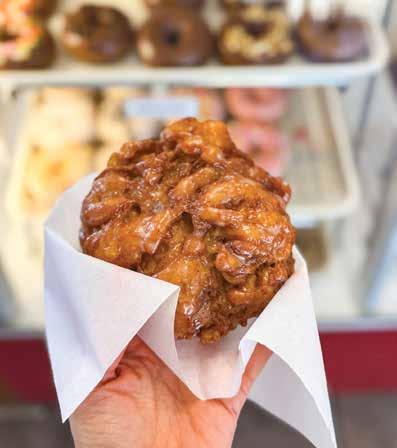
This apple fritter stands alone among the offerings at Donut World: cake and rise donuts, buttermilk bars, filled donuts, twisted donuts, little donut holes topped with glaze, Jimmies, crystalline sugar, fruity cereal, chopped peanuts, shaved coconut, crumbled Oreos and straight-up chocolate chips, all of which are uniformly excellent. But the fritter? It is a near-perfect example of the form, elegant in its simplicity, impeccably portioned, faultlessly prepared and highly accessible — you can get one in your
hands at either the Battleground Avenue or West Market Street location for a couple of bucks.
•
There is nothing fancy about a fritter. It’s nothing but a bit of dough or batter, folded with an ingredient or two and then deep-fried. You can fritter just about anything, savory or sweet. There are corn fritters, blueberry fritters, conch fritters, pumpkin fritters, chicken fritters, banana fritters, cheese fritters, with variations around the globe. You could arguably label croquettes as a type of fritter, along with tempura and pakora.
The apple fritter is perhaps the lowest common denominator of fritter, available at every donut shop across the nation, in the packaged pastry section of the grocery, even inside the occasional vending machine.
But a first encounter with the Donut World apple fritter might leave the customer wondering if they had ever truly eaten a fritter before.
Its soft, light interior is encased in a toasty, brown bark formed when the crenellations in the dough succumb to the deep fry, its crunch intensified by a thin layer of glaze icing. The ratio of apple filling to dough is practically Fibonaccian — enough so that you get some in . . . almost . . . every bite, but not so much as to turn the whole thing into a mashed-up jelly donut.
“I just love pulling it apart,” says Williams, tearing into her fritter. “That first bite, you can tell it’s handmade, not machine-made.”
•
Shop owner Lean Ly brought the recipe with her when she and her family moved to Greensboro from San Luis Obispo, Calif. She comes from a long line of donut-makers — her fam-





ily owns the Sunrise Donuts chain in Southern California — but she wasn’t thinking about donuts when she first got here. They came across the country for her husband’s job, and Ly wasn’t sure how she would contribute to the family finances. The answer quickly became clear.
“We did not see any family-owned donut shops in Greensboro like we had in California,” she says, “so I bring one into the area.”
The first shop, on West Market Street, is where the apple fritter began to make a name for itself in Greensboro. It quickly became the flagship store’s best-selling item.
The reason for the pastry’s popularity is simple as pie: “People love them very much,” she says.
The recipe is extraordinarily simple, with just three ingredients: dough (not batter), apple filling and cinnamon.
“You mix them together, you let them rise, fry until golden brown and then pour glaze all over them,” she says. Just like everywhere else. “The difference is the care and love we put into them.”
I suspect the “care and love” translates into the perfect fry time — just long enough to develop that magnificent, crunchy bark but not so long that the fritter becomes drenched with oil, first one side and then a practiced flip to brown the other.
“That’s just technique,” Ly says. “When you do something for so long and with so much love, you know exactly how long to fry them, and exactly when to spin them.”
Back in the donut shop, Williams has finished her apple fritter and is ready to begin her shopping. But before she does, she has a request on this day for a reporter working the pastry beat.
“Please,” she says, “do not share this secret. Not everyone needs to know. I want to be able to get my fritters.”
Sorry, GiGi — that’s not how we do things around here. Something this delectable needs to be shared. OH
Before joining the UNCG University Communications staff, Brian Clarey spent 30 years in local news as a reporter, editor and publisher, most recently at Triad City Beat.





www.brightstarcare.com/s-greensboro




































The active lifestyle of the brown-headed nuthatch

By SuSan CampBell
If you have ever heard what seems to be a squeaky toy emanating from the treetops in the Sandhills or the Piedmont, you may have had an encounter with a brown-headed nuthatch. This bird’s small size and active lifestyle make it a challenge to spot, but once you know what to look and listen for, you will realize it is a common year-round resident.
Brown-headeds are about 4 inches long with grey backs, white bellies and, as the name suggests, brown heads. In this species, males are indistinguishable from females. Their coloration creates perfect camouflage against the tree branches where the birds forage in search of seeds and insects. Their oversized bill allows them to pry open a variety of seeds, as well as pine cones, and dig deep in the cracks of tree bark for grubs.
By virtue of their strong feet and sharp claws, brown-headed nuthatches can crawl head-first down the trunk of trees as easily as going up. Although they do not sing, these birds have a distinctive two-syllable squeak they may roll together if especially excited.
Brown-headed nuthatches do take advantage of feeders. They are very accustomed to people, so viewing at close range is possible, as are fantastic photo opportunities.
This species is one of our area’s smallest breeding birds. It’s a non-migratory resident, living as a family group for most of the year. Unlike its cousin, the white-breasted nuthatch, which can
be found across the state, the brown-headed is a bird of mature pine forests. Brown-headeds are endemic to the Southeastern United States, from coastal Virginia through most of Florida and west to the eastern edge of Texas. Their range covers the historic reaches of the longleaf pine. However, this little bird has switched to using other species of pine such as loblolly and Virginia pine in the absence of longleafs.
Brown-headed nuthatches are capable of excavating their own nest hole in small dead trees in early spring. Because so few of the appropriate sized trees are available (due to humans tidying up the landscape), in recent years brown-headed nuthatches have taken to using nest boxes. However, unless the hole is small enough to exclude larger birds, such as bluebirds, they may be outcompeted for space. For this reason, the species is now one of concern across the Southeast, with populations in decline. In addition to reductions in breeding productivity, logging, fire suppression as well as forest fragmentation are causing significant challenges for this feisty little bird.
“Helper males” have been documented assisting parents with raising subsequent generations. Without unoccupied territory nearby, young males may consciously be choosing to stay with their parents in hopes that they may inherit their father’s breeding area over time. If this approach sounds at all familiar to bird enthusiasts in our region, it should. It’s similar to the strategy of the red-cockaded woodpecker, another well-known, albeit less abundant, inhabitant of Southeastern pine forests. OH
Susan Campbell would love to receive your wildlife sightings and photos. She can be contacted by email at susan@ncaves.com.


Wed - Fri / 9:30a - 5:00p Sat / 9:30a - 4:30p
By Billy ingram
“How lovely is Thy dwelling place, O Lord, mighty God.” – Psalm 84:1
As president of Jefferson Standard Life Insurance beginning in 1919, Julian Price was renowned in Greensboro as a paragon of philanthropy. In the early 1940s, Price set up a meeting with Most Reverend Vincent S. Waters, Bishop of the Roman Catholic Diocese of Raleigh, to propose funding the design and construction of a praiseworthy home for the Catholic faithful. Price wasn’t Catholic, but his beloved wife, Ethel, was. Her death in 1943 inspired his desire for establishing a glorious sanctuary to serve as an enduring tribute to her memory.
As Price and His Excellency pored over photographs of revered tabernacles from around the country, they kept coming back to the stunning Gothic Revival edifice belonging to Our Lady of Refuge in Brooklyn. It wasn’t long before that house of worship’s architect, Henry V. Murphy, was commissioned by the Bishop.
Two cataclysmic events forestalled their efforts. First, the 1942 outbreak of World War II led to a severe shortage of raw materials. That was followed by Julian Price’s own untimely demise in an automobile mishap in 1946. With only $400,000 set aside for this ambitious undertaking, it fell to the Price siblings and others to raise additional funds for what sacral architectural experts agree is one of the most majestic sacred sites in the nation. In 1952, it was dedicated as Our Lady of Grace, the Ethel Clay Price Memorial.
With an impressive seam-face, granite exterior, Murphy’s creation reflects that old-world, French Gothic verticality, as was his style, married immaculately with Art Deco detailing. Above the main chapel doors is a life-sized stone diorama of Mary holding the Divine Child, flanked by praying angels. Tympana atop entrances also pay tribute to the Blessed Virgin. A tower rises from the rear, crowned by a graceful copper flèche pointing heavenward. The largest Catholic Church in North Carolina at that time, the chapel's interior, fused with blanched brick, granite, maple and marble,
is quite simply breathtaking.
After blueprints were approved, there was the matter of engaging an artist to create the 14 predominant stained glass windows Murphy made ample accommodations for. When asked for a recommendation, it’s believed the architect already had the perfect candidate in mind, Guido Nincheri, despite the fact that few people outside of Canada and Upstate New York had ever heard of him.
Educated in Italy and a deeply devoted Catholic, Nincheri discovered his love for stained glass after immigrating to Canada in 1914. Over a nearly 60 year career, he became recognized as the most prolific religious artist in North America, painting frescos across church ceilings and crafting stained glass masterworks for over 200 churches until his 1973 death. Pope Pius XI declared Nincheri the Catholic Church’s greatest renderer of religious motifs in 1933.
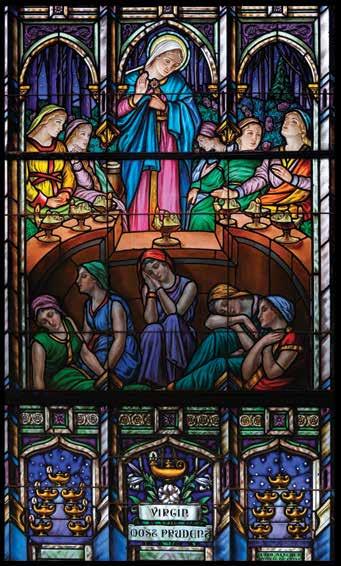
Inspired by Botticelli, Michelangelo and Art Nouveau, Nincheri’s stained glass tableaux become translucent rather than transparent, eschewing the predominant style preferred by American churches. This method allowed for unprecedented depths of detail: flowing folds of fabric, glints in eyes, luminescent













sacred crowns, starry nights, cascading ribbons of hair, a radiant heart. The portrait soaring above Our Lady of Grace’s altar, one modeled after his own wife, is only slightly smaller than the artist’s largest glass masterpieces that reached as high as 25 feet.
In all, 30,000 separate stained-glass elements were delivered to the corner of West Market and Chapman streets. It took Nincheri’s representative from Belgium and a couple of local craftsmen two years to assemble everything on site.
As an example, Nincheri's Virgin Most Prudent, illustrating The Parable of the Ten Virgins from Matthew 25:1–13, which recounts the five "wise" virgins surrounding Mary with lamps burning, awaiting her son’s resurrection. Below, the five "foolish" are asleep. “This is a true gem,” notes parish photographer Gilbert Kolosieke. “But it is hidden from the human eye at ground level. As one ascends the spiral stairs to sing God's praise with the angels, Virgin Most Prudent is the first stained glass window at eye level with the organ loft. It is here that the Queen of Heaven offers you a warm greeting at Heaven's Gate.”
Among these spirited renderings are potent portrayals of The Ark of the Covenant, Seat of Wisdom, Mother Inviolate and Refuge of Sinners, where, if you look closely, you may detect what was then a recently deceased despot with a familiar mustache begging for God’s forgiveness, a reminder that all are offered salvation through the Holy Spirit. (I read that somewhere . . .)
Parishioners got their first good gander at the grandeur that Murphy and Nincheri wrought during the first Mass, celebrated on July 13, 1952, and again the following September on the day of dedication attended by the architect and other dignitaries, in particular Archbishop Amleto Cicognani, the Vatican's apostolic delegate to the U.S.
Admittedly, most of my knowledge concerning the Catholic Church comes from observing the papal peregrinations of Sister Bertrille and the less aerodynamically inclined nuns of Convent San Tanco. And working on the movie poster for Sister





Act. But I recognize fine art when I see it.
Trouble is, it’s been almost 75 years since these intricate visions of divinity were installed, so there’s a pressing need for cleaning and refurbishment for their continued posterity.
The church has recruited a consultant to circumnavigate which approach will be most effective for the windows’ preservation — whether they will require painstaking removal before trucking them up north for restoration or whether the task can be accomplished leaving most everything in place. Either way, the cost involves lots of zeros.
Demand for divine intervention is greatly outpacing supply this season, so Rebekah Zomberg has stepped up as fundraising coordinator for the stained glass window restoration. The church is taking a grassroots approach, hosting an evening gala on April 11 at Starmount Country Club, with a goal of raising money for restoration and awareness of these historically and spiritually significant works of art. “We're going to have music, heavy hors d'oeuvres, a carving station, cocktails, just a lovely evening for fellowship, Zomberg says.” Plus, you’ll have an opportunity to marvel at a slideshow of Nincheri’s manifestations of holy scripture, lit from above — a fragile congregation of tiny shards and brushstrokes collectively representing redemption and adoration. And the chance for assisting in the continued illumination of these ecclesiastical exaltations of eternal life and liturgy for future generations. For more info go to olgchurch.org or call the church office at 336 274-6520.

I don’t attend church that often anymore. I suppose you could say I’m a lapsed Presbyterian, but my sentiments track with what Nincheri’s biographer Mélanie Grondin once stated: “I’ll never look at a church the same way. Now, whenever I happen to enter a church, I walk around and take the time to look at the windows and art that adorn it, even if it wasn’t decorated by Nincheri.” To that I say, Amen! OH
Billy Ingram has written two books of untold tales from Greensboro’s weird, wild history — Hamburger2 and Eye on GSO.
Get ready to dig your toes in the sand with two of the season’s hottest and newest reads from two New York Times – multi-bestselling authors.


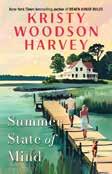

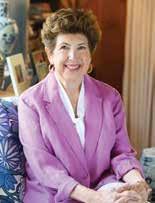
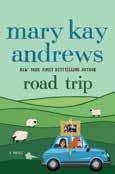
BOOK RELEASE PARTY! Monday, May 4 from 4:00–6:00 p.m. Grandover Resort
BOOK RELEASE PARTY! Tuesday, June 2 from 12:00–2:00 p.m. The Colonnade at Revolution Mill
Kristy Woodson Harvey’s book event, wine and heavy hors d’oeuvres, & one hardcover book.
$50.00 Mary Kay Andrews’ book event, lunch, & one hardcover book. PACKAGE DEAL
$85.00
Tickets to BOTH Kristy Woodson Harvey’s & Mary Kay Andrews’ book event with hardcover books.


In christening gown and bonnet, he is white and stoic as the moon, unflinching as the sun burns through yellow puffs of pine pollen gathered at his crown while I pour onto his forehead from a tiny blue Chinese rice cup holy water blessed by John Paul II himself and say, “I baptize you, Julian Joseph, in the name of the Father, and of the Son, and of the Holy Spirit.”
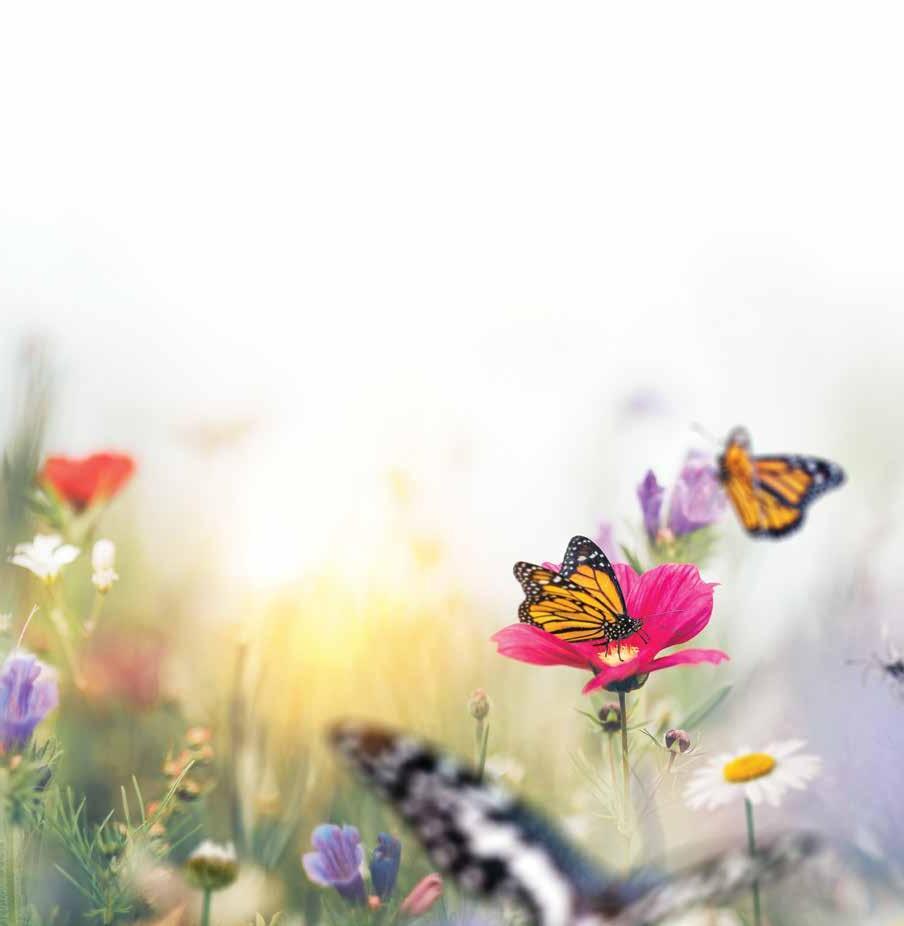
Nor does he stir when the monarchs and swallowtails, in ecclesiastical vestments, lift from the purple brushes of the butterfly bush and light upon him.
— Joseph Bathanti
Joseph Bathanti is a member of the North Carolina Literary Hall of Fame. His novella, Too Glorious to Even Long for on Certain Days, was released in July 2025. His next volume of poetry, Steady Daylight , will be published in 2026 by the Louisiana State University Press.
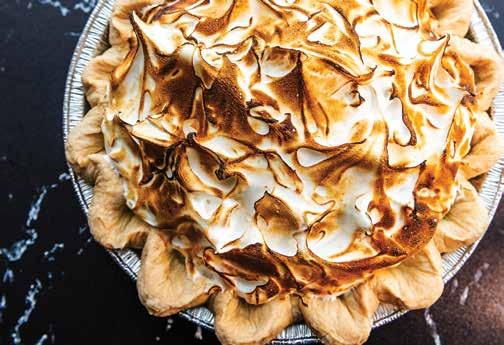
Pi Day, you say? We couldn’t think of a better way to celebrate than by stuffing ourselves silly with a local sampling.
By DaviD ClauDe Bailey • Photogra Phs By a my Freeman
What is it about pies? “I suspect that people feel a sense of tradition and simple goodness when eating pie,” says Maxie B’s owner, Robin Davis, who was featured in a 2012 Southern Living best-cakes-in-the-South article. Robin also knows a little something about pies. Chocolate chess, pecan, coconut custard, coconut cream, chocolate cream, lemon meringue, cherry, blueberry, peach, blackberry, sweet potato, pumpkin — 40 in all, seasonally available. “They are a little lighter than cake since they do not have icing.”

Almost healthy, eh?
And then she adds, “Mostly, I think eating pie is just a comforting experience.”
Amen.
Robin is just one of a wealth of seasoned pie-o-neers who have made Greensboro, at least in our view, pie central. Grab a fork and dig into one of my own favorite comfort foods. We know we’ve missed some of our favorites and your favorites, but there are only so many notches in our belt and these six slices were pushing its limit.
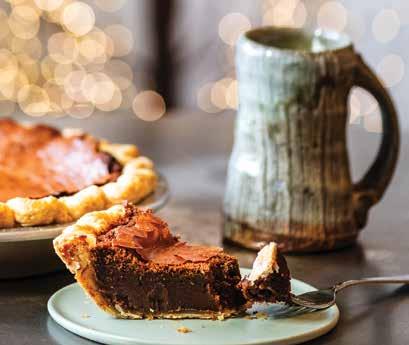
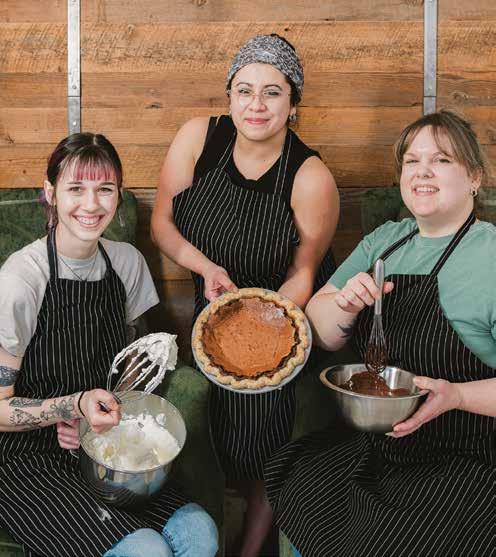
If you’re not able to visit a pâtisserie any time soon, Maxie B’s interior comes pretty close to transporting you à Paris. How many other bakeries feature chandeliers, tufted banquettes, plump, comfy couches and a private, hideaway booth for intimate gatherings? Or, naturellement, snag a seat at the sidewalk café in front and order a café au lait and, of course, a piece of good ol’ American pie.
THE PIE: Chocolate chess
THE LOWDOWN: While the butter in the hand-made, rolled-daily crust hails from Europe, not to worry: the pastry flour is from North Carolina. The only other ingredients are a little sugar, some salt, some vinegar, ice water and TLC. The filling ingredients are equally simple — Swiss chocolate, butter, local cage-free eggs, vanilla, sugar and salt. The cacao beans? From Ghana.
MY TAKEAWAY: Forget Frenchified soufflé au chocolat or chocolate mousse. Sit down to a Southern favorite that dates back to Martha Washington — chess pie. This version is intense, dominated by a jolt of chocolate that dances all over your tongue. The crust is textbook, so rich and flaky you look forward to attacking what’s sometimes left uneaten on other pies — the crust’s shoulder.
MOST POPULAR PIE: Chocolate chess, of course
THE PIE MAKER: Robin Davis, the owner of Maxie B’s (named after pugs Max and Bitterman), never meant to run a cake shop. It was her late husband, Lewis, a workout fanatic, who in 2002 urged her to, please, stop filling the house and kitchen with tempting cakes. So she moved her baking operation to the yogurt shop she was running. While pregnant, she craved a devil’s food cake like the ones she remembered from family reunions. The rest, like our slice of her pie, is history. Two articles in Southern Living brought, quite literally, busloads of people to try this devil’s (and angel) food, and, as business boomed, Robin’s shop expanded, gobbling up two adjacent storefronts. The devil’s food cake is still available, along with red velvet, hummingbird, coconut, caramel and dozens of others.
THE INSIDE SCOOP: Pies featured year-round include chocolate chess, pecan, coconut custard (and cream) and chocolate cream. Seasonally, expect lemon meringue and cherry, plus, when available, fruit pies with local, freshly picked produce, including blackberry pies (stuffed with Climax Creek Homestead berries) and sweet potato pies (with taters from Faucette Farms in Brown Summit).
2403 Battleground Ave., Greensboro 336-288-9811, maxieb.com
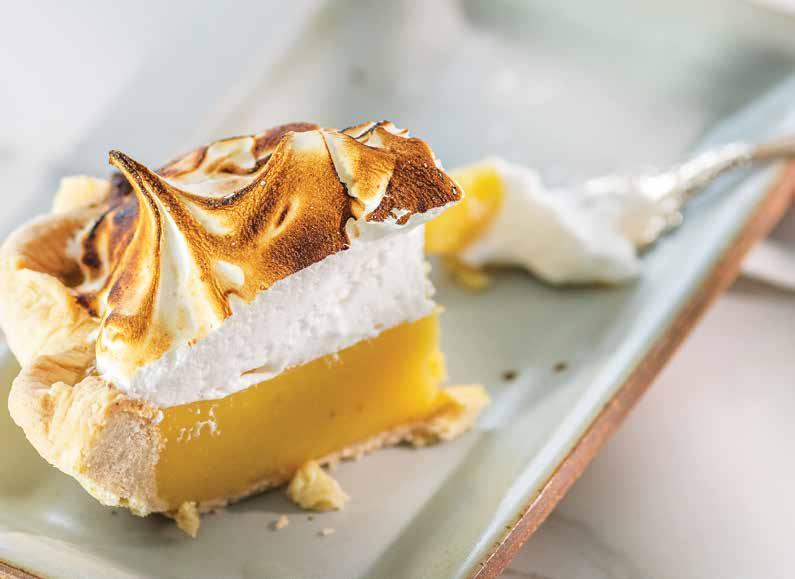
Sit down to your pie in Delicious’ new, light, bright and airy venue on Battleground. The dining area is spacious, affording privacy if you want to share the latest crumb of gossip (or pie) with a confidante. Or seek out a nook where you, your laptop and an espresso can get some work done — or eat as much pie as you want away from prying eyes.
OUR SLICE: Lemon meringue
THE LOWDOWN: The crust is hand-rolled, butter-based and made from scratch. The filling, made from egg yolks, sugar, butter, lemon juice and zest, is thickened with corn starch. A stunning swirl of meringue made from egg whites, sugar and vanilla is torched to a golden brown finish.
MY TAKEAWAY: It seemed a shame to take a knife to the towering, mile-high meringue, but, when I did, the aroma of freshsliced lemons permeated the air. The filling bristled with a sweet-and-sour tang while the meringue provided a great balance to its tartness, not too rich or sweet. The pre-baked
crust served as a tasty vessel — and not over-baked. Here’s a dessert that’s a classic for a good reason.
BEST SELLER: Chocolate chess
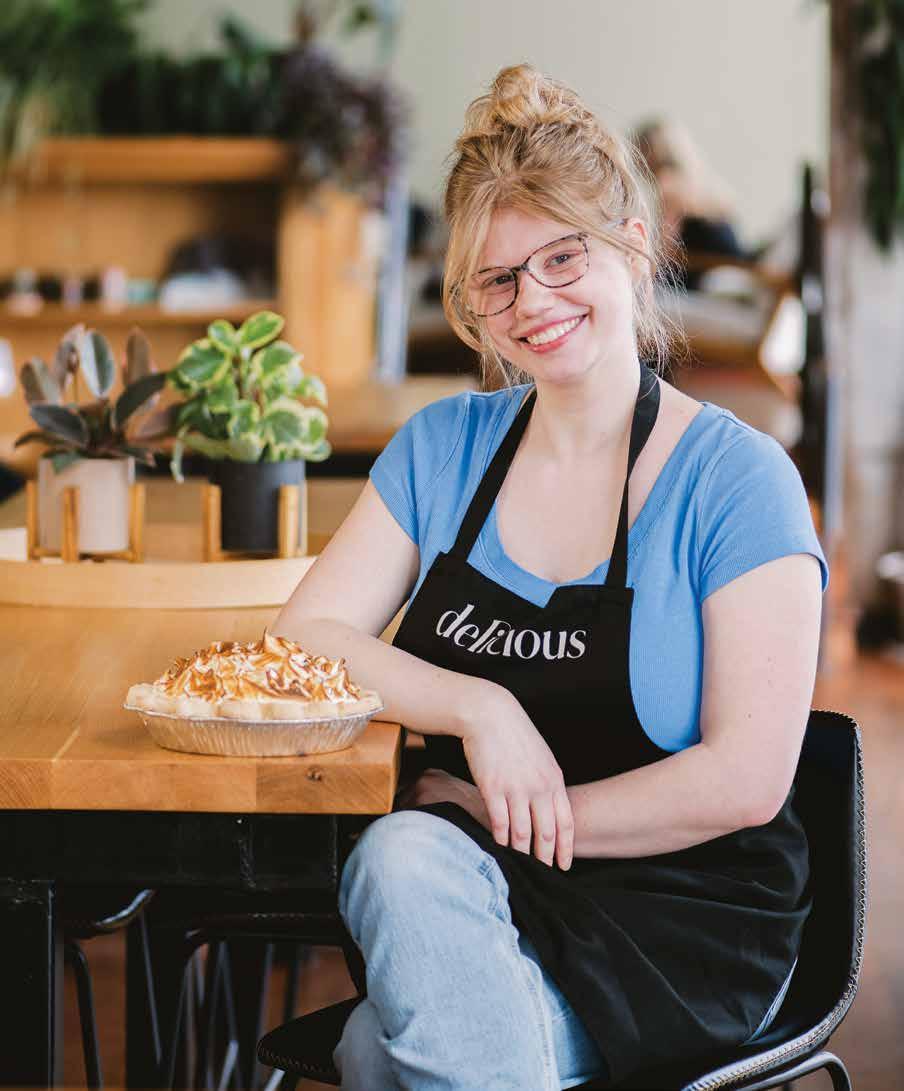
THE PIE MAKERS: Owner Mary Reid, as much an artist as a baker, got things going in her home kitchen in 2004, whipping up and decorating cakes for neighbors and friends. She soon opened a storefront and then a sit-down location with Lori Loftis, her sister and a pie enthusiast, who has dipped her spoon in and out of the business for the last 20 years.
THE INSIDE SCOOP: As a full-service bakery with seasonal offerings including cakes, cupcakes, cheesecakes, cookies, brownies and breakfast pastries, it’s become a really popular meet-and-eat spot. My only battle in this space that once housed Burger Warfare is which pie to order.
1209 Battleground Ave., Greensboro 336-282-1377 | 336-288-3657 | delicious-cakes.com
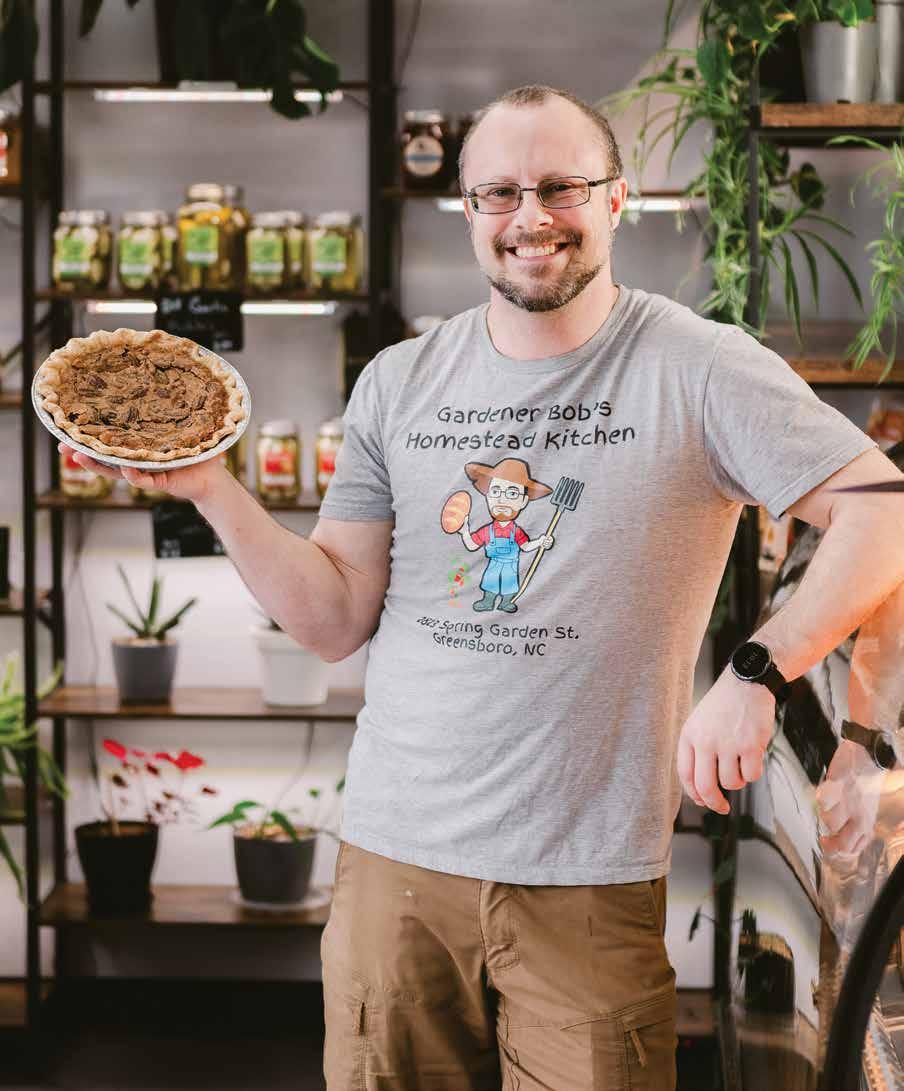
A modest storefront with a few tables on the sidewalk out front, Bob’s spot has a sort of alternative, organic vibe, just like Gardener Bob.
OUR SLICE: Pecan
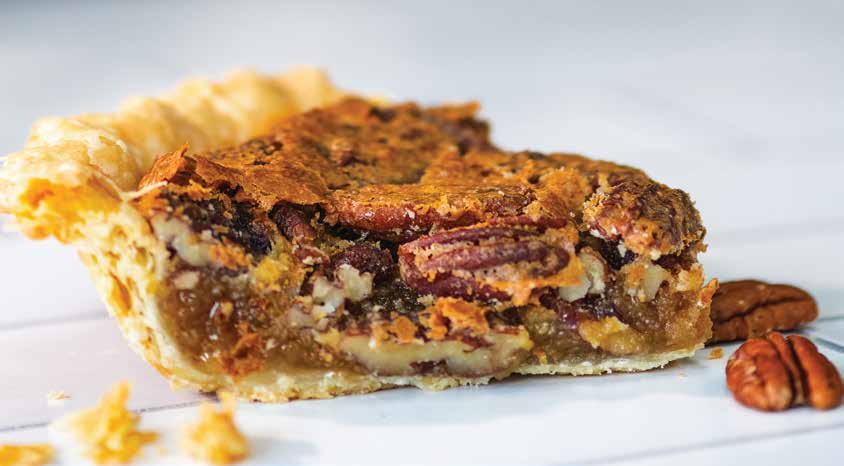
THE LOWDOWN: The crust is homemade with King Arthur’s wheat-and-barley flour, water, salt and butter. The custard filling, baked in the pie, is a confection of sweet-cream butter, flour, evaporated milk and brown sugar — no high-fructose corn syrup.
MY TAKEAWAY: A variant on your traditional Southern pecan pie, Bob’s version is a three-part harmony beginning with sort of a praline topping that crinkles up across the top and is good enough to pick off and eat like candy. The filling is a caramelly melody of pecans, butter and brown sugar with a grace note of vanilla. The fairly thin crust is a cracker sponge that I used to sop up the syrup that spilled across my pie plate.
BEST SELLER: Pecan
THE PIE MAKER: Working in kitchens since attending culinary
school as a teen, Robert (please call him Bob) Thomas has cooked for a living all his life, including three years as a baker. He’s always had a soft spot for making desserts. Recovering from alcohol and heroin addiction at 33, Bob was surprised that he continued to be plagued by digestive issues. Determined to leave preservatives, dyes, chemicals, artificial ingredients and processed foods behind, Bob gardened, baked, fermented and cooked his way to better gut health. In 2021, he began selling his goods in farmers markets, along with his home-grown vegetables. He opened his Spring Garden storefront in November 2023.
THE INSIDE SCOOP: Determined to share his journey to good health with both advice and merch, Bob specializes in foods that promote good gut health — sourdough bread, all things fermented — from sauerkraut to pickles, kimchi to kombucha — along with baked goods (some gluten-free) and, of course, pies of every ilk.
2823 Spring Garden St., Greensboro 743-222-3933 | gardenerbob.com
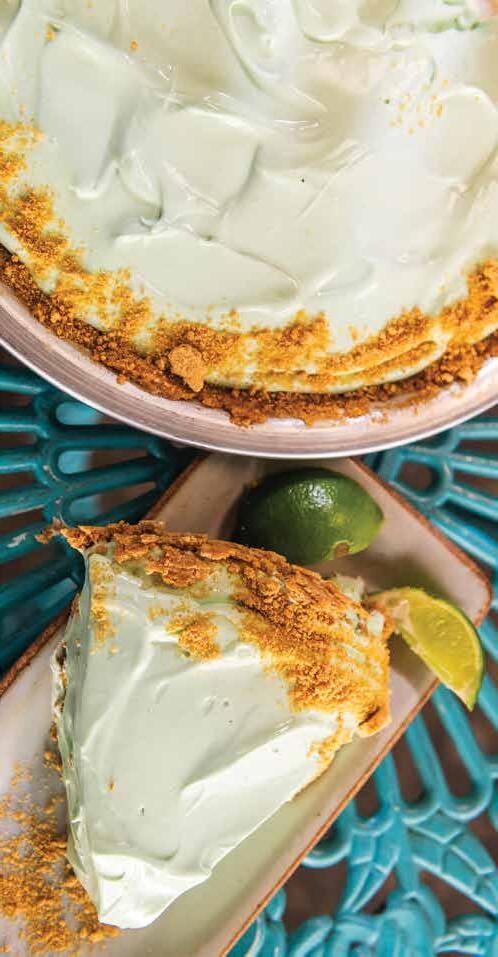
THE LOWDOWN: The recipe, passed down from her mother, Margaret S. Gladney, is a bit of a family secret, but Margaret Elaine, who is, of course, named after her mom, did reveal that it’s whipped, not cooked, and the filling involves sweetened condense milk. And she, naturally, uses those itty-bitty key limes, organic please.
MY TAKEAWAY: Unlike heavier key lime pie filling, cooked with egg yolks and condensed milk, Margaret’s filling is light and creamy, almost fluffy, with a subtle, not citrusy balance of sweet and sour. (It’s so good that, if left unattended on a table top, swipe marks from family fingers inevitably appear!) Playing against the tart filling, the golden graham-cracker crust is a neutral palate with scrumptious, crunchy crumbles around the pie’s edge.
THE PIE MAKER: Margaret says her Key lime pie is a spin-off of the one her mother would make, along with the famous lemon pound cake her mom baked for revivals at the 120-year-old Goshen United Methodist Church. As the youngest of 13 children, Margaret recalls her momma telling her to tiptoe across the kitchen floor so the cake wouldn’t fall. If lucky, she’d get to be the one to lick the bowl and beaters — or scoop up some crumbs that might have stuck to the pan. Margaret prides herself on incorporating her passion for science, chemistry, home economics, fashion and interior design into a legacy her mother would have been proud of.
THE INSIDE SCOOP: Other pies featuring her mother’s recipes include lemon cream pie, million dollar cream pie, pecan pie and sweet potato pie. But Margaret says her real specialty is baked-fresh-daily, hot-from-theoven pound cakes in 150 varieties, some traditional made from 100-year-old recipes, others with a more contemporary twist, like her banana pudding pound cake or her sweet potato pound cake. There’s even a bubble gum pound cake available on special request.
3008 Spring Garden St., Greensboro 336-383-6957 | facebook.com/ POUNDbyLegacyCakesInc
Second location
1620 Battleground Ave., Greensboro 336-383-6957
Margaret Elaine
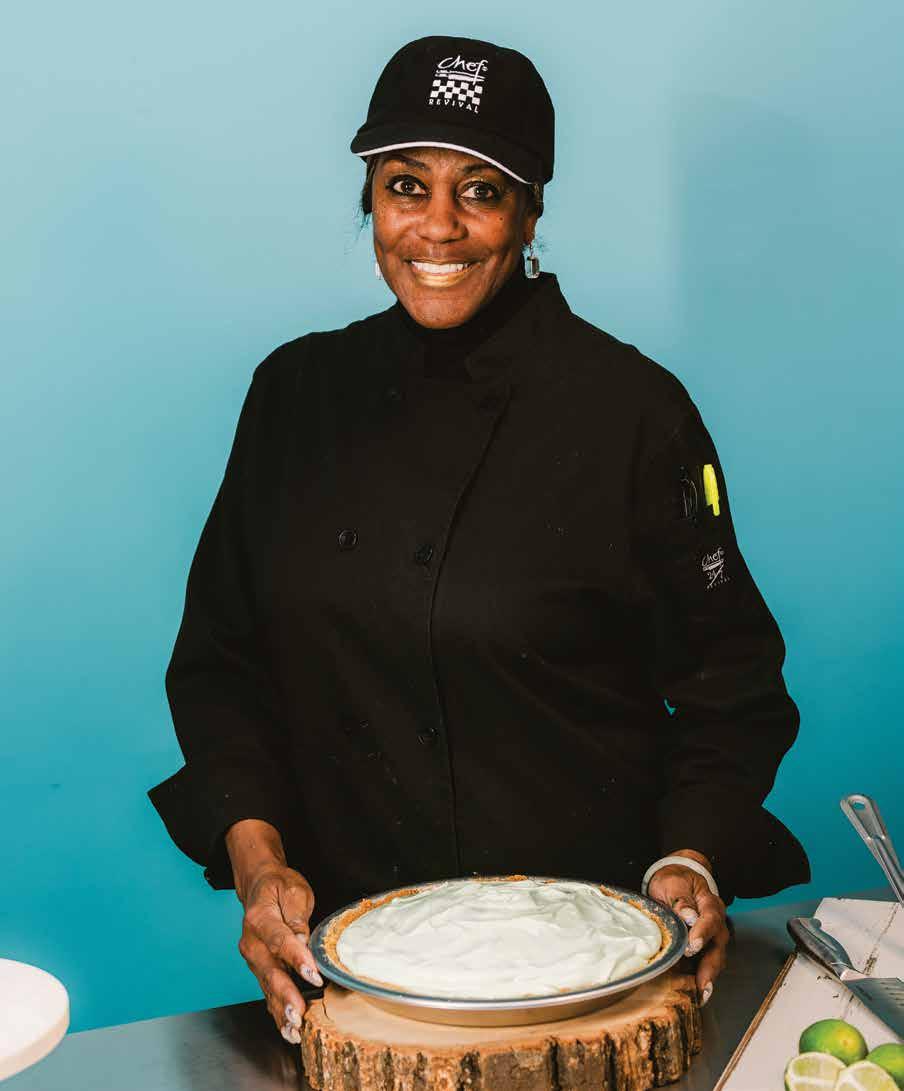
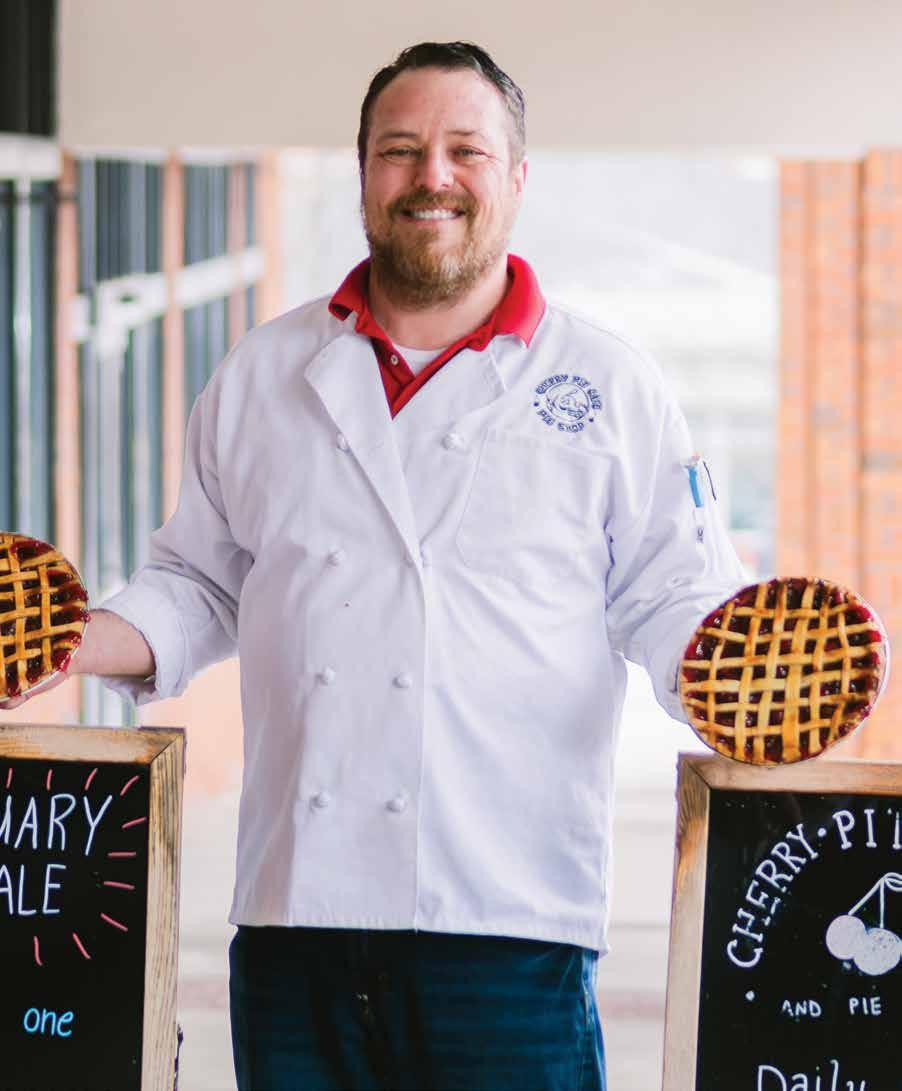
Walk into pie central and prepare to get a face full of pies and a friendly greeting from a waitstaff wearing cherry-red pie T-shirts. The walls are covered with pie slogans, pictures of pies and pie-making implements. And why not? Owner Brian Cotrone (along with his wife and business partner, April Douglas) estimates they have sold over 100,000 pies since opening July 1, 2013. The decor is cheery and modern, with bright-red upholstered banquettes and fast-casual service where your food is delivered to your table after you order at the counter.
OUR SLICE: Cherry lattice
THE LOWDOWN: This pie, made in-house from scratch like all their pies, is all about the filling, chock full of Michigan cherries. It is cooked in a steam kettle to assure the proper thickness and balance of sweet and sour. The homemade pie dough is latticed across the top, six vertical, six horizontal, and then coated with an egg wash to achieve a toasted-brown sheen.
MY TAKEAWAY: The cherries are the money in this pie, plump and piled high, with a gloriously gooey and addictive binding. The shell and the lattice are slightly sweet, balancing the tartness of the cherries. And since sour cherries are packed with melatonin and tryptophan, we’re totally convinced that cherry pie is good for you.
BEST SELLER: Pecan
THE PIE MAKERS: Twenty-five years ago, Brian, a corporate restaurant supervisor, and April, a restaurant general manager, met in Las Vegas. There, they ended up running a restaurant with a heavy pie focus. In July 2013, they launched their own pie-centric concept in Greensboro.
THE INSIDE SCOOP: Yes, they sell 10,000 pies a year, including a savory chicken pot pie, but The Cherry Pit Cafe also offers breakfast, lunch and dinner seven days a week for those of you who don’t think pie is a main course.
11 B Pisgah Church Rd, Greensboro 336-617-3249 | cherrypitcafe.com
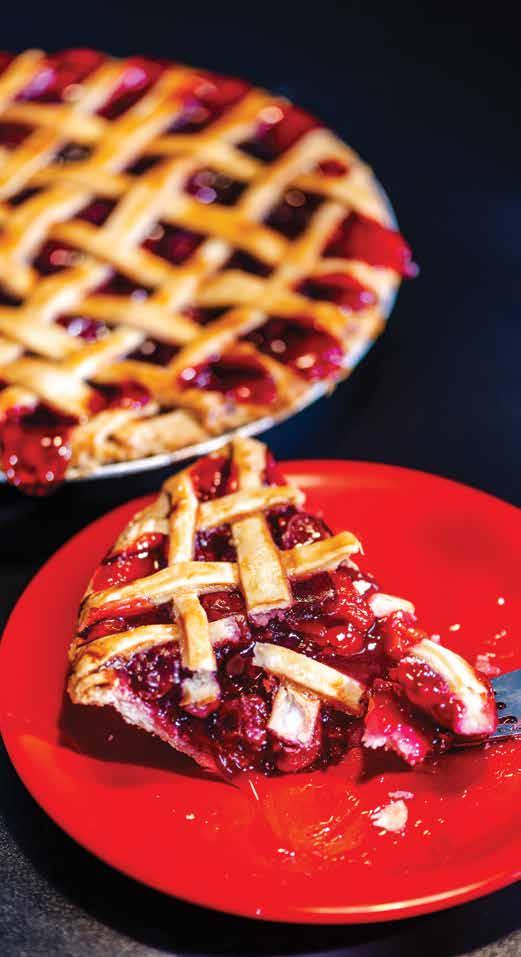
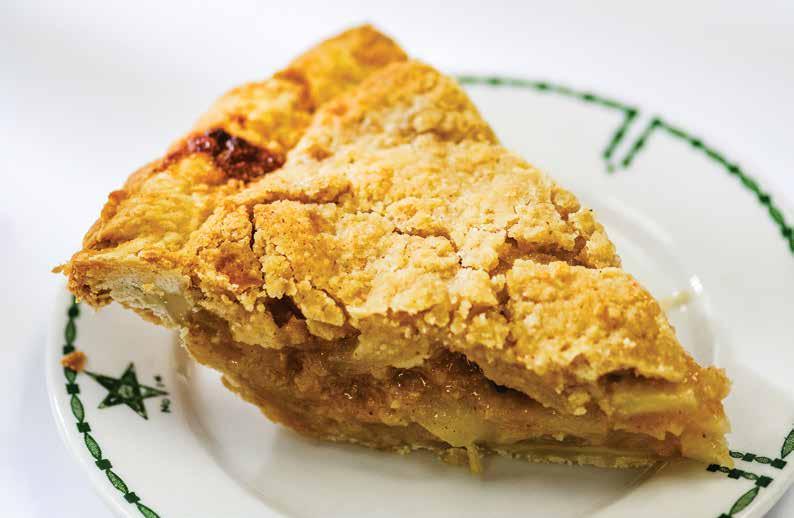
Catch Wendy Dodson and her Dessert Du Jour tent almost any Saturday it’s not raining or snowing along the back row of The Corner Farmers Market. The market, located at the corner of West Market and Kensington in the St. Andrew’s Episcopal Church parking lot, is open from 8 a.m. until noon Saturdays year round.
OUR SLICE: Apple crumb
THE LOWDOWN: Granny Smith apples are dusted with flour and sugar and then oven-roasted. Next? Brown sugar, spices and a whole stick — in bits — of butter. Once mixed and cooled, it goes into her handmade crust. Hand mixing the dough allows little globs of high-fat (Plugra) butter to melt and puff up during baking, similar to a croissant. Lastly, the crispy crumb layer, made of sugar, spices, flour and, you guessed it, more butter, tops it all.
MY TAKEAWAY: As my first bite, loaded with each layer — crust, apple filling and crumb — neared my own pie hole, my nose twitched, triggered by the smell of cinnamon-kissed apples and toasty, brown butter. Moist and tender, the caramelized apples are perfectly paired with the golden, flaky crust, resulting in a palate-pleasing balance of sweet and salty. And, for me, the
cherry on top was the satisfying crunch of the golden crumb topping, of which, well, I left no crumbs.
BEST SELLER: Husband and O.Henry magazine founder Jim Dodson insists her chocolate chess pie is so decadent you’ll end up licking your fork clean.
THE PIE MAKER: As a child, owner Wendy Dodson spent two weeks of every summer at her grandmother’s house. There, she learned the art of baking and making the perfect pie crust. Dessert Du Jour came into full fruition following COVID. Retiring from her HR job, Wendy put all her eggs into her baked-goods basket. Dessert Du Jour celebrates five years in business this month.
GOOD TO KNOW: Wendy offers market pre-orders so you can sleep in on a Saturday morning and rest assured that your pre-ordered pie, cookies or cake will be waiting for you until at least noon at the market. OH
The Corner Farmers Market, 2105 W. Market St., Greensboro 910-585-2584 | dessertdujour.net
Contributing editor David Claude Bailey isn’t telling you how many candles will be on his birthday pie this year.
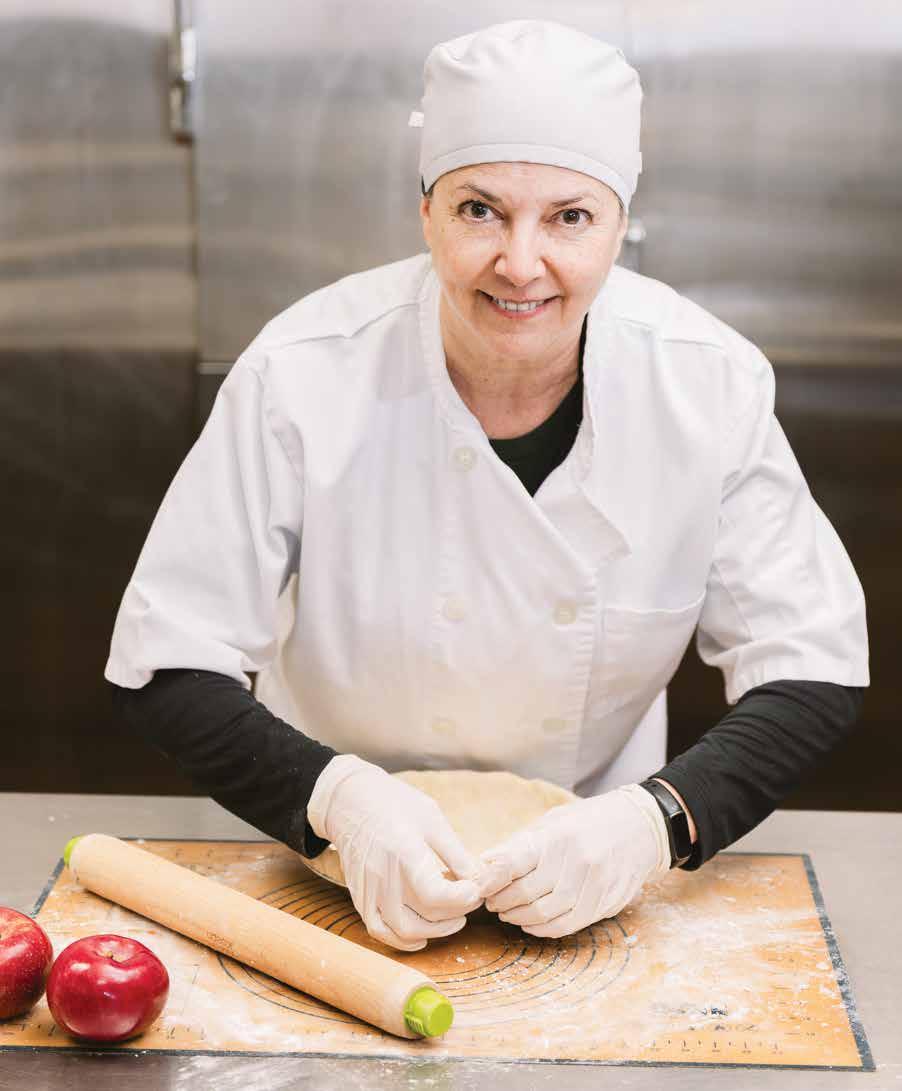

By Cassie Bustamante • Portraits By a my Freeman
ustard, spices, jam, cookie crumbs, sprinkles, honey, espresso powder, candy corn. Not necessarily ingredients you want in the same dish, but, for Marley Soden, they’re main ingredients in her recipe for creativity. On TikTok (marley.makes. things), where she dishes out a vibrant and colorful feast for the eyes, she describes herself as a “Letterer, Muralist, & Food Artist.” Sometimes sweet, sometimes nutty and sometimes spicy, this tactile artist has got something to say.
Scrolling through her posts, you’ll spy a lemon meringue tart on a bright-yellow backdrop with a whisk and lemons, the words “Easy Peasy” spelled out in meringue plus lemon curd accents. Or picture a breakfast scene, complete with golden bagels, a dusting of flour, an open tub of cream cheese and a smeared butter knife with the words “You Are My” written in flour. Then, to one side, the word “Everything” is spelled (and spills) out from a jar of Trader Joe’s Everything But the Bagel Sesame Seasoning Blend. And that’s just a small sampling to whet the appetite.

and I really liked it.” The design aspect, however, came much later in her studies — after drawing, sculpting and other “really basic bare-bones stuff.” Little by little, she discovered she had a real love and knack for lettering, a small niche in the graphic design world.
After graduating in 2016 with a Bachelor of Fine Arts in New Media and Design, Soden was hired as a graphic designer locally for Pace Communications. She discovered that she was not made for office life, but, she says, she’s “so, so grateful for those years because it taught me so much about how to work with companies and how social media in general works.” After freelancing a bit on the side, she decided to bet on herself, going all-in on being self-employed.
Has she always played with food? “Growing up, I was artsy, for sure,” says the 31-year-old Greensboro native. “But in middle school and high school, I was more into the music scene.” In fact, Soden graduated from downtown’s Weaver Academy in 2012, where she focused on music production. But, when she arrived at UNCG as a freshman, she wasn’t sure what she wanted to study. She hopped from English major to media studies major, but still felt unsettled.
On a whim, Soden made a leap into design. “I didn’t think it through whatsoever. And, thank God, it just kind of worked out
Soden anticipated more freelance branding work, and that’s exactly what she did during that first year on her own. In the meantime, she’d post her creative work on Instagram. And, in December 2019, she posted her first video to TikTok, which, at the time, allowed a little bit of a longer video format than Instagram. In 2020, thanks to COVID, which found more and more people engaging with others through social media, TikTok really exploded on to the scene. “I just happened to be in the right place at the right time,” says Soden, “and a lot of my art videos took off.”
The result? “I pivoted from doing branding and logo design to doing more DIY content and educational art content online.” Think YouTube tutorials, but shorter. “I’m just not great at longform content. Short form is where I really hit my stride and I’m great at telling stories quickly.” Which, it seems, is not something everyone can do as well as she does. And something increasingly

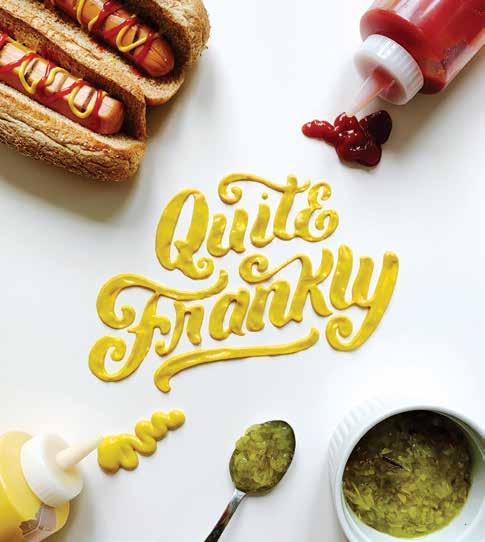
in demand. The proof is in the pudding: Almost 550,000 followers agree, eating her content right up. Plus, Soden notes, as an introvert, finding community online suited her just fine — she found unexpected joy in teaching. “In a perfect world, that’s what I’ll do forever,” she muses.
While most of her social media following is similarly aged to Soden, she says those who actually engage with her on her posts are often Boomers. “I love those people for it. Yes, always comment because it makes my day,” she quips with a grin.
As for Gen Z? The word “depersonalization” is what comes to mind in describing their interactions on her posts. “When they do comment, they’re not commenting to me. They’re commenting to other commenters.” Instead of talking to Soden, “They’ll talk about ‘her.’ And I’m like, ‘Her?’ Me?”
Nonetheless, her vibrant, eye-catching and whimsical posts get people talking. This English-major-turned-design-major puts her love for wordplay to use regularly. “The fun thing about lettering in general is that you can really inject your personality into it, and you can quite literally say what you want to say through it, through your art.” A favorite video of her own features “Pop It Like It’s Hot,” the first two words spelled in popcorn kernels
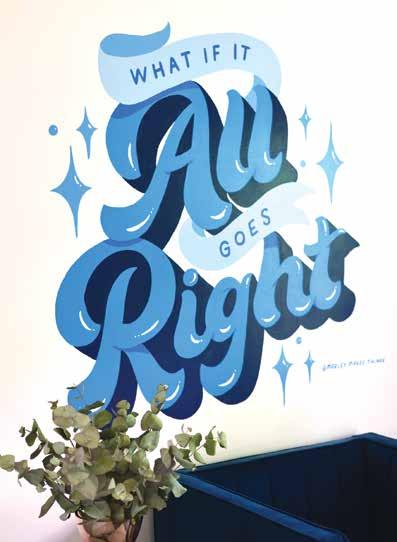
and the last word in spicy seasoning. And, of course, the song it’s paired with: Snoop Dogg’s “Drop It Like It’s Hot.” To celebrate the one year mark of being self-employed, she spelled out “one” in rainbow sprinkles.
“I won’t pretend to have invented it,” says Soden of food lettering. Detroit-based illustrator Lauren Hom (Hom Sweet Hom) served as big inspiration for her from the beginning, but, Soden notes, “from there, my style just took on a life of its own.”
Thanks to Soden’s instinctive talent for connecting with her social media audience through creating quirky, whimsical art, brand deals started rolling in. She’s worked with companies such as Owala, Adobe, Michaels Stores, Café Appliances, Shake Shack, Digiornio, Russell Stover and Aerie. On her wish list? Twizzlers, Starburst or Skittles. “Anything that’s really bright and colorful and interesting texturally would be fun.”
Even though brand deals provide her with income, it’s the making — and teaching how to make — art that fills her cup. For instance, Soden brought many of her passions together in one project when she created an entire series based on podcasts — “I love food, and I love music, and I love podcasts.” For Armchair Expert, cherries and pistachios were used to create a
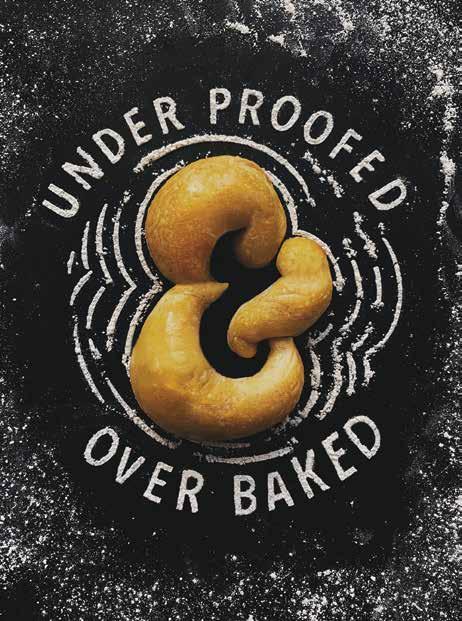

story, with crushed pistachios spelling out the title. In that Instagram post, Soden writes that she chose cherry because: “get it? chairy?” In another post, Conan O’Brien Needs a Friend is written in apricot preserves and surrounded by scattering of almonds as well as apricot-andalmond buns (“because that hair is iconic”) and almonds.
Liquid, she notes, is especially hard to work with but produces a silky look she can’t get enough of. “The letters want to morph together,” notes Soden, so time is of the essence. And, the moment you start a project with any kind of liquid or sticky food, there’s no going back. “Once it’s down, it’s down for sure. Ask my countertops.”
To cut down on waste, every work of tactile art she creates has to have a meticulous plan, beginning with a sketch. Or, if she’s working with a client, a series of sketches. That’s followed by making stencils and, lastly, she’s ready to move on to making — and shooting — the final product. The outcome generally reflects her signature style, which she refers to as “organized chaos.”
In the end, from a creative arrangement of plates and “things toppled over,” order arises, with artist-to-the-beholder communication emerging.
Is it something AI could reproduce? Maybe, but Soden notes that there’s something lacking in AI. Sure, these days “it’s looking more and more realistic. Realistic isn’t necessarily good. I’m still missing that little piece of soul within it that you can’t really get from anything other than a real person.”
Any artist, of course, loves to explore on various mediums, from digitally in iPad screens all the way to broadbrush work on walls. You just may have spied Soden’s Mural work locally in Local Honey Salon, the former Borough Market & Bar, King’s BBQ in Archdale, Lash & Blade in Winston-Salem and Inkvictus Studios in Raleigh.
In fact, Soden’s most popular TikTok video, viewed 7.2 million times and growing, has nothing to do with lettering. Instead, in under one minute, she teaches viewers how to paint the perfect arch on their wall, ending by telling them, “Follow me for more artsy-fartsy stuff.”
Over the past six years as she’s experienced explosive growth on social media, the platforms themselves have evolved and changed. TikTok, for example, now allows for 10-minute videos. Plus, the algorithm itself changes constantly, treating its content creators to a virtual roller coaster ride. One day, your video could garner 100,000 views. The next, 3,000. “You just have to ride the wave and keep putting stuff out.”
Soden’s life behind the grid has changed, too. In 2021, she married Zach Hunt, a logistics analytics manager for Ralph Lauren, and, a couple years later, they welcomed a son. Soden anticipated that after just a short time off, she’d be working at home, baby by her side. “I had this

naive idea in my head that I’m a freelancer, I can do both,” she muses. “I can watch my kid and, while he’s sleeping, then I’ll do some work.” Turns out, juggling that schedule “on top of just healing in general, learning to be a mom and having a serious sleep deprivation” was utterly exhausting. Soden found herself backing off work.
“The thing that people don’t think about when women take time off for maternity leave is that you’re not only sacrificing your income,” says Soden, “but you’re sacrificing that time that you would have spent advancing in your career.” Plus, being home with a baby and away from colleagues can, as any parent who has done it could tell you, feel lonely. After their son’s first birthday, she and Zach made the decision to put him in daycare so that she could have the time “to work and continue exploring.” Still, some days, she asks herself, “Am I doing the right thing?”
Parenting aside, stepping back onto the career path comes with its own challenges. “While you’ve pressed the pause button, you come back and everything is different,” she says. “The real world doesn’t wait for you.”
Indeed, there were no new freelance jobs, she admits, waiting
for her to once again press play. So, even though Soden is adept, brilliant actually, at communicating via social media, she’s changing her approach, focusing on growing her business locally, weaving herself into Greensboro’s cultural fabric. Still, she says, “I would love to continue in social media in some way without it being my primary source of income.” The next step? Perhaps selling her art — from prints to possibly even coloring books — locally. “In general, I think people are seeking community right now because we’re all so isolated,” she says. A local presence just might be what helps her expand her net of communication, but her hope is she can regain a healthy foothold in social media once again.
On her plate currently, she’s scheming and dreaming about a just-for-fun Harry Styles-themed piece based on the song “Golden” and inspired by her toddler. “My son is his number one fan.” So far, her plans include “golden pancakes and golden syrup spelling out ‘You’re so golden’ on a big, yellow background.”
Artist. Foodie. Muralist. Letterer. It’s obvious that Soden’s creative juices will keep on spilling and spelling out — onto pancakes, onto screens, onto paper, onto walls and into the hungry hearts and minds of her community. OH
By C ynthia a Dams
PhotograPhs
By John gessner
Preservationist Mike Cowhig was a longtime bachelor in his 50s living on Eugene Street in a Craftsman-style home when he met his wife, artist Denise Landi. He worked excessively, golfed occasionally and sometimes, she jokes, “held up the wall” at the original Rhino Club downtown, which recently reopened.
Formerly married with two young girls and a boy, Landi studied art history at Carolina. Over a 40-year career, she has dramatically incorporated her personal history, memories and fragments of dreams into paintings.
Art was a consuming passion for her; community planning, history and preservation were his.
The couple dated for two years before deciding to marry but were torn between her recently acquired house on Magnolia and Cowhig’s bachelor bungalow.
Magnolia Street won. His impression when he first toured the house? Smitten.
“I love this house,” admits Cowhig, a longtime community planner for the City of Greensboro.
“I’m glad we decided here,” he adds, “although I loved the house on Eugene.”
They were married in the backyard of the house in 2004, a year after Landi purchased the Colonial Revival. Neighbor Nicole Crews hosted a wedding reception, and the celebration continued afterward at local hangout Fishers Grille. (A gate in her back fence, Cowhig explains, then conveniently opened to the backside of the bar.)
The wedding party and guests merrily trooped through the house, out the gate and into Fishers, he remembers. The bride hired a new local band called Beaconwood for the occasion.
“Beaconwood played bluegrass and other types of music and were fantastic!” Cowhig adds. Fast forward 15 years after their raucous musical wedding party at Fishers Grille.
“Steve Robertson, a local attorney, moved into a house on Leftwich Street very close by,” says Cowhig. His son Eric Robertson founded Beaconwood while in high school. Their members now played on a




world stage with artists like Rhiannon Giddens and Steve Martin.
If Beaconwood set the tone for a mellow relationship, not every note played smoothly in the early phases of marriage. Initially, while planning an addition to the rear of the two-story clapboard back on Magnolia, the new family of five squeezed into Cowhig’s bachelor pad at 923 N. Eugene St., the three young children “bunking in one room.” It was a madcap jumble of Barbies and G. I. Joes. Landi’s youngest daughter was still a toddler.
“I think he fell in love with my kids. And he liked me, too, you know?” Landi says with a twinkle.
“Our contractor did that thing where they get close to completion and then they move on,” Cowhig recalls. “Denise read them the Riot Act. I was glad — she had every right. She let them know she was not happy.” After that, the addition came together.
Cowhig was naturally interested in the particulars, being a walking compendium of Greensboro’s original neighborhoods. Living in Fisher Park, designated as a historic district in 1982, was a form of work immersion for Cowhig.
Early in his professional life, he assisted in gathering supportive evidence for the district, inventorying the neighborhood’s original layout and structures. Cowhig worked on the creation of Greensboro’s three historic districts, now including Dunleath and College Hill.
Consider the context: When the Schoonover house was built, Fisher Park was evolving as Greensboro’s first suburb, featuring a variety of architectural styles and opulent mansions on a section of North Elm Street dubbed the “gold coast.” Iconic churches nearby — Holy Trinity Episcopal (built in 1922), the imposing gothic First Presbyterian (built in 1928) and Temple Emanuel (built in 1922) — all sprang up in that period.
But even an expert can be thrown off by clues contained within an old house. Just how old was it?
He discovered a piece of children’s homework dated 1912 “so I assumed it was built around 1911–12.” But further research placed the house as being built later, in 1921, for physician Robert A. Schoonover. So much for circumstantial evidence. The doctor kept an office nearby on South Elm Street, mentioned in the 1925 edition of Hill’s Greensboro Directory.
As pleasant as the attributes of a century-old home may be — nicely sized rooms, original windows and two working fireplaces — the historic record matters less than evidence of a family thriving here.
Their children’s heights are not just marked
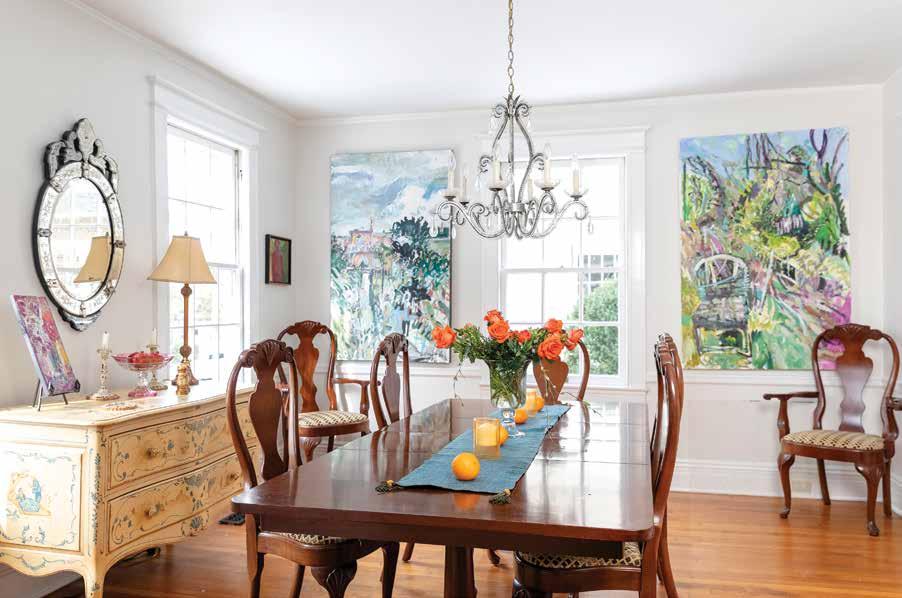
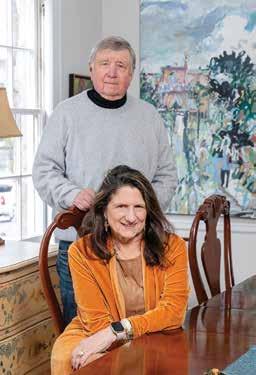
but colorfully illustrated (by the hand of a painter mother) inside a doorway into the kitchen. Cowhig and Landi planted roots in a neighborhood, not merely a house. A walkable, convivial area where neighbors know their neighbors.
Fred Rogers would have been pleased.
Whereas Cowhig is a man of measured speech and action, the woman of the house is a dynamo of color and vitality.
She laces a hot coffee with creamer and immediately takes a bold drink — no cautious sipping first. Landi bristles with energy even without caffeine but pauses long enough to enjoy her coffee in a kitchen shot full of life and light. An adjacent butler’s pantry with original cabinetry creates a conduit to the dining room.
As you might expect in the home of an artist, furnishings and clutter are deliberately edited to allow artwork to take center stage.
Generous molding, handsome mantels, built-in bookcases (which they supplemented with more during the building of the addition) and French doors separating the living room, den and the dining room up the charm factor. With ample wall space painted in pale tones, Landi’s art serves as the chief source of color — she is a prodigious artist who sometimes produces multiple works in a single week. Their home is a perfect showcase for it.
After ridding the house of aluminum siding long ago, its original, albeit in need of a refresh, beauty emerged.
Tax credits were instrumental in being able to afford a historically accurate reha-

bilitation: “We used North Carolina historic tax credits, which was 30% at that time,” Cowhig recalls. “That credit really made the difference for us.” Once the siding was banished, Landi chose new exterior colors, bolder than the original white found beneath the siding.
“It’s a house that was built without a front portico, [but] which has a nice classical roof and columns, and a nice, screened side porch,” Cowhig says.
Landi again mentions that every room has good light, something deeply valued by one whose work depends upon it.
Given her artistic focus, it is surprising that it was not her original career plan. “I was going to Carolina intending to become a journalist” before that notion ground to a halt once there. “I couldn’t type,” she says with a rueful shake of her head.
“I never learned to type!” she repeats with incredulity. Her mother, who studied fashion at Parsons School of Design in New York, strongly discouraged her daughter from wasting time on pedestrian skills.
Landi changed her major to art history. Following her degree, she began seriously studying painting. She completed an M.F.A. in Florence, Italy, at the Dominican University, devoting two years to the Italian Renaissance.
Initially, the idea of becoming an artist seemed “just too easy.”
“My very first words were ‘pretty light.’ I did not say Mama, hi, daddy, anything. And it was at my grandmother’s chandelier,” says Landi. No coincidence, then, that her first show at The Marshall Muse Gallery this year was titled “Categories of Light”.
Landi’s largest work there? Chandelier (Southern Lights).
The inspiration for that painting is the dining room’s Italian chandelier, which features a light-refracting, antique, Venetian mirror found at Carriage House.
On the same brusque, wintry morning that Landi meets to discuss the house, Cowhig pops over to his old office in City Hall where he began working in 1975. He is technically retired yet still putting in a few hours weekly with a South Benbow project. In fact, he shared recognition with two others for a Voices of the City Award last November for contributions to that work.
Bert VanderVeen, a volunteer member of the Historic Preservation Commission, or HPC, first met Cowhig 25 years ago.
“What do you say about Mike, who is and does so much?” asks VanderVeen. “One of my first calls in 2001 was to the city planning department when I bought a historic house in College Hill and needed a COA [certificate of appropriateness] to make repairs.”
VanderVeen has seen firsthand how Cowhig works tirelessly to bring about preservation, as in the case of the newly developing South Benbow district, the first of its designation in the state. “He can shepherd you to a solution. One thing that struck me on the commission was that even when we did not agree completely, Mike would get us there.”
When historic buildings could not be saved, Cowhig advo-
cated for an architectural salvage program benefiting Blandwood, the historic Governor Moorehead mansion. He rallied and worked alongside volunteers to salvage slate tiles from my own Latham Park home a few years ago.
His retirement is keenly felt.
“I really miss working with Mike both on the Greensboro commission and at Architectural Salvage [ASG],” says Commissioner Katherine Rowe, who lives in Sunset Hills. “Salvage volunteers felt lucky to learn from Mike. He has a deep knowledge of Greensboro’s history and neighborhoods.”
She fondly remembers doing pickups with Mike. “We’d rumble around town in the rattly Architectural Salvage van, picking up six-panel doors in Fisher Park or prying out house parts in an abandoned home way out in the country,” she recalls. “We’d gather doorknobs and butterfly hinges to sell back at ASG.”
He recruited Landi to help with a pickup in his absence. “To her credit, Denise very cheerfully helped me load it in the white van,” says Rowe. “We had never even met!”
“I love history just as much as he does,” Landi adds. “And houses.”
Her aunt lived in a Tarboro antebellum house, one Landi stayed in and admired. She also visited her godparent in Toronto during the summer, whose grand home was furnished with an-
tiques. She mentions granular details right down to the home’s fine marble doorknobs.
Her husband is “a man whose life has been about helping save old houses,” she notes. “I love the way Mike . . .” Landi stops, searching for the right phrase. Then she brushes the air with her hand.
“OK, here is the problem. In the same way that we love them spiritually, sometimes we forget to love them physically.”
She adds meaningfully, “I can be messy.”
Placing her coffee cup on the kitchen table, Landi gesticulates, trying to describe their relationship. Her father was Italian, she explains, so she requires both hands when passionate.
She borrows a visual from something she read of a slow-moving person holding a balloon which pulls him along. “And that's kind of like me and Mike. Mike keeps me from flying off too far. I can see that.”
Her expressive face opens with a smile. She, in turn, helps to prevent her husband, a quietly sanguine man, from being overly cautious. Even if she might veer and “pull him over the rocks.”
“She’s the real deal when it comes to her artwork,” he says about his wife. “The painting, the artwork is what gives her energy. She will wake up, cannot sleep, and she gets up and starts painting.” The next morning, he finds she has created something remarkable.
Landi spontaneously offers a full tour while searching for a misplaced phone. Wherever the eye lands, there is a point of beauty: a vintage Empire-style dress she recently wore to a Jane Austen birthday celebration hanging in a bedroom, an antique Italian tile hung on the wall like an icon.
“Actually, it is an icon,” she decides.
She scans the foyer, elegantly spare with a center painted table, leading to the side porch where she often works.
When painting outside, she says, “I feel expanded and unfettered. I sometimes put paintings on the fence and go at it.”
Landi then weaves through private rooms downstairs, to the addition at the back, which created office space, bathrooms and bedrooms. Looping back into the original portion of the house, she proceeds upstairs to the bedrooms where she reclaimed a vacated bedroom as a studio.
Scribbled notes and elaborate, artful doodles paper the studio walls.
“This was my son’s room for a long time,” she explains. Her visual process involves prompts from writing, she explains.
“I write a lot and also write things on the wall.” She traces notes made, recalling the vagaries of mind and process.
There is a striking variety of visual approaches: sometimes pastel, ghostly abstractions, sometimes vividly bold black-andwhite charcoals. Some of the large-scale, acrylic paintings hung throughout the hallways and rooms of the house are already sold and awaiting shipment.
Landi has shown at the GreenHill Center for NC Art and the Center for Visual Artists. Her figurative paintings hang in permanent collections at Moses Cone Hospital, Schiffman’s Jewelers and Blue Denim restaurant.

Her work has common denominators, she stresses: light and spirit.
Larry Richardson, a family friend for decades, speaks to this.
“Denise does not see the world as you or I do,” he says. “She sees things in spiritual terms.” He describes how her work is sometimes overtly feminine, or dark and masculine.
“She isn’t just painting what she sees,” he explains. “She paints the energy.”
Florence opened Landi’s eyes to a new way of seeing and working. It was, she says, spiritual. “When I would paint scenes, I would paint spirits.”

“There was a small river, and I saw the whole town (of Florence) as a heart. And then I saw that river as . . . this artery.”
Phone found, she returns to the kitchen and produces a vintage family portrait. Her Italian father, with Mediterranean coloring and effusive, ebullient personality, is a contrast to her mother, a serene, ladylike blonde with pale eyes. A woman of great composure.
“Isn’t she beautiful?” she asks. “Like Grace Kelly. A classic, Hitchcock beauty.”
There is no mistaking that Landi’s parents’ union, like her own, was a marriage of complementary opposites.
Cowhig will be home at any time, she expects. He is happiest, Landi notes, when holding the new grandbaby, Wolfie, soon to be a year old.
He is delighted when grandchildren visit, calling out “Michael!” and heading straight to his office, where they find him keeping a hand in historic projects. By his reckoning, Greensboro’s oldest structures are art of a different kind.
She rests the family picture against a colorful, flower-filled pottery vase by a dish of lemons on the rustic table. An instant composition.
One worthy of her hand. OH



Terms and Conditions: $300 off any order of $1198 or more,$200 off any order of $998-$1198 or $100 off any order of $698-$998, on any complete custom closet, garage,or home office unit. Not valid with any other offer. Freeinstallation with any complete unit order of $600 or more. With incoming order, at time of purchase only. For a limited time SPECIAL FINANCING for 18 months *with approved credit* Expires in 90 days. Offer not valid in all regions.



By ashley Walshe
March is a procession of tiny wonders.
In the wakening woods, where trout lily and spring beauty appear and disappear at the speed of life, red fox trots toward the forest’s edge, silent as a spring ephemeral.
Weaving between woods and meadow, bluebird combs the softening earth, harvesting grass and pine needles to craft its tidy, cup-shaped nest.
Behold the purple martin. A charm of hummingbirds, shimmering like flying prisms. Sprinkles of color in all directions.
Scarlet maple seeds cascade from naked branches. Fiddleheads brighten creeksides with a riot of luminous spirals. Electric redbuds dazzle.
Yellow transcends itself. Daffodils spill across rolling hills like a sun-kissed sea of trumpets. Spicebush quivers at the tender kiss of swallowtail. Dandelions present as wild, impassioned brushstrokes.
Earthworms animate the loamy soil. Black snakes dance across the warm earth like ribbons.
The humans emerge, too. Gardeners dawdle in dirt and sun. Lovers listen for warblers, sparrows, spring peepers. Children comb the earth as the bluebird does.
“Violets!” they squeal, gathering tiny purple flowers by the tiny precious palmful.
“Can we use them to make cookies?” they ask. “Pink jelly? Lemonade?”
Bare feet in feather-soft grass, they feel the wonder many have forgotten. The wonder of warm earth blossoming with new life. The taste of wild violet.
As the procession of spring continues, slip off your shoes. Let the tiny wonders revive and delight you. Awaken the purity of your own vernal spirit.
Should you happen upon a patch of tender clover, allow yourself to stay a while. Get quiet. Attune to the frequency of these sprightly, three-leaved sprigs. Some say you can hear them singing.
A symbol of the Emerald Isles, the seamróg (Gaelic for “young clover”) is a robust ground cover, building soil and, come spring, inviting a wealth of pollinators.
But did you know that their leaves and flowers are edible? If ever you’ve tried clover blossom jelly, delicate and sweet, then you know the ecstasy of butterfly and bumblebee. Nibbled a leaflet? Just a day in the life of a cottontail rabbit.
And if ever you’ve found a four-leaf clover, well, the luck of the Irish be with you.

Behold a blood moon just before sunrise on March 3 — a total lunar eclipse that, indeed, will give the moon a rusty hue.
On Friday, March 20, the sun crosses the celestial equator at 10:46 a.m., marking the official arrival of spring (although the birds have suggested it for weeks).
As for the stars? It’s Pisces season until March 21, when fiery Aries turns up the heat. In other words: in like two fishes, out like a ram.
One swallow does not make a summer, but one skein of geese, cleaving the murk of March thaw, is the spring.
— Aldo Leopold








“I







TRIAD JEWISH FILM FESTIVAL.
Culture and cinema come together at the 2026 Triad Jewish Film Festival. This festival, presented by the Greensboro Jewish Federation, brings award-winning films that celebrate Jewish culture, stories and community connection. All films showing at Golden Ticket Cinemas, 2101 New Garden Road, Greensboro. Tickets per film: $12.50–20.
At 4 p.m., Sunday, March 1, catch The Ring: Arnon Noble is a religious man with strong ties to his mother, a Holocaust survivor. When her health begins to fail, he and his daughter set out on a journey to find a thin, golden ring that was used to save his life as a baby boy. As they retrace the past, the fate of his mother’s life hangs in the balance, and the journey holds the promise of mending the fragile bond between father and daughter. After the film, stay for a talkback featuring staff from Appalachian’s Center for Judaic, Holocaust and Peace Studies, along with Greensboro sculptor Victoria Milstein — creator of North

In need of a night out on the town? We’re highlighting some of our picks from the area to immerse yourself in the growing and evolving Greensboro arts-and-culture scene. Before attending any event, it’s best to check times, costs, status and location. Although we conscientiously use the most accurate and up-to-date information, the world is subject to change and errors occur!

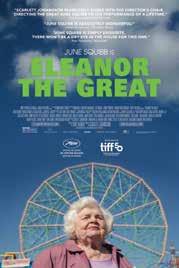
Carolina’s first women’s Holocaust monument, She Wouldn’t Take Off Her Boots
Then, at 4 p.m., Wednesday, March 4, settle in for Eleanor the Great: Making her directorial debut, Scarlett Johansson brings a heartfelt and memorable movie that ignites thoughtful conversation and reflection. Eleanor Morgenstein, a spirited 94-year-old, moves in with her daughter in New York City after a personal loss. After wandering into a
support group where she doesn’t feel as if she belongs, she shares a story that draws attention — sparking an unlikely friendship with a young journalism student.
Finally, close out the festival with Swedishkayt: YidLife Crisis in Stockholm at 7 p.m., Friday, March 7: Two Jewish best friends embark on hilarious hijinks as they explore Jewish life in Sweden. From awkward encounters with locals to quirky cultural traditions, nothing is off-limits. Packed with

humor, heart and Yiddish-infused antics, this documentary-style comedy captures the joy, confusion and chaos of trying to stay connected to your roots while navigating life abroad. After the screening, close out the evening with wine and appetizers at the nearby Cozy Brew Café.
HELL’S KITCHEN. 6:30 p.m.
It’s your last chance to groove along with the coming-of-age musical by 16-time Grammy winner Alicia Keys, which debuts her newest music about growing up in New York. Ali is a 17-year-old girl full of fire – searching for freedom, passion and her place in the world. How she finds them is a New York City story like you’ve never felt before – Hell’s Kitchen. Tickets: $50.45+ Steven Tanger Center, 300 N. Elm St., Greensboro. Info: tangercenter.com/events.
PIRATES OF PENZANCE . 7:30 p.m.
Nothing says sophistication like buckled boots, treasure and an eye-patch — you guessed it, pirates. Clear your calendar for an afternoon of lively tunes and laughs. Docking into our local “harbor,” Greensboro Opera presents Gilbert and Sullivan’s comical operetta, The Pirates of Penzance. Set sail for high-seas hilarity with some of Greensboro Opera’s most talented artists. Follow the tender-hearted pirate apprentice Frederic, as romance, duty, and absurdity collide. March 5 show, tickets: $30+. Carolina Theatre, 310 S. Greene St., Greensboro; March 7 show, tickets: $45. The Virginia Sommerville Sutton Theatre at WellSpring, 4100 Well Spring Drive, Greensboro. Info: carolinatheatre.com/events.
JAZZ WORKSHOP. 2–3:30 p.m.
A jazz and improv workshop? Music to our ears. If you’re inspired by local legend John Coltrane and need an excuse to pull your abandoned brass instrument out of the closet, blow your way to The Music Academy of North Carolina for their monthly jazz workshop. Whether you play for pure pleasure or are hoping to make some key changes in your life, tap into a smooth improv workshop the second Sunday of each month. Through this workshop you will learn voice leading, practice scales and chord changes. Free. The Music Academy of North Carolina. 1327 Beaman Place, Greensboro, NC 27408. Info: musicacademync.org.
HIGH POINT LITERARY LEAGUE. 11:30 a.m.
Itching for a good book? Want to socialize with avid readers? Join High Point Literary League to meet and greet award-winning author Marjorie Hudson. Born in Illinois, Hudson uprooted to North Carolina, where she found her voice in Southern contemporary fiction, which brings us her latest novel, Indigo Field. Her stories are described as “mesmerizing” and “redemptive,” and will leave you lost in the pages. If this is right up your alley, apply to become a member of the High Point Literary League through their website. Event is free for and open only to members. High Point Country Club, 800 Country Club Drive, High Point. Info: hpliteraryleague.org/membership.
JULIUS CAESAR. 7–9 p.m.
“Beware the Ides of March.” Or, perhaps, celebrate them with a timely production inspired by one of William Shakespeare’s most famous historical plays. Creative Greensboro and Shared Radiance Performing Arts Company collaborate to bring Julius Caesar, a tale of honor, intrigue and fate to the stage. Thespians and theater techs ages 12–18 portray human nature in times of upheaval and uncertainty. But the best part? Closing night’s curtain fatefully falls — be there — on the ides of March. Ticket: $10. Stephen D. Hyers Theatre, 200 N. Davie St., Greensboro. Info: greensboro-nc.gov/departments/ creative-greensboro.
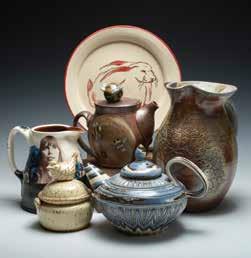
TEA WITH SEAGROVE POTTERS. 10 a.m–5 p.m.
Art and function come together as you spend the day cruising the beautiful countryside, discovering handmade pottery and sampling teas and pastries along the way. Each pottery shop — From the Ground Up, Blue Hen, Dean and Martin, Eck McCanless, Red Hare and Thomas — has its own unique style. Visitors can expect a large selection of teapots, teacups, tumblers, pitchers and other serving ware, along with decorative pieces. You’ll leave inspired and prepared to host a spring tea that would make Lewis Carroll’s March Hare’s service pale in comparison. Free. Participating pottery shops along North Carolina’s Pottery Highway and adjoining roads. Info: teawithseagrovepotters.com.
GUNS ’N HOSES. 2 p.m.
Take us down to the parad-ice city for a rowdy hockey game! Join first responders’ finest as the Greensboro Gargoyles host a pre-game battle for bragging rights between








the Greensboro Police Department and the Greensboro Fire Department. The GPD and the GFD face off for the first Guns ’N


Hoses Charity Tournament benefiting the Special Olympics of North Carolina and the Fire Department Union. Let’s see just how quickly they respond to a puck coming at them at 90 mph. We’ve seen cops chasing cars cruising down the highway speedier than that, but we’ve also seen FD engineers maneuver their behemoth of a truck just as fast — who will bite the ice? It’s a toss up. All tickets are also eligible for the Star Wars theme Greensboro Gargoyles game immediately following — score! Tickets: $29.12. First Horizon Coliseum, 1921 W. Gate City Blvd., Greensboro. Info: gofevo.com/event/ GunsHoses0314.
LADIES WHO LEAD. 10–11:30 a.m.
The High Point Historical Society and the High Point Public Library join forces to discuss the tradition of High Point women serving education-focused leadership roles. The library was established in 1926 by the Woman’s Club of High Point — just one example of how women have paved the way for education in the High Point community. This event, a nod to Women’s History Month, of course, is part
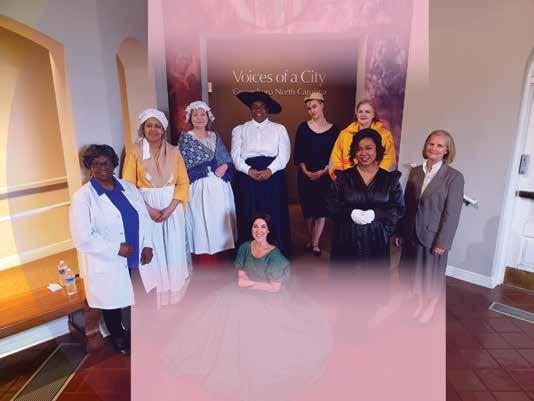
of a series of programs honoring the library’s centennial anniversary in 2026. Who’s ready to blow out 100 candles? Free. High Point Museum, 1859 E. Lexington Ave., High Point. Info: highpointnc.gov/3078/Museum.
GREEK PASTRIES. 9 a.m.–6 p.m.
Chow down on flaky, golden Greek pastries for a good cause? Don’t mind if we do. Head to the Dormition of the Theotokos Greek Orthodox Church and treat yourself to pastries that are sure to satisfy your sweet tooth. The Ladies Philoptochos Spring Pastry Sale & Gift Market invites you to peruse Greek pastries and unique gifts from participating vendors. But buying a baklava — or two — isn’t just a delish sugar fix, it’s also good for a cause as all pastry proceeds are donated to national, regional and local charities. That’s good news we’ll take a bite out of. 800 Westridge Road Greensboro. Info: dormition. nc.goarch.org. OH
To submit an item for consideration, please email ohenrymagcalendar@gmail.com by the first of the month prior to the month of the event.

















Get yer tickets here
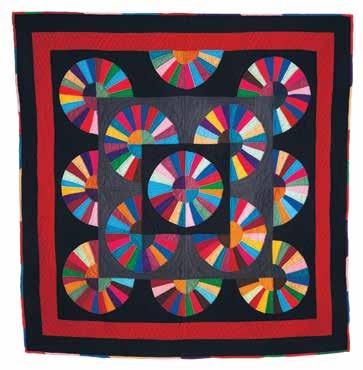
February 7–August 1, 2026
As historical leaders in quiltmaking, generations of Southern Black women have used quilts to create visual records that maintain centuries of knowledge about the region’s complexities. Of Salt and Spirit is a love letter to Black quilters of the South, presenting twenty-four quilts and two portraits from the collection of the Mississippi Museum of Art.
Organized by the Mississippi Museum of Art. Support is provided by the Henry Luce Foundation and the Art Dealers Association of America Foundation.
Gustina Atlas, Variation on Dresden Plate Quilt, 1998. Cotton; machine pieced, hand quilted, 81 1/2 x 80 inches. Collection of the Mississippi Museum of Art, Jackson, Gift of the Kohler Foundation, Inc., 2022.9.13. Photo by Gib Ford









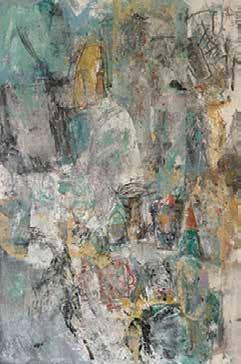






The Marshall Muse Gallery Grand Opening
The Marshall Muse Gallery Tuesday, October 28, 2025
Photographs by Maria Sollecito
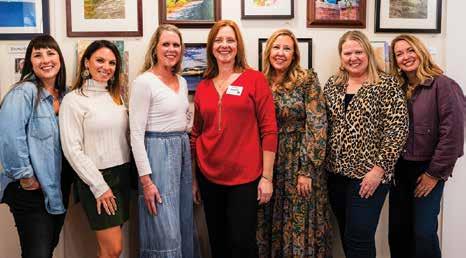




Greensboro Symphony Guild Sponsor Party
The home of Kristie & Greg Smith Thursday, October 16, 2025
Stew for the Girls Benefitting earlier.org
The Home of John Lomax, hosted by Laura Lomax and Phil Barbee Sunday, November 9, 2025
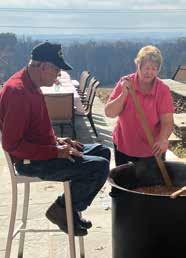

By DaviD Theall

Bad news in my email just now: “FINAL NO-
TICE: Your Discount on the Pink Salt Weight Loss Solution Expires Today.” Unless I can come up with $79 fast, all of my friends are going to be posting about the great deal they got on Pink Salt Weight Loss Solution and I’ll be the unlucky loser, relegated to plain-old white salt, no weight loss solution in sight.
With my customary Mountain Dew in hand I’m compelled to learn more. What is pink salt and how do I get this miracle weight loss solution? Knowing that sometimes there can be unsavory operatives in the weight loss industry, it’s a relief to see that the email came from Diet Science Review, an organization that likely rivals The New England Journal of Medicine in addressing critical emerging topics in modern medicine.
I then make the dream-crushing mistake of using the web to learn more about the Review. From the AI feature on Google: “As of October 2025, there is no major publication titled ‘Diet Science Review.’ The name appears to be used in some blogs and for book promotions, rather than representing a formal scientific source.”
Damn! My dream is not completely crushed, however, because the email also mentions Harvard researchers . . . more than once! “Harvard Researchers Shocked: Women Are Using This ‘Pink Salt Hack’ to Drop 20 Pounds Without Giving Up Burgers or Wine.” That stops me, dead in my tracks. I don’t want to give up burgers or wine, sure, but the Harvard researchers only mention women. Is the Pink Salt Weight Loss Solution gender specific?
I guess that’s it for this guy. No miracle pink salt for me. I can’t target my arm, belly and thigh fat while continuing to decimate area buffets. I visit the website link in the email to see if there’s a male version, but find this statement instead: “Some reviews or testimonials may be fictitious.” So, I’m starting to think all this “miracle weight loss” talk should be taken with a grain of salt (pink salt, to be specific).
Honestly, this whole weight loss business is new to me. Is it common for these products to be gender specific? Does the whole internet think I’m an overweight woman? Should I try to find a Blue Salt Weight Loss Solution?
More bad news. After checking online, I learn there’s no male alternative for the pink salt hack. Digging further, I discover that there is no such thing as blue salt either. With no way to redress this senseless gender inequality, maybe I’ll just go out and discover blue Himalayan salt for my own self, even if it means bringing food dye to find it.
Then, using retired meth lab equipment purchased at a New Mexico police auction, I’ll cook up a formula for Dave’s Famous Himalayan Blue Salt Weight Loss Solution. We’ll keep production cost low and sell it for $59 per half-ounce bottle. We’ll hire Zach Galifianakis or Jack Black to post on socials and — bingo! — I get to retire rich, relinquishing all concern for my public appearance as well as basic daily hygiene.
No weight loss, no problem! OH
A long-time Greensboro resident, David Theall works as a communications professional and enjoys lampooning the absurdities of daily living in his spare time.