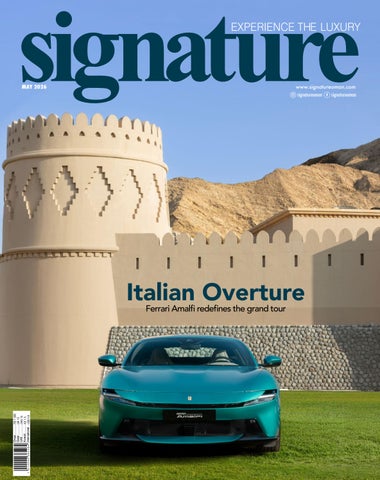
Italian Overture
Ferrari Amalfi redefines the grand tour




EDITORIAL
EDITOR IN CHIEF
GHALIB AL FORI
EXECUTIVE VICE PRESIDENT & GROUP EDITOR
MAYANK SINGH
ASSISTANT EDITOR
ALVIN EMMANUEL THOMAS
ART
ASSISTANT ART DESIGNER ALIYA AL WAHAIBI
PRINCIPAL PHOTOGRAPHER RAJESH RAJAN
ADVERTISING & MARKETING
SALES EXECUTIVE SHIVKUMAR GAITONDE ASMAA EL BEHERY
CORPORATE
CHIEF EXECUTIVE OFFICER ATULYA SHARMA
DEPUTY CHIEF EXECUTIVE OFFICER SAID AL MASHANI
DISTRIBUTION United Media Services LLC
Published by UNITED PRESS & PUBLISHING LLC
PO Box 3305, Ruwi, Postal Code 112, Muscat, Sultanate of Oman Tel: (968) 24700896, Fax: (968) 24707939 Website: www.umsoman.com
All rights reserved. No part of this publication may be reproduced without the written permission of the publisher. The publisher does not accept responsibility for any loss occasioned to any person or organisation acting or refraining as a result of material in this publication. SIGNATURE accepts no responsibility for advertising content.
Copyright © 2026 United Press & Publishing LLC Printed by Oman Printers & Stationers Ltd. Co. LLC
Correspondence should be sent to: SIGNATURE
UNITED MEDIA SERVICES PO Box 3305, PC 112, Ruwi, Sultanate of Oman Fax: (968) 24707939 e-mail: signature@umsoman.com, www.signatureoman.com For editorial enquiries: 99884854 For advertising enquiries: 93204670
FROM THE EDITOR’S DESK
The Weight of Rarity
There is a certain thrill in luxury when it gets everything right. The sound of an engine, the weight of a watch, the cut of a jacket, the intelligence behind a wellness device –each one says something about how taste is evolving.
This May issue of Signature follows that evolution closely. Leading the cover is the Ferrari Amalfi, a car that brings together elegance, power, and unmistakable Italian confidence. It is bold, but not excessive; refined, but still full of emotion. In many ways, it captures the mood of modern luxury perfectly.
Inside, we bring together a strong collection of features across fashion, automotive, lifestyle, and design. We also look at WHOOP, a brand that has placed recovery, performance, and health tracking firmly within the luxury conversation. Today, wellness is lesser about looking good and more about understanding the body, protecting time, and performing better.
This issue also introduces a new investment-led segment, exploring how select luxury brands and collectable assets have delivered strong returns over time. From watches and handbags to automobiles and heritage names, luxury is increasingly being seen not only as an expression of taste, but also as a possible store of value.
Across the industry, one thing is clear: ultra-luxury is becoming more personal, quiet luxury is growing more mature, and heritage alone is no longer enough. The finest brands today offer meaning, rarity, intelligence, and permanence.
More often than not, that alone is worth its weight in gold.
Alvin Thomas

Follow us on Instagram : @signatureoman and Facebook: @signatureoman. You can e-mail us at signature@umsoman.com
11 YEARS OF INNOVATION UNLOCKED


AN ODE TO AMALFI
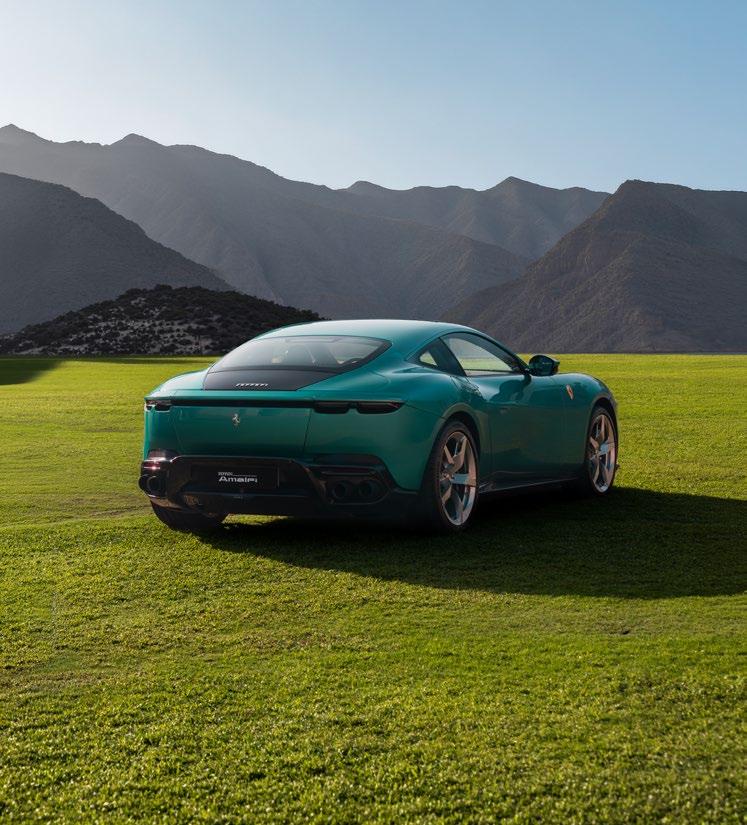
Rooted in Ferrari’s grand touring heritage and inspired by the effortless glamour of the Amalfi Coast, the new Ferrari Amalfi is a study in modern Italian elegance — a V8 coupé that brings together sculptural beauty, emotional performance, and the refined art of travelling beautifully
Rooted in Ferrari’s grand touring heritage, the new Amalfi brings together the marque’s enduring hallmarks of performance, beauty, and emotional appeal in a form that feels both refined and distinctly contemporary. Taking its name from the Amalfi Coast – long associated with Italian elegance, escape, and effortless glamour – the car reflects a more nuanced expression of the Ferrari spirit. It is a model that speaks not only to speed and precision, but also to lifestyle, atmosphere, and the art of travelling beautifully.
The car’s design stems from a fluid and minimalist approach, with sculpted volumes and clean surfaces that express modernity and dynamism. The front is dominated by a large air intake and a long, sculpted bonnet housing the 631hp turbo V8 engine. At the rear, the integrated active spoiler contributes to high-speed stability, while forged wheels and carbon fibre details complete a sporty and sophisticated aesthetic. Inside, the cabin adopts a dual-cockpit layout, with a new steering wheel featuring physical buttons and the return of the iconic start button. The integrated
central display and ergonomic controls ensure intuitive interaction with the car, even during dynamic driving. Extensive use of carbon fibre and contrasting stitching adds a touch of exclusivity, while the 2+ configuration allows the rear seats to be used to significantly increase the car’s practicality, enhancing cargo capacity and allowing trips with children.
At the heart of the Ferrari Amalfi is an evolved twin-turbo V8 derived from the awardwinning F154 family, capable of delivering 631hp thanks to new turbocharging calibrations. The highly acclaimed eightspeed dual-clutch transmission ensures fast and smooth gear changes. Performance is outstanding: 0–100 km/h in 3.3 seconds, 0–200 km/h in 9.0 seconds, with a powerto-weight ratio of 2.29 kg/hp, the best in its class. Driving dynamics have been refined with the introduction of the brake-by-wire system, the ‘ABS Evo’ controller designed for all surfaces and conditions, and a recalibrated steering box for even more precise and progressive response. Active aerodynamics, with the new integrated rear mobile wing, ensure stability in all driving conditions and Manettino positions, helping to maximize dynamic performance.
The Ferrari Amalfi incorporates the latest technological solutions from the Ferrari range: the infotainment system is fully connected, with Apple CarPlay® and Android Auto® as standard, paired with wireless smartphone charging. The new steering wheel, digital instrument cluster, and 10.25” horizontal central display offers an advanced human-machine interface designed to engage both driver and passenger. Among the features available on request is the addition of the front lifter system usable up to 35 km/h, allowing the car to easily overcome urban obstacles by raising it by up to 40 mm. Completing the onboard experience, the optional Burmester® premium audio system offers an immersive sound environment, designed to accompany every journey with quality and detail. The Ferrari Amalfi is aimed at those seeking a car that combines elegance and performance, emotion and functionality. A model that interprets the Ferrari sporting spirit in a modern key, offering a driving experience without compromise, in any context.
INTERIOR
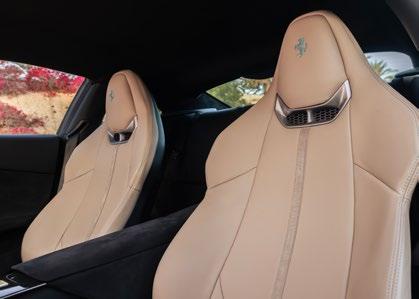
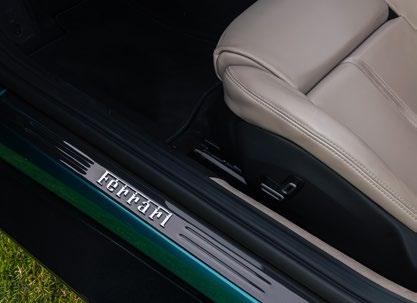
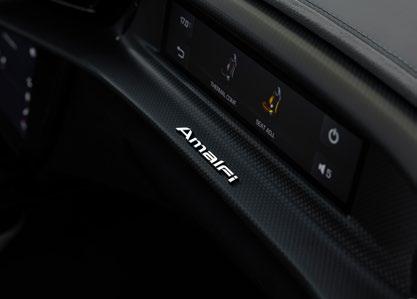
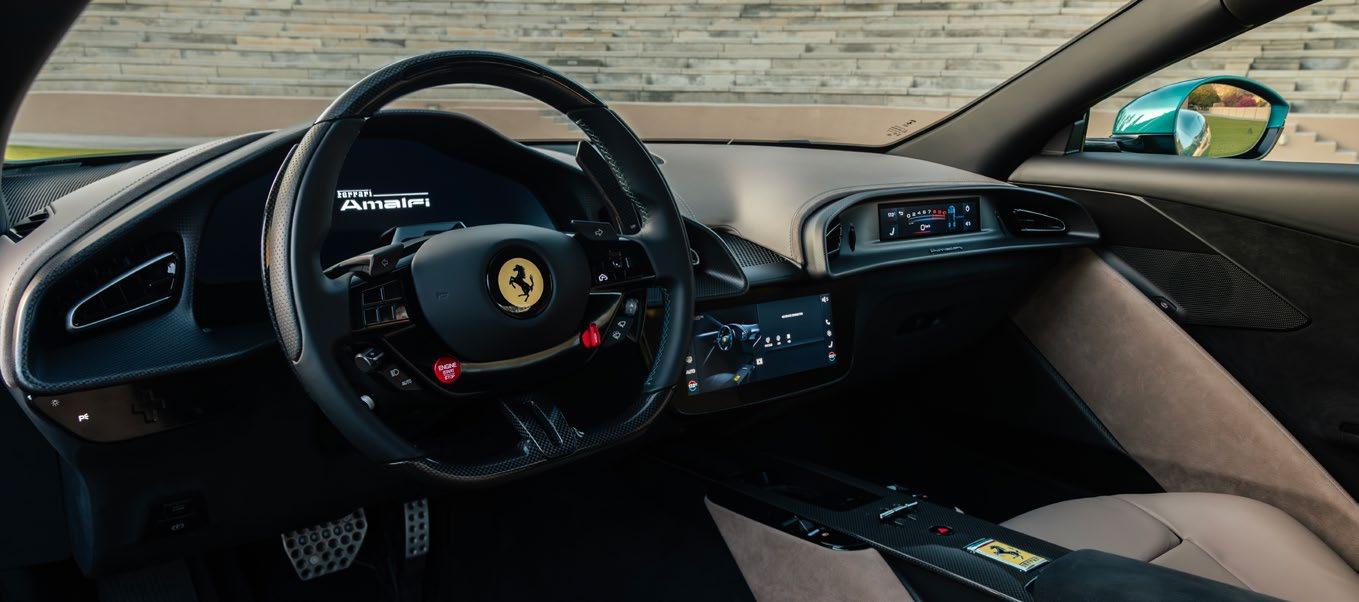
Inside, the Ferrari Amalfi adopts a dual-cockpit layout that envelops both driver and passenger in two visually connected cells, linked by the dashboard, door panels, and central tunnel. The cocoon effect is enhanced by a faceted surface that breaks the symmetry and highlights the central touchscreen display, creating a formal interaction between the two occupants. The interior design has been
simplified to achieve a clean and contemporary language, with extensive use of premium materials and integrated technological solutions.
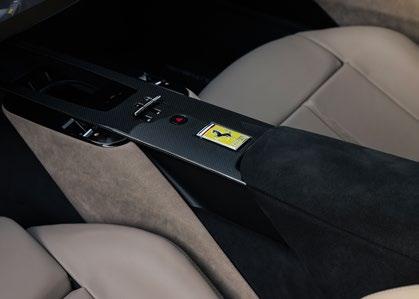
The dashboard features, for the first time, a monolithic layout in which the instrument cluster and air vents are fused into a single block. The central tunnel, milled from a block of anodized aluminium, is suspended and sculpted, housing functional elements such as the gear selector gate, key slot, wireless charging pad, and secondary controls. The door panel grips are integrated into sail-like shapes that define the two front cells, while the woofers are hidden behind perforated aluminium surfaces, contributing to a technical and refined aesthetic.
The interior colour palette reflects the car’s bold character, with material and colour combinations that emphasize the concept of sportiness. Verde Bellagio, the vibrant green featured in the launch configuration, focuses attention on the front area of the cabin. Optional comfort seats are available in three sizes and are equipped with 10 air chambers for the massage function - with five programmes and three intensity levels – together with ventilation for both seat and backrest.
Completing the onboard experience, the optional Burmester® Premium Audio System delivers benchmark sound quality thanks to 14 speakers and 1,200 watts of power. Ring radiator tweeters ensure crystal-clear high frequencies, while three listening presets allow users to personalize the acoustic experience to their preferences. The materials and finish of the speakers, selected for their elegance and tactile quality, help make the cabin an immersive and sophisticated environment.
POWERTRAIN
We can’t talk about this engine enough – it’s an engineering marvel. The engine of the Ferrari Amalfi represents the latest evolution of the 3855-cc twin-turbo V8 from the F154 family, the one that has received the most international awards in recent automotive history. In this configuration, the power unit has been optimized to deliver its peak power at 7,500 rpm, with a specific power of 164 hp/l and a redline raised to 7,600 rpm, allowing full exploitation of its continuously increasing power curve.
The performance increase was achieved through an advanced turbocharging management system, enabling independent control of the rotational speed of the two turbochargers with dedicated calibration and an increase in the maximum turbo speed up to 171,000 rpm. This approach improves throttle response and boosts pressure control precision, also thanks to the introduction of dedicated pressure sensors for each cylinder bank. The new engine control unit, already used in models such as the 296 GTB, Ferrari Purosangue, and Ferrari 12Cilindri, has allowed the engine’s full potential to be harnessed.
In parallel, efforts were made to reduce mass: new lightweight camshafts (-1.3 kg) and a redesigned engine block with precision machining eliminated non-structural material, saving about one kilogram. For the first time in a Ferrari engine, a low-viscosity oil has been introduced, reducing cold resistance by 30% compared to the previous version, improving warm-up efficiency.
Throttle response is now even quicker thanks to a series of advanced technical solutions: a flat-plane crankshaft, compact low-inertia turbines, twin-scroll technology for separate exhaust gas management, and a single-scroll manifold with equal-length runners. These elements contribute to a sensation of continuous and progressive power delivery, with a torque curve shaped to provide stronger pull at mid and high revs in all gears. The eightspeed dual-clutch oil-bath transmission, first introduced with the SF90 Stradale to widespread acclaim, has been further optimized with a more powerful control unit and deeper integration with the engine software, improving shift smoothness and speed.
Overall powertrain efficiency benefits from solutions such as the dry-sump gearbox configuration, low-friction bevel gear, and clutch torque management strategies that ensure extremely smooth urban driving, especially during Start&Stop phases. Sound design also received special attention: a new silencer layout was developed to meet the strictest noise emission regulations without compromising Ferrari’s signature tone. The flat-plane crankshaft and equal-length exhaust headers contribute to a distinctive firing sequence. The exhaust system features a ceramic matrix catalyst with a trimetallic coating (rhodium, platinum, palladium), with reduced activation times thanks to lower thermal inertia. Sound control is managed by a new proportionally controlled bypass valve with dedicated maps to adapt the exhaust note to different driving conditions.
STYLING EXTERIOR
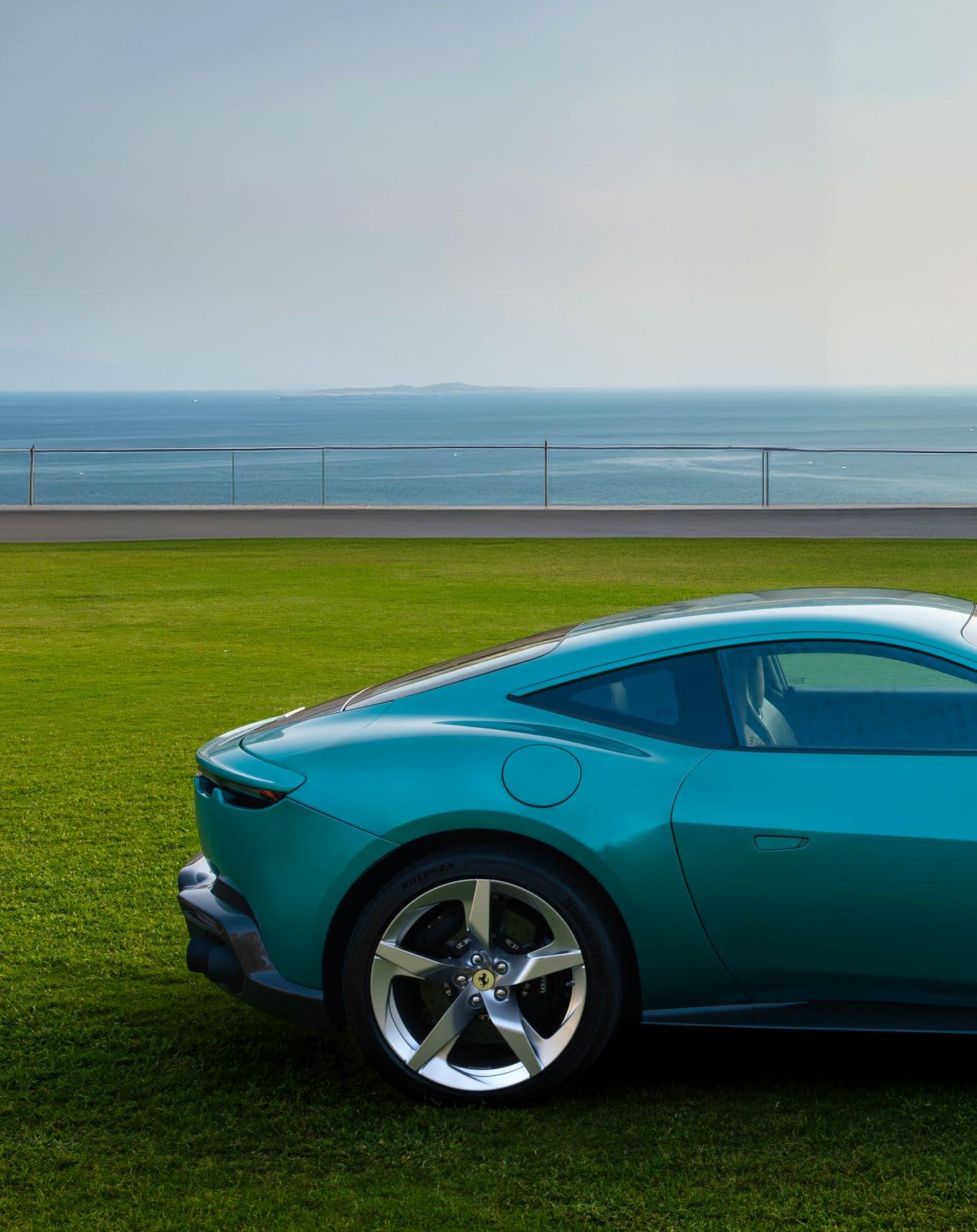
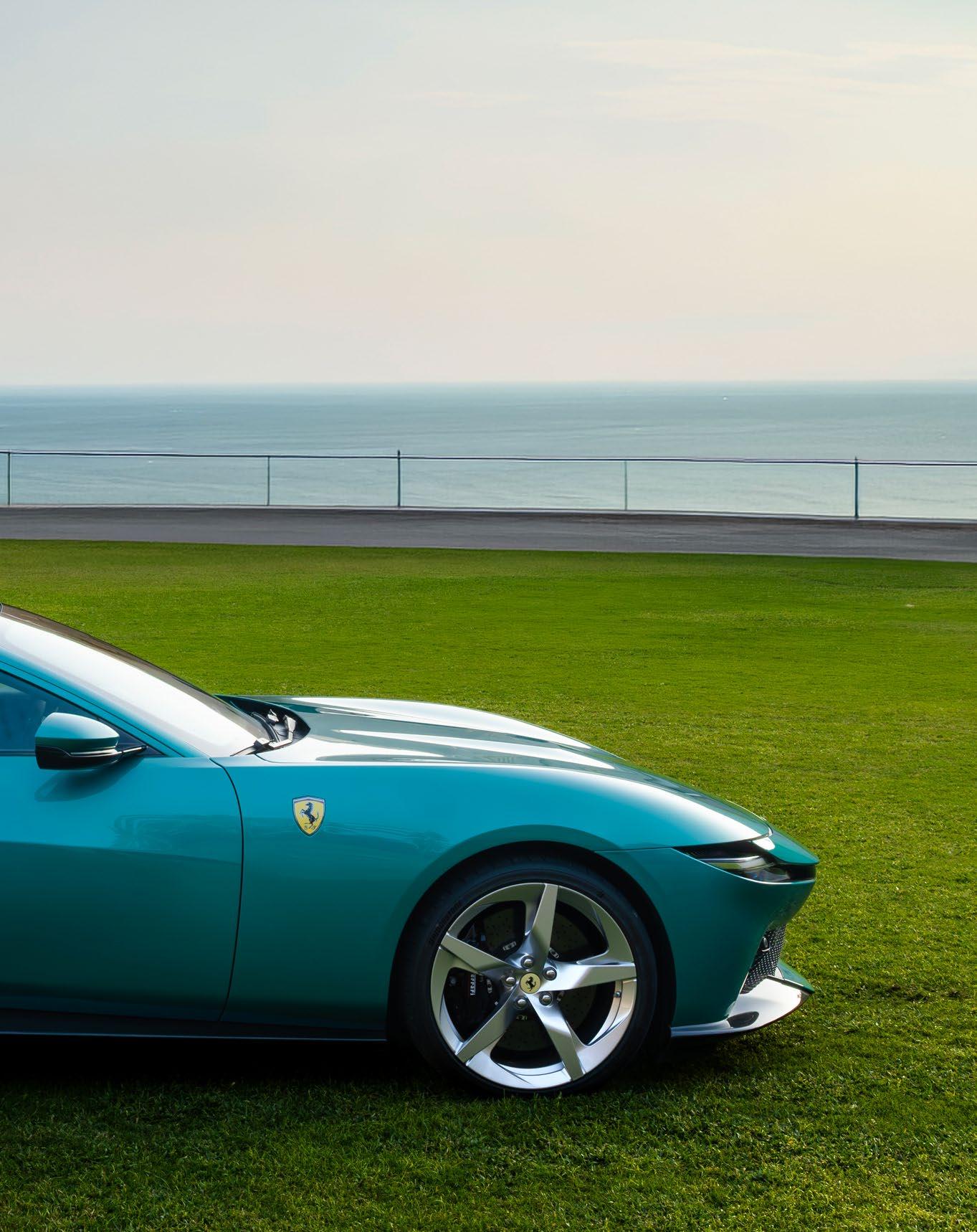
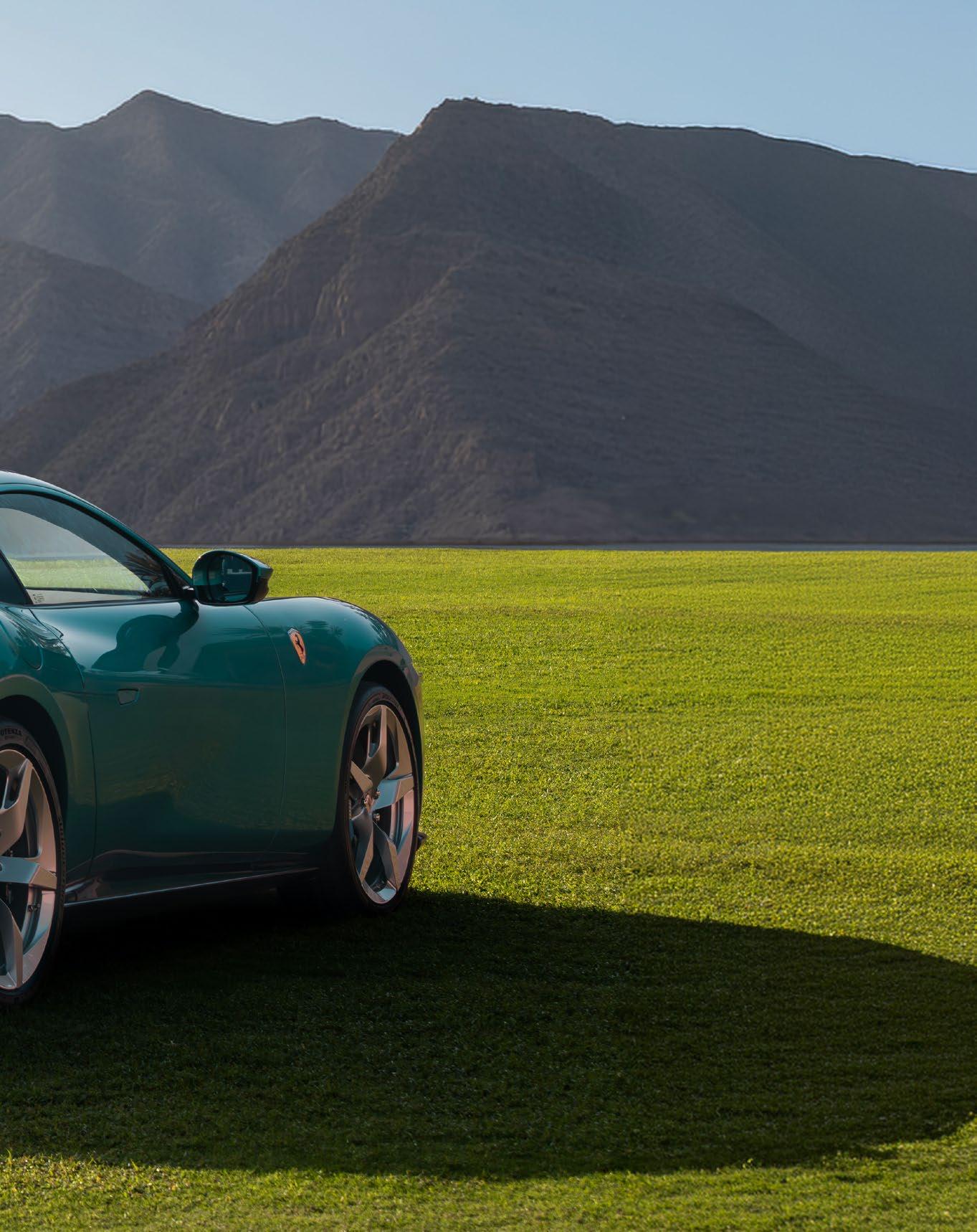
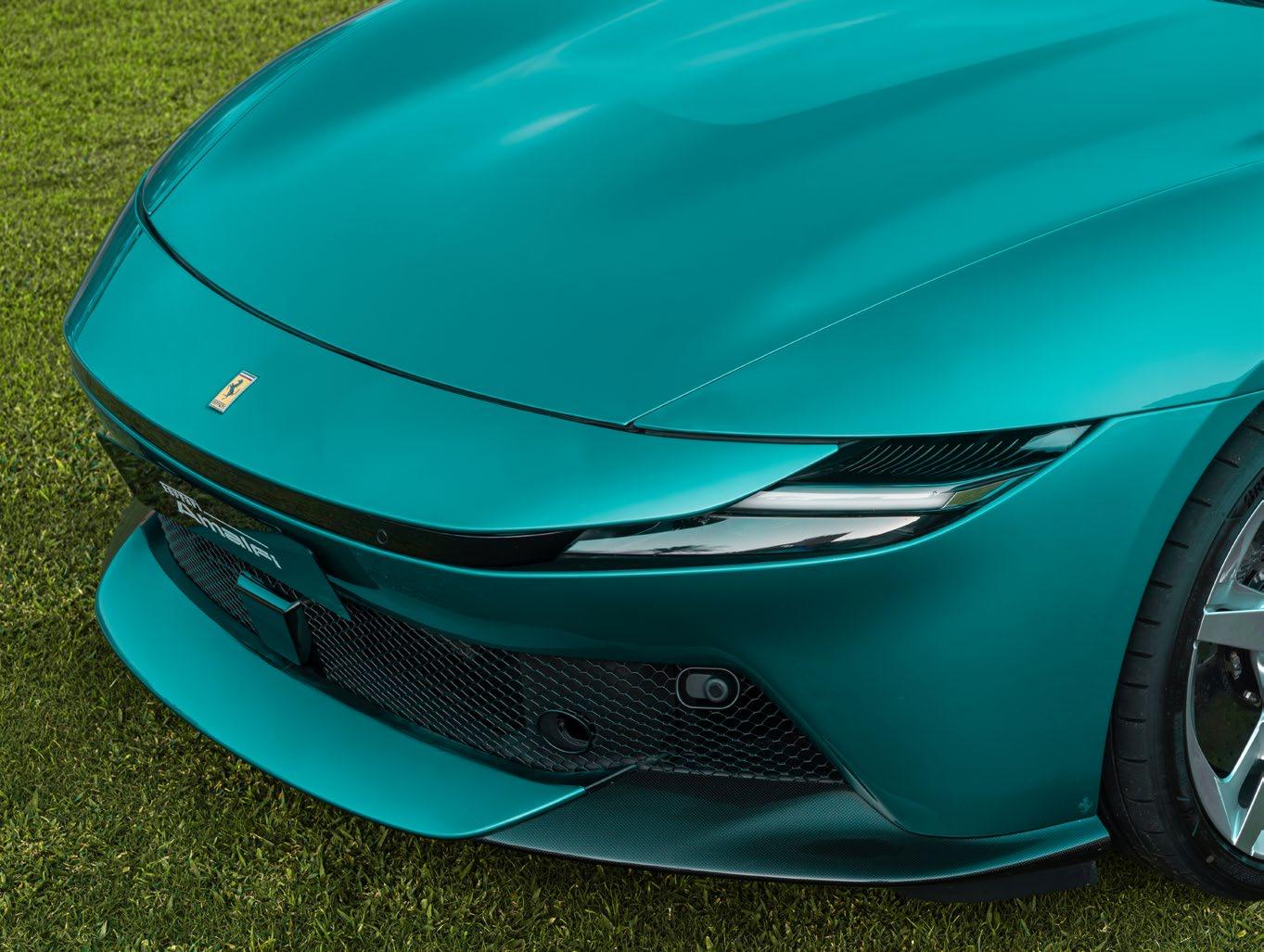
The Ferrari Amalfi represents a new interpretation of the archetype of the 2+ coupé berlinetta with a front-midmounted V8 engine, blending tradition and innovation in a design language that evolves the aesthetic standards of the Maranello marque. The Ferrari Styling Centre team, led by Flavio Manzoni, drew inspiration from the elegant proportions of the Ferrari Roma, pushing further to define a more sculpted and modern form without betraying the essence of Ferrari’s 2+ sports cars. The exterior design develops from a sleek, monolithic speedform that gives the car a strong and dynamic identity. The surfaces are treated with a minimalist approach, where sharp lines and geometric volumes define a sculpted and coherent body. The wedge-shaped theme running along the side, together with the lighting units integrated into technical cuts, contributes to a refined and contemporary aesthetic. The front, devoid of a traditional grille, is distinguished by a floating body coloured wing above a dark recessed band, discreetly integrating sensors and headlights. The lower splitter completes the composition, emphasizing the visual width and sportiness of the whole.
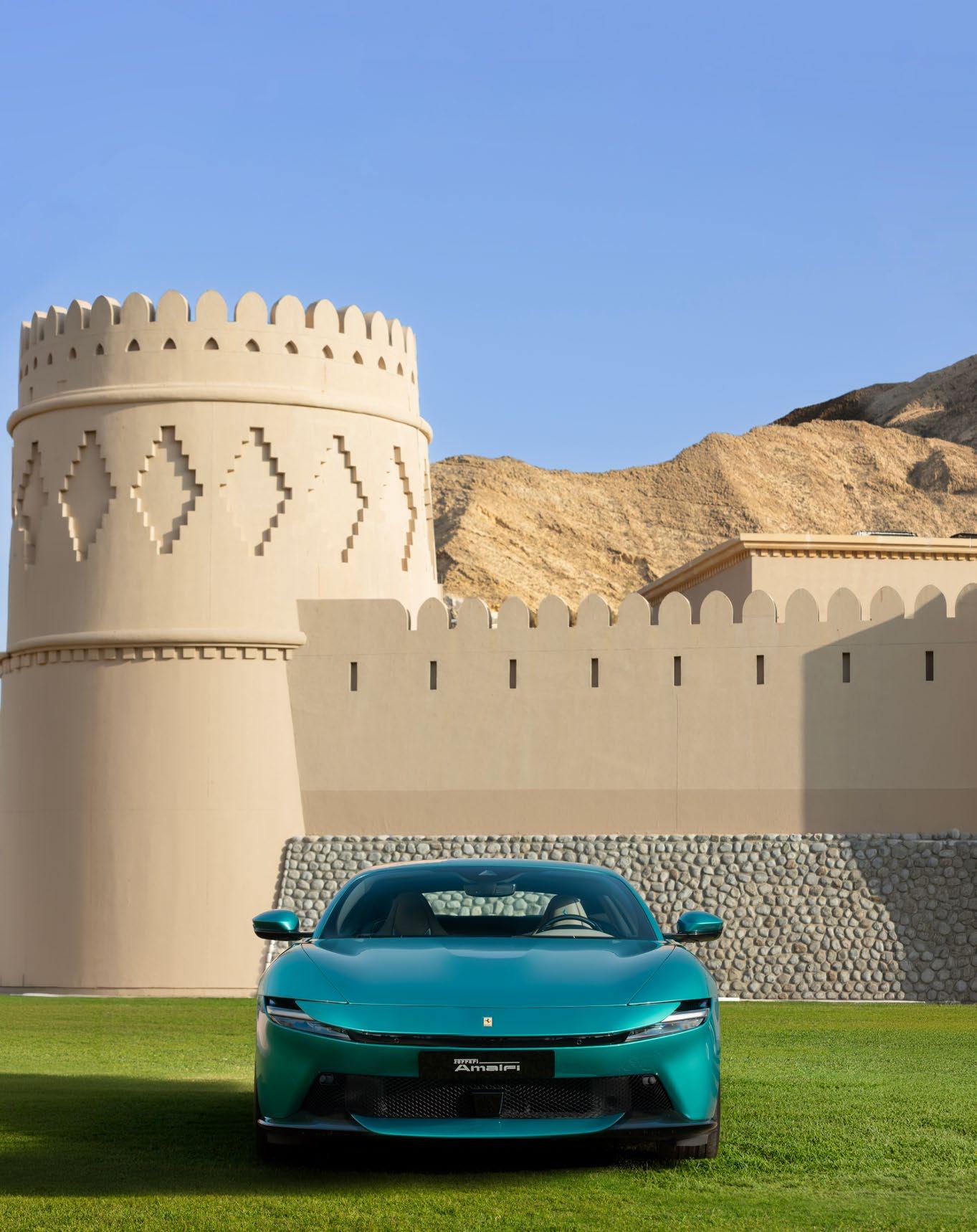
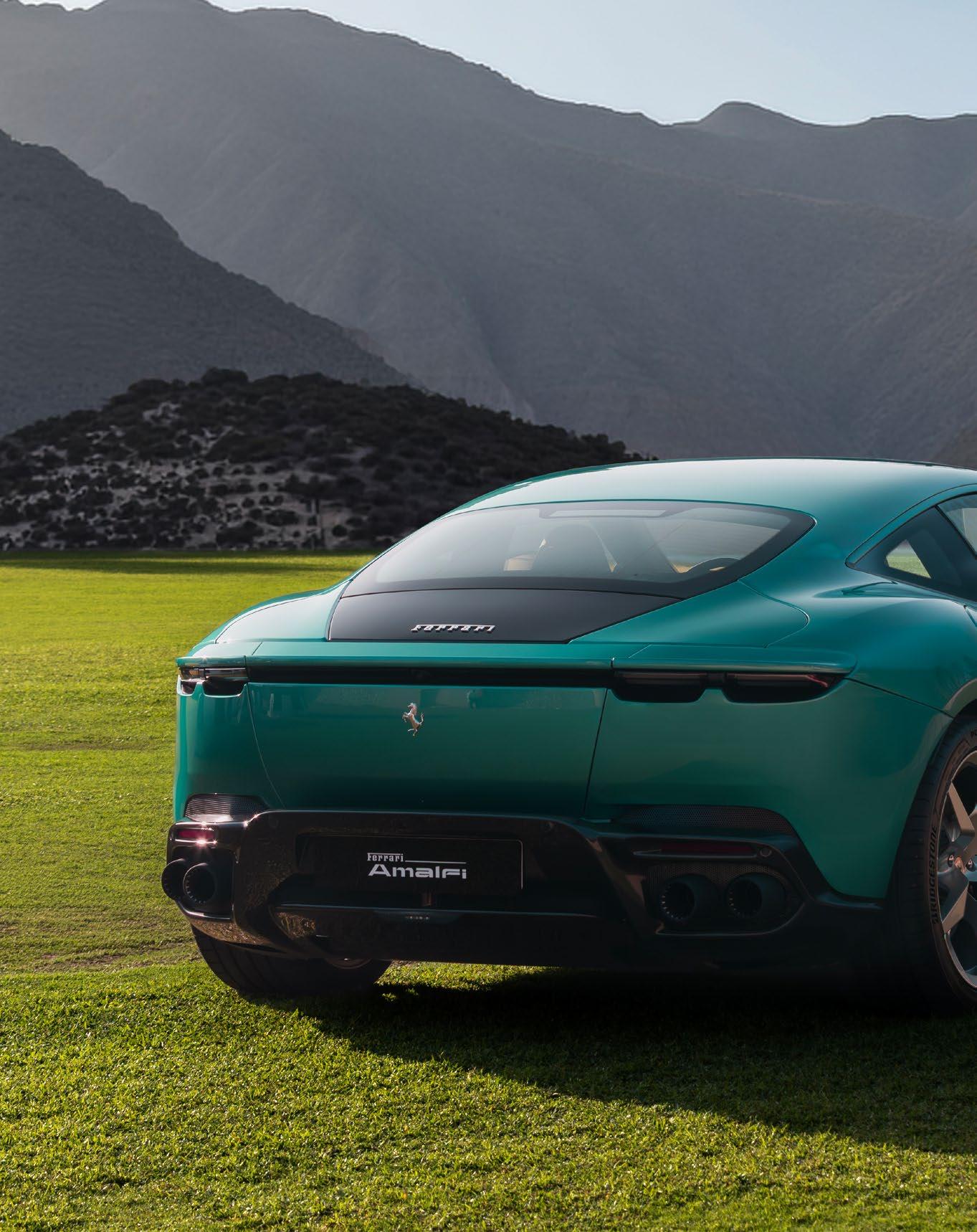
The rear is defined by a strong character line that wraps around the entire volume, culminating in a compact and clean tail. The tail lights are hidden within essential graphic cuts, evoking classic Ferraris while using a modern visual language. The wide and functional diffuser openly declares its aerodynamic purpose, while the rear screen merges with the spoiler profile, creating a distinctive stylistic signature. Highlighting the car’s personality, the launch colour, Verde Costiera — a brilliant teal green inspired by the reflections of the sea along the Amalfi coast — enhances the sculpted surfaces and brings a fresh, vibrant look to the whole.
THE TAIL LIGHTS ARE HIDDEN WITHIN ESSENTIAL GRAPHIC CUTS, EVOKING CLASSIC FERRARIS WHILE USING A MODERN VISUAL LANGUAGE.
and technologically advanced interaction, thanks to a completely renewed HMI (Human-Machine Interface) system and a series of solutions aimed at enhancing comfort and quality of life on board.
The new steering wheel, equipped with physical buttons, marks a return to tactile controls, with a layout designed to ensure maximum ergonomics and ease of recognition in all driving conditions. On the left side, the return of the iconic aluminium start button establishes an immediate connection between driver and car from the moment of ignition. The controls are functionally distributed: on the left spoke are the ADAS controls, adaptive cruise control, phone, and voice commands, while on the right are the selectors for display views, windscreen wipers, and indicators. On the back, two rotary dials manage volume and station selection.
dashboard, a 10.25” capacitive touchscreen allows both driver and passenger to access key functions: multimedia, radio, phone, screen mirroring, climate control, seat adjustments, and vehicle settings. Finally, the 8.8” passenger display offers a true co-driver experience, showing parameters such as G-forces and engine revs. Connectivity is ensured through compatibility with Apple CarPlay® and Android Auto®, while wireless smartphone charging is integrated into the central tunnel. The car is also equipped with the MyFerrari Connect system, which allows remote monitoring of the vehicle’s status via a dedicated app.
AERODYNAMICS
The Ferrari Amalfi’s onboard experience has been designed to offer intuitive, engaging,
The HMI system is structured around three main displays. The 15.6” digital instrument cluster provides all driving and vehicle dynamics information. At the centre of the
The aerodynamic development of the Ferrari Amalfi is the result of a complex and meticulous project created by close collaboration between the thermo-fluid dynamics department and the Ferrari Styling Centre. The process integrated CFD simulation, wind tunnel testing, and
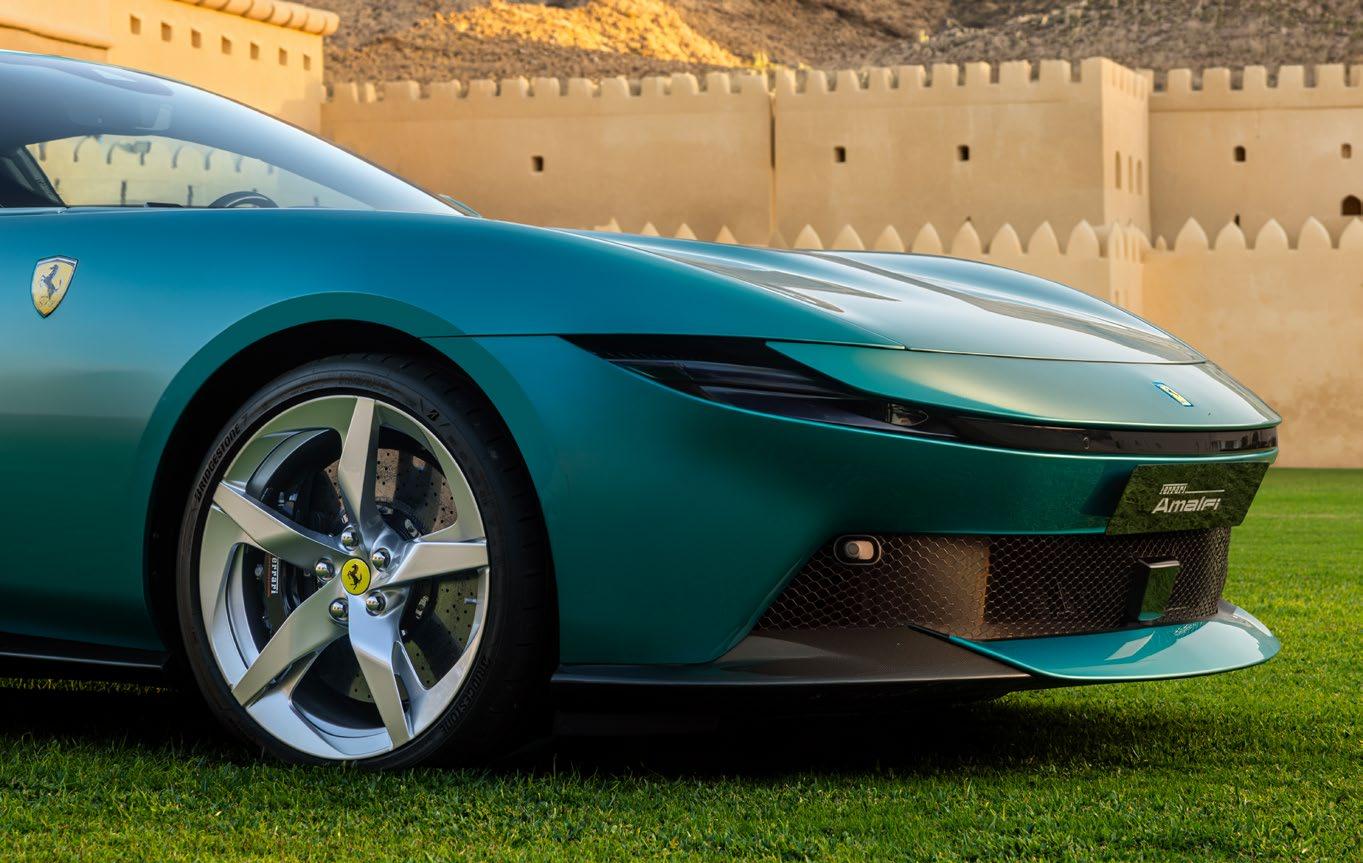
design refinement in a shared path that led to the creation of a car that is both captivating and functional. The result is a body sculpted in every detail, where each element serves a precise function. Among these are aerodynamic fairings positioned on the underbody in front of the front and rear wheels, which reduce drag and improve efficiency. A bypass duct above the front headlights connects the front end to the engine bay, helping to reduce pressure build-up and optimize cooling. Downforce generation at the front is managed by a pair of vortex generators, optimized in the wind tunnel, and two diffusers integrated into the splitter, which also enhance front brake ventilation. The underbody has been designed to maximize efficiency, with dedicated devices to reduce drag and carefully manage airflow. At the rear, the diffuser has been completely redesigned to find the best compromise between downforce and drag, with controlled expansion of the flow in the central channel that energizes the wake and improves stability. A distinctive element of the rear is the active mobile
wing, harmoniously integrated into the tail of the car. This component can assume three configurations — Low Drag (LD), Medium Downforce (MD), and High Downforce (HD) — depending on speed, longitudinal, and lateral acceleration. On straights, the wing remains in LD or MD position to minimize drag, while during more dynamic driving phases, such as high-speed cornering or hard braking, it switches to HD configuration, generating an increase in downforce of 110 kg at 250 km/h with less than a 4% increase in drag. The intermediate MD position allows for a quicker transition to full deployment, offering a balance between stability and performance. The wing’s operation is fully automatic, preserving the purity of the car’s lines even at low speeds and enhancing the driving experience. The rear is completed by a 20 mm high integrated nolder which helps recompress the airflow in low-drag configuration.
The front of the car has also been optimized to ensure effective cooling in all conditions: the central area houses the engine
water radiator and the air conditioning condenser, while the side intakes feed the turbocharging system’s intercoolers.
VEHICLE
DYNAMICS
The vehicle dynamics of the Ferrari Amalfi represent a significant evolution in the landscape of front engined 2+ coupés, thanks to the integration of the most advanced technologies developed by Ferrari in recent years. At the heart of this system is the introduction of brake-bywire, a solution that significantly improves braking efficiency, reduces pedal travel, and enhances modulation — even in situations where ABS is engaged.
The ABS Evo system, first introduced on the 296 GTB and further developed for the Ferrari Purosangue and Ferrari 12Cilindri, has been adapted to ensure optimal performance on all surfaces and in all Manettino modes. This controller
TO SUPPORT VEHICLE DYNAMICS, THE FERRARI AMALFI ALSO EMPLOYS A REAR ACTIVE SPOILER, WHICH IS ACTIVATED DEPENDING
ON LONGITUDINAL AND LATERAL ACCELERATION.
uses data from the 6D sensor to precisely estimate the vehicle’s speed and determine the optimal slip for each wheel, thereby optimizing brake force distribution. The result is greater effectiveness in straightline braking and in mixed conditions, where lateral stability and longitudinal deceleration must be balanced.
The precision of these estimates also allows for greater repeatability of manoeuvres, reducing variations caused by mechanical tolerances or environmental conditions, such as tarmac temperature. This approach is part of the Side Slip Control (SSC) 6.1 framework, which serves as the common language among all dynamic controllers — from steering to torque management and vertical body motion control — to maximize performance in every situation.
A further advancement is the grip estimation system based on EPS (Electric Power Steering), an evolution of the version introduced on the 296 GTB. In this new iteration, grip estimation is 10% faster and more accurate, even on surfaces with very low traction. The recognition logic uses the dynamics of the electric steering box and the yaw angle estimated by SSC 6.1 to assess tyre-to-tarmac grip levels, even when not driving on the limit, improving the responsiveness and effectiveness of the controllers.
To support vehicle dynamics, the Ferrari Amalfi also employs a rear active spoiler, which is activated depending on longitudinal and lateral acceleration. In dynamic driving conditions — such as hard braking or high-speed cornering — the spoiler automatically shifts to the High Downforce configuration, generating additional rear aerodynamic downforce and contributing to the car’s overall stability.
In terms of safety and driver assistance, the Ferrari Amalfi is equipped with a comprehensive suite of next-generation ADAS systems. Available features include: Adaptive Cruise Control, Automatic Emergency Braking, Blind Spot Detection, Lane Departure Warning, Lane Keeping Assist, automatic high beam, traffic sign recognition and assistance and driver drowsiness and distraction detection, as well as optional Surround View and Rear Cross Traffic Alert. All systems are configurable via the instrument cluster menus and integrate seamlessly with the car’s electronic architecture, which includes front and rear radar, cameras, and dedicated control units.
Together, these technologies enable the Ferrari Amalfi to deliver a precise, responsive, and engaging driving
experience, where every system works in harmony to ensure maximum control and driving pleasure — regardless of road conditions or driving style.
TYRES
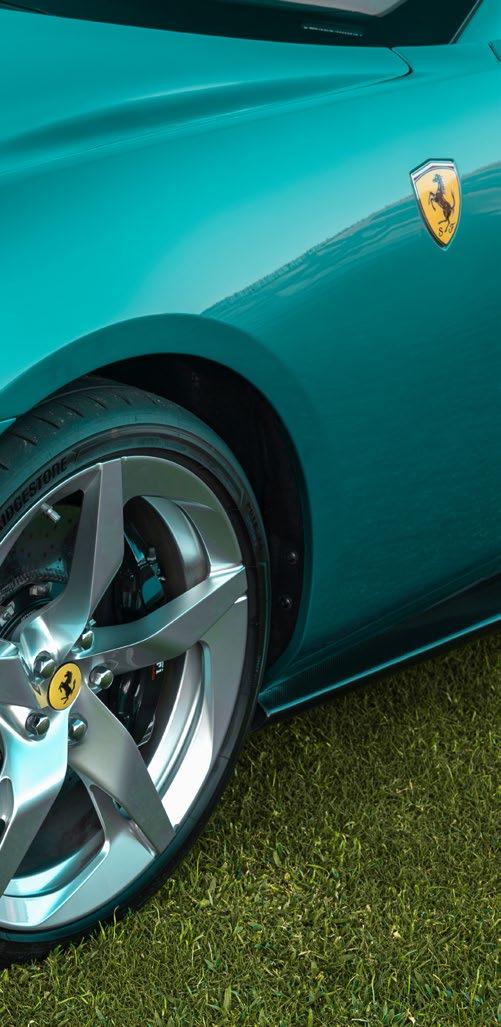
The choice of tyres for the Ferrari Amalfi was guided by a careful balance between aesthetics, performance, and comfort. The 20” wheels were selected to maintain the harmonious proportions consistent with the car’s design language, without compromising ride quality. To ensure maximum comfort, the sidewall aspect ratio chosen for the Ferrari Roma was retained, ensuring progressive response and good absorption of road imperfections. The tyre dimensions are 245/35 R20 at the front and 285/35 R20 at the rear, a configuration that
balances agility and traction, contributing to the car’s precise and responsive dynamics. The Ferrari Amalfi comes standard with tyres co-developed with two technical partners: Bridgestone Potenza Sport and Pirelli P ZERO.
7-YEAR GENUINE MAINTENANCE
Ferrari’s unparalleled quality standards and increasing focus on client service underpin the extended seven-year maintenance programme offered with the Ferrari 12Cilindri Spider. Available across the entire Ferrari range, the programme covers all regular maintenance for the first seven years of the car’s life. This scheduled maintenance programme for
Ferraris is an exclusive service that allows clients the certainty that their car is being kept at peak performance and safety over the years. This very special service is also available to owners of pre-owned Ferraris. Regular maintenance (at intervals of either 20,000 km or once a year with no mileage restrictions), original spares and meticulous checks by staff trained directly at the Ferrari Training Centre in Maranello using the most modern diagnostic tools are just some of the advantages of the Genuine Maintenance Programme. The service is available on all markets worldwide and from all Dealerships on the Official Dealership Network. The Genuine Maintenance programme further extends the wide range of after-sales services offered by Ferrari to meet the needs of clients wishing to preserve the performance and excellence that are the signatures of all cars built in Maranello
FERRARI AMALFI – TECHNICAL SPECIFICATIONS
POWERTRAIN
Type Twin-turbo V8 – wet sump
Total displacement 3855 cc
Bore and stroke 86.5 x 82 mm
Maximum power 640 cv at 7,500 rpm*
Maximum torque 760 Nm at 3,000–5,750 rpm
Maximum revs 7600 rpm
Compression ratio 9.4:1
Specific power output 166 cv/l
WEIGHTS AND DIMENSIONS
Length 4660 mm
Width 1974 mm
Height 1301 mm
Wheelbase 2670 mm
Front track 1652 mm
Rear track 1679 mm
Dry weight* 1470 kg
Dry weight-power ratio 2.29 kg/cv
Weight distribution 50% front / 50% rear
Fuel tank capacity 80 litres
Boot size 273 litres
TYRES AND WHEELS
Front 245/35 R20 J8.0
Rear 285/35 R20 J10.0
BRAKES
Front 390 x 223 x 34 mm
Rear 360 x 233 x 32 mm
TRANSMISSION AND GEARBOX 8-speed dual clutch F1 DCT
ELECTRONIC CONTROLS
EPS, VDC, ABS with EBD, F1-TCS, E-Diff3, SSC 6.1, FDE 2.0, SCM-E Frs, ABS Evo in all Manettino positions
PERFORMANCE
Top speed 320 km/h
0-100 km/h 3.3 s
0-200 km/h 9.0 s
100-0 km/h 30.8 m
200-0 km/h 119.5 m
FUEL CONSUMPTION
CO2 EMISSIONS
* With optional lightweight content
Under homologation
Under homologation
Scaling new heights
AMOUAGE
Reports Strongest Quarter as Retail Sales in Q1 2026
Reach $190M
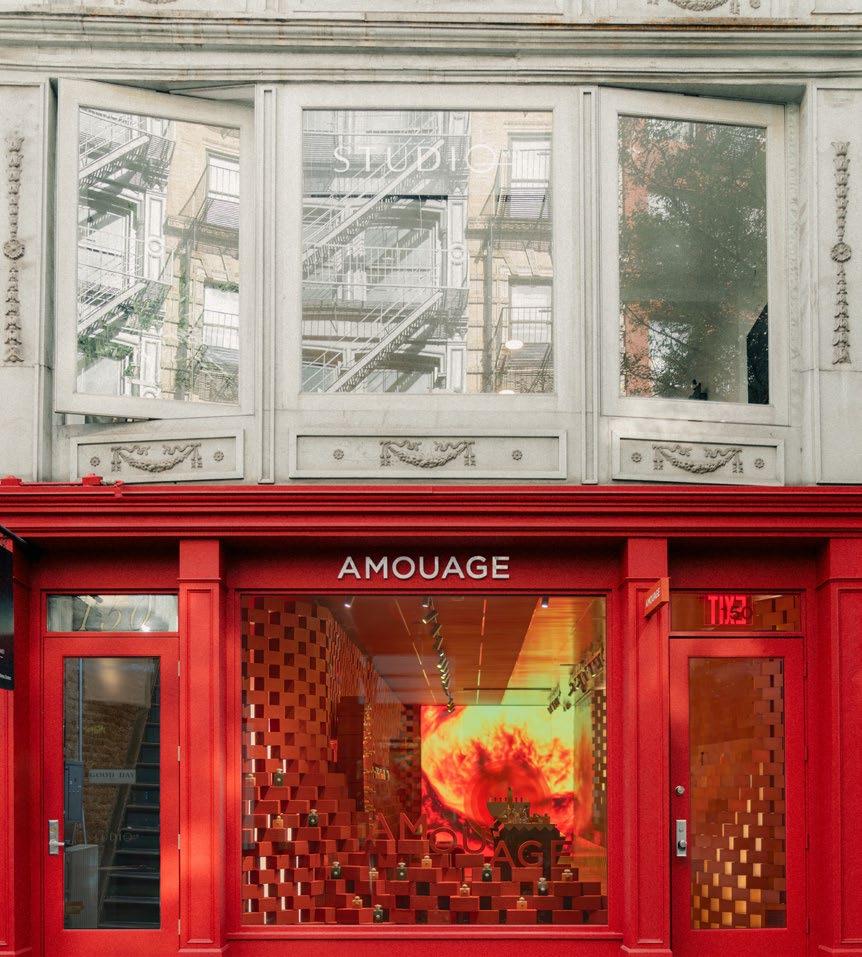
Amouage announces its strongest quarter on record, with first-quarter estimated retail sales reaching $190M, representing a +90% increase year-on-year. Following a historically successful 2025, this performance was driven by two structural forces: the highly successful global rollout of Essences Chapter II, an industry-defining doubleageing innovation, and sustained demand across the House’s existing creations. This momentum reflects the strength of a model rooted in craftsmanship, technical mastery and cultural depth.
Growth remained broad-based and balanced across all regions and channels, each delivering double or triple-digit performance.
The strongest growth was recorded in the Americas, increasing by 135%, while AsiaPacific grew by +124% driven by China which expanded tenfold year-on-year.
In Europe, growth was led by the UK quadrupling sales revenue (+308%), and Italy doubling the business versus last year.
Amouage maintained very strong momentum in Saudi Arabia, growing by 170% and reaching leading positions with key retail partners. The sustained strength highlights the House’s ability to operate with agility and resilience in a complex regional environment.
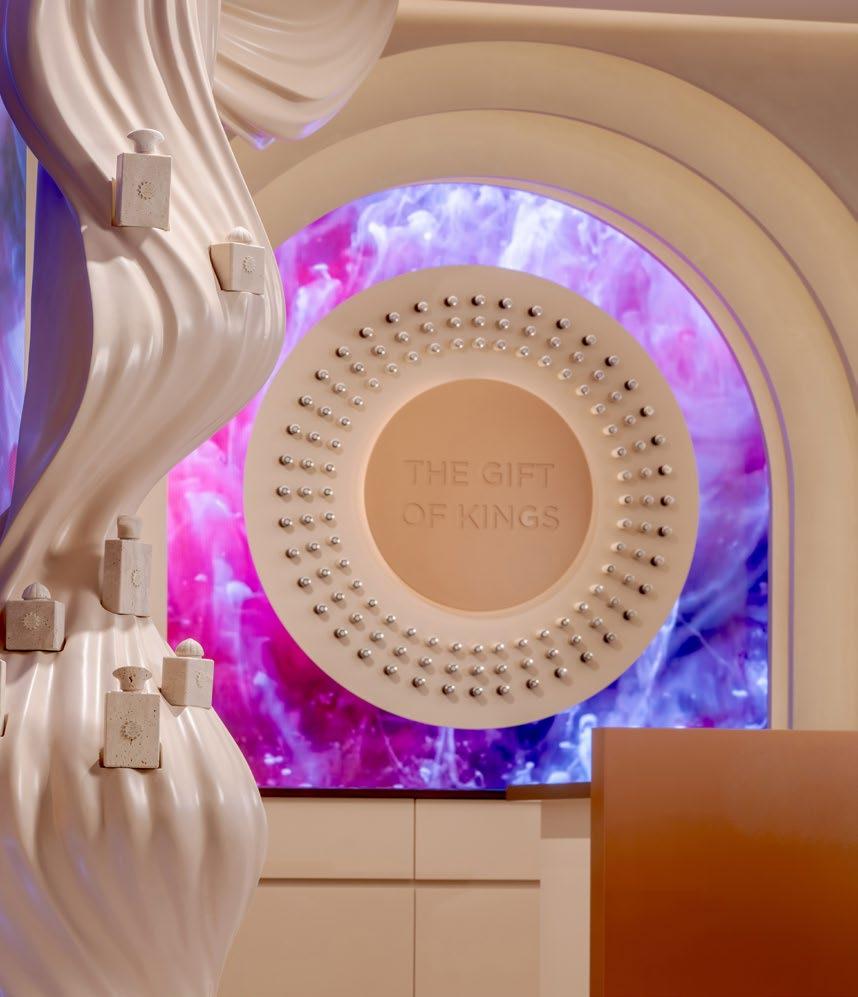
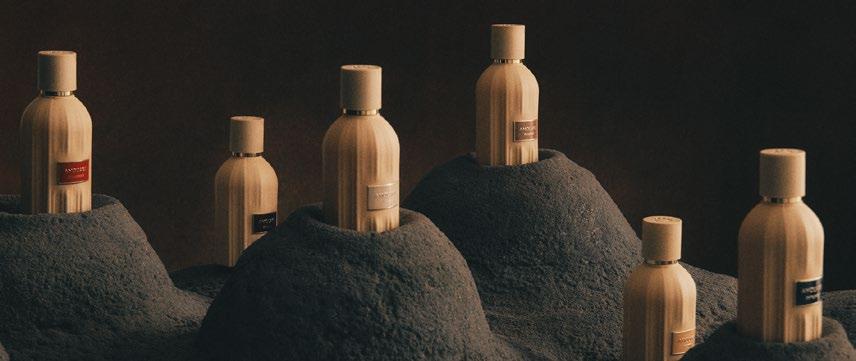
The Amouage.com online platform more than doubled at +137%, while the directto-retail channel grew by +152%.
Globally sustained demand for creations continues to be supported by the House’s long-term investment in craftsmanship and production capabilities. Amouage has expanded capacity, and invested
in advanced ageing techniques, while continuing to train and develop its craftswomen and craftsmen. This deliberate approach allows the House to scale without compromise, preserving the integrity of its creations while meeting growing global demand. In Q1, Exceptional Extraits became the House’s most demanded product category, representing 28% of the
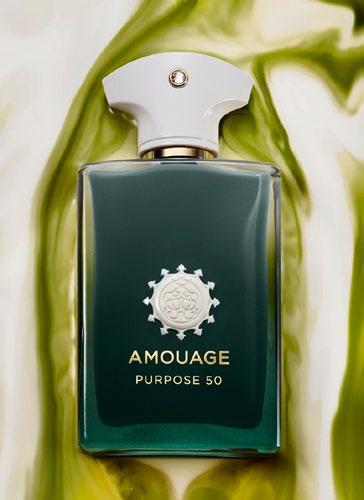
business, led by Guidance 46 and Purpose 50. The Guidance franchise continues to have increasing demand by clients globally, now representing 25% of total business and doubling in Q1 vs. last year, with nearly 1,000 bottles sold per day.
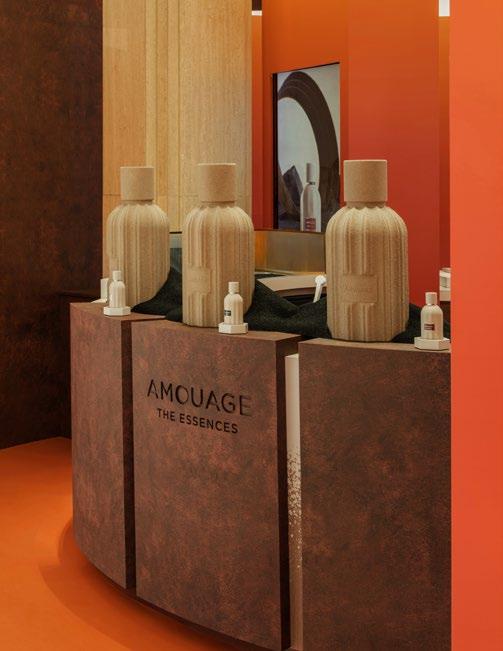
The Essences Collection became the second largest pillar of the portfolio, growing fivefold year-on-year. Its momentum was reinforced by the launch of The Essences Chapter II and the GCC Ramadan-exclusive Oud Zuhal, which sold out within one week, while Outlands emerged as the most demanded creation of the collection growing at +276%.
Amouage continues to reinforce its position on the global stage through a combination of cultural presence and ingredient leadership. The House expanded its visibility across key industry platforms, while deepening its commitment to natural ingredient expertise through participation in the Agriculture Summit in Oman.
This momentum coincided with the international recognition of Omani frankincense at WIPO and the sixth edition of the Omani Rock Rose harvest in Jabal Akhdar, celebrated through the latest iteration of the Amouage Café, reaffirming Amouage’s role as a cultural ambassador of Oman, shaping the future of High Perfumery.
The Year Couture Found Its New Voice
Luxury fashion and beauty in 2026 move with renewed confidence, blending heritage, colour, craftsmanship and collectable design as leading houses redefine modern elegance through sharper seasonal storytelling
Luxury fashion in 2026 is not behaving like an industry in search of novelty for novelty’s sake. Instead, it appears to be looking inward, re-examining house codes, archives, silhouettes and craft with a sharper sense of purpose. The mood across major maisons is less loud reinvention and more intelligent recalibration. The most compelling collections of the year are not simply asking what luxury should look like now; they are asking what luxury should mean when heritage is no longer enough on its own.
At Chanel, that question has taken on particular significance. Matthieu Blazy’s Spring-Summer 2026 Haute Couture collection for the house arrived with the weight of expectation, but also with a quiet clarity. Chanel described the collection through ideas of transparency, muslin, the suit as a “second skin” and birds as symbols of freedom. These are not accidental references. They return to the foundational language of Chanel, but they do so without turning the runway into a museum. The result is couture that feels less like preservation and more like renewal.
The Chanel suit, one of fashion’s most recognisable forms, was not treated as a static icon. By framing it as something close to the body, almost intimate, the collection suggested that the house’s codes are strongest when they move with the woman who wears them. The use of muslin and transparency added lightness to an institution often associated with discipline, structure and Parisian restraint.
That point of view was carried beyond the runway and onto fashion’s most watched red carpet. At the 2026 Met Gala, Margot Robbie wore a custom gold lamé Chanel gown by Matthieu Blazy, a piece that reportedly required 761 hours of work and
included 1,080 embroidered elements. The gown became more than a celebrity appearance. It served as a statement of intent for Chanel under Blazy: couture as spectacle, yes, but also as proof of labour, handwork and house authority.
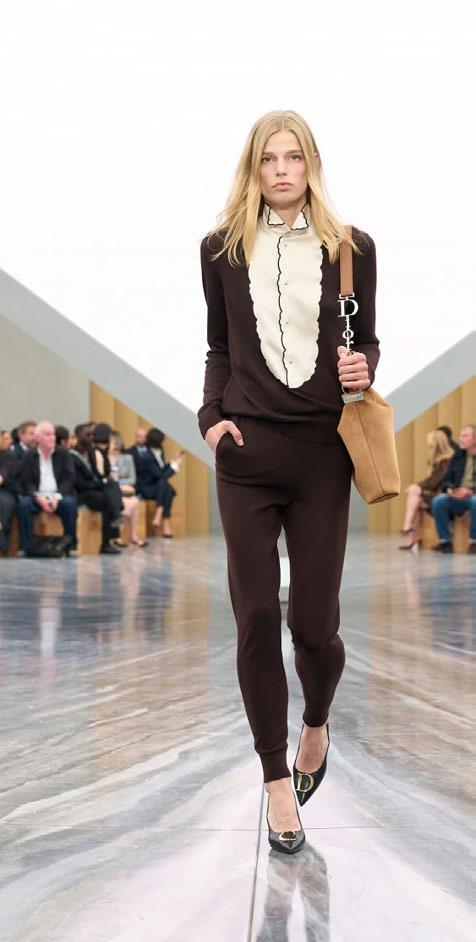
Dior, meanwhile, approached SpringSummer 2026 through memory, image and the drama of presentation. The house’s ready-to-wear show space was designed by Luca Guadagnino and Stefano Baisi, in collaboration with filmmaker Adam Curtis.
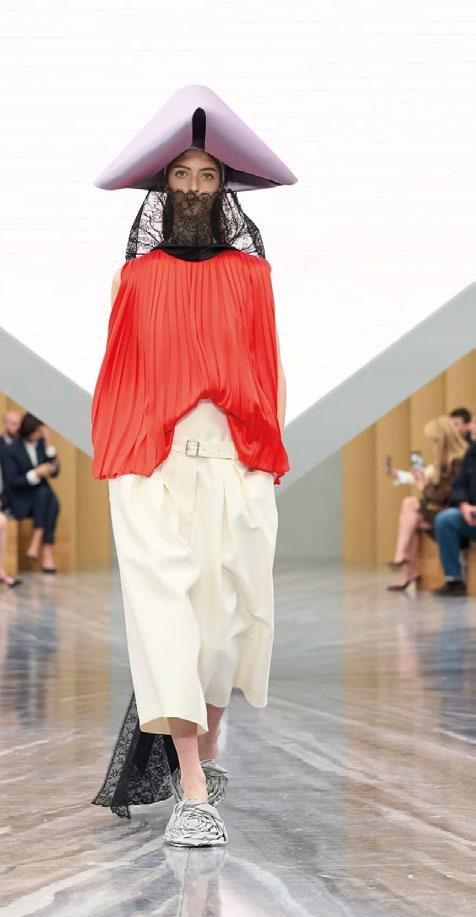
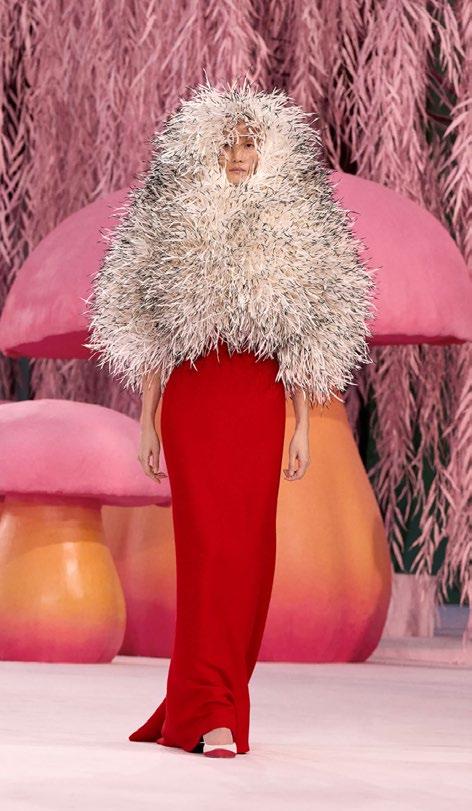
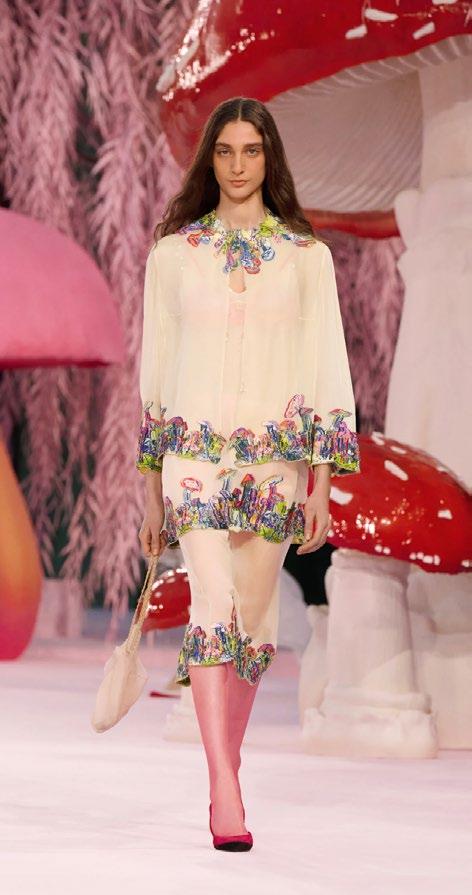
Dior described the setting as a spectacle merging the digital and physical, with the house’s history appearing before guests before collapsing into the symbolic form of a Dior shoe box. It was a deeply cinematic gesture, and one that positioned fashion as both archive and illusion.
The significance lies in the way Dior treated its own past. Rather than presenting heritage as a fixed source of authority, the house framed memory as something that can be opened, revisited and reassembled. In a luxury market where consumers are increasingly fluent in brand history, that matters.
Meanwhile, Louis Vuitton’s Spring-Summer 2026 women’s collection took a more fluid route. Presented as an ode to the art of living, Nicolas Ghesquière’s wardrobe for the season was described by the house as elegant and fluid, embodied in the campaign by Jennifer Connelly. The collection’s language speaks to a different kind of luxury: not necessarily grand occasion dressing, but cultivated living. It is the idea of a woman moving through interiors, travel, culture and private spaces with ease.
This sense of lifestyle-led fashion has become increasingly important for houses such as Louis Vuitton, where the runway must speak not only to garments but to a complete world. The clothes are part of a larger proposition: travel, architecture, objects, bags, interiors and image.
Prada, by contrast, offered one of the most intellectually charged statements of the season. Its Spring-Summer 2026 womenswear show, titled ‘Body of Composition’, was described by the house as a response to the overload of contemporary culture. Prada spoke of distillation, filtration and the reunion of unexpected elements on the body, where juxtaposition becomes an act of creation.
That idea feels particularly relevant in 2026. We live in a world of constant references, rapid images and endless consumption. Prada’s answer is not escape through fantasy, but order through composition. The collection suggests that modern elegance is no longer about seamless perfection. It can come from tension, interruption
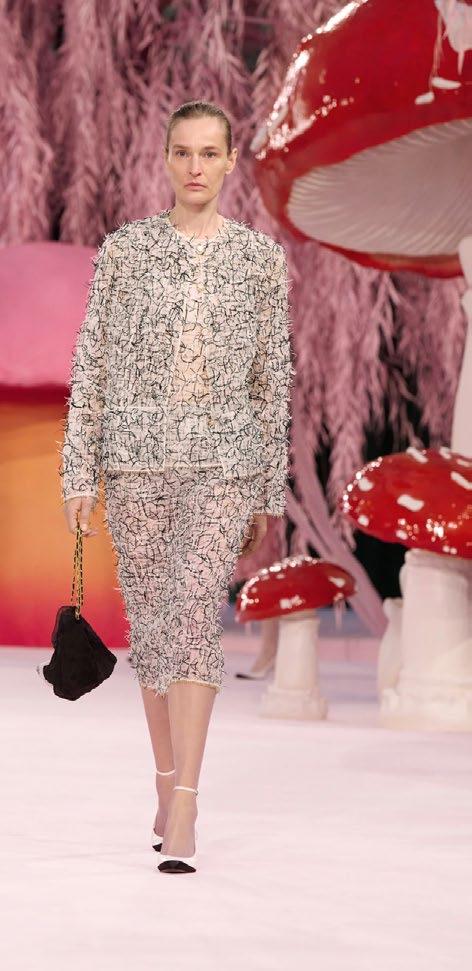
and unexpected balance. Miuccia Prada and Raf Simons continue to understand that clothing can be both wearable and conceptual, commercial and cerebral.
Taken together, these houses reveal the broader direction of high fashion in 2026. Chanel is refining its codes through intimacy and craft. Dior is turning history into theatre. Louis Vuitton is expanding the wardrobe into a lifestyle. Prada is distilling cultural noise into composition.
In that sense, 2026 may be remembered as a year in which fashion became more disciplined, more self-aware and, perhaps, more confident. The great houses are not merely releasing collections. They are editing themselves for a new age.
The Oyster at 100: Rolex Marks a Century in Motion
Swiss horology house Rolex’s new releases celebrate 100 years of the Oyster with refined materials, evolved classics and discreet technical progress across its most iconic watch families
Rolex’s 2026 releases arrive with the confidence of a maison that has little need for spectacle. This year, the story is not about reinvention for its own sake, but about refinement, continuity and a measured celebration of one of the most important milestones in modern watchmaking: 100 years of the Oyster.
Officially presented under Rolex’s New Watches 2026 collection, the latest releases place the Oyster case at the centre of the conversation, while extending the brand’s vocabulary across precious metals, lacquered dials, professional instruments and high-watchmaking material innovation.
Oyster Perpetual 41: The Centenary Statement
The most symbolic release of the year is the Oyster Perpetual 41 in yellow Rolesor, created to mark a century of the Oyster. Rolex pairs an Oystersteel case and bracelet with a yellow gold bezel and winding crown, giving the model a quietly ceremonial character without disturbing the purity of the Oyster Perpetual line. Its slate dial carries centenary details, including the “100 years” inscription at 6 o’clock, green minute-track accents and the Rolex name printed in the brand’s emblematic green. It is not a commemorative watch in the loud sense; it is a centenary watch built with Rolex’s usual restraint.
Oyster Perpetual 36: Colour, Control and Dial-Making Precision
The Oyster Perpetual 36 takes a more expressive route with a multicoloured lacquer dial decorated with Rolex’s Jubilee motif. At first glance, it is playful. On closer inspection, it is a study in control. The letters of the Rolex name form the pattern across the dial, with the colours applied one after another, requiring careful precision in positioning and execution. It is a reminder that even Rolex’s more spirited designs are rarely casual; beneath the colour is a serious exercise in dial-making discipline.
Oyster Perpetual 28 and 34: Gold, Stone and Quiet Refinement
The Oyster Perpetual 28 and Oyster Perpetual 34 introduce a more intimate form of luxury within the Oyster Perpetual family. Offered in 18 ct gold, these models bring precious metal into smaller case sizes with a restrained, jewellery-like sensibility. The most notable detail is the use of stone lacquer dials and natural stone hour markers, a first for Rolex. The result is not decorative excess, but a subtler kind of richness — one that suits collectors who value material depth over obvious display.
Datejust 41: The Elegance of Green Ombré
The Datejust 41 receives one of the most elegant dial treatments of the 2026 collection. Presented in white Rolesor, the watch is adorned with a green lacquer ombré dial, bringing depth and softness to one of Rolex’s most enduring designs. The Datejust has always worked because it occupies the space between formal and everyday wear. This new version strengthens that balance. It is polished enough for a boardroom, relaxed enough for regular use, and visually distinctive without leaning into excess.
Yacht-Master II: The Regatta Chronograph Returns
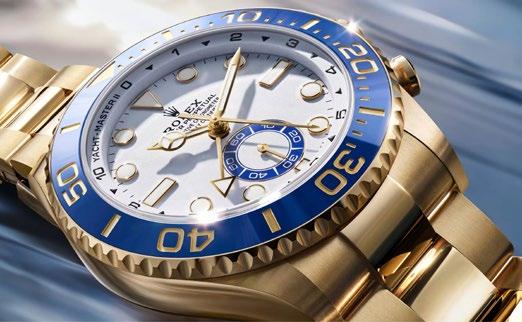
The most technically assertive release is the new-generation Oyster Perpetual Yacht-Master II. Rolex has brought back its regatta chronograph with a revised design, improved legibility and a completely reworked countdown function. Available in Oystersteel or 18 ct yellow gold, the model now uses calibre 4162, a new chronograph movement exclusive to the watch. Its countdown display has been redesigned for easier use, and the countdown hands turn counterclockwise, a first for Rolex. This is not a broad-market Rolex in the usual sense; it is a specialist instrument, and that is precisely its appeal.
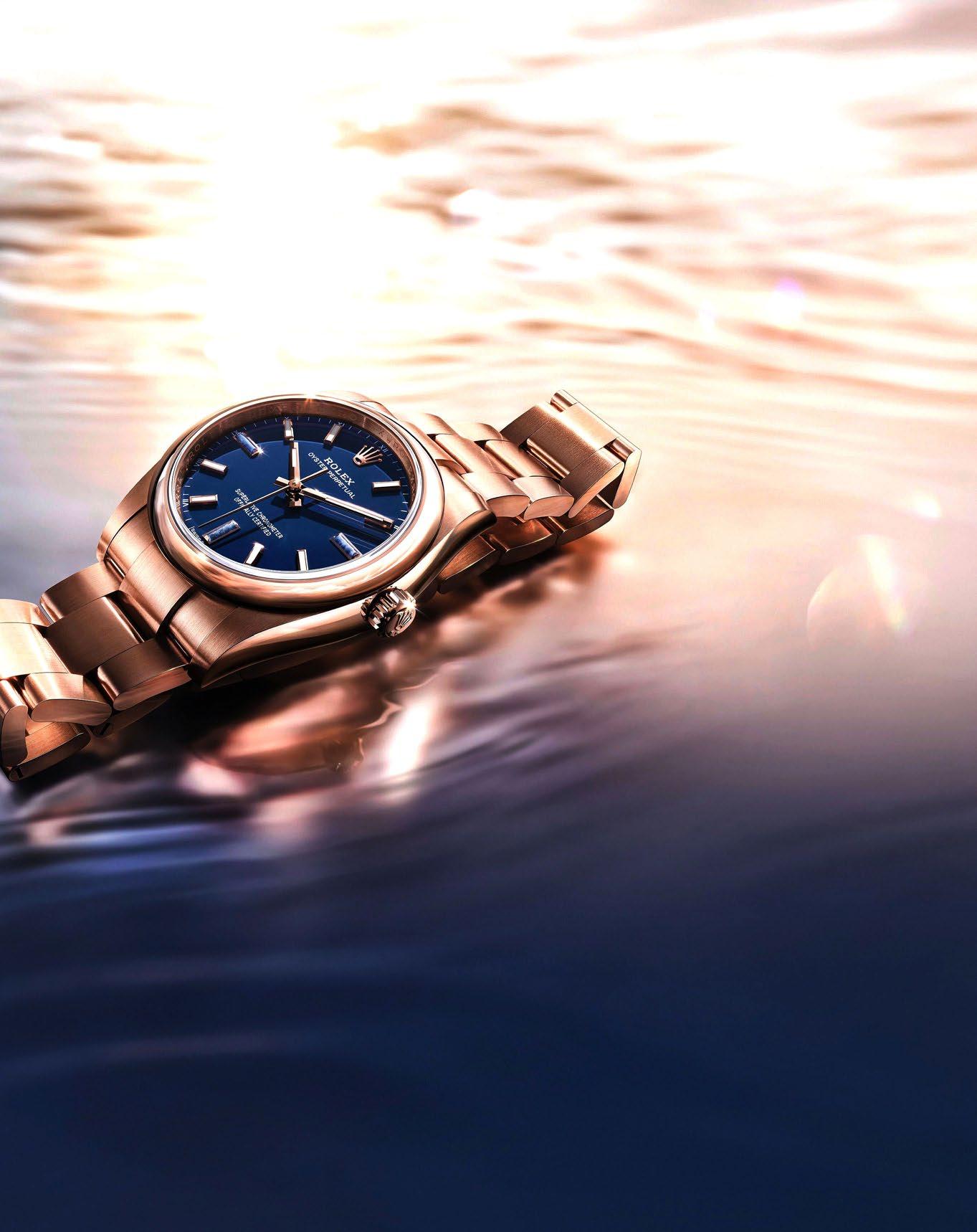
Day-Date 40: Jubilee Gold and the Language of Prestige
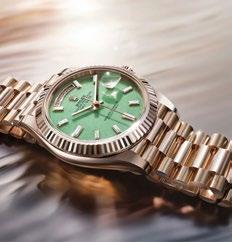
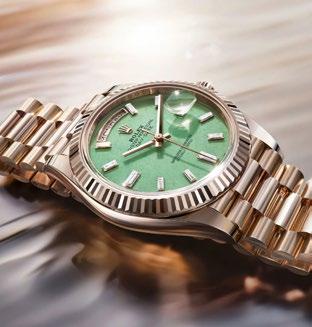
The Day-Date 40 enters 2026 with a new 18 ct gold alloy developed by Rolex: Jubilee Gold. The metal has a warmer, more nuanced tone than conventional yellow gold, sitting somewhere between tenderness and formality. Rolex pairs it with a light green aventurine dial, baguette-cut diamond hour markers, a fluted bezel and the President bracelet. The Day-Date has always carried a certain institutional weight within the Rolex universe. In this new execution, it remains unmistakably prestigious, but with a softer and more contemporary material character.
Cosmograph
Daytona: Rolesium, Enamel and Technical Modernity
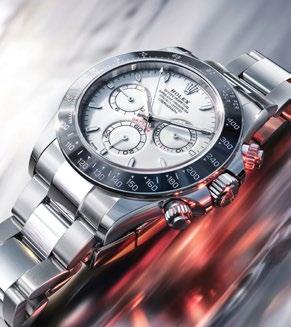
The Cosmograph Daytona receives an especially sophisticated 2026 configuration in Rolesium, combining Oystersteel and platinum for the first time on this model. It features a white enamelled dial and an anthracite Cerachrom bezel enriched with tungsten carbide, with the tachymetric scale coated in platinum via PVD. The effect is cleaner and more architectural than theatrical. It keeps the Daytona’s sporting identity intact, but elevates it through material innovation and a more composed visual language.
A Stronger Standard Beneath the Surface
Beyond the individual launches, 2026 is also important because Rolex has strengthened its Superlative Chronometer certification. The certification now adds three new testing criteria: resistance to magnetism, reliability and sustainability, alongside the existing benchmarks for precision, waterproofness, self-winding and power reserve. This is a meaningful move because it shifts the conversation beyond aesthetics. The 2026 watches are not simply new references; they are part of a broader tightening of Rolex’s own performance standards.
Chopard introduces a continuation model of the original, iconic L.U.C 1860 to honour the 30th anniversary of Chopard Manufacture in Fleurier. This new edition preserves the spirit of the original model while integrating the technical progress achieved over the past three decades.
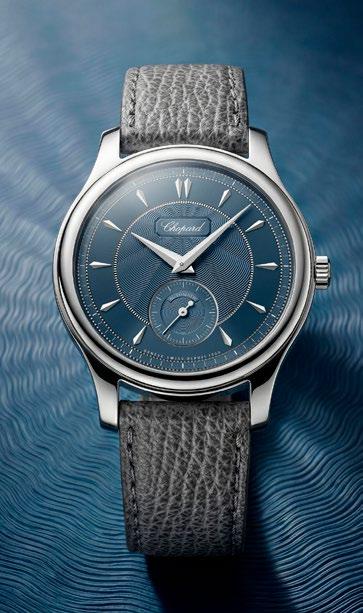
Like its predecessor, this new timepiece features a 36.5 mm case, ideal proportions that will delight fine watch collectors. It is crafted in Lucent Steel™ and stands out with its “Areuse Blue” dial – a colour inspired by the Areuse River that flows near the Manufacture in the Val-de-Travers region. This river, known for its dramatic gorges and ever changing shades of deep blue, symbolises continuity and connection to nature. Its vivid colours, shaped by light, stone and movement, recall the cool, bright tone used on the dial.
The 18-carat white gold dial is hand guilloché with a sunburst pattern, using a vintage guilloché lathe operated by inhouse artisans. Additional guilloché rings structure the dial, catching the light and adding depth. A satin brushed chapter ring, polished white gold chevron shaped hour markers, and Dauphine hands contribute to its overall clarity and harmony. The small seconds subdial at 6 o’clock completes the symmetrical design, which intentionally avoids a date display to preserve purity.
Unmatched Heritage
The new L.U.C 1860 Chronometer - A tribute to 30 years of ‘Chopard Manufacture’ Fleurier
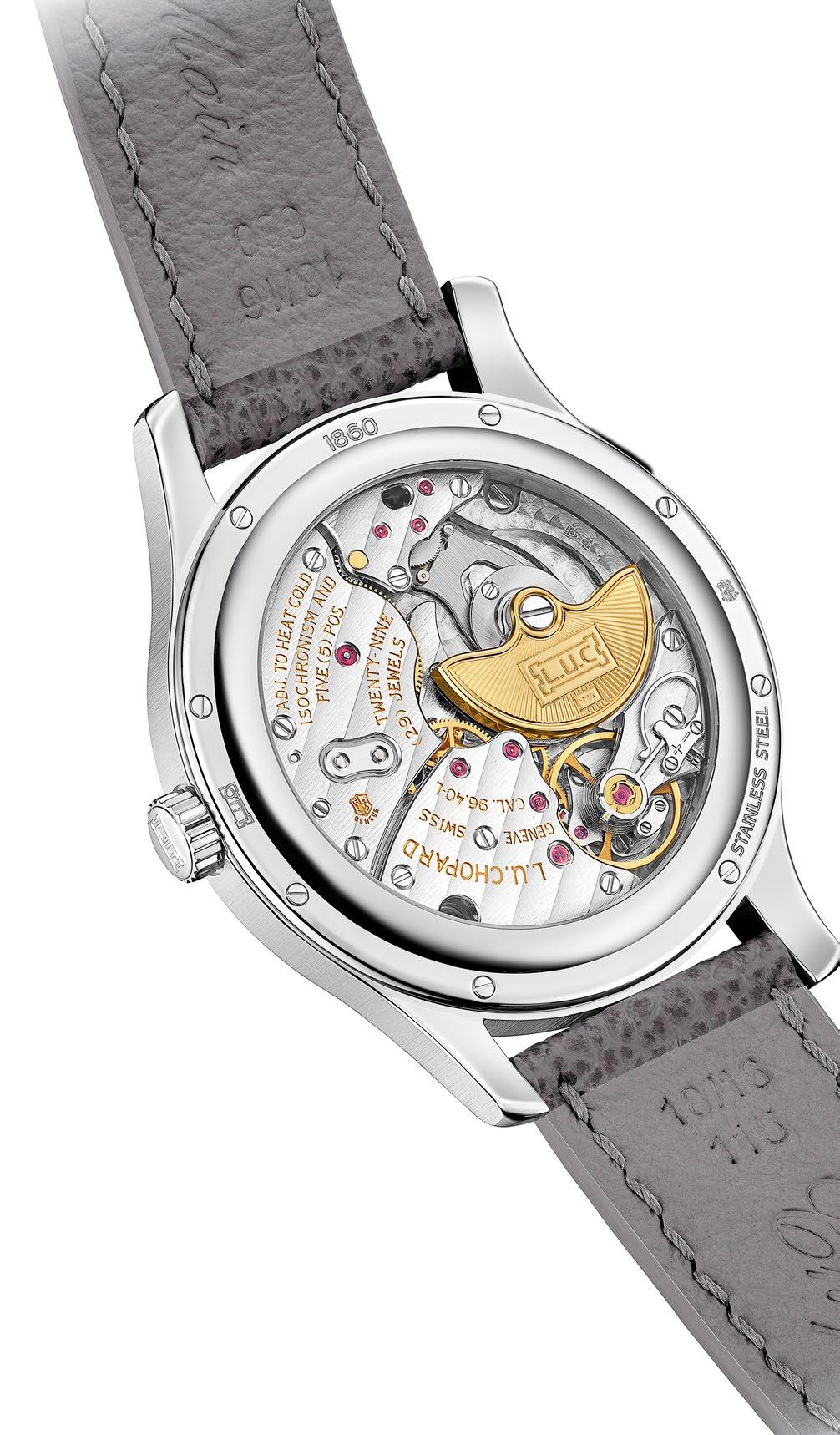
The watch is paired with a grey grained calfskin strap.
This timepiece houses the L.U.C Calibre 96.40-L, a direct evolution of the first movement conceived and produced by Chopard Manufacture in Fleurier in 1996. At just 3.30 mm thin, this self winding movement incorporates a 22 carat gold micro rotor that efficiently winds two stacked barrels, thanks to Chopard Twin technology, providing a 65-hour power reserve. The calibre is Chronometer certified (COSC) for precision and includes a stop seconds function and a swan’s neck regulator for fine adjustment.
Each component is meticulously finished by hand, with polished, bevelled and decorated surfaces in line with Poinçon de Genève standards. This prestigious hallmark guarantees exceptional craftsmanship for both the movement and the case. What’s more, achieving this in steel is particularly rare due to the demanding finishing requirements. Lucent Steel™ enhances the visual impact of these fine finishes.
“The L.U.C 1860 is the most emblematic watch in the L.U.C collection. It marks the beginning of our journey into the heart of fine watchmaking — a path that has sometimes been challenging yet full of discoveries. This timepiece has become a classic, just as I had imagined it 30 years ago” says Chopard Co-President KarlFriedrich Scheufele.
Chopard Manufacture in Fleurier was founded in 1996 at the initiative of KarlFriedrich Scheufele (Co-president of Chopard), with the aim of preserving traditional Swiss watchmaking knowledge while integrating major innovations. Thanks to this process of vertical integration, the workshops maintain a high level of finishing and contribute to the preservation of artistic crafts and skills.
L.U.C COLLECTION
The L.U.C collection pays tribute to LouisUlysse Chopard: by adopting the initials of the founder of Chopard’s first workshops in 1860, it is rooted in a heritage of tradition and innovation. Chopard Manufacture’s first calibre, the L.U.C 96.01-L, marked the debut of the collection in 1996. The following year, this ultra-thin automatic
movement with a micro-rotor powered the first L.U.C timepiece: the L.U.C 1860 model, named ‘Watch of the Year’ by the Swiss magazine Montres Passion/Uhrenwelt.
Since that first calibre, all L.U.C movements have been designed, developed, and produced by Chopard Manufacture. The collection has expanded with innovative timepieces and today offers all the major complications in watchmaking. It upholds the values of certified watchmaking, combining high precision with the finest degree of hand finishing.
The Grand Prix d’Horlogerie de Genève acknowledged the excellence of the collection by awarding its most prestigious distinction, the Aiguille d’Or, to the L.U.C Full Strike minute repeater in 2017. As Chopard Manufacture Fleurier celebrates its 30th anniversary, the collection goes even further with the L.U.C Grand Strike – a grande sonnerie watch — that is its most complex timepiece ever produced.
TRADITIONAL HAND-GUILLOCHÉ
Chopard Manufacture is among the few Maisons to equip its watches with hand guilloché dials since the first L.U.C 1860, a rarity explained by the extremely high level of manual skill this artistic craft requires as well as the very limited number of historic machines still in operation. At the Metalem workshops – part of the Chopard Group – artisans use traditional guilloché lathes, some of which are over 100 years old, to decorate dials with fine, repeating lines in
sunburst, undulating or interlaced patterns. The movement of the lathe is controlled entirely by artisans with great dexterity and without any digital assistance, enabling depth and regularity impossible to replicate by machine.
CHRONOMETER CERTIFICATION
The Swiss Official Chronometer Testing Institute (COSC) independently certifies the precision of movements. Uncased movements undergo 15 days of testing in five positions and at three temperature ranges. All L.U.C movements featuring a seconds indication are subjected to this protocol, ensuring a daily rate variation between –4 and +6 seconds per day.
POINÇON DE GENÈVE
The Poinçon de Genève is an independent certification applied to the movement and to the entire watch. Introduced in 1886, it is one of the oldest and most prestigious distinctions in Swiss watchmaking. It imposes strict criteria regarding reliability, craftsmanship, and provenance (assembly, adjustment, and casing must be carried out within the Canton of Geneva).
LUCENT STEEL™
Made with a recycling rate of 80%, Chopard Lucent Steel™ results from an advanced remelting process that produces a pure material, with brilliance comparable to gold and hypoallergenic properties similar to surgical steel. Its exceptional hardness makes it particularly resistant to abrasion.
First introduced in 2019 with the launch of the Alpine Eagle collection, Lucent Steel™ has been used to produce all Chopard steel timepieces since 2023 – cases and bracelets included.
CHOPARD TWIN TECHNOLOGY
Developed by Chopard Manufacture, Chopard Twin Technology is a system using two stacked barrels, allowing for an extended power reserve (approximately 65 hours) while preserving the calibre’s thin profile. As the barrels work in parallel, they supply more consistent energy. Integrated into several L.U.C calibres, this architecture enhances the stability of energy delivered to the balance wheel, improving precision.
Sports for Good
IWC Schaffhausen presents Pilot’s Watch Chronograph Laureus and shines a spotlight on Futbalo Girls
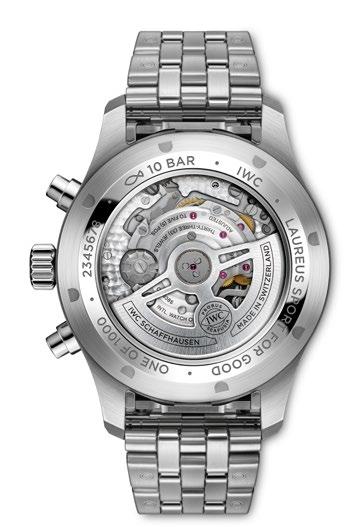
IWC Schaffhausen recently unveiled the Pilot’s Watch Chronograph Laureus, the latest in its series of special-edition timepieces dedicated to Laureus Sport for Good. Limited to 1,000 pieces, the 43-millimetre stainless steel chronograph with a characteristic Laureus blue dial and a stainless steel bracelet celebrates a partnership of more than two decades. This year, IWC shines a spotlight on Futbalo Girls, an initiative from Germany that uses football to empower girls and young women.
IWC Schaffhausen has been a Global Partner of Laureus Sport for Good since 2005 – one of the brand’s most enduring alliances. Founded in 2000 under the patronage of Nelson Mandela, who proclaimed that “sport has the power to change the world,” Laureus Sport for Good today supports more than 290 programmes in over 36 countries.
Using sport as a means to overcome violence, discrimination and disadvantage, the foundation has transformed the lives of over seven million children and young people worldwide. As part of this commitment, IWC has since 2006 released an annual Laureus special edition watch – each distinguished by a dial in the characteristic Laureus blue hue. This year, the tradition continues with a new addition to the Pilot’s collection.
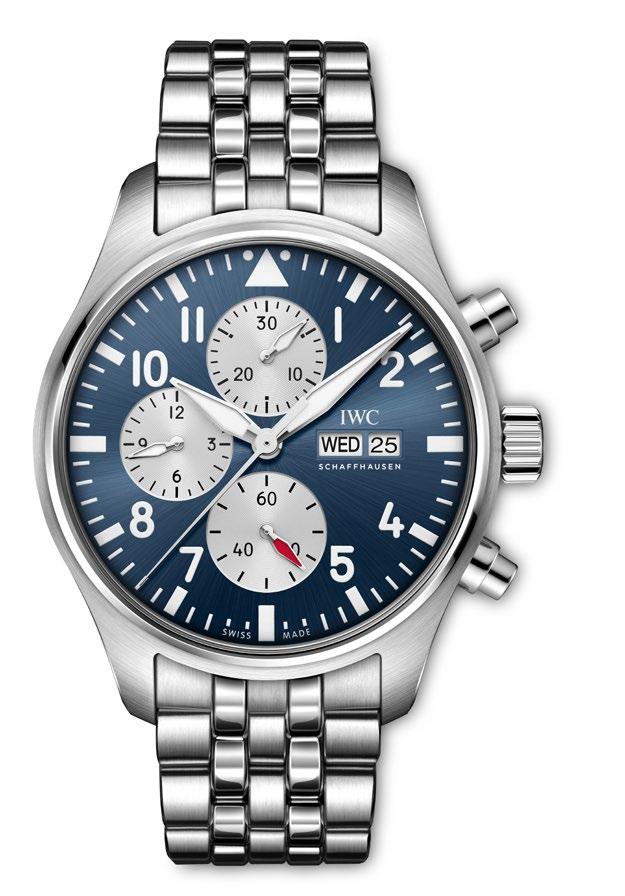
Limited to 1,000 pieces worldwide, the Pilot’s Watch Chronograph Laureus (Ref. IW378010) features a 43-millimetre stainless steel case. It is distinguished by its dial in the characteristic Laureus blue hue, contrasted by silver-plated subdials and rhodium-plated hands filled with SuperLumiNova®.
True to the purposeful design language of the Pilot’s Watch family, the dial is clean and legible with the two chronograph totalisers positioned at 9 and 12 o’clock and the small seconds indicator at 6 o’clock. Another useful feature is the day and date aperture at 3 o’clock.
The hour markers and numerals are printed in white on the dial, further enhancing legibility in low-light conditions. The watch is presented on a five-link stainless steel bracelet equipped with IWC’s EasXCHANGE® system, a tool-free mechanism that allows the wearer to swap the metal bracelet for another strap at the touch of
a button. The case back ring, crafted in stainless steel, features an engraving of the foundation’s name.
HIGH-PERFORMANCE CHRONOGRAPH MOVEMENT
This chronograph is powered by the IWCmanufactured 69385 calibre. Engineered with a focus on performance, reliability and precision, this mechanical chronograph in a classic column-wheel design enables the wearer to accurately measure stop times of up to 12 hours. The hours and minutes are displayed in the totalisers at the 9 and 12 o’clock positions. The IWC-typical vertical subdial layout places the stopped minutes directly at the 12 o’clock position, making them easy and intuitive to read. The bidirectional pawl winding system reliably builds up a power reserve of 46 hours in the mainspring. The movement is decorated with circular graining and Geneva stripes, and is visible through the sapphire glass case back.
FUTBALO GIRLS USES FOOTBALL AS A FORCE FOR EQUALITY
This year, IWC has chosen to highlight “Futbalo Girls”, a Laureus-supported programme from Germany that uses football to empower girls and young women. Run by the non-profit organisation “Integration durch Sport und Bildung e.V.” and supported by Laureus, the programme organises free weekly football sessions in cooperation with schools and community centres across the country. What began as a pilot initiative in a district of Oldenburg in 2000 has grown into the largest girls’ football initiative outside organised sport in Germany, reaching over 1,500 participants per week through more than 1,200 sessions
per year. There are no fees, no prior experience required and no performance pressure – the focus is on enjoyment, inclusion and building confidence. Older participants are trained as coaches, taking on leadership roles and becoming role models for younger girls. The results are striking: 84 per cent of participants report an increase in self-determination and social competencies, and over 95 per cent say that football is not just a sport for boys.
IWC Schaffhausen is the Engineer of Watchmaking. In 1868, the American watchmaker and engineer Florentine Ariosto Jones established the ‘International Watch Company’ in Schaffhausen in the German-speaking part of Switzerland. By


combining the best of human craftsmanship and creativity with cutting-edge industrial technology and processes, he laid the foundation for IWC’s unique engineering approach to watchmaking.
IWC’s distinctive and pure design is brought to life through collections ranging from elegant dress watches to sports and luxury sports watches, notably the Portugieser, Portofino, Pilot’s Watches and Ingenieur. Over its more than 150-year history, IWC has earned a reputation for creating professional instrument watches and functional complications, especially chronographs and calendars, which are ingenious, robust and easy to use.
A pioneer in the use of titanium and ceramic, IWC specializes in performance materials such as Ceratanium®. IWC’s advanced engineering division XPL develops technologies that enhance the durability of mechanical watches and extend their applications to environments with extreme conditions such as jet aviation and human spaceflight.
IWC is a leader in luxury watchmaking, crafting timepieces built to last for generations and continuously improving every aspect of how it manufactures, distributes and services its watches responsibly. Empowering the next generation of engineers, the brand also partners with organizations that work globally to support children and young people.
WHOOP & the Rise of Performance Luxury
Backed by elite athletes, celebrities and investors, the screenless wearable – Whoop – is turning personal data into a discreet symbol of modern wellbeing, writes Alvin Thomas
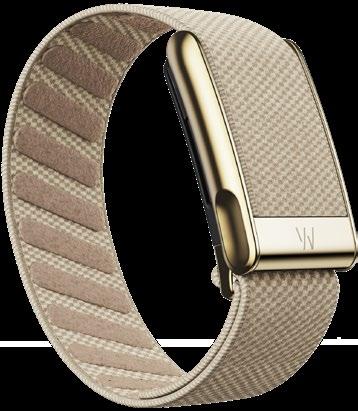
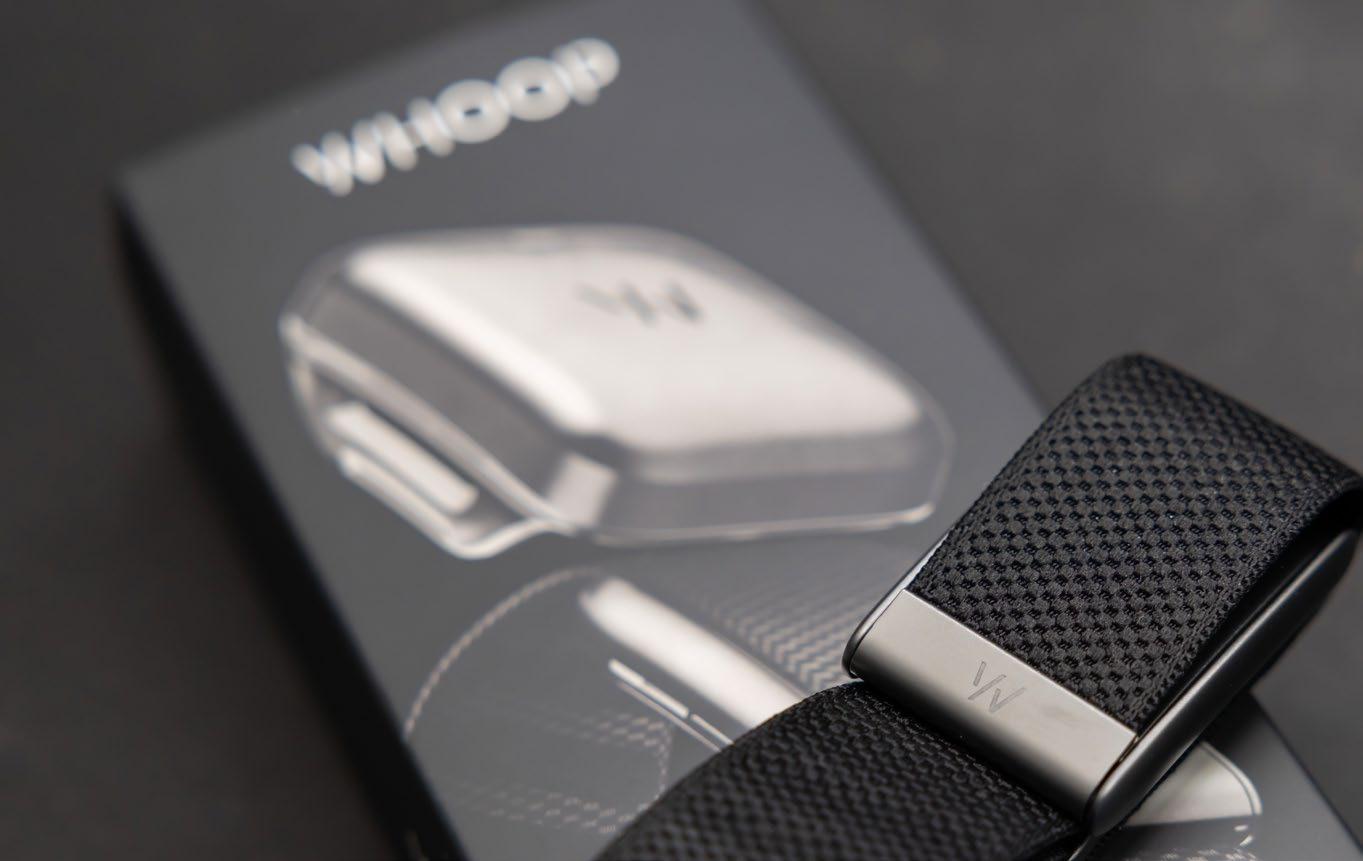
The wearable market is crowded with screens, notifications and lifestyle features. WHOOP has chosen a quieter route; it does not try to replace the phone. It does not flash notifications, show messages, display maps, or compete with the traditional watch on the wrist. In fact, its defining feature may be what it does not have: a screen.
That absence has become its identity. WHOOP is not a gadget that asks to be looked at but rather is a wearable designed to be forgotten during the day and studied later through data. It sits quietly on the wrist, bicep, or within specialised apparel,
collecting physiological signals around the clock and translating them into insights around sleep, strain, recovery, stress, cardiovascular load and, increasingly, longterm health.
The brand’s rise has been particularly notable because it has moved beyond the gym-tech category. WHOOP is now part of a wider lifestyle conversation around longevity, elite performance, travel recovery, executive stamina and the daily discipline of high achievers.
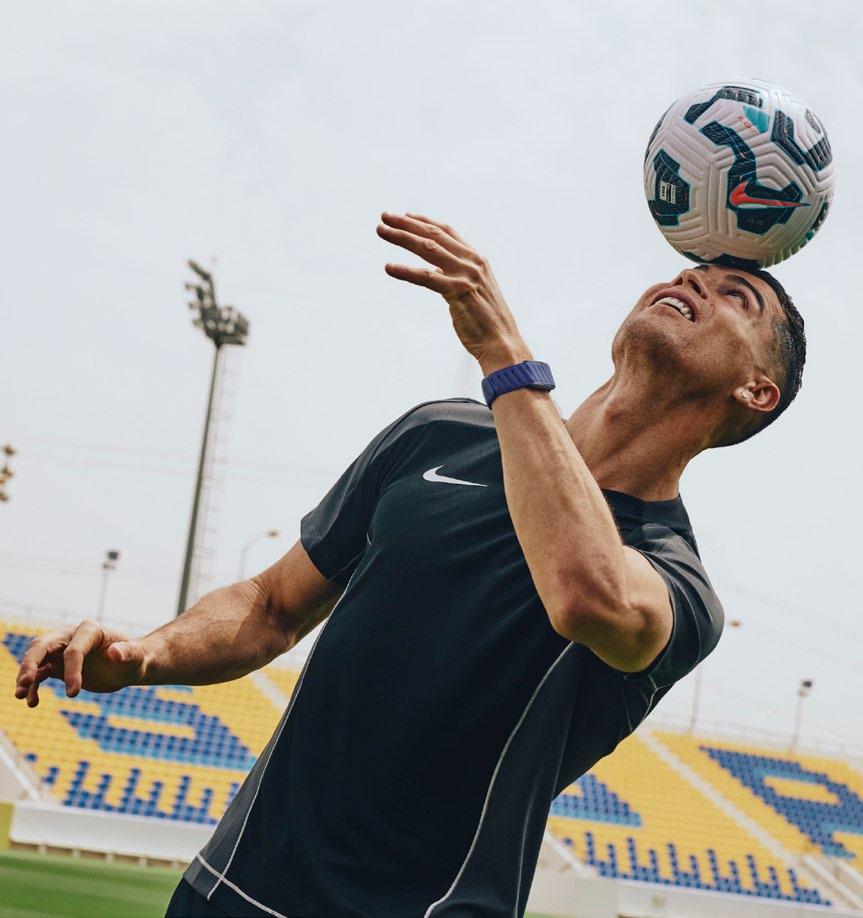
It is worn or publicly associated with names from sport, entertainment and public life, including Cristiano Ronaldo, Patrick Mahomes, Michael Phelps, Rory McIlroy, Aryna Sabalenka, Niall Horan and Prince William. Ronaldo joined WHOOP as a global ambassador and investor in 2024, with the company stating that he had already been a WHOOP member for several years before the formal partnership.
The company’s positioning is clear. WHOOP is not trying to be a mass-market smartwatch in the traditional sense. It is attempting to become a personal performance platform. In 2026, that ambition became much larger. WHOOP announced a USD 575 million Series G funding round at a USD 10.1 billion valuation, with participation from institutional investors including Qatar Investment Authority, Mubadala Investment Company, Abbott and Mayo Clinic, alongside individual investors such as Cristiano Ronaldo, LeBron James, Rory McIlroy, Niall Horan, Virgil van Dijk, Mathieu van der Poel and Shane Lowry. The company also said it had more than 2.5 million members globally and that 2025 bookings grew 103 percent year-on-year.
The figure is significant not only because of its scale, but because of what it says about the direction of the wellness market. Wearables are no longer simply about counting steps. The new frontier is interpretation. WHOOP’s core promise is that it can take continuous biometric data and make it understandable enough to influence behaviour: sleep earlier, train harder, rest today, hydrate better, avoid overreaching, manage stress, or recognise when the body is under strain.
At its centre are three main ideas: strain, recovery and sleep. Strain measures
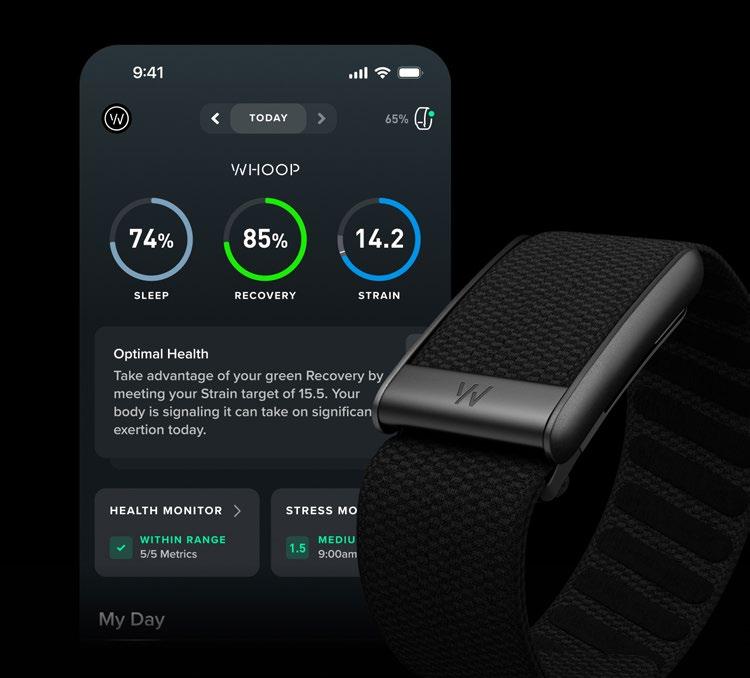
cardiovascular load across the day, including exercise and general physical effort. Recovery uses signals such as resting heart rate, heart-rate variability and sleep performance to estimate how prepared the body may be for exertion. Sleep tracking then feeds into recommendations on how much rest is needed, how well the body recovered, and how lifestyle factors may be affecting performance.
This is where WHOOP differs from many consumer wearables. Apple Watch, Garmin, Samsung and others often combine fitness features with notifications, apps, displays and lifestyle tools. WHOOP narrows the focus. It is less about multitasking and more about coaching. The product is built around a membership model, where the hardware and analytics are tied to subscription tiers rather than a one-time device purchase. With the launch of WHOOP 5.0 and WHOOP MG in 2025, the company introduced new devices with over 14 days of claimed battery life, along with membership tiers branded WHOOP One, WHOOP Peak and WHOOP Life.
The WHOOP MG represents the company’s most ambitious push into the health category. According to WHOOP, the MG
offers ECG capabilities and blood pressure insights, while WHOOP 5.0 focuses on advanced fitness and health sensing in a smaller, more efficient package. The company has also introduced concepts such as Healthspan, WHOOP Age and Pace of Aging, which aim to position the device not just as a training tracker, but as a longevity companion.
That longevity framing is important. The global luxury consumer has changed. There remains demand for watches, cars, fashion, jewellery and travel, but another form of prestige has entered the conversation: disciplined living. Sleep has become a status symbol. Recovery has become a performance asset. Longevity clinics, cold plunges, tailored nutrition, biological-age testing and continuous glucose monitors have entered the vocabulary of affluent, health-conscious consumers. WHOOP fits neatly into this world because it does not present itself as a toy but rather as a system. Its cultural credibility has been built partly through sport. Ronaldo’s association gives the brand unmatched global recognition, especially across football markets. Patrick Mahomes brings American football authority. Michael Phelps adds Olympic credibility. Rory McIlroy connects it with
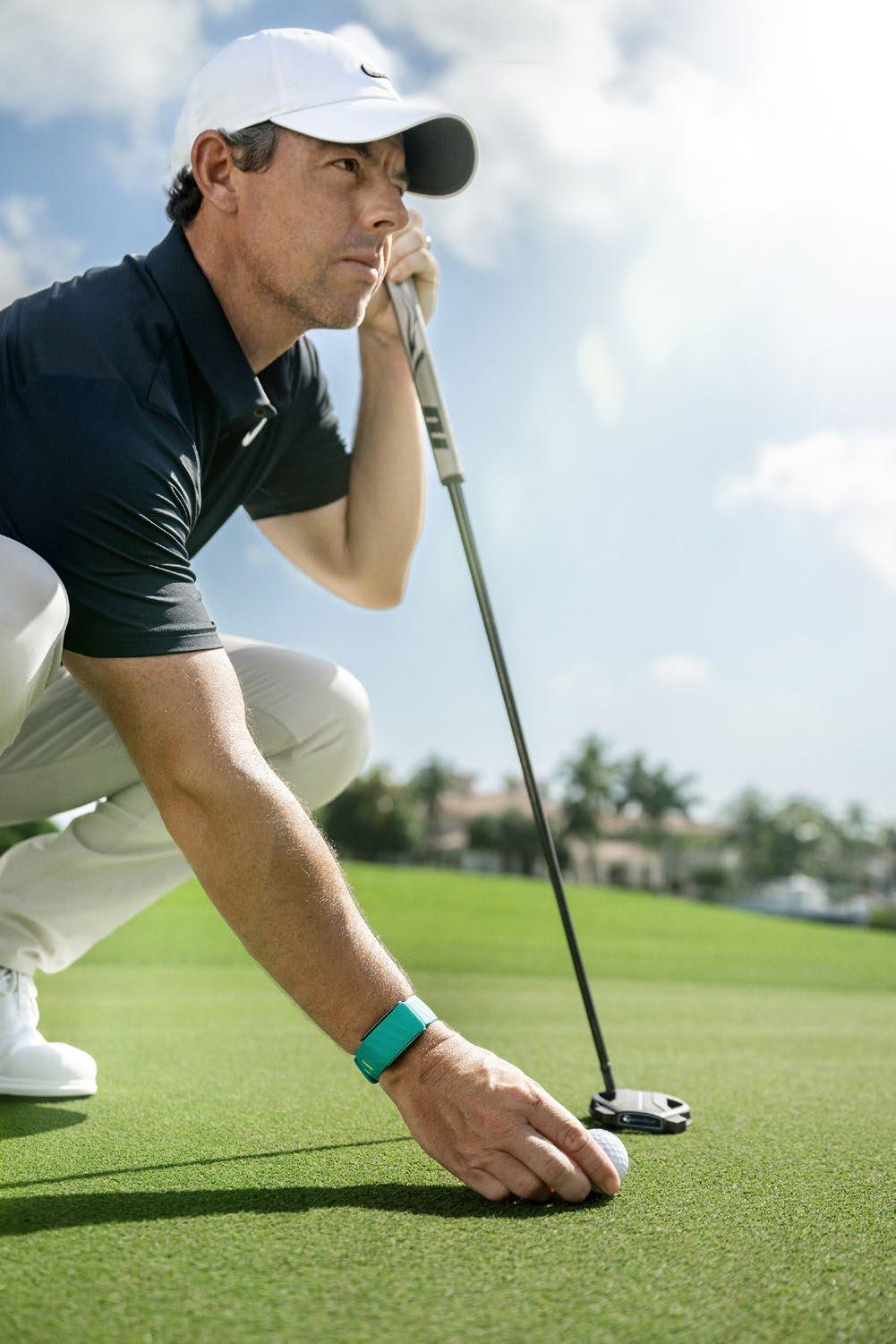
golf, where marginal gains and recovery are central to elite performance. Aryna Sabalenka, Carlos Alcaraz and Jannik Sinner have also been drawn into the WHOOP conversation in tennis, particularly after reports around wearable tracker restrictions at the 2026 Australian Open, where players were asked to remove devices despite their use at many tour events. Reuters reported that Sabalenka criticised the ban and that devices such as WHOOP were commonly used to monitor health and performance.
Outside sport, the brand has begun to broaden its appeal. Niall Horan joined WHOOP as an investor and brand partner in 2025, with the company positioning his demanding performance and travel schedule as another form of highperformance lifestyle. WHOOP said Horan had been a member for years and would collaborate on content and campaigns around recovery, sleep and wellbeing. Prince William has also been photographed wearing a WHOOP device, reinforcing the brand’s crossover into the public lifestyle sphere rather than remaining confined to professional athletes.
WHOOP’s most symbolic move in 2026 may be its partnership with Scuderia Ferrari HP. The company became the Official Health and Fitness Wearable Partner and Team Partner of Ferrari’s Formula 1 team, with WHOOP to be provided across the organisation and the logo appearing on cars and drivers from the 2026 season. The partnership is not being positioned merely as branding; WHOOP said its Performance Science team would work with Ferrari’s medical team on physical efficiency, recovery and human optimisation.
Still, the WHOOP story is not without questions. Its subscription model can be polarising. Unlike a conventional smartwatch, where the customer buys the product outright and may use many features without recurring fees, WHOOP’s value is tied to ongoing membership. For committed users, this may feel justified because the product improves through insights, coaching and continuous tracking. For casual users, the cost can become a barrier, especially if they do not engage deeply with the data.
There are also broader questions around accuracy, interpretation and health anxiety.

Continuous data can empower users, but it can also encourage over-analysis. A low recovery score may help someone rest wisely; it may also make someone feel limited before the day has begun. As wearables move closer to medical-adjacent territory, the line between wellness guidance and health advice becomes increasingly important. WHOOP has already faced
scrutiny around its blood pressure insights, with reports noting that the US Food and Drug Administration raised concerns over whether the feature required authorisation for medical use. WHOOP has maintained that the feature is wellness-oriented rather than diagnostic.
That tension may define the next phase of the category. Wearables are becoming more powerful, but the expectations around them are also rising. Consumers want accuracy, privacy, actionable guidance and elegant design. Regulators want clarity. Athletes want access to their own data. Health systems are watching the preventive-care opportunity. Investors are betting that continuous biometric intelligence could become a major pillar of future healthcare.
For Oman’s audience, the relevance of WHOOP lies not only in the device itself, but in what it represents. The Gulf’s wellness landscape is evolving rapidly. Executive health, premium fitness, performance nutrition, luxury hospitality wellness programmes and longevity-led services are becoming more visible across the region.
WHOOP’s 2026 funding round specifically cited future expansion across Europe, the GCC, Latin America and Asia, indicating that the Gulf is part of the company’s growth map.
In Oman, where lifestyle, sport, endurance activity, golf, football, motorsport, hiking and executive wellness are all gaining visibility, WHOOP sits at an interesting intersection. It is not jewellery, but it has status. It is not a watch, but it competes for wrist space. It is not a doctor, but it speaks the language of health. It is not luxury in the traditional sense, but it belongs to the modern luxury mindset: discreet, intelligent, personal and performance-led.
Ultimately, WHOOP’s appeal comes from a simple but powerful shift. The old wearable asked, “How many steps did you take?” WHOOP asks, “How ready are you for tomorrow?” That is why WHOOP has become more than a band. It is a signal of how luxury is changing. The future of aspiration may not only be what one wears, drives or owns. Increasingly, it may be how well one sleeps, recovers, performs and ages.
Luxurious Dividends
The Devil Wears Prada 2: A ‘Miranda Portfolio’ of Luxury Stocks Delivers 629% Return over 2 decades

Cerulean blue was never just a colour, but something bigger than fashion. It was about how decisions made at the top of a market eventually shape what everyone else buys. Ahead of the release of The Devil Wears Prada 2, eToro applied that same idea to investing.
eToro, the trading and investing platform assembled a hypothetical ‘Miranda portfolio’ of heritage luxury stocks. The portfolio would have returned 629% since the original film hit screens in 2006, outperforming the S&P 500 (442%) and the S&P Global Luxury Index (297%). The data highlights how Miranda Priestlystyle selectivity has historically driven outperformance in the luxury sector.
The portfolio includes Hermès, Richemont, L’Oréal, Kering, Burberry, Christian Dior and Ralph Lauren. Hermès was the standout performer over 20 years, returning 2206%. Christian Dior returned 467%, Ralph Lauren 525%, Richemont 619% and L’Oréal 344%. At the other end of the scale, Burberry
returned 92% and Kering 149%, reinforcing that selectivity remains pivotal.
“If Miranda had built a portfolio in 2006, she would not have chased novelty or short-term momentum. She would have prioritised heritage, scarcity and brand power that does not depend on the moment. That instinct maps closely to what has driven long term outperformance in luxury equities,” commented Lale Akoner, Global Market Strategist at eToro. “The strongest names in the sector operate more like compounders than cyclical plays. They tend to share a very specific set of traits: protected pricing, limited supply and the confidence not to chase the market fads. Hermès has rarely discounted. Ralph Lauren spent years being considered unfashionable by the fashion industry. L’Oréal kept selling the same products through every cycle. These may not be exciting investment stories in the short term, but they have been very resilient over the long run.”
The shorter-term picture is more mixed,
highlighting the sector’s sensitivity to macro conditions. Over the past 10 years, the basket returned 194%, compared with 238% for the S&P 500. Over five years, the basket is up 33%, while it has returned just 11% over three years and 28% over one year.
Lale Akoner added: “Luxury is often treated as a single trade, but the reality is far more selective. The performance dispersion, i.e. the gap between the best and worst performers, is substantial and that reflects differences in brand positioning, execution, and exposure to aspirational versus ultra high-end demand. Over shorter timeframes, however, the sector behaves much more like a cyclical trade. Demand is sensitive to global liquidity, consumer confidence, and tourism flows, particularly in key markets such as the US and China. That explains why the recent performance has been volatile, despite the strength of underlying brands.”
Over the long run, the strongest heritage brands have demonstrated an ability to protect pricing, preserve exclusivity and defend margins across cycles. For consumers, these names are associated with handbags, lipstick, trench coats and polo shirts. For investors, they have delivered sustained compounding, provided selection was disciplined. As The Devil Wears Prada returns, the investment lesson is simple. Glamour may grab attention, but durability is what delivers returns.

Performance of “Miranda’s Portfolio” of Luxury Heritage Brands. Price returns are in USD, not annualized.
THE ELECTRIC SUV THAT FINALLY GETS IT RIGHT
Audi’s Q6 e-tron brings electric mobility into sharper focus, combining purposeful design, usable range, fast charging and everyday refinement in a premium SUV that feels confidently complete
The Audi Q6 e-tron arrives at a point where electric cars are no longer novelties, but they’re also not entirely settled. Some still feel like experiments, others like overengineered statements. This, however, feels like something else entirely. It feels like Audi has stopped trying to prove a point and has instead focused on building a car that simply works.
At first glance, it doesn’t scream for attention. That might sound like a criticism, but it isn’t. The proportions tell the real story. Because this is the first Audi SUV built on the new Premium Platform Electric architecture, co-developed with Porsche, the entire car has been designed around its electric underpinnings rather than adapted to them. You can see it in the long wheelbase and short overhangs, which give it a stance that feels properly balanced. It’s not trying to disguise anything. It looks like what it is: a purpose-built electric SUV.
And that sense of purpose carries through to the way it’s packaged. There’s space where you expect it, and more importantly, space
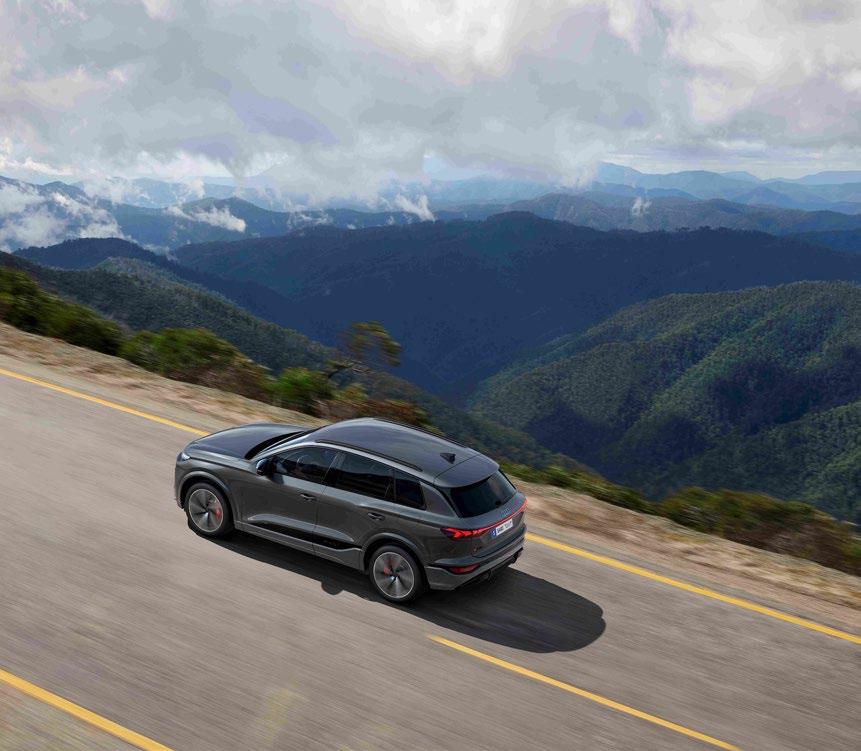
where you usually don’t. The flat floor, the absence of a traditional drivetrain tunnel, and the intelligent layout mean five adults can sit comfortably without compromise. The boot is generous, and there’s even additional storage at the front, which feels like a small but significant reminder that this is a different kind of machine.
When you set off, the immediate impression is not of speed, but of effortlessness. Of course, it is quick. In its higher-output form, particularly in the SQ6 variant, it produces up to 380 kW and will reach 100 km/h in around 4.3 seconds. That’s fast enough to satisfy almost anyone outside of a racetrack. But what matters more is how it delivers that performance. There’s no drama, no theatrics. Just a smooth, continuous surge of acceleration that feels entirely natural.
This is where many electric cars struggle. They deliver astonishing numbers but often feel detached, almost synthetic. The Q6 e-tron manages to avoid that. Part of the reason is its rear-biased torque distribution. Instead of simply pulling itself along with
brute force, it pushes in a way that feels more familiar, more intuitive. There’s a sense of balance to it, particularly when you’re negotiating bends or accelerating out of corners. It’s not a sports car, and it doesn’t pretend to be, but it has enough composure and control to make driving it genuinely satisfying.
The fundamentals are where this car truly makes its case. With a battery capacity of around 100 kWh, it offers a range of up to 625 kilometres under WLTP conditions. Now, real-world driving will vary, as it always does, but this is comfortably within the territory where range anxiety becomes largely irrelevant. You’re no longer planning your journeys around charging stations; you’re simply driving.
And when you do need to charge, the experience is refreshingly straightforward. The 800-volt architecture allows for charging speeds of up to 270 kW, which means a 10 to 80 percent recharge can be achieved in roughly 21 minutes under optimal conditions. That’s not just quick but
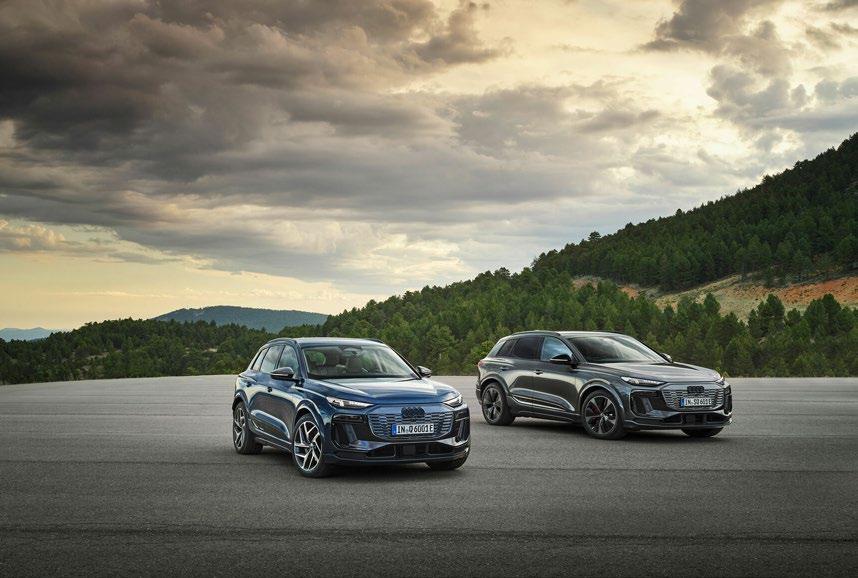
also quite practical. It turns what was once a significant inconvenience into something closer to a routine pause.
There’s also a layer of engineering beneath this that deserves attention. The battery can split into two halves for more efficient charging when needed, and the thermal management system ensures that performance remains consistent even under demanding conditions. These are not headline features, but they are the kinds of details that define how the car behaves over time.
Inside, Audi has taken a careful approach. The temptation with modern interiors is to overwhelm the driver with technology, to create a sense of innovation through sheer quantity. The Q6 e-tron resists that temptation. The so-called “Digital Stage” combines a curved driver display with a central touchscreen and an optional passenger display, all arranged in a way that feels cohesive rather than cluttered.
The augmented reality head-up display is particularly noteworthy. Instead of simply projecting information onto the windscreen, it integrates it into the driver’s field of vision in a way that feels intuitive. Navigation prompts appear as if they are part of the road ahead, reducing the need to glance away from what matters. It’s one of those features that sounds like a gimmick until you use it, and then you realise it’s actually quite useful.
The passenger display, meanwhile, is a clever addition. It allows the person in
the front seat to interact with media and navigation without distracting the driver, thanks to a built-in privacy mode. It’s a small detail, but it reflects a broader philosophy. This is not a car that prioritises spectacle over usability. It’s a car that has been designed to function well in everyday scenarios.
Even the infotainment system reflects this thinking. Built on Android Automotive, it allows for over-the-air updates and integrates third-party apps directly into the system. You’re not constantly reliant on your phone, which feels like a step forward rather than a compromise.
Then there’s the lighting, which is perhaps the most overtly technological aspect of the car. The digital OLED rear lights consist of hundreds of individual segments, capable of creating dynamic patterns and even communicating with other road users in certain situations. It’s an unusual feature, and it could easily have been excessive. But Audi has managed to give it a degree of purpose, particularly in terms of safety and visibility.
On the road, the Q6 e-tron feels composed in a way that suggests a significant amount
of engineering has gone into its chassis. The new front axle design improves steering response, and the overall setup ensures that the car remains stable and predictable across a range of conditions. The regenerative braking system handles the majority of everyday deceleration, making the driving experience smoother and more efficient.
Driver assistance systems are present, as you would expect, but they don’t dominate the experience. Adaptive cruise control, lane guidance, and various safety features operate quietly in the background, enhancing rather than interrupting the act of driving. It’s a subtle but important distinction.
What ultimately defines the Q6 e-tron is not any single feature, but the way everything comes together. There are no glaring weaknesses, no obvious compromises. The performance is strong without being excessive, the range is genuinely useful, the charging is fast enough to be practical, and the interior is modern without being overwhelming.
It doesn’t attempt to reinvent the idea of what a car should be. Instead, it refines it. It takes the advantages of electric mobility and integrates them into a package that feels familiar, intuitive, and complete.
And that is perhaps its greatest strength. Because while many electric vehicles are still trying to convince you of something – whether it’s their performance, their sustainability, or their technological prowess – the Audi Q6 e-tron simply gets on with the job. It doesn’t ask for attention. It earns it.
In the end, this is not a car that relies on drama or novelty. It relies on competence. And in a market that is still finding its footing, that might be the most impressive thing of all.
Valkyrie returns to highspeed Spa as FIA World Endurance Championship warms up for Le Mans
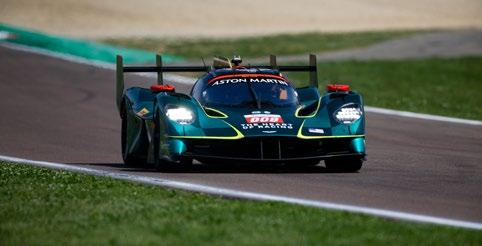
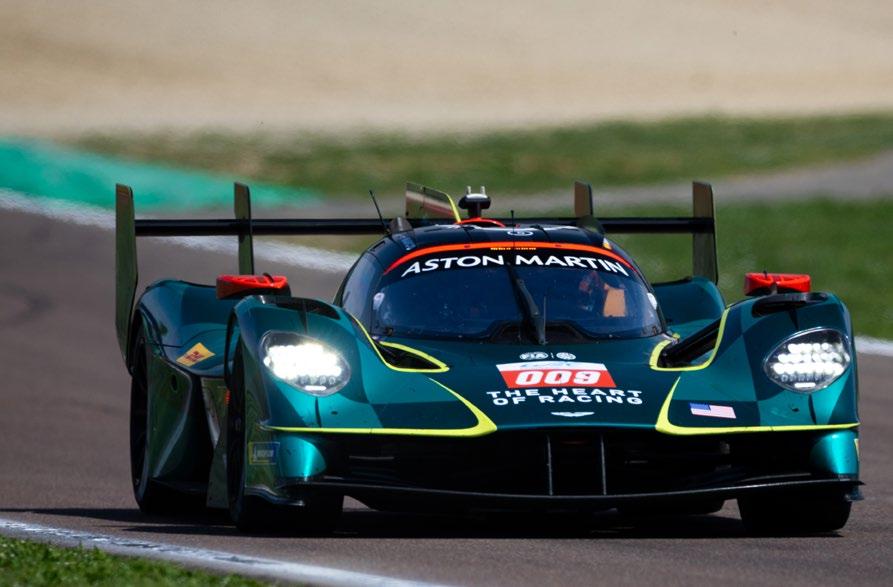
The FIA World Endurance Championship [WEC] returns to action at one of motorsport’s most iconic and challenging venues – the 4.352-mile SpaFrancorchamps circuit, in Belgium’s Ardennes region, for the Total Energies 6 Hours of Spa – as Aston Martin’s stunning Valkyrie Hypercar celebrates its tenth world championship race start on Saturday.
The stunning British hypercar, prepared and operated by the works Aston Martin THOR Team, is embarking on its second WEC season, in 2026. The opening round, at Imola (19 April), provided further evidence of Valkyrie’s growing competitiveness with the car’s third consecutive points finish, having ended its debut WEC campaign in 2025 with back-to-back top-10 results in Japan and Bahrain.
The postponement of March’s scheduled WEC first round in Qatar – now planned for 22-24 October – meant the season started later than usual in mid-April, in Italy, where British duo Harry Tincknell, a double 24 Hours of Le Mans class winner, and former European Le Mans Series champion Tom Gamble finished ninth in their #007 Valkyrie. This marked the pairing’s first world championship points finish for Aston Martin.
Their team-mates, multiple WEC and IMSA GT class race-winner Alex Riberas
A Proven Performer
(ESP) and triple WEC GT champion Marco Sørensen (DEN), who achieved points finishes (Drivers’ or Manufacturers’) on three occasions in 2025, also finished the opening round in 14th position.
The fast and sweeping undulations of Spa present different dynamic challenges to those Valkyrie faced at Imola, and these elements should play into the positive natural high-speed tendencies of the world’s only road-based competition hypercar favourably. But at Spa, nothing can be taken for granted as the classic Belgian track is notorious for its unpredictable weather, and for being a circuit that punishes the smallest error.
Spa also presents Aston Martin THOR with a final chance to prepare for the 94th running of the world’s biggest motor race, the 24 Hours of Le Mans on 13-14 June, at which Valkyrie will aim to add to Aston Martin’s iconic 1959 overall triumph with Roy Salvadori (GBR), Carroll Shelby (USA) and the legendary DBR1 race car.
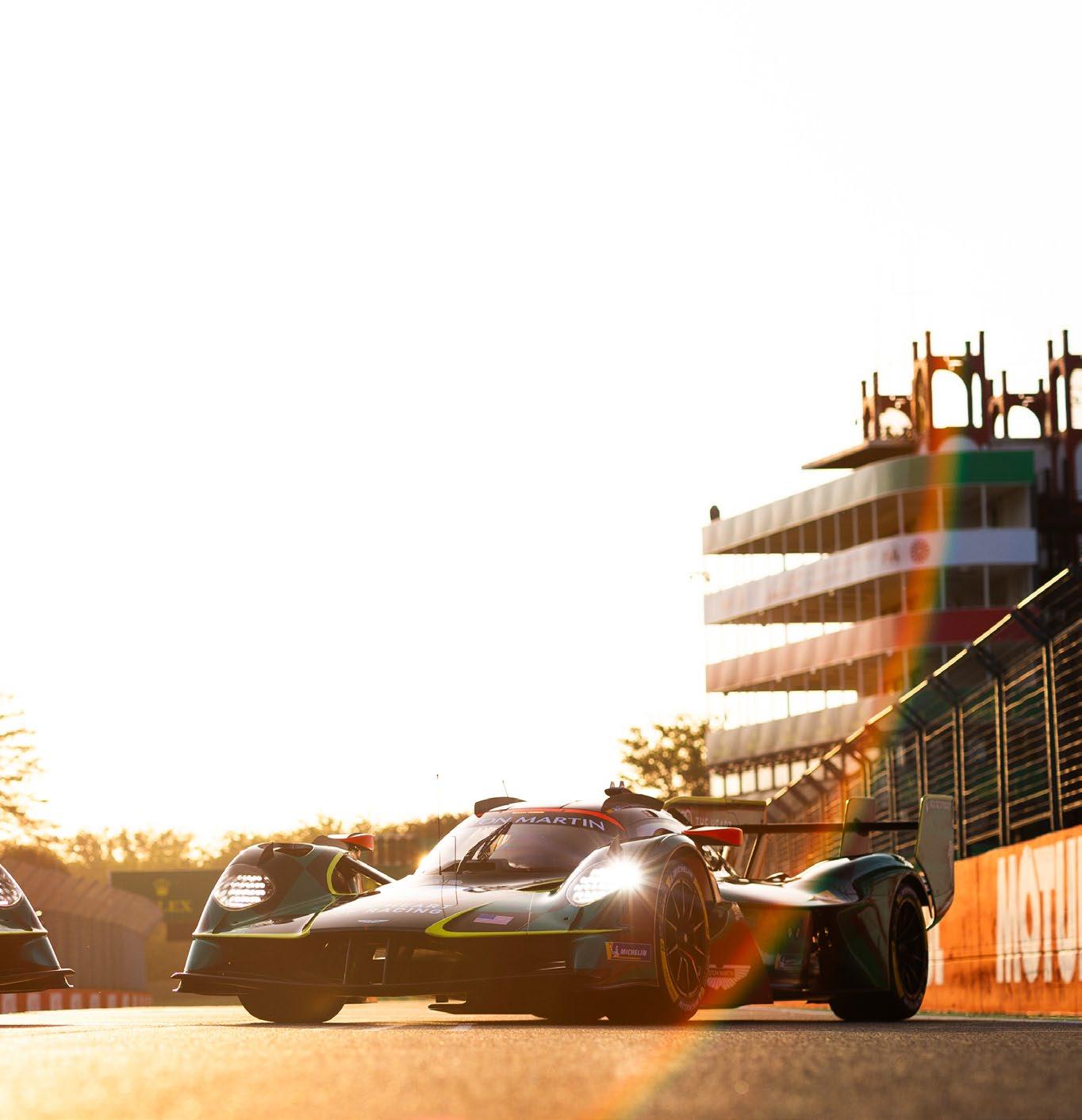
The competition variant of Valkyrie – the pure racing expression of the world’s ultimate road-going hypercar – is developed from its production sibling by Aston Martin and The Heart of Racing [THOR] and blends a race-optimised carbon fibre chassis with a modified 6.5-litre V12 powerplant that revs to 11,000rpm and produces over 1000bhp in standard form, but adheres to a strict
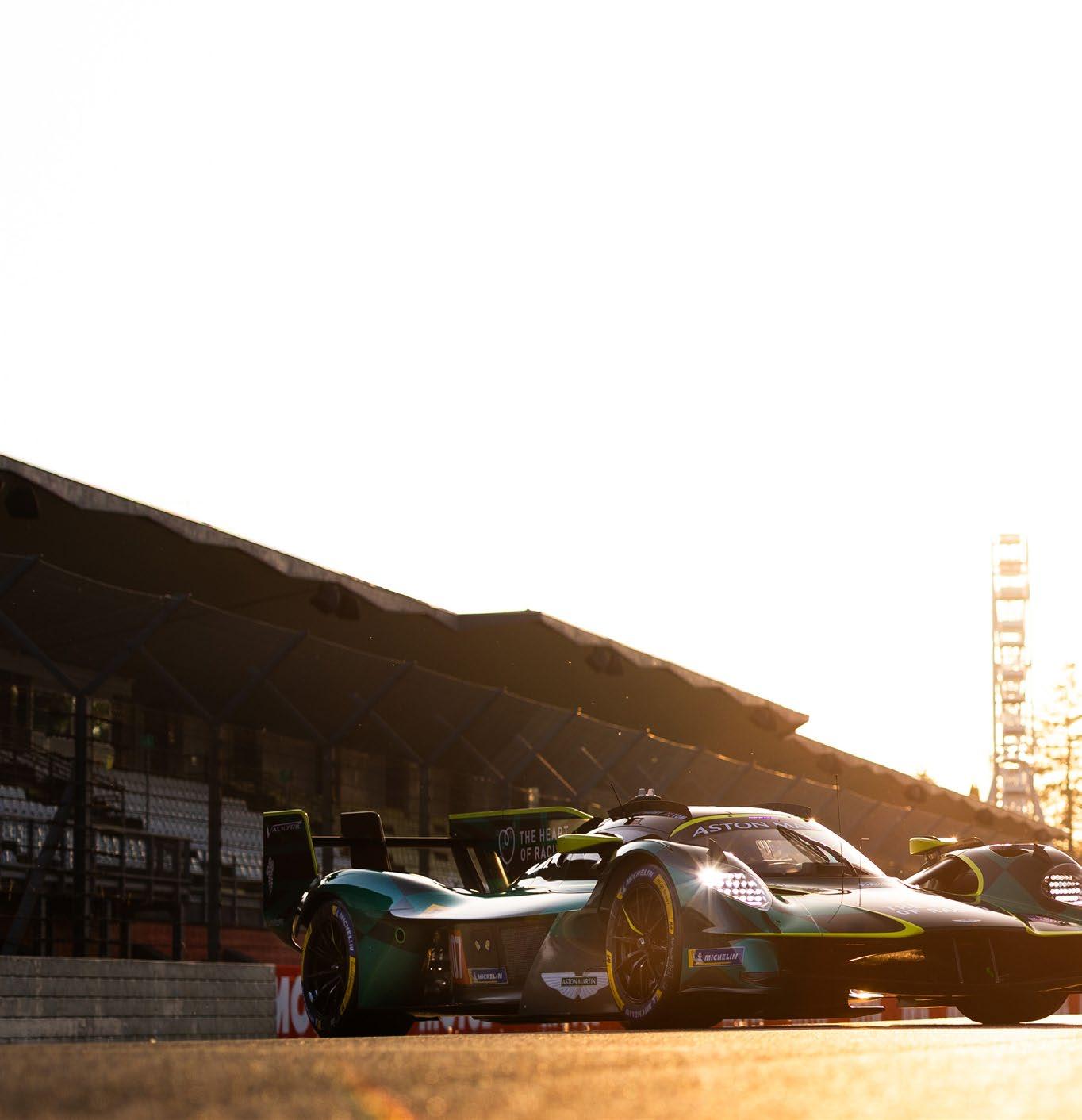
500kw (680bhp) power limit as per the WEC’s hypercar rulebook and IMSA’s GTP regulations.
Harry Tincknell, driver #007 Aston Martin Valkyrie (WEC): “Imola was a good start for the 007, and scoring points straightaway on a track we know didn’t suit the car is a positive sign. It’s a testament to the hard work from all the boys and girls in the team over the winter. Now we go to the fast and flowing Spa, which is one of the most iconic tracks in the world, and it’s a lot smoother which is good for the Valkyrie. We go back this year with a car that we believe can be competitive and we are certainly aiming for points. We’ll also be keeping one eye on our Le Mans preparations, as Spa is one of the tracks most similar in nature, at least in terms of speed.”
Tom Gamble, driver #007 Aston Martin Valkyrie (WEC): “I can’t wait to go back to Spa for the second round of the WEC. It’s the final chance to prepare before the big one – the 24 Hours of Le Mans. We had a strong start to the season, scoring our first points in Imola, so we’re planning to build on that and try and push to finish in the top five. I just want to get started now!”
Alex Riberas, driver #009 Aston Martin Valkyrie (WEC): “I’m very much looking forward to Spa – especially after seeing what we could do in Imola. I think we made a significant step forward and now it’s very exciting to see what the car is capable of on a track like Spa-Francorchamps, which is completely different than what we saw last time out. This is a very important race for us because it is the last race before Le Mans, and usually we get three events to prepare,
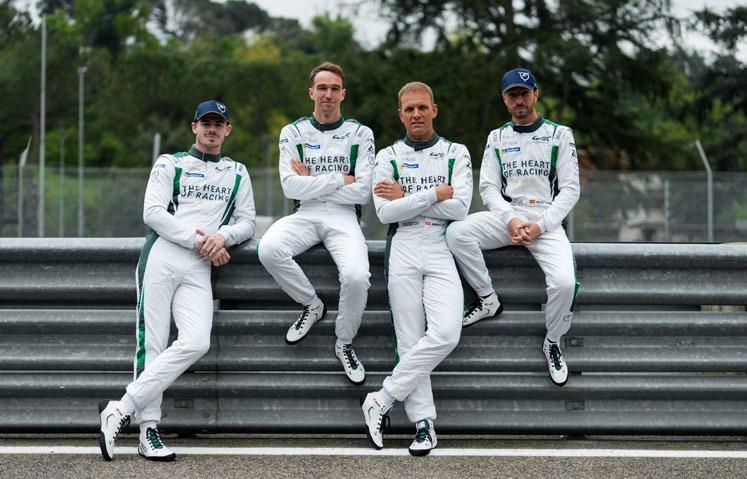
but this time only two. That puts extra pressure on the team and on us drivers, so we must really focus on getting a good clean race with a lot of data gathering so we can be ready for the big challenge.”
Marco Sørensen, driver #009 Aston Martin Valkyrie (WEC): “I’m really looking forward to Spa. I think we got through Imola in a decent way, even though it was probably one of our worst tracks. Heading into Spa, I’m positive and motivated to achieve a good result and I don’t see why we shouldn’t be able to challenge for a really strong result for the car in WEC. And that is for sure what we are going to aim to do. I believe we have the pace. The whole team did a great job in Imola in general and I am looking forward to Spa and reaching the same level but with a better result to reward it.”
Ian James, Team Principal, Aston Martin THOR Team: “It feels as though the team, the drivers and the Aston Martin Valkyrie are on the cusp of achieving the kind of results we know are possible, based on the performance we’ve seen through the events we’ve raced in both sides of the Atlantic so far in 2026. For one reason or another, things have not come together for us. But the plan doesn’t change, we must stay focussed on the tasks in front of us, work to improve as a unit and execute in all areas. If we keep doing this, we will continue to improve in all areas, and in time the results will underline this. On paper Spa is a track that may well suit our car, but in endurance racing, aligning the stars is not just about one aspect of ontrack performance or another, it’s bringing everything together and minimising the impact of any challenges thrown at us. As a team we’re more ready to take advantage of all the hard work and preparation that continues away from the track, than ever before.”
Adam Carter, Aston Martin Head of Endurance Motorsport: “Spa is traditionally the last stop on the calendar before we head to the biggest race in the WEC season, the 24 Hours of Le Mans. That gives the 6 Hours of Belgium additional significance. Every race is important to us, but of course Spa also provides a final data set for us to work with as we return to Le Mans with Valkyrie. A points finish in the opening round at Imola was a good foundation with which to begin the campaign, and if we get everything right this weekend, we believe
the car has the performance to chase more with both cars in Belgium. As I always say, we learn and improve with every race, and that is a good trajectory to be on as we head towards the vital month of June.”
Vantage returns to FIA World Endurance Championship (WEC) action this weekend for the Total Energies 6 Hours of Spa, with two ultra-strong Aston Martin Vantage GT3s – both run by the Heart of Racing Team (THOR) – vying for LMGT3 class podiums at the world famous Belgian track.
Aston Martin has an envious GT pedigree at Spa with Vantage. The British ultraluxury high performance brand’s most successful racing car was the first to win a world championship GTE class race at the circuit in the inaugural 2012 season. It has since won its class a further five times, having also powered driver crews to a further 11 podium appearances. Moreover, it has started from pole position 10 times. Vantage also won the famous Spa 24 Hours outright most recently in 2024.
THOR Team Principal Ian James (GBR), will be looking to bounce back from a frustrating start to the season with the #27 Vantage at Imola, where the front-running car did not finish, alongside works driver Mattia Drudi (ITA), and the 2021 IMSA GTD champion, 2023 European Le Mans Series LMGTE title winner, and polesitter at this year’s Rolex 24 at Daytona, Zach Robichon (CAN).
James has been a part of every one of his
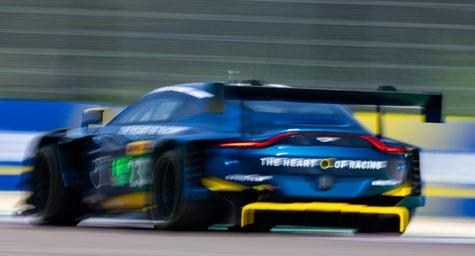
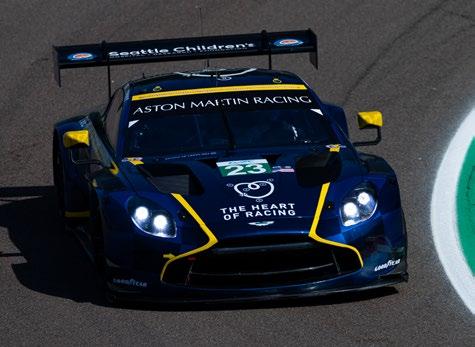
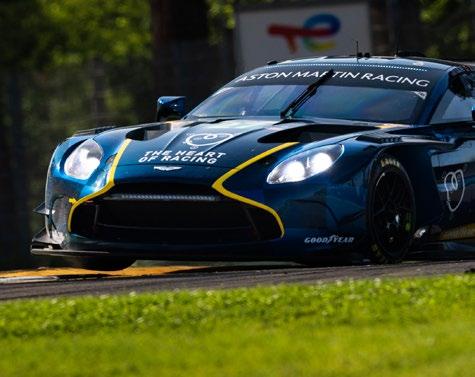
team’s WEC driver line-ups since its debut in Belgium in 2023 and is targeting his first Spa-Francorchamps podium finish in the event this year as he looks to build points into his campaign ahead of the 24 Hours of Le Mans.
Returning to WEC and making his series debut for THOR will be IMSA GTD championship leader Dudu Barrichello (BRA), who joins series rookie Gray Newell in the #23 Vantage. Both will share the car with two-time 24 Hours of Le Mans GT class winner and four-time British GT champion Jonny Adam (GBR).
Sharing the mechanical architecture of the ultra-luxury Vantage road car, the Vantage GT3, which triumphed at last year’s 24 Hours of Spa – the world’s most prestigious GT3-only event, is built around Aston Martin’s proven bonded aluminium chassis and powered by its fearsome twin-turbo 4.0-litre V8 engine.
BANK MUSCAT INTRODUCES PERSONAL INSTANT LOAN THROUGH MOBILE BANKING
Reinforcing its prominent position in Oman’s banking sector, Bank Muscat, the leading financial services provider in the Sultanate of Oman, continues to strengthen its role as a key driver of digital transformation in the country. This is driven by the proactive adoption of advanced banking technologies and the development of smart solutions that meet evolving customers’ expectations while enhancing service efficiency. These efforts form part of an integrated vision to deliver modern, secure, and seamless banking experiences, elevate service standards, and reinforce leadership and innovation in the local market.
In line with this approach, the Bank has announced the launch of an instant digital loan service through its Mobile Banking application. This initiative represents a significant milestone, underscoring Bank Muscat’s commitment to digital excellence and sustainable innovation.
The new service enables eligible customers to avail personal loans with disbursal of the approved amount instantly, without the need to visit branches or complete paper-based procedures. Upon application verification through one-time password (OTP), the financing amount is credited directly to the customer’s account through simple and seamless process within the application.
Loan eligibility is assessed automatically in line with the Bank’s credit policy and the loan is processed instantly if the requirements are met. Customers will also benefit from credit life insurance coverage, competitive transaction fees and instant access to loan details and repayment schedules through the Mobile Banking application. All related forms and documents are generated electronically and sent to the customer’s

registered email address. Commenting on the launch, Abdullah bin Hamood Al Jufaili, Assistant General Manager, Digital Banking at Bank Muscat, said: “We continue to advance our digital transformation vision by adopting smart technologies that redefine the banking customer experience, placing speed, efficiency, and transparency at the core of our services. The launch of personal financing through the Mobile Banking application reflects our strategic focus on enabling customers to complete their transactions with ease and security, without the need for traditional procedures or branch visits.”
This service reflects the bank ability to proactively leverage technology and enhance service reliability, supporting
the Bank’s leadership and aligning with market expectations in the coming phase. Besides, this qualitative shift in the delivery of digital banking services is expected to open new opportunities for customers, drive strong adoption, and contribute significantly to accelerating the Bank’s digital transformation journey.
Through this advanced digital service, Bank Muscat reaffirms its commitment to redefining the banking customer experience by delivering smart solutions that align with modern lifestyles, enhance service efficiency, and significantly reduce transaction turnaround times reflecting the Bank’s vision to lead the future of digital banking in Sultanate of Oman.
Raising the bar
Porsche development driver Lars Kern sets a lap record for electric executive cars at the wheel of a Taycan Turbo GT with Weissach Package
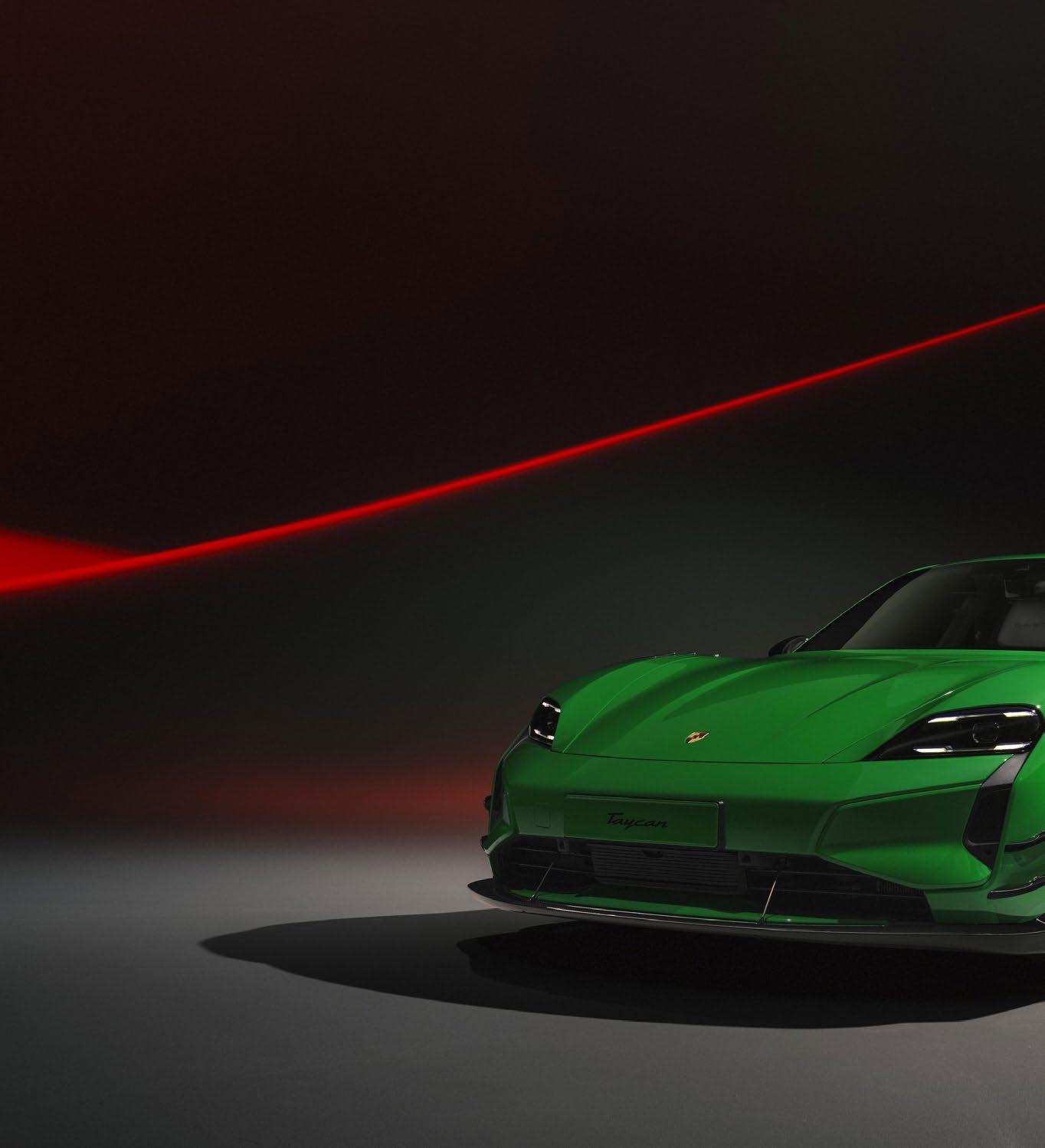
AManthey kit specially developed for the circuit is already available for many Porsche GT models. Now, for the first time, Porsche is introducing such a kit for an electric sports car, elevating the Taycan Turbo GT with Weissach Package to an even higher level of performance.
Porsche test driver Lars Kern has already set a new record on the Nordschleife with the Manthey Kit, which will be available to order from June as a retrofit kit for all examples of the Taycan Turbo GT with Weissach Package.
“With the new Manthey Kit, we are offering a unique upgrade for the Taycan Turbo GT. The small but impactful project team from Manthey and Porsche has succeeded in transferring the Manthey DNA into a kit for electric vehicles. This effort has culminated
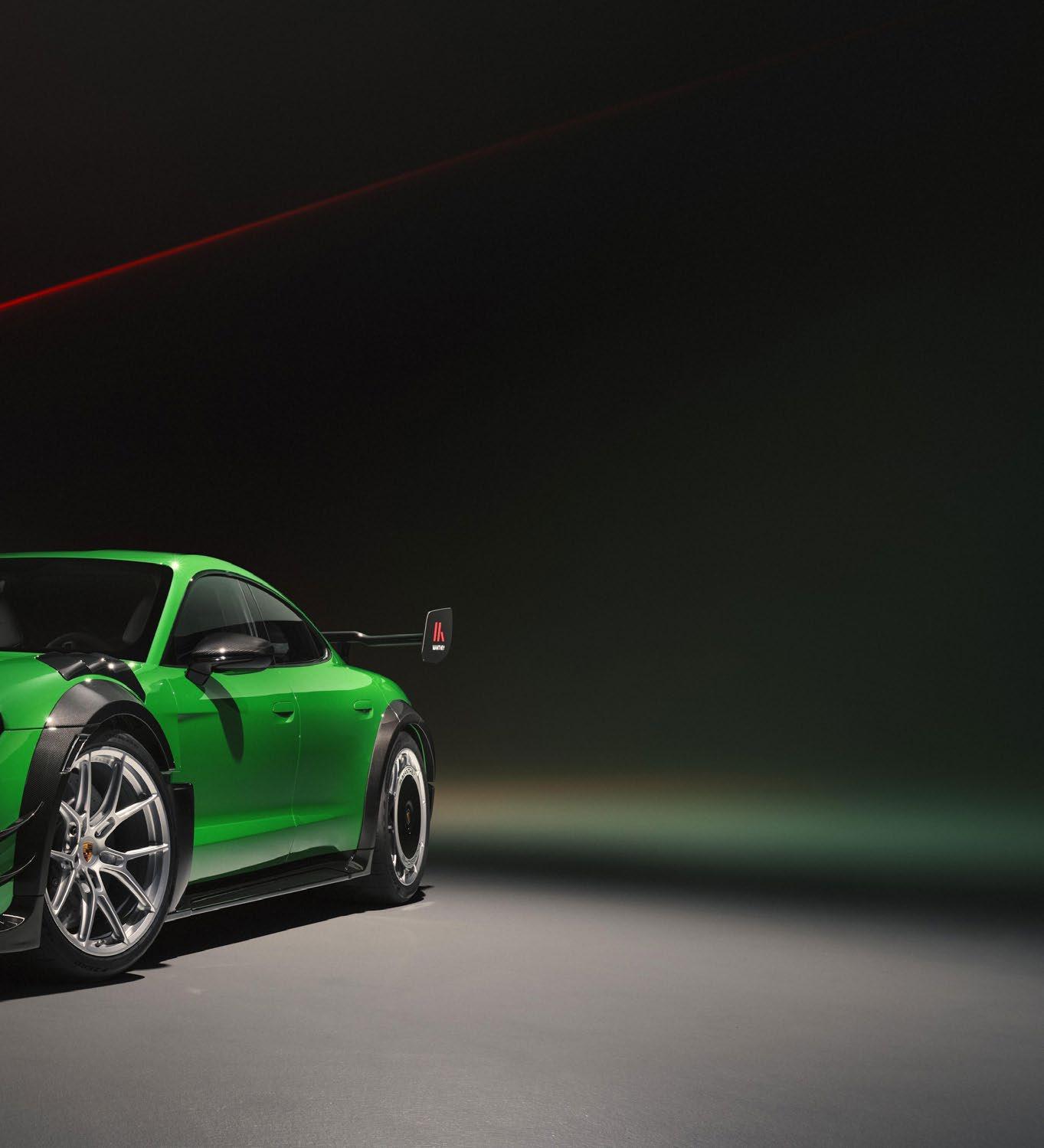
in an impressive new Nordschleife record,” says Kevin Giek, Head of the Taycan model line.
With the Manthey Kit, Porsche development driver Lars Kern has set a lap record for electric executive cars on the Nürburgring-Nordschleife at the wheel of a Taycan Turbo GT with Weissach Package, with a time of 6:55.533 minutes. Extensive aerodynamic measures increase downforce by more than three times compared to the standard model. The suspension and drive system have also been optimised: at 600
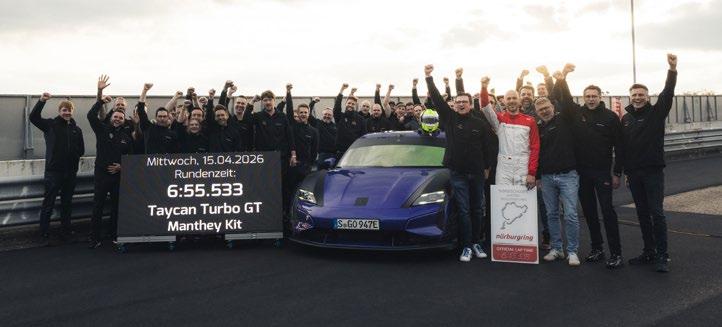
kW, the power output is 20 kW higher than the standard model. The ten-second power boost known as Attack Mode now delivers up to 130 kW.
A new lap record on the legendary Nürburgring-Nordschleife underscores the impressive dynamic qualities of the new Manthey Kit. With Porsche development driver Lars Kern at the wheel, an electric GT sports car equipped with the Manthey Kit lapped the 20.832 km circuit in the Eifel region in 6:55.533 minutes – that’s more than nine seconds faster than the previous record for electric executive cars. At the same time, Kern beat his own record set in October 2023 with a Taycan Turbo GT with Weissach Package by 12 seconds. A notary present on site certified the lap time.
“The Manthey Kit turns the Taycan Turbo GT with Weissach Package into the ultimate track tool. On the Nordschleife, you can feel how much more stability and confidence the car offers in fast sections and when braking,” says Kern. “Thanks to the significantly enhanced aerodynamics, tyres with even greater performance, and increased overboost power available at the touch of a button, we were able to beat our previous best times.” For example, on the section of track between the Lauda-Links and Bergwerk corners, the development driver was a full 14 km/h faster than on his previous record lap.
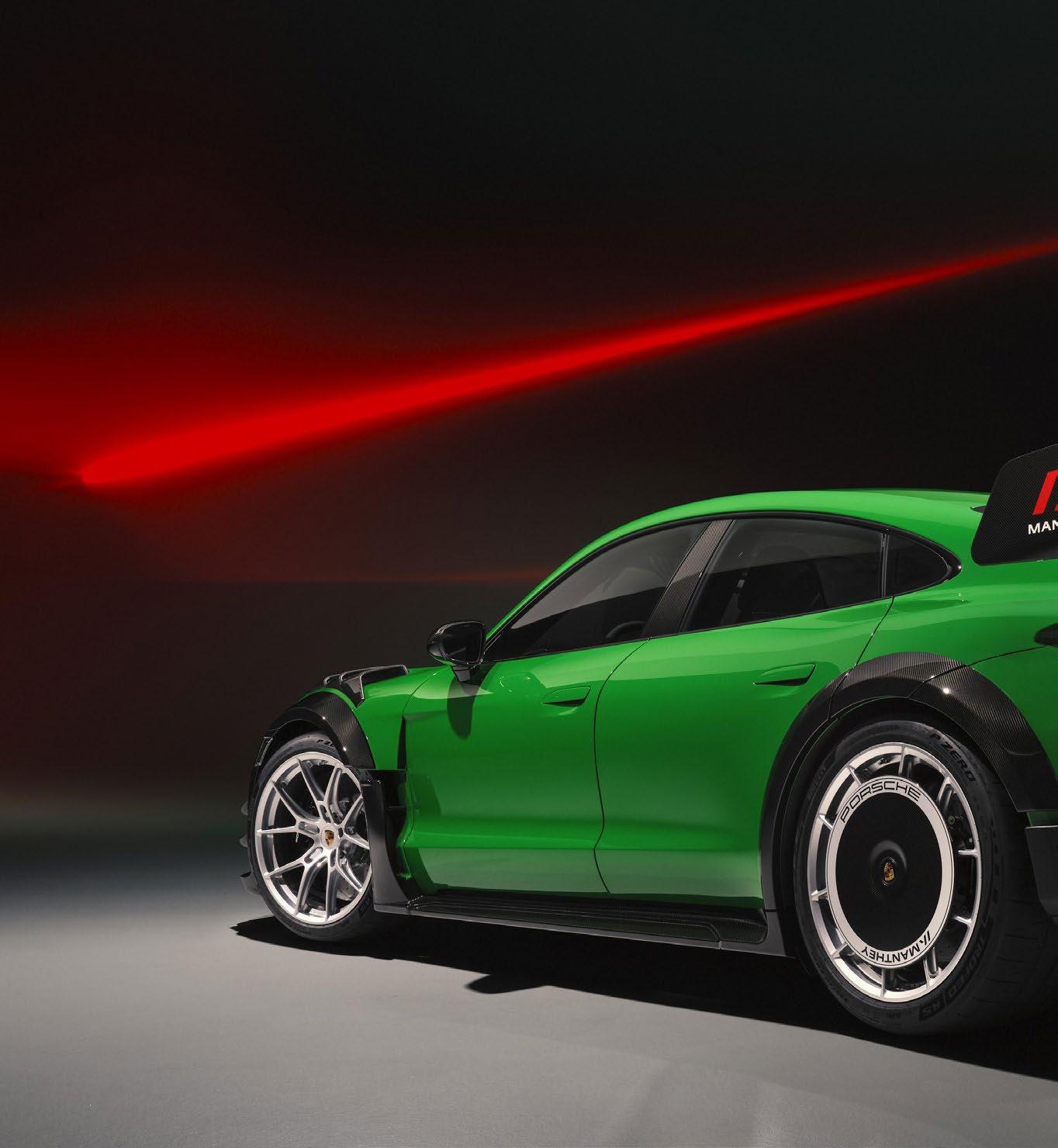
“Our goal was to further enhance the already exceptional performance of the Taycan Turbo GT specifically for use on the racetrack,” explains Christian Müller, Technical Project Manager for Taycan special vehicles at Porsche. “Together with the experts from Manthey, we have comprehensively tuned the aerodynamics and suspension, as well as the wheel/ tyre combination, for maximum circuit performance.
The performance kit offers increased aerodynamic downforce, an even more powerful drivetrain and modified suspension. The driving dynamics systems have been retuned and are designed for the lightweight wheels developed for the Manthey Kit, fitted with special track tyres (Pirelli P ZERO Trofeo RS). The new Manthey Kit was developed in close collaboration between the Porsche Development Centre in Weissach and the Manthey engineers in Meuspath.
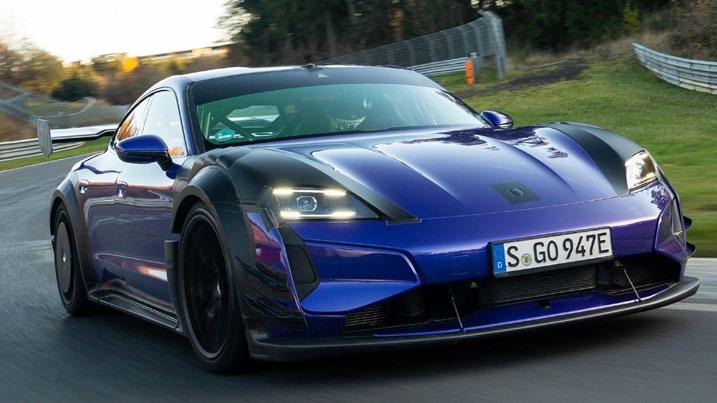
At the heart of the modifications is a comprehensive aerodynamic update that increases downforce by more than three times compared to the standard car. At 200 km/h, the total downforce has been increased from 95 to 310 kilograms. And when travelling at the top speed, which has increased from 305 to 310 km/h, the Taycan Turbo GT with Manthey Kit produces about 740 kg of total downforce. This enables higher cornering speeds and ensures optimum vehicle stability.
The kit’s key aerodynamic components include a new rear wing with enlarged end plates, an optimised front diffuser, a high-
performance rear diffuser with extended fins, and enlarged air deflectors on the underbody. In addition, carbon aerodiscs on the rear wheels improve aerodynamic efficiency. Adjustments to the rear wing and front diffuser allow the driver to choose between a setup with little or a lot of downforce for the circuit.
For the first time, the Manthey Kit also includes adjustments to the powertrain: optimisations to the high-voltage battery, control unit and pulse inverters increase the maximum discharge current while driving from 1,100 to 1,300 amps. This increases the system output by 20 kW to 600 kW,
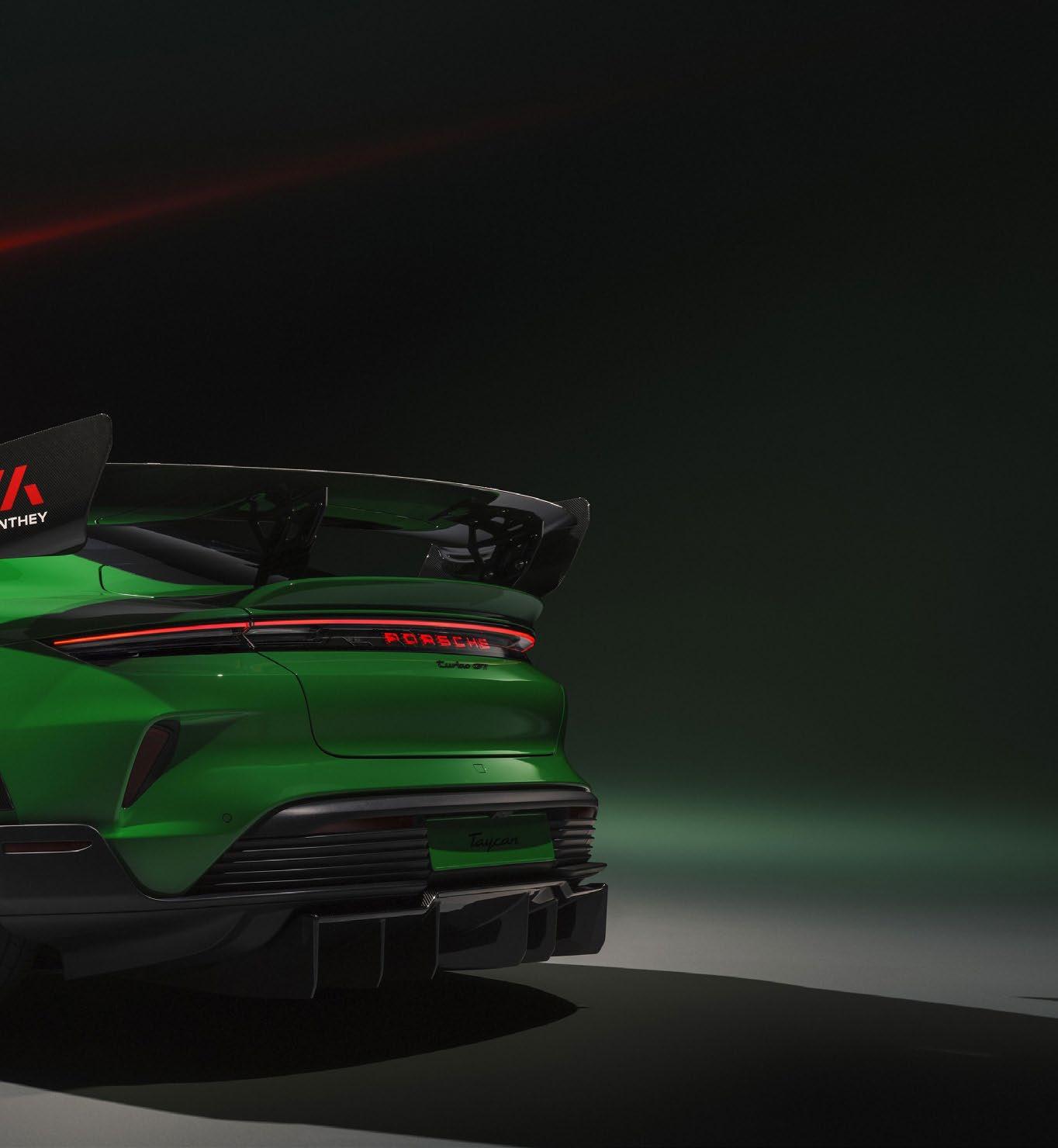
while the maximum torque when using Launch Control rises to 1,270 Nm (plus 30 Nm). If the driver activates Attack Mode, an additional power boost of up to 130 kW is available for a short time. The 10-second output therefore temporarily increases to 730 kW instead of 700 kW.
The high-performance package also includes newly developed, optimised 21inch ‘Manthey’ design forged aluminium wheels. Despite their larger dimensions, they are lighter than the standard wheels. Including the titanium wheel bolts, which further reduce unsprung masses, they weigh a total of more than three kilograms less than the already weightoptimised wheels of the Taycan Turbo GT with Weissach Package. Road-legal track tyres are available as an option, which are four centimetres wider on the front axle and three centimetres wider on the rear compared to the Turbo GT.
A specially developed driving dynamics set-up for Porsche Active Ride, front- and rear-axle steering and all-wheel drive significantly improve agility, cornering grip and steering precision. The new braking system with larger discs (440 millimetres at the front, 410 mm at the rear) and performance brake pads delivers even greater rates of deceleration.
Visually, numerous add-on parts made of high-quality exposed carbon fibre emphasise the car’s motorsport character. These include, for example, the upper and lower wheel arch vents, the front and rear wheel arch extensions, the widened side skirts and the rear wing. As a result, the Manthey kit adheres even more closely to the Porsche Intelligent Performance approach to optimising lateral and longitudinal dynamic potential.
a Legacy Celebrating
Nissan Z Heritage Edition debuts in the Middle East with distinctive GT-R-inspired styling

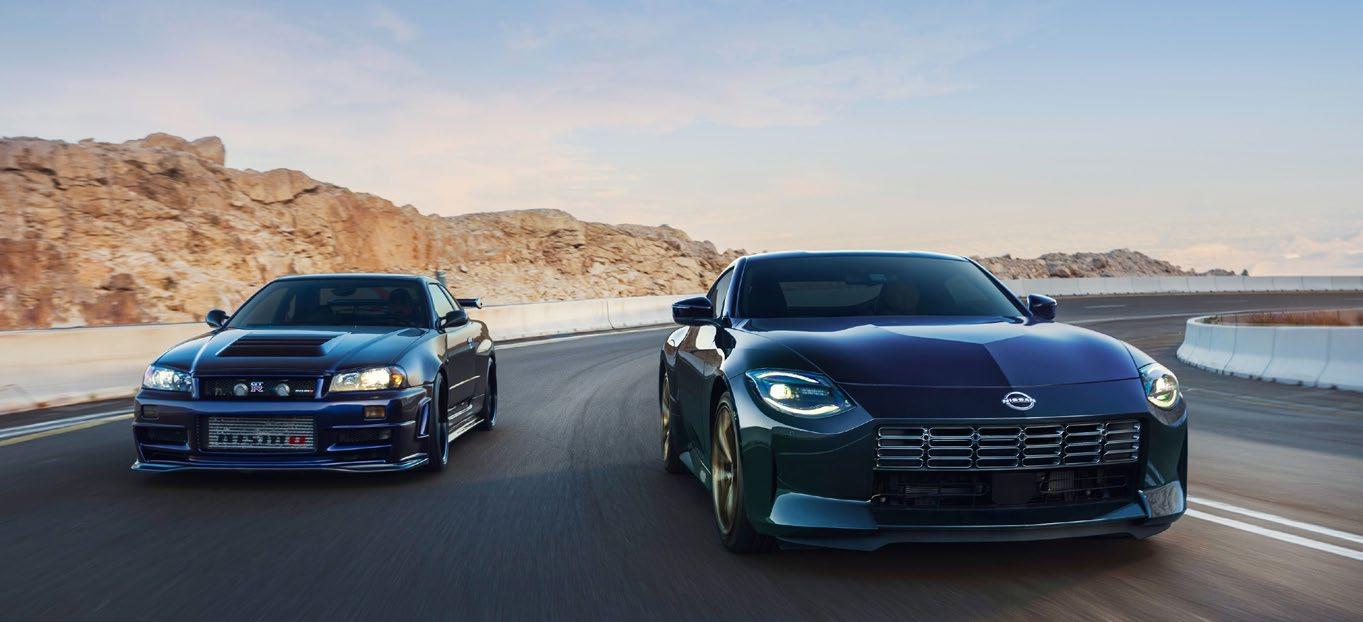
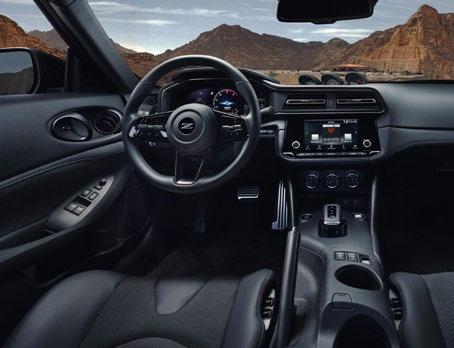
Nissan has announced the arrival of the new 2026
Nissan Z Heritage Edition in the Middle East, marking the regional debut of a special edition that celebrates the brand’s performance heritage. Introduced as a distinctive addition to the Z line-up, the limited production Heritage Edition draws inspiration from Nissan’s high-performance legacy, including design cues linked to the iconic GT-R, offering enthusiasts in the region a model designed to resonate with a deep appreciation for performance
heritage. Based on the seventh-generation Nissan Z, the Heritage Edition is defined by focused exterior enhancements that elevate its visual presence while remaining true to the model’s design philosophy. Finished in Midnight Purple, an iconic exterior color first introduced on the legendary Nissan GT-R, the model is complemented by bronze 19-inch RAYS alloy wheels, reinforcing its motorsport-inspired character and exclusivity.
Speaking on the arrival of the new special edition, Thierry Sabbagh, Divisional Vice
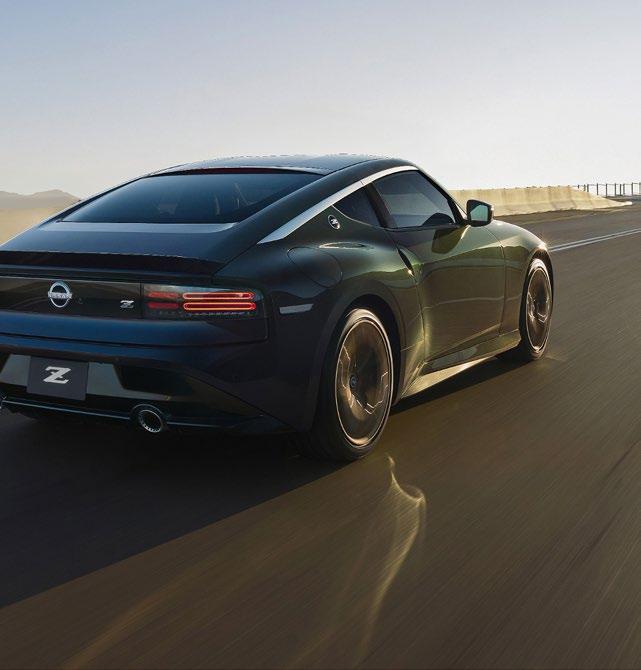
President and President, Middle East, KSA, CIS and India – Nissan and INFINITI, said:
“The Middle East has long been home to one of the world’s most passionate communities of performance car enthusiasts. With the Nissan Z Heritage Edition, we are offering customers in the region a model that speaks directly to this passion, combining the legacy of the Z with design inspiration drawn from the legendary GT-R. This special edition has been introduced for drivers who value heritage and driving excitement, reinforcing our commitment to delivering vehicles that resonate strongly with our customers in the Middle East.”
While the Midnight Purple exterior and bronze RAYS wheels establish a clear link to Nissan’s GT-R lineage, the overall design of the Z Heritage Edition continues to reflect the evolution of the Z nameplate. Its long-hood, short-deck proportions and driver-focused stance pay homage to earlier generations, including visual cues inspired by the fourth-generation Z, the 300ZX (Z32) Inside the cabin, the Z delivers a driver-centric cockpit that blends modern technology with classic Z-inspired details. A 12.3-inch customizable digital meter display, three analog pod gauges and intuitive control placement reinforce the strong
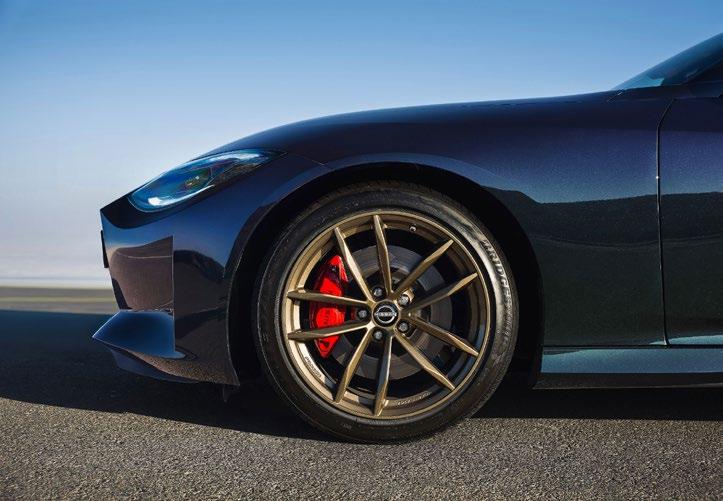
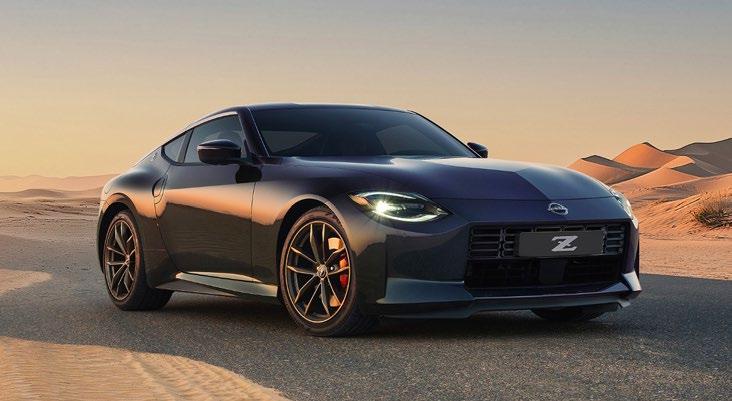
human-machine bond that has defined the Z experience for more than five decades. Power comes from a 3.0-litre V6 twinturbo engine producing 400 horsepower at 6,400 rpm and 475 Nm of torque from 1,600 to 5,600 rpm, delivering responsive performance across a wide rev range. In the Middle East, the Nissan Z Heritage Edition will be available with a choice of 6-speed close-ratio manual transmission, equipped with an advanced launch assist control system to optimize acceleration and manage wheelspin, or a 9-speed automatic transmission that delivers direct and quick acceleration through a wide gear ratio spread. Complementing its performance credentials, the Nissan Z Heritage Edition features a comprehensive suite of driver assistance and safety technologies, including Automatic Emergency Braking with Pedestrian Detection, Blind Spot Warning, Lane Departure Warning, Rear
Cross Traffic Alert, High Beam Assist and Intelligent Forward Collision Warning. Connectivity and in-cabin entertainment are supported by an 8-speaker Bose® Audio System and an 8.0-inch touchscreen with navigation, Apple CarPlay®, Android Auto™ and Bluetooth® hands-free phone system with audio streaming capabilities.
The Nissan Z Heritage Edition joins the Nissan Z and Nissan Z NISMO as part of Nissan’s sports car line-up in the Middle East, further strengthening the brand’s performance offering in the region. Offered in limited production across the Middle East, the Z Heritage Edition provides enthusiasts with a rare opportunity to own a distinctive interpretation of Nissan performance heritage. The complete Nissan Z range is available for purchase across Nissan’s authorized dealer network in the Middle East.
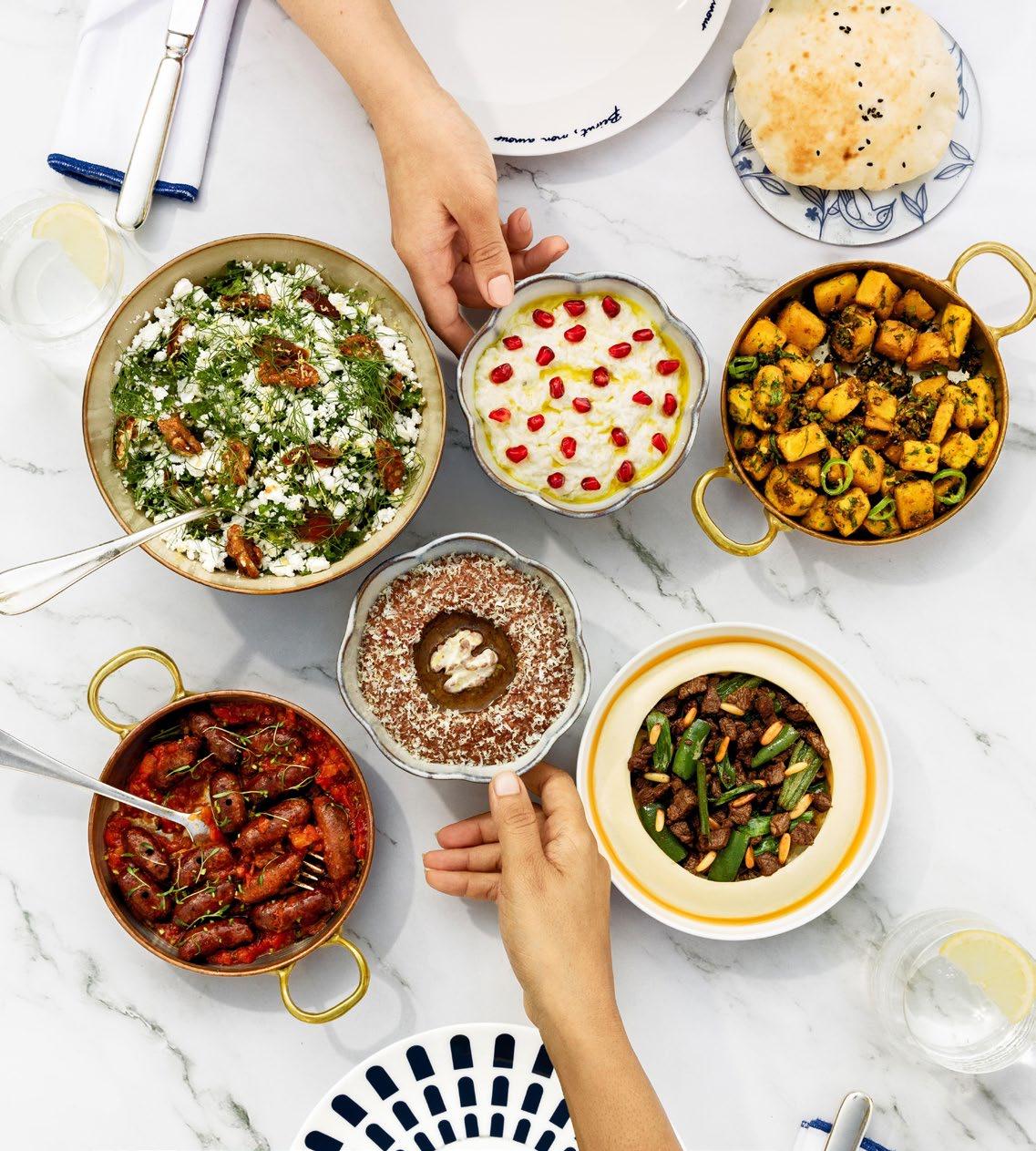
A LEBANESE SPREAD, REIMAGINED FOR MUSCAT
In Muscat’s luxury dining scene, Em Sherif Oman has, over the past two years, established itself as a destination where Lebanese tradition, culinary heritage and refined hospitality come together with the signature Em Sherif touch. More than a restaurant, it offers a dining experience shaped by elegance, generosity and celebration, where every table reflects the art of Lebanese dining.
The experience at Em Sherif Oman is a tribute to the abundance and spirit of the Lebanese shared table. Each meticulously crafted dish brings together authenticity and beauty, delivering a culinary journey that feels both elevated and deeply connected to its cultural roots. Thoughtfully tailored for Muscat’s discerning patrons, the restaurant captures the essence of Em Sherif’s global reputation for creating moments defined by warmth, flavour and significance.
At the heart of this philosophy is a dedication to honouring Lebanese culinary traditions through refinement, emotion and creativity. The concept, originally envisioned by Founder Mireille Hayek and brought to life through the artistry of Executive Head Chef Yasmina Hayek, presents beloved recipes with a timeless sensibility while preserving their integrity and soul. The brand’s distinctive identity celebrates the ritual, memory and generosity of Lebanese dining, brought to life in Oman by a passionate and attentive team.
Its presence in the Sultanate feels especially resonant. Omani culture, with its deep appreciation for hospitality, gathering and generosity, offers a natural home for a concept so grounded in grace and custom. Em Sherif Oman has firmly established its place in Muscat, welcoming guests into a world where Lebanese legacy is expressed with unmistakable character, elegance and warmth.
Driven by a distinguished culinary team and inspired by the brand’s creative legacy, Em Sherif Oman continues to stand apart for its ability to transform dining into an occasion. The experience is one of intentional detail and balanced contrast: precise yet abundant, polished yet soulful. It is an invitation to discover Lebanese cuisine in a way that is both enduringly memorable and deeply celebratory of heritage.
Luxury in 2026 is undergoing a profound transformation. No longer defined solely by heritage brands, high price tags, or visible logos, it is being reshaped by a new generation of consumers, rapid technological innovation, and shifting global values. What once symbolised status through ownership is now increasingly expressed through experience, personalisation and purpose.
The modern luxury consumer is more informed, more selective, and intentional. As a result, brands are being challenged to evolve, moving beyond traditional notions of exclusivity to create deeper emotional connections, deliver meaningful value, and remain relevant in an increasingly complex world.
This year marks a pivotal moment where luxury is not just being consumed, but being redefined.
The New Codes of Prestige
From discreet wealth and immersive experiences to AI-powered personalisation and investment-driven buying, luxury is undergoing a profound shift. A look at the trends shaping the lifestyle market in 2026
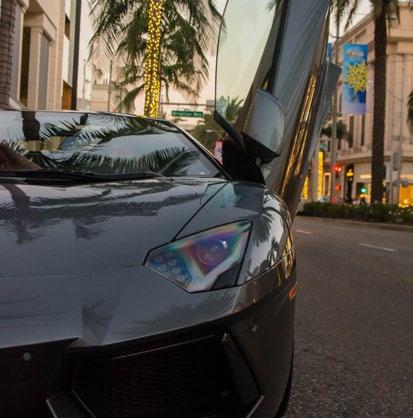
THE RISE OF DISCREET WEALTH: PRIVACY AS THE ULTIMATE LUXURY
In a hyper-connected world, privacy has emerged as one of the most powerful new status symbols. As digital ecosystems expand and AI-driven personalisation becomes more sophisticated, affluent consumers are becoming increasingly cautious about how their data is used.
Industry observations show that luxury clients are actively seeking greater control, transparency, and confidentiality in their interactions with brands. This shift is redefining exclusivity. It is no longer just about access—it is about control over visibility.
Luxury brands are responding by building private ecosystems, invitation-only services, and more secure customer environments. The appeal lies not only in exclusivity, but also in the reassurance that one’s lifestyle can remain shielded from constant exposure. Discretion, once subtle, is now a defining pillar of luxury.
FROM DREAM TO DESIRE: THE CREATIVE IMPERATIVE
At its core, luxury has always been about aspiration. Yet in today’s environment, maintaining that sense of wonder is becoming increasingly challenging. As Bruno Pavlovsky, President of Fashion at Chanel, explains, “We have to continue to

make people dream. If luxury dulls itself, it ceases to be luxury.”
This insight captures a central tension in 2026; brands must navigate economic uncertainty while still delivering creativity and inspiration. Consumers today are not just buying products; they are buying into stories, emotions, and imagination. The ability to inspire desire remains the most critical currency in luxury.
FROM QUIET LUXURY TO BOLD INDIVIDUALITY
After years dominated by minimalism and understated elegance, luxury is entering a new phase of expressive individuality.
Consumers are moving away from subtle signals of wealth and embracing bold, distinctive styles that reflect personal identity. This shift is fueling demand for customization, limited editions, and bespoke creations. As industry leaders emphasize, the challenge is not simply reinvention, but meaningful evolution.
Hélène Poulit-Duquesne, CEO of Boucheron, notes, “Reinvention is a discipline, evolve without losing core.” This balance between innovation and heritage is becoming essential. Brands that can evolve while preserving authenticity are the ones that resonate most strongly.
THE EXPERIENCE ECONOMY TAKES CENTER STAGE
One of the most significant shifts in luxury is the move from ownership to experience. According to industry insights, customer experience and emotional engagement are now among the strongest drivers of growth, with brands investing heavily in immersive retail and curated journeys.
Luxury is no longer confined to products. It extends to private travel experiences, exclusive events, high-touch, personalised services. The goal is to create memorable, emotional connections that go beyond transactional relationships.
This evolution reflects a deeper truth, luxury is increasingly defined by how it makes people feel, not just what they own.
TECHNOLOGY MEETS CRAFTSMANSHIP
While artisanship remains central to luxury, technology is redefining how it is delivered. Artificial intelligence, data analytics, and digital platforms are enabling brands to create highly personalised experiences. From AI-powered recommendations to virtual showrooms, technology is enhancing both accessibility and exclusivity.
At the same time, innovation is being applied to materials, sustainability, and production processes. Industry leaders highlight that the future lies in blending tradition with innovation. AI adoption, in particular, is accelerating across the sector, becoming a core driver of transformation. The brands that succeed will be those that combine heritage craftsmanship with digital intelligence.
THE ERA OF EARNED LUXURY
Luxury is no longer taken at face value, it must be justified. Consumers are increasingly scrutinising pricing, authenticity and brand values. Transparency has become essential, and trust is emerging as a critical differentiator.
As highlighted in industry research, clients

are more selective, traditional status signals are losing impact, authenticity and credibility are becoming central to desirability.
This shift marks the rise of “earned luxury,” where brands must continuously prove their relevance and value. Prestige alone is no longer enough.
CIRCULAR LUXURY AND THE RISE OF RESALE
The luxury resale market is rapidly gaining momentum, reflecting a broader shift toward sustainability and conscious consumption.
Many brands are now integrating circular models into their strategies, including repair and refurbishment services, certified pre-owned programs, partnerships with resale platforms.
In fact, a significant proportion of luxury companies are already participating in circular ecosystems. This evolution is changing perceptions. Pre-owned luxury is no longer secondary; it is a legitimate and often desirable way to engage with brands.
LUXURY AS AN INVESTMENT
In an uncertain economic environment, luxury is increasingly viewed as a store of value. High-end goods particularly watches, jewelry, and rare items are being treated as investment assets. Consumers
are considering not just the aesthetic appeal of products, but also their longterm worth.
This perspective aligns with the philosophy of Bernard Arnault, Chairman of LVMH, “A good product can last forever.” Longevity, quality, and timeless design are becoming key drivers of purchasing decisions. Luxury, in this context, is both emotional and financial.
HYPER-PERSONALISATION
Personalisation has evolved from a value-added service to a fundamental expectation. Luxury consumers now demand experiences that are tailored to their individual preferences, behaviors, and lifestyles. Brands are leveraging data and AI to deliver bespoke products and customised service.
This shift is part of a broader move toward relationship-driven luxury, where long-term

engagement matters more than one-time transactions. The objective is simple to make every customer feel uniquely valued.
NOSTALGIA AND HERITAGE REVIVAL
As the industry evolves, there is a renewed appreciation for heritage and tradition. Brands are revisiting their archives, reinterpreting classic designs, and emphasizing artisanship to create a sense of continuity and authenticity.
This trend reflects a desire for stability in a rapidly changing world. Consumers are drawn to products that carry meaning, history, and cultural significance. Heritage, once seen as a legacy, is now a strategic advantage.
A MORE MEASURED GROWTH TRAJECTORY
While the luxury sector continues to grow, the pace is becoming more moderate
and selective. Industry forecasts suggest steady but cautious expansion, with brands focusing on value rather than volume.
At the same time, challenges such as price sensitivity among aspirational consumers, economic uncertainty and shifting global demand remain.
Recent market analysis indicates that aggressive pricing strategies have in some cases, alienated key customer segments, forcing brands to rethink their approach. This is leading to a more disciplined, strategic industry, one that prioritises longterm sustainability over rapid growth.
A NEW DEFINITION OF LUXURY
Luxury in 2026 is no longer defined by excess, visibility, or even ownership. It is a more nuanced, multifaceted concept shaped by evolving consumer values and global dynamics. Today’s luxury consumer seeks privacy over publicity, experience over possession, authenticity over image, personal meaning over mass prestige.
As Bruno Pavlovsky aptly puts it, the essence of luxury lies in its ability to inspire—to create desire, emotion, and imagination. For brands, the path forward is clear but challenging. Success will depend on their ability to balance heritage with innovation, deliver value with authenticity, and build relationships with intention.
Ultimately, luxury is becoming more human. It is less about what you have and more about what it means. As the definition of luxury continues to evolve, one thing remains constant, its ability to reflect the values of its time. In 2026, those values are clear authenticity, individuality, and purpose.
EXPERIENCE THE MEMORABLE
Maxx Royal Bodrum the luxury resort in Göltürkbükü welcomes guests back to the Aegean for a new season of refined coastal escapes on the Turkish Riviera
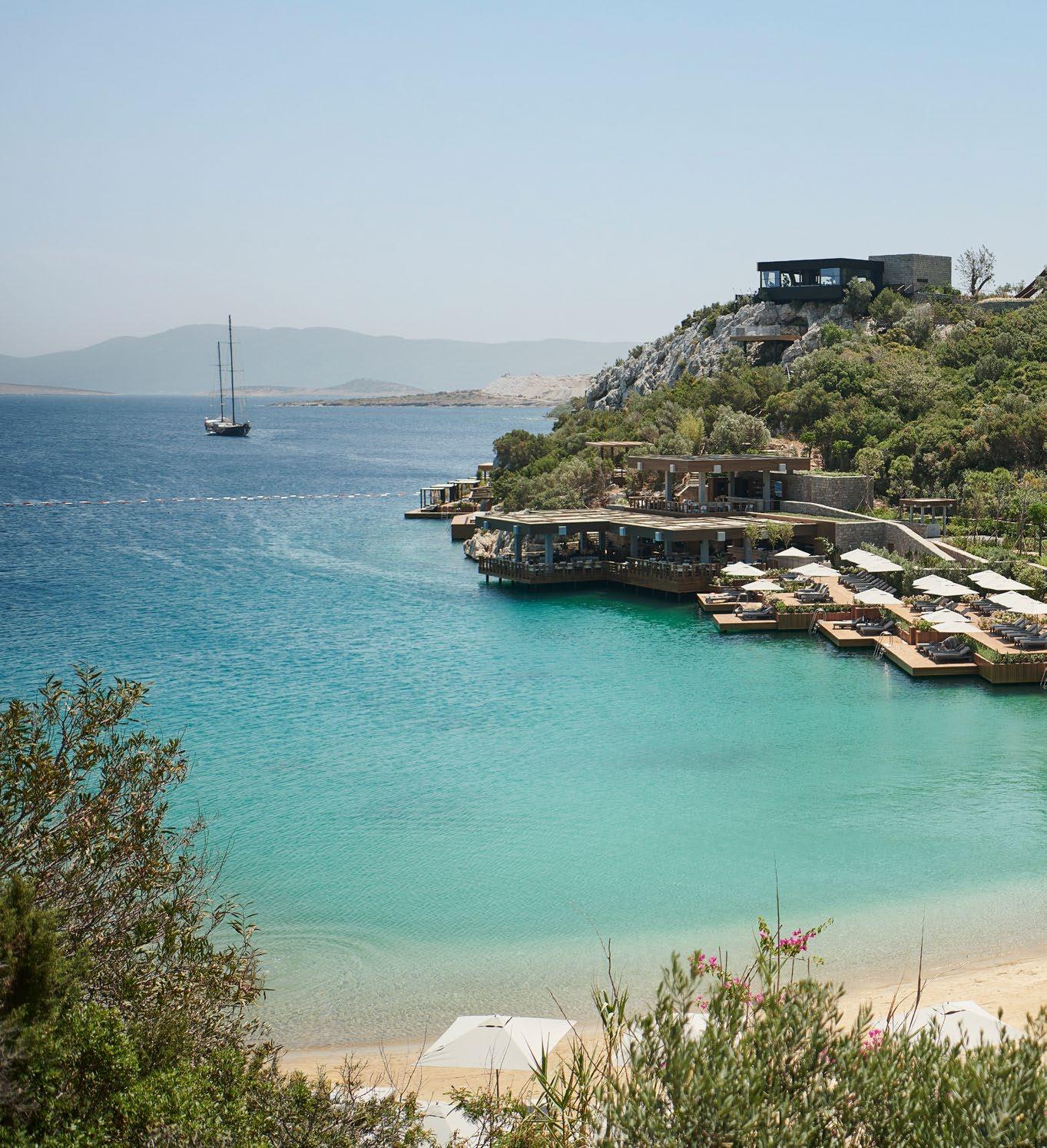
The stunning Maxx Royal Bodrum in Göltürkbükü welcomes guests once again for the summer 2026 season, opening its doors on 28 April to those seeking a distinctive expression of hospitality along the Turkish Riviera.
Following its annual seasonal pause, the resort returns framed by the mesmerising blue of the Aegean, with its signature blend of considered design, intuitive service and the Maxx Inclusive approach that defines each stay.
From globally celebrated dining and a reimagined approach to wellbeing, to elegant suites, private villas, family experiences and a vibrant entertainment calendar, the full Maxx Royal Bodrum experience is once again welcoming discerning global travellers.
Marking the beginning of the 2026 season, Maxx Royal Bodrum opens with a dynamic programme of curated gastronomy, live music performances, global DJ sets and gatherings across the resort, setting the tone for a vibrant summer ahead.
A global culinary destination
Maxx Royal Bodrum stands as one of the Mediterranean’s most exciting culinary destinations, bringing together globally celebrated restaurants in one extraordinary setting. Parisian icon Caviar Kaspia and Michelin-starred Spago by Wolfgang Puck are joined this season by Leña Bodrum, the celebrated concept by three Michelinstarred chef Dani García, bringing a bold, fire-led dimension to the resort’s gastronomic landscape. Rooted in Spanish culinary heritage, the restaurant centres on
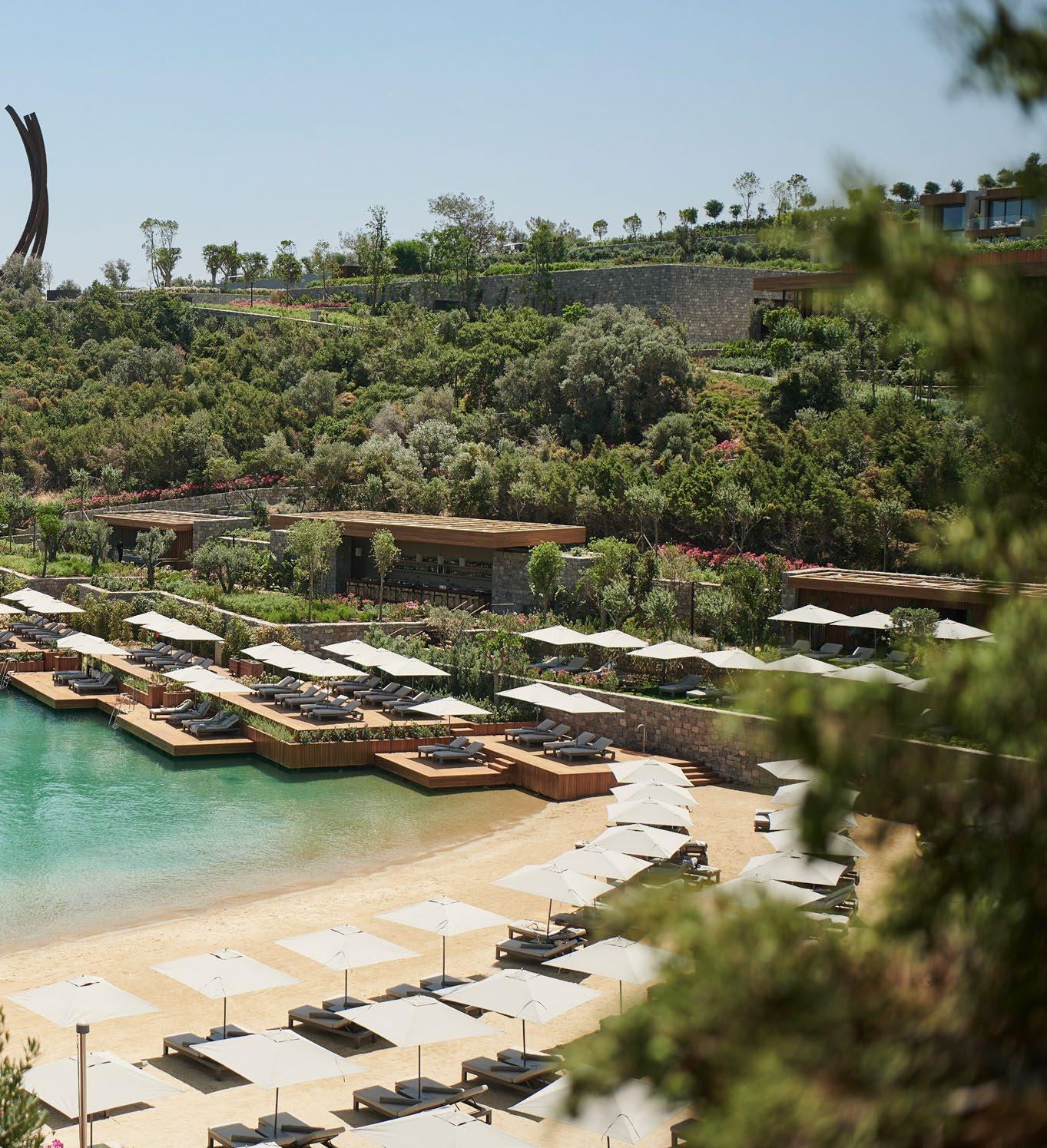
open-flame cooking, presenting a refined yet vibrant expression of this approach.
Seven à la carte restaurants complete the experience, from refined Turkish flavours at Safraan and vibrant Latin cuisine at Casa Sol, to premium seafood at Seavoré and round-the-clock dining at Twenty4. Sweet indulgences await at Le Mélange by Maxx Royal, Chocolatier by Maxx Royal, and the Ice Cream Parlour, while a diverse collection of bars sets the rhythm from sunlit afternoons to late-night celebrations. As evening deepens, The Cave emerges as the resort’s
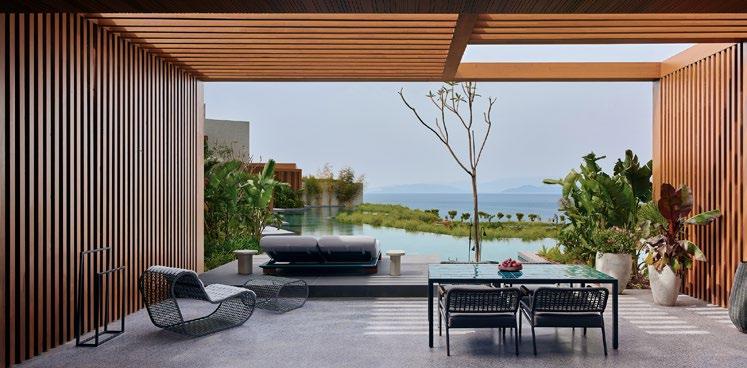
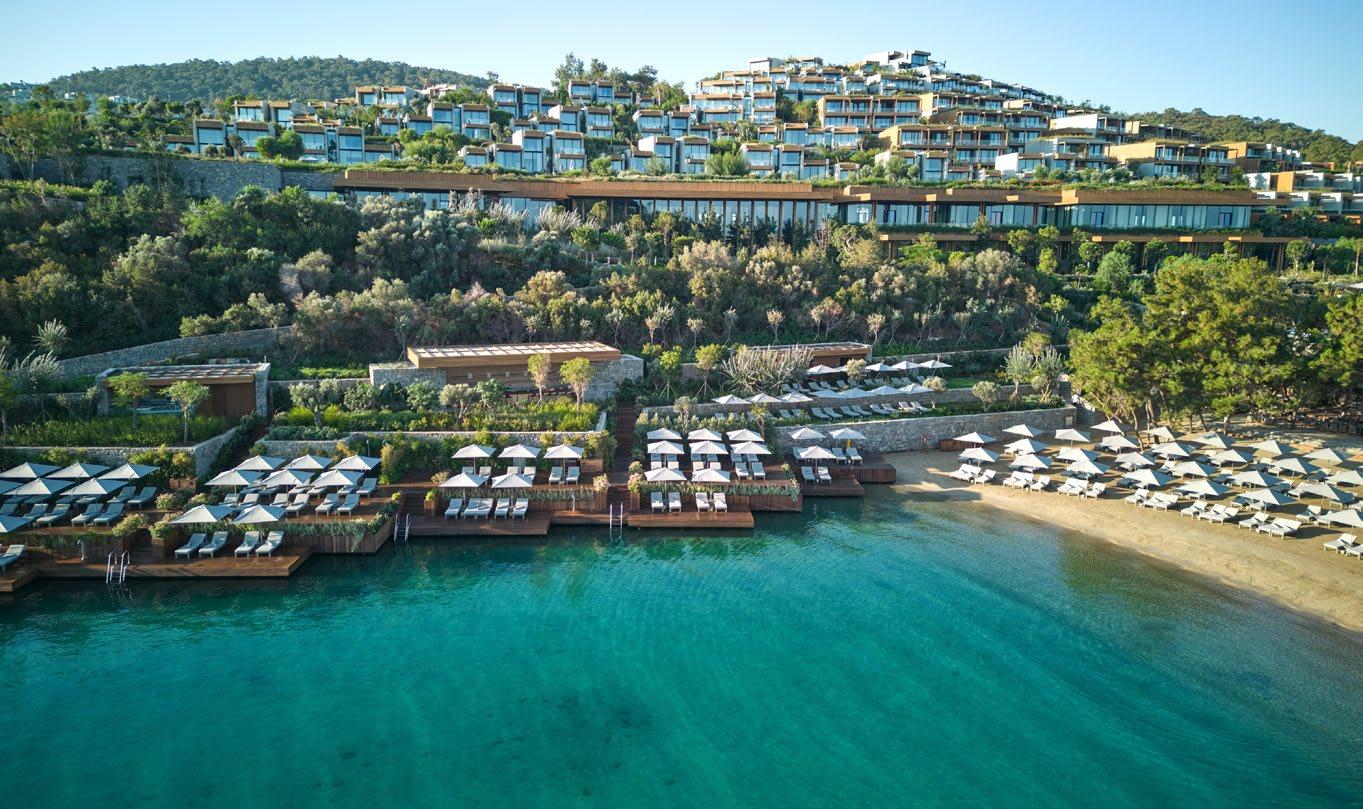
newest after-dark destination, offering a more contemporary expression of nightlife. Opening from midnight, it brings together distinctive design, curated soundscapes and Bodrum’s vibrant nocturnal energy, where music, space and atmosphere align with quiet precision.
Beach, pool and water sports
Set on a private peninsula, the resort unfolds along an expansive coastline, where secluded beaches meet a series of elegantly designed pool settings, offering both seawater and freshwater experiences.
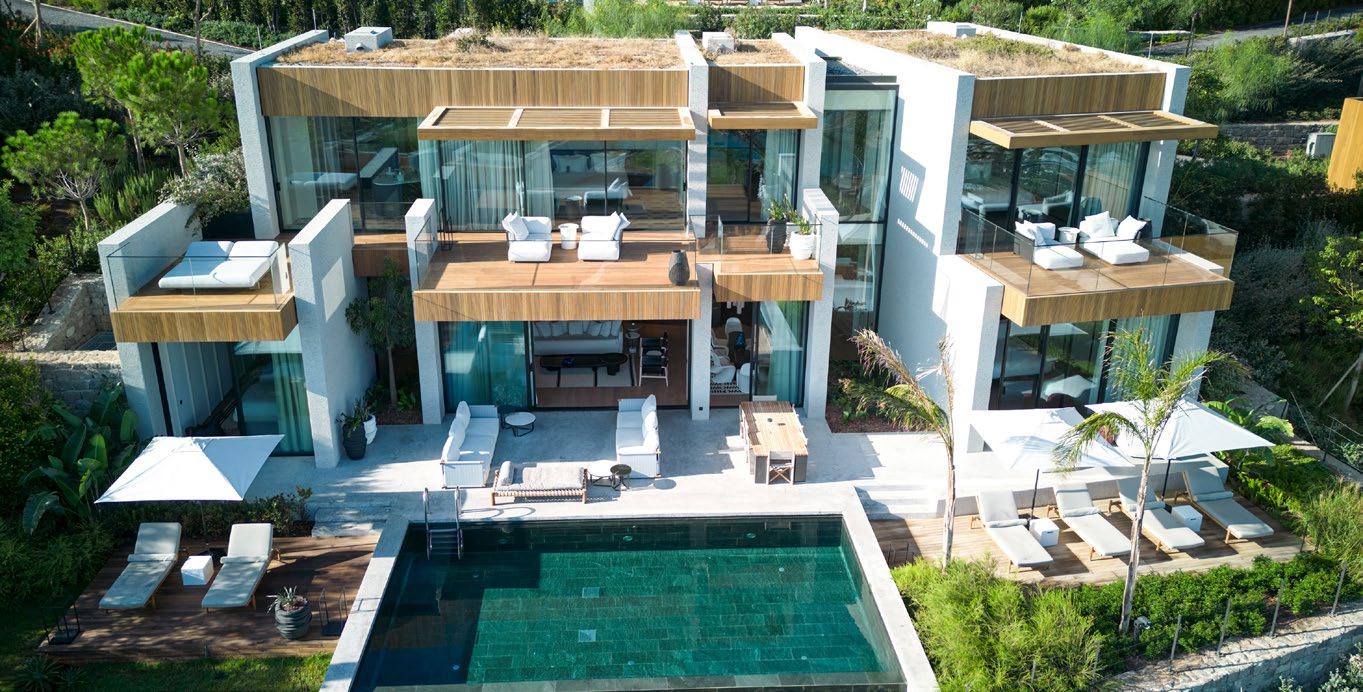
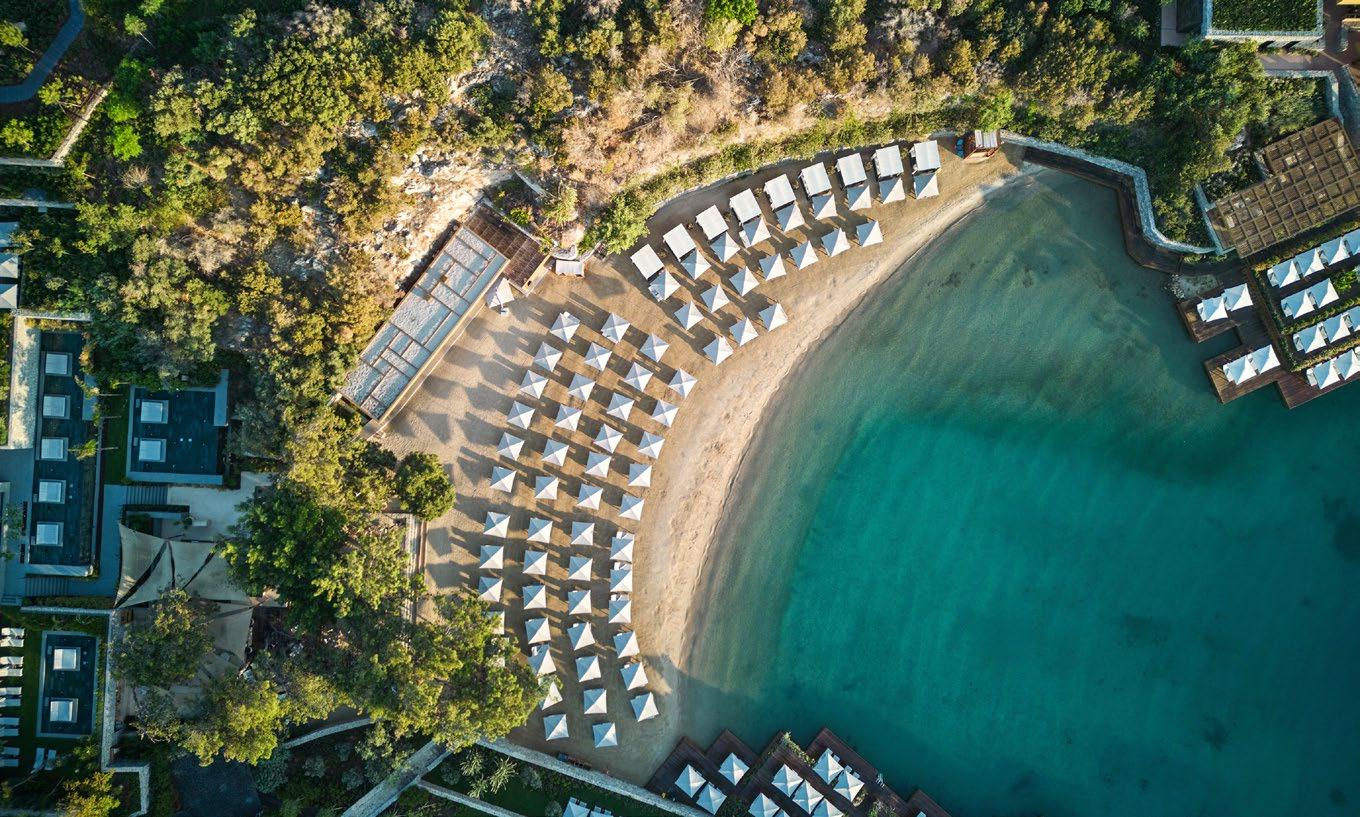
From quiet moments by the shore to a curated selection of water sports, the setting invites a natural balance between stillness and gentle activity, shaped by the rhythm of the Aegean.
Wellbeing, reimagined
At Maxx Wellbeing Spa, wellness is approached as a long-term lifestyle philosophy. Guided by the Joyful Longevity concept, guests embark on personalised journeys that combine ancient rituals with advanced technologies. Thermal experiences, signature massages and longevity programmes focus on balance, vitality and renewal of mind, body and spirit.
Guests can unwind in thermal areas featuring a Turkish hammam, saunas, and Himalayan salt and rain rooms, while signature massages inspired by Thailand, Indonesia and Polynesia offer restorative experiences. Private suites and advanced treatments, including flotation therapy, icoone and Graston techniques, deliver personalised results for energy, mobility and overall wellbeing.
The spa also offers a thoughtfully curated selection of treatments for younger guests,
with The Glow-Up Ritual designed for teens (14-17) and The Little Muse for children (8-13), introducing the next generation to mindful, age-appropriate skincare and selfcare.
Elegant living by the sea
A curated selection of suites, Royal Suites and private villas await, each offering the comfort of home enhanced by refined luxury. At the pinnacle sits the Royal Suite, where refined interiors flow into open-plan Swim-Up Lagoon suites. Here, seawater pools and natural surroundings create a dialogue between indoor luxury and the beauty beyond. Panoramic bay views reach into the verandas of the Lagoon suites, where living greenery complements modern design with soft, organic warmth.
Set amidst nature’s embrace, the Hill Villas offer an exclusive sanctuary, opening onto vistas where Aegean blue melts into the sky. Available in 2, 3 or 4-bedroom configurations, each villa includes a heated seawater pool. The Presidential Hill Villa, with five bedrooms, its own steam room, sauna and fitness suite, redefines luxury living for guests seeking complete seclusion.
This season also marks the debut of the Maxx Island Villas, offering a more intimate interpretation of the Maxx Royal lifestyle. Comprising the Maxx Island Villa and Maxx Island Loft Villa, the collection is defined by a refined architectural language that balances openness, seclusion and natural light. Conceived as private retreats, each villa features its own infinity pool, expansive terrace and interiors shaped for a calm, unhurried rhythm of living, quietly set within the landscape and opening onto uninterrupted views.
Young guests are welcomed into the imaginative world of Maxxi Land, where age-specific clubs, adventure areas and creative activities offer endless enjoyment. A dedicated children’s restaurant serves nutritious, thoughtfully prepared meals, while families with babies benefit from comprehensive amenities and attentive care, including baby cots, bath sets, monitors and sterilizers, all available upon request.
A carefully curated collection of boutiques brings together a refined selection of international and local brands, offering a considered retail experience that unfolds throughout the resort. From fine jewellery and contemporary fashion to floral design, artisanal objects and thoughtfully chosen keepsakes, each space reflects a distinct point of view. Set within an atmosphere of quiet elegance, the experience invites guests to explore at their own pace, discovering pieces that extend the spirit of the stay beyond the moment.
From sunrise rituals to starlit celebrations, Maxx Royal Bodrum offers an immersive escape where gastronomy, design, wellbeing and entertainment unite, creating one of the Aegean’s most distinctive luxury destinations.
A New Marina Address Takes Shape at Al Mouj Muscat
Al Mouj Muscat has signed an agreement with Aurelian Development, appointing it as the sub-developer for a premium residential project within the marina sector of its award-winning waterfront destination.
The development will introduce a contemporary residential complex with a total built-up area of approximately 39,000 square metres. Comprising 176 premium-class apartments, the project has been designed to reflect modern architecture, refined living standards and a seamless connection to the destination’s vibrant coastal setting.
Set within the heart of Al Mouj Muscat’s established master-planned community, the project will offer residents direct access to the destination’s signature lifestyle amenities. These include its marina, 18-hole PGA-standard championship course, leisure and hospitality offerings, retail experiences and landscaped public spaces. The development is intended to complement the existing urban fabric while introducing new residential opportunities within one of the Sultanate’s most soughtafter addresses.
For Aurelian Development, the project marks a significant milestone in its regional growth strategy and its long-
term commitment to the Omani market. By combining thoughtful design, strong placemaking principles and premium residential offerings, the development aims to attract both local and international buyers seeking a distinctive waterfront lifestyle in Muscat.
Nicolay Pozdnyakov, Board Member of Aurelian Development, said: “Al Mouj Muscat represents one of the region’s most compelling examples of integrated waterfront living. Our collaboration brings together complementary expertise and a shared commitment to quality, enabling us to deliver a residential offering that responds to evolving lifestyle expectations while contributing to the continued growth and dynamism of Muscat’s real estate landscape.” Ahmed Al Massan, Acting
CEO of Al Mouj Muscat, added: “Strategic partnerships are central to the continued evolution of Al Mouj Muscat. By working with developers who share our long-term vision for excellence and community building, we continue to strengthen the destination’s appeal as a leading lifestyle and investment hub not only in Oman, but across the region.”
The partnership underscores a shared ambition to elevate the standards of integrated community living in the Sultanate. Together, Aurelian Development and Al Mouj Muscat aim to deliver a project that enhances the destination’s evolving urban landscape while contributing to Oman’s growing appeal for high-quality real estate investment and lifestyle-led development.