First in the region to introduce Electric Workover Rigs (19 units: 4 Conventional, 10 EWR, 5 FBU).
ODC Division: 2,100+ km flowline welding, 750 well hook-ups, 680 well constructions, 1M man-hours LTI-free.
Certifications: OPAL, ISO 9001/29000/14001/45001, IADC.
Awards: OPAL Best Practice (2020–2023), RRICV Best Contractor ICV 2021, CAE Excellence 2021, Oil & Gas Industry Leader 2022–2025.
EPC PROJECTS
AL BARAKA OILFIELD SERVICES SAOC
P.O. Box: 146 , PC: 103 – Bareeq Al Shati Sultanate of Oman.
Tel: +968 21084370, +968 21084371
Fax: +968 22005621
Email: info@barakaoman.com
MAINTENANCE CONTRACTS
EDITORIAL
Editor-in-chief
Said Masoud Almashani
Executive Vice President and Group Editor Mayank Singh
Editor Oommen John P
DESIGN
Director Production – Print
Ramesh Govindaraj
Chief Photographer
Rajesh Rajan
Cover concept
Rakesh Radhakrishnan
MARKETING
Associate Advertising Director
Shivkumar Gaitonde
Business Manager
Dhanish Pillai
CORPORATE
Chief Executive Officer
Atulya Sharma
Published by United Press & Publishing LLC
PO Box 3305, Ruwi, Postal Code - 112 Muscat, Sultanate of Oman
Tel: (968) 24700896, Fax: (968) 24707939
Website: www.umsoman.com
All rights reserved. No part of this publication may be reproduced without the written permission of the publisher. The publisher does not accept responsibility for any loss occasioned to any person or organisation acting or refraining as a result of material in this publication. OER accepts no responsibility for advertising content.
Printed by Oman Printers & Stationers Ltd. Co. S.P.C.
Correspondence should be sent to:
Oman Economic Review
United Media Services
PO Box 3305, Ruwi 112, Sultanate of Oman
Fax: (968)24707939
Website: www.oerlive.com
For editorial enquiries: 99884854
For advertising enquiries: 99267159
Development blueprint
Oman’s 11th Five-Year Development Plan (2026-2030) aims for a 4 per cent annual average real GDP growth and serves as the second roadmap for Oman Vision 2040. This phase emphasises economic and social transformation through policies focused on efficiency, sustainability, and competitiveness.
Key priorities include fiscal sustainability and economic diversification, crucial for maintaining long-term growth. The plan also promotes a gradual shift to a lowcarbon economy with sustainable practices.The plan is structured in three phases: the First Work Programme (2026–2027), the Second Work Programme (2028–2029), and a Complementary Work Programme in 2030, leading up to the 12th Five-Year Plan. Financially, it assumes an oil price of $60 per barrel, projecting average yearly revenues of RO11.556bn against expenditures of RO12.222bn, resulting in an annual deficit of RO666mn. Non-oil revenues are targeted to reach 37.4 per cent of total revenues by 2030. Development spending is budgeted at RO900mn annually, with an additional RO400mn for economic transformation projects and RO668mn for social protection.
Looking forward, Oman’s 2026 budget outlines a clear path for sustainable economic growth and social progress by prioritising investments in education, health care, housing, and digital infrastructure. This approach aims to empower communities and improve citizens’ quality of life while maintaining fiscal discipline. OER speaks to a cross section of CEOs and business leaders to gather their perspectives on what lies ahead. Their insights provide a close-up view of Oman’s economy, business opportunities, and challenges. Wishing everyone a Happy New Year 2026!
OommenJohn
Oommen John
Sign up for OERLive's daily WhatsApp updates on economy, lifestyle, and technology. Send us a WhatsApp message with the word “OERLIVE” on 91242930
CONSUMER TRUST
Your cover story on the ‘The Most Trusted Brands in Oman 2025’ made for an interesting read. As highlighted in your recent coverage of PwC’s 2025 Customer Experience Survey, trust is paramount in fostering strong consumer relationships. Sadly, recent trends indicate a significant disconnect between how executives perceive customer loyalty and the lived experiences of consumers. The statistics you quoted are quite alarming. Over half of consumers have ceased engagement with brands due to negative experiences, and almost a third have done so because of inadequate customer service. Yet, it seems many executives remain blissfully unaware of this reality, claiming that customer loyalty has increased. Moreover, with price remaining the dominating factor in consumers’ purchasing decisions, brands must prioritize quality and service alongside competitive pricing to bridge this trust gap. All businesses should reflect on these findings and should embrace a renewed commitment to transparency, quality, and customer-centricity. The path forward demands not only understanding consumer expectations but also cultivating trust through genuine engagement.
Peter Francis, MQ
TRADITION THRIVES
As the sun sets over the capital, Muscat Nights 2026 brings the city to life with colour, music, and shared moments. More than just an event, Muscat Nights has become a place where families gather, friends meet, and visitors experience the true spirit of Oman. Thoughtfully designed venues, glowing lights, and open-air spaces create an atmosphere that feels welcoming, lively, and distinctly Muscat. This year’s edition offered something for everyone. Traditional Omani performances filled the air with rhythm and heritage, while modern stage shows and live entertainment added energy to the evenings. Visitors could wander through cultural zones, enjoy folklore displays, or simply pause to watch a performance that reflected the country’s deeprooted traditions and creative talent. Food played a central role in the Muscat Nights experience. From local Omani flavours to international favourites, the festival’s food areas became natural meeting points where conversations flowed as easily as the aromas in the air. Nearby, artisan markets and retail spaces showcased handcrafted items and unique products, giving visitors the chance to take a piece of the experience home with them. Families found Muscat Nights especially inviting, with dedicated spaces for children designed to inspire creativity and joy. Games, workshops, and interactive activities ensured that younger visitors were just as engaged as the adults, turning the event into a shared family memory rather than just a night out. Beyond the lights and entertainment, Muscat Nights 2026 carried a deeper purpose. It supported local artists, performers, and small businesses while strengthening Muscat’s position as a cultural and tourism destination. Most importantly, it reminded everyone that culture is best experienced together—through music, food, conversation, and celebration. Muscat Nights 2026 was not only about what people saw, but how it made them feel: connected, inspired, and proud to be part of a city that celebrates its heritage while embracing the present.
Sadaf Al-Zadjali, Muscat
Liva Insurance supports community wellness through “Experience Oman – Muscat Marathon 2026”
Liva Insurance sponsored the Experience Oman – Muscat Marathon 2026, reinforcing its commitment to promoting community wellness and encouraging healthier, more active lifestyles across the Sultanate
A new platform for SME growth: Oman Arab Bank unveils Tumouhi
Oman Arab Bank officially launched its new SME growth initiative for 2026 during a press conference marking a significant milestone in the bank’s long-term commitment to empowering small and medium enterprises across the Sultanate
IHE launches Eicher Pro League range of Trucks & Buses in Oman International Heavy Equipment LLC (IHE), in collaboration with Eicher Trucks and Buses jointly announced the introduction of Eicher’s world-class Pro League range of trucks and buses in Oman
Bank Muscat successfully manages RO200mn Sovereign Sukuk Issuance by Ministry of Finance
Bank Muscat, the leading financial services provider in the Sultanate of Oman, announced that it successfully managed series 10 of the Sovereign Sukuk Issuance launched by the Oman Sovereign Sukuk Company, with a total value of RO200mn.
The sukuk carries a 7-year maturity and offers an annual profit rate of 4.15 per cent. Bank Muscat was appointed as the issue manager and collecting bank for the subscription by Ministry of Finance, in collaboration with other local financial institutions. This mandate reinforces the bank’s leadership in executing major investment transactions within the Sultanate and across GCC capital markets. The subscription window for the sukuk issuance opened from December 17 to
22, 2025, with the sukuk settlement scheduled for December 25, 2025. The sukuk was priced within a competitive yield range, with an average yield of 4.11 per cent, a minimum yield of 4.07 per cent, and a maximum yield of 4.15 per cent, reflecting strong investor confidence and market stability. The sukuk payouts will be made semi-annually on June 25 and December 25 each year until maturity on December 25, 2032. The issuance witnessed participation from different categories of investors, retail as well as institutional. The sukuk is structured in accordance with Sharia-compliant principles and is fully tradable on the Muscat Stock Exchange (MSX) at prevailing market prices. All allocation details and investor records will be maintained and administered by Muscat
Clearing and Depository Company, as the central registrar and depository for the sukuk.
Commenting on the occasion, Khalifa bin Abdullah Al Hatmi, Deputy General Manager, Investment Banking and Capital Markets at Bank Muscat, expressed pride in collaborating with the team at Oman Sovereign Sukuk Company and the Ministry of Finance, Sultanate of Oman for this successful issuance. He noted: “The Bank’s appointment as the issue manager for the sukuk issuance is a testament to Ministry of Finance’s trust in Bank Muscat’s capabilities and leadership in managing major investment transactions for a range of corporate and institutional clients.
The Bank, represented through its Investment Banking and Capital Markets division, has extensive experience in structuring and executing large-scale capital market deals, both on debt as well as equity side, and its specialized team is well-equipped to navigate evolving market dynamics and complexities. Bank Muscat is committed to supporting the growth of local financial markets by offering a comprehensive suite of banking and financial solutions tailored to institutional and retail customers alike.” The selection of Bank Muscat as the issue manager underscores its strong local, regional, and international reputation among individuals, corporates, and financial institutions.
Sohar International advances tourism, community, and regional development through a portfolio of strategic national platforms and flagship events
Positioning itself as a catalyst for national development, Sohar International has announced a diversified portfolio of strategic community partnerships, nationwide platforms, and flagship events designed to support Oman’s evolving tourism ecosystem and regional economic vitality. Spanning major festivals, community-led initiatives, wellbeing and sports platforms, and high-profile public engagements across multiple governorates, the Bank is playing an active role in stimulating domestic and inbound tourism, encouraging mobility across the Sultanate, and strengthening local economies. Collectively, these initiatives underscore Sohar International’s
commitment to enabling inclusive growth by connecting communities, culture, wellbeing, and economic participation—extending its impact beyond traditional banking to support Oman’s broader tourism and development agenda.
Commenting on the initiative, Abdulwahid Mohamed Al Murshidi, CEO, Sohar International, said, “At Sohar International, we view our role as extending beyond banking to actively contributing to the national development agenda by enabling platforms that strengthen community vitality, economic participation, and regional prosperity. Our strategic sponsorships and roadshows across
the Sultanate are designed to activate local ecosystems, stimulate domestic tourism, support small businesses, and enhance quality of life — all of which are central pillars of Oman Vision 2040. By engaging directly with communities across multiple governorates, we are translating national ambitions into tangible, on-ground impact that supports balanced regional development, social cohesion, and sustainable economic growth. These initiatives reflect our long-term commitment to building resilient communities, empowering local enterprise, and positioning Oman as a dynamic destination for culture, wellbeing, and investment.”
ahlibank announces successful financial closure of the Landmark Mazoon Copper Project
Reaffirming its role as a trusted advisor to nationally strategic developments, ahlibank marks the successful financial closure of the Mazoon Copper Project, Oman’s largest copper mining development, led by Minerals Development Oman. The transaction involved the structuring and coordination of a dual-currency, multitranche syndicated loan of $270mn, incorporating both conventional and Islamic tranches, underscoring the bank’s proven capability in delivering complex project finance solutions and its growing leadership in advising on largescale investments aligned with the Sultanate’s industrial and economic diversification agenda. The financing saw the participation of both ahlibank and ahli islamic, alongside a group of local financial institutions. Commenting on the milestone, Hanaa al Kharusi, Senior General Manager, Wholesale Banking at ahlibank, said, “The Mazoon Copper Project represents a pivotal step in strengthening Oman’s non-hydrocarbon industrial base and securing its position within global critical minerals supply chains. Projects of this scale demand not only long-term capital, but also clarity of foresight, disciplined risk stewardship, and an ability to align financial architecture with national development priorities. For a financial institution, relevance is defined by its capacity to translate strategic ambition into robust and bankable financing frameworks, while balancing risk, tenor, and stakeholder alignment
As part of this nationwide activation, Sohar International is hosting dedicated roadshows in several governorates, including Sohar, Ibri, and Musandam, engaging mass audiences alongside local branch teams. The Sohar Roadshow will take place on January 9 at the Sohar Entertainment Centre within the Sohar Festival, followed by the Ibri Roadshow on January 15 at the Al Dhahirah Festival Area, and the Musandam Roadshow on January 11. Each activation will run from 5 pm to 9 pm, offering direct engagement, awareness activities, and community interaction.
In parallel, the Bank is supporting large-scale community initiatives, including Masir Sohar, a community walking event taking place on Saturday, 10 January, covering an 8-kilometre route from Suwaihra Beach to Sohar Fort. The event promotes wellbeing, physical activity, and social connectivity, attracting both local and international participants in an inclusive
across market cycles. Our role as financial advisor reflects ahlibank’s continued commitment to enabling transformational initiatives that contribute meaningfully to economic resilience and sustainable growth.” In its advisory capacity, ahlibank supported the transaction across the full financing lifecycle, including transaction structuring, lender engagement and coordination, and execution management, ensuring alignment between sponsor objectives, lender requirements, and the project’s longterm operational and financial sustainability, thereby reinforcing the transaction’s overall bankability and execution certainty.
The financing follows the ground-breaking of the Mazoon Copper Project in Yanqul, in the Dhahirah
Governorate, held under the patronage of senior leadership. The project will comprise five open-pit mines and a state-of-the-art processing plant, with copper concentrate production expected to commence from 2027. Once operational, the project is set to play a central role in meeting rising global demand for copper, while positioning Oman as a strategic producer of high-quality copper concentrate. The transaction represents a significant milestone in the development of Oman’s mining sector and its broader industrial ecosystem. Beyond its contribution to export capacity, the project is expected to generate employment opportunities and stimulate SME participation across the value chain while adhering to robust environmental and social standards aligned with international best practices.
International’s broader sponsorship portfolio across the Sultanate, including its strategic support for major cultural and tourism platforms such as the Sohar Festival and the Dhahirah Tourism Festival, alongside other national and regional initiatives. Collectively,
term commitment to strengthening regional vitality, stimulating domestic tourism, enabling private-sector participation, and supporting balanced socio-economic development across Oman’s governorates.
Bank Nizwa successfully closes RO200mn Sultanate of Oman Sovereign Sukuk Issue
As the leading and most trusted Islamic bank in the Sultanate of Oman, Bank Nizwa has successfully acted as Joint Issue Manager and Collecting Bank for the 10th Series of local currency sovereign sukuk, issued by the Government of the Sultanate of Oman, represented by the Ministry of Finance. This achievement highlights Bank Nizwa’s expertise and leadership in Islamic finance and investment
banking, and its ongoing commitment to offering innovative, Sharia-compliant financial solutions.
The Government of the Sultanate of Oman, through the Ministry of Finance, announced the completion of the sukuk issuance on December 25 with a total size of RO200mn. The 10th series sukuk was launched on December 17, with a total issuance size of RO150mn, with returns ranging between a minimum of 4.07 per cent and a maximum of 4.15 per cent with the Green Shoe option of up to RO50mn. The subscription closed on December 22 and the issue was heavily oversubscribed by 1.8 times with total demand exceeding RO277mn. The strong demand and oversubscription helped in increasing the issue size to RO200mn. Structured as Ijara sukuk, the certificates offer a competitive profit rate over a seven-year period, with profits distributed semi-annually in June and December. The sukuks are also listed on the Muscat Stock Exchange, enhancing liquidity and market accessibility.
Commenting on the successful issuance, Muhammed Ahsan, Senior Head Global Markets and Investment Banking at Bank Nizwa, said,
“As pioneers in Oman’s Islamic banking sector, Bank Nizwa, with its deep industry knowledge, extensive capital market experience, and strict adherence to regulatory and shariah standards, has achieved significant milestones in debt issuance and capital raising. This new sukuk issuance from the Government of Oman meets the growing demand for Shariacompliant financial solutions and reflects our commitment to providing innovative and rewarding investment opportunities that serve the market’s needs. The success of the issue reflects positively on our capabilities as an issue manager and establish our role as a reliable partner and advisor in structuring, pricing, marketing and distribution of shariah compliant bespoke financing transactions.”
He added, “The successful issuance of the sukuk marks a significant step that will bring substantial economic benefits to the Sultanate of Oman. It reflects strong investors’ confidence in the Government of Oman and will contribute towards economic growth and strengthening the country’s financial stability.”
Ominvest marks strategic participation at World Economic Forum Annual Meeting 2026
(Ominvest), a leading investment company in the region, has concluded its successful participation in the World Economic
Forum (WEF) Annual Meeting 2026, held from January 19 to 23 in Davos-Klosters, Switzerland, reaffirming its commitment to constructive global economic dialogue and to advancing sustainable, long-term growth in Oman and the Gulf region.
Held under the theme “A Spirit of Dialogue,” the Annual Meeting brought together leaders from government, business, civil society, and academia to address shared global challenges and advance collaborative approaches that enhance economic and societal resilience. Ominvest’s participation reflected its conviction that open dialogue is a vital enabler for aligning perspectives, exchanging expertise, and shaping future-ready economic and investment models. A defining milestone of Ominvest’s participation this year was the publishing of an article within the World Economic Forum’s official Annual Meeting 2026 agenda – marking a first for the Group. Titled ‘The GCC Model of Cooperation,’ the article presents Ominvest’s perspective
on the strategic value of regional cooperation frameworks within the Gulf Cooperation Council (GCC) and their relevance to broader global economic integration. The article examines how the GCC’s experience in fostering crossborder collaboration, aligning policy priorities, and strengthening public-private partnerships has contributed to economic resilience and long-term value creation. It further outlines how this cooperative model can offer scalable, practical insights to other regions, particularly amid shifting global economic dynamics, supply-chain fragmentation, and the transition toward a more multipolar world. The inclusion of Ominvest’s thought leadership in the WEF agenda further underscores the Group’s growing role in shaping regional and global economic discourse. It also reflects Ominvest’s commitment to sharing experience-driven, actionable perspectives on international platforms – moving beyond traditional participation towards meaningful intellectual engagement.
Oman International Development and Investment Company S.A.O.G
NBO and PayByte sign Acquiring Services Agreement to expand digital payment acceptance
National Bank of Oman (NBO) has signed an Acquiring Services Agreement with Digital Payment Solutions Trading LLC, PayByte, at the Bank’s Head Office. Under the agreement, NBO will provide point of sale terminals and payment processing services to merchants onboarded by PayByte, supporting wider acceptance of secure digital payments across the Sultanate and strengthening national efforts towards cashless transactions. The collaboration aims to support businesses of all sizes by broadening access to reliable digital payment channels, enabling smoother transactions, and contributing to a more inclusive and efficient financial ecosystem. By working together, NBO and PayByte seek to accelerate the adoption of digital payments, foster innovation within the acquiring space, and reinforce national efforts to promote a cashless economy aligned with Oman Vision 2040. Commenting on the agreement, Dr Ali Salim Al Shekaili, Assistant General Manager and Head
of Digital and E-Channels at NBO, said, “We continue to invest in robust, secure, and scalable payment infrastructure that supports merchants at every stage of their growth. Our agreement with PayByte strengthens NBO’s acquiring capabilities and expands access to reliable digital payment solutions, contributing to a more integrated and efficient payments ecosystem that supports economic activity across Oman. This collaboration reflects our commitment to advancing secure digital payment acceptance, strengthening customer trust, and supporting financial inclusion and business competitiveness across the Sultanate.” The agreement establishes a foundation for ongoing collaboration between the two organizations to enhance service delivery, promote innovation, and introduce future-ready payment solutions that respond to evolving market needs. By combining NBO’s established presence in the financial sector with PayByte’s digital enablement capabilities, the partnership
Alizz Islamic Bank partners with Al Tawasul Institute to empower jobseekers with hearing impairments
Alizz Islamic Bank, in collaboration with Al Tawasul Institute, has commenced a specialised training programme aimed at empowering jobseekers with hearing impairments and enhancing their readiness to successfully integrate into the workforce. This initiative reflects Alizz Islamic Bank’s ongoing commitment to social responsibility, inclusion and community development, by creating meaningful opportunities for individuals with special needs and supporting their professional growth. Al
Tawasul Institute brings its expertise in working with individuals with hearing impairments, ensuring that the programme is delivered in an accessible, supportive and inclusive learning environment that addresses the specific needs of the participants. Alizz Islamic Bank has long been dedicated to promoting financial inclusion across the Sultanate of Oman, by expanding access to Shari’a-compliant banking services, supporting underserved segments of society and delivering initiatives that enhance financial literacy and economic participation. This
programme further reinforces the Bank’s belief that inclusive growth extends beyond financial services to empowering individuals with the skills and opportunities needed to participate fully in the economy. The tailored training programme is designed to focus on developing participants’ social, communication and professional skills, while equipping them with the practical tools and workplace competencies required to succeed in today’s dynamic job market. Through structured sessions and expert-led training, the participants will gain increased confidence, improved employability skills and a stronger foundation for long-term career success. Commenting on the initiative, Lina Al Abdulsalaam, Head of Marketing & Communications at Alizz Islamic Bank said, “We at Alizz Islamic Bank believe in empowering the job seekers with essential soft skills and financial literacy. We are committed in equipping them with confidence, adaptability and practical knowledge needed in today’s workforce. Through this partnership with Al Tawasul Institute, we are proud to support a programme that bridges the gap for individuals with special needs at the work environment, unlocking shared value for individuals and the wider economy.”
GROWTH INITIATIVE
Energy Development Oman issues $650mn 10-year Sukuk
2036. This transaction is part of EDO’s ongoing financing strategy to support a portion of its annual capital expenditure requirements, diversify its funding sources, and optimise its capital structure.
Priced at a profit rate of 5.14 per cent, the Sukuk achieved a credit spread of 100 basis points over the 10-year US Treasury benchmark, representing the tightest pricing ever secured by an Omani government-related entity (GRE). This success follows the recent upgrade of both EDO and the Sultanate of Oman to investment grade (BBB-) by Fitch, matching that from S&P.
This marks EDO’s third US dollar Sukuk issuance, building on the company’s earlier transactions in 2023 and 2024. The 5.14 per cent profit rate compares favourably to the 5.875 per cent achieved for EDO’s debut 10-year Sukuk and the 5.662 per cent secured for the 7-year issuance in 2024, underscoring a strong pricing outcome, particularly in the light of lower oil prices and increased geopolitical uncertainty. The decision to move swiftly in early January allowed EDO to take advantage of a constructive window in the market and
transaction, while DIB, HSBC, Mashreq and Sohar International joined as Joint Bookrunners. The issuance attracted strong and diversified participation from investors across Asia, Europe, the GCC, the UK and the US. With this latest transaction, EDO extends the average tenor of its debt portfolio while further optimising its overall cost of funding.
Commenting on the issuance, Eng. Sultan al Mamari, Chief Financial Officer at EDO, said, “EDO is delighted with the success of our latest USD Sukuk, which set a new benchmark for attractive pricing by an Omani GRE. We are pleased to have locked in a significant portion of our financing requirements early in 2026, given the uncertain global outlook. The success of this transaction reflects the improvement in EDO’s and Oman’s credit standing, as well as investor endorsement of EDO’s business strategy.” Since its establishment, EDO has played an instrumental role in shaping a more resilient and commercially sustainable energy sector in Oman. Through consistent delivery, disciplined investment, and closer integration across the energy value chain, the company has safeguarded production, strengthened energy security, and ensured the sector continues to generate long-term value for the Sultanate.
Oman Air has recorded strong commercial performance in 2025, marking an important milestone in the airline’s ongoing transformation programme and underscoring the impact of initiatives introduced to drive efficiency, sustainable growth, and an enhanced guest experience. The airline carried 5.8 million passengers in 2025, representing an 8 per cent increase compared to 2024 and a 57 per cent increase compared to 2022, significantly outpacing overall market growth. Of these, 64 per cent were point-to-point (visitors flying directly into Oman), a segment that recorded an unprecedented 34 per cent yearon-year increase. Reflecting stronger capacity utilisation and more disciplined network and revenue management, the airline’s capacity also saw strong growth, rising by 6 per cent year-on-year, from 76 per cent in 2024 to 82 per cent in 2025 (a 26 per cent increase vs. 2022).
During the year, Oman Air also expanded and strengthened its network through the launch of several new routes, increased frequencies and codeshare partnerships. Joining the oneworld Alliance in mid-2025 instantly expanded the airline’s global reach to 900 destinations, while the introduction of direct services to Amsterdam, Taif, Singapore, Baghdad and Copenhagen, significantly enhancing Oman’s global connectivity and bilateral ties.
Con Korfiatis, Oman Air’s CEO, said, “These results highlight the tangible progress made through Oman Air’s transformation strategy, which has prioritised commercial optimisation, smarter deployment of resources and a sharper focus on customer experience. They show that we’re not only attracting more passengers, but also generating higher quality
revenue, delivering long-term benefits for both the airline and for Oman as we build a more agile, customer-centric and financially resilient business that reflects the pride, ambition and potential of Oman.”
Continuing to serve the domestic market, Oman Air significantly increased capacity to Salalah in 2025, delivering 17 per cent more available seats compared to 2024 and 19 per cent more compared to 2022. In 2025, the airline flew 19 per cent more passengers to Salalah compared to 2024 and 36 per cent more compared to 2022. The airline also introduced its first ever direct charter service between Moscow and Salalah, with plans to expand to additional Russian cities during 2026 and extend to further Europe markets from 2027. Together, these initiatives are expected to attract up to 580,000 new passengers to Salalah by 2030, generating more than RO320mn in tourism revenue.
Meanwhile, Oman Air continues to prioritise affordability and access for the domestic market, maintaining fixed fares with capped pricing for Omani citizens between Muscat and Salalah year-round, including reduced pricing during the peak Khareef season, and adding capacity during periods of high demand. Initiated in 2023, Oman Air’s transformation programme spans the entire business with an overarching objective to achieve financial breakeven, which the airline is on track to reach in record time, while equally focusing on improving efficiency and service quality in line with global standards. As the programme continues, Oman Air remains focused on sustaining performance improvements, enhancing the end-to-end customer journey and delivering long-term value for passengers, partners and stakeholders.
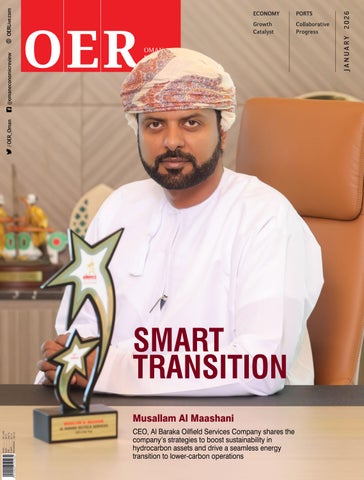
SMART TRANSITION
Al Baraka Oilfield Services Company is strategically placed to enhance the sustainability of current hydrocarbon assets while facilitating the energy sector’s smooth transition to lower-carbon operations, says CEO, Musallam Al Maashani in an interview with Oommen John P
Can you share the key energy transition initiatives that Al Baraka Oilfield Services Company has undertaken in 2025?
Al Baraka Oilfield Services Company has formulated several energy transition programmes through active participation in national forums and conferences to align company strategy with Oman Vision 2040 and national net-zero objectives. Internally, within Al Baraka, initiatives have been made to reduce the environmental footprint through material re-use, plastic/paper recycling, hazardous-waste controls and on-site impact mitigation. The company is currently testing a 1.5 tonne AC with solar panel back-up to minimise grid power in Rima ODC (fixed) camp. Further discussions are on to check feasibility of introducing solar panels in mobile camps for Workover Rig operations which will endure temperature variations in the harsh desert climate, be moisture proof and self-cleaning at the same time. Investigations are on to introduce battery back-up systems in Hoist operations which will light up the entire unit, ACs, VFDs and Driller Consoles in case of power failure. The upcoming yards and warehouses are planned to be equipped with solar panels both from a cost reduction and environment friendly perspective. In addition, the company has made use of data and digital QHSE tools to measure, trend and manage operational impacts that support lower emissions and safer, efficient operations. The company is continuously in dialogue with external agencies and stakeholder events to build workforce awareness and capability on sustainability topics.
What factors do you think contributed to Al Baraka winning
recent contracts in the competitive oil and gas market?
The company has an established track record with key national oil and gas operators, i.e. PDO, with a focused service portfolio (Hoist/Workover, ODC, and Projects services). A strong In-Country Value (ICV) delivery and demonstrable local content in manpower and supply chains have been the backbone for over a decade. The company has proven QHSE performance and effective monitoring practices and leadership steer that reduces Client’s operational risk. Al Baraka aspires to remain competitive by introducing flexible commercial models and local logistics capability wherever suitable. enabling reliable delivery on every contract. All these aspects have helped in expanding the company’s portfolio from a Hoist fleet of initially six units to currently nineteen units as well as renewing the pipeline/flowline engineering, construction, erection and commissioning contract for PDO’s South Oman clusters.
How has Al Baraka Oilfield Services adapted to the challenges posed by the fluctuating oil prices?
Al Baraka Oilfield Services SAOC exemplifies the resilience of Super Local Community Contractors (SLCCs) that have successfully tackled the cyclical downturn in the fluctuating prices in the oil and gas industry over the years to deliver unparalleled growth. This has been possible owing to a diversified revenue mix; combining Workover Rigs services and ODC/Projects capability thereby reducing exposure to a single revenue stream. Further, cost discipline via QHSE and risk analytics reduced incident-related costs and improved uptime. There has been continuous
emphasis on local sourcing and ICV to reduce supply chain costs and currency exposure, and on contract flexibility to align with Client run-rates. Over the last decade, the company has registered a tremendous growth in Gross Revenue from $7.1mn in 2015 to $150.2mn in 2025.
How does Al Baraka leverage technology and innovation to enhance its services?
Since 2021, Al Baraka Oilfield Services, has become the first oil and gas company in Oman to introduce ground-breaking electric-powered Workover Rigs. It is proud to declare itself as the first company in Oman to work intensively and proactively to design these modularized electric-powered workover units, able to optimize the move time between the wells, thereby creating faster turnarounds and reducing costs. This allowed the Client to bring early oil to the tanks, minimizing deferment, achieving savings in operations, and accelerating cash flow.
The recently introduced AMAN is a proprietary fit-for-purpose software platform that automates QHSE reporting. This can capture data from all operations so that performance metrics can be trended and analysed right down to the rig level. This provides a complete suite of QHSE reporting tools to ensure that every rig, field worker, office employee and office in Al Baraka’s global workplace is engaged and actively supports a high-performance safety culture. This platform is used to drive continuous improvement and operational transparency.
The company also has set up an Operations Monitoring Centre at the
Head office, which enhances crew performance and safety, provides an independent, real-time oversight, gives structured reporting and accountability whilst integrating technology into HSE culture.
Can you elaborate on your In-Country Value (ICV) initiatives and its impact on the local community?
As a reputable oilfield services contractor, Al Baraka is continuously ramping up its contribution to InCountry Value (ICV) development. Suppliers are predominantly from Oman, and the company is engaging with subcontractors to ensure they patronise local suppliers well.
Over the years, significant additions have been made inside the company in the value of Goods and Services made in Oman. Al Baraka has managed to increase significantly their ICV contribution over past years through key initiatives like:
• Collaboration across the oil and gas value chain
• ICV managers and teams
• Training to employ and local workforce development programmes
• Local sourcing increase mainly through tendering and supplier’s development programmes.
Training fresh graduates are part of the National Objectives to develop the potential young Omani professionals for the growth of the nation with more focus on graduates from the concession area. To date more than 170 locals from Shaleem have been employed in the company in various disciplines.
The company has developed Inhouse Competency Development Programme
Over the last decade Al Baraka has accelerated Omanisation within the organisation – currently staff strength includes over 900 Omani nationals out of staff strength of nearly 1400
employees; the Hoist division alone contributing to over 90 per cent Omanisation.
On the Corporate Social Responsibility front, the company has supported various events protecting the heritage and promoting the Omani culture in the Dhofar Governate. It has supported the local community development by maintaining the General-Purpose Hall of the Wali of Shaleem, built a hospital for COVID-19 patients and has reached out to the community by providing PPE equipment to the citizens of Wilayat of Shaleem during the COVID pandemic. Al Baraka contributed meaningfully to the cyclone (Shaheen) affected victims in the Al Batinah coastal region during September 2021.
Al Baraka has contributed to academic prosperity by aiding Sultan Qaboos University College of Agricultural and Marine Sciences, sponsoring the event of building sustainable agriculture for food security. The company has supported the Ministry of Education by sponsoring awards for distinguished school students in the Wilayat of Shaleem. It also provided an ambulance and a renal dialysis machine to the Hospital in Shaleem. In addition, Al Baraka sponsored and participated in the Kharif Dhofar event.
What steps is Al Baraka taking to promote sustainability in its operations?
The company has operational controls in place to prevent spills, minimise air/ water pollution and manage hazardous waste in line with client’s ESG plans. It has measurement and continuous improvement QHSE processes to reduce incidents and resource wastage. Further the company runs continuous engagement sessions with national sustainability forums, training and knowledge sharing to align internal practices with national targets and industry best practice.
What key experiences have influenced your leadership style the most?
The reputation acquired behind the longstanding operations over a decade in the Sultanate with direct delivery to
national oil & gas operators like PDO has created a pragmatic, safety-first, Client-centric leadership approach. Continuous emphasis on ICV and community engagement has shaped the collaborative, talent-development orientation in leadership styles with a clear emphasis on developing Omani talent, building local supply chains, and maintaining long-term partnerships rather than transactional relationships.
Additionally, navigating market cycles and cost pressures has driven a disciplined, data-driven leadership approach, supported by structured QHSE systems and performance monitoring. This has fostered a culture of accountability, continuous improvement, and prudent decisionmaking aligned with client expectations and national priorities.
How do you foresee the future landscape of the oil and gas industry in Oman, and what role will Al Baraka play in it?
Oman’s oil and gas sector is expected to remain resilient and strategically important, with continued upstream investment to sustain production, ensure energy security, and support the national economy. At the same time, the industry will increasingly operate under stricter cost measures, efficiency improvements and ESG expectations, alongside the gradual integration of energy transition initiatives (renewables, green hydrogen and decarbonization) aligned with Oman Vision 2040 and net-zero ambitions.
Within this landscape, Al Baraka’s role will be that of a reliable, locally rooted service partner supporting safe, efficient, and cost-effective field operations. The company will continue to strengthen its core oilfield services while embedding sustainability, digital QHSE, and operational excellence into delivery. By leveraging strong In-Country Value credentials, local talent development, and close collaboration with national operators, Al Baraka is well positioned to support both the sustainability of existing hydrocarbon assets and the sector’s orderly transition toward lower-carbon operations.
EMPOWERING GROWTH
Royal Decree establishes the International Financial Centre of Oman
His Majesty Sultan Haitham bin Tarik, has issued a Royal Decree establishing the International Financial Centre of Oman (IFC Oman) and enacting its own dedicated law.
The establishment of the International Financial Centre of Oman aligns with the Sultanate of Oman’s strategic directions aimed at diversifying the national economy, strengthening Oman’s position as a global hub for financial services, attracting capital, and supporting innovation. The creation of the Centre also reflects Oman’s commitment to building a trusted and effective ecosystem for delivering advanced financial services that meet the needs of investors and global institutions.
Under the Law of the International Financial Centre of Oman, issued by Royal Decree No. (8/2026), the Centre shall have administrative, financial, and legislative independence. It will develop a regulatory, legal, and judicial framework aligned with international standards and based on English Common Law.
The governance of the Centre shall be overseen by the IFC Oman Board, to be appointed by His Majesty the Sultan, vested with the authority to supervise the Centre in achieving its objectives. In addition, three independent entities shall operate in accordance with the provisions of the law: the International Financial Centre of Oman Authority, International Financial Centre of Oman Regulator, and International Financial Centre of Oman Dispute Resolution Authority, each exercising its respective mandates independently.
The Centre will be headquartered in Madinat Al Irfan, with the possibility of expansion to other locations, according to the law. It will seek to
attract investments linked to financial activities and supporting sectors through a package of incentives and tax exemptions for a period of up to 50 years.
In the coming phase, the Centre will focus on developing the legislative and regulatory frameworks, engaging relevant stakeholders, targeting companies and legal experts, as well as establishing the necessary operational frameworks to launch the Centre’s activities and commence full operations during the current year.
HE Abdulsalam Mohammed Al Murshidi, President of Oman Investment Authority, said, the establishment of International Financial Centre of Oman represents the ongoing efforts to achieve financial stability and economic diversification. It reflects the keenness of His Majesty Sultan Haitham bin Tarik, to create an attractive investment environment that enhances the Sultanate of Oman’s position as a leading financial hub distinguished by stability, integrity, and efficiency. The Centre will feature an innovative and advanced financial services infrastructure and will provide a secure and transparent environment for financial institutions and investors. The aspiration is that the Centre will
become a strategic destination and a source of capital inflows, contributing to the realization of Oman’s vision of strengthening the concept of economic diplomacy and stimulating economic diversification.
HE Mahmood Abdullah AlAweini, Chairman of the Executive Committee of IFC Oman, said, following the significant achievements in the financial sector and the tangible improvement in the Sultanate of Oman’s credit rating, the establishment of the International Financial Centre of Oman comes as a continuation of the on-going efforts in financial sector development, and contributes to achieving Oman Vision 2040 objectives through economic diversification, investment attraction, and foster global partnerships. IFC Oman brings together a compelling set of competitive advantages that reinforce its role as a premier destination for companies and investor, which offers competitive costs, high responsiveness and regulatory agility for establishing businesses, and reliable services that enable access to global markets. Together with our strategic partners, we aim to work towards bringing this ambitious vision into reality and confidently look ahead to the bright future awaiting IFC Oman.
GROWTH CATALYST
Suhar Investment Forum 2026 to be held on February 4 and 5, will attract international delegates from over 30 countries, showcase highquality investment opportunities and attractive incentives, strengthening Suhar’s position as an industrial and investment destination
T2026 held a press conference to present details of the new edition of the forum, scheduled to take place on February 4 and 5, 2026 at the Radisson Blu Hotel, Suhar. The conference was attended by Eng. Saeed bin Ali Al Abri, Chairman of the Oman Chamber of Commerce and Industry (OCCI), North Al Batinah Governorate Branch; Eng. Raid bin Mohammed Al Rubaii, CEO of the Suhar Freezone and Deputy CEO of Suhar Port; and Eng. Abdullah bin Ahmed Al Mayasi, Director General of Suhar Industrial City, alongside a number of officials from public and private entities and representatives of local media.
The second edition of the Suhar Investment Forum builds on the success of the previous edition and aligns with the Chamber’s approach to supporting economic development
North Al Batinah, in line with the objectives of Oman Vision 2040. The forum provides a platform that brings together the presentation of investment opportunities and the incentives that support them, enhancing project readiness and increasing the governorate’s attractiveness to investors.
Eng. Saeed bin Ali Al Abri, Chairman of the OCCI Branch in North Al Batinah, explained that the upcoming edition of the Suhar Investment Forum launches with a more focused and in-depth vision, highlighting Suhar as an integrated industrial and investment city and one of the main drivers of the national economy. This is underpinned by its advanced industrial infrastructure, integrated logistics ecosystem, and strategic location linking regional and global
frameworks provided by relevant entities to enhance the competitiveness of industrial investment and project readiness.
Eng. Al Abri emphasised that the forthcoming edition places special emphasis on the industrial sector as a key pillar of economic diversification. The forum focuses on manufacturing, advanced industry and industries linked to industrial value chains, including metals, building materials, plastics and chemicals, food industries, and pharmaceuticals, as well as supporting complementary industries and services related to manufacturing, supply chains, and smart logistics. This focus is consistent with the investment opportunities booklet and the themes highlighted in the forum’s previous media campaigns.
approximately OMR 300 million. These opportunities have been developed in cooperation with government entities and relevant institutions to cover high value-added industrial and investment sectors, targeting investors seeking implementable and scalable opportunities. They are offered within an integrated ecosystem of incentives and enablers that enhance economic feasibility and support sustainability, the circular economy, the adoption of modern industrial technologies, and innovation.
Eng. Al Abri noted that the forum program includes specialized panel discussions addressing the future of industry and industrial investment, as well as working papers presented by
at building strategic partnerships and facilitating communication between project owners, financiers, and investors, in addition to an accompanying exhibition showcasing the capabilities of government entities, economic institutions, and industrial companies, available opportunities across various sectors, and the incentives and support programs designed to empower investors and stimulate project growth.
He indicated that the forum enjoys broad support and participation from a number of government entities and economic institutions related to investment and industry, and aims to attract a distinguished group of leaders, decision-makers, business people, and major investors from within and
and global industrial investors and companies compared to the previous edition, along with delegations from more than 30 countries, reflecting the growing stature of the Suhar Investment Forum as an influential economic platform at both the national and regional levels.
Suhar Investment Forum 2026 will feature a select group of government speakers and decision-makers, alongside major investors, and business leaders from within and outside the Sultanate of Oman, representing a range of vital economic sectors and influential regional and international markets. The list of participants includes officials from entities concerned with investment, industry, trade, energy, and logistics,
as well as local and international investors with leading experience in developing industrial and investment projects, adding qualitative weight to the forum and reinforcing its role as an effective platform for exchanging perspectives, building partnerships, and exploring opportunities for cooperation and investment in North Al Batinah Governorate.
Suhar Investment Forum 2026 is endorsed by Oman Investment Authority; Foreign Ministry, Public Authority for Special Economic Zones and Free Zones (OPAZ); Ministry of Commerce, Industry and Investment Promotion; Nazdaher; Invest Oman; Madayn; Al Batinah North Governorate and Projects, Tenders and Local Content Authority.
Jindal Steel Oman is the Title Partner of the Forum. Sohar Port and Freezone, Sohar International, Ladayn OQ, are
the Strategic Partners. Vale Oman, DP World, Hutchison Ports Sohar, Oman Arab Bank and Sohar Aluminium are the Gold Partners. Petroleum Development Oman is the Silver Partner. C. Steinweg Oman is the Bronze Partner. Dhofar Insurance Company is the Insurance Partner.
The Suhar Investment Forum 2026 will highlight the pivotal role of investment in supporting sustainable economic growth, enhancing the competitiveness of the industrial sector, creating highquality employment opportunities, transferring knowledge and modern technologies, and stimulating innovation.
It will also showcase the business environment in North Al Batinah Governorate along with the enablers, incentives, and strategic opportunities it offers to expand the base of local and foreign investments, supporting
economic diversification in line with the objectives of Oman Vision 2040.
The forum is expected to attract hundreds of participants from within and outside the Sultanate of Oman, including senior officials, decisionmakers, business leaders, investors, and companies from a number of key regional and international markets—particularly those with growing economic partnerships, trade and investment relations with the Sultanate, including markets in the Middle East and North Africa, Asia and Europe, as well as other international markets. The forum is also expected to witness the signing of several cooperation and investment agreements, further enhancing the position of North Al Batinah Governorate, and Suhar in particular, as an attractive investment destination at the regional and international levels.
ALIGNING WITH OMAN’S VISION
Hritik Khimji, Director, Khimji Ramdas highlights the strategic transformation of the company’s infrastructure cluster in line with the country’s strategic focus on smart cities, integrated urban communities, logistics hubs, and coastal development in an interview with Mayank Singh
How has KR Infrastructure positioned itself in Oman’s infrastructure sector? Which segments of infrastructure are gaining momentum, and what is driving their growth?
KR Infrastructure has undertaken a strategic transformation from being traditionally recognised as a tradingfocused organisation to becoming a comprehensive solutions provider for the infrastructure sector. This repositioning reflects both market evolution and alignment with Oman’s national development strategy.
Rather than competing in high-volume, commoditised product segments, KR Infrastructure has shifted its focus toward value-added, solution-based offerings. The cluster now concentrates on providing integrated services that combine products, engineering expertise, design capabilities, and long-term operational support. This allows the company to move beyond transactional supply into deeper, partnership-driven engagements.
Several infrastructure segments are showing strong momentum. Marine infrastructure has emerged as a particularly significant growth area, driven by Oman’s investment in coastal development, ports, fishing harbours, jetties, and marine facilities. KR Infrastructure has built in-house capabilities and assets for dredging,
quay walls, breakwaters, and marine construction, aligning directly with the country’s coastline development strategy.
Civil construction has also seen selective growth, particularly in projects involving government and semi-government entities, as well as developments in interior regions. Commercial interiors have evolved from furniture supply into full designand-build solutions, enabling clients to optimise space, functionality, and cost efficiency across different types of work environments.
Additional momentum is evident in engineering services, high-voltage electrical systems, municipal and environmental solutions, and specialised niche areas such as waste management and cleaning systems. Growth across these segments is being driven by Oman’s infrastructure investment pipeline, rising foreign investment, increasing complexity of projects, and the market’s demand for trusted local partners who can deliver end-to-end solutions rather than isolated components.
How does your company continue to create an ecosystem of collaboration & productivity?
KR Infrastructure’s approach to collaboration and productivity is built around long-term partnerships, in-house expertise, and a solutionsled operating model. The company does not view projects as oneoff transactions, but rather as opportunities to develop enduring relationships with clients, developers, government entities, and international partners.
A key enabler of this ecosystem is the investment in in-house design teams across multiple divisions, including marine infrastructure, lighting, and commercial interiors. These teams allow KR Infrastructure to engage with clients from the conceptual stage, helping to shape project design, optimise technical solutions, and align outcomes with operational and financial objectives. This integrated engagement model
enhances productivity by reducing fragmentation between design, supply, and execution.
The company also places strong emphasis on being a reliable local partner for foreign investors. Many international developers and operators seek trusted local collaborators who can navigate regulatory environments, manage local supply chains, and provide ongoing operational support. KR Infrastructure positions itself as a partner in progress, offering problemsolving capabilities and long-term engagement rather than simply delivering products and exiting.
This collaborative mindset, supported by internal expertise and relationship-driven engagement, enables the company to create a productive ecosystem that supports complex projects, improves execution efficiency, and strengthens stakeholder confidence across the infrastructure value chain.
How do you work on seamless integration of being smart & ecosensitive?
KR Infrastructure integrates smart technologies and sustainability as complementary pillars rather than treating them as separate objectives. The company’s approach is to ensure that smart solutions are also environmentally responsible, and that sustainability is enhanced through the intelligent application of technology.
Smart city concepts, digital building systems, mobility solutions, and technology-enabled infrastructure are introduced with a focus on efficiency, reduced material usage, and longterm environmental performance. This includes the use of eco-friendly materials, smart metering solutions, renewable energy integration such as solar where applicable, and intelligent building management systems.
The objective is to support smarter urban living, mobility, and infrastructure while ensuring that resource utilisation is optimised and environmental impact is minimised. Whether in residential developments,
commercial buildings, or larger infrastructure projects, the company seeks to align technological innovation with sustainability goals, ensuring that smart infrastructure also contributes to long-term environmental resilience.
This integrated approach allows KR Infrastructure to support Oman’s smart city ambitions while remaining aligned with broader sustainability and eco-sensitivity objectives, ensuring that growth is both technologically advanced and environmentally responsible.
What new divisions have been recently integrated into the KR Infra cluster, and what do they focus on? What are the growth areas identified within the various divisions of KR Infra?
The KR Infrastructure cluster has expanded into multiple solutionoriented divisions that reflect the evolving needs of Oman’s infrastructure ecosystem. These include marine infrastructure, engineering services, high-voltage electrical systems, commercial interiors (design-and-build), municipal and environmental solutions, selective IT and smart mobility partnerships, and specialised fabrication capabilities.
Marine infrastructure represents a major area of growth, encompassing dredging, quay walls, breakwaters, ports, fishing harbours, and marine asset fabrication such as pontoons, barges, and vessels. The company has also developed fabrication capabilities in Duqm, supporting local procurement and contributing to the “Made in Oman” initiative for government and agency requirements.
Warehousing and logistics-related infrastructure is another growth area, aligned with increased industrial and port activity. Municipal and environmental solutions — including waste management and specialised equipment — have expanded in response to evolving urban management needs. Highvoltage electrical systems and niche engineering services further
strengthen the cluster’s ability to support large-scale infrastructure and industrial projects.
Collectively, these divisions are aligned with Oman’s national development priorities, particularly in Sohar, Duqm, and Salalah, where port-led growth, industrial expansion, and logistics investment are driving sustained demand for advanced infrastructure solutions.
What are the key components of the HR programme aimed at training young Omanis? How does the initiative align with KR Infra’s longterm goals and values?
Human capital development is deeply embedded in KR Infrastructure’s organisational culture and long-term strategy. The company places strong emphasis on growing talent from within, providing structured training, mentorship, and career progression pathways for young Omanis and existing employees.
Key components of the HR programme include formal training calendars, on-the-job learning, shadowing senior professionals, and providing opportunities for employees to interact with international principals and partners. Employees are also encouraged to take on broader responsibilities over time, enabling both professional growth and leadership development.
A central philosophy is internal mobility and promotion. Rather than relying primarily on external hiring for senior roles, the company prioritises uplifting and developing existing team members. This approach supports organisational continuity, builds institutional knowledge, and reinforces employee loyalty and long-term engagement.
The programme aligns closely with KR Infra’s values of people development, sustainability, and long-term capability building. It also supports national Omanisation objectives by creating meaningful career pathways, developing technical and managerial
skills, and ensuring that local talent plays a central role in the company’s growth and leadership pipeline.
In what ways does KR Infra intend to define the future of infrastructure? How is KR Infra planning to capitalise on these growth areas over the next five years?
KR Infrastructure intends to define the future of infrastructure in Oman by positioning itself as a strategic, long-term solutions partner aligned with national priorities and Oman Vision 2040. The company’s future direction is closely linked to sectors where sustained government and private sector investment is expected, including logistics, tourism, marine infrastructure, smart mobility, and industrial development.
Over the next five years, KR Infra plans to deepen its role in supporting foreign direct investment by acting as a trusted local partner for international investors. This includes providing operational support, localisation capabilities, regulatory navigation, and integrated infrastructure solutions that help foreign developers establish and scale successfully in Oman.
The company will continue expanding partnerships with global technology providers and infrastructure specialists, allowing it to introduce new technologies and niche solutions into the local market. At the same time, KR Infrastructure will strengthen collaboration with local SMEs, promoting localisation, subcontracting, and community-based economic participation across different regions.
This strategy enables KR Infra to support inclusive growth, strengthen national infrastructure capability, and play a central role in shaping Oman’s next phase of infrastructure development through partnershipdriven, solution-led, and future-focused execution.
How have recent infrastructure developments influenced Oman’s real estate sector growth? Which micro-markets are showing the most
promise right now and why? Recent infrastructure investments have played a transformative role in accelerating Oman’s real estate and urban development landscape. The country’s strategic focus on smart cities, integrated urban communities, logistics hubs, and coastal development has created a strong multiplier effect across residential, commercial, and mixed-use real estate segments.
Major national initiatives such as Sultan Haitham City, Yiti and surrounding coastal developments, and new integrated commercial zones are reshaping how real estate is planned and delivered. These projects are not limited to standalone residential offerings but are designed as holistic ecosystems that combine housing, commercial activity, hospitality, logistics, and lifestyle infrastructure. This integrated approach has significantly increased demand for high quality, long-term infrastructure solutions that support sustainable urban growth.
From a micro-market perspective, areas such as Sohar, Duqm, and Salalah are demonstrating particularly strong momentum. These locations benefit from strategic port infrastructure, industrial estates, special economic zones, and growing foreign direct investment. The expansion of logistics, warehousing, and port-related developments is driving demand for both industrial and commercial real estate, while tourism and coastal investment are stimulating hospitality and mixed-use developments.
Additionally, the coastal belt — including areas linked to tourism and waterfront development — is seeing increased activity due to the government’s broader coastline development strategy. These infrastructure investments enhance long-term real estate viability by improving connectivity, attracting foreign developers, and creating sustainable demand drivers beyond traditional residential growth.
DATA INTEGRITY
Gartner Predicts by 2028, 50 per cent of organisations will adopt zerotrust data governance as unverified AI-generated data grows
By 2028, 50 per cent of organisations will implement a zero-trust posture for data governance due to the proliferation of unverified AI-generated data, according to Gartner, Inc., a business and technology insights company.
“Organisations can no longer implicitly trust data or assume it was human generated,” said Wan Fui Chan, Managing VP at Gartner. “As AIgenerated data becomes pervasive and indistinguishable from human-created data, a zero-trust posture establishing authentication and verification measures, is essential to safeguard business and financial outcomes.”
Large language models (LLMs) are typically trained on “web-scraped” data and a variety of sources, including books, code repositories and research papers. Some of these sources already contain AI-generated content, and if current trends continue, nearly all will eventually be populated with AI-generated data. According to the 2026 Gartner CIO and Technology Executive Survey, 84 per cent of respondents expect their enterprise to increase funding for GenAI in 2026. As organisations accelerate both adoption and investment in AI initiatives, the volume of AI-generated data will continue to rise. This means future generations of LLMs will increasingly be trained on outputs from previous models, heightening the risk of “model collapse,” where AI tools’ responses may no longer accurately reflect reality.
“As AI-generated content becomes more prevalent, regulatory requirements for verifying ‘AI-free’ data are expected to intensify in certain regions,” said Chan. “However, these requirements may differ significantly across geographies, with some
jurisdictions seeking to enforce stricter controls on AI-generated content, while others may adopt a more flexible approach. “In this evolving regulatory environment, all organizations will need the ability to identify and tag AIgenerated data. Success will depend on having the right tools and a workforce skilled in information and knowledge management, as well as metadata management solutions that are essential for data cataloging.”
Active metadata management practices will become a key differentiator, enabling organizations to analyze, alert and automate decision making across their data assets.
Managing Risks Associated with Rising Unverified AI-Generated Data
Organisations should consider several strategic actions to manage the risks of unverified data:
Appoint an AI Governance Leader: Establish a dedicated role responsible for AI governance, including zerotrust policies, AI risk management and compliance operations. This leader
should work closely with data and analytics (D&A) teams to ensure both AI-ready data and systems capable of handling AI-generated content.
Foster Cross-Functional
Collaboration: Form cross-functional teams that include cybersecurity, D&A and other relevant stakeholders to conduct comprehensive data risk assessments to identify business risks related to AI-generated data and determine which are addressed by existing data security policies and which need new strategies.
Leverage Existing Governance
Policies: Build on current D&A governance frameworks and focus on updating security, metadata management and ethics related policies to address new risks from AI-generated data.
Adopt Active Metadata Practices:
This enables real-time alerts when data is stale or requires recertification, helping organisations quickly identify when business-critical systems may become exposed to inaccurate or biased data.
CLIENT-CENTRIC GROWTH
QNB’s outlook in Oman aligns with Vision 2040, supporting economic diversification and financing key sectors such as logistics, manufacturing, renewable energy, tourism and infrastructure, says CEO, Khalid Al Barwani in an interview
Can you share QNB Oman’s key milestones and project launches in 2025?
2025 was a year of consolidation and progress for QNB Oman, marked by several important milestones. A key focus was strengthening client relationships, particularly with our corporate and institutional customers, by deepening engagement, offering more tailored solutions, and reinforcing our role as a long-term banking partner. We also made solid progress in enhancing our product and service capabilities, especially in trade finance and cash management, enabling us to better support our clients’ cross-border and day-to-day business requirements.
In parallel, we continued to invest in our people, governance, and risk frameworks, ensuring the bank is well positioned for sustainable growth going forward. Collectively, these milestones laid a strong foundation for the next phase of QNB Oman’s growth. On the project finance side, we entered into strategic partnerships within the manufacturing sector by financing up to $43mn to Karwa Motors, a joint investment project between the State of Qatar and the Sultanate of Oman signed in February 2025 as well as other financings within the energy and utilities sector.
What are the key strategic priorities in 2026? Are there any specific initiatives or expansion plans? In 2026, our strategic priorities for QNB Oman are firmly focused on enabling growth for our clients while supporting Oman’s broader economic ambitions. First, we are expanding our digital capabilities, with a
strong emphasis on corporate and institutional customers. This includes enhancing digital trade finance, cash management, and client connectivity solutions to improve efficiency, transparency, and speed, allowing our customers to manage their businesses seamlessly. Second, we aim to position QNB Oman as a key conduit for foreign direct investment into and out of the Sultanate.
By leveraging our international network and deep local knowledge, we support investors entering Oman while assisting Omani corporates as they expand regionally and globally. Third, we will continue to leverage QNB Group’s extensive global footprint to meet our customers’ evolving trade finance requirements. Our presence across key global corridors enables us to provide structured, reliable, and competitive trade solutions that support cross-border commerce and strengthen supply chains. Together, these priorities reinforce our role as a trusted international banking partner for Oman’s corporate and institutional clients.
In what ways do you think QNB’s outlook will evolve aligning with Oman’s Vision 2040 objectives?
QNB’s outlook in Oman will continue to evolve in close alignment with the objectives of Oman Vision 2040, particularly in supporting economic diversification, private sector growth,
and international integration. We see a strong role for QNB Oman in financing priority sectors such as logistics, manufacturing, renewable energy, tourism, and infrastructure, all of which are central to Vision 2040. Through structured finance, project finance, and trade solutions, we aim to support sustainable, long-term economic growth. We are also focused on strengthening Oman’s connectivity to global markets. By leveraging QNB Group’s international presence, we facilitate cross-border trade, foreign direct investment, and capital flows that enhance Oman’s position as a regional business and logistics hub.
We are also aligning our outlook with Vision 2040’s emphasis on digital transformation, governance, and sustainability. This includes advancing digital banking solutions for corporates, supporting ESG-aligned projects, and maintaining strong risk management and compliance frameworks in line with international best practices. Ultimately, our evolving outlook is about being a long-term partner to Oman’s development agenda—supporting national priorities while delivering resilient, sustainable value for our clients and stakeholders.
What market trends and challenges do you see shaping the banking and finance sector and how do you plan to adapt to them?
The banking and finance sector is
being shaped by several structural trends, alongside a more complex operating environment. Key trends include accelerating digitalisation, rising client expectations for speed and transparency, increased crossborder activity, and a stronger focus on sustainability and regulatory standards. At the same time, banks are navigating margin pressures, heightened competition, and evolving risk profiles, particularly in trade and cross-border financing. Talent development and cybersecurity are also becoming critical challenges. Our approach at QNB Oman is to adapt proactively rather than reactively. We are investing in digital platforms that enhance efficiency and client experience, particularly for corporate and trade finance customers. We are also strengthening our risk management frameworks and compliance capabilities to operate safely across jurisdictions.
In parallel, we are leveraging QNB Group’s scale and global footprint to differentiate ourselves—offering our clients access to international markets, diversified funding sources, and resilient trade solutions. We continue to align our strategy with sustainability and ESG principles, ensuring we support long-term economic value creation in Oman. Ultimately, our focus is on remaining agile, disciplined, and client-centric in a rapidly evolving financial landscape.
QNB’s outlook in Oman will continue to evolve in close alignment with the objectives of Oman Vision 2040, particularly in supporting economic diversification, private sector growth, and international integration. We see a strong role for QNB Oman in financing priority sectors such as logistics, manufacturing, renewable energy, tourism, and infrastructure, all of which are central to Vision 2040
FUTURE-READY
Design Group Engineering Consultants LLC’s focus for 2026 will balance growth with sustainability, innovation and technology-driven efficiency, says Managing Director, Damodar R Katti in an interview
Under the leadership of Damodar R. Katti, Managing Director and BE (Civil) graduate, Design Group Engineering Consultants LLC (DGEC) has grown steadily since its inception to become a respected name in Oman’s construction and infrastructure sector. Anchored in his foresight, discipline, and unwavering commitment to integrity, technical excellence, innovation, and sustainable development, DGEC has consistently charted a distinctive course in a rapidly evolving industry. A prominent entrepreneur and thought leader, Damodar brings a long-term vision that seamlessly blends engineering rigor with purposeful progress. This approach ensures that every initiative contributes meaningfully to the built environment. Reflecting this philosophy, he observes:“Every project is an opportunity to merge human creativity, technical precision, and AI-driven intelligence to deliver solutions that truly matter.”
Milestones and Projects
Reflecting on recent years, Damodar shares, “The period from 2023 to 2025 has been significant for DGEC, marked by the strengthening of our cross-sector expertise and the successful delivery of a diverse range of projects despite challenging conditions.”
DGEC’s portfolio during this period demonstrates its ability to deliver complex infrastructure across diverse environments. Among the standout achievements is the Field Operating Base and Accommodation Facility for Shell Development Oman at Barik Qarn Alam, a project that combines operational efficiency with an employee-centric design approach. Executed under stringent
risk-management and safety protocols to meet demanding operational and environmental conditions, DGEC, as the main consultant, provided comprehensive design and supervision services, further reinforcing its reputation for leadership, reliability, and client trust.
Leveraging this experience in complex projects, DGEC also reinforced its longstanding strength in the education sector, where delivering functional, future-ready learning environments has long been a hallmark of its work.
Education remained a core focus during this period, with several landmark projects bringing together innovation, scale, and human-centric design. Notably, DGEC acted as the main consultant for Downe School and Cheltenham Phase-2 at Al Bandar, Muwalah - an international school and integrated facilities project - as well as the University Campus for Global College of Engineering & Technology in Muscat, designed to accommodate 5,000 students with state-of-the-art facilities. “Designing for 5,000 students meant anticipating not just functional needs, but creating spaces that inspire collaboration and creativity,” notes Damodar.
Building on its long-standing expertise across industrial, educational, and specialised infrastructure, DGEC continued to deliver technically complex and high-impact projects in the Data Center and Public Health sectors. On this front, the company contributed to the Oman Data Park Project in Nizwa (Tier 3 uptime certified data center) and the Central Public Health Laboratory in Al Khoud (BSL 3 lab for the Ministry of Health), demonstrating versatility and technical proficiency
beyond conventional construction. Extending its global footprint, DGEC has designed 5-star hotel in Uganda and provided the concept design for a multi-specialty hospital in Mozambique for Atelier Vama, offering structural and MEP design services, and supported the design of Masjid Al Noor in Mabela for the Al Jisr Foundation, reflecting sensitivity to community needs and cultural context.
Rounding off the portfolio, the Hockey Stadium at Al Amerat for the Ministry of Culture, Sports & Youth stands as a testament to DGEC’s ability to deliver fast-track, high-profile projects under tight timelines. “Implementing modular construction on the Hockey Stadium project cut timelines by 20%, showing how technology and planning can transform delivery,” shares Damodar.
From industrial operations to educational excellence, and from Data Center to community-sensitive projects worldwide, DGEC’s 2023–2025 journey showcases not just infrastructure delivery, but the company’s unwavering commitment to innovation, quality, and client trust.
Strategic Priorities for 2026
Looking ahead, Damodar emphasises that DGEC’s focus for 2026 will balance growth with sustainability, innovation, and technology-driven efficiency. “We aim to consolidate our strengths in design excellence, expand our technological capabilities, and deepen our collaboration with clients,” he says. “Embedding sustainability in every project and fostering a culture of continuous learning within our teams remain top priorities.
In addition, we are increasingly leveraging AI-driven tools to optimise
design workflows, enhance predictive maintenance, simulate construction sequencing, and generate smarter, data-informed solutions - ensuring that every project is efficient, resilient, and future-ready.”
Alignment with Oman’s Vision 2040
A critical part of DGEC’s roadmap is aligning with Oman’s Vision 2040. Damodar reflects, “Our projects are not just constructions; they are enablers of national development objectives. By supporting economic diversification, sustainable urban growth, and resilient infrastructure, we contribute meaningfully to the nation’s longterm vision. For example, our recent educational campuses and Data Center projects integrate energy-efficient design, advanced facility management systems, and modular construction principles, directly supporting Oman’s sustainable urban and economic objectives.”
“By designing resilient urban infrastructure, we are proud to contribute to Oman’s sustainable development roadmap, ensuring that communities thrive for generations to come,” he adds.
Adapting to Market Trends and Challenges
The construction sector faces evolving challenges, from rising material costs to shifts in regulatory frameworks. According to Damodar, “Embracing technological advancements such as digital design tools, modular construction, green building practices, and AI-enabled design analysis is essential. These tools allow us to simulate building performance, optimize resource usage, and proactively manage risks. By combining technology with human expertise, we ensure our solutions are both efficient and future-ready, without compromising on quality or safety.”
Initiatives and Expansion Plans
For 2026, DGEC plans to explore new geographies and diversify its portfolio to include smart infrastructure, AIintegrated solutions, and specialized urban projects. Workforce development,
stakeholder engagement, and knowledgesharing initiatives will remain central to its growth strategy. “Our engineers regularly participate in global workshops to bring fresh ideas into every project, from sustainable building practices to AI-driven modeling techniques,” notes Damodar, highlighting the company’s emphasis on continuous learning and innovation.
A Vision Beyond Structures
Through every project, Damodar’s guiding philosophy is clear: “At DGEC, we are building more than structures; we are building trust, sustainable communities, and a lasting legacy. Whether it is designing resilient schools, energy-efficient Data Centers, or culturally sensitive community facilities,
our goal is to leave a positive impact that extends beyond bricks and mortar.”
“Our true measure isn’t the structures we leave behind, but the communities we help flourish,” he reflects, leaving a lasting impression of purpose, vision, and enduring social value.
Concluding the interview, Damodar expresses his deepest gratitude to his wife, sons, and parents, whose love, values, and quiet sacrifices form the foundation of his journey. He also acknowledges the unwavering support of his colleagues at DGEC, whose collective efforts have enriched his professional path. With humility, he thanks his teachers, mentors, peers, and well-wishers
COLLABORATIVE EXCELLENCE
The IHE and VECV partnership is transforming Oman’s transport sector with advanced Eicher technology and exceptional customer support. says Sohraab Hasnain, General Manager, IHE and Sayarti in an interview with Oommen John
Can you elaborate on the benefits of the recent partnership between IHE and VECV (a Volvo group and Eicher Motors Joint Venture), manufacturers of Eicher branded trucks and buses? We are excited about the collaboration between IHE and VECV, a partnership between the Volvo Group and Eicher Motors, which has ushered in significant transformation for the Eicher brand over the past five years. This collaboration has not only redefined the product offerings but has also enhanced the operational capabilities of Eicher’s trucks and buses. With immense pride, we reintroduce the new Eicher model lineup in Oman, a launch that incorporates advanced Volvo technology, ensuring superior performance and reliability. The timing of this relaunch is particularly advantageous, as the current market is underserved in this segment. Our new lineup addresses this gap, presenting innovative solutions that meet the evolving demands of customers.
The newly launched Eicher range stands out with its best-in-class fuel efficiency, built on the foundation of Volvo’s sophisticated Engine Management System. This integration not only enhances vehicle performance but also ensures lower operating costs, making it an appealing choice for businesses looking to optimise their fleets. Further, IHE’s commitment to providing exceptional aftermarket support across Oman ensures that our customers receive comprehensive assistance throughout the lifecycle of their vehicles, enhancing their overall ownership experience.
Overall, the reintroduction of Eicher’s new range is not just about new models; it represents a significant milestone in our journey, enabling us to differentiate our offerings and solidify our position in a competitive marketplace. We are excited about the opportunities this presents and look forward to supporting our customers with innovative and efficient solutions.
With nearly 50 years of experience in the industry, IHE has forged robust relationships with key ministries and large corporate entities, positioning it as a trusted partner in heavy equipment. Our extensive portfolio allows us to offer tailored solutions that cater specifically to the diverse requirements of our clients.
What specific advanced technologies are incorporated in the Eicher Pro League range of trucks and buses? The collaboration with Volvo has proven to be a transformative force for Eicher, significantly enhancing our product offerings and market position. By leveraging Volvo’s expertise in cutting-edge technology, Eicher benefits from advanced gearbox systems and innovative drivetrains that elevate the performance of the vehicles. This integration of state-of-the-art engineering not only enhances vehicle efficiency but also optimises fuel consumption and overall operational performance, providing us with a distinct competitive edge over our rivals in the marketplace.
The new Eicher range exemplifies this technological advancement, showcasing
improvements in key areas such as drivetrain efficiency, body design, and overall vehicle dynamics. The emphasis on advanced technology allows Eicher vehicles to deliver superior performance, resilience, and adaptability to diverse driving conditions. Customers can expect a significant upgrade in features and capabilities that align with the modern demands of transportation and logistics. We have already begun receiving strong enquiries and substantial orders for the new Eicher models, reflecting growing confidence in our revamped offerings. This demand is a testament to the effectiveness of our partnership with Volvo, which has enabled us to cultivate a unique segment in the heavy equipment industry. It complements our existing line of Renault and Volvo trucks, allowing IHE to present a more comprehensive portfolio that meets a wider range of customer needs.
Moreover, the design advancements incorporated into the new Eicher range are not only aesthetically pleasing but also engineered for enhanced functionality. This has resulted in superior handling and manoeuvrability, translating into positive responses in the market following their relaunch. Customers are increasingly recognising the value and reliability of Eicher vehicles, which are now positioned as industry leaders in innovation and performance.
The collaboration with Volvo has not only enriched Eicher’s technological capabilities but has also set a new benchmark in the heavy equipment
sector. As we continue to build on this foundation, we are confident that the enhanced features and superior design of the new Eicher range will resonate well with our customers, further solidifying our position in the market.
Are there any future initiatives or projects lined up following this launch?
We have several exciting projects lined up, with a strong focus on enhancing our after-sales services for IHE in 2026. Understanding that after-sales support is crucial for customer satisfaction and long-term loyalty, we are committed to improving the service experience for our clients. To achieve this, we are implementing key initiatives aimed at increasing the efficiency and quality of our after-sales operations. This includes investing in modern service technologies and refining our support processes. Our goal is to ensure prompt and reliable maintenance and repair services, allowing us to meet and exceed our customers’ expectations.
Further, we have identified strategic locations in Oman for expanding our operations. By establishing service centres in these areas, we will improve accessibility and enhance our ability to respond quickly to customer needs. This will foster stronger relationships and provide our clients with the support they require, no matter where they are located. Overall, our investment in after-
sales services is poised to be a key focus in 2026. Through strategic expansion in Oman and a commitment to quality support, we aim to provide exceptional after-sales experiences that reinforce customer loyalty and enhance our market position.
Will there be new models or features introduced in the future as part of Sayarti’s growth strategy in 2026?
We had a fantastic 2025 and expect this trend to continue as numerous new companies are opening offices in Oman. The shift toward leasing and rental options is gaining traction, as it allows businesses to avoid upfront costs and maintenance burdens. In response to this demand, we are excited to launch several new leasing initiatives soon. These solutions will offer flexible options tailored to meet the diverse needs of businesses, making it easier for them to access vehicles without the financial constraints of ownership. Overall, we are optimistic that these initiatives will align with market trends and further solidify our position as a key partner in Oman’s growing economy.
What are the prospects for the infrastructure sector?
There is significant potential in Oman, with major projects underway and numerous tenders being issued as part of the 2040 vision. We expect a busy period ahead, especially with our recently renovated facility that has doubled our
output. Our trucks are highly favoured in Salalah for their strong performance in mining conditions.
The construction sector is booming, especially in cities like Sohar, Salalah, and Muscat, with plans for new developments and expansions. In mining, we are collaborating with key players who require robust trucks to navigate challenging terrains. The influx of foreign investments is promising for both sectors, supporting continued growth. We are well-positioned for success in construction and mining, with positive market sentiment as new projects emerge, benefiting multiple industries. We remain confident in our strategic direction in both areas.
Can you share details on Sayarti’s growth strategy in 2026?
Sayarti Leasing and Rental Company has been in the market for nearly 50 years under the Zubair Leasing name. With a vast portfolio, we provide transport solutions to nearly every corporate segment in Oman. Our growth is fuelled by rising market activity, particularly with new projects in Sohar, Salalah, and Muscat, leading to increased inquiries for leasing and rental services. We are excited to announce that a new business model for Sayarti will be launched soon, aimed at adding even more value for our customers. We are confident that this initiative will enhance our offerings and further strengthen our position in the market.
EVOLVING DYNAMICS
The future of travel and expense: 5 ways to prepare for 2026
Fast-shifting technological, economic, and geopolitical dynamics are reshaping how organisations operate, and making it harder than ever for leaders to plan with certainty. As we move into 2026, businesses are adopting more adaptable, intelligence-driven
agentic AI to new forms of expense fraud. Below are five ways to prepare for what’s ahead in travel and expense (T&E), with insights from SAP Concur executives on how leaders can stay in front of the curve.
Implement AI wherever
to predictive maintenance on airport machinery. Organisations are exploring where AI can deliver value across HR, finance, and procurement and T&E is no exception.
Travellers are increasingly comfortable with AI handling entire
offer faster, more intuitive experiences.
AI also supports real-time flexibility. As Jen Moyse, Vice President of Product and Head of UX at SAP Concur, notes: “[Businesses] will use it to enhance duty of care, predicting risks and personalising safety alerts to individual travellers.”
Build a trust-first approach to AI AI adoption is accelerating across travel, enabling more personalised, seamless journeys. But AI is only as reliable as the data beneath it, and
Building trust requires clear data standards, strong security, and human oversight. It also means reassuring employees that AI augments their work rather than replaces it. Charlie Sultan, President of Concur Travel at SAP Concur, explains: “All eyes will be on companies and how they approach talent and staffing in response to AI adoption. Establishing trust and ensuring transparency will be critical in the year ahead.”
Connect existing applications and data sources to AI systems
Workplace platforms like Microsoft Teams, Slack, and Google Workspace now have AI embedded directly into daily workflows. As a result, tasks such as travel booking and expense reporting are increasingly handled where employees already work.
Christopher Juneau, SVP and Head of Product Marketing at SAP Concur, sees this momentum reshaping the entire T&E process: “In a few short years, the concept of an ‘expense report’ may be obsolete, replaced by agentic AI that audits, reconciles, and reimburses automatically in the background.”
To unlock this potential, organisations should integrate their key data sources such as itineraries, receipts, invoices, paystubs with AI systems. This enables AI to validate information across multiple inputs and creates a more accurate, reliable view of every transaction
Balance innovation with cost control
Market volatility is pressuring organisations to strengthen cash positions while still investing in transformative technologies. Many small and midsize businesses (SMBs) are therefore focusing their resources on a narrow set of high-impact growth bets, including strategic travel and automation.
The challenge for 2026 will be ensuring business travel delivers tangible return on investment. Automation can help by
reducing manual work, strengthening policy compliance, and providing real-time analytics to identify savings opportunities.
Other technologies will reinforce this mission. As Kacey Flygare, General Manager and Global Business Head, SMB, at SAP Concur, explains: “Prespend controls such as virtual cards and dynamic card controls will be gamechangers in how organisations control spend, lower risk, and reduce the burden of cash outlay for business expenses.”
Take a “failure-forward” mindset
Finance organisations at the forefront of AI adoption recognise that experimentation is essential. As administrative tasks shift to AI, teams must learn, iterate, and refine their approaches, even if that means failing along the way.
This mindset can be uncomfortable for finance professionals, who are traditionally trained to minimise errors. But embracing structured experimentation will be key to unlocking AI’s full impact.
According to Sonja Simon, Chief Financial Officer, SAP Americas: “Leaders must lead by example and create an environment where taking calculated risks is encouraged, mistakes are examined without blame, and learning is celebrated as progress.”
“Only when failure becomes a data point, not a downfall, will the finance function fully unlock AI’s potential to reimagine decision-making, growth, and value creation across the business.”
In the coming year, staying tuned into the trends shaping T&E will help organisations maintain momentum and make smarter use of emerging technologies. By embracing new tools and ways of working as they evolve, businesses can position themselves as agile pacesetters — ready for the next era of travel and expense.
national platform for diversification, connectivity, and in local content
secured $968mn in new commitments across eight agreements, leasing 76
a clear focus on reliability and sustainability. As we move forward
with our expansion, our responsibility grows to ensure safe and balanced growth, and to prepare for more complex supply chains, cleaner energy, and higher-value industries that contribute to lasting national value.
That alignment has become increasingly visible in Oman’s macroeconomic indicators. In 2025, SOHAR Freezone ranked third globally in fDi Intelligence’s free zone index, while Oman regained investmentgrade status. Beyond trade and capital, SOHAR has sought to anchor its growth locally. Its corporate social responsibility programs reached nearly 50,000 beneficiaries in 2025, spanning education, skills development, healthcare support, and environmental initiatives, an attempt to embed industrial growth within surrounding communities.
Eng. Raid Al Rubaiey, CEO of SOHAR Freezone and Deputy CEO of SOHAR Port, said, “The investment flowing into SOHAR reflects confidence in Oman’s reform trajectory and institutional stability under Oman Vision 2040. The projects choosing to locate here are long-term and aligned with national priorities around diversification, exports, and in-country value. SOHAR operates as a national platform for inclusive and future-ready growth, built through close partnership between government, industry, and the wider community.”
The Business Reception was held amid renewed national momentum and a strengthened reform agenda, reflecting SOHAR Port and Freezone’s strategic role in advancing a robust and competitive investment environment.
CUSTOMER ENGAGEMENT
Iheavy equipment, trucks, spare parts, and industrial solutions hosted an Open Day at its refurbished facility in the Sohar Industrial Area recently.
The event saw a large turnout of customers from SOHAR Industries, as well as representatives from prominent automotive brands including Volvo, Renault, and Eicher. Running from 9 am to 3 pm, the event served as a dynamic platform for engaging interactions and highlighted IHE’s latest innovations in the heavy equipment sector. The event offered an opportunity for customers to get up close and personal with the latest series of the brands and gain a deeper
The day kicked off with networking opportunities that allowed attendees to connect and share insights. Guests mingled with the IHE team and representatives from the automotive sector, setting the tone for fruitful discussions. Following this initial engagement, participants took part in detailed conversations focusing on industry trends, challenges, and collaborative opportunities. The atmosphere was vibrant, reflecting the shared commitment to innovation and excellence within the industry. The Open Day event also provided an opportunity for customers to interact with Volvo and IHE representatives, who were on hand to answer any
Niels Bormans, Group CEO, The Zubair Corporation said, “Over the past few years, we have witnessed significant economic growth, leading to increased demand for trucks and buses. This positive momentum in the market, especially here in Sohar and across Oman, has us excited for the future. We are seeing tremendous interest in our individual brands. Recently, we relaunched Eicher Buses and Trucks, and the response has been rapid due to their great quality and competitive pricing. Volvo Trucks are also performing well, as customers recognise that purchasing a Volvo means investing in the future, given the long-term benefits in total cost of ownership and excellent resale value.
Both small and medium enterprises, as well as larger fleet owners, are increasingly favouring Volvo. Renault Trucks offer a more competitive price point, particularly appealing to larger fleet owners. Each brand has its unique positioning and value proposition, and the outlook is bright, not just for 2026 but beyond.
Sohraab Hasnain, General Manager of IHE and Sayarti, remarked, “The open day event at our refurbished branch in Sohar, showcased the support for key brands like Volvo Trucks and Buses, Renault Trucks, Eicher Trucks and Buses, Putzmeister, Bobcat and so on. Our state-of-the-art facility now
features a full-fledged workshop, a comprehensive parts inventory, and a dedicated sales team to meet all our customers’ needs. We were also honoured to welcome representatives from our principals in Dubai, including Volvo and Renault, along with key accounts who appreciated the new facility.” He expressed heartfelt gratitude to all participants for making the Open House Day a memorable experience, emphasising IHE’s dedication to fostering collaboration within the sector.
As a proud member of The Zubair Corporation, IHE brings over five decades of market expertise and stands
as Oman’s sole distributor for the esteemed Volvo, Renault, and Eicher trucks. This long-standing presence in the industry is complemented by a diverse portfolio of heavy and light equipment, all supported by a robust nationwide service network. IHE’s unwavering commitment lies in not only meeting but exceeding customer needs across various sectors, including trucks, construction equipment, and related spare parts. IHE remains devoted to enhancing the quality of service it delivers to its customers, striving to build enduring relationships and deliver cutting-edge solutions in an ever-evolving market.
The open day event at our refurbished branch in Sohar, showcased the support for key brands like Volvo Trucks and Buses, Renault Trucks, Eicher Trucks and Buses, Putzmeister, Bobcat and so on. Our state-of-the-art facility now features a full-fledged workshop, a comprehensive parts inventory, and a dedicated sales team to meet all our customers’ needs
STEADY EXPANSION
The 10-year renewable Golden Visa, which requires property ownership, is expected to support end-user and investor demand in the sales market over time, with its full impact anticipated to emerge gradually
Oman’s economic outlook remains positive, with GDP reaching RO26.6bn by the end of Q3 2025, marking a 2 per cent year-on-year increase. This growth is supported by the steady performance of the oil and gas sector alongside continued expansion in nonoil activities.
The construction sector contributed RO2.6bn, reflecting a 1.3 per cent yearon-year decline, indicating a period of moderate adjustment within the sector. Inflation edged up slightly to 0.94 per
Ihsan Kharouf, Head of Savills Oman
for tenants. Muscat Hills recorded average rents of RO480 (-7%), while overall market stability persists. Al Khuwair and Muscat Hills maintained unchanged rates at RO450 and RO350, respectively, signalling consistent demand at these price points.
There is no clear evidence of a behavioural shift towards either “trading down” or lifestyle upgrading, with leasing patterns suggesting tenants are largely maintaining their existing budget and location preferences despite modest rental softening.
In the four-bedroom villa segment, Al Mouj remains the market leader, with average monthly rents rising to RO1,733 (+15%), reinforcing its position as a premier lifestyle destination. Madinat Sultan Qaboos and Muscat Hills recorded average rents of RO908 (-9%) and RO1,200 (-20%), respectively, reflecting continued price realignment across non-waterfront locations.
At the same time, the formalisation of the short-stay sector is expected to gradually constrain long-term rental supply in key lifestyle locations, supporting occupancy levels and limiting downward pressure on rents. The 10-year renewable Golden Visa, which requires property ownership, is expected to support
OfficeRental Market
end-user and investor demand in the sales market over time, with its full impact anticipated to emerge gradually.
Office - Rental Market
The Muscat office market remained stable across major submarkets during Q4 2025. Rental rates in the CBD and Qurum held firm at OMR 2.0 and OMR 3.5 per sqm per month, respectively. Similarly, Al Khuwair and Shatti Al Qurum recorded no changes, maintaining rates at OMR 4.5 and OMR 6.0 per sqm per month. Ghubrah and Azaiba also saw no increases, with rents steady at OMR 5.5 and OMR 6.0 per sqm per month. This period of stability reflects a relatively balanced relationship between supply and demand across Muscat’s office market.
The Muscat office market remained stable across major submarkets during Q4 2025. Rental rates in the CBD and Qurum held firm at RO2.0 and RO3.5 per sqm per month, respectively. Similarly, Al Khuwair and Shatti Al Qurum recorded no changes, maintaining rates at RO4.5 and RO6.0 per sqm per month. Ghubrah and Azaiba also saw no increases, with rents steady at RO5.5 and RO6.0 per sqm per month. This period of stability reflects a relatively balanced relationship between supply and demand across Muscat’s office market.
Outlook
Oman’s macro-economic backdrop continues to provide a broadly supportive environment for Muscat’s real estate market. GDP growth reflects resilience driven by both hydrocarbons and expanding non-oil activity, while inflation remains low and contained.
Outlook
OFFICE RENTALS
a premium, particularly in the villa segment, reinforcing the depth of enduser and lifestyle-driven demand.
Oman’s macro-economic backdrop continues to provide a broadly supportive environment for Muscat’s real estate market. GDP growth reflects resilience driven by both hydrocarbons and expanding non-oil activity, while inflation remains low and contained.
expected to support occupancy and sales demand over the medium and long term.
Within this context, Muscat’s occupier markets are characterised by stability and selective resilience. In the residential sector, prime lifestyle locations will continue to command a premium, particularly in the villa segment, reinforcing the depth of end-user and lifestyle-driven demand.
Within this context, Muscat’s occupier markets are characterised by stability and selective resilience. In the residential sector, prime lifestyle locations will continue to command
Rental softening in apartments has been modest and has not translated into a meaningful shift in tenant behaviour. The formalisation of the short-stay market and the introduction of long-term residency incentives linked to property ownership are expected to support occupancy and sales demand over the medium and long term.
Rental softening in apartments has been modest and has not translated into a meaningful shift in tenant behaviour. The formalisation of the short-stay market and the introduction of long-term residency incentives linked to property ownership are
The office market remains stable across all key submarkets, indicating that supply and demand are aligned and that near-term performance is likely to remain steady rather than cyclical.
Oman’s macro-economic backdrop continues to provide a broadly supportive environment for Muscat’s real estate market. GDP growth reflects resilience driven by both hydrocarbons and expanding non-oil activity, while inflation remains low and contained. Within this context, Muscat’s occupier markets are characterised by stability and selective resilience. In the residential sector, prime lifestyle locations will continue to command a premium, particularly in the villa segment, reinforcing the depth of end-user and lifestyledriven demand
Savills Research
Working alongside investors,
East with extensive market experience in
Bahrain,
Egypt and KSA. www.savills.om/insightand-opinion/
Ihsan Kharouf Head of Oman ihsan.kharouf@savills.me
Juan Sorochin Associate, Strategic Consulting juan.sorochin@savills.me
Rachael Kennerley Head of Research rachael.kennerley@savills.me
Savills & Partners LLC, Office 104, Beach One. Shatti Qurum, Muscat. Sultanate of Oman | +968
Source: Savills Research, 2026
CBD Qurum Al Khuwair Shatti Al Qurum Ghubrah Azaiba
PROGRESSIVE PACT
India-Oman bilateral trade is set to double to over $21bn by 2030, positioning the partnership as a pillar of regional economic leadership. CEPA signals a bold shift from routine trade to a future-ready, jobcreating economic alliance. With near-universal duty-free access and deep integration across goods, services, and investment, it unlocks new growth engines
India and Oman have taken a decisive step to strengthen bilateral ties by signing the Comprehensive Economic Partnership Agreement (CEPA), marking a watershed moment in their economic relations. Far more than a conventional Free Trade Agreement,
CEPA establishes a forward-looking framework to deepen trade, strengthen investment flows, and unlock significant employment potential in labour-intensive sectors. Anchored in near-universal market access and long-term strategic cooperation, the agreement is set to transform the
trajectory of bilateral trade to the next level. Overall, the pact reflects India and Oman’s shared commitment to building a resilient, growthoriented, and future-ready economic partnership.
India and Oman share deep historical
and civilisational links that have naturally translated into strong contemporary economic engagement. Over the years, Oman has emerged as India’s third-largest trading partner within the Gulf Cooperation Council (GCC), underscoring its growing relevance in India’s West Asia strategy. Bilateral trade between the two countries has reached $10.6bn, with Indian exports valued at $4.0bn and imports at $6.5bn, reflecting both strong energy linkages and expanding non-oil trade. The CEPA builds on this foundation and provides an institutional mechanism to elevate the partnership to a higher and more diversified growth path.
Bilateral Trade (USD Billion)
Source: Ministry of Commerce, Government of India
India–Oman relations have evolved beyond traditional trade and energy to encompass investments, renewable energy, technology collaboration, and maritime security, supported by regular high-level political engagement. As Oman advances Vision 2040 to diversify its economy away from hydrocarbons, India stands out as a natural partner given its strengths in technology, manufacturing, green energy, digital services, and infrastructure. In this context, the India–Oman CEPA has significant transformative potential for both the economies.
A Landmark Agreement After Two Decades
The India–Oman CEPA is particularly significant for Oman, as it marks the country’s first free trade agreement in
more than twenty years, following its last such pact with the United States in 2006. Negotiations for the CEPA were launched in November 2023 and concluded after five intensive rounds, with the final round held in January 2025. The agreement was formally signed by India’s Commerce and Industry Minister Piyush Goyal and Oman’s Minister of Commerce, Industry and Investment Promotion Qais Al Yousef, in the presence of Prime Minister Narendra Modi.
Near-Universal Market Access and Trade Liberalisation
At the core of the CEPA is unprecedented market access for
Indian exporters. Under the agreement, India secures duty-free access for 98% of its products in the Omani market. This is a significant breakthrough, given that Oman’s import duties currently range from 0 per cent to 100 per cent, with very high tariffs on select products, including specific meats, wines, and tobacco. The sweeping tariff liberalisation under the CEPA significantly enhances India’s price competitiveness and reduces trade barriers that have historically constrained export expansion. This level of access not only boosts export volumes but also provides Indian producers with greater predictability and stability, encouraging longterm investment in export-oriented manufacturing.
Labour-Intensive Sectors at the Heart of the CEPA
A defining feature of the India–Oman CEPA is its strong orientation towards
labour-intensive sectors, which are central to employment generation in India. The agreement is expected to deliver the most significant gains to industries such as textiles, footwear, gems and jewellery, automobiles and auto components, agro-chemicals, and renewable energy equipment. These sectors are characterised by high employment intensity, deep SME participation, and strong linkages with domestic value chains.
With near-zero tariffs in Oman, Indian manufacturers in these sectors are likely to see a surge in demand, enabling them to scale up production, improve capacity utilisation, and create new jobs. The CEPA thus aligns closely with India’s broader objectives of strengthening export growth, industrial expansion, and employment creation.
Diversifying India’s Export Basket to Oman
India’s current export profile to Oman reflects growing diversification beyond traditional commodities. Key exports include light oils and preparations, aluminium oxide, rice, machinery and mechanical appliances, electrical machinery and equipment, plastics, iron and steel, ceramics, and beauty and make-up preparations. The CEPA is expected to further expand this basket by encouraging valueadded, technology-enabled exports and reducing over-dependence on a narrow range of products. By lowering trade costs and improving market certainty, the agreement incentivises Indian firms to explore new product lines and deepen their presence in Oman’s domestic market and re-export channels.
Energy Security and a More Balanced Trade Structure
On the import side, India’s trade with Oman is dominated by crude petroleum and liquefied natural gas (LNG), which together account for a substantial share of imports. Other vital imports include urea, organic chemicals, and sulphur, all of which are critical inputs for India’s agriculture and industrial sectors. While energy imports have resulted in a trade deficit for India, the CEPA
offers an opportunity to rebalance trade by accelerating non-oil exports and investment-driven cooperation. Over time, increased exports of labour-intensive and manufactured goods could help moderate the trade imbalance and make bilateral trade flows more resilient to global energy price volatility.
Oman as a Strategic Gateway for Indian Businesses
One of the most compelling strategic dimensions of the CEPA is Oman’s positioning as a gateway economy. Oman offers Indian businesses a stable, competitive base for access not only to the Gulf region but also to Eastern Europe, Central Asia, and Africa. Its advanced ports, worldclass logistics infrastructure, free and special economic zones, and investorfriendly policies significantly enhance its attractiveness as a regional hub. For Indian exporters and investors, particularly in labour-intensive manufacturing, Oman offers a platform to integrate into broader regional and global value chains, thereby extending the benefits of the CEPA far beyond bilateral trade alone.
Services, Investment, and Knowledge-Based Cooperation
The CEPA goes beyond goods trade
to promote deeper engagement in services, investment, research and development, tourism, and education. India is expected to gain meaningful access to services, complementing its strengths in IT, professional services, healthcare, and education. Enhanced services trade will not only generate export earnings but also support skill mobility and knowledge exchange between the two economies. Investment flows are also expected to strengthen, with Oman positioning itself as a stable, neutral partner of choice. At the same time, India offers a large market, strong growth prospects, and expanding industrial ecosystems.
Energy Transition and FutureReady Collaboration
Another critical pillar of the CEPA is cooperation in energy transition and sustainability. Both India and Oman have committed to working together in renewable energy, battery storage, green hydrogen, and green ammonia. This collaboration supports global climate objectives while opening new avenues for industrial development, technology transfer, and green-sector employment.
Catalyst for Wider India–GCC Engagement
Strategically, the India–Oman CEPA
could catalyse renewed momentum in India–GCC free trade negotiations. With India already having an FTA with the United Arab Emirates and ongoing engagement with Qatar, the Oman agreement strengthens India’s economic footprint in the Gulf and signals readiness for deeper regional integration.
A Structural Shift in Bilateral Trade
In conclusion, the signed India–Oman labour-intensive CEPA marks a decisive shift from transactional trade to a strategic, employment-oriented, and future-ready economic partnership. By granting 98.08 per cent dutyfree market access, covering 99.4 per cent of India’s exports by value, and liberalising 77–78 per cent of tariff lines, the agreement prioritises labour-intensive sectors. It strengthens cooperation across goods, services, investment, logistics, and energy. With bilateral trade already at about $10.6bn, a boost to India’s labourintensive exports to Oman, expanded access to a services market valued at more than $12bn, and Oman’s gateway role to the GCC and East Africa, India–Oman trade has the potential to double to around $21bn by 2030, embedding the partnership in a long-term vision of shared growth, resilience, and regional economic leadership.
SUSTAINABLE TRANSITION
Oman’s Sustainability Framework and the Strategic Role of Islamic Finance in Economic Diversification and Vision 2040
Dr Mughees Shaukat
Executive Advisor, IIRA, Bahrain, Oman; Lead Islamic Investment and Fund Management, GCC, CIS & Asia; Managing Director, Panacea Consulting, Bahrain and Director Shariah Structuring and Strategic relations, Carbon CX, Canada
The Sultanate of Oman stands at a strategic inflection point in its socio-economic development trajectory. For decades, Oman’s economy was shaped by hydrocarbon revenues, which underpinned public finances, GDP growth, and external balances. However, global energy transitions and the inherent volatility of oil markets have exposed structural vulnerabilities.
In response, the Sultanate launched Vision 2040, a longterm development blueprint that reimagines the nation’s economic model, prioritising diversification, sustainability, human capital, and inclusive growth. At the intersection of this strategic transformation lies Oman’s Sustainability Framework, an innovative architecture that integrates environmental, social, and governance (ESG) principles with financial sector reform — and within this architecture, Islamic finance emerges as a uniquely aligned, ethical, and potent enabler of resilient and diversified economic growth.
The Vision 2040 Paradigm: Economic Diversity and Sustainability
Oman Vision 2040 represents one of the most apt socio-economic transformation agendas in the Gulf region. Articulated through evidence-
based strategic planning and multistakeholder engagement, Vision 2040 aims to transition Oman from an oilcentric economy to a knowledge-based, diversified, and sustainable economy, grounded in global integration and human development. A central pillar of this vision is the expansion of the non-hydrocarbon economy, which is expected to reduce oil’s contribution to gross domestic product (GDP) from previous highs to a significantly lower share by 2040.
This objective is not merely an economic imperative, but a structural recalibration — one that requires institutional depth, fiscal prudence, dynamic private sector participation, and novel financing instruments that transcend traditional debt paradigms. Realising Vision 2040 therefore demands not only structural reform, but also financial innovation: the ability to mobilise long-term capital, attract diversified investors, and align financing flows with sustainability outcomes that benefit people, planet and prosperity.
Oman’s Sustainability Framework: A New Financial Frontier
The launch of the Oman Sustainable Finance Framework reflects a deliberate and forward-looking policy orientation. Rated as significant and credible by Moody’s Second
Party Opinion (SPO), designed to operationalize ESG integration within capital markets and financial institutions, the framework establishes standards for sustainable finance instruments — including green, social, and sustainability bonds and sukuk — that can be utilised by sovereign, quasigovernmental, and private issuers. Importantly, the framework aligns with internationally recognised principles such as the Green Bond Principles and Sustainability Bond Guidelines, demonstrating Oman’s commitment to both global best practice and the nation’s own Vision targets.
The sustainability framework serves multiple strategic functions:
Broadening Capital Access – By creating a clear taxonomy and eligibility criteria for sustainable finance instruments, Oman opens its markets to ESG-focused investors, including sovereign wealth funds, pension funds, international development institutions, and ethical investment vehicles.
Mobilising Private Capital –Sustainable finance pathways lower the capital cost of long-term investments in sectors like renewable energy, water management, urban transport, and social infrastructure.
Aligning Finance with National Priorities – The framework ensures that capital flows are directly channeled to projects that support national objectives such as clean energy, social inclusion, food security, and human capital development.
Strengthening Market Infrastructure
– By embedding ESG disclosure, reporting standards, and transparency, the framework enhances market integrity and investor confidence,
contributing to deeper and more resilient financial markets. From a strategic viewpoint, the sustainability framework is not an add-on but a cornerstone of macro-financial policy: it aligns financial intermediation with economic transformation, enhances the role of private finance in public good missions, and positions Oman as a sustainable finance hub within the wider Gulf region.
The alignment between Vision 2040 and Islamic finance is not incidental. Vision 2040’s emphasis on sustainability, diversification, and private sector mobilization finds natural expression through Islamic financial instruments that are structured to support long-term investment horizons and social welfare objectives.
Energy and Environment
Oman has set ambitious targets for renewable energy adoption — notably solar and wind power generation — as part of its energy diversification strategy. Sustainable and green can play a pivotal role in financing renewable energy plants, grid integration, and energy efficiency programs, enabling the country to meet its climate goals while maintaining fiscal prudence.
Social Infrastructure and Human Capital
Education, healthcare, and affordable housing are critical for a competitive and inclusive economy. Social sukuk can be deployed into these sectors, linking investor returns to measurable social outcomes such as school enrolment rates, health access improvements, and quality of life metrics.
Private Sector Diversification
Islamic finance can catalyse small and medium enterprise (SME) growth
by expanding access to capital for entrepreneurs in technology, agribusiness, logistics, and tourism. Vision 2040’s objective of enhancing private sector participation is thus advanced when financial instruments are inclusive and accessible.
Trade and Global Integration
Islamic trade finance and supply chain financing can strengthen Oman’s export sectors and integrate them into global value chains. By leveraging Islamic trade instruments, Oman can attract cross-border investment, stimulate foreign direct investment, and expand regional connectivity.
Islamic Finance as a Catalyst for a Sustainable Economy
Islamic finance has unique features that resonate deeply with sustainable development objectives: an emphasis on risk sharing, asset-backing, avoidance of speculative excesses, and prioritisation of real economic activity over purely financial speculation. The sustainability principles outlined in the UNSDGs can be considered a condensed version of the Maqasid Al Shariah, which is the foundational basis of Islamic finance.
In Oman, the Islamic banking sector has steadily expanded its footprint in recent years, demonstrating robust growth in both financing and deposit mobilisation. The sector is increasingly recognised by policymakers and regulators as a systemically significant contributor to national development, with the capacity to enhance financial inclusion, support SME growth, and mobilise long-term capital for diversified economic activities. As noted by the Central Bank of Oman, Islamic finance’s contribution to overall deposit growth and savings mobilization is noteworthy, signifying its potential for deeper impact in a diversified economy.
Islamic finance’s role becomes even more critical when linked to sustainability instruments like green sukuk, social sukuk, and sustainability sukuk as well as intrinsic and extrinsic adoption of (Islamic) Transition financing under such instruments — each designed to finance projects with clear environmental and societal benefits. Green sukuk, for example, can channel funds into renewable energy and energy-efficient infrastructure, reducing carbon intensity and meeting Vision 2040’s clean energy targets.
Social sukuk can fund affordable housing, education, and healthcare projects, fostering social equity and human capital development. Together, these instruments expand the sustainable finance toolkit and position Islamic finance as a powerful platform for financing development goals within a values-based framework.
Synergies Between Sustainable (Islamic) Finance, Private Sector Growth, and Innovation
The Sustainable Finance Framework and the rising prominence of Islamic finance also create fertile ground for private sector growth and innovation. By providing targeted financing options for clean technology adoption — such as electric vehicle financing, solar-home systems, upping the Green Hydrogen focus, and water conservation investments — sustainable finance supports the adoption of eco-friendly technologies and sustainable business models. Moreover, linking finance to sustainability metrics encourages responsible corporate behavior and fosters a culture of accountability and long-term thinking. These developments support Oman’s broader strategic priorities, such as attracting
foreign direct investment, enhancing private sector competitiveness, and building robust non-oil sectors. Reforms to open more than 1,700 economic activities for full foreign ownership, alongside incentives for SMEs and innovation-driven enterprises, reflect the integrated approach Oman is taking to ensure that economic diversification is both inclusive and sustainable.
Global Integration and Reputation as a Sustainable Finance Hub
Oman’s issuance of a comprehensive sustainable finance framework positions the country as a regional leader in sustainable finance within the GCC, underscored by international ratings agencies recognizing the framework’s robustness and quality. This enhances investor confidence and signals credibility to global capital markets. As ESG investing becomes increasingly mainstream, Oman’s proactive stance helps attract a wider investor base — including sovereign wealth funds, ESG-focused asset managers, and international development finance institutions — further strengthening its economic position.
Challenges and Forward Outlook
Despite these advances, challenges remain. Oman’s transition to a diversified, sustainable economy requires not only strong frameworks but also deep capital market capacity, skilled human capital, and effective implementation mechanisms. Enhancing awareness of sustainable finance instruments, building regulatory and reporting infrastructures, and nurturing a pipeline of bankable sustainable projects will be vital for long-term success. Additionally, aligning Islamic
finance innovations with global ESG standards and measurement frameworks remains essential for credibility and comparability.
However, the collaborative momentum among government, financial institutions, and the private sector provides a compelling foundation for progress. The latest national decision to develop Oman International Financial Centre (OIFC) with not only an enhanced role of Islami finance but also the role of Islamic investment funds, and other capital market products illustrate the growing recognition of sustainability and innovation in driving innovative (Islamic) finance and economic prosperity.
Oman’s sustainability framework — embedded within the broader Vision 2040 strategy — represents a foundational pillar in constructing a resilient, diversified, and sustainable economy. By integrating ESG principles into the financial sector and leveraging Islamic finance’s ethical foundations, Oman is not only redefining its development trajectory but also aligning with global sustainability goals and investor expectations.
The synergy between a robust sustainable finance ecosystem and Islamic finance provides a unique value proposition, enabling Oman to mobilise capital for transformative projects, foster private sector growth, and achieve balanced socio-economic progress. As the Sultanate advances towards 2040, sustainable and Islamic finance will continue to play a central role in shaping an inclusive, forwardlooking and a globally competitive economy.
OPPORTUNISTIC VENTURES
Oman intensifies efforts to localise food investments and attract global investors
T“OPEX,” continues its participation in Gulfood 2026 in Dubai with a broad national representation of government and private sector bodies. Through the Sultanate’s pavilion, the representatives are highlighting the competitive investment opportunities in the food sector, aimed at attracting and localising new projects within the industrial cities, free zones, and economic zones across the Sultanate, supported by integrated incentives and services.
Hamood Al Balushi, Assistant Director General of Al Suwaiq Industrial City,
environment and its rich experience in localising businesses by benefiting from competitive incentives and well-developed infrastructure across Madayn’s industrial cities. He added that representatives from Al Suwaiq, Suhar, Al Buraimi, and Mahas Industrial Cities are engaging with potential investors at the exhibition to highlight the investment environment, facilities, and services offered by Madayn within areas dedicated to food industries.
On her part, Ahlam Al Amri, Director of In-Country Value at the Ministry of Agriculture, Fisheries and Water Resources, affirmed that the ministry is presenting promising investment opportunities in the food sector through its participation at Gulfood,
aiming to attract investments, support the localisation objectives of the ‘Second Billion’ initiative, and increase self-sufficiency rates.
“This participation aligns with the ministry’s efforts to strengthen food security as a key pillar of national stability and sustainable development under Oman Vision 2040, through boosting local production, substituting imports with food manufacturing, and enhancing partnerships with the private sector, and hence contributing to maximising economic value and creating sustainable employment opportunities,” Al Amri pointed out.
Meanwhile, Mahmoud Al Yazidi, Head of Export Promotion Department at the Ministry of Commerce, Industry and Investment Promotion, highlighted the continued growth of the global food sector, driven by rising demand for high-quality products. He stressed that participation in specialised international exhibitions, particularly Gulfood in Dubai, serves as “a key platform for promoting Omani products, increasing non-oil exports, and strengthening presence in international markets.”
He noted, “The Omani companies participating under the Sultanate of Oman’s pavilion anticipate positive outcomes from this year’s participation, including enhanced international marketing, new direct export deals, and commercial opportunities. The exhibition also provides a valuable opportunity for knowledge exchange and exposure to the latest trends and technologies in food manufacturing.”
Omaima Bahajaj, Marketing and Communication Manager at Salalah Free Zone, emphasised, “Participation at Gulfood 2026 under the Sultanate of Oman’s pavilion, in coordination with several national bodies, aims to promote key investment opportunities in the food sector and attract valueadded investments.”
She further commented,” Our participation showcases the competitive advantages of Salalah Free Zone, including its strategic
location, integrated infrastructure, and supportive investment incentives. These factors contribute to strengthening food value chains, enhancing manufacturing, storage, and logistics capabilities, and supporting economic diversification objectives, thereby positioning Oman as a regional hub for export-oriented food industries.”
World Trade Centre and the Dubai Exhibition Centre at Expo City Dubai— with the participation of 195 countries and more than 8,500 exhibitors and brands.
BILLBOARD
Oman Arab Bank unveils Tumouhi, a new platform for SME growth
Oman Arab Bank officially launched its new SME growth initiative for 2026 during a press conference held on January 25, 2026, marking a significant milestone in the bank’s long-term commitment to empowering small and medium enterprises across the Sultanate. The initiative is positioned as a national growth platform that goes beyond conventional banking support, offering SMEs a structured journey focused on capability building, sustainability, and long-term impact.
Designed to support Oman’s Vision 2040 objectives, the initiative reflects Oman Arab Bank’s strategic role as a partner in economic development. By combining financial solutions with non-financial enablement, the program aims to strengthen SME resilience, improve competitiveness, and contribute meaningfully to private sector growth. The launch event
structured journey that includes training, mentorship, and incubation elements, covering critical business areas such as finance, business development, marketing, and governance. This approach is designed to address real operational challenges while supporting sustainable growth. Beyond direct SME engagement, the initiative places strong emphasis on visibility and impact storytelling. Through ongoing content, media engagement, and progress updates, Oman Arab Bank aims to highlight the tangible outcomes of the program and the journeys of participating businesses. This sustained visibility underscores the bank’s belief that meaningful impact is built over time, not through one-off interventions. The initiative will conclude with a graduation and awards phase later in the year, celebrating SME achievements and setting the foundation for future editions beyond 2026. With this launch, Oman Arab Bank
As part of the Bank’s Women Empowerment & Leadership Programme and its ongoing commitment to empowering women and nurturing future leaders, Alizz Islamic Bank organised a specialised session on ‘Financial Management’, delivered by renown expert Hamda Al Shamsi. The session aimed to enhance financial literacy amongst the participants by providing practical insights into effective financial management at both personal and professional levels. Key topics included budgeting, smart saving, responsible spending and long-term financial planning, all of which are essential skills for building financial confidence and leadership. Hamda Al Shamsi shared her expertise through real-life examples and interactive discussions, highlighting the vital role financial awareness plays in
in people development and promote inclusive growth. Through the Women Empowerment & Leadership Programme, the Bank continues to create meaningful opportunities for women to develop essential skills, strengthen their leadership capabilities and contribute effectively to their professional and personal communities. Alizz Islamic Bank continues its efforts into raising financial awareness through various initiatives, as it believes that it is imperative to have a solid understanding of basic financial concepts and skills to navigate their way to achieve a successful and sustainable future. The Bank also remains committed to fostering a supportive environment that empowers women, supports lifelong learning and prepares leaders who are equipped to succeed in an evolving financial landscape.
ahlibank plays key financing role in the development of Luma Residences
Reaffirming its longstanding role in supporting Oman’s economic advancement, ahlibank has signed a financing agreement with Muscat Bay for the development of Luma Residences, a premium residential project within the destination. The agreement reflects the bank’s continued focus on partnering with projects that demonstrate strong fundamentals, disciplined execution, and alignment with national priorities under Oman Vision 2040. Commenting on the agreement, Zaliya Al Balushi, General Manager – Head of Corporate Banking, ahlibank, stated, “At ahlibank, corporate financing is approached as a strategic lever for strengthening the economy over the long term. By supporting initiatives such as Luma Residences, we aim to facilitate projects that foster market confidence, promote responsible development practices, and contribute to the steady growth of Oman’s urban landscape. In doing so, ahlibank remains closely aligned with the Sultanate’s development efforts that focus on long-term value and execution.” Under the agreement, ahlibank will extend financing for the development of residential units within the Integrated Tourism Complex (ITC) of the Luma Residences project. The partnership underscores growing confidence in ahlibank’s capability to support a diverse portfolio of national development initiatives through effective collaboration with both public and private sector stakeholders. Such agreements demonstrate the bank’s alignment with national priorities in advancing the economic diversification agenda. They also underline its commitment to delivering high-quality financing solutions that respond to evolving needs, while building well-structured partnerships that support the structuring and execution of complex projects within a stable and well-governed framework.
Muscat Municipality awards contracts for the development of seven residential park projects in Muscat
At the Municipality’s headquarters in Darsait, His Excellency Eng. Ahmed bin Saeed Al Amri, Chairman of Muscat Municipality, chaired a meeting of the Municipality’s Internal Tenders Committee today, during which contracts were awarded for seven residential park projects across several wilayats in the Governorate of Muscat as part of the Municipality’s project plan for the current year. The projects aim to increase the number of parks in residential neighbourhoods, enhance the urban landscape, and improve social well-being and public amenities for residents.
The meeting approved the rehabilitation of Wadi Al Kabir Park, with an area of 2,363 square metres, to include children’s play areas, lighting, seating, and shaded zones. The projects also include the rehabilitation of Al Khiran village Park, covering 5,878 square metres, as well as the construction of a residential park in Al Amerat, covering 8,750 square metres. The Al Amerat Park will feature a multi-purpose sports court, shaded areas, lighting, and children’s playgrounds. The list also includes the development of two residential parks in Al Maabela. The first covers 7,417 square metres and the second 10,091 square metres. Both parks will offer a range of facilities, including lighting, seating areas, multi-purpose courts, shaded spaces, and children’s play areas. One of the parks will also include a café and public restrooms. The meeting further approved the construction of a residential park in Qurayyat, covering 7,698 square metres, as well as the development of Al Rawiyah Park in Muscat, with an area of 251 square metres. Al Rawiyah Park will include a play area, green spaces, and seating facilities.
be executed in line with contemporary regulatory and environmental standards, while contributing positively to the broader urban landscape.
Commenting on the awarding of the projects, HE Eng. Ahmed bin Saeed Al Amri said, “The implementation of residential neighbourhood park projects reflects Muscat Municipality’s commitment to enhancing the visual character of residential areas and providing modern infrastructure in line with urban expansion and sustainable development across the governorate. These efforts also align with the objectives of Oman Vision 2040 to create more human-centred cities and expand green spaces.” He added, “The Municipality is committed to the optimal use of available land, increasing green coverage, and delivering sustainable services to residents across different areas. These initiatives contribute to creating a vibrant natural environment that enhances community well-being throughout the Governorate of Muscat.”
DYNAMIC DESIGN
Changan Oman unveils 2026 EADO Premium that goes beyond your expectation
to a smooth 7-speed Dual Clutch Transmission (DCT) with an Electronic Shift mechanism.
A spokesperson for Changan Oman said, “We are thrilled to bring the 2026
EADO Premium to our drivers. This model perfectly balances performance and practicality, offering premium technology and safety usually reserved for higher segments. With our extensive warranty and ‘BlueCore’ efficiency, we are ensuring that our customers enjoy an ownership experience that truly goes beyond their expectations.”
The vehicle’s exterior presence is defined by 16-inch alloy wheels, LED Daytime Running Lights (DRL), and automatic headlamps, alongside power-adjustable ORVMs. The car measures 4730mm in length, 1820mm in width, and 1505mm in height, sitting
on a substantial 2700mm wheelbase for a spacious cabin
EADO Premium offers a tech-forward environment featuring a 10-inch infotainment screen with Apple CarPlay and Android Auto, supported by 4 speakers and both front and rear USB ports. Comfort is guaranteed with fabric seats, a centre armrest with console box, and automatic air conditioning with dedicated rear vents. The driver can enjoy multi-function tilt and telescopic steering wheel, Cruise Control, and the convenience of a Smart Key with Push Button Start. Additional conveniences include central locking, power windows, and
an Electronic Parking Brake.
Prioritising the well-being of every occupant, the EADO Premium is engineered with a comprehensive suite of stability systems including ABS, EBD, Traction Control (TCS), Electronic Stability Control (ESC), and Brake Assist (BA). For added confidence on gradients, the vehicle features Hill Hold Control (HHC) and Hill Start Assist (HAS). The interior offers robust protection through Driver, Passenger, and Side airbags, while effortless manoeuvring is ensured by rear parking sensors and a Reverse View Camera.
SELECTIVE GAINS
Chinese equities present strong value and selective investment potential
In the global stock markets, most investors continue to favour US equity allocations, while there may be an opportunity for increased investment in Chinese equities.
The People’s Republic of China (PRC) entered 2026 with a familiar and investable setup. Policy support is real and increasingly pragmatic, valuations remain depressed, but domestic demand and the property sector continue to act as key swing factors. The opportunity for investors exists— but 2026 is likely to reward selectivity and earnings discipline rather than broad-based beta exposure. Unlike major U.S. indices (like S&P 500 or Nasdaq), most large broker forecasts do not publicly publish specific numerical target levels for FTSE China A50 index.
The Singapore based SGX Singapore Exchange: FTSE China A50 IndexChina A50 futures market reflects nearterm pricing but does not equate to a long-term forecast for China equities. Instead, China economists and analysts, macro strategists emphasise fundamental drivers (growth, policy, earnings) without explicit point forecasts. Route to market and which China ETF or active fund to invest in can add value to a global investment portfolio that allocates capital to the 2nd largest economy People’s Republic of China.
China 2026 GDP growth may be stronger than expected, with extrapolations above prior consensus
— a positive fundamental backdrop for equities. Whether a China ETF or a China active fund is “better” for a globally diversified private client investment portfolio, depends on investment goals, risk tolerance, time horizon, and views on China equities.
“The iShares China Large-Cap ETF (FXI) remains the largest and most liquid China ETF globally, while MCHI is the preferred benchmark vehicle for broad institutional China exposure.” For global investors, the largest and most widely used China equity vehicle remains the iShares MSCI China ETF (Ticker: MCHI). MCHI is the default institutional China ETF and trades around $ 62 per share in U.S. markets. It offers the largest AUM among broad China ETFs, benchmarking to the MSCI China Index with exposure to offshore China equities and U.S.listed ADRs. Despite accounting for roughly 18 per cent of global GDP on a PPP basis, China represents only around 3–4 per cent of global equity indices, highlighting structural underrepresentation.
Unlike major U.S. indices, China market forecasts focus more on fundamentals than explicit index targets. GDP growth in 2026 may exceed prior consensus, supported by incremental fiscal support and targeted policy easing. Policy direction prioritises boosting domestic demand, stabilizing expectations, and supporting investment through targeted fiscal and industrial policy rather than large-scale stimulus.
Chinese equities trade at a deep discount to developed markets on both price-to-earnings and price-tobook metrics. This creates asymmetric upside potential if earnings stabilize and policy clarity improves. Analysts reported that China’s equity valuations are materially cheaper than U.S. or western markets. Chinese equities are roughly ~40 per cent cheaper than U.S. equities on a forward earnings basis. Household confidence remains closely tied to property markets. Stabilization rather than a full rebound would likely support equity re-rating. Policy provides a floor, but earnings growth defines the ceiling. Companies with strong cash flows, balance sheets, and policy alignment are best positioned. Advanced manufacturing, energy transition beneficiaries, selected consumer defensives, and high-quality Hong Kong–listed China equities. Key China risks include property stress, insufficient policy follow-through, geopolitical tensions, and global interest-rate volatility.
China equities in 2026 should be approached with selectivity and discipline. A barbell strategy balancing defensive quality with policy-aligned growth may outperform. Chinese equities should be viewed as one component within a diversified global portfolio, not as a standalone allocation. Portfolio sizing, vehicle selection, and risk controls should reflect an investor’s objectives, time horizon, liquidity needs and risk tolerance.
Rainer Michael Preiss Partner & Portfolio Strategist at Das Family Office in Singapore