A decade of tax capacity building in Jamaica




Context

SMALL ISLAND DEVELOPING STATES CAN BENEFIT ENORMOUSLY FROM ENGAGING IN INTERNATIONAL TAXATION EFFORTS. As an example, this case study presents Jamaica’s significant progress in improving its ability to address international tax matters, including transfer pricing issues. Since 2014, with the assistance of the Organisation for Economic Co-operation and Development (OECD) and other key partners, Jamaica has established mechanisms and built relationships that have enabled the Caribbean island to reap clear benefits in a wide range of tax-related areas.
With its almost three million inhabitants, Jamaica is known as the birthplace of reggae, world-class athletes, and delicious cuisine, as well as being home to some of the world’s most beautiful beaches. The country’s picturesque landscape and rich culture attract millions of tourists each year; in 2024, the Caribbean island welcomed a record number of 4.3 million tourists and the industry generated USD 4.3 billion1. Other sectors – such as agriculture, fisheries and forestry, and metals and mining –also make significant contributions to Jamaica’s GDP.
This small island developing state (SIDS) achieved a GDP of USD 22.01 billion in 2024 (in constant USD)2 and while Jamaica’s tax-to-GDP ratio in 2023 (29.0%) was above the average in the Latin America and Caribbean (LAC) region (21.3%), it was below the OECD average (33.9%).3
This upper middle-income economy has faced economic challenges in recent years, including low growth, high public debt, limited tax collection and – similar to other SIDS – exposure to external shocks, such as natural disasters and the effects of climate change.4 Inequality in Jamaica is lower than in most countries in the LAC region and poverty has been reduced, although it is still consequential.5
During the mid-2010s, the Caribbean island was heavily engaged in discussions with the OECD Task Force on Tax and Development; it requested assistance from this multi-stakeholder body in the form of a capacitybuilding programme for the design and implementation of a new transfer pricing regime. This engagement,
1. https://jis.gov.jm/jamaica-earns-us4-3-billion-from-tourism/
2. https://data.worldbank.org/indicator/NY.GDP.MKTP.CD?locations=JM
and the resulting comprehensive collaboration, marked the beginning of a long-lasting relationship between Jamaica and the OECD.
In 2013, Jamaica began a programme of economic reforms, including tax policy and administration, within the framework of an International Monetary Fund (IMF) programme. Recognising the growing risks of aggressive tax planning by multinational enterprises (MNEs), Jamaica identified a clear need for a robust legislative tax framework, including a staff of auditors capable of handling an increasing number of transfer pricing cases and a transparent governance process to facilitate control measures. The country decided to focus on strengthening its Income Tax Act provisions by establishing and enforcing stronger penalties to ensure voluntary compliance; introducing new transfer pricing rules; and strengthening the tax audit function of Tax Administration Jamaica through a new Revenue Administration Information System and the recruitment of additional tax auditors.
3. Revenue Statistics in Latin America and the Caribbean 2025: Jamaica, https://www.oecd.org/content/dam/oecd/en/publications/reports/2025/05/revenue-statistics-inlatin-america-and-the-caribbean-2025-country-notes_29961c77/jamaica_d17c2f5d/23b9b632-en.pdf
4. https://climateknowledgeportal.worldbank.org/country/jamaica
5. https://www.worldbank.org/en/country/jamaica/overview
In 2015, the OECD began lending support on transfer pricing in collaboration with the World Bank Group (WBG). As of 2016, this technical assistance has been complemented by programmes developed by the Tax Inspectors Without Borders6 (TIWB) initiative. A joint initiative of the United Nations Development Programme and the OECD, TIWB deploys international tax experts around the world to help tax administrations in developing countries build international tax audit and investigation capacity, taking a practical hands-on approach and working together with them on real cases.
6 https://www.tiwb.org/.


Strengthening Jamaica’s transfer pricing capacity
To kick off the collaboration on transfer pricing, Tax Administration Jamaica and the OECD agreed on a work plan that included technical advice on drafting legislation as well as training in transfer pricing principles. The first step was a joint legislative review aimed at designing a fit-for-purpose legal framework that modelled internationally accepted standards and best practices.
At the beginning, there was strong opposition from the business community to establishing new transfer pricing legislation. To overcome this resistance, Tax Administration Jamaica joined forces with the OECD and the WBG to organise outreach sessions. The objective of these sessions was to build understanding among taxpayers and other key stakeholders regarding the
potential impact of the legislation, the support the tax administration could provide, and the importance of the transfer pricing legislation for Jamaica in the broader international context. Representatives from OECD senior leadership took part in these activities, as did senior officials from the Ministry of Finance and the Public Service (hereafter the Ministry of Finance) and Tax Administration Jamaica. Co-operation was strongly encouraged and supported by the Minister of Finance.
Continuing contact, regular briefings, and face-to-face meetings of OECD representatives with successive Ministers of Finance were instrumental in achieving the transfer pricing reforms. Clear messages on what Jamaica could gain from the reforms proved useful in maintaining political impetus.
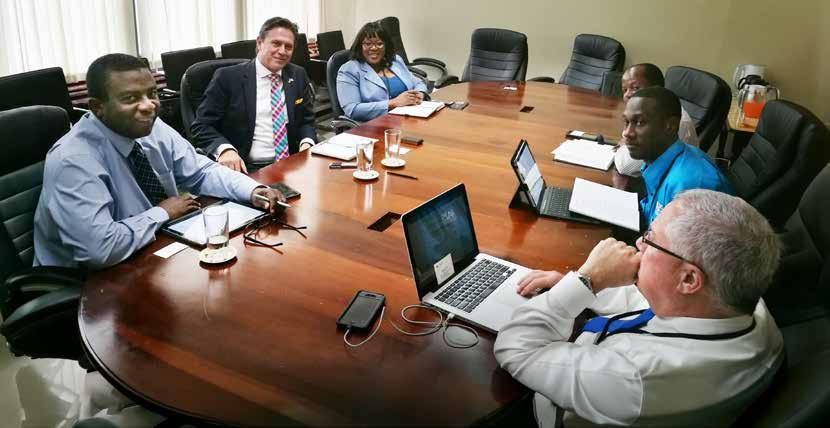
On 12 September 2016, Mr Ainsley Powell (Commissioner General of Tax Administration Jamaica – TAJ), Ms Marlene Nembhard-Parker (Deputy Commissioner General), and Ms Pamela Wade-Fearon (Deputy Financial Secretary, Tax Policy (retired) Ministry of Finance) hosted a meeting with experts from the IMF, OECD, and the WBG during a transfer pricing capacity-building mission in Jamaica.
Bob Marley’s birthplace in Nine Mile Village, Saint Ann, Jamaica
Key achievements in building Jamaica’s transfer pricing capacity
NEW TRANSFER PRICING LEGISLATION, REGULATIONS AND GUIDANCE in line with international standards were put in place and enforced by Tax Administration Jamaica. Despite initial pushback from the business community, there has been significant acceptance by taxpayers.
TRAINING WAS PROVIDED FOR MORE THAN 70 TAX OFFICIALS the majority of whom are still undertaking relevant functions. This has led to:
l increased staff expertise and confidence in applying the new transfer pricing rules, including conducting audits, and in engaging with MNEs in negotiations;
l better audit procedures, including risk and case management, and more comprehensive audits;
l improvements in the general organisation of work, as well as enhanced writing and oral communication skills.
GOVERNANCE WAS IMPROVED thanks to:
l the creation of two specialised transfer pricing teams in the Large Taxpayer Office;
l appointing transfer pricing focal points, or technical specialists, to support auditors in general audit units who encountered transfer pricing issues in their audit cases.
INCREASED TAX COMPLIANCE in the first years after the new transfer pricing regime was put in place resulted in:
l an increase in the filing of transfer pricing return schedules, from 25 taxpayers in 2015 to 240 in 2016. As the transfer pricing regime has matured, Tax Administration Jamaica has received more than 900 transfer pricing return schedules (2022-23).
l the use of the transfer pricing return schedules to enable Tax Administration Jamaica to prioritise risks, identifying whether they relate to cross-border (35%) or domestic transactions (65%), and whether they are loan transactions (10%) or deductions (54%), among many others.
l an increase in the number of transactions disclosed, from 30 in 2015 to 2 639 in 2016. In 2022-23, this number reached more than 4 000, representing a total value of EUR 6.6 billion.
INCREASED TAX REVENUE FROM TIWB PROGRAMMES
covering 11 audit cases and involving nine taxpayers, which have led to the assessment of more than USD 23 million in additional tax
Source: OECD


The next steps in the collaboration included on-site workshops, for a core group of officials from Tax Administration Jamaica and the Ministry of Finance, on the technical aspects of transfer pricing. To ensure gradual and sustainable capacity building, the OECD recommended multiple trainings for this group of staff, thanks to which tax officials were able to deepen their knowledge, reflect on the practical implications of what they learned over time and apply their strengthened skills to new cases.
The fact that the capacity-building workshops were delivered while the legislation was being drafted enabled the technical specialists to provide valuable technical input to the drafts. Continued support after the legislation was passed accelerated Tax Administration Jamaica’s enforcement efforts. In all, the positive technical capacity-building outcomes, at both the individual and the general organisational levels, contributed to forging a stronger tax administration.
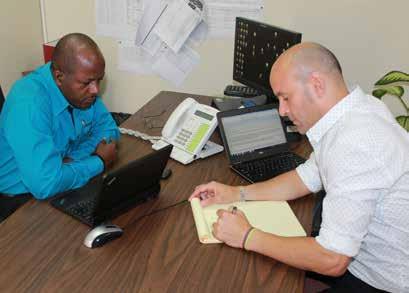
On 16 September 2016, Mr Bevon Sinclair (TAJ) and Mr Diego Gonzalez (OECD) joined journalist Ralston Hyman on Power 106’s Real Business Programme to discuss transfer pricing in Jamaica.
Co-ordination and close co-operation with international organisations and partners
Based on previous positive experiences of co-operation, the OECD approached the WBG to work in tandem to support the drafting of Jamaica’s new legislation, as well as in training and outreach activities. The successful co-operation built on the OECD’s technical expertise in transfer pricing and the WBG’s sound legal and policy knowledge. The IMF’s resident advisor in Jamaica assisted in drafting operational tools for the new rules, such as a Transfer Pricing Audit Roadmap and a Strategy and Implementation Plan.
The WBG later offered additional policy advice on taxation topics not covered under the scope of the transfer pricing capacity-building programme, including a review of the Jamaican Income Tax Act, as well as on issues relating to double taxation agreements and value-added tax.
On 13 November 2024, at a Tax Forum, Tax Administration Jamaica celebrated its 10th anniversary as a semi-autonomous body. At this Forum, the OECD, the IMF/Caribbean Regional Technical Assistance Centre (IMF/CARTAC), the United Nations and the WBG were invited to showcase their collaboration with Jamaica on international tax matters. The event reinforced Tax Administration Jamaica’s continued efforts to update its own tax standards and to align them with new international ones by enhancing its capacity and engaging closely with international partners.
Source: OECD
Collaboration through Tax Inspectors Without Borders
Between 2016 and 2019, TIWB supported Tax Administration Jamaica in fully administering and enforcing the new transfer pricing legislation through audits. Jamaica benefitted from hands-on technical assistance through three specific TIWB programmes: one on transfer pricing, supported by the German Ministry of Finance; a second on Advanced Pricing Agreements, provided by a retired tax expert from HM Revenue and Customs (HMRC); and a third on addressing base erosion and profit shifting (BEPS) issues in the bauxite industry, delivered by an industry expert, in collaboration with the Intergovernmental Forum on Mining, Minerals, Metals and Sustainable Development (IGF) 7
7. https://www.igfmining.org/about/

Tax Administration Jamaica in collaboration with the OECD has built a very strong foundation in managing international tax risks, we will continue on that path in order to achieve optimal tax compliance.
Mr Ainsley Powell, Commissioner General, Tax Administration Jamaica
These three programmes contributed relevant and practical tools tailored to the legal environment and working conditions of Tax Administration Jamaica. Staff noted the added value of receiving support from the beginning of the audit process to its end, thereby helping them to fully understand the implications of the new audit techniques. Challenges remain, however, especially in improving the analysis of external information and in the comparability of intra-group transactions.
The joint efforts to tackle MNE tax avoidance attracted much political and public attention within Jamaica; the work was also discussed in international newspapers, such as Le Monde8 and The Economist
8. https://www.lemonde.fr/economie/article/2019/02/26/en-jamaiquedes-inspecteurs-des-impots-sans-frontieres-pour-contrer-l-evasionfiscale_5428301_3234.html
“In the past, Tax Administration Jamaica was outgunned, its auditors struggling to master the complexities of cross-border transfer pricing. Change came in 2015. A new law required large taxpayers to provide more information on transactions, placed more onus on companies to show pricing was justified, and introduced bigger fines and even prison terms for transfer pricing breaches. In 2017, TIWB parachuted in Steffen Scholze, a veteran auditor from Germany’s federal tax office, for a two-week mission, to teach his 70 counterparts at Tax Administration Jamaica the tricks of the trade. He has since returned six times.”
Source: The Economist, Finance & Economics, 21 February 2019, https://www.economist.com/finance-and-economics/2019/02/21/countriesare-seeking-help-to-deal-with-corporate-tax-avoidance
April 2017 – Mr Ainsley Powell welcomes TIWB Expert Mr Steffen Scholze (Germany’s Federal Tax Office) for the TIWB programme launch, joined by TAJ senior officials and technical experts Ms Donette SomervilleMills, Mr Bevon Sinclair and Mr Hank Williams, as well as Mr James Gauvreau (IMF).

Jamaica in the international tax arena
Since the 2010s, Jamaica has become progressively involved in international tax fora, implementing international tax standards while also gaining
influence in the standard-setting process and acting as an advocate for developing countries and the Caribbean.
Increasing tax transparency through collaboration with the Global Forum
As part of a global effort to fight offshore tax evasion through transparency and exchange of information (EOI), in 2010 Jamaica joined the Global Forum on Transparency and Exchange of Information for Tax Purposesa (hereafter the Global Forum).
The Global Forum, which brings together 173 member jurisdictions, is the leading international body working to secure the effective implementation of transparency and EOI standards worldwide, namely: the Standard of Exchange of Information on Request (EOIR); the Standard for Automatic Exchange of Financial Account Information in Tax Matters (Common Reporting Standard or CRS); and the Crypto-Asset Reporting Framework (CARF). Through monitoring and peer review of the implementation of these standards by its members (and relevant non-members), as well as comprehensive capacitybuilding activities, the Global Forum ensures effective tax co-operation among tax administrations which have access to information that is critical for the successful application of their tax laws. These standards are important components of the toolkit of any modern tax administration and are invaluable in fighting tax evasion and other illicit financial flows.
a. https://www.oecd.org/en/networks/global-forum-tax-transparency.html
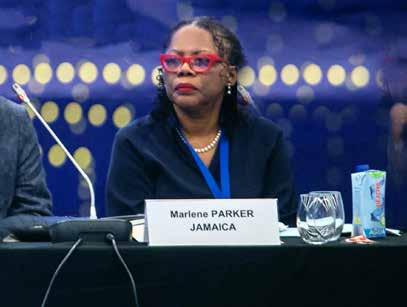
Ms Marlene Nembhard-Parker, Deputy Commissioner General, TAJ, at the 15th Global Forum Plenary meeting, 9-11 November 2022, Seville, Spain.
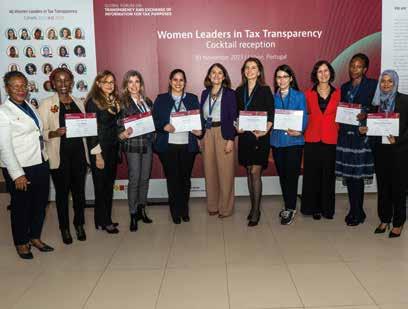
Women Leaders in Tax Transparency network – Cocktail reception, 30 November 2023, Lisbon, Portugal.
Jamaica and the Global Forum have worked together for several years, building understanding and implementation of EOIR, considering and implementing the CRS, and carrying out continuous capacity building, including with partners such as HMRC.
As a significant outcome of the close collaboration between Tax Administration Jamaica and the Global Forum, Jamaica adhered to the Multilateral Convention on Mutual Administrative Assistance in Tax Matters.b With 152 participating jurisdictions, this is the most powerful existing instrument for administrative co-operation among tax administrations. The co-operation also enabled Jamaica to obtain a rating of “largely compliant” c on EOIR through a Global Forum peer review in 2018.
The most recent collaboration has been on the effective implementation and use of the CRS, for which initial stakeholder engagement has proven important. In 2018, Tax Administration Jamaica and the Global Forum, with the valuable support of a CRS expert from HMRC, met with government and private sector stakeholders to demonstrate the benefits of implementing the CRS. Jamaica signed the Multilateral Competent Authority Agreementd in September 2021 and began CRS exchanges in 2022. By committing to the CRS, Jamaica sought to develop a stronger and more effective tax administration in support of the implementation of global standards. To help in meeting CRS requirements, the Global Forum Secretariat assisted Jamaica in drafting related legislation and strengthening the country’s confidentiality and data safeguards.
The Global Forum Secretariat continues to provide support to Jamaica on CRS implementation. In 2024, it supported the country in developing its CRS administrative compliance strategy and lent technical assistance on the effective use of the CRS data received. In 2025, the Global Forum Secretariat contributed to Jamaica’s initial CRS Peer Review.
Thanks to many years of co-operation, Jamaica has built a strong relationship with the Global Forum Secretariat, which in turn has gained a better understanding of the Caribbean region, its needs, and the type of assistance required.

Source: OECD
b. https://www.oecd.org/en/topics/convention-on-mutual-administrative-assistance-in-tax-matters.html
c. OECD (2018), Global Forum on Transparency and Exchange of Information for Tax Purposes Peer Reviews: Jamaica 2018 (Second Round, Supplementary Report): Peer Review Report on the Exchange of Information on Request, Global Forum on Transparency and Exchange of Information for Tax Purposes, OECD Publishing, Paris, https://doi.org/10.1787/854b209b-en
d. https://www.oecd.org/content/dam/oecd/en/topics/policy-issues/tax-transparency-and-international-co-operation/multilateral-competentauthority-agreement.pdf
Tackling Base Erosion and Profit Shifting (BEPS)
In 2014, as the international tax landscape evolved and the trust between Jamaica and the OECD grew, Jamaica joined the BEPS Project as an Invitee. When the OECD/G20 Inclusive Framework on BEPS9 (hereafter the Inclusive Framework) was established in 2016, Jamaica became a member. The Inclusive Framework is an international collaboration of more than 145 countries and jurisdictions working together to end tax avoidance by MNEs. Inclusive Framework members are committed to the consistent implementation of the BEPS Package of measures to address corporate income tax avoidance, which comprises 15 actions to improve the substance, coherence and transparency of the international tax system. As part of this process, Jamaica has benefited from a BEPS induction programme, the establishment of a focal point within the OECD Secretariat, and bespoke bilateral assistance on the implementation of the four BEPS minimum standards, which all members of the Inclusive Framework are committed to implement. The Canada Revenue Agency (CRA) also helped Jamaica navigate the BEPS implementation and peer review processes through a twinning programme.
Together with its ongoing implementation of the BEPS measures, Jamaica has also improved its ability to influence the BEPS standard-setting process at the institutional level. In 2017, Ms Marlene Nembhard-Parker of Tax Administration Jamaica was elected to the Inclusive Framework Steering Group; this group provides leadership and strategic advice on negotiations and discussions among the Inclusive Framework member countries and
jurisdictions. In 2021, Ms Nembhard-Parker was appointed co-chair of the Inclusive Framework. Part of her mandate is to reflect the views of developing countries in the discussions and decision-making processes of the Inclusive Framework. Over the past decade, addressing the tax challenges arising from the digitalisation of the economy has been a central concern. This work culminated in 2021 with the development of the Two-Pillar Solution, and in 2023 with the Outcome Statement, outlining progress made and the next steps.10 As part of the Two-Pillar Solution, large MNEs are obliged to pay a Global Minimum Tax, providing for an effective tax rate of at least 15% irrespective of where they are operating. Using a phased, evidence-based approach, the Inclusive Framework has also begun to examine new topics of common interest, including the global mobility of workers as well as the interactions among tax, inequality and growth.11

9. https://www.oecd.org/en/topics/policy-issues/base-erosion-and-profit-shifting-beps.html
10. https://www.oecd.org/en/about/news/announcements/2023/07/outcome-statement-on-the-two-pillar-solution-to-address-the-tax-challenges-arising-from-thedigitalisation-of-the-economy-july-2023.html.
11. Public Statement by the Inclusive Framework, Cape Town, 11th April 2025, https://www.oecd.org/content/dam/oecd/en/topics/policy-issues/beps/statement-oecd-g20-inclusive-framework-on-beps-april-2025.pdf
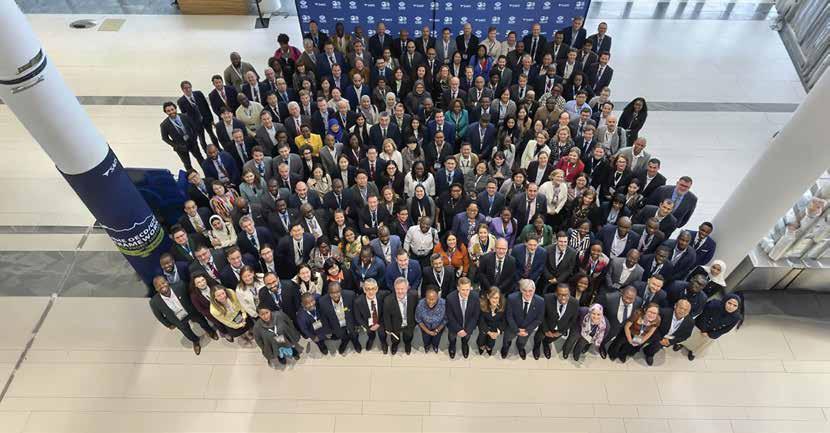
17th Meeting of the OECD/G20 Inclusive Framework on BEPS held on 7-10 April 2025 in Cape Town, South Africa.
Political leadership in support of developing countries and the Caribbean
Jamaica benefits from OECD/WBG collaboration on the Global Minimum Tax
Jamaica is one of nine developing countries that participated in an OECD/WBG pilot programme on the Global Minimum Tax and Tax Incentives, launched by the OECD in 2022.
The two-pronged programme supported Jamaica in implementing the Global Minimum Tax, as well as in analysing existing tax incentive regimes and the potential impact of the Global Minimum Tax. Through these projects, Jamaica benefitted from OECD expertise in the analysis of effective tax rates of in-scope MNEs, while the WBG contributed policy and legislative expertise and advice. Support was also lent for an ongoing project to modernise Jamaica’s Income Tax Act, strengthening it against cross-border tax avoidance.
Source: OECD
Building on Jamaica’s political support for ongoing international taxation discussions, in November 2021 the Honourable Dr Nigel Clarke, then Minister of Finance and the Public Sector, hosted a virtual roundtable on Tax and Developing Countries for Ministers of Finance from across the world.12 The discussions took place in the context of the COVID-19 pandemic, which had left many developing countries in a precarious fiscal position, increasing the pressure for all areas of taxation, including international tax, to deliver much-needed revenues. The Ministers agreed on the urgent need for a comprehensive and bespoke technical assistance programme to support developing countries in implementing the Two-Pillar Solution, including through co-operation with relevant
development partners and donor countries. The meeting also considered improvements to the governance structure of the Inclusive Framework to ensure better representation of developing countries and that their views would be heard and understood.13
These political discussions contributed to the strengthening of the G20 commitment to focus attention on the needs of developing countries, and to the elaboration of a G20/OECD Roadmap on Developing Countries and International Taxation.14 In addition, Inclusive Framework members called for co-ordinated technical assistance to enhance developing country capacity, anchored in the July 2023 Outcome Statement on the Two-Pillar Solution.
12. https://www.mof.gov.jm/priority-actions-agreed-during-ministerial-round-table-on-developing-countries-int-taxation/
13. https://www.mof.gov.jm/wp-content/uploads/chair-statement-of-outcomes-ministerial-dialogue-on-tax-and-developing-countries.pdf
14. OECD (2022), G20/OECD Roadmap on Developing Countries and International Taxation: OECD Report for the G20 Finance Ministers and Central Bank Governors, OECD Publishing, Paris, https://doi.org/10.1787/cf46900c-en

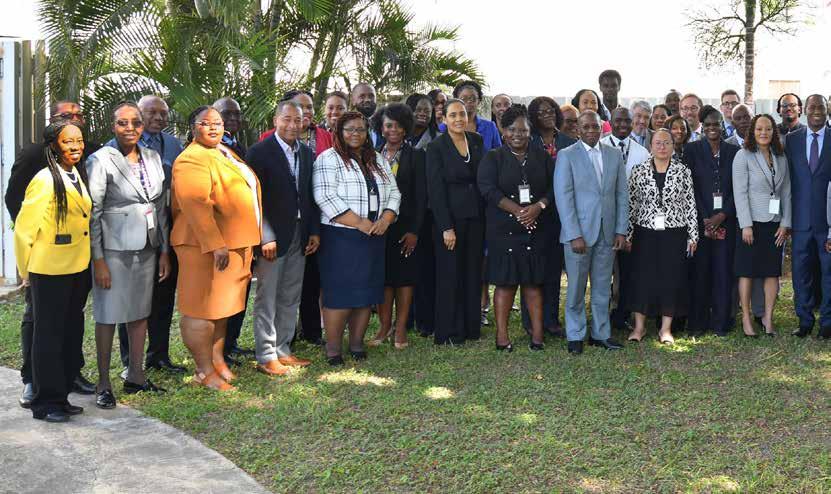
22 November 2022 –Speakers and participants at the “Tax and Development Opportunities and Challenges in the Caribbean” Regional Seminar, co-hosted by the Caribbean Community (CARICOM) Secretariat and TAJ in Kingston, Jamaica.
Tax Administration Jamaica continues to remain at the forefront of changes in the tax landscape that can benefit Jamaica’s regime through efficiency, greater compliance and knowledge sharing. Today, there is greater acceptance of the rationale for tax revenues to be collected as persons see the government services that are provided. Tax Administration Jamaica has made several transformational steps to make it easier for Jamaicans to interact with their many services. They continue to break new ground, providing outreach and making every effort to teach and educate Jamaicans on their obligations. I recognise that there is still work to be done but, in its evolution, Tax Administration Jamaica continues to serve the people of Jamaica well.
The Honourable Ms Fayval Williams, Member of Parliament, Minister at the Ministry of Finance and the Public Service, Jamaica
Important governance improvements have since been made, including increasing the number of developing country leadership positions in the Inclusive Framework and its subsidiary bodies, as well as updating the mandate of the former OECD Advisory Group for Cooperation with Partner Economies. This Group, currently co-chaired by Canada and Jamaica, is now named the Advisory Group for Global Dialogue on Tax Matters.15 The Advisory Group has been tasked with representing developing country perspectives in the standard-setting process, including those of non-Inclusive Framework members. Further improvements to the operating processes and governance of the Inclusive Framework, designed to enhance its effectiveness and inclusivity, were welcomed at the Inclusive Framework plenary meeting in Cape Town, South Africa in April 2025.
15. https://www.oecd.org/en/networks/advisory-group-for-global-dialogue-on-tax-matters.html
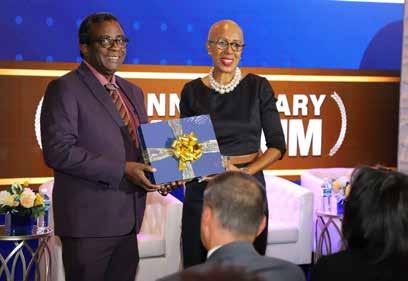
13 November 2024 – The Honourable Ms Fayval Williams (Minister of Finance and the Public Service) receives a present from Mr Ainsley Powell during TAJ’s 10th Anniversary Tax Forum in Kingston, Jamaica.
Jamaica fosters regional tax policy dialogue
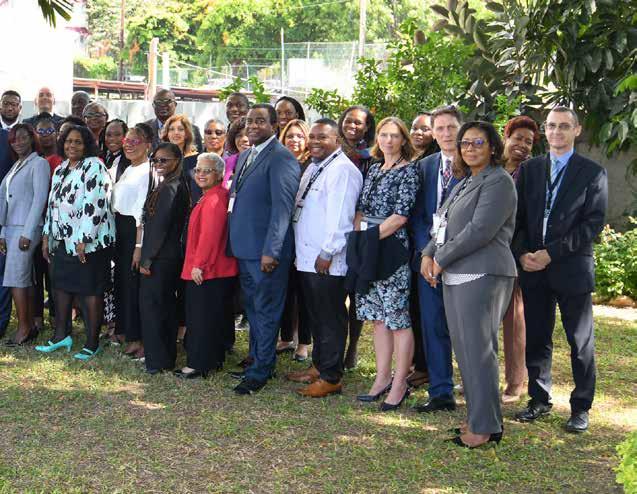
Jamaica has played an important role in fostering tax policy dialogue in the Caribbean. In November 2022, Tax Administration Jamaica and the CARICOM Secretariat co-hosted the Regional Seminar “Tax and Development Opportunities and Challenges in the Caribbean”, attended by 80 senior tax policy and tax administration officials from 21 Caribbean jurisdictions. The meeting provided an opportunity for discussions on the key tax and development opportunities and challenges facing Caribbean economies, and on how they relate to the global tax landscape. A vision emerged of how OECD engagement with the Caribbean nations can support tax policy makers and administrators.
Jamaica has continuously demonstrated its commitment to regional co-operation. The country participated actively in the 26th Caribbean Organisation of Tax Administrators (COTA) General Assembly and Technical Conference, which took place in Castries, Saint Lucia in July 2024.
Subsequently, development partners working in the region joined forces to offer a regional outreach programme addressing tax capacity-building priorities, with a view to enhancing domestic resource mobilisation. This initiative is led by CARICOM/COTA, with the collaboration of the Commonwealth Association of Tax Administrators (CATA), the InterAmerican Center of Tax Administrations (CIAT), the IMF/CARTAC, the OECD and the WBG.
Jamaica contributes significantly to the programme, notably through experience-sharing and peer-to-peer learning with other Caribbean jurisdictions within and beyond the Inclusive Framework. In March 2025, during a two-day Virtual High-Level Seminar on International Tax Developments in the Caribbean, senior representatives from Tax Administration Jamaica presented corporate tax reforms over recent years, noting the importance of synchronisation and collaboration with international partners. Additionally, there was a session focused on the development of taxpayers’ education strategy in collaboration with CATA. Jamaica was very well-represented at the event, with 32 participants from the Ministry of Finance, Tax Administration Jamaica and the Companies Office of Jamaica. Similarly, in June 2025 at a two-day Virtual Workshop on Transfer Pricing in the Caribbean, Jamaica showcased the country’s transfer pricing journey, highlighting its challenges and solutions as well as the country’s reinforced capacity thanks to the continuing support lent by TIWB and other development partners. The event attracted 46 participants from Jamaica’s various governmental bodies.
Following the success of these events, Jamaica’s development partners are solidifying their collaboration by hosting a series of events in 2026 under the Caribbean Tax Outreach programme. This platform provides for experience-sharing, capacity building, and the creation of synergies among Caribbean jurisdictions and development partners on a range of regional tax priorities.
Source: Jamaica Information Service, “Dr Clarke Urges Increased Collaboration Among Caribbean Nations”, 24 November 2022, https://jis.gov.jm/dr-clarke-urges-increased-collaboration-among-caribbean-nations/

The Honourable Dr Nigel Clarke, then Minister of Finance and the Public Service (left), greets Mr Ben Dickinson, Deputy Director of the OECD’s Centre for Tax Policy and Administration (right), at the opening of the Regional Meeting on Tax and Development, New Kingston, Jamaica, 22 November 2022.
Conclusions
l Over the past decade, Jamaica has advanced numerous tax reforms thanks to strong political ownership and a strategic partnership with the OECD, as well as other partners, resulting in a notable institutional, legal, and cultural transformation. This partnership has enhanced Jamaica’s capacity to participate in international tax standard-setting and has also improved the OECD’s understanding of the challenges faced by developing economies in general, and the Caribbean islands in particular.
l The collaboration has strengthened domestic resource mobilisation by promoting MNEs’ compliance, as well as more effective audits of large taxpayers. A clear reform agenda, consistent leadership from the successive Ministers of Finance, and active stakeholder engagement have all been instrumental in overcoming resistance to the new transfer pricing regime.
l Sequenced capacity-building efforts, ranging from targeted bilateral assistance to hands-on TIWB support, has enabled the staff of Tax Administration Jamaica and the Ministry of Finance to contribute to the drafting of legal provisions as well as to their enforcement. Sustained impact has been ensured
through the training of a stable core of tax officials who remain in key positions and disseminate expertise internally.
l The OECD’s co-ordination with the WBG, IMF, and other partners has proved effective in aligning legislative reform with implementation. The establishment of dedicated focal points, both in Jamaica and at the OECD, has streamlined engagement and fostered trust.
l Jamaica has demonstrated its commitment to acting as a regional leader on international tax matters through its continuing engagement with development partners and the facilitation of peer-to-peer learning among jurisdictions in the Caribbean.

l Finally, Jamaica’s case has underscored the value of regular regional tax policy dialogue, as demonstrated by the successful regional meetings which took place in the last decade and led to a solidified collaboration amongst development partners through the Caribbean Tax Outreach programme since 2025.
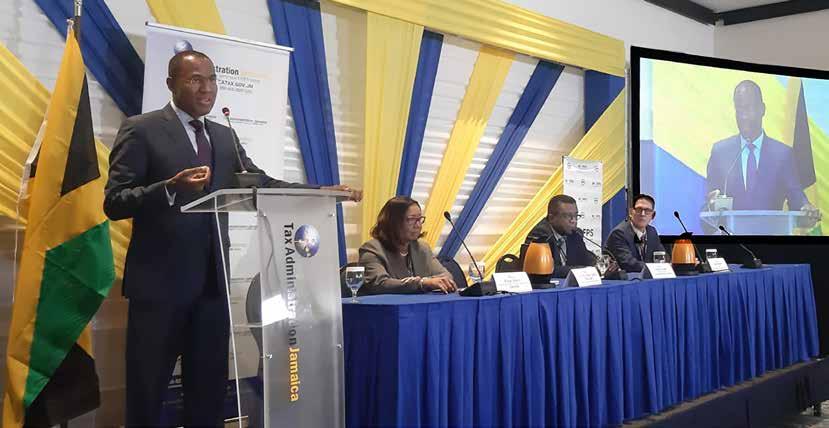
The Honourable Dr Nigel Clarke delivers a keynote speech at the “Tax and Development Opportunities and Challenges in the Caribbean” Regional Seminar, co-hosted by the CARICOM Secretariat and TAJ in Kingston, Jamaica, November 2022.

For more information: TaxandDevelopment@oecd.org
https://oe.cd/tax4dev-studies https://oe.cd/tax-transparency
Disclaimer
This work is published under the responsibility of the Secretary-General of the OECD. The opinions expressed and arguments employed herein do not necessarily reflect the official views of the OECD or of the Global Forum and the governments of their respective member countries.
This document, as well as any data and any map included herein, are without prejudice to the status of or sovereignty over any territory, to the delimitation of international frontiers and boundaries and to the name of any territory, city or area.
© OECD 2026

@OECDtax
OECD Tax

The use of this work, whether digital or print, is governed by the Terms and Conditions to be found at www.oecd.org/termsandconditions.
Images © OECD and Shutterstock.com.