

IN FOCUS

Featured: WASHED OUT: A massive sinkhole collapsed and damaged the Baxter Car Wash early on the morning of Tuesday, Aug. 18, swallowing parts of the building and an ice machine.
Photo by Sophie Fernandes
VIEWPOINTS
8
Spreading HoPe
Senior Patricia Bustinza weighs in on the importance of supporting Hispanic education.
BY PATRICIA BUSTINZA
NEWS
In principal
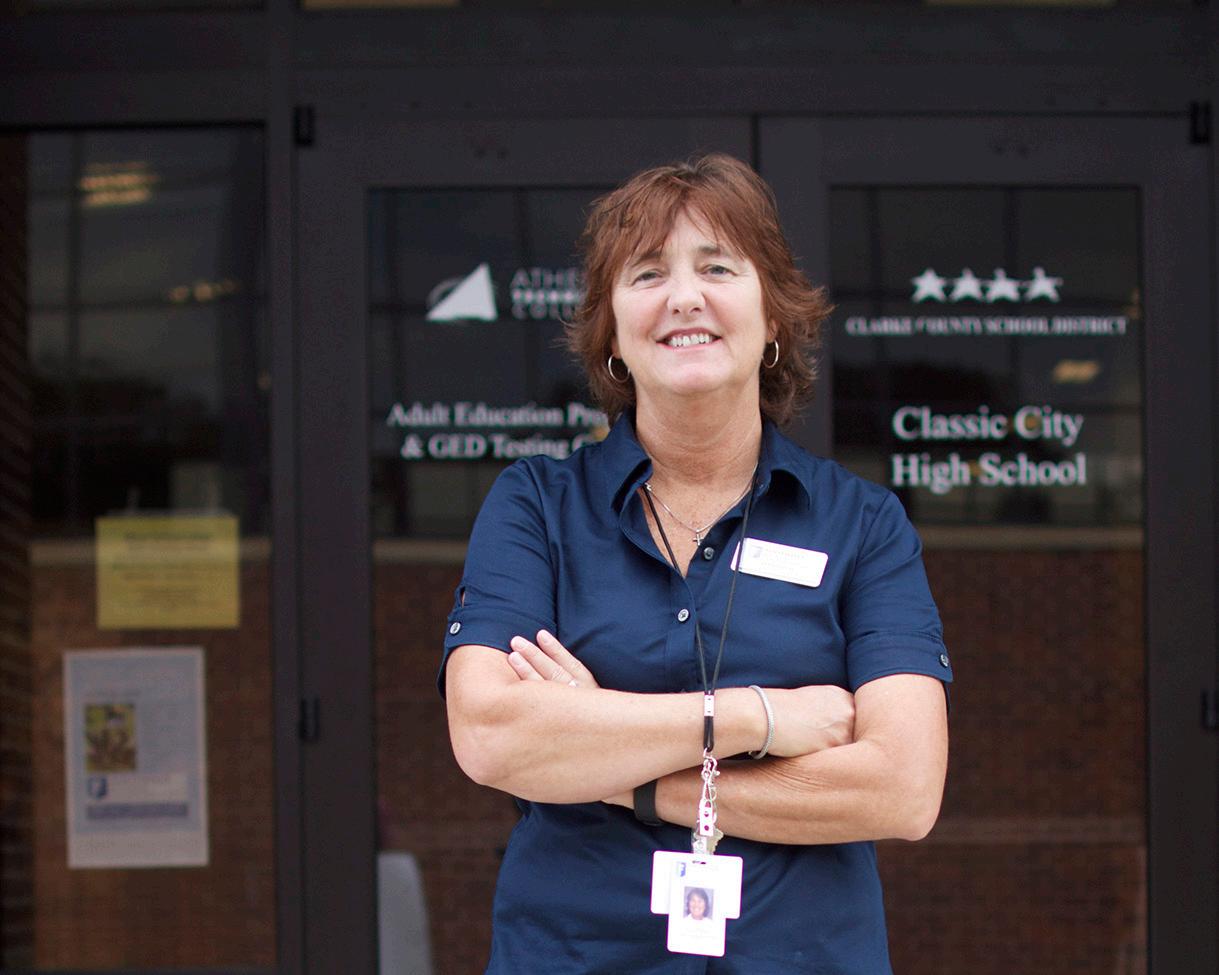
Marie Yuran has emerged from a rural Georgia town a world traveller and school administrator.
BY SARA GOODIE
A stepping stone
The Foothills Educational Charter High School opened for classes for the 2015-2016 school year.
BY VIOLET MERRITT
FEATURES
Multiplied difficulty
A relatively unknown math learning disorder, dyscalculia, is explored.
BY LUCIA BERMUDEZ
REVIEWS
22
Classic attitude
Straight Outta Compton, the official biopic of the transcendent ‘80s rap group N.W.A., dives deep into the obstacles the group faced.
BY FAJR DeLANE
VARIETY
The power of Wil
A glance into the life of Mia Wilhite, a homeless student at CCHS, and the adversity she faces.
BY SOPHIE FERNANDES
SPORTS
Clarke County clash
County rivals Clarke Central and Cedar Shoals prepare to meet up in the Classic City Championship.
BY JOHANNA HALL, ZOE PETERSON AND KEVIN MOBLEY

Cover Story
The Clarke Central High School varsity football team will meet rival Cedar Shoals High School in Billy Henderson Stadium for what looks to be a critical region matchup.
Right: LIFE’S PATH: Junior Mia Wilhite and her family were evicted from their home in 2007 shortly after her grandmother passed away. She says she goes to school every day fearing judgement. “It’s difficult because you worry that people are going to look at you with pity,” Wilhite said. “I don’t want their pity; I just want their support.”
the 2015-16 school year. “I feel like we’re just going to surround (students) with so much support,” Posey said.

Cover photo by Sophie Fernandes. Illustration by Kevin Mobley.
Left: A NEW HOME: Fomer physical education department chair Dinah Posey left Clarke Central High School to serve as on-site coordinator at Foothills Education Charter High School for
Photo by Sophie Fernandes
Photo by Sophie Fernandes
Photo by Sophie Fernandes
LETTERS TO THE EDITOR
Chasing their dream: Education for all
5 things to know about MMA
I have recently read your article in the odyssey entitled “5 Things To Know about MMA” as told to Sam Hood. I found that most of the five points were well explained, detailed and understandable. The first point--shaping up--is the most difficult part. I have been in there a couple of times last year and the fighting is very exhausting and somewhat overwhelming the first times around. However, that wasn’t my favorite “thing to know”; my favorite one was the striking moves. I think that the teacher really hit the nail on the head when he was explaining his striking techniques. Also, he does teach anyone everything they need to know about MMA. I really liked reading this article and look forward to reading the rest of your upcoming news.
-- Daivyon Hull, junior
A letter to Jalen
I read Dalace Thomas’ story called “A letter to Jalen” in the last ODYSSEY, and I found it very heartwarming. It made me feel emotional because she said what she couldn’t say to him. I liked how it was a personal letter and it was something she could keep forever.
-- Riley Wilson, freshman
Congratulations! You’ve lost?
Kevin Mobley’s “Congratulations! You’ve Lost?” is a very interesting article to me. I never knew that many people had been through concussions more than one time just by playing football. You would think the helmet would protect the players more than they do. What scares me the most is more that 75 percent of the football players that are deceased have a brain disease from those concussions. They need more head support. I’m disappointed about how they treat concussions. There is no standard protocol on what to do after. It’s like they don’t even care. This article has taught me a lot and how bad it can mess you up on your head in the long run. Write more articles and let people know what’s going on with the injuries and what happens after football.
-- Lauren Beck, junior

“I think DREAMfest was a huge success. I had a great time while also learning about the struggles of some of my fellow students. ”
-- Scholl Wright, senior
Corrections/Omissions
May 2015
On page 6, the word receive is misspelled.
On page 8, Amiya Fox’s name is mispelled.
On page 13, the word business is misspelled.
On page 19, the photo was taken by Chad Rhym.
On page 19, the word environment was misspelled in the title.
The ODYSSEY Newsmagazine apologizes for the misprint of Ms. Barbara Archibald’s name as it appeared in the article “More than a Teacher” by Flynne Collins. Ms. Archibald’s first name was incorrectly written as “Deborah” instead of “Barbara” in the article. It is the responsibility of the ODYSSEY to present accurate information to our readership and we will strive to fully uphold our values going forward.
Back on the right track
“Back on the right track” by Olivia Ripps shows Coach Christian Norton’s passion for track and field in an inspiring story to read. At a young age, Norton knew his passion for track was deep. I can relate. At the young age of about 10, I always knew that football was my outlet from life, my getaway place. So keep up the inspiring stories ODYSSEY, your work really does matter.
More than a teacher
-- Aaron Gresham, junior
Thank you for your heartfelt apology on behalf of Mr. Ragsdale, the editorial board of the ODYSSEY Newsmagazine, and the ODYSSEY staff. It was indeed an honor to be chosen by the students to be highlighted in the May issue of the magazine. I have received many honors during my career; however, I consider the article as one of the greatest tributes that I have received in over thirty years of serving students in our community. After retiring as Director of the Athens Tutorial Program, substitute teaching has provided me the opportunity to continue to play a small role in the lives of our community’s children. I am inspired by the students at Clarke Central High School: their enthusiasm, inquiring minds and optimism for the future. It is my pleasure to have the opportunity to work with each student.
I wish you and your staff an enjoyable and successful school year.
--BarbaraThurmondArchibald, substitute teacher
Our May issue featured a news piece, “U-Lead the way,” on the collaboration between the Clarke Central High School Interact Club and U-Lead Athens to combat immigration legislation in Athens. The sports section in particular received praise around the school, particularly a profile of varsity track coach Christian Norton by Olivia Ripps. Letters: E-mail us at editors@odysseynewsmagazine.net, or drop off in the main office, in care of the ODYSSEY. We ask that all letters be under 250 words and signed. We reserve the right to omit or edit any letters received. Insulting, unsigned or libelous statements will not be considered for publication. All letters may be edited for clarity and space. Advertising: For ad rates e-mail us at business@odysseynewsmagazine.net. Online: Comment online at our website, www. odysseynewsmagazine.net. Follow us on Twitter and Instagram @OdysseyNewsmag. Contact ODYSSEY Newsmagazine
ODYSSEY
The ODYSSEY was established in 2003 and is published monthly. Published opinions do not necessarily reflect the views of anyone other than the staff.
The ODYSSEY is a student-produced newsmagazine, published with the intent to inform, entertain and give voice to the Clarke Central High School community, as well as to educate student journalists. Each issue is an open public forum for student expression under the guidance of a faculty adviser.
Student journalists are provided with opportunities to investigate, inform, interpret and to evaluate: all traditionally accepted functions of the press in America.
The ODYSSEY staff is committed to reflect the mission statement set forth by Clarke Central High School. The goals of the staff are to provide fair, accurate news and commentaries, as well as to serve the interests of the school and Athens’ community.
Advertising must conform to the guidelines set forth for editorials. Publication of advertisements does not indicate an endorsement by CCHS or by the ODYSSEY staff.
Students pictured in advertisements are not given monetary compensation. All advertising rates are available upon request from any ODYSSEY staff member.
The ODYSSEY is a member of the Quill and Scroll Honor Society, Georgia Scholastic Press Association, Columbia Scholastic Press Association, National Scholastic Press Association and Southern Interscholastic Press Association.
Corrections of errors and omissions will appear in the next issue.
Editor-in-Chief: Kevin Mobley
Managing Editor: Amelia DeLamater
Senior Visuals Coordinator: Ella Sams
Writing Coach: Tierra Hayes
Copy Editor: Sara Goodie
Photography Editor: Sophie Fernandes
Viewpoints Editor: Catherine Argabright
News Editor: Katy Mayfield
Variety Editor: Lucia Bermudez
Sports Editor: Johanna Hall
Junior Copy Editor: Jordan Rhym
Business Staff: Business Manager: Dalace Thomas, PR Manager: Delia Adamson
Staff Writers:
Phineas Alexander, Andrew Caldwell, Caedmon Churchwell, Sheridan Cofer, Graham Collins, Fajr DeLane, Jamia Echols, Kieffer Farber, Valeria Garcia-Pozo, Kendall Griffin, Adrienne Lumpkin, Emma Ramsay, Olivia Ripps, Clare Wislar
Adviser: David A. Ragsdale
ODYSSEY NEWSMAGAZINE
Clarke Central High School
350 S. Milledge Avenue
Athens, Georgia 30605
Phone: (706) 357-5200, Ext. 17370
Fax: (706) 357-5269
IOur Take
t’s no secret that at a typical public high school, there are more freshmen than seniors.
According to the U.S. Department of Education, over 1.2 million students drop out of high school in the United States alone.
On average: 7,000 a day.
In 2014, the graduation rate for black students in the Clarke County School District was 59.2 percent. For Hispanic students it was 62.3 percent, and for white students 75.2 percent.
We’re losing students, and fast.
And it’s not all because students are lazy or unmotivated. Often times, some students have no choice but to look after their children or work odd hours to make ends meet.
Life calls, and sometimes that requires hanging up the phone on traditional high school.
That’s where schools like Foothills Education Charter High School arrives, ready to lend a hand to students who are sinking.
Though similar to Classic City, FECHS is more individualized, and all students work and learn at their own pace.
FECHS is a new charter school located at Classic City High School, at 440 Dearing St. Extension off Broad Street, as well as six other locations around northeast Georgia. It offers students ages 14 to 20 a different opportunity to receive a high school education. In the CCSD, FECHS is open Monday through Thursday from 4 to 9 p.m.
Though similar to Classic City, a non-traditional high school in its own right, FECHS is more individualized--designated mentors check in with each student and his or her loved ones regularly--and all students work and learn at their own pace.
FECHS doesn’t take away any funding for other schools. Just like every other CCSD school, it’s paid for by tax dollars.
In other words: enrollment doesn’t cost a cent.
So not only is FECHS free and accessible, it’s also a fresh start for many students who could use one. If a student wants to get away from the distractions of traditional high schol, or is looking for a new approach to graduating, FECHS is a real option to consider.
FECHS could prove the difference in the lives of our peers.

Below: A STEPPING STONE: Foothills Education Charter High School on-site coordinator Dinah Posey directs a student at FECHS on Tuesday, Aug. 18. “I really think that we can touch a lot of kids and provide support where they have given up along the way,” Posey said.
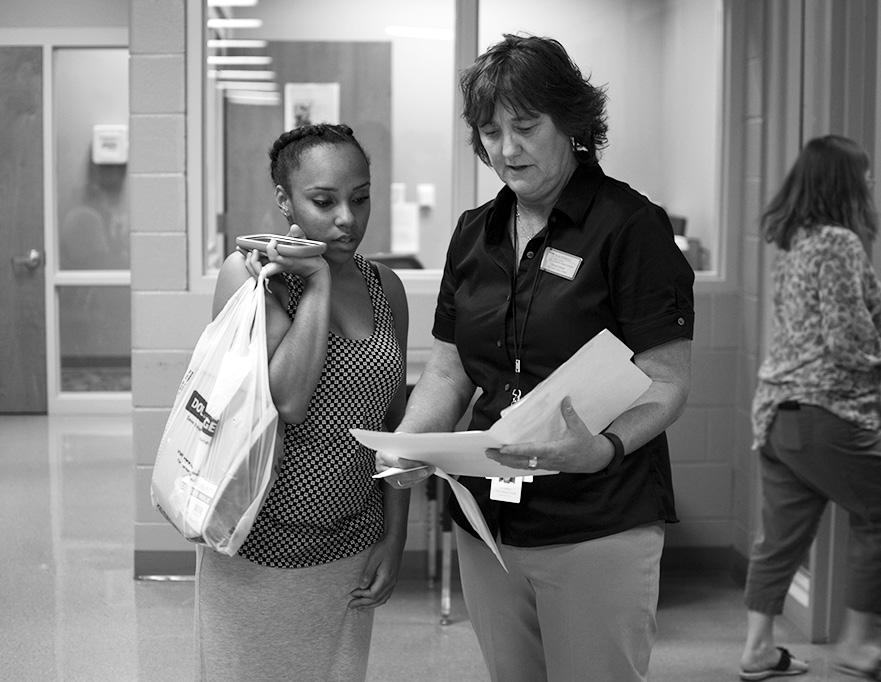
Photo by Sophie Fernandes
The ODYSSEY staff’sopinions
on this month’s issues. Thumbs
Glad to be back High school football season is finally here. An electricity around the school is building up to when the Gladiators meet the Jaguars in the 49th edition of the Classic City Championship. In the words of Bart Scott, “Can’t wait.”
A step towards success
The opening of Foothills Education Charter High School in August signifies a serious commitment towards students. CCSD: 1; dropout rate: 0 in 2015.
The audacity of HoPe
A team of Clarke Central High School students have initiated ‘HoPe,’ The Hispanic Organization Promoting Education, to address the issues that Hispanic CCHS students face.
Hey now, Yur-an all-star Associate Principal Marie Yuran has stepped up to the plate as she enters her second year as a member of the CCHS administrative team.

Construction confusion
Though the dedication of Construction Manager Joe Dunnagan and his crew is to be commended, students would rather not have to burn a thousand calories on the way to gym class.
School’s out
It’s sad that CCHS students have once again resorted to targeting one another over social media, this time by way of “Afterschool,” a school message board app similar to Yik Yak. Both have already had incidents of threats and bullying.
Flop-tastic Four
After all the excellent action hero movies in the last couple years, the newest Fantastic Four film was a major disappointment.
Makeshift media center
After being forced into a trailer this summer, the library is a mess for media specialists Lindy Weaver and Kacy Tedder. Luckily, a brand new space is on its way after the Holidays.
FreshVoice
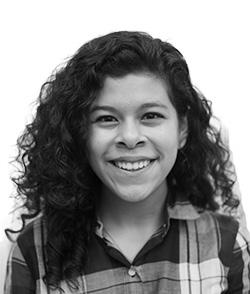
Valeria Garcia-Pozo
Taking flight
Every time I step up to the podium, the room fills with silence. Whether my voice shakes, whether I forget, whether I hesitate, it all depends on me. It is time for me to do my part. I open my mouth. I begin to speak.
At six years old, I was a shy first-grader with a strong Spanish accent. I remember wishing I had a voice like my first-grade teacher.
At 12 years old, I was a less shy seventh-grader with an American accent decorating my every Spanish word.
I no longer sounded like the first-grader who was attempting to learn how to communicate in a language different from my own.
I was no longer the first grader who was desperately trying to find my words amidst the different dialects of my peers and the “proper” way to speak.
That spring of seventh grade, I entered a contest that required me to write and deliver a speech. I wanted to prove to myself that I could get up in front of an audience and share my own story. Despite initial nerves, public speaking came naturally.
I was no longer the first grader who was desperately trying to find my words amidst the different dialects of my peers and the “proper” way to speak.
Some people find public speaking terrifying, others find it unendurable. I find it to be gratifying and rewarding.
I had the opportunity to speak to a group of students at the University of Georgia encouraging them to be camp counselors for children whose parents have cancer. Having been a camper myself for two years, more than 100 students were able to relive my amazing experience with me as I delivered the speech to them.
When I speak, my voice ignites a butterfly effect.
When I speak, something unexpected happens. The people to whom I speak are not black or white, men or women. They are people.
When I speak, they do not hear a young Hispanic girl with dozens of things going against her. Nobody hears a girl who stuttered and dropped her papers trying to present to her fifth-grade class. Nobody hears a girl saying, “ya no habla español, que sueña como gringa.”
They hear me.

Cartoonby Ella Sams
Left: FLYING HIGH: Despite having language barriers after moving to the United States from Peru in the first grade, freshman Valeria Garcia-Poza now uses public speaking to influence those around her.
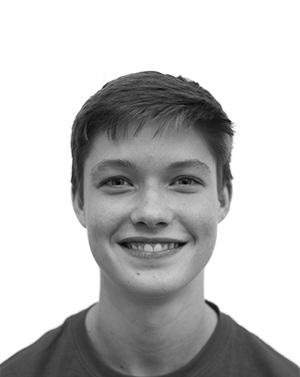
TKevin Mobley
Letter from the Editor. Brutality, torture, hatred and massacre are far too common right now for journalists and humans alike. That’s got to change.
he moment I knew I wanted to become a journalist, my father shared a sentiment with me that still echoes in my head to this day.
“You’re going to have to have a thick skin to be a writer,” he said. “Don’t let anyone phase you.”
And it rings true.
As a writer, the ability to ward off all the negativity that comes your way-harsh criticism, strong opposition, hateful comments and even sometimes threats--is vital.
Bullets should have never been a part of that equation.
Two bright, young journalists, Alison Parker and Adam Ward, were murdered by a former coworker in a senseless act of rage on the morning of Wednesday, Aug. 26, reminding all of us, especially aspiring young reporters, of the dangers that lie in the path of a journalist in the pursuit of stories that need to be told.
The constant angst and fear that afflicts professional journalists, and even to an extent young student journalists like myself, is a result of events such as these. Disappearances, torture, kidnappings and even execution are realities that many journalists are faced with in tracking down a story.
The Committee to Project Journalists (CPJ) estimates that 1142 journalists have been killed since 1992. In the last year alone, reporters have been decapitated by ISIS, detained for simply tweeting about the violence that unfolded in Ferguson and gunned down in their own building at Charlie Hebdo.
The truth of the matter is this: we, as moral human beings, have to eradicate the senseless violence that led to the deaths of Alison Parker and Adam Ward, Michael Brown and Eric Garner, the nine in Charleston, the 27 at Sandy Hook and the 1142 journalists across the world.
When will we finally decide that enough is enough?
Nothing else should matter when innocent people are being murdered en masse with each passing day.
Solving these deeply-rooted issues requires real discussion of race, gender, class, wealth, religion, sexual orientation and all the other social constr ucts we
Consider the impact your words and actions have on others. Uncover the problems that we face, so that we can all work to solve them.
have deployed to divide ourselves from one another for centuries.
No longer can we afford to avoid these topics, especially right here in our schools, because in doing so, we only perpetuate the distancing and implicit hatred that lead to oppression and genocide.
If we choose to live our lives in ignorance towards what is happening right before our very eyes, then we are just as much a part of the problem as the instigators.
We all may not be able to comprehend or connect with another’s worldview, and that’s O.K. However, respect for one another in our shared human condition is essential, and, frankly, has become lost within all of the estrangements that serve to tear us apart. Freedom of speech is one of the only ways left to counteract that.
Journalism--no matter if it’s a Pulitzer Prize winning story on the front page
of the New York Times, or simply a tweet as a bystander to an event--works at the heart of unearthing the very institutions that inhibit many humans, too many humans, from their natural rights.
Journalistic pursuits are based entirely on fairness, accuracy and fearlessness, and the efforts to silence the voices that so desperately need to be heard today through violence debilitate our collective understanding of the events unfolding in the world. Truth seekers like Alison Parker and Adam Ward are lost as well.
And so to honor the lives taken yesterday, and the lives that, sadly, will likely be taken today and tomorrow, we must all commit ourselves to journalism in some form.
Explore what affects people of your community, your state, your country, your color, your religion and your world. Consider the impact your words and actions have on others. Uncover the problems that we face, so that we can all work to solve them.
Dedicating our efforts day in and day out towards an issue, any issue, may not reverse the ways we have gone astray, but every one of our lives, minds and voices can cause change, real change. It could be planting a tree or battling housing discrimination, or just even saying hello to people; it all has an impact. Nevertheless, it is crucial that we wake up from our respective daydreams, see the world for what it has become and figure out what we can do to make things right.
This is what true journalists yearn for: the society that we can achieve, and the hope that by exposing darkness, we can eventually reach the light of tr uth. But if we continue to accept our current reality, we so too continue to shadow the malice that is plunging mankind into madness.
Below: LEFT AND RIGHT: Today’s society faces many problems that require the attention of not only the press but of the everyday citizen, including today’s youth.
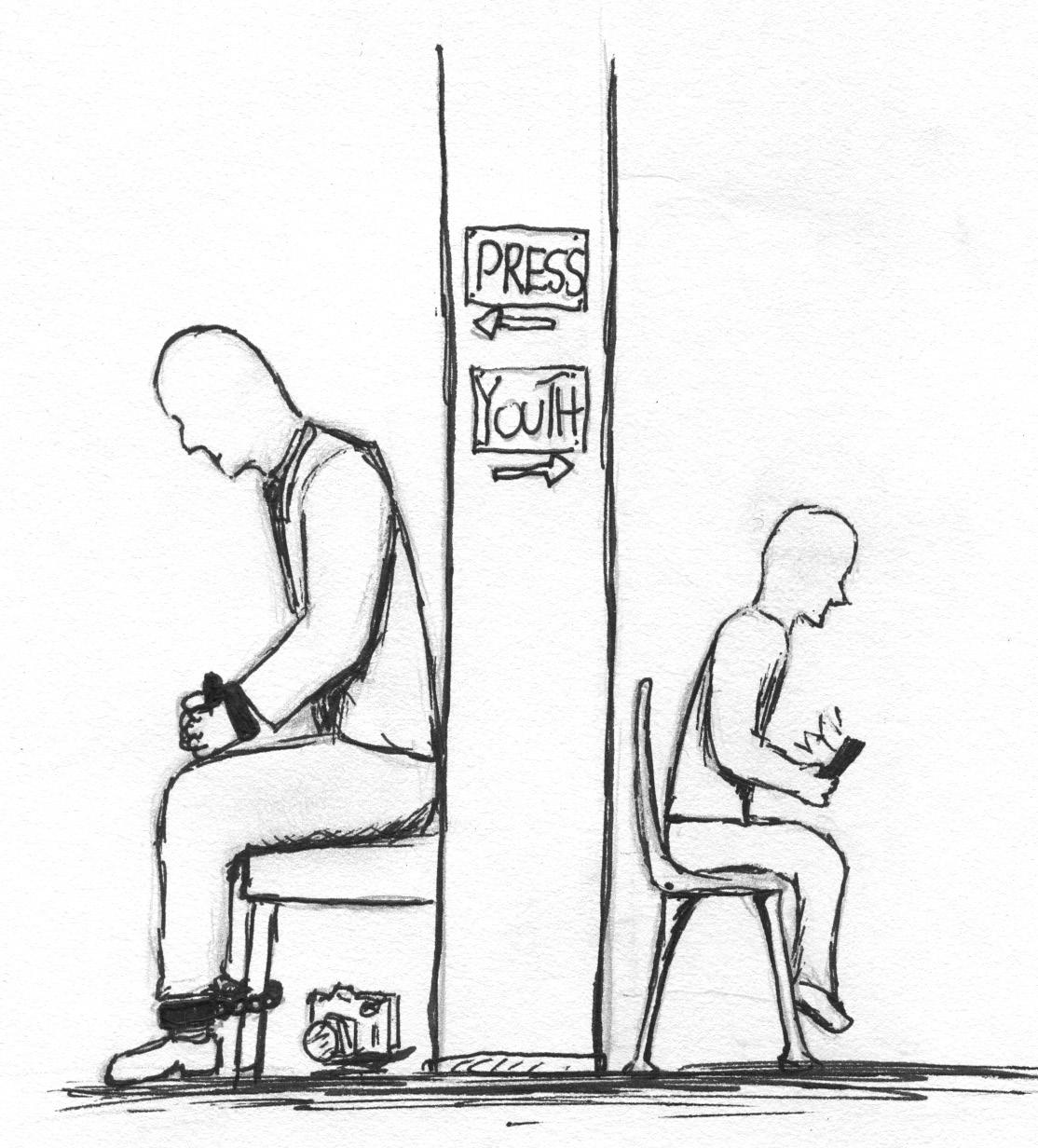
Cartoon by Phineas Alexander
What’s the biggest change you’ve noticed at Clarke Central?
“Teachers this year are way more strict with the cell phone policy and they’re really cracking down on dress code.”
--Vanessa Silis, sophomore
“The number of students and teachers that are engaged in using technology productively different from some of the school districts I’ve been (to).”
--Kimberlyn Jackson, teacher
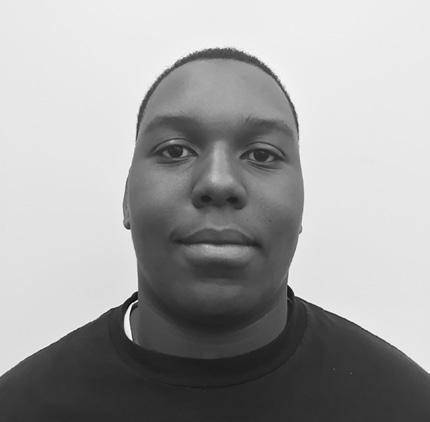
“There’s been a lot of construction, which is good for the school, but forces me to change the ways I get to my classes and makes it more difficult.”
--Kate Jones, freshman
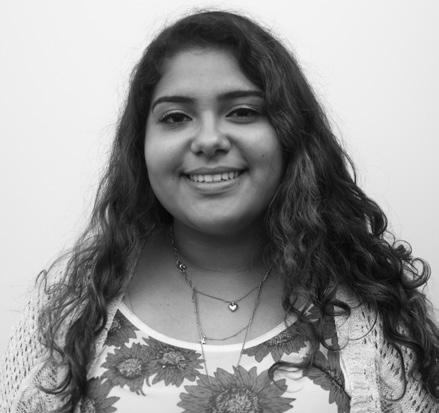
“The cafeteria. I like the new ramp.”
--Calvin Nimely, junior
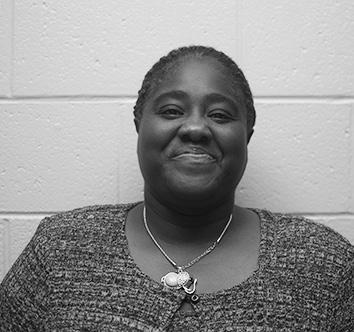
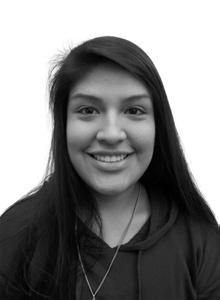
IPatricia Bustinza
never paid much attention to immigration policies until the summer of my ninth grade year. I was attending a leadership camp called “Leadership Sin Limites!” at the University of Georgia’s Fanning Institute when I was assigned to create a project that would help my community.
I knew from the beginning that the focus of my project would be to help undocumented students and parents, but I wasn’t planning on doing anything big.
That all changed.
“I have noticed there are a lot more students than last year. It also takes a long time to transition between classes.”
--Aaron Manzy, senior
I don’t know what it feels like to be undocumented because I am not. But even though I am a citizen in this country, I am still afraid of deportation. My grandmother is undocumented. Each day I live with the fear of her being deported. She is the only person my brother and I have.
The mission is simple: to increase the graduation rate among Hispanic students.
That fear I constantly live with is present in so many other students who are beside us each day, students who, just like their parents, are undocumented but are too afraid to speak because of their situation. It is a terror that continuously haunts us.
At first, I just wanted to complete a project, but now it is much more than that. I have friends who graduated top of their class in high school but can’t pursue their education because of policies stating otherwise.
HoPe began with two undocumented students, German David Araya and Angela Ximena Hurtado, who wanted to receive an education past high school. As founding members, their passion and determination to obtain this goal created an organization that is now helping many students in Georgia.
Starting in 2009, HoPe began with one school and 20 students. As of today, HoPe has grown exponentially and is now the largest Hispanic high school student organization in the state of Georgia and the Southeast, with over 1400 members. This year, there will be 26 chapters in total, including Clarke Central High School.
The mission is simple: to increase the graduation rate among Hispanic high school students through leadership, education and community ser vice, and is open to anyone interested in joining.
This organization is much more than just another club. Together, we become a family that works towards the same goal: changing several students’ lives through leadership, community service and education.
We believe each student deserves a chance at chasing their dreams, and HoPe helps accomplish this goal.
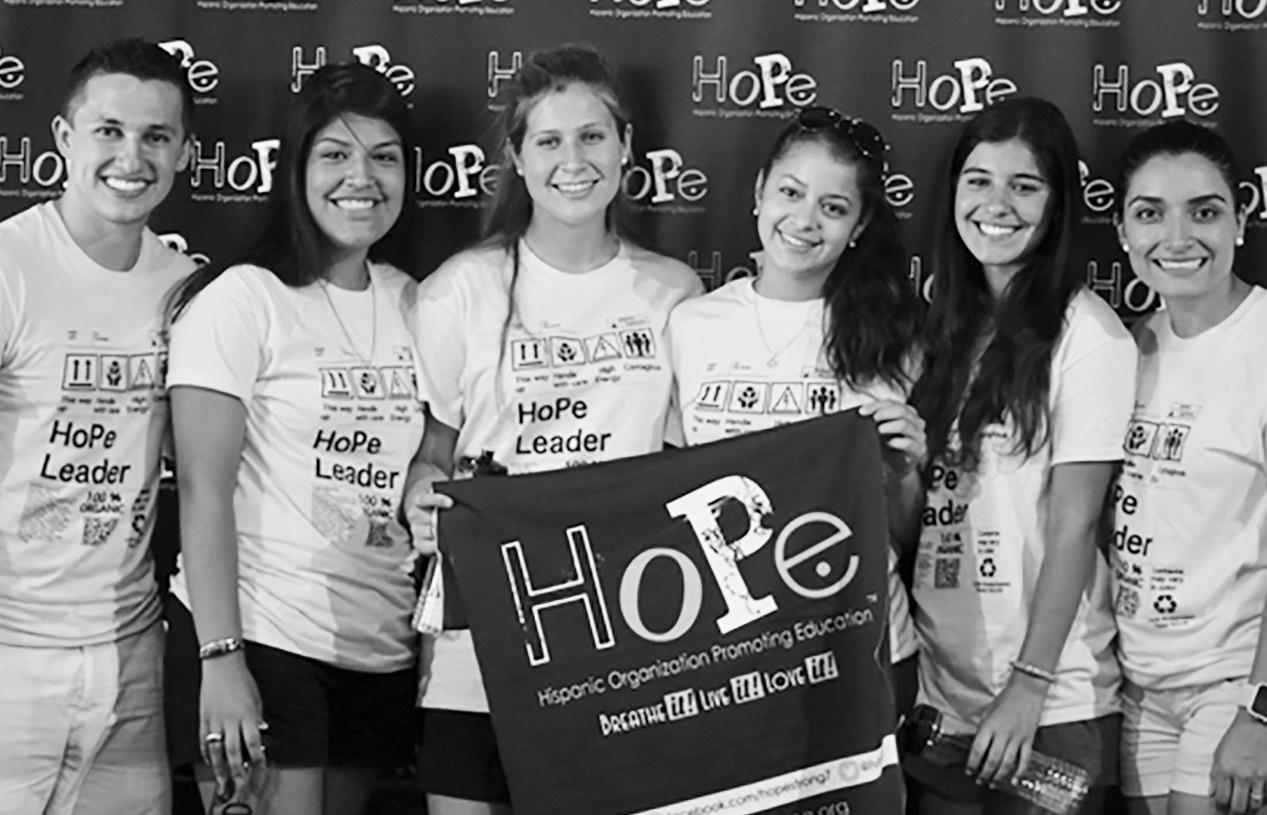
Below: HOPE IN ACTION: Senior Patricia Bustinza is pictured (second from the left) at the HoPe summer conference with (L-R) HoPe founder German David Araya, Elizabeth Jurado, Belangelis Colmenares, Sofia Lopez and HoPe founder Angela Ximena Hurtado.
Photo courtesy of Patricia Bustinza
“WAmelia Delamater
hat is the age difference between you two? Like how old were you when your sister was born?”
A year ago, when my family went up to Boston, Mass. for the Boston Marathon, these were the words that forced me to do a double take.
My mom and I had to go get protein bars and Gatorade at the local convenience store since we didn’t want to carry it on the flight with us. We were goofing off, and walked up to buy what we needed.
“How far apart in age are you?” the cashier said.
We apparently both looked pretty confused, and the cashier asked the question a second time.
I don’t have a sister, I thought to myself.
Then I realized, the cashier was talking about my mom. And me.
People always tell me my mom and I look alike. She’s 5-foot-9, and I am 5-foot-10. We both have dark wavy hair and the same face shape. We even act similarly, even when I do not want to admit it.
Boiling Point. Like mother, like daughter?
people think of her.
She says what is on her mind, anything that is on her mind. She is br utally honest sometimes. I will be honest, but I can sugar-coat things. I do not always say what I think. Instead, I mostly internalize my feelings.
She has things planned for 2020. Chances are, I do not even know what I am doing tonight for dinner. I go with whatever happens, just making plans as I go.
We are so alike in our personalitiesl but so different when it comes to the littlest things, which makes for a very interesting relationship.
We are close, like sisters, but can fight like any mother-daughter duo. But for us, sometimes she is my best friend, who I can tell anything to. Other times, it’s like World War III between us.
Sometimes she is my best friend who I can tell anything to. Other times, it’s like World War III between us.
Here at CCHS, I play tennis, used to run cross country and enjoy literature and foreign language. I’m looking to one day earn a degree at the University of Georgia.
Pretty original, right?
Nope. My mom did this, twenty five years ago.
Like mother, like daughter.
However, although we are similar in some ways, we are so different in others. We are both strong-willed and determined. We have tempers and can be feisty. But while I can be loud sometimes, she is always loud. Always.
She is always the loudest spectator at any event, ever. It embarrasses me, and she knows it. I get embarrassed easily. My mom couldn’t care less about what
Neither one of us ever wants to change what we do, and this causes us to butt heads. We argue over some pretty petty things.
For example, she will ask me to do one thing a certain way, and I will ask why I cannot do it another way. One of us gets frustrated at the other, then the other gets mad at the other for getting frustrated over such a little thing, and it is a snowball effect.
You know how it goes. We argue because we are so similar.
But when we argue, we always end the conversation with an “I love you,” because, ultimately we do, and we make sure we do not forget that.
As much as I do not want to admit it sometimes, there is no way I could function without my mom.
She makes sure I remember everything, and whether that be making sure I leave on time for school, reminding me of what I can and cannot eat, what time practice is, or anything in between, she helps me stay on top of what I need to do and where I need to be.
And for that, I am eternally grateful for her, even when I overlook her importance in my life.
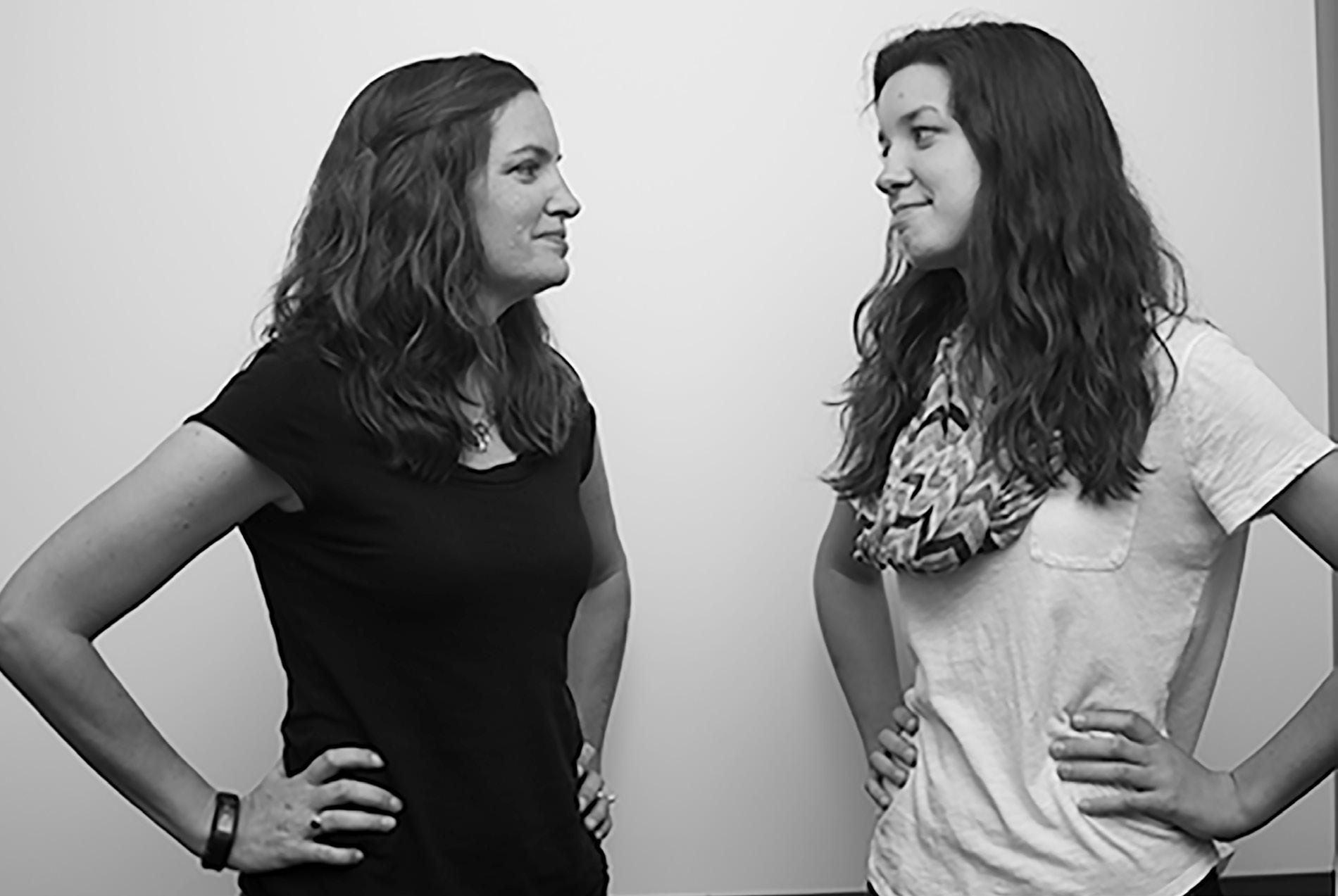
Right: TOUGH LOVE: Though managing editor Amelia Delamater and her mother Cory may not always see eye-toeye, they ultimately share an inseperable bond.
Photo by Sophie Fernandes

News briefs
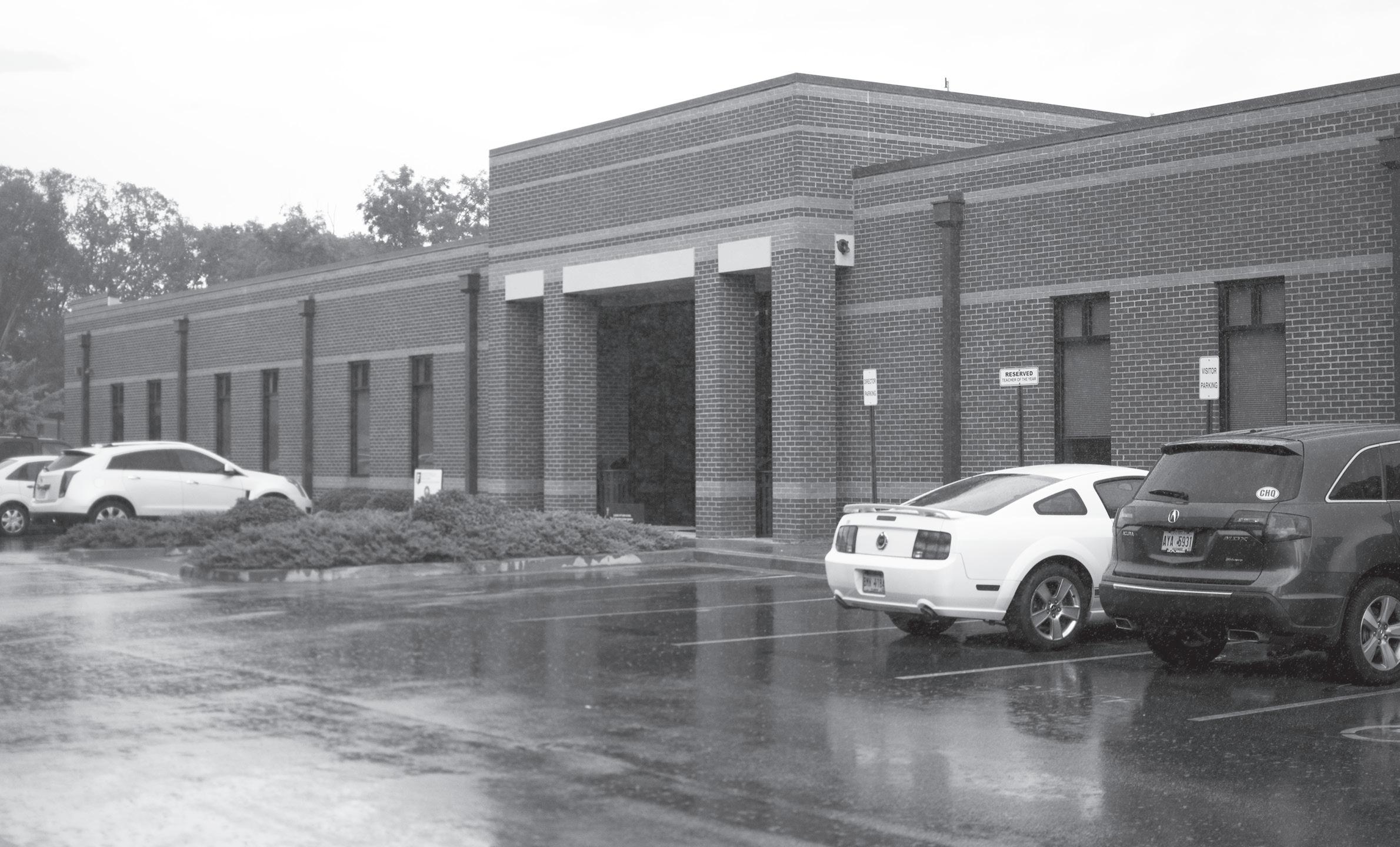
Above: OFFICE HOURS: The new administrative wing of Clarke Central High School, which contains the counselling department and the front office, stands unoccupied. The administrative wing, main office, front lobby and car riders loop comprise the first stage of completed construction projects of the schoolwide renovation set to wrap up Aug. 2016. “You can literally walk from one side of the building to the other side and see the traditional, old Clarke Central High School, and see all the new area,” Assistant Principal Dr. Sheila Dunham said. “I mean, we’re making history.”
Free for all
The cafeteria will now offer breakfast and lunch to all students at no cost as a result of the Community Eligibility Provision (CEP).
“This provision was created to provide an alternative method to offer meals to students at no cost for districts designated within regions of high poverty,” Clarke County School District Nutrition Director Paula Farmer said.
The CEP, a federal program, has been implemented in thousands of schools since 2011. This year, it is available to any school nationwide that has 40 percent “identified” students, which includes those in foster care, the Head Start program or those living in households that receive food stamps.
“The funding source will not change under CEP; the majority of our funding will continue to be from federal tax dollars,” Farmer said.
CCHS parent Julie Phillips anticipates both the advantages and disadvantages to the new system.
“I like the fact that students who previously had to apply for free and reduced meals no longer have to do that thereby eliminating any stigma they might feel is associated with that,” Phillips said. “I hope this program does not result in poorer food quality. Good nutrition is fundamental in brain development and classroom performance.”
Staff switchup
Clarke Central High School will be home to fifteen new faculty members for the 2015-16 school year.
“I can’t speak for other departments, but there were at least two new positions in social studies, aside from the usual need to replace outgoing teachers,” new Advanced Placement U.S. Government and Politics teacher Alex Yates said.
The new staff includes social studies department teachers Michael Ackerman, Shana Biggs, Ammon Hammett-Bregger and Alex Yates, science department teachers Tara Bonds and Kimberlyn Jackson, math department teachers Brooke Craft, Abigail Miner and Caryn Nguyen, English department teachers Andrew Dean, Ame McNair and Nolan Watford, art department teacher Jessica Shelden and physical education teacher Kasi Carvell
“I’ve had the opportunity to meet the administrators, department leaders, and other new teachers,” Yates said. “ I’m looking forward to collaborating and working with everyone here.”
Despite the construction, Yates said he and his fellow new faculty members are comfortably settling into CCHS in anticipation of the upcoming school year.
“Because Central has been renovating throughout my time here, the construction is my ‘normal,’ and it doesn’t disrupt previous routines I might have had if I had been here prior to its start,” Yates said.
Junior Avery Warner says that though she has not been made aware of the faculty changes, she does not worry about the influx of new teachers.
“The advantage of having a new teacher is they might bring a different perspective on teaching even though they may not necessarily be as an experienced teacher,” Warner said.
Continued construction
Students and faculty returned to a campus in August with new administrative offices, a completed science wing and a new front parking lot and bus lot this fall, while the media center and band room were both relocated to outdoor trailers.
According to construction manager Joe Dunagan, the new library tower, which will house the library, e2020 classrooms, rooms for professional development and the freshman academy science classroom labs, will be completed by winter break along with the connectors from the main building to the west wing.
During the summer, the east side of the old building was gutted, a renovation that is also expected to be completed by winter break. The classrooms on the other side of the building will then be moved into the newly-renovated section of the school.
“Everybody loves the finishes, the furniture and the space,” Dunagan said. “We’re still working on some of the things that everybody wants but we are trying to complete (everything) within reason to fulfill everybody’s wishes.”
Keeping it on campus
In anticipation of the 2015-16 school year, the Clarke Central High School administration has instituted an even stricter ban on off-campus lunch.
“It’s a safety issue with students leaving campus to go to restaurants and have people bringing them food, plus it’s against the nutritional code,” Principal Dr. Robbie P. Hooker said. “We still have some students who haven’t learned their lesson but we’re working on that.”
Junior Maddy Jenkins, however, dislikes the ban and its constraint on students.
“I don’t like not being able to go off campus anymore for lunch because it doesn’t leave many food options for kids that don’t like school lunches,” Jenkins said.
Hooker stated that the principle of the policy has been in place for the last three or four school years, but that security has ramped up efforts this year.
“(There was) a huge influx last year,” Hooker said. “This year, we’ve nabbed it on several occasions.”
--Katy Mayfield, News Editor
Photo by Sophie Fernandes
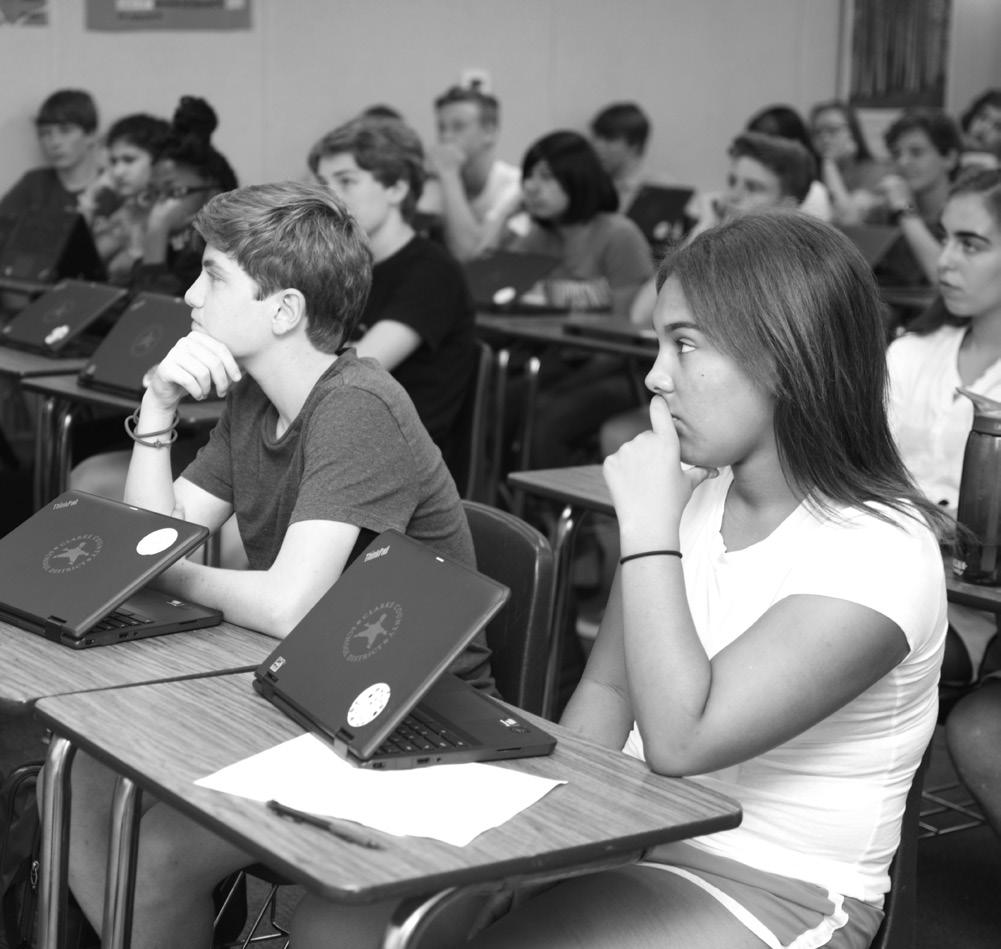
Photo by Sophie Fernandes
Above: IT’S PERSONAL: Freshmen Amira Aaron and Charles Dawe are pictured with their Personal Learning Devices (PLDs) in the Freshman Academy on Thurs., Aug. 13. This is the second year that the Clarke County School District has issued PLDs to third-ninth graders. “I don’t like how you can’t use them at home, but other than that they are great,” Dawe said.
Staying focused
For the first time since 2011, the Georgia Department of Education did not identify Clarke Central High School as a “Focus School.”
A focus school, according to the DOE, is a school which has a significant achievement gap between its higher and lower performing students, which is measured by the College and Career Readiness Performance Index (CCRPI).
“Our focus on doing the right work for students remains the constant and pervasive,” Clarke County School District superintdent Dr. Philip Lanuoe said.
Placement on the list was determined by 2011 Criterion-Referenced Competency Test scores along with graduation data.
“There was only one reason we were placed on the list and it was because of the graduation rate,” Assistant Principal Dr. Sheila Dunham said. “It was because of the difference between our highest performing group, our white subgroup, and our lowest performing group, our students with disabilities.”
Administration then began to implement state mandated programs aimed at helping increase the graduation rate and close the achievement gap, such as a bringing on a School Improvement Specialist from the state and using a software called Industar to report to the state which areas were improving.
Dunham, however, believes what most benefitted the students was a new individualistic approach.
“You give (students) extra support so you be proactive rather than reactive,” Dunham said. “Every single member of the School Improvement Leadership Team mentored students (from 2011 through 2015) to try to help them. We were like their extra advocate at school.”
Dunham and Lanoue say their commitment to setting new goals and helping students will not waver.
“We will continue to focus on closing our achievement gaps, but with that said, I am confident we are engaged in the right work,” Lanuoe said.
--Katy Mayfield, News Editor
“I heard that
“All these sorority girls are trying to look like Han Solo:Tight pants and boots, tight pants and boots.
CHRISTIAN BARNER, English department teacher, on the fashion trends of college females
“These rules are really in place for your benefit. When you go to college, then you can do what you want.
DAMARRIO HOLLOWAY, math department teacher, on student opposition to school rules.
“I don’t really like construction because you either have to take the long way, or the even longer way. There is just no compromise.
ANTHONY JAIMES-BARRAZA, freshman, on the effect construction has had on walking to class.
“We project that last year’s class had a graduation rate of 83 percent. This year we’re shooting 85 percent.
MARIE YURAN, Associate Principal, on the administration’s goals for the 2016 senior class.
Below: LIBRARY ON THE MOVE: Boxes are stacked and in the process of being unloaded in the new media center, which is currently in a triple-wide trailer at the front of the school. Despite the transition, media specialists Lindy Weaver and Kacy Tedder are trying to make books and technology accessible to students.
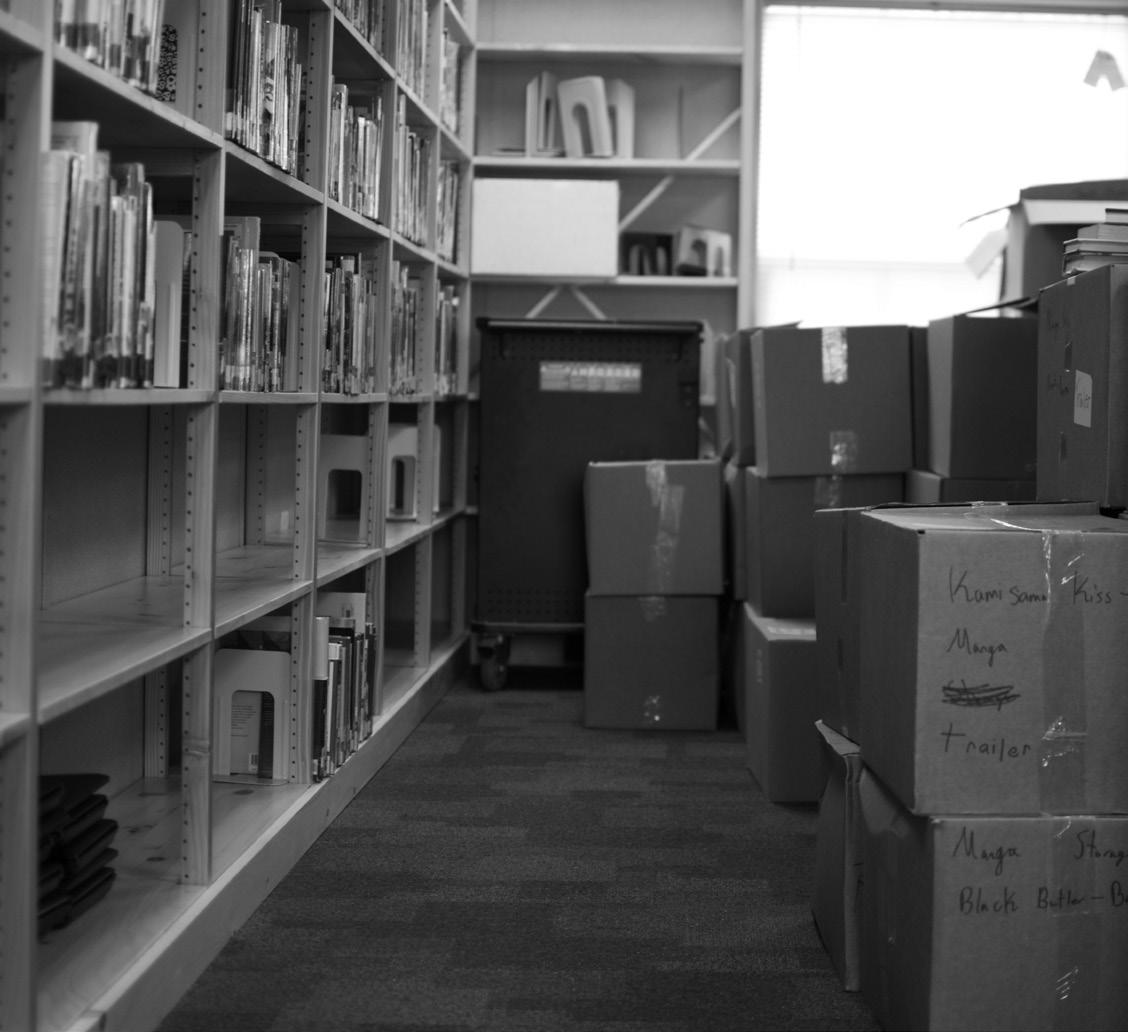
Photo by Sophie Fernandes
MEETING MARIE
FromaruralGeorgia town,todestinations
acrosstheU.S.,
AssociatePrincipal Marie Yuran has come full circle to establish her home at Clarke CentralHighSchool.

BY SARA GOODIE Copy Editor
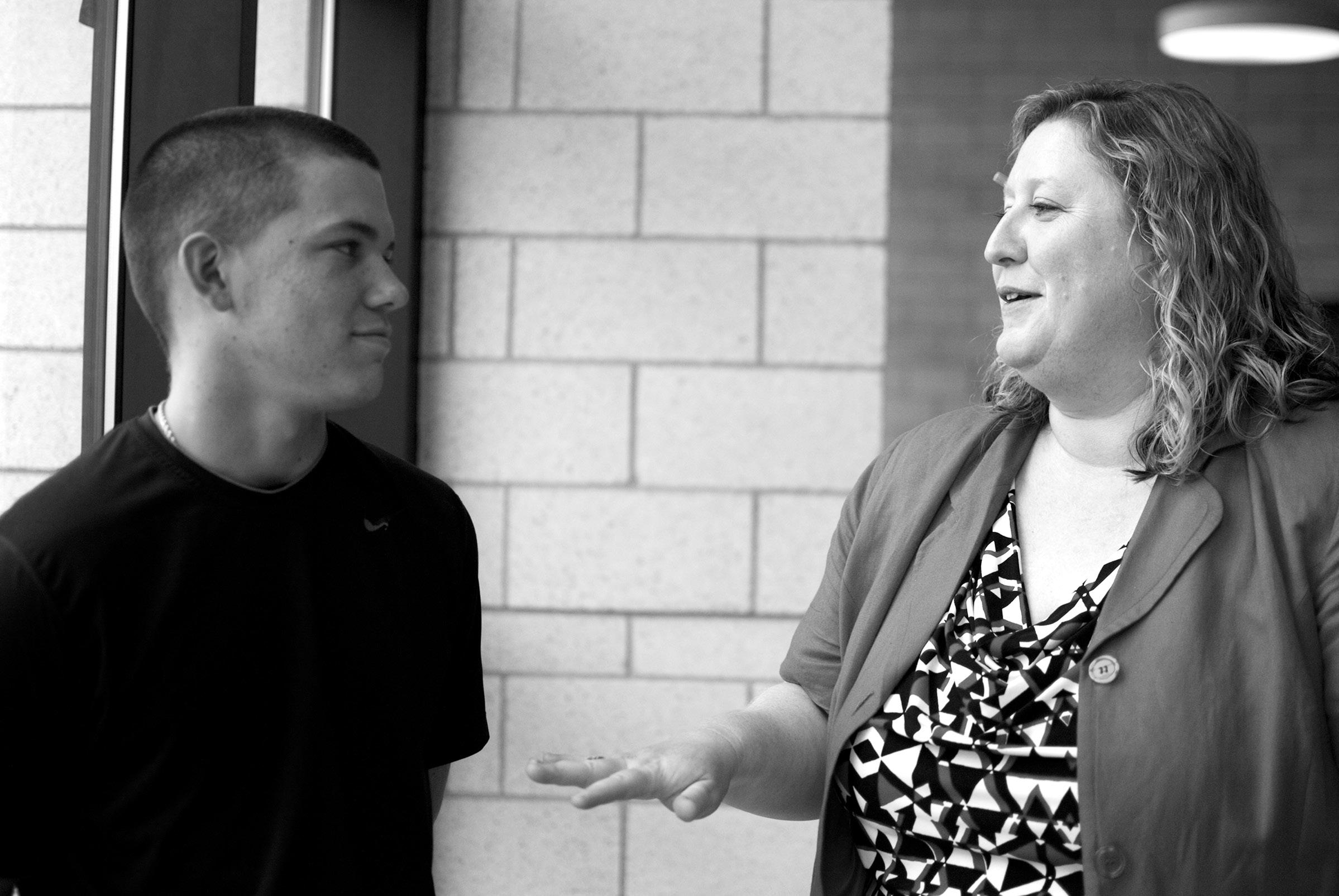
Despite the many responsibilities of her job, Associate Principal Marie Yuran can often be seen around Clarke Central High School greeting students, faculty and staff.
Yuran often prioritizes these interactions, making time to talk to those around the school she has come to find as a permanent home afte r a long, winding journey towards her true calling.
“(Becoming associate principal) is certainly an adjustment, and it has been a challenge in some respects, but I’ve been motivated to m ake this transition as smooth as possible because Clarke Central means s o much to me and the success of Clarke Central means so much to me,” Yuran said.
Four years ago, Yuran came to CCHS and became the special education department team leader. Then in August of 2014, she applied for the position of Associate Principal and received the promotion.
“If you think about the job responsibilities she had in her las t positions, they align very well with her job responsibilities as the Associate Principal. When the job opened up, I can say that she popped into my head when I read the job description,” Assistant Principal Dr. Sheila Dunham said.
According to Yuran, coming to CCHS meant coming back home to Georgia. She was born in Nicholson, a rural town in Jackson County, on a 350-acre farm that her grandfather and great-grandfather built.
“(Nicholson) is a tiny little hole in the wall. We do have a traffic light now, we did not when I was growing up,” Yuran said. “We went to the same school K-8, no middle school, nothing. That’s where I grew up.”
Her mother, Lynne Wheeler, was a special education teacher at Yuran’s school, and her father Tim Wheeler was the superintendent of Jackson County School District.
“She’s always had that mothering instinct. She wants to help and take care of somebody, even at the age of two and a half.”
-- LYNNE WHEELER, mother
“There was no skating by with anything. The standard was pretty high,” Yuran said.
Yuran feels that despite her parents’ high expectations, it was a loving household for her and her younger siblings, Evelyn and Wesley, where family values were central.
“One summer (my grandfather) had refurbished one of the wagons that they had there on the farm, hooked it up to the back of one of the tractors that was there and loaded all of us, planned this big picn ic,” Yuran said. “I remember my cousins being there and my aunts and uncles. It was a whole big to-do. Those are the kinds of things that I rea lly remember about my childhood.”
Lynne says that throughout her childhood, Yuran was a caring sister who looked after her younger siblings.
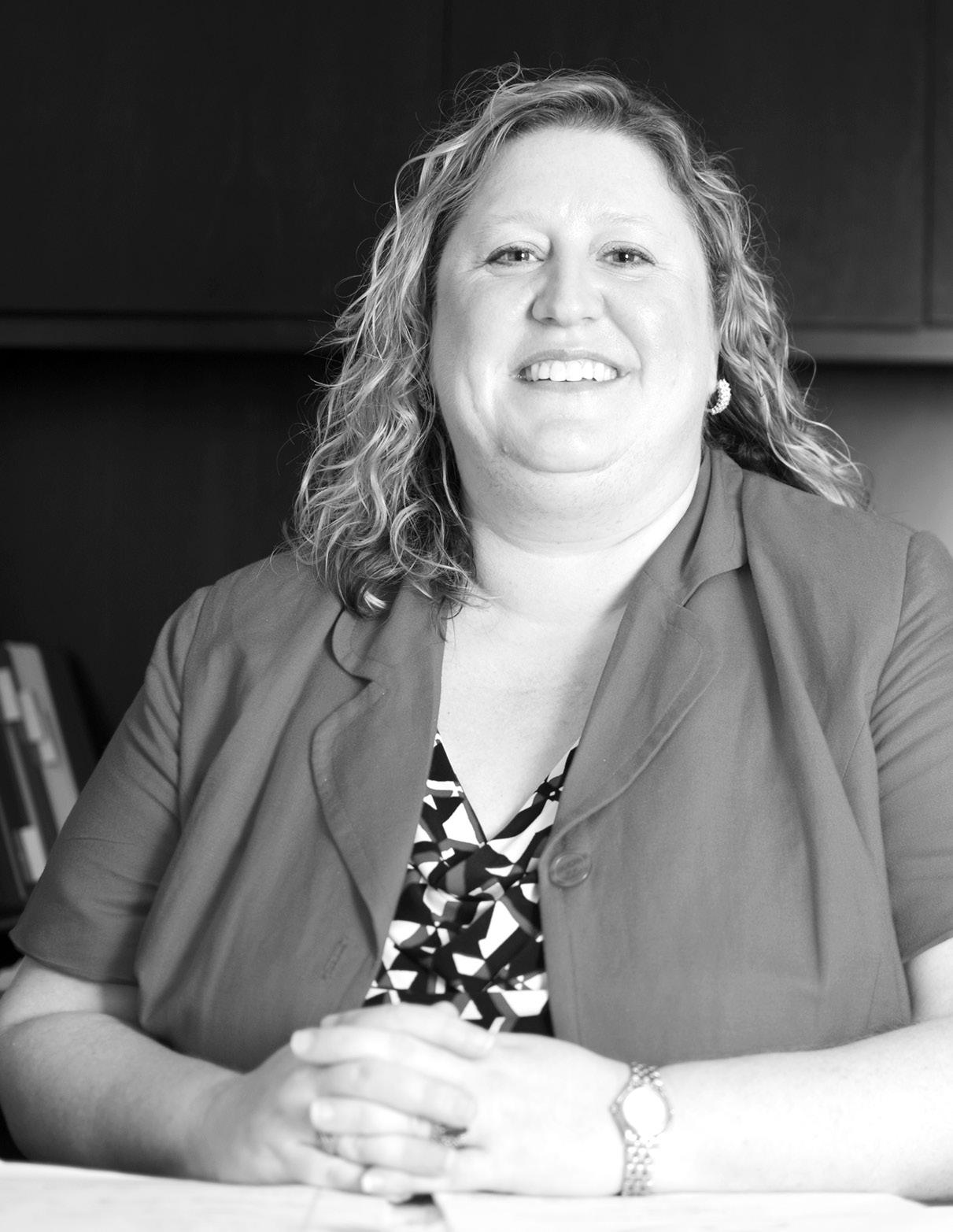
Featured: HERE TO STAY: Associate Principal Marie Yuran is entering her fifth year at Clarke Central High School while also beginning her second year as a member of the administrative team. “ (Associate Principal)’s a professional growth opportunity that I just couldn’t walk away from,” Yuran said.
“We had gotten her ready to go to nursery school after Evelyn and I had come home from the hospital, and she went to the front door with her dad to leave, and she looked back at me and said, ‘Where is my baby?’” Lynne said. “She’s always had that mothering instinct. She wants to help and take care of somebody else, even at the age of two and a half.”
After high school, Yuran attended Brenau University in Gainesville, Ga., where she earned her degree in special education.
“Not many children would’ve done this, but she came back home a lmost every weekend and continued to come to church with us, and that’s
Photo by Sophie Fernandes.
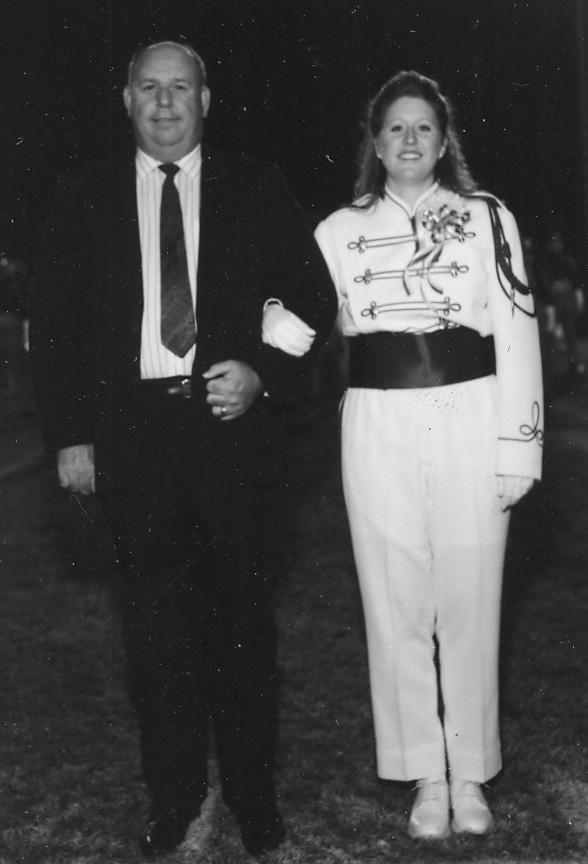
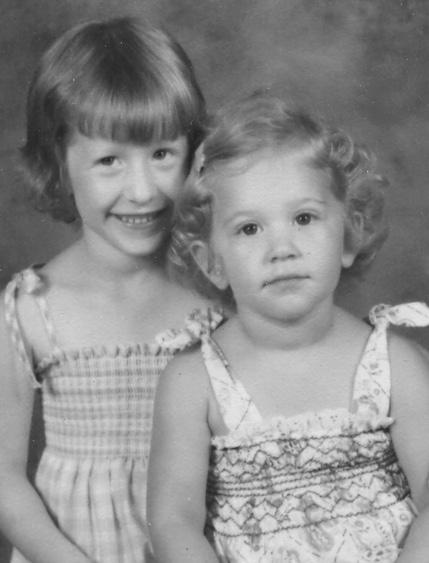
Above: BAND TOGETHER: Associate Principal Marie Yuran played the flute, bassoon and oboe in band through middle and high school. During her senior year, she was the drum major. Below: SISTER, SISTER: Associate Principal Marie Yuran has always been close to her sister Evelyn. Yuran says that her sister’s same sex relationship has not affected their closeness, or Evelyn’s relationship with their family. “It doesn’t matter,” Yuran said. “My sister’s happy, her daughter’s happy and her partner’s happy.”
during the time that she was a youth minister,” Lynnee said.
Yuran went on to marry her high school sweetheart, Patrick, and the two moved to Missoula, Mont., so Patrick could get his Master’s of Fine Arts in directing from the University of Montana. Yuran feels the decision to leave her comfort zone and broaden her horizons was one of t he best choices she ever made.
“I had never lived anywhere else except in Georgia, and you alw ays hear about, ‘Oh, people are so rude in the South.’ I wasn’t sure what I was getting myself into. But, you find that the value system is the same, no matter where you go,” Yuran said.
Yuran found herself a special education teaching position at Desmit School, which taught K-8. She became the only special education teacher in the district.
“I learned a ton. Every individual that walked through the door that may or may not have a disability, I served,” Yuran said.
After working in Montana, Patrick found a job opportunity directing theater at a school for visual and performing arts in Rockville , Md. There, Yuran worked as a special education department teacher at Cabin John Middle School.
It was at CJMS that Yuran began to take on more leadership roles.
“I served as the lead teacher for our (Low Impact Development) program that we had there. When I started, there were two teach ers within that group, and by the time I left there were seven of u s. We had grown, and I was responsible for leading that whole group, and really the development and implementation of that new program for the autism resources services position,” Yuran said.
In 2011, Patrick became Principal at Monsignor Donovan Catholic High School in Athens, and the two returned to Georgia. Subsequently, Yuran was hired the position of special education team leader at Clar ke Central High School in the Curriculum Assitance Program for Students (CAPS) department.
“Every individual that walked through the door that may or may not have a disability, I served.”
-- MARIE YURAN, Associate Principal
“It was kind of meant to be that I got a job here at Clarke Central before the school year ended up there. We’ve been really fortunate and lucky that in any of these moves that we’ve made,” Yuran said.
CAPS department teacher Philip Walter says once she came to CCHS, Yuran was a valued addition to the department.
“She would come with her perspective, ‘Hey, I tried these ideas,’ or, ‘This worked for me,’” Walter said. “So when I say she was a good leader for us, she really was because she knew all the little things t hat make our program tick, and she was able to contribute a lot. It wasn’t all on us. We could go to her for advice or insight.”
Some students who worked with Yuran in the CAPS department regarded her as not only a teacher, but a confidant of sorts.
“Since I was in ninth grade… if I needed teachers to do something for me, (Yuran) would tell the teachers what to do,” Class of 2015 graduate Dexter Smith said. “She’s a cool lady.”
In transitioning to the role of Associate Principal, Yuran says she embraced the opportunity to expand her horizons.
“Change is change, right? Change is always hard. But I wouldn’t say that I was specifically concerned about anything because of the support staff we have here. We have a really strong administrative team. We
Photo courtesy Marie Yuran
Photo courtesy Marie Yuran
support each other and hopefully support staff, students and families as well,” Yuran said.
Even though Yuran is no longer the CAPS department team leader, Walter appreciates that Yuran is still in the building.
“Low-Incidence Disability (teachers), we call ourselves the ‘Li ds,’” Walter said. “Once you’re a Lid, you’re always a Lid.”
While Yuran no longer works directly with the special education department, she is still in contact with the students and faculty and enjoys her new responsibilities.
“Students and their families allow us into their lives in a way that not most other professions get to do. Really, we need to respect that honor and that privilege,” Yuran said. “I wouldn’t have the opportunity to be a part of the communities that I’ve been a part of, or be part of the families and the celebrations and the tough times, too, if I didn’t have this opportunity through my job.”
“We are really a close-knit group. She’s really enjoying her niece, Brooklyn, who is 15 months old. She also had a niece that’s 15 that lives in Carrollton, and she’s always been real close to Kimberly als o. But now that she’s here with Brooklyn, it’s pretty special that she get s to enjoy this time with her growing up,” Lynne said.
Yuran also shares a familial bond with the CCHS community.
“I’ve been in lots of places. I’ve worked with great people. I have never worked with a group of people that have the tenacity for student success like I have here.
-- MARIE YURAN, Associate Principal
“I’ve been in lots of places. I’ve worked with great people. I have never worked with a group of people that have the tenacity for studen t success like I have here,” Yuran said. Although she ultimately returned to her childhood home, Yuran believes that traveling and experiencing new cultures is imperative, and advises all to continue along paths of self-discovery and knowledge.
Beyond her CAPS family, Yuran’s vision for a long-term stay at CCHS also allows her to join her family frequently for get-togethers
“Go. Don’t stay here forever. That’s the one thing that I tell everybody. That was the best thing that we did. It wasn’t planned, but go. Don’t stay in the same place if you have the ability to go and see and liv e and do other things. I believe in that wholeheartedly,” Yuran said.
Above:TITILE:
Photo by Sophie Fernandes
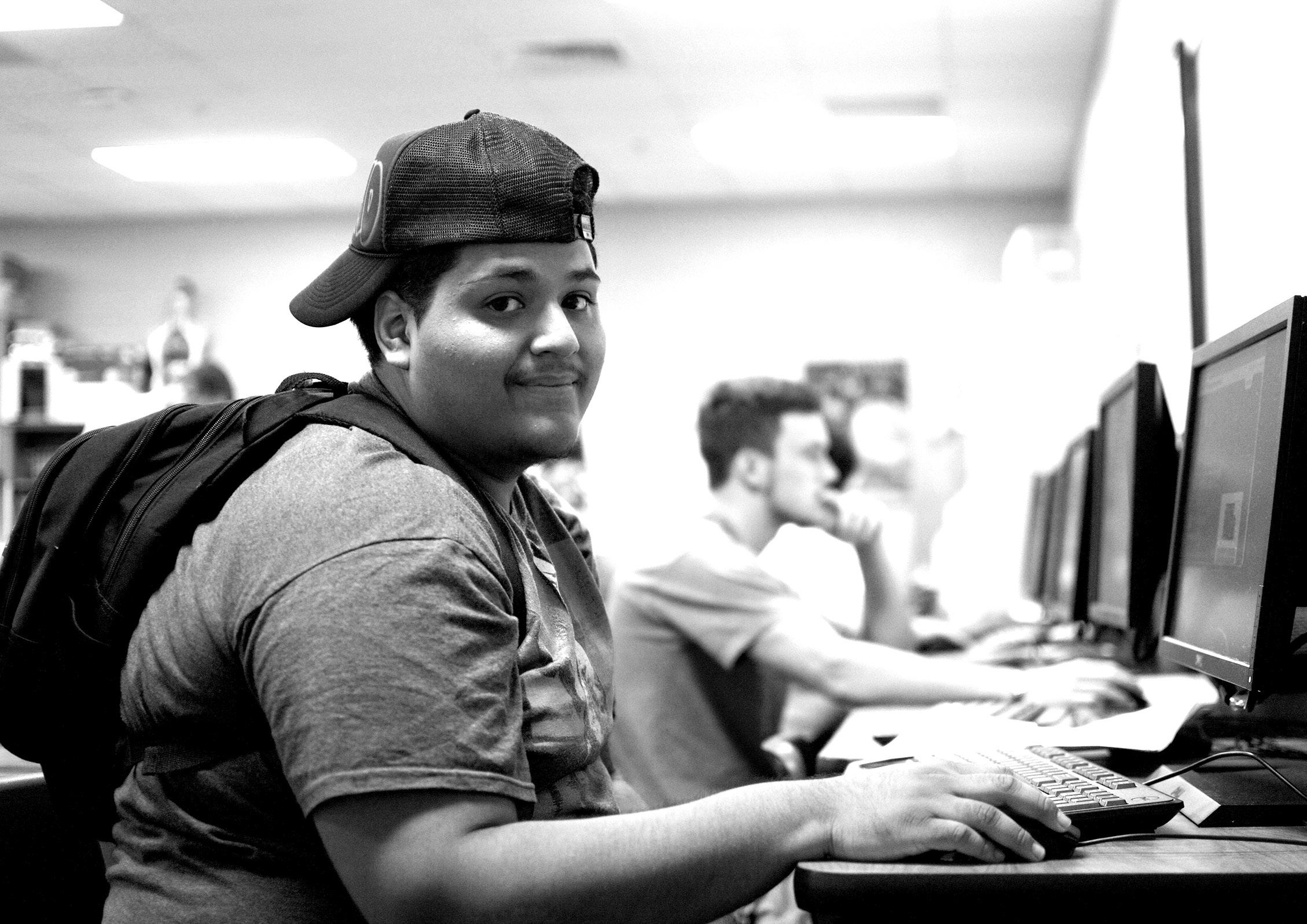
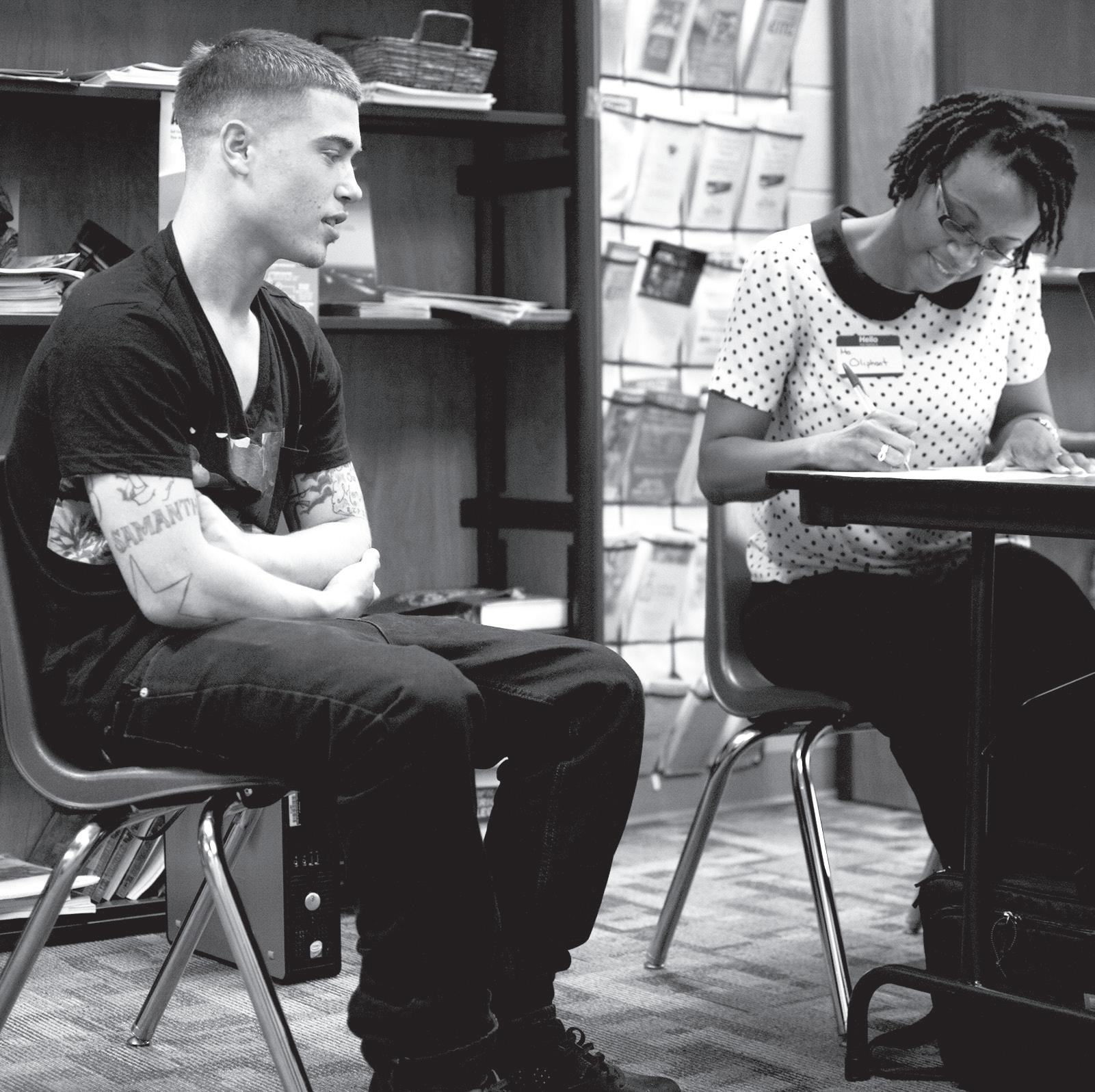
Left: HAPPY TO BE HERE: Foothills Education Charter High School student Jesus Rangel completes his work on the computer during an FECHS class on Tuesday, Aug. 18. Rangel is one of many former Clarke Central High School students to now attend FECHS. “I’ve seen a lot of (former students) walk through the door and it’s been nice to see familiar faces,” FECHS on-site coordinator and former CCHS physical education department chair Dinah Posey said.
HEADING UPHILL
ClarkeCountySchoolDistrictstudentsnowhavean alternativeroutetotheirhighschooldiploma: FoothillsEducationCharterHighSchool.
BY VIOLET MERRITT Opinions Editor - Online PHOTOS BY SOPHIE FERNANDES Photography Editors
As she was nearing the end of her 22nd year at Clarke Central High School, Dinah Posey was about as settled in as a teacher could be.
She was the physical education department chair, the varsity golf coach and a well-respected teacher throughout the entire school.
But something called Posey to give it all up and chase something completely new.
That something: Foothills Education Charter High School.
“(CCHS) is where I have been for so long,” Posey said. “But, I’m looking forward to starting a new chapter and challenge in my life.”
Posey was hired as one of the two on-site administrators for FECHS in anticipation of the school’s opening, and after a month of doin g so, has found the alternative form of school to be satisfying.
“It’s probably one of the most rewarding jobs I’ve ever had bec ause you see such immediate results and success from the students,” Posey said.
The premise
FECHS opened in August and has seven locations that include Athens-Clarke County, Baldwin County, Barrow County, Jackson County, Madison County and two correctional facilities: Burruss Correctional Training Center and Lee Arrendale State Prison.
“For those (students who can’t succeed in traditional high school,) we’re another option,” FECHS Executive Director Sherrie Gibney-Sherman said. “In some cases for some kids, a second chance. Because for whatever reason, and there’s no judgement, the regular high school didn’t work. The regular high school just can’t offer that, they can’t afford it, there’s not enough time and
“It’s probably been one of the most rewarding jobs I’ve ever had.”

-- DINAH POSEY, On-Site Coordinator
there aren’t enough resources, but we can.”
“Students enroll at Foothills for a variety of reasons,” according to FECHS’ website. FECHS can be a school for students who dropped out of high school, students who got behind in high school, students that have responsibilities during typical school hours like work or families of their own and students who “prefer the self-paced, mastery-based learning environment.”
“It’s different and it makes it easier too,” junior and current FECHS student Nikra Broabnax said. “I’m working at my own pace instead of rushing to get stuff done.”
Classic City
FECHS is not first form of alternative schooling in Athens. Classic City High School, where the Athens-Clarke County FECHS location is housed, also offers students an alternative path to graduation. However, according to Girtz and Gibney-Sherman, the two high schools are very different.
“(Foothills) offers a pretty strong program set of supports for students, that are a little bit different and more specific than Classic City’s supports,” Girtz said. “For example, every student has a designated mentor, that mentor is a paid staff person who checks in with that student for a couple hours ever y week and checks in with people in the student’s life even every month, whether that’s a mother, father, aunt, boyfriend or girlfriend or grandmother, neighbor--whoever the kind of significant people are.”
In the CCSD, FECHS is open Monday through Thursday from 4-9 p.m.
According to FECHS Regional Director of Student Services Kelly Girtz, the
“What Foothills has to offer is radically from what Classic City has to offer. As a matter of fact, we encourage kids to go to the regular high school.

-- SHERRIE GIBNEY-SHERMAN, Executive Director
4-9 p.m. time slot is designed for students who are not able to fit their other responsibilities around a traditional school schedule.
“(Foothills is) self-paced. So, some of the students probably will have day jobs or will have children of their own, the kind of family circumstances that don’t allow them to be there everyday,” Girtz said.
Charter District
The Clarke County School District became a charter district in 2014, following the Georgia mandate that required all local school systems to operate either as an Investing in Educational Excellence School System (IE2), a Status Quo School System or a Charter System.
When CCSD was beginning to look into becoming a Charter System, there was opposition in the community to a Georgia referendum on the topic of Charter Systems, according to CCHS parent and former CCSD board member Allison Wright.
“The state was making an amendment to the constitution about having charter districts where it took money away from schools,” Wright said.
However, the Georgia amendment that was in the legislature at the time was
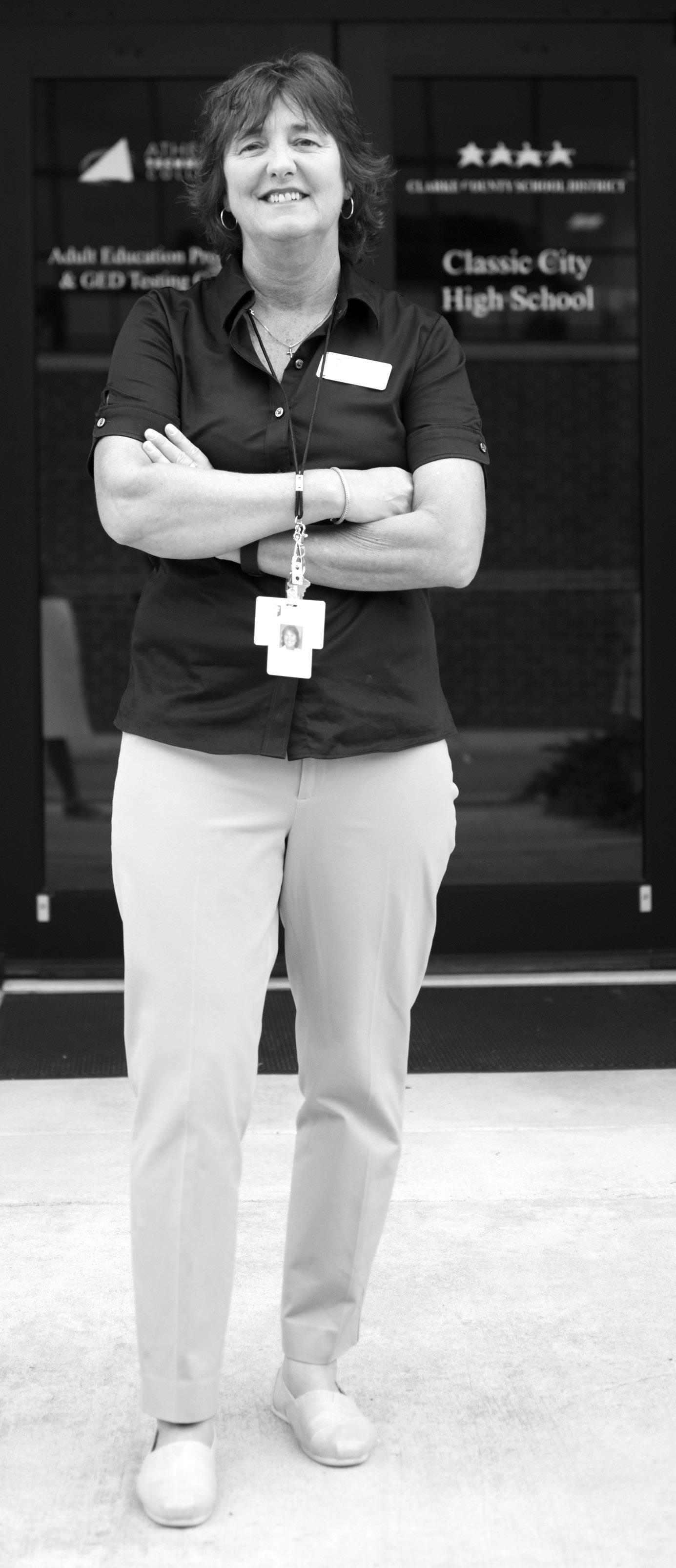
Right: STANDING TALL: Foothills Education Charter High School site administrator and CCHS former physical educational department chair Dinah Posey sees FECHS as a “new chapter” for her career in educational instruction. “Everybody’s here for the right reason: the students, the teachers and all of the support staff too.,” Posey said.
different than the CCSD becoming a Charter System. Under the amendment, traditional schools would lose funding. However, now that the CCSD is a Charter System, Foothills will not take away funding from other public schools.
“If they don’t want to come to us, they don’t have to come. That’s huge what I just said. Because if you are forcing a kid to have to go to school, it doesn’t work.”
“It’s a very confusing topic so I think that’s where people were concerned,” Wright said. “We were trying to get people to not vote for that referendum because of its financial problems, and at the same time, talk about (becoming a Charter System).”
Now that CCSD is a Charter System and the district’s first charter school has been created, Gibney-Sherman has heard some questions and concerns. But she believes that these stem from a lack of understanding.
“(Foothills is) not in competition at all with the regular high schools, not one little bit. What Foothills has to offer is radically different from what Classic City has to offer,” Gibney-Sherman said. “As a matter of fact, we encourage kids to go to the regular high school. That should be their first stop.”
Like Wright, Gibney-Sherman also believes that the title of “charter school” is responsible for some objections.
“In the state of Georgia, if you’re a charter school, you are a public school-that’s real important to know. There’s nobody coming in here and funding this, it’s funded by your tax dollars. And it’s a public school meaning any student can come to us, it’s statewide,” Gibney-Sherman said. “The word charter just means that we’re giving flexibility to the state laws that govern how schools have to operate and as a charter school we’re a state charter school, we have flexibility on how we serve students.”
Founding principals
Gibney-Sherman finds it important that people know that Foothills is replicating a charter school that has 11 locations across Northeast Georgia and has
Foothills
101
1993
The Mountain Education Center (MEC) opened its doors on the Union County High School campus in Blairsville, Ga. MEC aimed to decrease Georgia’s high school dropout rate by providing an alternative form of high school to “at risk” students. MEC was open at night, from 4 p.m. to 9:30 p.m., for students whose work and familial schedules conflicted with that of Georgia’s public high schools.
-- Sherrie Gibney-Sherman, Executive Director
been in existence since 1993: Mountain Education Charter High School.
“We’re not just making up something. We are modeling our school, Foothills Education Charter High School, after Mountain Education Charter High Schools. And that school has been in existence for (23 years),” Gibney-Sherman said.
An area in which Foothills offers flexibility and models MECHS directly is their attendance policy.
“If students are having a bad day, that’s a good day to stay home. And what the staff at Mountain Ed. have expressed is that when someone comes in and they’re evidently having a bad evening, typically the comment from the faculty person to the student is ‘Listen, I can tell you’re having a bad night, just go home and come back tomorrow,’” Girtz said.
Gibney-Sherman also does not believe students will take advantage of the attendance policy because they are choosing to attend Foothills.
“No one has to come to us. And if they don’t want to come to us, they don’t have to come,” GIbney-Sherman said. “That’s huge what I just said. Because if you are forcing a kid to have to go to school, it doesn’t work.”
Unlike traditional high school, at Foothills, content is delivered to students through technology, not by a teacher addressing a class.
“In our rooms, the classes are small, there won’t be more than 15 students, there will always be a certified teacher in that content area. For instance in science, you might have a science teacher who’s teaching in the room, but you’ll have students who are in different classes,” Gibney-Sherman said. “They could be in environmental science, they could be in biology, you know just whatever
1998
The Georgia General Assembly enacts the Charter Schools Act of 1998, establishing a governing set of laws and regulations for the creation and maintenance of charter schools in Georgia.
2007
The Georgia Department of Education mandated that by June of 2015, all Georgia districts must choose to become either an Investing in Educational Excellence School System, Status Quo School System or Charter System.
they’re taking. That teacher has to tune into each one of those classes in there so it’s hard work. You have to be on your game and know your content and know it well. But it’s not about the teacher, it’s about the student.”
Looking ahead
Coordinating at each of the Foothills locations are two site directors. At the Clarke County site, one of them is former CCHS Physical Education Department Chair Dinah Posey, who is confident that students will be able to succeed at Foothills.
“We have so much support in place for all of the students, mentors, counselors, graduation coaches, social workers and good quality teachers as well,” Posey said. “I feel like we’re just going to surround (students) with so much support.”
Posey sees Foothills helping students who traditional high school did not work for.
(Some students have) stumbled along the way and this provides them with another chance and it puts a high school diploma in their hand and it lets them work at their own pace and they have more choices. It gives them responsibility,” Posey said.
With the 2015-16 school year beginning, Gibney-Sherman is optimistic for Foothill’s future.
“Our goal is for those kids to get a high school diploma and making sure that we’re reaching out and finding the other kids who need it as well and then making sure it’s a good positive experience for the students we serve because they’re going to be the ones to tell other kids to come,” Gibney-Sherman said.

2014
In June of 2014, Clarke County School District Superintendent Philip D. Lanoue recommended to the county Board of Education that CCSD become a Charter District, creating a contract between CCSD and the State Board of Education.
In Jan. 2015 the Mountain Education Charter High School, formerly the Mountain Education Center, opens its Foothills pilot program at the Lee Arrendale State Prison in Habersham County, Ga. In Aug. 2015 Foothills Charter High School opened the doors to their seven Georgia campuses, including one in Athens-Clarke County.
Graphic by Kevin Mobley and Katy Mayfield
Above: LOOKING ON: Foothills Education Charter High School student Dakota is pictured at FECHS on Tues., Aug. 18. “They come here to work and we treat them like adults because they get to choose where they want to go,” Posey said.

Featured: According to graduate Valley StipeMass, the affects of dyscalculia on mood can be dangerous, and as such it is necessary to have a medium of expression. “(Dyscalculia) made me feel really dumb, but my family is very artistic, so it was kind of a nice balance because my family supported my art so much,” StipeMaas.
Illustration by Ella Sams
MISCALCULATIONS
Manystudentshavetroublewithmath,butsomeatClarkeCentralHigh Schoolandacrossthecountrysufferfrom“dyscalculia,”adiagnosedmath learningdisorder.
BY LUCIA BERMUDEZ Variety Editor
When she was just 10 years old, Clarke Central High School Class of 2015 graduate Valley StipeMass began to notice that math was harder for her than it was for other children.
“I couldn’t learn five plus three in fourth grade and that was when everybody was like, ‘There might be something wrong.’ I couldn’t even memorize that one thing,” StipeMass said.
That was when StipeMass, as well as her teachers and family, discovered that she had dyscalculia.
According to Curriculum Assistance Program for Students (CAPS) department chair Dr. Ashlee Wegmann, dyscalculia is a math processing disorder that causes difficulty learning or comprehending arithmetic.
“It’s different for each case,” Wegmann said. “It can affect working memory in math, so basically you have to learn the material, then manipulate the material, then remember all of that.”
Dyscalculia can also affect spatial reasoning as well as “number sense.”
According to aboutdyscalculia.org, the percentage of the population with dyscalculia is estimated to be between three to six percent. Students often begin to show signs of the disorder in elementary school.
If this occurs, CCHS psychologist Dr. Marcia Page says school officials will carry out a process to determine whether or not the student has a disability.
are informed about the disorder, it is hard for her to get the resources she needs.
“I don’t think I’ve ever had a teacher who understood,” StipeMass said. “I think that they understand it abstractly like, ‘Oh, she needs a calculator,’ but they don’t understand like, ‘Oh, she doesn’t understand what we’re talking about right now. She actually has a disorder.’”
Upon entering college at Beloit College in Wisconsin this Fall, StipeMass says she was embraced by a more concerted effort from BC support staff to address her needs, but that the worry of teachers being unaware of dyscalculia still remains.
“Beloit is really good at helping people with disabilities. However, I still have the issue of teachers not remembering or knowing how to deal with my dyscalculia because they have no knowledge of it,” StipeMass said.
A learning disability can seriously affect a student when his or her teachers and classmates are uninformed about its effects, according to StipeMass.
Freshman Chloe Calabria had never heard of the disorder, but recognizes that a lack of knowledge could be a serious issue when dealing with dyscalculia or any type of learning disorder.
“I couldn’t learn five plus three in fourth grade, and that was when everybody was like, ‘There might be something wrong.’”
First, tudents are tested and measured on overall ability--an IQ test might be ussed--as well as strength in all academic areas: reading, writing and math. The tests look at potential processing weaknesses such as memor y skills, spatial skills and non-verbal reasoning skills.
“All of the scores convert to percentile ranks and we look at how the math area compares to other areas. If it stands out as a big weakness and then we see a deficit in working memory along with (that), then we would probably think (it is a) math disability,” Page said.
Intervention usually takes place between elementary and middle school, but testing continues throughout high school as well. Although there is no treatment or “cure” for the disorder, there are various things a student can do to cope with its effects.
“If you’re having issues with working memory, you can draw pictures of what you’re trying to work on and write everything down. You can improve your memory by practicing and gradually trying to recall more and more information,” Page said.
StipeMass is one of many students who has endured the effects of the disorder ever since her diagnosis in elementary school. She says her symptoms have affected her school career as well as personal life.
“I don’t have a concept of time and I’m late to things. Calendars are super difficult for me so things are late for class. Outside of school, I don’t have as good of depth perception,” StipeMass said. “I have to turn maps. It’s like these weird little things that you don’t even think you’d (need to use) math for.”
For StipeMass, math has always been a struggle. She says since few people
--
VALLEY STIPEMASS 2015 CCHS Graduate
“Obviously (a disorder) could affect their grades and stuff,” Calabria said. “If (students) don’t know that they have it, then they might think that they are just not smart. They really don’t know what’s going on, especially if they’re trying as hard as they can.”
During her time at CCHS, StipeMass took CAPS department collaborative math classes in addition to her common-placement math classes that have provided her with some help.
“In our (CAPS) department, we offer collaborative classes in pretty much every math area. We also have study skills classes, where students can have extra time during the day (to work on) assignments,” Wegmann said. “We have the ability to get assistive technology and devices, things that might be helpful on a case by case basis depending on what they need.”
Although assistance is offered through additional CAPS department classes, StipeMass believes modifying the structure of traditional math classes could help dyscalculics struggle less.
“It’s really hard for dyscalculics to learn and memorize math for long periods of time,” StipeMass said. “ Often we do really well with homework assignments, so I would like to have more homework and less (or no) tests.”
Because certain learning disabilities like dyscalculia vary from person to person, the action plan may be personalized on a case to case basis if it is deemed necessary.
“If you are diagnosed with a disability then you are eligible to have this study skills class and what we call ‘accommodations’ for testing and classroom work, as well (as) being able to take your test in another room if you’re easily distracted,” CAPS department teacher Jane Boyd said. “That’s all built into the special education program which is individualized for every kid who needs it.”
Cultural Buzz
BY JURNEE LOUDER
News Editor - Online
In a time where music singles sell more than albums themselves, it can often be difficult for artists to remember that cohesion is key. It takes talent to tie the songs together with a common theme. Any artist can throw a list of songs together and call it an “album.”
But, The Weeknd is not just any artist.
On Aug. 28, Canadian recording artist, Abel Tesfaye, more commonly known as The Weeknd, released his second studio album, Beauty Behind the Madness, to the delight of millions of fans who have followed him throughout the year.
Any artists can throw a list of songs together and call it an
“album.” But the Weeknd is not just any artist.
Before his album release, the Weeknd released three singles: “The Hills,” “Can’t Feel My Face” and “Earned It”-- all of which received both critical acclaim and commercial success. But, he didn’t lose his steam there.
Together, the 14 songs on Beauty Behind the Madness create a body of art.
Throughout the work, it becomes clear that these songs were therapeutic for both the Weeknd and his audience. The listener gets to step into the world of a self-proclaimed villain as he says on “Tell Your Friends” and get a front seat to his coming-of-age story.
The Weeknd also elects not to dilute the album with featured artists.
Lana Del Rey, Ed Sheeran and Labrinth are the only artists to accompany him -- proving that The Weeknd can stand on his own.
With production as unique as his dreadlocks, and lyrics as thought-provoking as his life itself, The Weeknd really sets himself apart from other R&B artists out there today with Beauty Behind the Madness.


As a new school year commences, so do countless nights of staying up late studying, and getting no sleep. For 99 cents in the Apple App store, the Sleep Cycle alarm clock by Northcube AB can help.
Sleep Cycle uses the iPhone’s accelerometer to analyze movements throughout your sleep to wake you during your lightest possible sleeping state at a time within 10-90 mins. of your desired alarm time.
Though fhe alarm is a soft and relaxing melody that might be easy to sleep through, upon waking up the app presents you with a graph showing a fairly accurate representation of how well you slept.
The Sleep Cycle alarm clock is definitely worth it for those teenagers who wake up each morning feeling like zombies.
-- Karla Dougan, Broadcast Editor
Madly beautiful



Fantastic Four, a contemporary twist on a classic story, was released on Aug. 7 as a reboot of the original Fantastic Four film franchise.
The third Fantastic Four film distributed by 20th Century Fox stars Michael B. Jordan, Miles Teller, Kate Mara and Jamie Bell as members of the superhero team.
The film follows these characters as they transport to an alternate universe, which grants them with new powers and identities.
In order to save the Earth, they must work together while demonstrating teamwork and trust. Although the film brings forth a talented cast, it is a fail of a remake that will never compare to the original.
-- Zoe Peterson, Online Sports Editor


The anonymous message board-style app After School puts a new, younger spin on school-specific apps like Yik-Yak with an in-your-face aesthetic, but often falls victim to the tendency of anonymous apps to become platforms for harassment.
The app, available for Apple users, uses Facebook and user location to sort users into groups based on their high school and shows them posts only from their classmates, but does not connect a user’s name with his or her post.
Like Yik Yak, After School has come under fire since its release for incidents of bullying and bomb threat. After a few Apple-mandated anti-bullying updates, Afterschool rapidly won over CCHS students with its community-based premise and never-boring graphics, but continues to give a platform to anonymous attackers.
-- Katy Mayfield, News Editor
Sleep Savior
Photos by Lucia Bermudez
Fantastic Four
After School
Rebels of rap

BY FAJR DeLANE Staff Writer
Cultural Buzz
The striking depiction of the trials and tribulations met by the popular ‘80s rap group N.W.A. in Straight Outta’ Compton makes the movie a must-see for millenials everywhere.
Released in theaters on Aug. 14, 2015, the film tells the story of N.W.A, and the struggles met by the group in growing up in Compton, the notoriously violent neighborhood of south Central Los Angeles.
N.W.A was the one of the most influential groups out at the time, initiating “gangsta” rap and sparking a lyrical revolution about the hardship they each had to go through.
The music behind N.W.A was a medium for them to pass on important messages to the masses, particularly about police brutality.
The music behind N.W.A. was a medium for them to pass on important messages to the masses.
One tense and dramatic moment in the film takes place when the policeman pushes Ice Cube, played by Cube’s own son O’Shea Jackson Jr., to the car and says, “I am the only real thug out here,” indicating the hatred and disparity that exemplified race relations during N.W.A.’s prime. Throughout the movie, there were plenty of scenes showing police abusing their power.
Recently, the uprising of Ferguson was initiated by the mistreatment of black males by the police. The past has repeated itself, and has even gotten worse. Think we are living in a better time? Think again.
Straight Outta’ Compton effectively and captivatingly ties together important themes between the past and present through the narrative of N.W.A.


155 E. Clayton St. has a new occupant--Urban Outfitters. The clothing retailer, founded in 1970, is known globally for selling apparel that remains on the pulse of mainstream trends. Now, the corporation has opened a store in downtown Athens.
Urban Outfitters’ prices usually range from $40-80, and the quality of items is reflected in their prices. Because of this, UO might not be the ideal price range for high schoolers. However, the customer service at UO is superb. Upon entering, customers are greeted by a smiling employee in the store who is willing to help.
UO is the perfect place to shop for customers looking for a positive shopping experience and statement pieces that are sure to be on trend and versatile, but are prepared to pay UO prices.

In a humble spot on 150 E. Whitehall Rd., Sweetie Pie by Savie combines the intimate feeling of a homemade bakery with delicious Asian-American flavors.
The bakery is run by Savie Arnold, a self-taught baker who started her business in Thailand, and her husband, Speedy.
Although they only offer take-out due to county zoning laws, the experience is pleasant, and customers can call in advance in order to pick up their order.
The shop is small but comfortable, bustling with customers and the aroma of fresh-baked goodies including delightfully tart lemon bars, savory-sweet peanut butter blondies and warm fudgey brownies with melted marshmallows on top.
-- Violet Merritt, Online Opinions Editor -- Grace Allen-Polaneczsky, Digital Copy Editor


Musical.ly is a free social media app that allows users to make short videos, usually lip syncing to a song, incorporating popular elements of Vine, Twitter and Dubsmash all in one. Unlike Dubsmash, users can choose music from their music libraries.
The app features videos and a stream of what other Musical.ly users are posting. The cheerful orange and pink colors make it visually appealing and easy to navigate.
Musical.ly can be purchased on Google Play, the App Store or Amazon. It is compatible with most recent Apple devices; however, some Android products aren’t supported by the app and may glitch.
From Fetty Wap to the Frozen soundtrack, Musical.ly has it all. The use of this app becomes almost addicting after purchase, and definitely warrants the buzz it has gotten thus far.
-- Pamela Affolter,
Staff Writer
Sweetie Pie by Savie
Urban Outfitters
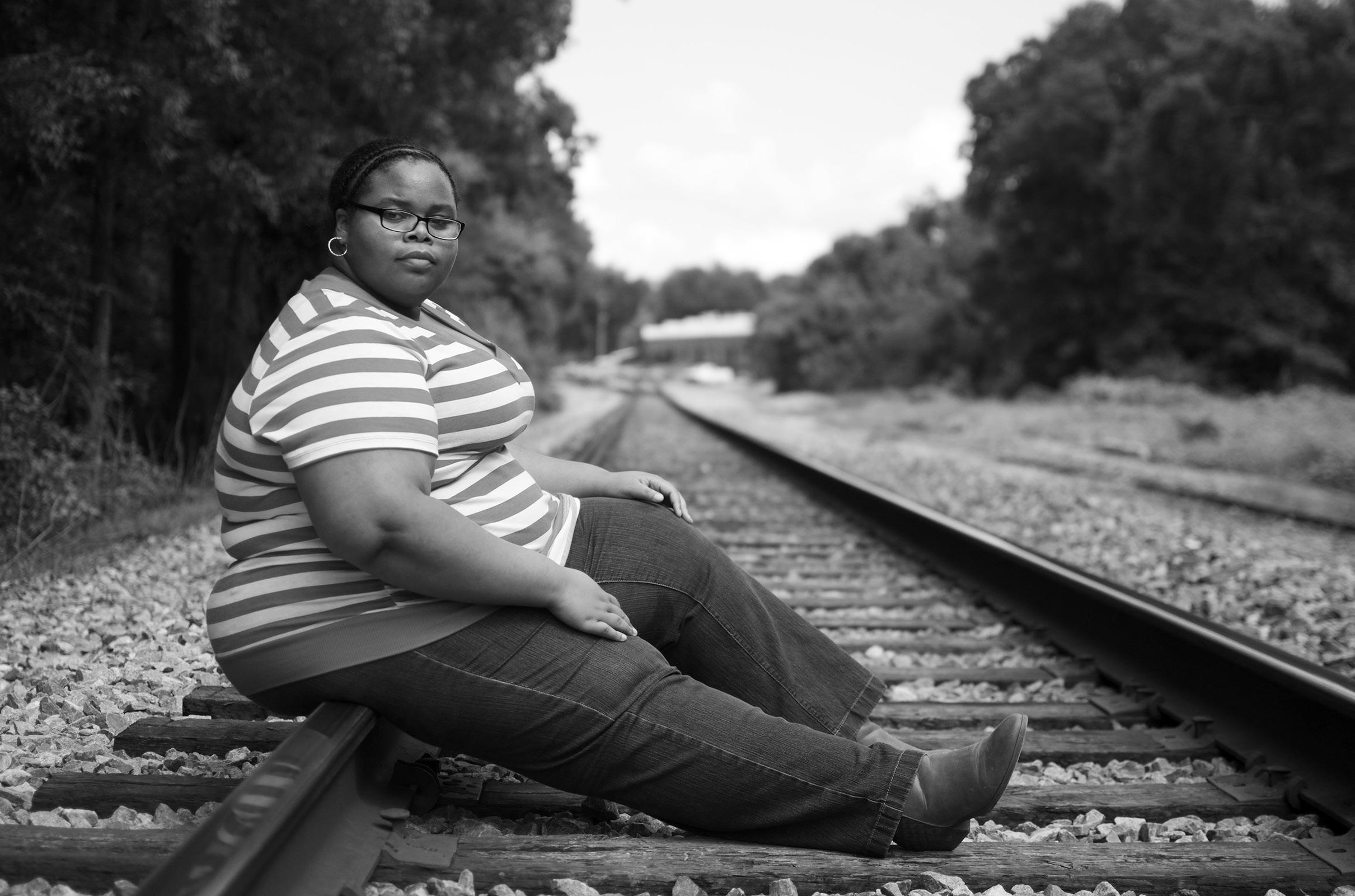
JuniorMiaWilhite’sexperiencewithhomelessnesshasledhertomake themostofeverysituationthroughunstabletimes.
AND
Photography Editor
BY SOPHIE FERNANDES
Suddenly. Like most things in my life, that’s how consciousness comes to me. There’s a blinding light in my face. My mother’s calling my name. Groaning and mumbling I tell her I’m up, wanting nothing more than for everything to be dark again. It’s funny, when I was little I hated the dark, too many shadows, too many places for people to hide. Now I prefer the night, the quiet, the escape. There are times when the day has been too long, the people too loud, the world so infuriating that all I can think about is getting back to the darkness of our small room that we share with one other woman. However, it’s currently been five minutes since I stirred and my mother is having none of that. Reluctantly I pull myself to the top of my bed and stand on the windowsill, walking sideways to the three-step ladder my mom has placed at the edge, and climb down.
--Mia Wilhite
The homeless shelter where junior Mia Wilhite stays requires residents to be out by 8:00 a.m. So every morning, she leaves to catch the city bus to get to school. After school, Mia either goes to the public library, jewelry making class or Upward Bound, a program providing opportunities for students to succeed in college preparation and pursuits in higher education.
When her after school activities end, Mia takes the bus back to where she is currently living, whether that be sleeping on the floor at a family friend’s house or the Salvation Army.
“In Athens, there is a housing authority, and they get you into housing for really cheap depending on if your parents have a job and are trying to take steps to get you out of your situation,” Mia said. “We were third (on the list) and they already called us so we should be getting a place pretty soon.”
How Mia became homeless is a question she runs through her head daily. She remembers the days when she lived in Rolling Ridge, a low income housing community. She remembers her mother’s exhausted face after a long day of work at the poultry plant, coming home as a single mother to her two young daughters. She remembers her mother getting fired, and her mother ’s illness that soon followed.
In 2007, Mia’s grandma died. This was the impetus for Mia’s mother ’s depression, leading to multiple health problems, preventing her from working. Soon thereafter, Mia found herself and her family being evicted from their home, nowhere left to turn but the shelter.
At the time the Willhite’s had no safety net of extended family to help them. Even at a young age, Mia could see the effects this had on her mother
“I know that that hit my mother really hard. She always wanted me to have a good life and to keep me safe, and she felt that she had failed me. My mother is real big on pride, she will do whatever she can and she hated asking people for help,” Mia said.
One such person who Mia can count on at Clarke Central High School, however, is her counselor Sam Hicks, who checks in with her often to make sure her life and emotions are intact.
“Any major life event is going to have some sort of mental effect and a lot of it depends on the resilience of the person involved. With Mia’s case, she has stayed really strong through some pretty tough and trying things,” Hicks said Through Mia’s experiences, she has learned a lot about life and how to handle disappointing periods of time.
“You don’t realize how important the people you have in your life are until you really go through a big struggle and you realize that they are all you have,” Mia said.
STORY
PHOTOS
Opposite page: ALL ABOARD: Junior Mia Wilhite has been homeless since 2007, shortly after her grandmother passed away. She used to try to get picked up from a collection of houses down the street to hide the fact that she was staying at a shelter. “It’s difficult because you worry that people are going to look at you with pity,” Mia said. Top right: FAMILY TIES: Mia embraces her mother on April 3, 2015. Mia emphasizes the importance of not taking your family for granted. “Be grateful for what you have,” Mia said. Below: WORLD SCHOLAR: Mia completes her work in her Advanced World History class during the 2014-15 school year. She is afraid that she will scare her new friends off if she mentions to them that she is homeless. “When I get a friend and we start talking about stuff like that I feel like what I have to say makes it awkward,” Mia said. Below right: TOUGHENING UP: Mia rides the Athens-Clarke County city bus on March 31, 2015. The bus has been her only means of transportation. “I am stronger because of the struggles I have gone through,” Mia said.
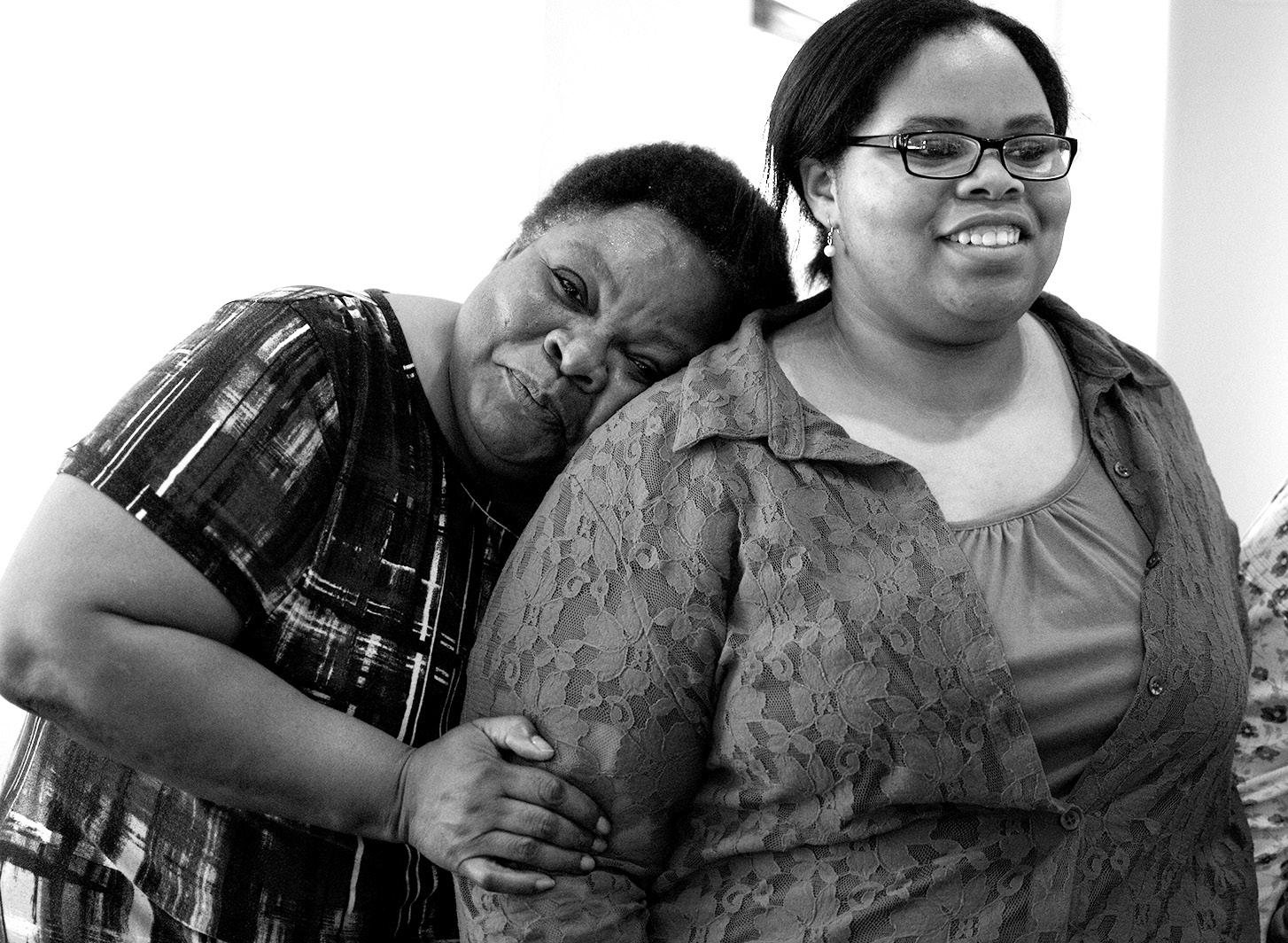
“When I go to school and no one is saying anything or reacting, it feels like no one cares, and that hurts. Nobody really understands.”
-- Mia Wilhite, junior
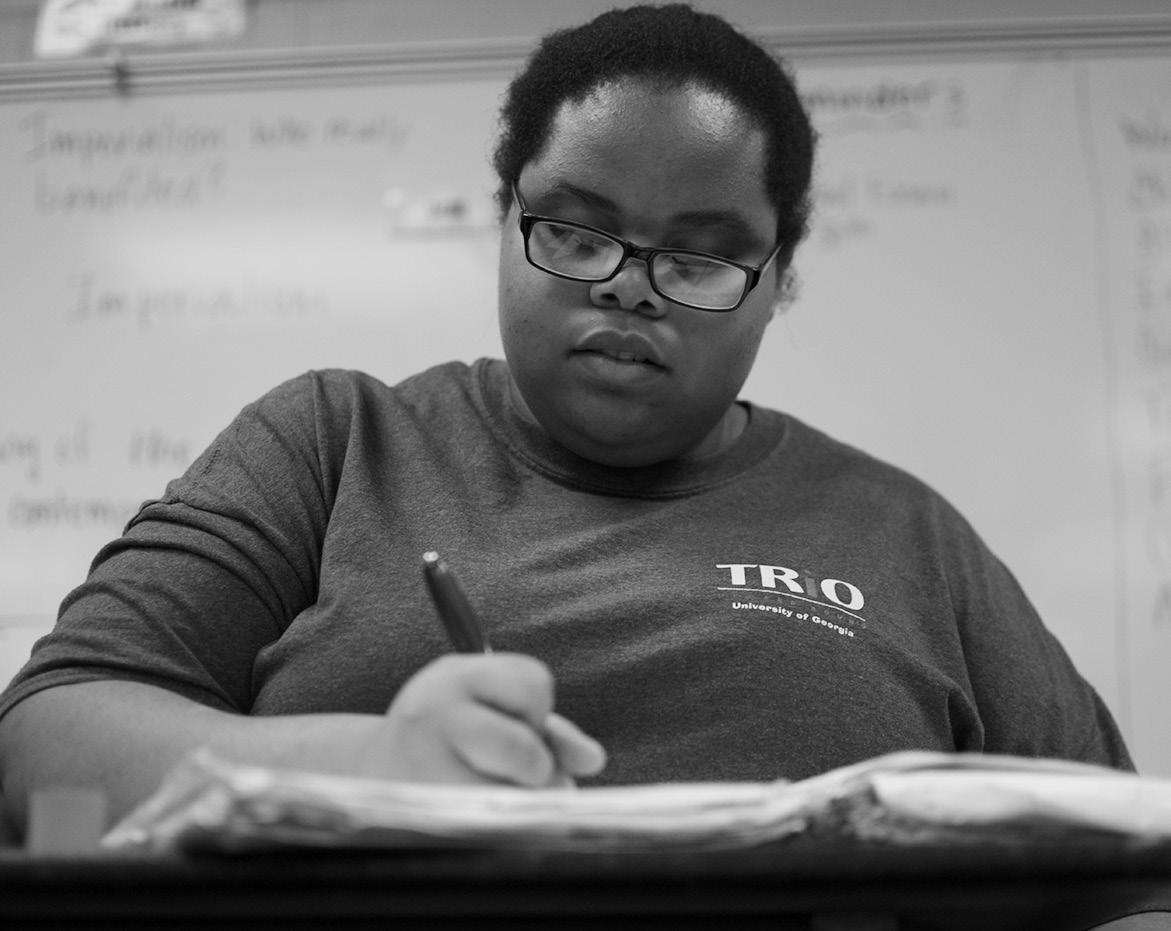
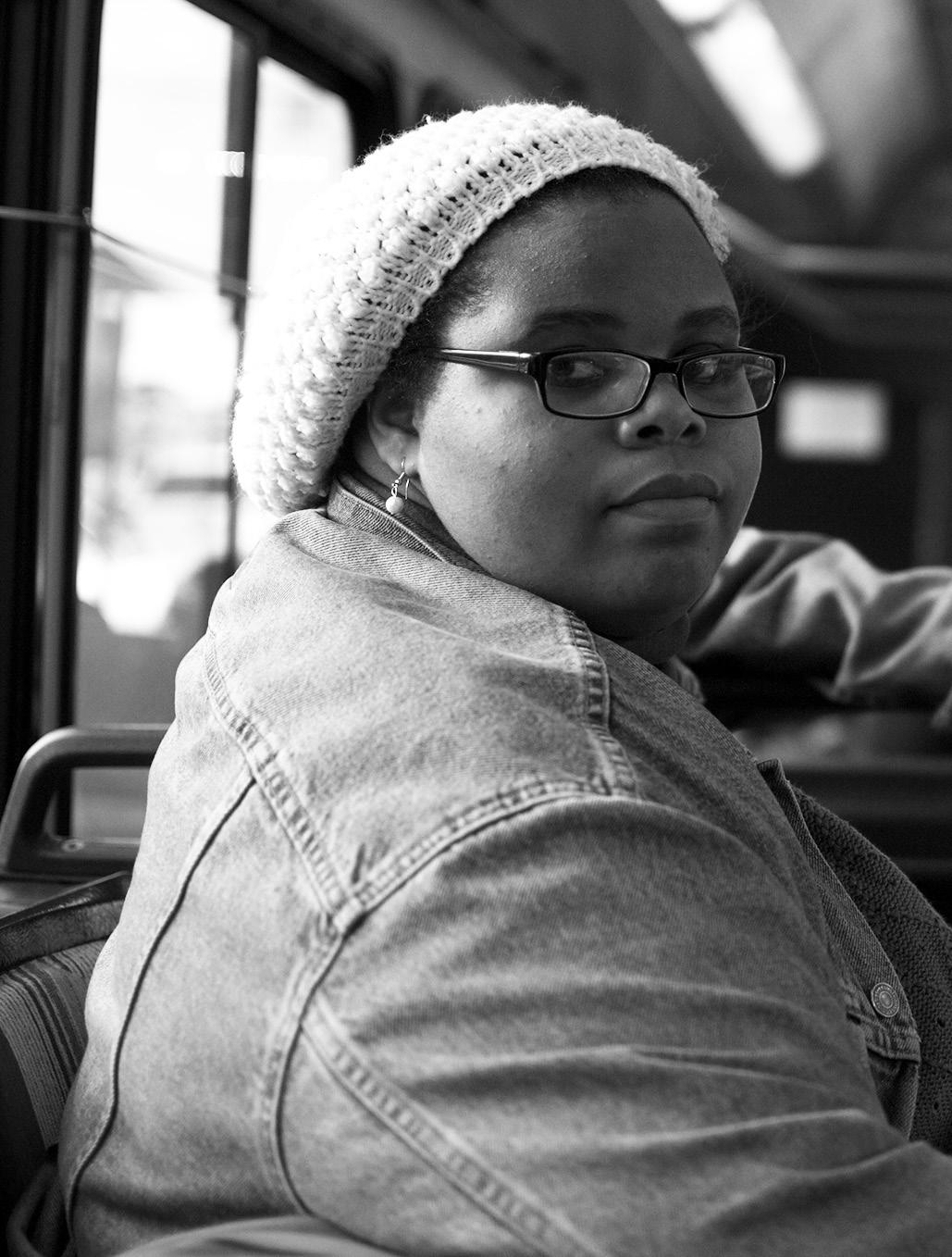
The Box Score
Above: A NEW ATTACK: Former varsity football defensive backs coach Thomas Balkcom recently became the Offensive Coordinator for the 2015 football season. Though Balkcom has only been coaching at Clarke Central High School for one year, he has had 21 years of coaching experience. “I want the kids to improve, become better student-athletes and we want to win and go deep into the playoffs.”
Rise and shine
The Clarke Central High School varsity volleyball team voted to practice on Wednesdays and Fridays at 6:00 a.m. for the 2015 season.
“A couple of the girls were like, ‘Let’s try it,’ and then they really liked it,” head varsity volleyball coach Ashlee Wegmann said.
Junior Kira McIntyre says the team has bought in to the new practice schedule.
“Morning practices go very smoothly since we are the only people in the gym. We get a lot more work and drills done,” McIntyre said. “It feels great to be done with practice before school and being able to go straight home after school.”
Wegmann cites the morning practices as a reflection the level of ommitment from her team.
“They have a lot of chemistry together, and that’s something we haven’t always had in the past, so that’s a big thing,” Wegmann said. “They also work harder at practice than a lot of groups have in the past.”
Wegmann anticipates a possible return state playoffs after failing to make it in 2013.
“I think they really could be one of the better teams that we’ve had here in a while, but they have a lot of work to do,” Wegmann said.
First-class floor
After 15 years of use, the Clarke Central High School athletic department funded a refinishing and painting of the New Gym floor.
The process to refurbish the New Gym’s floor began after last year’s academic year ended and workers began patching the floor throughout the summer.
“A majority of the work was done over the summer. As far as taking it down and repainting and refinishing it, I want to say midJuly,” physical education teacher and head varsity baseball coach Trey Henson said.
The project took a couple weeks to complete, but the remodel is expected to last 15 years–as long as the previous floor.
“(The old floor) got worn down and real slick. It just needed a little bit of a refresher. It had been the same for a long time,” Henson said. “You take pride in playing in a nice place and you take a little bit more responsibility when it comes to upkeep.”
According to Henson, the remodel is a stylistic departure from the design of the previous gym floor.
“It’s got a little bit of a different look. It’s a lighter wood. It looks cleaner,” Henson said. “The gladiator that was in the middle was there when they first opened the gym when I was in high school, so it’s been there a while.”
Junior and varsity cross country runner Marco Newman feels that after a decade and a half of wear, the preceding floor had reached its limits.
“In the old one, there may have been some structural problems with it with running and doing physical activities on it (was) kind of challenging,” Newman said.
Newman is excited for what the new floor has in store.
“I’d say it looks pretty good; I really enjoying running on it. I think it’s a complete change, and our school has stepped up a whole another level because of it.”
-- Christina Kurian, Digital Copy Editor
Bring on Balkcom
Clarke Central High School varsity head football coach Ahren Self made the decision this summer to promote former Defensive Backs Coach Thomas Balkcom to offensive coordinator, the Gladiators’ third new playcaller in four years.
“There’s (been) an adjustment period and it’s taken a while, but they are assimilating and learning the offense,” Balkcom said.
Self feels Balcolm was a natural fit for promotion given his experience coaching at the high school and collegiate levels, namely at the University of Central Florida and Savannah State University.
“(Balcolm) has a very strong personality,” Self said. “He knows the kids, he knows the community, he knows the atmosphere here at school, and I thought he’d be the right fit.”
New dog; old tricks
In the season opener of his first season as junior varsity head football coach, Aaron Cavin had a choice to make: continue to try varying pro style attacks, or to make an oldschool adjustment.
The Gladiators were tied 0-0 with Madison County High School, and were not able to get any type of offense going. That all changed when Cavin made the decision to try the simple “power right.”
“We had practiced going two tight ends and three backs, running Power I and overloading the right side off-tackle. Right before halftime, we switched to this formation and had great success,” Cavin said.
The move enabled the CCHS running game to pick up steam, and ultimately led to an 18-0 victory.
Cavin says he has enjoyed his new role in coaching the J.V. squad.
“J.V. has been awesome. The kids are young, energetic and very teachable,” Cavin said.
The rest of the junior varsity season consists of matchups with Habersham Central High School, Gainesville High School, Stephens County High School and Flowery Branch High School, all leading up to the Sept. 24 meeting with rival Cedar Shoals High School.
Photo by Zoe Peterson
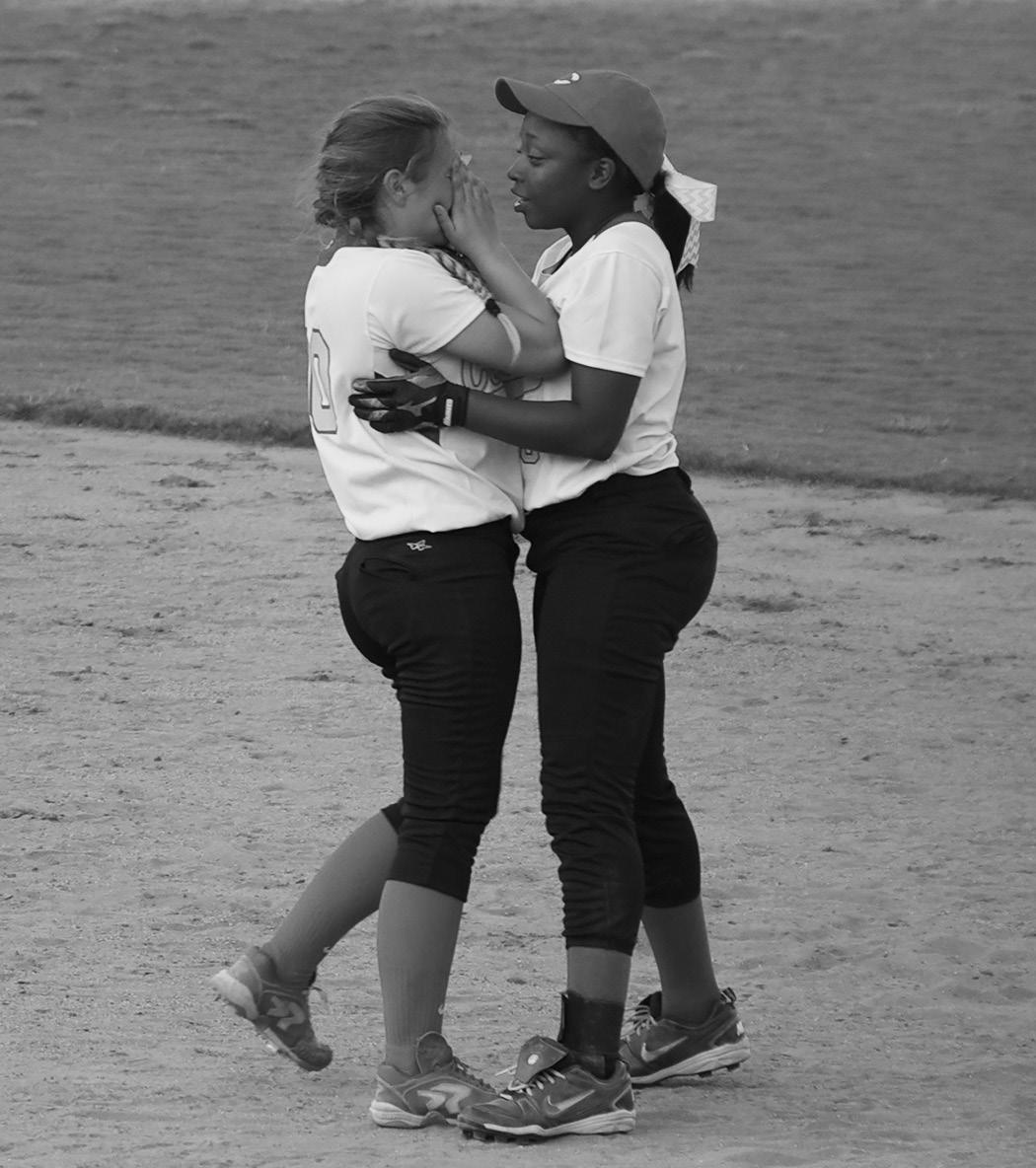
Above: ONE SHINING MOMENT: Senior varsity softball captain Kaitlyn Hooker embraces fellow senior Hannah Gorman after the Lady Gladiators’ 14-5 victory over Cedar Shoals High School on Thurs., Aug. 27. The win over CSHS was the first in their respective careers. “It was amazing, because we had waited so long,” Hooker said.
A win for the ages
After the Clarke Central High School varsity softball team earned its first run rule and region win against Gainesville on Aug. 21, the Lady Gladaitors set their sights on crosstown rival Cedar Shoals High School on Aug. 27.
“We had our first win of the season against Gainesville last Friday, and it was a run rule. It was our first away win, it was our first region win and (it was) our first run-rule win in at least eight year, so I (was) looking forward to Cedar for sure,” head varsity softball coach April Tedeschi said.
The Lady Gladiators jumped out of the gate in the first inning ended to a 2-0 lead with runs scored by senior Hannah Gorman and sophomore Caroline Stewart.
“Hitting has improved a lot. We used to get scared at the plate and didn’t hit as much as we should. Everyone’s hitting now,” freshman and junior varsity softball player Parker Brown said.
The Lady Gladiators increased thir lead to 11-5 before the fifth inning, when sophomore first baseman Kailan Willis cracked a three-run home run to end the contest.
“The last hit, I just made contact because I wanted to get on base. I wanted my seniors to be happy because this is their last year and I know how much Cedar games mean to them,” Willis said.
Willis received inspiration from Gorman before the at-bat.
“(The referee) was calling in close strikes. I was just like ‘I can’t do this,’ but (Gorman) was like ‘You gotta do it for me,’” Willis said. “She’s my favorite senior so I had to do it for her. I think I did, and I did it for myself too.”
Senior captain Kaitlyn Hooker was relieved to finally get a win over the rival Jaguars after six straight losses to CSHS previously in her career.
“We had waited so long, so it was just amazing,” Hooker said.
-- Jordan Rhym, Junior Copy Editor
Audibles
“
“It was a little scary at first, but now that I’ve gotten to know the team I feel comfortable with them.
CAMILLE FLURRY, eighth-grader, on playing up on the junior varsity volleyball team.
“I don’t think players get that excited about who’s their coordinator, and are more excited about playing football.
DR. JON WARD, Athletic Director, on the varsity football team’s response to a new offensive coordinator.
“
“We try to come together after every play so that we don’t turn on each other or get a bad attitude.”
LAURYN WATERS, junior, on the ability of the varsity volleyball team to stat composed.
““I keep telling (the players) that practice doesn’t make perfect, practice makes progress. So we’re moving towards greatness. ”
APRIL TEDESCHI, head varsity softball coach, on the progression of the softball team
Below: HANDSOME HARDWOOD: The New Gym floor was redone in July after 15 years of usage. Instead of the old Gladiator logo, the floor now features a Clarke Central High School “C.” “I’m really pleased with how it turned out. I think it looks really good in here,” physical education teacher Trey Henson said.
--CompiledbySportsStaff
Photo by Julie Alpaugh
Photo by Sophie Fernandes
Thelightsareon,thestageisset,foran...
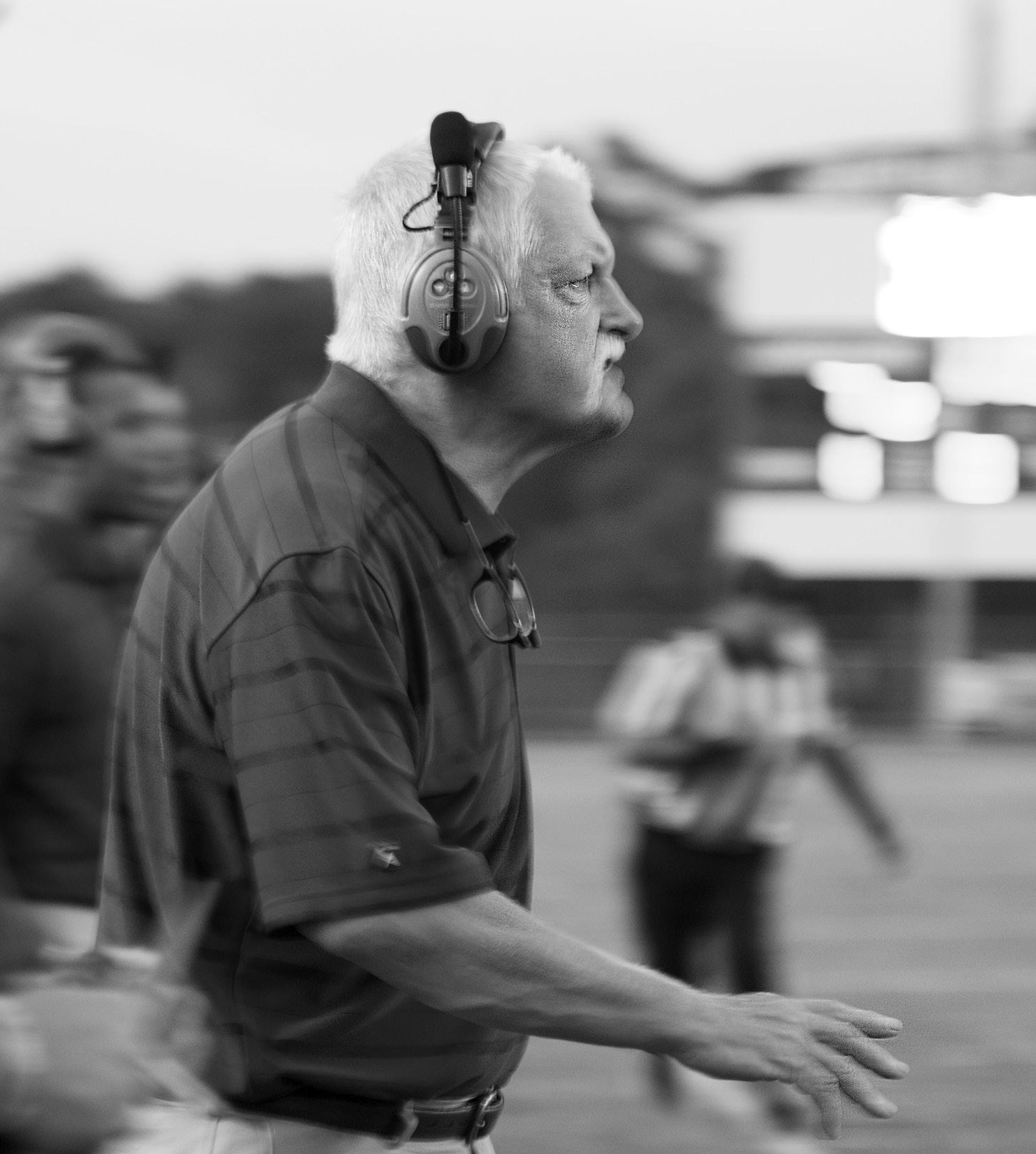
Cedar Shoals Head Coach
Scott Wilkins
athens town throwdown
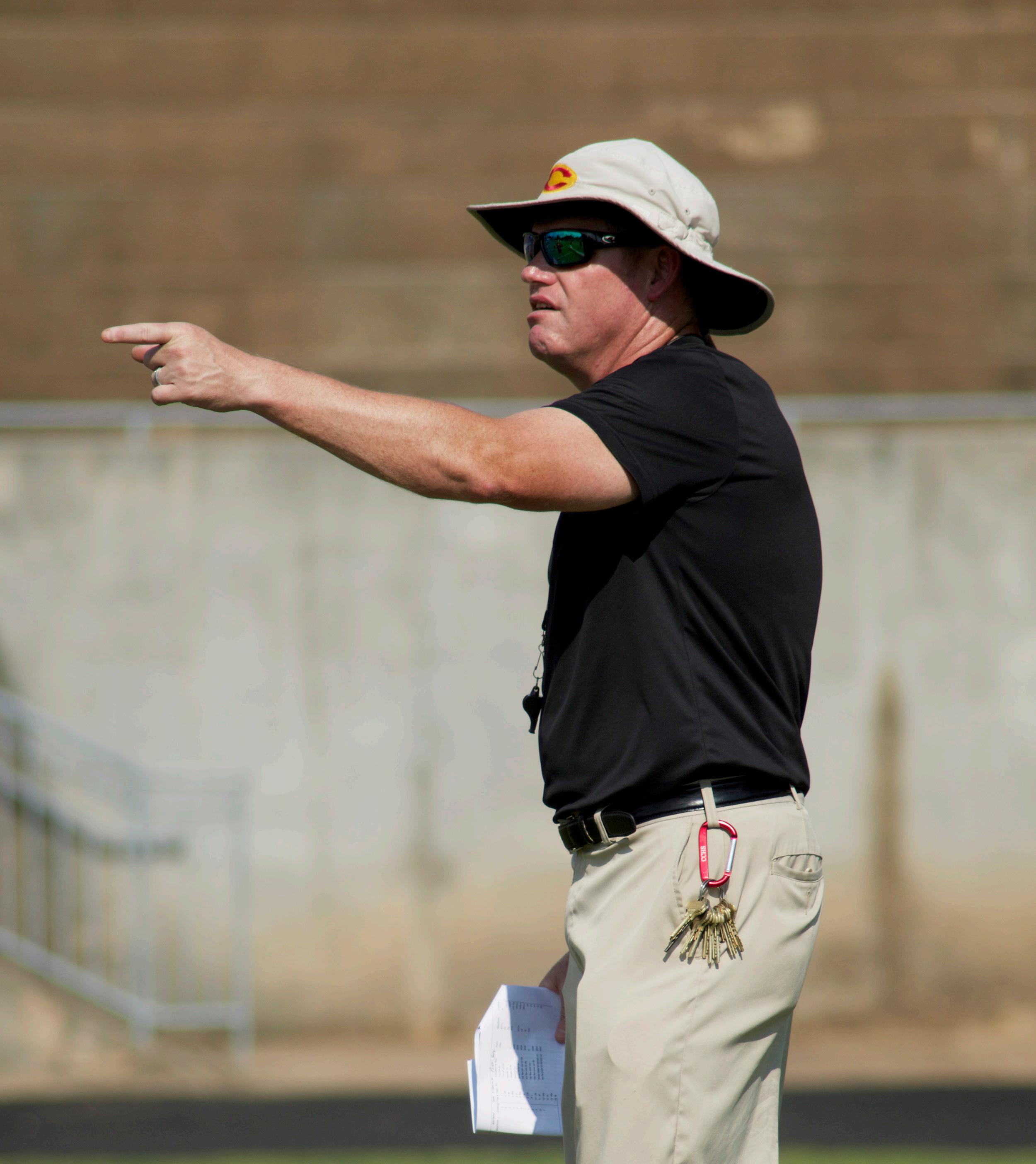
PACKAGE BY JOHANNA HALL, ZOE PETERSON AND KEVIN MOBLEY
Sports Editor, Online Sports Editor, Editor-in-Chief
Clarke Central Head Coach Ahren Self
GLADS FAST FACTS
Head Coach: Ahren Self, 3rd Season
Key Players
Senior RB Jaqua Daniels (Athens Banner-Herald Terrific 10)
Senior CB Rayshawn McCall (ABH Terrific 10)
Junior FS An’Zavion “Zay” Brown
Key Senior Losses
QB Aakeem Wise
WR Marcus Campbell
DT T.J. Ellison
All-Time Record: 375-155-2 (No. 50 winningest all-time)
2014 Record: (5-5 Overall; 5-4 Region 8-AAAAA)
Maxpreps predicts: 3rd Place Finish in Region 8-AAAAA
Self says: “We have a lot of young guys and a lot of older guys who haven’t had a lot of experience on the football field, which we’re still in a learning process right now. We’ve got a long ways to go but our kids are working hard.”
Player Perspective: “Once the season gets started and everything gets rolling, by the time region play comes we’ll be ready to play. I believe that we will win the region this year.”
-- Rayshawn McCall senior cornerback
Scheme: Pro Style Offense; 3-4 Defense

Current Streak vs. Cedar Shoals: 7 consecutive wins
FAST FACTS JAGS
Head Coach: Scott Wilkins, 16th Season (first coached at CSHS from 1994-2007; returned in 2014)
Key Players
Junior FS Ryan Huff (ABH Terrific 10)
Senior RB/WR Greg Smith
Junior TE/DL Stavion Stephenson
Key Senior Losses
WR Breon Mitchell
CB/LB Trevor Burgess
SS Golden Brown
All-Time Record: 284-171-4
2014 Record: (0-10 Overall; 0-9 Region 8-AAAAA)

Maxpreps predicts: 9th Place Finish in Region 8-AAAAA
Wilkins’ words: “Athletically, we’re better than we were last year. (In) football IQ, we’re better than we were last year. We’re faster than we were last year. We were 0-10 last year. Why would anybody believe that we’d be any good? And I don’t care what anybody believes except for those 65 guys that are in that locker room. They think they’ve got a chance. That’s all we want.”
Player Perspective: “
Scheme: Wing-T Offense; 4-2-5 Defense
Current Streak vs. Clarke Central: 7 consecutive losses
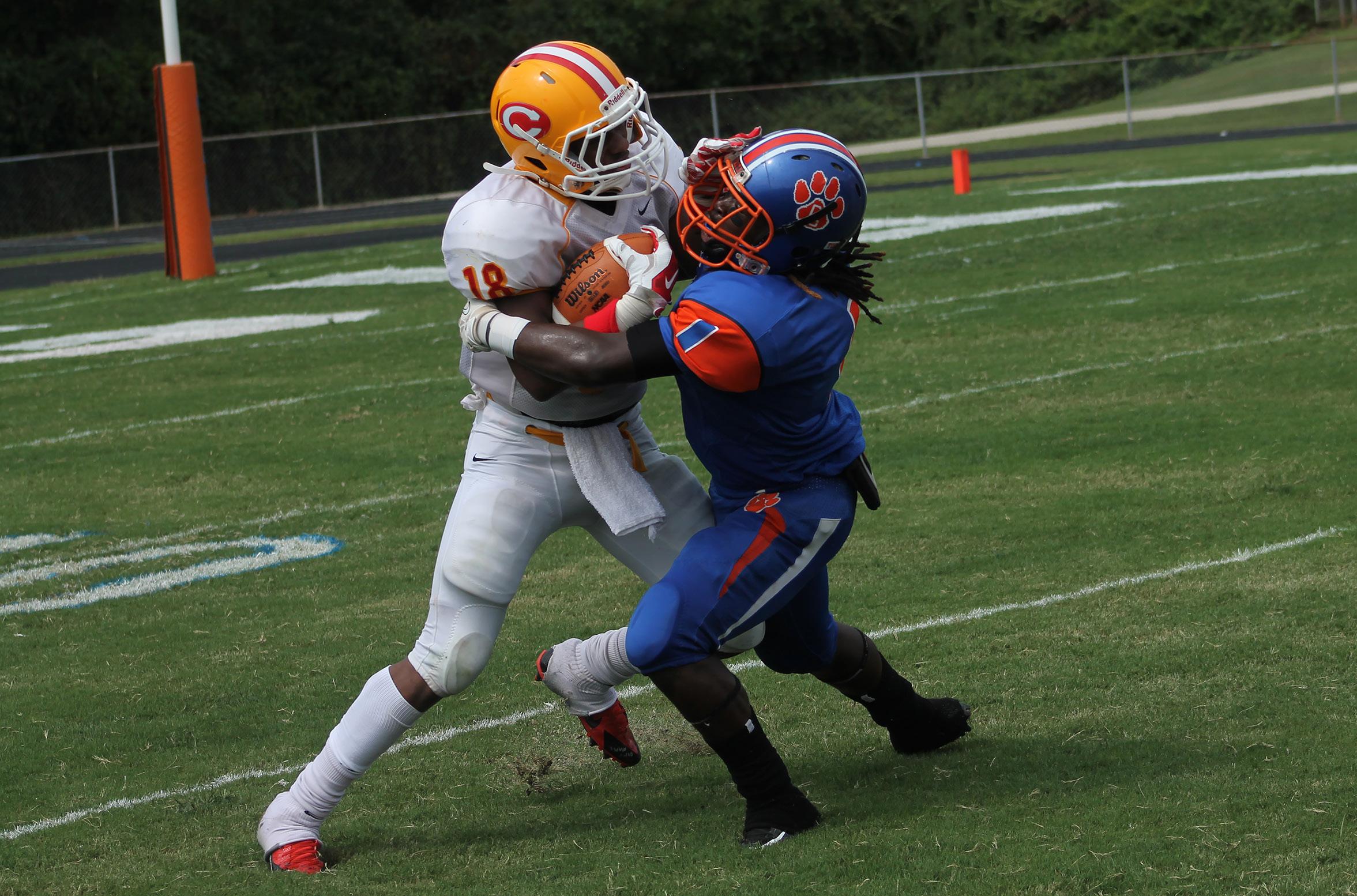
FRIDAY NIGHT FIGHT
WRESTLING WITH A RIVAL: Former Clarke Central High School running back Kennon Morrison attempts to elude a tackle from Cedar
Class of 2015 defensive back Trevor Burgess in the 2014 edition of the “Classic City Championship.” The Gladiators defeated Cedar Shoals 44-29 at Waters-Wilkins Stadium on Saturday, Sept. 13, 2014, after a weather delay Friday night forced the game to be postponed to the next day.
The“bestrivalryeastoftheMississippi”featuresameetingbetweentwo teamssearchingfortheirrespectiveidentities.
The outcome of the 2014 Classic City Championship didn’t sit well in Scott Wilkins’ gut.
A thunderous storm rumbled over the stadium that bears his name after his Cedar Shoals High School Jaguars had just taken a 14-6 lead over crosstown rival Clarke Central High School with two minutes left in the first quarter.
Game postponed; momentum gone.
“I think if we’d have been able to complete the game on Friday night, it would’ve been a different outcome,” Wilkins said.
When the game resumed the next day, Ahren Self’s Gladiators slowly cut away at the CSHS lead, and eventually cruised to a 44-29 win, a result that put Wilkins and his team in a significant hole to start Region 8-AAAAA play.
“You never can say for sure, but I have to think it could’ve bounced. Sometimes you need a bounce. We didn’t get one last year,” Wilkins said.
Despite securing a seventh-straight year of county dominance, the win was not enough to propel CCHS to a playoff appearance either.
“Everybody’s taking the season real serious, so that hopefully we will have a better season than we had last year,” junior safety Zay Brown said. “Everybody (else) knows we’re serious so they’re gonna try to go just as hard.”
This season, the Gladiators hope to change that with a more experienced lineup and a commanding offense under new offensive coordinator Thomas Balkcom.
“Every day, he makes sure that’s ingrained in their spirit: being aggressive. Everything they do--coming off the ball, blocking, catching--everything is aggressive,” senior cornerback Rayshawn McCall said.
At CSHS, the players are still adapting to the Wing-T offense that Wilkins has reimplemented after it earned him 106 wins and 10 state playoff appearances at Cedar Shoals from 1994-2007.
“We’ve gone through some growing pains,“ Wilkins said. “The system has been very good to us in the past, and I think it will continue to be good for us.”
Wilkins has elected to move senior Greg Smith, who started the last two years at quarterback, to a more dynamic role as a running back and wide receiver. The goal, Wilkins says, is to get Smith in space.
“People say, ‘Well why did you move your quarterback?’ We need to get (Smith) more involved in the game, and the move has allowed us to do so,” Wilkins said.
The new quarterback will have to prepare for a Clarke Central secondar y that features two multi-year starters: McCall at corner and Brown at safety
“We’re putting more athletes on the field and I think it’ll help make plays,” McCall said. “We’re just going to work on flying to the ball and not missing as many tackles as we missed last year.”
Both coaches and teams are looking for a win to establish themselves as a serious region contender.
“Our kids want to be relevant again in this region race,” Wilkins said. “If we get a bounce here, get a win and a little bit of momentum, this could be a pretty good football team.”
Though they don’t share many sentiments these days, those on the westside agreed.
“If you can’t get up to play Cedar Shoals, then you don’t need to be playing football,” Balkcom said.

Above:
Shoals High School
Photo by Chad Rhym