



Just a few years ago, the prevailing wisdom was that brands and their corporate leaders have a responsibility to speak out on the most pressing political and social challenges facing the world today. And in taking such a proactive, public stance, the assumption was that these brands would also boost their appeal among consumers who naturally prefer supporting companies that share their cultural values.
But things have changed, and these days communicators appear to be advocating a very different idea: stay out of politics.
As an increasing number of Americans express weariness toward the nation’s current political landscape, purpose-driven messaging appears to have acquired radioactive status. According to the latest Global Communications Report released by the USC Annenberg Center for Public Relations, an increasing number of communications professionals are now ditching their support for corporate advocacy and also expect investment in CSR initiatives to wane in the coming years.
According to the latest Global Communications Report released by the USC Annenberg Center for Public Relations, an increasing number of communications professionals are now ditching their support for corporate advocacy and also expect investment in CSR initiatives to wane in the coming years.
The annual report, which focuses on the emerging trends affecting the global communications landscape, found that the percentage of PR professionals who believe companies have a responsibility to advocate or take positions on social issues now stands at only 55 percent, compared to 85 percent in 2024 and 89 percent in 2023.
Suffice it to say, a 34 percent drop in corporate advocacy and social responsibility support in the last three years is a stunning development. Perhaps as a result, more than a third of PR pros (36 percent) now said they expect investments in DEI to decline over the next five years. Nearly half (44 percent) said they also think resources dedicated to sustainability would decline over the same period and nearly a quarter (22 percent) said they expect the same for resources in purpose-driven initiatives.
That doesn’t mean PR pros no longer view political polarization as a problem. In fact, 81 percent of PR pros characterized the level of polarization in the United States as high or extremely high, compared with 69 percent of the general public. Additionally, 94 percent of PR pros think polarization is negatively impacting mental health in the U.S., 93 percent think it’s negatively affecting our quality of life, 92 percent think it’s unlikely to end anytime soon and 89 percent think polarization in the U.S. is negatively affecting the rest of the world.
Moreover, almost half (42 percent) of PR pros said they believe political and social polarization has had a negative effect on employee morale. Nearly a third (32 percent) think polarization will harm corporate reputation and the same percentage believes it would hurt communications strategy. And nearly a quarter (22 percent) worried this might harm organizations’ communications budgets.
That said, virtually all the communicators surveyed (91 percent) said they think polarization has increased the importance of public relations within their organization.
So, what to do? PR professionals remain divided on what strategies to deploy in our politically charged environment. Agency communicators tend to favor a proactive approach (53 percent), according to the report, while in-house professionals are more likely to favor a more defensive posture (44 percent). Additionally, 41 percent said they think silence can often be the most effective communication strategy in a politically polarized environment, suggesting a “quiet shift” is underway in corporate communication, where situational approaches to public engagement supersede purpose-driven messaging. Granted, there appears to be a great deal of disagreement on this approach, as only 26 percent of agency pros sign on for this strategy, compared to 52 percent of in-house communicators.
Obviously, uncertainty and disruption have roiled the communications industry, thanks to the aforementioned changes around CSR and increased pressures to prove ROI amid the changes ushered in by AI. More than two-thirds of communicators surveyed (67 percent) said they now believe their organization is likely to restructure its communications function in the near future, with 36 percent claiming that such a structural change is “very likely.”
USC Annenberg’s latest Global Communication Report, “A Quiet Shift,” surveyed more than 700 communication professionals and also held one-on-one interviews with Fortune 500 chief communications officers between December and January. Research was conducted by Meltwater. The report was produced in collaboration with the International Association of Business Communicators.
— Jon Gingerich

EDITOR-IN-CHIEF
Kevin McCauley kevin@odwyerpr.com
PUBLISHER
John O’Dwyer john@odwyerpr.com
SENIOR EDITOR
Jon Gingerich jon@odwyerpr.com
ASSOCIATE EDITOR
Steve Barnes steve@odwyerpr.com
CONTRIBUTING EDITORS
Fraser Seitel
EDITORIAL ASSISTANTS & RESEARCH
Jane Landers
Melissa Webell
Advertising Sales: John O’Dwyer john@odwyerpr.com
O’Dwyer’s is published seven times a year for $60.00 ($7.00 a single issue) by the J.R. O’Dwyer Co., Inc. 271 Madison Ave., #1500 New York, NY 10016. (212) 679-2471 Fax: (212) 683-2750.
© Copyright 2026 J.R. O’Dwyer Co., Inc.
OTHER PUBLICATIONS: www.odwyerpr.com
Breaking news, commentary, useful databases and more.
O’Dwyer’s Newsletter
A six-page weekly with general PR news, media appointments and placement opportunities.
O’Dwyer’s Directory of PR Firms
Listings of more than 1,250 PR firms throughout the U.S. and abroad.
O’Dwyer’s PR Buyer’s Guide
Products and services for the PR industry in 50 categories.
jobs.odwyerpr.com
O’Dwyer’s online job center has help wanted ads and hosts resume postings.

Nearly half of Americans said they no longer trust the information they encounter online, thanks to AI. As a result, brands are now quickly becoming de facto sources of truth verification.
By Jon Gingerich
The Internet has a major credibility problem. For years, fake news, misinformation and disinformation have made people increasingly skeptical of the content they encounter online. And now, thanks to rampant AI slop, deepfakes and LLM hallucinations, that trust deficit has grown markedly worse.
As a result, according to a recent PANBlast consumer survey, people are now more skeptical of online information than ever, and worse, the prospect of constantly trying to figure out whether the information they encounter is true or not has left them experiencing what the survey referred to as “AI credibility fatigue.”
The survey, which gauged consumers on trust and credibility in the digital age, found that two-thirds of respondents (66 percent) reported feeling exhausted from the task of constantly verifying sources behind AI-generated content. For younger users, not surprisingly, that number is higher: 80 percent of Gen Z respondents
and 76 percent of Millennials reported experiencing AI-credibility fatigue, according to the survey.
As a result, nearly half of respondents (43 percent) admitted they don’t trust much of anything they encounter online anymore. Only slightly more than a third (37 percent) said they trust Google AI-generated summaries at face value without double-checking the results.
And Americans don’t expect things to get better anytime soon. Nearly two-thirds (62 percent) said they anticipate being more skeptical of online information this year, while an additional third (33 percent) expect to maintain their present levels of skepticism. Only four percent said they believe they’ll be less skeptical of online information in 2026.
So, what to do? It appears that many have resigned themselves to accept our informational dystopia: More than a third (34 percent) admitted they now ignore these feelings of credibility fatigue, while 33 percent

believe this is simply the new normal.
On the other hand, there are many who continue the arduous task of verifying the information they encounter online. In fact, the survey discovered that many users are now relying on what it referred to as “trust shortcuts,” or fast, lower-effort sources that help them circumvent the Internet’s credibility problem without resorting to serious research. And it just so happens that brand recognition is becoming one such shortcut. According to the study, nearly half (44 percent) of consumers said they rely on information from brands they’ve heard of for determining whether information they encounter is trustworthy. Other popular trust shortcuts include the number of reviews they read (35 percent), Google search rankings (34 percent), recommendations from family or friends (34 percent) and ChatGPT or other LLMs (22 percent). However, an additional 30 percent of respondents admitted they still don’t trust any single online source available to them.
PANBlast’s “Trust Shortcuts and AI Credibility Fatigue Survey” polled 1,000 U.S. adults in January. Research was conducted by Dynata. PANBlast is a division of agency PAN.
According to a report released by the Institute for Public Relations, younger employees are far more likely to receive AI guidance and training in the workplace than their older colleagues.
IPR’s report, which sought to examine generational differences in the workplace, found younger employees were far more likely to report access to AI training. According to the report, 57 percent of employees ages 25–34 said their organization provides training for using common Gen AI tools such as ChatGPT or Microsoft Copilot, compared to just 31 percent of employees ages 65 or over.
In addition, employees between the ages of 25–34 were also far more likely (57 percent) to receive workplace guidance for using generative AI compared to employees ages 55–64 (37 percent).
Perhaps as a result, younger employees were more anxious about the potential impacts AI might have on their careers than their older colleagues, who appeared far less worried about the prospect of losing their jobs due to AI. Only 15 percent of employees ages 65 or older and 22 percent of those ages 55-64 expressed concern about AI-driven job displacement, compared to 35 percent of employees ages 18–24 and 31 percent of employees ages 25–34.
IPR’s report, “From Gen Z to Boomers: How Age Influences Employee Engagement, Advocacy, and AI Mindset,” was based on surveys conducted by The Harris Poll that interviewed more than 8,000 U.S. employees between 2022 and 2025.
A growing sense of fragmentation when it comes to health issues is leading to greater distrust of both the healthcare industry and the media that reports on it, according to the newly released 2026 Edelman Trust Barometer.
By Steve Barnes
Agrowing sense of fragmentation when it comes to health issues is leading to greater distrust of both the healthcare industry and the media that reports on it, according to the newly released 2026 Edelman Trust Barometer.
The Barometer’s “Special Report: Trust and Health,” which surveyed more than 16,000 people in 16 countries, says the sense of fragmentation is greatest in the U.S., where 86 percent of survey respondents thought the country was at least somewhat divided on key health issues. More than half (52 percent) described the state of affairs as “very or extremely divided.”
That far outdistances the other countries on the list. In Mexico and India, 72 percent of respondents felt at least some sense of division on healthcare issues, while the number drops to 62 percent for Canada, 56 percent for Japan and 42 percent for Singapore.
The overall high amount of debate on health issues has led to a growing lack of
trust in the healthcare system itself, according to the report. A majority (52 percent) of respondents across 14 of the countries in the study said they think people are losing trust in the healthcare system.
When it comes to the media, the drop in trust since pre-COVID days is steep. Since 2019, 18 percent fewer U.S. survey participants say they trust the media “to report accurate information about healthcare,” the end result being that fewer than four in ten (38 percent) feel that they can believe what the media tell them about such issues as diseases, treatment and prevention.
People are also becoming less confident in their ability to find answers to their healthcare questions. In Edelman’s 2025 survey, that confidence level sat at 61 percent. This year, it has dropped 10 points to 51 percent. Confidence levels in the U.S. and France took the biggest hit, both falling by 14 percent.
One place where people are going to help them manage their health is, perhaps not
surprisingly, artificial intelligence. Over a third of survey participants (35 percent) say they use AI to manage their health. The things they use it for include getting immediate answers to general health questions (84 percent); sleep, exercise or nutrition recommendations (81 percent); and interpreting medical test results (78 percent).
Almost two-thirds of them (64 percent) also say that AI can perform such tasks as determining proper treatment or medication, as well as, if not better, than a doctor. For respondents between 18 and 34, that number jumps to 72 percent, while for those 55 and over, it is just 52 percent.
To close the gaps caused by the increasingly fragmented healthcare environment, the report stresses the importance of community engagement and relying on trusted sources.
“In a fragmented system,” the report says, “providers win influence through partnership, humility, and helping patients navigate decisions.”
Philanthropic foundations face a reputational crisis of being viewed less as charitable causes that benefit society and increasingly as politically influenced organizations where visibility is purchased by the privileged, according to a recent report.
By Steve Barnes
The philanthropy sector appears to be losing its position on the moral high ground, according to the Global Risk Advisory Council’s Reputation Risk Index for Q1 2026.
The “Focus on Philanthropy” study finds that philanthropic organizations are no longer simply seen as benefiting society at large. Instead, its authors say, there is a public perception that “large-scale philanthropy is less about altruism and more about reputation laundering, buying visibility and asserting privilege.”
One big problem Council members saw was the philanthropic sector’s inability to make a compelling case for the work it does. Almost nine out of ten survey respondents (87.3 percent) said that the sector fails to adequately get its message across.
There was also a sense from some Council members that philanthropic organizations can often be too easily influenced by political pressure, particularly when it comes from the Trump administration, which is often at odds with goals of those groups such as DEI
or addressing the problems faced by immigrants. More than half (52 percent) said the sector made too many concessions in the face of political attacks, with 41 percent calling the level of concessions “appropriate.”
The waffling of corporate philanthropies on DEI issues has delivered a strong reputational threat, with 89 percent of survey respondents saying that the elimination of DEI programs has impacted the reputation of those philanthropies to some level.
Such concerns result in philanthropic organizations finding themselves subject to the same kinds of reputational risks that all businesses face.
The overall #1 reputational risk cited in the survey, AI misuse, also plagues nonprofit groups. In addition, the study notes a “wave of data breaches” (the #3 risk overall) such as those that affected the Salvation Army and New York Blood Center, as well as the fake charity sites that often appear in the wake of hurricanes or other catastrophic events.
Expanding out from the philanthropy sec-
tor, the index lists what the Council found to be the top ten reputational risks that all organizations face today. Joining AI misuse and data breaches on that list are criticism from the President (#2), major operational disruption (#4) and child safety/harm (#5).
Elon Musk crops up on the list at #10.
Looking forward, the survey respondents name the issues that could become bigger reputational threats for businesses. Those include supply chain entanglement with China, tariff resolution, data center backlash and the magnification of geopolitical instability.
“Foundations are finding their core missions, from climate change to DEI programs, weaponized against them—and all at a time when AI advances rapidly and federal funding for social safety net programs is being cut,” said Global Risk Advisory Chair Isabel Guzman. “In order for organizations to fortify against reputational risks in 2026, they must bridge the gap between their stated values and the realities of operating in a highly politicized, AI-driven world.”

How risks and opportunities have evolved for communicators in the second Trump administration.
By Felicia Pullam
During the first year of the second Donald Trump administration, trade policy shifts affected every business, and commentators applied a full range of superlatives to describe it. The most common was “unprecedented.” Last year was hard to forget; many of us were asking ourselves the same question: how should we respond?
Inside most companies, customs and other operational colleagues were slammed, as they labored to understand the immediate cost implications, manage compliance requirements and reconfigure mission-critical supply chains. Internal coordination—never simple in large organizations—became even more strained, impacting message development and advocacy. In Washington, lobbyists were immobilized as they assessed the risks of engagement, while more than a few commentators proclaimed it futile without “Mar-a-Lago-level access.”
Now that we’re a few months into the second year, what’s changed and what’s next?
From paralysis to selective engagement
When President Trump announced new tariffs on “Liberation Day” in April 2025, only a narrow set of voices spoke within the first week. High-profile figures in the investment community, less constrained by consumer sentiment, were among the few able to weigh in.
Since then, the environment has matured. Trade policy is still uncertain, but the changes are slower-moving and somewhat easier to predict. There are indications that leaders within the administration are receptive to stakeholder input. Experienced personnel at the U.S. Department of Commerce and the Office of the United States Trade Representative are actively analyzing feedback from both industry and civil society. Thousands of companies have filed lawsuits in tariff cases, with little public evidence of retribution. Others have submitted public comments on tariffs and other trade policy priorities during formal processes led by Commerce and USTR.
This evolution creates a more nuanced communications environment. Advocacy, comments and other forms of messaging can be worthwhile but are also not without risk. Partisans are taking note and election-year politics are heating up.
Emerging risks for communications around trade
Companies must continue to account for multiple audiences within the United States: Sincere policymakers, political operatives
and a wide variety of other stakeholders, including frustrated consumers, many of whom are wondering when they’ll get their tariff refunds. And beyond U.S. borders, even more stakeholders are becoming increasingly disillusioned.
Several risk vectors have become more pronounced:
Policy adaptation without strategic retreat. In April, the Trump administration rolled back some tariffs on products made with steel and aluminum, while also simplifying the remaining tariffs in response to widespread industry complaints.
Although their refinements showed flexibility, they also maintained a strong commitment to the original goal of protecting domestic metal production. While some imports are no longer subject to these tariffs and some face a lower rate, others are still subject to a 50 percent duty. The administration simplified the paperwork by applying the tariff to the full cost of the good, rather than the value of the metal content. To be sure, the math is easier, but the final tariff amount is higher.
There are two takeaways for communicators. First, engagement can shape outcomes … but not always predictably. Second, you must be aware of the Trump administration’s steadfast objectives and communicate with that in mind.
Company-specific targeting and creative tactics. Also in April, the president announced the long-awaited Section 232 actions on pharmaceuticals, including a 100 percent duty on branded drugs. Individual companies will receive exemptions by making deals with the administration on pricing and domestic manufacturing. Milestones will be established and monitored, potentially subject to external audits. This administration is using a national-security tariff authority in a completely novel way: to control the actions of individual companies.
This raises a few questions. First, is this a model for other industries? Second, is this legal and does that matter? The optics of suing the Trump administration instead of investing in American manufacturing are not good.
So, what does this mean for communicators? Continue to take care when talking about investment plans externally. The administration is tracking and highlighting announcements, with an eye towards accountability.
A renewed focus on forced labor. In
March, the Trump administration announced two Section 301 investigations, with the intention of using the results to levy new tariffs to replace those struck down by the Supreme Court. One investigation targets 60 economies to determine whether governments have banned the import of goods made with forced labor into their respective territories, claiming that not doing so disadvantages American exporters.

There’s substantial confusion around this investigation. It’s a yesor-no question: Either a country has a ban or it doesn’t. Only Mexico, Canada and the European Union have bans, so for them, the next question is whether they are effectively enforced. But, since forced labor has plagued humanity for millennia, enforcement is notoriously difficult.
There are few things worse than forced labor. This is an area where companies should proceed with extreme caution in public commentary. Missteps carry not only regulatory consequences but also significant reputational exposure. Instead, managers should redouble efforts to ensure that their own supply chains are clean and consider whether lessons learned could be helpful as governments seek to improve enforcement.
U.S. midterm elections and continuing geopolitical instability. Layered onto these dynamics is the reality of election-cycle politics, along with the unpredictability of war.
Trade policy is increasingly a political instrument, and companies can find themselves drawn into narratives that serve broader campaign objectives. Even neutral or technical positions may be reframed for political effect, creating headline risk.
Further, companies must prepare for a policy landscape that could shift again. Maintaining relationships and credibility across both sides of the aisle is essential. Communications strategies should be vetted not only for immediate impact but also for their durability under different political scenarios.
The strategic upside of engagement
Despite these risks, there are tangible benefits to participation.
As USTR Greer continues to lead bilateral negotiations, likely through the end of President Trump’s term, he is seeking foreign concessions on trade barriers that have eluded prior administrations. Corporate in-
Continued on page 17

The AI revolution has transformed how public relations agencies work and deliver value to clients. But it’s also changed how buyers value those firms, and understanding AI’s influence on valuation is essential for agency owners planning on selling in the future.
The public relations industry is entering one of the most transformative periods in its history. Artificial Intelligence isn’t simply another tool in the communications toolkit—it’s fundamentally changing how agencies operate, scale and deliver value to clients. It’s also reshaping how buyers—particularly private equity firms and strategic buyers—value PR firms.
For agency owners contemplating a sale in the next two to five years, understanding how AI will influence valuation is central to achieving the highest possible recasted EBITDA multiple and ultimate value.
From labor-based to intelligence-based valuation
Historically, PR firm valuations have been driven by a combination of financial performance and qualitative factors. Revenue size, recasted EBITDA margins, client concentration percentages, sector specialization and second tier of management depth have all played central roles. PR firms have been valued as labor-based businesses, where revenue is tied directly to billable hours, billing rates and staff utilization.
AI is changing the equation
Firms that successfully integrate AI into their workflows are transitioning from labor-based models to intelligence-driven platforms. This shift has profound implications. When the output is no longer tied to hours, scalability will improve. Profitability margins, in theory, should improve. Deliverable results should happen faster and more consistently.
Buyers will now be asking a question that hasn’t been asked in the past: Is the firm simply selling hours—be it a monthly retainer or project-based—or is it leveraging technology that will multiply the output and insights? The answer will directly impact valuation multiples and the ultimate monetization of the firm.
Margin improvement and recasted EBITDA increase
One of the most immediate and measurable impacts of AI is on operating margins. AI tools significantly reduce the time required for research, media tracking, content preparation and data analysis.
Agencies that effectively train their staff to use these tools can increase their output and productivity without adding staff. This will result in higher EBITDA margins. Higher EBITDA margins equate to a higher valuation and down payment at closing. How-
ever, buyers are not just looking at growth in margins. They will also be evaluating the quality and sustainability of those margins as they closely look at client concentration and high-margin specialties.
If margin improvement is driven by disciplined integration of AI into repeatable processes, buyers view this as a structural advantage. Alternatively, if margin improvements aren’t consistent, buyers may discount the perceived benefit and increase in value. Every situation is different and is evaluated independently.
Bottom line is if a PR firm is showing consistent, AI-enhanced margin growth, it may command a premium valuation, higher than a comparable firm without such capabilities. Eventually, these capabilities won’t be optional. They’ll be essential and required. Firms that aren’t committed to investing in advanced AI technology should most likely consider selling the firm now, before the lack of sophisticated AI makes the firm antiquated.
Scalability and growth potential
Scalability has always been a key driver of valuation, but AI is redefining what scalable growth looks like in the PR sector.
Traditionally, growth required adding additional staff and more risk. It increased fixed labor costs and created pressure on delivering high utilization rates for all staff, not part of management or assigned to generating new business. AI changes this dynamic by allowing firms to grow revenue without a proportional increase in their team.
Buyers, particularly private equity firms, place a premium on businesses that can scale efficiently. A PR firm that demonstrates the ability to onboard new clients, expand service offerings and increase output through AI-enabled systems becomes significantly more attractive and commands a higher valuation.
This is especially relevant for firms in the $5–$25 million revenue range, where buyers are actively seeking platform firms that can double, triple or quadruple in size. AI-enabled scalability directly supports this thesis. And seller firms that have the ability to multiply in size, with consistent profitability, will reward the seller on payday.
Service evolution and revenue mix
AI can also assist and influence the services the PR firms offer and how to price those services.
Firms are increasingly incorporating
By Rick Gould
data analytics, predictive AI software and AI-driven content strategies into their offerings. This shifts the perception of the firm from a traditional communications provider to a more strategic, data-informed partner with the client.
Both PE firms and strategic buyers favor firms with higher value strategic service offerings that are less commoditized and more unique.

Also, another key point is that AI can support more recurring revenue models, versus project-based fees or hourly billing, such as ongoing analytics and strategic advisory services. Recurring revenue is highly valued in M&A transactions, providing both predictability and stability.
Risk considerations and buyer due diligence
Buyers are increasingly evaluating how PR firms are using AI, focusing on data security, confidentiality and intellectual property areas.
Firms that proactively establish clear AI policies and controls will be viewed favorably and very attractive. Those who can’t do this will not be as favorable and will not justify maximum valuation. There’s a distinction between AI-enabled and AI-dependent. AI-enabled firms enhance their human expertise, not a replacement for it. Strong strategic thinking will always be valued highly.
The critical human factor
PR will always be a relationship-driven business. AI can’t replace trusted client relationships, creative judgments that need to be made, or strategic counsel.
Leadership teams are still very important aspects in valuation, as is client retention. Firms that can demonstrate both strong AI and team expertise will be the most desirable and receive the highest valuations.
For PR firm owners, the message is clear. Those who embrace AI and integrate it into their operating model will be positioned to demand higher valuations.
Preparation is key
Firms must focus on demonstrating consistent, AI-driven margin improvement by building scalable systems that will enable
_ Continued on page 17


Why scalability has increasingly become the deciding variable in PR M&A.
In today’s public relations M&A market, buyers are no longer acquiring agencies—they’re underwriting growth architectures. The distinction is critical. Historical revenue, blue-chip client rosters and even strong EBITDA margins have become baseline expectations, not differentiators. What separates a premium asset from a commoditized one is a single, increasingly precise question: “Can this business scale?”
That framing has fundamentally reshaped how private equity firms and strategic acquirers evaluate targets. Scalability is no longer about headcount leverage; it’s about sector tailwinds, recurring demand, regulatory complexity and, most importantly, the ability to productize insight through data, analytics and AI-enabled services. In effect, buyers are searching for agencies that behave less like service providers and more like private equity platforms.
As one recent industry analysis puts it, acquirers are buying a “future-growth engine,” not a snapshot of past performance.
From addition to multiplication
At the core of this shift is a simple but powerful distinction: addition versus multiplication.
A traditional PR firm—however reputable—often scales linearly. More clients require more account teams; more deliverables require more labor hours. This model caps margin expansion and introduces execution risk tied to talent availability. In M&A terms, it’s an addition play
By contrast, the modern acquisition target is a multiplication play. It’s built on repeatable methodologies, sector-specific intellectual capital and, increasingly, technology-enabled delivery systems. These firms can absorb incremental revenue with disproportionately lower-cost increases, creating immediate operating leverage post-acquisition.
This is precisely why buyers now prioritize:
Operating leverage: The ability to grow client volume by 20–30 percent with only modest increases in headcount.
Future-proofing: Reduced dependency on labor through AI, automation and structured workflows.
Speed of integration: Standardized systems that can be deployed across a global platform.
Where scalability lives: the five power verticals
Not all sectors are created equal when it
By Rich Jachetti
comes to scalable PR. In our experience as an M&A advisory firm, on the whole, PE firms and more and more strategic firms are converging around five industry verticals that are proving to be inherently scalable.
Technology (AI, SaaS, cybersecurity, data infrastructure, among others) This is the closest thing to annuity-like PR revenue. Continuous innovation cycles, product launches, funding rounds, M&A— create perpetual communications demand. More importantly, enterprise value in tech is highly sensitive to narrative, positioning and analyst perception. Agencies embedded here can build repeatable frameworks for thought leadership, media strategy and investor communications that can scale globally.
Healthcare and life sciences. If technology offers velocity, healthcare offers defensibility. Regulatory complexity, long product lifecycles and multi-stakeholder communications create high barriers to entry. Expertise becomes proprietary and, once embedded, agencies benefit from sustained, high-margin engagements. This is one of the few sectors where PR isn’t discretionary—it’s mission-critical.
Financial services (private equity, venture capital, asset management, investment banking, fintech). Here, reputation is enterprise value. Transaction-driven communications—deals, IPOs, exits—combine with ongoing investor and regulatory narratives. For private equity buyers, this vertical has an additional advantage: adjacency to their own ecosystem. Owning a PR asset in this space can create a self-reinforcing loop of deal flow, advisory and value creation.
Consumer and retail (digital-first / DTC brands). This is the most “platformizable” category—instead of being a single-use tool that does only one specific job—a platformizable item is reusable, modular and extendible. The shift to digital, social and influencer-driven communications has created repeatable playbooks that can be deployed across hundreds of brands. While margins may be lower than healthcare or corporate advisory, the scalability comes from volume and standardization.
Corporate reputation, ESG and public affairs. This is the strategic apex of PR. Driven by geopolitical instability, regulatory pressure and stakeholder activism, reputation management has become a
board-level priority. These engagements are high-value, consultative and increasingly data-driven, making them both premium-priced and scalable.
Across all five verticals, the common denominator is clear: PR is no longer a support function. It’s a driver of enterprise value.
The AI inflection point
Overlaying all of this is the single most transformative force in the industry: artificial intelligence.

AI is redefining scalability by decoupling output from labor. Services that once required large teams—media monitoring, content generation, crisis tracking—can now be delivered through automated, data-driven systems. More importantly, entirely new categories of scalable offerings are emerging:
• AI visibility and generative search optimization.
• Predictive reputation analytics.
• Automated global media outreach systems.
• Scenario modeling for crisis and stakeholder risk.
These aren’t incremental improvements. They represent a shift from selling activity to monetizing outcomes. And because they’re built on data and technology, they scale exponentially rather than linearly.
For acquirers, this is the ultimate prize: a PR firm that behaves like a SaaS business in its economics.
The hidden opportunity: unlocking scalability
Yet one of the most nuanced—and underexploited—realities in PR agency & PR-adjacent agency M&A is that scalability isn’t always immediately visible. Many agencies that appear non-scalable on the surface actually possess latent characteristics that, under the right ownership and strategy, can be transformed into highgrowth platforms.
This is where sophisticated M&A advisory becomes decisive.
Rather than presenting a business as a static asset, experienced M&A advisors reframe it as a dynamic opportunity. They identify:
• Proprietary expertise that can be productized.
_ Continued on page 17

In communications, where trust is earned and lost in moments, human judgment, experience and responsibility will define the future far more than artificial intelligence ever can.
“So God created humankind in the divine image, in the image of God they were created; male and female, they were created.”
— Genesis 1:27
There’s a humility in this verse that deserves attention. Humanity isn’t the source; we’re created in God’s image, a reflection of something greater. Our ability to reason, create, care and imagine isn’t self-originating. It’s derived, shaped through experiences—good and difficult— and expressed through judgment.
That framing matters as artificial intelligence becomes embedded in the discipline of communications. If humanity is already a reflection, then AI sits one step further removed. It’s built from the aggregation of human expression. It organizes what we’ve written, said and shared. It predicts patterns in language and behavior. It doesn’t originate meaning, nor does it bear responsibility for how its outputs shape trust, reputation or consequence.
In Peter Pan, set in Neverland, a place where time stands still and consequence rarely lingers, Peter reaches for his shadow, trying to reattach it so he can feel whole. The shadow moves as he moves, yet it’s not him. It has no judgment, no sense of accountability, no independent understanding of the world. It follows. That allegory is instructive for communications professionals. AI is our shadow. It extends our reach and accelerates our output, but it doesn’t replace the thinking, judgment or accountability that define our value.
The communications industry is at an inflection point. Agencies and corporate communications teams are under pressure to move faster, produce more and demonstrate measurable value. AI appears to offer a solution. It drafts press releases, summarizes coverage, analyzes sentiment and generates content at scale. These are meaningful advances. They can improve efficiency and expand capacity.
Yet communications has never been a volume business alone. It’s fundamentally a judgment business. Reputation isn’t built through output. It’s built through decisions that impact reputations and markets. It’s shaped in moments when information is incomplete, when stakeholders see the world differently and when leaders must act with courage despite uncertainty. Those
moments define whether trust is strengthened or eroded.
AI can support the preparation for those moments. It can’t navigate them. It can’t sit across from a CEO deciding whether or not to disclose a difficult truth. It can’t read the hesitation in a patient advocate’s voice. It can’t anticipate how a message will land in a community that has experienced neglect or harm. It doesn’t carry responsibility when advice leads to consequences. That remains the work of experienced professionals.
John Nosta, Psychology Today columnist and author of The Borrowed Mind, offers a critical distinction: “Cognition … isn’t a product, it’s a process … built through effort and friction.”
That distinction defines the boundary between machine assistance and human leadership. One can be scaled and distributed. The other must be earned through a life of experience, analytic ability and responsibility.
For communication professionals, that warning is immediate. When speed-cost per hour becomes the primary measure of value, there’s a temptation to substitute access to information for depth of understanding and impact. Messages become technically correct but emotionally misaligned. Strategies become efficient but disconnected from the realities they’re meant to address.
The result isn’t better communication. It’s more communication with less meaning.
There’s also a structural reality that should shape how agencies and in-house teams think about AI. These systems depend on continuous contributions from human knowledge and response. They learn from what practitioners publish, how organizations communicate and the accumulated record of decisions and outcomes. They don’t independently generate new insight grounded in lived experience.
If the field relies too heavily on AI-generated content, it risks feeding itself recycled language and diminishing originality. Over time, communications could become more homogeneous, less differentiated and less credible. The very tools designed to enhance productivity could dilute the distinctiveness that defines strong counsel.
For agencies, this is a strategic choice. The market will reward those who use AI to extend the capabilities of experi-
By Gil Bashe
enced teams, not those who position it as a replacement for them. Clients don’t seek agencies solely for volume. They seek perspective, pattern recognition shaped by experience, guidance and an understanding of consequences.

Gil Bashe
For corporate communications leaders, the implication is equally clear. AI can support internal teams in managing complexity and scale. It can help surface insights and streamline workflows. It can’t replace the need for leaders who understand their organization’s values, stakeholder expectations and the broader context in which decisions are made.
This is where human experience becomes the differentiator. Experience isn’t simply tenure. It’s the accumulation of decisions made under pressure, of outcomes observed and of relationships built. It’s what allows a communicator to recognize when a situation is different, even when the data suggests it’s the same.
Wisdom builds on that experience. It introduces restraint. It asks not only what can be said, but what should be said, when and how. It considers the long-term implications of short-term actions. It prioritizes relationships over transactions.
Knowledge, in this context, isn’t static information. It’s applied understanding. It’s the ability to connect signals across domains, to interpret nuance and to translate complexity into clarity that others can act upon.
AI can support each of these elements. It can’t replace them.
The immediate risk for the communications industry isn’t that AI becomes too powerful. It’s that we diminish the value of what makes our work essential. When agencies or departments begin to emphasize tools over talent, they signal that judgment can be automated and experience can be compressed into process. That isn’t how trust is built, nor is it how reputations are sustained.
The organizations that will lead in this next phase will be those that maintain clarity about roles. AI will be deployed to en-
Continued on next page
Continued from page 14
• Sector niches that can be expanded geographically.
• Client relationships that can be crosssold across a broader platform.
• Workflows that can be systematized through AI and automation.
Equally important, they shift the buyer’s lens. Scalability is no longer evaluated as a fixed attribute of the business today—it’s viewed as a function of what the business can become post-acquisition.
For private equity firms and strategic buyers, this reframing has become particularly powerful. It aligns directly with the buyer’s core mandate: value creation through transformation. For example, a firm that appears operationally and/or financially
Continued from page 10
put—whether through formal comments, quiet diplomacy or coordinated advocacy—is shaping U.S. negotiating priorities.
The administration has been taking a phased approach to negotiations. In 2025, President Trump focused on the highest commitments, and each phase has become progressively more detailed. Within this framework, tariffs serve as “sticks,” while exemptions and tariff reductions function as “carrots.”
This means that new carrots will be needed over time: exemptions or lowered rates could come into play. Firms that can effec-
Continued from page 16
hance analysis, accelerate production and support decision-making. Human professionals will remain responsible for aggregation, interpretation, counsel and accountability.
The metaphor of the shadow reinforces that order. The shadow follows the person. It doesn’t initiate the action.
Continued from page 12
growth without hiring a proportion equal to the growth. They must expand into higher-value service offerings and establish best practices around AI use. And, most importantly, they must maintain strong leadership and client relationships. Firms must
constrained and under-performing may, in fact, offer the greatest upside once technology, capital and strategic integration are applied.
In this context, the “less obviously scalable” agency becomes precisely the kind of asymmetric opportunity that sophisticated buyers seek.
All of this leads to a fundamental shift in how PR and PR-adjacent agencies are valued.
Buyers are no longer placing all their bets on:
• How large is the revenue base?
• How impressive is the client list? Instead, they’re asking:
• Does this agency sit at the intersection of industry growth, narrative complexity and measurable business impact?
That intersection is where scalability lives.
tively articulate their case—grounded in economic impact, supply chain realities or national interest—have a pathway to mitigate exposure. For communications teams, this will be an ongoing process.
The importance of cross-functional, cross-border alignment
The complexity of this environment underscores the need for tighter integration across corporate functions.
Public affairs, communications, legal, compliance and business units must operate from a shared understanding of both policy risk and messaging strategy. Misalignment—particularly across geographies—can create vulnerabilities.
Internationally, companies face the add-
Humanity was created in the image of God, carrying both creative capacity and responsibility. AI is created in our image, shaped by what we contribute and limited by what we understand.
Like an encyclopedia, it depends on us. It’s fed by what we write, what we publish, what we question and what we choose to share. Without that continuous human contribution, it doesn’t evolve. It stalls. It repeats. Over time, it becomes less relevant, not more.
prepare financially, operationally and strategically, the end result being the justification of higher valuations.
The AI revolution is already reshaping the PR industry and M&A landscape. Valuations, which traditionally have been based on historical results, will increasingly be reflective of how a firm is positioned for the future. AI is a critical part of the equation.
For buyers, it represents additional depth
And it’s where valuation premiums are earned.
In the current M&A environment, revenue growth and profitability are table stakes. Growth potential is expected. But scalability—true, non-linear scalability—is the differentiator that drives premium outcomes.
For acquirers, it defines whether a deal is incremental or transformative. For sellers, it determines whether they’re priced as a service business or valued as a growth platform.
And increasingly, the difference between the two isn’t just what the agency is, but how effectively its future can be envisioned, structured and unlocked.
Rich Jachetti is Co-Managing Partner of The Stevens/Jachetti Group, an M&A advisory firm that focuses on the PR & PR-adjacent marcom agency categories.
ed challenge of message consistency. Statements made in the United States may conflict with positioning in foreign markets. Managing these tensions requires deliberate planning and disciplined execution.
Year two of Trump’s trade policy presents a more flexible, but more complex, communications environment. The opportunity to influence outcomes is real. So is the risk. For communications professionals, success will depend on disciplined strategy, cross-functional coordination and a cleareyed assessment of when—and how—to engage.
Felicia Pullam is Head of APCO Worldwide’s Center for Trade, Investment and Market Access.
In communications, where words shape perception and perception shapes reality, that distinction isn’t abstract. It’s operational. It’s ethical. It rests on our responsibility for accurate reporting and the consequences that follow when we fall short. Our profession’s future won’t be defined by how much we can produce. It will be defined by how well we think, how wisely we advise and how responsibly we act.
Gil Bashe is Chair Global Health and Purpose, FINN Partners.
of the prospective seller firm. For sellers, it represents both a challenge and a financially rewarding opportunity.
Those in the C-Suite who are visionary and lead in the AI revolution will be well rewarded when they ultimately see their efforts monetize their firm.
Rick Gould, CPA, J.D., is Managing Partner of Gould+Partners, a merger and acquisition consultancy specializing in the PR sector.

Every organization today is upgrading its technology stack, artificial intelligence tools, data platforms, automation and personalization engines. But many are still running an outdated operating system where it matters most: narrative.
This is becoming a critical issue. Not because “narrative” is new, but because its role has fundamentally changed. For years, narrative has been treated as an output: a messaging framework, a campaign platform, or a brand story designed to shape perception. Today, that definition is no longer sufficient. Narrative is becoming the system that determines and embodies how organizations actually operate.
From messaging to operating logic
Most organizations focus on aligning on overall strategy. They agree on direction, growth, innovation, customer focus and AI adoption. But alignment often breaks down in execution. That breakdown isn’t typically due to lack of effort or capability. It stems from a deeper issue: The absence of a shared operating logic.
Consider a common scenario. An organization commits to an AI-driven growth strategy. Product teams push for speed and innovation, legal teams push for risk mitigation and communications teams push for trust and transparency.
Each group is acting rationally, based on its own priorities. But without a shared narrative operating system, which I call Narrative OS, decisions fragment. Think of it this way: Strategy defines where an organization wants to go. Narrative determines how it moves when priorities collide. And in today’s environment, seemingly defined by constant trade-offs, that distinction matters.
AI is exposing the gap
The rise of AI is accelerating this dynamic. AI increases speed, scale and volume across organizations. It enables faster content creation, quicker decision-making and broader reach. But AI doesn’t create clarity. It amplifies whatever system already exists.
When narrative is weak or inconsistent:
• Messaging fragments across channels.
• Teams operate from different assumptions.
• Organizations begin to sound and behave like multiple companies.
When narrative is clear and embedded:
• AI reinforces alignment.
• Decision-making becomes more coherent.
• Execution accelerates in a unified direction.
By Steve Halsey
AI doesn’t replace narrative. It exposes whether an organization has one.
Crisis reveals the operating system
There’s another moment when narrative becomes unmistakably visible, a crisis. In stable conditions, organizations rely on structure, processes, approvals and playbooks. In moments of pressure, those structures compress. Decisions are made faster. Leaders act in real time. What remains is the organization’s underlying logic.
If narrative isn’t embedded upstream, leaders interpret situations differently, responses become inconsistent and trust erodes. If it is embedded, decisions become instinctive, responses remain aligned and behavior reflects values. A crisis doesn’t create the operating system. It reveals it.
Narrative as a leadership discipline
This shift has important implications. Narrative is no longer just a communications function. It’s a leadership discipline that connects four critical elements of the enterprise:
Strategy: what the organization is trying to achieve.
Brand: what it stands for.
Reputation: how it’s perceived. Action: how it actually operates.
When these elements are aligned, organizations generate momentum. When they’re not, fragmentation is inevitable.
At its core: Narrative = Strategy + Brand + Reputation + Action.
This is what elevates narrative from messaging to an operating system.
What leaders should be asking
If narrative functions as an operating system, leadership teams need to rethink how they approach it. For them, three questions are increasingly relevant:
First, what narrative actually governs decision-making inside the organization? Not what’s written down, but what shows up in real trade-offs? Second, is the organization’s use of AI reinforcing alignment, or amplifying inconsistency? Third, in a moment of crisis, what would the organization’s response reveal about how it truly operates?
If the answers to these questions are unclear, the issue isn’t messaging. It’s the operating system.
What this means for communicators
If narrative is the operating system of the enterprise, the role of communications must also change. It’s no longer enough to translate strategy into messaging or to manage reputation at the edges of the organization.
Communicators are increasingly being asked to shape the system itself. Why? Because in many organizations, communications is the only function positioned to see across strategy, brand, reputation and behavior … and to connect them.
That means moving upstream. Communicators must work with leadership to define more than what the organization says, but how it makes decisions, how it aligns across functions and how it shows up under pressure.

This also means thinking differently about narrative. It should not be seen as a static framework. Instead, it should be seen as a dynamic system that must be embedded, reinforced and operationalized across the business. When this happens, narrative starts to look less like a deliverable and more like a strategic system. It looks and functions like something purposely designed, built, tested and continuously refined. And, it should inform how AI systems are trained, how content is generated and how decisions are made at scale.
Embracing “big N” narrative also requires a shift in mindset. From messaging to meaning. From outputs to systems. From campaigns to operating logic. For communicators, this is a significant opportunity. In an environment where technology is accelerating faster than alignment, the ability to create coherence becomes a strategic advantage.
The companies that lead in the coming decade will not simply be those leveraging the most advanced technology. They’ll be the ones with the most coherent systems and the clearest narratives. They’ll be the ones that turn complexity into clarity, speed into alignment and AI into advantage. And they’ll be the ones who position communications as a central driver and connector of narrative.
These companies will win because they understand that, ultimately, narrative isn’t what an organization says about itself. It’s how the organization runs: how its values show up in decisions, how its DNA shapes behavior and how its employees, customers and communities experience it every day. Because in the end, narrative isn’t a story a company tells. It’s the system it lives.
Steve Halsey is Principal & CGO of G&S Integrated Marketing Communications Group.
Why the “worst” part of PR isn’t a dirty job—it is the job.
If there’s one thing PR professionals hate, it’s the idea that they’re on the “sales” team. Like most people, they view themselves as practitioners of their craft, not used-car salesmen trying to browbeat you into buying something you’ve said you don’t want.
But here’s the thing: great public relations account executives “sell” the company by being great practitioners of the art.
Proof is in the profit
For most agencies, the sales lead is the owner, or perhaps a couple of partners. At the agency I own, for example, virtually all new sales come through me.
Now, let’s say my company made a million dollars in 2025 and grew by 25 percent in 2026. That means I, the lead salesman, will bring in $250,000. Good for me. But the account executives keep the original million coming in—80 percent of the year’s revenue—just by doing their job.
Jen Corletta at Water & Wall sees this scenario play out all the time. “Account executives are absolutely the backbone of PR agencies,” she told me. “As a Vice President at an independent PR agency, I may be responsible for driving new business, but even a strong growth year is meaningless if the rest of the team isn’t retaining and expanding existing revenue. That recurring trust we have in AEs in particular is what actually keeps the lights on!”
Like in every other industry, the most important sales work happens after signing, with every call, idea and media placement informing clients about whether to continue the relationship. Senior leaders may bring clients in the door, but account executives convince them to stay.
Sales tip 1: Identify pain points and ask natural questions
The easiest way account executives contribute to agency revenue is also the most natural: identifying client pain points and offering solutions.
For example, one of the most common services my company provides is finding third-party voices who can represent a client’s narrative. When a client asks for the author, though, we don’t just say “yes.” We also ask, “Do you want us to write and place the piece, or just find the author?” At least half the time, the client hands off the work—and the extra revenue—to us, because we’re saving them a lot of time and effort.
Most agencies run on retainers, not projects. But the service model is the same.
By Dustin Siggins
Asking these questions shows the client that you’re creating more value for each PR effort—not just throwing garbage at the media and seeing what lands.
The key is that the conversation starts with the client’s problem, not the agency’s revenue target.
Sales tip 2: Catch what clients miss
Another powerful sales moment comes when account executives watch how messages land with reporters, how spokespersons perform in interviews and how stories evolve in the media ecosystem.
In other words: doing what you love.
For example, when a client is excited to do a TV or podcast interview, you notice where more preparation is needed or when a different spokesperson would work better—either because the current one isn’t resonating or because a new one would reach a niche audience. You can address these issues early, avoiding both hurt feelings and a disastrous interview.
Or take a client who mentions in passing that he’s announcing a small partnership. You can see—even if he doesn’t—how it will elevate the brand in the trade press and create more value for company newsletters, social media and conference handouts.
“Great AEs are relentlessly organized, which allows everything else to work,” Jen said. “Because they sit closest to the day-to-day reality of the client (strategy, execution, constraints and opportunities), they’re often the ones who surface the most precise, actionable ideas. They don’t just manage accounts; they protect revenue, deepen relationships and create the conditions for growth.”
In every case like this, the result is the same: Additional expertise means a better-prepared client and a stronger overall campaign.
The clearest example of performance-driven sales is the core function of public relations. Yes, every single pitch you send is a “sales” pitch, but for media coverage.
A well-placed op-ed, an effective television interview, a series of articles that establishes a spokesperson’s credibility—these moments remind clients why they hired an agency in the first place.
Trish Nicolas has been Chief Communications Officer for global brands. She said the best agency relationships are built on the strength of account executives. “They don’t just run meetings; they lead the man-
date. They show up with a clear point of view grounded in a deep understanding of business priorities, audiences, and the competitive landscape ... and they proactively bring forward insights, ideas and emerging risks we need to be thinking about, often before they are on my radar.”
Sales-phobic account execs will do well to remember this. No one says, “This placement convinced me to buy more.” Instead, and better: “We should keep working with this team.”
As Trish put it, “the pitch may win the work. Strong account executives grow the engagement by consistently reinforcing their value.”

With that value established, your firm now has the financial stability to hire staff, invest in new capabilities and weather industry downturns. Consistent performance means retention, and it speaks for itself. The “sales” conversation never has to happen.
Welcome
Successful sales look nothing like what most people think it does. This is the mindset shift many early-career communications professionals need to make. Instead of assuming that selling happens elsewhere, they should know that they are the agency’s most powerful sales engine. And it’s all because the AE is doing what they do best—driving impactful PR results—the thing that attracted them to our profession in the first place.
Adam Kawut has been a public affairs professional for several years. Now entering his late twenties, he told me that he’s eager to learn the business side of PR, including sales.
“Sales and business development are a vital cog in the wheel for public affairs/ relations agencies. For me, the business of the business is the natural next capability to hone and harness.”
But the learning curve isn’t as steep as you might think. “Junior and middle-level staff are your clients’ point of contact, first pen for content and likely the person placing your quote or op-ed,” Kawut said. “In other words, fulfilling and bolstering key performance indicators for continued business development and client retention.”
Welcome to the sales team. Make sure you ask for a commission at the end of the year.
Dustin Siggins is Founder of Proven Media Solutions.

Some clients benefit from working with Big PR, while others find a better match with boutique firms. Which type of PR firm is right for you?
Most frustrations with PR firms don’t come from poor work, but rather from a mismatch between what clients think they’re buying and how different types of agencies actually operate. Large PR firms sell scale, structure and consistency. Boutique firms sell customization, agility and accountability. Both offer benefits depending on the task at hand, but most clients who pay for the former still expect the results of the latter and, when they don’t see those results, it often leaves a bad taste in their mouths when considering future work with PR firms.
This mismatch of expectations is one we hear about often from new clients who have been burned before by what they say feels like a bait-and-switch. Again, that’s not to say there’s no benefit to working with bigger PR firms, but clients need to understand who they’re hiring, what type of work products they’ll receive and what type of day-to-day PR professional relationships they can expect.
In large firms, work moves through systematic processes, while in boutique firms, work moves through people. This seemingly minor discrepancy can cause substantial differences in final work product, leaving a client who went to a bigger PR firm dissatisfied if they expected a more customized approach to their work.
Businesses and individuals who choose to hire Big PR are usually looking for what feels like a more expert service, due to the firm’s global name and brand recognition. Prospective clients at bigger PR firms are often given high-quality pitches with direct executive-level access, promising to meet the goals of the client. Then, once the client has survived a mammoth amount of paperwork to officially sign—and sometimes an extensive onboarding process—a team of more junior associates gets assigned to the account. This is a common practice in the PR industry, but it isn’t always transparently explained before a contract is signed. Larger PR firms leverage these team structures in which senior leaders guide strategy, while day-to-day execution is handled by more junior staff. This model is efficient at scale but not always aligned with a client’s expectations of hands-on senior involvement.
Final drafts may be signed off by a Vice or
Senior Vice President, but they’re certainly not being written by them. This model works well for high-volume execution for everyday PR, such as press releases, media pitching and social media assistance, but in highly nuanced or fast-moving situations, clients may expect more direct senior involvement than the structure allows. This mismatch of expectations can cause unwanted tension between the PR team providing the work and the client expecting a different relationship structure with the hired big-name firm.
When scale affects creativity
Complex crises require creative problem-solving and highly nuanced strategies—something that can be harder to achieve within more layered, structured teams. Big PR is focused on billing hours and utilizing their employees in the most cost-effective way, which may not align with the specific needs of a client’s issue.
With boutique PR firms, not only does the client have more access to experts at all levels, but there’s often a more nuanced approach to team building. Diversity of thought, background and specialty all have a seat at the working team’s table, where each team member can bring their unique experiences and perspectives into a client strategy.
With boutique firms, you get a garage band feel. The team is small, nimble and creatively invested. They can pivot quickly and spend most of their time thinking outside the box. With large firms, you get an orchestra. They’re larger in scale and highly coordinated, but less flexible in how each part plays. By nature, orchestras follow carefully crafted sheet music. What you get, and how you ultimately benefit as a client, can all depend on what type of music you’re looking for.
The problem with templates
Anyone in the PR industry is familiar with templates. They have a time and place, such as for standardized press releases. But in crisis work and highly unique strategic brainstorming, these won’t get you very far. If you’re looking for a “CYA” crisis playbook to check the box for insurance purposes, a larger PR firm will certainly churn this out for you. But you’re probably not getting a truly curated, whole-cloth product that understands your business and its needs.
Yes, templates and playbooks ensure con-
By Ian Christopher McCaleb and Maria Stagliano
sistency, but they can also limit originality in situations that require bespoke thinking. On the flip side, boutique PR firms tend to look at each client’s unique personality, voice and cast of characters to better understand the full picture before producing any work or suggesting a strategy.
How we’re combating the “Big PR” problem


One of the unique ways we’re combating industry challenges and providing more of the “personal” touch to client relationships is by creating a new position: a Client Relations Officer. Our CRO takes on an independent ombudsman-type role to ensure that client teams are working to the client’s ultimate satisfaction. This “outside the team” team member affords clients the opportunity to speak candidly about any concerns they may have regarding the working team or their work products. Our clients now have a new direct communications line to our senior-most management to report their satisfaction or, more importantly, desired improvement or dissatisfaction in working with assigned advisors.
At the end of the day, each PR firm will have its own style and approach to client work, and all produce professional products for their clients. But sometimes clients walk away confused or dissatisfied with what they spent their money on and can’t quite pinpoint why it didn’t feel right.
This isn’t about a right or wrong way of approaching PR, but rather a call to encourage transparency in what a firm’s structure means for the client relationship and corresponding work products. This transparency is key to affording prospective clients the opportunity to select the PR firm that’s right for their needs.
Ian Christopher McCaleb is Founder and Principal at Blue Highway Advisory. Maria Stagliano is Senior Vice President of Crisis & Corporate Communications at Blue Highway Advisory.

Deepfakes have crossed a critical threshold. Here’s what PR pros need to know.
By Evan Nierman
In March, the National Republican Senatorial Committee released an 85-second attack ad against Democrat Texas Senate candidate James Talarico. In the ad, Talarico appears sitting before a Texas flag, reading years-old social media posts back into the camera and ad-libbing approvals of his own words.
The tweets were real, but the rest was not. Talarico never filmed the video. Campaign committee staff generated it using AI.
Hany Farid, a UC Berkeley digital forensics professor, reviewed the ad and told CNN that outside of a slight audio sync issue, the video was hyper-realistic enough that most people watching wouldn’t immediately recognize it as fake. The ad didn’t hit cable news as a scandal, but was assembled as a strategy. And it’s one of a growing list of deepfake-driven political ads already in circulation during the 2026 midterm cycle.
A month before the Talarico video, AFP fact-checkers flagged a clip overlaying AI-generated audio onto genuine World Economic Forum footage to make Donald Trump sound like he was mocking former California Governor Gavin Newsom. Reuters, in its own reporting on 2026 midterm deepfakes, cited Newsom as someone who has frequently employed deepfake videos to troll Trump.
The AI tools are in circulation across the political spectrum. So, too, is the willingness to deploy them, and the Internet can serve as a force multiplier.
No federal law directly addresses the broader threat posed by deepfakes. That reality, more than any single clip, is the story PR pros need to consider right now. Bear in mind that this phenomenon is hardly confined to politics or to any one country.
In February, Reuters also reported that the Bank of Italy had issued a public warning about fake articles, images and videos circulating online showing Governor Fabio Panetta appearing to endorse investment products. The central bank filed a complaint with judicial authorities, citing the need to protect the public and to safeguard both the institution and Panetta’s reputation.
Think about what that means and the kind of PR crisis it caused. The head of a G7 central bank had his face and voice weaponized to impersonate endorsements of investment products on a grand scale. The Bank of Italy had to go to court.
Any public figure is now a viable target for AI-enabled reputational manipulation,
from the politician in the primary, to the celebrity on tour, to the CEO on an earnings call, to the influencer who just hit one million followers.
For years, deepfakes lived on the horizon of our industry. While a real and emerging concern, they were also the kind of risk leadership nodded along to in crisis planning sessions and set aside for a day when their power would possibly become more potent. That era is here. In the first four months of 2026 alone, deepfakes have crossed the line from threat to effective tool, requiring PR acumen and action to combat them.
The state laws in place in the U.S. are a patchwork and most only apply in the final weeks before an election. Europe is moving faster, with active scrutiny of AI platforms under the Digital Services Act and draft legislation advancing in Spain, but enforcement is uneven and the technology is outpacing every regulatory body trying to catch up to it.
And here is the ugly truth for professional communicators: even when a deepfake gets flagged as a forgery, the underlying smear it was engineered to deliver often travels further because of the coverage surrounding the revelation of the deepfake.
Courts, regulators and campaigns are each moving on their own clocks, but the signals they’re sending are the same: Synthetic media is now a tool that demands consequences. Our clients are living during an era of reputational shift, whether they know it or not.
So, what does it mean for the PR work itself? The implications are staggeringly broad. Any client with a public footprint is a viable target, and the effort required to hit them is minimal thanks to breakneck pace of AI innovation. This means that speed matters and often wins. The realism the researcher Farid described in the Talarico ad is precisely why the detection gap matters so much. The window between a deepfake going live and an authoritative rebuttal catching up to expose it is the window where reputational damage actually happens.
Teams that can mobilize inside that sliver of opportunity, the ability to authenticate or debunk the content and possessing pre-existing relationships at media outlets will hold the edge. Teams that are still building their deepfake playbooks mid-crisis will not.
The attack surface of this content is also much wider than that accounted for by
most crisis plans. The risk isn’t just the CEO whose voice might be cloned for a wire transfer scam. But also the mid-level spokesperson whose LinkedIn videos become training data. It’s the board member whose keynote audio gets fed through a voice model. It’s the brand ambassador whose likeness is now cheap and available to anyone with a grudge and a prompt.
It also means legal and comms teams need to be working in concert from minute one. The TAKE IT DOWN Act, signed last year, created federal criminal penalties for nonconsensual synthetic intimate imagery and requires platforms to pull reported content within 48 hours.

Evan Nierman
It doesn’t reach political or reputational deepfakes on its own, but with convictions now on the books and DSA enforcement accelerating in Europe, the tools available in an AI-driven crisis include legal instruments that didn’t exist even 18 months ago. A communications response that ignores them falls short. A legal response that ignores the reputational clock does the same.
The antiquated instinct to stay quiet and let a false claim burn itself out is a dangerous one. Synthetic content lands like evidence for most audiences, because video and audio have long carried the weight of proof. After all, we’ve been programmed to believe that “seeing is believing” and that “a picture is worth 1,000 words.”
Crisis firms working in this complex space, including my own, are now facing down matters that would have been unimaginable just two years ago. Cloned voices used to manufacture controversies. Fabricated footage used to seed stories with reporters. The core tenets of crisis management may still apply, but the tools and stakes around those instincts have fundamentally changed and they’ll be tougher than ever to combat.
For PR pros, the implication is simple to state, but hard to operationalize: a client’s reputation is now defended not only against what is said about them, but also against what can be manufactured to appear as if they said it themselves.
Reputation has always been hard to build and easy to lose. But the AI deepfake era means reputation will be easier to forge and harder to reclaim. That’s the challenge ahead and the reality with which crisis communicators must grapple.
Evan Nierman is Founder and CEO of Red Banyan.

Despite witnessing a slight dip in net fees in 2025, PR firms representing the tech sector see big opportunities ahead.
By Steve Barnes
The mantra “every company is a tech company” has been circulating for at least the past 10 years, but with the takeover of AI, that was truer than ever in 2025.
Especially in the healthcare and financial sectors, it has become impossible to draw a clear line indicating where one sector ends and the other begins.
Because of that, tech innovations and developments must be tailored around an increasingly broad spectrum of uses and priorities. A healthcare app has to consider a range of patient and HCP issues that expand tech’s boundaries. The same principle applies in the financial sector—or really in any other sector.
Despite a slight dip in fees (1.3 percent) from 2024 to 2025 for O’Dwyer’s ranking of the top technology PR firms, the seven tech executives we talked to for this roundup see opportunities looking ahead. Here, they share what their strategies were for coping with the changes in 2025 and have put together a roadmap for where they see the tech sector heading through the rest of this year.
A catalyst for reinvention
“At Ruder Finn, we approach AI not as a bolt-on solution, but as a catalyst for reinvention,” said CEO Kathy Bloomgarden, “embedding it across workflows from insight development to content creation and optimization.”
The agency’s TechLab has long explored emerging technologies. Bloomgarden says that Ruder Finn (#4 on our list, up 7.8 percent to $42.9 million in fees) is continuing that work through its new AI Accelerator, which gives it the opportunity to pilot and embed innovations such as search-driven content strategies, deep audience insights and persona creation, micro-influencer vetting, and synthetic media.

“We support clients in building adaptive, curious cultures that embrace AI and encourage the adoption of new mindsets and workflows,” Bloomgarden adds. In addition to presenting opportunities, the influence of AI is also “a call for responsibility.” Meeting those responsibilities will require “strong governance, high-quality data, and,
most importantly, people who are prepared to adapt.” To help that process along, Ruder Finn has invested in upskilling and building a culture that rewards curiosity and continuous learning, because “adaptability is now a core business strategy.”
“The human is never going to be replaced,” Bloomgarden says, “but the human is going to do more. Our role is to ensure that as these technologies scale, that we deepen connections, strengthen understanding, and create lasting value.”
If you’re in tech PR, buckle up
A hike of 26.7 percent in fees to $38.4 million took The Hoffman Agency to the #5 spot on our list.
“Reflecting on the tech PR sector last year,” says The Hoffman Agency CEO Lou Hoffman, “I’m reminded of the three keys to success in real estate—location, location and location.
“What are the three defining forces in tech PR? Exactly—AI, AI and AI.”

For Hoffman, AI is a must-have for keeping up. “To not earn an AI moniker is to be relegated to the scrap heap, a ‘has-been.’” And with AI’s effect going beyond the traditional tech vendors, such non-tech companies as McDonald’s, Nike and John Deere are leaning into AI narratives. “No question, this dynamic will continue throughout this year and beyond,” Hoffman says.
Because of that, every company needs technical talent. “Check out the number of open technical roles on the McDonald’s career site,” he notes. “That’s an opportunity

for tech PR.”
He also points out the effects of media fragmentation. “Between Substacks, YouTube and podcasts, there’s more opportunities than ever to deliver earned media.”
Hoffman also notes the changes impacting the business side of tech PR. “WPP engaging Goldman Sachs to unload Burson didn’t surprise me. What did surprise me was WPP’s decision to dismantle its tech brand, Axicom, and blend the parts into Burson. I also expect that some of the more established independent tech PR agencies will decide to exit this year.”
But as established players exit, a new wave of consultancies will come on the scene to build a digital presence for generative AI, he says. “Whether you call it AIO or GEO, the idea is simple. Help brands show up, accurately and favorably, in AI-generated answers.”
All of which points to a bigger truth, Hoffman told us.
“We’ve entered a transformative period that makes the dot-com era look downright quaint.”
A spotlight on human judgment “AI is wired across every function of the firm,” says Highwire CEO Carol Carrubba, “with human judgment at the heart.” Highwire, with $37.4 million in fees—a 1.7 percent rise—holds the #6 spot on the list.
Carrubba adds that Highwire has “embedded AI into every dimension of how we run the firm from how we hire, develop and deploy talent to how we amplify the strategic counselors that deliver for our clients and in how we build and govern client experiences.”

In adopting AI, she says, a major danger is “the temptation to automate judgment out of the process. In communications, human oversight is the value proposition. Organizations whose AI understands their standards, their workflows and their definition of quality at every level will have the advantage. “
Carrubba also addresses the fears that AI could decimate the communications workforce. “Whether AI will replace jobs
Continued from page 24
is the wrong frame,” she says. “Firms that get this right will redesign roles around judgment, direction and quality control. The risk that remains across the industry is leaving teams undertrained while expecting tools that weren’t built for the world of marketing and communications to produce senior-level thinking.”
Outside the domain of AI, Carrubba sees advanced measurement as the most consequential shift that Highwire will be tracking. She adds that most comms techs are underestimating its importance. “Measurement has been an age-old issue, of course, but the convergence of AEO and GEO with content strategy, earned and paid media into unified performance measurement is changing how teams prove value and how agencies get compensated.”
An emphasis on integration PAN President and CEO Phil Nardone says that the big question about AI has shifted from whether or not firms should adopt it to how they should integrate it into their workflows.

“There’s a version of this moment where agencies bolt AI onto existing workflows, call it transformation, and move on,” Nardone said. He told us that PAN (up 12.4 percent to $27.9 million in fees, coming in at #8) is moving “toward something that functions more like an operating system than a toolset. Capabilities that connect intelligence, content and market insight in ways that actually change how our teams deliver for clients.”
As a result, “our people aren’t spending their days on analysis and reporting. They’re spending them on strategy and counsel, with better information than they’ve ever had.”
“I’ve watched this industry navigate a lot of change, the rise of digital, social media, the shrinking of traditional media and the shift to integrated marketing. Each time, the agencies that thrived were the ones that got ahead of the curve without losing sight of what clients actually need.”
Laying the groundwork for AI
Hotwire Americas President Laura Macdonald says that while “2025 marked the year AI entered the landscape,” Hotwire, our #2 firm with a 3.6 percent jump to $53 million in fees, had been prioritizing and building toward that since 2024, “when we
introduced our first AI visibility tool.”
Last year the agency launched its Global AI Lab, which develops and scales proprietary capabilities that help clients understand how they are represented inside AI answer engines, optimize for AI search, query potential customer reactions through synthetic personas and build custom solutions to meet evolving client needs.
through more precise targeting and faster optimizing.”

Looking ahead, Macdonald says that AI will move past being an assistant to “systems that increasingly inform decisions and, in some cases, act autonomously.” According to Hotwire’s research nearly 70 percent of workers feel more empowered using AI, while 21 percent already view it as a colleague, 14 percent as a decision-maker—and 43 percent would be comfortable being managed by AI.
Hotwire is bullish about what the rest of 2026 has in store, citing its “unparalleled momentum, clarity, and a clear competitive advantage.”
“With new global leadership in place and a clear vision for the future, we are focused onbuilding an agentic organization from the inside out,” said Macdonald. “Our model combines our longstanding expertise in technology communications with a modern, integrated approach to AI, intelligence, and executive counsel to help our clients navigate what’s next with confidence and make an impact.”
Sharpening thinking, not replacing it
Fahlgren Mortine President Marty McDonald says the agency is focused on using AI “to sharpen human thinking, not replace it.”

She says that Fahlgren Mortine, which was down 4.5 percent to $8.9 million in fees (#17 on the list), implemented structure in how it handled AI from early on, “with clear policies, responsible-use guidelines, access to tools like Claude, and training to help people build real fluency. The goal isn’t just experimentation. It’s helping our teams use these tools in ways that improve the work and drive influence.
She says that rather than emphasizing content generation, AI will make its biggest impact over the next year through the way agencies use it “to make better decisions
In terms of AI’s financial impact, she says that increased efficiency will definitely be a plus side, but “the real opportunity is to take that efficiency and reinvest it into better thinking: stronger insights, sharper strategy, and more useful recommendations.
“That’s especially true with tech clients because they’re not just looking for cost savings. They expect us to help them see what’s coming.”
When it comes to headcount concerns, she sees that “less as a headcount shift and more as a talent shift. Some tasks will become more efficient, but the need for judgment, creativity, and strategic thinking is only growing. Roles are more likely to evolve than disappear.”
In addition, the importance of prioritizing the human factor will extend past staff concerns to the client side. “As the industry races to adopt AI,” McDonald says, “a lot of agencies are losing sight of the client relationship. The conversation has shifted to tools, consolidation, and scale, and the human side of partnership can get lost.”
Getting proactive
“Proactive storytelling is no longer optional,” says Bo Park, Managing Partner and Global Head of Technology at ICR, “Public perception of AI remains skeptical at best and hostile at worst—companies that develop or deploy it can’t afford to let the narrative write itself.” ICR, which stayed at #9 on the list, took in $27.2 million in fees, a slight 0.07 percent drop.

Park says that “frontier AI companies can no longer rely on marquee IP, founder mystique or blue-chip VCs to carry the story. Investors, analysts and media want scalability, a credible path to profit and a business model built to last.”
In addition, she notes that “the IPO window is open—but it’s not wide. The capital markets environment has improved, but mega-valuations in a fast-moving AI landscape mean IPO hopefuls have one shot to get their equity story right.”
She also stresses that tech companies have to make sure they control the narrative. “AI governance is now a valuation issue,” Park says, “Regulation, geopolitics and labor displacement are no longer footnotes—they’re material risks. Strategic communications has to take the driver’s seat before someone else does.”
$1,424,719



O’Dwyer’s interviewed financial communications professionals at some of the top-ranked agencies representing the financial services sector to hear what factors influenced their performance in 2025 and what trends they see on the horizon after coming off a historically volatile year.
By Jon Gingerich
2025 was a year of paradoxes for the U.S. financial sector. On one hand, much of the year was defined by a surge in AI-driven investments, resulting in historic market concentration as AI stocks wildly outperformed the broader market, which culminated in record-breaking record-setting highs for the Dow and S&P 500.
On the other hand, the year was also characterized by significant market volatility, driven primarily by President Trump’s tariff policies, which resulted in higher consumer prices, lower consumer confidence and a weakened U.S. dollar as the Federal Reserve embarked on a rate-cutting cycle, which only increased already stubborn inflationary pressures. And now, with geopolitical crises such as the ongoing war in Iran, which has caused severe energy shortages and massive supply-chain chaos, 2026 isn’t exactly shaping up to be smoother sailing.
Despite this volatility, the top ten independent public relations firms ranked this year by O’Dwyer’s for financial PR and investor relations were responsible for more than $371 million in finance-related net fees in 2025, a climb of $46 million from the $325 million in finance-related net fees those firms earned in 2024. Eight of the firms in our top ten revealed gains this year—compared to only five last year and six in our 2024 rankings—another clear indication of growth. We asked executives at some of the top-performing financial PR and investor relations firms what factors attributed to their success last year and what challenges and trends lie ahead as they navigate a landscape that remains anything but certain.
Last year, ICR surged ahead of Edelman to claim the number-one spot in O’Dwyer’s financial rankings for the first time. Consider this year a variation on a theme: The agency retained its number-one position after earning $131 million in finance-related net fees in 2025, revealing an astounding $30 million gain from 2024’s $101 million, which similarly bested the $12 million gain the agency achieved from 2023’s $89 million.
ICR CEO Anton Nicholas, who succeeded Tom Ryan for the top executive post earlier this year, told O’Dwyer’s that he attributes the agency’s performance to the core model that has always driven its
success: pairing Wall Street analysts and capital markets veterans with senior communications professionals with deep vertical expertise, which continues to resonate strongly with new and existing clients.
Nicholas also said that companies today find themselves navigating greater complexity, increased scrutiny and activist pressure and more narrative-sensitive capital allocation decisions. As a result, maintaining separate IR and PR efforts with competing priorities isn’t just inefficient for financial communications agencies; it can also be a liability.

“When we are in the room with management teams facing consequential moments, whether a transaction, a crisis or a leadership change, they are not looking for a firm that handles one piece and hands off the rest. They need advisors who understand both what needs to be said and how the market will receive it, and who can help them navigate those moments to build momentum with their key constituents, including investors, employees, partners, clients, and customers,” Nicholas said. “At the foundation of all of this is talent. This is, at its core, a people business. Clients engage us for our experience and expertise, and they stay with us because of who we are. Our retention, both client and employee, reflects that. By investing in culture and developing people who combine business acumen with

communications expertise and an unrelenting commitment to client service from the outset, we have built something that is both special and difficult to replicate. That is our moat, and it compounds over time, ultimately driving our success.”
When asked where he sees the finance world headed this year and beyond, Nicholas pointed to AI and how financial companies that fail to implement an AI strategy will face scrutiny and eventually lose credibility over time. He also mentioned the return of the IPO market, the “meaningful backlog of companies that have been waiting for the right window,” and the current market conditions that might result in that window opening soon. Finally, Nicholas discussed the ongoing acceleration of M&A scrutiny.
“Global deal activity has been surging, but alongside that boom has come a more intense media cycle, more activist challenges to announced transactions, and tighter regulatory review in cross-border situations. What we’re seeing is that narrative can influence outcomes in M&A in ways that it simply didn’t before. A deal with a weak or inconsistent communications strategy doesn’t just have a comms problem—it has a strategy problem,” Nicholas said. “For CEOs and their teams today, it really comes down to one thing. The clients who are winning in this environment are those treating narrative as a material variable in their business strategy, not a function that gets called in after a decision is made,” Nicholas said.
APCO excels at communicating complexity
APCO Worldwide had another fantastic year in the finance world in 2025, retaining the number-three spot in O’Dwyer’s financial PR rankings with nearly $46 million in finance-related net fees, accounting for a gain of nearly $12 million from 2024’s $34 million.
Benjamin Faull, APCO’s North America Financial Communications Practice Lead, attributed the agency’s success to its understanding of geopolitical risk and headwinds, its ability to meet the needs of clients and, of course, excellent strategy.
“Like in other aspects of communications, business as usual no longer cuts it,”
Continued on next page
Continued from page 28
Faull said. “Communicating to investors requires putting the business strategy into the context of the complexity and transformation happening in the world. As a leading advisory firm with a highly integrated global team, APCO is able to do this in ways pure-play IR teams cannot. Clients want and need this, which is why they are increasingly relying on us.”
Looking forward, Faull said client demand for communicating this contextual understanding of business strategy will only accelerate, even if the economy slows.
“Businesses are going to need to adapt to changing industrial policy, new economic alliances and capital flows, transforming supply chains, increased shareholder activism as investors seek alpha and more adaptive capital solutions,” Faull said.

Gregory moves into the number-six slot
Ardmore, PA-based agency Gregory (formerly known as Gregory FCA) saw finance-related net-fee gains of almost $3 million in 2025 to total $14.6 million in finance related net fees, moving up to the number-six slot in O’Dwyer’s financial PR rankings from the number-seven position last year.
The agency has been on the upswing for some time. In 2024, Gregory similarly accounted for $11.8 million in finance-related earnings, revealing gains of more than $3.9 million from 2023’s $7.8 million, which caused the agency to crack into the O’Dwyer’s top 10 for the first time.
Gregory Partner & President Joe Anthony told O’Dwyer’s that he attributes the firm’s financial services practice growth to three key reasons. First was the 2024 acquisition of financial communications agency BackBay Communications, which effectively established one of the country’s largest financially focused strategic communications firms. Second has been Gregory’s ability to attract and retain financial-media talent that has allowed the agency to broaden its reach. Third, the agency has continued to invest in staff education to sharpen the ecosystem knowledge that makes its general staff and executives capable of offering nuanced insights when advising clients. Anthony predicts that the financial services sector will remain on edge due to ongoing uncertainty around geopolitical issues as well as midterm elections.
“We see specialist asset managers in both public markets and private markets and enterprise wealth management firms likely to double down on PR and marketing spends when some of the dust settles with the Middle East conflict and the upcoming midterm election.”

Highwire joins the top 10
Highwire this year has appeared in the top 10 for O’Dwyer’s rankings of financial PR for the first time, based on $8.4 million in 2025 finance-related net fees.
At the beginning of the year, the San Francisco-based agency acquired The Bliss Group, bringing the combined firm’s total staff roster to more than 250 professionals across North America.
Financial Services EVP Greg Hassel, who joined the agency from The Bliss Group, cited broad capital-markets optimism that helped buoy the agency’s financial services growth in 2025, with an IPO and M&A deal rebound, easing inflation and interest rates, and a surge in private equity activity. A more positive economic and financial outlook meant that companies were eager to deploy budgets and find new ways to tell stories about growth initiatives, especially AI.
“While many firms struggled with client consolidation and budget freezes, we leaned into the areas of finance that were still moving: fintech innovation, consumer financial services, and wealth management transformation, to name a few,” Hassel said. “What differentiated us was our ability to serve clients across the entire financial ecosystem, bringing 35-plus years of experience reaching audiences from the boardroom to the everyday consumer.”
Hassel said the agency’s work also benefited from a broader market shift: the recognition that financial communications requires more than traditional investor relations.
“Companies today need agencies that understand the regulatory environment and can navigate complex narratives across earned, owned, and digital channels. And just as important as execution, clients expect us to think through their most pressing communications challenges and help them ‘see around the corner.’ That’s the kind of trusted advisory relationship that clients hold onto, both in volatile times and bull markets.”
Hassel said that technology and, specifically, AI, is fundamentally reshaping finan-
cial services companies to the extent that having an AI strategy has become something of a baseline expectation.
“Firms that invest in communicating their AI strategy with simplicity, reliability and humanity will build stakeholder trust that translates directly into market position. Those that don’t should expect a worse return on their AI investments, regardless of how innovative their platform is.”

Hassel additionally cited three trends to keep an eye on. One is the growth of direct-to-consumer financial tools that are reshaping the advice landscape and pitting financial brands against each other in a competition for consumer attention in ways that make them appear more like consumer tech brands than traditional banking. Another is the shift away from top-tier and above-thefold business and financial media coverage to Substacks and AI Overviews, which is changing how earned media success is measured. Finally, Hassel pointed to the communications opportunities that have arisen from clients’ newfound need for 360-degree communications support and planning before, during and after the deal, now that M&A deal activity has recovered.
“From rebranding and investor narrative integration to employee communications and regulatory messaging, agencies are expected to do more. Those that can step into a post-merger environment and immediately build a coherent, credible narrative will be in high demand. That requires both strategic depth and execution speed, and very few can deliver both.”

1.
15.
16.
27. Tier One Partners, Boston, MA
28. Otter PR, St. Petersburg, FL
29. Butler Associates, LLC, New York, NY 490,223
30. Slide Nine Agency, Columbus, OH
34. Racepoint Global, Boston, MA
38. French | West | Vaughan, Raleigh, NC
39. Laughlin Constable PR (LCPR), Chicago, IL

Agencies specializing in healthcare PR saw net-fees fall in 2025, according to O’Dwyer’s ranking of healthcare PR firms.
Economic uncertainty, rising costs and a challenging political environment hit the healthcare PR sector hard in 2025 as the top 50 firms combined for a 1.6 percent decline in fee income to $757,393,014, according to O’Dwyer’s ranking of healthcare public relations firms for 2026.
That lackluster performance compares to a 3.8 percent income gain in 2024 and a 2.6 percent increase in 2023. But it’s a far cry from the COVID-19 spending that fueled a 24.8 percent income rise in 2022 and 46.6 percent surge in 2021.
As healthcare PR firms struggle to gain traction, the sector is front and center in the lives of Americans.
Access to healthcare and affordability have re-emerged as the No. 1 domestic worry for Americans, according to a Gallup poll released March 31. More than six in ten (61 percent) of respondents cited healthcare as their top concern.
The economy and inflation were the major worries during the Biden administration. They now clock in at 51 percent and 50 percent, respectively, in the Gallup survey.
Americans are right to be concerned about healthcare now that President Trump has vowed to prioritize “military protection” in his 2027 budget.
He has asked Congress to slash $73 billion in the upcoming fiscal for cuts in healthcare, education, housing and nutrition assistance.
Tricky days lie ahead for healthcare communicators.
Finn Partners recalibrates
Gil Bashe, Global Health and Purpose Chair, said the health communications sector is recalibrating in real time, shaped by incredible scientific advancement, increased regulatory engagement and economic pressure, alongside a clear expectation that communication must do more than inform.

That reality guides Finn Partners’ agency performance and client priorities. Against that backdrop, Bashe views 2025 as a strong year for the health group, which posted a 2.2 percent gain in fee income to $59.3 million. He noted that performance reflects a sector shaped by disruption and high expectations, as well as growing interest in the firm’s culture, knowledge, stability and
cross-ecosystem expertise.
By Kevin McCauley
Of course, the health system is not a single market, but an ecosystem shaped by patients, payers, innovators, policymakers and providers.
Success requires integration, not silos. “Our role is to help clients and their customers navigate complexity with confidence and enable patients and health professionals to act as informed ambassadors in the marketplace,” said Bashe.
That perspective brings stability. When one part of the ecosystem slows, another accelerates. As regulatory timelines extend, market access, policy and patient advocacy take on greater importance.
“Grounded in the full ecosystem, Finn Partners adapts in real time, close to where decisions are made, Bashe noted.
Stability is also reflected in how the firm values people. The global health practice, which is led by Fern Lazar, is anchored by staffers who have built enduring relationships with clients and teams over many years.
“That continuity matters. It reflects a shared set of values and contributes to client and staff retention rates among the highest in the industry—each metric greater than 80 percent,” said Bashe.
Geography matters as well. Health is global but experienced locally. Finn’s assignments increasingly span the United States, Europe and Asia, with implementation across South America and EMEA, making its collaborative culture a client advantage.
Bashe said Finn’s differentiation is clear. “Our value lies in the judgment we bring, grounded in experience and connections

across the health ecosystem. Values and culture create harmony and collaboration that benefits clients.”
Federal cuts hit Crosby
Crosby Marketing Communications’ healthcare practice had a strong performance in 2025 across commercial and nonprofit clients but was hindered by significant cuts and pauses in its federal government contracts. It posted a 23.8 percent slide in fees to $21.9 million.
“Things have normalized to some degree, and we are optimistic looking ahead,” said CEO Raymond Crosby.
The Annapolis-based firm continued work with mission-driven clients, such as Agency for Healthcare Research & Quality, U.S. Preventive Services Task Force, DAV (Disabled American Veterans), Shriners
Children’s, Kaiser Permanente, USDA Food & Nutrition Services, and the American Board of Internal Medicine.

Those clients require omnichannel campaigns to engage key stakeholders across the healthcare continuum, from providers, payers and policymakers to niche patient populations and consumers.
“They want a single source of accountability, and Crosby’s superpower is helping them connect the dots and drive marketing performance in an increasingly complex business, media, and policy environment,” said Crosby.
He noted the pace of change in healthcare is breathtaking. AI is certainly a major driver, and CMC has a full stack of more than 25 tools that teams across the agency use for research and insight development, communications planning, creative, UX design, media buying, analytics and optimization. “It’s a big cultural shift to embrace these tools while also making sure we use them responsibly and ethically,” said Crosby.
But human empathy, creativity, and judgement are at the core of healthcare. Crosby said the goal is to ultimately connect with people’s emotions, change behaviors, and compel them to make decisions that improve health outcomes.
Coyne connects with human stories
Coyne PR’s healthcare practice entered 2025 with momentum and turned it into one of its most defining years as the unit posted a 28.7 percent hike in income to $11.9 million.
on page
Continued from page 32
“The year was marked by breakthrough storytelling, measurable business impact and a clear evolution in how healthcare communications can drive awareness, propel brands and businesses and make a difference for people in need,” said Kelly Dencker, Executive VP.
Across pharmaceuticals, health services and advocacy, the team demonstrated its ability to translate complex science into compelling, human-centered stories that resonate with media, stakeholders and patients alike.
Signature work for Otsuka exemplified this approach, in which Coyne supported the market development and launch of Voyxact through a high-impact communications program tied to the definition of clinical data and FDA approval.
The result? More than 1,700 media stories and 1 billion impressions across top-tier outlets that helped contribute to a strong launch, positive feedback, and inquiries from physicians, patients and advocacy organizations.
The practice proved its strength in largescale, culturally relevant campaigns. For Humana, Coyne transformed the National Senior Games and its Humana Game Changers program into a powerful platform for redefining aging and health, generating more than 1,400 placements, leading against its four biggest competitors, achieving a category-leading 35 percent SOV, while its nearest competitor achieved a 23 percent SOV.

Similarly, the Pacira “Be a Champion for Pain Relief” initiative during Super Bowl week blended sports, education and advocacy to spotlight non-opioid pain management, driving more than 1,000 placements and nearly 800 million impressions.
“These programs underscore a core differentiator: Coyne doesn’t just secure coverage; it creates movements that shape perception and behavior,” noted Dencker.
In 2026, Coyne PR is well positioned to lead the next phase of healthcare communications—one defined by the powerful convergence of credibility, creativity and technology.
The agency’s early commitment to and investment in AI and its proprietary Generative Engine Optimization framework will play a critical role in ensuring clients aren’t just visible in traditional media but accu-
rately represented in AI-generated answers and emerging discovery platforms.
Dencker said as generative search reshapes how patients, providers and stakeholders access information, Coyne’s focus on structured, authoritative content and “answer-first” storytelling will give clients a competitive edge.
He said Coyne PR wants not just to be a participant in the healthcare conversation but as a force shaping its future.
Supreme Group stands out
Tom Donnelly, CEO of Supreme Group, called 2025 a phenomenal year for his firm, marked by five strategic acquisitions and record-setting organic growth that exceeded its expectations.
It achieved the largest percentage increase of any firm in O’Dwyer’s rankings, with fees jumping 147.3 percent to $115 million.
“Our growth came from a combination of strategic acquisitions and strong organic expansion across existing client relationships,” said Donnelly. “Retention strengthened and cross-sell accelerated, demonstrating that the Supreme Group integrated model is proving itself.”
At the center of Supreme Group is Supreme Intelligence, the proprietary end-to-end AI platform purpose-built for healthcare and life sciences commercialization.

SI spans the full lifecycle, from strategic insight through campaign creation, activation and performance optimization, all in one connected system. It’s embedded into every engagement as the infrastructure Supreme Group’s team uses to move faster and think sharper. Backstopping SI are more than 350 specialists, including 55+ PhDs, spanning strategy, science, creativity and technology.
Donnelly believes Supreme Group’s structure is the model for the future of healthcare commercialization. “It’s not a traditional service model with AI bolted on, but a company built around an AI operating system from the ground up,” he said.
The firms that will lead this healthcare industry in five years are the ones building that infrastructure now, according to Donnelly.
Conversations with clients have already shifted. It’s no longer about choosing a firm for a campaign. It’s about finding a commercialization partner that can embed AI into the way work gets done, move across service areas without losing scientific depth, and deliver compounding value over time.
Donnelly said Supreme Group is ahead of
that curve, and 2026 is about widening the gap.
While 2025 brought challenges across the healthcare communications landscape, it also marked a turning point for MCS Health as it repositioned the business for what comes next.
The Morristown, NJ-headquartered firm posted a 6.4 percent dip in 2025 fee income to $4.3 million.
As the year progressed, the firm saw a clear shift in what clients are asking for, according to CEO Eliot Harrison.
Communications became significantly more complex as clients looked to tell more sophisticated scientific stories, engage with the right influential voices, and navigate how AI is reshaping the way in which information is created and consumed.
At the same time, demand grew for seamless global capabilities without being limited to a predefined network that lacks the flexibility to bring together the right partners for the right challenge.
In response, MCS made a series of deliberate moves to align the agency with where the industry is heading
“We strengthened our capabilities in AI-enabled analytics and data intelligence to bring greater precision and measurement into our work,” said Harrison.
MCS fine-tuned its approach to influence, focusing on identifying and activating the ecosystem of voices that shape perception and decision-making in healthcare.
It was deliberate about who it partnered with. “We focused on groups that share our values around independence, senior attention, and quality of work, while giving us the ability to scale capabilities globally as client needs evolve,” said Harrison.
The goal was not to replicate the same model in every market, but to expand what we can deliver in a way that is more flexible and aligned to the work.
A critical part of the firm’s transformation is making an investment in people. “We have expanded our senior leadership team across operations, digital, consumer, and integrated communications to build a stronger foundation for sustainable growth,” Harrison noted. Healthcare PR is no longer channel driven. It is insight driven. Firms that succeed will be those that can connect data, narrative, and influence in a way that drives measurable action.
Harrison said MCS entered 2026 with strong tailwinds and a trajectory that it expects to accelerate.

Communicators today face a challenge of ensuring that brands are discoverable in the zero-click digital ecosystem where consumers now find information.
With the rise of artificial intelligence, the way consumers search for and discover information has fundamentally changed. While PR has traditionally played a central role in shaping brand perception, its influence now extends to how—and where—brands are discovered across the digital ecosystem. Today, digital PR sits at the intersection of earned media, social and search (SEO + GEO), creating a reality where discovery is no longer linear, shaped by a dynamic mix of content, credibility and conversation. The rapid adoption of AI and generative platforms has accelerated this change, influencing how brands are surfaced, understood and ultimately chosen.
PR is now becoming the infrastructure of discoverability, ensuring brands aren’t only present in publications but accurately represented within narratives that shape AI-generated answers. Visibility now depends on being surfaced as a trusted source in the moments that shape decision-making.
AI is shifting consumer search behavior
In today’s zero-click era, users find the information they need without ever clicking a link, relying on AI-generated responses to guide decisions. As a result, discoverability is increasingly being shaped by AI outputs rather than traditional website visits.
Visibility is now less about ranking or keywords and is more about inclusion in the sources these systems draw from. Brands consistently represented in credible, authoritative publications are more likely to appear in generative search results. PR continues to play a critical role in establishing third-party validation and narrative alignment, shaping how information is selected.
The rise of GEO and why it matters Generative Engine Optimization is the practice of ensuring brand visibility in AI-driven search results through consistent representation in authoritative sources that shape how responses are generated and which brands are included in a search result.
How does GEO fit within PR as part of a smart digital PR strategy? At its core, earned media plays a critical role in GEO, forming a significant share of the inputs these generative AI engines rely on to generate responses. PR is therefore central to discovery, shaping not only where brands appear, but how accurately and consistently they’re represented across AI-generated answers.
Visibility today is determined less by what a brand publishes on its own and more by how that brand is reinforced across trust-
ed third-party sources. For example, when a traveler asks an AI tool where to stay, responses often draw from a mix of trusted publications, brand websites, social media accounts and widely referenced content. Hotels consistently featured across these sources are more likely to be surfaced, as they’re more strongly represented in the information AI pulls from.
Without a strong earned media footprint, brands risk being overlooked—and ultimately remain undiscovered.
The shift from keywords to credibility
While traditional search relied on keyword matching and ranking signals, those signals are no longer enough. Exposure is now shaped by how clearly a brand is understood across its broader digital presence.
PR plays a central role, functioning as a credibility layer that shapes how brands are interpreted and surfaced. Discoverability is driven by three core inputs: high-authority editorial coverage, expert commentary and thought leadership and reinforced narrative presence across media cycles.
Credibility doesn’t only exist in a single channel today—it must be built across earned media, social platforms and community forums, working in tandem to strengthen the overall narrative and increase inclusion in AI-generated outputs.
Integrating PR, search and social
Integration of PR, search and social is essential for building a unified visibility strategy and reinforcing a consistent narrative across every touchpoint. These roles must function as an interconnected system, each amplifying the other. A modern approach requires brands to think holistically about how visibility is created and sustained: Where credibility is established through earned media, how it’s amplified across social and owned channels and how it’s retrieved through search engines and AI platforms. PR teams should prioritize narrative longevity, designing stories that can be cited, reshared and resurfaced across platforms over time.
And measurement is evolving. Success is defined less by volume of placements or inflated metrics and more by how effectively a narrative travels and holds across channels. Cross-platform amplification extends the impact of earned media, increasing the likelihood of being surfaced in AI-generated answers.
PR, social and the value of visibility
PR has historically been misunderstood from a measurable ROI perspective, but it
By Shannon Coyne and Deja Preuitt
now sits at the center of modern visibility. The most effective strategies integrate PR with search and social, creating a system that amplifies reach and strengthens brand presence—particularly in the AI-driven outputs shaping how audiences discover and evaluate brands.


Social now acts as both an amplification and validation layer. While earned media establishes the foundation of credibility, social platforms act as the building blocks that extend reach and reinforce it through engagement, conversation and repeated exposure to consistent messaging. In this environment, alignment across earned, owned and social channels must be structural, ensuring that each touchpoint contributes to and builds on a cohesive narrative. Together, PR and social create a feedback loop where strong coverage fuels social content, and that sustained visibility and engagement increase the likelihood that brands are surfaced and accurately represented in AI-driven results.
Remaining visible and relevant
In today’s landscape, how consumers search for information has been redefined, requiring PR, search and social to operate as part of a unified strategy rather than separate functions. Businesses must move beyond isolated strengths—whether strong SEO rankings, a social presence, or earned media recognition—and integrate these elements to ensure brands are surfaced within AI-generated answers and remain competitive as discovery continues to evolve.
Brand discoverability now depends on consistent citation, reinforcement across channels and alignment between earned media, search and social strategies. The brands that win will be those that build authority through PR, amplify it through social and ensure it’s surfaced through search–driving inclusion in the AI-generated answers that increasingly shape how decisions are made.
Shannon Coyne is Media Relations & Creative Programming Specialist at Hemsworth. Deja Preuitt Director of Social Media & Digital Marketing at Hemsworth.
14.

35.
41.
42.
$1,069,345
43. Jackson Spalding, Atlanta, GA 922,194
44. V2 Communications, Boston, MA 905,852
45. Beehive Strategic Communication, St. Paul, MN 852,916
46. L.C. Williams & Associates, Chicago, IL 845,853
47. Trevelino/Keller, Atlanta, GA 800,000
48. Communications Strategy Group, Denver, CO 790,606
49. Thunderly Marketing, Allen, TX
50. 3E Public Relations, Pine Brook, NJ 770,000
51. Landis Communications, San Francisco, CA 759,000
52. Singer Associates PR, Inc., San Francisco, CA 657,438
53. Bellmont Partners, Minneapolis, MN 595,837
54. LLYC in the U.S., Grand Rapids, MI 581,000
55. Otter PR, St. Petersburg, FL 533,223
56. Ehrhardt Group, The, New Orleans, LA 522,123
57. PSC (Princeton Strategic Comms), Trenton, NJ
58. Gregory, Ardmore, PA 420,326
59. 360PR+, Boston, MA 388,805
60. O’Connell & Goldberg PR, Fort Lauderdale, FL
Rasky Partners, Inc., Boston, MA
62. Slide Nine Agency, Columbus, OH
63. Stanton Communications, Washington, DC
64. Shiftology, Springfield, OH
67. Boardroom Comms, Inc., Fort Lauderdale, FL
68. Tier One Partners, Boston, MA 165,927 69. Racepoint Global, Boston, MA 160,206
70. Attention Comms, Inc., New York, NY 158,713
71. Inspire PR Group, Westerville, OH
72. Rosica Communications, Fairlawn, NJ
73. Marketing Maven Public Relations, Camarillo, CA
75. Idea Grove, Lewisville, TX
76. Lawlor Media Group, New York, NY
77. Red Banyan, Fort Lauderdale, FL 46,250
78. O’Malley Hansen Communications, Chicago, IL 41,300
79. Scenario Communications, Stevenson Ranch, CA 5,000

Why CEO visibility is no longer optional as a communications tactic.
Gone are the days of convincing C-suite executives to serve as the face and voice of their brands. According to new research from V2 Communications, which surveyed 250 marcom professionals, CEO visibility has reached an inflection point. Nearly two-thirds report that CEOs are increasingly comfortable engaging externally. What was once viewed as a brand-building tactic is now essential to maintaining competitiveness and stability.
For communications professionals, the mandate is clear: Visibility is no longer optional. It must be managed with intention and discipline.
NVIDIA’s Jensen Huang exemplifies this shift. He hasn’t just built a company. He’s helped define an era. Through clear, consistent storytelling, Huang has shaped the narrative around artificial intelligence, one of the most complex and scrutinized sectors in business today. He’s turned NVIDIA events into major industry moments and established himself as a trusted translator of highly technical concepts for investors, customers and policymakers alike.
Less prominently in the spotlight, but equally effective, is Walmart CEO Doug McMillon. His steady, values-driven visibility has strengthened Walmart’s reputation across ESG, workforce investment and supply chain leadership. By consistently engaging a broad set of stakeholders, McMillon has reinforced Walmart’s position as essential infrastructure in a rapidly evolving economy.
Visibility is now table stakes
The question is no longer whether CEOs should show up publicly, but whether they’re doing so effectively—and where the gaps and risks remain.
This shift isn’t accidental. It’s a direct response to market pressure. Among CEOs who have increased their public engagement, the primary drivers are investor and stakeholder expectations, customer retention pressures and a more challenging sales environment.
For many organizations, executive visibility has historically been treated as a series of disconnected moments—reactive appearances tied to a keynote, a media interview or an internal address. Without a unifying narrative, these efforts often fail to tell a cohesive story or build momentum.
The business case for a more disciplined
By Jean Serra
approach is growing. Recent Axios reporting found that high-quality CEO thought leadership can drive an average of $367 million in shareholder value, reinforcing that executive voice is directly tied to business performance.
However, as the volume of content increases, so does the risk of inconsistency. When a CEO sounds different across interviews, social platforms and live appearances, it creates confusion and weakens the brand narrative.
Leading communications teams are addressing this by building integrated executive visibility programs that align messaging across paid, earned and owned channels. Social media may provide a constant drumbeat, but it’s most effective when paired with speaking engagements, media coverage and owned content. Together, these channels form a cohesive system that builds authority, credibility and sustained engagement with key stakeholders.
Don’t overlook the internal audience
Amid the push for external visibility, one audience is often underprioritized: employees.
Our research shows that more than half of marcom leaders rank employee interaction and internal culture as the top area where CEOs should be more active, often outpacing high-profile situations like crisis communications or earnings.
As CEOs become increasingly visible and vocal across channels, there’s a growing risk: The audience closest to the business is often being left behind. A CEO who is highly visible externally but largely absent internally creates a disconnect that employees notice immediately. At a time when workforce expectations are shifting, visibility inside the organization is just as critical as visibility outside of it. When employees feel informed and connected to leadership, they reinforce the company’s narrative. When they don’t, they’ll challenge it.
Preparation is the price of visibility
If recent months have demonstrated anything, it’s that visibility without preparation can quickly become a liability—whether through a viral comment, a reputational attack, a leaked memo or a full-scale crisis.
High-profile leaders like Sam Altman, Elon Musk and Jack Dorsey have seen their visibility turn into headline-driving scrutiny, placing both their companies and their leadership decisions under intense examination. These moments are shaping
broader conversations around trust, power and accountability.
Yet many organizations remain underprepared. While more than half of communications professionals express confidence in their CEO’s ability to step forward in high-pressure situations, about a quarter acknowledge that their leaders are only somewhat prepared—capable, but lacking the structured training required to navigate complexity under scrutiny.

For communications leaders, this raises the bar. Crisis readiness is no longer a contingency plan; it’s a core component of any executive visibility strategy.
Leading in the spotlight
CEO visibility is accelerating—and with it, the stakes.
The leaders who break through aren’t simply the most visible, but the most disciplined. They show up with clarity, consistency and purpose across every channel and for every audience. They understand that every appearance reinforces—or erodes—the broader narrative.
For communications teams, success lies in building structured, integrated programs that can withstand scrutiny while scaling impact. Done right, CEO visibility becomes more than a communications tactic—it becomes a strategic asset that strengthens reputation, builds trust and aligns stakeholders when it matters most.
Jean Serra is CEO of V2Communications.
Gladstone Place Partners represents QXO Inc. as it agrees to buy TopBuild Corp., which relies on FTI Consulting, for $17 billion.
Daytona Beach-based TopBuild is the nation’s largest distributor and installer of insulation and building products.
The $17 billion deal combines its offerings with QXO’s line of roofing, waterproofing and lumber-related building materials.
QXO CEO Brad Jacobs will oversee a company with more than $18 billion in annual revenues and $2 billion in adjusted EBITDA.
When the deal closes during Q3, Greenwich-headquartered QXO will have approximately 28,000 employees, 1,150 locations across the U.S. and Canada and a fleet size of more than 10,000 vehicles.
Gladstone Place Partners’s Steve Lipin reps QXO and FTI Consulting’s Pat Tucker handles TopBuild.

1.
2
3
5. Moore, Inc., Tallahassee, FL 2,306,126
6. TASC Group, The, New York, NY 2,010,000
7. Raffetto Herman Strategic Comms., Seattle, WA 1,733,921
8. Jackson Spalding, Atlanta,
9

13.
18.
19.

RANKINGS OF FIRMS SPECIALIZING IN TRAVEL & ECONOMIC DEVELOPMENT
1. FINN Partners, New York, NY $32,500,000
2. J/PR, New York, NY
3.
4.
5. Edelman, New York, NY 19,152,000
6. MMGY, New York, NY 12,181,864
7. Lou Hammond Group, New York, NY 10,608,557
8. LLYC in the U.S., Grand Rapids, MI 7,892,000
9. Coyne PR, Parsippany, NJ 7,643,655
10. French | West | Vaughan, Raleigh, NC 5,762,150
11. Zeno Group, New York, NY 5,261,081
12. Zapwater Communications, Inc., Chicago, IL 4,144,880
13. rbb Communications, Miami, FL 3,829,296
14. MMGY Wagstaff, Los Angeles, CA
16. Hunter, New York, NY
17. Jackson Spalding, Atlanta, GA 1,593,796
18. Hemsworth Communications, Fort Lauderdale, FL
19. 360PR+, Boston, MA
20. Singer Associates PR, Inc., San Francisco, CA
21. MP&F Strategic Communications, Nashville, TN 506,977
22. Ehrhardt Group, The,
23.
25.
27.
28.
29.
5,987,225
Zapwater Communications, Inc., Chicago, IL 1,742,610
Turner, The Shipyard Collective, New York, NY 1,474,555
Padilla with SHIFT Comms., Minneapolis, MN
Taylor, New York, NY
Trevelino/Keller, Atlanta, GA
1.

8.
25.
26.
29.
30. Marketing Maven Public Relations, Camarillo, CA
31. Ehrhardt Group, The, New Orleans, LA
32. Rasky Partners, Inc., Boston, MA
33. Coyne PR, Parsippany, NJ
34. PSC (Princeton Strategic Comms.), Trenton,
35.
36. Osborne Northwest PR (ON PR), Seattle, WA


21.
22.
23.
26.


1.

4.
5.
12.
13.
14.
15.
16. Bader
17.
20.
23.
Atlanta, GA 300,000
25. Tunheim, Minneapolis, MN 240,925
26. LaunchSquad, San Francisco, CA 235,000
27. MP&F Strategic Comms., Nashville, TN 233,491
28. O’Connell & Goldberg PR, Ft. Lauderdale, FL 223,500
29. Hemsworth Communications, Ft. Lauderdale, FL 215,000
30. Scenario Communications, Stevenson Ranch, CA 177,000
31. Laughlin Constable PR (LCPR), Chicago, IL 152,607
32. Pierpont Communications, Houston, TX 121,788
33. Rasky Partners, Inc., Boston, MA
34. Osborne Northwest PR (ON PR), Seattle, WA
35. Red Banyan, Fort Lauderdale, FL
36. Slide Nine Agency, Columbus, OH
37. Rosica

Public relations firms recorded big gains in 2025 fee income, according to O’Dwyer’s 2026 rankings of independent firms.
By Kevin McCauley
Public relations firms recorded a 3.8 percent increase in combined 2025 fee income to $4.8 billion, according to the 140 independent PR firms ranked by O’Dwyer’s. Total employment fell 3.3 percent to 21,556.
In the Top Ten group, financial firms ICR (+20.5 percent) and Prosek Partners (+17.6 percent) posted the biggest gains in fee income.
Zeno (-8.6 percent) charted the biggest declines. FINN Partners was flat.
Edelman slips below $1B revenues mark Edelman reported a 3.6 percent decline in global revenues to $950 million as the No. 1 firm’s flagship US region dropped 8.1 percent to $541 million.
Richard Edelman’s firm also took hits in the healthcare (down 7.0 percent) and food & beverage (-10.7 percent) sectors.
The technology group proved a winner as revenues rose 7.7 percent, following by financial services, which was up 5.0 percent.
The firm gained momentum as the year went on. During the second-half, Edelman chalked up more than 30 new global wins with combined revenues over $30 million. That includes 17 wins in the U.S. representing almost $25 million in revenues.
On the new business front, Edelman added The Church of Jesus Christ of Latter-Day Saints, AMD, Michael and Susan Dell Foundation and Seagate in the U.S., TD Bank in Canada, 3 million in Latin America, and the West Kowloon Culture District Authority.
The Edelman Trust Barometer continues to be a successful piece of IP in the marketing services industry.
The 2025 Barometer identified “grievance” as a key concern, while the 2026 version focused on “insularity,” a theme that helped shape the conversation in Davos.

The Edelman Trust Institute held summits in London and New York and had bylines in Nature, Harvard Business Review and TIME.
The key question: will Edelman once again crack the $1 billion in annual revenue mark in 2026, as it first did in 2023 when it racked up $1.1 billion in fee income?
‘Era of unprecedented human potential’
Ruder Finn CEO Kathy Bloomgarden said a highlight of 2025 was moving into an era
of unprecedented human potential, where AI and technology are expanding how we think, communicate, create, and connect like never before.
“For integrated marketing and communications, this is redefining not just how we reach audiences, but how influence itself is built,” she said. “What excites me most about this shift is the scale of opportunity it is creating for all of us.”
Her firm approached the year with a clear mindset: adaptability as a strategy. It invested early in AI and emerging technologies, embedding innovation across the business, to elevate creativity, sharpen insights, and deliver more meaningful impact for our clients.
RF launched platforms like rf.StoryLab, rf.Voices, and rf.aio 2.0 to reflect how storytelling and engagement are evolving.
delivering new forms of impact for clients around the world,” said Bloomgarden.
RF posted a 7.2 percent jump in net income to $203 million in 2025. That performance moved it ahead of Finn Partners for the No. 5 spot in O’Dwyer’s rankings.
G&S navigates, clarifies, drives impact
G&S Integrated Marketing Communications Group posted a 3.2 percent rise in net income to $31.3 million, making it No. 25 on the O’Dwyer’s rankings list
In today’s competitive landscape, Chief Growth Officer Steve Halsey said communications is less about amplification and more about helping organizations navigate, clarify and drive impact.

“Today brands are communicating not only with people, but with the systems that shape how information is discovered and decisions are made,” said Bloomgarden. “We brought this offering to life for our client AMD through Void Run, a fully AI-generated cinematic film resulting in record developer engagement, which was without a doubt a highlight for Ruder Finn in 2025.”
RF expanded its global footprint and deepened its ability to bring culturally intelligent, locally relevant solutions to clients worldwide.
“Taken together, 2025 represented a year where Ruder Finn didn’t just respond to change, it operationalized it, advancing its capabilities, empowering its people, and

The firm operates as a multi-agency platform, bringing together G&S Business Communications and MorganMyers, a G&S Agency, under a shared strategic direction, while maintaining distinct market focus.

“This structure enables both deep sector expertise and flexible team deployment, an increasingly critical advantage for clients facing multifaceted challenges,” said Halsey.
In 2025, GS IMCG achieved record revenue, surpassing continuing multiple consecutive years of growth driven by new client wins and organic expansion across priority sectors.
At the same time, it has sustained investment in new capabilities, strengthening its appeal to both Fortune 500 companies and high-growth innovators.
GS IMCG is also evolving beyond traditional agency models, expanding its role as a strategic growth partner. “The firm is increasing its focus on upstream advisory, integrated delivery and outcome-based engagement models aligned to business impact, reflecting how clients now define value,” said Halsey.
It continues to advance the integration of AI and data across its work and operations, alongside emerging disciplines such as Generative Engine Optimization, helping ensure client narratives remain visible and credible in an AI-driven ecosystem.
Real Chemistry celebrates 25 years
Real Chemistry CEO Shankar Narayanan reported a 14 percent growth to $560 mil-
_ Continued on next page

lion in 2025, which was the first full-year since the spinoff of Swoop.
“We’re entering our 25th anniversary year in one of our strongest positions yet, with every part of our business growing,” he said. “Our performance reflects a model built specifically for the healthcare and life sciences industry—integrating AI-powered data and insights, precision media strategy and creative, medical, influencer and communications execution at scale.”
Real Chemistry continues to invest in talent and technology to help clients move faster and more efficiently with measurable impact for the providers, patients, and caregivers they serve.
During 2025, it acquired Spring & Bond and Greater Than One to bolster the ability to connect data, media, creativity and technology into fully integrated, end-to-end solutions for clients worldwide.
The San Francisco-based firm expanded its global footprint by opening hub offices in Munich, Zurich and Dubai.
Narayanan said Real Chemistry isn’t just growing, it’s growing stronger. “Our commitment to long-term partnerships and innovating alongside our clients to deliver what they need to thrive in an increasingly complex market ensures that we don’t just win business-we also keep it.”
Coyne: independence, speed, results
President John Gogarty said while much of the industry wrestled with uncertainly, Coyne PR “leaned into what has always set us apart: independence, speed and a relentless focus on results.”
The Jersey firm, which recorded $35.2 million in 2025 revenues, hauled in high-profile brands such Arm & Hammer, Pret A Manger, OxiClean, Avis Budget Group and TheraBreath.

Its healthcare practice saw significant growth, supporting industry leaders such as Pacira BioSciences, Bausch Health, Labcorp Diagnostics and Otsuka. “These aren’t just wins on paper, they’re partnerships built on trust, performance and the ability to navigate complexity,” noted Gogarty.
For Coyne PR, it was perspective rather than performance that defined 2025. “We made strategic investments in artificial intelligence, analytics and Generative Engine Optimization because the rules of visibil-
ity have changed, he said. “It’s no longer enough to earn coverage. Brands now have to show up accurately in the answers machines generate.”
The future of communications isn’t about choosing between media or technology, according to Gogarty. “It’s about owning both. In 2025, Coyne didn’t just adapt to that reality, we helped define it.”
Now in its 15th year, Finn Partners remains unwavering in its commitment to be a values-driven firm for talented professionals driving value for clients, according to CEO Peter Finn.
In 2025, Finn Partners invested with discipline to meet the seismic changes in technology and client needs, demonstrating that independence, a united culture, and longterm thinking are competitive advantages in uncertain times.
The firm maintained revenues of nearly $200 million with a balanced mix of longterm client partnerships and more than 200 new client engagements across all industry sectors.
“Our client retention rate stands among the industry’s highest at 88 percent, reflecting the trust built with clients,” noted Finn. “Our employee retention rate is 82 percent, which includes more than 250 colleagues with more than a decade at Finn Partners— many from our founding in 2011—a testa-
ment to a culture where expertise is developed, valued and retained.”
Finn Partners enjoys strong positions in sectors that define today’s global economy: health, technology, travel, consumer marketing, financial services, legal and professional services, the arts, and education.

AI was brought to every agency team member, along with a proprietary agency AI platform, AIristole, that equips client teams to enhance narrative development and audience impact as well as uncover and anticipate risk, interpret fast-moving information environments, and respond with precision.
“We unveiled CANARY for CRISIS, an immersive crisis platform that helps clients contemporize their approach and agility in addressing modern issues and crises,” said Finn. “The platform deepens the agency’s ability to pair audience insights with human expertise to enable better-informed decision-making in a high-speed, high-stakes communications landscape.”
Finn said his firm operates in 2026 with confidence, strengthened by its smart and collaborative culture, knowledge and ability to help clients lead in a rapidly evolving world.
Today’s digital media landscape has reshaped influence and information discovery, which requires PR programs to adapt by changing their approach to perception and brand visibility.
For years, conversations about the future of public relations have centered on disruption. In 2026, though, we moved toward something more definitive: a breaking point.
It came as little surprise that PR professionals named “the changing media landscape” their top challenge in Cision’s “Inside PR 2026 Report.” Attention and influence shifted fundamentally this year as several long-building and new digital trends came to a head. Among them are media fragmentation, in-platform engagement, the rise of individual voices and, of course, generative AI search.
But rather than lose relevance, the PR and communications functions gained more. Succeeding, though, requires a new outlook and playbook for storytelling and—more critical—distribution.
The enduring core of PR
The core of PR remains intact. Clear positioning and a compelling narrative still determine whether a brand earns attention. So does the way that narrative is delivered to audiences through storytelling by real people with real perspectives and real proof points.
The importance of these fundamentals only grows in a landscape increasingly mediated and flooded by AI. What has changed is how and where they show up.
Broadening PR’s “surface area”
For decades, PR was synonymous with press coverage, but that model has been deteriorating for years. Still, despite new channels and formats emerging as traditional publishers’ reach declined, many brands kept PR’s mandate small, continuing to index heavily on earned media.
That’s what fueled a PR backlash that surfaced a few years ago, particularly in the technology sector. In the anti-PR movement, some business leaders—mainly founders—argued for abandoning PR in favor of going direct on platforms like LinkedIn. But the framing missed the mark.
What they were advocating for—direct storytelling, owned channels and audiences, executive visibility—isn’t a replacement for PR but rather a component of modern PR. Today, people encounter ideas and establish trust across a refreshed and disparate set of channels, communities, voices and search experiences. As a result, communications are expanding in three directions simultaneously:
Upward into leadership and corporate
narratives.
Outward into creator, influencer and user ecosystems.
Downward into technical visibility layers, with AI answer engines as a focus.
When I think of our strongest programs over the past year, they were the ones that adapted to these shifts, collaborating across functions and partners to expand PR’s “surface area.”
In one example, we worked as part of an integrated team to elevate a regional McDonald’s sponsorship of the Buffalo Bills football team into deep cultural relevance and connection. We brought the broader strategy to life through a campaign of localized digital experiences, menu innovations and gameday offers, each an authentic fan touchpoint and storytelling moment promoted seamlessly across channels.
In another program that comes to mind, internal and agency teams’ 360° channel coordination built up new positioning with both buyer and machine audiences. Earned media storytelling, analyst relations, Times Square billboards, B2B creator partnerships, owned data, multi-channel executive thought leadership, awards and events jointly amplified Talkdesk’s Customer Experience Automation category creation and refreshed narrative.
I see both as embodying the new requirement for cohesive, multi-surface storytelling.
New PR principles to adopt
This new era of PR requires more than tweaks. The main stages and voices are different. As such, we believe modern PR programs must adapt to and build around these core principles:
From earned-first to engineered visibility. PR efficacy now demands a deeper understanding of what influences an audience and a disciplined presence across those channels. Earned media remains effective. However, creators drive targeted reach and engagement; communities shape perception in real time; owned and paid channels ensure consistency and control. Precision in what to prioritize, when and how to layer is non-negotiable.
From narrative-centric to narrative rigor. Repetition builds buy-in with human and machine audiences alike, making narrative governance increasingly essential. Scale matters too, which is where creative narrative rigor comes in. Brands that treat their narrative like a product, with flagship
By Amanda Munroe
content that reinforces it with fresh hooks, angles and proof points, are creating compounding momentum.

From institutions to individuals. The “creator effect” has reshaped how people discover, consume and trust information. Executives, customers and employees no longer just play those roles. They’re media channels in their own right, now primary brand storytelling voices, infusing reach and authenticity that brands alone can’t achieve.
From earning coverage to earning attention. The anti-PR movement got one thing right: A brand can no longer rely on the press alone to carry its narrative. Brands must shape it themselves, through newsroom strategies, executive LinkedIn presence and alternative audience engagement vehicles.
From audience to discovery systems optimization. Search is everywhere, but AI answer engines, where 51 percent of B2B buyers now start research (G2), have surged in importance. While PR-driven authority is a top AI visibility lever, source variance is high—across industries, large language models and human vs. machine audiences—and doesn’t follow traditional “earned” parameters. Most PR programs should add a technical AI visibility track, guided by analytics on what influences answers, without losing sight of audience-first strategies.
From presence to proof. With distrust in brands, communications must be grounded in proof. Real substance through data, outcomes and validation is rewarded while inflated claims and opportunistic plays are ignored or exposed. By anchoring narratives in evidence and authenticity, PR builds trust, strengthens reputation and ensures messages stand up across human and machine evaluation.
A new era of opportunity
It’s easy to frame these changes as challenges. In reality, they represent one of the most significant opportunities PR has seen in years—one to expand PR’s purview and approach to shaping brand visibility and perception across today’s complex but rich landscape.
Amanda Munroe is Senior VP and agency lead at SHIFT Communications.


Your buyers are asking AI about you. And what AI says about your brand depends on what you’ve earned.
By Lauren Hill
There’s a question worth asking before your next content investment: What does artificial intelligence say about our brand when a buyer asks?
You don’t have as much control; you don’t get to wordsmith your product page or tweak a press release, so everything lands perfectly. You’re at the mercy of the LLMs.
When a senior decision-maker types your category into ChatGPT or Google AI Overviews as a first-stop research filter— and nearly three-quarters of B2B buyers now do—the answer they get is constructed from … where?
A wide range of sources, some totally alien to you. And in roughly one in three cases, according to PAN’s own hallucination research, that answer contains fabricated or misattributed citations.
That’s the uncomfortable truth sitting underneath the current conversation about AI and B2B branding. Companies have spent years building content engines designed for human readers and for traditional search engines. AI has changed who—and what— is reading first.
The citation economy is here (and booming)
PAN’s “2026 Brand Experience Report” analyzed more than 11,000 links cited by ChatGPT in response to queries from B2B technology and healthcare executives. The source breakdown tells a story that every— yes, every—communications and public relations leader should sit with.
Nearly half (44 percent) of the links AI cited came from PR-influenced sources: earned media coverage, analyst reports, industry forums, reviews and social platforms. Another 30 percent came from owned properties, such as corporate websites.
This means 74 percent of the sources shaping AI-generated answers for B2B brands sit within the direct reach of PR, communications and marketing teams.
“So what?” you may be asking. “Why should I care about this study?”
Because we have a problem: AI adding an opaque layer to the B2B buying journey.
And this study may reveal the—hotly debated—solution: We can influence what AI cites. We can’t control hallucinations, but we can play a primary role in informing what AI says.
Specifically, the earned media slice—the editorial coverage in outlets like Harvard Business Review, Forbes and trade pubs B2B buyers trust—is the most instructive here. It represents 17 percent of total citations by volume. Smaller than owned and aggregated sources, yes. But it’s the category AI draws on most heavily when it needs to form an opinion about a brand. It’s the category that confers authority. And it’s the category that a PR program can directly impact.
When the infrastructure isn’t there, AI fills the gap
So, what happens in the absence of that citation infrastructure? Well, AI hallucinates.
As noted above, our research found that 31 percent of the links ChatGPT cited for senior-level B2B queries were either misattributed or completely fabricated. Notably, AI reaches for authority—credible-sounding analyst reports, recognizable publication names, senior executive quotes—and when the verifiable source isn’t there, it invents one that sounds like it should be.
What makes this especially insidious: MIT researchers found in January 2025 that AI models use more confident language when hallucinating than when stating facts. They were 34 percent more likely to use phrases like “definitely” and “without doubt” when generating incorrect information. The more wrong the AI is, the more certain it can sound.
Let me add another wrinkle. Historically, if someone posted something inaccurate about your brand, you could track it via a backlink tool and reach out with a correction. That was annoying, for sure. But it wasn’t as nebulous—or potentially damaging—as what AI can do today.
In a zero-click discovery environment— where a meaningful share of buyers skip your website entirely because the AI summary gave them what they needed—errors shape perception before your content is ever read.
Some examples of this hallucination may include a fabricated quote attributed to your CEO, a competitor credited with your research, or a report that doesn’t exist, attached to your brand name.
The downstream effect is a weakened credibility foundation at precisely the moment buyers are relying on AI to help them evaluate options quickly.
Earned media is AI optimization strategy
The reframe that our research demands is this: Earned media is no longer only about reach and awareness. It’s citation infrastructure. Every placement in a credible outlet, every analyst mention, every contributed byline in a publication AI trusts … these are inputs into the AI-generated answers buyers will receive when they research your category.
Brands that treat their PR program as a credibility-building engine are doing two things at once:
1. Building trust with human readers.

2. Giving AI something accurate and authoritative to draw on when it talks about their brand.
The brands that don’t build that infrastructure aren’t necessarily at risk of being overlooked. (Though that is a common consequence.) The real issue is that they will get described by AI anyway, with whatever the LLM can find or invent.
The AI in PR effect: same work, higher stakes
None of this is new work. PR professionals have always understood that credibility is accumulated. What’s new is the stakes. Buyers now use AI systems that are synthesizing your earned media footprint before a human ever sees the output. Case in point: Forrester found that 61 percent of buying journeys are considered “complete” before a buyer even contacts a vendor. That number rises when AI offers comparisons.
That means our discipline matters more. As branding pros, we need to establish …
• Consistent, verifiable presence in the outlets and channels AI trusts.
• Proof points that are documented and attributable.
• Research and frameworks that have your brand’s name on them in places AI can find.
The brands that will be represented accurately in AI-generated answers are the ones that have given AI something accurate to represent them with. Again, that’s not a new mission for communications teams. It’s the oldest one executed with new urgency.
Lauren Hill is VP of Marketing at PAN.
Firms in the top 25 (representing fees from 30.8M to 986M)

Firms ranked 26 through 50 (representing
Firms ranked 51 through 100 (representing fees from 3.2M to 10.9M) 1.
Firms ranked 101 through 140 (representing fees from 508.6K to 3M)
1.


The instinct behind every great pitch is the same needed to win the AI answer box.
Apitch to The Wall Street Journal is vastly different from the angle going to a trade editor. The one going to Vogue? Barely resembles either.
Same story, same goals, same approved messaging, but translated, every time, into the language of its specific audience.
That instinct is so fundamental to PR that most of us don’t even think about it anymore. We just do it. And it turns out, it’s exactly the instinct that determines who wins in the era of generative engine optimization and who gets left out entirely. It separates the programs that work from those that are measuring their own assumptions.
The prompt list problem nobody’s talking about
Most organizations arrive at GEO with an SEO mindset, and at first glance, it makes sense.
In traditional search, you identify the terms you want to own, build around them and measure whether you show up. So, when it’s time to build a prompt list, that mindset often follows. Start with the brand’s positioning, its key messages and what terms it wants to be known for, then build your prompt list based on that. Some teams build it themselves. Some ask ChatGPT to.
Sure, it looks strategic. It has inputs, outputs and a dashboard. But here’s the problem: If your prompts are built from keywords, you’re measuring your performance against language that reflects how your team thinks people search, not how people actually do.
The average ChatGPT query now exceeds 35 words. It’s a full sentence, sometimes more. A real person describing a real situation, working through a real decision. It sounds nothing like a keyword.
If your prompt list doesn’t reflect that reality, your measurement tells you a story about your own assumptions, not your actual standing in the conversation happening without you. (And you know what they say about assumptions!)
AI systems are, at their core, language pattern machines
When someone turns to ChatGPT and types a question, AI isn’t consulting your brand’s messaging. It references what already exists out in the world, whether that’s the words journalists reach for when describing your category, the framings KOLs use to compare competitors or the ques-
tions people fight over when debating a purchase on Reddit.
The brands that show up are the ones whose stories are already being told in the right language, in the right places, by sources AI already trusts.
That’s a different game than the one most organizations think they’re playing. And it starts somewhere most GEO programs never look.
Before the first prompt gets built, someone has to read the room
Before a PR professional develops a strategy, we audit the landscape. What conversations exist right now? What role does the brand currently play in them? Who are the voices shaping perception? What language do they use when they discuss the space? Which players are quietly undermining your narrative?
We start with what the world is already saying and build from there. That’s the foundation of every earned strategy, every media campaign, every communications plan any of us has ever built. And it’s precisely the orientation GEO requires at the very first step, before a single prompt is built.
The language living across the landscape, the places where real audiences talk and decide, that’s where a solid GEO strategy should be built. Understanding it isn’t preliminary work. It’s the work.
We learned this before GEO existed
Every media relationship you’ve built, every pitch you’ve adapted, every narrative you’ve shaped around an audience that didn’t ask to hear from you—all of it was practice for this moment.
Every other function starts with the message and finds the best channel to deliver it. Inside-out. PR starts with how the world already sees the brand and finds the most credible path to shift or strengthen that perception. Outside-in.
That instinct isn’t a supporting capability in GEO. It’s the lead one. And it belongs to us.
Don’t get me wrong: GEO is still a team effort. SEO, content, digital and PR all play a role, and the strongest programs bring them all together. But when those teams come to the table, someone needs to bring the outside-in view: Here’s the conversation that already exists, here’s the language that’s already out there and here’s where we need
By Sierra L’Altrelli
to look first. Whether everything is built on real intelligence or internal assumptions comes down to this.
The seat was always yours
Wherever you’re starting from, the move is the same. Get to the table and bring something no one else has. PR has a seat. The only question is whether you take it:

• If you’re still building the case, there are plenty of “GEO is important” articles out there. But if you want leadership to actually buy in, lead with this: PR holds the input that determines whether a GEO program reflects reality or reflects itself. That’s not a talking point. That’s your leverage.
• If GEO is already underway and you’re not in the room, walk in with confidence and one question: how was this prompt list built? If the answer is inside-out, that’s your opening. Offer to pressure test it by using skills that are uniquely PR.
• If PR already has a seat, use it more deliberately. Push the prompt list further by offering an outside-in read of the landscape, whether that’s earned, social or the other places where real audiences actually talk. That’s the difference.
The instinct was always ours. And now, so is the moment.
Sierra L’Altrelli is Vice President, Analytics & Intelligence, at Coyne.
WPP CEO Cindy Rose has retained Goldman Sachs to explore strategic options regarding its Burson PR flagship, according to a report in the London Times.
A divestiture would all but complete WPP’s retreat from its PR business, which suffered a six percent decline in revenues during the past year.
Rose is in the midst of an Elevate28 survival plan that calls for getting rid of non-core businesses to simplify operations.
WPP sold FGS Global, which had an enterprise value of $1.7 billion, to KKR in 2024.
The sale of Burson, which employs 6,000 people, would mark the first major disposal engineered by Rose, who took over the helm from Mark Read last Sept. 1.

CEOs need their CFOs and CCOs on the same page.
By Anton Nicholas
The advisory industry has a structural problem it rarely acknowledges. Inves tor relations and public relations have always been sold as separate disciplines, staffed by separate teams, reporting to sepa rate executives.
That division made sense when infor mation moved in slower, more contained channels and news cycles had time to set tle. It makes far less sense in a market where stories ricochet through a global media and social ecosystem in minutes, are amplified by algorithms and reach investors, employ ees, customers and regulators at roughly the same time.
Narrative now travels at the speed of the network—and the risk it carries travels with it.
The CEO’s problem
CEOs feel this before anyone gives it a name. They sit above the org chart seam where investor relations and communica tions have historically operated as separate functions. They watch the CFO manage the buy side with one set of language, norms and expectations, while the CCO manag es the press and the public with an entirely different set. Both functions report into the same office. Both shape how the company is perceived and valued. But, in most organi zations, neither is structurally built to stay in sync with the other.
The problem sharpens when CFOs and CCOs are working off the same underlying reality. A strategic pivot that is explained clearly to investors but muddled in the me dia will be misread by the broader market. A powerful media moment that hasn’t been stress‑tested against investor expectations can move a stock for the wrong reasons. In both cases, the company has not changed. Only the narrative has—and that difference is now an economic variable.
Most advisory structures leave the seam between these two functions unmanaged. When the overlap between investor rela tions and public relations is treated as an informal coordination exercise instead of a designed system, it becomes easy for nar rative risk to form: structural disconnects between what a company is doing, what it’s saying and what different audiences think that means.
The consequences of narrative misalignment
The consequences of narrative misalign ment are no longer theoretical or slow‑mov ing. In today’s market, AI‑driven trading and sentiment systems read earnings tran
scripts, scrape headlines and monitor social feeds simultaneously. They’re built to spot gaps and exploit them.
We’ve already seen in highly visible cas es—like the meme‑stock episodes—that narrative flow and sentiment signals can temporarily overwhelm traditional views of fundamentals. In those moments, the “sto ry” circulating in public channels is effec tively treated as data: parsed, quantified and translated into positioning before any for mal communications process can respond. The specifics of those companies matter less than the structural lesson for CEOs and boards: The market now assumes narratives across channels are coherent, and it penaliz es divergence immediately.
What the S‑1 used to do in a single mo ment—forcing reconciliation between a public story and financial reality—the mod ern information environment now does continuously. Narrative misalignment is no longer a communications problem that shows up in bad quarters; it’s a pricing risk that shows up in intraday volatility, valua tion discounts and credibility penalties that are hard to earn back.
How ICR’s practices work together
ICR’s model was built around this reality. Instead of treating investor relations, public relations, corporate communications and capital markets advisory as separate offer ings, they’re integrated into a single team. We bring together hundreds of years of
combined advisory experience across dis ciplines that, at most firms, sit in different spaces with different billing codes.
In practice, this means guidance language is reviewed simultane ously for how a portfolio manager will receive it and how it will appear in a headline. When a company is managing a strategic transition, the investor thesis and the media narrative are de veloped parallel to each other.
What it produces

Our agency’s approach to strategic com munications provides CEOs with a partner that has genuine capital markets fluency for CFOs and a partner with genuine narrative discipline for CCOs. Neither executive has to translate for the other, because the advi sory team already speaks both languages.
This combination matters most at the mo ments of highest stakes: a guidance miss the market misreads, a strategic announcement that gets flattened by coverage, a manage ment transition where investors and report ers are asking different questions simultane ously.
In those moments, the conventional mod el creates a gap. ICR’s model is designed to close it, because it was never built around the distinction in the first place.
In modern markets, narrative is continu ally tested and priced. Integration isn’t just a model … it’s a requirement to ensure con sistency and maximize value.
of ICR.
Advanced AI—large language mod els—and autonomous agents are dis rupting shareholder activism com munications, according to a white paper by KekstCNC.
That became most evident in January when J.P. Morgan discontinued its subscrip tions to proxy advisory services and began using a proprietary AI engine to guide its voting decisions.
The implications for voting outcomes and proxy fights could be significant: Reliance on AI to digest proxy and other information to inform a vote isn’t only a potential “de mocratizing” force for retail investors, but also a legitimate tool for financial institu tions of all sizes.
KekstCNC found that AI doesn’t replicate the work of traditional proxy advisors. It applies its own logic, exhibits distinct biases and offer arrives at different conclusions. It surveyed contested shareholder votes
By Kevin McCauley
from 2023 to 2025. AI was more likely to support activist cases for change than his torical recommendations from Glass Lewis and ISS. It gave 37 percent support for in surers compared to more than 50 percent from GL and ISS.
The white paper demonstrates that AI voting recommendations rely heavily on owned content—particularly press releas es—as core inputs. AI also relies on the digital ecosystem, where volume ofter out weighs quality.
KekstCNC says communications strate gies must evolve beyond traditional media priorities to reflect how information is sur faced, aggregated and interpreted by AI. Narratives must be constructed, not only to persuade investors directly, but also to be accurately interpreted and amplified by algorithmic engines that increasingly shape investor behavior.
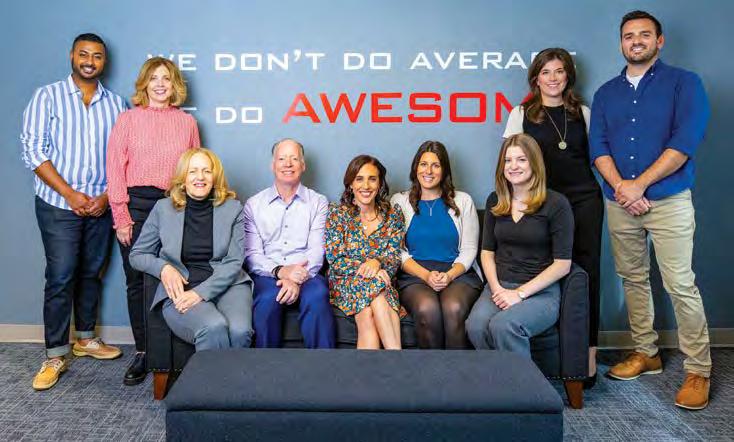
The 3E team focuses on campaigns that Entertain, Educate and Engage target audiences.
19 Chapin Rd., Bldg. D Pine Brook, NJ 07058 973/224.9224 info@3epr.com www.3epr.com
Patrick Brightman, President/CEO
Megan Redzia, Executive Vice President/Partner
3E Public Relations (PR) brings its Entertain, Educate, and Engage philosophy to every PR, social media, and content program we implement. Our focus on those three services allows us to stay on top of trends and advances to provide expertise and implement innovative programs. For more than two decades, we have delivered award-winning comprehensive

360PR+ opened Virgin Atlantic’s clubhouse with a “ReLAX” theme and bedtime story read by the acclaimed and beloved Alan Cumming.
thought-leadership campaigns that integrate message development, media training, media relations, speaking engagements, event promotions, award submissions, as well as social media content development, influencer relations, and page management.
Our client roster spans the globe and features companies ranging from startups to century-old billion-dollar brands in fields such as technology, retail, food/hospitality, healthcare, and industrial. A commitment to keep pace with the ever-changing market is evident by 3E PR expanding our digital group to implement comprehensive programs so our clients achieve success in the AI search/GEO segment.
60 Charlton Street New York, NY 10013 212/729-5933 www.360PR.plus
Victoria Renwick, EVP & Partner
Mike Rush, EVP & Partner
Laura Tomasetti, CEO
Celebrating its 25th anniversary, 360PR+ is a trusted, award-winning partner to the most admired and most innovative consumer brands. We are powered by the kinds of breakthrough insights, ideas and relationships that can only come from being true experts. Team members bring business acumen and an unwavering commitment to delivering positive outcomes for our clients. We help clients see around corners and fo-


Some of the team behind Antenna Group in NYC—bringing clarity, creativity, and impact to the world’s most important conversations.
cus on what matters most in the evolving consumer and media landscapes. For us, it’s about helping brands show up in new ways, often in new places, to reach and resonate with today’s consumers. We get off the mark quickly, immediately establishing our value— value that continues to grow over time and that we never shy away from measuring.
A certified B Corp and WBENC business, 360PR+ is a partner in PROI Worldwide, offering clients reach and expertise in 100+ cities globally. For more information, visit www.360PR.plus.
530 Seventh Avenue, Suite 1901 New York, NY 10018 www.antennagroup.com
Jake Rozmaryn, bd@ antennagroup.com
Keith Zakheim, Chief Exec. Officer
Jake Rozmaryn, Chief Growth Officer
Christa Segalini, Chief Client Officer
Jinesh Gosalia, Chief Fin. Officer
Kim Setliff, Chief of Staff
Kristin O’Connell, Exec. VP, Energy, Climate & Industrials
Paul Newton, Exec. VP, Experiences, Delivery & Innovation
Jorge Mendez, Sr. VP, Real Estate
Kristin Ford-Glencross, Sr. VP, Mobility
Pola Finkelzon, Sr. VP, Performance Marketing
Chad Krulicki, Exec. Creative Dir.
Chelsea Perret, VP of Human Resources
Antenna Group is a global marketing and communications agency focused on sectors shaping our

future—climate and energy, health, mobility, and the built environment. We go beyond storytelling to understand the systems behind it, from regulation and technology to culture and commerce.
With fully integrated capabilities across strategy, creative, media, and performance, we connect deep domain expertise to execution. We partner with impact-driven companies that don’t just participate in their industries—they define them.
Our team blends market insight, bold creative, and operational excellence to amplify vision, accelerate growth, and drive action.
We believe conscious brands create meaningful change. When companies are deliberate and purpose-driven, they have the power to inspire, influence, and lead. That belief is our foundation—and the reason we exist.
1299 Pennsylvania Avenue, NW Suite 300
Washington, D.C. 20004
202/778-1000
Fax: 202/466-6002
info@apcoworldwide.com
www.apcoworldwide.com
Margery
Kraus
, Founder & Executive Chairman
Brad Staples, CEO
APCO is a global advisory and advocacy firm helping leading corporations, foundations and governments navigate a complex world and create lasting impact. Founded in 1984, with one woman’s vision and bold action, APCO has grown into an independent, ma-

jority women-owned firm of more than 1,100 employees with work spanning 80 markets around the world. Headquartered in Washington, D.C., APCO is comprised of strategic advisers, consultants and creators, working together across borders and functions, to provide services and expertise on financial, competitive, political and societal issues. APCO is a trusted partner to bold purpose-led leaders, lawmakers, government officials, NGOs, the media and other stakeholders. For more than 40 years, APCO has been renowned for its ability to champion clients’ interests and permission to operate, build client reputation and strengthen client standing. By bringing diverse people and ideas together, and working beyond traditional boundaries, APCO builds the un/common ground upon which progress is made.
1433 N Water Street, #100 Milwaukee, WI 53202
262/784-7200
baderrutter.com
marketingnewbusiness@baderrutter.com
David Jordan, CEO
Tom Posta, President/CCO
Ned Brown, Chief Creative Officer
Demar Anderson, CMO
Lori Hallowell, EVP, Public Relations
David Moreno, EVP, Integrated Strategy & Effectiveness
Laurie Underwood, EVP, Client Experience
Blair McConnel, Business Strategist
Gina Burns, Director, Executive Operations
We make your brand the reflex choice, which is critical in this age of unprecedented distraction. With
so many competitive assaults on your audience’s mind space, the old constructs don’t work. The funnel? Dead. Brand to demand? Also dead. Traditional KPIs? So dead because they don’t acknowledge today’s new market dynamics. At Bader Rutter, we bring brand and demand together as one unified force to build what we call Mental Equity™—a lasting impression in audiences’ minds that grows even when they’re not actively buying. Mental Equity™ helps modern brands win in this era of hyperdistraction, so aligning brand and demand is our entire strategic focus. We’re a full-service marketing agency where every expertise sits right here, in-house. Some—like chefs, ranchers, farmers and veterinarians—are subject matter experts you won’t find at other agencies. We believe the complexity and speed of today’s world require a diverse range of expertise that’s just a shoulder tap away. And, this expertise has helped us become the #1 U.S. B2B agency three of the last five years. Though our heritage lies in agriculture, we also focus on adjacent categories such as pet care, and food and beverage. Learn more at baderrutter.com.

1776 No. Pine Island Rd., #320 Fort Lauderdale, FL 33322
954/370-8999
donsil@boardroompr.com www.boardroompr.com
Locations: Miami, Fort Lauderdale, West Palm Beach, Orlando, Tampa and Naples
, VPs
BoardroomPR is a full-service public relations and integrated marketing agency, leveraging the skills of our staff of former broadcast and print journalists, PR and marketing professionals and multimedia specialists to provide visibility across numerous platforms. Our creative solutions increase awareness and understanding, establish credibility and ultimately improve reputations and business.
BoardroomPR bridges traditional and new media, combining print, television and radio media with excellent digital expertise in website development, social media management and email campaigns. We incorporate research, search engine optimization, pay-per-click and online reputation management, video production and offer branding capabilities, consisting of logo, graphic design, copywriting and video production.
Clients include Alper JCC, BTT Corp., Coastal Waste, Concord Wilshire, Development Specialists, Easton Group, Eisinger Law, Encore Capital Management, Falcone Group, Fiske & Co. CPAs, Florida’s Children First, Florida East Coast Realty, GCM Contracting, Gloria Gates Care, Guignard Company, Holocaust Documentation and Education Center, Illustrated Properties, JA&M, Jim Moran Institute for Global Entrepreneurship, J.M. Family, JAFCO, Justice For Kids, KW Property Management, Kristi House, The Keyes Company, The Lynd Group, Marshall Dennehey, Miller Construction,
Minto Communities USA, Nason Yeager, North Broward Prep, Pebb Enterprises, Plantation Walk, Pulte Group, RKW Residential, Rivergate Companies, Rentyl Resorts, SSRGA, Sabal Construction, Salato, Shutts, South Florida Manufacturers Assoc., SRF Ventures, Standard Cos., Summit Broadband, Forman Capital, Tricera Capital, Tobin, Tropical Financial Credit Union, U.S. Development and Weiss Serota.
Located in every major city, including San Francisco, New York, Los Angeles, Washington, D.C., Chicago and Austin. 844/526-7727 (844/5-BOSPAR) @BosparPR www.bosparpr.com
Chris Boehlke, Curtis Sparrer, Tom Carpenter, Principals
Bospar launched in 2015 with two people and a vision of a virtual agency with a national footprint—a model that enabled Bospar to build the most strategic, responsive and delightful team of media, social and content experts in the industry.
Over the past 11 years, we’ve delivered award-winning campaigns that move the needle and consistently put our clients at the center of the conversation.
Bospar is the only agency named one of Fortune’s Most Innovative Companies, three years running. Fast Company named us to its Most Innovative Companies list.
PRWeek awarded us for Best in Financial Communications and Best in Community Relations campaigns.
PRNews placed us among its
Continued on page
Continued from page 63
Elite Top 100 Agencies.
PRovoke named us one of the 40 Best Technology PR Agencies in the World.
Why Bospar? Because we don’t settle for the expected. Our campaigns break through, delivering results that matter. Our award-winning team taps into trending news, bold ideas and data-driven storytelling, ensuring our clients are seen and heard by the audiences that matter to them.
201 N Union St., #110 Alexandria, VA 22314 703/739-8350 info@brgcommunications.com brgcommunications.com linkedin.com/company/brgcommunications

instagram.com/brgcommunications facebook.com/ BRGCommunications x.com/BRGLiving
Jane Barwis, President & CEO
Michael Sloan, COO
Shannon McDaniel, Laurie Mobley, Lucy Spratlin, Executive VPs
Named 2026 Outstanding Small Agency by PRWeek, BRG forms strategic campaigns that address critical health and social issues, strengthen brand reputation, build awareness, educate and drive positive change. Services offered: Strategic planning and research, corporate social responsibility, consumer awareness campaigns, media relations, social media, digital marketing, thought leadership, cause marketing, B2B outreach, branding, design, scientific communications, influencer relations, content creation. BRG clients include corporations, nonprofit organizations, industry associations and medical societies focused on health, science, safety and wellness

for individuals and communities.
5 Wood Hollow Rd. Parsippany, NJ 07054 973/588-2000 www.coynepr.com
New Business inquiries: newbusiness@coynepr.com
1350 Broadway, Suite 810 New York, NY 10018 212/938-0166
Thomas F. Coyne, Founder & CEO
Rich Lukis, President
John Gogarty, President
Cathy Clarkin, Chief Financial Officer
Clara Heffernan, Chief People Officer
Kelly Dencker, Executive Vice
President
Joe Gargiulo, Executive VP
Jennifer Kamienski, Executive VP
Tim Schramm, Executive VP
Lisa Wolleon, Executive VP
What sets Coyne PR apart is our independence and the performance it unlocks. In an industry shaped by consolidation, we’ve built a model designed for speed, agility and direct senior involvement. As one of the largest independent PR agencies in the U.S., we make faster decisions, invest where it matters most and operate without the red tape of a holding company structure.
That independence fuels stronger partnerships and better work. Clients benefit from consistent teams, senior access and knowledge that compounds over time, driving a 95% retention rate among top clients and relationships that span decades.
We combine that stability with forward-looking innovation, from being the first enterprise partner with ChatGPT in our industry to building capabilities in AI and generative search visibility. The result is an agency built for what’s next, delivering credible visibility across both media and machines.
At our core, we believe independence isn’t just how we operate. It’s what allows us to outperform.
July issue of O’Dwyer’s will profile Travel & Tourism PR firms.
If you would like to be profiled, contact Editor Steve Barnes at 646/843-2089 or steve@odwyerpr.com
705 Melvin Ave., #200 Annapolis, MD 21401 410/626-0805 www.crosbymarketing.com
Raymond Crosby, President Robert Schnapp, Executive Creative Director
Denise Aube, Exec. VP, Healthcare Practice Leader
Anna Zawislanski, Exec. VP, Government Practice Leader
Pam Atkinson, Exec. VP, Connection Planning
Suresh John, Exec. VP, Digital Strategy & Analytics
The Crosby team is passionate about helping clients Inspire Actions That MatterTM—actions that positively impact people’s lives and contribute to the greater good.
Crosby helps clients make powerful connections with their customers, constituents, and communities to shape attitudes, inspire behavior change, and motivate action. The firm’s award-winning campaigns, which integrate paid, earned, shared and owned media, have touched the lives of virtually everyone in America and communities across the globe. The firm has specialized practices in Healthcare, Government, Nonprofits and Causes, and Military and Veterans.
Crosby is a Google Premier Partner, #31 on O’Dwyer’s ranking of PR firms, #2 for Nonprofits, and #12 for healthcare PR, and a member of the PR Council and American Association of Advertising Agencies (4As). The firm has offices in Maryland’s state capital of Annapolis and in Washington, D.C. It has been named a Top Workplace by The Washington Post for nine consecutive years. To

see case studies and capabilities, visit www.crosbymarketing.com.
Clients Include: Agency for Healthcare Research and Quality (AHRQ), American Board of Internal Medicine (ABIM), Blue Cross Blue Shield of Vermont, Centers for Disease Control and Prevention (CDC), Commodity Futures Trading Commission, DAV (Disabled American Veterans), Dave Thomas Foundation for Adoption, Dept. of Defense/Military OneSource, Kaiser Permanente, Peace Corps, Shriners Hospitals for Children, Social Security Administration, Substance Abuse and Mental Health Services Administration (SAMHSA), U.S. Dept. of Agriculture (USDA), U.S. Dept. of Health and Human Services, USAA Educational Foundation.
240 West 40th Street Times Square New York, NY 10018 646/808-3600 info@dlpr.com www.dlpr.com
Richard Dukas, CEO Seth Linden, President Zach Leibowitz, Stephanie Dressler, Zach Kouwe, Shree Dhond, Exec. VPs
Dukas Linden Public Relations (DLPR) is a communications partner for leaders in finance, asset & wealth management, commercial and investment banking, capital markets, professional services, and Web3.0/digital assets and B2B technology. We create compelling narratives that expand our clients’ share of voice, enhance their brand value and engage the media, inves-

tors and other key audiences in a global marketplace.
Ranked #8 on O’Dwyer’s list of top financial PR firms, we’re driven by a passion for delivering targeted strategies and creative solutions that provide measurable benefits to clients—and help their businesses grow and succeed. Our full suite of integrated communications services includes comprehensive messaging and media relations across multiple platforms, content creation, media and presentation coaching, digital/social media, crisis and special situations communications, podcast/video production and promotion, and online reputation management.
DLPR’s billings from fees topped the $10 million mark for the first time in 2025. Our clients include well-known, large and middle-market companies in key areas of finance, including institutional and retail investing, wealth management, alternatives and private equity, digital assets, capital markets and banking. We have strong professional services experience in accounting, management consulting, compliance, economics, and law.
We are exceptionally strong at securing top-tier media results for our clients. Our broadcast group booked more than 1,300 interviews in 2025, primarily on CNBC, Bloomberg, Fox Business, Yahoo! Finance and popular, influential podcasts. We also placed more than 2,250 stories in leading business press including Wall Street Journal, Barron’s, FT, Reuters and within top trade outlets.
Clients include ARK-Invest, Bitwise Investments, Bitcoin Standard Treasury Company, Brandes Investment Partners, Brighton Jones, Brown Advisory, CenterSquare Investment Management, Clearwater Analytics (CWAN), Citizens Financial, Cohen & Steers, Crossmark Global, EisnerAmper, Evercore, Harrison Street, Hashdex, LaSalle Investment Management, Neuberger Berman, OceanFirst Bank, Raymond James, and Robeco Global.
250 Hudson St., 16th Floor New York, NY 10013
212/768-0550
Fax: 212/704-0117 www.edelman.com
Edelman is a global communications firm that partners with businesses and organizations to evolve, promote and protect their
brands and reputations. Our 6,000 people in more than 60 offices deliver communications strategies that give our clients the confidence to lead and act with certainty, earning the trust of their stakeholders. Our honors include the Cannes Lions Grand Prix for PR; Advertising Age’s 2019 A-List; the Holmes Report’s 2018 Global Digital Agency of the Year; and, five times, Glassdoor’s Best Places to Work. Since our founding in 1952, we have remained an independent, family-run business. Edelman owns specialty companies Edelman Intelligence (research) and United Entertainment Group (entertainment, sports, lifestyle).
4030 Easton Station, Suite 300 Columbus, OH 43219 614/383-1500 info@fahlgrenmortine.com neil.mortine@fahlgren.com marty.mcdonald@fahlgren.com www.fahlgrenmortine.com
Neil Mortine, Vice Chairman & CEO
Marty McDonald, President
Fahlgren Mortine is a nationally recognized integrated communications agency that helps brands connect with the audiences who matter most. By combining data, design and creativity, we build communications programs engineered for effectiveness, turning insight into meaningful engagement, measurable results and lasting brand love.
Part of The Shipyard, Fahlgren Mortine brings communications leadership to a broader system designed to build brands that perform today and endure over time. With deep expertise across industries including B2B, CPG, economic development, energy, healthcare, higher education, manufacturing, logistics, retail, technology and tourism, we help clients close the gap between brands and audiences. Clients gain coordinated strength across paid, earned and owned media and an integrated approach that aligns strategy, storytelling and reputation to drive impact.
Clients stay with Fahlgren Mortine 182% longer than the industry average, reflecting our ability to deliver results and build enduring partnerships.
TURNER, a leading travel, tourism and active lifestyle public relations agency, is a Fahlgren Mortine company and operates as part of The Shipyard.

1675 Broadway
New York, NY 10019
212/715-1600
peter.finn@finnpartners.com www.finnpartners.com linkedin.com/company/finn-partners Instagram.com/finnpartners
Peter Finn, CEO & Co-Founder, peter.finn@finnpartners.com
Alicia Young, Founding Mng. Partner, alicia.young@finnpartners. com
Amy Terpeluk, Mng. Partner, Global Purpose & Social Impact Practice Leader, amy.terpeluk@ finnpartners.com
Celia Jones, Global Chief Marketing Officer, celia.jones@ finnpartners.com
Dan Pooley, Founding Mng. Partner, dan.pooley@finnpartners. com
Fern Lazar, Mng. Partner, Global Health Practice Leader, fern.lazar@ finnpartners.com
Gil Bashe, Mng. Partner, Chair Global Health and Purpose, gil.bashe@finnpartners.com
Howard Solomon, Founding Mng. Partner, howard@finnpartners.com
Jennifer Hawkins, Mng. Partner, US Travel Practice Leader and Luxury Travel Lead, jennifer.hawkins@finnpartners.com
Jessica Berk Ross, Mng. Partner, Global Public Affairs Practice Leader, jessica.ross@finnpartners.com
Kyle Farnham, Mng. Partner, Global Consumer Practice Leader, kyle.farnham@finnpartners.com
Marina Stenos, Mng. Partner, Global Education Practice marina.stenos@finnpartners.com
Missy Farren, Mng. Partner, Consumer, Lifestyle & Sports, missy.farren@finnpartners.com
Noah Finn, Founding Mng. Partner, Integrated Mktg. Global Practice Leader, noah@finnpartners.com
Philippa Polskin, Mng. Partner, Arts Practice Leader,philippa. polskin@finnpartners.com
Ryan Barr, Mng. Partner, Global Fin’l Services Practice Leader,ryan. barr@finnpartners.com
FINN Partners is a world-class agency with a heart and conscience. We are trusted counselors and creative stewards helping clients grow in a rapidly changing world. We build brands, power businesses and champion societal change through integrity, ingenuity and innovation to drive real-world impact.
Recognized as one of Fast Company’s World’s Most Innovative Companies, our journey of sustained growth and stability is a textbook case study in how creating a culture of shared values, delivering excellence for clients, and using our superpowers for good has proven to be the best formula
for ongoing success.
FINN leads in sectors that define today’s global economy. Health, Technology, Travel, Consumer Marketing, Financial Services, Legal and Professional Services, the Arts, and Education practices shape narratives, advance thought leadership, and deliver measurable impact for clients operating at the intersection of innovation and societal need.
We are architects of attention, fusing human expertise and smart tools to drive measurable business outcomes. Our proprietary AI platform, AIristole protects clients against narrative attacks by uncovering risks and responding with precision. And CANARY for CRISIS, our Al-powered virtual crisis simulation training tool, delivers real-world pressure to train communications teams to make better-informed decisions in today’s high-speed, high-stakes communications landscape.
112 E. Hargett St. Raleigh, NC 27601 919/832-6300 www.fwv-us.com
Rick French, Chairman & CEO
David Gwyn, President
Natalie Best, Chief Operating Officer
French/West/Vaughan (FWV) is the Southeast’s largest public relations, public affairs, advertising and digital media agency, a distinction it has held since 2001. Headquartered in Raleigh, N.C., and founded in April 1997, FWV has received 40 Global or National Agency of the Year honors over the past 29 years, making it one of the most decorated agencies in the world.
FWV is the parent company of fashion and lifestyle PR firm
AMP3 (New York City); a mobility and transportation practice based in Detroit formerly called The Millerschin Group (TMG); pet and animal health practice FWV Fetching and television and feature film development imprint Prix Productions (L.A.). FWV employs more than 140 public relations, public affairs, social media, advertising, digital marketing and content creation professionals across its five offices nationwide.
In addition to its numerous National Agency of the Year honors, FWV has amassed more than 1,800 PR, advertising and digital marketing awards on behalf of its global roster of blue-chip clients, which includes Wrangler, ABB, Proximo, the Dolly Parton Children’s Hospital, W.R. Case & Sons Cutlery, Zippo, ABB, H.H. Brown, LG Energy Solution, Teen Cancer America, Mitsubishi Electric, N.A. and the N.C. Department of Transportation.
New York | Chicago | Raleigh | Milwaukee | Waterloo www.gsimcg.com www.gscommunications.com www.morganmyers.com
Steve Halsey, Chief Growth Officer shalsey@gsimcg.com Anne Green, CEO
G&S Integrated Marketing Communications Group (GS IMCG) is an integrated marketing communications platform built to help organizations navigate complexity and accelerate growth across regulated and high-stakes markets. Through its two agencies, G&S Business Communications and MorganMyers, a G&S Agency, the firm delivers clarity, activation, and momen-
tum for brands shaping the future.
G&S Business Communications specializes in B2B and B2B2C communications, helping companies translate complex topics into clear, compelling narratives that drive understanding, alignment, and action. The agency serves Fortune 500, mid-market, and emerging companies across key sectors including Advanced Manufacturing & Industry, Agribusiness, Healthcare & Wellness, Home & Outdoor Living, and Professional Services.
MorganMyers, a G&S Agency, builds, promotes, and protects brands across the food and agriculture value chain, from field and farm to food and fork. With deep category expertise, the agency helps organizations strengthen trust, differentiate in-market, and drive demand.
GS IMCG operates through integrated, sector-specialized teams designed to align strategy, creative, and channel activation around client outcomes. Its work is grounded in the belief that narrative is the operating system of modern organizations, shaping reputation, influencing decisions, and driving growth.
As an independent, midsized group, GS IMCG combines agility with senior-level counsel and deep strategic expertise. Through its partnership with PROI Worldwide, the firm delivers global reach with in-language, in-market support across 65 countries.
Recognized among the top firms in the industry, GS IMCG continues to invest in AI-enabled communications, data-driven insights, and integrated delivery models to help clients navigate an increasingly dynamic and complex landscape.
Learn more at www.gsimcg.com, www.gscommunications.com, and www.morganmyers.com.
hemsworthcommunications.com
Samantha.Jacobs@ HemsworthCommunications.com Instagram.com/HemsworthPR Facebook.com/ HemsworthCommunications Linkedin.com/company/hemsworthcommunications
Samantha Jacobs, Founder & President
Michael Jacobs, Chief Operations Officer
Lacey Outten, Associate Vice President, Food, Wine & Spirits
Kayla Atwater, Associate Vice President, Travel & Hospitality
Hemsworth is a top-ranked, award-winning agency that partners with both emerging and iconic brands in travel, tourism, hospitality, culinary, wine, spirits, lifestyle and franchising to drive buzz and business. With strategic communications experts across the United States—including Atlanta, Charleston, Fort Lauderdale, Miami, New York City and Tampa— as well as a network of vetted freelancers in other top media markets globally, Hemsworth is known for crafting tailored programs that encompass brand strategy, media relations, social media, influencer marketing, event programming, thought leadership, digital marketing, crisis communications and more. Companies partnering with Hemsworth gain access to a team with unprecedented passion, insight and connections, dedicated to surpassing expectations, delivering personal service and garnering powerful results.
727 Sansome Street, 1st Floor San Francisco, CA 94111
415/692-0748
hi@teamhighwire.com teamhighwire.com
Michael O’Brien, CEO
Carol Carrubba, Co-Founder, President
Emily Call Borders, Co-Founder, Chief Client Officer
Cortney Stapleton, Chief Strategy & Business Officer
Michael Roth, Executive Chair, Highwire Health
Michael Byrnes, Chief Growth Officer
Melanie Kearney, Chief of Staff
Andrew Robinson, Head of People
Jason Mayde, Chief Technology Officer
Highwire is a strategic marketing communications agency built at the intersection of innovation

and industry. We blend the strategic depth and executional rigor of larger firms with the agility and tenacity of an up-and-comer. The engines we build connect reputation, demand, and media to catalyze growth and cement leadership.
With the acquisition of The Bliss Group, we operate at a scale few independents can match—250+ professionals across North America, with offices in San Francisco and New York, and are proudly one of the fastest-growing agencies in the country.
We offer capabilities across brand strategy, corporate reputation management, earned media, demand generation, creative, crisis communications, and AI-enabled analytics—including AcroAI, our proprietary agentic platform— with industry expertise in B2B technology, health, cybersecurity, professional services, financial services, and energy.
Backed by senior talent and an AI-forward technology stack, we deliver speed with substance in a landscape where companies must turn innovation into influence.

746 The Alameda, Suite 20 San Jose, CA 95126 408/286-2611
Fax: 408/286-0133 lhoffman@hoffman.com www.hoffman.com Facebook.com/TheHoffmanAgency Instagram.com/hoffman_agency X.com/DailyBrew www.linkedin.com/company/thehoffman-agency/
Lou Hoffman, CEO
Caroline Hsu, Global Technology Officer (APAC contact)
Lydia Lau, CFO/Exec. VP of Global Operations
Gerard LaFond, Managing Director, North America
Kymra Knuth, Chief Client Officer, North America
Carolina Binstadt, Exec. VP, North America
Natalie Kessler, Exec. VP. Talent Acquisition, North America
Jenny Fieldgate, Managing Director, Europe
Defining communications broadly to include thought leadership, digital marketing, and paid media as well as traditional PR, The Hoffman Agency knows how to differentiate brands and drive sales. With a heritage in the technology sector, the firm’s work today cuts across a range of industries.
While campaigns vary by client and industry, all share one theme: the creation of content that reflects the tenets of storytelling. This means developing narratives that prompt journalists to write and target audiences to read—a far cry from the “corporate speak” that satisfies internal stakeholders. The

firm applies this same mentality to its talent acquisition and marketing services. The firm is increasingly helping non-tech companies tell tech-led stories.
For clients with global needs, the company operates in Asia Pacific, Europe and the United States. Unlike traditional agencies handicapped by their silo structure, The Hoffman Agency embraces a collaborative approach to implementing multi-country campaigns (don’t worship individual office P/L). This leverage of content and thinking across geographies ultimately generates better results.
Clients Include: Axis Communications, BT Business, Cisco, CGI, City of Fremont, Conga, DCUDigital Federal Credit Union, Efficient Computer, Getac Technology, Lam Research, Miro, Nokia, Qnity, Rambus, SuperMicro, TD Synnex, Tencent, TSMC, Veeam, Visa, Western Digital Corporation, Zoom.
655 Montgomery Street, Suite 850 San Francisco, CA 94111 415/963-4780
hello@hotwireglobal.com www.hotwireglobal.com Linkedin.com/company Hotwireglobal Youtube.com/@HotwireChannel
200 Broadway Industrious 3rd Floor, Office 304 New York, NY 10038
Grant Toups, Group Global CEO
Laura Macdonald, CEO, Americas
Will Hutchinson, Global Chief Operating Officer
Anol Bhattacharya, EVP, Continued on page 68
Continued from page 67
Innovation & Technology
Ute Hildebrandt, CEO, Continental Europe
Surj Gish, Managing Director, ROI·DNA
Matt Oakley, SVP, Analytics & AI
Sylvia Ortegon, SVP, Global Marketing
Charlotte Harvey, Managing Director, UK
Beatrice Agostinacchio, Managing Director, Italy & Spain
Hotwire is a global technology focused communications and marketing consultancy that helps organizations navigate disruption, define their reputation, and accelerate growth in an increasingly AI driven world. For more than 25 years, Hotwire has partnered with category defining technology and innovation led brands to tell breakthrough stories across earned media, digital and social, executive visibility, intelligence and analytics, and AI powered consultancy. With 258 people across 14 offices globally, Hotwire blends global scale with deep local expertise to deliver integrated programs that drive transformation, strengthen reputation, and fuel business results.
Clients include: Adobe, Meta, DoorDash, DocuSign, TikTok.
One World Trade Center, Floor 68 New York, NY 10007 www.hunterpr.com
CONTACT: Samara Farber Mormar, Chief Marketing Officer smormar@hunterpr.com
Grace Leong, CEO
Gigi García Russo, Chief Transformation Officer
HUNTER is an award-winning consumer marketing communications firm frequently named as a “Best Place to Work” and “Agency of the Year” with offices in New York, Los Angeles, Chicago and London, and partnerships that extend our reach globally.
Our firm employs a powerful blend of marketing solutions for consumer, corporate and B2B clients, including strategic planning, media relations, social and digital media, talent/influencer engagement, experiential marketing, multicultural outreach, corporate reputation and issues management, and content creation and distribution across all platforms for some of the world’s most beloved companies and brands.
At HUNTER, We EARN IT— including the dedication of our talented team. We do this by fostering an environment that champions great work and creative collaboration. We find the sweet spot where our clients’ needs meet our team’s passions, all while elevating the role of PR in the marketing mix through innovative technologies, resources, and solutions.
685 Third Ave., 2nd Flr. New York, NY 10017 646/277-1200
Anton.Nicholas@icrinc.com
Twitter: @ICRPR
LinkedIn: www.linkedin.com/ company/164280/
761 Main Ave. Norwalk, CT 06851 203/682-8200
2800 Quarry Lake Dr., Suite 380 Baltimore, MD 21209 443/213-0500
3031 Tisch Way, Suite 1002 San Jose, CA 95128 408/680-0566
Unit 805, Tower 1, Prosper Center No. 5
Guanghua Road, Chao Yang District
Beijing 100020, PR China 86 10 5603 3382
85 Gresham St. London EC2V 7NQ
United Kingdom 44 20 3709 5700
Anton Nicholas, CEO (anton. nicholas@icrinc.com)
Thomas Ryan, Co-Founder & Executive Chairman (tom.ryan@ icrinc.com)
Don Duffy, President (don.duffy@ icrinc.com)
John Sorensen, COO (john. sorensen@icrinc.com)
Robert Spezzano, CFO (robert. spezzano@icrinc.com)
Lindsay Hanson, Chief Growth Officer (Lindsay.Hanson@icrinc. com)
Joy Murphy Steward, Chief People Officer (joy. murphystewart@icrinc.com)
ICR was founded in 1998 by former sell-side analysts Tom Ryan and Chad Jacobs, alongside attorney John Flanagan. The firm’s differentiated service model pairs capital markets veterans with senior communications professionals, creating teams that understand both what needs to be said and how investors will receive it. Today, ICR is one of the largest independent strategic communications and


advisory firms in North America, with more than 400 team members across offices in New York, Connecticut, Boston, San Jose, London, and Beijing. ICR has been recognized as the #3 M&A PR Advisor by The Deal with Intelligence 2025 League Tables and ranked among the top four M&A PR advisors by Mergermarket. Since 2019, ICR has advised on nearly a quarter of all US IPOs over $100M.
140 Broadway New York, NY 10005 410/821-8220 www.imre.com
1701 Walnut St., 7th Floor Philadelphia, PA 19103 410/821-8220
210 W. Pennsylvania Ave. 7th Floor Baltimore, MD 21204
Nadine Lafond, Chief Executive Officer
Christian Bauman, Chief Creative Officer
Paulina De la Riva, Chief Strategy Officer
Rob Naddelman, Chief Operating Officer
Fred Hickman III, Executive Vice President, Group Account Lead
Kyle Bechter, Executive Vice President, Client Partnerships
Imre is a performance-driven creative agency that connects people to brands at life’s most important moments of decision.
Healthcare choices are rarely simple, often shaped by uncertainty, urgency, and high stakes. Imre helps brands show up in these moments with empathy, authenticity,
and purpose, creating meaningful connections that move people from uncertainty to confident action, at the speed and complexity modern brands require.
With a 33-year legacy rooted in consumer, earned, social, and digital, Imre has evolved into a full-service agency of record with deep expertise in biotech and pharma, particularly in rare disease and oncology. The agency supports HCP, patient, and consumer audiences across launch and lifecycle, meeting them where decisions are made, from clinical settings to social, creator, and emerging AI-driven environments.
An LGBTQ+-founded, private equity–backed independent agency, Imre has offices in New York, Philadelphia and Baltimore, and is focused on innovation, accelerated delivery, and performance grounded in human understanding.
1450 Broadway, 7th Floor New York, NY 10018 917/602-0545
jamie.diaferia@infiniteglobal.com www.infiniteglobal.com Linkedin.com/company/ infiniteglobal X.com/igc_us
Additional offices: San Francisco, Los Angeles, Chicago, Washington, D.C. and London
Jamie Diaferia, Founder & CEO Zach Olsen, Pres. Isabel Podda, COO
INFINITE is an award-winning strategic communications agency advising a wide range of domestic and international clients facing difficult scenarios in which reputational, legal and commercial risk is high. We advise organizations and individuals, providing counsel and tactical support to mitigate risk and protect reputations when it matters most. We have broad sector experience managing our clients’ reputational risk, often involving active litigation, regulatory and political pressure, media attention and heightened public scrutiny. Infinite has an established data breach response practice that helps clients across a range of industries—including financial and legal services, education and healthcare— mitigate, prepare for and respond to the risks endemic to housing sensitive data. Our work spans each phase of the crisis lifecycle: from pre-crisis preparation and planning, to rapid crisis response and post-crisis reputational repair.

As a full-service agency integrating public relations, marketing and digital expertise, Inspire is nationally respected for our work in the food and agriculture, restaurant, pet care, trade association, corporate and nonprofit sectors.
6120 South Sunbury Road Columbus, OH 43081
614/532-5279
www.aboutinspire.com
Linkedin.com/company/inspire-prgroup Instagram.com/inspireprgroup Facebook.com/inspireprgroup
Hinda Mitchell, Founder & President
Hana Bieliauskas, Senior Vice President & Partner
Diane Hurd, Senior Vice President & Partner
Katie Lundy, Vice President
Emily Sword, Vice President
Inspire is a full-service national agency integrating public relations, marketing and digital expertise. We are the trusted partner every client wants to have in the room.
We earn that trust by asking tough questions, creating tailored solutions and telling engaging stories that produce inspiring results.
We are drawn to companies and brands with well-defined values and a clear sense of purpose. Inspire provides a broad range of communications services to corporations, trade associations, governments, small businesses and consumer products companies.
With nearly 100 years of combined experience working directly with farmers, state and national commodity organizations, food brands and agribusiness organizations, Inspire has developed unparalleled food and agriculture experience. We know how to tell food and farming stories in an honest, compelling and relevant way.

Inspire’s commitment to our clients is unmatched. We firmly believe in the importance of relationships, and that’s why most of our clients have relied on the Inspire team for more than a decade.
That kind of loyalty only occurs when the firm evolves with its clients, continues to deliver fresh and innovative thinking, and becomes more than just a vendor to serve as a trusted partner.
Independently recognized as one of the top PR and communications agencies in the country, Inspire’s mid-sized team combines passion and expertise to be that trusted partner you want in the room.
530 7th Ave., #502
New York, NY 10018 212/924-3600 letstalk@jpublicrelations.com www.jpublicrelations.com
Office Locations: New York, San Diego, Los Angeles, Nashville, Denver, London, San Francisco, Scottsdale
Jamie O’Grady, Founding Partner
Sarah Evans, Partner
Ali Lundberg, President
Owned by Jamie O’Grady (California) and Sarah Evans (New York), J/PR is a global communications agency specializing in the travel, tourism, hospitality, and luxury lifestyle spaces. With a trend-setting team of 140 members across the U.S. and UK, J/PR represents world-renowned brands, offering a boutique approach with global reach and ROI-driven re-
sults. At J/PR, longevity is at the core of the agency’s 20+ year success, with clients and team members having worked with the agency for years; a testament to J/PR’s personalized approach and industry-leading campaigns.
Clients Include: Banyan Tree, Beaverbrook—UK; Dorchester Collection; Eden Roc Cap Cana; Four Seasons Resort Lana’i—Lana’i, HI; Grand Hotel Tremezzo— Lake Como, Italy; Hilton Luxury Brands (Conrad Hotels & Resorts, LXR Hotels & Resorts, Waldorf Astoria Hotels & Resorts); Hotel del Coronado—San Diego, CA; Iconic Luxury Hotels (multiple properties)—United Kingdom; Meet Boston; Pendry Hotels & Resorts (multiple properties)— North America; Rancho Valencia Resort & Spa—Rancho Santa Fe, CA; Relais & Châteaux; St. Barth Tourism; Twin Farms; Virgin Hotels and Virgin Limited Edition; Under Canvas—North America; Utah Office of Tourism; Visit Austin; Visit Carmel-by-the-Sea; Waldorf Astoria New York.
1100 Peachtree St. NE, Floor 18 Atlanta, GA 30309 404/724-2500 www.jacksonspalding.com
Brian Brodrick, Board Member
Monica Corbett, Board Member
Chowning Hawkins, Board
Member
Glen Jackson, Board Member
Hayley Johns, Board Member
Randall Kirsch, Board Member
Trudy Kremer, Board Member
Eric O’Brien, Board Member
Whitney Ott, Board Member
Joanna Singleton, Board Member
In the summer of 1995, founders Glen Jackson and Bo Spalding decided there had to be a better way to structure an agency, serve clients, advance the community and have fun doing it. The result was Jackson Spalding, an agency that, in our clients’ words, “just feels different.” As we’ve grown into a partnership with ten owners at the helm, we’ve stayed humble and hungry for the past 30 years. Jackson Spalding is an independent PR and marketing agency, headquartered in Atlanta, with teams in Athens, Georgia; Dallas; L.A. and New York.
Our approach integrates PR and marketing to build brands, protect brands and capture demand for companies like Chick-fil-A, The
Coca-Cola Company, Delta Air Lines, L.L.Bean, Norfolk Southern and Orkin, among others. The agency’s work for B2C and B2B clients has been recognized by PRSA, AMA, The ADDY Awards, The Telly Awards and many more.
1101 Connecticut Ave., NW Suite 600
Washington, D.C. 20036
202/591-4000
www.jpa.com
LinkedIn: @ JPAHealthCommunications
Facebook: @JPAHealth
Instagram: @jpahealth
Carrie Jones, CEO DB Kartik, President
JPA Health is a full-service, integrated agency with offices on the East Coast and in London. We work exclusively in the health sector with a team that is laser focused on helping people live healthier lives. Our passion can be summed up in one word: Connect’ability, a term that JPA coined to reflect how we “bring it together” for our clients.
With deep expertise across the health sector, JPA Health specializes in public relations & investor relations, brand marketing, patient advocacy, public affairs and medical communications. Clients benefit from in-house expertise, including: AI and Data Analytics, Research Solutions, Media Buying, Crisis Communications, Digital & Omnichannel Engagement. Core sectors include: Life Sciences, Health Tech & Services, Public Health and the U.S. Federal Government.
2032 Scott Street San Francisco, CA 94115 415/561-0888 info@landispr.com www.landispr.com
Sean Dowdall, President
Brianne Miller, Managing Director
Named America’s #1 PR Agency (Small Firm) and #1 Healthcare PR Agency by Ragan’s, and PRSA San Francisco’s “Agency of the Year,” San Francisco-based Landis Communications Inc. celebrates 36 years in business. Earning 14
Continued from page 69

industry honors in 2025, Landis is a values-aligned, integrated PR, AI/GEO, digital and social media agency serving healthcare, technology, environmental science and LGBTQ+ clients. A certified NGLCC member and San Francisco agency of the Public Relations Global Network (50+ affiliates worldwide).
Landis is a values-aligned integrated public relations, digital/ social media and strategic marketing communications agency with clients in health care, technology, environmental science, LGBTQ+ and human services. Landis’ services include: public relations, marketing, content marketing, social media, AI search/GEO, digital marketing, advertising, email marketing, video production, crisis communications, media and presentation training and more.
Clients include Align Surgical Associates, Amgen, Antiquarian Booksellers’ Association of America, Becoming Independent, Centre for Neuro Skills, Federated Indians of Graton Rancheria, Mechanics’ Institute, Mothers’ Milk Bank, National Rainbow College Fund, Peninsula Open Space Trust, Santa Clara Valley Open Space Authority, Save the Redwoods League and Western Rivers Conservancy.

333 Bush Street 4th Floor
San Francisco, CA 94104 415/625-8555
squad@launchsquad.com
Brett Weiner, Partner
Jesse Odell, Partner
Jason Mandell, Partner
Maeghan Ouimet, SVP & Head of Content
Mike Schroeder, SVP & Head of New Business
LaunchSquad is a strategic communications agency for companies shaping what’s next. For more than 25 years, we’ve partnered with innovators across AI, robotics, climate, transportation, software, healthcare, and beyond, helping them tell stories that build brands, shape categories, and move businesses forward.
Our work starts with understanding where a company fits in the world around it, then turning that into narratives people actually understand and care about. We combine media relations, thought leadership, content, and creative programs with the speed, curiosity, and hands-on energy of a team built to work alongside fast-moving companies.
From early-stage startups to global brands, we help clients navigate pivotal moments, whether they’re launching something new, entering a crowded market, or evolving how they’re understood.
150 N. Michigan Ave., #2425 Chicago, IL 60601
312/565-3900
Fax: 312/565-1770 info@lcwa.com www.lcwa.com
Kim Blazek Dahlborn, President & CEO
Allison Kurtz, Exec. VP
Shannon Quinn, Exec. VP
Jim Kokoris, Exec. VP
Cheryl Georgas, Sr. VP
Full-service PR and communications firm specializing in consumer and B2B marketing communications, including media relations, social media, digital marketing, brand building, corporate communications, employee and labor relations, community relations, crisis management and media training.
L.C. Williams & Associates (LCWA) is comprised of experienced, invested and creative

individuals, providing clients a refreshing experience based on trust, flexibility and the delivery of meaningful results on time and on budget. Teams are fully immersed in clients’ businesses and have the experience to offer honest opinions and creative solutions— always with an emphasis on how public relations will help clients’ bottom lines.
700 S. Flower Street, Suite 1275 Los Angeles, CA 90017 213/891-2965
Email: Katharine David-Park, kdavid-park@leeandrewsgroup.com
Stephanie Graves, President & CEO
Katharine David-Park, Executive Vice President of Operations Joey Legaspi, Vice President Clare Dietz, Vice President, Marketing & Branding Miguel Paredes, Vice President of Organizing
Lee Andrews Group is a nationally recognized, Los Angeles-based strategic communications firm delivering high-impact public relations, community engagement, and integrated marketing for complex, high-visibility projects. Led by a woman CEO, we specialize in translating complex policy, high-profile projects, and transformative initiatives into clear, compelling narratives that drive understanding, build trust, and mobilize action across diverse audiences. Rooted in Los Angeles County, one of the most dynamic and diverse markets in the country, we deliver strategies that scale across California and nationwide. Our work spans business, government agencies, and industries including transportation, housing, education, environment and infrastructure. Recognized for deep multicultural
and bilingual outreach expertise, with proven ability to engage diverse communities through culturally competent strategies, Spanish-language communications, and on-the-ground engagement that builds trust, drives participation, and delivers measurable impact.
98 North Washington Street Suite 410 Boston, MA 02114 978/499-9250 info@matternow.com www.matternow.com
Other Office Locations: Newburyport, MA • Providence, RI • Rochester, NY • Dallas, TX • Denver, CO
Scott Signore, CEO & Principal Mandy Mladenoff, President
Matter is an award-winning PR agency supported by high-impact marketing and creative services. Founded in 2003, with offices throughout North America, we work with the world’s most innovative companies across high-technology, consumer technology, healthcare, professional services and consumer markets.
We know how to navigate the chaos of an unpredictable marketplace—and we’ll help you overcome obstacles and outpace the competition to achieve results that matter for your business. We’re laser-focused on getting a client’s message out and heard by the right audiences, in the right places. Our strategic communications programs maximize earned, owned, shared and paid media to tell—and show—credible brand stories.
We have in-house, award-winning video production capabilities as well as integrated marketing and creative design for projects big and small. These teams work hand-inhand with the PR teams to create

high-performance strategies and assets that amplify brand stories, increase reach and drive ROI.
1800 W 5th Ave Columbus, OH 43212 614/932-9950 info@mediasourcetv.com www.mediasourcetv.com
Lisa Arledge Powell, CEO and Founder
Kevin Volz, Principal and Senior Vice President of Strategy Lyn Tolan, Director of Storytelling
MediaSource is a certified women-owned healthcare communications agency that helps organizations meet business goals by combining storytelling with strategy.

With a 27-year history of elevating healthcare brands across the U.S., our team believes that uncovering and curating compelling stories has the potential to change and save lives.
There’s a reason why we were named 2025’s Best Boutique Agency by the Public Relations Society of America. We understand the realities of the healthcare industry and know how to garner results that drive patients, recruitment, reputation and business. Our award-winning collection of veteran public relations experts, producers and strategic analysts have the expertise to take your projects to the next level.
Let’s get to work discovering and creating stories that will help you reach your goals. To learn about our PR, video storytelling, generative engine optimization (GEO) and other services, visit mediasourcetv.com or reach out to the team here: info@mediasourcetv.com.
2011 Delta Blvd. Tallahassee, FL 32303 850/224-0174 web@themooreagency.com themooreagency.com
Karen B. Moore, APR, CPRC, CEO & Founder
Terrie Ard, APR, CPRC, President & COO
Richard Moore, CFO & General Counsel
Andrea Blount, VP of Finance & Administration


Moore is a globally-recognized full-service marketing agency known for building trusted influence and delivering impactful results. We have a proven track record of elevating Fortune 100 brands, driving cause-related marketing for governmental entities and helping nonprofits make life-changing impacts. Moore’s services include digital marketing, public relations, paid media, public affairs, branding, crisis communications and data intelligence. Our dedication to excellence is reflected in our unprecedented 92% employee retention rate and 98% client retention rate.
611 Commerce St., #3000 Nashville, TN 37203 615/259-4000 Fax: 615/259-4040 info@mpf.com www.mpf.com
Kate Chinn, Managing Partner
Mary Elizabeth Davis, Jennifer Brantley, Knight Stivender, Partners
Courtenay Rossi, Principal
Kimberly Hood, Senior VP
Laura Braam, Senior VP
Tiffany Carpenter, Principal
MP&F is a full-service agency in the heart of Nashville with nearly 40 years of experience in strategic communications, advertising and marketing. We are the largest locally owned agency in Tennessee and one of the largest in the Southeast.
Our teams work with clients across all sectors, including the health care, education, financial, and travel and tourism industries. Clients include Farm Bureau Insurance of Tennessee, McKee Foods, BlueCross BlueShield of
Tennessee, the University of Tennessee, Amedisys Healthcare and Freshpet. MP&F is certified by WBENC and has contracts with federal, state and local government.
1101 West River Parkway Suite 400 (Headquarters) Minneapolis, MN 55415 612/455-1700 PadillaCo.com
Matt Kucharski, President
Padilla is a full-service agency that transforms brands and organizations through strategically creative communications. Our work across a range of industry sectors is consistently recognized by the PRWeek Awards, PRovoke IN2 SABRE Awards and PRSA Anvil Awards, among others. Padilla operates in seven cities in the U.S. through its family of brands, which includes SHIFT (performance communications), FoodMinds (food and nutrition affairs) and Joe Smith (brand strategy). As an AVENIR GLOBAL company and a founding member of the Worldcom Public Relations Group, the agency provides services to clients through 115 offices worldwide. Transform with purpose at PadillaCo.com.
125 High St., 2nd Floor Boston, MA 02110 617/502-4300 info@pancomm.com www.pancommunications.com LinkedIn.com/company/pancommunications
Philip A. Nardone, President & CEO
Continued on page 72

Continued from page 71
Mark Nardone, Chief Marketing Officer
Elizabeth Famiglietti, Chief People and Culture Officer
Darlene Doyle, Chief Client Officer
Megan Kessler, Chief of Integrated Marketing & Strategy
Gary Torpey, Chief Financial Officer
Mendy Werne, Managing Director, PANBlast
PAN is the brand-to-demand agency that empowers possibility for B2B tech and healthcare companies worldwide. Forged from PR, we are storytellers at heart with deep industry experience and a strategic, data-driven mind-
set. We move ideas across media, people to action, campaigns to results, and brands to the next stage of their journey. Our special sauce is a mix of dedicated senior leaders, creative makers, everyday superstars, and analytical minds that turn data intelligence into key insights. In practical terms, that means uncovering and deploying breakthrough tech, like AI/automation, to maximize the value of client investments. We don’t just work harder; we work smarter.
After 30 years in business, we are specialists in the art of telling brand stories, and experts in the science of marketing and driving demand. Recognized as a 2x Tech Agency of the Year, Data-Driven Agency of the Year, and (most recently) Outstanding Tech Agency of the Year, we thrive at the forefront of disruption and help global brands navigate their most critical transformational moments.
Today, PAN supports the full lifecycle of a brand, from Series A rounds to IPOs and beyond. Wherever you are in your journey, PAN is here to help you grow.
Clients Include: Algolia, Cencora, Certera, Extreme Networks, Genpact Mimecast and Seismic.
28 East 28th Street, 15th Floor New York, NY 10016 212/279-3115 jprosek@prosek.com www.prosek.com
Jennifer Prosek, Mark Kollar, Russell Sherman, Andy Merrill, Mickey Mandelbaum, Caroline Gibson, Karen Niovitch Davis, Mike Geller, Neil Goklani, Brian Schaffer, Nadia Damouni, Thomas Rozycki, Dan Allocca, Jim David, Katie O’Reilly, Alex Jorgensen, Stephen Lewis, Deirdre Bolton, Joshua Clarkson

Prosek Partners builds—and protects—the top brands in business. We are a certified Woman-Owned Business and among the largest independent, integrated communications and marketing firms globally. Specializing in providing a full range of communications solutions to financial and professional services companies, Prosek delivers business impact through an unexpected level of passion, creativity and marketing savvy. Services include media relations, thought leadership, social and digital media, public affairs, investor relations, financial communications, transaction services, crisis communications and issues management, content creation, conference support, publishing, media training and more. Prosek’s


strategic branding and integrated marketing arm—Prophecy by Prosek—offers brand strategy, award-winning design, digital and advertising capabilities. Prosek has been named PRWeek’s Best Place to Work, PRovoke Media’s “Global and North American Financial Agency of the Year” and a top-five global M&A and shareholder activism agency.
161 N. Clark St., Suite 2050 Chicago, IL 60601
312/558-1770
lets_talk@pcipr.com www.pcipr.com
Jill Allread, APR, Fellow PRSA, CEO
Craig Pugh, APR, President
A national, independent communications agency of experienced professionals providing award-winning strategic solutions, crisis and issues management counsel, digital and social marketing services, and integrated communications for healthcare, wildlife care and conservation, education, culture and destination marketing, government, associations, and nonprofit clients.
Our comprehensive services include senior counsel for brand and reputation management; executive/board strategic planning; media and presentation coaching;
fundraising campaign communications; product launch and lifecycle promotions; awareness campaigns and events; websites, online platforms and collateral. Driven by purpose, our team is dedicated to making a positive impact for our clients and the communities they serve.
1997 Annapolis Exchange Parkway Suite 300 Annapolis, MD 21401 410/972-4622 info@pughandtillerpr.com www.pughandtillerpr.com
Other Office Locations: Sarasota/Bradenton, Florida
Jessica Tiller, Co-Founder and Partner
Matthew Pugh, Co-Founder and Partner
Ray Weiss, Sr. Counsel
Pugh & Tiller is an award-winning public relations and integrated marketing agency that serves the mid-market. We help B2B companies reach, engage, and influence the right audiences in order to achieve their business goals. Staffed with senior-level executives only, our services include public relations, branding and identity development, website and application design and development, integrated marketing, crisis communications, and graphic design. Since launching nearly 20 years ago, our focus is, and has always been, about creating programs for clients that are built on well-conceived strategies that generate exceptional, award-winning results.
Industry focuses include: commercial real estate, healthcare,
insurance and employee benefits, professional services, non-profits and associations, technology, and government. We also help international companies establish and build brand awareness and visibility in the U.S. Our work in this area has included clients from Australia, Canada, Germany, Iceland, Israel, New Zealand, the U.K., and more.
Clients include Alera Group, The Arc Baltimore, The Arc Maryland, BCR Cyber, Benefit Advisors Network, Blue Ridge School, Check Point, Data Trust, Dermatology Partners, Future AI, Granilux, National Board of Podiatric Medical Examiners, National Capital Planning Commission, New Zealand Institute of Environmental Science and Research, Public Buildings Reform Board, RailField Partners, STRmix, Ltd., The Traffic Group, and Tower Partners.
75 State Street, Suite 100 Boston, MA 02109
700 Larkspur Landing Cir, Suite199 Larkspur, CA 94939 hello@racepointglobal.com racepointglobal.com
Larry Weber, Founder and Chairman Bill Davies, CEO
Racepoint is an earned-first creative agency that unlocks the value of technology.
Innovation means little if it doesn’t connect with the people who rely on it. We bridge technology and humanity—connecting what companies build to what

people understand, trust and value. Clients choose us because we help their technology gain the attention and trust that influence purchasing decisions, investment confidence and long-term business strength. Racepoint’s capabilities span media relations, thought leadership, brand & corporate comms., influencer & creator program, social media & content strategy, experiential, creative, and marketing strategy.
500 W Cypress Creek Rd. Suite 560 Fort Lauderdale, FL 33309 866/923-3797 info@redbanyan.com redbanyan.com Linkedin.com/company/red-
banyan-group
Evan Nierman, Founder & CEO
Robbin Lubbehusen, Chief of Staff
Kelcey Kintner, Senior VP, Crisis Practice Lead
Vlad Drazdovich, VP, Performance Improvement & Analytics
Red Banyan is a strategic communications and crisis management firm built for the speed, stakes, and scrutiny of today’s media landscape. We work with leaders, brands, and institutions operating in high-visibility environments where AI-fueled information overload, political polarization, and nonstop digital cycles have made reputation both the most valuable and vulnerable asset in business today.
Continued on page 74



Continued from page 73
Our approach is integrated by design. We combine strategic communications and crisis management into a single, adaptive discipline because the modern environment demands it. Our specialty is working with clients who need to build brand equity and defend it in real-time.
We help clients earn attention on their terms, stay ready for the moments they cannot control, and communicate with precision when there is no margin for error. Our work spans sectors and situations, but the standard doesn’t change: decisive counsel, sharp execution, and a relentless focus on protecting and advancing what matters most—reputation.
425 E. 53rd St. New York, NY 10022
212/593-6400
www.ruderfinn.com
Linkedin.com/company/ruder-finn instagram.com/RuderFinn www.tiktok.com/@ruderfinn
Kathy Bloomgarden, Chief Executive Officer
Peggy Walsh, Chief Operating

Officer
Michael Schubert, Chief Innovation Officer
Ian Glover, Chief Financial Officer
Tejas Totade, Chief Technology Officer and Head of RF TechLab
Rachel Spielman, Chief Strategy & Change Officer, North America
Elan Shou, Head of Greater China and Southeast Asia
Nick Leonard, Head of UK and rf.engage
Shivaram Lakshminarayan, Head of Ruder Finn India
Sophie Simpson, Head of Ruder Finn Atteline and Middle East
Ruder Finn is leading a new kind of PR for the AI era. Working at the intersection of technology and human ingenuity, Ruder Finn is helping clients around the world deliver tech-powered, insight-driven campaigns with measurable impact. The agency’s capabilities span Healthcare Transformation, Technology Acceleration, Brand Experience, Stakeholder Relations, and Workplace of the Future. Our industry-first, tech-forward innovations include rf.aio, the first agency GEO tool helping brands monitor and influence how they appear across AI-led search and generative engines, and rf.Studio53, our AI-powered creative studio to reimagine brand storytelling, with rf.StoryLab, pioneering synthetic media and AI-driven experiences. Our independence

New York City Spectrumites enjoying time in the office. As a fully remote company, our offices exist for the moments when being together adds value: brainstorming, welcoming new teammates, building relationships, and collaborating in ways that spark new ideas.
fuels agility, experimentation, and long-term investment in our people and technology, defining the standards for communications in the AI era and keeping our clients ahead of What’s Next.
303 W. Lancaster Ave., #145 Wayne, PA 19087 484/580-6411 www.sambrown.com
Laura Liotta, Founder & President
At Sam Brown, our mission is to be the best builders of corporate reputation and product value for early-to-late-stage life sciences companies delivering important science and medicine to patients. As a dedicated healthcare communications agency, we are known for helping clients navigate moments of complexity, including venture funding, clinical trials, product launches, strategic pivots, and acquisitions, where credibility and clarity are paramount for internal and external audiences. From corporate/financial, clinical, commercial readiness and product/ brand PR, Sam Brown is sought out as a trusted partner that drives impactful results for our diverse range of clients.

659 High St. Worthington, OH 43085 614/481-7534 lauren.parker@slidenine.com www.slidenine.com
Lauren Parker, President & CEO
Whitney Somerville, Co-Owner & CXO
Ann Mulvany, Co-Owner & Advisor
Slide Nine is a modern communications and marketing agency that helps brands and organizations strategically shape and share their stories. Our mission is to bring brands and audiences closer through storytelling and problem solving. We take the friction out of storytelling and craft stories that shift perception and move people to action. With a core focus on brands that propel our economy, we have deep experience in energy, healthcare, technology, manufacturing and professional services. Our high performance team is committed to delivering outstanding results and an unmatched client experience.
2001 Pennsylvania Avenue, NW Second Floor
Washington, D.C. 20006 apeck@spectrumscience.com www.spectrumscience.com
Jonathan Wilson, CEO
Amy Hutnik, President & Chief Commercial Officer
Chris Bath, Managing Dir., Europe
Karen Flaherty, Chief Fin. Officer
Jill Beene, President, Advertising and Consulting
Lisa Talbot, Pres.,Comms.
Lauren Ankeles, Executive VP, Operations & Transformation
Michelle Strier, Chief Strat. Officer


Natalie Newman, Chief Human Resources Officer
Neil Weisman, President, Clinical Trial Experience
Tim Goddard, Chief Growth Officer
Spectrum Science is an award-winning, independent strategic platform built to help health and life science organizations move science forward—and keep it moving. We bring together integrated marketing communications, PR, clinical trial recruitment and retention, advertising, consulting, media, and patient engagement under one connected model, designed to deliver at every stage of the product and company lifecycle.
Grounded in deep scientific rigor and sharp strategic thinking, Spectrum meets complexity with clarity, transforming change into progress across channels and geographies. Our end-to-end capabilities operate seamlessly under a single P&L, allowing us to move faster, think smarter, and flex alongside our clients as needs evolve—without the friction of silos or bureaucracy.
This is what Momentum Guaranteed means to us. It’s not just a promise; it’s how we work. We embrace agility and action to turn uncertainty into forward motion, helping brands, pipelines, and organizations unlock what’s next. Ready to generate momentum together?
2332 Irving Blvd., Ste. 110 Dallas, TX 75207
214/379-7000 info@spmcommunications.com www.spmcommunications.com Instagram.com/spmcomm
Suzanne Parsonage Miller, President & Founder
Loren Rutledge, General Manager
SPM Communications is a strategy-led PR consultancy that helps ambitious brands build cultural relevance and convert it into measurable business growth.
Through media relations, crisis management, influencer marketing and franchise development, we fuse cultural intelligence, creative storytelling and emerging GEO/ AIO practices to drive brand discoverability. Our “No Jerks” philosophy, featured in The Wall Street Journal, ensures high-performance partnerships built on mutual respect, creativity and results.
Clients include Calloway’s/Cornelius Nursery, Camp Bow Wow, Chuck E. Cheese, Clean Juice, Del Frisco’s Double Eagle Steakhouse/ Del Frisco’s Grille, Einstein Bros. Bagels, Goldfish Swim School, Gold’s Gym, Home Helpers, JAKKs Pacific, JustFoodForDogs, Karbach Brewing Co., Miller’s Ale House, Peter Piper Pizza, Philz Coffee, Pollo Campero, Salad and Go, Shipley Do-Nuts, Utz, and Woody’s Brands.
185 Franklin Street, 5th Floor New York, NY 10013 info@stuntmanpr.com stuntmanpr.com Instagram:@stuntmanpr
Neil Alumkal, Founder and CEO
Dani Beldoch, VP, Hospitality
Alexandra Bruzzese, General Manager, Rome
Founded in 2010, Stuntman is a global media relations agency with a specialized client roster of culinary and hospitality practice areas. The agency’s focus is to implement all facets of traditional PR and social media as well as garner attention through highly creative and disruptive strategies. With offices in Manhattan and Rome, the agency handles U.S. publicity campaigns for legacy brands such as Parmigiano Reggiano, Balsamic Vinegar of

Tier One is an award-winning woman founded and led integrated marketing agency offering PR, content, and digital marketing services to tech forward brands. Shown (L to R) Founders and Managing Partners Marian Hughes and Kathy Wilson.
Chrysler Building
405 Lexington Ave., Floor 8 New York, NY 10174 inquiries@theswayeffect.com www.theswayeffect.com
Jennifer Risi, Founder & President
The Sway Effect is an award-winning marketing and communications agency founded by agency veteran Jennifer Risi in 2019. As its name suggests, the firm specializes in swaying opinions and shaping outcomes while putting diversity, equity, and inclusion at the center. Headquartered in New York City, the agency has a global network of 50+ independent partners with a specialization in public relations and influence, brand marketing, creative, social impact, nation branding, data and analytics, research and measurement, and DEI programming. Notably, the core team has deep expertise in corporate communications, executive visibility, and crisis communications across a diverse mix of industries. Most recently, the agency was named PRNews 2025 Women Owned Agency of the Year and PRovoke Media 2024 North American Boutique Agency of the Year.
450 Century Pkwy., #250 Allen TX 75013
704/848-7811
swhite@thunderlymarketing.com www.ThunderlyMarketing.com
Scott White, CEO
Monica Feid, COO
Jack Monson, CGO
Thunderly Marketing is the full-service franchise PR and marketing agency designed to spark growth and make your brand im-
possible to ignore. Formerly BizCom Associates, we fuse decades of deep franchise marketing knowledge to help dynamic entrepreneurs, innovative franchise brands and other creative business leaders promote their products and services worldwide. Our integrated solutions, and high-impact strategies hit like lightning: precise, powerful, and unforgettable.
129 South St. Boston, MA 02111
617/918-7060
kwilson@wearetierone.com
209 W. Jackson Blvd., Suite 601 Chicago, IL 60606 312/529-7755
mhughes@wearetierone.com wearetierone.com
Marian Hughes, Co-Founder & Managing Partner
Kathleen Wilson, Co-Founder & Managing Partner
Ashley Tate, Sr. VP, Content
Tier One Partners is an award-winning women-owned integrated marketing agency. We offer a range of PR, content, and digital marketing services to propel B2B and B2C brands in highly regulated, high-stakes industries like financial services/fintech and digital healthcare, as well as AI and other disruptive technologies, energy tech, and manufacturing to category leadership. Our mission is to be indispensable partners in our clients’ business success by applying proactive, data-driven thinking, deep industry expertise, and a relentless focus on strategy and results.
Clients Include: 24M, Ally Financial, Apex Fintech Solutions, Assent, AWARE, CAP Index Deloitte, Digital Data Design Institute
Continued on page 76

Continued from page 75
at Harvard, Invest.Green, iProov, JetSweep, Milliken, Modulate, Oliver Wight, Planet Smart, Reveleer, SafePlace International, Tango Analytics, Toggled, Velocity Risk and xTool.
1042 Northside Dr. NW, Suite 960 Atlanta, GA 30318
404/214-0722
dtrevelino@trevelinokeller.com
gkeller@trevelinokeller.com www.trevelinokeller.com
Dean Trevelino, Founder & CoCEO, 404/214-0722 X106
Genna Keller, Founder & Co-CEO, 404/214-0722 X105
Coming off a year where the industry faced unpredictability with AI emergence and administration change, evident in 3.8% growth, Trevelino/Keller credits its thoughtfully balanced Authenticity+AI Strategy in achieving almost 6x the industry average growth at 21.7%. Of note, Trevelino/Keller led the country in organic growth for $7M+ traditional agencies; built around its three core programming platforms—Brand Development, Go To Market and Accelerated Growth. Adoption was strong for fully integrated offerings among emerging and middle market companies and national/international companies realizing a PR strategy is the new algorithm in the AI age. The firm’s growth marketing practice continues to scale, leveraging its Platinum HubSpot Partner status and its 3Gen proprietary funnel integrating DemandGen, ReputationGen and LeadGen with a Sales Enablement kicker to optimize enterprise revenue.
Ranked #7 in the Southeast among headquartered agencies, Trevelino/Keller outdistanced its
six other counterparts 21.7% to 1.5% and in Atlanta, 21.7% to -3.6%, further reflecting its success with its “AI Due Diligence” strategy and the launch of its tKAI platform [Market Intelligence, Workflow Automation, Brand Enrichment, Campaign Empowerment and GAS [GEO, AEO, SEO] Optimization and TK-AIU, its education/certification strategy. Recognized for award-winning work in web, design, brand, marketing and public relations programming on a national level, the agency has been recognized nationally as one of 29 Best Agencies to Work For, the only one in the South. It continues to offer its Flex-Work model and innovative staff travel programs— Wild Blue Yonder [random travel rewards] and Niners [9-year anniversary]—which improve creativity, offer mental and emotional recharging, collaboration and overall well-being. Trevelino/Keller also boasts the industry’s #1 talent retention!
A Shipyard Brand
250 W. 39th St., 16th Floor New York, NY 10018 212/889-1700
1614 15th St., 4th Floor Denver, CO 80202 303/333-1402 info@turnerpr.com www.turnerpr.com Linkedin.com/company/turnerpr Instagram.com/turnerpr
Christine Turner, President
Melanie Dennig, Deborah Park, Executive Vice Presidents
Malcolm Griffiths, Adel Grobler, Naureen Kazi, Senior VP
TURNER is an earned-first PR and social media powerhouse with nearly 30 years of storytelling expertise. As part of The Shipyard, we represent the world’s best destinations, luxury resorts, wellness,

and outdoor brands, combining boutique agility and full-service capabilities. We prioritize personalized service within our specialty industries, leveraging our Shipyard brand network of resources across creative, insights, paid media, and digital marketing to grow brands that audiences can’t help but love.
Our tenured teams in New York, Chicago, Denver, Los Angeles, Charleston, Miami, and beyond bring a coast-to-coast perspective grounded in cultural fluency and deep sector expertise. With a mindset rooted in collaboration, the team delivers unexpected stories, experiences and social-first content that move audiences and build lasting partnerships. Driven by people-first values, we champion diversity, give back to our communities, and foster a culture consistently recognized as a “best place to work.”
500 Harrison Ave., Suite 401R, Boston, MA 02118 617/426-2222 info@v2comms.com www.v2comms.com Linkedin.com/company/v2comms X: @v2comms
Jean Serra, CEO & Founder Katelyn Holbrook, Chief Client Officer
Jen Plimpton, COO
Kristen Leathers, Exec. VP, B2B
Melissa Mahoney, Exec. VP, Climate & Energy
Dan Martin, Exec. VP, Healthcare
V2 Communications is an integrated PR firm that works with AI, B2B, climate and energy, and healthcare technology companies, from startups to publicly traded companies. V2’s clients strive to be iconic technology brands that have an outsized impact on business, the planet or humanity through their innovations, and V2 designs and executes integrated PR and communications strategies across earned, owned and paid channels that shape their markets and make them market leaders. V2’s proven process ensures clients benefit from thorough program planning, increased speed, greater flexibility and efficiency in program execution, and ongoing strategic counsel to maximize market shifts and refine programs to deliver consistent, high levels of business success.
Clients include AlphaSense, Boston Metal, Breakthrough Energy Ventures, CedarGate Technologies, Cloudera, Datadog, E Ink, Fervo Energy, InStride Health, Jasper,

OneTrust, Pivotal Health, Plymouth Rock, Quickbase, Rocket Software, Thrive Global, Treefera, UiPath and Uplight.
114 E. 25th St.New York, NY 10010 917/765-8720 info@fullyvested.com www.fullyvested.com Linkedin.com/company/vested-llc Twitter.com/TeamFullyVested Instagram.com/teamvested
82 Great Suffolk St., London, SE10BE
6165 NW 86th St. Johnston, IA 50131
Dan Simon, Chmn. Binna Kim, Group CEO
Ishviene Arora, Pres. & Chief Client Officer
Elspeth Rothwell, CEO, EMEA Amber Roberts, CEO, US
Vested is a global, integrated marketing and communications firm focused exclusively on the financial services industry. One of the world’s largest financial services agencies with offices in the U.S. and the UK, we serve banks, asset managers, fintechs, and more, delivering award-winning campaigns through advertising, PR, content, and creative services.
Trusted by top financial firms like American Express, Morgan Stanley, and Bloomberg, we blend storytelling with strategy, all while staying true to our mission of shaping a more accessible, transparent, and sustainable financial industry. The agency supports a range of firms across the financial spectrum, from established global institutions to notable fintech and cryptocurrency startups.
Select clients include American Express, Bailard, Bloomberg, Diebold Nixdorf, DTCC, Finastra, Morgan Stanley Wealth, Museum of American Finance, SEI, VanEck, and World Gold Council.
Mike Sitrick has bought his firm Sitrick And Company back from RGP, the Dallas-based management consulting firm. He sold the strategic communications powerhouse for $43.4 million in Oct. 2009.
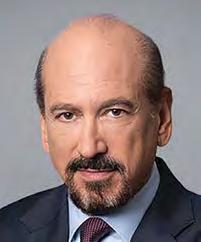
Sitrick praised RGP for living up to its promise that he would have the ultimate responsibility for the strategy, direction, management and operation of his firm. “Their new management wanted to concentrate on their core business, offered to sell me back the business and I agreed.”
In a message to RGP team members, CEO Roger Carlile called S&C “a strong business with a talented team and a distinct identity in the market. Returning it to its leadership is the right outcome for the business, for its clients, forRGP.”
The deal is expected to close within 45 days.
Carlile noted that the S&C divestiture is part of a broader transformation to simplify RGP’s structure. He will concentrate future investments in the services and client relationships where it delivers the greatest impact.
RGP posted a $24.5 million nine-month loss on $345.9 million revenues for the period ended Feb. 28.
FTI Consulting CEO Steve Gunby, 68, has changed his mind about stepping down in 2027, according to a report in the Financial Times

The company gave Gunby the additional role as Chair prior to its annual meeting last June and said it would appoint his successor before the expiration of his contract.
FTI combined the CEO and chair jobs as an interim measure, saying Gunby “is in the best position to mentor his CEO successor if he serves as chairman of the board.”
The FT reported that Lars Faeste, who was recruited from Boston Consulting Group in 2022 and ran FTI Europe, was lined up
as Gunby’s heir apparent. Faeste decided to exit FTI when the management transition plan was put off.
Gunby, a 30-year veteran of BCG, took the FTI helm in 2013.
Mike Sacks has returned to MikeWorldWide, where he started his career 20 years ago, as Managing Director, Corporate Reputation.

Sacks most recently led the corporate affairs practice at FleishmanHillard Chicago, counseling global brands across technology, healthcare and financial services. Before joining FH in 2015, he was an SVP at Ogilvy. His resume also includes senior posts at Ketchum, Emanate PR and Edelman.
In addition to advising organizations on regulatory investigations, cyberattacks, mergers and acquisitions, leadership transitions and product-related crises, Sacks has focused on using AI and data to better anticipate risk and guide decision-making in real time,
In his new role, he will work with clients on corporate reputation, risk management and strategic communications, while helping to further build and scale MWW’s Corporate Reputation and Advisory offering. He will also support business development and deepen relationships across the firm’s priority accounts.
Sujata Mitra, who has been EVP and Group Head, Earned Media at Edelman for the past seven years, joins Burson as U.S. Chair of Earned Media, effective April 20.

At Edelman, Mitra led and built a multi-sector earned media team as well as advising C-level leaders, business executives and mission-driven organizations on enterprise-wide communications and highstakes reputational opportunities and challenges.
Before coming to Edelman, she was
Communications Lead for Vox Media, directing communications strategy for Vox Record, The Verge and SB Nation. She has also served as Senior Director of Communications at Huffington Post and served in booking or producing roles with Al Jazeera, John McLaughlin’s One on One and WPIX TV’s Morning Newscast.
Mitra will oversee and build out Burson’s U.S. earned media team and serve as a Senior Earned Media Counselor to clients.
Stagwell has named Michael Twedell Senior VP, Enterprise AI Solutions, a new position. He reports to CEO Mark Penn.

Twedell will lead the go-to-market strategy for Stagwell’s AI-driven solutions, including The Machine—marketing’s first agentic operating system—and the Agentic Targeting System, built in partnership with Palantir. He will drive adoption across strategic accounts by bringing together Stagwell’s SaaS portfolio and operating company capabilities into integrated, outcomes-focused solutions.
Twedell joins Stagwell from Bounteous, where he was Senior VP-Growth. At Bounteous, he handled digital transformation strategies for global enterprises in hospitality, gaming, media and healthcare.
Precision Strategies co-Founder and Managing Partner
Stephanie Cutter, who also worked for President Obama, is moving to Kalshi, the world’s largest prediction market, where she will serve as policy advisor.

At Precision, Cutter played a key role in the firm’s integration of data-driven communications with a campaign-style approach. She has worked with a range of clients including Fortune 50 companies, news networks, movie studios and sports leagues.
Cutter was previously Deputy Campaign Manager for Obama’s 2012 campaign, in addition to serving as a Deputy Senior Advisor in the White House.

By Fraser Seitel
In a world led by a cadre of cowards, clowns and crackpots, even the immediate future is impossible to predict. Stock markets, wars and everyday prices turn on a dime. What’s skyrocketing today is cratering tomorrow. Society is racked by uncertainty. And only one ominous result for any working stiff below the age of 80 seems inevitable: Someday—perhaps soon—your job will be replaced by artificial intelligence.

Fraser P. Seitel has been a communications consultant, author and teacher for more than 30 years. He is the author of the Prentice-Hall text, The Practice of Public Relations.
Data entry associates, telemarketers and customer service representatives? All gone. Office administrators, cashiers and web designers? They’re outta here. Finance managers, secretaries, paralegals and junior lawyers? Need not apply. Reports from McKinsey and Goldman Sachs say up to 300 million jobs are vulnerable to AI. Yes, it’s depressing. But one tiny ray of light shines through this otherwise bleak outlook. The demand for public relations counselors has never been greater.
From the C-Suite to the state house to the Oval Office, officials everywhere are flailing lately in the absence of sound public relations advice. A few obvious recent examples:
Parlez vous français?
When Michael Rousseau, the CEO of Air Canada, released a video to the world expressing his sincere condolences in the wake of two Air Canada pilots perishing in a freak crash last month at LaGuardia Airport, it was a classically correct, positive public relations tactic. Except that … Air Canada is headquartered in Montreal, in a country that has two official languages: English and French. And Mr. Rousseau’s video message, except for an opening “Bonjour” and a closing “merci,” was delivered solely in English, which was interpreted as a slap in the face to Canada’s Francophone community. The backlash was immediate and unrelenting. Canada’s prime minister said he was “very disappointed,” and lawmakers in Quebec called for Mr. Rousseau’s resignation.
Reluctantly and embarrassingly, Monsieur Rousseau stepped down a few days later, apologizing profusely for the oversight. There was no word from Air Canada if the CEO would be followed out the door by the public relations executives who failed to provide him with common-sense advice to keep things bilingual.
The curse of Mario Procaccino
By all rights, Mario Procaccino should have become mayor of New York City in 1969 had it not been for one intractable problem: He talked too much.
Procaccino won the Democratic primary that year by skillfully vanquishing five opponents, including former Mayor Robert Wagner and influential author Norman Mailer, and then even coined the lasting term “limousine liberal” to describe his dapper mayoral opponent, John Lindsay.
Alas, candidate Procaccino’s mouth spelled his doom. In an effort to smooth relations with the city’s African American population, the candidate declared famously—and tragically—at a campaign rally in Harlem, “My heart is as black as yours.” Lindsay proceeded to trounce him in the general election.
Fast forward 57 years to Gavin Newsom, California’s loquacious governor, whose public relations campaign to win the 2028 Democratic nomination for President has already kicked into high gear with a weekly podcast, a recent autobiography and a ubiquitous Trump-bating social media presence.
But Newsom, like Procaccino before him, can’t keep his mouth shut. Ergo, the governor’s cringe-inducing declaration in Atlanta before a largely African American audience. “I’m not trying to impress you, I’m just trying to impress upon you, I’m like you. I’m not better than you. I’m a 960 SAT guy.”
Ooops. As cries of “condescension” and “racism” rang through the land, a mortified gubernatorial public relations advisor had to wonder why he or she hadn’t interceded to prevent the governor’s grievous gaffe.
The wrong ‘coarse’
Finally, there’s no greater proof of society’s pressing need for more wise and influential public relations counselors than the continuing performance of the President of the United States.
Even in his swashbuckling New York City real estate days, Donald Trump was viewed as a headline-grabbing child of privilege and questionable character. But as President, as his power has grown relatively unchecked, Trump has become even more belligerent, intimidating and coarse.
While Press Secretary Karoline Leavitt insists that the President is “an incredible listener” who always seeks out the opinions of others, the overwhelming evidence suggests that Trump more often considers himself the smartest person in the room and mostly repudiates sound public relations advice.
So, when Trump labels murdered Hollywood icon Rob Reiner as a “tortured and struggling individual” or greets respected prosecutor Robert Mueller’s passing with “I’m glad he’s dead” or warns the Iranians on Truth Social to “Open the f-ing Strait,” the President knows best and doesn’t need no stinkin’ public relations counsel.
Maybe. But perhaps more likely is that Trump, surrounded by groveling toadies rather than objective advisors, has reached his limit in terms of public tolerance of presidential meanness and vulgarity. The staying power of plummeting approval ratings and the outcome of mid-term elections will provide the answer.
Meanwhile, it’s undeniable that the necessity for society’s leaders to have at their side trusted and experienced human—not artificial—public relations counselors remains essential.
PR news brief
Publicis Groupe has entered into a definitive agreement to acquire global sports and culture-first agency 160over90.
The combined platform will leverage technology, data and scale to connect brands with fans and audiences.
160over90, a division of WME Group that has supported sports and culture strategies and activations for global brands across such events as Super Bowls, Olympic Games and the World Cup, will be integrated with Publicis Sports.
The augmented Publicis Sports group will report to current Publicis Sports CEO Suzy Deering and be a part of Publicis Media Exchange.
Robbie Henchman, most recently 160over 90’s President, will remain at WME Group as a Senior Partner and President of WME’s brand representation business, overseeing the strategic partnership between WME Group and Publicis Groupe.
That strategic partnership is set to enable early-stage collaboration between WME’s talent and IP roster and Publicis to create opportunities across talent, content financing and marketing partnerships.
Also, as part of what Publicis calls a new “end-toend ecosystem where cultural relevance drives measurable growth,” Publicis Sports will focus on integrating the full-service capabilities of Publicis Sports and 160over90; leveraging the Publicis Sports Intelligence platform to plan, personalize and measure investments and outcomes; and activating Influential, the industry’s leading creator platform, to extend the reach and impact of athletes as socially connected creators, storytellers, and community leaders.
By James E. Lukaszewski
Irecently attended a couple of “Meet the Media” sessions nearby, featuring a panel of local editors and journalists. Each tended to focus on how local media were going to survive Trump, without mentioning his name.

IABC;
When the longhand version of “Objectivity and Balance” came up as their strategies, I bit my lip. This was somebody else’s program.
After the presentation at one event, I spoke with the main panelist and asked him, “How could you imagine your local industry surviving Trump?”
He exploded at me. “Trump is a liar! He’s always been a liar! The people know!”
“Well, so are you,” I replied. “Tonight, you admitted to using two of the powerful lies con artists use.”
What’s balance? It’s taking a few truths and mixing them with equal parts—or more—of other stuff, hoping that the blending will stop the phone from ringing and keep people buying. But the clever balancing act really just produces whole lies. People notice. They’re going elsewhere in droves seeking the truth. Balancing never yields truth.
Balance is all of those boring panels that just jibber jabber. At the end, you have no guidance, no truth, no next steps.
According to Dictionary.com, Objectivity is a noun that means a lack of bias, judgment or prejudice, in other words, facts. String as many facts together as you care to, you still will never arrive at the truth. In fact, overload on facts and you get something else: resentment. Those who are the targets of your fact-filled stuff feel like you are telling and yelling at them that they’re too stupid or just unwilling to accept your facts. All the while, your customers continue to go elsewhere for truth.
Yes, objectivity can matter. But objectivity is in the eye and the ear of the beholder. Rarely persuasive. The survival plan for local media to outlast Trump is the struggle of the truth avoiders against the fake truth
inventers. And the fake truth inventers are really, really good.
On top of that, just saying you’re a journalist no longer automatically makes you an emissary of truth. In fact, the opposite is demonstrated too frequently.
I deal in a world of victims and victim makers. It’s a very emotional world. I have learned that truth is something like 15 percent facts and data, and 85 percent acknowledging the emotion of events and points of reference—where the victims were and when and how they were victimized. The con artist learns to use fewer facts and, like the journalist, turns the rest into an emotionally satisfying story.
The problem here is that all stories are fabrications. There’s a template in journalism: smart headline, great opening lead, structured body copy often chronological or organized in some way and then a smart, memorable conclusion, a moral, a punch line, a self-evident truth. There’s a kind of rhythm to it ... Bada-Bada-Boom.
Here again, life never happens like the stories they describe. There’s no such thing as a true story. There’s always a letdown when the truth sought is still missing from the cleverest punchline.
Truth happens in pieces, often in random broken chunks. Television news strings these pieces, connected by that annoying, endlessly blinking—and lying—BREAKING NEWS sign.
BREAKING NEWS has come to be the biggest lie in every culture. BREAKING NEWS should be BREAKING TRUTHS, but that’s not possible. So, you should just shut up or think of ways to focus on the truth.
The crucial question for American journalism is: when are you going to stand up and do something about Trump and the truth? American journalism has made its own deathbed, and we’re watching it slowly die there. Likely well before Trump and Trumpism go away, which could be a generation or two … or longer.
When do you and we start telling the truth and stop dodging it?
Here’s some real BREAKING TRUTH: The good old days of local news will disappear, sooner rather than later, because it’s truthless and, therefore, worthless. Balance and objectivity are truth dodges. The truth is out there, but when you find it, you report everything but the truth part.
How do we know this? Because we’re living this truth tragedy every day, everywhere.
We need constructive guidance and opinions that contain simple, direct, doable directions to the future. Objectivity and balance trap us in yesterday.
Journalism seems to have stopped searching for the truth and has forgotten what truth looks like, sounds like, feels like, tastes like and smells like.
A future built on dead ends and truth dodging sounds, feels and tastes like what is killing our democracy.
Your truth manifesto
“To know the truth and speak of it is helpful, important and sometimes courageous. To know the truth but equivocate or speak about anything but that truth is willfully harmful, intentionally misleading and often unethical.”
—Unattributed proverb
The Truth Manifesto is a truth action plan. The manifesto is a public declaration of your intentions, opinions, objectives and motives. Truth always relies on simple, sensible, understandable words and deeds. That’s how you find the truth. Publicly commit to it and then prove your commitment.
The Truth Manifesto is something you can easily absorb, use and teach others.
1. “When problems or opportunities occur, we’ll be prepared to talk openly about them and act quickly to respond operationally.”
2. “If the public should know about an issue or problem which could affect them, we will voluntarily talk about it as quickly and as completely as we can.”
3. “When problems or changes occur, we will keep the community and those affected posted regularly until the problem or changes have been thoroughly explained or resolved.”
4. “We will answer any questions the community or victims may have and suggest and volunteer additional information on matters the community has yet to ask questions about.”
5. “We will be cooperative with all interested news media, but our primary responsibility is to communicate directly with those most affected by our actions as soon and continuously as possible.”
6. “We will respect and seek to work with our critics and those who oppose us.”
7. “We will tell the truth with facts and proof, refraining from truth dodging and avoidance techniques.”
Finding the truth is your first priority. Stand on it, stand up for it, shout it out.
FGS Global is providing DC representation for JetBlue Airways on issues related to air traffic control modernization, airport slot management, and support for the aviation industry.
The New York-based carrier has been charged with “surveillance pricing,” which is tracking a customer’s browsing history to target them for higher ticket prices.
JetBlue on April 20 deleted a social media post that advised a customer complaining about a $230 ticket price hike to “try clearing your cache and cookies or booking with an incognito window.” That post is now deleted.
Democratic Senator Ruben Gallego (AZ) and Congressman Greg Casar (TX) wrote a letter to JetBlue CEO Joanna Geraghty asking about its pricing policy.
JetBlue has denied that it practices surveillance pricing.
FGS Global, which is owned by KKR, has Partners Mike Iger, Rob Seidman and Gina Foote, and Managing Director Jeff Hantson, working the JetBlue business.
Anthropic, the artificial intelligence company banned by Defense Secretary Hegseth, has hired Ballard Partners for D.C. representation.
Ballard, which has close ties with the Trump administration, is focused on Defense Department procurement matters.
Hegseth banned DoD from using Anthropic’s technology after he declared it a supply chain risk to national security. The President then ordered every federal agency to drop the San Francisco-based firm.
The Washington Post ran an editorial on April 12 headlined “The U.S. military is missing out because of Hegseth’s war on Anthropic.” It said Anthropic’s new Mythos model can detect critical software flaws, but the Pentagon is barring itself from using it.
The editorial noted that China is using AI to break into American systems, and that Anthropic has the best tool available to find vulnerabilities before Beijing’s hackers can.
“But the U.S. military is systematically removing Anthropic software from its systems, with a six-month transition period,” noted WaPo. “It’s one thing to fight with one arm tied behind your back. It’s another to have tied it yourself.”
Brian Ballard heads his firm’s Anthropic team, which includes Micah Ketchel, who served in second Trump White House as a special advisor to the National Security Council.
Trump Media and Technology Group Corp. has replaced CEO and former California Congressman Devin Nunes with Kevin McGurn, a seasoned media sales executive. Nunes, who joined the company in 2022 said it’s time to go after achieving “Trump Media’s original mission of giving the American people their voices back.” He believes the company is in “safe hands” under McGurn’s stewardship.”
TMTG is the parent of Donald Trump’s megaphone, Truth Social. The company lost $712 million on $3.7 million in revenues during 2025.
Its stock is down more than 75 percent since Trump’s January 2025 inauguration. It trades at $9.72. The 52-week range is between $27.78 and $8.30.

McGurn, who takes the interim CEO title, has been an advisor to TMTG. He’s held jobs at Hulu, NBCUniversal, T-Mobile and Vevo, the joint venture between Universal Music Group and Sony Music Entertainment.
TMTG plans to merge with TAE Technologies nuclear fusion company in a deal with $6 billion. It is considering spinning off Truth Social once the TAE deal closes.
Darci Vetter, who served as Chief Agricultural Negotiator at the Office of the U.S. Trade Representative and Deputy Undersecretary of Agriculture, comes on board as VP, Public Affairs at Driscoll’s, the global market leader for fresh strawberries, blueberries, raspberries and blackberries.

Vetter has also served as Head of Global Public Policy at The Nature Conservancy and PepsiCo, and was Vice Chair, Agriculture, Food and Trade & General Manager, Public Affairs at Edelman. She continues to advise companies, nonprofits and international organizations on aligning policy and market incentives to support agriculture and global trade.
Reporting to Driscoll’s CEO Soren Bjorn, Vetter will support enterprise-wide alignment on governmental affairs across Driscoll’s global regions.
“Over the past several months, Darci has partnered with us as a consultant, working closely with a number of our senior leaders,” said Bjorn. “Through that work, she has brought a thoughtful perspective and a clear understanding of the evolving global policy landscape shaping our business. As our company continues to grow globally, this experience will be increasingly important.”
Carrie Healey has joined the National Association of Broadcasters as VP communications. Most recently, she was Program Lead at Purple Strategies.
At NAB, she will serve as its primary Spokesperson and Media Relations Strategist to advance the organization’s priorities before the Federal Communications Commission and Congress.

She becomes part of NAB’s press team that includes Grace Whaley, Director of Communications and Social Media; and Judianne Meredith, Communications Coordinator.
Hogan Lovells has expanded its relationship with Ukraine to reflect the implementation of the U.S.-Ukrainian Investment Fund pact, establishing a 50/50 partnership to develop the country’s critical minerals and energy resources, as well as promotion of investment opportunities.
The firm will now go beyond the work on behalf of Ukraine’s Ministry of Justice to include the Ministry of Economy, Ukraine Agency for Public-Private Partnership Support and the U.S. embassy.
It may engage in advocacy with U.S. officials and members of the public regarding Ukraine’s political matters, procurement and reconstruction efforts.
HL Partners Deen Kaplan, Peter Cohen-Millstein and Megan Ridley-Kaye, along with Senior Associate Randolph Shaner, handle the effort.
The election loss of Hungarian strongman Viktor Orban, who blocked a $105 billion EU loan to Ukraine, is good news for the embattled country,
Incoming leader Peter Magyar has already promised to talk with Russian leader Vladimir Putin about ending the war.
Magyar though said he doesn’t expect Putin to follow his advice.
Brownstein Hyatt Farber Schreck has agreed to provide government relations and PA services to the Kingdom of Morocco.
FARA News
The one-year contract, which went into effect March 13, calls for a $65,000 monthly retainer.
Ed Royce, who served in Congress for 26 years and headed the House Foreign Affairs Committee, leads the effort
Samantha Carl-Yoder, who co-Chairs Brownstein’s international and critical minerals practice, also reps Morocco. She’s a State Department veteran who served in Indonesia, Myanmar, Peru and Brazil.
They report to Morocco’s U.S. Ambassador Youssef Amrani.
The Qatar Foundation for Education, Science and Community Development has tapped Venable for government relations services.
Venable will focus on issues pertaining to the public profile of the Foundation within the U.S.
It will support the Foundation’s communications and engagement with federal officials to help ensure that members of Congress and the administration have an accurate understanding of the Foundation’s support for education and its work with U.S. universities.
Weill Cornell Medicine, Carnegie Mellon University, Georgetown University, Northwestern, Texas A&M and Virginia Commonwealth University have a presence in the 12-square kilometer Education City in Doha.
Venable’s contract carries a $25,000 monthly retainer. Josh Rayond, co-Chair of the Legislative and Government Affairs Group and Josh Finestone, Senior Policy Advisor, handle the work.
The QF also is paying the Washington Media Group $40,000 permonth for strategic communications work.
Below is a list of select companies that have registered with the U.S. Department of Justice, FARA Registration Unit, Washington, D.C., in order to comply with the Foreign Agents Registration Act of 1938, regarding their consulting and communications work on behalf of foreign principals, including governments, political parties, organizations, and individuals. For a complete list of filings, visit www.fara.gov.
Beacon Policy Advisors LLC, Washington, D.C., registered April 10, 2026, for Embassy of Japan, Washington, D.C., regarding advising the foreign principal on legislation in the U.S. Congress and actions and policies of the U.S. Executive Branch and U.S. government agencies that are of interest to the principal.
CRAFT | Media/Digital, Washington, D.C., registered March 31, 2026 for Embassy of Switzerland in the U.S., Washington, D.C., regarding providing continued strategic communications consulting and support, and media training services.
Skyline Capitol LLC, Washington, D.C., registered April 2, 2026 for The Embassy of the Republic of Rwanda, Washington, D.C., regarding providing consulting services.
Lobbying News
Below is a list of select companies that have registered with the Secretary of the Senate, Office of Public Records, and the Clerk of the House of Representatives, Legislative Resource Center, Washington, D.C., in order to comply with the Lobbying Disclosure Act of 1995. For a complete list of filings, visit www.senate.gov.
Ballard Partners, Washington, D.C., registered April 17, 2026 for Evolution Electric Vehicles, Chino, Calif., regarding Customs and duties and trade issues.
Brandywine Strategy Group, Washington, D.C., registered April 21, 2026 for Americans for the Common Good, Washington, D.C., concerning issues related to agricultural efficiency and technology.
ERA Government Affairs, LLC, Arvada, Colo., registered April 20, 2026 for National States Geographic Information Council, Myrtle Beach, S.C., regarding census, transportation, address data and geospatial issues.
Fulcrum Public Affairs LLC, Washington, D.C., registered April 17, 2026 for American Institute of Architects, Washington, D.C., regarding issues related to sustainable and ethical building practices.
Tonio Burgos & Associates, Inc., New York, N.Y., registered April 20, 2026 for New York Building Congress, New York, N.Y., regarding surface transportation reauthorization and permitting reform.
Clients who have a message to get across—and the communicators who can effectively tell their stories— have been relying on O’Dwyer’s for the past 57 years. Our listings let the industry know who you are, what skills and services you offer, and which market sectors you focus on. With a broad-based readership of industry pros, O’Dwyer’s can raise your firm’s profile with decision-makers across the communications industry—at a highly competitive price. It could be the best money you ever spend for marketing.
530 7th Ave., #502, New York, NY 10018 212/924-3600 letstalk@jpublicrelations.com www.jpublicrelations.com
Public relations, social media strategy, photography, content creation, influencer marketing and brand partnerships.
Employees: 140. Founded: 2005.
Agency Statement:
Owned by Jamie O’Grady and Sarah Evans, J/PR is a global communications agency specializing in the travel, tourism, hospitality, and luxury lifestyle spaces. With a trend-setting team of 140 members across the U.S. and UK, J/PR represents world-renowned brands, offering a boutique approach with global reach and ROI-driven results. At J/PR, longevity is at the core of the agency’s 20+ year success, with clients and team members having worked with the agency for years; a testament to J/PR’s personalized approach and industry-leading campaigns.
Jamie O'Grady, Founding Partner; Sarah Evans, Partner; Ali Lundberg, President

J/PR in the news with O'Dwyer's:
New York PR Firms Dominate O’Dwyer’s Rankings of Top Firms
... J/PR ($23.7M) leapfrogs over The Bliss Group ($23.1M), which remains in ninth, to take eighth... ...
News of Firms: J/PR Launches 20Two Studio ... J/PR launches 20Two Studio, a creative storytelling affiliate focused on public relations and social media...
News of Firms: J/PR Scoops Up Sadler & Co.
... Emma Hartland-Mahon J/PR acquires luxury travel, hospitality and design PR agency Sadler & Co. The two agencies plan to...
Submit online at odwpr.us/list-your-firm or contact Melissa Werbell, Director of Research, 646/843-2082, melissa@odwyerpr.com