A majority of people around the world are unwilling to trust others with different values and opinions.
COMMUNICATORS DRIVE WORKPLACE AI
ADOPTION
Communicators are often catalysts for workplace AI adoption, according to a recent study.
A growing number of Americans believe it’s appropriate for brands to make political statements.
AI TOPS IRKING TRUMP AS REPUTATIONAL RISK
The negative impacts of AI now surpass the possibility of angering Trump, according to a report.
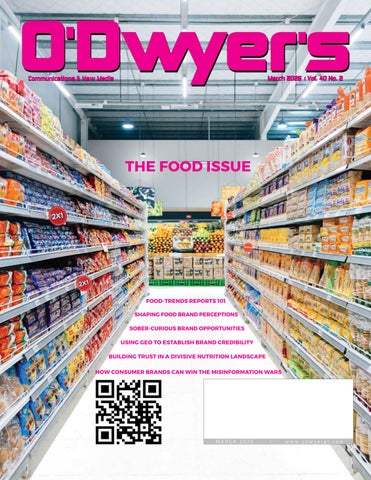
NAVIGATING THE NEW FOOD & BEV. CONSUMER
How PR, paid media and GEO can help brands establish credibility in an AI-driven landscape.
COMMUNICATING THROUGH CONTROVERSY
Strategies for health and nutrition communicators to build trust in today’s divisive nutrition landscape.
Why France’s new wine law creates a narrative opportunity for wine brands and their PR teams.
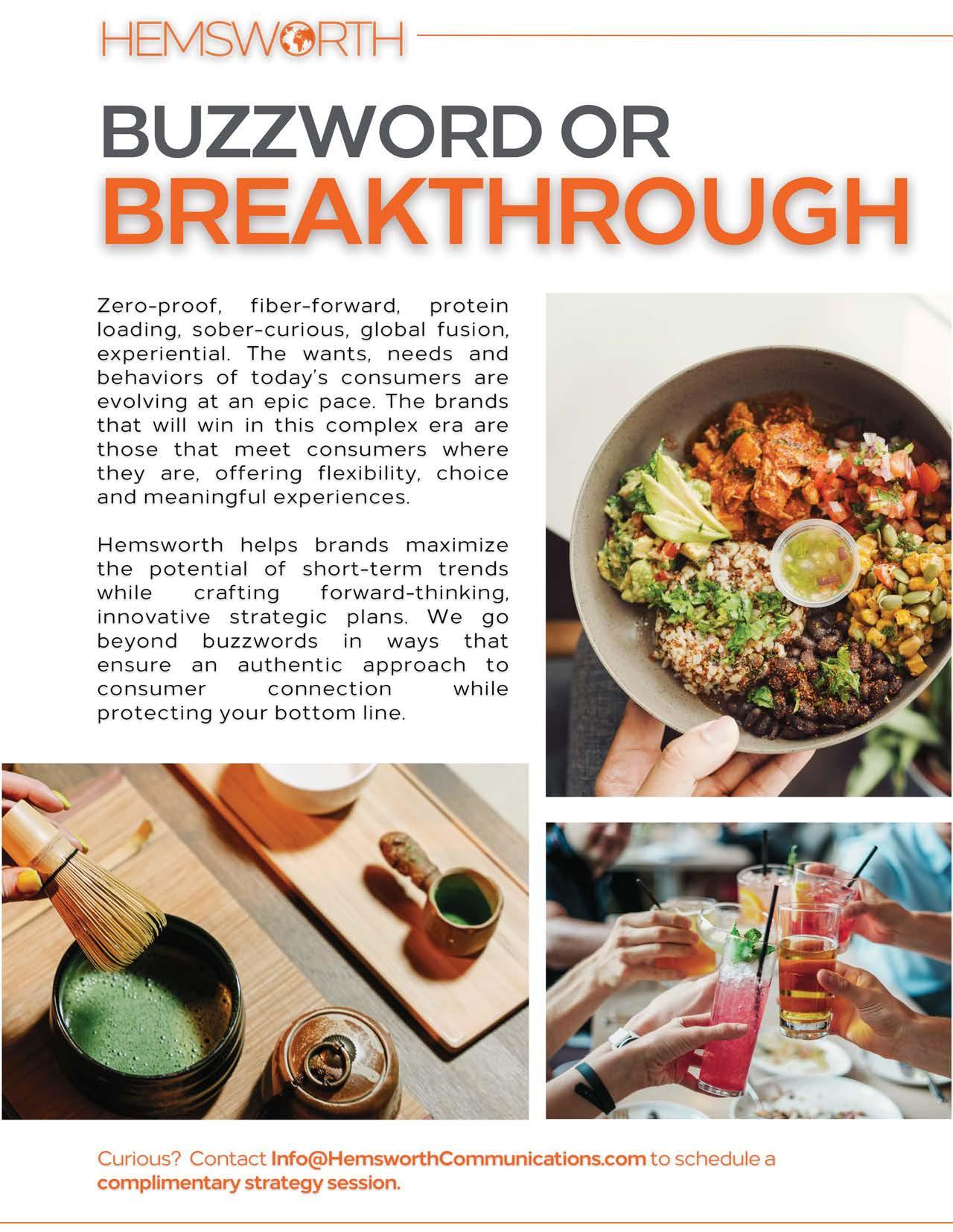
FROM BUZZWORD TO BREAKTHROUGH
How innovative brands can win in the “sober curious” economy by demonstrating flexibility and authenticity.
HOW BRANDS CAN WIN MISINFORMATION WARS
Consumer brands’ need to adopt an always-on communications strategy has never been greater.
THE AGE OF INTELLIGENT MACHINES
AI’s increased role in the communication and marketing sectors will strengthen performances.
MULTICULTURAL CREATORS SHAPING FUTURE
Multicultural creators are shaping trust, relevance and culture from within their communities.
SHAPING FOOD BRAND PERCEPTION
Marketers must meet consumers in the digital environment shaping brand relevance and perception today.
PITCHING STYLES TO BREAK THROUGH THE NOISE
Five attention-grabbing pitching tactics that can help today’s PR professionals land coverage.
MAKING TRENDS REPORTS STICK
A practical trend-reports playbook for food and beverage marketers.
ADVERTISERS
Trump’s economy will cost GOP the midterms
Two years ago, I predicted in these pages that if President Biden didn’t get consumer-goods prices under control—specifically, sky-high grocery prices—it would cost him reelection. Admittedly, I don’t have the best track record when it comes to making political predictions, but for once, I was right on the money.
And now, nine months out from the midterms, it appears that history is poised to repeat itself under President Trump’s watch.
Trump was elected, in large part, to fix the nation’s battered economy. That hasn’t happened. Instead, our economy under Trump’s watch began moving downward, particularly toward the end of 2025, and there’s no sight of a course-correction on the horizon. Grocery prices are rising, not going down, in case you haven’t noticed. Beef prices are up more than 16 percent in the last year, according to the Bureau of Labor Statistics, as drought, low cattle count and overhead costs—due, in part, to Trump’s immigration crackdown—have crippled the cattle industry. Coffee is up 20 percent year-over-year. Fish is up almost nine percent. And thanks to tariffs, aluminum costs have caused the prices of simple canned goods to go up, too. In total, according to the Bureau of Labor Statistics, food prices were up 2.9 percent in the last year, the biggest uptick since March 2024. Food prices increased 0.7 percent in December alone, the fastest single-month increase since October 2022.
It doesn’t stop with food. Inflation remains stubbornly high: Prices on all goods in the last year are up 2.4 percent, down from 3 percent a year ago but above the two-percent annual inflation target set by the Federal Reserve. Unfortunately, the Labor Department in late February reported that the Producer Price Index, a leading inflation indicator, rose 2.9 percent for the year and .5 between January and December alone, far higher than expected. Translation: Inflation is still a big problem. The U.S. dollar in January sank to its lowest level in four years, with most of that decline happening in the last 12 months. The job market is terrible: While hiring got a bump in January, the U.S. labor market added only about 181,000 jobs in 2025, a fraction of the 1.5 million jobs it created in 2024. The U.S. unemployment rate now stands at 4.3 percent, down from several months ago but up from 4 percent a year ago.
Americans are well aware of the mess we’re in, and a growing number of us think Trump is to blame. A February NPR/PBS News/Marist poll found that 59 percent of Americans disapprove of Trump’s handling of the economy. According to a recent CNN poll, 68 percent believe he hasn’t paid enough attention to the country’s most important problems (that includes nearly three out of 10 Republicans and 60 percent of independents), and 61 percent think Trump’s policies are moving the country in the wrong direction. As a result, Trump’s job approval rating now stands at 36 percent, a new low for his second term.
Perhaps it’s no surprise, then, that Americans are now exhibiting the kinds of cost-saving behaviors we typically see in recession cycles. According to a recent Politico poll, half of Americans surveyed said they’re having a hard time paying for food. About a quarter said costs have caused them to skip a medical check-up (27 percent) or a prescription (23 percent). A recent 84.51° survey found that price now beats health concerns when it comes to what keeps people from buying sweets. And Americans know where those price increases are coming from: More than half of those surveyed (55 percent) blame Trump for our current high food prices, according to the Politico poll. A February Ipsos poll found that more than two-thirds of Americans (67 percent) said they believe Trump’s tariffs have caused prices to go up on the things they buy. (That number has grown markedly since last year, when it stood at 52 percent.) And they’re not wrong: A January report found that U.S. importers and consumers—not foreign countries—are footing the bill for almost all (96 percent) of those tariff costs. To add even more insult to injury: Despite those sweeping tariffs, the U.S. trade deficit for goods still hit records in 2025, according to data released by the Census Bureau in February. So, why are we still levying tariffs? Because Trump wants to, that’s why.
How is Trump responding to this crisis? As we heard in his State of the Union address, so far his strategy has been to pretend that things are going swimmingly. He’s now even mocking the clarion call of “affordability” that he made a focus of his 2024 campaign. He’s walking into the same messaging trap that cost Biden the election two years ago.
Of course, Trump isn’t up for reelection. But conservatives are feeling cagey about the midterms, and for good reason. Republicans have a razor-thin majority in the House, and any poll you can point to shows it’s the Dems’ race to lose. Conservatives are bracing for a clobbering in November, and if that happens, it will seriously hobble Trump’s agenda next year and beyond. Still, Trump doesn’t seem interested in changing his economic policies anytime soon—even after the Supreme Court struck down his emergency tariff orders in February. (He responded by imposing a 15 percent global tariff anyway.) And now he’s allegedly exploring the possibility of exerting executive powers to change our voting laws. Doubling down isn’t damage control, and ignoring a problem is never a good plan, especially during election season. I’m ready to make another prediction: This won’t end well for Republicans in November.
— Jon Gingerich
EDITOR-IN-CHIEF
Kevin McCauley kevin@odwyerpr.com
PUBLISHER
John O’Dwyer john@odwyerpr.com
SENIOR EDITOR
Jon Gingerich jon@odwyerpr.com
ASSOCIATE EDITOR
Steve Barnes steve@odwyerpr.com
CONTRIBUTING EDITORS
Fraser Seitel
EDITORIAL ASSISTANTS & RESEARCH
Jane Landers
Melissa Webell
Advertising Sales: John O’Dwyer john@odwyerpr.com
O’Dwyer’s is published seven times a year for $60.00 ($7.00 a single issue) by the J.R. O’Dwyer Co., Inc. 271 Madison Ave., #1500 New York, NY 10016. (212) 679-2471 Fax: (212) 683-2750.
Breaking news, commentary, useful databases and more.
O’Dwyer’s Newsletter
A six-page weekly with general PR news, media appointments and placement opportunities.
O’Dwyer’s Directory of PR Firms
Listings of more than 1,250 PR firms throughout the U.S. and abroad.
O’Dwyer’s PR Buyer’s Guide
Products and services for the PR industry in 50 categories.
jobs.odwyerpr.com
O’Dwyer’s online job center has help wanted ads and hosts resume postings.
National insularity threatens global economy
According to Edelman’s 2026 Trust Barometer, a majority of people around the world are now hesitant or unwilling to trust others with values and opinions that are different from theirs.
By Steve Barnes
The global economy is threatened by a wave of insularity that is cutting people off from the world beyond their immediate environment and making them more unlikely to listen to—or do business with—people from other countries or with opinions different from theirs, according to Edelman’s 2026 Trust Barometer.
“Global Report: Trust Amid Insularity” finds that out of almost 34,000 respondents from 28 countries, seven out 10 say they are either unwilling or hesitant to trust someone with different values, approaches to social issues, backgrounds or information sources.
While the U.S. is on par with the global average on the report’s “insular trust mindset” scale at 70 percent, other countries are taking the trend even further. Mexico (72 percent), Canada (73 percent), the UK (76 percent), Argentina (77 percent), Ireland (80 percent) and Germany (81 percent) are all even more resistant to the world outside their borders, and Japan tops the list at 90 percent.
This insularity holds when it comes to the difference in trust levels between companies headquartered in a respondent’s home
nation and those in foreign countries. Canada has the biggest trust gap in that regard, with 75 percent saying they trust Canadian companies, and only 44 percent trusting companies headquartered outside their country’s borders—a 31 percent gap.
In the US the gap is narrower, with 60 percent trusting home-grown companies as opposed to 44 percent for foreign countries—a 16 percent gap.
Over a third of respondents (34 percent) also said that they would support lowering the number of foreign companies in their countries, even if it resulted in higher prices.
But national borders are not the only factor behind increasing insularity, the report finds. For example, the gap between the haves and have-nots is also much higher than it used to be. In Edelman’s 2012 study, that gap was six points (49 percent for those in top 25 percent of incomes, 43 percent for those in the bottom 25 percent). After rising to a 16-point gap (63 percent vs. 47 percent) in 2022, the gap has remained high—hitting 15 points (63 percent vs. 48 percent) this year.
Differences in values are becoming im-
permeable barriers that have a surprisingly strong effect on productivity in the workplace. More than four out of 10 (42 percent) of employees surveyed said they would rather switch departments than report to a manager with different values.
Nearly as many (34 percent) said that if a team leader did not share their values, they would put less effort into helping their team succeed.
To address how some of the issues behind this growing problem are impacting the workplace, the report suggests “Trust Brokering,” a process that counters insularity by working to facilitate trust across areas of difference. Conducted by an employer, it brings the interests of all the separate, insulated parties involved to the surface and works to make them understandable—and potentially solvable.
“We are becoming inflexible, and incoherent in our cocoons,” said Edelman CEO Richard Edelman. “The risks to society from manic swings in popular sentiment and rejection of innovation are real. Self-righteous certainty must give way to belief in the future, guided by My Employer as the leading trust broker.”
Communicators drive workplace AI adoption
Communicators are often catalysts for workplace AI adoption, serving a vital role in translating this adoption between an organization’s technical teams and its broader staff, according to IPR research.
By Jon Gingerich
Generative AI adoption is a strategic priority for most organizations today, but it’s tricky business. Not only does AI adoption present technological challenges, but it also presents myriad challenges to a company’s executives and its wider change initiatives as well.
As it turns out, communicators are uniquely positioned to drive this transformation, and are often among the earliest AI adopters within an organization, according to a survey of communications and tech leaders by the Institute for Public Relations.
The IPR study found that while IT teams are typically the earliest drivers of generative AI adoption, communicators similarly play a vital role in serving as translators between technical teams and the broader organization.
When it comes to why organizations are adopting AI technology today, 90 percent
of respondents cited “productivity” and/or “efficiency” as the top reasons. Other reasons for AI adoption included innovation (77 percent) and insights and reports (70 percent). This was followed by a desire to improve the customer experience (67 percent) and executive leadership making it a priority (57 percent).
Accuracy/misinformation and ethics remain top concerns for AI adoption, according to the study, as well as cybersecurity, regulatory compliance and the possibility of organizations developing an overreliance on the technology. For this reason, respondents said that people must remain “in the loop” during this process, particularly when it comes to review, judgment, brand voice and final decisions. AI outputs, meanwhile, should be used primarily to support first drafts and ideation.
When it comes to how AI is adopted in
the workplace, the study found that most organizations typically move along a path from tactical adoption (applying AI to isolated tasks such as drafting or summarizing tasks), strategic implementation (AI being deployed across multiple functions with defined workflows) and transformational integration (embedding AI into enterprise-wide processes).
The study also found that establishing cohesive narratives for AI adoption isn’t common. Only slightly more than a third (37 percent) said their organization has communicated a change story for AI transformation.
IPR’s study, “The Communicator’s Role in Driving Generative AI Adoption,” was based on emailed interviews with more than thirty senior communication and technology leaders between August and October 2025.
More Americans want brands to get political
Most Americans think companies should remain neutral on political and social issues, but a growing number now believe it’s appropriate for brands to make political statements.
By Jon Gingerich
Americans have held mixed feelings in recent years about brands taking public stances on social and political issues. This puts brands in a bind. On one hand, years of research strongly suggest that Americans don’t want brands to remain neutral on political and social issues. But when brands make statements that consumers don’t agree with, it can seriously affect their bottom line.
While a majority of Americans believe that companies should remain neutral on political and social issues, recent data from market research giant Ipsos suggests that sentiment has changed in the last year, with more Americans now claiming they want brands to take a stand on political issues.
Most Americans (57 percent) still believe companies should remain neutral on social issues, according to Ipsos, a number that has remained unchanged since Ipsos asked Americans the same question last year. In fact, the percentage of Americans who think companies should remain neutral on social issues has grown in recent years, as only 52 percent agreed with this sentiment in 2023, only 45 percent agreed in 2022 and only 42 percent agreed in 2021. And a similar number (56 percent) also said they think that companies should remain neutral on political issues as well.
The issue is complicated, however. The
Ipsos poll highlighted that the number of Americans who said they want brands to remain neutral on political issues was seven points higher last year (63 percent) than today, suggesting that more Americans are coming around when it comes to wanting brands to play a role in our political discourse.
Moreover, while only about a third of all Americans (34 percent) believe that companies should participate in activism on social media, that number too is actually much higher than it was last year, when only about a quarter of Americans (26 percent) agreed.
Nearly half of Americans (48 percent) similarly now think it’s appropriate for brands to take a stance on racial-justice issues. This number has consistently grown, from 45 percent in 2024, 43 percent in 2023 and 41 percent in 2022. And even more Americans today (49 percent) said they’re more likely to purchase something from a company that takes a public stand against racism, a figure that has also grown significantly, from 41 percent in 2024, 39 percent in 2023 and 36 percent in 2022.
Similarly, while less than a third (31 percent) of Americans said they’re more likely to purchase something from a company that promotes and celebrates LGBTQ+ pride month, that number too has grown in recent years, as only 28 percent agreed with
this statement in both 2023 and 2022 and only 26 percent agreed in 2021.
Americans still don’t like it when brands make statements they disagree with, and that sentiment appears to be growing. More than half (56 percent) said they’re less likely to buy something from a company that takes a stand on a political issue they don’t agree with. That number is higher than it was last year (52 percent) and in years prior (42 percent in 2024, 48 percent in 2023 and 42 percent in 2022). And 53 percent said they’re less likely to buy from a company that takes a stand on a social issue they disagree with, a number that is also higher than it was last year (49 percent) or in 2024 (44 percent).
But more than half (57 percent) said that if a company takes a stand on an issue, it should stick by its decisions even if doing so angers some consumers. This number has also grown from 56 percent in 2025 and 52 percent in 2024.
Finally, the poll discovered that only 13 percent of Americans believe the government should penalize companies whose political or social stances it doesn’t agree with. That number has remained more or less the same since Ipsos began asking this question in 2024.
The Ipsos poll surveyed 1,085 adults in February.
AI tops irking Trump as reputational risk
Among potential reputational risks for brands, the negative impacts of artificial intelligence now surpass the possibility of angering Trump, according to a report.
While the danger of being on the President’s bad side is seen as a major source of concern for brands, the potential negative effects of artificial intelligence pose an even greater reputational threat.
That’s the consensus of the Global Situation Room’s Global Risk Advisory Council in the Q4 2025 edition of its Reputation Risk Index, which put AI at the top of its list and moved Donald Trump (who was at #1 in Q3) into second place.
On a scale from 1 to 10 (10 representing the most severe threat), 77 percent of the Council members said AI misuse is a major risk, ranking it at a “6” or above. More than half (53 percent) ranked it at “8” or higher.
The Reputation Risk Index cautions orga-
By Steve Barnes
nizations against using AI without adequate oversight, saying that the result can be “immediate damage to their credibility and perhaps lasting damage to their most valuable asset: public trust.”
When it comes to the power of a thumbsdown from the President, things are, as might be expected, more divided. While more than half (51 percent) put his risk ranking at “9” or “10,” a full 15 percent gave him a score of “1,” indicating the lowest level of reputational threat.
Nonetheless, the report said that negative attention from President Trump and other high-profile politicians “can trigger regulatory investigations, customer boycotts, and market volatility that operate outside of standard business frameworks.”
The remainder of the top 10 includes such issues as data privacy violations (#3), child safety/harm (#4), anticompetitiveness/antitrust (#5) and fraud (#6).
A few risks dropped out of the top 10, such as CEO controversy, organizational ethics failures, Elon Musk and racial discrimination.
The index also revealed a drop in the public perception of global health companies. Almost three-quarters (71 percent) of Council members said trust in the pharmaceutical industry had “declined dramatically” in 2025.
A large majority also think that medicines and vaccines will be on the hot seat in the coming year. Over nine in 10 think that political attacks on those will rise in 2026, with more than three quarters (77 percent) thinking it is at least “somewhat likely” that Trump administration anti-vaccine policies will spread to other countries.
Navigating the new food and beverage consumer
How public relations, paid media and GEO can work together to help brands establish credibility and meet consumers in an AI-driven media landscape.
Food, beverage and agriculture brands are operating in one of the most complex consumer environments in recent history. Economic uncertainty, persistent inflation and rising healthcare costs are reshaping how people shop, eat and make everyday decisions. However, within this tension lies opportunities for brands that understand evolving consumer mindsets and can respond with relevance, empathy and value.
At the center of this moment is trust. As consumers rely more on third-party validation from journalists, experts, peers and increasingly on AI-generated summaries, public relations has become more central to brand growth.
Economic anxiety is reshaping consumer priorities
Today’s consumer mindset and sentiment are heavily influenced by economic concerns, including job security, economic stability, healthcare affordability and inflationary pressure. With these factors weighing on the consumer, it’s no surprise that the University of Michigan Consumer Sentiment Index remains stuck at historic lows, reflecting prolonged unease even as inflation shows signs of moderating, according to the U.S. Bureau of Labor Statistics.
This prolonged anxiety has made consumers more deliberate. They are scrutinizing claims, seeking reassurance and turning to trusted sources to help validate decisions, whether through earned media, expert commentary or AI-powered search tools that summarize options on their behalf. As generative AI increasingly shapes how information is discovered, brand reputations are no longer defined solely by owned channels. They are shaped by what trusted third parties say and by what AI engines repeat.
Value-seeking now defines consumer behavior
Value-seeking behavior intensified in 2025 and shows no signs of easing. Consumers are making more frequent shopping trips while purchasing fewer items per visit, especially in center-store categories. Sixty percent of shoppers now compare prices across locations all or most of the time, using digital tools to ensure they get the best deal, according to Circana and Upside.
In this comparison-driven environment, it’s critical that a brand’s value proposition
be clearly communicated before and reinforced at the point of purchase—whether online or in retail. Earned media establishes credibility. Paid media ensures reach at key decision points. Generative engine optimization, or GEO, helps ensure that when consumers ask AI-powered tools for recommendations, brands appear with accurate, consistent and value-forward narratives rather than fragmented or outdated information.
Together, PR, paid media and GEO help brands show up where decisions are actually being made.
Wellness has gone mainstream and practical
Despite economic pressure, wellness remains a fundamental driver of food and beverage choices across generations. What has changed is how wellness is defined. Gen Z views health as identity, closely tied to values and social proof. Millennials seek balance and functionality that supports busy lives. Gen X prioritizes resilience and efficiency, while Boomers focus on independence and long-term quality of life, according to Circana and Research America.
Across cohorts, wellness claims are increasingly scrutinized. Consumers and AI systems look to trusted third parties to validate benefits, drawing on credible media, research institutions and consistent expert voices. This elevates the role of PR in shaping not just awareness, but authority.
Because generative AI relies on repeated, credible signals across the web, brands must ensure wellness messaging is consistent across earned media, structured content and authoritative platforms so AI-generated summaries accurately reflect brand intent.
Home remedies and prevention gain momentum
A growing prevention mindset is accelerating interest in home remedies, particularly as healthcare costs rise and vaccination rates decline. During the 2025-2026 influenza season, the majority of U.S. states reported high or very high levels of flu activity, while flu vaccinations were down six percent through the end of 2025, according to the Centers for Disease Control and Prevention.
This shift reinforces the importance of proactive PR. Brands connected to functional, preventive or traditional benefits
By Michelle Amoroso
must ensure accurate, science-backed information is accessible before misinformation fills the gap.
When paired with GEO-informed content strategies and targeted paid amplification, PR helps ensure that credible narratives are the first things consumers and AI engines encounter.
‘Little treat’ culture reflects emotional reality
Even as consumers tighten budgets, they aren’t eliminating indulgence altogether. Instead, they’re redefining it.
So-called “little treat” culture reflects a shift toward small, intentional moments of joy.
In the past month, 86 percent of consumers reported enjoying a snack, drink or dessert simply to brighten their day. Two-thirds say they have a little treat weekly, rising to 77 percent among Gen Z, according to the Datassentials Hot Shot Report.
Emotion-led storytelling, long a strength of PR, plays a vital role here, framing indulgence as permissible, human and emotionally resonant rather than excessive. In generative search environments, these emotional cues are often compressed into short summaries, making it even more important that earned narratives retain warmth and context.
AI is becoming a trusted shopping companion
Artificial intelligence is playing an increasingly influential role in how consumers discover, evaluate and purchase food and beverage products. Compared with 2024, Americans are turning to AI tools more frequently as go-to sources for information, according to AlphaROC.
GEO represents an evolution of traditional SEO, one in which PR-driven authority, consistent messaging and credible citations directly influence how AI systems describe brands. Verified information, structured content and visibility on authoritative sites are now essential components of reputation management.
Paid media complements this ecosystem by amplifying earned stories and ensuring
Continued on next page
Michelle Amoroso
Communicating through controversy
Strategies for health and nutrition communicators to build trust in today’s divisive health and nutrition landscape.
Talking about food and nutrition today can feel like walking into a political firestorm. Nowhere was that more evident than in the rollout of the 2025–2030 Dietary Guidelines for Americans. Within minutes of the release, headlines and social posts offered wildly different takes: from “finally, common sense” to “science has turned on its head.”
For communicators, this moment underscores a fundamental shift: Public message reception depends less on the message itself and more on the level of trust in the messenger. In a crowded, fast-moving media environment, audiences filter content through credibility first. That reality is reshaping how health information is received, interpreted and acted upon, and it informs best practices for how to communicate effectively.
A case study in public perception
The new Dietary Guidelines are a case study in how process, tone and framing can reinforce—or fracture—public trust.
Every new set of Guidelines generates discussion, and for good reasons. The Guidelines shape the national food environment through their influence on federal feeding programs, labeling priorities and regulatory initiatives. In January 2026, the reaction was more polarized and more political than ever.
This partly stemmed from the process. Rather than anchoring the Guidelines in the official independent committee’s scientific report, the administration relied on its own literature review for select topics. That review was developed quickly, with limited transparency about decision-making and no opportunity for public comment or debate. When the path from evidence to policy is unclear, stakeholders question not only the conclusions but the integrity of the process itself.
Tone also played a role. Unlike previous editions of the Guidelines, which were written for health professionals and emphasized neutral, technical, science-based framing, this version is directly targeted to consumers. The rollout incorporated more overtly provocative, simplified language designed for broad public appeal. References to “real” food, the replacement of MyPlate with an intentionally inverted New Food Pyramid graphic, and strong rhetoric around “highly processed” foods created memorable soundbites and strong reactions from health professionals accus-
tomed to more measured, technical guidance. When nutrition policy adopts values-laden or politically charged language, it can amplify divides rather than clarify recommendations.
Trust is imperative—and personal
The reality is that most consumers will not read the full Dietary Guidelines— or any lengthy health policy document. They’ll watch short-form videos, scan headlines or ask a friend for their opinion. And in each of those moments, what they’re really judging is whether they trust the person delivering the message.
So, how can health and nutrition communicators build trust in a divided environment?
Trust isn’t built by asserting authority or rattling off statistics, facts or credentials. It’s built through tone, transparency and respect for the audience. Here are three strategies that can help.
Lower the temperature. Not every question is a criticism. Pushback may reflect thoughtful critique, lived experience or a legitimate scientific debate. Communicators who acknowledge shared goals such as improving health and feeding families will create space for dialogue rather than defensiveness.
Meet people where they are. Food decisions are driven by budget constraints, demanding schedules, cultural traditions, health needs, dietary preferences and access. When communicators overlook these realities, they widen the trust gap. Practical, empathetic framing signals that guidance is meant to support real lives—not judge or shame them.
NAVIGATING THE NEW CONSUMER
Continued from page 10
high-value audiences encounter trusted narratives across social, search, connected TV and digital retail environments. Turning insight into opportunity
In an AI-driven media landscape, PR is no longer simply about visibility. It’s about shaping the source material that both humans and machines rely on to make decisions.
When PR establishes credibility, GEO ensures accuracy in AI-generated discovery,
By Andrea Carrothers
Focus on durable principles. Media coverage often magnifies what amounts to dietary minutiae—such as debates over individual ingredients or additives—while losing sight of the bigger picture and what truly affects diet quality. Communicators can counter this by reinforcing consistent, evidence-based eating patterns built on balance, variety, nutrient density and accessibility. Emphasizing what remains steady, rather than what shifts at the margins, creates continuity and builds trust.
The bottom line
The latest Dietary Guidelines illustrate a broader communications lesson: In a polarized environment, how information is framed and delivered can matter as much as—if not more than—the science itself.
In an era of instant reactions and amplified controversy, credibility is earned through transparency, empathy and consistency. For communicators, trust can’t be assumed—it must be built intentionally. And when it is, science has a far better chance of being heard, understood and applied in ways that truly improve public health.
Andrea Carrothers, MS, RD, is Senior Vice President and Group Lead at FoodMinds, a division of Padilla. FoodMinds specializes in creating high-impact communications strategies for health and wellness-focused brands, commodities and companies.
and paid media delivers precision and scale, food, beverage and agriculture brands gain control of their narrative across every stage of the consumer journey.
The brands that will win are those that recognize this convergence and invest accordingly.
Michelle Amoroso co-leads the Food Beverage and Agriculture practice at Padilla. She brings 20 years of experience overseeing retail and marketing programs for household brands across food, beverage consumer health and wellness, commodities, packaged goods, beauty, personal care and over-thecounter (OTC) medications.
Andrea Carrothers
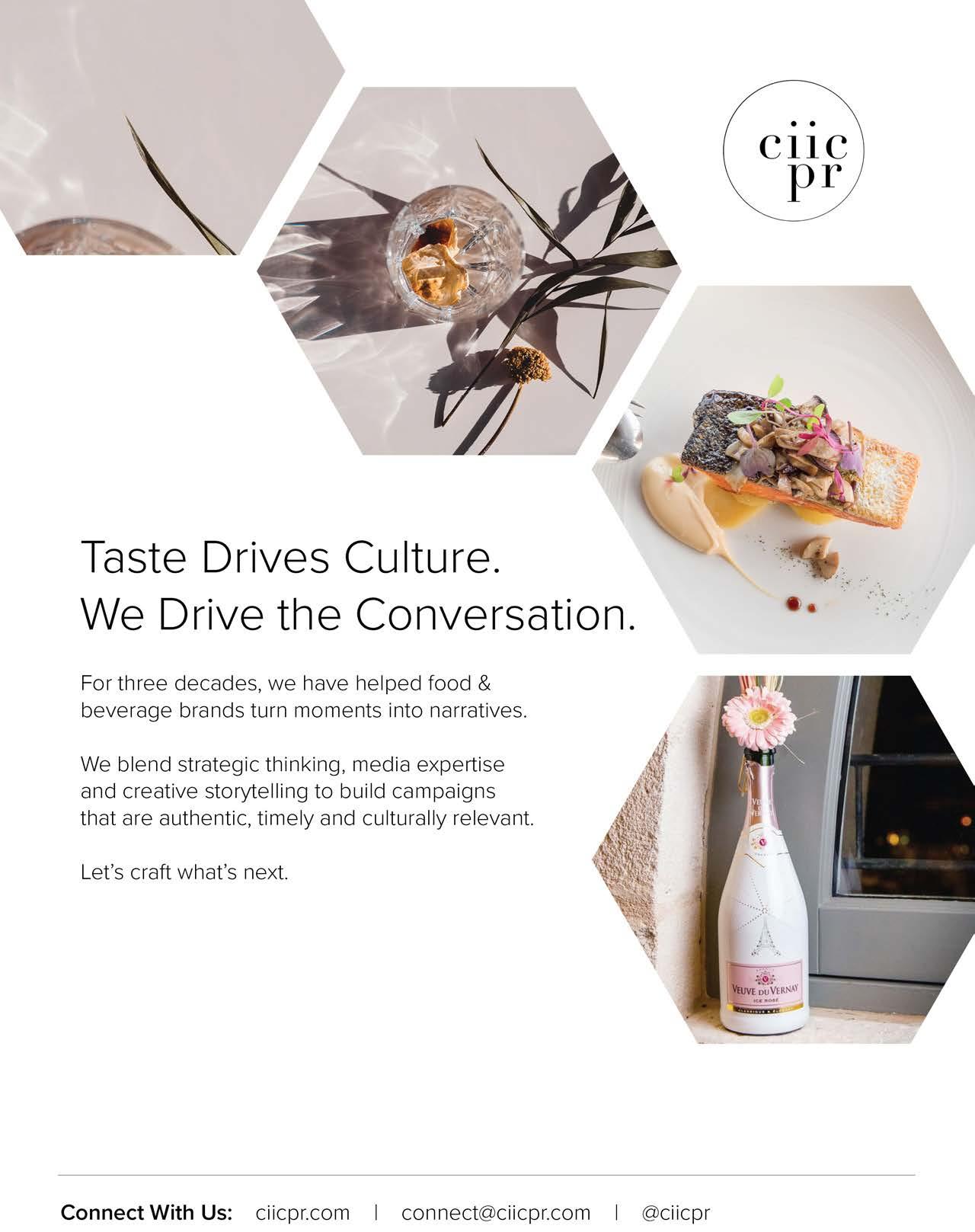
When sugar enters the story
Why France’s new wine law creates a narrative opportunity for wine brands as welll as public relations teams.
By Amy Sedeño
In early 2026, France’s Institut National de l’Origine et de la Qualité (INAO), the regulatory body behind the country’s prestigious Appellation d’Origine Contrôlée (AOC) system, approved a landmark change: Winemakers may now add up to nine grams of sugar per liter to finished dry red, white and rosé wines after fermentation. The ruling marks the first time France has permitted post-fermentation sweetening in its protected wine categories, a decision that would have been unthinkable a decade ago.
France has long permitted chaptalization, the practice of adding sugar before fermentation to boost alcohol levels. This new ruling simply extends the toolkit available to winemakers. For producers who choose to use it, the goal isn’t sweetness, it’s approachability.
To some, it’s the evolution of a product and a response to climate volatility, declining domestic consumption and shifting global palates. To others, it’s going against everything the AOC seal stands for. But to public relations professionals, marketers and brand strategists watching from the sidelines, it represents something else entirely: a new opportunity for positioning.
New climate realities
Here’s some important context: Climate change has altered ripening patterns, sugar levels and acid balance. It’s no longer a future threat; it’s an operational reality. At the same time, global wine consumption is declining, particularly among younger consumers. According to the 2026 State of the US Wine Industry Report, the wine sector is at an inflection point, as wine volumes have declined to a 60-year low. To add to that, 35 percent of Millennials report that they simply don’t like the taste of wine, most commonly citing bitterness and a lack of fruitiness as the primary reasons. Among Gen Z, wine ranks last in perceived value for money when compared to beer and spirits. Meanwhile, fruit-forward, easy-drinking wines from New World producers in Australia, Chile and California continue to gain ground in the export markets (Asia, North America, the UK) that French winemakers depend on.
Beyond these challenges, France is also confronting an export crisis. In 2025, the United States, France’s largest wine export market, imposed a 15 percent duty
on European wines, triggering a 21 percent decline in export value to the U.S. The downturn has been compounded by weakening demand in Asia, with sales to China falling by roughly 20 percent. As a result, for the first time in years, wine and spirits have slipped to France’s third-largest export category, overtaken by both aerospace and cosmetics, underscoring a significant structural shift in the country’s global trade landscape and intensifying pressure on producers nationwide.
The sweetening ruling, whether one agrees with it or not, is a direct response to this convergence of climate and economic realities and market behavior. It gives producers a subtle tool to soften tannins, round acidity and enhance approachability without fundamentally altering alcohol levels or grape origin.
New narrative possibilities
Here is where brands need to pay attention: this ruling creates not one but several distinct and powerful PR narratives, each targeting a different audience. For producers who choose to adopt the change, the story is one of innovation. These brands can position themselves as modern craftspeople who remain deeply rooted in French heritage while evolving to meet consumer needs. This is ideal content for lifestyle media, food and beverage publications and the digital-first platforms where Millennial and
Gen Z wine curiosity thrives. Think IG tastings, influencer collaborations at food festivals and short-form educational content explaining the science of balance in wine.
Younger consumers crave transparency. They want to know what’s in the bottle. Brands that adopt the new allowance have an opportunity to lead with proactive labeling and clear communication, transforming potential skepticism into trust-building transparency.
For producers who choose not to sweeten, there is an equally compelling counter-narrative. The 100 percent natural, unsweetened AOC designation could become a differentiator. Prestige brands can use this moment to elevate thought leadership. They can speak about integrity, long-term vision and stewardship of appellation heritage. These brands can reaffirm their commitment to traditional methods and educate consumers about terroir. Trade media becomes the primary channel here through op-eds, winemaker interviews, podcasts and panels. This positioning reassures collectors and sommeliers that identity remains uncompromised.
Both narratives are valid. Both can coexist.
In today’s hyper-connected media environment, perception travels faster than nuance. That is why strategic messaging matters. Producers must articulate why they are choosing their path, whether it’s preservation or evolution and do so with clarity. Crisis readiness is not optional. Brands should proactively prepare crisis communication frameworks. Messaging should clearly outline traceability requirements, emphasize that the policy is voluntary and reiterate commitment to AOC integrity.
Regulatory shifts of this magnitude do not happen often in French wine. When they do, they reshape not only production practices but global perception. The most successful brands navigating this moment will be those who understand that both sides of the argument are commercially and culturally valid and who choose their position with intention and communicate it clearly. The bottle is open. The conversation has already started. The only question is: Who’s going to lead it?
Amy Sedeño is Vice President and Partner at Carolyn Izzo Integrated Communications / CIIC PR.
Amy Sedeño
From buzzword to breakthrough
How innovative brands can win in the “sober curious” economy by demonstrating flexibility and authenticity.
For years, alcohol has been one of the most reliable revenue drivers in hospitality. High margins, strong repeat behavior and social ritual have made beverage programs foundational to restaurant and bar profitability. But consumer behavior is evolving at a rapid pace, and buzzwords are shifting into opportunities for genuine business breakthroughs. “Sober curious” is no longer a niche movement or a January headline. It’s a total recalibration. Today’s consumers aren’t necessarily quitting alcohol altogether—they’re rethinking when, how and why they drink. The brands that act on this shift aren’t replacing alcohol or eliminating a revenue stream. They’re expanding options for their customer base, showing they can adapt in genuine ways while simultaneously protecting their bottom line.
Dry January is no longer a gimmick. Low- and alcohol-free beverages are now a multi-billion-dollar global category, projected to continue steady growth over the next several years. Younger consumers, in particular, are prioritizing wellness, mental clarity and balance, but it’s important to note that they’re not opting out of social ritual. Instead, they’re engaging in new behaviors—even “zebra striping,” alternating between alcoholic and non-alcoholic drinks throughout an evening.
For brands that have built their bottom line on alcohol, this is a pivotal moment in time. There’s a distinct opportunity ahead to address this shift in a meaningful way— and even create new revenue streams while doing so.
The revenue risk of ignoring the shift
When hospitality operators dismiss sober-curious behavior as a fleeting trend, they risk losing share. Guests are increasingly choosing venues where everyone in their group feels accommodated. If a beverage program includes only alcohol, someone at the table may feel like an afterthought. In some cases, that means skipping the visit altogether.
Seasonal patterns, such as Dry January, Lent, marathon training cycles, pregnancy, medication changes and wellness resets, amplify this risk. These moments are recurring instead of rare, and media narratives are increasingly spotlighting inclusive beverage programs that acknowledge the reality.
If your beverage strategy only works
By Lacey Outten
when alcohol is flowing, you’re missing out on diversification opportunities and leaving money on the table.
Diversify the occasion, not just the drink
The most successful brands aren’t simply adding a mocktail section and calling it innovation. They’re expanding how and when consumers engage with them.
Destination marketing organizations are leaning into inclusivity, developing creative campaigns with their restaurant partners focused on the sober-curious movement. For example, Explore Gwinnett, the DMO for Gwinnett County in Georgia, launched a new “Gwinn & Tonic” cocktail contest last year. They invited local beverage professionals to submit a craft cocktail and mocktail recipe to serve as the destination’s official drink. The initiative not only spotlighted unique local mixology talent but also elevated businesses countywide with thoughtful non-alcoholic programs, reinforcing that inclusivity drives community engagement and media interest. Similarly, the ATL Airport District CVB consistently spotlights its F&B partners that offer non-alcoholic beverage programs in its marketing through social media, blog and website content, which is also utilized in media outreach. These organizations have demonstrated an ability to understand what drives brand awareness and business, encouraging their partners to capitalize on media buzzwords while increasing both revenue and guest satisfaction numbers as a result.
Low-ABV brands like Little Saints are demonstrating how their offerings can act as a business breakthrough rather than a compromise. Through in-market tastings, retail partnerships and experiential activations, the brand is meeting consumers where they are—positioning moderation as aspirational and not restrictive. And they’re helping their partners rise to the challenge.
Even breweries, which are historically alcohol-first spaces, are diversifying engagement. Morning yoga classes, guided run clubs, cycling meetups and wellness pop-ups are drawing new audiences into taprooms. Add coffee, juices, live DJs or recovery-focused menus and suddenly, the venue becomes more than a nighttime destination. Many attendees stay post-event, often ordering both non-alcoholic and alcoholic options.
The strategy isn’t subtraction. It’s expan-
sion. And for today’s consumers, it’s about balance.
Carefully considering the PR and social message
From a communications perspective, how brands frame their approach to this shift matters. Brands should avoid moral binaries. This is not “healthy versus unhealthy.” And it’s not about alienating loyal customers who enjoy alcohol. Instead of moving away from your core brand attributes, roll in messaging around craft, choice and experience.
Highlight the intentionality behind a zero-proof cocktail. Spotlight the culinary creativity of a low-ABV pairing menu. Tell stories about community-building events that happen outside of traditional drinking hours.
Lacey Outten
The PR and social program here should feel additive. Consumers don’t want to feel judged—they want to feel considered.
The business case: margin and loyalty
The financial upside is real. Non-alcoholic cocktails often carry strong margins, particularly when built around house-made syrups, fresh ingredients and premium zero-proof spirits. Specialty mocktails can be priced comparably to cocktails without the same cost structure as full-proof liquor. Expanded food programs increase check averages and protect spend from guests who may be drinking less. Wellness events introduce new customer segments who may not have previously visited. Inclusive beverage menus strengthen group dynamics, making your venue the default choice for mixed-preference gatherings.
Perhaps most importantly, brands that meet consumers where they are now build long-term loyalty. Flexibility signals awareness. Awareness builds trust.
The future is flexible
The future of hospitality isn’t dry—it’s diversified. Consumers aren’t asking brands to eliminate alcohol. They’re asking for optionality. Those who win in this new era won’t force a choice between indulgence and wellness. They’ll expand the menu, the moment and the mindset. Because in today’s sober-curious economy, protecting revenue isn’t about pouring less. It’s about offering more.
Lacey Outten is an Associate Vice President at Hemsworth, a top-ranked public relations and communications firm with locations in Atlanta, Charleston, Fort Lauderdale, New York City and Tampa.
How consumer brands can win the misinformation wars
In today’s misinformation economy, the need for consumer brands to adopt an always-on communications strategy has never been greater.
Arogue Reddit post. A misunderstood earnings call comment. These days, that’s all it takes to send a national restaurant chain into disarray. Internal memos, investor days and team-member social chatter are all ground zero for leaks and misinformation, creating a small spark that can be taken out of context and quickly turn into a wildfire for a brand if not managed proactively and effectively.
Today, information for consumer brands is traveling faster than ever, with customers at risk for alienation on topics as big or small as price increases or menu changes. Business decisions that may once have been considered standard operating procedure now run the risk of brand damage that can bleed into traffic, sales and share price. Everything must now be viewed through the lens of steering clear of a digital crisis.
The new reality for household name brands is this: Without proper support, misinformation moves fast, and reputation risk is real.
The last two years in particular have been an incredible time of change for the PR industry. With so much focus on how the industry can use AI to streamline efficiencies, the flipside for the communications industry is the proliferation of AI-derived content that scrapes various sources to create articles that are cobbled together, misleading or flat out wrong. And good luck finding an editor if you want to request a correction.
While clients leverage AI to innovate menus, optimize supply chain logistics, garner detailed customer insights and realize many other benefits, it has also created a clear and growing challenge in the communications field: the spread of misinformation that, if unchecked, can spell lasting brand damage.
Welcome to the misinformation economy.
Misinformation is spreading
Inaccurate claims and misconstrued news about everything from a brand’s food, experience, internal policies and procedures are piling up across industries. This can be further fueled by social media, AI and even bots potentially deployed by bad actors, creating a wide array of challenges for companies struggling to control their own narrative and protect their brand. The problem is compounding. Not only is misinformation inaccurate or taken out of context, but
By Liz DiTrapano and Jeff Priester
more often than not, it’s exaggerated, emotionally charged and engineered to spread fast. This can be particularly damaging for public companies, where even the slightest news report can meaningfully drive investor reactions and impact share price.
When it rains, it pours: the domino effect
In today’s highly competitive environment, speed wins. One incorrect story can quickly domino for a brand, particularly those with a household name. Consumers are naturally curious, and name recognition sells. As a result, we’re seeing a significant acceleration of domino coverage, with news outlets reporting on earlier inaccurate stories, creating a tangled narrative web that requires constant surveillance and proactive corrections to defend a brand’s reputation. Sometimes intentions are harmless—an article may be misleading or lack content while not being factually wrong. But other times, it stems from a publication carefully engineering a headline or framing a story in pursuit of clicks.
Unfortunately, this domino effect typically doesn’t lean in the company’s favor. From a communications perspective, follow-on coverage creates a groundswell effect where companies are forced to repeatedly respond and correct misinformation across multiple outlets. In many instances, it can escalate to require direct engagement with key stakeholders, including internal team members, franchisees, investors and business partners, which takes time, impairs relationships and burns up resources.
The margin for silence has vanished.
As a result, the need for an always-on communications strategy is more critical than ever. While at one point that approach focused on proactive pitching, today of equal importance is proactive reputation management through aggressive monitoring, media dialogue and corrections to ensure a company is presented in a factual way.
Social media: the battlefield and the fire hose
While social media is the culprit for a lot of misinformation, it can both ignite and extinguish a runaway false narrative crisis for a brand. Brands must closely monitor conversations on social across platforms from Reddit, X and TikTok, where much of the consumer dialogue and reactions reside, and they need full teams in place to do so. Media will often look to trend-
ing themes on big brands for story ideas and companies need to be one step ahead. When misinformation abounds, brands are increasingly looking to their own social channels to directly comment on inaccurate and categorically false information. Brands must be ready to use their own corporate voice on social before customers start a digital riot that bleeds into brand reputation and business performance.
Quality over quantity: building trusted media relationships
Now more than ever, relationships matter. While not new, brands must have relationships at the leadership level where trust has been built with key media, allowing for open dialogue, confirmation of information and the ability to comment and respond to breaking news. A proactive and thoughtful approach is as important as ever in protecting brand reputation and maintaining trust with key stakeholders.
Maintain control and act swiftly
A key element in addressing misinformation is speed of response. Things move at lightspeed in 2026 with real-time alerts and constant social media scrolling. Having information easily accessible can help cut through the noise and make it easier for reporters to cite a company’s LinkedIn post, Instagram update or website directly. This also ensures that information can quickly be distributed for comment and reshared on social channels in a way that directly reaches the brand’s end consumer.
Conclusion: partnership and preparedness wins
Countering misinformation in 2026 isn’t a part-time job. It requires a coordinated effort across communications (both internal and external), legal and leadership. Brands that invest in proactive storytelling, rapid response playbooks, trusted media relationships and a full court press on reputation protection will win in the end, developing trust across key constituents, from guests, team members, investors and more. Liz DiTrapano and Jeff Priester are Partners in ICR’s Restaurant Practice.
Liz DiTrapano
Jeff Priester
Head, heart and gut in the age of intelligent machines
Artificial intelligence is playing an increased role in the communication and marketing sectors. This technology will strengthen agencies’ performances, but it can’t replace the creativity and ingenuity that only people provide.
There’s no shortage of business media and trade commentary suggesting that artificial intelligence will replace people. The narrative is familiar. Machines are faster; they process more information. They don’t tire and don’t require benefits. Generative AI writes, analyzes, predicts and produces at scale. For organizations under pressure to move quickly and do more with less, the appeal is clear.
History tells a different story. Technology rarely removes the human role. It reshapes it. In communications, public relations and marketing, human contribution isn’t fading. It’s becoming more important. AI expands capacity and raises expectations; it doesn’t replace humanity.
Research and business experience are beginning to reflect this reality. Studies in the Harvard Business Review suggest AI often intensifies work as opposed to reducing it. Expectations rise, output increases and the pace accelerates. Organizations produce more content, more analysis and more communication than ever before. Creation remains central, while the human role increasingly includes deeper analysis and decisive action. In this environment, personal judgment becomes essential.
Machines can generate language, but they don’t comprehend consequences. They don’t carry accountability. They don’t feel the weight of trust, reputation or relationship. Communications is more than fine-tuning messages. It’s about shaping meaning, building relationships and understanding people.
At times, the unease felt in this work isn’t a weakness. It’s self-awareness. The quiet anxiety that accompanies communication often serves as an inner voice, encouraging deeper listening, clearer thinking and action that connects ideas. It reflects the human instinct to pause before speaking, to consider how words will land and to recognize that communication shapes relationships and decisions. Machines don’t feel that pause. They don’t carry that responsibility. People do.
The contrast from the long-running television series “Star Trek: The Next Generation,” which became a cultural phenomenon, remains instructive. Lieutenant Commander Data, a humanlike android, processes vast amounts of information with precision and speed. He’s invaluable to the ship’s opera-
tion. Meanwhile, Captain Jean-Luc Picard leads: He interprets, synthesizes and brings people together. Data informs. Picard decides. The future of communications will require both capability and judgment, while leadership must remain human.
Human judgment in the age
of intelligent machines
Changes within organizations are more complex than headlines suggest. Most job shifts today aren’t driven primarily by AI. Economic cycles, restructuring and strategic realignment remain dominant forces. Some organizations that moved too quickly toward automation are discovering gaps in creativity, institutional knowledge and cultural understanding. In many cases, they find themselves rehiring the same talent. Human experience and ingenuity aren’t easily replaced.
Recent developments in the communications industry offer a reminder that workforce change is often attributed to AI, even when broader structural forces are at work. In one major industry consolidation, thousands of positions were reduced mainly due to overlapping systems and organizational integration rather than automation alone. Even as technology investment increased, leadership emphasized the continued importance of talent, client relationships and service continuity. The majority of roles remained focused on client engagement, reinforcing a simple truth. Technology may reshape how work is done, yet human insight, creativity and connection remain at the center of sustainable value creation.
Another effect is emerging as AI becomes widely used across organizations. Generative systems trained on similar bodies of information often produce similar outputs. Communication can begin to sound the same. Messaging becomes polished but less distinctive. Unique voice, the lifeblood of reputation and brand, weakens when originality yields to automation.
The most powerful use of AI depends not on the machine, but on the human whose fingers rest on the keyboard. The prompt itself is an act of thinking. Framing a question, defining context and shaping intent require judgment, curiosity and understanding. Machines respond. Humans lead. Organizations that strengthen their cognitive strengths will gain more from AI than those that attempt to replace it.
By Gil Bashe
Truth, cognition and a responsibility to think
A deeper question sits beneath the discussion about productivity, jobs and efficiency. It isn’t technical. It’s human. As AI becomes part of everyday work, will it strengthen the ability to see clearly or weaken it? The difference lies in human cognition. Technology can sharpen vision only when people remain active thinkers, questioning, interpreting and deciding rather than simply accepting what is generated.
Generative AI doesn’t know the truth. It predicts language. It draws on curated information, building responses from what’s already been written. This allows it to produce narratives that sound confident and complete even when they’re partial, inferred or incorrect. Research shows language systems can generate convincing but fabricated references and unsupported claims that aren’t grounded in verified sources, reminding us that something that sounds right isn’t the same as being right. Futurist John Nosta offers a timely reminder. AI should extend human cognition, not replace it. When people begin outsourcing thinking, they risk becoming passive recipients rather than active interpreters of reality. Communication, leadership and output depend on the ability to question, synthesize and decide. Technology can assist in that process, but it can’t substitute for it. Human cognition remains the foundation of the age-old expression, “trust but verify.”
For those working in communications, this distinction matters. The profession is rooted in clarity and truth. Reliance on systems that generate what sounds right instead of what is right risks blurring the line between fact and conjecture, between signal and noise, between reality and myth. Surrendering thinking to machines risks surrendering judgment, and judgment is the foundation of trust.
AI learns from the past. This is its strength and limitation. When widely adopted without human direction, AI can reinforce pre-
Continued on next page
Gil Bashe
How multicultural creators are shaping the future of PR
Multicultural creators aren’t amplifying brand messages—they’re shaping trust, relevance and culture from within their communities.
The influencer era taught brands how to chase attention, but the creator economy is teaching them how to earn trust. As culture fragments across platforms, languages and online spaces, the voices shaping public opinion no longer sit exclusively in newsrooms or celebrity feeds. They live inside communities—often multicultural and often underestimated—and they’re shaping narratives long before a brand ever enters the conversation.
Multicultural creators aren’t simply amplifiers of messaging. They’re culture vultures: artists, writers, filmmakers, podcasters, designers and community connectors whose credibility comes from lived experience and sustained trust from fans and followers. For PR and comms. leaders, this reality demands a strategic reset. These creators aren’t a tactic. They’re partners who influence relevance, credibility and long-term reputation.
This shift is not theoretical. I have partnered with multicultural content creators across lifestyle industries, helping leading brands build culturally fluent partnerships. In each case, creators were engaged not as campaign accessories but as strategic collaborators, shaping culturally nuanced narratives that resonated authentically within their communities and extended brand relevance beyond a single moment.
To work with them effectively, PR teams must rethink how influence is defined, how relationships are built and how success is measured.
Here are five ways PR leaders can work
THE AGE OF INTELLIGENT MACHINES
Continued from page 16
vailing patterns rather than challenge them. It may even repeat misconceptions embedded in data, not out of intent but design. Machines don’t distinguish myth from reality. People make that distinction.
Separating truth from conjecture has always required thought, care and responsibility. In the age of AI, that responsibility grows. Communications leaders must question and decide whether a narrative reflects reality or probability, whether a message builds trust or weakens it, and whether communication clarifies truth or creates something that only appears true. These are human acts.
In a world filled with information, truth becomes essential to sustained leadership.
By Daisy Cabrera
with multicultural creators. Redefine what influence really means. Follower count is no longer the most reliable indicator of impact. Many multicultural creators reach smaller audiences, but those audiences are deeply engaged, loyal and values driven. Prioritize creators who shape conversation within specific communities, drive dialogue through comments and shares and show up consistently—not just when a brand is involved. Influence today is contextual, not universal, and that nuance matters.
Build relationships, not one-off campaigns. Transactional creator partnerships rarely produce authentic storytelling. The most effective collaborations are built over time and rooted in mutual respect. Engage creators early, before campaigns are fully formed. Give them creative latitude to tell their stories instead of rigid talking points. Compensate fairly and transparently. Maintain the relationship long-term beyond a single activation. When creators feel like collaborators, not contractors, credibility follows.
Avoid the monolith trap at all costs. Multicultural audiences aren’t interchangeable and neither are the creators who speak to them. Treating a single voice as representative of an entire community undermines authenticity and erodes trust. Seek specificity over scale. Understand regional, generational and cultural differences. Match creators to narratives they naturally align with and resist placing unrealistic representational expectations on them. Precision
Clients, employees and communities recognize the difference between truth-based communication and synthetic narrative. Technology can generate language. Only people can protect its meaning.
This doesn’t diminish AI’s importance. When guided well, it strengthens human capability. It expands insight, accelerates analysis and reveals unseen patterns. The most effective service organizations won’t choose between people and machines. They’ll unite human intellect with intelligent systems. They’ll build cultures and sustain values where creativity, empathy and judgment guide technology.
The PR profession has always centered on culture, customers, compassion and connection. These human dimensions can’t be automated. They must be understood, nurtured and led.
leads to resonance.
Measure what actually matters. Traditional metrics often fail to capture the true value of creator partnerships. Impressions and reach alone do not reflect cultural relevance or trust. Instead, evaluate the quality of engagement, tone, sentiment, depth of conversation, earned media pickup and long-term brand association within communities. Not all impact is immediate or easily quantified, but it’s still meaningful.
Integrate creators into core communications strategy.
Multicultural creators shouldn’t live solely within social or influencer teams. Their insights can inform messaging development, audience strategy and even crisis preparedness. Because they’re embedded in communities, these creators often sense cultural shifts early. That perspective helps brands anticipate issues rather than react to them.
The future of PR won’t be defined by who posts the most content with the flashiest multimedia assets or generates the biggest spike in engagement. It will be shaped by communicators who understand that culture is created from within communities, not borrowed for one-off campaigns.
Brands that succeed will be those that move beyond influencers and learn how to partner with the very same people shaping culture every day.
Daisy Cabrera is a bilingual brand and corporate communications consultant with over 25 years of experience.
Artificial intelligence will continue to evolve. It will become faster, more capable and more embedded in daily workflow. Creativity remains human. Empathy remains human. Leadership remains human.
The future will belong to those who bring together head, heart and gut, uniting cognition, compassion and human judgment. The true drivers of tomorrow will be communities that use machines to inform while relying on human insight to decide. Those who understand that communication isn’t simply about producing messages but about building connections that guide people forward will shape what comes next. That’s work no machine can fully replace.
Gil Bashe is Chair Global Health and Purpose at FINN Partners. He’s the author of “Healing the Sick Care System: Why People Matter.”
Daisy Cabrera
Shaping food brand perception before the first bite
Food marketers working in today’s media landscape must meet consumers in the multidimensional platform environment that shapes brand relevance, authority and perception.
Today’s consumer food discovery journey is multilayered. What lands on the plate or in the cart is generated by multiple interwoven sources of inspiration. Research shows that Millennials and Gen Z audiences access a range of media sources along the way, moving quickly and fluidly between traditional media, creator content and social feeds, while increasingly using AI-powered search tools to decide what to buy, cook or share next. You can easily imagine someone bouncing back and forth between discovering a new product on TikTok, skimming a “top snacks to buy now” roundup in an online article and accessing a generative search tool that provides a direct answer to “what are the best foods if I am trying to increase my protein intake” instead of delivering the traditional list of links.
Let’s take a closer look at how this shifting consumer behavior works together and its relevance to food marketers.
Earned media as structural credibility
It’s no surprise to hear that the media landscape has changed. Publishers continue to shutter. Newsrooms are leaner, with reporters now required to cover several beats and file more stories than ever before and with fewer resources. Despite the harsh headlines, independent third-party coverage is actually enjoying a renaissance when it comes to credibility and importance for brand public relations. While earned media has always generated visibility, in today’s AI-mediated discovery environment, it also creates something more enduring: a documented record of authority. AI platforms pull from existing online sources to generate answers, and the quality and credibility of those sources matter. Earned media has never been more important when it comes to discovery.
According to McKinsey & Company, 50 percent of consumers now intentionally seek out AI-powered search engines, and it’s expected to impact $750 billion in revenue in the United States alone by 2028. The same survey also found that people are using these new tools throughout the purchasing journey: 73 percent to learn about a category, 61 percent to compare products and 60 percent to summarize product reviews. Because AI-generated responses draw on the broader online ecosystem, credible earned media coverage can shape how brands are summarized and described. The mechanics of discovery may be evolving, but the importance of third-party validation is not.
Influencer relations is a “yes, and”
While earned media carries structural credibility, deciding between earned media and influencer relations is the wrong framing for marketers. It’s not an either/or, it’s a “yes, and.” Surveys show that 70 percent of Gen Z consumers turn to TikTok, Instagram and YouTube for food discovery. Content creators influence how consumers shop, cook and eat by translating brand attributes into lived experiences. Demonstrating how a product fits into daily routines or lifestyles creates relatability that traditional media alone can’t replicate.
Creators also help shape food trends. Their ability to identify and interpret emerging behaviors makes them valuable cultural connectors for brands seeking relevance. But influence doesn’t move in a straight line. Journalists regularly report on trends that originate on social media, while creators amplify stories that first surfaced in traditional media. Digital conversations feed headlines, and headlines fuel digital conversations. The combined effect creates something more impactful and durable than either could achieve alone.
This doesn’t diminish the importance of owned, social and paid strategies. Each discipline plays a role in inspiring, educating and encouraging consideration. For communicators, the mandate is clear: message integration is the secret sauce to success.
Reputation building before it’s tested
Food brands operate in a high-trust category. Product recalls, sourcing concerns, misinformation and cultural flashpoints associated with your brand can escalate quickly. When an issue arises, a consumer’s opinion of a brand doesn’t start from zero; it begins from wherever the brand’s reputational equity currently stands. Brands with a consistent foundation of credible coverage established over time are more likely to be represented with context and balance, especially in AI-generated summaries that surface during high-interest moments. Ongoing storytelling achieved through various earned media initiatives—including product news, engaging campaigns and executive visibility—builds a reservoir of trust brands can draw from when challenges arise and scrutiny intensifies. Brands without that foundation risk being defined by isolated incidents, incomplete information or the loudest voices in the room.
While building the right foundation is critical, preparation is essential. Various
By Tim Schramm
surveys have shown that less than half of companies are prepared for a crisis. Clearly written crisis playbooks, defined information gathering and approval processes and thorough scenario planning contribute to timely, accurate responses that reflect a company’s core values.
But preparedness alone isn’t protection. In the midst of a crisis, an effective response requires discipline, thorough fact-gathering, visible empathy and clear accountability. Move quickly, but not at the expense of accuracy. Replace defensiveness with transparency. Avoid silence that invites speculation. Listen carefully to what consumers, media and other stakeholders are saying. Demonstrate accountability through both words and actions. What a brand says matters, but what it does matters more. Consumers frequently judge brands less by the issue itself and more by how they respond.
Unifying your narrative
Consumers encounter and curate a brand narrative shaped by their social feeds, earned media and AI-generated search. Public relations resides at the center of that narrative, connecting the channels that shape perception. Earned media establishes authority, influencers extend cultural relevance and AI tools synthesize what already exists.
As brand discovery continues to evolve, the communications hierarchy is recalibrating and converging. The brands best positioned for that convergence have consistently invested in credible, disciplined storytelling that travels seamlessly across earned, owned, paid and social channels.
For food brands competing in a crowded marketplace, perception is formed long before the first bite. It’s shaped through consistent exposure, reinforced by cross-channel alignment and strengthened by trusted third-party voices. The mechanics of discovery will continue to shift. New platforms will emerge. Technologies will evolve. But one principle endures: Brands that align authority, relevance and trust across the broader media and search ecosystem will control their narrative, influence the conversation, inspire trial and ultimately stand apart from their competitors.
Tim Schramm is Executive VP at Coyne PR.
Tim Schramm
Five pitching styles to break through the noise
Five attention-grabbing pitching tactics that can help today’s PR professionals land coverage.
By Jasper Hamill
After spending 20 years as a journalist, I can count on two hands—and maybe a foot—the number of memorable pitches I’ve received. The brutal reality facing most PR professionals is that their emails are rarely opened and carefully crafted pitches often end up being roundly ignored, with zero chance of feedback regarding why they didn’t land.
I still get pitched every day as the founder of an independent tech publication. In recent years, I’ve also been on the public relations side of the table, where the skills I picked up as a tabloid tech editor have proved invaluable in ensuring that my pitches end up in print instead of the junk box.
Often, this has nothing to do with the PR professional’s skill. Circumstances can sometimes kill even the best pitches.
But a few techniques make pitches stand out among the hundreds of thousands I’ve received. They resulted in stories in Forbes, The Sun and other massive publications. My own pitches using similar tricks have also secured opportunities in the FT, BBC and other tier-one outlets. Here are some attention-grabbing tactics I have found most persuasive from both sides of the media fence.
You’re a leader in this space … I wouldn’t ever advise PR to lie in the opening line of their pitches. But hey. Sometimes you can bend the truth if you’re very careful.
The title of this section was the literal opening line to an email pitching a story in an area where I was certainly not a leader. But that didn’t matter.
When a journalist is praised, they feel warm and fluffy. If a PR pro has done the research and knows the journalist’s work, it feels as if they’re here to help—not be a pain. A bit of non-icky flattery is a great way to build a quick rapport—although slimy obsequiousness is also guaranteed to have the opposite effect.
Be nice—but not too nice. Because that’s just creepy.
Hello, it’s Apple
There are some emails you don’t ignore. When a big name or a huge company comes a-knocking, most journalists are going to pay attention.
For tech journalists, that major player is Apple. It could literally invite folks to a col-
oring-in competition, and some journalists will go along with bells on, happy to be invited into its inner sanctum.
There is something of an omerta around all things Apple, so it’s tough to find out about all the exciting things they do for journalists in various secretive spots around the world.
What’s clear is that when reporters or editors see a big name in their inbox, they’re going to respond—fast.
And remember—just because you don’t work at the big company doesn’t mean you can’t take advantage of its name. Partnerships, conference sponsorships, and other alliance-oriented relationships can still hold the reporter’s attention.
Exclusive! Hold the front page
This is the rarest type of pitch because, frankly, a good exclusive story is unlikely to reflect well on a client.
Even the most ambitious startup will only end up on the front page of the FT if it does something bad. That’s because, to quote the controversial tech journalist Taylor Lorenz: “Your success is not a story.”
The word “exclusive” has a powerful pull for all journalists but is often overused. If you really do have an exclusive to offer, say it loudly and proudly—along with the data, story, and impact to prove it’s worthwhile.
If that “exclusive” is an op-ed about the importance of agility in human resources technology, you might want to think again before sending the pitch.
Breaking news
The right reactive comment, issued at the right time, can be wildly helpful to journalists covering a breaking news story.
If that line can be copied and pasted onto the page in seconds, then it’s likely to work well for both the professional and reporters.
There are mistakes that make journalists grind their teeth, such as talking briefly about the story before sashaying brazenly into a discussion of whatever problem a company is dedicated to solving. But if the comment you’re sending adds something new, shares expert insight, or sheds new light on breaking news, journalists will welcome your pitch.
What’s the perfect reactive comment? Easy: “Yes, this situation is really bad. But wait! It’s about to get much worse due to this terrible fact only my client can tell you about …”
A crisis has erupted
Almost every pitch can be improved by turning off positivity and ramping up negativity.
I’ve lost count of the number of agencies I’ve worked with that have increased the hit rate simply by spinning a story into a crisis. There is an essential gap between marketing and PR, with the former favoring hyper-positivity and the latter dealing in the gloom that journalists and their readers want.
If you can highlight an erupting crisis, you have a much better chance of securing coverage.
Obviously, this could be difficult in some circumstances, which is why public relations professionals should focus not on telling the world about how amazing their client’s product is, but on showing them how awful life is without it.
PR can be a thankless job, with few pats on the back and a lot of kicks aimed at sensitive areas. Mastering the art of a great pitch can certainly help reduce the pain.
Jasper Hamill, Director of Content at Proven Media Solutions and Founder of the independent tech news site Machine.
PR news brief
Motion acquires AKA Media Partners
Motion, a Chicago-based brand growth agency, has acquired video-forward marketing and communications firm AKA Media Partners, which has been in business since 1998.
AKA will now operate within Motion, leading strategy for video content development. AKA founder and CEO Andrew Krause will become Motion’s Chief Growth Officer, and all AKA team members and client programs will transition into Motion.
The acquisition is intended to enhance Motion’s integrated offering across video production, content creation, storytelling, and media, reinforcing the agency’s commitment to performance-driven creative.
AKA marks Motion’s sixth acquisition and comes as Motion celebrates its 20th anniversary this year. The agency employs nearly 75 people across offices in Chicago, Cincinnati and Nashville, ranking as Chicago’s largest woman-owned marketing agency.
“This strategic move enhances Motion’s video-first storytelling capabilities through aligned leadership and a shared creative philosophy,” said The Motion Agency CEO Kimberly Eberl. “AKA has an exceptional reputation for video execution, and bringing the AKA team into Motion accelerates our growth while strengthening a capability our clients increasingly rely—video.”
Jasper Hamill
Making trend reports stick
A practical trend-reports playbook for food and beverage marketers.
In food and beverage marketing, trend reports arrive with clockwork regularity. Hot honey. Pickle everything. Added protein where protein has no business. After a while, it all starts to blur. The real question for marketers isn’t what’s trending. It’s what will last and why.
To explore that question, we developed “The 2026 MorganMyers Food & Flavor Trends Report,” grounded in two nationally representative consumer surveys—one among U.S. adults and one among household grocery purchase decision-makers. The goal wasn’t to create another list of “flavors to watch.” It was to understand how flavors move from buzz to basket, and why only a small fraction ever earn permanent pantry space.
The findings offer a practical playbook for marketers who want their trend reports— and their clients’ products—to drive real growth.
Look beyond the fad
Most flavor trends never make it past trial. In fact, only about 12 percent of new flavors ultimately reach repeat-purchase “staple” status. That statistic alone reframes the conversation. The goal of a CPG brand, commodity board or ingredient company shouldn’t be to achieve “trend” status. The goal is staple status. That’s where the real money lives. Trend reports become useful when they shift from naming what’s hot to explaining what makes something stick.
The four-stage flavor journey
Flavor adoption is not random. MorganMyers has found that it follows a predictable progression: Spark → Sample → Shift → Staple
Spark. Flavors first gain attention through chefs, niche media and social buzz. Thirty-eight percent of shoppers actively follow flavor trends, and another 33 percent notice them regularly. Awareness is rarely the problem.
Sample. Curiosity turns into action when trial feels low risk. Seventy-eight percent of consumers say free samples are their top trigger for trying something new. Limited runs, foodservice appearances and co-branded promotions create permission to experiment.
Shift. Momentum builds when flavors appear in packaged goods and retail environments. Family recommendations (69 percent) and grocery promotions (59 percent) are powerful conversion drivers. This is where buzz starts to become behavior.
By Eric Davis and Steve Halsey
Staple. Very few make the leap. True integration happens when a flavor fits into everyday cooking routines. Only 12 percent reach this stage, and just 7.7 percent of decision-makers say new flavors “almost always” become repeat purchases.
For food and beverage communicators and marketers, the implication is clear: Awareness campaigns alone are insufficient. Trial strategy, household influence and practical versatility determine survival.
Avocado toast vs. sriracha
The pattern becomes clearer when you compare two high-profile examples.
Avocado toast began as a niche café item but crossed the full adoption journey. It moved into grocery promotions, packaged products and everyday recipes. It worked across meals and generations. Gen Z made it visible. Millennials and Gen X made it practical. Boomers already trusted the core ingredient. The result wasn’t just a trend. It became infrastructure.
Sriracha followed a different path. It generated enormous buzz and cultural cachet, but its versatility was more limited for everyday cooking. It struggled to achieve multigenerational integration. It didn’t disappear, but it never fully transitioned from novelty to pantry anchor. The difference wasn’t quality. It was utility and cross-generational appeal.
Generations decide what sticks
Flavor adoption is heavily influenced by generational roles. Gen Z sparks trends. Millennials and Gen X act as gatekeepers, balancing novelty with family practicality. Boomers anchor longevity once they adopt something.
But a flavor becomes a staple only when it resonates across all three. That insight has real implications for messaging. Bold, global heat may ignite social feeds, but trusted classics and premium comfort often secure repeat purchase. “Fancy butter,” for example, taps nostalgia, signals quality and still feels shareable in modern food culture, a combination that gives it unusual runway.
Trial turns buzz into behavior
If awareness creates a spark, trial determines survival. Free samples (78 percent), bundling with familiar products (62 percent), discounts (63 percent) and seasonal launches (59 percent) significantly increase adoption likelihood.
The through line? Reduce perceived risk. Consider Greek yogurt. Once a novelty, it moved from trend to staple because it delivered familiar taste, clear health benefits
and versatile applications, from single-serve cups to smoothie bases. Packaging reinforced practicality. Messaging reinforced nutrition. Retail reinforced availability.
Contrast that with unicorn-colored foods or hyper-visual social sensations. They generated spark but rarely delivered sustained household utility. The lesson for marketers: Excitement must be paired with everyday use cases.
Flavors gaining momentum
Among emerging flavors showing strong indicators of progression is hojicha, a roasted Japanese green tea with nutty sweetness and lower caffeine. Searches for hojicha lattes have surged year-over-year, and its adaptability across lattes, desserts and savory sauces suggests broader runway.
Other flavors demonstrating similar balance include miso caramel, macadamia, black cocoa, chili mango and floral infusions. What they share is a blend of novelty and familiarity. They feel new without feeling risky. That balance often determines longevity.
Why this matters for communicators
Food companies don’t plant trends. They plant crops. They invest in supply chains. They build brands around flavors they hope will endure for years.
Trend reports are most valuable when they function as strategic tools, not entertainment pieces. The real opportunity lies in understanding how ideas move through adoption stages and in designing communications programs that support each step intentionally: sparking awareness in the right cultural channels; lowering risk at the moment of trial; reinforce utility at retail and in the home; and positioning versatility to secure repeat purchase.
The discipline required mirrors any strong marketing program: integrated messaging, generational nuance, retail alignment and sustained reinforcement.
In a crowded thought leadership landscape, reports that simply declare “what’s hot” blend together. Reports that explain why things stick, and provide a roadmap for getting there, earn attention and drive action. The pantry, after all, is the ultimate KPI.
Steve Halsey is Principal and Chief Growth Officer at G&S. Eric Davis is VP of Food & Beverage at MorganMyers, a G&S Agency.
Leigh Ann Ambrosi, Managing Partner, EVP, Consumer Lifestyle
5W Public Relations (5W) is
a top independently owned PR firm based in New York City. Since 2003, 5W has partnered with emerging brands, household names, restaurants, hospitality groups, and established CPG companies to deliver strategic communications programs that build visibility, shape brand narratives, and drive measurable growth.
5W’s dedicated Food & Beverage practice specializes in elevating brands across the full ecosystem, from CPG and better-for-you startups to legacy food manufacturers, restaurant groups, wine & spirits brands, and hospitality-driven concepts. The team combines deep media relationships with industry expertise to create integrated campaigns that generate awareness, secure impactful coverage, and influence consumer purchasing decisions.
Beyond Food & Beverage, 5W
serves a broad range of industries, including Consumer Products, Beauty, Apparel & Accessories, Home, Travel & Hospitality, Technology, Entertainment & Sports, Nonprofit, Corporate Communications, Crisis Communications, and Digital & Social Media. With 200+ professionals, the agency delivers an integrated, results-driven approach spanning PR, digital, branding, and Generative Engine Optimization (GEO), powered by robust measurement and analytics to ensure clients connect with their audiences and drive measurable business growth.
5W was honored as one of Ragan’s Top Places to Work in Communications and recognized on Digiday’s WorkLife Employer of the Year list. The agency’s campaigns have also earned top distinctions, including Consumer Product PR Campaign of the Year, Business-to-Business Campaign of the Year, and Travel & Tourism Campaign of the Year, among others.
360PR+
60 Charlton Street New York, NY 10013 212/729-5933 www.360PR.plus Linkedin.com/company/360PRplus
Additional offices: Boston, Philadelphia
Jenni Brennan, SVP, jbrennan@360pr.plus Victoria Renwick, Chief Client Services Officer, Partner, vrenwick@360pr.plus Laura Tomasetti, CEO, ltomasetti@360pr.plus
At 360PR+, you could say that food & beverage is our bread and butter. We’ve built CPG brands across every aisle of the grocery store, as well as across kitchen countertops, food service, publishing, and sustainable agriculture. We understand like no one else how decision makers and consumers discover, shop, eat and entertain.
We don’t just follow food trends—we help shape them. Our team works closely with the editorial leaders, social influencers, chefs, nutrition experts and entrepreneurs driving conversations and coverage about food. We also
invest in the latest technologies to determine what aspects of culture and which sources matter most for our clients, informing the creation of campaigns that breakthrough. We add to that winning thought leadership in agenda-setting media and always-on storytelling that fuels brand relevance day in and day out.
It’s why some of the most beloved and innovative food and beverage brands have chosen 360PR+ as their partner—Bob’s Red Mill, Little Leaf Farms, Louis Latour Wines, Nasoya, Primo Hoagies, Vermont Creamery, Milo’s Tea Company, Slice Soda and Suja Organic to name a few. Invite us to your table and see what we can do for your brand.
360PR+ is an award-winning, certified B Corporation and PROI Worldwide partner, offering clients reach and expertise in 100+ cities across the U.S. and globally.
BLAZE PR
1427 Third Street Promenade, Suite 201 Santa Monica, CA 90401 310/395-5050 mkovacs@blazepr.com www.blazepr.com
Matt Kovacs, President
BLAZE is the go-to PR agency for lifestyle brands hungry for a real piece of the marketshare. Fresh and seasoned, our boutique agency is comprised of veteran practitioners who stay one step ahead of trends and will not rest on the laurels of past successes. Our media strategies are meaty, creative and on-point because they are backed by a thoughtful process that considers the particular world of each brand.
Recent Awards: PR Week, Best Places to Work; LA Business Journal, Best Places to Work; Inc., Best Places to Work.
Clients include: Boxed Water is Better, Bushwick Kitchen, Clark Foods, Electrolit, Golden West Food Group, Mary’s Gone Crackers, NadaMoo!, Pickle Juice and Skinny Butcher.
360PR+ partnered client Bob’s Red Mill with HGTV stars Erin and Ben Napier and dozens of social creators for the “Moregetherness” campaign, spurring more neighborhood get-togethers over food.
CHAMPION
4621 Ross Ave., Suite 110
Dallas, TX 75204
972/930-9933
www.championmgt.com
Ladd Biro, Founder & Principal
Eric Spiritas, Principal
Courtney Mazzella, Vice President, Client Services
Adam Reed, VP of Strategy
Chris Lueking, Sr. Director, Digital Media
Restaurant brands looking to ignite their stories, dominate the headlines, captivate through content, amp up franchise sales and drive traffic—both on-premise and online—partner with Champion.
Established in 2002 and proud to be the leading PR agency in the restaurant space, Champion is a fully integrated, omni-channel marketing firm providing bestin-class public relations, local restaurant marketing, franchise development lead generation, organic social and paid digital media, influencerNIL marketing and crisis communications support to a bluechip roster of brands from our centrally located offices in Dallas. (By the way, we love New York and California, but our calls, texts and emails get to producers and editors
there just as quickly as the highpriced agencies based on the East and West Coasts.)
We win plenty of awards for our work, but Champion’s true measures of success are forged through partnerships with extraordinary brands like Nothing Bundt Cakes, Buffalo Wild Wings GO, Wendy’s, Twin Peaks, Golden Corral, Dog Haus, Handel’s Ice Cream and JINYA Ramen Bar—to name only a few.
Don’t know Champion? Ask around. Our stellar and scrappy team has built a reputation for excellence marked by principal-level attention to every client, an outstanding network of national and local media relationships spanning the country, innovative social media content, traffic-driving digital advertising and high-quality lead generation for our franchised brands.
Find out why We are the Champions, my friend …
CAROLYN IZZO INTEGRATED COMMUNICATIONS (CIIC PR)
NY + Miami + LA
845/358-3920 x11 www.ciicpr.com
Carolyn Izzo-Feldman, Founder & CEO
Amy Sedeño, Vice President & Partner
Jennifer Barry, Managing Director
PR & Social Media for the food & beverage, travel & tourism, hospitality, and lifestyle industries.
CIIC PR is an award-winning, full-service public relations, social media, influencer relations, and marketing firm specializing in creating dynamic campaigns for food & beverage brands. For 30 years, our agency has been dedicated to servicing some of the top food & beverage brands with dynamic public relations campaigns and award-winning results.
CIIC PR got its start by putting Krispy Kreme Doughnuts on the map when they first launched in the Northeast. Since then, the agency has represented many leading F&B brands, including Sushi by Bou, Jovē Water, Stadacone Gin, Red Bull, Barton & Guestier Wines of France, Sovány, Florida Wine Academy, 305 Wines, The Original Soupman, Opal Apples, Bibigo Foods, Morton’s The Steakhouse, Kona Red Beverages, Coney Island Brewing Company, New Leaf
Beverages, California Pizza Kitchen, Bohlsen Restaurant Group, and more.
We are adept at launches, openings, and franchisor relations, and are known for our networking expertise and extensive contacts in the trade, media, and influencer categories, which we leverage to increase the level of reach, media coverage and access for our clientele. From working with key influencers and A-list media, to arranging appearances on network television shows, managing product sampling, and planning top-level events in your key markets, our goal is to strategically and creatively deliver the best results at the best value.
CIIC is a woman-owned & operated business (WBENC Certified) and a proud member of latamPR, and Tribe Global, furthering our global reach for brands looking to expand their footprint.
For more information or to inquire about new business opportunities, contact 845/358-3920 x11 or email connect@ciicpr.com. Learn more about us at www.ciicpr.com.
1350 Broadway, Suite 810 New York, NY 10018 212/938-0166
Thomas F. Coyne, CEO Rich Lukis, President
Tim Schramm, Executive Vice President
Jackie Peskin, Senior Vice President
For more than three decades, Coyne PR has helped food and beverage brands earn attention, shape conversation and drive measurable business impact in an increasingly complex communications environment.
From legacy household names to emerging disruptors, Coyne’s Food & Nutrition practice helps brands navigate a nonlinear consumer journey shaped by earned media, social platforms, influencers, and increasingly, AI-powered discovery.
Our team of 135+ culturally diverse communications professionals brings together creative thinking with disciplined strategy, building attention-grabbing campaigns, integrated programs
Continued on page
CIIC PR recently announced its partnership with Sushi By Bou, the pioneering experiential omakase concept from SimpleVenue, with new locations set to open nationwide throughout the year.
26
COYNE PUBLIC RELATIONS
Continued from page 25
and culture-tapping moments that drive relevance, trial and long-term brand equity. Coyne’s deep industry experience in crisis and issues management helps brands prepare proactively, respond quickly, protect trust and restore confidence.
EDELMAN
250 Hudson St., 16th Floor New York, NY 10013
212/768-0550
Fax: 212/704-0117 www.edelman.com
Edelman is a global communications firm that partners with businesses and organizations to evolve, promote and protect their brands and reputations. Our 6,000 people in more than 60 offices deliver communications strategies that give our clients the confidence to lead and act with certainty, earning the trust of their stakeholders. Our honors include the Cannes Lions Grand Prix for PR; Advertising Age’s 2019 A-List; the Holmes Report’s 2018 Global Digital Agency of the Year; and, five times, Glassdoor’s Best Places to Work. Since our founding in 1952, we have remained an independent, family-run business. Edelman owns specialty companies Edelman Intelligence (research) and United Entertainment Group (entertainment, sports, lifestyle).
EVINS COMMUNICATIONS
600 Fifth Ave., Suite 200 New York, NY 10020
212/688-8200
info@evins.com evins.com
Mathew L. Evins, Chairman
Louise R. Evins, CEO
Jacqueline Long, President David Harrison, Executive Vice President
David Abrams, Head of Media and Development
Michelle Kelly, Vice President
Evins is a marketing communications and public relations agency for travel, hospitality, wine and spirits, and premium lifestyle brands. Combining insight-driven strategy and creative activation, we elevate and help brands define their purpose at the intersection of message, community, and culture. Our creativity serves to strengthen brand relevance and perception,
To celebrate the Easter season, Coyne PR transformed New York City’s iconic Serendipity3 into a vibrant PEEPS® wonderland for the brand’s first-ever “Brunchin’ with PEEPS®” pop-up. From over-the-top décor and candy-colored photo ops to a custom PEEPS®-inspired menu, the activation immersed fans of all ages in the playful spirit of the brand. Media, influencers, families and marshmallow lovers alike shared the experience across social channels, turning the pop-up into a must-visit celebration that reinforced PEEPS® as the ultimate symbol of springtime joy.
and the impact of our expertise is measured through data intelligence and professional knowledge. The result is work that engages and inspires audiences worldwide.
FOODMINDS
404 South Wells, 2nd Floor Chicago, IL 60607 312/258-9500 foodminds.com
Andrea Carrothers, MS, RD, Senior Vice President, Group Lead
Allison Mikita, MS, Senior Vice President, Group Lead
FoodMinds is a leading global food and nutrition agency, providing strategic science, policy, and influencer communications programs that achieve clients’ business goals while also doing good for public health, people and the planet.
We put passion into practice across health & wellbeing, global food and nutrition affairs, and sustainable food systems, to affect change and impact behaviors. FoodMinds is a destination where talented food, nutrition, public health and sustainability experts come together to leverage science & insights, stakeholder relationships, consumer values
and multi-dimensional communications to produce meaningful results. FoodMinds employs nutrition experts, policy wonks, trend watchers and storytellers—and is the only agency with 15+ registered dietitians and a Global ExpertBench™ of nutrition science, policy, and communication professionals—to help our clients tell a better story.
FoodMinds works with food, nutrition & wellness companies, leading brands, commodity boards and associations globally, including several Fortune 500 companies.
FoodMinds is a division of Padilla, a full-service agency that transforms brands and organizations through strategically creative communications, advertising, digital and social marketing, investor relations and brand strategy. Contact us at foodminds.com to get started.
FRENCH/WEST/ VAUGHAN
112 East Hargett St. Raleigh, NC 27601 919/832-6300 www.fwv-us.com
Rick French, Chairman & CEO
David Gwyn, President / Principal
Natalie Best, Chief Operating
Officer / Principal
French/West/Vaughan (FWV) is the Southeast’s leading public relations, public affairs, advertising and digital media agency, a distinction it has held since 2001. Headquartered in Raleigh, N.C., and founded in April 1997, FWV has received 40 Global or National Agency of the Year honors over the past 29 years. Its food & beverage practice area is ranked among the 15 largest in the country.
FWV specializes in creating maximum brand exposure through integrated campaigns that include earned media, promotional partnerships, celebrity endorsements, sponsor relations, event management, social media, influencer marketing, experiential activations and trade shows. The firm has vast experience with product launches in B2C and B2B channels, as well as in strategic counsel on issues related to environmental topics, supply chain, manufacturing and product recalls.
This broad range of expertise, including the evolving communications and content technologies utilized by consumers and the industry, has enabled FWV to support some of the most sought-after F&B brands in the world,
including Melitta Coffee, Moe’s Southwest Grill, BurgerFi, Certified Angus Beef, The Coca-Cola Company (NESTEA, Gold Peak, Minute Maid, DASANI, Simply Orange), 3 Loves, ConAgra (Slim Jim, Pemmican Beef Jerky), Nabisco Foods, Brinker International (Maggiano’s Little Italy restaurants), Elevation Burger, Community Coffee, Steakhouse Elite, House-Autry, Atlantic Natural Foods, Lidl, Whole Foods Market, Smithfield Chicken ‘N Bar-B-Q, the N.C. Pork Council, North Carolina SweetPotato Commission and Snakkidz. Our past and present client roster in the beer, wine and spirits category includes Proximo (Pendleton Whisky), Brown-Forman (Jack Daniel’s), Diageo North America (Bulleit Bourbon), Deutsch Family Wine & Spirits (Josh Cellars, Yellow Tail, The Calling), BRAND Napa Valley, Grain and Barrel Spirits, Mother Earth Brewing, St. Michelle Wine Estates and the N.C. Beer and Wine Wholesalers Association. The agency has also produced award-winning campaigns for celebrity chefs Christine Hazel, Jeff Mauro, Lorena Garcia and Aliya LeeKong, among many others.
FWV is the parent company of fashion and lifestyle PR firm AMP3 (New York City), pet and animal health practice FWV Fetch-
ing; and Prix Productions, a feature film and documentary production company. FWV employs more than 140 public relations, public affairs, social media, advertising and digital marketing experts between its Raleigh, N.C., headquarters and offices around the country.
G&S INTEGRATED MARKETING COMMUNICATIONS GROUP
New York | Chicago | Raleigh | Waukesha | Waterloo www.gsimc.com www.gscommunications.com www.morganmyers.com
Steve Halsey, Chief Growth Officer shalsey@gscommunications.com
Anne Green, CEO
G&S Integrated Marketing Communications Group fuels transformation for innovative brands through our two agencies, G&S Business Communications and MorganMyers, a G&S Agency. We provide strategic communications, public relations, branding, digital marketing, creative and advertising, and reputation management solutions for businesses shaping the future.
G&S Business Communications
specializes in B2B storytelling, simplifying complex topics to engage audiences. The agency serves Fortune 500, mid-market, and start-up companies across key industries: Advanced Manufacturing & Industry, Agribusiness, Healthcare, Home & Outdoor and Professional Services.
MorganMyers builds, promotes, and protects food and agriculture brands, fostering demand and trust from “field and farm to food and fork.” With deep category expertise, the agency moves companies from where they are to where they want to be.
As an independent, midsized group, we remain agile while delivering senior counsel and deep strategic insights. Our PROI Worldwide partnership provides global reach with in-language and in-time zone support across 60 countries and 165 cities, including London, Hong Kong, Frankfurt, Rio de Janeiro, and Tokyo.
Learn how we help brands tell their stories and drive business growth at www.gscommunications.com and www.morganmyers. com.
HALL STRATEGIES
618 Church Street, Suite 210 Nashville, TN 37219 615/242-8856 www.hallstrategies.com Instagram.com/hallstrategies
Hall Strategies has become an industry leader in hospitality PR through our award-winning strategic communications and public relations campaigns for a wide array of hospitality clients. We successfully often propel new-to-market brands and original creations to become the most sought-after experiences in Music City.
Our clients have become some of Nashville’s top destinations, including Fox Restaurant Concepts and its concepts The Twelve Thirty Club, Pushing Daisies, Doughbird, The Henry, and more; the iconic Halls Chophouse as well as Hal’s “The Steakhouse”; and Four Seasons Hotel Nashville and its signature restaurants. We have managed press for some of the largest openings in Nashville’s history such as Posty’s which drew 30,000 fans on Broadway for a Post Malone concert. We also launched Fifth + Broadway, the greatest single infusion of retail and culinary in down-
town Nashville’s history to instant critical and cultural success. For these clients, we manage all components of a successful communications campaign that compels interest, attendance, and fandom. This includes management of media relations, public relations, comprehensive communications strategies, advertising and sponsorship strategy, event management, social media management, and influencer relationships.
Hemsworth is a top-ranked communications strategy, PR and social media agency with a dedicated team that partners with chefs, restaurants, food/wine/spirits brands and leading global franchises to drive buzz and business. With locations in Atlanta, Charleston, Fort Lauderdale, New York City and Tampa, as well as a network of vetted freelancers in other top media markets globally, Hemsworth crafts tailored programs that encompass brand strategy, media relations, social media, influencer marketing, event programming, thought leadership and more. The agency is comprised of experts from across the industry—including former restaurant owners, operators, brand marketers, restaurant franchising professionals and industry strategists—who share unprecedented passion, insight and connections to surpass client expectations, delivering personal service and powerful results.
HUNTER
One World Trade Center, Floor 68 New York, NY 10007
212/679-6825
www.hunterpr.com
Grace Leong, CEO
Gigi García Russo, Chief Transformation Officer
Continued on page 28
Guests are welcome to the opening of Harper’s Steakhouse in Nashville, Tenn., an event managed by Hall Strategies.
HUNTER
Continued from page 27
Julie Sternberg, Managing Director, Food and Beverage
Contact: smormar@hunterpr.com
Samara Farber Mormar, CMO
HUNTER is an award-winning marketing communications firm with a rich history of working with globally recognized food + beverage brands. With offices in New York, Los Angeles, Chicago, Toronto, and London and partnerships that extend our reach globally, we’ve earned recognition as a “Best Place to Work” and “Consumer Agency of the Year.” Our 325+ team serves renowned brands including International Delight, Häagen-Dazs Shops, Sam Adam’s, Premier Protein, Zaxby’s, the National Pork Board, and TABASCO Brand Pepper Sauce—our first client 36 years ago and still a client today.
Frequently ranked among the top three food & beverage practices in the US, our firm employs a powerful blend of marketing solutions including strategic planning, social and digital media, talent and influencer engagement, media relations,
experiential and multicultural marketing, and content creation and distribution for all platforms and channels to earn consumer attention and corporate reputation.
From mouthwatering chef collaborations to exclusive first taste events to #FoodTok, food and beverage is in our DNA. Eating, drinking, cooking and dining are critical parts of every consumer’s pursuit of family connection, entertainment, self-care and happiness. Through a powerful blend of our staff’s passion for food culture, relationships with food and bev influencers, and prowess for strategic consumer marketing, we help brands show up in the cultural conversations, trends, and events that matter most to consumers when choosing what to eat and drink today.
In addition to our core competencies, we offer specialized services tailored to food and beverage clients, including recipe development and photography, strong relationships with bartenders, mixologists, chefs, and celebrity food influencers across both social and traditional media, and strategic partnerships with government and non-profit organizations that are shaping today’s food and beverage conversations.
HUNTER introduced Dunkin’s new Cold Foam Creamers to Zillennials just in time for Valentine’s Day with the “FOAM-O” campaign—tapping into the self-dating trend by partnering with NYC self-care brand Chillhouse to create limited-edition FOAM-O Kits, exclusive nail art inspired by the creamer flavors, and a nationwide sweepstakes that made staying in the ultimate treat.
Inspire, a trusted communications partner for food, agriculture and restaurant clients, partnered with the Ohio Poultry Association to drive national media attention for their innovative deviled egg flavors, includ-
ICR
685 Third Ave., 2nd Flr. New York, NY 10017 646/277-1200 www.icrinc.com
Established in 1998, ICR partners with public and private companies to execute strategic communications and advisory programs, and manage complex transactions and corporate events to enhance long-term enterprise value and corporate reputation. The firm’s highly-differentiated service model, which pairs capital markets veterans with senior communications professionals, brings deep sector knowledge and relationships to hundreds of clients across more than 20 industry groups. With more than 400 team members, ICR is one of the largest and most experienced independent communications and advisory firms, maintaining offices in New York, Connecticut, Boston, Baltimore, San Jose, London, and Beijing. Learn more at icrinc.com. Follow us on LinkedIn and on X at @ICRPR.
Clients: Shake Shack, Authentic Restaurant Brands, Dutch Brothers, Fogo de Chao, Tom’s Watch Bar, Panera, Portillo’s, The ONE Group (STK, Kona Grill, Benihana, etc.), and more.
Inspire is a national integrated communications agency recognized for its work with food production, agriculture, foodservice and retail clients to facilitate change, create connection and accelerate progress through inspired communication.
Inspire’s strength lies in asking smart questions, crafting tailored solutions and telling engaging stories. Clients benefit from a unique combination of deep food and agriculture industry expertise and an understanding of the critical business issues affecting reputational trust across sectors.
Inspire helps clients navigate the big picture and the tactical win by aligning communications with core values and business goals. By knowing the end users—retail, foodservice, restaurants and consumers—and how to connect with them, Inspire knows how to tell food and farming stories in an honest, compelling and relevant way.
Client partnership is demonstrated through transparency, accountability and a commitment to measurable business results. For decades, Inspire has earned the role of trusted advisor to several leading food and agriculture organizations, including global agriculture clients, national and state checkoff organizations, farmer
ing Chocolate Chip Cookie Dough and Cotton Candy, which debuted at the Ohio State Fair.
cooperatives, food and farm trade associations, food manufacturers, retailers, restaurants and foodservice businesses.
Independently recognized as one of the top PR and communications agencies in the country, Inspire’s mid-sized team combines passion and expertise to be the trusted partner you want in the room.
JPR GROUP, LLC PUBLIC RELATIONS & SOCIAL MEDIA MARKETING
For over a decade, JPR Group Public Relations has established itself as a powerhouse in the supermarket and food retail industry. Our expertise shines in our long-standing partnership with Allegiance Retail Services and the co-op members, where we have celebrated store openings, shared the journeys of company leaders, and highlighted community initiatives that enrich and unite local neighborhoods throughout New Jersey, New York, and Pennsylvania.
As a certified Women Business Enterprise led by seasoned PR professional Jeanine Genauer, we bring a boutique agency’s personal touch with enterprise-level impact. Our team excels in crafting authentic narratives that resonate with local media, turning everyday moments into meaningful connections that build lasting relationships and positively impact the communities.
JPR Group’s comprehensive services include strategic media relations, community-focused storytelling, event management, and award submissions while also supporting conference events for the restaurant supply chain industry.
Recognized as a Leading Brand Builder by Leading Women En-
The May issue of O’Dwyer’s will profile our ranked PR firms. If your firm is ranked with O’Dwyer’s and you would like to be featured in the profiles section, contact Associate Editor Steve Barnes at 646/843-2089 or steve@odwyerpr.com
trepreneurs and honored with the Great Oak Award in New Jersey Monthly Magazine, we continue to strengthen the bonds between food retailers and the communities they serve through compelling communication and timely media engagement.
MARX LAYNE & COMPANY
PUBLIC RELATIONS & DIGITAL MEDIA
Metro Detroit, Michigan marxlayne.com
Michael Layne, Managing Partner
Lana Mini, Senior Vice President
For more than 35 years, Marx Layne & Company has been a trusted leader in public relations, marketing, and digital communications to clients in the food and beverage industry. From fast casual restaurant groups and fine dining establishments to supermarkets and food and beverage manufacturers, we understand how to drive business growth and build lasting brand loyalty.
Whether launching a new restaurant, introducing a food or beverage product line, or managing complex communications challenges, our team consistently delivers measurable results backed by decades of specialized industry insight.
From headline-making openings, strategic influencer campaigns, and loyalty marketing to crisis communications, media relations, and community engagement, Marx Layne’s integrated approach combines creative storytelling with the power of trusted relationships.
ing data and insights to capture the rational and emotional “why” that defines your unique value proposition.
Padilla is a full-service agency that transforms brands and organizations through strategically creative communications. Padilla operates in seven cities in the U.S. through its family of brands, which includes SHIFT (performance communications), FoodMinds (food and nutrition affairs) and Joe Smith (brand strategy). As an AVENIR GLOBAL company and a founding member of the Worldcom Public Relations Group, the agency provides services to clients through 115 offices worldwide. Transform with purpose at PadillaCo.com.
POLLOCK COMMUNICATIONS
Every program we design is built to raise awareness, increase traffic, and turn first-time patrons into lasting relationships.
Drawing decades of deep category knowledge, we understand how patrons choose where to dine, how consumers select products, and what truly drives traffic, ticket size, and long-term loyalty for food and beverage brands. Marx Layne’s clients have included some of the most recognizable names in the industry—McDonald’s, California Pizza Kitchen, Morton’s, Ocean Prime, Wolfgang Puck, Kroger, Walmart, Faygo, Dessert Oasis Coffee Roasters, and many others —each representing our passion for helping brands thrive in a competitive marketplace.
PADILLA
612/455-1700 PadillaCo.com
Erin DeSimone, Executive Vice President
Padilla’s Food, Beverage + Nutrition Practice is one of the strongest and most experienced in the country. Balancing deeply rooted expertise with cutting-edge insights and technology, Padilla’s team navigates complex challenges and delivers impactful solutions.
Located in the world’s media capital—we represent beloved brands and marketing cooperatives for all audiences: consumer, foodservice, retail and beyond.
Our award-winning team of credentialed culinary, beverage and nutrition experts, food and lifestyle media specialists, and business pros are skilled in making the consumer’s decision easy by leverag-
450 Lexington Ave., Floor 4 New York, NY 10017 212/941-1414 www.lpollockpr.com Instagram.com/pollockpr Linkedin.com/company/pollock-communications
Louise Pollock, Founder & President Christina Deecken, Vice President
Pollock Communications is a full-service public relations agency specializing in food, beverage, nutrition and wellness. With over 25 years of experience, we partner with brands, commodity boards and industry organizations to navigate the evolving media landscape. Through science-based communications, influencer engagement and strategic storytelling, we create meaningful impact and drive consumer action.
What sets us apart is our proven ability to translate complex nutrition science into compelling, consumer-friendly messages that resonate with media, health professionals and consumers alike.
Our annual “What’s Trending in Nutrition” survey, conducted with Today’s Dietitian, polls hundreds of RDNs to uncover emerging food and health trends, positioning us at the forefront of industry insights. Our expertise extends beyond communications to public policy efforts that shape the food and nutrition landscape. We have experience working with the USDA and FDA on key nutrition initiatives, providing clients with strategic guidance on policy development and advocacy efforts.
From securing top-tier media
Continued on page 30
Marx Layne & Company, Farmington Hills, Michigan, specialists in Food & Beverage PR & Digital Media, driving results for top restaurant and food & beverage brands.
POLLOCK COMMUNICATIONS
_ Continued from page 29
coverage to developing innovative digital activations, Pollock Communications stays ahead of industry trends to help clients build credibility, grow awareness and drive demand. Whether launching a new product, advocating for health benefits or engaging key opinion leaders, we deliver measurable results that place your product front and center with key target audiences.
RF|BINDER
950 3rd Ave., Floor 8 New York, NY 10022
212/994-7600
www.rfbinder.com
atalanta.rafferty@rfbinder.com
rebecca.binder@rfbinder.com
LinkedIn: @rfbinder
Instagram: @rfbinder
Amy Binder, Founder and CEO
Atalanta Rafferty, Co-Founder and Head of Food, Drinks & Nutrition Practice
Craig Blakaitis, Senior Managing Director, Food, Drinks & Nutrition Practice
Rebecca Binder, President
At RF|Binder, we don’t just build buzz—we drive measurable impact. From sparking social media conversations to driving headlines in top-tier outlets, our creative campaigns transform food and beverage brands into pantry staples and cultural icons. Every program we design is grounded in strategy and fueled by insight, tapping into influencers, social communities and cultural moments to spark authentic engagement, garner media coverage and deliver real business results.
Our award-winning work spans the entire food and beverage landscape, from CPG, QSR and restaurant brands to retail, B2B ingredients, wine, beer and spirits, as well as country trade groups and industry associations. As the industry continues to face inflationary prices, navigate the complex cultural landscape and determine the role of AI, we specialize in supporting category disruptors, emerging innovators in food tech and brands rooted in heritage and authenticity. Whether it’s reputation-building or a crisis response, our team has deftly managed everything from product recalls and in-store incidents to customer complaints and activist campaigns. When you partner with RF|Binder, you tap into a powerhouse of expertise that drives growth, shapes culture and
Stuntman PR, now in its ninth consecutive year as U.S. public relations agency of record for the Parmigiano Reggiano Consortium, closed out 2025 with an earned product placement on “The Late Show” in which Stephen Colbert rolled out a branded wheel as part of a standalone skit on Parmigiano Reggiano.
Credit:“The Late Show with Stephen Colbert”
protects your brand.
RF|Binder is a fully integrated communications and consulting firm, powered by strategy, creativity, analytics and purpose. We are independent, entrepreneurial and woman-owned.
Ruder Finn helps food and beverage brands lead in a category undergoing seismic changes in health, technology, and stakeholder expectations. We’ve partnered with 16 of the world’s 20 largest food manufacturers, including PepsiCo Foods, J.M. Smucker, General Mills, ConAgra, and Mars, while also accelerating growth for challenger brands like Oh Snap! Pickles, Noodles & Company, and Kite Hill.
Today’s food and beverage industry extends far past its shoppers. We map the full ecosystem across growers, suppliers, retailers, regulators, creators, and more, and use AI to understand how each audience discovers and advocates for brands.
We also embed AI across the communications lifecycle by using generative engine optimization (GEO) to analyze how platforms interpret brand content, testing creative in-market before launch, consulting predictive analytics to anticipate reputational risk, and using AI-powered influencer mapping to identify the nano- and micro-voices leading the food and beverage conversations. Our teams are trained with the skills to ensure both powerful and practical innovation.
The outcome is smarter storytelling grounded in real-time insight that helps food and beverage brands lead confidently and build lasting relevance in a fast-moving, tech-driven marketplace.
Suzanne Parsonage Miller, President and Founder Loren Rutledge, General Manager
For over 25 years, SPM has partnered with the brands shaping how America eats and drinks, from category-defining powerhouses like Chipotle to emerging category disruptors like Salad and Go, and
from resurgent franchise systems like Shipley Do-Nuts to iconic CPG brands like Zapp’s Potato Chips.
We’ve built our reputation on breakthrough work that drives business results. SPM was Whataburger’s first PR agency of record, helping the legacy brand cement its cult-favorite status, and we went on to launch the Chipotle brand in Texas and support its expansion throughout the Southeast. From that foundation, our work now spans the food and beverage category, including family dining, full-service and fast casual restaurant brands, plus craft brewing, CPG and large franchise systems.
Our approach integrates the full spectrum of modern brand-building: strategic media relations, GEO and AI optimization, influencer partnerships, executive thought leadership and franchise development support, creating narratives that move markets.
When crisis hits, we’re the team client brands trust most. We’ve managed more than 7,000 crisis situations, and our battle-tested protocols are deployed in restaurant locations nationwide.
Current food & beverage clients include Chuck E. Cheese, Clean Juice, Del Frisco’s Double Eagle Steakhouse, Del Frisco’s Grille, Einstein Bros. Bagels, Karbach Brewing Co., Miller’s Ale House, Papas Bros. Steakhouse, Peter Piper Pizza, Philz Coffee, Pollo Campero, Salad and Go, Shipley Do-Nuts, Utz Brands and Velvet Taco.
STUNTMAN PR
185 Franklin Street, 5th Floor New York, NY 10013 info@stuntmanpr.com stuntmanpr.com Instagram:@stuntmanpr
Neil Alumkal, Founder and CEO
Dani Beldoch, Vice President, Hospitality
Alexandra Bruzzese, General Manager, Rome
Founded in 2010, Stuntman is a global media relations agency with a specialized client roster of culinary and hospitality practice areas. The agency’s focus is to implement all facets of traditional PR and social media as well as garner attention through highly creative and disruptive strategies. With offices in Manhattan and Rome, the agency handles U.S. publicity campaigns for legacy brands such as Parmigiano Reggiano, Balsamic Vinegar of Modena and San-J Tamari.
TAYLOR
101 Greenwich, #404
New York, NY 10006
212/714-5700
www.taylorstrategy.com
Tony Signore, Chairman
Maeve Hagen, CEO & Mng. Partner
Mike Costabile, Chief Client Officer & Mng. Partner
Christina Merritt, Chief Strategy Officer
Taylor is an award-winning public relations and marketing communications agency headquartered in New York City.
Named “Consumer Agency of the Decade” by The Holmes Report, Taylor partners with the world’s leading brands to unlock opportunities for growth at the intersection of culture and creativity.
As “Shapers of Possibility,” the agency uses its heritage in sports & entertainment to drive measurable brand and business impact.
Taylor provides a comprehensive suite of services, including:
• Consumer insights and cultural intelligence.
• Brand strategy and planning.
• Creative development and content production.
• Digital strategy and social media marketing.
• Strategic media relations.
• Influencer and talent partnerships.
• Event creative and production.
• Measurement, analytics, and evaluation.
• Executive media training
For more than 40 years, Taylor has specialized in food and beverage marketing communications, partnering with category-leading brands to launch new products, reinvigorate iconic portfolios, and sustain marketplace momentum.
The agency has deep experience in beverage alcohol marketing through its long-standing partnership with Diageo, a global leader in beverage alcohol. Taylor has supported brands including Captain Morgan, Crown Royal, Guinness, and Smirnoff, delivering integrated campaigns spanning brand storytelling, social and influencer, earned media, content production and experiential marketing.
Beyond beverage alcohol, Taylor partners with leading consumer packaged goods companies, including multiple brands within the Procter & Gamble (P&G) portfolio. The agency also brings experience working with brands such as Red Bull, Chobani, Taco Bell, and Keurig, providing strategic communications and integrated marketing support.
TREVELINO/KELLER
Interlock Tower 1042 Northside Drive, Suite 960 Atlanta, GA 30318
Trevelino/Keller continues to be a one-shop solution for its food, beverage, restaurant and franchise clients, leveraging all practices— public relations, growth marketing and creative services—to serve both iconic and emerging brands. Leading the way is the company’s franchise area of expertise which includes brands like Nathan’s Famous, KPOT, Hook & Reel, Kinya Ramen, Ugly Dumpling, Ella Cafe and more. The agency is often sought after because of its ability to support both b2b [franchise sales in the case of franchise brands] as well as consumer engagement at the grassroots level driving loyalty, delivery and in-store sales. With a long-standing experience base in food-tech with brands like Tillster, Naranga, Ziosk, Table Top Media and more, clients benefit from having the team at the table to negotiate promotional programming with the likes of Uber Eats, Door Dash and Grubhub. Beyond restaurant and franchise concepts, the firm has a base of experience with wine and spirits, having introduced the first Spotify-enabled wine label in the US, one of the first modern art distilleries and the oldest operating distillery in Georgia since prohibition. The firm is also known for its long-running Winepreneurs club which brings entrepreneurs together throughout the year to connect over some of California and Europe’s finer
For more than a decade,Taylor has partnered with Guinness to continue recruiting a new generation of drinkers—meeting consumers where they are across culture, sport, and everyday moments that make every day a Lovely Day for a Guinness. Breathing new life into one of the brand’s most iconic brands, our work across creative production, PR & social channels showcases the people, places, and occasions that connect Guinness to fans year-round. Key moments included high-profile partnerships with longtime fans and household names like Joe Montana; introducing Guinness 0 with Joe Burrow; tapping mega fan Jason Momoa for one of its latest commercials; and strategic chef & influencer relationships with standouts including Kwame Onwuachi. Through consistent cultural relevance, we are proving that Guinness is for everyone, everywhere, and every day.
wines.
Trevelino/Keller’s sweet spot is emerging brands having launched and scaled brands like Moe’s Southwest Grill, Shane’s Rib Shack, Planet Smoothie, Mama Fu’s, Boneheads, Original Hot Chicken, Doc Green’s as well as its work refreshing concepts like Johnny Rockets, Steak ‘N Shake, TCBY, Paris Baguette, Roy Rogers and Corner Bakery Café.
For brand refreshes, go to market or accelerated growth strategies or crisis communications, visit trevelinokeller.com.
WORDHAMPTON PUBLIC RELATIONS
26 Park Place East Hampton, NY 11937 631/329-0050 www.wordhampton.com
Nicole Castillo, President
WordHampton Public Relations is an award-winning boutique PR firm located in the Hamptons servicing the NY metro area. Specializing in signature hospitality, lifestyle, real estate and Hamptons businesses, WordHampton has been building client reputations and revenues for over 30 years. Our team creates a customized approach for every client utilizing strategic and creative thinking, deep media and community relationships and social media expertise.
WordHampton’s robust client roster includes several signature restaurants in the Hamptons including Nick & Toni’s, Rowdy Hall, Almond, Lulu Kitchen, Duryea’s, The Clam Bar, Arthur & Sons, Navy Beach, LUNCH Lobster Roll, Sushi by Bou and The Beacon and specializes in new restaurant launches in the Hamptons and throughout Long Island. The firm is the driving force behind the award-winning tri-annual event Long Island Restaurant Week coordinating all elements of the event. WordHampton has represented several beverage brands including Origen Holistic Spirits, Bedell Cellars winery and Diplomatico Rum among others.
Known as Hamptons Insiders, WordHampton has developed lifelong relationships with the media, government and community offering a deep knowledge of the unique seasonal market. The firm has launched countless businesses, pop-ups, products and more, resulting in success. The team is spirited, progressive and determined, the ultimate recipe for success.
O’DWYER’S RANKINGS FOOD AND BEVERAGE
Powell’s PR prowess Trumps Trump’s
By Fraser Seitel
Why Jerome Powell’s latest public relations move has him beating Trump at his own game.
The surest bet on the prediction market is that this year’s most powerful film not only won’t win an Oscar at next month’s ceremonies, but it hasn’t even been nominated.
I’m speaking, of course, about the two-minute tour de force video, conceived, directed by and starring outgoing Federal Reserve Board Chairman Jerome Powell, which suddenly turned the tables on and ushered in the beginning of the end of Donald Trump.
Chairman Powell’s surprise statement, delivered out of nowhere on a cold January Sunday night, revealed that the central bank had just received grand-jury subpoenas from the Trump administration that threatened criminal indictment for misleading Congress about Fed building repairs.
“The threat of criminal charges,” summarized the cool, confident video star, “is a consequence of the Federal Reserve setting interest rates based on our best assessment of what will serve the public rather than following the preferences of the President.”
The video instantly circled the globe as major news, sending shockwaves across the land and delivering a gut punch to Trump. Powell, the mild-mannered economist who had always studiously avoided uttering anything remotely political, had inexplicably thrown down the gauntlet, accusing Trump of threatening the independence of the Fed and thereby creating risks for inflation, employment, the dollar and the credibility of the U.S. economy.
In short order, soon after the Powell Sunday surprise video, the stock market tumbled, cryptocurrency cratered, the President’s policies on the economy and immigration were pilloried and Trump’s popularity plummeted.
Powell’s simple statement had singlehandedly brought to his knees the most brazen, pompous and self-serving leader in U.S. history. As a certain someone once said: “No-
body had ever seen anything like it!”
How could it happen that a bookwormy introvert could beat the self-acknowledged “PR genius” at his own game? Here’s the simple public relations prescription the Fed chairman dialed up to slay the bully.
Be the aggressor
President Trump has little respect for civility, courtesy or even fairness. When he doesn’t like you, he goes for the jugular. If he thinks you’re weak, he goes for the jugular. If you try to compromise, he goes for the jugular. Just ask Marjorie Taylor Greene, who tried to reason with him, or Bad Bunny, who adopted his best behavior at the Super Bowl or Rob Reiner, who recently died. It didn’t matter. Trump is Trump.
Jerome Powell realized that from long and painful experience of respectfully acquiescing, including once in a hard hat, to Trump’s impertinence.
So, this time, he struck aggressively.
Don’t waffle
Republicans who know better and secretly despise the President’s crudeness—cowards like John Thune, Mike Johnson and even Marco Rubio—are often tied in oratorical knots to explain away Trump’s latest callous comment.
Likewise, the Fed Chairman has jumped through verbal hoops at his public appearances to choose the right words so as not to offend the offender-in-chief.
But this time, Powell was unsparing and unambiguous. Of the President’s motives in bringing the indictment against him, Powell said bluntly:
“This new threat is not about my testimony last June or about the renovation of the Federal Reserve buildings. It is not about Congress’s oversight role. The Fed, through testimony and other public disclosures, made every effort to keep Congress informed about the renovation project. Those are pretexts.”
Shock and awe
To register on today’s communications Richter scale against a bully like Trump, who’s always available, rarely rests and never shuts up, the elements of timing, medium and surprise are key.
Scores of social media influencers, websites and cable channels are devoted to nonstop Trump criticism. In most cases, they’re preaching to the converted. So, there’s nothing special about going after the President.
But when the apolitical Chairman of The Federal Reserve Board unleashes a two-minute campaign video in the dead of night on a Sunday in January, now that’s memorable—and newsworthy.
Thank you and good night
Finally, as everyone from Rosie O’Donnell to Michael Cohen to Hillary Clinton to hapless reporters in the Oval Office has learned the hard way, you can’t out-Trump Trump. Engaging in further discussion, debate or elaboration is futile; he doesn’t listen, he’s never wrong and he doesn’t care what you think. So, don’t take questions. Jerome Powell understood that. He made his point, declared victory and got out of town, leaving a vanquished, seething adversary in his wake. That’s how you beat a bully.
Are you listening Emmanuel Macron, Mark Carney and Volodymyr Zelenskyy?
C-suite requires speed, flexibility
Executives are moving faster, embracing flexibility and making decisions with urgency even in the face of uncertainty, a new study from Padilla finds. But to make employees a key part of that “new normal,” gaps between leadership and employee perceptions on such issues as change readiness, well-being and hybrid work, need to be addressed.
Padilla’s 2026 C-suite Perspectives Study asked 100 C-suite executives and company owners, as well as 1,000 employed adults, for their opinions on these issues.
Two-thirds of the execs (67 percent) said they think that employees are “fully” or “very” well-equipped to play a major role in their company’s change initiatives. However, fewer than half (43 percent) of the employees surveyed in the study agreed.
Bridging that gap, the study authors say, will require change communications that
emphasize employee engagement and work to build “change-resilient” cultures. Leaders were also ambivalent about a big employee favorite: the hybrid work environment. Almost a quarter (21 percent) of them plan to tighten expectations around the time spent in office, and they are increasingly unwilling to offer fully remote models. A hurdle that leaders face, however, is the difficulty in articulating the tangible value of in-person interactions to employees.
As regards quality of life issues, almost half (48 percent) of the leaders surveyed said the well-being of their employees improved over the past year, more than the 42 percent who reported a higher level of well-being for themselves. Employees were significantly less positive, with just 25 percent saying their well-being was up over the past year.
Fraser P. Seitel has been a communications consultant, author and teacher for more than 30 years. He is the author of the Prentice-Hall teet, The Practice of Public Relations.
2026, the year of AI victims
By James E. Lukaszewski
Artificial intelligence has generated incredible amounts of optimistic speculation, anticipation and ever-expanding forecasts about the world’s magical future since its debut almost four years ago.
James E. Lukaszewski, IABC, Fellow IABC; APR, Fellow PRSA; PRSA BEPS Emeritus, is an author, speaker, crisis management consultant and President of The Lukaszewski Group.
The impact of this imperfect, invasive, unfinished technology has changed a lot of thinking.
I’ve been studying this subject since Generative AI’s introduction. My approach to new innovations and developments is from the perspective of the victims that can and will be created. Reducing the production of victims is at the heart of readiness for crisis response.
Fundamentally, this situation is a mass-casualty problem moving toward becoming a crisis. If it gets to the crisis phase, it will be the victims who control the outcome.
My definition of crisis is short and clear: A crisis is a people-stopping, show-stopping, product-stopping, reputation-redefining, trust-busting event that creates victims— people, animals, living systems—and often, but not always, explosive negative visibility. With AI, we didn’t have long to wait.
Near the end of 2025, two wrongful-death lawsuits involving the suicides of two teenagers allegedly caused by AI addiction were settled out of court. These cases, and more that are in process or on the way, are the tip of an iceberg that will reveal risks, hidden consequences and secret modifications within AI software. Also exposed will be the fuzzy, limited understanding of what AI is. Earlier this year, Anthropic PBC introduced a revised 76-page constitution for its AI model, Claude, to learn and be governed by. In the process, Claude is tutoring Anthropic about itself. AI has created a dozen gigabuck companies and dozens—maybe hundreds— of smaller ventures. Anthropic alone raised $30 billion in 2025. AI is here to stay, with some enormous problems that must be dealt with.
This quote appears in the introduction of Claude’s constitution: “We believe that AI might be one of the most world-altering and potentially dangerous technologies in hu-
man history, yet we are developing this very technology ourselves.” What they admitted in the small print was how little they understand about this powerful and highly intelligent software.
When stories of this miracle technology began grabbing the headlines the tech industry, not wanting visibility, reacted by saying, “leave it alone.” That response ignited an explosion of enthusiasm and overthe-top speculation and experimentation. The industry response was like a mother telling her children not to stick their fingers in the socket. And like children, the world decided to do it anyway.
After several years of extraordinary euphoria, litigation against AI tech companies is now growing. Lawsuits for negligence, design defects and failure to warn parents about the dangers, especially to young children, posed by AI chatbots. This includes the alleged behavior leading to teen suicides, self-harm and exposure to sexualized content, plus inappropriate data collection and deepfakes. In one case, a mother alleged that a chatbot relentlessly generated sexually explicit questions for her 11-year-old daughter.
Businesses are already salivating the prospect of replacing tens of thousands of humans, especially in jobs where human judgment is required. Quality Control was identified as a candidate. Bots can learn the rules, regulations and standards so the humans who enforce compliance with their pesky human factors like ethics, conscience, rightness, wrongness can be gone.
An entirely new communication sub-industry the tech companies didn’t ask for has appeared to assist these companies in covering their tracks when bad news appears and can develop ethical excuses and overlook suspect software behavior. I follow Will Durant’s definition of ethics, “seeking and finding ideal behavior.” With AI we witness autonomous intentional inappropriate digital behaviors, label them, with little intention, effort, energy or resources committed to resolve them. “Hallucination” comes to mind. Cute but annoying, intentional and inappropriate.
There are organizations studying ways to police and assert control over AI. The Rand Corporation recently published an important report, “Four Governance Approaches to Securing Advanced AI,” recommending:
1. Government-enforced AI security standards for high-risk model developers.
2. Government-led AI developer authorization programs conditioning federal use on security compliance.
3. Industry-led AI security certification to
promote adoption of common standards.
4. Self-regulation combined with increased government and industry collaboration on security practices.
2026 will see significantly more AI-related civil litigation. Little will be learned from the civil cases that will be settled out of court, the outcomes sealed, protected by NDAs. Published reports indicate that multiple families in different states have filed or will file lawsuits against AI developers for contributing to teens’ mental health concerns. Government regulation is needed so violations can be litigated and punished.
In August 2025, the Attorney Generals of 44 jurisdictions wrote to the CEOs of the 10 largest AI companies. The letter began, “We, the undersigned Attorneys General of 44 jurisdictions, write to inform you of our resolve to use every facet of our authority to protect children from exploitation, predatory, and artificial intelligence products.” This organization of AGs can be remarkably collaborative. Remember, these are prosecutors.
My perspective comes as an observer and witness to the current situation, looking for ways to reduce the victimization this technology causes. One way to reduce victimization is to require that every page of AI-generated information carry a significant, clearly legible warning of the known and suspected dangers of this imperfect technology.
Tech companies are quietly influencing every aspect of their lives. You can see their influence everywhere. The bad news for this industry will grow as increasing numbers of victims are created. Now is the time for the principal tech companies to organize and step forward to publicly help guide the massive disclosures and exposures needed to build an atmosphere of trust based on a collaborative approach: Vigorous problem solving now combined with rigorous public oversight and participation now. The absence of trust is fear.
I believe in the “Do it Now” theory of problem management. Fix it now. Challenge it now. Change it now. Reveal it now Repair it now. The sooner you do the things that need to be done, the sooner trust can emerge. Trust is the absence of fear. Managing problems has only three options: doing nothing, doing something and doing something more. The tech industry will be in the third category, not counting the ethical expectations they have allowed to awaken. Failure to act on today’s problems today is how crisis is born. Crisis is the sudden but predictable and almost always preventable presence of victim creating chaos. It will be the victims and their survivors who determine the outcome and choose the replacement magicians.
Netflix calls in merger/antitrust pro
Netflix has retained Bloom Strategic Counsel for regulatory matters regarding its proposed $83 billion merger with Warner Bros. Discovery.
Seth Bloom spent nearly 14 years on the Senate Judiciary Committee’s antitrust subcommittee, where he reviewed deals such as the AOL/Time merger, Comcast’s bid for NBCUniversal and the proposed AT&T/T-Mobile deal.
His firm has represented JetBlue with respect to its proposed acquisition of Spirit Airlines; Uber with respect to its acquisition of Postmates; Amazon in connection with its merger with Whole Foods; and MillerCoors LLC in connection with the AB InBev/ SABMiller merger.
Netflix co-CEO Ted Sarandos faced tough questions at the antitrust hearings on Feb. 3. Senator Mike Lee, the Utah Republican who chairs the panel said, “one might say that Netflix seeks to become the one platform to rule them all, or at least to exercise a significant amount of market dominance.”
Paramount Skydance is waging a campaign to block the Netflix deal.
Jersey Senator Cory Booker extended an invitation to Paramount Chief David Ellison to testify at the hearing. Booker, a Democrat, called Paramount’s absence from the hearing “frustrating.”
Botox maker calls in Checkmate
AbbVie has retained Trump-connected Winston-Salem-based Checkmate Government Relations for healthcare matters and issues related to the life sciences sector.
The North Chicago company on Feb. 11 sued the Department of Health and Human Services, challenging the move by its Centers for Medicare & Medicaid Services unit to slap price controls on its Botox product.
It claims that Botox is among the medications that Congress excluded from the Medicare drug price negotiation program created under the Inflation Reduction Act.
AbbVie also says the price cap violates its First Amendment rights by forcing it to claim that the price charged for Botox is “fair.”
The suit names HHS Chief Robert F. Kennedy, Jr. and CMS Administrator Mehmet Oz as defendants.
Botox generates 10 percent of AbbVie’s $61.2 billion annual revenues.
Checkmate Managing Partner Ches McDowell, who headed the North Carolina branch of Sportsmen for Trump, heads the AbbVie team.
Brownstein Hyatt flies with Eastern
Brownstein Hyatt Farber Schreck has signed to represent Eastern Air Holdings, which operates deportation flights for Immigration & Customs Enforcement.
The firm has agreed to deal with issues such as immigration-related flights and border security It also will stress the job creation capability of the aviation sector and the economic impact that it has on communities.
David Cohen, who served as Chief of Staff for three ICE commissioners handles the push for Eastern. He was involved in policy discussions surrounding the formation of the Dept. of Homeland Security. Besides Brownstein, Cohen was Chief Administrative Officer at CLEAR, the biometric technology company.
Massachusetts Governor Maura Healey on Jan, 8 sent a letter to Eastern Air Express Chief Alexander Vanek and GlobalX Airlines
Executive Chairman Chris Jamroz urging them to end the deportation flights from Hanscom Field in Bedford.
In November, April Verrett, President of the Service Employees International Union sent letters to executives at Eastern, GlobalX, Avelo Airlines, and Omni Air International, demanding that they cut ties with ICE and “stop profiting from the Trump administration’s cruel and inhumane immigration policies.”
Avelo ended its ties with ICE Air Operations in Jan.
Noem spokesperson exits
Tricia McLaughlin, the combative Spokesperson for Department of Homeland Security Secretary Kristi Noem, is leaving her post.
The ardent defender of the Immigration and Customs Enforcement crackdown had planned to resign earlier but remained on the job in the aftermath of the murder of Renee Good and Alex Pretti in Minneapolis, according to Politico.
The resignation of McLaughlin, who was an ABC contributor, follows a blockbuster story in the Wall Street Journal about chaos in the DHS. Lauren Bis, one of McLaughlin’s aides, will replace her as Assistant Secretary of Public Afairs at DHS.
The Trump administration is in the process of winding down “Operation Metro Surge” in Minneapolis.
Border Czar Tom Homan said on Feb. 15 that more than 1,000 federal agents have left the city and a “small” security force will remain to support immigration enforcement activities.
OnMessage hires Syrek
OnMessage Public Strategies has brought on Chris Syrek, who was most recently Chief of Staff at the U.S. Department of Veterans Affairs, as EVP.
Syrek previously worked on the Senate confirmation of VA Secretary Doug Collins. He also served as Deputy Chief of Staff at Veterans Affairs during the first Trump administration. He has been a Director at KPMG and Senior Director of Government Relations at diagnostic company GENETWORx.
Tricia McLaughlin
Chris Syrek
Israel’s finance ministry adds Plus Communications
Plus Communications, a well-connected Republican shop, has signed a six-month pact, effective Jan. 21, to provide PR services to Israel’s Ministry of Finance.
According to its master services agreement, Plus is to provide general communications consulting services; strategy leadership; business development; and digital design, development and campaign management to keep MOF on track to build local and national third-party support.
The Omnicom unit will not get involved in any lobbying activities.
It will bill the Israelis at its posted hourly rates ($830 per hour for senior staff, $550 for mid-level employee, and $300 for a junior worker).
Plus Communications has Chandler Hudson (Partner-Digital), and Joshua Silverberg (Senior Managing Director for PA) handling the account.
BGR bags $1M pact from Guinea
BGR Government Affairs has a $1 million contract to provide strategic guidance and PR representation to the Republic of Guinea.
That West African nation boasts of the world’s biggest bauxite reserves and untapped iron ore deposits. BGR reports to Bouna Sylla, who last month was re-appointed to lead the Ministry of Mines & Geology.
Scott Eisner, a Principal in BGR’s international and trade practice, leads the push for Guinea. Prior to BGR, he served as President of the U.S.-Africa Business Council and Senior VP at the U.S. Chamber of Commerce.
FARA News
Lester Munson, head of BGR’s international and trade group, supports Eisner. During the Bush II administration, Munson worked at the U.S. Agency for International Development and helped implement the President’s Emergency Plan for AIDS Relief.
BGR’s one-year $85,000 monthly contract went into effect Jan. 16. The New York Post reported on Feb. 8 that Guinea has jailed two American pilots over the last six years for violating its airspace for a fuel stop. They have asked the Trump administration to help secure their release. The pilots were flying a Brazilian family from Suriname to Dubai when they landed at Ahmed Sékou Touré International Airport, which is in Guinea’s capital city of Conakry.
Brownstein Hyatt makes DC intros
for Iceland
Brownstein Hyatt Farber Schreck has inked a six-month agreement with NATO-member Iceland to provide strategic advice on how to navigate engagements with the US government. It will assist the Northern Atlantic island country with US federal government stakeholder introductions and meeting scheduling.
The firm will help develop strategies and tactics related to US government engagement and serve as a consultive resource and provide constructive feedback on emerging priorities for Iceland.
Samantha Carl-Yodder, co-Chair of Brownstein’s international and critical minerals practice, and Jason Buckner, who once headed the DC office of BHP, the world’s biggest mining company, are part of the Iceland team.
The firm receives a $25,000 monthly retainer for the work.
During his meandering talk at the World Economic Forum last month, President Trump mentioned Iceland four times when he was referring to Greenland.
The US does not station troops in Iceland, but it uses Keflavik Air Station to support NATO’s Iceland Air Policing mission.
NEW FOREIGN AGENTS REGISTRATION ACT FILINGS
Below is a list of select companies that have registered with the U.S. Department of Justice, FARA Registration Unit, Washington, D.C., in order to comply with the Foreign Agents Registration Act of 1938, regarding their consulting and communications work on behalf of foreign principals, including governments, political parties, organizations, and individuals. For a complete list of filings, visit www.fara.gov.
Cornerstone Government Affairs, Washington, D.C., registered Feb. 13, 2026 for Embassy of the State of Qatar, Washington, D.C., regarding providing advice and assistance to advance the bilateral relationship between the United States and the State of Qatar, as directed by the Embassy.
OCP North America, Inc., Wayzata, Minn., registered Jan. 30, 2026 for OCP Nutricrops S.A., Province El Jadida, Morocco, regarding performing policy work, including the development of messaging, communication strategies for, and direct engagement with U.S. policymakers, institutions, the media, trade associations, and industry stakeholders, among other services.
Squire Patton Boggs, LLP, Washington, D.C., registered Feb. 4, 2026 for Embassy of the Republic of Korea, Washington, D.C., concerning providing monitoring and consulting services with respect to U.S-Korea relations related to economy and trade, politics and security, among other services.
Lobbying News
NEW LOBBYING DISCLOSURE ACT FILINGS
Below is a list of select companies that have registered with the Secretary of the Senate, Office of Public Records, and the Clerk of the House of Representatives, Legislative Resource Center, Washington, D.C., in order to comply with the Lobbying Disclosure Act of 1995. For a complete list of filings, visit www.senate.gov.
1607 Strategies, LLC, Washington, D.C., registered Feb. 2, 2026 for Cyclops Defense, Washington, D.C., regarding drone procurement and security issues in the Middle East.
Blank Rome Government Relations, Washington, D.C., registered Feb. 4, 2026 for Commuter Rail Coalition, Alexandria, Va., concerning Infrastructure Investment and Jobs Act; Surface Transportation Authorization bill; and Transportation, Housing and Urban Development appropriations bills.
Boundary Stone Partners, Washington, D.C., registered Feb. 19, 2026 for The Nature Conservancy, Arlington, Va., regarding deployment of resilient municipal culverts.
Venture Government Strategies, LLC, Nashville, Tenn., registered Feb. 13, 2026 for The Boeing Company, Arlington, Va., regarding aviation quality and safety; commercial aviation; supply chain; and commercial and aftermarket operations.
Amazon’s O’Connor to Real Chemistry
Campbell O’Connor, who was Manager of Healthcare & Life Sciences Communications at Amazon Web Services, has joined Real Chemistry.
The D.C.-based executive takes on the Group Director, Media & Engagement post at O’Dwyer’s No. 1 ranked independent healthcare firm with $665 million in net fees.
Prior to Amazon, O’Connor served as VP-Healthcare Communications at Weber Shandwick; Account Supervisor, Media Relations at GCI Health; and Senior Account Executive, Healthcare at Edelman.
New Mountain Capital, a New York investment firm with $60 billion in assets under management, is majority owner of Real Chemistry.
Fitton Trades Porsche for Bentley
Bentley Motors has appointed Angus Fitton as Chief Communications Officer, effective March 16.
Fitton was most recently VP of PR at Porsche Cars North America. He previously led communications at Porsche Cars Great Britain and has also held PR leadership posts at Mercedes-Benz and Jaguar.
At Bentley, Fitton will have responsibility for all global product and corporate communications as well as internal communications. He succeeds Wayne Bruce who moves to a new role within Bentley as Director of Visitor Experience and Heritage.
Research pro Guterl takes RF post
Jeremy Guterl has joined Ruder Finn as Senior VP-Research and Analytics. He has 15 years of research and insights experience and will work to ensure that performance measurement informs all levels of the shop, while growing rf.TechLab.
Guterl’s statistical modeling and predictive analytics background will enhance
RF’s ability to leverage data into opportunities to optimize marketing campaigns.
He joins Ruder Finn from Ketchum Analytics, where he was VP, and reports to Chief Technology Officer Tejas Totade.
Swinburne takes Disney IR post
The Walt Disney Company is bringing on Benjamin Swinburne as EVP of Investor Relations and Corporate Strategy.
Swinburne joins the company from Morgan Stanley, where he served as Managing Director and Head of U.S. Media Research. He joined Morgan Stanley as a Research Analyst in 1999 and has led its equity research coverage of the media and entertainment, advertising, and telecom and cable services industries, including Disney’s performance and long-term opportunities. In his new role, Swinburne will lead Disney’s investor relations function, as well as overseeing its long-term strategic planning and market analysis in his corporate strategy role.
FTI alum Roady moves to Prosek
Prosek Partners hires FTI Consulting vet David Roady to build and deepen its relationships in the corporate sector, particularly with chief communications officers and C-suite executives.
Roady joins Prosek from Domino’s Pizza, where he was SVP, Chief Communications Officer and Chief of Staff to the CEO. Before that, he was Global Head of Communications at Nextdoor, a social networking service for neighborhoods. At FTI Consulting, he was Senior Managing Director, Head of Special Situations and Head of M&A in the Americas.
As Head of Chief Communications Offi-
cer Intelligence, a newly created role, he will be based in New York. He will also closely partner with Prosek’s Special Situations team, advising clients on high-stakes financial, strategic and organizational issues.
Ghosh named to ICR Strategy Post
Sukanti Ghosh, who has held senior leadership roles at Albright Stonebridge Group, APCO Worldwide, Barclays and Bank Muscat, is joining ICR as Partner, International Strategy and Markets.
Ghosh was most recently President of Global Policy Communications at Vedanta Resources Limited, one of ICR’s largest international clients. During his tenure there, he played a central role in guiding the company’s strategic communications through a period of significant transformation.
Based in London, Ghosh will drive ICR’s global expansion across Europe, Middle East, India and Africa, supporting the development of teams for new international initiatives and client programs, establishing a network of senior advisors to enhance the firm’s reputation in target markets, and serving as a strategic advisor to ICR’s U.S. leadership team as well as UK-based leaders Mary-Jane Elliott and Amber Fennell.
Accenture ups Frey to CCO
Accenture has promoted Rachel Frey to CCO, a newly created role at the company.
In her most recent role as Accenture’s Global Head of Corporate Communications, Frey strengthened the company’s relationships with external audiences; developed and elevated an enhanced earned communications strategy; and leveraged data and AI to elevate the performance of the function. She has also served as Director of Global Communications at advertising firm SapientNitro.
In her new post, Frey will oversee internal communications, global media relations, financial communications, public affairs communications and crisis management.