


Employment Recognitions

ZIMMERMAN
YEARS

JESSICA WHITEHEAD ICAR 5 YEARS
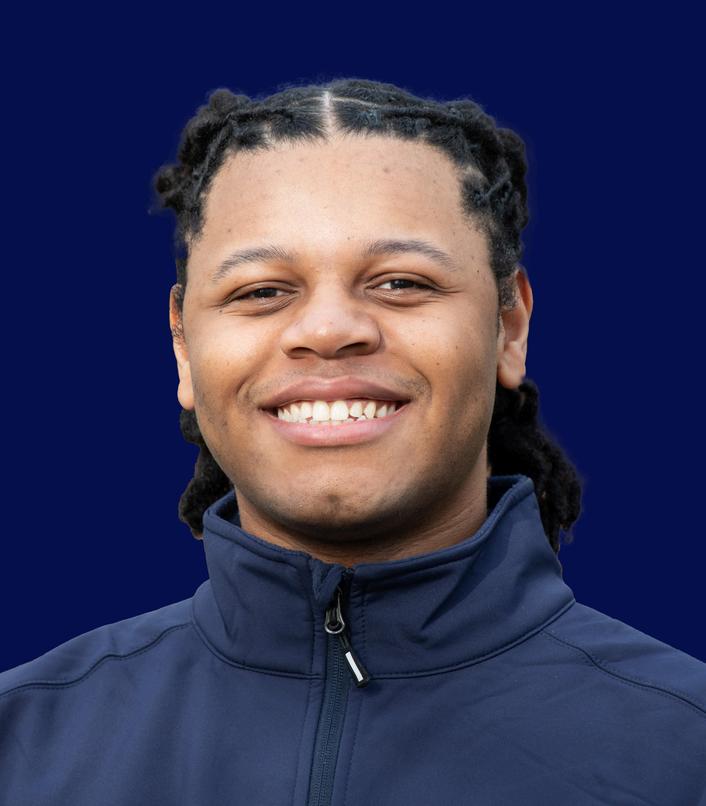
DEVON NELSON VDMC 2 YEARS
Please like and follow SATTL’s social media as we share updates!
Employment Recognitions
ZIMMERMAN
YEARS
JESSICA WHITEHEAD ICAR 5 YEARS
DEVON NELSON VDMC 2 YEARS
Please like and follow SATTL’s social media as we share updates!
ICAR Contributing to Two New Resilience Projects
February 4, 2026
Exciting news! ICAR’s staff will be actively contributing to two new resilience projects in collaboration with tribal and regional governments in Virginia.
Recently, the Virginia Department of Conservation and Recreation awarded new grants under their Community Flood Preparedness Program to ICAR’s partners.
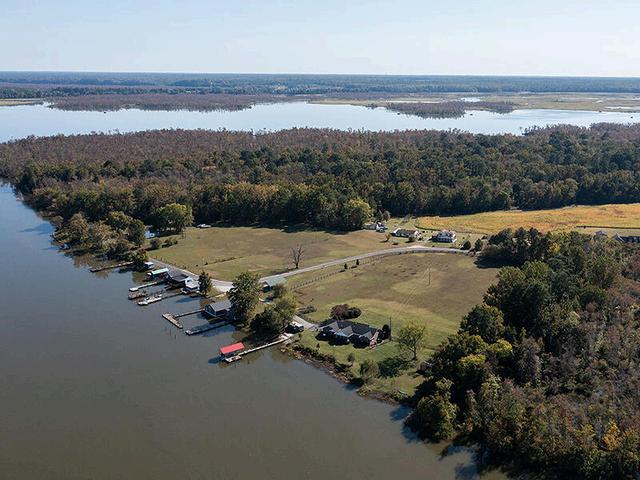
**The Pamunkey Indian Tribe will receive $362,900 to conduct a stormwater study and to create a resilience plan for their reservation. ICAR Faculty Members Trang Le and Matthew Falcone will be advising Joseph Capella, the Tribe's Natural Resources Director, as he leads this effort. Dr. Le will assist with the resilience plan development, while Dr. Falcone will t th t t t d

( )
to study "Assessing the Economic Hampton Roads' Flood Mitigation Resilience Natural Assets." ICAR's tadone, Executive Director Dr hitehead, and Assistant Director rkin will contribute to this ed by Benjamin McFarlane, AICP, DC's Chief Resilience Officer
Dr. Costadone will lead the study's Natural Capital Accounting component, evaluating the economic benefits of the region's forests, fields, dunes, and wetlands in reducing flood damage. Dr. Whitehead and Mr. Larkin will focus on science translation, community engagement, and policy integration for the study's results. For more details on the grant awards, go to the Virginia Department of Conservation and Recreation announcement here: https://www.dcr.virginia.gov/dam-safety-andfloodplains/dsfpm-cfpf-awards-round6
VDMC’s Executive Director Serves as Keynote Speaker for AMPP Forum
February 10, 2026
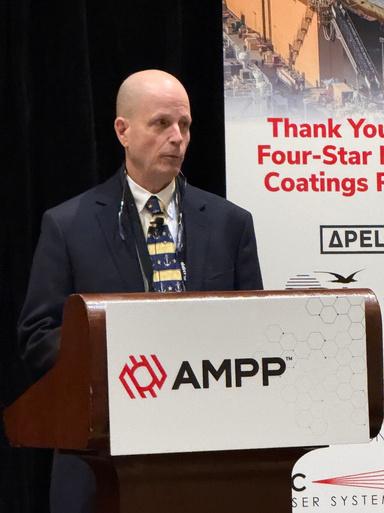
VDMC’s Executive Director Mark Whitney was honored to serve as the keynote speaker for the AMPP: Association for Materials Protection and Performance's inaugural Maritime Coatings Contractor Forum. During the keynote, Whitney reflected on his 42 years of experience in maritime education, Navy operations, shipyards, and private industry, and framed coatings and preservation not as a niche technical issue, but as a mission-critical driver of maritime readiness.
From seeing firsthand how misaligned budgeting, unrealistic workload assumptions and workforce constraints undermine shipyard performance to adopting a successful team-based planning, realistic training environments, and mechanic-driven innovation, Whitney has been able to witness what approaches in the maritime sector can be successful when authority, responsibility, and support were aligned.
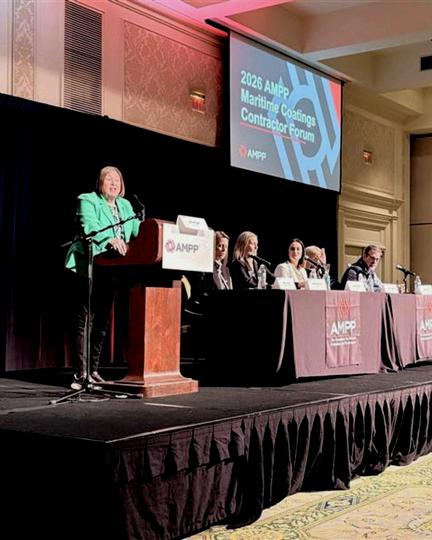
VDMC's Senior Program Manager for Maritime John Snell was also at the forum, introducing Executive Director Whitney for this keynote, as well as being on the panel - Workforce Development in the Maritime Industry: What's Working - and What Isn't.
VDMC was proud to contribute to the conversation at this forum and looks forward to continuing its work with partners across the maritime ecosystem to strengthen preservation practices, advance workforce development, and support long-term maritime readiness.

VDMC Receives New Funding for MTT Project
February 18, 2026
About the Project:
The Future of Marine Trades Training (MTT) is a research and evaluation initiative focused on strengthening how maritime skilled trades training is assessed, aligned, and communicated across a regional workforce ecosystem. Led by Dr. Jessica M. Johnson at Old Dominion University through the Virginia Digital Maritime Center, the project conducts a system-level evaluation of pre-hire maritime training programs in collaboration with training providers and industry partners.
The project examines how current in-person training prepares learners for the real cognitive, physical, and collaborative demands of maritime work, identifies gaps in instructional modalities, equipment, assessment, and data practices, and evaluates readiness for future simulation-based and technology-enhanced training. This project emphasizes empirical evaluation and framework validation grounded in authentic instructional practice.
A central outcome is the development of ANCHOR (Assessment Network for Competency, Human Performance, and Operational Readiness), a validated evaluation and communication data architecture that defines what should be assessed, what counts as credible evidence of skills/proficiencies, and how readiness information should be interpreted and shared across learners, instructors, training providers, and employers. Findings from this project will inform near-term training improvements and establish a research-grounded foundation for future digital evaluation and training intelligence systems for maritime and defense manufacturing training.
February 18, 2026
On behalf of Old Dominion University's Division of Research and Economic Development and Academic Affairs, the Department of Ocean and Earth Sciences Old Dominion University and ICAR partnered to facilitate the ODU Coastal Resilience Faculty Listening Session. This session brought together faculty from across campus to help shape a university-wide action plan focused on advancing coastal resilience research.
The workshop created space for meaningful conversations about what coastal resilience means for ODU, and how we can work together to define it as a university Faculty shared insights on the support needed to improve research outcomes, identified key resources and enabling factors, and provided feedback to guide next steps.
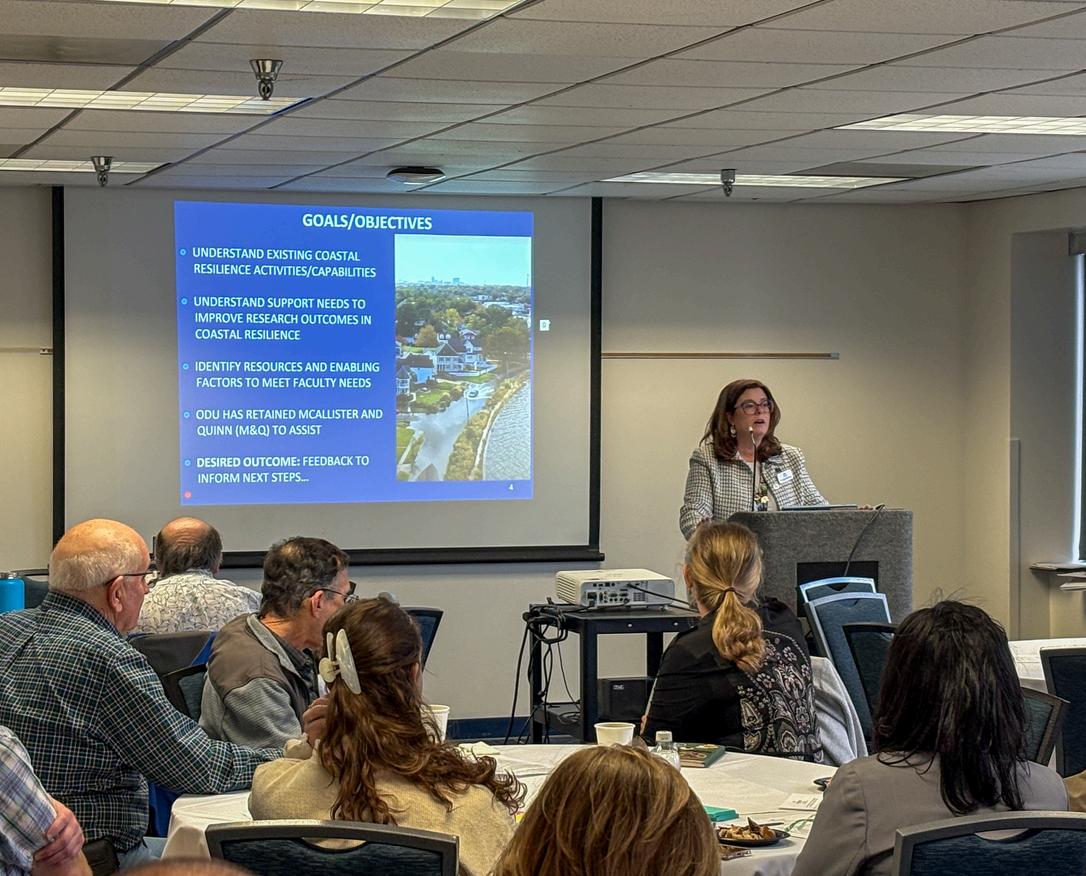
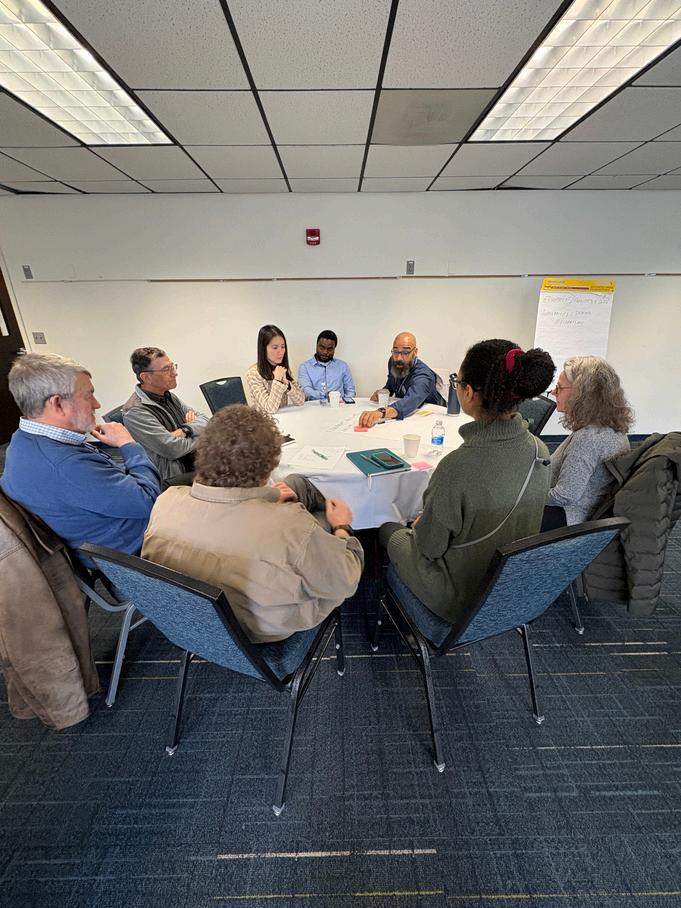
Attendees highlighted the breadth of coastal resilience work already happening across campus and discussed opportunities to better align strategic thrusts with the Centennial Cluster Initiative to support new faculty hires.
Breakout groups focused on identifying critical needs, including:
• Expertise gaps and strategies to address them
• Infrastructure needs
• Financial needs
• Student program development
February 1, 2026
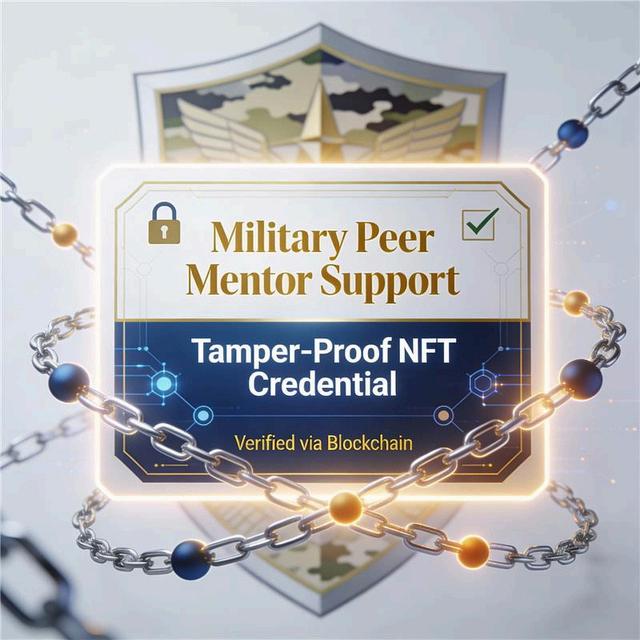
Title: CSICS and McDonald Army Health Center Researchers Pioneer Tamper-Proof NFT Credentials for Defense Health Agency Peer Mentor Program
Dr. Ross Gore, and Eranga Herath (Center for Secure & Intelligent Critical Systems) and Dr. Atma Yarlagadda (McDonald Army Health Center, Ft. Eustis) developed digital certificates that are issued as non-fungible tokens (NFTs) for participants graduating from a Peer Mentor Support program in the Defense Health Agency (DHA). These NFTs are tamper-resistant and permanently verifiable, serving as a trusted, lifelong record of participation in the program. This work is part of the ODU HEROES initiative and will be the foundation for a future grant focused on developing a soldier support system in the mental health space.
The HEROES Initiative focuses on enhancing the health and resiliency of those who protect(ed) and serve(d) the public, including Active-Duty/Veterans/trainees from all military branches, as well as civilian police, fire, and other emergency personnel. More on this initiative: https://www.odu.edu/heroes-initiative
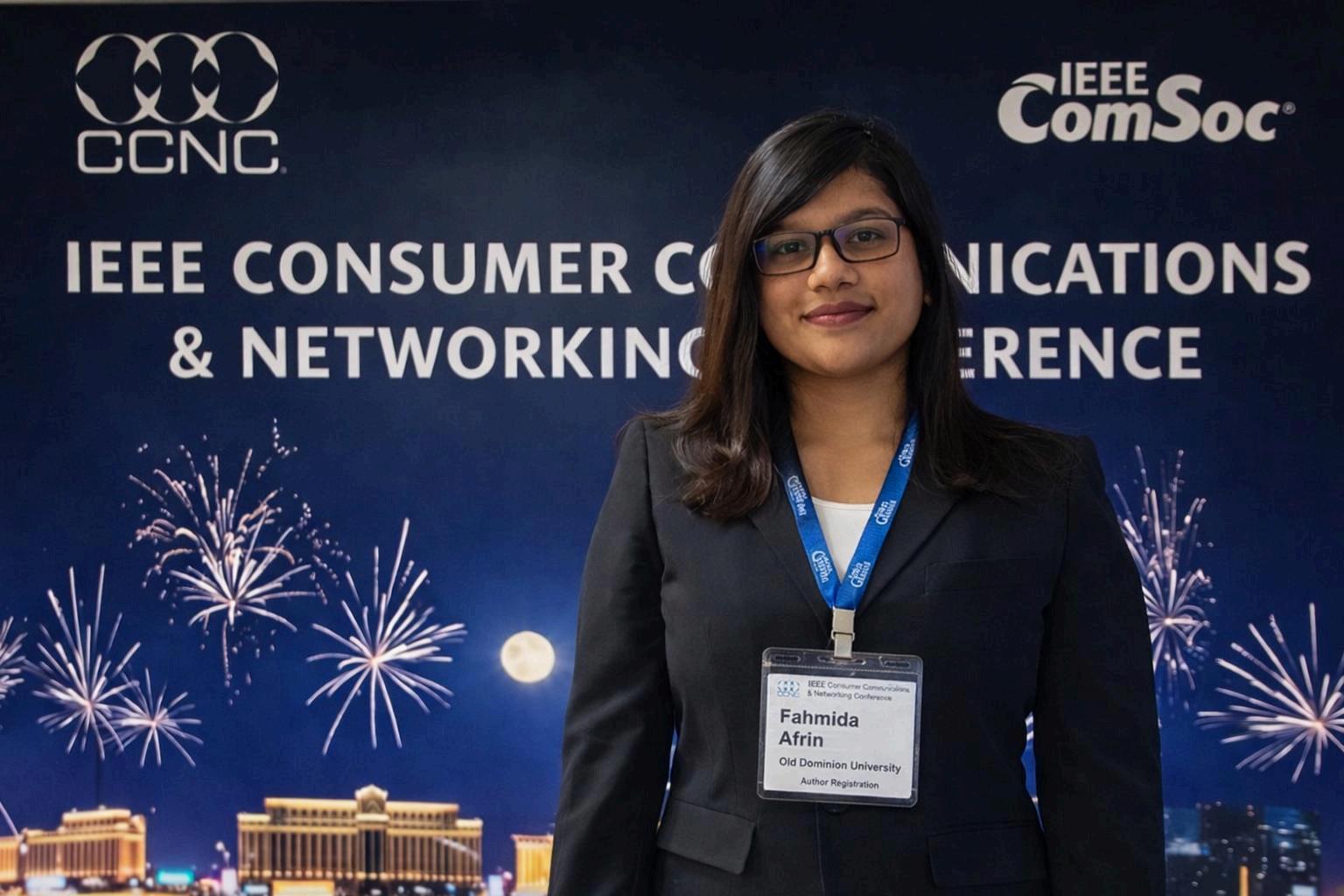
CSICS Student Presents Paper at IEEE Consumer Communications & Networking Conference
February 3, 2026
CSICS graduate student Fahmida Afrin had a wonderful experience attending the IEEE Consumer Communications & Networking Conference 2026, where she had the opportunity to present her research paper, "Multi-scale Graph Neural Network for Low-SNR Wireless Signal Classification," and engage with a vibrant community of researchers and practitioners. Discussing her work was especially rewarding, as it prompted thoughtful questions, constructive feedback, and valuable insights that helped her gain new perspectives on her research.
In addition to her presentation, Fahmida attended several technical sessions covering emerging topics in wireless communications, networking, and AIenabled systems. The keynote speeches were particularly inspiring, offering high-level insights into current challenges and future directions in the field. CCNC provided an excellent platform for learning, networking, and exchanging ideas with experts from both academia and industry. She is grateful for the experience and excited to apply what she learned to her ongoing and future research.
Fahmida is a PhD student in Electrical Engineering at Old Dominion University, specializing in wireless communications and intelligent networking systems. Her research focuses on AI-driven spectrum management, spectrum sensing, and radio fingerprinting, with an emphasis on graph neural networks and cross-layer optimization. Her work aims to improve the robustness, efficiency, and security of next-generation 5G/6G wireless systems in interference-heavy and shared-spectrum environments.
CSICS Integration Specialist Russell Moore published a post on Medium.com outlining an end-to-end workflow for taking a PyTorch model from “trained on an HPC GPU” to a shippable edge bundle.
It uses Old Dominion University's High Performance Computing (HPC) environment for reproducible training, then adds a lightweight xApp-style wrapper, exports the model to TorchScript for portability, validates it locally, and packages everything for transfer to an OAIBOX/edge device.
The goal is to bridge the gap between research code and deployable artifacts with a repeatable pattern that scales well beyond MNIST.
Check out his article here: https://medium.com/@r1moore/end-to-endworkflow-training-pytorch-model-on-odu-hpc-and-packaging-as-an-xappwrapper-80a8f59bbc70
Moore
Publication 1

Title: Situated Transfer: Extending Naturalistic Decision-Making Theory in Simulation to Workplace Skill Acquisition
Authors: Jessica Johnson, Andwele Grant
Cognitive Engineering and Naturalistic Decision-Making Conference Proceedings, June 22-26 at University of Virginia; Special Issue in Journal of Cognitive Engineering and Naturalistic Decision Making
Skill transfer from simulation-based environments to workplace performance remains one of the least theorized areas of Naturalistic Decision Making (NDM). Traditional models often frame transfer as discrete knowledge transport or “near vs. far” outcomes, overlooking the situated, context-sensitive processes by which decision strategies migrate across training and operational environments. This paper introduces the Situated Transfer Performance Model (STPM), a new theoretical framework that reconceptualizes transfer as a macrocognitive process embedded in naturalistic work. We propose Situated Transfer as a macrocognitive function, extending NDM beyond in-situation decision making. Grounded in Klein’s recognition-primed decision making, macrocognition, and situated learning theory, STPM identifies four mechanisms: 1) Cognitive Anchors, 2) Constraint Encoding, 3) Transfer Alignment Points, and 4) the Autonomy Curve, that explain how novices internalize, adapt, and reapply decision strategies across modalities such as simulation, AR-supported practice, and full-scale work. Empirical illustrations from industrial maritime training demonstrate how decision fidelity, rather than surface fidelity, supports adaptive expertise. STPM contributes to NDM theory by expanding its explanatory scope from in-situation decision making to cross-context decision transfer, filling a longstanding blind spot in the field. The model generates testable propositions for future NDM research, offers design principles for resilient workforce training, and lays a foundation for intelligent systems that scaffold situated transfer.
New VDMC Publications
Publication 2

Title: Artifical Intelligence as Cognitive orchestration: designing exploratory learning for macrocognitive transfer
Author: Jessica Johnson
Book Chapter: Artificial intelligence & transformative pedagogies in the digital age [in press]
Artificial intelligence and immersive technologies have been reshaping learning environments for decades, yet many systems remained anchored to performance-centric metrics that inadequately capture preparedness for complex, real-world work. In safety-critical and industrial domains, success depends not only on procedural accuracy but on macrocognitive capabilities such as sensemaking, adaptive decision-making, attention management, and team coordination under uncertainty. This chapter advances a design-oriented perspective on macrocognitive transfer as a central outcome of AI-enabled exploratory learning. Building on a synthesis of twenty-five years of simulation-based training research, the chapter reframes virtual and augmented learning environments as cognitive infrastructures rather than just content delivery platforms. Artificial intelligence is positioned not as an autonomous or adaptive tutor, rather as a mechanism for orchestrating variability, embedding expert cognitive models, and aligning learning experiences with the functional demands of real-world practice. By integrating macrocognitive theory, exploratory learning principles, and evidence from simulation research, the chapter proposes a Macrocognitive Transfer Framework for transformative pedagogies that move beyond performance metrics toward durable cognitive readiness, enabled pedagogical AI, and transfer across contexts.
New VDMC Publications
Publication 3


Title: Mapping Cognitive Fidelity in Joint Cognitive Systems: Neuroergonomics in Simulation-Based Training
Authors: Jessica Johnson, Ashley Buczkowski
Proceedings of 17th International Conference on Applied Human Factors and Ergonomics, July 20-24, 2026 Istanbul, Turkey
Assessing whether simulation-based training environments elicit the cognitive demands of real work remains a persistent challenge in human factors and neuroergonomics. This paper presents a meta-analysis of eye-tracking studies (2005–2025) conducted in live, virtual, and constructive simulation-based training environments across aviation, maritime, medical, military, and industrial domains, examining whether inconsistencies in prior findings are explained by variation in cognitive fidelity, which this paper defines as the degree to which simulations preserve the information-processing structure of operational tasks. Across 26 studies cognitive fidelity strongly moderated gaze–performance relationships. High cognitive fidelity simulations produced moderate-to-large and stable effects (mean r ≈ .48), whereas medium fidelity simulations showed attenuated effects (mean r ≈ .18) and low fidelity simulations yielded weak and heterogeneous effects (mean r ≈ .07), independent of simulator realism or eyetracker resolution. Risks emerged when eye tracking was applied to cognitively shallow or underspecified tasks, where gaze patterns reflected engagement or design artifacts rather than task-relevant cognition. The findings reposition eye tracking as a neuroergonomic diagnostic of cognitive fidelity, yielding actionable guidance for researchers and designers: cognitive work must be engineered before measurement, and eye tracking should be deployed after core design decisions stabilize to evaluate, compare, and refine cognitively faithful training systems.
Researchers at the Center for Secure and Intelligent Critical Systems (CSICS) at Old Dominion University are using cutting-edge AI to standardize how neuromuscular reflexes are assessed. This has direct applications for military readiness, rehabilitation, and sports performance.

Research Associate Professor Dr. Ross Gore, Senior Research Scientist Dr. Eranga Bandara, and Professor Dr. Sachin Shetty (CSICS), in collaboration with Dr. Christopher Rhea and Dr. Brittany Samulski from the ODU College of Health Sciences, have developed an agentic AI framework for automated, explainable analysis of Hoffmann reflex (H-reflex) EMG waveforms which are a key indicator of neuromuscular fatigue, injury, and recovery.
The system combines a consortium of fine-tuned Vision–Language Models (VLMs) with a reasoning Large Language Model (LLM)–enabled decision support system to deliver consistent, clinically interpretable assessments directly from EMG waveform images and contextual metadata. This is one of the first responsible and explainable AI-driven decision support systems for H-reflex analysis.
This work is part of the ongoing HEROES (Health Enhancement & Resiliency for those who Serve(d)) Initiative at ODU. Hampton Roads is home to 100,000+ active-duty military personnel and 200,000+ Veterans. The HEROES Initiative is working to connect ODU's research expertise with these communities to enhance their health and resiliency, aligned with ODU's Forward-Focused: Where Innovation Meets Possibilities Strategic Plan.
Read the full paper here: https://doi.org/10.3390/biomechanics6010023
More on the HEROES Initiative: https://www.odu.edu/heroes-initiative
13newsnow.com
February 11, 2026
ICAR’s Executive Director Jessica Whitehead was recently interviewed by reporter Jordie Clark with 13News Now (WVEC) (ABC Affiliate) about what is being done in Hampton Roads to prepare our coastal communities to be more resilient to extreme weather events and changing environmental conditions.
In the interview, Dr. Whitehead said that "The fact that City of Norfolk, VA, City of Hampton, City of Virginia Beach, City of Newport News and all of these other cities are actively taking action [to become more resilient] is remarkable nationally. Usually, we only see these kinds of things being done post major disaster . . . When you're trying to go back after the fact, you lose a lot of options . . . When you plan ahead, you have a lot more time to think about what is the best option to pursue."
About ICAR, Dr. Whitehead said "We are very much focused on how do we take innovative solutions, how do we understand what works and what doesn't work, and get [those solutions] on the ground for people."
Check out the story here: https://www.13newsnow.com/video/tech/science/environment/hampton-roadsleading-the-way-in-coastal-resilience-planning/291-f46ec24b-c75d-4598-91a951905a920b31



ICAR, along with ODU’s School of Public Service and the Hampton Roads Planning District Commission, is hosting a Hampton Roads Adaptation Forum at OERI on Friday, April 3 from 9:00 am until 2:00 pm.
The theme is Emergency Communications & Messaging. The Adaptation Forums are quarterly meetings to bring together professionals in adaptation including local municipal government staff, scientific experts, private sector engineers, state and federal agency staff, NGOs and other stakeholders to facilitate regional coordination, information exchange and share adaptation best practices.
