
BY
BY
BY JACOB RABE & KHIVI SINGH
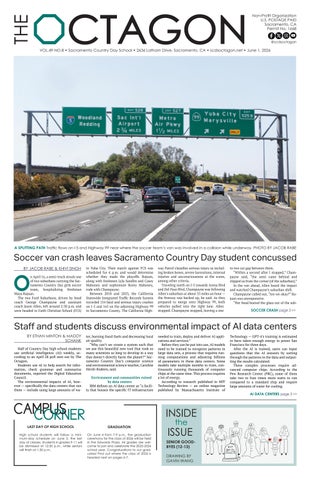
On April 16, a semi-truck struck one of two suburbans carrying the Sacramento Country Day girls soccer team, hospitalizing freshman Maya Rajuan.
The two Ford Suburbans, driven by head coach George Champayne and assistant coach Jason Allen, left around 2:30 p.m. and were headed to Faith Christian School (FCS)
in Yuba City. Their match against FCS was scheduled for 4 p.m. and would determine whether they made the playoffs. Rajuan, along with freshmen Lyla Sandlin and Casey Mahoney and sophomore Rorey Mahoney, rode with Champayne.
Between 2018 and 2023, the California Statewide Integrated Traffic Records System recorded 154 fatal and serious injury crashes on I-5 and 165 on the adjoining Highway 99 in Sacramento County. The California High-
way Patrol classifies serious injury as including broken bones, severe lacerations, internal injuries and unconsciousness at the scene, among other criteria.
Traveling north on I-5 towards Arena Blvd and Del Paso Blvd, Champayne was following Allen’s suburban at about 35 miles an hour — the freeway was backed up, he said. As they prepared to merge onto Highway 99, both vehicles pulled into the right lane. Allen stopped. Champayne stopped, leaving a one
to two car gap between them.
“Within a second after I stopped,” Champayne said, “the semi came behind and clipped us from the corner [of the suburban].” In the van ahead, Allen heard the impact and watched Champayne’s suburban shift. Champayne called out, “Are we okay?” Rajuan was unresponsive.
“Her head busted the glass out of the sub-
SOCCER CRASH page 3 >>
BY ETHAN MINTON & MADDY SCHANK
Half of Country Day high school students use artificial intelligence (AI) weekly, according to an April 28 poll sent out by The Octagon.
Students use AI to help search for information, check grammar and summarize documents, reported the Digital Education Council.
The environmental impacts of AI, however — specifically the data centers that run them — include using large amounts of wa
ter, burning fossil fuels and decreasing local air quality.
“Why can’t we create a system such that we use this beautiful new tool that took so many scientists so long to develop in a way that doesn’t directly harm the planet?” Sacramento Country Day’s computer science and environmental science teacher, Caroline Hersh-Rodeen, said.
Environment and communities ruined by data centers
IBM defines an AI data center as “a facility that houses the specific IT infrastructure
needed to train, deploy and deliver AI applications and services.”
Before they can be put into use, AI models need to be trained to recognize patterns in large data sets, a process that requires running computations and adjusting billions of parameters in these data centers. Some models take multiple months to train, continuously running thousands of computer chips at the same time. This process requires a lot of energy.
According to research published in MIT Technology Review — an online magazine published by Massachusetts Institute of
Technology — GPT-4’s training is estimated to have taken enough energy to power San Francisco for three days.
After the AI is trained, users can input questions that the AI answers by sorting through the patterns in the data and outputting the results calculated.
These complex processes require advanced computer chips. According to the Pew Research Center (PRC), some of them take two to four times more watts to run compared to a standard chip and require large amounts of water for cooling.
AI DATA CENTERS page 3 >>
High school students will follow a minimum-day schedule on June 3, the last day of classes. Students in grades 9-11 will be dismissed at 12:30 p.m., while seniors will finish at 1:30 p.m.
On June 4 from 7-9 p.m., the graduation ceremony for the class of 2026 will be held in the Edwards Plaza. All grades are welcome to join and celebrate the 2025-2026 school year. Congratulations to our graduates! Find out where the class of 2026 is headed next on pages 6-7.
EDITORS-IN-CHIEF
Rehan Afzal
Eesha Dhawan
Anisha Mondal
Zema Nasirov
COPY EDITORS
Maddy Schank
Ryan Xu
Eesha Dhawan
NEWS EDITOR
Kate Barnes
FEATURE EDITOR
Jacob Rabe
SPORTS EDITOR
Parsiny Nijher
A&E/OPINION EDITOR
Anika Nadgauda
PHOTO EDITOR
Rehan Afzal
TECHNOLOGY STAFF
Ryan Xu, manager
Sid Shukla, assistant
PAGE EDITORS
Rehan Afzal
Noor Alameri
Lukas Chung
Jesse Dizon
Vivian Li
Anisha Mondal
Anika Nadgauda
Zema Nasirov
Jacob Rabe
Sid Shukla
Zachary Vando-Milberger
BUSINESS STAFF
Sid Shukla, manager
SOCIAL MEDIA STAFF
Anika Nadgauda, editor
REPORTERS
Chloey Fang
Trisha Gandhi
Lucas Holz
Ammar Hussain
Ethan Minton
Maggie Nuñez-Aguilera
Parsa Salari
Maddy Schank
Sid Shukla
Khivi Singh
Zachary Vando-Milberger
Susie Wang
Brenden Yu
PHOTOGRAPHERS
Rehan Afzal, editor
Zema Nasirov
MULTIMEDIA STAFF
Ryan Xu, editor
Rehan Afzal
GRAPHIC ARTISTS
Claire Gemmell
Zema Nasirov
Gavin Wang
ADVISER
Andrea Todd
The Octagon is the student-run newspaper of Sacramento Country Day high school.
The print edition is published eight times a year, and the website is updated regularly. The Octagon is committed to unbiased and comprehensive reporting, serving as a source of reliable information for SCDS students and the school community. The Octagon will publish all timely and relevant news deemed appropriate by the editors-in-chief and adviser. We seek to highlight high-school-related events and spotlight the voices of those with a story to share. Further policies can be found on our website (scdsoctagon.net) or by scanning the QR code below.

BY TRISHA GANDHI
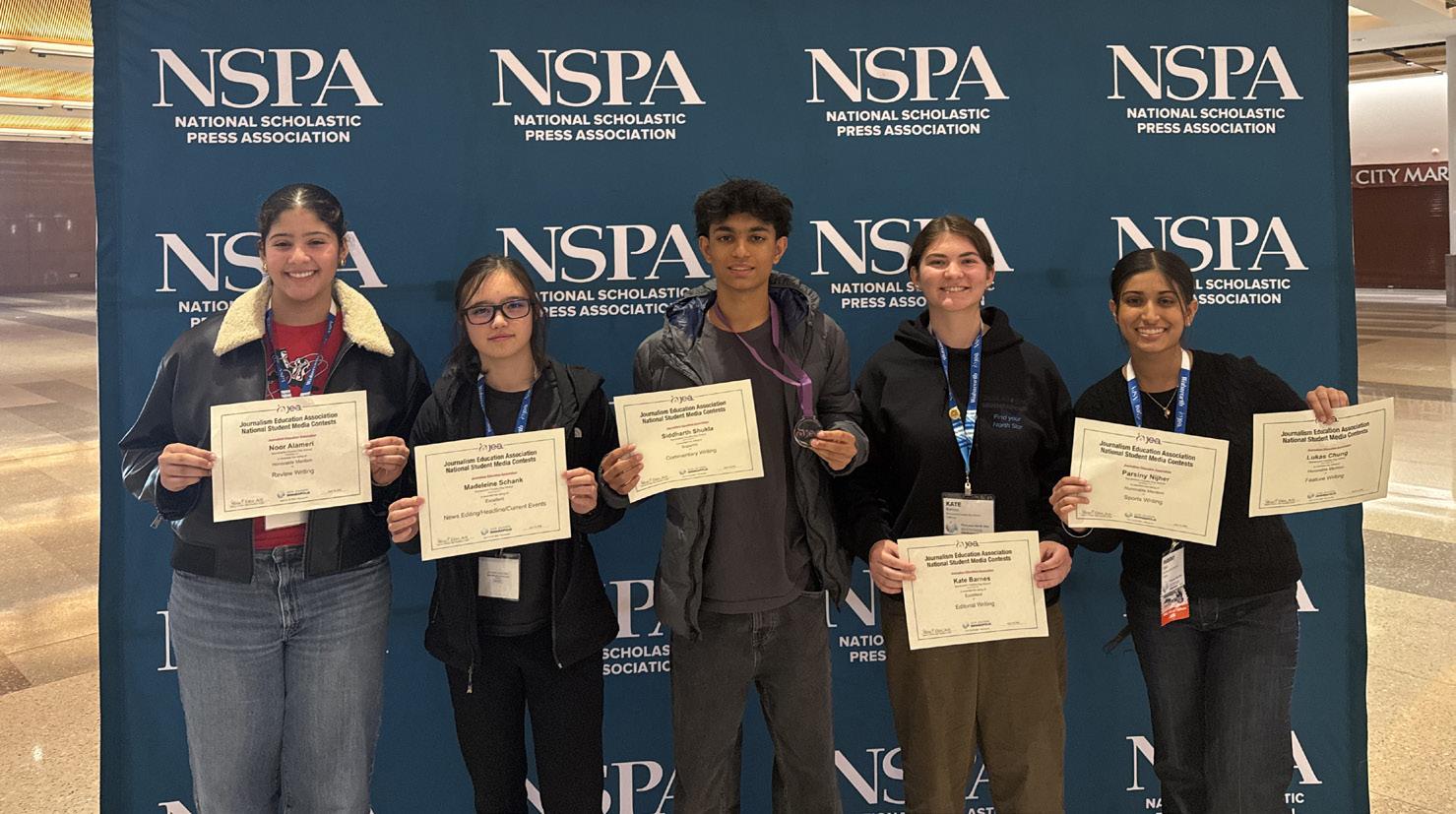
On April 16-19, 15 Octagon staffers and three Medallion staffers attended the 2026 National High School Journalism Convention (NHSJC) in Minneapolis. This year, seven Sacramento Country Day students competed on-site in the Journalism Education Association’s National Student Media Contests (NSMC); six took home an award.
The NHSJC hosted 5,000 student journalists from a variety of schools nationwide.
At NHSJC, students spent the two days of the trip attending various writing workshops, speaker events and media critiques.
On April 17, seven students from Country Day participated in the on-site NSMC. Each competitor got two hours to complete their article, provided with paper, a pencil, a dictionary, an AP style guide and a recording device if an interview was needed. Notable entries were ranked either “Honorable Mention,” “Excellent” or “Superior.”
Octagon staffers earned a Superior award, two Excellent awards and three Honorable Mentions.
This year Octagon reporters sophomore Parsiny Nijher and juniors Lukas Chung and Noor Alameri won Honorable Mention in their various competitions: Alameri for Review Writing, Chung for Feature Writing and Nijher for Sports Writing.
Judges presented two Excellent awards to Octagon staffers: junior Kate Barnes for Editorial Writing and sophomore Maddy Schank for News Editing/Current Events/Headline Writing.
Sophomore Sid Shukla competed in the Commentary Writing contest. Because he had no experience in on-site competition, Shukla was nervous going into the competition.
“With the cold prompt, I didn’t know what to expect. I felt pretty unprepared and nervous but also excited since it was my first ever time competing,” he said.
Despite his apprehension, Shukla earned Country Day’s only Superior award.
“My initial reaction was shock, since after they announced the excellent and honorable mention people I genuinely didn’t have any hope,” Shukla said.
When asked what advice he would give to the future competitors, he said that students shouldn’t rely on technology when writing pieces.
“You don’t get a computer in the competition, so you can’t check for any grammar mistakes or anything like that, and you need to
know AP style,” he said.
Octagon adviser Andrea Todd said that she specifically lobbied Shukla to participate in the Commentary Writing competition based on his experience.
“The only person I asked to do the contest was Sid. I asked Sid to do the commentary writing because he expresses his opinions very eloquently,” she said. “He texted me ahead of time about the contest and what it would be like, what he should do and how he could prepare.”
Upon hearing about the six awards, Todd was “amazed.”
“I had to get up and leave before the winners were announced for each of our categories because of our dinner reservations, but I’m just so proud. I couldn’t believe it when I heard six out of seven won an award,” she said.
This year was freshman Khivi Singh’s first year participating in NHSJC. Singh will be The Octagon’s feature section editor for the 202627 school year.
Singh said the experience was an educational one.
“I had really high hopes, and I knew that I was going to learn a lot, and I did. So I picked a lot of classes that I felt aligned with my new position on The Octagon and with my general interests,” she said.
NHSJC hosted yearbook staffers as well and proved beneficial for Medallion staffers, according to junior Aziza Halim.
Halim, current assistant editor-in-chief of
Country Day’s yearbook, the Medallion, attended the NHSJC for the second time.
Halim decided to attend again because of the educational advantages one can gain from the classes at the convention center.
“I know this journalism trip offered classes for both writing and yearbook. So I looked at the classes they offered, like photography, and did yearbook-focused classes,” she said.
Halim described this experience as a great opportunity to meet yearbook staff from different schools.
“I got to connect with other editors in the yearbook, which is the same position I have. I just met a bunch of people, and it was really nice to see different perspectives,” she said.
Students also got an opportunity to explore Minneapolis by venturing to the Mississippi River or taking the metro rail to the Mall of America. One memorable restaurant experience was at The Newsroom, which the whole group dined at on the last night of the trip.
“Overall, my favorite part of the trip was being able to finish classes super early and just explore the city, go to different places, and watch five movies per night with my friends,” Shukla said.
Todd concluded that the spring 2026 NHSJC was a success for The Octagon as a whole.
“I think [the convention] bodes well for the future of the paper, and I think next year is going to be even better,” Todd said.
BY VIVIAN LI
New positions have been announced for Student Council, The Octagon and The Medallion for the 2026-27 school year.
The high school Student Council, which oversees school events and activities, has selected the students who will take over from the current student body leaders.
President senior Gavin Wang and vice president senior Liam Donohue selected juniors Justin Lawson and Diana Haus to become co-presidents.
“Justin is a charismatic leader, and he’s on top of everything. Because he is approachable, he’s able to get more people involved in school events such as rallies and games,” Donohue said. “Diana, on the other hand, is an experienced member of Student Council. She’s very good at managing the finer details of activities.”
Patricia Jacobsen, Student Council adviser and high school dean of student life, highlighted how Lawson and Haus are equally suitable for the roles.
“Sitting down with all the seniors on Student Council, it was unclear who would result in a better president,” Jacobsen said. “We’ve got two people who excel in what they do, and they’ve both shown over the past few years that the role of president would be a good role for them.”
Jacobsen explained the transition of Student Council’s leadership from a president and vice president to two co-presidents. The decision, according to her, aims to create a balanced and dynamic leadership team for next year.
“They’re good friends, and they’ve also been leaders of their class for a long time. They bring two different personalities together to Student Council, and I think
they’ll balance each other out well,” said Jacobsen.
The Octagon, under the leadership of its student editors-in-chief (EICs) and adviser Andrea Todd, publishes eight issues each school year and operates its website, scdsoctagon.net.
EICs are selected based not only on their experience with The Octagon, but also on their communication skills, productivity and ability to collaborate effectively while leading and supporting the staff.
Senior co-EICs Zema Nasirov, Anisha Mondal, Eesha Dhawan and Rehan Afzal selected juniors Kate Barnes, Lukas Chung, Jacob Rabe and sophomore Parsiny Nijher to lead The Octagon for the upcoming year.
“We considered group chemistry when deciding our EICs for the 2026-27 school year, and the collective four of them have all shown their willingness to do more than what they’re asked,” Nasirov said. “In their respective sections, I would say they’ve all exemplified that they really understand and know how to write or edit stories in each format.”
Co-EIC Rabe stressed the importance of being available for other student staffers. “I’d like to let people know that I can take on more work than normal — just something small to make their jobs less stressful,” he said.
Eager to start her tenure, co-EIC Barnes plans to strengthen The Octagon by fostering a more collaborative atmosphere.
“A good first step would be to ask our staffers what they want to change and what they want to stay the same,” she said. “Their input matters most.”
The Medallion staff produces the school’s yearbook by the end of each academic year. Juniors Aziza Halim and Ana Bains will replace seniors Claire Gemmell
and Itzel Zamora as co-EICs for the 202627 school year.
“Aziza has a great presence in the yearbook. She’s creative, dedicated, detail-oriented and super supportive of the student staff,” said The Medallion’s adviser Sarah Zaragoza-Smith. “Ana is extremely deadline-oriented, often turning in assignments early. She was on top of everything in a really impressive, mature and responsible way.”
Zaragoza-Smith emphasized the balance between the two future EICs.
“I think Aziza is an incredible creative force, and Ana is the steadying force that helps everyone stay on track, understand deadlines and work toward meeting them,” Zaragoza-Smith said. “That’s a beautiful balance, and I believe we’ll be tremendously successful next year.”
Halim has been involved in yearbook production since her sophomore year, progressing from staff member to assistant editor. She hopes to apply what she has learned from past editors to her role as EIC.
“Next year, I want to work closely with Ana to keep everyone on track and make sure we meet deadlines,” Halim said. “Since EICs will have more responsibility reviewing spreads and giving feedback, staying organized will matter a lot. I also want us to choose a theme everyone likes and let people work on spreads they enjoy because that makes the work stronger and helps the whole staff stay motivated.”
Looking ahead, Zaragoza-Smith hopes more students will recognize the value of the yearbook and the stories it preserves.
“It’s worth it, and dedicating your time to telling the story of the year is really an incredible endeavor,” Zaragoza-Smith said. “I hope more students want to join us in achieving that.”
(continued from page 1)
urban, popped the glass right out. It was a loud crunch sound,” Champayne said.
“Some cops came, assessed the situation, took my information, and then they said that I needed an ambulance,” Rajuan said. “They took me to the hospital for the night, where I got tests. I had nerve and muscle damage, a concussion, trauma to the body, bruises and cuts.”
Following the collision, Champayne and Athletic Director Matt Vargo chose to postpone the soccer match. Vargo brought another van to transport students back to school.
“I don’t think we’ve had an accident like this for over 10 years,” Head of School Lee
Thomsen said. “I’ve been here for 10 years and I don’t recall anything like this happening.”
Chief Financial Officer Bill Petchauer and Director of Transportation Jay Holman were handling the incident while Thomsen was out of town.
Thomsen acknowledged the school fell short in one area.
“We could have done a better job of following up with families and kids later that day or in the evening, just to, you know — if the accident occurred at 2 o’clock, to call at 7 and be like, ‘hey, just checking in,’” Thomsen said.
“As I understand the police report so far,” Thomsen said, “our van was traveling as it should and was rear-ended by the truck.”
Rajuan sat out the remainder of the soccer

season and received academic accommodations, including for her finals.
“I just get one question at a time,” Rajuan said. “Once my brain gets blurry, I’ll take a break and come back.”
The crash raised questions about Country Day’s concussion protocols.
Under California Education Code (EDC) § 49475, private schools offering athletic programs must require athletes to sign a concussion and head injury information sheet annually and complete a graduated return-to-play protocol — staged physical activity before an athlete resumes full contact — of no less than seven days following a concussion.
Country Day’s handbook satisfies neither requirement; it only asks student-athletes to “submit a form to Country Day indicating a physical evaluation has been completed,” mentioning neither a concussion information sheet nor a graduated return-to-play protocol.
Nearby private schools Jesuit High School and Christian Brothers High School both maintain explicit concussion protocols.
Reached for comment, Thomsen responded via email.
“Country Day takes concussions very seriously, and we do follow concussion protocols. All of our coaches are required to take a concussion in sports certification through the National Federation of State High School Associations. In every case where one occurs with a Country Day athlete, which is rare, we work with their medical professionals to ensure a safe return to the classroom or field.”
On Rajuan’s specific accommodations, he wrote:
“For all students with concussions, we ask for and follow the recommendations of their medical professional. In this case, the student did not return to athletics, has limited screen use, and has extended time/exemptions on academic work, as per the medical documentation.”
He acknowledged one gap.
“In the past, we distributed an athletic concussion paper information sheet to all families of athletes. It appears we have not included that in our handbook, and we will do so as we make our annual revisions this summer,” Thomsen wrote.
Because Rajuan’s concussion occurred during transit rather than an athletic activity, the statute’s return-to-play requirements would not have applied to her situation specifically.
Champayne has served as the head coach of girls soccer at Country Day since 1995. The crash settled a decision he’d been considering.
“When I went to Sacramento Country Day, it kind of felt like family. So when we got hit, the thoughts that came to my mind were, ‘I don’t want to put myself in that position again,’” Champayne said. “That kind of made me make my decision to retire.”
He had already been planning to retire alongside his wife and travel — after 31 years, he said, it was just time.
“I just didn’t want to put myself in a position with having seven, eight girls in the car and something happening,” Champayne said.
On April 20, the girls soccer team won 5-2 in their rescheduled game against FCS.

(continued from page 1)
Rough estimates from organizations like that of University of California, Riverside claim that water usage from California data centers alone reached 49.9 billion tons as of 2023, with that number set to increase.
The creator of the organization Internet Of Water, a movement and data infrastructure designed to make public water data open, discoverable and digitally accessible, Peter Colohan, shared in an interview that wherever companies choose to put a data center, it is like a “giant soda straw sucking water out of local basins around the world.”
The impact of data centers is not limited to water. The Kapor Foundation, a nonprofit organization focused on making technology more accessible, estimates that by 2030, 1,300 premature deaths, accounting for over 33% of asthma-related deaths, across the United States will be because of data centers’ diesel-powered generators, which produce a toxic chemical called diesel particulate matter (PM). The foundation cites that 82% of data centers are located in communities with poor air quality in California — measured by diesel PM levels — as well as areas with “groundwater threats, and high concentrations of hazardous waste, potentially exacerbating harm to these communities.”
Kapor Foundation also highlights Del Paso Heights in Sacramento, a neighborhood that has reported high amounts of poverty and pollution. It has led to some of the highest asthma rates in California, with one neighborhood in the 100th percentile.
Within a few miles of Del Paso Heights, there are two data center campuses: one totaling 52.7 megawatts (MW) and another to-
taling 26 MW. NTT Data Center Campus was built in 2015 and Prime Data Center Campus was completed in 2020, both of which have likely led to heightened respiratory illnesses in the area, per the Kapor Foundation.
Energy requirement is a concern
Junior Matthew Inman said that his classmates’ frequent use of AI frightens him.
“When I was preparing for a Bio[logy] test earlier this year, I asked a classmate who did particularly well, ‘how did you do so well?’” Inman said.
Their answer: AI.
With over 200 million more weekly users using ChatGPT in February 2026 compared to September 2025 according to OpenAI’s website, advancements in the AI tech sector are necessary — especially in California. Silicon Valley has become a hub for data centers — Santa Clara alone possesses 57 active or under-construction data centers.
With the uptick in AI users, these centers now require more power than before. According to the Lincoln Institute of Land Policy, a nonprofit think tank focused on land use, Meta’s Hyperion data center in Louisiana is set to require twice the power of the city of New Orleans once completed.
Hersh-Rodeen doesn’t put the blame on the consumers, but rather the environmental policies in place.
“When we have societal problems, there is an inclination to blame the individual and their use of a certain product, rather than blame and then take action to change the system that created this problem, and I think that that is a dangerous mistake to make as a society,” Hersh-Rodeen said. “The people who benefit from this system continue to benefit
from it because it’s not changed.”
In 2025, California Gov. Gavin Newsom vetoed a proposal that would have required data center operators to report their water use, even after the bill was weakened. Newsom signed one data-center-related measure that year, which allowed regulators to determine whether data centers are driving up costs.
“Getting rid of AI is only going to lower us back to what was already unsustainable,” Hersh-Rodeen said. “We really need to work on lowering [environmental impacts] overall, and I think that that’s a piece that is missing out of a lot of the outrage.”
Looking forward to solutions
Because of the amount of energy needed to support AI data centers, many companies create their own power sources — either from fossil fuel plants or more environmentalyly-friendly options, like wind farms or solar.
AI data centers also have the option to pull from local grids, which are often powered by fossil fuels.
Dave Tamayo is the president of the board of directors at the Sacramento Municipal Security District (SMUD) — a community-owned, not-for-profit electric utility provider for Sacramento County and small parts of Placer and Yolo counties in California.
“We can’t actually control where they get their energy from, but what we are doing is we’re working with folks to make sure that they understand what their options are,” Tamayo said. “If they come into Sacramento, and they want to build their own generation behind the meter, that means that they own it, and we can’t tell them what to do, but we can set requirements on how they interact with our system.”
Some power companies have begun to shift their energy sources to renewable energy, with SMUD having a goal of 100% carbon free energy by 2030. AI data centers can strain local grids by drawing mass amounts of power, but the data centers can also support them with the right infrastructure.
“AI isn’t just a really large load, a big draw on our system,” Tamayo said. “If they put in the right type of electrical generation or batteries on their site, that can be very valuable to helping us run the grid more efficiently. If they have more energy than they need, then they can sell it to us and use it to support our grid when we need that energy.”
Hersh-Rodeen said that AI data centers using renewable energy would make her feel better about using AI.
“If we had different power sources, it wouldn’t be using fossil fuels and thus contributing to climate change. It would be using the wind or the sun or something. And then I wouldn’t feel bad about using it because sunlight is everywhere. It’s not causing a problem,” she said.
Tamayo hopes that engineering events that SMUD hosts — such as Solar Regatta, a solar-powered boat competition — will encourage the next generation of innovators to invent more sustainable technologies.
“I’m really looking forward to learning about how the young people here [at Solar Regatta] go on,” Tamayo said.
“We really need people to be interested in this, and it’s an exciting field. Rebuilding the energy system for the entire country is an exciting prospect.”
the 2025-26 school year. Bauman’s position will be filled by Jeff Grant, Day’s by Mika Court and Perla’s by Susan McGuire.
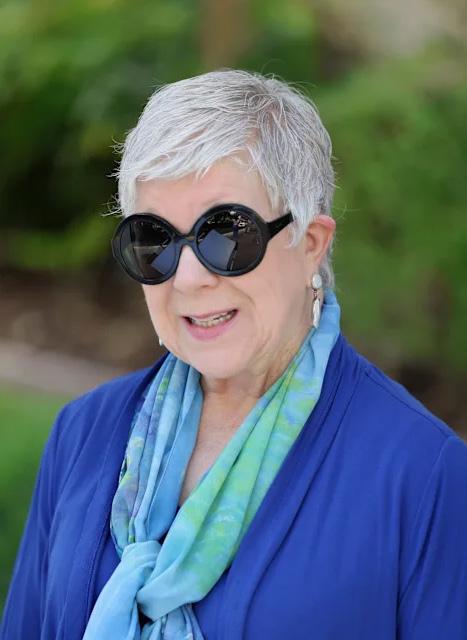
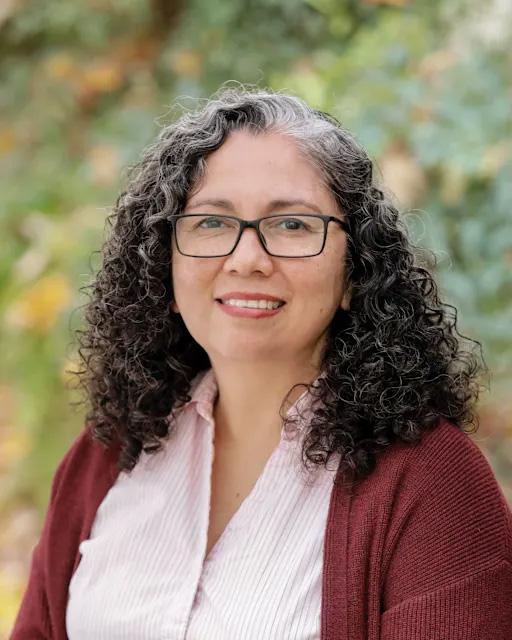
STORY BY ZACHARY VANDO-MILBERGER; GRAPHICS BY LUKAS CHUNG
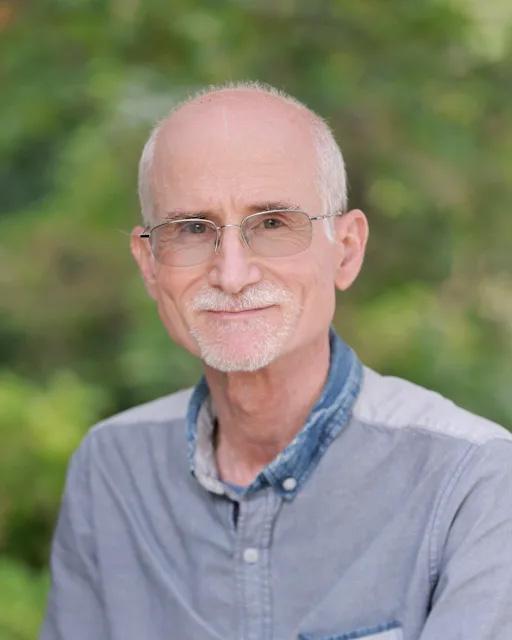
High school French teacher Richard Day began his teaching career at Country Day in the spring of 1995. He was fresh out of graduate school from University of California (UC), Davis. He had met the then-lower school French teacher Gerlinde Klauser when she taught a language class at UC Davis. She recommended him for a two to two and a half month substitute position at Country Day. Instantly, he liked working there.
“I liked the vibe. I liked the small school. I liked the kids. The students seemed motivated, and the faculty seemed very committed and devoted,” Day said.
But after that short stint, he returned to his family in France for two years.
When he returned in 1997, Klauser told him about open French teaching positions in both the middle and high schools. He preferred high school.
“I had realized that I was not cut out for middle school. I don’t really have the temperament to work with people that age,” he said.
He was named the new high
school French teacher, which he has remained for 29 years.
Day’s favorite memories from his time at Country Day include taking his students to Café Rolle (a now-closed French café on H street), attending the Monterey Jazz Festival with the music students and playing guitar and harmonica in the faculty jazz band (FJC), which included Bob Ratcliff, a math teacher who played piano and a physics teacher who played trumpet and Ratcliff’s friend, a professional drummer.
The FJC got gigs in Davis because of Day’s connections there.
“We thought, well, this is fun. Why don’t we gig out? So we actually started gigging outside the school,” he said.
Day enjoyed the free reign he has had as a teacher.
“I’ve liked the freedom, basically, to run my classes the way I want,” he said.
But after nearly three decades of l’enseignement du francais, it was finally time for un changement de course.
“I want to relax when I have time
to do what I want to do while I still can,” he said.
But Day isn’t quite ready to disappear.
“I do want to stick around, but in a capacity that’s just more relaxed. I’m looking forward to being able to come in and sub and keep my foot in the door, so to speak, without any pressure,” he said.
He says that being around kids makes him feel younger and happier, and it provides some sense of escape.
“When there are heavy things that are going on in your life, being around kids, for me, has been kind of a break,” he said.
Looking to the future, Day wants to slowly move away from substituting. He looks forward to visiting his family in France and having more time pour lui.
“I don’t anticipate going back this summer, but I don’t have to wait for the summer anymore. I could go back, pretty much anytime I want,” he said.
“To use musical jargon, you know, all in all, it’s been a good gig.”
High School English teacher Jane Bauman started as a long-term substitute for lower school French in 2003. After substituting twice, a position opened up in high school English. She was originally hired to teach English 9 in 2005.
For most of her Country Day tenure, Bauman has been a part-time teacher. She taught three ninth grade English classes until 2012, when she became Director of College Counseling. She worked as a college counselor until 2022.
She continued to teach English for 10 more years at the same time, eventually switching to Advanced Placement English. In 2025, Bauman received the High School Faculty Award for the 2024-25 school year.
Bauman obtained her undergraduate degree in French literature at UC Santa Cruz.
“UC Santa Cruz had a special kind of approach to education. The emphasis is on students finding their interests and individualizing their study,” she said.
UC Santa Cruz didn’t give traditional report cards when she gradu-
ated. Instead, they gave long evaluation comments/transcripts, a style which further influences the way she teaches.
This style of learning resonated with Bauman and was a large part of her choice to teach at Country Day, rather than another school.
“Many aspects of independent education resonate with me: helping students find their voice, helping them tailor their education to what is important to them,” she said.
One of her favorite aspects of her work at Country Day was her time as the Director of College Counseling.
“As a college counselor, I had some incredible opportunities. Colleges sponsor trips to their campuses for college counselors, and I was invited to see NYU Abu Dhabi,” she said.
She later sent a student to NYU Abu Dhabi, and she is still in touch with him to this day.
The thing she will miss most?
“The intellectual connections with students and colleagues.”
What she won’t miss at all?
“Grading,” calling a stack of ungrad-
ed essays “daunting.” Bauman said she purposely assigned essays “of a personal nature” because they were “more interesting to read.”
She has a deeper connection to Country Day than just being a teacher.
“My daughter [Claire] graduated in 2009, and my son [Jeff] graduated in 2006, so they had the Country Day high school experience,” she said.
Her husband, Paul Bauman, also served as an adviser for The Octagon Give Dates here.
“Country Day has been in our family and in our life for many, many years,” she said.
Bauman looks forward to spending more time traveling and with her husband.
“I’ve been here for 23 years, so I’m ready to do something else. I joke around that if I don’t retire, my husband’s going to travel without me,” she said.
The Octagon would like to thank Bauman for letting us use her room for class hours and late-night pasteups. Ammar says, “Sorry about the thermostat!”
Alicia Perla joined Country Day as a college counselor in 2021; she is now the Director of College Counseling. The previous counselor had left at the end of the school year, and Perla filled the position.
“I had done some volunteer work with Ms. Bauman and was getting a certification in college counseling, and so they reached out to me to ask if I’d be interested in filling the role,” she said.
Perla holds a B.A. from Columbia University, a J.D. from The University of Michigan Law School and a Certificate in College Admission and Career Planning from UC Berkeley. She decided to start college counseling because she enjoys working with students.
“I enjoy helping them figure out kind of the next steps in planning
out what they want to do,” she said.
Perla particularly focuses on underprivileged students and has served on the ScholarMatch board of directors — an organization that helps underprivileged students get into and complete college — since 2021. She also worked towards getting first-generation and lower-income students into college at Country Day.
“I really enjoyed helping students without as many resources figure out their college experience as well,” she said.
She also helped create the first QuestBridge match ever at Country Day. QuestBridge is a program that matches students from low-income backgrounds with full four-year scholarships to top colleges, according to the QuestBridge website.
Now that her kids are in college,
though, she feels ready to move on to her next chapter. Both her daughters — Simone ‘23 and Ceci ‘25 — graduated from Country Day
“I’ve always wanted to live in Portland, Oregon. That’s where my sister lives, and I visited a bunch of times. And I thought now would be a good time,” she said.
Once she’s in Oregon, she’s going to take some time to settle down and figure out what’s next in terms of college counseling.
“I’m not gonna work at a school at this point. I think I would like to do college counseling as an independent college counselor, but I want to try and figure out how to do that in a way that fits my priorities and values,” she said.
“I want to make college counseling more accessible to folks who can’t necessarily afford it.”
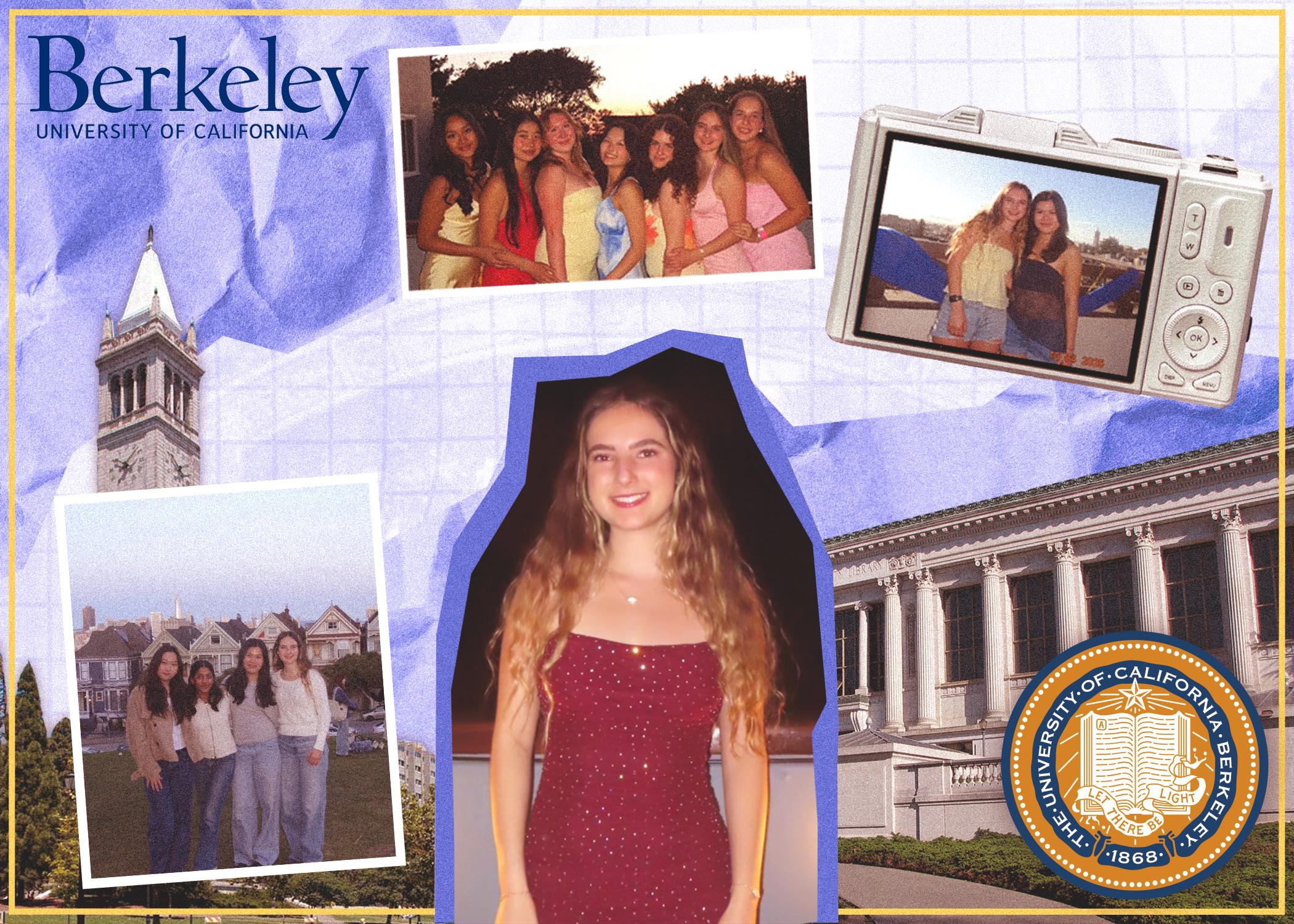
BY TRISHA GANDHI
Ashley Lattyak, ‘25, double majors in applied mathematics and economics at University of California (UC), Berkeley.
Q: What were your expectations of college before starting at UC Berkeley?
A: I think I mostly expected it to be a very big and overwhelming place. Berkeley is a huge school with over 30,000 undergrads, and I was expecting it to be a big transition from how small the Country Day is.
There’s a lot of very difficult classes and a bunch of different smart people. It’s a big, kind of crazy, overwhelming, chaotic environment — but also, hopefully, a fun and social good balance of work and life. I honestly didn’t know that much about what to expect because I feel like I was definitely a bit nervous and not super clear on expectations of what it would be like.
Q: What would you say you were most nervous about starting college?
A: I think I was most nervous about moving to a new place, away from my parents, friends and everything I’d ever known. Having to completely restart, make new friends and adjust to a completely different structure for classes and my day-to-day life.
Q: What surprised you most about UC Berkeley?
A: One thing that definitely surprised me is that it doesn’t feel nearly as big as I thought it would. I thought I would walk to class and never really run into people I knew; I thought I would feel like a really small person compared to how big the school is.
But it honestly feels so much more with the community and a lot smaller than I thought it would be. Every single day I’ll run into multiple people I know, whether that’s in a class or just on my walk somewhere. It doesn’t feel nearly as separated as I thought
it would, and it honestly is a lot less intimidating.
Q: What’s the biggest difference between UC Berkeley and Sacramento Country Day?
A: So many things are different, but probably the most different thing is just how much more freedom you have.
You don’t have to wake up at seven to get to school at eight. You can wake up at any time and choose to wake up early and go to the gym or go do a club thing, or just sleep in and then go to bed late.
And even on the weekends, you might be doing things that are so different from what you do in high school. Like, it’s super common for people to go to San Francisco on the weekends. That freedom to be able to do whatever you want with your schedule, it can be kind of scary because you don’t have as much structure.
Q: What are your hardest and easiest classes and what are you currently studying?
A: I am double majoring in applied mathematics and economics.
My hardest class right now is probably my math class. I’m taking Math 55: Discrete Mathematics. It is just very different from any math I’ve taken up until this point.
The easiest class I take is Music 27: Introduction to Western Music, which is for the arts and literature requirement. I enjoy the class a lot, but it’s definitely a lighter workload. We learn about Mozart, Beethoven, Bach and a bunch of romantic Baroque musicians from a few centuries ago.
Q: Are you glad you chose to go to UC Berkeley?
A: I genuinely couldn’t be happier. I feel like it’s the perfect balance of being very strong academically, especially for what I want to study. It has a very good math program with professors and resources that are just incredible. And I’ve loved the people and all the friends I’ve made.
Q: What is your favorite part of the campus?
A: First of all, the buildings themselves are gorgeous. There’s a lot of old architecture that’s just really pretty. My favorite building is Doe Library, which is an old, sort of Harry Potter style library. I actually fell in love with it on Cal Day last year.
Q: What does your college social life look like? Are you in any school clubs?
A: I’m in a sorority, and I love it. It’s been an amazing experience and I think it was a really good thing to do because Berkeley is such a big school, and it can kind of seem a bit intimidating at first to make friends and get acclimatized to the culture here. But it’s been a great way to meet so many people and to have some more familiar faces around campus.
I am in a club called Undergraduate Women in Economics at Berkeley. It’s for people who either economics majors or just interested in economics. And it’s been great. I’m on the Finance Committee, and we help people guide their career paths and explore different career options.
Q: What’s been the most challenging adjustment?
A: Meeting so many people who are just very accomplished in what they want to do and have a very clear idea of what they want to do. But for me, I have a decent idea of what I want to do and I’ve gained much more of an idea since coming to Berkeley. I knew I probably wanted to do something in finance, but I didn’t really have a specific idea beyond that. But I think the people who did know exactly what they wanted to do were a little bit scary for me.
Q: What’s one moment at Berkeley that you’ll never forget?
A: One of my favorite weekends from this year was right at the beginning of the second semester back in January. A couple of my friends and I took a little day trip into San Francisco and it was really fun, because
I had never left campus to go somewhere a decent distance away with my friends before, and it felt like such a good example of how much freedom we have in college.
Q: What are your plans for the summer?
A: I am studying abroad in London as part of Berkeley’s global internships program. I’m going there for two months, all of June and July, and I’ll be living in an apartment with other Berkeley students who are also doing the program.
One part of the program is they also set you up with an internship while you’re there. I don’t know exactly what that’s going to be yet, but I’m hoping it’ll be something related to finance, economics, math — my kind of personal academic interests.
Q: What is your advice for the incoming college freshman class?
A: College is just a time of so many new experiences, and you should try to do as much as you can. Don’t say no to anything. Don’t be worried about what other people are going to think, what you’ve done in the past or be restricted by anything, just do anything that your heart desires.
When you’re making new friends, be super open to meeting anyone. You might meet your closest friends. And there’s so many opportunities to do new things and have new experiences. I think you should just be open to all of it and take advantage of these four years to explore everything you can and gain as many new experiences as you can.
FIVE STAR OR SUBPAR?
Quality of classes: Student-Teacher
Interaction: Location: Food: Social Scene: Clubs: School Spirit:
BY EDITORIAL STAFF
Sacramento Country Day is a highly academic, (expensive) private college prep school, meaning that the main goal when students graduate is to attend a four-year university directly after high school. Most families send their children here with that intention in mind and consequently are willing to pay a large tuition for that purpose. Therefore, community college is considered to be “off the table.”
Right?
Wrong.
Community college is a shrewd business decision and a prudent option for many Sacramento Country Day students, as they have the opportunity to complete their general education requirements for a fraction of the cost of a four-year university. It’s a great deal. Students then have the opportunity to finish the rest of their education at a four-year university, taking more targeted classes to align with their career goals.
Not to mention, they will have a brand new upper division (college) GPA; transfer students have the benefit of a fresh start. Those required courses you were forced to take? Those first two years you may have struggled through academically? Gone. Poof! And higher GPAs up your chance of getting into graduate study, medical, business and law schools.
Understandably, many students want the satisfaction of going to a four-year university, and they settle for less preferred schools in order to get that kind of instant gratification.
But consider the benefit of waiting for the right school and taking an alternate route in order to get the best education possible.
Community colleges, in California specifically, don’t close any doors to higher education for students.
In California, six of the ten University of California (UC) schools (UC Davis, UC Merced, UC Irvine, UC Riverside, UC Santa Barbara and UC Santa Cruz) participate in a program called Transfer Admission Guarantee (TAG). This program offers guaranteed admission to California community college transfer students — if they are willing to wait for the opportunity and attend a smaller school as a prerequisite. There are major benefits to this program, as it allows students to save thousands of dollars and gives the guarantee of a great school.
Nonetheless, certain limitations are in place for TAG. Students can only apply to one UC with a TAG application. Similarly, they may not be able to pursue certain majors such as computer science, engineering and nursing, due to their selectivity and competition.
The general acceptance rate when applying to UC Berkeley as an incoming college freshman applicant is 11.4%, whereas applying to the same school as a community college transfer student (not through the TAG program) increases the acceptance rate to almost 25%. When applying to UCLA as a freshman applicant, the acceptance rate is roughly 9%, whereas the transfer acceptance rate is 23%. These are dramatic increases, more than doubling your chances of admission just by being a transfer.
While the transfer rate from community college to UC Berkeley is 25%, the transfer rate between UCs is 2%. Therefore, if you commit to a UC that you don’t really want to attend, you are essentially stuck there. Committing to community college makes your chance of getting into your dream UC
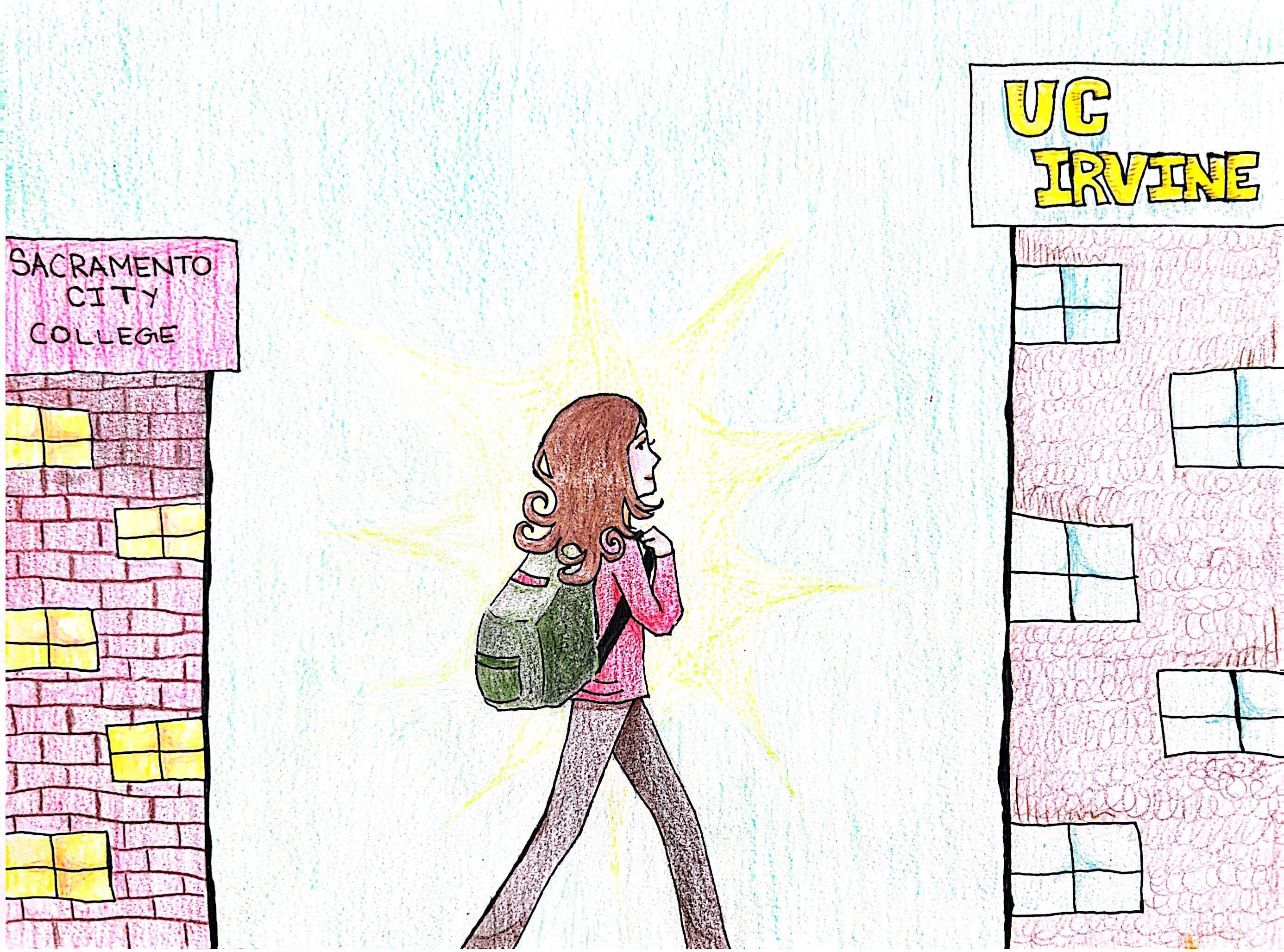
much more attainable.
The average California in-state community college tuition is $1,390 per year, though many community college students are eligible for federal and state grants. California community colleges have the lowest average tuition out of all of the states. The average tuition (without financial aid) to a UC is $15,588 per year.
However, the majority of students whose families income is between $0 - $100,000 a year don’t pay any tuition at all. The amount of grant and scholarship money received by the average (eligible) student is $22,000. This covers full tuition. According to EducationWeek, 44% of college students want to attend graduate school as of 2014.
And graduate school is not cheap.
Community college could be a strategic move for many students who are on this path. For example, if you are an aspiring medical doctor, where you earned your undergraduate degree is largely irrelevant compared to your test scores. Could it be better to save the money you would spend on a top 20 college and spend it on a top 20 medical school?
Most driven students will thrive in community college and will have better GPAs than if they attend prestigious schools with grade deflation (academic policy/curve that limits how many students can get top grades). This higher GPA and more unique story may benefit them in the long run.
Community college is also perfect for students who aren’t ready to go to college yet, want a slower transition into moving away from home or need to stay back to care for their families. College life isn’t for everyone immediately after
Amelia Dizon
high school. Similarly, if you pick a school that isn’t among your top choices and commit there, you risk unhappiness. According to the National Library of Medicine (NLM), student happiness is dependent on strong academic performance, adequate sleep and loving relationships. Notably, nowhere in this list was the school’s prestige mentioned. 60% of college students already report feeling high levels of stress. Attending a top 20 school also means being a part of the top 20 most competitive college environments.
Pressure is very high.
At the end of the day, the student matters more than the school. The student should choose the school — not the other way around. Forcing yourself towards the instant gratification of attending a four-year college instead of the embarrassment surrounding community college is not worth it. You decide how good a school is by making the most of the resources it provides you and by becoming the best student you can with these resources.
There is extreme stress and anxiety placed upon students to apply to and attend universities and colleges. While you should always be giving school all that you can, know that getting into a top school immediately out of high school is not the be-all and end-all of your academic and professional career.
Don’t sacrifice your happiness and well-being and spend (hundreds of) thousands of (your parents’) hard-earned dollars because you are afraid that someone will judge your work ethic and initial level of success based on your college commitment.
BY ANONYMOUS
This advice column responds to questions shared by Sacramento Country Day students anonymously. To submit, send a question to the Google Form sent out on April 26. Responses are not guaranteed, but all submissions are welcome.
Q: My friend started to hang out with this person from another school, and I don’t trust them. What am I supposed to do if I disapprove of my friend’s dating life?
As their friend, you’re in a unique position: tell them about your concerns, and they might listen, but there’s always the chance that saying something will hurt your friendship. And that’s the source of the conflict, isn’t it? Assuming that your friend really likes being with this person, pointing out flaws in their relationship could wound them deeply — especially if this criticism is coming from you, a friend that they trust.
But you have to decide what matters more: your friend’s well-being, or your relationship with them. I would hope the answer is obvious. If you have reasons to be genuinely concerned, then your friend’s safety needs to come first; you need to come clean and tell them what you think. Best-case scenario? You give your friend a much-deserved wake up call. If you believe that this person does not have your friend’s best interests at heart — maybe based off of this person’s behavior in the past — then tell them so. Lay out the evidence you have against them, and make your case, no baseless accusations allowed.
And then: let your friend decide. It may be hard, but you need to trust their judgement. After you present to them the facts, they should choose their own path forward. Maybe they decide to stop dating this person, maybe they assure you that they have everything under control. Respect their
choice. There’s a fine line between concern and manipulation — don’t cross it.
But your friend could also be lying to you, or maybe themselves. And that brings us to the worst-cast scenario: your friend is in serious trouble and needs help. Maybe you suspect that they’re suffering from gaslighting, emotional or even physical abuse at the hands of this untrustworthy person.
How do you tell for sure, though, if they swear that they’re fine? Just ask yourself: is this the same friend that you knew before they met this untrustworthy person? Chances are, if your friend is acting out of the ordinary, becoming withdrawn or overly anxious, their relationship could be the cause.
The next step is to get an adult involved. Talk to a school counselor or a trusted adult if you believe that your friend is in danger. They can give you guidance about what to do next — maybe convince your friend to talk to the school counselor. Don’t take this next step alone, though: you aren’t impartial, and you don’t always know what’s best for your friend.
Yes, both the best-case scenario and worst-case scenario could lead to a rift forming between you and your friend; it’s hard to take criticism about relationships, even if you mean well.
But a healthy friendship, founded on trust and respect, will bounce back — especially if you have their best interests at heart.
Q: My parents are always getting mad at me when I get anything less than an A and telling me that I need to start worrying about college. I’m a freshman. What should I do?
It’s hard to say no to parents. They tell you to get an A, you try to get an A. They tell you to worry about college, you start worrying about college. That’s how it is, if you’ve never been told to prioritize anything different.
I’m here to tell you to prioritize something different: your happiness.
Your parents mean well, and they want you to succeed, but perfection is not success, and vice versa.
You should do work that you are proud of, whatever that means for you — whether that means maintaining As and Bs in classes or pursuing a topic you’re truly interested in, which is what I suggest underclassmen should focus on.
Doing work that you are passionate about, instead of focusing on perfection, isn’t self-indulgence; what your parents may not realize is that good test scores don’t get you into college.
More often than not, passion projects and unique interests stand out to admission officers more than anything else.
And this is the angle you could use to convince your parents to, for once, let up on you. It’s easy to understand that perfection is not sustainable, nor is it the best way to achieve your goals, but it’s not so easy to make your parents understand.
You have to appeal to both their logic and their emotions if you want to change their mind.
First, explain the toll that maintaining perfect grades is having on you. You might be constantly stressed, not getting enough sleep or not eating enough. Your parents care about your well-being, and they don’t want you to suffer.
Then, lay out the logical benefits that focusing more on the quality of your work would have, rather than focusing on the amount of As you have.
Spending more time on pursuing your interests not only relieves stress, it rounds out your (distant) college application. If your parents are demanding about your grades and academics, this is the language they will likely respond to the most.
Beyond that, do what you want to do. Draw, paint, research niche topics, and don’t worry so much about what exact number your GPA is.
BY SID SHUKLA
The following is an award-winning entrant in the Journalism Education Association’s National Student Media Contests — this one for commentary writing. Students were provided with a prompt and given 120 minutes to complete their response. Sophomore Sid Shukla’s opinion essay was one of two pieces to be given the highest ranking — “Superior.” Judges described Shukla’s commentary as “concise” and “powerful,” “with a strong, clear voice.”
As the United States approaches its 250th anniversary, I keep hearing the same thing: young people are disengaged from civic life. We don’t vote enough. We don’t pay attention. We don’t care. The problem isn’t that my generation is disengaged — it’s that democracy often feels disconnected from us.
The cause of that disconnect isn’t apathy — it’s structural. Most high school students are expected to care about political decisions they have no direct role in shaping. We’re told to stay informed, form opinions and think critically. Yet, we can’t vote. We rarely see people even nearly our age represented, and almost never feel like our voices change anything. Over time, this creates distance. It’s hard to stay engaged with a system that treats you as a future participant, not a current one.
Schools unintentionally reinforce this gap. Civic education often focuses on memorizing how governments work instead of showing how to participate in it. We learn about branches and amendments, but not how to engage with local leaders or create change in our own community. Participation becomes theoretical instead of real.
The solution isn’t telling students to care more — it’s giving them a reason to. Schools should create opportunities for real engagement, like student-led initiatives or direct engagement with local decision-makers. At the same time, adults need to recognize that civic participation has evolved. My generation engages through social media, community action and issue-based movements. These aren’t distractions —

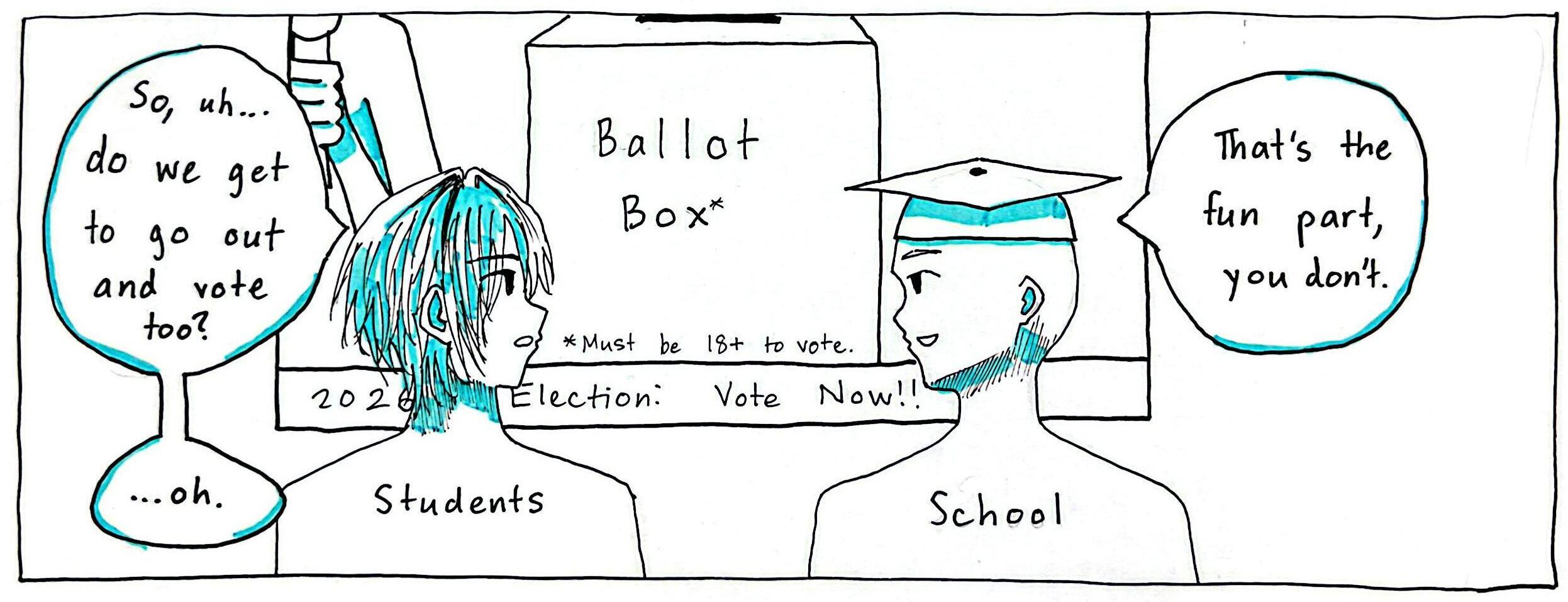
they’re legitimate forms of civic engagement.
As the country celebrates 250 years of democracy, the question isn’t whether young people will participate — it’s
whether democracy is willing to change enough to include them. Because we’re already here. And we have a lot to say. The real issue is whether anyone is ready to listen.
BY NOOR ALAMERI
Disclaimer: the content in this article contains sensitive topics relating to eating disorders and purging.
I used to walk into my middle school bathroom and hear the sound of a girl trying to throw up her lunch at least once per month.
The sickness was spreading at my school. Some of my friends told me that they weren’t hungry, that they just didn’t feel like eating lunch. They assured me that they would just eat as soon as they got home.
For a few weeks I believed them. Then I noticed they were getting smaller and smaller. Not just that, but they would always talk about the way they looked.
“Ugh, I feel so fat,” wasn’t an uncommon thing to hear at my lunch table.
I knew that something was wrong, but I didn’t know what to do. I knew that if I said anything, they wouldn’t stop, they would just hide it.
Anorexia nervosa is one of the most common eating disorders. According to the Diagnostic and Statistical Manual of Mental Disorders (DSM-V), anorexia is characterized by persistent restriction of food intake, an intense fear of gaining weight and an intense focus on body weight.
Anorexia isn’t the only eating disorder. There are a whole host that the DSM-V recognizes, including bulimia, which involves cycles of eating large amounts (or sometimes normal amounts) of food and then throwing it up.
Eating disorders as a whole are characterized by an obsession with body image and a large amount of one’s thoughts being consumed by food and weight.
The idolization of the “heroin chic” — a sickly, ultra-thin body — never went away, it just got quieter.
In the 2000s, like in much of modern history, skinny was in. Celebrities got bombarded with headlines calling them overweight if they even had a little visible fat. Heat magazine’s May 2007 issue had the words “Posh puts weight on” in big bold red letters on the cover. Star magazine had an issue where the cover read “Jessica’s Diet Disaster” and “Stuck at 178 pounds.”
Kate Winslet was famously nicknamed “Kate Weighs-alot,” during the filming for “Titanic” by the director of the film.
Then, around 2010, “body positivity” was starting to trend. Instagram was popular, and there was a wave of bloggers pushing radical acceptance of every size.
Of course, that didn’t mean being skinny was out — the majority of people you saw on TV were always skinny — but rather, more diverse bodies were being accepted. Major companies like Dove even began running ads with plus-sized models. By 2019, it really seemed like we were moving towards a direction of acceptance for bigger bodies. Fashion magazines were long dead, and your media diet now consisted less of headlines about weight, and more of posts about loving your body.
But then, COVID lockdowns began, and everyone was stuck at home with nothing but an internet connection, and their own thoughts.
By 2021, body dissatisfaction rates were up dramatically, according to a study in the International Journal of Eating Disorders. Consuming short form video content, especially dieting content, was linked to decreased body appreciation and increased body dissatisfaction.
Then, on June 4, 2021, Wegovy — a GLP-1 injection originally developed as a treatment for diabetics — got approved as a weight-loss drug.
Being skinny was more accessible than ever — assuming that you had the financial means to pay the, on average, $1,350 per month.
Every red carpet, you saw more and more celebrities getting thinner and thinner. Body positivity influencers suddenly lost weight extremely rapidly and told their audience that it was just exercise and diet.
Everywhere you looked, skinny was back. Not everyone could afford the hefty price tag that came with a GLP-1, so a cheaper solution arose: not eating.
In the past decade alone, eating disorder rates have doubled, from 3.5% to 7.8%.
This led to, or maybe is because of, the rise of “Skinnytok,” seemingly the successor to 2000’s pro-anorexia blogs and magazines.
Skinnytok is a community of mostly women who encourage each other to lose weight and share dieting tips.
But it can quickly become pro-eating disorder. One TikTok creator, who had previously only posted about music, made a post in January 2026 asking for weight loss tips. By March, they were posting about eating zero to one meals per day.
I’ve seen it happen to so many people around me, proving that falling into disordered eating is easy.
First they start on a healthy diet. Calorie deficit and working out, but they’re still eating an adequate amount. The pounds are falling and people tell them they look great. But then they hit a plateau, and they’re not losing weight anymore, so they eat even less.
That works for a while, until eventually they hit another plateau, so they cut the amount of calories they’re eating again. This keeps happening, they eat less and less and eventually it’s taken over their whole life.
What might be the worst part is that they don’t actually know how they look. They know exactly what the number on the scale is, but not what they look like, this is called body dysmorphia. They just know that you’re not skinny enough. The fact that every other post on your TikTok For You page romanticizes the feeling of hunger, or tells you that skinny is never skinny enough, only feeds their beliefs.
At first, nobody around them sees it as an issue. Other people see “discipline” as so many of these pro-anorexia pages have put it. They get compliments and praise; society rewards people in those early stages.
When their friends do see it, it’s hard to say anything. “You look great,” is easy to say; “I’m worried about you” isn’t. So they don’t stop. The silence is part of the problem.
But eating disorders are not an individual failure to “see your own beauty,” they are the natural result of a system.
A system that is only bolstered by the fact that social media platforms, despite their surface-level safeguards, push harmful content. Outrage, aspiration and apparently hunger all drive engagement online.
The Center for Countering Digital Hate (CCDH) found that on average, new TikTok accounts, whose age was set at 13 years old, were being served videos about eating disorders within 8 minutes. Not only were they being fed this content immediately, but also constantly, about every 23 seconds. Platforms like TikTok and Instagram all have filters that prevent words like “eating disorder,” “starving,” and “calorie,” but enforcement is inconsistent at best, and people often find their ways around the filters. X, previously known as Twitter, has no filters for eating disorder content at all.
And it’s not just young girls who are having unrealistic standards pushed on them; now it’s everyone. Recently, a survey showed that 23% of men rarely or never feel satisfied with their bodies. The gap between gender body image issues is closing, but not in the way we hoped.
Meanwhile, the Ozempic (GLP-1) conversation has made it so much easier to talk about people’s bodies, without actually addressing the root cause.
Celebrities who lose a significant amount of weight immediately get hundreds of posts about how they’ve taken Ozempic. Additional posts analyze their facial features to see if they’ve got the sunken eyes, hollowed cheeks and sagging skin that comes with rapid, dramatic weight loss, which they call “Ozempic face.”
All the while, each celebrity’s PR team is telling everyone that it’s just a lifestyle change, and they’ve been simply eating more vegetables.
All of that just tells the rest of us that we too can look exactly like them, if only we just tried hard enough.
When the “how” is never really discussed, all weight loss starts to look the same. And, when your body is the enemy, any method seems worth it.
According to Eating Disorder Hope, an advocacy nonprofit group, anorexia has the highest mortality rate out of any mental illness, 10% within 10 years of onset, 20% within 20 years. This is not a niche fact. Rather, it paints a picture of something that has devastated thousands of people, something that current cultural trends are only making worse.
Nonetheless, being more aware doesn’t mean diagnosing everyone around you, but it does mean you might have to sit with some discomfort. It means paying attention to the people around you — not their bodies, but them. Learn to treat your body as neutral, not an ornament to be admired or admonished depending on the number on the scale.
If you are worried about someone, or yourself, the National Eating Disorders Association (NEDA) provides free, low-cost resources and treatments for people with eating disorders. NEDA also provides guidance and support for people with patterns of disordered eating: symptoms that are unhealthy but do not fit enough criteria to be diagnosed as an eating disorder.

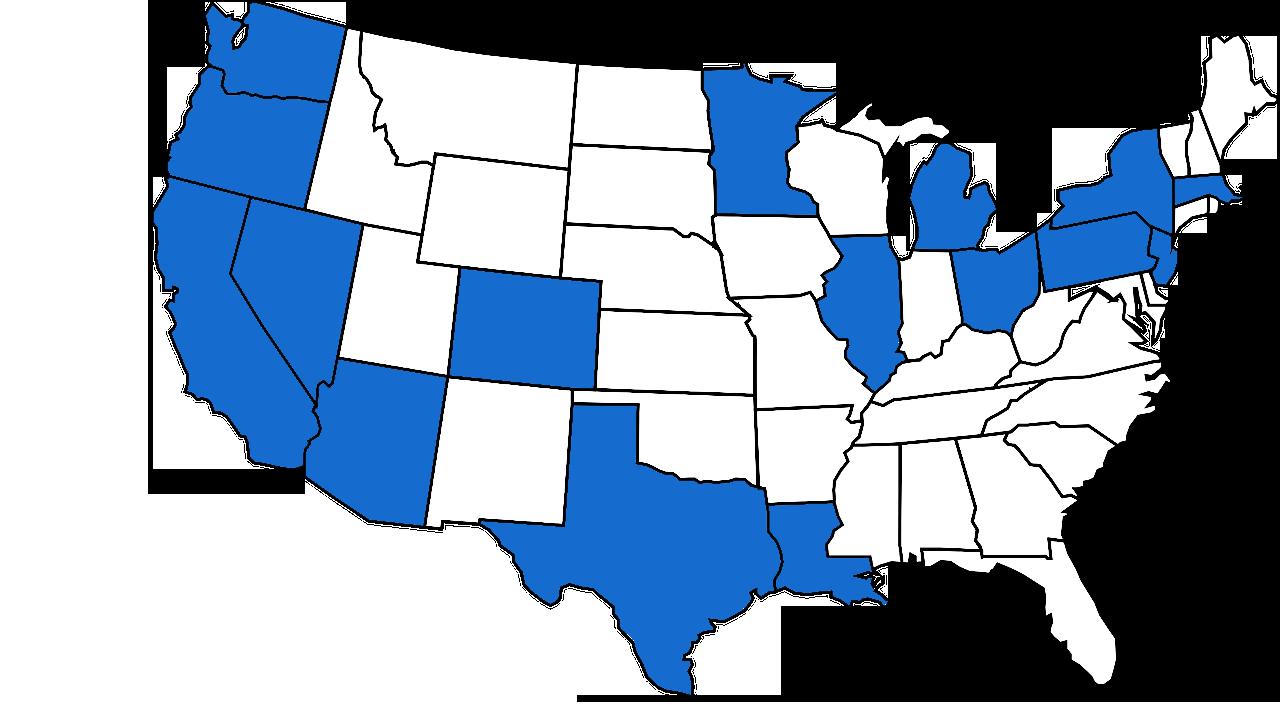

3 will attend international colleges


13 will attend in-state colleges

15 will attend out-ofstate private colleges

Arizona
Grand Canyon University
Grace Mahan
California
Cal Poly San Luis Obispo (SLO)
Rya Allen
Sophia Monasa
Chapman University
Ellie Josephson
Claremont McKenna College
Gavin Wang
Harvey Mudd College
Annabelle Do
Loyola Marymount University
Isabella Bockmann
Ashly Omalu
Stanford University
Andrew Logan
Zema Nasirov
University of California, Berkeley
Madeline Inman
Krithi Munagala
University of California, Davis
Ella Martinelli
Chloe Zhang
University of California, Los Angeles
Ava Levermore
Rebecca Lin
University of California, Merced
Sameer Brink
University of California, San Diego
Jacob Genetos
Kale Patel
University of California, Santa Barbara
Eesha Dhawan
University of California, Santa Cruz
Sanjay Brink
Morgan Hansen
Colorado
University of Colorado Boulder
Ava Dunham
University of Denver
Dylan Corcoran
Illinois
University of Illinois Urbana-Champaign
Anisha Mondal
Louisiana
Tulane University
Itzel Zamora
Massachusetts
Northeastern University
Graycen MacNeill
Anika Nadgauda
Michigan
University of Michigan
Lila Reynen
Minnesota
Carleton College
Isaac Reynen
Nevada
University of Nevada Las Vegas
Dylan Donohue
New Jersey
Princeton University
Daniel Holz
New York
Colgate University
Jaq Howes
Columbia University
Ferishta Halim
Cornell University
Claire Gemmell
Sammy MoheyEldin
Fordham University
Kamron Khodjakhonov
New York University
Lillian Wang
University of Rochester
Liam Donohue
Dylan Yang
Ohio
Case Western Reserve University
Aric Reuben
Oregon
University of Oregon
Riley Ruttan
Pennsylvania
Penn State University
Jackson Burton
Texas
Baylor University
Jackson Whited
Rice University
Rehan Afzal
Washington
University of Washington
Jesse Dizon
Internationals:
France
Paris Institute of Political Studies
Ryan Xu
Ireland
University College Cork
Ella Harbart
Scotland
University of Edinburgh
Kai Hirahara


The number one coffee chain in the world, Starbucks, debuted their new 2026 summer menu on May 12.
Seasonal menus drive up foot-traffic and revenue by creating an urgency for customers to purchase products under a limited-time offer. At Starbucks, the yearround seasonal menus have become an integral part of their marketing strategy — helping to keep customers engaged and excited all year long.
I am a self-proclaimed “casual Starbucks fan.” I get Starbucks anywhere from about one to three times a month, and almost always, my orders are from the seasonal menus. The big hits for this year’s summer menu include variations of the new Tropical Butterfly Drink and the two horchata flavored drinks.
DISCLAIMER: I have a picky sweet tooth; one that appreciates a certain balance between sickly and saccharine. Thus, the drinks I like may be partial to that.



I was expecting the taste of a tropical vacation from this beverage. A blend of passionfruit, guava and pineapple flavors is complimented by pineapple-mango popping boba and creamy coconut milk.
With a butterfly pea infusion, the drink is very pretty, flaunting lavender, pink and orange hues. However, I was rather disappointed when I found out that the butterfly pea was just for show and wouldn’t provide any actual flavor-
Upon first taste, the Tropical Butterfly Drink reminded me a lot of the Pink Drink, except with tart flavors. (The Pink Drink is a very popular drink at Starbucks made of a strawberry acai base along with passionfruit flavors and coconut milk.)
You can really taste the sultry fruit blend from the drink itself and the bits of pineapple-mango flavor bursting in your mouth as you sip into the drink. It was amazing, and right away, I knew that I would




It is a combination of vanilla, cinnamon and rice notes with a blonde espresso roast and oat milk.
As someone who isn’t a huge fan of coffee (or bitter flavors in general) this drink truly exceeded my expectations.
Right away, I could taste a nutty cinnamon flavor — paired with the creamy oat milk. The horchata was definitely there, and it felt like just the right amount.
The flavors felt quite unique, the texture was very silky, and it was my first time trying horchata with coffee. Although it is iced, it feels cozy and smooth — a great combination, which I would highly recommend to all coffee/espresso lovers.
The espresso drink itself was quite bitter, and I couldn’t really taste much sweetness to it. As it isn’t sweet enough for my preference, I would not buy it again. For those who do enjoy non-sweet drinks, the Iced Horchata Shaken Espresso would be very enjoyable.




This refresher is a variation of the Tropical Butterfly Drink, but while they share the same foundational base, the Tropical Butterfly Lemonade Refresher replaces the coconut milk with lemonade.
Admittedly, the Tropical Butterfly Lemonade Refresher is better-looking, with sharper and more vibrant colors.
It truly looked like a summer day came early, but as I took my first sip, it became clear that I had set my expectations too high.
Switching out the coconut milk for lemonade was a terrible decision. In fact, it ruined the whole drink for me. On paper, it sounds like a great idea, but my taste buds could not disagree more.
The sheer amount of sweetness in the lemonade threw me off immediately. And I have a sweet tooth! Instead of feeling refreshed, I was hit with a sharp, pungent taste of sugar and lemon. It tasted rather artificial as well, like a sour candy, leaving me extremely disappointed.



This is similar to the Iced Horchata Shaken Espresso — but slightly sweeter and more flat.
With whipped cream and cinnamon powder sprinkled on top, the drink looks like any generic frappuccino, but it really is way more than that.
Oftentimes, I find frappuccinos from Starbucks overly sweet — making me feel more grossed-out and unhealthy rather than happy and satisfied. This drink, however, really amazed me. It’s definitely sweet, yet it has a great balance. You can still taste the slight bitterness from the coffee, and the oatmilk really compliments the flavor.
I would absolutely recommend this to anyone — with one small tweak: get it without the whipped cream on top.
The horchata is there as well; however, compared to the Iced Horchata Shaken Espresso, the flavors feel rather muted. This is in part due to the whipped cream, which adds fluffiness, but takes away from the flavor of the drink. Despite my dislike for Starbucks frappuccinos, the Horchata Frappuccino is a great drink. It is a perfect combination of flavors — not too simple, but not overly complicated either. In fact, it is probably my favorite out of all the drinks in this year’s summer menu.


“Iceman” is the ninth full length album from Canadian singer, songwriter and rapper Aubrey Graham (known by the stage name Drake). Released on May 15, “Iceman” allows Drake to return to his rap-focused self. It is reminiscent of his studio album, 2013’s “Nothing Was The Same” — it has a lot less of the melodic and heartbroken Drake that fans have gotten used to over the past few years.
“Iceman” has a very clear central theme running through it. Almost every track deals with the fallout from his 2024 beef with Kendrick Lamar. As such, Drake ad-
“Ran to Atlanta (feat. Future and Molly Santana)”
The reunion between Drake and Future alone made “Run To Atlanta” one of the most anticipated on the album. Future kicks things off with his signature hazy delivery in a line about partying in Turks and Caicos so long he lost track of what day it was.
The vibe energizes, excites and intrigues from the start. Drake’s chorus is smooth, his lyrics framing Atlanta as a witness to his whole career, calling out Future and 21 Savage (another rapper) as people who can vouch for his “run.”
Molly Santana’s verse in the second half of the song is a pleasant surprise, with her “Molly Santana new Hannah Montana” line already being one of the most talked about on the entire album. She solidly holds her own next to two of the biggest names in rap.
The track loses a bit of momentum toward the end, and I feel like a slightly tighter edit would have made it even better than it already is.
dresses betrayal and loyalty throughout the entire album.
Drake narrates about former friends who switched sides, industry figures who turned their backs on him and rivals who he feels have been given too much credit for their work.
Accompanying Drake across the 18 tracks is a solid list of features including the rappers Future, Quavo, Molly Santana and 21 Savage. With a feature list this stacked (and beef to be settled), I was anxious about what I knew would not be a “chill” trip.
“Whisper My Name”
The beat is stark and minimal, with a digital pulse running underneath. The beat to this third track is stark, giving Drake a lot of room to work with. It’s a smart production choice. Drake’s bars are some of the sharpest on the album, with punctuating lines like “I heard what you said to lil’ bro about me” and “when you run into the Iceman / what you gon’ do except freeze?”
The combination hits hard — and feels personal. The chorus is incredibly catchy, with Drake referencing his Coachella headline set and hinting at a Rolling Loud performance, making it a memorable hook.
This song also stands out because it has no features, leaving Drake to hold it down completely on his own, a solo moment among busier tracks.



Overall, “Iceman” locks in, with the quality of the tracks consistent throughout, separating it from a lot of Drake’s recent work.
Most songs hook my attention and rarely let me down. Drake has been more prolific over the course of his career (various albums such as “Views” and “Take Care” have 20+ tracks), but 18 feels like the right amount here. Almost every song serves a purpose — and contributes to the theme of the album — in a way previously (over) hyped albums do not (“For All The Dogs” comes to mind).
“Iceman” is the sharpest Drake has sounded in years. I predict it will hold up over time.

Kanye West — never a stranger to controversy — dropped his latest studio album “BULLY,” on March 28.
West, now known as “Ye,” rose to prominence as a producer for artists such as Jay-Z before launching his groundbreaking solo career in 2004 — his debut album “The College Dropout” won a Grammy for Best Rap Album.
Ye has built a reputation on innovation and meticulous production. His past work often balanced experimentation with structure, creating projects that felt
“BULLY”
As the title track and supposed centerpiece of the album, it finishes as a missed opportunity rather than a defined statement. Meant to be the track that anchors the project’s themes, it carries expectations going in, but the final result feels rudimentary and messy.
In this song, Ye describes a desire to “beat somebody up / Like a bully.” He uses this line as a thinly-veiled metaphor for the aggressive public persona that has defined much of his recent career. The issue is that the metaphor feels almost too simplistic for the weight of his recent actions. Rather than directly confronting the damage his behavior has caused? Ye reduces it to broad statements about anger and insecurity.
He raps: “They get mad at me for livin’ out my fantasies / All the castles in the sky comе down crashin’ every time I spеak my mind.”
The production comes across as disconnected rather than intentional. Instead of building towards a clear progression, the track shifts direction without purpose, giving it a disjointed quality.
It’s a lazy effort. Rather than feeling like a deliberate centerpiece, it comes across as something that was left in a rough state, without the care or completion you’d expect for the title track.


If “BULLY” is intended as a redemption album, it doesn’t achieve that goal. Rather than delivering a clear reset or a convincing return to form, it largely leans towards inconsistency rather than reinvention, with ideas that feel only partially developed. Instead of reframing his artistic direction, Ye produced an album that never quite settles into a clear identity.
both ambitious and fully realized. “BULLY,” however, leans heavily on sampling and minimalistic structure, leaving it sounding incomplete and lacking in effort overall.
The design is consistent with Ye’s former aesthetic choices: Tracks are in allcaps, signalling drama, boldness, and the importance of his message. It’s in your face. Throughout this so-called redemption album, two songs stood out to me: an attempt to deliver impact and an unfinished cacophony of sound.
Featuring rapper Travis Scott, this feels like a track with ambition but no cohesion.
Lyrically, this track is built around themes of legacy, identity and personal reflection. But these concepts feel underdeveloped — as if they were presented in pieces rather than fully shaped ideas.
He sings: “Bye-bye to my old self / Wake up to the new me.” It’s a hook that highlights leaving his old self behind and abandoning a chaotic past for a more mentally stable life, but that idea quickly becomes muddled by lyrics that focus less on growth and more about wealth and status.
In lines such as “I used to be on Worldstar / Now I’m making Newsweek / I used to hang on the 9 / Now I bought two streets,” the singer seems caught between self-reflection and self-glorification. Frenzied, uneven production stood out to me — it created a sense of a song building towards something big — yet every time it got close, it pulled back, leaving the listener frustrated and unsatisfied.
Travis Scott adds texture and energy, but even then, it doesn’t fully stabilize the track’s shifting direction.
I get what the song was aiming for thematically, but the execution was too fragmented for me to connect. By the end, it left me with uncertainty rather than impact; the ideas were present but never tied together. Or to use “therapese”? Never processed.

That said, there are brief moments where the “old” (Kan)Ye emerges, reminding us that he still exists . . . but then he disappears again. Critics have noticed, pointing to moments on “BULLY” as a return to his signature “chipmunk soul.” Those brief flashes suggest the level of precision that defined his strongest works, but appear too sporadically to signal a true comeback.

With a deadline every month, I have spent four years looking towards the next issue.
There is always another story to read, another page to design or another plan to be scrapped and redrawn.
The Octagon as a publication is restless. It’s demanding, yes, but it is also incredibly fulfilling.

When the idea of going to Sacramento Country Day came around, I was puzzled. What exactly was Sacramento Country Day? I didn’t have a clue.

As I write my final piece for The Octagon, I need to make sure it stays true to who I am. And if you know me, then you know I couldn’t end my time at The Octagon without talking about Taylor Swift.
More specifically, something she said at New York University’s commencement speech in 2022.
“The cool news is: you’re on your
I feel a wave of pride for our reporters anytime I see a first draft that reflects their dedication to research, voice and journalism.
I feel an ounce of relief when I send pages to our printers at 4 a.m. after a full weekend of corrections.
And once we walk through our printed copies during issue critique, sometimes I’m just glad that we made it through. Then it’s on to the next.
Anytime I told my mom I had paste-up the following week, she would ask me “Didn’t you just have paste-up last week?”
At times, the accumulation of hours made it feel that way, but still each month, some sort of exhilaration came with the promise that we had to put an issue together by the end of the week.
There have been a few weekends where Ms. Todd and I came to school to work on corrections. Ms. Todd would rewrite a story while I restarted a page, and every time, I would
turn down a bagel offer from her husband Gary. Not because I don’t like bagels, but because I didn’t want to waste any time. I won’t say that I preferred working eight hours in silence to chaotic nights during the weekday because those nights gave me some of the best memories I could dream of (from making Popin’ Cookin’ ice cream for page editors to try or kicking a lemon on the soccer field during sunset), but I’m sure Ms. Todd would say she at least appreciated not having to threaten any staffers with a dog crate on those days.
Perhaps the most summative moment of every paste-up was staging a front-page photo on a Friday night.
As a collective, I think we have used every setting on Country Day’s campus (or the off chance student’s bedroom) to finalize the issue. At this point, I would call it tradition.
A tradition I was thrown into headfirst.
The first paste-up I attended was
for Vol. 45 No. 8. As a freshman, I was learning our design platforms for the first time, and senior page editors discussed our need for photos to support a story on Sacramento’s Little Saigon.
One of my editor-in-chiefs at that time was Simone DeBerry ‘23. I was simultaneously scared of her and inspired by her leadership.
I was volun-told to accompany Simone to the outdoor mall to take photos. She drove and handed me the cord to take aux. The entire drive I was extremely self conscious about the music on my playlist, but Simone tried to ease the tension by talking through the issue and asking me how I was enjoying my freshman year.
Something Simone and all the other Editor-in-Chiefs before me possessed was dedication.
I told her at the end of the year that I hoped to be half the leader she was one day.
This year, as our staff said good-
bye to its graduating seniors, a few of the underclassmen said the same about me.
I can’t begin to express the impact
The Octagon has made on me. From my peers and mentors I had the honor to work beside, I have learned what it takes to work in a team.
I’ve been at Country Day since I was in Pre-K, and it’s hard to believe that I won’t be surrounded by the teachers and friends I have known my whole life.
Now that this chapter of my life is coming to an end, a part of me wishes I had slowed down a bit earlier. It doesn’t always have to be a relentless drive. Know that you are allowed to step back and share the weight. After all, you’re just in high school.
And a final word of advice to the future of The Octagon: Ms. Todd spoils you all. Don’t exploit her kind snack-providing smile.
I didn’t have any of my old friends from middle school. I only knew that two random kids from my middle school — who I had never talked to before — were both going there.
One of them ended up becoming my best friend.
My parents told me that Country Day was known for their close community, but I never really understood that concept until I started going here.
Transitioning from a school with 30-40 students per class to one with 15 students per class is a bigger transition than you would expect.
At first, I was dreading the tightly-knit community.
Yes, dreading.
I was too scared to speak up in a classroom of complete strangers,
and I was convinced that small classroom sizes meant that everyone had to volunteer.
I soon realized that I was wrong.
Many of the teachers recognized that not everyone is comfortable speaking in front of the class, so participation grades would also consider other factors.
This flexibility was what ultimately helped me build my confidence.
Not only were the teachers accommodating, but they were also immensely supportive. I can’t think of one teacher who isn’t open to helping a student at any time.
This might sound corny, but there are times when I wish that I could just pick up Country Day high school and place it in Illinois. I will really miss this community more than any-
thing.
I still remember my first Octagon class in freshman year.
I was sitting in the corner with absolutely nobody to talk to. My first time speaking in that classroom was when we played the name game icebreaker.
At first I was intimidated by both the editors-in-chief (EIC) and most importantly Ms. Stewart (the former Octagon adviser).
I soon realized that my EIC’s were my refuge when it came to Ms. Stewart’s comments; I could always go to them for help. Although the comments from any of my editors could be harsh at times, they were the reason my writing improved. Without that guidance from my mentors and peers, I wouldn’t be where I am to-
day.
If there’s one thing I will remember from Octagon, it will always be paste-up.
Staying until 9 p.m. for weeks to create each issue has led to some of my closest relationships by far. I cherish all the memories I’ve made both in and after school. However, I wish I had the opportunity to talk to my past self. I want to encourage her to step out of her comfort zone.
The best memories came from exhilarating situations.
Surprisingly, the hardest thing I will ever have to do at this school won’t be taking my AP Physics C final exam. It will be saying goodbye.
own now. The scary news is: you’re on your own now.”
As someone getting ready to graduate from a place that has become a second home over the last six years, surrounded by endless support from teachers, friends and family, those words couldn’t feel any truer.
But what does it even mean to be on your own?
Well, first of all, you’re entirely dependent on yourself for laundry, dishes and pretty much every chore you tried to get out of growing up. You’re going to be doing a lot of paperwork (unfortunately), and it’s going to be a lot harder to blame anyone else for your problems.
You’re going to get really frustrated with yourself and want to give up, then have an epiphany at two in the morning and scramble to get your life back on track. You’ll have the most freedom you’ve ever had and inevitably use it to make incredibly bad decisions.
And I know I’m making adulthood
sound like it’s just one mistake after another.
But I think that’s the point.
If you go through life trying to avoid every mistake, then the second you make one, you’re going to lose your mind. Because you’re not perfect. You are going to screw up. You are going to disappoint people. You are going to make people angry sometimes.
For the better part of the last 18 years, I’ve been bombarded with the same question: “What do you want to be when you’re older?”
The question never really bothered me beyond surface-level irritation. For most of high school, answering that question felt like the goal.
But it wasn’t until the very end of my senior year that I started to resent the question a little bit.
Because I’m only 18. Right now, I want to be a lawyer. But that could change at any moment. The whole premise of that question revolves
around the idea that as soon as you become an adult, your career should become the most important thing about you.
We’ve spent so much of our childhood being told what we’re good at, what we should pursue and what we’re “meant” to do, that a lot of us never really got the chance to figure out what we actually want.
Why don’t people ask who you want to become instead?
Because who you are matters so much more than what you do.
The person you become is shaped by experiences, by grief, by joy, by failure and by the people around you. I know that because grief shaped me long before I understood what it meant.
Since then, I’ve made friends and lost them. I’ve made really dumb mistakes and incredibly smart choices. I’ve hung out with the “wrong people” and the “right people.” I’ve succeeded in ways I’m proud of and failed in ways that completely hum-
bled me.
But every single one of those experiences made me who I am now.
And I think that’s what growing up actually is.
Not having everything figured out. Not becoming perfect. Not magically turning into an adult the second you graduate.
It’s realizing that life is never going to fit into the neat little five-year plans we create for ourselves, and learning to be okay with that.
So no, I don’t fully know what I want to be when I’m older.
But I do know the kind of person I want to become.
I want to be someone who keeps learning. Someone who cares deeply about people. Someone who keeps trying even when things get difficult.
Someone who embraces change instead of fearing it.
So here’s to growing up. Here’s to making mistakes. Here’s to becoming people we haven’t even met yet.

trade, where reusable metal plates would make a clicking noise as they stamped thousands of blank pages. As an editor, my comments on news story drafts often chide staffers for using clichés. But now, as I sit staring at my blinking cursor, so much of what comes to mind is just that. I keep waving away the quasi-philosophical questions that I’m tempted to sprinkle throughout this letter: (Who was I writing for? How do I thank those that made me who I am? etc.).
newsprinting

“Jesse! Wanna join Octagon? I’ll join if you join!” exclaimed my close friend and now fellow senior, Lillian Wang. It was out of nowhere. I was in yearbook at the time. All I knew about The Octagon at the time was that it was our school newspaper, and a lot of smart people were in it.
“What, Octagon? Okay I’ll join!” I responded without looking back.

A few years ago, the concept of liminal spaces became quite popular online. In short, it’s a way to describe those eerie yet oddly comforting spaces, an empty gas station alongside a busy highway, a classroom in the middle of summer, or a playground after sunset. Liminal spaces are defined entirely by transition. The last few months of senior

The pickle I’m in makes sense. In this close-knit, occasionally fraught, but deeply interdependent Octagon family, us graduating seniors leave with many common core memories. Watching the sun set during paste-up nights, pho-
Little did I know how much impact The Octagon would have on me today. Although Lillian has since left The Octagon, I am grateful that she helped me start the long and rewarding journey I have had.
I started out like everyone else, as a reporter. I was absolutely terrified. This was the year where Andrea Todd — known mainly as Ms. Todd — became our new adviser.
This was also the time where I was given my first story.
IBefore the interview, I did my initial research on Ms. Todd. I found out that she has worked for multiple impressive publications such as the New York Times, Elle, and Seventeen to name a few, and she was also a feature writer/reporter/ columnist at the Modesto Bee.
After my research, it felt like I was about to start a boss battle at the beginning of my journalism career. I was extremely nervous. The day finally came, and I had to do the
year have been a constant reminder that you are living in one. It’s the feeling of being at an airport five hours before your flight. You’re mentally preparing yourself to open a completely new chapter of life.
To an extent, this idea of liminality also applies to the high school experience as a whole. It’s a time of transition and realizing who you are as a person.
These past four years have not only been a tumultuous time in my own life, but for our nation and world as a whole. I’ve been truly able to develop my love for politics at Country Day, and cultivating that interest during such a historical transition changed how I viewed the entire discipline.
As an American, I can’t help but notice that we are observing the rapid unspooling of the political order of relative peace we were raised in. We grew up at the quiet tail end of American hegemony and
tographing a bustling protest with Ryan and explaining why I’ll need another day to write my story to Zema are some of my favorites. Perhaps, then, my present struggle with clichés is just a reflection of universal truths?As I reflect on the experiences I cherished with my Octagon colleagues, I’m reminded of a question posed by Saheb Gulati ‘25: is it worthwhile to reminisce? Gulati’s introspection has left me with my own hesitations. After all, shouldn’t the past be left in the past? Would it be indulgent to use my limited words in this final article to get sentimental?
One thought, however, cuts through those hesitations. The very fact that I’m able to look back fond-
ly on certain memories from my time on the Octagon has profound utility. If certain memories stand out, if they have that golden hue as I look back, that’s an indication that they were positive. I didn’t realize it while I was in the moment, but those would be the most formative experiences I’d have as a student journalist. Therein lies the value of reminiscing. I’d like to use the thought more practically, though. I shift my attention now to those of you still on the Octagon staff. When you’re living out the experiences you’ll reminisce about one day, it’s rare that you’ll realize it then. But you, reader, are now equipped with the advice from this article. Let yourself laugh at the
joke at pasteup before you stress over your draft. Go with your fellow page editors and watch that sunset. Say yes to the major enterprise story, and then go to Ms. Todd for her expert advice. And — wait, hold on a minute. Damn. It looks like I’ve fallen into the trap again. I’ve just told you: live in the moment. Here I am, the editor who tries to avoid clichés like the plague (thanks, Ms. Bauman), centering his entire article around one.
Sometimes, things get repeated not because of lazy writing, but simply because they ring true across generations. The plate clicks, and clicks and clicks again — I hope you’ll listen closely.
Freshman year me would be genuinely shocked to find out I am writing this last note to The Octagon. When I first joined the Octagon, like most, I had no idea what I was getting myself into. Bootcamp was pretty scary for me because everyone seemed like they knew what they were doing while I was trying to keep up. At one point during my freshman year, I was seriously considering quitting The Octagon. I told myself that I was just not cut out for it. In reality, I think I just did not
interview.
We sat outside the Matthews library and conversed for around an hour about who she is and what makes her uniquely her.
I fell absolutely in love with the process of learning someone’s story and translating it into words others could read.
Becoming a reporter at The Octagon has helped me learn that sometimes getting out of your comfort zone can push you to find out new things about yourself.
Now after getting to learn about Ms. Todd more throughout the years, I have learned that she is more than an experienced veteran in the journalism field, but also a wonderful human being.
I have enjoyed all the years I have been at The Octagon with Ms. Todd, as she always brought her humor and care to The Octagon verbally, or physically with homemade treats or a late night Dominos order. During college I’ll miss the lit-
the death throes of the unipolar world order. And while it lasted, it was wonderful. We were raised to believe that history, politics, all of these ‘frivolous’ matter espoused by a few talking heads would never affect us.
In the last four years, and the time since January 20, 2025 has made it clear that we are the ones inheriting a world and country where peace is a historical footnote.
In 1975, the East and West signed the Helsinki Accords, a voluntary agreement which inadvertently achieved European peace for the next 40 years. Urho Kekkonen, the president of Finland and chief architect of the signing realized that almost every European leader, no matter their political background, had participated in WWII or had been affected personally to a significant extent. These leaders shared a visceral understanding of the terror of conflict, unlike a certain war hawk who faked bone spurs to avoid
tle treats and jokes that I was given during my time at The Octagon.
One thing that I certainly won’t miss though, is pasteup. Well, maybe it’s a mixture of things I won’t miss and things I will miss.
I won’t miss the long tangents some of the friends in the room go on during pasteup, being at pasteup late and having no good snacks left in the snack bin and the blood sweat and tears some of the pages needed in order for it to be done.
Other than those few things, I think that I will miss everything about “pasteup”. I have made many memories in that room, and have made many friendships as well.
I will miss getting dinner with my close friends and the Editor Chiefs (a.k.a. my bosses) Zema Nasirov and Anisha Mondal; I will miss Eesha Dhawan who was always there for me during late night bathroom trips during pasteup and was someone who I could talk to when I needed a brain break from
all the work.
As a whole, I will miss everything, and everyone. All the staffers and people who have helped me along the way.
If you were to tell my freshman year self that I would become a page editor that makes designs for the newspaper, I would not believe you at all. As a page editor now, I realized that design can really bring life to a story.
If I were to start over, I would make the same choice again and again. The Octagon is my place to be, and it became my home. I am happy to be a part of this publication and now a part of the history of The Octagon.
I hope that people will continue reading The Octagon, and maybe will accept new opportunities on a whim. You never know where it will take you.
One blind “yes” led me here, and now I am here saying goodbye to The Octagon with no regrets.
the draft.
For decades, that shared trauma acted as an invisible scaffolding, propping up diplomatic norms and international institutions. It allowed a generation of Americans and Europeans to grow up inside a comfortable cocoon of naivety, insulated from the harsh realities of geopolitical friction. Fifty years later, that memory has faded and the guardrails have rusted.
We were raised in a nation where law and order triumphed domestically, and to an extent, internationally. But it’s impossible to ignore our current reality anymore.
As an American, you occupy a unique position: you are a voter in one of the strongest countries in the world, and importantly, one where your voice still counts.
Please don’t succumb to fatalism. The stress-testing of our current democratic norms is merely a test. The way we combat and survive this test is by refusing to let
the machinery of our democracy rust from our own apathy. It doesn’t matter if you don’t want to adhere to the standard two party system. What matters is that you should wield your influence in a way that benefits society and the world as a whole instead of buying into the populism and grievance narratives which define the current administration. Even if you don’t vote, spread the truth and have honest conversations which are increasingly rare these days. To wield our influence effectively, our generation must reject the informational slop of our digital landscape. It’s easy to ignore nuance when complex issues are shortened into a 30 second videos. Country Day has given you the skills to properly research and interpret the world. Use them. Take the time to properly educate yourself on all matters pertaining to history and politics. It is our civic duty as Americans.
trust myself enough to get better at it. I felt like I lost the whole point of why I joined The Octagon in the first place. Looking back, maybe I wanted the easy way out, and maybe I let the lack of confidence in myself try to stop me. Obviously, I ended up continuing.
The Octagon forced me to do things that I was not comfortable with. Interviewing strangers and taking on new roles I did not feel ready for. When I looked up to my editors-in-chief, I never thought that I would later be one of them.
I found that having confidence in yourself will not appear on its own, but by doing what makes you uncomfortable. Through the roles I joined I learned to trust myself, and with that I found love in journalism.
Yes, The Octagon was one of my highest stressors in high school, but it is also where I built some of my favorite moments, like late night pasteups where the whole staff starts going delusional, or the sunset breaks we took or listening to Ms. Todd rant about something funny. And somewhere between moments, I stopped feeling like I
was not good enough for The Octagon. If I could leave one thing behind, it would be: do what makes you uncomfortable. You don’t need to feel ready for everything. I think high school can make you feel like you need to be really good at something already to succeed, or be good before even trying it. The Octagon taught me the opposite — that trying, and messing up is all part of the process and that you will never know what that is unless you stop hiding in your comfort. Who knows, maybe it will become your thing.
BY PARSA SALARI
To many, an entire summer without one of America's most beloved sports is absurd.
After decades of baseball, Major League Baseball (MLB) could be taking its full season off. The combination of labor disputes and the desire for player salary caps has led to rumors of a cancellation of the 2027 season.
The MLB has had its fair share of labor disputes and postponed seasons. Most notably, it happened in 1994, where players stayed on strike for a total of 232 days.
The reason? Salary caps on players — a problem that still persists in 2026.
A salary cap is a limitation or restriction on the amount of money a player can be paid through their contracts.
These days, a star player like Shohei Ohtani is paid $125 million from off the field endorsements alone — a salary that is 62 times what he gets paid by the Los Angeles Dodgers per year, according to the MLB.
MLB Commissioner Rob Manfred, alongside the owners of the New York Mets, New York Yankees and Philadelphia Phillies, pushed for the addition of salary caps for players.
In 2023, Manfred appeared on The New York Post’s ‘The Show’ podcast where he openly talked about salary caps and his ideas for the future of the league regarding them.
“There are arguably five major professional sports in North America. Four of them have one system. One of them has a different system. I’m sort of a believer in the idea that the majority eventually gets it right,” Manfred said.
This is much to the displeasure of the Major League Baseball Players Association (MLBPA) and its former director, Tony Clark (who was replaced by Bruce Meyer in February 2026). Clark has shown his distaste for salary caps, turning down the idea every time Manfred and the team owners bring it up.
One thing he made very clear was that he believes that a salary cap is a huge limitation on player value. If this decision is implemented, there is no doubt that players will not be happy. This is apparent in Phillies star Bryce Harper, who cursed out Manfred when discussing
the topic. While an entire season will undoubtedly leave its mark on the players, it might just hit the fans just as hard.
Junior Justin Lawson, an L.A. Dodgers fan, has been following the MLB more closely in recent years. So much so, that a summer without baseball seems unbearable to him.
“There’s no basketball during the summer … there’s no football, there's no hockey. You need something to watch. And look, I’m more of a football, basketball guy, but in recent years, baseball is starting to become relevant in my life and on the TVs in my house,” he said.
“[Sacramento] just got a team that’s only here for a certain amount of years … Sacramento deserves a team, so we want to take advantage of [the team] while they’re here. And I don’t want it to be shut down by some lockdown or lockout,” he added.
Lawson hopes the players and the MLB find a solution to this problem soon, because the idea of people losing their jobs for a season is absurd to him.
Sophomore and San Francisco Giants fan Sean Whited’s day-to-day routine would change quite a bit with the absence of a season.
“Most of the time during a lot of my free time, I like to check what the scores are of each game. I just love to watch [baseball] if I don’t have anything to do in the evenings. I don’t know what I would do without it,” he said.
Whited remains hopeful that players and owners can come to a conclusion soon so that baseball can continue to be enjoyed by everyone.
Sophomore Taber Livesey, who has been playing and following baseball since he was 5 years old, spoke about what he believes should be next for players.
“I think it would affect a lot of people who’ve been fans longer than me more than it would affect me in 2027,” he said.
Livesey sees the salary caps as a positive solution to an absurd and unfair advantage for other teams.
“Owners spending this much money on players is kind of out of hand. Owners have been spending over 700 million on players, which is absurd to hear because just a few years ago, that would have been insane,” Livesey said.
“I think it’s unfair for the sport and the fans, because their team wouldn’t be winning a lot without lots of money,” Whited said.
Whited also believes that a salary cap might be in the

league’s best interest and hopes that everyone can come to a solution soon.
“If there’s no salary cap, it might look like what we’re probably seeing with the Dodgers, where they’re getting all the best players because they’re offering them the most money, with no cap at all. I do think to make things fair throughout the season, salary caps do sound like a good idea,” he said.
Conversely, Lawson believes that players should be paid a bare minimum for their services.
“There needs to be a salary floor … Part of what separates baseball from the three other major leagues is that the other leagues have salary caps. I think that you won’t realize how rich owners actually are, and that there are minority owners that can also fund these and they’re not willing to, like the Dodgers,” he said.
MLB seasons being postponed aren’t anything new, from the shortened season in 2020 to the 10 day strike in 1972. The loss of a season would without a doubt impact many people’s lives. Unfortunately, the only thing fans can do at this point is hope that the players and the league will reach a conclusion soon so that baseball can continue.
BY AMMAR HUSSAIN
What excites senior Kale Patel most about golf is simple: the effortless strike of a flushed shot.
The Sacramento Country Day golf team has 19 players with two seniors. The team isn’t built around one standout star; instead it’s a product of consistency, determination and putting the team first. The players say that this balance contributes to what separates them from other teams.
“I think the main thing is that other teams have really good players, but they also have players that are not so great,” Patel said. “We’re all decent, and we also have strong players. We don’t really blow up. We’re very consistent.”
On the golf team — where six players typically compete and the top five scores count — consistency can decide matches.
Head coach Kristoffer Hall said that “the goal was to win leagues, and we didn’t lose a single tournament.”
The team was undefeated in four league tournaments and was ranked fourth out of 16 teams in section championships, with Patel placing eighth out of 117 competitors. However,
hundreds,” he said.
Panfil said that team chemistry is just as important as talent. Instead of focusing only on individual rankings, teammates push each other to improve, offer advice and keep each other grounded during difficult rounds.
“It’s very collaborative, very friendly,” Patel said. “We’re all trying to help each other. We’re not really focused entirely on our individual ranking and stuff, but we’re more focused as a team.”
Patel said that one of the hardest things is learning to move on after a bad shot.
Panfil expands on this. “Just taking it one shot at a time,” he said. “Not worrying too much about the bad shots, because good shots will come.”
For freshman Mason Jung, motivation often comes from the team. Jung says that competition with teammates and friends helps him to improve, especially when his game feels inconsistent.
“My friends help me get through it all,” Jung said.
Jung has been playing since middle school, and his goals
are to break 90 while improving his shot. Panfil is focusing on improving his putting game and believes that better work on the greens could have changed past tournament results.
“My round at the small championships would have been way better if I just putted a little better,” he said.
Patel has his sights set on postseason improvement. While each player has their own personal goals, their priorities remain with the team. Patel says that younger players earn opportunities through consistency and work ethic, while veterans like himself help make the transition easier.
On April 28, Patel was announced as an A. Dale Lacky StudentAthlete Award winner. Every year, a male and female student athlete from each league within the Sac-Joaquin Section of the California Interscholastic Federation (CIF) is nominated for the A. Dale Lacky Memorial Scholarship — nominees are awarded $1,000 from the Section.
Receivers of the scholarship showed “outstanding athletic performance, community service and academic success,” according to the CIF Sac-Joaquin website.
“Yesterday [I was] playing golf, the day before [I was] playing golf. Not much time to study, playing golf all the
In his scholarship essay, Patel referenced helping a struggling underclassman on the course. Jung added that upperclassmen play a
“The seniors help out the freshmen because they have more experience,”
“Our junior and senior leadership did a good job of bringing teammates into the fold,” Hall said. “Everyone contributed to the


What course should young entrepreneurs take in high school? Easy answer: Economics. Advanced Placement Microeconomics (AP Micro) was a straightforward choice for the students interested in business at Sacramento Country Day. Senior Liam Donohue is one such student, so when he was informed that AP Micro had been discontinued while selecting his courses for this year, he had no choice but to find other options.
“There are so many people wanting to go into business. I’m going to be double-majoring in Economics and Psychology, so an economics class would obviously help a lot,” Donohue said.
AP Micro — a course that “prepares students to think like economists by using principles and models,” according to CollegeBoard — was replaced by Advanced Topics in Human Behavior (AT Human Behavior) in the 2025-26 school year. Donohue signed up.
High School math teacher Jo French was hired in the spring of 2022.
French replaced a prior teacher, meaning that he needed to fulfill the previous teacher’s course lineup — including AP Micro.
Upon starting to teach AP Micro, French realized that the course didn’t live up to its business-based reputation, with the course covering few business skills, with its main focus being how the economic market works.
“I think there are certain principles in there that can apply to business, but it’s definitely not a practical, ‘how to get a business going and running,’” he said.
French felt a need for high schoolers to learn about people. He proposed a few replacement class ideas for AP Micro — including AP Psychology — ahead of the 2025-26 school year. He was eventually given the opportunity to present an original course curriculum to Head of High School Brooke Wells.
French’s idea was AT Human Behavior — a rigorous course that contains a broad examination of how people work beyond what a course like AP Psychology covers.
“This was pretty much my personal dream course, my stand on the soapbox, and this is what I think can help our students,” said French.
The first semester takes a look at psychology, sociology and behavioral economics. The second semester focuses on problem solving and critical thinking, including a lot about how the brain works and why people do what they do.
For the entrepreneurs at Country Day, French’s AT Human Behavior course teaches elements of AP Micro, like behavioral economics. But for business-oriented students, is it a sufficient replacement for AP Micro?
“[AT Human Behavior] doesn’t do the same thing as economics would. It has a brief unit on behavioral economics, but [it’s] not micro-specific,” said Donohue.
He still believes that Country Day needs a microeconomics or macroeconomics course.
“There’s so many people wanting to go into business. Offer a micro or macro class,” said Donohue.
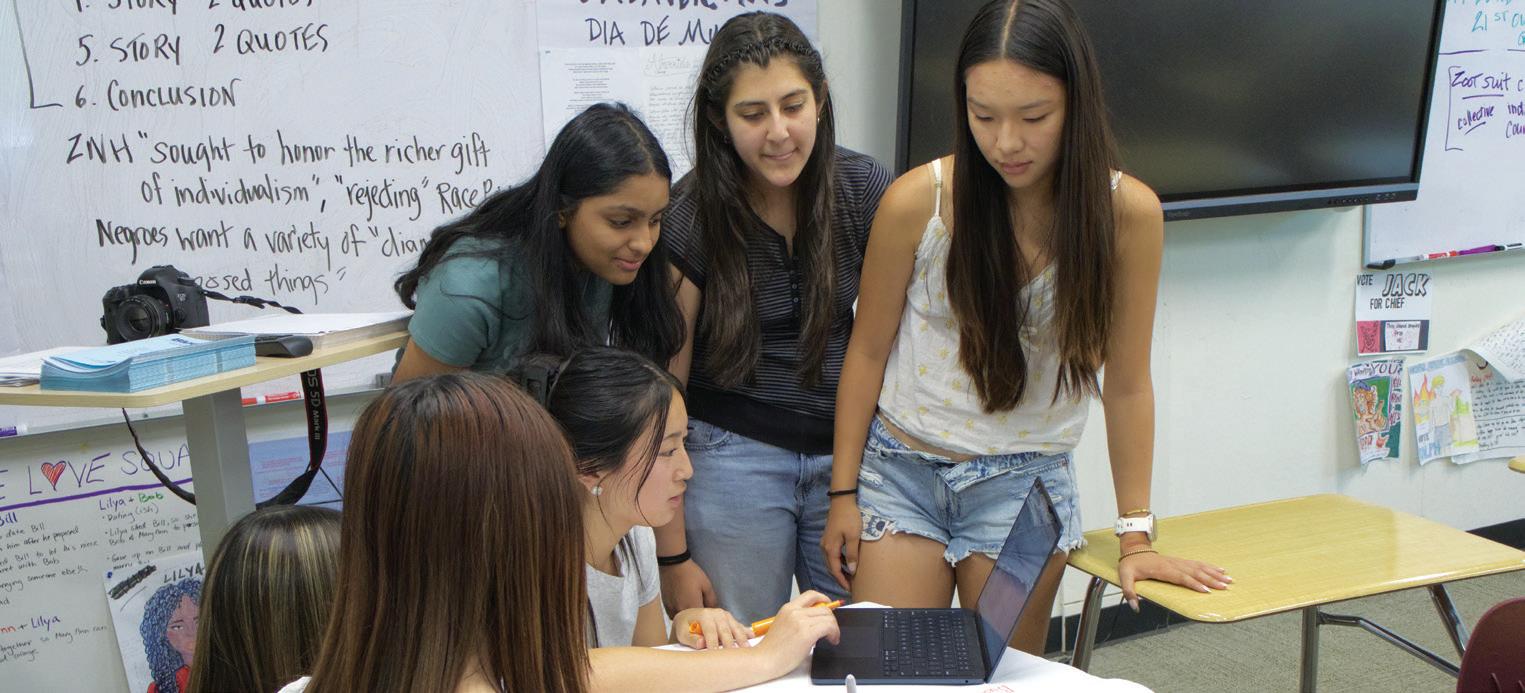
According to the National Center for Education Statistics (NCES), business has grown to become the most popular college major in the United States, with 19% of bachelor’s degrees conferred in 202122 being in business. As a result, College Board’s AP program has rolled out a new AP course: AP Business with Personal Finance. A college-level introductory business course in nature, the curriculum delves into “the business disciplines of entrepreneurship, marketing, finance, accounting, and management through real-world business application, case studies, and project-based learning,” according to AP Central, College Board’s AP Website.
Sacramento Country Day does not currently plan to offer the new course.
French says that AP Business makes sense for students that are interested in starting their own business, and he recommends using high school as an opportunity to develop a well-rounded
education. Excelling in a range of subjects — like English for communication and math for financial analysis — is what French believes builds a strong foundation for students looking into business later in their education, namely graduate schools of business. One of French’s former students described majoring in business as being a “specialized generalist.”
“I’m all for personal finance. The problem here at Country Day is our size. We have limited resources. If you put in a personal finance course, what are you going to take out? It’s a question of where you allocate your resources at this point,” French said.
“It’s a bummer that we’re not offering [AP Business], but I think we just don’t have the teacher for it,” Maya Shukla said.
If the course was offered by her senior year in the 2027-28 school year, she says that she would “100% take it.”
“Honestly, I think half my grade would.”
Along with the arrival of the brand-new AT Human Behavior class came new business-related clubs, one of those being the DECA & Entrepreneurship elective.
DECA is officially DECA Inc., an acronym that used to stand for Distributive Education Clubs of America, but is now outdated and stands for nothing in particular — a result of the club’s international reach and shift towards Career & Technical Education (CTE). The student-led CTE organization prepares emerging high school and collegiate entrepreneurs around the globe for careers in marketing, finance, hospitality and management.
When middle and high school entrepreneurship teacher Brian Hemsworth arrived as a new teacher for the 2025-26 school year, he brought DECA along. At his previous job at the Adelson School in Las Vegas, he served as the full time DECA advisor.
Country Day students had the opportunity to start DECA & Entrepreneurship as an elective with Hemsworth. Sophomore Maya Shukla was one of the founding members of the chapter and later grew it to
a 14 member class as the chapter’s Vice President of Competition.
“It’s an amazing opportunity to get kids real world experience [in business]. It’s really helped my leadership skills, and it’s let me learn more hands on,” she said.
DECA offers multiple guest speaker opportunities and a schoolbased conference called CavCon for on-campus competition experience, run like any other DECA-run conference. Students in DECA also have the chance to contribute to a student-run business.
Said business is Country Day DECA’s custom apparel service, Cavaliers & Co. They’ve produced shirts for the homecoming basketball game at Golden 1 Center, the Solar Regatta team, the school auction and more.
To customize the apparel, students operate an on-campus heat press, funded by a $4,000 pitch students made to school administrators last fall. Maya Shukla says future Country Day entrepreneurs should “definitely join DECA,” but that there should be more choices.
“DECA is the only [business] option, but we need way more. We need a microeconomics class,” she said.
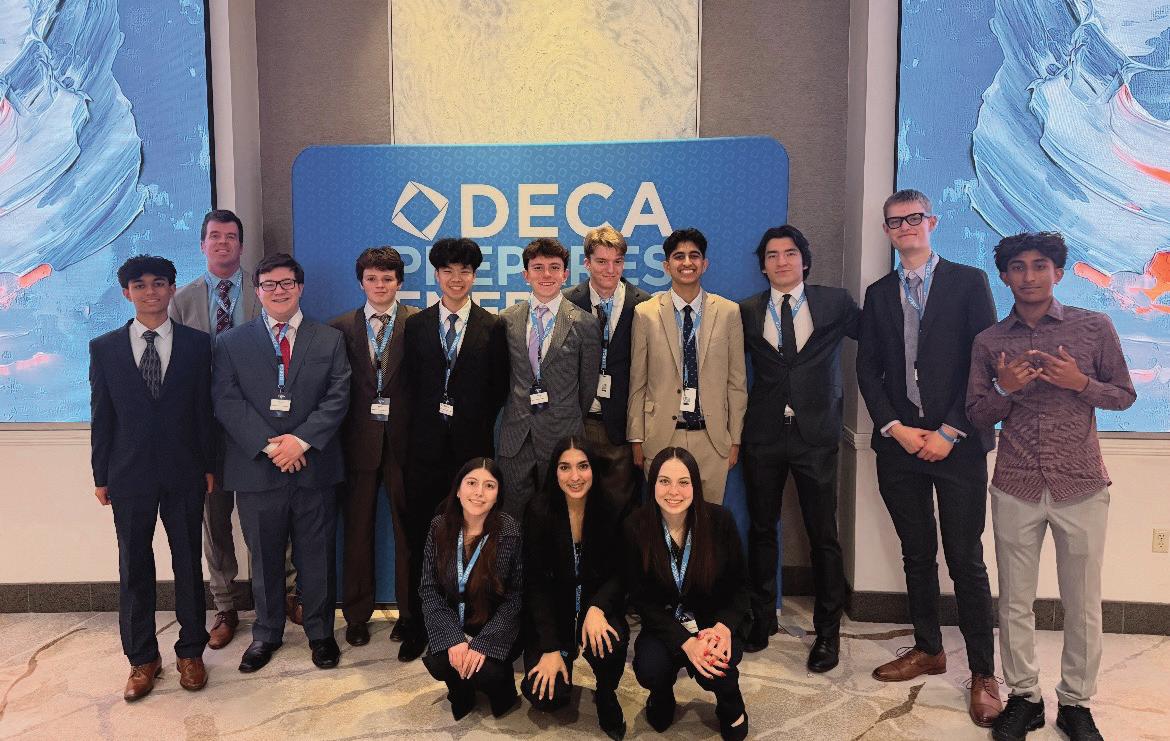
Left: The Business Professionals of America club at Country Day brainstorm new ideas for the future of the club
Another business opportunity for students at Country Day is Business Professionals of America (BPA) that operates within the Business club.
Donohue, who leads the club with senior Gavin Wang, says the meetings are a space for members to get support on various business competitions.
“There’s two ways to stand out to universities and colleges in terms of business. Have your own business, which is pretty hard to do, or you can do competitions like the ones in the
Business club,” said Donohue.
The club engages in multiple business competitions, most notably BPA, another CTE organization.
The BPA program, according to their website, “facilitates students demonstrating their career skills at regional, state and national conferences in more than 90 competitive events.”
next