BY LUCAS HOLZ
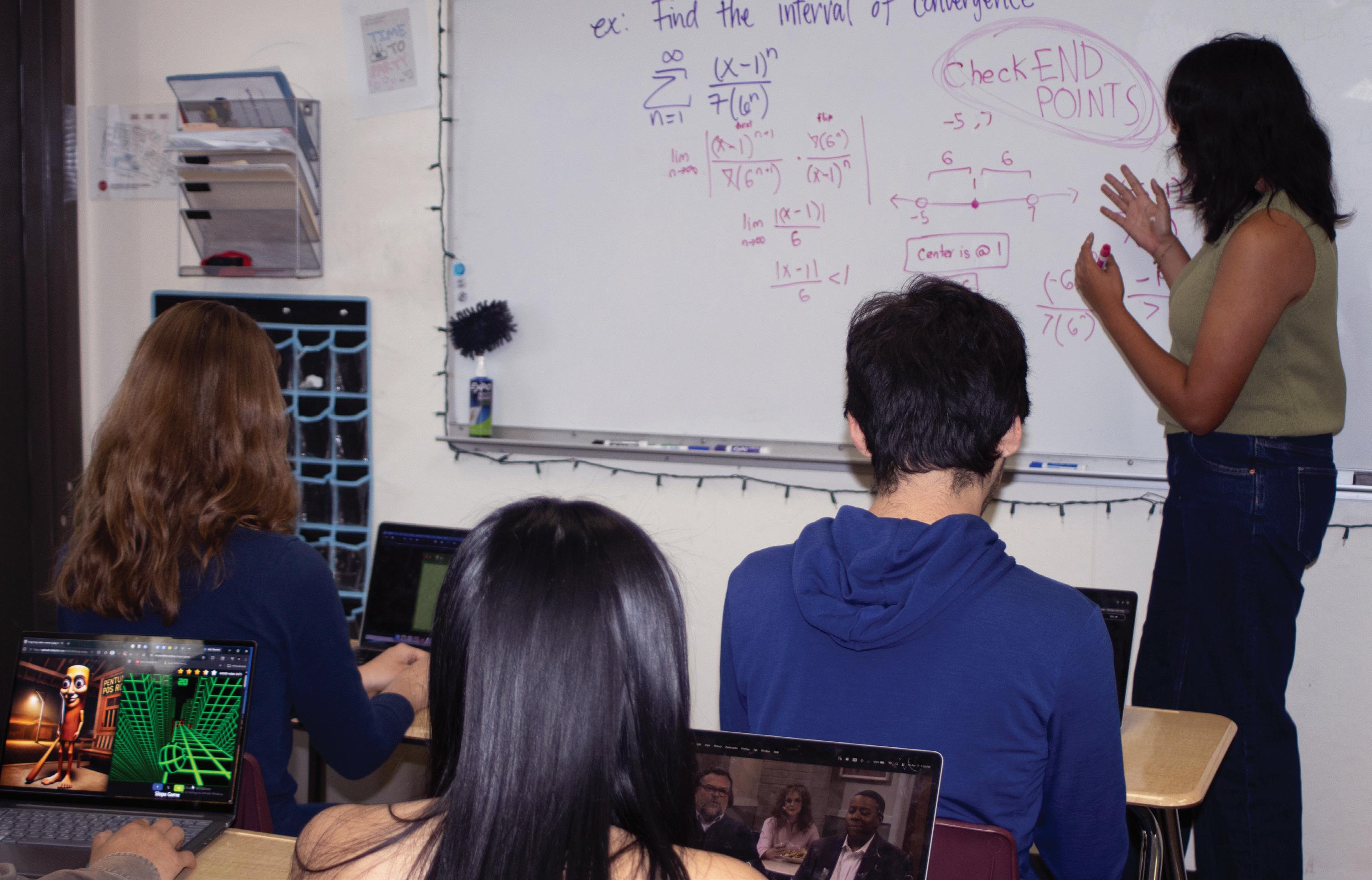
Teachers say students no longer push through hard problems on their own. They just Google it.
The National Assessment of Educational Progress has shown a rapid decline in students’ reading and math scores within the last six years, with some of the lowest results ever recorded.
Reading scores in 2024 fell 5 points, or
roughly half a grade level, from 2019 levels for both fourth and eighth graders. Math dropped 3 points for fourth graders and 8 points, or roughly a full grade level, for eighth graders over the same period.
For state level comparison, between 2019 and 2024, no states improved eighth grade reading scores. Thirty-eight states saw declines. For eighth grade math, 49 out of 50 states saw scores drop.
According to Common Sense Media, teens
currently spend an average of eight and a half hours a day on screens outside of school — an average that has risen significantly in the past six years. However, according to CNN, adolescent teens are spending 70 minutes every school day on their phones, and that’s not counting laptops.
Neuroscientist Jared Cooney Horvath has spent years studying how the brain processes and stores information. His conclusion on classroom technology is not what most
school districts want to hear.
“Even in schools, it doesn’t matter what the size of the screen is,” Horvath testified in a hearing titled “Plugged Out: Examining the Impact of Technology on America’s Youth,” on Jan. 15. “All of these things are going to hurt learning, which in turn are going to hurt our kids’ cognitive development.”
According to Horvath, by 2024, the United
BY KHIVI SINGH & RYAN XU
According to Kate Kelly — a consultant for Defenders of Wildlife and an expert on renewable energy policy planning and siting issues — the Coyote Creek project “all went wrong when SMUD entered into a power purchase agreement with this project in advance of any environmental review or consideration.”
The Coyote Creek Agrovoltaic Ranch, more commonly referred to as Coyote Creek, is a planned solar farm — located along Scott Road north of Rancho Murieta — that has generated controversy.
COLLEGE DAY
On April 30, seniors will participate in a College Day celebraion by wearing their college shirt and announcing their college destination during morning meeting in the high school quad. Seniors, make sure to order your gear for the big day!
The Solar Energy Industries Association defines a solar power purchase agreement as “a financial agreement where a developer arranges for the design, permitting, financing and installation of a solar energy system on a customer’s property,” and the developer sells the power generated back to the customer at a fixed rate.
For the Coyote Creek Project, the customer is the Sacramento Municipal Utility District (SMUD) and the developer is D.E. Shaw Renewable Investments (DESRI). According to the 2021 power purchasing agreement between SMUD and DESRI, the completion of permitting and the start of
construction on the project was scheduled for June 2022.
The project sparked conflict with environmentalists over its impact on the habitat. Hy Martin — DESRI chief development officer — said the property was chosen for the project because “it was considered low-value grazing land,” the Sacramento Bee reported in December 2024.
Advanced Topics in Environmental Studies teacher Caroline Hersh-Rodeen, who attended the November city council meeting, said that she was confused by the planned location.
“Out of all places, why here? That’s what
was never truly answered through any of the city council meetings.”
Kelly, who has spent 15 years reviewing solar projects across California, shares that skepticism.
“The impacts of this project are exceptional,” Kelly said. “This is one of the three or four very worst that we’ve ever seen in that time.”
The project would construct 500,000 solar panels over 2,700 acres — enough to power about 45,000 households under SMUD’s jurisdiction.
COYOTE CREEK page 3 >>
ADVANCED PLACEMENT EXAMS
AP exams will take place from May 4 to 15, beginning with AP Biology on May 4 and ending with AP Computer Science A on May 15. Results will be released by the College Board in mid-July; passing scores can be used for college credit. Good luck to all Cavaliers taking exams!
Read a review of the new sci-fi blockbuster “Project Hail Mary.” (PAGE 11)
COURTESY OF AMAZON MGM STUDIOS

EDITORS-IN-CHIEF
Rehan Afzal
Eesha Dhawan
Anisha Mondal
Zema Nasirov
COPY EDITORS
Maddy Schank
Ryan Xu
Eesha Dhawan
NEWS EDITOR
Kate Barnes
FEATURE EDITOR
Jacob Rabe
SPORTS EDITOR
Parsiny Nijher
A&E/OPINION EDITOR
Anika Nadgauda
PHOTO EDITOR
Rehan Afzal
TECHNOLOGY STAFF
Ryan Xu, manager
Sid Shukla, assistant
PAGE EDITORS
Rehan Afzal
Noor Alameri
Lukas Chung
Jesse Dizon
Vivian Li
Anisha Mondal
Anika Nadgauda
Zema Nasirov
Jacob Rabe
Sid Shukla
Zachary Vando-Milberger
BUSINESS STAFF
Sid Shukla, manager
SOCIAL MEDIA STAFF
Anika Nadgauda, editor
REPORTERS
Chloey Fang
Trisha Gandhi
Lucas Holz
Ammar Hussain
Ethan Minton
Maggie Nuñez-Aguilera
Parsa Salari
Maddy Schank
Sid Shukla
Khivi Singh
Zachary Vando-Milberger
Susie Wang
Brenden Yu
PHOTOGRAPHERS
Rehan Afzal, editor
Zema Nasirov
MULTIMEDIA STAFF
Ryan Xu, editor
Rehan Afzal
GRAPHIC ARTISTS
Claire Gemmell
Zema Nasirov
Gavin Wang
ADVISER
Andrea Todd
The Octagon is the student-run newspaper of Sacramento Country Day high school. The print edition is published eight times a year, and the website is updated regularly. The Octagon is committed to unbiased and comprehensive reporting, serving as a source of reliable information for SCDS students and the school community. The Octagon will publish all timely and relevant news deemed appropriate by the editors-in-chief and adviser. We seek to highlight high-school-related events and spotlight the voices of those with a story to share. Further policies can be found on our website (scdsoctagon.net) or by scanning the QR code below.

BY ETHAN MINTON
Ryan Hobbs, Sacramento Country Day middle school dean of students, is worried about his students’ attitudes toward sports betting.
While he hasn’t witnessed any students placing sports bets, he has seen many instances of kids as young as 11 joking about doing so.
“One of the kids in my elective pulled up all of the prop bets for the Super Bowl, and students were taking turns saying what they would have bet for each of the prop bets,” he said.
U.S. adults have a substantial gambling problem. According to the National Council on Problem Gambling (NCPG), 2.5 million Americans in 2024 were addicted to sports gambling, and the number continues to rise. Online searches for gambling addiction help increased by about 23% in the U.S. following the expansion of legalized sports betting in 2018, according to a University of California San Diego study from 20162024.
One-fifth of the adult male population is or have been in debt from sports betting, according to the Center for Public Justice. The American Institute for Boys and Men noted an average increase of $30 of debt per consumer due to sports gambling.
The NCPG warns that those addicted to sports betting are 26 times more likely to commit suicide than people who haven’t placed a sports bet.
Hobbs says he is concerned about the negative effects Cavaliers joking about the issue today could have on their futures.
“You can’t just let kids loose on this stuff, right? Gambling ruins people’s lives. In an alternate future where it is a problem, schools should handle it the same way as a kid doing drugs.”
Sports Gambling in the Digital Age Sports gambling has existed for millennia, from people wagering on chariot races in the 6th century B.C.E. to sports leagues in the 21st century.
While it had been banned in the U.S. for years, in May 2018, the Supreme Court overturned the Professional and Amateur Sports Protection Act (PASPA), officially legalizing online sports gambling for people over 21. Now, professional sports leagues such as the NFL and NBA began partnering with betting platforms such as FanDuel and DraftKings. Sports that prohibit their own players, coaches and staff from sports betting increasingly push betting commercials and content across social media and television.
Sophomore Lucas Holz, a sports fan, has seen many sports betting ads and is concerned about how betting companies sell their products.
“On TikTok, the videos I see promote sports-betting talk about how much you can win, never about the potential losses that come with betting,” he said.
He also mentioned that every “three scrolls,” a betting ad seems to pop up.
“That could really influence teens to make bad decisions with their money and lose it all in one place.”
Underage Sports Gambling on the Rise
The issue of underage sports gambling is prevalent even in California, a state that has made most forms of sports gambling illegal for youth and adults.
An increasing number of teens use apps like PrizePicks or crypto-based sites to bet on player props (proposition bets), which are wagers on specific individual player statistics or milestones within a game, rather than bets on the final outcome. Despite California Attorney General Rob Bonta classifying player props as “unlawful sports wagering” in a 2025 legal opinion, companies that offer these bets still operate in the state.
The Casino Control Commission told USA Today that since 2023, DraftKings “by far” had the most reports of underage activity (620), collecting $2.78 million in wagers by suspected underage users since 2023. In the same span, FanDuel had 162 underage reports, “accounting for $63,152 in bets.”
The same investigation found that around 70% of teenagers have placed an online bet, with a growing number becoming addicted to gambling.
The USA Today investigative reporter who authored the piece, Nick Penzenstadler, reported how easy it is for minors to start betting on sites like DraftKings and FanDuel.
“When you make an account, you need to have a real person with a real social security number, a bank account and an address. And they check all that to make sure you’re of age, usually 18 or 21,” he writes.
There are ways around the safeguards, Penzenstadler reports — for example by borrowing someone’s identity (or stealing it) or uploading a parent’s identification or an older sibling’s ID card. A 2024 survey conducted at Redwood High School in Larkspur, Calif., determined that nearly three-fourths of male students and onefourth of female students had placed a sports bet on an online platform despite being underage.
Redwood students admitted anonymously to using Virtual Private Networks (VPNs) to claim they were located in other parts of the country and even North America as a whole. VPNs allow users to get around regulations in one’s own state and access sites that are allowed in other parts of the continent.
Forty-three Country Day high school students filled out a similar poll for The Octagon on March 24, with about half — 51% — of respondents reporting placing a sports bet. Additionally, 42% have seen over 11 sports-betting ads per day, and 88% have come across at least one per day.
Action Through New Legislation
Sites like Kalshi and Polymarket, which are considered “prediction markets,”
or global betting markets on future events, are still permitted to operate in California. Both platforms cater to a teenage audience through paying popular content creators to talk about their platform, as well as through TikTokstyle, high volume ads.
Polymarket in particular is under intense scrutiny after they offered betting on when U.S. soldiers who were shot down in Iran would be rescued, according to NBC News.
While they took this specific bet down, Massachusetts Rep. Seth Moulton added that the platform has 219 other war bets active.
A similar site, Kalshi, refused to pay out $54 million in bets regarding the removal of Iran’s Ayatollah Ali Khamenei. This triggered a lawsuit and heavy backlash towards the company.
California legislators Pilar Schiavo and Mia Bonta plan to introduce Assembly Bill 2617 — Protecting Kids From Online Gambling Act. This bill would ban platforms like FanDuel and DraftKings from both marketing to minors and allowing them to play.
The proposal highlights that youth “are more susceptible to reward-driven decisionmaking, impulsivity and risktaking behaviors, increasing vulnerability to future problem gambling and associated financial and mental health harms.”
If it were to pass the legislature, it would take effect on Jan. 1, 2028. The bill makes sure only approved operators — tribal casinos, licensed entities or stateauthorized platforms — could legally offer sports betting.
Platforms would need to follow strict rules on age verification (21+) and tracking to ensure bets happen inside California. Unlicensed apps or offshore sportsbooks would be illegal.
However, nearly 81% of young people have already been exposed to sports gambling advertisements according to the Journal of Behavioral Addictions, and despite, according to the Journal of Behavioral Addictions, four out of five teens believing the advertisements should be restricted, little change has occurred.
The California Office of Problem Gambling identified several tells for budding gambling addictions.
“You might notice you are playing longer than you meant to, checking your phone constantly, or feeling pulled back in even when you want to stop. You might feel stressed, irritated, or restless when you are not playing. You might spend money to try to get a better outcome or a bigger haul,” their website reported.
The NCPG provides resources for those struggling with gambling problems, including “answers to commonly asked questions, a gambling behavior self assessment, information about treatment and the National Problem Gambling Helpline (1-800-MY-RESET).” The NCPG website encourages problem gamblers or those who know them to seek help.
BY RYAN XU
On April 14, at 4:15 p.m. first responders responded to reports that a fire broke out at 400 University Avenue in the Campus Commons area across from California State University, Sacramento, approximately one mile from Sacramento Country Day.
The fire took place in a vacant office building which had previously burned, according to KCRA3.
Fire officials are describing the fire as “suspicious” because the building was unused and vacant and there was no expected human activ-
ity inside at the time of the fire.
An investigation is underway. A large smoke plume originating from the fire was visible for several hours. No victims or injuries have been reported and no buildings had to be evacuated.
Previously, on March 27, the Sacramento Fire Department reported that a separate vacant building in the Campus Commons area had caught fire, also under suspicious circumstances.
As of April 19, officials have not apprehended anyone for either fire. Investigations are ongoing for both fires.

(continued from page 1)
States had spent more than $30 billion on putting screens in classrooms, with school districts making deals to buy laptops and tablets at a discounted rate.
The push began in the early 2000s, when Maine became the first state to launch a statewide laptop program: the Maine Learning Technology Initiative.
Schools have not slowed down their spending on technology as many billions of dollars continue to go toward tablets, smartboards and laptops every year, with the idea that newer technology leads to better learning.
A study discovered that students engaged in off-task activities on their computers nearly two-thirds of the time. Horvath pointed to this as a key reason technology slows learning, saying that when attention is interrupted, it takes time to refocus, and task-switching is linked to weaker memory formation.
Patricia Jacobsen, mathematics department chair at Sacramento Country Day, has watched the shift happen in real time.
“I think it’s more difficult for some students to really lock in with their laptops in front of them,” Jacobsen said.
Beyond just staying focused, Jacobsen said she has noticed students struggling to push through difficult material on their own without technology.
Jacobsen is torn on the issue of technology. Some students, she said, have parents, siblings or the money to hire a tutor when they are struggling.
“What if you’re the kid who doesn’t have any of that?”
That is where she sees technology earning its place. Tools like Khan Academy, she said, open doors for students who would otherwise have nowhere to turn.
Jacobsen described a student who had always been permitted to use a four-function calculator and, as a result, never learned how to work with negative numbers. When the student encountered a problem requiring basic integer arithmetic, they could not solve it.
“They’ve never been encouraged or taught how to deal with negative five minus eight,” Jacobsen said. “Students are less likely to focus in class, ask questions or come visit me during flex because everybody knows if they ever have a question, they can just Google it or use PhotoMath or AI to get close enough to the answer,” Jacobsen said.
Jacobsen said technology should work the same way any other convenience does. It makes certain tasks easier, but it should never replace the underlying skill.
In her own classroom, she requires students to learn how to solve problems by hand before they are permitted to use a calculator.
“You need to learn how to do it, then you use the tool,” she said. “But nowadays it’s like, ‘Why would I learn how to do that? I can just do it on my calculator. Why do I learn how to factor? The calculator factors for me.’”
As of 2024, about a third of eighth graders nationwide are failing to reach the basic benchmark in reading — the largest percentage ever recorded on the test, according to the National Assess-
ment of Educational Progress. Education officials have poured money into tutoring programs and intervention efforts since the pandemic with public schools spending more than $27 billion on tutoring and summer learning and $30 billion on staffing these intervention programs, according to the U.S. Department of Education’s The Pandemic Learning Project.
Twelfth grade reading scores peaked in 2009 and fell significantly in the following decade. The trend, researchers say, points to something deeper than COVID-19 learning loss. Twelfth grade math peaked in 2013 and also declined by 2019, well before the pandemic disrupted schools.
Whether school districts will reconsider how they approach classroom technology remains unclear. American schools spend anywhere between $26 billion to $41 billion on education technology every year and that number will continue to climb, according to the nonprofit EdTech Evidence Exchange.
Some universities are already pushing back. Faced with widespread AI cheating, professors have begun returning to handwritten exams. Bluebook sales at the University of Florida rose 50% in the 2024-2025 school year, jumping to 80% at UC Berkeley, according to the Wall Street Journal.
“The point of getting an education is not to have the most efficient, easy process along the way,” Jonathan Senchyne, a professor at the University of Wisconsin-Madison, said. “The point is to challenge yourself.”

(continued from page 1)
In order to flatten the site for development, 1.3 million cubic yards of land would need to be excavated. This process would cause substantial disruption to vernal pool habitats, cultural and archeological resources, and the removal of old-growth blue oak trees. The project will result in the loss of 3,493 oak trees, with the largest having an estimated age of 850 years with a chest-height diameter of 67 inches, according to Kelly and a press release by the California Native Plant Society (CNPS).
“This level of environmental destruction to accommodate this project is beyond acceptable,” Kelly said.
In November 2025, the Sacramento County Board of Supervisors unanimously approved the project, following a 6-hour hearing where a majority of 130 speakers opposed the proposal.
“I was really disheartened when I walked away from the County Board of Supervisors meeting, and I felt like that they heard comment after comment after comment of people with concerns about the environment and when it was their opportunity to respond, not one of them touched on it,” Gabrielle Katanic, an influencer aiding the Save Coyote Creek coalition who was present at the board meeting, said.
Following the approval of the project, Coyote Creek has come under a wave of legal challenges, focused around the project’s Environmental Impact Report (EIR). Under the California Environmental Quality Act (CEQA), an EIR must be prepared for any project which may cause substantial environmental change.
“The EIR of the project is deeply flawed, and there are now three lawsuits on the adequacy of that EIR,” Kelly said.
CNPS, alongside the Environmental Council of Sacramento, filed a lawsuit against the County of Sacramento on Dec. 18, 2025. The suit cites “numerous deficiencies in the project’s Final Environmental Impact Report,” and that the report “is so deeply flawed that it is insufficient to
support informed decision-making.”
Wilton Rancheria, the only federally recognized Native American tribe in the Sacramento area, filed a suit against the County of Sacramento alleging violations of the CEQA the next day. The tribe represents both the Miwok and Nisenan people. The suit alleges that the project violates cultural and environmental protections. At the same time, the California Four Wheel Drive Association also filed a suit against the county, for the same reasons as CNPS, allegeding that the county “unlawfully certified a legally deficient Final Environmental Impact Report” according to a press release on the group’s website.
The project is currently unable to proceed due to the ongoing litigation regarding the EIR. As such, the permitting process has stalled.
“The project’s in a bit of a limbo right now. It can’t really pull permits, same on the federal side, where we have policies coming out of this administration that have basically blocked processing of solar and wind projects,” Kelly said.
On Jan. 5, SMUD canceled its power purchasing agreement with DESRI. The decision was made due to “supply chain constraints, rising prices, tariffs, schedule delays, environmental impacts and pending litigation” according to a press release on SMUD’s website (www.smud.org).
DESRI will continue with the project, though due to the ongoing litigation and lack of permits, construction will be unable to proceed until lawsuits end, which may take years.
“Developers generally rely on a fairly complex series of financing maneuvers and loans. They’re not going to be able to get financing on this project, or it’s going to be very difficult for them to finance any activity when there’s uncertainty on a lawsuit,” Kelly said.
Kelly points to other locations that could be alternatively developed, including places with exhausted farmland or where other developments can’t occur.
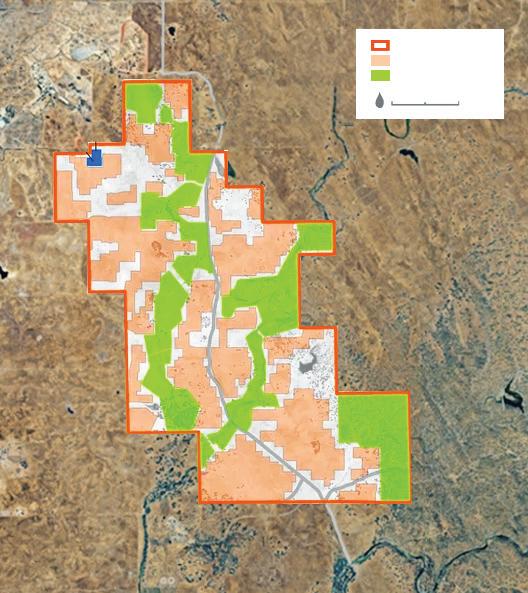
CANCEL COYOTE CREEK Map detailing the land distributions of the proposed Coyote Creek Project. PHOTO COURTESY OF WWW.COYOTECREEKSOLARPROJECT.COM
“We have places in South Sacramento Country where there were a lot of wine grapes, and a lot of those grapes are getting removed. There’s also parking lots, warehouses and landfills.”
Kelly also points to another proposal which would place solar panels above aqueducts and canals, which would decrease evaporation and improve the efficiency of the panels.
Hersh said that the location picked and the subsequent environmental damage would not make sense.
“Why would we pick one of the few remaining pristine habitats in Sacramento county as a location to make clean energy which is theoretically for the benefit of that environment?”

BY SUSIE WANG
Cara Shin, ’25, attends Pitzer College. She is undecided on her major but plans to pursue economics.
Q: How did you end up choosing Pitzer?
A: Honestly, it’s all kind of a blur. I think I had two options, and it was really the location — I thought living in SoCal would be nice. I visited twice before I went there, and I really liked the environment and the people. I think that was the main reason.
Q: What is the environment like?
A: It’s very small. I feel like everyone knows everyone here, which I don’t know if that’s a good or bad thing. All the professors are really nice — they’re willing to talk, willing to help. I would say the main takeaway is that it’s very small.
Q: Have you had any thoughts on transferring colleges?
A: I do think about that sometimes. Maybe it’s because this is my first year, but I don’t know if Pitzer is where I want to be for the rest of my years at college. It has been growing on me slowly though.
The peak of my transfer thoughts were during my winter break. I had left school on a really bad note because I got strep throat and was dealing with other health issues during my finals week. It really affected my performance in school so I left feeling really frustrated and out of place with Pitzer.
However, my second semester has been
going exponentially better. I’m enjoying my classes, spending more time with friends and overall feeling more at home.
Q: If you were to transfer, where would you be considering?
A: I would definitely go to a bigger school, and I have considered applying to all the UCs. School spirit is a big factor that just isn’t really there at Pitzer, because the sports aren’t huge.
But also, meeting new people, because Pitzer is so small you just run into the same people all the time.
I’m not sure if there is a definitive reason to stay or leave — I think I’ll just have to eventually make that decision later. My perspective on Pitzer has already been positively shifting the longer I am here, so I hope that trend continues.
Q: Are you involved in any extracurricular activities?
A: I’m in a couple, and it’s really chill and not much of a commitment. We have a school magazine called “The Outback,” and I’m also in an affinity group for Asian students, PASU, which is an acronym for Pasifika Asian Student Union.
Q: What is your housing situation?
A: I’m in a suite and it’s really nice. I live with one other person, and I share a bathroom with two other people.
Most of the other students living on campus are in similar or even better housing situations than mine.
Q: What do you do for fun?
A: For fun, I usually go on trips on the weekend. I’m really close to Los Ange-
les, so, this semester, I’ve gone like every weekend. I like going to Koreatown, but LA as a whole too.
Q: How is the food?
A: I have access to all the dining halls of the “Five C’s” (Pitzer College, Pomona College, Scripps College, Harvey Mudd College, Claremont McKenna College), so even though my school is really small, I have seven to choose from.
My dining hall is named “McConnell,” but there’s so many others. If you’re not feeling the menu of that day, you can just go to another dining hall — and they’re all really good.
I still get tired of the food sometimes, but it is very good and I really appreciate it.
Q: Why did you choose to stay instate?
A: I think I just love California. It was hard to imagine myself on the East Coast, and I’m so used to California weather, so I mostly applied to West Coast schools.
Q: What is Pitzer’s average class size?
A: It’s super small, usually 14 or 15, like Country Day classes. Some classes can be up to around 40 people, but that’s like if you’re in a big math class.
It also depends, because you can take classes at places like Scripps or Pomona. I can even major at a different school if I want to as long as it’s in the “Five C’s.”
Q: How was the transition from Country Day to Pitzer like?
A: I think moving away in general was a
huge transition, but classes-wise, it didn’t feel that hard.
Last semester was challenging because I didn’t enjoy my classes — there was nothing I was really interested in, and it is relatively hard to get in all the classes you want as a first-year. Additionally, I didn’t realize the classes that I chose would be so writing-heavy, which is definitely not my forte.
This semester however, my classes are all economics-related, so I felt better prepared, and they were more enjoyable.
Social-wise, it’s a little bit overwhelming for me, because you’re constantly surrounded by everyone — but it’s a good and bad thing. All of your friends are literally down the hall, across the street, and you’re just constantly together.
Q: What is one piece of advice you would like to give to the class of ‘26?
A: I would say to focus on your health and bring lots of medicine to college. I’ve gotten sick four times this year, and once one person gets a cold, everyone gets sick.
FIVE STAR OR SUBPAR?
Quality of classes: School Spirit:
Food:
Social Scene:
Location:
Student-Teacher
Interactions:
STORY BY LUKAS CHUNG; GRAPHICS BY ZEMA NASIROV; PHOTOS COURTESY OF KASTURI
Second-grader Mayuri Kasturi sat at a white plastic table in her front yard that held a line of hand-crafted rainbow loom bracelets, sold for $5 each, and a sign that read: “For Rwanda.”
“What is ‘For Rwanda?’” a neighbor asked.
Kasturi explained in her second-grade vocabulary, “Schools in Rwanda. Money for them.”
The neighbor purchased the bracelet.
By the end of the day, Kasturi had collected $50. She gave this to her father, who used Intel’s donation matching program to turn the $50 into $100. Kasturi then sent this money to a homeless pregnant woman in Rwanda — Vestine.
Moved to action
For 22 years, Elena Bennett taught music lessons at Sac ramento Country Day’s lower school. She retired in 2022 to devote more time to her nonprofit organization Rwandan Educational Enrichment.
“The music room in those days was a kind of a center for everything about the world that had to do with peace and peace through music,” Bennett said.
Bennett taught social justice, the Civil Rights Move ment, and peace studies, which were incorporated into the songs that her students sang.
“My programs were always about unity across the world and how to be friends with other cultures,” Bennett said.
A focus of Bennett’s class was Rulindo, a district in Rwanda.
One of Bennett’s students was Kasturi, whom Bennett describes as a “sponge” soaking up everything she taught — the music, the ideas of unity and Rulindo.
One of the main things that resonated with Kasturi was what she learned about the lives of the people living in Rulindo.
“These places need cows, goats and food. They didn’t have water tanks, so they would go the entire day without water. I decided, I eventually want to go there,” Kasturi said.
Kasturi continued to take private violin lessons with Bennett even after graduating from lower school. During one lesson, Bennett told her about Sister Anne, the principal of one of the boarding schools in Rulindo, who reached out to Bennett for help.
Vestine had visited Sister Anne for help.
“Why did I tell Mayuri about this? Mayuri was special. I knew that care. Sister Anne passed this name to me, and I turned around and thought, ‘maybe Mayuri would be interested in helping this young girl who has this baby,’” Bennett said.
Kasturi’s journey continues
“I talked with Bennett in late middle school about going to Rwanda,” Kasturi said.
Bennett did everything she could to make it happen. On the campus of Groupe Scolaire Gitabage, a remote Rulindo PK-9 school, Bennett worked on the funding for building a health center. Planning a trip to check the status of the Rulindo health care center, Bennett offered to bring Kasturi and her father during Kasturi’s midwinter break in February 2026. Her father bought the tickets to go on the condition that Kasturi would only spend four days in Rwanda. Kasturi’s dream was soon to become a reality.
Once the trip was confirmed, Kasturi emailed Dr. Patricia Sierra for help, a doctor whom she had shadowed at Sacramento Eye Consultants a year before. Sier
“I felt like a celebrity,” Kasturi said. The next day, Kasturi was found by the same girl. “She called me over. She showed me the heart, and said, ‘I don’t know a lot of English, but I just wanted to say I love you too.”
A surprise for Sister Anne Kasturi visited the Inyange Girls Boarding School presided over by Sister Anne. Bennett had the idea of surprising Sister Anne, so she never told her that Kasturi was visiting. Upon arriving at the boarding school, Kasturi sat down next to the door to Sister Anne’s office with her father. Bennett went inside to talk to Sister Anne.
“Sister Anne, come on. Let’s go walk outside,”

When Kasturi heard of Vestine, she immediately went into action.
“I didn’t have a lot of emotions when I was a kid, but I remember being sad when I heard of Vestine. I was like, ‘Okay, well I want to help,’” Kasturi said.
A few months later, Sister Anne asked Bennett again to help Vestine.
“Mayuri would ask me about Vestine, and her family started to follow her progress,” Bennett said.
Kasturi started doing chores around the house, babysitting and selling bracelets to gain money to donate to Vestine.
“Mayuri and her family began a small little thing through me. They would give me the money, I would send the money to Sister Anne and Sister Anne would pass it to Vestine,” Bennett said.
“In a way,” Kasturi said, “Vestine and her child felt like siblings that I was taking care of.”
Kasturi wrote letters, which Bennett would take with her whenever she went to visit Rwanda. Sister Anne knew Kasturi by her messages and donations, but she had never seen Kasturi before.
For Easter, Kasturi sent a dress, one that she’d had since she was small.
Despite having the dress prepared, Bennett did not give it to Vestine.
“It just wasn’t practical, they got this fufu Easter dress,” Bennett said. “This is not going to work for them, it’s too fancy and delicate.”
Bennett sent Kasturi’s dress to a teacher instead, thinking she’d “never see that dress again.”
Two years later, Bennett visited the same teacher’s school.
“I’m doing my thing, I’m addressing a thousand people, and then I see the dress. It was the teacher’s baby. She was so happy and so grateful for this dress. She wore the heck out of it.”
Rwanda with Kasturi’s luggage. Once arriving at Rwanda, Kasturi met up with Bennett. Kasturi stayed in Kigali, the capital of Rwanda. The schools that Kasturi visited were located in Rulindo, which took an hour and a half to get to from Kigali. With only four days, the drive only limited her visits to the Rulindo schools even more.
“Every place we went, we had to rush and then leave,” Bennett said.
Kasturi noted that the quality of roads did not help this issue either.
“The roads were terrible. The car was basically tilted to the side at some point. I was like, ‘who needs to go to Disneyland at this point!’” she said.
Despite the road’s condition, Kasturi found beauty in the scenery of Rulindo.
“It was very green and nice. The air felt cleaner than even in America,” Kasturi said.
Kasturi went to Ecole Primaire Rulindo, their primary school from kindergarten to sixth grade. There, she brought music equipment and sang and danced with the students.
At the Gitabage health center, Kasturi donated three boxes. Two of them were shoeboxes filled with sunglasses and reading glasses, and the other box held dental care, toothpaste and toothbrushes.
Kasturi then visited Ecole Secondaire Gasiza, a seventh through twelfth grade school.
To Kasturi, it seemed like nobody was ever alone. Every student did everything as a group. Kasturi noticed that during music classes, they held hands and laughed.
“They don’t even know me, and they’re like, ‘you’re one of us now.’ They immediately accepted me into their community. It was as if I’d known them for so long. It was comforting,” Kasturi said. “There was this girl that was super excited to see me. She said something along the lines of, ‘Oh my god, oh my god, she’s actually here!’”
Kasturi made a heart sign toward the girl. The girl showed the heart sign back and fell over into her friend’s lap.
The door opened and Sister Anne walked out, facing Kasturi. She stared at her, not knowing who the girl and her father were. Kasturi didn’t expect her to recognize her. The only photos Sister Anne had ever seen were from when Kasturi was in fourth grade.
“This right here is Mayuri,” Bennett said.
Sister Anne brought her hands up to her mouth in shock.
“Wow! I know you from long time ago, but it’s only now that I meet you,” Sister Anne said in a video recording of the visit. Sister Anne hugged Kasturi.
“I remember the girl that you supported. Unfortunately I don’t know where Vestine is now,” Sister Anne said.
Help for Vestine’s baby
After the trip, Sister Anne started looking for Vestine and her child. Months later, she found her. Sister Anne sent Bennett a picture of Vestine’s child.
“She looks like a two year old to me. But this kid is not two years old. The baby should be around seven years old. That baby is not healthy,” Bennett said. Bennett is working on building a nutrition center in Kenini, the area where Vestine’s baby was found. The project is funded by a Country Day family, the Karalakulasingam Foundation. Once the nutrition center is finished, Bennett hopes that people in the Kenini area will face less malnutrition.
Bennett then showed the picture to Kasturi.
“After hearing about Vestine, I felt a pit in my stomach. Like a kid’s malnourished. I’m happy to see her again, but at the same time, to know that they’re still suffering. It just hurts,” Kasturi said.
Immediately after seeing the photo, Kasturi took the $50 she made from her job refereeing soccer. She matched the $50 through Intel’s donation-matching program yet again. The company doubled it.
“After I graduate, I plan on going to Rwanda again for longer,” Kasturi said. “I only got to stay there for four days, so I’d probably stay there for at least two weeks next time.”

STORY BY ANIKA NADGAUDA, MAGGIE NUÑEZ-AGUILERA & BRENDEN YU; GRAPHICS BY NADGAUDA & ZEMA NASIROV

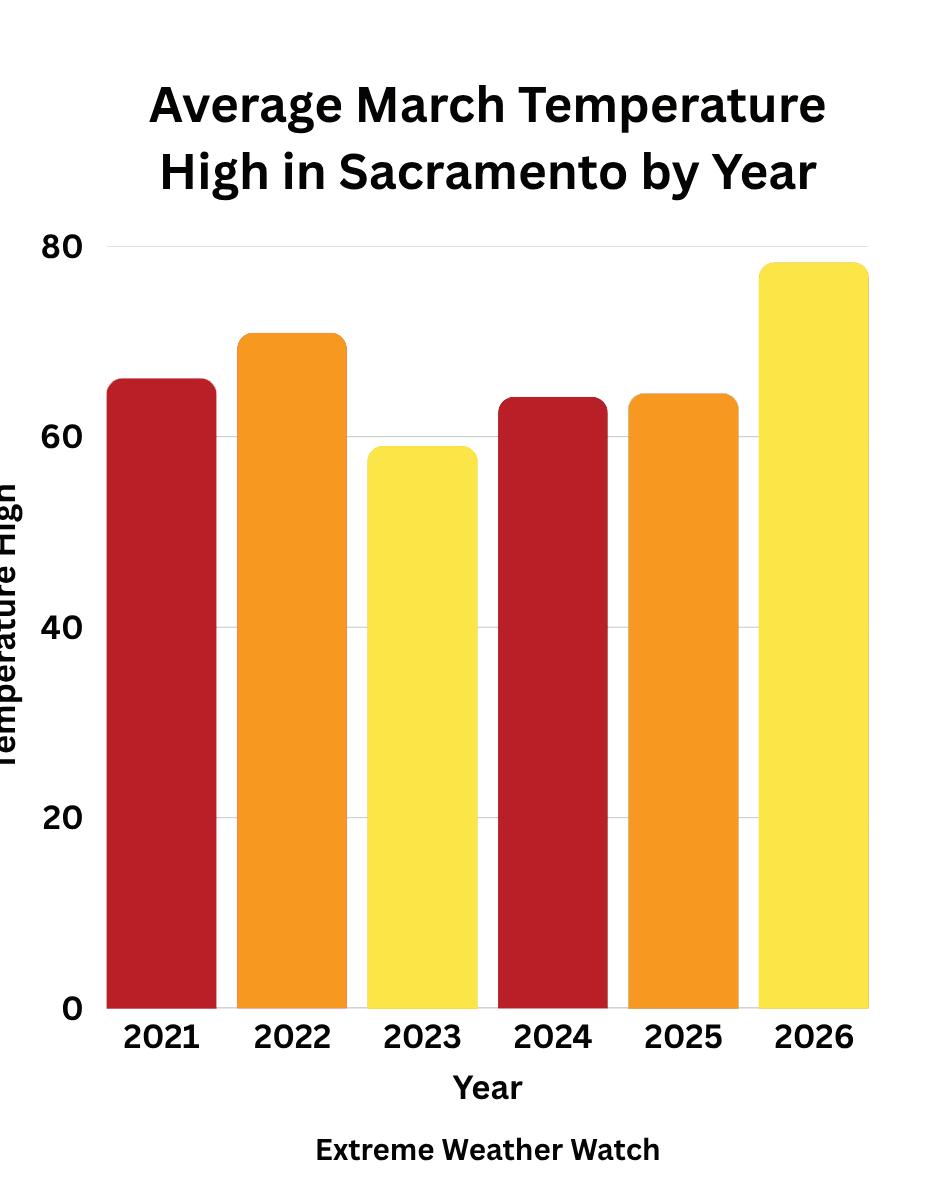
This March, temperatures across California broke long-standing records for the hottest days in early spring, setting over 180 temperature records.
According to the National Weather Service (NWS), Sacramento tied its all-time record for hottest temperature in March [set in 2007] on March 15, then broke that record twice more on March 18 and again on March 20. Those readings officially made March 2026 Sacramento’s hottest March since recordkeeping began in 1941.
The NWS predicted the pattern before its peak, describing it as “a large, long-lasting and dangerous heat wave, quite possibly one of the top heat wave events for the month of March, ever.”
The NWS issued an extreme heat watch from March 13 to 16, covering much of the region, warning of high risks of heat illness, especially for outdoor workers and residents in coastal areas who don’t need or have air conditioning units.
Our Sacramento NWS office warned that valley highs would result in “widespread heat risk,” forecasting a moderate risk of heatstroke midweek, continuing a minor risk through the weekend.
For students at Sacramento Country Day School, the heat created its own problems.
“Since classrooms and especially the library are closed frequently, it

leaves me forced to work outside. But honestly, staying outside is just not a reasonable option sometimes because it’s way too hot and there aren’t even enough tables to seat everyone,” senior Rebecca Lin said.
Sacramento County’s Office of Emergency Services coordinates cooling center openings based on NWS Sacramento heat risk thresholds, as was stated on Sacramento County’s official website.
Dr. Olivia Kasirye, Sacramento County public health officer, advised residents to seek shelter in public air-conditioned spaces (shopping malls, public libraries), advice usually issued during summer months. Exposure to extreme heat is the leading cause of weather-related deaths in the United States, according to the World Weather Attribution research group. Early-season heat events are especially dangerous because peoples’ bodies have not yet adjusted to high temperatures and the heat is unexpected.
According to the New York Times, a minimum of 2,325 people died due to heat in 2023 — a record high.
Risks
According to the National Oceanic and Atmospheric Administration, March 2026 became the warmest March in the contiguous United States going back 132 years of national records. National Geographic pointed to a powerful, slow-moving weather pattern called a heat dome
as the main driver in an article published on June 23, 2025.
A heat dome is a high-pressure system that sits over a region and traps hot air underneath it, similar to a lid on a pot. The system prevents cooler air from moving in and blocks cloud formation, also cutting off rainfall. Heat domes become more prominent rising global baseline temperatures.
According to the United Nations, the leading causes of rising global baseline temperatures include the burning fossil fuels — as the process of burning them releases a large amount of carbon dioxide which gets trapped in the atmosphere — and deforestation — where large amounts of trees are cut down which it lowers the amount of carbon dioxide the planet is able to absorb.
Some of the biggest consequences of the March heat played out not in California’s cities but in its mountains. The Sierra Nevada snowpack, which supplies roughly 30% of the state’s water on average, melted far ahead of schedule.
According to the California Department of Water Resources, when surveyors went to Phillips Station near Lake Tahoe for the traditional April snow survey, they found no measurable snow on the ground. The statewide snowpack was sitting
at just 18% of average.
Department of Water Resources Director Karla Nemeth addressed this situation in a statement available to the public: “It feels like we skipped spring this year and dropped straight into a summer heatwave. What should have been a gradual snowmelt happened suddenly weeks ago.”
In the Northern Sierra Nevada, where the state’s largest water supply is located, the snowpack fell to just 6% of average.
Willie Whittlesey, general manager of the Yuba Water Agency, told CalMatters the snowmelt arrived about two months early.
“We’re seeing snowmelt conditions in mid-March that we normally don’t see until at least mid-May,” Whittlesey said.
The Sierra Nevada snowpack normally provides about a third of the state’s water for homes, farms, fish, hydropower and forests. When that melt happens weeks ahead of schedule, water managers have a hard time capturing the sudden rush of water before reservoirs fill past their limits.
According to the BBC, the accelerated snowmelt raised the risk of water shortages in summer and left the landscape drying out sooner, which could mean a longer and more intense wildfire season.
Immediate Fire and Drought Risk
“Warming air temperatures will
cause moisture loss from soils, which will lead to drier seasonal conditions. Snowpack in California’s mountains will decline more than a third by 2050 and more than half by 2100, significantly reducing surface and groundwater supply,” California Climate Adaptation Strategy website said.
California had been declared drought-free in January 2026 for the first time in 25 years. The Yale Climate Connections states that the March heat wave brought new questions about whether that status would last. Because heat domes trap hot air and block clouds, they also cut off rainfall, which the state depends on through the dry season.
According to the Environmental Defense Fund, droughts make forests more likely to burn by drying out soil and the dead plant material on forest floors. That dry matter acts as fuel, helping fires spread faster and burn harder.
California’s Fourth Climate Change Assessment, a state government report, projected that rising temperatures could lead to up to a 77% increase in average area burned by wildfire and a 50% increase in fires larger than 25,000 acres by 2100.
At the federal level, the Trump administration has been moving to change how the government han-
dles heat and environmental regulation. According to an analysis by Berkeley Law, the policy document known as Project 2025 called for eliminating the Office of Domestic Climate Policy and directing the Environmental Protection Agency to stop factoring the effects of greenhouse gases into its enforcement decisions.
“The next conservative administration should rescind all climate policies from its foreign aid programs (specifically USAID’s Climate Strategy 2022 to 2030); shut down the agency’s offices, programs, and directives designed to advance the Paris Climate Agreement; and narrowly limit funding to traditional climate mitigation efforts,” Berkeley Law quoted Project 2025.
The document also proposed cutting the number of industries required to report their emissions to the Environmental Protection Agency from 41 down to a much smaller group, and called for ending climate-related foreign aid programs.
Implications of Rising Climate
“Actions have consequences, and it is worth the time to think about those consequences, think about your own value structure, and then re-examine your actions,” Country Day’s middle school earth science teacher Cade Grunst said.
Grunst pointed to current climate
change legislation as a foundation worth building on.
The state is already working toward a fully renewable energy grid and a ban on new internal combustion engine vehicles. Grunst described those as the more straightforward pieces of the puzzle because they involve swapping one technology for another without dramatically changing how people live. The harder work, he said, is in areas
like agricultural energy use, where clear alternatives are harder to find. That urgency is backed up by state-level data. California’s Fourth Climate Change Assessment projected that by midcentury, the Central Valley could experience heat health events that are on average two weeks longer, and that they could occur four to 10 times more often in the Northern Sierra region.
BY EDITORIAL STAFF
Sacramento Country Day’s middle and high school Physical Education (P.E.) teacher Angela Cormier said the nation is “in a health epidemic.”
“Lifestyle or chronic diseases are the leading cause of death in America,” she said. “These diseases can be prevented, or at least greatly minimized, if we focus on living a healthy, active lifestyle.”
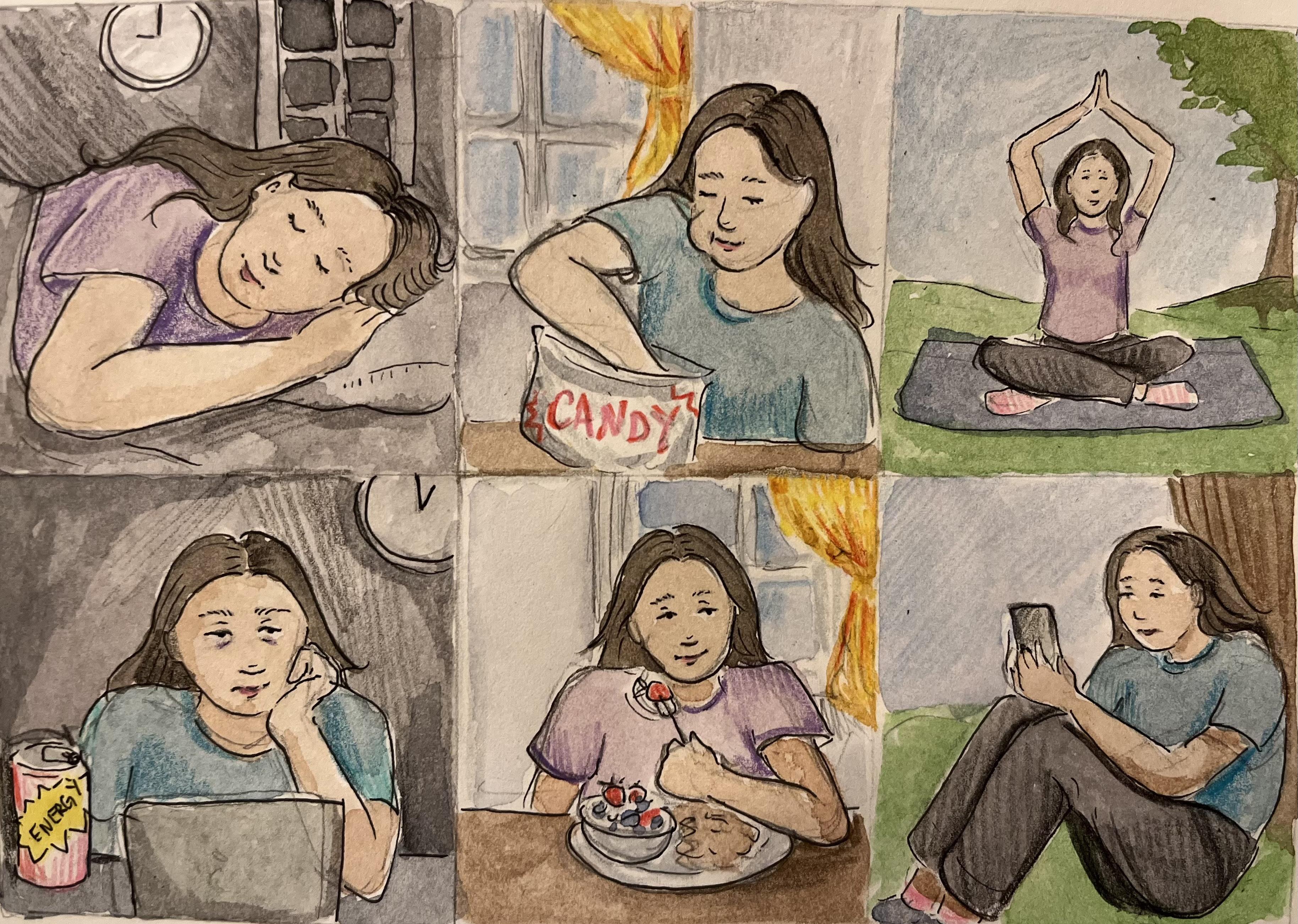
Country Day students need to start caring about their health, and now. Sleep, diet and physical health habits, if improved, can have major impacts on students’ futures and wellbeings.
Chronic diseases — a group that includes heart disease and diabetes — kill six million Americans every year, according to the Pan American Health Organization. Risk factors include obesity, physical inactivity, chronic stress and poor mental health — most of which are on the rise, even among adolescents.
High school students across the country currently struggle with unhealthy habits, contributing to risk factors.
Reports from the Centers for Disease Control and Prevention (CDC) found that between 2017 and 2023, around 91% of American high school students did not meet fruit and vegetable intake recommendations set by the United States Department of Agriculture; about 83% did not meet “federal recommendations for both aerobic physical activity and muscle-strengthening activity;” and 77% were sleep-deprived.
Sleeping well is the first step students should take to improve their health, Cormier said.
“Sleep is absolutely critical to your well-being. It affects your physical health, your mental health and your emotional health. It affects your ability to retain information, your memory, your mood,” she said.
A 2016 study in the International Journal of Behavioral Nutrition and Physical Activity reported that insufficient sleep is also associated with higher obesity rates in adolescents age 10-19.
Inconsistent sleep habits also have negative effects. A study described in a 2024 media advisory from the National Institutes of Health found that teenagers with irregular sleep schedules and late bedtimes were more likely to get worse grades in classes, as compared to students with consistent bedtimes.
Cormier recommends a minimum of eight hours of sleep per night for high schoolers. On campus, this goal is out of reach for many students.
On April 1, The Octagon sent out a poll to Country Day high school students titled “How many hours of sleep are you getting?” Fifty-seven students responded.
Seventy-six percent reported getting under eight hours of sleep per night. Only 23% reported getting the recommended eight to 10 hours.
In general, the Child Mind Institute identifies several causes of sleep deprivation in teenagers. These include shifts in melatonin production in teens that cause them to go to sleep later and wake up later; long screen times; watching screens before bed; lots of homework and overscheduling.
Reaching an eight-hour sleep goal could also be difficult to achieve for students who consume more than 100 milligrams of caffeine daily — the limit suggested by the American Academy of Pediatrics for adolescents age 12-18.
Nearly 25% of Country Day students reported drinking either “multiple cups of coffee,” “an energy drink,” or “multiple energy drinks” daily. These students likely consume two to three times the recommended amount of caffeine for adolescents, assuming that one cup of coffee contains roughly 100 milligrams of caffeine and one energy drink contains 100 to 300 milligrams.
With the largest group of students — 42% — reporting spending over two hours on homework per day, some possible causes of high
caffeine intake and sleep deprivation on campus are courseload and responsibilities.
“Students today face a growing number of expectations at increasingly younger ages. Even adults struggle with finding the time to take care of themselves,” Cormier said.
“As a society, we often place greater value on external responsibilities and productivity, which leads to self-care, physical activity, and even rest being pushed to the background and treated as optional, when in reality, they are essential.”
There are ways for students to prioritize sleep, according to experts.
Nemours Children’s Hospital and Nationwide Children’s Hospital list healthy sleep habits in two reports, titled in part “Ideas for Better Sleep” and “Sleep Tips for Adolescents,” respectively.
Rule number one: set a bedtime, and stick to it. Calculate when to go to bed based on what time you wake up, and plan your nighttime routine accordingly.
For students with extracurricular activities after school and a heavy courseload, planning for good sleep might mean finishing as many assignments as possible during free periods and school hours.
Rule number two: turn off screens. Set an alarm or use an app to make sure you don’t stay up late, and avoid using electronics right before bedtime; instead, wind down by reading or listening to music.
Rule number three: limit distractions and stimulants. Turn off notifications on your phone, and ensure that the room is quiet and dark. Avoid consuming caffeine in the late afternoon and evening. Exercising during the day also helps ease stress, making falling asleep easier.
Once students establish a healthy sleep routine it becomes easier to maintain, and more importantly, worth it to maintain.
Current Nutrition Reports, an online nutrition journal, recommends a higher intake of micronutrients and energy proteins during adolescence — a period of rapid growth and development that requires students to meet changing nutritional needs. Main sources of these are whole foods: fruits, vegetables, unprocessed meat products, dairy products, nuts, eggs and fish.
However, ultraprocessed foods currently make up 65% of the daily calories consumed by Americans ages 15-24, according to a 2025 study published in the The Obesity Society’s research journal. Ultraprocessed foods include cold cuts, cereal, packaged baked goods and other ready-to-eat items.
An American Medical Association study found that diets high in ultraprocessed foods are associated with more than 30 health conditions, including mental health disorders and Type 2 diabetes.
Another study — published in the Systematic Reviews journal, titled in part “Ultra-processed foods and risk of all-cause mortality” — reports those who eat large amounts of ultraprocessed foods have a 15% greater risk of dying from any cause.
The repercussions of an unhealthy diet are long-term — making it critical for high school students to develop healthy eating habits now.
The problem is that food culture in the United States is not conducive to healthy diets. Ultraprocessed food makes up 73% of the United State’s food supply, according to the GroceryDB database — an “open-access database designed to quantify the degree of processing of packaged foods in the U.S. grocery supply.”
The prevalence of ultraprocessed food products in grocery stores make it difficult for students to find healthy food, and another obstacle is price. GroceryDB found that on average, ultraprocessed foods are 52% cheaper than “minimally-processed alternatives.”
Some easy guidelines for students to follow are to avoid prepackaged bread, chips and cold cuts; replace them with sourdough,
whole wheat bread, nuts, popcorn, whole-roasted poultry and fish. Buy more rice, beans, oatmeal; in-season fruits and vegetables; and on-sale meats, Mayo Clinic advises, in order to spend less money.
John Hopkins Medicine suggests limiting red meat — like beef and pork — and buying lean cuts when possible, which contain less fat and cholesterol.
Changing day-to-day eating habits has immediate positive effects. Mayo Clinic’s website (“Fuel the school day with an A+ breakfast”) reports students who get into the habit of eating breakfast every day show increased focus, better brain function, improved moods and sharper memory.
It’s important to eat healthy proteins and fats, fruit and whole grains for breakfast. This might look like a breakfast burrito with eggs and cheese in a whole grain tortilla, served with a side of fruit.
Exercise and physical activity are important parts of a person’s well-being.
“Being physically healthy gives you more energy. It gives you more clarity. It helps you focus. It makes you feel stronger, and it makes you feel more confident. It helps you perform better in school, in life and in sports,” Cormier said.
Benefits of physical activity include reduced risk of depression and chronic disease; healthy blood pressure and aerobic fitness; and normal blood sugar levels, according to the CDC.
The Department of Health and Human Services recommends children and adolescents ages 6 to 17 participate in at least 60 minutes of moderate to vigorous physical activity per day.
Most of the time should be spent on aerobic physical activities, which include running, swimming, dancing and riding a bike, according to the Office of Disease Prevention and Health Protection’s recent manual Physical Activity Guidelines for Americans, second edition.
Other activities include weight lifting and working with resistance bands to improve muscle strength, as well as playing basketball, tennis or jumping rope to promote bone growth. These benefits can be achieved through active participation in a wellstructured P.E. class.
Cormier recognized that it’s often difficult for students to reach physical health goals.
“It’s hard to make the time to exercise, make healthy meals, get enough sleep and practice overall self-care,” she said. “But I don’t think it comes from a lack of care. I think it comes from maybe a lack of understanding how important it is,” she said.
Lack of time, lack of motivation and lack of accessible places also make getting enough physical exercise difficult for high school students, according to research published by Public Library of Science (PLOS).
Cormier emphasizes students need to pick any activity that they’re able to do.
“I tell my students all the time, ‘you do not have to be a star athlete. You just have to find that one thing that will help keep you moving and healthy long term.’”
In her experience, students who dislike playing aggressive contact sports often enjoy yoga and weight training, activities that still allow them to exercise a healthy amount.
As an individual still developing into an adult, you’re at a juncture where the habits you form — regarding sleep, diet and physical activity — will influence your physical and mental health for a lifetime. And with Generation Z growing older, teenagers and young people have the opportunity to redefine what it means to be a healthy American.
Will you miss this opportunity? Will you fall victim to an epidemic of poor lifestyle choices, like so many Americans today? Or will you learn to prioritize your mind and body, and by doing so, shape the future?
BY NOOR ALAMERI
Iget it; high school can feel like so much. It’s hard to find motivation to do work that you don’t want to do when you’ve already achieved what you’ve been working for, getting into college. Why keep running if the finish line is already behind you?
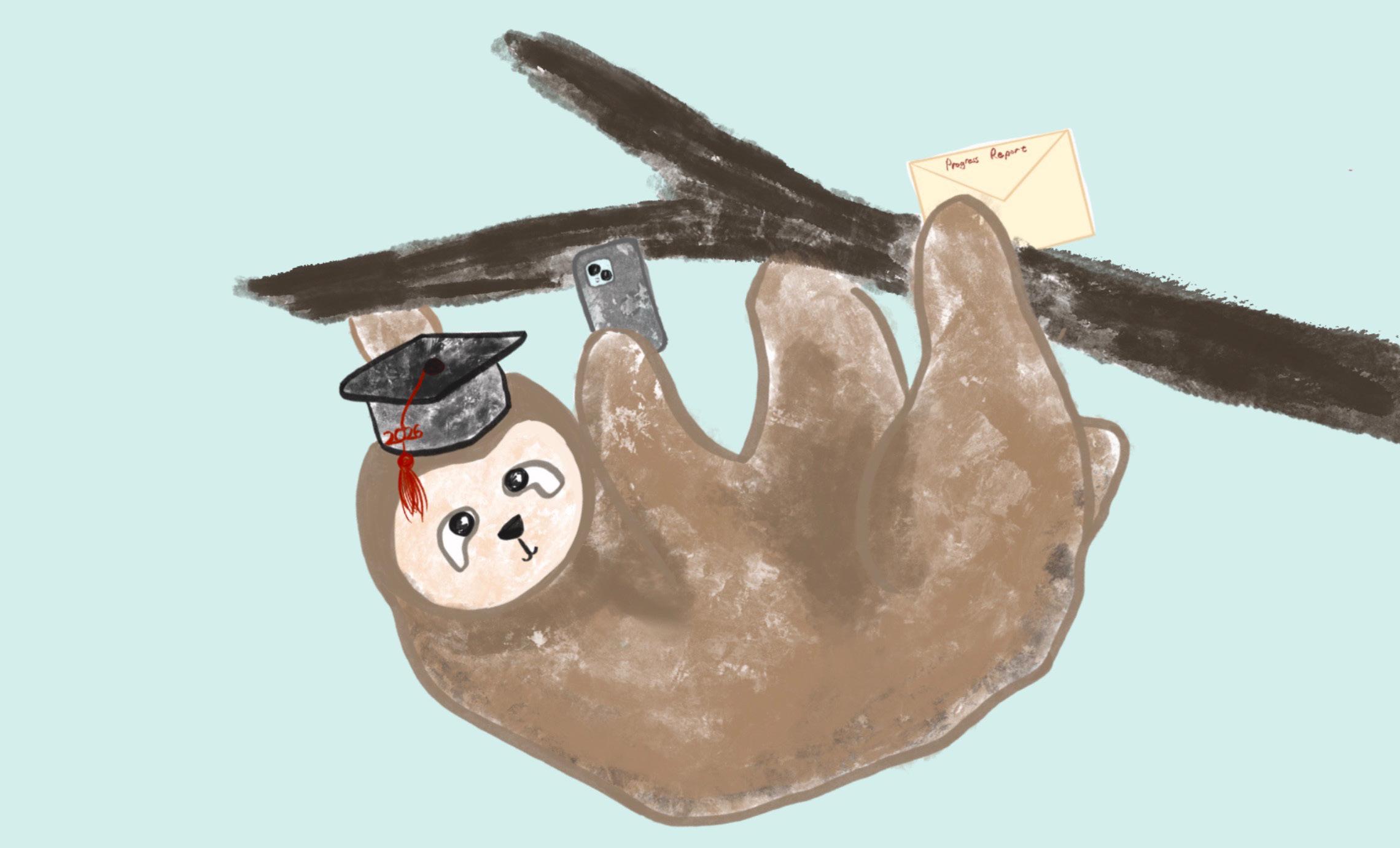
I may not be a senior, but I’ve spent spring after spring watching my friends who were seniors sinking further and further into the depths of senioritis, the decline in motivation and performance that comes after a high school senior has been admitted into college.
A few years ago, I had a friend whose senioritis was so bad that she transferred from a public school to an asynchronous online school.
Transferring to an online school to escape the academic pressures of high school seems like a dramatic answer to a question that every senior faces: what do I do now?
The issue here is not an individual failure, but rather the natural outcome of a system that prioritizes getting into college over actual learning.
Once you have achieved the goal, there’s nothing left to do. Nothing worth putting in that much effort for.
My friend isn’t the only senior who feels this way. She lies near the extreme of a spectrum that every second semester senior seems to be somewhere on.
On one end are those who never let go, and on the other are those who let go so completely that they stop showing up to school entirely.
For the longest time, I have dreamt of what it would be like to be in my final months of high school.
No more worrying about every point on every assignment, no more checking CavNet every five minutes just to see if my

test score has updated, no more lying awake worrying if my extracurriculars looked good on my college applications.
Just coasting by, freed by the knowledge that I no longer have to worry about how every little thing looks on my college application.
Here’s what I’ve realized: There’s a stark difference between releasing pressure and complete apathy.
The seniors who have not let go of anything are easy to spot, because they look like the rest of us. Let me be clear: I’m not talking about people who are on top of their work, I’m talking about those who haven’t given themselves a moment to breathe.
But here’s the thing, this kind of person is missing out on a lot. I’m not saying that doing your classwork equates to missing life, but there’s a certain point, late in the game, at which obsessing over every point on every assignment is going to cost you more than it gets you, and second semester is that point.
You can keep your grades up without treating every test like it’s the SAT.
It’s true that senioritis brings a promise of reduced academic pressure and freedom.
But, reader beware: it only takes two months to form a habit, good or bad. For most Country Day students, 12th grade is not the end of their education. So, in the fall you have to go back to school. If you’ve gotten into the habit of not doing any work, it’s going to be impossible to go back to consistently doing all of your schoolwork because you’ve considered school to be optional since April.
I used to want to be this kind. I would love to not have to worry about anything after April. No more assignments, no more tests, no more school . . . that sounded like a dream, the epitome of freedom.
The truth is you aren’t giving up in a vacuum.
Skipping classes, not turning in your work on time, those are all things that hurt your grades. But, leaving your groupmates to finish your project for you or skipping team or club meetings, however, those are a different story.
You make a commitment to your teammates, members of your club, groupmates or whoever else may be relying on you. Student council, clubs and sports, none of these things just

stop because you gave up or just don’t feel like it, or because you got into college.
Some seniors want to get away. College sounds like a dream, and an exciting fresh start. That adds on to the lethargic feeling already building by the time spring hits. You want to get away, not be stuck in the same classrooms you’ve been in for four years. But senioritis may just end up being the reason that that promised new beginning doesn’t come to fruition. It’s not unheard of for a college to rescind a letter of admission due to a significant drop in grades. People get letters warning that you have to maintain your grades in order to maintain your admittance. They might not say it explicitly in your acceptance letter, but college acceptances are not unconditional.
Selective schools accept students because they are a certain kind of student, and to completely flip as soon as the calendar says April, doesn’t align with that.
If you are waitlisted to a school, they ask seniors to submit a second semester transcript, and if your grades are lower than they were last semester, that doesn’t bode well for your chances of getting off of the waitlist.
The last kind of senior is the most rare. The one who has actually found the balance between constant stress and apathy. They’ve learned to let go of the stress of college applications and worrying about every little thing.
Getting a B isn’t the end of the world, it’s just a grade. But, they are still aware of the fact that they are a student, who has obligations to fulfill.
This is where I want to be a year from now. No longer worried about how every little thing is going to affect my college application, but still involved enough to be present at school. How do you even do that? How do you balance the desire to give up with the need to actually fulfill my responsibilities?
This goes for everyone, not just current high school seniors; shift your perspective. Stop trying to do everything to get into college; instead be curious. Do things for the sake of learning, instead of doing them because you have to.
That way, when you get to senior year, learning doesn’t feel like a burden you have to carry around, but rather something that you want to do for a real reason.
Nobody at Crème Coffee seems to be there just for coffee. From friends posing in front of the mirrors to off-duty firefighters chatting in uniforms, this new downtown spot feels like the whole city gathered briefly under one roof.
Crème Coffee held their grand opening in downtown Sacramento, in February.
According to their website, cremecoffee.com, the cafe draws inspiration from Parisian cafe culture and Italian espresso traditions. Inside, it features a clean, minimalist aesthetic with light colors, marble tables and simple seating that gives it a quietly luxurious feel. Its sign on the wall — “crème de la crème” — is a


Tea, or pink-tinted water? This drink is a textbook case of striking looks over any real personality. When I asked for tea recommendations, the tea-rista raved about its “sweet, floral character when blended with vanilla.”
I ordered it exactly as described. One sip later, I seriously doubted any vanilla had ever met this cup. Instead of warmth and depth, it tasted like plain water — as if the hibiscus and raspberry had both called in sick.
Hibiscus tea should be vibrant



and berry-like: pleasantly tart with a subtle sweetness. This version delivered none of that. It arrived severely watered down, with zero noticeable sourness or gentle sweetness.
The color is undeniably beautiful — a vibrant pink that almost makes you feel guilty for disliking it. But looks are nothing without taste. In the end, this raspberry hibiscus tea feels like something a beginner whipped up at home: good intentions, but sadly lacking the depth and balance.

As an admittedly self-proclaimed ‘professional’ matcha enthusiast and home-based recreational barista, I can confidently say that the crème matcha latte meets my expectations.
This popular drink features a clean, minimalistic look that perfectly matches the cafe’s relaxed vibe. A light sprinkle of matcha powder on the side added an elegant touch. Refreshing and ideal for summer, its light-green color pleases the eye like a poem created in spring. At first glance, the latte resembled a scoop of matcha ice cream more than just a standard beverage.
Every matcha should deliver perfect creaminess with little to no bitterness. This drink succeeds with its extremely rich and vegetal flavor. The mellow matcha taste stays sweet, bold and far from watered-down. It blends Asian
In a world where everything seems to be advancing toward intricacy and modernism, Crème Coffee’s concept slows life to the basics — without making it basic.
Their simple yet classic layout is magnetic; it’s a place that subtly, subconsciously coaxes you to fix your posture to match the poised manner of the architectures. Amid marble surfaces and soft light echoes carefree Parisian mornings: slow unwinding with calm greetings and gentle clinks of cups. The minimalistic European vibe is conspicuous, yet the serenity is often disrupted by the constant loud noise of a full room. Do
French idiom for “best of the best.”
The cafe serves espresso and brewed coffee, matcha, tea beverages and locally baked pastries. According to the business’s description on Yelp, drinks are prepared using an Italian espresso machine, house-made syrups and intentionally sourced beans — beans selected from specific regions for their quality and flavor.
The website claims they serve “Sacramento’s best coffee,” adding a stated goal of making customers “feel welcomed, valued, and treated with every sip.”
The advertisement and strong public reviews set my expectations high, creating a standard that each drink had to meet. But only some lived up to that standard.
Upon first taste, it felt as if someone with an extremely bold personality jumped straight into my face.
Already not a huge coffee fan, I ordered this signature drink hoping it would finally convert me (spoiler alert: it did not).
Without stirring, bitter caramel storms in immediately — two words that should never share a sentence. The cream is completely missing, buried under a cloying wave of sugar. The flavors clash hard: burnt coffee fighting against overly sweet milk. It tastes like they tried to hide the charred bitterness by simply add-
ing cream. There’s no pleasant af tertaste that invites me to revisit.

After stirring, it improves slightly as the flavors blend, but the heavy cream is still overwhelming. It’s almost oleaginous enough to cause a headache.
The drink does earn points for appearance, though. The clear, distinct layers are genuinely impressive. Cream swirls gently through the warm beige and brown tones, creating a cozy marbling effect that feels comforting and homemade (before you stir it, of course).
Looks-wise? Impressive. Tastewise? Hard pass.
and European influences, marrying the earthy matcha with creamy milk almost to perfection.
The flavor does not hit all at once.
Instead, it strikes a perfect balance — neither overwhelmingly strong nor tasteless. Even from a distance, the delicate scent of spring breezed through. It’s grassy, fresh and deeply relaxing, leaving a lasting impression of silky matcha at its finest.
and
If you want an excellent introduction to the possibilities of matcha, order this crème matcha latte.

not expect to get much work done at Crème Coffee unless you bring top-tier headphones.
The drinks are a similar story of uneven delivery. The Crème Matcha Latte stands out as rich, vegetal and beautifully balanced, easily the highlight. In contrast, the Crème Latte was bitter-sweet chaos, while the Raspberry Hibiscus Tea feels like a decoration where hibiscus and raspberry have entered their minimalist era (nice job hitting your theme, I guess).
While I respect the confidence, hanging “crème de la crème” on the wall might be a stretch. Right now, I can only think of one drink which belongs in that conversation.

“Project Hail Mary” is exactly what the title suggests: A last ditch effort — one statistically likely to fail — to save something.
In this case? Planets — not just our own — facing death from a sunlight-eating mold.
The film is based on the novel by Andy Weir, author of “The Martian.” Critics describe Weir as a “hard science fiction writer,” which basically means the science he uses in his novels is the subject of debate among experts.
Protagonist Ryland Grace (Ryan Gosling), a sixth grade science teacher who is recruited by government agent Eva Stratt (Sandra Hüller) to study the energy-eating organism called “Astrophage.”
Grace becomes humanity’s last hope after waking from a government-induced coma on “The Hail Mary,” a ship sent to observe a star infected with Astrophage. Grace is sedated and sent against his will on a one-way suicide mission, without the time nor fuel to return. Though initially accompanied by astronauts from Russia and China, he becomes the only survivor of the mission.
The film opens as the book does, with the computer system as the first voice Grace (and the audience) hears. Grace’s words are muted, adding a layer of confusion while captivating viewers at the same time.
The pacing of this first scene is very disorienting; it bounces from Earth, back to the ship and then back to Earth. This parallels Grace’s state of mind after waking up, an effect not expressed nearly as well in the book.
Noticing this early flaw brain-wormed me into noticing others.
In the novel, after Grace wakes up, the reader goes on a “mini-adventure” with him to
discover who he is through a series of flashbacks that take up the first few chapters. This includes Grace recalling how his fellow astronauts died. But in the film, this is shortened into a 10 to 15 minute montage of Grace piecing it all together. The first quarter of the novel is pretty slow-paced, and if I am being honest, the quicker film pace grew on me.
That said, the removal of Grace’s inner dialogue and thoughts is jarring. The novel shares Grace’s thoughts from the second he wakes up. This matters in a film where a lot of the big moments are scientific “work through it” scenes.
Those who didn’t read the book might have trouble understanding what’s happening. The film attempts to remedy this by ditching the more scientific parts for scenes that are action-packed or cinematic.
Earth’s survival aside, the core of the film is the dynamic between Grace and Rocky, a spider-shaped rock-formed alien. As they team up to save their mutual stars, they frequently argue back and forth quite a bit, much like typical movie duos do (in buddy comedies and sci-fi alike).
What stands out is the lengths that they are willing to go to protect one another. In one especially harrowing scene, Rocky puts his life on the line for the person who taught him what it was like to be human.
In both book and film, Rocky’s character is done justice. That is thanks to puppeteer James Ortiz (and six other puppeteers working with Ortiz). Ortiz’s voice work and puppeteering brought so much character and attitude to Rocky. The movie version of the alien has much more personality than his book counterpart.
For me, Rocky is one half of the best broduo since Michael Jordan and Scottie Pippen.
Overall, “Project Hail Mary” reminds me of a comedic version of “Interstellar.” Looking ahead to next year’s Oscars, the use of sound and silence was brilliantly effective, specifically in how it shapes the viewer’s experience.

Instead of filling scenes with unnecessary music or dialogue, directors Phil Lord and Chris Miller aren’t scared to force the audience to sit through quiet moments. By letting the absence of sound emphasize Grace’s isolation, the viewer can connect to him better. This with fuzzy audio in the beginning, and the eventual slow return of clear dialogue, parallels Grace’s mental state in a way that feels immersive rather than confusing — a concerning factor for mine going in.
Easily-missed sound design choices (the hum of the ship for example) build tension and establish the atmosphere. Small moments feel significant and impactful, keeping the viewer closely connected to Grace’s perspective.
Action junkies rest assured: when the film does choose to go big it goes balls-out. The Astrophage, our antagonist, glows with a beauty that contrasts with the danger it poses. A stunning, mysterious, looming threat, Astrophage is the film’s femme fatale. Fun fact: Believe it or not, scenes like those contained zero computer generated imagery.
Visually and aurally stunning, the film connects on an emotional level. Gosling does such a fantastic job sharing curiosity, frustration and quiet moments of realization.
I felt like I was discovering plot twists alongside him. The way he reacts to the small wins and road blocks is so human, and I found myself genuinely rooting for him every step of the way.
When Rocky enters the story, their interactions are a viewing experience of pure joy. The way they learn from each other, and the moments of trust and empathy they share, moved me in a way I wasn’t expecting from a film based on a book written by the same guy responsible for such a mission focused piece of story like “The Martian.”
In a word, I was overwhelmed by this immersive experience. And with news of a potential sequel, Weir has me excited for what’s next.

Every Friday the high school comes together as a community to listen to a poem selected by Head of High School Brooke Wells. The poems Wells select range in length, style and sometimes are performed in song. In honor of National Poetry Month during April, The Octagon selected four poems out of the many poems read by Wells during Friday high school morning meetings.
By: Robert Hayden
Sundays too my father got up early and put his clothes on in the blueblack cold, then with cracked hands that ached from labor in the weekday weather made banked fires blaze. No one ever thanked him.
I’d wake and hear the cold splintering, breaking. When the rooms were warm, he’d call, and slowly I would rise and dress, fearing the chronic angers of that house,
Speaking indifferently to him, who had driven out the cold and polished my good shoes as well. What did I know, what did I know of love’s austere and lonely offices?
“EVERY DAY WE ARE LEARNING”
By: Amanda Gorman
Every day we are learning
How to live with essence, not ease. How to move with haste, never hate. How to leave this pain that is beyond us Behind us.
Just like a skill or any art, We cannot possess hope without practicing it.
It is the most fundamental craft we demand of ourselves.
“THE
By: Wendell Berry
When despair for the world grows in me and I wake in the night at the least sound in fear of what my life and my children’s lives may be,
I go and lie down where the wood drake rests in his beauty on the water, and the great heron feeds.
I come into the peace of wild things who do not tax their lives with forethought of grief. I come into the presence of still water. And I feel above me the day-blind stars waiting with their light. For a time I rest in the grace of the world, and am free.
“SPRING
By: Edward Estlin Cummings
Spring is like a perhaps hand (which comes carefully out of Nowhere)arranging a window, into which people look (while people stare arranging and changing placing carefully there a strange thing and a known thing here)and changing everything carefully
spring is like a perhaps Hand in a window (carefully to and fro moving New and Old things,while people stare carefully moving a perhaps fraction of flower here placing an inch of air there)and without breaking anything.