FOR ORANGE COUNTY
CLINICIANS
JUNE 15, 2026

REGINA CHINSIO-KWONG, DO COUNTY HEALTH OFFICER
Honoring Loss, Supporting Healing, and Preparing for Summer Health
As we enter June a season that often brings anticipation, celebration, and renewed energy across Orange County we also pause to acknowledge and honor those mourning the recent loss of a child swept away by powerful coastal waves. The outpouring of support from residents, first responders, and community partners has reflected the strength and compassion that define our county. While many look forward to the longer days and summer activities ahead, it remains important to hold in mind those who have lost loved ones to drowning or other natural deaths in or around water, a reminder of our vulnerability and the delicacy of the environments we enjoy. I hope the coming months bring safety, comfort, and renewal for you, your patients, and all Orange County residents.
With temperatures already rising, heat-related illness prevention is a critical focus. Clinicians play a central role in recognizing early symptoms, counseling on hydration and cooling strategies, and supporting outreach to those most vulnerable older adults, individuals experiencing homelessness, and people with chronic conditions.
Summer also brings more outdoor recreation, travel, and gatherings, leading to increases in preventable injuries and seasonal infections. This is an important time to reinforce sun protection, water safety, responsible alcohol use, and trauma-prevention practices. Foodborne and respiratory illnesses often rise during warmer months, underscoring the importance of safe food handling, recommended vaccinations, and respiratory hygiene.
Local gatherings tied to the FIFA World Cup may further increase travel and crowding, elevating the risk of injuries and communicable disease transmission. Your vigilance in surveillance, early identification of concerning trends, and patient education will be especially important throughout this period.
June also highlights several observances aligned with our population health goals Alzheimer’s and Brain Awareness Month, Men’s Health Month, Sickle Cell Awareness Month, LGBTQ+ Pride Month, and National HIV Testing Day on June 27. Each offers an opportunity to elevate preventive screenings, advance inclusive and culturally competent care, and strengthen connections to treatment and support.
Thank you for your ongoing dedication to the health and well-being of Orange County residents. Your leadership and steady commitment make a meaningful difference every day. I hope the coming months bring safety, connection, and renewal to you and the communities you serve.
PRESS RELEASES/NEWS HIGHLIGHTS
National/Federal Updates
• On May 23, CDC expanded enhanced public health entry screening for travelers arriving from Ebola-affected regions to select airports.
• On May 22, CDC announced temporary restrictions under Title 42 for certain individuals returning from the DRC, Uganda, or South Sudan, including lawful permanent residents.
• The Office of Management and Budget proposed revisions to federal grant management rules that would increase federal monitoring of grant recipients, expand agencies’ authority to terminate awards, and establish standards to ensure federally funded activities align with federal administration priorities. Public comments are due July 13.
• CMS released an interim final rule to implement federal Medicaid work requirements included in the 2025 budget law. Under the rule, beneficiaries claiming exemptions may self-attest in 2027, with documentation required for exemptions beginning in 2028. Public comments are due July 31.
• President Trump issued an executive order directing HHS and CDC to review and potentially revise U.S. childhood vaccine recommendations to align with peer country immunization schedules.
• HHS announced efforts to address Lyme disease and other tick-borne illnesses, including expanded research, tick control strategies, and innovation funding. The initiative aims to support reduction of Lyme disease cases by 25% by 2035.
• CDC highlighted adverse health outcomes linked to those who travel for cosmetic procedures within the United States or abroad.
State Updates
• CDPH released a new fact sheet: Behavioral Health Services Act: Population-Based Prevention vs. Early Intervention.
• CDPH warns of rising illnesses from ongoing unseasonal bloom of poisonous wild mushrooms.
• CDPH issued notice of proposed emergency regulations for hospice agencies. Of note, the regulations require hospice infection control policies to include reporting outbreaks or undue prevalence of infections, parasitic disease, or infestation. Public comments are due June 16.
Reports and Publications
• CDC released an Antimicrobial Resistance Communications Toolkit.
• CDC reported findings from a Northern California amatoxin mushroom poisoning outbreak that occurred between November 2025–March 2026. A total of 39 people became ill after consuming foraged wild mushrooms, resulting in three liver transplants and four deaths. The report acknowledges coordination between CDPH, local health officers, and partners.
• Office of the Surgeon General released the Warning on the Harms of Screen Use, an advisory and toolkit on how to protect children and youth.
• CDC reports that brucellosis remains rare but persistent in the U.S., with most cases linked to unpasteurized dairy products, undercooked meat, and contact with infected wildlife during hunting or animal processing.
• CDC reports that a 2025 measles outbreak in a Texas childcare facility spread rapidly among exposed children despite high overall MMR coverage.
• The Policy Center for Maternal Mental Health named California as the national leader for maternal mental health support in their 2026 State Report Cards.
• CDC published Increases in Kratom-Related Reports to Poison Control CentersNational poison Data System, United States, 2015-2025, noting an increase of approximately 1,200% in kratom-related exposure reports (from 258-3,434) and a marked surge in 2025.
PUBLIC HEALTH COMMUNICABLE DISEASE UPDATES
Respiratory Virus Season – In California, the combined respiratory illness (Flu, RSV, COVID-19) causing people to seek healthcare is low.
Pertussis Activity is Elevated Nationally and Locally Pertussis, or whooping cough, is a highly contagious respiratory illness caused by the bacteria Bordetella pertussis. It’s spread person to person via coughing or sneezing. Infants are at highest risk for severe pertussis, which can lead to hospitalization and death.
In 2025, over 940,000 pertussis cases were reported globally, with more than 28,000 cases of pertussis in the United States. There were 16 reported US deaths, 10 of those in infants. Just one of those infants was protected with maternal Tdap.
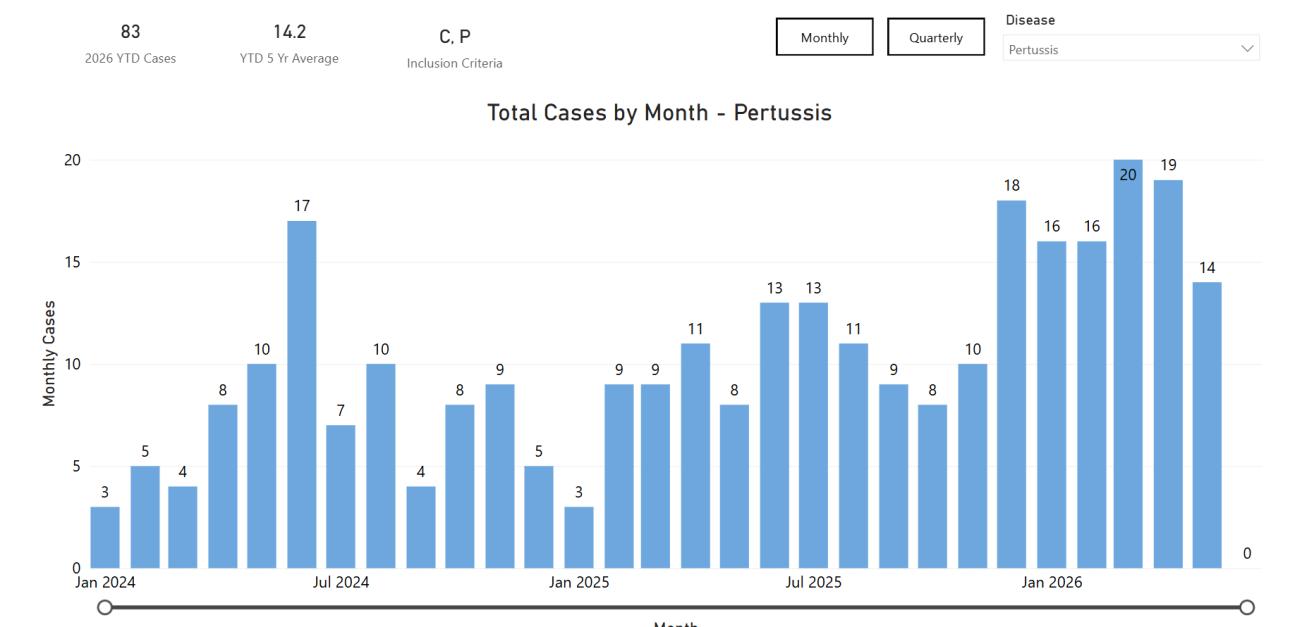
Following the COVID-19 pandemic, pertussis incidents in the United States increased sharply in 2024 and remained elevated in 2025. During the pandemic, non-pharmaceutical interventions such as masking and social distancing likely reduced exposure and transmission. As those interventions were relaxed, we saw a return and in some areas, a significant rebound in pertussis activity.
In Orange County, in the first quarter of 2026, compared to the same time in 2025, reported pertussis cases have increased by 100% (32 vs. 64). 14% of those cases (9) are among infants. Of the 9 infant cases, one was hospitalized and 71% self-identified as Hispanic/Latinx. No deaths have been reported thus far in 2026.

Pertussis (continued)
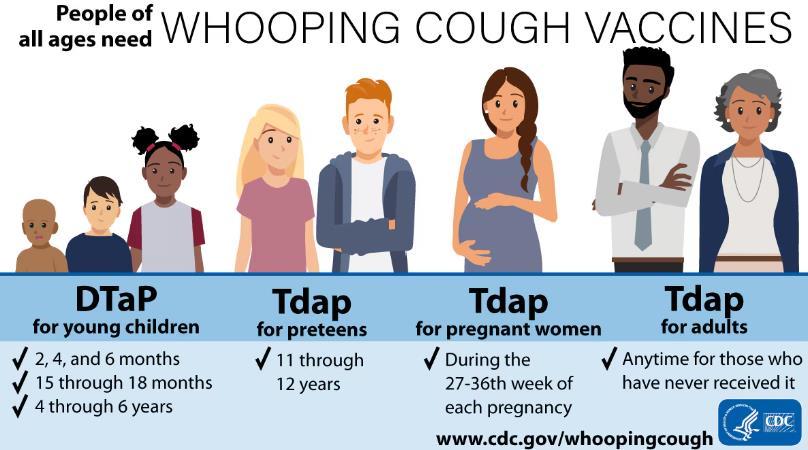
Vaccination remains our primary prevention tool against pertussis. People of all ages are recommended to receive pertussis vaccines. For young children, a total of 5 DTaP doses are routinely recommended at the ages shown here, separated by routine intervals between each dose. Tdap is recommended as a booster dose for those age 11 to 12 years old. And then Tdap is also recommended during each pregnancy during the 27th to 36th weeks of gestation to protect infants again before they can receive their own vaccines.
Last, adults are recommended to receive a dose of Tdap if they have never received one before. Also, for the decennial tetanus and diptheria booster, Td, Tdap is an option in addition to Td.
Infants younger than age 1 year continue to have the highest rates of pertussis. Infants less than 2 months of age have accounted for the largest number of pertussis-related death. In fact, 68% of deaths since 2002 were in infants younger than 2 months of age.
Maternal Tdap vaccination during each pregnancy is the most effective strategy to protect these young infants. Vaccination during pregnancy allows transplacental transfer of antibodies that protect infants until they're eligible for their own doses of DTaP. Maternal Tdap is approximately 90% effective in preventing hospitalization for pertussis in infants younger than 2 months old.

Ebola Situational Update
An outbreak of Bundibugyo (Bun-dee-BOO-joh) virus causing Ebola disease is ongoing in Democratic Republic of Congo (DRC) and Uganda. In early May a hospital in northeastern DRC identified clusters of severe illnesses affecting healthcare workers, with those affected having classic Ebola symptoms. Initial samples appeared negative for Ebola virus because the tests used only detect Ebola Zaire strain. Bundibugyo virus is a less common cause of Ebola disease. Samples tested later were positive for Bundibugyo virus. It is thought that transmission may have been occurring for several weeks before being detected. Unlike with Ebola Zaire virus, there are no specific therapeutics or vaccines available for Bundibugyo virus. Historically, mortality rates vary from 25% to 50%. There have been no cases in the US to date from this outbreak.
On May 17, an American who was exposed as part of work caring for patients in DRC tested positive for Ebola disease caused by infection with the Bundibugyo virus. The patient was transported to Germany for treatment and care and is currently in stable condition. High-risk contacts associated with this exposure have been moved to Germany and the Czech Republic. They remain asymptomatic.
As of June 6 DRC has reported 515 confirmed cases and 91 confirmed deaths. It is estimated there are another 300 to 500 suspected cases in the DRC. As of June 5, Uganda has reported 19 confirmed cases and 2 confirmed deaths, as well as 1 probable case and 1 probable death. This is a rapidly evolving situation and numbers are subject to change.
Public Health Actions:
Entry Restrictions: The US has temporarily restricted entry for non-US citizens and lawful permanent residents who have been in the DRC, Uganda, and South Sudan. To date, South Sudan has not reported any cases, but is included in these efforts due to shared borders with affected countries.
Enhanced Travel Screening: US citizens are allowed to enter the US, but must undergo enhanced public health screening at designated airports, including international airports in DC, NYC, Atlanta, and Houston. Federal public health staff will conduct an initial assessment for air passengers arriving from affected countries into one of the designated airports. The OC Health Care Agency (HCA) Communicable Disease Control Division (CDCD) will establish communication with travelers returning to Orange County and will conduct an initial assessment, provide health education and conduct symptom monitoring if recommended.
The risk to the US public remains low.
Ebola Situational Update
Ebola Disease Recommendations for Clinicians:
1. Maintain high clinical suspicion.
Evaluate any patient with fever + compatible symptoms (headache, myalgias, GI symptoms, bleeding) AND epidemiologic risk factors within 21 days, such as travel to DRC, Uganda, or other outbreak regions.
2. Immediately implement infection control.
Isolate suspected patients in a single room. Apply full PPE: gown, gloves, eye protection, N95 or PAPR as indicated. Use dedicated equipment and strict waste handling protocols.
3. Identify, isolate, inform.
Notify CDCD immediately at (714) 834-8180 if you suspect someone has Ebola disease: do not delay. Concurrently evaluate for more common infections (e.g., malaria). Consult us regarding testing, transport, and guidance.
4. Maintain Staff Readiness
Conduct drills, ensure PPE supply, and display contact posters for rapid escalation. Reinforce competency in triage, donning/doffing, waste management, and isolation procedures.
Additional Resources
CDPH
Ebola Information for Health Professionals
CDC
Clinical Guidance for Ebola Disease | Ebola | CDC What Clinicians Should Know about Ebola Bundibugyo Virus | COCA | CDC
NETEC Ebola Virus Disease · Ebola · NETEC Resource Library
As of June 2026, the United States has identified eleven confirmed animal (5 cattle, 1 goat, 1 dog) cases of New World Screwworm, reported in Texas and New Mexico. There remain no confirmed human cases in the US, but CDC continues to monitor the evolving situation closely. Texas declared an emergency, and Canada immediately restricted livestock imports. Effective June 11, 2026, the California Department of Food and Agriculture (CDFA) established additional NWS entry requirements for animals entering California from NWS-affected areas.

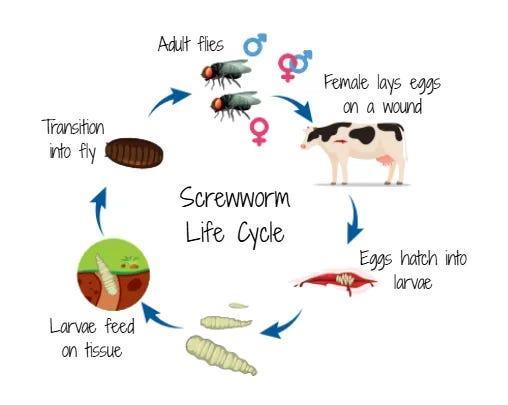
New World Screwworm is a parasitic fly that was fully eradicated from the US in 1966. It lays eggs in the open wounds of warm-blooded animals. When the eggs hatch, NWS larvae burrow into living flesh. It can be fatal if untreated.
NWS was eradicated from the US by mass producing sterile male flies, who would outcompete wild males to mate with females, collapsing the fly population. Female flies only mate once in their lifetime. Eradication occurred to the Darien Gap in Panama. The US and Panama maintained a barrier there, dropping tens of millions of sterilized flies over several decades.
However, for the past few years the NWS fly has been moving back up the continent, due to cattle smuggling outside of the sterile fly zone, funding cuts to USDA, and loss of expertise as veterinary entomologists have retired and not been replaced.
Human cases are rare and can be treated when caught early. Pets can also be affected. However, the greatest concern is livestock, particularly cattle. An outbreak today could cause billions of dollars of losses for the US cattle industry. The beef you eat is still safe.
USDA is leading the response, and activities include additional surveillance and trapping, releasing sterile flies, and conducting outreach to animal owners.
Stray dogs and wildlife are also at risk; pets can be exposed too, but really only in agricultural areas. Ensure pets are on flea and tick prevention from the FDA-approved list, as products containing afoxolaner (dogs) or esafoxolaner (cats) can prevent NWS infection.
For people, risk is not uniform. Agricultural workers in the Southern states, particularly those with open wounds, sores, or skin breaks, are the most vulnerable, as flies are attracted to any open wound.
For everyone else, risk remains very low. The CDFA has more in this NWS FAQ
(Source: Your Local Epidemiologist, USDA)
PREPAREDNESS
To support seasonal readiness across our EMS and trauma system, clinicians can help reinforce the following key safety priorities as we enter the busiest months for emergency response:
E-Bike and Micromobility Safety
• Encourage helmet use and protective gear head injuries remain the most significant risk in e-bike collisions.
• Counsel families on age-appropriate operation and the importance of supervised riding for adolescents.
• Emphasize safe speeds, awareness of traffic patterns, and avoidance of sidewalks at high speed.
• Highlight the hazards of battery overheating; advise against charging overnight or using uncertified chargers.
Water Safety and Drowning Prevention
• Reinforce the importance of constant, close adult supervision around pools, beaches, and open water.
• Encourage the use of life jackets during boating and water recreation.
• Promote swim lessons and water competency for children and nonswimmers.
• Remind families that drowning is often silent absence of noise is not assurance of safety.
Disaster and Heat Preparedness
• Encourage patients especially medically fragile individuals to have a personal emergency plan, including medication lists and backup power needs.
• Reinforce awareness of cooling center locations and heat-illness warning signs.
• Remind families to maintain emergency kits with water, nonperishable food, flashlights, and essential medications.
• Support readiness for wildfire smoke events by promoting clean-air spaces and proper mask use when needed.
CPR and Bystander Response
• Promote CPR training for families, schools, and workplace staff early bystander action continues to be a critical determinant of survival.
• Encourage familiarity with AED locations in community settings and sports facilities.
• Remind clinicians to reinforce recognition of cardiac arrest and the importance of calling 9-1-1 promptly.
General Injury Prevention
• Emphasize safe driving practices, including hydration before long trips and avoiding impairment of any kind.
• Encourage proper sun protection to prevent burns and heat stress.
• Remind families to secure medications, chemicals, and fireworks to prevent pediatric injuries.
By highlighting these priorities, clinicians help strengthen situational awareness, reduce preventable injuries, and support a resilient EMS and trauma system throughout the summer season.
COMMUNITY COLLABORATIVE UPDATES
CalHOPE Schools
As youth and staff face the changes of the end of the school year, there might be mixed emotions that feel too big to manage alone. For support, any Californian can reach out to CalHOPE online or by calling or texting (833) 317-HOPE (4673). You can also live chat at CalHOPE.
Drowning Prevention Resources
As temperatures heat up, keep water safety top of mind. Prevent drowning by educating families about always keeping new or inexperienced swimmers and young children within arm’s reach when swimming or around water, installing barriers (e.g., fences/gates) around pools and spas, and enrolling children in swim lessons and adults/caregivers in CPR classes.
• Upcoming free water safety skills trainings in Orange County
• For families - Water Safety Tips for Kids Under 5
• Learn more about swim safetygo.cdph.ca.gov/DrowningPrevention.
Preventing Heat-Related Illnesses

Temperatures are rising globally, putting us all at risk for hotter days this summer. Now is a good time to remind patients and families about the risk of heat-related illness, how to spot it, and what to do.
Learn more at:
• Health Corner - Stay Cool, Keep Hydrated
• For families - EveryParentOC Summer Heat Tips
SUN Bucks Summer 2026
California is launching SUN Bucks for summer 2026, providing eligible families with $120 per child in food benefits to combat food insecurity while children are on summer break and without access to free school meals. The California Department of Social Services has begun mailing electronic benefits transfer (EBT) cards with SUN Bucks food benefits. Learn more at SUN Bucks.
OBSERVANCE TOPICS
National HIV Testing Day: June 27
National HIV Testing Day (NHTD) is observed annually on June 27 to encourage people to get tested for HIV, know their status, and connect with care and treatment. The goal is to make HIV testing a routine part of health care, as early diagnosis and treatment can lead to a near-normal life expectancy and prevent transmission through the “Undetectable equals Untransmittable” principle.
Visit HIV Care Clinic 17th Street Care | Orange County California - Health Care Agency for a list of clinics/organizations that offer HIV/STD testing for little to no cost.


SAFETY ALERTS/RECALLS/OUTBREAKS/ FOODBOURNE ILLNESS
Product Alerts/Recalls
E.Coli Outbreak linked to Beef Kofta at The Kebab Shop Restaurant Chain
The California Department of Public Health (CDPH) is investigating a multicounty outbreak of Shiga toxin-producing E. coli (STEC) O157:H7 bacteria from consumption of beef kofta (seasoned ground beef kebabs) served at The Kebab Shop restaurant chain locations in Northern and Southern California. There is no current risk of exposure to this product, as The Kebab Shop has voluntarily paused sales of grilled beef kofta at all locations at this time.
Twelve cases in California have been identified, and eleven were confirmed to have infection with the outbreak strain of E. coli (STEC) O157:H7 bacteria. The ages of affected individuals range from 3 to 58 years. Cases have been reported in San Diego, Orange, Los Angeles, Kern, and Santa Clara counties. No individuals from other states are currently linked to this outbreak.
Five cases have been reported in Orange County residents. Illness dates range from March 27, 2026 through April 30, 2026. Three of the cases in Orange County were hospitalized and two developed hemolytic uremic syndrome (HUS).
Whole genome sequencing results show that the beef kofta samples collected by USDA’s Food Safety and Inspection Service (FSIS) matched the outbreak strain of E. coli 0157:H7. The HCA’s Communicable Disease Control Division and Environmental Health Division are partnering on local outbreak response.
Symptoms of STEC infection may include diarrhea (often bloody), vomiting and abdominal cramps. Symptoms usually start three to four days after a person is infected. Most people get better on their own within a week, but some people may develop severe diseases that require hospital care. Young children are at highest risk of getting HUS, a severe complication that can lead to acute kidney failure.
FSIS Issues Public Health Alert for Beef Kofta Products Served at The Kebab Shop Restaurant Locations Due to Possible E. Coli O157:H7 Contamination
CDPH Investigating E. coli outbreak linked to Beef Kofta Served at The Kebab Shop Restaurant Chain
Food Safety FAQs | The Kebab Shop New School Mediterranean


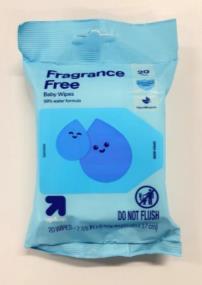
Target Recalls Up & Up Fragrance Free and Fresh Cucumber Scented Baby Wipes Due to Potential Microbial Contamination
Target has voluntarily recalled Up & Up Fragrance Free and Up & Up Cucumber Scented Baby Wipes due to customer complaints of product discoloration and FDA testing that identified the presence of Burkholderia cepacia complex and Burkholderia gladioli in product samples. Target and the manufacturer of the wipes, Sapro Temizlik Urunleri, have received a number of consumer complaints and adverse event reports which are still under investigation, alleging product discoloration and symptoms such as skin irritation, eye irritation and infections potentially associated with the use of the product. These recalled wipes were sold at Target stores nationwide and online at Target.com.
Use of products contaminated with B. cepacia complex and B. gladioli may result in serious infections, especially in people who are particularly vulnerable to opportunistic infection due to their immature immune systems, such as newborns, infants and young children who these are products are predominantly used on.
Recommendations:
• Advise families to immediately stop using the recalled products and return them to any Target store for a full refund. Consumers can contact Target Guest Relations at 1-800-440-0680 from 5 a.m. to 8 p.m. Pacific Time daily for more information.
For more information about the recall, lot numbers, and product description, see FDA - Target Recalls Fragrance Free and Fresh Cucumber-scented Baby Wipes.



CPSC Warns Consumers to Stop Using Darice “Timeless Minis” Miniature Red Wagons, Chairs and Watering Cans Due to Elevated Lead Levels in Paint
The US Consumer Product Safety Commission (CPSC) has issued a product safety warning about Darice “Timeless Minis” miniature red wagons, chairs and watering cans due to elevated levels of lead. Lead is toxic and can cause adverse health effects such as cognitive dysfunction and damage to major organ systems. Children, pregnant people, and their unborn babies are at increased risk from lead exposure, which can lead to lifelong problems with learning, behavior, and health. Chronic lowlevel exposure to lead has been linked to anemia and adverse reproductive outcomes. The toys were sold by various retailers through 2016 and resold by various third-party sellers and on other websites through April 2026
Learn more at CPSC Warns Consumers to Stop Using Darice “Timeless Minis” Miniature Red Wagons, Chairs and Watering Cans Immediately Due to Risk of Injury from Lead Poisoning
Recommendations:
1. Advise families to immediately stop using the toys and discard them.
2. Test children for lead if they came into contact with this product.
3. Report any incidents involving injury or product defect to CPSC at http://www.saferproducts.gov/.
For additional information and resources, please visit OC CLPPP and California Department of Public Health websites or contact the OC CLPPP program at 714-5676220.



TRAINING & WEBINAR OPPORTUNITIES
General Webinars
• June 18 at 11:00 a.m. - NACCHO Data-Driven Strategies to Improve Pertussis and Meningitis Vaccination in Your Community
• June 23 at 6:30 p.m. - 7:30 p.m. - Orange County: Pediatricians and Vaccine Conversations; Dr. Anissa Davis, Orange County Deputy Health Officer providing welcome and introduction. (Can also scan QR Code on flyer below to register.)
• June 24 at 11:00 a.m. - National Foundation for Infectious Disease Strategies for Protecting Patients Before Travel
• June 25 at 11:00 a.m. - NACCHO Building Partnerships for Chemical Readiness at LHDs
• June 30 at 11:00 a.m. - NACCHO Maximizing Trust & Reducing Resistance with Communication Best Practices


From protecting community health to supporting individuals and families every day, our teams at the OC Health Care Agency (HCA) work behind the scenes and on the front lines to make Orange County healthier and stronger. Learn more from HCA Director Veronica Kelley, DSW, LCSW in this video: About the OC Health Care Agency.
Clinicians, receive immediate notification of communicable disease related alerts. Sign up at this link: Provider Advisory Email Advisory.
Subscribe to receive the County Health Officer newsletter by entering your email here: Health Officer NewsletterSubscribe

Relevant and clear health
provided to empower Orange County residents and visitors, to live healthier lives. Subscribe Here