
Former Ocean Pines GM sentenced; timeline of leadership, business interests and oversight concerns comes into focus
By Sherrie Clifford ROC Edition Publisher
The recent sentencing of former Ocean Pines Association General Manager Brett Hill in a federal payroll tax case is drawing renewed attention to his time in Ocean Pines and the roles he held during that period, as well as individuals connected to events that followed.
Hill was convicted on multiple federal counts related to payroll tax violations tied to two telecommunications companies he led. Federal prosecutors said that between 2016 and 2018, Hill withheld federal
income, Social Security and Medicare taxes from employee wages but failed to remit those funds to the Internal Revenue Service, resulting in an estimated tax loss of approximately $2 million.
In March 2026, Hill was sentenced to 18 months in federal prison, followed by three years of supervised release and was ordered to pay more than $658,000 in restitution. The charges and resulting sentence relate to activities outside of Ocean Pines, as outlined in federal court records.
Hill served in Ocean Pines in a dual capacity. He was elected to the
Groundbreaking marks construction of new South Fire Station
By Sherrie Clifford ROC Edition Publisher
The project to build a new South Fire Station took a significant step forward March 9, as officials and community members gathered for a groundbreaking ceremony at 911 Ocean Parkway.
The ceremony, held at the site of the former station next to Ocean Pines Public Works, brought together members of the Ocean Pines Volunteer Fire Department, the Ocean Pines Association Board of Directors and local and state officials. Among those in attendance were board
members John Latham, Monica Rakowski, Jeff Heavner, Elaine Brady and Rick Farr. Maryland
State Senator Mary Beth Carozza, Delegate Wayne Hartman and Worcester County Commissioner Chip Bertino also attended.
The event marks the transition from planning to the next phase of the project, with the site now fully cleared following demolition that began in February. Construction is expected to begin in the coming months.
During the ceremony, speakers recognized the Ocean Pines
See GROUNDBREAKING page 4
Ocean Pines Association Board of Directors in August 2016 and began serving as interim general manager on Aug. 26 of that year, holding both roles through Sept. 11, 2017.
During that same period, Hill also maintained an ownership interest in FTS Fiber, a company involved in a proposed fiber optic infrastructure project within Ocean Pines.
Records from a Dec. 5, 2016, Board Work Session show that the FTS Fiber presentation was placed on the agenda by board member Doug Parks at Hill’s request. The presentation, delivered by FTS and


Officials, OPVFD members and community leaders participate in a ceremonial groundbreaking March 9, using shovels to turn the soil and mark the start of the new South Fire Station project. For more snapshots of the event see page 5.

OCEAN PINES • WEST OCEAN CITY • BERLIN MD
ROC Edition • Submitted
Former OPA General Manager Brett Hill sentenced to 18 month in prison in federal payroll
ROC Edition • Sherrie Clifford, Publisher
GM SENTENCED
Continued from page 1
ThinkBig, outlined how the companies would work together on a proposed fiber optic infrastructure project within the community, including service for the police department. ThinkBig Networks was identified as the provider, with FTS Fiber responsible for installation. Hill disclosed his ownership interest in the company and recused himself from the discussion prior to the presentation.
During the same meeting, homeowner Joe Reynolds raised a concern regarding Hill’s dual role, stating, “I think this is a wonderful idea … and if Brett Hill wants to do it, I think Brett Hill ought to resign.”
Board member Cheryl Jacobs also addressed the proposal, questioning the financial value to FTS and stating she saw a “serious conflict of interest,” given Hill’s roles as both a director and general manager.
In 2017, Hill continued to serve as interim general manager while the Ocean Pines Association conducted a search for a permanent replacement. Board records show the association engaged the Novak Consulting Group to lead the search process, with Parks
serving as board liaison.
During an April 29, 2017, meeting, a timeline was outlined that extended candidate vetting for the permanent general manager position into mid-June, with interviews scheduled into early July. Hill remained in the interim role through the summer and into September 2017, when he resigned from both the board of directors and the general manager position.
In 2018, Hill later appeared publicly alongside Esther Diller during the Ocean Pines Board of Directors election. The two ran together in the 2018 board of directors election. Hill subsequently withdrew from the race after questions were raised regarding eligibility requirements. Diller was elected to complete a one-year term and served approximately nine months before resigning May 16, 2019.
Federal court records show that Diller was later indicted in United States v. Diller, 2:19-cr-00558 (E.D. Pa.), filed on Sept. 23, 2019. She later pleaded guilty to charges tied to a federal health care kickback scheme related to activity in 2018 and, on June 15, 2021, was adjudicated guilty. She was sentenced to three years of supervised release and ordered to forfeit $794,000.
Court records also reflect a joint and several restitution amount exceeding $4 million, which remains subject to collection. The charges and resulting sentence relate to activities outside of Ocean Pines, as outlined in federal court records.
The following year, her husband, Stuart Lakernick, was elected to the Ocean Pines Association Board of Directors in 2022 and continues to serve. There are no allegations or charges involving Lakernick in connection with these matters.
The Ocean Pines Association Bylaws, as amended in May 2022, address eligibility for board service in Article 5, Section 5.02(a), which states: “No individual may be a candidate for election to the Board of Directors if the person has been convicted of a felony and not fully completed all terms of their sentencing, including probation and other restitution requirements, within five (5) years of May 1st of the year in which the election is to be held.”
While the charges and resulting sentences outlined in federal court records relate to activities outside of Ocean Pines, the timeline of events and leadership roles held within the community during that same period provide relevant context.
The intersection of public service, private business interests and governance decisions has led to broader questions about oversight and safeguards within community associations.
As communities continue to manage multimillion-dollar budgets and complex operations, expectations for stronger preventative measures will continue to grow. These may include more comprehensive background reviews for board candidates, enhanced financial disclosure requirements and clearly enforced conflict-of-interest policies. While current governing documents establish baseline qualifications, effective leadership requires ongoing evaluation and a commitment to strengthening the systems that safeguard accountability and maintain public trust.
Editor’s Note: Information referenced is based on publicly available records, meeting documentation and meeting recordings.

OPA board appoints Patrick Lehnerd to fill vacancy following Jacobs’ resignation
By Sherrie Clifford ROC Edition Publisher
The Ocean Pines Association Board of Directors has appointed Patrick Lehnerd to fill the vacancy created by the resignation of Steve Jacobs.
Under OPA By-Laws Section 5.04(a), when a vacancy occurs ninety days or more before the annual meeting, the remaining board of directors must appoint a replacement within thirty days by majority vote. The individual appointed serves until the next annual meeting.
Lehnerd has been serving on the OPA Elections Committee and will step down from that role to assume his new position on the board. His experience on the committee provided direct involvement with election procedures and governance processes within the association.
According to the board, Lehnerd brings both professional and community experience to the role and has demonstrated a willingness to serve Ocean Pines residents.
Lehnerd was born and raised
According to the board, Lehnerd brings both professional and community experience to the role and has demonstrated a willingness to serve Ocean Pines residents.
in Youngstown, Ohio and earned a bachelor’s degree in electrical engineering from The Catholic University of America in 1982. He began his career with Westinghouse, now Northrop Grumman, and has lived in Maryland since graduating. He later earned a master’s degree in systems engineering from Johns Hopkins University in 1992.
He has been married to his wife Becky since 2009 and is the father of three and grandfather of one. Lehnerd has owned property in Ocean Pines since 2012 and became a full-time resident in 2021.
Within the community, he has been active in several organizations, including the Ocean Pines Players and Local Vocals. He is currently a member of the Pine Tones Chorus

and the Ocean Pines Platform Tennis Association. Since 2024, he has served as secretary of the OPA Elections Committee.
Lehnerd is also a cantor at St. Paul’s By The Sea Episcopal Church in Ocean City and continues to work part-time as a senior staff systems engineer with Northrop Grumman.
The vacancy follows the resignation of Steve Jacobs, who recently completed his first three-year term and was reelected in 2025 to begin a second term.
A retired attorney, Jacobs brought an independent voice and legal perspective to board discussions and decision-making during his time in office.
Jacobs relocated to North Carolina to be closer to family,

explaining, “Sometimes you just need to do what’s most important to your family.”
The Ocean Pines community thanks Jacobs for his service and contributions and wishes him the best in this next chapter.

ROC Edition • Ocean Pines Association OPA board appoints Patrick Lehnerd to fill vacancy following the resignation of director Steve Jacobs.
GROUNDBREAKING
Continued from page 1
Volunteer Fire Department and expressed appreciation for the service provided by both volunteer and career personnel, noting their ongoing commitment to protecting residents and responding to a wide range of emergencies.
Recognition must also be given to Ocean Pines General Manager John Viola and his staff, whose coordination and oversight have played a critical role in advancing the project. Through consistent updates during monthly Ocean Pines Association Board of Directors meetings, the general manager has kept the community informed while ensuring the project continued moving forward through each stage of development.
The new facility will replace the former station, originally built in 1981, which no longer met the operational needs of a modern fire department. Limitations included narrow apparatus bays, insufficient space for personnel and equipment and ongoing infrastructure concerns such as drainage and maintenance challenges.
Plans for the new station are designed to address those issues
with expanded apparatus bays, updated operational areas and modern safety features. The facility will also include separate bunk areas and a dedicated decontamination space to support both volunteer and career personnel.
The need for a replacement station has been identified for more than two decades, as Ocean Pines has continued to grow and emergency service demands have increased. Today, the community is home to approximately 12,000 fulltime residents, along with seasonal population increases that place additional demand on emergency services.
During the construction period, fire and emergency equipment have been temporarily relocated to the nearby Public Works facility, located just minutes from the station site, to maintain consistent emergency response coverage.
The project represents a significant capital investment in public safety infrastructure, with total costs estimated to be around $6 million. Funding includes a $3.4 million referendum approved by Ocean Pines property owners, along with additional financial contributions supporting the project.








ROC Edition photos by Sherrie Clifford, Publisher
A project years in the making, the new South Fire Station broke ground March 9, with community leaders and OPVFD members participating in the ceremony.


Accepting New Patients


Worcester County commissioners call for clearer communication on water rate hikes and their impacts
By Sherrie Clifford ROC Edition Publisher
As Worcester County prepares for the fiscal year 2026-27 Enterprise Fund budgets, including water and wastewater rates, commissioners are placing increased emphasis on transparency and communication with ratepayers following confusion during last year’s billing changes.
During a recent commissioner meeting, officials reviewed the upcoming budget timeline and discussed efforts to ensure residents and businesses better understand how proposed rate adjustments will affect their quarterly bills.
The FY26-27 Enterprise Fund budgets, which include water and wastewater services, are scheduled for a series of work sessions beginning April 14, followed by a public hearing scheduled for May 5 at 6:00 p.m. Additional work sessions are planned throughout May, with final adoption required by June 2.
Commissioner Chip Bertino led much of the discussion, raising concerns about how information is communicated to residents across the county’s various service areas.
“One of the issues that we had last year was communicating and getting information out to everybody,” Bertino said, pointing to widespread confusion among ratepayers about how changes would impact their bills.
Bertino emphasized that while budget documents may be detailed, they are often difficult for the average resident to interpret.
“I think that anyone looking at this information, although comprehensive to a point, really is not going to mean anything to a ratepayer,” he said. “They’re not going to know how that’s going to impact their quarterly bill.”
In response, county staff indicated that upcoming water and sewer bills will include inserts directing customers to additional information, including links to the county’s website where more detailed explanations will be available.
Officials also confirmed that efforts are underway to provide clearer breakdowns showing how proposed rates would affect individual bills within each service area, including both residential and commercial customers.
One of the more significant areas of discussion involved how billing thresholds are applied to commercial customers with multiple equivalent
dwelling units or EDUs.
Under the current structure, some businesses with multiple EDUs have been subject to higher usage rates once a threshold is exceeded based on a single EDU, rather than their total number of units. Bertino noted that this approach has created concerns among business owners.
“Despite if they have one EDU or 10 EDUs, once they trigger over the first EDU’s threshold, they get hit with a higher amount,” Bertino said.
County staff confirmed that the proposed FY26-27 budget includes changes to address that issue by shifting to an aggregate approach. Under the revised structure, usage thresholds would be based on the total number of EDUs associated with a property, rather than a single unit.
In practical terms, this means customers with multiple EDUs would be evaluated based on their combined capacity. For example, a property with six EDUs would have a higher overall usage threshold before higher rates apply, rather than being pushed into higher tiers after exceeding the limit of just one unit.
“That is what we are working toward correcting,” Bertino said during the exchange.
The proposed water and wastewater revenues for FY26-27 are estimated at approximately $21.2 million, with projected expenditures totaling about $22.3 million. The budget also includes approximately $1.1 million in support from the county’s general fund.
As the county prepares for public input, Bertino also pressed for more proactive outreach, including the use of press releases and social media to ensure residents are aware of the upcoming hearings and have access to understandable information in advance.
“There was … a lot of consternation and confusion (last year),” he said. “What are we doing, ramping up to this, so that we’re providing as much information as possible?”
County staff confirmed that additional communication efforts are planned, including bill inserts, website updates and broader outreach ahead of the public hearing.
The public hearing is scheduled for Tuesday, May 5 at 6:00 p.m. in the County Commissioners’ Meeting Room at the Worcester County Government Center in Snow Hill. Residents will have an opportunity to speak for up to two minutes or

submit comments in advance by email prior to 4:00 p.m. on May 4. The hearing will also be available for live viewing through the county’s website.
Commissioners ultimately approved the request to move forward with scheduling the public hearing, which will provide residents and business owners an opportunity to review and comment on the proposed rate structure before final adoption.
The discussion reflects a shift toward greater transparency
following last year’s rollout, with county officials acknowledging the need to better connect budget decisions with their real-world impact on ratepayers.
As the process moves forward, residents are encouraged to review the available information, attend upcoming hearings and engage in the discussion as Worcester County finalizes its water and wastewater rates for the coming fiscal year.

County approves study to address cold-weather challenges at Ocean Pines wastewater plant
By Sherrie Clifford ROC Edition Publisher
Worcester County commissioners have approved a request from the Department of Public Works to move forward with a performance evaluation study of the Ocean Pines wastewater treatment plant, following concerns tied to colder winter temperatures and their impact on treatment processes.
The request was presented to the commissioners by Dallas Baker Jr., P.E., Worcester County director of Public Works, who outlined the need to evaluate how the facility performs under extended coldweather conditions and whether improvements can be made to maintain more consistent results.
The study, expected to take approximately 16 weeks to complete, is designed to identify operational strategies and potential upgrades that could help stabilize performance during the winter months.
According to Baker, the issue is not a failure of the system, but rather a seasonal challenge. During periods of lower temperatures, the biological processes within the plant, specifically those responsible for removing nitrogen from wastewater, become less effective.
The Ocean Pines facility continues to operate within its permitted requirements. However, officials acknowledged that nitrate levels have, at times, approached or exceeded target thresholds during January and February. Those thresholds are tied to environmental standards intended to limit the amount of nitrogen entering local waterways.
At the center of the issue is temperature. The treatment process relies on naturally occurring microbes to break down nitrogen compounds. When temperatures drop, those microbes slow down, reducing the plant’s ability to consistently maintain optimal nitrate removal performance.
During the discussion, Commissioner Chip Bertino asked a series of questions focused on the value of conducting the analysis and how the results would guide future planning.
Baker explained that the goal of the study is to develop a range of recommendations, such as whether insulating tanks, adding heat tracing or improving mixing and oxidation processes could enhance performance, along

with associated costs and priorities.
“My goal with this project is to ... come up with that list of ‘OK, here’s a laundry list of items that we can do, prioritized with cost associated with each so that, moving forward, we can make improvements at the plant,’” Baker said, noting that the study is intended to provide direction rather than a single solution.
Officials emphasized that the plant is operating as designed and remains in compliance with its wastewater permit. The challenge, they said, is adapting to colder weather conditions that were not as prevalent when the plant was originally designed more than 30 years ago.
The work will be directly awarded to George, Miles & Buhr, based on the firm’s recent work at the Riddle Farm wastewater treatment plant, where design revisions improved overall system performance.
Public Works requested approval to exceed the fiscal year 2025-26 budget for the Ocean Pines Wastewater Treatment Plant consulting services account to fund the study, with a not-to-exceed cost of $18,500. The expense will be covered within the Ocean Pines wastewater service area fund and offset by savings in other areas of the wastewater budget, including system maintenance, building site expenses and capital equipment.
Commissioners also discussed the broader financial implications tied to plant performance. Ocean Pines remains one of the few wastewater
systems in Maryland that is exempt from the state’s Bay Restoration Fee, commonly referred to as the “flush tax,” because the facility was not constructed using state or federal funding.
However, maintaining that exemption is tied to continued performance. According to the Public Works request, challenges in meeting nutrient removal targets during prolonged cold-weather periods contributed to concern over maintaining eligibility for that exemption, reinforcing the need for proactive evaluation and potential improvements.
of nine wastewater treatment plants serving 11 service districts across Worcester County.
Following discussion, Commissioner Chip Bertino made the motion to approve the study, which was seconded and passed unanimously. Rather than waiting for a compliance issue to arise, the county is choosing to assess current conditions, explore available solutions and position the plant for continued reliability in the years ahead.

The Ocean Pines facility is one
ROC Edition • Sherrie Clifford, Publisher Worcester County commisioners approve 16-week study to evaluate how the Ocean Pines wastewater treatement plant performs in cold-weather conditions and identify potential improvements.
Storm cleanup continues across Ocean Pines as crews tackle massive debris
By Sherrie Clifford ROC Edition Publisher
More than a month after a powerful February blizzard impacted Ocean Pines, cleanup efforts continue across the community as crews work through widespread debris, downed trees and lingering storm damage along roadways and residential areas.
Ocean Pines Public Works crews began clearing roads at 8 p.m. on Sunday, Feb. 22, working through the night and into the following days. By 10 a.m. Tuesday, Feb. 24, all roadways had been cleared, allowing crews to shift their focus to parking lots and additional storm-related cleanup across the community.
“Thank you to our Public Works Department for the outstanding job clearing the roads,” said General Manager John Viola. “I would also like to thank the board of directors and of course the good people of OPA for supporting all the requests for snow removal equipment over the last six years. The team appreciates it.”
Public Works Director Eddie Wells noted the collaborative effort required to manage the storm’s impact.
“We worked side-by-side with the Ocean Pines Volunteer Fire Department and subcontractors to get the job done,” Wells said. “We thank everyone for their response and working together as one big team.”
In the immediate aftermath of the storm, the Ocean Pines Association temporarily suspended permit requirements for tree removal during the first few weeks of cleanup. The move was intended to help residents reduce costs associated with removing fallen or damaged trees. During that time, many homeowners took advantage of the temporary measure, accelerating early cleanup efforts across the community.
Initial conditions along Ocean Parkway raised safety concerns, with large limbs hanging overhead and debris scattered along the roadway and surrounding ditches. Those areas have since been largely brought under control, reducing immediate hazards to passing vehicles and pedestrians.
Cleanup efforts are now concentrated throughout the streets of Ocean Pines, where crews are working through side streets to address the extensive volume of storm debris. With more than 8,500
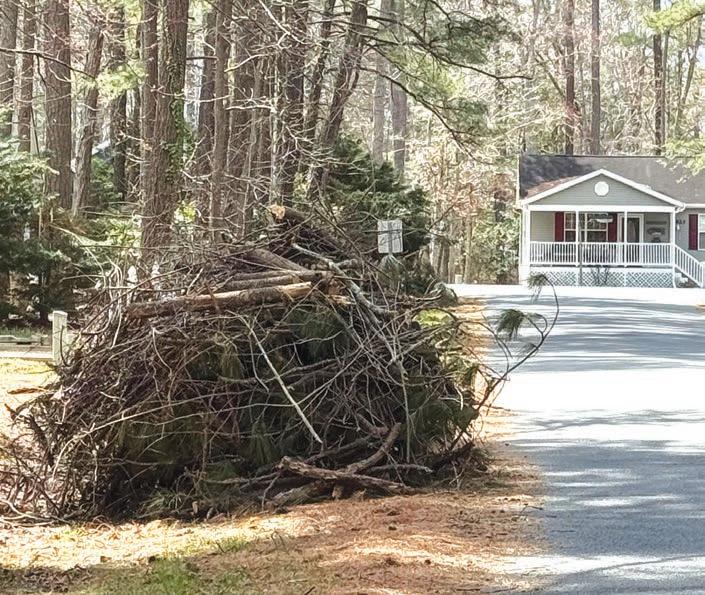
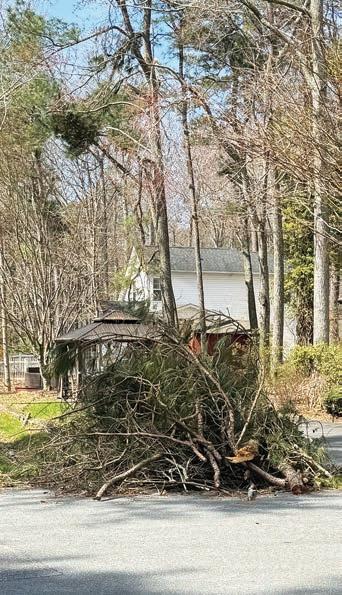
homes and approximately 80 miles of streets, the scope of the cleanup remains substantial. Ocean Pines Public Works, under the direction of General Manager John Viola, is coordinating the effort, with crews moving systematically through the community. To support the scale of the cleanup, at least three contractors have been brought in to assist Public Works crews as they work through affected areas.
According to the Ocean Pines Association, crews will pass through each area only once and residents are encouraged to place all storm debris at the curb prior to their scheduled collection. Debris should not be placed in ditches to ensure proper removal.
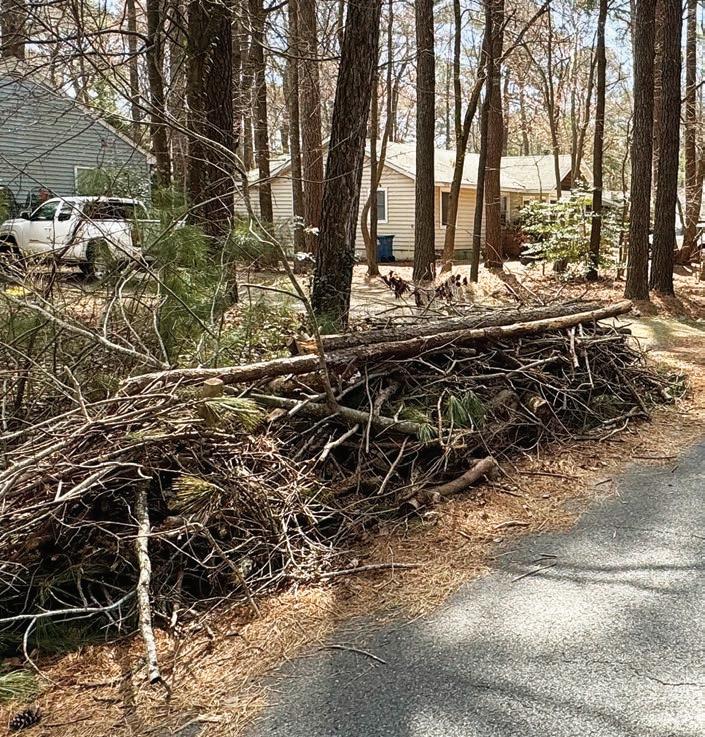
The scale of the cleanup remains significant. Along many streets, large piles of branches, logs and entire downed trees continue to line the roads, awaiting collection. In some areas, the volume of debris has created stacks several feet high, highlighting the extent of stormrelated damage across Ocean Pines.
Despite the challenges, Ocean Pines Public Works crews continue their work across the community, addressing debris removal with steady progress and coordination. Their efforts have not gone unnoticed by residents.
One resident, Julie Knauer of
Ocean Pines, shared her appreciation in a post on the Ocean Pines ROC Facebook group.
“Ocean Pines Public Works staff did and are still doing an outstanding job cleaning up all the downed trees and debris from each homeowner’s lot after the blizzard we incurred,” Knauer wrote. “Thank you all for your professionalism and dedication to our community. Your hard work does not go unnoticed.
It makes our roads safer to walk, bike and drive with the debris gone. Thanks again and much appreciated.”
Beginning April 1, the Public Works Yard will operate on a reduced schedule and will be open on Wednesdays only.
Residents can direct questions to Ocean Pines Public Works at 410-641-7425.
ROC Edition • Sherrie Clifford, Publisher Crews continue clearing storm debris and downed trees across Ocean Pines weeks after February blizzard.
Veterans Memorial organization seeks members, donations to support 2026 initiatives
By Sherrie Clifford ROC Edition Publisher
The Worcester County Veterans Memorial organization is expanding its outreach efforts in 2026, encouraging residents and local businesses to support its mission through membership and donations as it continues to honor those who have served.
Located in Ocean Pines, the memorial stands as a place of reflection, remembrance and recognition for veterans across the region. As the organization looks ahead to a new year of programming and engagement, officials say building a strong base of support is essential to sustaining and growing its work.
Membership opportunities are available for both individuals and businesses, offering a direct way to contribute to the preservation and enhancement of the memorial. Current options include an annual individual membership for $25, a lifetime membership for $150,
a corporate annual membership for $100 and a corporate lifetime membership for $300. Additional donations are also welcomed and play a key role in supporting maintenance, programming and long-term improvements.
In 2026, the organization is planning a series of events and initiatives designed to honor veterans and bring residents together. These efforts are expected to include commemorative ceremonies, educational outreach and opportunities for greater public engagement. Events such as Memorial Day and Veterans Day observances remain central to the calendar, drawing attendees in recognition of the service and sacrifice of military members past and present.
Beyond formal ceremonies, the memorial serves as a lasting reminder of the contributions made by veterans within Ocean Pines. Many residents, both past and present, have served in the armed forces, and the site provides a
permanent tribute to their commitment and dedication.
The organization’s leadership includes individuals with both military and community service backgrounds. Rick Farr, a current Ocean Pines Association board member, now serves as president. Farr retired from the United States Air Force after 25 years of service, bringing extensive leadership and operational experience from his military career to the organization. John Latham, also a current Ocean Pines Association board member, is a United States Marine Corps veteran who continues his commitment to service within the community.
Officials say continued participation will be critical as the organization looks to expand its reach in the coming year. Increased membership supports programming, helps maintain the memorial grounds and allows for future enhancements that ensure the site remains a meaningful destination for residents and visitors.
The value of the memorial
extends beyond its physical presence. It represents a shared commitment to remember and honor those who served, while educating future generations about the importance of military service and sacrifice.
As Ocean Pines continues to grow, the role of the memorial as a unifying space for reflection and recognition becomes even more significant. Community leaders say maintaining and strengthening this resource requires ongoing involvement from those who value its purpose and the legacy it represents.
Those seeking more information on membership or donations can contact Suzie Pantone at suziepan123@gmail.com. Contributions can be made by check payable to WCVMF and mailed to Worcester County Veterans Memorial, P.O. Box 1576, Ocean Pines, Md. 21811. Additional information is available at www.wocovets.org

Ocean Pines teen records hole-in-one at Shamrock Scramble, turning moment into milestone
By Sherrie Clifford ROC Edition Publisher
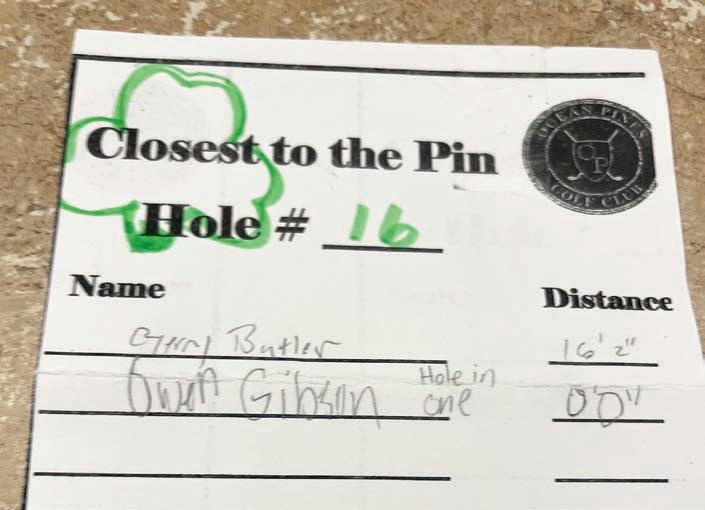
What began as a community golf event turned into a memorable milestone for a young Ocean Pines golfer, as 14-year-old Owen Gibson of Ocean Pines recorded a holein-one on the 16th hole during the first annual Shamrock Scramble at the Ocean Pines Golf Course.
Among 60 players, nearly all adult competitors across 30 teams that day, it was Gibson who delivered the standout moment, drawing a loud cheer that carried across the course. His father, Brad Gibson, who was playing ahead on another team, heard the reaction from a distance and only moments later realized the excitement was for his son.
A freshman at Stephen Decatur High School, Gibson is also enrolled in the pre-engineering program at Worcester Technical High School and has been building both his academic and athletic path with focus and discipline. He turned 15 on March 18.
Gibson’s connection to the game began early. He started playing golf at just 2 years old, learning alongside his grandfather, Richard Robinson, an avid golfer who also taught the game. He received his first real set of golf clubs in the fourth grade, marking an early step in his development. Robinson passed away last June, but his influence continues to shape Gibson’s approach and passion for golf. While he was not there to witness the moment in person, those close to Gibson say Robinson’s presence was felt in what became a proud and meaningful achievement.
Over the past two years, Gibson has continued to develop his game under the guidance of PGA Professional Coach Matt Ruggiere through the Ruggieri Golf Academy and the Middle and High School Golf Clinic. He is also set to compete as part of the upcoming PGA Junior League team beginning this April and is a member of the Stephen Decatur High School golf team.
During the Shamrock Scramble, Gibson was paired with fellow student and friend Tanner Intrieri, also of Stephen Decatur. The pair was the only junior member team at the event.
His development has also been supported by Frank Sallese, PGA

ROC Edition • Submitted Ocean Pines teen Owen Gibson sinks a hole-in-one at the Shamrock Scramble golf tournament. Being introduced to the sport earlier than most, Gibson started playing at age 2 and received his first set of golf clubs in fourth grade. For the past two years, PGA Professional Coach Matt Ruggiere has mentored him (far right photo).
associate coach, who has worked closely with Gibson on equipment fitting, including his Callaway clubs. Sallese’s guidance has helped ensure Gibson is properly equipped as his game continues to develop, reflecting a broader commitment to refining his performance.
Currently playing with a handicap in the 14 to 15 range, Gibson is already competing well beyond his years, especially when compared to experienced players and coaches with near-scratch or better handicaps. His steady improvement, combined with a clear passion for the game, continues to set him apart.
“We are incredibly proud of Owen and fully support his current and future aspirations in the world of golf,” his father said.
While Gibson’s hole-in-one was the highlight of the day, the Shamrock Scramble also featured


strong competition and a full field of players enjoying the earlyseason event.
In the Low Net division, firstplace honors went to Sherrie Clifford and Colette Horn, followed by Kevin Goldberg and Jim McMeeking in second. Donna McElroy and Cami Rogers placed third, with Ron Olszewski and Bill Thomson finishing fourth.
In the Low Gross division, Ray Wankmiller and Mike Wankmiller captured first place, followed by Cody Bishop and Rebecca Bishop in second. Deb Williams and Tim Williams placed third, with Tom Cronin and Mark Dornes finishing fourth.
Closest-to-the-pin winners included Mark Dornes on hole 5, Steve Howse on hole 7 and Ray Wankmiller on hole 13, with Gibson’s hole-in-one on 16 standing as the defining shot of the event.
The tournament brought together players of all levels for a day that combined competition with community, highlighting both emerging talent and experienced golfers across the field.
Organizers also recognized the efforts of the Pro Shop staff and the Touch of Italy Clubhouse team for their support and service throughout the event, contributing to a successful and well-run outing.
For Gibson, the moment on the 16th hole represents more than a single shot. It reflects years of dedication, family influence and a growing commitment to the game, with his journey just beginning.
Considering a run for the Ocean Pines Board of Directors?
Part 3 of a four-part series
By Sherrie Clifford ROC Edition Publisher
If you are considering a run for the Ocean Pines Board of Directors, understanding the election process is just as important as understanding the issues. While most candidates focus on messaging, visibility and voter outreach, the structure behind how votes are collected, managed and certified can ultimately carry equal weight.
In Part 1, we outlined how HOA elections differ from public elections. In Part 2, we explored the realities of running a campaign. In Part 3, the focus shifts to something often overlooked until it becomes critical who controls the election and how that control is exercised.
Unlike county, state or federal elections, HOA elections are not administered by independent government agencies. They are typically managed internally through an elections committee appointed by the board, often working alongside association management and, in some cases, a third-party vendor. This structure may be efficient, but it also concentrates responsibility within a small group, making oversight and clarity essential to maintaining confidence in the process.
Most HOA elections today use a hybrid model that includes both paper ballots and online voting systems. While this increases convenience for homeowners, it also introduces administrative layers that are not always visible. Candidates should understand how these systems function, particularly what access exists during the voting period and who holds that access.
One area candidates may want to better understand is what information is visible during the voting period. In some online election platforms, administrative users may have access to real-time reporting features that show participation levels and, in certain cases, voting trends. While these tools are often intended for operational oversight, it is important to clarify whether any system access allows visibility into vote totals by candidate before the election is officially closed.
Establishing clear boundaries around what can and cannot be viewed during the voting process helps protect the integrity of the election and ensures that no information could be used, intentionally or unintentionally, to influence outcomes.
Data control is another key area that deserves attention. Candidates should ask who has the authority to add, remove or modify voter records and what controls are in place to ensure accuracy. The existence of audit trails, system logs and documented change tracking is not excessive; it is fundamental to preserving the integrity of the election.
The use of third-party vendors is often viewed as a way to add professionalism and neutrality. However, these vendors operate under the direction of the association and their independence depends entirely on how their role is structured. Without clearly defined access controls and reporting requirements, the presence of a vendor does not eliminate risk; it simply shifts where that risk may exist.
The elections committee itself plays a central role in maintaining credibility. Committee members are often volunteers, but they are responsible for verifying candidate eligibility, overseeing ballot distribution, monitoring timelines and participating in the certification of results. These responsibilities require not only diligence, but a clear understanding of governing documents and the systems being used.
This brings forward an important consideration how committee members are selected and who is deemed eligible to serve. Eligibility criteria can vary and interpretations can sometimes lead to confusion or disagreement. When decisions regarding participation are not clearly supported by governing documents or applicable statutes, it can create questions about fairness before the election even begins.
Communication throughout the process is equally important. Candidates should expect that rules, timelines and procedures are shared clearly and consistently. Any updates or clarifications should be documented and distributed to all candidates at the same time. Even small inconsistencies in communication can create unintended advantages or disadvantages.
Verification is another area candidates should not overlook. Strong election processes include mechanisms to independently review results and reconcile different voting methods. This means ensuring that paper ballots and electronic votes are properly accounted for and that any discrepancies are addressed through a defined and transparent process.
None of these considerations suggest wrongdoing. Rather, they highlight the importance of structure, accountability and consistency. Well-defined systems protect everyone involved, candidates, committee members and homeowners, by ensuring that outcomes reflect the will of the voters and not gaps in process or oversight.
For those considering a run, the takeaway is straightforward. Do not focus solely on your campaign message. Take the time to understand how the election is conducted, who is responsible for administering it and what controls are in place to ensure fairness. Asking informed questions and requesting clarity is not only appropriate; it is necessary.
The strength of any election is measured not only by participation, but by the level of trust homeowners have in the process. That trust is built through transparency, consistency and accountability at every step. Candidates who understand this are better prepared to navigate the process and advocate for systems that serve the entire community.

COMING NEXT:
In Part 4, we will outline practical steps candidates can take to protect themselves, ensure fairness and approach the election process with confidence and clarity.



ROC Edition • Sherrie Clifford, Publisher
Does partial ownership equal full voice? Questions surround HOA appointment eligibility
By Sherrie Clifford ROC Edition Publisher
In homeowner associations, appointments to boards and committees carry real responsibility. These roles influence financial decisions, policy direction and the overall governance of a community. Those selected are expected to act in the best interest of all homeowners.
As ownership structures evolve, a broader question is emerging. It is not simply whether someone is technically a homeowner, but whether all ownership interests should carry the same weight when it comes to serving in positions that shape decision-making.
Most governing documents define eligibility in simple terms. If an individual is listed on a deed, they are considered a homeowner and are eligible to serve. That standard is straightforward and avoids subjective judgment.
In practice, however, ownership is not always equal. Some individuals own 100% of their property and carry full financial responsibility
and long-term exposure to community decisions. Others may hold a minority interest, while another party, often through a trust, holds the majority share. Both may appear on the deed, yet their level of investment can differ significantly.
This raises a reasonable question. Should a minority ownership interest carry the same eligibility weight as full ownership when it comes to roles that influence governance? While many governing documents do not distinguish between ownership percentages, that absence leaves room for interpretation.
Those questions become more significant when appointments themselves come under scrutiny. In recent instances, selections have included individuals with close personal ties to current board members, including friendships and neighborhood relationships. When appointments appear to come from within a familiar circle, it creates a perception that opportunities are not equally accessible to all qualified homeowners.
When those patterns repeat, the
concern deepens. Repeated selection of individuals connected to an inner circle, while others who meet the stated qualifications are passed over, can begin to resemble a form of exclusion. It also raises the question of whether those who do not align with the majority viewpoint or fit within that circle are being overlooked. Over time, consistent exclusion from participation undermines confidence in the fairness of the process.
The issue is whether the process remains open, objective and based on merit. Homeowners expect that access to leadership roles is determined by qualifications and willingness to serve, not by proximity to current leadership. Residency can also influence perspective. A full-time resident may experience the daily impact of association decisions differently than a part-time resident with a partial ownership interest. While both viewpoints have value, this distinction highlights the need for clearly defined and consistently applied standards.
Appointments to boards and committees are not simply volunteer roles. They carry influence over budgets, reserves and policies that affect the entire community. With that level of responsibility, it is reasonable to ask whether eligibility standards should remain broadly defined or be more clearly structured.
Modern ownership arrangements, including trusts and shared ownership, are more common today than when many governing documents were written. As a result, associations are often interpreting language that was never intended to address these scenarios, which can lead to inconsistent outcomes.
Maintaining trust requires more than following rules. It requires applying them consistently, communicating them clearly and ensuring that all homeowners have a fair opportunity to participate in the governance of their community.

Ocean Pines Garden Club marks 50 years with Arbor Day tradition of remembrance
By Sherrie Clifford ROC Edition Publisher
The Ocean Pines Garden Club will continue a long-standing community tradition on April 9 at 10:30 a.m. at Pintail Park with its annual Arbor Day ceremony, marking both a celebration of nature and a moment of remembrance.
Since 1991, members have gathered each year to plant a tree in honor of friends and family members lost during the previous year. The tradition reflects one of the club’s most meaningful efforts, with each planting serving as a lasting tribute that symbolizes life, memory and renewal within the community.
The Arbor Day ceremony has become a signature event for the garden club, bringing together residents, local leaders and families for a shared moment of reflection. The program typically includes choral performances, bagpipes and a formal dedication led by those remembering loved ones, creating a ceremony that is both personal and deeply rooted in community.
This year’s event also aligns with a milestone for the garden club, which is celebrating its 50th anniversary. Founded in 1976, the organization has spent decades contributing to the beautification of Ocean Pines while fostering an appreciation for gardening and environmental stewardship.
While the anniversary brings a sense of celebration, the Arbor Day ceremony remains grounded in purpose. Tree planting is more than symbolic. It reflects the important role trees play in improving air quality, supporting the environment and enhancing the natural landscape that defines Ocean Pines.
The roots of Arbor Day date back more than 150 years. The holiday was first established in 1872 in Nebraska by J. Sterling Morton, a journalist and environmental advocate who recognized the need for tree planting across the largely treeless plains. On the first Arbor Day, an estimated one million trees were planted, launching a tradition that would spread nationwide.
Over time, Arbor Day evolved into a national observance focused on conservation, education and the long-term value of trees. Today, it is recognized in all 50 states, typically celebrated in the spring when planting conditions are ideal.
In communities like Ocean Pines,
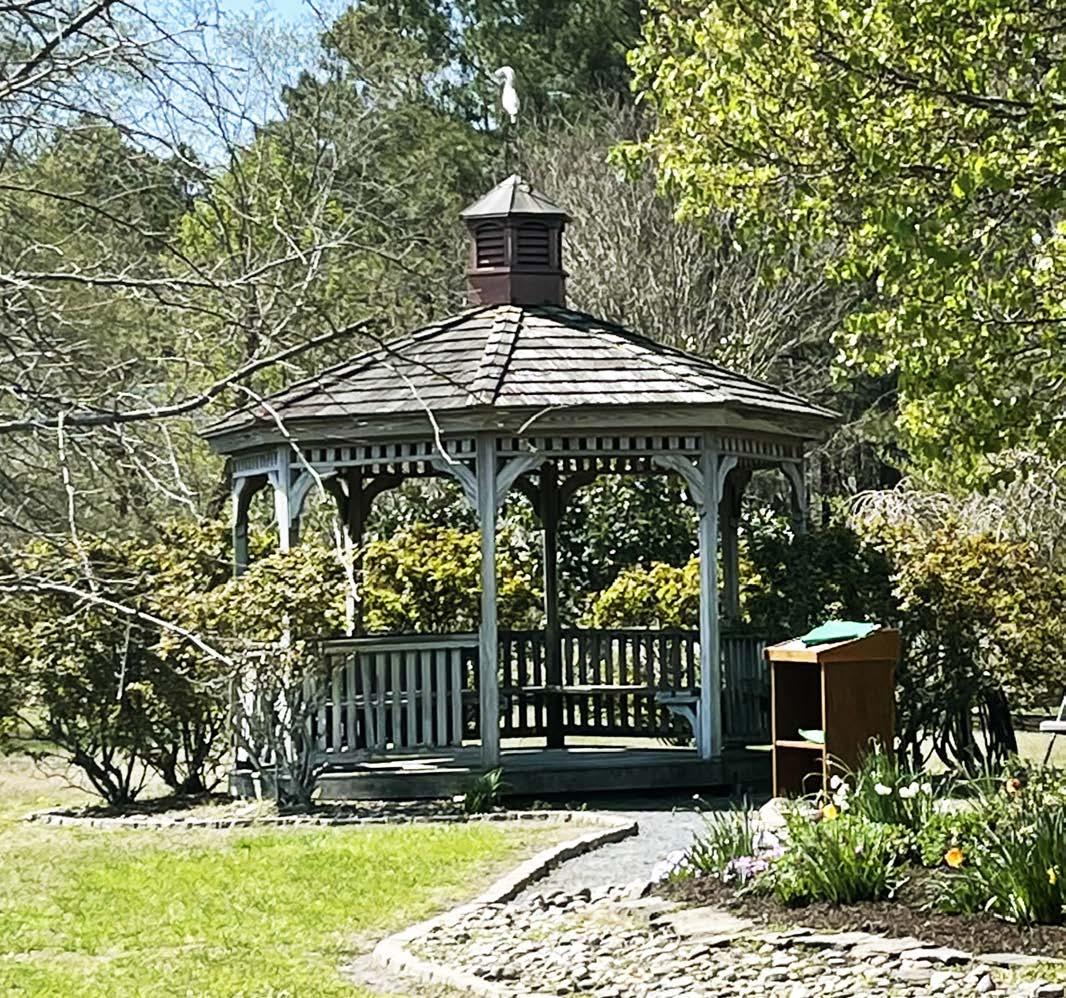
The Ocean Pines Garden Club to celebrate its annual Arbor Day ceremony on April 9, continuing a tradition of planting trees in remembrance of loved ones. This year’s event marks the club’s 50th anniversary.
the annual tree planting creates a living tribute that grows stronger over time. Each tree becomes part of the landscape and part of the community’s shared story.
The April 9 ceremony is open to the public and guests are encouraged to attend. For those interested in learning more about the garden club or becoming involved, additional information is available online.
As the Ocean Pines Garden Club marks 50 years, its Arbor Day tradition continues to reflect both its history and its commitment to preserving the natural beauty

of the area for future generations. Contact: Barbara Miller at 484-509-3821 or email gobarbarams@gmail.com

ROC Edition • Sherrie Clifford, Publisher

By Sherrie Clifford ROC Edition Publisher
February financials reflect seasonal impact while year-to-date performance remains strong ROC Ledger ROC Tribute
Ocean Pines Association reported a negative operating fund variance of $4,367 for February, reflecting a modest shortfall during what are traditionally slower winter months. While any negative variance is reviewed closely, the February results align with seasonal patterns and were influenced by weatherrelated disruptions.
February revenues came in $30,127 below budget, while expenses were $25,760 under budget, resulting in a slight net negative position.
The variance reflects typical seasonal conditions, with February historically representing one of the slowest operational periods of the year. This year’s results were further impacted by weather-related disruptions, including temporary closures of the golf course and reduced activity across several amenities, contributing to lower revenue performance. Revenue-generating departments such as golf, aquatics and food and beverage experienced reduced activity during the period, consistent with both seasonal trends and storm-related interruptions.
At the same time, expense management remained disciplined. Even with the added demands of the late February storm, including cleanup efforts and operational response, total expenses were held below budget. Public Works played a central role in storm response, while other departments continued routine operations and seasonal maintenance efforts without exceeding budget expectations.
The February results reflect this balance. While revenue came in below expectations, the ability to offset a portion of that shortfall through lower expenses helped limit the overall impact on the operating fund. Across departments, the results reflect continued cost control while maintaining service levels, even during a period of increased operational demand.
YEAR-TO-DATE FINANCIAL PERFORMANCE REMAINS STRONG
Through ten months of the fiscal year, Ocean Pines has generated a positive operating fund variance of $397,945. Revenues are over budget by $173,735, while expenses are under budget by $224,210, indicating continued performance ahead of budget expectations.
This favorable position reflects performance against the approved budget, not surplus. A portion of these funds has already been designated for future assessments and capital needs, reinforcing the importance of long-term planning.
One of the most significant contributors to the improved year-todate performance is the shift in food and beverage operations.
In prior years, food and beverage operations operated at a loss after depreciation, requiring support from the association’s operating fund. Under the current structure, that trend has reversed. Based on current
projections, food and beverage operations are expected to finish the year in a favorable position, representing a substantial improvement compared to prior years.
This shift represents a meaningful financial impact. Where operations previously contributed to losses, they are now projected to generate a positive result, helping to offset costs elsewhere and support reinvestment into community infrastructure.
This improvement also supports the association’s continued investment strategy. Rather than reducing maintenance or delaying projects, the focus has remained on maintaining and improving assets, including the golf course and facilities, while managing costs within budget expectations.
The February report also reflects the importance of evaluating financial performance over time. Monthly fluctuations, particularly during the off-season, are expected. The year-to-date results provide a clearer picture of the association’s overall
financial position and trajectory.
External factors, including the late February storm, also played a role in the monthly results. The storm created additional operational demands while reducing normal revenue activity. These types of events can create short-term variances but are managed within the broader financial framework.
BOTTOM LINE
For homeowners, the February report reflects a temporary, weather-driven dip rather than a structural financial concern.
The $4,367 negative variance represents a small deviation in a single off-season month and is largely tied to reduced revenue during storm-related closures. At the same time, the association demonstrated the ability to control expenses, even while responding to increased operational demands.
More importantly, the year-todate positive variance of nearly
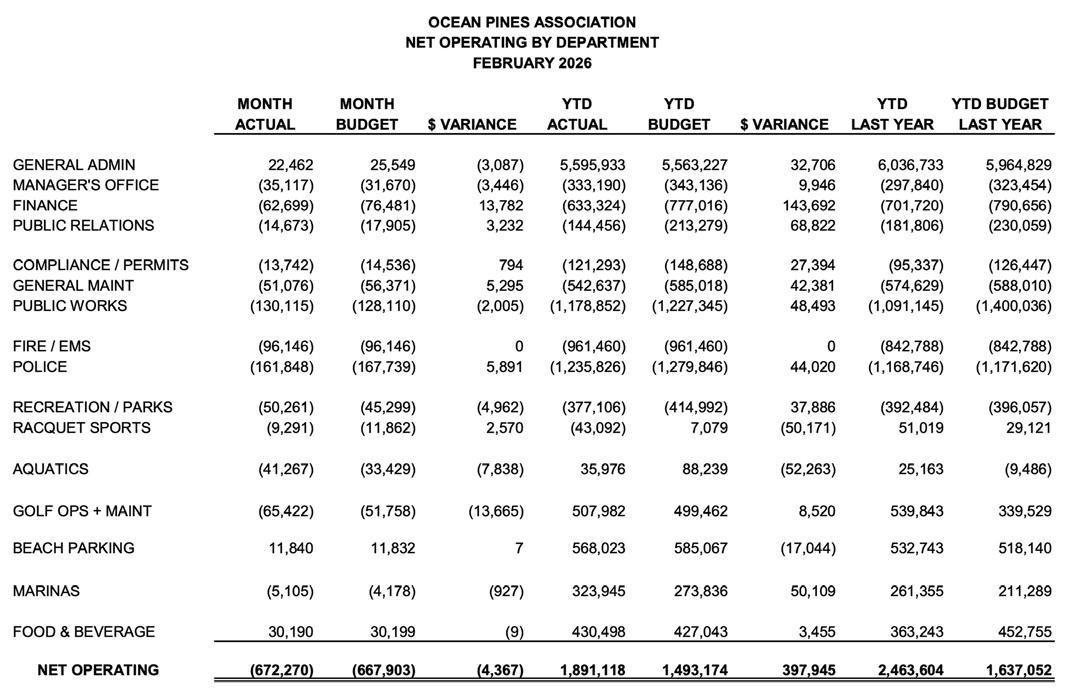
Cash and investments total $12.45 million, reflecting continued financial stability
By Sherrie Clifford ROC Edition Publisher
Ocean Pines Association reported total cash and investments of $12,451,093 as of February 28, 2026, reflecting a strong and stable financial position as the association continues to manage both operations and long-term capital planning.
The association’s funds are diversified across multiple investment vehicles, including insured cash sweep accounts, treasury bills and certificate of deposit account registry service (CDAR) investments. This approach is designed to maintain liquidity through staggered maturities while protecting principal and generating steady, low-risk returns.
Of the total balance, approximately $11.7 million is held in investment accounts, with the remaining $721,187 in operating accounts to support day-to-day operations.
A significant portion of these funds is held in CDAR accounts, which allow deposits to be distributed across multiple financial institutions while maintaining FDIC insurance limits. Individual CDAR deposits do not exceed $250,000 per institution, providing an added layer of protection.
The portfolio also includes
FINANCIALS
Continued from page 16
$400,000 provides a strong financial cushion as the association moves into the final months of the fiscal year and prepares for the peak season.
The continued improvement in food and beverage operations represents a notable shift in financial performance. Where losses once required support from assessments, those operations are now contributing positively, helping to stabilize the overall budget.
Favorable variances are not excess funds, but part of a broader financial strategy. These results support future capital projects, infrastructure investments and long-term planning, rather than short-term spending.

U.S. Treasury bills and insured cash sweep accounts, further diversifying holdings across secure, short-term instruments. Investment maturities are staggered throughout 2026, allowing the association to maintain access to funds as needed while continuing to earn interest.
Interest income generated from these investments totaled approximately $34,000 for the month,
PERFORMANCE GUIDED BY EXPERIENCE
The February results and continued year-to-date performance reflect the impact of experienced financial oversight. General Manager John Viola, whose background includes extensive work in management, finance and investment strategy, has emphasized a disciplined approach to balancing spending, maintaining operations and reinvesting in long-term infrastructure. Under this approach, Ocean Pines has strengthened its financial position while continuing to fund major projects and respond to operational demands. Compared to years prior to Viola’s leadership, the association is operating from a position of greater financial stability, with improved performance across key areas supporting both current operations and future planning.
reflecting ongoing returns from conservative investment strategies.
Cash balances declined by approximately $1 million compared to the same time last year and by approximately $600,000 from January 2026, reflecting ongoing operational and capital expenditures.
Despite these decreases, the overall position remains strong.
The association continues to maintain sufficient liquidity to meet operational needs while supporting infrastructure investments and long-term capital planning.
The structured approach to cash management and investment reflects a focus on stability, security and long-term financial discipline.
Ocean Pines initiatives stay on track, building momentum into spring
By Sherrie Clifford ROC Edition Publisher
Ocean Pines General Manager
John Viola opened his March report reinforcing a message that has become central to current operations, “Together We’re Better,” emphasizing a coordinated approach between staff, the board of directors and homeowners. The update reflects continued progress across key initiatives, with most projects currently in green status, indicating they are on track.
FIREHOUSE
The South Fire Station project reached a major milestone, with a successful groundbreaking ceremony held March 9. Demolition is now complete and construction is expected to begin in April. The projected timeline remains approximately 60 to 65 weeks, with early readiness potentially allowing for minor time savings.
AT THE YACHT CLUBTIKI KITCHEN
The Tiki Kitchen project continues forward following board approval. The project was approved through a unanimous email vote, awarding the $316,500 contract to My Hands Handyman after a review and leveling of five submitted bids. None of the five bids were included in the board meeting materials or the published board packet. Management emphasized that this is a capital investment by the association, with the structure remaining an Ocean Pines asset, while Touch of Italy contributes to interior kitchen operations. The project is expected to be completed by summer, with contingency plans in place to maintain service if needed during construction.
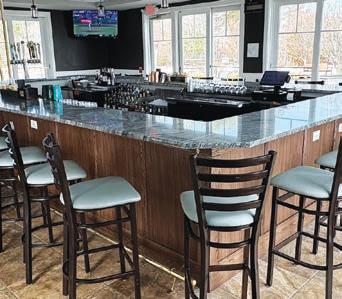
also include additional drink counter space and newly installed televisions to improve the overall guest experience. The upgrades are part of ongoing improvements to food and beverage operations.
AT THE GOLF COURSEIRRIGATION
The golf course irrigation system remains on schedule. Phase II began in December 2025 and is expected to be completed by early April. Work is currently underway on holes 10 and 18, with installation of irrigation heads ongoing at hole 8. At the end of this phase, completed improvements will include holes one through 10 and 18, along with the main pumping station and practice green. Future phases will address holes 11 through 17.
BULKHEAD

The bulkhead project at the 18th pond is underway, with an approved cost of approximately $141,000. In addition to structural improvements, the project is designed to improve water retention and reduce reliance on the aquifer, a key longterm objective. Related drainage pipe replacements are also nearing completion. Planned bulkhead work at hole 16 has been postponed until the fall to prioritize spring readiness.
THE GREAT BLIZZARD CLEANUP
Following the late February storm, blizzard cleanup efforts have required significant operational focus. Work began the week of March 2 and includes removal of storm debris, hazardous trees and branches and curbside collection. Public Works crews have been supported by outside contractors, with overtime authorized to accelerate progress. Completion is targeted for April 10. Officials also noted that additional debris unrelated to the storm has extended cleanup timelines and increased costs.
MAINTENANCE
Ongoing maintenance projects continue across community amenities. Bocce courts have undergone annual servicing, with additional improvements including shade tents, bleachers and a new leaderboard funded in part through sponsorship efforts. Restroom upgrades are underway at both the golf course and swim and racquet facilities, while clubhouse floors are scheduled for deep cleaning. Lighting repairs at racquet courts are also in progress. Drainage improvements remain a long-term focus under the “Together We’re Better” program. The association continues to outsource major ditch cleaning and is preparing additional pipe lining projects. Officials highlighted prior investments of approximately $750,000 to $1 million in pipe replacement and repair, contributing to improved drainage performance. Homeowner participation in clearing debris continues to play a key role in maintaining system effectiveness.
AMENITIES
Across amenities, demand
remains strong. Summer camp registration opened March 6, with most sessions already sold out for the second consecutive year. Seasonal events, including Easter celebrations and expanded aquatics programming, continue to drive engagement. Swim lessons are currently filled through June, with additional sessions planned.
ADVERTISING
The association is also expanding its advertising strategy, shifting toward targeted and measurable outreach. Efforts include increased use of electronic signage, radio advertising and regional television promotion. Current marketing efforts are focused on the golf course, with future campaigns planned for food and beverage venues, the marina and other amenities.
Overall, the March update reflects a continued emphasis on infrastructure investment, operational efficiency and community engagement, as Ocean Pines prepares for the upcoming season.


YACHT CLUB MAIN BAR
The Yacht Club main bar renovation has been completed and reopened on Feb. 27. Enhancements
OPVFD president reflects on career as construction starts on new South Fire Station
By Santino Guido ROC Edition Editor
Long awaited in its construction, the upgraded Ocean Pines South Fire Station project broke ground early last month, marking the symbolic transition from planning to reality.
The ceremony struck home to just about everyone there, but especially to the members of the Ocean Pines Volunteer Fire Department. Among those members was the department’s president, Joseph Enste, who has been involved in the planning stage for several years.
“We’ve known for a long time that the current station no longer meets the needs of today’s fire and EMS service. To see it finally moving forward is incredibly rewarding,” said Enste, reflecting on the milestone. “It’s not just about a building. It’s about giving our personnel the tools and environment they need to safely and effectively serve the community for the next 30 to 40 years.”
The volunteer president has had a lifelong passion for firefighting. As a child, he was captivated by fire trucks, wondering what and where the emergency was whenever he heard a siren. It was only until the Sept. 11 terrorist attacks occurred, however, that public service fully cemented itself in his mind.
“That really changed everything. Watching the bravery and sacrifice of those firefighters and first responders made a lasting impression on me. It turned that childhood interest into something much more meaningful,” said Enste.
As a result, when he was 14 years old, he attempted to join the Ocean City Fire Department’s cadet program, a firefighter training program for 14- to 18-year-olds. However, due to him being a resident of Ocean Pines, not Ocean City, he was unable to join. The idea lingered in the back of his mind for the next year, when, reinspired about the endeavour, he decided to cold-call the fire department in Ocean Pines to see if they had any such program. Next thing you know, he was filling out an application form.
During his high school years as a cadet, most of Enste’s free time was spent at the fire department. There was no other place he wanted to be. More than simply teaching him how to handle fire drills and use
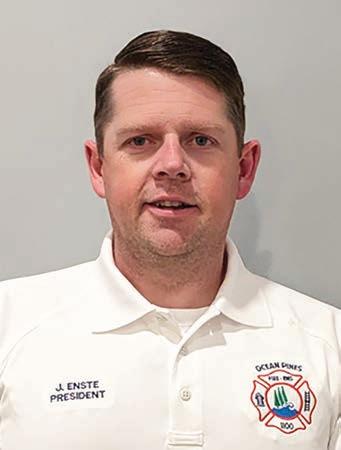
ROC Edition • OPVFD
OPVFD PRESIDENT JOSEPH ENSTE
equipment, the program showed Enste the importance of the entire profession.
“The cadet program really opened my eyes. It showed me firsthand how much of a difference firefighters and EMS providers make, not just on big calls, but in everyday situations,” Enste said. “You see people on some of their worst days, and being able to help, even in a small way, is incredibly impactful. That’s what hooked me long-term.”
After graduating from high school and the cadet program, Enste enrolled in college, allocating less time to the fire department due to distance and time. He attended Stevenson University, where he studied human services, a major he was inspired to study by his time as a cadet. While not directly connected to firefighting, the major taught Enste adjacent skills which he applied to public service through an internship at the Worcester County Fire Marshal’s office.
“Interning with the Worcester County Fire Marshal’s Office was a great experience,” said Enste. “One of the biggest lessons I took from that is that a lot of what we do isn’t just response. It’s prevention. If you can stop something from happening in the first place, that’s just as important as responding to it.”
With his bachelor’s degree obtained, the future fire department president went to pursue his graduate education out of state, earning his master’s of education from the University of Delaware. Enste was again able to tie in his degree
“To see it finally moving forward is incredibly rewarding. It’s not just about a building. It’s about giving our personnel the tools and environment they need to safely and effectively serve the community for the next 30 to 40 years.”
-OPVFD President Joseph Enste

with his interest in public service, completing both an internship and summer assistantship with the University of Delaware’s Emergency Management Office.
Upon graduating from UD, Enste worked for a nonprofit consulting firm, handling such clients as Boys and Girls Club of America, Police Athletic Leagues and 4-H. After that, he went on to have a career in education technology, higher education and then as fire investigator and fire marshal of Ocean City. Enste now works for a public safety technology company, with flexibility that allows him to respond to fire calls.
While he always made sure to stay connected with his hometown’s fire department, Enste had to officially separate from them while in college as his on-campus responsibilities consumed more of his time. It was only after starting a family and relocating back to Ocean Pines that Enste decided to rejoin.
In the years since his reunion with the Ocean Pines Volunteer Fire Department, Enste has climbed through the ranks. Starting off
as a rookie firefighter, he gradually became involved in the marketing and public relations side of things, going on to assume the role of volunteer public information officer. Two years after that, Enste was elected to the department’s board of directors and appointed fire lieutenant. Enste now serves as the president of the department and holds the rank of fire captain.
In addition to his career and volunteer work, Enste is a husband, a father and an active supporter of his son’s many passions, which range from baseball to kart racing. Needless to say, Enste keeps busy.
“It’s definitely a balancing act. It takes support from your family and good time management,” explained Enste. “At the end of the day, you do it because you care about the community and the people you serve alongside. I couldn’t do any of this without the support of my family, fellow firefighters, coaches and our racing family.”
ROC Edition • Sherrie Clifford, Publisher OPVFD President Joseph Enste reflects on his decades-long commitment to firefighting as construction begins on the new South Fire Station, an updated facility built on the footprint of the original that will provide an updated, code-compliant space for the department. Building model created by OPA Board member Jeff Heavner.
EDITORIAL
A quorum is not social: Why board conduct must follow Robert’s Rules at all times

In many homeowner associations, Robert’s Rules of Order serve as the foundation for how meetings are conducted and decisions are made. These rules are not simply procedural. They exist to ensure fairness, maintain order and protect transparency in the decision-making process.
When applied correctly, Robert’s Rules create a structured environment where motions are introduced clearly, discussion is balanced and votes are taken in a visible and accountable manner. They prevent confusion, limit dominance by a few voices and ensure all board members have an equal opportunity to participate.
However, the effectiveness of Robert’s Rules depends on consistent application. When some parts are followed while others are ignored, the integrity of the process is weakened. Boards may adhere to motions and voting during meetings, yet overlook broader principles tied to transparency, independence and proper deliberation.
Robert’s Rules are not a checklist. They are a complete system of governance.
First developed in 1876 by Henry Martyn Robert, the rules were intended to bring order and fairness to public meetings. They evolved into a widely adopted standard, built on balancing majority rule with minority rights and ensuring that decisions are made through open discussion. Transparency has always been central to that purpose.
One of the most important concepts within that system is quorum. A quorum represents the minimum number of board members required to conduct official business and typically consists of four members on a sevenmember board. Once a quorum is present, the body has the authority to deliberate.
While votes may occur only during properly noticed meetings, deliberation itself is a critical part of decision-making. When a quorum gathers in any setting, the potential exists for discussions that shape future outcomes.
This is where transparency becomes essential.
Boards have a responsibility to disclose when a quorum may be present outside of a formal meeting. When multiple members of a board may be attending the same event, gathering or function, advance notice should be
ROC Edition Political Advertising Policy
provided. This is not about restricting participation. It is about ensuring openness in governance.
A simple public notice on an association website or social platform acknowledges that a quorum could be present and reinforces that no board business will be conducted outside of a properly noticed meeting. That level of transparency protects both the board and the residents.
This becomes even more important in highly social communities.
Board members are often neighbors, friends and active participants in community life. It is common to see them together at local events, clubs and informal gatherings. That is part of what makes a community strong, but it also creates a governance challenge.
The issue is not social interaction. Board members should be engaged in their community. The issue is the lack of transparency when those interactions involve a potential quorum.
Without consistent disclosure, residents may question whether deliberation is occurring informally. Over time, that perception can lead to concern that decisions are being shaped before they reach a public meeting.
Robert’s Rules emphasize that deliberation should occur in a structured and transparent setting. Public meetings are intended to be the place where ideas are discussed, viewpoints are challenged and decisions are formed in full view of the community.
Equally important is the principle of independence. Each board member is expected to evaluate issues individually and reach conclusions based on the information presented. When members appear together frequently in numbers approaching quorum, it can create the perception that positions are being aligned in advance. Meetings then risk becoming procedural, with outcomes that appear predetermined.
This undermines the purpose of the rules.
ROC Edition accepts paid political advertising from candidates, campaigns and issue-based organizations.
All political advertisements must clearly include a “paid for by” disclaimer identifying the sponsoring committee or organization, as required by applicable law.
The publication of political advertising does not constitute endorsement by ROC Edition, its ownership or its staff. ROC Edition remains committed to providing independent, factual reporting and does not endorse candidates or political positions.
All political advertisements are clearly identified as paid content and are presented separately from editorial material.
ROC Edition reserves the right to accept or reject any advertisement at its discretion.
Sherrie Clifford Publisher/Editor 443-754-7907
sclifford@oceanpinesroc.com
Santino Guido Executive Editor editor@oceanpinesroc.com
Roger Marino Columnist marino.roger@aol.com
Cindy Hoffman Contributing Writer cynthiamhoffman013@gmail.com
Katie Conforti Advertising Manager 443-235-9502
info@OceanPinesROC.com
www.ROCedition.com
Sherrie Clifford, Publisher
Leadership, independence and the standard we set COMMENTARY
Every community deserves access to information that is current, relevant and grounded in integrity. That expectation does not change based on how long a publication has existed or who is behind it. It is earned, issue by issue, through consistency, credibility and connection to the community.
Over the past year, ROC Edition has built that trust through steady momentum.
From the beginning, ROC Edition has positioned itself as The People’s Paper, a publication designed to reflect the voices, concerns and interests of the community it serves. That is not a tagline. It is a responsibility. It means listening, responding and ensuring that coverage remains focused on what matters most to residents, not on maintaining relationships or protecting established narratives.
What began as an independent effort has developed into a publication that continues to expand its reach, increase engagement and strengthen relationships with both readers and local businesses. This progress has not been driven by legacy recognition or assumption.
ROBERT’S RULES
Continued from page 20
The value of a public meeting lies in its openness. Residents should be able to observe how decisions are formed and understand the reasoning behind them. When that deliberation is not visible, confidence in the process declines.
In addition to Robert’s Rules, associations operate under bylaws and resolutions that define governance expectations. These documents reinforce transparency and are not optional. Together, they form the framework within which a board must operate.
Consistent adherence to these governing documents is essential.
A board that follows procedure during meetings but disregards broader governance principles outside of them creates an imbalance that residents recognize. Trust is built not just during meetings, but through the board’s conduct at all times.
It has been earned by showing up, doing the work and consistently delivering content that connects.
That connection is measurable. ROC Edition has built a highly engaged audience across both print and digital platforms, including an active online community where residents participate in ongoing discussion. With nearly 5,000 Facebook members, a monthly print distribution of 7,000 copies and more than 26,000 digital reads, reflecting a highly engaged and growing audience, the publication continues to expand in ways that demonstrate meaningful engagement, not just visibility.
ROC Edition is not aligned with any particular group, influence or agenda. It is not shaped by longstanding affiliations or swayed by outside pressure. That independence allows for coverage that is direct, responsive and, when necessary, willing to ask questions others may avoid. It ensures that decisions about content are based on relevance and importance, not relationships.
That is what separates independent reporting from influenced messaging.
Respect for the role requires more than technical compliance. It requires recognizing that transparency extends beyond the meeting room and that the appearance of fairness matters as much as fairness itself.
Robert’s Rules provide the structure, but they only work when followed in full. Applying them selectively weakens their purpose. Following them completely strengthens both the board and the community it serves.
For any board of directors, the expectation should be clear. Conduct business openly. Disclose when a quorum may be present. Maintain independence in all settings. Ensure that deliberation takes place in public view, not outside of it.
That is what Robert’s Rules were designed to protect and that is the standard residents should expect.
Sherrie Clifford Publisher, ROC Edition
As ROC Edition has grown, it has taken on a leadership role within the local media landscape. Leadership is not defined by longevity. It is defined by innovation, adaptability and the ability to stay connected to the community in real time. It requires understanding how readers engage today, not how they engaged years ago.
Through expanded distribution, increased digital reach and a commitment to evolving content, ROC Edition has continued to move forward while others work to catch up. Innovation is not a one-time effort. It is an ongoing process that requires a willingness to adapt, improve and lead.
When a publication leads, it sets the pace. When it follows, it reacts. That distinction becomes clear over time, not through claims, but through consistency and connection. Readers are no longer relying on what has always been there. They are choosing what continues to show up.
ROC Edition remains focused on that forward momentum. The goal is not to look sideways, but to keep moving ahead by maintaining
independence, continuing to innovate and delivering content that reflects the community in a way that is both timely and relevant.
Professionalism is not optional, even when faced with criticism or tension. A publication that is confident in its direction does not need to respond to every comment or engage in unnecessary back-and-forth. It remains focused, allowing its work to define its position and its progress to speak for itself.
By remaining independent, continuing to innovate and staying grounded in its role as The People’s Paper, ROC Edition is committed to serving the community without influence, without alignment and without compromise.
Because in the end, leadership is not defined by how long you have been present.
It is defined by whether people trust you enough to keep coming back, and we are grateful to the readers who continue to place that trust in ROC Edition.
Sherrie Clifford Publisher, ROC Edition

STANDING Room Only
STANDING Room Only
STANDING Room Only
By Roger Marino
By Roger Marino
By Roger Marino
TV Commercials
We all digest television with a different tolerance. To some it is an educational experience. To others it’s entertainment. We love to laugh, cry, get sentimental and sad. Sometimes in the same 20-minute broadcast span. In all, the media works on every human emotion. What is this mental magnet that can cause us to embark on various mental and physical journeys?
In my opinion it all begins with the commercial. An electronic tool that genius sales experts have conceived to project a message through the eyes, then radiate into the viewer’s mind, creating a future response from the couch-potato viewer fixated on a 60-inch screen, 12 feet from the magnetic monster. That is called a commercial of commerce.
What is this monster that causes us subconsciously to need and want? Why do we hear a loud, blasting voice wake us from a soft-doze on our favorite seating arrangement? There are many ways for the 2-minute video message to excite our interest on local television.
How about the boat you always wanted but thought it to be out of financial range? And there is the house you thought impossible to be within your mortgage reach. Some mild-toned character whose voice is surrounding the walls of your home is telling you that it is all possible.
What type of media hypnotist are you accustomed to hearing and seeing during a normal day and evening in the television room? And what are they selling?
Let me tell you about the sounds you will be forced to tolerate during a 24-hour period. There is the deep toned, mild-toned, barky, musical, screeching, dramatic, male or female actor, non-actor, child, parents, sports character, selling products.
Dale Carnegie, my mentor who authored famous best-selling inspirational books, taught in his sales course: Repeat the same thing more than 7 times, and the listener will absorb the message and become motivated, whatever you are selling.
Television meets that criteria. Repetitive message selling. All it takes is crafting the right message to a motivated buyer and the money it takes to buy the time.
I have been active in the media industry in television, radio and newspapers in various professional roles for 72 years. And in those years as an editor, reporter, radio broadcaster and television announcer, not much has changed when it comes to the entity selling products. I have seen parents utilize their actingfamily to project a homey message to a loving community. I have been part of the for-profit and non-profit entities dramatically telling a sad story of need. I watched the creation of musical commercials selling medical supplies to aid in the effort to cure pain and lose weight. It was fun to interview political aspirants vying for a spot on the chamber chair. And the old-timers curl their way through the direct interviews in an effort to hold onto their chair.
Then there is the grocery business, shopping centers and travel industry all entwined in their objective, reaching out to a hungry audience hoping for the opportunity to fill their baskets with local and foreign delicacies.
Auto dealers and repair specialists are interesting in their television and radio commercial delivery. Most times loud, message-pointing and factual with a message you can’t escape. Their motive: to get you into the auto showroom so the salespeople can do their job.
What is the motive of television sales? In all media, the goal is public relations. For a company producing a sales pitch on the video screen, it requires a deep understanding by the engineers of the commercial corporate entity they represent selling the product. While a company message may not change, the way it is told does change. When we hear the silly, the loud and boisterous, the musical, the medicinal, the political, the romantic, hungry messages, told through the shrill, the barky, the mild, the screeching male
The community paper is your friend, ready for you to read anytime during the day or night. You can’t forget its message. The light doesn’t go out on a brightly-lit image when you look away or leave the room. When you put down the written message, it is still there, bold and readable when you lift it up to your eyes.
or female lungs, we listen. Coupled with the obnoxious sound, we are often entertained with the sales characters shaking a finger at the screen to sell a car, a man dressed in women’s garb selling home repairs, a man and his children role-playing a comedy skit to remodel the flooring, a husband and wife selling showers and bathroom remodeling, a funeral home operator explaining the opportunities of purchasing a coffin and the attributes of cremation, a muscular team of fitness center athletes offering a myriad of healthy exercise programs.
It’s all there, on the TV screen and to be heard on the radio. But what about the silent salesperson? The paper messenger. What about the person who picks up the local paper, reads the headline on the front page and discovers the message contains information that pertains to his/her livelihood, the family next door, the photo of a school performance that your child participated in last week? What a way to find the details about a new shopping center proposed outside your home. Its story is on page three and carried over to page six. How many times do you pick up the local paper to find a neighbor’s name or accomplishment? How about church and community meetings scheduled for you to attend? They are on page five.
And located on each page is an advertisement, a commercial selling a product. All spelled out in front of us. Each line explaining what we must purchase. Each photo identifying the product in its shiny entirety. Remember seeing or hearing the sales commercial
yesterday? Pick up our newspaper as a directory to check on the address, phone number and details in bold print.
The local paper is a special product. Want to know how to contact the sales producer? It is as clear as the colorful print in your hands. Phone number, address, product, handy to read many times over. There isn’t a 90-second time limit to identify the product, or to try to ascertain what the sales message is about. The community paper is your friend, ready for you to read anytime during the day or night. You can’t forget its message. The light doesn’t go out on a brightly-lit image when you look away or leave the room. When you put down the written message, it is still there, bold and readable when you lift it up to your eyes. The commercials are bright and beautiful whenever you read them.
No one entity is more important to a household, homeowner, community resident than this triad of collective, visual, audio and written prose. In conjunction with the mighty television and radio commercials, the local paper is a comfortable, steady communicator for commercial consumption, supplying the education necessary for detailed hometown information.
Keep us in mind each month as your local newspaper goes to press to deliver the vital information that makes us a more educated, family-friendly community where we live, work, play and pray.


ROC Tribute
OBITUARY
JAMES O. SHILOW
James Owen Shilow, age 82, passed away peacefully on March 6, 2026, at the Macky and Pam Stansell House of Coastal Hospice, Ocean Pines, Md. Jim fought a brave battle with cancer and was surrounded by loved ones. Born in Baltimore City, he was the loving son of the late Owen A. and Elba Catherine Shilow (née Myers). He is survived by his aunt, Carol Ann Waskovich (whom he fondly called Annie) of Longview, Texas and numerous first and second cousins.
Jim was an Army veteran (Specialist 4), serving from 19651971, including an overseas tour in Okinawa, Japan.
Jim worked for the Maryland State Highway Administration, retiring after 30 years at the age of 49. He moved to Ocean City to enjoy life and pursue his hobbies. He loved boating, fishing, gun collecting, photography, history and was an
avid gardener. In Jim’s words, he had a “great life.”
The family has wonderful memories of the fun and crazy parties held at his house on Nabbs Creek, Pasadena, Md. And he will be most fondly remembered for having a joke for every occasion. He will be greatly missed on Earth, but he will keep them laughing in heaven.
Jim’s remains will be interned in the family plot in Loudon Park Cemetery, Wilkins Avenue, Baltimore, Md. at a later date.
In lieu of flowers, please make a donation to the Stansell House or a hospice center of your choice. Hospice is a wonderful organization providing dignity and quality of life for a loved one’s end of life journey.
Letters of condolence may be sent via www.burbagefuneralhome.com
Editor’s Note: This obituary was provided by Burbage Funeral Home.
Pat Kanz remembered for lasting impact on Ocean Pines community
By Sherrie Clifford ROC Edition Publisher
The Ocean Pines community is mourning the loss of Patricia “Pat” Kanz, a longtime resident and dedicated volunteer who made a lasting impact through her work in recreation and community engagement.
Kanz, who passed away Dec. 16, 2025, at the age of 98, moved to Ocean Pines in 1986 with her husband, Tony. She quickly became an active member of the community, founding the Swimmin’ Wimmin’ program at the Ocean Pines Community Center. The program continues today, reflecting the lasting influence of her efforts.
In addition to leading the swim program, Kanz served as an instructor for many years, working with residents one-on-one and in group settings. She was also well known for her passion for bridge,
teaching classes at the community center and encouraging others to learn the game.
Her contributions extended across the Ocean Pines community, where she was recognized for her commitment to volunteerism and helping others.
Kanz is remembered by many for her dedication, leadership and the relationships she built over the years. Her impact continues to be felt through the programs she established and the lives she touched.
A celebration of life will be held Saturday, April 11, 2026, at the Community Church of Ocean Pines, 11227 Racetrack Road, Berlin. Visitation will begin at 12:30 p.m., followed by a service at 1 p.m. A luncheon will follow at the church.
Those who wish to send their condolences may make donations to Parkside CTE Horticulture, 1015 Beaglin Park Drive, Salisbury, Md. 21804, Attn: Jerry Kelly.
ROC Edition publishes obituaries as a community service.
Obituaries appearing in ROC Edition are prepared in coordination with Burbage Funeral Home and submitted on behalf of families they serve.
All obituary content is reviewed and written in standard newspaper style.
Photographs are welcome.


Beyond the Easter Bunny: Faith, tradition and the true meaning of Easter
Exploring the connection between Easter, Passover and the traditions that bring meaning to the season
By Sherrie Clifford ROC Edition Publisher
Easter arrives each spring with bright colors, baskets filled with candy and the familiar image of the Easter Bunny hopping from yard to yard. For many families, it is a day of egg hunts, chocolate treats and time spent together. Yet behind the playful traditions is a deeper story, one rooted in faith, history and renewal, and closely connected to another significant observance, Passover.
The modern image of the Easter Bunny has its origins in European folklore, particularly among German immigrants who brought the tradition to America in the 1700s. According to legend, a hare known as the “Osterhase” would lay eggs for children to find if they had behaved well. Originally, children would build nests, often using their hats or bonnets, for the hare to lay its eggs. Over time, these nests evolved into the modern Easter basket, a tradition that continues today with candy-filled baskets and hidden eggs.
Eggs became a central symbol of Easter long before candy wrappers and plastic grass. In many cultures, they represent new life, rebirth and renewal. For Christians, that symbolism carries deeper meaning, reflecting the resurrection of Jesus Christ and the promise of eternal life. Decorating eggs became a way to celebrate both the arrival of spring and the spiritual renewal at the heart of the Easter story.
At its core, Easter is the foundation of the Christian faith. It commemorates the resurrection of Jesus Christ, which, according to the New Testament, occurred three days after his crucifixion. Christians believe that through His death and resurrection, Jesus conquered sin and death, offering salvation and the promise of eternal life.
Easter is the culmination of Holy Week, a sacred time that begins with Palm Sunday, marking Jesus’ arrival in Jerusalem and continues through the Last Supper, His betrayal and Good Friday, the day of His crucifixion. The resurrection on Easter Sunday is seen as the fulfillment of God’s promise, affirming faith,
restoring hope and defining Christianity itself.
The timing of Easter is determined by the lunar cycle, falling on the first Sunday after the first full moon following the spring equinox. This is one reason Easter often coincides with Passover, which also follows a lunar-based calendar.
Passover tells the story of the Israelites’ liberation from slavery in Egypt, as described in the Book of Exodus. Families gather for a ceremonial meal known as the Seder, where they retell the story of freedom, faith and perseverance. The themes of deliverance and renewal found in Passover parallel the message of Easter. Many scholars and theologians believe the Last Supper shared by Jesus and His disciples was a Passover meal, further linking the two traditions.
These connections highlight how both holidays, while distinct, share common themes of sacrifice, deliverance and faith. In Christianity, Jesus is often referred to as the “Lamb of God,” echoing the Passover lamb and deepening the spiritual connection between the two observances.

In today’s world, Easter blends both the sacred and the secular. Church services at sunrise, hymns of celebration and quiet reflection coexist with egg hunts, family dinners and the laughter of children searching for hidden treasures.
For some, Easter is a deeply spiritual day centered on faith, scripture and the promise of salvation. For others, it is a time to gather with loved ones and celebrate the arrival of spring. For many, it is both.
What remains constant is the message at the heart of Easter. It is a reminder of renewal, not only in the changing of the seasons but in faith, hope and purpose. It invites reflection on grace, forgiveness and what it means to begin again.
So while the Easter Bunny may deliver baskets filled with sweets, the true gift of Easter runs far deeper. It is found in the message of the resurrection and the enduring promise that even after the darkest moments, hope can rise again.

ROC Life
Go native this spring
By Cindy Hoffman Contributing Writer
Even with this fickle weather, spring is on its way, and that means it’s time for native plant sales. Both Assateague Coastal Trust (ACT) and the Lower Shore Land Trust (LSLT) are hosting their Spring Native Plant Sales, with pre-order opportunities available now.
Many gardeners are eagerly looking for ways to spruce up their yards this year, especially after the February blizzard took down many trees and bushes with the weight of heavy snow.
LSLT has a variety of options to replace those trees and bushes, including gorgeous chokeberry bushes featuring spring flowers for the bees and red winter fruit for the birds. Or a majestic Atlantic white cedar, an evergreen with smaller rounded cones. Maybe that downed tree has changed the yard from shade to full sun. ACT and LSLT can provide you with great options here as well, including milkweed for the butterflies and yarrow, aster, blackeyed Susans and primrose for other pollinators.
Using native plants in the garden provides ample benefits. “Native plants have co-evolved next to our wildlife. Non-native plants provide significantly less benefits than native ones,” Taylor Swanson, the director of Assateague Coastal Trust, said.
“Planting native plants is a very simple way to have a dramatic impact on the natural world,” Matt Heim, director of the Lower Shore Land Trust, said. Heim loves the model promoted by the Homegrown National Park movement, which encourages people to see their own yards as part of the solution to the biodiversity crisis. “Converting a portion of your yard to native plants for pollinators can have a dramatic impact on the wildlife you see in your backyard and the habitat that is available,” Heim said.
The best thing you can do from a wildlife standpoint is to create a layered canopy, providing taller species like oak and hickory, then an understory of ash, dogwood or redbuds. And then ground cover

ROC Edition • Lower Shore Land Trust (LSLT)
Assateague Coastal Trust and Lower Shore Land Trust are hosting spring native plant sales.
species, including native flowering plants or shade-tolerant species, Swanson said. “If you want to see a lot of wildlife, you want layers.”
Eliminating invasive species, such as wisteria and English ivy from yards is also important to providing healthy habitat. “Not every foreign species is invasive,” Swanson said. Invasive plants are aggressive, often crowding out native vegetation and reducing biodiversity, as they typically lack natural predators or diseases to keep them in check. “If you really want to see the birds and the butterflies in your garden, you want to replace them with something native.”
Early spring is a great time to tackle invasive species before the aggressive roots and tendrils start invading the space, Beth Sheppard, restoration manager for LSLT, said.
“We recommend cutting ivy about 12 inches from the base and if the
See NATIVE page 29

NATIVE
Continued from page 28
root source is too big and challenging to hand dig or pull out, then use a full concentration of Roundup on a disposable sponge paintbrush. Carefully dip the brush in the Roundup and paint over the freshly pruned stems.”
She recommends quickly planting new deep-rooted, easy-to-manage native species after the invasives have been eliminated, such as golden rod, rudbeckia and certain grasses like switchgrass or smaller stature Tussock sedge. “A mixture of deep-rooted perennials and woody stem natives might be the best solution for an area that had a lot of ivy or wisteria. Otherwise the open ground will quickly be overrun with more intruders.”
ACT and LSLT have recently partnered with the Maryland Coastal Bay Program, the Town of Berlin and Worcester County to restore Newport Bay, the watershed for Berlin, Newark and the western half of South Point. Through this effort, the organizations will be working with communities, churches and local landowners to explore ways
to reduce pollution and slow down stormwater runoff into the bay.
One way to help the watershed is to create a rain garden with native plants. “We have designed our rain water systems to move water really fast. Unfortunately, that picks up a lot of particles and heat from the roads,” Heim said.
A rain garden is a really practical and beautiful way to slow stormwater down that is coming from rooftops, driveways and roads, allowing the water to cool on hot summer days and be filtered in a natural way, while also providing ecological benefits for pollinators, Heim said.
“Most native plants have robust deep root systems which can hold more water and allow more penetration of water into the soil. Water can follow the roots into the ground and absorb more nutrients. Controlling the stormwater in your yard is great for Newport Bay and all of our watersheds,” Swanson said.
ACT’s pre-order website identifies plants that like to have their “feet wet.” Such plants include the eastern rose mallow or native hibiscus. Locals will recognize this plant, as it
See NATIVE page 30



ROC Edition • Debbi Dean

NATIVE
Continued from page 29
is in full bloom along the road sides near ditches during the summer. This is just one of the many perfect native plants to start using for a rain garden.
Many homes in Berlin back up to important stream beds, including Bottle Branch and Kitts Branch, that feed into Newport Bay. Sheppard recommends species such as red-osier dogwood, clethra alnifolia and viburnum, which are all deciduous native shrub species. “They provide crucial pollinator habitat for butterflies such as the spicebush swallowtail, and they can tolerate the occasional flooding and heavier embankment soils along our Eastern Shore streams and ditchbanks.”
Other smaller plants that can tolerate “wet feet” include asters, the cardinal flower and white Joe Pye Weed.
There is also a lot of value in planting ferns, such as cinnamon ferns, for the edges of wooded ditches and streams.
Those homeowners planting around marshlands will require salt-tolerant species, such as switchgrass, echinacea and penstemon.
For those just starting a garden or experimenting with native plants, Swanson suggests buying a variety of plants to see what does well and then coming back the next year and getting a bunch of those that did well. Both organizations are providing many local natives, which have a good chance at thriving here on the Eastern Shore.
ACT’s native plant sale is live for pre-orders. Visit actforbays.org/shop to order now. ACT has provided great descriptions of the plants and identifies pollinator-, butterflyand bird-friendly species, deer resistance, pine tolerance and those that appreciate wet conditions. ACT also offers a variety of heirloom tomatoes and herbs, and Go Green compost will be for sale for a $5 donation. Master Gardeners will be on site at the plant sale pickup to provide advice and guidance. Pickup is May 2, 8 a.m. to 12 p.m., at the office, 10031 Old Ocean City Blvd., in Berlin.
The LSLT’s native plant sale is also live for pre-orders. Visit lowershorelandtrust.square.site/shop/ native-plant-sale/ to order now. LSLT has also provided great descriptions of the plants and identifies best


growing conditions and pollinator interest. It also offers plant packages catering to pollinators, shade, salt tolerance and a wet feet package. Customers can contact LSLT regarding specific plant questions
when they are shopping online prior to May 1, and Master Gardeners will be available on site. Pickup is May 1 and 2 at the office, 100 River St., in Snow Hill.
ROC Edition • Debbi Dean
P.E.O. Chapter AK hosts luncheon and fashion show to support women’s education
By Sherrie Clifford ROC Edition Publisher
One hundred sixty women gathered March 16 at Worcester Technical High School in Newark for a luncheon and fashion show hosted by P.E.O. Chapter AK of Ocean City, bringing the community together in support of educational opportunities for women.
P.E.O., the Philanthropic Educational Organization, is an international group that raises funds to help women continue their education and train for careers. During the event, Chapter AK President Gail Philippi spoke about the organization’s success at the local, national and international levels, highlighting its ongoing mission and impact.
The event raised funds to support scholarships and educational opportunities for women.
Guests arrived in the late morning for the event, which ran from noon to 3 p.m., with attendees gathering in the front of the school and checking in through security before the program began.
The luncheon was prepared by Phillip Cropper, the 2025 Worcester
County Teacher of the Year, along with Worcester Technical High School culinary students. The menu offered a variety of selections, with food that was both well-prepared and thoughtfully presented.
Following the luncheon, guests enjoyed a fashion show themed “Step into Springtime.” Music was provided by DJ Kevin Palmer as models took to the runway wearing spring selections from Tide Together Boutique in West Ocean City.
The fashions were modeled by members of P.E.O., adding a personal and community-centered element to the presentation. Nichole Chamberlain served as commentator, describing each look as it was presented.
Proceeds from the luncheon and fashion show will support P.E.O.’s mission of funding educational opportunities for women through scholarships and related programs.
The event provided an opportunity for attendees to gather, enjoy an afternoon of food and fashion and contribute to a cause focused on education and opportunity for women.


ROC Edition • Submitted
P.E.O. Chapter AK hosted a luncheon and fashion show March 16 to raise funds for women to continue their education. Preparing the luncheon was Chef Phillip Cropper who can be seen pictured with former Mid-Atlantic Symphony President Andrea Barnes, one of the notable attendees (top photo). Participating models included Barbara Ferger, Lynn Schneider, Lin Bowen, Ginny Bojanowski, Sandy Reifsnyder, Marian Bickerstaff, Carlyn Crout and Nancy Waters (bottom photo).