HOUSING NEW YORK
THE ASSURED PAPER WORK DIFFERENCE

Assured Paperwork has over 50 years of experience in digitizing documentation here in New York City. Assured Paperwork assists New York landlords with document scanning services, that moves their important paperwork to the cloud.
We offer Onsite and Offsite Scanning Services
Our experienced expeditors assist with helping to locate all important documentation on various NYC websites or government agencies.
The benefits include saving office space, better customer service, less paper, enhanced security, ability to source records from anywhere, anytime.
Ask us for a Complimentary Real Estate Management Checklist
Ensure your properties paperwork are
and available anytime, anywhere.
Avoid Rent Overcharge Complaints
Adjudicating a Rent Overcharge in Court or with the DHCR
Seamless




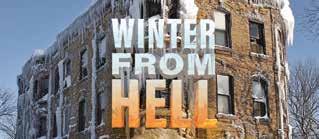
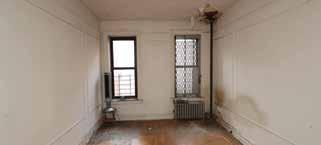
DID YOU KNOW ?
RENT GUIDELINES BOARD

is the largest rent reduction adjustment in RGB history. It took place in 1982, under mayor Ed Koch. That year the RGB raised rents 4% on a one-year lease. Inflation was 9.25%, which created the roll back in real terms of 5.25%


The New York City Rent Guidelines Board has on 32 different occasions, or 57% of the years they have issued guidelines, when adjusting for inflation.



Methodology In the Price Index of Operating Costs, the RGB calculates inflation from March to February. We matched the February inflation to the rent adjustment approved in June, which took effect on October 1 of the same year. This approach most closely matched the inflation before the RGB when they made their final vote decision.


Your Energy Ally
Jim Slattery Chief
Executive Officer
email: Jim@slatteryenergy.com
phone: (516) 551-4007
Honesty | Quality | Advocacy
Tim Connors
email: tconnors@slatteryenergy.com
phone: (516) 404-2027
Honesty | Quality | Advocacy
Slattery Energy Consulting Group leverages over three decades of experience to offer full -service energy advisory to the real estate community. Exclusive energy manager/partner for NYAA.
What we offer
Energy Bill Auditing
✓ Ensure your natural gas and electricity charges are accurate and efficient
Natural Gas and Electricity Procurement
✓ Secure the most competitive pricing from vetted suppliers
Energy Project Advisory & Rebates
✓ Design cost -effective projects with quality contractors
✓ Capitalize on incentives
www.slatteryenergy.com
City Admits RentStabilized Buildings Are Failing
An Analysis Of The Bankrupt Pinnacle Portfolio And What It Means
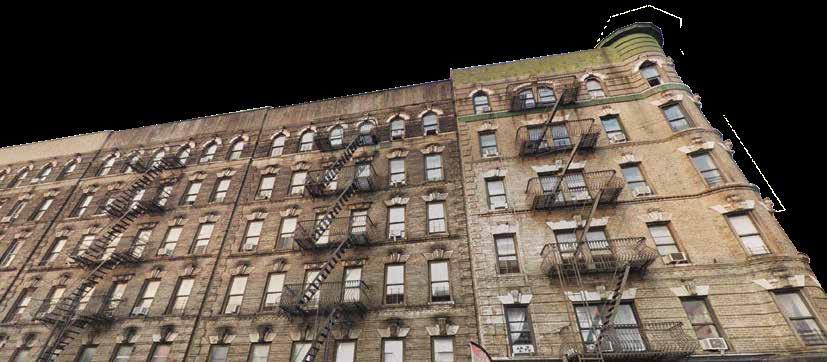

One of the first things Mayor Zohran Mamdani did when he took office was to set his sights on the bankruptcy sale of more than 5,000 units of rent-stabilized housing.
The properties were owned by Pinnacle, who was one of the larger housing providers in New York City. They filed for bankruptcy in 2025 and in court documents they said the change in the 2019 rent laws, higher interest rates, and COVID-19 complications have made it impossible for them to operate their buildings.
After filing for bankruptcy, the portfolio was put up for auction with Summit serving as an emergency low bidder of $451 million for the entire portfolio. This was roughly $88,000 per unit and the sale was about $150 million less than the current mortgage obligations. The bank holding those loans helped facilitate the sale, and agreed to the subsequent financing for Summit to take over the portfolio. Ultimately, there were no higher bidders and the judge in the case approved the sale.
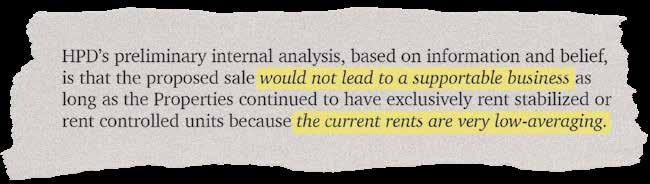
Before this happened, New York City filed motions to stop the sale. They made a very clear argument. This portfolio of buildings cannot be run as a profitable business. Specifically, the city’s corporate counsel wrote:
“HPD’s preliminary internal analysis… is that the proposed sale would not lead to a supportable business as long as the Properties continued to have exclusively rent stabilized or rent controlled units because the current rents are very low-averaging.”
NYAA analysis of court documents estimates income for the Pinnacle portfolio to be about $1,450 per unit, per month. This likely means that average rents were around $1,375. According to an analysis by the NYU Furman Center, this is higher than the median rents for 456,000 apartments in buildings that are more than 90% stabilized and were built before 1974, which is only $1,344. The Pinnacle portfolio also had roughly 0.9 viola-

tions per unit, which is only slightly higher than the city average, according to Just Fix NYC’s data analysis. In this court document, the city has set several very clear metrics for a rent-stabilized building to meet in order for it to be able to “maintain a profitable business based on the income stream from the rent stabilized or rent controlled apartments.” Those metrics are:
• Rents below $1,375
• Violations in excess of 0.9 per unit
According to city court filings, any building below these metrics has a value that is less than $88,000 per unit. From these declarations, we can get a picture of how much of the rent-stabilized portfolio is in fiscal distress and at risk of physical deterioration. Roughly 19% of rent-stabilized housing is currently in regulatory agreements with the government, which means they pay no taxes and operate as a non-profit entity, per the NYU Furman Center data analysis.
An estimated 65% of rent-stabilized apartments are in privately-owned, Pre-1974 buildings. The majority of that group, an estimated 455,979 apartments located in 16,600 buildings, are in buildings that are more than 90% stabilized and have average rents of $1,344. A simple equation estimates that about 255,000 or more
Median Monthly Imputed Rent, 2025
Legacy Properties (Jan. 2025$)
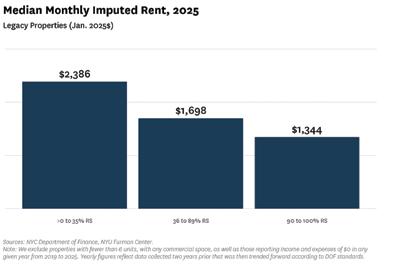
than one-quarter of rent-stabilized apartments have rents below $1,375 and, per city court documents, are not sustainable businesses.
The future for these defunded buildings is also laid out in the court documents submitted by the city. They write:
“... buildings might fall into even greater disrepair and the burden for addressing emergency repairs might fall upon the City and/or on the tenants themselves.”
The New York City corporate counsel wrote that statement to apply to the
Where are Legacy 90%+ Properties Located?
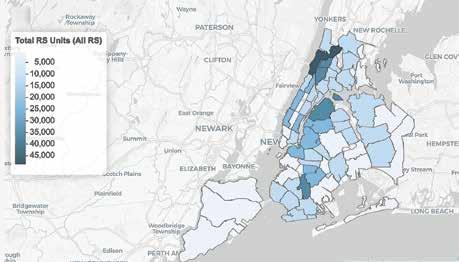
Source: www.furmancenter.org/publication/data-brieflegacy-90-rent-stabilized-properties/
Income estimates for the Pinnacle portfolio to be about $1,450 per unit, per month. This likely means that average rents were around $1,375.
5,000 unit Pinnacle portfolio, but it also paints a picture of the future for roughly 255,000 units of privately-owned rent-stabilized housing in an estimated 9,200 buildings.
The sheer scale of this distress should alarm everyone. The city Department of Housing Preservation and Development has capacity to conduct about 20,000 emergency repairs in a year, at most. The entire program was designed to target only a small number of buildings that fall through the cracks. There is no ability for the agency to respond if those cracks become a gorge, which is what their own data suggest is happening.

IN THE COURTS

NY’s Highest Court Limits Good Guy Guarantee Protections in Commercial Leases
The New York Court of Appeals recently issued a significant decision clarifying the scope of liability under a “good guy” guaranty in commercial leases (i.e., an agreement of a guarantor to be personally liable for any defaults of the commercial tenant). Before this decision, courts have consistently held that where a lease requires an owner’s written consent before a tenant’s surrender can be valid, and the “good guy guaranty” incorporates the entire lease into the guaranty, then the guarantor’s liability ends upon surrender of the premises and the owner’s written acceptance thereof. However, the Court held in this case that liability under a “good guy” guaranty ends when the tenant vacates the premises and provides the required notice (if any is required), even if the landlord does not formally accept the surrender as the lease requires. The Court reasoned that if an owner’s acceptance is required, then “all of the conditional language in the
guaranty would be superfluous,” and the owner would effectively be able to hold the guarantor liable long after the premises were surrendered by the tenant.
This ruling alters the effectiveness of a good guy guaranty in commercial leasing and represents a shift in how the allocation of risk can be accomplished. Much of the decision was based on the language of the guaranty, which incorporated the lease terms for surrender, but also contained language such as a notice requirement and a “completely vacated” requirement that would have been rendered meaningless if the owner’s acceptance was ultimately controlling. The Court also noted that the guaranty contained a provision that its language would control in the event of a conflict with the lease, which the Court found was the case here. Owners should review and consider updating their standard form of guaranty to reflect the implications of this ruling. [1995 CAM LLC v. West Side Advisors, LLC, No. 72 (N.Y. Oct. 21, 2025)]
Housing Court Denies “Small Owner” Exemption from GCE by Counting Owner-Occupied Units
A housing provider brought a holdover proceeding against a tenant seeking to recover possession of a unit, and claiming the unit was not subject to the Good Cause Eviction (GCE) law on two grounds: first that he was a “small owner” of 10 units or fewer, and alternatively that the “owner occupied” exemption should apply. The housing provider was alleged to be the beneficial owner of six properties containing a total of 15 units (two and three unit buildings) that were owned through separate LLC’s. However, one building with three units was purchased after the holdover commenced, and therefore the court held it should not count towards the “small owner” calculation. The housing provider also claimed that he lived in two units at one of the properties, and those should also not count towards the small-owner limit.
While the court accepted the argument that the units purchased after the petition was filed do not count towards the “small owner” limit under
GCE, it did not agree that the “owner occupied” units do not count towards the ten unit threshold. Accordingly, the court held that the “small owner” exemption did not apply, as the total unit count was 12.
The housing provider also argued that they qualify for the “owner-occupied” exemption under GCE, where an owner occupying a building of less than ten units is not subject to the law. The housing provider reasoned that if all of the units are allocated to him under GCE, then the “owner-occupied” exemption should apply to all of the units as well, even if the owner is not residing in the building where the holdover was filed. The court did not agree, holding that the “small owner” exemption and “owner-occupied” exemption were two distinct exemptions and the “owner-occupied” exemption contained specific language that it only applied to the particular building where the owner-occupancy existed.
Accordingly, the holdover proceeding was dismissed. The housing provider did not raise any issues relating to beneficial ownership [616 Manhattan LLC v. Placzek: Civil Court Kings County Index No. LT-319912-24/KI (10/10/25)].
Succession Not Barred by LIHTC Rules on Income Limits
A holdover proceeding was initiated by the housing provider after the tenant of record vacated the apartment. The remaining adult occupant opposed the holdover and moved for summary judgment on the basis of her minor son's eligibility to succeed to the lease as the son of the tenant of record. The housing provider did not dispute that the succession requirements were met under the rent stabilization law and code, but opposed the succession because of concerns it would violate the Low-Income Housing Tax Credit rules and regulations and place the unit out of compliance, potentially resulting in the loss of the entire building's LIHTC status. The housing provider believed that the succession would be characterized as a new tenancy under LIHTC rules because neither of the remaining occupants were members of the household at the inception of the LIHTC lease or listed on any recertification, thereby requiring new income certifications and occupancy verification. Because the remaining adult occupant’s income was above the LIHTC limit, and the family size would now be too large for the studio unit, the housing provider would be
out of compliance with LIHTC income and occupancy requirements. However, the court rejected those arguments, holding that because the occupant was succeeding to the apartment, they step into the shoes of the prior tenant and the LIHTC program would treat this as a change to an existing household rather than a new tenancy – even though the tenant of record was no longer residing in the unit. Because the LIHTC program provides significant flexibility for household size changes and income growth of existing tenants in the program, that same flexibility would be provided to the succeeding tenancy, and therefore the housing provider would not be out of compliance with the LIHTC program rules. Accordingly, the court granted the occupant’s motion for summary judgment and dismissed the proceeding, finding that respondent's son was entitled to succeed to the lease, that the LIHTC program allows for exceptions in situations where a household’s income exceeds the initial threshold, and that such exceptions apply to a successor tenant [29 Flatbush Assocs. LLC v. Medina: Civil Court Kings County Index No. LT-302279-21/ KI (10/14/25)].
AA
GROWING Problem
ccording to the Division of Housing and Community Renewal, the number of rentstabilized apartments registered in New York State in 2025 was 1,064,100. Of those units, 56,800 (5.3%) were registered as vacant. This is a number that is steadily rising, up from 50,500 in 2024 and 47,600 in 2023. The trend is clear. We are losing housing. As bad as these numbers are, the problem is worse.
Everyone who lives in New York is aware that there is a housing shortage and an affordability crisis. Demand for affordable housing is as high as it has ever been. Lawmakers have taken several steps to incentivize the building of new housing. The city approved a large upzoning in 2024 and voters in 2025 approved ballot measures to make housing approval easier. This year, Gov. Kathy Hochul has proposed reforms to SEQRA or the State
Environmental Quality Review Act, which is attributed with long delays for housing development that drive up costs and make the state less affordable.
These steps are vital to addressing our housing crisis. But so is the preservation of existing housing stock. In this year’s budget, there are no efforts.
There has been less of an effort to stop the loss of rent-stabilized housing. The cause of this decline is fairly straightforward. The changes to the rent laws in 2019 eliminated the ability to increase the rents on turnover, other than an $83.33 increase if $15,000 of renovations were performed. In 2024, the law was changed to allow an increase of $166.7 if $30,000 in renovations were performed. The flaw in this system is that many apartments, on turnover, need far more than $30,000 in renovations. The apartments with the lowest rents typically have the highest upgrade costs to make sure the apartment meets updated housing code standards that are required on turnover.
NYAA estimates that the city loses an average of 500 to 700 rentstabilized apartments a month to permanent vacancy. Data from the Division of Housing and Community Renewal backs up this estimate. Both the number of units registered as vacant and the number of apartments registered as temporary exempt have increased over the past
Every year, more rent-stabilized apartments sit vacant, fueling new concerns over New York City's affordability.
few years, following the COVID-19 bump that presented itself in the 2021 registration numbers.
What is not included in the publicly displayed numbers is the number of apartments that are registered as owner occupied or simply registered as blanks. A memo prepared by the Rent Guidelines Board last year suggested that more than 110,000 apartments were registered with errors, blanks, owner-occupied, or temporary exempt in 2024. This is on top of the more than 50,000 units registered as vacant. In total, the New York Apartment Association estimates that as many as 100,000 apartments are not being rented because of the current laws.
One solution to this problem that was proposed by the Department of Housing Preservation and
Development was a program called Unlocking Doors. This is eligible for apartments with rents below $1200 for a one-bedroom, under $1300 for a two-bedroom, and under $1400 for a three bedroom. Originally, it would give owners $25,000 in reimbursement if they renovated the units and rented to a voucher holder. The program has now increased to $50,000.
Unsurprisingly, nobody has utilized this program. The reason is quite simple. It costs more than $1200 a month to operate a onebedroom apartment and far more than $1400 to operate a threebedroom apartment. Additionally, it costs far more than $50,000 to renovate the unit. So, even if you were 100% confident that you would be reimbursed for part of the renovation costs, the property owner would be losing money.
Just like the Individual Apartment Improvements don’t work for a large number of apartments, Unlocking Doors does not work.
The loss of apartment supply hurts the city as a whole, but it also has an acute impact on the financial health of buildings. Property owners are forced into the impossible choice of carrying these losses or investing money into an apartment that will still lose money moving forward. The lost revenue lowers the overall building health, pulling funds that could be spent on repairs,
maintenance, growing property taxes, skyrocketing insurance, and other mandatory costs.
The strict vacancy control on rents also lowers apartment building values, which has a negative impact on the renters currently living in the building. Typically, rents don’t cover the full cost of running a building. Large capital expenditures like replacing roofs, boilers, elevators, or mandatory façade work are typically financed by debt on the building. When the value of the building declines, there is no access to new capital.
The result of the 2019 rent laws has been clear. Increased number of vacant units, declining building values, and widespread fiscal
1,064,100 rent-stabilized apartments were registered in New York State in 2025.
Out of those units, 56,800 were registered as vacant.
distress, which is starting to present itself with growing physical decline in buildings. Violation counts have increased, as have complaints to 3-1-1. This decline has been dubbed a “death spiral” by the Citizens Budget Commission and the NYU Furman Center has warned that the city could permanently lose tens of thousands if not hundreds of thousands of these affordable apartments in the coming years.
To better understand this decline, we have pulled three case studies that explain why a rent-stabilized apartment has become permanently vacant. three case studies
CASE STUDY 1
2BR APARTMENT N. MANHATTAN
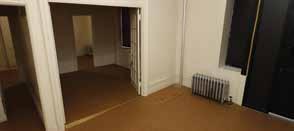
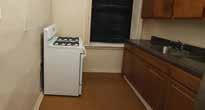
The building is a 6-story walkup that was built in 1910. The average rents in the building are $1,676. The cost of operating the building was $775 per unit, per month, in 2024. The taxes are $361 per unit, per month. This specific vacant unit was occupied for at least 40 years prior to the tenant leaving in 2023. The apartment requires a full gut renovation. The walls, plumbing, and electrical all need to be replaced. Floors and ceilings need to be leveled. The cost for this type of renovation is estimated at about $120,000.
Rent
$1,070
Renovation cost $120,000
Vacant since 2023
$30,000 Individual Unit
Improvement
Path
This building is 35 units, so the rent increase would be $178.57 for $30,000 in improvements. This would bring the rent to $1,249.
The loan payment for this renovation would be $1,325 per month. Operating costs would be at least $775, and the taxes are $361. The total operating cost would be $2,461 for a rent of $1,249.
$50,000 IAI Path
This unit would be eligible for the $50,000 IAI due to the long-term tenancy of the prior renter. Under this path, the rent would increase to
$1,417. The overall cost of operating the apartment would remain $2,461 per month.
Unlocking Doors
The low rent on this unit would make it eligible for the Unlocking Doors program, but the owner would not be allowed to take an IAI as well. Assuming the apartment receives a $50,000 reimbursement from the government, the loan payments would be reduced to about $775 per month and the overall cost would be $1,911. The rent would be $1,070
Future Outlook
Taking on significant debt to renovate this vacant apartment would substantially reduce the overall fiscal health of the building and put the physical health of the building at risk. Currently, rental incomes cover costs and allow the owner of this building to make sure there are no violations and there have been very few complaints over the past two years.
Right now, the building has conservative debt payments that have helped pay for mandatory upgrades. The steady stewardship of this building for decades has been able to preserve high quality housing, while providing housing that is affordable to families who are at roughly 55% Area Median Income. Taking on more debt to renovate a vacant unit that will continue to reduce the overall fiscal health of the building would be unwise.
CASE STUDY 2
2BR APARTMENT BROOKLYN
This apartment is in a 76-unit building with average rents of $1,549. In 2024, the building spent $698 per unit, per month, in operating expenses. It paid $377 per unit, per month, in taxes.
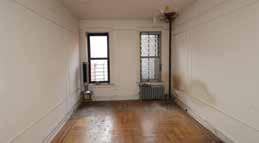
This unit was renovated in 2008. The property owner used lead-paint encapsulation and it was deemed lead-safe. Changes in the law that took place in 2019 now require the apartment to undergo a full gut renovation of the walls and friction surfaces to remove all traces of leadbased paint. It would then require new walls and likely ceilings to be put in the apartment.
The current electrical systems do not need to be replaced, but it may be wise to further upgrade
Rent $1,240
Renovation cost $50,000 to $90,000
Vacant since 2020
$30,000 Individual Unit Improvement Path
Under this path, the rent for the apartment would increase to $1,407. This is lower than the building average and the rent would be about 37% of the Area Median Income, following the renovation.
The cost of the renovation would still be at least $50,000, so the debt payment on the loan would be about $555 a month. The cost of operating the unit is more than $697. Taxes are $377. Total cost would be at least $1,629 for this apartment on a rent of $1,407.
$50,000 IAI Path
The previous tenant lived in the apartment from 2008 to 2020, when they left during COVID-19. Because the tenancy was not more than 25 years, they would not be eligible for this path. They are, however, eligible for the secondary path to use a $50,000 IAI because they have registered the unit as vacant for three consecutive years.
The post renovation rent for the apartment would be $1,560. The total cost to operate the unit,
Unlocking Doors
This unit would be eligible for the unlocking doors program because the rent is below $1,300 for a twobedroom apartment. Under this program, the owner would have to find the capital to pay for the repairs first, then work with the city to find a voucher holder to move in, before they were reimbursed $50,000 for the renovations necessary.
The rent collected would remain $1,240, and assuming the owner was reimbursed for the full renovation cost by the city, the operating cost for the apartment would be $1,075.
Since this program is relatively new and there have been no successful attempts to use this program, there is still a risk that the owner would ultimately not be reimbursed for the capital they spent on the apartment. It is unclear if they would be able to retroactively apply for an IAI if the city failed to reimburse them.
Future Outlook
Over the past 20 years, this building has taken out loans to pay for mandatory repairs and upgrades to comply with various City Council laws. It also has pulled equity out to cover massive losses during the COVID-19 pandemic. Currently it is operating at a slight loss, due to a large number of tenants who are not paying rent.
Because of these debt service payments and below average rental collection, the owner has not been able to renovate the unit. They do not have reserves available and they have no access to capital from a bank or lender. The building continues to be maintained well, with very low violations and few complaints.
1BR APARTMENT EAST VILLAGE
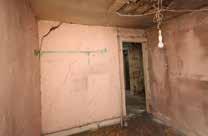
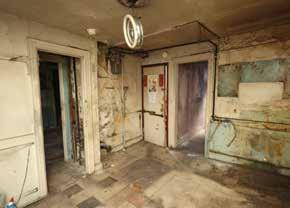
This apartment is in a 5-story walkup that was constructed in 1890. The prior tenant lived in the building since the late 1970’s. The current apartment layout would be illegal to build today. It has plumbing and electrical circuits that are decades past their useful life. This unit requires a full gut renovation and alteration of the layout to comply with the modern housing standards.
$30,000
Individual Unit Improvement Path
Under this program, the property owner would be able to increase the rent to $1,008 after spending more than $30,000 in renovations. Since the overall cost for renovations is $150,000, minimum, the owner would need to take out a loan to finance the upgrades.
The monthly payment on that loan would be about $1,650, if financed over 10 years. The average taxes, per unit, in this building are $520. The average day to day operating costs are $900 per unit, based on Rent Guidelines Board data for similar buildings in the core of Manhattan. This means the total cost to operate this unit, post renovation, would be $3,070 for an apartment with a rent of $1,008.
$50,000 IAI Path
Under this program the rent could rise to $1,177 after spending $50,000 in renovations. The operating costs would remain the same, $3,070, so the increase in rent would be insignificant.
Unlocking Doors
This program would reimburse the owner $50,000 of the $150,000 renovation cost for the apartment. While the owner would still have to take out a loan to do the work, the monthly payment of that loan would be reduced to $1,110 if the $50,000 was applied. The apartment would be eligible for the program, because it has a rent below $1,200. Under the program, the owner could not take an increase on the rent, so the prior rent of $830 would remain in place. apartment would be $2,520 with a monthly rent of $830.
Rent $830
Renovation cost $150,000
Vacant since 2022
Future Outlook
Investing in renovations to this apartment would harm the overall fiscal health of the building. Currently, the building operates on very thin margins. It has no open violations and hasn’t had any complaints from renters in 2 years. If the owner invested in renovations to this vacant unit, the building would have a cost-to-income ratio that exceeds 100%. This would put the physical health of the building at risk and likely lead to worse living conditions for the other tenants in the building.
The responsible thing for the property owner to do with this unit is to leave it vacant forever.
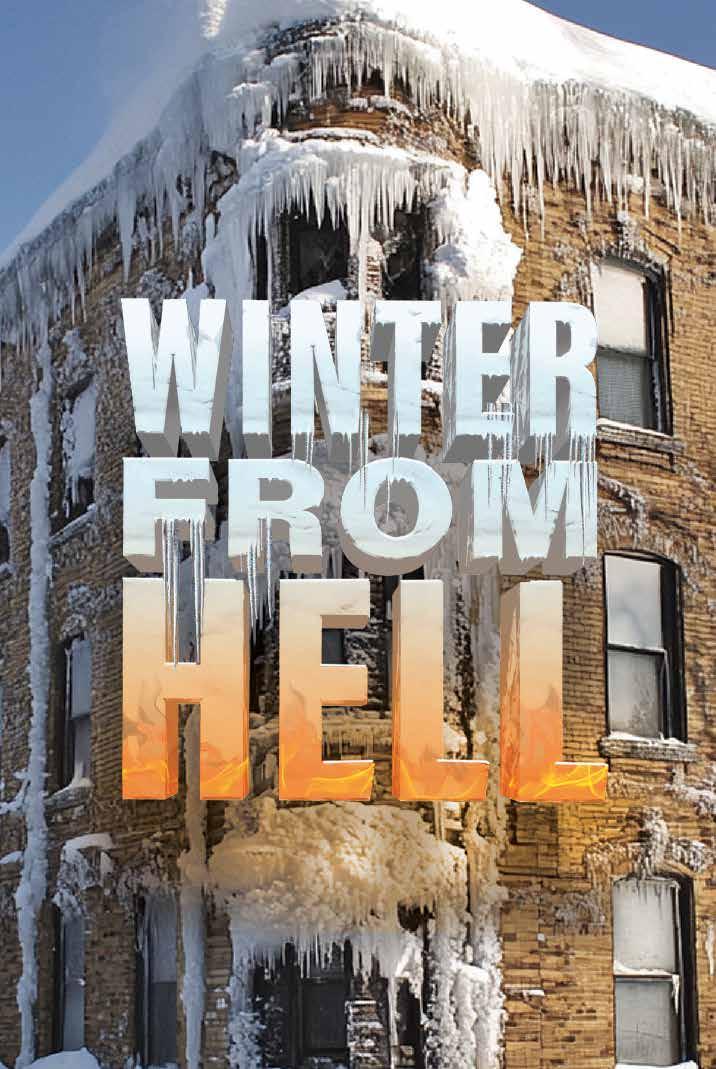
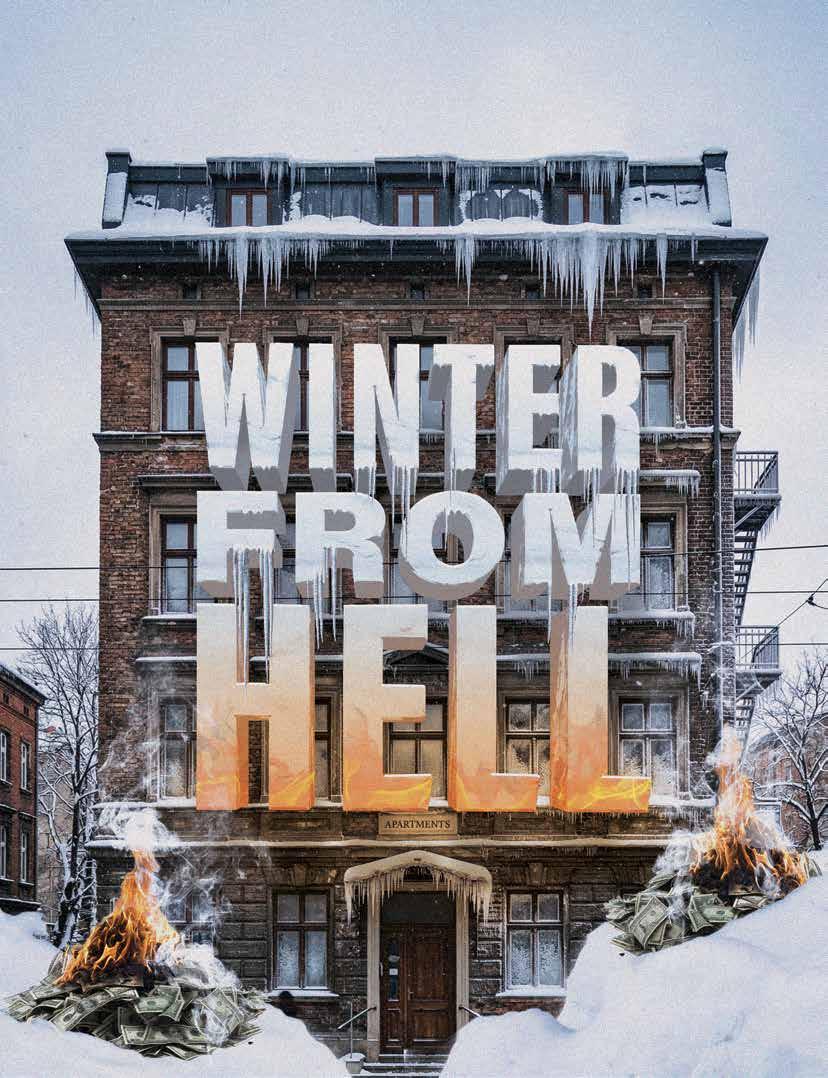
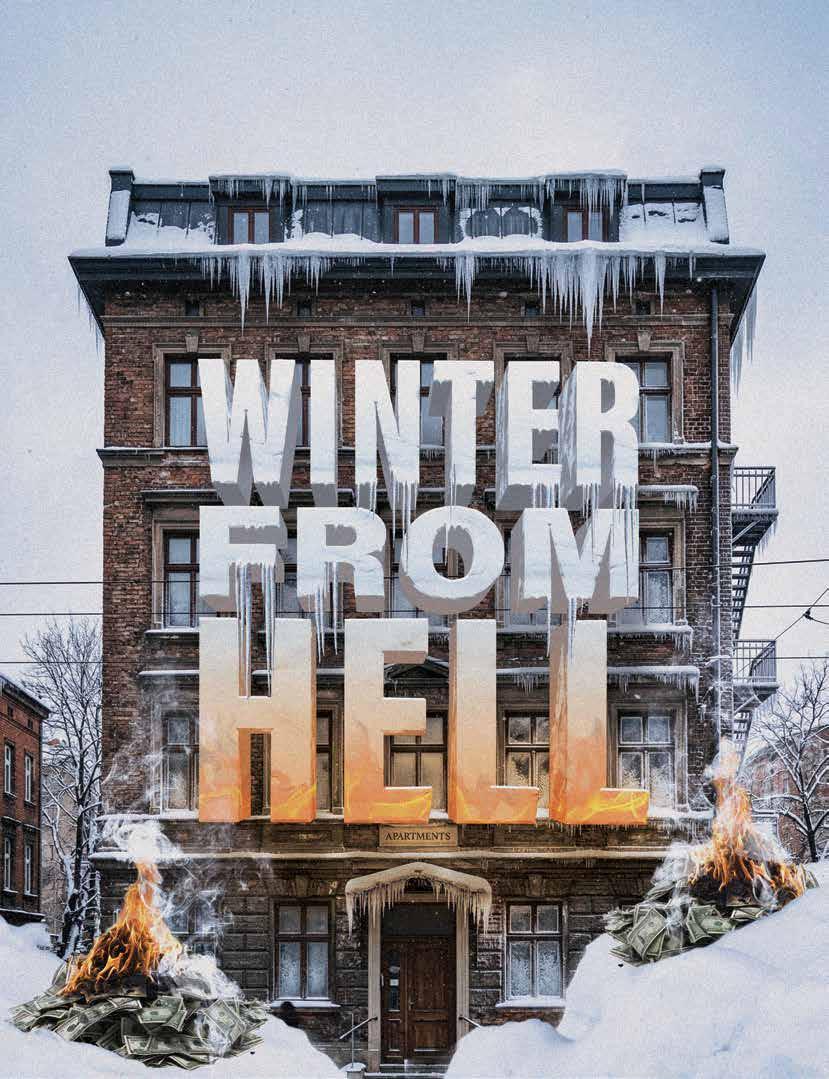
For building owners across New York City, this winter has felt unusually punishing.

Extended stretches of freezing temperatures placed heavy demands on heating systems across the city’s multifamily housing stock, particularly in older rent-stabilized buildings where boilers and other systems were already operating near capacity.
At the same time, rising fuel prices and higher energy demand drove operating costs up, creating a financial squeeze for buildings already navigating years of growing expenses.
Data from the New York State Energy Research and Development Authority (NYSERDA) shows that January and February were the coldest months the region has experienced in roughly a decade. Heating demand during the 2024–2025 winter season was approximately 10% higher than the previous year, reversing two notably mild winters that had preceded it. For building operators, the impact of that shift was immediate. When temperatures remain below freezing for extended periods, boilers run continuously and fuel consumption increases significantly. Aging infrastructure like pipes, pumps, valves, and heating systems that in many cases date back decades, must work far harder to maintain required indoor temperatures.
During one recent cold spell, tens of thousands of New Yorkers reported problems with heat and hot water as building systems struggled to keep up with the extreme demand.
Yet the challenges created by this winter were not limited to mechanical strain. The cold also arrived alongside rising energy prices, creating a double burden for building owners. Natural gas prices in February were
11% higher than the previous year, while other winter heating fuels increased by as much as 15%. Because colder weather also drives higher fuel consumption, the combined effect of price increases and increased usage significantly elevated heating costs across the city.
Energy demand can also affect delivery costs. During periods of extreme cold, utilities such as Con Edison and National Grid must move larger volumes of energy through transmission systems and pipelines, which can place additional stress on infrastructure and contribute to higher delivery charges.
For many buildings, particularly those operating under rent stabilization, these rising costs arrived at a difficult moment.
Last year, the Rent Guidelines Board approved a 3% increase for one-year lease renewals, a figure that was roughly one percentage point below inflation. One factor influencing that decision was the expectation that fuel costs would decline.
The board’s 2024 Price Index of Operating Costs (PIOC) projected that fuel costs would fall by approximately 6%.
Instead, the 2025 PIOC report found that fuel costs increased by 10.3%, representing a swing of more than 16 percentage points from the earlier projection. The report noted that colder weather increased heating demand significantly, resulting in an 11.7% rise in total fuel costs once both price increases and higher consumption were taken into account.
The Rent Guidelines Board acknowledged that its earlier projections underestimated increases in several key operating expenses, including fuel, insurance, and utilities. In recent years, projections have averaged roughly 1.25 percentage points below actual operating costs, highlighting the difficulty of forecasting expenses in a volatile energy environment. Those rising expenses come on top of a longer-term trend. Over the past
five years, the PIOC has increased by 28.1%, reflecting substantial growth in expenses such as utilities, labor, insurance, and maintenance. Since 2019, operating costs measured by the PIOC have risen approximately 33%, outpacing the growth of overall inflation during the same period.
When severe weather pushes those systems to their limits, the broader challenges facing the city’s housing stock become more visible.
The past few months have offered a clear reminder that the condition of New York’s housing is shaped not only by policy and economics, but
Extreme weather events like this winter’s cold snap do not create these underlying pressures, but they can magnify them.
Some expenses have increased far more dramatically. Insurance premiums alone have surged about 150% since 2019, creating one of the fastest-growing cost pressures for multifamily housing. These financial pressures are already visible in the building balance sheets. Approximately 9.3% of buildings containing rent-stabilized units are currently operating with negative net operating income, meaning that the cost of running the property exceeds the revenue it generates.
Extreme weather events like this win-
When severe weather pushes those systems to their limits, the broader challenges facing the city’s housing stock become more visible.
ter’s cold snap do not create these underlying pressures, but they can magnify them.
New York’s housing stock is among the oldest in the nation. Many multifamily buildings were constructed 50 to 100 years ago, long before modern energy systems and efficiency standards were introduced. Maintaining these buildings requires continuous investment in heating equipment, building systems, and infrastructure.
also by the physical realities of operating aging buildings in a city that experiences both extreme heat and extreme cold.
Winter will eventually give way to spring. But the pressures revealed by this season, from rising fuel costs to aging infrastructure, are unlikely to disappear as quickly.
WINTER BY THE NUMBERS
10% colder this winter compared with the previous year
10.3% increase in fuel costs reported in the 2025 PIOC
16+ point Difference between projected and actual fuel costs
28.1% increase in operating costs over the past five years
150% increase in insurance costs since 2019
9.3% of buildings
Rent-stabilized properties operating with negative income
A Decade of Defunding:
HOW THE RENT GUIDELINES BOARD HAS PUSHED THOUSANDS OF BUILDINGS TO THE BRINK
The New York City Rent Guidelines Board is scheduled to host several meetings in the next few months and review data on the financial health and physical condition of buildings. Much of the board is new, and while they are an independent body, they have been given a mandate by Mayor Mamdani to seek a rent freeze, which was one of his signature policies of his campaign.
We can say with confidence that the data presented will show that a large section of rent-stabilized buildings are in dire fiscal distress, and each month things are getting worse for Pre-1974 buildings that receive no subsidy, and have average rents that are below $1350, according to the NYU Furman Center.
The deterioration of this housing stock, roughly one-quarter of all stabilized housing, has been a long time coming. For a decade straight the Rent Guidelines Board has adjusted
rents below inflation. And well below the commensurate adjustment that the RGB’s data says is necessary to prevent the deterioration of 100% stabilized buildings.
A recent report by the Real Estate Board of New York found that Pre-1974 buildings with very-low averaging rents and high property taxes were responsible for the majority of violations filed last year. This is not surprising, since data from the Rent Guidelines Board found that net operating income in these buildings has been declining rapidly, dropping by 13% from 2021 to 2023 when adjusting for inflation. This drop in revenue has made it impossible for thousands of buildings to keep up with maintenance.
The consistent and troubling defunding of these buildings has been highlighted in various academic reports. The NYU Furman Center published a comprehensive study that concluded this trend of declining operating income is “reducing owners’ capacity to absorb rising costs or invest in long-term maintenance.” In testimony before the Rent Guidelines Board last year, the Citizens Budget Commission called it a “death spiral” and urged the government to more closely track the decline of buildings.
It is clear based on various sources of data and independent analysis that there is a crisis, and it has already begun.
How The RGB Works
Under the Emergency Tenant Protection Act of 1974, rent-stabilization can be established after the City Council votes to declare a housing emergency. An emergency can only be declared if there is a vacancy rate below 5%, which means less than 5% of available apartments are empty. Under the law, the city is required to conduct a survey every three years, with some exceptions, and reauthorize the emergency. Ever since an emergency was first declared, the city has implemented policies to make sure housing production was limited, so the vacancy rate would never exceed 5%. This has allowed the city to maintain the temporary emergency, permanently.
As part of the law, the city sets up a Rent Guidelines Board that consists of a chair, four additional public members, two owner members, and two tenant members. Among this group of nine, five members must agree on a rent adjustment annually, which takes effect on all leases from October 1, to September 30.
Before the members vote on the adjustment, they are required by law to review a host of data so they can
Operating cost vs. rent stabilized increases Index (1 = 2012)
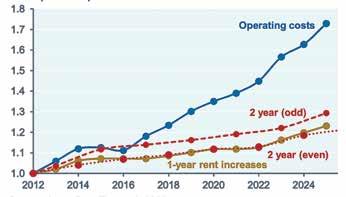
Source: Jason Barr (Rutgers), 2025
make an informed decision. Historically, the board has examined the financial health of buildings by looking at the Income & Expense Report, looked at the future cost of building operations in the Price Index of Operating Costs, reviewed the current wealth of tenants in the Income & Affordability study, and received feedback on the overall market conditions and access to loans in the Mortgage Survey.
After reviewing these reports the board receives testimony from invited guests that include advocates for property owners and tenants, housing experts in academia and at think tanks, and banks or lending institutions that have real time data on the current state of rent-stabilized housing loans. This is followed by a discussion among the members that ends with a Preliminary Vote that sets a range for the rent adjustment. In 2025, this range was 1.75 percent to 4.75 percent for one-year leases. The final vote was a 3% increase on a one year lease, falling right in the middle of the Preliminary Vote range. Typically, this vote is taken near the end of April.
Following this vote, the Rent Guidelines Board hosts a series of hearings that allow tenants and property owners to speak about the current state of housing. These hearings are attended by the members of the RGB and historically take place in at least four of the five boroughs from late May until the final vote in late June.
The mayor, and his office, work closely with the chair of the Rent Guide -
lines Board and the other members of the RGB, but the board is independent. State law mandates that the final decision is made by the board after reviewing relevant data.
The mayor can replace members of the board when their terms expire or seek their removal for cause, but he cannot simply remove them if they don’t follow the mayor’s wishes.
What To Look For In 2026
We have seen clear trends in rent-stabilized housing in the past three years. The three reports that RGB members focus closely on are the Income & Expense Report, the Price Index of Operating Costs (PIOC), and the Income and Affordability study. The I&E has shown increased distress in majority stabilized buildings. The PIOC has shown costs have increased faster than RGB projections each year. The Income and Affordability report has found that many renters are struggling to pay rent across the city.
Income and Expense Report:
The Income and Expense Report is primarily data analysis of every building with a rent regulated unit that is over 10 units tall. These buildings are required to file Real Property Income and Expense reports to the Department of Finance, which then analyzes the data for the RGB. For example, a primarily free market building with average rents of around $9,000 on Park Avenue is included in the analysis because it has two rent-stabilized units.
The inclusion of this high-rent free market data has historically created a talking point for lawmakers and advocates that rent-stabilized build-
ings are performing well. Tucked in the back of the Income & Expense Report are breakout tables that show that buildings with more than 80% stabilized units that are located in the outer boroughs and in Northern Manhattan are rapidly declining in value. This is where the majority of rent-stabilized housing is located.
The 2026 I&E Report will show continued distress for the majority of rent-stabilized housing. It will likely also show increased rents and income for primarily free market buildings, due to the city’s lack of supply. It is important to note that this is data from the 2025 RPIE filings, which is a complete look at the year 2024. This is a massive lag, which makes viewing the trend over the years more important.
Assuming the format of the report does not change, the most important piece of data in this report will be the tables in the Appendices, which break up building health based on geographic location and building age (Pre-1974 or Post-1973). Half of all rent-stabilized housing is located in Pre-1974 buildings outside the Core of Manhattan that are more than 80% stabilized. In each of the tables, a sub category of “City w/o Core” exists. These are the buildings in the most financial distress and should be the primary focus of the RGB.
From 2021 to 2023, data presented by the RGB has shown that net operating income in Pre-1974 buildings has declined significantly. Net Operating Income or NOI is the amount of revenue left over after all day-today expenses have been paid to run the building. Adjusting for inflation, the average Pre-1974 rent-stabilized building outside the Core of Manhattan, the NOI dropped from $441 to $384, per unit, per month.
It is important to note that all mandatory upgrades to buildings that are eligible for depreciation are not included in the day-to-day expenses. For example, the law requires inspection and remediation of the building’s facade. This can cost hundreds of thousands of dollars and must be

NYAA 2026 Annual Rent Registration Service
The New York State Division of Housing and Community Renewal (DHCR) requires annual registration of all rent-stabilized units and must be filed by July 31 each year. Registration reflects apartment details as of April 1.
Information Required for Registration:
• Legal regulated rent and preferential rent, if applicable
• Tenant name(s) and occupancy status (occupied or vacant)
• Lease details (start/end dates, lease type)
• Apartment status (rent-stabilized, exempt, temporarily exempt, etc.)
• Services provided (e.g., utilities, furnishings, parking if included)
• Building and unit identifiers (address, apartment number)
• Prior rent history adjustments (e.g., RGB increases, IAIs, MCIs where applicable)
Penalties for Failure to Register:
• Owners face a fine of $500 per unregistered unit for each month the registration is delinquent
Sign Up for NYAA Rent
Registration Service:
• Transfers building and apartment data to the DHCR
• Mails required tenant notices and maintains proof of mailing
• Assists owners with rent registration amendments and corrections
• Provides certified rent rolls upon request
• Offers in-person support and guidance from NYAA counselors

paid out of the building’s NOI. Historically, buildings do not have ample reserves to pay for this work, so they are required to take out loans, which are paid off through the NOI. Banks and lenders will not loan a building more than 80% of the NOI. When a building’s NOI declines, their value declines, and the building’s access to capital for mandatory upgrades disappears.
The 2026 I&E will add data from 2024 to this trend. We expect the NOI decline will continue. We also anticipate that another troubling trend will continue: a decline in expenses on repairs and maintenance. In 2023, NOI for Pre-1974 buildings outside the core of Manhattan leveled off. The cause of this was an 11% decline in spending on repairs and maintenance, showing a clear trend of disinvestment in this housing as the building values declined.
Price Index of Operating Costs
The Price Index of Operating Costs (PIOC) focuses on the cost of running an apartment building. This is different from the I&E, which focuses on how much income a building has and how much of that income is spent on operating the building. In an ideal world, as prices increase the building income will increase enough to pay for those increases and the quality of housing will be maintained. In the past three
If the board does go ahead with four years of rent freezes, the result is predictable. Thousands of regulated buildings, both privately-owned and nonprofit run, will be plunged into unlivable conditions.
years, unfortunately, we have seen prices increase faster than income in most rent-stabilized properties, which has led to a disinvestment in many buildings that has resulted in higher violation counts and worse living conditions for renters.
The PIOC tracks seven major costs: Taxes, Labor, Fuel, Utilities, Maintenance, Administration, and Insurance. Each cost has a “weight” assigned to it, which is essentially a proportion of what the overall costs should be in an ideal world.
TAXES:
The 2025 PIOC assigns 28.8% of the cost to taxes. If a building is spending more than that on taxes, which many are, then they would be, in theory, spending too much. Taxes are obviously completely controlled by the city government and from April 2024 to March 2025, they were increased by 3.9% by the city government. This was more than inflation and more than the rent adjustment that was advanced by the RGB last year, as it has been every year for the past decade.
LABOR:
This generally rises in line with inflation. It is calculated by looking at both unionized labor and non-union labor. Wages make up the majority of this cost, but health care and benefits are also calculated into this equation. In the past year, labor costs have continued to increase for most buildings in line with inflation.
report, the RGB made it clear that cost projections have become “more challenging” due to the fact that “Energy prices have become increasingly volatile.” They estimated that prices would decline by 4.4%, but we have been hit with the coldest winter in a decade and early estimations are that prices are up by 10% to 15% from last year, when costs increased 10.3%.
UTILITIES:
Utility costs include gas for stoves, electricity for the building, and water and sewer charges levied by the city. Last year they increased by 8.2%, mostly due to the city’s decision to rapidly increase charges for water and sewer. Electricity costs also increased by 7.6%, which was in part due to the state authorizing higher rates. Rent-stabilized buildings, especially Pre-1974 buildings, have no option but to absorb these government-driven cost hikes when rent adjustments are below inflation.
MAINTENANCE:
In last year’s report, maintenance prices rose by 4.3%, which was slightly more than inflation. The RGB calculates this metric by looking at 29 items. Plumbing and electrical maintenance are the main drivers of cost.
ADMINISTRATION:
FUEL:
This is by far the most difficult metric for the RGB to project and track. They admit this in their report. For example, in 2016 fuel costs declined by 45.5% when factoring in price and cold weather. This was one of the main arguments for freezing rents at the time. In 2023, the costs rose by 23.3%, requiring larger rent adjustments to cover this expense and other growing costs. In last year’s
Running rent-regulated housing has a lot of additional costs for administration and compliance, compared to operating free market housing. New York has the most complicated and legally complex rent-stabilization system in the country, which means a large portion of each rent check must go to administrative or legal services. Last year, the cost of administration went up 5.1%. This is primarily driven by the continued growth of state and city laws.
INSURANCE:
The cost of insurance grew by an eye-popping 18.7% last year. This was even more than the projection from the previous year of 15.1%. It is clear that affordable housing, including Pre-1974 rent-stabilized housing that
provides the majority of affordable housing in New York City, are in the midst of an insurance crisis. We believe the RGB data will show another massive increase on this cost in this year’s report.
THE COMMENSURATE
Each year, the RGB calculates a necessary rent adjustment to make sure that 100% stabilized buildings are funded at the same level. This is called the commensurate and the idea is that if rents were adjusted in line with this number, the building would receive enough income to cover rising costs. This often gets a lot of media attention as a “suggested” rent increase by the board. It is not a suggestion, it is simple math. If you adjust rents below this number, you are choosing to defund these buildings and the result is predictable: declining maintenance and more violations.
Last year, the PIOC recommended a rent increase of 4% on a one-year lease and a 7% increase on a twoyear lease. The final rent adjustment of 3% on a one-year lease and 4.5% on a two-year lease was a decision to slightly defund 100% stabilized buildings. Since 2017, the PIOC has found that cumulative increases of 40% were necessary to maintain building health. The RGB has adjusted rents up only 17%, a gap of 23%, which is the primary reason for the massive fiscal distress in 80%+ stabilized buildings and the growing number of violations.
There is currently a bill in the state legislature that calls for the elimination of the PIOC and the commensurate adjustment calculation. It has three sponsors in the state Senate and one in the Assembly.
Income and Affordability
The Income and Affordability report looks at a host of available data on current household income, labor trends, and the overall economic conditions. Most of this data is focused on citywide trends and very little of it looks specifically at the financial health of rent-stabilized tenants. The primary document for household income in rent regulated buildings
is the Housing and Vacancy survey conducted every three years. The last time the survey was conducted was 2023. The data from that survey was very valuable in 2024, but it is less valuable in 2026 as we get further away from the date it was conducted. The 2026 Housing and Vacancy Survey is currently underway, but data from this survey will not be available until next year.
The main takeaway from the I&A last year was that average inflation-adjusted wages were down slightly between 2023 and 2024. The report also found that nonpayment filings and nonpayment court cases declined in that same time period, which could signal that renters are not struggling as much to pay rent. Though, some would argue that housing court is still backlogged from COVID-19 delay so all the data on nonpayment and evictions is still difficult to fully analyze.
For example, many nonprofits that operate rent-stabilized housing are facing significant rent arrears and they account for about one-third of all nonpayment filings last year according to a recent report by the New York Housing Conference. They are asking for direct subsidy from the government to cover these losses. The data in the Income and Affordability study is important for the RGB members to consider as they look at rent adjustments, but it continues to lack a focus on the specific conditions of rent-stabilized tenants.
Nonprofits in Distress
The defunding of rent-stabilized buildings has had a significant impact on nonprofit housing providers and mission-driven lenders. The goal of these organizations has always been to keep rents as low as possible, while still providing quality housing. But that balance is now out of whack.
The Community Preservation Corporation outlined this problem in detail when they testified before the RGB last year. In their portfolio, they saw operating costs grow by 22% from 2020 to 2024, while rents only increased by 11%. As the CPC pointed out in their testimony, 11% increases
would be sufficient if the average rents were higher. For example, a building with average rents of $4,500 would see their operating income increase, even if costs grew by 22%. The adjustment would be sustainable.
The problem is that the majority of rent-stabilized apartments are in buildings with rents below $1,500. For their model, the CPC used $1,145, average rent in the Bronx as a starting point. Their model showed how this rent was sufficient to pay operating costs in 2024 and make a conservative debt service payment. Over the next four years, if the increase in costs continues to far exceed rent growth, the buildings will be plunged into severe fiscal distress. They also ran the model on a building with the citywide average rent of $1,599, which found that after four years a building with conservative debt service in 2024 would also be functionally bankrupt by 2028.
The reality is that non-profit rent-stabilized buildings will eventually fail if rent increases don’t keep up with operating costs, just like privately-owned rent-stabilized buildings.
Conclusion
Mayor Zohran Mamdani pledged four years of rent freezes as a candidate last year. Since taking office, he has not publicly stated that the RGB should freeze rents. He has instead said it is an independent board, but has said he expects his appointees to the RGB to take a “clear-eyed” look at the “realities facing our city’s two million rent-stabilized tenants.”
For the past decades, Rent Guidelines Board’s under both Mayor de Blasio and Mayor Adams have prioritized tenant’s ability to pay in their deliberations and made the decision to defund the majority of rent-stabilized buildings each year. The result has been severe fiscal distress and declining building quality for many renters. If the board does go ahead with four years of rent freezes, the result is predictable. Thousands of regulated buildings, both privately-owned and nonprofit run, will be plunged into unlivable conditions.

DIRECTING DEVELOPERS TO GREATER SUCCESS

City FHEPS Expansion Up In Air After Reversal
“The program sits at the intersection of New York’s housing crisis, its budget constraints, and the political reality of governing.”
New York City’s long-running battle over the expansion of the CityFHEPS housing voucher program has entered a new and unexpected phase, after Mayor Zohran Mamdani reversed course and declined to immediately implement the policy he once supported.
Instead of dropping the city’s legal fight over the program, Mamdani’s administration is now seeking to negotiate a settlement with the City Council and housing advocates. His decision has left the future of the voucher expansion uncertain and surprised many of the organizations that had backed him during his campaign.
The shift has reignited a political and legal dispute that has been simmering for years and now spans two mayoral administrations.
CityFHEPS — short for City Fighting Homelessness and Eviction Prevention Supplement — is New York City’s largest locally funded housing voucher program. It provides rental assistance to low-income households who are homeless or at risk of eviction, allowing them to move into private apartments with the city subsidizing part of their rent.
Over the past decade the program has expanded significantly and now serves tens of thousands of house -
holds. Supporters say it is one of the most direct tools the city has to move families out of shelters and prevent homelessness. The program has also become a flashpoint in the broader debate over how New York should respond to its housing crisis and how much the city can afford to spend.
The current fight began in 2023 when the City Council passed legislation to significantly expand eligibility for CityFHEPS. The law was designed to allow more tenants facing eviction to qualify for vouchers and avoid entering the shelter system. It also raised income limits and removed certain work requirements that had restricted access to the program.
Then-Mayor Eric Adams strongly opposed the expansion, warning that the legislation could impose enormous new costs on the city. His administration argued the program could grow dramatically if eligibility widened and that the City Council had approved the policy without identifying a funding source.
Adams vetoed the legislation, but the City Council overrode that veto. Even after the override made the expansion law, Adams refused to implement it, arguing the Council had exceeded its authority and imposed a spending mandate on the executive branch.
The dispute quickly moved to the courts.
Housing advocacy groups, including the Legal Aid Society and Legal Services NYC, sued the Adams administration for failing to implement the law. The City Council later joined the case, arguing the mayor was refusing to follow duly enacted legislation.
A state appellate court ultimately ruled that the city must move forward with the expansion approved by the Council, handing supporters of the policy a major legal victory. But the ruling did not resolve the financial debate that had fueled the conflict in the first place.
One of the most contentious elements of the CityFHEPS debate has been the program’s projected cost. Estimates have varied widely depending on assumptions about how many households would qualify and how many would actually use the vouchers.
Analysts in the office of the city comptroller estimated that implementing the expansion would cost $2.5 billion next year. The New York City Independent Budget Office estimated the overall cost could grow to $17 billion over five years if there are higher take-up rates to the program. Supporters of the program have dis-
puted those projections and argue the city could see offsetting savings if more families leave the shelter system, which is already one of the largest and most expensive items in the city budget. Still, the fiscal uncertainty has hung over the debate since the beginning.
During last year’s mayoral campaign, Zohran Mamdani was sharply critical of the Adams administration’s refusal to implement the voucher expansion. He argued that the city should stop fighting the law in court and move forward with providing assistance to struggling tenants.
Many housing advocates interpreted those comments as a clear commitment that a Mamdani administration would quickly implement the policy once in office. But after taking office, Mamdani has taken a far more cautious approach.
Instead of dropping the city’s legal challenge outright, his administration has chosen to keep the litigation alive while attempting to negotiate a broader settlement with the City Council and advocacy groups.
City officials say the goal is to find a compromise that expands housing assistance while ensuring the city can afford the program over the long term. The move has stunned some of the same advocacy organizations that supported the expansion and expected the new administration to immediately embrace it.
Critics argue the mayor is now raising many of the same concerns about fiscal sustainability that were previously voiced by the Adams administration. Mamdani’s team has defended the strategy by pointing to the scale of the city’s housing and shelter costs, which have ballooned in recent years.
Officials say the administration wants to avoid committing the city to an open-ended program expansion without a clear understanding of how much it will cost. Housing advocacy organizations continue to push for full implementation of the expansion.
Groups such as the Legal Aid Society, Legal Services NYC, and the nonprofit Win have argued that ex-

panding voucher eligibility is one of the fastest ways to move families out of shelters and prevent new households from becoming homeless. They say thousands of tenants who would qualify under the expanded rules are currently unable to receive assistance because the policy has not been implemented. And they warn that continued delays could leave many households vulnerable to eviction in a city with historically low apartment vacancy rates and rising rents. The negotiations now underway could determine the future shape of the CityFHEPS program.
Possible outcomes include a phased implementation of the expansion, revised eligibility rules, or new funding mechanisms that would allow the city to limit the program’s cost growth. But until an agreement is reached or the courts intervene, the fate of the voucher expansion remains unresolved.
For now, the program sits at the intersection of New York’s housing crisis, its budget constraints, and the political reality of governing a city where even widely supported policies can run into the hard limits of public finances.
WHAT’S THE AVERAGE RENT?
A breakdown of the Office of Rent Administration’s annual report on rentstabilized apartments
Ever since 2019, state law has required the Office of Rent Administration to release an annual report on the state of rent-stabilized housing. In the report is underlying data that breaks down the current registered rents of more than one million apartments. This is breakdown of that data:
Median Legal Rents:
$1,550 (256,706 Units)
(291,722 Units)
(249,798 Units)
$1,960 (179,798 Units)
Actual Median Rents, (factoring preferential rents):
(256,706 Units)
(291,722 Units)
(249,798 Units)
(179,292 Units)
Tracking Very-Low Rent Apartments
These are the registered rents for units as of April 1, 2025. According to the Rent Guidelines Board, the estimated cost to operate a rent-stabilized apartment was $826 in 2023 plus property taxes, which averaged $329 per apartment. Adjusting for inflation, the estimated cost to properly operate a rentstabilized apartment in 2025 was $1,220, but cost increases in 2024 accelerated faster than inflation for several key areas like property taxes, insurance, fuel, utilities, and maintenance.
NYAA estimates that the average cost to cover day to day operations, including property taxes, exceed $1,300 per apartment in 2025. This does not include the additional cost for unfunded mandates and required improvements to buildings, debt service payments, which are primarily used to fund mandatory upgrades to aging buildings, or lost
revenue from rent arrears, which has increased steadily since the 2020 COVID pandemic.
In order to properly maintain a rent-stabilized building and prevent physical decline, rising violations, and prevent future deterioration, a rent of $1,500 per unit was necessary in 2025. The ORA report found that 43.9% of rent-stabilized apartments are below this mark. In the Bronx, more than half of apartments had rents well below this mark.
The severe fiscal distress that is gripping rent-stabilized housing is a product of systemic defunding by the government, which has occurred through high property taxes and rent adjustments that have been below inflation for a decade straight. The ORA report is a warning that the future of this vital housing stock, and in particular buildings constructed before 1974, is in dire risk.




Learn More: For further deadlines subscribe to our substack
Compliance Calendar Spring 2026
APRIL HIGHLIGHTS
4/1 ANNUAL RENT REGISTRATION PERIOD BEGINS (through July 31) for all rent-stabilized apartments; NY State fiscal year begins; NYC property tax quarterly payment due for properties assessed at $250,000 or less.
4/15 FEDERAL, STATE, AND CITY INCOME TAX RETURNS DUE for individuals and partnerships (unless extension filed); first estimated income tax payment for 2026 due.
4/30 FIRE DEPARTMENT RESIDENCE NOTICE FORM DUE ; if not received, owner must inspect to confirm posting.
MAY HIGHLIGHTS
5/1 LOCAL LAW 84 BENCHMARKING DEADLINE FOR BUILDINGS 25,000 SQUARE FEET OR LARGER to report prior year energy and water usage; Local Law 97 annual greenhouse gas emissions filing due for calendar year 2025; Benchmarking violation challenges must be submitted within 30 days of violation postmark; failure to submit corrected benchmarking reports before quarterly deadlines (Aug. 1, Nov. 1, Feb. 1) may result in violations.
5/25 MEMORIAL DAY. Sanitation workers’ holiday; no garbage pickup and no street cleaning.
5/31 HEATING SEASON ENDS; owners are not required to provide heat between June 1 and Sept. 30 (hot water required year-round).
JUNE HIGHLIGHTS
6/1 REAL PROPERTY INCOME AND EXPENSE (RPIE) STATEMENTS DUE to NYC Department of Finance for income-producing properties; properties with a final 2025–2026 assessed value of $40,000 or less are exempt; property owners must also register ground-floor and second-floor storefronts through the RPIE filing.

6/15
6/19
6/23
SECOND ESTIMATED PERSONAL INCOME TAX PAYMENT DUE for 2026 (Federal, State, and City).
JUNETEENTH. Sanitation workers’ holiday; no garbage pickup or street cleaning; City, State, and NYAA offices closed.
PRIMARY ELECTION DAY; reminder that annual water and sewer charges are due July 1, 2026, payable to the NYC Water Board.
TBA RENT GUIDELINES BOARD FINAL MEETING to establish rent adjustments for renewal leases entered between Oct. 1, 2026 and Sept. 30, 2027; look for NYAA updates.
JULY HIGHLIGHTS
7/1 NYC FISCAL YEAR 2026–2027 BEGINS; NYC property tax payment due (first semi-annual payment for properties assessed above $250,000 or first quarterly payment for properties assessed at $250,000 or less); annual water and sewer charges due (last day to pay without penalty for buildings billed on a fixed annual basis).
7/4 INDEPENDENCE DAY. Sanitation workers’ holiday; no garbage pickup and no street cleaning.
7/31 RENT REGISTRATION DEADLINE ; last day to file Annual Apartment Registration (RR-2A) and Annual Registration Summary (RR-2S) with DHCR; reminder that HPD Multiple Dwelling Property Registration (MDR) must be filed by August 31 or owners may face civil penalties of $250–$500 and be barred from bringing cases in housing court.
Working with New York’s Building Owners to protect their hard-earned investments for over 23 years
NYAA Insurance is far more than just an insurance policy shopping service. Our entire business is based on building relationships and providing the services that meet your very specific needs. We are experienced, knowledgeable and constantly seek creative solutions to help better protect your hard-earned investments.
Whether big or small, complex or simple, give us a call to discuss your insurance requirements.
Lines of coverage offered:
• Commercial Packages (Property/ General Liability)
• Mixed-Use Buildings
• Multi-Family Buildings
• Apartment Buildings
• Business Owners
• Homeowners
• Apartment (Co-op/Condo) Owners
• Renters/Tenants
• Builders/Renovation Projects
• Owner Builder’s Risk/Renovation
• Vacant Buildings or Vacant Land
• Professional Liability
• Special Events
• And more
Christine Gonzalez Director (212) 214-9248
insurance@housingny.org nyaainsurance.com
The real ripoffs with NYC’s housing
Kenny Burgos CEO New York Apartment Association
Today, the Mamdani administration will hold its first “Rental Ripoff” hearing. It has been promoted as a forum for renters to confront their landlords. The participating tenants have been carefully selected so their stories align with the administration’s ideology. Expect a well-orchestrated event, complete with social media clips designed to boost the mayor.
This will not be an open town hall where anyone concerned about the city’s housing crisis can speak freely. Overtaxed housing providers will not be invited to explain how current policies make it nearly impossible to operate buildings. Homeless advocates will not be given the microphone to ask why voucher programs remain underfunded.
So nobody should be surprised by what they hear:
“My building is falling apart.” “My apartment has rodents.” “The paint is peeling.” “There is no heat.” “I pay my rent but my landlord doesn’t fix things.”
Many of the tenants attending have legitimate concerns. Some live in distressed buildings, and some property owners should be doing better. But what will not be discussed at these hearings is the government’s role in creating the very conditions now being labeled a “ripoff.”
Housing experts all agree. The NYU Furman Center warns that the city could lose hundreds of thousands of units. The Citizens Budget Commission says rentstabilized housing is in a death spiral. The head of the Community Preservation Corp. called the crisis a challenge for the mayor. Even nonprofits are struggling.
The city’s own Alternative Enforcement Program list tells a similar story. Buildings on list have accumulated high violation counts or caused the Department of Housing Preservation and Development to perform emergency repairs.
The administration would like the public to believe these buildings are deteriorating because greedy landlords refuse to reinvest rent revenue. Publicly available data suggests something more complicated.
Some buildings on the AEP list operate under regulatory agreements with the government and have received millions in public investment, yet they still struggle financially and carry high violation counts. Other properties show extremely low average rents — in some cases under $1,000 per month — while 30% or more of that rent goes directly to property taxes. Buildings that lack sufficient income to cover basic operating costs inevitably decline.
If the city truly cared about tenants, it would examine the burden imposed by its property tax system. When a significant portion of rent revenue is diverted to taxes, that money is unavailable for heat, hot water, maintenance, repairs, insurance and utilities. If there is a “ripoff,” it may be structural.
No alternative perspective will be presented at these hearings. No one will introduce data showing how government policy contributes to building distress. The narrative will be simple: landlords as villains, City Hall as heroes.
Most members of the New York Apartment Association will not be directly affected by these hearings. Many have owned their properties for decades and maintain violation rates below the citywide average, including compared with some nonprofit operators.
But even long-term owners face mounting pressure. Operating costs have risen, revenues are constrained, and many rent-stabilized buildings are functionally insolvent.
There is a real crisis unfolding in New York’s housing stock. Renters deserve an honest conversation about its causes. What they will likely receive instead is a performance.
BUILDING TRUST IN PROPERTY MANAGEMENT A CONVERSATION WITH IZZY BAUTA OF ZION MGMT


It’s really about alignment. I want owners to know our incentives are tied to theirs. We take responsibility for the outcome, not just the process. And that extends to our pricing, too—we structure it on a flat-rate model that’s transparent and customized to each property’s needs, as low as $59 per unit per month, avoiding hidden fees or surprises that plague the industry. With our Resident Guarantee waiving leasing fees for early turnover and the Maintenance Guarantee covering fixes at no extra cost, owners can focus on returns without worrying about the
Q: How do you balance owner priorities
Owners care about reducing vacancies
convenience. The truth is, they’re connected. Happy tenants stay longer, pay on time, and treat properties with care. That reduces turnover and improves financial performance for owners. That’s why we invested in a tenant portal, streamlined rent collection, and work with vetted vendors. It may sound basic, but doing the fundamentals consistently, answering calls, fixing
Q: What’s next for ZION MGMT? Where do you see the
Growth, but not at the expense of service. We’re already managing over 4,000 units, but scale only matters if we maintain
We’re also expanding services beyond management, brokerage, renovations, association management, so owners have a onestop shop. My vision is to make ZION MGMT a trusted partner
Q: Looking back, what’s the biggest lesson you’ve learned
That trust is the real currency. Real estate is about buildings, but management is about relationships. And I’ve learned that the simplest ideas, be transparent, stand behind your work, take care of people, are often the ones that work best. ZION MGMT’s steady growth shows that a management model built on accountability and trust resonates in one of the toughest real estate markets in the country. For Izzy Bauta, the mission is clear, take the stress out of ownership and deliver results that
Millions of Views. Countless Conversations.
The New York Apartment Association: Leading the Dialogue on Housing Issues Across Social Media.
The New York Apartment Association (NYAA) is your premier source for all things housing, boasting millions of views and some of the highest engagement rates of any housing trade group in the country.
Our social media platforms are buzzing with conversations that matter—featuring exclusive insights from housing experts and public officials, dialogues with advocates, and stories from tenants across New York.
Our social media channels are the go-to destination for anyone passionate about housing in New York. Whether you’re a property owner, tenant, or advocate, there’s a place for you in the conversation.
FOLLOW US! @HousingNY
Visit HousingNY.org to learn more and connect with us online!
The official publication of the New York Apartment Association
Chief Executive Officer
Kenny Burgos
Senior VP of External Affairs
Jay Martin
JMartin@housingny.org

Communications: Michael Johnson
MichaelJ@housingny.org
Kade Buci
Kbuci@housingny.org
Advertising/Sales: Lisa Richmond
LRichmond@housingny.org
Andrew Pap
AndrewP@housingny.org
Housing New York Magazine is published semi-regularly
Publisher: New York Apartment Association, 123 William Street, 12th Floor, New York, NY.
USPS#: 013163
Telephone: (212) 214-9297
Periodicals postage paid in New York, NY

New York Public Library
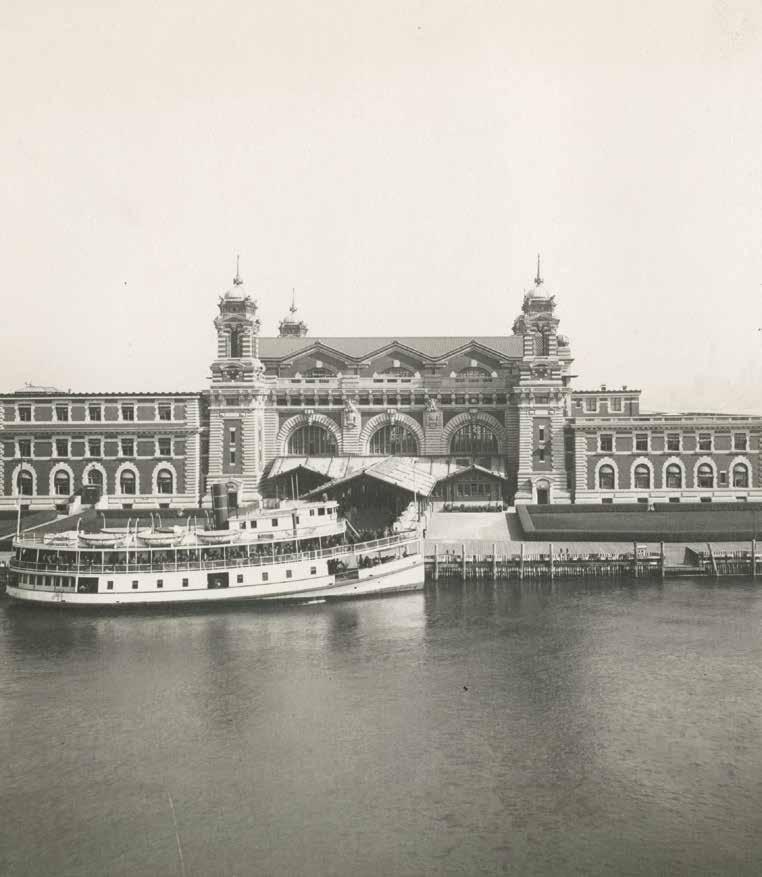
Ellis Island Immigration Station in New York Harbor, likely during its peak operating years between 1892 and 1954.