Hello OCT members,
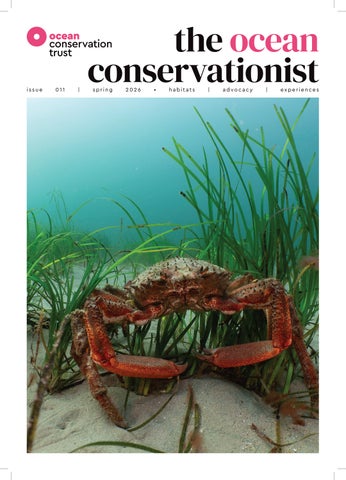
I’m thrilled to bring you 2026’s first issue of the Ocean Conservationist, and my first issue as interim editor while Cat Ansell is on maternity leave. This is an issue that looks both back and forward, at the Ocean Conservation Trust’s achievements in 2025 (as well as those of others!) and our motivations to keep working toward a healthier Ocean.
The issue opens with a day in the life of Lucy Luck, one of the National Marine Aquarium’s Ocean Discovery Rangers. Lucy’s deep passion shines through in her beautiful words, which we hope educate and inspire in equal measure.
And speaking of inspiration, this issue also showcases the brilliant photography of a student called Oliver Black, who, after enrolling in Extended Diploma in Photography at Arts University Plymouth, took part in our annual Ocean-based photography project. His photographs best matched our brief and are featured alongside a short essay he wrote.
A few pages later you’ll find an article on our celebration of World Seagrass Day, along with a list of tips on how you can get involved in seagrass conservation yourself! Following that, there’s an article from our Chief Scientific Advisor that’s half memoir, half advice column on the steps you should take if you want to pursue a career in marine biology.
The issue also features a round-up of not just OCT’s conservation milestones from 2025, but of marine conservation wins from around the world – in short, a list of reasons to be an Ocean Optimist.
The issue finishes up with an update from OCT Learning Team’s most exciting project to date, and some wise words from OCT’s CEO on the importance of seagrass. It’s an Ocean extravaganza of an issue!
As always, thank you for supporting us as we work towards a future with a healthy, thriving Ocean.

Alistair Gardiner, Ocean Conservation Trust
info@oceanconservationtrust.org
01752 717294
@OceanConservationTrust
@OceanConservationTrust
Ocean Conservation Trust and b
Inspiring a global movement to promote and encourage a wave of positive behaviour towards our Ocean. Charity Number 1032491
A day in the life of: Lucy Luck
Ocean Discovery Ranger, Ocean Conservation Trust.
Shore Shot
Showcasing the winner of our annual Ocean photography project
World Seagrass Day
Following World Seagrass Day, here’s an overview of how we celebrated, why we mark the day, and what you can do to get involved in the conservation of this vital aquatic plant.
So you want to be a Marine Biologist?
Professor Martin Attrill, Chief Scientific Advisor at The Ocean Conservation Trust.
Reasons to Be An Ocean Optimist: 5 Marine Conservation Wins From 2025
We at the Ocean Conservation Trust refer to ourselves as Ocean Optimists, because we envision a bright future for the Ocean.
Meet the winners of the first ever Ocean Friendly Innovation Project
Last year, the Ocean Conservation Trust’s award-winning Learning Team hosted our biggest ever STEMFest at the National Marine Aquarium, bringing science, technology, engineering and maths to life for literally thousands of young people!
The Hidden Power of Seagrass: Britain’s Most Underrated Climate Solution
Ian McFadzen, Chief Executive Officer, Ocean Conservation Trust.
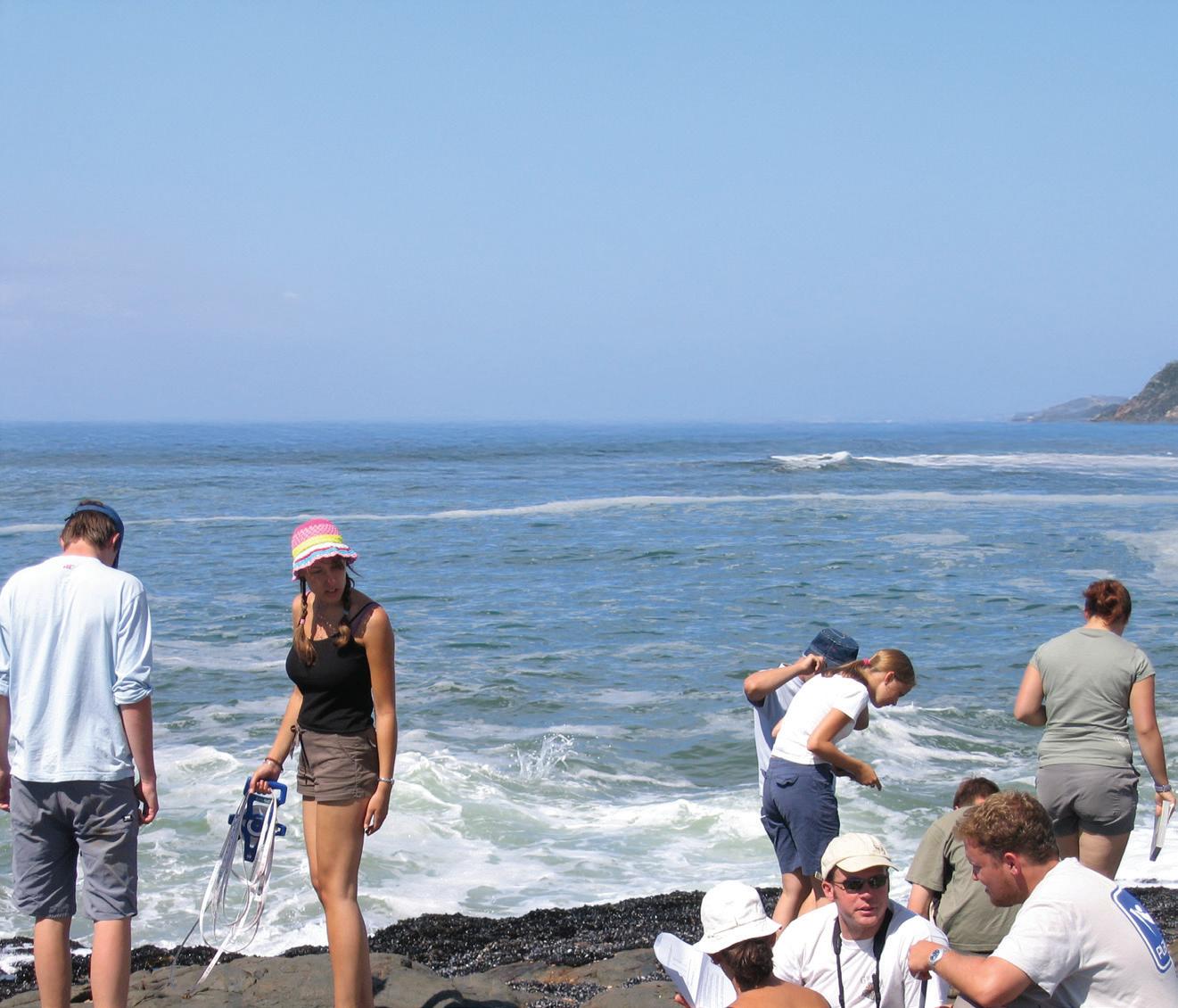
As cliché as it sounds, every single day as an Ocean Discovery Ranger is different! One day you will be doing public shows talking about how incredibly vital sharks are for the health of our Ocean (and why they are such fascinating creatures; I mean they have been around longer than the rings of Saturn – how mind blowing is that?!) Next, you’re exploring the rocky shores to see what intertidal species you can uncover with young people, from shore crabs to nudibranchs! The one thing that is constant as an Ocean Discovery Ranger is continuously connecting people with the Ocean. It’s the daily conversations we have and answering questions about the Ocean to educate and inspire people to help protect our blue spaces, whilst also learning ourselves!
I took a rather unconventional path to my field of work, growing up on the outskirts of London, in a landlocked city I wasn’t close to the Ocean. I always knew I wanted to work in conservation, but it wasn’t until I relocated to the South West of England that it would open my world to the marine conservation field! I went to university and studied Applied Zoology, after graduating I started an apprenticeship in Business & Administration. But how did that become a path to marine conservation, you may ask? The apprenticeship was with a local wildlife charity and my role involved working in the heart of the small but incredibly mighty marine team. This was my pivotal foot in the door to kick start my career in the marine world!
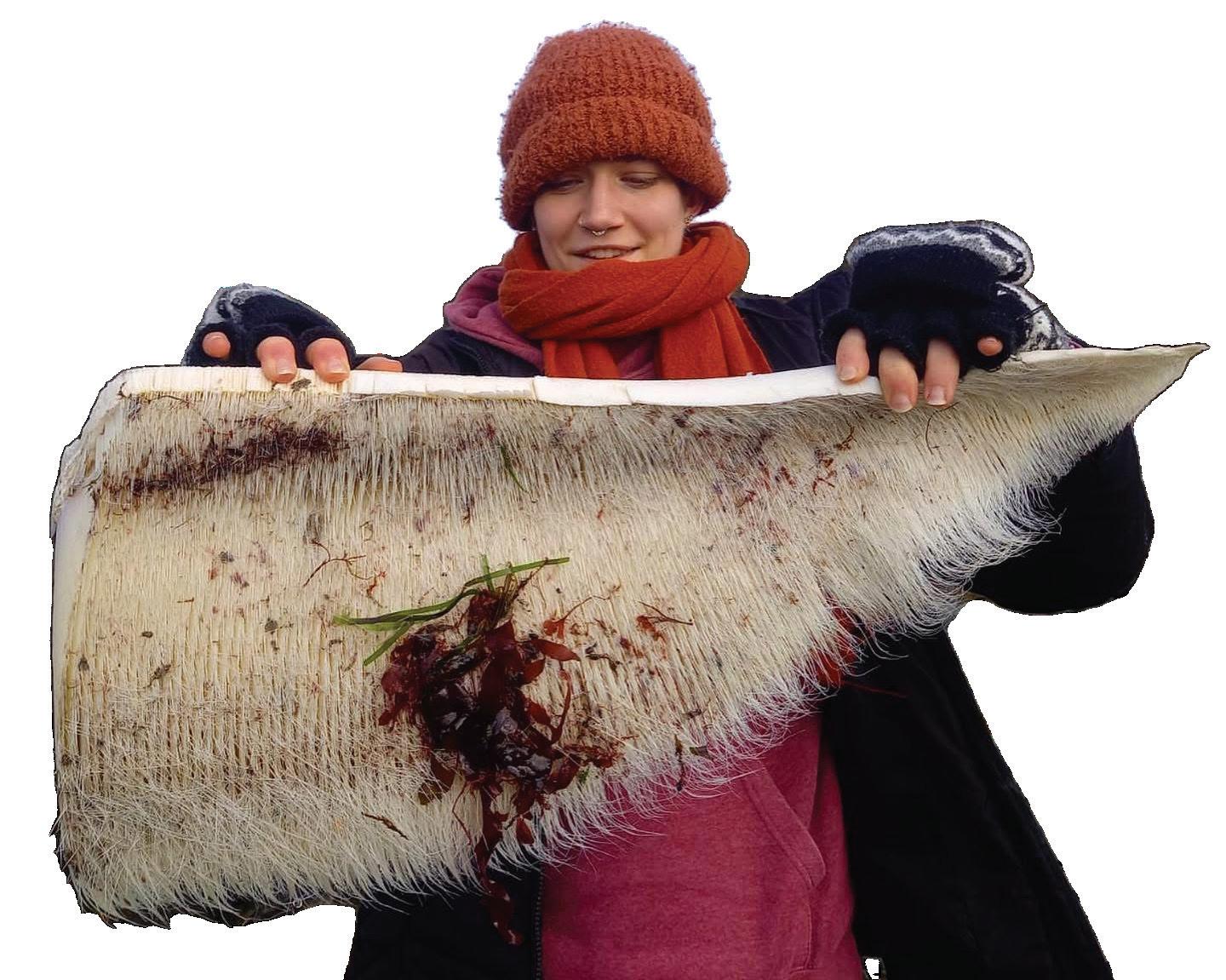
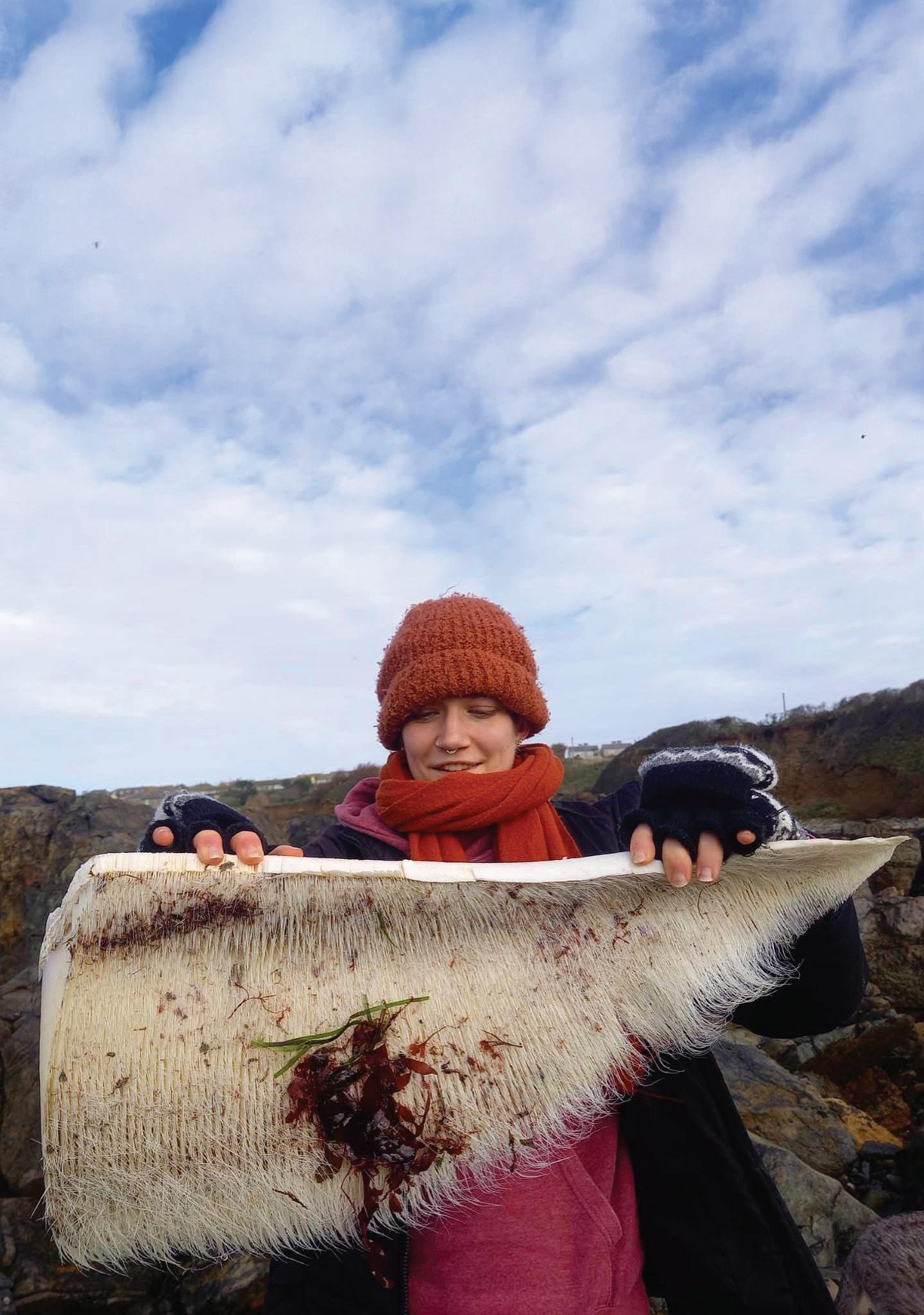
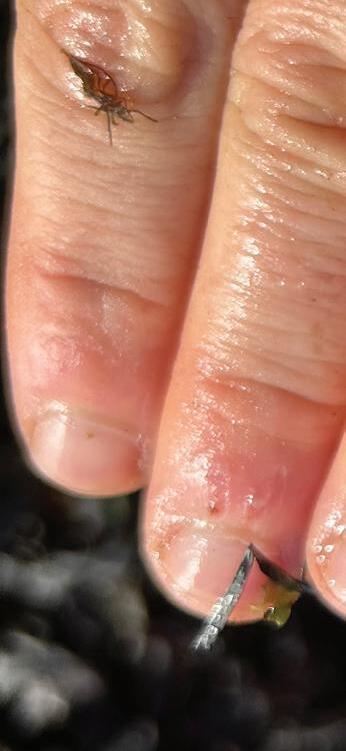
Another huge factor that helped me get into the marine field was volunteering for my local marine group, Mounts Bay Marine Group. This group completely changed my life! I was surrounded by like-minded local people who had a deep-rooted passion for the marine environment on our doorstep and I learnt everything I know about the marine world from this collection of people. All were from different backgrounds, different careers, but all shared a passion for the marine world and this group was a place where we made a real difference to conservation efforts locally. I remember my first community event was to arrange a Silent Disco Beach Clean – stepping completely out of my comfort zone to organise a public event. These beach cleans soon became my speciality at the group over the years, to encourage people to get outside and take part in a beach clean, to help protect the local marine environment and connect with others, all while having a boogie on the beach!
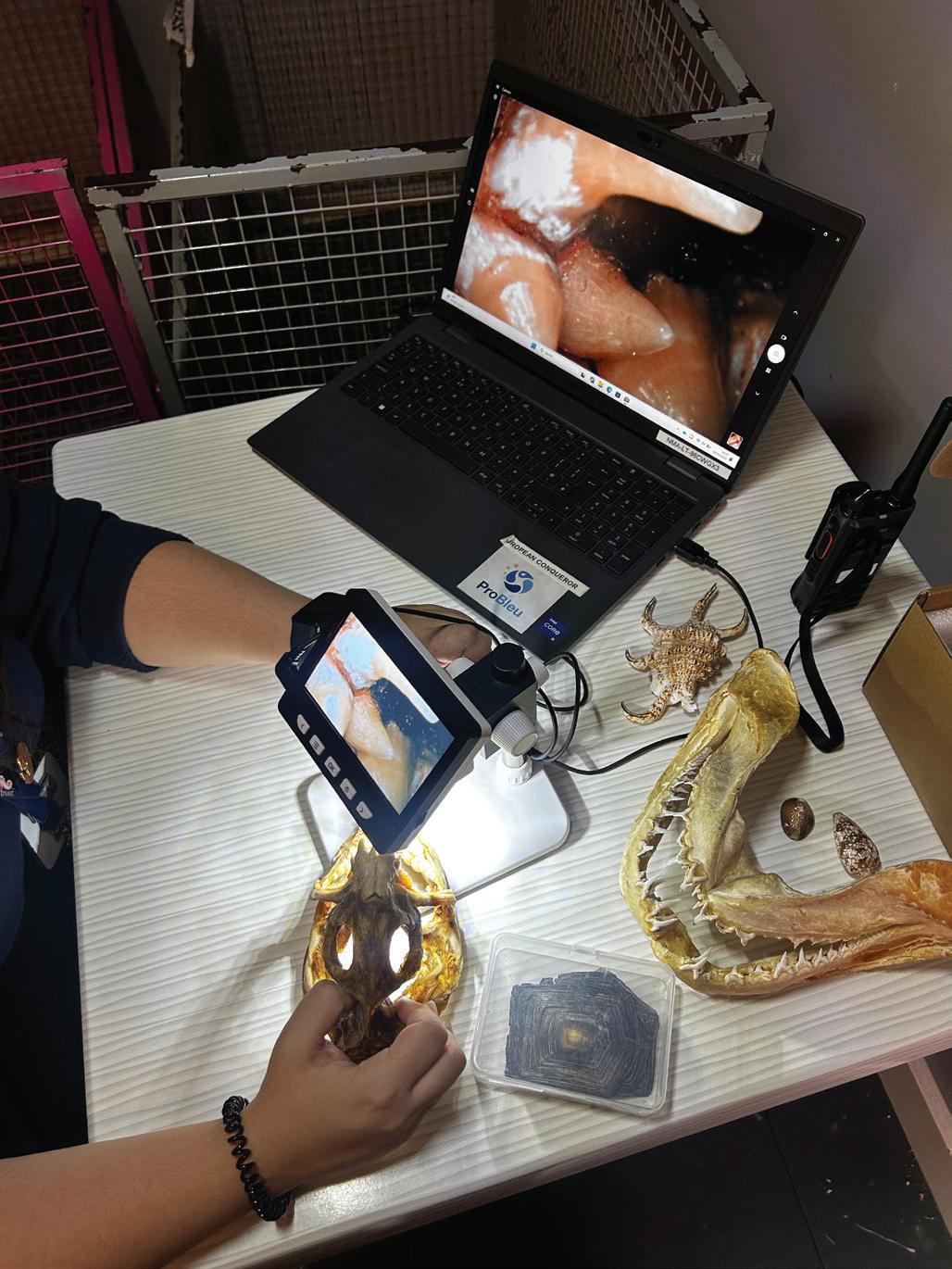
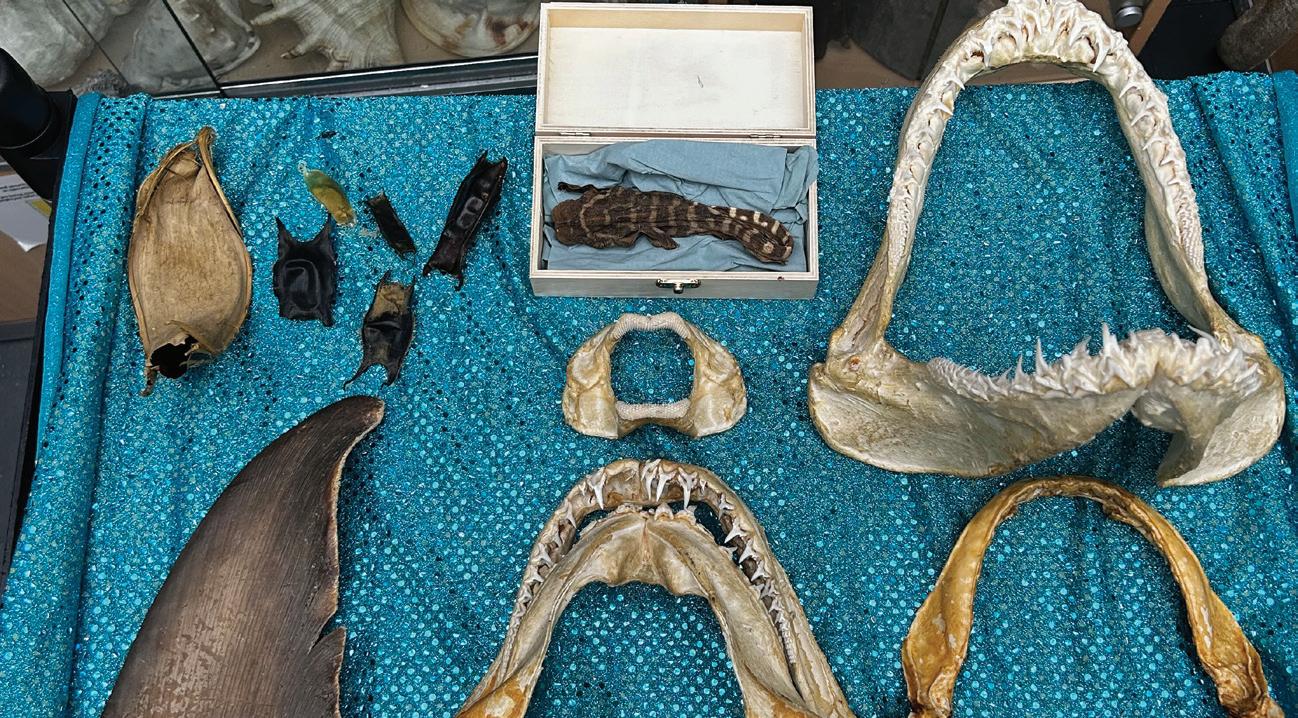
It was also my work with this group that sparked my passion for marine artefacts! Volunteering for The Marine Strandings Network, I was contributing to vital citizen science work, collecting data on stranded marine mammals whilst slowly building my own collection of (ethically-sourced) specimens to educate the public on the fascinating creatures that live in our coastal doorstep. From whale ribs to seal skulls, I was connecting people with the Ocean through natural history!
Now, six years into my marine career journey, I’m here working for the Ocean Conservation Trust as an Ocean Discovery Ranger and it is safe to say that this job sparks so much passion and joy in me! Every single day I get to talk, engage and spark connection with the Ocean in a wide variety of ways.
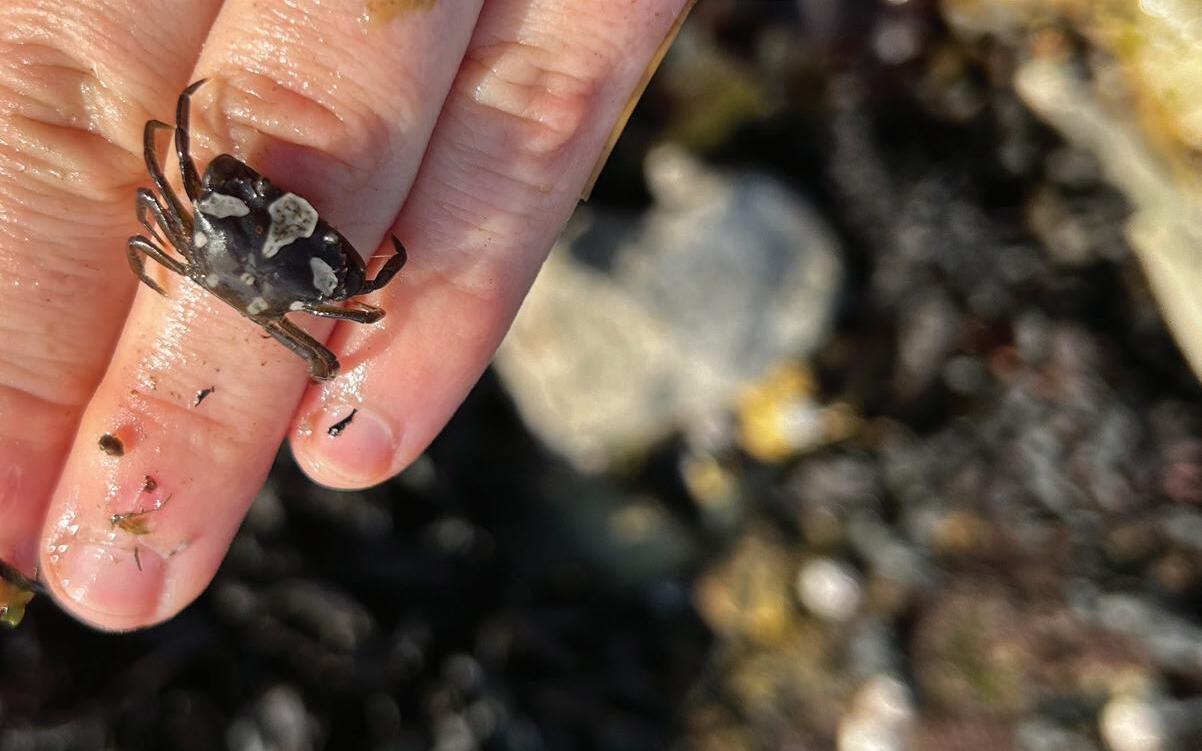
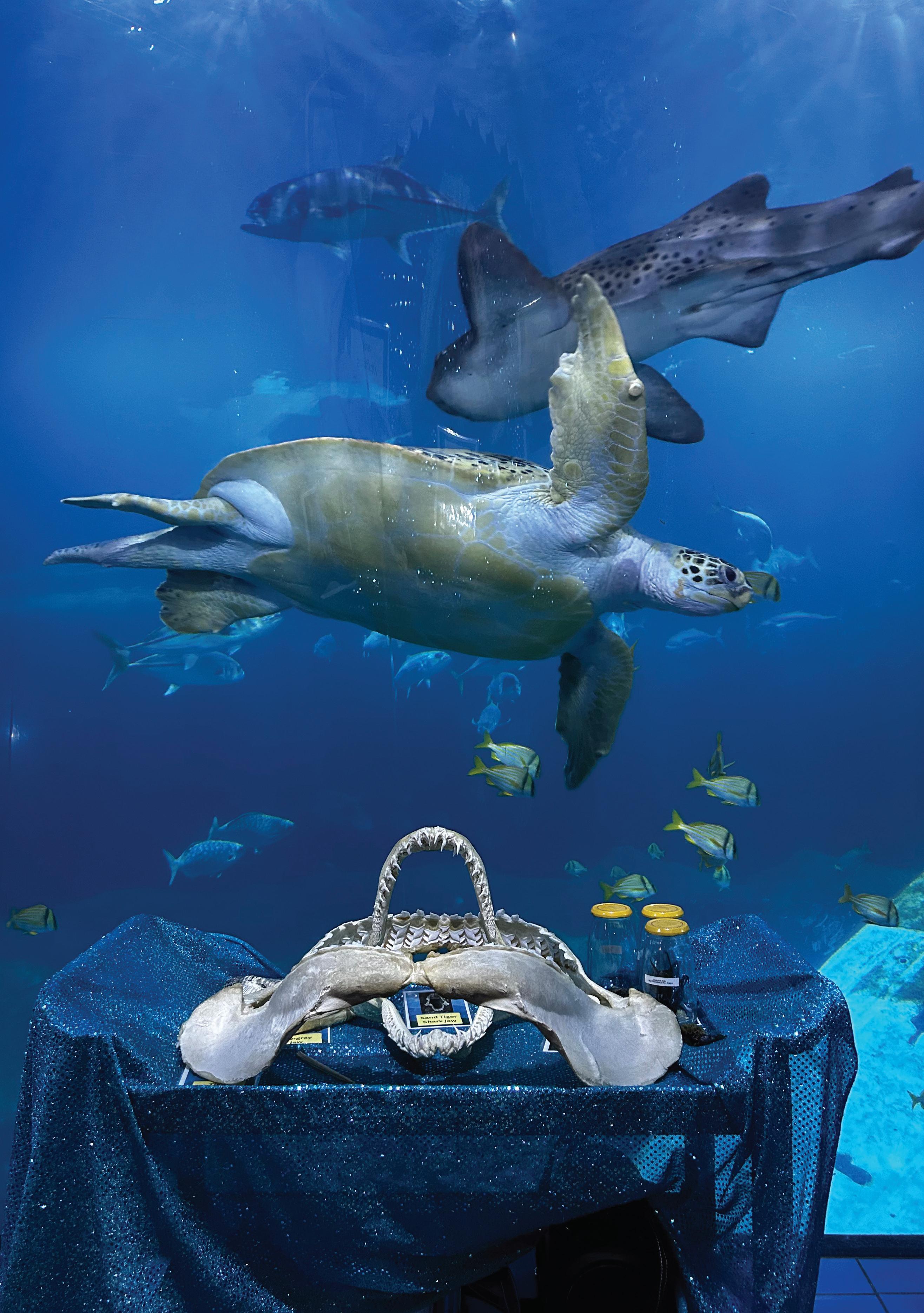
One of the main challenges of my job as an Ocean Discovery Ranger is making the Ocean visible, relevant, and urgent to protect, especially for those who are based inland or those who are based in coastal communities but have barriers to accessing the Ocean. The Ocean is ultimately a vast, largely invisible and distant environment to people who live inland, and our job as Ocean Discovery Rangers is to find a way to build a strong and personal connection to something that is largely undiscovered and out of reach for many. It’s about shifting the Knowledge-to-Action Gap, guiding people from simply understanding Ocean facts to creating an emotional connection that results in a pro-Ocean behaviour change to help protect it.
As Ocean Discovery Rangers, we accept this challenge in science communication and overcome them through engaging storytelling, creativity and visuals to foster wonder in the people we are communicating with and focus on the positive, actionable solutions on protecting the Ocean rather than the doom and gloom narrative we see out there. As Ocean Discovery Rangers, we have to face these challenges every day, but at the same time it is this that fuels our work and inspires us to create imaginative and effective ways to connect and educate people about the Ocean.
The secret is simply being deeply passionate and enthusiastic about what you’re communicating to the world! By bringing that excited, deep-rooted passion and pure energy to our work, people that we engage with will feel that and connect to us, and that’s when sparks begin to fly! As Ocean Discovery Rangers, we are the friendly faces you see all around the aquarium; our job is quite simply to be professional fish yappers! By bringing that positive energy into our communications, people walk away feeling inspired to learn more and unlocking a core memory of visiting the aquarium and talking to someone else who also loves the Ocean. You end up building a small community of Marine Citizens in the heart of Britain’s Ocean City, and beyond!
I’m a fairly new Ocean Discovery Ranger, having only been in post for about six months, but the list of favourite moments is already so rich! My favourite moments have to be when I first joined, towards the end of last summer. Outreach is such a core part of our jobs as Rangers, engaging with people both in the Aquarium but also around the City of Plymouth, and during the warmer months we take our engagement far and wide! A core memory that I have was going out on a boat with young people to connect them with the sea by exploring the incredible Plymouth Sound, home of the Plymouth Sound National Marine Park, the UK’s first national marine park. I specialise in artefacts, cetacean bones being a particular interest for me, and while on the boat I had the opportunity to connect these young people who don’t have access to the Ocean due to a multitude of barriers and to open their world up to the fascination of whale and dolphin species we have on our very coastal doorstep.
Using cetacean artefacts to allow young people not only to see these specimens, but also to touch and feel – to connect and appreciate these remarkable creatures on a deeper level. Seeing people’s eyes light up when they unlock new knowledge about the marine world and smiles gleam across their faces out of pure fascination on what they have just learnt, is the best feeling as an Ocean Educator! In that exact moment, you can see their love for the Ocean grow and desire to learn ignite and that is the best catalyst to inspire people to connect with the Ocean. It can be life-changing – I know for me it was!
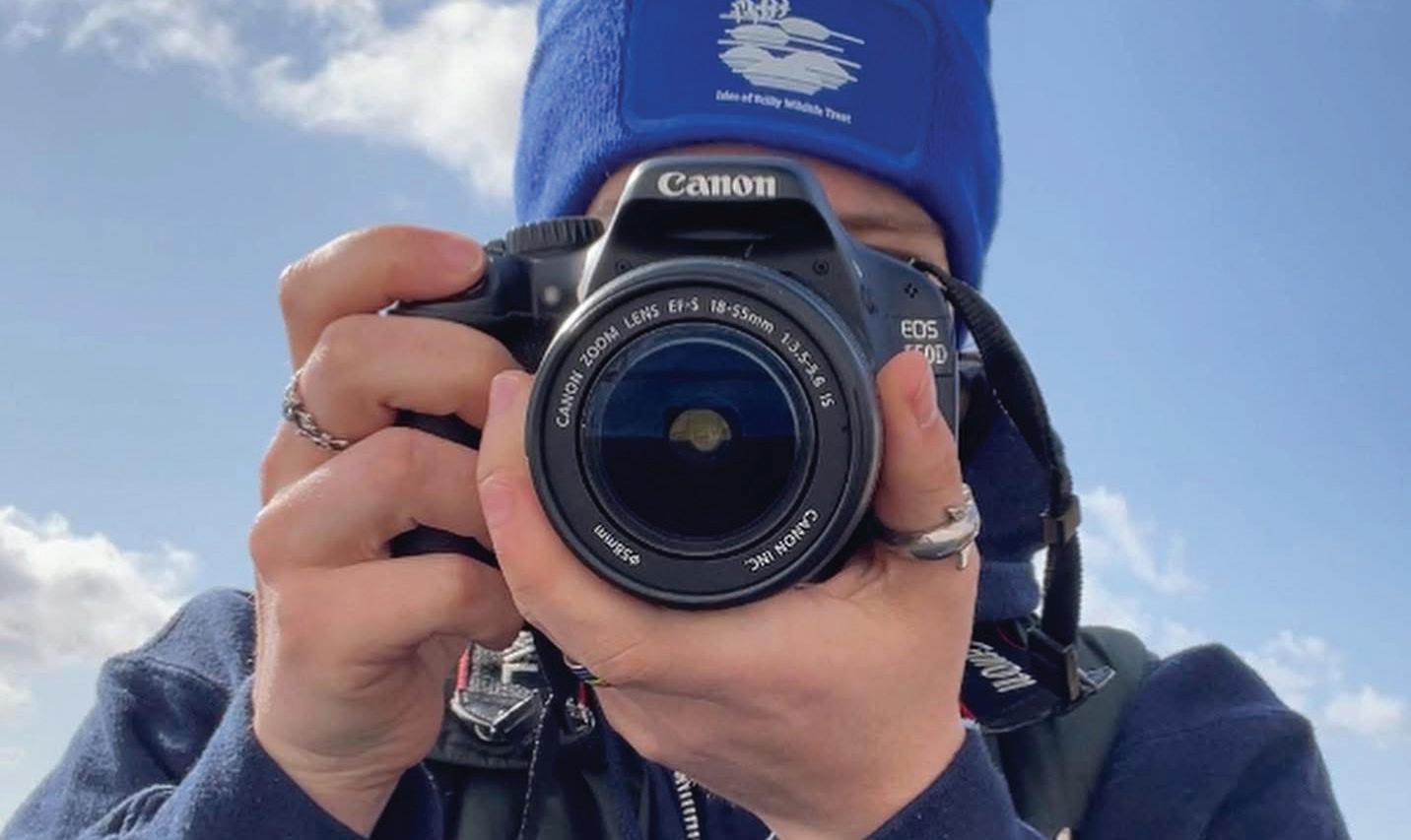
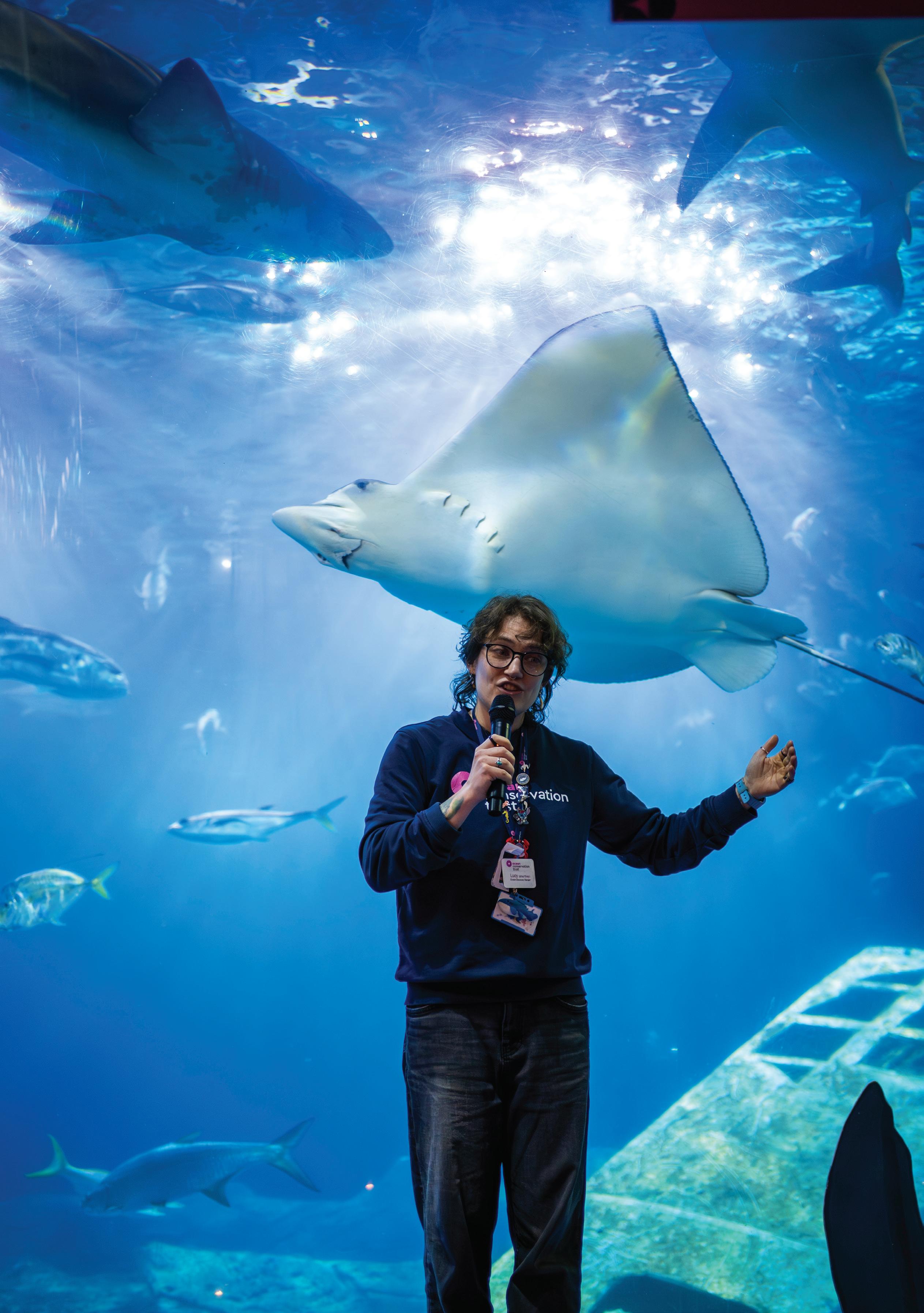


A phrase I hear often from members of the public is “You must really love your job here!”. Whether it’s while I’m busking with artefacts, during post-show discussions or simply whilst speaking with someone about the Ocean, it is this that reminds me that the excitement and passion I have for the marine world is a huge part of who I am. For people to recognise this and see this in the interactions we have, this inspires me to keep going! You can’t teach passion, this is something that is within you and it’s unique to each of us, if you can tap into what sparks your passion, you’ll feel unstoppable!
Often, I get asked for advice on how I got into the marine field, people asking “How did you get your job?” “How do you become someone who can talk about the Ocean everyday as a job?” These were the very questions I asked at the start of my own marine journey. Now, to be in a position where I can give advice and share my knowledge on how to get into this field feels deeply rewarding. I understand how difficult it can be to find a way into an incredibly competitive area of work having navigated it myself.
By having these conversations on the different paths into the sector and highlighting that you can bring any skill into the marine world, it opens up more opportunities for those wanting to get involved in marine conservation work! Are you an artist? You can create illustrations and artwork of the beautiful animals and habitats that live in our Ocean to show to those who can’t access the sea! A musician? You can write music about how being by the Ocean makes you feel, to inspire others to connect and feel the benefits of Blue Theory!
A scientist? You can be part of ground-breaking research to help protect the Ocean and influence policy change! Any skill, experiences and knowledge you have can be used in marine conservation, it is an area of work that is severely lacking in diversity. By informing people about this, it encourages a new generation of marine-citizens to help protect our Marine world and create a positive change of encouraging pro-Ocean behaviour.
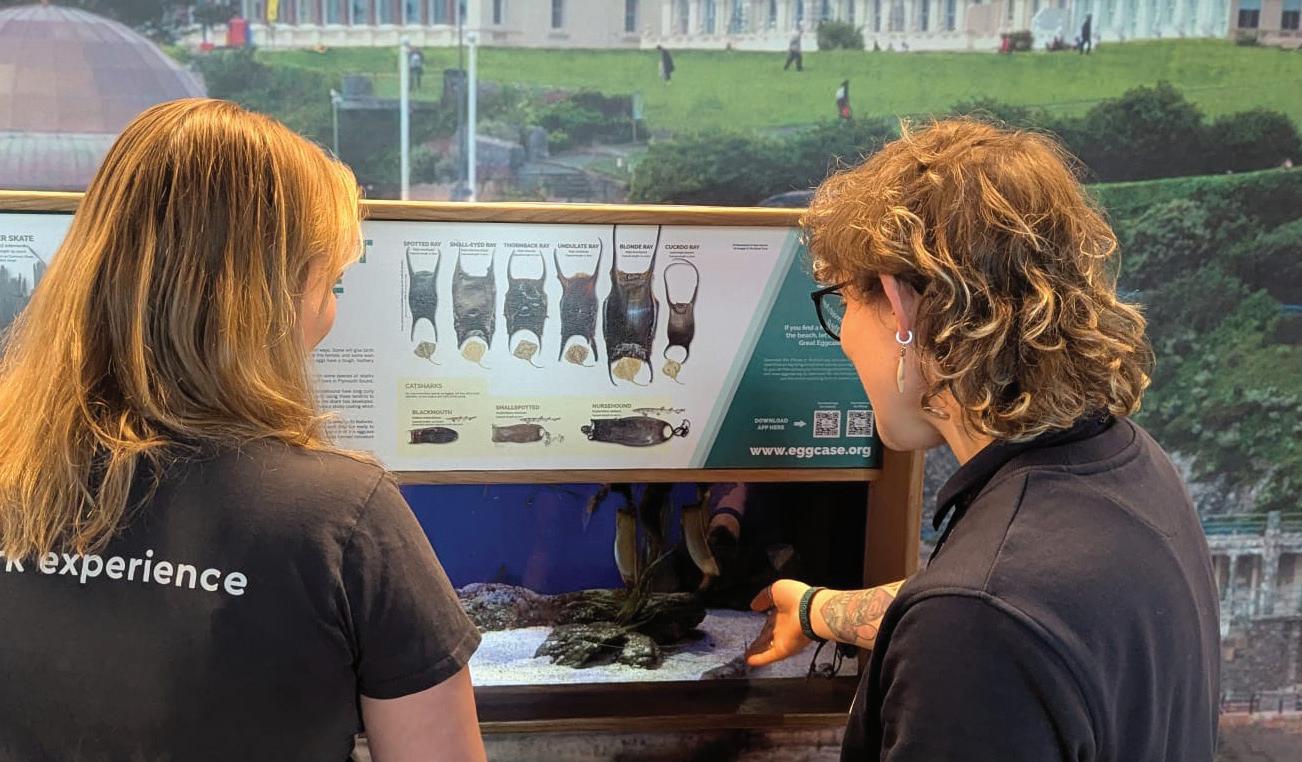
My top tip for protecting the Ocean is to keep asking questions, keep learning and keep being curious! We have only explored 20% of the Ocean, that means another 80% is still to be discovered and how incredibly exciting it is to be alive at a time where we can explore the Ocean more and make a lasting positive change to protect it for future generations to come!
It is this continuous learning about the Ocean – that life-long learning – that will help save it and educating ourselves and others about it is something we can all do every single day and have the most lasting impacts to marine conservation both locally and across the globe.
When you think about the Ocean Conservation Trust‘s work, you probably picture divers working on seagrass meadow restoration and marine biologists studying reams of data. But a big part of our mission revolves around advocacy and education.
That’s because we believe that conservation is everyone’s job, and driving meaningful behaviour change that supports the future of our blue planet is just as important as monitoring seagrass growth.
While a lot of the work of our education team is associated with primary schools, their reach extends far beyond early years learning. One inspiring example of our broader educational approach is OCT’s annual photography project in collaboration with pre-university students studying the Extended Diploma in Photography at Arts University Plymouth.
This year, as part of the project, students were given a simple brief. They were asked to submit photographs representing each of the below categories
• Ocean Optimism
• Human connectiveness
• Nature/Wildlife
They were also asked to complete a written accompaniment, answering the following question: ‘How do your photos inspire more sustainable behaviours that positively benefit our Ocean?’
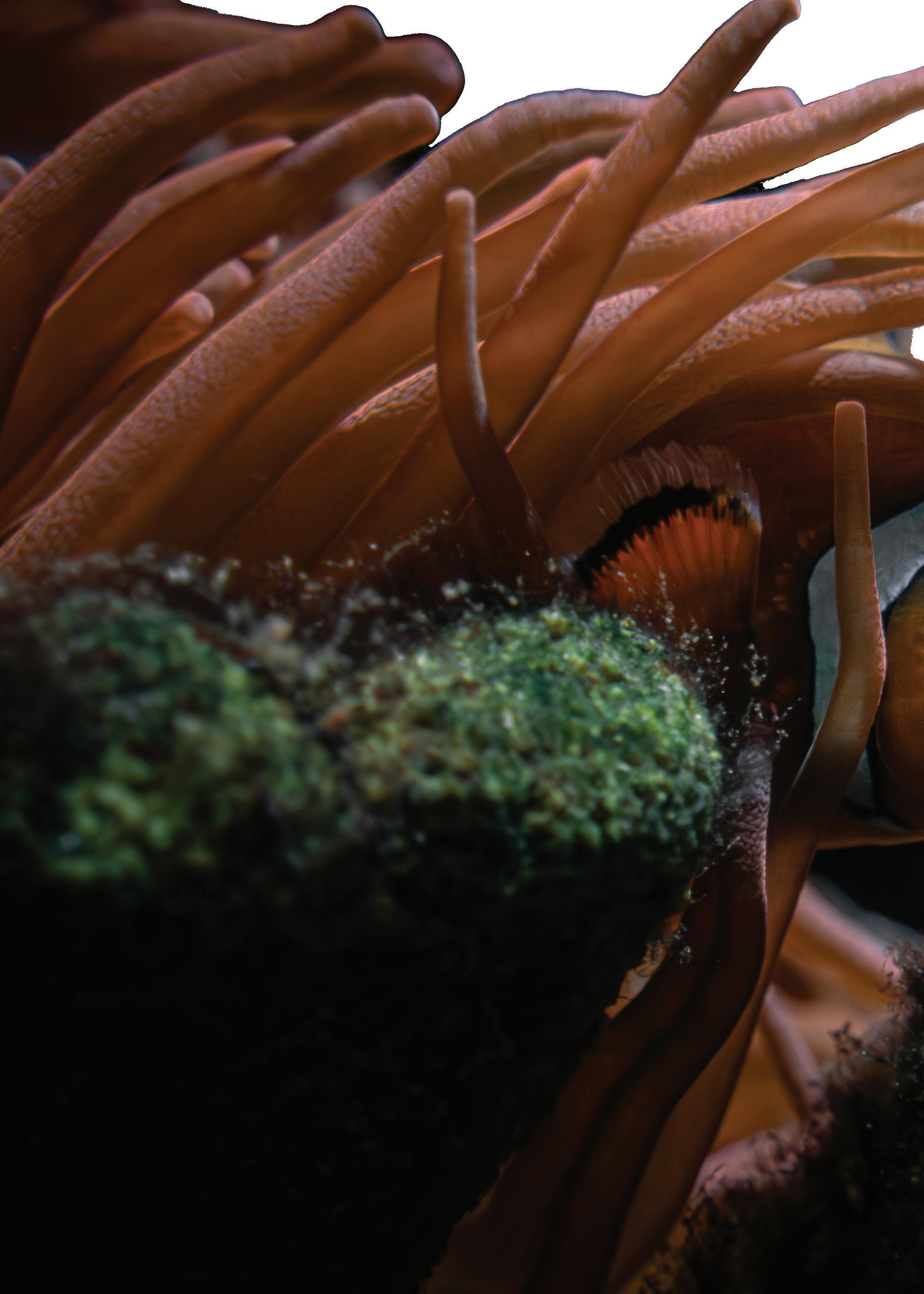
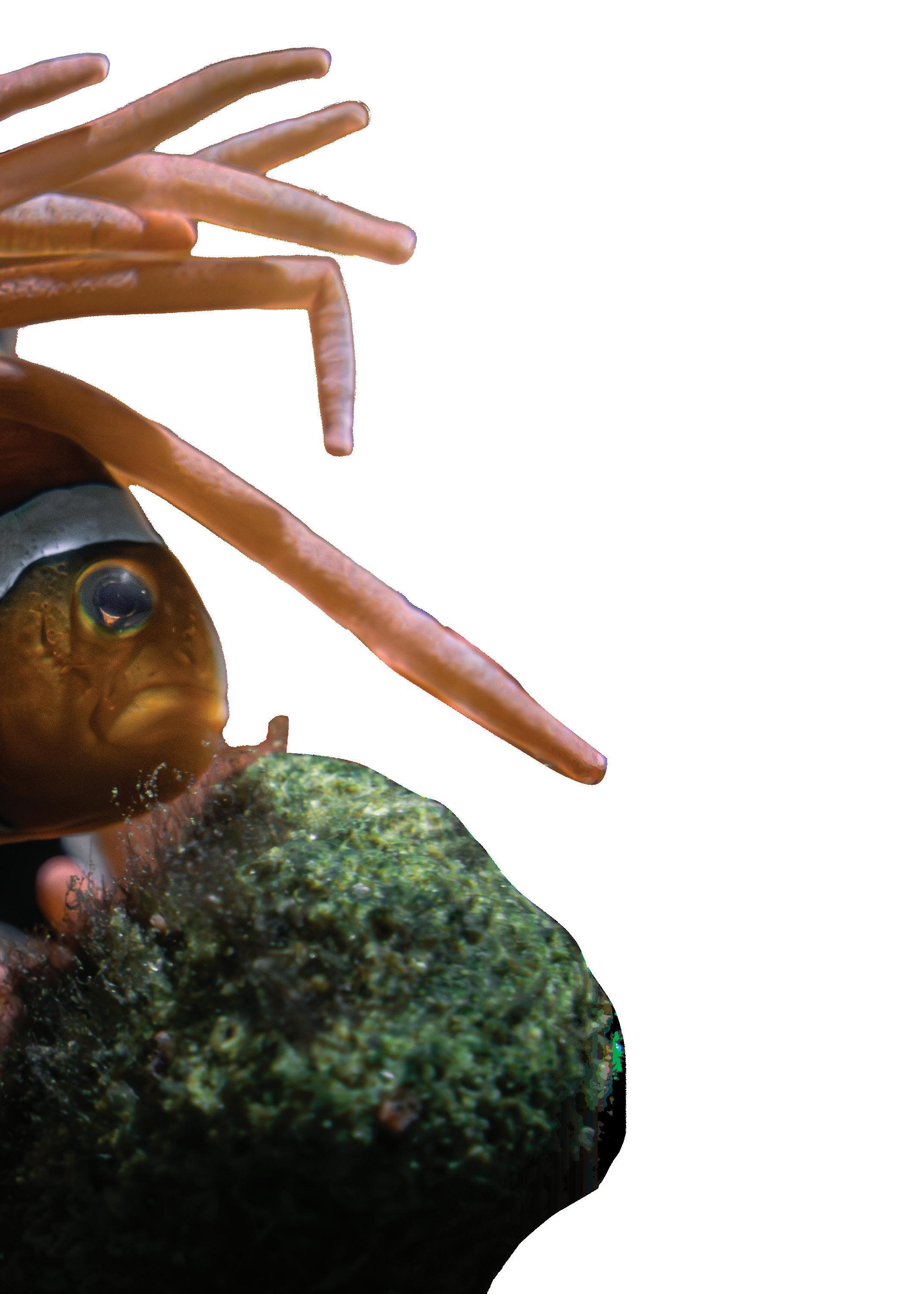
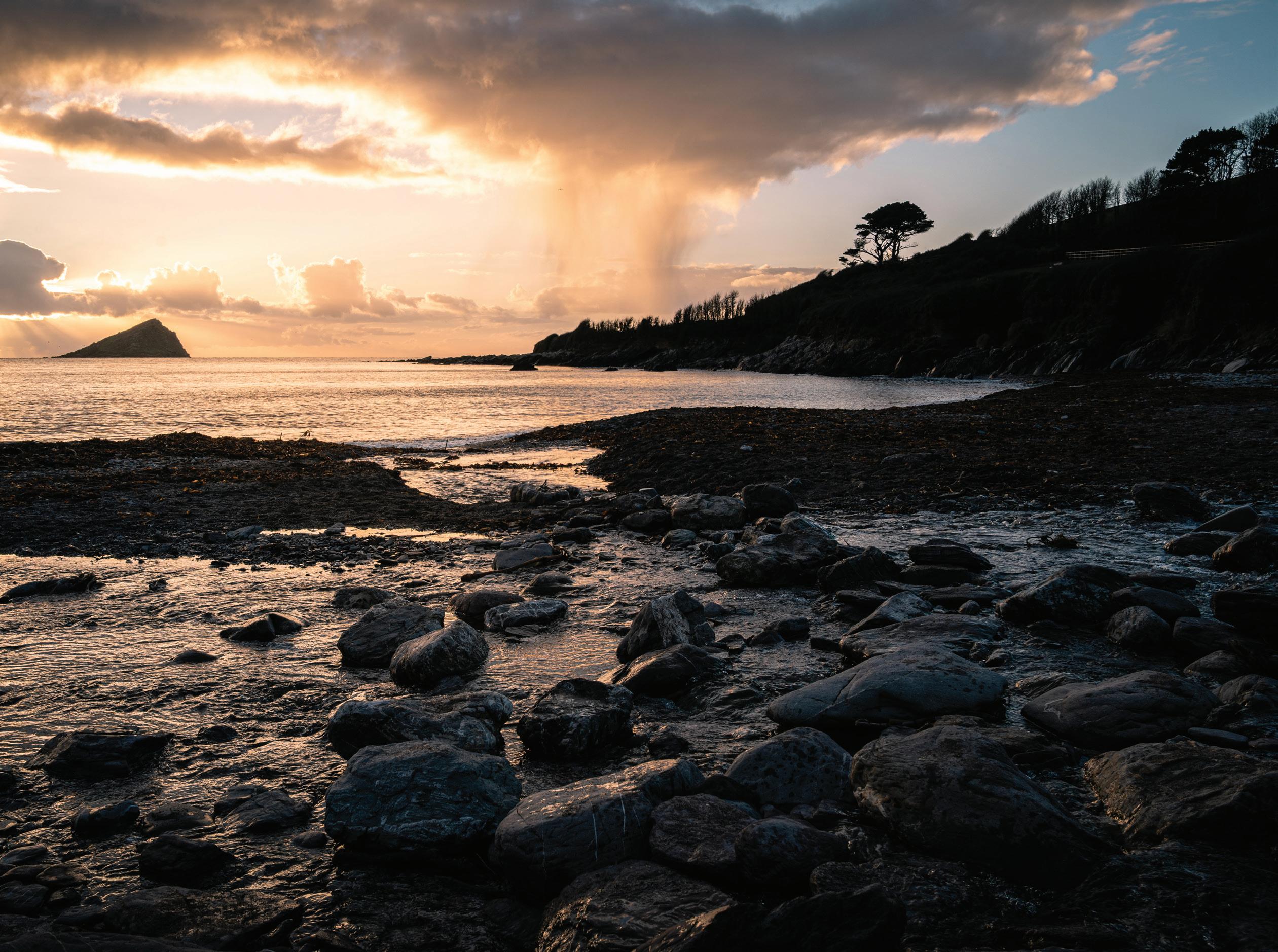
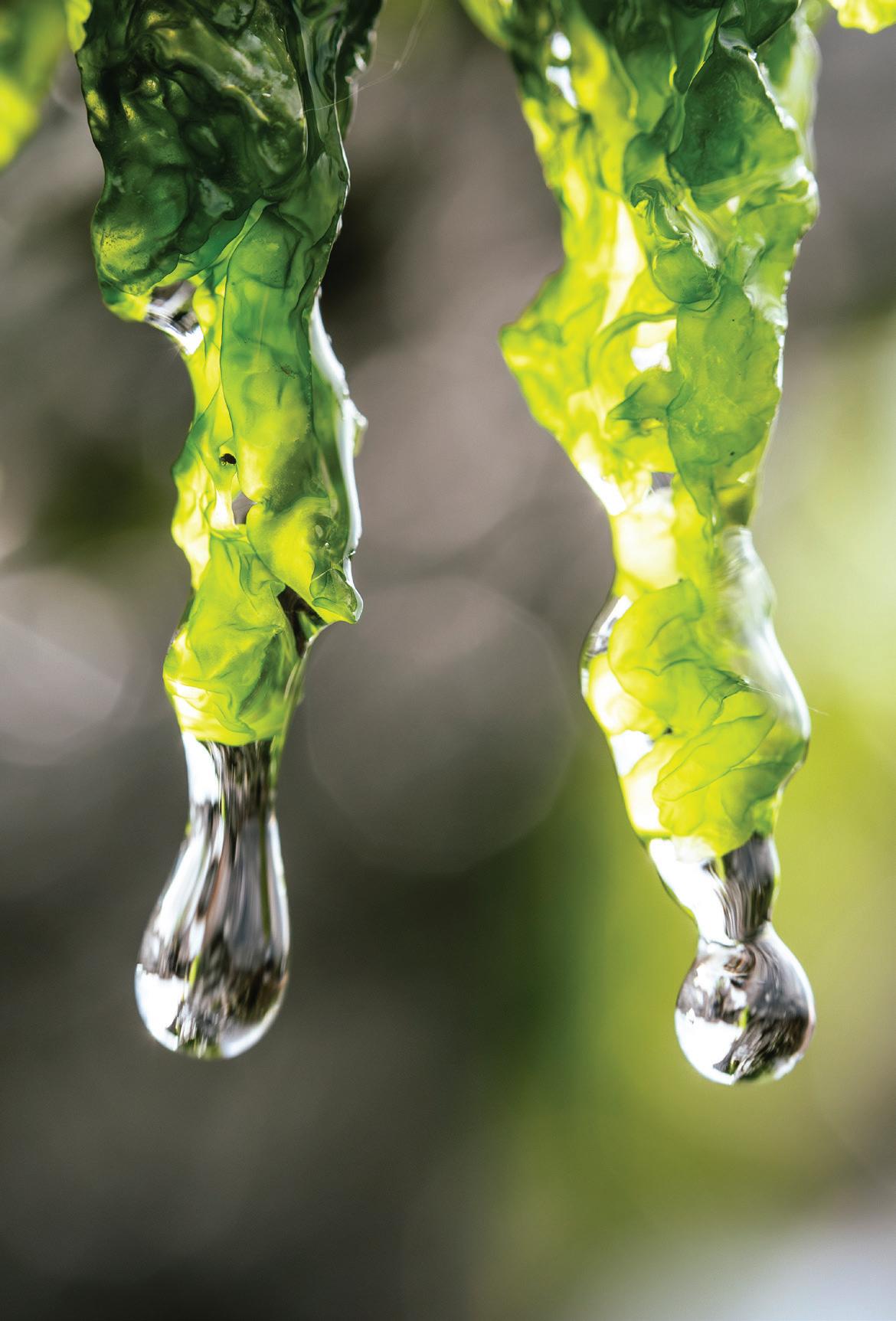
Amongst the class, the person who best met the brief was Oscar Black. The photographs he submitted are displayed on these pages. Below is the answer he wrote to accompany them:
“I hope that my nature-inspired images will open people’s eyes to the hidden world underneath the waves, raising awareness about the importance of biodiversity. We need to protect the marine ecosystem, and these photos will encourage people to look outwards and think more proactively about stopping the destruction that is happening in our oceans – be it from trawler fishing or pollution.
My landscapes of families at the beach remind us of our love for the sea and how lucky we are to have access to such a wonderful place. I hope it will remind people of how much the sea means to us and encourage us to preserve this natural habitat and stay connected to the sea.
Beautiful seascapes make you stop, take in the scene, and really think about what this place means to you. Focusing on moments of quiet beauty – shifting light, coastal wildlife, and fragile ecosystems – invites viewers to slow down and reflect on how precious our world is and how important it is to preserve it.”
It’s not just governments, corporations, and conservationists that have an impact on our environment; every single one of us is responsible for how we treat our planet. And we at the Ocean Conservation Trust understand that, in order for people to feel the significance of this responsibility, they need to feel some kind of connection to the natural world first.
This is where advocacy and education come in – but it’s also where art can play an important role. Creative disciplines such as photography can play a critical role in shaping public perception, influencing attitudes and inspiring behavioural change. Sometimes, images can touch the heart in a way that statistics simply don’t. And when artists turn to environmental themes, they become advocates, whether they realise it or not!
Through projects like the one above, art can spark dialogue and inspire action. So, if you’re struggling to figure out how to play your part in securing a brighter future for our Oceans, why not plan a creative project – you might inspire someone to make a positive change that leaves our planet and its Ocean better off.
The finalists and Oscar’s winning photos will be displayed within the National Marine Aquarium from May of this year.
Following World Seagrass Day, here’s an overview of how we celebrated, why we mark the day, and what you can do to get involved in the conservation of this vital aquatic plant.
How did you celebrate World Seagrass Day? Well last weekend, we pulled out all the stops to celebrate our favourite aquatic plant. But before we get to that, here’s why we celebrate World Seagrass Day.
In 2022, the General Assembly of the United Nations adopted a resolution proclaiming March 1st as World Seagrass Day. According to the UN’s website, this was in response to an “urgent need to raise awareness at all levels and to promote and facilitate actions for the conservation of seagrasses in order to contribute to their health and development, bearing in mind that enhancing ecosystem services and functions is important for the achievement of the Sustainable Development Goals.”
In other words, the UN knows what we at the OCT have been talking about for years now: that seagrass meadows are an absolutely vital marine habitat for various reasons.
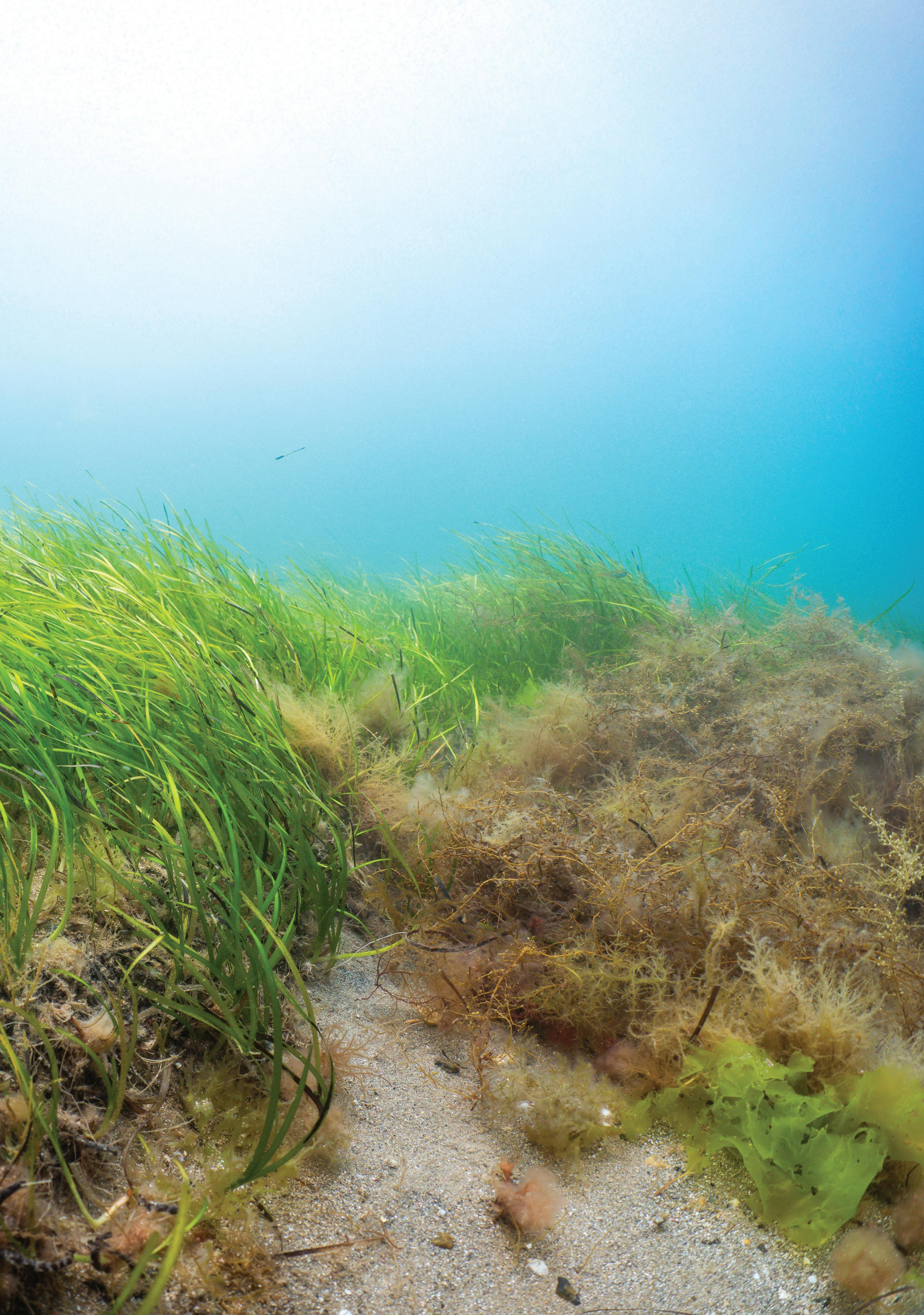
Despite covering only 0.1% of the Ocean floor, seagrass can store up to 18% of the entire world’s Oceanic carbon. This makes them even more effective than forests at helping tackle the effects of climate change. As if that weren’t enough, seagrass meadows also mitigate Ocean acidification and protect coastlines and coral reefs from erosion and degradation.
In addition to this seagrass improves water quality through filtering and storing nutrients and pollutants – this, in turn, reduces the contamination in seafood. And these meadows provide a habitat for tens of thousands of fish and millions of invertebrates. They’re a genuine wonder plant; biodiversity havens, nature-based climate regulation tools, and the only flowering marine plant!
Unfortunately, this is only half of why we recognise March 1st as World Seagrass Day. The other half is that seagrass is in trouble. Estimates suggest that 7% of seagrass meadows across the globe continue to disappear every year.
Since the 1930s, as much as 90% of the UK’s seagrass beds have been lost, mostly through physical disruption, water pollution, and disease. One fifth of seagrass species are categorized as “Near Threatened, Vulnerable and Endangered” according to the International Union for Conservation of Nature Red List of Threatened Species. And currently, only a quarter of all seagrass meadows are found within Marine Protected Areas, which means the rest are left largely defenceless.
However, as Ocean Optimists, we at the Ocean Conservation Trust like to look at the glass-half-full side of the situation. Through our Blue Meadows programme, we’re trying to reverse the trend and provide a boost to the UK’s seagrass meadows. As of March 2026, we’ve already restored 11 hectares of seagrass and provided protection to over 230 hectares of meadows.
And we’re not the only ones working to conserve this precious habitat; across the UK and the world, various groups are working toward the same goal.
These efforts are already beginning to pay off, with some areas showing slower declines or substantial recovery of seagrasses. According to the UN, “these recoveries can often be attributed to human interventions reducing the effect of human-caused stressors.”
Not only do these efforts benefit the marine environment and its untold inhabitants, they also benefit people. Whether it’s improved water quality, bolstered food security, better protected coastlines, or the sequestration of carbon, global efforts to conserve these ecosystems provide genuine boosts to the well-being of communities.
To honour this important plant, our Blue Meadows engagement team went all out during the days leading up to World Seagrass Day.
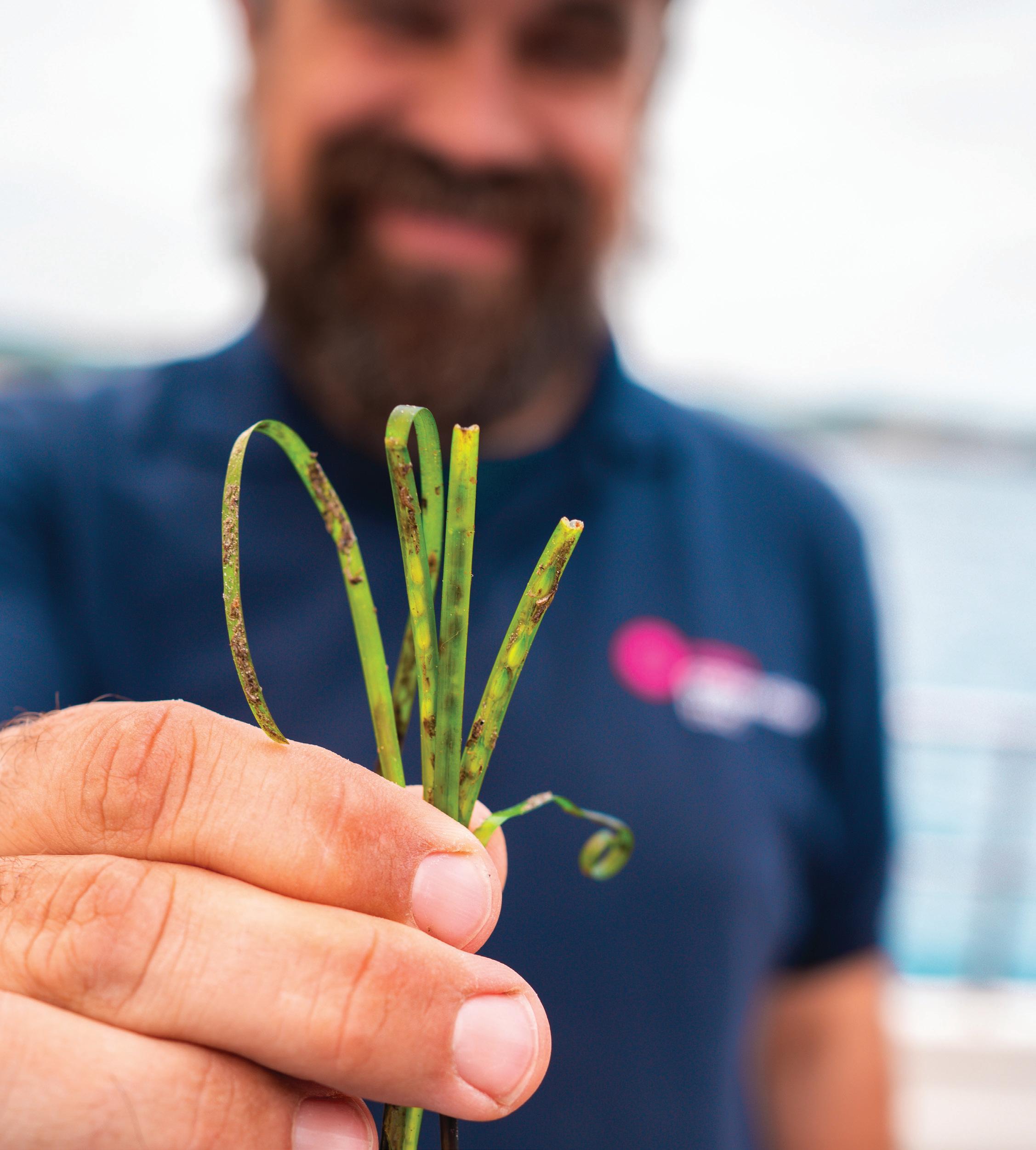
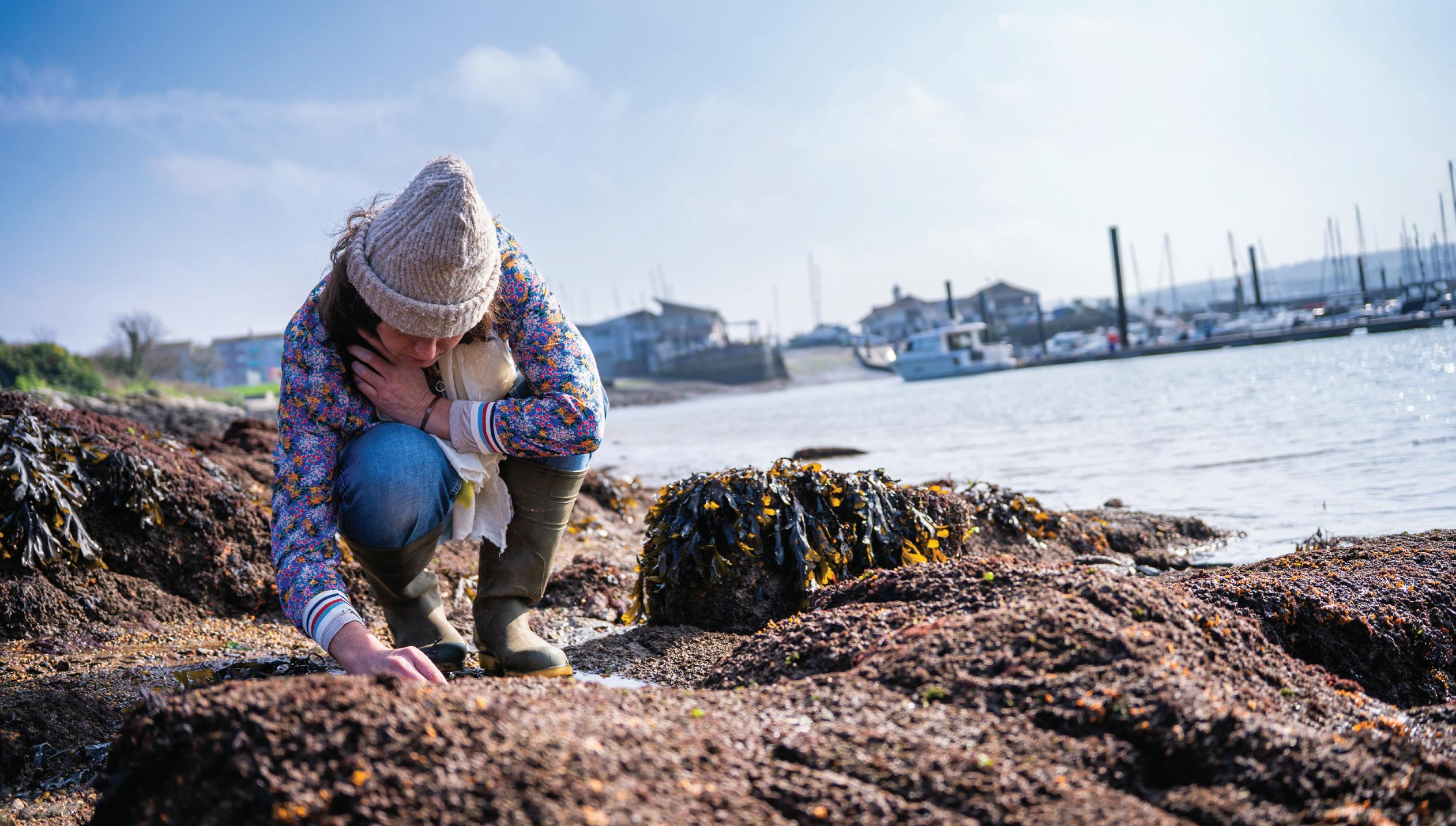
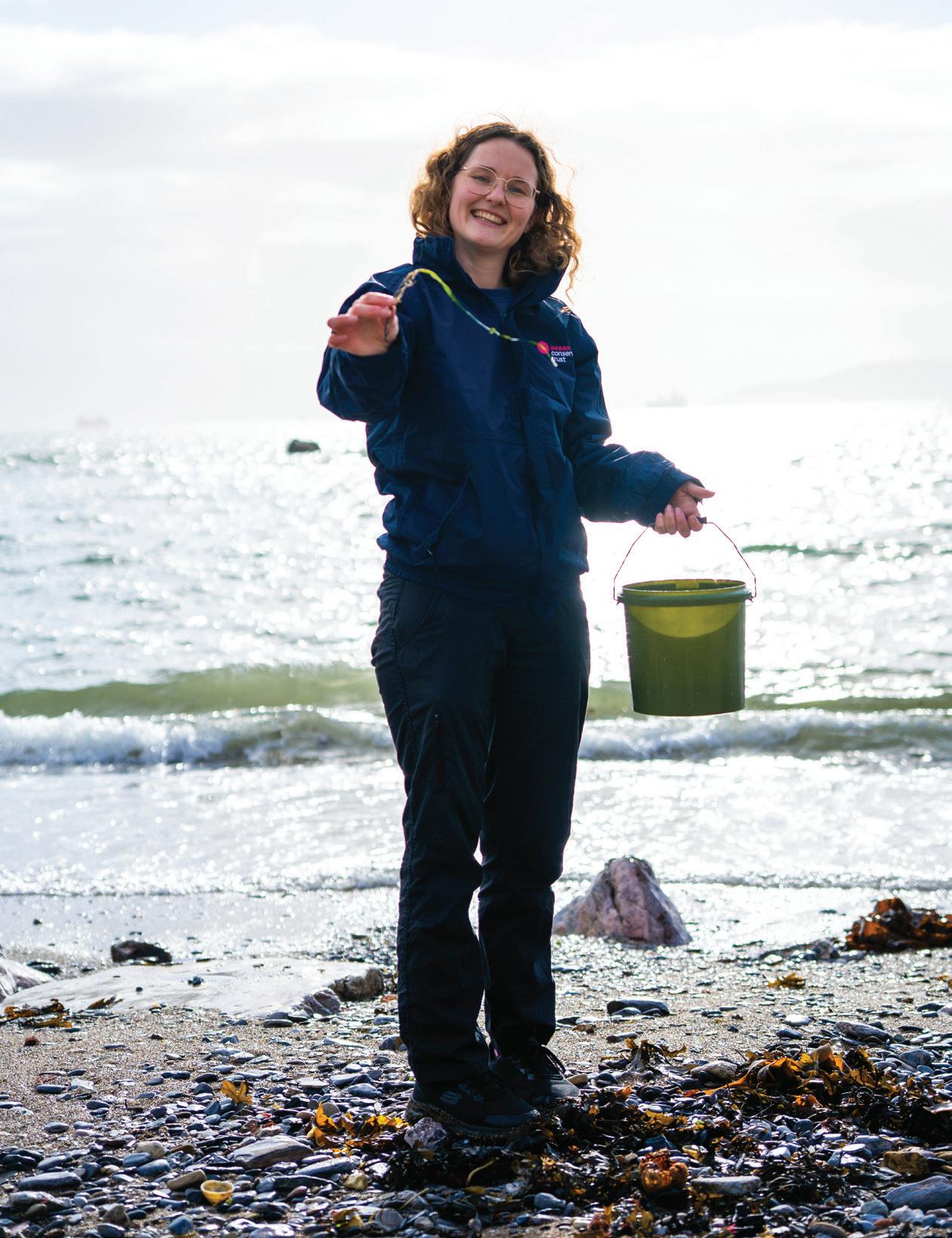
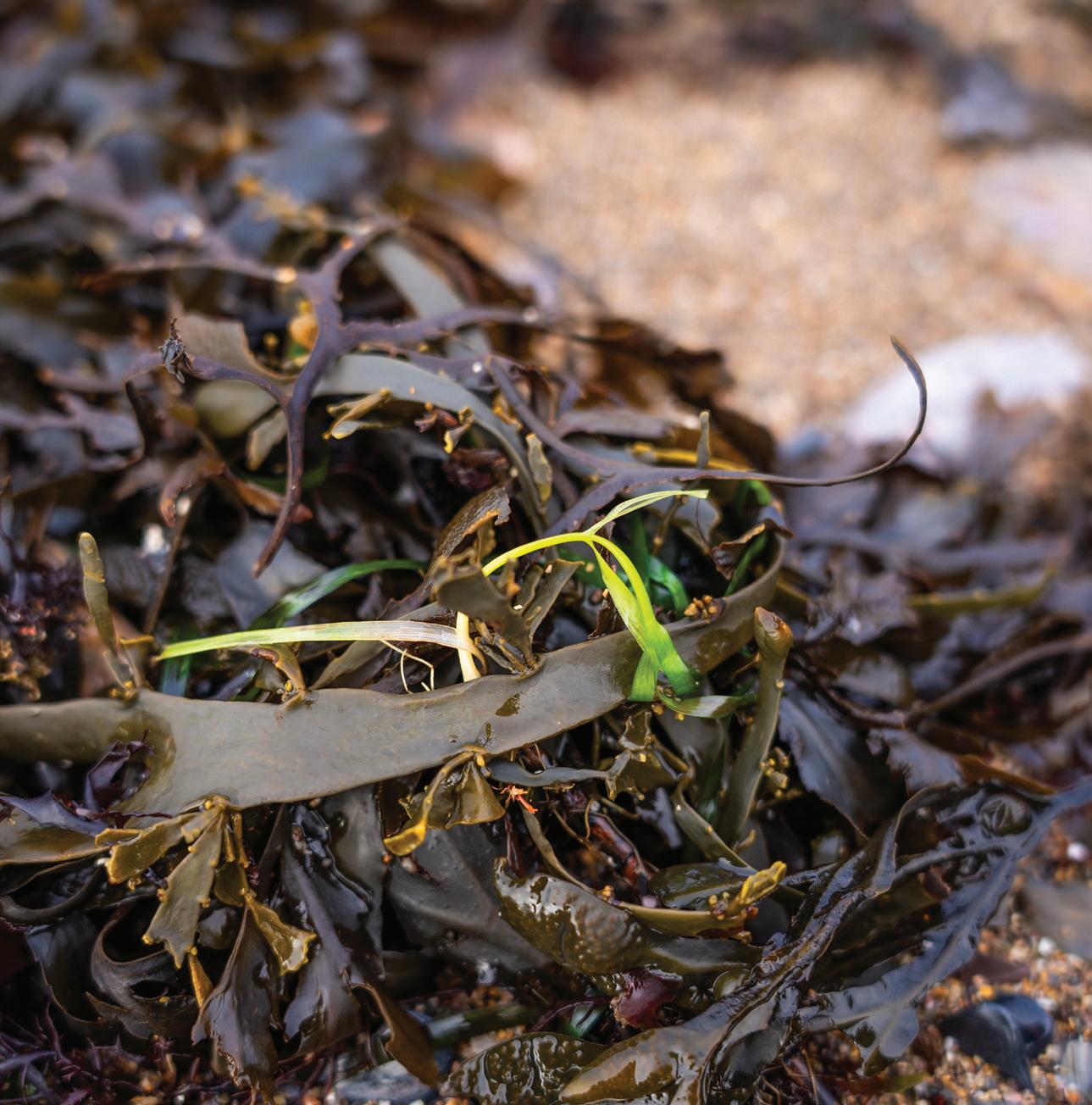
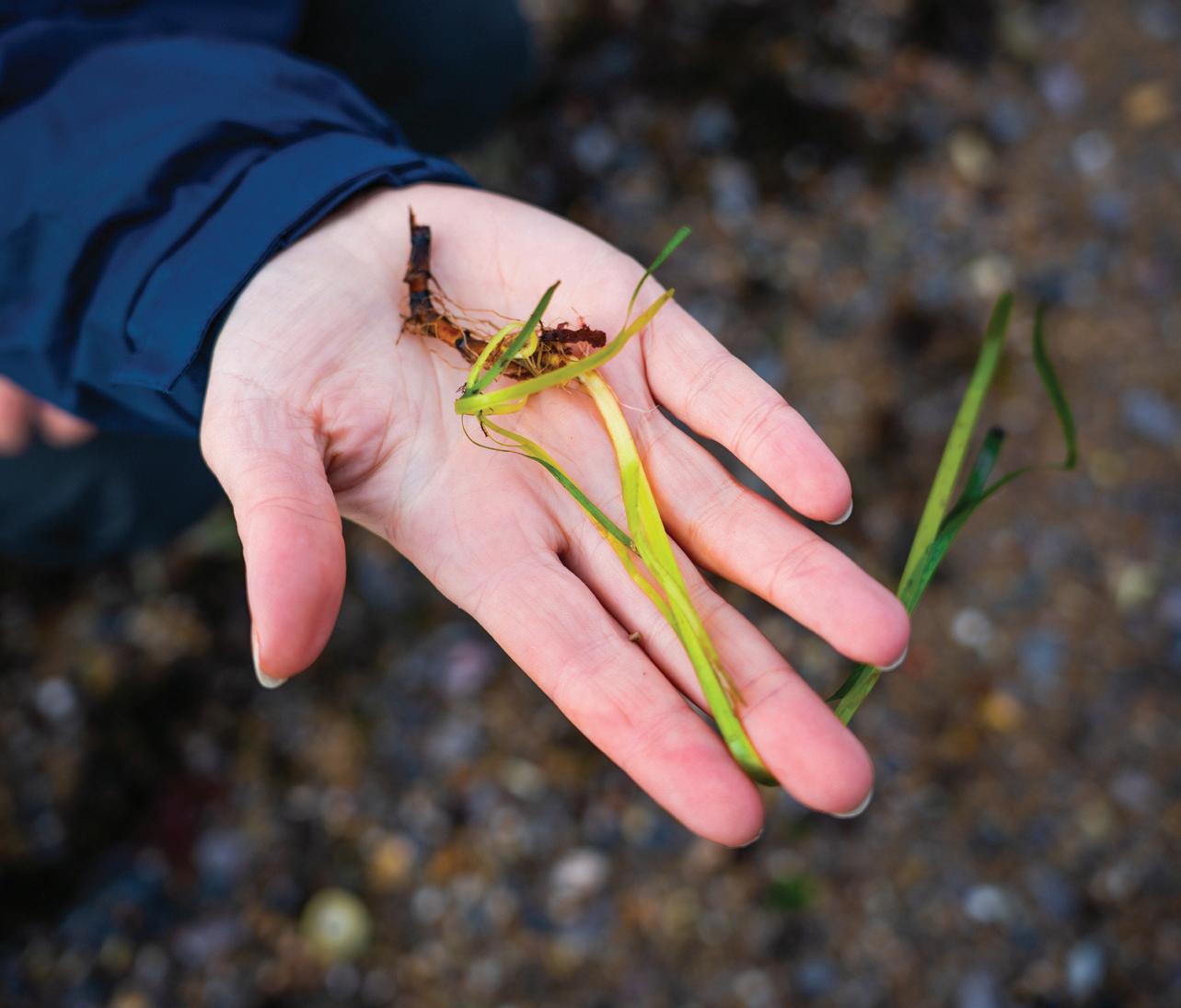
We hosted a seagrass stroll in Plymouth and one in Falmouth which was co-hosted by the Cornwall Wildlife Trust. The primary aim of these walks is to connect participants with seagrass and start conversations about it, as well as educate people on where their local meadows are. During the walks, attendees are encouraged to collect any loose seagrass they find that’s washed ashore.
When possible, this seagrass is taken back to the seagrass lab at the National Marine Aquarium or to the National Seagrass Nursery where it is replanted. Once it’s grown back to full health, the rehabilitated seagrass can then be taken and placed back in a meadow in the Ocean. These walks take place sporadically throughout the winter months, and all are welcome to join.
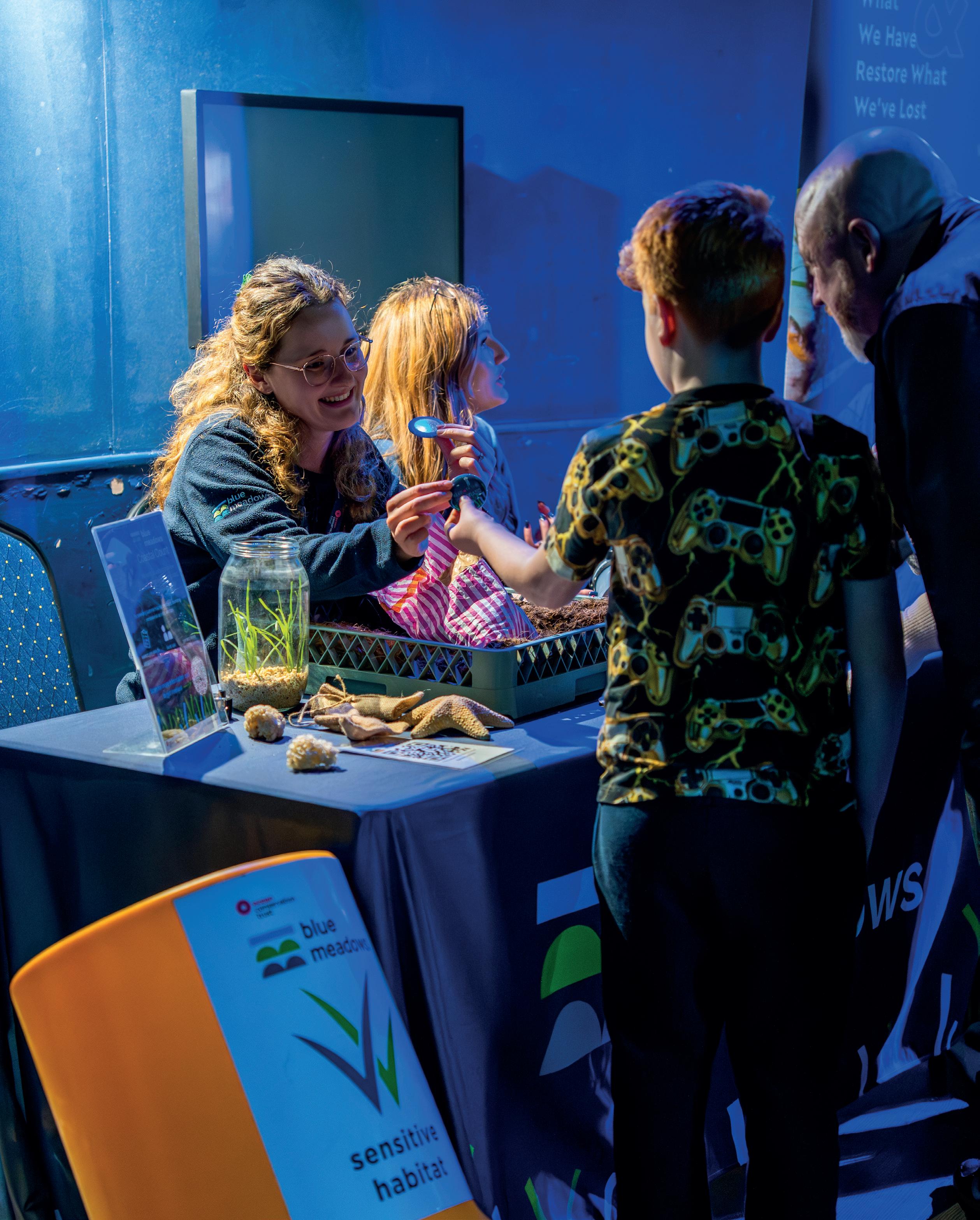
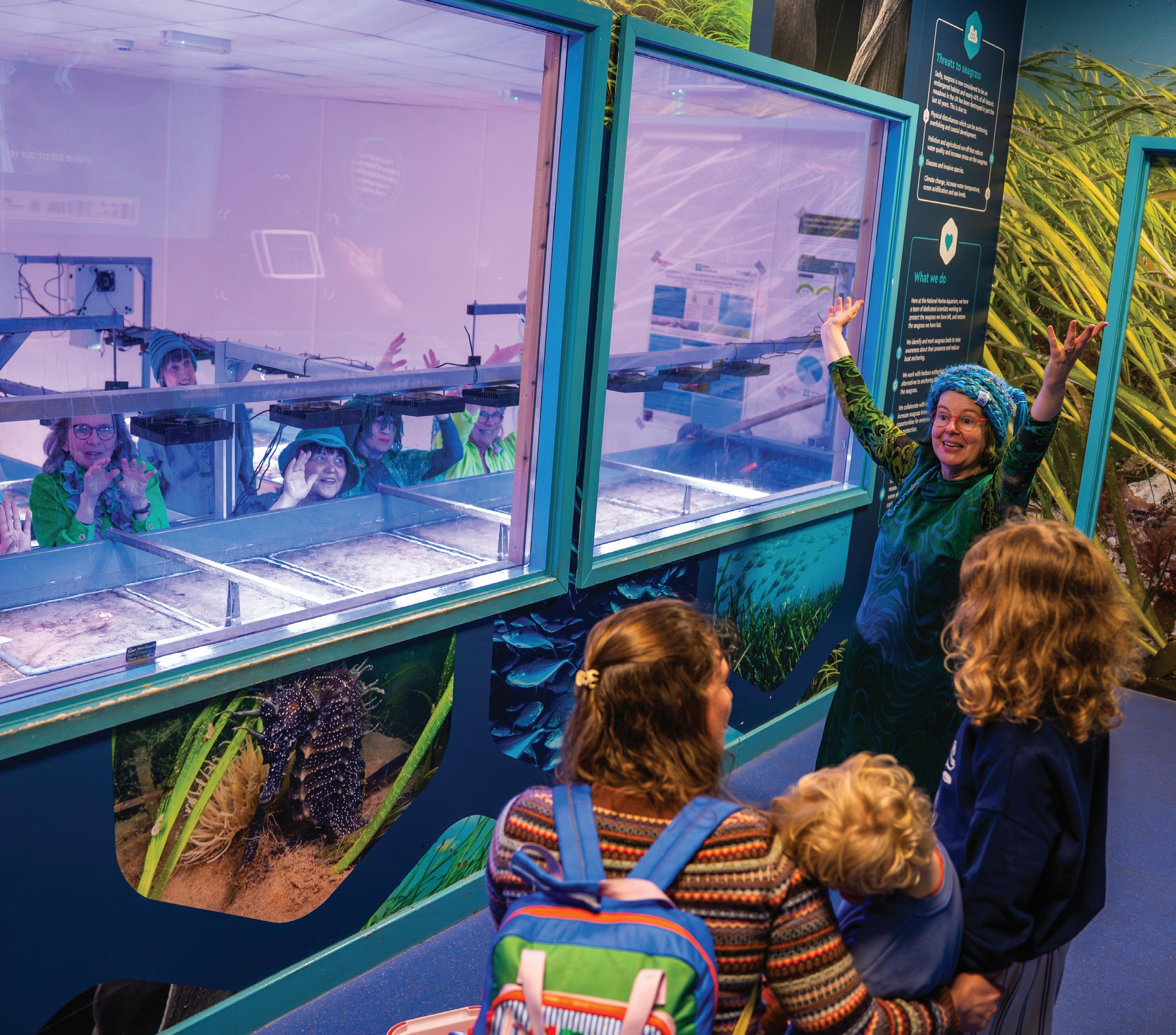
On World Seagrass Day itself, the Blue Meadows engagement team were on-hand in the National Marine Aquarium where they were educating visitors on seagrass using a variety of tools and raising awareness of the work done through the Blue Meadows programme.
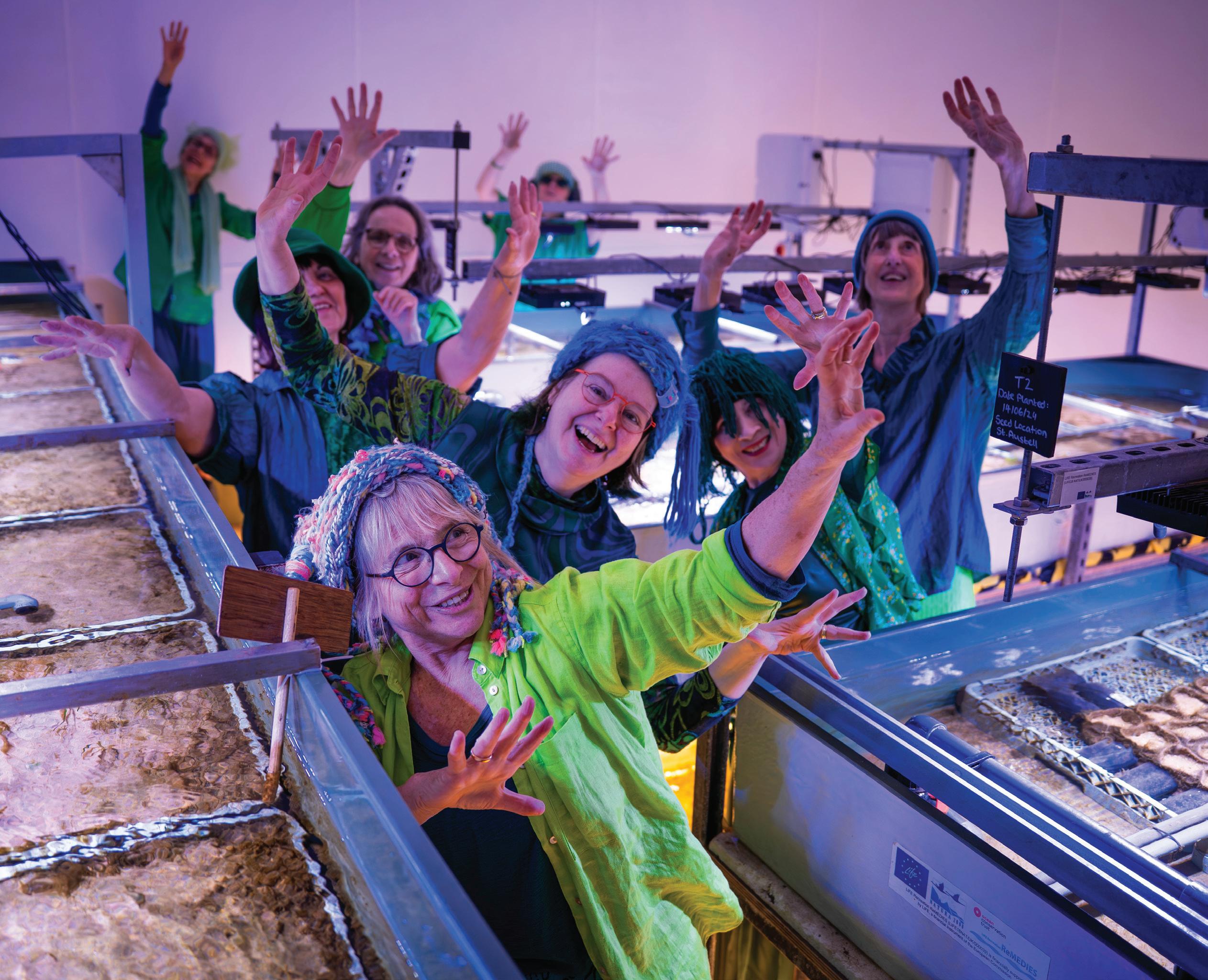
There was even a Seagrass flashmob dance featuring the wonderful Clown Dance Seagrass Project.
This group brought seagrass meadows to life through an imaginative performance that blended contemporary dance and theatrical clowning, inspired by our conservation work. Their performance was an embodiment of the movements of a seagrass meadow, and they delighted NMA visitors all around the aquarium throughout the day.
Our celebration of seagrass isn’t just limited to one day of the year. If you’re interested in attending a seagrass stroll or learning more about this miraculous plant, head to BlueMeadows.org.
And read on to find out all the ways you can get involved in conservation, without having to complete a degree in marine biology!
Here are 10 suggestions from our Blue Meadows engagement team on how you can start your seagrass conservation journey:
Give some of your time to protect the Ocean. Volunteer with our Blue Meadows team, at the NMA seagrass lab, National Seagrass Nursery or at one of our engagement events.
Volunteers provide hands-on help at the National Marine Aquarium or at the National Seagrass Nursery in Torbay.
“We take volunteers in the lab here [at the National Marine Aquarium], normally on a Monday and Friday,” said Blue Meadows Engagement Officer Megan Ross. “They can get involved in cleaning tables and getting rid of all the algae, because that affects the growth of the seagrass.”
Ross said volunteers can also assist in adding nutrients, water-chemistry testing, cleaning out seed-storage, and monitoring the growth of the plants.
“Part of the monitoring is counting how many seeds have germinated,” she said. “And measuring plants, so we can see how quickly they’re growing.”
Every time you spot some seagrass, why not log it on the Seagrass Spotter app and contribute vital seagrass distribution data? The app allows you to upload photographs of seagrass you’ve come across, which it uses to map areas of seagrass.
All data collected by the app – which is an initiative run by the UK-based charity Project Seagrass – is open-source, which means it benefits anyone interested in seagrass.
Think about your impact on the Ocean. Our everyday choices matter. You could: say no to pointless plastic, take steps to reduce your carbon footprint, take the bus, turn off lights and be mindful of what goes down your drain.
All of these seemingly insignificant decisions can make a big difference, if enough people are mindful of their actions.
Find your connection. Visit the beach, swim in the sea, or think about the Ocean. How do you connect to seagrass? If you feel connected to something, you’re more likely to care about it — and, in turn, take action to help protect it.
Have a conversation about seagrass and tell your friends about your newly learnt seagrass knowledge – you never know what might happen next!
Not only will you be deepening your connection with seagrass, you might encourage someone else to take their own small steps toward conservation.
When you’re enjoying seagrass, whether you’re on or in the water, remember to minimize your disturbance. Swim or paddle carefully over seagrass meadows, remember to anchor outside of the seagrass, and make sure you know where your local meadow is!
Your unique personality could be a huge determining factor in what steps you should be taking to help protect seagrass. Why not take the OCT’s #thinkOcean challenge and see how the specific way you see the Ocean can help you to protect it.
There’s power in numbers, so join our Blue Meadows Seagrass Community Group on Facebook, to take part in discussions, share knowledge and hear about all things seagrass. While we can all do our bit individually, community can be key to building momentum for maximum positive impact.
Directly support the restoration and protection efforts of Blue Meadows through our Mini Meadows Ocean Fund. Every penny that you contribute goes directly toward our conservation efforts.
Stay up to date and follow our work and the future of seagrass by signing up to our Blue Meadows Bulletin!
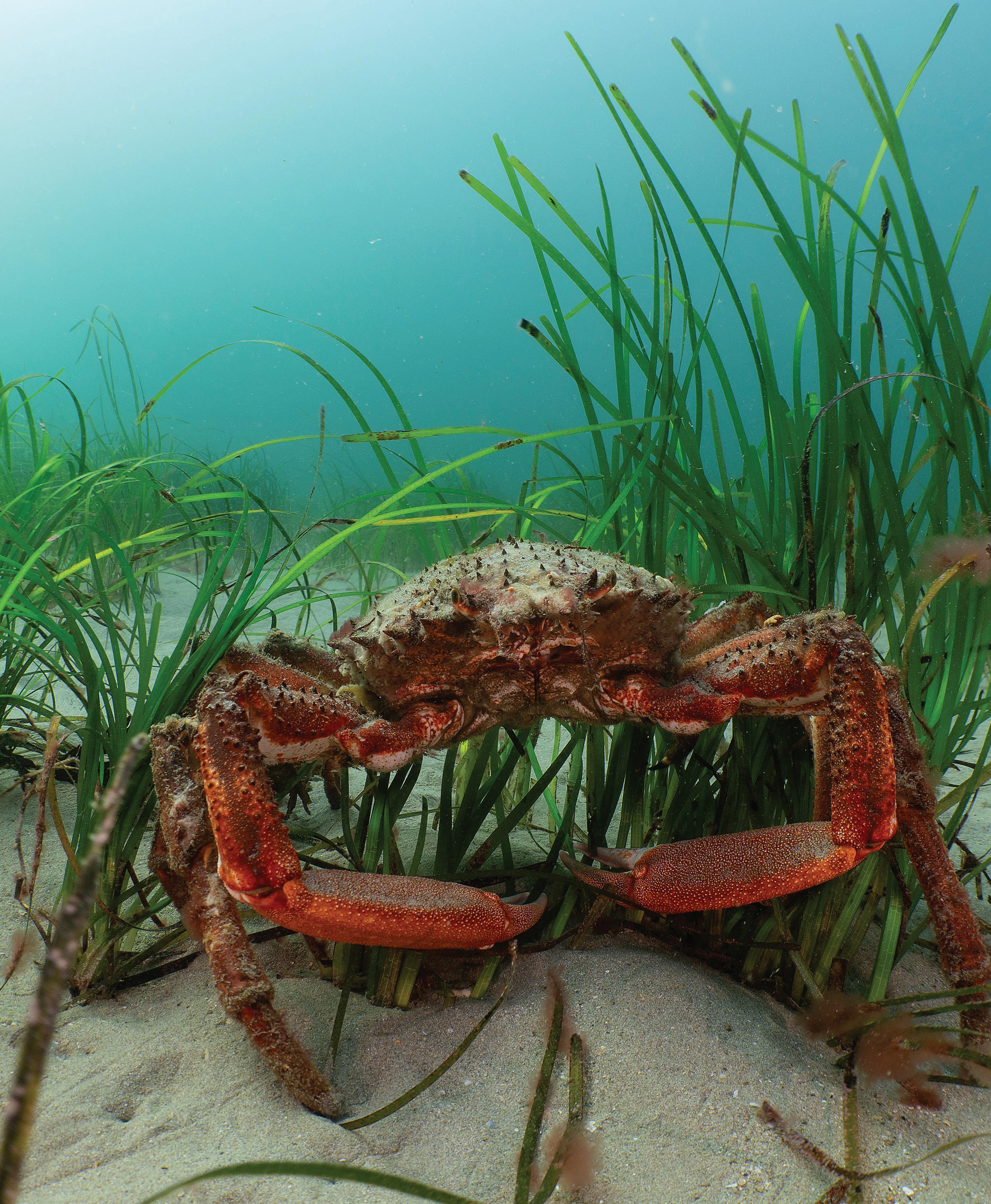
There are two main species of seagrass commonly found in UK waters.
Dwarf eelgrass tends to be found closer to the shore on fine sand and mud. This type of seagrass forms dense beds, and features leaves up to 20 centimetres in length.
Common eelgrass is typically found in deeper water, from just about submerged to about 10 meters deep. It is the largest British seagrass, with trailing leaves that grow up to two metres long. Common eelgrass forms dense meadows typically on sand, mud or coarse gravel.
By Professor Martin Attrill, Chief Scientific Advisor at The Ocean Conservation Trust
From an early age I wanted to be a marine biologist, most likely due to a combination of living on an island, Jaques Cousteau books and a deep love of the natural world, particularly the weird and wonderful organisms to be found on rocky shores. There is such wonder in turning over a rock and excitedly seeing what is underneath, that sense of the unknown – something that I still love doing to this day!

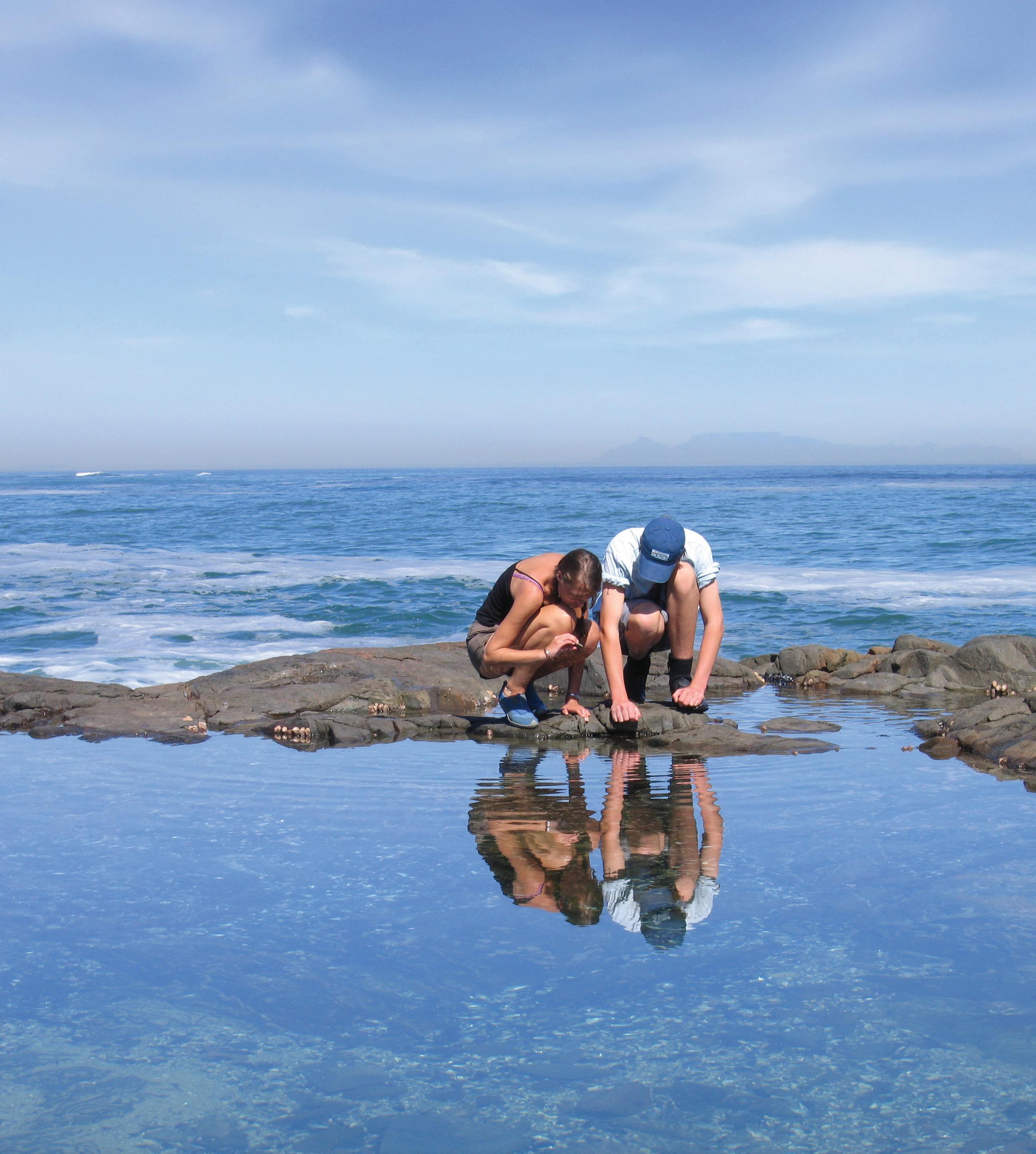
Most of my spare time was spent outdoors – and when I wasn’t able to get to the beach, it was hunting minibeasts in the garden or finding local streams to explore with a net. I pored over natural history books and loved drawing and noting what I found – after all, there were only three TV channels and no computers or internet!
Even though I wanted to be a marine biologist, I didn’t really know what one did. However, I just went with the flow, ending up in the University of Liverpool and then at their Marine Biology department on the Isle of Man (now long gone), where I spent four years getting my degrees and realising that I rather liked crustaceans. Next was working for Thames Water in London (quite a shock) on biodiversity monitoring in the Thames Estuary, before moving to University of Plymouth in 1992.
The path to being a marine biologist hasn’t actually changed much – although it is now more popular. The Ocean has a much higher profile, and lots more universities provide relevant courses. “Marine biology” is actually a very broad subject – you learn a vast array about biology and other sciences, just mostly focused on the sea. After all, you could work on the molecular biology of fish DNA or study the ecosystem ecology of coral reefs and still be a marine biologist, but with very different skills and backgrounds. There are many ways to go.
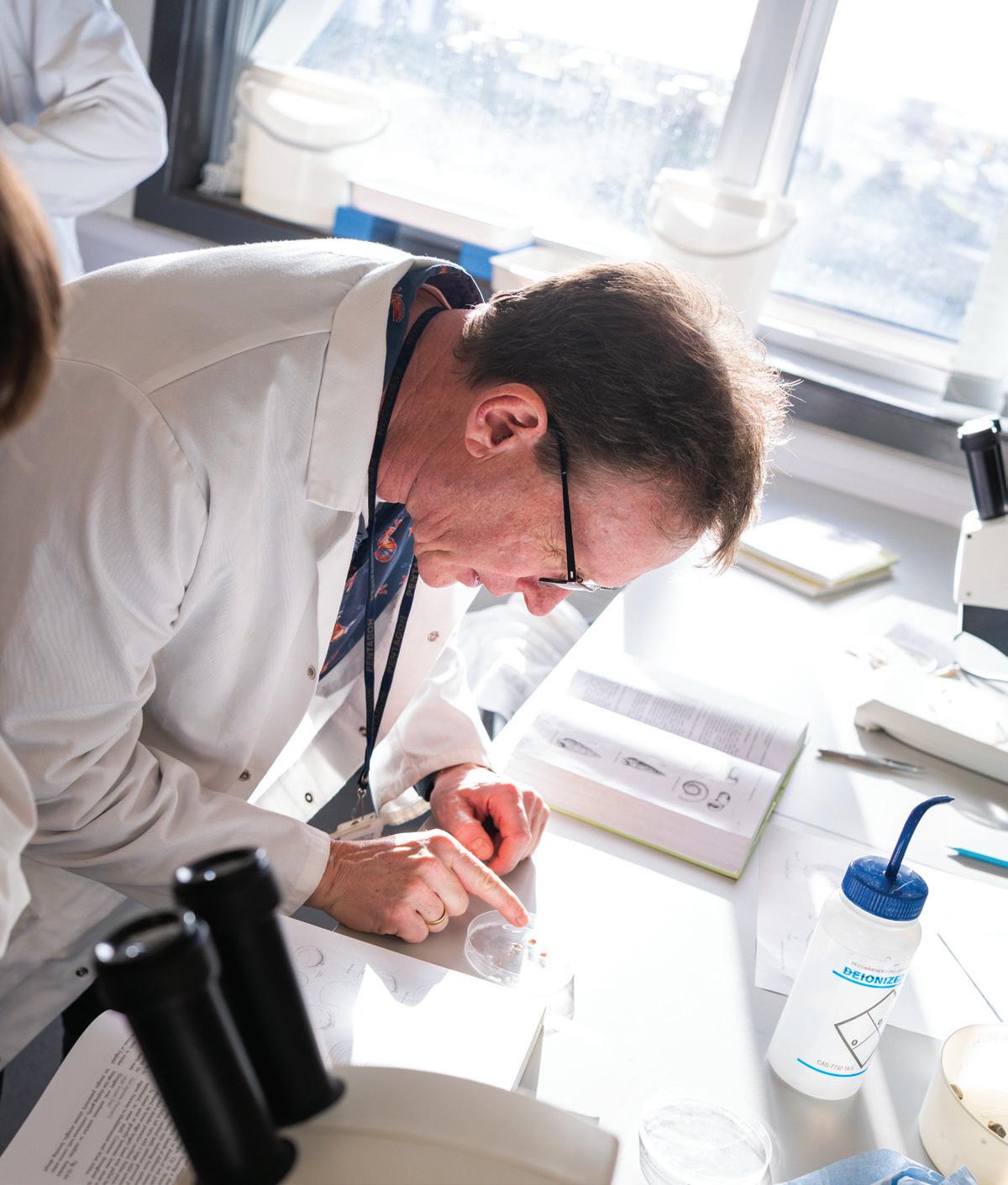
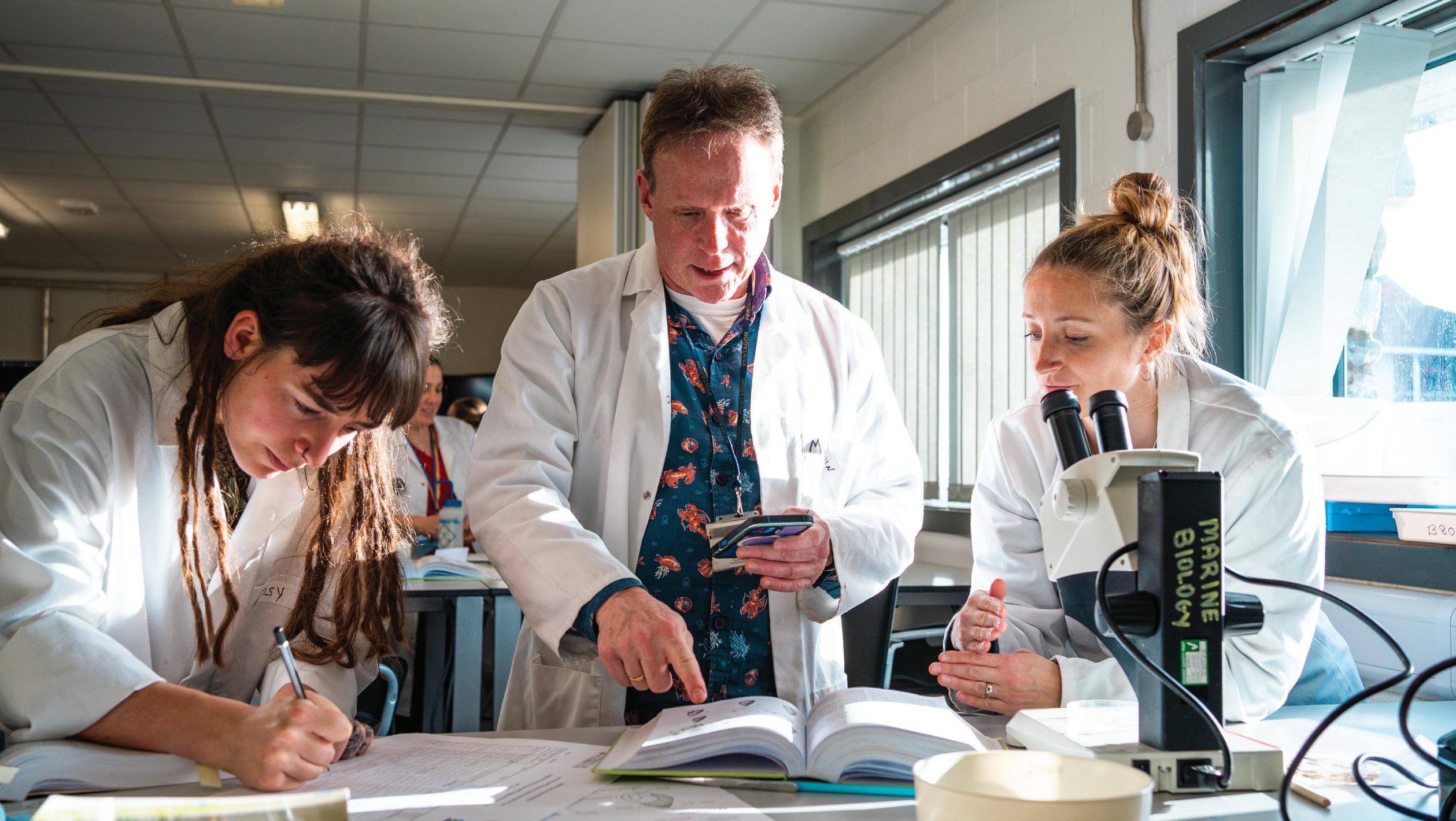
Of course, it’s still pretty much essential to get a degree in marine biology or a similar subject, which will mean taking biology and usually other sciences at A-level. Some degrees require chemistry and/or maths (very useful if you want to go into the oceanography side of things), but if you have just biology and another combination then there are still plenty of degree options ahead – especially if you are interested in the wider ecology, animal behaviour or geography side of marine systems. If you started life on a different degree or employment path, and want to change, then there are masters programmes that would be suitable to get that conversion training tick (for example the MSc in Marine Conservation that OCT helps teach at the University of Plymouth).
A degree is a necessity if we are honest, but to me what is most important on top of this is a driving passion and interest for the subject, or for certain organisms that live in the sea. Often, this can start from beautiful TV shows like Blue Planet, or finding out more about sharks and dolphins online. But remember, only a tiny fraction of marine biologists work on these big organisms and, to me, the little guys lead far more interesting lives and can have some crazy biology (and are so much easier to study).
So move beyond on-screen large beasts and find out what marine biology is really all about – get outside, get wet in the joy of finding things on a shore if you get the chance, or pick up books on marine diversity and explore. Follow some key charities and marine biologists on social media – find out more about the topics they are talking about and always question everything (especially what you read online). Science, and thus marine biology, is all about questions. And in the UK, marine biologists work for universities, environmental organisations, government agencies, aquariums or conservation charities. Their research can reveal amazing new things about how the Ocean works, or what organisms do, and more practically help protect endangered species, guide sustainable fishing practices and inform policies that protect marine habitats.
Just never forget the wonder of turning over a rock on the shore…
We at the Ocean Conservation Trust refer to ourselves as Ocean Optimists, because we envision a bright future for the Ocean.
Last year, we launched the National Seagrass Nursery in Torbay. At 400 square metres, it’s the largest facility of its kind in the UK. Located on the River Dart, the NSN aims to support large-scale seagrass restoration as a hub where collected seeds can be germinated and grown into young plants, which can then be planted out in the Ocean.
But that wasn’t our only achievement. In addition, the OCT Learning Team was recognised for their hard work when they were awarded the ‘Education & Learning Team of the Year’ at the School Travel Organiser Awards 2025.
Our Advocacy team also hit a milestone: the ‘Motion for the Ocean’, a set of pledges for local authorities to focus on the Ocean when crafting policy, was passed by the East Devon District Council in December, bringing the total number of councils to pass the motion to 40. Collectively, those councils represent 5 million UK residents.
Those are just a few examples of large steps forward that we took last year. Within our charity, every year gives us new reasons to keep feeling evermore positive about the future we’re all helping to create.
But we’re not the only ones working toward this future – and 2025 was proof of that! From global policy breakthroughs to boosts in the population of species at threat, 2025 was a huge year for marine conservation in general. The news may be full of doom and gloom, but last year showed us that an Ocean-focused momentum is building among governments, scientists, fishermen, conservationists and communities in ways that would have seemed impossible just a decade ago.
We believe that a thriving Ocean is not only possible, it’s already beginning to take shape. Here are five major conservation wins from 2025, to give you more cause to feel like an Ocean Optimist:
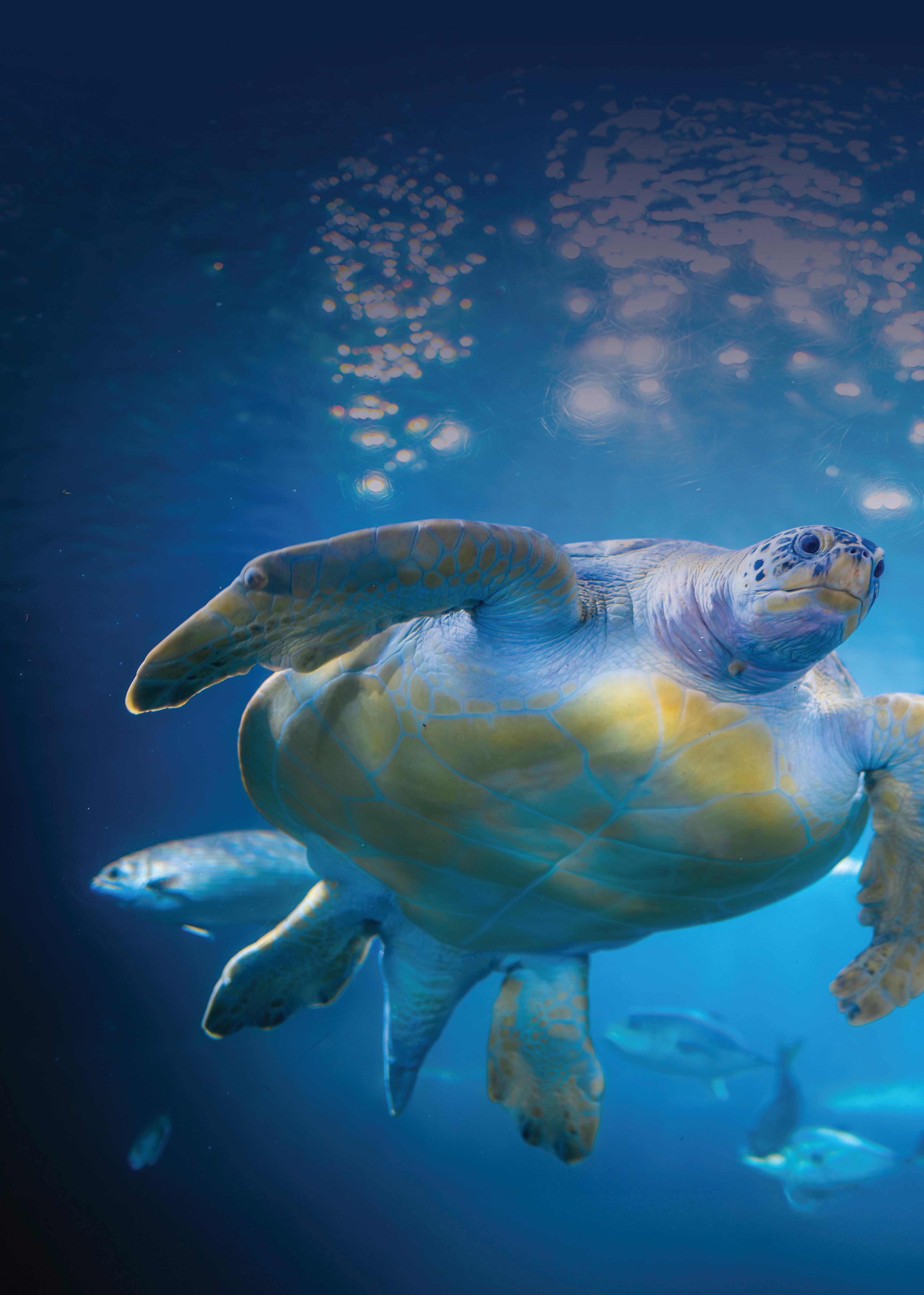
If you’re reading this magazine, there’s a good chance that you’ve taken at least one trip to the National Marine Aquarium. And if you’ve visited the NMA, there’s a very good chance you’ve met one of our superstar animals: Friday, our resident green turtle. You might also be aware that green turtles are an at-risk species, with dwindling numbers. Well, the tide may be slowly turning on that.
In October last year, the International Union for Conservation of Nature reclassified the green sea turtle from “Endangered” to “Least Concern” on its global Red List. This is because global populations of green turtles have increased by roughly 28% since the 1970s.
The green turtle dwells in tropical and subtropical waters around the world, and the ongoing recovery of this species is a result of decades of coordinated work involving a range of initiatives — from reducing turtle bycatch in fisheries to the introduction of turtle-friendly marine gear. Communities played an important role in this, becoming stewards of their local coastlines, and many nesting beaches have been restored and protected.
Of course, the work is not done – green turtles remain an at-risk species, in need of attention and protection. Many turtles are still under threat from habitat loss, fishing gear entanglement and climate change. But this population increase illustrates what can happen when every strata of society (from government to industry to individual people) come together with a common conservation goal.

The majority of our planet (71%) is covered in the Ocean. And the majority of that (roughly two thirds) is classified as the “high seas”. This refers to all the bits of the Ocean that do not fall under the jurisdiction of a particular country, and are open for use and access by all nations under international law. Through most of history, these areas have had no comprehensive management or governance, leaving ecosystems vulnerable to exploitation and destruction.
But in September 2025, that situation changed. That month, an accord named the High Seas Treaty (previously known as the Agreement on Biodiversity Beyond National Jurisdiction) was ratified by 60 countries, which triggered it becoming law. The agreement, which was adopted under the United Nations framework, is the first global legal mechanism to establish marine protected areas (MPAs) in international waters.
All of this may sound boring or insignificant until you consider the following: until now, only around 1% of the high seas were protected. This treaty is a pledge to designate 30% of these areas as MPAs, opening the door to large-scale conservation in some of the most ecologically important — and previously under-protected — parts of the Ocean. While implementation of the treaty may prove tricky, it is a huge step in the right direction.
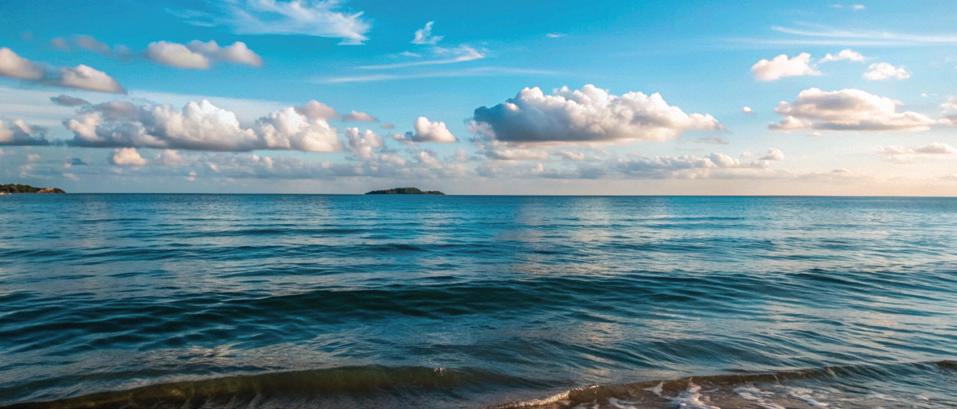
The countries that have signed on will now go about designating protected areas and figuring out plans to manage these areas and ensure enforcement. An example of what that might look like can be found in French Polynesia’s Tainui Atea, where the world’s largest MPA was established last year. The MPA stretches across roughly 1.1 million square kilometres of Ocean, and the aim is to protect biodiversity, maintain ecosystem health and preserve cultural and natural heritage across one of the Pacific’s most ecologically rich regions.
When managed properly, an MPA designation can increase animal populations, restore degraded habitats, and build resilience against climate change. Large-scale MPAs are especially powerful because they protect entire ecosystems rather than single species or habitats. For Ocean Optimists, the High Seas Treaty is more than just a policy, it’s a real world turning point.
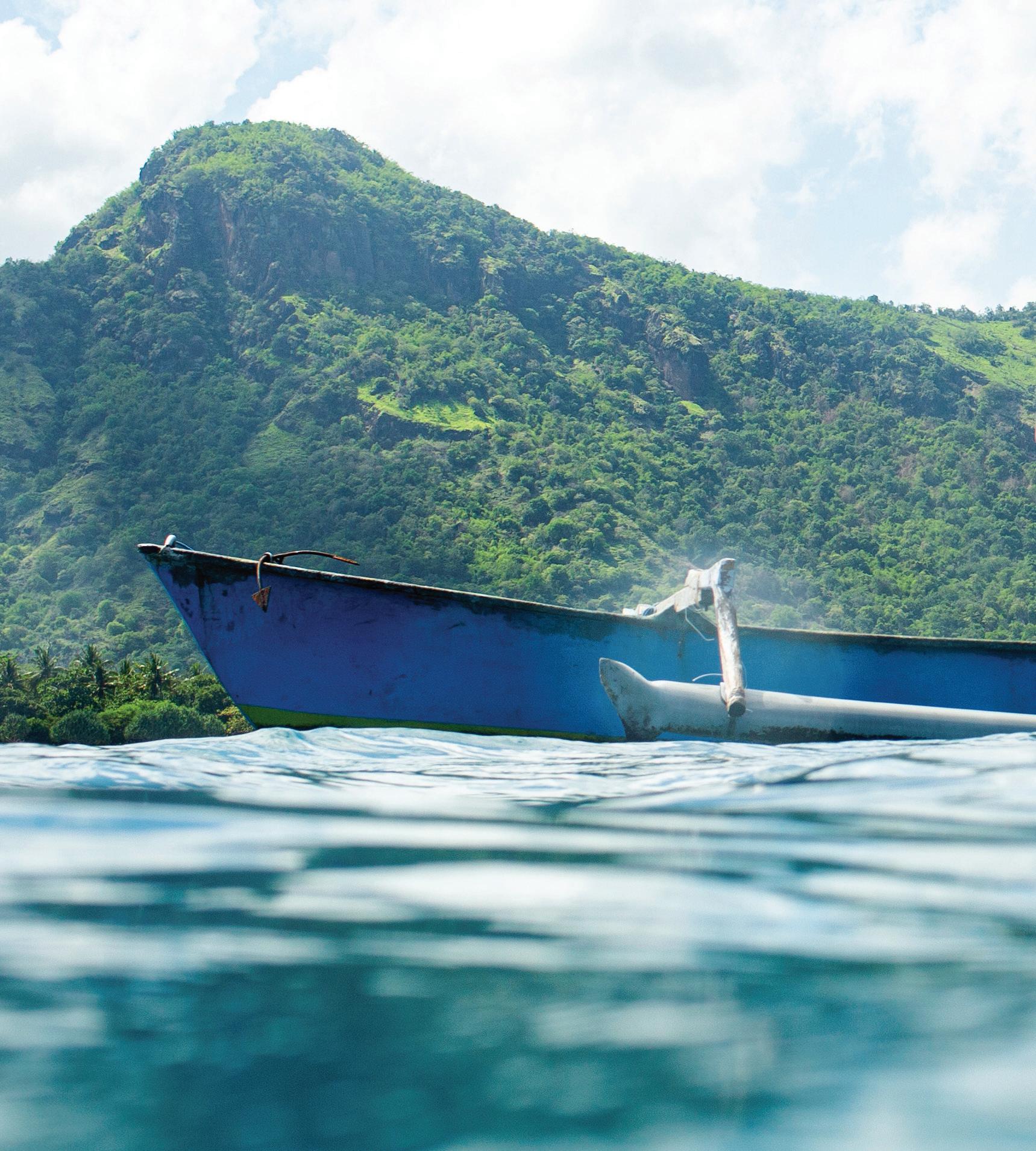
Conservation isn’t just about protecting areas; it’s about people using resources in sustainable and nonexploitative ways. And that’s why decisions affecting marine-based industry can be just as important as agreements to leave certain areas alone.
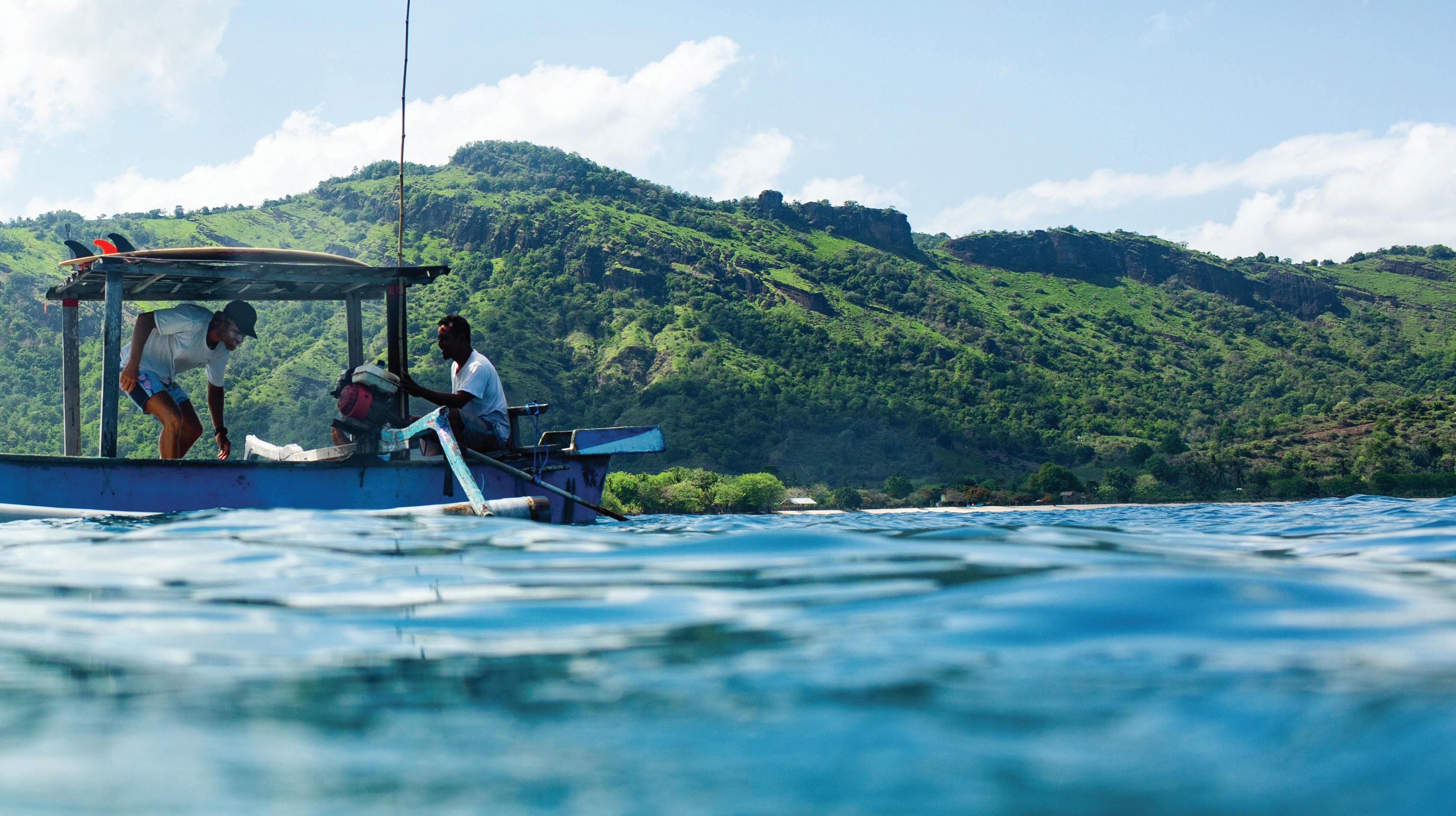
Last year, the Western and Central Pacific Fisheries Commission made history by adopting the first ever Conservation and Management Measure on Crew Labour Standards within a tuna Regional Fisheries Management Organization. The Pacific tuna fishery is the largest fishery in the world, and its vessels often operate far from shore for long periods of time. That means it’s a fishery with high risks of labour abuses and illegal, unreported and unregulated fishing.
This new measure strengthens protections for the welfare, safety and rights of all crewmembers. The commission also adopted Electronic Monitoring minimum standards – including things like onboard cameras and digital reporting tools, which significantly improve transparency and accountability of fishing practices. Effective monitoring is essential for sciencebased fisheries management, helping to verify catches, reduce bycatch, and deter illegal practices.
Together, these decisions represent a major shift toward traceable, transparent and socially responsible fisheries management. A healthy Ocean and human dignity are not competing goals. In 2025, global fisheries governance moved closer to aligning them. This historic decision formally recognises that sustainable fisheries must protect both Ocean ecosystems and the people who work within them.
From the international to the local – this one comes straight from West Sussex in the UK. Since 2021, bottomtrawling has been banned in 117 square miles of water just off the coast of Bognor Regis. And since then, according to divers and fishermen in the area who were interviewed by the BBC last year, marine life has bounced back in a profound way.
Bottom trawling – a fishing practice in which weighted nets are dragged along the seabed – can damage fragile habitats that have been formed over centuries. In interviews with the BBC, West Sussex fishermen said “If a trawlerman is true to themselves they know and can see what they are doing… It has become so aggressive –
we can destroy millions of years of ground in hours.” Since the ban, however, it’s like “someone has clicked a switch” and the difference has been described as “dramatic.”
Underwater ecosystems in the area are rebounding and showing strong signs of recovery, like increased biodiversity and habitat complexity. Divers are reporting visible ecological change, with one telling the BBC, “What we have here is unique and special and I hope it is the blueprint of success we can have elsewhere.”
While small in scope, this story highlights a crucial lesson: marine habitat destruction isn’t permanent. When destructive pressures are reduced, marine ecosystems can rebound surprisingly quickly. In short, protection works – especially when paired with long-term monitoring and community engagement.
As an OCT member, you’ll likely know better than most that seagrass meadows are the secret heroes of the Ocean. They are biodiversity havens, providing a supporting habitat for untold numbers of fish and invertebrates. They also store significant amounts of “blue carbon,” stabilise sediments, and protect coasts from erosion.
All of the above is the basis of why OCT’s flagship conservation programme is Blue Meadows, our seagrass meadow restoration project. So far, we’ve protected over 230 hectares of seagrass – and we’re not planning on slowing down! But last year it became apparent that we’re not alone in our seagrass mission.
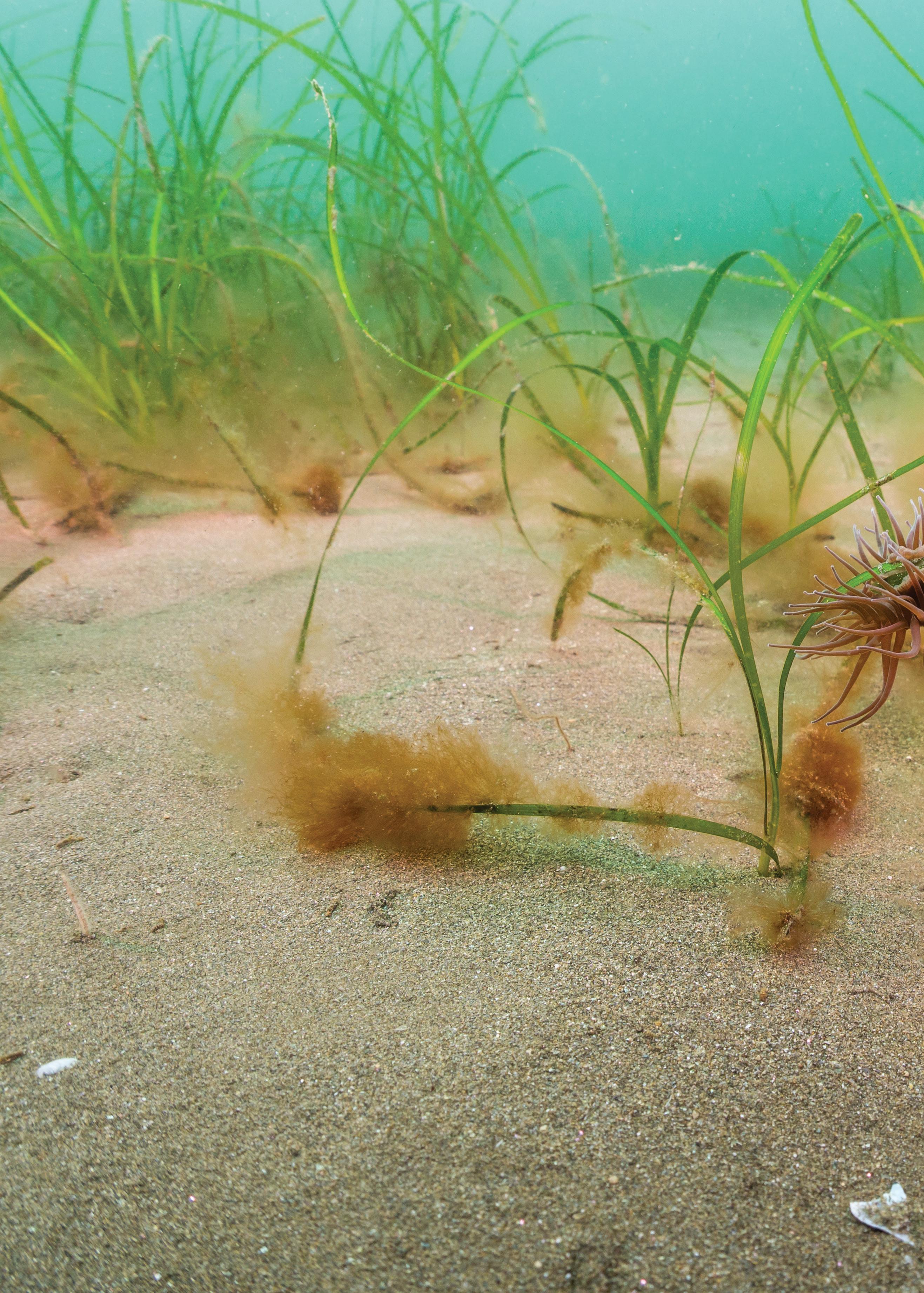
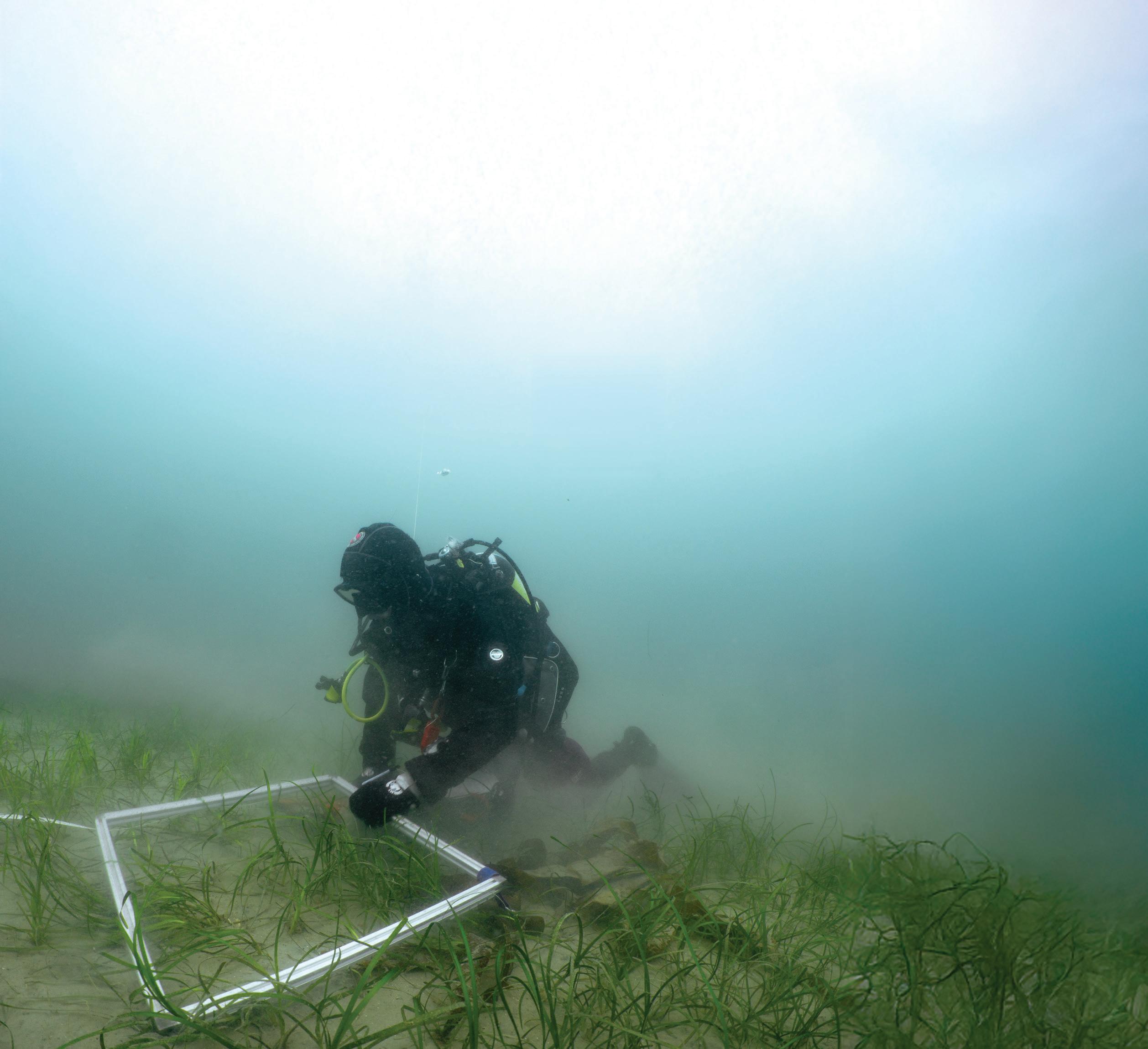
Across the UK, restoration efforts are accelerating. Last year projects run by several Wildlife Trusts saw seagrass cores transplanted in Essex, and meadows in Northumberland’s River Aln and Jarrow’s River Don restored. The Wildlife Trusts also reintroduced seagrass to Hampshire’s River Hamble after a 100year absence. In one project alone, 58,000 seeds were planted, and the organisation reported that European eel have already returned.
And this goes beyond the UK – in Spain, a major new initiative launched last year in the Serra Gelada Natural Park to expand meadows of Posidonia oceanica, one of the Mediterranean’s most important seagrass species.
Through nursery cultivation, seabed planting and long-term monitoring, researchers are working toward rebuilding this vital habitat. In addition, innovative moorings are being installed to prevent anchor damage, which is a common threat in this tourist-heavy coastal area.
Each of these wins is encouraging, but when looked at together, they make meaningful change feel more possible than ever. At-risk species are recovering, more marine areas are gaining protection, and destructive practices are slowly but surely becoming a thing of the past.
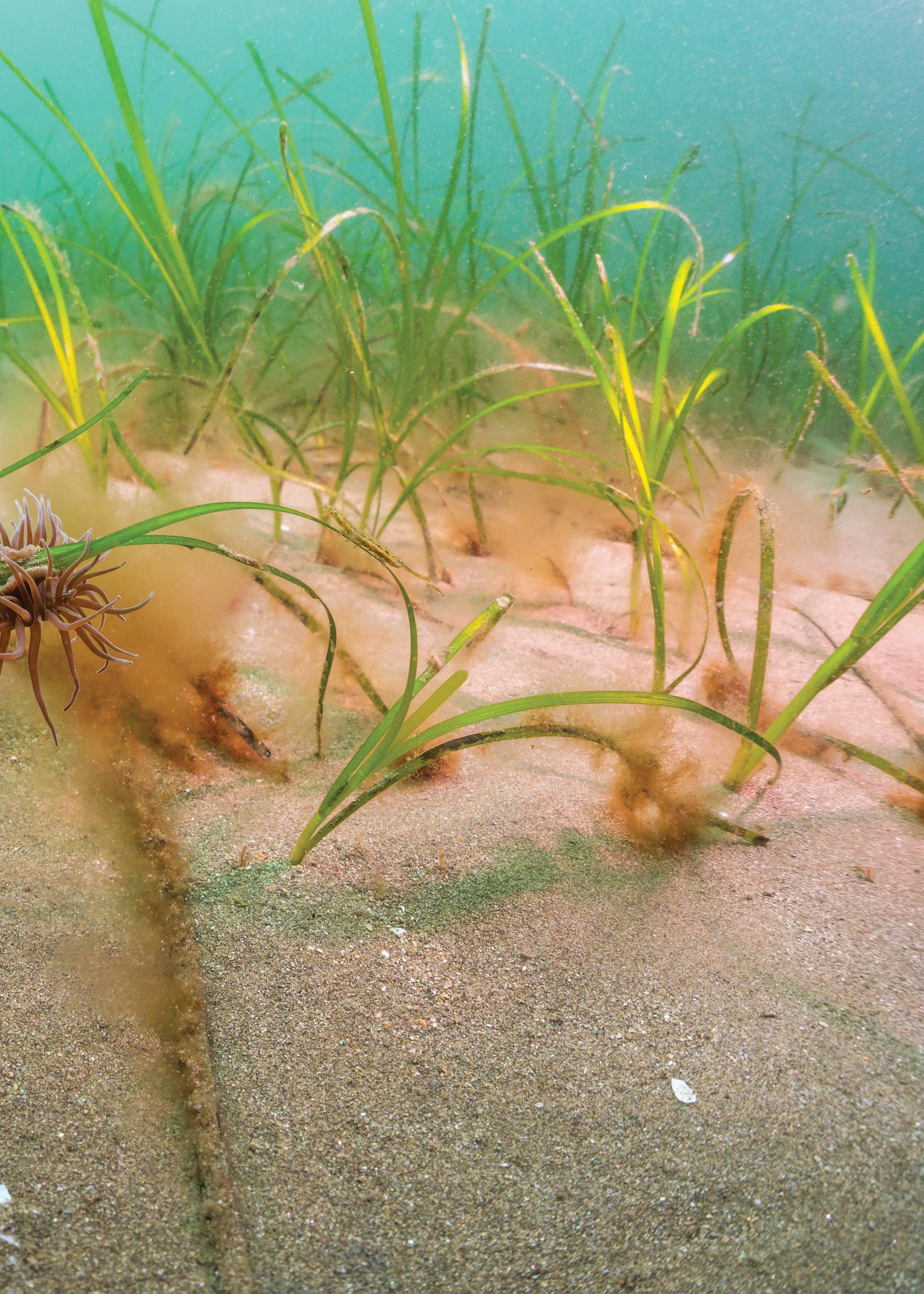
Where habitat restoration has typically been limited to one-off time-constrained projects, there are now signs of perpetual implementation — and ecosystems are showing signs of the benefits!
Of course, climate change isn’t going away, and many species still face severe pressure. But Ocean Optimism isn’t about ignoring these challenges; it’s about getting inspired by the momentum of the various projects and initiatives listed above.
The tide is not just turning – in many places, it already has.
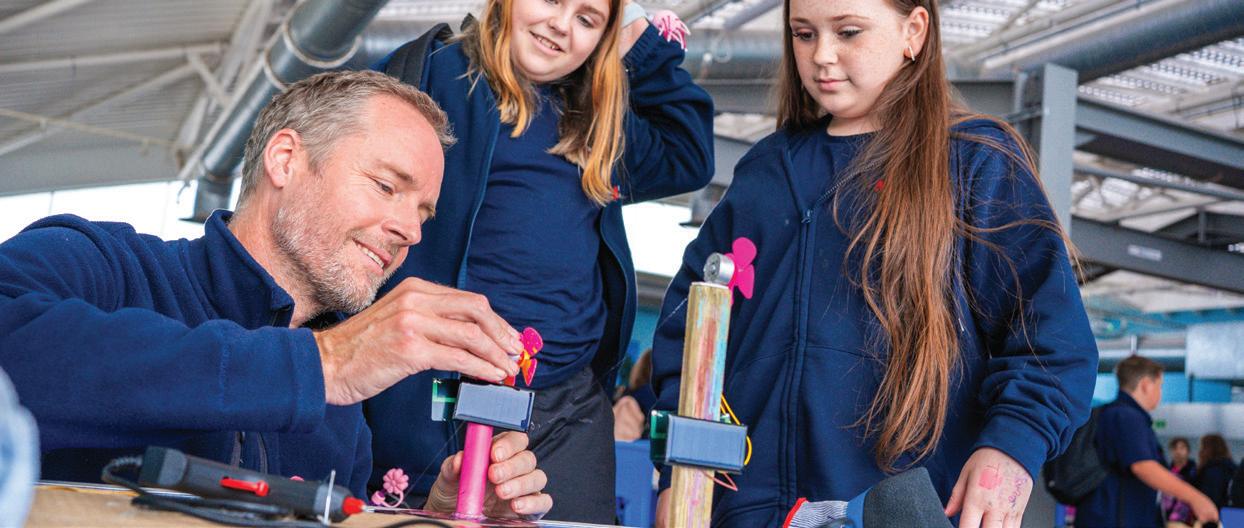
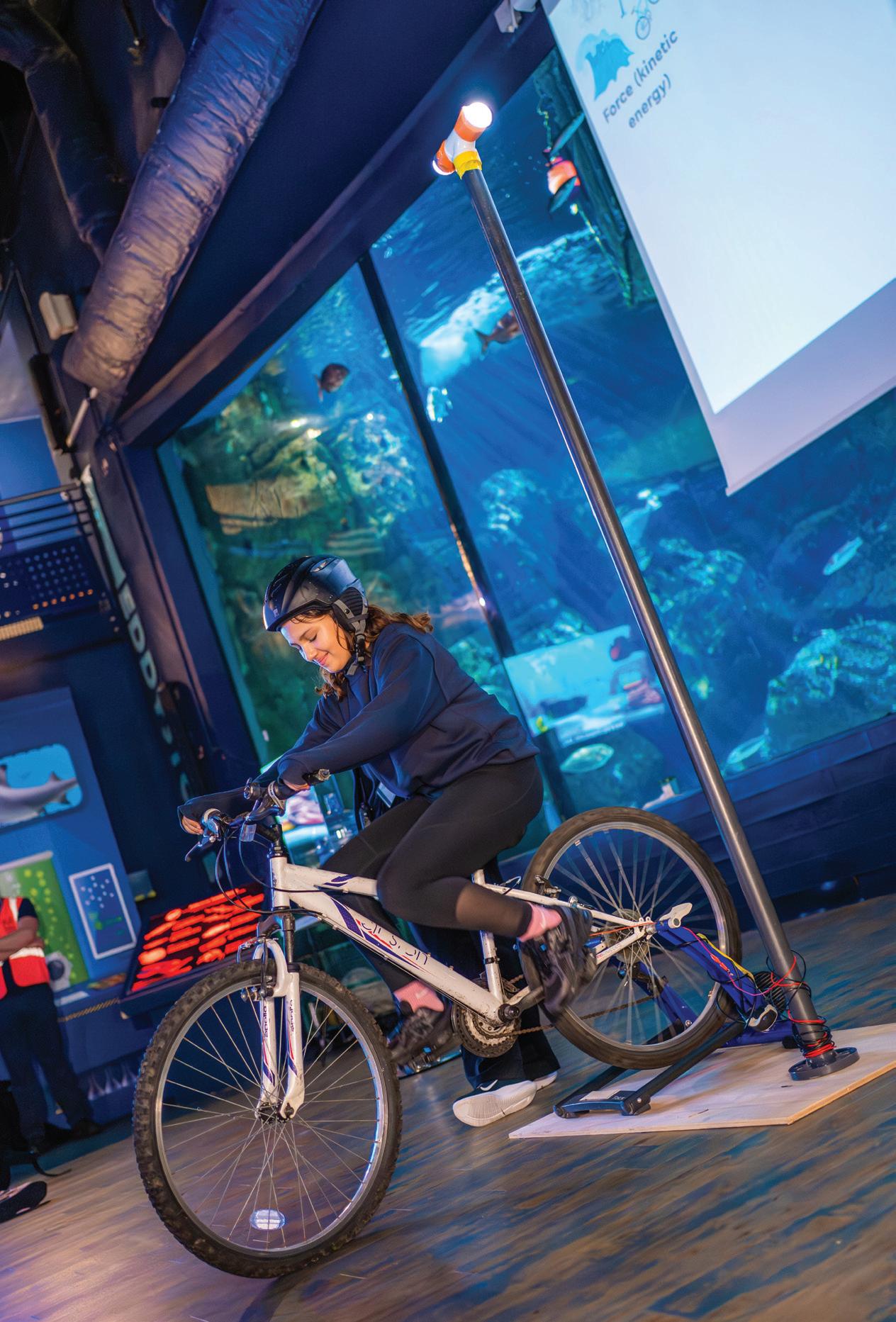
Last year, the Ocean Conservation Trust’s awardwinning Learning Team hosted our biggest ever STEMFest at the National Marine Aquarium, bringing science, technology, engineering and maths to life for literally thousands of young people!
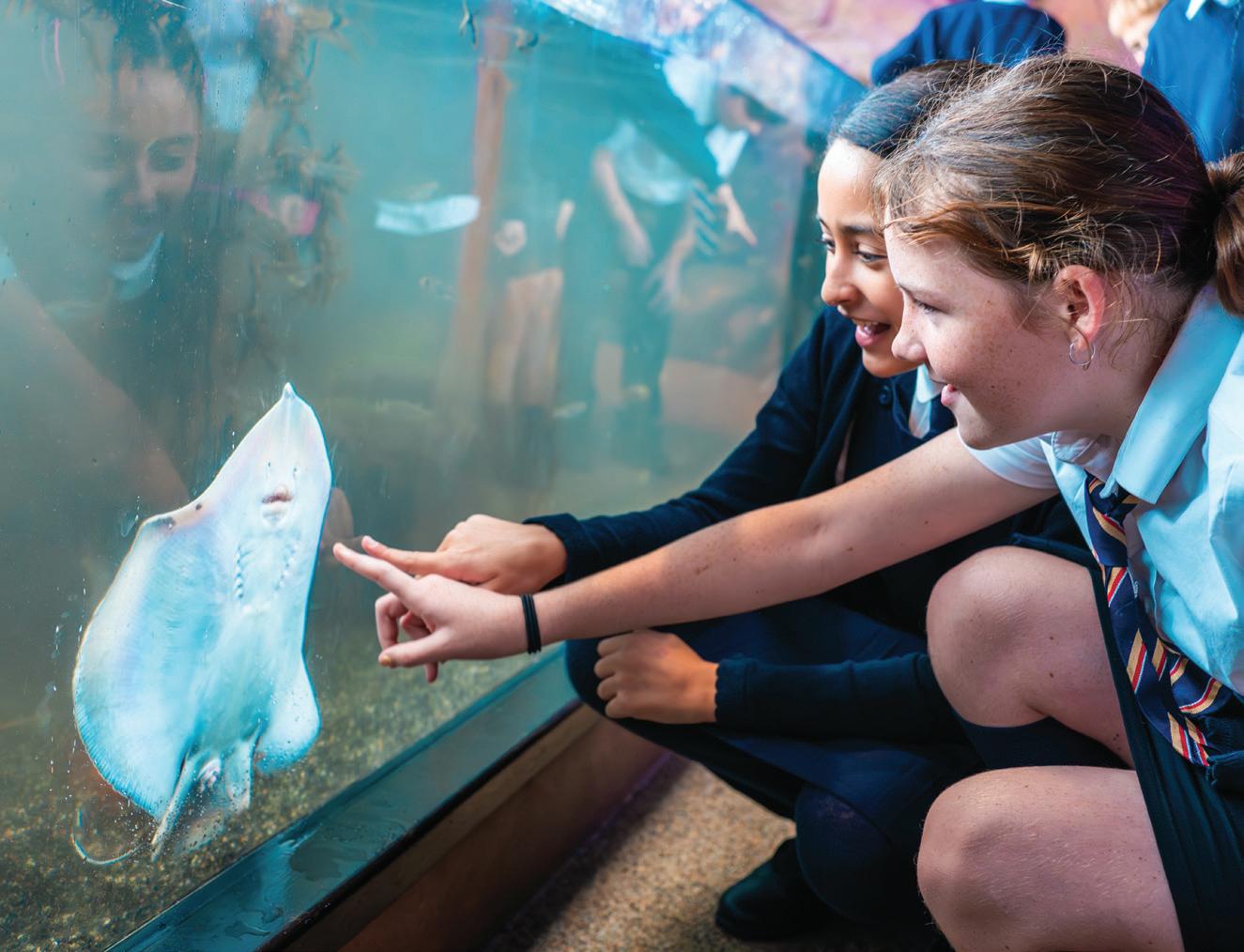
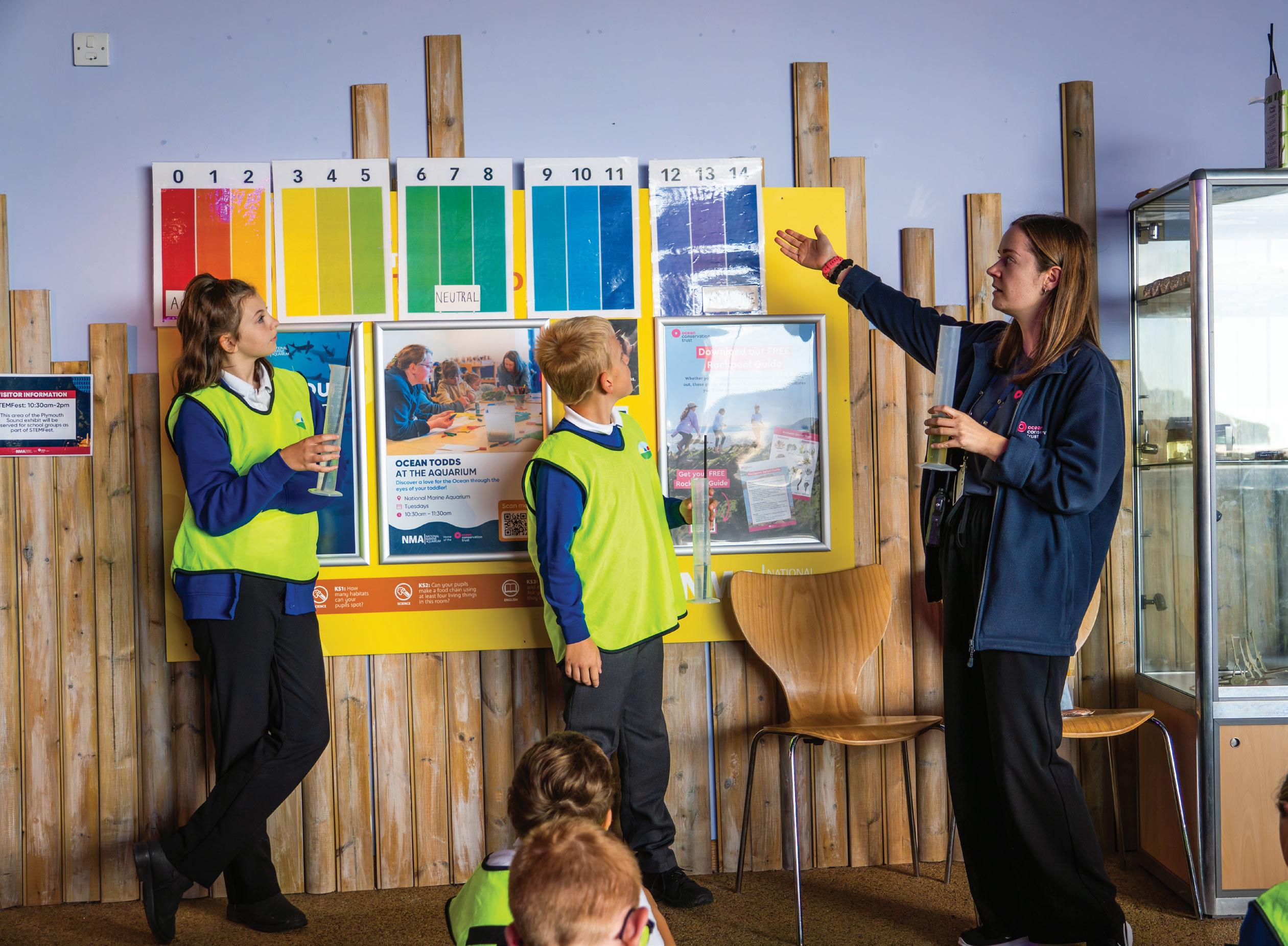
Our educational festival began in 2012, and has been delighting those who take part ever since. But last year OCT’s Learning Team were dreaming bigger than they ever have before and launched the inaugural Ocean Friendly Innovation Project.
The first ever OFIP took the theme of “Ocean Friendly Homes” and provided students with an engaging, hands-on learning experience that explored how everyday choices and practices at home can impact the Ocean. Their task was to design their own Ocean Friendly Innovations – practical, sustainable solutions that help protect the Ocean by addressing common issues such as waste, carbon emissions, or the use of materials in our homes. At the end of the project, one design would be selected to be turned into reality by a range of industry partners.
Becky Dodds, the Learning Programme Coordinator for the Ocean Conservation Trust, said that the team received over 200 designs.
“This has been the largest STEMFest project to date, resulting in the students not just improving their knowledge on climate change, but each finishing the year with their very own solar powered fan and an innovation which was designed by their peers, in the city that they live,” Becky said. “This year’s STEMFest, and any future iterations, will inspire young people that they themselves can make a real and tangible change in the world around them.”
Following the submission of various designs for all kinds of devices and objects, the Learning team are thrilled to announce they’ve selected four runners-up and a winner of the OFIP 2025.

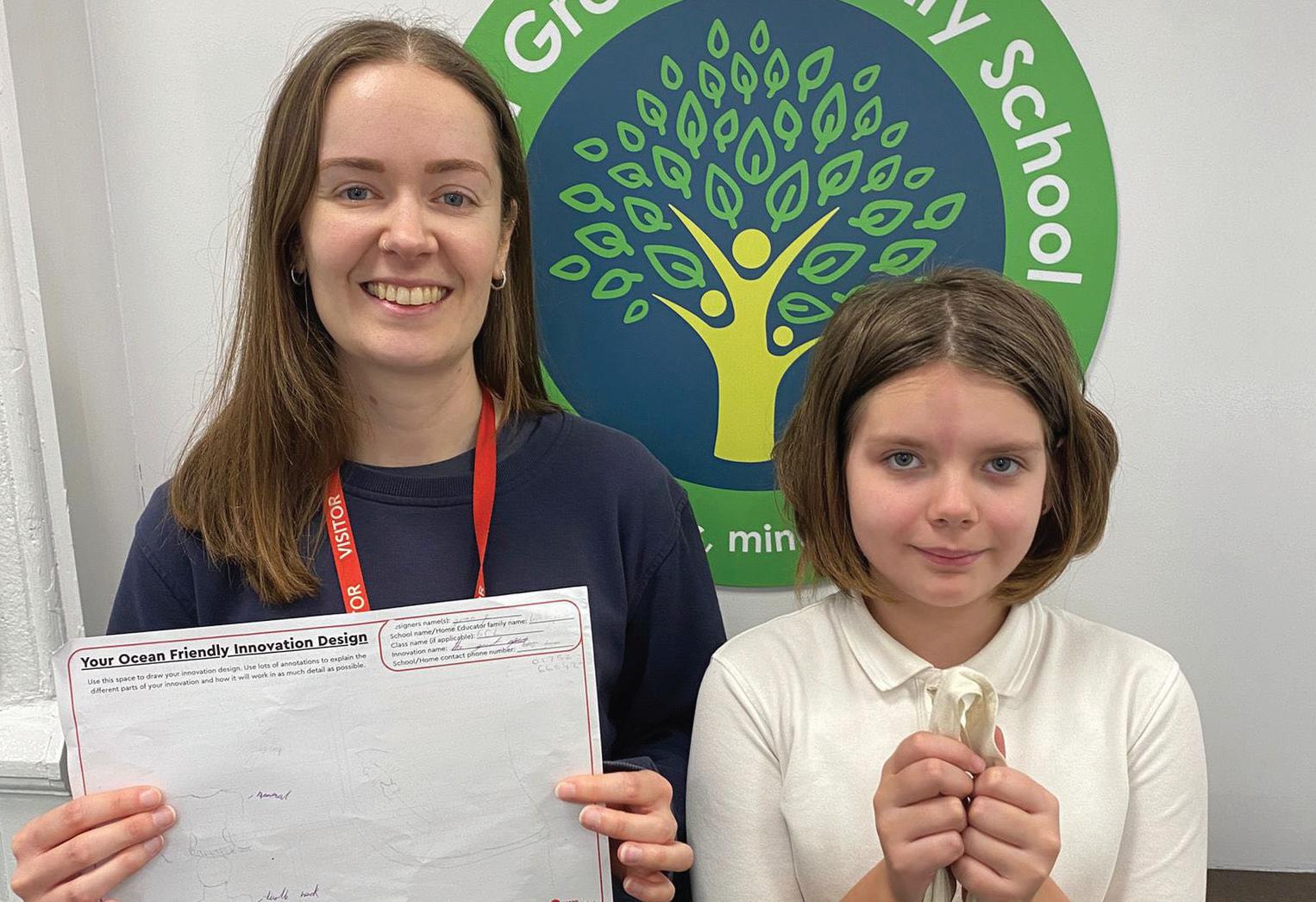
The runners-up were students from Laira Green, Mount Wise, Pilgrim & a home educator, whose designs were inspiring and inspired! These ranged from a fridge that tells you when your food’s about to expire to a vac-pac pocket, so when you litter-pick your pocket never gets full.
The winning design came from students at Plymouth College, who conceived of a thermochromic device that sits in your shower and changes colour if the water is above a certain temperature. The idea is: when it changes colour, it encourages you to turn down the temperature, which is an Ocean-friendly behaviour that everyone can and should adopt.
OCT is now working with a number of local industry partners in an attempt to turn the winning design into a real-life product. In the coming months, the design will be produced at scale, and the students will get to learn how the whole process works.
“The kids are getting that real world experience of what that side of the industry is like,” Becky said. “This wasn’t made by a factory elsewhere and shipped here by some faceless people. This is really hands-on, involved-in-theprocess, aspirational stuff!”
The Ocean Conservation Trust congratulates all the teams whose ideas impressed the judges — stay tuned to see what’s next for the project!
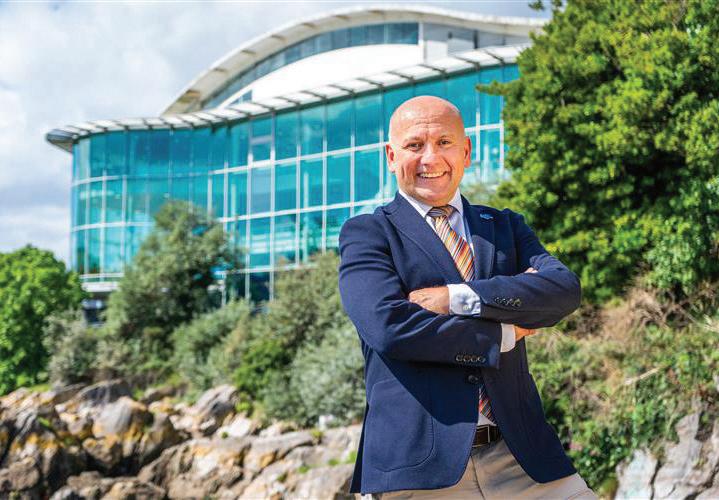
By Ian McFadzen, Chief Executive Officer, Ocean Conservation Trust
When we think about climate solutions, our minds often turn to forests. Trees – their protection and their benefits –dominate headlines, campaigns and policy discussions. Yet beneath our coastal waters lies one of the most powerful natural climate solutions in the UK. Largely unseen, often overlooked, but extraordinary in its potential: seagrass.
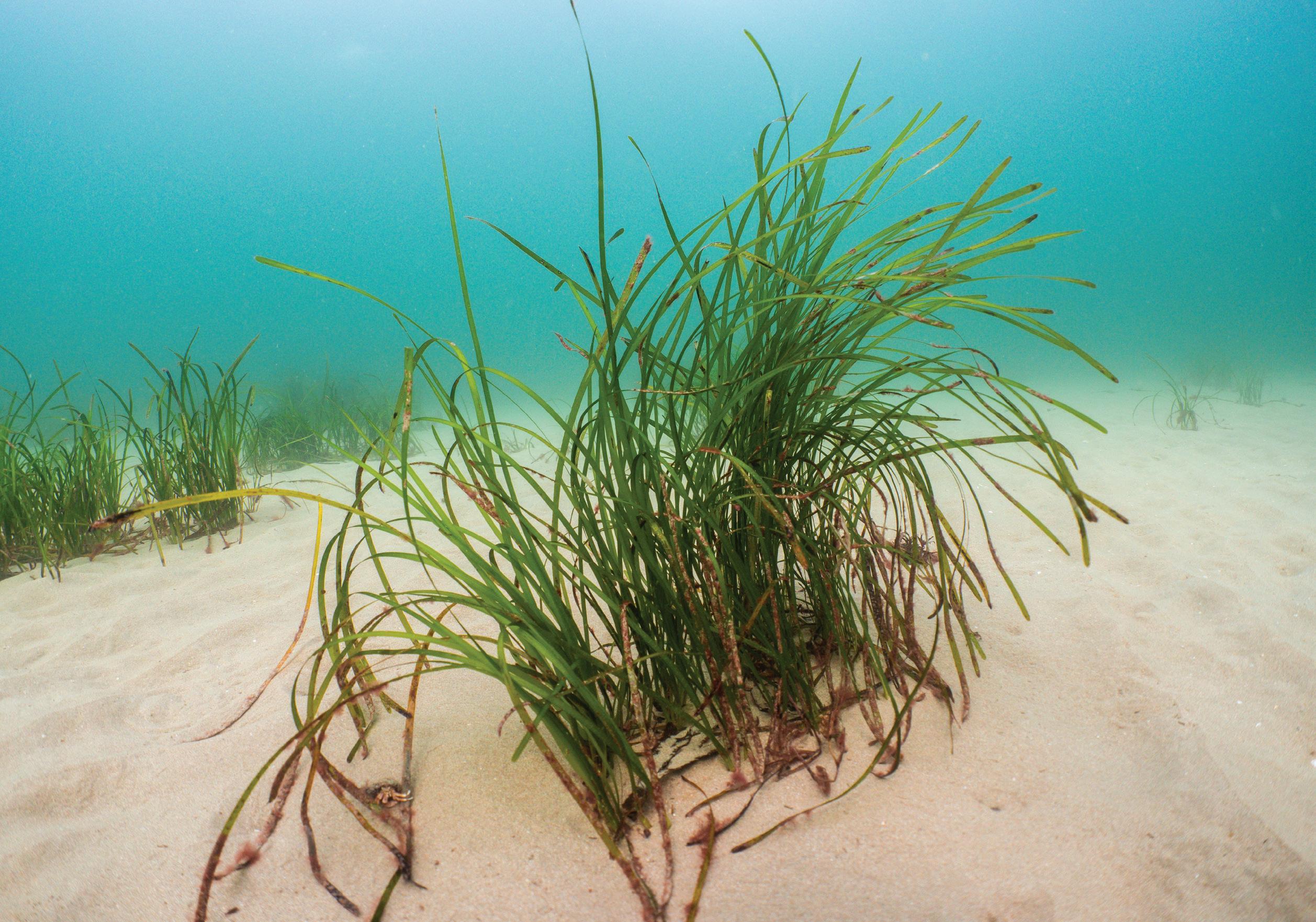
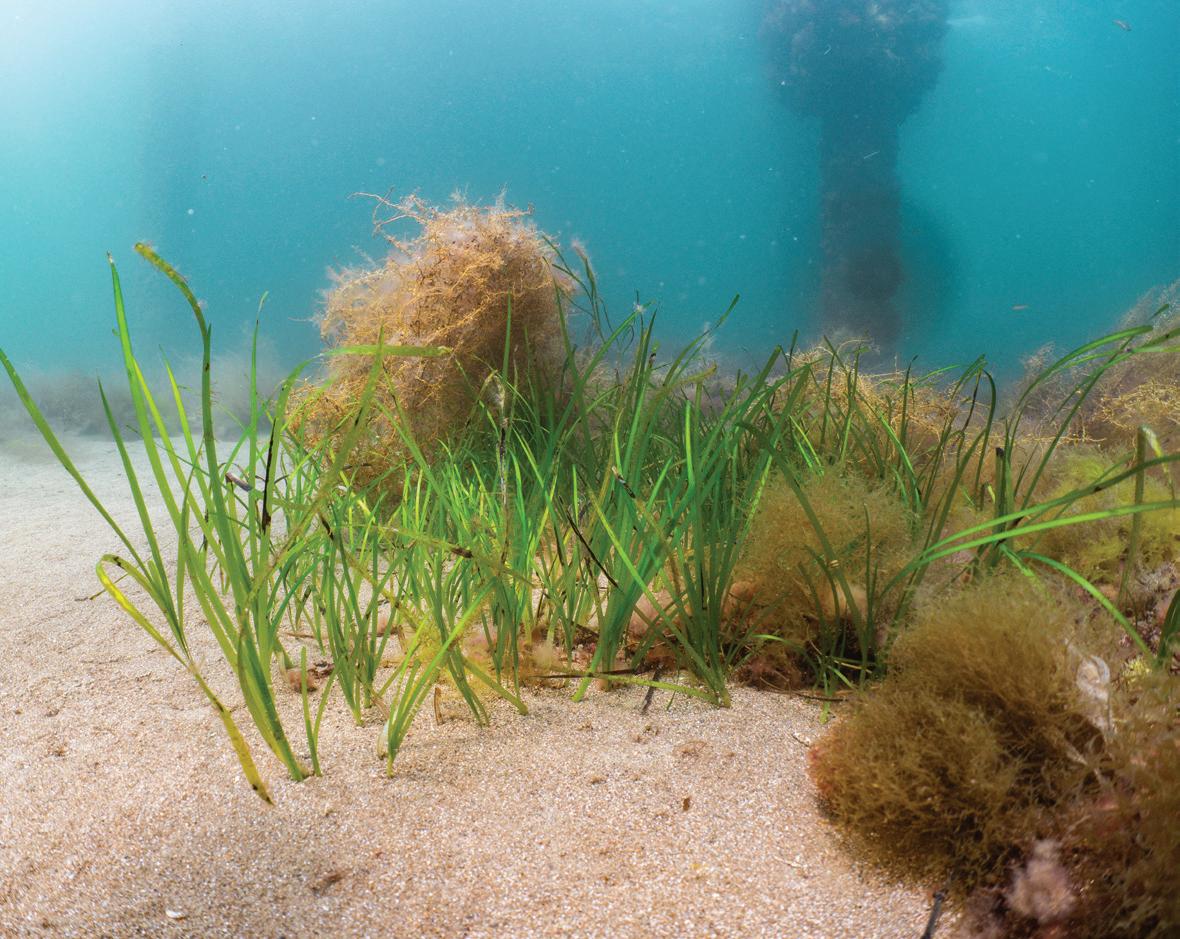
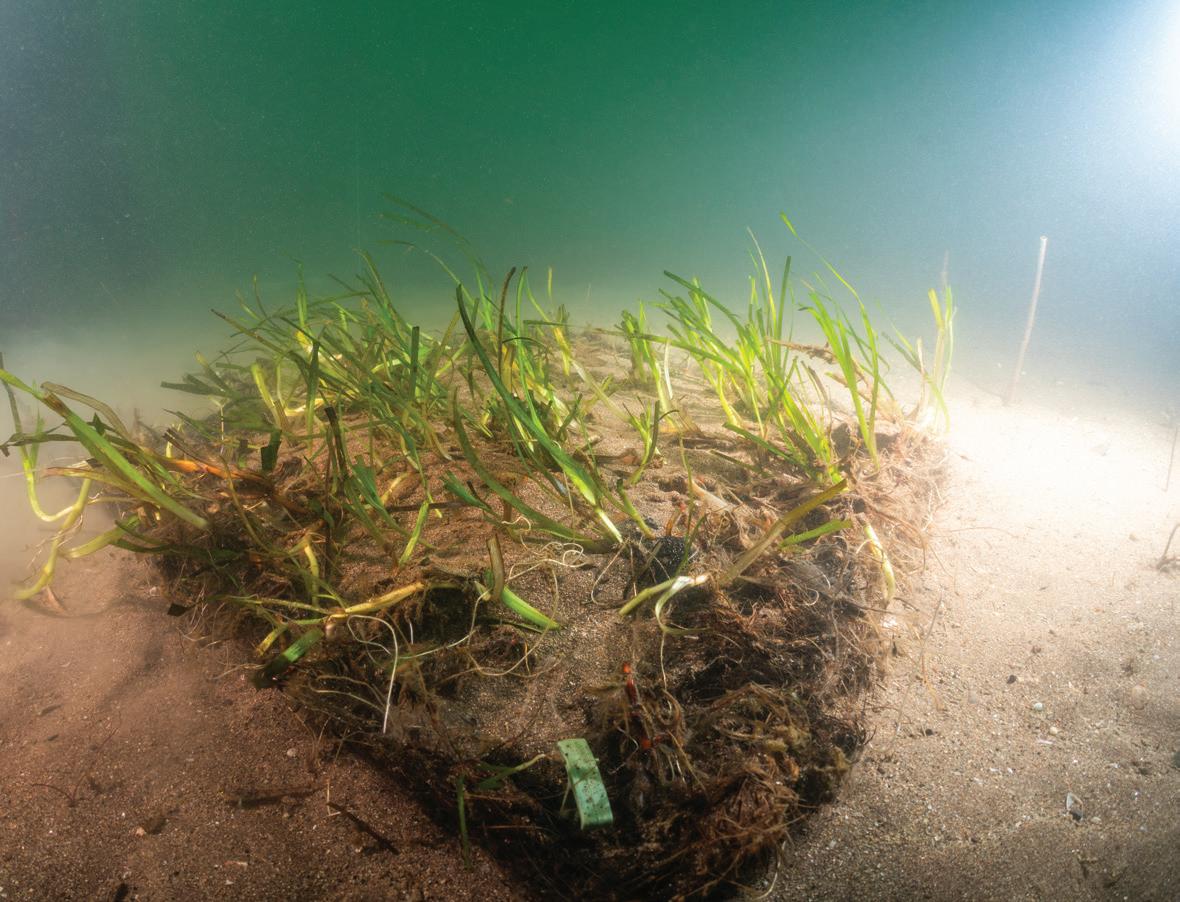
At the Ocean Conservation Trust, we believe seagrass meadows are not simply habitats. They are living infrastructure. They stabilise our coastlines, support fisheries, capture carbon and strengthen biodiversity. Restoring them is not just an environmental ambition, it is a strategic necessity.
Seagrass meadows are among the most productive ecosystems on Earth. Although they cover a relatively small proportion of the seabed, they punch far above their weight.
Healthy seagrass captures and stores significant amounts of carbon in sediments for centuries, and reduces coastal erosion by stabilising seabeds Seagrass improves water quality and provides nursery habitat for millions of invertebrates and commercially important fish species. This miraculous plant increases biodiversity, supporting complex marine food webs.
In short, seagrass is climate mitigation, biodiversity recovery and coastal resilience woven into a single ecosystem.
Yet the UK has lost vast areas of its historic seagrass meadows over the past century due to pollution, coastal development, anchoring damage and declining water quality. What remains is fragmented and vulnerable. Restoration is no longer optional; it is urgent.
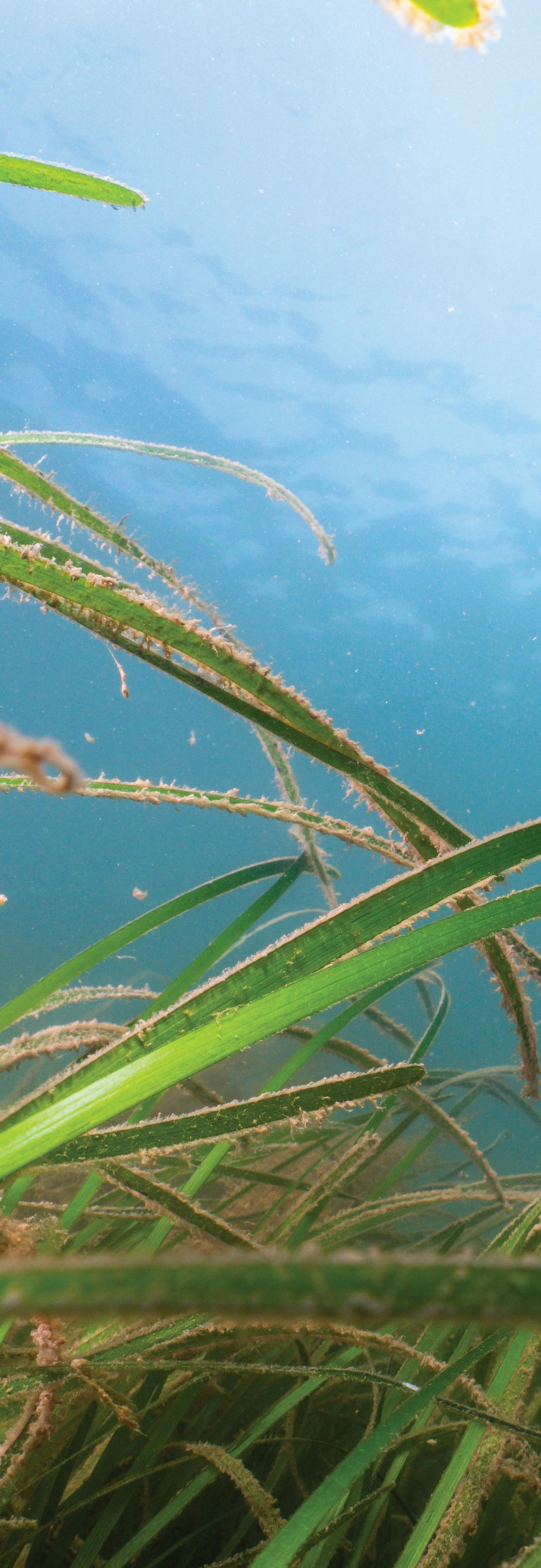
Through our Blue Meadows programme, the Ocean Conservation Trust is leading practical, science-led seagrass restoration across the UK. This is not symbolic planting. It is evidence-based habitat recovery.
Working with marine scientists, divers and coastal partners, we collect seeds sustainably, under licence, cultivate them in specialist nursery systems and replant them in carefully selected sites where conditions allow long-term recovery. We monitor survival rates, sediment stability and ecological return, ensuring that restoration is measurable and durable.
But restoration is not simply about hectares planted. It is about systems rebuilt. Where seagrass returns, marine life returns. Where biodiversity increases, resilience grows. Where resilience grows, coastal communities are better protected. This is natural capital in action.
Seagrass is often described as “blue carbon” habitat, ecosystems that capture and store carbon in marine environments. Unlike terrestrial forests, much of seagrass carbon is stored below ground in sediments. When meadows are healthy and undisturbed, this carbon can remain locked away for centuries. When they are damaged, that stored carbon can be released.
Restoration therefore delivers dual benefits: it increases future carbon capture and protects existing carbon stores. As climate pressures intensify, restoring seagrass offers a pragmatic, nature-based solution that complements emissions reduction. It is not a substitute for decarbonisation, but it is an essential ally.
At the Ocean Conservation Trust, restoration is only one part of our strategy. We pair habitat recovery with ocean literacy and advocacy. Why? Because ecological recovery requires social support. Through our education programmes and public engagement at the National Marine Aquarium, we connect people directly to these living systems. Outside of the aquarium, we embed ourselves in communities across the Westcountry, working with local stakeholders to enhance people’s relationship with the Ocean. Those who we work with learn that seagrass is not seaweed. They discover its role in climate regulation and fisheries. They begin to understand how local actions influence coastal health. When people understand, they care. When they care, they advocate.
This informed support strengthens policy conversations, improves protection frameworks and increases momentum for long-term investment in marine recovery. Seagrass restoration is therefore not only ecological work. It is civic work. It builds a constituency for the Ocean.
As a member, you are helping to power this recovery.
Your support enables us to:
· Operate specialist nursery systems
· Train restoration teams and divers
· Undertake monitoring and research
· Deliver education that translates science into behavioural change and action
· Advocate for stronger protection of marine habitats
Every restored meadow begins with belief. A belief that the Ocean can recover, and belief that practical solutions exist. Seagrass offers something rare in environmental discourse: credible optimism. It shows that loss can be reversed. That science can guide restoration. That communities can participate in recovery. That climate resilience can be strengthened through nature itself.
The story of seagrass is not yet widely told. It does not dominate headlines in the way that rainforests do. But it should.
Britain’s coastline holds enormous potential for ecological recovery. With sustained effort, collaboration and public support, we can rebuild living marine systems that benefit wildlife, climate and coastal communities alike. Large scale restoration is necessary, but requires collaboration, resourcing and technological innovation, to be cost effective and impactful.
The next time you visit the National Marine Aquarium, remember that beyond the exhibits and tanks lies real-world restoration happening in our waters. Seeds are being cultivated. Meadows are taking root. Habitats are beginning to heal.
If you believe in practical climate solutions, share this story. Bring someone to the Aquarium. Talk about seagrass. Help us widen the circle of understanding and support. Be an ocean advocate.
Because hidden beneath the waves is one of Britain’s most powerful climate allies. And together, we are bringing it back.