BIOPLASTIC REMAINS PLASTIC:
Bio-based, biodegradable and compostable plastics
False solutions to the plastic crisis in the ocean
November 2022
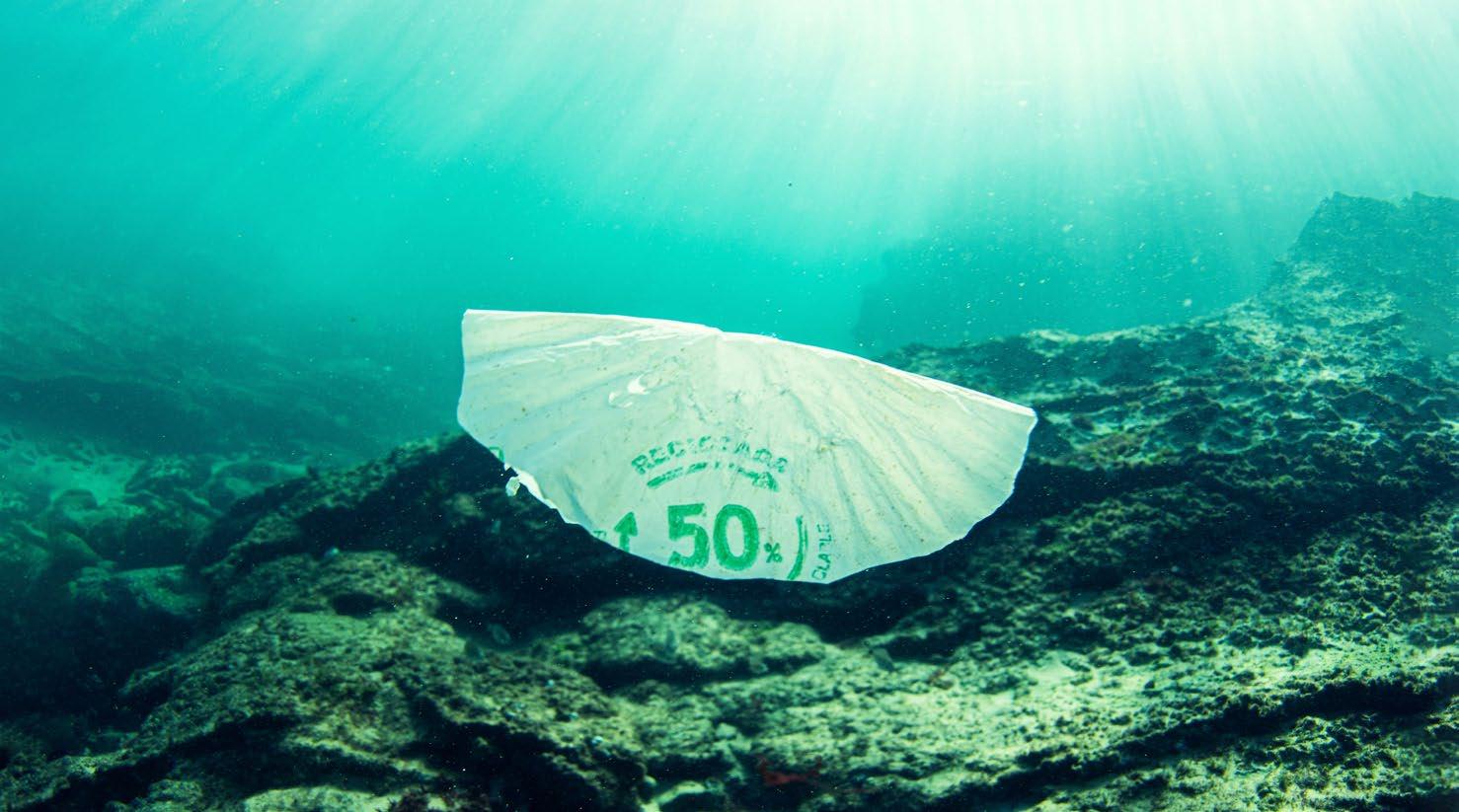
New plastic products made of bio-based, biodegradable, or compostable plastics a,1,2 (hereafter “bioplastics and compostable plastics”; see Box 1) are increasingly being presented as a ‘sustainable’ alternative to conventional plastics and as the solution to the plastic crisis – including marine plastic pollution. The use of bioplastics and compostable plastics has grown substantially in recent years. 3 This increase partly reflects the growing popularity of ‘corporate social responsibility’ (CSR) and, more recently, ‘environmental, social, and governance’ (ESG) as business promotion tools, with companies frequently making claims about their products being “green”, “environmentally friendly”, “biodegradable”, or “100% compostable”.4 In the case of bioplastics and compostable plastics, such claims are misleading and offer a false solution to the marine plastic crisis. Here, Oceana details the reasons why these materials pose a threat to the marine environment, and why it is therefore unlikely that their use can reverse the tide of plastic pollution at sea, pursuant to the objectives of the European Union Single-Use Plastics Directive ((EU) 2019/904). b
The exponential growth in global plastic production 6,c has led to increased amounts of plastic waste in the environment, polluting and harming marine ecosystems to an alarming extent. Annual plastic flows to the ocean are expected to grow from 11 million metric tons in 2016 to 29 million metric tons in 2040 if no action is taken. 7 Over 80% of the annual input of plastics comes from land-based sources, with drink bottles, bags, and other plastic packaging representing the main types of items. 8,9,10
BOX 1: Types of bioplastics and compostable plastics
Bio-based plastics are fully or partly made from biological raw materials as opposed to the fossil raw material (oil) used in conventional plastics. They can be either biodegradable or non-biodegradable.
Biodegradable plastics are designed to biodegrade in a specific medium (water, soil, compost) under certain conditions and in varying periods of time.
Industrially compostable plastics are designed to biodegrade in the conditions of an industrial composting plant or an industrial anaerobic digestion plant with a subsequent composting step.
Home compostable plastics are designed to biodegrade in the conditions of a well-managed home composter at lower temperatures than in industrial composting plants. Most of them also biodegrade in industrial composting plants.
Non-biodegradable plastics last for long periods of time. They can disintegrate into smaller pieces, forming microplastics, and accumulate in the environment.
Adapted from European Environment Agency, 20205 a
The term “bioplastic” comprises bio-based plastics or biodegradable plastics (Abioye et al . 2018; European Bioplastics 2018).
b c
Article 1. Directive (EU) 2019/904 of the European Parliament and of the Council of 5 June 2019 on the reduction of the impact of certain plastic products on the environment “The objectives of this Directive are to prevent and reduce the impact of certain plastic products on the environment, in particular the aquatic environment, and on human health, as well as to promote the transition to a circular economy with innovative and sustainable business models, products and materials, thus also contributing to the efficient functioning of the internal market”.
Global production of plastics has followed a clear exponential trend since the beginning of mass plastic consumption and production in the 1950s. Global production stood at 311 million tonnes in 2014, and is projected to reach around 1800 million tonnes in 2050 (Gallo et al. 2018).
1 2016 11 M 29 M metric tons 2040 metric tons 29 M metric tons 2040
land-based sources Over of the annual input of Increase of annual plastic flows to the ocean plastic comes from
© OCEANA / Juan Cuetos
As emphasised in the EU Single-Use Plastics Directive, in the Union, 80-85% of marine litter is plastic, of which half comprises single-use plastic items. However, these estimates are based on counts of beach litter, which significantly underestimate the real extent of marine plastic waste; floating and beached plastics represent only 1% and 5%, respectively, of the plastic that enters the ocean, while 94% of marine plastic pollution ends up on the seafloor. 11,12 Focusing only on beach litter also fails to properly reflect the types of plastic items that most commonly pollute the marine environment.





Bags, wrappers, and food containers are the most common plastic items found along shorelines and in nearshore waters, while bottles and bags are the main plastic items found on the deep seafloor. 12
The extent of plastic pollution in the marine environment is of mounting concern because of its persistence and damaging effects on ocean ecosystems, wildlife, and eventually humans. 11 Studies have shown that no marine species, regardless of size, are safe from the hazard posed by plastic debris in their habitats. 1 In this sense, the European Commission’s Joint Research Centre has concluded that there is evidence of negative physical and/or mechanical impacts from ingestion of plastic on the condition, reproductive capacity, and survival of marine organisms. 6 Nor are humans immune to the damaging effects of ocean plastics, which can enter our food chain, causing human reproductive problems, hormonal problems, kidney damage, nervous system damage, and cancer. 1
Despite numerous studies that illustrate the wide range of plastic polymer types found in seawater, sediments, and biota, the proportion of ‘non-biodegradable’ versus ‘biodegradable’ plastics in the ocean is not known. Nevertheless, concerns have been raised about the potential consequences of biodegradable plastics for
marine environments. 12 These impacts are likely to become more widespread, given that global bioplastics production capacities are projected to increase from around 2.42 million tonnes in 2021, to approximately 7.59 million tonnes in 2026 ( Figure 1 ). 13






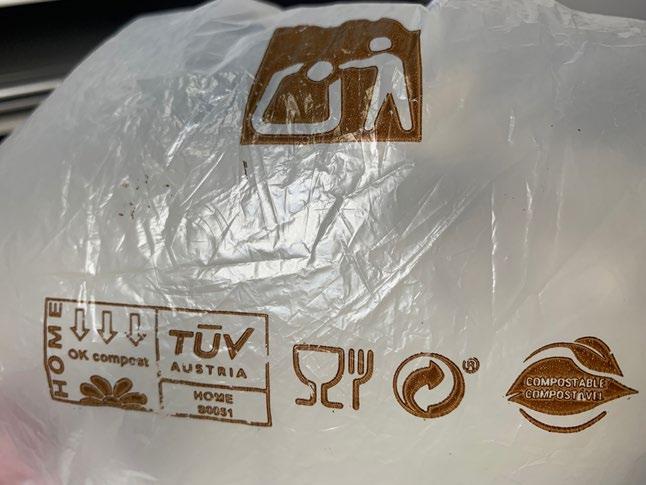
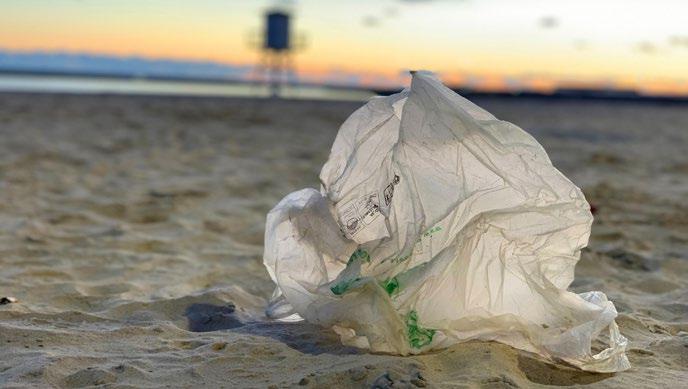
Furthermore, littering rates may actually be higher for bioplastics than for conventional plastics, because people wrongly believe they are less harmful to the environment. 14 Once biodegradable plastics enter the ocean, however, they are likely to have similar pathways and sinks to conventional non-biodegradable plastic items. 15 Additional problems with biodegradable and compostable plastics arise due to a lack of clear labelling for consumers. Such materials are not intended to be recycled, and can contaminate the waste stream if they are sent to recycling facilities, intermixed with conventional plastics. 16
From a European policy perspective, in view of the review of packaging rules (e.g., the EU Packaging Directive (94/62/EC)) and the EU policy framework on biobased, biodegradable and compostable plastics, it is also important to highlight that much of the biodegradable plastics market is focused on packaging (47% of the total bioplastics market in 2020), 17 as well as on singleuse consumer products and horticultural applications. Considering that packaging is expected to remain the largest market segment for bioplastics in the near future, its impacts on the ocean are of great concern.


As detailed below, the degradation of plastics depends not only on the specific material itself, but also on the environmental conditions where it is disposed. Plastic products may be biodegradable on land but not at sea, and even if they do eventually degrade in the ocean, the process may require so much time that marine habitats and species are nevertheless damaged, over the course of years or centuries.

2
in 1,000 tonnes 0 7,000 6,000 5,000 4,000 3,000 2,000 1,000 2,087 1,239 864 1,205 1,101 1,553 3,694 2020 2021 Bio-based/non-biodegradable Forecast Biodegradable Total capacity 2022 2023 2024 2025 2026 2,417 4,719 5,217 1,150 2,140 2,297 4,360 4,583 5,297 5,510 6,723 7,594 in 1,000 tonnes 0 7,000 6,000 5,000 4,000 3,000 2,000 1,000 2,087 848 1,239 864 1,205 1,101 1,553 3,694 4,116 2020 2021 Bio-based/non-biodegradable Forecast Biodegradable Total capacity 2022 2023 2024 2025 2026 2,417 4,719 5,217 1,150 2,140 2,297 4,360 4,583 5,297 5,510 6,723 7,594
Figure 1: Global production capacities of bioplastics. 2022-2026: Forecast. Source: European Bioplastics, nova-Institute (2021)13.
Biodegradable
1. NOT ALL BIOPLASTICS ARE BIODEGRADABLE
Bio-based plastics are frequently marketed as being a ‘green’ alternative because they are fully or partially made from renewable, plant-based resources, rather than fossil raw materials. However, this does not necessarily mean that they are compostable or biodegradable (see Figure 2),2,29 as biodegradability does not depend on the source components of a material, but rather on its chemical structure. 2 For example, polyethylene terephthalate (PET), the mostly widely used material for plastic beverage bottles, can be produced from plant-based sources such as sugarcane – but the resulting plastic is chemically identical to petroleum-based PET. 18 It is therefore equally damaging to the ocean, despite consumer labelling that suggests it is ‘eco-friendly’ or ‘sustainable’.
Bioplastics and degradation
Bio-based
Non-biodegradable and bio-based (eg) bio-based Polyethylene (bio-PE), bio-based Polyethylene terephthalate (bio-PET), bio-based Polyamide (bio-PA)
Biodegradable and bio-based (eg) Polylactic Acid (PLA), Polyhydroxyalkanoates (PHA), Starch blends
Nonbiodegradable Biodegradable
Conventional plastics (eg) Polyethylene (PE), Polypropylene (PP), Polyethylene terephtalate (PET)
Biodegradable and fossil fuel based (eg) Polybutylene and adipate terephthalate PBAT (PBAT), Polycaprolactone (PCL)
Fossil -based
According to the EU Single-Use Plastics Directive definition (Article 3), “biodegradable plastic means a plastic capable of undergoing physical, biological decomposition, such that it ultimately decomposes into CO2, biomass and water, and is, in accordance with European standards for packaging, recoverable through composting and anaerobic digestion”.

2. NOT ALL ‘BIODEGRADABLE’ PLASTICS WILL BIODEGRADE AT SEA
Biodegradability depends not only on the properties of the plastic material itself, but also on specific environmental characteristics. A wide range of abiotic and biotic factors affect the possibility and rate of degradation, 1,19 and environmental conditions must be suitable in order for biodegradation to take place. Many bio-based plastic products will only actually biodegrade in certain specific environments, or in industrial composting facilities, rather than in the natural environment (see Figure 3 ). 20
3
Figure 2: Bioplastics and degradation. Adapted from Environmental Investigation Agency (2018)29.
© OCEANA / Pilar Marín
© OCEANA / Pilar Marín
In the ocean, biodegradation of plastics can occur if bacteria present in seawater consume a major portion of the plastic within a short timeframe.21 In reality, however, not all types of ‘biodegradable’ plastics actually biodegrade in the marine environment. Recent research indicates only
Biodegrades Does
Unknown
Renewable
PBS Polybutylene succinate
TPS Thermoplastic starch
Fossil fuel-based raw materials
PBAT Polyburyrate adipate terephthalate
marginal degradability of bioplastics at sea,22 and shows that some biodegradable plastics (such as polylactic acid, PLA) do not in fact degrade any faster in seawater than do petroleum-based plastics.3
Home composting 3 - 6 months 28 ºC 35 ºC Anaerobic digestion Industrial composting Managed facilities Single-stage: 14 days Two-stage: 15 - 40 days Marine 30 ºC 21 ºC Soil 25 ºC Anaerobic aquatic digestion Fresh water Natural environment
Figure 3: Bio-based plastics and their biodegradation. Source: UNEP 2021, adapted from Narancic et al. 2018, illustrated by GRID-Arendal 20 .
Even for those plastics that do biodegrade, the required time can vary for the same type of plastic, depending on the characteristics of the ecosystem where it is found. 23 One key factor is temperature: biodegradation occurs more slowly under colder conditions. 15 For this reason, tests conducted using warmer-water conditions are likely to overestimate the real extent of biodegradation in many marine ecosystems. Furthermore, tests do not typically reflect other environmental aspects of certain marine areas where plastics typically accumulate – such as the deep sea, which is characterised by low levels of oxygen and nutrients, and high levels of pressure. 19 Testing standards to determine which plastics are considered biodegradable should therefore be adapted to better replicate the actual conditions in marine areas where plastics are found.
Considering that not all types of bioplastics actually degrade under marine environmental conditions, 3 the widespread use of such materials is clearly not a solution to the ocean plastic crisis, and in fact is likely to lead to continued pollution and undesirable impacts. 12
Oceana recommends prioritising approaches to reduce, reuse, and recycle plastics, rather than those that rely on plastic biodegradation, in line with recent expert recommendations to the European Commission. 19
While biodegradable plastics are intended to break down over time, for how long can a plastic item persist in the marine environment and still be considered biodegradable? Article 15 of the EU Single-Use Plastics Directive states that decomposition should happen “ within a timescale short enough for the plastics not to be harmful to marine life and not to lead to an accumulation of plastics in the environment ”. The EU Packaging Directive does not even mention a timeframe; its Annex II merely states that “ Biodegradable packaging waste shall be of such a nature that it is capable of undergoing physical, chemical, thermal or biological decomposition such that most of the finished compost ultimately decomposes into carbon dioxide, biomass and water .”
© OCEANA / Pilar Marín
Experiments have shown that even after three years, the majority of biodegradable plastics fail to show any degradation in the marine environment or to meet biodegradability standards (such as those of the International Organization for Standardization or the American Standard Test Method). 20 Under such standards, plastic materials must demonstrate disintegration and inherent biodegradation during marine water exposure and must not exhibit any adverse environmental impacts on the survival of marine organisms while in the marine environment. 21
4
50
ºC
raw materials Biodegradation according to ISO and ASTM standards 6 - 12 weeks
- 70
PLA PLA Polyactic acid not biodegrade
PHA - PHB Polyhydroxybutyrate
PCL Polycaprolactone
3. SLOW DECOMPOSITION RATES AT SEA ALLOW ENVIRONMENTAL DAMAGE
Biodegradation of Polylactic acid (PLA)
decreased by after 600 days only 2.5%
by 3% and 4% during 180 days
The mass of PLA in simulated marine environmental conditions only biodegradate PLA bottles and bags in the marine environment
The decomposition of typical waste items made of plastic (e.g., bottles, bags, six-pack rings, and straws) can take centuries in the ocean.24,25 Polylactic acid (PLA) is one of the major bio-based and biodegradable plastics available on the market, and is used mainly as a packaging material.25,26 Some PLAbased materials can be biodegradable and may show greater degradability than conventional plastics.26 However, if discarded in the marine environment, such polymers can take centuries to break down.27 For example, a laboratory experiment showed that the mass of PLA decreased by only 2.5% after 600 days in simulated marine environmental conditions.28 Similarly, studies suggest that PLA bottles and bags only biodegrade by 3% and 4%, respectively, during 180 days in the marine environment.21,33

There are currently no standards that stipulate pass/ fail criteria for marine biodegradation. 29,d Previous ASTM standards (which have since been withdrawn and not replaced) stated that materials could be defined as biodegradable in the marine environment if they partially biodegraded within six months. 30 That timeframe, however, is long enough that the marine environment – and associated wildlife – can be harmed. Moreover, setting a standard based on partial biodegradation of plastics overlooks the fact that the environmental impact of discarded plastics is correlated with the time taken for complete polymer breakdown. 12
4. MARINE ENVIRONMENTAL
CONDITIONS
Compostable plastics, according to the United Nations Environment Programme, are those plastic materials that biodegrade at elevated temperatures in soil, under specified conditions and over timeframes that usually only occur in industrial composting facilities.12 Such conditions are extremely unlikely, if not impossible, in the marine environment.
The biodegradation of an object that occurs rapidly over weeks in composting facilities can take many months or years in the environment, depending on the environmental conditions. As an example, the half-life (the time taken to reduce by half) of a home-compostable, 20 µm thick plastic film, tested in both tropical (Southeast Asia) and warm-temperate (Mediterranean) marine field conditions, ranged from 5.5 months to nearly 3 years on the shallow water seafloor and from approximately 1 year to more than 4 years in the water column.15
Consequently, like many ‘biodegradable’ plastics, ‘compostable’ plastic products are unlikely to contribute significantly to reducing the increasing flow of plastic pollution to the ocean. In addition, they require specific
The issue of degradation time is extremely important and needs to be properly considered when defining criteria and standards for ‘biodegradable’ plastics. Critically, maximum degradation times permitted for biodegradables should be short enough to ensure that they do not produce any harmful effects on biota and/ or the environment. e
D7081 Standard Specification for Non-Floating Biodegradable Plastics in the Marine Environment, covering shallow and deep salt water and brackish water, was withdrawn in 2014 and not replaced ( https://www.astm.org/d7081-05.html ).
For example, according to Narancic et al . 2018, residence time for polymer blends of PHB (Polyhydroxybutyrate) commonly used in packaging may last up to eight months in the marine environment.
DO NOT FACILITATE COMPOSTING
waste treatment systems and consumer awareness campaigns to discourage and prevent their improper disposal. The use of compostable plastics should therefore also be limited.
5
d e
© OCEANA / Enrique Talledo
BOX 2: Sea temperature maps
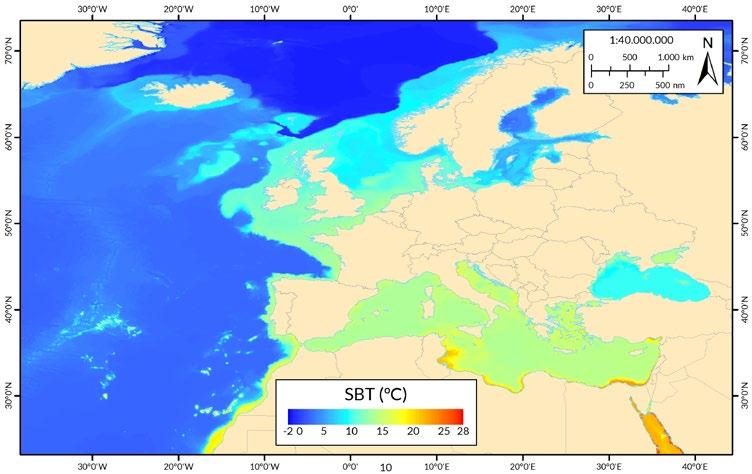
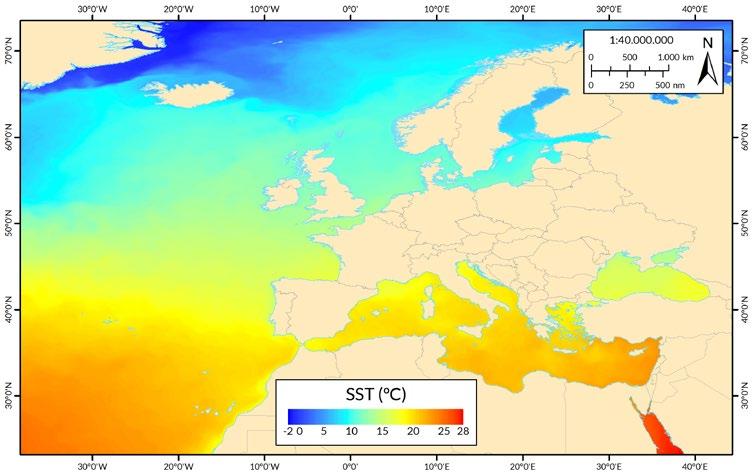
Biodegradation of bioplastics has typically been tested by reproducing tropical (30 ºC) marine conditions.31 Ocean surface temperatures range from -1.8 °C to 33.4 °C, with a global average of 3.9 °C.32 In European waters, average temperatures are generally below 20 °C at the surface, and can be as cold as 1.5°C at the sea bottom (see Figure 4).
https://doi.org/10.48670/moi-00021
5. TOXINS FROM BIO-PLASTICS CAN HARM MARINE ECOSYSTEMS
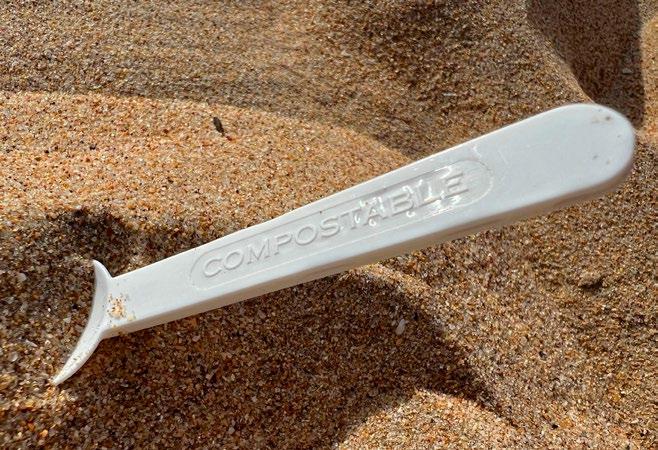
It is well known that plastic litter – and therefore plastic pollution – contains a wide variety of chemicals which enter the marine environment, if the plastic is in contact with seawater or sediments.33 Chemical additives to plastics include those that are specifically intended to reduce biodegradation (such as triclosan), antioxidants to prevent plastics from becoming brittle, widely used plasticisers with endocrine-disrupting properties (e.g., dibutyl phthalate, dimethyl phthalate, and butyl benzyl phthalate), and plastic monomers such as bisphenol A (BPA).6
According to UNEP, the chemical threat presented by certain bio-based plastics is equivalent to the threat posed by conventional plastics.24 Regarding human health, a recent study showed that the toxicity of bioplastics and plantbased materials is similar to that of conventional plastics,
and highlighted the need for more attention to be paid to the chemical safety of these materials.34
Studies have shown that marine invertebrates such as annelid worms, molluscs, and crustaceans may be particularly sensitive to plastic-associated toxins.6,35 In large vertebrates, such as filter feeding baleen whales, the ingestion of chemicals associated with microplastics appears to be related to endocrine disruption, while top predators such as swordfish in the Mediterranean can accumulate such toxins via biomagnification.6
Considering their potential harmful effects on humans and marine wildlife,36 additives should be restricted in biodegradable, bio-based, or compostable plastics through policies that regulate these types of products.
6. THE ECOLOGICAL AND SOCIAL FOOTPRINT OF BIO-BASED PLASTICS EXTENDS BEYOND THE OCEAN
A further point of concern about bio-based plastics relates to their ecological and social footprint. Since they are made from natural or organic ingredients – such as starch from corn, potato, tapioca, rice, or wheat30 – most of the base materials for their production are grown as monocultures. This means that they are produced through intensive agriculture, which increases the use of water, energy, fertilisers, and pesticides, and promotes land-grabbing and the expulsion of local communities. These non-food crops compete with food production or force the clearing of new land for cultivation, leading to further deforestation.37 In short, cultivating land to produce packaging instead of food has both negative ecological and social impacts that extend far beyond the environmental damage associated with the pollution caused by these plastics.
6
Figure 4: Sea surface (left) and sea bottom (right) temperatures maps (average data for 2019) generated using E.U. Copernicus Marine Service Information:
© OCEANA / Pilar Marín
For all of the reasons above, bioplastics and compostable plastics represent a false solution to marine plastic pollution. Bearing in mind the balance of current scientific evidence and the waste hierarchy laid out in the EU Waste Framework Directive (2008/98/EC), it is essential to move towards a culture of reduction and reuse rather than counterproductive plastic alternatives that only exacerbate the current culture of disposability.
KEY FACTS ON BIOPLASTICS
Bioplastics and compostable plastics will not bring about a significant decrease in either the quantity of plastic entering the ocean or the risk of physical and chemical impacts on the marine environment.
Bio-based plastics are not necessarily biodegradable.
Biodegradability is a relative concept, especially when talking about the marine environment. Biodegradation happens very slowly in the ocean, if at all. During the time that it takes for a plastic item to biodegrade completely, it can continue to harm the marine environment and associated wildlife.
Policies on bioplastics should account for the plastic items most frequently found at sea (i.e., bottles, bags, food containers, wrappers, and fishing-related plastics) to minimise their significant impacts on the marine environment.
The degradation time required for items to be labelled as “biodegradable” should be short enough to prevent any harmful effects on biota and/or the environment.
Biodegradability labels should ensure actual biodegradability of products in all kinds of marine environments, including the deep sea.
Bioplastics and compostable plastics contain chemicals that make them similarly toxic to conventional plastics.
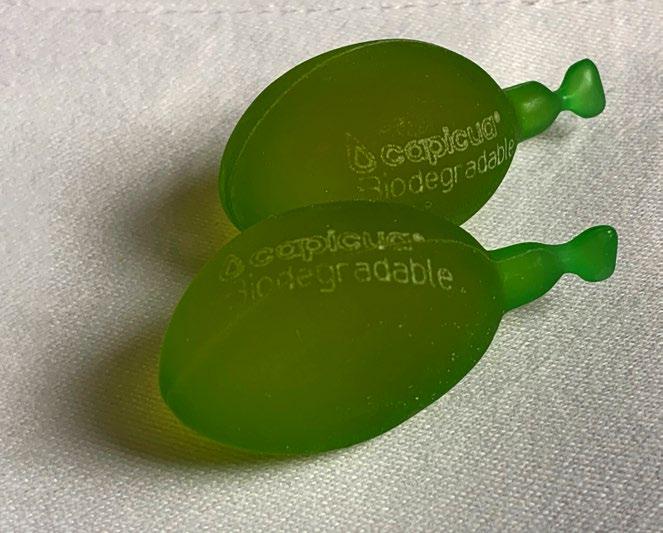
Labelling bioplastics and compostable plastics as “bio” and “biodegradable” is misleading and can increase littering, as it makes them appear to be less harmful to the environment.
Bioplastics and compostable plastics make waste management more complicated due to the absence of clear labelling, because consumers are not aware that they require specific waste treatment systems.
Bio-based plastics may lead to additional, undesirable, social and economic impacts, such as monocultures that decrease the amount of land available for food crops.
POLICY RECOMMENDATIONS
Future testing standards should be adapted to better replicate the actual conditions in marine areas where plastics accumulate and consider degradation time as a key criterion for biodegradable plastics.
Producers and vendors of compostable plastics should only be allowed to label products as “ compostable for industrial composting ” as they do not decompose in the natural environment and have similarly damaging effects to other plastics.
BIOPLASTICS REMAIN PLASTICS
7
SUMMARY
threaten marine environments
Like conventional plastics, they Reduction and reuse are the best solutions to the plastic crisis.
REFERENCES
Abioye et al . 2018. A review of biodegradable plastics in Nigeria Int. J. Mech. Eng. 9 (10), 1172–1185.
European Bioplastics. 2018. What are bioplastics? Material types, terminology, and labels – an introduction
Romera-Castillo et al. 2022. Leaching and bioavailability of dissolved organic matter from petrol-based and biodegradable plastics Mar. Environ. Res. 176, 105607.
Bhagwat et al. 2020. Benchmarking Bioplastics: A Natural Step Towards a Sustainable Future J. Polym. Environ. 28, 3055–3075.
European Environment Agency, 2020. Biodegradable and compostable plastics — challenges and opportunities
Gallo et al. 2018. Marine litter plastics and microplastics and their toxic chemicals components: the need for urgent preventive measures Environ. Sci. Eur. 30, 13.
Pew and Systemiq. 2019. Breaking The Plastic Wave National Oceanic and Atmospheric Administration (NOAA). 2018. Plastic Marine Debris Fact Sheet EUNOMIA. 2016. Plastics in the marine environment
Morales-Caselles et al. 2021. An inshore–offshore sorting system revealed from global classification of ocean litter Nat. Sustain. 4, 484-193.
Jambeck et al. 2015. Plastic waste inputs from land into the ocean Science 347(6223), 768-771.
United Nations Environment Programme (UNEP). 2015. Biodegradable Plastics and Marine Litter. Misconceptions, concerns and impacts on marine environments UNEP, Nairobi.
European Bioplastics. Bioplastics market data. (2022, March 29): https://www.european-bioplastics.org/market/.
Taufik et al. 2020. The paradox between the environmental appeal of bio-based plastic packaging for consumers and their disposal behaviour Sci. Total Environ 705, 135820.
Lott et al. 2021. Half-Life of Biodegradable Plastics in the Marine Environment Depends on Material, Habitat, and Climate Zone Front. Mar. Sci. 8, 662074. European Commission. 2018. A European Strategy for Plastics in a Circular Economy. Communication from the Commission to the European Parliament, the Council, the European Economic and Social Committee and the Committee of the Regions.
European Bioplastics. 2020. Bioplastics Market Development Update 2020. Berlin: European Bioplastics, 2.
Gursel et al. 2021. Comparative cradle-to-grave life cycle assessment of bio-based and petrochemical PET bottles Sci. Total Environ., 793, 148642.
European Commission. 2020. Biodegradability of plastics in the open environment. Directorate-General for Research and Innovation, https://data.europa.eu/doi/10.2777/284409
UNEP. 2021. From Pollution to Solution: A global assessment of marine litter and plastic pollution. UNEP, Nairobi.
Greene. 2014. Sustainable Plastics: Environmental Assessments of Bio-based, Biodegradable, and Recycled Plastics. John Wiley & Sons, Hoboken.
Miksch et al. 2022. Bioplastics in the Sea: Rapid In-Vitro Evaluation of Degradability and Persistence at Natural Temperatures Front. Mar. Sci. 9, 920293.
Ribba et al. 2022. Biodegradable plastics in aquatic ecosystems: latest findings, research gaps, and recommendations Environ. Res. Lett. 17(3), 033003.
Ward & Reddy. 2020. We need better data about the environmental persistence of plastic goods. PNAS, 117(26), 14618-14621.
Ward et al. 2019. Sunlight Converts Polystyrene to Carbon Dioxide and Dissolved Organic Carbon Environ. Sci. Technol. Lett. 6(11), 669-674.
Beltrán-Sanahuja et al. 2020. Monitoring polymer degradation under different conditions in the marine environment. Environ. Pollut. 259, 113836.
Ferreira-Filipe et al. 2021. Are Bio-based Plastics Green Alternatives?—A Critical Review Int. J. Environ. Res. Public Health 18(15), 7729.
Pelegrini et al. 2016. Degradation of PLA and PLA in composites with triacetin and buriti fiber after 600 days in a simulated marine environment. J. Appl. Polym Sci 133, 43290.
Environmental Investigation Agency (EIA). 2018. Ocean - Unpacking non-conventional plastics. EIA UK, London.
Greene. 2012. Report Topic: PLA and PHA Biodegradation in the Marine Environment. California Department of Resources Recycling and Recovery, Sacramento. Narancic et al. 2018. Biodegradable plastic blends create new possibilities for end-of-life management of plastics but they are not a panacea for plastic pollution Environ. Sci. Technol. 52(18), 10441-10452.
Reynolds et al. 2002. An improved in situ and satellite SST analysis for climate J. Clim. 15, 1609–1625.
GESAMP. 2019. Guidelines or the monitoring and assessment of plastic litter and microplastics in the ocean (Kershaw et al., eds.), (IMO/FAO/UNESCO-IOC/ UNIDO/WMO/IAEA/UN/UNEP/UNDP/ISA Joint Group of Experts on the Scientific Aspects of Marine Environmental Protection). Rep. Stud. GESAMP No. 99. UNEP, Nairobi.
Zimmermann et al. 2020. Are bioplastics and plant-based materials safer than conventional plastics? In vitro toxicity and chemical composition Environ. Int. 145, 106066.
D’Costa. 2022. Microplastics in decapod crustaceans: Accumulation, toxicity and impacts, a review. Sci. Total Environ. 832, 154963.
National Oceanic and Atmospheric Administration (NOAA). 2014. Ingestion: Occurrence and Health Effects of Anthropogenic Debris Ingested by Marine Organisms. NOAA, Silver Spring.
Durán and Espinosa. 2021. Bio-fakes. El engaño de los bio-plásticos. Amigos de la Tierra, Madrid.
OCEANA IN EUROPE
European Headquarters: Madrid, Spain europe@oceana.org
Baltic and North Sea Office: Copenhagen, Denmark copenhagen@oceana.org
European Union Office: Brussels, Belgium brussels@oceana.org
europe.oceana.org
Funded by the European Union. Views and opinions expressed are however those of the author(s) only and do not necessarily reflect those of the European Union or CINEA. Neither the European Union nor CINEA can be held responsible for them.
8
1 2 3 4 5 6 7 8 9 10 11 13 14 15 16 17 18 20 21 22 23 24 25 26 27 28 29 30 31 32 33 34 35 36 37 19 12
