BEHIND THE FLEET:
Mapping the Global Network of Service Providers Keeping Distant-Water Fishing Afloat
April 2026
Transshipment:
Classification
Behind every distant-water fishing vessel is a support network of service providers whose decisions help shape how international fishing is financed, operated, and overseen. Their inclusion in fisheries governance is essential for improving accountability.
Introduction
Distant-water fishing (DWF) vessels — those that operate far from their domestic waters — are among the most challenging vessels to monitor and regulate, even as surveillance technologies improve. These highly mobile and heavily subsidized fishing fleets operate across vast areas, often in regions where enforcement capacity is limited. While many DWF vessels operate legally and report their activities and catches to flag state authorities, reporting standards and levels of transparency vary widely. Some vessels fish in areas or for species that are not subject to international fisheries regulations or management, or operate across multiple jurisdictions — catching, landing, processing, and selling fish in different countries. Operators may also change vessel flags, names, or crews over time. Together, these dynamics can create governance gaps and legal loopholes that increase the risk of illegal, unreported, and unregulated (IUU) fishing, and in some cases, other serious crimes such as labor rights abuses.
i.
But DWF vessels do not operate in isolation. Their activities depend on an international web of public, private, and nonprofit actors that provide important services and help manage the financial, logistical, and regulatory risks of operating far from home. These service providers include but are not limited to: ports; insurance companies; crewing agencies; transshipment vessels; fuel bunkering operators; and classification and certification societies.i Each sector plays a distinct role, but together they form an interdependent support network that sustains DWF operations. Crucially for governance, many of these actors are comparatively fixed in geography and jurisdiction and operate under a mix of national and international legal frameworks that differ from those applied within fisheries management alone.
When appropriately engaged, service providers represent tangible policy and compliance intervention points that can complement traditional fisheries governance. While some service providers are already incorporated into existing fisheries management rules and frameworks, their inclusion remains inconsistently enforced. As a result, full integration of service providers into efforts to prevent IUU fishing and strengthen compliance has progressed slowly.
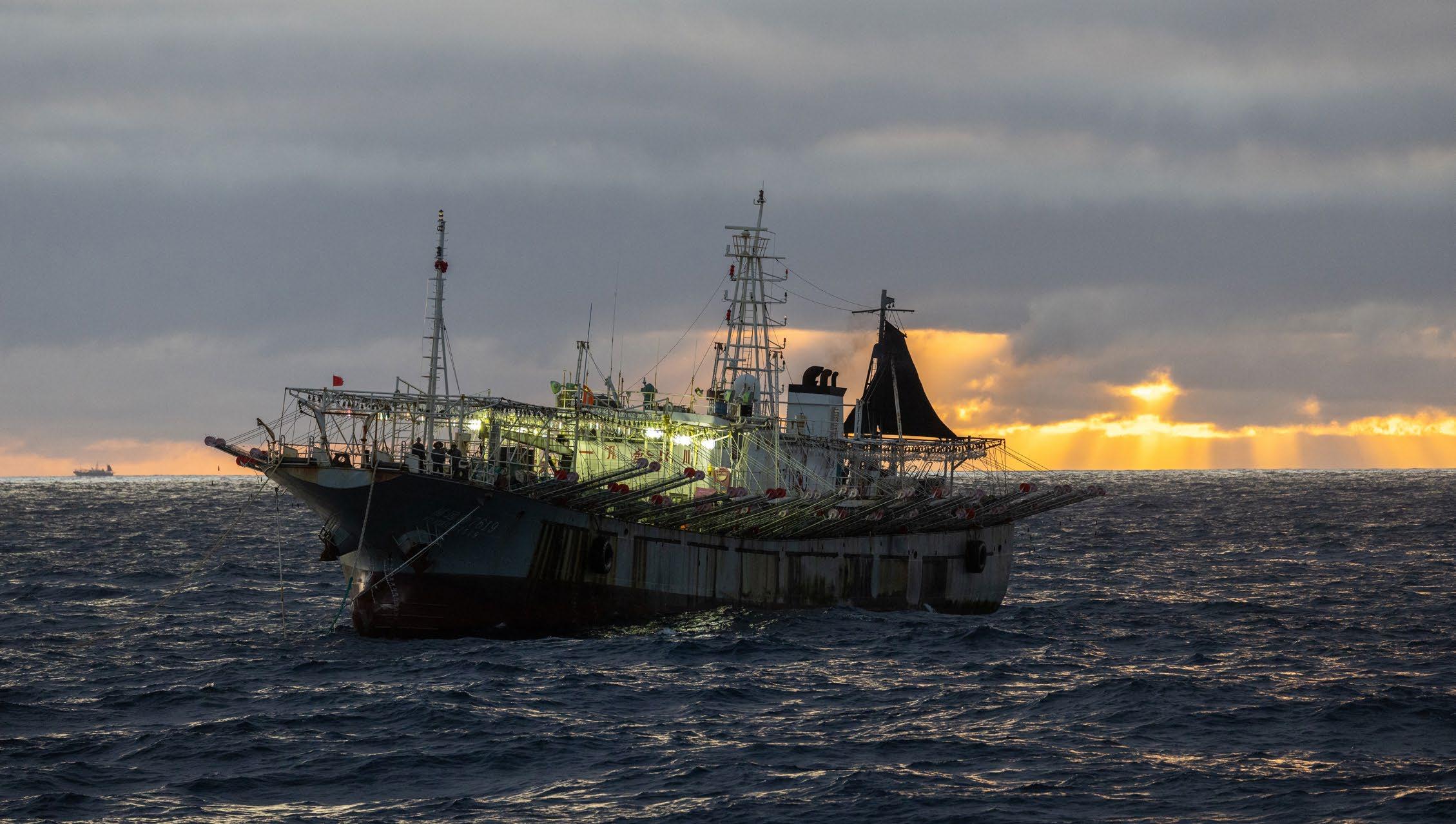
© The Outlaw Project/Ben Blankenship
A distant-water fishing vessel fishing for squid near the Galápagos Islands.
Existing Legal Frameworks
Some jurisdictions have begun to recognize the important role that service providers can play in reducing the risk of IUU fishing and have introduced measures that incorporate them into enforcement efforts.1 For example, the European Union (EU) explicitly prohibits service providers from offering services to vessels listed on official IUU vessel lists2 and requires appropriate sanctions to be applied where such links are identified. Similarly, the United Kingdom (UK) considers it an offence for UK nationals and companies to conduct business with vessels included on these lists.3 By restricting access to services for vessels with a demonstrated record of non-compliance, these measures can meaningfully disrupt the business models that enable IUU fishing.
Regional Fisheries Management Organizations (RFMOs) ii have also adopted measures to deter IUU fishing by listing non-compliant vessels. Once listed, vessels may be prohibited from fishing within the RFMO area, or from retaining, transshipping, or landing species managed by that RFMO. Several RFMOs now require their members to investigate and take appropriate deterrent action when service providers under their jurisdiction are found to be working with IUU-listed vessels.iii However, many key fishing nations still lack the domestic legal frameworks or enforcement mechanisms needed to implement these obligations effectively.
Despite this growing legal foundation, enforcement remains uneven and significant gaps persist. IUU vessel lists, though valuable, are far from comprehensive and have limitations for real-time enforcement: listing processes vary between RFMOs, are often consensus-based, and typically updated only once a year in each RFMO. In addition, not all RFMOs publicly publish the evidence supporting vessel listings, leaving non-members, including service providers, without access to critical information. These challenges are compounded by weak information-sharing, opaque ownership structures that obscure beneficial control, jurisdictional ambiguity, and inconsistent national implementation.
Why Service Providers Are Key to Tackling IUU Fishing
Including service providers more systematically into measures aimed at preventing IUU fishing creates practical and politically feasible opportunities to strengthen accountability and improve consistent governance. Greater transparency, enhanced due diligence processes, and more uniform implementation of existing rules across jurisdictions can help ensure that service providers support compliant
operators while restricting services to those linked to IUU fishing.
Systematic research into and engagement with these actors, particularly at the national level, can extend oversight into areas where traditional tools have struggled or where political will has been limited. Yet information on DWF service providers is rarely collated, analyzed, or made accessible. The first step is to clarify who these service providers are, the roles they play, and map their global distribution. Doing so expands the scope of DWF governance beyond fishing vessels and flag states, bringing greater attention to jurisdictions that are not traditionally associated with DWF but nonetheless play critical supporting roles through service provision.
Mapping these actors reveals a geographically concentrated support system behind DWF. Countries such as China, Spain, and South Korea not only operate major DWF fleets but also host key service infrastructure, including ports, insurance companies, and transshipment activities. Open-registry states such as Panama and Liberia flag large numbers of support vessels, while global financial hubs such as Singapore, the UK, and the United States (U.S.) remain central to marine insurance and underwriting. At the same time, countries in South and Southeast Asia, most notably India, Indonesia, and the Philippines, supply much of the labor that crews DWF vessels through extensive recruitment and crewing agency networks.
This brief provides an analysis of key service providers by sector and explores how engaging them may offer practical opportunities to strengthen compliance and modernize fisheries governance.
While many service providers are already subject to robust oversight in other sectors, such as financial regulation, labor law, or maritime safety, their roles in supporting fishing operations are not always systematically integrated into fisheries governance frameworks. Addressing this fisheriesspecific gap, particularly where services are provided to vessels linked to IUU fishing or elevated compliance risks, offers a pragmatic pathway to closing enforcement loopholes. Strengthening due diligence expectations, clarifying responsibilities, and ensuring consistent implementation of existing rules that prohibit service providers from engaging with IUU fishing can help align service provision with fisheries objectives and contribute to a more transparent, equitable, and sustainable global fisheries system.
ii. Treaty-based bodies responsible for conservation and sustainable management of shared fish stocks and other living marine resources, particularly those that straddle regions or jurisdictions.
iii. IOTC, ICCAT, GFCM, CCAMLR, SIOFA and SPRFMO have such measures.
Ports: Gateways for Global Catch
Ports and landing sites are essential to all fishing activities, including DWF. They provide resupply, repairs, crew changes, and safe places to offload catch.4 Without access to these shore-based service hubs, most DWF fleets would be unable to remain at sea for extended periods.5
Ports, however, are not singular actors. Port governance is typically shared among a mix of national maritime and fisheries authorities, semi-autonomous port authorities, private terminal operators (sometimes foreign owned), customs and immigration officials, port agents, security services, and dock workers. Their differing mandates, incentives, and capacities shape the degree of oversight that fishing vessels experience. Where these institutions function cohesively, ports can serve as effective leverage points for transparency and accountability. Where governance is fragmented or under-resourced, gaps can emerge that increase the risk of vessels linked to IUU fishing going undetected. Even though most ports operate legitimately and play an essential regulatory role, such gaps can allow some locations to become so-called “ports of convenience,”iv where IUU-caught fish may enter global supply chains.6,7
In 2009,v the United Nations adopted the Port State Measures Agreement (PSMA), the first binding global treaty
designed to prevent IUU-caught fish from entering markets through port-based controls. The PSMA empowers states to deny port entry or services to vessels suspected of IUU fishing and require prior notification, documentation checks, and inspections, even when vessels are not landing catch. By shifting enforcement from the high seas to ports, where states exercise clear legal authority and control over physical infrastructure, it establishes a strategic intervention point in efforts to combat IUU fishing.8 But implementation remains patchy — some major port states have not yet ratified the PSMA, while others lack the resources, training, or coordination needed to conduct effective inspections. Additionally, because the PSMA primarily targets foreignflagged vessels, domestic fleets in many countries are not subject to the same routine inspections, creating inconsistencies within individual ports.
Oversight challenges can be further compounded where port operations are privatized or shaped by foreign investment.9,10 As a result, some ports continue to receive vessels linked to IUU fishing activity.11,12 In high-traffic regions such as West Africa and Southeast Asia, where foreign vessel visits are concentrated, limited regional coordination can allow high-risk vessels to move between ports with differing enforcement practices, a phenomenon often referred to as “port shopping.”
iv. Ports with minimum catch inspection due to a lack of capacity, poor recording systems for landings, or corruption among inspectors (Widjaja et al. 2020).
v. While adopted in 2009, the PSMA went into force in 2016. As of January 2026, 85 Parties (111 States) have ratified (Hosch et al. 2025; FAO 2025).
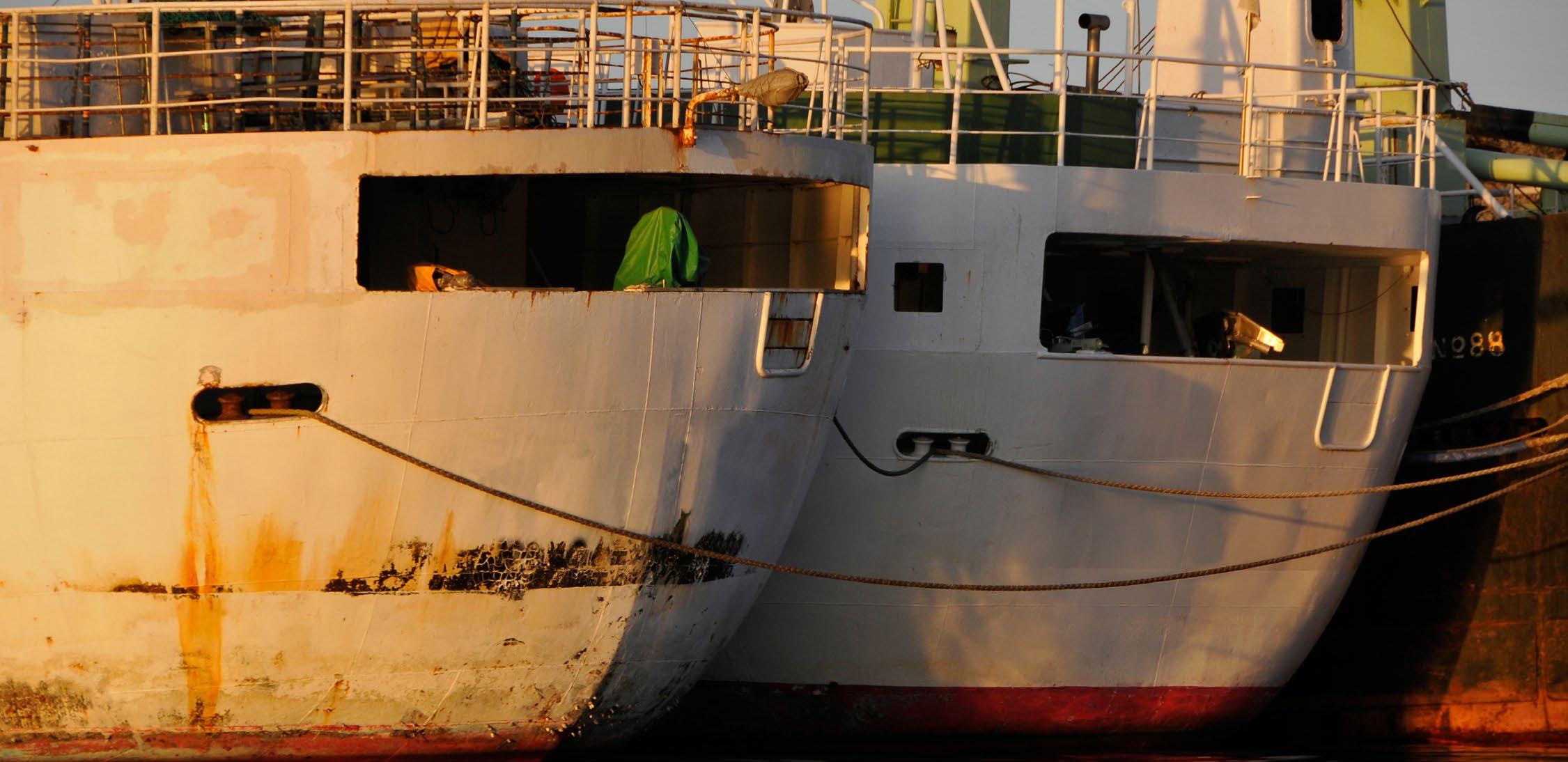
© Oceana/Enrique Talledo
Japanese longliners moored in the habour of Las Palmas, Spain.
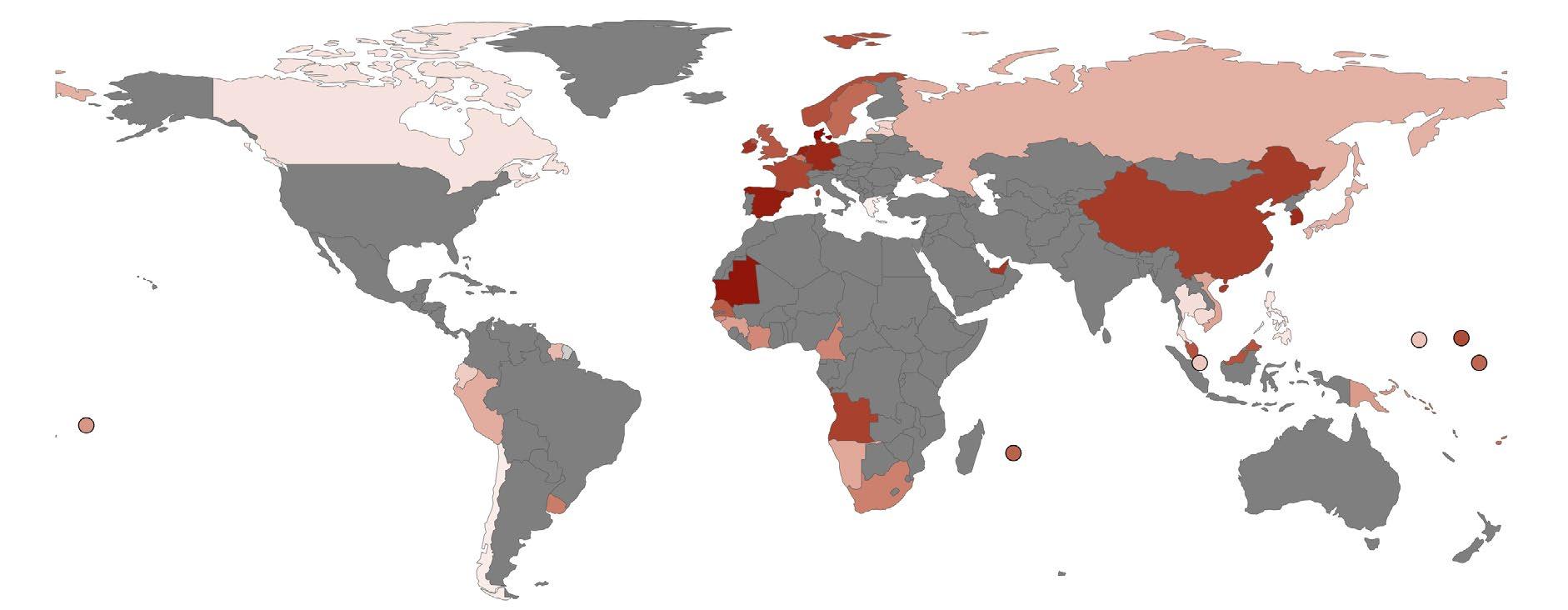
Figure 1: Global distribution of foreign vessel port activity. Countries are shaded by total foreign vessel visits to the top 100 ports. Analysis based on 2023 AIS-tracked foreign vessel visits (Hosch et al., 2025). Darker red shading indicates higher port ranks, and unshaded (grey) countries represent no available data; full methods in annex.
Global Distribution
Analysis of Automatic Identification System (AIS)-tracked foreign vessel port visits shows that high-traffic ports are concentrated in a relatively small number of countries.12 Major hubs appear both in high-income states with advanced port infrastructure and in low- and middle-income coastal states adjacent to productive fishing grounds. Some countries host multiple high-volume facilities. For example, Denmark and Spain each have eight ports among the global top 100, while others rank among the world’s busiest with only one or two strategically positioned ports. Mauritania, for instance, ranks second globally by foreign vessel visits at the country level despite having only a single port in the top 100.12
When Investment Shapes Access
This geographic concentration means that targeted improvements in a limited number of port states could have disproportionate global impact. As fixed control points in the DWF system, ports are among the few places where authorities can physically inspect vessels, verify documents, enforce regulations, or deny access altogether. Their central role makes them essential to efforts to prevent IUU-caught fish from entering markets and improve transparency across international fisheries. Because ports operate under clear national jurisdiction and are already embedded within existing legal and institutional frameworks, they represent one of the most feasible and immediate entry points for strengthening oversight of DWF.
Foreign-funded port developments can influence both access and oversight. In Ghana, for example, local communities have raised concerns that a new USD 21 million Chinese-funded fishing port may prioritize DWF vessels over domestic vessels, potentially increasing risks of weak oversight or IUU fishing.13 In some cases, financial support or infrastructure development may be accompanied by favorable fisheries access arrangements or fishing rights for the investing country.14
Foreign-operated ports can also introduce broader governance challenges. Investigative reporting in parts of Latin America has linked Chinese-operated port facilities in Peru, Brazil, and Mexico to organized crime networks.15 While these cases do not reflect all foreign investments, they illustrate how ports, whether newly built or long-established, are not only logistical hubs but also important physical spaces where access, monitoring, and enforcement can be strengthened or weakened depending on how investments and operations are designed and structured.
Progress and Opportunities
Significant progress has been made in integrating ports into fisheries governance. The PSMA now has broad global uptake16 and several RFMOs have adopted binding port state measures that strengthen inspection and reporting standards.17 In addition, existing Port State Control (PSC) frameworks, historically focused on merchant shipping, are beginning to expand beyond shipping through pilot initiatives that include fishing vessels.18
Complementary initiatives further demonstrate the potential of port-based oversight. Although not covering fishing vessels, the International Transport Workers’ Federation inspection regime conducted over 10,000 port inspections across 56 countries in 2024 and recovered USD 44.8 million in unpaid crew wages, demonstrating how coordinated port inspections can deliver tangible accountability outcomes.19 Combined with emerging tools such as electronic inspection systems20 and risk-profiling algorithms,21 these advances show that ports can serve as effective control points when supported by clear mandates, adequate capacity, and information sharing.
Peru provides a compelling example of how nationallevel, service-based measures can leverage technology: by requiring six months of vessel tracking data as a condition for port access, authorities have incentivized compliance by some Chinese DWF vessels, while others have diverted to alternative ports.22
Despite these advances, implementation remains uneven. Strengthening enforcement of the PSMA, improving information-sharing among port, fisheries, and enforcement authorities, and increasing transparency around foreignfunded port agreements represent practical and politically realistic opportunities for further progress. Prioritizing capacity support in the relatively small number of countries that host the most foreign fishing vessel port calls could generate outsized impact.
Monitoring and inspecting vessels at port is logistically easier and more cost-effective than piecemeal enforcement at sea and is one more tool to deter illegal fishing. „ „
Elizabeth R. Selig Managing Director
of
the Center for Oceans Solutions at Stanford University
© Oceana/Carlos Suárez
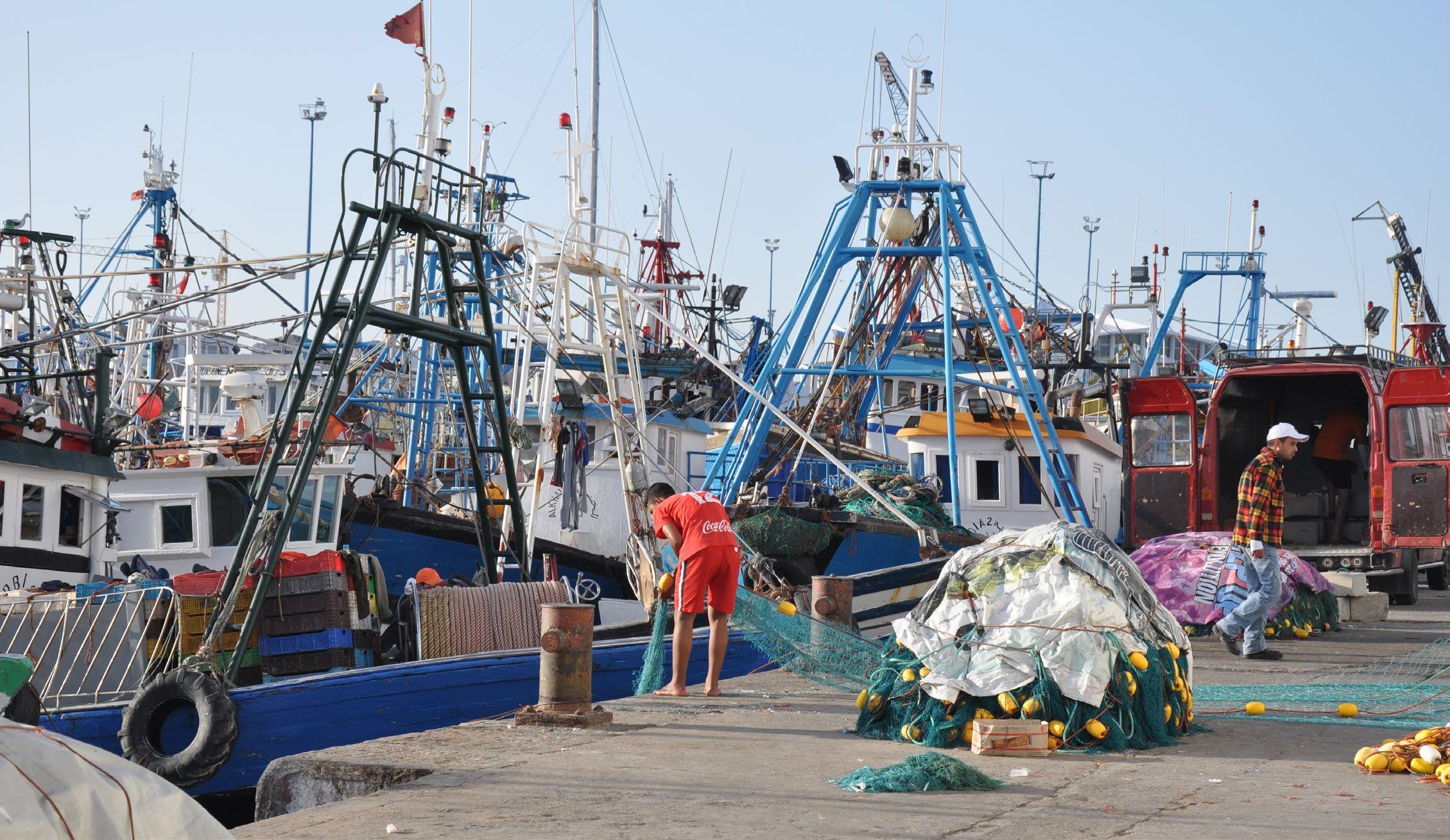
Fishers load driftnets aboard vessels at a bustling port in Morocco.
Insurance: Risk Carriers in Fisheries
Marine insurance is a foundational service for DWF. By covering the financial, legal, and operational risks of operating far from shore, insurers enable access to financing, flag registration, ports, and labor. Because insurance coverage — particularly liability insurance — is often a mandatory condition of operation, insurers play an influential role in shaping how fishing fleets operate. But they have historically received limited attention from regulators in fisheries.
When insurance is issued without sufficient due diligence, it can sustain vessels linked to non-compliance. In documented cases, operators involved in IUU fishing have exploited insurance by filing fraudulent claims when vessels were detained, sanctioned, or even deliberately scuttled, effectively allowing them to launder the proceeds of IUU fishing.23,24 While such cases represent a small minority of operations, they highlight how insurance can shape decision-making and commercial viability in DWF, emphasizing the importance of consistent verification and due diligence across underwriting markets.
The insurance sector has undergone notable reform over the past decade, and insurance coverage for vessels officially listed for IUU fishing has declined following sustained advocacy led by Oceana and others. The EU now prohibits insurers from covering vessels on official RFMO
IUU lists and the UK prohibits nationals and companies from doing business with such vessels.25 Several RFMOs have also adopted binding requirements for members to investigate and take deterrent action against companies under their jurisdiction that are found to be providing services to IUU-listed fishing vessels.26 While these measures mark important progress, national implementation remains uneven, particularly in jurisdictions where enabling legislation is lacking or enforcement capacity is limited.
Alongside regulatory changes, some insurers have taken voluntary steps to strengthen due diligence. Several major providers have publicly pledged27 not to insure fishing vessels on IUU lists, and new contractual clauses, such as those introduced by the Lloyd’s Market Association,28 allow policies to be canceled when a vessel is added to an IUU list or fails to comply with location-tracking requirements. A small but growing number of companies also use tools such as Global Fishing Watch and Trygg Mat Tracking (TMT)’s Vessel Viewer to screen clients for risk, signaling a gradual shift toward more proactive risk management within the sector.
In most markets, insurers are not subject to harmonized, binding due diligence standards specific to fishing vessels, nor are they required to publicly disclose which vessels they insure.29 As a result, screening practices vary across jurisdictions and providers, reflecting differences in how national laws are implemented and enforced. For example, the International Group of Protection & Indemnity (P&I)
© Shutterstock/Mykhailo Pavlenko
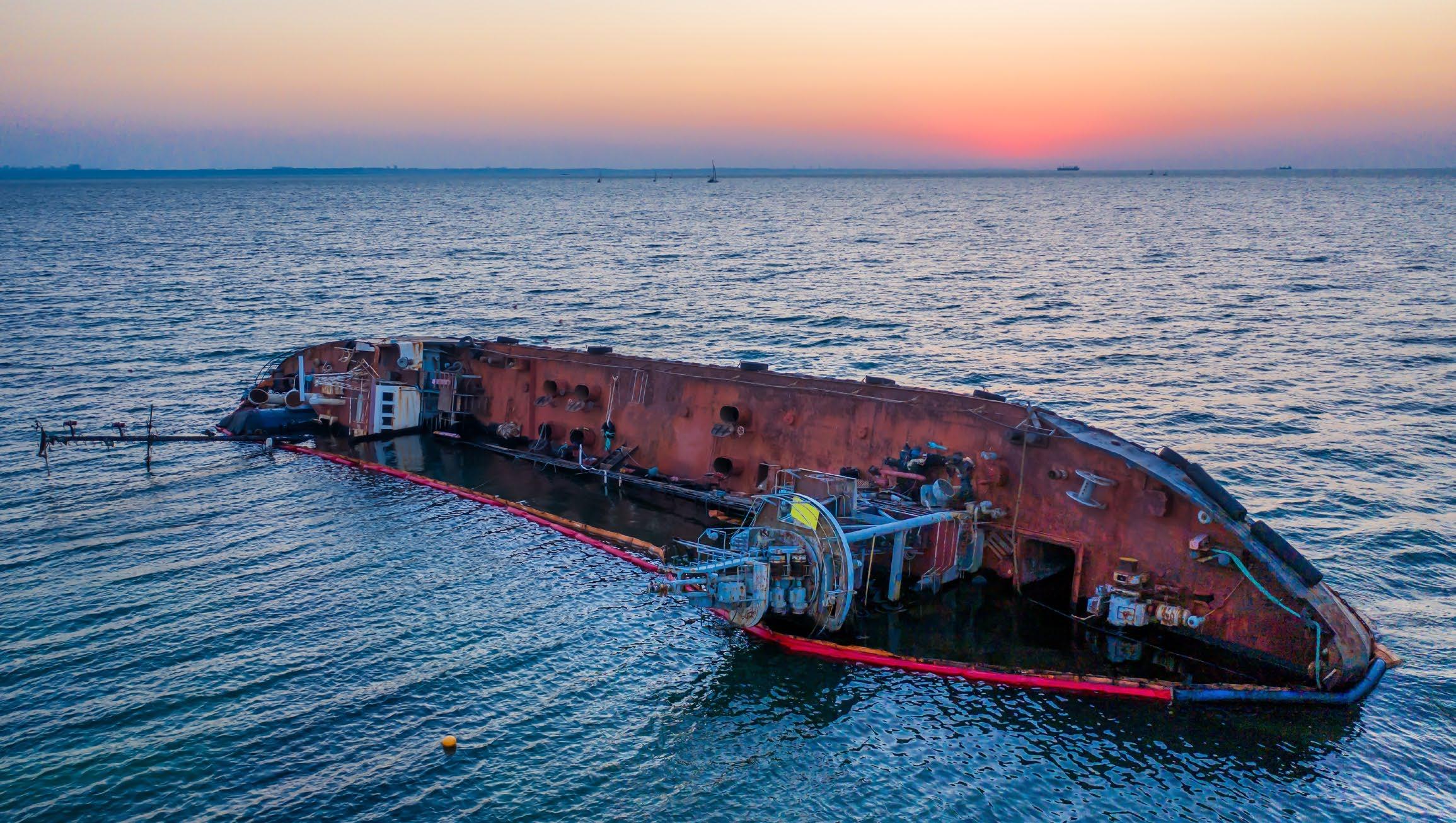
A tanker overturned in a storm highlights the hazards of maritime operations.
Clubs, which collectively cover about 90% of the world’s ocean-going tonnage, operates primarily through selfregulation, with due diligence expectations shaped by applicable national legal frameworks rather than fishingspecific global rules.30
These developments mark significant progress in a sector that was previously more peripheral to fisheries governance. The role of insurers in disrupting IUU fishing is increasingly
being recognized, particularly in the major underwriting markets where they are concentrated. Experience from the EU and UK suggests that where clear legal prohibitions exist and enforcement is credible, insurers respond by strengthening internal risk management and due-diligence practices. Expanding and enforcing similar national frameworks elsewhere represents one of the most effective pathways for further progress.
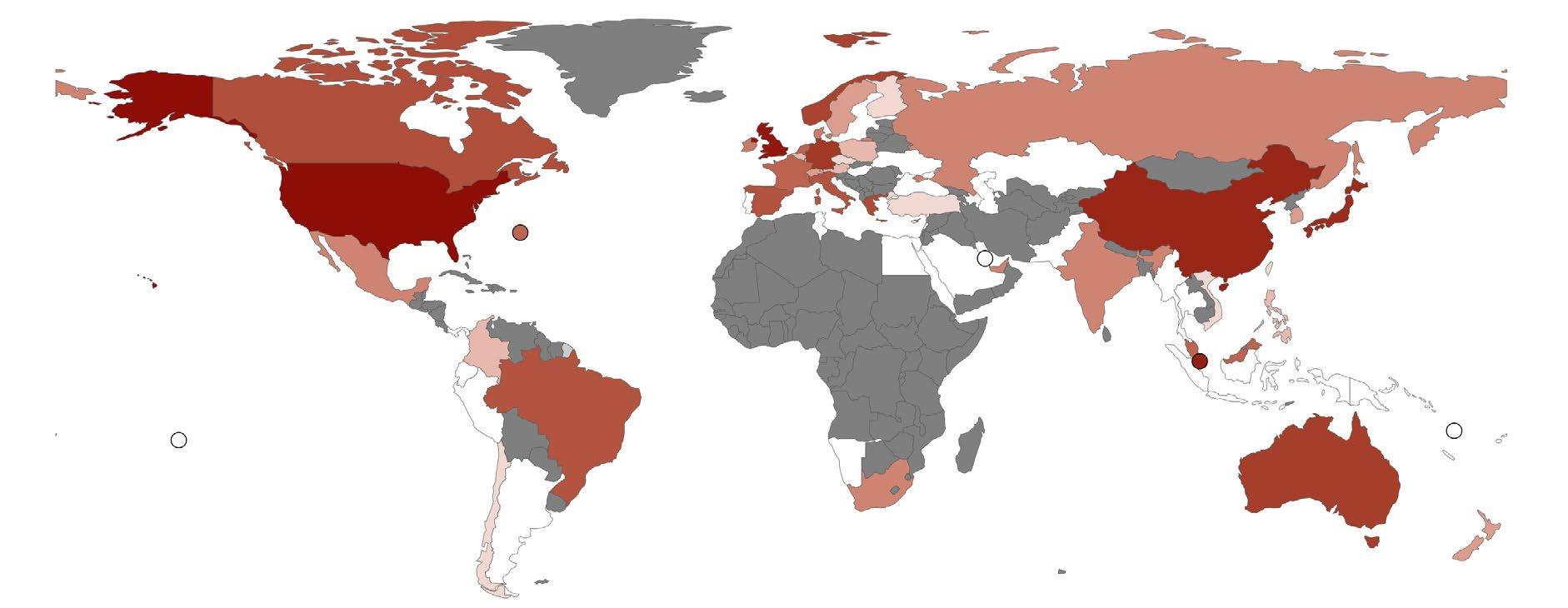
Figure 2: Global distribution of marine insurance providers based on verified office locations across countries. Mapped underwriters are drawn from Miller et al. (2016), cross-referenced with company websites. Analysis includes 44 leading providers. Darker red shading indicates higher rankings and unshaded (grey) countries represent no available data; full methods in annex.
Global Distribution
Historically, Europe, and particularly the UK, has been the global hub for marine insurance, with many insurers and P&I Clubsvi tracing their origins back centuries.31 Before Brexit, the UK hosted six of the world’s 13 major P&I Clubs;32 several have since established subsidiaries in the Netherlands to retain access to EU markets.33
Analysis of 44 major marine insurance providers29 shows that while the sector remains anchored in traditional financial centers, its operational footprint is now increasingly global:
• The U.S. (48 offices) and UK (34) remain the dominant hubs,
• Followed by Singapore (22), China (21), Japan (19), and Hong Kong (19).
• A set of emerging hubs include Germany (17), Australia (16), Norway (15), and Greece (11).
This distribution shows how marine insurers are embedded within international financial systems and able to support fleets far from their flag states. Growth in Latin America and Southeast Asia is largely driven by branches of multinational firms rather than domestic insurers, reflecting the sector’s continued concentration in a relatively small number of financial jurisdictions despite its global reach.
vi. Mutual insurance associations that provide liability coverage to shipowners, covering risks such as crew injury, pollution, and third-party damages (Miller et al. 2016).

The Case of The Thunder
The notorious case of The Thunder, a pirate fishing vessel pursued across multiple jurisdictions, illustrates how easy it used to be for illicit operators to obtain access to and retain insurance. Despite being listed on official IUU fishing vessel lists, The Thunder remained insured until it was deliberately sunk after months of being chased at sea. Its owners later attempted to file an insurance claim for the loss.
This case highlights the risks that arise in the absence of clear legal prohibitions and strong due diligence. While not representative of current practices in many jurisdictions, it underscores why regulatory reforms and improved implementation have been necessary to prevent IUU fishing-linked vessels from “staying insured and thus staying in business.”23
Progress and Opportunities
Regulatory and voluntary developments demonstrate a growing recognition of the role insurers can play in promoting responsible fisheries and reducing incentives for non-compliance.
Nonetheless, implementation remains uneven. Several major fishing and insurance hubs still lack domestic legal frameworks that allow authorities to easily investigate and act when links are identified between insurers and IUU-listed vessels. As a result, due diligence expectations continue to vary across jurisdictions, shaped primarily by differences in national enforcement rather than by capacity constraints within the sector itself. Because marine insurance is concentrated in a relatively small
number of global financial centers, gaps in just a handful of jurisdictions can allow high-risk vessels to remain insured and operational.
Further progress will depend on strengthening national legal frameworks; improving information-sharing between port authorities, enforcement authorities, and service providers; and encouraging greater consistency in how legal prohibitions and due-diligence standards are applied, particularly in major underwriting hubs such as the U.S., Singapore, Hong Kong, and China. Integrating insurance-related information into port and RFMO compliance systems, alongside greater transparency around underwriting decisions where legally feasible, would help ensure that insurance services support compliant operators while reducing the financial viability of vessels engaged in IUU fishing.
© Shutterstock/Fabiano Di Paolo
Building of former offices of The Marine Insurance Company Limited in Amsterdam, Netherlands.
Crewing Agencies: Brokers of Labor
Crewing agencies, also referred to as recruitment or manning agencies, act as intermediaries between DWF firms and the migrant fishers who often crew their vessels. They typically arrange contracts, process paperwork, coordinate travel and visa logistics, and handle payments, making them central to the labor supply systems that sustain DWF operations worldwide. Since the 1990s, crewing agencies have become the primary suppliers of migrant labor to DWF fleets,34 supporting vessel operators by streamlining recruitment and reducing administrative and operational costs.
For many workers, these agencies provide access to higher-paying employment opportunities abroad by facilitating movement that would otherwise be difficult.35 At the same time, outsourcing recruitment can distance vessel operators from direct oversight responsibilities. In some jurisdictions where regulation is weak or poorly enforced, this can expose workers to risks associated with predatory recruitment fees, opaque contracts, or inadequate protections. As a result, crewing agencies sit at the intersection of labor supply, commercial efficiency, and worker vulnerability embedded within the DWF system.36-38
Global regulatory frameworks for fishing crew remain limited. Because commercial fishers were excluded from the Maritime Labour Convention, the International Labour Organization adopted the Work in Fishing Convention (ILO C188) in 2007 to establish minimum standards for recruitment, working conditions, and safety at sea.
However, ratification remains low. As of 2026, only 25 countries have ratified the Convention, with Thailand being the only major labor-sending country in South or Southeast Asia — where a large share of DWF crews are recruited — to have done so.39 This limits ILO C188’s reach in the regions that are most critical to DWF labor supply.
In the absence of a comprehensive global system for tracking and verifying recruitment practices, oversight relies primarily on national legal frameworks and bilateral or regional information-sharing. Some national systems exist. For example, Indonesia’s 2022 reforms introduced licensing requirements for recruitment agencies and stricter rules governing the placement of migrant fishers abroad.40 The Philippines has long regulated recruitment through the Philippine Overseas Employment Administration, which licenses agencies and monitors compliance.41 Several RFMOs have also begun to incorporate basic labor- and crew-related reporting requirements, signaling growing recognition that recruitment practices are relevant to responsible fisheries governance.42,43
These examples demonstrate that regulation can be effective where clear national laws exist and are enforced. However, coverage remains uneven. Many recruitment agencies continue to operate outside formal regulatory systems, and information on recruitment practices is rarely shared systematically across jurisdictions. Strengthening national frameworks and improving cooperation between labor-sending and labor-receiving states therefore remains central to improving transparency and accountability in DWF labor supply chains.
© Oceana/Mauricio Altamirano
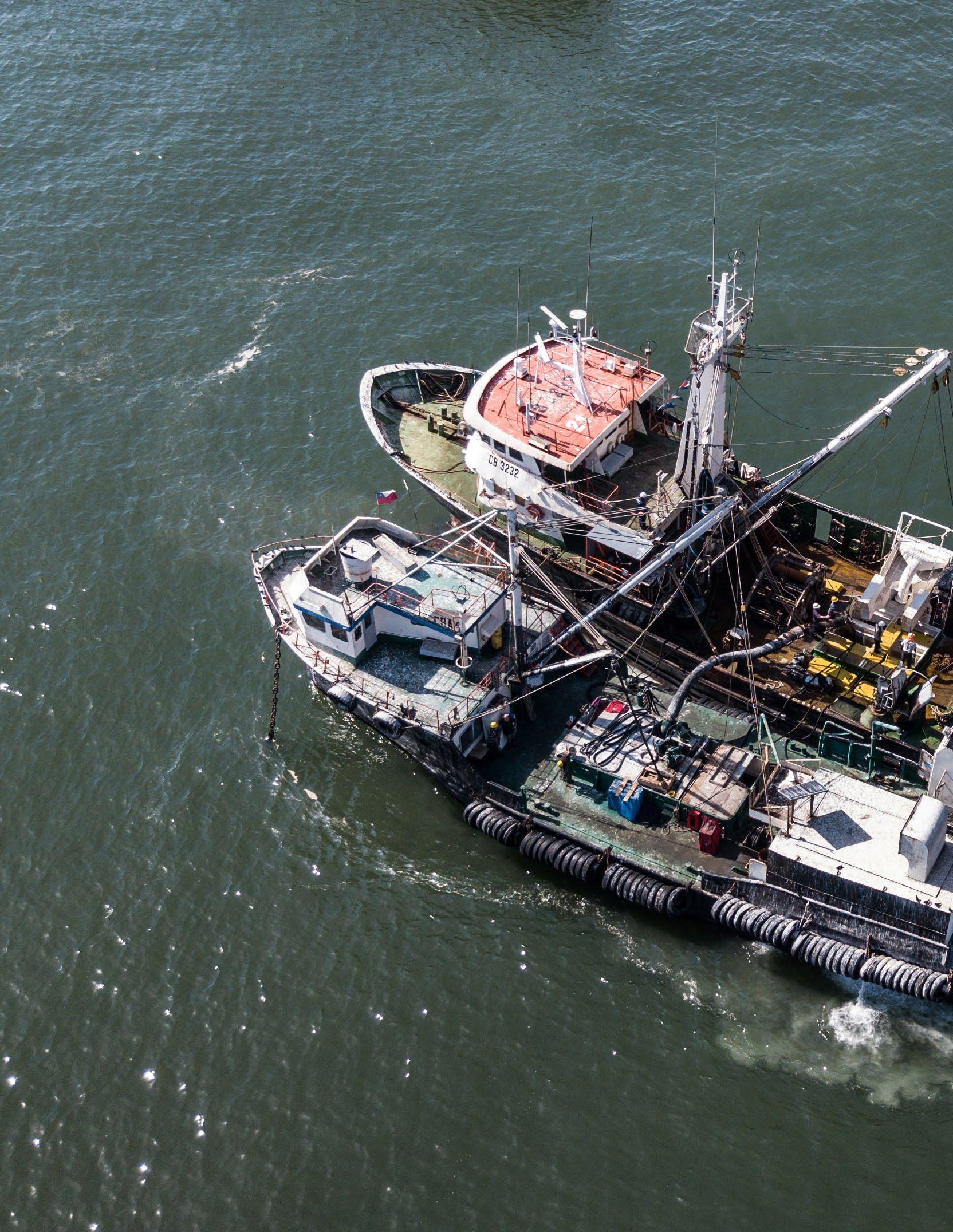
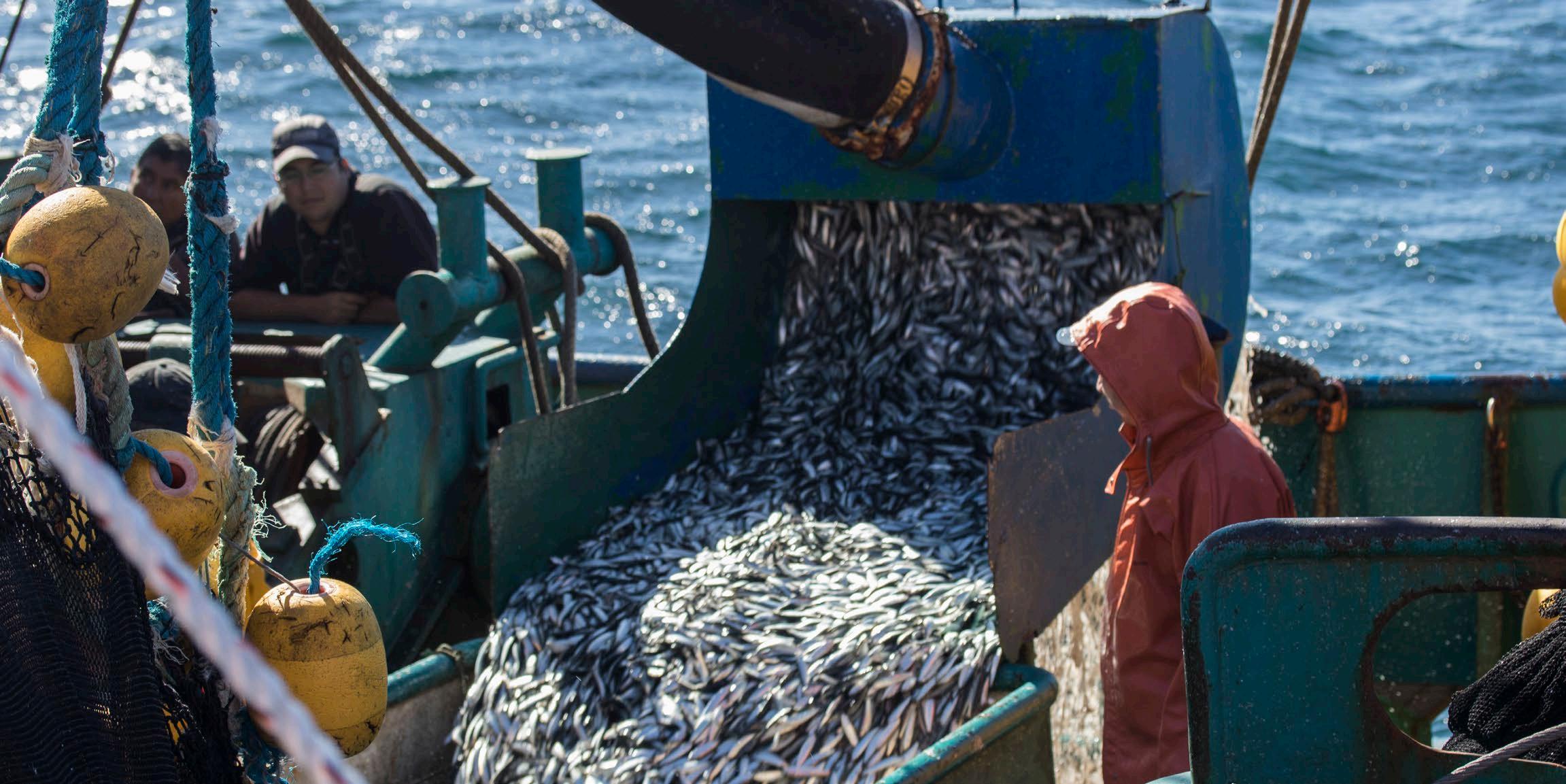
A crew processing fish aboard an industrial sardine vessel in Chile.
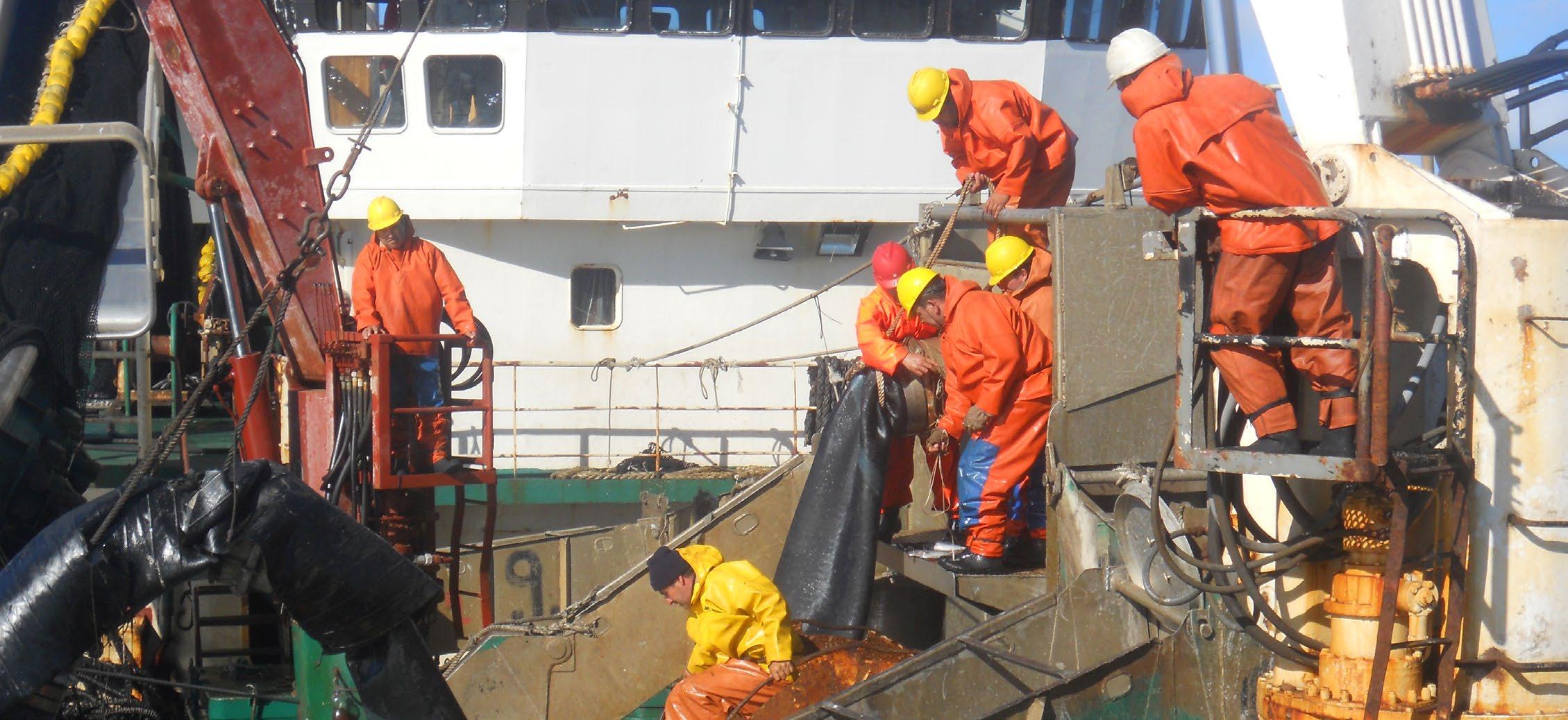
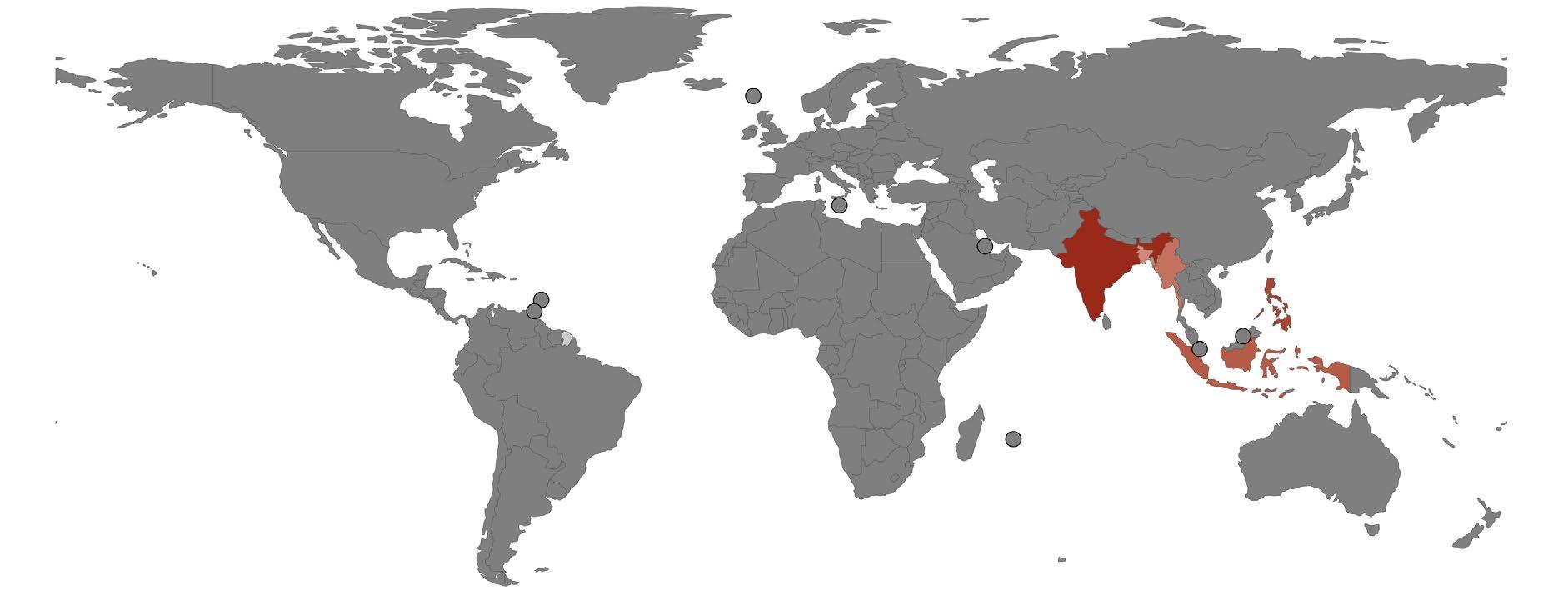
Figure 3: Global distribution of ITF-affiliated crewing agencies, based on country-level counts from the ITFShipBeSure Recruitment Agency Directory (accessed May 2024). Darker red shading indicates higher rankings and unshaded (grey) countries represent no available data; full methods in annex.
Global Distribution
Global data on recruitment for DWF remain limited. The International Transport Workers’ Federation’s (ITF) ShipBeSure Recruitment Agency Directory44 provides one of the few structured datasets on fishing crew recruitment worldwide but captures only a fraction of global activity. As of 2024, all agencies listed in the directory were concentrated in five countries: India (531), the Philippines (364), Indonesia (287), Myanmar (193), and Bangladesh (61).
This pattern aligns with broader research showing that South and Southeast Asia are the primary suppliers of migrant labor for DWF fleets based in Taiwan, China, South
Korea, Japan, and other major fishing nations. However, large recruitment corridors identified in academic and investigative studies, including Ukraine, Russia, Ghana, and Senegal, do not appear in the ITF dataset despite being recognized elsewhere as key crew-supplying regions.45-47
These gaps highlight the absence of consolidated, verifiable, and globally comparable information on fishing recruitment. The lack of systematic reporting and verification complicates efforts to assess recruitment practices, identify high-risk corridors, and design effective labor protections across jurisdictions.
© Oceana/Mauricio Altamirano
Crewing agencies link distant-water fishing vessels with migrant fishers, allowing vessel operators to distance themselves from direct oversight.
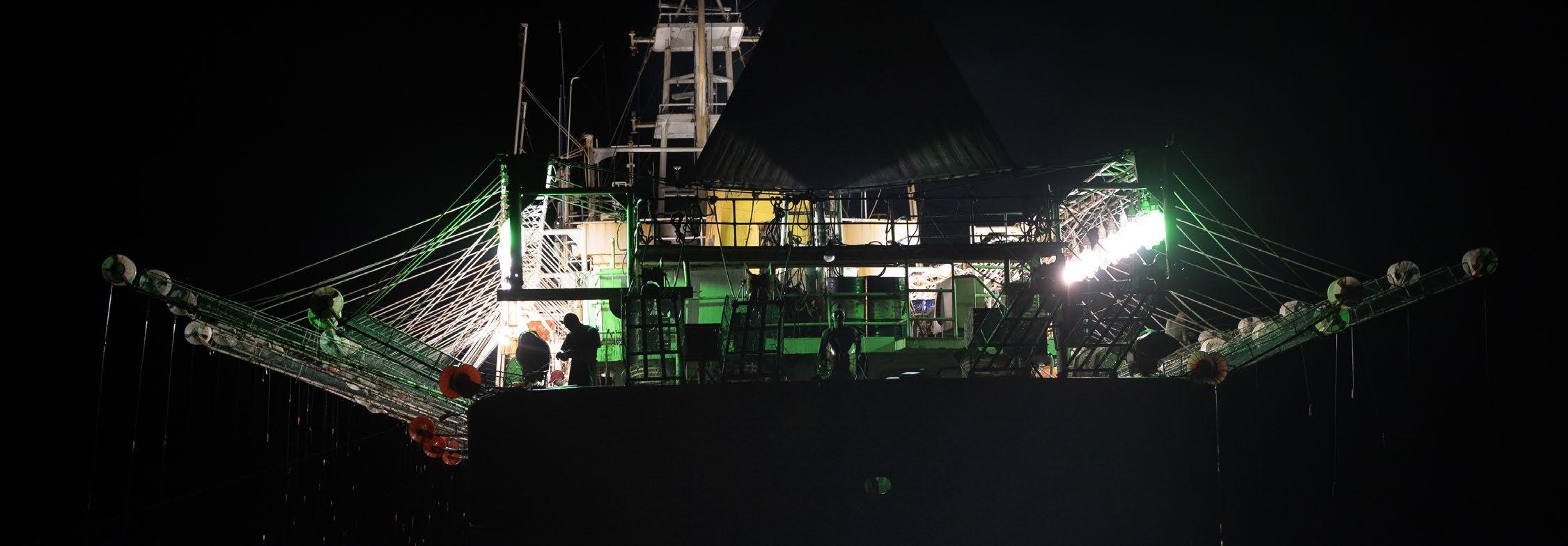
Beyond the physical dangers of fishing, crew on distantwater fishing vessels face some of the industry’s worst workplace abuses.
Exploitation at Sea
Media investigations and academic research have repeatedly documented cases in which weak oversight of recruitment has contributed to serious risks for migrant fishers. Reported abuses include deceptive or substituted contracts, excessive working hours, wage withholding, and inadequate insurance or repatriation arrangements. Examples include:
• Indonesian workers on Chinese and Taiwanese vessels deceived about conditions and subjected to extreme 21-hour shifts, with some cases involving deaths at sea from neglect or violence;48,49
• Filipino crews facing wage theft and inadequate insurance coverage;50
• and Cambodian fishers trafficked into Ireland and charged illegal recruitment fees.51
While these cases do not characterize all recruitment practices in DWF, they illustrate the consequences of regulatory gaps and weak cross-border oversight. They also underscore the importance of clear recruitment standards, licensing and monitoring systems, and international cooperation between labor-sending and laborreceiving states to reduce vulnerabilities and improve accountability throughout the recruitment process.
Progress and Opportunities
Despite growing recognition of labor risks in DWF, major gaps remain. Most labor-sending countries have not ratified or fully implemented ILO C188, and few require systematic collection or disclosure of national-level data on fishing crew recruitment. Information on recruitment agencies is rarely shared across borders, and global transparency tools such as the Food and Agriculture Organization of the United Nations (FAO) Global Record do not yet include crewing or recruitment data, limiting the ability of regulators, industry, and civil society to trace labor flows or identify high-risk recruitment practices.
Addressing these gaps presents clear opportunities for progress. Expanding ratification and effective enforcement of ILO C188, improving national licensing and disclosure
requirements for recruitment agencies, and supporting the adoption of labor-related reporting within RFMOs would improve oversight of fishing labor supply chains. Integrating crewing and recruitment data into existing global transparency tools would further help cross-border cooperation and risk identification. Private actors, including insurers and financiers, can also reinforce these efforts by incorporating labor-related risks into broader compliance and risk-management frameworks, particularly where they intersect with human rights, safety, or criminal concerns. Together, these steps can improve protections for workers, enhance accountability within the service provider network, and reinforce the integrity of DWF governance.
© The Ocean Outlaw Project/Ed Ou
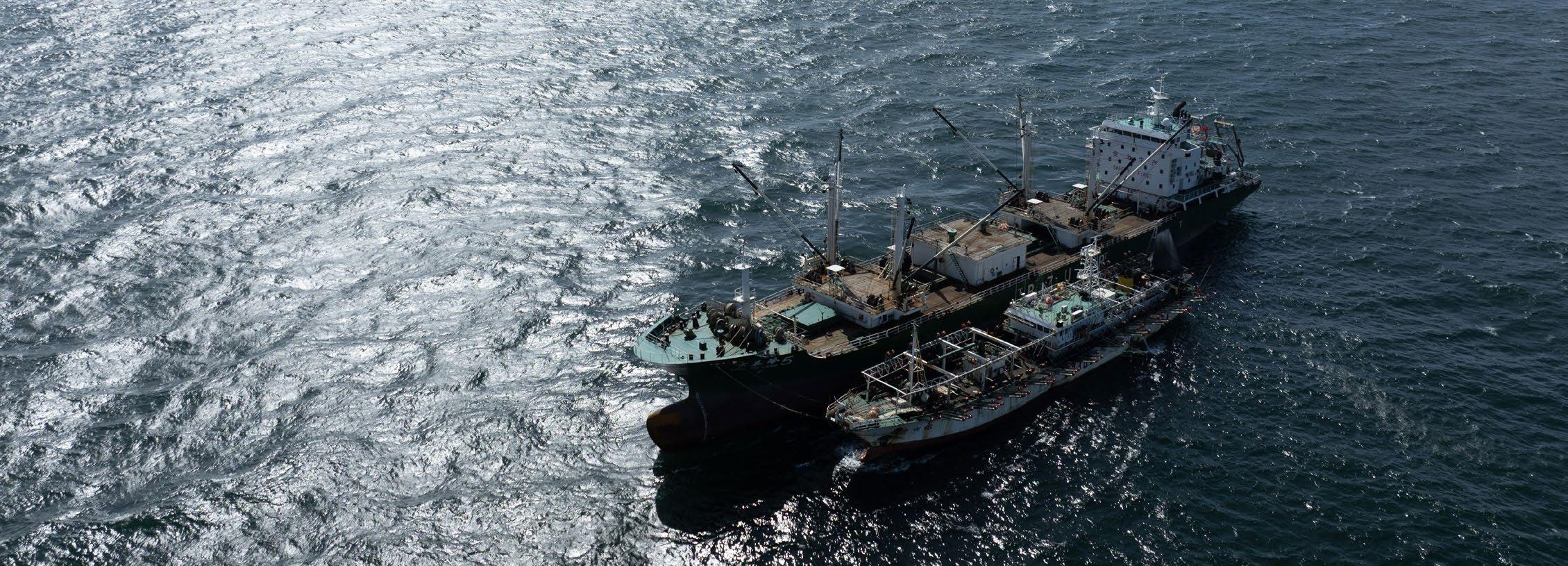
Transshipment at sea can allow distant-water fleets to avoid scrutiny and extend fishing time.
Transshipment: Supply Chains at Sea
Transshipment, the transfer of catch (and sometimes supplies) from one vessel to another at sea, allows DWF fleets to operate for extended periods without returning to port.52 When well-regulated, transshipment can increase efficiency and reduce operational costs; when monitoring and controls are weak, it can significantly reduce oversight by obscuring where fish were caught, enabling the laundering of products and allowing legal and illegal catch to be mixed.53 Under these conditions, transshipment can undermine traceability, facilitate IUU fishing, and heighten risks of labor abuse.
Governance of transshipment is fragmented. Coastal states regulate transshipment within their waters, RFMOs
establish rules for the areas and fisheries they manage — including the high seas — and flag states retain responsibility for the conduct of vessels flying their flag. This division of authority creates gaps that can be exploited,54 particularly where carrier vessels operate under “flags of convenience”vii with limited compliance checks or enforcement capacity.52,55 While transshipment by vessels included on official RFMO IUU lists is prohibited within RFMO-managed areas, the effectiveness of these measures depends heavily on members’ capacity and willingness to enforce them. Several RFMOs now require prior vessel authorization, advance notification, and the use of onboard observers or electronic monitoring for transshipment activities, but coverage remains incomplete and often undermined by weak flag state control.54,56
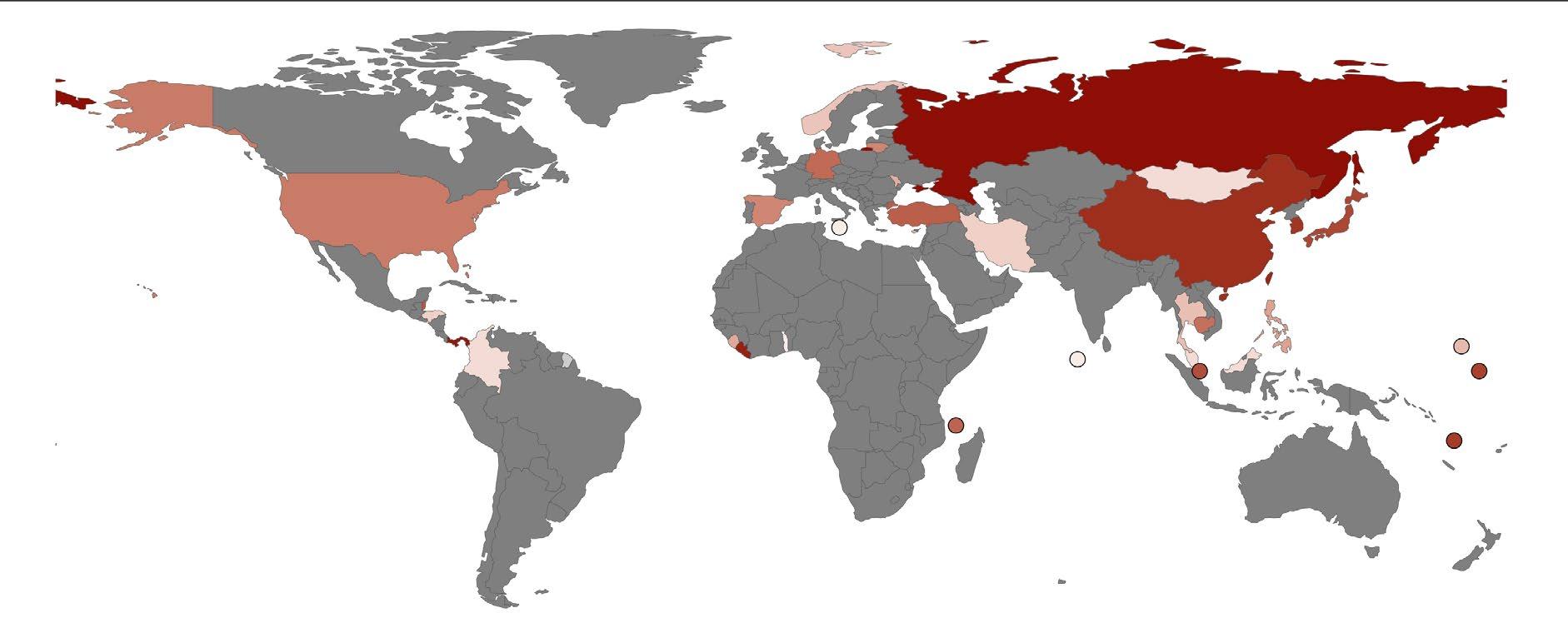
Figure 4: Global distribution of likely at-sea transshipment encounters by carrier vessel flag state (2012–2019), based on AIS-derived data from Global Fishing Watch (2021) identifying potential interactions via spatial and temporal proximity between fishing and carrier vessels. Darker red shading indicates higher rankings and unshaded (grey) countries represent no available data; full methods in annex.
vii. A ‘flag of convenience’ (FoC) allows vessel owners to register their vessels under the flag of a country regardless of where the owner is based (Oceana 2026).
© The Outlaw Project/Ed Ou
Global Distribution
Global Fishing Watch data from 2012 to 2019 identified more than 24,000 potential at-sea transshipment encountersviii between fishing vessels and refrigerated cargo (or “carrier”) vessels, drawn from a dataset of 1,350 carrier vessels.57 A small number of flag states dominate this activity. Russia accounts for roughly three times as many encounters (14,478) as the next highest flag state, Panama (4,436), followed by Liberia (1,520), Taiwan (1,125), China (894) and other open-registry flags such as Vanuatu. This concentration mirrors broader patterns in global shipping and highlights where governance improvements could have the greatest effect, especially given that “flags of convenience” are often associated with weaker oversight and higher risk of IUU fishing.
Although carrier vessels are primarily flagged to these states, transshipment encounters cluster geographically in a few key ocean regions. Roughly one-third (35–39%) occur on the high seas, where direct oversight is weakest.58,59 Activity is especially concentrated in the equatorial and western Pacific, waters off West Africa, and parts of the South Atlantic.58 These hotspots overlap with some of the world’s most valuable fisheries, including tuna and squid, underscoring the role transshipment plays in linking DWF operations to global markets far from effective flag state control.58
The economic stakes are significant. In 2018, transshipped tuna alone was estimated to be worth approximately USD 10.4 billion, with around two-thirds originating from the Pacific.60 Yet much of this value passes through high seas transfers or foreign ports, limiting the benefits captured by coastal states. Media and civil society reporting from Pacific Island countries describe how at-sea transshipment can reduce local landings, port revenue, and inspection opportunities, raising concerns about lost income (including through tax revenue), weakened oversight, and undermined economic sovereignty.61
Together, these patterns reveal a highly concentrated sector in which a relatively small group of flag states and companies facilitate most transshipment activity.59 Many carrier vessels operate through opaque ownership structures, complicating efforts to identify who ultimately controls and benefits from transshipment operations. By enabling vessels to remain at sea, reducing port inspections, and obscuring catch origins, transshipment has become a powerful logistical enabler of DWF, and where controls are weak, a key risk factor for IUU fishing and labor and human rights abuses at sea.62
Progress and Opportunities
Recent years have seen meaningful steps toward strengthening the governance of transshipment. In 2022, the FAO adopted voluntary transshipment guidelines that establish best practices for authorization, reporting, monitoring, oversight, and data sharing.63 These guidelines have helped inform reforms in several tuna RFMOs, including the International Commission for the Conservation of Atlantic Tunas (ICCAT), the Indian Ocean Tuna Commission (IOTC), and the Inter-American Tropical Tuna Commission (IATTC),64,65 which have updated their transshipment measures to improve consistency in notification requirements, data exchange, and oversight of carrier vessels. Some coastal states and RFMO parties have also moved to restrict high-seas transshipment or require that certain transfers take place in port or within national waters, where inspections are more feasible. Since 2024, the EU has further strengthened this approach by explicitly prohibiting the provision of services, including logistics support, to operators connected to vessels listed for IUU fishing.
Despite this progress, major gaps remain. The Western and Central Pacific Fisheries Commission (WCPFC), which oversees the world’s largest volume of tuna transshipment, continues to operate under a measure that has not been substantially revised for more than 15 years.65 Observer and electronic monitoring coverage of transshipment events remains uneven across regions, and the effectiveness of tracking is constrained where AIS data are incomplete or unreliable during transshipment activities. In key hot spots, particularly in West Africa and parts of the Pacific, coastal states often lack the resources, data access, or negotiating power needed to fully enforce stricter transshipment rules.
Building on recent reforms will require strengthening implementation of the FAO guidelines, updating outdated RFMO measures, especially in the WCPFC, and expanding the use of unique vessel identifiers and continuous tracking for both fishing vessels and carrier vessels. Complementing these steps with robust catch documentation schemes at national, regional, and global scales, greater transparency around carrier vessel ownership and operations, and expanded observer or electronic monitoring coverage would help ensure that transshipment supports legal, wellmanaged fisheries rather than undermining them.
vii.
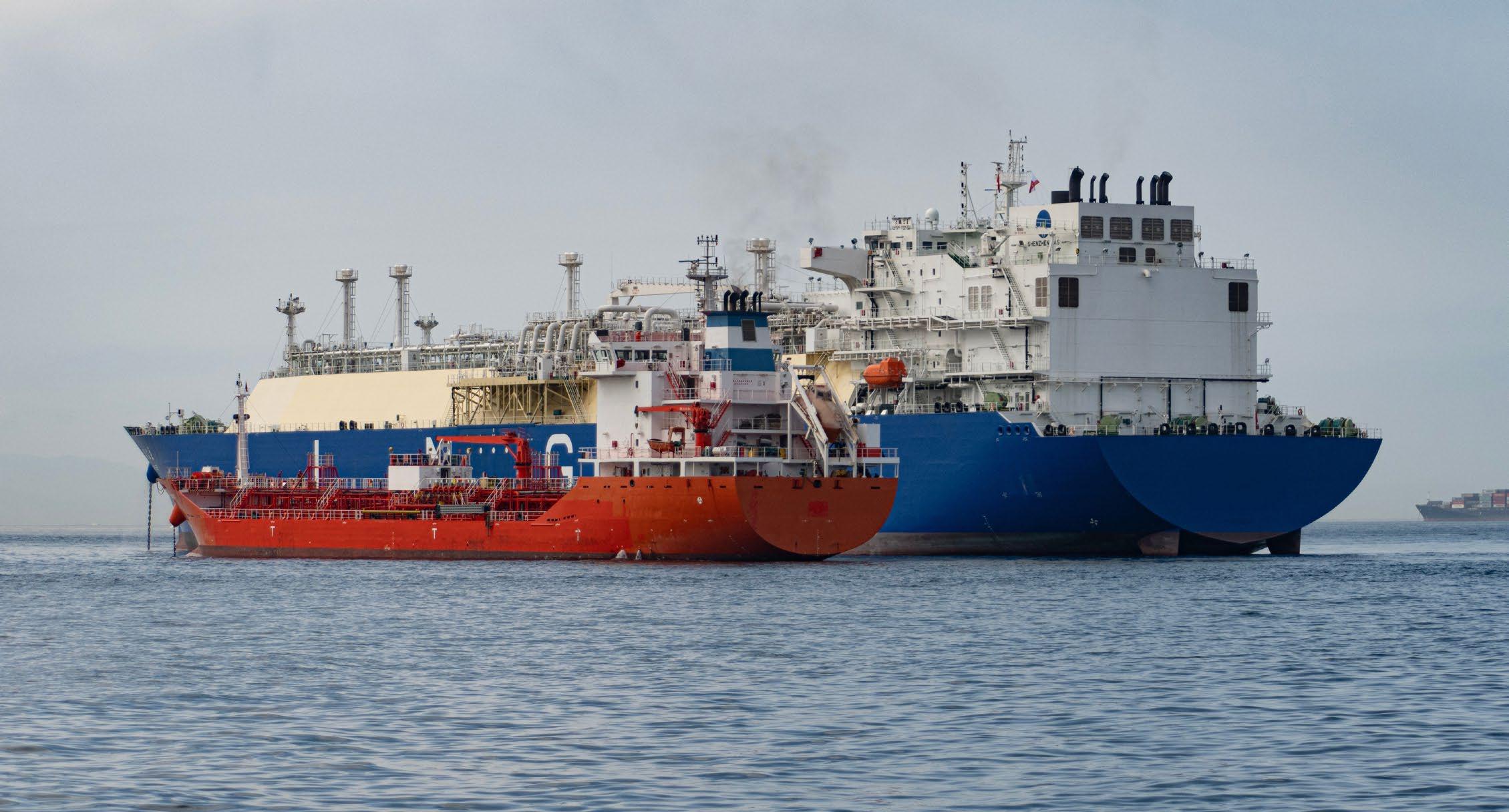
Fuel bunkering in the Strait of Gibraltar. Bunkering encounters also create opportunities for exchange of other goods and services at sea.
Fuel Bunkering: Powering Fleets Offshore
Fuel bunkering, the delivery of marine fuel to vessels at sea, enables DWF fleets to operate far from shore for extended periods. By refueling offshore, vessels reduce the need to return to coastal ports, improving operational efficiency and heavily reducing costs. At the same time, offshore fueling can limit interactions with port inspectors, customs authorities, and tax systems, reducing opportunities for documentation checks, safety inspections, and fiscal oversight. Bunkering vessels rarely perform a single function. Many also deliver food, water, spare gear, and facilitate crew transfers, blurring the line between “fuel carriers,” “supply vessels,” and in some cases, the broader category of transshipment support vessels.
Because fuel is often the single largest operating cost for industrial fishing fleets, especially those targeting high seas tuna and squid, access to at-sea bunkering has become indispensable to many DWF business models.57,67 This strategic importance makes bunkering a critical, yet historically underexamined, component of the service provider network supporting DWF.
In recent years, several RFMOs have taken steps to strengthen oversight of fuel bunkering and other non-fish supply events through a combination of vessel tracking requirements and expanded reporting rules. Measures
adopted by ICCAT68 and IOTC,69 for example, require authorized carrier vessels to continuously operate Vessel Monitoring Systems and to submit supply declarations whenever they provide services such as fuel, provisions, gear, or crew outside observer-monitored transshipment events. These declarations must include vessel identities, locations, and details of goods supplied. The South Pacific Regional Fisheries Management Organization (SPRFMO) has adopted a similarly restrictive approach, allowing at-sea transfers of fuel or supplies only when both vessels are authorized and listed on the SPRFMO Record of Vessels.70 The WCPFC is also actively reviewing its measures71 to incorporate explicit reporting fields for non-fish transfers within transshipment and observer documentation. Collectively, these developments reflect a growing RFMO focus on improving transparency and oversight around fuel bunkering and related at-sea interactions.
Ports also play a key role. Under the PSMA, bunkering is explicitly defined as a “fishing-related activity,” granting port states the authority to inspect vessels and deny port services to bunkering vessels where links to IUU-listed fishing vessels are identified.72 However, operationalizing these provisions remains challenging.73 Establishing clear evidentiary links between bunkering activity and IUU fishing is often difficult in practice, and many major fishing nations still lack domestic legal frameworks or enforcement capacity to apply PSMA measures effectively to bunker vessels operating under their flag, in their waters, or through their ports.
© Oceana/Enrique Talledo
These challenges are compounded by the offshore nature of bunkering. Most refueling activity occurs beyond the reach of routine inspections, making real-time monitoring difficult. Vessel mobility, variable reporting practices, and the limitations of IUU fishing vessel lists constrain enforcement, particularly where vessels change identifiers or operate across jurisdictions. Many bunkering vessels are flagged to open registry jurisdictions, such as Panama, the Marshall Islands, or Kiribati, where registration costs are low and oversight capacity is limited.54 While bunker vessels are generally required to transmit AIS,74 data gaps, poor signal quality, or deliberate interference can complicate real-time
monitoring. Together, these factors allow bunkering to extend the operational reach of DWF fleets while limiting regulatory control.
A growing body of research suggests that in some regions, bunkering vessels also act as logistical conduits that inadvertently facilitate unlawful activities. By supplying fuel, provisions, and sometimes crew, they may knowingly or not support vessels engaged in IUU fishing or labor exploitation,75 reinforcing the importance of integrating bunkering more fully into fisheries governance frameworks.
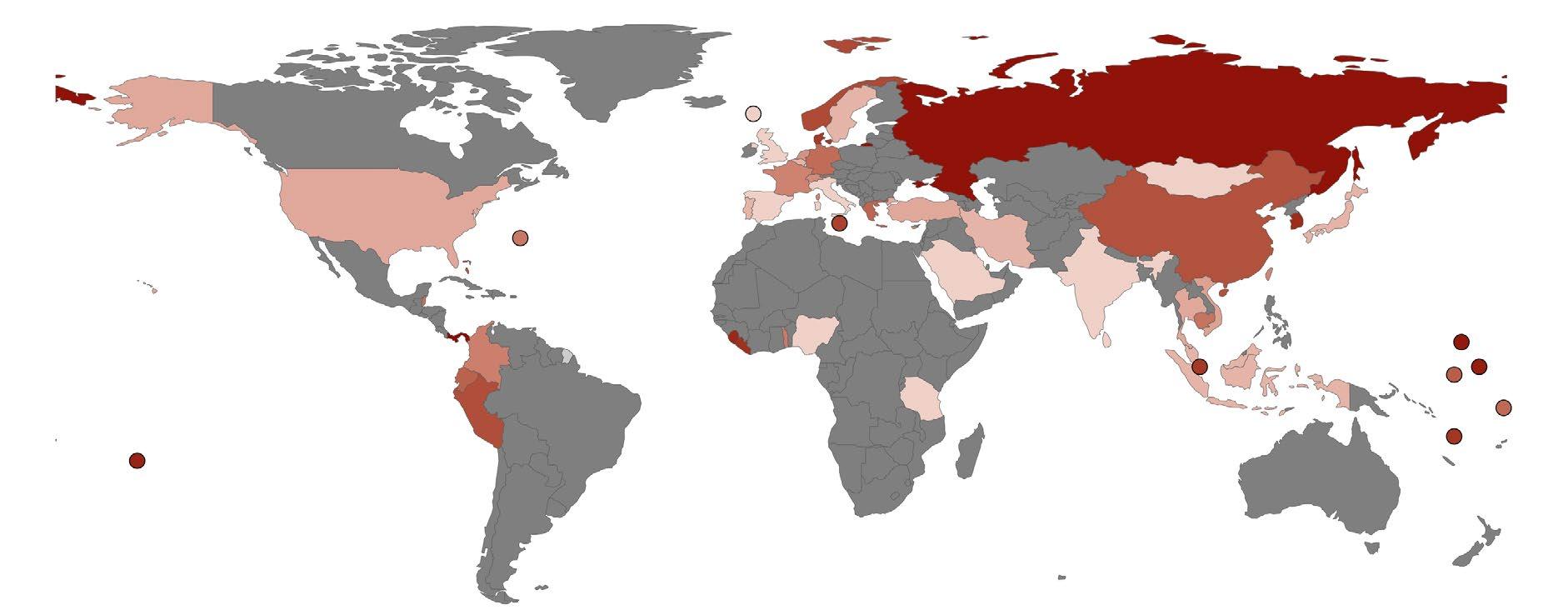
Figure 5: Global distribution of likely at-sea fuel bunkering encounters by flag state (2012–2020), based on AIS-derived encounter data from Global Fishing Watch (2021), identifying potential refueling interactions between fishing and bunker vessels. Darker red shading indicates higher rankings and unshaded (grey) countries represent no available data; full methods in annex.
Global Distribution
Analysis of Global Fishing Watch AIS data from 2012 to 202057 identified more than 14,000 potential offshore bunkering encounters involving fishing vessels, drawn from a database of 963 bunker vessels. Activity is highly concentrated among a small number of flag states. Panama (3,233 encounters) and Russia (2,721) lead globally, while Pacific small island states such as the Marshall Islands (1,651), Kiribati (1,491), and the Cook Islands (1,249) rank unusually high given their limited domestic fuel production, reflecting their role as open registries. Other notable flag states include Sierra Leone, South Korea, Liberia, Vanuatu, Singapore, and Denmark.
Geographically, most bunkering encounters occur in the Western and Central Pacific, the Indian Ocean, and West Africa, regions where DWF fleets operate far from shore and where domestic oversight often depends heavily on the flag state’s capacity and willingness to regulate fishingrelated activities.57
Because only a relatively small subset of vessels globally is equipped to refuel others at sea, the bunkering sector is both highly concentrated and strategically significant. This concentration makes fuel bunkering an important leverage point for improving fisheries oversight, as regulatory action in a limited number of jurisdictions could have disproportionate impact.76
Progress and Opportunities
Progress over the past decade demonstrates that stronger oversight of fuel bunkering is both feasible and effective. RFMOs are increasingly expanding scrutiny of non-fish transfers — including fuel bunkering — through vessel authorization, tracking, and reporting requirements. In parallel, since 2024, the EU has explicitly prohibited the provision of services, including logistics and supply services, to operators connected to IUU-listed fishing vessels. Improvements in vessel tracking have also increased transparency. Expanded requirements for bunkering vessels to transmit AIS57, alongside broader AIS use by fishing vessels, have improved the visibility of at-sea refueling encounters, enabling analysts and regulators to better identify patterns, hotspots, and high-risk interactions.
In the Pacific, the Parties to the Nauru Agreement (PNA) introduced a landmark measure in 2020 prohibiting licensed purse-seine vessels from refueling on the adjacent high seas, instead requiring all refueling to occur in registered ports under coastal state oversight.77 This approach demonstrates how clear, enforceable rules can meaningfully reduce opportunities for offshore bunkering to undermine fisheries control systems.
Despite this progress, significant gaps remain. Many bunkering vessels continue to be flagged to open registries with limited oversight capacity, and coordination between RFMOs, port states, and flag states on bunkering data remains uneven. While RFMO measures increasingly cover non-fish transfers, bunkering vessels that support DWF fleets through fueling and provisioning are still subject to more variable oversight than transshipment vessels in many regions. Strengthening PSMA implementation to include more robust checks on fuel suppliers, expanding regional restrictions on high-seas bunkering, and integrating bunkering data more systematically into RFMO compliance systems represent practical opportunities to reinforce transparency and accountability. Together, these steps would help ensure that access to fuel, while essential for lawful fishing, does not inadvertently enable non-compliant or high-risk activity.
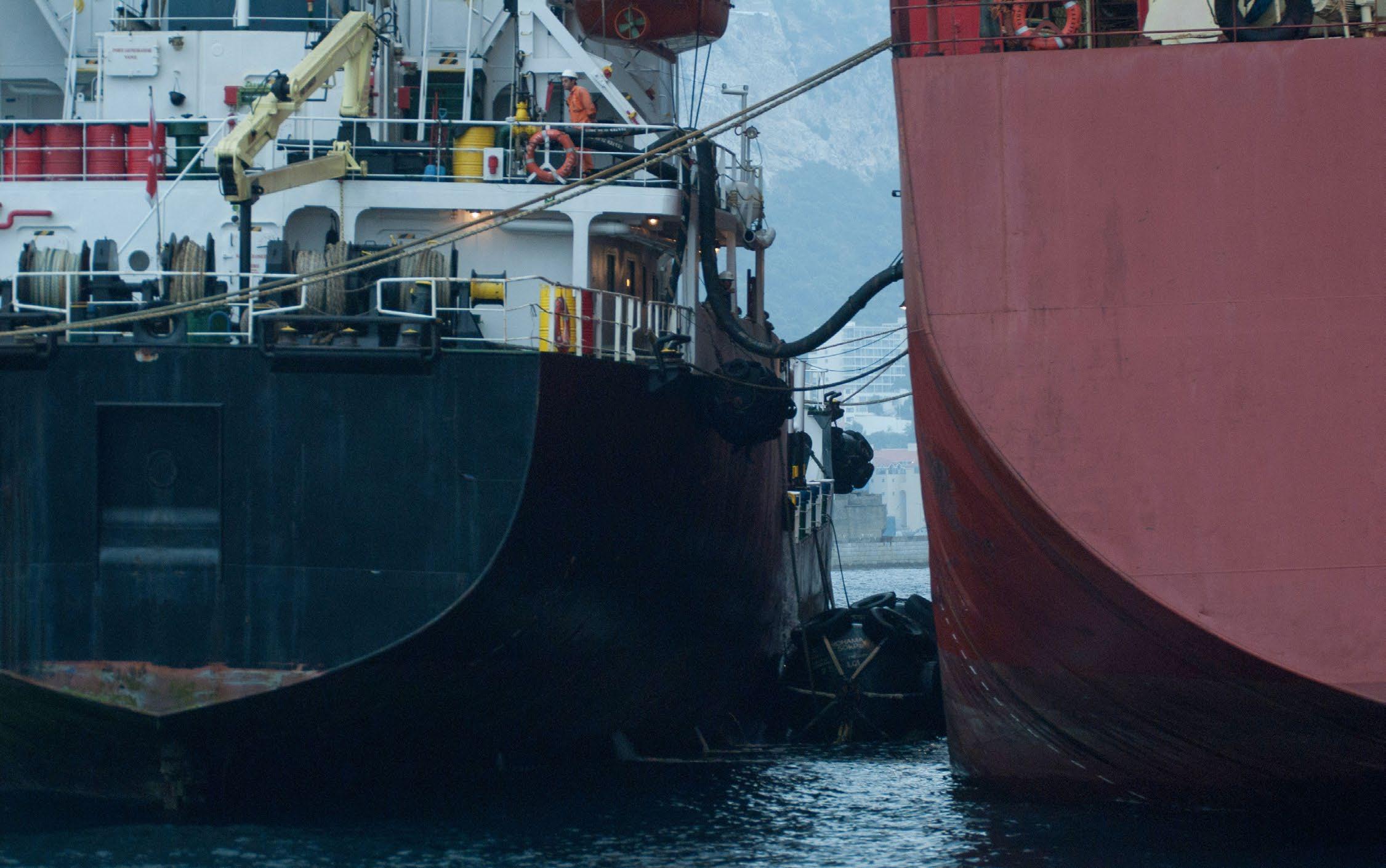
© Oceana/Carlos Suárez
A bunkering tanker conducting refuelling operations in Cádiz, Spain.
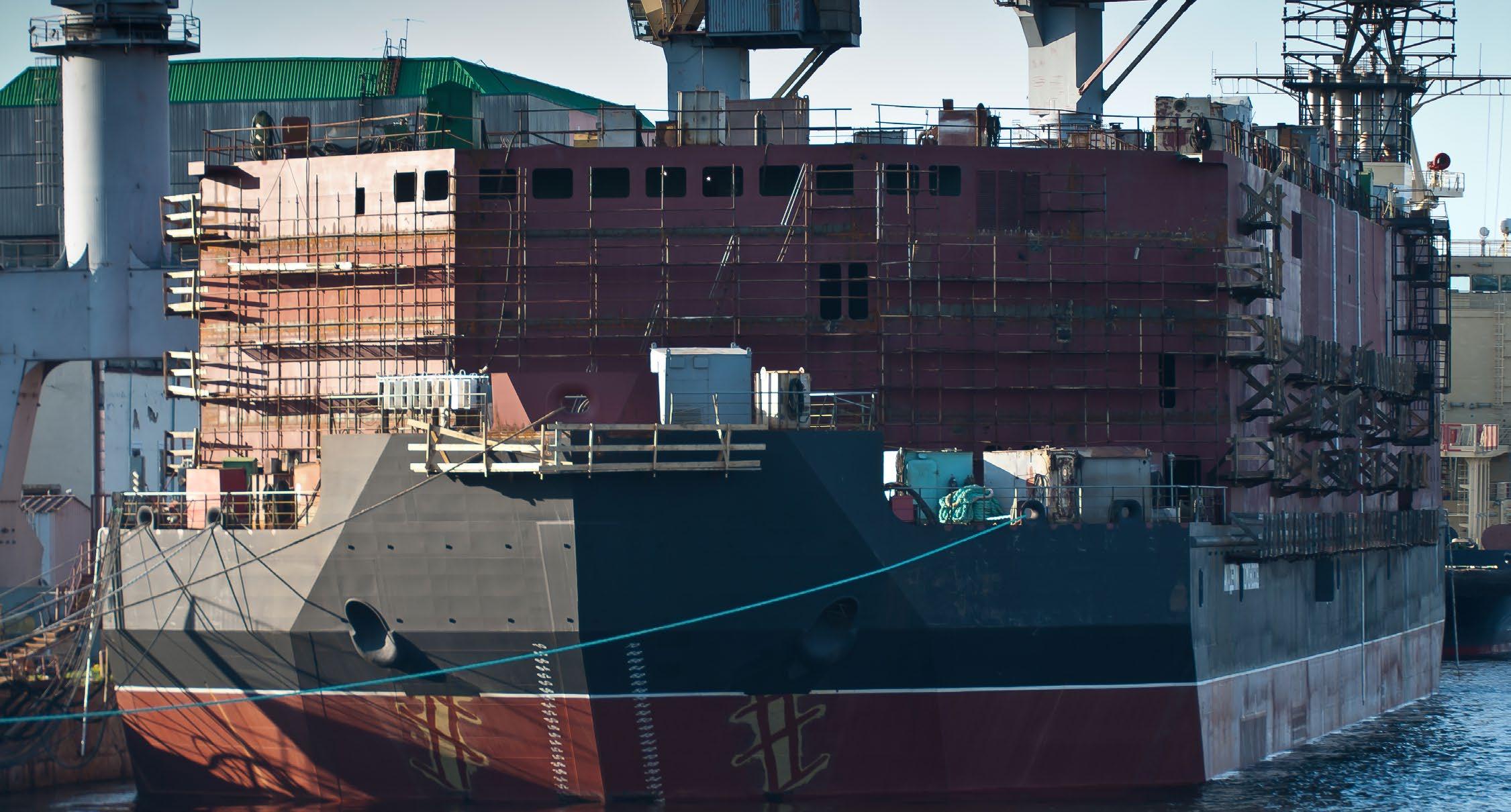
Classification societies provide statutory inspection and certification services from vessel construction through assessments of structure, systems, and safety compliance.
Classification Societies: Technical Gatekeepers
Classification societies are independent technical organizations that inspect, certify, and monitor vessels against engineering, construction, and safety standards. Their certificates are often required for many essential functions, including access to insurance underwriting, mortgage financing, ports, and flag state registration or fishing licenses.78,79 This makes them important gatekeepers in the global maritime economy.
For governments, classification societies also act as Recognized Organizations, carrying out statutory inspections and issuing certificates on behalf of flag states.79 In practice, this means that without classification or certification against equivalent standards, most industrial vessels, including many DWF vessels, could not legally operate. Classification typically involves detailed inspections of vessel structure and system inspections, including verification of hull integrity; watertight doors; fuel, refrigeration, and electrical systems; propulsion, steering, and rudder mechanisms; and compliance with stability, loadline, and fire safety standards.
For cargo ships, tankers, and passenger vessels, these checks are mandatory under International Maritime Organization (IMO) conventions. Fishing vessels, however,
are often exempt from these requirements, including the International Convention for the Safety of Life at Sea80 (SOLAS) and several related technical codes that apply to commercial shipping.81 As a result, only a small share of the global DWF fleet is classed by members of the International Association of Classification Societies (IACS), which together cover the vast majority of the world’s commercial cargo fleet. Some DWF operators are instead able to obtain approval from smaller or less rigorous societies, creating uneven safety and oversight standards across the sector.
A landmark change is approaching. The IMO’s 2012 Cape Town Agreement on the Safety of Fishing Vessels has reached the threshold to take effect, with 28 countries (covering 3,754 eligible vessels) ratifying it. It will enter into force in February 2027, introducing legally binding global safety requirements for large fishing vessels for the first time.82 This would dramatically expand the role of classification societies, because compliance with the Agreement will, in most jurisdictions, require vessels to be classed or assessed against equivalent standards. Ratification of the Agreement could therefore improve vessel safety, reduce fatalities at sea, strengthen crew protections, and close long-standing loopholes exploited by poorly regulated operators.
Classification societies are also recognized as service providers within fisheries governance frameworks. Under EU law, service providers, including classification societies, are prohibited from providing services to vessels
© Oceana/Carlos Suárez
listed on official IUU fishing vessels lists, and societies domiciled in the EU are required to screen clients against those lists. Several RFMOs, including the Commission for the Conservation of Antarctic Marine Living Resources (CCAMLR), ICCAT, IOTC, the General Fisheries Commission for the Mediterranean (GFCM), the Northwest Atlantic Fisheries Organization (NAFO), and SPRFMO have adopted measures requiring member states to investigate and take appropriate actions when companies under their jurisdiction, including classification societies, are found to be providing services to IUU-listed vessels. When enforced, these provisions provide a direct governance hook because a vessel that loses classification will struggle to secure insurance, re-flag, access ports, or operate legally in many fisheries.
Despite these developments, the sector remains largely self-regulated. Outside IACS, there is no global standard
defining what constitutes a “responsible” classification society for fishing vessels. This creates opportunities for operators facing scrutiny to seek out more lenient societies. While some states, like the U.S., for example, require certain fishing vessels to be classed, these requirements are widely considered inadequate83 because they often apply only to new builds. In the absence of broader international standards, operators may still circumvent oversight by flagging vessels to registries with minimal requirements and limited government oversight.84
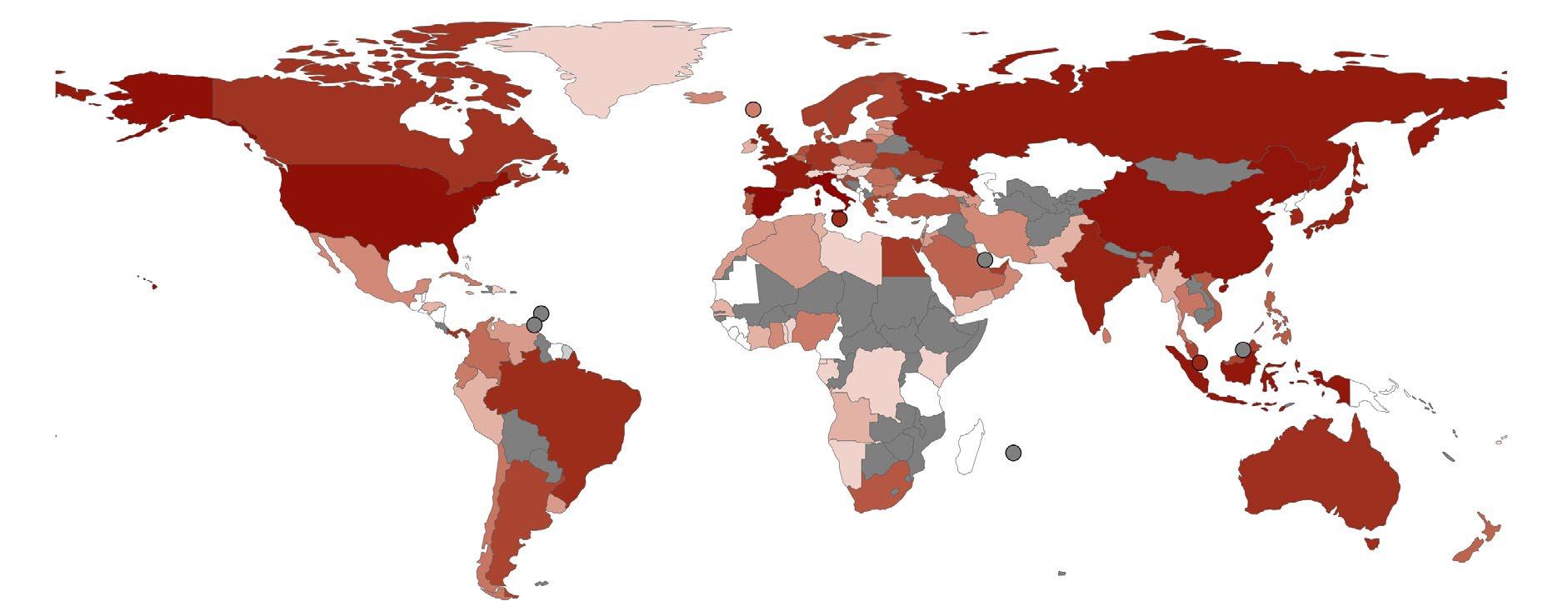
Figure 6: Global distribution of classification society offices, based on country-level office counts compiled from the Lloyd’s List Directory (accessed May 2024). Darker red shading indicates higher rankings and unshaded (grey) countries represent no available data; full methods in annex.
Global Distribution
Data from the Lloyd’s List Directory85 identifies more than 50 classification societies operating across over 1,200 offices worldwide with a presence on every continent. The highest concentrations are in Europe, led by Italy (62), Spain (55), France (34), and the UK (33), as well as in the U.S. (49) and major Asian hubs such as China (46), Indonesia (40), Japan (33), and India (33).
These geographic clusters highlight where classification capacity and regulatory leverage are most concentrated. In particular, the concentration of societies in Europe, combined with EU prohibitions on providing services to IUU-listed vessels, illustrates how service provider regulation can be anchored in a limited number of
jurisdictions with global reach. Greater attention to vessel safety, beneficial ownership transparency, and links between classification and insurance eligibility could extend accountability into the fishing sector, which remains subject to far less scrutiny than commercial shipping.
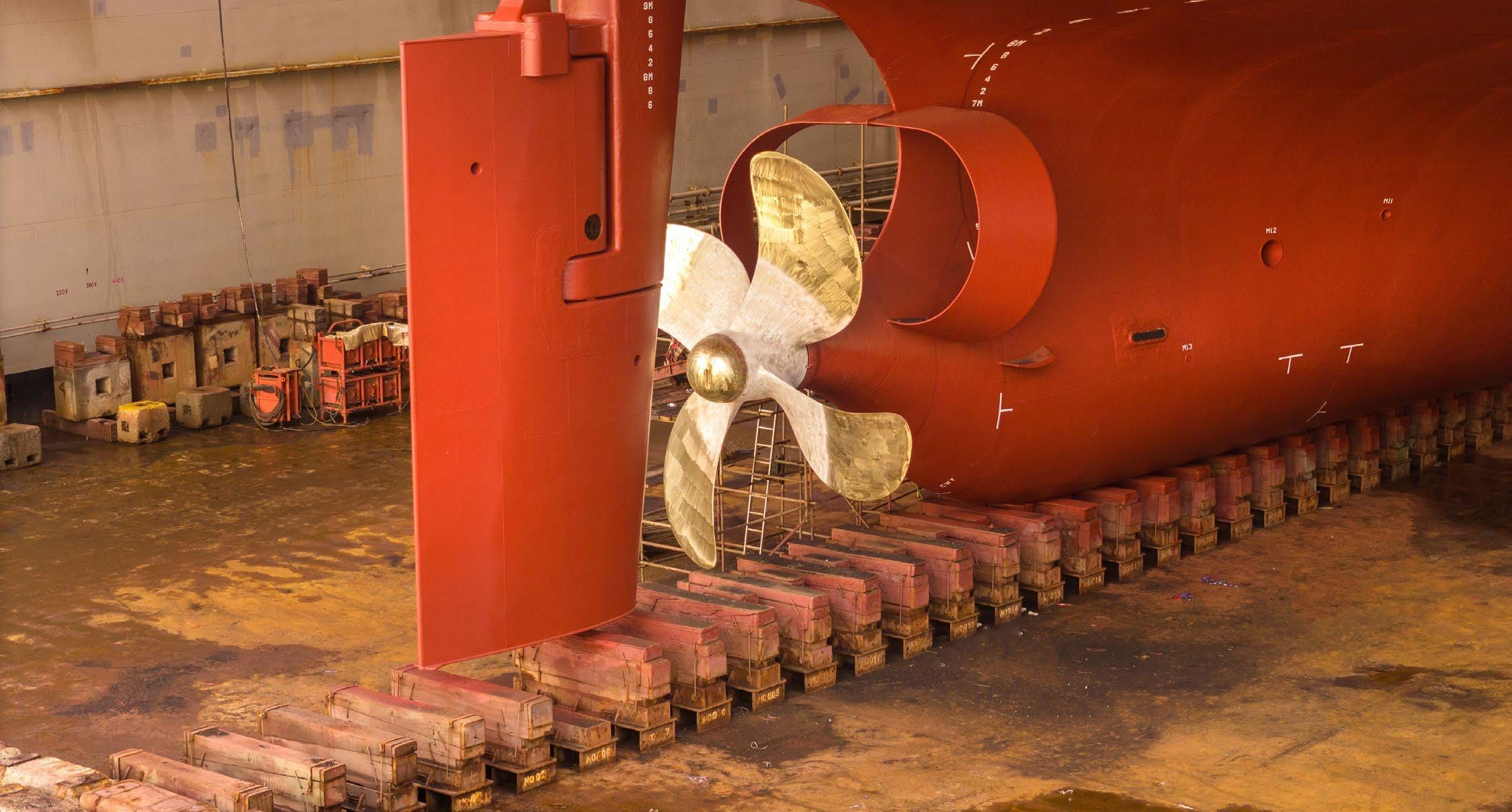
Propulsion machinery is subject to inspection by classification societies as part of vessel certification.
Progress and Opportunities
Meaningful progress has begun to take place. In addition to EU prohibitions on providing services to IUU-listed vessels, several RFMOs now require members to investigate whether any companies under their jurisdiction are linked to IUU-listed fishing vessels and to take appropriate action where such links are identified. EU legislation further obliges societies to screen clients and apply corrective measures. At the industry level, some IACS members have strengthened internal risk procedures, including enhanced flag-history checks and closer collaboration with insurers, although these practices remain uneven.
The entry into force of the Cape Town Agreement would be transformative. By creating a binding global safety regime for large fishing vessels, it would, for the first time, sharply expand the role of reputable classification societies and help align oversight of DWF vessels with the far higher standards applied in commercial shipping. This, in turn, could reduce incentives to seek lenient or opaque certification.
Substantial opportunities nevertheless remain. Establishing clearer global standards for fishing-vessel classification, improving transparency around which societies certify which vessels, and linking certification more explicitly to due diligence on ownership, safety, and compliance would extend accountability deeper into DWF operations. Strengthening coordination between classification societies, insurers, port authorities, and RFMOs could further ensure that vessels with poor compliance histories
face heightened scrutiny, or are unable to operate, across multiple jurisdictions. Together, these steps would position classification societies not merely as technical inspectors, but as integral actors in a more coherent and accountable global fisheries governance system.
Thousands of fishers lose their lives every year while working to supply the world‘s growing appetite for fish and fish products. The 2012 Cape Town Agreement will help protect fishing crews, while safeguarding vessels. „ „
Arsenio
Dominguez IMO Secretary-General International Maritime Organization
METHODS
This analysis draws on a combination of literature review, existing sector-specific datasets, and mapping to examine how service providers sustain DWF fleets. The goal was to identify where these services are most concentrated and highlight opportunities for governance reform.
We began with a targeted literature review to validate the focus on six service provider sectors: ports, insurance, crewing, transshipment, fuel bunkering, and classification societies. The review provided technical background on how these sectors function, the regulations that govern them, and their geographic and institutional footprints. It also revealed data gaps, helping define where our analysis could contribute new insights.
For each sector, we identified sector-specific datasets reflecting either operational or institutional footprints. Ports were analyzed using AIS-based foreign vessel visit counts from Hosch et al. (2025). Insurance was mapped through office locations of leading marine underwriters, based on Miller et al. (2016) and verified through company websites. Crewing data came from the ITF ShipBeSure Recruitment Agency Directory (2024). Transshipment and fuel bunkering were analyzed using AIS-derived encounter data from Global Fishing Watch (2012–2019 and 2012–2020, respectively). Classification society offices were compiled from the Lloyd’s List Directory (2024). Each dataset was aggregated to the country level. For institutional sectors (insurance, crewing, and classification societies), we counted the number of offices or agencies per country. For behavioral sectors (ports, transshipment, and bunkering), we counted the number of visits or encounters, attributing them either to the host country (ports) or the flag state
of the supporting vessel (carriers or bunkers). Countries were then ranked by their totals, allowing us to identify “hotspots” of enabling services.
The results were visualized through global maps, with darker red shading indicating higher rankings and unshaded (grey) countries representing no available data. These maps illustrate where DWF-enabling services are clustered and where policy interventions may be most effective.
We also reviewed media reporting from 2014–2025 to identify recurring themes, regional hotspots, and illustrative examples. While not central to the maps, these findings provided additional context on risks and governance challenges across sectors.
Assumptions and Limitations
This analysis assumes that publicly available indicators — such as office locations, agency listings, vessel visits, and AIS-derived encounters — provide a reasonable basis for identifying where DWF-enabling services are concentrated. Results are aggregated to the country level to support governance-focused analysis. Findings are intended to show relative patterns rather than the full scale of service provision.
Each dataset carries limitations. AIS-based records may underreport activity due to vessel non-compliance or signal manipulation. Office-based counts reflect presence but not necessarily scale of operations. Crewing data is limited to agencies listed in the ITF directory, excluding informal or unregistered recruiters. Despite these limitations, the analysis provides one of the clearest available pictures of how service providers support DWF worldwide.
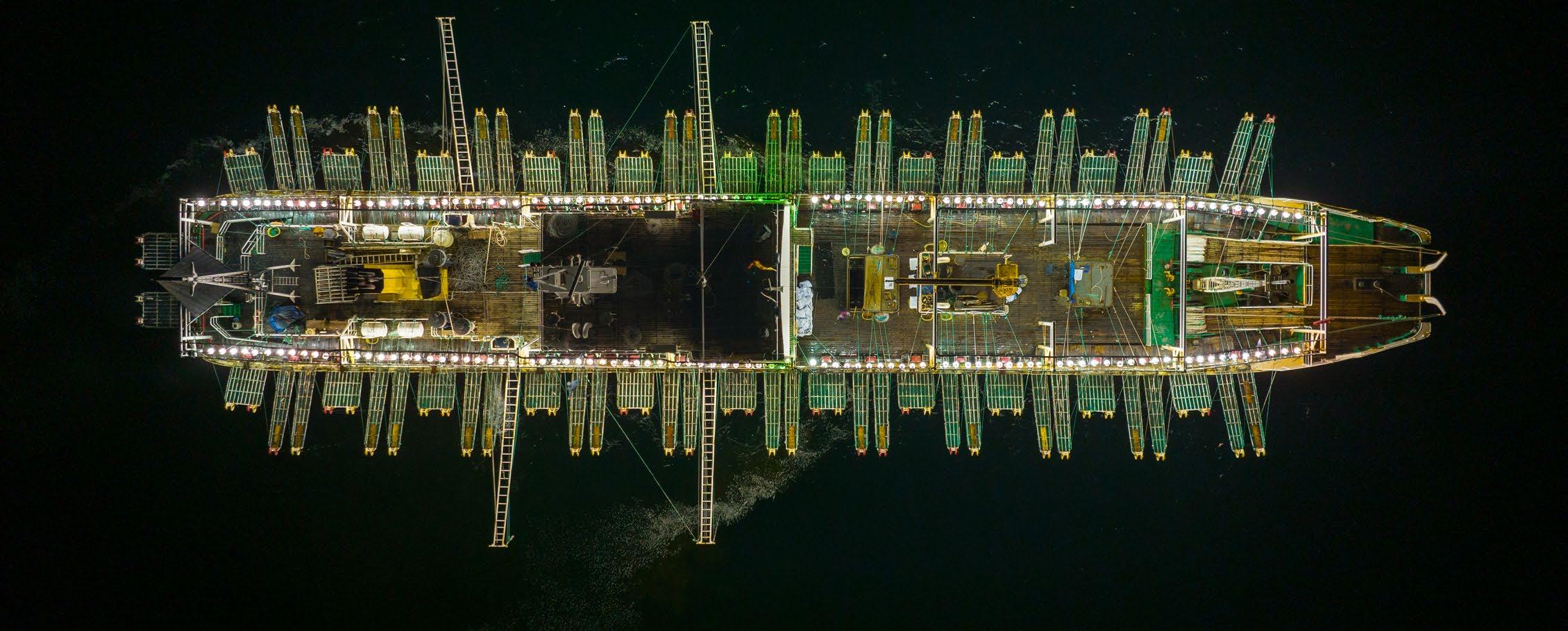
Service providers play an important role in enforcing compliance in DWF vessels, such as this South Atlantic squid jigger.
© The Ocean Outlaw Project/Ed Ou
References
1. Oceana. n.d. Countries where providing services to IUU fishing vessels is prohibited. Accessed December 3, 2025. https://oceana.maps.arcgis.com/apps/webappviewer/index.html?id=26011d10704c4396afc2cb5f89835a0b
2. Trygg Mat Tracking. n.d. Combined IUU Vessel List. Accessed December 3, 2025. https://www.tm-tracking.org/ combined-iuu-vessel-list
3. UK Government. 2020. The Sea Fishing (Illegal, Unreported and Unregulated Fishing) Order 2009. https://www. legislation.gov.uk/uksi/2009/3391/article/9
4. Trujillo, L. and Nombela, G. 1999. Privatization and Regulation of the Seaport Industry. The World Bank. https:// documents1.worldbank.org/curated/en/973281468740398501/pdf/multi-page.pdf
5. Yozell, S. and Shaver, A. 2019. Shining a light: The need for transparency across distant water fishing. Stimson Center. https://documents1.worldbank.org/curated/en/973281468740398501/pdf/multi-page.pdf
6. Widjaja, S., Long, T., and Wirajuda, H., et al. 2020. Illegal, Unreported and Unregulated Fishing and Associated Drivers. World Resources Institute. https://oceanpanel.org/wp-content/uploads/2022/05/Illegal-Unreported-andUnregulated-Fishing-and-Associated-Drivers.pdf
7. Petrossian. G.A., Pires, S.F., Spencer M.D., and Cohen, N.D. 2024. An empirical assessment of seaports as facilitators of FOC-flagged transshipment landings. Crime Science 13: 10. doi: 10.1186/s40163-024-00210-0
8. Oceana. 2016. Global agreement to end illegal fishing now in effect. https://usa.oceana.org/blog/global-agreementend-illegal-fishing-now-effect/
9. SCMP. 2024. Can China balance local interests with its needs as it eyes African fish stocks? https://www.scmp.com/ news/china/diplomacy/article/3266796/china-looks-africa-meet-rising-demand-seafood-can-it-balance-localinterests-its-own-needs
10. TIME. 2024. How Chinese fishing vessels dominate domestic waters across the globe. https://time.com/7006513/ china-illegal-fishing-ocean-investigation/
11. FAO. 2024. Parties to the PSMA | Agreement on Port State Measures (PSMA). https://www.fao.org/port-statemeasures/background/parties-psma/en/
12. Hosch, G., Miller, N.A., Fader, J., et al. 2025. Don’t follow trends, start trends: PSMA implementation and port state performance from 2017 to 2023. Ocean & Coastal Management 262: 107584. doi: 10.1016/j. ocecoaman.2025.107584
13. Godfrey, M. 2025. Local fishing community, NGOs express concern over Chinese-built fishing port in Ghana. Seafood Source. https://www.seafoodsource.com/news/supply-trade/local-fishing-community-ngos-express-concern-overchinese-built-fishing-port-in-ghana
14. Saumweber, W. 2020. Distant-water fishing along China’s maritime silk road. https://ocean.csis.org/commentary/ distant-water-fishing-along-china-s-maritime-silk-road/
15. Diálogo Américas. 2025. Chinese ports in Latin America and their illicit operations. https://dialogo-americas.com/ articles/chinese-ports-in-latin-america-and-their-illicit-operations/
16. Food and Agriculture Organization (FAO). 2025. Equatorial Guinea becomes Party to the PSMA. https://www.fao.org/ port-state-measures/news-events/detail/en/c/1744452/
17. FAO. Regional Fisheries Bodies | Agreement on Port State Measures (PSMA). https://www.fao.org/port-statemeasures/background/regional-fisheries-bodies/en/
18. Paris MoU. 2024. Paris MoU pilot on PSC on Fishing Vessels. https://parismou.org/2024/01/paris-mou-pilot-pscfishing-vessels
19. International Transport Workers’ Federation (ITF). 2025. ITF Seafarer’s Bulletin No. 39. https://www.itfseafarers.org/ en/resources/seafarers-bulletin-2025
20. FAO. 2025. IOTC e-PSM becomes the first electronic system to automatically transfer data into PSMA GIES. https:// www.fao.org/iuu-fishing/news-events/detail/en/c/1717803/
21. Global Fishing Watch (GFW). n.d. GFW Vessel Viewer. Accessed May 15, 2025. https://globalfishingwatch.org/map/ vessel-search
22. Goodman, J. 2023. China’s squid fleet avoiding Peru to dodge new port law. Seafood Source. https://www. seafoodsource.com/news/environment-sustainability/china-s-squid-fleet-avoiding-peru-to-dodge-new-port-law
23. Pala, C. 2016. Why would a pirate ship want insurance? SLATE. https://slate.com/technology/2016/07/the-self-sunkpirate-ship-the-thunder-and-recent-research-expose-how-insurance-enables-illegal-fishing.html
24. Oceana. 2022. Risky business: How companies can avoid supporting illegal, unreported and unregulated (IUU) fishing. https://europe.oceana.org/wp-content/uploads/sites/26/factsheet_risky_business_web_version.pdf
25. Oceana. 2022. Insurer ends coverage for illegally fishing fleet in progressive step. https://europe.oceana.org/pressreleases/insurer-ends-coverage-illegally-fishing-fleet-progressive-step/
26. Trygg Mat Tracking. 2023. Marine insurers prevented from doing business with vessels fishing illegally. https://www. tm-tracking.org/post/lloyd-s-market-association-adopts-new-contract-clause-to-prevent-marine-insurers-fromdoing-business
27. Oceana. 2020. Assisting ocean stewardship through marine insurance. https://europe.oceana.org/wpcontent/uploads/sites/26/d_files/oceana-psi_marine_insurance_statement_with_signaries_and_supporting_ institutions_23-10-2020.pdf
28. Oceana. 2023. The London Market Associations release new contract clause to prevent marine insurers from doing business with vessels fishing illegally – Pull the Plug on Pirate Fishing. https://pulltheplugonpiratefishing.org/lloydsmarket-association-adopts-new-contract-clause-to-prevent-marine-insurers-from-doing-business-with-vesselsfishing-illegally/
29. Miller, D.D., Sumaila, U.R., Copeland, D., et al. 2016. Cutting a lifeline to maritime crime: marine insurance and IUU fishing. Frontiers in Ecology and the Environment 14: 357–362. doi: 10.1002/fee.1293
30. International Group of P&I Clubs. 2024. Group Clubs - The International Group of P&I Clubs. Accessed June 17, 2024. https://www.igpandi.org/group-clubs/
31. Draper, N. n.d. Lloyd’s, marine insurance and slavery. https://www.lloyds.com/about-lloyds/history/the-trans-atlanticslave-trade/lloyds-marine-insurance-and-slavery
32. Saul, J. 2018. UK ship insurer London Club setting up Cyprus office over Brexit. Reuters. https://www.reuters.com/ article/world/uk/uk-ship-insurer-london-club-setting-up-cyprus-office-over-brexit-idUSKBN1KA2C1/
33. Saul, J. 2018. Ship insurer UK P&I Club opts for Rotterdam as hub due to Brexit. Reuters. https://www.reuters.com/ article/business/ship-insurer-uk-pi-club-opts-for-rotterdam-as-hub-due-to-brexit-idUSKBN1KR1R7/
34. Vandergeest, P. and Marschke, M. 2020. Modern slavery and freedom: exploring contradictions through labour scandals in the Thai fisheries. Antipode 52: 291–315. doi: 10.1111/anti.12575
35. Wise, A. 2013. Pyramid subcontracting and moral detachment: Down-sourcing risk and responsibility in the management of transnational labour in Asia. The Economic and Labour Relations Review 24: 433–455. doi: 10.1177/1035304613498027
36. EJF. 2010. All at Sea: The abuse of human rights aboard illegal fishing vessels. https://ejfoundation.org/resources/ downloads/report-all-at-sea_0_1.pdf
37. International Labour Organization. 2014. Employment practices and working conditions in Thailand’s fishing sector. https://www.ilo.org/sites/default/files/wcmsp5/groups/public/%40asia/%40ro-bangkok/documents/publication/ wcms_220596.pdf
38. Stringer, C. and Harré, T. 2019. Human trafficking as a fisheries crime? An application of the concept to the New Zealand context. Marine Policy 105: 169–176. doi: 10.1016/j.marpol.2018.12.024
39. International Labour Organization. 2026. Ratifications of C188 - Work in Fishing Convention, 2007 (No. 188). https://normlex.ilo.org/dyn/nrmlx_en/f?p=1000:11300:::NO:11300:P11300_INSTRUMENT_ID:312333
40. The Freedom Fund. 2023. Indonesia hotspot report. https://www.freedomfund.org/app/uploads/2024/03/ indonesiaimpactreport2022-web.pdf
41. Verité. 2021. Recruitment and employment experiences of Filipino migrant fishers in Taiwan’s tuna fishing sector: An exploratory study. https://verite.org/wp-content/uploads/2021/10/Verite_Recruitment-and-EmploymentExperiences-of-Filipino-Migrant-Fishers-in-Taiwan-Tuna-Fishing-Sector__FINAL.pdf
42. Western and Central Pacific Fisheries Commission. 2025. Vessel Crew Labour Standards. https://www.wcpfc.int/ vessels/vessel-crew-labour-standards
43. Haas, B. and Davis, R.A. 2025. The practice of regional fisheries management organisations in advancing crew labour regulations. Marine Policy 182: 106882. doi: 10.1016/j.marpol.2025.106882
44. International Transport Workers’ Federation (ITF). n.d. ITF ShipBeSure: Look up. https://www.itfshipbesure.org/look
45. Nakamura, K., Bishop, L., Ward, T., et al. 2018. Seeing slavery in seafood supply chains. Science Advances 4: e1701833. doi: 10.1126/sciadv.1701833
46. ITF. 2006. Out of sight, out of mind: seafarers, fishers & human rights. https://www.dieselduck.info/library/10%20 hr/2006%20ITF%20rights%20and%20seafarers.pdf
47. Verité. 2022. Summary of key trafficking in persons issues in fish production. https://verite.org/wp-content/ uploads/2022/04/SSA-Verite%CC%81-Commodity-Report-Fish-2022.pdf
48. Pearl, H. 2020. Indonesian fishermen who died on Chinese boats faced abuse, 21-hour days, interviews reveal. South China Morning Post. https://www.scmp.com/week-asia/article/3084015/indonesian-fishermen-who-died-chineseboat-faced-abuse-21-hour-days
49. The Outlaw Ocean Project. 2023. China: The superpower of seafood. https://www.theoutlawocean.com/ investigations/china-the-superpower-of-seafood/
50. Gorecho, D. 2021. Migrant fishermen and debt bondage. Licas News. https://www.licas.news/2021/10/28/migrantfishermen-and-debt-bondage/
51. Lawrence, F,. McSweeney, E., Kelly, A., et al. 2015. Revealed: trafficked migrant workers abused in Irish fishing industry. The Guardian. https://www.theguardian.com/global-development/2015/nov/02/revealed-traffickedmigrant-workers-abused-in-irish-fishing-industry
52. Mosteiro Cabanelas, A. (ed.), Quelch, G.D., Von Kistowski, K., Young, M., Carrara, G., Rey Aneiros, A., Franquesa Artés, R., Ásmundsson, S., Kuemlangan, B. and Camilleri, M. 2020. Transshipment: a closer look – An in-depth study in support of the development of international guidelines (FAO Fisheries and Aquaculture Technical Paper No. 661). FAO. https://doi.org/10.4060/cb2339en
53. Environmental Justice Foundation. 2023. Weakest Link: How at-sea trans-shipment fuels illegal fishing and human rights abuses in global fisheries. https://ejfoundation.org/resources/downloads/Weakest-Link-Transshipment-reportJan-2023.pdf
54. Miller, N.A., Roan, A., Hochberg, T., Amos, J. and Kroodsma, D.A. 2018. Identifying Global Patterns of Transshipment Behavior. Frontiers in Marine Science 5 doi: 10.3389/fmars.2018.00240
55. Oceana. 2026. Flags of convenience and hidden ownership: EU-owned fishing vessels in high-risk jurisdictions. https://europe.oceana.org/wp-content/uploads/sites/26/2026/01/Report-flags-of-convenience-2026.pdf
56. Global Fishing Watch. n.d. Transshipment policies by Regional Fisheries Management Organization. https:// globalfishingwatch.org/transshipment-policies/
57. Global Fishing Watch. 2021. Revealing the supply chain at sea: A global analysis of transshipment and bunker vessels. https://globalfishingwatch.org/wp-content/uploads/Revealing-the-Supply-Chain-at-Sea_FINAL_2021.pdf
58. Boerder, K., Miller, N. and Worm, B. 2018. Global hot spots of transshipment of fish catch at sea. Science Advances. doi: 10.1126/sciadv.aat7159
59. Bengtsson, F., Jouffray, J-B., Nakayama, S., et al. 2024. Who owns reefer vessels? Uncovering the ecosystem of transshipment in fisheries. Science Advances. doi: 10.1126/sciadv.adn3874
60. Pew. 2024. Transshipment Plays a Major Role in the Global Tuna Industry. https://www.pew.org/en/research-andanalysis/issue-briefs/2024/09/transshipment-plays-a-major-role-in-the-global-tuna-industry
61. Fotheringham, C. 2024. Transhipping of fish costing Pacific nations. RNZ. https://www.rnz.co.nz/international/pacificnews/528450/transhipping-of-fish-costing-pacific-nations
62. Oceana. 2019. Illegal Fishing and Human Rights Abuses at Sea. https://usa.oceana.org/reports/illegal-fishing-andhuman-rights-abuses-sea/
63. Coalition for Fisheries Transparency. 2024. A Global Charter for Fisheries Transparency. https://fisheriestransparency. net/wp-content/uploads/2024/09/2024-Charter-Report-EN.pdf
64. Chase, C. 2024. NGOs push ICCAT to continue progress on management procedures, overfishing after recent meeting. Seafood Source. https://www.seafoodsource.com/news/environment-sustainability/ngos-push-iccat-tocontinue-progress-on-management-procedures-overfishing-after-recent-meeting
65. Gershman, D. and Holmes, G. 2025. Four ways to deter illegal, unreported and unregulated fishing in the Western and Central Pacific Ocean. Pew. https://pewtrsts.org/4oTCEeN
66. Pew. 2017. Best practices for transshipment. https://www.pew.org/en/research-and-analysis/fact-sheets/2017/11/ best-practices-for-transshipment
67. Schuhbauer, A., Skerritt, D.J., Ebrahim, N., Le Manach, F. and Sumaila, U.R. 2020. The global fisheries subsidies divide between small- and large-scale fisheries. Frontiers in Marine Science 7: 539214. doi: 10.3389/fmars.2020.539214
68. International Commission for the Conservation of Atlantic Tunas (ICCAT). 2024. Recommendation 24-15 amending Recommendation 21-15 on transshipment. https://www.iccat.int/Documents/Recs/compendiopdf-e/2024-15-e.pdf
69. Indian Ocean Tuna Commission (IOTC). 2024. Resolution 24/05 on establishing a programme for transshipment by large-scale fishing vessels. https://www.ofdc.org.tw:8181/web/components/Editor/webs/files/iotc_cmm_2405.pdf
70. South Pacific Regional Fisheries Management Organisation (SPRFMO). 2024. Conservation and management measure 12-24 for the regulation of transshipment and other transfer activities. https://www.sprfmo.int/assets/ Fisheries/Conservation-and-Management-Measures/2024-CMMs/CMM-12-2024-Transhipment-1Mar2024.pdf
71. Western and Central Pacific Fisheries Commission (WCPFC). 2025. Proposal for data fields for non-fish transfers. https://meetings.wcpfc.int/node/27405
72. Rummins, K. 2023. Combining vessel authorisations, vessel information, and vessel positions for port state measures. Starboard Maritime Intelligence. https://www.starboardintelligence.com/articles/combining-vessel-authorisationsvessel-information-and-vessel-positions-for-port-state-measures
73. Doulman, D.J. and Swan, J. 2009. A guide to the background and implementation of the 2009 FAO Agreement on Port State Measures to Prevent, Deter and Eliminate Illegal, Unreported and Unregulated Fishing. http:// openknowledge.fao.org/server/api/core/bitstreams/9600789d-39d2-46b0-b0f4-d25f61c929e2/content/i2590e. htm
74. Metcalfe, K., Bréheret, N., Chauvet, E., et al. 2018. Using satellite AIS to improve our understanding of shipping and fill gaps in ocean observation data to support marine spatial planning. Journal of Applied Ecology 55: 1834–1845. doi: 10.1111/1365-2664.13139
75. Ewell, C., Cullis-Suzuki, S., Ediger, M., et al. 2017. Potential ecological and social benefits of a moratorium on transshipment on the high seas. Marine Policy 81: 293–300. doi: 10.1016/j.marpol.2017.04.004
76. Ford, J.H., Bergseth, B. and Wilcox, C. 2018. Chasing the fish oil—do bunker vessels hold the key to fisheries crime networks? Frontiers in Marine Science 5-2018. doi.org/10.3389/fmars.2018.00267
77. World Economic Forum. 2021. These Pacific islands have an innovative scheme to prevent overfishing in their waters. World Economic Forum. https://www.weforum.org/agenda/2021/06/subsidized-fishing-man-made-tragedy/
78. FAO. 2022. World review of capture fisheries and aquaculture insurance 2022. https://doi.org/10.4060/cb9491en
79. IACS. 2020. Classification societies- what, why, and how? https://iacs.s3.af-south-1.amazonaws.com/wp-content/ uploads/2022/05/09132251/classification-what-why-how.pdf
80. High Seas Task Force. 2006. Closing the net: stopping illegal fishing on the high seas. Governments of Australia, Canada, Chile, Namibia, New Zealand, and the United Kingdom, WWF, IUCN and the Earth Institute at Columbia University. https://wwfeu.awsassets.panda.org/downloads/high_seas_task_force_report.pdf
81. IMO. n.d. Enhancing fishing vessel safety to save lives. https://www.imo.org/en/MediaCentre/HotTopics/Pages/ Fishing.aspx
82. International Maritime Organization (IMO). 2026. Global treaty on fishing vessel safety to enter into force in 2027. https://www.imo.org/en/mediacentre/pressbriefings/pages/cape-town-agreement-global-treaty-fishing-vesselsafety-enter-into-force-2027.aspx
83. US GAO. 2017. Commercial fishing vessels: more information needed to improve classification implementation. https://www.gao.gov/products/gao-18-16
84. Carlsson, F.M. (2016). Classification Societies Acting on Behalf of States (Master’s thesis). University of Oslo.
85. Lloyd’s List. n.d. Lloyd’s List - Directories. http://directories.lloydslist.com/services-search