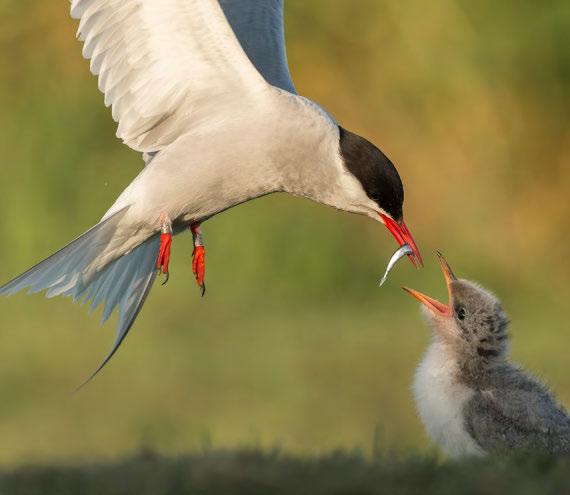
Photo by Nick Hawkins
Photo by Nick Hawkins
Photo by Tavish Campbell/Moonfish Media

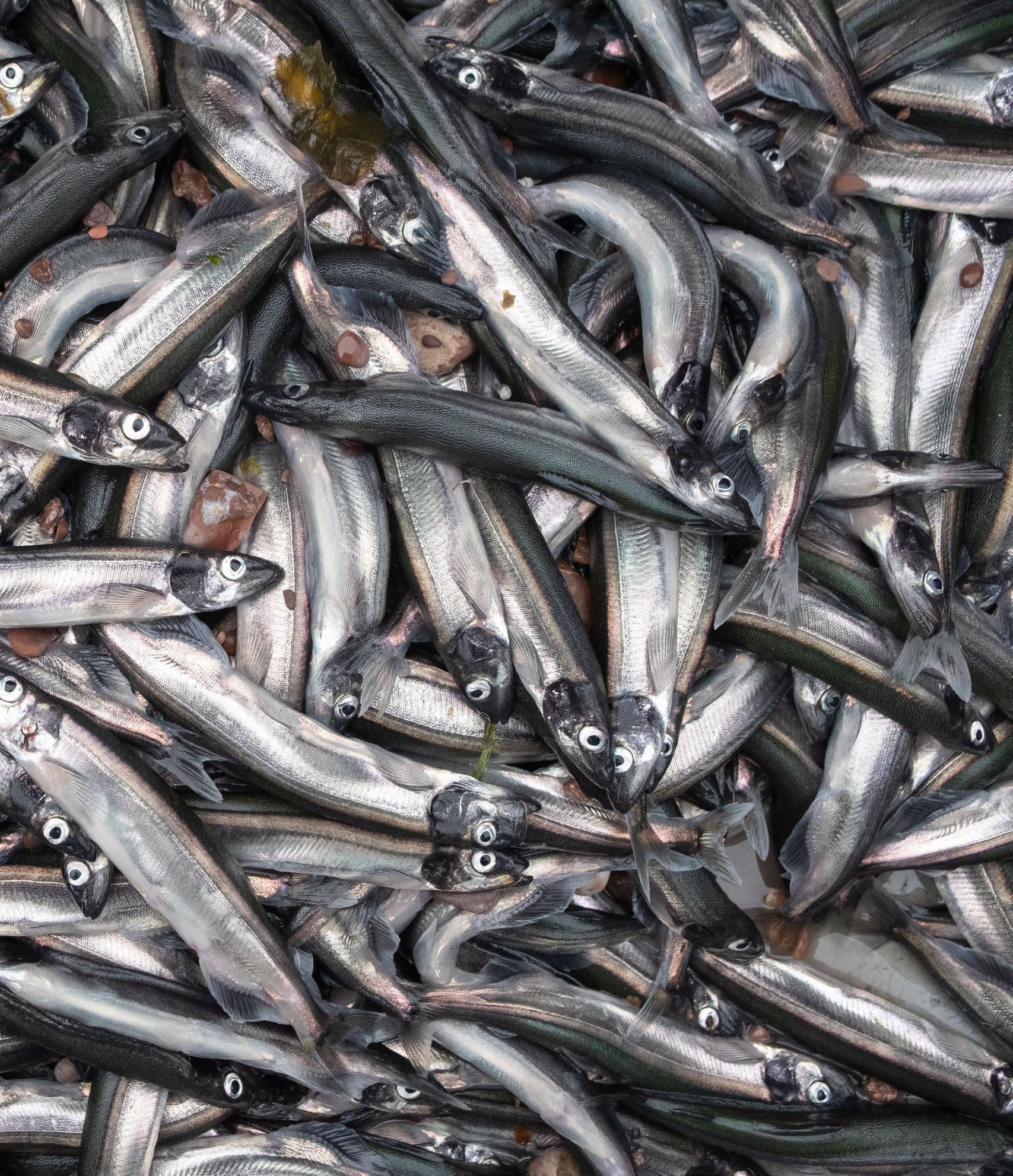
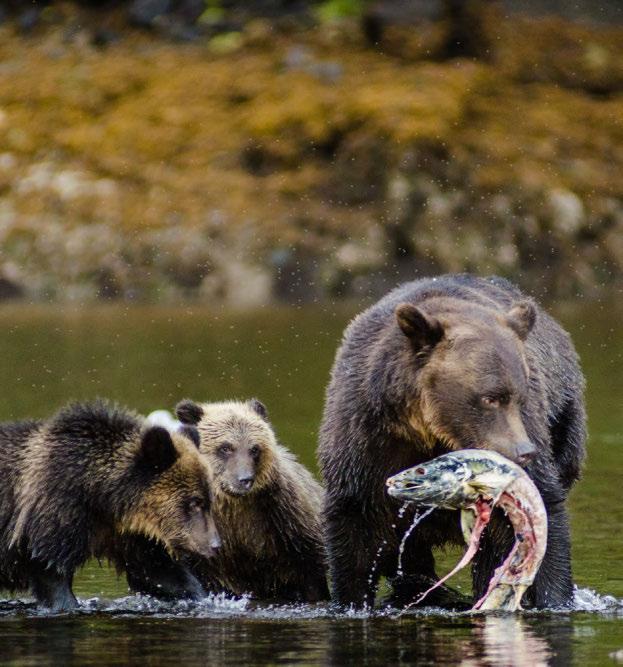
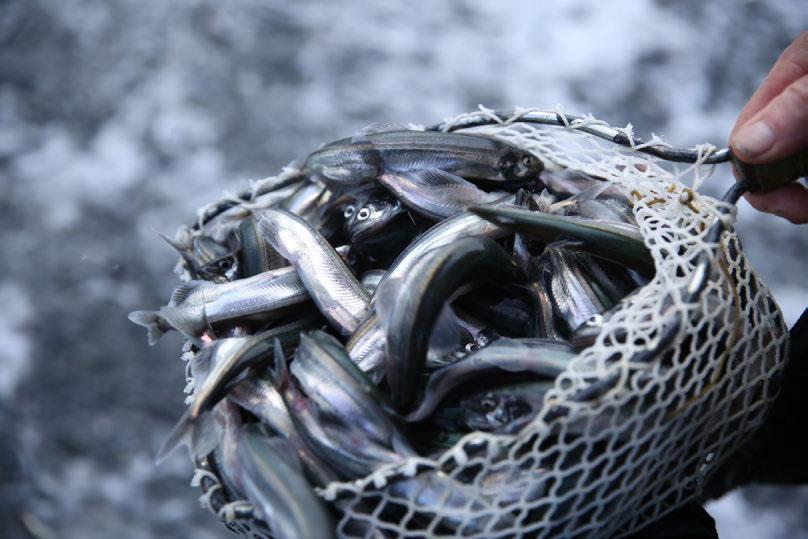
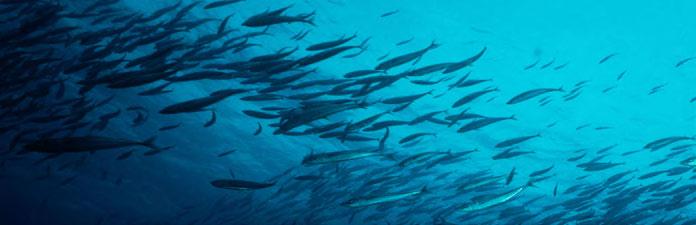
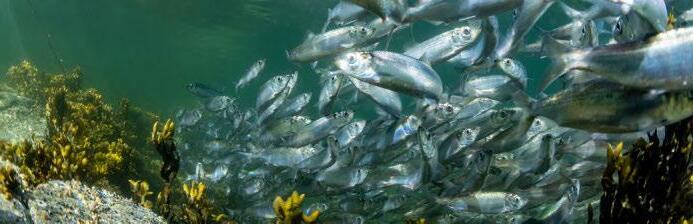
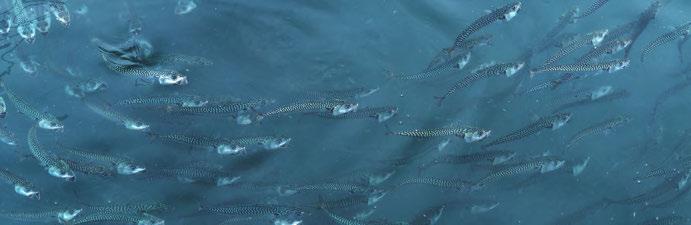
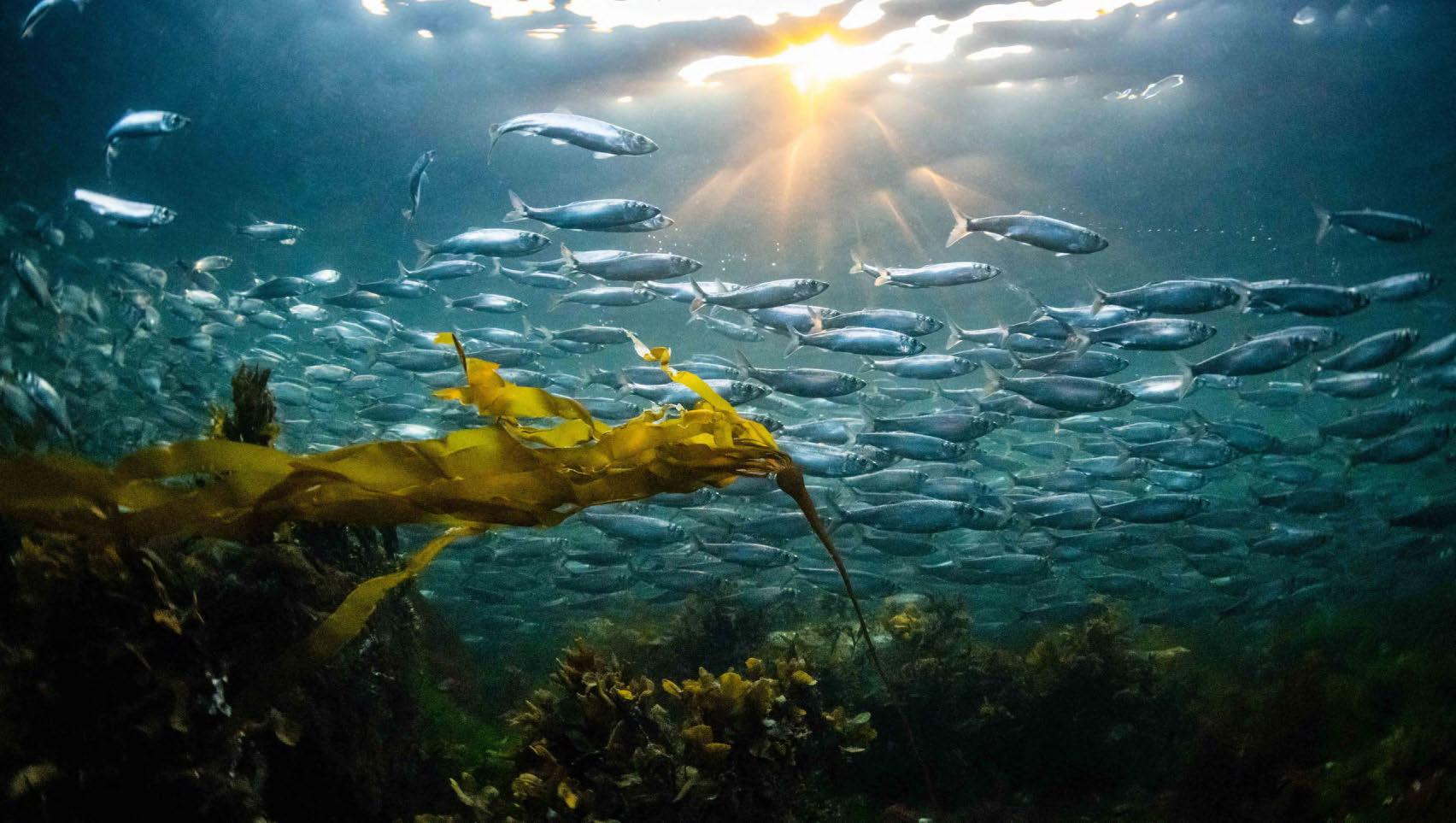
Forage fish are some of the smallest fish in the ocean, but they have a big impact on its overall health. They feed many marine mammals, including whales and dolphins, and countless seabirds and other fish, including commercially important populations of salmon and cod. They’re the critical foundation of the marine food web, but also matter on land, as bears, eagles, and wolves all forage for them.
Communities and Indigenous Peoples on the Pacific Coast rely on Pacific herring and eulachon for food security and culture, while across the East Coast, they rely on mackerel, capelin, and Atlantic herring. These nutrient-dense little lifters also provide a key source of bait for lobster and crab fisheries — two of Canada’s most valuable seafood industries. Despite their vital role, however, forage fish don’t get their due in terms of awareness, attention, or legal protection.
Being undervalued has left them overfished and mismanaged. Of the 16 major forage fish stocks Canada manages, the majority are unhealthy or lack indicators to determine their health status. Some have been depleted for decades, yet are still heavily exploited by commercial fisheries. In 2025, only 13 per cent of all landings came from stocks in the healthy zone, and there is contention even within these. In addition, just three stocks have any legal protection. This should concern anyone who enjoys whale watching, birding, and fishing, or depends on healthy oceans for their livelihood and food.
wild-caught fisheries. The pattern is consistent: where rebuilding is prioritized, recovery follows. Where it isn’t, decline compounds. Forage fish sit at the centre of that.
This first national report on forage fish identifies three priorities to move from policy to practice: fully implement the Fisheries Act, apply science-based guardrails consistently through a modernized forage fish policy, and pair science with Indigenous Knowledge Systems for better decision-making.
After all, if forage fish are healthy, the species that rely on them also make gains. This can accelerate the recovery of depleted commercial fisheries, increase food security, support coastal livelihoods, and strengthen seafood market stability. It also enhances the resilience of ocean ecosystems and coastal communities amid a changing climate. A failure to rebuild, however, threatens all of this.
Although forage fish represent a small share of Canada’s multi-billion-dollar fishing industry, their ecological value must be measured in more than money. It’s time to prioritize their biological wealth and to listen to people who see their intrinsic value and care about their fate. Their voices aren’t always at the table when management decisions are made, but they’re a part of this report. A fisher, an Indigenous stewardship researcher, a naturalist, and a marine scientist share what they’ve witnessed on Canada’s coasts. Their experiences bring to life what the science is showing: rebuilding forage fish is where our ocean comeback begins.





BY JASMINE PAUL
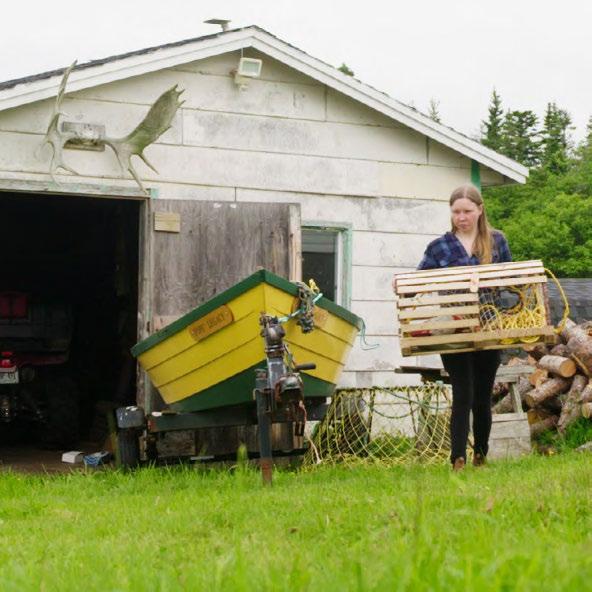
Fifth-Generation Fisher, Come By Chance, Newfoundland and Labrador
Northeast Newfoundland and Labrador Capelin
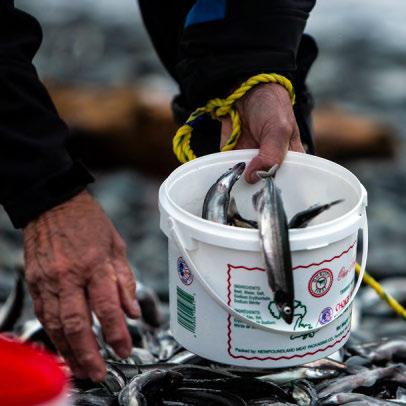
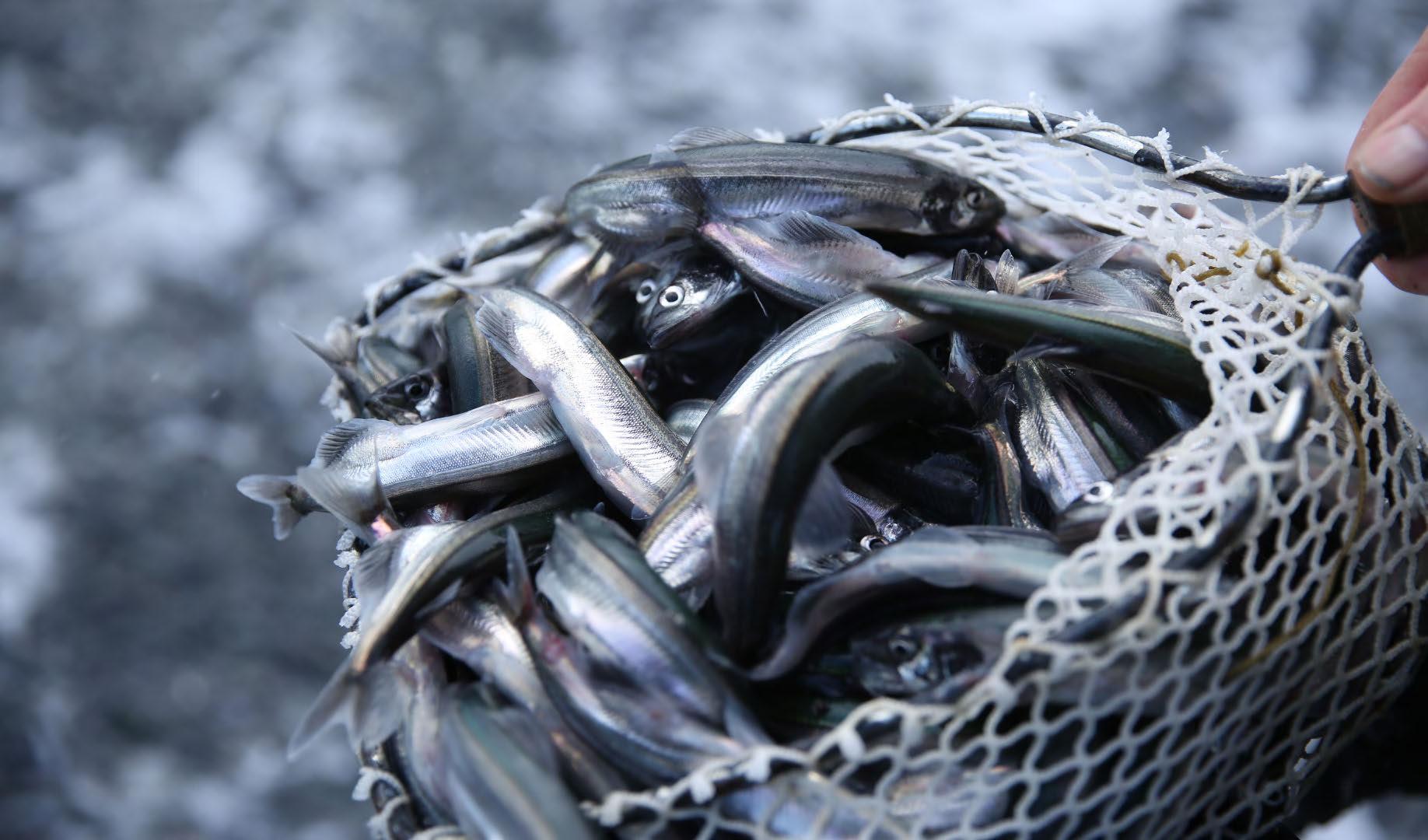
Every summer in Newfoundland, capelin roll onto the beaches to spawn. While it’s an annual event here, it’s relatively rare worldwide. It’s not something all capelin do — but ours do. This natural phenomenon brings thousands of humpback whales to the North Atlantic to feed after spending the winter in the Caribbean. Hundreds of thousands of seabirds, including gannets, kittiwakes, gulls, and shearwaters, also get in on this forage fish buffet.
There’s a distinct smell to the capelin roll. It’s not foul; it’s a fresh sea kind of smell. Tourists and locals flock to beaches with nets and buckets to scoop up fish on the shore. Growing up, my family went every year to collect these pretty metallic fish. We ate some and used them as garden fertilizer. I have a memory of me and my pop going to a beach near Heart’s Desire, where the gannets dove for capelin when they were rolling. There were so many, pop filled up my rubber boots with fish and had to carry me back to the truck.
These days, it’s still a huge part of people’s lives, but there aren’t as many capelin rolls or as many places to see them when they do. That includes Placentia Bay, where five generations of Pauls have fished for crab, cod, and lobsters. For a while, I was comforted by the fact that even though I wasn’t seeing them on the beaches or any evidence of birds and whales chasing them, I was still seeing them in the stomachs of the cod I caught. But more and more, I’m seeing shrimp and snow crab when I open cod up. They usually don’t eat that type of stuff. They prefer capelin.
The last two falls, we also didn’t have any codfish come into Placentia Bay, which is quite unusual. But it’s the capelin I’m concerned about. You’ve got to be, right? If you want to catch and eat a big fish, you’ve got to care about the little fish, quite simply. These little fish pack a punch in the ecosystem and the economy.
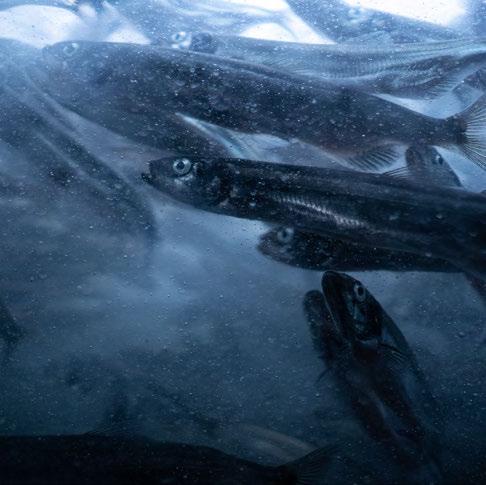
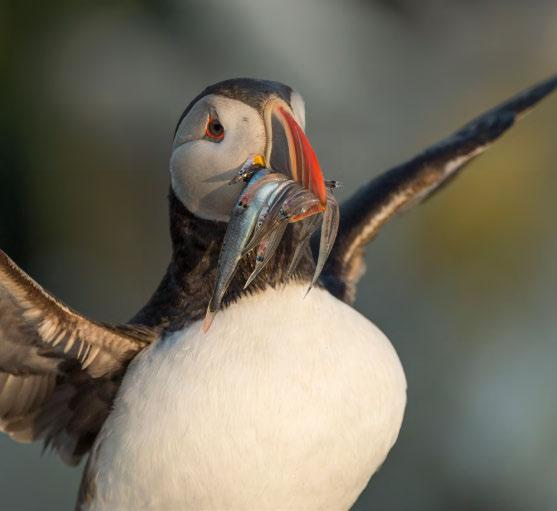
We can’t promote puffins and whales as a tourism draw without considering what brings those animals here. It’s the capelin and other forage fish. It’s all connected. So, if you like watching seabirds and whales, if you want to have a healthy environment, you’ve got to care about every little creature. Everything matters.
In 1992, a commercial moratorium closed the cod fishery because stocks collapsed after years of overfishing. That devastated the economy. If we don’t make some changes with capelin, history could repeat itself, and capelin could become the new cod. Except this time, it might be worse — like losing bumble bees. Imagine what the grocery store shelves would look like without these pollinators. There’d be no apples, no oranges, no fruits and vegetables. It would be the same thing in the sea without capelin.
If you want to catch and eat a big fish, you’ve got to care about the little fish, quite simply.
We should treat capelin with more respect, given our dependency on them. Management can’t be disconnected from the ecosystem; it has to go beyond economic considerations and quotas. Capelin are beings that deserve to exist in their own right, with just as much attention, respect, research, and protection as any other fish. They’re small, but that just means we need to make sure they keep their numbers up so they can keep their role in the ecosystem going and make sure all the big fish can keep going too.
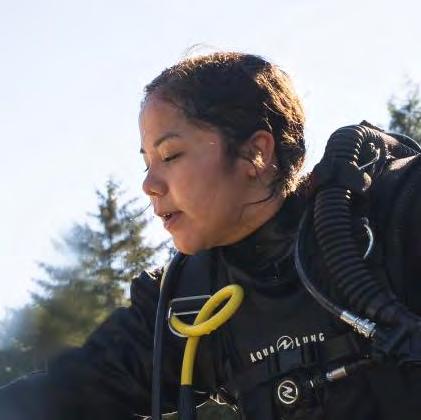
Photo by Rebecca Benjamin-Carey
BY SIERRA HALL
Lead Research Field Technician, Kitasoo Xai’xais Stewardship Authority, Klemtu, British Columbia Central Coast Pacific Herring
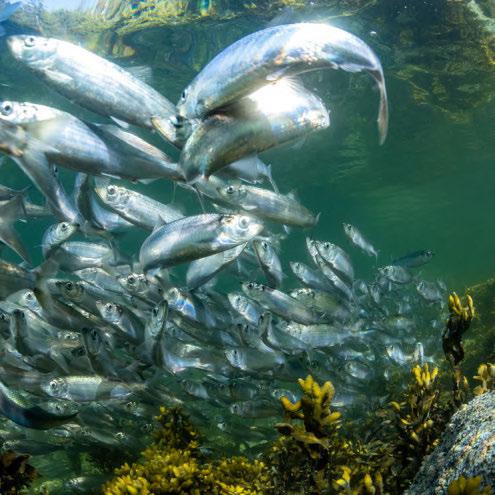
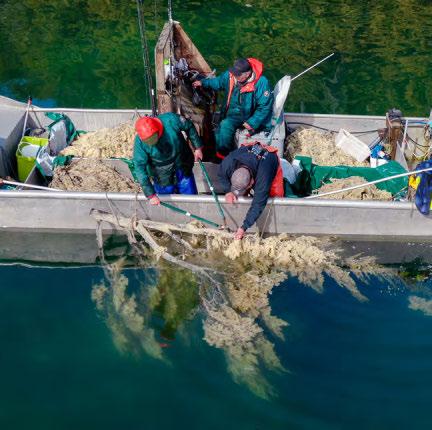
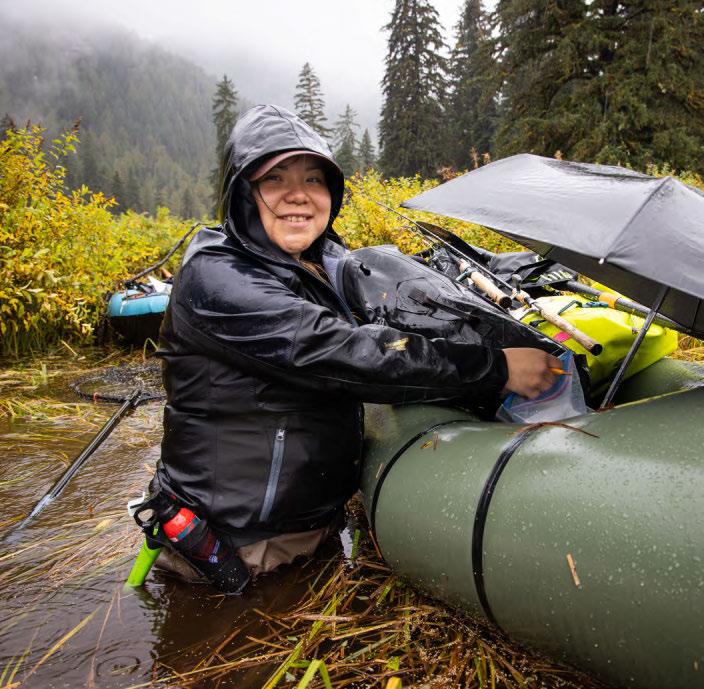
From a very young age, we were taught about harvesting Pacific herring eggs. I remember waiting every March and April for the harvesting crews to come back in with the fresh feed. It was like Christmas. We’d spent the winter eating out of our freezers, so it was as if they were bringing gifts for the whole community.
Everybody would go down to the docks, get their feed for the year, and spend the next few days peeling herring eggs off hemlock tree branches and storing them away in freezers. Herring is the first harvest of our season — our first fresh food of the year — so it’s a nice way to come into spring.
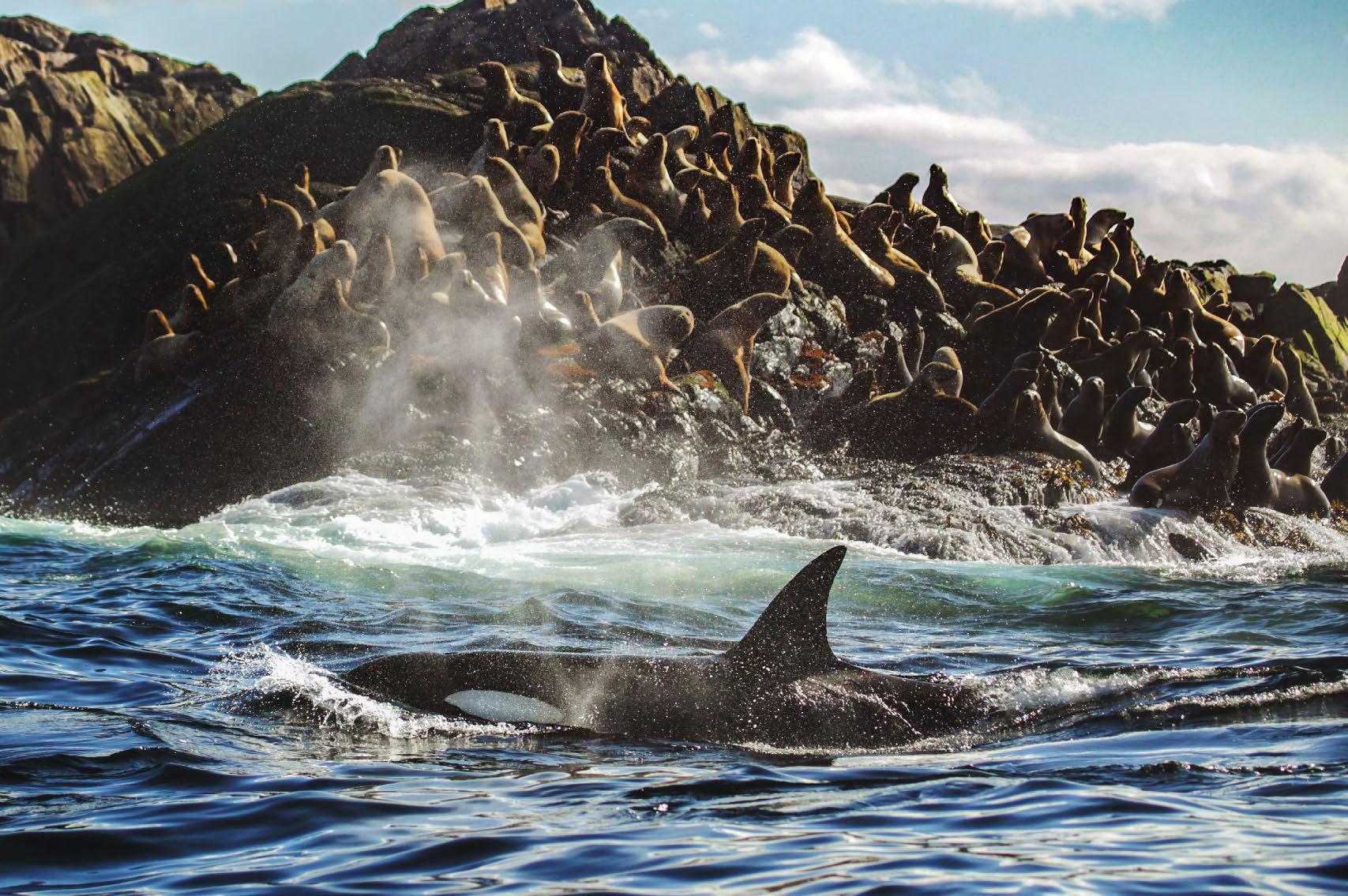
I worked summers as a guide at Spirit Bear Lodge and saw how important herring are to the ecosystem. We’d watch humpback whales bubble net feed for them and saw sea lions, seals, salmon, and eagles all depend on that same fresh meal.
In my opinion, Pacific herring are in a critical state. I’ve interviewed community members and learned
about the battle to protect local stocks. They’ve helped me understand how it’s changed over the past two decades. In the 1990s, spotting commercial fleets in Kitasu Bay was a telltale sign we were about to have a few bad years, as they often wiped out the stocks.
Improper management leads to overfishing. If we keep raising fishing quotas, we’re fast-tracking the total collapse of the marine ecosystem.
That’s why in 2022, the Kitasoo Xai’xais Nation established the Gitdisdzu Lugyeks marine protected area (MPA) in Kitasu Bay. The Nation felt Ottawa wasn’t doing enough to protect this area and was relying solely on science to assess the herring’s health. But Western science alone isn’t enough to make management decisions. Local and traditional knowledge from Indigenous People who have lived and survived on this very coast for thousands of years is a key factor in understanding the health of the oceans. Without considering this, you lose a lot of the bigger picture.
Improper management leads to overfishing. If we keep raising fishing quotas, we’re fast-tracking the total collapse of the marine ecosystem.
After all, if you were visiting PEI, you wouldn’t ask someone from Toronto to help you get to know the area. Ultimately, people who have never been to Kitasu Bay get to make decisions about it, which doesn’t seem right. There’s so much local knowledge missing at those tables.
The MPA is closed to commercial fishing, and our people enforce this. We manage it very well, following rules passed down through generations. We’ve shown over the past few years how stocks can be restored with proper management. That’s important when climate change is putting increased pressure on the ocean.
The Nation has a draft management plan for the MPA to guide how we’ll govern and manage marine resources, based on our laws, customs, and values.
It sets a vision for the future and guiding principles, including respect for all living creatures, only taking what you need, not wasting what you take, and avoiding overfishing.
We’re working with Fisheries and Oceans Canada (DFO) scientists to figure out how to integrate science and Indigenous Knowledge, and what it would look like to make decisions together. In the end, we all have the same goal.
I want everyone to know how important herring are to our culture and way of life. We’re fighting hard to protect it because it’s part of our DNA. That gets overlooked a lot. To lose the herring would mean losing a big part of our identity.
Head Naturalist and Research Director, Brier Island Whale and Seabird Cruises, Westport, Nova Scotia Southwest Nova Scotia and Bay of Fundy Atlantic Herring
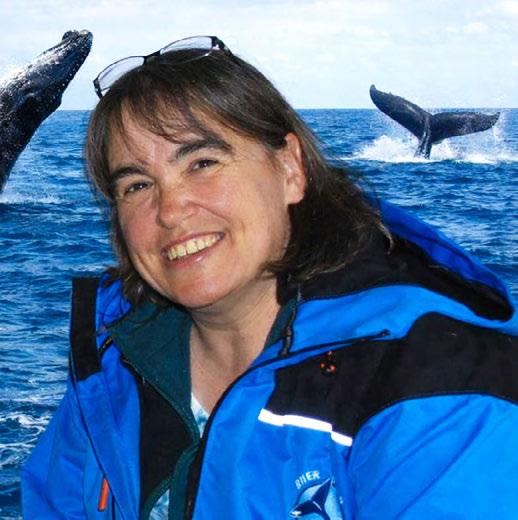
When I started working with Brier Island Whale and Seabird Cruises in 1989, it was a rare day that I didn’t see Atlantic herring, bubbling at the surface of the Bay of Fundy for miles. It would look like it’s raining because they flip as they’re feeding on krill. They sparkle across the water.
Today, there’s a lot less sparkle. These small, silvery fish just aren’t around in the numbers they once were. It’s unusual to see them at the surface anymore, so we get pretty excited when we do. We’ll stop the boat and show our guests because it’s such a rare sight.
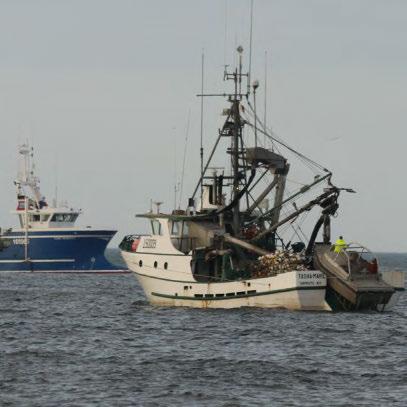
Over the years, this bay has been pillaged by overfishing, and some spawning areas have been annihilated. You don’t get bigger herring like you used to. But the purse seiners keep fishing smaller and smaller herring for bait. How can they grow to reproduce? It doesn’t make sense. The fish have no chance whatsoever.
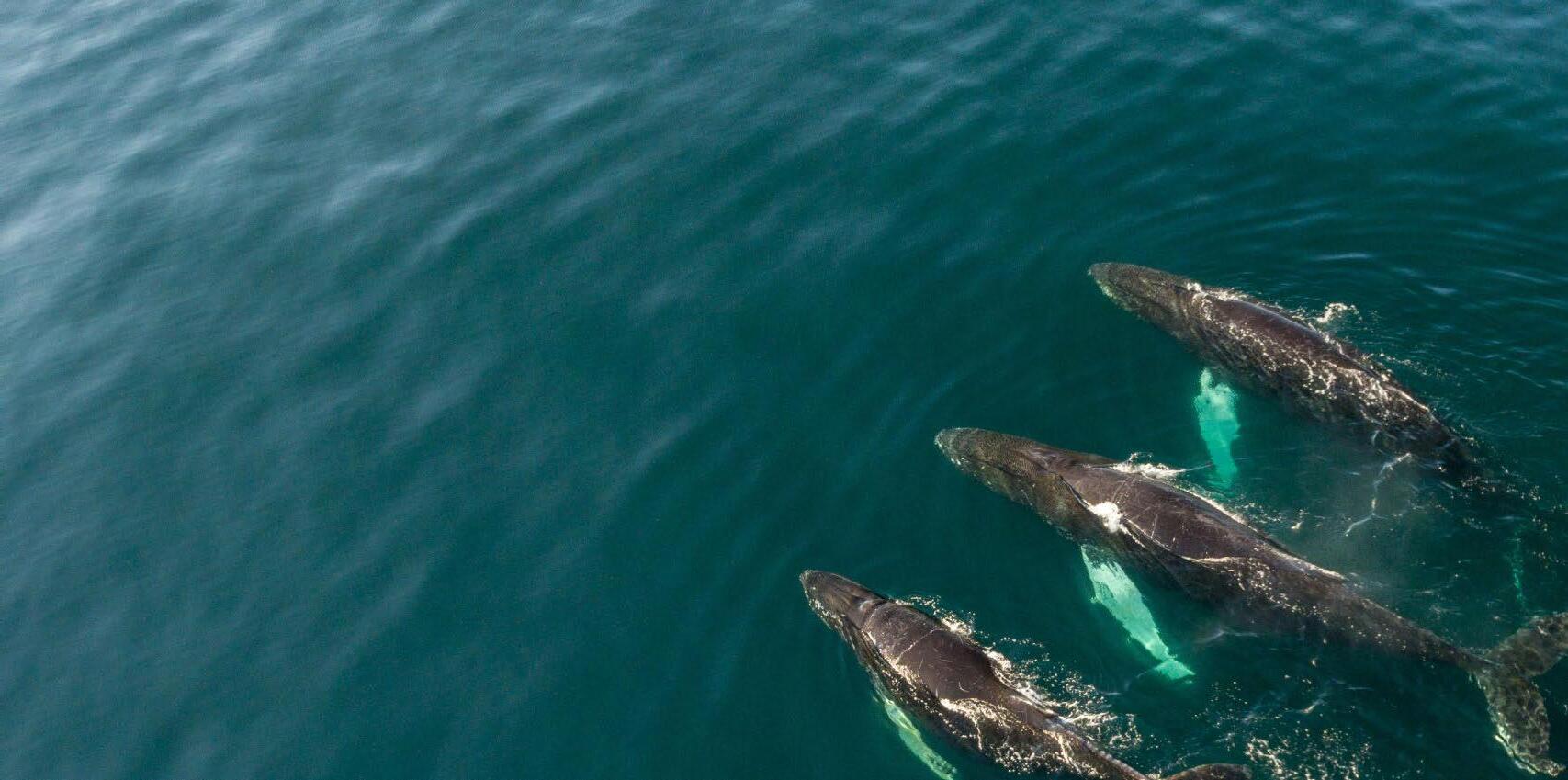
By the mid-1990s, I could see a big change. It wasn’t just the herring that was scarce; it was also the whales. Humpbacks come here every spring and summer to feed on these fish. They’re a food source for so many things — groundfish, birds, whales, porpoises, dolphins, and sharks. People eat them too. I care about these fish because they’re the basis of the marine food chain. If they disappear, there’s trouble in the ocean. What happens to the whales then?
We’ve got data going back to 1984. With fewer herring around, 1996 was our worst year ever for whale sightings. Typically, we see 100 to 150 individual humpback whales in a season. But that year, there were only 24. They followed their food and went elsewhere.
After that, we started travelling further afield too in search of whales. While some years have been better than others, in 2025, we only saw around 73 individual humpbacks.
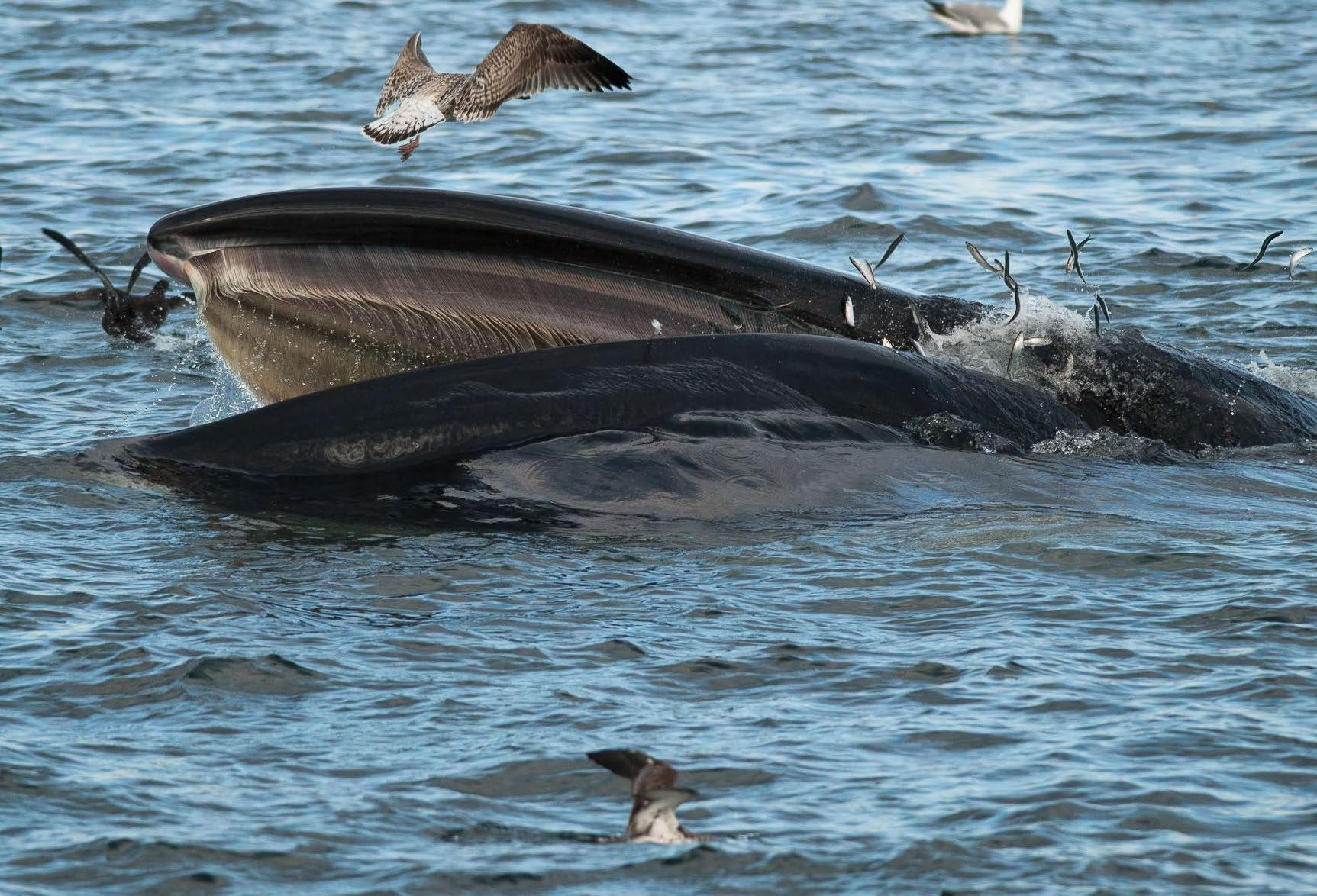
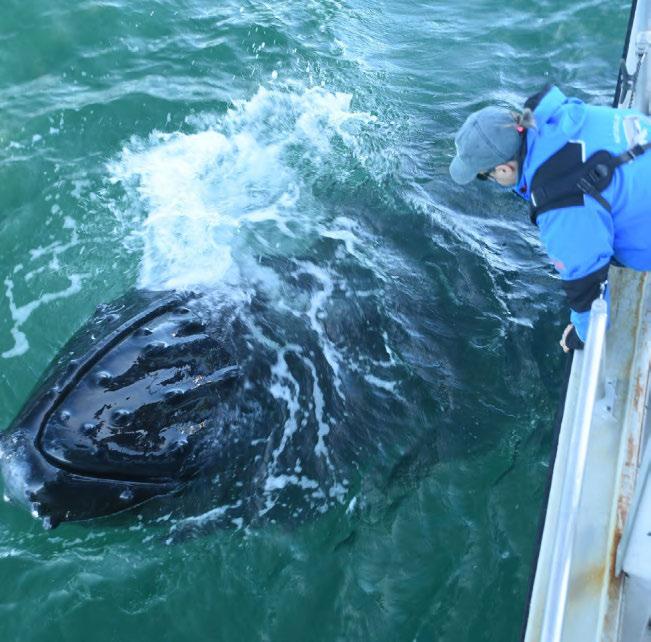
A humpback whale eats about a tonne of food in a day. Depending on their size, some purse seiners can take up to 100 tonnes of herring in a day, so they’re taking enough for 100 whales. It’s pretty sad.
Villages in this part of Nova Scotia rely on fishing and ecotourism to survive. And it’s not just the ones directly involved in whale watching; there’s the restaurants and accommodations. A lot of people here depend on tourism jobs.
Our tour bookings are up this year. People love whales and want to see them. But if we keep overfishing herring, there will be fewer whales and more disappointed people on tours who were hoping to see them. If there’s no herring, there won’t be any whales. Eventually, people will stop coming.
Over the years, this bay has been pillaged by overfishing, and some spawning areas have been annihilated.
They need to leave the herring here alone for a while to let things replenish, as they did in the North Sea. In the late 1970s, when stocks were very low and overfished, they shut down the herring fishery for about five years to give the stocks time to recover. When it reopened, conditions were imposed on the herring fishers.
We’re celebrating our 40th anniversary on the water this year, and we’ve seen a lot. I’ve watched these whales for over 35 years, and I’ve seen such a change in that time. I’m concerned about them, and I’m concerned about what’s happening in the Bay of Fundy.
BY JACK DALY
Marine Scientist, Oceana Canada, Halifax, Nova Scotia
Atlantic Mackerel
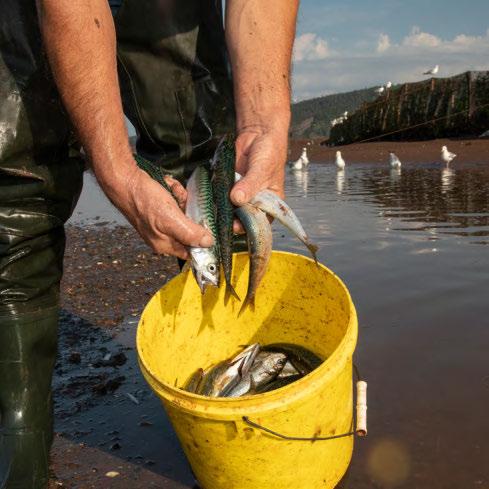
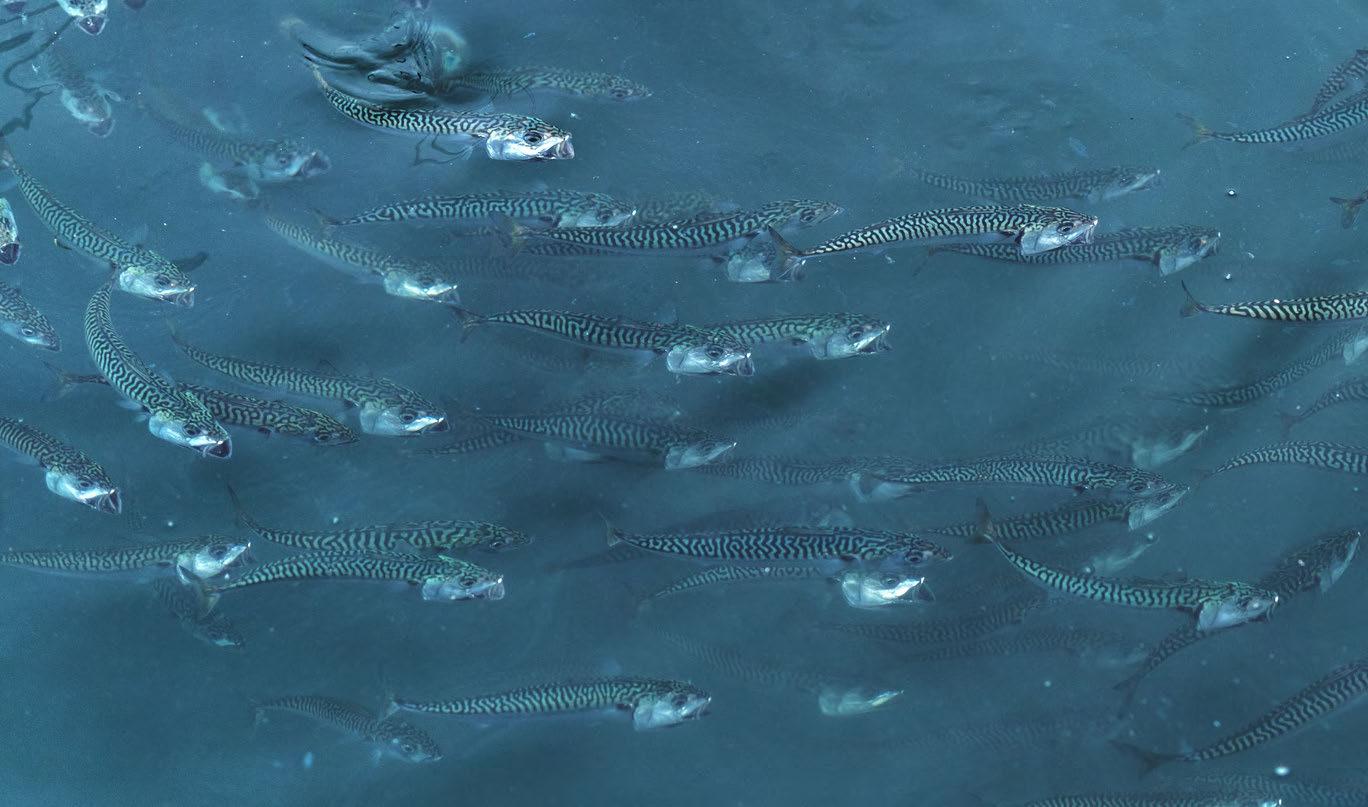
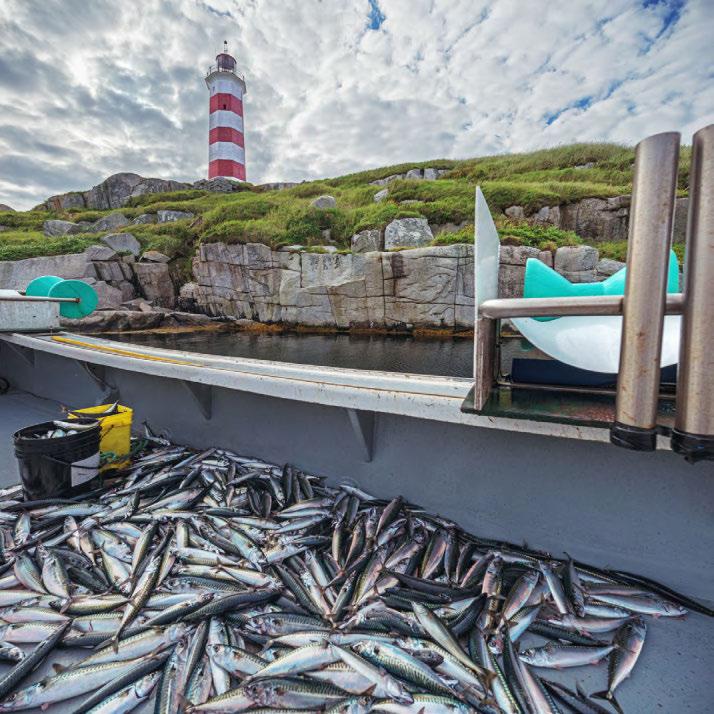
The situation for many forage fish in Canada is dark, but Atlantic mackerel offer a bright spot. It’s perhaps the best example of the federal government recognizing a fish population in decline and implementing measures to stop it.
In 2019, the federal Fisheries Act was updated and for the first time in 150 years the Act requires the government to create rebuilding plans. Before that, mackerel were an egregious example of poor management. The stock’s been classified as critically depleted since 2018, but it’s been in a bad spot for 25 years due to extremely high fishing quotas.
Mackerel were among 12 critically depleted stocks protected under the updated legislation. We have strong science showing that if fishing pressure is reduced, the stock can rebuild into the cautious zone within a decade. So, there’s hope.
Fisheries and Oceans Canada (DFO) has cut quotas and imposed a commercial moratorium, which many people have long called for. That doesn’t mean there’s no mackerel coming out of the water. There’s still a bait fishery, and allowances for tuna fishers, scientific research, and Indigenous food, social and ceremonial fisheries. But more sustainable levels are being caught.
That said, we’re still fishing a very large amount. I think people forget how much a tonne is — it’s thousands of pounds of fish. In some cases, that’s millions of fish. I always bring that up when meeting with DFO and the fishing industry, as I find sometimes these fish are discussed in abstract terms.
Of course, not everyone’s happy about what’s allowed to be caught now. Mackerel cover four Atlantic provinces and Quebec and is managed federally, not regionally, so it’s an extremely controversial stock to start with.
Legal protection alone is not the end goal — rebuilding is.
Provincial fishing associations often disagree on how much should be taken and for what. It’s also a shared stock with the United States, further complicating matters.
People want to hear that it’s going to take three years to get the stock to the healthy zone with some sacrifice. In reality, it will likely take six to 10 years to reach the cautious zone. The more intensive the overfishing, the longer stocks take to recover. Some tough decisions have been made for mackerel, and ideally, we’ll start to see the benefits soon.
So, the Fisheries Act is making a difference. It’s meant to bring depleted stocks out of the critical zone and keep them at healthy levels. And it’s clear: depleted stocks must have rebuilding plans. While it’s a strong law, it’s only partially implemented. Many stocks are not protected and have no health status.
Will it take until 2040 to implement this 2019 law and have all stocks protected? Legal protection alone is not the end goal — rebuilding is.
Canada has the expertise, laws, and policies to rebuild forage fish, and strong science to inform management decisions that prioritize their long-term health. We don’t want to wait until every stock is depleted to the point of no return.
With clear law and strong leadership, mackerel could lead the way as the first forage to recover under the updated Fisheries Act. That’s what’s possible — and what Canada’s oceans need now.
Canada’s forage fish are the unsung cornerstone of ocean abundance, but their future is at risk. Many stocks are depleted, and management often fails to account for their critical role in the ecosystem. Decisions about small fish quietly undermine the recovery of larger species and the resilience of coastal communities. Canada has the laws, science, and knowledge needed to rebuild these populations. The question is whether we will treat forage fish as what they actually are — not an afterthought, but the foundation of rebuilding ocean abundance in Canada. This is where our fisheries rebuilding challenge is most visible and most solvable.
FORAGE FISH HEALTH STATUS
HEALTHY CAUTIOUS CRITICAL UNCERTAIN
PROTECTION STATUS LEGALLY PROTECTED PROPOSED FOR LEGAL PROTECTION NO LEGAL PROTECTION
Sierra Hall:


“I want everyone to know how important herring are to our culture and way of life. We’re fighting hard to protect it because it’s part of our DNA. That gets overlooked a lot. To lose the herring would mean losing a big part of our identity.”
Northern Gulf of St. Lawrence HERRING
Shelley Lonergan:
“I care about these fish because they’re the basis of the marine food chain. If they disappear, there’s trouble in the ocean.”

West Coast Newfoundland (Fall) HERRING
of forage fish stocks in Canada are not classified as healthy 81.3%
West Coast Newfoundland (Spring)
Northeast Newfoundland & Labrador
Northeast Newfoundland & Labrador CAPELIN

Jasmine Paul:
“These little fish are really packing a punch in the ecosystem and the economy. We can’t really promote puffins and whales as a tourism draw without considering what brings those animals here. It’s the capelin and other forage fish.”
Jack Daly:
“Mackerel could lead the way as the first forage fish to recover under the updated Fisheries Act. That’s what’s possible — and what Canada’s oceans need now.”

Southwest Nova Scotia and Bay of Fundy Atlantic HERRING
Southern Gulf of St. Lawrence (Fall) HERRING
Southern Gulf of St. Lawrence (Spring)
Gulf of St. Lawrence CAPELIN
Fisheries and Oceans Canada (DFO) adopted the precautionary approach in the early 2000s and integrated it into decision-making in 2009. However, what’s on paper isn’t what’s playing out in practice, as DFO’s limited use of this approach has proven insufficient to guide management. Yet, it’s the bedrock forage fish need to recover.
Implementing the precautionary approach begins with establishing clear reference points that define when a stock is at risk and how fishing levels should respond. Only 13 of 16 forage fish stocks have the reference points needed to establish whether they are critically depleted. That leaves three stocks in the “uncertain” category and at risk of overfishing.
When the uncertain, critical, and cautious stocks are combined, the majority of forage fish stocks in Canada are not classified as healthy. Because they lack what’s needed to fully implement the precautionary approach, only three of 16 are protected under the Fisheries Act, which mandates rebuilding plans for critically depleted stocks. The three healthy stocks are in the Pacific Region, with concerns these classifications don’t reflect historical baselines or even current realities.
Yet year after year, the highest commercial forage fish quotas are allocated to stocks in depleted and uncertain states. In 2025, only 13 per cent of all landings came from stocks in the healthy zone, with the remainder coming from stocks that were unhealthy. This wouldn’t happen with a precautionary approach. Particularly telling is that Canada’s largest commercial forage fishery harvests critically depleted Southwest Nova Scotia and Bay of Fundy herring at a quota of 20,000 tonnes.
Management decisions routinely diverge from scientific advice, deferring to short-term considerations by rolling over quotas from the previous year or increasing them.
There’s also little consideration of climate change pressures on the marine ecosystem, including extreme weather events, warming waters, and changing ice flow patterns. DFO scientists have raised concerns about how only 27 per cent of assessments integrate environmental variables into fisheries advice.1 Current management does not consistently account for the food requirements of predators such as groundfish, marine mammals, and seabirds, which overlooks the critical role forage fish play in the ecosystem.
The misalignment between management expectations and ecological conditions is evident in quotas that significantly exceed actual forage fish landings. From 2020 to 2025, quotas for forage fish averaged 115,000 tonnes, while the landings averaged 79,400 tonnes. The fish just aren’t there to catch.
This piecemeal management approach runs counter to law and policy, leaving regions with depleted forage fish populations. There are bright spots, however. On Canada’s West Coast, management of Haida Gwaii Pacific herring follows an ecosystem-based approach, combining rigorous quantitative science with the unique, local knowledge of the Haida Nation. This draws on cultural values, spiritual connections, and a respect for all living beings. This collaboration has strengthened herring management and supported ecosystem health.
forage fish stocks are protected under the Fisheries Act 3 of 16
1 Pepin, P., Koen-Alonso, M., Boudreau, S. A., Cogliati, K.M., den Heyer, C.E., Edwards, A. M., Hedges, K. J., and Plourde, S. 2023. Fisheries and Oceans Canada’s Ecosystem Approach to Fisheries Management Working Group: case study synthesis and lessons learned. Can. Tech. Rep. Fish. Aquat. Sci. 3553: v + 67 p.
They’re little beings, but forage fish do a lot of heavy lifting. When they decline, cod struggles to recover, whales go hungry, seabirds falter, and coastal economies weaken. But when their populations are strong and healthy, ecosystem recovery stabilizes and rebuilding efforts across commercial fisheries gain momentum. Rebuilding forage fish stocks is one of the most immediate and effective actions to restore ocean abundance.
Canada has the science, legal framework, and policy tools needed to properly manage and rebuild most forage fish stocks within a decade. This will require a commitment to prioritizing rebuilding in every major fishing region in the country, to adhering to the precautionary approach in practice — not just on paper — and to making decisions that foster long-term health, backed by strong science. Harvest control rules must become the norm, and the effects of climate change on ocean life must be accounted for.
To close the gaps between policy and practice, Canada must:
Legal protection is needed for all 16 federally managed forage fish stocks. Currently, only three are protected under the Act, leaving the rest without safeguards.
To take a precautionary approach, all forage fish stocks need ecosystembased reference points that define when they’re at risk and how fishing levels should respond. These benchmarks should follow a modernized forage fish policy and be in place within two years to ensure science drives management decisions.
Forage fish management benefits from pairing Western science with Indigenous Knowledge Systems to inform stock assessments, reference points, rebuilding strategies, and spatial planning. An approach grounded in respect for distinct histories and relationships with the marine environment is key to strengthening ecosystem-based decision-making.
This report is based on interviews conducted by Holly Lake in the spring of 2026. The data focuses exclusively on Canada’s forage fish. All status and management data are drawn from Oceana Canada’s 2025 Fishery Audit, covering the period from July 2, 2024, to July 1, 2025. Additional analyses of forage fish quotas and landings include data through January 1, 2026. For Audit methodology details, visit oceana.ca/FisheryAudit2025.
Canada’s forage fish can recover — and the path forward is clear.
Rebuilding forage fish is one of the most immediate and effective actions Canada can take to restore ocean abundance. Every rebuilt population means stronger coastal communities, greater food security, more stable seafood markets, and economic resilience.
Sign the petition: Add your voice to support rebuilding forage fish and restoring ocean abundance at Oceana.ca/OceanComeback.
Share the report: Talk to friends, family and colleagues about why rebuilding forage fish matters for Canada’s future and the health of the ocean.
Spread the word: Use social media to amplify the message and encourage others to take action.
Acknowledgements
Oceana Canada thanks those who generously shared their time and stories for this report, particularly Jasmine Paul, Sierra Hall, and Shelley Lonergan. This report was written by Holly Lake. We are also grateful to Jack Daly, Jennifer Whyte, Josh Laughren, Kim Elmslie, Rebecca Schijns, Lesley Wilmot, and Robert Rangeley whose knowledge and expertise contributed to this work.
Oceana Canada was established as an independent charity in 2015 and is part of the largest international advocacy group dedicated solely to ocean conservation. We have successfully campaigned to ban single-use plastics, end the shark fin trade, make rebuilding depleted fish populations the law, improve the way fisheries are managed, and protect marine habitat. We work with civil society, academics, fishers, Indigenous Peoples, and governments to return Canada’s formerly vibrant oceans to health and abundance. By restoring Canada’s oceans, we can strengthen our communities, reap greater economic and nutritional benefits, and protect our future. Find out more at Oceana.ca.