The Young Initiative’s mission is to envision alternatives to the status quo in the Global Political Economy (GPE). To that end, we have a vision of the GPE as an interdisciplinary academic enterprise that focuses on the structures of exclusion and possibilities of political-economic transformation that are systematically overlooked in traditional academic approaches. We are advancing our mission by:
CONNECTING the Young Initiative to Occidental students and faculty. This includes supporting impactful global research and stimulating campus intellectual conversation to give space for all members of our community to contribute to reimagining our political-economic status quo.
EXPANDING our connections to Los Angeles. This is part of the Young Initiative’s commitment to showing how sub-state actors might improve local policies by engaging with international norms and academic partners.
LINKING our theoretical/practical work to global academic and policy conversations across disciplines, theoretical-policy divides, and geographical spaces. A more expansively constituted GPE can more creatively approach global/local crises in governance around the world.
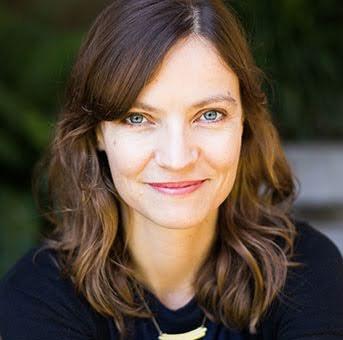
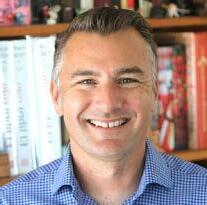
Madeline Baer
Director, Young Initiative on the Global Political Economy
Associate Professor, Diplomacy and World Affairs
Chair, Diplomacy and World Affairs
As we close the 2024–2025 academic year, the Young Initiative reflects with pride on a year filled with impactful scholarship and deepened connections with our academic and community partners thanks to funding provided through this endowment. The Young Initiative continues to support research and public dialogue that illuminates how economic forces shape people’s daily lives in tangible and often unequal ways.
This year we continued to support and showcase the incredibly innovative ways that communities are mobilizing to seek social and economic justice. In a time when authoritarianism is on the rise and backlash to global cooperation is intensifying, cities offer one such beacon of hope. The Young Initiative continued its multi-year collaboration with the City Hub and Network for Gender Equity (CHANGE) on a project to improve how cities collect and analyze gender equity data, with special attention to the economic dimensions of gender inequality. This spring, members of the Organization for Economic Cooperation and Development (OECD) visited campus to learn about this project directly from the Oxy students and faculty involved in this generative work.
This year’s Young Initiative Research Fellow, Ankushi Mitra (Georgetown University), conducted fieldwork on migration and refugee experiences in Kenya and Tanzania. Looking ahead, our 2025–26 Fellow, Rachel Tan (University of Wisconsin–Madison), will use Young Initiative support to investigate the political economy of AI surveillance technologies in use along the U.S.–Mexico border.
Throughout the year, the Young Initiative brought a wide range of thought leaders to campus including Colombia’s former Minister of Justice; a former U.S. State Department official; and scholars working at the intersections of political economy, foreign aid, and transitional justice. These conversations helped our students and community deepen their engagement with pressing global issues, from the roots of underdevelopment in Latin America to the ongoing crisis in Israel/Palestine.
The Young Initiative also supported vibrant faculty research across the Occidental campus. This included published work on local implementation of the U.N. Sustainable Development Goals in Los Angeles, funding patterns for anti-human trafficking efforts, and the role of the uncommitted movement in shaping discourse around Palestinian statehood in the 2024 U.S. presidential election.
In this moment when intellectual inquiry and dissenting ideas face mounting pressure, even within our academic institutions, we are heartened by the bold ideas and deeply meaningful collaborations that are core to the Young Initiative’s mission. As always, we are grateful for support from this endowment and to the students, faculty, staff, and community partners who make this important work possible.
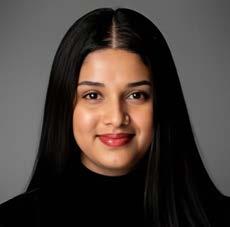
The Young Initiative Fellowship is a one-year competitive fellowship awarded to a Ph.D. student (from any university) in the field of political science, with a focus on the Global Political Economy (GPE). The 2024-2025 Young Fellowship was awarded to Ankushi Mitra of Georgetown University.
The Young Initiative’s mission is to aid in envisioning alternatives to the status quo in the discipline. To that end, the Young Fellowship aims to promote scholarly research focusing on areas that are often overlooked in GPE, and/or by scholars who are from backgrounds that are under-represented in the academy.
The Young Fellow receives a $10,000 fellowship to support dissertation research at their home university, which can include expenses related to fieldwork, travel, interviews, and presenting at a conference.
Mitra is a Ph.D. candidate in the Department of Government at Georgetown University, where she focuses on migration policies in the Global South, migrant mobilization, and the ethics of conducting research with vulnerable populations.
The Young Fellowship serves as a critical cornerstone for Mitra, enabling her to focus on her academic and research goals and expanding her scholarly and professional opportunities.
Through these dynamic partnerships with local and international alliances, organizations, and institutions, students develop a deeper, tangible understanding of societal, economic, and political issues and their roles in addressing them.
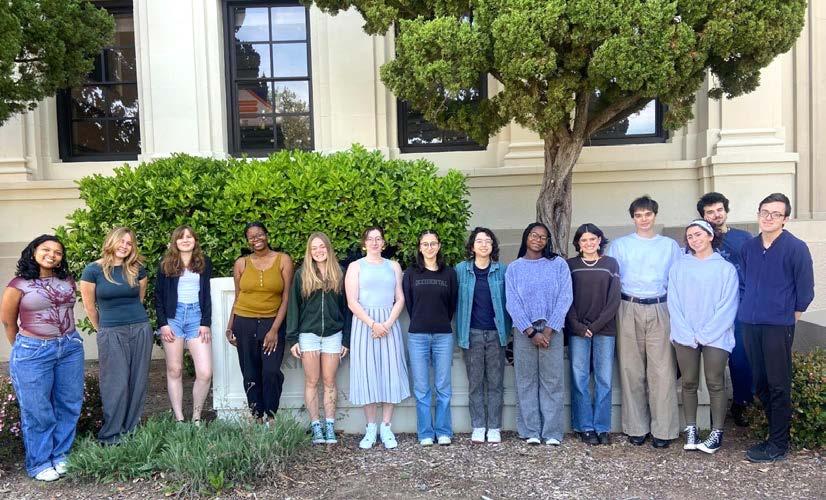
Students in Professor Baer’s spring course, Task Force in Diplomacy & World Affairs (DWA 410), collaborated with the City Hub and Network for Gender Equity (CHANGE) on a project to better understand how cities track and measure gender-based violence (GBV). The task force worked with CHANGE partner cities Amsterdam; Barcelona; London; Louisville, Kentucky; Melbourne; Quezon City, the Philippines; Renca, Chile; and Tokyo on a report that analyzes approaches to gathering data on GBV, including assessing the effectiveness of existing GBV reporting mechanisms, identifying gaps in data collection, and helping cities develop strategies for actionable solutions. By examining data from the international to the local level, the Task Force sought to understand patterns of GBV, including the prevalence of underreporting and barriers to accessing justice. The Task Force appreciated the opportunity to work with CHANGE cities on this important project, and its members are inspired by the incredible work being done to better confront GBV.
Leveraging Global Human Rights to Protect Rights in Our Cities December 9, 2024
This webinar with Amy Bergquist (associate program director for the Advocates for Human Rights), Nicoletta Zappile (deputy director of UPR Info), and Joshua Cooper (steering committee member, Human Rights City Alliance) presented information on how advocates in cities can use international human rights as tools to address pressing problems including affordable housing, immigrant rights, racial equity, and reproductive health.


How Cities Can Defend Human Rights in the Face of Mass Deportations
January 29, 2025
The Human Rights Cities Alliance and the Young Initiative held a webinar featuring Mary Meg McCarthy (executive director, the National Immigrant Justice Center), Everard Meade (director of Proceso Pacífico) as moderator, and Bettina Rodriguez Schlegel (chief of staff at Acacia Center for Justice). This webinar prepared local officials, community leaders, and residents to defend the human rights of non-citizens in response to the Trump administration’s vowed mass deportations and strict immigration enforcement measures.

City Hub and Network for Gender Equity
February 13, 2025
The Young Initiative facilitated a visit with Occidental’s Diplomacy and World Affairs Task Force from a range of professionals working in gender-based violence (GBV) measurement systems. A delegation of three senior officials from Barcelona delivered a presentation on their city’s integrated approach to advancing a “global understanding” of GBV. Additionally, eight representatives from the Organisation for Economic Co-operation and Development (OECD)
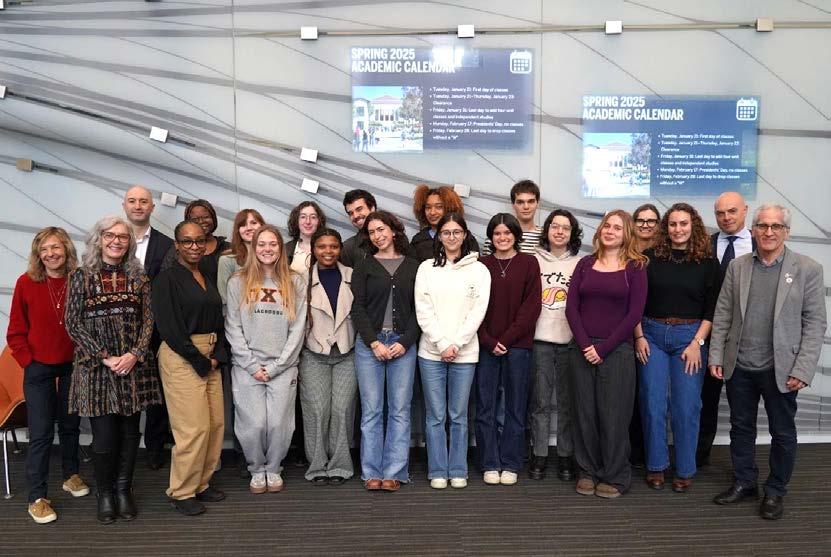
visited to observe the technical exchange and joined a working luncheon to discuss practical applications of GBV measurement frameworks. For Occidental students, this interaction with both OECD representatives and local officials provided extraordinary insight into how academic research directly influences international–municipal policy development, particularly as cities worldwide grapple with the complex challenge of effectively measuring and addressing gender-based violence.

Throughout the year, the Young Initiative brought a wide range of thought leaders to campus, allowing our students and community to engage with pressing global issues and interdisciplinary dialogue, and inspiring further critical thinking and intellectual curiosity. Such speakers also enable students to further explore potential career paths and network with experts from various fields.
The U.S.-Israeli Security Alliance: A Conversation with an Internal Critic September 3, 2024
Josh Paul gained national attention when he resigned from the State Department in October 2023, becoming the first Biden administration official to publicly protest U.S. weapons transfers to Israel during the Gaza war. During his 11-year tenure as director of congressional and public affairs at the Bureau of Political-Military Affairs, Paul oversaw arms transfers and security assistance worth billions of dollars. His professional background includes security sector reform work in both Iraq and the West Bank, and positions with the Office of the Secretary of Defense, U.S. Army staff, and as a congressional staffer. Paul holds master’s degrees from Georgetown University and the University of St. Andrews in Scotland, where he wrote his thesis on Israeli counterterrorism and civil rights. In his widely circulated resignation letter, he described U.S. policy as “shortsighted, destructive, unjust, and contradictory to the very values that we publicly espouse.” Following his resignation, Paul received the 2023 Callaway Award for Civic Courage and joined Democracy for the Arab World Now (DAWN) as a nonresident fellow, where he continues to advocate for policy reform in U.S.-Middle East relations.
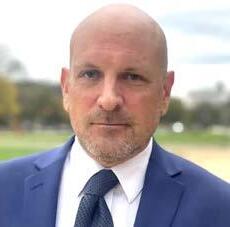
Mr. Paul, in conversation with Diplomacy & World Affairs professor Anthony Chase, provided engaging insights and information regarding his role in the State Department, a brief history of the United States-Israel alliance, and the human rights violations seen in Gaza. He repeatedly emphasized the scale of destruction seen in Gaza in the present day, and the role of the United States in aiding and abetting that destruction. He also discussed U.S.-Israeli policy, and policies that the U.S. State Department employs when communicating with Israel.
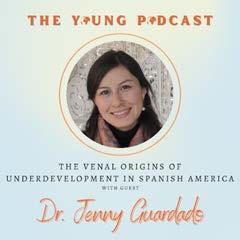
The Venal Origins of Underdevelopment in Spanish America
October 17, 2024
Dr. Jenny Guardado is an assistant professor at the Center for Latin American Studies/Edmund A. Walsh School of Foreign Service at Georgetown. Her book, Venal Origins, is a historical journey to the root of spatial inequalities within Spanish American countries. Through the in-depth study of the 18thcentury practice of office-selling—the exchange of colonial offices for money—Venal Origins guides readers through the institutional complexity of the Spanish Empire while highlighting its large distributional effects and how these shaped the profile and motivations of colonial officials. The book links Spanish colonialism to the marginalization of indigenous populations, authoritarian enclaves, recurrent conflict, and public goods inequities.
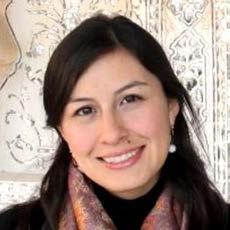
Jenny ,uar
Election – Navigating Domestic and Global Currents
October 24, 2024
This panel convened diverse experts to analyze the 2024 presidential election and its implications.
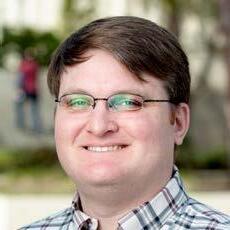
Isaac Hale specializes in political institutions, research methodology, and elections at Occidental College.
Caroline Heldman is a renowned political analyst and chair of Occidental’s Critical Theory and Social Justice department, focusing on gender, media, and the presidency. She has published extensively, including co-authoring Rethinking Madame President and Women, Power, and Politics, while also serving as a CNN commentator.

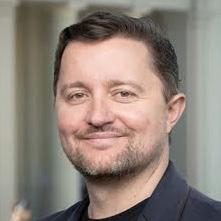
Igor Logvinenko brings expertise in global political economy as an associate professor of Diplomacy & World Affairs at Occidental, examining how economic forces shape politics in developing nations.
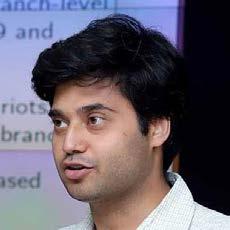
S.K. Ritadhi is an applied microeconomist whose research spans development economics and political economy, with previous experience as a research economist at India’s Central Bank.
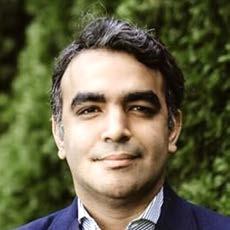
Special guest Mary Chung Hayashi joined the panel as a former California State Assemblymember who championed healthcare reform and authored Women in Politics: Breaking Down the Barriers to Achieve True Representation. Her journey from Korean immigrant to political leader offers a valuable perspective on representation in American democracy.

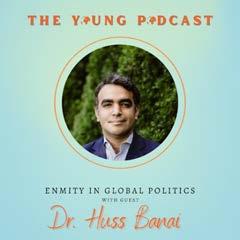
Enmity in Global Politics
November 11, 2024
Dr. Hussein “Huss” Banai is an associate professor of international studies at Indiana University and the Zahedi Family Fellow at Stanford University’s Program in Iranian Studies for fall 2024. His work examines the intersection of political thought and international relations, with a particular focus on democratic theory, non-Western liberal thought, diplomatic history, and Iran’s political development. Dr. Banai is the author of Hidden Liberalism: Burdened Visions of Progress in Modern Iran and co-author of Republics of Myth: National Narratives and the U.S.-Iran Conflict. This talk explored the dynamics of international hostility and political polarization through his unique lens of cross-cultural understanding.
The 100 Years’ War on Palestine: A Conversation November 14, 2024
Dr. Rashid Khalidi is Columbia University’s Edward Said Professor of Modern Arab Studies and one of the most distinguished scholars on Palestinian history and Middle Eastern politics. Born in New York to a Palestinian father and Lebanese mother, Khalidi and his family have deep roots in Jerusalem dating back generations. He has authored numerous influential books including Palestinian Identity, The Iron Cage, and his latest work, The 100 Years’ War on Palestine, which offers a personal and historical account of the conflict through the lens of settler colonialism. Khalidi previously taught at the Lebanese University, the American University of Beirut, and the University of Chicago, and served as an advisor to the Palestinian delegation during the Madrid and Washington peace negotiations from 1991 to 1993. His scholarship challenges conventional narratives about the IsraeliPalestinian conflict while providing crucial historical context for understanding contemporary developments in the region.
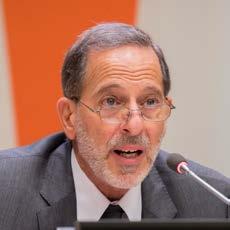
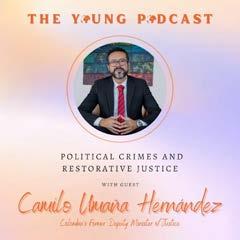
Political Crimes and Restorative Justice: A Conversation With Colombia’s Former Deputy Minister of Justice February 4, 2025
Dr. Camilo Umaña Hernández is a visiting associate professor at Brown University and Transitional Justice Fellow at Harvard’s Carr Center for Human Rights Policy. In his most recent position as Colombia’s Deputy Minister of Justice, he focused on developing public policies in three main fields: humanization of the penitentiary system, reform of drug laws, and restorative justice within Colombia’s transitional justice system. Umaña holds a Ph.D. in criminology from the University of Ottawa, a Ph.D. in legal sociology from the University of the Basque Country, and a postgraduate diploma in human rights and international humanitarian law from the Externado de Colombia University.
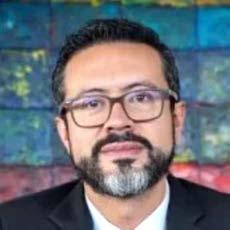
Foreign Aid and International Development: What Lies Beyond the USAID Freeze
April 11, 2025
Matt S. Winters is a professor at the University of Illinois Urbana-Champaign specializing in international development, political economy, and foreign aid effectiveness. His research examines how aid programs can be designed to maximize positive impacts and minimize corruption, focusing on accountability mechanisms that improve service delivery. He has conducted field research across multiple developing countries to evaluate aid interventions and their outcomes on local communities.
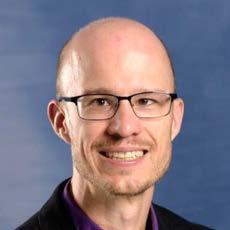
Lindsay Dolan is an assistant professor at Wesleyan University whose work focuses on the political economy of development, particularly how donor-recipient relationships shape aid allocation and effectiveness. Her innovative research examines how governments strategically present themselves to international audiences to attract resources, and how political considerations influence development funding decisions.

The Young Initiative hosted Professor Lindsay Dolan and Professor Matt Winters for a timely lecture and discussion on foreign aid and U.S. national interest. The discussion highlighted studies on public opinion in donor and recipient countries. Dolan and Winters analyzed the implications of the USAID freeze on global development initiatives and explored alternative approaches to international cooperation in an increasingly fragmented aid landscape. The event underscored the importance of informed public discourse in shaping foreign aid policies that reflect both national and global interests.
Powerlands
November 21, 2024
The Young Initiative student team proudly organized and presented a film screening and discussion of Powerlands, described by Naomi Klein as “a map drawn in the vibrant colors of resistance” and by Broadway World as a film that “it is not possible to watch without swelling emotion.” The event featured special guests including the film’s director, Ivey Camille Manybeads Tso, and producer Jordan Flaherty. The event included a reception, discussion, and film screening exclusively for the Oxy community.
Ivey Camille Manybeads Tso is an award-winning queer Diné (Navajo) filmmaker whose work explores Indigenous resistance and environmental justice. She began filmmaking at age 9 through the Native youth project Outta Your Backpack Media and later received a full scholarship to Idyllwild Arts Academy in California. At 13, she created In the Footsteps of Yellow Woman, which screened at more than 90 film festivals and won 11 awards. Her feature documentary Powerlands, which she began at 19, investigates how multinational energy corporations displace Indigenous communities across three continents, drawing connections between struggles in her homeland of Black Mesa and similar conflicts worldwide. The film has received numerous accolades including the 2022 Rigoberta Menchú Grand Prize and Best Feature at the American Documentary and Animation Film Festival.
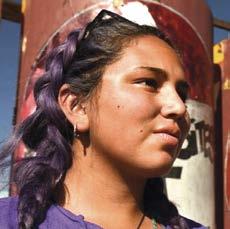
Jordan Flaherty is an award-winning journalist, producer, and author whose work focuses on social justice movements. His extensive production portfolio includes Al Jazeera’s Emmy-, Peabody-, and DuPont-award-winning program Faultlines and documentaries for Democracy Now and teleSUR. Flaherty’s reporting has appeared in the New York Times and Washington Post, and he has authored two books based on his journalism. His first producing credit was for the independent feature film Chocolate Babies, recently added to the Criterion Collection. His communications work has brought international attention to grassroots struggles, including the “Free the Jena Six” case that became an early catalyst for the Black Lives Matter movement. As producer of Powerlands, Flaherty helped connect Indigenous resistance movements across global communities fighting against the same corporations.

The Young Podcast engages speakers from around the world, bringing community voices and specialists’ experiences into conversation around salient global political economy topics. These talks are available for public access and support intellectual discourse among all members of the Occidental College community.
Dr. Jenny Guardado is an assistant professor at the Center for Latin American Studies and the Edmund A. Walsh School of Foreign Service at Georgetown University. Her most recent book, Venal Origins, is a historical journey to the root of spatial inequalities within Spanish American countries.
The book explores the relationship between office-selling—trading colonial offices for money—and the outcomes of Spanish colonialism. It focuses on the Spanish Empire in the Americas, highlighting both its obvious legacies—language, culture, religion, etc.—and its less obvious effects, such as economic geography, regional hierarchies, and population distribution, to explain stark economic and developmental variation within states. She examines the spatial organization and personnel policy of the Spanish Empire and finds that the office-selling from 1670 to 1750 led to the deterioration of the colonial administration. As a result, a combination of elite collusion, self-dealing, and indigenous displacement fostered ethnic segregation, violent conflict, and political exclusion.
Dr. Hussein “Huss” Banai is an associate professor of international studies at Indiana University and the Zahedi Family Fellow at Stanford University’s Program in Iranian Studies for fall 2024. His work examines the intersection of political thought and international relations, with a particular focus on democratic theory, nonWestern liberal thought, diplomatic history, and Iran’s political development.
Dr. Camilo Umaña Hernández is a visiting associate professor at Brown University, Transitional Justice Fellow at Harvard’s Carr Center for Human Rights Policy, and Colombia’s former Deputy Minister of Justice. In his latter position, he focused on developing public policies in three main fields: humanization of the penitentiary system, reform of drug laws, and restorative justice within Colombia’s transitional justice system.
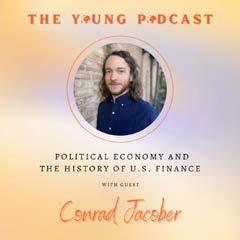
Professor Conrad Jacober is a visiting assistant professor at Occidental College, a graduate fellow for the History & Political Economy Project, and a trustee of the Economic and Business History Society. His research interests include political economy, social theory, the history of capitalism, and the sociology of finance.

The impact of the innovative research that our faculty are engaged in extends far beyond academic circles–influencing education, industry, policy, economics, and society at a global and local level.
With support from the Young Initiative, Lan Chu and colleagues A. Holmes-Tagchungdarpa, K. Bhutia, and Y. Chouhoud published their book, On the Significance of Religion in Climate Change, with Routledge Press in February 2025, examining religious perspectives on environmental challenges.
Chu is currently co-editing the special issue “Traditional and Civil Religions: Theory and Political Practice” for the journal Religions (2025), bringing together diverse scholarly perspectives on religious institutions in contemporary society. Her chapter “Religion and Citizenship,” co-authored with A. Kammas for The Routledge Handbook of Politics and Religion in Contemporary America (December 2024), analyzes the relationship between religious identity and civic engagement in the United States. In her 2024 article “Leading the Way: The Holy See, Diplomacy, and Vietnam” in UCA News, Chu explores the Vatican’s diplomatic role in Southeast Asia.

Laura Hebert published an article in Anti-Trafficking Review in September 2024, “Anti-Trafficking Funding and the Discourse of ‘Prevention’” with assistance from the Young Initiative. The article is open-access and is available at https:// antitraffickingreview.org/index.php/atrjournal/article/view/782.
Building on original databases compiled through a review of the U.S. Attorney General’s Annual Report to Congress on U.S. Government Activities to Combat Trafficking in Persons, Hebert offers a detailed analysis of U.S. anti-trafficking funding allocations for fiscal years 2017–2021. Hebert finds that during the period under review, most U.S. anti-trafficking funds were spent on reactive activities, including the identification, protection, and support of trafficking survivors and efforts to improve the detection, arrest, and prosecution of traffickers. In contrast, activities targeting the conditions that render certain populations at heightened risk of being trafficked or that enable the exploitation of precarity were relatively underfunded. When these conditions were addressed by funded activities, the targets were nearly always countries in Africa, Asia, or Latin America, perpetuating a discourse of trafficking as a social problem rooted in poor policies, practices, and inequalities seen as endemic in the Global South.
Igor Logvinenko has a forthcoming review of Sociology of Corruption: Patterns of Illegal Association in Hungary by David Jancsics that will be published in the Slavic Review. In 2025, he co-authored “The Lone Star Paradigm: A Texan Blueprint for U.S. Energy Leadership in the Twenty-First Century” in The National Interest with Peter Vartanian ’25 (DWA and Young Initiative student).
Young funding enabled Professor Logvinenko to present at the Western Political Science Association annual meeting in April 2025 in Seattle on “Democratic vs. Autocratic Energy Transitions: A Comparative Study of Fossil Fuels and Renewables in Global Powers.” He also was interviewed by the Ankara Center for Crisis and Policy Studies (ANKASAM), a prominent think tank based in Ankara, Turkey, about renewable energy transition and growing power demand from AI expansion. The interview is available at: bit.ly/4oRZZgI.
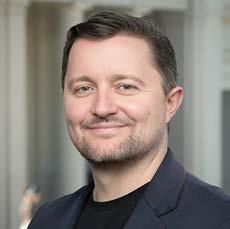
Movindri Reddy started a research project on refugees and asylum seekers who made their way to Greece from 2015 onward thanks to Young support. Working with Mary Christianakis in Occidental’s Critical Theory and Social Justice department, the project focuses on unaccompanied minors (approximately 35% of over a million refugees). A generous donor also enabled faculty to establish an internship program for six students and placed them in two well-established non-government organizations in Athens this summer.
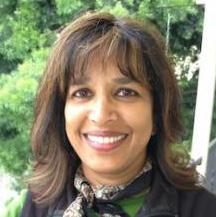
With a faculty grant from the Young endowment, Syeda ShahBano Ijaz presented a paper on last-mile access to foreign aid at the annual meeting of the American Political Science Association (APSA). She also presented her work on foreign aid and public opinion in Pakistan at a pre-APSA South Asia workshop. In addition, Professor Ijaz presented her new project titled “Do Immigrants Care Differently? Foreign Aid and Public Opinion in the U.S.” at the SoCal Political Behavior conference held at UC Riverside.
Madeline Baer
Director, Young Initiative on the Global Political Economy
Associate Professor and Department Chair, Diplomacy and World Affairs
Anthony
Tirado
Chase Faculty
Associate,
Young Initiative on the Global Political Economy
Professor, Diplomacy and World Affairs
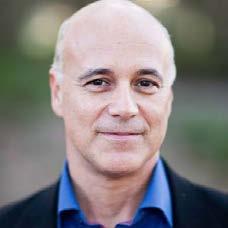

Igor Logvinenko
Faculty Associate, Young Initiative on the Global Political Economy
Professor, Diplomacy and World Affairs Chair, Undergraduate Research Center
Ambassador Derek Shearer
Director, McKinnon Center for Global Affairs
Chevalier Professor, Diplomacy and World Affairs
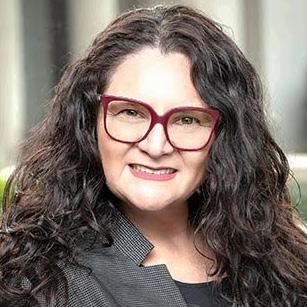
Priscilla Falter
Assistant Director of Programs and Administration, Young Initiative on the Global Political Economy
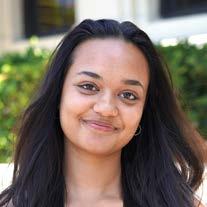
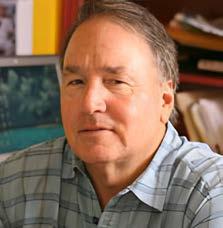
Mary Ellen Coaty
Major: Diplomacy & World Affairs
Hometown: Johnstown, Colorado
Class Year: 2026
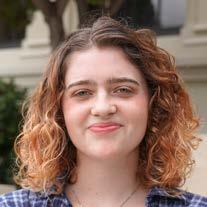
Arden Courtney Collins
Major: Diplomacy & World Affairs
Hometown: Lexington, Virginia
Class Year: 2026
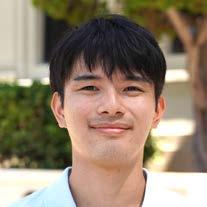
Hara
Majors: Diplomacy & World Affairs; Economics
Hometown: Tokyo, Japan
Class Year: 2025
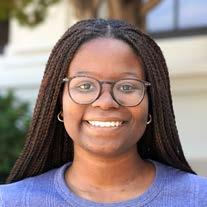
Taylor Miller
Majors: Diplomacy & World Affairs; Economics
Hometown: Powder Springs, Georgia
Class Year: 2026
Major: Diplomacy & World Affairs
Hometown: Maseru, Lesotho
Class Year: 2025
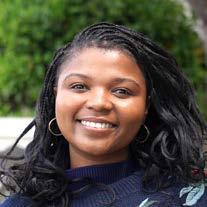
Major: Diplomacy & World Affairs
Hometown: New York, New York
Class Year: 2026
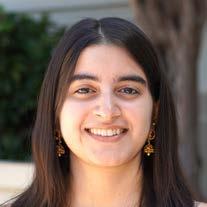
Major: Diplomacy & World Affairs
Hometown: Kirchdorf in Tirol, Austria
Class Year: 2025
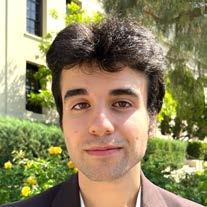
Major: Diplomacy & World Affairs
Hometown: Seattle, Washington
Class Year: 2027
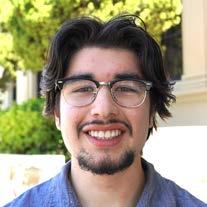
To date, over 200 students have been awarded Young grants, allowing them to directly engage in independent research, attend conferences, and/or immerse themselves in an internship, both within the United States and in more than 35 countries around the world. Such immersive learning fuels academic growth and enhances the student experience while creating the impetus for realworld solutions and drive for societal and economic change from participants.
FASIKA BEKELE ’27
Internship/Research: Evaluating the Impact of Diaspora Investments on Ethiopia’s Economy and Community Engagement
Los Angeles, California (North America)
Research: Mitigating Environmental Health Risks in SIDS: A Comparative Study of Extractive Industries and Climate Finance Solutions
Bridgetown, Barbados; Castries, Saint Lucia; St. John’s, Antigua (North America)
SALEM HAILU ’26
Research: The Political Economy of Urban Development and Displacement
Addis Ababa, Ethiopia (Africa)
Research: In-depth Examination of Archival Materials Housed in the Peace Corps Community Archives (PCCA) at American University in Washington, D.C. Washington, D.C. (North America)
NOELLE PUVAK ’27
Conference: Cornell Policy Review (CPR) Symposium
Ithaca, New York (North America)
YE ’27
Conference: The Western Political Science Association (WPSA) 2025 Annual Meeting’s Undergraduate Research Poster Session
Seattle, Washington (North America)
FASIKA BEKELE ’27
Internship/Research: Evaluating the Impact of Diaspora Investments on Ethiopia’s Economy and Community Engagement
Los Angeles, California (North America)
JACK SABEE-PAULSON ’26
Documentary/Field Research: Ukrainian Refugees: Understanding the Impact of U.S. Political Instability on the Victims of the Russo-Ukraine War
Košice, Slovakia (Europe)
JAMES BRAMMER ’26
Documentary/Field Research: Ukrainian Refugees: Understanding the Impact of U.S. Political Instability on the Victims of the Russo-Ukraine War
Washington, D.C. (North America)
MAYA WATANABE ’26
Internship: Integrating Alternative Frameworks for Measuring Loss in Climate Justice Advocacy with the Environmental Protection and Conservation Organization (EPCO)
Port Louis, Mauritius (Africa)
ERICA GREENBERG ’26
Research: Human Rights Framework in Contemporary Women’s Anti-Militarist Movements in Japan
Tokyo, Japan, and Okinawa, Japan (Asia)
RUNYI YE ’27
Conference: The Western Political Science Association (WPSA) 2025 Annual Meeting’s Undergraduate Research Poster Session
Seattle, Washington (North America)
VIVIAN KO ’25
Internship: Internship with Feminist Dalit Organization (FEDO)
Kathmandu, Nepal (Asia)

Liisa Halloran ’24 received a Young Initiative grant in 2022-2023 to fund a short documentary in Italy. She was recently granted a Fulbright research grant to fund a full length documentary that will enable Liisa to dig deeper into the same topic: the history and impact of gendered violence in post war Italy through the lens of a first generation Italian American.
“During my time at Oxy, I did an independent study with Professor Fox and won a Young Initiative Grant to create a short version of this documentary but I wasn’t satisfied with just a short and felt this topic deserved a feature length project with the level of depth of research and nuance it requires.”
Receiving a Young grant as a student was a pivotal moment in Liisa’s development as a documentarian. It gave her the financial support and confidence to begin exploring a subject she was deeply passionate about, and enabled her to conduct preliminary research, connect with communities, begin shaping her storytelling voice, and laid the groundwork for everything that has since followed.
POLITICAL ECONOMY