The Economic Impact of Oberlin College
Since 1833, Oberlin College and Conservatory has grown alongside the city of Oberlin. This report highlights a dynamic partnership nearly two centuries in the making—a historic, almost familial bond between a college and its community. Together, they have fostered a vibrant social, cultural, and intellectual life; built shared infrastructure supporting education and wellness; and created an ecosystem of amenities and opportunities, many of which are detailed in the sections that follow.
What is harder to see at first glance is the economic engine powering it all. While Oberlin is sometimes thought of as a small college, it plays an outsized role in driving prosperity across the city, county, and, increasingly, the region. This engine hums quietly, day in and day out, year after year—steady through good times and bad. Its impact is measured not in quarters, but in centuries.
At its simplest level, Oberlin’s economic impact works like this: Through its students, donors, and grant-makers, Oberlin brings in resources from around the world. Much of that money is spent here in Lorain County and the
surrounding region by the college and its faculty and staff. The businesses that benefit from that spending then pay their own employees and suppliers, who go on to pay theirs, creating a virtuous cycle that multiplies the value of every dollar that comes in through the college’s doors.
This cycle injects millions of dollars into Oberlin’s region. A study by the workforce analytics company Lightcast shows that the college added $283.1 million to the regional economy in fiscal year 2023–24, supporting nearly 3,271 jobs. The economic benefit to Lorain County alone was $190.3 million.
Oberlin paid its faculty and staff $107.1 million that year and spent another $87.7 million on facilities, supplies, and professional services. Combined, the net impact of Oberlin’s operations spending was $154.4 million in income to the regional economy. The college’s construction spending netted an additional $36.4 million.
As mentioned above, students and their families—96 percent of whom come from outside the region—make a significant contribution to this economic engine through tuition, room, and board. Students also contribute directly, spending $11.3 million on food, rent, and other expenses in 2023–24.
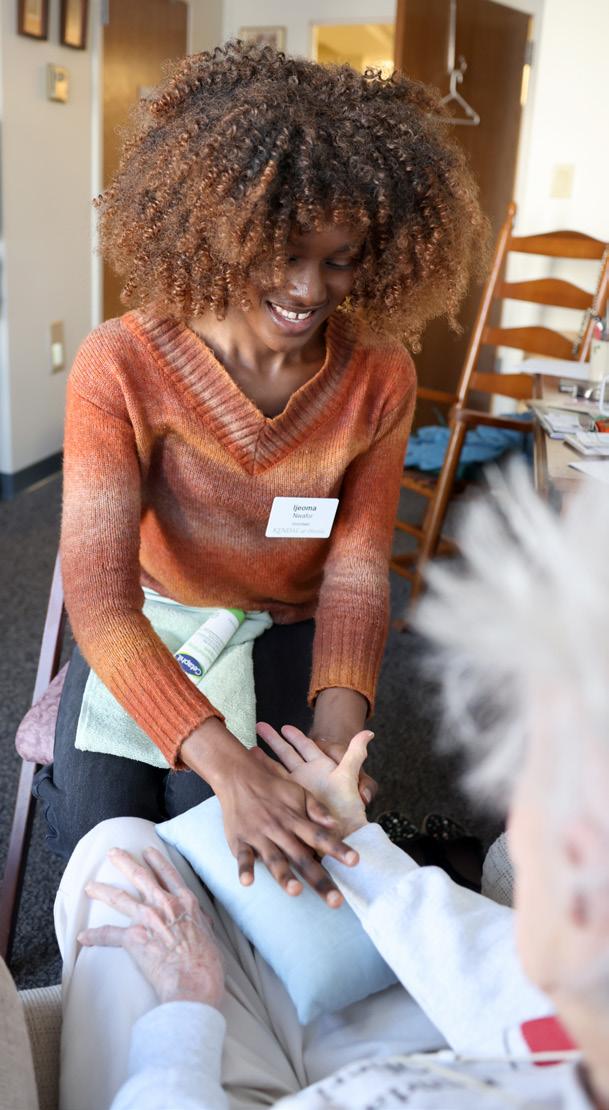
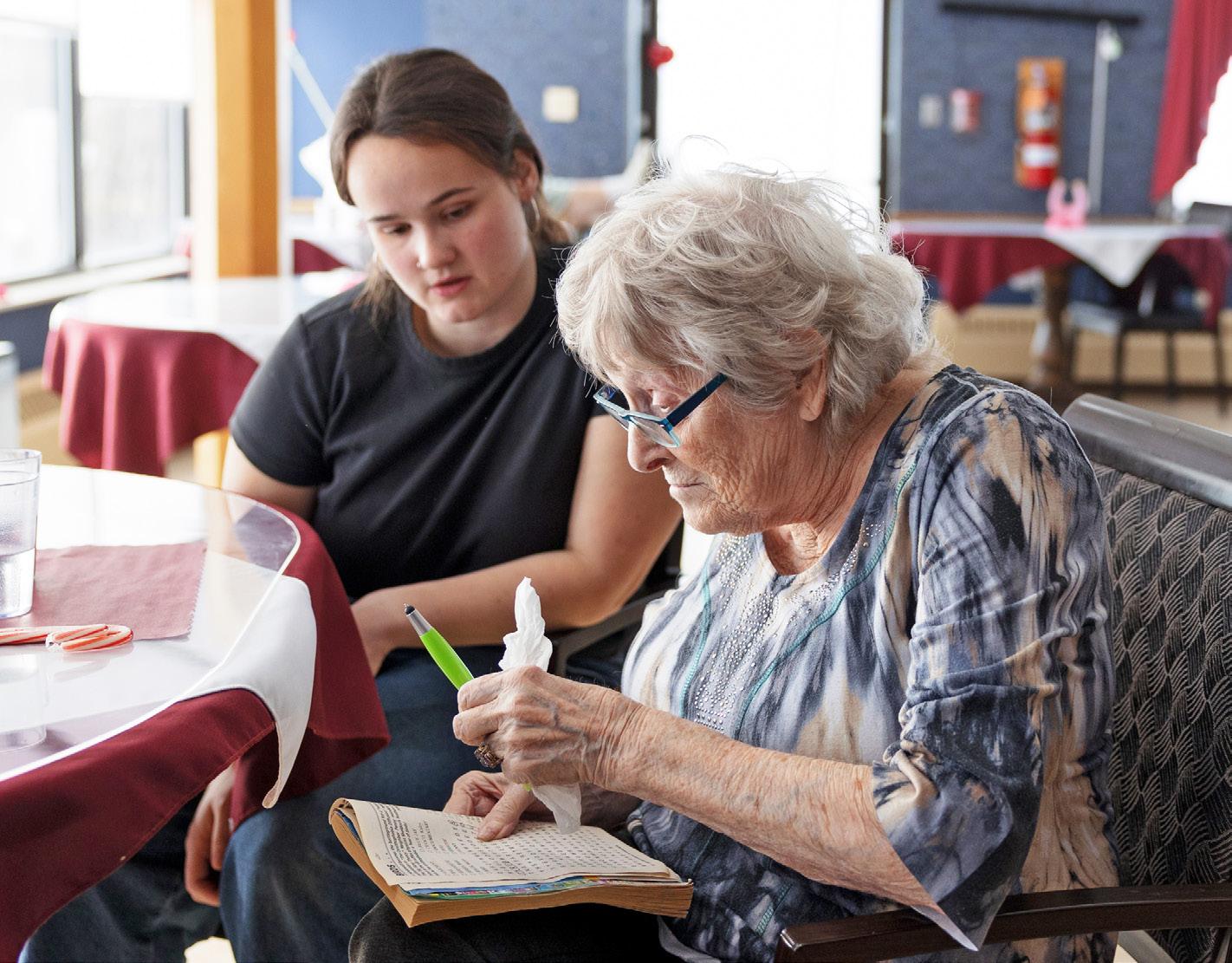
In addition, Oberlin students generously volunteer their time and talents in local K–12 schools and nonprofits. While the true value of that service lies in the solidarity that comes from standing shoulder-toshoulder with teachers and residents and in service to fellow community members, it also carries measurable economic value to the region—estimated by Lightcast at $444,000 in 2023–24.
Oberlin also attracts a variety of visitors from outside the region, ranging from family members coming to celebrate commencement to prospective students getting their first look at Tappan Square. Those visitors added another $6.6 million to the regional economy.
While Oberlin graduates pursue opportunities around the globe, thousands of alumni choose to live and work in Northeast Ohio, particularly in government, education, professional and technical services, health care and social assistance, and arts and entertainment.
Lightcast estimates their impact at $74.0 million in added income. And all of this activity—new business revenue, added jobs, and increased compensation that comes with a highly educated workforce—generated $23.7 million in additional state tax revenue in 2023–24.
Of course, Oberlin is a nonprofit institution. Its true measures of success lie not in dollars, but in the multitude of benefits and abilities its graduates bring to the world. The transformative education required
to create these graduates only takes place in a vibrant community, one that benefits from Oberlin’s robust economic contributions, just as Oberlin benefits from its neighbors and its region.
IMPACTS CREATED BY OBERLIN IN 2023-24
NORTHEAST OHIO LORAIN COUNTY
TOTAL ECONOMIC IMPACT $283.1 million JOBS SUPPORTED 3,271
OPERATIONS SPENDING IMPACT
$154.4 million
CONSTRUCTION SPENDING IMPACT
$36.4 million
VISITOR SPENDING IMPACT
$6.6 million
STUDENT SPENDING IMPACT $11.3 million
VOLUNTEERISM IMPACT
million
IMPACT
million
million
Partnership in Action
The college’s partnership with the city is rooted in a shared commitment to vibrant public life and the well-being of the community. Shared spaces and resources serve residents, students, and visitors alike— strengthening the local economy, preserving essential services, and creating places that bring people together.
A GATEWAY TO OBERLIN
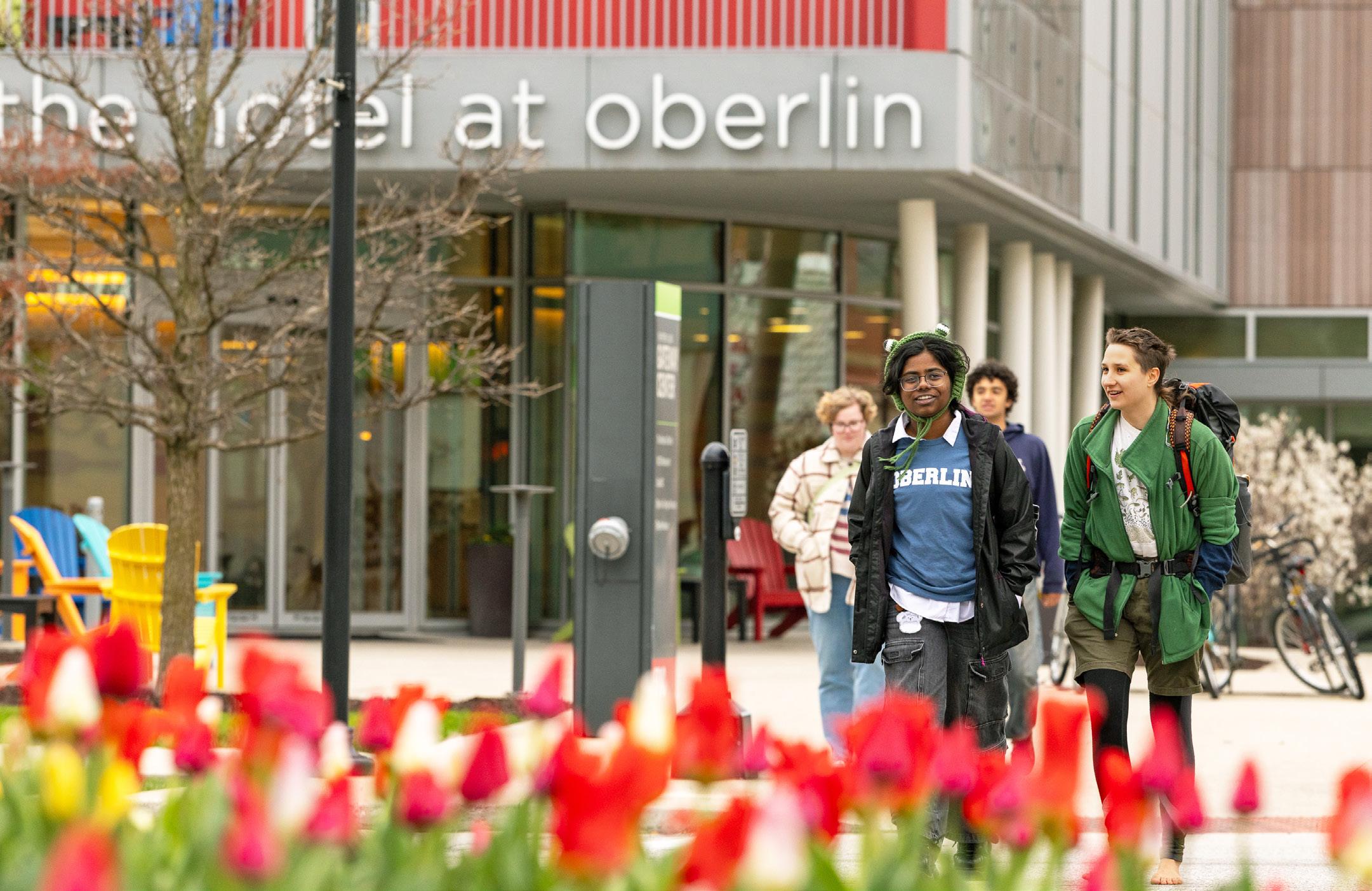
Overlooking Tappan Square and just steps from downtown and campus, the Hotel at Oberlin shows what’s possible through strong city-college partnerships. The eco-friendly hotel offers 70 rooms and suites, 6,500 square feet of flexible event space, and the 1833 Restaurant, known for seasonal, locally sourced cuisine. Built to LEED Platinum standards, the hotel hosts conferences and special events, supports travel packages that strengthen the local economy, and is home to the William and Helen Birenbaum Innovation and Performance Space, a club-style venue that hosts nearly 50 public performances each year.
A COMMUNITY CLASSIC
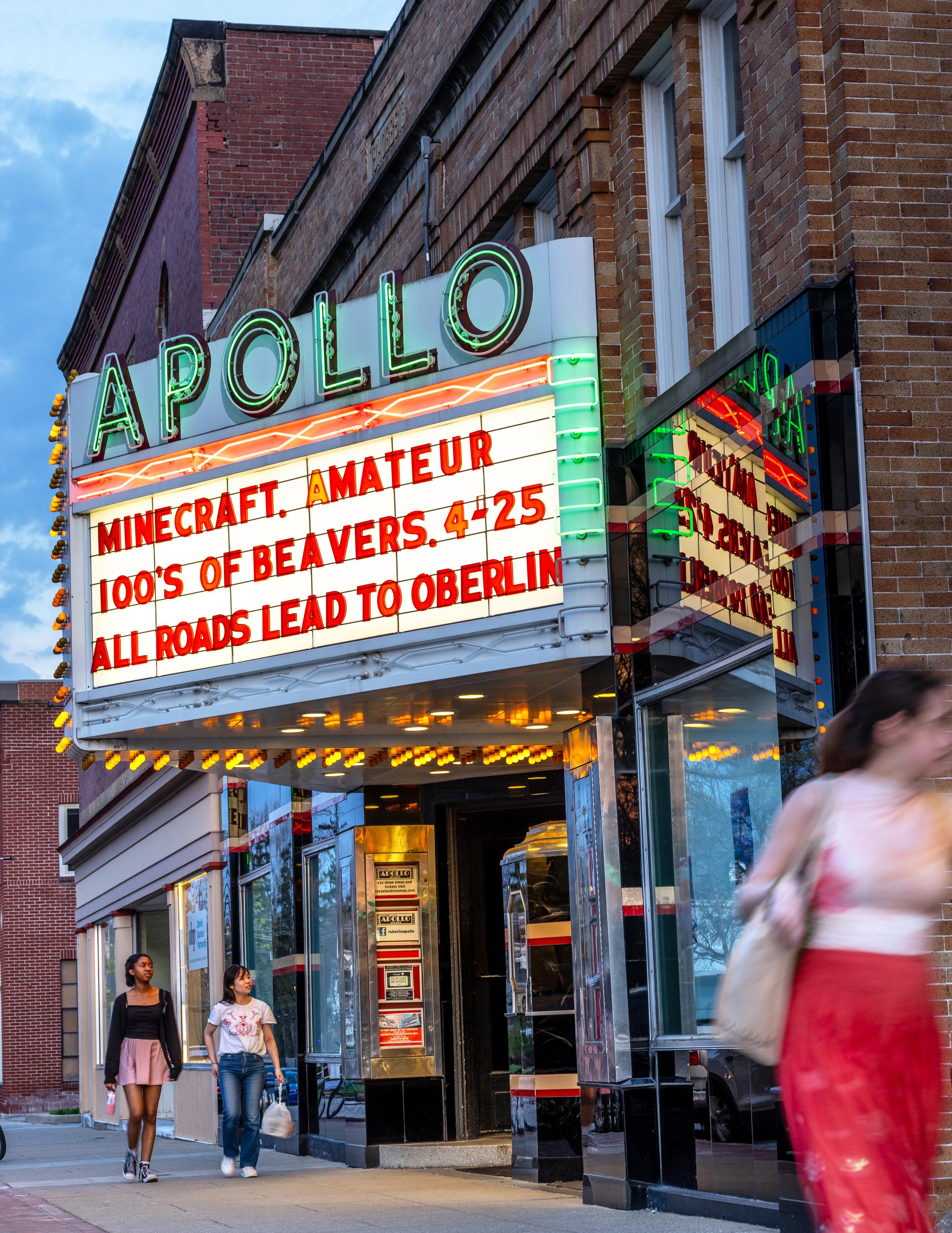
A beloved local landmark, the Apollo Theatre is a go-to spot for families and students. When the historic theater was put up for sale in 2009, the college purchased and upgraded the building. Today, the 472-seat theater is managed by Cleveland Cinemas and features first-run films at affordable prices. The main theater and a smaller screening room are available to rent, with tiered pricing to keep the space accessible to community organizations.
ENSURING ACCESS TO LOCAL HEALTH CARE
Preserving and supporting high-quality local health care is a shared priority. In 2000, the college purchased the land that is now home to the 25-bed Mercy HealthAllen Hospital and its 20,000-square-foot Chuang Medical Center, helping ensure continued access to medical care in Oberlin.
INVESTING IN PUBLIC SAFETY
Over the past 15 years, the college has helped fund the purchase of two fire trucks, a rescue vehicle, and an aerial truck for the city of Oberlin.
Experience Our Campus
Oberlin’s campus isn’t just for students—it’s a shared resource for the region, offering spaces to learn, explore, play, and connect.
ART FOR EVERYONE
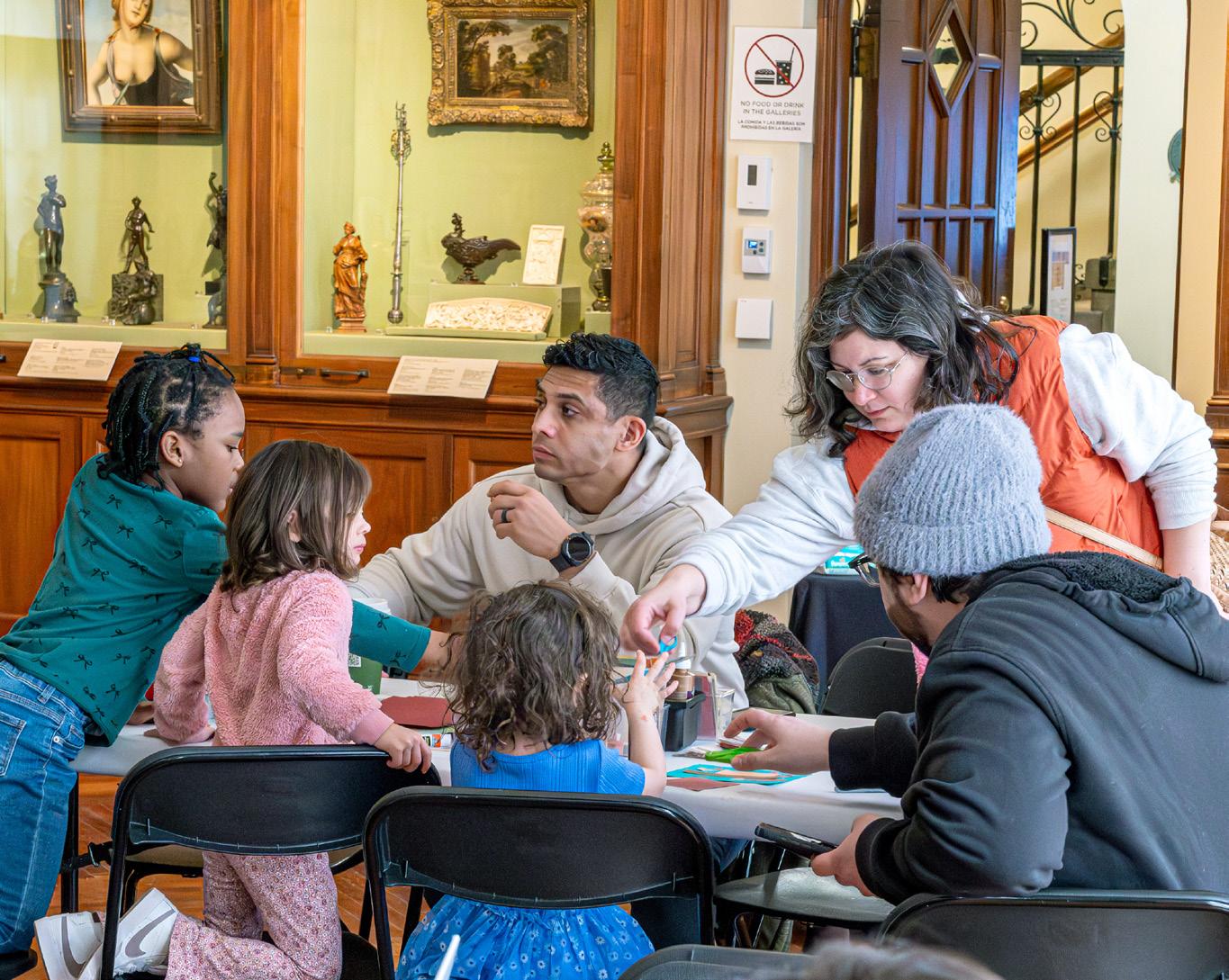
For more than a century, the Allen Memorial Art Museum has served as a cultural resource for Oberlin and the region. Widely recognized as a leading academic art museum, it houses more than 15,000 works spanning American, Asian, European, contemporary, African, ancient, Indigenous American, and Islamic art.
As the only art museum in Lorain County, the Allen offers free admission, public programs, and school partnerships. It works closely with K–12 schools—particularly in Lorain and Erie counties—providing visits, classroom instruction, and teacher workshops. The museum continues to expand access through digital tools, language translations, and image descriptions. College students are an important part of this work, gaining hands-on professional experience while helping bring meaningful arts experiences to local youth.
KNOWLEDGE AND HISTORY
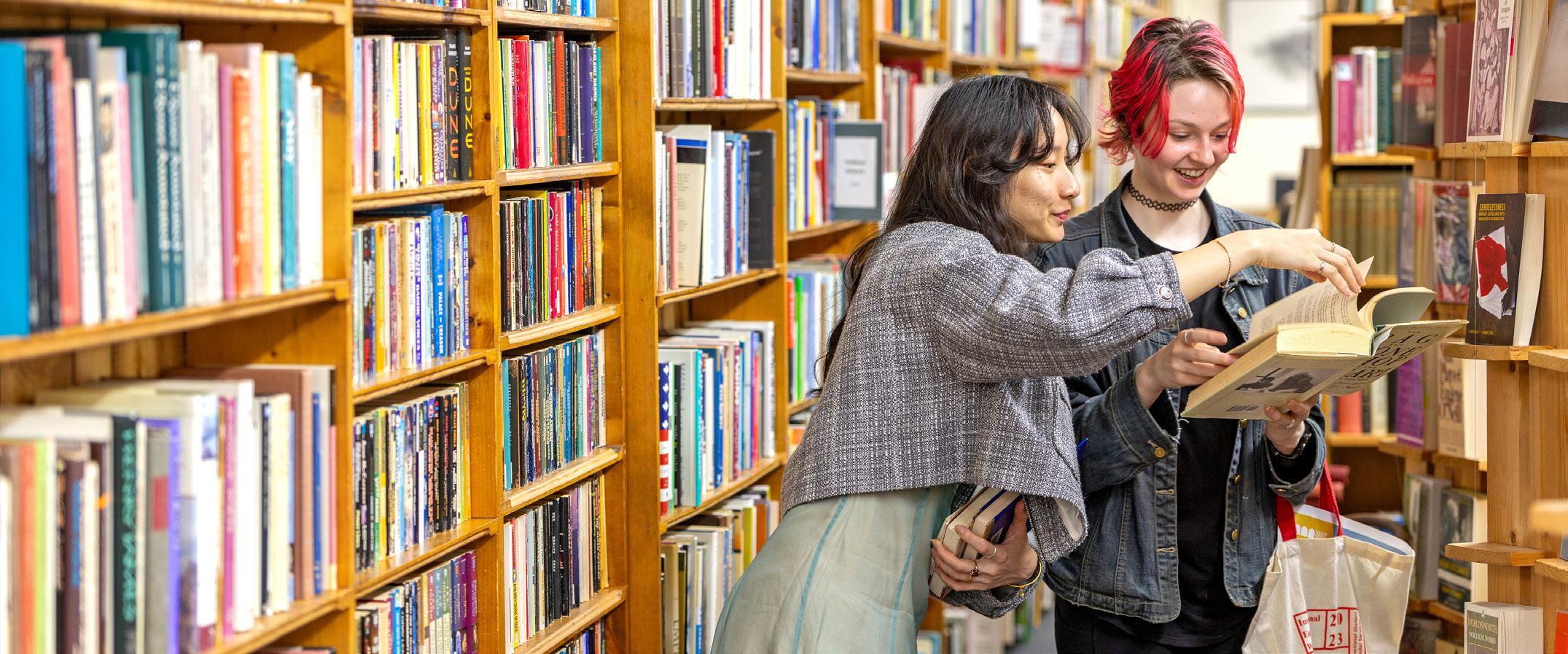
The Oberlin College Libraries serve both the campus and community through exhibits, events, instruction, and access to distinctive collections reflecting local, national, and global history. Adults who live or work in Lorain County can borrow books, audio recordings, and more from the Mary Church Terrell Main Library and the conservatory, science, and art branch libraries.
Adults who live or work in Lorain County can borrow books, audio recordings, and more from the Oberlin College Libraries.
Oberlin College Lanes offers family-friendly bowling, lessons, and league bowling and can be reserved for birthday parties and special events.
The Oberlin College Observatory and Planetarium in Peters Hall is open to the public for free on the first and third Fridays of each month after sunset during the academic year.
Spaces on Oberlin’s campus can be rented for special events, from wedding ceremonies in Fairchild Chapel or Clark Bandstand to receptions and conferences in the Carnegie Root Room or Peters Great Hall
The College Archives offers tours, workshops, and programs such as Footsteps to Freedom, exploring Oberlin’s role in the Underground Railroad. Recent renovations and expanded digitization have increased public access to collections.
WELLNESS FOR THE WHOLE COMMUNITY
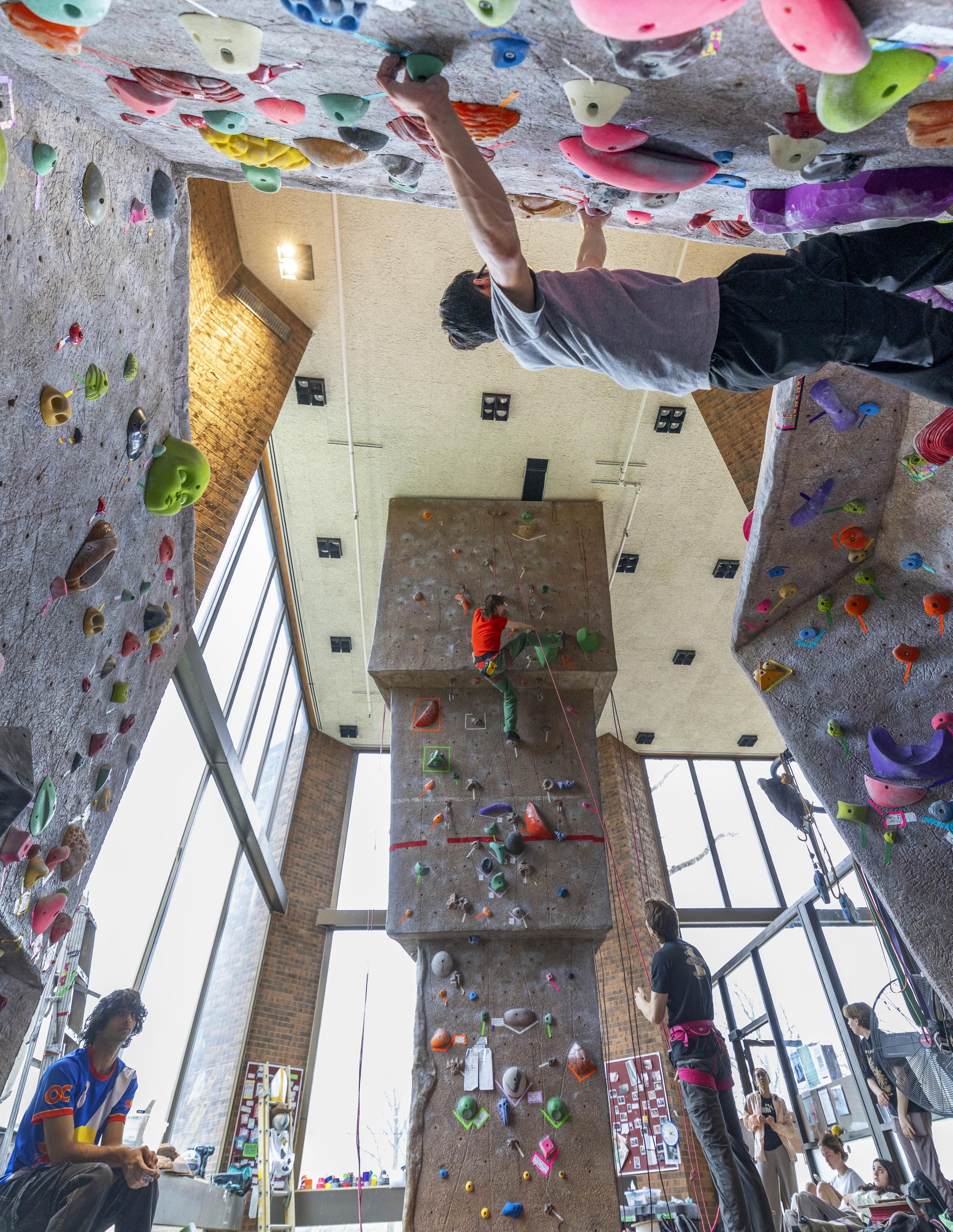
Oberlin residents may purchase memberships to the Oberlin College Recreation Center, with access to the Shanks Health and Wellness Center, Philips Physical Education Center, and Heisman Field House. Facilities include Carr Pool, fitness and weight-training areas, a 25-foot rock-climbing wall, two gyms, a 200-meter track, and indoor courts for tennis,
racquetball, and squash. Outdoor facilities include sports fields, a 400-meter track, and tennis courts. YeoFit offers additional classes and wellness programs.
AN ARCHITECTURAL ICON, UP CLOSE
The Weltzheimer/Johnson House, designed by Frank Lloyd Wright in 1947, is one of a limited number of Usonian homes open to the public. Recently renovated, it operates through the Allen Memorial Art Museum and is open to the public on the first Sunday of each month from April through November.
HOME FIELD FOR THE REGION
Oberlin’s athletic facilities host Ohio High School Athletic
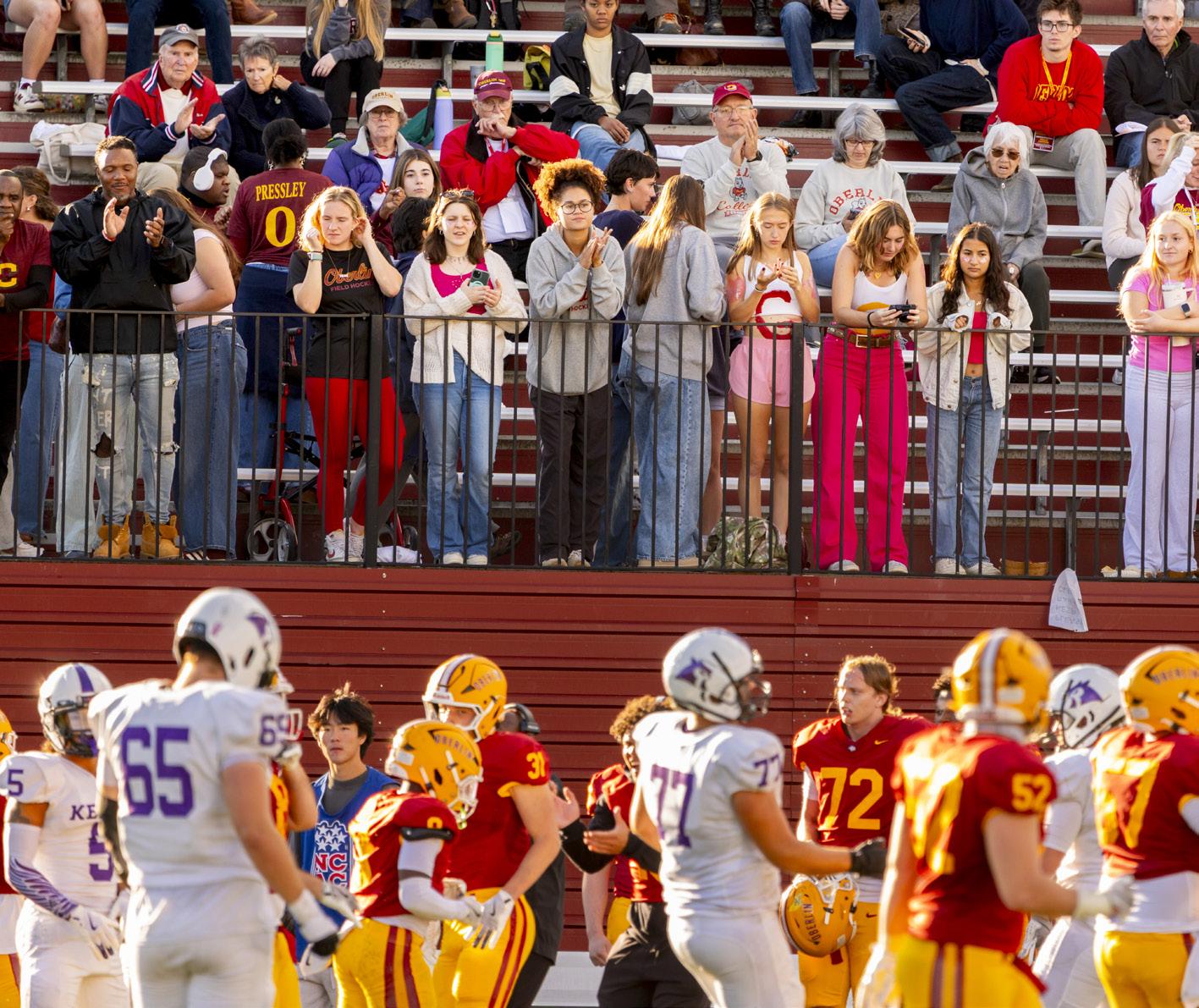
Association events in tennis, lacrosse, track and field, and baseball. Dill Field is among the most heavily used baseball fields in the state and home to the T3 Warhawks. Bailey Field hosts regional tournaments and serves as the home field for Oberlin High School football.
SPORTS CAMPS AND CLINICS
Oberlin hosts a range of summer camps and clinics for local youth across its athletic facilities. Recent highlights include the track and field teams hosting the Elyria Youth Track Club, the volleyball program partnering with Ohio Special Olympics for a skills camp and tournament, and the basketball teams welcoming area high school athletes for summer camps.
Oberlin offers 21 varsity sports, with over 400 student-athletes participating each year. All athletics events are free and open to the public.
Learning in Action
One of Oberlin’s main responsibilities is to its hometown. For many students, working alongside the local community is a defining part of their education.
COMMUNITY ENGAGEMENT AT THE CORE
“The Bonner Program gave me the resources I needed to flourish at Oberlin: a diverse community in which to learn, work, and grow. It kept me aligned with my community responsibilities as well as my academics. I transformed from someone who wanted to help into someone who knows how to lead change.”
— ANALICIA R. ’26
The Bonner Center for Community-Engaged Learning, Teaching, and Research serves as the campus hub for community partnerships. Students contribute thousands of hours each year to local schools, nonprofits, and government agencies while gaining professional experience and academic credit.
• The Bonner Scholars Program is a selective, four-year, cohort-based scholarship program for income-eligible students. The program serves 60 students annually, each completing more than 1,600 hours of local service and experiential learning over four years.
• Through the America Reads and America Counts programs, college students can utilize their Federal Work-Study award by tutoring reading and math in the Oberlin City Schools and after-school programs. More than 30 college students serve 2,500-plus hours in classrooms each year.
• Through the Ninde College Access Program, more than 25 college students mentor or tutor 50 Oberlin middle and high school students each year, offering academic support and college readiness programming.
• Oberlin’s Community-Based Work-Study Program pairs students who have Federal Work-Study awards with one of 16 nonprofit and publicsector partners. Oberlin regularly allocates up to 18 percent of work-study funding to community-based work-study—well above federal guidelines.
CAREER PATHWAYS WITH COMMUNITY IMPACT
Oberlin’s Career Exploration & Development programs provide students with hands-on experience across Northeast Ohio and beyond.
Winter Term Micro-Internships place students in short-term, projectbased roles with organizations such as Lorain County Public Health, the City of Cleveland, CoreWater Technologies, Cleveland Clinic, Welcome Nursing Home, Second Harvest Food Bank, Kendal at Oberlin, the Oberlin City Prosecutor’s Office, Firelands Association for the Visual Arts, the Oberlin Heritage Center, and others.
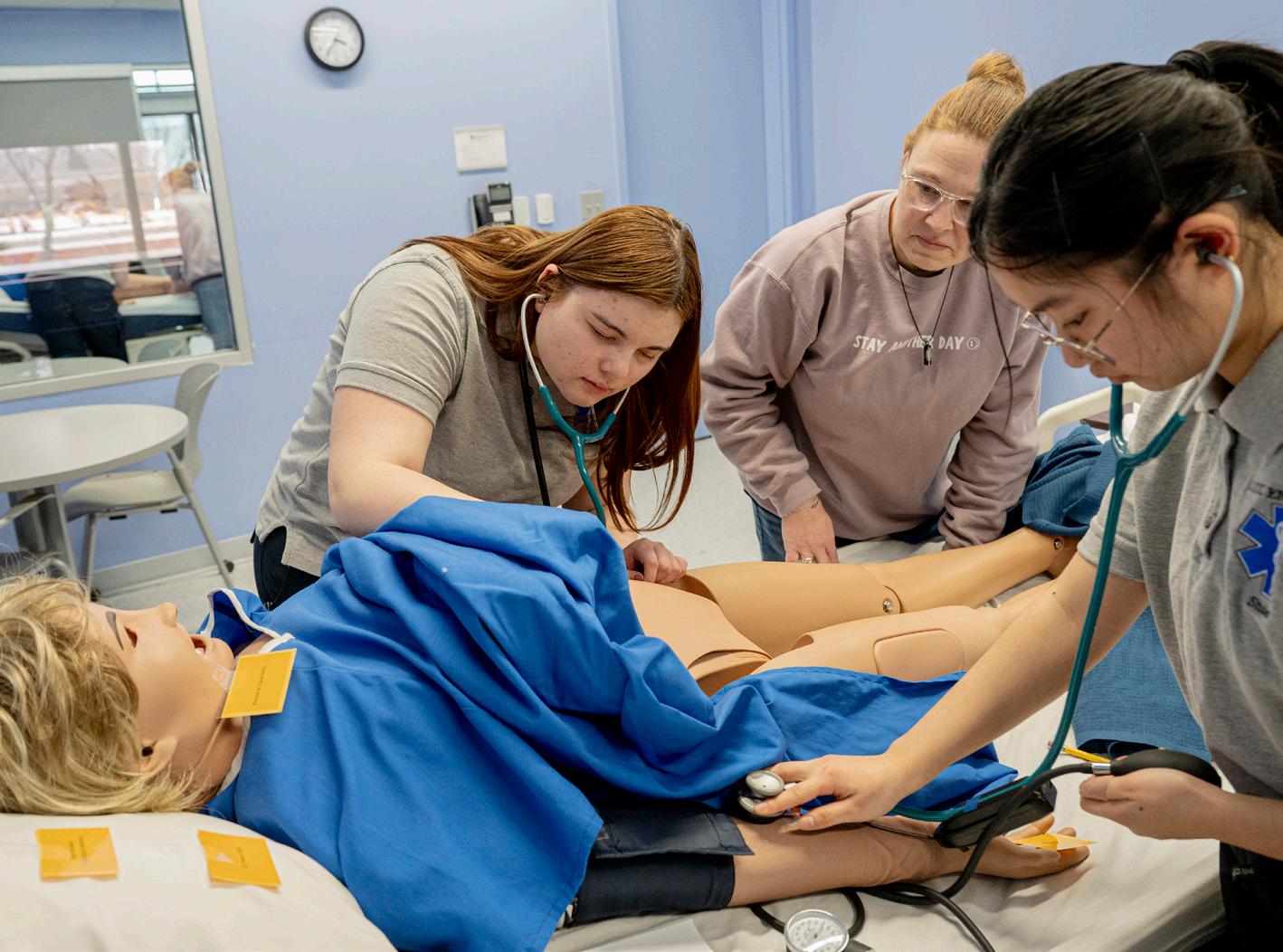
In partnership with Lorain County Community College, 12 students annually take part in accelerated Emergency Medical Technician (EMT) training. Many go on to work for local emergency medical service providers and healthcare organizations such as LifeCare
Ambulance, 24/7 Medical Transport, Physicians Ambulance, Ohio Ambulance Solutions, and the Lorain County Free Clinic.
Summer on the Cuyahoga is a paid internship program in Greater Cleveland combining work experience, housing, professional development, and access to alumni networks. Four alumni serve on the program’s board.
Partnerships with Cleveland Talent Alliance and Global Cleveland help retain graduates through job pipelines and placement programs.
Through the Educational Service Center of Northeast Ohio’s Adult Education Providers Network, students contribute to regional workforce solutions—including developing tools that align training programs with employer needs. It’s a model that’s attracting attention across the state for its impact.
CLASSROOM LEARNING, REAL-WORLD IMPACT
More than 50 courses each year integrate community-based learning and research. Faculty members partner with organizations across Oberlin and Northeast Ohio to bring real-world challenges into coursework.
• Small Business Today: Students support underserved small businesses in Lorain County while building core entrepreneurial skills.
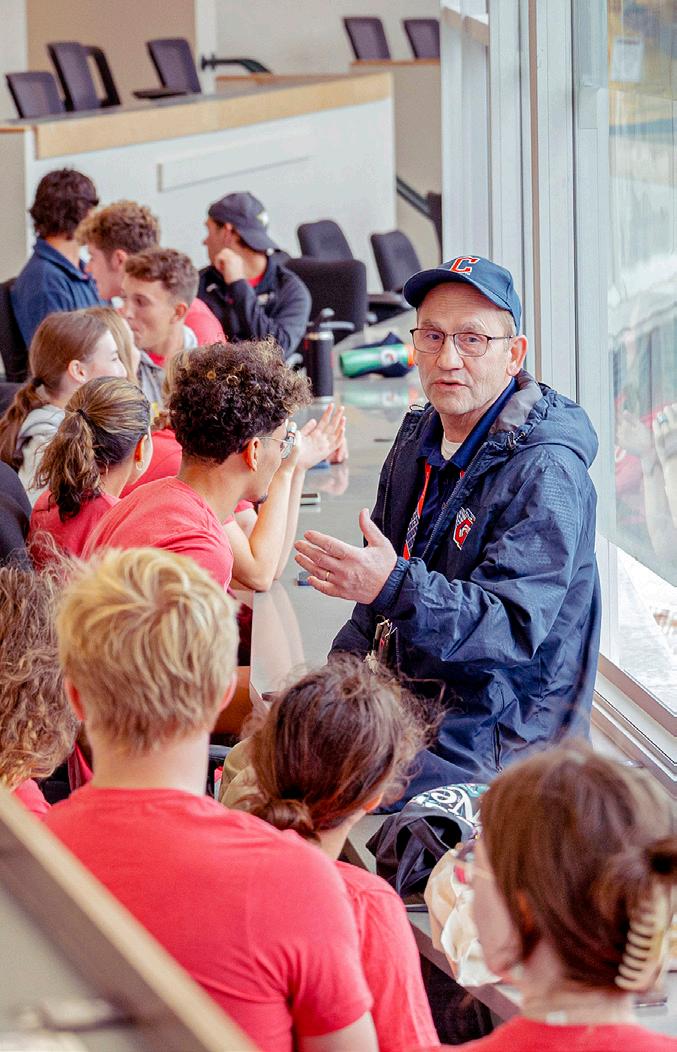
• Sport Studies and Management: A new concentration that integrates academics with experiential learning, including collaboration with the Greater Cleveland Sports Commission, Cleveland’s new Pro Soccer Group, and the community impact arm of the Cleveland Guardians.
• Community News Reporting: Students research, write, and produce in-depth news stories about the Oberlin community,
emphasizing ethical reporting, fact verification, and balanced, contextualized storytelling.
• Black Cleveland in Migration: Students interview Cleveland residents to document family migration stories, which are integrated into course readings.
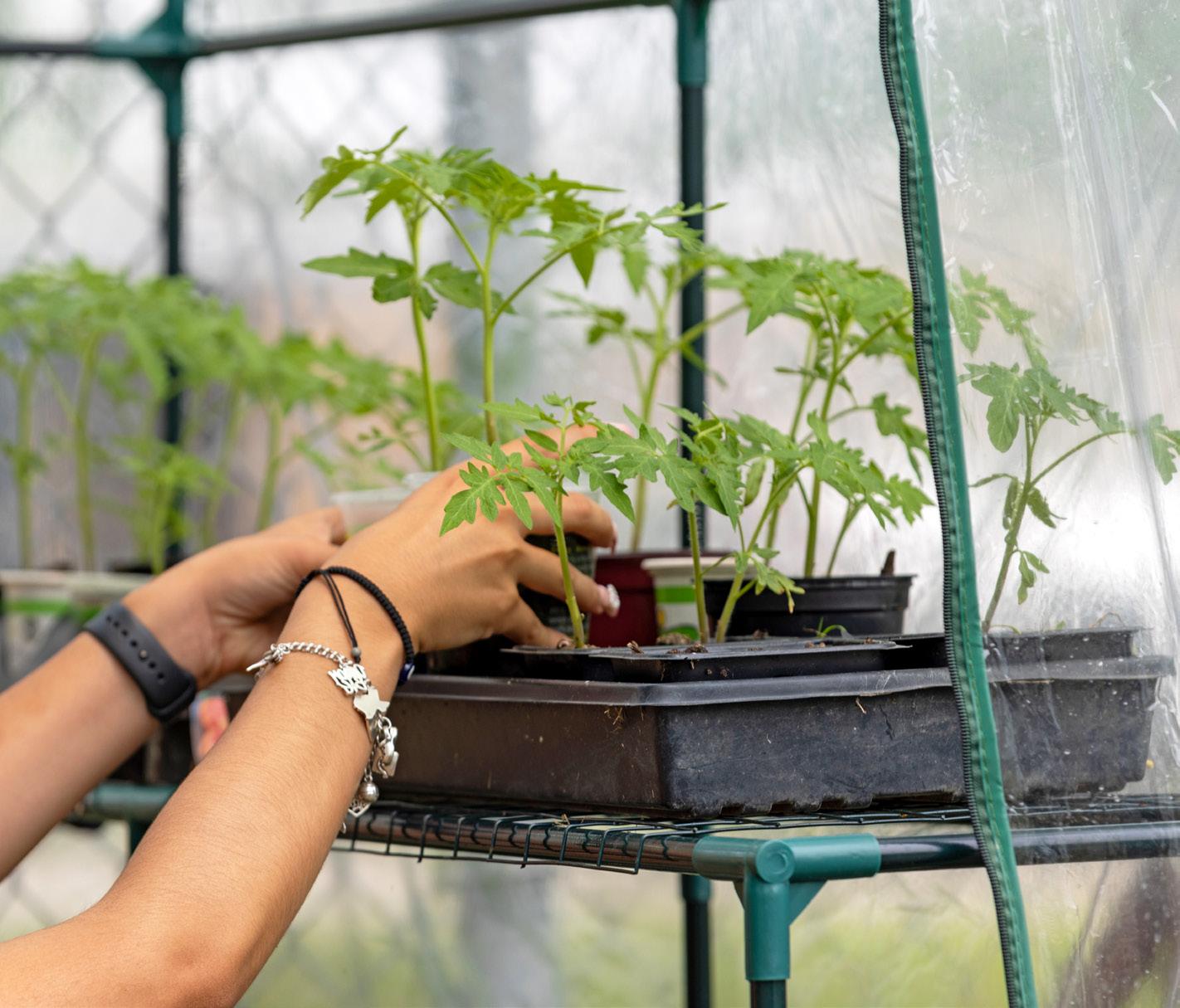
• Environment and Society: Students explore strategies to help local communities transition toward sustainability and resilience in food, energy, and shelter amid climate change.
• Lorain County Foodways: Students explore the Lorain County food culture through
hands-on engagement, oral history projects, and digital storytelling.
• Community Music Engagement in the Schools: Prospective teachers and performers learn music-making strategies that culminate in a community music engagement project in a Lorain County school.
• Community Engagement for Musicians: Students co-create a sustainable, semester-long project with a community organization while developing skills such as arts funding and grant writing.
SERVICE BEYOND THE CLASSROOM
Beyond coursework, students engage in hands-on, often studentled ways—building skills while supporting local needs.
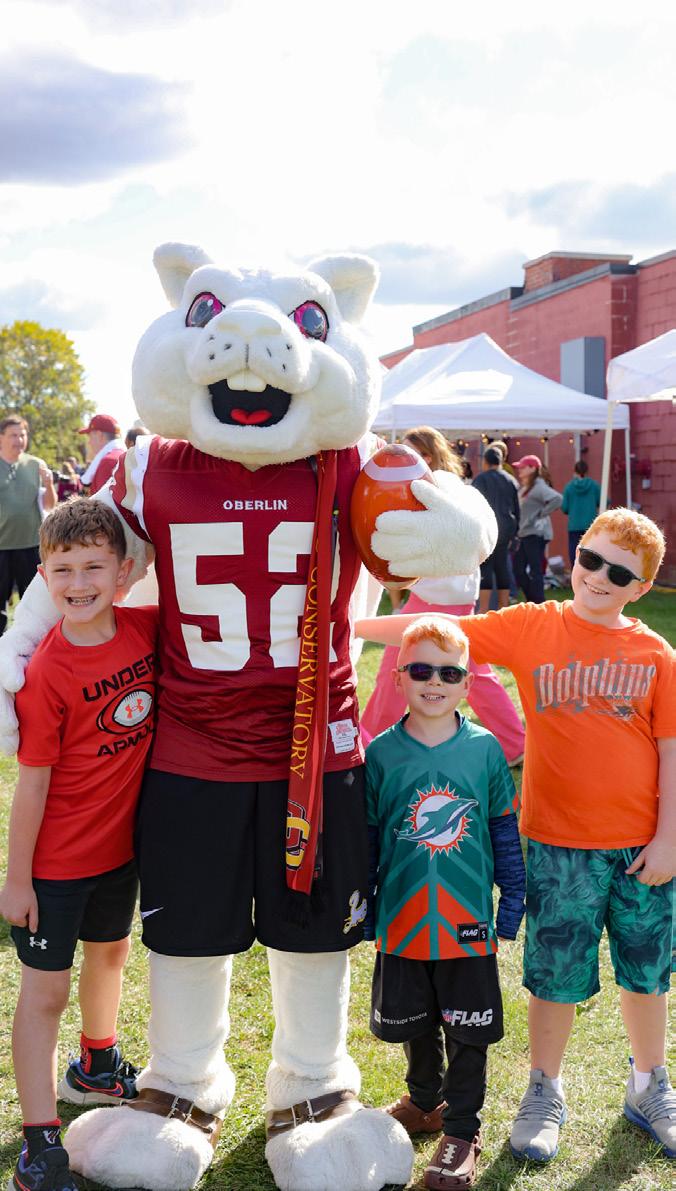
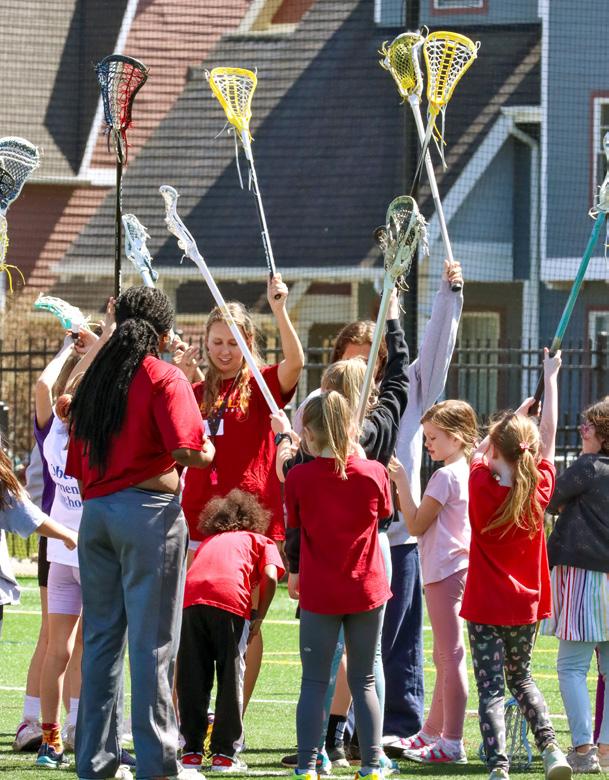
Oberlin College Athletics is a leader in community engagement. Each year, Oberlin’s 21 varsity teams partner with Kendal at Oberlin, George Jones Memorial Farm, the Western Reserve Land Conservancy, and Oberlin City Schools. Programs such as Helping Hands, Track or Treat, the Teddy Bear Toss, Play Like a Girl, and Buddy Up Tennis expand opportunities for involvement.
“I love hanging out in the public library and seeing familiar faces in their favorite reading spots or chatting with the dog owners I see on their daily walks. Oberlin really does feel like a close-knit community, and everyone I’ve interacted with has been nothing but friendly.” — LAUREN K. ’27
Over the past six years, student-athletes have contributed more than 10,000 hours of service and raised more than $30,000 for cancer research and patient support, earning national recognition, including the National Association of Division III Athletic Administrators’ Community Service Award and the NCAA LGBTQ Institution of the Year in 2023.
The Changemakers Undergraduate Fellows Program, sponsored by the Center for DEI Innovation & Leadership, prepares students to address racial inequities through coursework, internships, and mentorship focused on issues such as criminal justice, housing, healthcare, and income inequality.
The contributions of Oberlin student volunteers to the region is equivalent to $444,000 in earnings each year.
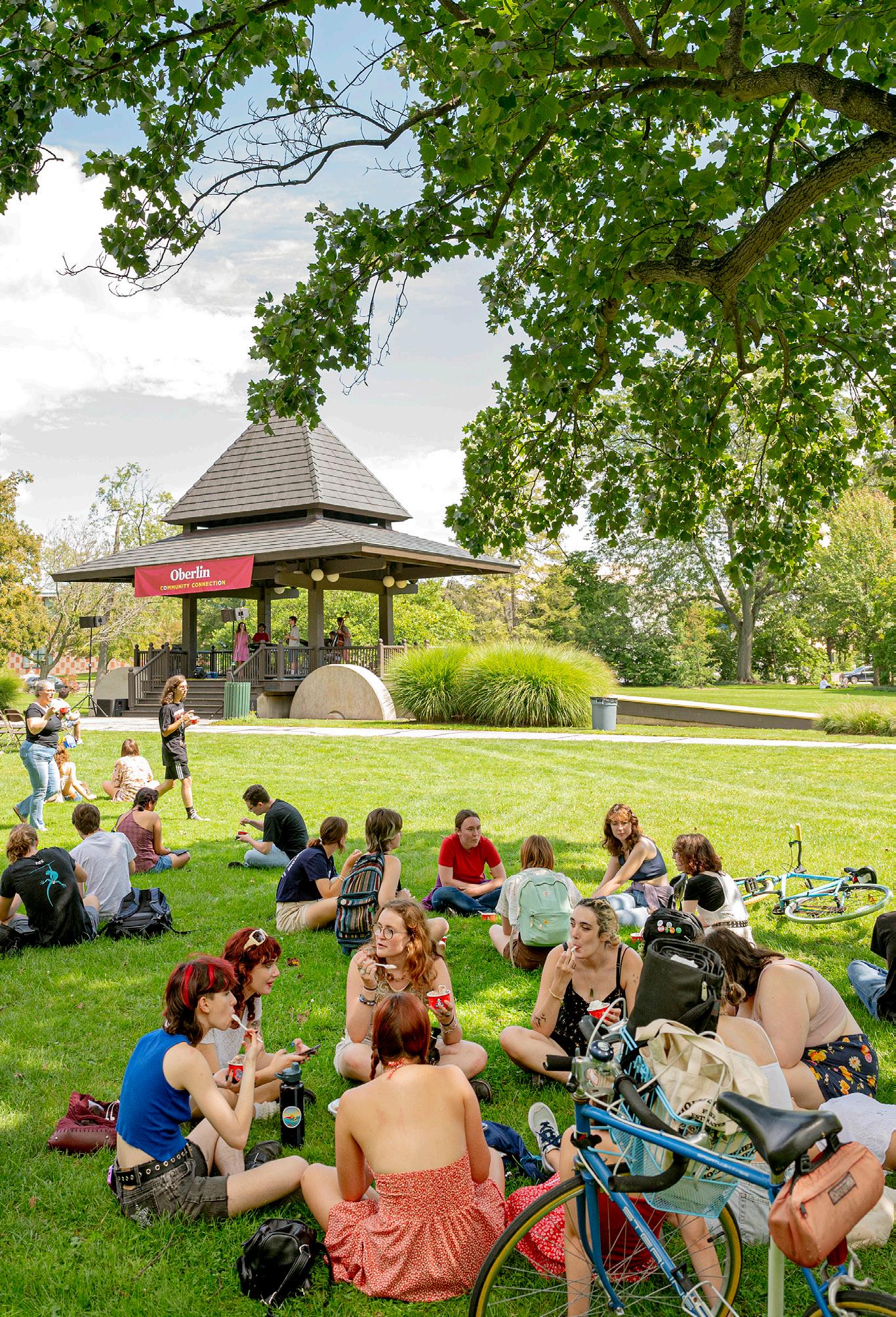
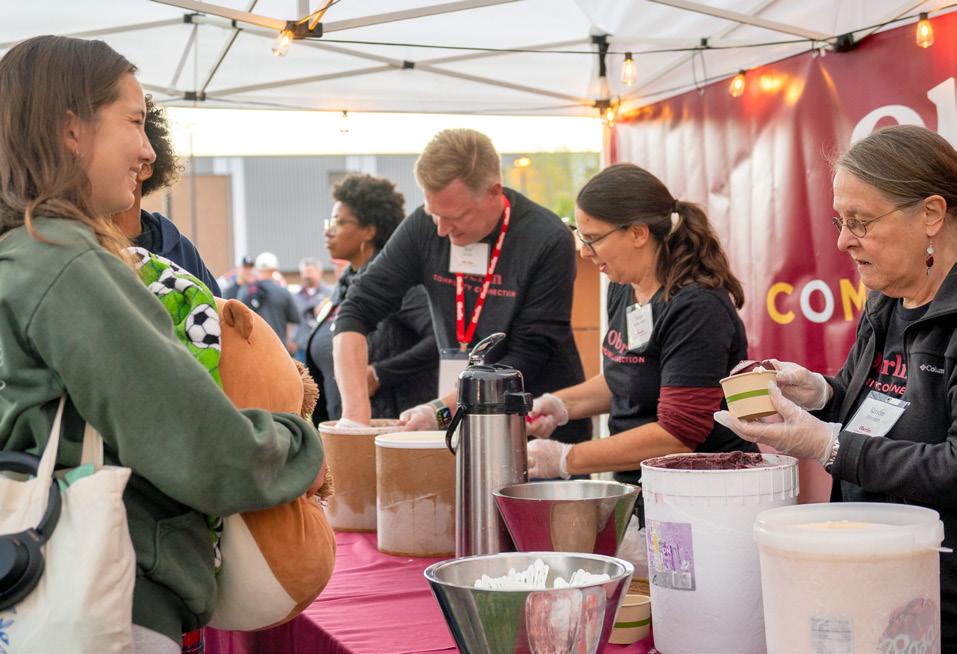
Community Connection brings together leaders from all parts of the Oberlin community—elected officials, business owners, residents, faith leaders, and college administrators— for ongoing dialogue that strengthens relationships between the college and the broader community.
Through Oberlin Music at Grafton, students and faculty collaborate with residents of the Grafton Correctional Institution to promote lifelong learning, musical skill-building, and empathy through shared performance and study. Students and faculty also support the Oberlin Grafton Theater Collective, which produces an annual spring performance with residents.
The Oberlin Bike Co-op promotes access and sustainability by offering children and adults free tools, recycled parts, and hands-on repair instruction.
The student-run El Centro Volunteer Initiative connects students, faculty, and community members with Latinx residents across Lorain County, offering free citizenship and English for Speakers of Other Languages (ESOL) classes and organizing fundraising efforts
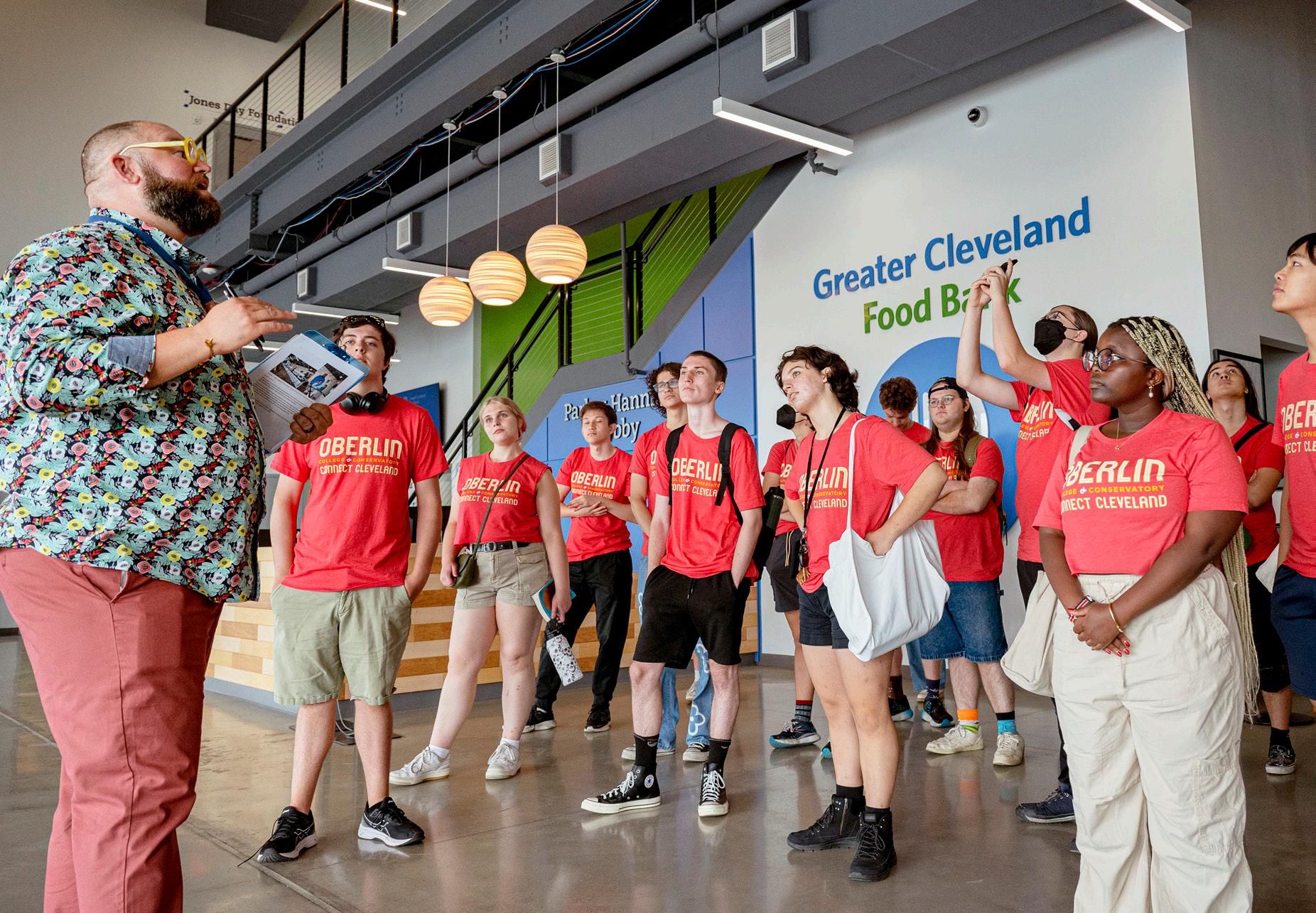
spending a day in the city working on service projects, visiting organizations, meeting alumni, and exploring future internship and career pathways.
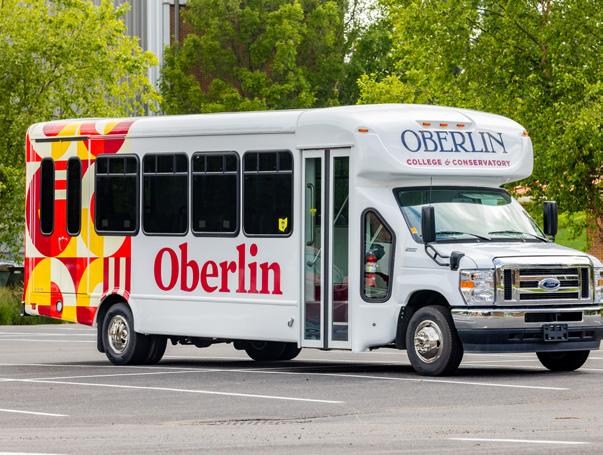
The Obie Express bus provides
shops, restaurants, parks, and museums—encouraging cultural exploration and local spending.
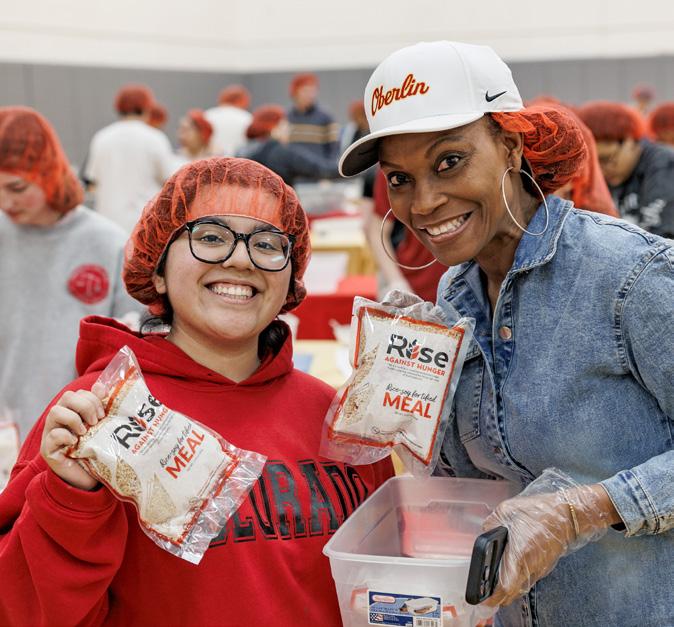
Students also support Oberlin Community Services and the Second Harvest Food Bank through food distribution, meal programs, and wraparound services.
In partnership with the Oberlin , the college supports local farmers and expands access to locally grown food by helping purchase and distribute products throughout the region.
Education for Every Stage of Life
Oberlin supports a range of academic enrichment, college access, and lifelong learning opportunities for learners of all ages.
• The William L. Robinson Scholarship provides tuition-free education at Oberlin College for qualified Oberlin High School graduates. Since its inception in 2001, the program has awarded more than $17 million to 105 students, including 15 in the most recent year.
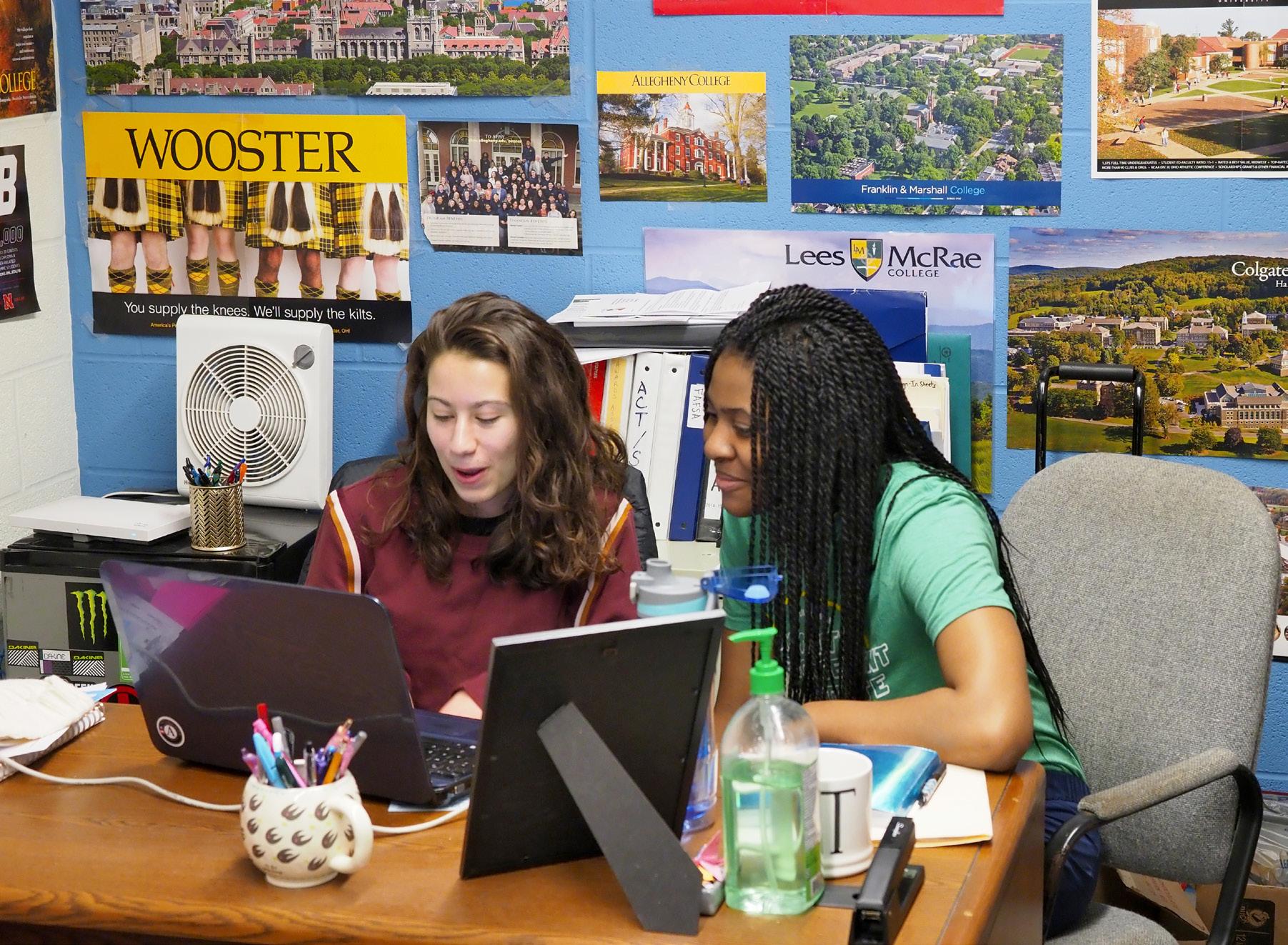
• Staff in the Office of Financial Aid support annual FAFSA workshops at Oberlin High School to support college readiness.
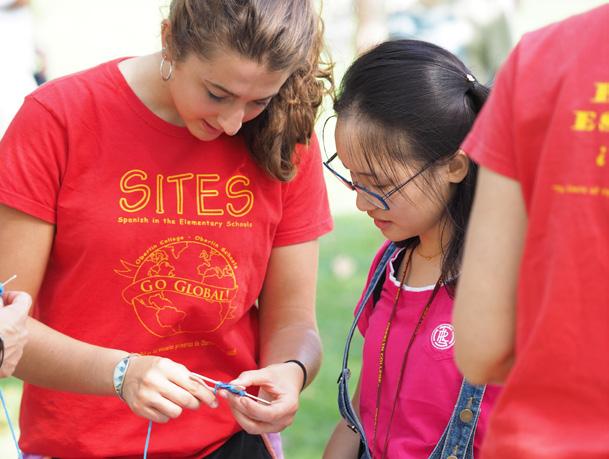
• Through the Spanish in the Elementary Schools (SITES) program, college students teach Spanish to local elementary students, expanding early language learning opportunities.
• Oberlin residents may audit classes at the college (with a professor’s permission).
• ExCo is a student-run program offering courses open to students, high schoolers, and community members on topics ranging from American Sign Language and climate justice to rock climbing and folk music.
More than 50 college and conservatory courses each year integrate community-based learning and research.
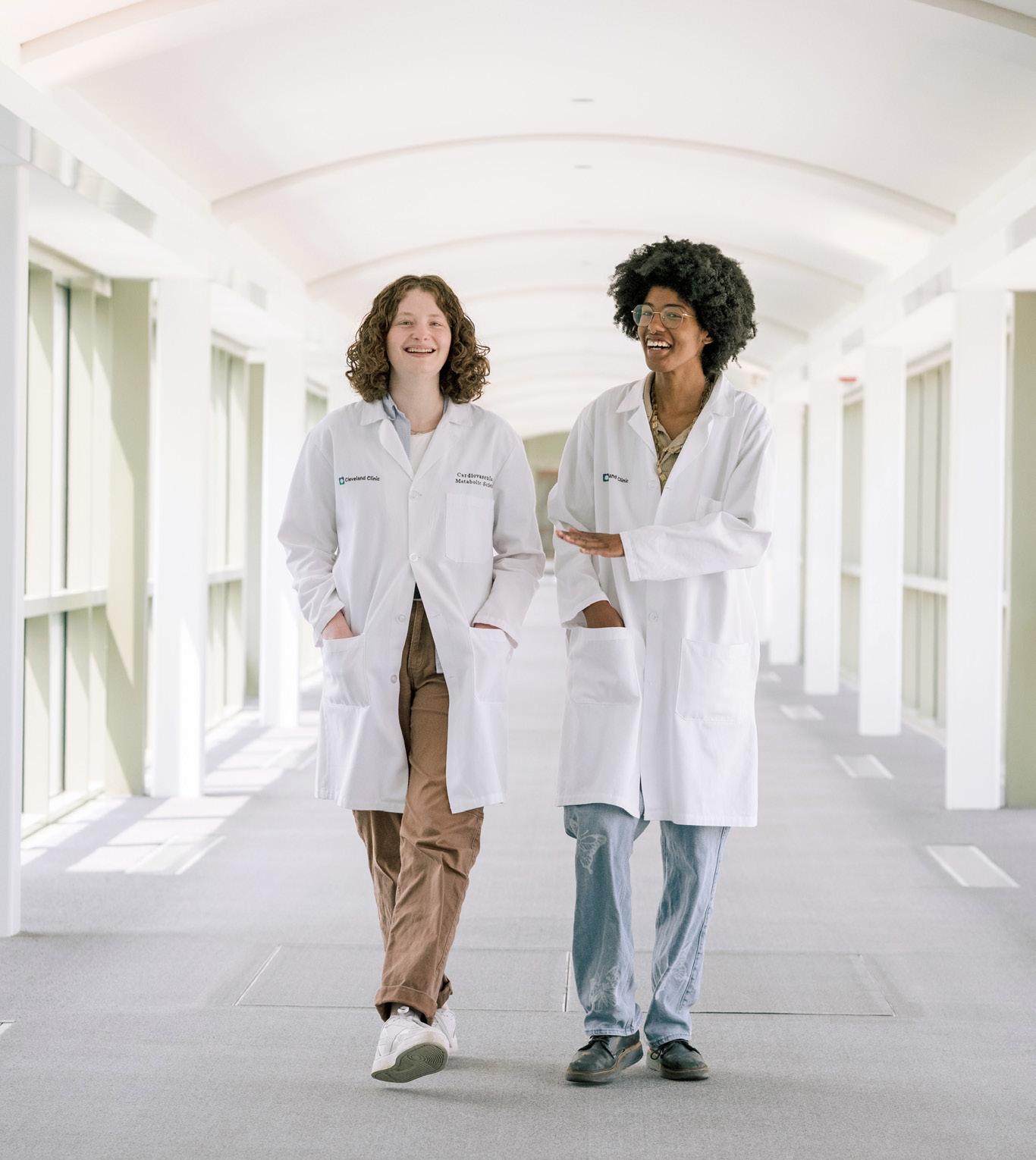
Jessie Goldberg and Dee Pegues (above left) conducted undergraduate research at Oberlin. Now the two 2024 graduates work at Cleveland Clinic, investigating glioblastoma, the most common and aggressive form of brain cancer.
An Oberlin student intern is developing a sophisticated data analysis tool to help workforce organizations and adult learners better understand employer needs, training gaps, and pathways into in-demand jobs. This work helps Oberlin address one of Northeast Ohio’s most persistent challenges: attracting, developing, and retaining talent across the region.
A Hub for Music and Culture
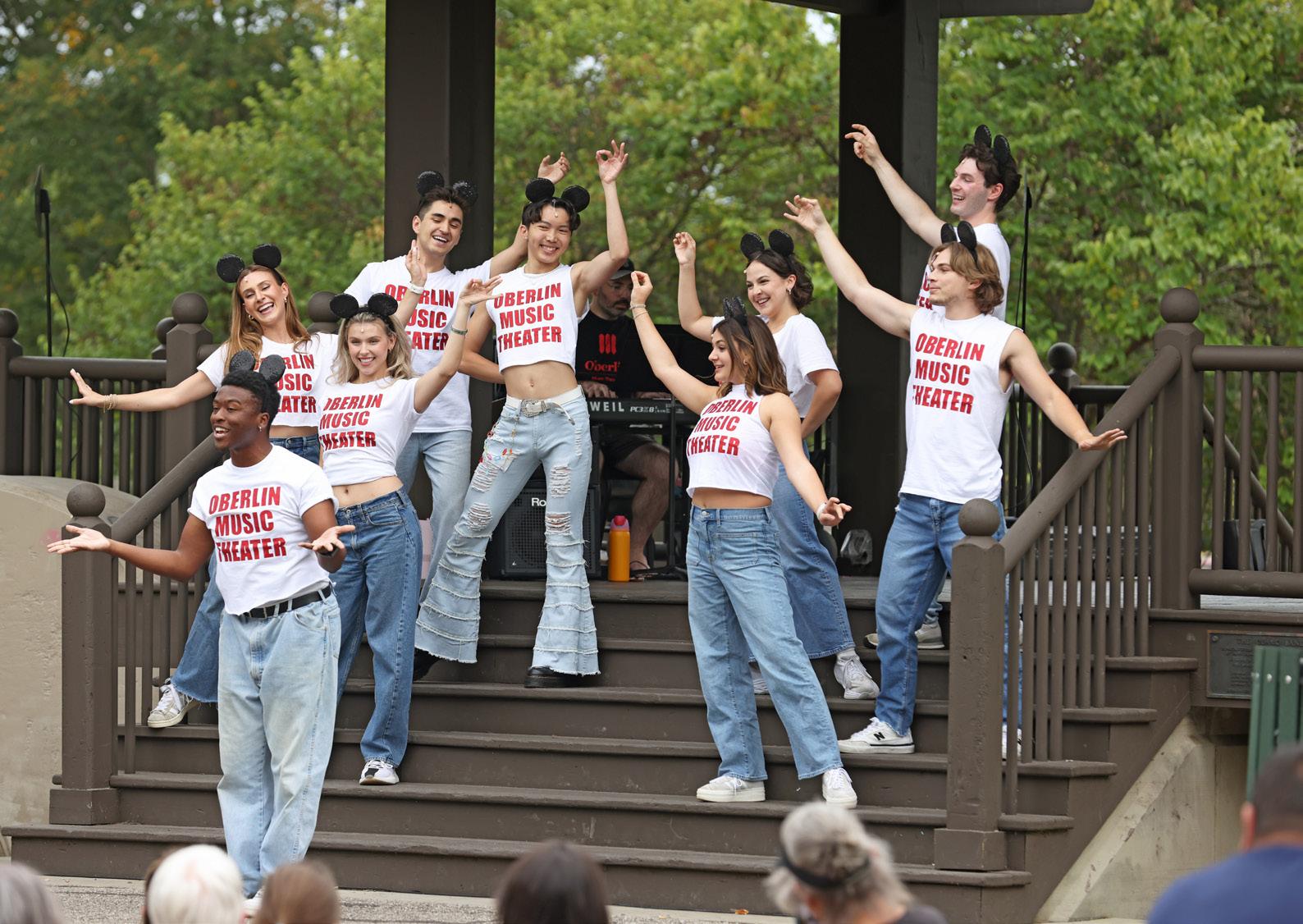
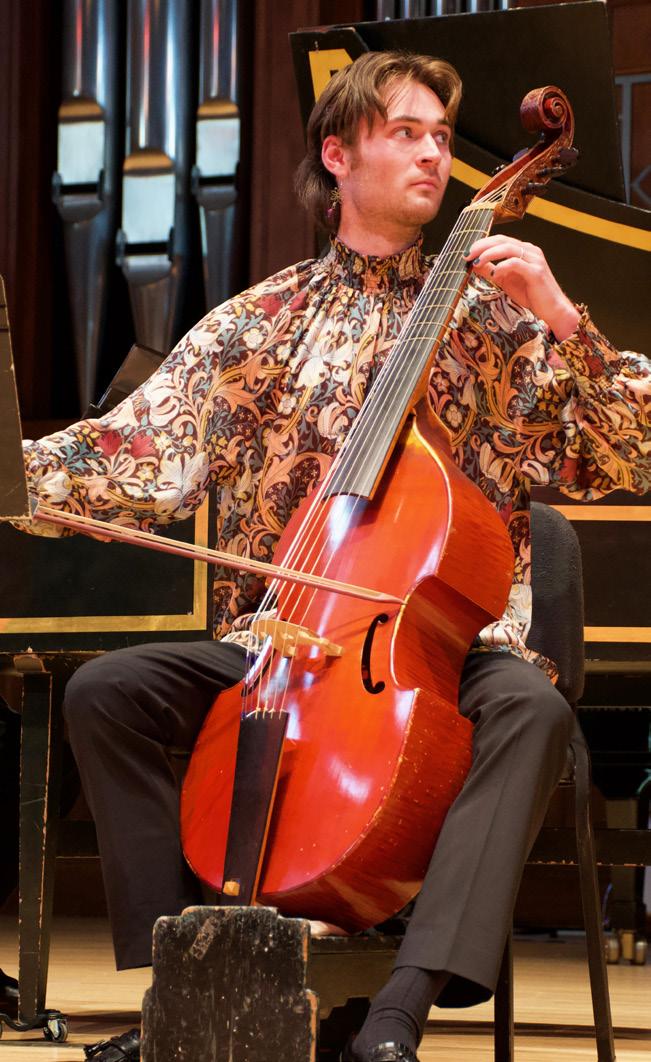
Oberlin’s campus is a vibrant cultural hub, hosting more than 500 performances each year—most free and open to the public.
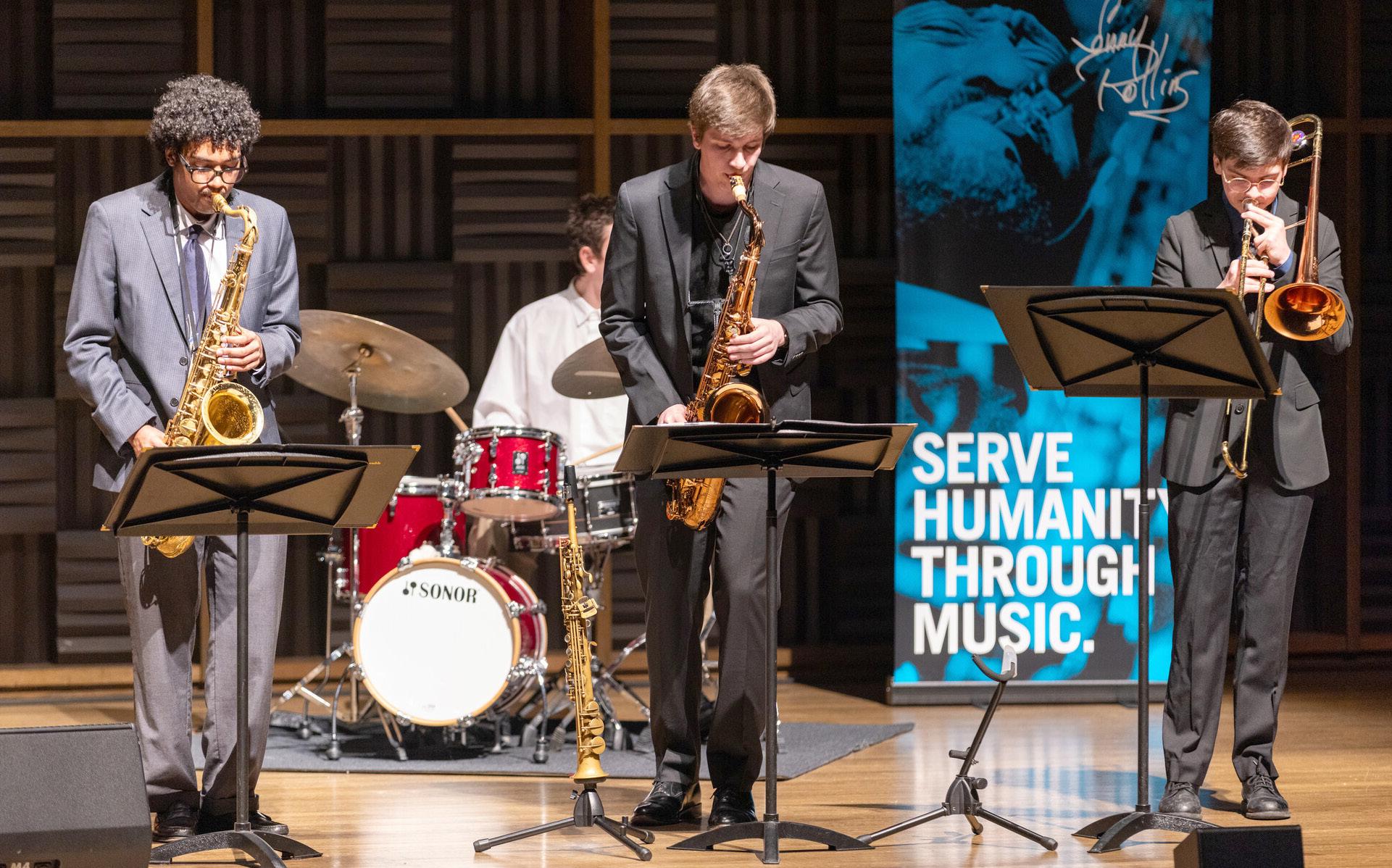
• Founded on a spirit of service, the Sonny Rollins Jazz Ensemble performs and teaches throughout Ohio, with a special focus on Lorain County—working with hospital staff, schoolchildren, Afghan refugee families, and retirement communities.
• Operated by the Conservatory of Music, the Community Music School serves about 275 students from Lorain and five surrounding counties, offering private lessons for all ages, skill levels, and nearly every instrument and vocal area.
Financial assistance is available for qualifying students.
• Dating to 1837, Oberlin’s 140-voice Musical Union brings together singers from campus and the broader community.
• Each summer, a series of Conservatory Summer Programs offers training and enrichment for high school and college students, educators, accomplished amateurs, and professionals.
• The conservatory’s Pedagogy, Advocacy, and Community Engagement (PACE) Division prepares students for careers in music education through work in the schools and the community.
• The student-run WOBC Radio (91.5 FM and online) features 150+
weekly programs, including 20 hosted by community DJs.
• The Oberlin Review, founded in 1874, is one of the nation’s oldest college newspapers. Produced entirely by students, the weekly paper covers city government, businesses, and issues, serving as a vital link between the college and the community.
• Park Arts is an upcoming arts and education campus being developed on the historic Park Synagogue site in Cleveland Heights. Spearheaded by Sustainable Community Associates, a Cleveland-based team of Oberlin alumni, the project preserves an iconic landmark while creating studios, performance spaces, housing, and public green space.
Local Businesses Owned by Oberlin Alumni
• Rosen-Jones Photography is owned by Tanya RosenJones ’97
• The Slow Train Cafe and The Local Coffee & Tea are owned by Jessa New ’01
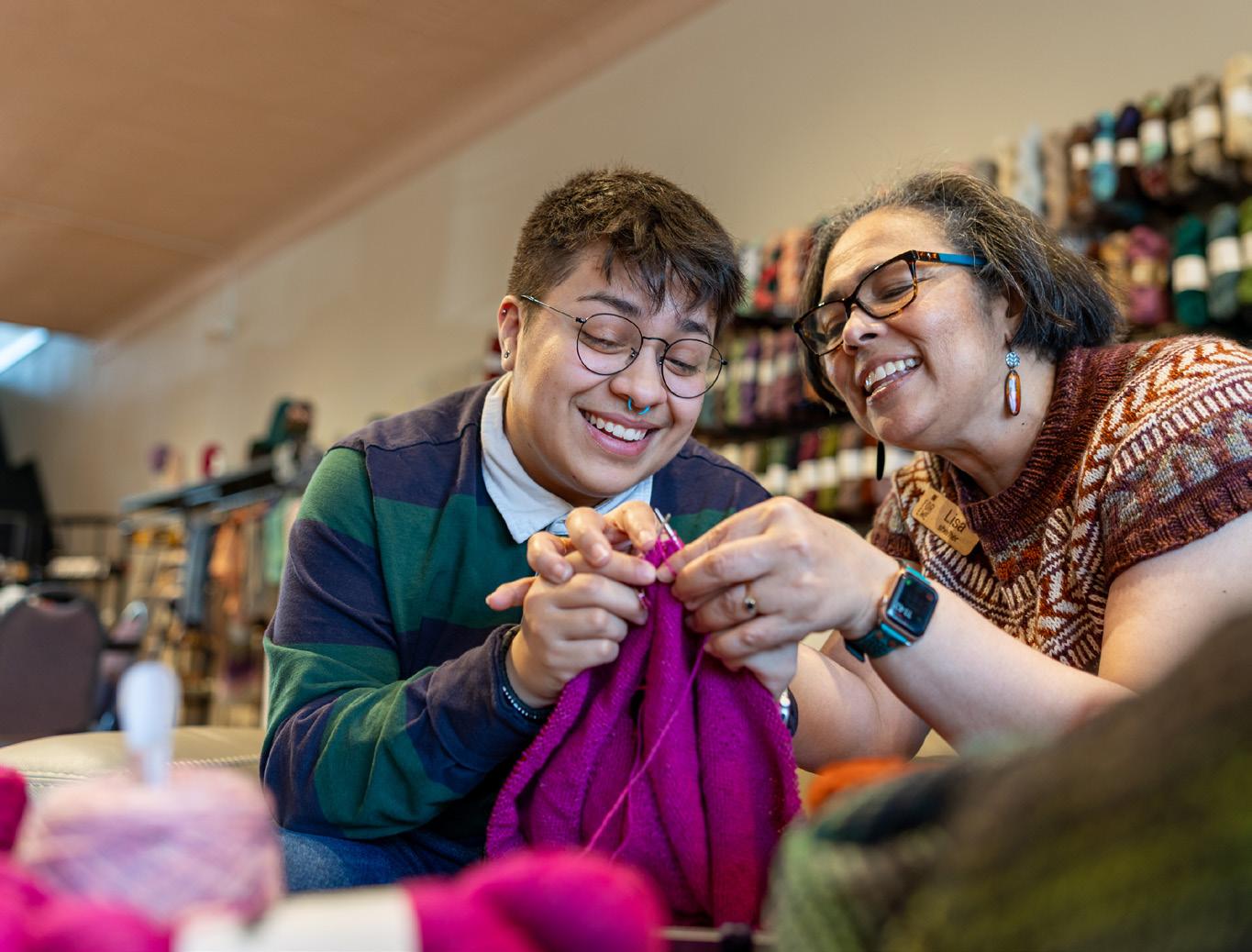
• For Ewe: An Inclusive Fiber Community is owned by Lisa Whitfield ’90
• Haven Brewing is owned by Abbie ’08 and Sam Foster
• Hope Collection is owned by Francesca Barbee ’03
• CoreWater Technologies is owned by Dennis M. Flood ’88
• Black River Wine Shop and Bar is owned by Joe Waltzer ’98
• The East College Street Project, owned and developed by Sustainable Community Associates (SCA), was founded by Naomi Sabel ’02, Ben Ezinga ’01, and Josh Rosen ’01. SCA developed and owns six other mixed-use residential/ commercial properties in Cleveland and is currently developing Park Arts, an arts and education campus in Cleveland Heights, in partnership with the college.
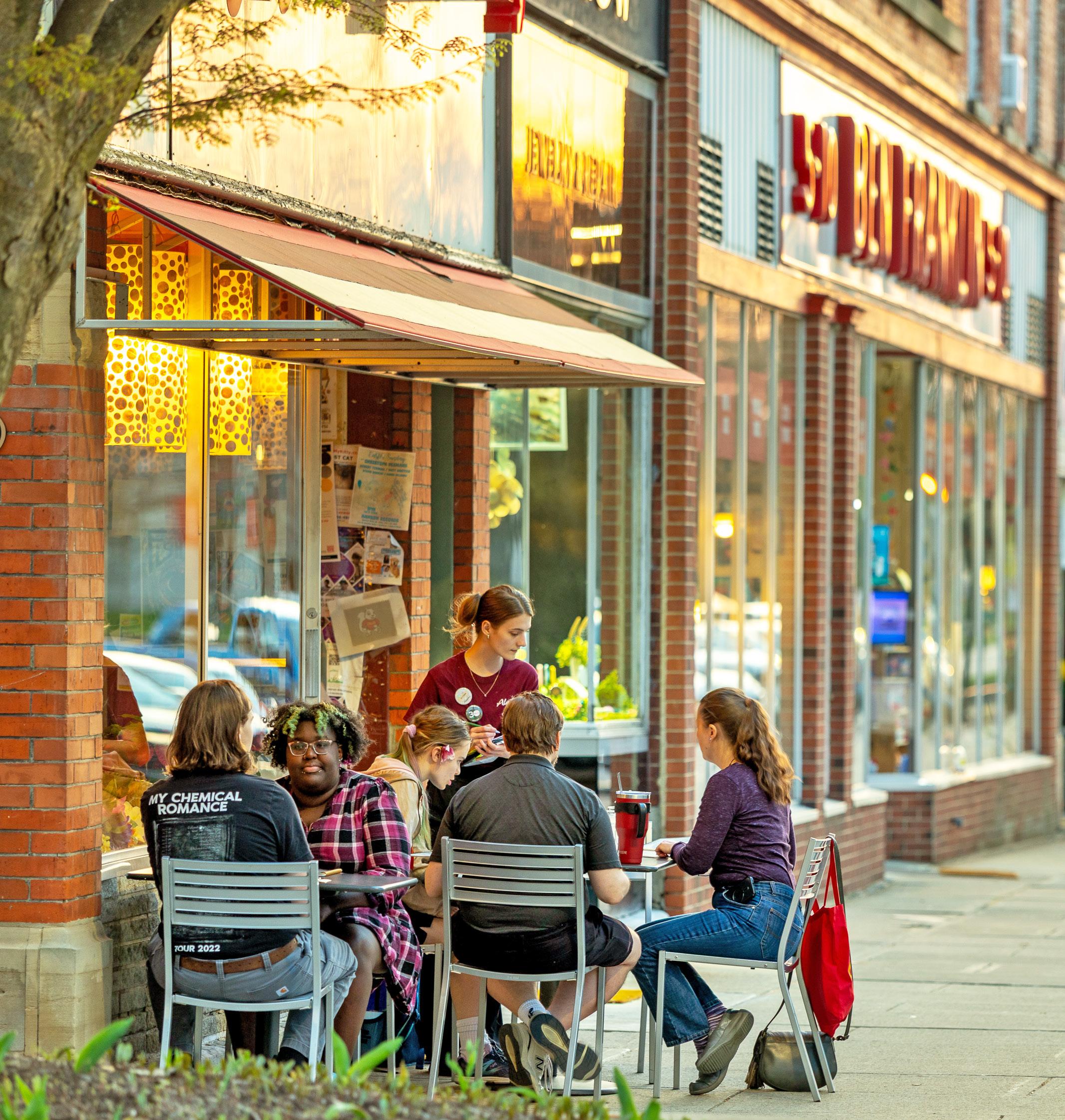
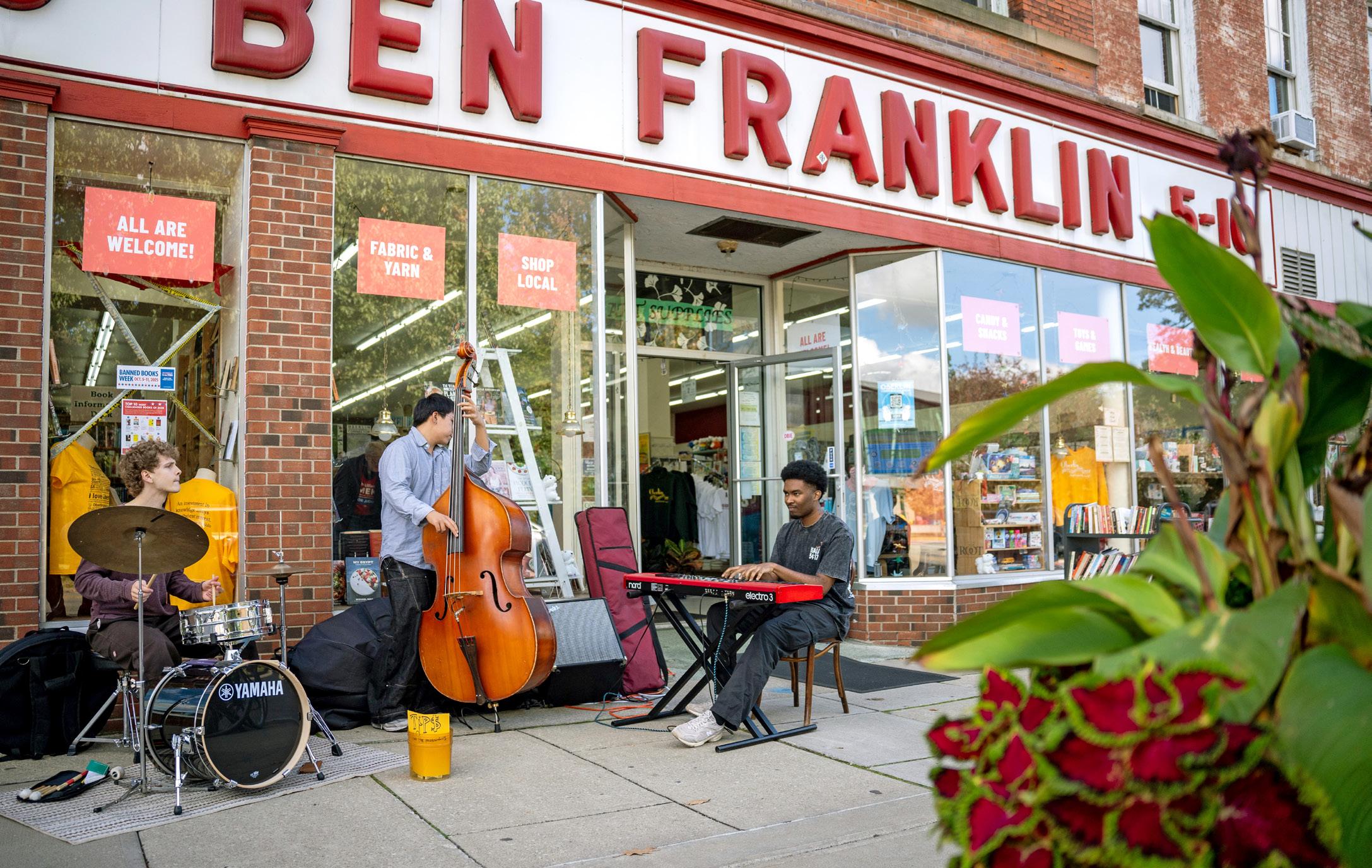
Shop ’til Showtime offers an exclusive discount at select downtown Oberlin businesses for those attending college and conservatory performances or Allen Memorial Art Museum events.
America Reads
America SCORES
American Cancer Society
American Red Cross
Avon Local School District
Beck Center for the Arts
Big Brothers Big Sisters of Lorain County
Bill Long Foundation
Blessing House
CATSS (Community Action to Save Strays)
Cavaliers Community Foundation
Circle Health Services
City Fresh (George Jones Farm)
City of Oberlin
City Year
Cleveland Book Bank
Cleveland Play House
Cleveland Soccer Group Foundation
Cleveland Votes
Coalition for Oberlin History
Common Ground
Community Foundation of Lorain County
CoreWater Technologies
El Centro de Servicios Sociales, Inc.
Elyria City School District
Elyria Public Library System
Elyria YWCA
Engage! Cleveland
Enlightened Solutions
Family Planning Services of Lorain County
FAVA (Firelands Association for the Visual Arts)
Firelands Local School District
Firelands Montessori Academy
FireFish Arts
Greater Cleveland Partnership / Cleveland Talent Alliance
Greater Cleveland Sports Commission
Great Lakes Theater
Habitat for Humanity of Greater Cleveland
Healing Companions, Inc.
Hope Collection by INTO
Hospice of the Western Reserve
IntergenConnect!
Indigenous Matters Advocacy Group
Juneteenth Oberlin Inc.
Kendal at Oberlin
Lake Ridge Academy
League of Women Voters of the Oberlin Area
Legal Aid Society of Lorain County
Legion Field Community Garden
Lorain City School District
Lorain County Chamber
Lorain County Community Action Agency
Lorain County Free Clinic
Lorain County General Health District
Lorain County Habitat for Humanity
Lorain County Health & Dentistry
Lorain County Joint Vocational School
Lorain County Metro Parks
Lorain County Public Health
Lorain County Urban League
Lorain County Safe Harbor
Lorain Historical Society
Lorain Public Library Systems
MAD Factory: Music Art Drama
Medwish Medworks
Mercy Foundation of Lorain County
Midview Local School District
Nord Center Sexual Assault Services
Northeast Ohio Regional Sewer District
Northern Ohio Youth Orchestra
Norwalk City Schools
Oasis Animal Shelter
Oberlin Arts and Culture Walk
Oberlin Baseball Softball Federation
Oberlin Business Partnership
Oberlin Center for the Arts
Oberlin Choristers
Oberlin City School District
Oberlin Community Services
Oberlin Community Supporting Immigrants
Oberlin Food Hub
Oberlin Free Store for Kids
Oberlin Heritage Center
Oberlin Kids Community Collaborative
Oberlin Public Library
Oberlin Weekday Community Meals
Old Woman Creek National Estuarine Research Reserve
One Lorain County
ORMACO (Ohio Regional Music, Arts and Cultural Outreach)
Our F.A.M.I.L.Y. (Fathers and Mothers Involved in Local Youth)
Peace Community Church
Peace Corps
Play Gap
POWER (Providing Oberlin with Efficiency Responsibly)
Rec2Connect
Save Our Children
Second Harvest Food Bank
Seeds of Literacy
Solidarity Urban Farms
SITES (Spanish in the Elementary Schools)
THRIVE! Southern Lorain County
Vermilion Family YMCA
Welcome Nursing Home
Wellington Exempted Village School District
Western Reserve Land Conservancy
Firelands Field Office
Westwood Cemetery
Writers in Residence
ZENworks Yoga
Zion Community Development
PHOTOGRAPHY BY KALI BATEMAN ’26, ALAINA BATTLE, MIKE CRUPI, ABE FRATO ’26, DON GREGORY, HANNAH GREGORY, BOB HANDLEMAN, MATTHEW LESTER, DALE PRESTON ’83, TANYA ROSEN-JONES ’97, LUCHO RUBIO ’26, JOHN SEYFRIED, SCOTT SHAW, MELISSA SILVA, ALEX VIANCOURT