Organ Donation New Zealand Annual Activity Report 2025
Annual Activity Report 2025
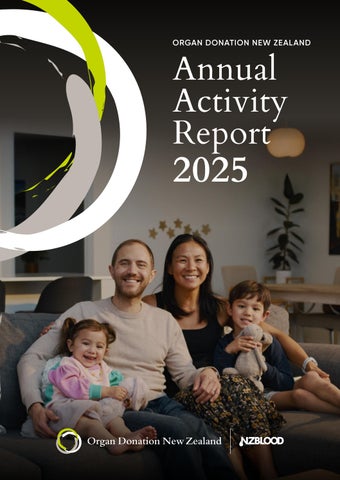
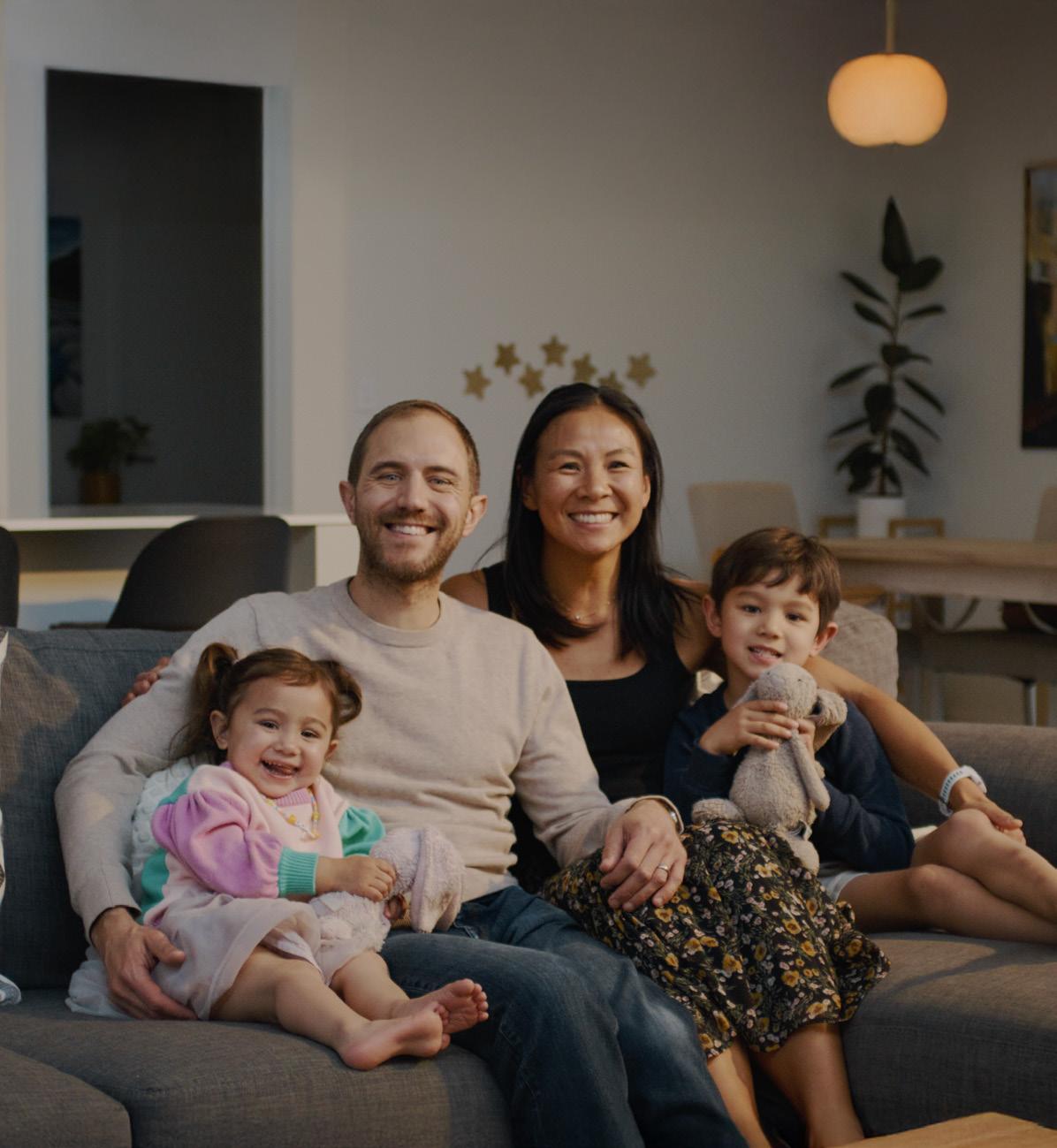
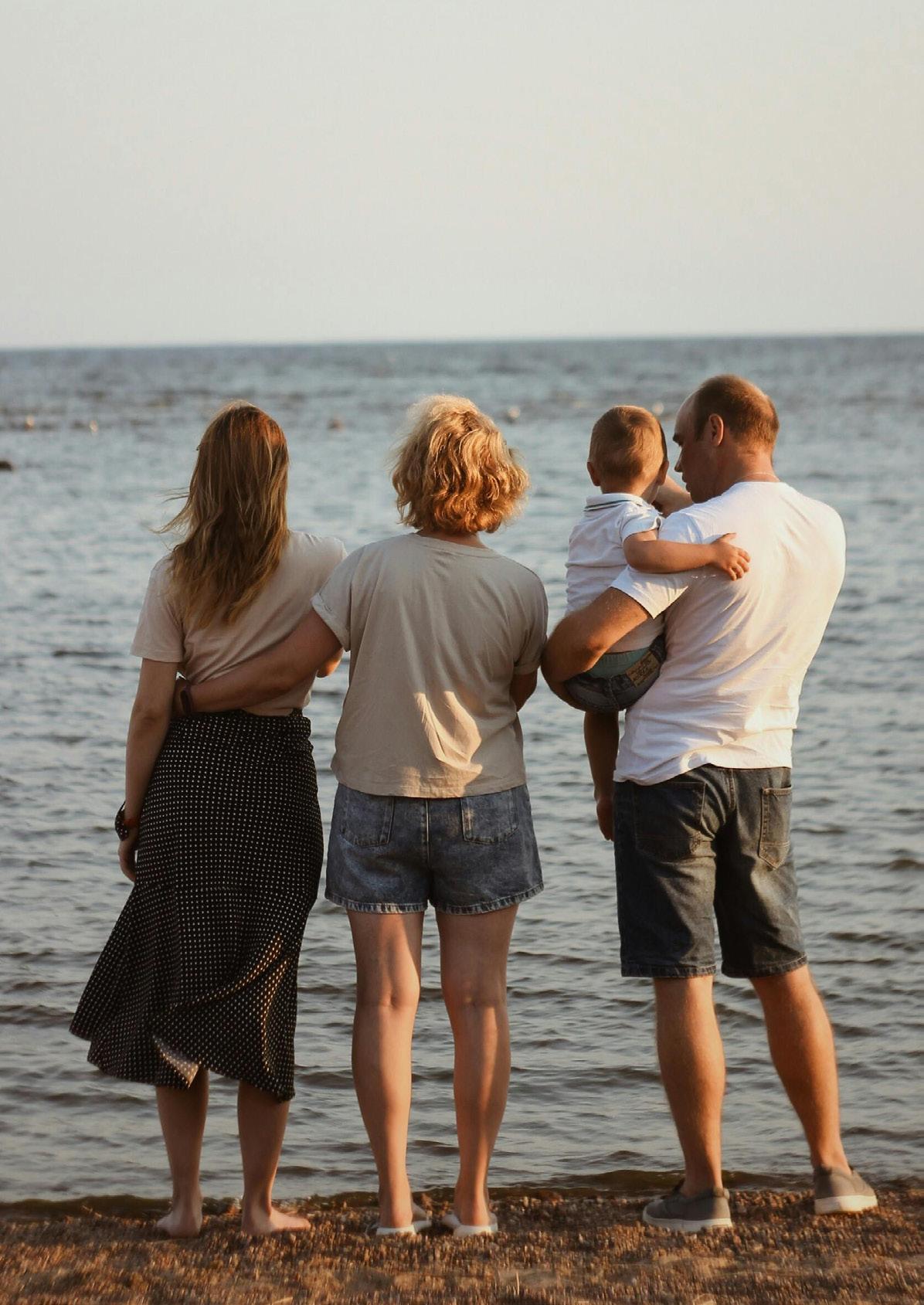
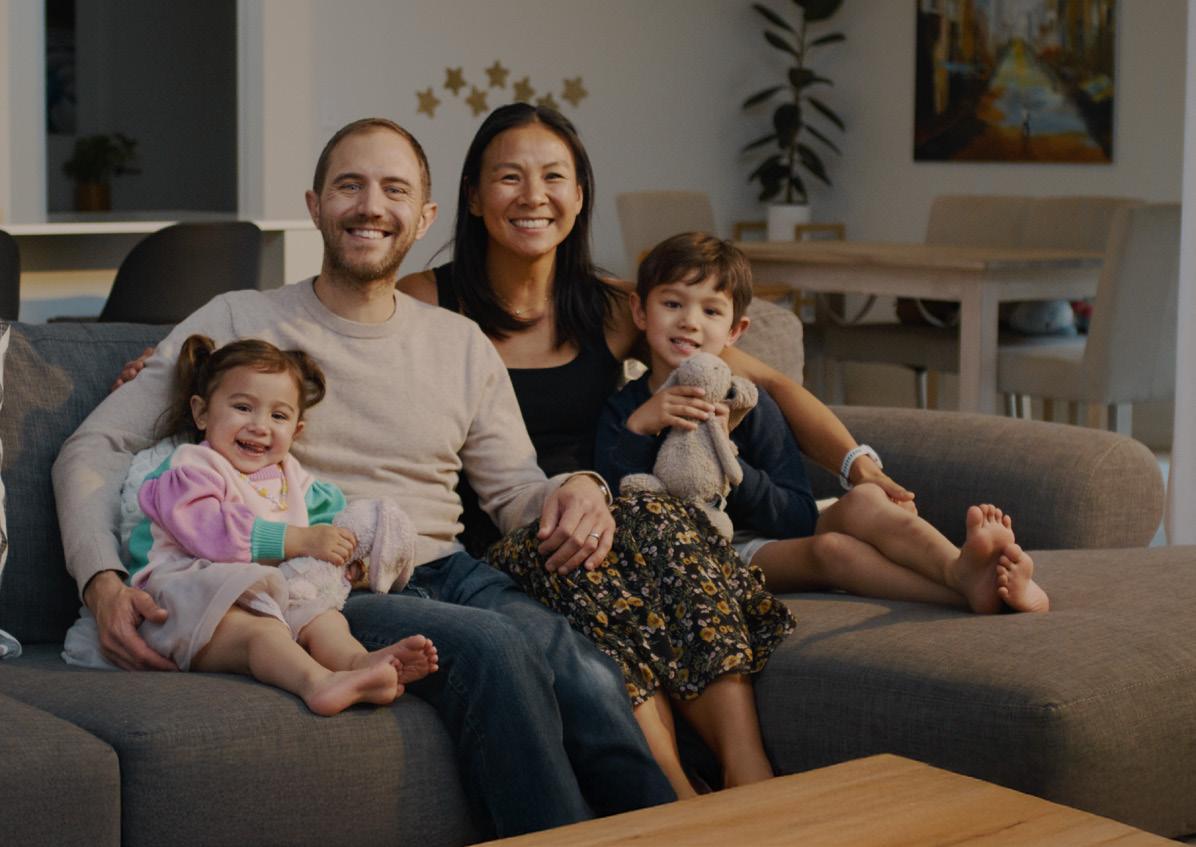
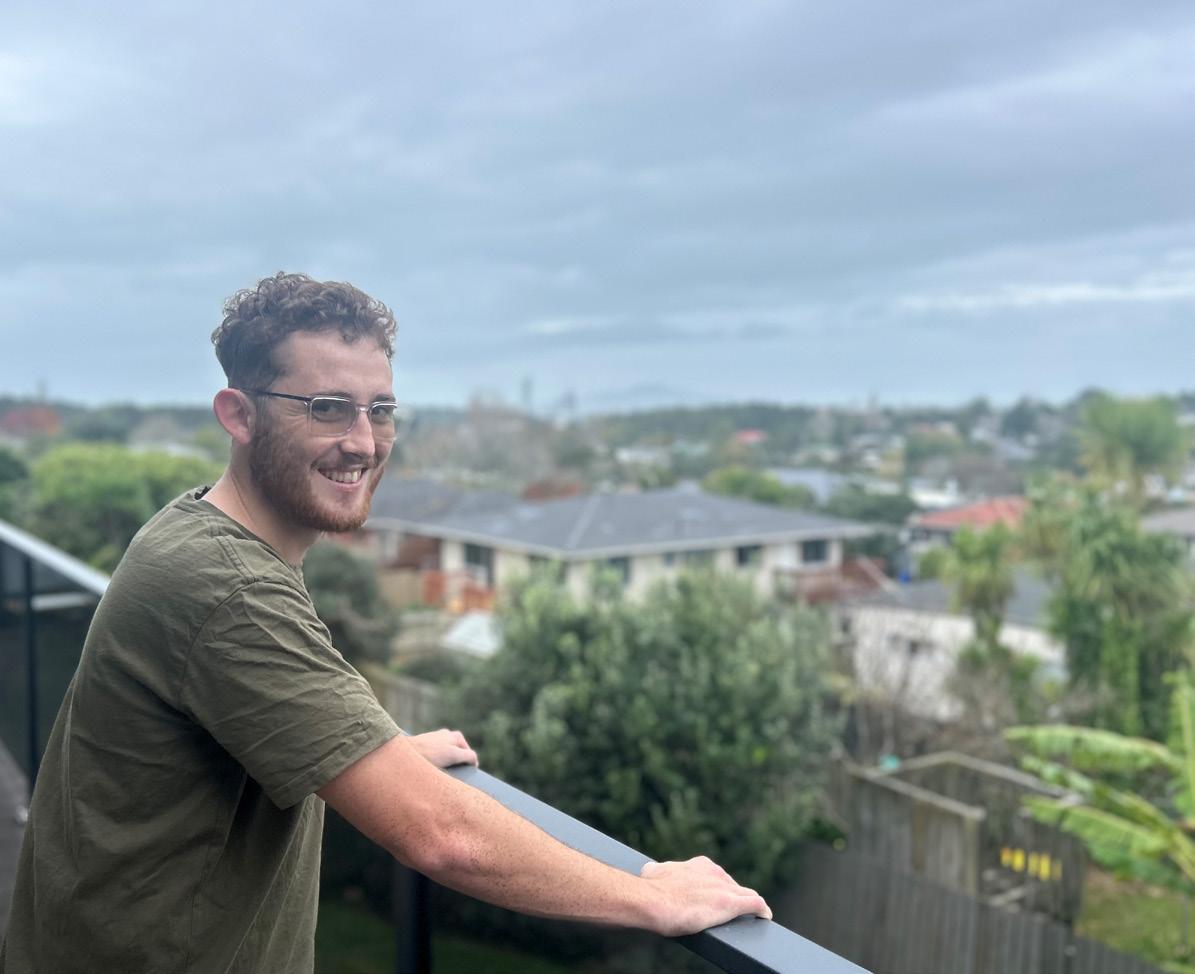
COVER IMAGE: Liver transplant recipient Sophie, with her parents and brother Lucas. Read their story on page 29.
ANNUAL ACTIVITY REPORT 2025
Organ Donation New Zealand (ODNZ) operates under the guardianship of New Zealand Blood Service. As a Crown entity, we formally acknowledge tangata whenua as the people of the land, and the mana of the founding agreement between Māori and the Crown, Te Tiriti o Waitangi. We acknowledge the important landmarks of this land. Thus, our acknowledgement to you all.
Ko tēnei taku mihi ki ngā tāngata whenua o motu.
Ka mihi hoki ki ngā tohu o te rohe nei. Nō reira, tēnā koutou katoa.
Organ Donation New Zealand celebrates the concept of Mātauranga Māori, the traditional way of being and engaging in the world. We align with the Māori tradition of takoha, as an expression of manaakitanga and aroha. We believe in embracing this tikanga, through which we unlock a world of meaningful connections and whanaungatanga. It is a tradition that beckons us to reflect on the ways in which we contribute to the wellbeing of our communities.
Ka huri te kei o te waka ki te pae tawhiti
Kia hoe ngātahi ki te pae tata
Ki te whai ao, ki te ao mārama.
The waka turns towards the distant horizon
Let us make headway and paddle as one Through the glimmer of dawn to the break of day.
About this report
This report outlines Organ Donation New Zealand’s 2025 activities across organ and tissue donation and transplantation in Aotearoa New Zealand.
It is intended to be a valuable source of information for health professionals as well as for the general public.
We gratefully acknowledge New Zealand’s transplant units and tissue banks for providing data included in this report.
Published June 2026
Organ Donation New Zealand PO Box 99431
Newmarket Auckland 1149
Email: contactus@donor.co.nz
Phone: 0800 4 DONOR (0800 436 667)
Organ and tissue donation referrals (24 hour): 09 630 0935
The year in review
During 2025, Organ Donation New Zealand (ODNZ) facilitated almost 300 lifesaving and life-changing organ and tissue donations across the motu, while simultaneously establishing new systems, delivering education to the healthcare sector, growing our team’s capability, and progressing our Towards 2030 strategic plan.
None of this year’s progress would have been possible without the passion and dedication of our team. We gratefully acknowledge their tireless professionalism, skill, and compassion in facilitating donations and working to propel ODNZ’s strategy forward for the benefit of all New Zealanders.
DONATIONS
We also acknowledge, with profound gratitude, the generosity of donors and their whānau. Their decisions to donate, at times of immense personal loss, delivered hope and life to others.
This year in Aotearoa New Zealand, 60 people, with the support of their families, donated organs. Of these, 45 were donations following brain death and 15 following circulatory death.
This enabled 190 organs to be donated, offering lifesaving transplants to recipients and far-reaching benefits to communities across the motu.
There were a further 57 tissue-only donors, who helped improve the lives of many more.
While total donor numbers were slightly lower than the last year, donation rates in Aotearoa New Zealand have remained relatively consistent during the past decade. We remain steadfast in our goal to increase donation rates by ensuring every potential opportunity for donation is recognised and supported.
CLINICAL EXCELLENCE
As part of our focus on clinical excellence, we this year established a new incident reporting system. In the rare event of an unexpected or unexplained occurrence during the donation process, this system enables immediate notification and review to better support future learning and improvement.
The ethical framework for Donation After Assisted Dying was also completed, following two years of extensive collaboration. We engaged with Tikanga Māori advisors and individuals with experience of disability, who added invaluable perspectives to this process.
And, recognising that donation is always a collective effort, we continued to strengthen relationships across the health sector, and across borders, too.
In collaboration with the Abdominal Transplant Team, we have this year worked on a protocol for Normothermic Regional Perfusion (NRP) which we hope to implement in late 2026.
This surgical technique, used during donation surgery, helps to protect the quality and viability of donated abdominal organs and improves transplant outcomes, particularly for liver recipients.
Plus, in an example of trans-Tasman collaboration, our Australian colleagues have this year shared OrganMatch with us— an electronic platform designed to streamline and improve the pathway from organ donation through to transplantation and ongoing recipient care. This will optimise how we facilitate reciprocal trans-Tasman allocations of donated organs in urgent cases. It will support faster, more effective decision-making, and potentially increase access to organs for those facing imminent need.
DONATION CONVERSATIONS
Every act of organ and tissue donation begins with a conversation and this year’s Thank You Day again provided a powerful platform for showcasing recipients’ real-life stories via media.
For the first time, we extended the campaign into a dedicated online space for members of the public to share their own messages of thanks. Alongside a coordinated social media programme, this helped double the reach of our donation conversation messaging online.
We also recognise the critical contributions of clinical staff working across our donation hospitals, who walk alongside whānau during their most difficult moments, and help ensure every donation decision is honoured with dignity and respect.
To best support them in this role, we embarked on a refresh of our Family Donation Conversation Workshop in 2025. Designed to train and guide health professionals who communicate with whānau being offered the option of organ and tissue donation, this initiative continues to draw on the successful work and ongoing generosity of the Australian Organ and Tissue Authority and DonateLife agencies.
EDUCATION AND EVENTS
Education and knowledge-sharing remained central to our work in 2025.
We expanded the reach of our second annual ODNZ Symposium by hosting a broader range of healthcare professionals and welcoming recipient and donor whānau speakers, who provided personal perspectives that resonated deeply with attendees.
Donor whānau, recipients, and health professionals who work in donation or transplantation were also welcomed to one of several annual Thanksgiving Services held across the country.
The decision to make these deeply emotional events more inclusive by transitioning to secular venues and introducing online options was met with positive feedback and will continue in 2026.
Our education team also advanced their review of ODNZ resources, as we move towards more digital and innovative education platforms. This included launching a new, monthly, Community of Practice series for Link Team staff. This virtual forum provides education updates, donor statistics, case reviews and opportunities for shared learning.
Our Donor Coordinators also held multiple education days for wider intensive care unit and operating theatre teams across Aotearoa, providing frontline staff with the tools and knowledge to identify and facilitate organ donation opportunities.
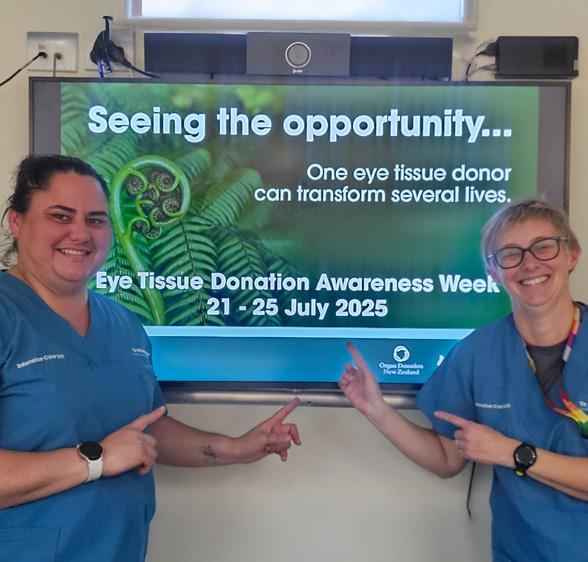
This year also marked the first Eye Tissue Donation Awareness Week for our health sector stakeholders, aimed at further raising awareness of tissue donation opportunities.
PEOPLE AND CAPABILITY
In 2025, we continued to strengthen core roles and workflows, and build capability aligned to our strategy.
The new tissue donor coordinator role at Health New Zealand’s Te Toka Tumai Auckland Hospital has been established by the ophthalmology team, and a further donor coordinator will be recruited to bolster the team’s capacity in 2026.
As part of our commitment to Te Tiriti o Waitangi, a Māori advisory working group was also established this year, bringing together ODNZ and external stakeholders and marking an important step in the organisation’s cultural capability journey.
We also wish to acknowledge the governance of New Zealand Blood Service Te Ratonga Toto o Aotearoa, whose continued support and leadership has been integral to our progress and success in 2025.
STRENGTHENING SELF-SUFFICIENCY IN TISSUE SUPPLY
We have embarked on Phase 1 of our Skin Improvement Project this year to enhance the quality and usability of locally sourced skin allografts. The project is delivering key changes, including expanding collection to include skin from the donor’s back—which significantly increases the available graft size— and introducing pre-meshed grafts at a 2:1 ratio to reduce surgical preparation time.
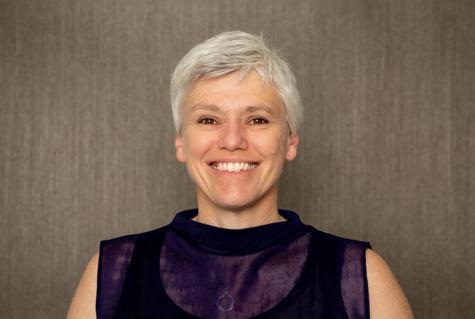
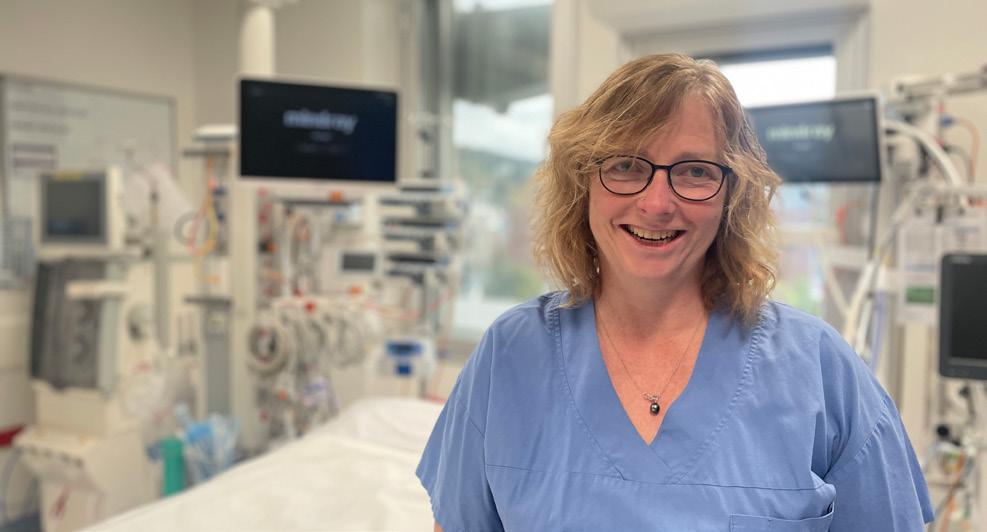
Sue Garland Donor Coordinator, Team Leader
Standardised sizing and trimming will also be adopted to ensure consistency and to meet clinical requirements. These changes aim to reduce reliance on imported skin, improve surgical outcomes, and strengthen New Zealand’s self-sufficiency in tissue supply.
TOWARDS 2030 — OUR STRATEGIC PLAN
During 2025 we have made significant progress on our Towards 2030 strategic plan. This builds on the Ministry of Health’s 2017 document Increasing Deceased Organ Donation and Transplantation: A National Strategy and sets out a pragmatic and actionable framework for improving deceased organ donation rates in Aotearoa New Zealand.
Informed by extensive engagement across the health sector and drawing on insights from partners in Australia and the United Kingdom, the finalised strategy will outline both aspirational goals and practical steps to be delivered over the next five years.
Underpinning this work was an increased investment in the analysis and presentation of data related to organ and tissue donation in Aotearoa New Zealand. This included exploring how data can be used to identify ways of improving donation rates and outcomes, as well as how it can help people from all walks of life to better understand the donation process.
We look forward to releasing the strategy in 2026 and to progressing the strategy’s Phase One activity, which is already in train.
LOOKING AHEAD
In 2026, our priorities will include implementing Normothermic Regional Perfusion, rolling out activities to help deliver our strategy, strengthening donor coordination capacity, and continuing vital collaboration across the wider healthcare sector.
A comprehensive website upgrade and new donor conversation resources will be integral to supporting greater public engagement with donation in the year ahead.
Above all, we remain committed to providing a respectful and compassionate organ and tissue donation service, where every opportunity for donation is recognised, and supported.
We thank all donors, whānau, clinicians, partners, and colleagues who continue to walk alongside us in this important and impactful work.
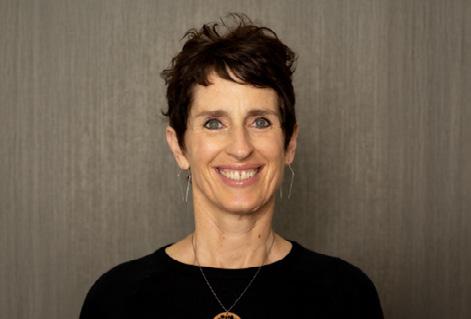
Jo Ritchie Medical Specialist, Clinical Director
a
60 293 -14.3% -18.2% DECEASED ORGAN DONORS *
ORGAN AND TISSUE DONATIONS FROM DECEASED DONORS FROM 2024
*Two of these donors were individuals who participated in New Zealand’s Assisted Dying Programme. Our ability to honour the wishes of donors in this circumstance is the culmination of extensive consultation, research, and preparation to develop a national Assisted Dying Donation programme. We thank everyone who contributed to this work.
DONATED THIS YEAR
KIDNEYS LIVERS FROM 2024 106 42 HEART VALVE TISSUE 20
12 HEARTS
24 LUNGS
6 PANCREAS
83 EYE TISSUE
THINKING ABOUT BEING A DONOR?
Thinking about whether you would want to be a donor, or not, and having a conversation with your family and whānau, will mean that in the event of your death, they will know what to do.
To learn more about organ donation, and how to have that conversation, visit the ODNZ website: www.donor.co.nz
About Organ Donation New Zealand
Organ Donation New Zealand (ODNZ) is the national service for deceased organ and tissue donation.
Managed by New Zealand Blood Service (NZBS) and co-located with NZBS at its national offices in Auckland, ODNZ facilitates organ and tissue donation from deceased donors.
A team of compassionate and skilled ODNZ donor coordinators provide information and ongoing support for families who have generously agreed to organ and tissue donation. The team also works closely with health professionals in donor hospitals.
Together, this collaboration ensures processes for deceased donation are nationally consistent and of the highest medical, ethical, and legal standards.
Our Purpose
We are committed to providing a respectful and compassionate organ and tissue donation service that enables lifechanging transplantation.
ODNZ’S GUIDING PRINCIPLES
Every opportunity for deceased organ donation should be recognised by ICU staff and every whānau should have donation discussed with them, compassionately and respectfully, by a skilled and knowledgeable health care professional. Donation should be discussed with all whānau, regardless of whether the word ‘donor’ is on their family member’s driver licence.
The process of organ donation adheres to clinical best practice, ethical standards, and the law (the Human Tissue Act 2008 requires consent before organs or tissue may be removed from a deceased person for transplantation).
The whānau’s decision about donation should always be respected. The opportunity for donation results from unfortunate and challenging circumstances, and a family’s decision to grant permission for donation is voluntary.
Our skilled team of health professionals work with compassion and respect to empower people with the appropriate knowledge and support. This work is guided by the following values:
KIA TAU KI TE TIHI STRIVING FOR EXCELLENCE
TE MAHI NGĀTAHI TEAMWORK
TE PONO ME TE TIKA INTEGRITY AND RESPECT
TE WHAKAWHITIWHITI WHAKAARO I RUNGA I TE MĀHARAHARA OPEN COMMUNICATION
TE HAUMARU HOKI TE KATOA SAFETY FOR ALL
Karakia whakanoa
Whakawatea to noa i a koe, whakawatea te hau i runga i a koe, whakawatea te taurekareka i a koe.
Ko te mumu te awha, tēnei ka ngahoro.
Ka ngahoro te hau otaota i runga i a koe
Ko Tiki i ahau mai i Hawaiki
Ko te mauri tēnā i kawea ai
Te tokomauri o te tapu, tapu nui, tapu whakahirahira, he mauri no Rongo ki te whai-ao Tihei mauri-ora. To kōiwi ka ngaoro
Ka noa nga hau i runga i a koe.
This karakia was gifted to Organ Donation New Zealand in 2025 by Dame Naida Glavish (Ngāti Whātua) to support all those involved in organ and tissue donation.
It is primarily intended for whānau who are grieving a loss, but also for patients suffering severe illness or undergoing surgery. Our team shares this karakia with patients, whānau, and colleagues as appropriate.
A blessing for those in grief or ill health
Clear away the heavy spirit from you,
Clear away the dense air which surrounds you,
Be freed from the state of feeling bound.
The storm rages now, but time will ensure its easing.
The same wind blows over and clears away the immaterial, leaving only what is precious.
You are of Tiki, human, formed in Hawaiki, the cradle of life.
That life-force gifted to you is sacred,
A great gift, of immeasurable worth.
It is a life-force from Rongo, the spirit of peace and growth, leading us to the dawn.
Breathe living spirit! Feel the resonance of life in your bones.
The wind blows over you, but you will remain.
What is organ and tissue donation?
When someone in Aotearoa New Zealand dies, their organs and tissues can potentially be donated. Donation involves removing organs and tissues from a donor after they have died so they can be transplanted into someone who, in many cases, is very ill or dying (a recipient). These transplants are life-changing and, in many cases, lifesaving. Tissue donation is possible in most circumstances when people die. Organ donation is only possible when a person is on a ventilator in an intensive care unit, usually with devastating brain damage. Fewer than two percent of all deaths happen in this way.
WHY IS ORGAN AND TISSUE DONATION SO IMPORTANT?
Transplantation is impossible without organ and tissue donation. There are hundreds of New Zealanders waiting for lifesaving transplants. Thousands more are living on dialysis, which can be difficult and time-consuming for many (see page 30 story featuring transplant nephrologist, Dr Jafar Ahmed). A single organ and tissue donation can transform the lives of multiple people.
HAVING THE CONVERSATION
It’s important to talk with your whānau and friends about your wishes should you be in a situation where organ or tissue donation after death might be possible. In the event of your death, if donation is possible, they will be asked if you wanted to be a donor. Knowing your wishes makes this much easier. In Aotearoa New Zealand, whānau consent is always sought before donation can proceed—even if you have ‘donor’ on your licence. Nine out of ten families agree to donation when their whānau member has told them they wish to be an organ donor. This number drops to just five in ten when the whānau is unaware.
“A single organ and tissue donation can transform the lives of multiple people. ”
NEW ZEALAND’S POTENTIAL DECEASED ORGAN DONOR POPULATION AND TRANSPLANTATION OUTCOMES 2025
Around 4% of NZ deaths occur in ICU but only 1.3% could be considered for organ donation in 2025.
37,491 deaths in New Zealand from a total population of 5.34 million1
1,466 deaths in ICU2
1,015 deaths on a ventilator2
498 potential organ donors2
In 2025, 498 people died in a way that enabled organ donation to be considered (possible neurological or circulatory death).
In Aotearoa, the whānau is always asked for consent to donate. Requests to families for donation were made in 36.9% of possible cases during 2025, with 38.6% of whānau saying yes.
184 discussed with whānau2
71 formal agreement
60 donors
Of the 71 consented donors, 60 became donors, with 11 unable to due to medical and logistical reasons.
174 recipients3
Note: A potential organ donor is a patient who has died under circumstances where organ donation could have occurred. For potential donation after brain death (DBD), the patient must have severe brain damage, fixed dilated pupils, and no brain stem activity. For potential donation after circulatory death (DCD), the patient must have had treatment withdrawn in a hospital with DCD accreditation and have died within 150 minutes of withdrawal.
Data Sources 1 Stats NZ 2 ICU audit data 3 Australia and New Zealand Organ Donation Registry. For more information, please refer to the Data on organ donation section of this report, page 34.
38.6% OF WHĀNAU SAID YES TO
Towards 2030
Building on the Ministry of Health’s 2017 document, Increasing Deceased Organ Donation and Transplantation: A National Strategy, we have this year made solid progress on developing our strategic plan for improving deceased organ donation rates in Aotearoa New Zealand.
We will release Towards 2030 in 2026. It will act as a five-year roadmap, guiding and prioritising the activity we undertake in partnership with our health sector colleagues, donors and their families and whānau, community stakeholders, and with the wider New Zealand public.
Globally, there is a substantial gap between the number of people waiting for a transplant and the number of donations. Approximately 40,000 people die in Aotearoa each year, with fewer than 600 people dying in circumstances that would allow them to become organ donors—just below two percent.
Compared with similar healthcare systems internationally, there are also missed opportunities for donation in Aotearoa New Zealand. Towards 2030 will set out our goals and aspirations for realising these opportunities. More than that, it will detail the pragmatic and actionable steps and measures we believe are necessary to achieve these goals.
It will draw on the lessons learned and generously shared by the global community of agencies working to deliver effective donation programmes for their respective countries. In particular, we have worked closely this year with the Organ and Tissue Authority (OTA) in Australia and NHS Blood and Transplant (NHSBT) in the United Kingdom.
We know that improving donation rates in New Zealand will require a multi-pronged approach, one that weaves together multiple elements, including: public knowledge, open dialogue with loved ones about donation, the ability for people to register their donation wishes, a consistent practice of recognising and referring all potential donors at end-of-life, and best practice care.
We have also invested more time and resource this year in analysing organ and tissue donation data and have used this to help identify ways of improving donation rates and outcomes.
Giving full effect to the plan will take resource and funding, but we are confident delivering to the strategy will not only provide New Zealanders with more equitable access to transplantation but will also reduce long-term demands on the health system, and society.
We look forward to sharing Towards 2030 in the coming year.
ODNZ our people
DONOR COORDINATORS
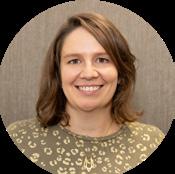
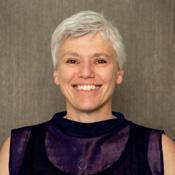
Organ Donation New Zealand’s donor coordinator team comprises Sue Garland (Team Lead), Annette Flanagan (Deputy Team Lead), Lisa Craig, Sharon Skinner, Owen Chesbrough, Leigh Travers, Rosie Stewart, Jen Calius, Sam Hansen, and Sophie Southgate.
A skilled group of nurse specialists, they provide a 24-hour consultation, advice, and support service for health professionals involved in organ and tissue donation. They coordinate organ and tissue donations throughout the country for transplant services and tissue banks in both Aotearoa New Zealand and Australia. The team also provides an extensive education programme, which includes workshops, study days, and education sessions for health professionals at hospitals throughout New Zealand, as well as for medical students and the public.
COMMUNICATIONS
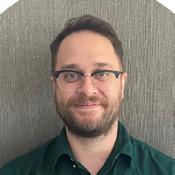
Oliver Carle is ODNZ’s senior communications advisor. His role includes the ongoing development of our communications and marketing strategy, as well as day-to-day activities such as media relations, internal reporting, print and digital content creation, and managing our social media channels.
ADMINISTRATION
Edward Dundon-Smith is ODNZ’s medical secretary. He supports the team by streamlining internal processes, and coordinating reports, event management, and travel.
Sue Garland Team Lead Owen Chesbrough
Sam Hansen
Annette Flanagan Deputy Team Lead
Leigh Travers Sophie Southgate
Lisa Craig Rosie Stewart
Sharon Skinner
Jen Calius
Edward Dundon-Smith
Oliver Carle
MEDICAL SPECIALISTS
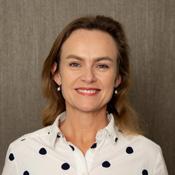
Organ Donation New Zealand’s medical specialists, who are also intensive care specialists, provide 24-hour support and advice on all aspects of the donation process for the donor coordinators and health professionals. Jo Ritchie (Clinical Director), Laura Bainbridge, Jonathan Casement, Kim Grayson, Tobias Merz, Debra Chalmers, Laura Tincknell, and Alex Kazemi are employed part time as ODNZ medical specialists. Myles Smith assisted with on-call in 2025.
DATA INTELLIGENCE
Jonah Duncan joined the team in March as our Data Intelligence Specialist. His role underpins our ability to make informed, timely, and equitable decisions through data management, analysis, and reporting. He leads the ongoing development of our data systems, ensuring information is accurate, accessible, and meaningful for our team and beyond.
Laura Tincknell Jonah Duncan
Tobias Merz
Jo Ritchie Clinical Director
Laura Bainbridge
Debra Chalmers
Jonathan Casement
Alex Kazemi Kim Grayson Myles Smith
Life as a donation ICU link nurse
Across New Zealand’s 24 intensive care units, Link Nurses are the local organ and tissue donation experts and vital points of liaison. With skill and compassion, they connect hospital colleagues, Organ Donation New Zealand, patients, and families. Among this unique community of health professionals are Kirsta-Lee Harris and Roseanne Clark. Here, they share their experiences of being Link Nurses in hospitals at opposite ends of the motu.
For years, Kirsta-Lee Harris was the sole Link Nurse at Whangārei Hospital. She was the one and only person who specialised in guiding families through the possibility of organ donation.
If Kirsta-Lee wasn’t on shift, the task of navigating the urgent and sensitive matters associated with organ donation fell to whoever else was available: a shift coordinator, a bedside nurse—people already working at capacity.
Sometimes these were people who, despite their best efforts and intentions, had little experience or confidence navigating these hard conversations.
“It wasn’t ideal. It wasn’t fair to anyone. But it was our reality, and we did the best we could,” she says.
But recently, a second Link Nurse has joined Kirsta-Lee, helping ease the pressure and share the burden of often unseen work: coordinating across ICU, theatres and ODNZ; assessing and testing; navigating shifting timelines as complications arise; working with ODNZ, the donor family, and ICU colleagues on flight plans—and rescheduling them as needed; the lengthy but essential paperwork.
Meanwhile, much further south, the work is just as intense, but the load is shared differently.
Dunedin Hospital has a team of four Link Nurses— resourcing that enables division of labour, the ability to take or hand over work, and to rest when needed.
There, says Roseanne Clark, when a new case emerges, there is far more likely to be a dedicated and specially trained person to give it their full attention.
“We’re incredibly lucky,” she says, acknowledging her peers in Whangārei. “Not everyone has what we have.”
For both Roseanne and Kirsta-Lee however, many things remain the same.
For both, the realities of a donation case can stretch across days, sometimes a whole week. It starts quietly with a conversation no family ever expects to have. A Link Nurse will stay close by, not necessarily to ask questions or give advice, often just to be a comforting presence.
Kirsta-Lee talks about how modern life leaves families with little room to breathe as it is. Work, travel, rent, expenses, social obligations. Even at times of tremendous loss, life continues to make demands of us.
Even at times of tremendous loss, life continues to make demands of us.
“Grief condensed,” she calls it.
Sometimes, a case is quick; 48 hours from start to finish, a family resolute and certain, every step falling neatly into place. More often though, the hours creep and the physical and emotional toll can build.
Despite the challenges, many Link Nurses like Roseanne and Kirsta-Lee feel more supported than ever. Educational offerings around organ donation have vastly improved, boosting both clinical confidence and patient outcomes.
Despite the challenges, many Link Nurses like Roseanne and Kirsta-Lee feel more supported than ever.
Newer technology and tools like Messenger groups have become lifelines. Older staff are finding more opportunities to impart their institutional wisdom. Younger doctors are bringing infectious new energy and a willingness to help.
There is a growing struggle, but also tremendous progress.
For that to continue, the people at the heart of the process—people like Kirsta-Lee and Roseanne—need more time, more training opportunities, more system stability, and more colleagues in roles like theirs.
With this kind of infrastructure in place, Link Nurses will be able to do so much more than facilitate donations. They will be able to optimise their time, uphold the dignity and mana due to donors and their whānau, and help transform terrible loss into lifesaving possibility.
Above all, they will be empowered to ensure New Zealanders have consistent, equitable and compassionate access to organ donation services across Aotearoa.
Above all, they will be empowered to ensure New Zealanders have consistent, equitable, and compassionate access to organ donation services across Aotearoa.
Roseanne Clark is one in a team of four Link nurses who perform skilled and compassionate work at Dunedin Hospital.
Whangārei Hospital Link Nurse Kirsta-Lee has recently been joined by a second Link Nurse, helping to spread the workload.
ODNZ education and events
WHAT WE DELIVERED IN 2025
Every year, Organ Donation New Zealand delivers events and education to a diverse group of stakeholders in settings such as hospitals, hospices, and universities. The sessions’ objectives can range from raising awareness and understanding of organ and tissue donation in New Zealand, to supporting frontline health professionals working in environments such as intensive care units.
CORE FAMILY DONOR CONVERSATION ( c FDC) WORKSHOP
This two-day, interactive workshop is designed for ICU staff who engage with families and navigate challenging donation discussions. It is designed to teach best practice for discussing organ donation at a time of enormous grief and loss, with emphasis placed on how to support families through the donation process.
GENERAL STUDY DAY
Held at hospitals around Aotearoa New Zealand, the General Study Day is designed to offer health professionals an insight into organ and tissue donation and transplantation, address common myths and misconceptions, and share donor whānau and recipient stories.
NEW ZEALAND DONATION AWARENESS COURSE (NZDAC)
This course provides information about donation for those who may be involved at any stage of the donation process in Aotearoa New Zealand. It raises awareness about what is possible and who benefits from donation and is essential for anyone who has conversations with potential donor families. It is designed to complement the Family Donor Conversation workshops by ensuring those discussing donation have a good understanding of the entire process.
PRACTICAL FAMILY DONOR CONVERSATION ( p FDC) WORKSHOP
This one-day workshop expands on the skills learnt at the cFDC (see left) and provides specialist knowledge to guide conversations with families and whānau about donation. Attendees participate in challenging scenarios, followed by a thorough debrief.
ADVANCED STUDY DAY
These workshops are designed to grow ICU nurses’ awareness of patients who could potentially donate and to support their understanding of the donation process. It clarifies the roles of health professionals involved in donation and helps to develop the knowledge and skills required to support effective donation conversations with families and colleagues.
COMMUNITY OF PRACTICE
Our Community of Practice forum is a monthly online hui to share knowledge on donation practices, experiences, and resources within the ODNZ and wider Link teams.
ONLINE LINK SYMPOSIUM
This is an annual, one-day virtual education opportunity for ODNZ Link teams, providing a platform to discuss the latest in organ and tissue donation and transplantation in Aotearoa New Zealand.
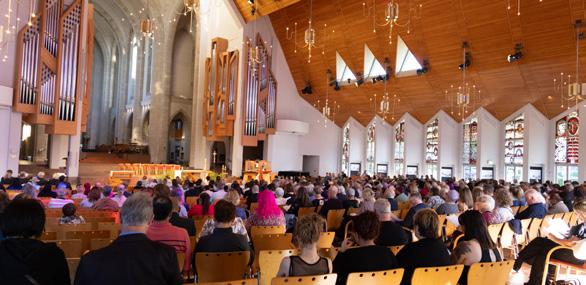
THANKSGIVING SERVICES
In May we held our annual Thanksgiving events. In Auckland, we hosted the event at the Holy Trinity Cathedral in Auckland’s Parnell. In Christchurch, the event was held in the Great Hall at The Arts Centre Te Matatiki Toi Ora. These special events bring together organ donor families and whānau, transplant recipients and their families and whānau, and health professionals involved in donation and transplantation. It is a time to give thanks to the organ donors whose generous koha changed others’ lives. The service comprises a candle-lighting ceremony, music, and special reflections shared by some of those present.
ORGAN DONATION NEW ZEALAND SYMPOSIUM
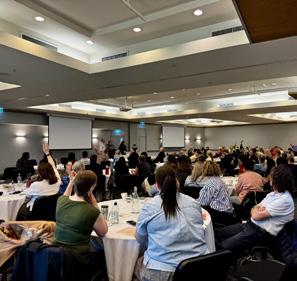
Our two-day symposium brings together our donation Link teams from across the country, providing a platform for networking and collaborative discussions on collected data. For the first time in 2025, we extended invitations to other healthcare professionals working in donation and transplantation and were pleased to host a total of around 140 attendees.
EYE TISSUE DONATION AWARENESS WEEK
This year we held our inaugural Eye Tissue Donation Awareness Week; a new, ODNZ-coordinated initiative for which the theme was “Seeing the opportunity”.
The week aimed to grow understanding of eye tissue donation’s impact, with one donation having the power to improve multiple people’s lives.
We created digital and print resources for Link team members and Health New Zealand | Te Whatu Ora, which were shared over the week.
Our associated ‘Facts and myths’ social media content also performed well over the week, proving to be some of our most popular posts to date.
Auckland’s Thanksgiving Service was held at the Holy Trinity Cathedral.
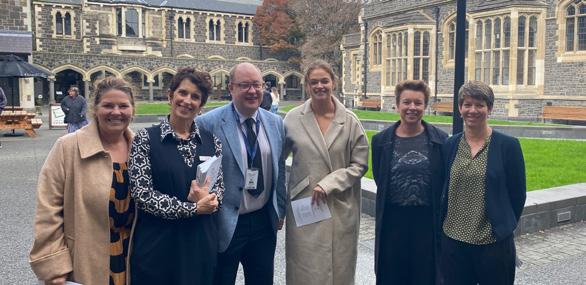
Assembled for the Christchurch Thanksgiving Service are (L-R) Jen Calius, Sue Garland, Dr Thomas Evans, Rosie Stewart, Sharon Skinner, and Lisa Craig.
2025 calendar of activities
A SUMMARY OF THE SESSIONS AND EVENTS WE DELIVERED AND ATTENDED IN 2025
MARCH
ODNZ Overview Presentation
4th & 6th March
Nelson Hospital
Abdominal Transplant Study Day
6th March
Auckland City Hospital
ODNZ Tissue Presentation
13th March
Retirement village
Core Family Donor Conversation Workshop (cFDC) and practical workshop (pFDC)
11th, 12th, 13th March
Novotel Ellerslie, Auckland
Link Symposium 20th March
Online
Renal Transplant Coordinator Study Day
21st March
Auckland City Hospital
Cardiac Transplant Study Day
26th March
Auckland City Hospital
General Study Day
27th March
Middlemore Hospital
APRIL
ODNZ Community of Practice Forum
1st April Online
NZ Intensive Care Society (NZICS) Conference
9th-11th April
Christchurch
Lung Transplant Study Day
23rd April
Auckland City Hospital
ODNZ overview presentation 30th April
Retirement village MAY
Thanksgiving Service 4th May
Auckland
Organ and Tissue Donation Overview 5th May
University of Auckland
General Study Day 6th May
Christchurch Hospital
ODNZ Community of Practice Forum 6th May Online
The Organ and Tissue Authority (OTA) Donation and Transplantation Conference
14th-16th May
Melbourne, Australia
Core course in bereavement counselling 14th-15th May Sydney, Australia
Thanksgiving Service 18th May
Christchurch
General Study Day 22nd May
Auckland City Hospital
Compassionate Communities Aotearoa Hui 2025
22nd-24th May Whangārei
JUNE
ODNZ Community of Practice Forum 3rd June Online
General Study Day 13th June
Nelson Hospital
Advanced Study Day 19th June
Dunedin Hospital
BUILDING TRANS-TASMAN
CONNECTIONS AND KNOWLEDGE AT OTA EVENT
“ Attending the OTA Donate Life Conference in Melbourne was an incredible opportunity to connect with colleagues from across Australia and beyond. Many of the themes discussed, such as increasing donation and organ utilisation, and exploring emerging pathways and technologies like NRP and ADD, resonated strongly with our priorities here in Aotearoa.
It was a privilege to present alongside my colleague Rosie on the work we’ve been doing to enhance cultural safety in our practice. I particularly valued learning about the collaboration between DonateLife Darwin and local First Nations elders in the Northern Territory, and the complexities surrounding First Nations donation.
The highlight? Building connections with our Australian counterparts and attending the community forum on the final day. Hearing the experiences of donor families and recipients was both moving and inspiring.
– Jen Calius, Donor Coordinator
CORE COURSE IN BEREAVEMENT COUNSELLING - LEARNING HOW TO SUPPORT FAMILIES IN GRIEF
“ Attending this course was both a significant milestone in my role as a Donor Coordinator and a huge privilege. It provided me with valuable insights and practical approaches to supporting families through acute grief, helping me strengthen my communication skills. A key highlight was the opportunity to connect and share experiences with professionals from a variety of fields who also work with grieving families, which enriched my perspective and broadened my understanding.
– Sophie Southgate, Donor Coordinator
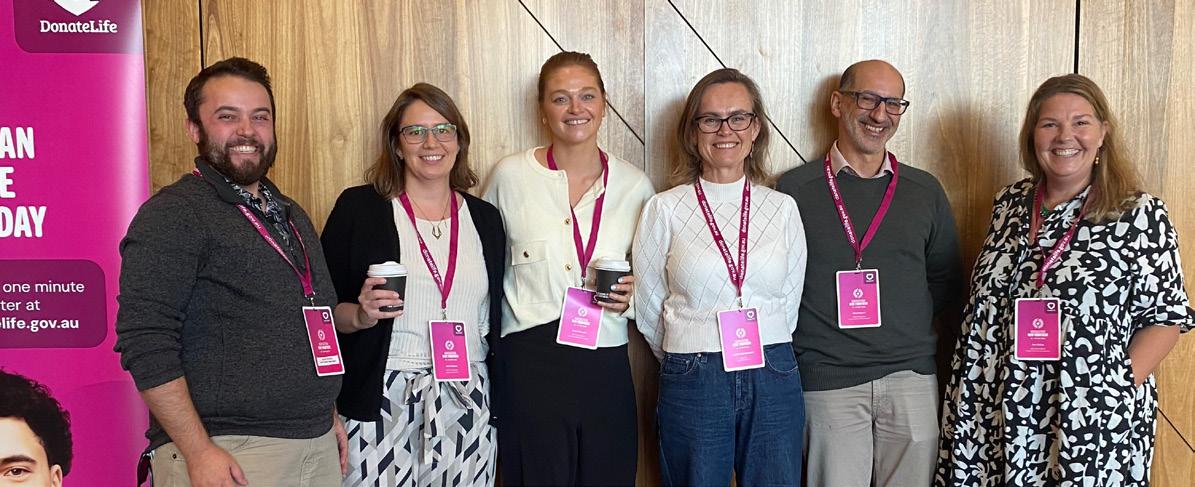
ODNZ Medical Specialist Alex Kazemi at the Organ and Tissue Authority (OTA) Donation and Transplantation Conference in Melbourne, Australia.
ODNZ Donor Coordinator Jen Calius with Queensland Donation Specialist Nurse, Jo Reoch.
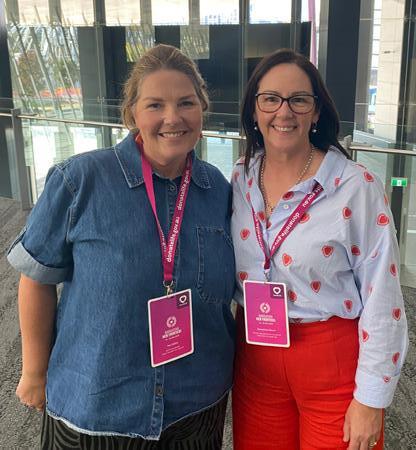
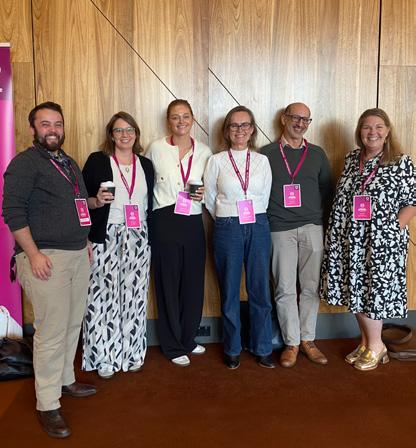
The team at the OTA conference.
JULY
ODNZ Community of Practice Forum
1st July Online
Organ and tissue donation overview—ICU registrar teaching
15th July
Hawkes’ Bay Hospital
General Study Day
16th July
Wellington Hospital
Eye Tissue Donation Awareness Week
21st-25th July
General Study Day
22nd July
Waikato Hospital
ODNZ organ and tissue donation overview— medical teaching
22nd July
Waikato Hospital
ODNZ Organ and tissue donation overview— cardiology teaching session
22nd July
Auckland City Hospital
New Zealand Donation Awareness Course (NZDAC)
23rd July
Auckland, New Zealand Blood Service
AUGUST
ODNZ Community of Practice Forum
5th August Online
ODNZ organ and tissue donation overview—postgraduate teaching session
14th August
University of Auckland
General Study Day
19th August
Rotorua Hospital
Advanced Study Day
27th August
Wellington Hospital
SEPTEMBER
ODNZ Community of Practice Forum
2nd September Online
ODNZ organ and tissue donation overview for Go with Grace
1st September, for Dying Matters week Online
ODNZ organ and tissue donation overview— medical teaching
2nd September
Hawke’s Bay Hospital
General Study Day
4th September
Tauranga Hospital
Tissue donation overview
8th, 10th, 16th September
Auckland City Hospital
Advanced Study Day 11th September
Christchurch Hospital
OCTOBER
Link Nurse Induction Day 8th October
Auckland
ODNZ Symposium 9th-10th October
Auckland
Abdominal Transplant Study Day 16th October
Abdominal Transplant Unit, Auckland City Hospital
ODNZ organ and tissue donation overview—postgraduate teaching session 16th October
University of Auckland
ODNZ organ and tissue donation overview
19th October
Funeral home
ODNZ organ and tissue donation overview—New Zealand Blood Service nursing students
22nd October
Auckland
ODNZ organ and tissue donation overview— medical teaching
28 October
Waikato Hospital
Normothermic Regional Perfusion (NRP) Training
28th-31st October
Edinburgh, Scotland
NRP UPSKILLING HELPS INFORM A NEW NATIONAL PROTOCOL
With New Zealand’s liver and renal transplant services seeking to undertake normothermic regional perfusion (NRP) in the context of DCD donation, ODNZ this year sent two members of its team, Donor Coordinators Owen Chesbrough and Lisa Craig, to the NRP Masterclass in Edinburgh.
Their understanding of the process means they are also now involved in working with these transplant services to write a national NRP protocol.
During the course they gained an understanding of NRP’s value for transplant outcomes, as well as the surgical team’s responsibilities, NRP circuit management, and intra-operative organ function monitoring.
The Edinburgh team was incredibly welcoming and, as well as the donation process, was willing to share their logistical expertise with Owen and Lisa.
Looking ahead, the New Zealand Liver Transplant Unit has invited the Edinburgh team to Auckland in February 2026.
Once here, they will lead a Masterclass with the New Zealand Abdominal Donor Surgical Team’s surgeons, nurses and donor coordinators.
We look forward to welcoming them to Aotearoa New Zealand and being a part of this training.
CONNECTING WITH COMMUNITIES
Jen Calius, Donor Coordinator
In October, we were delighted to be invited, by Te Whatu Ora Māori Nurse Educator Angela Perawiti, to attend a Hauora Hui at Reweti Marae in South Kaipara.
This was an incredible opportunity to engage with the local community, share information, and answer questions about deceased donation in an accessible and familiar environment for whānau.
We had the pleasure of chatting, and making connections, with members of the local community, and with health professionals working across Māori, community, and public health.
It was fantastic to speak with whānau outside the context of an acute bereavement in the ICU setting and we received a lot of supportive and interested comments from those we chatted with.
We were subsequently invited to attend a community hauora day in Massey, where we made further connections with health groups working with Māori and Pasifika communities.
We look forward to continuing to be involved in public health awareness events where we can talk about the option of donation, and field questions.
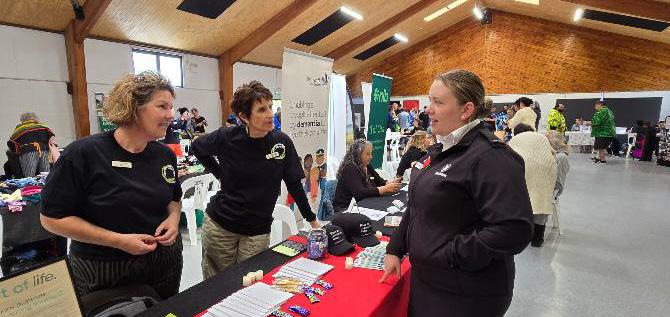
Donor Coordinator Jen Calius (left) and Donor Coordinator Team Lead Sue Garland (middle) at the Hauora Hui held at Reweti Marae.
Cardiac Transplant study day
29th October
Auckland City Hospital
Advanced Study Day
29th October
Auckland City Hospital
Community health initiative
31st October
Reweti Marae, Auckland
NOVEMBER
ODNZ Community of Practice Forum
4th November Online
ODNZ organ and tissue donation overview—senior nurses’ update
10th November
Auckland City Hospital
New Zealand Donation Awareness Course (NZDAC)
11th November
Auckland, New Zealand Blood Service
General Study Day
11th November
Hawke’s Bay Hospital
ODNZ overview presentation
18th November
Retirement village
Thankyou Day
21st November
Waikato Hospital
Community health initiative
22nd November
Massey Community Health Hub
Department of Critical Care Medicine (DCCM)
Champions Study Day
25th November
Auckland City Hospital
Lung Transplant Study Day
26th November
Auckland City Hospital
Advanced Study Day
27th November
Middlemore Hospital
DECEMBER
ODNZ Community of Practice Forum
2nd December Online International Society for Organ Donation Professionals (ISODP) Conference
3rd-6th December
Kyoto, Japan
ODNZ organ and tissue donation overview— medical teaching
9 December
Hawke’s Bay Hospital
ISODP: A GLOBAL VIEW OF DONATION AND TRANSPLANTATION
The International Society for Organ Donation Professionals (ISODP) Conference brought together organ donation professionals from multiple countries to share innovations and best practices. The programme included keynote sessions on ethics, artificial intelligence (AI) in transplantation, and workshops on donor and family support. Seven members of the ODNZ team attended the conference.
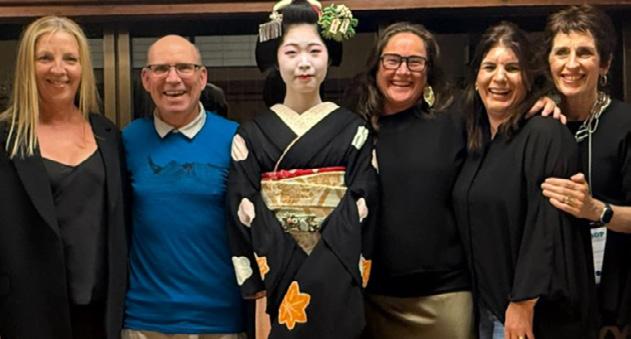
Pictured with a geiko while attending the ISODP Conference in Japan are (L-R) Leigh Travers, Jonathan Casement, Kim Grayson, Annette Flanagan, and Sue Garland.
PRESENTING NEW ZEALAND’S MAHI AT ISODP
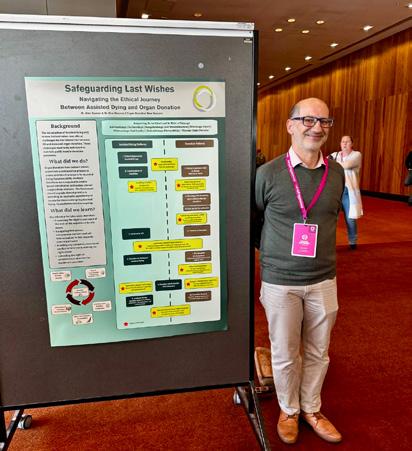
“ Presenting at this event was a milestone experience for me, both personally and professionally. It marked my first international in-person presentation and my first poster presentation—both focused on Assisted Dying and Donation (ADD)—and it was affirming to connect with international colleagues working in this space.
Hearing their perspectives and seeing what other countries are doing with ADD confirmed we are on the right track, and the alignment across jurisdictions was clear; we are all grappling with similar challenges and opportunities, and it is fulfilling and inspiring being part of this global community of practice.
Sharing how Aotearoa is giving effect to Te Tiriti o Waitangi in building this pathway sparked significant interest. This unique aspect of New Zealand’s approach—embedding te Tiriti principles from the beginning — resonated with international colleagues and sparked conversations about cultural safety and equity in organ donation services.
PUTTING AN INTERNATIONAL SPOTLIGHT ON TE AO MĀORI
A highlight was hearing Professor Tess Moeke-Maxwell present her research on Māori end-of-life experiences with assisted dying, and her emerging work on Māori and organ donation. This segued beautifully into Sue Garland’s and Leigh Travers’ presentation on supporting a Māori whānau through the organ donation process and the work we’re embarking on to ensure a culturally safe and appropriate service for tangata whenua.
Being in Japan and learning about organ donation across so many countries with different cultural, religious, and socioeconomic contexts was enriching and reinforced why our approach in Aotearoa—centred on Te Tiriti, cultural safety, and equity—is essential.
– Kim Grayson, Medical Specialist
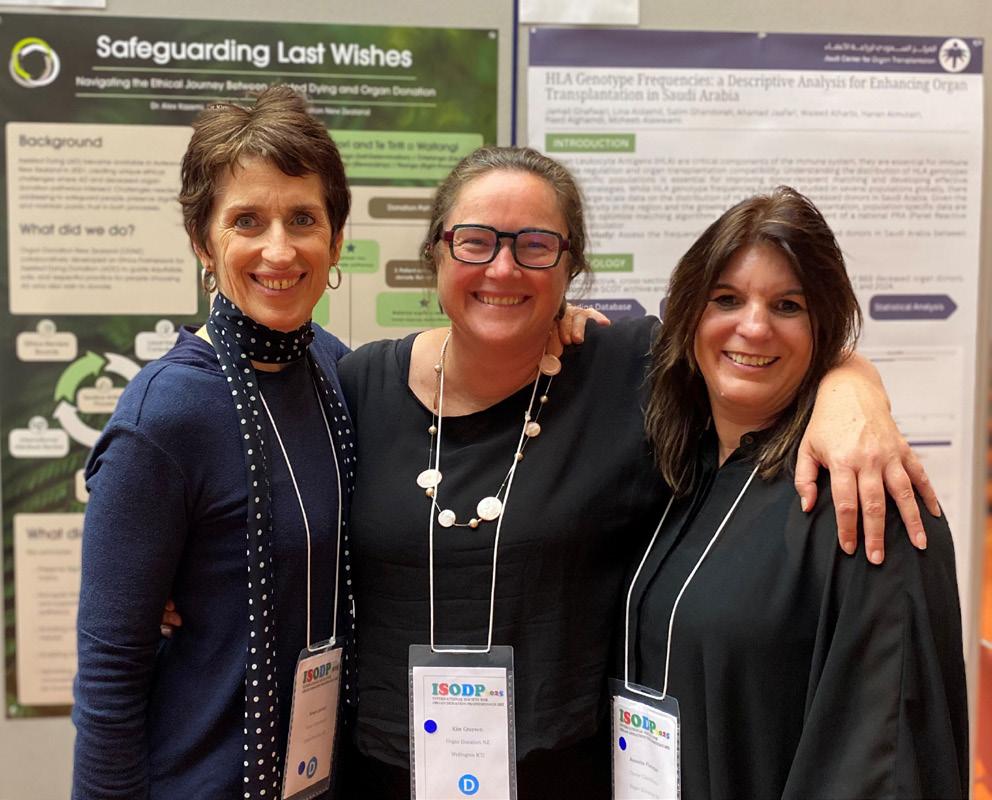
At the ISODP conference in Japan, left to right, Sue Garland, Kim Grayson, and Annette Flanagan.
Communication activities
THANK YOU DAY
Thank You Day is a very special time of the year in ODNZ’s calendar; a day when, alongside organ donation recipients, we can publicly acknowledge and recognise donors, their loved ones, and all those who play a role in giving others a second chance at life.
Receiving an organ or tissue transplant is life-changing, but, for privacy reasons, recipients don’t get the chance to meet the people who made that possible. Thank You Day provides a forum for expressing that gratitude.
This year, Thank You Day was held on Friday 21 November. We collaborated with our health sector colleagues, media, and the public, to share our kaupapa and say thank you.
In 2025, we also tried something new, welcoming people across Aotearoa to add their stories to a digital “thank you” page on our website at donor.co.nz/thank-you-day.
And we shared the stories of several recipients, to show the incredible impact organ donation has had not only on them as individuals, but on the network of family, friends, and whānau that surrounds them.
We are grateful to lung transplant recipients Katherine Cross and Aimee Carruthers, kidney transplant recipients Stuart Brizzle and Faá Faletolu, and to the family of young liver transplant recipient, Sophie Szczepkowski (see right), for allowing us to share their stories this Thank You Day.
FROM OUR WEBSITE THANK YOU DAY PAGE…
“ When my wife passed away, I was grieving. I did not want to donate her organs, but she had wished it very much, so we chose to honour her wishes. Years later, I would receive a letter from someone who has received a transplantation from her. It was the most touching gift I have ever received, and I was brought to tears. I miss her every day, but it comforts me that her final gift could save someone’s life. Thank you to those who can bring light into our darkest moments.
— Anand
“ Without the generosity of my donor, I wouldn’t be here today. I think about them every day and the family who made the difficult choice that saved my life. Thank you.
— Nadine
“ To my guardian angel, thank you. I have angel wings tattooed on my arm to remind me to be grateful every day.
— Jess
“ Organ donation saved my wife’s life. Because of this amazing generosity I have extra time with her, a blessing some do not get. To all the families who have donated, thank you. Your gift is appreciated more than you will know.
— Owen
“ Ten years ago, I got the gift of life. I cannot thank my donor and their family enough. My life and the life of my family have changed forever. Grateful doesn’t cut it. Please consider donation, #donatelife.
— Teresa
“ I am eternally grateful for the incredible gift of life I received from a donated heart valve. To my donor, their family who made the difficult call, and the surgical team who performed my operation: thank you for your compassion, skill and support. You gave me a second chance, and I will cherish it every day.
—
Sophie’s story
Not long after her birth in 2022, baby Sophie became jaundiced and wasn’t feeling well.
Tests, including a liver biopsy, diagnosed biliary atresia—a rare and incurable liver disease where the bile ducts are blocked and unable to drain from the liver. An initial surgery proved unsuccessful and, at just six-months-old, Sophie’s only hope was a liver transplant. There were long odds of finding a match that would be small and healthy enough for Sophie in a country the size of New Zealand. But, incredibly, just five days later, a perfect match was found. Sophie’s transplant went smoothly and her recovery was astonishing. She was crawling two months after major abdominal surgery and learned to walk just like any 13-month-old. Today, she's an active, pre-schoolattending, toddler. And her family has immense gratitude for Sophie’s donor family and whānau.
“For them to have the kindness in their hearts at a time when they’re grieving their own loved one, and then to decide for them to be an organ donor, is nothing short of heroic and selfless.
“To every person who has made the decision to be an organ donor, thank you.”
For them to have the kindness in their hearts at a time when they’re grieving their own loved one, and then to decide for them to be an organ donor, is nothing short of heroic and selfless.
“To every person who has made the decision to be an organ donor, thank you.”
Kidney transplantation
EVEN MORE THAN A LIFESAVING PROCEDURE
DR JAFAR AHMED
Transplant Nephrologist, Auckland City Hospital, Health New Zealand Te Whatu Ora
Kidney transplantation is one of the most effective interventions in modern medicine, with the ability to dramatically improve recipients’ quality and length of life. Yet incredibly, the procedure’s positive impacts extend even beyond saving lives.
Broadly speaking, patients with renal failure face two treatment routes: a kidney transplant or dialysis.
Dialysis involves removing blood from the body, filtering it through a dialyser (artificial kidney), and returning the cleaned blood to the body.
While life-sustaining, it will never be a true substitute for a functioning kidney and comes with its own set of challenges.
Dialysis is time-consuming (many hours each week), physically exhausting, limits a person’s ability to travel freely, and significantly reduces their life expectancy. Some patients describe it as leading only half a life.
Human costs aside, dialysis and renal disease (along with the secondary health complications it causes) also have serious financial, economic, and access implications for the health system.
New Zealand’s dialysis capacity is already stretched thin, meaning unless capacity increases or demand drops, the health system may one day face difficult decisions about prioritising who receives treatment.
It’s for all these reasons that kidney transplantation is considered the optimal solution—both for patients and for the health sector.
Not only does the procedure free patients to live fuller, healthier lives, the cost of a kidney transplant, including surgery and aftercare, is significantly lower than the cost of keeping a patient on long-term dialysis.
Cost-benefit analyses consistently show that every dollar invested in increasing donation rates yields significant savings by reducing dialysis-related expenses.
But donation rates need to increase if we are to fully realise the potential of kidney transplantation.
Historically, New Zealand’s kidney donation and transplantation rates have ranked around the middle of the pack compared with similar overseas health systems.
The waitlist for kidney transplants here hovers around 500 patients annually, with an average waiting time of approximately four years.
While numbers have improved in recent years, there’s plenty of scope to achieve more.
To improve patient outcomes and shore up systemic vulnerabilities, we must strengthen the entire chain of care—from increasing the rate of ICU referrals, to improving the capacity of Organ Donation New Zealand and the country’s transplant services to handle those referrals, donations, and subsequent transplantations.
Dedicated clinicians within ICUs can play a pivotal role in identifying and referring potential donors and have a proven track record of doing so overseas. And funding initiatives that enable ICUs to prioritise organ and tissue donation work is essential to improving donation outcomes.
Kidney transplantation is more than just a curative; it is a transformative, life-changing medical intervention.
Kidney transplantation is more than just a curative; it is a transformative, life-changing medical intervention.
For patients with renal failure, it offers hope for a future defined by opportunities rather than just survival.
And for our health system, it represents a rare win-win: better outcomes at a lower cost, a truly exceptional investment.
“
A family’s love & loss, a daughters legacy
ROBIN AND MAUREEN GUNSTON SHARE THEIR FAMILY’S STORY
As a Christian family, we’ve always sought to live our life in service of others. As parents, however, we could never have anticipated our daughter Kirsty’s sudden death, nor that it would gift life to four others.
It is 11 years since that day and, when we receive our annual donor family update from ODNZ, we are reminded again of the miraculous power of organ donation.
In her late teens, Kirsty overcame battles with chronic fatigue and the depression that came with it.
Despite, or perhaps because of, those struggles, she had deep empathy for others and displayed real generosity.
She looked out for those who might be alone at Christmas and always seemed to find time to bake, make a meal, send a card, or get in touch with people.
She eventually overcame her health issues, completed a mathematics degree and teaching diploma and, at the time of her brain aneurysm, had taught for more than a decade at a local primary school.
We had no reason to suspect that the day of her passing would be different to any other day.
“I was at home when a schoolteacher friend of Kirsty’s phoned at about 8.45am to say she hadn’t arrived at school,” says Kirsty’s father, Robin. “It was very unusual as she was always an early bird, so I grabbed the key to her house and met her friend there.”
The pair found Kirsty collapsed at the end of her bed.
My emergency training kicked in, and I performed CPR for more than 15 minutes until first responders arrived and took over.
“The sensitivity of the paramedic, ambulance, ED, and ICU teams was highly commendable,” says Robin. “They were probably all aware it was unlikely Kirsty would recover but they exuded hope through all their actions and procedures.”
Meanwhile, Kirsty’s mother, Maureen, had headed into Wellington that morning for Citizens’ Advice Bureau volunteer training.
“I will never forget that call from Police and the utter sense of helplessness when the ambulance arrived at the hospital,” she says. “Robin had contacted our son, Gavin, who left his wife to continue alone to her chemotherapy treatment at Auckland Hospital and rushed to Wellington to be with us—we were a family who was now having to face yet another major health crisis.”
Later that day, we faced the news together that the brain aneurysm was taking Kirsty from us and only the machines were keeping her organs functioning. We were in disbelief.
Then, sensitively, respectfully, and without pressure, we were asked the question about organ donation.
We knew that Kirsty had wanted to be a donor—it was the ultimate way in which she could help somebody else. But we had never had a conversation about which organs, nor had we ever realised that a family could override the wishes of their loved one.
We
knew that Kirsty had
wanted to
be a donor—it was the ultimate way in which she could help somebody else. But we had never had a conversation about which organs, nor had we ever realised that a family could override the wishes of their loved one.
KIRSTY’S LEGACY (left): Kirsty’s unexpected and untimely death was devastating for her family
In our case, all three of us were present and agreed that gifting Kirsty’s organs was the right way to proceed.
It helped to know that Kirsty would never be left alone during the subsequent procedures and that her body would appear essentially unchanged after the donation surgeries.
“We will always be thankful for the incredible care and respect shown throughout that time”, says Maureen. “It also helped her work colleagues, who arrived at the end of school and could say their own farewells to her in the ICU.”
Once the decision had been made, we were left in the capable hands of the donor coordinator, who took us through the paperwork.
As the evening drew nearer, we said our own farewells to our beloved daughter, in the sure hope her soul was already with Jesus, entrusting her to the incredible team of specialists both in Wellington and, later, in other hospitals, where her organs would begin to transform others’ lives.
Having recently read The Story of a Heart by Rachel Clarke, we are even more aware of the many teams and branches of medicine that come together to enable organ donations to work effectively. The detailed and lifesaving precision of their work is a modern miracle.
The annual Organ Donation Thanksgiving Services have inspired us to share our experience with others who have been on a similar journey, and it is our fervent hope that, right from primary school, more public education exposes people of all ages and cultures to the power of organ donation.
We also support the creation of a National Donor Registry so that many more people can register their personal wish to donate their organs. Every person can then have the opportunity of leaving a life changing legacy as Kirsty did.
“ We will always be thankful for the incredible care and respect shown throughout that time”, says Maureen. “It also helped her work colleagues, who arrived at the end of school and could say their own farewells to her in the ICU.”
Data on organ donation
In 2025, 60 people donated organs following their death in Aotearoa New Zealand, leading to 174 people receiving life-changing kidney, liver, lung, heart, and pancreas transplants.
Of the deceased organ donors, 45 donated following brain death (DBD, when a person has died after a severe brain injury) and 15 donated following circulatory death (DCD, after the heart has stopped beating). The number of DCD cases includes donation following assisted dying (ADD), as the same donation pathway is followed.
DONATION
PATHWAYS OF DECEASED ORGAN DONORS IN THE LAST DECADE
DCD = Donation after Circulatory Death
ADD = Assisted Dying Donation via the DCD pathway
DBD = Donation after Brain Death
Intended = Consent for donation was provided but organ donation did not proceed
Notes:
• Donation for ADD patients is carried out via the DCD pathway
• In 2025, 25 percent of donors donated via the DCD pathway.
CONTRIBUTION OF DIFFERENT REGIONS TO ORGAN DONATION LAST YEAR
Central | Te Ikaroa
| Te Waipounamu
Midland | Te Manawa Taki
Figure 2
NEW ZEALAND AND AUSTRALIA
In 2025, organs from New Zealand donors were transplanted to Australian recipients and vice versa in accordance with the Transplantation Society of Australia and New Zealand (TSANZ) Clinical Guidelines for Organ Transplantation from Deceased Donors, Version 1.8 – December 2021. These guidelines are available on the TSANZ website, www.tsanz.com.au
ORGANS DONATED FROM DECEASED DONORS TO AND FROM AUSTRALIA OVER TIME
Notes:
• Excludes living donors from the Australian and New Zealand paired kidney exchange programme.
• Activity between Australia and New Zealand is limited to eastern parts of Australia due to travel time limitations.
Figure 3
Figure 4
PERCENT OF POTENTIAL ORGAN DONORS
ODNZ WAS NOTIFIED OF
A notification is any communication received by ODNZ about a patient where there’s enough information to generate a record in our system. Notifications exclude instances where organ donation was explored without consultation with ODNZ. The rates below represent estimates of the proportion of potential donors ODNZ receives notifications about.
Note: In 2022, five hospitals gained DCD accreditation which increased the number of potential donors by 23.7 percent.
A potential organ donor is a patient who has died under circumstances where organ donation could have occurred. For potential donation after brain death (DBD), the patient must have severe brain damage, fixed dilated pupils, and no brain stem activity. For potential donation after circulatory death (DCD), the patient must have had treatment withdrawn in a hospital with DCD accreditation and have died within 150 minutes of withdrawal.
Figure 5
DONOR WHĀNAU APPROACHED ABOUT ORGAN DONATION
Note: A whānau has been ‘approached’ if they, or a healthcare professional, have raised the possibility of organ donation.
Note: Percentages may differ to past publications because definitions have been refined.
Figure 7
ETHNICITY DISTRIBUTION OF POTENTIAL AND ACTUAL ORGAN DONORS
The graph below illustrates the difference in the distribution of ethnic groups among potential donors and actual donors. Ethnicity is a measure of culture affiliation, as opposed to race, ancestry, nationality, or citizenship and a donor may be affiliated with more than one ethnic group.
Note: Values for ethnic groups not listed separately (e.g., Middle Eastern, Latin American, and African) are low. These patients are included within ‘European and other’.
Figure 8
CAUSE OF ORGAN DONOR DEATH
ORGANS DONATED BY DECEASED DONORS
All organs are counted once per donor except kidneys of which a donor may gift up to two.
INTRACRANIAL HAEMORRHAGE
CEREBRAL HYPOXIA/ISCHAEMIA
TRAUMATIC BRAIN INJURY
CEREBRAL INFARCT
OTHER NEUROLOGICAL CONDITION
NON-NEUROLOGICAL CONDITION
Andrew grabs second chance at life
THANKS TO DONOR’S GENEROSITY
In 2014, just before his 16th birthday, Andrew Begley’s life changed course when he was diagnosed with primary sclerosing cholangitis (PSC), a rare and progressive liver disease.
For a teenager, the diagnosis was confronting, but it was some time before Andrew realised the full impact the disease would have on his life.
Andrew had already been living with chronic illness—type 1 diabetes—since he was 13, but, like many young people, he hadn’t fully grasped its potential long-term implications.
He lived a largely normal life, studying, socialising, and enjoying a relatively carefree lifestyle similar to his peers. His liver disease remained in the background.
In late 2017, Andrew experienced a flare-up that left him jaundiced. He spoke to his GP, but the inflammation cleared up on its own, so he returned once more to his normal routine.
When it happened again in 2018, another GP visit and testing ensued. However, due to the rare and unpredictable nature of PSC, the seriousness of Andrew’s condition was not fully apparent.
Late in 2019, that all changed.
Andrew’s specialist told him that without a liver transplant, he would likely die—news that came as a shock.
In 2020, Andrew underwent a transplant assessment; he was sick enough to make it on to the transplant list, but not sick enough to put him near the top.
The COVID pandemic caused further delays, and the months passed by. Andrew pushed on, finishing university and trying to live as normally as possible.
In 2021, his health deteriorated rapidly—jaundice returned and fatigue set in.
Where doctors had previously considered a pancreas transplant as an interim solution, they now advised that a liver transplant was non-negotiable, and the only option.
Andrew moved out of his flat and back in with his mum. It was there, while unpacking and alongside one of his best mates, that he received the call; a donor liver and pancreas had both become available. This was it.
Andrew was rushed to Auckland City Hospital, where surgery went ahead quickly. But ten days later, his body started rejecting the pancreas.
After six weeks in hospital, and a heavy regimen of antirejection mediation, Andrew was discharged, hoping the worst was behind him. And it seemed it was.
A year later, and with a new lease of life, he set himself a goal that once would have seemed impossible: running a half marathon. In 2022, he did exactly that.
In 2023, he began training for another one. But during preparation, he noticed black bowel motions, an alarming sign. The symptoms seemed to resolve on their own, but Andrew kept in contact with his renal specialist and monitored his health.
The ongoing support I received from my close friends and family at every stage was crucial to my recovery.
Then, in May 2024, Andrew received another blow when he was diagnosed with Stage 4 Burkitt lymphoma in his bowel. He’d known there was a risk of post-transplant cancer, but he’d allowed himself the peace of mind to believe it wouldn’t happen.
Andrew underwent surgery and four-and-a-half months of chemotherapy. The experience was gruelling but on the chemotherapy ward, he met others facing serious illness and for the first time felt part of a community that truly understood what he was going through.
Today, Andrew lives life to its fullest and has returned to university to study psychotherapy, with the goal of eventually being able to support others who are navigating health challenges like his.
While his life was turned upside down by serious illness, he was given the chance to survive, and now thrive, thanks to the extraordinary generosity of an organ donor and their whānau.
“The ongoing support I received from my close friends and family at every stage was also crucial to my recovery.”
Andrew’s story demonstrates how dramatically organ donation can transform a life, offering second chances, a sense of purpose, and the ability to imagine a future again.
While his life was turned upside down by serious illness, he was given the chance to survive, and now thrive, thanks to the extraordinary generosity of an organ donor and their whānau.
“ Today, Andrew lives life to its fullest and has returned to university to study psychotherapy, with the goal of eventually being able to support others who are navigating health challenges like his. ”
Data on organ transplantation
The tables and figures in this section represent transplants performed in New Zealand (including organs from deceased Australian donors). The outcome of donation is not always transplantation; therefore, transplantation numbers often differ from donation numbers. The following figures include transplant procedures where multiple organs were transplanted.
KIDNEY TRANSPLANTS PERFORMED IN NEW ZEALAND
LUNG TRANSPLANTS PERFORMED IN NEW ZEALAND
PANCREAS TRANSPLANTS PERFORMED IN NEW ZEALAND
Helen’s donation
KEEPS HER COMPASSION AND GENEROSITY ALIVE
In 1968 our daughter, Helen Bremford, came into this world with her mind already set on changing it. She was our first child and, from the moment she was born, she seemed to move through life with unshakeable resolve.
She was a brilliant, curious, and motivated child, and could have done anything she wanted for a career. The only condition was that it had to include helping others, so she set her sights on nursing. As a nurse myself, I couldn’t have been prouder.
During her nursing training, Helen was placed at Mercy Hospice. There, she developed a profound compassion for people facing the end of life, and with it, a determination to leave a lasting and positive legacy.
We used to say when you met her, you knew you had met her. She was an effortlessly sincere and unforgettable person.
Helen kept every diary she ever wrote in. We have countless pages of her thoughts, plans, and dreams. Looking back through them now is such a gift, like seeing the world directly through her eyes.
She loved fine art and collected pieces that spoke to her. She travelled with the same hunger; always searching for meaning, connection, taking in the beauty of people and places far from home.
Work was hard to find in New Zealand at the time, so after Helen finished her studies, she packed a backpack,
slung it over her shoulder, and spent the next few months travelling in South America, broadening her horizons even further.
It was during this trip she decided to go to the United States of America, where she earned a master’s degree.
She saw a lot of the country, but New York City left its mark deepest. She had taken up a role at Cabrini Medical Center during the height of the AIDS crisis. There, she put her compassion and values to work, caring for people the world too often turned away from. Later, she would become a nurse manager at Stanford, leading a team with the same fierce compassion she brought to all of her work.
Helen never married, it never seemed like a priority. Instead, she built a life surrounded by friends and colleagues who adored her. She owned a home in San Francisco, but flew home to New Zealand every year, and phoned us every week without fail. She was a devoted daughter, sister, and aunt, never letting distance keep her from her family. A true-blue Kiwi through and through.
When the news came that Helen was unwell, it was like a pit opening underneath us. The pain had begun in her arm, winding its way up her brachial nerve. The diagnosis took months and when it came—terminal stage 4 lung cancer—Helen did what she always did: got stuck in. She researched it, fought it, took advice, and all the while she made sure to squeeze every possible moment from the time she had left.
She did that for two more precious years.
During that time, she would travel home routinely; and her family travelled to her. We cherished every visit, every hour, every story we could share. She might have rested more, but that was never like her, and to her mind the time outweighed any cost.
We didn’t find out until near the end, that Helen had already drafted up her final wishes. Of course she had. Helen had always been very clear about the kind of legacy she wanted to leave.
Firstly, she wanted to come home to New Zealand for her final days. Secondly, she’d sought advice from her close friend, ODNZ’s Sue Garland, about whether she could donate her organs and tissues. She wanted to help people, even after she was gone. She wanted something unmistakably good to rise from the unbearable tragedy of leaving us too young.
She wanted to help people, even after she was gone. She wanted something unmistakably good to rise from the unbearable tragedy of leaving us too young.
She learned that her cancer would not prevent her from donating her eyes and made us promise to honour that for her.
Harbour Hospice embraced Helen the way she had once embraced her own hospice patients—proactive, gentle, deeply compassionate. They brought tremendous dignity and relief to her final year.
When Helen passed, true to her style, everything was already planned out. We met with ODNZ immediately and within 24 hours, Helen’s eyes—those eyes that had travelled the continents, taken in countless books, and given comfort to so many vulnerable people—were donated.
And now, through them, someone else can see.
Every now and then we get updates on how Helen’s eye tissue recipients are doing. Each update brings a kind of peace that’s hard to describe, a strange kind of comfort in the wake of a terrible loss. It’s the comfort of knowing she left the world better than she found it. She was always a compassionate, generous, and kind person through all her life, and through the gift of donation, she continues to be so to this day.
“ We met with ODNZ immediately and within 24 hours, Helen’s eyes—those eyes that had travelled the continents, taken in countless books, and given comfort to so many vulnerable people—were donated. ”
Data on tissue donation
In 2025, 38 donors gifted both organs and tissues, while 57 individuals donated tissue only. In some cases, donation pathways changed. Six donors generously gifted tissue after it was determined that organ donation would not be possible.
Tissue donation can include skin, eye, and cardiovascular tissue, helping to support a wide range of treatments.
DECEASED TISSUE DONORS BY REFERRAL TYPE
Note: Organ referrals include both actual and intended organ donors who went on to donate tissue. Of the 11 intended organ donors, six donated tissues.
CONTRIBUTIONS OF REGIONS TO TISSUE DONATION LAST YEAR
Midland | Te Manawa Taki
Organ 6
Tissue-only 5
Northern
Organ 9
Tissue-only 16
Organ 10
Tissue-only 15
South Island | Te Waipounamu
Organ 13
Tissue-only 15
The regions specified above align with Health New Zealand | Te Whatu Ora regions.
Central | Te Ikaroa
Figure 17
SKIN DONORS
Note: Skin donation was unavailable from mid-December 2024 while the associated processes were reviewed as part of a service improvement initiative. This activity will resume in 2026.
HEARTS DONATED FOR CARDIOVASCULAR TISSUE
The data below represents how many donors gifted their hearts for tissue donation. This reflects the act of donation; however, it is not an indicator of whether cardiovascular tissues could subsequently be prepared by the National Heart Valve Bank. While each heart offered is considered a donation, tissue donation is not always able to proceed to banking.
Notes:
• Heart valve donation was not possible for a seven-week period during 2021.
• Explanted hearts are hearts donated by heart transplant recipients. These donations are coordinated by the heart transplant team.
Donor’s generosity gives Liam the gift of sight
In 2007, when Liam Drinkwater was 12, a concerned teacher noticed he was holding books particularly close to his face and wondered if he might need reading glasses.
Liam’s parents Kathie and Doug Drinkwater had always been vigilant about Liam’s health after he suffered a hypoxic brain injury at birth, resulting in learning and communication difficulties.
They immediately arranged to for Liam to see an optometrist, but the visit resulted not in glasses, but in an unexpected diagnosis of keratoconus.
A progressive eye disorder that causes the normally round cornea to thin and bulge into a cone shape, keratoconus causes distorted, blurred vision, and light sensitivity.
Both of Liam’s eyes had sustained severe vision loss from the condition and initially the prognosis seemed grim, with no cure or options offered for treatment.
Unperturbed, Kathie and Doug took Liam to an ophthalmologist, who discovered one of Liam’s corneas had started to rupture and would likely require a corneal transplant.
When it was intimated that a transplant may not be worth pursuing due to Liam’s intellectual disability, the situation seemed bleak.
But Liam’s parents were adamant he would not have to contend with blindness alongside his other challenges.
The turning point came in 2008 when they tracked down a pair of eye specialists and experts in the field of keratoconus, based at Wellington Eye Centre. After a thorough assessment and testing, they devised and deployed a treatment plan.
On Liam’s right eye, they performed ‘collagen cross-linking’, a procedure that strengthens the corneal collagen fibres to halt the progression of keratoconus.
For his left eye, the plan was to perform a corneal graft, placing a donor cornea over Liam’s own. But Liam didn’t fully meet the criteria for receiving a donor cornea.
It was a hurdle eventually cleared when Liam was deemed eligible for a tissue exchange programme and received a cornea from a USA-based donor in 2010.
The final step in Liam’s journey was a referral visit to a Wellington optometrist who specialised in treating patients with various eye disorders, including keratoconus.
Liam was fitted with glasses and bespoke contact lenses that would improve his vision sufficiently to allow him to legally drive.
While the family remains hopeful of future medical advances in keratoconus treatments, they are forever grateful to the various medical professionals whose skill and expertise have given Liam a previously unimaginable level of independence.
And above all, they acknowledge the generosity and selflessness of Liams’s donor and the donor’s family. Their impact on Liam’s life has been immeasurable.
Today, almost two decades later, Liam is nearly 31 and his donor cornea is still serving him well.
He is a keen basketball player for the Whanganui Rebels team and contributed to the team winning Silver at the recent Special Olympics Summer Games in Christchurch.
In his personal time, Liam loves to give back as a volunteer for both his local hospice and Salvation Army stores. He helps to distribute Meals on Wheels, is a keen All Blacks supporter, and loves to keep active, hunting and fishing with his father.
Liams’ family also made the decision to become donors in the hope of one day being able to ‘pay it forward’.
While the family remains hopeful of future medical advances in keratoconus treatments, they are forever grateful to the various medical professionals whose skill and expertise have given Liam a previously unimaginable level of independence.
And above all, they acknowledge the generosity and selflessness of Liams’s donor and the donor’s family. Their impact on Liam’s life has been immeasurable.
In 2024, Liam was able to realise his bucket list dream of travelling to San Francisco to see the Golden Gate Bridge – something that would have been impossible without the generosity of his donor.
EYE DONORS BY FACILITATOR
The corneal coordinators from the New Zealand National Eye Bank facilitate eye-only donations, referred from hospices, bereavement care services, funeral directors, donor whānau, and rest homes.
OF DONORS
“ A donated kidney gave me a whole new lease on life. I’m two years post-transplant and feeling better than I ever thought I could. Will always be thankful.ˮ
— ANONYMOUS
“ Thank you so much to my beautiful donor and their family. Your decision in your time of grief has given me more time with my family. I can breathe again. And to the wonderful nurses, doctors, specialists, physios, and support team, you’re all amazing!ˮ
— AIMEE
“ Without the generosity of my donor, I wouldn’t be here today. I think about them every day and the family who made the difficult choice that saved my life.ˮ
— NADINE
“ Thank you to the donors, donor families, and medical angels who have given so many of us the chance of more tomorrows. Forever grateful.ˮ
— NICOLE
“ Words will never be enough to express the depth of my gratitude for the gift your loved one has given me. You didn’t just donate a kidney; through your selfless act, I have been granted a second chance at life, a future filled with hope, and the ability to dream again. I wake up each day with renewed strength and a heart full of appreciation.ˮ
— RHEMY
ORGAN AND TISSUE DONATION - THE GIFT OF LIFE
The Organ Donation New Zealand logo consists of three interlacing circles.
These represent the three key participants in the organ donation story: the donor, the donor’s whānau, and the transplant recipient.
Each is uniquely and intimately connected: the donor, by their gift of an organ or tissue, the whānau, who gave their permission for donation in a time of incredible emotional stress, and the recipient, who receives the generously gifted organ or tissue.
Despite these connections, the recipients and donor whānau never meet, nor know each other's identities, and so the life circles never quite meet.
The circles also represent the cycle of all living things; there is a beginning and an end, and, in the context of organ and tissue donation, life can be renewed when another’s ends.