Ockhams Sampler
Extracts from the finalist books in the General Non-Fiction Award at the 2026 Ockham New Zealand Book Awards

Extracts from the finalist books in the General Non-Fiction Award at the 2026 Ockham New Zealand Book Awards

The General Non-Fiction Award at the Ockham New Zealand Book Awards recognises excellence in primarily text-based non-fiction work from one or more authors. The 2026 award winner will receive $12,000 in prize money.
Judging the category this year are author, journalist and reviewer Philip Matthews (convenor); academic and writer Georgina Stewart (Ngāpuhi-nui-tonu, Pare Hauraki); and screen director, producer, and author Dan Salmon.
The judges say the shortlisted books are highly readable works that give honest impressions of this country and its people. “The final four were elevated by artful writing and personal reflections that also offered profound insights. Each came as a surprise, even to those who thought they knew the story,” they say.
This Ockhams sampler invites you into the pages of this year’s shortlisted books in the General Non-Fiction category. Each extract is introduced by the judges’ commentary, offering insights into the content and craft of each work.
Look out for samplers of the finalists in the other three categories in the Ockham New Zealand Book Awards. You will find them here:
www.issuu.com/nzbookawards www.anzliterature.com https://www.nzbookawards.nz/new-zealand-book-awards/resources/
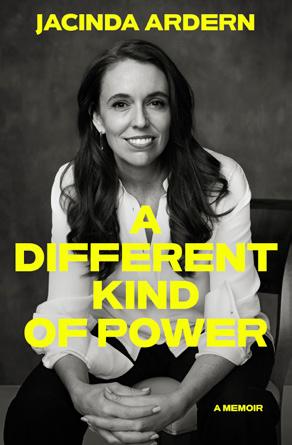
Jacinda Ardern
Published by Penguin, Penguin Random House
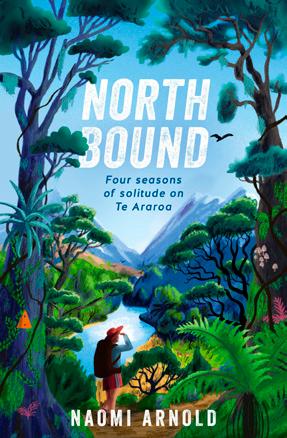
NORTHBOUND: FOUR SEASONS OF SOLITUDE ON TE ARAROA
Naomi Arnold
Published by HarperCollins Aotearoa New Zealand 10 18
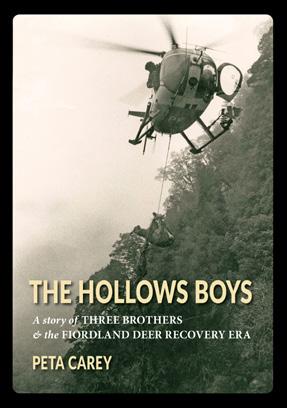
THE HOLLOWS BOYS: A STORY OF THREE BROTHERS & THE FIORDLAND DEER RECOVERY ERA
Peta Carey
Published by Potton & Burton
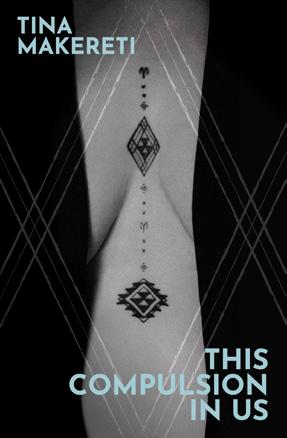
THIS COMPULSION IN US
Tina Makereti (Te Ātiawa, Ngāti Tūwharetoa, Ngāti Rangatahi-Matakore, Pākehā)
Published by Te Herenga Waka University Press
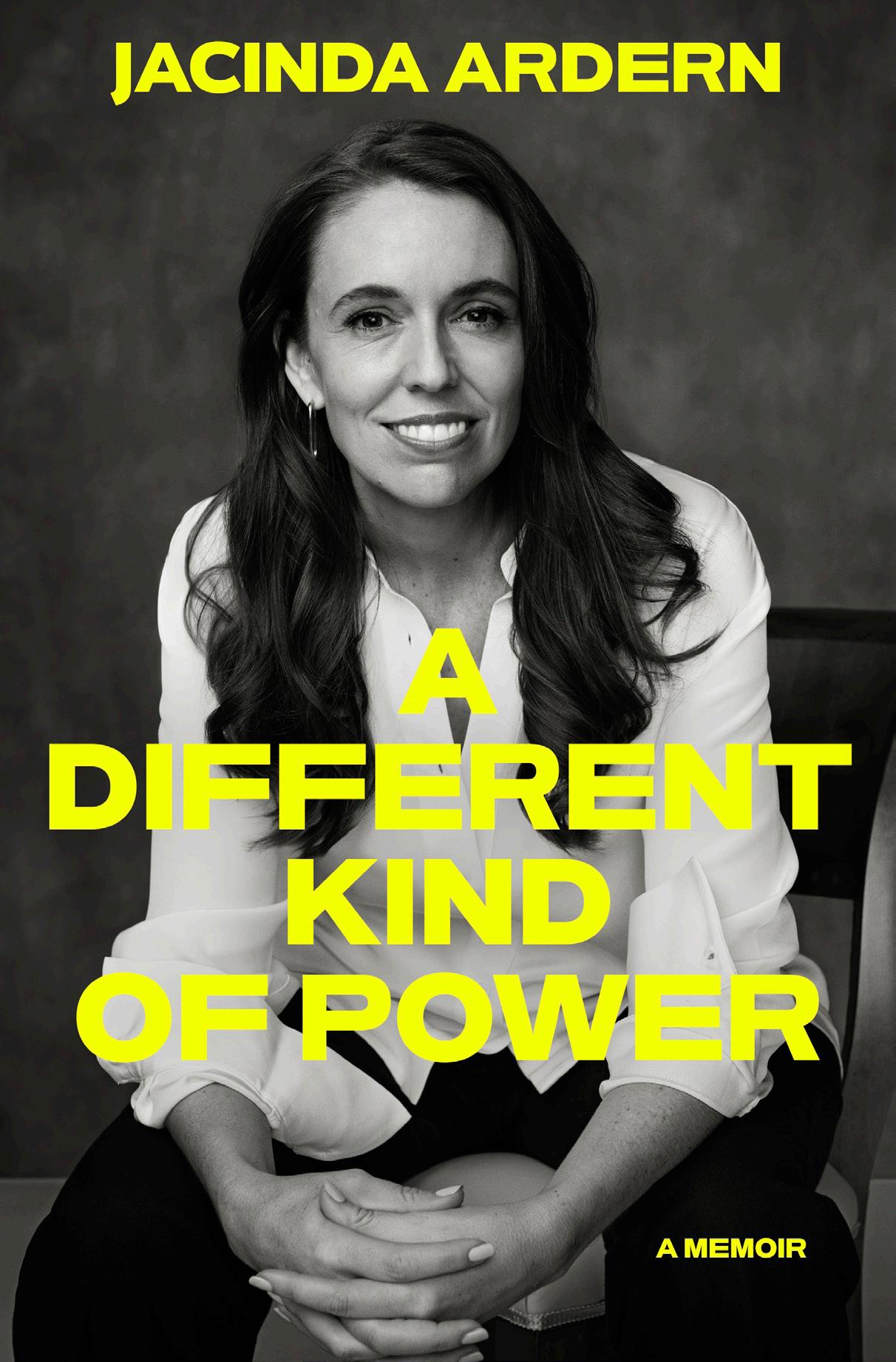
A well-crafted, candid, rewarding account of a turbulent period in national history from one of its significant actors. Jacinda Ardern interweaves the political context with a personal story of her life and upbringing, her struggle with imposter syndrome, and the unwanted mantle of political leadership, offering insight into a life of service. The writing is emotionally wise and balances the needs of local and international readers, while also appealing to those less interested in politics.
Extract from Prologue overleaf
It was a standard bathroom. The kind you’d find in a 1950s timber home just about anywhere in New Zealand, with a dark linoleum floor and small handbasin – enough of a bowl to wash your hands, but not enough to contain all the water while you do it. I had pulled the lid down over the toilet and was sitting on top of the hard plastic. Waiting. My heart beat a little faster than usual.
On the other side of the door, I could hear my friend Julia moving around her kitchen – roasting pans hitting the side of the sink, plates clinking against one another as she stacked them. She was likely scraping away the remains of yet another dinner I had only pushed around my plate – this time, chicken with roasted kumara, pumpkin, potato and fresh green beans. Julia was an excellent cook. I was just a nervous eater. Especially now.
For the past seven weeks, I had been living on a diet of cheese, crackers and my mother’s homemade bliss balls – giant energy-laden lumps of pureed dates, cashews and chia seeds that had a tendency to take up residency in my front teeth. That might be fine if these golf ball–sized snacks were being eaten in the privacy of my own home, but I had been eating them on the road in the middle of a campaign. A campaign to determine whether I would become the fortieth prime minister of New Zealand. Weeks had passed since election night, and I still couldn’t answer that question.
But at this particular moment, sitting in Julia’s bathroom, that wasn’t the question I was waiting to answer.
I glanced down at my phone. Just a few more minutes.
That night at Julia’s was meant to be a break. A chance to catch my breath while my partner, Clarke, was away filming a TV show up north. I still had on my black-and-white sneakers, Lycra leggings and purple hoodie. As soon as I’d dragged my overnight bag through the door of my friend’s home, I’d changed out of my work clothes. Then she and I had walked through the park near her house in the cool air of the late afternoon. I couldn’t face another night in my small studio apartment in the city, the one I lived in when doing government work in Wellington. Not after the long days of negotiating and waiting.
On election night, both of New Zealand’s two major political parties, the conservative National Party and the progressive Labour Party that I led, finished without a clear majority. That meant neither leader could form a government yet. For one of us to win and become prime minister, we’d need to build a coalition with a smaller party called New Zealand First. And so, for the past eight days, both parties had been in talks to determine whom they would pick. For all the back-and-forth in the negotiations, for all the discussion about which policies we would implement and which we wouldn’t, the calculation was actually simple. Either New Zealand First would choose the National Party, or they would choose us.
After every meeting, I would leave with pages of notes, but it was the body language I was watching. A nod of the head. Eye contact. Something, anything, that would tell me what their choice would be. But there was nothing. The media diligently reported on the talks each night. They, too, had no insights on what might happen, and so kept repeating what I already felt deeply: ‘the stakes are high’. But the stakes felt huge throughout the campaign. After all, I was thirty-seven years old. I had been the leader of my party for less than eighty days. And when the campaign started, we had been trailing by more than twenty points. We were never meant to win. And I was never meant to be leader.
I pulled at my leggings, fidgeting. Surely time’s up. I glanced down at my phone again. One more minute.
My whole short life I had grappled with the idea that I was never quite good enough. That at any moment I would be caught short, and that meant no matter what I was doing, I had no business doing it. That’s why I believed mine was a personality better suited to work behind the scenes. I was the worker who quietly and steadily got things done. I wasn’t tough enough to become an actual politician. My elbows weren’t sharp enough; my skin was too thin. I was idealistic and sensitive.
Becoming a member of Parliament, I was certain, had been happen-stance. But it turned out my fear of failing, of
letting people down, was overshadowed by a grinding sense of responsibility. And so, as unlikely as it had once seemed, I became the deputy leader of my party, then leader, and now, possibly, the next prime minister.
By now, the noise in the kitchen had stopped. Julia was probably sitting back at the dining room table, busying herself until my return. Julia was younger than me but also maternalistic, with a background in health care. Our conversations always started with her asking me the same question: ‘How are you feeling?’ Today, when I told her that I didn’t feel quite right and described a few unusual symptoms, she had gone out and bought a pregnancy test. At the end of dinner, she had pulled it out of a shopping bag as if it were an after-dinner mint.
‘Just in case,’ she had said.
And now that test was sitting on the edge of the sink, waiting for its big reveal. I looked down at the timer on my phone.
25 seconds, 23 seconds, 21.
I was days away from learning if I would run a country, and now, as I sat in a bathroom in Tawa, New Zealand, I was seconds away from learning if I would do it while having a baby.
I closed my eyes and lifted my head to the ceiling. Then I took a deep breath, opened my eyes and looked down.
Published by HarperCollins Aotearoa
JUDGES’ COMMENTS
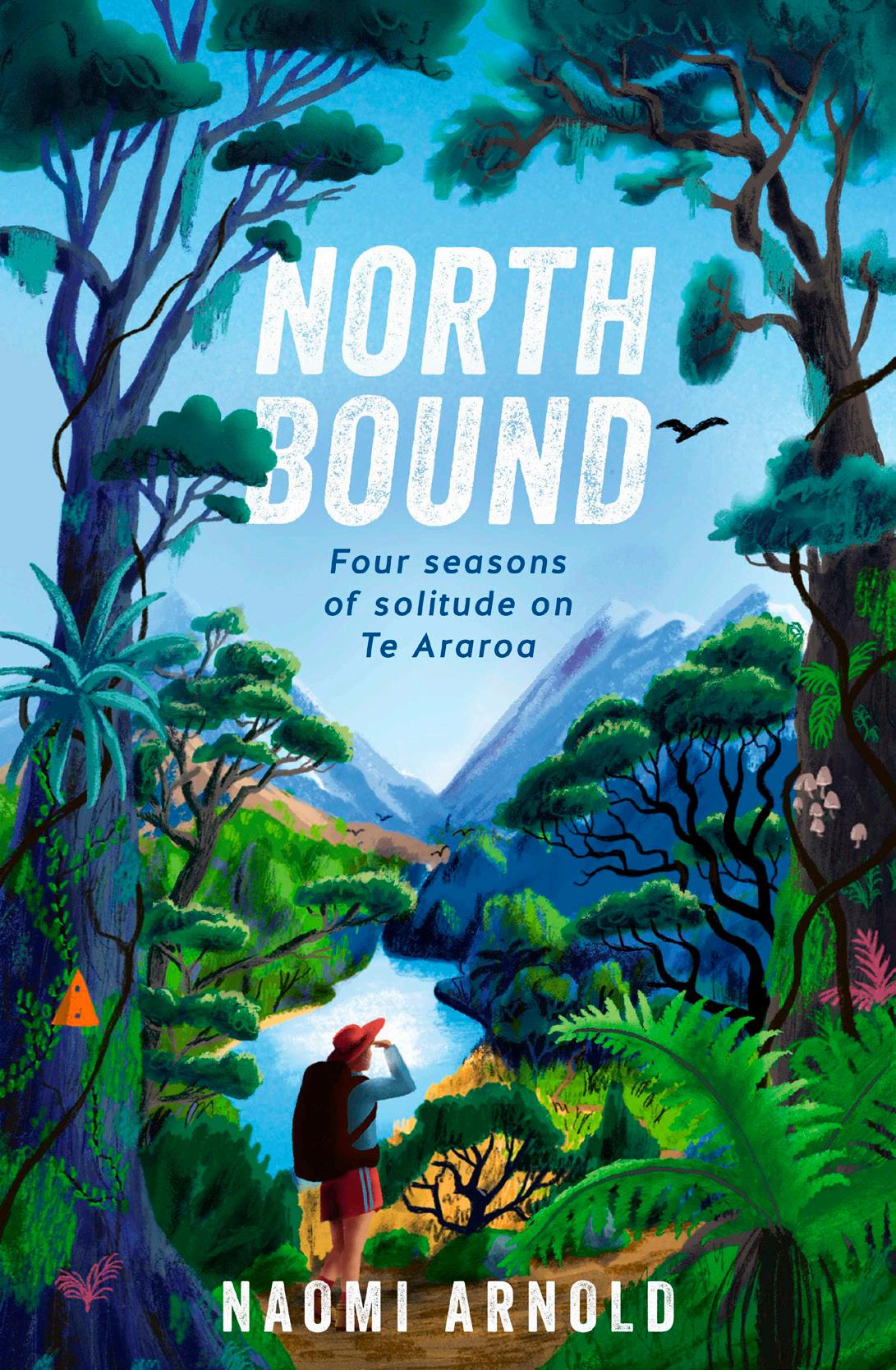
The main character of Northbound is not the author, who walks Te Araroa trail, but rather the land of Aotearoa New Zealand itself. Naomi Arnold is a warm, funny, insightful guide, and the immediacy of her writing puts readers on the track right next to her. Her honest self-awareness conveys the significant personal costs of the undertaking, as well as its potential for transformation and the gift of learning more about the country in which we live.
Extract from Chapter 5
For nearly two weeks I walked up Canterbury to Otira, alone. I followed Anna in the hut book. At one hut, Daniel’s name was there, just a day ahead of her. At the next hut, she’d caught up, and she’d written both of their names together on the same line and added a single word in the comments box: ‘Bliss’.
‘Good for you,’ I said aloud, and closed the book. Their names stayed together from then on, sometimes in his hand, sometimes in hers.
It was autumn. I hardly saw a mirror and my body had adapted without me noticing. One day I saw my feet were wider, the tissue denser. My heels and toes had grown layers and ridges of yellow calluses. My ankles had thickened. My calves had grown fat and solid. The skin on my legs was covered in dark blue, green and yellow bruising, the skin torn daily by rocks, gorse and matagouri, then scabbing and healing over, then opening again, bleeding once more. The blood and mud washed away in rivers.
I had lost my ass and my thighs were developing a hard curve on the outside, like a rugby player, narrowing above and below my knee until the joint stuck out. My pants were loose on my waist now and I had to keep them belted. The zippered circles of my zip-off pant legs were no longer tight on my thighs when I stepped up.
My hands were sun-dried rough, and new twin moles had
welled up at the base of each thumb. My lips stayed chapped. My fingernails were permanently half-mooned with dirt. The skin of my chest was seared and mottled red and had a long, deep wrinkle in the centre. When I did encounter a mirror I looked with interest at the new way my neck skin crumpled when I turned my head. I could see age blooming there, and as my chin and jaw and cheeks sharpened and my upper lip creased and thinned and the edges of my mouth began to sag, I saw my face slipping away. In the mirror was my mother, my aunt, my future.
Two strange new muscles had popped out under my collarbones, and my trapezius and deltoids were hard and swelling. The ends of my hair were split and bleached. A rough patch had erupted on the top of my upper lip; a solar keratosis. Sometimes my nose bled from the dry air. When this happened at first I fussed and stopped to staunch it, but soon I just let it drip until it clotted, perfect circles of blood falling on grey rocks when I lowered my head to navigate them.
I passed the 700km mark and discovered one of my back molars had a rough edge. I thought I might have chipped it or lost a filling, and couldn’t stop running my tongue over it as I walked. I tried to see what was happening in there using my phone camera, then threaded a bit of floss between the molars to see if there was something stuck. Sudden pain and nausea crashed into me and I pulled out the floss, gasping and swaying. I sat down and clutched my head in my hands,
groaning in pain. My jaw was now on fire, pain flaring into my ear and temple and the rest of my teeth. I could only take ibuprofen and paracetamol and walk on.
I was faster now, my strides coming as easy as a metronome, as though they were ancient knowledge, which they were. My lower back no longer hurt, but instead gnawed a hole through the pack fabric. I thought of my skeleton, ligaments, tendons, muscles flexing, my foot pushing down and through, rolling off my big toe. I thought of the similar skeletons of my ancestors doing the same thing for millions of years, each of them living long enough to produce the next ancestor, enough of them that I had arrived here to walk these hills north.
I tramped 240km over mountains and down valleys in those thirteen days, across worn hills flocked bronze with tussock, up scree slopes, and down the length of rivers, from left bank to right bank and through the middle, holding my poles loosely and stepping quickly across hot boulders, wading deep pools and navigating shoals of gravel. Some rivers were choked with didymo, some not yet infected. Some days my Achilles would be sore and walking in the cold rivers helped. I watched distant banks of cloud tipping over the ranges; they sometimes left patches of snow behind, but it was fine nearly every day. There was a drought and the rivers were low, and the ground sounded like a hollow drum under my poles. I felt as though I was walking over an eggshell of Earth that my pole might tap through, and the whole thing would crack open and
cave in. On a fence near a lake a bird skeleton hung, bleached white, the bones of its foot caught in a twist of wire.
I didn’t need to sit down during the day. I ate as I walked. I walked 33km in nine hours straight. Thirty-four. My resting heart rate dropped to 41 beats per minute. My pack became an exoskeleton, its weight irrelevant, like the weight of my hair. Only when I took it off for the first time in eleven hours did I feel the extra lightness, the different sway in my stride.
The other northbounders were long gone. The world was empty except for the grasshoppers, sometimes a kārearea call, sometimes the sight of a tahr, a few rare southbounders. It wasn’t like the world of other TA walkers on my Instagram feed, the young, tanned people who bounded through the mountains with their mates, their links forged in the North Island, doing shoeys at Stirling Point and cuddling up under blankets. One afternoon, the sight of a dusty northbound footprint held by the trail brought me close to tears.
I watched their names appear in every hut book. Each day we travelled along, trains on the same track. Anna and Daniel, together and happy. Michael, a couple of days ahead. Annie and Sylvan, five days ahead. Zuzana, Else, Elle, Marvel and Quadzilla were there, though I saw on Instagram that Elle had finished the trail in the Richmond Ranges and gone home, her heart done with the journey.
Early one morning I heard the creak of bike brakes outside the hut and was shocked to see my friend Simon opening the door. He had biked in from a road end to bring me food. His wife, my old friend Caroline, had packed me black-bean brownies, cherry tomatoes, boiled eggs, three golden queen peaches, a bar of chocolate, a can of Sprite, some cooked bacon and two fresh steaks. Simon gave me some energy chews and his inReach for the mountains to come, which could send and receive text messages via satellite. When we said goodbye I walked away from the hut thrilled and crying, and cooked the steak over the fire that night, holding its blackened edges in my hands and tearing at the bloody, buttery flesh with my canine teeth. I wiped the grease off my mouth with the back of my hand. There was no one around to see me. The mountains shed gravel. I cut my toenails and taped my heels, held my breath and put my head under the cold rivers and felt the flow tug my hair downstream. Sometimes I was screamingly bored. Other times I didn’t notice the day tick past. Sometimes I sobbed or laughed to myself. There was no one to put sunblock on me or make me a cup of coffee. The flashes of anger I had in the beginning were long gone, replaced by a deep, numbing solitude.
Sometimes I was alone in these old musterer’s huts and listened to the wind keening outside as I read cheerful messages in the book from warmer, busier days.
Sometimes I met people in the huts, and when mice flung themselves about like circus performers we cursed them together.
I had nothing and no one to care for but myself and the potted basil plant I’d bought and nursed along for a few days of salami and salad wraps. I’d been sad when I’d stripped it of all its leaves and left it in a hut; I’d talked to it and said goodbye, giving it a little pat and hoping someone would water it. Each day, I set off alone and walked with no one. I don’t remember what I thought about.
Published by Potton & Burton
JUDGES’ COMMENTS
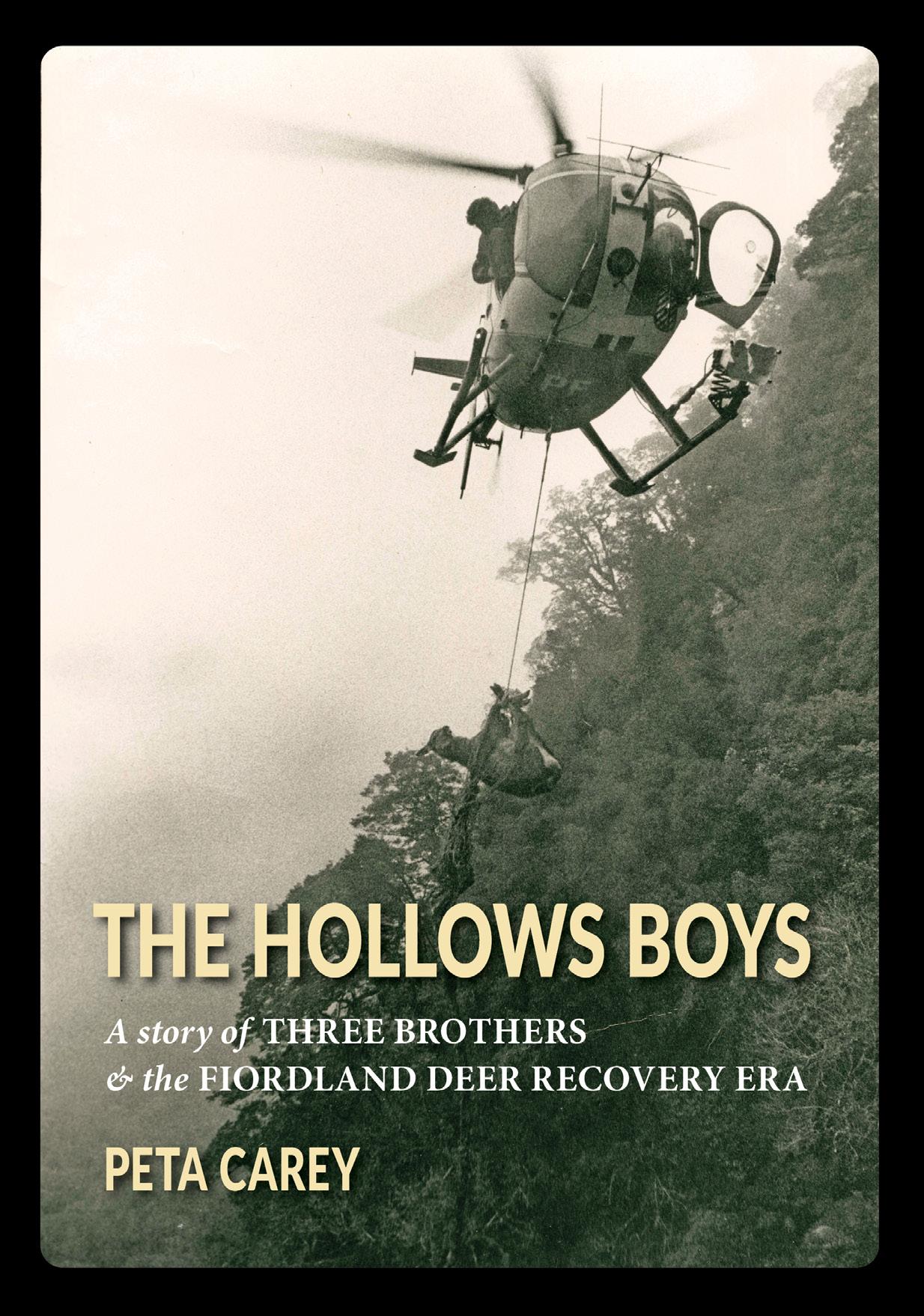
The Hollows Boys brings to life the Fiordland helicopter deer recovery industry, a uniquely New Zealand slice of social history. Peta Carey focuses on the fascinating, exciting and sometimes tragic story of three brothers, through which she explores our mythology of landscape and male heroism. Her protagonists emerge as reckless yet surprisingly vulnerable. The writing is always rich and evocative, and the book is liberally illustrated with historic photos.
Extract from Chapter 20 (abridged) overleaf
It’s a fine westerly day when Mark, Kim and Mark’s kelpie, Blue, head to Lynwood Cemetery. There’s wind up high, lines of grey strata cloud, but it’s sheltered here. The exotic trees planted well over a century ago – poplars, birch, oak, larch and macrocarpa – provide ample protection.
Like most cemeteries it’s peaceful. All the graves align in straight rows and are in reasonable order. Blue, a red-brown bundle of energy, is off looking for rabbits. Kim and Mark, hands in pockets, try to crack jokes as they walk the lines. Most of the headstones for pilots and hunters are blocks of schist, appropriate in Fiordland. Gary’s gravestone resembles a mountain peak, the rock now covered in lichen. There are two dusty and encrusted beer bottles, both still capped. A few artificial flowers – pink and white roses – are fading and the moss is clawing its way up onto the concrete base. The plaque reads: ‘Gary Michael Hollows, 17.11.1938 – 15.9.1989, Here is the Hunter, home from the hills.’
There are many hunters here who did not make it home. Mark and Kim are looking for Ray Nic, as everyone called him, killed a year after Gary died, eerily in the same area. There were three fatal accidents near Long Sound, off Preservation Inlet, in just over a year. Jim Kane – so admired, respected, so long in the game – had an engine failure in his Hughes 300, coming in to pick up his shooter. He initially survived the crash, but in the almost 14 hours before they
were found he succumbed to injuries, and died. That was in the December of the same year Gary died – 1989. Jim left behind his beloved wife, Barbara, pregnant with their son.
Mark finally points out Ray Nicholson’s grave – more rocks, more lichen, and a fading toy takahē. Ray was just 37 years old, leaving behind his wife, Viv, and two young children. The accident, also in the Cameron Mountains, happened late in the day, in November 1990. It occurred on a steep slope, evidence pointing to the main rotor blades striking the hill.
Ray’s shooter, Nelson Thompson, is buried just one row away from Ray and Gary. He’s thought to have died on impact, flung out onto the side of the hill. Ray Nicholson, not unlike Jim Kane, died some hours after the accident, possibly from internal bleeding.
Long Sound is the furthest inland arm of Preservation Inlet, the stretch of water reaching 40 kilometres into the hinterland of the southern Fiordland massif. It’s a short walk from the end of Long Sound up to Lake Widgeon, from where the Cameron Mountains rise up to the east and the Dark Cloud Range, aptly named, to the west. Both stretches of mountains are dotted with alpine lakes, the tops here cloaked in small tussocks, and alpine plants flowering in early summer – the view from every ridgeline almost too beautiful. After Gary Hollows, Jim Kane, Ray Nicholson and Nelson Thompson were killed, three accidents all within a similar area in a relatively short space of time, a rāhui was placed over the area, hunters staying clear out of respect.
Driving back to Te Anau from Lynwood Cemetery, the narrow road descends from the hills to the main highway, and there, for miles either side, is high fencing and large herds of red deer, curious but calm – the legacy of all the years, of all the damage and loss of lives.
Later that night, Kim and Mark raise a glass of wine to their brother. It’s Gary’s birthday. He’d be 85 if still alive today. It’s later that Kim quietly says that for years Mark wouldn’t talk about Gary, certainly wouldn’t talk about the day Gary died. Kim: ‘He went to a dark place, went pale and withdrawn.’
Which makes Mark’s calm and clear narrative today –detailing every aspect of the accident – so extraordinary. His motivation: for others to know, to learn and, hopefully, never to repeat.
Mark: ‘I’ve never hidden anything. If anyone ever asks me I’ve told them honestly what happened. I’ve never glossed over accidents, cos I think that would be wrong. It’s always irked me that people have always blamed something else for their accidents, but 99.9 per cent of them are pilot error.
‘How is everyone else going to learn, if someone’s going to bullshit about it?’
Did Mark ever return to the site of the accident? ‘I never landed there again, no, but I flew Pam over the area one time.’
Craig Feaver, Kim’s shooter, tells how Kim flew to the site
a while after the accident. Craig: ‘He may not want anyone to know that. We landed and switched off. Kim took some flowers in there. I stayed away, let him have his time. I dare say he was just working himself out.’
Craig Feaver admits he’s still working things out. ‘Y’see, with all the different pilots killed in Te Anau, you go to all these funerals. And you end up at a stage when you don’t wanna go to them anymore. Too many friends. It hurts, y’know.
‘I wonder how Mark got through the experience of the accident with Gary, how he dealt with that. And Kim himself. There are some things that you just don’t get over. The way I look at it, there are a few things I put in a box, close the lid and don’t open it. It’s always in the back of your mind, but mentally how do you deal with it?’
Craig was involved in the search for Ray Nicholson and Nelson Thompson. It was late in the evening when the call went out that Ray was overdue. Undeterred by the dark – ‘it was a nice night’ – Craig accompanied pilot Derek Cook to go out to search. ‘We flew around all night. Derek was trying to pick up the emergency beacon. But Derek had the receiver on the wrong setting. We’d flown right past them and we hadn’t picked up the beacon.
‘We got home just on daylight. They were setting up the
main search and rescue, and we weren’t allowed to go out again. So I went home, and then got a phone call to say they’d found them, and they’d both passed away.
‘It was just after that that we found out that Ray had been alive for a period of time. I always had that nagging … sorry … always had that nagging thought in my mind. If we’d found them, we could have helped them.
‘And that’s what keeps coming up to me all the time. We fucked up, y’know.
‘I try not to think about it. And I try to put it over there, in a box, but, yeah, it just comes up.’
Craig Feaver makes no apology for his tears, inhaling sharply on his cigarette. ‘Mark and Kim, I don’t talk to them about it. Kim might turn around and, dunno, somehow think I’m weak. Am I a sook? But some of it hurts.
‘The Gary thing. I don’t know how they dealt with it. Like I said, maybe put it in box and put it over there …’
Kim went back to work. Mark would take a while to consider it. Mark: ‘When I’d sobered up I went to talk to my dad about it all. And Bas just said, “That’s life.” I asked him, “What do you think I should do? I was thinking I should stop flying.” And he said, “Why? You do whatever you want to do.” I also talked to peers, to Jim Kane. He was always someone I could ring and have a yarn to.’
Jim Kane died a few months later.
The funerals continued, one after the other. Mark had trained alongside Ray Nicholson at the flight school in Motueka, and another close friend and shooter, Paul Searell, was also killed in a farm accident the same year. ‘I was pall bearer for Gary, Jim Kane and Paul Searell,’ Mark says.
But life would go on. Before the year had ended, Mark drove to the hangar, a loaned Hughes 500C on the apron. He fuelled up and did his pre-flight check, his shooter, Jeff Carter, alongside. Not much was said as Mark started up the machine, then flew west into the maze of successive ridgelines and steep-sided valleys of the Fiordland Mountains – doors off, semi-automatic rifle loaded, both men scanning ridgelines and slips for deer.
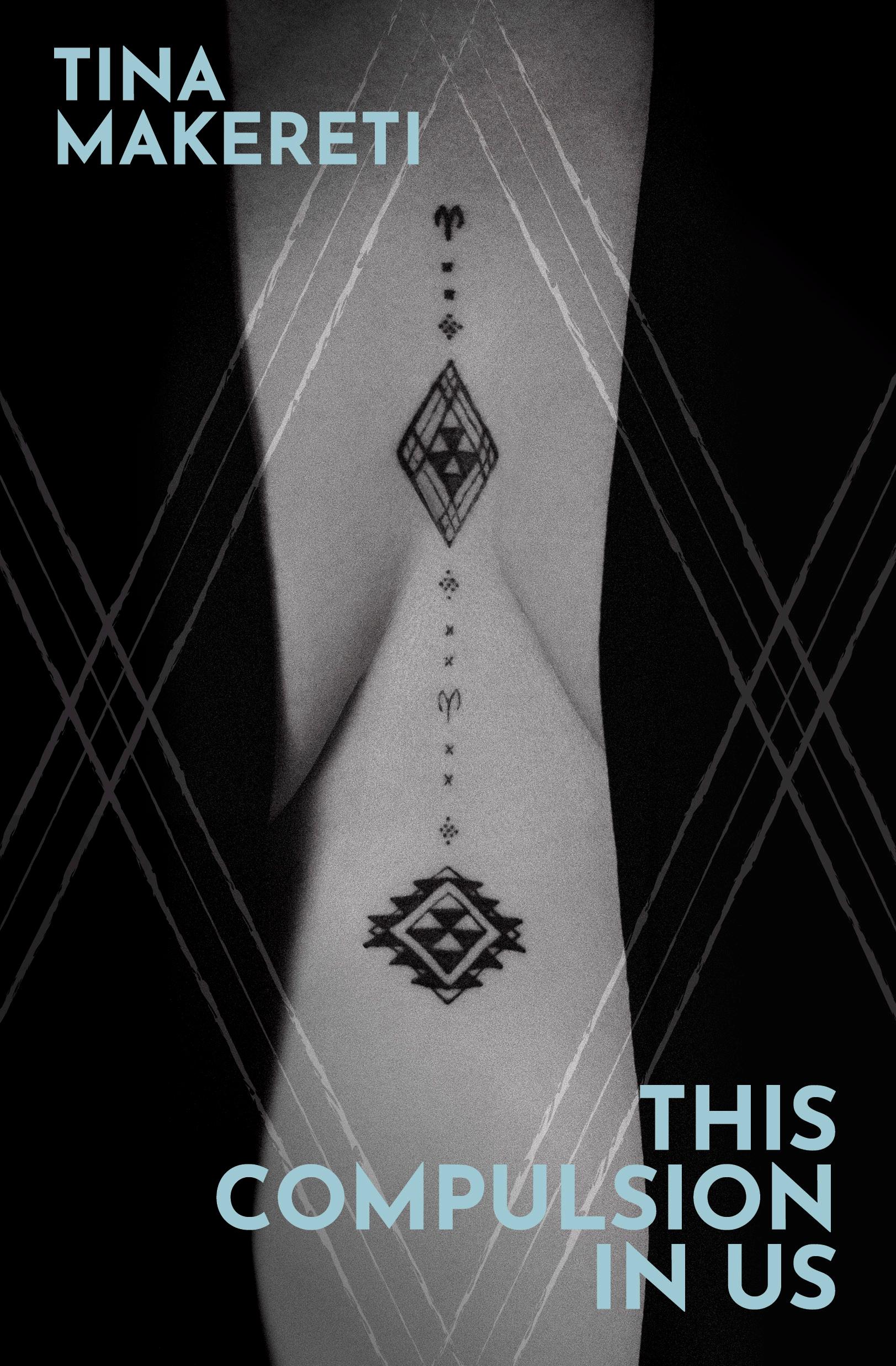
Published by Te Herenga Waka University Press
JUDGES’ COMMENTS
This beautifully written collection of interconnected essays records Tina Makereti’s journey of self-discovery as a writer, daughter and mother as she gradually becomes aware of her Māori identity. Always brave and generous, Makereti’s words will resonate with New Zealanders who are finding out they have whakapapa. It is a mature and reflective work, suggestive of long periods of thinking as the author finds a way to live within cultural duality, contradiction and paradox.
Excerpt from ‘An Englishman, an Irishman and a Welshman Walk into a Pā’ overleaf
This is the way of it. Before I have memorised her in a way that will last forever, my mother is gone. If someone asks me to recite my first memory, which consists of chickens in a yard and an old farmhouse and an outside toilet, it will contain this absence. For the rest of my childhood, I don’t think it matters.
When I was small I was provided for, though most of the time I found it necessary to keep my head down. I didn’t walk out of my childhood bruised or broken in body, but there are other ways a child can be wounded. Films featuring children always worry me. I want to believe a protected childhood is a thing that can be taken for granted, but there’s a delicate balance—it could go either way. In the next scene, the mother might look away or the father might lose control and the childhood could be ruined. There are no guarantees. There were some things bestowed on me by my upbringing that don’t make sense. From the earliest I learnt that people come in categories, separated by skin colour and gender, and norms of culture and behaviour defined by what we called Europeans. We were Europeans, mostly, I was told. But there was nothing European about us. We were the straggly descendants of white people who came here generations ago looking to lose themselves, and promptly did. They were running from whatever it was their own cultures were
doing to them at the time, running towards some beautiful possibility in another land. That new land was lush, fresh, empty for the taking. When they discovered it was not quite so empty, it was better to put their heads down and keep working. Like most of us, they couldn’t let their mythologies go. The cost would have been too much. Great white man at the pinnacle of civilisation. Everything made to bow to that narrative, even if force was needed to keep the narrative in place. They worked hard, my white ancestors, but didn’t rise much higher, and it was better not to question the whys and wherefores of that. Better to be a working-class man in New Zealand than elsewhere. Meat and cheese and milk flowing through the streets. Besides, poor people are inherently better than rich.
There were other mythologies we stuck to: Europeans brought order and civilisation with them; good Maoris are happy-go-lucky, bad ones ungrateful; men have no restraint; women are slippery untrustworthy witches. I rather liked the idea of that, but could never quite get over the man thing, even when experience suggested otherwise.
I find I disagree with most of this inheritance, but it is inherited just the same.
I became one of those girls who take great inspiration and comfort from the stories of grandmothers and greatgrandmothers. These stories were missing when I was very
young so, while I did not think I was much in need of a mother, I thought the world a bland and frustrated sort of a place. Something was missing, I knew. It was as if I had access only to a watered-down version of things—washed-out pastels and black and white surfaces.
As a teenager I became reacquainted with the mother I had never known and a heritage that was richer than I had imagined. Mothers brought with them whole tribes, I discovered. Aunts and uncles! A grandmother! And stories about the people who had gone before. There was the one about the great-grandmother who taught her son to pig hunt in the bush because her husband was too busy with the drink; the one about the great-great-grandmother who bestowed her land to the hapū and took my own grandmother to look after when her mother died. We have a sepia photo of this kuia from a film she was in—fierce brow, sharp-looking but nearly blind eyes, strong chin jutting forth a challenge. I named my first daughter after her simply for the staunchness that emanated from her image. You needed that kind of kaha, I thought, to get by in this world. My grandmother, of course, followed in her footsteps. Having been whangai-ed by others, she looked after everyone, her own and not her own, spending lifetimes between marae and courts and social workers, until her heart gave way.
There were countless ancestors like them, these immediate grandmothers: providers all, warriors some, women who spent their days in service and survival, leadership and
sacrifice. They were extraordinary women to look up to. My life has always been too soft and comfortable to make me their equal. These grandmothers brought me a world shot through with bold colour—the world that my white ancestors couldn’t acknowledge for fear of losing some part of their own mythology. My grandmothers showed me origins that ranged from earth, sea and mountain, to the vastness of space: te pō, they whispered, te korekore. Sometimes they gave me access to te ao marama—the world of light, where one can see clearly.
Still, nature and nurture continue to tug at each other and negotiate some sort of uneasy truce. I’m learning to live with the discord between one inheritance and the other. ‘The universe is a contradiction,’ says filmmaker Shekhar Kapur. And, even though ‘... all of us are constantly looking for harmony ... the acceptance of contradiction is the telling of the story, not the resolution.’
When my first daughter was a baby my mother made a composite photo for her, comprising photos of six generations of women in her maternal line, uninterrupted since her namesake kuia in the early 1900s, with our marae in the background. A powerful legacy in the face of which the story of male ancestors held much less fascination. Until last year. I was on the trail of another great-great-grandmother, on the other side of the family. I soon discovered it was not her
but her father who held the mystery, for we could discover nothing of him but the name: Haimona, a transliteration of Simon, a fairly common name. Every other line in the whakapapa travelled back much further, origins and migrations recorded in detail. We wondered if Haimona was the Moriori link. The obliteration of his history seemed to support this theory.
Looking for Haimona meant exploring the whakapapa around him. I discovered more ancestors, more family stories now reaching back seven generations or more. It meant just as much to learn the women’s names as the men’s, but this time it was the stories of the male ancestors that claimed attention. By now I had come to understand the kinds of lives my grandmothers had had. Their stories had dominated my imagination for a long time. But I knew little about the men. What kinds of lives did they have? Why were more of them Pākehā than I’d realised, and how did they come to earn chiefly wives? And why did it matter to me?
A loss early in life can be a defining thing. If we want to go to the source of a person’s obsessions, perhaps it is best to take a journey through their early years. After all, some things, once taken out of a childhood, cannot be put back. For me, the picture of what a family or culture consists of was never complete. I hungered for stories of origins, and stories of how people make families. ‘Stories matter,’ says the novelist Chimamanda Ngozi Adichie, ‘lots of stories matter’:
It is impossible to engage properly with a place or person without engaging with all of the stories of that place or that person. The consequence of the single story is this: it robs people of dignity. It makes our recognition of an equal humanity difficult. It emphasizes how we are different, rather than how we are similar.
And what if you don’t know all your own stories?
I took what I had learned about Haimona and his in-laws, and I charted the whakapapa. I made copies of this chart and gave one to my mother for Christmas.
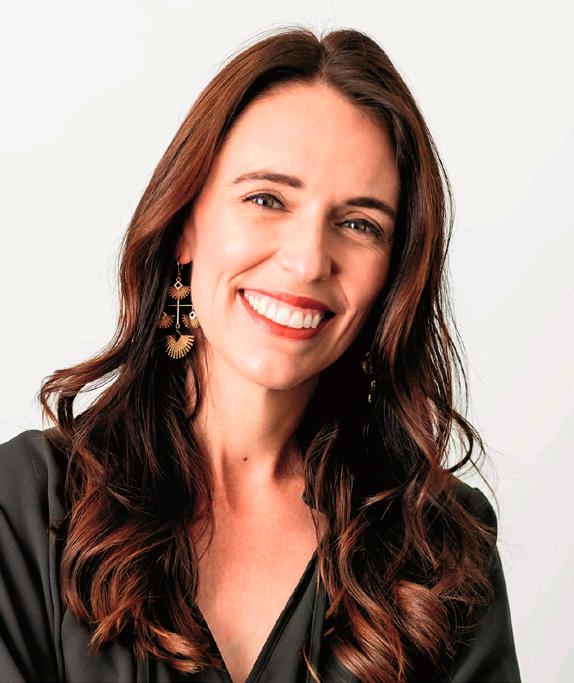
Ardern A Different Kind of Power
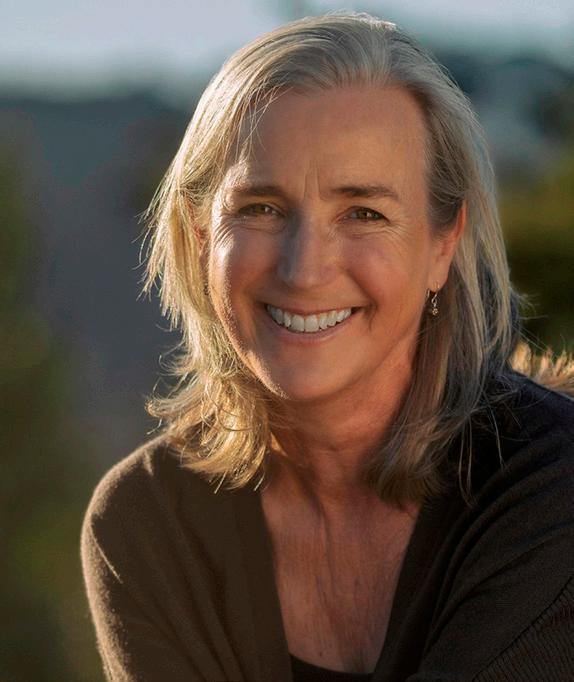
Peta Carey
The Hollows Boys: A Story of Three Brothers & the Fiordland Deer Recovery Era
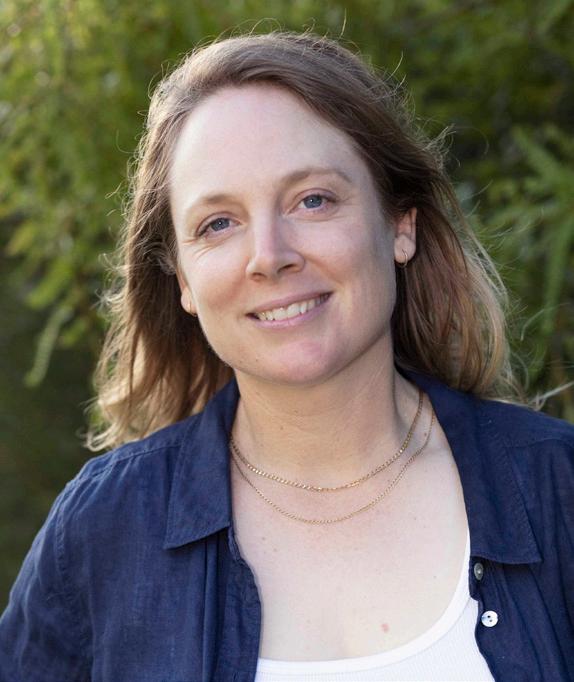
Naomi Arnold
Northbound: Four Seasons of Solitude on Te Araroa
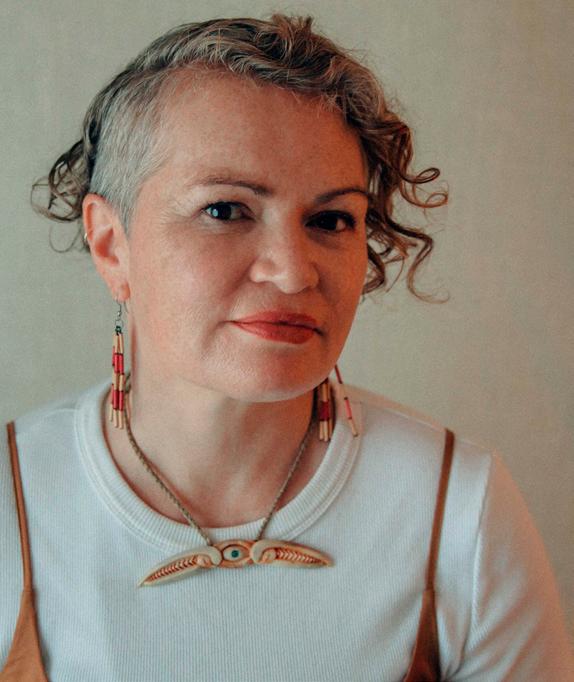
Tina Makereti (Te Ātiawa, Ngāti Tūwharetoa, Ngāti RangatahiMatakore, Pākehā)
This Compulsion in Us
He kupu whakamihi to all this year’s shortlisted authors and publishers. To readers everywhere, seek out these stories in bookshops and libraries nationwide, and join us on 13 May – in person or via the livestream – to celebrate the finalists and winners at the Ockham New Zealand Book Awards ceremony, a marquee event at the Auckland Writers Festival Waituhi o Tāmaki. To find out more, follow NewZealandBookAwards or #theockhams on Facebook and Instagram. For ceremony tickets, visit www.writersfestival.co.nz.
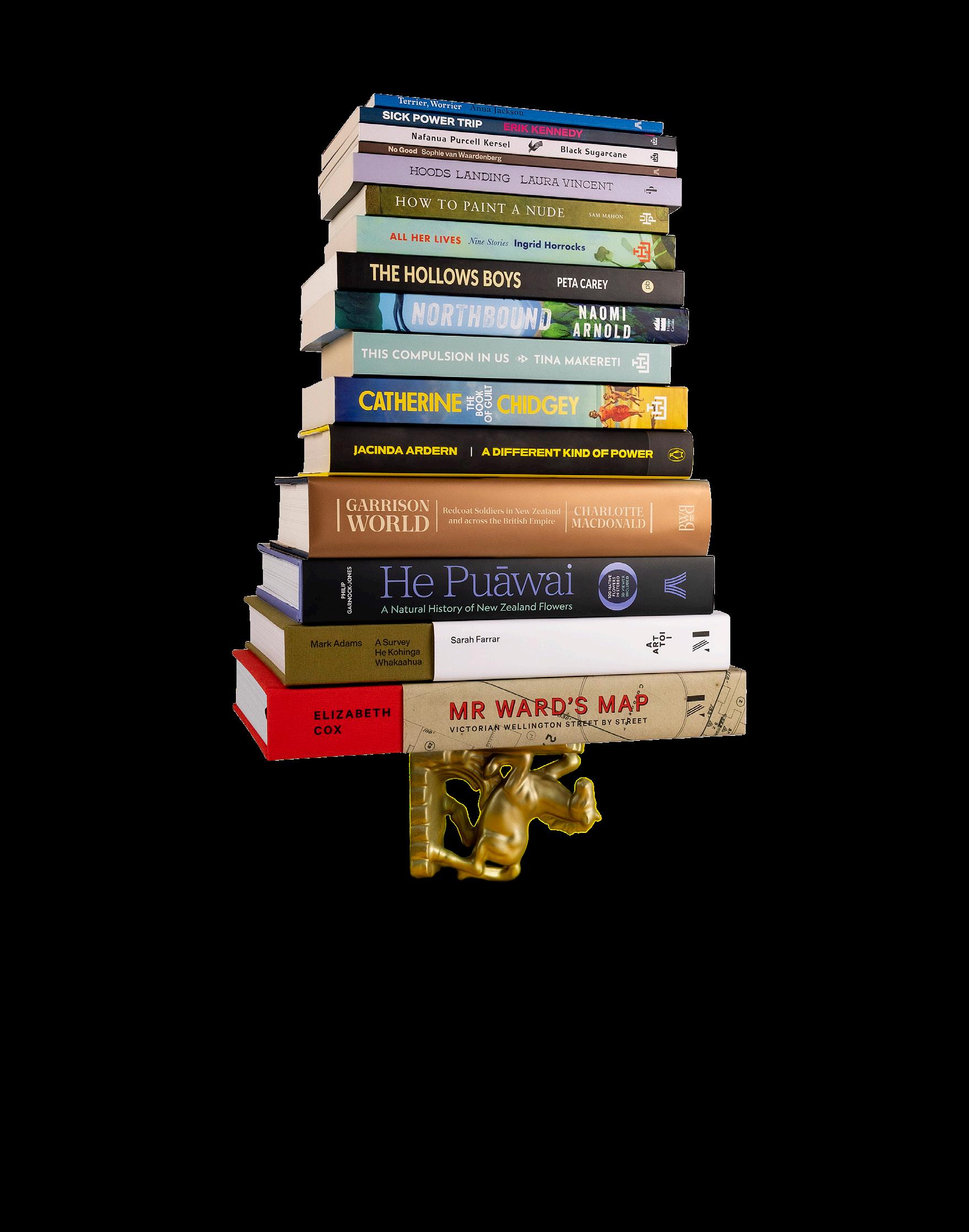
The Ockhams Samplers were compiled with the assistance of the Academy of New Zealand Literature.
Look out for the other category samplers at: