Beyond Matte: Engineering Skin-Like Finishes in Modern Color Cosmetics
…Simranpreet Gujral
The concept of matte complexion products has evolved from high-coverage, oil-absorbing systems toward sophisticated for mulations that deliver softfocus, skin-like finishes Moder n consumers increasingly seek products that balance oil control, long wear, comfort, and natural radiance. This article examines the for mulation strategies driving this evolution, including advanced powder technologies, film-for ming systems, and sensory optimization. The roles of optical blurring, sebum management, and texture engineering are discussed, highlighting how contemporary matte for mulations achieve both perfor mance and consumerpreferred aesthetics. Future innovations in adaptive and multifunctional complexion products are also explored
Introduction
Matte complexion products have historically been associated with high coverage, oil absorption, and long wear. However, these benefits often came at the cost of comfort, leading to dryness, visible texture, and unnatural finishes Today's consumers, particularly younger demographics, are shifting toward products that provide a balanced, skin-like finish Rather than eliminating shine entirely, moder n matte for mulations aim to replicate the natural variability of skin, combining subtle radiance with controlled oiliness This evolution presents a for mulation challenge: how to achieve durability and oil control without compromising sensory experience or aesthetic quality.
Redefining Matte: The Soft-Focus Approach
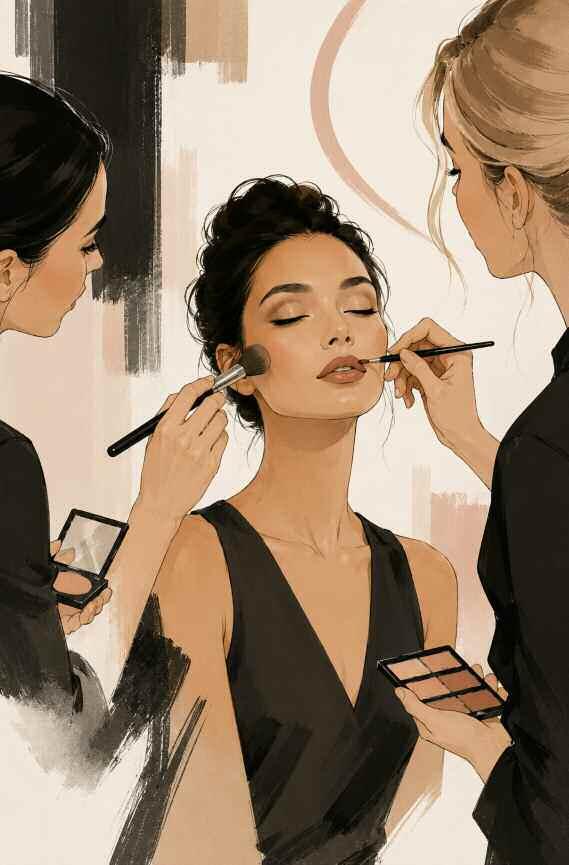
Traditional matte systems rely heavily on oil-absorbing powders and volatile solvents While effective at reducing shine, these systems can create a tight, dry feel and emphasize skin texture over time. In contrast, moder n for mulations focus on optical blurring and light diffusion. A soft-focus finish reduces the appearance of pores and imperfections while maintaining dimension in the skin
This optical effect is achieved through diffuse reflection and scattering of incident light. By reducing contrast between elevated and recessed areas of the skin surface, soft-focus technologies can visually minimize pores, fine lines, and uneven texture without requiring heavy coverage As a result, matte finishes have evolved from purely shine-reducing systems into sophisticated aesthetic tools that enhance the appearance of healthy skin. This shift moves matte from a purely functional claim to a visual and sensory experience.
Key For mulation Strategies
• Balanced Oil Control
Effective oil control is essential for long wear, but excessive absorption can lead to dryness and discomfort Moder n approaches focus on gradual oil absorption using porous materials, optimizing oil phase composition to improve compatibility with skin lipids, and maintaining a balance between oil control and skin comfort This allows products to manage shine throughout the day without disrupting the skin barrier. Porous materials such as silica microspheres and porous polymethyl methacrylate (continued on Page 4)
EXECUTIVE BOARD & COMMITTEE
Chair
Anushka Nadkar ni chair@nyscc.org
Chair-Elect
Afam Okoro chair-elect@nyscc org
Secretary Anne Young secretary@nyscc org
Treasurer Diane Dabkowski treasurer@nyscc.org
Treasurer-Elect
Brian Ecclefield treasurer-elect@nyscc org
Advisor John Carola advisor@nyscc.org
Program and Special Events
Alexis Piterski program@nyscc org
At Home Live Series
Susanna Fer nandes Susanna Fer nandes@tri-k com
Scientific Committee Chair
Michael Anthonavage manthonavage@vitaquest.com
Social Media
Dejour Waite, Revathi Nair, and Gabriella Yankovich socialmedia@nyscc org
House Chair
Arielle Nausieda house@nyscc org
Cosmetiscope Editor
Roger McMullen roger.mcmullen@gmail.com
Cosmetiscope Advertising
Bret Clark rbclark@ashland com
Letter from the Chair …Anushka
As we turn the page on another extraordinary Suppliers’ Day, I find myself filled with gratitude, pride, and excitement for what lies ahead
On behalf of the NYSCC, thank you to everyone who helped make this event such a tremendous success Whether you joined us as an attendee, exhibitor, speaker, sponsor, student, media, or industry partner, your participation helped bring our theme, “Breaking Beauty Boundaries with Science,” to life in remarkable ways.

This year, Suppliers’ Day welcomed more than 12,000 beauty and personal care professionals and nearly 700 exhibitors from around the world to the Jacob K. Javits Convention Center, creating an unmatched environment for scientific discovery, innovation, education, and collaboration The energy throughout the event was truly inspiring and demonstrated the strength and vibrancy of our industry.
A special congratulations goes to the eight finalists of the CEW Supplier's Beauty Awards, which continue to recognize breakthrough ingredient and for mulation technologies that are shaping the future of beauty innovation We also celebrate the outstanding recipients of the Ingredient Maverick Awards, whose ingenuity and scientific excellence are helping redefine what's possible in beauty and personal care.
One of the highlights of Suppliers’ Day for me personally was the opportunity to record a live episode of our podcast, The Science Shaping Beauty, with special guest Indie Lee. Our conversation explored the intersection of science, entrepreneurship, and purpose-driven beauty, and it was a wonderful reminder of how powerful storytelling can be in connecting our industry.
Another milestone worth celebrating was the 10th Anniversary of the Future Chemists Workshop This year, the program expanded to two full days during Suppliers’ Day, welcoming both students and young professionals for hands-on lear ning and career development opportunities Investing in the next generation of cosmetic scientists remains one of NYSCC's most important commitments, and it was inspiring to see so much enthusiasm from our future industry leaders.
While Suppliers’ Day may be behind us, the momentum continues This month, we look forward to our June 18th educational program, "Translating Cosmetic Science into Real-World Perfor mance, " which will explore how scientific innovation is transfor med into meaningful consumer benefits Programs like these reflect NYSCC's ongoing mission to provide relevant, practical, and forward-thinking education throughout the year
Summer also brings opportunities to reconnect with colleagues and friends in a more relaxed setting. I encourage you to join us for our annual Golf Outing in July and our August Fishing Trip, two favorite traditions that offer great networking, camaraderie, and fun outside the laboratory and workplace
As we look further ahead, the NYSCC will continue expanding its presence across the global cosmetic science community This fall, we will be engaging with colleagues at the SWSCC Suppliers’ Day and the Carolinas Chapter Naturally Kiawah Symposium, while also supporting the global exchange of scientific knowledge at the IFSCC Congress in Perth, Australia
The success of Suppliers’ Day reinforced what makes our Chapter so special: a passionate community committed to advancing cosmetic science, fostering innovation, and supporting one another Thank you for your continued engagement and ward to seeing many of you at our upcoming programs and eve continue to break beauty boundaries together
W ishing you a wonderful summ



(PMMA) particles can absorb excess sebum gradually rather than instantaneously This controlled absorption helps maintain a more consistent appearance throughout wear while minimizing the overly dry appearance often associated with traditional matte products.
• Powder Engineering and Texture Optimization
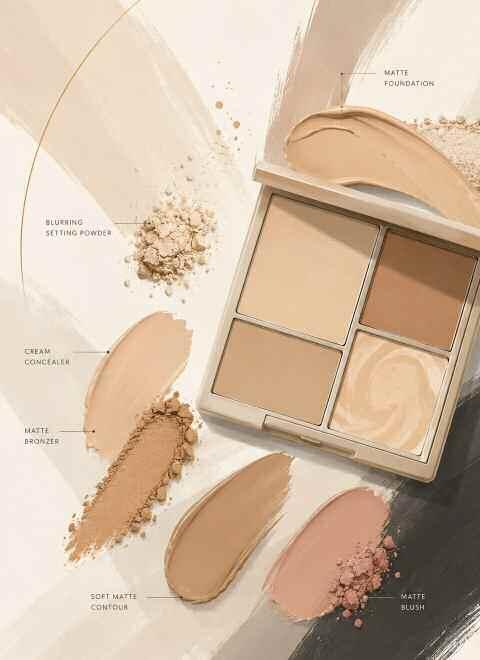
Powder selection plays a critical role in both perfor mance and aesthetics Spherical powders improve spreadability and contribute to a soft-focus effect, while fine particle sizes enhance smoothness and reduce visible texture Blending different powder types can balance oil control with optical benefits The goal is to achieve a unifor m, refined finish that adapts well to different skin types.
Commonly used materials include silica, nylon-12, polymethylsilsesquioxane (PMSQ), boron nitride, and PMMA. Spherical particle morphology reduces interparticle friction, improving glide during application while enhancing sensory elegance Boron nitride is particularly valued for its combination of slip, adhesion, and light-diffusing properties, making it useful in complexion products designed to create a refined, skin-like appearance.
Particle size distribution also influences both aesthetics and tactile perception Larger particles may improve blurring and oil absorption, while finer particles contribute to a smoother visual appearance and improved skin feel Blending multiple powder technologies often provides the best balance between perfor mance and consumer acceptance
• Film Formation and Wear Performance
Film for mers are key to maintaining product integrity over time Lightweight film-for ming systems help anchor pigments to the skin Flexible films prevent cracking during facial movement And even film distribution ensures consistent wear A well-designed film supports long-lasting performance while maintaining a natural appearance
Moder n long-wear complexion products frequently utilize technologies such as acrylates copolymers, trimethylsiloxysilicate, polyurethane dispersions, and hybrid silicone-acrylate systems These materials create flexible networks that improve transfer resistance and pigment adhesion while allowing natural facial movement.
Film flexibility is particularly important in complexion products because rigid films may fracture as facial expressions change throughout the day. Flexible film-for ming systems help maintain a more uniform appearance while reducing patchiness and product breakdown.
Sensory Design and Consumer Experience

In moder n for mulations, sensory attributes are just as important as perfor mance. Lightweight emollients improve glide and application, while gel-like textures provide cushion without heaviness Equally important, controlled evaporation prevents uneven drying. These factors contribute to a finish that feels breathable and comfortable, even after extended wear
Sensory optimization increasingly relies on carefully balanced combinations of volatile carriers, lightweight esters, silicone elastomer gels, and next-generation bio-based emollients These materials can significantly influence spreadability, dry-down behavior, cushion, and afterfeel
Consumer research consistently demonstrates that texture, comfort, and perceived skin feel strongly influence product satisfaction and repurchase intent Consequently, sensory perfor mance has become a critical design parameter rather than a secondary consideration.
The Emergence of Hybrid Finishes
The distinction between matte and radiant finishes is becoming less defined. Many products now offer hybrid finishes, where oil-prone areas appear matte while other areas retain subtle luminosity This reflects a more realistic representation of skin and reduces the need for multiple products. Hybrid finishes also align with consumer preferences for effortless, low-maintenance routines
The growing convergence of skincare and makeup has further accelerated the development of hybrid finishes. Consumers increasingly seek complexion products that provide aesthetic enhancement while
supporting skin barrier function, hydration, and overall skin health
Future Directions
Innovation in color cosmetics continues to move toward multifunctional and adaptive systems. Future developments may include for mulations that respond dynamically to sebum production, integration of skincare-inspired ingredients, enhanced sensory profiles for improved user experience, and simplified for mulations with optimized ingredient efficiency
Additional opportunities include humidity-responsive polymers, sebum-responsive materials, and adaptive film technologies capable of modifying appearance throughout wear These systems may help maintain a consistent finish under changing environmental conditions.
The integration of skincare-inspired ingredients such as niacinamide, ceramides, peptides, and microbiome-conscious technologies may further blur the distinction between complexion cosmetics and skincare products
Advances in artificial intelligence and predictive for mulation modeling may also accelerate product development by helping for mulators optimize sensory characteristics, ingredient compatibility, and perfor mance attributes before laboratory prototyping These advancements will further bridge the gap between skincare and makeup.
Concluding Remarks
The moder n interpretation of matte focuses on balance rather than elimination By combining oil control, powder engineering, film for mation, and sensory optimization, for mulators can create products that deliver long wear while maintaining a natural, skin-like finish
n Suggested Reading
1 Barel A O ; Paye M ; Maibach H I , Eds Handbook of Cosmetic Science and Technology 5th ed CRC Press; Boca Raton, FL, 2023
2. Schlossman M.L., Ed. The Chemistry and Manufacture of Cosmetics. 5th ed. Allured Publishing Corporation; Carol Stream, IL, 2016
3. Tadros T. Emulsion For mation and Stability. W iley-VCH; Weinheim, Ger many, 2013.
4 Rosen M R , Ed Delivery System Handbook for Personal Care and Cosmetic Products: Technology, Applications and For mulations. W illiam Andrew Publishing; Norwich, NY, 2005.
5 Lambers H ; Piessens S ; Bloem A ; Pronk H ; Finkel P Natural skin surface pH is on average below 5, which is beneficial for its resident flora Int J Cosmet Sci 2006, 28(5), 359–370
6. Draelos Z.D. Cosmetic for mulations and their impact on skin feel and function. J. Cosmet. Der matol 2014, 13 (4), 292–297
7. SpecialChem. For mulation Guides for Color Cosmetics. Accessed June 2026. https://www.specialchem.com
8 UL Prospector Raw Material Data and For mulation Insights for Color Cosmetics Accessed June 2026. https://www.ulprospector.com.
n About the Author:
Simranpreet Gujral is a cosmetic chemist specializing in color cosmetics with hands-on experience in for mulation development, raw material evaluation, and product optimization. She holds a master’s degree in Cosmetic Science and has worked on the development of complexion products, with a focus on texture, wear perfor mance, and consumer-centric innovation.
Her interests lie at the intersection of product development and market trends, translating emerging consumer needs into high-perfor mance for mulations She is particularly passionate about creating makeup products that combine aesthetic appeal with technical excellence using her research, product development, and regulatory experience.


Translating Cosmetic Science into Real-World Performance
June 18, 2026 • 4:00 – 8:00 p.m.
Fairleigh Dickinson University – Madison Campus
GPS Address: 1 Mansion Mall, Madison, NJ
This event will be held inside Hennessey Hall (Mansion) at the Madison Campus of Fairleigh Dickinson University. Parking Lots 11 and 8 are available for attendees.
Event Chair: Michael Anthonavage
Sponsored By:

To register for this event, visit the Events section of the NYSCC website (nyscc.org).
Event Agenda
4:00 – 4:05 p.m. Introduction –Event Chair Michael Anthonavage (Vice President, Innovation and Product Development, Vitaquest)

4:05 – 4:30 p m The Intersection Between Women’s Wellness and Beauty –Giorgio Dell’Acqua, Ph D (Consultant, Cosmetic Industry)
4:30 – 4:55 p.m. The Science of Shampoo Perfor mance: From For mulation to Measurable Consumer Benefit – Roger L McMullen, Ph D (Principal Scientist, Materials Science, Ashland, Inc.)
4:55 – 5:20 p.m. Spice to Skin: Hydroxy-alpha-Sanshool as a Novel Neurocosmetics Active – Hang Ma, Ph D (Associate Professor, Department of Biomedical and Phar maceutical Sciences, URI College of Phar macy)
5:20 – 5:30 p m Break
5:30 – 6:00 p m Split-Face Microneedling Study of a Barrier-Strengthening For mula –Jinseob Shin (Vice President, Americas Research and Innovation, Amorepacific North America)
6:00 – 6:25 p m For mulating Zinc Oxide Sunscreens for Perfor mance and Inclusivity –Yun Shao, Ph D (Senior Vice President, Research & Development, Kobo Products, Inc )
6:25 – 7:00 p.m. The Systemic Effects of Dietary Nitrates Is Influenced by Oral Microbiome and Dental Health Status – Prem Sreenivasan, Ph D (Clinical Research Professional)
7:00 – 8:00 p.m. Networking and Dinner
Speaker Abstracts and Biographies
Introduction
Michael Anthonavage – Event Chair
Michael Anthonavage is a senior innovation, operations, and technology executive with over 30 years of experience across nutraceuticals, personal care, R&D, consumer health, and clinical research He serves as Vice President of Innovation and Product Development at Vitaquest Inter national, leading strategic innovation, for mulation development, and cross-functional execution to drive growth, collaboration, and opportunity. His expertise spans portfolio management, pipeline development, operations, management, and collaboration to fuel innovation Previously, Michael served as the Vice President of Operations & Technology at Eurofins Clinical Research Laboratories In addition, he held Principal scientific roles at Johnson & Johnson, a Research Fellow role at Presperse, and Director of Technology/Marketing at Vantage Specialty Chemicals leading global bioactive platfor ms and innovation partnerships Michael is a seasoned skin biologist, research scientist, educator, and a member of the Inter national Probiotics Association (IPA), Counsel of Responsible Nutrition (CRN), American Botanical Council (ABC), and a member of the Scientific Advisory Board for the New York Society of Cosmetic Chemists for the past six years
The Intersection Between Women’s Wellness and Beauty
Giorgio Dell’Acqua (Consultant, Cosmetic Industry)

Women ’ s wellness is taking center stage in the market, and new brands emerge every day The focus is on diagnostics, personalized treatments (including drugs and supplements), and lifestyle coaching encompassing diet, sport, and sleep across every stage of a woman ’ s life Beauty is a natural part of that wellness jour ney, as it is often and should be an expression of good maintenance and a healthy body.
The rise of topicals and supplements addressing skin and hair metabolic health mirrors what is happening in gut and brain health, both of which are strongly connected to hair and skin. Products designed for women ’ s wellness are increasingly taking a holistic approach, as interventions trigger a global response throughout the body All our organs are connected and influence each other Moreover, a beautiful appearance brings confidence and supports bonding, stimulating overall wellness. Hor monal treatments, too, can influence appearance in both positive and negative ways A more integrative approach is needed and beauty must be part of the wellness jour ney.
n Giorgio Dell’Acqua, Ph.D.
Giorgio is a consultant for the cosmetic industry with 25 years of experience as an executive directing R&D, science, and product development at organizations including Veracity, LG Beauty, Nutrafol, Kiehl’s, Dior, La Prairie, and others After completing his Ph D in Cell Biology in 1989, Giorgio spent 15 years in academia at institutions including Mount Sinai Medical School and Harvard University before joining the cosmetic and supplement industry He has helped bring more than 300 successful active ingredients and finished products to market, authored more than 100 publications, and is a keynote speaker and writer on clean beauty, natural ingredients, and sustainability. Giorgio chairs the NYSCC Outreach Committee and is a founding member of the NYSCC Scientific Committee

(continued on Page 8)
The Science of Shampoo Performance: From Formulation to Measurable Consumer Benefit
Roger L. McMullen, Ph.D. (Principal Scientist, Materials Science, Ashland, Inc.)
Shampoo perfor mance extends far beyond cleansing, encompassing a complex interplay of formulation design, microstructural organization, deposition mechanisms, and consumer perception This presentation provides a comprehensive overview of moder n shampoo technology, with an emphasis on how for mulation variables translate into measurable and perceivable benefits.
The discussion begins with the role of surfactant systems including anionic, amphoteric, and nonionic components and their influence on micellar structure, mildness, and compatibility with conditioning agents Attention is given to self-assembled structures such as wor m-like micelles and their impact on rheology, stability, and sensory attributes The dynamic nature of shampoos during use is explored, highlighting how dilution and shear trigger structural transitions that gover n the release and deposition of functional ingredients
Polymers are examined not only as rheology modifiers but also as active participants in deposition processes, acting as carriers and surface-modifying agents Coacervation is discussed as a key but not exclusive mechanism for delivering conditioning materials to the hair fiber, alongside alter native pathways involving silicones, structured oils, and hybrid systems The for mulation challenges associated with anti-dandruff shampoos are also addressed, particularly the need to balance therapeutic efficacy with cosmetic perfor mance.
A central focus of the presentation is the measurement of shampoo efficacy Both sensory evaluation methods including paired comparison techniques and instrumental approaches such as combing force, friction analysis, and deposition quantification are reviewed The relationship between instrumental data and consumer perception is critically examined, with emphasis on experimental design and statistical interpretation. By connecting for mulation strategy to deposition behavior and measurable consumerrelevant outcomes, this presentation offers a practical framework for the design and evaluation of high-perfor mance shampoo systems.
n Roger L. McMullen, Ph.D.
Roger has more than 25 years of experience in the personal care industry, with specialties in optics, imaging, and spectroscopy of hair and skin. He is a Principal Scientist at Ashland, Inc and leads their Materials Science team Roger has authored more than 40 publications in peer-reviewed jour nals and textbooks, and is the author of Antioxidants and the Skin, 2nd edition He is the 2023 recipient of the Society of Cosmetic Chemists’ prestigious Maison G de Navarre Award Roger holds a B.S. in Chemistry from Saint V incent College and a Ph.D. in Biophysical Chemistry from Seton Hall University, and serves as an Adjunct Professor at Fairleigh Dickinson University, where he teaches Biochemistry to graduate students pursuing M S degrees in Cosmetic Science and Phar maceutical Chemistry Prior to his career in science, Roger served four years in the U S Navy aboard the USS Yorktown (CG 48) He is fluent in Spanish and Catalan
Spice to Skin: Hydroxy-alpha-Sanshool as a Novel Neurocosmetics Active

Hang Ma, Ph.D. (Associate Professor, Department of Biomedical and Phar maceutical Sciences, URI College of Phar macy)
Hydroxy-alpha-sanshool (HAS), a sensory amide derived from the edible Sichuan peppercor n (Zanthoxylum bungeanum), represents a new class of food-derived active ingredients for neurocosmetic applications Known for its characteristic tingling sensation, HAS interacts with skin-neuron interfaces, positioning it as a functional modulator of cutaneous sensory pathways. This study investigates the skin-protective potential of HAS using integrated cellular and proteomics approaches HAS reduces oxidative stress and inflammatory responses in human keratinocyte models Mechanistically, tandem mass tag (TMT)-based proteomics revealed that HAS regulates more than 500
pathways, with key upstream nodes centered on PPARD and NFE2L2, supporting coordinated control of lipid metabolism and antioxidant defense These findings establish a dual lipid-redox regulatory mechanism underlying HAS’s cytoprotective effects and highlight its potential as a neurocosmetic active that bridges food-derived bioactives with mechanistically driven skin health solutions. n Hang
Ma, Ph.D.
Hang is an Associate Professor in the Department of Biomedical and Phar maceutical Sciences at the University of Rhode Island College of Phar macy He leads the Research Unit for Nutraceutical and Cosmeceutical Applications (RUNCA) and directs the Bioactive Botanical Research Laboratory, where his team focuses on translating natural products from medicinal botanicals into functional ingredients for skincare and health applications. W ith more than 20 years of research experience in natural product chemistry, Dr Ma has authored more than 120 peer-reviewed publications and developed patented botanical technologies for cosmetic use His research integrates multi-omics, AI-assisted target discovery, and mechanistic biology to support next-generation actives, including emerging areas such as neurocosmetics and skinbrain interactions. Dr. Ma is an active member of the Society of Cosmetic Chemists and serves on the NYSCC Scientific Committee
Split-Face Microneedling
Study of a Barrier-Strengthening Formula
Jinseob Shin (V ice President, Americas Research and Innovation, Amorepacific North America)


Skin barrier disruption following der matological procedures can increase transepider mal water loss (TEWL), erythema, roughness, and irritation This randomized, double-blind, split-face study evaluated a barrier-strengthening for mula containing ceramides, cholesterol, and fatty acids including long-chain and linker ceramides designed to support barrier recovery
Thirty participants aged 22 to 60 applied the formula to one side of the face and a vehicle formulation to the other side twice daily for four weeks following microneedling The vehicle used the same base but excluded the lipid complex. TEWL, erythema, roughness, and participant-perceived skin recovery were assessed through week four Both for mulations significantly reduced TEWL and erythema versus postmicroneedling levels The barrier-strengthening for mula showed high participant satisfaction, with 93% of participants reporting improved skin hydration and 90% reporting reduced erythema. These findings suggest that formulations containing long-chain and linker ceramides may support post-procedure barrier recovery, visible calming, and texture improvement.
n Jinseob Shin

Jinseob is Vice President of Americas Research & Innovation at Amorepacific North America, where he leads Scientific Valorization, Consumer Research, Regulatory Affairs, and Open Innovation across the Americas W ith nearly two decades of experience in K-Beauty skincare science and innovation, he translates scientific insights into consumer-relevant technologies and product strategies Previously, he served as Chief Researcher at Amorepacific R&I Center in Korea and as General Manager of a luxury skincare brand within Amorepacific, gaining crossfunctional experience across R&I, brand strategy, consumer engagement, and market execution. His research and publications span transder mal delivery, high-perfor mance skincare for mulations, and functional ingredients Jinseob is an active member of the Society of Cosmetic Chemists, serves on the NYSCC Scientific Committee, and chairs the U S Council of the Korea Cosmetics Association.
(continued on Page 10)
Formulating Zinc Oxide Sunscreens for Performance and Inclusivity
Yun Shao, Ph.D. (Senior V ice President, Research & Development, Kobo Products, Inc )
Zinc oxide (ZnO) is a widely used inorganic UV filter providing broad-spectrum, photostable protection with low irritation potential Its effectiveness stems from strong UV attenuation across both UVA and UVB regions This presentation highlights key for mulation principles for delivering high-SPF, aesthetically acceptable, and inclusive ZnO-based sunscreens.
between particle size, use level, and efficacy across UVB and UVA regions will be discussed in detail. Given the relatively lower SPF efficiency of ZnO compared to some organic filters, effective for mulation strategies are required to achieve high SPF and broad-spectrum perfor mance Approaches such as the use of film for mers, SPF boosters, and combinations with organic UV filters are commonly employed to enhance efficacy
Designing for diverse skin tones introduces additional challenges due to ZnO’s inherent opacity. Strategies including optimized dispersion and the use of tinting agents can reduce white cast while maintaining photoprotection.
n Yun Shao, Ph.D.
Yun joined Kobo Products, Inc in 1996 and currently serves as Senior V ice President of Research & Development. W ith more than 25 years of experience, he is a recognized expert in inorganic sunscreen technology, nano titanium dioxide and zinc oxide development, pigment surface treatment, dispersion technology, specialty cosmetic ingredients, color cosmetics, and global cosmetic ingredient regulations Dr Shao has presented his research at prestigious scientific conferences including the IFSCC Congress, SCC Annual Scientific Meeting, and FLSCC Sunscreen Symposium He holds nine patents related to surface treatment and inorganic sunscreens and has co-authored multiple book chapters and technical papers He ear ned his Ph D in Polymer Chemistry from Rensselaer Polytechnic Institute and a B S in Applied Chemistry from the University of Science and Technology of China Dr Shao is an active member of the Society of Cosmetic Chemists and currently serves on the NYSCC Scientific Committee. He is also a founding and board member of the Chinese American Cosmetic Professional Association

The Systemic Effect of Dietary Nitrates Is Influenced by Oral Microbiome and Dental Health Status
Prem Sreenivasan, Ph.D.
(Clinical Research Professional)
Cardiovascular disease remains a major chronic global health burden Clinical research has demonstrated that routine intake of dietary nitrates, such as those found in beets and leafy vegetables, can significantly reduce blood pressure through the nitrate-nitrite-nitric oxide pathway
More recent findings show that the cardioprotective effects of dietary nitrates are mediated by a healthy oral microbiome, which is essential for nitrate bioconversion
Among healthy adults with a nor mal oral microbiome, consumption of dietary nitrates has been shown to reduce blood pressure approximately 1-3 hours after intake, and saliva samples from these individuals demonstrate significant nitrate-reducing activity In contrast, the use of antimicrobial mouthwash can disrupt the nor mal oral microbiome in otherwise healthy adults, with saliva samples from these individuals showing reduced or absent nitrate reduction Similarly, periodontal disease alters the oral microbiome and leads to dysbiosis, with saliva samples from affected individuals also showing no nitrate reduction Importantly, restoration of periodontal health through periodontal therapy can rebalance the oral microbiome, recover nitrate metabolism, and restore associated cardiovascular benefits. Collectively, these findings provide a clear example of the oral-systemic connection, highlighting how oral health and dietary components work together to promote everyday health and wellness
n Prem Sreenivasan, Ph.D.
Prem is an experienced clinical research professional with expertise in R&D, drug development, and medical affairs developing strategic partnerships for innovation globally He has led global product launches with unique clinical claims He is a member of the NYSCC Scientific Committee and volunteers at several national scientific organizations in the health and wellness space























































































































































NYSCC Suppliers’ Day 2026 Breaks Beauty Boundaries
with Record Innovation, Global Participation, and Scientific Discovery
Nearly 700 Exhibitors and 12,499 Attendees Gather in New York City for North America’s Premier Ingredients and Formulation Event
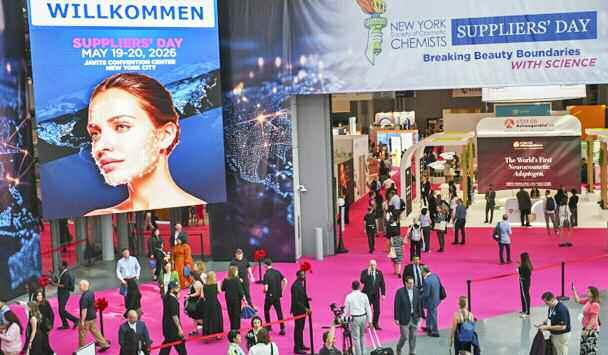
Reinforcing its position as the leading ingredients and for mulation event in North America, this year ’ s Suppliers’ Day welcomed 12,499 attendees and close to 700 exhibitors from around the world, including 15% inter national visitors representing 67 countries across the beauty and personal care industry
Centered around the theme, Breaking Beauty Boundaries with Science, Suppliers’ Day 2026 delivered an expansive showcase of scientific discovery, ingredient innovation, for mulation technology, networking, and education. The event brought together cosmetic chemists, R&D teams, brand executives, suppliers, students, media, and industry leaders for an immersive Week of Beauty
“Suppliers’ Day continues to demonstrate the power of science to transfor m beauty,” said Anushka Nadkarni, NYSCC Chair. “This year ’ s theme, Breaking Beauty Boundaries with Science, came to life through groundbreaking ingredient technologies, meaningful industry collaboration, and the global exchange of ideas happening throughout the event. We are deeply grateful to our exhibitors, attendees, speakers, students, sponsors, and partners who helped make this year ’ s event such an extraordinary success ”


This year ’ s expanded show floor featured close to 700 exhibitors showcasing breakthrough ingredient technologies, for mulation advancements, and product development solutions from across the global beauty supply chain A record number of new product launches made their North American debut at the event, providing attendees with an early look at innovations poised to shape future product development
Attendees experienced more than 100 hours of educational programming and technical content, including new and expanded conference tracks focused on K-Beauty, biotechnology, sensory science, hair and scalp care, longevity, fragrance, sustainability, regulatory compliance, trend forecasting, and emerging for mulation technologies
Micro-Escapes, and Raw Beauty.

Main Stage keynote presentations drew standing-room-only audiences and featured leading voices from global beauty brands including Supergoop! and L’Oréal. The Inspiration Hive, curated by Beautystreams, explored emerging consumer and product trends through exhibitor innovations focused on Local Logic, On Budget, Category Convergence,
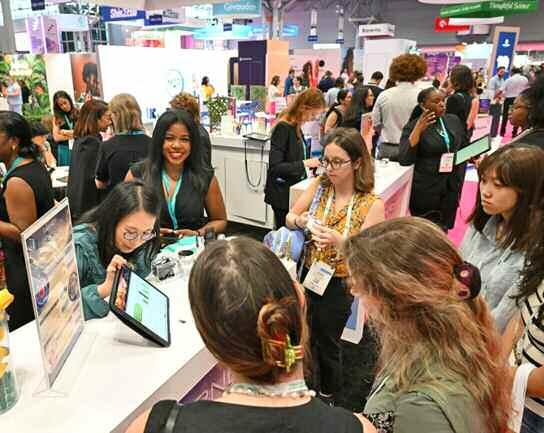
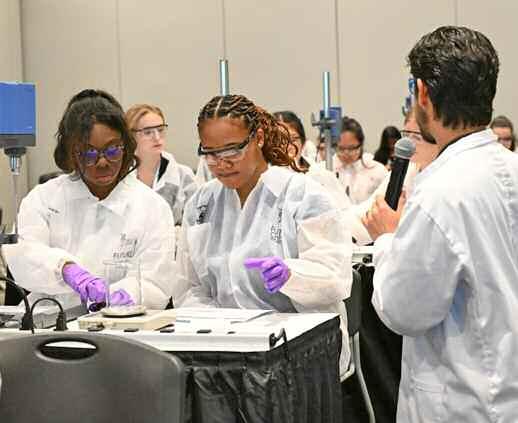
Additional highlights included Catalyst Cor ner, spotlighting emerging companies and disruptive technologies; the INDIE 360° Pavilion featuring independent beauty founders and brands; The For mulators’ Tour; the NYSCC Career Fair and Mentorship Program; the expanded two-day Future Chemists Workshop led by Ramon Pagan and Dr Julian Sass; live recording of NYSCC’s new podcast, The Science Shaping Beauty with special guest Indie Lee; and numerous networking events in collaboration with CEW, IBA, and other industry organizations.
Suppliers’ Day 2026 also celebrated scientific excellence through several prestigious industry recognition programs. During the Industry Awards Night at Suppliers’ Day, the finalists for the CEW Supplier’s Beauty Awards were revealed, recognizing breakthrough ingredient and for mulation technologies shaping the future of beauty innovation
(continued on Page 16)

n CEW Supplier’s Beauty Award Finalists:
• BASF Corporation Aloversil
• Bio Component Research Bakuchiol NAD+ BCR
• Biocogent, LLC RNActivate W
• DSM-Fir menich Exovive Lift
• Givaudan PrimalHyal NeuroYouth
• Lubrizol Lectroglaze Biotech Ingredient
• Lucas Meyer Cosmetics by Clariant AlgaSurge
• SOLABIA USA ViscoPure
The show also honored the winners of the Ingredient Maverick Awards spotlighting disruptive ingredient technologies and scientific ingenuity identified by leading beauty science influencers and industry experts: Victoria Fu, Ginger King, Manessa Lor mejuste, and Ramon Pagan n Ingredient Maverick Award Winners:
• CNP Life Sciences Microclustered Coffee Pull Cellsap
• Core Biogenesis Peaureva
• Delavie Sciences Hydrolytic Enzyme Complex
• Hallstar Opuntia Oleoactif
• Lucas Meyer Cosmetics AlgaSurge
• Mibelle PhytoSpherix Hair
• P2 Citrolatum P
• Rahn Yerbalux Pearl
• Roka Cirkle Sotabosk
• Sino Lion Bioessence K2MK7
• Syensqo Cerafy Clear NP Boost
• Upcycled Beauty Company Cherry Necta
Attendees selected Innersoul as the recipient of the INDIE 360° People’s Choice Award, recognizing the brand’s innovation and engagement within the pavilion
“Suppliers’ Day is more than a trade show, it is where the global beauty industry comes together to discover what’s next,” added Nadkar ni “The connections, innovations, and ideas shared will continue to influence product development and scientific advancement long after the show concludes. The NYSCC looks forward to building on this momentum throughout the year and welcoming the industry back to New York in 2027 ”
The next NYSCC Suppliers’ Day will take place June 8–9, 2027, at the Jacob K Javits Convention Center in New York City
For additional infor mation, photos, and event updates, visit NYSCC Suppliers’ Day or e-mail: suppliersday@nyscc.org.
2026 NYSCC Events Calendar
• For updated NYSCC information, visit us on the web at: www.nyscc.org
• For National SCC information: www.scconline.org
June 18
July 27
August 8
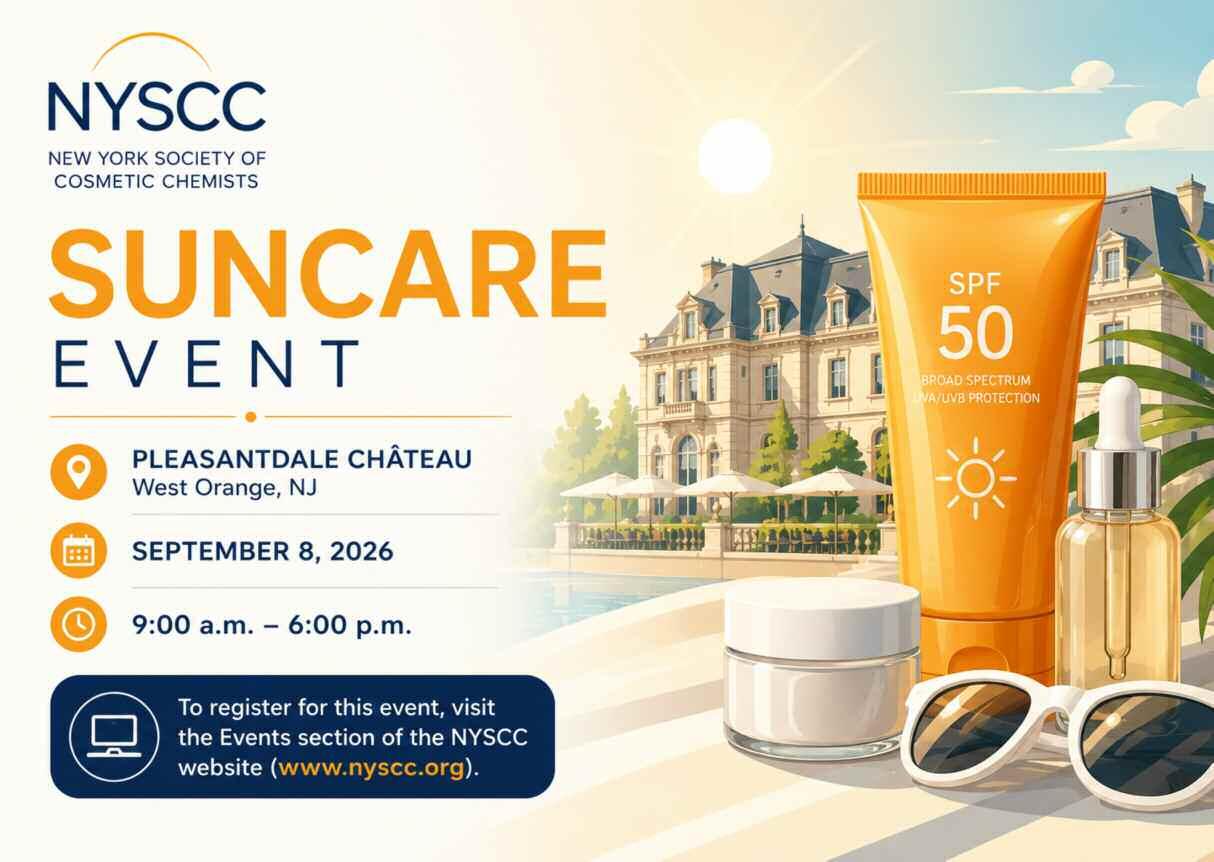
September 8
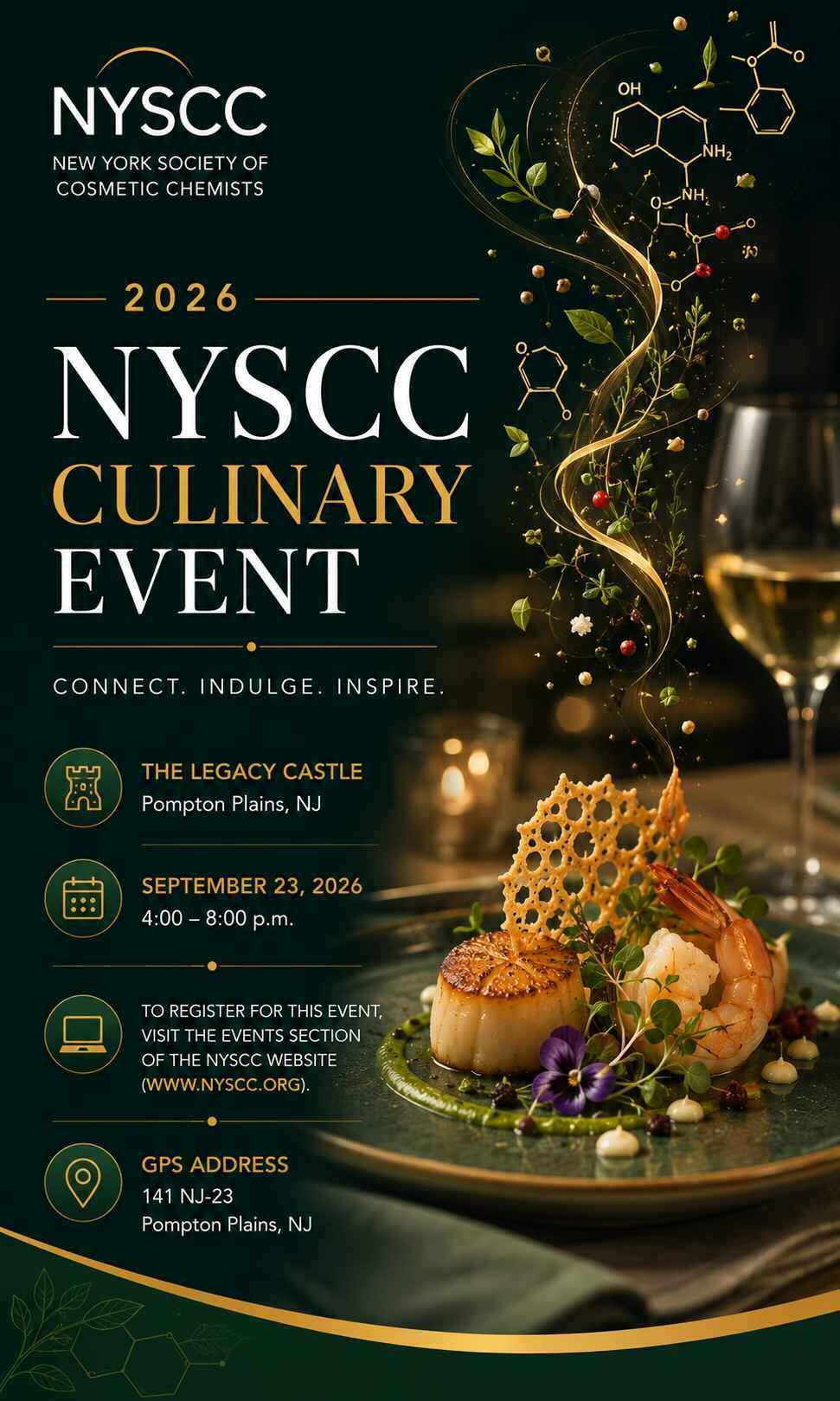
September 23
Translating Cosmetic Science into Real-World Perfor mance
Fairleigh Dickinson University, Madison, NJ
NYSCC Golf Event
Crystal Springs Resort, Hamburg, NJ
NYSCC Fishing Trip
Atlantic Highlands, NJ
Suncare Event
Pleasantdale Château, West Orange, NJ
NYSCC Culinary Event
The Legacy Castle, Pomptom Plains, NJ
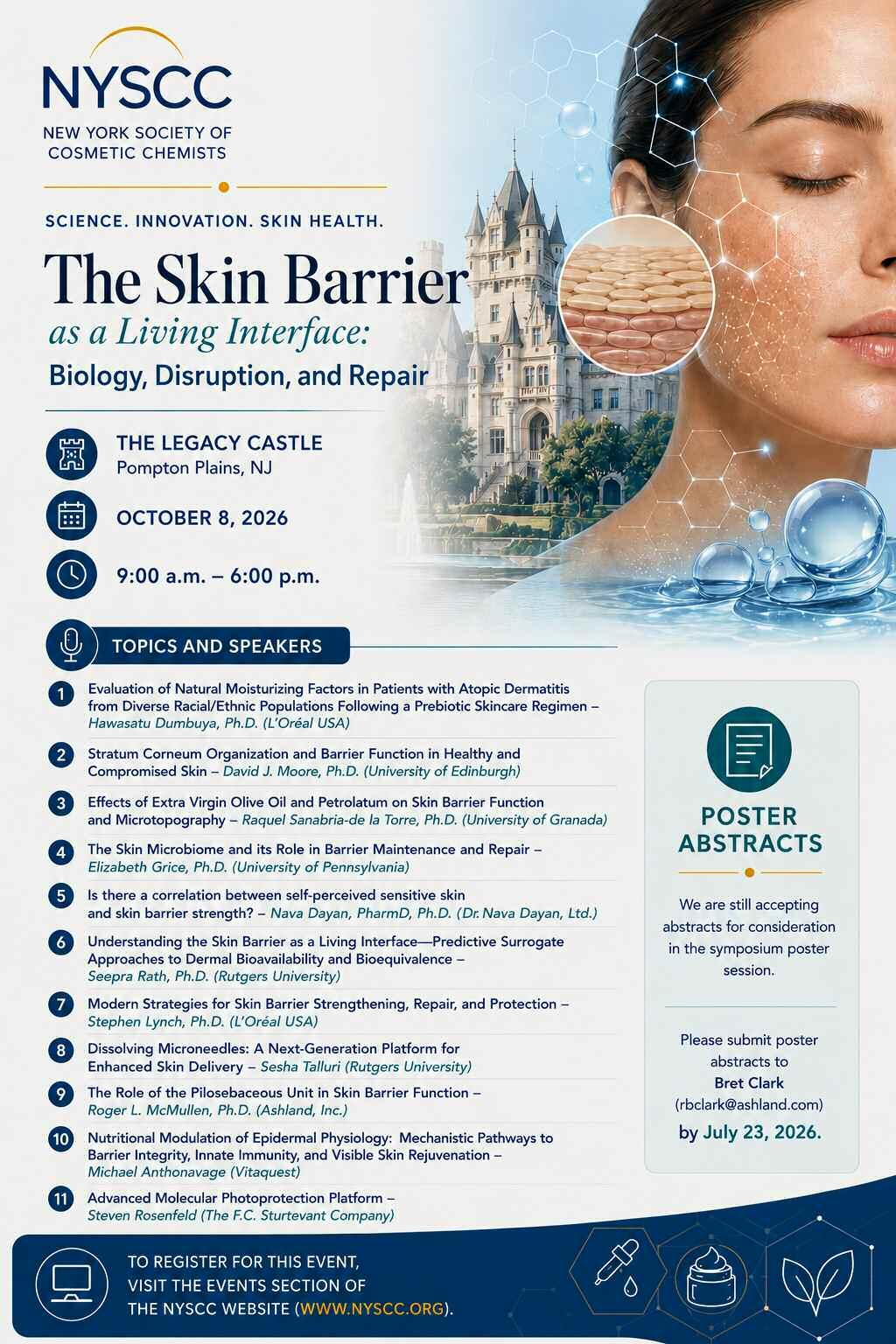
October 8 The Skin Barrier as a Living Interface: Biology, Disruption, and Repair
The Legacy Castle, Pompton Plains, NJ

November 12
November 30 – December 2
Innovations Event
Bell Works, Holmdel, NJ
SCC Scientific Meeting & Showcase
JW Marriott LA Live, Los Angeles, CA
Atmospheric Chemistry Meets Hair Care Science:
Film Formers as a Defense Against Particulate Matter
…Gabrielle Dwyer
Air pollution has long been recognized as a major contributor to respiratory and cardiovascular disease. More recently, researchers have begun examining its effects on skin health, demonstrating links between environmental pollution and premature aging, inflammation, and barrier disruption. Comparatively little attention, however, has been given to the impact of air pollution on hair Emerging evidence suggests that airbor ne particulate matter can deposit onto hair fibers and scalp surfaces, contributing to structural degradation, increased friction, and diminished hair quality.1,2

Particulate matter (PM) is a complex mixture of microscopic solid and liquid particles suspended in the atmosphere. These particles are typically classified according to size, with PM10 referring to particles less than or equal to 10 micrometers in diameter and PM2.5 referring to particles less than or equal to 2.5 micrometers in diameter Sources of particulate matter include both natural processes and human activity. Natural sources include sea spray aerosols and biomass-bur ning emissions from wildfires, while anthropogenic sources include biomass-bur ning emissions from prescribed bur ns, vehicle exhaust, industrial combustion, and urban emissions.3-5 Particulate matter often contains complex mixtures of organic compounds, black carbon, metals, and polycyclic aromatic hydrocarbons that can interact with biological surfaces.3-5
Recent studies have demonstrated that particulate matter readily deposits onto hair and scalp surfaces Using scanning electron microscopy, Galliano et al. visualized particulate accumulation on human hair exposed to heavily polluted environments 1 These deposits were associated with increased surface roughness, loss of shine, elevated friction, and changes in fiber appearance Such findings suggest that hair can act as a sink for airbor ne pollutants, potentially accelerating environmental damage to the hair fiber.1
The effects of particulate matter appear to extend beyond simple surface contamination Comparative studies examining hair samples collected from individuals living in areas with differing pollution levels found greater cuticle damage and cortical degradation in hair exposed to higher concentrations of airbor ne pollutants 2 Laboratory investigations similarly demonstrated that combined exposure to ultraviolet radiation and polycyclic aromatic hydrocarbons (PAHs), which adsorb onto PM in the atmosphere, accelerated structural deterioration of the hair fiber 2 At the cellular level, in vitro studies show that PM10 exposure induced oxidative stress and caused cell death in follicular keratinocytes.6 This finding is consistent with apoptosis and suggests that PM could potentially impair hair growth, indicating that environmental pollution may influence not just hair fiber quality but aspects of scalp health 6
These observations raise an important question for cosmetic scientists: can for mulation technologies be developed to help protect hair from particulate pollution?
One promising approach involves the use of film-for ming polymers. Film for mers are widely utilized throughout the hair care industry to enhance styling perfor mance, improve humidity resistance, reduce frizz, and provide conditioning benefits. By for ming a continuous coating on the hair surface, these materials may also serve as a physical barrier between airbor ne pollutants and the hair fiber
Several classes of film-for ming materials are already commonly used in hair care for mulations Polymer-based film for mers, including acrylates and polyvinylpyrrolidone derivatives, are frequently incorporated into styling products Cationic polymers such as Polyquater nium materials are used extensively in conditioners and leave-on treatments because of their affinity for damaged hair surfaces. Silicone-based film for mers, including dimethicone and amodimethicone derivatives, are widely recognized for their ability to smooth the cuticle and reduce mechanical damage 7
Film-for ming polymers have been shown to provide measurable protection against ther mal stress generated by heat-styling tools 7 However, their potential role in protecting hair from particulate pollution
remains largely unexplored. If these materials reduce direct contact between particulate matter and the hair surface, they may help minimize pollutant-induced increases in friction, preserve cuticle integrity, and reduce structural degradation Conversely, certain film-for ming coatings could potentially increase particulate adhesion depending on their surface chemistry and interactions with airbor ne particles. The key question is whether film formers reduce hair damage from PM exposure regardless of adhesion levels At present, little published research exists to answer these questions definitively.
This knowledge gap presents an opportunity for collaboration between analytical scientists and cosmetic for mulators Established analytical techniques including scanning electron microscopy, friction testing, polarization imaging, and transmission electron microscopy could be employed to evaluate how film-for ming materials influence particulate deposition and pollution-induced hair damage 1,2 Standardized exposure studies using reference particulate materials could provide valuable insight into the protective capabilities of different polymer technologies
As consumer awareness of environmental stressors continues to grow, anti-pollution claims have become increasingly common within the personal care industry While considerable research has focused on protecting the skin from environmental pollutants, the effects of particulate matter on hair remain relatively underexplored. Understanding how for mulation technologies interact with atmospheric pollutants may ultimately lead to a new generation of products specifically designed to defend hair against environmental exposure.
The intersection of atmospheric chemistry, analytical science, and cosmetic for mulation offers a compelling area for future research By combining expertise across these disciplines, the industry has an opportunity to better understand the mechanisms of pollution-induced hair damage and develop innovative solutions that help maintain hair health in increasingly urbanized environments
n References
1 Galliano A , Ye C , Su F , Wang C , Wang Y , Liu C , Wagle A , Guerin M , Flament F , Steel A et al Particulate matter adheres to human hair exposed to severe aerial pollution: Consequences for certain hair surface properties. Int. J. Cosmet. Sci. 2017; 39: 610–616.
2 Naudin G , Bastien P , Mezzache S , Trehu E , Bourokba N , Appenzeller B M R , Soeur J , Bor nschlög T. Human pollution exposure correlates with accelerated ultrastructural degradation of hair fibers Proc Natl Acad Sci U S A 2019; 116: 18410–18415
3 Deegan A M , Glenn C K , El Hajj O , Anosike A , Kumar K , Abdurrahman M , Bai B , Liu P , O’Brien J , Saleh R et al Properties of surface-active organics in aerosol particles produced from combustion of biomass fuels under simulated prescribed-fire and wildlife conditions ACS ES&T Air. 2025; 2: 264–276
4 Frossard A A , Gérard V , Duplessis P , Kinsey J D , Lu X , Zhu Y , Bisgrove J , Maben J R , Long M.S., Chang R.Y. et al. Properties of seawater surfactants associated with primary marine aerosol particles produced by bursting bubbles at a model air-sea interface Environ Sci Technol 2019; 53: 9407–9417
5. Zheng M., Yan C., Zhu T., Understanding sources of fine particulate matter in China. Philos. Trans R Soc A 2020; 378: 20190315
6. Jun M.S., Kwack M.H., Kim M.K., Kim J.C., Sung Y.K. Particulate matters induce apoptosis in human hair follicular keratinocytes Ann Der matol 2020; 32: 484–492
7 Zhou Y , Rigoletto R , Koelmel D , Zhang G , Gillece T W , Foltis L , Moore D J , Qu X , Sun C The effect of various cosmetic pretreatments on protecting hair from ther mal damage by hot flat ironing J Cosmet Sci 2011; 62: 541–551
n About the Author:
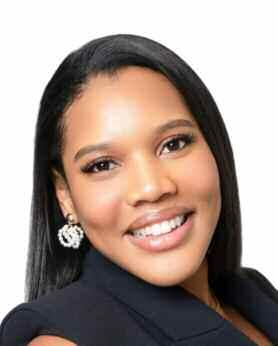
Gabrielle is a cosmetic chemist at House of Cheatham She holds a bachelo degree in Chemistry from Georgia State University and a master’s degree in Chemis from the University of Georgia, where she studied surface-active organics extracte from lake water using ATR-FTIR spectroscopy under the guidance of Dr Aman Frossard. Her professional experience includes analytical chemistry and cosme product development She draws on her atmospheric science background understand how environmental factors affect hair health and applies her surfacta expertise to develop hair care for mulations She can be contacted by e-mail Gdwyer@houseofcheatham.com

The Time Capsule –An Interview with David C. Steinberg
There is an inter net resource known as the Wayback Machine (https://web archive org) It archives one trillion web pages, a few of which are from the NYSCC websites of the 1990s
The Time Capsule contains personal views of the past, present, and future state of the cosmetic industry written by for mer chairs of the NYSCC chapter Each statement deals with broad issues of historical and/or scientific interest
In the March and April issues of Cosmetiscope, we republished interviews with Ken Klein and Henry F. Maso. This month, we present an interview with David Steinberg
n About the Interviewee

David C. Steinberg joined the Society of Cosmetic Chemists in 1969. He served as Chair of the New York Chapter in 1979 and as National President of the SCC in 1991 In 1995, he founded Steinberg & Associates, Inc He has taught at Fairleigh Dickinson University since 1982 and has also lectured in the SCC Continuing Education Program and for the Center for Professional Advancement. Since 1995, Steinberg has authored a regular column on inter national cosmetic regulations for Cosmetics & Toiletries magazine. He is the author of Preservatives for Cosmetics, A Guide to the European Cosmetic Regulations, and Primary Ingredients
n Remarks by David Steinberg
There have been many changes since I entered the cosmetic industry I would like to focus on two areas in which I was directly involved: cosmetic preservation and cosmetic education
Cosmetic Preservation
When I entered the industry in the 1960s, microbiology and preservation were often approached with an “out-of-sight, out-of-mind” mentality Few for mulators had heard of challenge testing, much less perfor med it routinely. If mold appeared, parabens were added If a for mulation developed an odor, mercury compounds or formaldehyde were frequently used. Hexachlorophene was common in medicated soaps
This began to change as both the FDA and industry became increasingly aware of microbial contamination issues in antiseptic cleansers and cosmetic products The Cosmetic, Toiletry, and Fragrance Association (then the Toilet Goods Association) established a task force to develop guidelines and testing procedures I still remember a lecturer in my first cosmetics course in 1969 joking that “GMP” stood for Ger mall, methyl paraben, and propyl paraben.

In the early 1970s, I met Bill Rosen, Vice President of Sutton Laboratories, at a NYSCC weekend meeting in the Catskills About ten years later, Bill persuaded me to join Sutton On my first day at Sutton in 1982, I proposed developing a new preservative system. I had always disliked weighing small amounts of individual preservatives and trying to dissolve parabens completely in for mulations To simplify the process, I had previously prepared a solution containing parabens and Ger mall 115 in propylene glycol. My proposal was straightforward: create the most concentrated version of that system possible
After considerable experimentation and several failures, we succeeded The product became Germaben II What began as a solution intended to help smaller manufacturers simplify preservation quickly gained acceptance among major cosmetic and phar maceutical companies because it improved efficiency and perfor mance. The product ultimately became an inter national success. Looking back, I am particularly proud of helping introduce concentrated liquid preservative systems to the industry Today, similar preservative blends are widely available and have become standard tools for for mulators worldwide.
(continued on Page 22)
Cosmetic Education
My first exposure to cosmetic science education came through courses at the Columbia University School of Phar macy. Shortly afterward, the program closed. In 1979, while serving as Chair of the NYSCC, Steve Wolf introduced me to Sal Gimelli of Fairleigh Dickinson University Sal proposed hosting a oneday educational program for the Chapter. The event attracted more than 550 registrants and demonstrated the tremendous demand for cosmetic science education
That success led to discussions about creating a master’s degree program in cosmetic science Sal developed an initial curriculum, which we shared with research directors from several major cosmetic companies in New Jersey Their feedback was candid and extensive, resulting in a significantly improved program. The university adopted the revised curriculum, and classes began in 1982. I was asked to teach cosmetic raw materials What started as a two-credit course eventually evolved into two separate threecredit courses.
The inaugural class enrolled 16 students, including several individuals who would go on to become active SCC members and industry leaders By 1998, enrollment in my course had grown to 43 students The Fairleigh Dickinson program achieved exactly what we had envisioned: preparing and educating future leaders for the cosmetic and personal care industry
n Editor's Note
When this interview was first published in 1998, David Steinberg was already recognized as one of the industry's most influential voices in preservation technology, regulatory affairs, and cosmetic science education More than a quarter century later, his reflections remain remarkably relevant From the development of concentrated liquid preservative systems to his role in helping establish Fairleigh Dickinson University's pioneering cosmetic science program, Steinberg's work helped shape many of the practices and educational pathways that cosmetic chemists rely on today.

NYSCC Employment Section
Are you looking for a candidate that loves the personal care industry, wh the thrill of designing a make-up product or shampoo? Or perh are seeking someone with expertise in raw materials Maybe you ne help around the lab and could use a tenacious inter n who wants to start their career in the personal care space.

The NYSCC Chapter supports you and your business with FREE postings to our webpage. Contact employmentadmin@nyscc.org to have passionate candidates apply to your roles Recent postings include companies such as Lucas Meyer Cosmetics, Kenvue, Olaplex, and Symrise for roles in Sales, Marketing, For mulations, and Regulatory
Below are some positions in the personal care industry that are currently posted on the NYSCC website For a full description of the jobs, visit https://nyscc.org/jobs
• Key Account Manager – East Coast – Active Peptide (East Coast)
• Senior Staff Scientist – Skin Care – Ashland, Inc (Bridgewater, NJ)
• Senior Scientist – Hair Care – Ashland, Inc (Bridgewater, NJ)
• Process Engineer – Verla Inter national (New W indsor, NY)