Defining ‘Microbiome-Friendly’: Why Standardization Is the Foundation for Skin-Respecting Innovation …Spyridon Markos
Askin microbiome-friendly product must preserve microbial viability and function, avoid dysbiosis, and respect the skin barrier. Standardized in vitro testing provides a necessary foundation, while in vivo sequencing and functional assays add ecological and mechanistic relevance
The skin microbiome has become a defining theme in moder n der matological science, reshaping the language of cosmetic for mulation and product claims As consumers become more microbiome-aware, the industry rushes to adopt ter ms like "microbiome-friendly" or "biome-safe." Yet despite the surge in usage, the meaning behind these labels remains scientifically imprecise, often loosely applied without agreed-upon benchmarks 1,2 Cosmetic products can measurably alter skin microbial composition and diversity, even after short application periods, highlighting the need for clearer definitions and structured evaluation frameworks 3 It’s time we ask: what truly defines a microbiome-friendly product, and how can we measure it with rigor?
At its core, a skin microbiome-friendly product is one that respects and preserves the viability, diversity, and beneficial functionality of the native skin microbiota without tipping the ecological balance or inducing skin barrier disruption In other words, such a product must not har m commensal microbes, must not promote the overgrowth of opportunistic or pathogenic species, must preserve functional microbial traits (like AMP synthesis or sebum metabolism),2,4-6 and must do so without causing irritation, dryness, or inflammation 7
But achieving this requires more than good intentions. It demands a structured, multidisciplinary assessment And like all complex systems, it needs a stable foundation a standard. Rolf Dobelli, in his essay on the "General Standardization Theory," likens standardization to replacing a fragile pile of irregular stones with interlocking bricks While expert hands might stack ten stones high, even a child can build taller and more stably with standardized blocks Standardization, he argues, is not just about precision it’s about enabling collaboration, reliability, and scalable progress 8 The same logic holds true in our field W ithout a standardized starting point for assessing microbiome friendliness, each lab, each brand, and each claim becomes its own unsteady tower
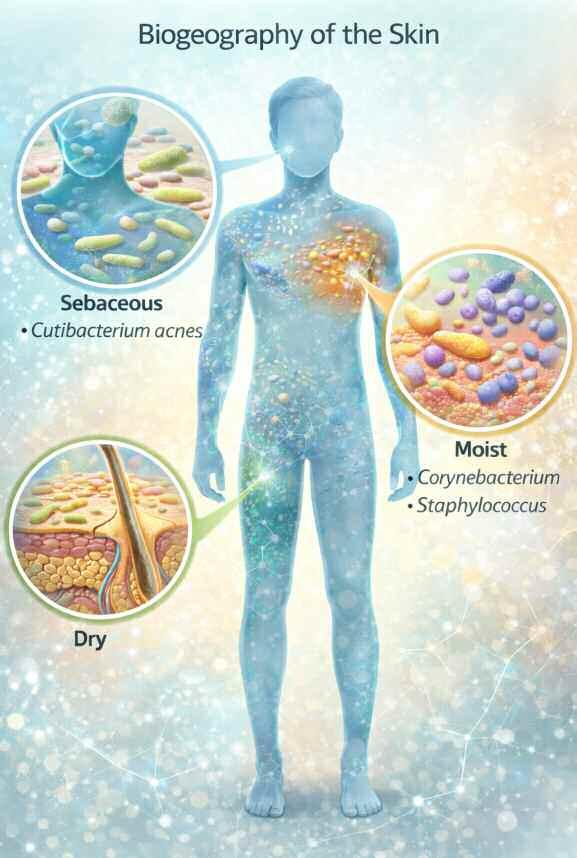
A robust, well-designed in vitro assay offers the most viable foundation for standardization in microbiome claim assessment Its strength lies in its reproducibility and scalability, enabling a common technical language across laboratories, manufacturers, and regulators similar to what was achieved with preservative challenge testing 9 To be ecologically relevant, however, the microbial panels must reflect the specific biogeography of the skin. Different anatomical regions host distinct microbial communities: sebaceous zones (e g , face, chest) are dominated by Cutibacterium acnes; moist areas (e.g., axillae, groin) by Corynebacterium and Staphylococcus; and dry sites (e g , forear ms, legs) by more diverse and aerotolerant taxa 2,4,10 Therefore, the development and adoption of standardized, site-specific microbial panels whether
(continued on Page 4)
BOARD & COMMITTEE
Chair Anushka Nadkar ni chair@nyscc.org
Chair-Elect
Afam Okoro chair-elect@nyscc org
Secretary Anne Young secretary@nyscc org
Treasurer Diane Dabkowski treasurer@nyscc.org
Treasurer-Elect Brian Ecclefield treasurer-elect@nyscc org
Advisor John Carola advisor@nyscc.org
Program and Special Events Alexis Piterski program@nyscc org
At Home Live Series
Susanna Fer nandes Susanna Fer nandes@tri-k com
Scientific Committee Chair Michael Anthovage manthonavage@vitaquest.com
Social Media
Dejour Waite, Revathi Nair, and Gabriella Yankovich socialmedia@nyscc org
House Chair Arielle Nausieda house@nyscc org
Cosmetiscope Editor Roger McMullen roger.mcmullen@gmail.com
Cosmetiscope Advertising
Bret Clark rbclark@ashland com
Letter from the Chair …Anushka
Cheers to 2026! I am honored and energized to serve as this year ’ s Chair. As we reflect on the year behind us and look ahead, one thing is clear, the NYSCC is more than an organization it is a movement
Last year, we saw firsthand that our community shares a powerful b
elevated through collaboration, and accessible to all. That spirit defined 2025 and will continue to guide us forward

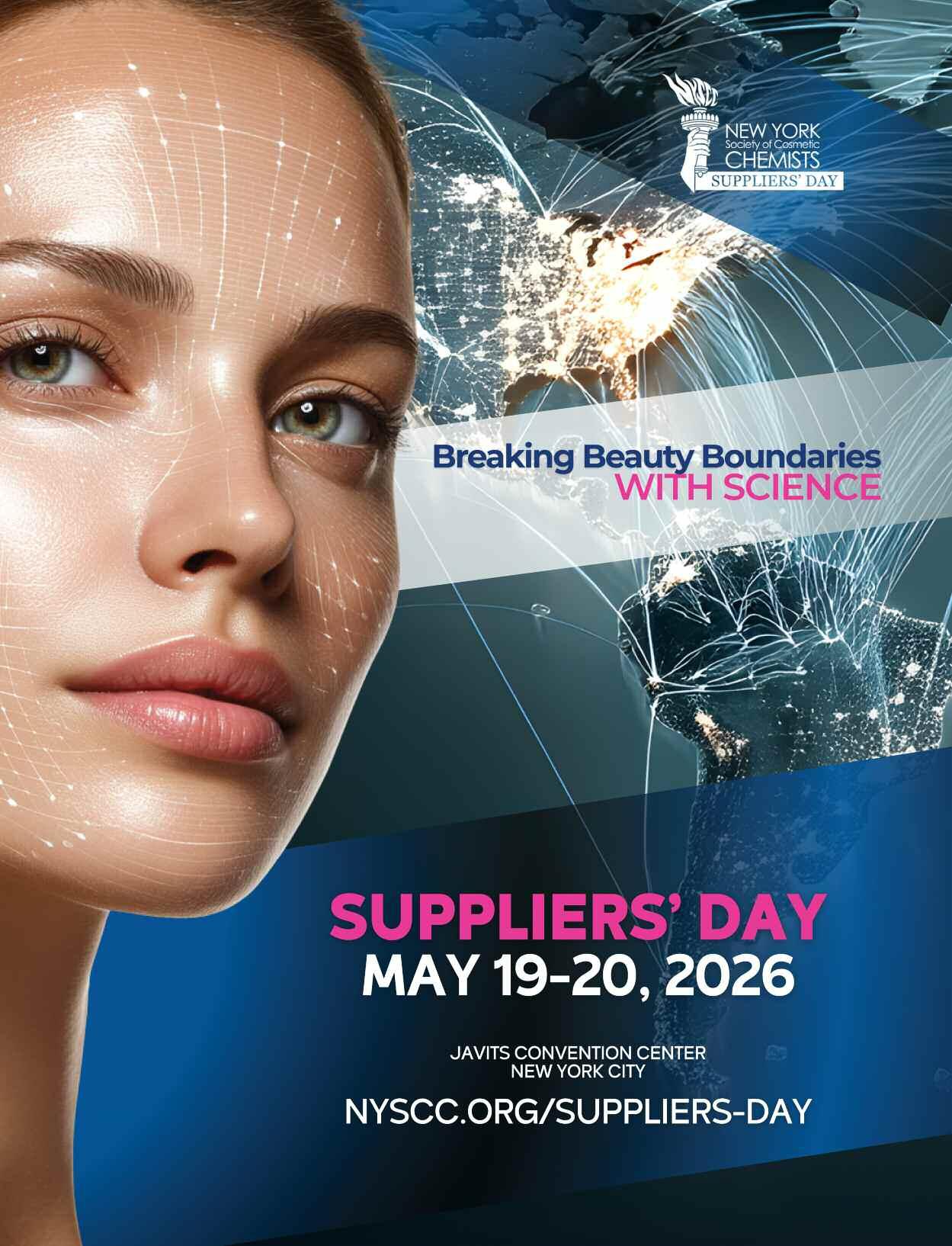
Looking ahead, our theme for 2026 Breaking Beauty Boundaries with Science will come to life across all NYSCC initiatives, including our flagship event, Suppliers’ Day 2026, retur ning to the Jacob K Javits Convention Center on May 19th–20th. Suppliers’ Day will continue to evolve as a true hub for collaboration and discovery, featuring cutting-edge education, immersive show-floor experiences, and targeted programs designed to support emerging brands, seasoned scientists, and the next generation of innovators alike.
Beyond the show, we will expand the NYSCC’s global reach, celebrate the diversity of our membership, and ensure our chapter remains welcoming and relevant to professionals at every stage of their careers We will explore new ways to share scientific storytelling (including the relaunch of the Chapter podcast), strengthen engagement with students and young professionals, and deepen collaboration with SCC National and our sister chapters
There is no better way to kick off the year than with our annual Area 1 Ski Trip, taking place January 30th–February 1st in Killington, Vermont. This exceptional winter weekend offers activities for skiers and non-skiers alike, along with engaging educational programs and meaningful networking opportunities. Thank you to the CTSCC, LISCC, and NESCC for once again teaming up with us and helping make this event even bigger
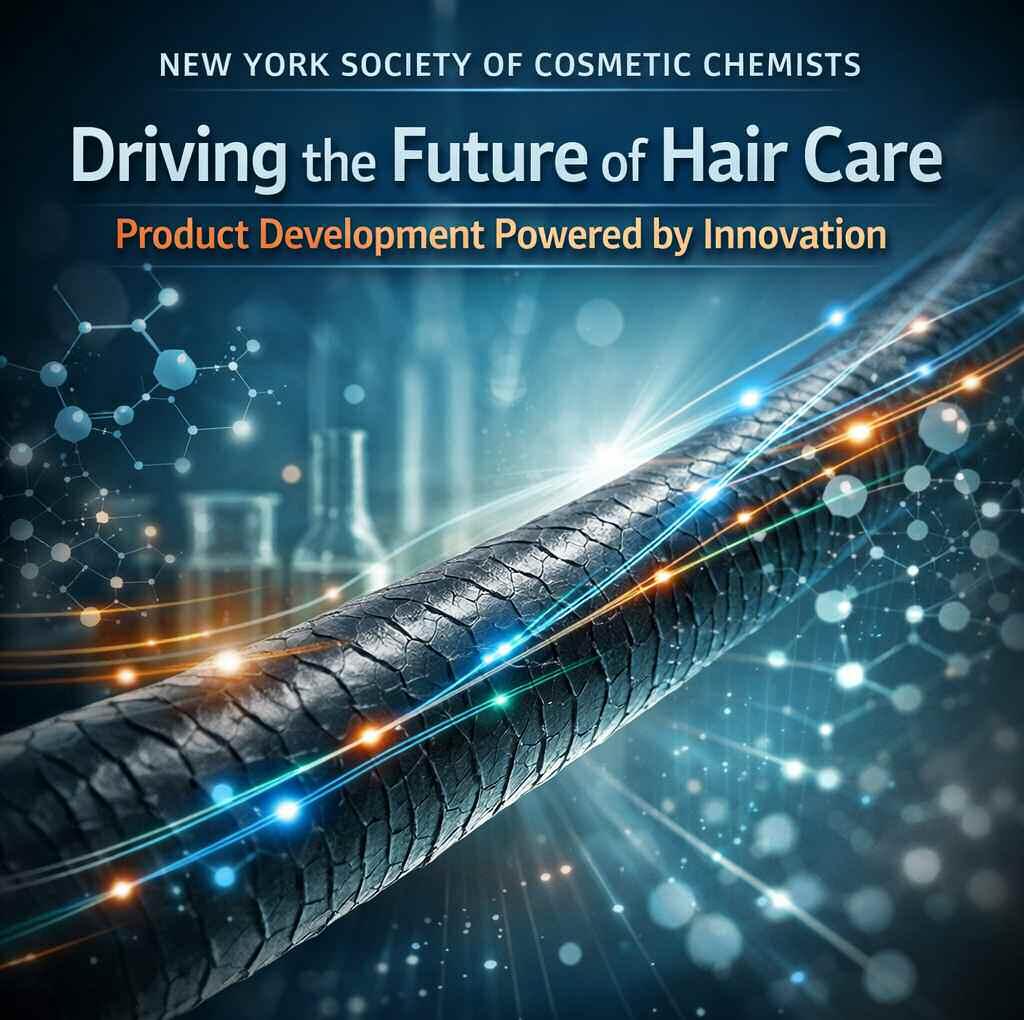
We are also finalizing our monthly educational programs, which will explore the topics and trends driving beauty and personal care innovation including our February program, “Driving the Future of Hair Care: Product Development Powered by Innovation ”
Speaking of innovation, the CEW’s Virtual Innovators Forum on January 14th spotlighted five trailblazing women who are transfor ming beauty science and were honored in the inaugural Innovators Awards The NYSCC is honored to collaborate with C recognizing 31 women in science and design
This year, I am proud to work alongside an exceptional 2026 E Board, whose leadership, expertise, and dedication will be instru as we carry out our initiatives Together, we will collaborate cl throughout the year to support our members, advance education, a strengthen the community that makes NYSCC thrive
Let’s continue breaking beauty boundaries!
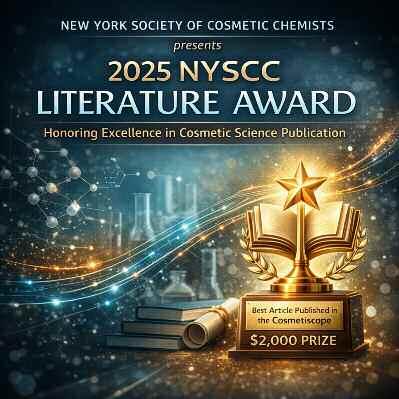
2025 NYSCC Literature Award
“ F ro m S t re s s to Strength: The Science and Promise of PlantBased Adaptogens in Skin Protection,” which was published in the 2025 Summer issue of Cosmetiscope Dr Ma is an Assistant Professor in the Department of Biomedical and Phar maceutical Sciences at the College of Phar macy of the University of Rhode Island (URI)
NYSCC, CTSCC, LISCC, and NESCC Ski Trip
Friday, January 30th –
Sunday, February 1st
Killington, VT
We are excited to announce that the NYSCC, CTSCC, LISCC and NESCC chapters are teaming up again to bring you an exceptional winter weekend! This four-chapter Area 1 collaboration continues to grow, offering even more networking opportunities, enhanced programming, and an incredible industry experience

Bigger And Better Than Ever!
Bigger And Better Than Ever!
What to Expect:
• On and off-mountain activities for everyone, skiers and non-skiers alike
• Exciting educational programming
• Primary hotel – Cascade Lodge Killington.
• Ticket infor mation is availbale on the NYSSCC website (www.nyscc.org).
Friday, January 30th: On-Mountain Activities and Education + Dinner
• Mountainside activities featuring 20% off discounted lift tickets and snow tubing/adventure park access (until 5:00 p.m.)
• Networking Happy Hour (6:00 p m at The Cluckin’ Cafe at Mountain Green Resort)
• Educational Event with multiple speakers (7:00 p m at The Cluckin’ Cafe at Mountain Green Resort)
• Dinner and Drinks (until 9:30 p.m. at The Cluckin’ Cafe at Mountain Green Resort)
• Optional after party (9:30 p.m. at The Wobbly Bar n)
Saturday, January 31st
• Ver montology Countryside Scenic Bus Tour with lunch stops (10:30 a m – 6:00 p m )
• Networking at Harpoon Brewery with expert tour guide
• Optional event at a distillery or cheese shop
• Free evening to explore with your new connections (starting at 6:00 p.m.)
Room Blocks and Sponsorships
Details on subsidized room rates (one- and two-night options), self-booking, and sponsorship opportunities (including advertorial speaking, website, and digital features) are available at the NYSCC website
For more infor mation and to register for the event, visit the Events section of the NYSCC website (www.nyscc.org)










for the face, feet, or vulvar area would constitute the first essential step toward har monized in vitro testing.2 11
To complement this, an ex vivo extension involving microbial consortia recovered from real skin swabs introduces a more complex and realistic model. By assessing the viability and selectivity of skin-relevant microbial communities exposed to test products under standardized conditions, we bridge the gap between simplified mono-culture assays and true ecological relevance. If the industry can reach consensus on the microbial panels and experimental conditions, this hybrid in vitro–ex vivo model could serve as the first standardization block for defining microbiome-friendly products offering a practical and scientifically robust equivalent to the established challenge test 2,9,12
Beyond this foundation, deeper insight comes from in vivo studies using high-resolution sequencing Shotgun metagenomics or 16S rRNA/ITS sequencing helps reveal how community composition and functional potential shift in real skin over time 5,13 These studies are essential to support claims like balancing, restoration, or microbiome support However, they are not yet standardized. Variables in sampling, sequencing depth, database selection, and bioinfor matics pipelines along with biases introduced by relic DNA that can distort the apparent composition of skin communities make cross-study comparisons challenging and regulatory alignment difficult 12,14-17 These methodological inconsistencies are well-documented in recent evaluations of skin microbiome workflows 17
Even more advanced is metatranscriptomics, which moves from identifying who is present to understanding what they are actually doing. It captures active microbial functions such as AMP production, lipid metabolism, stress responses, and immune signaling However, the method is technically fragile: RNA degrades rapidly, microbial RNA yields are extremely low in skin, and host material dominates the extract.5 These limitations are consistent with recent evaluations showing that metatranscriptomic workflows in skin are hindered by RNA instability, insufficient microbial mRNA, dominant host RNA, and suboptimal rRNA depletion 17,18 Recent metatranscriptomic mapping across human body sites further demonstrates that microbial gene expression on skin is both low in magnitude and highly site-specific, with host RNA overwhelming microbial signals and significantly limiting interpretability 19 As a result, interpretation becomes challenging transcript abundance does not necessarily translate into clinically relevant activity and substantial methodological har monization is still required before this approach can support routine standards.
Of course, none of this matters if the product causes skin irritation, damages the barrier, or triggers inflammatory responses. A product cannot be microbiome-friendly if it is not skin-friendly.5 Measurements like trans-epider mal water loss (TEWL), skin pH, hydration, cytokine levels (IL-1α, TNF-α), and subjective irritation scores are critical.20 The skin and its microbiome are a symbiotic unit; a disturbance to one often har ms the other As highlighted by Prescott et al even the stratum cor neum, often seen as inert, is biologically active, interacting with both microbes and immune pathways 7
It’s also important to clear up misconceptions Microbiome-friendly does not mean promoting more microbial diversity by default In some contexts, reduced diversity if dominated by stable, healthassociated taxa can indicate a well-balanced state.1 Nor does it mean being antimicrobial. Reducing pathogen load can be beneficial, but indiscriminate microbial suppression often disrupts the ecosystem 6 Finally, taxonomic composition alone is not enough functional preservation, such as maintaining AMP synthesis or ceramide metabolism, is what supports resilience 1

What we need is not a single test, but a layered framework. Standardized in vitro compatibility testing defines the base like Dobelli’s interlocking bricks Sequencing-based in vivo studies give depth and ecological relevance Metatranscriptomics adds functional precision And, finally, clinical assessments confir m safety and real-world perfor mance. Recent proposals even suggest tiered labeling systems to indicate whether a product has been validated in vitro only, or through full in vivo analysis an idea that aligns well with consumer demand for transparency.12
Microbiome-friendly is not a slogan It is a scientifically testable property multifactorial, dynamic, and rooted in systems biology To truly ear n the claim, products must move beyond marketing language and engage with this layered, standardized approach. W ithout it, we risk another wave of superficial promises in an industry that consumers are finally beginning to hold accountable In the evolution of skin microbiome science, the next leap forward will not come from complexity alone it will come from standardized complexity And the sooner we build that foundation, the more stable the tower of innovation will become.
References
1 O’Malley, M A (2024) The concept of balance in microbiome research BioEssays, 46(7), e2400050 https://doi.org/10.1002/bies.202400050
2 Carvalho, R ; Pirrera, A ; de Almeida, L ; Oliveira, M ; and Magalhães, L (2022) Skin microbiota and the cosmetic industry. Microorganisms, 10(12), 2400. https://doi.org/10.3390/microorganisms10122400
3. Hwang, Y.J.; Lee, M.; Choi, Y.; Kim, M.; and Jin, S. (2021). Effect of the skincare product on facial skin microbial structure and biophysical parameters: A pilot study Microbiologyopen, 10(5), e1203 https://doi.org/10.1002/mbo3.1203
4. Grice, E.A. and Segre, J.A. (2011). The skin microbiome. Nat Rev Microbiol, 9(4), 244–253. https://doi.org/10.1038/nrmicro2537
5. Byrd, A.L.; Belkaid, Y.; and Segre, J.A. (2018). The human skin microbiome. Nat Rev Microbiol, 16(3), 143–155 https://doi.org/10.1038/nrmicro.2017.157
6 Pinto, D ; Ciardiello, T ; Franzoni, M ; Pasini, F ; Giuliani, G ; and Rinaldi, F (2021) Effect of commonly used cosmetic preservatives on skin resident microflora dynamics Sci Rep, 11, 8695 https://doi.org/10.1038/s41598-021-88072-3
7. Prescott, S.L.; Larcombe, D.L.; Logan, A.C.; et al. (2017). The skin microbiome: impact of moder n environments on skin ecology, barrier integrity, and systemic immune programming World Allergy Organ J, 10(1), 29. https://doi.org/10.1186/s40413-017-0160-5. (continued on Page 6)

Defining ‘Microbiome-Friendly’:
8 Dobelli, R General standardization theory Edge org 2017 Available at: https://www.dobelli.com/en/essays/edge-essays/.
9 Inter national Organization for Standardization (ISO) ISO 21147:2018 Cosmetics Microbiology Evaluation of the Antimicrobial Protection of a Cosmetic Product. Geneva, Switzerland: ISO; 2018
10. Kong, H.H.; Oh, J.; Deming, C ; Conlan, S ; Grice, E A ; Beatson, M A ; Nomicos, E ; Polley, E C ; Komarow, H D ; Murray, P R ; Program, N C S ; Tur ner, M L.; and Segre, J.A. (2012). Temporal shifts in the skin microbiome associated with disease flares and treatment in children with atopic der matitis. Genome Res, 22(5):850-859. https://doi.org/10.1101/gr.131029.111.
11 Rademacher, M ; Zinn, M K ; Beinio, R ; and Bockmühl, D P (2022) A new model to investigate the effects of cosmetics on skin microorganisms in vitro. Cosmetics, 9(4), 88 https://doi.org/10.3390/cosmetics9040088
12 van Belkum, A ; Lisotto, P ; Pirovano, W ; et al (2023) Being friendly to the skin microbiome: experimental assessment. Front Microbiomes, 1, 1077151. https://doi.org/10.3389/frmbi.2022.1077151
13. Edslev, S.M.; Agner, T.; and Andersen, P.S. (2020). The skin microbiome in atopic der matitis: recent insights and research progress Acta Der mato-Venereologica, 100, adv00140 https://doi org/10 2340/00015555-3535
14 Thiruppathy, D ; Moyne, O ; Marotz, C ; W illiams, M.; Navarro, P.; Zaramela, L.; and Zengler, K. (2025) Absolute quantification of the living skin microbiome overcomes relic-DNA bias and reveals specific patter ns across volunteers. Microbiome, 13, 65. https://doi.org/10.1186/s40168-025-02063-4
15. Ruuskanen, M.O.; Vats, D.; Potbhare, R.; RaviKumar, A ; Munukka, E ; Ashma, R ; and Lahti, L (2022) Towards standardized and reproducible research in skin microbiomes Environ Microbiol, 24(9), 3840–3860 https://doi.org/10.1111/1462-2920.15945
16. Rodriguez, J., et al. (2024). Microbiome testing in Europe: navigating analytical, ethical and regulatory challenges Microbiome, 12, 258 https://doi.org/10.1186/s40168-024-01991-x
17. Santiago-Rodriguez, T.M.; Le François, B.; Macklaim, J.M.; Doukhanine, E.; and Hollister, E.B. (2023) The skin microbiome: current techniques, challenges, and future directions Microorganisms, 11(5), 1222 https://doi.org/10.3390/microorganisms1105122
18 Fer nández-Carro, E ; Letsiou, S.; Tsironi, S.; Chaniotis, D.; Ciriza, J.; and Beloukas, A. (2025). Alter natives integrating omics approaches for the advancement of human skin models: a focus on metagenomics, metatranscriptomics, and metaproteomics. Microorganisms, 13(8), 1771. https://doi.org/10.3390/microorganisms13081771
19. Chia, M.; Ng, A.H.Q.; Ravikrishnan, A ; et al (2025) Skin metatranscriptomics reveals a landscape of variation in microbial activity and gene expression across the human body. Nat Biotechnol, https://doi.org/10.1038/s41587-025-02797-4
20. Nohynek, G.J.; Antignac, E.; Re, T.; and Toutain, H. (2010). Safety assessment of personal care products/cosmetics and their ingredients Toxicol Appl Phar macol, 243(2):239-259 https://doi:10.1016/j.taap.2009.12.001.
About the Author
Spyridon Markos, M.Sc., is a biologist specializing in molecular and applied microbiology with over 20 years of experience across the food, phar maceutical, and cosmetic industries. He currently serves as Senior Scientific Advisor and Key Account Manager at QACS Lab (Greece), where he leads the design and scientific oversight of advanced microbiome and molecular testing services, including metagenomic and functional microbiome studies. His work focuses on translating high-resolution microbiome data into scientifically defensible product development strategies, regulatory-relevant evidence, and claim substantiation frameworks He has contributed to multiple industrial and in vivo microbiome studies and is actively involved in discussions about standardization, reproducibility, and responsible use of microbiome data in cosmetics.


. For more inf or ma tion, v is it the E ve nts s e c tion of the NYS C C we bs ite (www.ny s c c .or g ).



NYSCC Employment Section
Are you looking for a candidate that loves the personal care industry, wh the thrill of designing a make-up product or shampoo? Or perhaps seeking someone with expertise in raw materials Maybe you need so around the lab and could use a tenacious inter n who wants to start their career in the personal care space.
The NYSCC Chapter supports you and your business with FREE postings to our webpage. Contact employmentadmin@nyscc.org to have passionate candidates apply to your roles Recent postings include companies such as Lucas Meyer Cosmetics, Kenvue, Olaplex, and Symrise for roles in Sales, Marketing, For mulations, and Regulatory

Below are some positions in the personal care industry that are currently posted on the NYSCC website For a full description of the jobs, visit https://nyscc.org/jobs
• Senior R&D Chemist II – Bell Inter national Labs – Miami, FL
• New Business Development Manager – Personal Care – Flavorchem & Orchidia Fragrances – Chicago/Remote
• New Business Development Manager – Air Care – Flavorchem & Orchidia Fragrances –Chicago/Remote
• Southeast Sales Representative – Omya – Georgia/Remote


CSR program
Naturally committed to a sustainable world aturally a to
NYSCC History Project ...Steve Herman NYSCC History Project ...Steve
1979 Part III
This article is a continuation of the Summer 2025 and September 2025 issues of Cosmetiscope.
To celebrate the NYSCC’s 25th anniversary in 1979, for mer Chapter Chairs were asked for their reminiscences The responses came from the following, with their year as Chairman in parentheses: Warren B Dennis (1957), Henry F Maso (1964), Mitchel L Schlossman (1966), Maurice L Rosenthal (1968), Stephen G Hoch (1969), Joseph H Kratochvil (1970), Paul Thau (1971), George Pollack (1972), Graham Barker (1973), Ber nard Foss (1974), Gerald S. Goldberg (1976), Morton Pader (1977), and Sharon Reich (1978) In the Summer 2025 issue of Cosmetiscope, we looked at 1957 providing an account of the origin of the Chapter The September 2025 issue of Cosmetiscope covered the period of the late 1960s We will now look at some of the NYSCC’s activities in the early 1970s
In 1970, the Chapter celebrated its 25th anniversary under the leadership of Joseph H Kratochvil The 1970 weekend outing was held at the Host Farm Inn (now called Wyndham Lancaster Resort), located in Lancaster, PA, with approximately 200 people in attendance The second university meeting was held at Rutgers University, with Weems Clevenger, FDA District Director, as the featured speaker. The Chapter also hosted the annual seminar a now defunct midyear meeting of the National SCC
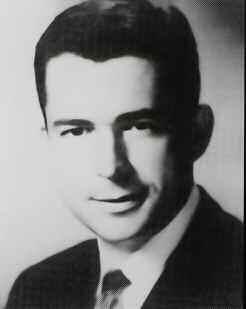
Joseph H Kratochvil – 1976
Under Paul Thau in 1971, the Chapter introduced educational sessions prior to the regular meetings In addition, a joint meeting was held with the American Society of Perfumers at Fairleigh Dickinson University Overall, there were large tur nouts at monthly meetings, with over 300 members in attendance at one event held at the Robin Hood Inn in Clifton.
George Pollack set out to do some different things in 1972, not always with happy endings. The meeting at the new circular Holiday Inn in Saddle Brook was hard for some members to find and even harder to park Another meeting was held at the new Playboy Club where construction was barely completed by meeting time A rainy weekend led to more complaints as though the Chapter controls the weather!
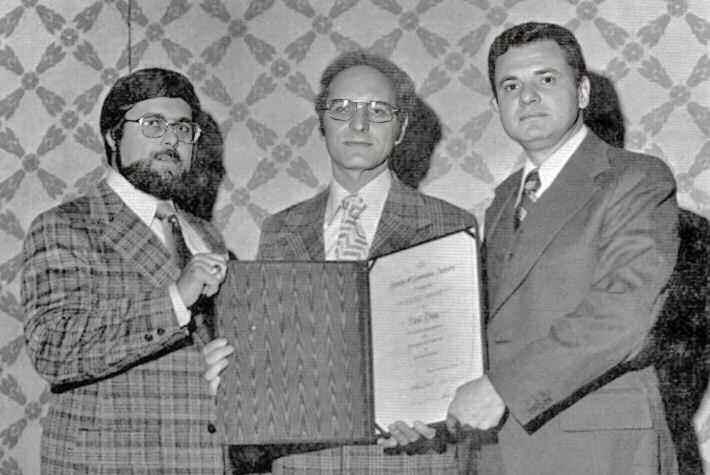
Left to right: Stephen G Hoch, 1975 SCC President; Paul Thau, Merit Awardee; and George A Fioto, Merit Award Chairman
Meet the 2026 Executive Board
The NYSCC proudly announces its 2026 Executive Board The new board was officially inducted on November 13, 2025, during the NYSCC Education Awards Night aboard the Intrepid in New York City The NYSCC also awarded over $200,000 in scholarships and grants supporting students, members, institutions, and professional development in cosmetic science.
The 2026 NYSCC Executive Board is:
• Anushka Nadkar ni – Chair – Bentley Laboratories
• John Carola – Advisor – Katonah Chemicals
• Diane Dabkowski – Treasurer – Rutgers University
• Brian Ecclefield – Treasurer Elect – Validated Claim Support
• Anne Young – Secretary – Croda
• Afam Okoro – Chair Elect – Consultant
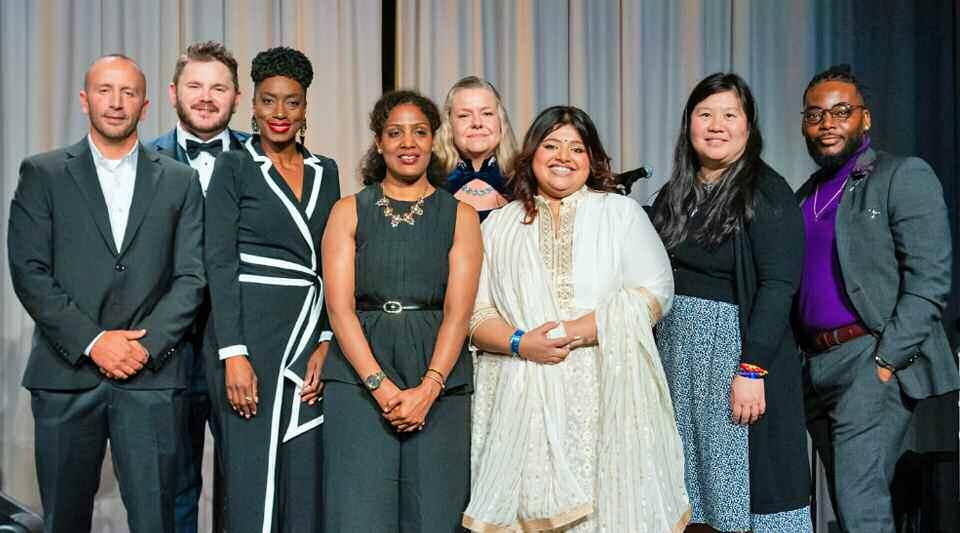
Members of the 2025 and 2026 NYSCC Executive Board From left to right: John Carola, Brian Ecclefield, Amber Evans, Mythili Nori, Diane Dabkowski, Anushka Nadkarni, Anne Young, and Afam Okoro
“I am honored to lead this incredible Chapter and continue strengthening our mission of education, innovation, and community,” said Anushka Nadkarni, 2026 Chair “W ith this outstanding board, dedicated committee members, and our passionate volunteers, the NYSCC will continue expanding opportunities for scientists at every stage of their careers ”
Click the following link to read the biographies for the 2026 Executive Board: https://nyscc.org/executive-board/.
Call for Papers
The Cosmetiscope editorial committee invites all interested parties to submit feature technical articles for publication in the NYSCC monthly newsletter Authors of feature articles are eligible to win the prestigious NYSCC Literature Award ($1,000) for the best front-page article published during the calendar year Authors also receive $200 reimbursement to attend a theatrical perfor mance of their choice Writing an article for your peers is a very rewarding experience, both personally and professionally, and will ensure your place in NYSCC history You may choose whatever topic you feel would be interesting to fellow colleagues in our industry. We also welcome any other types of commentaries or articles that may be published in the Career Corner, Technical Tidbit section, or as a Letter to the Editor
Please send correspondence to: roger mcmullen@fdu.edu.

Supplier of specialty materials!
Tom Balsamides
375 Minnisink Road Totowa NJ
Cell 201.207.0570
PROTAMEENTOMB@AOL.COM
WWW.PROTAMEEN.COM

2026
NYSCC Events Calendar
• For updated NYSCC information, visit us on the web at: www.nyscc.org
• For National SCC information: www.scconline.org
January 30 – February 1
February 24
March 19
April 23
May 19 – 20
June 27
August 8
September 8
October 8
November TBD
November 30 – December 2
NYSCC, CTSCC, LISCC, and NESCC Ski Trip Killington, VT
Driving the Future of Hair Care: Product Development Powered by Innovation Montclair Art Museum, Montclair, NJ
D&I in Industry and the Workplace Panel Maxwell Social, New York, NY
Sustainability Symposium
Liberty House, Jersey City, NJ
NYSCC Suppliers’ Day
Jacob K Javits Convention Center, New York, NY
NYSCC Golf Event
Crystal Springs Resort, Hamburg, NJ
NYSCC Fishing Trip
Atlantic Highlands, NJ
Suncare Event Pleasantdale Château, West Orange, NJ
The Skin Barrier as a Living Interface: Biology, Disruption, and Repair The Legacy Castle, Pompton Plains, NJ
Innovations Event Bell Works, Holmdel, NJ
SCC Scientific Meeting & Showcase
JW Marriott LA Live, Los Angeles, CA