

Mastering U.S. Pet Care Formulation: Understanding Regulations and Animal Needs
…Amanda Rountree
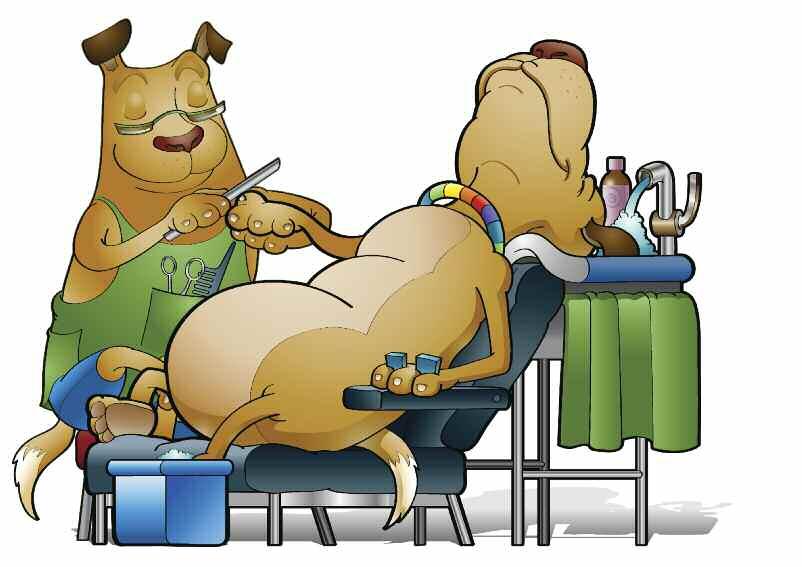
Pets play a significant role in many of our lives, and the pet care market reflects this, with an estimated value of 13 88 billion USD according to a 2023 global market analysis of the pet grooming product market.1 From our loyal companions like dogs and cats to our majestic equine friends, pets come in all shapes and sizes, each with their unique grooming needs Understanding how to formulate for pets is crucial from a regulatory perspective Allow me to walk you through some compliant issues and various formulations essential to animal care
FDA Cosmetic Counterpart for Animals: Grooming Aids
Understanding how pet care is categorized from a legislative perspective will greatly help your for mulation jour ney Pet care falls within its own realm, similar to personal care, and requires compliance with specific regulations We will still need the FDA’s help on this one. Sec. 653.100 Animal Grooming Aids from the U.S. Department of Health and Human Services Food and Drug Administration Office of Regulatory Affairs and Center for Veterinary Medicine will guide everything we need from a United States-based formulation perspective Very similar to cosmetics, “products intended solely to cleanse or beautify animals commonly referred to as ‘grooming aids’ are not subject to the FD&C Act and are not regulated by the FDA ”2 Similar to the case of cosmetic vs drug debate, “if a product purporting to be a grooming aid is intended to cure, mitigate, treat, or prevent disease in animals or to affect the structure or function of the body of animals, the product is a drug under section 201(g) of the FD&C Act ”2

Another similarity is to demonstrate a product’s safety and effectiveness; likewise, anything unapproved or adulterated is subject to FDA enforcement Of course, there could be hybrids, just like cosmetics; however, these lean more toward the drug side of things Medicated shampoos for pests like fleas and ticks would be considered a drug over a shampoo that just cleanses. If you ’ re wondering if your product would be considered a drug, you can always reference the monthly updated FDA Green Book for all the infor mation you need on approved animal drugs. Even though grooming aids have their own special category, the Federal Trade Commission (FTC) labeling regulations still play a role in pet products As you can see, cosmetics and grooming aids have some similarities, but then again, there are stark contrasts
EPA Defined Ingredients
From a cosmetic lens, we look to the Environmental Protection Agency (EPA) for regulations concer ning issues such as volatile organic compounds (VOCs) The EPA comes into play for pet care for two major purposes, and that would be for registered pesticides and the Toxic Controlled Substances Act (TSCA). Pesticides are often used in animal care to protect from injurious pests such as pesky mosquitos and biting flies The EPA ensures the safety of pesticides, even when used on animals, in accordance with label directions 3 A vital callout is not all pesticides are universal. What might be okay for a dog, can be toxic to a cat. This is critical to keep in mind when for mulating or purchasing products for your pet The EPA wonderfully outlines the requirements and (continued on Page 5)
Painting of Elsa by Bego Blázquez Copyright 2024
BOARD & COMMITTEE
Chair
Amber Evans chair@nyscc.org
Chair-Elect
John Carola chair-elect@nyscc org
Treasurer Alex Blakeman treasurer@nyscc org
Treasurer-Elect Diane Dabkowski treasurer-elect@nyscc org
Secretary Mythili Nori secretary@nyscc org
Advisor
Stacey House advisor@nyscc.org
Program
Alexis Piterski program@nyscc.org
At Home Live Series
Susanna Fer nandes
Susanna Fer nandes@tri-k com
By-Laws and Membership
Cathy Piterski cpiterski@essentialingredients com
Communications
Maria Sousa socialmedia@nyscc org
House Chair
Afam Okoro house@nyscc.org
Special Events
Johanna Gigliotti johanna.e.gigliotti@gmail.com
Cosmetiscope Editor
Roger Mcmullen roger mcmullen@fdu edu
Cosmetiscope Advertising
Bret Clark rbclark@ashland com
Letter from the Chair …Amber
Seventy years is a significant achievement, and it has truly been an honor to be the Chair during this milestone year I look forward to celebrating all this mighty Chapter’s accomplishments over these past seven decades at our gala on Saturday, November 16th at the iconic Plaza Hotel

Giorgino Macalino and his event team are putting together a fabulous night featuring a sophisticated platinum-themed décor to commemorate our 70th anniversary and a program that will honor the cosmetic science leaders, educators, and contributors who have made this Chapter the best it can be throughout the years Additionally, a record number of scholarships, grants, and awards will be bestowed to students, young professionals, educational institutions, and our members. You don’t want to miss this incredible night! Register here for tickets: https://nyscc.org/blog/events/70th-anniversary-gala-and-nyscc-supports-education-night/.
Looking back to October at our first ever oral care program, “Emerging Trends in Oral Health and Beauty” was very infor mative and well received It was great to explore this highly relevant topic as part of our educational program series.
Another program first for the NYSCC will be our upcoming “Pet Care and Grooming” webinar on November 5th This complimentary presentation will delve into how different U.S. gover nment agencies define and regulate grooming aids in this category and how to develop for mulations based on the specific needs of various types of pets You’ll also be treated to a photomontage of participants’ beloved pets!
Next, we will have an Ingredients and For mulation Panel Discussion in partnership with CEW on November 14th Hear from this year ’ s judges on what made eight companies’ ingredients and formulations stand out as finalists for the CEW Supplier’s Beauty Award The winner will be announced at the CEW Beauty Awards luncheon on November 21st at the New York Marriott Marquis.
Also on November 14th, the NYSCC is hosting an important event, “D&I in the Professional Beauty World,” at the Mitsui & Co office in New York City Attendees will have the unique opportunity to lear n, network, and contribute to a more inclusive and equitable industry. Register and lear n more about all our November programs on the events page of our website
In this month full of gratitude, I am thankful for the passion and dedication displayed by my fellow executive board and committee members who volunteer countless hours to further our mission of education and excellence in cosmetic science I am also grateful for all the new and established partnerships that help us to create an unmatched experience that positions our flagship event, Suppliers’ Day, as the leading North American trade show
I wish you a wonderful Thanksgiving and peaceful Holiday Season.

2024 NYSCC Events Calendar
• For updated NYSCC information, visit us on the web at: www.nyscc.org
• For National SCC information: www.scconline.org
November 5 Pet Care and Grooming Virtual Event
November 14 Hear from the CEW Supplier’s Award Judges on this Year’s Top Ingredients and Formulations Virtual Event
November 14 D&I in the Professional and Beauty World Mitsui & Co (U S A ) Office, New York, NY
November 16 70th Anniversary Gala and NYSCC Supports Education Night The Plaza, New York, NY
December 11-13 SCC Scientific Meeting & Showcase Los Angeles, CA


(continued from Page 1)
guidelines that need to be met Through the Federal Insecticide, Fungicide, and Rodenticide Act (FIFRA), the EPA’s regulated pesticides on the market are well-established and researched, allowing for an expansive choice for your product needs It is imperative to understand that the FDA regulates certain medicated products for animals as drugs, while the EPA regulates others as pesticides. Always doublecheck regulations and ensure you ’ re registered with the right gover nment agency
What is TSCA? According to the EPA, the TSCA of 1976 provides the EPA with authority to require reporting, record-keeping and testing requirements, and restrictions relating to chemical substances and/or mixtures.4 Certain substances are generally excluded from TSCA, such as food, drugs, cosmetics, and pesticides In the realm of personal care, we are privy to the TSCA exemption for cosmetics; therefore, we can continuously use novel and exciting ingredients Around every six months, the TSCA inventory is updated. As it stands, the TSCA Inventory contains 86,770 chemicals, but only 42,377 are active.5 You can download the TSCA inventory and search by chemical CAS number. You can also go to your raw material safety data sheet (SDS) and check section 15 for regulatory information. The green light is when your ingredients are listed on the U S TSCA Chemical Substance Inventory If you can’t find it on TSCA, it’s considered a new chemical to U S commerce The reason you want to be compliant is if you use an item not registered on TSCA, expect to follow Section 5 of TSCA, which requires anyone who plans to manufacture a new chemical substance for a non-exempt commercial purpose to provide the EPA with a Premanufacture Notice (PMN) at least 90 days before initiating the activity or incur repercussions from the EPA for violation 6 If you think regulations for U S commerce seem daunting, keep in mind other countries’ inventory lists, along with requirements for pet products.
Of course, we know regulations are not only everchanging but also nuanced Just within the U S , remaining compliant is important. While easier said than done, do not forget about state regulations! Medicated products might not be as accessible given your company ’ s bandwidth to support and keep up with hefty regulations, but showcasing them is an option since these are popular within the pet space. Just like every cosmetic manufacturing site might not be making over the counter (OTC) products, grooming aids alone might make the most sense, given your company ’ s capabilities. While R&D folks typically need a slice of regulatory knowledge to commence for mulating, it is vital to utilize gover nment resources, trusted industry sources, and regulatory consultants for utmost compliance for your unique development needs
Pet Chemistry
Skin pH varies in different animals While human skin is more on the acidic side, dog skin is more alkaline, with a recent report revealing a mean pH of 7 5 for canine skin 7 The skin pH level for a cat is around 6, which is slightly on the acidic side.8 We find larger pets like horses have a skin pH from 7.0-7.4, around the neutral arena 9 Little fuzzy pets like guinea pigs zone in at 5 5 while a rabbit will circle around 6.7, which shows variation between all types of animals.10 Of course, there is a massive list of all kinds of pets, from skunks to turtles, but not all of these types of pets necessarily need assistance from grooming aids. Having a baseline understanding of skin pH will help keep animals in balance and avoid adverse skin reactions

There is a question: Can pets share products with humans? It is complicated. In a pinch, it should be okay, but it is best to use products intended for the subject itself There are hybrid products on the market that say they are for humans and other types of animals In that case, you need to follow the most stringent regulations; although, it is best practice to separate church and state to avoid weighing what you need from each category to be compliant
(continued on Page 6)


What a Pet Wants, What a Pet Needs
It is paramount to consider all pets have special needs, and they should be addressed per the veterinarian’s recommendations The first product most people think of is a pet shampoo We know pets can get into messes or have the proclivity to get dirty and smelly sometimes. Maintaining cleanliness and perhaps primping can be ideal for a pet’s appearance We can heavily rely on our knowledge of personal care-based for mulas to help build our pet grooming line. I’ll be providing the best items to add to a product line with some tips and tricks along the way
One concept is how often pets are groomed Typically, a domesticated animal will not bathe as often as a human would. So, consider what your final sizes for finished goods will be. On the other hand, large and bulk sizes might make sense for someone with multiple pets, larger pets, or for groomers Travel sizes can come in handy because pets can often tag along for the ride or may need to be presented for showings, like horses or dogs
Let’s talk about why we should mirror cosmetic protocol Safety substantiation is key Test all your standard specifications, conduct stability testing, run microbial studies, and test/substantiate all claims on your bottle While a list of ingredients is not necessary for animal products, it is a good practice to follow cosmetic labeling guides for transparency and courtesy to the consumer. We owe it to the special members of the family to give them the best they deserve!
Pet Shampoo
Let’s start with a good wash. We can keep the classic picture of a shampoo/body wash in mind but consider the pH of the for mulation Pets may not be able to close their eyes or anticipate the sting that some anionic surfactants might cause. It is best to go with surfactants that have a low irritation profile based on results from reliable ocular studies These are often gentle but still offer robust foam. Fragrance can really make a product, but if this is used around the eye area or for pets with allergenic tendencies, it might not be ideal Be sure to advise your fragrance house that you are working on pet products, so they can help develop the best fragrance for your application Consider adding humectants and detangling agents to nourish the animal’s skin and keep their hair from tangling after their cleaning session. Once you have a favorable base, you can add actives, just ensure they are on the TSCA and registered with the FDA or EPA.
Conditioner


Now that the pet is squeaky clean, adding a conditioner will enhance their coat’s softness and shine. Something to note is animals are known to have fur; however, this is just the animal classification of hair Regardless, fur is a special type of hair, and even animal hair varies from human hair Pets need conditioning to maintain manageable hair. Given most pets have more alkaline skin than humans, we need to reconsider our final pH with conditioning A classic opaque base with conditioning agents will be a great start. If you would like to incorporate butters and oils, consider things like chocolate is toxic to dogs and cats For that reason, it is probably best not to use something like cocoa butter, even though it only has trace amounts of theobromine, the compound toxic to these pets Although we associate dogs with loving peanut butter, others might have some nut allergies, so consider this as well for nut-based butters and oils Pets battle with issues like dry skin, excessive shedding, dander, tangles, matted hair, and malodor, to name a few. These are some elements to consider based on the solutions you want to provide the pet
To help maintain the post-bathing conditioning, it is good to follow up with a leave-in conditioner. Consider where this product may be sprayed and if the pet will have interactions such as licking around these regions The same ideas apply to the butters and oils concept from the conditioner portion You can choke up on the viscosity and focus on elements like detangling, moisturizing, and perhaps even deodorizing You can have fun with the final dispensing for m from a flip top to a manual spray to an aerosol. Again, actives can be administered once you have a satisfactory base. A fun project I worked on was creating a stellar leave-in conditioner for a horse but incorporating insecticides to keep away the biting flies
Pet Perfume/Cologne
Next is a deodorizing product or pet perfume/cologne because bathing processes for pets can be, well, a process! Maintenance between can help elongate the time between baths For this product, we need to focus on neutralizing malodor and imparting some moisture This for mula is as simple as adding a deodorizing agent along with a pleasant fragrance. Just make sure everything is nice and soluble Feel free to add humectants and extracts to bring the marketing story all together. You can even make a wipe version of this product for quick freshness, especially on the go If you are using this on smaller pets or those that might self-groom, consider where they can lick or come into contact with this item

Similar to the deodorizing spray would be a dry shampoo Get the scent of your pet fresh from a bath without water This will help mattify your pet if they are prone to getting slick coats In general, dry shampoos are solvent and mattifying powder. You can go the mineral route or even explore the many starches Be sure to consider large micron sizes or wetter sprays and consider your pet’s sniffer You can go the classic aerosolized dry shampoo route or something in a pump bottle. Be cognizant of potential clogging issues It might make sense to employ an anticaking agent Work closely with your packaging engineer or vendor to perfect the dispensing of this item. You can add a hint of emollient to your dry shampoo Feel free to top it all off with a pleasant fragrance You can even add some deodorizing benefits to this for mulation
Other Personal Care Pet Concer ns
Cold weather, rough walking surfaces, and sensitive areas make pet balm essential This would most likely be a hot fill item or squeeze tube fill. A semi-soft balm can be used to protect the pads of the paws, the nose, and any other areas of the body that need some extra love Again, consider the oils and butters used if the pet might lick this item off. You want this item to be safe if consumed. Focus on moisturization and occlusive action for this item
Certain pets might have the proclivity to have eye discharge buildup Having a wipe to remove the tears and staining can help keep your pet healthy and looking fresh Consider utilizing safe ingredients for use near the ocular area A hybrid of a gentle surfactant mixture to loosen up debris with a mild salinelike solution to do the “rinsing” would be the silver bullet for this type of for mula.
Just like finger nails, hooves need special care Horse hooves are prone to breaks, dullness, fungal infections, dryness, and brittleness. From a salve to a spray, you can really have fun with the application for a nail protection and maintenance for mula By going with humectants, occlusives, and emollients, you ’ re sure to help gloss up their hooves, moisturize, and seal it all in from the elements Of course, antifungals can be incorporated if you are pursuing the drug route for this item.
Niche Personal Care Products
We can spend all day discussing for mulations. I will pop a few other ideas into your head on this subject that might be more entailed, niche, or surround the needs one might have because of pets For our fancy pups and horses out there, pet hairspray or hair coloring is popular in the realm of animal showcases I recall in The W izard of Oz how the horses were different colors Ear rinses and wound care are important within the realm of animal care; however, most of this does tread into medicinal application For our pals that stay inside, odors can persist from various circumstances. Cage cleaners, urine/pet mess cleaners, and air fresheners can come in handy Keep in mind pet-friendly ingredients!
Things to Keep in Mind
Here’s a little helpful list to keep handy when for mulating grooming aid products for U S commerce:
● Is this item on TSCA inventory?
● Is this item safe for use on the animal you are for mulating for?


(continued on Page 8)


CSR program
Naturally committed to a sustainable world aturally a to
● Does this material fall within the pH range of the skin of the animal you are for mulating for? Does this item have any affiliation with toxicity, allergy, or other concer ns?
● Do these ingredients require any FDA or EPA registration?
● Does this raw material have any glaring regulatory issues on a state level?
Concluding Remarks
All in all, for mulating grooming aids for pets is satisfying because you are helping pets actualize their best selves so they can have the most positive experiences with their family and loved ones A healthy and happy pet is so wonderful! There are so many types of products that can be made to help pets or issues surrounding them Understanding the special regulations surrounding grooming aids will help keep your for mulations compliant Having a baseline understanding of for mulating all things personal care can give you an edge in for mulating for pet care Now go out there and make the most PAWpular for mulas on the market!
References

1. Pet grooming products market size, share, and trends analysis report by type (shampoo and conditioner, shear and trimming tools, comb and brush), by distribution channel, by region, and segment forecasts, 2024 - 2030; Grandview Research; www.grandviewresearch.com/industryanalysis/pet-grooming-products-market; accessed October 25, 2024
2 Sec 653 100; Animal grooming aids, compliance policy guide, guidance for FDA staff; www.fda.gov/media/121177/download; accessed October 25, 2024.
3 U S Environmental Protection Agency; EPA’s regulation of flea and tick products; www.epa.gov/pets/epas-regulation-flea-and-tick-products; accessed October 25, 2024
4. U.S. Environmental Protection Agency; Summary of the toxic substances control act; www.epa.gov/laws-regulations/summary-toxic-substances-control-act; accessed October 25, 2024
5 U S Environmental Protection Agency; How to access the TSCA inventory; www.epa.gov/tscainventory/how-access-tsca-inventory; accessed October 25, 2024.
6 U S Environmental Protection Agency; About the TSCA chemical substance inventory; www.epa.gov/tsca-inventory/about-tsca-chemical-substance-inventory; accessed October 25, 2024
7 Matousek JL, Campbell KL, Kakoma I, Solter PF, Schaeffer DJ Evaluation of the effect of pH on in vitro growth of Malassezia pachyder matis Can J Vet Res 2003; 67(1):56-59
8 Szczepanik MP, W ilkołek PM, Adamek ŁR, Pomorski ZJ The examination of biophysical parameters of skin (transepider mal water loss, skin hydration, and pH value) in different body regions of nor mal cats of both sexes J Feline Med Surg 2011; 13:224-230; doi:10.1016/j.jfms.2010.11.003
9 Let your horse shine bright; www.fei.org/stories/lifestyle/health-fitness/let-your-horse-shinebright-cavalor#:~:text=The%20pH%20of%20your%20horse; accessed October 25, 2024.
10 Proksch E pH in nature, humans, and skin J Der matol 2018; 45(9):1044–1052; doi: 10.1111/13468138.14489

NYSCC Celebrates!
In the spirit of this year ’ s theme of “Inspire Innovate Celebrate ” we are excited to launch “NYSCC Celebrates!”, a Cosmetiscope section that celebrates the accomplishments of NYSCC members The accomplishment could be something professional like a promotion or new degree, or something personal such as writing a book or winning/ placing in a major competition This serves as a platfor m for our talented and multifaceted NYSCC members to proudly shine
If you would like to be featured in an upcoming “NYSCC Celebrates!”, please send your special accomplishment to:
• Roger McMullen (roger mcmullen@fdu.edu) and
• Amber Evans (chair@nyscc.org)
We look forward to celebrating YOU!


This month we celebrate:
n Anushka Nadkar ni Anushka Nad kar ni (Bent ley Laboratories) has been elected 2025 NYSCC Chair-Elect.
Your partner for innovation and success brenntag.com

n Irwin Palefsky
Irwin Palefsky (Cosmetic Laboratories, Inc.) has been awarded the Maison G. deNavarre Medal, the highest honor of the Society of Cosmetic Chemists (SCC), for his valuable contributions to the cosmetic industry.
NYSCC Employment Section
Are you looking for a candidate that loves the personal care industry, who the thrill of designing a make-up product or shampoo? Or perhaps you are someone with expertise in raw materials Maybe you need some help the lab and could use a tenacious inter n who wants to start their career in the personal care space.
The NYSCC Chapter supports you and your business with FREE postings to our webpage. Contact employmentadmin@nyscc.org to have passionate candidates apply to your roles Recent postings include companies such as Lucas Meyer Cosmetics, Kenvue, Olaplex, and Symrise for roles in Sales, Marketing, For mulations, and Regulatory


Below are some positions in the personal care industry that are currently posted on the NYSCC website For a full description of the jobs, visit https://nyscc.org/jobs
• Chemical Manufacturing Account Manager – Kobo Products – South Plainfield, NJ
• East Coast Sales Representative, Personal Care – Omya – East Coast
• Marketing Specialist – TRI-K Industries – Denville, NJ

NYSCC At Home Live Series

Pet Care and Grooming
November 5, 2024
11:00 a.m. – 12:00 p.m.


Event Organizer: Susanna Fer nandes (susanna fer nandes@tri-k com)
Sponsored by:


To register, visit the Events section of the NYSCC website (www.nyscc.org).
Mastering U.S. Pet Care Formulation: Understanding Regulations and Animal Needs
Amanda Rountree (IKI Manufacturing)
Immerse yourself into the regulations and essential for mulations for pet care products You’ll understand how different U.S. gover nment agencies define and regulate grooming aids. Come gain insights into the specific needs of various types of pets and how to develop a complete portfolio tailored to each kind
n Amanda Rountree
Amanda is a Senior Manager of Product Development at IKI Manufacturing. She has been working in the cosmetic industry for seven years Her primary R&D expertise is centered around aerosol and liquid development of personal care and household products She has made everything from laundry detergent, eyelash serum, peel-off masks, and hairspray Amanda’s favorite aspect of her work is innovative product development and helping craft an exciting marketing story for a successful product launch She has always been passionate about science and knew she would be a cosmetic chemist since high school. This led her to pursue her bachelor’s degree in chemistry at North Central College

As a student, Amanda became involved with the Midwest Chapter of the Society of Cosmetic Chemists She served as Hospitality Chair in 2019, Secretary in 2020, Bylaws Chair in 2021, Chair-Elect in 2022, Chair in 2023, and Teamworks Chair in 2024 Amanda has championed better connections within the Midwest Chapter by branching outside of the Chicago, Illinois area incorporating W isconsin and Indiana for exciting events She is also involved as a board member of the Souther n Aerosol Technical Association (SATA) and serves as an active speaker at industry conferences. Her educational message spreads beyond the industry, as she recently spoke at a Household and Commercial Products Association (HCPA) event to federal legislators regarding research and development

from the CEW Supplier’s Award Judges
November 14, 2024
1:00 – 2:00 p.m.

Hear from the CEW Supplier’s Award Judges on this Year’s Top Ingredients and Formulations.
Sponsored by:

To register, visit the Events section of the NYSCC website (www.nyscc.org)
















A Chapter Hall of Fame
As we celebrate our 70th Anniversary, it may be an appropriate time to recognize some of our
NYSCC has always been home to an impressive roster of industry experts. When we needed speakers at our meetings, we could always call on this group, knowing they were always willing to help In addition, most of our expert members also served as Chapter Chairs, so their technical expertise was matched by their commitment to service When baseball inaugurated its Hall of Fame it started with five players Here are six of our members that can be a starting point for the NYSCC Hall of Fame and the year they were Chair:


All these esteemed members and more should have their stories told. Sadly, Paul Thau passed away this year, and you can read about him in the February 2024 issue of Cosmetiscope Paul’s dedication to the NYSCC was extraordinary
In this piece, we discover a tiny slice of the life of Graham Barker. Graham lived from February 7, 1921, to October 6, 2011 Bor n in New York City, Graham was a graduate of City College of New York, where he ear ned his B.S. degree in Chemistry. He also obtained his M.S. in Chemistry from Brooklyn College. In addition to his academic activities, he was an Ar my Veteran of World War II where he served in the Pacific Theatre of Operations from 1942-1946
In addition to serving as NYSCC Chair in 1973, Graham was President of the National Society of
Henry Maso (1964)
Chalie Fox (1965)
Paul Thau (1971)
Graham Baker (1973)
Dave Steinberg (1979)
Ken Klein (1994)

Cosmetic Chemists in 1981. He received the National SCC Merit Award in 1977 and Maison G. deNavarre Award in 1986 Graham was the holder of many patents such as:
● U S 4,335,025A – Process for the preparation of synthetic detergent bars, and products produced thereby (1982)
● U S 4,247,538A – Conditioning shampoo (1981)
● U.S. 4,177,259A – Waterproof makeup and method of preparing same (1979)
● U S 4,104,403A – Water-oil emulsions and method of preparing same (1978)
After many years at W itco Chemical Corporation Graham established his own successful consulting company, Granum, Inc. The bare bones account of his life does not do justice to the effect Graham Barker had on our industry Before university programs in cosmetic science were so prevalent, Graham was teaching an emulsion science course at Seton Hall University As Ken Klein remembered, “He not only had vast knowledge of the chemistry of emulsions/emulsifiers, but he had a love for teaching and imparting his enthusiasm to the students Graham set the standard for teaching and knowledge that many of us could only hope to emulate. He taught that unless you really understood the chemistry of the materials, you could never be a good cosmetic chemist ”1
In his service to the SCC teaching, presenting at meetings, writing, and as a mentor and friend Graham Barker richly deserves his place in the NYSCC Hall of Fame
Reference
1. K. Schaefer, Cosmetic chemist and SCC past president Graham Barker passes away at 90; Cosmet Toil ; October 7, 2011; www.cosmeticsandtoiletries.com/news/people/news/ 21842099/cosmetic-chemist-and-scc-past-president-graham-barker-passes-away-at-90; accessed on October 25, 2024.
It’s Time to Renew Your SCC Membership
Recently, you should have been notified that it is time to renew your SCC membership for 2025
Don’t let your professional growth and development be stunted stay a part of the cosmetic chemist community!
Be sure to pay your dues so you can continue uninterrupted access to:
● Ample education opportunities to sharpen your professional skills to keep you on the cutting edge
● Member-exclusive discounts that can save you hundreds (or even thousands) of dollars annually
● Business development events locally and nationally (regional suppliers’ day events, annual meetings, and more)
The quickest and easiest way to ensure your benefits remain uninterrupted is to renew online at www.scconline.org before December 31, 2024 Payments received after this date are subject to a late fee

Steve Herman (1988 Program Chair) giving a certificate of appreciation to speaker Graham Barker (left)


