Exploring the Relationship People Have with Botanicals
…Howard Epstein
Botanicals are the principal source of medicine in developing countries It is estimated that approximately 70,000 species of various plants have been used for medicinal purposes.1 Herbal medicine is practiced in all regions of the globe including Europe, India, China, Africa, Australia, and the Americas In India, Ayurvedic medicine evolved over 5,000 years ago and is thought to be the oldest system of healing in the world It encompasses science, religion, and philosophy Traditional Chinese medicine (TCM) evolved between 200 BCE and 100 CE and continued to be refined through 1279 CE In North Africa ancient Egyptian writings report the use of medicinal botanicals in the Ebers papyrus (1500 BCE) In Australia, Aborigenes settled over 60,000 years ago and developed a broad knowledge of medicinal plants, much of it lost with the arrival of European settlers. In North America, native tribes have a history of medicinal herbs dismissed by European settlers who introduced herbal medicines based on European plants that could be grown in eastern North America In the United States, herbal medicine went into decline after 1907 because of the government’s decision to limit financial support for herbalism and a preference for what was becoming conventional medicine 1
Our Connection to Natural Ingredients

Botanicals remain a part of major religious celebrations to this day Palm leaves, incense, and a variety of fruits eaten and given as holiday gifts are a common practice going back generations About 180,00 years ago humans began eating plants, enabling people to leave fishfilled lakes and migrate across Africa Adapting to a part-vegetarian diet helped early humans lose their dependence on fish. Genetic studies suggest that plant fats accelerated development of the brain, facilitating mass-emigration from Africa These findings may explain why diverse racial and ethnic populations respond differently to the moder n Wester n diet 2 About 15,000 years ago, moder n humans reached the Americas. About 9,000 years ago, wheat was cultivated in the Middle East, rice in China, and cor n in North America 3 Roughly 12,000 years ago was the tur ning point for humans, who previously were in danger of extinction Humans found they could control the growth and breeding of certain plants and animals This led to far ming and herding of animals and changed the Earth’s natural landscapes As humans invested more time in producing food, they settled down Over time villages became towns and towns became cities More food was available, and the human population began to increase dramatically.3 (continued on Page 5)
BOARD & COMMITTEE
Chair
Amber Evans chair@nyscc.org
Chair-Elect
John Carola chair-elect@nyscc org
Treasurer Alex Blakeman treasurer@nyscc org
Treasurer-Elect Diane Dabkowski treasurer-elect@nyscc org
Secretary Mythili Nori secretary@nyscc org
Advisor
Stacey House advisor@nyscc.org
Program
Alexis Piterski program@nyscc.org
At Home Live Series
Susanna Fer nandes
Susanna Fer nandes@tri-k com
By-Laws and Membership
Cathy Piterski cpiterski@essentialingredients com
Communications
Maria Sousa socialmedia@nyscc org
House Chair
Afam Okoro house@nyscc.org
Special Events
Johanna Gigliotti johanna.e.gigliotti@gmail.com
Cosmetiscope Editor
Roger Mcmullen roger mcmullen@fdu edu
Cosmetiscope Advertising
Bret Clark rbclark@ashland com
Letter from the Chair …Amber
It certainly was a remarkable September, and the rest of the year promises to be just as memorable for NYSCC! The Skin Care Inclusivity: Caring for Melanated Skin Symposium was an outstanding success. Thank you to Roger McMullen and all the presenters for this insightful day of lear ning about diverse skin types and developing products and solutions for their unique needs.
Our Culinary event was also sold-out and was an interactive evening of cooking tips, food creation, and delightful networking. See some of the NYSCC members’ delectable creations on pages 14 and 15

I am smiling thinking about the Chapter’s first-ever program on “Emerging Trends in Oral Health and Beauty.” Taking place on October 15th at the New Brunswick Performing Arts Center, this day-long program features oral care experts on a wide range of topics including oral microbiome and for mulating innovative and healthy products for this category
Board members and the Suppliers’ Day team have been on the road supporting sister chapter and association partner events It was great to see many members and suppliers at the CEW Beauty Expo and at SWSCC Suppliers’ Day in Irving, Texas We look forward to supporting the Naturally Kiawah Symposium in South Carolina, the PCPC Scientific Symposium in Virginia, and the IFSCC Congress taking place in Brazil.
The awards night committee is hard at work putting the final touches on our 70th Anniversary Gala on November 16th at the historic Plaza Hotel in New York City. We look forward to celebrating this significant milestone with many of our members, colleagues, and friends and presenting numerous scholarships and grants, for which we received a record-breaking 150 applicants. Visit the events page on our website (www.nyscc.org) for ticket and sponsorship infor mation
Be on the lookout for more information on two upcoming webinars on Pet Care and Grooming and the CEW Supplier’s Beauty Award Judges insight on this year ’ s ingredient and for mulation finalists We will also be hosting our first live D&I event, a panel discussion entitled, “D&I in the Professional and Beauty World,” on November 14th at the Mitsui & Co. (U.S.A.) office in New York City.
You can see that the rest of year is full of education, entertainment, and enrichment Thank you to all our dedicated committee members and volunteers who help make these NYSCC programs and events incredible successes.
I look forward to seeing you soon

PS: Look for the Chair-Elect Ballot being sent this month, and please vote.
2024 NYSCC Events Calendar
• For updated NYSCC information, visit us on the web at: www.nyscc.org
• For National SCC information: www.scconline.org
October 15
Emerging Trends in Oral Health and Beauty New Brunswick Perfor ming Arts Center, New Brunswick, NJ
November 5 Pet Care and Grooming Virtual Event
November 14 Hear from the CEW Supplier’s Award Judges on this Year’s Top Ingredients and Formulations Virtual Event
November 14 D&I in the Professional and Beauty World Mitsui & Co (U S A ) Office, New York, NY
November 16 70th Anniversary Gala and NYSCC Supports Education Night The Plaza, New York, NY
December 11-13 SCC Scientific Meeting & Showcase Los Angeles, CA


(continued from Page 1)
An Interesting Botanical
The African baobab (Adansonia ditata) is also monkey bread tree, and upside-down tree 4 The tree Africa and wester n Madagascar. The tree may live tree in Zimbabwe grew so large that up to 40 peop inside its trunk.4 The baobab tree has large whitish The fruit can grow up to a foot long and is used to m is pounded to make rope, mats, baskets, paper, a boiled and eaten as a food and glue can be made f parts of the tree are used for medicinal and food pu
Phytochemistry Explains How
Botanical Components in Baobab Provide Health Benefits


Biological properties of baobab include antimic anti-viral, antioxidant, anti-inflammatory, and skin-mo A variety of compounds have been identified in m the tree such as fruit pulp, seed oil, leaves, root bark and include terpenoids, flavonoids, sterols, vitamins, amino acids, carbohydrates, and lipids.5 The pulp is used as a hair rinse, pods as soaps, and roots for red dye. Oil extracted from Adansonia digita contains linoleic and linolenic acid The bark, which i calcium, copper, and iron, is used as weight enhancers for infants 5 Saponins found in the tree have antibacterial, anti-inflammatory, and immune boosting properties The pulp is used locally as an immune stimulant and for anti-inflammatory remedies 5,6 A commercially available sample of baobab (INCI: Adansonia digitata pulp extract) was found to contain 2 1% phenolic content and 5 7% saponins
Botanicals phenolics function as insect deterrents, provide resistance against fungal attack, attract pollinators, and protect the plant against UV radiation W ith respect to promoting human health, flavonoids are phenolics that have anti-viral, anti-inflammatory, and antihistamine properties They also inhibit lipid peroxidation, scavenge free radicals, and are iron and copper chelators. One of their most important functions is the modulation of cell signaling pathways 7 Signaling pathways include matrix m





M M P - 9 signaling for protection of collagen type IV; and elastases MMP-7 and MMP-12 signaling for production of elastin These MMPs are generally helpful to maintain fir m and supple skin COX-2 is an enzyme involved in the production of chemical messengers promoting inflammation.Studies have shown that baobab extract is a strong COX-2 inhibitor 8
ejuvenation


The findings of in vitro studies should be confir med with in vivo studies. Twenty-six volunteers ages 45-65 years old participated in a study to evaluate the anti-aging properties of baobab extract at 2 0% in an oil-in-water emulsion Skin topography and wrinkle reduction was evaluated using a Visia-CR (Canfield Scientific); skin hydration measured using a Cor neometer CM25 connected to a Cutometer dual MPA580 (Courage + Khazaka Electronics GmbH); and confocal laser scanning microscopy using a Vivascope 1500 (Mavig) to evaluate the extracellular matrix (ECM) for collagen and papillae density
The visualization of skin dermis was carried out using ultrasonography of skin and 2D imaging with 3D reconstructions via Der mascan (Cortex Technology). Statistical analysis using W ilcoxon
(continued on Page 6)

Exploring the Relationship People Have with Botanicals (continued from Page 5)
ranks sign test or paired sample t-student test confir med observations The emulsion with baobab was compared to a placebo as applied to hemi-faces, jaw area, and eye area Visible smoothing and wrinkle reduction was observed and found to be significant after measuring a treated region on hemi-faces for 56 days compared to a placebo control A significant reduction of visible pigmented spots was measured, skin hydration increased by 32.6%, skin fir mness and elasticity increased, and a significant increase in collagen fibers was measured
References
1 Chevallier A The Encyclopedia of Medicinal Plants New York, NY: DK Publishing;1996
2 www.DailyMail.com Humans began eating plants 180,00 years ago-allowing us to leave the fish-filled lakes and migrate across Africa. Available at: https://www.dailymail.co.uk/sciencetech/article-2206544/Humans-began-eating-plants180-000-years-ago-aid-brain-development---affecting-diet-today.html. Accessed September 24, 2024
3 Smithsonian Institution What does it mean to be human? Available at: https://humanorigins.si.edu/exhibit/exploring-human-origins-what-does-it-mean-be-human. Accessed September 24, 2024
4. https://www.krugerpark.co.za/africa baobab.html.
5 Kamatou GPP, Ver maak I, Viljoen AM An updated review of Adansonia digitata: a commercially important African tree South African J Bot October 2011; 77(4):908-919
6 Al-Qarawi AA, Al-Damegh MA, El-Mougy SA Hepatoprotective influence of Adansonia difitata pulp J Herbs Spices and Med Plants 2003; 10:1-6
7. Wang X, Ma Y, Xu Q, Shikov AN, Pozharitskaya ON, et. al. Flavonoids and saponins: what have we got or missed? Phytomed 2022; 109:154580
8. Ibrahim AY, Mahmoud MG, Asker MMS. Anti-inflammatory and antioxidant activities of polysaccharide from Adansonia digitata: an in vitro study Int J Phar m Sci Res March-April 2014; 25(2):174-182
About the Author:
n Howard Epstein, Ph.D.

Howard Epstein is Director of Technical Services for EMD Electronics, Philadelphia, PA , an affiliate of Merck KGaA, Dar mstadt, Ger many He was a scholar in residence at the University of Cincinnati Department of Der matology and received his Ph.D. from the Union Institute and University in Cincinnati during that time He has been in the cosmetics industry for many years since he began his career for mulating cosmetics for Estée Lauder, Maybelline, Max Factor, Bausch & Lomb, and Kao Brands In addition to his interest in botanicals, Howard previously served as editor of the Jour nal of Cosmetic Science and is a member of the Inter national Academy of Der matology He is on the editorial board of the der matological jour nals Clinics in Der matology and SKINmed, representing the cosmetics industry to der matologists Howard has authored chapters in various cosmetic technology textbooks including various chapters in Harry’s Cosmeticology and holds eight patents He received the Maison G de Navarre Medal Award in 2020, the society’s highest honor supporting the best interests of the cosmetics and personal care industry.

NYSCC Celebrates!
In the spirit of this year ’ s theme of “Inspire Innovate Celebrate ” we are excited to launch “NYSCC Celebrates!”, a Cosmetiscope section that celebrates the accomplishments of NYSCC members The accomplishment could be something professional like a promotion or new degree, or something personal such as writing a book or winning/ placing in a major competition This serves as a platfor m for our talented and multifaceted NYSCC members to proudly shine
If you would like to be featured in an upcoming “NYSCC Celebrates!”, please send your special accomplishment to:
• Roger McMullen (roger mcmullen@fdu.edu) and
• Amber Evans (chair@nyscc.org)
We look forward to celebrating YOU!

NYSCC Employment Section
Are you looking for a candidate that loves the personal care industry, who the thrill of designing a make-up product or shampoo? Or perhaps you are someone with expertise in raw materials Maybe you need some help the lab and could use a tenacious inter n who wants to start their career in the personal care space
The NYSCC Chapter supports you and your business with FREE postings to our webpage. Contact employmentadmin@nyscc.org to have passionate candidates apply to your roles Recent postings include companies such as Lucas Meyer Cosmetics, Kenvue, Olaplex, and Symrise for roles in Sales, Marketing, For mulations, and Regulatory.


Below are some positions in the personal care industry that are currently posted on the NYSCC website For a full description of the jobs, visit https://nyscc org/jobs
• Technical Manager – Alzo Inter national – Sayerville, NJ
• For mulation Chemist Suncare – Leading Edge Innovations – Branchburg, NJ
• Laboratory Educator – Spelman College – Atlanta, GA
• Senior Manager, Innovation – Olaplex – New York, NY
• R&D Inter n – e.l.f. Beauty – New York, NY
Call for Papers
The Cosmetiscope editorial committee invites all interested parties to submit feature technical articles for publication in the NYSCC monthly newsletter Authors of feature articles are eligible to win the prestigous NYSCC Literature Award ($1,000) for the best front-page article published during the calendar year Authors also receive $200 reimbursement to attend a theatrical perfor mance of their choice. Writing an article for your peers is a very rewarding experience, both personally and professionally, and will ensure your place in NYSCC history You may choose whatever topic you feel would be interesting to fellow colleagues in our industry We also welcome any other types of commentaries or articles that may be published in the Career Corner, Technical Tidbit section, or as a Letter to the Editor.
Please send correspondence to: roger mcmullen@fdu.edu


JEmerging Trends in Oral Health and Beauty
Emerging Trends in Oral Health and Beauty
October 15, 2024
October 15, 2024
New Brunswick Prefor ming Arts Center New Brunswick, New Jersey
New Brunswick Prefor ming Arts Center New Brunswick, New Jersey
oin us for NYSCC’s first event dedicated to exploring the latest trends and advancements in Oral Health and Beauty This event will feature five expert speakers expounding on the hottest topics in the segment. Whether you have been working in Oral Care for decades or you ’ re just passionate about your smile, this event has something for you! Topics to be discussed include the oral microbiome, inflammation, the link between oral health and systemic health, and new product for mats revamping the oral care routine This event offers valuable insights and the rare opportunity to network with fellow oral health enthusiasts
n Event Chairs:
• Jason Nesta (Omya Inc ) –e-mail: jason nesta@omya com
• Juliana Rumbaugh (Omya Inc ) –e-mail: juliana.rumbaugh@omya.com
n Registration:
Sponsored by:


To register, visit the Events section of NYSCC website (www.nyscc.org).
n Topics and Speakers:
9:00 – 10:00 a.m. Registration / Breakfast
10:00 – 10:10 a.m. Opening Comments
10:10 – 11:05 a.m. How to Support the Oral Microbiome
Patrick Gonry (Gobiotics)
11:05 a.m. – 12:00 p.m. Beyond the Foam: Uncovering the many Benefits of Fermented Biosurfactants
Dennis Zhang (BASF)
12:00 – 12:50 p.m. Lunch
12:50 – 1:40 p.m. Exploring Diverse Product Formats in Oral Care
Jason Nesta (Omya Inc.)
1:40 – 2:30 p.m. The Oral Health Odyssey: From Monograph to Wellness
Camille Zenobia, Ph.D. (Os Salutem)
2:30 – 2:40 p.m. Break
2:40 – 3:55 p m The Interconnection Between Oral Health and Systemic Health
Anne O. Rice, RDH, FAAOSH, CDP (Oral Systemic Seminars)
3:55 – 4:00 p.m. Closing Comments
4:00 – 6:00 p.m. Networking Cocktail Reception
How to Support the Oral Microbiome
Patrick Gonry (Gobiotics)
The oral microbiome not only protects our teeth and gums, but also the health of our entire body
Discover how this microbiome can be so resourceful and powerful Lear n also why we need to brush our teeth twice a day to keep the oral microbiome healthy The impact of fluorine and the beneficial effect of sugar-free chewing gum will be explained. The practical meaning of expressions such as balancing and supporting the microbiome will be uncovered Unfortunately, things can go wrong in the oral cavity. Through in-vivo testing, the supporting effect of prebiotics will be demonstrated. The effects were studied both through mouthwashes and toothpaste
n Patrick Gonry
Patrick graduated as a Chemical Engineer and finished a specialization in Cosmetic Manufacturing and Dermato-Cosmetic Science at the Medical University of Brussels In 1995 he started as a consultant, supporting cosmetic producers and raw material suppliers in product development Since the beginning of his career, the focus of all his developments has been to offer natural and environmentally friendly solutions

Throughout the years, he has trained many cosmetic chemists and technical sales representatives Since 2002 his research has been mainly dedicated to the human microbiota, which resulted in the launch of the first prebiotic ingredient for baby care and intimate hygiene He is the driving force behind many skin microbiota-derived and environmentally friendly concepts, raw materials, and cosmetic products
Beyond the Foam: Uncovering the Many Benefits of
Fermented Biosurfactants
Dennis Zhang (BASF)
Surfactants are an integral part of oral care products, providing the cleaning experience consumers seek The most used surfactant is sodium lauryl sulfate, which is under scrutiny for the potential to cause irritation in soft oral tissue. As more and more oral care players are adapting new alter native surfactants, mild and gentle surfactants are gaining popularity W ith the recent development of biosurfactants, we uncovered new features and functionalities of the fermented biodegradable surfactants besides foaming. In this session, we will lear n about the natural processing of sophorolipids (surfaceactive glycolipids) In addition, we will discuss the interaction of a specific type of sophorolipid with oral bacteria and explore its breath refreshening and microbiome balance benefits.
n Dennis Zhang
Dennis Zhang is the Oral Care Technical Service and Application Specialist at BASF where he manages the oral care products portfolio for North America He works closely with both inter nal and exter nal partners to deliver customer excellence Prior to BASF, Dennis spent seven years at Colgate-Palmolive where he had a variety of responsibilities from upstream innovation to product life cycle management for oral care products He ear ned both an M S and B S degree in Chemical Engineering from Rutgers University.


Exploring Diverse Product Formats in Oral Care
Jason Nesta (Omya Inc.)
Home-use oral health and wellness products are continually evolving to meet diverse consumer needs and preferences. This presentation delves deep into the growing diversity of product types available, providing a comprehensive overview of their functions, benefits, and market trends. From toothpaste tablets to pulling oils, each format offers a unique advantage tailored to a specific need We will explore how advancements in technology and shifts in consumer
(continued on Page 10)

Emerging Trends in Oral Health and Beauty
(continued
behavior have influenced the development of these products Additionally, the presentation will highlight emerging for mats and the direction of future innovation in the space Attendees will gain insights into the growing variety of oral care for mats, their individual benefits, and how to best leverage these for mats for future product development
n Jason Nesta
Jason Nesta is an Oral Care veteran with over 12 years of practical experience for mulating toothpaste, mouthwash, and specialty oral care products During that time, he led the development and commercialization of dozens of oral hygiene products, many of which can still be found on store shelves or in pharmacies Jason has presented at the Inter national Association of Dental Research, published in peer reviewed jour nals, and been awarded more than 10 composition of matter patents in the art He received his Bachelor’s degree in Biological Sciences and a Master of Arts degree for Teachers from Fairleigh Dickinson University. Jason is currently the Consumer Goods Market Development and Innovation Manager at Omya Inc

The Oral Health Odyssey: From Monograph to Wellness
Camille Zenobia, Ph.D. (Os Salutem)
The traditional FDA Oral Care Monograph has long shaped our focus on hygiene products, emphasizing the remin-demin cycle of enamel health However, contemporary science reveals that oral inflammation, which can spread to the gut, poses a greater threat to overall health than cavities While caries rates have declined over the past 50 years, 90% of the global population still suffers from oral inflammation This session explores how oral inflammation impacts the mouth's ecology, links to systemic health, and microbial imbalance. We'll discuss ingredients that modulate oral inflammation, revealing surprising insights into how well-intentioned oral hygiene practices can sometimes backfire and simple interventions that can improve health. Join us to lear n how to identify oral care for mulations that support your path to wellness
n Camille Zenobia, Ph.D.
Dr. Zenobia is a highly experienced and accomplished oral health professional with a passion for advancing dental education to improve oral health outcomes

W ith 14 years of research in oral health, she has become a trusted authority in oral health and an influential speaker Her journey in oral health began with Dr Darveau from University of Washington studying the ever-changing LPS structure of Porphyromonas gingivalis during her Ph.D. work. From there, she went on to pursue her postdoctoral fellowship with Dr Hajishengallis at University of Pennsylvania to dive deeper into the host-immune landscape of the oral cavity. Next, she went on to work in industry with Colgate-Palmolive and moved from bench to clinical scientist to drive oral health innovations for the consumer This extensive academic background equipped her with a deep understanding of the intricacies of oral health and a strong foundation in inflammation, immunology, microbial dysbiosis, clinical research, and oral care product interventions
Throughout her career, Dr. Zenobia has been committed to staying at the forefront of oral health advancements She is an editor for both Frontiers and Nature Oral Health jour nal sections and continues to author scientific articles with prominent oral health professionals. This dedication to continuous learning has enabled her to stay abreast of the latest research, technologies, and techniques shaping the field of dentistry As a passionate advocate for oral health education, most recently Dr Zenobia was awarded a Clinical Research Award by the American Academy of Pediatrics (AAP), interviewed by RDH magazine, and lectured for the Integrative Dental Medicine (IDM) Society She also leads the podcast titled “Let’s Get Oral” to drive interest and engagement into the field of oral biology, demonstrating a genuine commitment to driving education and awareness to all categories of oral health
The Interconnection Between Oral Health and Systemic Health
Anne O. Rice, RDH, FAAOSH, CDP (Oral Systemic Seminars)
Asignificant revelation in recent years has been the recognition of the oral microbiome's pivotal role in the development of various systemic and oral diseases. A diverse community of microorganisms inhabits the oral cavity, where they coexist in symbiosis However, when there is a disruption of this microbiome balance (dysbiosis) it profoundly compromises the host's immune response, paving the way for severe pathological conditions like hypertension, diabetes, obesity, and cardiovascular disease Factors such as antimicrobial overuse, dietary shifts, decreased microbiome diversity, genetic predisposition, bacteremia, and alterations in the host immune response mediate oral microbiome dynamics Given that the mouth serves as the gateway to our body's systems, this course will explore dysbiosis, the virulence of crucial periodontal pathogens, and their correlation with different systemic conditions
Objectives:
• Identify primary contributors to oral dysbiosis and the virulence of significant periodontal pathogens
• Gain comprehension of the oral microbiota, and its correlation with various systemic conditions.
• Differentiate the mechanisms that underly the oral-systemic health link
• Recognize what and why of salivary diagnostics
n Anne O. Rice, RDH, FAAOSH, CDP
Anne is a clinical dental hygienist, speaker, writer, and consultant She is a Certified Dementia Practitioner, a Longevity Specialist with the Alzheimer’s Research and Prevention Foundation, a Fellow with The American Academy for Oral Systemic Health, and in 2021 published her manuscript Alzheimer’s Disease and OralSystemic Health for Frontiers. Anne has consulted with the Weill Cornell Alzheimer’s Prevention Clinic, Florida Atlantic College Center for Brain Health, and Atria Institute. She is on the advisory board of several institutions and writes a column for RDH magazine She has been included in an Inter national Consortium of a diverse network of brain researchers, clinicians, and institutions who support Alzheimer’s prevention
NYSCC At Home Live Series

Pet Care and Grooming
November 5, 2024
11:00 a.m. – 12:00 p.m.

Event Organizer: Susanna Fer nandes (susanna fer nandes@tri-k com)
Sponsored by:


November 14, 2024 1:00 – 2:00 p.m.

Hear from the CEW Supplier’s Award Judges on this Year’s Top Ingredients and Formulations.
Sponsored by:

To register, visit the Events section of the NYSCC website (www.nyscc.org)





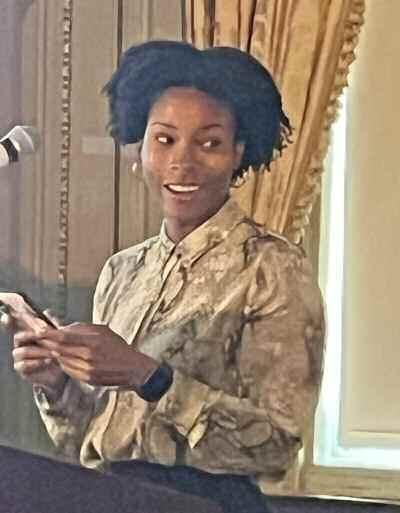
NYSCC Skin Care Inclusivity Symposium
September 10, 2024
Fairleigh Dickinson University • Florham Campus, Madison, NJ




NYSCC Culinary Event
The Midtown Loft & Terrace • September 18, 2024


NYSCC History Project


NYSCC History—What We Know
One cannot Google “NYSCC history” and get anything close to our story. Much of the Chapter history was from a world without the inter net, cameras built into phones, or social media It was a world of paper, dial phones plug into wires, black and white photos taken rolls of film, and snail mail The earliest rec is from 1955 in the Jour nal of the Societ Cosmetic Chemists, volume 6, issue 1, p 61. These reports continued until 1965, of providing details on Chapter activities
Excerpt from one of the 1955 issues of the Journal of the Society of Cosmetic Chemists (now known as the Journal of Cosmetic Science), volume 6, issue 1, page 61
Reprinted with permission from the Society of Cosmetic Chemists


T
infor mation comes from the efforts of longtime historian Harry coff. He made a great contribution to a booklet published ovember 4, 2000, for the Chapter’s 45th Anniversary Celebration he other is a series of blurbs in the Cosmetiscope issues from 988-1991. These fortunately exist. The only other document from re-1988 is a full-page ad in HAPPI magazine in June 1985, eadlined “‘700 at 6th NYSCC Suppliers’ Day,” kindly found, canned, and shared by editor Tom Branna

Booklet published by the NYSCC on November 4, 2000, for the Chapter’s 45th Anniversary celebration
One challenge in preserving historical documents is the quality of the photographs. Few are first generation, so most historical photos are scans of photos reproduced in newsletters We can see the consequence of this in a side-by-side comparison of an original print taken in March 1988 and the way it appeared in the April 1988 issue of Cosmetiscope.

Scan of (a) original photograph and (b) the same photograph printed in the April 1988 issue of Cosmetiscope. In the image printed in the Cosmetiscope (b) one may observe halftone patterns which affect the quality of the final image
It would be great to have a comp set of newsletters and Cosmetiscope iss but that does not exist What we do h is what current editor Roger McMullen accumulated, going back to around 20 It is the point where our history becom virtually complete.
Full page ad from HAPPI, June 1985, headlined “‘700 at 6th NYSCC Suppliers’ Day ” Content provided by Tom Branna, Editor, HAPPI. Reproduced with permission


National publications often provide yearly summaries of Chapter activities From 1990–1996 there was a There are other National reports available from 2006, 2007, 2011, 2015, and 2017 This indeed seems random, but there is unfortunately no comprehensive collection. Then there are Chapter Activity Newsletters from 2018–2021
Finally, there are the donations of some of our members, and these are certainly the most gratifying. There is an envelope of historical infor mation provided by Dave Steinberg Amy Marshall e-mailed resources including a complete spreadsheet of Chapter officers Colleen Rocafort contributed an 8 4 lb box of material that is a treasure trove of Chapter history. And in this century no one has done more than Roger McMullen to document our activities with his tireless efforts on the Cosmetiscope

Our photos have gone from black and white film to digital color, and all the other technological advances over the past 70 years have impacted us, but the mission of the NYSCC is the same as that of its founders in 1954, and its ultimate strength remains the commitment of our members. It makes our history well worth remembering

Photograph from the 1996 Year in Review with (from left to right) Felicia Coleman, Diane Nordstrom, and Amy Grace (Amy Marshall)

NYSCC Elections – October 2024
n Anushka Nadkar ni 2025 Chair-Elect Candidate
Anushka Nadkar ni has been a dedicated volunteer with the NYSCC since 2018 and has amassed over five years of experience in the personal care industry. Her expertise includes working with raw materials and contract manufacturing, where she has excelled as a for mulation scientist Currently, she spearheads the Product Development and Innovation Department at Bentley Laboratories, driving forwardthinking solutions in the beauty and skincare space

In 2021, Anushka served as the instructor for the prestigious Future Chemist Workshop, imparting her knowledge and passion to aspiring cosmetic scientists Her volunteering efforts within the NYSCC extend to key roles on the D&I Committee and as a Mentor in the Mentorship Program, demonstrating her commitment to fostering diversity, equity, and inclusion within the industry. Anushka has also contributed insightful articles to renowned publications such as Beauty Independent and Cosmetics and Toiletries. She holds an M.S. in Cosmetic Science from Fairleigh Dickinson University and a bachelor's degree in Phar macy from Mumbai, India
Her passion for mentorship is evident in her role as a Leadership Coach for undergraduate students at Rutgers University, Newark, where she guides future leaders in navigating their academic and professional jour neys