Sunscreen Formulations –

Emphasis on Inorganic Sunscreens
…Hani Fares
Ever since the FDA published their proposed monograph ruling in February 2019 recognizing titanium dioxide and zinc oxide as the only Cate Effective) sunscreens, a cascade of refor mulations of most products on the U S market took place Inorganic sunscreen for mula now center-stage and are slowly replacing organic sunscreen for mula In fact, the trend started in 2018 when the state of Hawaii propose ban on octinoxate and oxybenzone, stating that these two sunscree have a negative effect on coral reefs Now that the ban is in effect another bill is proposing to ban sunscreens containing octocrylene and avobenzone for the same reasons. It is true that many regulatory bodies including the FDA did not support the Hawaiian ban, and the Personal Care Product Council (PCPC) is addressing the proposed monograph rulings

All these actions might lead to uncertain outcomes In fact, in a few years U.S. consumers might be limited to the use of products only containing inorganic sunscreens (with the exception of ensulizole and ecamsule). There is some hope that certain Time and Extent (T&E) molecules are being reviewed by the FDA and may be approved for launch Bemotrizinol is a front-runner and its use in for mulation is quite good as it protects skin from both UVB and UVA radiation
n Selecting the Right Inorganic Sunscreen
Zinc oxide and titanium dioxide not only refract light but also a The refractive index of titanium dioxide is 2 8 whereas that of zinc o 2 0 This makes titanium dioxide much more effective at scatter delivered from a formulation. In terms of absorption, zinc oxide and titanium dioxide have conductance bands around 3 4 and 3 1 eV, respectively This makes zinc oxide a bit more efficient in protecting against UVA rays and titanium dioxide more efficient at shielding UVB rays. As particle size decreases there is a much more pronounced blue shift due to a change in the band-gap width For example, a 0 15 eV blue shift has been reported for 4 7 nm particle size titanium dioxide compared to bulk
Keep in mind, when particles become smaller than their optimal light scattering size (typically half their wavelength) they become much more transparent For example, zinc oxide becomes transparent below 200 nm whereas titanium dioxide becomes transparent at sizes around 10-20 nm. This makes for mulating with zinc oxide much easier to achieve transparent for mulations but harder to reach high SPF due to its perfor mance in the UVB region
Sometimes the so-called “boosters” can help many for mulators resort to using salicylates as UVB boosters in their for mulations. Butyl octyl salicylate is not an approved sunscreen in the U S but many for mulators use it to boost their inorganic sunscreen SPF while claiming no organic sunscreens added (continued on Page 6)
April 2023 • Vol. 29 • Issue 4 S U S T A I N A B L E A C T I V E I N G R E D I E N T S • A P R I L 4 t h s e e p a g e 5 f o r m o r e i n f o r m a t i o n
2023 NYSCC EXECUTIVE BOARD & COMMITTEE
Chair Stacey House chair@nyscc org
Chair-Elect
Amber Evans chair-elect@nyscc.org

Treasurer
Alex Blakeman treasurer@nyscc.org
Secretary Luciana Coutinho secretary@nyscc.org
Advisor Giorgio Dell’Acqua advisor@nyscc org
Program
Cathy Piterski program@nyscc org
At Home Live Series
Susanna Fer ndandes Susanna Fer nandes@tri-k com
By-Laws
Amy Marshall amy marshall@altana com
Communications

Maria Sousa socialmedia@nyscc.org
Special Events
Johanna Gigliotti johanna.e.gigliotti@gmail.com
Cosmetiscope Editor
Roger Mcmullen roger mcmullen@fdu edu
Cosmetiscope Advertising
Bret Clark rbclark@ashland com
Social Media
Maria Sousa socialmedia@nyscc org

Letter from the Chair …Stacey House
Buenos Días! I am writing to you from In-Cosmetics in Barcelona the precursor to our own global and record-breaking event scheduled for May 2-3, 2023, at the Jacob K Javits Convention Center! We are excited to report that NYSCC Suppliers’ Day pre-registration is tracking more than 20% ahead of 2022 and the same can be said for the expo space where we are literally maxed out in the expanded four halls of the convention center!
Records continue to be the theme for NYSCC this year The March 23rd “Sunscreen Innovations and History/For mulation with Dihydroxyacetone (DHA) for Sunless Tanning” program at the Pleasantdale Château in West Orange was unprecedented in the technical content that was presented and brought together almost 250 industry executives to further our overarching mission of lear ning, engagement, and networking Many thanks to Howard Epstein and Saba Zareh for pulling together this extraordinary program that came just in time as we feel the war mth and sunshine of spring!
Our next educational program will be the second in our AHLS webinar series “Sustainable Active Ingredients Produced by Biotechnology.” Presented by Dr. Fred Zuelli of Mibelle Biochemistry, this program on April 4th will introduce exciting new technology related to sustainably generating biomass for active cosmetic ingredients. The next in-person, monthly symposium will take place April 20th at the Chart House in Weehawken. “NYSCC Celebrates Earth Day” will immerse attendees into sustainability and everything green. Visit the Events section of the NYSCC website (www.nyscc.org) for the most up-to-date infor mation about this event.
It is unbelievable that we are almost halfway through this year, and that our next issue of Cosmetiscope will focus on Suppliers’ Day Showcasing “Reimagining Renewal and Wellness,” Suppliers’ Day is poised to offer the most innovative solutions currently available across the globe and will feature more than 70 hours of educational programming, nearly 550 exhibitors, and thousands of attendees/buyers representing 60+ countries Specialty areas on the show floor include the INDIE 360 Pavilion, Future Chemists Workshop, Main Stage and Innovations Theater, Technical Poster Presentations, Brazilian Pavilion (organized by ABIHPEC), and Peruvian Pavilion There will also be a Wellness Walk meant to lead you to our re-charge/charging station!
If you haven’t registered to attend, please do so today Plan to also join us at our Awards Night ceremony on May 2nd at Second Floor NYC, on the first night of Suppliers’ Day! We are extremely proud to sponsor the CEW Beauty Creators Award for Innovative Ingredients and For mulations The eight CEW Supplier’s Category finalists will be announced at our Awards Night event with the winner unveiled at the CEW Beauty Creator Awards luncheon in November Review all that is happening on the Suppliers’ Day website and know, without a doubt, that this is the largest, and not-to-be-missed North American tradeshow and conference!
I hope to see you at the upcoming April Earth Day program and, of course, at Suppliers’ Day! As you can see, our offerings as a chapter continue to expand, the networking is unmatched, and the ability to become involved and influence the trajectory of your career (And others!) is real! Get involved. I’d love to hear from you: chair@nyscc.org.
See you soon…
2 N Y S C C C o s m e t i s c o p e | w w w . n y s c c . o r g
y the only Tr able ainable Rene Hand w vhar Sus , tes t ed, , Mineral-rich, Ultra Fine Glacial Marine Clay Powder. r.


ce for: sour Your

dients Clay-based rheology ingre • ntsdie tinoid ingre id Re Liqu • ms ry syste delive Natural aselestained-re tinoids in su Re •


354.1044 ralstech.com at: ctor.com n
olutions.com


A p r i l 2 0 2 3 | V o l . 2 9 N o . 4 3
BEAUTY
Project
Project
Fifteen Years Ago
Amember shuttled back to the NYSCC of 25 years ago wou find it very strange, essentially a pre-digital, black-and-whit world very much like the Chapter when it was founded i 1955 On the contrary, being transported back to 2008 would seem very familiar. The Cosmetiscope was glossy and in glorious color looking identical to the Cosmetiscope of today, but it was printed and mailed (by snail mail), not e-mailed as a PDF file or posted on the NYSCC website
Back then, it was still possible to register for a meeting by mailing a check to the society, or to make registration payment on the NYSCC website using a credit card For some of us too young to remember, mailing a check consisted of using scissors to cut out meeting registration form from the Cosmetiscope, which was then pla in an envelope along with the check, a stamp affixed, and dropped i a mailbox
Suppliers’ Day was a two-day event, and just like now, it had theme. In 2008, the theme was Creating a World of Beauty. There w a full schedule of scientific meetings as well as our treasured soci events, which continue today: joint ski trip with the Long Island SCC chapter, fishing trip, and golf outing The culinary event had not ye entered the yearly schedule

There was a cultural event on September 19th attended by 31 members at the V isual Arts Center of New Jersey The evening featured a demonstration of watercolor abstraction techniques and another on Chinese brush painting The most unusual extracurricular activity in 2008 was probably the NYSCC Hiking Expedition at Mountain State Park on October 18th Those reaching the top rewarded with a picnic lunch catered by Roger McMullen
2008 NYSCC Board Members
Chair


Suellen Bennett
Chair-Elect
Joe Albanese Treasurer
Bill Woods Secretary
Sonia Dawson Advisor
Anthony Ansaldi House
Allison Griffin Program


Steve Her man
Cosmetiscope


Roger McMullen
Suppliers’ Day
Diane Nordstrom Membership


Amy Marshall
Special Events
Phil Klepak

4
www.acme-hardesty.com ingredients. Superior solutions. om p c desty ty e-haracm www ww g N Y S C C C o s m e t i s c o p e | w w w . n y s c c . o r g
NYSCC History
...Steve Herman NYSCC History
...Steve Herman
Sustainable Active Ingredients


Produced by Biotechnology
April 4, 2023
11:00 a.m. – 12:00 p.m.
For more infor mation, and to register for the event, visit the Events section of the NYSCC website (www.nyscc.org).
Cosmetic ingredients based on rare, exotic, or even endangered plant species are of big interest to the cosmetic industry for two reasons Firstly, scientists believe that plants or microorganisms capable of growing in extreme conditions contain molecules that also offer very special effects to the skin Secondly, marketing professionals like exotic plants as they can be used to create novel, appealing marketing stories for the consumers However, with the increasing demand for sustainable raw materials, the use of these rare and exotic plants is limited in the world of cosmetics To overcome this problem, the application of biotechnology to produce biomass of these special plants or microorganisms in a sustainable way is gaining a lot of interest from the sector. In our presentation, we will introduce a few exciting new technologies to generate biomass for active cosmetic ingredients sustainably
Thank You to Our Media Sponsors:


n Featured Speaker – Fred Zuelli, Ph.D. (Mibelle Biochemistry)

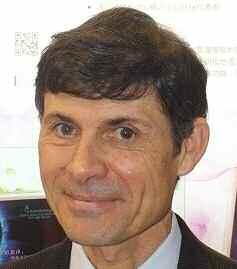

Dr Fred Zuelli is the Business Development Director of Mibelle Biochemistry Switzerland, a business unit of Mibelle Group which develops and produces active ingredients for the personal care and food supplement industry He founded Mibelle Biochemistry 30 years ago and invented many patent-protected actives based on different technologies such as the plant stem cell technology (PhytoCellTec) He previously worked at the Nestle Research Centre in Switzerland His research focused on molecular biology and genetics of commercial baker’s yeast strains
Dr. Fred Zuelli studied Chemical Engineering at the Technical Engineering School of W interthur Switzerland and continued his studies at ETH in Zürich to study Molecular Biology and Biophysics In his Ph D thesis at ETH he investigated the ther mos-stability of bacterial enzymes Up until 2021, he was as Vice-President in the Swiss Society of Cosmetic Chemists and was responsible for the scientific program of the 2015 IFSCC Conference in Switzerland
A p r i l 2 0 2 3 | V o l . 2 9 N o . 4 5
NYSCC At
Series
by nature –Realized by science
Home Live
Inspired
mibellebiochemistry.com
n Dispersion Versus Powder
The choice to use inorganic sunscree or dispersions in for mulations is a very decision and many formulators prefer to u type over the other In general, dispers claim to have a smaller primary particle si which results in better dispersion of the pigment into the emulsion and leads to higher SPF and less whitening on the skin However, dispersions come at about 50% w/w solvent/pigment, which limits the flexibility for the for mulator to tweak the for mulation. In addition, when working with waterin-oil (w/o) or water-in-silicone (w/si) for mulations, it is harder to control the viscosity of such emulsions when using dispersions. In these types of emulsion the viscosity is built by the inter nal ph (water) Using dispersions ultimately incr the amount of exter nal phase and red amount of water used, which will make su less viscous and less stable.
The use of powders, on the on the other hand, gives the for mulator a lot of flexibility and reduces the cost of the for mulation Although, when using powders, it is important to have the manufacturing capability to grind the pigments at the factory (on a commercial scale) to reduce agglomeration and produce for mulations with good aesthetics
n Selecting Emulsion Type
Most inorganic sunscreen for mulations on the market are w/o or w/si emulsions. Such emulsions are much easier to preserve, as you only need to preserve the inter nal phase, and their pH does not fluctuate since they are anhydrous These types of emulsions inherently have very good water resistance as well Some of the drawbacks of w/o emulsions are their greasy feel mainly imparted by the surfactants and co-surfactants used They tend to be more whitening on the skin and harder to spread On the other hand, w/si emulsions have a superior end-feel, but they are not particularly biodegradable or earthfriendly by today’s standards They share the same characteristics as w/o emulsions when it comes to preservation, pH, and water resistance In general w/si emulsions are harder to stabilize and require the use of more than one surfactant to obtain stable emulsions

It is very rare to see o/w emulsion for mulations on the market, since they are harder to preserve and stabilize. The presence of zinc oxide ultimately shifts pH towards 7.5, which renders most preservatives less effective In addition, at that pH very few polymers work well at stabilizing the emulsion, especially naturally derived polymers. On the other hand, these emulsions typically have a nicer feel on the skin and could be cost effective
n Adding a Film For mer or SPF Booster
Selecting a film for mer or SPF booster for the emulsion is a critical step and one that should not be avoided. The selection of the appropriate polymer depends mostly on the experience of the for mulator and the in vivo perfor mance of a particular polymer Many polymers are marketed to for mulators and some of them could work in one for mulation or another However, it is crucial that the film for mer works across many for mulations. We should always test the for mulations in vitro for water resistance and SPF to ensure that the addition of the polymer will give the desired results This will enable the for mulator to refine the level of polymer in the emulsion as well. Finally, once a proposed composition is established for the final product, in vivo testing should be conducted

N Y S C C C o s m e t i s c o p e | w w w . n y s c c . o r g 6
Sunscreen For mulations… (continued from Page 1)
Tom Balsamides 375 Minnisink Road Totowa NJ Cell 201.207.0570 PROTAMEENTOMB@AOL.COM WWW.PROTAMEEN.COM
PROTAMEEN
Supplier of specialty materials!
n Concluding Remarks
In conclusion, I hope that I shed some light on for mulating inorganic sunscreen emulsions and leave it up to the creativity of for mulators to create excellent for mulations with great aesthetics and high SPF
About the Author

Dr Fares started his career in personal care studying the effect of solvents on sunscreen chemicals. His interest in skin drug delivery, especially from polymeric matrices, evolved during his graduate work at Rutgers University, where he received his Ph.D.
Dr Fares worked at Block Drug and GlaxoSmithKline where he held positions in Research and Development in the areas of Skin Care and Oral Care Then, he joined L’Oréal where he held several positions of increasing responsibility, ultimately serving as Assistant V ice-President of Skin Care He is currently the Senior Director of Skin Care and Oral Care at Ashland Specialty Ingredients.
Dr Fares is the author of many publications and patents in the areas of Sun Care, Skin Care, and Oral Care and has made many presentations at national and inter national conferences. He chairs the NYSCC Scientific Committee and has won multiple awards in the areas of sun care and polymer chemistry

Call for Papers

The Cosmetiscope editorial committee invites all interested parties to submit feature technical articles for publication in the NYSCC monthly newsletter. Authors of feature articles are eligible to win the prestigous NYSCC Literature Award ($1,000) for the best front-page article published during the calendar year Authors also receive $200 reimbursement to attend a theatrical perfor mance of their choice Writing an article for your peers is a very rewarding experience, both personally and professionally, and will ensure your place in NYSCC history. You may choose whatever topic you feel would be interesting to fellow colleagues in our industry We also welcome any other types of commentaries or articles that may be published in the Career Corner, Technical Tidbit section, or as a Letter to the Editor
Please send correspondence to: roger mcmullen@fdu.edu
NYSCC Celebrates Earth Day April 20,


2023
6:00 – 8:00 p.m.
Chart House Weehawken, New Jersey
For more infor mation, or to register for this event, visit the Events section of the NYSCC website (www.nyscc.org).

Sponsorships are available for this event! Please contact:
Jane McDer mott (jmcder mott@nyscc.org) or Erin Layton (elayton@nyscc.org).
A p r i l 2 0 2 3 | V o l . 2 9 N o . 4 7
NYSCC Awards Night
May 2, 2023
9:00 p.m. – 1:00 a.m.
Second Floor NYC • 849 6th Avenue, New York, NY
The NYSCC is excited to once again host the Awards Night event during Suppliers’ Day where the finalists of the CEW Beauty Creators Awards for Ingredients and For mulations will be announced The event will also encompass this year ’ s theme of Reimagining Renewal and Wellness. Come to our event and bring out your senses with taste (food), touch (our massage chairs), sight (our spectacular production), and sound (listen to our jazz and blues curated perfor mances with top hits of today) Also, don’t miss the free psychic readings!
The world of cosmetics is changing rapidly after the COVID pandemic era as more and more consumers focus on their health, wellness, individuality, and purpose. Consumers are more aware of the tremendous impact we have had on the environment Our cosmetics industry acknowledges this shift and is actively making strides to meet the demand of consumers who are driving the change The beauty and personal care industry is rising to meet consumer demands by embracing ingredients that make consumers feel good about themselves

This fabulous evening will include a premium beverage service all night long plus passed horsd’oeuvres It is a perfect way to connect and network with peers and colleagues in the industry We look forward to celebrating with everyone again during our most anticipated NYSCC social event of the year.
The Awards Night ceremony will be held at one of NYC’s most iconic venues in Midtown Second Floor NYC is where the world’s leading brands, creators, and social clients host extraordinary events in the heart of Manhattan. Located on the second floor of the Hotel Eventi, and overlooking a tree-lined terrace, Second Floor NYC is a bespoke events space The stylish and war m setting serve as a sleek and welcoming backdrop for fashion shows, live perfor mances, brand activations, social events, weddings, and so much more
For event infor mation, please reach out to Giorgino Macalino (Event Lead Organizer for NYSCC Awards Night Events) at gmacalino0713@gmail.com.

For sponsorship inquiries, please contact Jane McDer mott at jmcdermott@ecmallp.com Numerous sponsorship packages and private seating areas are available for your company and guests.
Attire: Smart casual
Pricing: $150 per person includes passed food and desserts plus premium beverage package ($180 per person at the door)
N Y S C C C o s m e t i s c o p e | w w w . n y s c c . o r g 8
CSR program

Naturally committed to a sustainable world a to


A p r i l 2 0 2 3 | V o l . 2 9 N o . 4 9
NYSCC Acne Care Symposium
June 14, 2023
9:00 a.m. – 5:00 p.m.
Fairleigh Dickinson University • Florham Campus
Don’t miss this full-day symposium, which will include podium presentations from a line-up of inter nationally recognized experts in acne care as well as a technology showcase for attendees to interact with researchers in the field The event will be held at the beautiful Fairleigh Dickinson University Florham Campus located in Madison, New Jersey The campus consists of 178 acres, which is the for mer country estate of early 20th-century socialites Florence Vanderbilt and Hamilton Twombly.
Call for Abstracts:
Submission Deadline – April 15th
We are currently accepting abstracts for podium and poster presentations. Please send abstract submissions to Roger McMullen at roger mcmullen@fdu edu
Event Chairs
• Roger L. McMullen, Ph.D. (Ashland, Inc )

• Miao Wang, Ph.D. (L’Oréal USA)
2023 NYSCC Events Calendar
• For updated NYSCC infor mation, visit us on the web at: www.nyscc.org
• For National SCC infor mation: www.scconline.org
April 4 Sustainable Active Ingredients Produced by Biotechnology – Virtual Event

April 20 NYSCC Celebrates Earth Day, Chart House, Weehawken, NJ

May 2-3 Suppliers’ Day, Jacob K. Javits Convention Center, New York, NY
May 2 NYSCC Awards Night, Second Floor NYC, New York, NY
June 14 NYSCC Acne Symposium, Fairleigh Dickinson University, Florham Campus, Madison, NJ

N Y S C C C o s m e t i s c o p e | w w w . n y s c c . o r g 10
