For decades, The Bonadio Group’s social services consulting professionals have worked hand in hand with counties to find ways to cut operational costs, streamline operations, eliminate waste, and uncover fraud. Your challenges are our challenges.
Based on our extensive experience, we have developed a suite of software solutions to consolidate data and enable on-demand viewing and reporting capabilities that will eliminate process redundancies, vendor overpayments, uncover fraud and maximize eligible state and federal reimbursement dollars.
• CareFindr®: Software for Tracking Foster Care Children and Vendor Information
• FraudFindr®: Software for Financial Fraud Detection & Investigation
• ResourceFindr: Software for Tracking Chronic Care Five Year Look Back
Find out how Bonadio is leading a new era of DSS efficiency. www.bonadio.com/industries/public-sector-not-for-profit/government Contact Us Today to Schedule a Demo.
Tim Ball Leader, Bonadio Advisory & Consulting tball@bonadio.com
Tim Doyle Government Partner tdoyle@bonadio.com
Courtney Handy Principal— CareFinder® chandy@bonadio.com
Josh Bills Principal—FraudFindr® & ResourceFindr
jbills@bonadio.com
A Short-Term, Highly Liquid Local Government Investment Pool for the Public Sector in New York
Available in two separate investment funds:
NY MuniTrust® Excelsior Fund Counties Only
NY MuniTrust® Empire Fund
Other Public Entities
ENDORSED BY:
Investors should consider the investment objectives, risks, charges, and expenses of the Funds carefully prior to investing. Investment in the Funds is not insured or guaranteed by the Federal Deposit Insurance Corporation (FDIC) or any other government agency, and although the Funds seek to preserve the value of the investment at a fixed share price, it is possible to lose money by investing in the Funds.
The Pool is an intermunicipal agreement (IMA) created through a municipal cooperation agreement (Municipal Cooperation Agreement) made pursuant to New York General Municipal Law, Articles 3-A and 5-G (collectively, the Act), dated as of February 1, 2022 by and among Orange County (Lead Participant) and each district and municipal corporation, as defined in the Act, that enters into the Municipal Cooperation Agreement hereof (collectively, together with the County of Orange, the Participants). BNY and NY MuniTrust® are unaffiliated companies. BNY Mellon Securities Corporation (BNYSC), a registered broker-dealer, is a distributor for NY MuniTrust. BNY Mellon Investment Servicing (US) Inc. is the transfer agent, The Bank of New York Mellon is custodian and BNY Investments Dreyfus, a division of Mellon Investments Corporation (MIC), a registered investment adviser, is the investment advisor. All are subsidiaries of The Bank of New York Mellon Corporation. BNY is the corporate brand of The Bank of New York Mellon Corporation and may be used to reference the corporation as a whole or its various subsidiaries generally. Risks include market risk, interest rate risk, credit risk, and liquidity risk. Please refer to the Information Statement for more information. FOR NEW YORK MUNICIPAL INVESTORS ONLY-NOT FOR USE WITH RETAIL INVESTORS.
NOT FDIC-INSURED. NOT BANK GUARANTEED. MAY LOSE VALUE.
Dr. Kevin Watkins Cattaraugus County President Elect
Hon. Margaret M. Kennedy Otsego County First Vice President
Hon. Steven M. Neuhaus
Orange County Second Vice President
Hon. Benjamin Boykin II Westchester County Immediate Past President
BOARD MEMBERS
Hon. Luis A. Alvarez, Sullivan County
Hon. Shawna Black, Tompkins County
Mr. Christopher DeBolt, Ontario County
Ms. Ruth A. Doyle, St. Lawrence County
Hon. Jeffrey Elder, Niagara County
Hon. J. Ryan McMahon II Onondaga County
Hon. Edward Romaine, Suffolk County
Hon. Susan J. Serino, Dutchess County
Hon. Paul M. Wendel Jr. Chautauqua County
PARLIAMENTARIANS
Hon. A. Douglas Berwanger, Wyoming County
Hon. Daniel P. McCoy, Albany County
President's Page
On behalf of the New York State Association of Counties (NYSAC), I am pleased to present the Legislative Guide edition of NYSAC News Magazine. This special issue marks the start of a critical period for counties across New York State. The articles included are intended to provide timely updates, practical resources, and expert perspectives as we move into the heart of the state legislative session.
THE STATE LEGISLATIVE SESSION AND BUDGET NEGOTIATIONS
As the New York State Legislative Session gets underway, county leaders, alongside the NYSAC team, continue to engage actively in the state budget negotiation process. This period is especially important for local governments, presenting both challenges and opportunities to shape policies that directly impact our communities. NYSAC remains committed to representing county interests in Albany and ensuring that the voices of county officials are heard and respected throughout the decision-making process.
KEY ISSUES FOR COUNTIES IN 2026
This year, counties face significant challenges as new federal funding requirements for Medicaid, the Supplemental Nutrition Assistance Program (SNAP), and other social services take effect. These programs are administered at the county level, and the changes are placing additional pressure on county budgets and county department of social services staff as they continue to deliver essential services to New York’s most vulnerable residents.
STANDING AGAINST COST-SHIFTING
NYSAC continues to advocate forcefully against the shifting of costs from the State onto county governments. Shifting the financial burden of state-mandated programs without adequate funding undermines local fiscal stability and threatens the quality of services counties provide. NYSAC has urged the Governor and State lawmakers to do no harm to counties, particularly as federal funding cuts and policy changes reshape how social services are delivered at the local level.
We encourage our members to remain informed and engaged during this critical time. Unified advocacy is essential to ensuring that counties are treated fairly and can continue to meet their responsibilities to the people of New York State.
In this edition, readers will find articles and commentaries offering expert insights and best practices to help address the most pressing issues facing counties today. These contributions reflect the collaborative spirit of NYSAC and our ongoing commitment to partnerships that strengthen county government.
As we prepare for the 2026 Legislative Conference in Albany, I encourage all county officials to read, share, and discuss the content in this magazine. Together, through collaboration and advocacy, we are best positioned to meet today’s challenges and work toward a stronger future for our communities.
Thank you for your leadership and your continued commitment to public service.
Philip Church NYSAC President
Business success is built on employee health
CDPHP
Architecture
Civil
Environmental
Land
Surveying
Electrical
Mechanical
Essential
NYSAC STAFF
(partial listing)
Stephen J. Acquario, Esq. Executive Director
Karen Catalfamo Office/Financial Manager
Patrick Cummings, Esq. Counsel
Patricia Gettings Assistant to the Director
Mark LaVigne Deputy Director
Dave Lucas Director of Finance & Intergovernmental Affairs
Juanita Munguia Business Development Manager
Megan Novak Legislative Coordinator
Tom Oldfather Communications Manager
Kate Pierce-Nimz Multimedia Specialist
Alexandra Regan Legislative Director
Jeanette Stanziano Director of Education & Training
Chancey Young Member Information Manager
Director's Note
Each year brings new challenges in governing—at the federal, state, and local levels. As we welcome more than 200 newly elected officials to the ranks of county leadership, many of those challenges are unique to New York’s counties, and your association is here to help you guide your communities through these pivotal times.
Federal laws enacted last year require counties and the State of New York to deliver, fund, and manage social service programs in new ways. These changes carry penalties that could reduce federal funding and shift costs to local taxpayers, requiring local governments to rely more heavily on property taxes to meet their constitutional duty to provide services to those in need in our communities.
Over the past few years, the increasing sophistication of cybersecurity threats and fraudulent activities has skimmed millions of dollars from county coffers, as well as from state and federal programs administered through regional governments. Counties are ramping up efforts to prevent fraud and investigate bad actors when incidents occur, and NYSAC will continue to provide training opportunities to support county leadership in these efforts.
Economic development remains a high priority as counties work to attract new businesses and create jobs. Water systems and other critical public infrastructure must also be updated and expanded to support this growth. For the past two years, NYSAC has worked with the state on a new infrastructure funding program that is helping counties meet these needs.
Looking ahead, innovation will be key to enhancing county effectiveness and efficiency. In 2026, NYSAC is working with an AI advisory group to develop and deploy tools that will help counties better understand and evaluate artificial intelligence technologies that could support county operations.
New York State’s counties stand at a pivotal crossroads in 2026. County leaders across the Empire State are confronting fiscal, policy, and operational changes that will test fiscal health and the ability to deliver essential services.
Fostering Excellence in County Government
While COVID is largely behind us, counties continue to face challenges in recruiting and retaining qualified employees. This year, NYSAC successfully advocated for the extension of the NY HELPS program, enabling a more streamlined civil service process for hardto-fill positions. NYSAC is also launching a partnership with the State University of New York (SUNY) to create an internship program that will help bring students into county government, while continuing to advocate for an increase in the amount retirees can earn on a part-time basis to share their experience and institutional knowledge.
The New York State Association of Counties (NYSAC) is here as your partner, working with and for you as we navigate the challenges ahead. Through advocacy, training, and a platform for sharing best practices, NYSAC empowers counties to address challenges collaboratively and efficiently. Our leadership in legislative affairs, technical assistance, and policy research helps county leaders remain informed and prepared for both immediate and long-term issues.
Stephen J. Acquario, Esq. NYSAC Executive Director
NYSAC News
NYSAC News
NYSAC’s mission is to foster excellence in county government and unite the voice of New York’s county leaders.
President Philip Church
Publisher
Stephen J. Acquario
Managing Editor Mark F. LaVigne
Editor
Tom Oldfather
Designer Kate Pierce-Nimz
Advertising Staff Juanita Munguia
Advertise with NYSAC
Contact NYSAC Business Development Manager Juanita Munguia at 518-465-1473 or jmunguia@nysac.org
Published three times a year by the New York State Association of Counties (NYSAC), NYSAC News is the official publication of NYSAC, a non-profit municipal association serving the 57 counties of New York State and the City of New York with its five boroughs for over 100 years. NYSAC’s mission is to foster excellence in county government and unite the voice of New York’s county leaders.
NYSAC NEWS MAGAZINE
515 Broadway, Suite 402, Albany, New York 12207
Phone • (518) 465-1473
Fax • (518) 465-0506
NEW YORK STATE ASSOCIATION OF COUNTIES
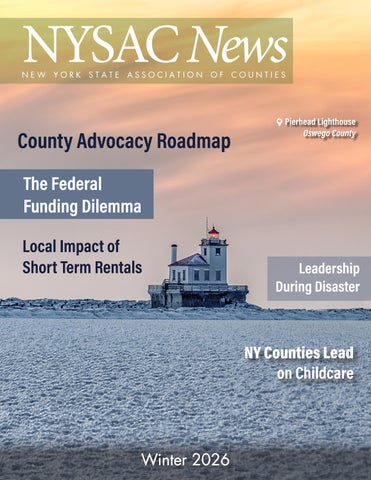
Pierhead Lighthouse
Photo by Rod Best
County Advocacy Roadmap
Advocating for New York’s Counties in 2026
FBy Alexandra Regan, NYSAC Legislative Director
or more than a century, the New York State Association of Counties (NYSAC) has worked to foster excellence in county government and to unite the voice of counties in Albany and Washington. As counties enter 2026, that mission is more critical than ever.
Counties are operating at the center of unprecedented fiscal and operational pressure. Federal policy changes—particularly those stemming from the One Big Beautiful Bill Act—have introduced sweeping new requirements and uncertainty for Medicaid, SNAP, and other Safety Net programs that counties administer on the ground. At the same time, New York State is confronting its own budget gaps and structural challenges. Despite these headwinds, counties continue to deliver essential services 24/7, from public health and elections to mental health care, transportation, emergency response, and public safety.
NYSAC’s advocacy roadmap for 2026 outlines how the Association works—month by month and phase by phase—to ensure county perspectives are heard, taxpayer affordability is protected, and state and federal policies reflect the realities of local service delivery. This roadmap is grounded in NYSAC’s 2026 Legislative Program and reflects a commitment to partnership, efficiency, and practical solutions.
January: Setting the Agenda
January marks the start of the New York State Legislative Session. The session begins the first Wednesday after the first Monday of the New Year and is traditionally anchored by the Governor’s State of the State address and the submission of the Executive Budget Proposal in Albany.
As the session opens, NYSAC’s Legislative Team closely reviews the State of the State proposals and the Executive Budget to identify issues that directly affect counties. This includes proposals that align with county priorities—such as infrastructure investment and regulatory modernization—as well as areas of concern, particularly potential cost shifts, unfunded mandates, or new administrative burdens on local governments.
During this period, the Legislative Team develops issue specific advocacy strategies. This work involves analyzing bill language, reviewing fiscal impacts, collecting county data and feedback, and coordinating early conversations with legislative leaders and state agencies.
February–March: Budget Advocacy and Legislative Conference
February and March are the most intensive months of the state budget process. The Legislature holds joint legislative budget hearings, each of which focuses on a programmatic area of the Executive Budget proposal. This includes the Local Government Budget Hearing, where NYSAC presents formal testimony on behalf of counties.
At the conclusion of NYSAC’s Legislative Conference, the Legislative Team transmits the resolutions adopted by our 12 standing committees to the Governor, Senate and Assembly leadership, state agency heads, and relevant congressional offices. These resolutions form the backbone of NYSAC’s advocacy throughout the remainder of the session.
The Governor typically releases 21-day and 30-day budget amendments during this period. Once the 30day amendments are issued, the Senate and Assembly release their own one-house budget proposals. NYSAC analyzes each proposal in detail to assess impacts on counties, with particular focus on:
• Protecting counties from cost shifts;
• Preserving the Medicaid cap;
• Supporting counties through federal policy changes;
• Modernizing outdated systems and processes, such as procurement and competency restoration;
• Investing in infrastructure, workforce capacity, and essential services.
As negotiations evolve, the Legislative Team updates advocacy strategies, meets regularly with legislative staff and leadership, and works with counties to elevate real-world examples of how budget decisions affect local taxpayers and service delivery.
April–June: Final Budget and Remainder of Session
State law requires adoption of the State Budget by April 1. Once the final budget is adopted, NYSAC immediately prepares a comprehensive analysis for counties, highlighting the impact of enacted provisions on county finances and operations.
Budget priorities that are not fully addressed transition into nonbudget legislative advocacy for the remainder of the session. NYSAC’s advocacy efforts remain guided by the priorities adopted by counties and informed by ongoing engagement with members.
As the session progresses, NYSAC tracks and analyzes all legislation that passes both houses, assessing impacts on county governments. The Legislative Team compiles the annual “Passed Both Houses” report, which explains key legislation and its implications for counties. This report is updated throughout the calendar year as additional bills are acted upon.
When legislation is transmitted to the Governor’s Office, NYSAC prepares letters to the Governor’s Counsel reporting county positions, highlighting fiscal and operational impacts, and recommending approval or veto as appropriate.
A Partnership Approach to Advocacy
Throughout every phase of the session, NYSAC’s advocacy is rooted in partnership. Counties are not asking the State to shoulder challenges alone—they are offering practical solutions based on ontheground experience administering state and federal programs.
Counties bring:
• Direct delivery of essential services that touch nearly every New Yorker;
• Local expertise and data on what works and what does not;
• A proven record of innovation, efficiency, and shared services;
• Diverse perspectives from urban, suburban, and rural communities across all regions of the state.
In return, counties need state policies that avoid harmful cost shifts, modernize outdated statutory frameworks, and invest strategically in infrastructure, operational capacity, and service delivery frameworks that benefit both state and local taxpayers.
Looking Ahead
The challenges facing New York in 2026 are significant, but they are not insurmountable. Counties remain committed to being part of the solution—protecting taxpayers, maintaining essential services, and strengthening communities across the state.
NYSAC looks forward to continuing its work with the Governor, the Legislature, and our federal partners to navigate uncertainty, modernize government, and ensure that county governments remain strong, resilient, and capable of meeting the needs of New Yorkers today and in the future.
Breaking Down the SFY 2027 Executive Budget for Counties
GBy Dave Lucas, NYSAC Director of Finance and Intergovernmental Affairs and Alex Regan, NYSAC Legislative Director
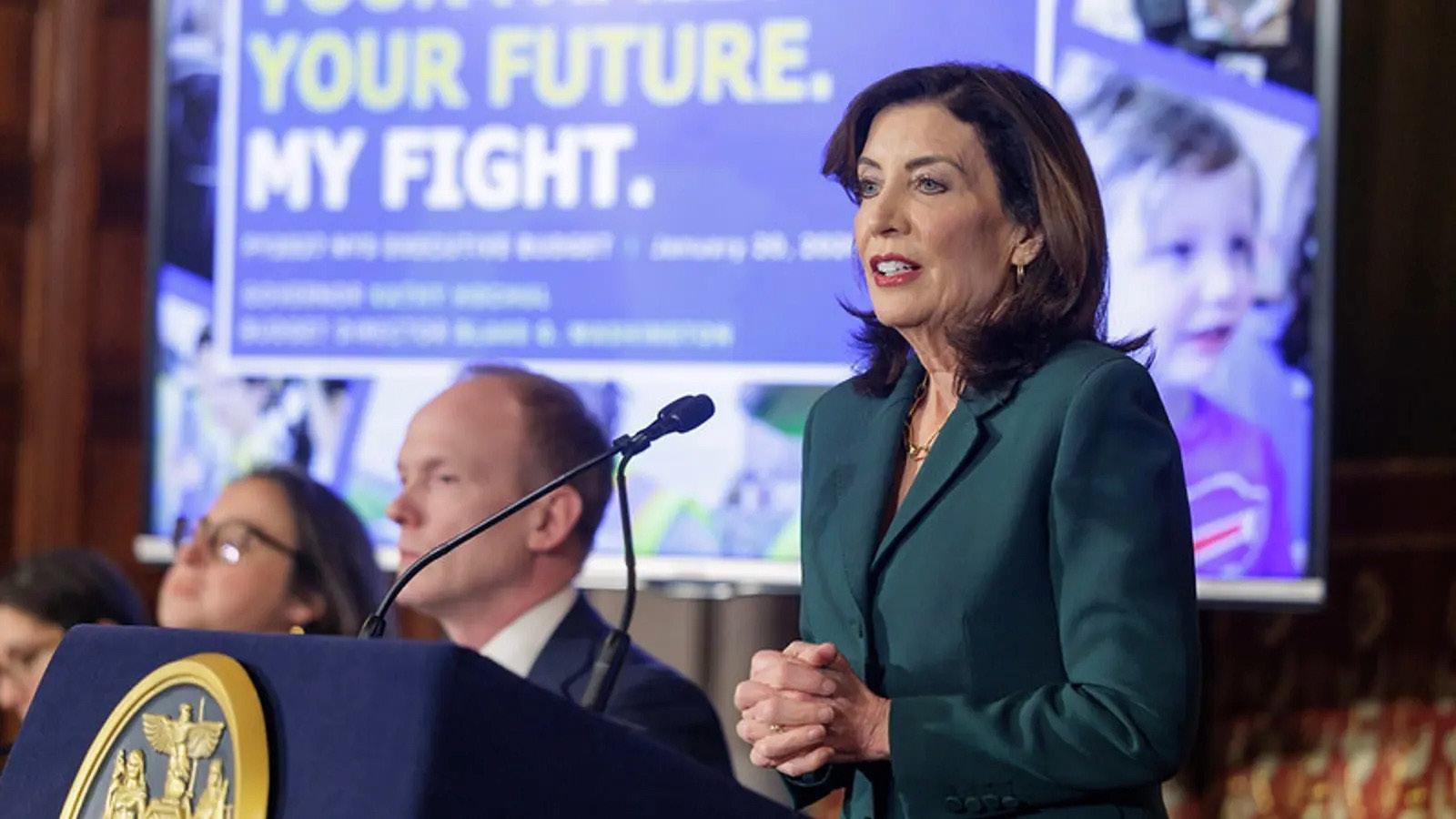
overnor Kathy Hochul released her proposed State Fiscal Year (SFY) 2027 Executive Budget on January 20, presenting a $260 billion spending plan that largely maintains support for county governments while addressing key priorities like housing, infrastructure, and workforce development. While the April 1 deadline for adopting the final budget is still weeks away, this preliminary analysis examines where the initial proposal aligns with county needs and where challenges remain.
Do No Harm:
A Promising Start
As we entered the 2026 State Legislative Session, NYSAC’s message to state leaders was clear: “Do no harm to county finances.” Counties have limited options for absorbing new state and federal costs without directly impacting local taxes and services. The Governor’s proposal largely honors that principle, preserving critical funding streams and avoiding new cost shifts to local taxpayers.
Total state spending in the Executive Budget rises to $260 billion, an $8 billion increase over last year’s adopted budget. The largest spending increases are in Medicaid ($3.9 billion) and school aid ($1.6 billion).
Protecting the Local Medicaid Cap
Most significantly for county finances, Governor Hochul preserves the local Medicaid cap through SFY 2027. Since 2015, this cap has saved counties and New York City $62.8 billion by freezing their Medicaid contributions at 2015 levels. Without it, counties would be required to contribute billions more annually to the state’s Medicaid program—by far the largest unfunded state mandate on county governments. The Executive Budget projects the cap will save local districts $9.2 billion in FY 2027 alone. Preserving this protection ensures counties can continue providing essential services without dramatic property tax increases.
Direct Aid and Infrastructure Support
The Governor’s proposal maintains direct aid to local governments at prior year levels. Aid and Incentives for Municipalities (AIM) funding remains at $715 million, while the County Partnership Program—which supports infrastructure, housing, and economic development projects— is funded at $50 million for another year.
Notably, the Executive Budget increases the maximum County Partnership grant award to $1.5 million, up from $1 million. This enhancement recognizes that infrastructure and site preparation costs have risen significantly, and larger grants will enable counties to tackle more ambitious projects that support housing creation, healthcare facilities, and economic revitalization.
The Governor also proposes to create a new Smart Growth Water Grant Program—funded at $250 million—to support water infrastructure projects necessary to promote housing preservation and development. Critically, $50 million is earmarked specifically for projects in rural communities, where aging water systems often present the biggest barrier to housing growth.
Streamlining Development: SEQRA Reform
As part of her “Let Them Build” agenda, the Governor proposes reforms to the State Environmental Quality Review Act (SEQRA) to reduce the time and cost of building housing and other critical infrastructure. The proposal would exempt specific categories of projects from SEQRA review that typically have minimal environmental impacts and often proceed through comprehensive local zoning and permitting processes. This includes housing projects, parks, childcare facilities, water and sewer infrastructure, and green infrastructure.
The Executive Budget also proposes increasing the cap on the number of land banks from 35 to 45, and provides $170 million for these entities to redevelop blighted or abandoned properties—another tool to support housing development and community revitalization.
Agriculture and Climate Investments
The Executive Budget includes a $22 million increase to local agriculture assistance, bringing total support to $83.97 million. This funding supports farmland preservation, research, and other programs that strengthen New York’s agricultural sector. NYSAC’s Standing Committee on Agriculture, Economic Development, and Rural Affairs has consistently advocated for robust agriculture assistance, and this increase represents a meaningful commitment to rural economies.
On the climate front, the Governor proposes $2 million in pre-electrification funding to help low-income households complete upgrades—like roof repairs and mold remediation— that enable them to qualify for other energy retrofit programs. This addresses a critical gap identified by NYSAC’s Standing Committee on Climate Action, Energy, and Environment: many families who would benefit most from programs like EmPower+ are unable to participate because they cannot afford necessary pre-weatherization improvements.
Workforce Development and Childcare
The Executive Budget expands the Opportunity Promise Scholarship Program (also known as SUNY Reconnect) to additional high-demand fields and to students with prior degrees pursuing nursing credentials. The program, which provides free tuition to community college students ages 25-55, aims to address workforce shortages in critical sectors.
Recognizing that childcare access remains a barrier to workforce participation, Governor Hochul proposes $73 million to launch a 2-Care program in New York City and $60 million for Dutchess, Monroe, and Broome counties to develop childcare pilot programs. These investments could provide models for expanding affordable childcare statewide.
What’s Not in the Budget—Yet
While many county priorities made the cut, several critical reforms still need state action:
Competency restoration reform (CPL § 730): Counties face overwhelming financial pressure from competency restoration costs, with some experiencing increases of over 6,000 percent between 2019 and 2024. At over $1,300 per day, these costs divert hundreds of millions from behavioral health programming. NYSAC supports comprehensive reforms outlined in S.1004-A (Brouk)/A.5567-A (Simon).
Procurement law modernization: Outdated requirements like the Wicks Law and low bid thresholds increase construction costs and project timelines. NYSAC is calling for raising Wicks Law thresholds to at least $5 million and increasing public construction bidding thresholds to reflect inflation.
Raise the Age (RTA) funding reform: NYSAC urges the state to convert RTA funding from a reimbursement model to a grant model and decouple it from the property tax cap to provide predictable funding to counties.
Looking Ahead
Governor Hochul’s Executive Budget represents an opening position in what will be a months-long negotiation process. The Legislature will hold budget hearings throughout February, allowing counties and other stakeholders to testify on priorities and concerns.
NYSAC will continue working with the Governor, legislative leaders, and state agencies to ensure the final budget supports county operations, protects local taxpayers, and provides the resources counties need to serve their communities effectively. The preliminary signs are encouraging, but much work remains to secure a final budget that truly serves all New Yorkers.
For more information on NYSAC’s 2026 legislative priorities and budget analysis, visit www.nysac.org
Why NYSAC? A Letter to the Editor
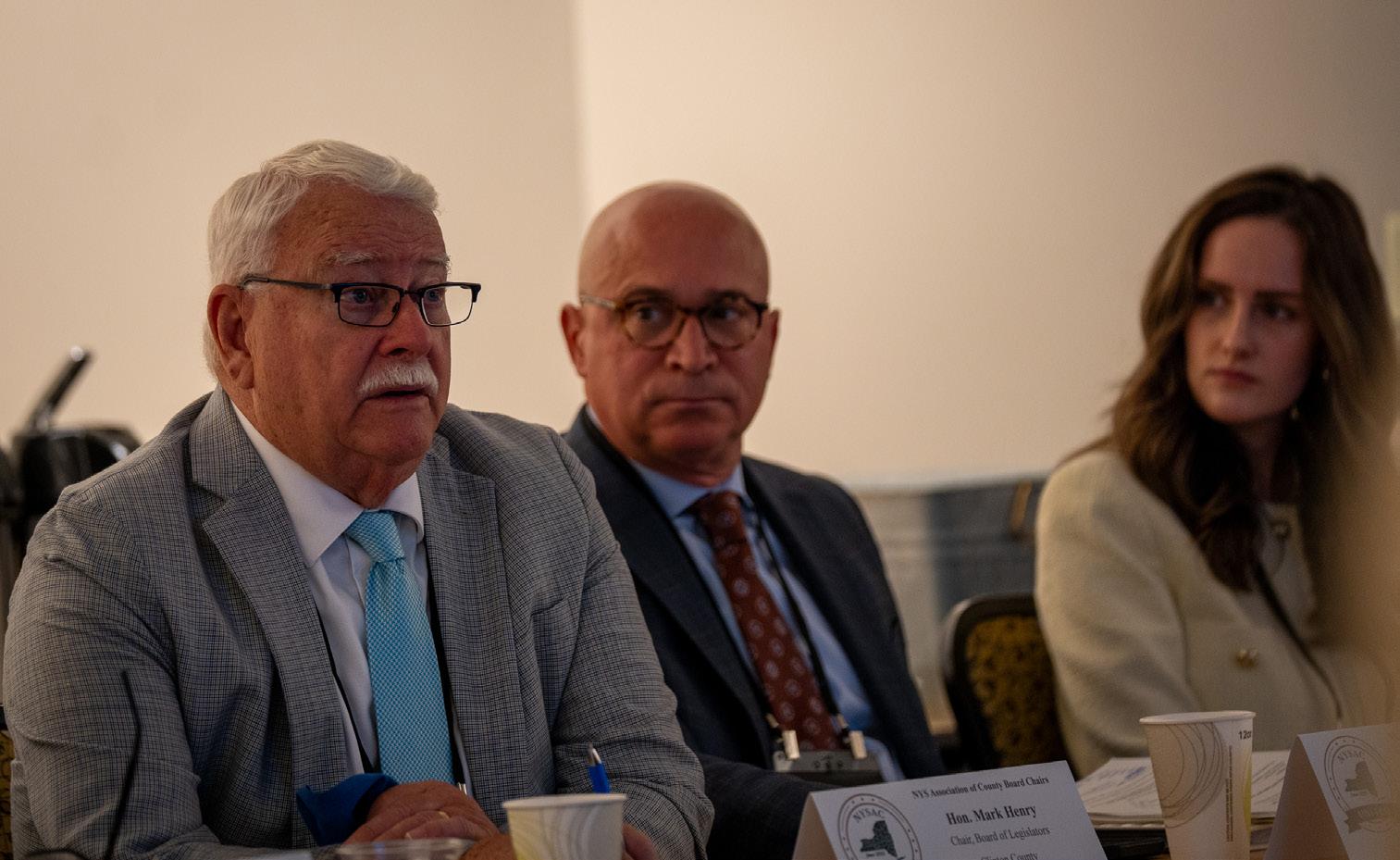
ABy Mark Henry, Chairman, Clinton County Legislature President, NYS Association of County Board Chairs
s legislators or members of a board of supervisors, we know our primary responsibility is to serve the people who place their trust in us—to make informed decisions, advocate for the needs of our communities, and ensure that the voices of our constituents are heard at every level of government.
Fulfilling this responsibility requires a deep understanding of the complex issues facing our counties and the tools to translate that understanding into effective action. The New York State Association of Counties (NYSAC) provides precisely that.
NYSAC is the premier organization representing counties across New York State. With deep roots in local communities and decades of experience, it combines outstanding leadership with an unmatched grasp of the challenges counties face daily— from public safety and fiscal management to infrastructure, social services, and beyond.
NYSAC not only identifies these issues but ensures they are clearly communicated to state policymakers, enabling legislators like us to make decisions grounded in local realities.
The Association’s advocacy is both strategic and comprehensive. Its longstanding relationships with state officials at all levels mean that the needs of counties are presented effectively, thoughtfully, and persuasively.
This allows legislators to bring well-informed perspectives to the table, ensuring that the policies enacted truly reflect the priorities of the communities we represent.
Equally important, NYSAC provides unparalleled professional development and training programs for county officials and staff. These resources equip us with the knowledge, skills, and confidence to navigate the ever-changing landscape of local governance, enhancing our ability to serve our constituents effectively and responsibly.
I encourage all county leaders and legislators to join NYSAC; as members, take full advantage of the membership opportunities and actively engage in its programs and initiatives. By participating, you not only strengthen your own capacity to serve your communities but also help shape the policies and priorities that affect every county in New York State. Now is the time to take action—be part of the organization that ensures our counties are heard, supported, and prepared for the challenges ahead.
Top 10 County Priorities for 2026
Make New York More Affordable
1. Protect Counties from Federal Cost Shifts
Prevent billions in new costs from falling to property taxpayers
Federal policy changes threaten to shift massive costs to counties during a time of extraordinary uncertainty. Counties and the state must work together to avoid passing these federal cost increases to local property taxpayers. Without partnership, New Yorkers face dramatic tax increases or devastating cuts to essential services.
2. Preserve the Medicaid Cap
Maintain the $7.6 billion cap on local Medicaid costs
New York counties pay more in mandated Medicaid costs than all other counties in America combined—driving our nation-leading property tax burden. The Medicaid cap provides critical protection, but new federal cuts threaten to blow through this safeguard. Without continued protection, billions of additional costs would fall directly on property taxpayers.
3. Support Counties Through Federal Policy Changes
Provide state assistance to manage sweeping federal requirements
New federal rules for SNAP and Medicaid create massive new compliance burdens for counties. Without robust state support—funding, training, IT systems, and technical assistance—counties risk federal penalties, loss of critical funding, and service disruptions for vulnerable families. State partnership is essential to navigate these changes without forcing property tax increases.
Cutting Costs Through Modernization
4. Update Procurement Laws
Give counties modern procurement tools while safeguarding labor protections
Counties need commonsense procurement reforms to save taxpayer dollars: make piggybacking authority—which expires in June 2026—permanent; update bidding thresholds set more than 15 years ago that now force expensive bid processes for routine purchases; and clarify piggybacking authority for public works projects while maintaining strong labor protections.
5. Expand the County Workforce
Help counties recruit experienced professionals for essential services
Counties face critical staffing shortages in public health, emergency services, child and family welfare, and other essential areas. The retired employee earnings cap has been frozen for 18 years, making it harder to recruit experienced professionals to fill vacancies. Raising the retiree earnings cap from $35,000 to at least $50,000 (S.6956-B Ryan C./A.8720-A Stirpe) would let counties tap into a pool of experienced talent to maintain critical services.
Revitalize Local Infrastructure
6. Expand the County Partnerships Program
Reduce barriers for counties to access economic development funding
The $50 million County Infrastructure Grant Program supports economic development, housing, and infrastructure projects, but the 50% county match is too high for many smaller, rural counties. Reducing the match to 25% and increasing the appropriation to $100 million would unlock transformative projects across all regions of the state.
7. Invest in Water Infrastructure
Enact the Safe Water Action Program (SWAP)
Counties maintain critical water systems but face aging infrastructure and emerging contaminants like PFAS and 1,4-Dioxane. Unlike local transportation infrastructure—which is supported by direct state aid from the Consolidated Local Street and Highway Improvement Program (CHIPS) program—water infrastructure has no guaranteed annual state support. The Safe Water Action Program (S.1850 Hinchey/A.6012 Kelles) would provide predictable funding to protect public health and prevent dramatic rate increases.
Reform Broken Systems
8. Reform Raise the Age Funding
Provide predictable funding without property tax penalties
The current Raise the Age funding scheme forces counties to pay upfront for costs associated with raising the age of criminal liability and wait months for reimbursement. Even more concerning, counties that breach the 2% property tax cap lose their reimbursement entirely. With federal policy changes threatening to force counties to override the tax cap, this funding should be decoupled from the property tax cap and converted to a grant model that provides predictable upfront funding.
9. Fix the Competency Restoration Crisis
Modernize CPL § 730 to reduce costs and deliver mental health treatment
Counties face skyrocketing costs for competency restoration, with some seeing 6,000% increases since 2019. The system keeps some defendants in restoration for years without providing actual treatment, all while diverting hundreds of millions from community mental health services. The reforms in S.1004 (Brouk)/A.5567 (Simon) are critical to rein in costs and ensure individuals receive appropriate treatment instead of years of costly, non-therapeutic restoration.
10. End Taxpayer Subsidies for Packaging Waste
Require producers—not taxpayers—to fund packaging waste management
New York’s 25 municipal landfills are nearing the end of their useful life, with only 16–25 years of combined capacity remaining statewide. A major driver of that problem is packaging waste, which local governments must manage and pay to dispose of, even though they have no control over how much packaging is generated or how it is designed. The Packaging Reduction and Recycling Infrastructure Act (S.1464 Harckham/A.1749 Glick) would shift those costs from taxpayers to producers, incentivize better packaging design, divert waste from landfills, and modernize New York’s recycling system.
Did You Know?
$14 BILLION
Total amount of county taxes used to pay for state programs each year—with $7.6 billion paid in Medicaid by the 57 counties and New York City, which is more than all other counties in the nation combined. This drives New York’s nation-leading (non-school) property tax burden.
90%
90 percent of the county property tax levy is dedicated to paying for state and federal mandates— leaving little local control over spending.
$1,300+ PER DAY
What competency restoration costs county taxpayers. Some counties have seen costs increase over 6,000 percent since 2019, diverting hundreds of millions from community behavioral health services.
18 YEARS
How long the $35,000 retiree earnings cap has been frozen, hampering counties’ ability to recruit experienced professionals for critical services.
24/7/365
Critical county services never close. From 911 dispatch to emergency shelters, from jail operations to road maintenance, counties provide round-the-clock essential services that keep New Yorkers safe.
87%
Local highway departments maintain 87 percent of New York’s 110,000 miles of roads and over 50 percent of the state’s 18,000 bridges—yet receive a small fraction of state transportation revenues.
$1 BILLION
Counties fund the largest local share of preschool special education programs of any state in the nation—approaching $1 billion annually.
$5.2+
BILLION
The cumulative cost shift to counties since the state reduced its Safety Net share from 50 percent to 29 percent, forcing local property taxpayers to absorb billions in poverty assistance costs.
$300
MILLION
The amount of annual relief that the Packaging Reduction and Recycling Infrastructure Act would provide local taxpayers by requiring companies to reduce overall packaging use, improve recyclability, and fund recycling infrastructure.
1 in 3
More than one in three New Yorkers receives services through county social services departments— including 7 million Medicaid enrollees, 3 million SNAP recipients, and thousands more receiving child welfare, housing assistance, and other vital services.
Welcoming a New Class of County Leaders Following 2025 Local Elections
By Megan Novak, NYSAC Legislative Coordinator
The 2025 local elections marked an important moment of transition for county government across New York State, ushering in a new class of elected officials who will begin serving their communities in 2026. In total, NYSAC tracked 809 county-level races statewide, resulting in 211 county officials preparing to take office in the coming year.
These elections reflect both continuity and change in county leadership, as experienced officials are joined by new voices bringing fresh perspectives to county governance. Over the past eight years alone, counties across New York have seen more than 930 elected officials turn over—an important reminder that county leadership is constantly evolving and that institutional knowledge and peer support are essential.
Key Results from the 2025 Elections
The largest share of new officials were elected to county legislatures, with 110 new legislators winning office in 2025. Additional turnover occurred across a wide range of positions, including county clerks, sheriffs, district attorneys, treasurers, supervisors, and county executives. Several races were decided by narrow margins, with a small number requiring recounts or remaining officially unresolved at the time of certification.
Election outcomes varied widely by county. Some counties experienced only minimal turnover, while others saw substantial change across multiple offices. In total, 72 races resulted in party changes, signaling notable shifts in local political dynamics in several regions of the state.
The 2025 elections also continued to reflect the effects of New York’s Even-Year Election Law, which is reshaping the cadence of local elections by aligning many county contests with gubernatorial and presidential cycles. While 2025 remained an “odd-year” election, the outcomes highlighted how local races are increasingly influenced by broader statewide and national political environments.
Supporting New and Returning Members
As newly elected officials prepare to assume their roles, NYSAC is actively updating its membership database and preparing the 2026 County Directory. All new members received NYSAC welcome packets following their swearing-in, providing essential information to help them navigate the responsibilities of county office.
Welcoming new leaders—while continuing to support experienced officials—is a critical part of NYSAC’s mission. Whether you are taking office for the first time or continuing your public service, NYSAC offers a wide range of tools, resources, and opportunities to stay informed and connected.
New members are encouraged to explore NYSAC’s Toolkit for County Officials, available at www.nysac.org/newlyelected, which provides practical guidance on county authority, governance structures, and key policy areas. Members can also stay up to date on state and federal issues affecting counties by signing up for NYSAC’s daily and weekly email updates at www.nysac.org/newsletters.
Beyond these resources, members are invited to explore the full breadth of information available at www.nysac.org , including policy briefs, advocacy updates, training opportunities, event information, and research designed to support counties of all sizes.
As counties face evolving challenges—from fiscal pressures and infrastructure needs to public health, housing, and workforce concerns—the contributions of both new and seasoned officials will play a vital role in shaping the future of local government. NYSAC looks forward to working with the entire county leadership community and to continuing its role as a trusted partner and resource for counties across New York State.
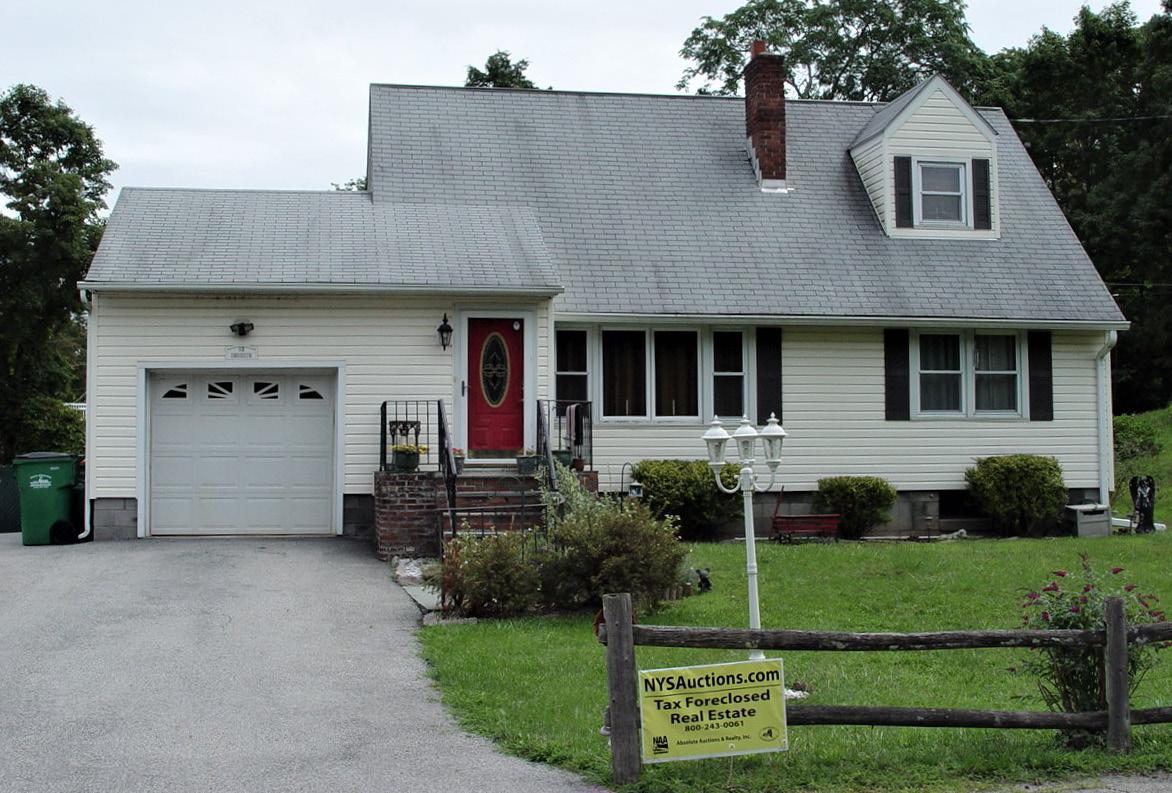
Pung v. Isabella County Supreme Court Case That Could Reshape Tax Foreclosures Nationwide
By Patrick Cummings, NYSAC Counsel
The U.S. Supreme Court is set to hear oral arguments early in 2026 in Pung v. Isabella County, a case that raises fundamental constitutional questions about property rights, government takings, and the process by which local governments foreclose on homes for unpaid property taxes. This dispute, stemming from a county in Michigan, asks whether a government must seek and remit to a property owner fair market value—not just the amount realized at a tax sale or auction—in an in rem foreclosure process.
This case comes on the heels of Tyler v. Hennepin County (2023), in which the High Court ruled that governments may no longer keep any overage (beyond taxes owed plus fees) when foreclosing on a property. The present case now offers the Court an opportunity to further define how states and local governments handle property foreclosures when taxes go unpaid.
The Factual Background: Dispute Over Taxes Owed
Under Michigan law, a Principal Residence Exemption (PRE) reduces school property taxes for qualifying homes. The Pung family applied this reduction to their tax bill payments, believing it applied to their home, but county officials subsequently denied the exemption. This denial resulted in an unpaid tax bill of roughly $2,242, an amount the Pung estate disputed as improper.
After an impasse, the county initiated foreclosure procedures. The home ultimately sold at public auction for about $76,000. However, the Pung estate demonstrated that the assessed fair market value of the property was approximately $194,000.
A lawsuit followed, with the plaintiff arguing that the county’s actions violated the U.S. Constitution by taking the property without just compensation and by imposing a financial penalty disproportionate to the tax debt. Lower courts held that the plaintiff was entitled to the surplus proceeds of the auction sale (sale price minus tax debt, consistent with Tyler), but not to the greater amount representing the home’s assessed fair market value.
Arguments For and Against Pung’s Position
Before the U.S. Supreme Court, the core legal dispute centers on two questions:
Takings Clause (Fifth Amendment): Does the Constitution require compensation equal to a home’s fair market value—not merely the amount realized at a tax sale—when government action results in the loss of property? Pung argues that the government effectively took the property’s equity beyond the tax bill, and that just compensation should reflect what was truly lost. Counties counter that tax foreclosure sales inevitably reflect lower “market” prices, and that requiring payment of full fair market value would upend long-standing practices, destabilize title certainty, and impose significant financial burdens on local governments.
Excessive Fines Clause (Eighth Amendment): Pung also contends that the seizure and sale of a home worth far more than the underlying debt amounts to a punitive penalty prohibited by the Constitution. Opponents argue that tax foreclosures are remedial—not punitive—and are designed solely to encourage timely tax payments, not to impose fines.
Potential Impact on New York’s In Rem Foreclosure and Auction Processes
While Pung arises under Michigan law, its constitutional implications will resonate in New York and other states. New York counties regularly enforce tax liens through in rem proceedings, in which properties with unpaid taxes are sold to recover revenue. Many municipalities, including New York counties, carry out this process through public notice followed by an auction sale.
A Supreme Court decision requiring fair market value compensation could force counties to reassess their foreclosure practices, potentially limiting how, when, and which properties they choose to foreclose upon. New York may also see increased litigation from former property owners seeking compensation for equity lost in tax sales. New York counties have already faced litigation following the Tyler decision. It may follow that, if the Supreme Court rules governments have a duty to obtain and remit the highest fair market value of a property—rather than the amount realized through an auction process—local governments could face lawsuits seeking retroactive damages.
Stay Tuned...
Pung v. Isabella County represents a pivotal moment that could either allow local governments to continue traditional, longstanding foreclosure practices when property taxes go unpaid, or require a fundamental restructuring of the system to ensure assessed fair market value is obtained and remitted. As the Supreme Court prepares to hear arguments, county officials and the communities they serve should watch closely. The decision could significantly reshape how tax debt is enforced and processed by local governments nationwide.
250 South Clinton Street, Suite 502, Syracuse, NY 13202 Phone (315) 752-0051 Fax (315) 752-0057
Benjamin Maslona, CIPMA, Executive Vice President/Municipal Advisor
HUDSON VALLEY REGION
Beth Ferguson
Andrew Watkins, CIPMA, Municipal Advisor 63 Putnam Street, Suite 202 Saratoga Springs, New York 12866 (518) 541-3861 WESTERN REGION
Vice President, Municipal Advisor 827 Route 82, Suite 10231 Hopewell Junction, New York 12533 (845) 447-2214
Kelly Lathan, Financial Analyst 5 North Avenue LeRoy, New York 14482 (585) 502-5010
The Federal Funding Dilemma for Counties Continues
WBy Dave Lucas, NYSAC Director of Finance & Intergovernmental Affairs
hile New York State is considered a strong home rule state, counties understand there are limits to how much leeway they are provided to manage their own affairs. Much like the state is subordinate to the federal government, New York’s counties are subordinate to the state.
This model becomes more complicated as the federal government continues to redefine federalism with an expectation that they will spend less of their resources, and states and local governments will spend more local resources to deliver essential services to our residents. Let’s not even talk about where federal taxes are generated and how a handful of states, like New York, have sent a lot more money to D.C. than their taxpayers receive back in federal funding for services, grants, job opportunities and other investments.
In this new environment, the added wrinkle for the counties of New York is that the State, over many decades, has transferred a lot of fiscal and programmatic responsibility to counties. The core of these expanding county responsibilities are, essentially, what should be the State’s Constitutional responsibilities to “care for the needy”. With federal actions doubling up on state actions, it creates far more uncertainty for counties and their residents.
and counties could provide in the first instance with hope of reimbursement later.
The second major federal action that is impacting counties is the federal government’s decision to freeze funding for three core social services programs, the Temporary Assistance for Needy Families (TANF), Child Care Development Fund (CCDF) and the Social Services Block Grant (SSBG).
On January 6, 2026, the Trump Administration froze funding for these three programs in five states, California, Colorado, Illinois, Minnesota, and New York. Each state was targeted due to “…the likelihood of fraud occurring in these programs…” based on what the federal government found in Minnesota. On January 8th a judge placed a two-week pause to this funding freeze (at the time of printing the judge’s order was extended again through February 6th.).
TANF is mandated under federal law and is designed to support families through various initiatives, including monthly cash assistance payments, emergency housing support, programs to reduce unplanned pregnancies, and promoting self-sufficiency through job training and education.
Two important events that have occurred over the last several months highlight the dilemma counties face in this new environment. First, was the longest federal government shutdown in U.S. history. Under the shutdown, no discretionary government funding was available for hundreds of programs. Mandatory programs like Medicare, Social Security and Medicaid continued, but any program subject to federal appropriations, like SNAP (food assistance), was reliant on any available federal balance in accounts, or funds the state,
CCDF supports reliable childcare services, enabling parents to work, pursue continuing education, and job training, ultimately improving family well-being, financial stability, and child development.
SSBG funds essential programs such as adult and child protective services, domestic violence prevention, child welfare programs, guardianships, foster care, and adoption services.
These programs are vital to supporting children and families across the state.
It is important to note that TANF and SSBG are federal block grants, their funding levels do not increase each year based on need or caseload. TANF has not increased since 1997. General inflation since 1997 has cut in half the buying power of TANF, cut by 70 percent purchasing power for food and by 75 percent for housing/rent.
SSBG funding was set at $2.4 billion in 1981 and is now $1.7 billion. Based on analysis from Brookings, when adjusted for inflation and child and elderly poverty, there has been an 89 percent reduction in the buying power of SSBG funds.
Care for the needy becomes paramount in these unique instances when the federal government is not operating in a customary fashion. Historically, when funds are appropriated by Congress, they are required to be spent by the Executive. In cases of suspected fraud, there is usually an investigation to determine if there is fraud, and what corrective actions should be taken before any funds are frozen.
As New York state has essentially transferred its constitutional responsibility to care for the needy to counties, when these federal funds are frozen counties have no choice but to continue providing services regardless of the availability of federal and state funding to support these services. There is some flexibility under the CCDF to only provide services based on available federal and state funds, but that flexibility does not extend to TANF and SSBG related services that fall under the moniker of “care for the needy”.
Counties continue to look for more efficiencies in their operations to adjust for uncertain times, but there are real limits to these actions when so much of any county’s budget is not subject to their direct control. While some of these “uncertainties” may subside, it is not happening fast enough for many counties that are being even more cautious in their budgeting. The uncertainty and lack of direct control have become evident in county budgets. In 2026, for the first time in over a dozen years, at least 10 counties will breach their property tax cap as they work to build a buffer against increased uncertainty while ensuring essential services are provided to their residents.
Clean Energy Solutions from NYPA
Energy Savings. Reliability. Carbon Reduction.
NYPA is a leader in clean energy solutions and power programs in New York State. We help local governments across the State to develop affordable, actionable energy solutions.
Our experts bring proven audit, planning, procurement, and implementation solutions— together with knowledge of New York State policy, grants, and incentives. Talk with us about NYPA’s streamlined bid and procurement process—saving customers time and money.
Let our project managers and engineers serve as an extension of your team—working with you to develop a roadmap to reach your clean energy goals
To learn more, provide your information at nypa.gov/services123 EnergySolutions@nypa.gov
Since 2012, the program has helped over a dozen counties streamline purchases, pay bills, and earn a growing stream of revenue.
The Payment Solutions Program, which is a special type of credit card, can help ease the the purchase of supplies, furniture, construction materials, utilities and much more, all while saving staff time and money.
NO COST
Rebates on 100% of dollars spent
Reduced check writing costs
Expedited payment to vendors (24 - 48 hours)
Reduced paperwork for requisitions, purchase orders and invoices
Quick startup - program implemented 6 to 8 weeks from the receipt of application
NYSAC’s AI Advisory Group
Empowering Counties with Trusted AI Solutions
By Mark LaVigne, NYSAC Deputy Director
Artificial intelligence (AI) is rapidly reshaping the landscape of county governance, promising smarter service delivery, greater efficiency, and more data-driven decisions. Yet with a flood of new tools and vendors, county officials face a critical question: which AI solutions can we truly trust? In response, the New York State Association of Counties (NYSAC) has launched an ambitious initiative to help counties navigate the AI revolution with confidence and clarity.
Origins of the AI Advisory Group
A Collaborative Response
The momentum began last summer at the NYSAC AI Summit in Albany, where a delegation of county officials gathered to explore the transformative potential of AI. Energized by the summit’s collaborative spirit, NYSAC was asked to explore a way to vet AI tools that might support county operations and services. This fall, the NYSAC AI Advisory Group was born—a group of county officials and IT directors committed to evaluating and sharing knowledge about the best AI resources for local government.
Project Goals and Collaborative Approach
At the heart of this project is a public-private partnership between NYSAC and Computer Aid, Inc. (CAI) designed to develop a structured, peer-driven approach to vetting AI tools that counties could trust. The project’s objectives are clear: develop an evaluation framework informed by county leaders, create a user-friendly matrix that organizes certified AI tools by category, and provide ongoing education and feedback mechanisms. By involving peers who understand local challenges, the NYSAC Advisory Group is designed to ensure the AI tools recommended are innovative, practical, and trustworthy.
The Dashboard
A New Era of Peer-Sourced Evaluation
Early this year, we developed a beta version of the NYSAC AI Dashboard. This online platform has been designed to offer counties a certified listing of AI solutions each vetted against a comprehensive set of criteria developed and tested by county representatives. The dashboard’s interface makes it easy for officials and IT directors to review and compare tools, read real-world feedback, and access resources for more informed decision making in their home county. With peer-sourced evaluations at its core, the dashboard will support county AI adoption, reducing uncertainty and building collective knowledge.
Empowering County Officials Trust, Confidence, and Community
NYSAC’s approach is centered around empowering county officials with information they can trust. By prioritizing insights and testing data from fellow counties, the project builds a sense of community and confidence. Decisionmakers can move forward knowing their choices are grounded in real experiences, not just vendor promises. This kind of collaboration is helping set a stronger, more responsible model for how local governments adopt AI.
Next Steps
Shaping the Future Together
Looking ahead, the NYSAC AI Advisory Group and CAI will continue to refine the dashboard, working closely with the AI Advisory Group to ensure it reflects the evolving needs of counties. Ongoing collaboration and feedback will fuel the expansion of the evaluation matrix and educational resources. Together, New York’s counties are building an innovative future where responsible and trusted AI deployment can help local leadership and strengthen public trust.
New York State Legislative Session Calendar
January — June 2026
January 7 2026 Legislative Session convenes
January 19 Martin Luther King, Jr. Day
January 20 Final Day for Submission of Executive Budget
The New York State legislative session calendar establishes a schedule for the 2026 legislative session and provides dates important to the legislative process. The session calendar is intended to afford Members flexibility in conducting legislative business in Albany and planning activities within their home districts. The session calendar will foster orderly and timely consideration of legislation. Unforeseen events may require modification of the session calendar. Indicates session day
February 16 Presidents’ Day
1 Beginning of new Fiscal Year
25 Memorial Day
New Pilot Partners Counties with State to Expand Child Care
ABy Joe Mahoney, NYSAC Contributing Author
lack of affordable child care services has emerged as an acute challenge across New York, affecting families, employers, and local economies. While the issue is statewide, solutions are increasingly being shaped and delivered at the county level, where local leaders are partnering with the state to expand child care options that reflect community needs.
Advocates for increased public investment in child care say an expansion of such services yields multiple returns, including providing a bridge for parents to enter or rejoin the workforce while ensuring youngsters receive early care and enrichment that set them up for future success.
“Every parent I have run into talks about the struggles with affordability and access,” Monroe County Executive Adam J. Bello said in an interview.
But for many parents, the cost has become staggering. For a family with a 4-year-old and an infant, the average cost of fulltime child care amounts to $28,000, according to Child Care Aware of America, an advocacy group.
In fact, the costs are so high that the lack of affordable child care has prompted some families to leave the state, according to New Yorkers United for Child Care, another advocacy organization.
As part of her 2026 agenda, Gov. Kathy Hochul has announced the state is creating partnerships with Monroe County, Broome County, and Dutchess County for pilot programs that will establish new child care options tailored to the needs of their respective communities. The initiative would be supported by $60 million in state funding, provided the Legislature approves the plan. The focus of the effort is to support programs serving children from infancy to 3-years-old.
Child care is one of the smartest, most impactful investments we can make, strengthening our economy and building healthier communities.
“Business owners are raising this as an economic development issue as well,” Bello added, noting that a shortage of affordable child care options has become a roadblock to parents taking jobs when employers are looking to expand their workforce. “It impacts the ability to hire workers, which then impacts the ability of your economy to grow.”
When the Hochul administration first broached the idea of a pilot program partnership between counties and the state, Bello said Monroe County “raised our hand immediately, because we have had good partnerships with the state, and we have a good history of managing child care dollars.”
For Broome County, the partnership with the state for a $20 million pilot program comes at a time when the county is moving forward with an ambitious plan to create a major child care center at Oakdale Commons, a former shopping mall site in Johnson City. The county has retained a national child care provider, KinderCare, to manage the program. The broader redevelopment project at Oakdale has already been funded through an earlier grant.
“We understand the importance of offering affordable child care to the community, and doing whatever we can to increase its availability,” Broome County Executive Jason T. Garnar said.
With Oakdale slated to become a mixed-use facility, Garnar said the county determined the site would be an excellent location for a child care center, given its close proximity to the county’s workforce development office. Parents, he said, will be able to drop off their children before visiting the workforce development office to work on résumés and pursue local job opportunities.
Transportation challenges are also reduced, as Oakdale is a stop on regional public transportation routes.
Many daycare operations in Broome County have long waiting lists, Garnar noted. While the Oakdale child care facility will serve parents employed by Broome County, the opening of a new center there will help expand overall access to child care across the county.
The state’s pilot program encourages the counties involved to test a variety of approaches to expanding the availability of services and addressing local needs. Garnar said he wants to explore ways to improve wages for child care workers, noting that low pay has made it difficult to recruit and retain staff.
“It’s hard to get people to work for $16 or $17 an hour and watch kids all day long, even if that is their calling,” Garnar said.
But the main objective, he added, is “trying to do whatever we can to increase the availability of child care to allow people to work. The biggest barrier to people not working is they have kids.”
Dutchess County Executive Sue Serino, a former state lawmaker, has voiced strong support for the pilot program. “As a mom and a former provider of child care services, I know that
quality child care changes lives,” Serino said. “It gives children the strong start they deserve and gives parents the chance to work, grow, and provide. Child care is one of the smartest, most impactful investments we can make—strengthening our economy and building healthier communities.”
In return for a $20 million state investment in each of the three counties, the counties are being asked to contribute 10 percent toward the child care expansion effort. State officials estimate the investments will support 1,000 new child care slots in each county, beginning next year.
“My mission to deliver universal child care for all is a multiyear plan for the entire state, making living in New York more affordable and the best place to raise a family,” Hochul said in a statement.
Bello said he is optimistic the Legislature will approve the initiative. “This is a no-brainer,” he said. “It doesn’t matter where you are on the political spectrum—right, center, or left. I think we can all agree child care is an important issue because it really impacts everybody.”
Upcoming Education & Training Events
NYSAC provides training and education to county leaders on issues vital to public policy and county services
For more information on training and education offered by NYSAC, please visit our website at:
County Executive’s Corner Economic Development That Delivers Jobs
WBy Ed Day, Rockland County Executive
hen we talk about economic development, the most important measure of success is simple: jobs. Goodpaying jobs. Stable jobs. Jobs that allow Rockland County residents to build careers, support their families, and invest in their future—right here at home.
Over the past year, the Rockland County Industrial Development Agency (IDA) has played a critical role in strengthening our local economy by supporting major development projects that directly benefit employment across the county. Through the responsible use of IDA financial assistance tools—including sales tax exemptions, mortgage recording tax exemptions, and payment-in-lieu-of-tax agreements—seven major projects moved forward. These projects are already creating jobs and laying the foundation for even more in the years ahead.
These developments span a wide range of industries, including advanced manufacturing, financial services, data infrastructure, mixed-use development, and affordable housing. Companies such as CoreWeave, JP Morgan Chase, Tower Research Capital, Point72 Asset Management, Schreiner Group, Connectivity Systems, and 30 West Housing have chosen to invest and grow in Rockland County. That decision reflects confidence in our workforce, our infrastructure, and our long-term economic stability.
Together, these projects supported more than 1,500 construction jobs, in addition to the retention and creation of more than 150 permanent jobs. This includes manufacturing positions retained and expanded through Schreiner Group’s facility growth, as well as ongoing operational employment at major financial services and data infrastructure facilities operated by companies such as CoreWeave, JP Morgan Chase, Tower Research Capital, and Point72 Asset Management.
As these spaces become fully occupied, additional permanent jobs will be created by third-party businesses, further expanding employment opportunities for Rockland residents. In addition, there are 40 active projects currently underway that are expected to result in the retention and creation of approximately 1,800 jobs.
Economic development done right is not about headlines— it’s about outcomes. It’s about ensuring Rockland County remains a place where businesses want to stay, grow, and hire locally. Most importantly, it’s about making sure our residents have access to meaningful employment opportunities today and in the future.
By supporting responsible development, encouraging private-sector investment, and keeping job creation at the center of our strategy, we are continuing to build an economy that works for everyone in Rockland County.
A Revenue Generating Tool For Counties Across NYS
Our work with public entities has resulted in over $4.3 Billion back to the communities we serve.
INVESTED IN COMMUNITIES THAT POWER US
It’s one thing to do business in the U.S. It’s another to be invested in its future. A future that can be thoughtful, prosperous, and smoke-free.
That’s why we don’t sell traditional cigarettes in the U.S. Instead, we’re innovating with purpose to offer legal-age adults who smoke a better path forward.
We’re invested in responsibility. Committed to ensuring our products are for adults 21 and over with responsible marketing practices that help prevent youth access and appeal.
We’re invested in economic growth and high-skilled jobs. Creating thousands of direct and indirect jobs across the country. With $800+ million in announced projects in American manufacturing.*
We’re invested in community. Since 2022, via community and national partnerships, we’ve granted over $25 million to organizations supporting military veterans and families, disaster relief, and economic empowerment.
Together, as we build our smoke-free future, we’ll continue to invest in the industry, people, and opportunity of America.
Because we’re proud to be invested in America. *See PMI press releases of July 16, 2024 (Aurora, CO) and August 27, 2024 (Owensboro, KY) for full details and forwardlooking and cautionary statements. PMI” refers to the Philip Morris International family of companies globally. “PMI U.S.,” “we,” “our,” and “us” refer to one or more of PMI’s U.S. businesses.
Warren County Consolidates Waste and Recycling Hauling to Deliver Savings for Towns
ABy Don Lehman,Warren County Director of Public Affairs
new countywide approach to hauling trash and recyclables is delivering meaningful savings for Warren County communities—and doing so in its very first year.
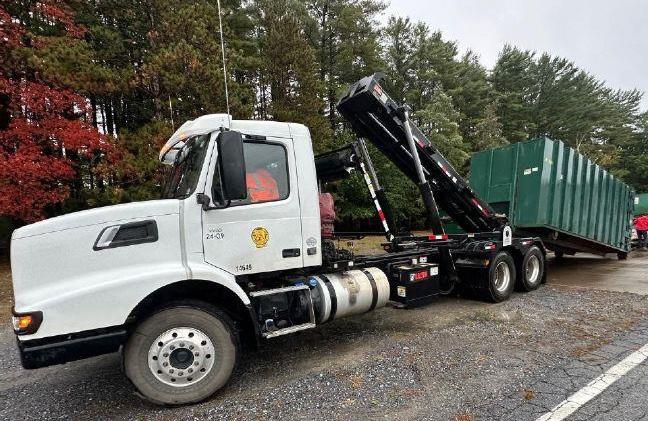
In 2025, Warren County began coordinating solid waste and recycling hauling on behalf of participating towns, replacing a system in which municipalities contracted individually with private haulers. The collaborative effort has already saved taxpayers an estimated $175,000 to $200,000 countywide, while remaining costeffective for the county itself.
Under the program, Warren County now handles transportation of solid waste and recyclables from local transfer stations to the WIN Waste Innovations incinerator and a recycling facility in neighboring Washington County. County trucks and drivers have taken over a role previously filled by for-profit haulers, who charged towns separately to remove their materials.
“Through our program, we can charge about half the rate the private haulers were charging,” said Scott Royael, Warren County’s Solid Waste and Recycling Compliance Coordinator. “Our goal is for the county to break even while helping towns save money providing this service for residents.”
All towns in Warren County opted into the program except Lake George, which already owned its own hauling equipment.
The savings have been substantial. In the Town of Hague, for example, hauling a single load of trash from its transfer station cost more than $700 per trip in 2024. Under the county program in 2025, that cost dropped to an average of about $300 per trip, Royael said.
Bolton Town Supervisor Ron Conover reported similar results.
“In the Town of Bolton, we aren’t spending nearly what we were spending in 2024,” Conover said. “We have paid about half of what we paid in 2024.”
Demand for the service peaked during the busy summer tourism season. In July alone, county vehicles averaged 164 trips to and from transfer stations across Warren County, reflecting both seasonal population increases and the program’s expanded reach.
Beyond cost savings, the initiative has produced operational benefits as well. Centralized hauling has allowed the county to collect more accurate data on waste and recycling volumes at individual transfer stations and to compare practices across municipalities.
“That data helps us work with transfer station staff to make operations more efficient and better coordinate DPW trips,” Royael said. “It will also be important as we move forward with planning a countywide composting program.”
The hauling initiative was developed in 2024 under the direction of the Warren County Department of Public Works and the Warren County Board of Supervisors, with service officially beginning in January 2025.
To further strengthen the program, the Warren County Department of Planning and Community Development successfully secured a $422,668 New York State grant. The funding will support the purchase of a new, more efficient hauling truck and the hiring of an additional staff member.
The new truck is expected to enter service in early 2026, replacing an older vehicle nearing the end of its service life that is currently used for recyclable hauling.
Just one year in, the program is already demonstrating how coordinated county-town partnerships can reduce costs, improve efficiency, and lay the groundwork for future waste-management innovations.
Short-Term Rentals Are Impacting Ulster County Housing Supply
UBy March Gallagher, Ulster County Comptroller
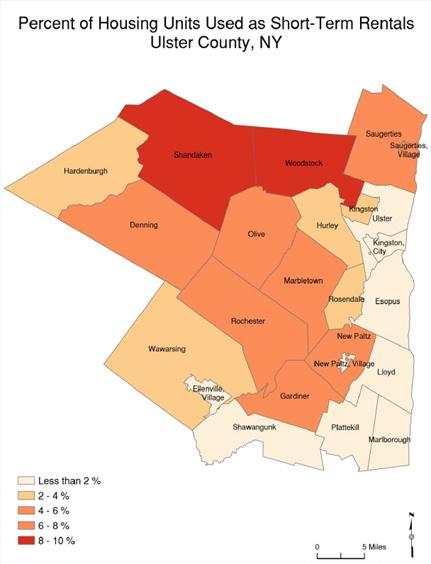
lster County has been experiencing what many have characterized as a housing crisis. The cost of homes for sale and the cost of rent has risen, driving the percentage of costburdened renting families to 46 percent, as the gap between the median wage and the cost of housing has grown. At the same time, Ulster County has experienced growing tourism visitation resulting in higher than ever occupancy tax collections. Much of the increased visitation has coincided with the growth of the short-term rental market. Short-term rentals, especially those that are whole units of housing, impact the amount of housing stock availability. The Ulster County Comptroller’s Office sought to quantify this impact.
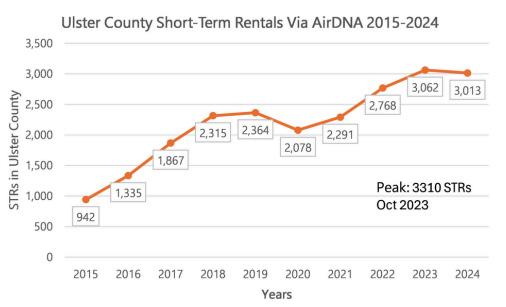
The Comptroller’s Office reviewed AirDNA data, available for tourism purposes, from 2015 through 2024. According to AirDNA, the number of short-term rentals (STRs) in Ulster County has exploded in the past decade, with an increase of 220 percent since 2015. In 2015, the monthly average number of STRs in Ulster County was 942, and by 2024 that average had reached 3,013. The peak point during that period was in October of 2023 at 3,310 STRs, which represented 3.84 percent of all housing units in Ulster County.
Although AirDNA provides a snapshot of the number of STRs, it provides no detail on those properties. To get more detail on the STR units in Ulster County, the Comptroller’s Office was able to review STR data available through the Granicus Host Compliance platform. Ulster County contracts with Granicus to identify STRs for occupancy tax purposes. A review of the Granicus data found that as of May 2025, Ulster County had over 10 platforms listing short term rentals in the county, with Airbnb remaining the dominant listing site. We limited our further analysis to those properties that had rented or advertised in the past 12 months.
Our significant findings were as follows:
• Across Ulster County, 98 percent of STRs are entire homes and only 2 percent are a room for rent.
• Ulster County Planning Department’s Housing Smart Communities Initiative recommends no more than 2 percent of housing stock be used for STRs. Our analysis showed that 15 out of the 24 municipalities in Ulster County, or 63 percent, are above that 2 percent mark.
• As of May of 2025, 2,827 housing units are operating as STRs, occupying 3.28 percent of all housing countywide.
• The towns of Denning, Gardiner, Shandaken, and Woodstock all have over 7 percent of their housing operating as STRs, with Shandaken at a county-wide high of 9.98 percent, or 267 STRs out of 2,675 total housing units.
• The size of STRs is skewed towards studio or 1-bedroom units and properties with 5 or more bedrooms. So, while STRs are not taking up notable proportions of 2-4-bedroom housing units, 7 percent of all studios
or 1-bedroom apartments in Ulster County are STRs and 5 percent of all housing units with more than 5 bedrooms are STRs.
• The data reveals that 1,816 or just 64 percent of STRs have their mail sent to addresses inside of Ulster County. On the other hand, 1,008 STRs in Ulster County have owners that receive mail outside of the county. Most of those owner mailing addresses that are outside of the county are in New York City. For out-of-state owner mailing addresses, the states of New Jersey, California, Florida, and Pennsylvania have notable concentrations.
In response to this proliferation of STRs, at least 16 municipalities in Ulster County have adopted some form of STR regulation. Of those, at least six Ulster County municipalities have adopted STR regulation with either a cap or a requirement that the unit be owner occupied.
Due to the timing issues of permits expiring and the format or lack of information in the Granicus data, it is nearly impossible to ascertain whether a municipality was over their STR cap for enforcement purposes.
Enforcement of STR regulation has presented a challenge for municipalities. Even with ideal data, enforcement takes staff time. For example, the Town of Olive hired a part-time code enforcement officer to administer a series of stringent tests required to prove residency to meet the owner-occupied requirement.
Although Ulster County has data sharing agreements with the municipalities that opt in to share Granicus data, that data sharing presents several barriers. First, the data is only shared upon the request of the municipality. Those requests do not come frequently and are not addressed promptly by the County. Second, the data provided by Granicus does not contain section, block, and lot number which would provide a unique identifier for enforcement. Finally, the data contains errors that we identified such as providing the wrong town for a particular address.
Given new state requirements to create an STR registry, we hope the STR registry will contain fewer errors and better identifying data.
In summary, the number of STRs in Ulster County has more than doubled over the last ten years and most STR offerings are for the entire house or an apartment unit. As a result, STRs are impacting the housing inventory of Ulster County, taking up 3.28 percent of all housing stock. Studio and one-bedroom units are the most impacted
with 7 percent of all studios and one-bedrooms being offered as STRs. STR operations are impacting some towns much more than others. Only six municipalities in Ulster County have STR regulations that cap the number of permits or require the unit to be owner occupied. A significant percentage (36 percent) of STRs have an owner’s mailing address outside the County, and of those, most absentee owners have addresses in New York City. Enforcing STR regulation is a challenge and the data available through the County’s contract with Granicus does not provide all that is needed for good analysis and enforcement.
The new state requirement for an STR registry may result in more robust data. What we have found is that communities should consider limiting the number of STRs to preserve housing stock and keep the residential character of communities intact. While STRs provide an income source for hosts and contribute to the tourism economy, they have had a major negative impact on housing availability for Ulster County.
‘All of the Above' Energy Strategy Leaves Geothermal Without Seat
IBy Merton D. Simpson, Jr., Albany County Legislator (Dist. 2)
was first elected as Albany County Legislator for District 2 in 2012, and since 2017 my primary focus has been climate sustainability. As co-chair of the Sheridan Hollow Alliance for Renewable Energy (SHARE) since its founding in 2017, I helped lead efforts that successfully stopped the State’s proposal to install two fracked gas turbines at the 79 Sheridan Avenue Steam Plant (SASP). The Office of General Services (OGS) and the New York Power Authority (NYPA) initially argued that wind, solar, and geothermal energy were not practicable alternatives to fracked gas. With the assistance of Keith Schue and Jay Egg, SHARE produced a scientific report demonstrating that geothermal energy was, in fact, a viable option.
SHARE has proposed the New York State Renewable Capitol Act to eliminate fracked natural gas from all State buildings currently fueled by the SASP and to replace it with geothermal energy within three years. The night before OGS Commissioner Janet Moy announced that the State would pursue only a 50 percent reduction in natural gas over ten years—rather than SHARE’s proposal for a 100 percent reduction in three years—I received a call from NYPA in January 2024 at 3:00 p.m. requesting a group phone meeting with the SHARE Steering Committee at 4:30 p.m.
During that call, limited information was provided. While the State characterized this outreach as part of its transparency efforts, it came after SHARE had filed FOIL requests for more than a year without receiving substantive information, despite the State having developed a detailed plan.
In August 2024, NYPA again contacted me midweek to schedule a Friday Zoom meeting, only for SHARE to learn that NYPA had met with other community groups the night before and that an article outlining the State’s Energy Master Plan appeared in the Times Union the morning of our meeting.
This was notable given SHARE’s demonstrated expertise, which previously helped prevent the installation of fracked gas turbines at the SASP and redirected the proposed $88 million investment toward more sustainable alternatives. The week prior, SHARE
held a press conference indicating it was prepared to pursue an Article 78 proceeding to compel responses to outstanding FOIL requests. Collectively, these experiences reflect a pattern of limited engagement with SHARE on decisions where our expertise could have been meaningfully incorporated.
Governor Hochul argues that what we need is an "All of the Above” approach that includes a continued commitment to renewables and nuclear power to ensure grid reliability and affordability. The problem with this approach is that in the musical chairs of energy spending, renewables are left without a seat. Since 2017, SHARE has worked to transition the buildings fueled by the Sheridan Avenue Steam Plant off fracked natural gas imported from Pennsylvania. These buildings include the State Education Department, the Alfred E. Smith Building, Corning Tower, the New York State Capitol Building, the 98acre Empire State Plaza, and the State Museum.
Although fracked natural gas is banned in New York State, the SASP continues to pump carcinogenic natural gas into these buildings daily, exposing residents in the predominantly Black communities of Sheridan Hollow, Arbor Hill, West Hill, the South End, and surrounding neighborhoods to elevated rates of cancer and other respiratory illnesses.
The modest renewable energy funding enacted through President Biden’s Inflation Reduction Act has since been rolled back under President Trump. The New York State Department of Public Service estimates that these policy changes could cost New York as much as $60 billion in renewable energy investment. Trump’s “Drill, baby, drill” mandate has accelerated fossil fuel production, making the United States the world’s largest oil producer and further exacerbating global warming.
Governor Hochul must recommit to achieving the goals of the Climate Leadership and Community Protection Act, even if doing so requires minor adjustments. SHARE has already identified a clear and achievable opportunity by removing the Capitol complex from fracked natural gas through implementation of the Renewable Capitol Act, with reasonable modifications.
Leadership During Disasters
People, Mission, and Message
SBy Ted Halpin, Emergency Management Contractor and former Madison County Emergency Management Director
trategic leadership from elected and senior officials during disasters can be distilled into three priorities: People, Mission, and Message (PMM). These three concepts form the foundation of all emergency management mission areas and serve as the “North Star” for blue-sky planning, training, and exercises, as well as for high-level guidance during disaster response. Incorporating these priorities into planning, response, and recovery enables leaders to achieve their overarching mission: keeping people safe.
People
Everyone agrees that, in emergency management, people come first. “People,” in its simplest terms, describes what must happen to save and sustain lives during emergency management activities.
To elevate “People” to their proper place, leaders must ensure that the most at-risk populations are cared for. Lifesaving and life-sustaining services must be delivered regardless of physical or mental challenges, socioeconomic status, location, mobility, technological limitations, language barriers, existing infrastructure, reliance on support services, or pet ownership. Placing people first requires intentional planning, equitable resource allocation, and constant reassessment of who may be left behind as conditions evolve.
Mission
Mission is often discussed in a military context. In emergency management, however, “People” rely on government, social services, health and mental health care, utilities, and privatesector partners to survive and recover. As such, the concept of “Mission” must be viewed from the citizen’s perspective.
Law enforcement, fire services, and emergency medical services are often the first missions that come to mind. While these services are critical, recent disasters have demonstrated their limitations, including the 2022 Buffalo blizzard, the 2023 Maui wildfire, and multiple major hurricanes. Interruptions to other service areas may be less immediately harmful but can still be devastating. These include electricity, water, sewer, natural gas or propane, cellular and landline communications, and internet service.
As communities become increasingly dependent on these systems, their failure significantly increases the risk of harm. Extreme weather events and cyberattacks can disrupt or disable essential services. Examples include the 2022 Buffalo blizzard, which claimed 48 lives; the 1995 Chicago heat wave, which killed more than 700 people; and the 2023 cyberattack on the Aliquippa, Pennsylvania, water authority. Cyber incidents have already crippled critical infrastructure and will likely continue to do so, negatively affecting mission delivery and the ability to communicate effectively.
Health care and mental health care are also critical mission areas. Disasters exacerbate existing physical and mental health conditions. Health facilities may be damaged, providers may be unable to reach work, transportation may be disrupted, and pharmacy support may be unavailable. These disruptions can cause already fragile individuals to decompensate. As essential services become more tightly linked to technology, failures—particularly internet outages—can create cascading consequences across nearly every mission area, including public safety communications, government operations, utilities, and health care delivery.
Message
Messaging is how government officials shape outcomes for people and communities before, during, and after disasters. Effective disaster messaging consists of four key elements.
First, messaging must be strong during blue-sky conditions. This includes preparedness guidance for individuals, families, organizations, and businesses. When communities are better prepared, emergency management can focus limited resources on the most vulnerable populations. Preparedness messaging must also acknowledge community diversity and the reality that many people lack the resources needed to fully prepare, respond, and recover.
Second, messaging must continue to function during disasters, regardless of technological dependency. Emergency management leaders must understand the limitations of their communication systems under degraded conditions. When cellular and internet services fail, AM and amateur (HAM) radio systems must be available, promoted, and supported.
Emergency operations centers, 911 centers, and hospitals should also retain or reinstall plain old telephone service (POTS) copper lines to ensure communications when internetbased systems fail.
Third, elected and senior leaders must view messaging from the receiver’s perspective. Messages should be coordinated, consistent with previous communications, and designed to correct misinformation when necessary. They must clearly explain what has happened, what is happening, and what actions people should take. Agencies involved in a disaster should speak with one voice, and messages should be reviewed by appropriate subject-matter experts before release. Mechanisms must also exist to determine whether messages are being received and understood. Many messages can be prescripted and quickly adapted as conditions change.
Finally, messaging capabilities must be able to expand rapidly. Leaders and emergency management staff must be prepared to push and pull information across multiple social media platforms and traditional media outlets. This surge capacity often requires support from multiple departments and must be planned for, trained on, and exercised well before a disaster occurs.
Incorporating these priorities into planning, response, and recovery enables leaders to achieve their overarching mission: keeping people safe
This PMM framework of People, Mission, and Message represents the priorities—a three-legged stool—on which emergency management succeeds or fails the public. By applying these priorities holistically, leaders can better serve their communities, protect critical infrastructure, and deliver the strategic communications necessary to support both.
The 2026 Local Agenda
Q&A with NYS Municipal Association Leaders
NBy Kate Pierce-Nimz, NYSAC Multimedia Specialist
YSAC Executive Director Stephen Acquario, NYCOM
Executive Director Barb Van Epps, and NYAOT
Executive Director Chris Koetzle came together for a special joint episode of the County Conversations and Talk of the Towns podcasts to discuss the shared priorities facing local governments across the state.
Article edited for length and clarity. Full episode is available at nysac.podbean.com
Why is AIM funding so important to cities, towns, and villages?
BARB VAN EPPS
AIM is the only form of unrestricted aid that cities, towns, and villages get from the state. Any time we receive unrestricted aid from the state, it translates into property tax relief. AIM was at $715 million for 15 years, it wasn't growing with inflation. Finally, two years ago we were able to get an increase, but they referred to it as temporary municipal assistance. The word “temporary” makes it challenging for our members, because they can't bank on that money being there. We need it all bundled into AIM and continue to give municipalities the unrestricted aid that they need.
When AIM stays flat, how does that affect residents?
CHRIS KOETZLE
It’s a classic case of having to do more with less. When you think about how that translates into a local government, one of two things is happening. Either you are going to lose services, or it's going to end up in a levy increase. It does impact every New Yorker across the state. These are daily, vital, critical services that every New Yorker relies on.
How does the County Infrastructure Grant Program work for counties?
STEPHEN ACQUARIO
For counties, what we have been talking about is revenue sharing. In the case of counties, we got thrown out of the program. And what's left of it now is this county infrastructure program. It has a matching component which does stretch local governments budgets, but it's a temporary type of program, which really should be a permanent program. We're using it for housing development, for wastewater connections, and that is a priority of the state.
Why is the Safe Water Action Program (SWAP) needed in addition to existing clean water grants?
BARB VAN EPPS
The Clean Water Infrastructure Act is primarily grant funding. There are winners and losers. No one should have to compete for clean water. A lot of our smaller municipalities do not have the capacity to even apply for these grants. SWAP would be a dedicated funding stream that would go to every municipality, which would help them with preventive maintenance. We see this as a supplement to the grant funding, not a replacement.
How
urgent is the water infrastructure crisis?
STEPHEN ACQUARIO
Nobody should have to compete for clean water. Every day across this state there's a water main break. I'm living one right now and this is happening all across the state. We need additional assistance.
What should people understand about local government?
What is CHIPS and why does it matter so much to local governments?
CHRIS KOETZLE
CHIPS is a formula-based funding program, which in many cases for towns, is the only money that towns are able to put into annual paving plans. You can't continue to fund something at this level while the costs continue to rise. That delta spread means fewer roads being paved. Without a local road, you're not getting to a state road. An investment in CHIPS is an investment in the state's infrastructure.
Why are retiree earning caps a workforce issue?
STEPHEN ACQUARIO
We have been experiencing a massive brain drain of retirements. Local governments are struggling with recruitment. The retirees have the knowledge. They want to come back. We've asked the state to raise that level, I believe it's $30,000 right now, and we would like to see that doubled.
Why is there a need to create a statewide grant clearinghouse?
BARB VAN EPPS
There are 25, 30 agencies that all have their own grants, all have their own deadlines, all have their own requirements. There is no one place to find out what's out there. We think it would be very low cost, and the return on investment would be significant, because not only would municipalities be able to find out about these grants, but the money would be going out the door and would be spent on things that it was intended to be spent on.
BARB VAN EPPS
Government can't shut down at the local level. We have to pave the roads. We have to make sure the lights are on and that the water is still running. We continue to work together at the local level because we have to do that. We have to make sure that the services that we provide in the counties, cities, towns and villages continue to be provided so that our residents can live comfortably and have a good quality of life.
STEPHEN
ACQUARIO
Our three associations are not partisan organizations. We represent Republicans and Democrats and all other parties that are in the local government. So, it's a unified approach.
The other thing I’d like to mention is that New York counties pay more than all the counties across the United States in Medicaid. The $7 billion+ that the New York counties have to pay into this Medicaid program is more than all those other states combined. So, federal cost shifts are a great concern to the counties right now, as is the preservation of the state's commitment to Medicaid.
CHRIS KOETZLE
You turn on your water and clean water comes out? That's a local government. You get on a road, most of the road you're on and it's safe and passable? That's a local government. Your road in a snowstorm. It's plowed, it's safe to travel? That's a local government. And we can go on and on and on. Everything really boils down to how much work these folks do, how hard they work, and how much they work together across the different departments.
Learning From Loss How Counties Are Using Fatality Review Teams to Prevent Overdose and Suicide
EBy Lynda Battaglia, LCSW, DCS/Director of Mental Health & Community Services, Genesee County and Danielle Figura, LCSW-R, DCS/Director of Mental Health, Orleans County
very overdose and suicide raises unanswered questions for families, communities, and the systems meant to support them. Across New York State, counties are using fatality review teams not to assign blame, but to understand what happened, where connections were missed, and how future deaths might be prevented.
To understand how this work is happening statewide, the New York State Conference of Local Mental Hygiene Directors (CLMHD) gathered input from Directors of Community Services (DCSs) across regions. While approaches vary based on local capacity, counties consistently described fatality reviews as a practical tool for learning from loss and strengthening coordination across systems.
Western New York: Genesee and Orleans Counties
In Genesee and Orleans Counties, fatality review work follows a shared, practitioner-led model focused on identifying system gaps. A core group convenes quarterly to hear case presentations, with both counties represented; case information is provided by epidemiologists with access to autopsy reports, and community providers and law enforcement participate. The Department of Health serves as the lead agency, with DCS involvement throughout, and a central component of the work is the Next of Kin Interview, conducted by a mental health professional. Because both counties rely on the Monroe County Medical Examiner’s Office, autopsy reports are often delayed, requiring outreach to families well after the death. County leaders emphasized that these interviews help ensure reviews focus on how a person lived, not only how they died.
“The Next of Kin Interview" is a powerful part of the review process because it gives family members a voice to share who their loved one was and how they lived,” said Lynda Battaglia, LCSW, DCS, Director of Mental Health & Community Services for Genesee County. “It helps ensure the review reflects the whole person, not just the circumstances of their death, especially when stigma related to addiction or mental health has shaped how they were seen.”
Across counties, fatality reviews frequently surface shared themes, reinforcing the importance of identifying points where earlier intervention may have been possible.
Mid-Hudson: DataInformed Review Structures
Several Mid-Hudson counties have established fatality review efforts with active DCS leadership. In Dutchess County, the DCS participates in every review, examining both overdose and suicide deaths with partners that include the medical examiner, public health, hospitals, law enforcement, probation, and community providers; county leaders reported stronger cross-agency relationships, improved information-sharing, and clearer system coordination. Orange County reported similar benefits, noting that overdose fatality reviews have helped identify gaps in treatment access and communication between systems. Westchester County operates coordinated suicide and overdose fatality review processes through crosssystem structures, continuing this work through a Data and Action Subcommittee and its Opioid Response and Overdose Prevention Initiative, both co-chaired by the DCS.
North Country: Building Capacity Through Partnerships
In the North Country, counties have varied fatality review approaches, often supported through High Intensity Drug Trafficking Area partnerships. Clinton County operates an Opioid Fatality Review Team co-hosted with HIDTA; one review identified possible human trafficking concerns linked to an overdose death, prompting coordination with law enforcement and federal partners. Essex County uses fatality review work to strengthen system coordination through its ECHO Prevention Coalition, including a Mock Overdose Fatality Review that brought together public health, mental health, social services, and law enforcement partners.
“Every review reminds us that behind every data point is a person,” said Terri Morse, Essex County Director of Community Services. “OFRs give us the opportunity and the responsibility to learn, adapt, and prevent future loss.”
Southern Tier and Other Regions: Informal Reviews Filling Gaps
Several Southern Tier counties, including Chemung and Delaware, do not operate formal overdose or suicide fatality review boards due to staffing constraints, instead relying on existing structures or ad hoc interagency discussions that still surface prevention insights. These differences reflect local capacity and resources rather than a lack of commitment, underscoring the uneven ability of counties to sustain fatality review work without dedicated support.
Common Challenges and the Need for Continued Support
Across regions, counties identified structural barriers, including confidentiality requirements, delayed access to data such as toxicology and medical examiner reports, and the resource-intensive nature of fatality review work. While grant funding has helped launch or strengthen many efforts, counties emphasized that sustained state and federal support is needed to maintain progress, build capacity, improve data systems, support trauma-informed engagement with families, and ensure that fatality review work moves beyond pilot efforts to become consistent, sustainable, and available statewide.
Taken together, these county experiences highlight the important role local governments play in overdose and suicide prevention and the need for continued support to sustain fatality review teams across New York State.
Did You Know?
• NYSHIP is available to virtually all public employers across New York State
• Over 800 counties, cities, towns, villages, school districts and special districts participate in NYSHIP
• More than 1.2 million public employees, retirees and their families have health insurance through NYSHIP
A unique health insurance plan developed for New York’s public employees
For additional information regarding The Empire Plan, public employers may visit our website at www.cs.ny.gov or email the Public Employer Liaison Unit (PELU) for the New York State Health Insurance Program at PELU@cs.ny.gov.
Recovery-Ready Workplaces A Smart Investment for Counties and Communities
ABy James Norton, Government & Community Affairs Manager, NAMI NYS
cross New York State, counties are on the front lines of the substance use disorder (SUD) and mental health crisis. From operating public health departments and jails to administering workforce programs and supporting local employers, counties see firsthand both the human and fiscal consequences of untreated addiction. The proposed Recovery Ready Workplace Act (S.3740A /A.521) offers an evidence-based framework that strengthens local economies while supporting workers, families, and communities—while fostering a culture of dignity, understanding, and support in the workplace.
Counties are often among the largest employers in their regions, overseeing workforces in public works, corrections, emergency services, healthcare, and human services. These sectors face elevated rates of workplace injury, chronic stress, and burnout—factors closely associated with substance misuse. National data show that workers injured on the job are frequently overprescribed opioids, and a significant number go on to develop opioid use disorder. When stigma prevents workers from seeking help early, counties absorb the downstream impacts through higher healthcare costs, absenteeism, turnover, and increased strain on public systems.
The scale of the challenge is substantial. Nationally, 70 percent of adults with an alcohol or illicit drug use disorder are employed— approximately 13.6 million workers, or nearly 9 percent of the entire workforce. Yet only 1.9 million receive treatment each year, even as many continue working while struggling or while in recovery. More than half of individuals with SUD have a mild disorder, underscoring a critical opportunity for early, non-punitive intervention in the workplace before challenges escalate and careers are unnecessarily derailed.
The Recovery Ready Workplace Act addresses these realities by establishing a voluntary statewide certification program, administered by the Office of Addiction Services and Supports in consultation with the Department of Labor. The program helps employers prevent substance misuse, reduce stigma, and support recovery through practical, achievable workplace policies.
New York can strengthen its workforce, ease pressure on county services, and help individuals and families build healthier, more stable futures.
For counties, this legislation aligns closely with existing public health, workforce development, and economic stability goals, while reinforcing a compassionate workplace culture that benefits all employees.
At its core, the Act recognizes that employment is a cornerstone of recovery. Stable work provides purpose, routine, income, and—most importantly—dignity, all of which are essential to long-term recovery success. Recovery-ready policies help employers, including county governments, create environments where workers can seek help without fear of punishment or discrimination and return to work with appropriate supports. This culture of trust and respect strengthens morale, loyalty, and overall workforce well-being.
Crucially, the legislation emphasizes prevention, not just intervention. Employers that voluntarily commit to becoming recovery-ready proactively identify job-related hazards that contribute to substance misuse, provide addiction and recovery literacy training, and ensure access to naloxone and overdose response education. These measures normalize conversations about behavioral health, reduce stigma, and empower coworkers and supervisors to respond supportively. For counties, this prevention-first approach can reduce workers’ compensation claims, lower emergency response demands, and improve safety across high-risk industries.
The fiscal case is equally compelling. Nationally, substance use disorders cost employers an estimated $92.6 billion annually in lost productivity due to absenteeism, presenteeism, and workforce instability. Workers with untreated SUD cost employers approximately $8,800 more per employee per year and experience 44 percent higher turnover. By contrast,
employees in recovery take fewer unscheduled days and have turnover rates 12 percent lower than the general workforce. Employers that adopt recovery-ready practices report savings of $3,000 or more per worker annually—and more than $8,500 per employee when treatment and recovery supports are in place.
For counties managing tight budgets, workforce shortages, and growing service demands, these outcomes translate into real savings and greater operational stability. Recovery-ready workplaces not only reduce costs but also help expand and retain the workforce by creating environments where employees feel valued, supported, and able to thrive.
As lawmakers consider priorities for the year ahead, counties urge the Legislature to advance the Recovery Ready Workplace Act. This policy reflects what counties already know: addressing substance use disorder requires upstream prevention, workplace engagement, and intentional efforts to reduce stigma. By supporting recovery-ready workplaces, New York can strengthen its workforce, ease pressure on county services, and help individuals and families build healthier, more stable futures.
At Nationwide®, participant priorities are
NYSAR 3 Legislative Priorities
TBy Dan Lilkas-Rain, President of NYSAR 3 and Director of Recycling & Composting, Town of Bethlehem, NY
he New York State Association for Reduction, Reuse, and Recycling (NYSAR3) is the state’s largest organization of waste reduction and recycling professionals. Our over 200 members consist of experienced and passionate sustainable materials management leaders from the public, private, notfor-profit, and education sectors throughout NYS.
For the 2026 legislative session, NYSAR3’s top priorities are described below. Please see our website’s legislative section for more details: www.nysar3.org
Extended Producer Responsibility for Packaging and Paper Products
NYSAR3 supports (EPR) for packaging and paper, requiring brand owners and manufacturers to finance the recycling of materials they produce. EPR programs engage producers in the end-of-life management of products and encourage circularity by reducing the amount of packaging and paper used in product production, redesigning to be more readily recyclable and/or reusable, incorporating post-consumer content, and leveraging market forces to maximize material recovery. NYSAR3’s support is driven by the need to protect and reinvigorate recycling programs through financial support to the system, particularly municipalities and recycling facility operators.
supports an increase in the handling fee paid to redemption centers to five or six cents (5¢ - 6¢). Please see our website for our position on other improvements to the Bottle Bill.
Extended Producer Responsibility for Mattresses
According to the Product Stewardship Institute (PSI), Americans send more than 50,000 mattresses to the landfill each day and less than 5 percent are recycled. Refurbishing instead of landfilling mattresses reduces energy and greenhouse gas emissions—and up to 90 percent of mattress components are recyclable. This proposed legislation would establish extended producer responsibility for mattresses, requiring producers to establish a plan for the convenient and cost-effective recycling of used mattresses.
Improvements to the Returnable Container Act (Bottle Bill) Redemption Funding Mechanism and Other Improvements to the Act
Beverage container collection through the provisions of the Bottle Bill provides a segregated, marketable, clean source of recyclable materials. To increase the support to redemption centers that manage and implement the program, NYSAR3
Dedicated Funding for Organics Management Infrastructure, Reuse Grant Programs, and the Center for Sustainable Materials Management
We support the allocation of specific line items and dedicated funding to provide consistent and reliable funding for these important initiatives:
• A total of $10 million in the Environmental Protection Fund (EPF) dedicated to grants for food scrap composting programs and facilities, and food rescue, managed by municipalities or non-profits, and support for end markets for compost products.
• An allocation in the EPF dedicated to grants for research, education, and capital projects that establish or expand reuse and repair programs and facilities managed by municipalities or non-profits.
• Establishment of a line item within the EPF for funding of the Center for Sustainable Materials Management (CSMM).
Textile EPR, Recovery, and Waste Reduction
EPR can jumpstart the market for textile recovery by leveling the competitive playing field, de-risking investment, and incentivizing reuse and recycling. According to the U.S. EPA, almost 2 billion pounds of textiles are generated as waste in NYS each year and 85 percent of textile waste is estimated to be disposed through landfilling and incineration. The market value of the discarded textiles is over $650 million based on salvage market prices and forecasts indicate that the U.S. reuse/ second-hand apparel market will double within the next five years.
As municipalities strive toward waste reduction programs and more cost-effective operations, and brands seek circular solutions for their products, textile recovery presents an attractive opportunity. Textile EPR would help expand textile collection, sorting, and processing systems to the level needed to increase recovery rates.
Adequate funding is crucial for these types of initiatives to be possible. We are grateful for the valuable increase realized
during the prior session and in addition to the specific line items noted above—NYSAR3 strongly supports an increase of the Environmental Protection Fund (EPF) to $500 million total in 2026. We further urge the entire amount budgeted in the EPF be used for environmental protection and climate mitigation projects including programs that assist municipalities with enhancing recycling systems.
We look forward to the opportunity to work with NYSAC members and other partners to advance these measures and impact New York State’s environmental footprint for generations to come.
Why Funding for Local Health Departments is a County Imperative
CBy Sarah Ravenhall, MHA, CHES, Executive Director, New York State Association of County Health Officials
ounty leaders across New York State are navigating complex and competing priorities while balancing the needs of their communities. To better understand why sustainable public health funding matters at the county level, I recently sat down with NYSACHO President Heidi Bond, Public Health Director for Otsego County, and Vice President Dr. Gregson Pigott, Health Commissioner for Suffolk County.
What Counties Gain When Public Health Is Adequately Funded
What follows is a conversation grounded in local experience, highlighting the importance of funding stability, measurable return on investment, and the value of prevention as a fiscally sound strategy that supports counties’ long-term goals.
The Case for Sustainable and Predictable Funding
When asked why consistent state funding is essential for local health departments (LHDs), President Bond explained: “When state and federal funding is short-term or disappears, there’s no backup. Programs end immediately. Staff are laid off. It’s very rare that counties can sustain those services on their own.”
Dr. Pigott echoed this concern, noting that funding instability often forces counties into impossible choices.“If you don’t have state funding, you either find an alternative way to run a program, or you shut it down. And when we disinvest in public health, bad things happen.”
He pointed to a recent outbreak of avian influenza (H5N1) at a duck farm, which required rapid testing and human exposure monitoring. “If we didn’t have funding to respond, the public health consequences, and the public perception, would have been severe.”
The message for county leaders is clear: predictable federal, state, and local investments allow LHDs to respond quickly, protect residents, and avoid far more costly crises down the road.
When funding is stable, counties see tangible returns. Dr. Pigott highlighted Suffolk County’s long-term investment in water quality.
“We spend a lot of resources ensuring drinking water is safe and free of emerging and long-established contaminants,” he said. “We also work to reduce nitrogen in wastewater through sewer expansion and innovative on-site treatment systems.”
These systems, which can cost homeowners upwards of $30,000, are made possible through grants and public investment. “Without funding, homeowners wouldn’t do this, and our water quality would suffer. With it, we reduce longterm environmental and healthcare costs.”
President Bond emphasized that staffing shortages undermine core public health functions statewide. “We have fewer staff now than we did in 2020, despite increasing mandates and responsibility,” she noted. “Adequate funding would allow for robust disease surveillance, faster outbreak detection, and dedicated staff for communicable disease follow-up.”
Bond also highlighted maternal and child health programs. “Expanded home visiting, stronger coordination with schools and social services, improved immunization and lead screening rates — all of these reduce long-term special education and social service costs that counties bear.”
Public Health as an Economic Strategy
The economic argument resonated strongly with both leaders.
“A healthy population is a healthy workforce,” Bond said. “Counties feel workforce losses first when illness, disability, or substance use remove people from the labor pool. We don’t have replacements waiting in the wings.”
Her bottom line: “Healthy workers cost less and contribute more. Prevention is cheaper than crisis response.”
Dr. Pigott pointed to pandemic response as the most visible example of public health failure cascading into economic collapse. “In 2020, hospitals filled up, ventilators were rationed, and the economy shut down because of a public health crisis.”
But smaller, preventable outbreaks have real economic impacts too. Measles, hepatitis A, or other communicable diseases can force workers out, close businesses, and require extensive investigations. “If people were vaccinated in the first place, those disruptions wouldn’t happen,” he said.
Bond made the point: “These are not abstract costs—they show up in county Medicaid spending, healthcare utilization, and lost economic productivity.”
Looking Ahead: The State’s Role
Both leaders expressed cautious optimism following Governor Hochul’s State of the State Address.
Bond welcomed the emphasis on vaccine access and safety, while Dr. Pigott highlighted encouragement around renewed efforts to address illicit flavored vape sales, a persistent enforcement challenge locally.
They also noted that broader initiatives, such as universal childcare, have significant downstream impacts on county workforce and economic stability.
The Importance of County Support for Public Health Services
Public health is foundational county infrastructure. As President Bond noted, prevention reduces healthcare, Medicaid, and social service costs that counties ultimately shoulder. Dr. Pigott offered a simple but powerful reminder: “Things that can be prevented should be prevented.”
County leaders play a vital role in ensuring public health departments can continue to deliver these essential services. Supporting public health is not only an investment in healthier communities, but also a practical, fiscally responsible strategy that strengthens counties today and into the future.
Empowering Families to Thrive Increased Funding for the Child Care Assistance Program for New York Families
TMatt Barron, Director of Policy & Communications, New York Public Welfare Association
he New York Public Welfare Association (NYPWA) is a not-for-profit organization representing New York State’s 58 social services districts. These local districts administer a wide range of publicly funded social services and cash assistance programs. Among them is the Child Care Assistance Program (CCAP), which provides subsidies to eligible families to help offset the cost of child care, allowing parents to work, pursue education, or meet other family responsibilities.
In recent years, New York State has made historic investments in child care by expanding eligibility, lowering parent fees, and increasing reimbursement rates, including payments to providers for allowable absences. NYPWA welcomes these investments and highlights the role of CCAP in supporting working families, strengthening the workforce, and promoting economic stability at the local level.
Historically, CCAP was designed to support families receiving Temporary Assistance and other low-income households by helping them afford child care while entering or maintaining employment. As additional funding was appropriated, the program expanded to serve higher-income families, advancing broader discussions around access to child care and the longterm goal of moving toward more universal availability. With eligibility now extended to up to 85 percent of the State Median Income, many more families across New York have become eligible for assistance.
Social services districts conducted extensive outreach to ensure families were aware of these changes and understood that CCAP was no longer limited to the lowest-income households. That
outreach proved effective. Over the past two years, the number of children receiving subsidized care has increased significantly. However, 2025 marked a turning point, as participation began to exceed available funding in many districts. As a result, a growing number of social services districts have been forced to establish waitlists or pause new enrollments due to funding constraints. That trend continued through 2025 and remains an issue districts are closely monitoring into 2026.
At the state level, the Governor and Legislature have expressed interest in further strengthening child care access through proposals in the current state budget. These include additional funding for existing subsidies, expansion of Universal Pre-K statewide, the creation of child care pilot programs in select counties, and enhancements to the Child and Dependent Care Credit to make it more progressive. NYPWA supports these goals and recognizes their potential benefits for families and local economies.
Achieving these objectives, however, depends on securing sufficient and sustainable funding. NYPWA supports the position that approximately $3 billion is needed statewide to address existing waitlists and ensure CCAP can meet current demand. Looking ahead, future appropriations must also account for caseload growth, rate adjustments, and the need to support child care providers as they work to build and retain a stable workforce.
In addition to funding levels, counties would benefit from greater programmatic flexibility. Restoring local discretion over eligibility thresholds, parent fees, paid absences, and authorization periods would allow districts to better manage resources and respond to community-specific needs. Counties are uniquely positioned to balance fiscal responsibility with access, and flexibility helps ensure that state investments achieve their intended impact at the local level.
This article is an excerpt from a white paper that NYPWA released in the summer of 2025. Scarn the QR code to read the unabridged paper.
The Nation’s Top Public Finance Law Firm
Orrick is bond counsel to numerous counties throughout New York State. We provide cost effective and prompt partner attention to all of our clients.
Douglas Goodfriend and Thomas Myers have over 60 years of combined experience in public finance matters, and have authored the “Bond Basics” series of primers for counties, towns, villages and cities, school districts, public libraries and fire districts in New York State.
To obtain free copies of any of these books, contact publicfinance@orrick.com.
Thomas E. Myers
212-506-5212
tmyers@orrick.com
Douglas E. Goodfriend
212-506-5211
dgoodfriend@orrick.com
NYSAC.org/CGI
For more information about CGI, contact Chancey Young, NYSAC Member Information Manager via email at cyoung@nysac.org or call 518-465-1473.
Smarter Tools for a Growing Threat The Next Chapter in Financial Fraud Detection
FBy Joshua Bills, Principal, The Bonadio Group
inancial fraud in the United States has reached alarming levels, and it shows no signs of slowing down. Consumer losses have surged more than 250 percent since 2020, now exceeding $12.5 billion each year. One in four Americans has reported being a victim of a scam and check fraud alone has increased 385 percent since the pandemic, fueled by widespread mail theft schemes.
But it is not just consumers who are vulnerable. Financial institutions, government agencies, and businesses are facing a growing wave of sophisticated fraud schemes, especially as digital payments and peer-to-peer platforms like Zelle, Venmo, and Cash App become part of everyday life.
The Fastest-Growing Threat: Bank Account Fraud
Bank account fraud has quietly become one of the fastest growing and most costly forms of financial crime. Losses have climbed from $1.9 billion in 2019 to $3.3 billion in 2024, with businesses and government accounts serving as prime targets.
These entities often hold large balances, and in many cases, they do not notice missing funds right away.
Fraud tactics have evolved just as quickly. Synthetic identities, account takeovers, and peer-to-peer scams are now surpassing traditional credit card and identity fraud. Behind the surge is a perfect storm of digital transformation and social engineering.
Why Fraud Is Rising So Rapidly
The same technologies that make our lives easier have also opened new doors for bad actors. The shift to online banking and remote work expanded the attack surface, while pandemicera stimulus programs created new vulnerabilities. The growing use of artificial intelligence in impersonation scams and the impact of large-scale data breaches have made fraud detection more difficult than ever.
To put it in perspective, account takeover fraud cost $15.6 billion in 2024, marking a 23 percent increase from the previous year. Elder victims are losing $3.4 billion each year, ten times more than younger populations. Adult Protective Services teams have seen a 40 percent rise in financial abuse cases over the past five years, with investigations increasingly involving not just family members but sometimes even trusted insiders.
The Limits of Traditional Detection Methods
When it comes to detecting fraud, the warning signs themselves have not changed much. Large withdrawals, unfamiliar payees, sudden ATM activity, or unusual transfer patterns are still major red flags. What has changed is the scale and sophistication of those patterns, along with the need for tools that can keep up.
Unfortunately, many investigative teams are still relying on manual reconciliation using Excel spreadsheets. That is particularly true for small to midsize businesses, nonprofits, and government agencies. While these methods are wellintentioned, they are also slow, error-prone, and inconsistent. Investigators spend weeks or even months piecing together account activity by hand, which delays reporting, overwhelms teams, and slows down prosecution.
Enter FraudFindr: Bringing Clarity & Speed to Complex Cases
That is where FraudFindr comes in. Purpose-built to tackle the unique challenges of bank account fraud, FraudFindr helps investigators analyze financial data in minutes instead of months.
By automatically reading and interpreting bank statements, the tool transforms hundreds of pages of transactions into clear, actionable reports.
The results speak for themselves. Agencies using FraudFindr report:
• Dramatically reduced case preparation time
• Greater confidence in data accuracy
• Improved collaboration with law enforcement and legal teams
Investigators are reclaiming time once lost to spreadsheets and using it to focus on what matters most: strategy, case development, and prevention.
Built for Every Team, Big or Small
FraudFindr is designed with scalability in mind. Whether it is a single investigator or an entire statewide department, the cloudbased platform supports teams of any size. Flexible licensing options make it accessible for organizations ranging from local Adult Protective Services offices to large government agencies.
The benefits are clear: faster case resolution, reduced backlogs, and more successful prosecutions. In a time when financial fraud is growing faster than ever, tools like FraudFindr are not just helpful. They are essential.
If you need further guidance or have any questions, we are here to help. Please do not hesitate to reach out to us at www. bonadio.com/contact/ to discuss your specific situation.
NYMIR is a licensed, regulated insurer owned by its policyholders — over 1,000 municipalities across New York State.
Since 1993, we have built a strong, fiscally responsible program, providing property and casualty insurance to counties, cities, towns and villages, both big and small.
Customer service, knowledge of municipal operations, risk management and aggressive claims defense are the cornerstones of NYMIR — not shareholder returns or corporate earnings targets.
One of NYMIR’s strengths is reliability. We will not waver from our dedication to supporting our members with the best coverages, claims handling and risk management services possible.
Our members rely on us for three simple reasons: our conscientious experts are always there for them; we have maintained stability in a volatile insurance market; and we have consistently provided high quality insurance and responsive services that meet the unique needs of New York State’s local governments.
Check out our website to see why we’re the leading insurance program for local governments in New York.
Solutions
PERMA provides over 800 public entities in New York with reliable Workers’ Compensation coverage and comprehensive workplace solutions.
Currently, our membership includes 13 County and County Groups.
• Our available coverage options include large deductible plans, TPA services and full first dollar.
• We offer comprehensive Risk Management services that include industry experts, risk analytics, facilities site inspections, training programs, as well as self-directed learning resources.
• Personalized service with our in-house claims management team.
Earn points by participating in designated activities throughout the year and redeem safety equipment or services to build your risk management program. Turn engagement into rewards.
$6.5M amount of equity redistributed to members
$7.5M allocated dividends for the next 3 years PERMA Points Loyalty Program
$1M in Safety Grants
Learn more about PERMA membership:
Inquire: perma.org/quote
Email: sales@perma.org Call: 518-220-1111
Standing with Retirees
Introducing RPEA and Shared Advocacy Mission
ABy Tom Tatun, Executive Director, Retired Public Employees Association
cross New York, municipal officials and staff are navigating workforce shortages, rising retirements and a growing need for experienced hands. Many former public employees remain eager to serve their communities in new ways, if the systems in place allow it. The Retired Public Employees Association (RPEA) advocates on behalf of those retirees, working to ensure they remain supported, respected and connected to the communities they served.
For more than 50 years, RPEA has served as a voice for the people who made New York work; public servants who dedicated their careers to building and maintaining the services and systems that keep our communities strong.
RPEA represents the interests of over 500,000 members of the New York State and Local Retirement System (NYSLRS), including nearly 10,000 dues-paying members across the state. Our focus is clear: to protect and strengthen the benefits that public retirees have earned, and to ensure their voices are heard at every level of government.
In addition to our legislative and policy advocacy, the association provides direct value to our members through access to supplemental insurance programs, including dental, vision, and long-term care coverage. Beyond benefits, we serve as a resource to help navigate the complexities of the state retirement system, Medicare coordination, and other retireerelated policies.
RPEA’s work is local as much as it is statewide. With nine active chapters throughout New York, our members gather regularly for chapter meetings, educational forums, and advocacy opportunities. These chapters not only build community, but they also help surface the real-world impacts of policy decisions on retirees’ lives.
A Legislative Agenda Grounded in Experience
Each year, RPEA develops a legislative agenda informed by the needs of our members and the broader retiree community. In 2026, our key priorities include:
• Expanding skilled nursing facility coverage for Medicareprimary retirees under the Empire Plan;
• Preserving the state’s reimbursement of the Medicare IRMAA surcharge for eligible retirees;
• Opposing cost shifts that erode earned health benefits for public retirees;
• And critically, raising the post-retirement earnings cap for retirees who return to public service.
On that last issue, we see a natural alignment with NYSAC’s mission. As municipal governments across the state look to address workforce shortages and bring experienced public employees back into part-time or seasonal roles, the current $35,000 earnings cap creates a barrier. The proposal to raise that cap to $50,000, as outlined in S.6956-B (Ryan) / A.8720-A (Stirpe), is a smart, practical, bipartisan solution that benefits municipalities and retirees alike.
Shared Interests, Shared Opportunity
NYSAC and RPEA both understand the value of experience and the importance of building systems that respect public service while keeping our communities running smoothly.
We see real potential for partnership with NYSAC. Whether it’s collaborating on legislation, co-hosting forums, or sharing insights on retiree-related issues, there’s a lot of common ground. Public service doesn’t end at retirement and the responsibility to those who served doesn’t either.
RPEA is proud to advocate for New York’s public retirees, and we look forward to working with NYSAC to ensure those voices remain part of the conversation.
MVP provides access to high-quality care and easy-to-use tools— making your health care experience better than ever.
• Dedicated account managers provide support and keep your plan running efficiently
• Coast-to-coast coverage with over one million providers nationwide
• Flexible plan options, including HMOs, EPOs, and Medicare group plans, plus supplemental spending account options
• Health benefits that emphasize well-being, women’s health, virtual care access, and more