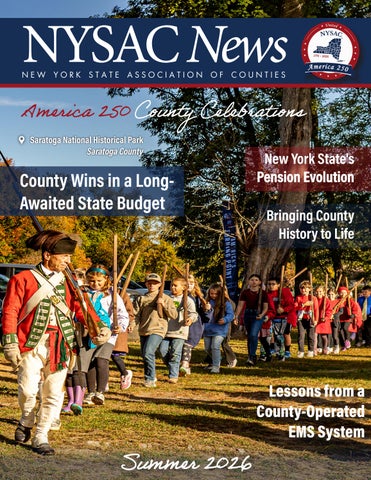
County Wins in a LongAwaited State Budget America 250 County Celebrations Lessons from a County-Operated EMS System
Saratoga National Historical Park
Saratoga County
New York State's Pension Evolution Bringing County History to Life
Solutions for a safer tomorrow.
PERMA provides over 800 public entities in New York with reliable Workers’ Compensation coverage and comprehensive workplace solutions.
Currently, our membership includes 13 County and County Groups.
• Our available coverage options include large deductible plans, TPA services and full first dollar.
• We offer comprehensive Risk Management services that include industry experts, risk analytics, facilities site inspections, training programs, as well as self-directed learning resources.
• Personalized service with our in-house claims management team.
New!
PERMA Points Loyalty Program
Turn engagement into rewards.
Earn points by participating in designated activities throughout the year and redeem safety equipment or services to build your risk management program.
$6.5M amount of equity redistributed to members
$7.5M allocated dividends for the next 3 years
PERMA Points Loyalty Program
$1M in Safety Grants
Learn more about PERMA membership:
Inquire: perma.org/quote
Email: sales@perma.org
Call: 518-220-1111
Since 2012, the program has helped over a dozen counties streamline purchases, pay bills, and earn a growing stream of revenue.
The Payment Solutions Program, which is a special type of credit card, can help ease the the purchase of supplies, furniture, construction materials, utilities and much more, all while saving staff time and money.
NO COST
Rebates on 100% of dollars spent
Reduced check writing costs
Expedited payment to vendors (24 - 48 hours)
Reduced paperwork for requisitions, purchase orders and invoices
Quick startup - program implemented 6 to 8 weeks from the receipt of application
Beth Smith Senior Managing Consultant
Protecting New York Students Starts at the Bus Stop
BusPatrol is proud to partner with counties across New York to help make the ride to and from school safer for students.
Across our New York programs, nearly 90% of drivers cited for illegally passing a stopped school bus do not repeat the behavior.
Learn
NYSAC OFFICERS
Philip R. Church Oswego County President
Dr. Kevin Watkins Cattaraugus County President Elect
Hon. Margaret M. Kennedy Otsego County First Vice President
Hon. Steven M. Neuhaus
Orange County Second Vice President
Hon. Benjamin Boykin II
Westchester County Immediate Past President
BOARD MEMBERS
Hon. Luis A. Alvarez, Sullivan County
Hon. Shawna Black, Tompkins County
Mr. Christopher DeBolt, Ontario County
Ms. Ruth A. Doyle, St. Lawrence County
Hon. Jeffrey Elder, Niagara County
Hon. J. Ryan McMahon II, Onondaga County
Ms. Alithia L. Rodriguez-Rolon, New York City Office of the Mayor
Hon. Edward Romaine, Suffolk County
Hon. Susan J. Serino, Dutchess County
Hon. Paul M. Wendel Jr., Chautauqua County
PARLIAMENTARIANS
Hon. A. Douglas Berwanger, Wyoming County
Hon. Daniel P. McCoy, Albany County
President's Page
Serving as NYSAC President during this chapter in our association’s history has given me renewed appreciation of the strength of county government across New York State.
As our nation marks the 250th anniversary of signing the Declaration of Independence, we are reminded that public service has always depended on local leadership. New York’s counties have carried that responsibility for generations. We conduct the daily work of government, taking the policies, programs, and responsibilities entrusted to us and turning them into service for New Yorkers. That legacy guides the work before us.
Through NY Counties Lead, we are honoring the ways county government delivers for New Yorkers every day. We lead because we are closest to the people we serve. We lead when we administer elections, protect public health, maintain roads and bridges, provide mental health and addiction services, support emergency response, protect children and vulnerable adults, and invest in the infrastructure that allows our communities to grow.
We also lead when circumstances are difficult. Counties are navigating fiscal pressure, workforce shortages, technological change, and shifting state and federal responsibilities. Changes to Medicaid, SNAP, and other programs affect the departments we operate and the residents we serve.
NYSAC continues to advocate for that partnership in Albany and Washington. Policies that affect counties must be shaped with a full understanding of how those policies are carried out, with practical support, realistic timelines, and respect for local implementation.
As communities across New York recognize the nation’s 250th anniversary, counties have an important role to play. We help preserve local history, support civic participation, and bring residents together around the shared responsibility of public service. This anniversary is a reminder that the future of our democracy depends on local leadership, active communities, and governments that remain close to the people.
This edition of NYSAC News reflects the issues before us. These articles offer perspectives on the challenges shaping county government today and the decisions that will shape our future. They also reflect one of NYSAC’s greatest strengths. County leaders learn from one another, share solutions, and build a stronger statewide voice together.
Thank you for your dedication to NYSAC, to county government, and to the people of New York State. It is an honor to serve alongside you as we continue this work.
Philip Church NYSAC President
Stop Roofing Surprises Before They Turn Into Costly Leaks
A
Tremco’s
Policy update for New York Counties
NYSAC STAFF
(partial listing)
Stephen J. Acquario, Esq. Executive Director
Karen Catalfamo Office/Financial Manager
Adam Campney NYSAC Intern
Patrick Cummings, Esq. Counsel
Patricia Gettings Assistant to the Director
Mark LaVigne Deputy Director
Dave Lucas Director of Finance & Intergovernmental Affairs
Juanita Munguia Business Development Manager
Megan Novak Legislative Coordinator
Tom Oldfather Communications Manager
Kate Pierce-Nimz Multimedia Specialist
Alexandra Regan Legislative Director
Jeanette Stanziano Director of Education & Training
Chancey Young Member Information Manager
Fostering Excellence
in County Government
Director's Note
County government has always been defined by responsibility and accountability. Counties administer complex programs, protect public funds, maintain infrastructure, respond to emergencies, support vulnerable residents, and deliver services that residents rely on every day. The work changes from year to year, but the purpose remains the same. NYSAC is proud to support and reaffirm that purpose.
We were formed to bring counties together, strengthen their collective voice, and provide the advocacy, training, research, and shared knowledge needed to help local leaders govern well.
Federal changes to social service programs are already affecting county administration. Counties administer programs such as Medicaid and the Supplemental Nutrition Assistance Program (SNAP) directly in their communities. When SNAP rules, benefits, requirements, or administrative responsibilities change, our departments of social services must respond and serve the residents who rely on these benefits. County staff are responsible for explaining new requirements, processing applications, supporting families, and maintaining program integrity.
NYSAC’s advocacy on these issues remains focused on the county role in administering these programs. Policy decisions must reflect who carries out the work, what resources are required, and how changes affect residents and local taxpayers. Counties need clear guidance, adequate support, and realistic timelines to serve residents effectively.
The same concern applies to our workforce. Counties need qualified employees across social services, public health, emergency management, law enforcement, finance, highway operations, mental health, planning, and many other areas of county service.
The extension of NY HELPS provides an important tool for hard-to-recruit positions, but the long-term answer must also include stronger pathways into public service.
NYSAC’s new partnership with the State University of New York is one step toward building that pathway. By connecting students with county government, this initiative introduces young people to the range, purpose, and impact of county work. It also gives counties another way to attract emerging talent and gives students a meaningful entry point into public service in their own communities.
Artificial intelligence and digital tools are already shaping conversations about government efficiency, service delivery, and decision-making. Counties need to understand what these tools do, what data they use, what risks they create, what they cost, and whether they fit the practical needs of county government.
These are the responsibilities of modern county government. Counties are being asked to manage more complex programs, respond to new risks, and continue delivering essential services with limited resources. Your association staff will continue working with counties to provide the information, training, research, advocacy, technical assistance, and partnerships needed to meet these responsibilities.
As we begin NYSAC’s next century, we remain committed to helping counties share knowledge, strengthen local government, and advocate for the people and communities we serve in every region of the state.
Stephen J. Acquario, Esq. NYSAC Executive Director
NYSAC News
NYSAC News
NYSAC’s mission is to foster excellence in county government and unite the voice of New York’s county leaders.
President Philip Church
Publisher
Stephen J. Acquario
Managing Editor Mark F. LaVigne
Advertise with NYSAC
Contact NYSAC Business Development Manager Juanita Munguia at 518-465-1473 or jmunguia@nysac.org
Phone • (518) 465-1473 Fax • (518) 465-0506 NEW
Editor Tom Oldfather
Designer Kate Pierce-Nimz
Advertising Staff Juanita Munguia
Published three times a year by the New York State Association of Counties (NYSAC), NYSAC News is the official publication of NYSAC, a non-profit municipal association serving the 57 counties of New York State and the City of New York with its five boroughs for over 100 years. NYSAC’s mission is to foster excellence in county government and unite the voice of New York’s county leaders.
NYSAC NEWS MAGAZINE
515 Broadway, Suite 402, Albany, New York 12207
Saratoga
Photo provided by Saratoga County Historian
County Wins in a LongAwaited State Budget
ABy Alexandra Regan, NYSAC Legislative Director
fter the most protracted state budget process in 16 years—sustained through 15 emergency appropriation extensions and concluded nearly two months late— Governor Kathy Hochul signed the final components of the SFY 2027 State Budget on May 27 and 28. The $268.5 billion spending plan delivers meaningful victories for counties across a range of programs and services.
Direct Investment in County Infrastructure and Public Safety
The County Infrastructure Grant Program is funded at $50 million and is now in its third year, with the maximum award increased to $1.5 million—up from $1 million last year. That means counties can access larger grants for critical local infrastructure projects, including housing development.
Counties also secured a new $50 million grant program through the Division of Homeland Security and Emergency Services, targeted at emergency preparedness supplies, equipment, and vehicles.
Transportation funding held strong, as well. CHIPS funding is increased by $50 million for a total of $698 million, with an additional $100 million for Extreme Winter Recovery and $140 million for State Touring Routes—essential resources for counties maintaining local roads and bridges year-round.
A Win for Preventive Public Health
Two public health programs proposed for elimination in the Executive Budget were restored in the final enacted budget: the Healthy Neighborhoods Program ($1.45 million) and the Tickborne Disease Institute ($69,400).
The Healthy Neighborhoods Program is a proven, evidencebased initiative administered by local health departments that delivers no-cost, in-home education, assessments, and safety interventions to reduce preventable injuries, asthma triggers, lead exposure, and other housing-related health risks. Eighteen localities across New York rely on the program, which supports 32 full-time public health employees. Eliminating it would have meant immediate workforce losses at local health departments and higher downstream costs to emergency services and health care systems.
The Tickborne Disease Institute restoration is similarly welcome, as Lyme and other tickborne diseases remain a serious and growing public health concern in counties across the state.
Increased Aging and Human Services Funding
The enacted budget increases county aging services funding to $72 million and adds $53 million to address unmet needs and waitlists—recognition that the demand for aging services is outpacing current capacity in communities across the state.
Foster care block grant funding increases to $426 million in the enacted budget, up $12 million, and child welfare services funding rises to $959 million—both of which support the county-administered child welfare system.
The Medicaid Cap Holds
The local Medicaid cap is preserved through SFY 2027. That protection—which limits county Medicaid contributions to calendar year 2015 levels— is projected to save counties and New York City a combined $9.2 billion this year alone.
The state implemented a local share of Medicaid growth cap at three percent in 2005, and in 2015 the local capped was enhanced to a zero percent growth cap for counties and New York City. Since the state began lowering county Medicaid cost growth in 2005, counties have saved a cumulative $62.8 billion.
Maintaining the cap is the single most important structural protection in the state budget for county finances.
Indigent Legal Services Funding Continues
Indigent legal services funding totals $486.87 million, up $5 million from SFY 2026, including $92 million to reimburse counties for 50% of costs associated with the Article 18-B assigned counsel rate increase. This provides counties with predictable reimbursement for one of their fastest-growing mandated cost areas.
Looking Ahead
The full SFY 2027 Enacted Budget County Impact Report is available at nysac.org/nysbudget. Throughout the summer, NYSAC’s Legislative Team will continue to analyze the enacted budget and update this report as implementation details emerge. NYSAC will also engage actively on the federal cost shifts related to Medicaid and SNAP that remain the most significant fiscal risks on the horizon for county governments.
New York's Pension Evolution
A Century of Reforms and Enhancements
NBy Dave Lucas, NYSAC Director of Finance and Intergovernmental Affairs
ew York's public pension system is one of the strongest and most secure retirement systems in the nation. But it did not emerge overnight. Over the last century, lawmakers have repeatedly expanded and reformed pension benefits in response to changing economic conditions, workforce needs, and fiscal pressures. Understanding this history is important because pension policy decisions made in Albany can have lasting consequences for local governments, property taxpayers, and public employees alike. With the help of reports from the State Comptroller, this article highlights key milestones in the evolution of New York's public pension system.
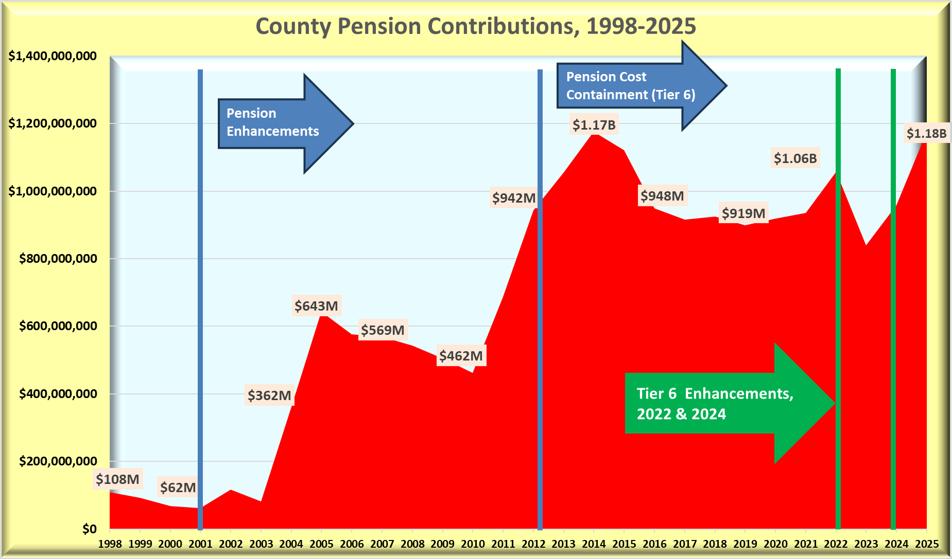
It all started in 1921 when the NYS Employee Retirement System was created and funded through a $25,000 appropriation from the state legislature. In 1955, the system was renamed the NYS and Local Retirement System in recognition of more local governments joining, and in 1967, NYS Police and Fire Retirement System is created. Tier 2 is created in 1973, and Tier 3 is created in 1976 to reduce public employer costs, mandating employee contributions for the first time. In 1984, Tier 4 is established to continue reducing longterm state and local pension costs. In 1994, Tier 4 was enhanced to offer full retirement benefits at age 55, with 30 years of service (before this, there was a reduction in the full retirement benefit for each year of retirement before age 62);
At the same time, tough economic conditions required large investments in government spending from the federal government all the way down to localities to assist those in need. The slow economy also reduced tax receipts for the state, which led to the shift of some state costs down to counties, forcing large local tax increases and service cuts during this period.
As a result, county pension costs skyrocketed from $62 million in 2001 to $1 billion by 2013, a 1600% increase.
In 2000, with the Dot.com market flying and years of double-digit investment returns, the state enacted a host of enhancements. Upon enactment, these enhancements were expected to permanently increase employer contribution costs by 70 percent annually, with $450 million in up-front costs for retroactive changes, and $1.3 billion in recurring annual costs.
Unfortunately, the initial cost estimates could never have anticipated multiple unforeseen events including the September 11th attacks and subsequent recession; the subprime mortgage crisis which led to The Great Recession, and its long drag on the economy that followed.
These events had a devastating impact on investment returns for the state pension system.
By 2010, economic conditions and the prior pension enhancements proved unsustainable, and a round of pension reforms were enacted to curtail costs and pension benefits. Tier 5 was created in 2010, followed by Tier 6 in 2012. The reforms largely restored the benefits in place before the changes made in 2000, including, reinstituting employee contributions ranging from 3-6% based on salary, reestablished early retirement benefit reductions, and increasing the normal retirement age from 62 to 63.
In 2012, Governor Andrew M. Cuomo announced the passage of a sweeping pension reform plan.
“For years, local governments have struggled to cope with soaring retirement costs, driving up taxes on New York families and small businesses,” Governor Cuomo said. “This bold and transformational pension reform plan is a historic win for New
York taxpayers and municipalities that will save more than $80 billion over the next 30 years, while preserving retirement security for public workers. Without this critical reform, New Yorkers would have seen significant tax increases, as well as layoffs to teachers, firefighters and police.”
Governor Cuomo also wanted to lock in these savings to local taxpayers in the future when he required the Tier 6 reforms to “Protect Local Governments from State Pension Sweeteners, the agreement requires the state to pre-fund any pension enhancers, ensuring that these costs are no longer passed to local governments.”
The reforms held until the early 2020’s when a handful of provisions to Tiers 5 and 6 were reversed including full vesting dropping from 10 years to 5 years, returning final average salary (FAS) calculations to top 3 consecutive years from top 5, and modifying pensionable overtime caps. NYSAC estimates these changes increased costs for local taxpayers by about 30 percent due to the state’s decision to ignore the 2010 law that required the state to pay for all costs associated with new pension enhancements.
These changes are estimated to cost about $560 million for the state and local governments, with the county share estimated to be about $50 million.
This year, the state enacted new enhancements for Tiers 5 and 6 including lowering the retirement age without any penalty from 63 to 58 with 30 years of service for members of the NYS and NYC teachers’ retirement system; lowers employee contributions for Tier 6; and increases the amount of pensionable overtime. These changes are estimated to cost about $560 million for the state and local governments, with the county share estimated to be about $50 million. Once again, the state chose not to offset these costs for local governments as required by law.
The history of New York's pension system demonstrates that retirement policy is ultimately about balance. Public pensions provide valuable retirement security for hundreds of thousands of public employees and support economic activity across the state. At the same time, benefit enhancements carry longterm costs that are often borne by local governments and property taxpayers. As policymakers consider future changes to the retirement system, it is critical to preserve the financial stability of the pension fund while ensuring that counties have the resources needed to deliver essential services and maintain affordability for taxpayers.
Navigating the markets is easier with experts who have done the research. We join rich market research and analysis with an individualized advisory approach to deliver world-class investment banking and innovative capital markets solutions. Our teams provide deep expertise to lead your most complex transactions.
To learn more, visit key.com/kbcm.
nyserda.ny.gov/CEC-Sign-up
Our exclusive Opioid & Vaping Awareness & Education PSA Campaigns are impactful, year-long, multi-media programs customized to meet your county’s needs.
• Multi media approach using SnapChat, TikTok, premium streaming TV, YouTube and more
• Custom landing page for connections to care
• Robust reporting and full management for turn key, easy to adopt programs
• NYSAC endorsed, sole source product
2026 NYSAC
Photo Contest Winners
This year’s theme of Beyond 100: The Future of New York's Counties was chosen in celebration of NYSAC's centennial year. We are looking ahead to the next 100 years of county government service.
Congratulations to the talented photographers who participated in our annual contest!
Be sure to look for these photos in the 2026 NYSAC Counties in Focus Calendar.
Chemung County
Genesee County
Orleans County
Tompkins County
Madsion County
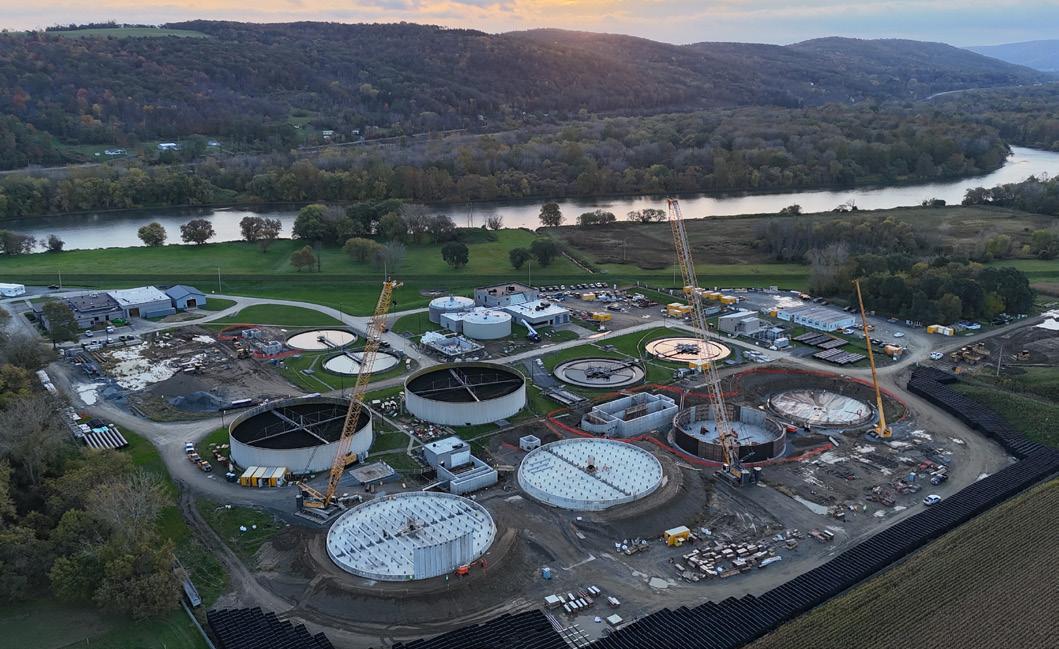
Sewer Consolidation Project in Elmira, NY
Main Street in Batavia, NY
Orly the Ox Hydrobikes on the Erie Canal in Medina, NY
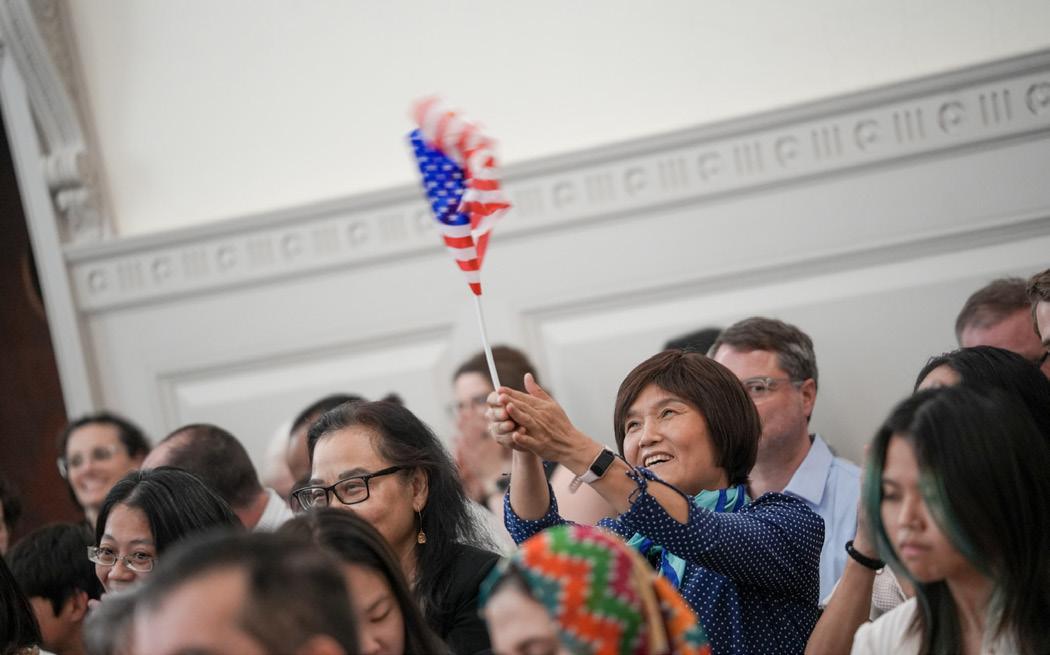
Naturalization Ceremony at the County Courthouse in Ithaca, NY
County Fair at Dusk in Brookfield, NY
Photographer: Jett Industries
Photographer: Steven Falitico
Photographer: Isabella Zasa
Photographer: Robert Henry
Photographer: Melissa During
Healthy Neighborhoods Program Prevention Pays Off for Counties and Communities
CBy Sarah Ravenhall, MHA, CHES, Executive Director, the New York State Association of County Health Officials
ounty leaders across New York State understand that healthy communities begin at home. The Healthy Neighborhoods Program (HNP), administered through local health departments, proves exactly that. For years, this modest but highly effective state investment has protected residents, enhanced housing, prevented injuries, reduced environmental health risks, and connected low-income families to critical services.
That is why local public health leaders across the state were deeply concerned when the program’s $1.45 million in funding was proposed for elimination in the FY 2026-27 Executive Budget. Fortunately, both the Senate, Assembly, and Governor Hochul recognized the immense value of the program and restored funding in their one-house budget proposals. With final budget negotiations now complete, the program will continue.
The lesson for county leaders is clear: Healthy Neighborhoods is not a program that should be reduced. It is a program that should be expanded.
Currently, 18 localities across New York State receive Healthy Neighborhoods funding, including the New York City Department of Health and Mental Hygiene, and the counties of Broome, Cattaraugus, Cayuga, Columbia, Cortland, Erie, Genesee, Madison, Monroe, Niagara, Onondaga, Orange, Rockland, Schenectady, Seneca, and Tompkins. Through inhome assessments, education, safety products, and referrals, local health departments address hazards that too often go unnoticed until tragedy occurs.
The impact is tangible and immediate.
In Broome County, a young father who had previously been living in a hotel secured housing through Section 8 and wanted to create a safe environment for his 12-month-old daughter. Healthy Neighborhoods staff provided lead poisoning education, safety guidance, and baby gates so the family could safely settle into their first apartment.
In Cortland County, a family caring for both a new baby and a grandfather living with dementia used cabinet locks, refrigerator locks, and doorknob covers supplied by the program to prevent accidents and improve safety in the home.
In Cayuga County, the Healthy Neighborhoods Program partnered with local fire departments to install smoke and carbon monoxide detectors in homes throughout the community.
According to the local fire chief, detectors installed through the program alerted families during two separate house fires, allowing every resident to escape safely and unharmed.
These are not isolated stories. They represent the daily work of local health departments preventing injuries, illnesses, fires, asthma triggers, falls, carbon monoxide poisoning, and lead exposure before emergencies occur.
The program’s value also extends beyond public health. Healthy Neighborhoods helps counties preserve housing stock and stabilize vulnerable households. One county health official summarized it well: “By identifying housing issues and providing repairs, we are effectively preserving and enhancing existing housing stock.”
At a time when communities across New York face housing shortages, aging infrastructure, and increasing health disparities, this preventive work is essential. Many participating counties focus outreach in older housing areas, low-income neighborhoods, trailer parks, and rural communities where residents may otherwise have limited access to safety resources.
The return on investment is remarkable. In Cayuga County alone, the program has completed more than 2,400 home visits since 2017 and connected residents to hundreds of additional community services and organizations. In Clinton County, more than 1,160 homes were evaluated in a single grant cycle, resulting in the distribution of nearly 14,600 safety products and more than 3,100 referrals to additional community resources.
The program also strengthens trust in local government. Residents frequently express gratitude that someone took the
time to visit their home, answer questions, provide education, and connect them to support systems.
For many seniors, low-income families, rural residents, individuals with disabilities, and young parents, these visits provide reassurance and dignity in addition to practical assistance.
The Healthy Neighborhoods program exemplifies what effective local public health looks like. It is prevention-focused, community-based, data-driven, and deeply collaborative. Local health departments partner with fire departments, pediatricians, social services, aging services, schools, housing agencies, and nonprofit organizations to address issues before they escalate into crises that are far more costly to families and taxpayers alike.
County officials and local elected leaders should view Healthy Neighborhoods not as a small line item, but as a proven investment in safer homes, stronger communities, and healthier residents. The restoration of funding in this year’s state budget is an important victory for public health and local government. The next step should be to ensure that every community in New York State has access to this kind of preventive support.
When Prevention Is Everyone's Job
The Role of Directors of Community Services in Threat Assessment and Management Teams
ABy Lynda Battaglia, LCSW, DCS/Director of Mental Health & Community Services, Genesee County and Ashlee Thompson, Director of Community Services, Oneida County
cross New York State, counties are building something that did not widely exist just a few years ago: multidisciplinary teams dedicated to identifying and intervening with individuals who may be on a path toward targeted violence before that path reaches its end. Threat Assessment and Management (TAM) teams bring together law enforcement, mental health professionals, school officials, and other community partners to assess and manage threats before they escalate. They are becoming a cornerstone of public safety strategy, and Sirectors of Community Services (DCSs) are not just participants in that work. We are essential to it.
DCSs serve as the local government leaders for mental health, substance use, and developmental disabilities services in their counties. They oversee the public mental health system, manage relationships with providers, and are often the first call when a complex situation involves someone in crisis or already connected to services. That combination of clinical oversight, system knowledge, and community relationships makes DCSs a natural and necessary partner in TAM work. When a person of concern has a mental health history or needs to be connected to support, the DCS and their team know the landscape in ways that no other TAM partner can replicate.
A Statewide Effort Taking Shape
Across New York, TAM teams are at different stages of development, and that breadth tells its own story. In Dutchess County, the Dutchess County Threat Assessment Group (DCTAG) now includes 65 participating agencies and recently helped a community organization navigate a situation involving online threats. Westchester County's team, co-founded by the Department of Community Mental Health, has handled dozens of cases through a fully operational, multidisciplinary process. In Tioga County, a team that began training in May 2024 recently helped prevent students from carrying out an active plan to bomb a local school.
In Seneca County, the DCS serves as co-lead alongside the Sheriff and Emergency Management Director. In Columbia County, a public-facing website allows anyone to submit a concern directly to the team. In Steuben County, the DCS sits on the executive board, and the team has successfully moved individuals from making terroristic threats to fully engaging in treatment.
These are not outliers. They reflect what's possible when the right partners are at the table and the work is taken seriously.
Why Mental Health Belongs at the Center
There is sometimes a tendency to think of TAM as primarily a law enforcement function. Law enforcement is a critical anchor of these teams, but the model works best when that foundation is broadened to include the full range of community expertise. The multidisciplinary nature of these teams is precisely what makes them effective.
It is also worth being clear about what TAM is and what it is not. TAM is not part of the criminal justice process. It is a proactive, preventative effort to identify individuals who may need support and connect them to services before a situation escalates. In that way, it is similar in spirit to Crisis Intervention Team programming — the goal is to keep people out of the criminal justice system, not funnel them into it.
Mental health professionals bring something to TAM that no
Threat Assessment and Management Teams (TAM) assess and manage threats before they escalate.
other partner can replicate: fluency in the behavioral health
Mental health professionals bring something to TAM that no other partner can replicate: fluency in the behavioral health system. We understand the complexities of mental hygiene law. We have established relationships with providers, crisis services, and individuals already engaged in the system. In Genesee County, that expertise has shaped case outcomes in ways that a law enforcement lens alone could not, from navigating mental hygiene laws to speaking the clinical language to knowing which door to knock on. The team is now also in an active community education phase, helping residents and organizations recognize and report concerning behavior, a reminder that the work of a functioning TAM team extends well beyond the meeting room.
In Oneida County, mental health was not invited as an afterthought. From the beginning, mental health professionals were positioned as co-decision-makers, not consultants. That framing mattered, and it was made easier by the strong working relationships between law enforcement and behavioral health that already existed through CIT programming. The result is a team where mental health isn't simply present; it is central to how the team assesses situations and connects people to the right support.
What Sustained Success Requires
Counties that are thriving share some common threads: consistent meeting schedules, executive-level buy-in, clear protocols, and meaningful training. Counties that are struggling often cite similar challenges: building the legal and procedural frameworks that allow partners to share information appropriately, sustaining engagement across busy agencies, and ensuring the right expertise is in the room when a specific case requires it. None of these are unique to any one county, and none are insurmountable.
Training is where the gap shows up most clearly. Teams that have invested in it, like Genesee, which brought in retired FBI behavioral science consultants, or Onondaga, which has trained over 300 school staff, describe it as foundational. Teams still waiting for that investment describe feeling underprepared when real cases arrive. TAM is an evolving discipline, and the professionals doing this work need ongoing access to quality training to stay current and respond effectively.
Building What Lasts
TAM teams do not come together overnight, and they don't sustain themselves without investment. The lesson from counties across New York is consistent: start with willing partners, build trust through consistency, and don't wait for perfect conditions. A small, well-communicating team is far better than no team at all, and additional partners tend to join once they see a functional, supportive system already in place.
What turns a promising model into a lasting one is the commitment behind it, in people, in training, and in the recognition that preventing violence is not a law enforcement problem or a mental health problem. It is everyone's responsibility.
Did You Know?
• NYSHIP is available to virtually all public employers across New York State
• Over 800 counties, cities, towns, villages, school districts and special districts participate in NYSHIP
• More than 1.2 million public employees, retirees and their families have health insurance through NYSHIP
A unique health insurance plan developed for New York’s public employees
For additional information regarding The Empire Plan, public employers may visit our website at www.cs.ny.gov or email the Public Employer Liaison Unit (PELU) for the New York State Health Insurance Program at PELU@cs.ny.gov.
Clean Energy Solutions from NYPA
Energy Savings. Reliability. Carbon Reduction.
NYPA is a leader in clean energy solutions and power programs in New York State. We help local governments across the State to develop affordable, actionable energy solutions.
Our experts bring proven audit, planning, procurement, and implementation solutions— together with knowledge of New York State policy, grants, and incentives. Talk with us about NYPA’s streamlined bid and procurement process—saving customers time and money.
Let our project managers and engineers serve as an extension of your team—working with you to develop a roadmap to reach your clean energy goals
To learn more, provide your information at nypa.gov/services123 EnergySolutions@nypa.gov
Celebrating 250 Years A Century of Reforms and Enhancements
ABy Samantha Field, Public Information Officer and Matthew Urtz, Madison County Historian
s the United States marks its 250th anniversary, it is also an opportunity to recognize the communities that helped shape the nation’s history. Although Madison County was established in 1806, after the American Revolution, the region played an important role in movements that helped define the country, including abolition and women’s suffrage. This milestone offers a chance to reflect on the lasting impact this small rural community had on the history of the United States.
The influence of the American Revolution can still be seen throughout Madison County today, including in the names of many of its communities. Madison County and the Town of Madison were both named after James Madison, who later became the nation’s fourth president.
Other communities also honor prominent Revolutionary-era figures, including the Town of Hamilton, named for Alexander Hamilton, and the Town of Eaton, named for General William Eaton. The towns of Georgetown, Nelson, and Sullivan likewise trace their names to individuals connected to the Revolutionary period.
the hungry and teaching them how to prepare the corn. Cooper’s legacy continues to be recognized today. Earlier this year, the United States Mint released a commemorative $1 coin honoring her efforts and the support provided by the Oneida Nation during the war. Polly Cooper, Oneida Chief Skenandoah, and General George Washington are also memorialized at the National Museum of the American Indian in the bronze sculpture “Allies in War, Partners in Peace.”
Madison County, particularly the hamlet of Peterboro, also played a significant role in the abolition movement and the fight against slavery in the United States. At a time when abolition remained highly controversial across much of the country, Peterboro became a welcoming refuge for anti-slavery activism and freedom seekers.
Madison County is home to the Oneida Indian Nation. During the American Revolution, the Oneida broke from other Haudenosaunee nations and chose to side with the American colonists, and in so doing, formed a lasting alliance between the Oneida Indian Nation and the United States of America.
In 1777, the Continental Army, led by General George Washington, established winter quarters outside of Philadelphia at Valley Forge. Exhausted soldiers and their families were in a dire situation, starving, without proper clothing and shoes. In late April and early May of 1778, 47 Oneida Nation warriors traveled from their home in Central New York to Valley Forge with a gift of white corn.
Among the warriors was a lone Oneida woman named Polly Cooper. According to Oneida lore, she played a role in feeding
In 1835, after abolitionists were forced out of a meeting in Utica where they were forming the New York State AntiSlavery Society, Gerrit Smith invited them to reconvene in Peterboro, where the organization was successfully established the following day.
Smith later became one of the nation’s leading abolitionists, donating, by today’s standards, millions of dollars to the cause and using his home as a well-known stop on the Underground Railroad, helping hundreds of freedom seekers on their journey to Canada. Some formerly enslaved individuals chose to remain in Peterboro, drawn by the community’s safety and strong anti-slavery beliefs. Abolitionist Henry Highland Garnet, who escaped slavery as a child, famously stated that there were “two places where slaveholders cannot come… Heaven and Peterboro.”
From its Revolutionary roots to its leadership in abolition, and women’s suffrage, Madison County’s story is deeply connected to the American story. While honoring this legacy, Madison County also looks ahead with pride and a continued commitment to building a strong future for generations to come.
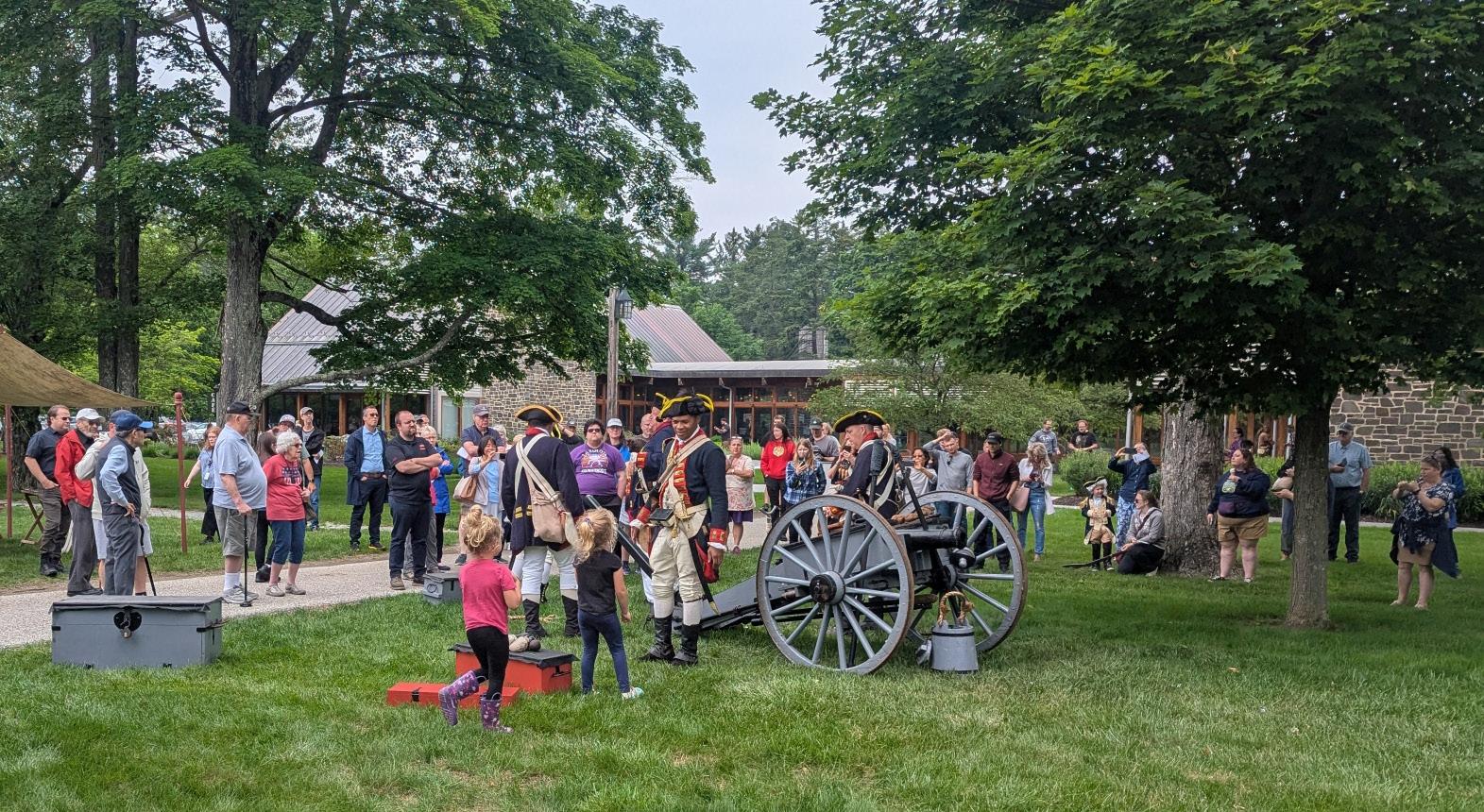
Saratoga250 Revolutionary History and a Lasting Heritage Tourism Legacy
By Lauren Roberts, Saratoga County Historian and Chair, Saratoga250
America’s 250th birthday is finally here, and the excitement can be seen everywhere you look. From historical reenactments to fireworks displays, the Semiquincentennial is on everyone’s radar. In Saratoga County, we have been planning for this moment for several years.
Our goal is not a one-and-done celebration, but a sustainable legacy that fosters public history, increases heritage tourism, and improves interpretation around historic sites.
Saratoga250 is a partnership between our 13-member commission appointed by the Saratoga County Board of Supervisors, and our non-profit friends group, Campaign for Saratoga250, Inc. We also work closely with several community stakeholders, including the Saratoga National Historical Park, home to the Saratoga Battlefield.
Over the last several years of programming, we have created engaging ways to attract new audiences to our historic sites and programs. Using several new digital techniques, including interactive interpretive signage, podcasts, videos, and augmented reality, we aim to highlight relatable stories and lesser-known historical figures who were involved in the Saratoga Campaign of 1777, when British General John Burgoyne brought his army down from Canada with his sights set on Albany.
In 2022, the county was awarded an interpretation grant through the American Battlefield Protection Program (U.S. Deptartment of the Interior) which funded a report outlining which revolutionary stories we should focus on and matched them with locations.
We followed up this project by applying for a second round of American Battlefield Protection Program funding, which supported some of the elements identified in the interpretation study.
Ongoing work includes an interactive map screen which tells the story of the Battles of Saratoga over space and time, while including an interactive element where visitors can customize their experience by choosing whether they would like to learn through the eyes of the British Army, American Army or local residents who experienced the Revolution in their own backyards.
Additionally, funding from the grant is being used to develop an outdoor augmented reality experience at the Town of Saratoga Boat Launch. In this scenario, the visitor is
prompted to use their own mobile device through which they can see the existing landscape beneath a digitally recreated scene taking place on the Hudson River. Lady Harriet Acland, wife of British officer John Dyke Acland, travels in an open boat through a cold rainstorm, and crosses the American sentry line to tend to her wounded husband who was captured by the Americans.
In this case, we are drawing people to the spot where history happened, while also enhancing their experience with immersive storytelling.
In addition to creating these technology-based experiences, we have increased public programming by offering special events that often include scholars, hands-on activities, and living history interpreters. Our annual Turning Point Symposium brings together a mix of well-known Revolutionary War topics told from new perspectives and themes that investigate new research in lesser-known subjects.
A day of learning in a traditional setting is paired with a bus tour that brings the attendees through Saratoga County and introduces them to the actual locations where these events took place, helping people discover new information about the communities they may drive through frequently.
Our signature annual event takes place in October, on
Columbus Day Weekend, which coincides with the anniversary of the siege period at Saratoga (after the second battle).
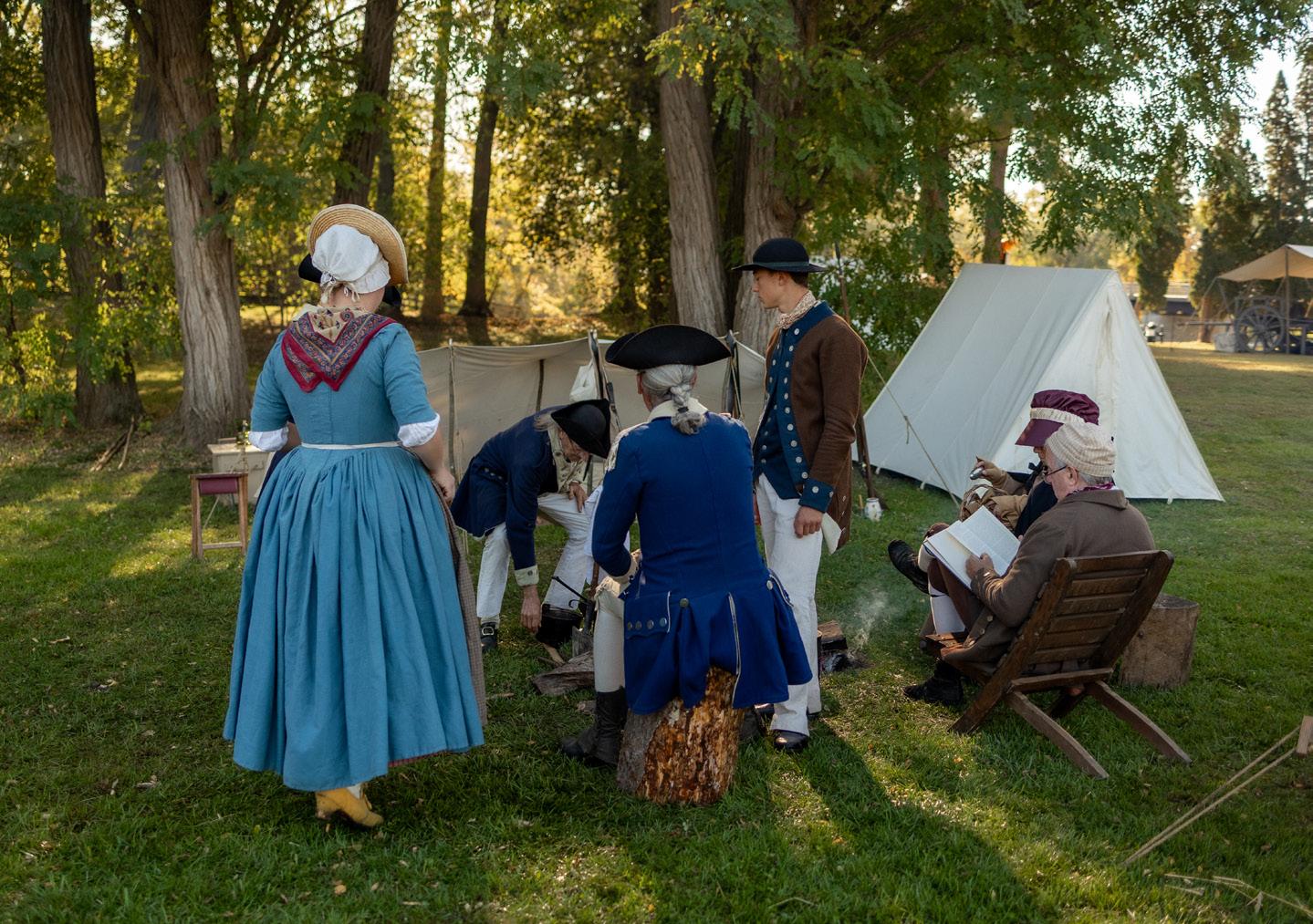
This event, called Saratoga Siege Weekend, offers something for everyone. From military encampments and artillery demonstrations to civilian interpretations of life on the home front, the site is alive with activity. We offer horse-drawn wagon rides as well as interactive displays and exhibits and invite everyone to experience the best of what Saratoga County has to offer during peak fall foliage season.
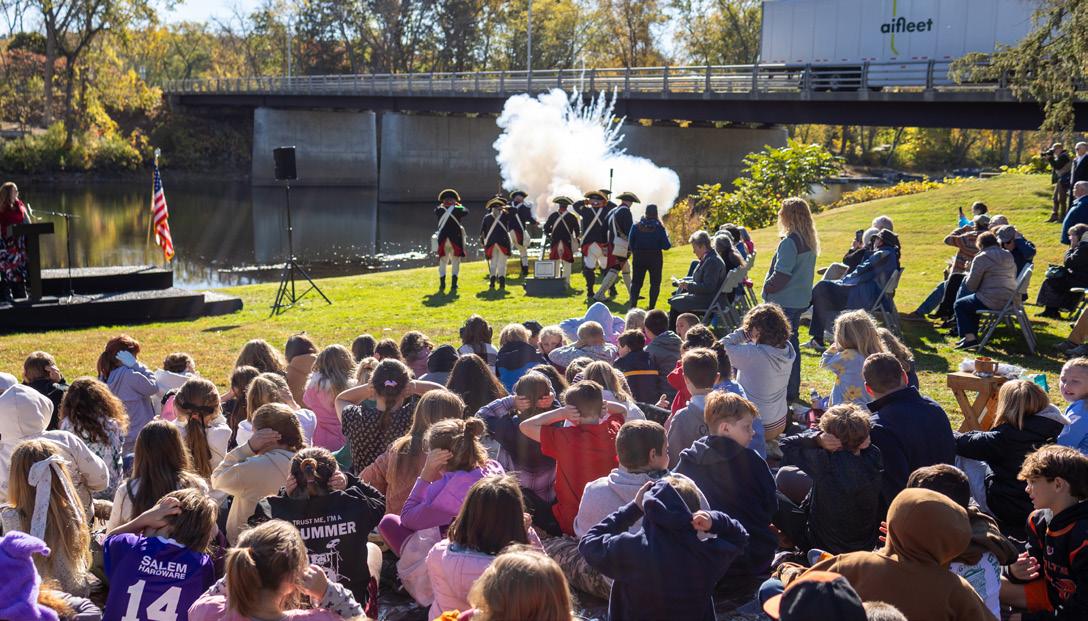
Our annual Surrender Day Ceremony brings schoolchildren from several local school districts out to the historic site along the Hudson River where the British Army laid down their arms
on October 17, 1777, the first time in history an entire British field army surrendered.
The students themselves participate in the ceremony by recreating the laying down of arms, singing and playing 18th century music, and giving the traditional 13 toasts (with cups of local apple cider) and cheering on the cannon fire with raucous “Huzzahs”.
While 2027 is still just over the horizon, we are already deep into planning for our signature year of anniversary events. These include large-scale reenactments of the battles, scholarly lectures, robust technology-based exhibits for an immersive experience, and more, all of which will be amplified by our hospitality partners who will make a visit to Saratoga one for the history books.
ORLY the Ox Orleans County’s Bicentennial Star
LBy Catherine Cooper, Orleans County Historian
ocated on the southern shore of Lake Ontario, Orleans County is one of New York’s smaller counties. This rural gem observed two bicentennials in 2025: the formation of the county on April 15, 1825, and the birth of the Erie Canal.
In 2024, the Orleans County Legislature authorized the formation of an Orleans County Bicentennial Committee to organize appropriate celebratory events. This committee focused on rekindling an appreciation of the hardships endured by the early settlers. The settlers’ compelling first-person narratives had been compiled by Arad Thomas in the book A Pioneer History of Orleans County published in 1871. Their experiences were highlighted in several public presentations and published articles throughout the year.
One subtext which emerged from this re-examination of the early years was the role of oxen. They were the “silent partners” in the great westward expansion, essential for transportation and heavy labor. Teams of oxen hauled heavy wagons westward through snow and mud.
Later, they hoisted tree stumps, hauled logs and stones for building homes. They were more sure-footed than horses and could haul more weight for longer periods. Unlike horses, they could survive on browse. They were useful even in death – ox hides could be used to make leather. Even the tail was used by thrifty cooks to make soup.
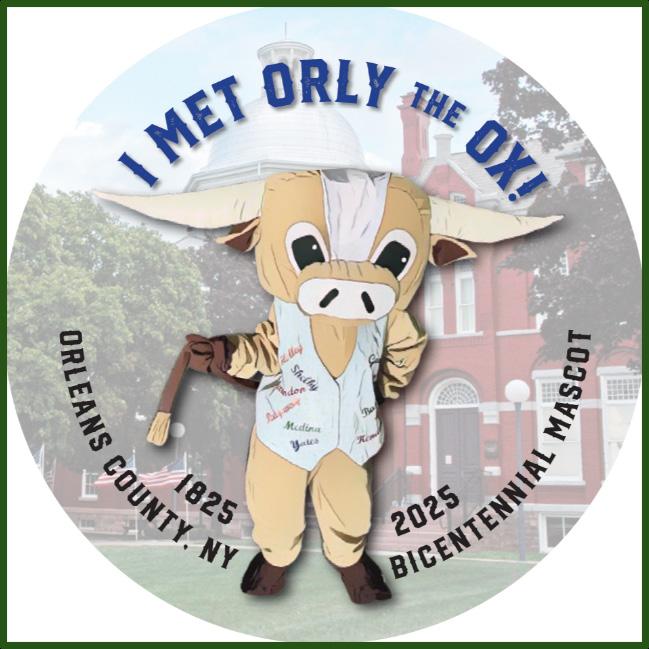
The Committee chose Orly the Ox as its mascot. During the Bicentennial year, Orly cheerfully traveled throughout the county and appeared at fairs, festivals, parades, and events.
He was Grand Marshal of the Albion Strawberry Festival and a VIP guest on the Seneca Chief, the official Erie Canal boat. Having a keen interest in local history, he visited historic marker sites.
Well versed in the art of social media, he collaborated with the Orleans County Department of Tourism and cultivated a large audience through daily Facebook, TikTok, and Instagram posts.
Wearing a vest that featured the names of the county’s towns and villages, Orly was popular with young and older New Yorkers. He connected the past and present and brought history to life. Orly acknowledged and celebrated the county’s agricultural roots.
His fame spread beyond Orleans. In a short time, he earned three television features and international fan mail. Not bad for a humble ox from one of New York’s smaller counties!
CORPORATE HEA DQUA RTERS
250 South Clinton Street, Suite 502, Syracuse, NY 13202 Phone (315) 752-0051 Fax (315) 752-0057
Benjamin Maslona, CIPMA, Executive Vice President/Municipal Advisor
CAPITAL REGION
HUDSON VALLEY REGION
Andrew Watkins, CIPMA, Municipal Advisor 63 Putnam Street, Suite 202 Saratoga Springs, New York 12866 (518) 541-3861 WESTERN REGION
Beth Ferguson Vice President, Municipal Advisor 827 Route 82, Suite 10231 Hopewell Junction, New York 12533 (845) 447-2214
Kelly Lathan, Financial Analyst 5 North Avenue LeRoy, New York 14482 (585) 502-5010
Finger Lakes Virtual Museum Brings Ontario County History to Life
ABy Jessica VanDeMar, Partnership Marketing Specialist, Finger Lakes Visitors Connection
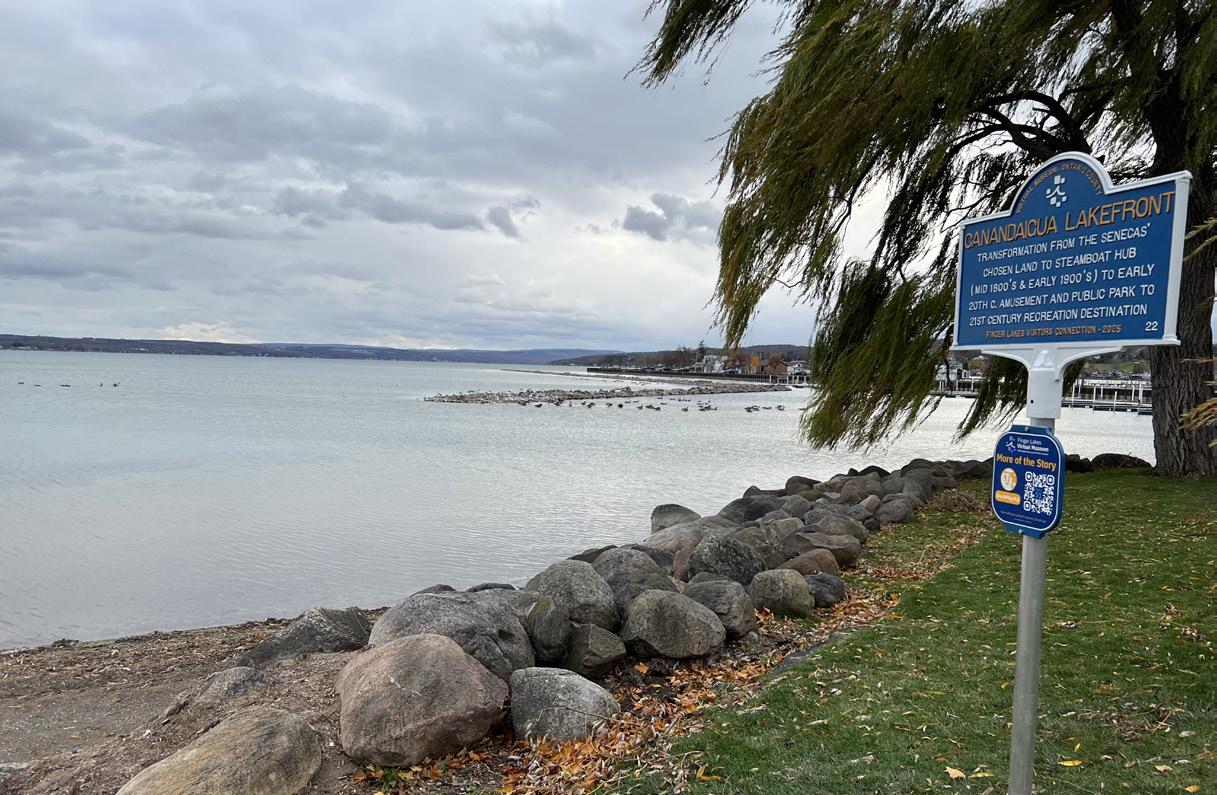
s the nation marks the 250th anniversary of the American Revolution, Visit Finger Lakes, the tourism promotion agency for Ontario County, New York, is highlighting the region’s history through the Finger Lakes Virtual Museum. This new, interactive digital experience blends augmented reality with multimedia storytelling to explore the stories that shaped the region and the nation, from Seneca Native American culture and local women’s suffragists to the abolitionist movement, civil rights, and beyond.
Created to expand the information documented on historic markers across the county, the Virtual Museum features more than 79 markers, both existing and newly installed, that invite users to scan QR codes on-site to unlock the stories related to each location. By linking landscapes, communities, and individual changemakers, the platform turns each stop into a richer, place-based experience.
“The Finger Lakes Virtual Museum brings our history to life in ways that are accessible, immersive, and deeply connected to place,” said Alicia M. Richie, President & CEO of Visit Finger Lakes. “And as the nation approaches the 250th anniversary of the United States, this project presents a powerful way to connect residents and visitors with the people, places, and stories that define our local history, right where it happened, preserving local heritage for generations to come.”
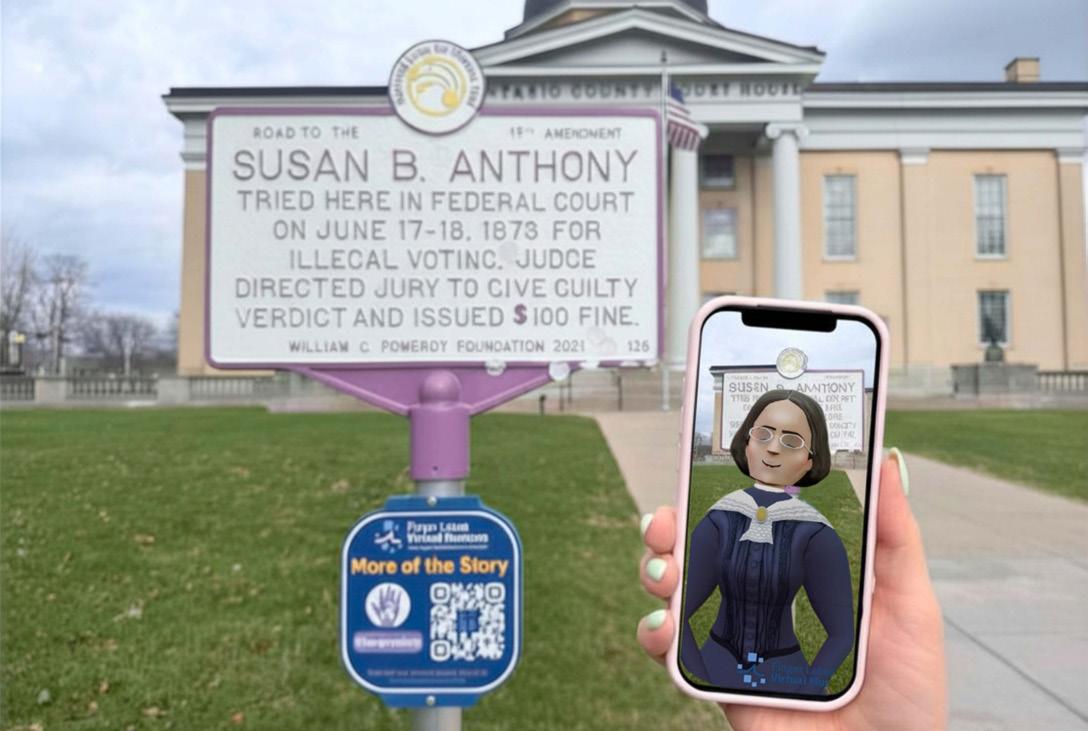
The Virtual Museum offers a range of interactive experiences designed to bring historical interpretation to life. Users can view augmented reality features such as a piece of Wizard of Clay pottery, a Clifton Springs sanitarium bus, or the Seneca Steamer mural in Geneva animated on-site.
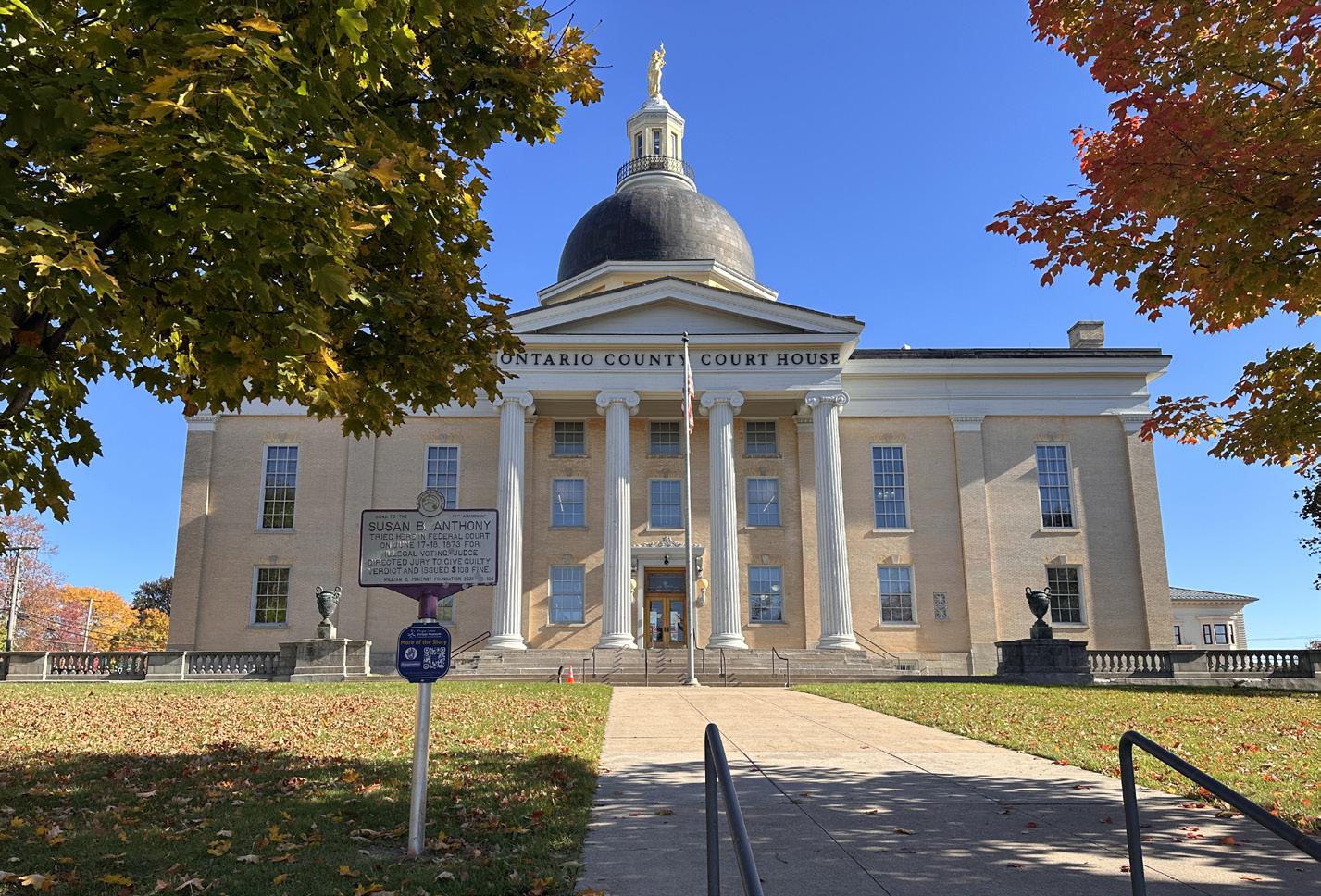
Other stops use slider imagery to compare past and present and historical figure animations that appear to share their story, such as Susan B. Anthony at the Ontario County Courthouse, where she was tried for voting before the passage of the 19th Amendment.
The initiative was developed by Visit Finger Lakes and Ontario County in partnership with MAGIC Spell Studios and STQRY, the digital storytelling platform that powers the experience.
Support for the project came in part from Empire State Development and Ontario County, reflecting a broader investment in preserving and sharing local history through innovative public engagement.
Many of the digital experiences were developed by students at Rochester Institute of Technology (RIT), while the accompanying historical narratives were created through collaboration among Visit Finger Lakes, RIT, Ontario County Historical Society, and local historians in each municipality.
At its core, the project is designed to make history more accessible by meeting audiences where they are — at the places where these events occurred. At the same time, the Virtual Museum is intended to complement the work of local museums and historical societies by directing users to deeper resources and encouraging in-person visits for those who want to continue exploring.
Cultural and heritage tourism is on the rise, and the celebration of America 250 is bringing renewed attention to local history. When visitors come to Ontario County, the Virtual Museum provides an opportunity to indulge in the destination’s history year-round — they may even find ties to their hometown.
For Ontario County residents, the Finger Lakes Virtual Museum offers a new way to engage with familiar places by revealing the stories behind everyday landmarks. In doing so, it has the potential to deepen local pride, spark curiosity, and inspire more people to step inside the museums and historical sites that preserve the region’s shared heritage.
To learn more, explore the Finger Lakes Virtual Museum at VisitFingerLakes.com/virtual-museum
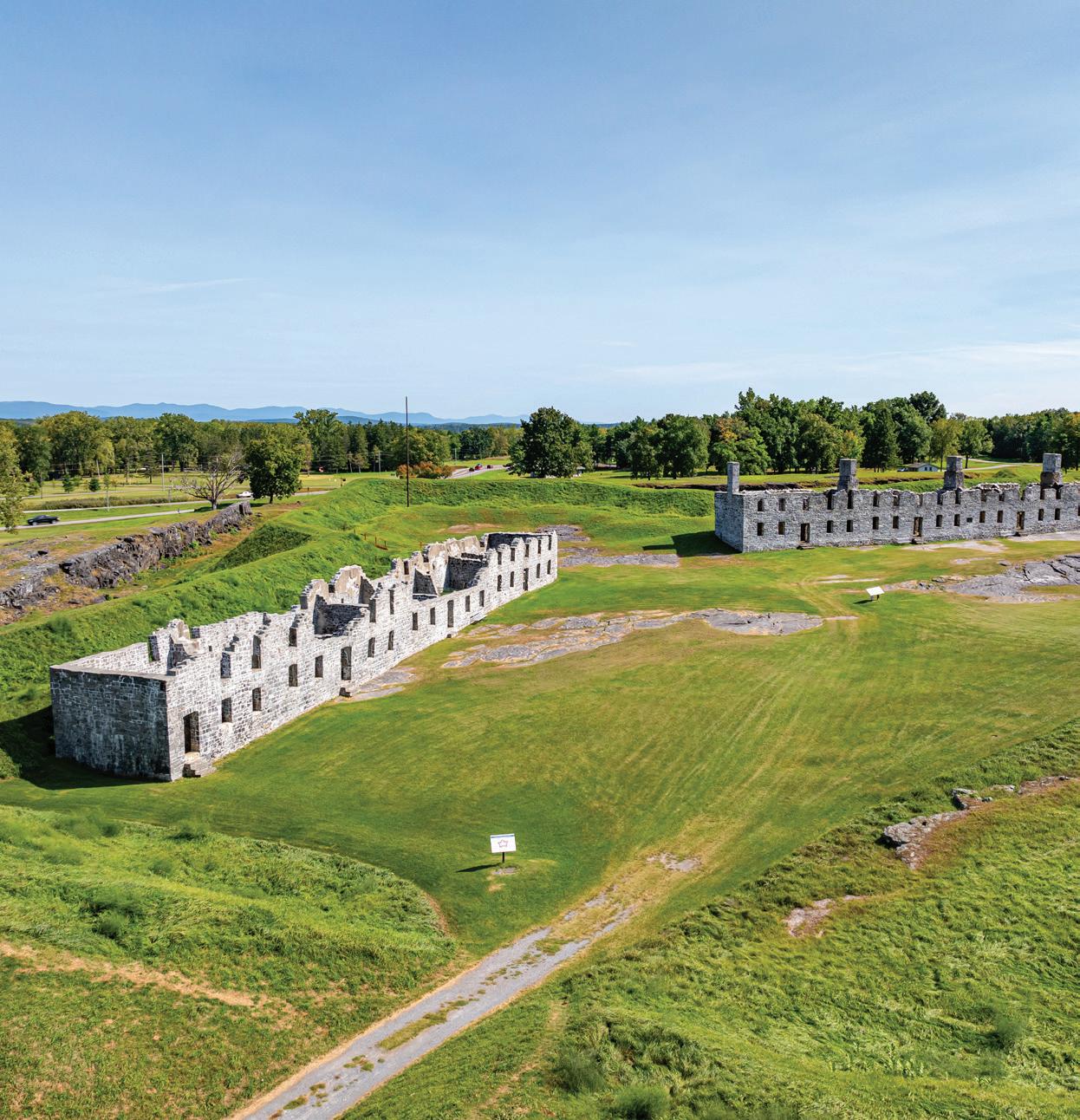
Crown Point State Historic Site
Dutchess County’s Rev250 Programming Grant Strengthening the County History Community for the County’s 250th
By William P. Tatum III, Ph.D., Dutchess County Historian
In Dutchess County, the 250th anniversary of independence from the British Empire created an unprecedented opportunity to activate the local history community. The course to this moment of public-private partnership was complicated by several factors. Although the Dutchess History Community, coordinated through the County Historian’s Office, began planning in 2019, the COVID pandemic effectively suppressed significant activity until 2022.
By 2024, with an obvious absence of federal or state planning initiatives or funding offers to municipalities, the entire Dutchess Rev250 planning process was in crisis. Without any special investment of funds, the local historical societies (the backbone of the county history community) were unable to even consider making the lift of special programming. The outlook was bleak.
The Dutchess County Legislature stepped into this gap in June 2025, when then-Chairman Will Truitt inquired about the potential impact of county funds in light of the lack of support from other layers of government. Upon learning that county support would be the make-or-break for the 250th in Dutchess, the County Legislature moved decisively to introduce special grant funding into the Department of History’s 2025 budget. An initial appropriation of $75,000 for 2025 fueled the swift creation of a competitive grant program to support special programming in 2025.
With input and investment from the County Executive’s Office and the County Clerk’s Office, Dutchess County solicited proposals during February 2025. The applicant pool was restricted to the 19 local historical societies and the Dutchess County Historical Society to make the new grant program
manageable and to grant the recognition that these organizations have earned for their steadfast work over the past century.
The County Historian’s Office held two grant workshops in January 2025 and both designed and operated a custom grant portal that opened on February 3, 2025. When the application period closed on February 28th, 19 out of the 20 historical societies had submitted 27 grant applications, totaling $133,000 of requested funding.
A review committee consisting of representatives from the County Executive’s Office, the County Legislature, the County Clerk’s Office, and Dutchess BOCES reviewed applications during the month of March. As a result of early discussions on the gap between available funding the requested support, the County Legislature approved an additional $25,000 appropriation to expand the grant line to $100,000.
As a result, the review committee forwarded recommendations for funding, some of them for partial funding, to support 23 of the proposed projects to the County Executive. Confirmation of these recommended funding awards came in April 2025, with awards formally announced at the RevCon: Dutchess County in the Revolution event at the Franklin D. Roosevelt Library and Museum at Hyde Park, NY, in June. That event on June 13 featured table displays by the local historical societies, scholarly lectures, and ongoing demonstrations by Revolutionary War
reenactors. Along with the Revolutionary Cider Celebration event at Fishkill Farms in East Fishkill later in June, RevCon represented the county-level 250th events last year.
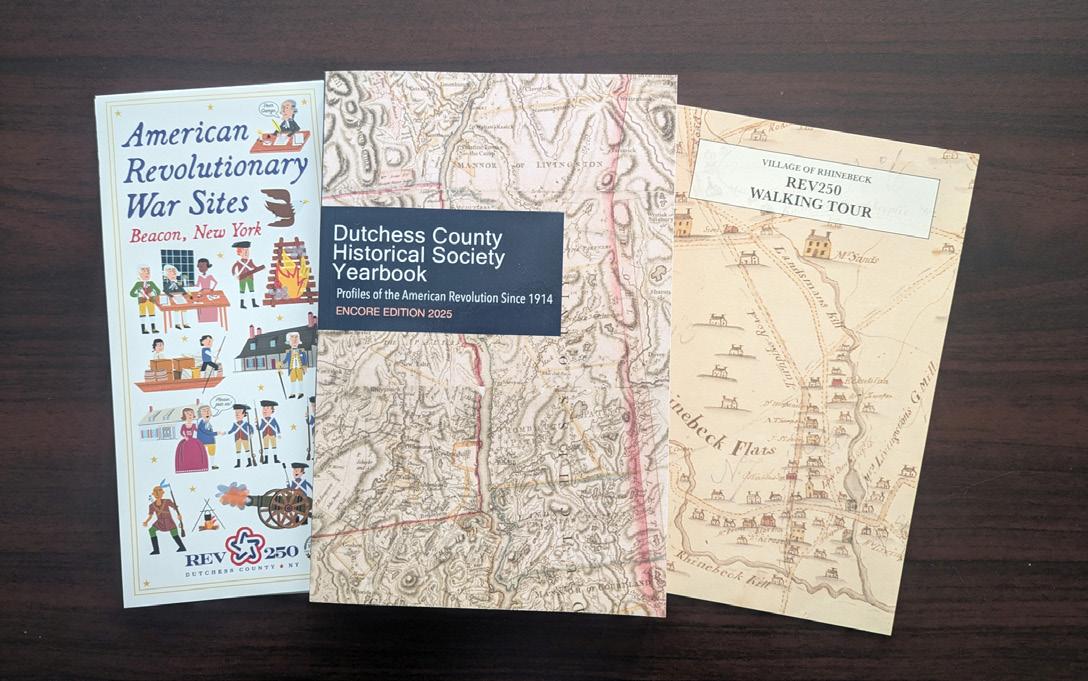
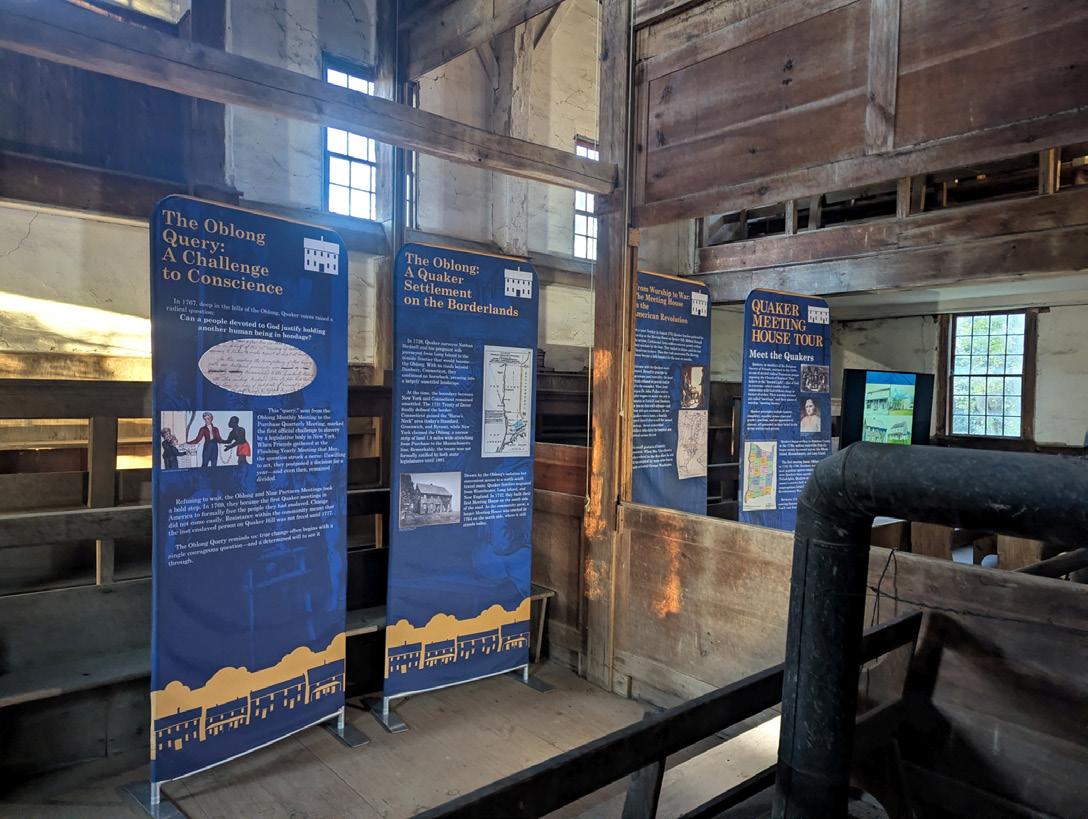
The investment of county funding profoundly changed the nature of the 250th offerings in Dutchess during 2025. The funded projects ran the gamut from publications, walking tours, and scholarly articles on Dutchess County’s contributions to the struggle for independence to virtual reality experiences, original theatrical performances, and a multi-town driving tour of the county’s surviving historic Quaker Meeting Houses.
Between these programs and the two county-level events, the Dutchess History Community engaged an estimated 13,000 visitors between June and November 2025, in addition to the audiences we normally observe at local history events. The grant architecture required each funded historical society to generate a permanent record of their project, guaranteeing that future generations will have materials to draw upon. As a result,
Dutchess County entered 2026 with multiple publications, two pop-up banner exhibits, and recordings of lectures and programs available for public consumption.
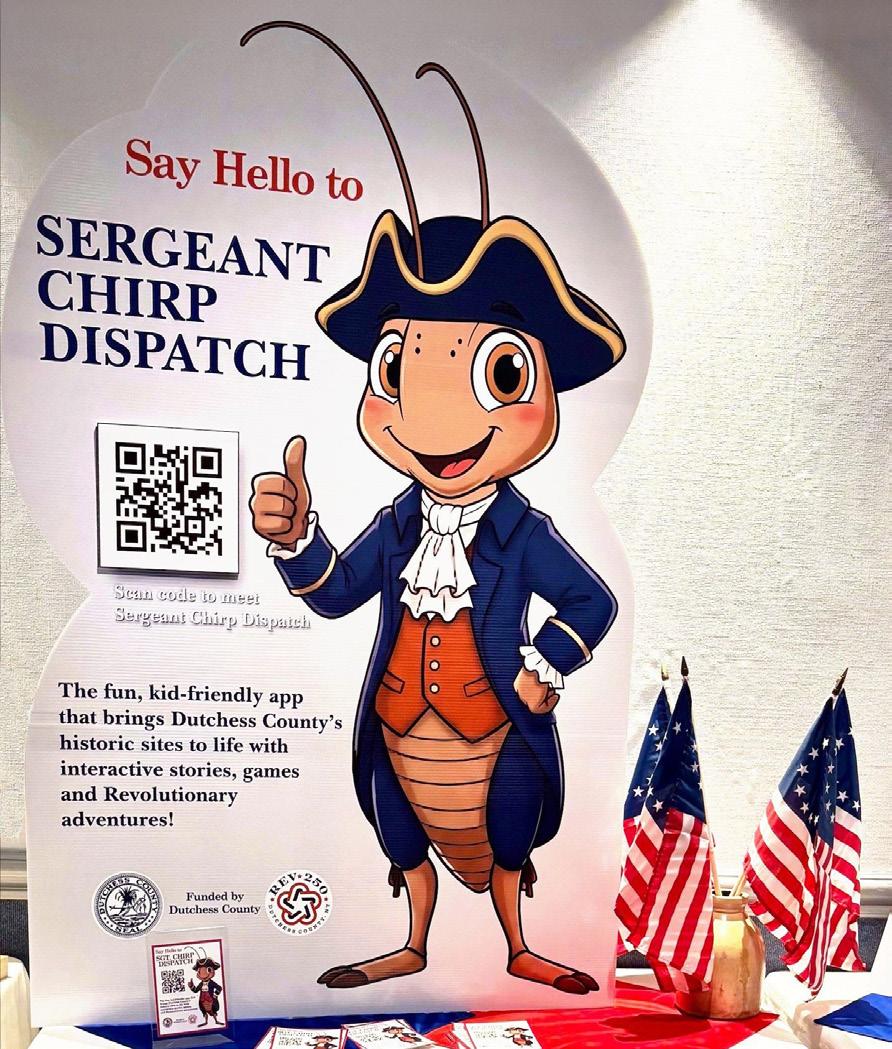
The County Legislature, County Executive’s Office, and County Clerk’s Office are collaborating on a second round of the Dutchess County Rev250 Programming Grant in 2026. Our process began earlier this year, resulting in nine major funded projects that are already moving ahead. This year’s solicitation focused on experiential projects that would generate a foundation for excellence far into the future. The funded projects include two original dramatic productions, an augmented reality product for children, and an immersive tavern experience. We look forward to reporting on the results in a future issue.
Rooted in Westchester Connecting America’s 250th Anniversary to Today
ABy Natasha Caputo, Westchester County Director of Tourism & Film
s communities around New York State gear up to commemorate America’s 250th with eyes on July 4, Westchester County is already deep into its Revolutionary history celebration. Planning began in 2019, and through a collaborative strategic approach, the County has engaged municipalities and nonprofits to promote events, content, and commemorations throughout the region.
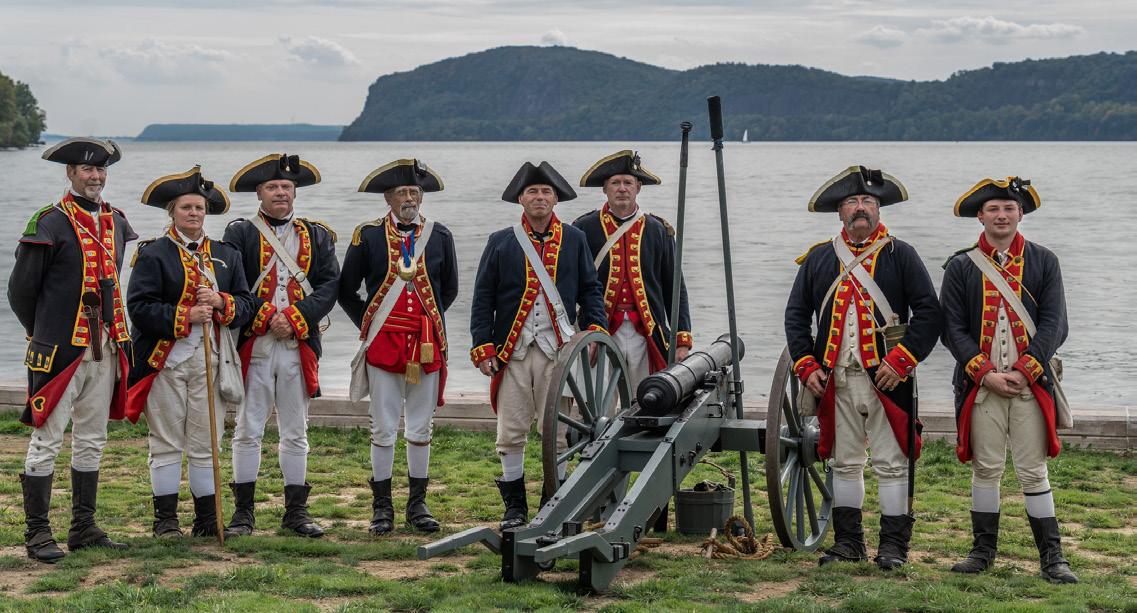
Located in the Hudson Valley just north of New York City, Westchester County holds an important place in American Revolution history. Neither a British nor Patriot stronghold, Westchester was known then as the “Neutral Ground.” Without clear alliances, the County became a crossroads of military activity, espionage, and civilian survival during the war, shaping a complex and compelling chapter of America’s founding story. Today, nearly four dozen Revolutionary War-related sites remain in the County.
“Rooted in Westchester,” Westchester County Tourism & Film’s campaign, connects our past to our present and future through major events and storytelling to reflect on Westchester’s role in the birth of America. It demonstrates how counties can be conveners and connectors. Through shared tools and coordinated promotion, we’re helping organizations tell their own stories to create a rich tapestry that represents our collective heritage.
“Westchester’s Revolutionary history is both nationally significant and deeply local,” said Westchester County Executive Kenneth W. Jenkins. “What makes this initiative especially meaningful is its effort to connect historical events to the ongoing American story — reminding people that every generation shares the responsibility to shape and safeguard democracy.”
The County’s commemoration efforts will include a major cultural exhibition and public programming with Westchester County’s rare Holt Broadside Declaration of Independence exhibit at the Neuberger Museum of Art from July through December 31, 2026 — marking the first time the historic document will be publicly displayed.
The exhibition will offer residents and visitors a unique opportunity to experience a significant piece of Revolutionaryera history firsthand.
A cornerstone of the County’s initiative is REV FEST 250, a free, large-scale living-history festival that blends history, music, community, and culture. Launched in 2025 at Croton Point Park, the first two-day event drew thousands of attendees from across the tri-state area for battle reenactments, musical performances, storytelling, educational demonstrations, and family-friendly activities. Programming intentionally blended historical interpretation with broader cultural experiences, featuring everything from colonial reenactors and historical crafts to contemporary performances and inclusive storytelling.
REV FEST 250 will return October 24–25, 2026, at Ward Pound Ridge Reservation, again blending history, music, and culture and culminating in a large-scale reenactment of the 1776 Battle of White Plains. The event is anticipated to drive tourism and support local businesses, while also strengthening regional partnerships to extend long after the anniversary year concludes.
Through a blend of digital storytelling, social media content, and immersive experiences, “Rooted in Westchester” engages people of diverse ages and ethnicities to reflect on Westchester’s role in the birth of America. Digital content like “Youth in Revolution” and “Women of the Revolution” widened the aperture — capturing public interest beyond traditional history
buffs. Rich storytelling explores military history, people and places, but it also celebrates remarkable communities, artists, and advocates who embody Revolutionary spirit on Visitwestchesterny.com/250.
A critical component of the initiative is a centralized online events calendar that allows municipalities, nonprofits, historical societies, and community organizations to upload and promote their own Semiquincentennial programming. The calendar feeds into the statewide tourism platform, I LOVE NEW YORK, significantly expanding visibility.
Rather than treating the Revolutionary War as one specific moment in time, “Rooted in Westchester” frames the anniversary as part of the continuing and unfinished American story — connecting the ideals debated during the nation’s founding to modern conversations about justice, inclusion, and community identity.
The County has partnered with Revolutionary Westchester 250, a nonprofit organization dedicated to preserving and promoting the region’s Revolutionary War history. As a valued local partner, the organization has played an important role in supporting community engagement, educational initiatives, and regional collaboration.
As counties nationwide consider how to commemorate America’s 250th anniversary, Westchester’s approach offers a replicable model grounded in collaboration, accessibility, and relevance — using history not only to preserve the past, but also to strengthen community connections and inspire future generations.
This project is supported through a Market New York grant awarded by Empire State Development and I LOVE NY, New York State’s Division of Tourism.
NYMIR is a licensed, regulated insurer owned by its policyholders — over 1,000 municipalities across New York State.
Since 1993, we have built a strong, fiscally responsible program, providing property and casualty insurance to counties, cities, towns and villages, both big and small.
Customer service, knowledge of municipal operations, risk management and aggressive claims defense are the cornerstones of NYMIR — not shareholder returns or corporate earnings targets.
One of NYMIR’s strengths is reliability. We will not waver from our dedication to supporting our members with the best coverages, claims handling and risk management services possible.
Our members rely on us for three simple reasons: our conscientious experts are always there for them; we have maintained stability in a volatile insurance market; and we have consistently provided high quality insurance and responsive services that meet the unique needs of New York State’s local governments.
Check out our website to see why we’re the leading insurance program for local governments in New York.
CUSTOMER
SERVICE - KNOWLEDGE OF MUNICIPAL OPERATION S - RISK MANAGEMENT
Tourism Grants Help Orange County Municipalities Showcase Hometown Pride
OBy Rebecca Sheehan, Orange County Director of Public Information & Media Relations
range County Executive Steven N. Neuhaus has made it a priority to invest in local communities across Orange County through initiatives that strengthen tourism, drive economic growth, and support municipalities. One of the most successful examples of that commitment is the Municipal Tourism Grant Program, which continues to provide funding that has had a measurable impact on the success of local events.
Many of the county’s most engaging tourism initiatives begin at the local level, including milestone celebrations and new visitor experiences. Through the Municipal Tourism Grant Program, Neuhaus and the county are ensuring those ideas receive the support they need to grow and thrive.
supporting their events, celebrations, and innovative tourism projects that strengthen communities and drive economic activity throughout the County.
“The Municipal Tourism Grant Program has become a valuable investment in the future of our communities,” said Orange County Director of Tourism and Film Amanda Dana. “These funds help the municipalities create experiences that attract more visitors, support local businesses, and encourage community pride across Orange County.”
“Towns, villages, and cities across Orange County are stepping up with fresh ideas that bring in visitors and celebrate what makes each community stand out,” said Neuhaus. “These investments help them grow those efforts and continue building places people want to visit and potentially call home.”
Now in its fourth year, the grant program provides funding to municipalities for marketing and improvements to the visitor experience, encouraging more tourism and greater success. Over the past three years, more than $380,000 has been distributed to support these local initiatives. In 2025 alone, 27 municipalities received grants
A key to the success of the grant program is its flexibility. Rather than taking a one-size-fits-all approach, municipalities can use funding in ways that will have the greatest impact and contribute the most to a successful event, whether that’s through improved promotion and marketing, enhancing online and social media outreach, or creating entirely new visitor experiences.
This adaptable model supports a wide range of projects. Communities are celebrating major milestones, such as the Village of Maybrook’s 100th anniversary, while others are investing in new tools like the Village of Warwick’s Visit Widget App. Signature events, including New Windsor Community Day and the Fuller Moon Arts Festival, continue to grow, drawing larger crowds and providing substantial support for local economies.
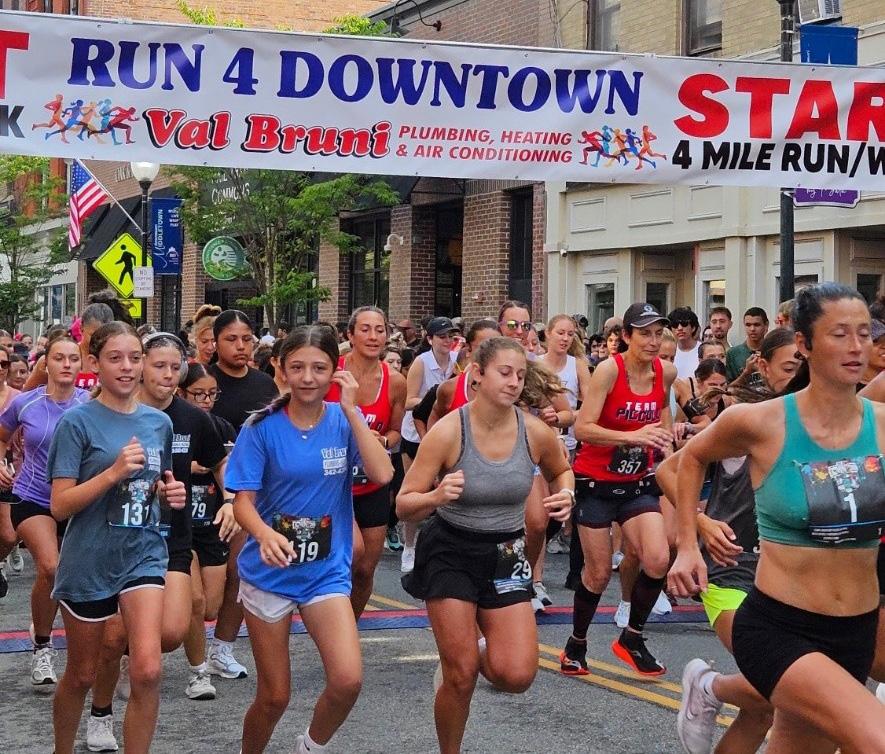
Communities across Orange County also continue to showcase what makes them unique through longstanding traditions that attract visitors year after year. In the City of Middletown, Run4 Downtown has become a celebrated event that brings athletes,
families, and supporters together while also giving local business a welcomed boost.
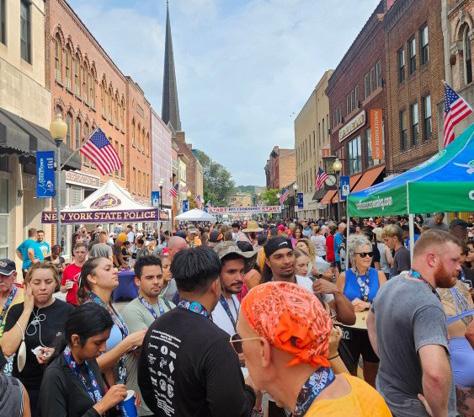
In Goshen, the Great American Weekend remains one of the region’s most iconic summer celebrations, drawing thousands to enjoy food, music, and community spirit. Both events highlight the creativity, character, and hometown pride that define Orange County’s municipalities.
Behind these efforts is a shared goal: strengthening the local economy while building a strong sense of community and expanding opportunities for residents and visitors alike.
An initiative of County Executive Neuhaus, the Municipal Tourism Grant Program is administered by the Orange County Tourism and Film Office in collaboration with the Orange County Legislature, reflecting a strong and ongoing commitment to supporting local communities and driving economic growth.
The Municipal Tourism Grant Committee consists of the Director of Tourism, the Director of Economic Development, the President and CEO of the Orange County Chamber of Commerce, and the Executive Director of the Orange County Arts Council. This popular program continues to play a vital role in expanding Orange County’s tourism footprint while also supporting local events and initiatives that reflect Orange County’s diversity, history, and creativity.
Sullivan County Uses $30M Grant to Wire 22,000 Homes and Businesses
MBy Joshua Potosek, Sullivan County Manager
ore than a decade ago, our Commissioner of Information Technology Services Lorne Green approached me with an idea: if we couldn’t get existing providers to extend their Internet cabling to every home and business in Sullivan County, maybe we could do it ourselves—not through the expense of stringing wire across thousands of poles, but by utilizing our dozen emergency communications towers to broadcast a signal, similar to how cell companies provide service.
I didn’t know that was possible, and I was intrigued. So was the Legislature, who gave us the green light to explore the dream further.
A few years later, a Kingston-based startup, Archtop Fiber, approached us with their own idea of wiring as much of the county as possible. They needed capital, however, to realize their dream. Being innovators themselves, they saw that a public-private partnership might help them get off the ground faster.
On our end was the realization that, through Archtop Fiber, we could avoid the time, expense and headaches of operating our own broadband Internet system. We’d simply own the equipment. Through Commissioner Green, Planning Commissioner Heather Brown and Grants Administration Supervisor Art Hussey, we applied to New York State’s ConnectALL program with a proposal persuasive enough that the county ultimately won the largest single grant in its history—nearly $30 million—to build such a system.
The long slog of that paperwork is now over. We’ve got the money, Archtop Fiber completed survey and design activities across more than 200 miles of buildout area, and contractors are spread out around the County, installing hundreds of miles of fiber-optic cable capable of speeds of up to 8 GB/s.
Only 3 percent of that wire, however, will be above ground. Almost all of it will be buried in tiny trenches along public rights-of-way, speeding up deployment. During construction, Archtop will be in close coordination with the County and municipalities and will maintain safe operations and minimize disruptions to residents.
Our emergency communications towers will be among the first locations to be wired, allowing us to broadcast the wireless signal sooner rather than later. An extra benefit: if our microwave relay
system goes down on those towers, the fiber-optic cabling can serve as an instant backup, ensuring emergency communications continue uninterrupted.
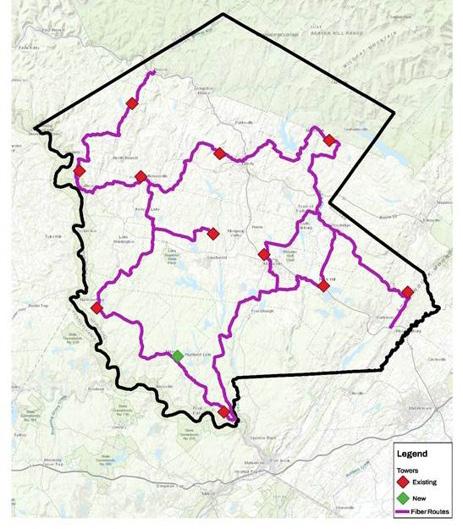
The map which accompanies this article shows only where the physical wire is going in this first phase, which the grant stipulates must be installed by the end of 2026. Our towers (marked as red diamonds) will be able to provide service much deeper into Sullivan County than what the map illustrates. And we plan to seek funding for a second phase, aiming to get as close to 100 percent coverage as possible.
In the meantime, we’ve launched a new website to track progress, determine availability and receive notifications: www. connectsullivan.com. We’ encouraging everyone—even those who already have high-speed Internet service—to explore the site and consider this new option when it becomes available, as pricing will be competitive.
I want to thank State officials, the Governor, Archtop Fiber, and Senator Schumer for believing in this dream along with us. They’ve made this reality possible, and I’m looking forward to the transformative impact it will have across Sullivan County.
Supporting Seniors Through Uncertain Times
UBy Daniel P. McCoy, Albany County Executive
ncertainty creates challenges for local governments across New York State. While counties often have the ability to deliver direct and meaningful results to the residents we serve, we are also impacted by federal and state unfunded mandates, policy shifts, and funding decisions that can create instability for our communities. At a time when many municipalities are navigating more uncertainty than at any point in recent memory, it is critical that we remain focused on protecting and supporting our most vulnerable populations. Local governments must ensure that no resident falls through the cracks during periods of transition or disruption.
In Albany County, the Department for Aging works every day to provide stability, connection, and essential services to older adults throughout our community. Through congregate meals, transportation services, educational seminars, wellness initiatives, and exercise programming, the County helps seniors remain active, informed, and engaged. These services are about far more than nutrition or physical activity—they help combat social isolation and foster meaningful human connection, something that is especially important for older adults. What’s more, some of these initiatives, including our new and growing intergenerational programming, are being used to combat ageism in our community.
For many seniors, consistency and structure are equally important. Frequent changes in programming locations or schedules can create confusion and doubt, often leading individuals to withdraw and become isolated. Like many municipalities, Albany County previously faced challenges in maintaining consistent programming due to changing contracts, limited space availability, and reliance on noncounty-owned facilities. That changed when Albany County acquired the former College of Saint Rose campus. The property represented not only an opportunity to preserve an important community asset in the heart of the City of Albany, but also a chance to reimagine how county government delivers services to residents.
The City of Albany had long lacked a dedicated senior center, and that absence was felt throughout the county. While organizations such as the YMCA offer some senior
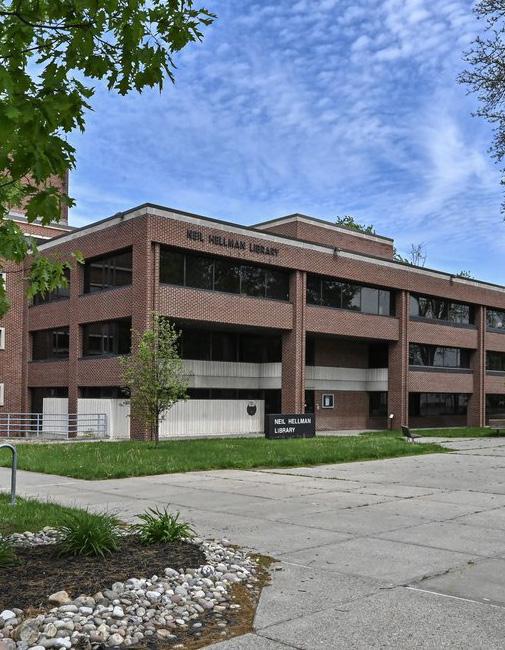
programming, those services can be costly and their footprint in the City is limited. Furthermore, some popular recreational activities run by local nonprofits have long wait lists. To bolster these shortcomings, Albany County has transformed the former Events and Athletic Center and the Hellman Library buildings on the campus into the Albany County Family Wellness Center, a centralized location designed to provide accessible, consistent, and comprehensive programming for residents of all ages, including seniors.
Importantly, Albany County continues to rely on direct feedback from seniors themselves through countywide surveys and community engagement efforts to ensure programming reflects the needs and interests of the population being served. A survey administered by our Department for Aging received responses from over 250 older residents and has helped guide the implementation of our newest recreational programming at the former College of Saint Rose and across the County at other facilities.
Some of those programs include chair yoga and Zumba, line dancing, water aerobics, nutrition counseling, Medicare education, fraud prevention and scam awareness, digital literacy training, and much more. Beyond these impactful new offerings, I’m also thrilled that the County is building out a wide array of recreational activities specifically for those living with neurodegenerative disorders—including Alzheimer’s, Parkinson’s and Lewy Body Dementia—and caregiver support for their loved ones. Even more innovative programming and services are planned following the completion of the Family Wellness Center in the coming months.
As local officials, we have a responsibility to shield residents from as much uncertainty as possible while continuing to address our most pressing issues. While counties may not control every federal or state decision, we can control how we respond to those challenges and how we support the people who depend on us most. Albany County’s investment in aging services and the future Family Wellness Center reflects our commitment to providing consistency, dignity, connection, and opportunity for older adults throughout our community.
Building Collaborative Community Response to New SNAP Work Requirements
ABy Brittanie Earle, Commissioner, Tompkins County Department of Social Services
s counties across New York respond to expanded federal SNAP work requirements that took effect on February 1, 2026, local districts face a significant challenge: How do we implement complex policy changes while ensuring residents are informed, supported, and connected to meaningful opportunities?
In Tompkins County, we recognized early that this could not be solved by government alone. Rather than treating the new SNAP Able-Bodied Adults Without Dependents (ABAWD) requirements solely as a compliance issue, we approached them as a communitywide opportunity to strengthen collaboration between community partners and local government.
Our goal was never simply to help residents comply with new requirements. We wanted to build a system that connects people to opportunity, reduces confusion, and strengthens the partnerships that already exist within our community.
Understanding the Challenge
Recent federal SNAP changes expanded ABAWD work requirements to include more adults ages 18–64 without dependents. Individuals who do not qualify for exemptions are generally required to participate in work, education, training, or volunteer activities for at least 80 hours per month to maintain SNAP eligibility.
We recognized that many residents were unaware of the changes, uncertain whether they qualified for exemptions, or unfamiliar with what activities would satisfy the requirements. At the same time, many local organizations wanted to help, but lacked a centralized system for connecting with SNAP recipients.
Building the Team
Beginning in November 2025, Tompkins County DSS partnered with the Human Services Coalition of Tompkins County (HSC) and Foodnet Meals on Wheels to convene a multidisciplinary working group focused on responding to the changes.
The workgroup included partners from:
• Workforce development and employment services
• Higher education and training providers
• Food access organizations
• Healthcare and mental health providers
• Community nonprofits and advocacy organizations
• Local government agencies
Creating a Centralized Resource: Tompkins Opportunity
One of the clearest needs identified early in the process was the lack of a centralized access point for residents and organizations. To address this, the workgroup created Tompkins Opportunity, an online platform, designed specifically to support individuals impacted by the ABAWD requirements.
The platform serves three primary functions:
1. SELF-SCREENING TOOL
Residents can quickly determine whether they may qualify for an exemption from the ABAWD requirements through a simple online screening form.
2.
COMMUNITY OPPORTUNITY HUB
The platform provides a centralized place to browse volunteer, workforce, educational, and training opportunities that may satisfy SNAP participation requirements.
3. RECRUITMENT TOOL FOR ORGANIZATIONS
Businesses, nonprofits, and public agencies can post volunteer, training, or employment opportunities directly to the platform at no cost.
Rather than building an entirely new system, we focused on connecting existing community opportunities into one coordinated and easy-to-navigate network.
Rolling Out the Initiative
Once the platform and outreach materials were developed, the next challenge was public education.
The workgroup created two separate outreach campaigns: A SNAP beneficiary flyer explaining the new work requirements, common exemptions, and how to access the screening tool and opportunity platform; and a recruitment flyer encouraging organizations to post opportunities and participate in supporting residents
Outreach included distribution through DSS staff, community agencies, and public transit; presentations to healthcare providers, nonprofits, and coalition groups; and education for medical and mental health professionals on exemption documentation processes.
This broad communication strategy helped ensure residents received consistent information no matter where they sought assistance in the community.
Cindy Wilcox, Executive Director, Human Services Coalition of Tompkins County, noted that, "A critical piece of the project's success has been the collaborative approach from Tompkins County DSS. Their willingness to partner with community organizations has resulted in a much stronger community response than any organization could have achieved on its own. It's a powerful example of what we can accomplish when we work together."
Lessons for Other Counties
Several lessons from our experience may help other counties respond to these changes:
CONVENE PARTNERS EARLY
Broad collaboration improves coordination and reduces fragmented messaging.
USE EXISTING INFRASTRUCTURE
Many communities already have workforce and volunteer resources; the key is connecting them.
CREATE ONE CENTRAL ACCESS POINT
Residents should not have to navigate multiple disconnected systems.
TAILOR OUTREACH TO DIFFERENT AUDIENCES
Beneficiaries, providers, and employers all need different information.
FOCUS ON OPPORTUNITY, NOT JUST COMPLIANCE
Workforce development, education, and volunteerism can all become part of a supportive local response.
Our experience in Tompkins County demonstrated that policy implementation can become more than an administrative exercise. Through this initiative, we not only created practical tools to support residents navigating new SNAP requirements but also strengthened relationships between government and community organizations that will continue well beyond this specific issue, creating a stronger foundation for future collaboration and community problem-solving.
Smart infrastructure is sustainable infrastructure
Smart infrastructure from Siemens intelligently connects energy systems, buildings and industries to adapt and evolve the way we live and work. We work together with customers and partners to create an ecosystem that intuitively responds to the needs of people and helps customers to better use resources. It helps our customers to thrive, communities to progress and supports sustainable development.
For more information contact Shadrach (Shad) Treat at (518) 320-6684 or shadrach.treat@siemens.com
usa.siemens.com
Rockland’s Path to Better Housing
RBy Ed Day, Rockland County Executive
ockland County is taking bold, community-centered steps to address one of the most urgent challenges facing counties across New York: the shortage of safe, affordable, and attainable housing. At a time when housing costs continue to rise statewide and nearly half of residents spend more than 30 percent of their income on housing, counties play an increasingly crucial role in championing solutions that support residents, attract new workers, and strengthen local economies.
To confront this challenge head-on, Rockland County is launching a multifaceted housing strategy that pairs innovative public education, strategic redevelopment, and long-term planning. A central component of this work is the Keep Rockland Home campaign, which aims to combat persistent stigma around affordable housing. Developed in response to mounting housing pressures, the campaign seeks to shift public perception by showing what affordable housing truly represents: safe, stable, high-quality homes for residents across every stage of life. Seniors, teachers, college graduates, first responders, essential workers, and many others rely on attainable housing to continue living and contributing to our community. Through personal storytelling and experiences from real Rocklanders, the campaign humanizes an issue that is often misunderstood and highlights the broad benefits of expanding affordable housing opportunities.
Another major milestone in the county’s housing efforts is the selection of Regan Development Company and the Rockland Housing Action Coalition to redevelop the long-vacant Sain Building property in New City. This transformative project— now awaiting legislative approval—will turn a dormant 3.69-acre site into a vibrant mixed-income, high-quality affordable housing community. Plans include affordable senior rental units, dedicated preferences for veterans, first responders, essential workers, and individuals with intellectual and developmental disabilities, as well as homes affordable to residents earning between 30 percent and 80 percent of Area Median Income (AMI). The project also incorporates meaningful community features, helping ensure the redevelopment integrates seamlessly into the surrounding neighborhood while serving a wide range of residents.
Guiding this work is the county’s 2024 Housing Needs Assessment, which identified significant gaps in both
affordability and availability across Rockland County. In response, the county has advanced several key policy initiatives designed to create, preserve, and diversify its housing stock. These include the Housing Action Loan Opportunity, which allocates $13.5 million in American Rescue Plan Act funds for workforce housing creation or preservation; the Keep Rockland Home public-education campaign aimed at informing residents and dispelling myths; and the redevelopment of key county-owned sites, including the Sain Building, to expand housing options in strategic locations.
By pairing honest, accessible public education with strategic redevelopment and thoughtful long-term investment, Rockland County is not only generating much-needed housing units but also building public trust and understanding in the process. As counties across New York work to address their own housing challenges, Rockland’s initiatives offer a clear, replicable model—one that prioritizes residents, embraces data-driven planning, and centers long-term community health and stability.
New Legislation Requires Counties to Develop Comprehensive EMS Plans
EBy Megan Novak, NYSAC Legislative Coordinator
mergency medical services have long been a patchwork of providers across New York State–volunteer squads, municipal agencies, private contractors, and everything in between. A new state law aims to bring greater clarity to that landscape, not by mandating how counties deliver EMS, but by requiring them to take stock of what they have, identify the gaps, and put a plan on paper.
The law (Chapter 703 of the Laws of 2025) directs every county in the state to develop and maintain a comprehensive EMS plan. The New York State Department of Health is expected to release a model plan template this month that will serve as the primary guide for counties as they begin their planning work.
What the Law Requires Counties to Do
Under Chapter 703, each county must convene a planning process in coordination with its municipalities- cities, towns, and villagesand its regional EMS council. The process must be led by the county EMS coordinator, a designee of the county Office of Emergency Management, or another county-designated lead.
The resulting plan must address several core questions:
WHO
IS PROVIDING EMS, AND WHERE?
Counties must identify which EMS providers are responsible for responding to emergency calls in each part of the county and, critically, flag any areas where no provider currently exists.
HOW
ADEQUATE IS CURRENT SERVICE?
The plan must assess the existing level of EMS coverage across the county and include a plan to increase or provide service in areas where it falls short.
WHAT ORGANIZATIONAL STRUCTURE WILL BE USED?
Counties must specify how service will be delivered in each area- whether through municipal operations, intermunicipal agreements, not-for-profit contracts, special districts, or regional arrangements.
WHAT
WILL IT COST?
For areas where current service levels are insufficient, the plan must include cost estimates for bringing service up to an adequate level.
WHAT LOCAL GOVERNMENT ACTIONS ARE NEEDED?
The plan must detail any specific steps—such as intermunicipal agreements or the creation of special districts—that may be necessary to implement it.
It is important to note that while counties must develop and submit these plans, there is no legal requirement to implement them. The sponsors have stated their intent is to use the resulting data to assess statewide EMS needs and then pursue funding support through the state budget process.
The Chapter Amendment
Shortly after Chapter 703 was enacted, the Legislature passed a chapter amendment (S.8806/A.9440), that makes two important changes to the original legislation.
First, it extends the timeline. Under the original law, counties had six months from the date of enactment to complete and submit their plans—a deadline that would have been extremely difficult to meet. The amendment delays the law’s effective date by six months from that effective date to complete their plans. In practical terms, county plans will be due on December 19, 2026.
Second, it places new obligations on the New York State Department of Health (NYSDOH). Rather than leaving counties to interpret the law’s requirement on their own, NYSDOH, in consultation with the State EMS Council and regional EMS councils, must develop a model comprehensive county EMS plan template and make it publicly available on its website. This template is expected to be released this month and will serve as the primary guide for counties as they begin their planning work.
The goal is to build a statewide picture of EMS coverage and gaps that can inform future policy, and ultimately, future funding.
What to Expect from DOH
NYSDOH’s model plan template will be a key resource. Counties should watch for its release and use it as the foundation for their local planning process. Once a county submits its completed plan, NYSDOH has 60 days to review it and provide written feedback and recommendations.
The department’s role is advisory, it reviews and comments, but the law does not give DOH authority to reject or require revision of county plans.
Looking Ahead
The sponsors of this legislation have been clear that the planning process is a first step, not a final destination. The goal is to build a statewide picture of EMS coverage and gaps that can inform future policy, and ultimately, future funding. Counties that engage seriously with the planning process will be better positioned to make the case for the resources they need.
NYSAC will continue to monitor the release of the DOH model template and any guidance from SEMSCO. We will provide additional information and resources to help counties meet the December 2026 deadline as the process unfolds.
How Effective is EMS Response in Your County?
Under new requirements, every county must develop a plan to ensure that EMS is meeting the needs of the community.
Why Partner with CGR?
Proven New York Success
Transparent Methodology
Prepared to Engage Stakeholders
Ready for Implementation
Decades of Practical Experience
We’re ready to share our expertise to help you craft the specific comprehensive plans now required by the state.
Lessons from Transition to a County-Operated EMS System
EBy Brian Meyers, Director of Fire and Emergency Management, Wyoming County Office of Emergency Services
MS faces many challenges, from low reimbursement rates, long transport times, hospital wait times, mental and physical health impacts, and rising call volumes. Volunteer agencies across the country are facing these significant burdens, with many agencies closing their doors. Access to advanced care in rural communities compounds the EMS struggles as rural counties generally have fewer advanced level providers and agencies, which can delay the best possible care a patient can receive.
Beginning in 2023, Wyoming County began discussing ways to supplement the volunteer system by providing Paramedic services and managing the transfers out of the Wyoming County Community Health System along with two state correctional facilities. The county’s agreement with a commercial agency was experiencing many complexities, and in the fall of 2023 the company ended its agreement with the county after servicing the area since the late 1990s. The county had three months to establish an ambulance service with no current employees, equipment, or vehicles in place.
Fortunately, through well-established relationships, the county was able to provide the services the community expects in that threemonth period. That did not come without obstacles, and now, over two years later, we are at the final phases of establishing the system the county needs today.
For those looking into starting their own service, here are some of the lessons learned that helped move the process along.
Certificate of Need
NYSDOH operates a Certificate of Need (CON) for agencies to operate in a geographical area. CON’s can be transferred depending on the agencies, and additional CONs can be issued based on need. However, this is not a fast process. Wyoming County was fortunate that the commercial agency had operated under the county CON which removed that barrier. If your county does not currently have a CON, begin the application process early on for a paramedic level CON.
Staffing
Staffing can be one of the most challenging aspects of operating an agency. How many EMTs and paramedics are needed, union concerns, civil service, the list goes on. Identifying the shift schedules will help determine how many full-time staff will be needed. Will you have part-time and per diem staff?
Keep in mind per diem staff, especially in EMS, often work for multiple agencies and availability can be sporadic and challenging to schedule.
Along with staffing, operational and administrative support cannot be underestimated. There will be a tremendous amount of work on the staff who oversee the daily operations.
Narcotics management, charting system compliance, scheduling, billing (which is recommended to be contracted out), training, vehicle and equipment maintenance, and the many required reports will keep your admin staff busy.
Staff appropriately at the start with more than you think you will need. With the right staff, little daily supervision is needed, however, these staff are consumed with many other duties in addition to responding to calls. Determine ahead of time what roles you think will be needed, and capacity for additional unexpected responsibilities as they come up.
Wyoming County had three months to establish an amulance service with no current employees, equipment, or vehicles in place.
Vehicles/Equipment
Our units routinely travel 300 miles daily with 911 and hospital transfers to facilities in Buffalo and Rochester. Downstate trips to mental health facilities add to the mileage the units rack up. In this business, with the weather and road conditions, mileage, and nature of the job, vehicles will breakdown, a lot. Wyoming County started with one back up ambulance for the two operating 24/7 and quickly found this was not sufficient. Preventative maintenance and breakdowns lead to many times with only one ambulance available which led to adding a fourth ambulance that enables us to rotate monthly to reduce wear on vehicles.
Equipment can also be challenging to determine how much to budget for. Budget higher than expected due to supply chain issues and compliance with Part 800 requirements.
There are many other considerations outside of budgetary impacts to determine if a county-based system is right for you. However, with the expansion of county-operated systems throughout NYS, many resources are available to assist in determining needs or answering questions. Remember to keep in mind every county has its own unique needs, distance to hospitals, call volume, other agencies and levels of care, etc. No one system is the same and the ability to remain flexible early on to make the necessary adjustments as the operation develops is crucial to success and ensuring coverage for the community we service.
Is your county AI-ready?
Are you protected against cyber threats?
Modernize your technology preparedness plan with NYSTEC – New York’s Partner in Transformation.
As your trusted technology advisor, we:
+ improve operations through mature, secure, and compliant future-ready platforms
+ help your county integrate AI automation into your current practices while meeting governance standards
And with strategic guidance and hands-on expertise, we translate complex cybersecurity and privacy requirements into practical, actionable plans.
NYSTEC builds services around the needs of real New Yorkers. We were established by New York, for New York. And as New Yorkers ourselves, we believe that your success is our success. We’re in this together.
LBy Jennifer Rodriguez, Health Director, Livingston County Department of Health
ivingston County faces significant food insecurity challenges, particularly due to the presence of food deserts across its largely rural community. When combined with persistent socioeconomic disparities, these conditions create substantial barriers to reliable access to nutritious foods. Food security was identified as a major community priority in both the 2022 and 2025 Community Health Assessments.
The long-lasting effects of the COVID-19 pandemic have further intensified these challenges through unemployment, economic hardship, and ongoing health concerns. In the most recent community survey, nearly 61 percent of respondents reported that food insecurity affected their household, while 54 percent identified the high cost of healthy foods as a significant barrier to maintaining proper nutrition.
In response to these growing concerns, the Village of Mount Morris collaborated with several community partners to establish monthly pop-up food pantries. These events provide consistent, large-scale food distribution to individuals and families in need without burdensome bureaucratic barriers. The success of this initiative has led to its expansion into five additional municipalities over the past three years. Although the initiative originated through the Livingston County Public Health Department, organizations such as Catholic Charities have since assumed leadership roles with continued support from numerous community partners.
The Livingston County Food Insecurity Workgroup includes representatives from the Office for the Aging, Public Health, the Department of Social Services, Workforce Development, Cornell Cooperative Extension, Healthy Families, Sent by Ravens, United Way, Foodlink, and several nonprofit organizations.
Together, these organizations share the belief that every individual deserves access to nutritious, culturally appropriate food for themselves and their families. The group works collaboratively to expand access to services while preserving dignity and reducing barriers to food security. Members are committed to improving efficiency, strengthening coordination among agencies, and ensuring the public receives accurate, health-literate, and consistent information regarding food access and nutrition. The coalition also recognizes the
importance of remaining proactive and adaptable in addressing the evolving landscape of food insecurity.
Food pantry utilization in Livingston County increased dramatically from 14 percent in 2019–2020 to 33 percent in 2022–2023. However, local data indicates that only approximately half of food-insecure households use traditional food pantries. Additionally, 17 percent of pantry users reported that the food provided did not adequately support healthier eating habits due to limited fresh produce, poor-quality items, and insufficient accommodations for dietary restrictions.
Since the first pop-up pantry event in Dansville, attendance has grown significantly, reaching a peak of more than 600 families served at a single event. As of March 2026, the Avon, Nunda, and Dansville pop-up pantries have collectively served more than 20,700 households. These initiatives are supported primarily through volunteer efforts. During pantry events, participants are also connected with additional health and social service resources, including information about WIC, breastfeeding support programs, and suicide prevention services.
Volunteer participation has expanded to include local schools, Medical Reserve Corps members, and human services volunteers, all of whom have united to support this critical community effort.
In addition to emergency food distribution initiatives, Livingston County has also prioritized long-term strategies to improve access to fresh, nutritious foods. Through the Genesee Valley Health Partnership and the Livingston County Public Health Department’s “Be Well Initiative,” community gardens have been developed to increase the availability of fresh fruits and vegetables, particularly for low-income families who often face limited access to quality produce. These gardens provide direct, affordable access to nutritious foods, helping families reduce grocery expenses while improving overall dietary health.
Beyond their nutritional benefits, community gardens also strengthen social connections and foster community engagement. They create welcoming spaces where neighbors can interact, share knowledge and resources, and build a stronger sense of unity and shared purpose throughout Livingston County.
New Volunteer Team Helps Warren County First Responders
By Don Lehman, Warren County Director of Public Affairs
When a tour bus crashed on Interstate 87 in the Town of Lake George in January 2024, local first responders had an allhands-on-deck situation with seriously injured passengers from Canada and dozens of others who needed transportation home.
A review of the emergency response afterward found that first responders could use more assistance with non-emergency tasks, such as transporting uninjured victims and finding them places to stay if needed.
Starting in January 2026, a group of eight volunteers met with the Warren County Office of Emergency Services staff twice a week to learn how they can help local first responders when weather disasters and other emergencies unfold.
That training paid off as the group became the first members of Warren County’s new Community Emergency Response Team (CERT), an organization that will provide important support for first responders during emergencies and disasters.
Warren County Emergency Services Deputy Director Ashley Rivers has overseen the creation and training of the team, after Rivers and OES Director Ann Marie Mason identified the benefits that a trained group of volunteers could provide to first responders during emergencies and disasters.
“The CERT program allows the incident commander to use CERT members in non-critical functions, which allows first responders to concentrate on critical parts of their duties,” Rivers explained. “They are extra hands who are trained at a support level.”
CERT members can help distribute water during power outages, staff warming/cooling centers, and have training to provide basic First Aid, to triage victims, help with search and rescue, assist at large events such as the annual Adirondack Balloon Festival at Warren County Airport and more.
They have been provided a backpack of gear they would need when responding, which includes a helmet, vest, PPE, First Aid kit, and more.
The 20 hours of training they completed with Rivers and Warren County Deputy EMS Coordinator Jack Tims ran the gamut from providing instruction on fire suppression, First Aid, incident command, emergency evacuations, and much more.
Ann Marie Mason, Warren County Director of Emergency Services, said “Joining a Community Emergency Response Team is more than an act of service—it is a commitment to preparedness, responsibility, and community resilience.”
CERT teams have been formed across the U.S., starting in California in the 1980s. Planning for the Warren County CERT program has been underway for more than a year after OES discussions with the Warren County Board of Supervisors.
Twenty-five people who responded to public outreach about the new Warren County venture were chosen to be part of the initial group of trainees, out of 60 applicants. (Training for the remainder of the candidates will start in the coming weeks.)
The participants range in age from their 20s to their 70s, and include retirees as well as folks working in a variety of professions, from engineers to emergency dispatchers.
Bolton Landing resident Steve Flint, one of the first class of eight, said he decided to become part of the CERT program after seeing the response to the July 2024 tornadoes in Warren County.
“It seemed like there was a need for more help, and I am glad I can be a part of it,” said Flint, a retired NYS Department of Environmental Conservation employee.
Members of the team will meet regularly to continue training, and also take part in regional training exercises as schedules allow.
At the graduation, Jeff Kaczor, from NY Department of Homeland Security & Emergency Services, said there are only a few similar CERT teams in NY.
“This team will be an asset when our first responders are tasked to the max,” he said.
NYSAC Thanks the Sponsors & Exhibitors of the 60th Annual
County Finance School
SPECIAL EVENT SPONSORS
Arrow Bank
Bank of America, N.A.
Deckard Technologies
JPMorgan Chase
NBT Bank
NYMIR
NYSID
PKF O'Connor Davies
PERMA
three+one
THURSDAY DINNER SPONSORS
Absolute Auctions & Realty, Inc.
Fiscal Advisors & Marketing, Inc.
KeyBank, N.A.
M&T Bank
Orrick, Herrington & Sutcliffe LLP
Roosevelt & Cross Incorporated
GOLD SPONSORS
Drescher & Malecki LLP
Metropolitan Commercial Bank
NYCLASS
Venesky & Company
SILVER SPONSORS CLA
Deloitte & Touche LLP
Lumsden & McCormick, LLP
ProAct, Inc.
Signal Risk Management
Troy & Banks, Inc.
EXHIBITORS
Alera Group AT&T
Auctions International
C.T. Male Associates
ClearGov
Community Bank
Deckard Technologies
Empire Procure Connect
Metropolitan Commercial Bank
Municipal Electric and Gas Alliance
NBT Bank
New York State and Local Retirement System
NY MuniTrust
NYCLASS
NYMIR
Office of the State Comptroller Division of Local Government and School Accountability
Oracle
Pension Integrity Bureau
PERMA
ProAct, Inc.
Statewide Purchasing Alliance of NY
U.S. BENCOR/MidAmerica
Warren County Tourism Department
Advertiser Index
Deckard
eScribe
Iron
KeyBank,
Marathon
Marriott
NACo
More Than a Press Release
How County Communications Builds Public Trust
TBy Steven Falitico, Public Communications and Web Design Specialist, Genesee County
he role of the traditional Public Information Officer has changed. For decades, local government communication followed a familiar model: a designated staff member or office worked with local media, issued press releases, responded to reporters’ questions, and helped distribute important information to the community.
That work still matters. Local media remains an important partner in helping residents understand decisions, programs, emergencies, and issues that affect their daily lives.
The way residents receive information has also changed dramatically. People no longer rely on a single newspaper, television station, radio broadcast, or even website to stay informed. They scroll social media, search online, watch short videos, subscribe to alerts, join community groups, receive emails and text messages, and increasingly use artificial intelligence tools to find quick answers.
The speed and availability of information are at an all-time high, and so is the competition for residents’ attention.
That reality raises an important question for local governments: how do we ensure residents receive accurate, timely, and useful information in a world where misinformation can spread quickly and attention is limited?
The answer starts with recognizing communication as a core public service. Counties are responsible for a wide range of programs, services, and initiatives. Residents fund these services through their tax dollars, and they deserve to know what is available, how to access it, and why it matters.
Counties can benefit tremendously from a coordinated strategy and dedicated communications team. Without structure, public messaging can quickly become inconsistent, reactive, or fragmented. One department may share updates regularly, while another may rarely communicate and another may rely on a PDF buried several clicks deep on a website.
The result is more than a missed opportunity. It becomes a barrier between residents and the services intended to help them.
A strong communications strategy uses every available tool with purpose. Social media is one tool. Local media is another. So are websites, email updates, video, photography, graphics, signage, QR codes, public meetings, webinars, newsletters, search engines, online forms, and employee communications. The list continues to evolve.
The goal is not to use every platform simply because it exists. The goal is to meet residents where they are and make information easier to find, understand, and act on. That often means taking complex government information and turning it into something clear and useful.
In a fast-moving digital environment, local governments may only have a few seconds to capture someone’s attention. A strong headline, a short video, a clean graphic, or a plain-language explanation can be the difference between a resident scrolling past an update and a resident attending a meeting, signing up for a program, preparing for severe weather, or contacting the right department for help.
That kind of communication changes perception. It can move someone from “I don’t know what my taxes go toward” to “I didn’t realize the county did that.”
Over time, consistent communication builds familiarity. Familiarity helps build trust. That trust is increasingly valuable.
In a world filled with fast-moving information, AI-generated content, rumors, screenshots, comment threads, and competing narratives, counties have not only an opportunity, but a responsibility, to be a reliable source of truth. Residents should know where to turn for accurate information about local services, emergencies, public health, elections, infrastructure, and community programs.
The speed and availability of information are at an all-time high, and so is the competition for residents' attention.
That does not mean government communication has to be stiff or overly formal. In fact, the most effective communication is often clear, human, and direct. Residents do not need government jargon. They need to know what is happening, why it matters, what action they should take, and where they can learn more.
Modern county communications, at its core, is customer service. It is about making government easier to navigate. It is about reducing confusion and helping departments explain their work in a way residents can understand. It is about ensuring critical information does not sit unnoticed in a document, agenda, or webpage.
It is about showing the people, programs, services, and partnerships behind county government.
Press releases still matter. Media partnerships still matter. But today, communications must be more than a press release. It must be coordinated, accessible, timely, and trustworthy.
When counties communicate well, residents are not just better informed—they are better served.
Lead, Don’t Just Respond Cybersecurity is a Leadership Responsibility
IBy Elisabeth Dubois, Ph.D., Cyber Risk Specialist, NYMIR & Co-founder of Local Government Cybersecurity Alliance
magine a Monday morning where your 9-1-1 dispatch center goes dark, replaced by a ransom note. As dispatchers scramble with pens and paper, minutes are lost where seconds equate to lives. This isn’t a script; it is the modern reality of municipal risk.
Cybersecurity is no longer a technical "extra"—it is a fundamental leadership responsibility. When systems fail, the public looks to County Executives and elected leaders, not the server room. Protecting the digital realm is now as vital to governance as balancing a budget or maintaining roads.
The Escalating Risk to County Infrastructure
Municipalities are unique targets because they manage "The Four Pillars" of essential data:
1. PUBLIC SAFETY AND JUDICIAL INTEGRITY
Modern 911 systems and Computer-Aided Dispatch (CAD) systems are fully digital. If crippled, geolocation and emergency routing vanish. If police records or evidentiary databases are altered, investigations are compromised, leading to overturned convictions and massive legal liability.
2. CRITICAL UTILITIES
Counties often oversee SCADA (Supervisory Control and Data Acquisition) systems, managing drinking water, sewage, and power grids. Cyber-intruders can override chemical levels in drinking water or trigger power surges that cause millions in physical damage to aging infrastructure.
3. FINANCIAL ASSETS
Counties handle massive volumes of liquid capital, from property tax collections to multimillion-dollar vendor payments. This makes the county treasury a constant target for "Business Email Compromise" (BEC) and diversion fraud. Attackers now use AI to mimic contractors and redirect multi-million-dollar payments. Ransomware can also destroy the "audit trail," jeopardizing state audits and bond ratings.
4. IDENTITY
As repositories of PII (Social Security numbers and tax records), counties hold a "gold mine" for identity theft. Under the NYS
SHIELD Act, a breach triggers mandatory notification costs and state fines that can rapidly drain county reserves.
AI: A Dual-Edged Sword
AI is no longer futuristic; it is an active partner in New York municipal governance. When implemented correctly, it acts as a "force multiplier," optimizing everything from traffic flow to public record indexing. However, because AI learns from the data it consumes, it is vulnerable to a sophisticated new threat: AI Data Poisoning.
Unlike traditional hacking that steals data, poisoning corrupts the AI’s logic at the source. If the "Golden Records"—official minutes, tax rolls, or sensor data—are compromised, the AI’s "education" is flawed from the start.
The "Invisible" Threats to New York Counties
UTILITY SABOTAGE
If an attacker "poisons" the data feed for a water treatment plant, they can train the AI to accept hazardous toxicity levels as normal. The system may then ignore life-threatening spikes, bypassing traditional "red-line" alerts.
FISCAL MANIPULATION
Attackers can inject false usage patterns into smart meter AI models. This leads to systematic billing errors, creating fiscal deficits and a total collapse of public trust when residents receive wildly inaccurate bills.
Generative AI chatbots can be "lobotomized" with contradictory information. A poisoned chatbot might confidently give incorrect legal or zoning advice, leading to unauthorized construction and massive legal liability for the county.
To reap AI's benefits, county leaders must ensure these systems are built on "clean" data and protected by rigorous validation protocols. AI is a powerful tool for progress, but only if we remain vigilant guardians of the information it consumes.
Why Leadership is the Best Defense
Cybersecurity is a fundamental governance responsibility. Technical defenses are necessary, but they are only as strong as the leadership and culture that support them. To protect residents, leaders must transition from viewing IT as an isolated expense to treating digital resilience as a core strategic pillar.
HARDENING THE PERIMETER
Counties must adopt Network Segmentation. By logically dividing digital infrastructure into isolated zones, you ensure a breach in a public-facing tool or clerk’s workstation is walled off. This prevents infections from migrating into sensitive areas like 911 dispatch, payroll, or water treatment controls.
THE HUMAN-IN-THE-LOOP
Technology should assist, not replace, human judgment. No AIgenerated advice or fiscal report should be executed without a final review by a qualified official. Leadership must foster a culture of vigilance where every employee understands that cybersecurity is part of their job description, serving as the ultimate safeguard against "hallucinations" or phishing.
INCIDENT RESPONSE & "THE KILL SWITCH"
Modern plans must account for the speed of AI-driven attacks and "algorithmic failure." Your county needs a predefined Incident Response Plan that includes a "Kill Switch" protocol: a clear chain of command and the technical capacity to take systems offline immediately if they exhibit unusual behavior, such as an automated system scanning sensitive records at 2:00 a.m.
Moving Forward: A Culture of Vigilance
The integration of AI into county governance offers immense benefits, but infrastructure and taxpayer resources remain secure only through accountability and resilience. By prioritizing data validation and regional collaboration, New York’s leaders can ensure digital transformation remains an asset rather than a liability.
A Short-Term, Highly Liquid Local Government Investment Pool for the Public Sector in New York
Available in two separate investment funds:
NY MuniTrust® Excelsior Fund Counties Only
NY MuniTrust® Empire Fund
Other Public Entities
ENDORSED BY:
Investors should consider the investment objectives, risks, charges, and expenses of the Funds carefully prior to investing. Investment in the Funds is not insured or guaranteed by the Federal Deposit Insurance Corporation (FDIC) or any other government agency, and although the Funds seek to preserve the value of the investment at a fixed share price, it is possible to lose money by investing in the Funds.
The Pool is an intermunicipal agreement (IMA) created through a municipal cooperation agreement (Municipal Cooperation Agreement) made pursuant to New York General Municipal Law, Articles 3-A and 5-G (collectively, the Act), dated as of February 1, 2022 by and among Orange County (Lead Participant) and each district and municipal corporation, as defined in the Act, that enters into the Municipal Cooperation Agreement hereof (collectively, together with the County of Orange, the Participants). BNY and NY MuniTrust® are unaffiliated companies. BNY Mellon Securities Corporation (BNYSC), a registered broker-dealer, is a distributor for NY MuniTrust. BNY Mellon Investment Servicing (US) Inc. is the transfer agent, The Bank of New York Mellon is custodian and BNY Investments Dreyfus, a division of Mellon Investments Corporation (MIC), a registered investment adviser, is the investment advisor. All are subsidiaries of The Bank of New York Mellon Corporation. BNY is the corporate brand of The Bank of New York Mellon Corporation and may be used to reference the corporation as a whole or its various subsidiaries generally. Risks include market risk, interest rate risk, credit risk, and liquidity risk. Please refer to the Information Statement for more information. FOR NEW YORK MUNICIPAL INVESTORS ONLY-NOT FOR USE WITH RETAIL INVESTORS. NOT FDIC-INSURED. NOT BANK GUARANTEED. MAY LOSE VALUE.
and BNY Investments Dreyfus support NY MuniTrust by providing custody, fund accounting, record keeping, client servicing, distribution, and investment management for the investment pool.
Microplastics Litigation What New York Counties Should Know
PBy Coral M. Odiot-Rivera and Shayna Sacks, Napoli Shkolnik PLLC
lastics have transformed modern life. From packaging and medicine to construction and electronics, plastics are embedded in nearly every sector of modern industry. But that transformation has come with a cost that local governments are increasingly being asked to absorb.
At the center of this issue are microplastics. In April 2026, the U.S. Environmental Protection Agency proposed designating microplastics as a priority contaminant group under the Safe Drinking Water Act for the first time in agency history, a signal that federal regulators are beginning to treat plastic pollution as a public health priority, not just an environmental one.
For New York counties already feeling the effects of microplastics, that federal attention is welcome, but regulation alone will not recover the costs already being incurred. These tiny plastic particles—smaller than five millimeters—enter county systems through wastewater, stormwater runoff, and solid waste streams.
The result is a compounding set of costs that fall disproportionately on local governments through:
• Increased costs for water treatment and filtration.
• Strain on waste management systems.
• Environmental remediation and monitoring expenses.
• Potential public health concerns tied to long-term exposure.
For New York counties, this is an extant budgetary and infrastructure challenge, compounded by the state’s dense population centers, aging water systems, and proximity to major waterways.
Scientific studies show that microplastics can be ingested, inhaled, and absorbed through the skin, and have been linked to inflammation and other health risks. While research continues, the financial burden on municipalities is already clear.
Across the country, municipalities are exploring litigation as a tool to recover these costs.
Two primary legal theories are emerging:
CONSUMER PROTECTION CLAIMS
Counties and states are challenging corporate marketing practices that label plastic products as “recyclable” or “ecofriendly.” In reality, only a small percentage of plastic is recycled. These claims argue that misleading labeling drives consumer behavior and shifts waste management costs onto local governments.
PUBLIC NUISANCE CLAIMS
Local governments are also pursuing claims that plastic manufacturers knowingly contributed to widespread environmental contamination. Similar approaches have been used in opioid and lead-paint litigation to recover public costs.
These
tiny plastic particles—smaller than five millimeters—enter county systems through wastewater, stormwater runoff, and solid waste streams.
New York is already engaged in this space. In People v. PepsiCo, Inc., the New York Attorney General alleged that plastic producers contributed to pollution in the Buffalo River.
While the court raised concerns about holding companies responsible for consumer disposal, the case highlights the evolving legal framework around plastic pollution.
It highlighted the legal framework that's still being shaped around plastic pollution, and future cases are expected to sharpen the link between misleading recyclability marketing and direct municipal harm.
As this area of law develops, counties should take practical steps now. Leaders of municipal governments should consider:
• Tracking costs related to water treatment, waste management, and cleanup.
• Evaluating potential claims under New York consumer protection and nuisance laws.
• Coordinating with other municipalities and state actors to strengthen legal strategies.
• Supporting policy initiatives, such as extended producer responsibility, that shift costs upstream.
Microplastics litigation represents the next phase of environmental accountability. As counties continue to invest in infrastructure and remediation, the central question remains: who should bear the cost of pollution?
Through litigation, intergovernmental coordination, and policy advocacy, New York counties are positioned to help answer this question and ensure that the financial burden does not continue falling on local governments and the taxpayers they serve.
Bond: Your Trusted Legal Partner in Municipal Legal Services
Bond serves over 150 municipal entities in New York State in areas such as:
• Environmental and Energy
• Labor and Employment Litigation
• Municipal Law
• Public Finance
• Tax Assessment, Condemnation and Property Valuation
• Zoning and Planning
New York's 1115 Waiver An Opportunity to Improve Community Health
NBy Kelly Springer, MS, RD, CDN, Founder of Nutrition Education for All
New York State's Medicaid 1115 Waiver represents one of the largest investments in addressing the social drivers of health in the state's history. By recognizing that factors such as food insecurity, housing instability, transportation barriers, and limited access to health education significantly influence health outcomes, the waiver seeks to improve the well-being of Medicaid members while reducing preventable healthcare costs.
For county leaders, the 1115 Waiver presents a unique opportunity to strengthen community health, increase access to services, and support residents who face barriers to achieving optimal health.
Understanding the 1115 Waiver
The Medicaid 1115 Waiver, approved by the Centers for Medicare & Medicaid Services (CMS), allows New York State to invest in Health-Related Social Needs (HRSN) services that extend beyond traditional medical care. The waiver was designed to improve health equity, reduce health disparities, and support a more comprehensive approach to care.
Research consistently demonstrates that social and environmental factors influence health outcomes as much as, if not more than, clinical care. Access to nutritious food, stable housing, transportation, and community resources all play a critical role in preventing chronic disease and improving quality of life.
Through the waiver, eligible Medicaid members may qualify for services that help address these underlying factors before they lead to more serious health challenges.
Why County Leaders Should Pay Attention
The current waiver demonstration is authorized through March 2027. While future funding opportunities may emerge, counties have a limited window to maximize awareness, referrals, partnerships, and utilization of available resources.
Many eligible residents remain unaware that these services exist. As trusted community leaders, county officials are uniquely positioned to help connect residents with resources that can improve health outcomes and quality of life.
How Nutrition Education for All Can Help
Nutrition Education for All (NEFA) is a nonprofit organization committed to improving health outcomes through nutrition education, food access, and community partnerships.
NEFA partners with hospitals, healthcare systems, schools, community organizations, municipalities, and Social Care Networks throughout New York State to identify and support Medicaid members who may qualify for services under the 1115 Waiver.
NEFA can help screen individuals for eligibility and connect them with resources related to housing, transportation, behavioral health, and other social needs, Medicaid members can call NEFA at 315-834-0246 to set up a screening.
As an approved Enhanced Nutrition Service Provider, NEFA also offers a range of evidence-based interventions, including:
• Nutrition education and counseling
• Medically tailored meals
• Prescription food boxes
• Healthy pantry stocking
• Cooking supplies and kitchen equipment
• Community nutrition and wellness programming
Moving Forward
The 1115 Waiver represents a historic opportunity to improve health outcomes across New York State by addressing the social factors that influence health every day. By increasing awareness, strengthening partnerships, and expanding access to services, county leaders can play a critical role in building healthier communities while maximizing the impact of this important state initiative before the current waiver period concludes in March 2027.