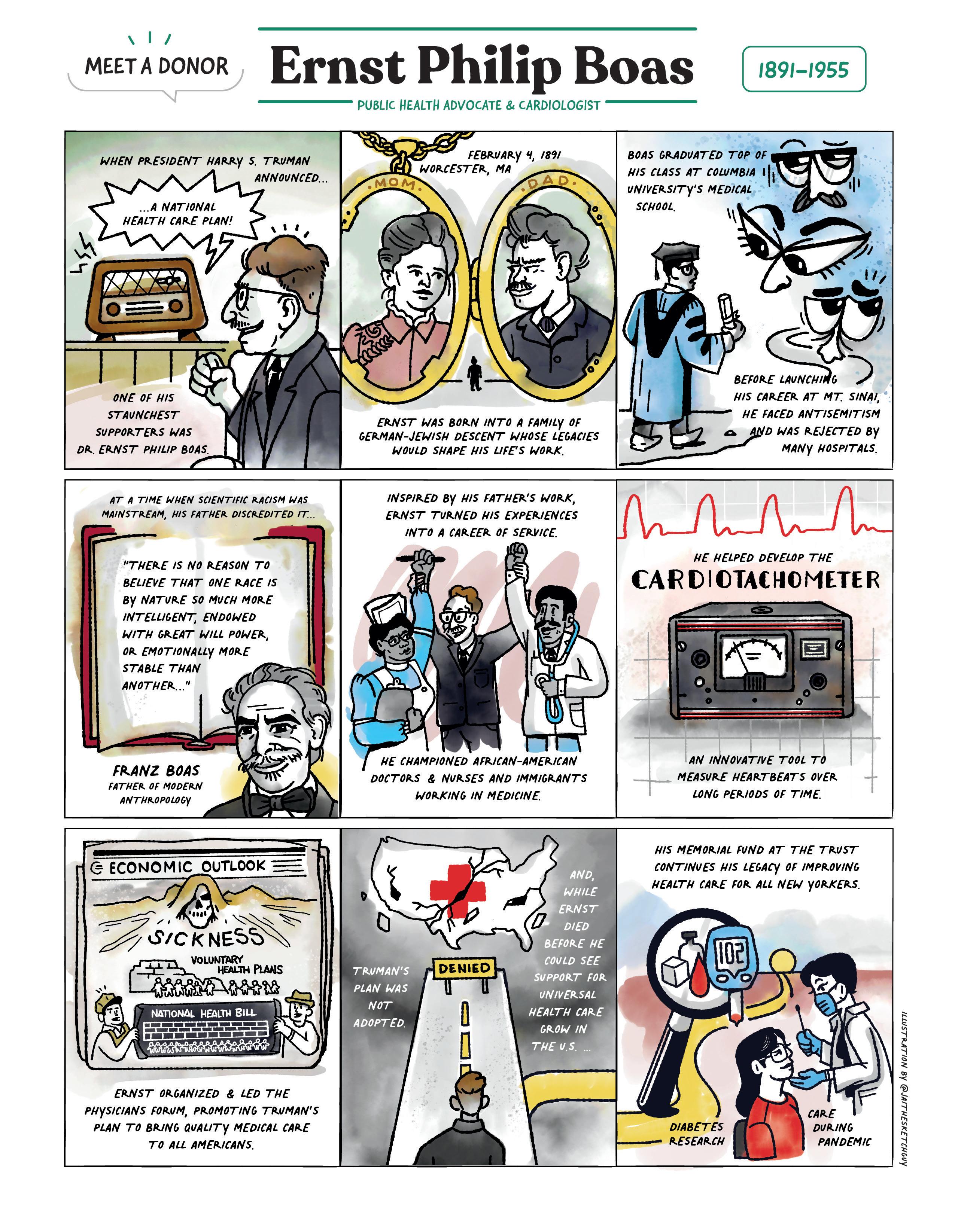
Donor Comic: A doctor who fought for universal health care Long Island: Unitarian Universalists fund grasstoots action page 15 page 8 WESTCHESTER SPOTLIGHT: Healing Across Generations page 3
OUR VISION
Equitable and thriving communities throughout New York City, Long Island, and Westchester.
OUR MISSION
As New York’s community foundation, we foster and engage in enduring and innovative philanthropy.
We’d like to hear from you.
Please contact us with questions or comments: (212) 686-0010 or info@thenytrust.org.
Inspired by what you read here?
Join us. Make a difference. Give to the nonprofits in these pages directly or through your fund at The Trust.
Showing Up for Our Community
President Amy Freitag and Board Chair Jamie Drake joined other community foundation leaders in Washington, D.C., in February for the annual Larger Community Foundations Conference, centered on the theme “New Strategies for a Changed Landscape.” Freitag moderated a conversation with Heather Gerken, president of the Ford Foundation.
Program Director for Community Development & Housing and Jobs & Workforce Development
Chantella Mitchell was appointed by Mayor Mamdani to chair the New York City Rent Guidelines Board. She is carrying out this volunteer role in her personal capacity, independent of her work at The Trust. We are proud of and grateful for her service to the city.
Vice President for Programs and Grants Irfan Hasan is one of Crain’s 2026 Notable Leaders in Health Care. Throughout his Trust tenure, Irfan has made close to 1,100 grants totaling more than $115 million to ensure New York has an equitable, patientfocused, and cost-effective health and behavioral health care system.
Vice President of Development Mike Nuno chaired AdNet’s annual conference in Phoenix, Arizona, in March. Executive Vice President and Chief Philanthropic Officer Rebecca Mandelman, Senior Marketing Director Amy Wolf, and Development Strategy Manager Emma Budd presented.
Staff Recommendations
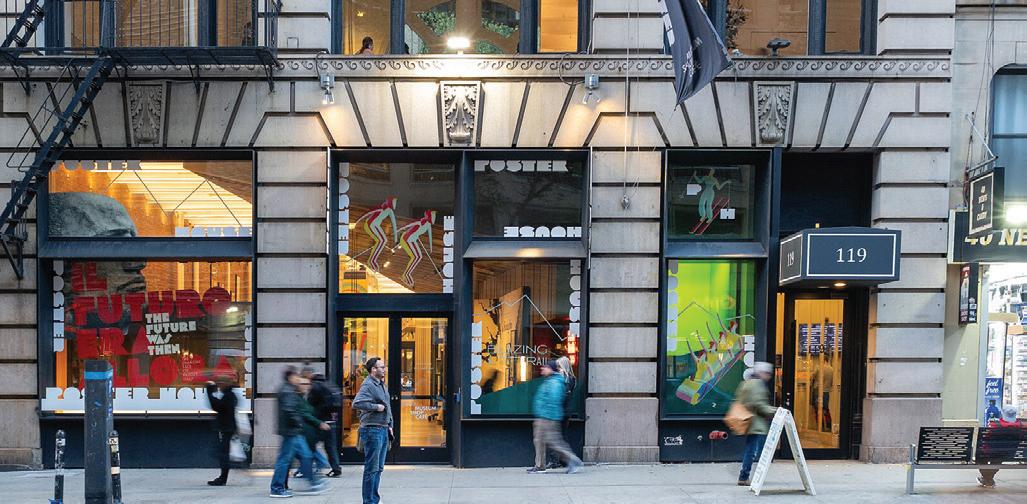
Program Associate Chiara Ricisak recommends Poster House: “This great (and manageably sized) Chelsea museum explores a wide variety of social, cultural, and political topics via an underappreciated medium—eye-catching posters! Check out its current exhibits, ‘Act Black: Posters from Black American Stage & Screen,’ and ‘Love & Fury: New York’s Fight Against AIDS,’ which highlights The Trust’s historic role through its New York City AIDS Fund in responding to the HIV/AIDS crisis.”
An Unexpected Partnership Brings Intergenerational Healing
“My first time in the homeland was amazing,” said Shawn Stevens. “I felt the spirit of the land, the spirit of our ancestors, resonating everywhere.”
Stevens is a Tribal Elder of the StockbridgeMunsee Band of Mohican Indians, a federally recognized Nation representing the diaspora of Lenape and Mohican people who were forcibly removed from their land by European colonists and, later, the U.S. government.
Lenape and Mohican ancestral lands stretch across the Hudson, Housatonic, and Delaware River valleys in present-day New York, New Jersey, Pennsylvania, Massachusetts, Vermont, and Connecticut.
Today, the Nation’s young people rarely travel beyond the boundaries of their reservation in
Shawano County, Wisconsin, where the impacts of centuries of colonial violence and discriminatory government policies have been passed down through generations and continue to affect daily life.
Some Tribal Elders have firsthand experience with these injustices. Until the 1970s, the federal government forcibly placed many Native American children in harmful boarding schools, some of which were run by the Catholic Church, intended to strip Indigenous children of their culture and traditions.
“I’ve done a lot of work reclaiming language and culture and trying to heal intergenerational trauma,” said Stevens, who, with his sister Wanonah Kosbab, leads the nonprofit Red Road Reclamation. “It was a revelation, when I realized how much it
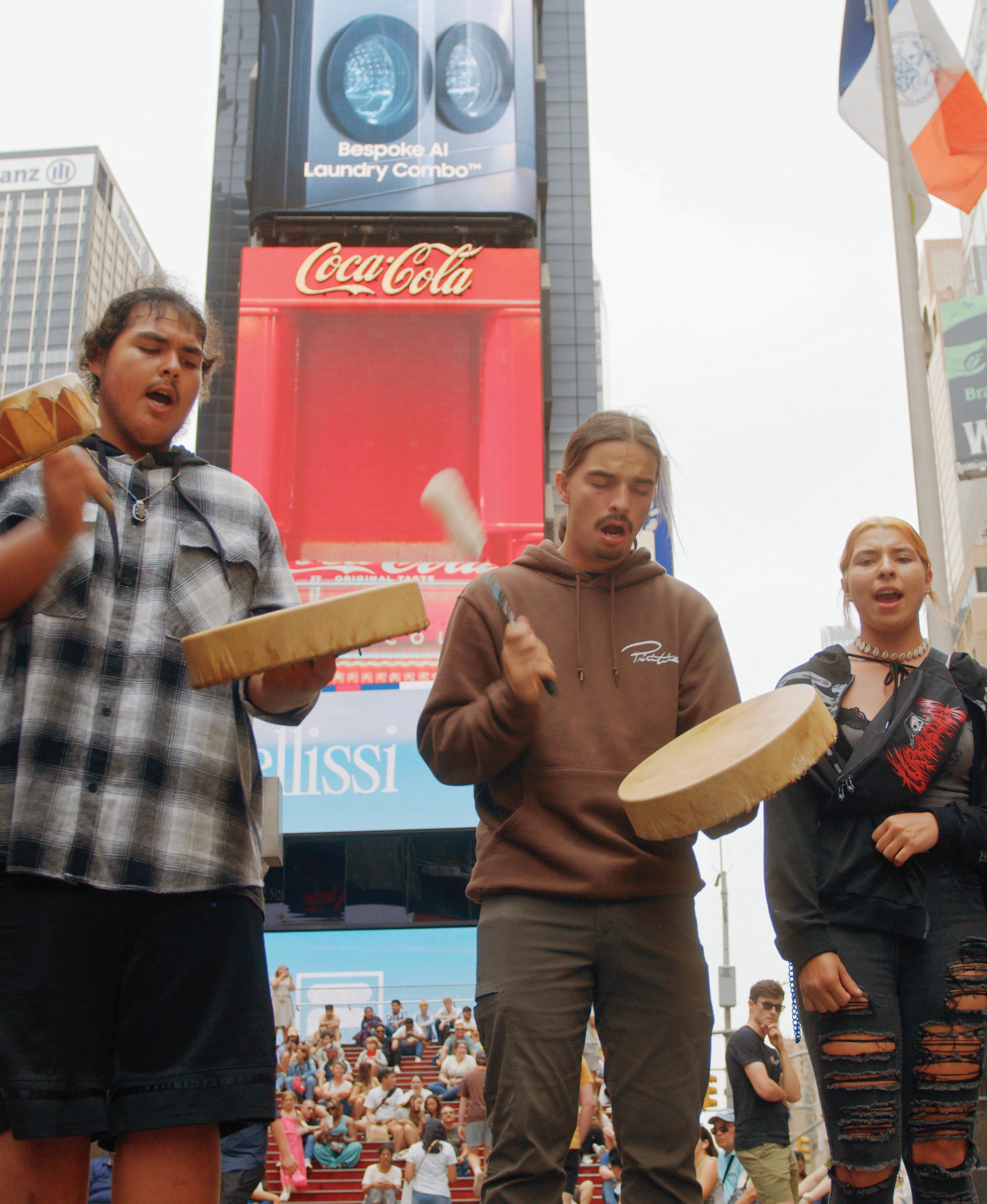
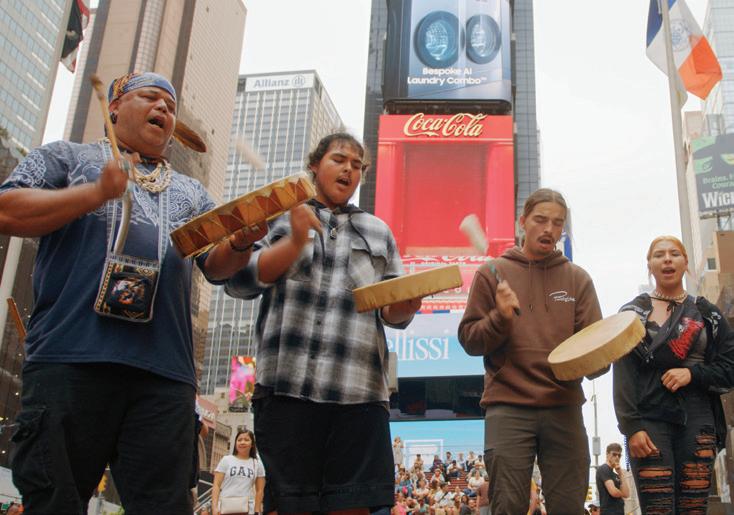
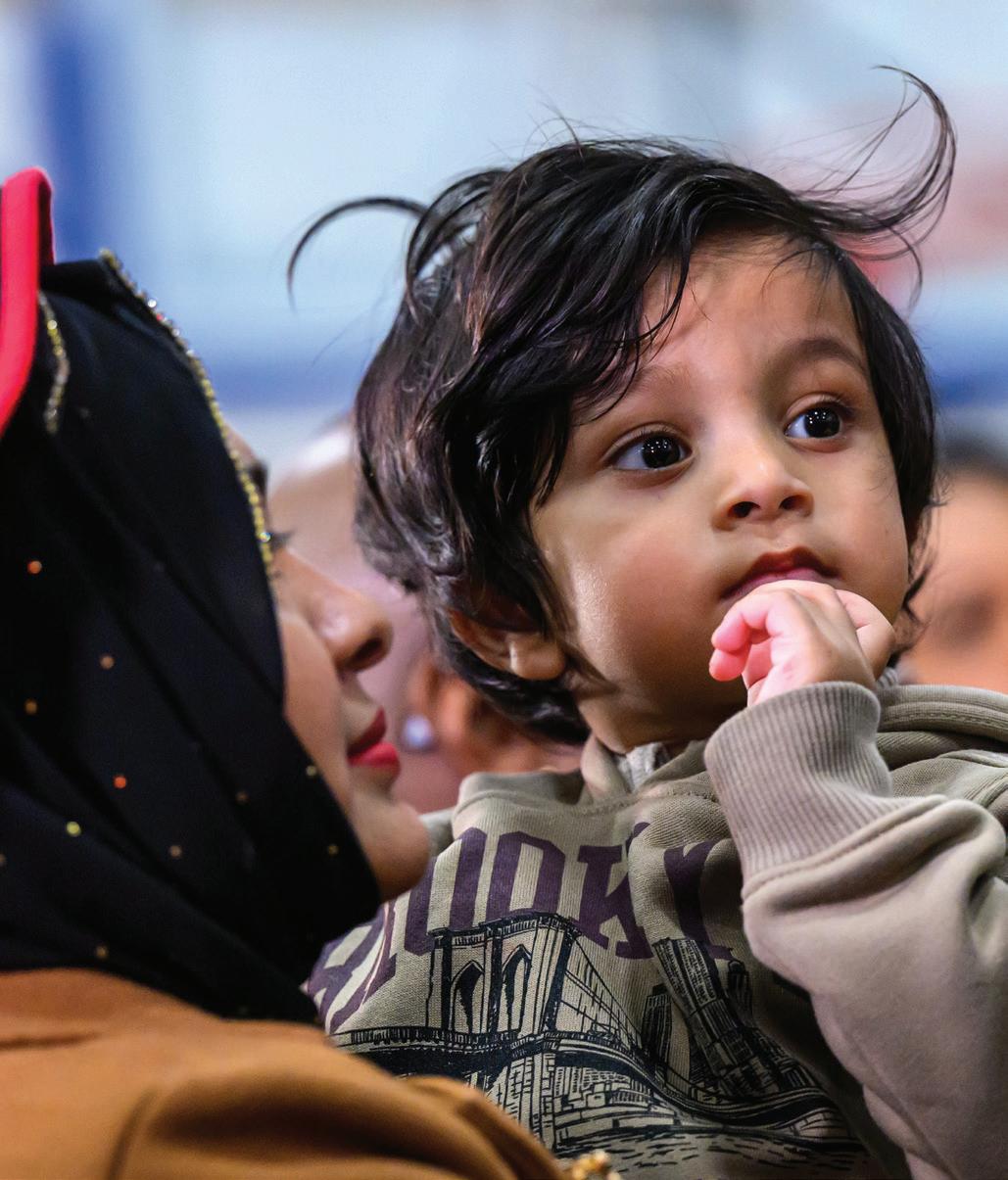
ON THE COVER: Young people from the Stockbridge-Munsee Band of Mohicans lead a drum circle on their ancestral Lenape homeland in Times Square. Photo by Joe Plante.
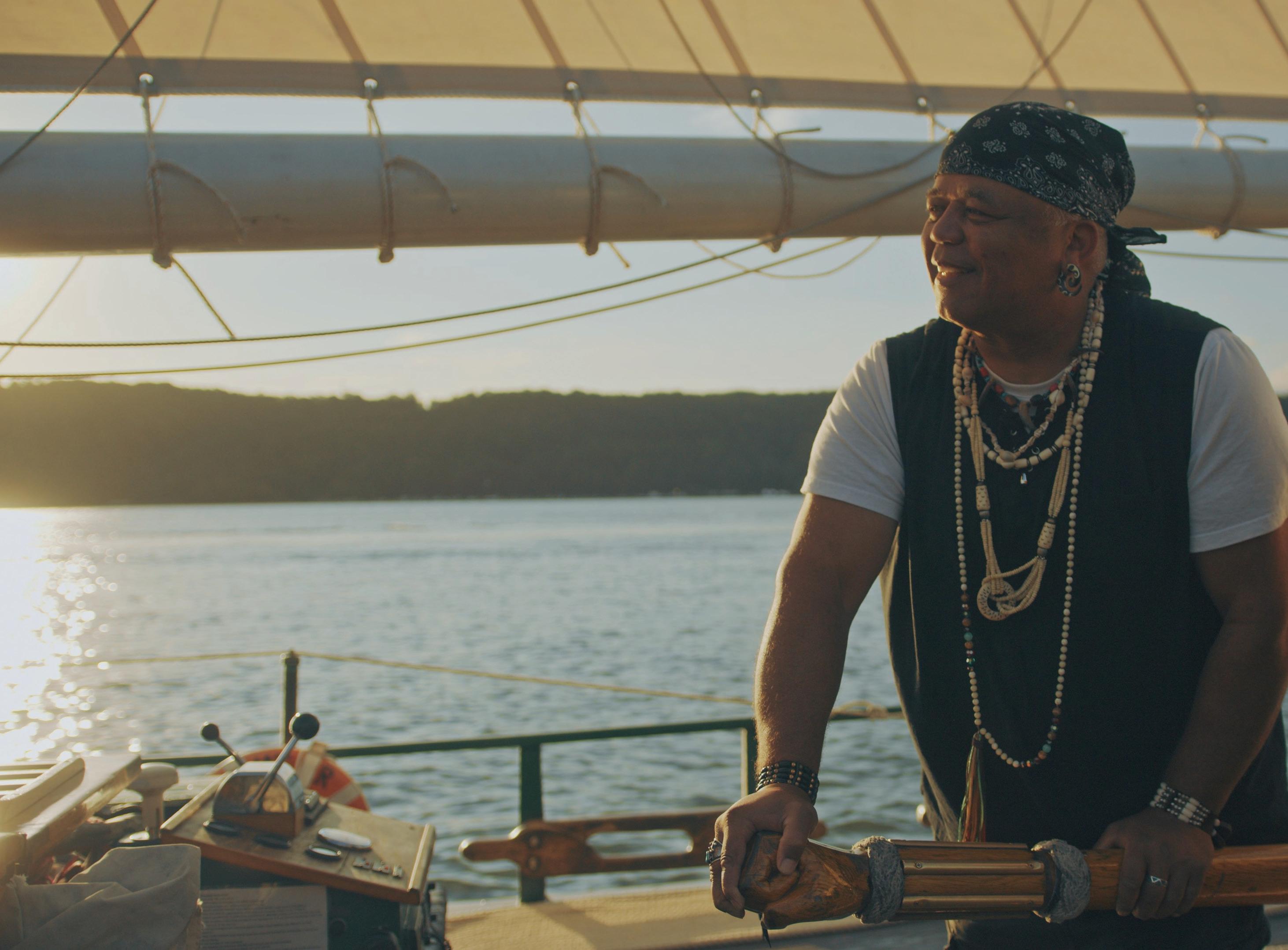
Shawn Stevens accompanies Lenape young people for a sail on the Muhheakantuck, or “river that flows both ways,” known today as the Hudson River.
Photo by Joe Plante.
Poster House, photo by Ajay Suresh.
affects us all.”
As Stevens’ trips between Wisconsin and his ancestral homelands became more frequent, he grew determined to find a way to invite young people from his reservation to make the same journey.
The opportunity came from an unlikely alliance. In 2023, the Dominican Sisters of Hope’s Land Justice Team, in partnership with the nonprofit Land Justice Futures, invited Stevens to present at their three-day retreat.
Founded in 1995, the Dominican Sisters of Hope is a congregation of more than 80 Catholic nuns dedicated to social justice. Its offices at the Center at Mariandale in Ossining, New York, are situated on 61 acres of Lenape ancestral land on the banks of the Hudson River.
“Knowing there were people here who have such a deep kinship with all of creation, and how they were displaced from the land that we now happily occupy—it’s a source of shame,” said Sister Lorelle Elcock. “You feel a responsibility.”
For several years, the Sisters had been learning
“I saw a transformation in the young people over the course of the immersion, a growing confidence. It’s a pure gift to see that.”
— Sister Patricia Magee Dominican Sisters of Hope
about land justice. In addition to protecting and regenerating the land ecologically, the movement seeks repair for historic injustices to Native Americans and enslaved people.
“It opened up our consciousness,” said Sister Patricia Magee. “We’ve been stewards of this beautiful land, and we have questions as we plan for our future. What will the future of this land be?”
At the retreat, Stevens presented on Native American history and culture and shared traditional music and ceremonies.
“The Sisters were just the kindest people. They were very welcoming,” Stevens said. “When I explained about the mission schools and how that
trauma, and before that, the genocidal trauma, affected us, it was very powerful. They knew they couldn’t change the past, but they wanted to help heal.”
The Trust’s Westchester Vice President Laura Rossi and Program Director Lauren Perkins attended the retreat, and the Sisters invited them into a conversation with Stevens that sparked a life-changing partnership.
“Shawn Stevens and the Sisters wanted to explore ways to create healing experiences connected to the land,” said Perkins. “This led Laura and me to consider how we could support inviting Lenape young people to spend time on their ancestral lands in Westchester. We realized the project Shawn described was a perfect match for a fund established through the estate of Harry Mortimer, a longtime New Rochelle resident.”
With grants from The Trust’s Mortimer Fund for Native American Children, Stevens and Kosbab created a program that brings young people from their reservation to Mariandale for 10-day cultural and leadership immersions centered
on intergenerational healing and connection to ancestral land. The Dominican Sisters of Hope host the immersions and also participate.
“I was a little anxious at first, not wanting to intrude on what was planned for them. What we learned is that they want to be more in dialogue with us,” said Sister Lorelle. “They want to hear our stories, just as we want to hear theirs. I think that’s been beautiful.”
For Stevens and Kosbab, the immersions are also an opportunity to share moments of Spirit and ceremony and traditional teachings with young people, who often remain isolated on the reservation.
“We believed we could empower our youth,” Kosbab said. “The programming came from Shawn and me discussing what had helped keep us from drugs and alcohol, what helped us walk the Red Road (a metaphor for living a spiritual way of life) when others were struggling.”
Activities include learning to lead traditional ceremonies and visiting culturally significant sites. The young people have visited the Shinnecock Kelp Farmers on Long Island, studied ecosystem preservation and restoration efforts with Riverkeeper along the Hudson, and visited Manhattan, where they initiated a drum circle in the heart of Times Square.
The program at Mariandale continues to grow. This summer, it will include Lenape youth from tribes across the diaspora in the U.S. and First Nations communities in Canada.
Kosbab and Stevens said participants are carrying the immersion experience back to the reservation, serving as youth leaders and peer mentors, pursuing studies in environmental science, and leading gatherings such as artistry jams and open mics focused on culture and community.
“I saw a transformation in the young people over the course of the immersion, a growing confidence,” said Sister Pat. “It’s a pure gift to see that. By the closing circle, they have found their voice. That’s what you want for everyone.” n
Read more online!
Scan the QR code to read firstperson accounts from Wanonah Kosbab and Shawn Stevens and watch short documentary videos about the immersions.
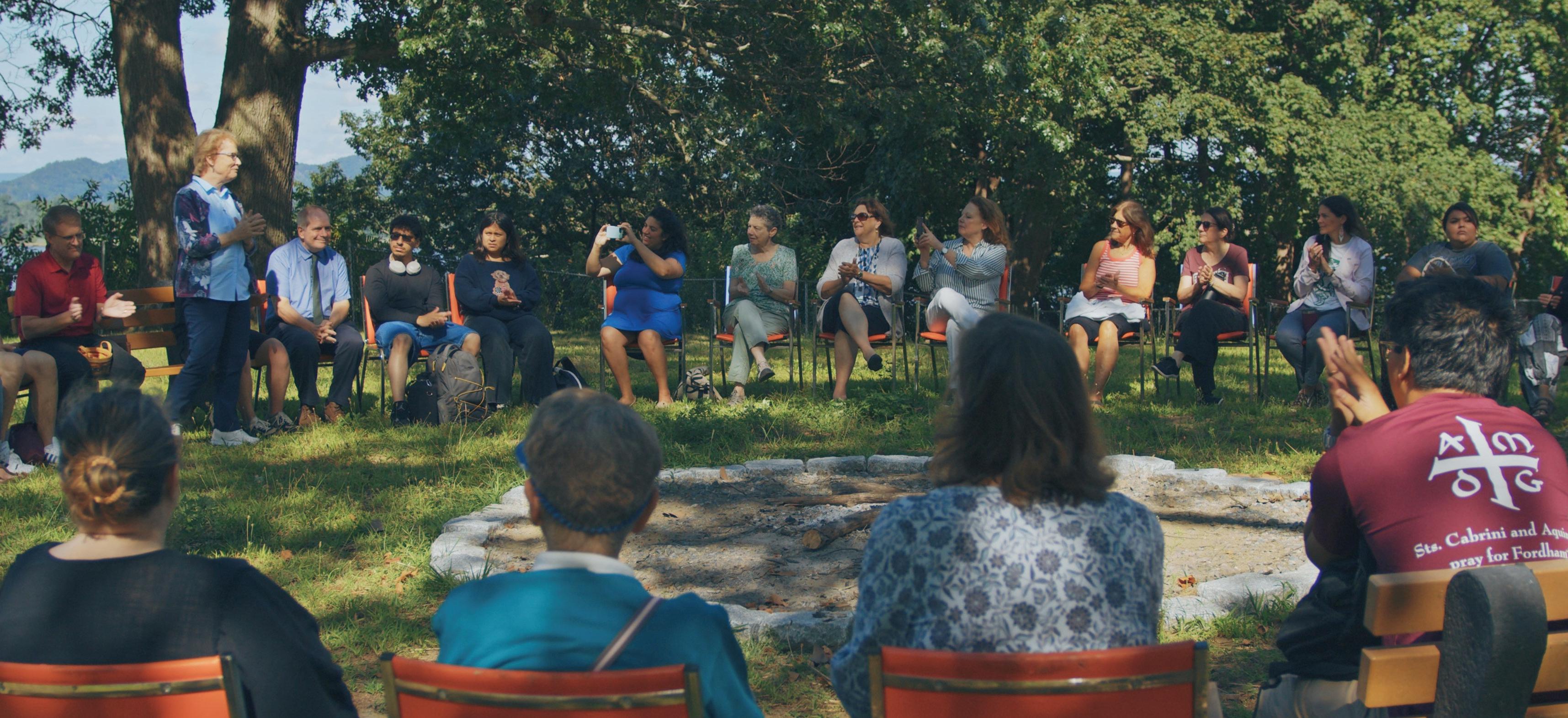
At left, Lenape young people, Tribal Elders, and members of the Dominican Sisters of Hope participate in a healing circle during an immersion at the Center at Mariandale in Ossining, New York. Photo by Joe Plante.
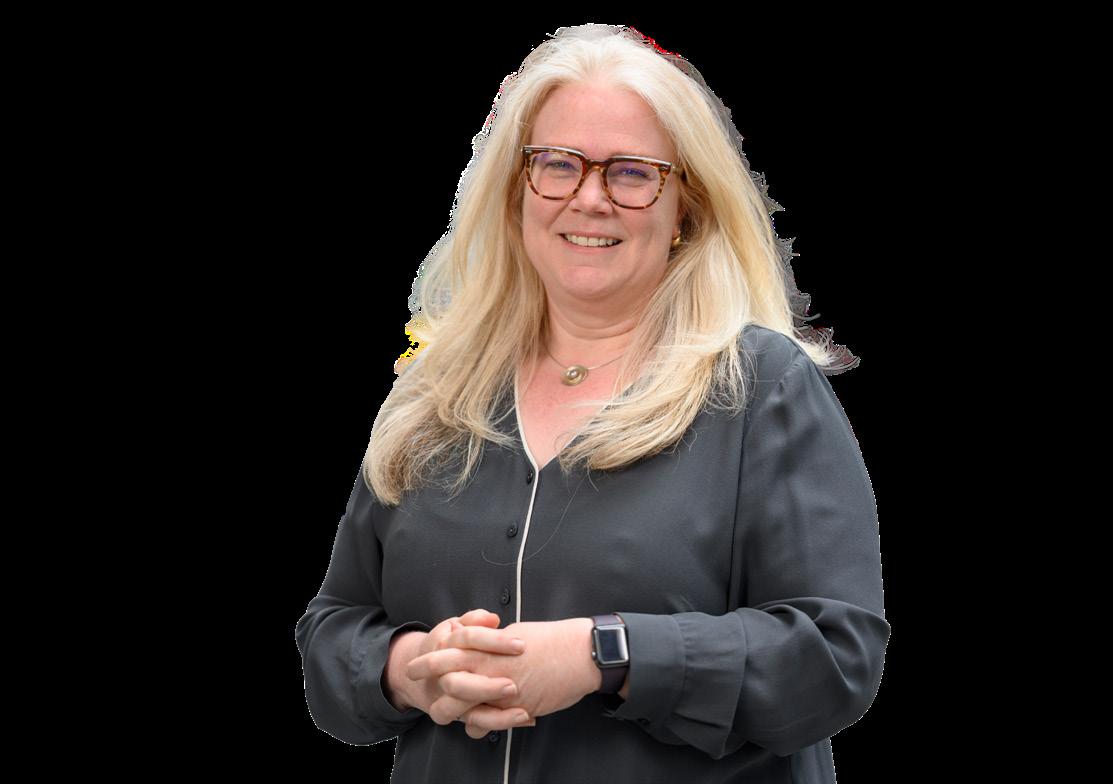
Shawn Morehead Chief Program Officer
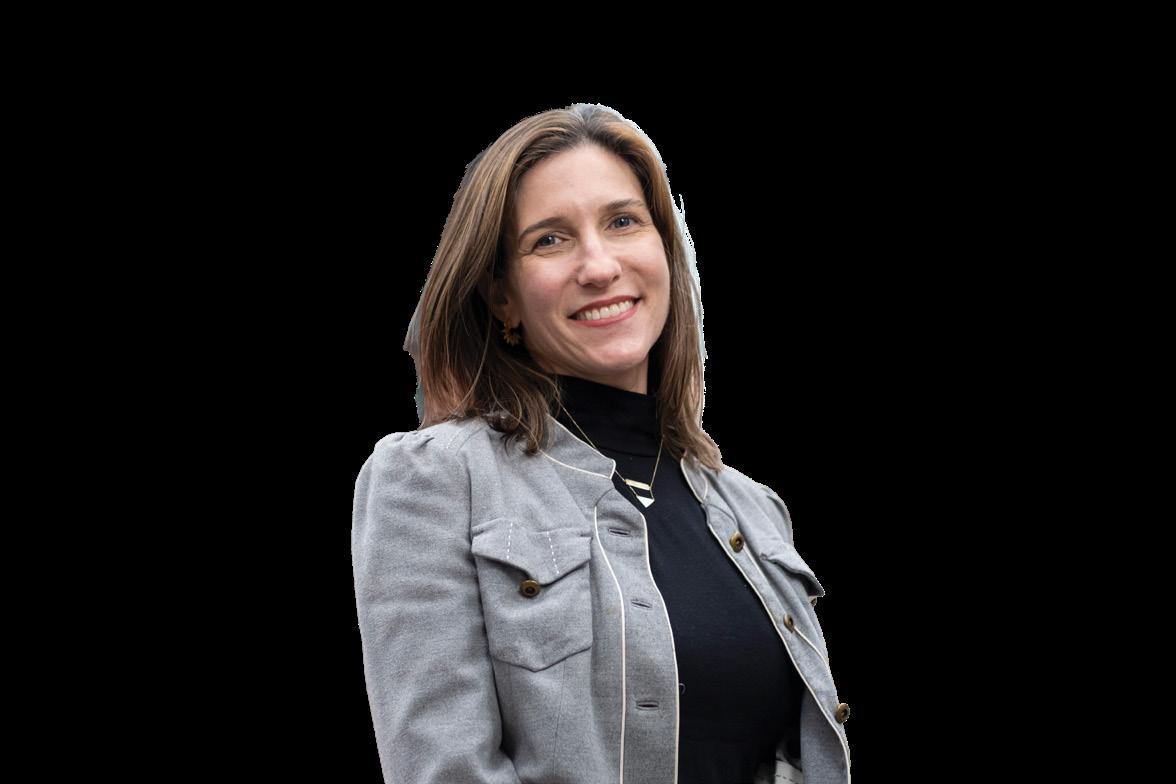
To Champion Bold Visions, We’re Listening to Nonprofits
magine a New York where exhaustion is the exception instead of the rule.
Everyone has time to pursue their passions, incomes meet the cost of living, public transit works for all, and caring for your family doesn’t break the bank. It’s a tall order for a city where one in four of us lives below the poverty line and so many struggle to pay bills while juggling work, child care, and difficult commutes.
The
From the Desks of ...
But this is the vision The Trust’s community advisors asked us to put our money behind. We assembled these advisors in 2025 by asking 10 of our grantees to each recommend one of their clients or members. The result was a group of New Yorkers—including community organizers, artists, journalists, and a city employee— who reflect the diversity and dedication that drive progress in our region.
Our first meeting with this
boldest and most effective approaches to building a more equitable region
have come from listening to local communities and the nonprofits that represent them.”
People Power Is the Secret to Our
Success
WRebecca Mandelman Chief Philanthropic Officer
hen I joined The Trust in January 2024, I was energized by the opportunity to connect with a community of donors whose passion and generosity are reshaping what is possible for New York.
It didn’t take long for me to witness that passion and generosity in action.
During my first year at The Trust, legacy funds created by donors over the past century, and donor-advised funds that current donors use to recommend grants, helped bring New Yorkers cleaner water and air, improved literacy education, better access
group took place shortly after The Trust released our five-year strategic plan, which focuses, in part, on making it easier for nonprofits to work with us and inviting more community voices into our grantmaking. These voices, in turn, can help guide another key goal: moving more resources and power to communities that have historically been denied both.
Throughout my 15 years as a Trust grantmaker, the boldest and most effective approaches to building a more equitable region have come from listening to local communities and the nonprofits that represent them.
We’ve resourced parents who advocate for a more just and equitable child welfare system. Our grants have helped amplify the calls of formerly incarcerated New Yorkers organizing to reduce incarceration. And we’ve
Shawn Morehead Chief Program Officer helped public housing residents push for needed repairs.
In addition to bringing more community voices into our grantmaking, we’re taking steps to make our grantmaking program more transparent and less burdensome for nonprofits—from the application process to the final reports.
In 2025, we introduced virtual Q&A sessions, open to all nonprofits, where our grantmakers meet with prospective grantees. During these conversations, we provide information on our eligibility criteria and funding priorities, and attendees can share feedback and updates.
As nonprofits gain the tools to develop stronger proposals, our grantmakers are able to bring the perspectives of nonprofit staff
back to our internal conversations about building a more equitable region.
We recently participated in a nonprofit forum with Queens Borough President Donovan Richards, where we connected with over a hundred of the borough’s nonprofits and shared information about our work, history, and grant application process. This year, we will do the same on Staten Island, and we’re continuing to prioritize efforts like these to share our funding opportunities with more organizations.
Because if anything can help us reach the bold vision of our community advisors, which you’ll see reflected in our grantmaking throughout the year, it’s a nonprofit sector that’s empowered and heard. n
to mental health care, and much more.
After a government shutdown froze SNAP benefits last November, Trust donors didn’t hesitate to show up for their neighbors. Within days, they helped us grant over $1.7 million to local nonprofits responding to the crisis. Today, they are rallying behind our urgent efforts to support immigrants on Long Island and civic engagement in Westchester. They are also donating record amounts to our Community Needs Fund, to help us address our region’s rapidly evolving challenges. What all of these efforts share
is the power of collective action— donors partnering with us and with each other to strengthen the region we call home.
We’re proud that for more than 100 years, people from all walks of life have chosen The Trust as their charitable partner.” “
Creating more pathways for this kind of partnership is a cornerstone of our new five-year strategic plan, which is grounded in welcoming more community members into our work and strengthening relationships to effect meaningful change throughout our region.
Part of this involves upgrading our technology, including
improvements to our online grantmaking portal, to ensure donors can give more easily and joyfully to make the impact they envision. At the same time, we’re creating more opportunities to engage in person, including through our role as a charitable matchmaker—where our donors can connect with our issue-area and philanthropic expertise.
Last fall, we invited donors interested in innovative climate solutions to join us for a tour of GrowNYC’s urban farm on Governors Island, followed by a panel discussion with nonprofit leaders and Trust staff. In addition to grantee visits, we’re hosting more donor exchanges, discussions with our grantmakers, and personalized sessions with our philanthropic advisors.
As needs grow throughout our region, we’re also focused on
another core tenet of our strategic plan: growing our community of generous New Yorkers. We’re proud that for more than 100 years, people from all walks of life have chosen The Trust as their charitable partner.
For DeWitt and Lila Acheson Wallace, the founders of Reader’s Digest, this meant setting up funds at The Trust that would support our region in perpetuity. For a young Con Edison worker who started a donor-advised fund with just a small amount to invest, it meant honoring her brother’s memory with every grant she recommended.
As we continue to grow, I look forward to deepening existing relationships, discovering new ways to collaborate, and welcoming more donors. Together, we can create brighter futures across the region. n
Where Change Takes Root: Our Long Island Unitarian Universalist Fund
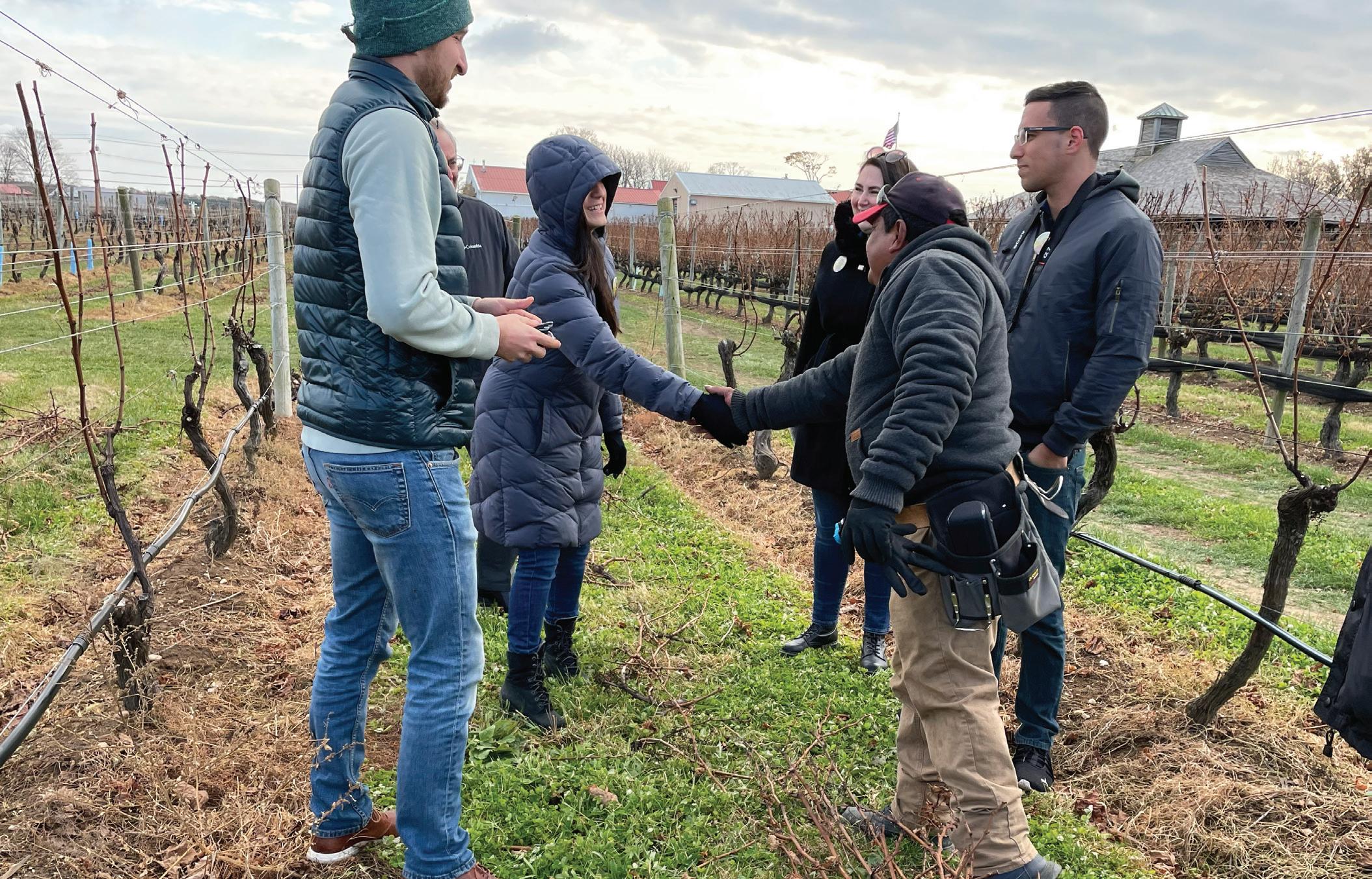
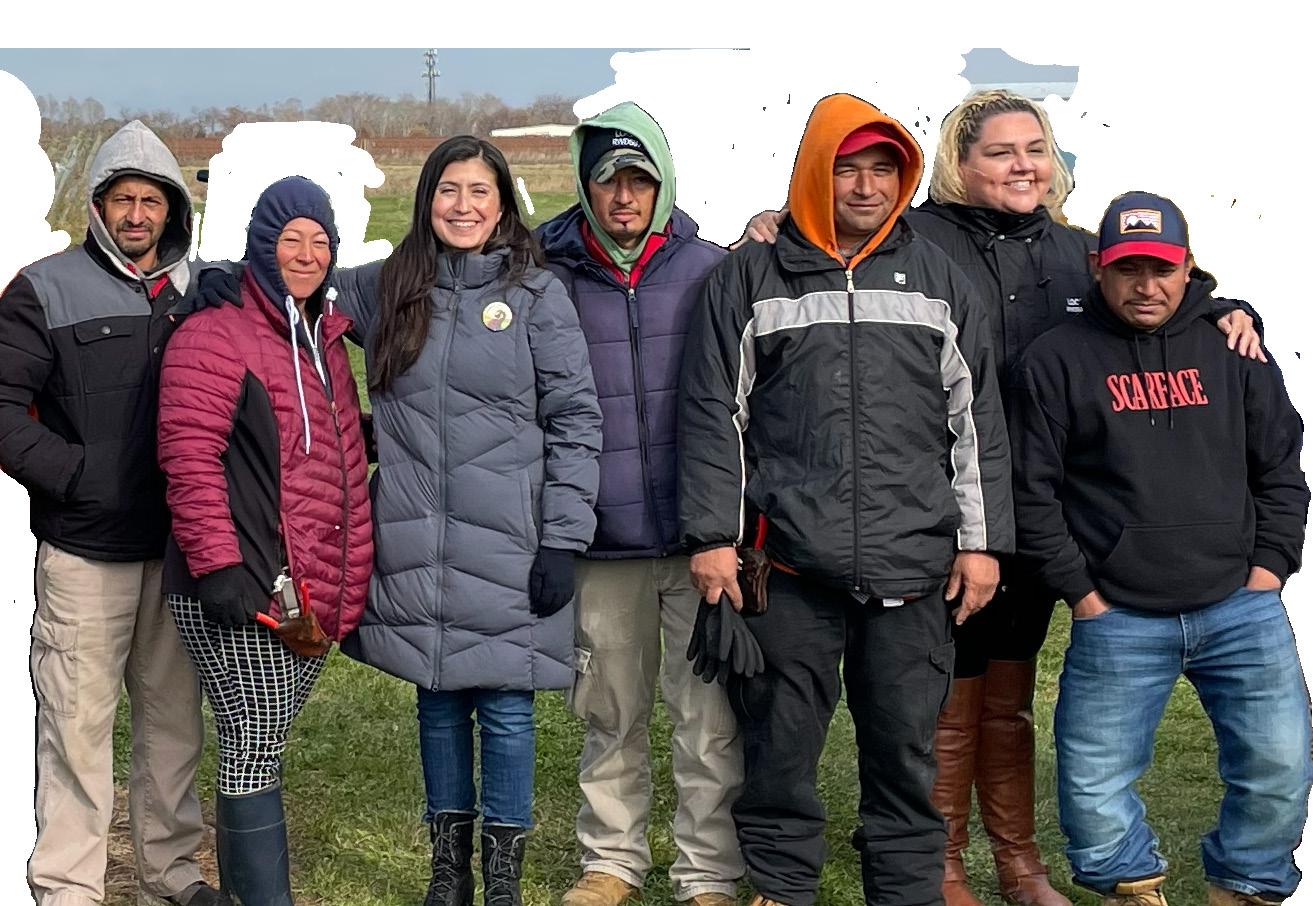
Before January 2020, farmworkers throughout New York State did not have the legal protections required in other sectors, including guaranteed time off, the right to organize, and overtime pay. Winning these rights took years of advocacy— work that, on Long Island, began on farms.
For years, advocates across the state pushed for change through the Justice for Farmworkers Campaign. With sustained support from The Trust’s Long Island Unitarian
Universalist Fund, Long Island nonprofit Rural & Migrant Ministry (RMM) helped drive that effort, visiting farms to help workers organize.
“We went farm to farm, building relationships and learning what people needed,” said Jennifer Brown, RMM’s foundation relations director.
Early legislative wins included access to clean drinking water, toilets, and hand-washing stations in the fields. Then, in 2019, the Campaign helped pass New York’s Farm Laborers Fair Labor Practices Act,
Program at Shelter Rock, our Long Island Unitarian Universalist Fund supports grassroots nonprofits whose work aligns with the religion’s core values: love, equity, generosity, transformation, justice, pluralism, and interdependence.
Members of Unitarian Universalist congregations from across the Island make up an advisory committee to ensure these values guide the Fund’s grantmaking. The Trust awards $355,000 in grants from the Fund each year to grassroots organizations.
“We look for organizations that are really making an impact in the community where they are located,” said Jim Monnier, a member of the Fund’s advisory committee. “This includes embracing trust-based philanthropy, where we follow the expertise of community members directly affected by the issues and leading movements for change.”
Riverhead Correctional Facility. It has since helped thousands of incarcerated and formerly incarcerated women and their families build stable lives in their communities.
Rural & Migrant Ministry has used recent grants from the Fund to expand its local organizing and youth development work.
When community members in Riverhead raised concerns about challenges they faced registering their children in the local school, receiving school communications in their native language, and more, RMM offered a space for families to discuss their experiences and explore solutions together.
create lasting solutions,” said Juana Cortes de Torres, director of RMM’s Immigrant Legal Rights Project.
The nonprofit’s focus on building trust and strong relationships has been a key to its success.
“After years of continuous work to earn the Riverhead community’s trust, we know people feel safe coming to us to connect with support and work together to create change,” said Noemi Sanchez, RMM’s Long Island regional coordinator.
guaranteeing farmworkers overtime pay, a day of rest each week, disability and family leave, unemployment benefits, and other protections.
“The Long Island Unitarian Universalist Fund supported this campaign for multiple years, and it would have been very difficult to succeed without sustained support,” Brown said. “Our goal is systemic change—justice, equity, and empowerment— things that cannot be achieved within a single year.”
Established in 1993 by the Unitarian Universalist Veatch
The Fund seeks out nonprofits that reflect the communities they serve, like longtime grantee ERASE Racism, which provides leadership training to high school students interested in creating change in their schools and beyond. The nonprofit also advocates for policies that address racial disparities and foster equity and inclusion.
Grants from the Fund often help new organizations take root by providing early support. This seed funding has helped groups like SEPA Mujer and Gender Equality New York grow into established nonprofits providing critical support across Long Island, including through youth development initiatives and legislative victories.
New Hour for Women and Children received early Fund support after it started in 2013 as a small group of volunteers mentoring women at the
Their weekly conversations evolved into a group of parents and RMM staff members who partnered with legal service providers to ensure the school district was in compliance with the New York State Language Access Law, and the establishment of a Community Involvement and Language Access Committee composed of Riverhead school board members and parents.
“That committee is an example of how community voices can
More recently, the Long Island Unitarian Universalist Fund has responded to the needs of grassroots organizations by simplifying its application process and offering general operating support to grantees it has worked with for three or more years.
“We say to the groups, ‘Tell us what you need, tell us what the issues are in your community, and just as importantly, what is your plan to address them?’” Monnier said. “The most meaningful part for me is to see an organization go from an idea, to a functioning nonprofit, to outgrowing us.” n
Rural & Migrant Ministry and Retail, Wholesale and Department Store Union staff visit farmworkers on the East End of Long Island in 2021 to talk about their new rights under the Farm Laborers Fair Labor Practices Act. Photo courtesy of Rural & Migrant Ministry.
Farmworkers won protections like guaranteed time off and the right to organize under the Farm Laborers Fair Labor Practices Act. Photo courtesy of Rural & Migrant Ministry.
To Curb Loneliness, Making Connections for Older Adults
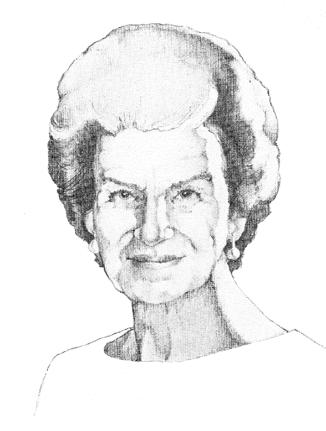
After her husband died, Katharine Park grew lonely. But she knew she was not alone. She dedicated her later years to addressing isolation among older New Yorkers. In her will, she established a fund at The Trust that continues her legacy of care. Katharine's fund supports the grants featured in this article.
Syou finish that essay?’ ‘Have you heard back?’ She was right alongside me every step of the way.”
In 2023, the U.S. surgeon general declared social isolation and loneliness a national epidemic, with older adults and young people most at risk. Both conditions are associated with a host of health concerns, including heart disease, anxiety, depression, and dementia.
homes and hospitals for as long as possible.”
Salas returned to Search and Care after college as a paid technology coach. In addition to seeing her steady roster of clients, she provides training in MyChart and telehealth services to patients at Mt. Sinai Hospital.
“We get our clients involved in their own care to allow them to be as independent as they can be,” said Esther Henderson, who also got her start with the nonprofit as a high school student, working as a “teen shopper” in 1990.
Henderson quickly discovered her talent for listening to clients and earning their trust. Today, she works with the nonprofit as a care manager.
“In many cases, we are as close to family as somebody has,” Rooney said. “We take that role very seriously and really strive to live up to it.”
A SPACE FOR COMMUNITY, CREATIVITY, AND VOLUNTEER OPPORTUNITIES
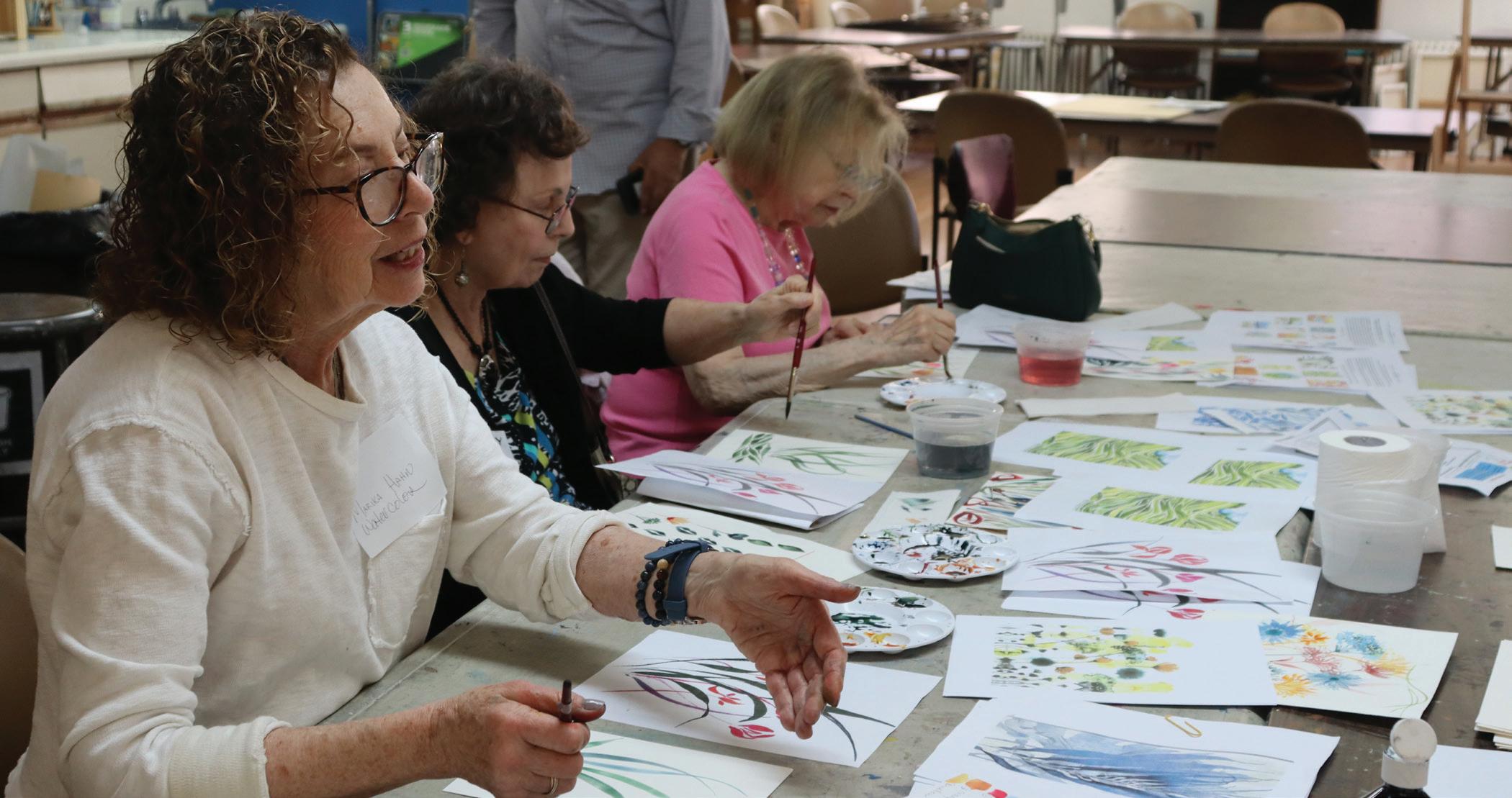
Nine years ago, Audrey Melkin told a friend at her synagogue that she wanted to enroll in art classes in retirement but was worried she’d feel intimidated.
Her friend told her about Council House, home to the National Council of Jewish Women New York (NCJW NY) on the Upper West Side.
NCJW NY is a 130-year-old organization guided by progressive Jewish values. It combines direct services with advocacy to advance social justice for historically excluded and under-resourced New Yorkers.
A robust volunteer network supports its programs, which include literacy coaching for grade-schoolers, enrichment classes for older adults, a food pantry and community kitchen, its “Back 2 School Store” where kids shop for free, and more.
Every December and May, the nonprofit hosts an arts fair where participants can exhibit and sell artwork and enjoy special programs, which last year included Drag Bingo.
“I hear from people that when they retire, they experience more depression and loneliness. As people age, their core group often gets smaller,” said Program Coordinator Debbie Aronson. “This is a place where they can create that community they’re missing.”
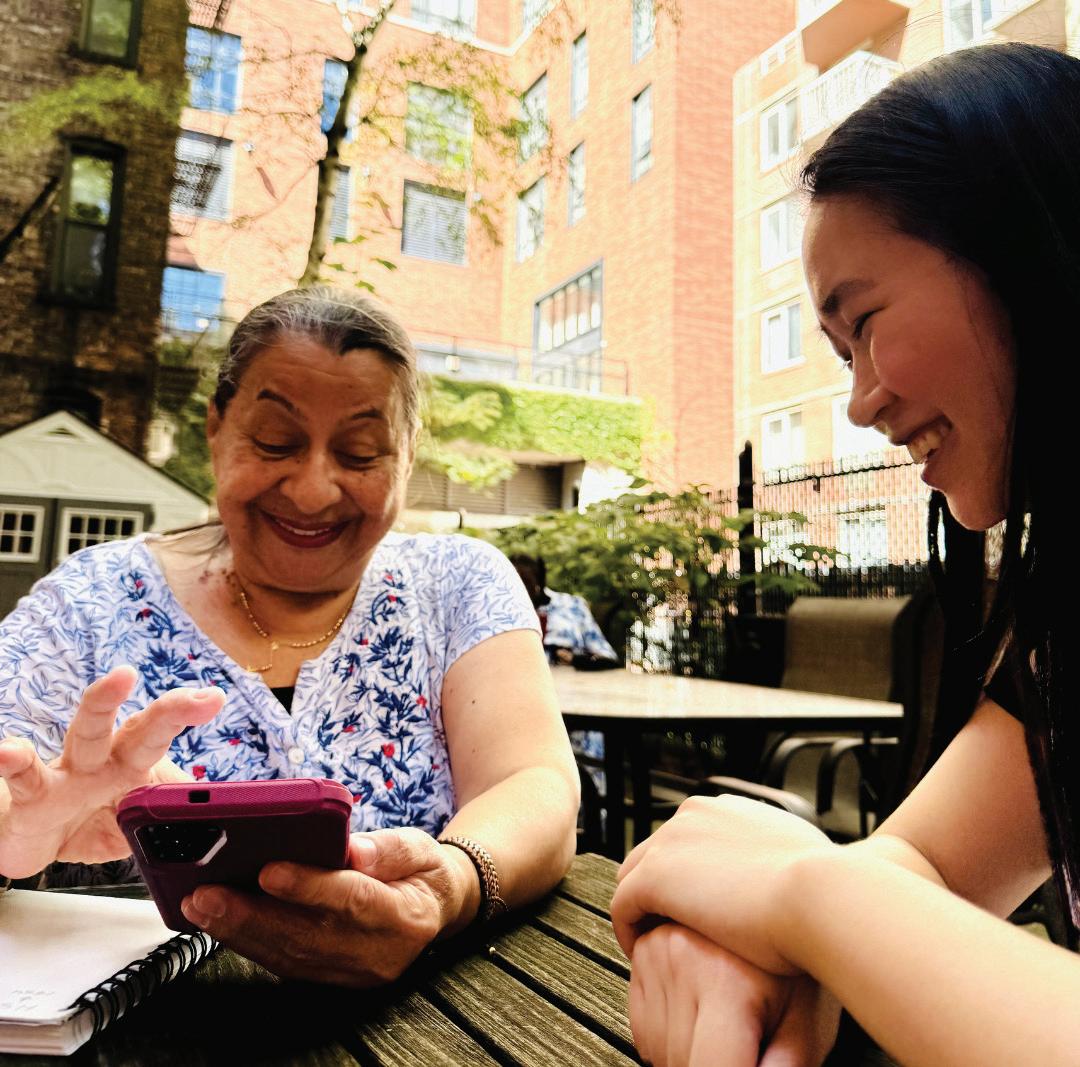
abrina Salas was in high school when she volunteered as a technology coach for older adults at Search and Care, a nonprofit in upper Manhattan. She was paired with a woman eager to learn how to use Facebook to keep up with her family overseas. Salas visited her at home once a week.
We get our clients involved in their own care to allow them to be as independent as they can be.”
— Esther Henderson Search and Care “
“I quickly realized that a big part of our sessions was about us getting to know each other,” Salas said. “I was applying for college, and she would ask for an update each week: ‘Did
Many of Search and Care’s more than 1,400 clients live alone, often in walk-ups; lack family support; and have mobility challenges that make it hard to leave home— increasing their risk of isolation. A grant from The Trust is helping the nonprofit expand its services, which are free and range from counseling and medical escorts to pet care and emergency planning.
“Everything we do is designed to keep people safe and connected at home,” said Executive Director Aaron Rooney. “We help people thrive in their later years, in their own homes, and out of nursing
A Trust grant is helping NCJW NY address social isolation among older adults by expanding the reach of classes and events offered through its Council Lifetime Learning program. Participants often take advantage of multiple classes and services.
“We let people know when they come to Council House for classes, that they can do more than just learn new skills,” said Director of Community Programs Okwuchi Tracey Onyeuche. “We offer a welcoming and comfortable space, where people can connect with others and support one another, while building on their strengths and interests.”
Melkin found the art classes eased her transition into retirement and helped her expand her social circles.
“There are two groups I’m now a part of: the stained-glass community and the pastels community,” she said. “It’s a new set of friends.”
Melkin also volunteers for NCJW NY’s Back 2 School Store and as an ambassador for its programs.
“When I tell people about the classes, I let them know they’re very non-intimidating, and we can all have different goals,” she said. “For some, it’s really important to improve their skills. I gradually realized that my main goal was to have fun making art, and to be supported.” n
New Yorkers participate in a watercolor class at the National Council of Jewish Women New York’s Council Lifetime Learning Program. Photo courtesy of grantee.
Participants in Search and Care’s Silver Circles technology coaching program attend a tech-centered event at the nonprofit’s office on 94th Street in Manhattan. Photo by Jenn Zaratan.
Katharine Park
Decades of Building Brighter Futures in the Bronx
What’s the greenest borough in New York City?
Hint: It’s also where DJ Kool Herc created the first hip-hop beats, Reggie Jackson crushed three consecutive home runs in the 1977 World Series, and salsa music sparked a powerful social movement.
Alongside its rich cultural history and abundant green space, the Bronx is home to the city’s highest poverty rates, underfunded schools, and myriad public health issues. By pooling resources from our donors, The Trust has helped dozens of nonprofits improve life in this storied borough over the decades.
Carol Bilotti grew up in the South Bronx and has fond memories of playing in St. Mary’s Park in Mott Haven. She created a fund at The Trust in her husband’s memory to support Bronx parks and community arts for generations to come.
Generous New Yorkers also helped us fund the Bronx River Alliance over two decades to restore the river’s green space and wildlife. Our grants have improved literacy, expanded legal services and affordable housing, helped open the Bronx Music Hall, and more.
A BACKYARD FOR BRONXITES
At one and a half times the size of Central Park, Van Cortlandt Park’s 1,000-plus acres offer a backyard for apartment dwellers, boasting lush forest and wetlands, a lake, the oldest public golf course in America, and more than 200 species of birds, including the great horned owl and the redtailed hawk.
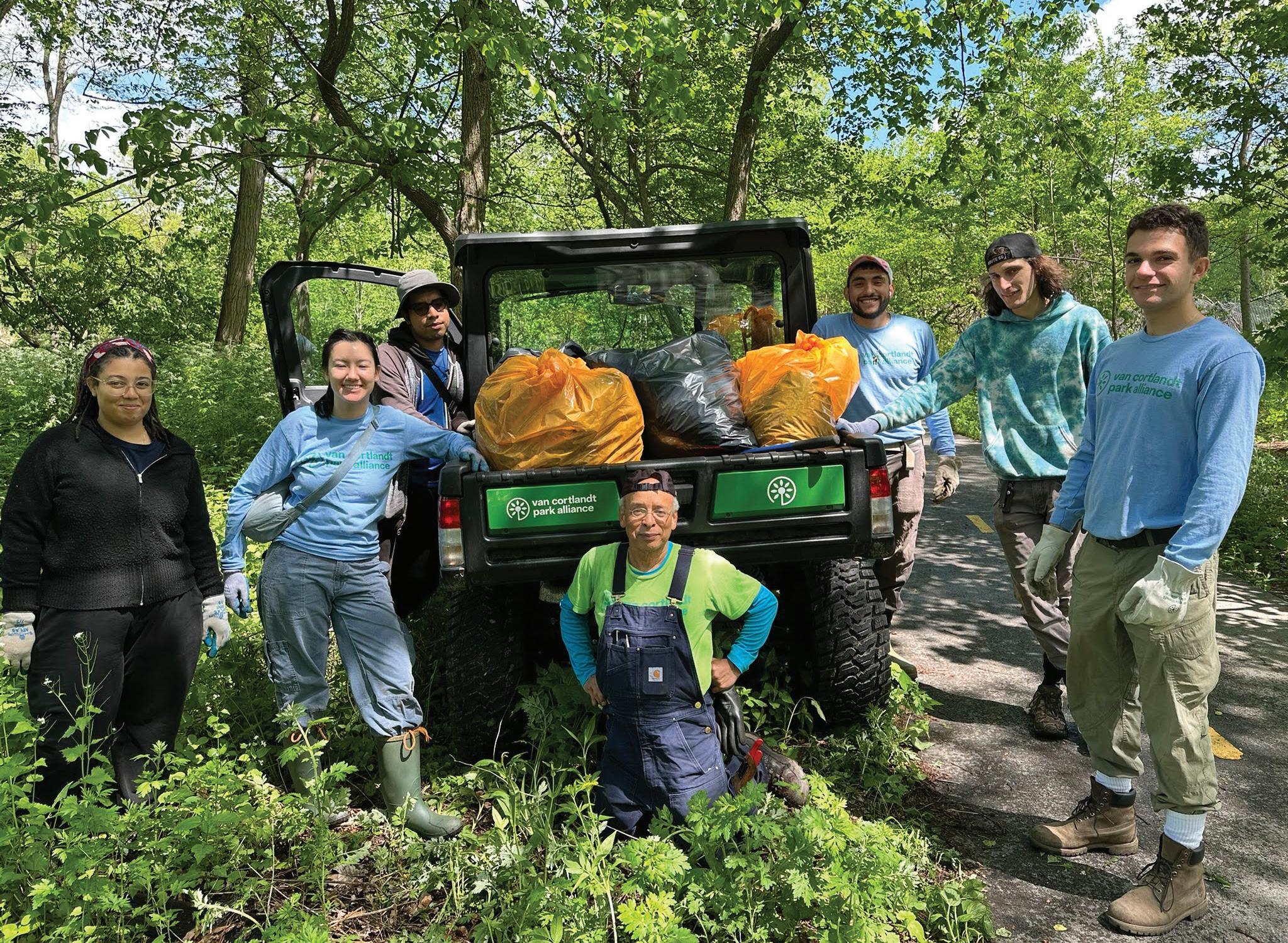
Maintaining this urban oasis is no easy task. In addition to paid staff, the park relies on thousands of volunteers each year to compost, plant, prune, weed, and clean up trash. Trust grants to the
Van Cortlandt Park Alliance helped it create opportunities for community members to pitch in. This was particularly essential during the pandemic, when park visits increased amid funding cuts.
“We have a lot of really dedicated volunteers,” said Deputy Director Christina Taylor. “There’s something very satisfying about immediately seeing the fruits of their labors, and how they transform the park, that gets them hooked.”
In 2025, the Alliance put a Trust grant to work restoring areas damaged by brush fires after a historic drought. To prevent future fires, it is clearing excessive dry leaves from trails and preparing staff to support fire department safety efforts.
A PLACE WHERE ARTS & ARTISTS THRIVE
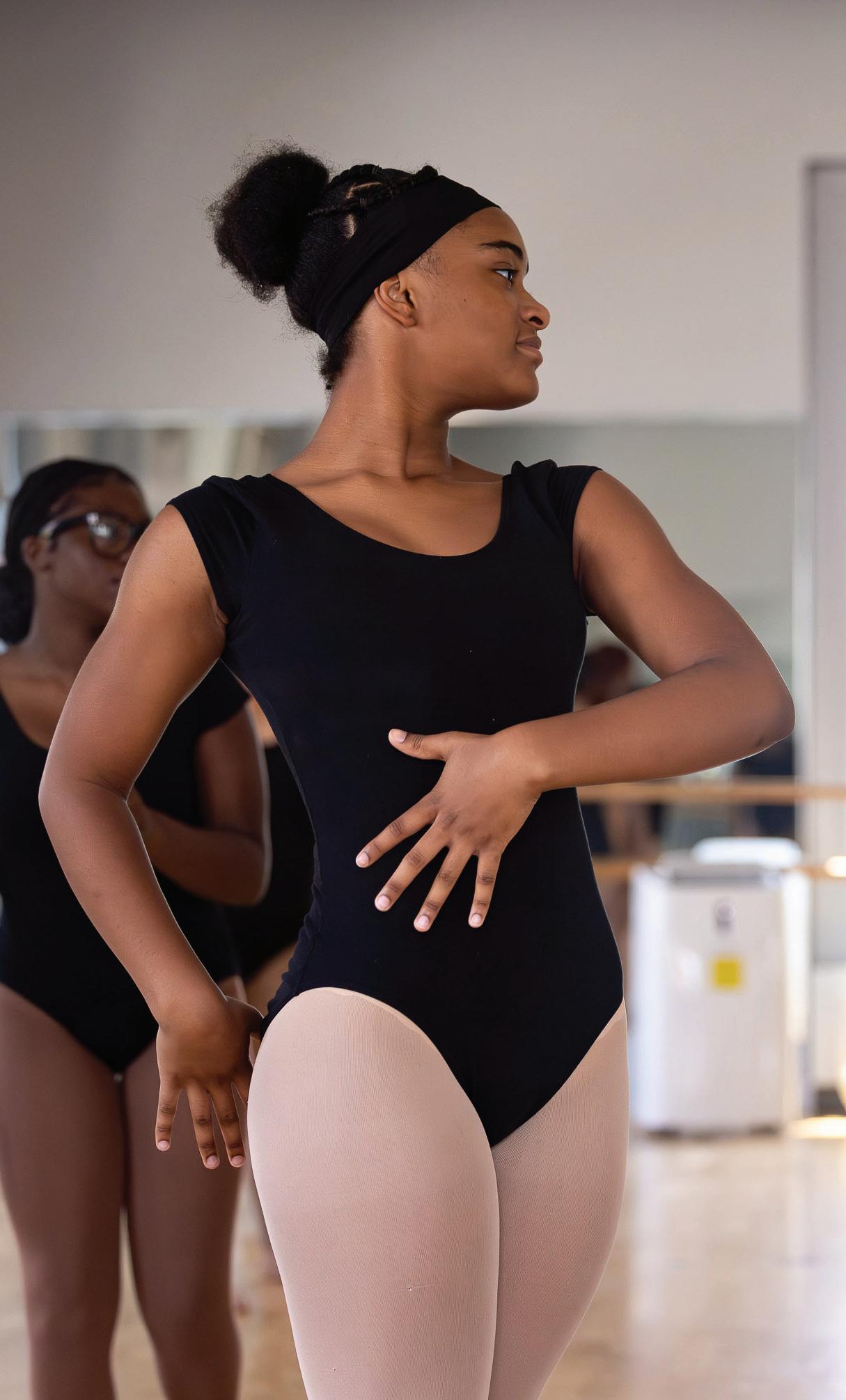
Aniya, a 17-year-old from Pelham Parkway, has spent four years training in every style of dance offered at Mind-Builders Creative Arts Center, including West African, ballet, hip-hop, jazz, modern, and tap.
The classes have helped Aniya build community and take on leadership roles. Currently a Mind-Builders teaching assistant, she plans to pursue a social work career after graduating high school.
“I want to be a voice for children who are scared to use their own,” she said.
Aniya is one of thousands of Bronx residents whose talents Mind-Builders has nurtured through nearly 50 years of free and low-cost music, dance, martial arts, and theater classes.
“Our programs allow us to build deep relationships that bridge creativity with helping young people develop life skills, connect with cultural resources, and build an awareness of their immediate and extended
environments,” said Executive Director Shirley C. Taylor.
Previous grants have helped the nonprofit sustain operations during COVID-19 and integrate mental health services directly into its classes. The center is using a recent Trust grant to increase capacity to meet the high demand for its classes.
IMPROVING HEALTH ACROSS THE BOROUGH
The Bronx faces higher rates of asthma, diabetes, heart disease, and obesity than other boroughs. Urban Health Plan ranks among New York State’s largest community health center systems. Its 20-year partnership with The Trust has created health and wellness programs in the Bronx that increased access to healthy food and outdoor fitness and provided care for families who lost loved ones in the September 11 attacks.
Recently, we’ve funded the nonprofit’s work to provide coordinated, comprehensive care for older adults living with chronic or age-related conditions to help them continue to live at
home or with family, rather than moving into long-term care facilities.
“Aging brings new challenges, particularly in communities shaped by long-standing health inequities and limited resources,” said President and CEO Paloma Izquierdo-Hernandez. “This investment has strengthened our ability to better serve seniors and address their medical, social, and practical needs holistically so they can remain healthy, independent, and connected to their communities.” n
Start your legacy
The legacies of many generous New Yorkers, including Sarah Rogers, a nurse, and her husband, Harry, a taxi driver; DeWitt and Lila Acheson Wallace, the founders of Reader’s Digest; and William Hoddle Burkhart, an entrepreneur, helped fuel the grants in this story. Start your legacy today—visit giveto.nyc.
A ballet class at Mind-Builders Creative Arts Center. Photo by Sean Chee.
Community members volunteer with the Van Cortlandt Park Alliance. Photo courtesy of the nonprofit.
Giving Strategies for Challenging Times
The Trust and our community partners have been working together to help keep New Yorkers healthy and housed, even as our region’s affordability and quality-of-life challenges continue to grow more urgent. Today, one in four New Yorkers struggles to afford essentials like food, housing, and health care amid cuts to safety net services.
Here are our recommendations for how your giving can help drive meaningful and strategic change for local communities.
1. Invest in advocacy & policy change
Investing in advocacy offers a high return for donations of all sizes, because advocacy wins can create lasting change. Advocacy can protect New Yorkers’ rights, improve our education and quality of life, and help push governments to commit, in their budgets, to building a region where all New Yorkers can thrive.
Recent advocacy wins supported by philanthropy brought free school meals to public school students across the state and expanded free child care in New York City.
2. Give general operating support
General operating support is both essential and strategic. Flexible funding allows organizations to pivot quickly as policies shift and needs emerge. As you give, consider nonprofits supporting those facing some of the steepest barriers: immigrants, people with disabilities, LGBTQ+ individuals, older adults, and people experiencing homelessness.
3. Support solutions to New York’s housing & child-care crises
Two key forces are pushing New York’s families to the brink economically: the lack of affordable housing, and the exorbitant costs of child care, which drive many parents out of the workforce.
These issues affect all New Yorkers because they are intertwined with many other quality-of-life challenges. Affordable housing and child care can help keep families in New York, support a healthy local economy, and prevent homelessness.
Local nonprofits are making significant gains in both areas—from advancing innovative home-ownership strategies like community land trusts and protecting tenants’ rights to advocating for policies that serve parents and child care workers alike.
4. Support direct services & frontline organizations
These organizations help New Yorkers stay connected to benefits, access essential daily support, and maintain a sense of community. Strengthening them will help more people hold onto Medicaid, SNAP, and other supportive services even in the face of new administrative hurdles.
Together, we can secure a healthy, safe, and just region for future generations. The Trust is here for you if you’d like to talk about how we can support your charitable goals during this pivotal time. n
New Yorkers celebrate the expansion of free child care.
Photo by Susan Watts for the Office of Governor Kathy Hochul.
909 Third Avenue, 22nd Floor
New York, NY 10022
thenytrust.org
For more than 100 years, we’ve helped generations of New Yorkers give in harmony. Grandma dedicated her life to social justice and wants to nurture grassroots organizations. Her kids want to improve mental health care and create a cleaner environment for their kids. And her grandkid thinks all New Yorkers should have the chance to enjoy the city’s wealth of cultural offerings, affordably. No problem! They can support all these causes and more through their donor-advised and legacy funds at The Trust.
We offer giving solutions for families and private foundations of all types, including a variety of fund options and personalized charitable matchmaking. Chat with us today to see how we can help!