














Publisher/Editor-in-Chief
Bill Hughes
Executive Editor/Web Editor Chris Linden
Senior Editor Lindsey Lukas
Managing Editor Jim Taylor
Deputy Editor Steven Bonifazi
Graphics Director Samantha Behling
Graphic Designer Olivia Costello
Contributing Writers
Stephanie
General
Brent Hughes
Sales Manager Brad Hughes
Advertising
Convenience has become something we barely question anymore. It shows up in the form of two-day shipping, grocery pickup slots, drive-thru everything, and apps that promise to bring whatever we want straight to our door in under an hour.













people can be trusted to do the right thing, even when that thing means personal sacrifice. But liars rationalize selfish behaviors. They tell themselves it’s OK to tell ‘white lies’ or to lie on tax forms; they may believe anything is justifiable in the pursuit of making money. And lying politicians have become such a common sight that we reward them with public office.
Big or little, a lie is a lie.
“Whoever can be trusted with very little can also be trusted with much, and whoever is dishonest with very little will also be dishonest with much.” – Luke 16:10 (NIV)
While “Be Honest” isn’t one of the 10 Commandments, it’s at the core of most. Stealing, bearing false witness and committing adultery, for example, all involve dishonesty … and God doesn’t like it. When we lie, we rob ourselves of true peace and other spiritual riches that come with “growing up in Christ.” (Ephesians 4:15) We also weaken the fabric of society, which depends upon basic honesty to function well. Dishonesty grieves the heart of a generous God who has lavished us with unconditional love and eternal life. And God is never fooled by the lies of men.
“Now the Pharisees, who were lovers of money, were listening to all these things and were scoffing at Him [Jesus]. And He said to them, ‘You are those who justify yourselves in the sight of men, but God knows your hearts; for that which is highly esteemed among men is detestable in the sight of God.’” (Luke 16:14 & 15)
Before the coming of Jesus, it would have been better for us to cut off our hands than to steal again. Today, in the Age of Grace, we have better options. We can choose to change our bad habits and grow up in Christ. As we do, something wonderful happens: We experience the secret thrill of pleasing God and walking in step with Him. We feel joy. And with each honest move, we extend the light of Christ further into a dark world.
The world seldom exalts people for being honest, but who cares? We do it because pleasing God is worth everything.
Yes, the world exalts cheaters.
Don’t let it get you down.
Jesus Christ has overcome the world. (John 16:33). ❚ – Janine Pumilia


By Lindsey Lukas, senior editor
Whensummer arrives in southeastern Wisconsin, few communities capture the season’s charm quite like East Troy. With its welcoming downtown, unique local shops, family-friendly events and smalltown atmosphere, East Troy offers visitors the perfect mix of relaxation, entertainment and discovery.
A stroll through the historic Village Square is one of the best ways to experience everything East Troy has to offer. The downtown district is filled with locally owned businesses that encourage visitors to slow down and enjoy the experience. Shoppers can browse stylish clothing and accessories at Zinn’s On The Square, find trendy fashions and gifts at Square Side Boutique, or discover home décor, furnishings and unique treasures at Home On The Square. Each shop offers its own personality and helps create the vibrant, walkable downtown that residents and visitors love.

No summer outing is complete without a sweet treat, and Frank’s Main Street Sweets Station is a must-stop destination. Whether you’re craving ice cream, candy or another favorite indulgence, Frank’s provides the perfect way to cool off on a warm summer day while enjoying the friendly atmosphere of downtown East Troy.
One of the biggest events of the summer arrives June 11-14 with the East Troy Music Festival at 3072 Graydon Ave. The four-day celebration brings together live entertainment, family fun and community tradition. Music lovers can enjoy performances under two separate entertainment tents, featuring a variety of bands and musical styles throughout the festival weekend. Between sets, guests can explore the carnival midway, sample festival favorites from local food vendors and relax in the beer tent while taking in the lively atmosphere.
The festival also offers plenty of activities beyond the music. Competitive visitors can participate in the popular dart tournament and washer tournament, while families can enjoy the rides, games and attractions that make the event a favorite summer tradition. One of the weekend’s highlights is the spectacular fireworks display on Friday, June 13, lighting up the night sky above East Troy. The celebration concludes on Sunday with the annual parade stepping off at noon, bringing colorful floats, community groups and plenty of hometown pride to the streets. For many residents and visitors alike, the East Troy Music Festival serves as the unofficial kickoff to
summer and a perfect example of the community spirit that makes East Troy such a special destination.
Another highlight is East Troy’s popular First Fridays series. Held on the first Friday of each month from May through October, the events transform Village Square Park into a lively gathering place featuring live music, food trucks, family activities, shopping specials and community fun. The July event, “Stars, Stripes & Summer Nights,” serves as a festive kickoff to Independence Day celebrations with patriotic activities, entertainment and plenty of opportunities to gather with friends and neighbors. Throughout the summer, each First Friday brings a unique theme that showcases the creativity and spirit of the East Troy community.
Beyond downtown, East Troy offers visitors plenty of opportunities to enjoy the outdoors and explore local attractions. The community’s parks, trails and scenic countryside provide ideal settings for hiking, biking and leisurely summer drives. History enthusiasts can also experience a ride on the historic East Troy Electric Railroad, where vintage trolley cars offer a unique journey through the beautiful Wisconsin landscape. The railroad operates regular summer excursions that have become a favorite tradition for visitors of all ages.
Whether you come for the First Fridays festivities, a shopping trip around the Square, a trolley ride through the countryside or simply an ice cream cone on a sunny afternoon, East Troy offers countless reasons to visit this summer for the perfect getaway.


By Peggy Werner
Gage Marine, 5167 WI-50, Delavan, is your one-stop shop for all things boating.
But in order to have a great time on the water, boaters need to think of safety first, says Alanna Congdon, director of marketing.
“We offer private lessons to those who would prefer one-on-one training,” she says.
Some of the basic boating safety rules include wearing a life jacket, knowing the rules of the water, and making sure all mechanics are working correctly and no fluids or gas are leaking. Also, be sure to pack communication devices, check the weather forecast, charge batteries and restore the fuel level.
Safe boating is mostly common sense and being courteous to others, Congdon adds. Avoid quick and risky maneuvers that would surprise other
boaters, allow ample time and distance for other boaters to react to your movements, carry a horn or other sound-producing device for signaling purposes, know how to stop your boat – and know other techniques in the event of an emergency – and designate someone as a lookout person, especially in areas of heavy traffic or potential hazards like submerged trees or rocks.
“We’ve heard of issues with people swimming off their boat and not leaving anyone behind to be a lookout or stay with the boat,” Congdon says. “You might not be able to get back in. Also, always be aware of your surroundings, obey boating laws, and practice defensive boating techniques.”
Being safe also means taking care of your boat, so you can enjoy lake life as long as the season lasts. Gage Marine sells new and used boats and services all boats, including fishing boats,

pontoons, wake boats and runabouts. Congdon highly recommends winterization services and annual maintenance in the spring.
To ensure smooth sailing, trained, certified, experienced technicians at Gage Marine are prepared to address problems at your location, as well as take care of your boat year-round. Services include seasonal check-ups, engine tune-ups, cleaning and polishing, and repairs and replacements of parts, canvas and vinyl. ❚
Contact Gage Marine at (262) 740-2628 or visit gageboats.com.




By Peggy Werner
As the new co-owner of South-
ern Lakes Plumbing and Heating, N5860 US-12, Elkhorn, Kate DeLazzer is eager to help homeowners understand how today’s technology can detect water and heating issues early, alerting customers wherever they are before small problems turn into costly disasters.
“Water leaks and flooding are one of the most common and expensive home insurance claims,” she says. “Having a smart shutoff valve can not only save you money but is required on some insurance policies and may get you a discount on premiums. We have many new options today that never existed before. There are a lot of items for the home that utilize smart technology that can notify you of problems while they are still small ones.”

A Wi-Fi-powered main shut-off valve is a smart home device that automatically or remotely turns off a home’s main water supply. It allows you to control the water from anywhere using a smartphone app and works with sensors that detect water. Small sensors are placed where water could be a problem. If a leak occurs, the valve will immediately close and send an alert to your phone. Homeowners place sensors near washing machines and water heaters, and under sinks and refrigerator water lines.
Smart thermostats are also Wi-Fi enabled and can control your home’s heating and cooling. With a smartphone app, you can adjust the home’s temperature from anywhere, customize heating and cooling schedules depending on when you are home, receive maintenance and repair alerts, and track energy usage to help save money. Sump pumps can switch to battery power when the electricity goes out and can send real-time alerts by text or email regarding issues or necessary maintenance. Other alarms systems can serve a variety of purposes wherever there are pumps or tanks, DeLazzer adds.
Her father, Scott Plucinski, is a master plumber and started his business out of his garage before moving to the current location in 1988. He has since retired. The business is now spearheaded by the second generation, along with Jeff Flitcroft, who has been employed at the company for about three decades.
DeLazzer graduated with a degree in communications and business from the University of Wisconsin at Stevens Point. While going to school, she worked for a couple familyowned plumbing companies in various roles before returning home to work with her own family.
She likes the customer service end of the business and interacting with plumbers, homeowners and builders in different aspects of the business to ensure a smooth operation.
While already incurring tremendous growth during their leadership, DeLazzer and Flitcroft intend to keep their “foot on the gas.”
“We have some big things in the pipeline, not only from a project portfolio standpoint, but from a business growth and expansion standpoint as well,” DeLazzer says. “You’ll continue to see our vans all over southeastern Wisconsin, every day, all year long.”
They also want to expand the storefront and make customers more aware of smart technology available in the plumbing and heating industry.
“When you work hard, you see the rewards,” DeLazzer says. “Those rewards are not always in the monetary sense; we have many employees who have been with us for decades. I have grown up around this crew. My dad always surrounded himself with the best people and that’s what Jeff and I will continue to do.” ❚





By Jon McGinty
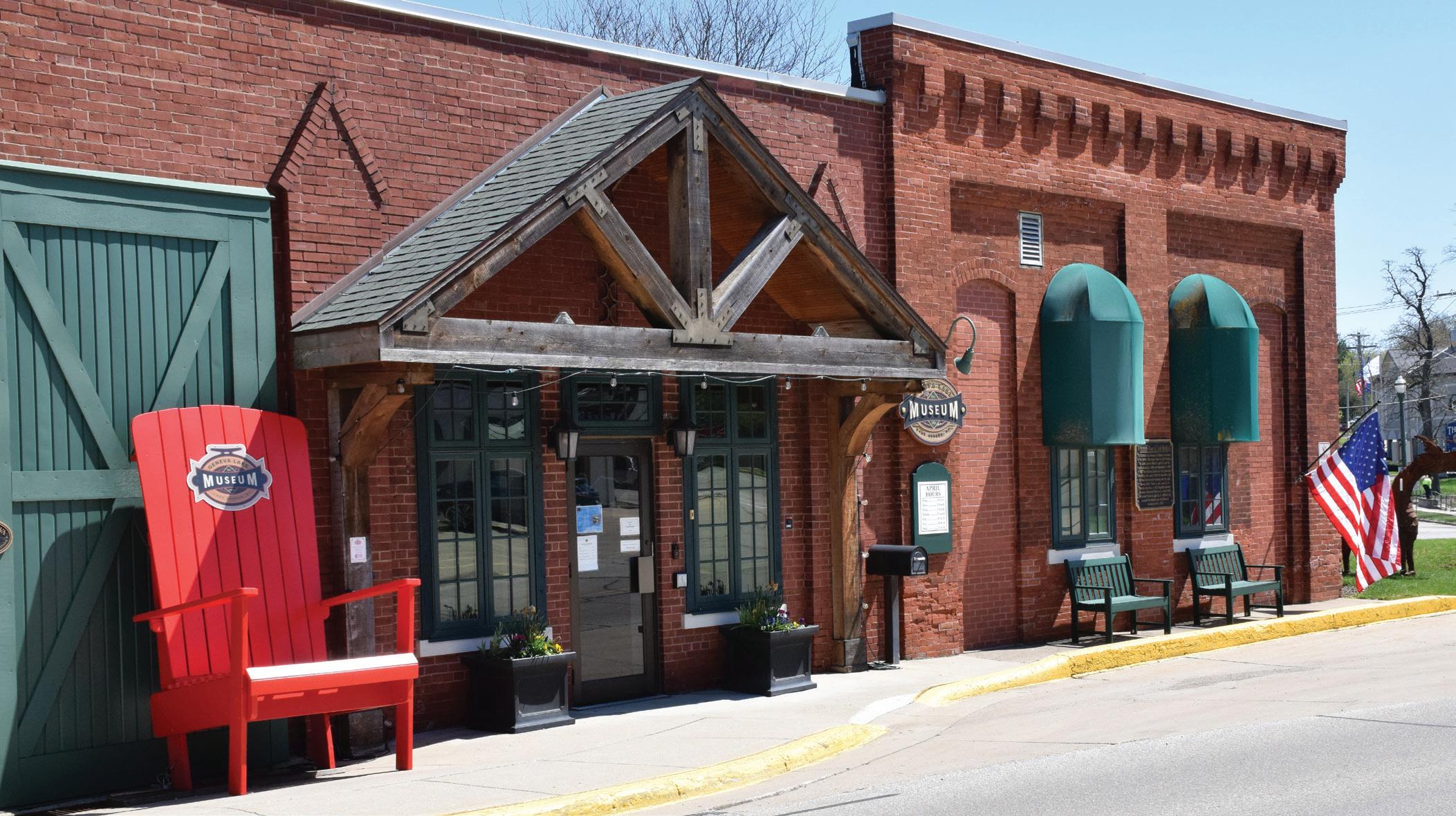
Whileyou may visit Lake Geneva for the splendid scenery, the water sports, the historic mansions surrounding the lake, or the shopping, one of your first stops should be the Geneva Lake Museum at 255 Mill St. Here, you will find the stories and accompanying artifacts which tell how this “quiet” little city became known as the “Newport of the West.”
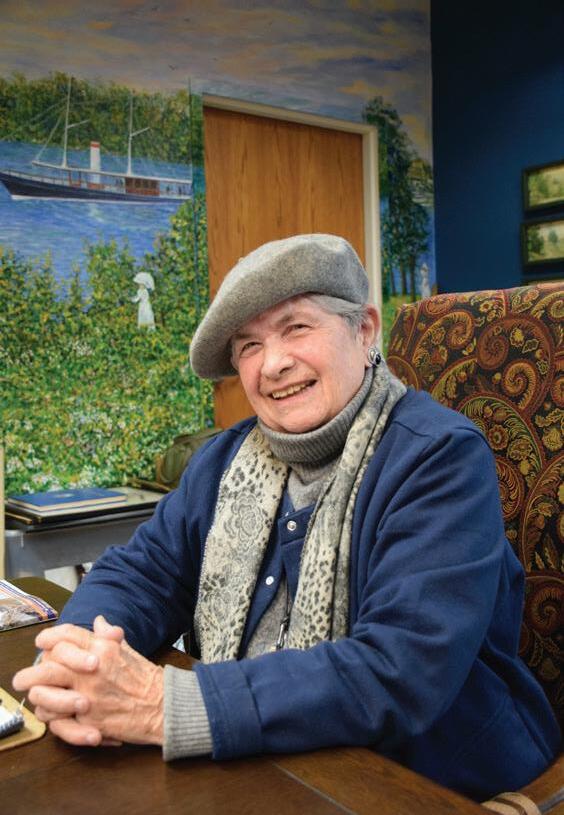
Helen Brandt is currently the research and archives librarian at the Geneva Lake Museum. For the previous 40 years, she was the museum curator and supervised the transition from the museum’s original building on Geneva Street to its present location in the former Wisconsin Power & Light offices.
“The first museum, established in 1984, was housed in a charming Mediterranean Revival-style house constructed in 1940,” says Brandt. “With its yellow brick and red tile roof, it looked like a little castle. We occupied that space for 20 years, but it was small with no room for expansion. After we moved out in 2004, the city tore it down for parking spaces.”
The current building has 10 times as much space. An army of volunteers (including a local Boy Scout troop) moved the collections to the new digs in April 2004, and it opened to the public on July 1.
During the previous winter, a design team that included local architect Ken Etter came up with the concept of a central installation entitled “Main Street Lake Geneva.” The exhibit
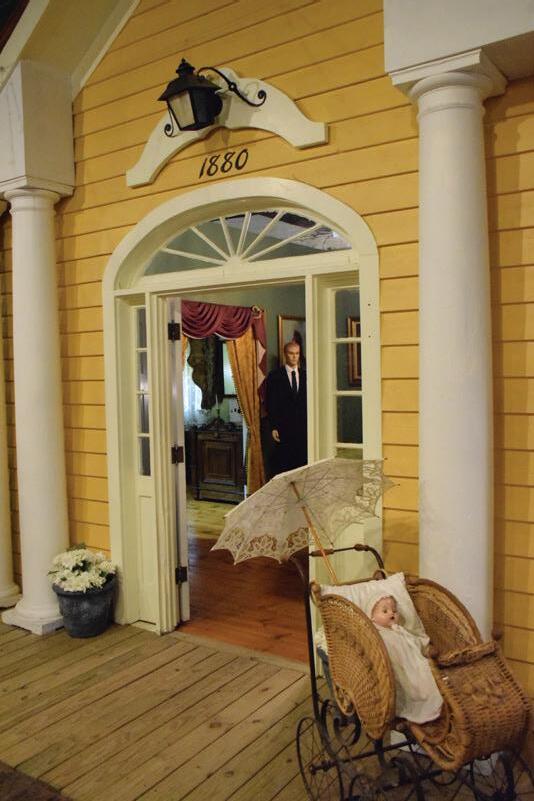
features a brick street lined with building facades on both sides, businesses on one side and residences on the other. The numerical address indicates the historical era represented.
“You don’t just stand outside [the facade] and look in,” says Brandt. “You go in and experience the exhibit. It is so involving.”
The immersive exhibits include: a general store with a soda fountain and a soda jerk mannequin; a blacksmith shop; a 1920s dental office; a fire house with a fire engine and dalmatian; and an 1880s home with living room, parlor, kitchen and bedroom.
Parked outside the facades on the “main drag” is an immaculately restored 1931 Ford Model A, just waiting for some joyriders to hop in and take off.
Also outside is an 1840s farm yard, with a horse in harness next to an Allis Chalmers tractor and a huge assortment of farm implements and tools. Each tool is identified by name on a looped video that displays the entire collection.
Across from the agricultural display is a Potawatomi wigwam and other Native American artifacts, representing the indigenous occupants of the Geneva Lake region when Europeans first arrived. At that time, the local tribe leader was Chief Big Foot, and they called the lake “Kishwauketoe,” meaning “clear water.” A statue of Big Foot is in Reid Park.
The Potawatomi came to the region after being displaced
from their Michigan homeland by the Iroquois during the Beaver Wars in the 1600s. When that threat receded after 1700, they moved south along the western shore of Lake Michigan. By 1800 they were settled mostly in northern Illinois, southeastern Wisconsin, and parts of Indiana, Michigan and Ohio.
In 1833, the Potawatomi of Illinois and Wisconsin signed the Treaty of Chicago, which ceded the last of their lands to the U.S. government.
“Our local tribe and Chief Big Foot were forcibly removed to Kansas in 1836,” says Brandt. “We lost our Native American population.”
Brandt has a special affinity for the Potawatomi. Her great-grandparents lived in northeastern Wisconsin, and the Potawatomi were their neighbors. In October 1871, the Peshtigo firestorm swept through the area, killing more than 2,500 people [The Chicago fire on that same weekend killed less than 300 people], and devastated thousands of acres of timber, farms and buildings.
“My great-grandparents lost everything, their home and clothing,” says Brandt. “A Potawatomi family took them in and helped them survive the winter. If it weren’t for their generosity, I wouldn’t be here.”
The name of the lake and later the town, originated with a government surveyor, John Brink, who came to the area in 1835 to lay out telegraph lines between Beloit and Kenosha.
“Brink was from Geneva, New York, and thought the lake reminded him of another one in his home state,” says Brandt. “The first white settlers in the area were the Van Slyke family, who established a claim in Fontana in 1831. They named their first child Geneva, after the lake.”
Christopher Payne, a pioneer settler from Belvidere, Ill., built the first log cabin in Lake Geneva, and the museum has a replica of it on display. Payne also laid claim to the land where the lake drains into the White River. He created a pond and mill race where the 14-foot drop of water level powered the first flour mill. Later, the mill race drove saw mills for lumber and produced hydroelectric power for the region. The pond and mill race are still visible just south of the museum.
To avoid postal confusion with the community of Geneva, Wis., the town was renamed Lake Geneva in 1882. The
nearby body of water is referred to as Geneva Lake.
Many of the Geneva Lake Museum’s displays of artifacts, photographs and models serve as an introduction to nearby places where visitors can find a more complete experience, such as the Yerkes Observatory in Williams Bay or Black Point Estate.
The Chicago Fire of 1871 had a profound and lasting impact on both the town and the lake. To escape the city after the fire, many prominent families built “summer cottages” – massive luxurious estates on the Geneva Lake shore – and turned the area into a high-society retreat. Families like Schwinn, Wrigley and many others led to the area nickname of the “Newport of the West.”
These homes can be viewed by boat from the lake, or on foot by traversing the public Geneva Lake Shore Path. The Geneva Lake Museum has several displays of furnishings, artifacts and models of these homes, including Black Point Estate, one of the few that’s open to the public.
Conrad Siepp was a German immigrant who founded what became one of the largest brewing companies in Chicago. He built an enormous Queen Anne-style summer home on the highest bluff of Geneva Lake’s south shore. Completed in 1888, he named it Villa Lorelei after a German legend, but it was changed to Black Point Estate during World War I, due to rising anti-German sentiment.
Siepp died in 1890, having enjoyed only two seasons in his summer home. In 2005, Siepp’s great-grandson donated the 20-room mansion, all its furnishings and 7 acres to the state of Wisconsin. After extensive renovation, the estate was opened for tours to the public in 2007 and is now administered by the Wisconsin Historical Society. It can be reached by boat, but you have to climb 120 steps to the top of the bluff.
Soon, the museum’s renovated Military Room reopens.
“The renovations are long overdue,” says co-director Janet Ewing. “We have 12 mannequins to display the uniforms of local veterans. In addition, we are telling the story of the actual persons who wore them. Other bios will be projected on a looped video. People will be able to sit comfortably in a big chair and watch it. The veterans are all from the Lake Geneva area.” ❚
To learn more, visit genevalakemuseum.org or call (262) 248-6060.













By Peggy Werner
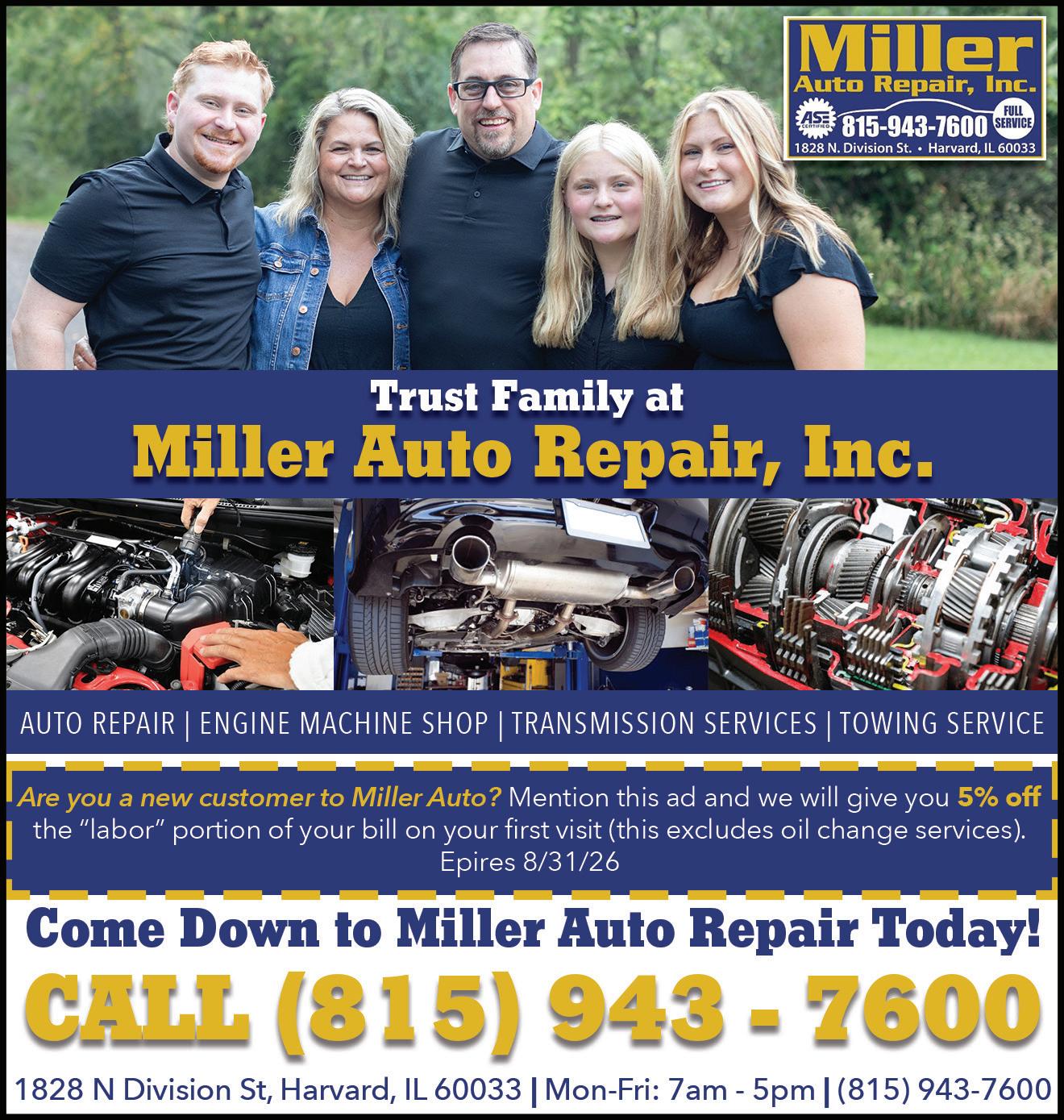
Auto Repair’s founder, Harold Miller, had a passion for engines, craftsmanship and community. He paved the way for five decades of automotive service in Harvard, Ill., and the legacy lives on today in the hands of his son.
In 2013, Jeff Miller and his wife, Genny, purchased the business from his parents, proudly carrying the family tradition into the next generation. Jeff greatly admired his dad, who passed away in 2024 at age 80, and wants to follow in his footsteps by giving his best to his business and customers.
In general, people wait too long to get their car serviced, he says.
“You can’t wait for warning lights to go on to indicate when you need service.”
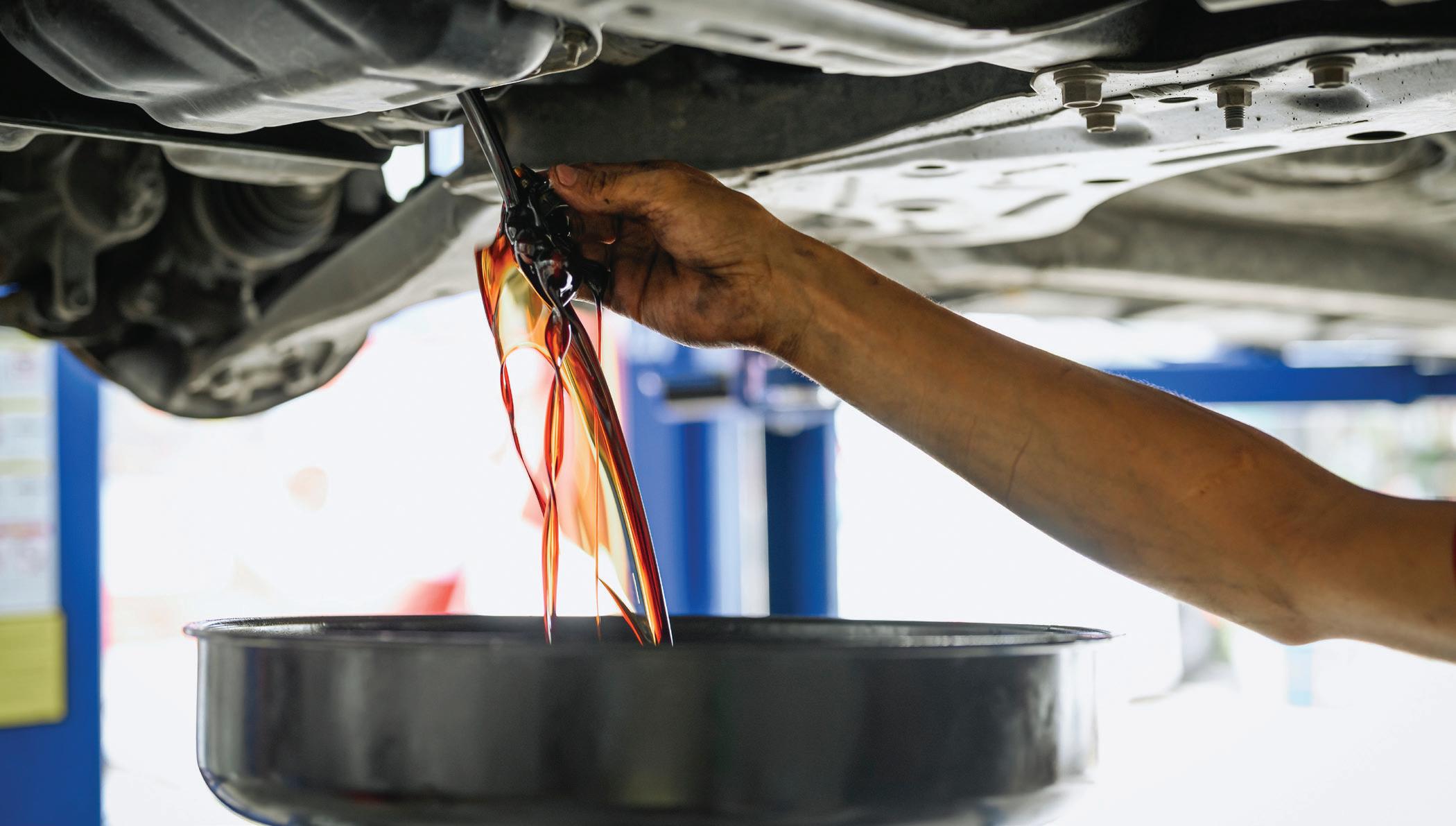
He recommends conventional oil and synthetic blends to be changed every 3,000 miles, and synthetic oils to be changed every 5,000 miles. Tires should get rotated every other oil change. Other fluids, belts, hoses, and more should be checked during oil changes to catch any potential problems early.
“If you don’t get the oil changed often enough, it breaks down, gets gummy and doesn’t protect the working parts of a car,” Jeff says. “Getting regular oil changes adds to the longevity and trouble-free operation of the car.”
Miller Auto Repair has its own machine shop for rebuilding and repairing engines. All work is done on site and not sent out, Jeff adds.
The shop services Harvard and all surrounding communities and has grown into a full-service automotive center offering transmission repair and rebuilding, classic car repair, a full-service automotive machine shop, a towing service, and routine preventative maintenance services such as oil changes, tire rotations, transmission flushes, alignments, chassis work, engine rebuilding, brake service and more.
Jeff remembers his dad as someone who gave everything he had to his work and the people he worked for. While working full-time elsewhere, Harold would spend weekends and evenings in his own garage repairing vehicles for a growing list of loyal customers. He was laying the foundation for his own business that opened in 1980. Harold, along with friends and relatives, built the building themselves.
In addition to handling all aspects of automotive repair, he had a couple specialties that set him apart from the competition, namely transmission rebuilding and classic car repair.
Harold and his wife, Shirley, had three sons, all of whom worked for their dad, learning how to fix cars, how to treat customers, how to run a shop, and how take pride in their work. Steve now works at an engineering firm as head of maintenance and Greg moved to Minnesota where he continues to work in the automotive field. Jeff, the middle son, stayed close to home.
“Dad had a top work ethic and a natural talent. I learned from the best,” he says. ❚










By Peggy Werner
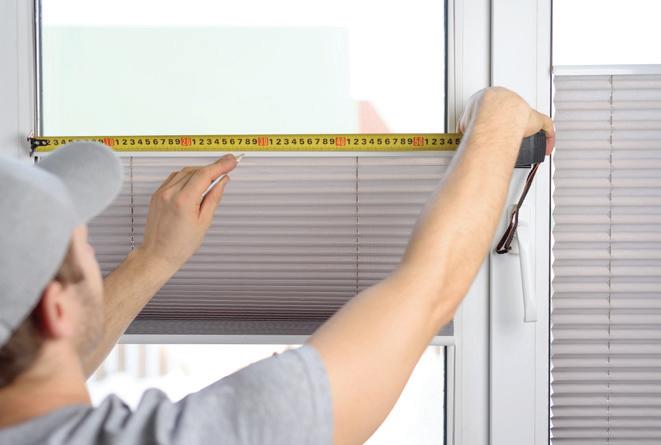
Budget Blinds is the largest window treatment franchise in the United States, offering a one-stop-shop experience for homeowners, says Cameron Stepp & Megan Smith, co-owners of the location at 1532 N. Fairway Lane, Elkhorn.
“Our clients choose us because we take the stress out of the process,” Stepp says. “From professional measuring to expert installation, we handle every detail from start to finish, so you don’t have to.”
Budget Blinds specializes in custom-made window treatments. They design, measure and install blinds, shades, shutters and drapes to meet each customer’s home style and personal preferences.
Window treatments have many purposes. They not only coordinate with other home décor and make the house more aesthetically pleasing, but
they also protect your personal space and valuables and are energy efficient. When closed, they add an extra layer of insulation and block harmful ultraviolent sun rays that can fade furniture and flooring. Motorized and cordless blinds are safer for children and pets. They come in dozens of colors, and some are water resistant, making them perfect for bathrooms, kitchens and laundry rooms.
“With the rise of home automation and increasing demand, motorized window treatments are at the forefront of innovation in the industry,” Stepp says. “Budget Blinds has worked to create new and improved systems while attempting to keep costs down.”
Window treatments also control natural light, add elegance to a home, and are appreciated for their durability, versatility and range of styles and materials.
The local company was founded in 1999, when Tom Stepp was building a home in Walworth County and realized there weren’t many places selling window treatments. Wanting to go into business for himself, he decided to open a local franchise. Today, Tom is taking more of a behind-the-scenes role, with his son, Stepp, and Smith taking on day-to-day operations. ❚
For more information or to set up a consultation, call (262) 723-7020 or visit budgetblinds.com.
























With AFib, blood isn’t pumped out of the heart chambers completely. It pools together, creating blood clots, and if those clots break loose, they can enter the bloodstream, travel
Unfortunately, even with diet, exercise and other regulation, some hearts just aren’t happy. AFib, for example, isn’t
“There are two groups of patients we see in AFib: the healthy group – they can be running marathons, they look really healthy, they eat healthy foods – but it’s an electrical disease; it’s genetically driven,” says Dr. Imdad Ahmed, medical director of Mercyhealth Arrhythmia Center. “The unhealthy group often has sleep apnea, diabetes, drinks alcohol. They get diagnosed sooner than healthy people because they see doctors more often. Fifty percent of people with AFib have
Thankfully, surgeons are continuing to progress with medical procedures that can fix, replace or otherwise correct heart problems, such as left atrial appendage closure devices and transcatheter aortic valve replacements – big words for
Yet, even though these devices can make a heart happy
“Just because you have one of those procedures doesn’t mean you can eat all your meals at McDonald’s,” Cooper says. “The device is going to help, but you still need to improve your physical activity or quit smoking. Eventually, if you’re doing things that are harmful to your body, the device is only going to help so much. And it’s only going to help what it was intended for, so the rest of your body needs you



By Peggy Werner
For more than 160 years, Reed Furniture, 820 N. Wisconsin St. in Elkhorn, has built its reputation on quality, from the products it offers to the generations of family members dedicated to the business.
Joe and Jim Reed are the sixthgeneration owners of the company, which was founded in 1865. Today, they continue the tradition established by previous generations: providing customers with a trusted destination for quality furniture, home accessories and furnishings for every room in the house.
A new outdoor line being offered this year is Telescope Furniture, another family-owned company specializing in American-made products. The store also recently started offering Canadel custom-made furniture from Canada, and Stessless pedestal recliners made in Norway.
“We’re seeing people more interested in buying things that are built to last and not the most inexpensive version of a sofa or dining table,” Joe says, adding that Artificial Intelligence is helping people think outside of the box.
“People search online and want to duplicate a picture they found, so they are looking for furniture that can be custom ordered in different fabrics,” he continues. “We will continue to see people interested in custom ordering to match something they found online or was AI-generated. Room layout and color schemes that used to be hard to imagine are now much easier to visualize with AI, which will lead to people taking bolder chances with their furniture selections.”
Current trends indicate the desire for natural looks in neutral colors, especially for the dining and bedroom areas, he says. Stains tend to be lighter

in color and show the grain and character of the wood like rustic Hickory, Elm and Oak.
“In upholstery, we see people gravitating toward more neutral, lightcolored fabrics for larger pieces like sofas and sectionals,” Joe says. “Most of the best-selling fabrics are light in color, neutral grays or tans, and soft to the touch. Accent chairs and other items are a mixture of earthy colors like dark green and burnt orange, and blue is always a popular choice.” ❚
For more information, visit shopreed.com.

Lake Geneva Magic Show
Recurring event; see website for times. Enjoy magic, comedy and illusions in an entertaining performance. Tristan Crist Magic Theatre, 100 N. Edwards Blvd., Lake Geneva, (262) 2480505, lakegenevamagic.com.
‘Million Dollar Quartet’

Thru July 19, see website for times. On December 4, 1956, an extraordinary twist of fate brought Johnny Cash, Jerry Lee Lewis, Carl Perkins, and Elvis Presley together at Sun Records in Memphis for what would be one of the greatest jam sessions of all time. “Million Dollar Quartet” brings that legendary night to life. Fireside Dinner Theater, 1131 Janesville Ave., Fort Atkinson, firesidetheatre. com/2026-season/million-dollar-quartet/.
Lake Geneva Farmers Market
Thru Oct. 29, Thursdays 8 a.m.-1 p.m. Farmers, artisans, craftsmen and vendors offer up some of the area’s very best products. Horticultural Hall, 330 Broad St., Lake Geneva, horticulturalhall.com.
Train Rides on the East Troy Railroad Thru Oct. 31, Saturdays 10 a.m.-4 p.m. Take a 14-mile train ride on the only remaining electric interurban tracks in Wisconsin. East Troy




Railroad Museum, 2002 Church St., East Troy, easttroyrr.org.
Geneva Jazz & Blues Festival
June 19-21, recurring daily. This celebration of food, culture and music showcases local, regional and national talent. Vendors offer a variety of ethnic delicacies, one-of-a-kind arts and crafts, and family-fun activities. Lake Geneva House of Music, N3241 County Road H, Lake Geneva, lghom.com/genevajazzfest.
Fiesta by the Lake
June 20, noon-7 p.m. This community celebration honors multiple Latino cultures through music, dance, food, art and connection. Entertainment includes Mexican dancers, a Mariachi Band, a petting zoo, Zumba, face painting, food, artisanal vendors, a DJ and more. Edgewater Park, East Geneva Street, along the lakefront, Williams Bay, visitlakegeneva.com.
Wave That Flag Festival
July 2-4, recurring daily. Celebrate the music, spirit and culture of the Grateful Dead. This is more than a festival; it is a gathering of heads, hearts, and souls coming together under the stars to honor the songs that changed generations. Primitive camping is included with your
ticket; RV camping is available at an additional fee. Jennings Holler at the Kettle Moraine Ranch, W379 S9674 County Road S, Eagle, Wis., jenningsholler.com.
Liberty on the Lake
July 4, 5-9:30 p.m. Celebrate America’s 250th birthday at an evening filled with music, food and family-friendly fun. Festivities include face painting and balloon artists, roaming performers, food trucks, a live outdoor concert, and a drone light show honoring 250 years of American history in a dazzling, eco-friendly display. Flat Iron Park, 201 Wrigley Dr., Lake Geneva, visitlakegeneva.com. ❚