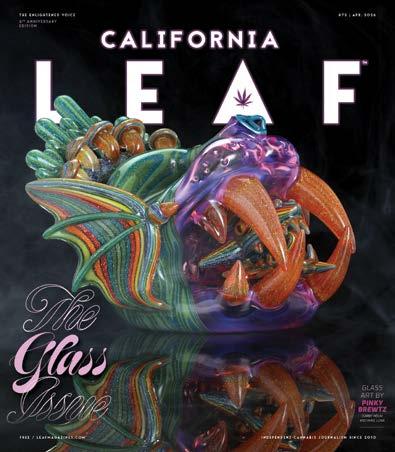
The Glass Issue
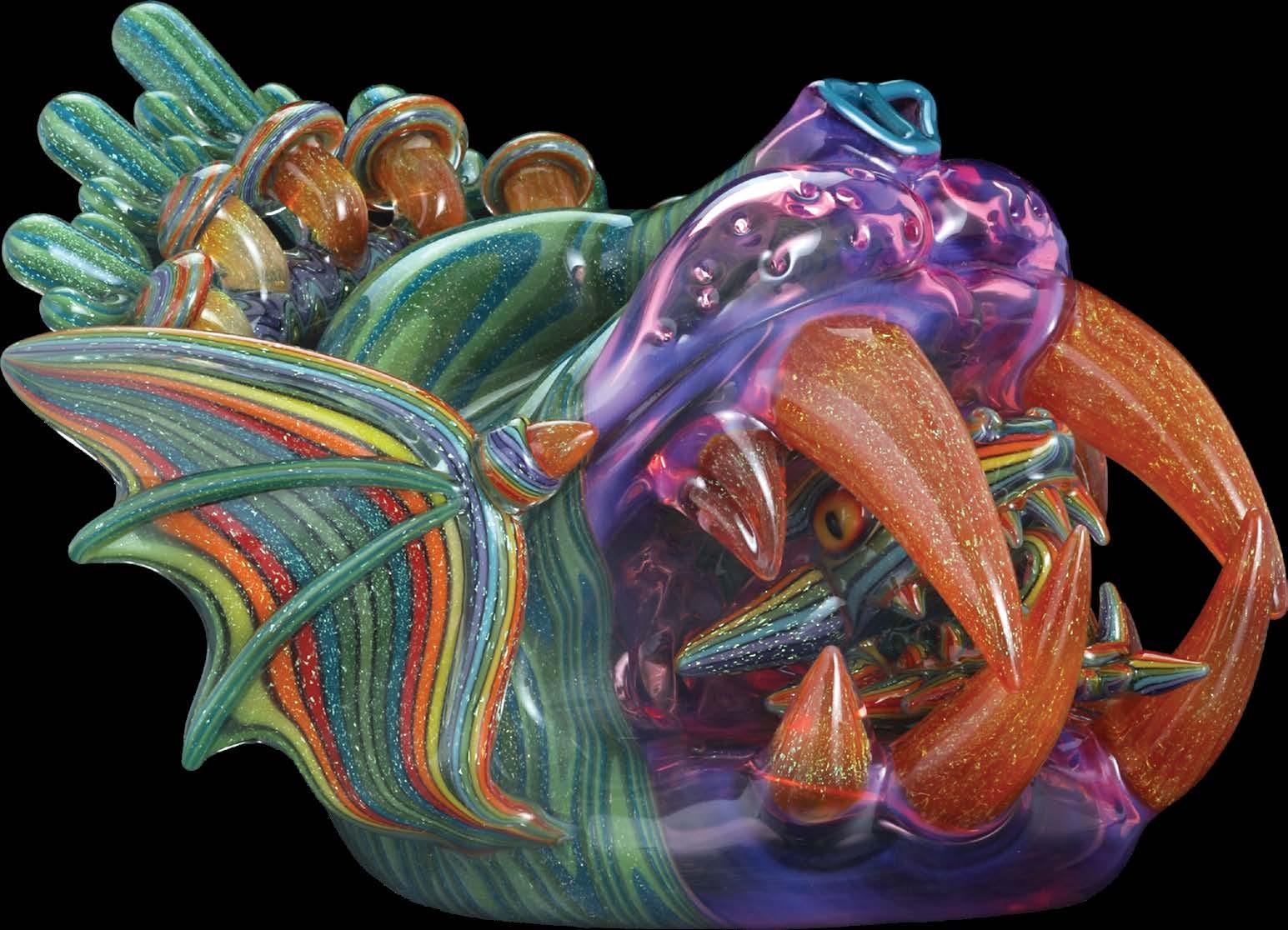
GLASS ART BY PINKY BREWTZ
DARBY HOLM AND MIKE LUNA















WES ABNEY CEO & FOUNDER
wes@leafmagazines.com
MIKE RICKER OPERATING PARTNER ricker@leafmagazines.com | advertising opportunities
TOM BOWERS CHIEF OPERATING OFFICER tom@leafmagazines.com
DANIEL BERMAN CHIEF CREATIVE OFFICER daniel@leafmagazines.com
BOBBY BLACK LEAF BOWL DIRECTOR & HISTORIAN bobbyblack@leafmagazines.com
MATT JACKSON CA CONTENT DIRECTOR + SOCIAL mattjackson@leafmagazines.com
MICHELLE NARANJO & CARA WIETSTOCK COPYDESK michelle@leafmagazines.com | cara@leafmagazines.com
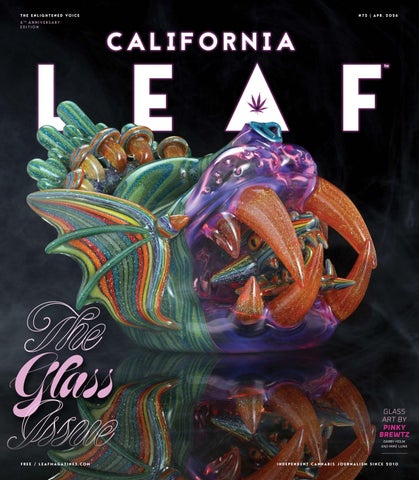
ABOUT THE COVER
It’s back and hotter than ever: our flame-blown, smoldering and, yes, still red-hot Glass Issue spectacular!
For every year that our magazine has been in print, the Leaf has dedicated one special edition to the magic of functional, high-end glass artistry.
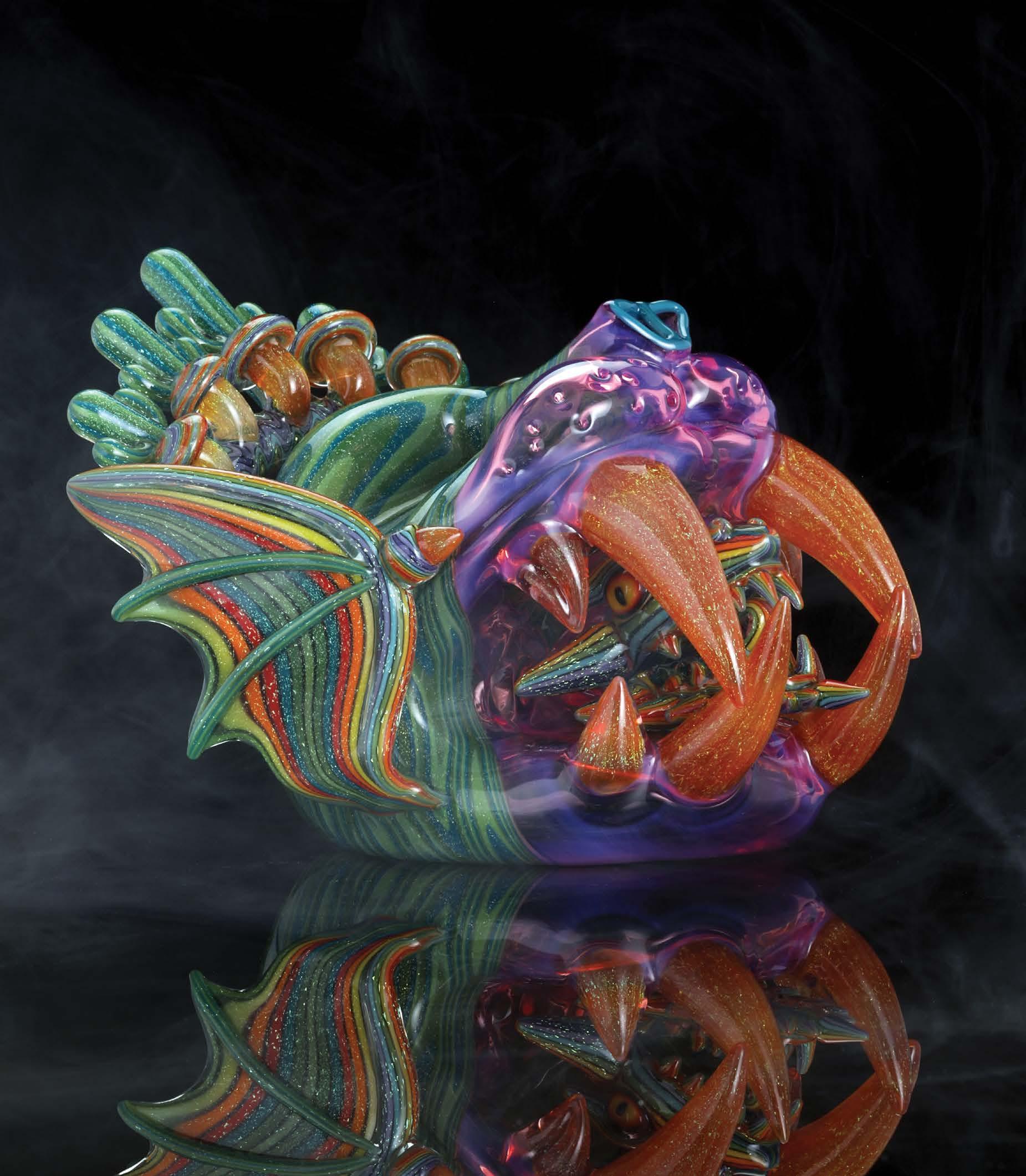
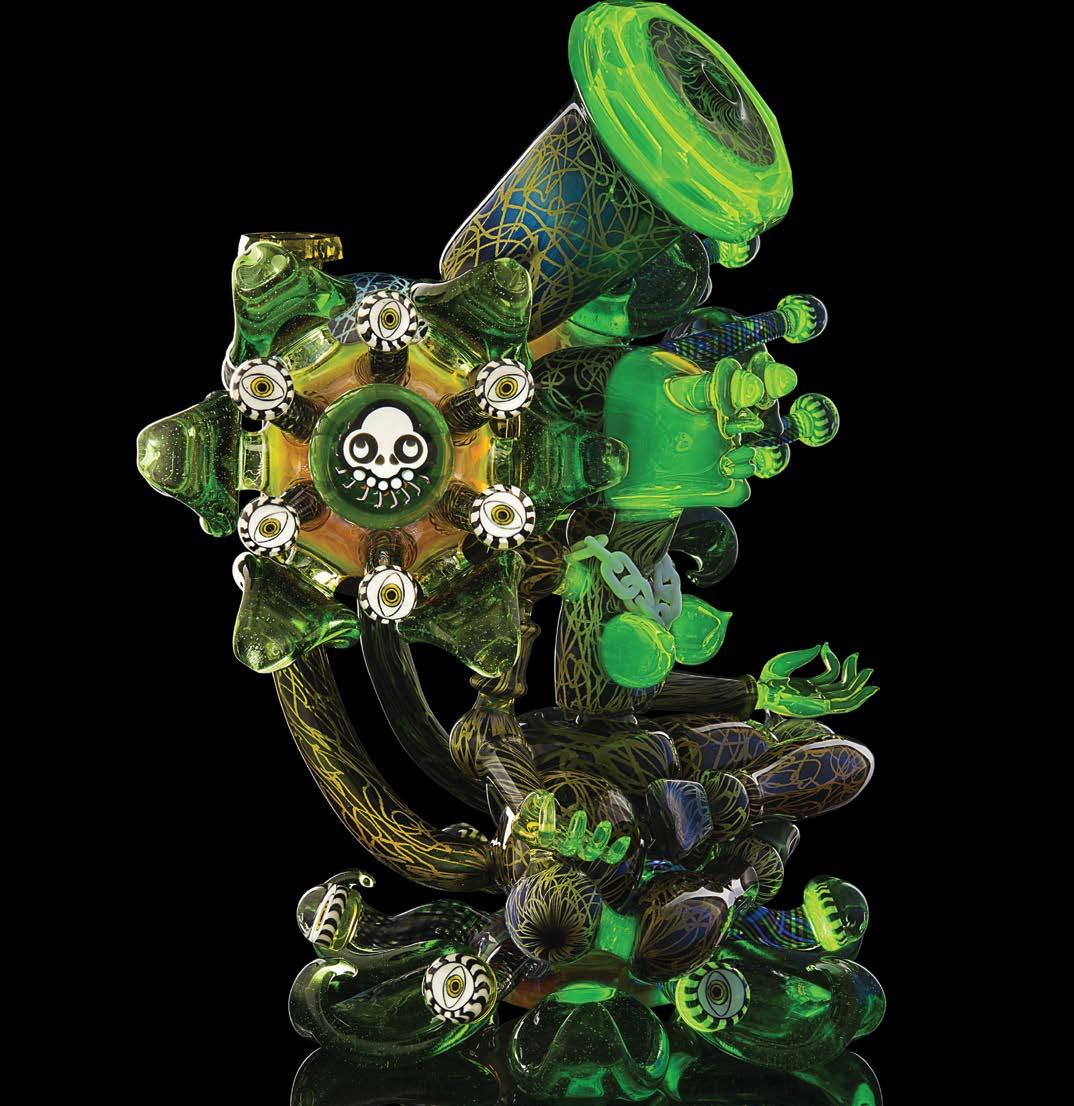
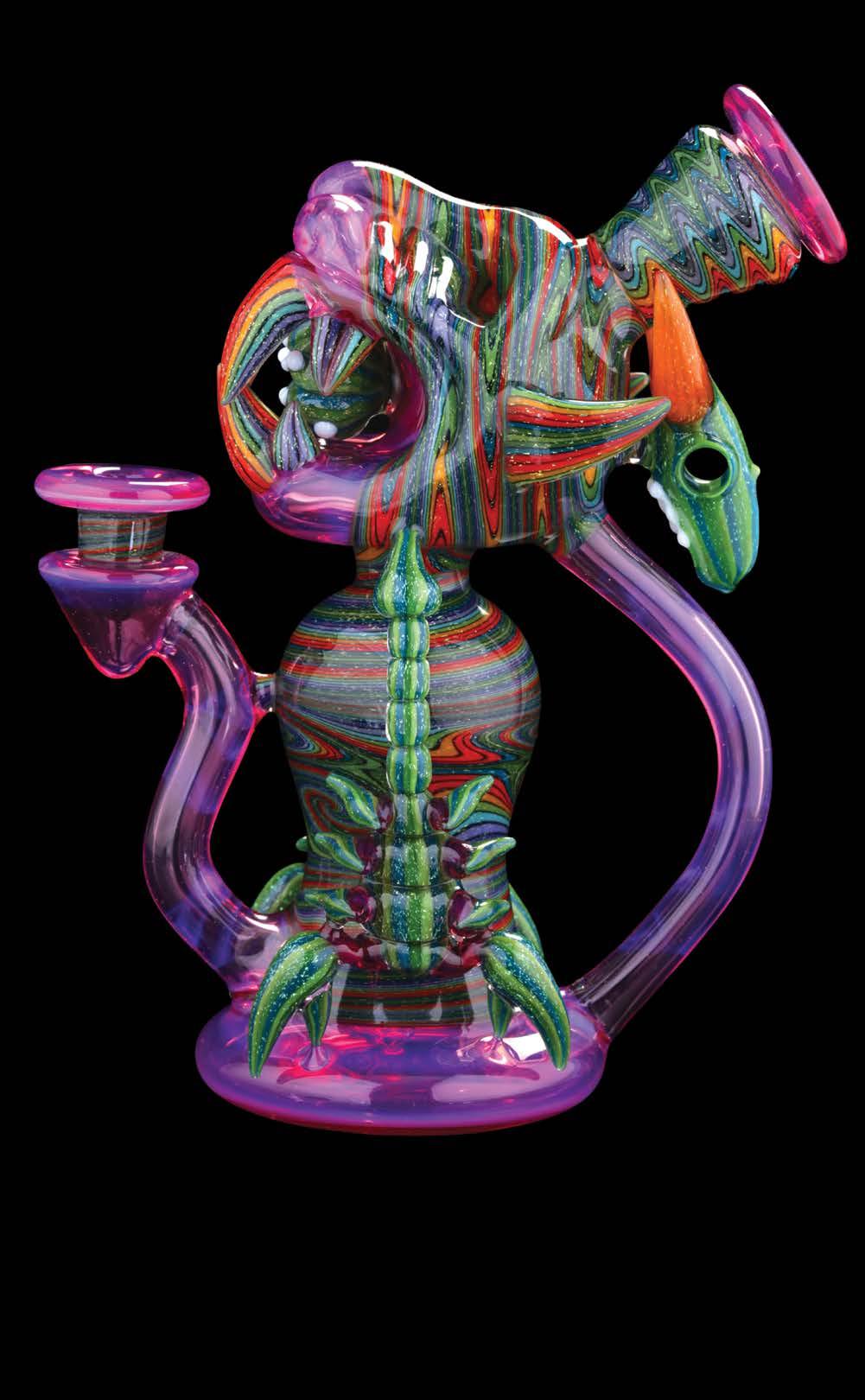
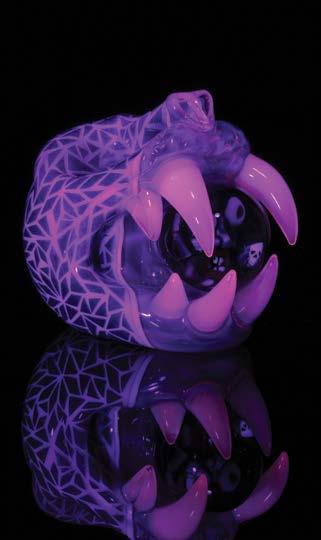
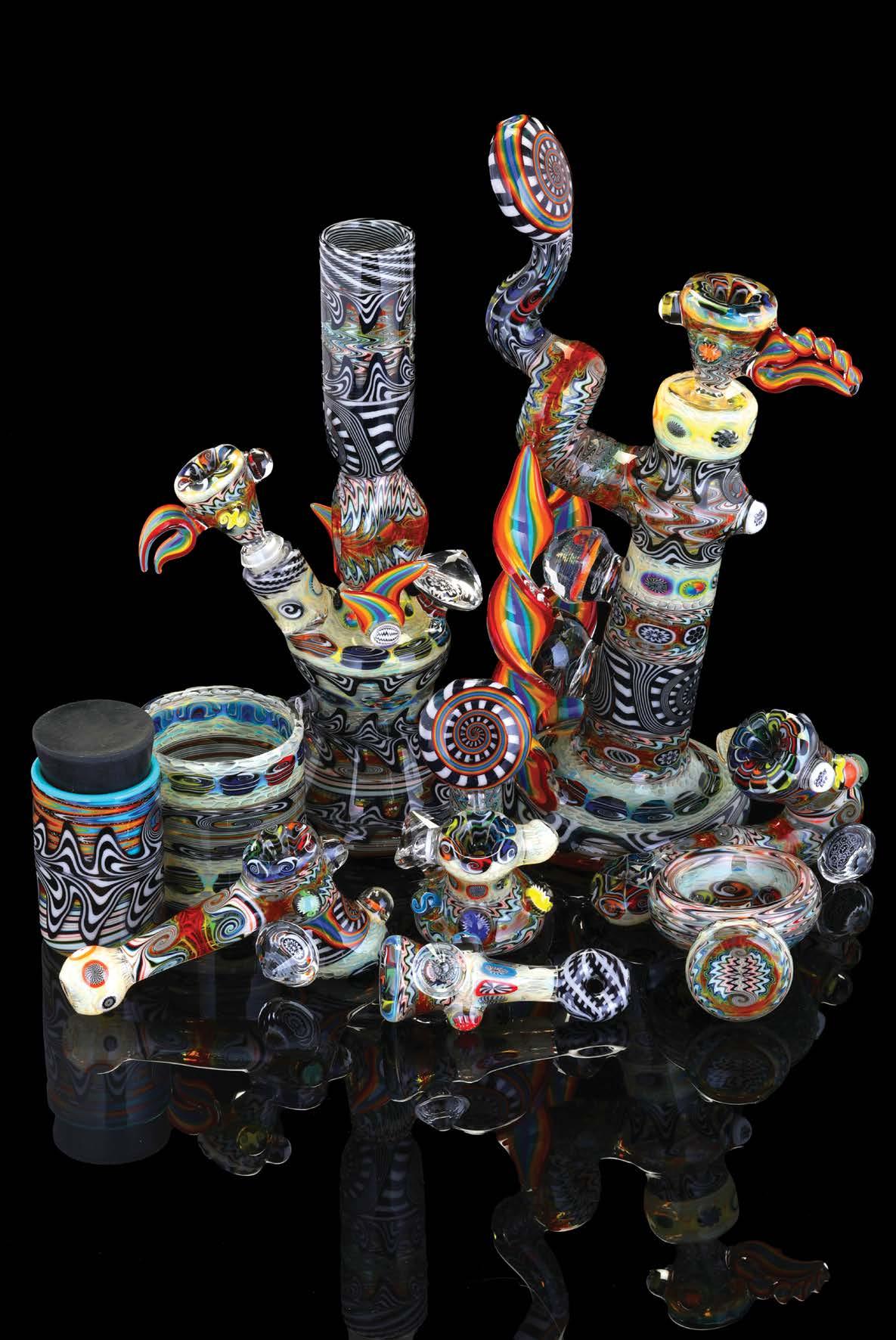
On the cover is an epic Pinky Brewtz, Darby Holm and Mike Luna-collab, captured in technicolor splendor by longtime Leaf photog Wind Home. And if you happened to notice this month's borderless cover, well just remember: Life rewards the bold.
PHOTO BY WIND HOME @WINDHOME @PINKYBREWTZ @DARBYHOLMGLASS @MIKELUNAGLASS
CONTRIBUTORS
AJ AGUILAR, FEATURES
BOBBY BLACK, DESIGN + FEATURES
TOM BOWERS, FEATURES + PHOTOS
JACKIE BRYANT, FEATURES
JIMI DEVINE, FEATURES + PHOTOS
JEFF DIMARCO, PHOTOS
DAVID DOWNS, FEATURES + PHOTOS
JULIUS GUTIERREZ, PHOTOS
REX HILSINGER, FEATURES + PHOTOS
ELLEN HOLLAND, FEATURES
WIND HOME, PHOTOS
MATT JACKSON, FEATURES + PHOTOS
TERPODACTYL MEDIA, PHOTOS
MITCHELL PETERSON, PHOTOS
MIKE RICKER, FEATURES + PHOTOS
CHRIS ROMAINE, PHOTOS
KATHERINE WOLF, FEATURES JAMIE ZILL, PHOTOS
We are creators of targeted, independent Cannabis journalism. Please email us to discuss advertising in the next issue of California Leaf Magazine. We do not sell stories or coverage. Email ricker@leafmagazines.com to start advertising!

Exclusive Cannabis Journalism CONNECT WITH CALIFORNI A LEAF


Thanks for picking up The Glass Issue of the Leaf!
Art is one of the few pillars of the Old World remaining, enduring because nothing more beautiful than artistic expression has ever come from huma n hands.
While many think of classical fine art as the “Mona Lisa” or Claude Monet’s impressionism pieces hanging in fancy museums, the most OG art is in the form of stained glass in churches and cathedrals around the world.
Glass can hold color and shape for hundreds or even thousands o f years without fading or degrading like a painting.
At the Metz Cathedral in France, this magical display of glass and light is on full display. It’s known as “God’s Lantern” for the amount of light coming through the nearly 70,000 square feet of stained glass windows, which depict religious scenes with glass set as far back as the year 1250.
Before there were TVs or screens, artists created famous scenes in glass and constructed not just windows, but unique goblets, jew elry and other forms of art that have lasted through the centuries.
Made in fourth-century Rome, the “Lycurgus Cup” is one of the earliest examples of silver and gold fuming in glass. This technique gives the majestically crafted vessel different colors depending on the light passing through it and whether it holds liquid.
"I’VE SEEN PEOPLE RIGHTFULLY CARE FOR THEIR MOTHERSHIP DAB RIGS WITH THE SAME ATTENTION AND REVERENCE AS THEIR CLASSIC CARS.”
This type of art can’t be generated with artificial intelligence and can’t be mass-produced in a factory. A combination of heat, color and passion pours out of the artist and into molten glass, reforming and shaping it into something beautiful that, if properly cared for, can last forever.
Most unique of all is the fragility, the nature of glass being that it can break. You can’t really break a painting or a bronze statue, but glass art is especially valuable and unique because of the care involved.
I’ve seen people rightfully care for their Mothership dab rigs with the same attention and reverence as their classic cars.
With all respect to glass artists, from stained to soft glass t o the borosilicate community, our favorite glass pieces are the ones that get us high, which this magazine celebrates.
I’m proud to say that our 15th annual Glass Issue is our best one yet!



GLASS FROM THE PAST

Remembering the smoking apparatuses from throughout my weed-smoking life

I’m just going to get my ultimate weed confession out right here at the top: I am a terrible joint roller. Sure, I can get together a smokable joint in a pinch. Last year, I was on a rooftop terrace in Barcelona, Spain, with rolling papers, a grinder and a jar of Garlic Budder, and I made it work.
LIKE THE BEATLES LYRICS, “I get high with a little help from my friends.” I’m lucky that many of the people I typically hang with all know how to roll joints better than I do. Because of the master rollers in my weed-loving circles, I get away with smoking a lot of Cannabis that I did not have to roll up myself, but I also generally have a backup option.
I typically carry a glass pipe in my purse as a just-in-case alternative. I’ve also been known to stuff cones (a nice joint option because they don’t require licking the seal, which is sort of unsanitary if you think about it).
I have fond memories of my first pipes. When I got my first job at a Cannabis magazine, my then-boss gave me a pipe as a gift. It will always be a favorite, as it represents success in a field that was initially just something I loved and then turned into a job. Early on, I invested in a padded pipe-carrying pouch that could hold my pipe, a little weed and a lighter.
Pipes are my main option for on-the-go smoking, but bongs have also always had a place in my heart for at-home smoke seshes. When I was younger, my friends had a 4-foot plastic bong from Graffix with a scary clown face on it. A friend had to light the bowl for you, and while it did get you super ripped, it wasn’t the best-tasting hit because it was made of plastic. Smoking out of glass just tastes better.
I had some basic bongs back in the day, but my first real bong purchase happened because of my job in weed journalism. Back then, I got to travel a lot for work. One place I frequently visited was a glass show in Las Vegas. I worked the magazine booth, getting the word out about what we were writing, and I would walk the floor on my break.
This show, CHAMPS Trade Show, featured cool activations, including live glassblowing demonstrations and a glass car demolition derby. There was a lot of glass for sale, and I bought a green bong with a big glass marble and an extra glass swirl around the outside. I got a great deal on the bong because I was at a business-to-business show, and then the shop owner shipped it to my house so I wouldn’t have to worry about breaking it on the flight home. I smoked out of that bong for a long time, but at some point, it must have broken because I don’t have it anymore. More than a decade ago, at my first job in Cannabis journalism, I was lucky to work in an office where I could have a bong on my desk. Even though we weren’t supposed to smoke in the office, some rules are meant to be broken. We tried to be respectful of the other offices around us, and every once in a while, we’d hit the bong and blow the smoke out the window. When the COVID-19 pandemic closed our office for good in 2020, I inherited the bong. It’s pretty amazing, with multiple chambers to filter the water.
Nowadays, I use another bong from that era, which was sent to me as a gift, as my travel bong. I have a large padded bag for it that I use as sort of a briefcase whenever I’m on a reporting assignment where there might be an opportunity to sample some flowers.
I recently got to do a taste-testing session with my main weed mentor, Cannabis cultivation expert Ed Rosenthal, and everyone was impressed that I brought my own bong. I knew I wouldn’t be able to roll up respectable joints, so I brought my bong to make sure I could sample all the weed on offer that night.

My new favorite bong is from Jerome Baker Designs. When I was a youth, the bongs I coveted were from Jerome Baker Designs. Established in Eugene, Oregon, in the early ’90s, Jerome Baker was one of the leading Cannabis glass companies throughout the ’90s and early 2000s.
Smoking out of glass just tastes better.
In 2003, Jerome Baker, aka Jason Harris, was arrested by federal agents as part of Operation Pipe Dreams, a nationwide crackdown on Cannabis accessories. Harris had his assets seized and was sentenced to one year of house arrest and five years of federal probation. In 2012, after Colorado’s recreational Cannabis legalization, Harris
relaunched the original Jerome Baker Designs and established the Las Vegas Dream Factory at its headquarters in downtown Las Vegas. In 2024, I went to Jimi Devine’s Heat Quest in Las Vegas and smoked off of the bong gifted to him by Jerome Baker. Once I tried it, I decided to fulfill my youthful dream of having one, so I contacted them and paid a visit to the Dream Factory I love my bong and how it rumbles when I hit it. I love how stoned I get when I smoke off of a bong. I recently had a party where I was encouraging my guests to hit it. Remembering my glass from days of yore brings me back. These are physical touchstones from my life, artistic tributes that mark my love for a flower.

ADOBE STOCK


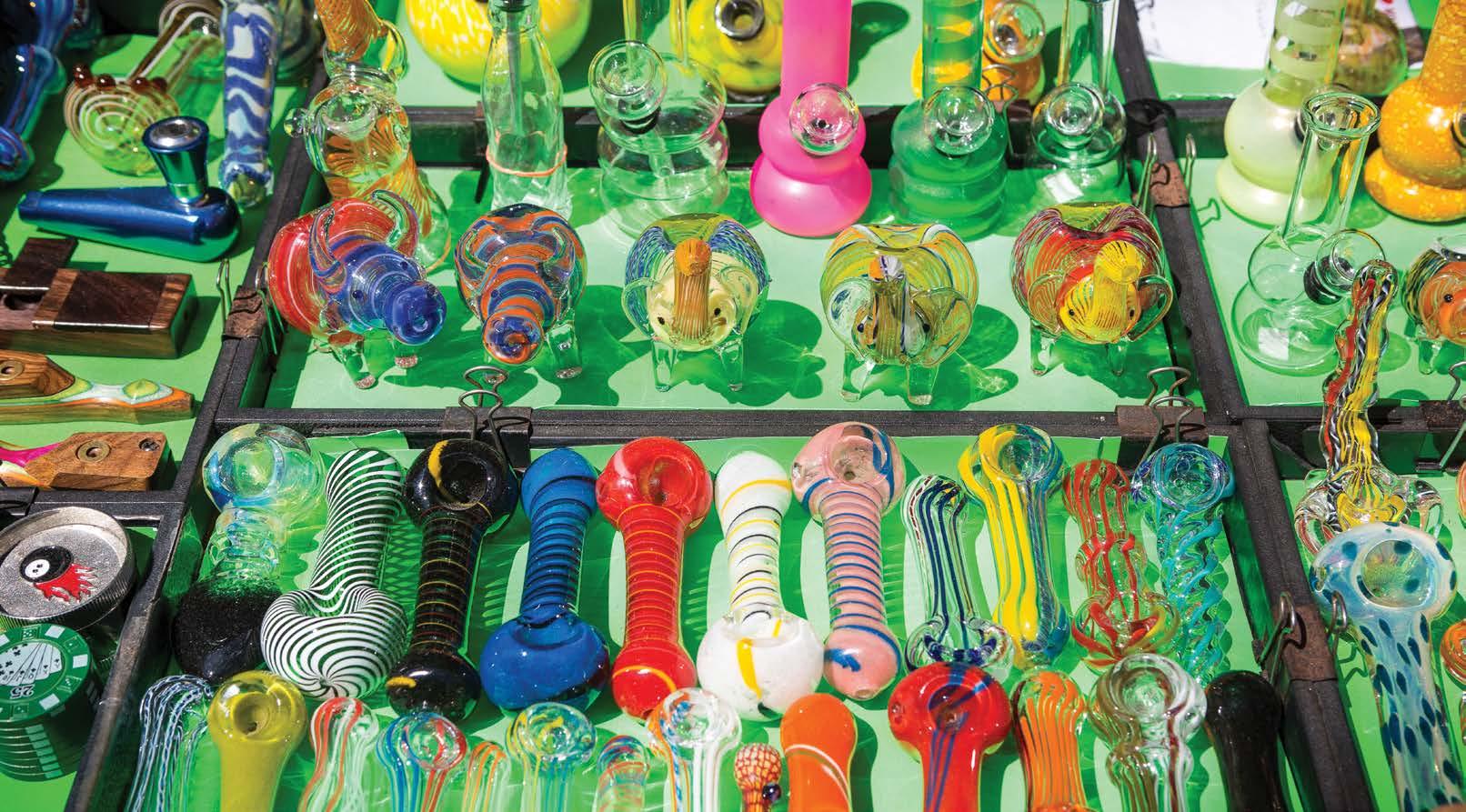


TO ALL THE PIECES WE’VE LOVED AND LOST
Today, I write to you from the depths of pure devastation. Recently, my beloved little bowl leaped out of my handbag and crashed onto the tile below, shattering into a few big, unmistakable pieces. Not a crack. Not a chip. Total annihilation. My stomach instantly dropped. My chest clenched. And then, dramatically but also completely sincerely, I actually started crying. If you’ve ever broken a piece you actually loved, you already understand the scale of this reaction. It’s disproportionate, sure. It’s also completely correct.
WAS MY PIECE, MY LITTLE SIDEKICK. It came everywhere with me and served me well for a few years, which by any measure is a long-term relationship. Long ago, a friend gave it to me — I haven’t seen them in years, but the pipe stuck around, which felt like a small, useful physical talisman forever marking our connection in time and space. It was tangible. It held memories. It held routine. It held, quite literally, the shape of my hand — until it didn’t.
There’s something uniquely brutal about the way glass breaks — not just physically, but existentially. One second, it’s intact, integrated into your life, part of your daily sensory rotation.
The next, it’s a pile of fragments you can’t fix or glue back into anything functional. You can’t pretend that it’s the same object. There’s no slow fade; just a hard stop.
I did what any rational person would do: I tried to assign meaning to it. It was Mercury retrograde
— fitting, actually — and Instagram assured me that we were all in a period of releasing what no longer serves us, on top of it. Fine. Sure. If my spoon was cosmically destined to exit my life, who was I to argue?
This is, of course, bullshit. But it’s elegant bullshit, and sometimes that’s enough to get you through the first 24 hours. Because the real issue isn’t just that it broke. It’s that a glass piece, if it’s a good one, is never just a thing. It’s functional art in the most literal sense — you don’t hang it on a wall, you mostly, actually live with it. You handle it constantly. You build rituals around it. It becomes embedded in your muscle memory in a way that’s hard to replicate with anything else.
It’s a friend. A good piece changes your Cannabis experience by shaping and refining it. It becomes the portal between you and the plant. And portals are sacred spaces!
And then, because it’s glass, it reminds you that none of that is permanent. There’s a lesson in there, if you want one. Something about attachment, about fragility, about the risk inherent in loving objects that are designed — beautifully, inevitably — to break.
Or, more realistically, there’s just this: If you’re going to care about your pieces — and you should, because that’s half the point — you also have to accept that one day, probably at the worst possible moment, you’re going to watch one hit the ground and shatter. And it’s going to feel bad.
If my spoon was cosmically destined to exit my life, who was I to argue?
Which means when it’s gone, it takes a small but specific version of your life with it. That’s the part that catches you off guard. Not the inconvenience — though, yes, suddenly you don’t have your preferred way to smoke, which is its own kind of crisis — but the absence of something that felt quietly essential.
You’ll replace it, eventually. You’ll find another one that fits in your hand the right way, that earns its place in your rotation, that starts to accumulate its own set of associations. It won’t be the same, which is exactly why this one will stick. But for a minute — or an hour, or a day or however long your grief lasts — you’re just standing there, looking at the pieces, thinking: Well, fuck. And honestly? That’s part of it, too. Thanks for the memories; onto the next piece we go.

FIRE FOLLOWER A NEW BLOOM FOR BLUEBERRY STRAINS
TERPHOGZ’S NEW BLOOBERRY LINE GOES UP AGAINST BLUE CAVIAR, BLUE LOBSTER AND MORE
Consumers and growers are in for the kind of competition that we can all rally behind: a tussle for who has the loudest blueberry terpenes in the Cannabis game.
Terphogz — the California-based popularizers of Zkittlez (known as The Original Z, or just “Z”) — debuted five new Blueberry strains dubbed the “Blooberry Line” for spring. Terphogz’s managing director, Jon “Jondo” Orantes, said, “It’s begun, the blueberry wars have.”
The declaration encapsulates a simmering trend in contemporary ganja, with peer brand Cookies selling Blueberry Caviar flower. Berner is developing new crosses from it with award-winning Ridgeline Farms. Blue Lobster nabbed a nomination for 2025 Leafly Strain of the Year. Blue Nerdz continues to dominate. I’ve smoked all of these strains — they’re fire.

TERPHOGZ
BLOOBERY
Let’s get into the Terphogz Blooberry drop first.
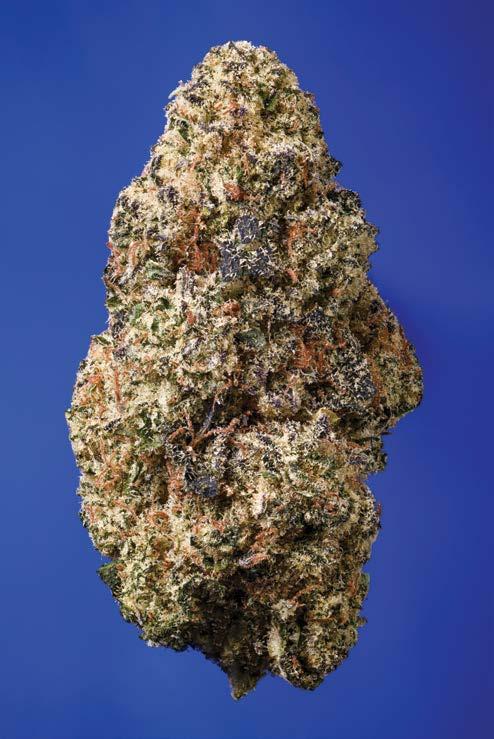
Terphogz has released about 30 to 50 regular seed packs of Blooberry Headband (707 Headband x Bell Springs Blooberry), Blooberry Pie (Z-Pie x Bell Springs Blooberry), Blooberry Zruntz ((Z x Runtz) x Bell Springs Blooberry), IC Bloobies ((Ice Cream Cake x Sherbert) x Bell Springs Blooberry) and Black Truffle Blooberry (Black Truffle Gelato x Bell Springs Blooberry).
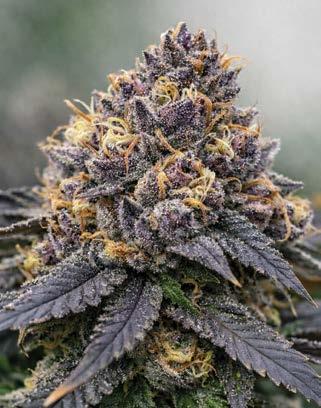
The priciest is the Blooberry Headband at $269 for 10, which tells you where the hype is at. The rest of the set goes for $240 for 10.
Why this drop now? Terphogz has a hit with 2023’s Blooberry Z (Dankster Blooberry x Z), which is $180 for 10, and its 2025 offspring Bloogatti (Bubblegum Gelato x Blooberry Z). Bloogatti remains available for $220.
For this new Blooberry line, Terphogz co-founder Tony Mendo said the team went back to some early 2000s Blueberry work. They selected a new male based on taste, referred to as Bell Springs Blooberry, and pollinated Terphogz’s whole lineup with it. The tastiest standouts made the cut listed above.
Some are good for hash, others are good for flower. Orantes recommends the Blooberry Pie (Z-Pie x Bell Springs Blooberry), as well as the Blooberry Headband (707 Headband x Bell Springs Blooberry) for hash production.
Blooberry Pie should yield more and finish faster, with a wholesome blueberry pie aroma and flavor. The Blooberry Headband may take longer and yield less, but it has the most hype. The Headband and blueberry terps hit like a musical mix of high and low frequencies.
Each regular pack should have the typical polyhybrid spread of phenotypes: a mom-leaner, a dad-leaner, several hybrids of both parents and a recessive weirdo.

Award-winning journalist, author and former Leafly senior editor David Downs’s monthly genetics intelligence dispatch.
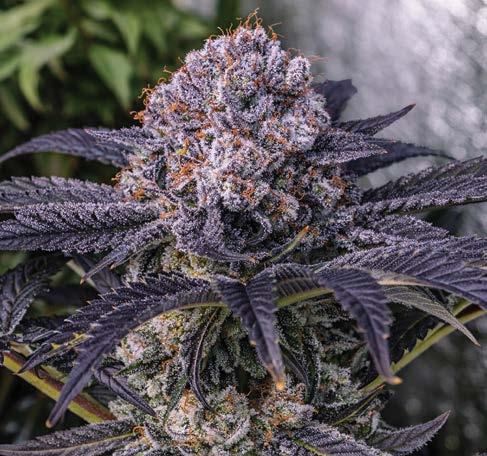
BLOOBERRY ZRUNTZ
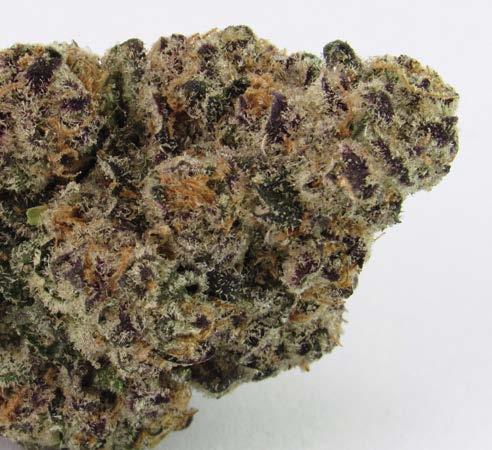
UMMA SONOMA BLUE LOBSTER
Mendo said growers can expect “more of a broader spectrum as far as the Blueberry lineage goes, as well as some of those deep killer blueberry jelly terps.”
Orantes said, “If you’re like me, you’re just praying for the weirdo ones.”
Blooberry Zruntz ((Z x Runtz) x Bell Springs Blooberry), IC Bloobies ((Ice Cream Cake x Sherbert) x Bell Springs Blooberry) and Black Truffle Blooberry (Black Truffle Gelato x Bell Springs Blooberry) will be your top 40 radio hits for cash cropping.
BLUE BELLES
In honor of the blueberry bloom of 2026, here’s a roundup of Blueberry strains we’re seeing out there.
All respect goes to Oregon breeder, legend and super-nice guy DJ Short. His 1998 F4 Blueberry is $59 for four feminized seeds.
DJ Short told the Leaf that the Blueberry cultivar stays uniquely effective, and it’s always satiating.
THE HEADBAND AND BLUEBERRY TERPS HIT LIKE A MUSICAL MIX OF HIGH AND LOW FREQUENCIES.
“I call it tolerance threshold, or burnout, and Blueberry shines there,” he said. “It’s the sense of satisfaction that applies beautifully to the Blueberry. That’s why she’s holding through this test of time.”
DJ Short’s son continues the mission as the brand Blue Star Seed Co. with Candied Blueberries F1 (Zkittlez x 1998 F4 Blueberry S1) and Stoned Berry F1 (Chem D x 1998 F4 Blueberry S1), which he said has “pungent, raunchy, chemical-diesel aromas with grape hash, apple cider and berry pastry notes.”
The brand Life is an Adventure has a Blue Cheese (Big Buddha Cheese x Blueberry) that’s $25 for three fems.
Atlas Seeds sells a Blue Dream Auto (Blue Dream Auto x Blue Dream Auto) that “can be set loose outdoors and it does its thing without a lot of fuss,” according to its product description. In clone form, the widely respected Rebel Grown also has Blue Dream cuts for $99.
New in 2026, Blueberry Honey from Humboldt Seed Company smells and tastes just like it sounds.
Got a favorite blue strain we missed? Send recommendations to david.downs@gmail.com
TERPHOGZ
COOKIES BLUEBERRY CAVIAR




SFSPACE WALK


Get ready because 420 is coming, and your friends are going to start asking where you’ll be on the big holiday. For the third year in a row, David Downs and crew are answering that question with SF Space Walk, a citywide Cannabis celebration that will take over San Francisco for an entire week.
DOWNS SAID he wants Space Walk and his other events, Hash Week and Terpnami, to be the kind of moments that bring people into San Francisco to experience the vibrant feel of the Bay.
“Every week is weed week for Cannabis lovers, but we turn San Francisco up a notch for April 20,” Downs said proudly.
When the event first began in 2024, Downs told us that even though the city’s famous Hippie Hill celebration had ended, he wanted to prove that Cannabis culture is alive and well in San Francisco by doing something that brought together people from inside and outside the industry and promoted the idea of Cannabis tourism.
“Every week is weed week for Cannabis lovers, but we turn San Francisco up a notch for April 20.”
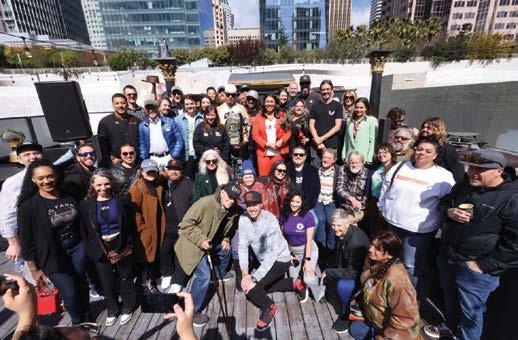
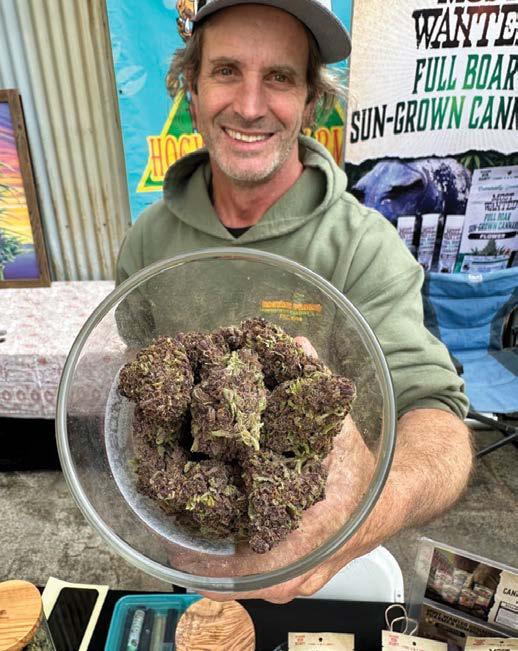
Downs has organized the type of experience that invites stoners to a celebration in the city while also connecting culture with commerce. To this point, Space Walk creates moments where stoners can meet with farmers face to face, but there are also community events for anyone who just wants to celebrate. This year, Space Walk adds a club party, video game tournament, film night, food collabs and heady book giveaways to the list of events.
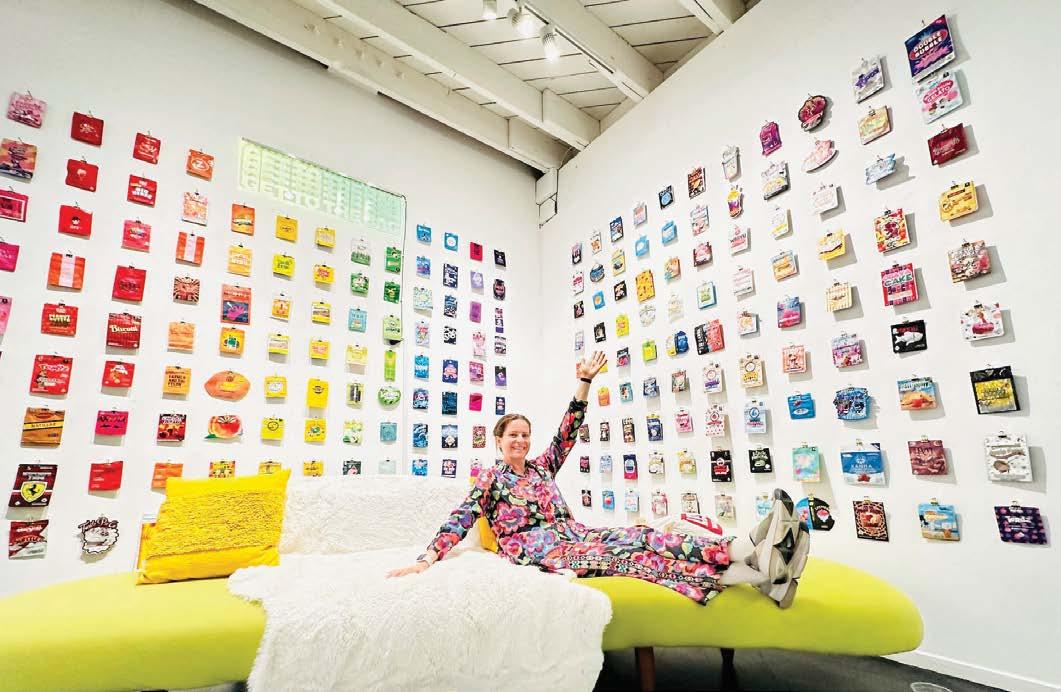
Along with this comes the return of Downs’ “Get To The Bag,” a traveling gallery show dedicated to the art of modern weed packaging. This 1,800-piece exhibit spans three decades and three continents, giving West Coasters a chance to get up close and personal with some of the extravagant trap packaging that you’ve seen on social media.
SFSPACEWALK.COM | @SFHASHWEEK
Indoor/outdoor showcase with Snowtill bringing Galactic and Screamberry plus Huckleberry Hill Farms’ Whitethorn Rose at 7 Stars.

and a Street Fighter tournament at The Emporium
Moon Valley Cannabis releases new living soil flower at SPARC on Polk with Emerald Sky edibles and Fire King extracts.
415 Day at Mission Cannabis Club: Sense dropping Yuzu Sour, and three new releases by Sunset Connect.
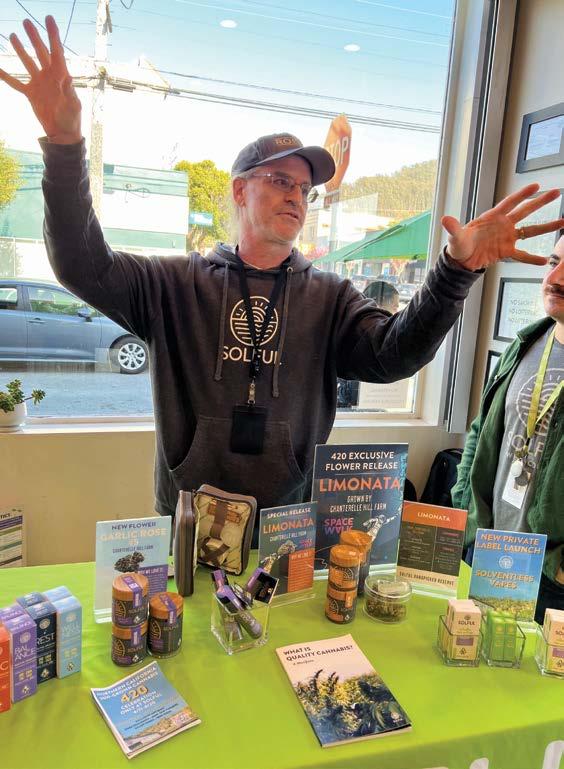
Sun-grown showcase at Solful on Irving Street. Alpenglow debuts Bolinas (bred by Purple City Genetics in Oakland)
Umma Sonoma drops Blue Lobster and Bosky Genetics releases Gumosa and Happy Hour at Moe Greens lounge.
Sesh three low-THC, high-CBD strains from Sonoma Hills Farm at Fig & Thistle’s lounge. SF Space Walk Club Party in SoMa offers genetics from Purple City Genetics, Arcana, Zeed Vault, Grandiflora and more.
Wood Wide High Craft drops the new 4X4Z at BASA SF on Divisadero Street. Pizza, beer
barcade.


ESPIE REINOSA

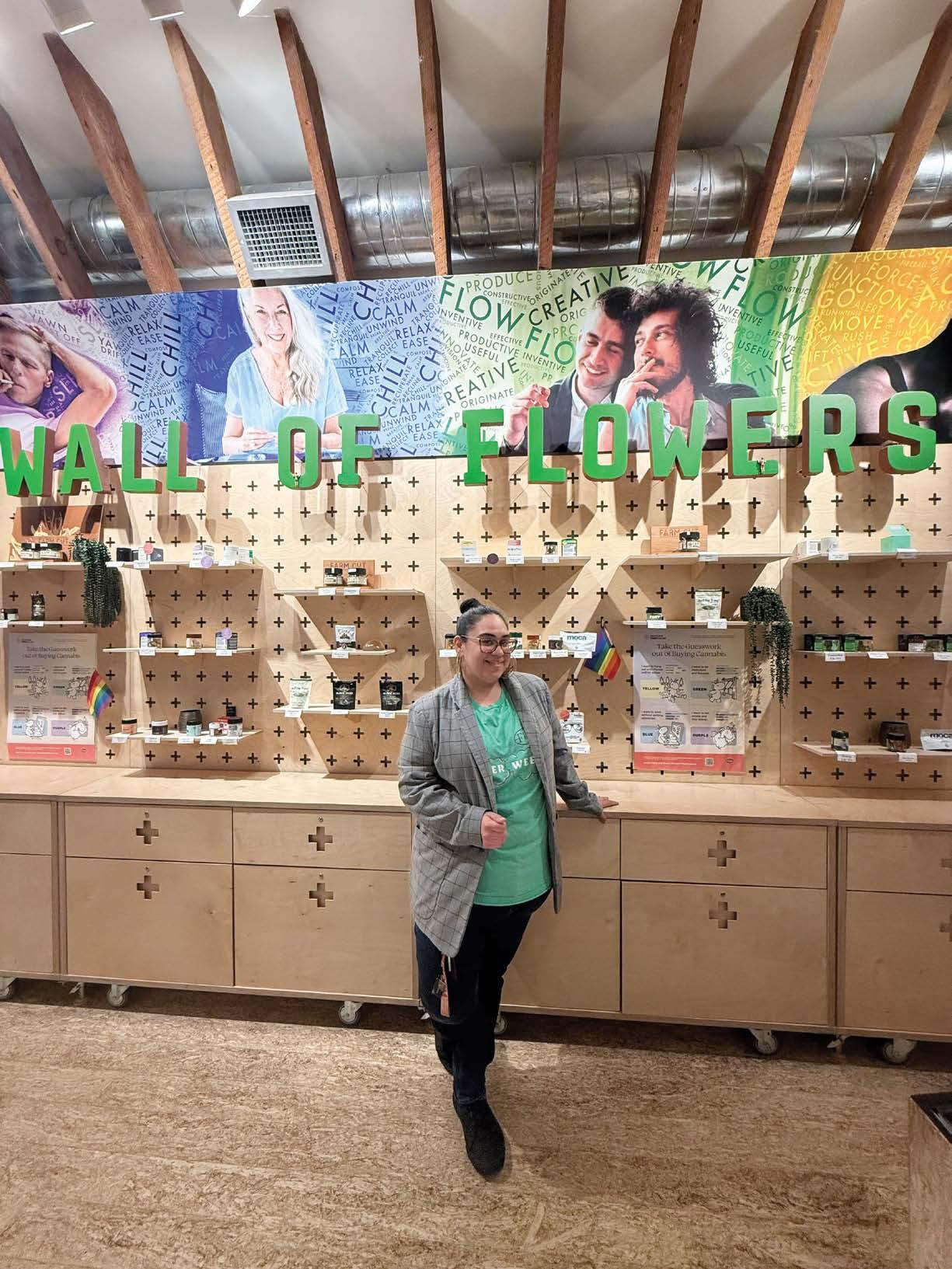

Reinosa helps make America’s cutest queer pot shop a place where everyone knows your name
UNLIKE A CORPORATE CHAIN, Flore in the Castro embodies the personality of its founder, Terrance Alan, the late Cannabis leader. Alan was a grower for Dennis Peron, who co-authored Proposition 215 in 1996.
South San Francisco resident Reinosa, 36, said she misses Alan and channels his energy and openness at work.
“I just love the fact that he’s so openarmed, and that makes me want to be friends with everybody,” she said. “We’re almost like the ‘Cheers’ of the Castro. Everybody knows us. We know our customers, and everyone just has fun when they come in.”
If Flore is “Cheers,” that makes Reinosa the bartender, Sam.
She is a San Francisco native and has smoked Cannabis since she was 18. She learned about the plant’s medicinal properties in her 20s.
Websites like Leafly and brand reps added to her knowledge as she rose from budtender in 2017 to general manager of the pioneering SPARC dispensary. She became a brand rep before landing at Flore in 2024.

“It’s just been a dream,” Reinosa said of working at the proudly queer shop.
The best question to ask her is, “What’s fresh?” (Ask for Humboldt outdoor from Ladybug Farms.) “What has the highest THC?” is the worst question for her.
“WE’RE ALMOST LIKE THE ‘CHEERS’ OF THE CASTRO. EVERYBODY KNOWS US. WE KNOW OUR CUSTOMERS, AND EVERYONE JUST HAS FUN WHEN THEY COME IN.”
San Francisco visitors and locals flock to Flore, an intimate dispensary in the Castro District, for its family vibes and personalized service. Flore’s success hinges on assistant general manager and event coordinator Espie Reinosa, who can be found on the sales floor educating customers.
“Having the percentage is nice, but you also want to look into other factors,” she said.
Reinosa loves loading her Dr. Dabber Switch² with Moroccan Peaches and Whitethorn Rose.
She is most interested in the future of rare medical cannabinoids like cannabichromene, aka CBC. Her daughter’s name is Myrcene. Reinosa also loves throwing events. On tap is an April 18 Errl Hill and Black Bear Farms party on Flore’s backyard patio.
“Events are going to be a big part of Cannabis,” she said. “That’s where I really want to focus and help.”
When asked what advice she’d give to aspiring budtenders, Reinosa said, “Get knowledgeable. Learn about terpenes and cannabinoids, and apply at all shops, not just your favorite one.” @BOSS_E415
DAVID DOWNS

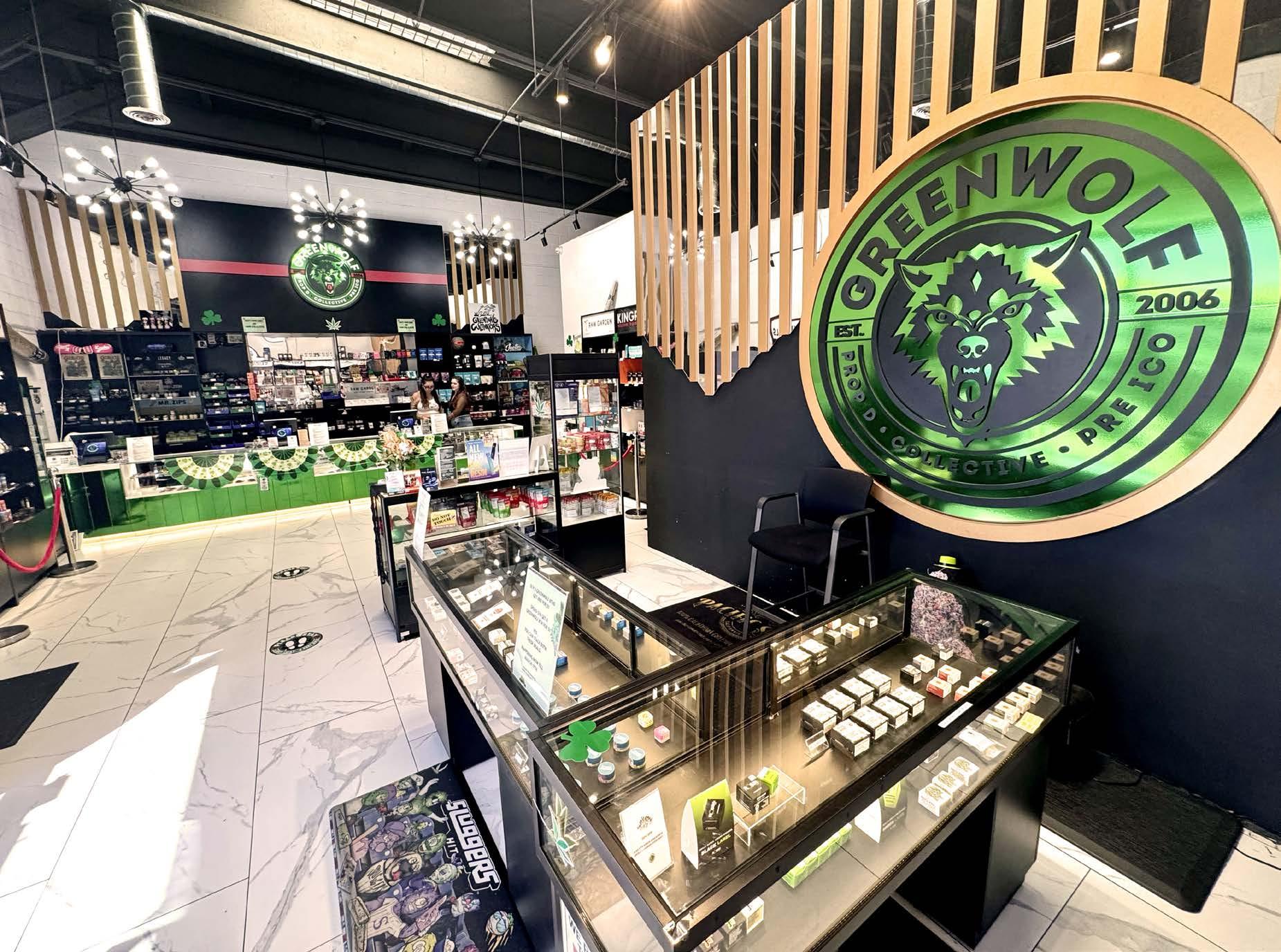

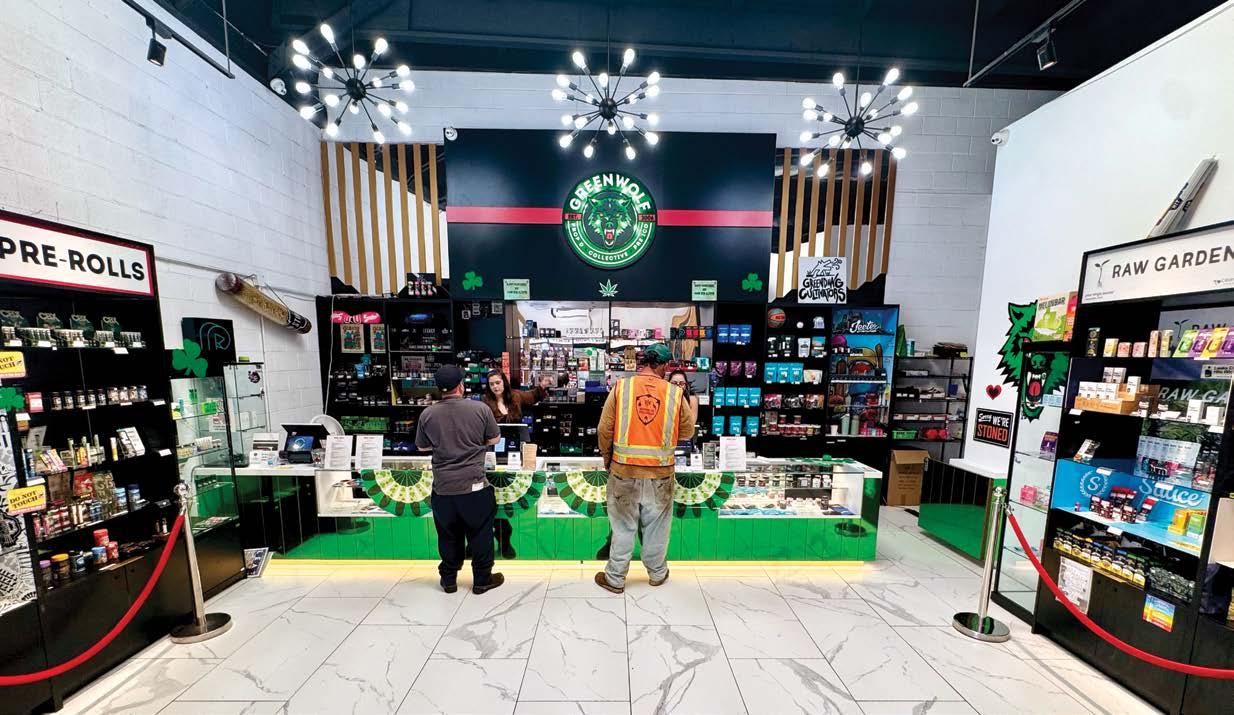
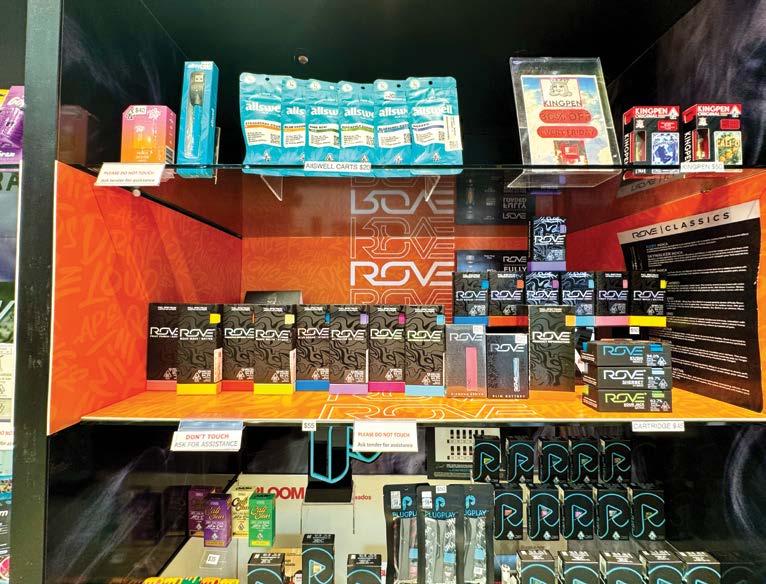
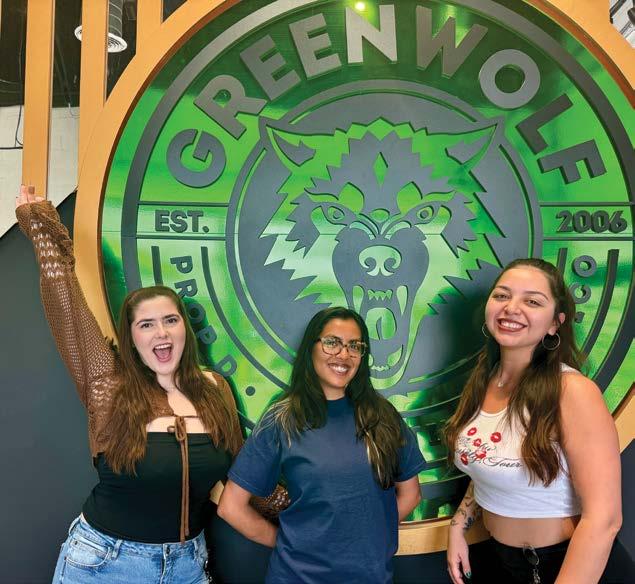
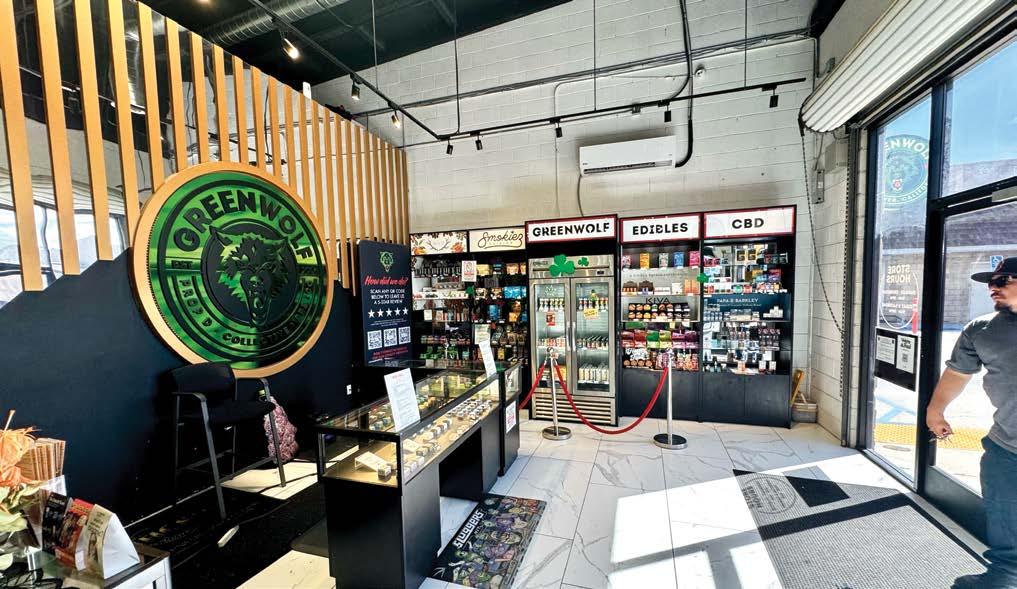

GREENWOLF IS DEDICATED TO INVESTING IN ITS CUSTOMERS AS WELL AS THE CITY AND COMMUNITY IN WHICH IT OPERATES.
For over a decade, Greenwolf has been on an undeniable ascent. Having been part of the Cannabis scene since 2014, the founders believe experience has played a major role in the way Greenwolf has maintained happiness and satisfaction among its staff and clientele.
SINCE BRANDING its Bellflower location six years ago, the team has created a unique spot that is different from any other store in Los Angeles. That’s because the approach is all about community givebacks, investing in its all-female staff and a rigid policy that ensures products are fresh.
Greenwolf Bellflower has the unique distinction of having its own dedicated cultivation facility nearby, which grows exclusively for this store. This affords the storefront the luxury of offering the freshest Cannabis in Los Angeles. Additionally, store policy only permits flower to sit on the shelf for two weeks. Anyone who opens a package of Greenwolf flower will immediately sense that it is properly dried and cured while remaining as fresh as possible.
The store and its employees respect the medicinal properties of Cannabis, so customers will always find a great selection of CBD and wellness products alongside a staff ready and able to provide all the valuable information on how to use them.
Greenwolf is dedicated to investing in its customers as well as the city and community in which it operates. While most people are familiar with the consumer-facing Zalympix event Greenwolf hosts each year to showcase the best and brightest in Cannabis, how the company gives back is less publicized. The vertically integrated store hosts an annual toy drive to benefit the local children’s hospital, has helped raise money for local foster care facilities and even played a part in building a local baseball field.
STAFF’S FAVORITES

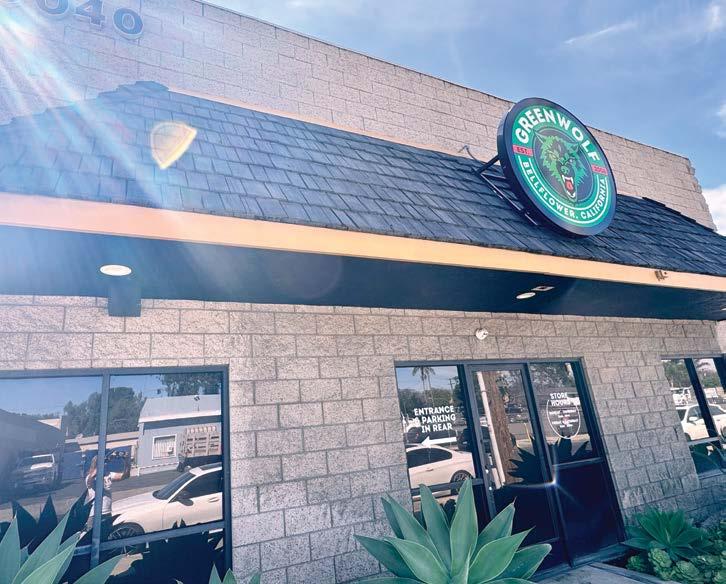
People also love coming to Greenwolf Bellflower for the many different customer appreciation days. Sure, they have the usual happy hour, but not many stores can boast about celebrating Grilled Cheese Day or Pie Day with their patrons. The storefront is even about to implement its own Budtender of the Month award, as we do at California Leaf. Each month, they’ll recognize a team member, lace them up with a bunch of goodies and give them access to an executive parking spot. With an all-female staff, a laser focus on freshness and a selection of some of the highest-rated products in the game, what impressed California Leaf most about Greenwolf Bellflower was the lengths they go towards ensuring the Cannabis industry remains a fun place to work.


BY ALONDRA, ALEXANDRA & ARIANA FLOWER
Topshelf Whoa Si Whoa
Khalifa Kush Violet Sky
Kush Co. Wild Bill
CONCENTRATE
Pistil Whip Moroccan Peaches rosin
Rosin Tech Labs Peach Peel rosin EDIBLE
Plus Tart Cherry 1:1:1 gummies
Camino Raspberry Lemonade gummies
VAPES
Flavorade Triangle Mints vape
Cold Fire & Ember Valley Rob’s Strawnana Juice

JETTY EXTRACTS
LIVE ROSIN MOONBOW

Thirteen-year-old Oakland-based
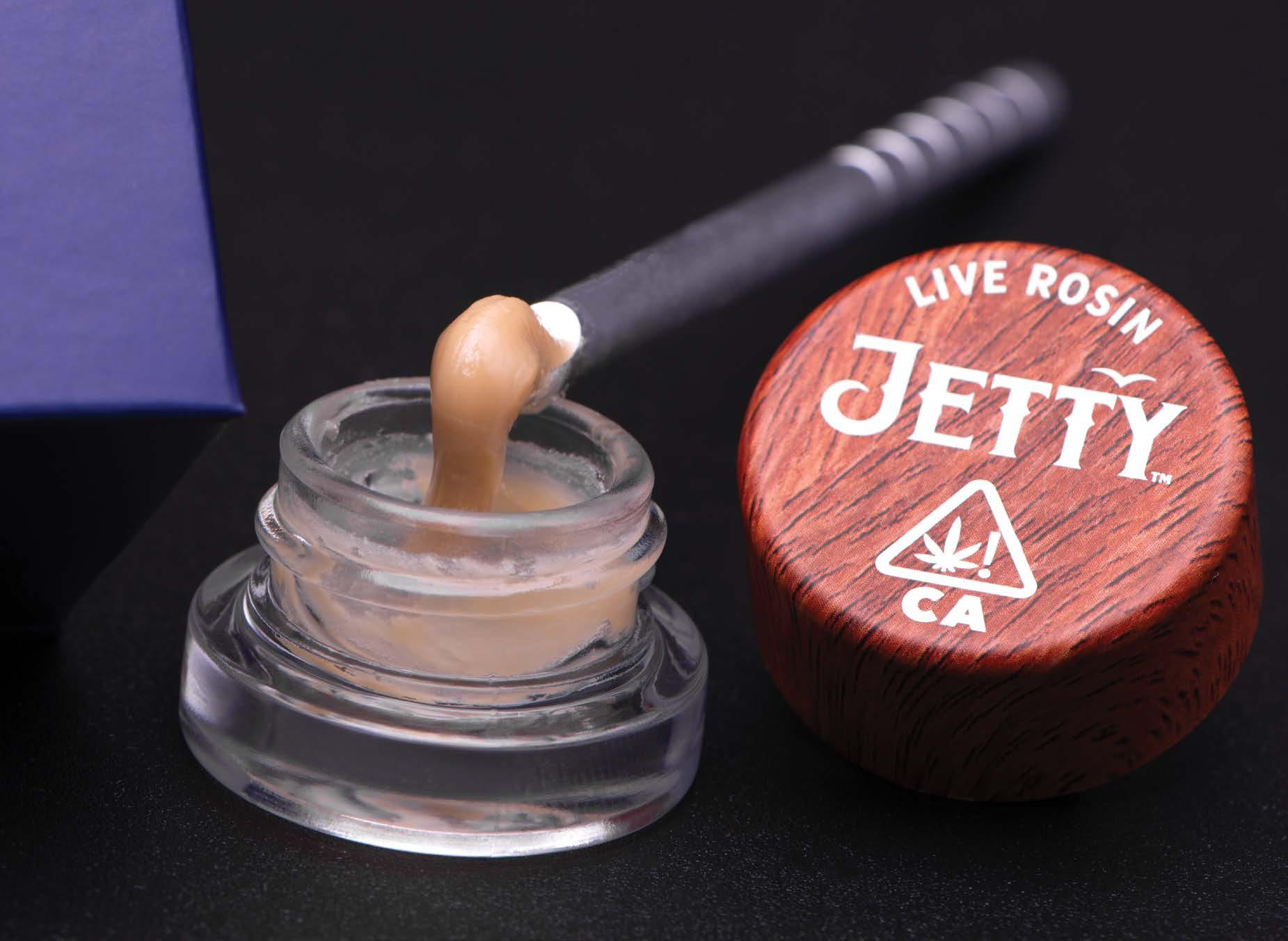
Cannabis brand Jetty has racked up wins for vape carts, all-in-one minitanks and solventless vapes. But one thing they’ve yet to hammer home: Jetty has a heady side. Their new Moonbow 1-gram live rosin dabs have arrived to wake dabbers up to the headier side of Jetty.
FOR FANS of a more pungent, hard-hitting Z terpene, Moonbow is a cross of Archive Seed Bank’s Zkittlez and DoSi-Dos. It has a Face-Off OG grandparent in it that provides a seriously aggressive aroma.
Jetty’s source material is from the hippie paradise of Santa Cruz, where Coastal Sun farmed it under California’s golden rays using organic OCal-certified standards. OCal attribution requires independent inspections and certifications by the California Department of Public Health.
A test wash ensured the Moonbow fresh-frozen flower was a fit for their solventless line. Then Jetty used ice, water, filtration, freeze-dryers, heat and pressure to craft the pale, light-golden, greasy, soft, cold-cured live rosin.
Jetty’s solventless extraction process is also OCal-certified — one of the rare OCal dabs in the state.
This Moonbow extract smells and tastes like a Z and Dosi mix of tropical taffy candy and refined gasoline with a kushy, dank bottom. It’s rocking 4.74% terps (led by beta-caryophyllene, limonene and humulene), and registers at 64.3% total active cannabinoids.
Jetty recommends using a traditional torch and rig at low temperatures to enjoy the true flavor of Moonbow. These dabs fit into a spectrum of flavor offerings — from tropical and fruit-forward to gas, candy and grapes. If kept cool enough, the live rosin makes a nice hash hole worm.
This dab may provide a mix of mental focus and body relaxation that’s great for afternoon and evening fun.
Think video games, a film or an art show, something where you want the colors turned up.
This dab may provide a mix of mental focus and body relaxation that’s great for afternoon and evening fun.
It is the debut of Moonbow rosin, and there are only 900 grams in the entire state. The future may include entering it in some competitions. So, if you see Jetty Moonbow rosin on the winner’s podium this year, remember you heard that “Jetty is heady” here in the Leaf first.


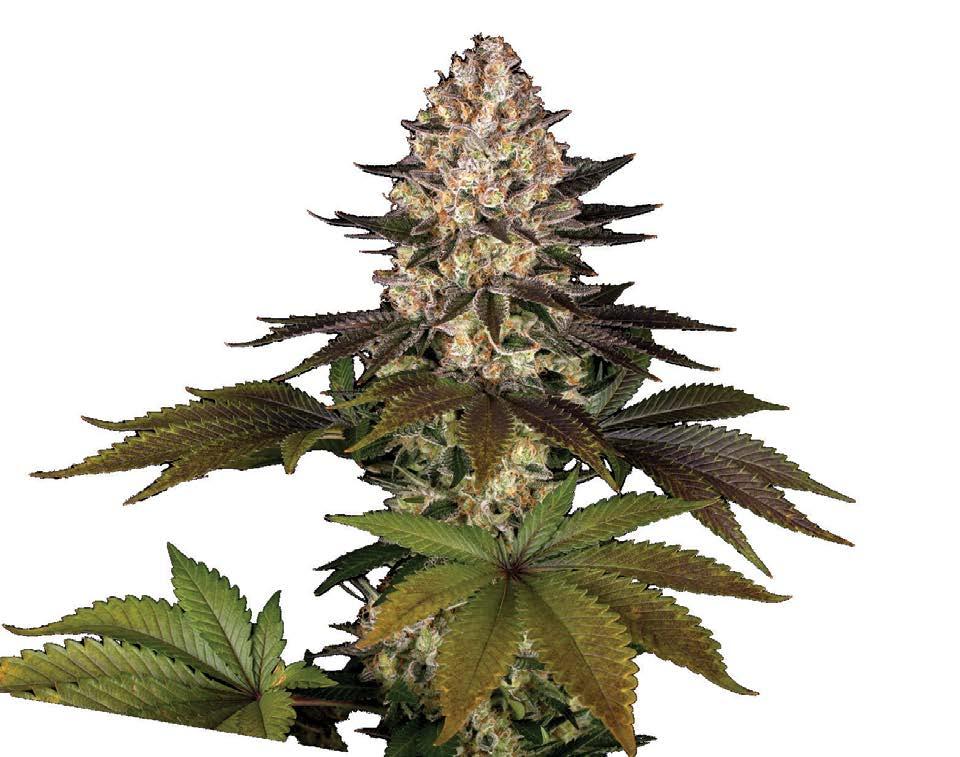
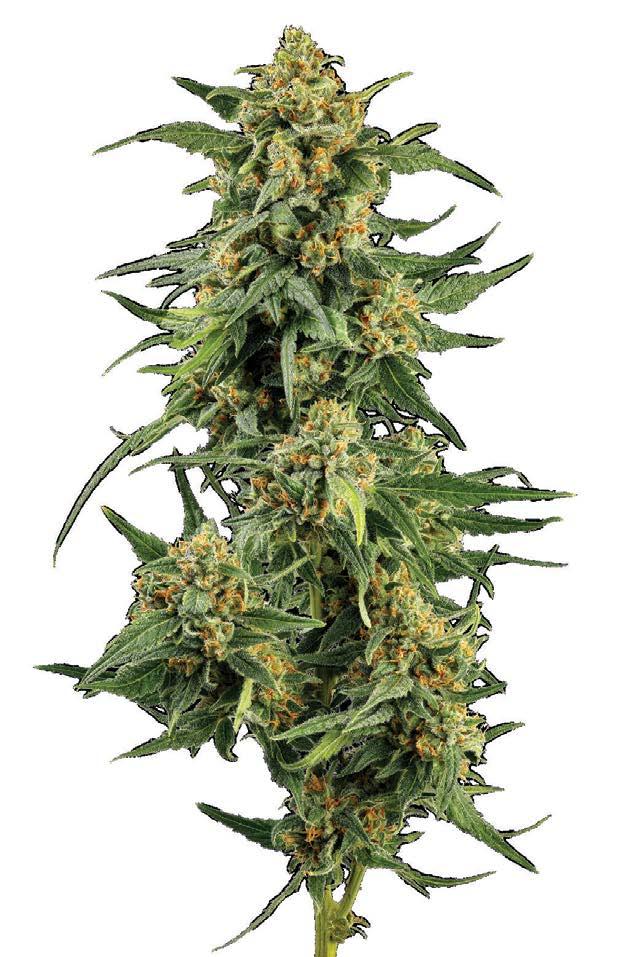
Fluffy is the newest offering from longtime Sacramento cultivation powerhouse Lumpy’s Flowers. For years, many in-house strains bred by Lumpy’s have moved the needle in a city that produces some of the finest Cannabis on the planet. This includes the popular Apple Fritter, one of the more exciting strains of its moment in its heyday, and Reckless Rainbow.
FLUFFY

CALIFORNIA
FLUFFY
Cultivated by Lumpy’s Flowers

NAMED FOR UFC middleweight contender
Anthony “Fluffy” Hernandez, Fluffy is an ode to those Reckless Rainbow terpenes. The nose is almost a complete throwback to the classic pairing of Animal Cookies and Sour Apple. You can tell Fluffy isn’t Reckless Rainbow to an extent, but it’s hard to put your finger on exactly what the difference is from its mom. The Reckless Rainbow aroma dominates Fluffy so much that the Runtz is essentially undetectable.
While an absolute heater, Reckless Rainbow can be a tricky strain to run in commercial settings. Despite the awesome terps, Lumpy’s rarely grows the strain nowadays. According to Jayson Dias, Lumpy’s founder and coowner, Fluffy has proven to be a solution to those issues. By pairing a Reckless Rainbow female with pollen from Runtz, Lumpy’s created a much more viable version of this unique terpene profile that can be run at scale.
The breeding project that created Fluffy started about 16 months ago. Eight months later, Lumpy’s went through a final 40-seed pheno hunt to find one eventual winner. The selection was based on vigor and how heavily it leaned on the Reckless Rainbow terpene profile.
Though named for Hernandez, the strain wasn’t actually bred for him. Lumpy’s had been sponsoring Hernandez with heavy helpings of Cannabis for a while before the idea to collaborate on a project came to pass. Hernandez is a friend to a few folks on Lumpy’s roster, which initially opened the door to the possibility of working together. Over the course of a few sessions, they decided that the Runtz x Reckless Rainbow pairing was the perfect offering for a collaboration.
“... potent enough to be relaxing without sticking you to the couch.”
We asked Dias how it feels to work with a UFC fighter who has been surging in popularity over the last year.
“It’s amazing,” he told California Leaf. “There are a lot of companies out there that do celebrity endorsements and stuff like that, but Anthony is just a good dude. It’s one of those sponsorships where you don’t even care what the result is or what you get out of it. And he’s a friend of the company, several people in the company, so it’s amazing to be able to work with him.”
As for its impact, I found Fluffy to be the perfect blend. It’s potent enough to be relaxing without sticking you to the couch, but it also offers a nice cerebral edge that isn’t too racy. I can certainly see why it would be the choice of an athlete constantly training to be the best in the world.



pinky brewtz

According to Aaron Gutierrez, even his grandmother calls him “Pinky.”
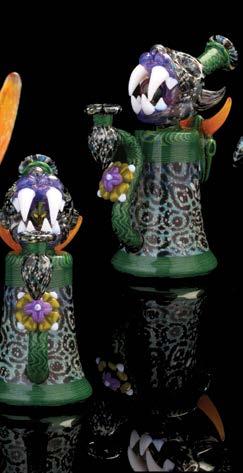
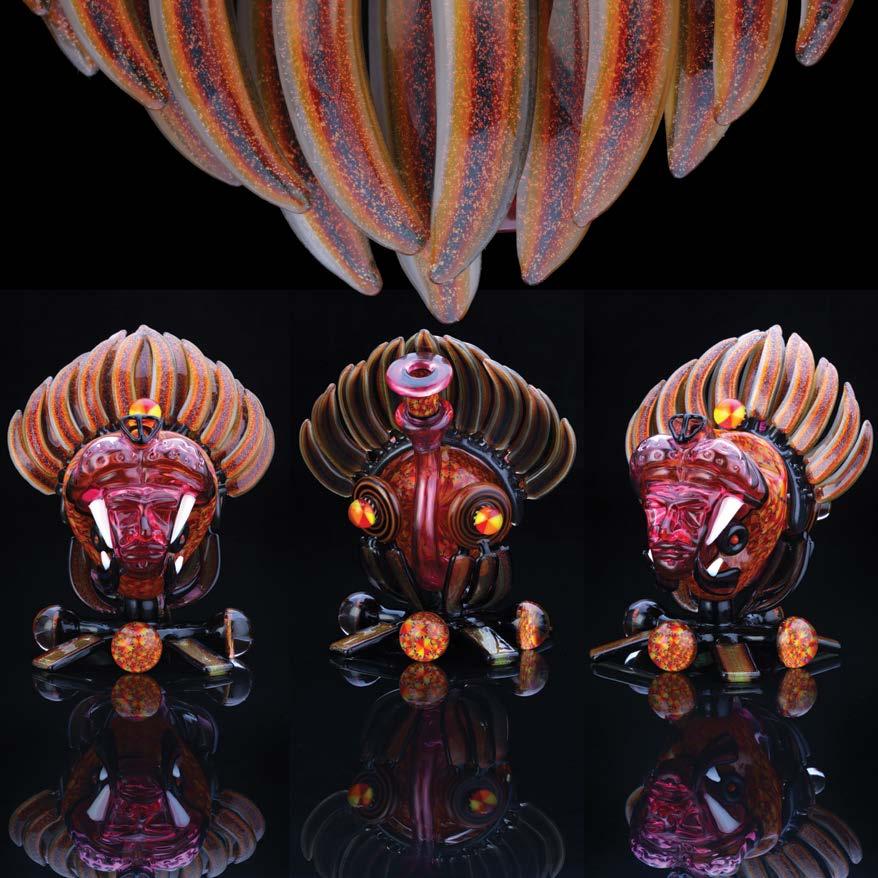
What began as a childhood nickname has evolved into his professional moniker. And while Gutierrez is better known as “Pinky Brewtz” in the world of glassblowing, Pinky Brewtz is better known as “the Jaguar Man.”
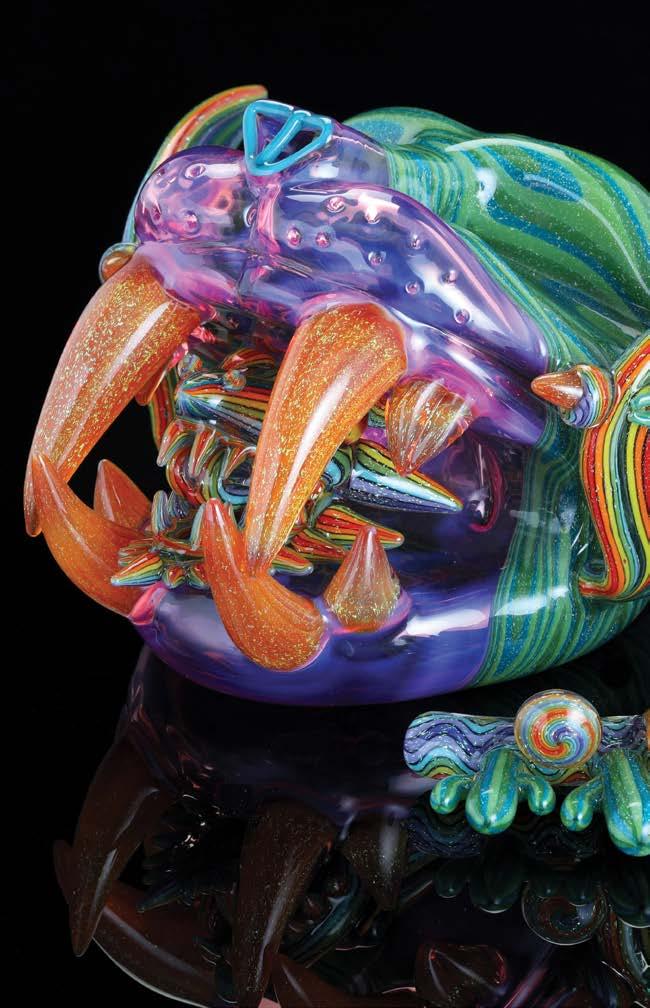
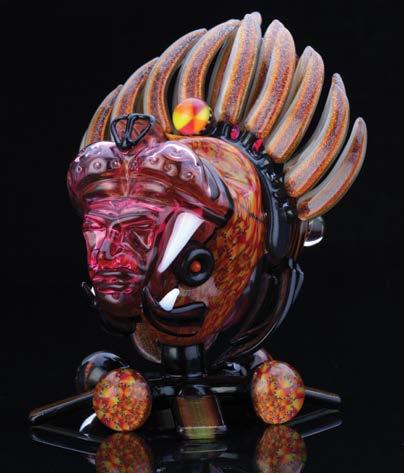
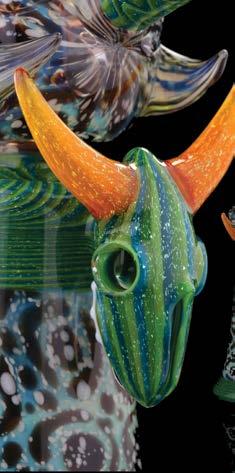
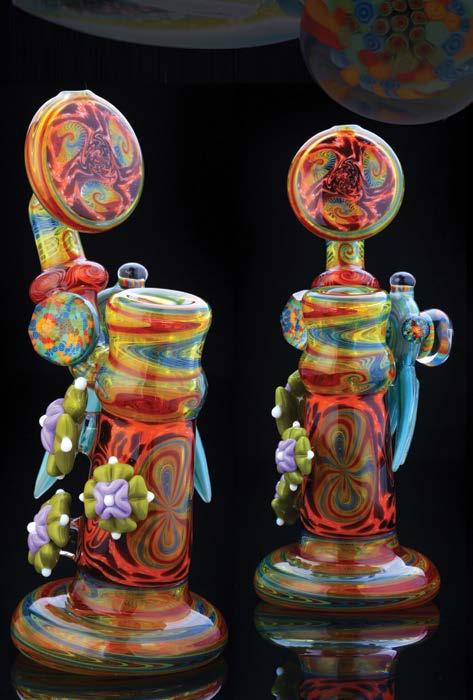
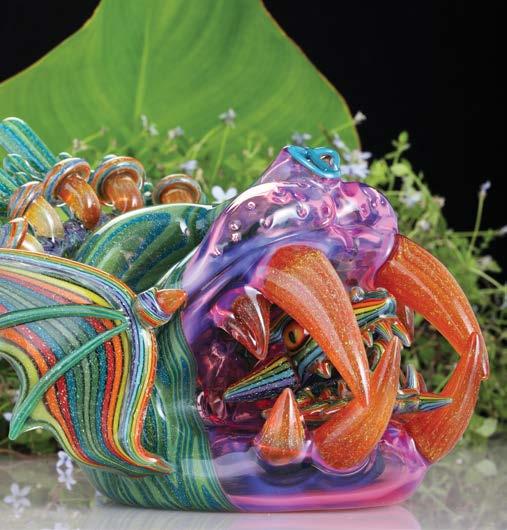
MUCH OF GUTIERREZ’S WORK portrays the image of an Aztec warrior wearing a jaguar helmet, his face inside the gaping mouth, head wreathed in feathers. His rigs seem almost ceremonial and have become high-priced items in the world of glass.
Reached at his home in San Diego, Gutierrez told California Leaf, “From the beginning, I knew I wanted to represent the culture I’m from. To not just be a Hispanic glassblower, but to try and carry forward some of that traditional art from Mexico.”
Obsessed with the artistic styles of Mayan and Aztec history, he said he wanted to use glass to create art much like how artisans from regions like Sinaloa, Jalisco and Oaxaca have done for generations.

Pinky x Quasar Collab
Pinky x Darby x Luna Collab
Pinky x Darby Collab
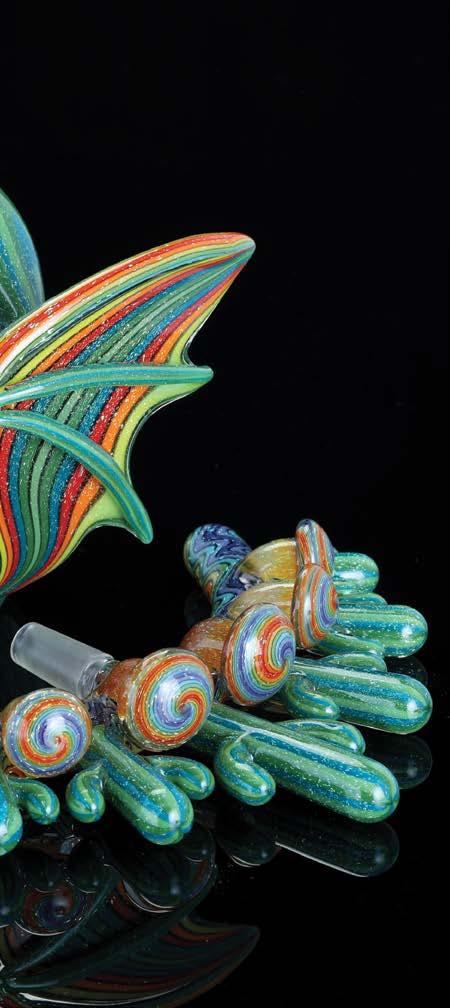
“There’s an aesthetic I’m trying to put out, and that’s one that represents Mexican culture.”
Gutierrez became Pinky when he got into a fight as a kid and needed something to hold his pants up. The only thing he could borrow — which would become the makeshift weapon that won him the fight — was a friend’s pink belt. He said he hated the nickname, but by the time he was in high school, even his family called him Pinky. So when he was thinking about what to call his brand, he said, “I just wanted to keep it simple with something people already know me as.”
He was working as part owner of a clothing company back in 2014 when he first discovered glassblowing. Visiting a friend in San Luis Obispo, Gutierrez said they smoked DMT, and his buddy showed him a pendant he had just finished making. He said looking at the universe of colors and patterns, knowing they were all produced by human hands, blew his mind. Before that, Gutierrez said he imagined bongs and pipes were made by machines. Finding out it was a craft lit a fire within him, and he jumped onto eBay to order his first torch.
At first, he said he was making more generalized imagery, like feathered serpents and alebrijes. But his whole trajectory changed the day Gutierrez proposed to his wife, Ruth Gutierrez, at the Pyramid of the Sun in Teotihuacan, Mexico. To celebrate, they smoked a bowl from the only thing they had: a traditional clay whistle in the shape of a jaguar’s head. Ruth Gutierrez remarked how cool it would be if he could make pipes and dab rigs like that.
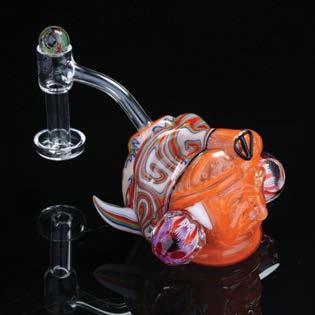

On their way down the pyramid, Gutierrez said his wife’s ring dropped in between the stones. At the time, they saw it as a tragedy, but he said they’re now convinced that “it was the sacrifice the gods required to put us on the path we’re on now. It changed my life forever; that moment shaped me as a married man, a father and an artist.”
Since then, Pinky Brewtz has solidified an artistic style and gone on to collaborate with prominent names in glassblowing, including Elbo, Darby Holm and Banjo. Gutierrez said he has a group of collectors who seek out his art and has been able to meet fans from all over the world.
With so much of his inspiration coming from traditional Mexican artisans, Gutierrez feels a responsibility to support the community and the heritage that his work springs from.
He told the Leaf he donates portions of his U.S. sales to charities in Mexico and collaborates to showcase the work of traditional artisans, like his collaboration with third-generation wood-carver Efraín Fuentes. Gutierrez said he’s always looking for ways to work with these artists to create modernized versions of traditional craft.
“There’s an aesthetic I’m trying to put out, and that’s one that represents Mexican culture,” he said. “The culture is what’s important. AI is going to eat us up. Our history will be deleted if we don’t carry these things forward, and in some small way, that’s what I’m trying to do.”
@PINKYBREWTZ
Pinky x Quasar Collab
Pinky x Darby Collab
Pinky x Cowboy Collab
Pinky x Darby x Luna Collab

glass collaborations

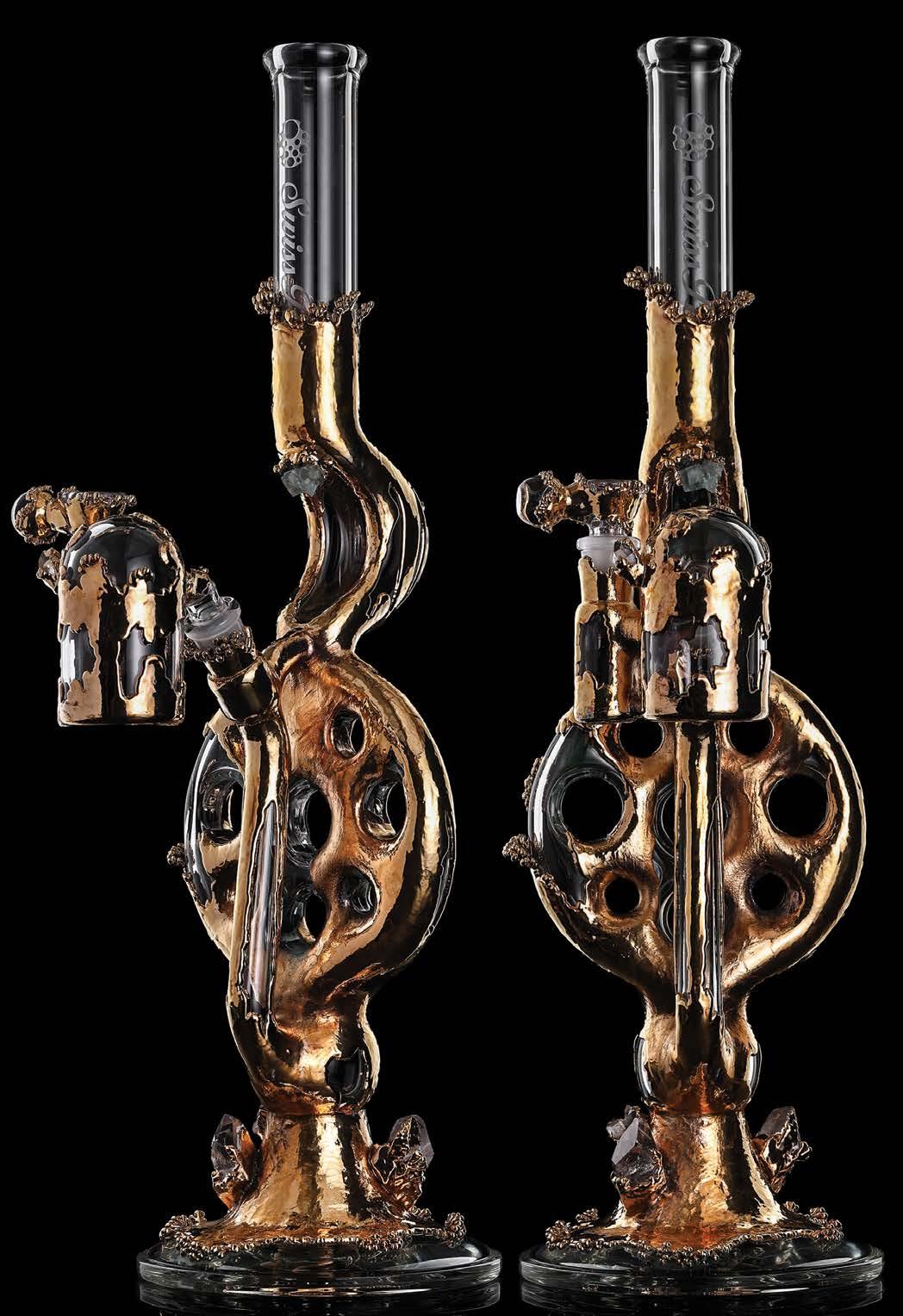
For this year’s annual Glass Issue, the Leaf team decided to deep dive into collaborations. These amazing works of art come to fruition when multiple artists combine their different techniques to create something out of this world. Whether crafted by a couple of shop mates or 12 people at a national event, the outcomes show that the best things come from working together. Join us in celebrating these collaborations. Some of them are the latest, and some of them are legends. Turn the pages slowly and enjoy.
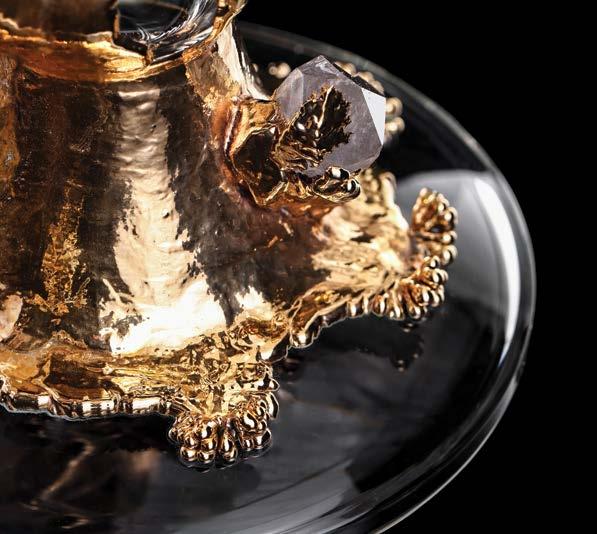
Snic Barnes @snicbarnesglass (FB) swissperc x
Gold-plated medium classic with quartz crystal on the base and fluorite on the swoop
Nate Dizzle @swissperc
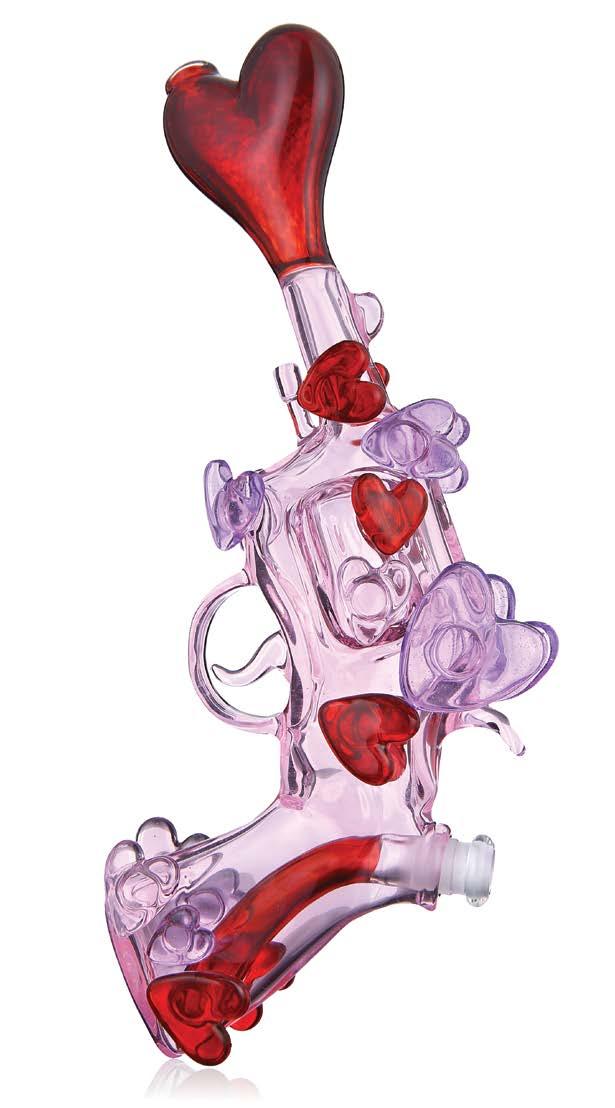
Ram’s classic gun style complemented with hearts by JOP
Joshua Opdenaker J_opdenaker_jop
Ram Mickelsen @ramickelsen
COLLABS

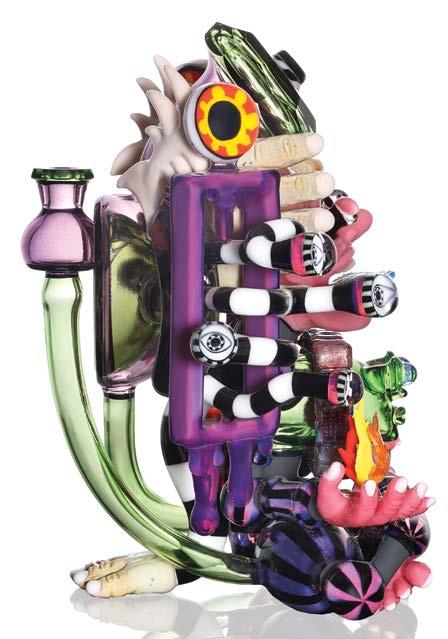
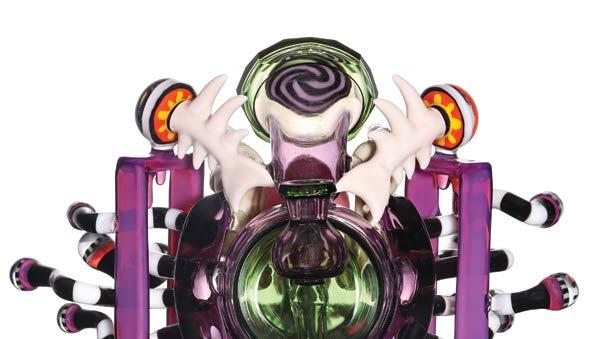
Basso’s “Singularity” recycler design adorned with Eusheen’s reticello pattern
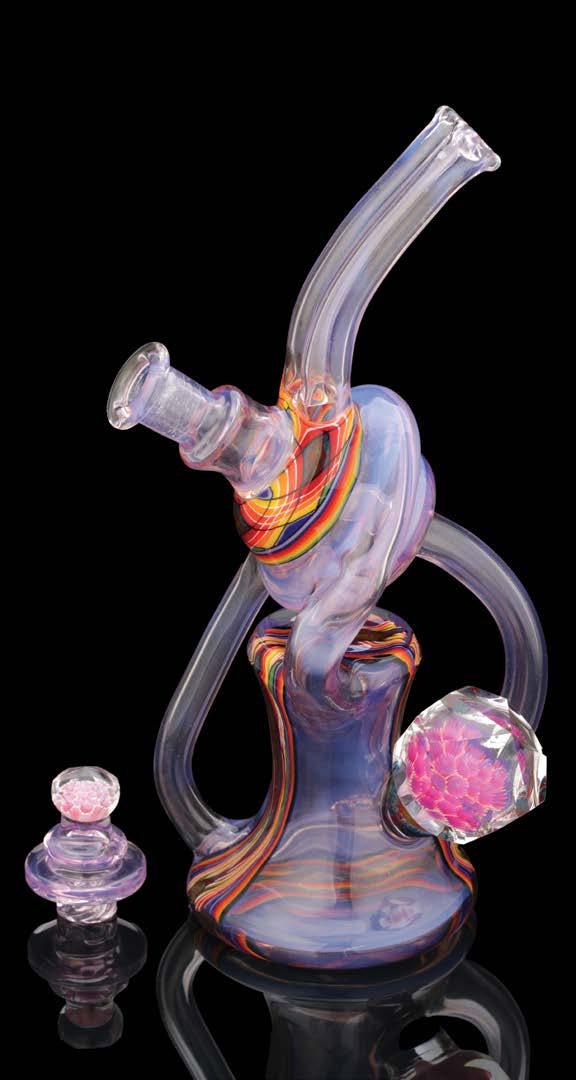


Banjo
COLLABS

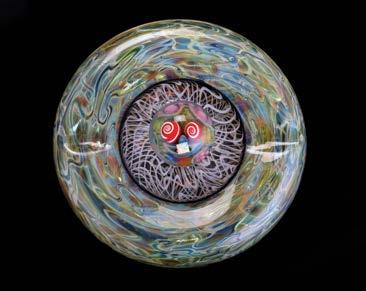
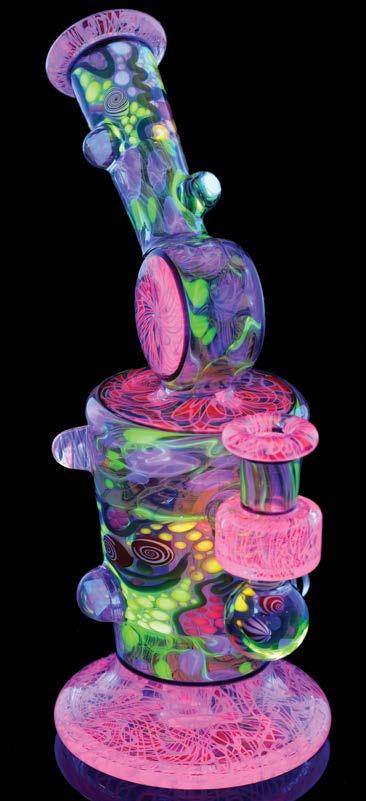


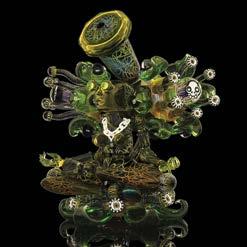
12 artist UV-reactive masterpiece created for the greater good at the Michigan Glass Project
@banjoglass / @justincarterglass / @pipemaker / @blackfireglassworks / @chacha_chainz / @philsiegelglass @frompy / @lilbearglass / @hardcore_toke / @pogoglass / @co_liicutz / @karmaglass420 Mega UV Devi

PHOTOS

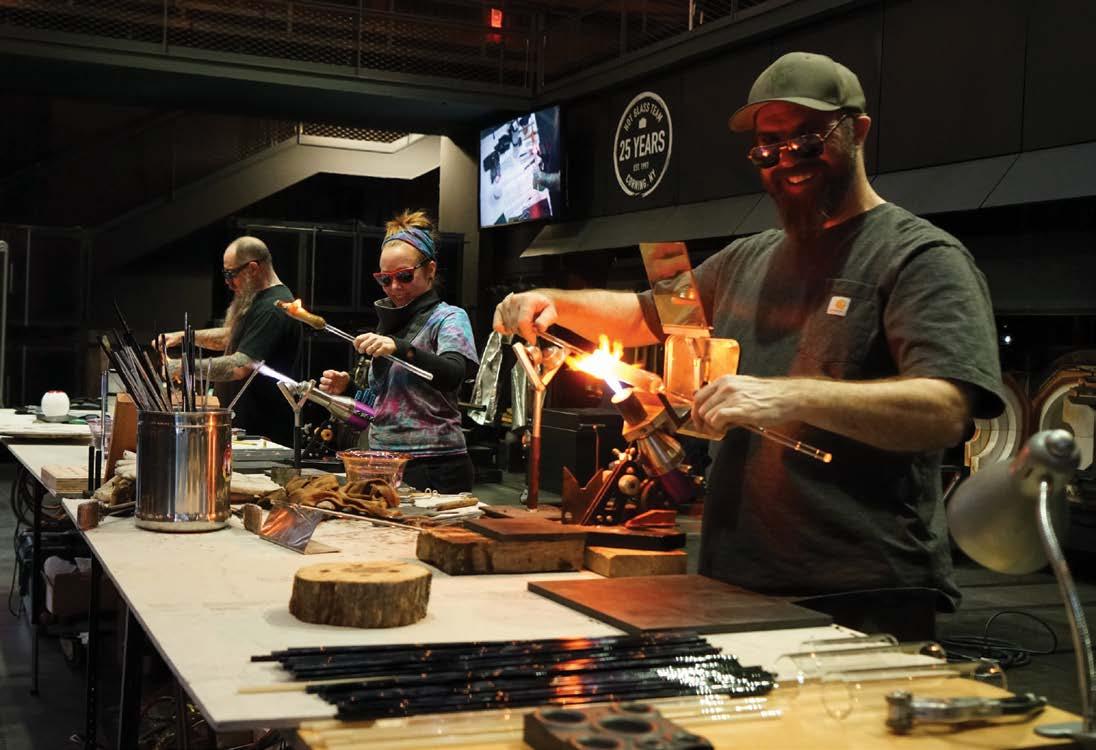
inside the corning museum of glass
The Corning Museum of Glass in New York has stood as the repository for the most important contributions to the art of glassblowing since 1951. The museum holds thousands of pieces, dating from ancient civilizations to the work of contemporary artists pushing the field in new directions. However, it wasn’t until 2019 that CMoG acquired its first piece of smokable glassware.
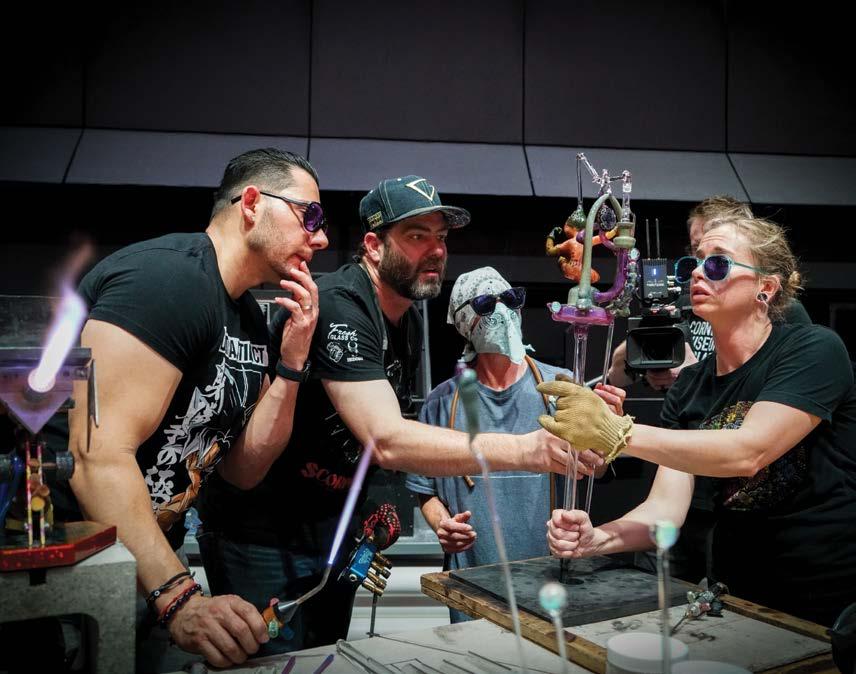
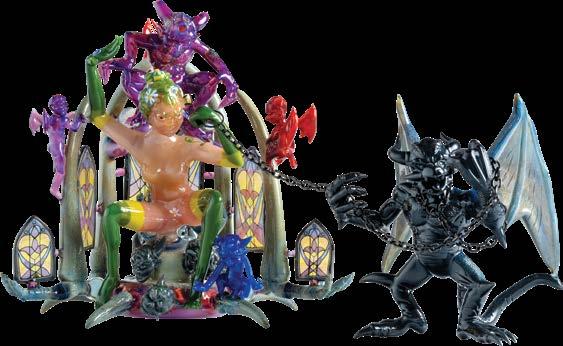
“The CMoG Flame Collab has proven to be a resounding success in its first four years, with incredible works brought to life by a few of the top artists in the field.”
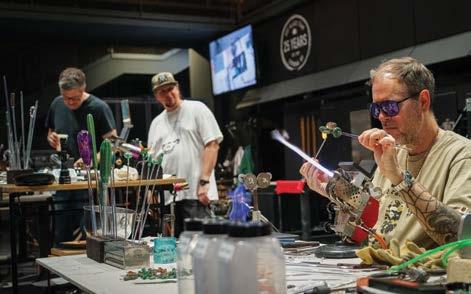
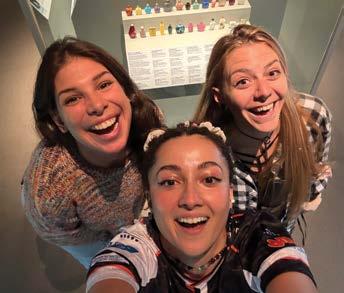
MANY SUPERHUMANS of pipe making have visited CMoG to share the finer points of their craft at the now-annual CMoG Flame Collab. Museum manager of hot glass operations Eric Goldschmidt told the Leaf that the Flame Collab came about as a way “to celebrate the artistry and innovation of the flameworking community.” He mentioned how the last 15 years have seen a rapid acceleration of the craft, especially through the collaborative pieces, adding, “much of which has been stirred by artists creating innovative objects for Cannabis consumption."
Goldschmidt added that “the CMoG Flame Collab has proven to be a resounding success in its first four years, with incredible works brought to life by a few of the top artists in the field.”
/// CMOG FLAME COLLAB LINEUPS ///
2022 - Dan Coyle (Coyle Creations), Adam Whobrey (Hoobs) and Ryan O’Keefe

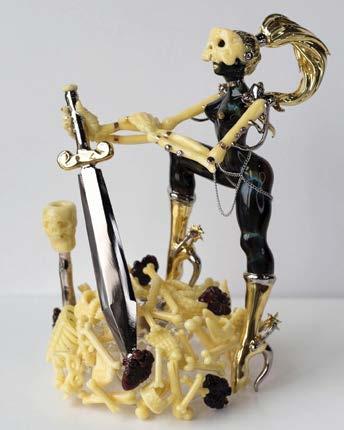
The event will return for its fifth year in May 2026, inviting a team of artists to spend a week at the museum’s Amphitheater Hot Shop. During that time, the group is challenged to melt their respective styles and visions together, creating one cohesive, sculptural piece. When asked how they choose their artists, Goldschmidt said the team at CMoG works each year to identify an individual with a strong portfolio of collaboration work, and then, like a heist movie, asks them to name their two- to three-person dream team to pull off one epic job. That first year, Dan Coyle called in Adam Whobrey (Hoobs) and Ryan O’Keefe (Ryno) to create a futuristic piece dubbed “D-XG 2052.” Since then, artists like Phil Seigel, Solfire, HicDogg, Darby and AKM have been invited to share their world-renowned techniques at CMoG. For 2026, CMoG is complementing its major exhibition on Women in the American Glass Studio with a team that Goldschmidt called “some of the strongest women in contemporary flameworking” to illustrate how this legacy remains alive and well. Goldschmidt excitedly revealed to the Leaf that the 2026 lineup includes host Sibelle “Sibelley” Yuksek, along with Adrienne “Babedrienne” DiSalvo and Nicole “Coldberger” Berger. Glass fans who know DiSalvo’s intricate carvings or remember Yusek and Berger’s fire-spouting collaboration from Oregon’s 2023 DFO glass exhibition know that this will be one for the books.

(Ryno)
2023 - Lacey Walton (Laceface Glass), Chris Vickers (Hickory Glass) and Phil Seigel
2024 - Saiyan Glass, Solfire Glass, HicDogg and Windstar Glass
2025 - Darby Holm, Andrew “AKM” Morris and David Colton
2026 - Sibelle Yuksek, Adrienne DiSalvo and Nicole Berger
Laceface Glass, Hickory Glass and Phil Siegel
HicDogg, Solfire Glass, Saiyan Glass and Windstar Glass
Sibelley, Babedrienne and Coldberger
Sibelley x Babedrienne
Andrew “AKM” Morris Darby Holm and David Colton
Third annual CMoG Flame Collab final piece: “Cathedral” by HicDogg, Solfire Glass, Saiyan Glass and Windstar Glass.
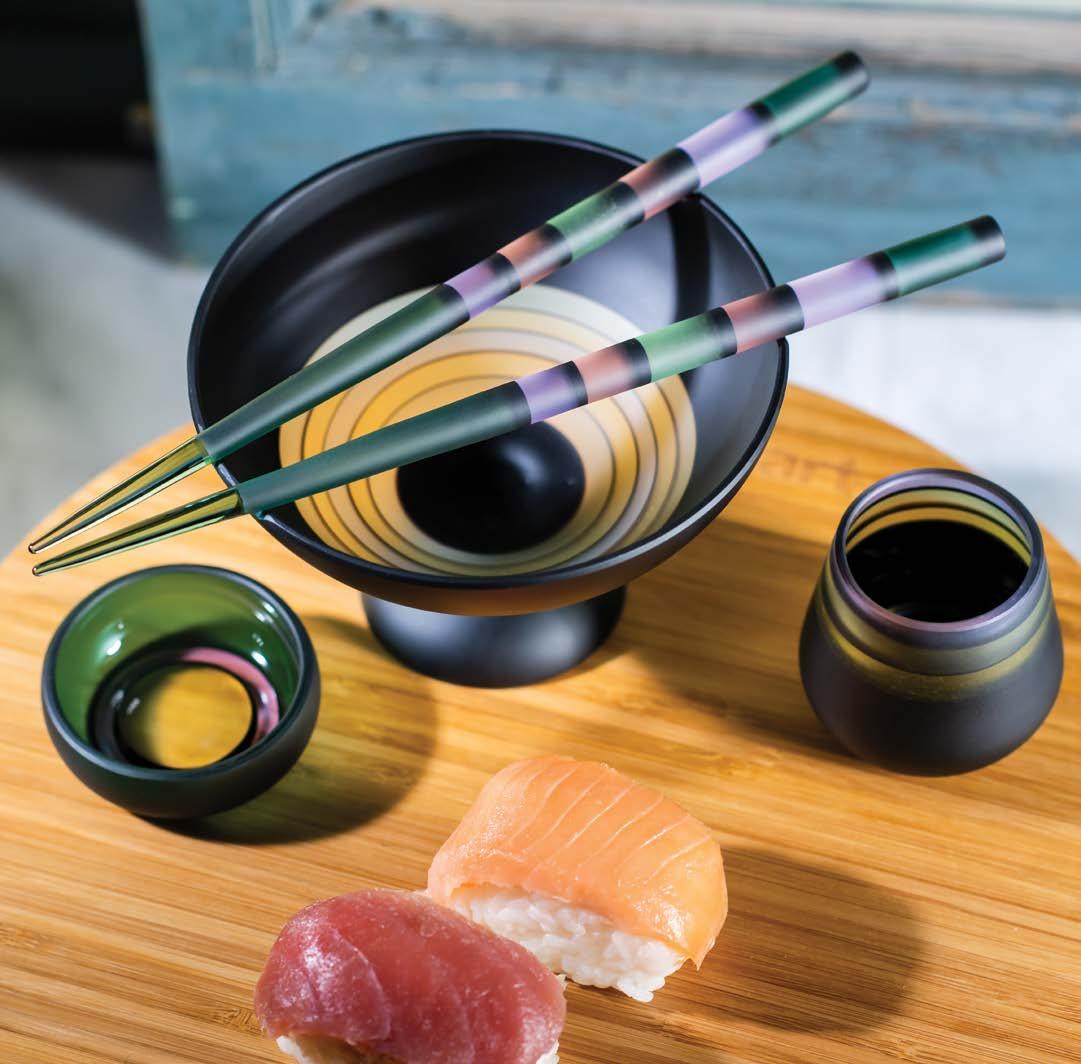
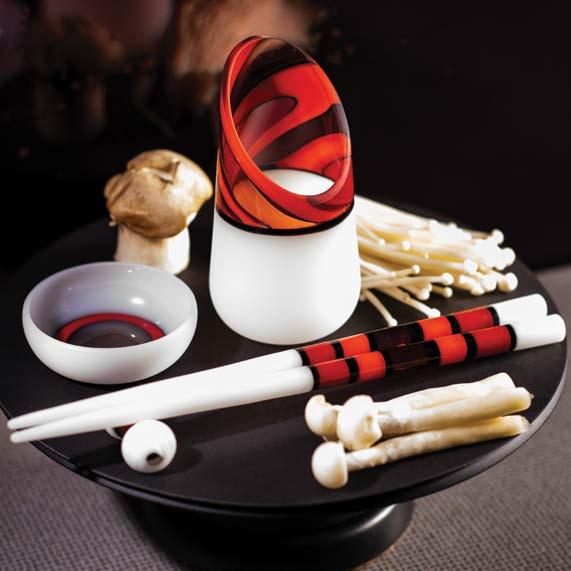
Chopsticks Sets
Emily Marie Glass @emilymarieglass
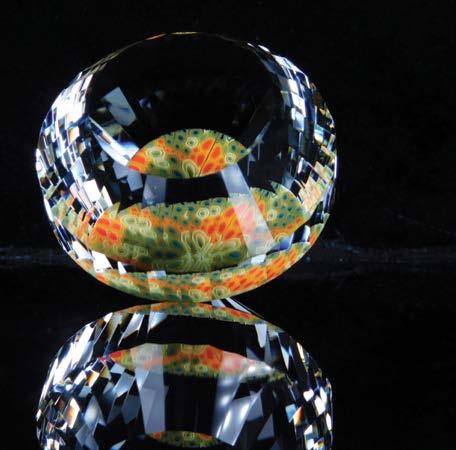
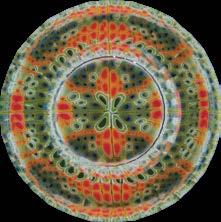
BEYOND the bong
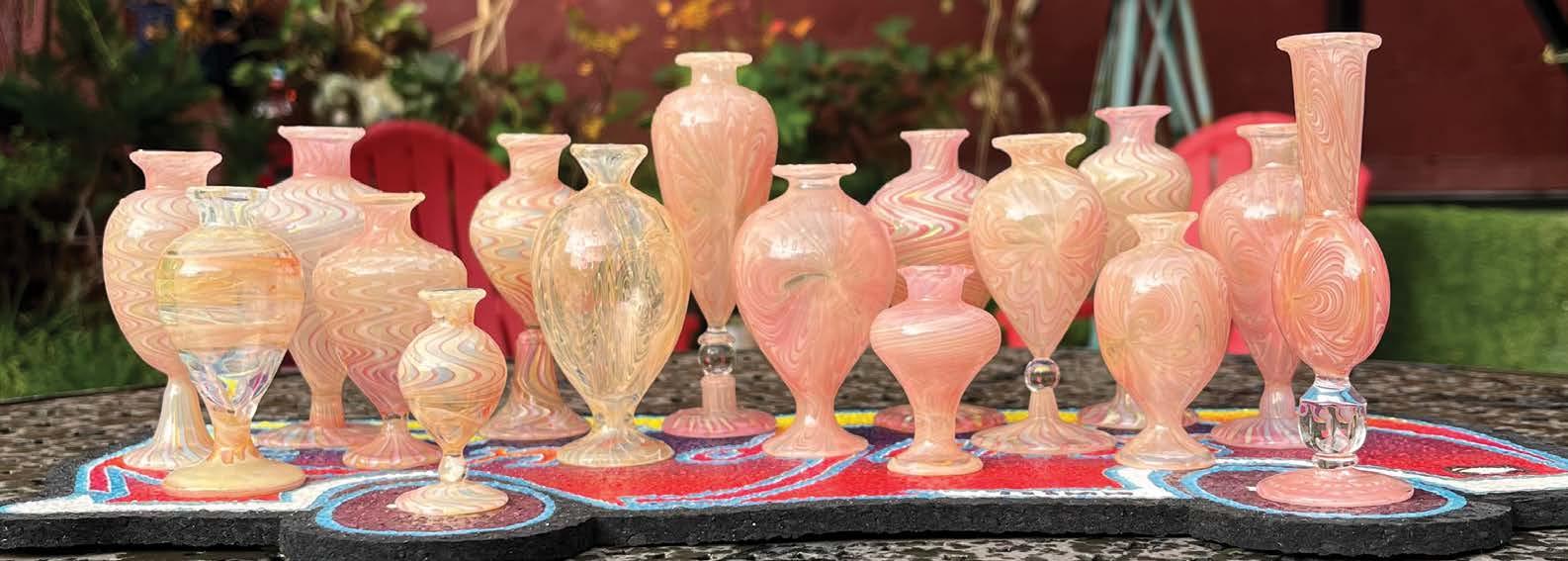
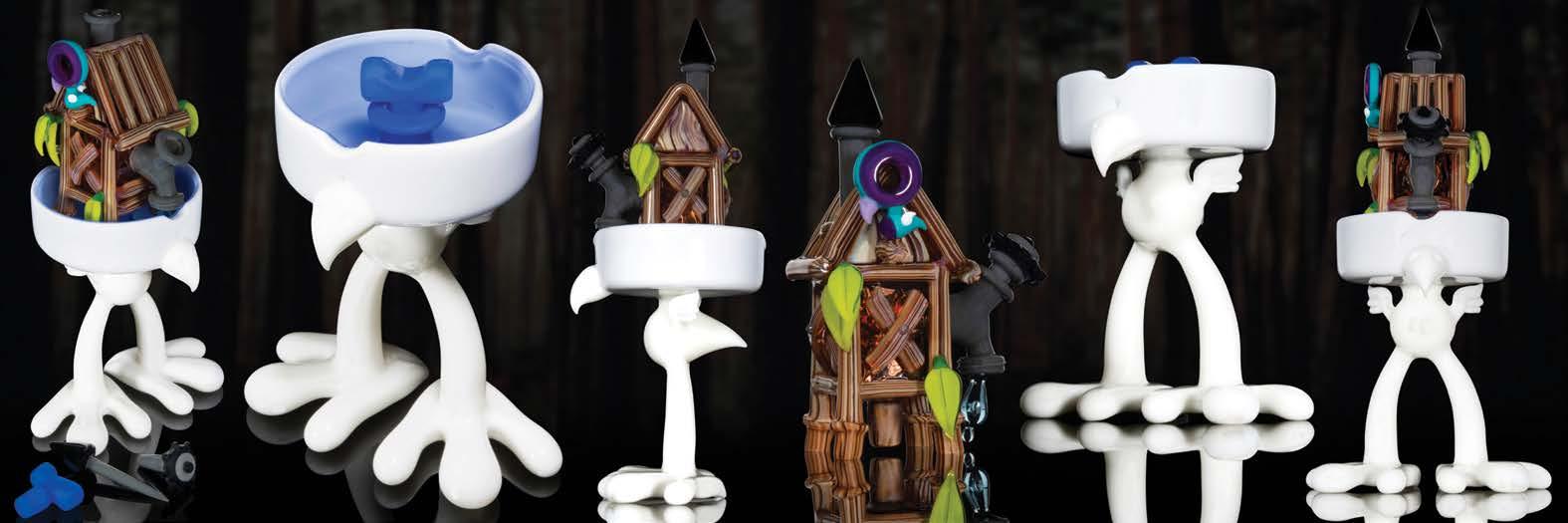
While glass is often the backbone of the sesh, this art form can go far beyond functional smoking pieces. Check out our roundup redefining the unique uses of modern glassblowing.
diamond of the woods
Middleton Glassworks x Mr. Facet @middleton_glassworks @mr.facet



























mothership glass x dustin brandon
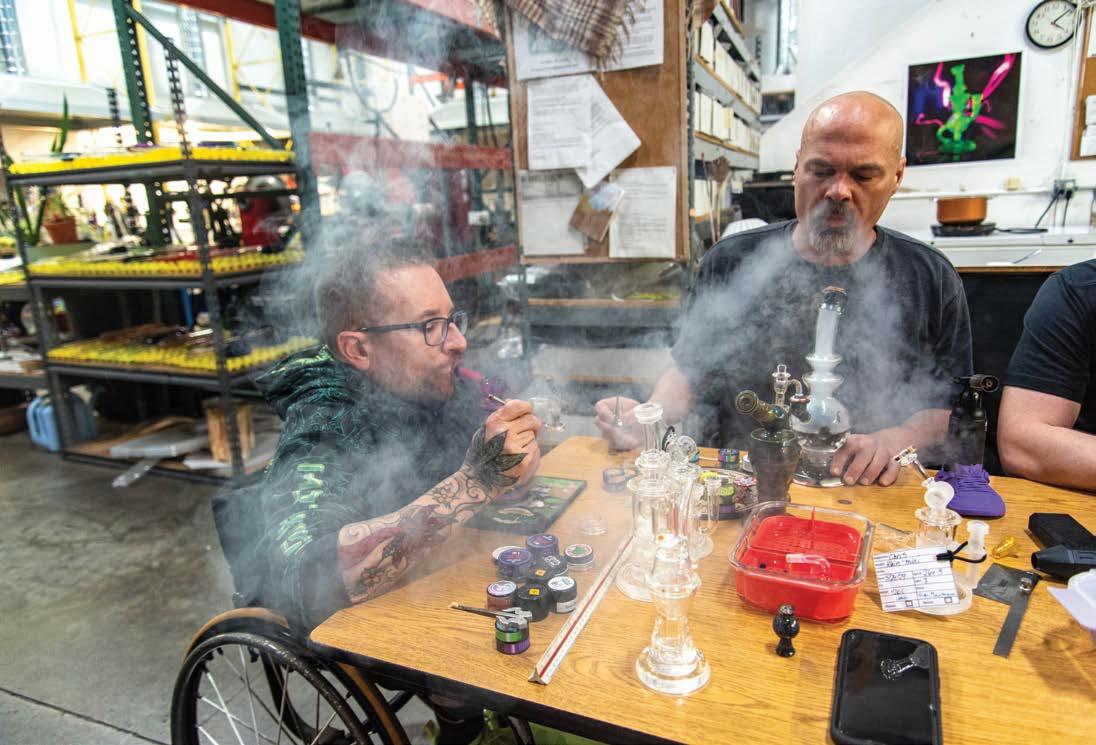
Professional athlete. Comedian. Civil rights advocate. Musician. Dustin Brandon has held many titles throughout his life. For the past nine years, he has worked tirelessly to establish himself as an irrefutable pillar of the Cannabis community.
“I CAME INTO this community as a medical patient,” Brandon explained. “This plant saved my life. My disability is brittle bones, called osteogenesis imperfecta, from birth. I'm 42 years old, and I've broken and fractured over 850 bones throughout my life. I've had close to 75 surgeries.”
Brandon’s story is one of strength and resilience. Despite trauma, tragedy and a recent bout with COVID that nearly took his life, Brandon has consistently faced adversity and bounced back with unyielding perseverance.
That’s where Mothership Glass comes into the story.
Forged in fire, crafted with care and annealed with meticulous effort and dedication, Mothership produces some of the highest quality functional glass art in the entire world. Captained by innovative artist Scott Deppe, the enterprise is a collective of some of the most prodigious glassblowers in their field.
“I approached Mothership, and I said, ‘I think there’s an area we can fill here in regards to the disabled community.’”
“I grew up in a tough upbringing, from foster care to state-run facilities, and a school for kids with disabilities,” Brandon said. “My sister and I got split up. Her name was Felicia, a year younger than me. In 2018, she lost her life to suicide. When I lost her, it took a while to figure out if I could even come back from that. But eventually I figured out how to develop myself all over again, through her, for her. She's my reason for everything.”
-Dustin Brandon
“I approached Mothership, and I said, ‘I think there’s an area we can fill here in regards to the disabled community, not just making glass more accessible for people with disabilities, but as a whole, around the entire community… How can we have disability inclusion?’” Brandon recalled.
Mothership invited Brandon to their base of operations in Bellingham, Washington. He tested their entire range of products and took measurements, all with a goal of designing the perfect consumption experience.
individual functional needs. They sketched out a plan for a special one-of-one design inspired by his sister, known as “Felicia’s Gift.”
The rig is a Torus/Fab Torus recycler with a sunflower motif and “Felicia’s Gift” engraved at the base. It features a wider base for stability, slightly longer drains for hand grip and a ground-out, interchangeable neck equipped with attachments of different angles, including a hookah hose for increased ergonomic versatility.
“This piece means a lot to me, not only to be a voice for the disabled community, throughout accessibility, through glass and in which ways we consume our medicine, but in how we heal ourselves,” Brandon explained.
Deppe showed care and consideration during the visit. He personally set up the rigs, altered table heights and dialed in water levels to provide the perfect experience. He even surprised Brandon with an accessory — a topper for a Slurper-style banger — still warm out of the kiln.
“We want to help everyone out and lift everyone up,” Johnson stated. “It's a lot for us to be able to make a piece like this. And I'm happy we're going to be the ones doing it.”
“It’s an honor,” Deppe added. “We just want everybody to have the best smoking experience possible. That's what Mothership is about. So, if we can do something to make it more comfortable or more fun for somebody, we're going to do it.”
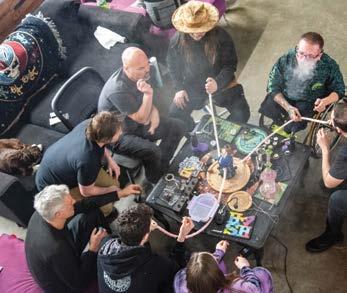
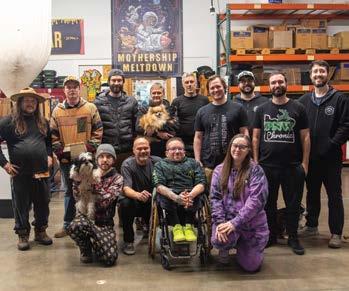
With this significant push forward for the accessibility conversation, Brandon’s story has come full circle. After nine years of grinding hard in the Cannabis industry, he finds himself serving as an advocate not just for himself, but for the greater Cannabis and disability communities as a whole.
“It’s not only about accessibility, but about encouraging people with disabilities to be part of the journey,” Brandon explained.
“I hope this gets the conversation going in the glass community and even in the Cannabis community — from grows to work stations and everything in between.”
Over this last year, he diligently rebuilt his health and dove headfirst back into the Cannabis and glass communities.
Deppe, Justin Johnson and Colin Taylor of Mothership joined Brandon to discuss accessibility in functional glass and creating a piece tailored to his

A huge amount of appreciation to Dustin and and Mothership for inviting Leaf Magazines into this important conversation on accessibility in Cannabis, and a special shoutout to Crystal Hoffman (@hashinit_) and Jeff Hooten (@casedgod) for coming along for the ride.
Dustin Brandon, left, and Mothership Glass Founder Scott Deppe, dabbing it up in Bellingham, Wash.

























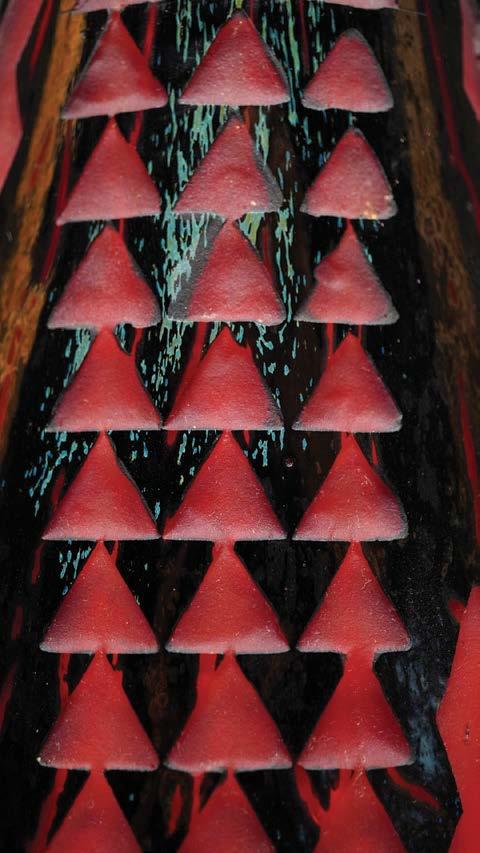
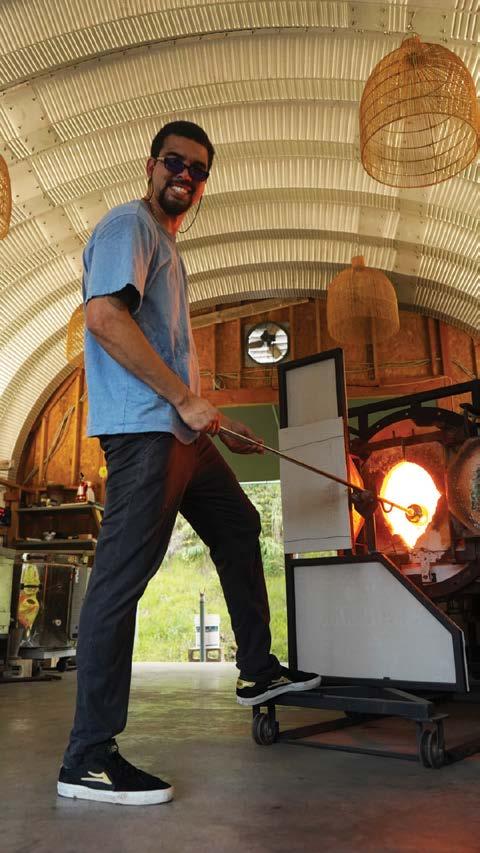

“It feels like I’m playing with lava. I’ll go watch the lava flow, then go straight into the shop and work with something similar.”
THE LAVA BENEATH MY FEET THE LAVA BENEATH MY FEET
HOW HAWAIIAN LINEAGE, BREATH, SAND AND FLAME SHAPE THE ART OF JULIUS GUTIERREZ

There is a moment on the Big Island of Hawaii when your breath slows to the tempo of the crashing waves, you notice the salt and ash in the breeze and you are struck by the sense that Earth is a living ancestor.
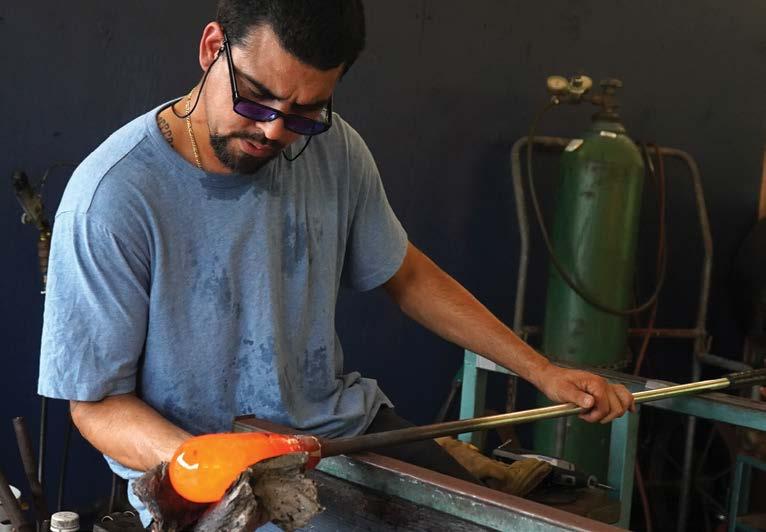
MAYBE IT’S THE MOLTEN LAVA running through the Earth’s caverns beneath your feet, a reminder that this land is the domain of Tutu Pele, the fire goddess of Hawaii. She is our great-grandmother, an ancestral spirit to be respected, honored and approached with deep humility. The type of humble respect a glassblower embodies when the alchemy of these fragile yet timeless creations begins.
It is in this reverence that Julius Gutierrez steps into a relationship with grandfather fire, not as a tool, but as a living elder, one that echoes the same elemental energy as the lava rivers of Pele herself.
At Moe Hot Glass, guided by master glassblower Daniel Moe, Gutierrez has spent eight years shaping more than glass. He is shaping story, lineage and elemental memory, drawing from a land where fire is both destroyer and creator, where Pele’s breath reshapes the island in real time.
Can you introduce yourself in your own words and share what’s been moving through your world lately?
“I’m a farmer, a father, a psychonaut exploring biology, chemistry and playing with different elements,” Gutierrez said. “Nature moves through my reality daily and inspires my work.”
You carry Peruviano and Braziliano roots while living on the Big Island. How do your bloodlines and the land beneath your feet shape the way you approach the flame?
He speaks of Peru first, of tight-knit Indigenous South American roots bound by the joy of a big familia. It was his familia’s move to Hawaii that awakened his awareness to a deep systemic concern for native sovereignty.
“Seeing what happened here to the Kanaka Maoli tribes lit a fire in me to help represent Indigenous voices,” Gutierrez shared.
His pieces carry that intention: Hawaiian lineage patterns, tribal geometries etched not as decoration, but as protection, remembrance and resistance. In many ways, they mirror the markings of the land itself, lava fissures and flows shaped by Pele’s hand.
Our readers love Pakalolo. Do you have a favorite strain or preferred method of consumption?
“A good homegrown Super Silver Haze,” Gutierrez said. “I prefer to dab uplifting strains because they are simple, clean and quick.”
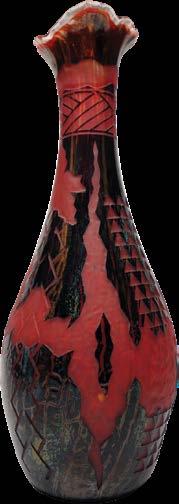
Have you blown your own smoke chalices?
“In my intro to glass class at the university, they told us we can't create bongs. So naturally, I made it a point to create a few of them,” he said with a smirk of rebellion. “Those pieces, once everyday tools, are now cherished artifacts marking the beginning of my collection.”
Many people see glassblowing as a craft, but others feel it is a ceremony. What does it represent to you?
“I feel like the very act of glassblowing is ceremonial,” he said. “When you get into the flow state with the flame, it’s like a trance, everything else falls away.” Here, fire becomes more than heat; it becomes a teacher. The process demands full presence, where breath and flame cocreate form.
Living on an island where lava flows beneath the surface, do you feel a relationship between your work and that living earth energy?
“It feels like I’m playing with lava,” he said. “I’ll go watch the lava flow, then go straight into the shop and work with something similar.”
The connection is visceral. Lava and glass are both born of heat, both carrying the story of transformation.
He dreams of one day creating glass directly from Hawaii’s own silica, allowing Pele’s body to become the medium.
There’s an alchemy to turning sand into glass. What does that transformation teach you?
“It teaches you to stay levelheaded and to let go. Glass breaks. You have to practice nonattachment,” he said.
“There is humility in the flame. No matter the skill, no piece is guaranteed. Beauty can collapse in an instant, just as land can be reshaped overnight by lava’s flow.”
In this way, the practice becomes spiritual, an ongoing lesson in surrender to forces greater than oneself.
Gutierrez works primarily with soft glass, an ancient form known for its fluidity and sensitivity. Unlike more rigid materials, it requires constant attention.
“You’re fully dancing with it,” he explained. “The process is physical, sweat, movement, breath, an orchestration of body and molten elements.”
That intimacy gives his pieces a living qual ity. His lava vessels feel like they’re still flowing, like they could shift at any moment. His ocean forms hold motion within stillness, echoing the meeting place of land and sea.
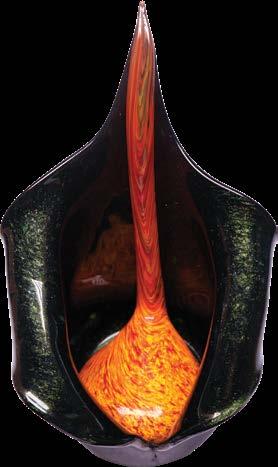
“In those moments, the boundary between studio and landscape dissolves. The furnace becomes a contained volcano, the blowpipe an extension of breath,” Gutierrez said. “I’ve even joked about blowing glass from the lava herself.”
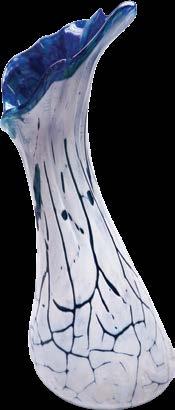

One sculptural piece — an open, womb-like form lined with crystalline green — was inspired by the place his daughter, Andará, was conceived, merging land, lineage and life into a single form.
What do you hope people feel when they hold your work?
“Childlike wonder,” he said simply. “Curiosity for understanding how these pieces were made.”
Perhaps that is the true medicine of his work, not just the visual representation of the objects themselves, but the feeling they awaken. A return to the youthful essence of awe.
In a world that often forgets its connection to the elements, Gutierrez stands in the fire as both student and storyteller. Through flame and form, he reminds us OGs that creativity is a living ceremony in motion.





To many hardcore heads, their bong is more than just a piece of paraphernalia — it’s a reflection of their personal style — even a symbol of their stoner status. Sure, joints are great, but there’s nothing quite like a fat rip from a baller headpiece to go from sober to slobber in 4.20 seconds flat. So fire it up, fill that chamber and get ready to inhale the totally tubular history of the bong.
Birth of the Bong
AFRICAN ORIGINS
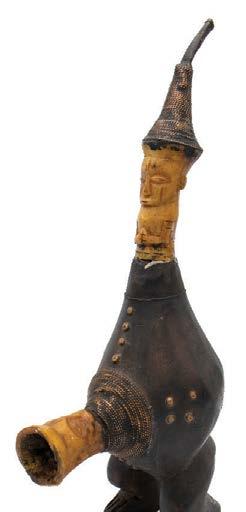
Evidence suggests that bongs originated in Africa sometime in the 12th century. In the late 1800s, archaeologists documented how various tribes in Eastern and Southern Africa would smoke “dagga” or “dakka” out of holes in the ground, using bowls fashioned from mud or clay and inhaling through a hollow reed — a primitive apparatus known as an “earth pipe.”
In an article from a 1910 edition of the German anthropological journal “Internationales Archiv für Ethnographie,” (reprinted in the 1975 book “Cannabis and Culture”), a Dr. Moszcik confirmed that the Ngoni, a tribe near the Zambia/Zimbabwe border, used such an earth pipe that utilized water filtration:
“A hollow tube is stuck into one of the pits to act as a mouthpiece and prevent particles of earth en tering the smoker’s mouth. Hemp is then placed in the bowl and kindled. A little water is poured into the duct and the native lies flat or kneels down and inhales the smoke through the water.”
ETHIOPIAN EXCAVATION
In 1971, Boston University doctoral student J.C. Dombrowski discovered 11 pipes made from animal horns, stone and pottery in the Natchabiet Caves of Lalibela,

Ethiopia. Among these were two ceramic pipe bowl fragments dating from between 1,100 and 1,400 C.E. that tested positive for Cannabis.
In his paper “Cannabis Smoking in 13th-14th Century Ethiopia: Chemical Evidence,” archeologist Nikolaas J. Van Der Merwe wrote of the fragments: “Both bowls formed part of waterpipes; an aperture at the bottom of the bowl allows for the attachment of a vertical stem, which presumably descended into a water container.”
Then, in 1945, archaeologist Mary Leakey uncovered a waterpipe crafted from a gourd in Tanzania. This discovery may provide insight into the origin of the word “bong,” as apparently, there lived a tribe in nearby Kenya known as the Bong’om. There’s also a town in Liberia named Bong, which may or may not be connected.
a hole, chamber, or slot; a bamboo waterpipe for smoking kancha, hashish, or the hemp-plant.”
Regardless, the crafting of bamboo bongs is an ancient tradition deeply rooted in Thai culture. As thaibong.com explains: “This is not merely a tool, but a reflection of a way of life, a history, and an art form passed down through generations.”
SILK ROAD MIGRATION
THAI HIGH
Nevertheless, conventional wisdom holds that the term bong actually originated in Thailand as an anglicized version of the word “baung” — a reasonable presumption, considering that the earliest written record of the word bong appears in a 1944 Thai-English dictionary which defines it as “a cylindrical piece of wood with
Thanks to the legendary Silk Road and the East India Company, tobacco arrived in the Orient during the 16th-century Ming Dynasty, and smoking it from blinged-out metal waterpipes became all the rage among royalty and the upper classes. In fact, Empress Dowager Cixi of the Qing dynasty was reportedly so fond of her waterpipes that she was buried with three of them.
It’s also through the Silk Road that bongs eventually made their way to Middle East trading hubs, then on to Europe sometime in the 17th century. With tobacco flowing in from the Americas, some Europeans began using waterpipes to imbibe, but they never became as popular as they were in Asia and Africa. It would take three more centuries (and a countercultural revolution) before the bong would catch on in America.
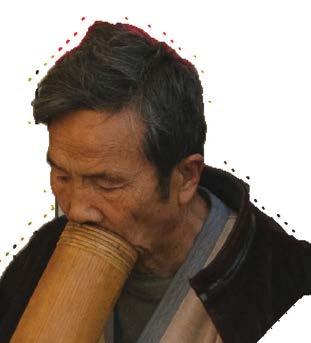
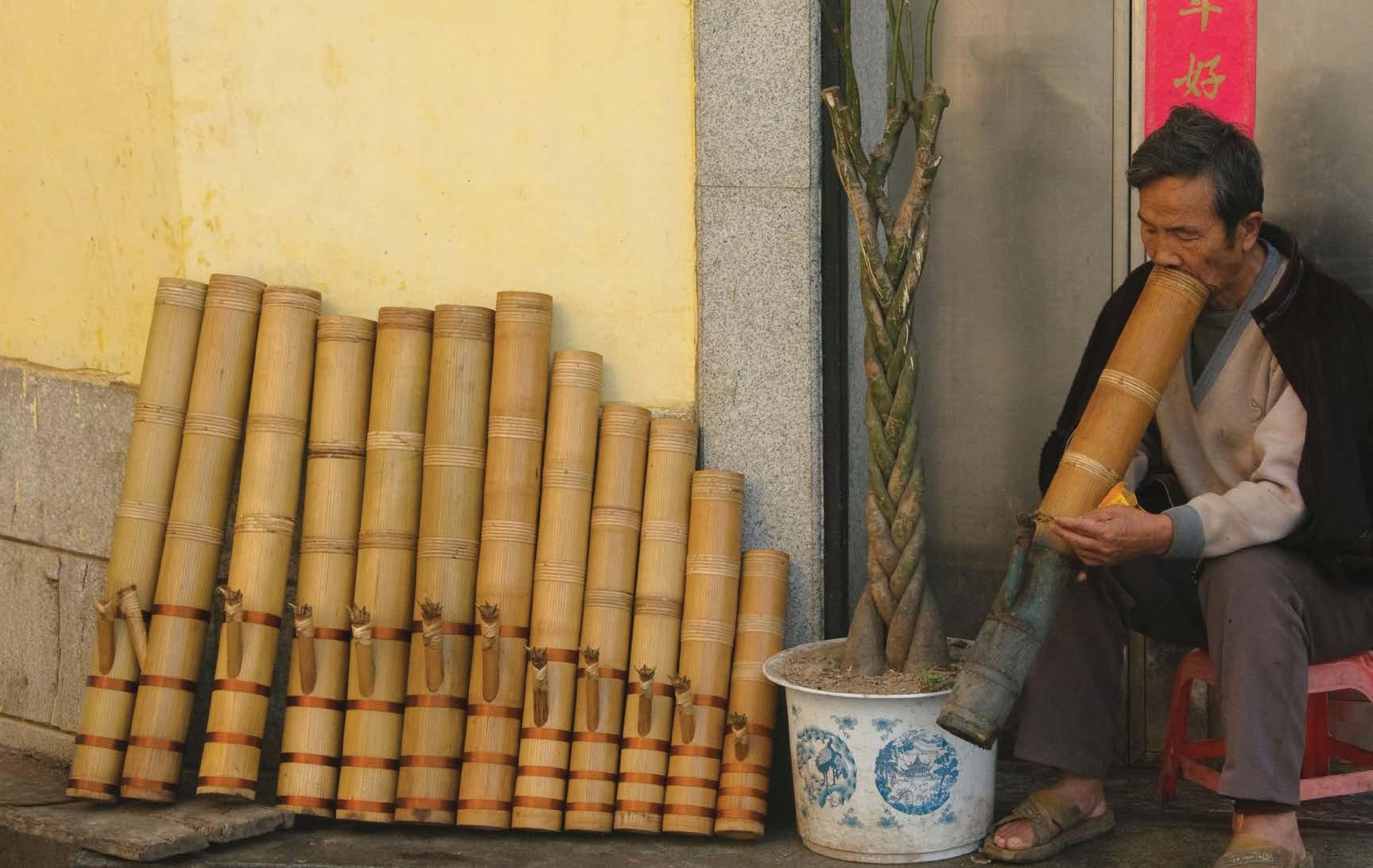
A bong merchant in Yuanyang, China takes a smoke break.
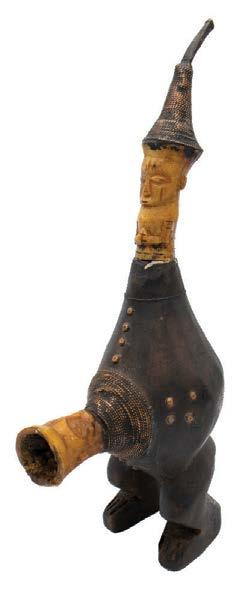
Wood and bone ceremonial bong of the Lega tribe in Congo, Africa.
DAVE STAMBOULIS / ALAMY
COMING TO AMERICA
During the 1960s and early 1970s, many U.S. soldiers fighting in South Asia started smoking Cannabis to help them sleep and cope with the daily traumas of war. It was these Vietnam vets who brought the bong home to America, where they were soon embraced by the weed-fueled hippie movement.
“During the Vietnam War, American GIs on R&R would come to Thailand to kick back and relax for a while before being sent back to fight in the Vietnamese jungles. It was there that they discovered the bong,” explained Thai writer Nuttawat Attasawat. “[Bongs] were smuggled back to the United States, where they became an integral part of American Cannabis culture.”
With the proliferation of headshops over the next decade, bongs grew ever more accessible and popular — becoming the preferred smoking method for countless stoners and a symbol of the counterculture. To meet this demand, some American artists and entrepreneurs began manufacturing a new style of bongs made from ceramics.
EARTHWORKS

“The bong is not merely a tool, but a reflection of a way of life, a history and an art form passed down through generations.”


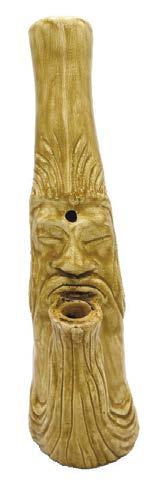
The first U.S. ceramic bong manufacturer was a company called Earthworks. Best known for their iconic Old Man Bongs, Earthworks was founded in 1971 by an OG stoner we’ll call Mr. Thomas, since he prefers his real name not be revealed.
“In 1971, newly married and always getting high, I needed to find a way to make some money,” Thomas told World of Cannabis. “So I started Earthworks in a garage I rented, and we began making bongs.”
Within a year, he’d expanded the operation into a 2,000 square foot facility, purchased some used equipment, and hired “30 very friendly stoned hippies” to mass produce his Old Man Bongs. By 1973, Thomas and his team were cranking out about 1,200 a day, which they sold to headshops, sales reps and distributors for $5 each.
Earthworks eventually produced 724,400 of its Old Man pieces, making it the top-selling bong of the decade and a subcultural phenomenon. Old Man Bong clubs began forming all over the country, and the Earthworks factory became a stoner tourist attraction. Thomas even claims he and his crew buried a slew of bongs all around the country.
“There are over 50 burial sites for Old Man Bongs, protected in cypress boxes for future discovery,” he told WOC. “I believed then that we were making something that quite possibly would be found by archaeologists thousands of years later.”
Sadly, Thomas’ bong empire ended in 1983, when he sold the company and quit Cannabis. Now retired and in his 70s, he hasn’t smoked weed in over forty years.
THE SLYME FACTORY
Another popular 1970s ceramic bong maker was a zany artist from Missouri named Jim Rumph.
Inspired as a child by Mad magazine, sci-fi books, and fantasy artists, Rumph became an underground illustrator and graphic artist during the 1960s before switching to ceramics in the ’70s. Operating out of Southern California, his companies, Mind Circus and Slyme Factory, began selling fantasy-themed pottery, drinking vessels, and yes, bongs.
To the mainstream, Rumph was best known for his movie character mugs, such as E.T., King Kong, Superman, and his highly successful Star Wars series. But for the counterculture, it was his cadre of whimsical fantasy-themed bongs for which he’s revered. From skulls and snakes to dragons and demons, Pegasi and unicorns to wizards and topless maidens — Rumph’s sword-andsorcery smokeware were some of the most sought-after stoner collectibles of the era.
G.GRAPHICS V. GRAFFIX
THE GLASS MENAGERIE
In the 1990s, borosilicate glass established the new standard for smokeware thanks largely to “Godfather of Glass” Bob Snodgrass. Snodgrass and his early apprentices — such as Jason Harris (Jerome Baker), Chris Shave of JAH (Just Another Hippie) Creations, Dan K, and Cam Tower — went on to found the functional glass industry as we know it today. In fact, it was allegedly Tower who first crafted what we now consider the classic bong shape — a bubble-like base with a long, straight tube — out of a single, solid fused piece of glass. (See Cannthropology April 2021 and April 2023).

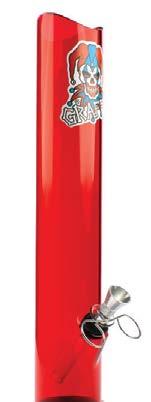
Around the dawn of the 1980s, a new material for making bongs emerged: acrylic. Compared to waterpipes of the past, acrylic bongs were cheaper and more durable. Pioneers of this plastic paraphernalia included U.S. Bongs from Rockville, Maryland (allegedly the first to feature pull-out downstem carbs) and a Milwaukee-based company called G.Graphics. Founded by a stoner named Todd Galanter, G.Graphics bongs originally consisted of a tin can filled with concrete and a PVC tube with a hole drilled in it for a metal stem. Eventually Galanter shifted production from his basement apartment to a warehouse and upgraded his materials. Though mostly sold only at local headshops in Wisconsin and Illinois, G.Graphics bongs became extremely popular in the greater Midwest. Nevertheless, Galanter appears to have shut the company down in 1990. But by far the most well-known bong manufacturer of that era was a brand whose name sounded suspiciously similar to Galanter’s: Graffix. Any American who was getting high in the 1990s is undoubtedly familiar with Graffix’s iconic jester skull logo and most likely found themselves choking up a hit from one of their long, colorful tubes at some point. Graffix was founded in 1988 in Tucson, Arizona … but beyond that, there’s shockingly little information available about this iconic, enigmatic brand.

KEEP CALM AND BONG ON

These boro bongs have enabled myriad new innovations, such as fuming (aka color-changing glass), cooling ice catchers, smoke-diffusing percolators and multi-chamber recyclers. Over the past three decades, glassblowing has become the art form of choice for many Cannabis lovers who create and collect mind-blowing heady works of functional art worth thousands of dollars.
Despite their artistic value, bongs are still classified as drug paraphernalia by the U.S. government under the Controlled Substances Act, and are therefore federally illegal to import, export, sell or transport across state lines.
To get around this law, headshops have historically posted signs stating that their smokeware was for “tobacco use only,” and forbade use of the word “bong” in their stores. Unfortunately, that didn’t stop the Justice Department from launching Operation Pipe Dreams in 2003, driving many bong makers and retailers out of business. Luckily, this beleaguered industry has made a triumphant comeback over time. Today, with Cannabis legal in so many states, paraphernalia sales are permitted under state law in much of the country and estimated by several market research firms to be a $73 billion market.
After nearly a millennium, the humble bong has proven itself to be more than just some clever contraption for getting high — it’s an enduring international artifact of humanity’s heritage, and an ever-evolving symbol of Cannabis culture that continues to bring joy to millions of stoners around the world.


Bobby Black is
Jim Rumph at his studio.
U.S. Bongs ad in High Times.
Old Man Bong
Classic Graffix straight tube bong.

Page Burner

If you love to rip a heady piece and sink into a rich piece of historical fiction, this month’s Page Burner pick is for you: “The Glassmaker” by Tracy Chevalier.
THE SOMEWHAT MYSTICAL, timebending narrative of “The Glassmaker” spans across six centuries, from the height of the Renaissance to modern day. Our journey begins in 1486 along Murano’s famed “canal of glass” in Italy. On this small island in the Venetian Lagoon, glassmaking is a craft so prized that master artisans, or maestros, were once forbidden to leave.
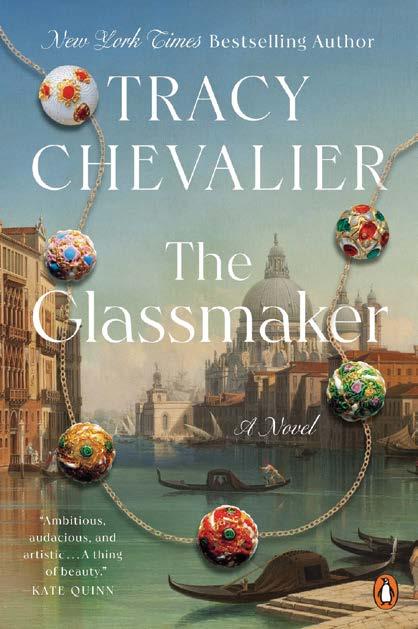
It’s here that we meet Orsola Rosso, the eldest daughter in a proud family of glassmakers. She grows up fascinated by how the furnaces glow, but as a girl, she’s expected to stay out of the workshop and contribute to the household. When her father suddenly passes away, the Rossos’ livelihood is thrown into uncertainty. Orsola learns to make glass beads in secret to keep the family business afloat in a world where women are not welcome at the workbench.
What makes “The Glassmaker” so mesmerizing is Chevalier’s unusual passage of time. The story leaps throughout eras of history, yet the core cast of characters remains with us.
Time moves differently here in the City of Water: fluid and bending, much like molten glass itself.
Time moves differently here in the City of Water: fluid and bending, much like molten glass itself. Across the centuries, Chevalier explores the quiet resilience of women navigating male-dominated crafts, all set against the backdrop of Venice and its evolving artistic landscape.
As you read the novel, be sure to also pay your respects to the modern, badass women in glass featured throughout this issue of the Leaf. Like Rosso, they’re proof that creativity — and a little rebellion — always has a place in our world.
the glassmaker by Tracy Chevalier
Published by Penguin Random House @tracychevalierwriter
THE GREENEST GREEN THE GREENEST GREEN
AN ECO-STONER ’ S GUIDE
THE ECO-STONER CHECKLIST
[ ] Hemp over Wood: Use hemp rolling papers or wicks.
[ ] Glass over Grass: Use a glass pipe instead of throwing away blunt guts.
[ ] Clean your Spot: If you see a stray bottle at the park, throw it out.
[ ] Sun-Grown Only: Ask your budtender about our “outdoor” strains
"THE EARTH IS THE ULTIMATE GROWER. WE’RE JUST THE LUCKY CUSTOMERS."
BEE-FRIENDLY BUDS
WHILE CANNABIS IS WINDPOLLINATED, BEES LOVE MALE HEMP PLANTS FOR THEIR PROTEIN-RICH POLLEN DURING TIMES WHEN OTHER FLOWERS AREN'T BLOOMING. GROWING HEMP LITERALLY HELPS SAVE THE BEES FROM STARVATION. LIVING SOIL SECRET
CANNABIS GROWN IN 'LIVING SOIL' DOESN'T JUST PRODUCE BETTER TERPENES IT ACTUALLY RESTORES THE GROUND. UNLIKE SYNTHETIC FERTILIZERS THAT KILL OFF BENEFICIAL BUGS, ORGANIC REGENERATIVE FARMING BUILDS AN ECOSYSTEM THAT SURVIVES LONG AFTER THE HARVEST.
APRIL 19 | BICYCLE DAY: The Ultimate Cruise Forget the car— grab the homies and hit the pavement. Whether it’s a breezy beach boardwalk or a slow roll through your favorit e neighborhood, there’s no better way to feel the hig h than with the wind in your face. Pack some eco-friendly hemp- wrapped joints, leave the plastic at home, and enjoy the co mpany. Low carbon, high vibes.
APRIL 20 | 4/20: The main event. Smoke 'em if you g ot 'em, but keep it "Leave No Trace." Whether you’re at a festi val or a secret spot, remember: Mother Nature doesn't like r oaches. Use biodegradable filters or glass tips to keep the landscape as beautiful as your buzz.
April 22 | Earth Day: Respect Your Mother She gave us the Terpenes, the THC, and the CBD give her some love b ack. Support "Living Soil" or Sun-Grown brands that give back to the dirt, or swap the indoor couch-lock for a sessi on in the wild. Being grounded is the best way to stay lifted .
THE ECO-SHELF: WHAT TO GRAB IN-STORE
PURE BEAUTY | The Plastic-Free Powerhouse These guys are the "coo l kids" of sustainability. Their flower is grown in a closed-loop system that turns air into water, and their "Mylar" bags a re actually made from plant fibers. When you're done, the packaging goes in the compost, not the landfill.
WYLD | Climate Neutral Classics Your favorite real-fruit g ummies are officially the first Climate Neutral Certified bran d in the game. They offset every bit of carbon they produce. It’s the p erfect, guilt-free snack for your Bicycle Day cruise.
POTTERS | Buy a Pack, Plant a Tree This is "Growth" in the li teral sense. For every single Potters package sold at our shop, a tree is planted to help reforestation efforts. Smoking a jo int has never done so much good for the canopy.






HOW CANNABIS INSPIRES ART
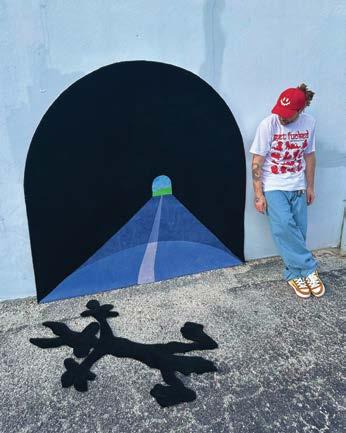

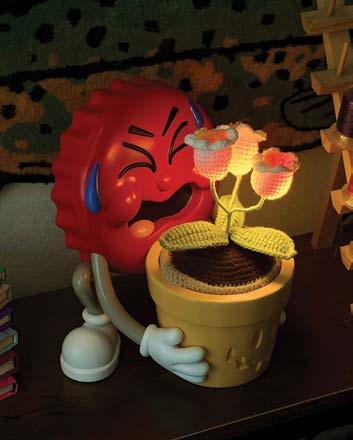

RUGSODA NICK FERRARA
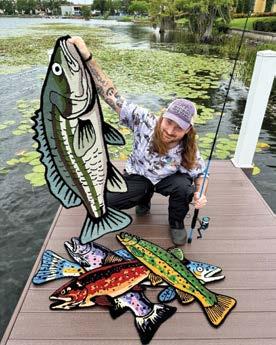
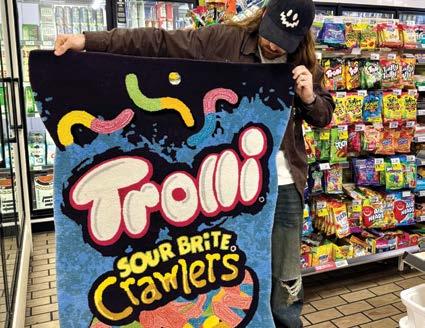
NickFerraraonlystartedhiscareerasRUGSODAsixyearsagoafterdiscoveringaYouTubetutorialonhowtocreate customrugswithatuftinggun.Hehassincebuiltaportfoliothathasdrawntheattentionofmillionsofonlineviewers, as well as names like Converse, Warner Brothers, Complex, Welch’s, Market and The Wall Street Journal.
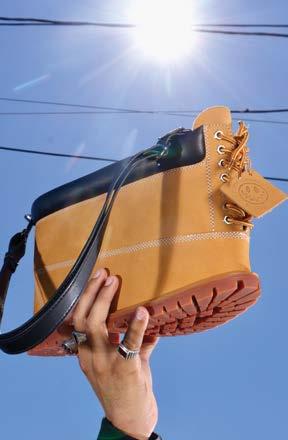
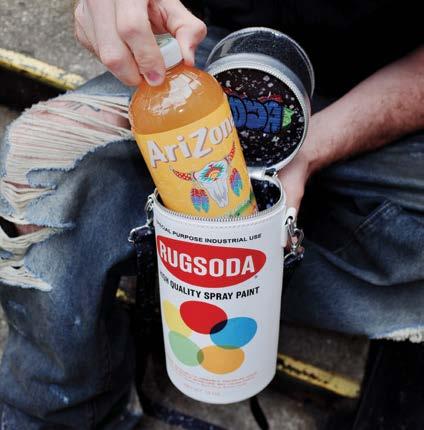
BUILDING ON his success with flat rugs, Ferrara’s creativity expanded into the third dimension with bags shaped like dice, spray cans and miniature dumpsters. Recently, he entered a new space by designing and producing his first vinyl figure.
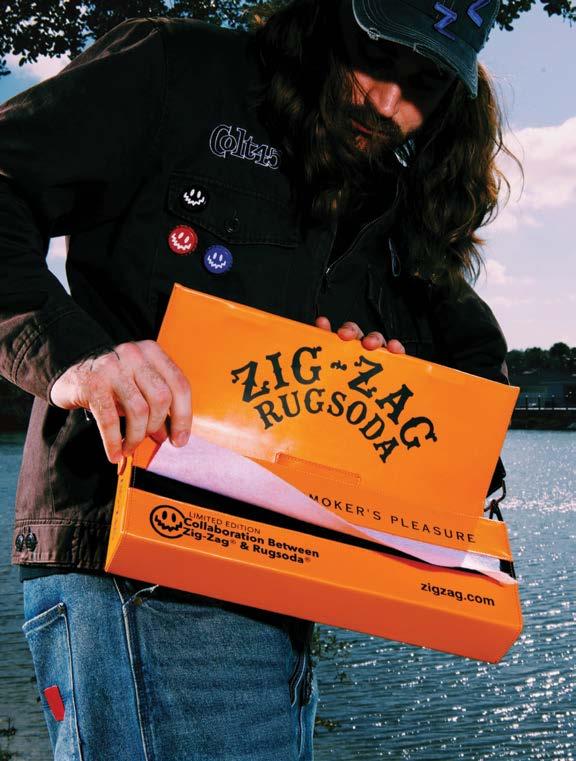
This leap into limited-edition accessories, especially his controversial workboot-inspired Boot Bag release, propelled his work to go viral. The exposure drew attention from brands like Zig Zag, who then commissioned Ferrara to create a custom bag for an online giveaway.
The name RUGSODA is something Ferrara said came to his mind randomly while thinking of things he loves. He’s even released a line of custom socks that come packed inside soda cans. When asked how Cannabis has influenced his artistic process, Ferrara explained that weaving together fashion, art and Cannabis feels natural, given that he’s been smoking weed since high school.
“Weed’s inspired many of my past projects, like the giant nug rug I made for PAX, my joint pillows or the ashtray full of blunts rug,” Ferrara said. Back in his studio in Florida, Ferrara is listening to “Teacups and Kettles” from BBY Goyard’s “4thwall Pt. 2” on repeat while sketching out new designs. For more, though, the RUGSODA website has a radio link that drops you deeper into Ferrara’s inner soundtrack. He showed me the Zig Zag collaboration, and I asked what it felt like to work on a project like this.
“You never really know where art will take you,” Ferrara remarked. “It’s wild that when I was 17, I
was arrested for hotboxing my car. Now, I’m 27, and weed brands reach out to me for collaborations.”
So, what’s the next big drop for RUGSODA? Ferrara said he couldn’t reveal any details just yet, but confirmed his direction.
“I guarantee weed will continue to inspire many more projects of mine in the future,” Ferrara concluded.

“IT’S WILD THAT WHEN I WAS 17, I WAS ARRESTED FOR HOTBOXING MY CAR. NOW, I’M 27, AND WEED BRANDS REACH OUT TO ME FOR COLLABORATIONS.”