

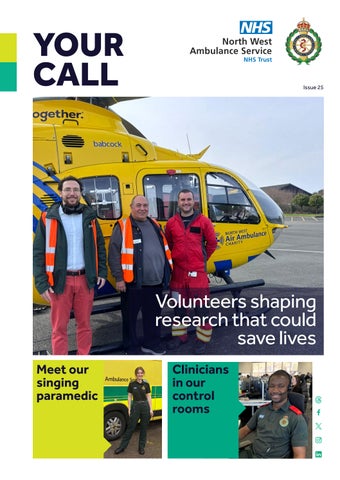
Welcome to the latest edition of Your Call.
We’ve reached the final stretch of winter, and a lot of us are feeling it with the busy shifts, the lingering cold mornings and the constant pressure of life. But as always, the stories in this issue show the real heart of what we do and the people who keep our services going.
In this edition, you’ll hear from Rhys Ash, who talks about his work on our non-fatal overdose referral pathway and how it is helping to change patients’ lives. We’ve also got Brian from our Patient Transport Service, sharing his kidney transplant story; it’s honest, hopeful, and definitely worth a read.
We’re shining a light on the amazing clinicians working in our control rooms, too. Their roles aren’t always visible, but they, along with our call handlers and dispatchers, help ensure patients receive the right care they need.
Our people are the backbone of everything we do, and there’s more to them than the uniform. Alongside the vital work they do every day, many of our colleagues have passions and talents beyond the job. In this edition, we meet Senior Paramedic Cindy who is also a singer. We also meet Emergency Medical Technician Phil, who is sailing towards the European Championships this year.
One of the most moving pieces in this issue is our story with Bill Morley, who has been working with our North West Ambulance Charity. Bill sadly lost his son, Billy, to a cardiac arrest. Bill talks about how he’s turned the most incredibly painful experience of his life into something positive to help others.
As we edge towards spring and lighter days, this edition is a reminder of why the work we all do matters. We hope you enjoy reading it.
Do you have a story to share with us?
If so, please get in touch by emailing: communications@nwas.nhs.uk
Note: You may hear us refer to ourselves as NWAS throughout the edition, this is short for North West Ambulance Service.
How Dan found his calling in the ambulance service
We look at Director of Operations Dan Ainsworth’s journey from law graduate to ambulance board member, showing the power of curiosity, hard work, and seizing opportunities.
A second chance to save lives
Richard Norfolk survived a near-fatal crash, now he’s a paramedic helping others get a second chance at life.
Volunteers shaping research that could save lives
Our volunteers are helping shape groundbreaking research into organ donation that could save lives with North West Air Ambulance.


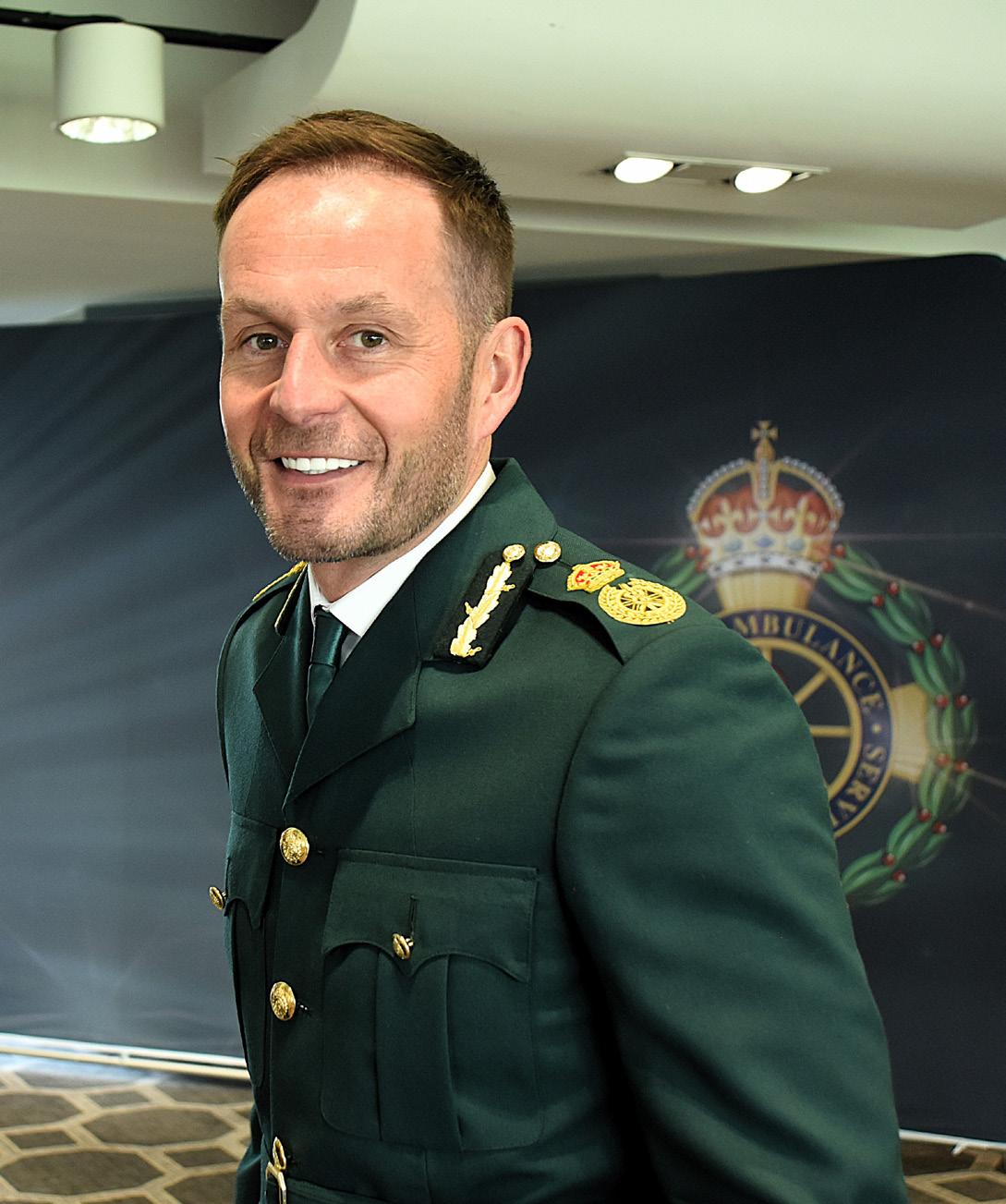
Dan Ainsworth’s career journey hasn’t followed a straight line, and that’s exactly what makes it such a powerful example of what’s possible at NWAS.
Now our director of operations, Dan originally thought his future lay in law. After completing a law degree at the University of Sheffield, he set out to train as a solicitor, with dreams of life in the courtroom. “I wanted to be standing up and speaking, think Tom Cruise in A Few Good Men,” he laughs. “Instead, I found myself in a law library. That really wasn’t my thing.”
Looking back, Dan admits that his early choices were influenced more by expectations than by passion. “I think it was a mix of parental pressure and knowing I’d get the grades. When you’re that age, you don’t always know what makes you tick, you just follow what seems sensible.”
A series of sales roles followed, and by age 26, he’d realised something important was missing. “I needed to do something that mattered and made me feel good about myself.”
That realisation led him to the then-NHS Direct as a health advisor. What started as a short-term job quickly became something more. “Within a couple of months, I realised I genuinely enjoyed helping people. I came home with a sense of satisfaction I’d never felt before.”
Progression followed quickly. Dan moved into a shift manager role, then deputy site lead, discovering a real passion for leadership and supporting colleagues. He also began actively volunteering outside his role, participating in projects, collaborating with different teams, and taking on additional responsibilities to broaden his experience.
“I’ve always believed that if you want to develop, you sometimes have to raise your hand and say yes, even when it feels uncomfortable.”
When NHS Direct transitioned into NHS 111 and became part of NWAS, it marked a defining moment. “The move to NWAS was huge for me,” Dan says. “It’s a big organisation with clear pathways, but what really made the difference were the people. Leaders at the time didn’t just manage me, they invested in me.”
Throughout his career, Dan continued to volunteer for development opportunities, from contributing to national work to writing papers for boards and committees, helping him build confidence and corporate knowledge. “It meant extra hours and early mornings at times, but it opened doors and gave me exposure I wouldn’t have had otherwise.”
Since then, Dan has progressed through senior operational roles, supported by mentors, leadership training and development opportunities across NWAS and the wider NHS.
In his role as director of operations, Dan reflects with pride on his journey from answering phones to leading at board level.
“It hasn’t happened by accident. I’ve worked hard, but I’ve also had the right support at the right times. NWAS really does give people the tools to reach their potential, if you’re willing to put the effort in.”
His advice? “The journey matters. Failures teach you as much as successes, sometimes more. Never be afraid to not know something. Ask questions, seek feedback, and invest in your development.”

“Every time I see it, along with my scar, I remember why I did this.”
Ambulance Care Assistant Brian Cross has always had a passion for helping others. He’s worked in our Patient Transport Service for seven years, alongside supporting patients in mental health care in a role at Mersey Care Foundation Trust for twelve years. His dedication reached a new, life-changing level when he donated a kidney to a stranger.
For Brian, it wasn’t a sudden decision. It started when he saw a colleague’s social media post about their kidney. “Once that thought planted itself in my mind, I knew I wanted to help someone in the same way,” he explains.
Brian’s life hasn’t always been easy. Growing up in care, he lost his home and belongings in a house fire at 19-years-old. But he never let those setbacks hold him back. Determined, he found his way through different jobs, always driven by a desire to help people and give back.
His experience transporting renal patients gave Brian unique insight into the challenges faced by those living with kidney disease. Seeing the impact of dialysis firsthand helped cement his decision. “By donating to a stranger, I had the chance to make an immediate difference in someone’s life,” he says.
The donation process wasn’t easy. For over twelve months, Brian had to have multiple tests, scans and psychological assessments. Friends and family didn’t understand why he was doing it. But Brian kept focused on the bigger picture. “I thought the hardest part wouldn’t be the surgery, but the twelve weeks of recovery,” he says. “I’m always active, juggling work, life, my family and the gym, so slowing down was a real challenge.”
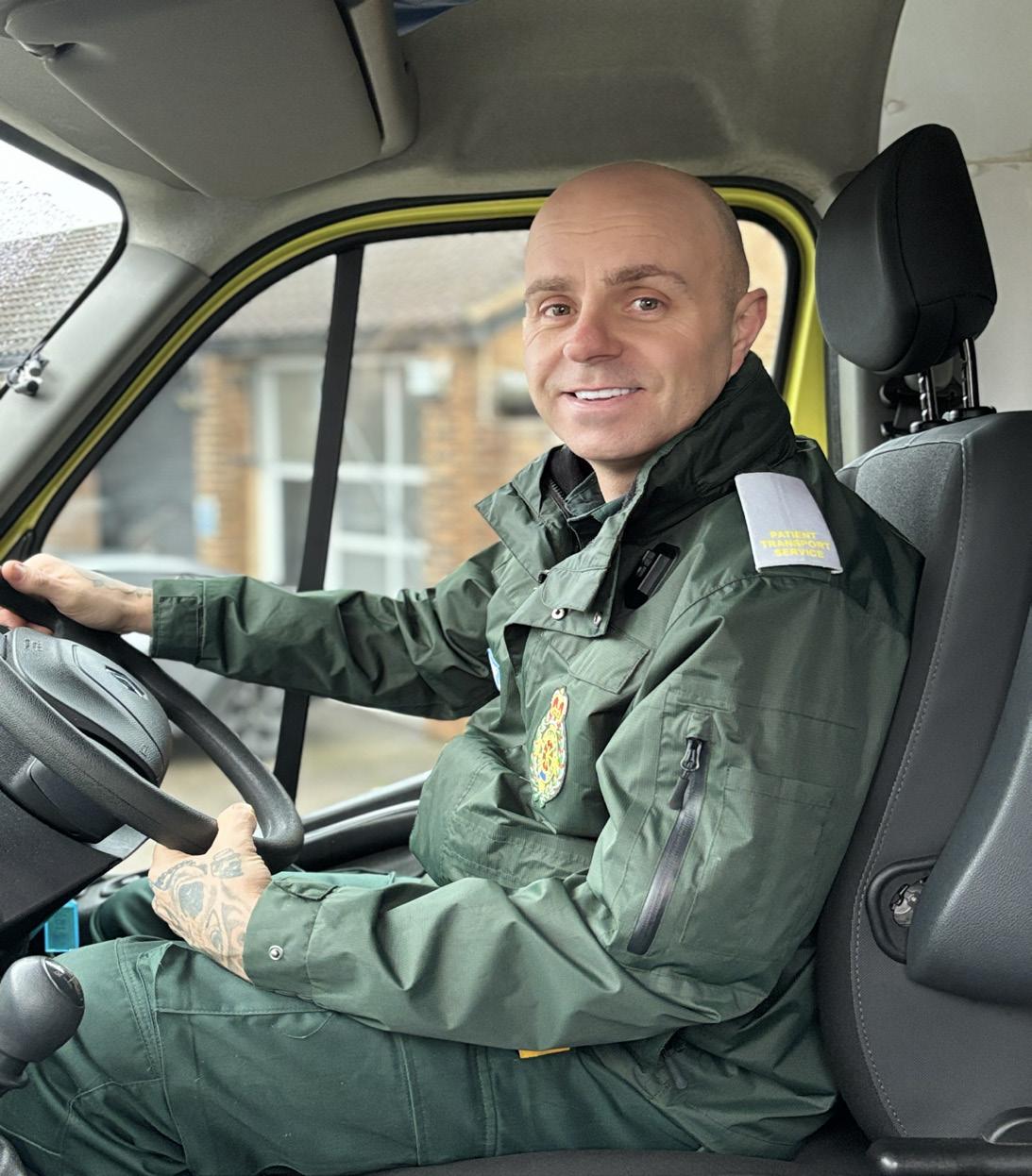
On the day of surgery, nerves hit him hard. “Seconds before going under, I was shaking and scared, but I kept thinking, just get it done,” he recalls. Today, all that remains is a small scar, which is a powerful reminder of the difference he has made.
“I received a letter from the person I donated to, and it completely overwhelmed me,” Brian says. “They wrote that my kidney had given them their life back and allowed them to enjoy everyday things again. I’ve framed it on my wall. Every time I see it, along with my scar, I remember why I did this.”
Brian’s story is also one of perseverance in his career. After three interview attempts for his current role, he finally joined our Patient Transport Service team. He loves the variety of his job, from transporting renal patients to helping patients get home safely. For him, it’s all about helping people wherever he can.
“Aside from my kids, this has been the proudest moment of my life,” Brian reflects. “Giving someone a second chance, seeing the difference it makes, there’s no better feeling for me.”
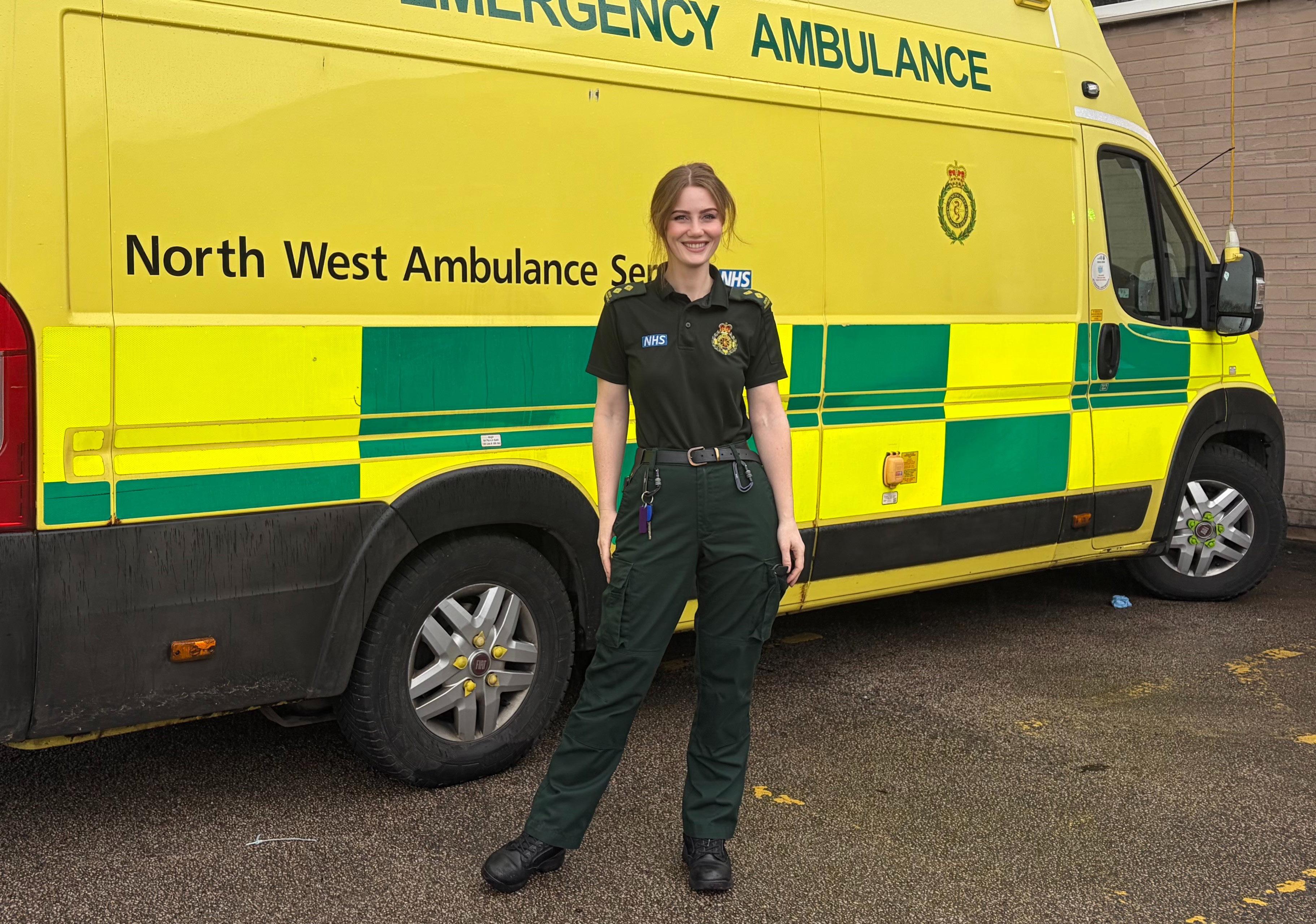
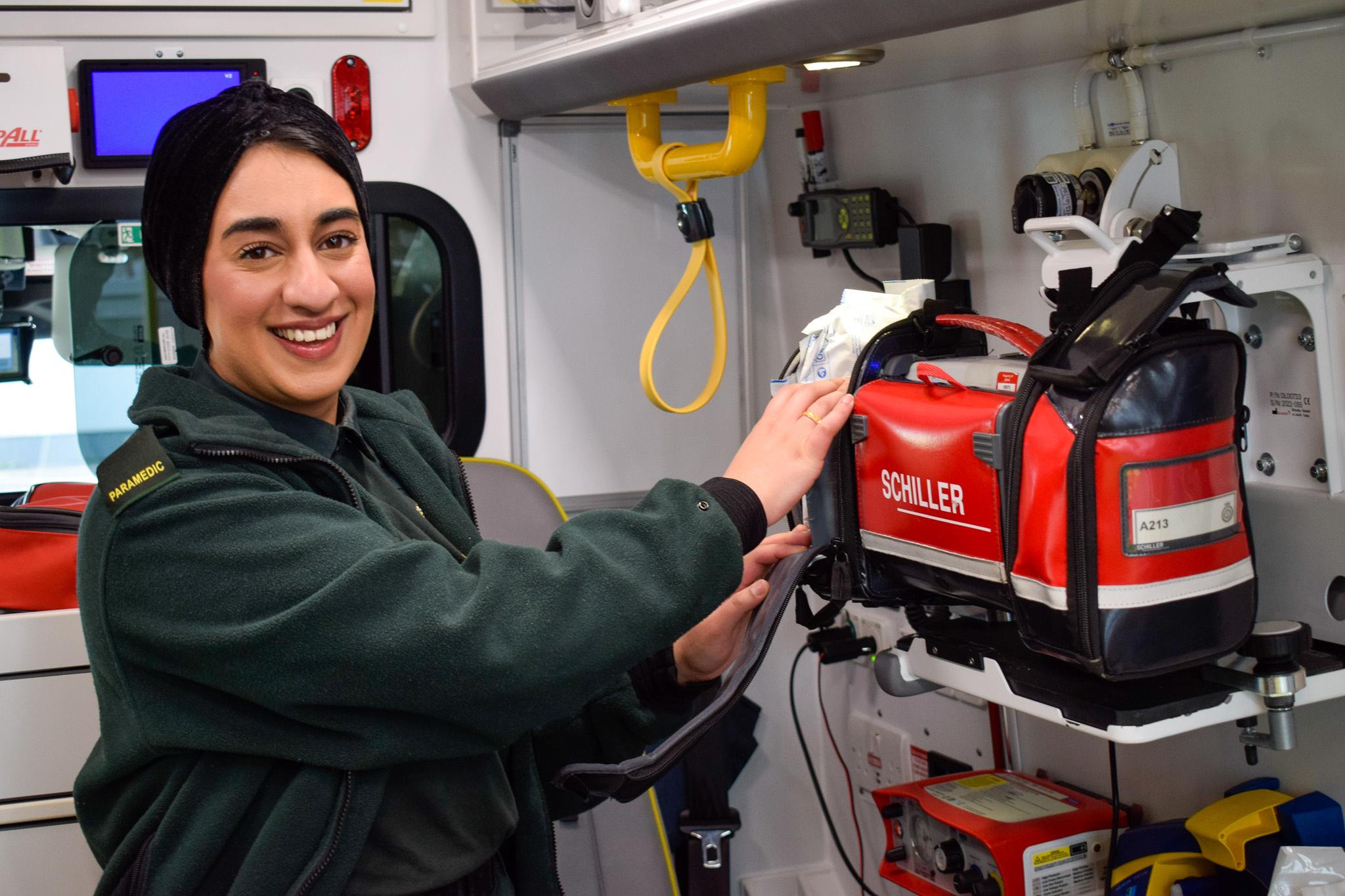
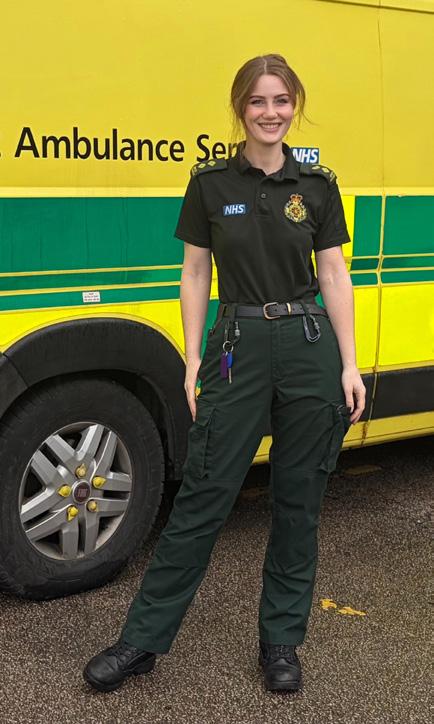
Senior Paramedic Cindy Stainton sings, often for her TikTok audience. Known online as the ‘Singing Paramedic’, her followers love her covers, which include Eva Cassidy’s ‘Over the Rainbow,’ Adele’s ‘When We Were Young,’ and Whitney Houston’s ‘I Have Nothing.’
Cindy has loved singing since she was a toddler. “I would always sing for my family,” she says. But she also wanted to help people. “I decided I wanted to be a paramedic when I was 11 after a first aid class. I was especially passionate about helping someone in their time of need.”
She studied at Edge Hill University and moved from Lincolnshire to Manchester to train. She has worked for us for seven years, saving lives and helping people in Greater Manchester. She became a senior paramedic at the start of last year.
Singing has not always been easy to balance with her job. “I often felt conflicted about wanting to be a singer,” she says. “Only recently have I realised I can do both.” Music now helps Cindy deal with the tougher parts of her job. “After a busy or emotional shift, singing helps me switch off. I have even been known to sing softly to my patients to comfort them and help them feel calmer in a stressful situation.”
Not only does Cindy sing covers, but she also writes her own lyrics, drawing on personal experience.
“One of my new songs is country-style and upbeat. It has actually been written by a friend of mine, and the lyrics are about my journey and growing into my true self,” she says. “I was bullied at school and have worked hard to build my confidence. Music is part of that.”
Singing also helps her confidence, but in a different way than her job. “I’m actually more confident as a paramedic than a performer,” she says. “When someone’s in their hardest moment, and you arrive to help them, seeing the relief on their face when you walk in is such a powerful feeling. Singing is different. I’m still learning. I am still finding my feet and gaining my confidence. The more I record, the more confident I get. It’s a mindset that I am personally working on.”
Her nickname, The Singing Paramedic, came naturally.
“For years I didn’t think I could do both,” she says. “Now I want to inspire people to follow all their dreams, not just one. You can be anything you put your mind to.”
This year, Cindy plans to release her own music and take part in competitions. At the same time, she continues her vital work on the frontline. “Life is short, it flies by,” she says. “Being a paramedic and seeing people both enter and leave the world reminds me of that every day. We are never guaranteed a long life, so why wait?”
When Michael Love joined us years ago, he had already lived what many would consider a full career. After 25 years as a cabin crew member, working across both commercial airlines and military aircraft, he had seen the world, supported thousands of passengers, and handled every situation imaginable at 30,000 feet.
But Michael wasn’t done learning, and he certainly wasn’t done helping people. “I needed a change, I’ve been there, done that and bought the T-shirt. Michael says. “My last job had a long commute to RAF Brize Norton, and I decided I needed a new career closer to home.”
At the age of 53, Michael joined us as an ambulance care assistant in our patient transport service.
Michael says, “I watched the ambulance programme on the BBC, and that inspired me. Although some people had told me that it wasn’t quite real life, I still thought I fancied having a go at that.
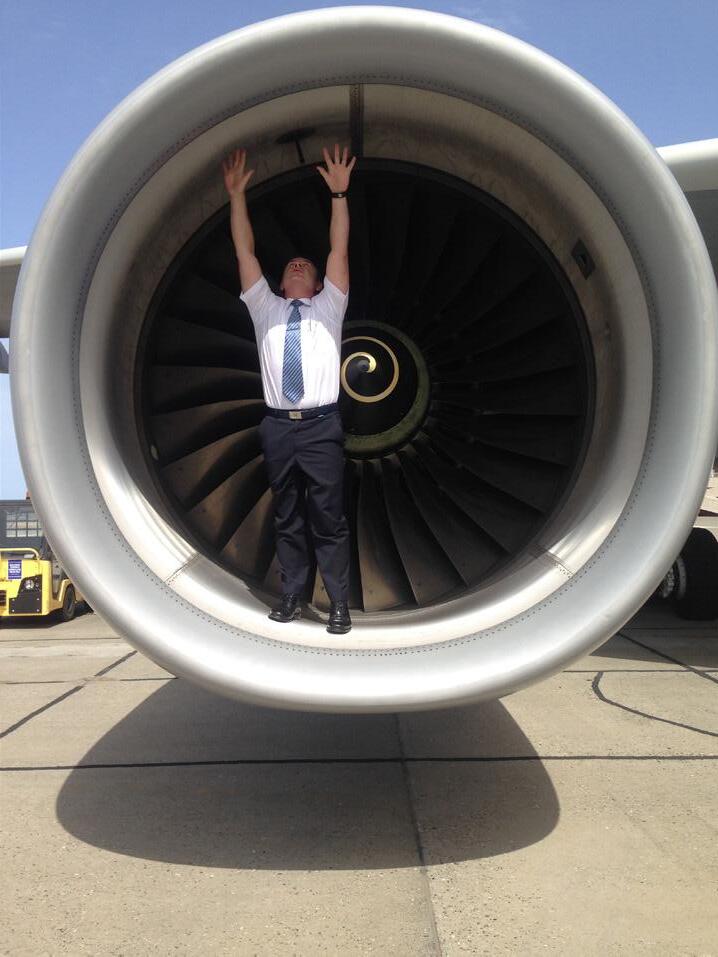
“At the time, I didn’t have the maths qualification to apply for the emergency medical technician apprenticeship scheme. Joining the Patient Transport Service gave me the opportunity to start working in the NHS, gain experience and work towards the qualifications I needed.
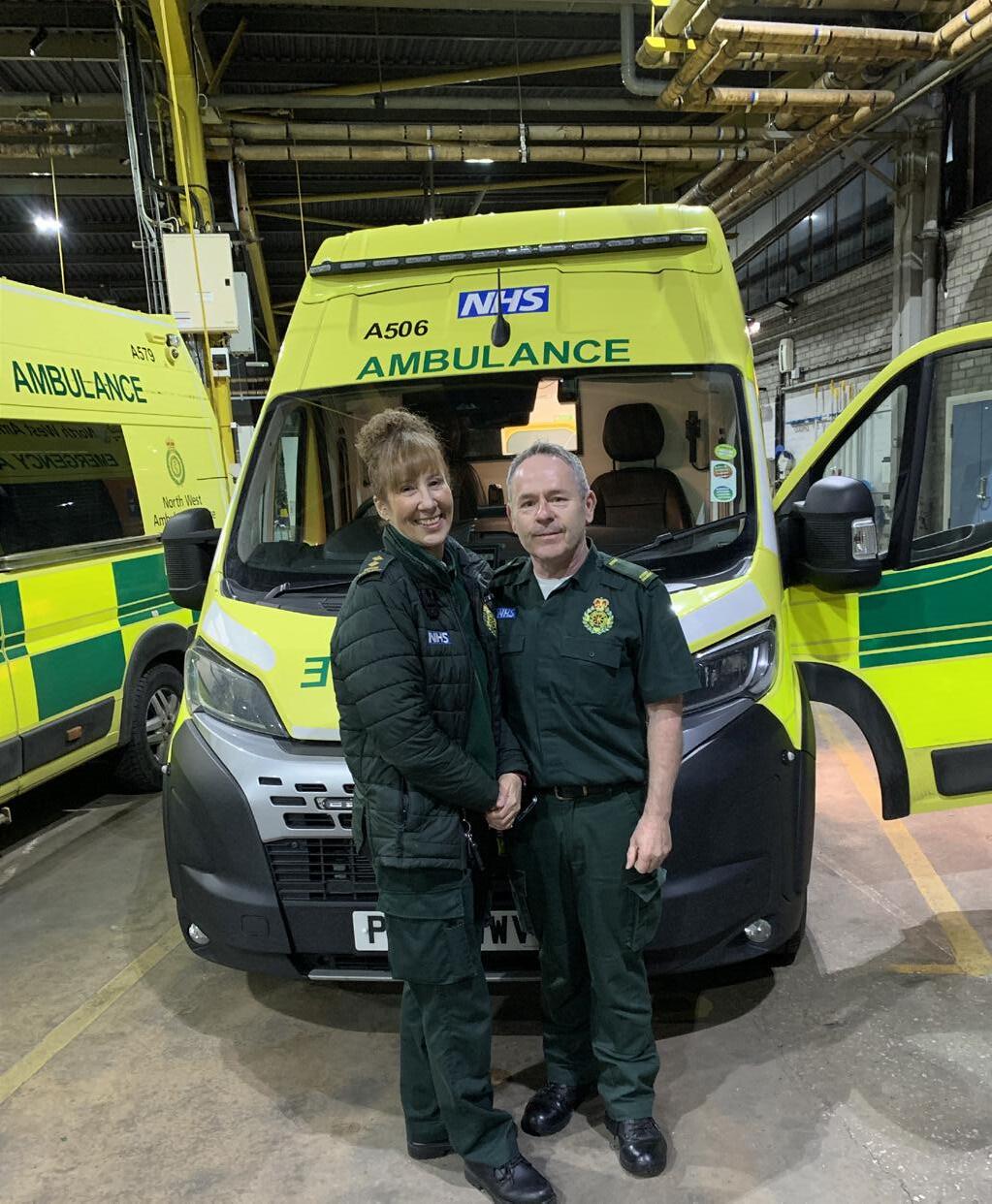
“I was fortunate to get a glimpse of life on the emergency frontline when NWAS provided a scheme to upskill patient transport service staff to support crews during the COVID-19 pandemic. NWAS also supported me in achieving my maths GCSE through an online course before I applied to the apprenticeship scheme.”
Despite leaving education many years previously, Michael embraced returning to the classroom again for his new career, during the 18-month course.
“I enjoyed the apprenticeship, and it was a really good experience. The classroom work was practical, and the teachers were fantastic. They were very patient with us all and understood that everyone learns at different rates.”
Today, at 60-years-old, Michael is a fully trained emergency medical technician, passing his end-point assessment with distinction. He’s responding to emergencies, saving lives, and he’s started a pathway to become a paramedic by studying a paramedic apprenticeship, again, while continuing to work in his role.
Michael’s story stands as a powerful reminder that apprenticeships aren’t just for school leavers. At NWAS, they’re for anyone with passion, determination, and a desire to develop whether you’re 18 or 58.
“I am really proud of myself because it goes to show that age isn’t a barrier. If you want something and it’s within your grasp and there for you, you should go for it because you don’t know what is around the corner.”


After swapping a spinnaker for a stretcher, Phil Hodgkins is making a comeback, one that will take him all the way to Miami’s world sailing stage.
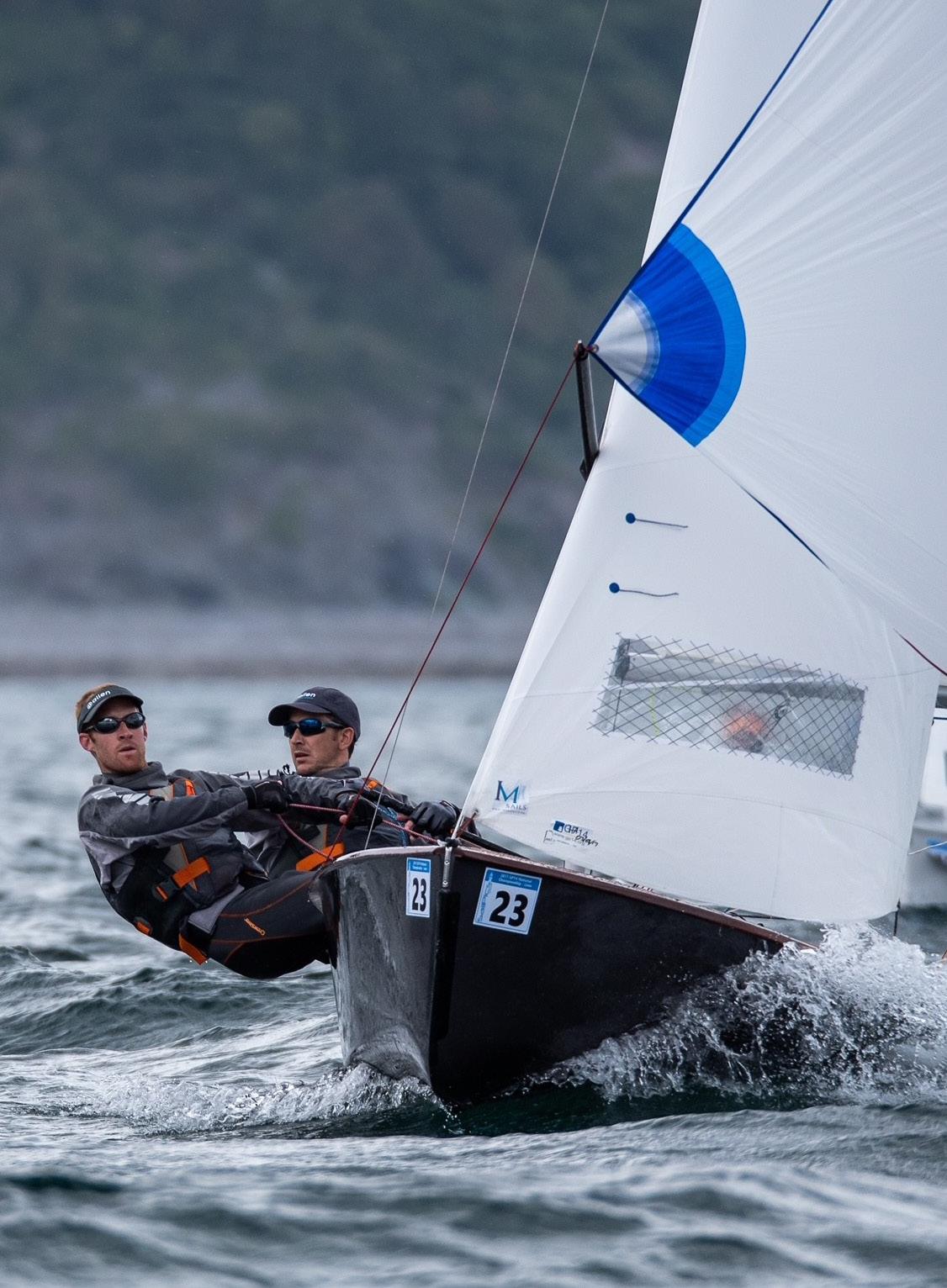
39-year-old Phil joined us as an apprentice emergency medical technician in 2023, marking the start of a second career. The first of which was dominated by sailing. Now he’s returned to water in a new class of boat and has just entered its inaugural World Championships taking place in Miami next year.
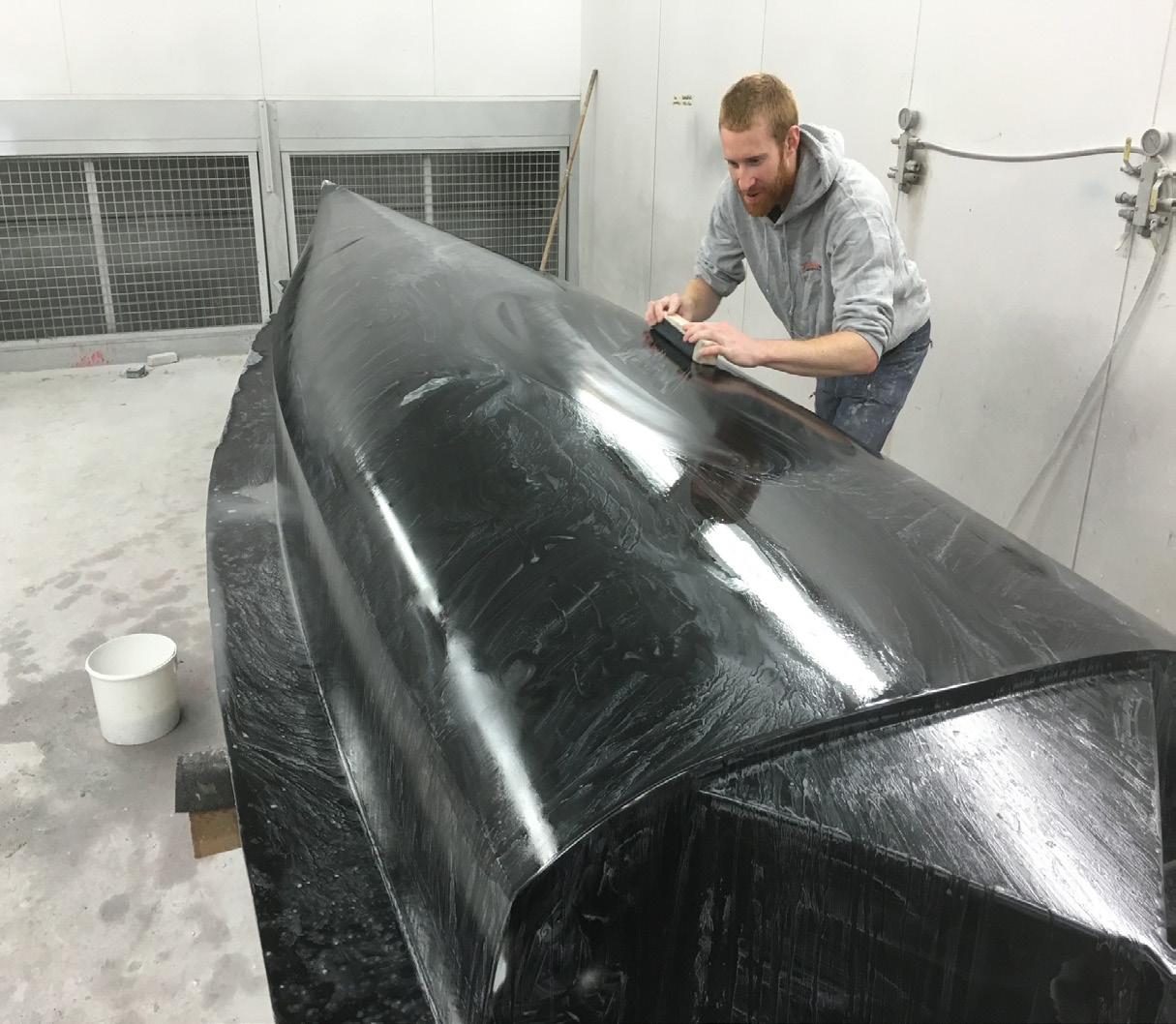
Cumbrian Phil grew up competitive sailing, racing what is called the GP14 class from age 11. After earning a degree in marine engineering, he also founded a boat-building company. Ironically, he had a hand in the early production of the VX One boat, which he’s now planning on racing in Miami next year. Phil has competed at a high level, winning races at world championships, though the overall title has remained elusive.
However, a few years ago, a new career beckoned. “I fell out of love with sailing,” he admits. “I ended up running a big company instead of building boats. I started boatbuilding to fund my competitive racing, but had grown beyond that, and I wanted a change.”
After completing a first responder course in 2022, a colleague suggested the ambulance service’s apprenticeship route. Phil took the leap. Now he’s a qualified emergency medical technician and has started his paramedic apprenticeship. “I wanted a career completely separate from my old one, something that challenged me every day and something that would give back to the community,” he says. “Healthcare gives me that. I can hopefully help people in the darkest moments, and there’s endless learning.”
But following a long break from the water. He was tempted back, buying a new boat and testing himself competitively alongside his sailing crewmates Felicity and Sam, both firefighters. And early success in some events has convinced them to go for gold in Miami.
“We wouldn’t go if we didn’t think we had a chance of winning.” He says, “The commitment and cost required just to enter a regatta like this mean it’s likely our only opportunity to compete on this stage.
“Our target is to win the European Championships this year and be the lead European boat ahead of the World Championships.
“But it’s not all about your ranking. A lot can happen during a race; things can break, infringements go against you, or a small judgment call can cost you lots of time over the rest of the fleet.”
Good luck to Phil and his crew over the next year as the bid for glory continues.
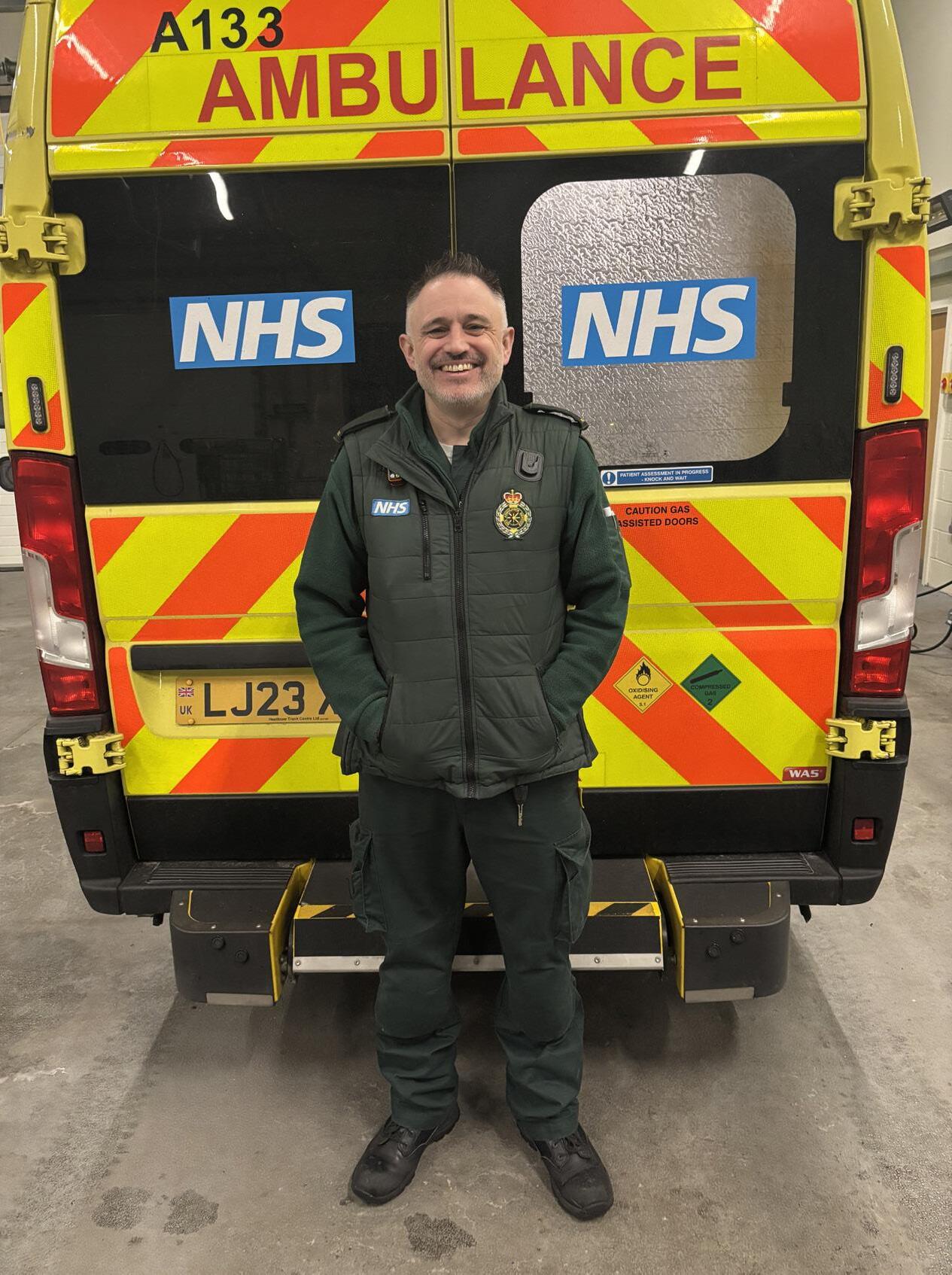
Paramedic Richard Norfolk didn’t know what he wanted to do with his life. At the age of 22, many don’t. But a near-fatal car crash would change his perspective and ultimately shape his future career.
On 19 February 2002, Richard was involved in a road traffic collision that almost took his life. He sustained a comminuted fracture of his right femur, a severe injury where the thigh bone is broken into three or more pieces, along with fractures to his pelvis, neck, ribs and shoulder. He also suffered internal organ trauma and a subdural haematoma, a bleed on the brain.
Recovery from such catastrophic injuries was long and difficult, taking years rather than months, and leaving lasting effects. Richard explains, “I was on crutches for nearly a year, and overall, it took me nearly three years before I could walk properly again. My right leg is now shorter by two and a half inches, and I still have a metal screw at the top of my femur. It was supposed to be removed, but bone grew around it during recovery, so they couldn’t take it out.”
He continues, “This causes constant pain in my right hip, which is worse in the winter, and sometimes muscle spasms in my upper right thigh. To compensate, I wear a permanent insert in my shoes to try to counteract the leg length
difference, but it’s not perfect. As a result, I have a natural drop in my pelvis, which causes chronic lumbar pain, but you just learn to live with it.”
While the physical recovery was visible, the mental recovery was less so. Several years later, Richard began to confront the mental toll of his trauma. He explains, “It wasn’t until around 2008 that, out of the blue, I had a nervous breakdown as I was coming to terms with what had happened and the lasting effects on my body. I closed myself off from the world for two years to recover and focus on my mental health.”
“I do suffer with depression at times,” he adds, “but I’ve learned to recognise it, acknowledge it, and deal with it when it starts to show its ugly head. I also know when to seek help, to stop it taking hold of my life.”
Surviving an accident like that inevitably changed Richard’s outlook and made him reflect on his future. He recalls, “I have very vivid memories of my car crash. I was unconscious for most of it, but certain moments are burned into my memory. I remember the care I was given, and the compassion and calm nature of those treating me. Throughout my recovery, those memories kept replaying in my mind, and I started to think about how I could pay back in kind. That was where the desire to become a paramedic came about.”
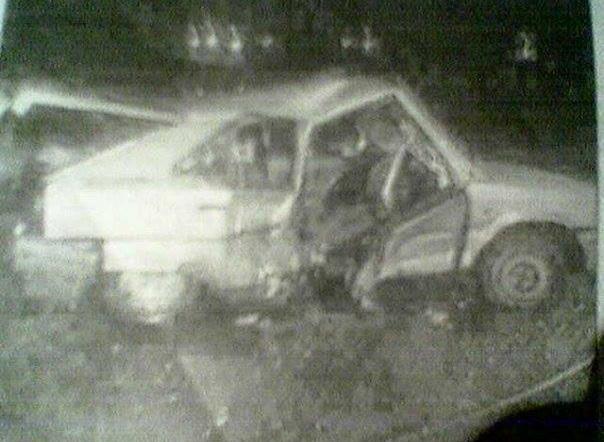
Once he was physically able to return to work, Richard went back to his role as a lifeguard at the Sandcastle Waterpark in Blackpool. It was there that another life-changing incident cemented his ambition to help others. He explains, “I rescued a seven-year-old boy who was drowning. I swam out to him and pulled him from the water, but he was in respiratory arrest. We thankfully saved his life.”
“It was after that incident,” he continues, “when I was praised for my quick reactions and my ability to stay calm under pressure, then I knew for certain I wanted to be a paramedic.”
Encouraged by his determination and with support from his biggest champion, his mum, who worked in our control centre at the time, Richard applied in 2013 to work in our patient transport service. The role gave him valuable frontline experience and helped him to build the skills and confidence needed to pursue a career in the service.
Reflecting on his journey within the ambulance service, Richard shares, “While working in patient transport service control, I became a community first responder, and shortly afterwards an enhanced community first responder which is the same but with additional training and responsibility.
Attending incidents and working alongside the ambulance crews around me gave me valuable insight into the role and further solidified my desire to become a paramedic.
“A year later, I applied for the emergency medical technician position and was successful. By November 2014, I had
completed my training, and in 2021, I completed a year-long course and finally registered as a paramedic.”
Now, five years into his dream career, Richard says that helping people and making a difference is what he loves most about his job. There is, however, one area of work he feels particularly connected to, despite his own experiences.
“I can’t deny that I have a huge connection with trauma, specifically road traffic collisions,” he says. “Some people might think this would be a trigger for me, but actually, it’s where I’m most passionate about making sure everything I do is to the best of my ability. It’s about giving patients the best possible chance, the same chance the ambulance paramedics gave me over 20 years ago.”
Nearly losing his life more than two decades ago has shaped Richard’s outlook, and there are mottos he lives by. He explains, “For me, it’s about resilience. My body did the hard work in those first few days, surviving multiple surgeries and treatments just to keep me alive. At first, I was told I had a slim chance of surviving. Then that I might lose my leg. Then that I’d keep it but never walk properly again.”
“It was a series of ‘you can’t’, where I said, ‘I can’,” he adds. “I use that mentality in everything I do. If you have the will and the fight within you, you can accomplish anything you set your mind to. I may be approaching 47 this year, but I’m young. I’ve still got a lot of life left in me, and a lot of dreams I want to fulfil, and I will. Believe in yourself first and foremost, and the rest will follow.”
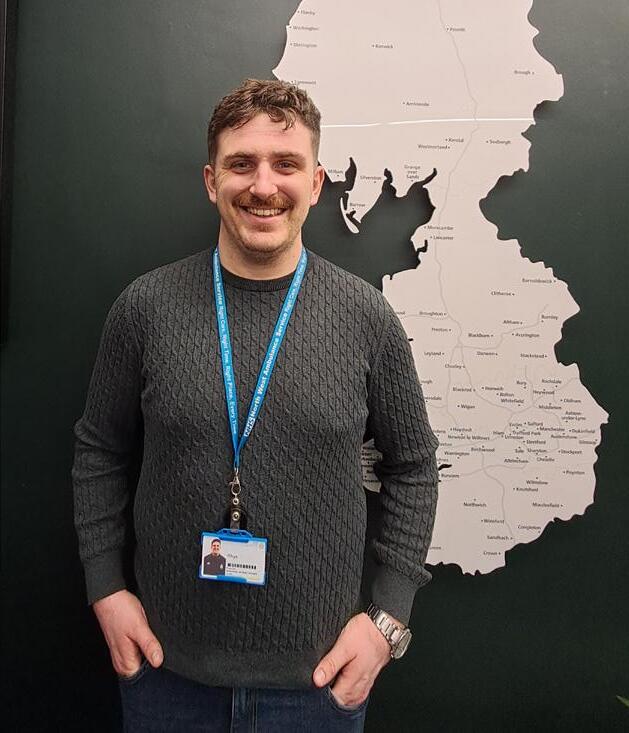
When we provide care to patients following a non-fatal overdose in which opioids were involved, we can now offer support beyond the immediate emergency response. Our non-fatal overdose pathway helps crews link patients with follow-up care and specialist support, reducing future risk and helping them stay safe.
Leading this work is Rhys Ash, who joined us almost two years ago in his first NHS role, bringing with him more than five years of experience working in drug and alcohol services and supporting people with addiction and complex needs. Before joining NWAS, Rhys was the harm reduction lead for Cumbria’s drug services, overseeing county-wide interventions to reduce harm and prevent drug-related deaths. That experience working closely with people at high risk has helped him shape the pathway now used across our 999 service.
“I’ve always been committed to supporting some of the most vulnerable people in society,” Rhys says. “Addiction isn’t just about substances, it’s about mental health, life experiences and the world around us. My own past mental health struggles have given me a natural empathy for people dealing with addiction and risky drug use.”
The care pathway supports people who have survived an overdose involving substance misuse where opioids are a contributing factor. Once referred, patients are connected to tailored support which may include check-ins, counselling, harm reduction resources, and help with wider issues such as housing, employment and mental health.
“Without support, people who overdose are at high risk of overdosing again, often within a short space of time,” Rhys explains. “Each incident increases the risk of serious harm or death.”
Anyone who has had a non-fatal overdose that meets the criteria can be referred into the pathway. For patients under 18, our crews make safeguarding referrals while also referring them to adult services for harm reduction support.
By using the pathway when appropriate, our crews can help reduce repeat overdoses and prevent future incidents from becoming fatal. Over time, this also helps reduce repeat calls, freeing up ambulance crews to attend other lifethreatening emergencies.
Rhys has already seen positive results from referrals made. “We’ve built strong links with local drug services. Some patients are no longer using street drugs, while others are finally getting the tailored support they’ve needed for years.”
“I’ve seen first-hand the devastating impact overdoses can have on families and friends. This pathway recognises immediate risk and offers urgent support that simply wasn’t there before. Seeing someone’s life improve and hearing that they feel safer and more stable shows just how important this work is and keeps me motivated.”
The non-fatal overdose pathway is an example of how our people are making a difference, not just in moments of crisis, but long after the ambulance has left the scene.

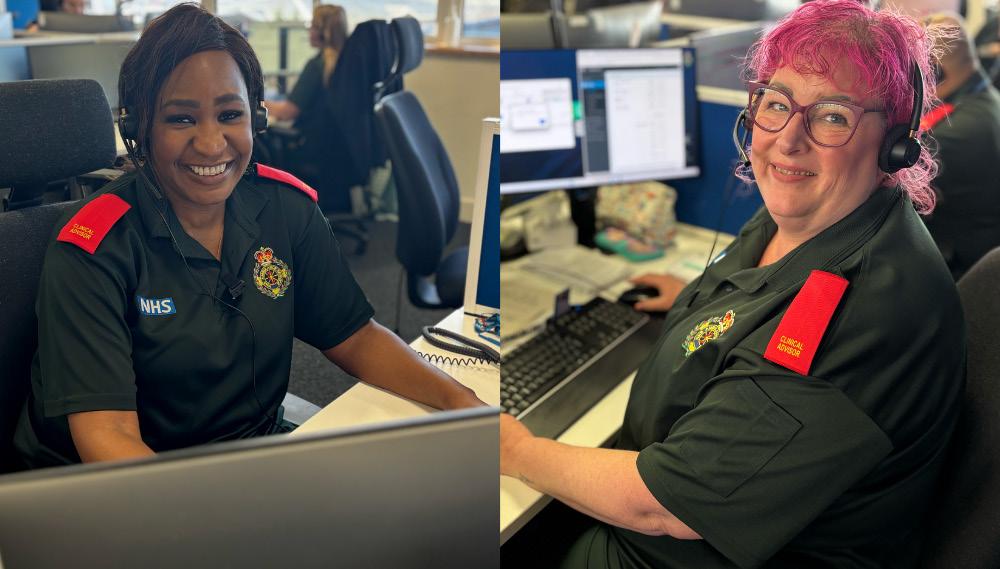
When people think of an ambulance service, they often picture blue lights and emergency responses. What’s less visible is the work that happens long before an ambulance arrives. Behind every call is a team handling calls, assessing what’s needed, and making decisions.
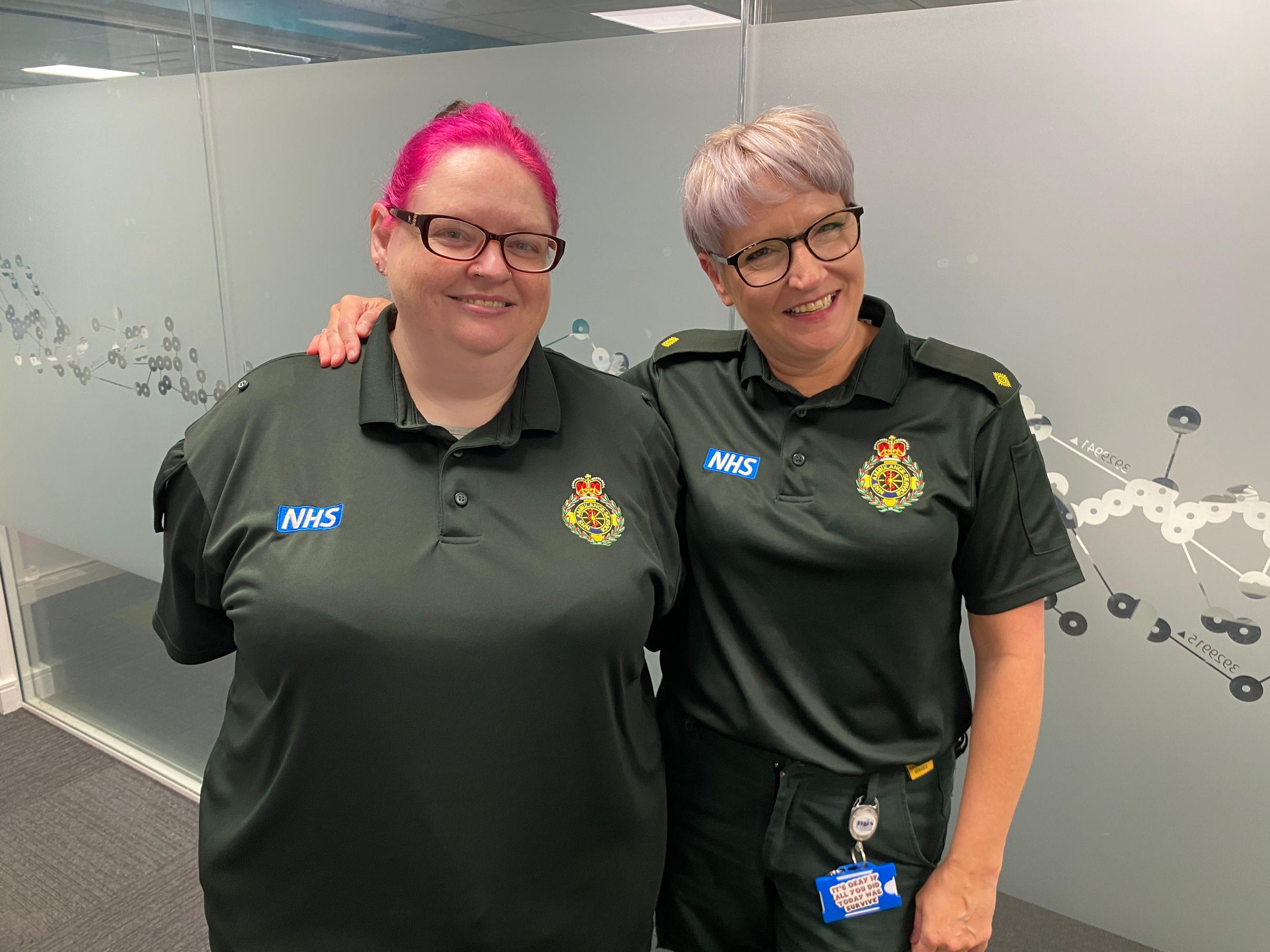
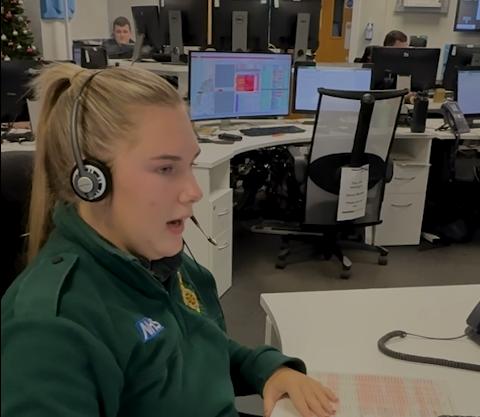
In our control rooms, call handlers, dispatchers and clinicians work to support people when they contact us. Together, they help make sure patients get the right help, at the right time, and in the right place.
Each year, our 999 and NHS 111 services continue to receive high volumes of calls, and not every patient contacting us needs an ambulance or a hospital visit. Having clinicians in our control rooms helps us to navigate this. They can give advice, talk through symptoms, and help patients access other services when an ambulance or hospital isn’t the best option.
By working closely with call handlers and operational teams, our clinicians help reduce unnecessary trips to hospital, ease pressure on emergency departments, and make sure ambulances are available for those who need them most.
We have nurse, paramedic, mental health and pharmacy clinicians working in different roles across our control rooms, but they all share the same aim, which is keeping our patients safe and supported.
Some clinicians focus on more urgent calls, such as category two incidents, where early clinical input can make a real difference. This may involve speaking with patients over the phone or providing care in the community. They assess patients, provide treatment where needed, and arrange support from community services when hospital care isn’t required. This helps patients stay at home where it’s safe to do so and avoids unnecessary journeys to hospital.
Other clinicians support calls that are less serious and don’t need an ambulance response. Working within the control room, they review these calls in more detail, provide advice, and make sure patients know what to do next. Using their clinical experience, they help patients access the right services and ensure appropriate followup is in place.
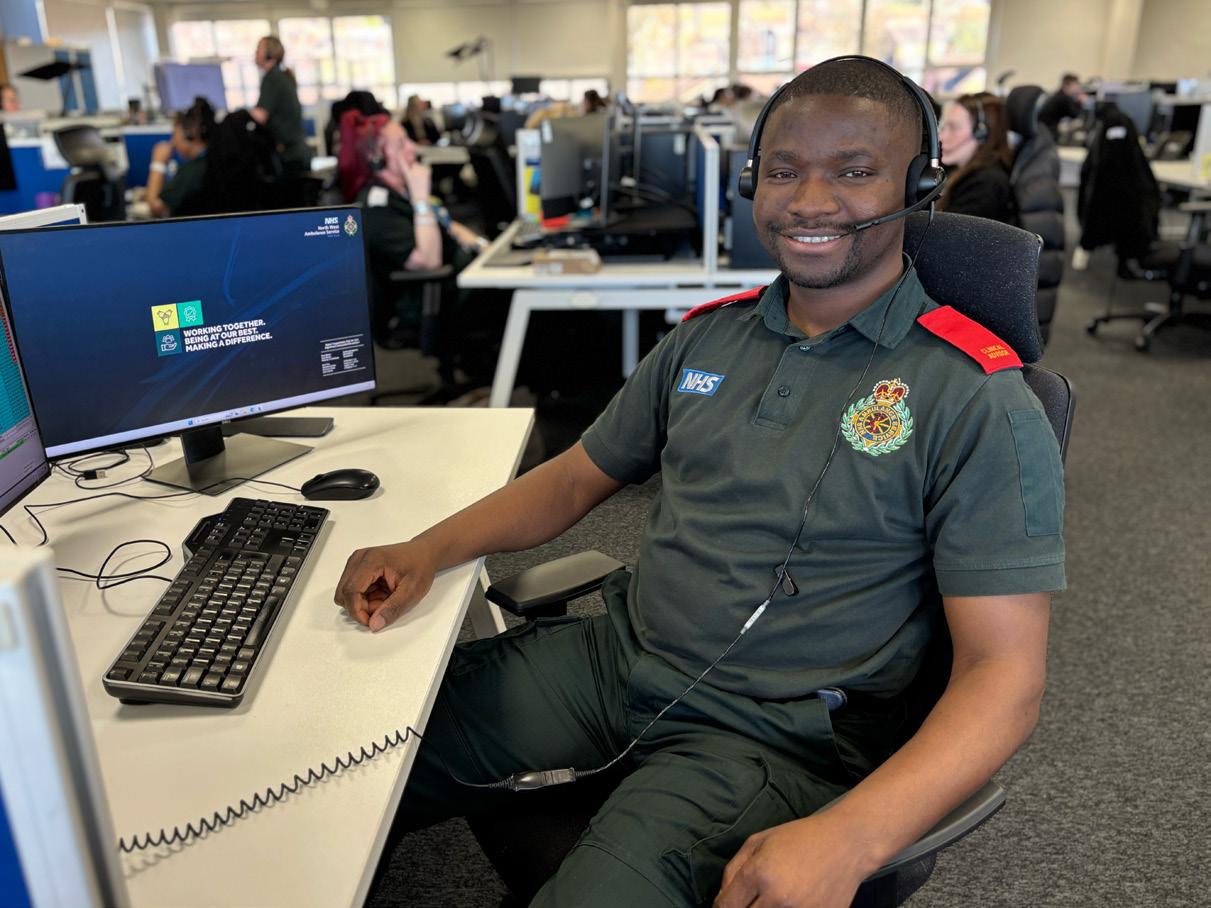
Our clinicians also work within our NHS 111 service, speaking directly with patients who need extra clinical advice. Working alongside our health advisors, they help explore symptoms, offer reassurance, and arrange further care when needed. For many callers, speaking to a clinician can provide clarity and confidence during a worrying time.
One example of this work is Erin, an advanced practitioner who supports more urgent 999 calls. Erin may speak with patients over the phone in the control room or attend to them in the community. Recently, she attended to a patient whose symptoms were getting worse.
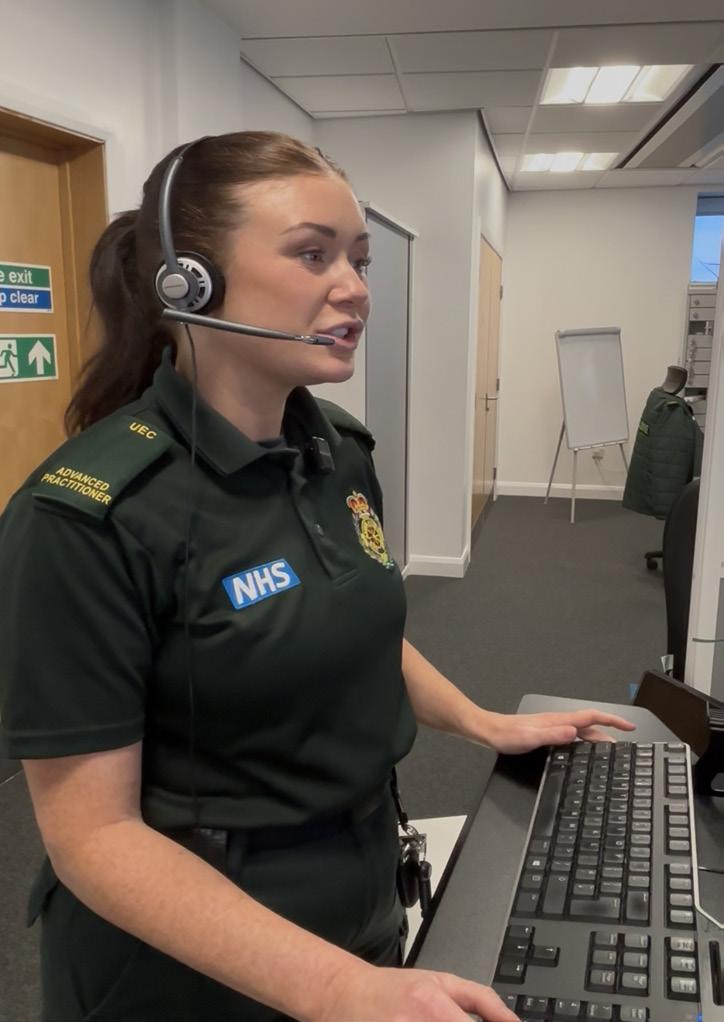
After assessing the patient at home, Erin was able to treat them there and arrange followup care through community services. The patient avoided an unnecessary hospital visit while still receiving safe and timely care.
While Erin’s role is just one part of the wider team, it reflects the approach shared by clinicians across our control rooms, which is to assess patients and use clinical judgement, focusing on what’s best for each patient.
Whether supporting patients over the phone, reviewing calls in the control room, or seeing people in their own homes, our clinicians in control play an important role in helping deliver safe, effective and compassionate care every day.
Bill Morley tragically lost his son, Billy, in 2024 after he suffered a cardiac arrest. Following this awful incident, Bill and his family decided to turn their experience into a positive one by raising awareness of cardiac arrests and the need for defibrillators.
Bill shares, “Billy was on a stag do in Liverpool at the time and suffered a heart attack, which led to a cardiac arrest. Although his friend tried tirelessly to save Billy, there were no defibrillators nearby to be used.
“This doesn’t mean to say that it would have changed the outcome, but there wasn’t the option for a defibrillator to improve my son’s chances of survival.”
Bill continues: “I wanted to try and ensure that no other family in Cumbria has to go through what my family and I experienced. This led me to reach out to the North West Ambulance Charity in January 2025, with the hope of working together to install defibrillators in Cumbria.
“Since then, I have been working closely with Community Resuscitation Engagement Officer, Megan Stephenson, with support and funding from local organisations, community groups and the North West Ambulance Charity. The first defibrillator was successfully installed in Bowthorn, Cleator Moor.
“The overwhelming need to raise awareness and get more of these lifesaving defibrillators has become my passion. The support that I am receiving from our communities is amazing. Not only that, but my family have made this our priority, If we can give people a chance and save lives, it will all be worth it.”
To date, Bill and his family have helped to install 62 new defibrillators in West Cumbria, with hopefully, many more to follow.
Bill continues: “In total, we have raised and donated an incredible £28,200 to the North West Ambulance Charity,
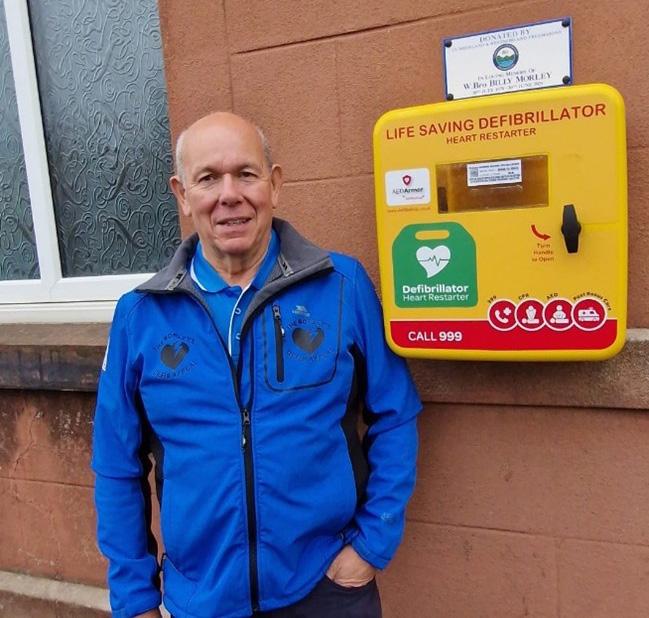

which has enabled us to purchase and install defibrillators, cabinets and other necessary equipment.
“We’ve worked tirelessly to not only raise money and place equipment to save lives, but we’ve also delivered CPR awareness sessions to over 400 people in West Cumbria, ensuring that people know how to use a defibrillator and give CPR in an emergency.”
Megan also spoke on the incredible project, “Bill’s efforts in Cumbria go far beyond raising awareness or fundraising, they are lifesaving.
“He has a close team, including an electrician, myself, a local community first responder volunteer and the North West Ambulance Charity, which ensures that each defibrillator installation is done properly and that the public are wellinformed about their use.
“Bill doesn’t just stop there; he provides support to empower those with the confidence to take action, use the defibrillators, and perform CPR when needed.
“The Morley’s Defibrillator Appeal is not just expanding defibrillator coverage but also equipping our communities with the knowledge and courage to act in the critical moments of a cardiac arrest.
“I am very proud to be part of this project, and it is always an honour to work closely with someone so passionate about improving the survival rates of out-of-hospital cardiac arrests.”
North West Ambulance Charity can provide guidance and support with fundraising, or match funding where possible, to help local communities secure and maintain these lifesaving devices.
The charity is committed to improving cardiac arrest outcomes across the North West. Get in touch at charity.office@nwas.nhs.uk or head to our webpage nwas.nhs.uk/charity.

As of March 2025, more than 8,000 people across the UK were waiting for an organ transplant, with just under 1,500 donors being supported by the NHS in the past year. Over the past five years, the number of people on the waiting list has doubled, highlighting the growing gap between the need for organs and those available.*
Out-of-hospital cardiac arrest remains one of the most serious medical emergencies. With sadly, only around one in 12 people surviving despite the emergency service’s best efforts. Thanks to the quick actions of community first responders, NWAS ambulance crews, the North West Air Ambulance Charity and members of the public, around 60 percent of patients in the North West have their hearts successfully restarted; still leaving 40 percent of patients who are unable to be saved.
Together with partners, the clinical team at the North West Air Ambulance Charity are exploring a question that has never been tested before: for those patients that cannot be saved, could organ donation be possible following an out-ofhospital cardiac arrest?
This question would be investigated through the conducting of a formal research study which would be the first of its kind in the UK. Planning for the study is well underway within the North West. If it proves successful, it could change how organ donation is approached in these circumstances. It could offer new hope to thousands of people waiting for a transplant, whilst bringing comfort to bereaved families knowing they were able to honour their loved one’s last wishes.
Research of this nature is complex and involves difficult ethical considerations, particularly around end-of-life care, consent, and how families are supported during some of the most challenging moments they will ever face. Getting this right is essential.

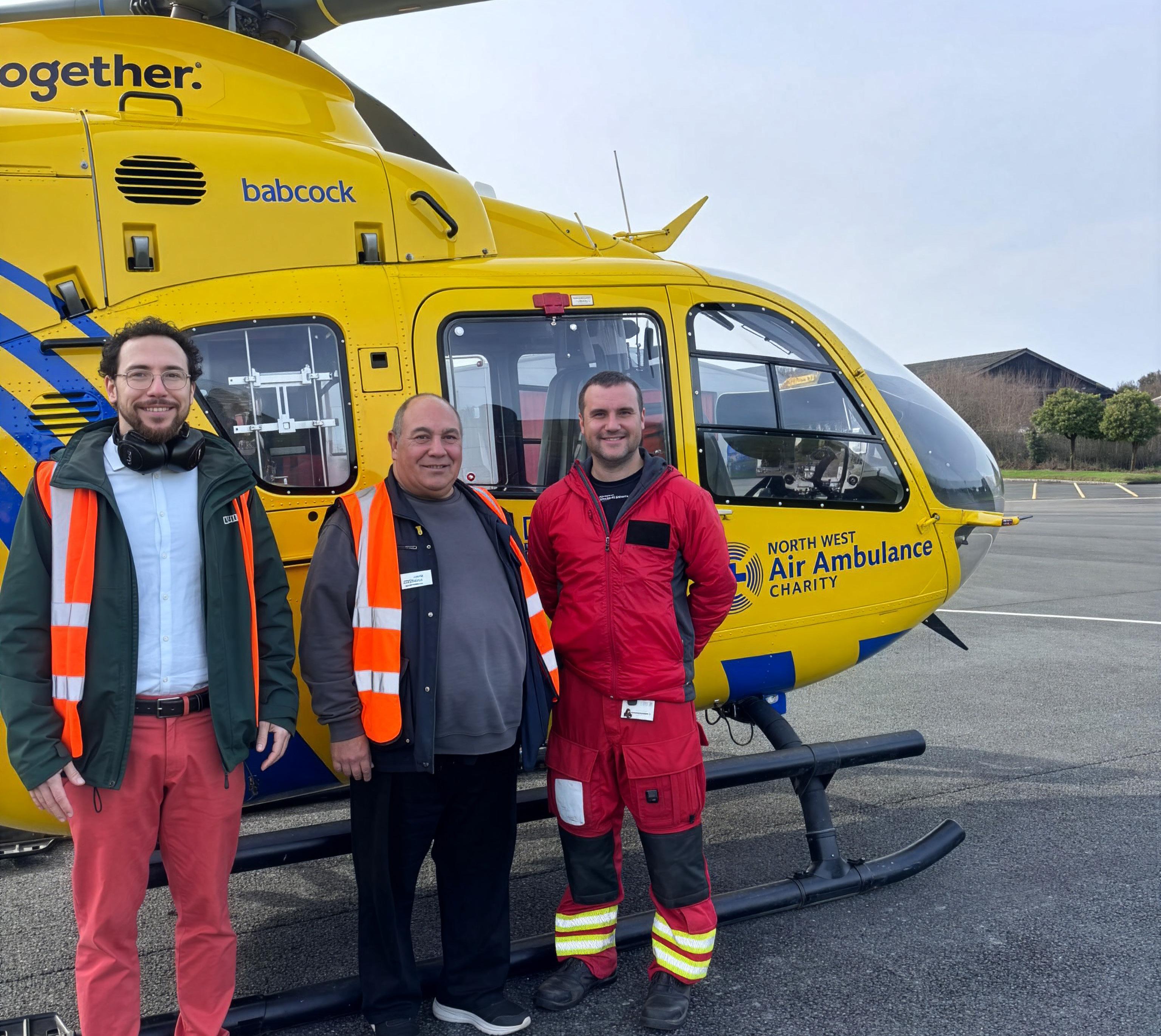
That’s where our patient and public panel volunteers, like Alfredo (right) and Alex (left), are playing such an important role in the development of this study. By sharing their lived experiences and perspectives, they’re helping researchers think through these sensitive issues carefully and openly. Their involvement is key to ensuring that the research proposal is shaped not only by clinical expertise but also by public values and expectations.
Through honest discussion and thoughtful challenge, patient and public panel members are helping to strengthen the research development, its proposal, and guide its approach to increase its chances of successful application and ultimately long-term impact.
Dr Ian Tyrrell-Marsh, from North West Air Ambulance Charity, says, “As part of our continuous drive to provide the best care possible to our patients, we’re always looking to innovate and be at the forefront of care delivery.
“It is vitally important, when we conceive and design projects like this, to include the public in the process to ensure our work addresses priority areas and is as effective as possible. NWAS’ patient and public panel is a fantastic resource for us to engage with for this.
“This latest collaboration shows what’s possible when clinicians, researchers and the public work together. Should this proposal come to fruition, it could create new opportunities for organ donation while ensuring decisions are made with care, dignity and compassion, keeping patients and their families firmly at the centre of care. These volunteers have played a fundamental role in shaping the design and application.
“Research isn’t a fast process; as formal research, this latest project has several stages of national application to process through before it can commence. If this process is successful, it is expected to last approximately three years from the stages of setting up to the publication of its results.”