Most restaurants are masters of the “transient” guestthe table of four that walks in, orders, and pays. Your Point of Sale (POS) system was designed specifically for this transactional speed. But Private Dining, Large Parties, and Buyouts operate on an entirely different logic.
Events are not transactions; they are workflows. When you force a £2,500 corporate buyout into a system designed for £25 burgers, revenue begins to leak. This happens because your POS is a “sprinter” built for 100-metre dashes, while events are “marathons” requiring lead tracking, deposits, and multi-stage reconciliations. This guide identifies where that money goes and how the Tripleseat ecosystem, powered by PartyPay, plugs those holes.
www.tripleseat.com
Chapter 1: The Cost of “Chasing
Bills”
In a busy restaurant, management labour is your most expensive overhead. When a General Manager is forced to act as a collections agent, the restaurant loses money twice: once in labour costs, and again in lost opportunity.
Reclaiming the “Management Tax”
If your team is stuck in a manual cycle, you are likely losing hours to:
The Invoice Dance: Manually drafting PDFs, attaching them to emails, and having to phone a client to take card details for a deposit over the phone.
The Follow-up Trap: Manually calling hosts for final headcounts and overdue balances.
The Reconciliation Gap: Trying to match a “Misc. Food” entry in the POS to a specific contract in a physical folder.
The Integrated Payment Solution: Tripleseat PartyPay
As the industry leader, Tripleseat uses PartyPay to automate these “nudges.” The system sends secure links for deposits and final balances, reconciles the payment instantly, and updates the event status without a manager lifting a finger. It turns a manual struggle into a seamless digital workflow.
Chapter 2: The Insider’s Edge
Three Places Revenue Hides on a Friday Night
In the heat of a busy shift, things move fast. Without a unified payment and management system, these three high-margin items almost always result in “The Leak”:
The “One More Hour” Drift: A corporate party stays 90 minutes past their contracted end time. If the server doesn’t have the contract in front of them, they won’t know to apply the overtime fee.
The “Off-Menu” Upgrade: The host orders premium wine not on the pre-set menu. Without an integrated process, these bottles often get rung up at the wrong price or forgotten entirely in the rush.
The Itemisation Gap: A £3,000 client expects a professional, branded VAT invoice. If your POS can only produce a “jumbled mess” of thermal paper with one giant “Open Food” line item, you lose the client’s trust (and their repeat business).
Revenue Recovery Formula:
Chapter 3: The “Error Tax” and Chargeback Defense
Events are high-stakes, and a £3,000 dispute can wipe out a week’s profit. Standard POS terminals aren’t built to defend against event-sized chargebacks.
The Armour of PartyPay
Manual credit card authorisation forms are not only a security risk - they are virtually useless in a chargeback dispute. Furthermore, manually typing card numbers into a POS often triggers higher “Card-Not-Present” fees, essentially taxing you for being inefficient.
The Problem:
Taking a card over the phone or writing numbers on a sticky note (a major GDPR and PCI compliance violation) provides no protection if a client claims they didn’t authorise “extra” charges like the service charge.
The PartyPay Defense:
Because PartyPay uses secure, guest-facing digital signatures and authenticated payments, you have a digital paper trail that banks recognise as “Compelling Evidence.” This virtually eliminates lost chargeback disputes while ensuring you aren’t overpaying on processing rates.
Chapter 4: Plugging the Holes
The Power of an Integrated Ecosystem
While many systems claim to “handle payments,” the Tripleseat + PartyPay handshake is designed to bridge the gap between the booking office and the restaurant floor, creating a Single Source of Truth.
Event Scenario
Fragmented System (POS + Paper)
Minimum Spends Server must manually calculate the “shortfall.”
Tripleseat + PartyPay (Integrated)
Integrated data ensures the minimum is visible and enforced.
Last-Minute
Add-ons
Often forgotten or lost on a sticky note.
Added to the digital event file; billed instantly.
Deposit Handling High risk of double-billing or forgetting.
Professionalism
Long, unbranded thermal receipts.
Data Security
Paper auth forms and phone calls.
Deposits are locked to the event and applied with one click.
Branded, itemised digital VAT invoices.
Secure, encrypted digital vaults; no local card storage.
Chapter 5: The “Reservation” Trap - the all-in-one illusion
Why General Reservation Tools Fall Short for Events
A common hurdle for many restaurant leaders is the “Good Enough” mindset: “We already pay for a reservation system to handle our nightly covers - can’t we just run our events through that?”
While high-end reservation platforms are world-class at managing table management and maximising “transient” table turns, using them for a £5,000 buyout is like trying to use a calculator to write a novel. It’s a functional tool, but it’s the wrong medium for the message. Here is where the “Good Enough” approach creates the most significant leaks:
Bills vs. Contracts
SevenRooms handles bookings; Tripleseat handles obligations. A standard reservation is a digital handshake for a table; an event is a legal agreement involving VAT requirements, specific deposit schedules, and Function Sheets / Banquet Event Orders (BEOs). If your system doesn’t generate legally binding digital signatures, your venue is operationally exposed. Without a contract, you have no recourse for “no-show” groups that have already cost you a fortune in pre-ordered stock and rotas.
The Payment Chasing Gap
Using a dining tool for large-scale event payments often leads back to the “Chasing Bills” trap. Without a dedicated gateway like PartyPay, your reservation system cannot automate the “nudge” for a second deposit or a final balance. You are forced back into manually capturing details and the “Invoice Dance” mentioned earlier. “Invoice Dance” mentioned earlier.
The Workflow vs. Seating Conflict
Events are a multi-week workflow of menu revisions, floor plan iterations, and logistics. A tool built for “Table 4 at 19:00” simply isn’t designed to track the 15 emails and three menu versions that happen before a wedding guest even arrives. When you force an event into a seating tool, the “off-menu” upgrades and overtime fees described in Chapter 2 almost always slip through the cracks.
Feature
Core Focus
Dining Reservation Systems (e.g., SevenRooms)
Maximising table turns & guest tags.
Dedicated Event Tech (Tripleseat + PartyPay)
Managing the sales funnel & lead conversion.
Financials
Documents
Simple bill processing at the table.
Multi-stage deposits, Food & Drink minimums, & closing out the event on the day.
Booking confirmations. Legally binding contracts & branded Function Sheets/BEOs.
Security
Basic card-on-file for no-shows.
Authenticated, encrypted digital vaults with robust chargeback defence.
Chapter 6: The payment engine behind the experience
What powers PartyPay?
PartyPay feels simple because the complexity stays behind the scenes.
Events don’t happen in a single checkout moment; they unfold over days or weeks. Deposits are staged. Contracts evolve. Headcounts shift. Final totals change. Traditional payment flows built for one-time transactions often struggle to match that timeline.
PartyPay is designed for event-style payments. It keeps transactions tied to the event record inside Tripleseat, not to a terminal.
To power these workflows, Tripleseat partners with Nuvei, a leading global payments provider, as the engine behind PartyPay. In practice, this enables:
• Secure payment links for deposits and balances, replacing phone calls and manual card capture
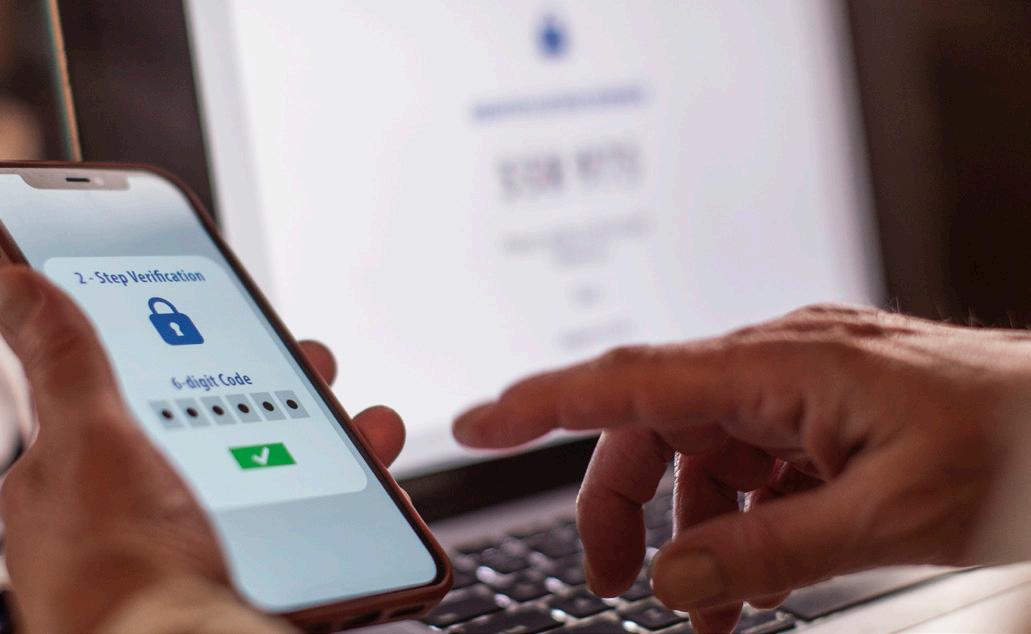
• Encrypted payment handling designed to support PCI- and GDPR-compliant processes, with no local card storage
• Event-level reconciliation so each payment maps back to the correct contract and invoice, not a “Misc. Food” line item
• Authenticated payments and digital signatures that create a clear audit trail for disputes
• Real-time visibility into what is paid, what is outstanding, and what needs follow-up
The technology stays invisible. What changes is the workflow. Teams spend less time chasing deposits. Add-ons and overtime are easier to invoice accurately. Reconciliation becomes repeatable and event-based.
Learn more about Nuvei at nuvei.com.
Conclusion: Transforming Your Bottom Line
Efficiency in the hospitality business isn’t just about faster table turns; it’s about ensuring that your high-ticket events are managed with the same precision as your dining room.
When your payments, your contracts, and your on-floor operations are in sync, you stop “chasing” revenue and start growing it. You aren’t just buying software; you’re buying an insurance policy for your profit margins.
Your Revenue Audit Checklist:
AUDIT LABOUR:
How many hours did my GM spend on “event paperwork” and chasing deposits this month?
THE COMPLIANCE CHECK:
Are there any credit card numbers written on paper or stored in spreadsheets in our office?
THE PROFESSIONALISM TEST:
Look at a final receipt from your POS for a £2,500 event. Does it look like a high-end corporate invoice?
THE FRICTION TEST:
Try to “book” an event at your own venue. How many steps does it take for the guest to pay?
Stop the Leak. Start the Growth
Is your private dining revenue slipping through the cracks of a “transactional” POS? Let us show you how a dedicated event workflow can reclaim your management hours and protect your margins. Schedule Your Tripleseat + PartyPay Walkthrough