


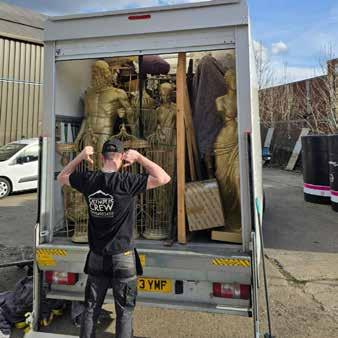

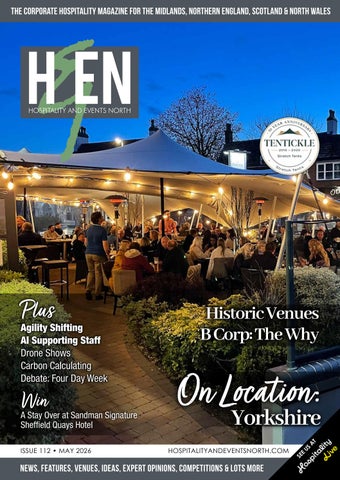
Tentickle Stretch Tents UK is celebrating 10 years of delivering structures where others can’t. Page 27.
On Location:
We’re visiting every corner of God’s own events space, from its bustling cities to beautiful countryside. Starts page 38.
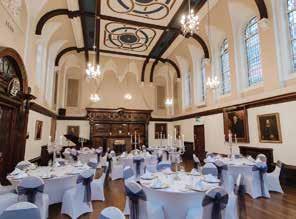
Historic venues offer a sense of occasion modern conference spaces are unable to match. Page 8.
Director of Zentive Agency, Lee Hird, talks carbon calculation and why it doesn’t need to be a daunting concept. Page 13.
Debbie Bell of ZiaBia discusses the B Corp process and what it means in practice. Page 15.
Alistair Winsey, Founder of AIVA Revolution, believes that AI can help hospitality agency staff, not replace them. Page 17.
Find out what data you should be collecting and the best way to utilise it with Caylee Donaldson from CDM. Page 19.
Drone shows are increasingly popular for live events, and they look set to replace traditional pyrotechnic displays for events that aim to deliver something spectacular. Page 23.
Sandman Signature Sheffield Quays Hotel is giving one reader the chance to win a B&B stay for two with dinner and full spa access included! Page 47.

It’s a Yorkshire focus for us this time, and with an exciting new show coming to Royal Armouries in Leeds, Cedar Court’s MD Wayne Topley gives us the lowdown about Hospitality Live… we look forward to seeing you there!
Historic venues are geared up with the AV you need without compromising the fabulous backdrop for a memorable event. There are also some excellent comments in this edition from key people and organisations discussing ever changing issues:

As traditional venues adapt to compete in a crowded and changing field, shared workspaces are making a compelling case as event venues. Page 31.
The Eurovision Song Contest is returning to Austria’s capital for its 70th edition and all eyes are on Vienna – one of Europe’s most formidable meetings destinations. Page 32.
As Mental Health Awareness Week puts the spotlight on action, Catherine Grinyer makes the case for embedding mental health thinking into how we plan, design, and run events. Page 41.
find out how AI is supporting not replacing teams, take a look at B Corp and what it means in our industry, and Lee Hird explains how carbon calculating can be a measurable success.
Our supplier spotlight looks at drone shows, and we debate whether a shorter working week is actually possible for busy event planners.
You can also win a B&B stay over at the Sandman Signature Sheffield Quays Hotel too, so enjoy our May edition!

The brains behind the brandnew Hospitality Live show, Wayne Topley – MD of Cedar Court Hotels Group and Chairman of Leeds Hotels & Venues Association – checks in. Page 53.
Alex Hurley, Co-Owner of Hotpod Yoga Newcastle, on how the ancient Indian practice can benefit clients as event planners move towards wellness content for International Day of Yoga on 21st June. Page 54.
Industry professionals weigh in on whether the time-sensitive, deadline-driven events sector can adapt to shorter working weeks. Page 59.
Congratulations to James Eyles who won a luxury sailing experience on the west coast of Scotland courtesy of Geronimo Sailing!
Alden Arnold
Alex Hurley
Alistair Winsey
Camilla Woods
Catherine Grinyer
Caylee Donaldson
Christina Konstantopoulou
David Tremmil
Debbie Bell
Jackson Clark
Jill Hawkins
Jonathan Perlmutter
Katie Whitby

Lee Hird
Liam Fox
Lizzie Eaton
Louisa Watson
Neil Woodward
Philip Partington
Rob Brackstone
Robert Kenward
Roy Shaby
Sarah Campus
Shonali Devereaux
Susan Tanner
Wayne Topley
The Rex | Manchester | Open now Hotel Gotham has rebranded as The Rex and with it has come an elevation of its spaces including the restaurant and bar. These spaces maintain their established character, with subtle refinements to detailing, texture, and palette. The hotel offers exclusive use of its restaurant for events up to 85 or there’s a private dining option where you can wow up to 28 delegates surrounded by unbeatable views of the city’s King Street and Spring Gardens. Alongside this, there’s the option of The Treasury, the hotel’s secret events space, reinforcing The Rex’s reputation as a sanctuary for those who value discretion as much as indulgence.
Rexhotel.co.uk
Plaza | Birmingham Open now
Crowne Plaza Birmingham City Centre has revealed a newly refurbished meeting space and upgraded Club Lounge following a £250,000 investment. One of the hotel’s meeting rooms, The Studio, has undergone a complete transformation to create a contemporary and flexible conference environment. The modernised space features upgraded technology, stylish furnishings, and an abundance of natural daylight with impressive views across the Birmingham skyline. It also includes a dedicated pantry area for refreshments and working lunches. The hotel has also created a stunning new space in the Club Lounge where guests can relax, work, or enjoy complimentary refreshments.
Ihg.com/crowneplaza/hotels
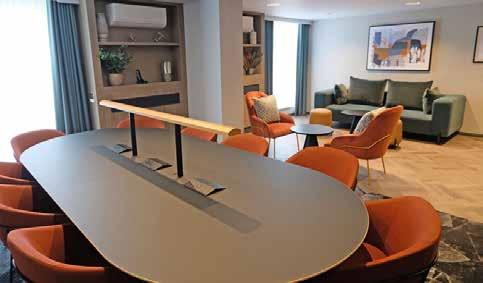
The Invercarse Hotel has completed a £3.2 million revamp as part of a wider strategy to invest in guest facilities and grow its events offering. Works include the upgrade of 25 guest bathrooms, improvements to public conveniences, and a refresh of the event suites and bar lounge. The hotel has also strengthened its position in Dundee’s events market, regularly hosting up to three private functions a day, with capacity for up to 300 across four event spaces.
Invercarsehotel.co.uk
Sunderland’s Roker Hotel has undergone a major (in excess of) £500,000 refurbishment and expansion of its meeting and events facilities. The redevelopment includes a substantial increase in events space; the new Seaton Suite, alongside the two new boardrooms, is now able to host up to 180 delegates with a minimum capacity of 10. The space can host both face-to-face and hybrid meetings as the hotel has ensured the technology available suits all types of requirements. This follows the major renovation completed in 2024, during which The Ballroom – the venue’s largest suite – underwent a full upgrade.
Rokerhotel.co.uk
Tennis star Andy Murray and his wife Kim’s hotel, Cromlix, has been undergoing major development since January and is almost ready to open its doors once again! The hotel is adding an 80-cover restaurant as well as a small, intimate fine dining restaurant, three additional bedroom suites, and a wellness cottage. The existing Glasshouse restaurant will become a dedicated afternoon tea and events space with a capacity of 24. Cromlix is also home to four other event spaces; The Garden Room can seat up to 24, The Study offers a calm and considered space for up to 10, The Drawing Room can be reimagined for events for up to 50, and The Billiards Room is ideal for drinks receptions for 30.
Cromlix.com
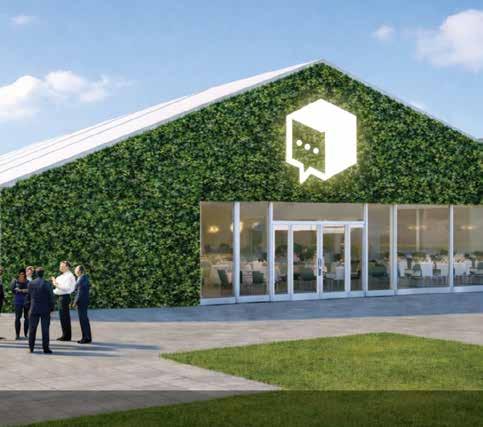
Wyboston Lakes Resort has unveiled The Box, a striking new, premium-quality, and flexible space designed as the perfect blank canvas for imaginative exhibitions, conferences, dinners, and product launches. This purpose-built, contemporary exhibition-style space offers 900 sq. metres, providing vast flexibility for a wide range of high-impact events and it can comfortably host over 400 delegates. The Box has been purposefully designed to inspire creativity in event planning with a clean, modern aesthetic and an abundance of natural light from its extensive use of glass. Positioned adjacent to the Woodlands Event Centre, it can operate as a standalone space or as an extension.
Wybostonlakes.co.uk
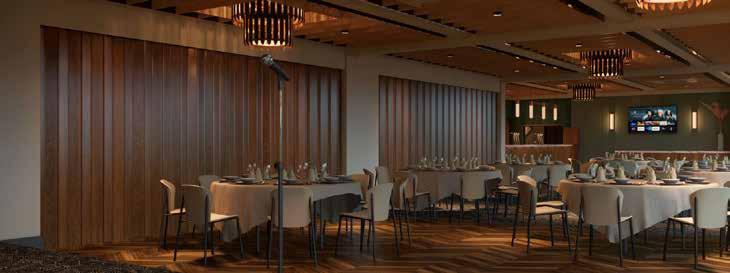
Almost eight years since closing its doors for redevelopment, construction is now complete on Paisley Museum and will be opening to the public again soon. The project has been beset by repeated delays and spiralling costs but is finally due to open in the second half of 2026! Operated by Renfrewshire’s leisure and cultural charity OneRen, the redevelopment will include accessible features, dedicated learning spaces, expanded exhibition areas, a new heritage archive centre, and immersive digital experiences. With eight new public spaces, the museum will be filled with 60 digital displays and be home to a new garden gallery, public courtyard, café, and picnic areas.
Reimagined.paisleymuseum.org
Manchester city centre’s Stock Exchange Hotel is expanding its offering with 95 new room additions in a sister building. The new suites will be made up of three luxury types, known as the Arthur Hope Suites, Bradshaw Suites, and Norfolk Suites. On the ground floor, Stock Exchange Suites will introduce an expanded Traders Lounge; a 1,000 sq. feet relaxed lobby space for use by guests across both properties, creating an inviting arrival experience and a day-to-night social hub. Additional facilities will include a dedicated car park and extra meeting rooms to complement the event spaces already available at the hotel.
Stockexchangehotel.co.uk
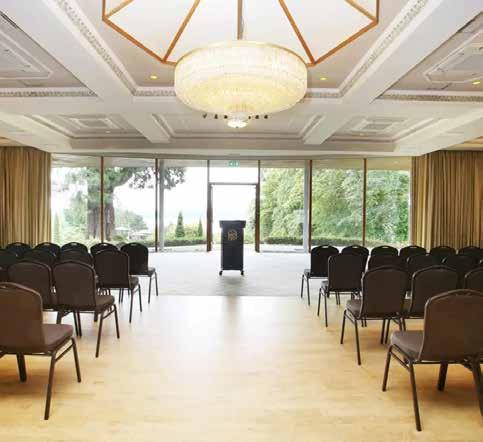
Woburn Forest.
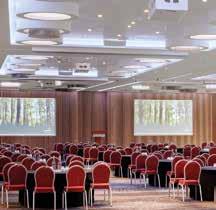

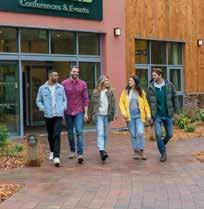
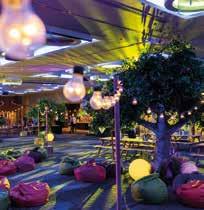
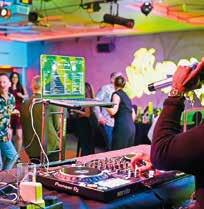
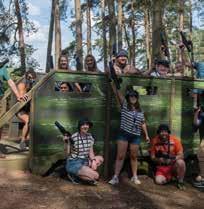
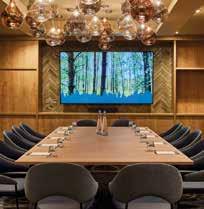
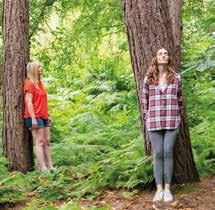
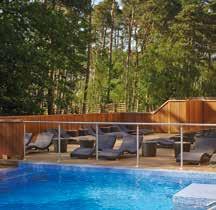
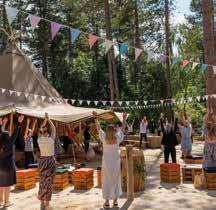

The Venues Collection has announced the introduction of allergen emergency kits across all its venues, strengthening its commitment to delegate, guest, and staff safety.
The initiative responds to a growing industry focus on improving preparedness for allergic reactions, including anaphylaxis. With an estimated 2.5 million people in the UK living with a diagnosed allergy – and research indicating that almost half of those prescribed adrenaline auto-injectors don’t carry them consistently – immediate access to emergency support can be critical.
The allergen kits are supplied by Kitt Medical, a specialist provider of anaphylaxis emergency equipment. They will be stored in clearly designated locations across each venue and supported by trained team members who are equipped to respond quickly and effectively in the event of an allergic emergency.
Joanne Barratt, Managing Director of The Venues Collection, said: “Events should be welcoming, inclusive and, above all, safe for everyone attending. Introducing allergen emergency kits across all our venues is a practical but important step that reinforces our responsibility to guests, organisers and our own teams. It’s about being prepared, reducing risk and giving people confidence that their wellbeing is taken seriously from the moment they arrive.”
Food remains one of the most powerful and influential elements of the event experience according to new research launched by Lime Venue Portfolio.
The Big Event Food Survey reveals that, on average, food now accounts for 45% of all post-event feedback, with 25% of event planners saying it represents more than half of the feedback they receive from delegates. The survey also showed that, on average, 38% of budgets are invested in food, making it both a significant part of the return on investment, as well as the return on experience.
Jo Austin, Sales Director at Lime Venue Portfolio, commented: “Six years ago, the fact that food accounted for nearly half of all event feedback surprised a lot of people. The reality is though that it hasn’t changed; food is still central to how people judge the quality and success of an event. Food is shared, emotional, and highly visible. It connects people, it sets the tone, and it often becomes the thing people talk about long after the event itself.”
For more insights from the survey, visit Limevenueportfolio.com/content-hub
The ACC Liverpool Group – operators of ACC Liverpool, Exhibition Centre Liverpool, and M&S Bank Arena – has announced a new chapter in its evolution with the reveal of its new name: Liverpool Experience Campus.
Situated on Liverpool’s iconic waterfront, the organisation has grown into one of the UK’s leading event destinations and its new name officially came into effect as part of a full brand launch on 13th April. As the business continues to compete on a global stage, it recognised that its brand structure did not clearly express the depth of its capabilities or the unique strength of the destination and its connected, multi-venue campus.
The ACC Liverpool Group has retired its existing name, and its venues will no longer be identified as ACC Liverpool or Exhibition Centre Liverpool. Going forward, individual venues will be designated as the Convention Centre at Liverpool Experience Campus or the Exhibition Centre at Liverpool Experience Campus, providing delegates with clearer guidance and making it easier to navigate the campus.
Crowne Plaza Newcastle has introduced a new wellbeing-focused initiative, launching bespoke rescue kits for organisers hosting events at the hotel. Designed in response to the physical and mental demands placed on event professionals, the kits will be prepared for every event and reserved exclusively for organisers and lead planners.
Each rescue kit will be presented in a branded reusable bag and stocked with a considered selection of practical essentials. Contents will include hydration and nutrition items such as bottled water, smoothies, bananas, or energy bars alongside wellbeing-focused products including moisturiser, lip balm, refreshing facial wipes, and hand cream.
To address fatigue and sensory overload common during multi-day events, the kits may also feature noise-reducing earplugs, eye masks, stress or grip balls, and calming aromatherapy roll-ons or sleep sprays to support rest and recovery.
Ginger Owl Productions has released a whitepaper to help organisers prepare for Martyn’s Law, entitled ‘Accreditation Systems and Martyn’s Law: Practical Considerations for the UK Events Sector’.
With Royal Assent granted to the Terrorism (Protection of Premises) Act 2025 in April 2025, the law has just passed the halfway point of a 24-month implementation period. Full official guidance has not yet been released, but Ginger Owl Productions has used its team’s extensive experience to produce the whitepaper to help the industry start its readiness journey now.
Ginger Owl Co-Founder Julie Chennells said: “Martyn’s Law represents the most significant change to event security legislation in a generation. For event organisers, understanding how it affects both your planning and live operations is crucial.”
Central to the findings is the relationship between accreditation, scanning, and security. The whitepaper explains how accreditation systems must evolve from an operational department into an active part of an event’s security and response plans.
It also covers the UK festival and live events landscape, an overview of the law itself, gaps and challenges organisers are likely to face, practical considerations for implementation, and guidance on risk, assurance, and accountability.
Download the whitepaper at Gingerowl. co.uk/accreditation-systems-martyns-law

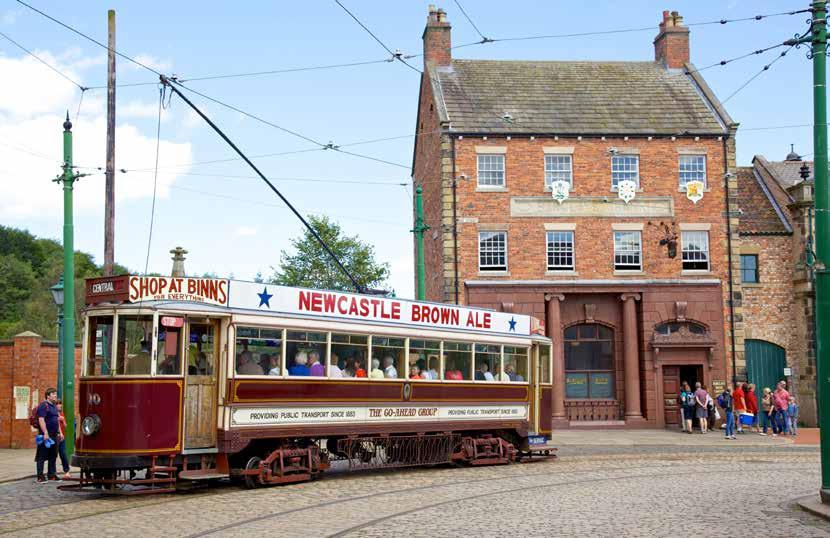
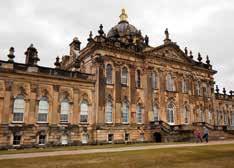
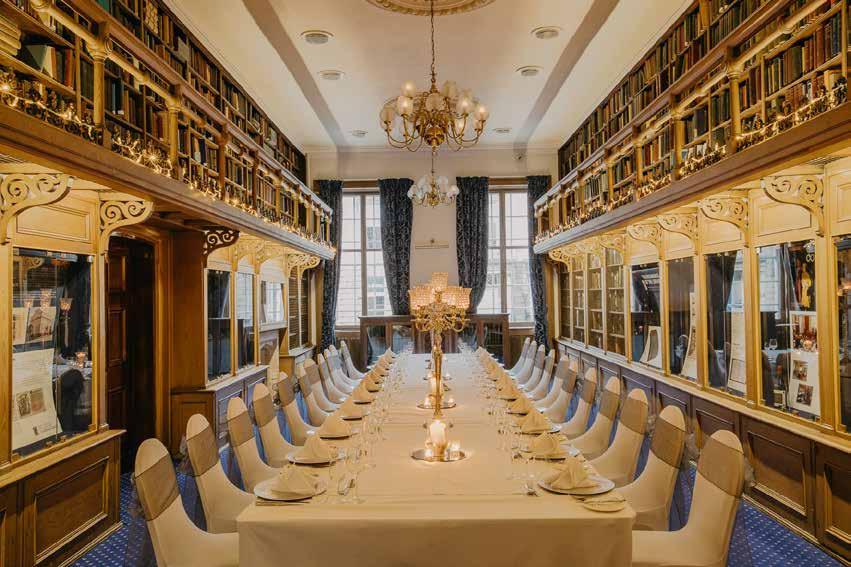
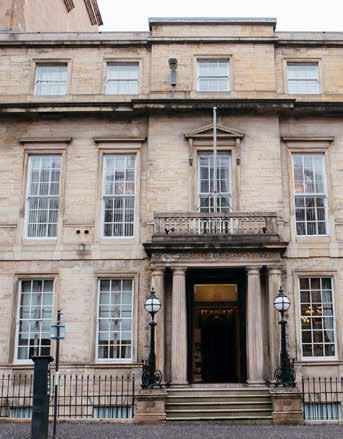
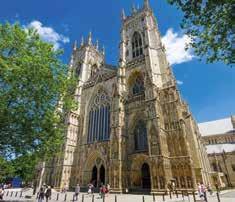
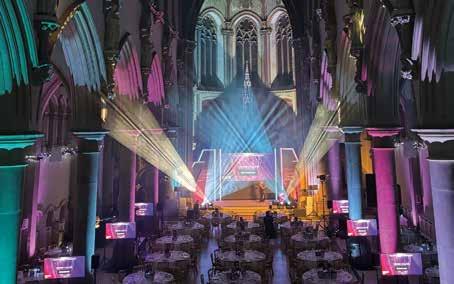
From grand country houses to working museums, historic venues offer a sense of occasion modern conference spaces are unable to match.
There’s something about hosting in a space steeped in history that meaningfully enhances the event. Grand architecture, centuries of stories, and rooms designed to impress create a unique atmosphere. For event planners seeking venues with genuine character – and delegates who will fondly remember being there – historic venues are an alluring and increasingly well-equipped option.
Visually, historic venues are inherently dramatic – vaulted ceilings, intricate masonry, sweeping staircases, and showpiece features like chandeliers,
painted galleries, and medieval great halls give organisers something to build an event around rather than starting from scratch. These settings also generate great social content with delegates keen to extend the reach of the event.
In a landscape where corporate hospitality can feel interchangeable, historic venues provide a talking point before the official programme even begins. Hosting in a former prison, among artefacts spanning 600 years, or beneath a glass atrium built in the Victorian era gives delegates a buzz.
International Museum Day (18th May) is a useful reminder that many of the region’s finest heritage institutions also offer sophisticated event facilities. Examples include The National Railway Museum, Royal Armouries, and Beamish – the living museum of the North, which all carry extensive packages for corporate groups including meetings, dinners, and team building activities. Country house museums can offer gallery and event spaces that combine exquisite surroundings with operational flexibility, think Castle Howard and Harewood House.
Many museum venues operate outside standard opening hours, so events don’t disrupt daytime visitors and are mostly in accessible central locations. Some corporate packages may include guided tours or collection access, giving great delegate engagement.
Historic venues reward planners who know how to work with the architecture rather than against it. Effective use of lighting
can help bring out the dramatic features of an ancient building. It’s possible to incorporate modern fixtures and event design elements without being invasive but it requires a delicate, considered touch. Colour and texture choices matter too; jewel tones, organic materials, and florals tend to sit more comfortably in period rooms than high-contrast contemporary styling.
High ceilings and stone walls create unpredictable acoustics, so an early soundcheck and an AV team experienced with heritage sites are essential. Hidden speakers, wireless microphones, and projectors allow technology to serve the space without disrupting it.
Historic venues can offer a spectacular setting and an unforgettable delegate experience within evocative buildings designed with a sense of gravitas, prestige, and ceremony in mind and for event planners, that’s a compelling offer.
•



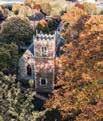

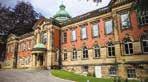

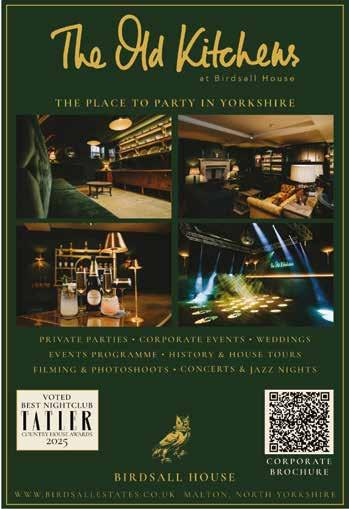

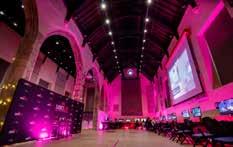

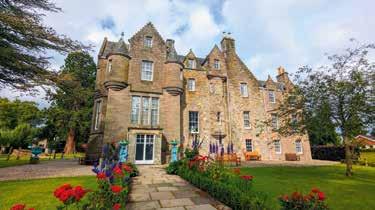
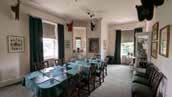

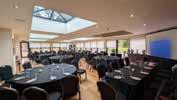

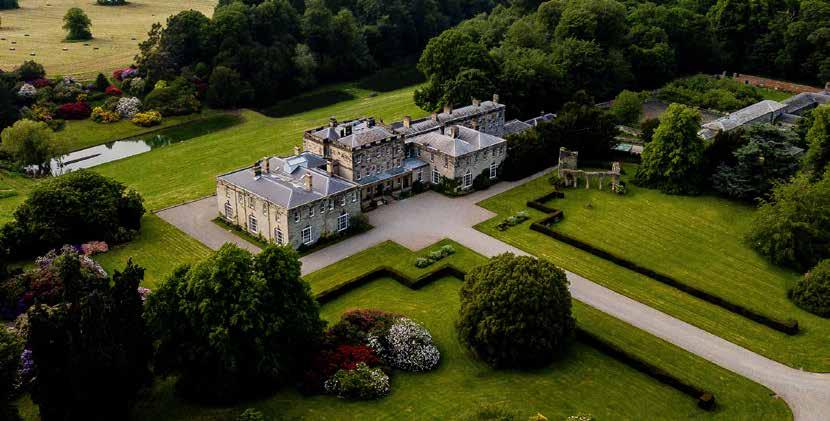
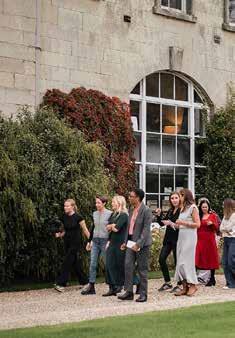
Birdsall House in Malton, North Yorkshire recently held a 24-hour stay to reframe how event planners see destination events.
As clients increasingly seek privacy, personality, and places with genuine character, destination venues in the North are drawing growing attention. The appeal is no longer simply about beauty, but about finding somewhere with true exceptional hospitality and the flexibility to create something wholly bespoke. Even so, familiarity still drives decision making, with the home counties and the Cotswolds remaining the default for many London and southern-based planners and their clients. At the end of 2025, we set out to challenge that by welcoming a group of event planners from across the country to Birdsall House for a 24-hour stay designed to showcase both our house and Yorkshire as a destination for exceptional events.
Our ambition was simple. We wanted planners to experience Birdsall as their clients would, not as a venue glimpsed briefly on a website or during a quick site visit, but as a place that reveals itself gradually over the course of an event. We also wanted to demonstrate something practical but important – that getting here is far easier than many assume. For several of our guests travelling from the South, the journey to the house was quicker and more straightforward than reaching some of the venues they often use.
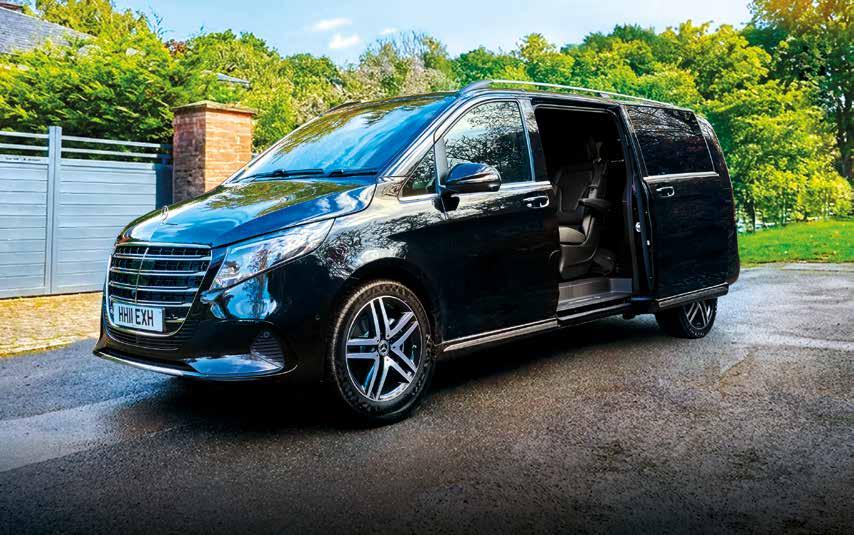
The experience began at York station where guests were met and driven to Birdsall in luxury cars. That final half hour journey was part of the story we wanted to tell. The route through the Vale of York and up into the Yorkshire Wolds offered a sense of calm and anticipation, allowing the landscape to begin speaking before guests arrived. Destination events are never simply about the venue itself, they’re also about the journey, setting, and feeling of being somewhere genuinely special.
Over tea on arrival, there were warm reunions, new introductions, and the easy conversation that comes when likeminded people are brought together in a welcoming setting. From there, we led a
tour of the house, sharing the possibilities of the spaces themselves and the story behind them. Birdsall is not a blank canvas; it’s a privately lived-in family house that has evolved across five centuries, and that history is part of what gives it such depth and character – evident in details like the unbroken line of family portraits lining the walls.
We spoke about the generations who have lived here and our role as current custodians, carefully shaping Birdsall from a private home into a setting for luxury weddings and events while preserving its distinctive authenticity. In a world where so much can be styled, installed, or replicated, that kind of character cannot be bought. It’s been created over time, curated by family life, and carried in the fabric of the house itself.
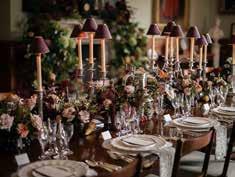
As evening fell, Birdsall began to show its personality. Guests gathered in the ballroom for champagne, dressed for dinner and able to enjoy the house as it was built to be enjoyed, through entertaining. Moving through to the dining room, they were met by a spectacular table dressed with flowers, fine china, and sparkling glassware (flowers by Jemma Khan Studio and styling by Soiree Studio). The atmosphere was elegant and unapologetically grand, something of a modern house party with a distinct Downton air. Dinner was carefully designed to showcase the best of Yorkshire produce and the skill of our Chef, Tom Coe.
Then came the change of tempo that makes Birdsall unique among fellow heritage venues. After dinner, guests were drawn downstairs to The Old Kitchens, our atmospheric cocktail bar and party venue beneath the house. The mood shifted from formal elegance to something richer and more playful, with cocktails, music, laughter, and dancing late into the night. This contrast was especially powerful as it showed how events at Birdsall can move seamlessly from refinement to revelry, all with complete cohesion.
Birdsall is not simply a beautiful venue in Yorkshire, it’s a destination in its own right; easy to reach, rich in atmosphere, and capable of hosting events with real depth and personality. For some, the visit confirmed what they already knew about Yorkshire’s potential. For others, it opened the door to a new way of thinking. That, perhaps, was the greatest success of all.
For more information on hosting events at Birdsall House, please contact us at events@birdsallhouse.com Birdsallestates.co.uk

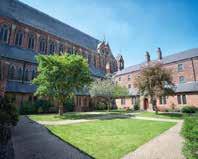
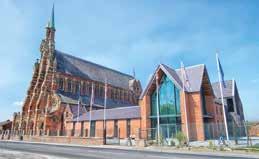
is a thriving events venue that delivers gh-end, memorable experiences - and a values-driven rives for positive change. It proves that e progressive, that business can be e, and that venues can do so much more than host events - they can spark transformation.
The Monastery Manchester Gorton Lane Manchester M12 5WF ts@themonastery co.uk www.themonastery.co.uk
We are helping many of our events clients with initiatives to grow business and present professionally. We understand the industry, and can help with realistic, affordable and effective solutions.
Websites & Site Updates
SEO & Google Ads
Social Media Content and Management
Branding & Literature
Banners and Exhibition Collateral Strategy and Co-ordination
Why not arrange a free no obligation chat with our marketing team?
Marketing Director and Sustainability Lead at Wyboston Lakes Resort, Louisa Watson, discusses the rise of contracted training spaces.
Professional training organisations are moving away from the traditional venue booking model. Rather than generic meeting rooms in whatever space is available, they are increasingly seeking customised environments designed for their learners and the bespoke nature of the training being delivered.
The emerging model is based on long-term contracted space – permanent, branded, purpose-built training environments ready for use whenever required, with technology for classroom and hybrid delivery fully integrated. A key driver is the changing needs of learners in the era of hybrid working. When teams are more dispersed and face-to-face interaction is less
frequent, in-person learning events serve a purpose beyond knowledge-sharing: rebuilding connections and strengthening a sense of community and belonging.
Commercial benefits
Contracted training spaces also offer clear commercial advantages. Longterm partnerships make budgeting and operations simpler and branding more consistent. These benefits are explored in The Role of Face-to-Face Training in a GenAI World, a recently published report featuring a case study of digital forensics training company Control-F.
Kevin Mansell, Managing Director of Control-F, is positive about the arrangement: “Wyboston Lakes Resort
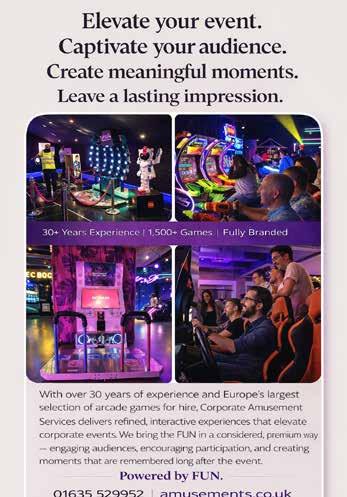
Corporate Amusement Services is a UKbased company operating across the UK and Europe, specialising in arcade games for hire at corporate events, parties, and functions. Their team works closely with clients to deliver the right mix of games to suit the brief and elevate the experience.
Let’s be honest, too many corporate events are forgettable. People arrive, make polite conversation, perhaps have a drink… and leave without anything truly sticking. The most successful events that actually land are the ones people enjoy. Because enjoyment isn’t a bonus, it’s what drives connection and creates lasting impressions.
That’s where Corporate Amusement Services comes in. With over 30 years of experience and Europe’s largest selection of arcade games for hire, it delivers premium, interactive events that
turn standard corporate functions into something far more engaging.
At the heart of it is a simple idea: people remember what they experience. Picture a room with energy – laughter, competition, and people stepping forward rather than standing back. Colleagues connect more naturally, conversations start easier, and the whole dynamic shifts.
With over 1,500 arcade and interactive games, from nostalgic favourites like Mario and Pac-Man to modern multiplayer and social gaming experiences, every setup is tailored to the audience, whether it’s a team building day or a large-scale corporate event.
Ready to bring your next event to life? Contact 0163 552 9952 Amusements.co.uk

proposed a contracted training space – renting rooms on a longer-term basis. This bespoke arrangement has allowed us to design and equip the rooms to suit our learners and keep IT equipment permanently set up and ready. The environment makes a huge difference. Our learners are in a comfortable, pleasant setting with green space and leisure facilities – making it easier to attract firsttime delegates and bring them back for more.”
Wybostonlakes.co.uk
Zentive Agency creates and delivers sustainable events that produce a positive social impact. It looks at every stage of the event management process with sustainability in mind, proactively making changes during the conception, planning, delivery, and review of an event to reduce emissions. At the helm of the agency is Director Lee Hird, who has a steadfast commitment to excellence in event management that’s defined by a unique blend of creativity and strategic planning.
Carbon measurement and the reduction of carbon is applied into the full event management process at Zentive right from the outset, as Lee explains: “We’ve produced and implemented sustainable event plans that help us to work with venues and suppliers to reduce carbon emissions by looking at their internal processes and supply chains to help us understand where the biggest opportunities are.
“We also put together a full carbon calculation for every event that we deliver. Information is collected through the registration forms we build for clients and we work together with them, suppliers, venues, and local ground staff to collect the rest of the information to put together an accurate estimate of the event’s carbon emissions. This helps us look at the event in advance from a strategic point of view, asking what we can do to reduce emissions now and what we can put in place to make sure they’re not increasing any further.”
Energy, food and drink, waste management, event transport, and travel and accommodation are the five main areas in which the agency measures emissions, but
Director of
Lee Hird, talks carbon calculation and why it doesn’t need to be a daunting concept.
they’re not all equal: “Travel has the biggest impact undoubtedly. One way to reduce this is by always having a virtual side of the event available. Our clients are now starting to host events where most attendees are based to not only cut emissions but to also cut cost. It’s also important to promote and encourage the use of public transport and don’t publicise parking at the venue.
“The second most impactful is food and beverages. We encourage clients to avoid red meat for their menus, opt for seasonal products, and we’re currently trying to have more events that are 100% vegetarian.”
A controversial topic in the sustainability world, Lee believes that offsetting emissions shouldn’t be done just for the sake of it: “What we don’t want to see is people hosting events with no strategical plan. If an event is producing waste, serving red meat, and everyone has flown business class but once it’s over, it’s offset and classed as a net zero event, that doesn’t solve any issues.
“Once we have the final carbon calculation, we work with clients to offset what we couldn’t reduce. We’re not just doing any event and offsetting everything that’s produced; we’re actively trying to reduce it to get emissions as low as possible. When it comes to offsetting, we choose a project within a location where the event has taken place so we’re giving back to the local community.”
Measuring emissions is often left until after the event, something which doesn’t always work in your favour: “You can miss seeing the small changes you can put in place that actually make a big difference. A lot of people think

that to be sustainable, you need to spend a lot of time and money – you really don’t! It’s as simple as a question on a registration form. Instead of delegates selecting vegetarian in the dietary section, offer veggie meals as standard. They can opt into a meat dish if they don’t want it, but you’ll instantly flip the 80% meat, 20% veggie around by making an event predominately vegetarian.”
Carbon calculation can seem a little daunting, but Lee stresses that you don’t have to do everything all at once: “Start with one little thing such as the amount of print materials being used, measure how much will be wasted and reused, then look at putting things into place to reduce that and start doing the same for other areas. If you haven’t done carbon calculation before, there’s no harm in doing it post-event because you might not know what you’re going to predict. Once it’s over, you’ve got that benchmark that you can build on going forwards. You don’t have to jump into it head-first, just take steps and slowly work your way into it.
“We’re all in the early learning stages when it comes to sustainability but the more we share and come together collaboratively as an industry, the quicker we’re going to progress and see some real results.”
Zentiveagency.com
B Corp certification is increasingly on the radar for businesses across the industry, but what does it actually involve? Debbie Bell of events agency ZiaBia talks through the process and what it means in practice.
B Corp certification is more than just a sustainability badge. Awarded by the non-profit B Lab and independently verified against its global standards, B Corp status assesses a business across multiple dimensions – governance, workers, community, environment, and customers – and requires a verified score of at least 80 out of 200 on the B Impact Assessment. Companies recertify every three years, and the standards themselves are continually evolving.
For Debbie Bell, Co-Founder of events and logistics agency ZiaBia, the decision to pursue certification came at the end of 2023: “We really resonated with what B Corp was about and how it could be linked to the hospitality industry. But it’s not for everybody and it’s quite a stringent, long process. You need to go into it with open eyes.”
The company’s team of eight spent between 65 and 70 days collectively working on their certification during 2024 which was roughly a week’s worth of effort every month across the year: “It was a massive work investment. We ran workshops where everybody was involved, we put a
project manager in place and ran it like an event – project plan, clear milestones, and defined responsibilities.” Since achieving certification in December 2024, the team has spent a further 25 days maintaining it, with a gap analysis now underway against the new standards ahead of their 2027 recertification.
Rather than tackle the process alone, ZiaBia worked with Business on Purpose, which runs cohorts to guide companies through the B Impact Assessment: “Going through it alongside other businesses with the same goal was genuinely motivating.”
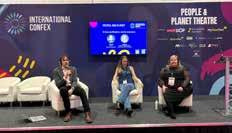
Alongside the B Corp process, Debbie and the team worked with Greengage – a hospitality sector sustainability consultancy that is itself now B Corp certified – to build out its environmental credentials and begin measuring carbon outputs. A dedicated sustainability action squad was established, and the team has since identified B Corpcertified suppliers in its network, including a production company building event sets from cardboard: “Knowing that they’re fellow B Corps is a great thing.”
One of the more instructive aspects of certification was discovering where ZiaBia already performed well: “We were very good on customers – capturing stakeholder feedback after every event and carrying out 360 reviews with the team. We were already doing it; it just wasn’t documented.” The certification process pushed the
business to formalise practices that existed informally – quarterly feedback cycles, a collaboratively written working-from-home policy, and clearer communication of business information to all staff: “It was about levelling everything up. The gaps we had weren’t gaps in intent, they were gaps in process.”
B Corp-certified businesses are growing in number across the events industry, though certified agencies remain relatively few. Hotel groups, including Exclusive Hotels and The Pig Hotels, are among those that have achieved or are pursuing certification and the supplier network is expanding. In terms of commercial impact, B Corp status has proved a clear advantage in RFP processes, where sustainability questions are now routine: “People know what B Corp means, and knowing the credentials are independently verified matters to clients.”
Debbie’s advice to events businesses considering the process? Don’t attempt it in isolation, assign clear internal ownership, and build a support network of businesses that have already been through it: “People are very generous with their time. And you’ll quickly find that the organisations most willing to help are the ones who found it most valuable.”
She adds a broader observation about the industry: “There are no collective standards in events for measuring sustainability. Anyone making any change is moving things in the right direction – B Corp is one route, but it’s not the only one. People need to make the right decision for their business.”
Bcorporation.net | Ziabia.co.uk

Camilla Woods, Service Director at the UK charity Hospitality Action, discusses the pros and cons of quiet resilience.
Many words are used to describe the industry, and one I see being used increasingly is resilient. Perhaps it’s not surprising. After all, employees in our sector demonstrate resilience every day –adapting to pressure, maintaining service standards, and supporting teams and guests alike.
Resilience comes in many forms, but one we’re seeing more of is quiet resilience; the ability to endure and adapt through adversity with your own steady, inner strength. It’s something very individual and personal, and recent data from our Employee Assistance Programme (EAP) shows it’s being utilised more. For example, our most popular class on our EAP in 2025 was our commute meditation,
while the most accessed audio as part of our ‘Be Calm’ programme was our nighttime meditation. These are examples of hospitality professionals taking wellbeing into their own hands which can help people manage their mental health effectively.
The issue is that quiet resilience is not an infinite resource. It helps in the moment but can have limits when pressures are sustained or intensify. Employers therefore must take a more proactive role, ensuring structured support is visible and accessible. Early intervention tools, employee assistance programmes like ours, trained managers, and open conversations are key to preventing issues escalating.
Quiet resilience is valuable but should not
David Tremmil, Chair of beam, highlights the need for ongoing best practice.
At beam, we review our Industry Code of Practice (CoP) every three years to make sure it reflects how our sector is currently operating. The latest update is a considered refresh shaped by a collection of industry minds, evolving commercial models, tech, and the pace of change across meetings and events.
One of the most significant areas of focus is commission, as this is often where misunderstandings begin. The updated CoP brings clearer guidance on repeat bookings and deposits and removes the uncertainty around retrospective claims. This means fewer grey areas and stronger, more transparent relationships.
We’ve also addressed expectations around commercial transparency and payment practices. Agreeing terms at the point of
enquiry should be standard, not something revisited later when pressure builds. Clearer timelines, including defined dispute periods, support a more consistent and professional approach.
There is greater emphasis on early disclosure of client terms, rate integrity, and shared responsibility in resolving challenges. We hope to remove friction and ensure everyone is aligned from the outset.
The CoP also reflects how the industry continues to evolve. New guidance covers areas such as city taxes, billback, and the growth of instant booking models, ensuring the framework keeps pace with modern booking behaviour and operational realities.
Alongside the code, we’ve introduced a Responsible Business Charter, reinforcing our commitment to ESG principles, as well as the
be relied on alone. A healthier hospitality industry is one where quiet resilience is supported by strong systems that enable people to thrive, not just cope. It’s this combination of personal resilience and organisational support that makes the greatest difference in practice, and ultimately where real resilience is built. Quiet resilience can help, but sometimes, it needs to be loud too.
Hospitalityaction.org.uk

Service Charge Charter for MICE to support greater consistency and transparency in how service charges are applied for meetings and events.
Standards can sometimes be seen as creating barriers, but in truth it’s quite the opposite. Clear, well-communicated frameworks give businesses, particularly smaller agencies, the confidence to operate, compete, and grow on a level playing field.
For beam, this is exactly the role we should be playing – providing leadership and ensuring our industry continues to evolve in a way that is fair and fit for the future.
Beam-org.uk

Alistair Winsey, Founder of AIVA Revolution, believes that AI can help hospitality agency staff, not replace them.
Conferences and large-scale event environments are under extraordinary pressure. Enquiries arrive at all hours, clients expect immediate clarity, and delegates expect seamless booking – information moves fast and expectations move faster. Yet behind the scenes, the operating model has barely changed so when something slips, we often look at the individual rather than the system surrounding them. This isn’t a people problem; it’s a structural one.
When intelligent systems operate across the delegate journey, something shifts. Businesses can scale their responsiveness without simply adding more people which means clients receive more clarity and consistency and teams are freed to focus on hosting rather than firefighting their inbox.
When repetitive communication is handled intelligently, the delegate journey is structured, and when teams walk into events prepared rather than overwhelmed, emotional energy is conserved for where it matters most and the risk of burnout less likely.
These systems can improve shift matching by analysing event type, required skills, past
performance, and worker performance. This puts staff in roles that align with their strengths, increasing predictability and building confidence from not only the staff themselves, but the client and delegates too.
Technology of this nature now costs little more than £1 an hour on average to run continuously… not nine-to-five, 24 hours a day! Where one wins, another usually loses.
The industry will always be human – there’s no substitute for the energy of a live event or the warmth of a genuine welcome.
But here, incentives align as businesses improve conversion and operational efficiency and staff regain their time and energy, resulting in delegates feeling looked after from the very first interaction.
A lot of roles in events rely heavily on agency staff and that model is struggling to attract and retain younger workers. The issue isn’t work ethic as some may argue; it’s the unpredictability, limited progression,
and a lack of structured support in these high-pressure environments. When systems are fragmented and pressure is constant, instability becomes the norm – we need to stop blaming people when systems are under strain and instead examine the structures surrounding them.
Not only can technologies support responsiveness, but their reach can also extend into workforce development itself. Intelligent prompts, structured delegate data, and contextual information empower team members in real time as instead of relying solely on memory or experience, staff have the insight at their fingertips.
Training no longer needs to be a one-off manual process; technology can surface feedback patterns, identify areas for development, and recommend learning resources dynamically.
It’s all about approaching hospitality differently. Not as isolated moments of service, but as a continuous lifecycle relationship – from the first digital enquiry to the event itself and, crucially, to the return visit and repeat custom. It’s this technology that allows us to extend care beyond physical presence.
There’s understandable anxiety about AI and what it means for jobs. But from where I stand, building technology from inside a working hospitality business, I see something very different. AI is about infrastructure that supports people, not replaces them. When we remove the repetitive and time-draining admin tasks, staff are free to focus on the energy and exceptional service that defines the sector.
The industry will always be human – there’s no substitute for the energy of a live event or the warmth of a genuine welcome. By removing complexity, AI is protecting that humanity rather than diluting it.

•

•
•
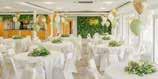

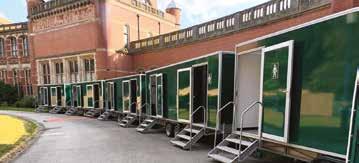
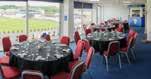
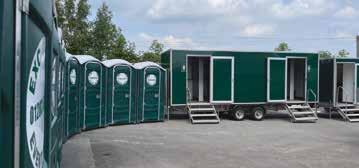
ExcLOOSive Events Hire Ltd supply high quality portable toilet and shower facilities to multiple sites, Festivals and weddings. No event is too big or too small. Based on the Staffordshire / Derbyshire border, we are well placed for many events throughout the country.
We can provide a complete range of conveniences, from luxury models to single toilet units and showers, to suit any event large or small. Whatever the occasion please contact us to discuss your requirements on:-
t: 01283 575 749 m: 07778 473 064
ExcLOOSive strive to maintain excellent standards of hygiene and good housekeeping, receiving wonderful reviews from our clients.
T: 01283 575749 M: 07778 473064
E: info@excloosive.co.uk Or visit our website - www.excloosive.co.uk
e: info@excloosive.co.uk or visit our websitewww.excloosive.co.uk



CDM brings data driven marketing expertise to your event, designing the strategy, building the systems, and delivering the campaigns that drive delegates, sponsors, and revenue. We caught up with Founder and Director, Caylee Donaldson, who shares her top tips for getting more out of your data.
The industry has moved beyond asking: “How many people registered?” to asking: “Who was actually in the room and why does it matter?” Data allows organisers to answer that question with confidence.
The biggest shift in event marketing has been from volume-driven promotion to audience intelligence. In the past, success was often measured by how many registrations were generated. Today, the real question is who is in the room and why they matter to the industry ecosystem. Event marketing is moving away from mass outreach toward structured audience segmentation and omnichannel strategies. Rather than treating delegates as one broad audience, organisers are identifying distinct personas –buyers, innovators, investors, and operators –and tailoring messaging and content around their priorities.
I’ve also seen a clear shift in how organisers approach CRM systems. Rather than functioning purely as contact databases, they’re increasingly becoming the operating infrastructure for events. In the past four months alone, I’ve worked with five organisers redesigning their CRM architecture to connect marketing, sponsorship sales, speaker management, and partnerships to create a unified view of how audience growth, content strategy, and commercial performance intersect.
Digital platforms and event apps have introduced an important layer of behavioural insight. Organisers can now see which sessions attract attention, how delegates navigate the agenda, which topics generate discussion, and how attendees engage with sponsors.
Find out what data you should be collecting and the best way to utilise it with Caylee Donaldson from CDM.
Many organisers collect significant amounts of data but fail to use it strategically. Too often, data is treated as a post-event reporting exercise rather than a decisionmaking tool. Common pitfalls include poor CRM structure, disconnected platforms, reliance on vanity metrics, and siloed teams across marketing, sponsorship, and partnerships. Another missed opportunity is underutilising behavioural engagement data generated by event apps and meeting platforms. Ultimately, the real value of event data isn’t in the reports produced after the event, it’s in the decisions it enables before the next one.
The most valuable event data falls into three categories: audience qualification, engagement signals, and commercial interaction. Before the event, the focus is understanding audience quality and relevance. Key data includes job role, seniority, company type, organisation size, buying authority, strategic interests, geographic focus, and ticket source. These insights help organisers ensure they are attracting the right mix of decision-makers and stakeholders.
During the event, behavioural data becomes critical. Session attendance, meeting requests, exhibitor visits, app engagement, polling responses, and dwell time reveal what genuinely resonates with delegates. These engagement signals help organisers identify the topics, formats, and networking opportunities that generate meaningful interaction.
After the event, the focus shifts to impact and future demand. Engagement with post-event content, sponsor follow-up meetings, net promoter scores, and feedback on future themes all provide insight into how the event delivered value and where it should evolve next. The most valuable event data is the signals that reveal how decision-makers engage with content, each other, and sponsors, not just demographic information.
When used effectively, this data becomes a powerful tool for refining marketing strategy. Organisers can identify the delegate profiles that generate the most meaningful conversations and commercial outcomes and refine targeting accordingly. Historical data also helps prioritise the marketing channels that consistently deliver high-quality delegates rather than simply optimising for volume.
Engagement insights reveal which topics and formats resonate most, helping shape future agendas around genuine industry demand. Many organisers are also adopting more sophisticated persona-based marketing, segmenting campaigns by job function, seniority, and industry priorities to deliver more relevant messaging. Over time, this creates a long-term audience intelligence database that enables organisers to grow their community year after year rather than treating each event as a standalone campaign.
Sponsors are increasingly focused on commercially meaningful insights rather than vanity metrics. What they want to understand is whether the event helped them connect with the right organisations and genuine opportunities.
Valuable metrics include qualified leads, attendee seniority, meeting activity, company profiles, booth dwell time, and engagement with sponsored sessions or content. Post-event signals such as followup meetings and content downloads also demonstrate ongoing interest. Sponsors aren’t paying for exposure; they’re investing in access to the right people and the right conversations.
Scan the QR code for CDM’s event data intelligence diagnostic! Cdonaldson-marketing.co.uk



Over the past year, there’s been a clear shift in how organisations are planning their meetings and events. Lead times are shorter than ever, with bookings sometimes arriving just days before an event is due to take place, and what was once considered ‘short notice’ is fast becoming the new normal: “It’s been a gradual thing since COVID but has particularly risen in the last year, probably since the government’s Budget unrest and uncertainty. When that happened, we saw people become quite nervous and non-committal.”
This trend isn’t about poor planning; it’s a reflection of a volatile world. With economic uncertainty, shifting work patterns, and rapid organisational change, businesses are thinking differently about how and when they bring people together. Confidence to commit months ahead has waned and agility and flexibility have become essential.
Current worldwide events are also having a knock-on effect and causing disruption in the industry: “The Middle East conflict is indirectly affecting how planners think about events. There’s obviously been airspace closure and flight cancellations in all the major hubs that’s disrupting delegate travel. But it’s making everything else a bit more unpredictable as well –people are hesitant to book and sign contracts because, in short, they’re not sure if everyone’s definitely coming. This is reinforcing a culture of last-minute decision making and shorter lead times on bookings.”
From the venue’s perspectives, operational shifts have had to happen to accommodate this trend: “Speed is crucial; you’ve got to be on the pulse and
Economic factors mean things are shifting in the way the industry operates; The Venues Collection’s Head of Sales, Katie Whitby, tells us more.
quick to respond – it’s fastest fingers first! It has always been like that but it’s even more so now. Flexibility is also important, talk to your customers and find out all the possibilities of things that could affect the event and how you’ll deal with those.”
People still want to engage and network, but I think these smaller, more intentional events complement the big conferences and exhibitions perfectly.
As well as the growing trend of last-minute events and shorter lead times, The Venues Collection has also seen a rise in smaller, more purposeful meetings that resonate closer with delegates: “With the pace everyone’s going at in today’s world,
nobody has time to stop and think! People are starting to choose events that have actual benefit to them as well as allow them time to take a bit of a step back.”
Katie recommends organisers really consider why they’re getting delegates together: “Are you getting people together to get them engaged and motivated or are you using an event as a communication tool? Think about your content as well as a lot of delegates are coming away from events feeling drained; stop bombarding them with content and allow time for them to slow down.
“People still want to engage and network, but I think these smaller, more intentional events complement the big conferences and exhibitions perfectly.”
If planning a smaller or last-minute meeting, Katie offers some advice: “Location and venue are key, choose a family of venues or hotels that are flexible and have a really supportive attitude. For me, you should really think about delegate journey – not just their travel to and from but actually think about every touch point throughout the entire event. Also, it’s important to remember that last minute doesn’t always mean cheaper!”
While this shift might feel unpredictable, it signals a more human and responsive way of working. The annual, planned conference is alive and well but sometimes the best meetings are the ones that happen right now.
Thevenuescollection.co.uk

Alden Arnold, Head of Commercial and Projects at the Association of Event Venues (AEV), discusses the importance of a consistent approach to safeguarding.
Creating safe, inclusive environments at events doesn’t happen by chance – it requires clear planning, shared standards, and the right expertise. At AEV we provide this through our eGuide, a vital event industryspecific resource for venues, organisers, exhibitors, and suppliers.
Continually reviewed, the eGuide creates common ground for event professionals and we’ve recently added a safeguarding section providing guidance the industry can adopt to create safer spaces. To protect our delegates, it is essential that we use the eGuide to guarantee that we’re putting safety and best practice at the heart of all our events.

As the latest employment law changes come into effect it can be easy to see them as just another set of rules to follow. But for a sector where people are at the centre of everything we do, these changes serve as a timely reminder that supporting, protecting, and managing our teams properly aren’t just legal requirements – they’re fundamentals that inspire employee engagement, aid retention, and ultimately drive the performance of our sector.
Organisations must ensure they comply with the latest reforms, but they shouldn’t be treated as a simple box-ticking exercise. Instead, these changes are a chance to take stock. They’re a reminder for us to continually review how employees are supported,
The new section draws on the knowledge and expertise of our safeguarding partner, X2Consult, representing an important step in strengthening safeguarding awareness and ensuring that event environments remain safe and inclusive for children, young people, and vulnerable individuals.
X2Consult is a specialist safeguarding and child protection consultancy, supporting events across the UK and Europe, ensuring standards are actively managed in complex live environments rather than simply documented. Concisely translating statutory guidance into practical systems makes the new eGuide section extremely
helpful in guiding members to strengthen their safeguarding culture, fostering a safer, more inclusive, and well-governed experience.
The eGuide is available via the AEV website, offering a version with highlighted changes and the option to download sections independently for added convenience. Aev.org.uk
Shonali Devereaux of the Meetings Industry Association (MIA) talks about employment law changes and why compliance alone isn’t enough.
whether policies reflect evolving needs of today’s workforce, and whether managers are equipped to protect and lead teams effectively.
While the reforms can feel daunting, particularly for small to medium-sized organisations, they offer an opportunity to build workplaces that are fairer, more transparent, and better equipped for the future.
To help the sector navigate this shift, the MIA has partnered with leading employment law and HR specialists WorkNest to develop practical guidance on understanding the latest employment law changes. From the introduction of a Fair Work Agency and day-
one statutory sick pay to tighter restrictions on ‘fire and rehire’ practices and strengthened harassment prevention duties, the direction is clear – greater accountability, stronger protections, and increased expectations on how employers operate.
The full guidance can be accessed via the Knowledge Hub on our website, with an extended version including practical actions and a supporting checklist available to MIA members. By using this guidance proactively, organisations can not only ensure compliance but also take control of the process, building clarity, confidence, and stronger support for their teams for the months and years ahead.
Mia-uk.org

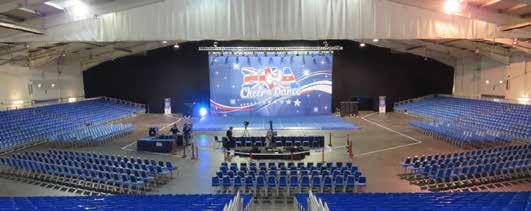


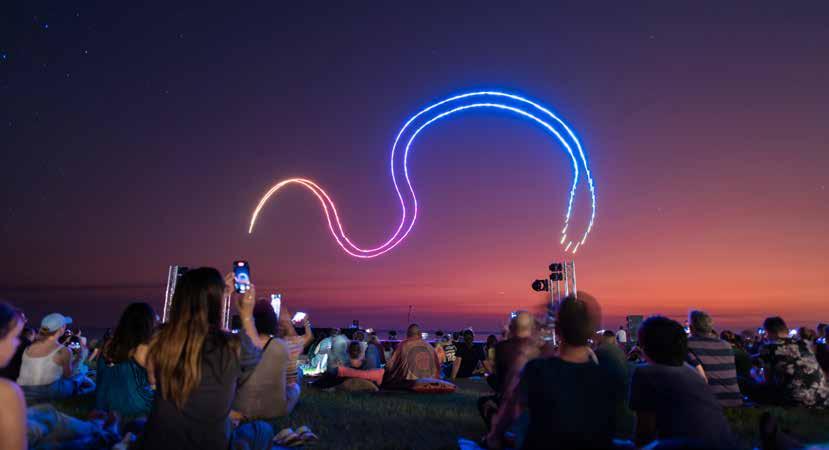
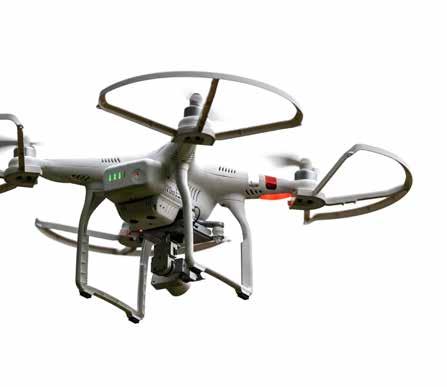
Drone shows are increasingly popular for live events and, as the technology rapidly develops, they look set to replace traditional pyrotechnic displays for events that aim to deliver something spectacular.
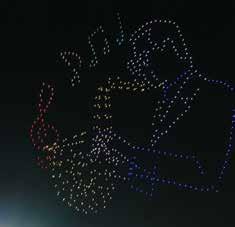
Fleets of GPS-guided drones equipped with powerful LEDs, choreographed to music, and capable of forming three-dimensional shapes in the night sky, drone light shows are quickly moving from novelty to popular event feature. What were once occasional spectacles at major public gatherings are now appearing at a wide variety of other events.
The scale of what can now be achieved is impressive. An event in Dubai featured 4,000 drones creating 3D light sculptures while a record-breaking display in China used over 11,000 drones simultaneously, a feat that would have been inconceivable just a few years ago. The visual spectacle naturally lends itself to social media, with the potential for individual sequences to spread far and wide. This sharing potential appeals clients with hybrid or livestreamed events.
Shows can be used in conjunction with pyrotechnics, traditional fireworks, or lasers, allowing for a great deal of creative freedom. It’s now common to synchronise drone displays with music, and the striking audio-visual coordination is great for events
where atmosphere and narrative are paramount.
The dynamic animation – morphing from shape to shape with 3D motion –means drones can be used for many purposes such as depicting logos and custom branding. This opens up a new kind of brand activation that traditional pyrotechnics can’t achieve. A company identity or a product silhouette can be rendered precisely in the sky and repeated identically across multiple nights.
There are sustainability advantages too as drone shows produce no smoke, chemical residue, or loud explosions, making them safer for wildlife and more appropriate for urban venues where noise restrictions apply. For event organisers wanting to highlight their environmental responsibility, they’re a smart choice.
Animated light shows aren’t the only use for drones in the events space, however. Filmed content created using drones is possible while keeping costs low and can produce high-impact, social media-friendly promotional material and captivating records of successful events.
This all sounds fantastic, but is it cost prohibitive? A stock show can start from around £7,500 while high-profile productions can run to seven figures. That said, smaller shows involving fewer drones have demonstrated that the format can be adapted to more modest budgets.
Navigating complex regulations adds another challenge. Rules governing drone flights differ from country to country, with England operating under stricter regulations than some other territories. For
UK event organisers, this means engaging a licensed operator early – well before any creative brief is developed – to allow time for Civil Aviation Authority (CAA) approval, site surveys, and show design.
A professional drone show involves creative design, choreography programming, onsite setup and calibration, live deployment, and real-time monitoring with geofencing to protect crowd zones. Planners should ask operators about their contingency arrangements for adverse weather, their experience with similar venue types, and whether the show design can be adapted for livestream framing.
Looking ahead, with developments in AI-driven swarm animation and interactive shows – where delegates can influence drone patterns via mobile apps – the format still has considerable room to evolve. For now, drone shows are most powerfully deployed for milestone moments where a single, memorable set piece is worth the investment.
As drone technology develops and is more widely adopted, costs will start to come down, and these kinds of displays will become more accessible. With boundless creative potential, it seems the sky isn’t the limit.

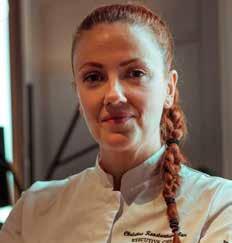

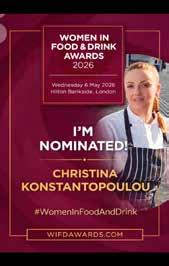
Women in Food and Drink Awards nominee and Culinary Excellence Award
finalist, Christina Konstantopoulou, Executive Chef at Radisson Red Hotel, shares why customisation beats fixed menus and why meeting the chef directly matters.

Hi Christina! Tell us about your career journey and what brought you to where you are now.
I’m half Greek, half French, so food was always part of my background. I started working in kitchens at university and fell in love with it immediately. I started in Greece working in Michelin-starred restaurants and five-star hotel resorts, then moved to Lyon for a year. When my daughter opted to study law in the UK, we came here and I stayed. I worked through Lever Hume, Doubletree, and Crowne Plaza, and eventually came to Radisson Red, and have been in Liverpool for over 10 years now.
What kind of cuisine do you specialise in?
I try to bring cosmopolitan flavours that are inspired by dining experiences from across the globe but I’ve also gained a love and understanding of UK cuisine. Mediterranean and British cooking are very different, so I travelled all around and visited the Orkney Islands, Wales, and small villages up and down the British Isles looking for traditional recipes. If you respect your job as a chef, you need to understand the country you’re in. What I admire in chefs is when they don’t overdo it – getting overly elaborate with smoke and foam and things like that – but they respect the ingredients. You can create fine dining with simple, humble produce. The most expensive broccoli in the world means nothing if you don’t know how to cook it well.
How does the executive chef role in hotels differ from restaurants?
Working in a hotel, you’re covering everything –restaurant service, events, and banqueting.
My forte is events and banqueting with everything organised in advance. With restaurant service,you can save mistakes. In banqueting, you can’t! If you make a mistake, it’s going to be a big one. I’ve done events for up to 1,500 people, so organisation is everything. You need to start the cooking process at least a week in advance for large events and staff need to be on top of every aspect such as equipment and freezer space. You also need a team that knows how to deal with service at that scale.
How do you approach putting together a great menu for a corporate event?
Many hotels will say ‘here’s a menu, this is the price, deal with it’ but I don’t do that. I have menus in place, so people know what to expect and understand pricing, but after that I sit down and speak with them about their needs.
If I have to redesign a menu, I will, as I prefer someone to leave happy, saying ‘the food was what we wanted, you made our day special’. Every event I do is different and designing a menu is often a collaborative process.
Starters
Rabbit paté en croute, cornichons, Dijon mustard.
Scottish smoked salmon, pickled cucumber, dill crème fraiche.
Goat’s cheese mousse, heritage beetroot, candied walnuts (V).
Main courses
Herb-crusted lamb loin, parsley and garlic oil, courgette and fennel, dauphinoise potatoes, jus.
Pan-seared swordfish, hollandaise sauce, Mediterranean vegetables, caper and kale salad.
Beef Wellington, truffle mash, seasonal vegetables, red wine jus.
Wild mushroom Wellington, celeriac purée (V).
Desserts
Sticky toffee pudding, toffee sauce, vanilla ice cream.
Deconstructed Eton mess, berries, Chantilly cream.
Lemon posset, shortbread, fresh berries.
My Menu (c
The most important thing is engaging with the customer directly. When I’m there speaking with them, we have a much greater chance of securing the booking. They come for the venue; they know what to expect but don’t know what to expect with the food. If you present that, adjust and design a plate in front of them, they’re very happy. The real challenge right now is pricing volatility. Clients are booking now for events next year and prices can go up very quickly. You make a deal and in three months everything is different. That’s my biggest problem.
The fashion is moving towards sharing platters and more informal formats like food trucks, garden events, and more relaxed gatherings. Corporate clients are asking for more inter -personal engagement rather than strict sitdown meals. I’m also trying to introduce more seafood to Liverpool, which is a big meat-loving city. When I first brought swordfish in, everybody was hesitant, but now you see it everywhere. For me, it’s about identity. It can sometimes seem like everybody’s copying each other. Anything that comes from my kitchen needs to have a distinct identity.










Over the past few decades, the industry has made real progress with sustainability, from reducing waste and improving sourcing to embedding ESG into day-to-day operations. It’s something to be proud of. But here’s the sticking point – despite all that progress, the landscape is becoming harder to navigate, not easier.
Much like events, hospitality businesses are now juggling multiple frameworks, certifications, and reporting requirements. One client wants one standard, another insists on a different methodology, while industry bodies and third-party platforms introduce yet more tools and badges.
The result is a growing administrative and financial burden, particularly for SMEs.

The outdoor events industry is navigating a period of increasing complexity. Rising operational costs, evolving regulation, workforce pressures, and heightened expectations around safety, sustainability, and experience are all converging at once.
For many organisers, the challenge is no longer just delivering events, but doing so with greater scrutiny, fewer margins, and higher stakes. But there is also opportunity. Outdoor events continue to prove their value – culturally, socially, and economically – to communities across the UK.
To address the question of how the industry reconciles both sides of this equation, NOEA’s new President, Bev Osborne, has set out a vision of ‘NOEA for All’. It champions investing
ESSA Chair Rob Brackstone reflects on sustainability and the need for greater alignment across the growing number of frameworks, certifications, and expectations being placed on the supply chain.
Teams are spending more time inputting data, validating processes, and chasing compliance than driving meaningful change. Are we making progress, or just making things more complicated?
This isn’t an argument against measurement. Quite the opposite. If you can’t measure it, you can’t improve it. But measurement only works when it’s consistent, comparable, and grounded in operational reality. What the sector needs now isn’t another framework, it’s alignment.
In events, we already have examples of robust, credible standards that reflect how businesses operate. The opportunity is to build on these, not continually replace them. Because every new initiative comes
with a cost in time, money, and ultimately in customer pricing.
There’s also a wider risk. A fragmented approach can dilute credibility. If everyone is measuring sustainability differently, how do we demonstrate real progress?
The path forward is simple, even if execution isn’t. Agree the standards, commit to them, and focus on continuous improvement. Because at the end of the day, sustainability shouldn’t feel like a moving target. It should feel like something the industry can get on with together.
Essa.uk.com
Susan Tanner of the National Outdoor Event Association (NOEA), highlights the need for clarity, communication, and connection.
in the foundations that support the industry’s future. Skills and training remain a priority, needing clearer structure and accessibility, while there’s also a focus on investing in guidance to members, bringing experts to the industry, and reaching a wider audience at shows and through our own convention.
There’s a growing need for coherence in how the industry is represented. Conversations with government, nationally and locally, have often been fragmented. NOEA’s approach is to bring greater consistency and continuity to that dialogue, building relationships over time and ensuring that the value of outdoor events is understood beyond individual moments or campaigns.
Alongside this sits a more holistic view of
support. Event professionals are increasingly managing overlapping pressures, from compliance and safety to wellbeing and audience expectations. The ambition is to offer more joined-up guidance, shared knowledge, and peer-to-peer connection that reflects how the industry operates.
These aren’t quick solutions. The scale of change facing the sector requires sustained effort and collective input. Working with its members, NOEA has the vision to ensure the industry is not only responding to change but shaping it.
Noea.org.uk
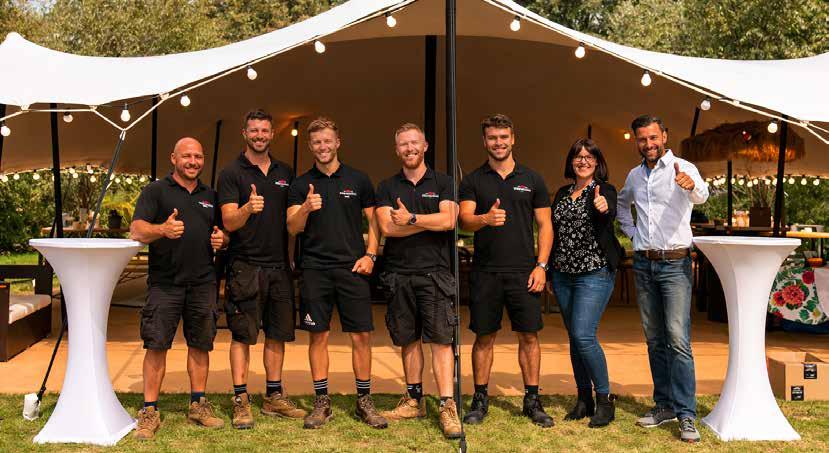
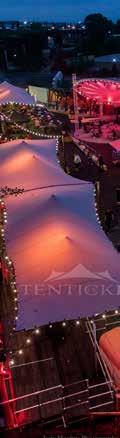
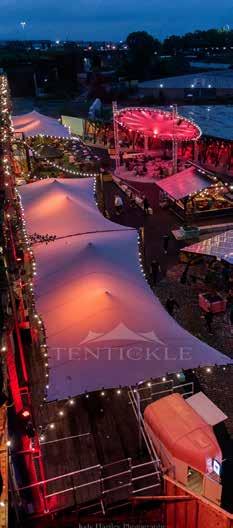
In 2016, Tentickle Stretch Tents UK Ltd began with a single container of eight tents, one van, and a clear belief in the versatility of stretch structures. What started as a small operation supporting local events has grown into one of the UK’s most experienced stretch-tent providers, delivering installations nationwide across corporate events, festivals, venues, and broadcast environments.
Early growth required persistence. The first years involved careful reinvestment, building stock steadily, and establishing a reputation project by project. Revenue doubled year-on-year during the formative stages, allowing the company to expand its tent fleet and capability. Today, Tentickle operates approximately 100 stretch tents in a wide range of sizes, supported by multiple installation teams working simultaneously across the country.
A key milestone came with the opportunity to supply structures for BBC Antiques Roadshow. Working across historic estates and listed locations required careful planning, sensitive installation methods, and rigorous compliance with health and safety requirements. Successfully supporting productions in these environments established the business as a trusted supplier capable of working within technically demanding and high-profile settings.
Further expansion followed with the introduction of one of the UK’s largest single-piece stretch tents, measuring 20 × 30 metres. This significantly increased the company’s ability to deliver large-span stage covers and audience infrastructure with clean visual impact and minimal structural interruption – an important step into larger production environments and festival applications.
Like much of the live events sector, it faced major disruption during the pandemic. However, the rapid shift toward outdoor
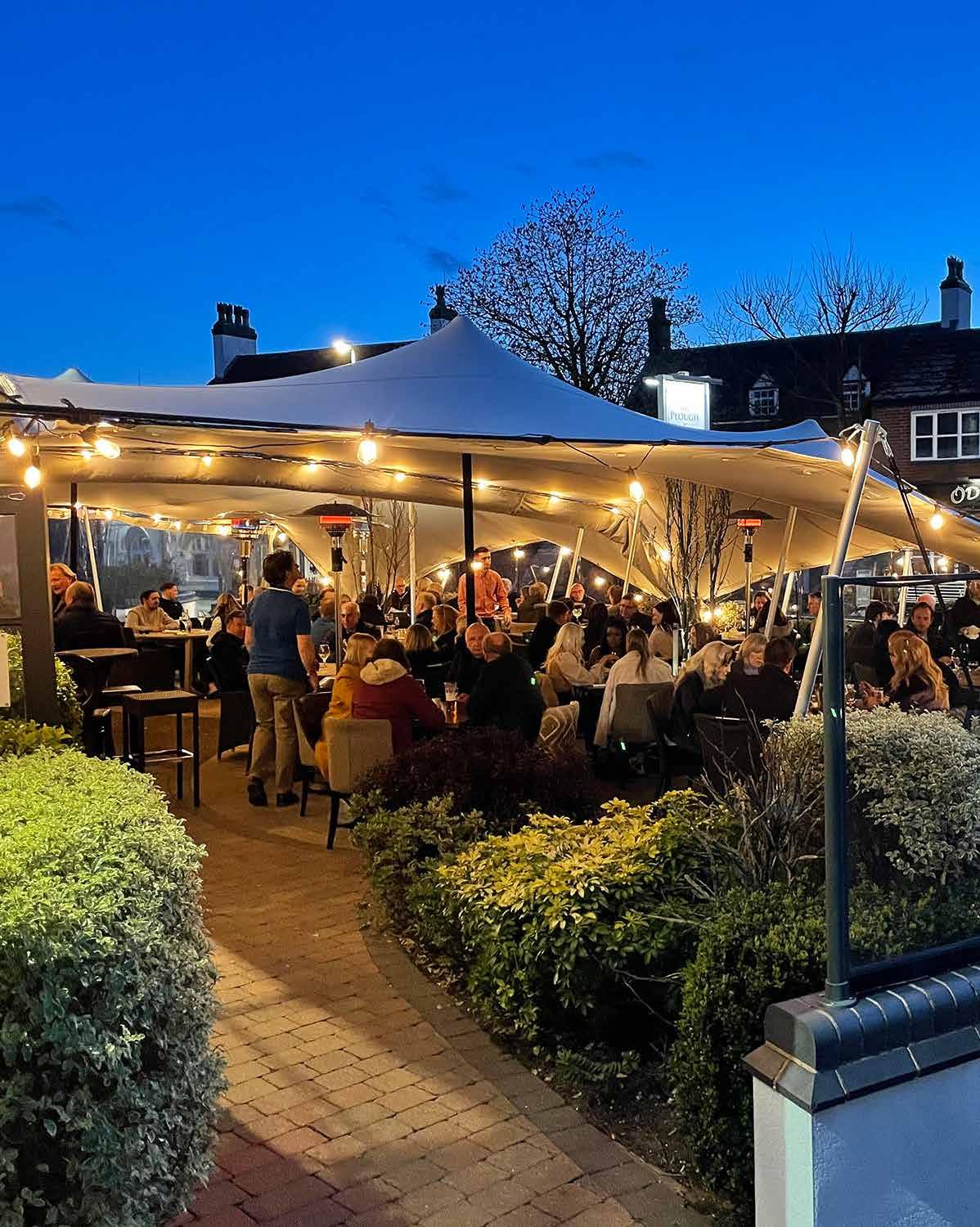
hospitality created new opportunities, particularly in supporting pubs, restaurants, and venues adapting their spaces for yearround use. Continued investment during this period allowed the company to emerge stronger and better equipped for the return of large-scale events.
Today, the team operates with multiple installation teams and a dedicated management structure, delivering stretchtent solutions across England for corporate clients, production companies, festivals, and private venues alike. The company’s work ranges from garden settings to large-scale stage environments and complex urban sites.
A defining strength of Tentickle’s approach is its ability to install structures in locations where conventional anchoring is not possible. Many projects require alternative solutions such as ballast systems, integration with existing buildings, container structures, or natural anchor points including trees. These environments demand experience, careful planning and a practical, problem-solving mindset from installation teams.
The business has now amassed over 10,000 sq. metres of stretch tent stock to be one of the largest stretch tent companies worldwide. Perfectly placed in the Midlands, the team can reach the whole of the UK to support events far and wide.
As outdoor event infrastructure continues to evolve, Tentickle remains focused on supporting organisers and production teams with reliable, adaptable structures designed for real-world site conditions. 10 years on from its first container delivery, the company continues to take pride in delivering solutions wherever they are needed – especially where others might hesitate.
Tentickle-stretchtents.co.uk
info@tentickle-stretchtents.co.uk
Tentickle Stretch Tents UK is celebrating 10 years of delivering structures where others can’t.

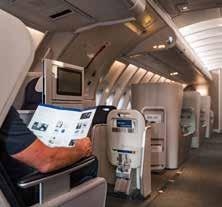
Dan Chang of 744 Experience walks us through a day spent putting corporate groups in the cockpit of a Boeing 747 for some unique team building.
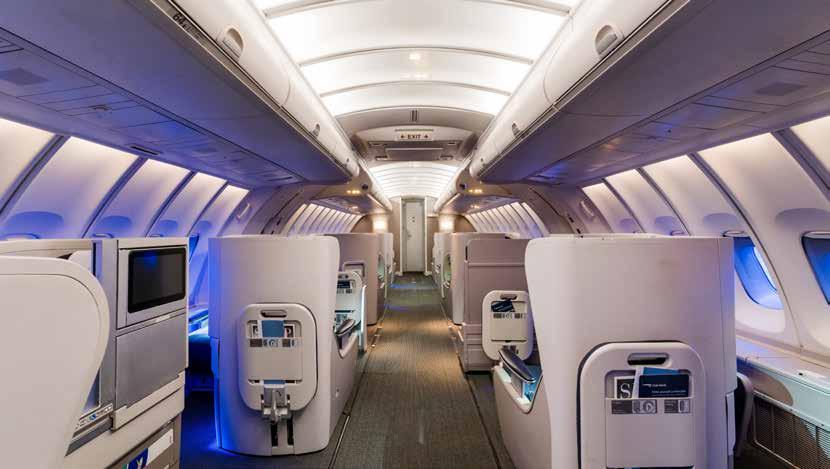
Dan Chang and his team have a rather unconventional and exciting workplace. At 744 Experience, the working environment is the original flightdeck and Upper Deck cabin of a British Airways Boeing 747 – the only fully operational Boeing 747-400 cockpit in the UK using original parts.
My day starts with a walk across a horse livery yard, unlocking the gates and stepping inside the original Upper Deck of the 747. Before anyone arrives, there’s a sequence to the start-up – powering systems, checking visuals, and running through cockpit switches. Because the detail matters. By the time the team arrives, the aircraft is coming to life. Coffee is brewing, the cabin is set, and we run through the plan for the day.
When guests step inside and take in the scale of the aircraft for the first time, there’s usually a moment of pause. We start with a short tour, including a walk outside to take in views of Beeston and Peckforton Castles, before heading back in. Then we move up to the Upper Deck. It’s relaxed, but purposeful. We introduce the principles aviation relies on – communication, leadership, decision-making under pressure – and how they translate far beyond the cockpit.
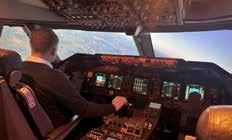
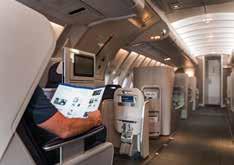
Getting someone into the captain’s seat for the first time is always memorable. Confident personalities suddenly focus, because once you’re in that seat, it becomes real very quickly. With expert instructors, we guide guests step by step – not just how to fly a commercial airliner, but how to work together. Who’s leading, who’s communicating, who’s managing the workload. It’s not about perfection; it’s about responsibility and teamwork. Then the landing; as 400 tonnes of aircraft lines up with the runway, the energy shifts.
While one group is up front, the rest of the team run activities in the cabin. From the flightdeck, you’ll often hear bursts of laughter from upstairs – usually during the safety demonstration challenge. It’s remarkable how quickly barriers come down when people step outside their comfort zone. There’s no sitting on the sidelines. Everyone is involved.
Midway through the day, we slow things down and reset for a spot of Business Class dining. There’s something special about serving a Business Class-style meal in the same cabin that once crossed
the Atlantic thousands of times. It gives people space to relax, reflect, and
The afternoon picks up again with more flying and more challenges, but there’s usually a noticeable difference. People who were hesitant in the morning are more confident, more communicative, and more assured. We’re constantly adjusting – reading the group, managing the energy, and making sure everyone gets their moment. We keep our groups small for a reason. It allows us to focus on the detail, the experience, and the individual.
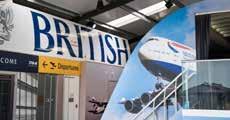
For many of us, this is more than a job. When the 747 fleet was retired, we didn’t want to see these aircraft simply disappear. Bringing the flightdeck and Upper Deck back to life was a huge undertaking – but a privilege. Now, instead of crossing oceans, these aircraft sections are bringing people together in a different way.
By the end of the day, there’s always a shift. You see it as people step back outside – conversations are different, the mood is lighter. Teams that arrived as colleagues leave having shared something genuinely memorable. We tidy down, power everything off, and the aircraft returns to silence. Until the next group arrives, and we get to do it all over again.
744experience.co.uk


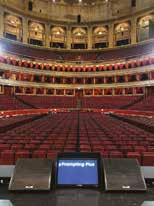












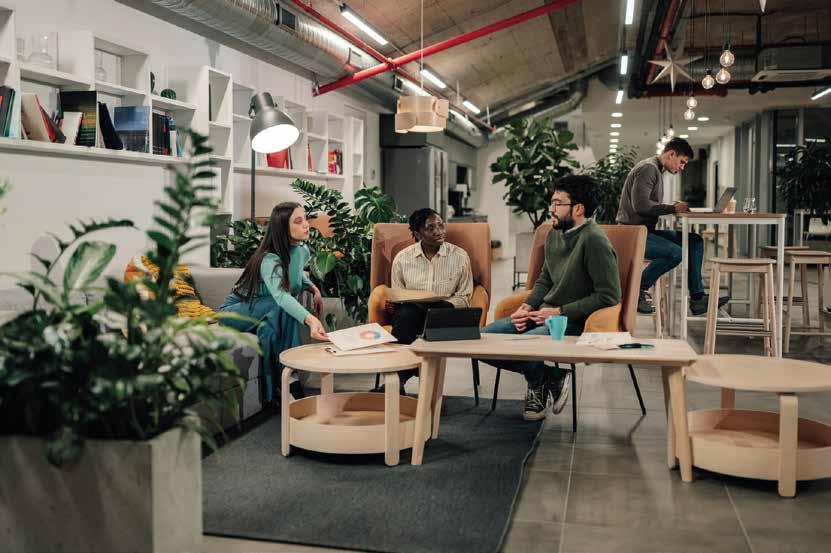
When seeking a venue for an event, shared co-working spaces might not spring immediately to mind. But the variety of enterprises they support means event-ready facilities are already in place, and the collaborative atmosphere creates opportunities traditional venues can’t replicate. Shared workspaces are designed with collaboration and community at their core, making them natural settings for events. Many locations are visually exciting, social-mediaready, and equipped with high-quality AV systems, specialist lighting, and connectivity for live music setups.
Roy Shaby, CEO and Founder of Tradestars, which rents out flexible spaces for a variety of uses, points out the advantageous design features: “What makes workspaces like ours suited to hosting events is the combination of aesthetic appeal, functionality, and accessibility. Our spaces are already beautifully designed for entrepreneurs and creators, meaning they act as preprepared settings for brand launches, workshops, content shoots, panel discussions, and other community gatherings.” In an Instagram-saturated events landscape with an emphasis on shareable content, this visual appeal matters. The entrepreneurial atmosphere also enhances networking as the novelty of the environment encourages people to interact and share experiences.
Flexible workspace often comes with other built-in facilities such as furniture, breakout rooms, and catering meaning event organisers spend less time and money
As traditional venues adapt to compete in a crowded and changing field, shared workspaces are making a compelling case as event venues.
on extensive setup: “Because flexible workspaces are designed to empower small businesses, they naturally cater to the needs of people who want professional, aesthetic settings without the high costs and hurdles of traditional event venues.”
Liam Fox of Wizu, which operates 17 co-working locations from Glasgow to Bristol, concentrated in Yorkshire, stresses the potential for the formation of new partnerships and client networks: “It was all about maximising the potential and versatility of spaces from the outset. Our clients require meeting and event spaces, which then has us bringing in external organisations. It’s a good way of attracting people who don’t utilise our business day-to-day into our venues and raising awareness when we host larger events.”
The distinctive selling point isn’t just facilities, it’s demographic. As Liam puts it: “Co-working is all about independent businesses and entrepreneurs working together in a cohesive environment,
bouncing off each other and networking. When you attend or host an event in one of these spaces, you’re tapping into professionals you wouldn’t necessarily encounter in a more traditional situation.” Wizu has developed partnerships with the Federation of Small Businesses and Northern Affinity: “These often start organically. Someone uses our co-working day passes, then discovers we have event space. The partnership continues to grow.”
Pricing models differ from traditional venues. Room hire typically follows hourly, half-day, or full-day rates rather than per-delegate charges which gives a more flexible feel. For partnership events, operators often waive fees to develop relationships and prioritise community building. Another advantage is location, with many shared spaces being central and close to transport links. And as we observe Mental Health Awareness Week in May, it’s worth noting that many workspace providers have implemented wellbeing initiatives – including meditation sessions, wellness programmes, and on-site therapists – making them well placed to support events with a wellbeing focus.
Shared workspaces are engines of fresh ideas and represent a viable option for event planners focused on authentic connections. Tradestars.co.uk
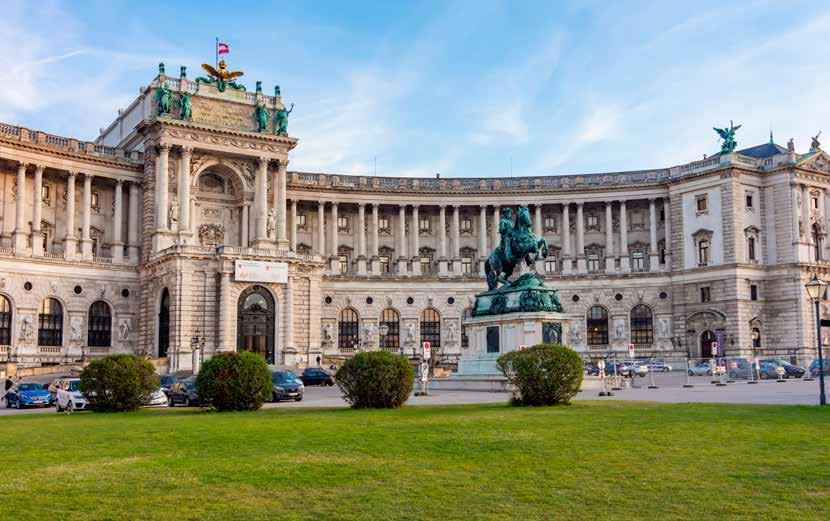
With the Eurovision Song Contest returning to Austria’s capital for its 70th edition, all eyes are on Vienna – one of Europe’s most formidable meetings destinations.
Vienna needs little introduction as a cultural powerhouse – Mozart, Beethoven, Schubert, and Strauss all called it home and the city has been synonymous with musical brilliance for centuries.
But behind the gilded concert halls and coffee house culture lies one of the continent’s most sophisticated and wellresourced event destinations. With 515 direct flights daily connecting to 195 cities worldwide and more than 80,000 hotel beds across the city, Vienna is built for scale and the kind of seamless delegate experience that keeps people talking long after the event is over.
This May, the spotlight falls on Vienna with particular intensity. The Eurovision Song Contest 2026 – the 70th edition of the world’s largest live music competition –takes place at the Wiener Stadthalle, with semi-finals on 12th and 14th May and the grand final on 16th May.
From 10th May, the Rathausplatz in front of Vienna City Hall transforms into the Eurovision Village: a free, open-air fanzone running daily until midnight, with live performances, screenings of all three shows, and the full spectacle of an event that drew 1.3 million overnight stays to the city when it was last here in 2015.
The Vienna Convention Bureau offers free support services to event planners, from venue-finding and agency introductions to funding assistance and Green Meeting certification. The city is served by Vienna International Airport, with the City Airport Train (CAT) putting delegates in the city centre in 16 minutes and a comprehensive metro and tram network making movement between venues straightforward.
As you might expect, Vienna boasts a number of wonderful boutique hotels for luxurious delegate stays, such as Hotel Motto which occupies an impressive historic building next to the Neubaugasse right on Vienna’s main shopping street. There’s also the elegant four-star Hotel Altstadt Vienna, located in in the popular Spittelberg quarter and Sissi West which is close to Schönbrunner Gardens and less than one kilometre from Schönbrunn Palace.
2026 also marks Vienna’s annual theme of ‘Vienna Bites’, a city-wide celebration of

its culinary identity – good news for event planners looking to build food and culture into delegate programmes. From the legendary Naschmarkt to Michelin-starred fine dining and traditional Heuriger wine taverns to a coffee house scene that was granted UNESCO Intangible Cultural Heritage status, Vienna delivers on gastronomy in a way few cities can match.
The Austria Centre Vienna is the obvious starting point for large-scale congresses and corporate events. Austria’s largest
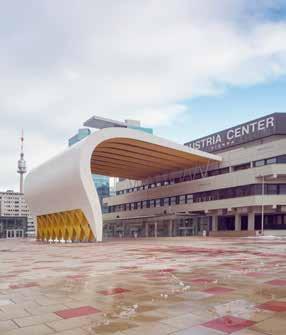

congress and event centre, it offers 26,000 sq. metres of event space across five levels, with 21 halls accommodating between 100 and 4,320 delegates, 134 meeting rooms, and a total capacity of up to 22,800. Located just seven minutes by underground from the historic old town and directly adjacent to the UN headquarters and the Danube Park, it’s both exceptionally well connected and genuinely impressive to arrive at. The centrepiece of the entrance hall is the polySTAGE: Europe’s largest kinetic LED installation, a 310 sq. metre high-resolution screen system that sets the tone for events before delegates have even found their seats. Free 100 Mbit Wi-Fi is provided for every event, and the ACV is an official Green Meeting and Green Events certification partner – supporting clients through the sustainability certification process at no extra cost.
For those seeking something with a little more history, HOFBURG Vienna delivers it in abundance.
Where Mozart and Beethoven held their world premieres, and where heads of state from Kennedy to Khrushchev once made political decisions, the Hofburg Congress Centre now hosts up to 350 events a year across 35 rooms spanning 17,000 sq. metres. Capacity ranges from 50 to 4,900 across a mix of imperial state rooms alongside more contemporary glass architecture in the Dachfoyer and Hofburg Galerie. It’s simply one of the most dramatic conference addresses in Europe.
For smaller, high-end events, the options are equally compelling. Palais Ferstel on the picturesque Freyung square in the city’s first district is a masterpiece of Venetian-inspired 19th-century architecture – a colonnaded arcade courtyard, chandeliers, and ornate state rooms that make for an unforgettable setting for dinners or presentations. The Große Ferstelsaal is among the most beautiful event rooms in the city and Café Central – once the haunt of Freud, Trotsky, and Vienna’s literary elite – sits directly within the same building. The Vienna Convention Bureau’s venue finder lists over 250 event locations across the city, from contemporary conference hotels to
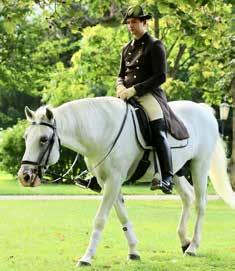
Beyond the meeting rooms, Vienna offers the kind of programme content that makes incentive trips and away days genuinely memorable. The Spanish Riding School – where the Lipizzaner horses have been performing for more than 450 years – offers exclusive evening performances for private groups. Schlöss Schönbrunn, the former imperial summer palace, can be hired for private banquets and evening receptions in a setting of jaw-dropping grandeur. The Kunsthistorisches Museum and Vienna State Opera both offer afterhours access for private events, and the city’s compact, walkable Innere Stadt means delegates can move between cultural landmarks, restaurants, and shopping streets with ease.
Vienna is also a city that takes sustainability seriously on behalf of its event clients. Green Meeting certification – which assesses events against criteria including catering, energy use, and waste – is available through both the ACV and the Convention Bureau and is increasingly a baseline expectation for corporate events of any scale.
The Eurovision moment this May is a reminder of something the city’s event industry already knows well – when Vienna puts on a show, the world pays attention. For event professionals considering their next European destination, it deserves a place at the very top of the list.
Meeting.vienna.info | Acv.at | Hofburg.com
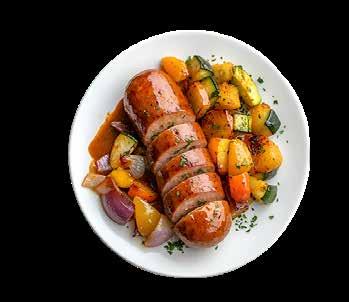
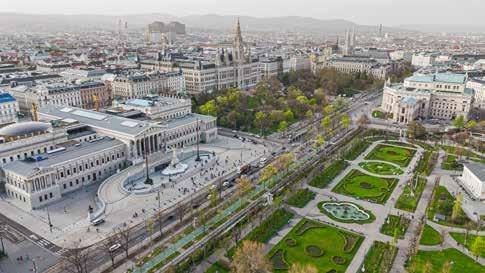



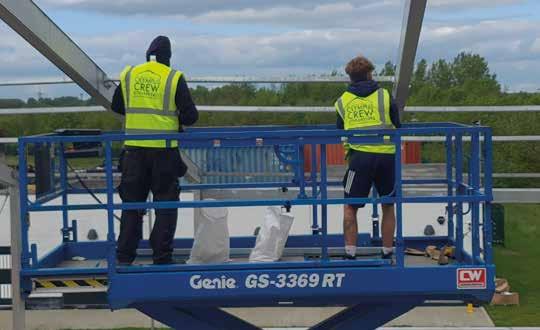
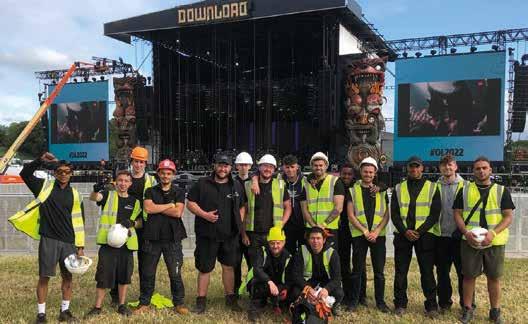

The Yorkshire Party Company is proud to have partnered with many of the country’s most prestigious clients and luxury brands. From senior management lunches to trade shows and largescale corporate functions, the team understands the importance of delivering exceptional corporate events and dining experiences.
Every dish served is crafted by the inhouse culinary team using only the finest local produce that Yorkshire has to offer. They take a bespoke approach to menu development and work closely with trusted suppliers to ensure the highest quality ingredients.
The company’s offering includes canapés, traditional and bespoke three-course menus, sharing platters, buffets, and a custom-built Asado barbeque for outdoor events. These can be paired with full bar services and tailored drinks packages.
Over the past three decades, the company has also built an outstanding reputation for setting culinary trends and delivering flawless weddings and private events. Whether in elegant marquees or historic stately homes, it has consistently brought clients’ visions to life through extensive expertise and personalised guidance.
Yorkshireparty.co.uk
Frustration with how poorly staff and clients are often treated in the industry led Chrissie Mclaren to set up CM Event Recruitment. Staffing agencies can have a bad reputation and Chrissie’s mission is pushing back against that.
Chrissie has over 20 years’ experience in recruitment but still remembers how it feels being a casual member of staff and treated like a number. When she started in consultancy, it seemed to be more about hitting targets and hammering cold calls than helping businesses needing staff. She felt she could change all this by bringing a more considerate and personal approach to the industry.
Richie joined the business in 2019 as operations manager but has always been in the background supporting Chrissie with events. He has over 20 years’ experience in customer service and logistics so even when there are multiple events at the same time, he’s adept at keeping things running smoothly, ensuring that that both staff and clients are happy.
Chrissie and Richie genuinely care about their work and know how to deliver gold standard service with zero stress. Client feedback consistently emphasises how this
personal investment really comes across and makes a huge difference.
Cmeventrecruitment.co.uk
After more than two decades at the forefront of event design, CEO and Creative Director Debbie Marks has officially launched House of Verve – a next-generation creative design house specialising in luxury events, celebrations, and large-scale installations. Formerly operating as Qube Events & Productions, House of Verve has been created to meet the growing demand for immersive, highimpact environments.
“We’re stepping into our next era,” says Debbie. “This isn’t just a rebrand, it’s a refinement of our vision. We’re building a creative design house that leads with innovation, delivers extraordinary detail, and supports clients from concept to installation at the highest level.”
House of Verve positions itself as a creative partner for agencies, brands, venues, and private clients seeking statement décor and transformative spatial design for everything from themed awards ceremonies to immersive brand activations and seasonal destination installations. The company boasts an inhouse team of designers, florists, joiners, and production specialists, combining creativity with technical capability to guarantee both aesthetic impact and seamless delivery.
With a portfolio including stadium-scale events, city centre installations, corporate productions, and high-end private celebrations, House of Verve is positioned to become a leading force in the UK’s luxury décor and experiential design market.
Houseofverve.co.uk
The National Space Centre venue hire team is incredibly proud to have won Best Venue Hire Initiative at the Association for Cultural Enterprises Awards. The award highlights the team’s innovative approach to events and its growing reputation as one of the UK’s most distinctive venues.
As well as being a leading visitor attraction, the National Space Centre hosts a huge number of events every year. Its varied and dynamic venue spaces can accommodate all kinds of events from conferences to exclusive hire, corporate events, dinners, team building, and celebrations.
This award recognises how the venue hire team continues to innovate, diversify, and deliver outstanding, memorable events.
What makes the venue’s events special is the way its teams come together seamlessly with real pride in what they do. Every successful event is powered by teams working across the centre, all playing a vital role in creating exceptional experiences. That collaboration is what sets them apart.
The National Space Centre is passionate about providing outstanding service in a unique setting and exceeding customer expectations with a personalised and professional approach.
Spacecentre.co.uk
The Fun Experts is living up to its name and popping the confetti canons to announce it has reached 3,000 five-star live reviews from customers – the highest in the industry. The company is the go-to for delivering fun equipment to events across the UK.
The landmark 3,000th review came from delighted customer Neve Knight: “We recently had a cash grabber and were very happy with the service. Every question we had was answered promptly and clearly and the team kept us informed throughout the entire process. The on-site installation ran smoothly and efficiently. The crew arrived on time, worked professionally, and ensured everything was fitted perfectly and they left the site clean and tidy once the job was complete – thank you.”
Founders Sunny and James Sandwell are proud of the milestone and say it highlights the company’s commitment to providing top-tier service. Sunny commented: “We genuinely care and all the feedback we receive genuinely inspires us, drives us, and reminds us why we do what we do. To reach 3,000 is amazing! Our reviews paint the true picture of who we are and what we stand for.”
Thefunexperts.co.uk

Intellectual Property Lawyers Jonathan Perlmutter and Philip Partington of Knights PLC explain what exhibitors need to know about safeguarding their intellectual property.
Many people who attend trade shows – including exhibitors themselves – are often looking for good products and ideas to copy or adapt. To deter copiers, exhibitors need to consider whether what they’re disclosing at the event has been adequately protected prior to going public.
UK and European patent systems only allow for the patenting of new things. If an invention is publicly revealed before the patent is filed, that earlier disclosure can kill the chances of getting a patent because the invention is no longer considered new. Often not all is lost, but optimally, exhibitors
should seek advice before disclosure and perhaps file a patent application in advance to avoid subsequent panic and possible upset.
However, designs of an aesthetic nature don’t follow the same pattern since you can often register a design within a grace period after initial disclosure. This only applies in some countries and the grace periods can be different lengths, so tread carefully if you are going to rely on them.
You shouldn’t just focus on protecting your ideas and creative assets ahead of the event; you should be careful of the data you are carrying too. It is quite easy for a customer list or a laptop to be lost when you and your staff are busy.
When you walk around the show, keep an eye out. Exhibition-holders are usually pretty receptive to complaints about IP infringement and will remove items from stands if it appears they are infringing on others’ items.
Equally, you should ensure that your own product is unlikely to be impounded for these reasons – not only is confiscation at a trade show costly in terms of resources, but it is likely to be rather humiliating and could lead to reputation damage.

If you are unsure as to whether your product infringes on the IP of others, have it checked – the service you would need is called a ‘freedom-to-operate’ (FTO) search and should be done on all new brands and products.
Knightsplc.com


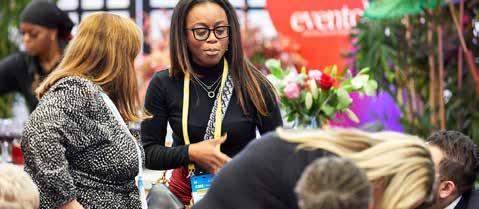
In preparation for its inaugural show in September, CHS Manchester has announced the formation of a new advisory board, which will bring together some of the most influential and wellconnected people from across the UK events industry to ensure the show continues to evolve, reflect the industry, and spread its positive influence across the UK events community.
From agencies and producers to destinations, venues, and community builders, the board reflects the breadth and creativity of the sector. The group will actively influence the future of the show, ensuring the quality of its education, product mix, and delegate experience.
CHS Manchester has already become one of the industry’s most talked-about gatherings – a national ‘super show’ that blends business, community, and creativity in a way that feels distinctly different to traditional exhibitions. Alongside a growing roster of exhibitors from across the UK, the show has also developed a festivalstyle atmosphere with conversations, networking, and collaboration continuing well beyond the show floor through a vibrant fringe programme across the city.
The Royal Highland Centre, one of Scotland’s largest events venues, has appointed four non-executive directors, reinforcing its ambition to grow the centre’s offer and strengthen its position as a leading Scottish events destination.
The appointees bring a wide range of expertise spanning major live events, venue management, commercial strategy, and large-scale programme delivery for the likes of Formula E and the 2012 Olympics.
The new non-executive directors are Roger Hooker, Owner of Hooked On Events; David Laing, previously Head of Arts, Music, and Cultural Venues for Glasgow Life; Graeme Davies, Managing Director of UXL Marketing and Consulting Ltd; and Robin Miller, previously Head of Conference Sales for the SEC.
Mark Currie, Managing Director of the Royal Highland Centre, commented: “Being able to welcome such a highcalibre group of non-executive directors to our board is a huge step forward for us as a venue as we set our sights to expand the venue’s offer and continue our reputation as one of Scotland’s most versatile events venues.”
A HeadBox report, Global Perspectives: How Travel Managers Are Tackling Meetings and Events, draws on interviews with eight experienced travel managers from organisations including Microsoft, EY, and Fidelity. It identifies structural obstacles that prevent meetings and events programmes from operating with the same strategic oversight as business travel.
Key issues include fragmented ownership across marketing, HR, procurement, and regional offices, limited visibility of spend, compliance gaps, resistance to change, and undefined success metrics, which make it difficult to demonstrate value or secure resources.
Andrew Needham, CEO and Founder of HeadBox, said: “This whitepaper is a call to action. The technology, the expertise, and the frameworks exist right now to bring meetings and events into the same strategic conversation as business travel. At HeadBox, that is exactly what we are here to help organisations do.”
The whitepaper also includes a 12-month KPI roadmap and a toolkit of practical tips for travel managers looking to build more strategic meetings and events programmes.
For more information and to download the report, visit HeadBox.com
The independent think tank and advocacy network, The Business of Events (TBoE) has announced new partners including the Edinburgh International Conference Centre, The Meetings Show, and Cvent. They join long-standing partners VisitBritain, VisitScotland Business Events, ICC Wales, MeetEngland, and the All-Party Parliamentary Group for Events.
Felicia Asiedu, European Marketing Director at Cvent, said: “We chose to partner with TBoE because its commitment to insight, advocacy, and meaningful dialogue reflects Cvent’s dedication to empowering the global events community with the technology and intelligence it needs to demonstrate and grow its broad economic impact.”
Craig Bingham, Managing Director of ICC Wales, said: “Our decision to continue partnering with TBoE is driven by the tangible value it delivers for venues and destinations from economic impact and regional growth to skills, sustainability, innovation, and accessibility. These priorities align perfectly with ICC Wales’ commitment to supporting the wider business events economy and strengthening relationships with government and the public sector and helping to improve event experiences for the industry.”
Leeds-based event agency First Event has launched a bespoke chronic condition policy to support staff. The agency also served as a headline sponsor of Harrogate’s Endo Gala as part of a raft of initiatives in support of Endometriosis Action Month. It is now officially an Endometriosis Friendly accredited employer and will continue to stand behind the Endometriosis UK Workplace Pledge year-round.
Conditions like endometriosis affect millions of people but are often misunderstood, undiagnosed, and invisible in the workplace. Many of those working in the corporate events industry are women and so, by talking about these conditions, First Event hopes to normalise understanding and accommodation for them within the industry through providing dedicated support for First Event colleagues, staff, and their families.
Catherine Wallace, Employee Relations Manager at First Event, said: “As an Endometriosis Friendly Employer, we already embed inclusive day-to-day practices including true flexible working, unlimited leave, remote working, and access to mental health first aiders that support colleagues living with chronic conditions.”

There’s so much more to Yorkshire than just its big cities – try something a little different for your next event!
You really do get the best of both worlds in Yorkshire, not only is it renowned for its beautiful countryside, but it also has a plethora of rapidly developing cities which are increasingly competing with their southern counterparts for corporate events.
As the largest county in the UK, it offers a huge variety of landscapes that you simply won’t get anywhere else in the world. From the rolling hills of the Yorkshire Dales and North York Moors to the dramatic beauty of its coast, the region is rich in character and filled with ideal locations to motivate and inspire delegates. Yorkshire’s biggest cities are unbeatable – Leeds, York, and Sheffield are all excellent hubs – but what about the rest of the region?
Last year’s UK City of Culture, Bradford, is also the world’s first UNESCO City of Film. Home to the National Science and Media Museum, Cartwright Hall, St George’s Hall, the Alhambra Theatre, and many more, there’s bound to be a venue that’s perfectly suited to your event! The city’s latest addition, Bradford Live, has been expertly restored in the art deco style building and reopened last year. The auditorium boasts over 3,500 seats with a big stage, the Gaumont Room hosts 300 delegates seated, and there are three other spaces with capacities ranging from 40 to 500.
Up in North Yorkshire, the famous UNESCOlisted Fountains Abbey is just on the outskirts of beautiful Ripon where the town’s racecourse and conference centre also offers plenty to wow delegates with.
Yorkshire’s coastline is a captivating blend of rugged cliffs, sandy beaches, and charming seaside towns that create a mosaic of natural beauty and cultural

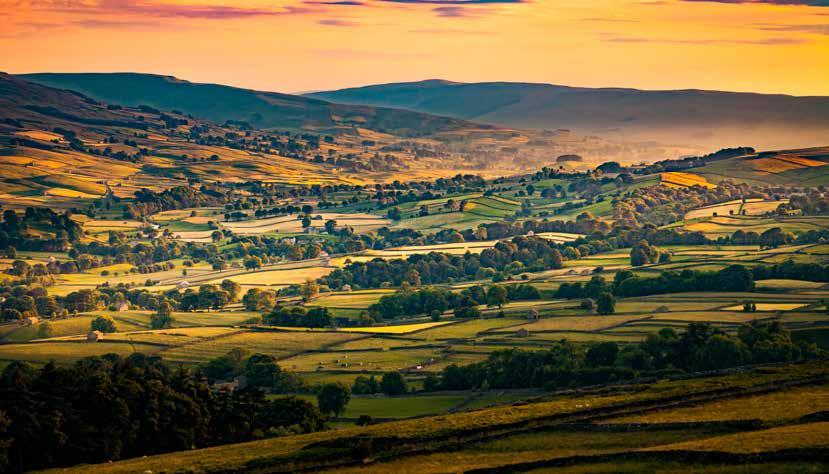
heritage. Scarborough Spa is a Grade II-listed building that offers a variety of spaces including Sun Court (well-known for its iconic checkerboard floor) that can host up to 500.
The iconic land of dry-stone walls, high hills, and picture postcard villages – the Yorkshire Dales is an evocative and romantic location, but dig a little deeper, and you’ll see it’s not one single landscape but a collection of many. Host an event here and you’ll enjoy the fresh air, wide open spaces, unique character, and vastly changing landscapes. Swinton Estate hosts holistic and wellbeing-focused team building activities and business retreats to give your delegates the ultimate chance to switch off and recharge in the beautiful countryside. If you’re looking to raise some heart rates with some more exhilarating team building ideas, The Coniston Hotel offers a thrilling off-road Land Rover experience, clay pigeon shooting, and dragon boat racing.
How about a venue that’s a bit out of the ordinary? Yorkshire Wildlife Park can host meetings, conferences, team building, and corporate hospitality events surrounded by the unique sights and sounds of amazing animals. If under the sea is more your bag, The Deep aquarium over in Hull provides an exciting backdrop for a variety of events. There’s also Yorkshire Sculpture Park which sits just outside of Wakefield and is ideal for large exhibitions due to its setting of 500 acres of historic parkland with worldclass art installations at every turn.
Memorable events don’t just happen in Yorkshire’s biggest cities; they’re woven into the fabric of the entire region.
Stretching across 70 hectares of land boasting picturesque lakes and woodland, North Yorkshire Water Park is the perfect location for any team building event – offering a healthy dose of fresh air and entertainment, allowing teams to escape their daily routine and fully immerse themselves in a day of adventure.
Alongside pre-made packages, you can create your own bespoke option that suits your business needs entirely, with the helpful team on hand from your very first enquiry. Home to the largest inflatable aquapark in North England, get hearts racing and teams smiling with ‘Wipeout’ and ‘Warrior’, come together and enjoy a group kayak across the lake, unleash creativity and collaboration and get raft building, and so much more!
If you want to stay dry, don’t worry! There are plenty of land-based activities – ziplining, axe throwing, orienteering, puzzle rooms, and bushcraft just to name a few – that the whole team can enjoy, followed by some freshly roasted coffee and seasonal treats at the on-site café!
Northyorkshirewaterpark.co.uk






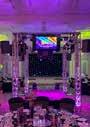


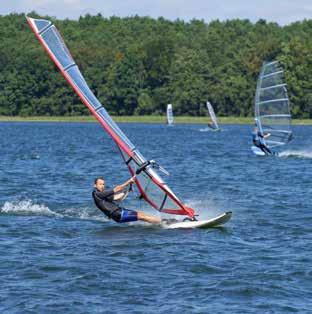

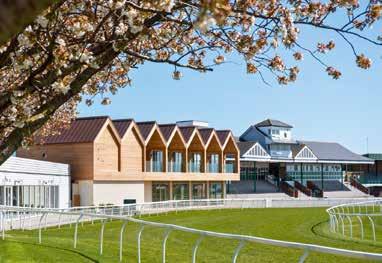













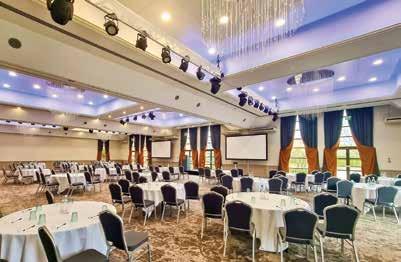

As Mental Health Awareness Week (11th to 17th May) puts the spotlight on action, Catherine Grinyer makes the case for embedding mental health thinking into how we plan, design, and run events.
The conversation around mental health at events has come a long way. But for Founder and Director Catherine Grinyer, who set up Attendable Events to champion accessible and inclusive event design, progress has been uneven: “We’re moving in the right direction,” she says. “But it’s not yet standard practice. It should be.”
Catherine’s starting point is always the delegate experience – mapped in detail before a venue is even booked: “We think about the pressure points – busy periods, volume levels, physical pinch points that could cause anxiety, and whether there’s enough space for people to move comfortably.” One of the most consistent problems she encounters is published venue capacity: “A room listed for 300 people quite obviously can’t hold 300 people, not comfortably. Tick-box accessibility is the same issue in a different form. Interrogate the detail; don’t just trust the listing.”
Dedicated quiet spaces are now appearing at more events, with organisations such as EventWell offering pop-up solutions deployable at conferences, awards, and exhibitions. However, as Catherine points out: “A quiet space is only as good as how it’s managed. It needs to be staffed throughout, with a clear code of conduct. Without that, it gets used for phone calls and emails, and the people who genuinely need it lose access. If budget allows, set a separate co-working space for that and protect the quiet area.”
Staff training is equally important. Catherine briefs every event team in advance on how to approach delegates inclusively, how to spot signs of stress or anxiety, and how to respond: “These are relatively simple things. But they require treating mental health as a core part of the event build, not an afterthought.”
holistically.” Access to daylight and acoustic management complete the picture.
The question of who bears responsibility – planner or venue – comes up regularly. Catherine’s answer: both, in genuine partnership. She recommends having the conversation early and has successfully negotiated additional space at reduced rates by framing a quiet room as part of the event’s accessibility commitment: “It’s often within the gift of the venue. It just takes someone to ask.”
With the theme of this year’s Mental Health Awareness Week being ‘Action’, Catherine’s recommendations are practical and mostly low-cost – appoint a trained mental health first aider, improve pre-event communications with orientation videos, venue maps, and buddy systems for networking, plan genuine breaks rather than five-minute comfort stops, and publish a code of conduct naming a designated support person. And don’t forget to look inward: “Event crews are under enormous pressure. Make sure your own team has somewhere to go, time to eat, and someone to talk to. Our mental health matters too.”
For Catherine, the broader point is simple: “We’re all falling over ourselves to prove our events are sustainable. We should be doing the same on accessibility and mental health. They’re not a separate conversation – they’re one and the same.”
Attendable.co.uk
Accessibleeventshow.com
Physical design matters more than the industry typically acknowledges. Clutterfree layouts, generous spacing, and adjustable lighting all contribute to a calmer environment. Catherine points to less obvious factors too – smell among them: “Strong perfumes, aftershaves, and heavily scented food can be genuinely triggering. We’ve seen guidance issued on it, and it’s worth taking seriously.” She cites a tour of Cisco’s London offices, which feature a bespoke ambient scent specifically tested to be calming: “That’s relatively easy to replicate at an event. It’s just thinking about the sensory experience
It York explains how heritage and innovation combine to create an unbeatable destination for events in the city.
A meeting place for over 2,000 years, York is one of England’s finest and most beautiful historic cities, always reinventing itself while never forgetting its past. Cobbled medieval streets and iconic buildings tell the stories of its people and history.
York is the UK’s first and only UNESCO Creative City of Media Arts and as one of 12 UNESCO Creative Cities in the UK, is part of a network of global cities that have identified creativity as a strategic factor in sustainable urban development. The city is a hotbed of creative talent and digital innovation; the creative industries represent the fastest growing area of the York economy, making it an ideal destination for the sector. With a plethora of art galleries, museums, and unique creative spaces such as SPARK:York or many of the historic buildings, creativity is front of mind to help you find a unique venue that will leave a lasting impression.
York St John University and University of York are regularly voted as two of the best places to get a creative degree,
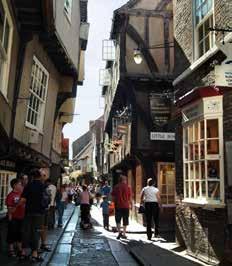
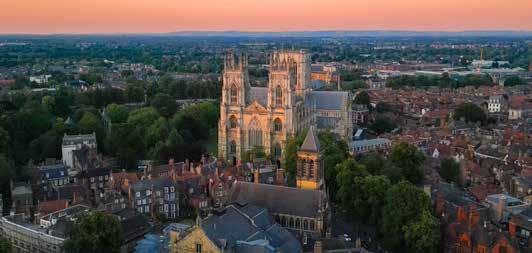
as well as being in the centre of a unique circular bioeconomy innovation cluster. The city’s knowledge-driven economy is among the strongest in the UK with a solid reputation for research, development, innovation, and academic excellence. Both universities provide a series of amazing on-campus venues for a wide range of events from conferences to speeches to networking events.
The city sits at the heart of the UK’s largest rail cluster and is home to leading rail companies and innovative sub-sector specialists. Outside of London, no other city can match York for its rail connections and efficiency. With 140 direct rail connections and travel from London taking less than two hours, it’s a well-connected city that’s easily accessible from across the UK.
Providing an ever-popular destination for visitors and an inspiring backdrop for business events with its large galleries and spacious halls, York is home to the National Railway Museum, one of the world’s leading railway museums. Following a recent transformation, its historic Station Hall reopened in September 2025 after significant refurbishment alongside ongoing enhancements across the site.
Away from the meetings, York has so much to offer. Delegates can walk across the walled city centre within 20 minutes, with iconic landmarks and popular award-winning attractions dotted in between. Come face to face with Vikings at the JORVIK Viking Centre or explore York Minster, one of the world’s most magnificent cathedrals.
Fancy getting out and about? There are a wide range of walking tours that offer
delegates a great way to explore. Enjoy a private tour and learn the history of attractions and buildings while exploring the narrow streets and snickelways with The York Tour Guide or learn the spooky and darker side of Europe’s most haunted city on The Original Ghost Walk of York.
There are over 500 four and five-star bedrooms within a few minutes from the train station, including The Grand, The Milner, and Malmaison which all offer exceptional meeting spaces. In addition, you’ll also find Hilton York, Radisson York, and DoubleTree by Hilton within a short distance thanks to the city’s compact size.
When it comes to food and drink, there are plenty of fantastic restaurants, bars, pubs, and cafes within the city walls for delegates to truly make the most of their time, with many food-based activities for engaging team building sessions. York’s chocolate heritage is highlighted through York Chocolate Story’s experiences which are available for private group bookings. Why not try one of the exclusive masterclasses with one of the expert chocolatiers and learn the tricks of the trade for yourself? York Distillery, the home of York Gin, is also available for group bookings of gin tasting sessions or get hands-on and take a lesson at the Gin School to distil your every own bottle.
Planning your event in York has never been easier! Use our convenient venue search tool to discover the perfect location for your next event. Plus, our event planner’s toolkit is packed with valuable resources to streamline your conference communications and help your delegates make the most of their visit to the city.
Visityork.org/conference | info@visityork.org
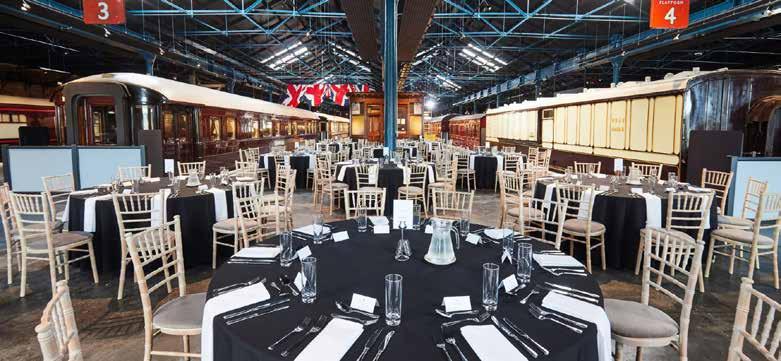
Station Hall has reopened its doors post-restoration works and is now available for private hire for up to 450 for dinners or 1000 for receptions
Dine amidst royal carriages in the evocative atmosphere of a bygone era that is sure to impress your guests from first impressions all through the night
For more intimate dinners up to 18 guests, dine in the historic Countess of York Carriage
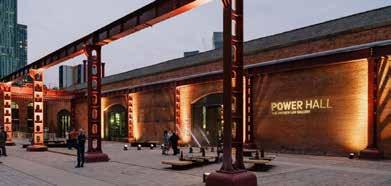
The newly refurbished Power Hall: The Andrew Law Gallery, has opened its doors and is now available for private hire
Perfect for receptions up to 150 guests as an add-on to Revolution Manchester Gallery Dinners
With live demonstrations of working engines, let your guests journey through a century of innovation and experience the story of how industry in Manchester shaped the world
Or why not celebrate post-conference in our newly refurbished Conference Centre!

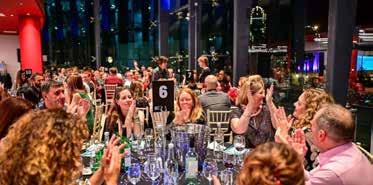
Looking for somewhere to host your next dinner, awards or celebration? In the Heart of Bradford, the National Science and Media Museum Foyer is the perfect space for up to 140 people for a dinner or 300 for a reception
Enclosed behind a spectacular glazed façade, our Foyer will capture your guests’ attention with the LED colour-wash lighting up the space
Our new Eurovision Gallery is now open, celebrating the 70th anniversary of the Eurovision Song Contest
Marketing Sheffield on how the city has always inspired and always will.
Defined by innovation and collaboration – Sheffield is a place where industrial heritage powers a modern reputation for research, sustainability, and creativity.
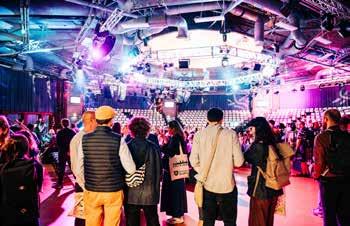
For conference and event organisers, Sheffield delivers a rare combination: affordability without compromise, accessibility without stress, and world-class expertise in a city that feels welcoming and authentic. It’s a destination that aligns naturally with forward-thinking conferences and business events.
One of Sheffield’s greatest assets is its unique balance between city energy and open green space. Known as one of the UK’s greenest cities, it sits on the doorstep of the breathtaking Peak District National Park, offering delegates the chance to step from conference hall to countryside in minutes. Whether it’s a guided walk, an outdoor team building activity, or simply time to reset in nature, the setting enhances wellbeing and enriches the overall event experience. Organisers can host a gala dinner at the magnificent Chatsworth House, which is famed for its grand architecture, spectacular gardens, and as a filming location for Pride and Prejudice.
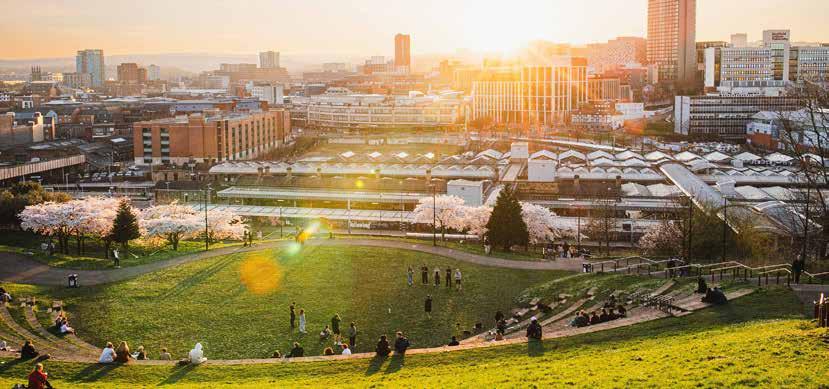
Sheffield’s city food and drink scene is equally compelling; the city champions independence and creativity, covering everything from neighbourhood cafés to destination dining. Cambridge Street Collective, Europe’s largest purpose-built food hall, offers a vibrant, informal setting for group dining, while Michelin-starred Joro showcases the city’s culinary ambition. Areas such as Kelham Island are packed with characterful venues ideal for receptions and networking events.
Renowned for its craft beer culture, Sheffield now boasts more breweries per 100,000 people than any other UK city – a reflection of its proudly independent spirit and longstanding brewing tradition.
Compact and walkable, delegates can easily move between hotels, venues, and social spaces on foot, creating a seamless experience from start to finish. The city offers an impressive range of venues, from the state-of-the-art facilities at the University of Sheffield and Sheffield Hallam University to the historic elegance of Cutlers’ Hall and the iconic Sheffield City Hall. For a truly distinctive setting, the Winter Garden – the largest temperate glasshouse in Europe – provides a stunning backdrop for welcome receptions surrounded by more than 2,500 plants.
Sector strengths further enhance its appeal. The city is internationally recognised for advanced manufacturing and engineering, healthcare and medical research, and thriving creative and digital industries. Its collaborative business ecosystem makes it easy to connect conferences with local expertise, industry leaders, and academic pioneers, adding depth and relevance to programmes.
Accessibility is another key advantage, delegates benefit from global connectivity without the congestion or cost of a capital city, with excellent road, rail and air connections close by.
Sustainability is embedded in Sheffield’s identity. With a long history of environmental leadership, the city continues to innovate through projects such as the awardwinning Grey to Green scheme which has transformed former industrial spaces into biodiverse green corridors that enhance flood resilience and active travel.
Proudly independent and refreshingly easy to navigate, Sheffield offers a steely determination to offer not just a venue, but an experience.
Contact us on 0114 273 5978 or conferences@sheffield.gov.uk
Find out more at Welcometosheffield.co.uk/conference
Sheffield sits on the doorstep of the breathtaking Peak District National Park.
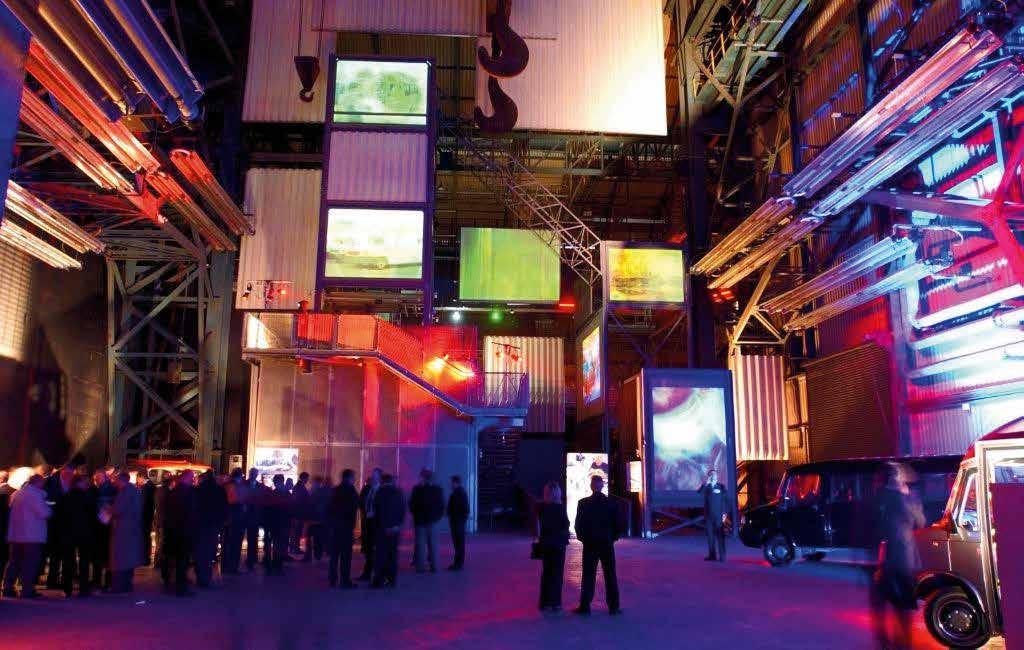
Set in a vast former steelworks, an event hosted at Magna is guaranteed to leave a lasting impression on your delegates.
Flexible meeting spaces for up to 3000 delegates
Bespoke events ranging from product launches to conferences and parties.
Unique, industrial setting perfect for memorable events.
events@magnatrust.co.uk 01709 723118
Rotherham, South Yorkshire, S60 1DX T H E C U T L E R S H A L L

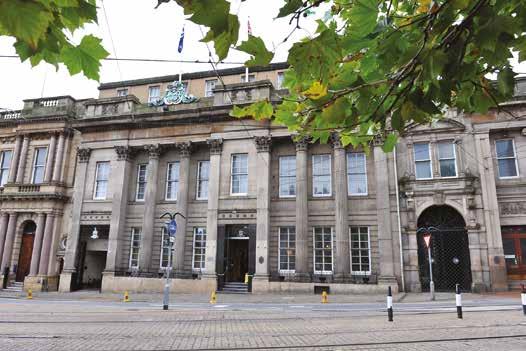
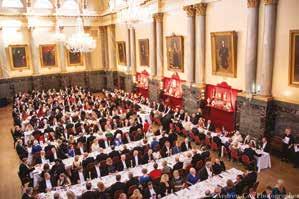
The Cutlers Hall is without question a magnificent venue steeped in history and grandeur. This impressive Grade II listed building in the heart of Sheffield has excellent transport links, complimentary robust Wi-Fi and the flexibility to suit all types of events.
The Main Hall is perfect for events up to 550 guests, whilst smaller rooms are able to provide the ideal backgrop of a more itimate affair. With our winning combination of a specacular environment, flexible room space and outstanding service along with exceptional food and drink, we look forward to welcoming you and your guests to The Cutlers Hall.
7-15 CHURCH STREET, SHEFFIELD, S1 1HG www.cutlershall.co.uk
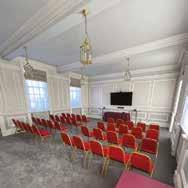
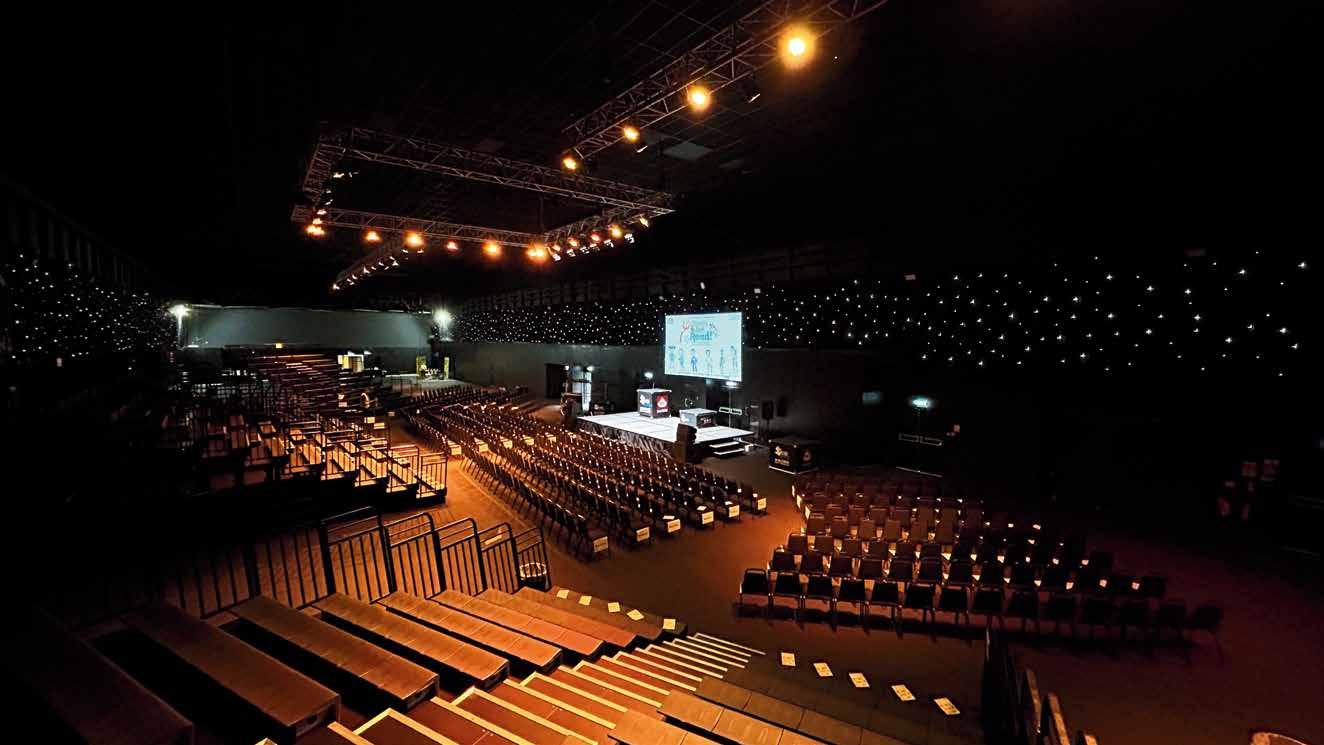

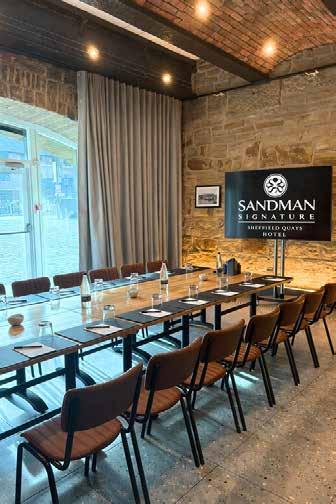
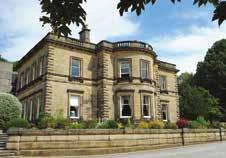







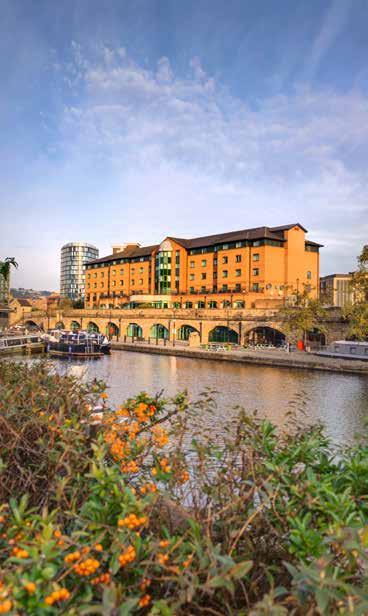
Set along the picturesque Victoria Quays waterfront, Sandman Signature Sheffield Quays Hotel combines contemporary style with historic charm to create a welcoming and versatile destination in the heart of the city. Recently refurbished, it’s ideal for both business and leisure travellers seeking comfort, convenience, and a memorable stay.
The hotel’s prime location places guests just minutes from Sheffield city centre with easy access to shopping, dining, entertainment venues, and transport links. With ample car parking available, it also serves as a perfect getaway to the stunning Peak District, making it an excellent choice for those looking to explore beyond the city.
Inside, overnight guests will find spacious, modern rooms designed with both relaxation and productivity in mind. Many offer tranquil waterside views to provide a peaceful escape from the bustle of the city. Each room is equipped with essential amenities to ensure a comfortable stay, including laundry services that are available on request.
For meetings and events, Sandman Signature Sheffield Quays Hotel offers a flexible and professional environment. With five adaptable event spaces that can accommodate up to 200 delegates, the hotel is well suited to everything from corporate seminars and networking events
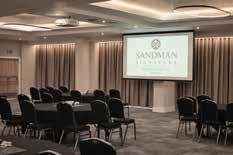
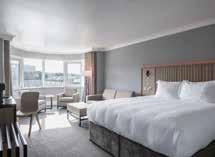
Sandman Signature Sheffeld uaysHotel is giving one reader the chance to win a B&B stay for two with dinner and full spa access included!
to weddings and private celebrations. Select bedrooms provide direct access to private outdoor terraces and panoramic views of the quayside. It also boasts a dedicated conference and events team that can support every stay of the planning process to ensure each event is tailored to individual needs and executed with precision.
Conveniently located with excellent transport connections, the hotel is easily accessible for those travelling from across the UK. If you’re visiting for business, leisure, or a special occasion, Sandman Signature Sheffield Quays Hotel offers a stylish and comfortable base in one of Sheffield’s most scenic settings.
Enter our competition today to be in with a chance of winning an overnight stay for two people to unwind in a spacious, modern room, take advantage of the on-site fitness centre and indoor pool, and enjoy a memorable dining experience at the hotel’s restaurant and bar, Tavern on the Quays.
Sandmansignature.co.uk/sheffield-quays

To win a B&B stay for two at Sandman Signature Sheffield Quays Hotel with dinner and full spa access included, simply answer the following question…
How many event spaces are there at the hotel?
Enter online at Hospitalityandeventsnorth.com/ competitions/or by post to JLife Ltd, Unit 7, Gemini Business Park, Sheepscar Way, Leeds, LS7 3JB. Please ensure your entry includes your name, address, daytime telephone number, and email address. The winners will be randomly selected on the closing date: 29th May 2026.
Terms and conditions apply: Prize must be redeemed within 12 months. Nontransferable and subject to availability. When entering the competition online you have the option to not be entered in H&E North Magazine and Sandman Signature Sheffield Quays Hotel’s databases in order to be contacted about news, promotions, and special offers. Postal entry data will not be saved. Publisher’s decision is final.
Conference
Leeds tells us why the city is the strategic, reliable, and inspiring choice for modern events.
expectations of delegates and organisers alike.
Defined by ambition and a thriving independent spirit, Leeds is a city where industrial heritage meets a modern reputation for innovation, culture, and professional excellence.
For conference and event organisers, it delivers a combination that is hard to match – central UK location, exceptional walkability, a diverse venue portfolio, and over 35 years of specialist support from Conference Leeds.
It’s a destination that rises to meet the
Logistics matter, and Leeds removes friction from the outset. Leeds Train Station places delegates at the heart of the city in just over two hours from London, three from Edinburgh, and is connected seamlessly to major cities across the North and Midlands. Once arrived, the compact and walkable city centre eliminates the need for complex transfer planning –venues, hotels, and cultural experiences all sit within easy reach of each other, allowing programmes to run smoothly from start to finish. The venue portfolio is both extensive and varied. The Royal Armouries Conference and Events Centre regularly hosts major business events, while the University of Leeds offers one of the city’s most comprehensive event estates –spaces for four to 2,000 delegates, with on-site accommodation, catering, and
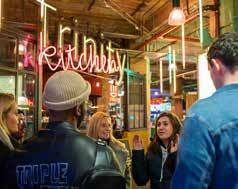
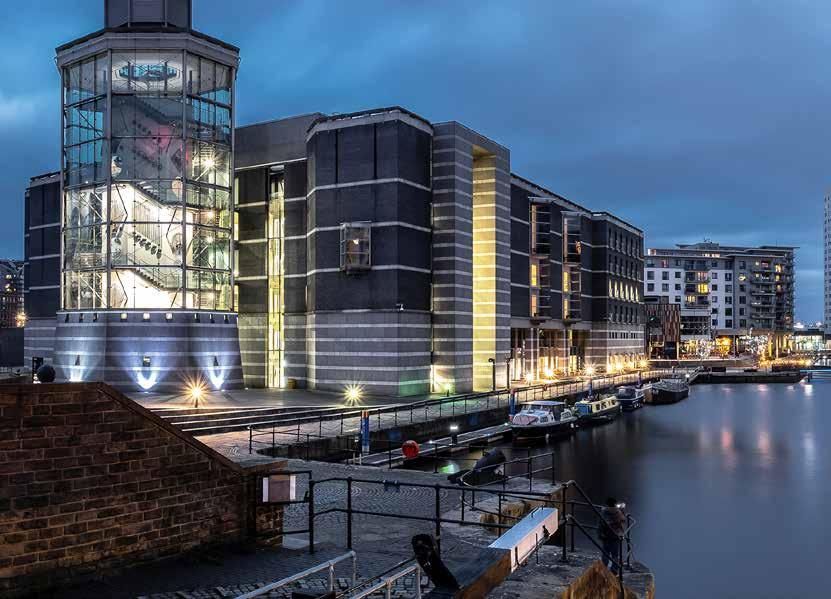
a dedicated events team well suited to academic, association, and residential conferences.
Just two minutes from the train station, Cloth Hall Court provides 10 flexible, modern event spaces for up to around 300 delegates, all with state-of-the-art technical facilities. For organisers who need delegates under one roof, a strong selection of conference-ready hotels covers everything from large fullservice business properties to premium accommodation for VIPs.
Content-driven conferences thrive in cities where industry and innovation are part of the local DNA, and Leeds delivers on both. The city sits at the forefront of tech and healthcare, anchors a busy calendar of leadership forums and innovation meetups, and supports a rich ecosystem of digital startups, creative businesses, and global professional services firms. For organisers, this translates into relevant speakers, a strong regional delegate pool, and built-in credibility for sector-aligned events.
Beyond the programme, Leeds rewards delegates with a culturally rich and genuinely walkable experience.
Victorian arcades, independent restaurants, riverside settings, and a strong creative scene provide amplematerial for social programmes, networking events,
The venue portfolio is both extensive and varied. The Royal Armouries Conference and Events Centre regularly hosts major business events.
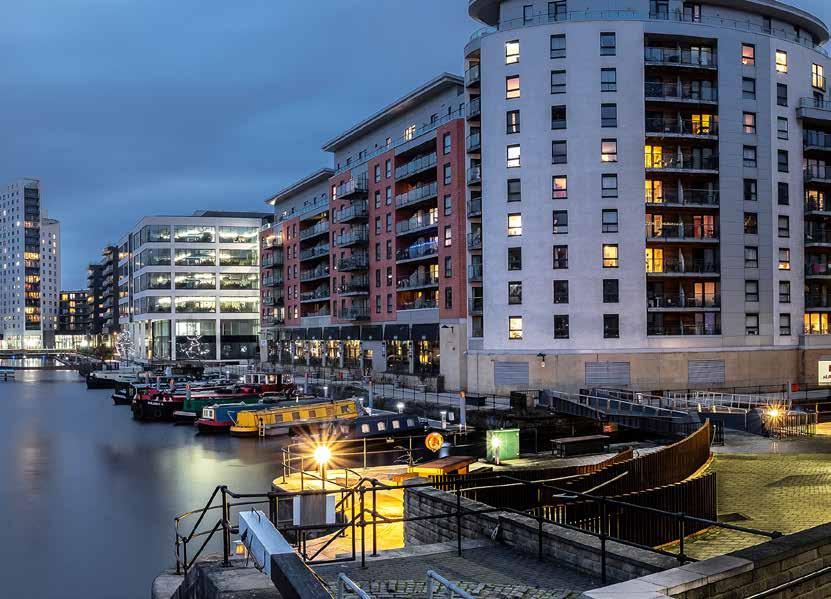
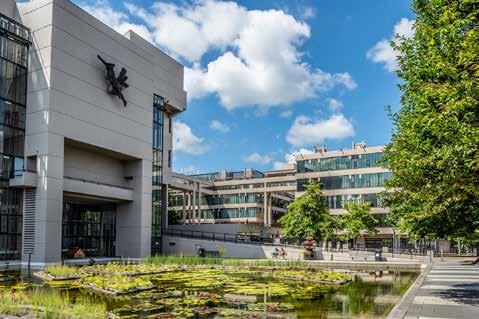
and off-site experiences. The city’s unique and characterful venues - from heritage buildings to modern cultural spaces –allow organisers to stage receptions and breakaway sessions in settings that feel memorable and distinctly local.
Sustainability is also increasingly embedded in how Leeds operates. The University of Leeds holds Green Tourism Gold standard for accommodation and service delivery, while major events such as UKREiiF reflect the city’s commitment to sustainable, inclusive, and transformative practice – supporting organisers with ESG commitments without compromising on delegate experience.
With dedicated guidance from Conference Leeds at every stage of planning, organisers have a strategic partner who understands the city’s
assets and can match venues, shape programmes, and curate meaningful experiences. Confident, connected, and culturally vibrant – Leeds is built for exceptional events.
Conferenceleeds.co.uk
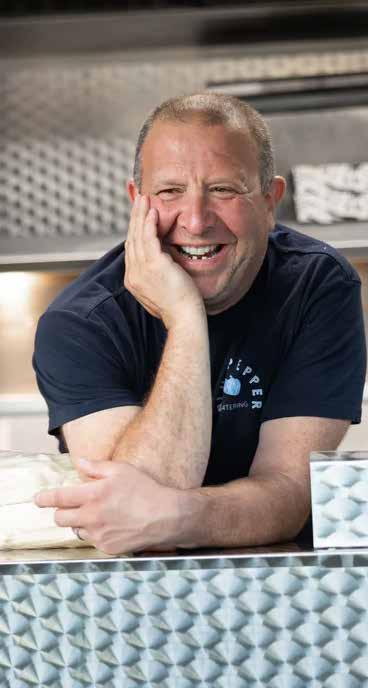
Meet David Swade, Founder and Director of Leeds-based event catering specialists Blue Pepper Catering.
Hi David! Tell us about your career and how Blue Pepper Catering began.
I’ve been in the hotel and catering industry for almost two decades, earning two AA Rosettes and the RAC Dining Award. A career highlight was working as chef de partie at Cliveden Hotel when Waldo’s earned its first Michelin star. I launched Blue Pepper in 2013 with my wife Janet, starting out with just one hog roast unit and a single van. Today, we have over 20 full-time staff and a headquarters complete with our very own in-house bakery.
How would you describe your cooking style?
Great food starts with great ingredients. We source meats locally from Sykes House Farm in Wetherby and fresh fruit and veg from Neil’s Catering Division in Leeds. That local connection keeps everything seasonal and genuinely fresh – presented in a way that feels special without being fussy.
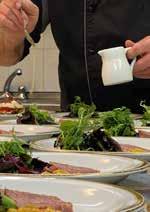
What does an average day look like?
No two days are the same which is what I love! Running Blue Pepper means moving between kitchen operations, suppliers, menu development, and client consultations all in one day. With our bakery on-site producing all our own bread, cakes, and confectionery, there’s always something happening from early morning. It’s full-on, but that energy drives us!
What are the considerations for corporate event menus?
Every event is different, so we start by understanding the occasion and guests, and offer a totally flexible approach. We offer breakfasts, corporate lunches, barbecues, hog roasts, and our popular Fry Guys fish and chip service. The food must fit the feel of the event, and I want every guest to leave with a great memory of what they ate.
And what’s the process of putting the menu together?
We always start with a conversation. I want to know what the event is for, who’s coming, and what matters to the host. From there we build something entirely bespoke. We’re not about off-the-shelf packages so everything is tailored. That personal approach is what has kept clients coming back all these years.
Bluepeppercatering.co.uk

Event show stopper
Slow-cooked hog roast – always a centrepiece
Favourite ingredient
Locally sourced seasonal produce –freshness you can taste
Latest additions
In-house bakery – fresh bread and all confectionery – and ice cream van
Crowd favourite
Fry Guys – proper Yorkshire fish and chip van at any event!

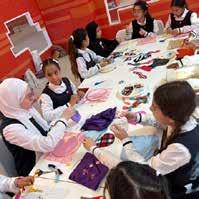



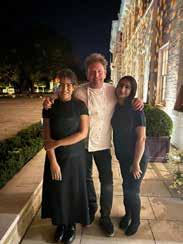




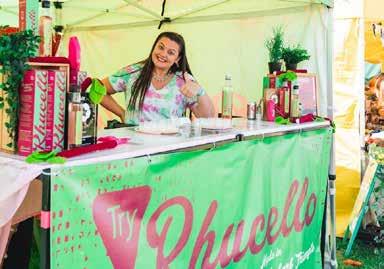
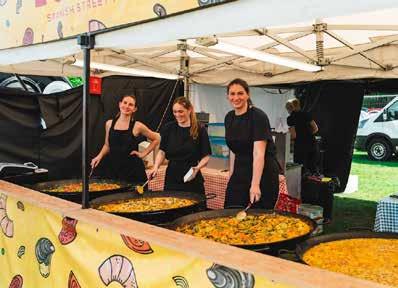
After 10 years shining a light on the rich, varied, and ever-evolving food and drink culture of our city and surroundings, when the North Leeds Food Festival lands in Roundhay Park this May, it’s sure to be the biggest edition yet.
Over the past decade, the much-loved festival has grown into one of Yorkshire’s most eagerly anticipated food and drink events, attracting thousands of visitors each year and showcasing the best of local and international cuisine, live entertainment, and artisan produce.
The festival was created out of a strong community-focused ethos and has supported Leeds Mind since its inception, raising over £164,000 for local mental health causes.
“I am incredibly proud of what the team has achieved over the past ten years,” says Festival Director Michael Johnston. “The production, the entertainment, and the food and drink have grown massively as the years have gone on. We've seen attendance growth every year and we're truly grateful for the support of the community, especially against the backdrop of a challenging time for hospitality and events.
“Looking back at the first year, it's funny to think how stripped back it was. Since then, we've added something new each year to the point we're at now – with wacky roaming entertainers, the Foodie Olympics, and even a six-metre giant doughnut.
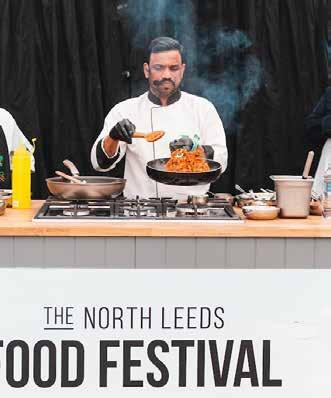
We're always trying to think outside the box with our approach, and this year will be no different – attendees can expect some surprises.”
As well as offering local treats and delectable foods from around the world, a feast for the ears is also on the cards with an exciting line-up of homegrown musical talent. For liquid refreshment, the Soldiers Ale House bar will be run by much loved Yorkshire brewery Vocation.
Festival Manager Nikki Orrell is excited about the expanded scope of this year’s event: “We’ll be adding additional hot food, bars, and market traders to the line-up this year to meet demand. Due to the popularity of the event, the number of trader applications massively outweighs the number of spots we have available. That said, we always encourage new traders to apply, especially if their offering is unique or local. We have a fantastic community at the festival and we're always open to welcoming others to join the family.”
With 10 fantastic years to look back on with pride, the North Leeds Food Festival continues to go from strength to strength, offering tastebud-tantalising experiences aplenty and a grand, festive day out in the park for the whole family.
For more information visit Northleedsfoodfestival.co.uk

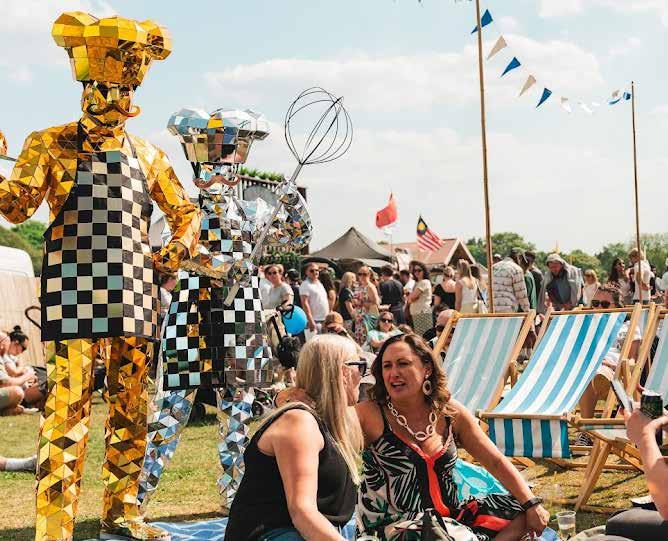
Celebrating its 10-year anniversary, the North Leeds Food Festival returns to Roundhay Park on 9th and 10th May with some cracking entertainment and the finest flavours the region has to offer.


We caught up with one of the brains behind the brand-new Hospitality Live show, Wayne Topley – MD of Cedar Court Hotels Group and Chairman of Leeds Hotels & Venues Association.
New industry show Hospitality Live is taking place on 20th April at Leeds’ Royal Armouries. The one-day event is built by operators, venues, and planners who believe the exhibition experience needs to change. Key industry experts involved include Paula Kelsey of Cloud9 Events Agency; Louise Wright, Punch Hospitality; Ben Campbell, Royal Armouries; and Wayne Topley who are collaborating to create something new and exciting.
Hospitality Live has been described as ‘shaking up’ the traditional format of exhibitions, something all the organisers felt was crucial: “The number one thing that’s become increasingly important is time. Instead of hosting the event over two days, we’re running it in an extended afternoon so people can do emails and calls in the morning then come join us at lunchtime and be engaged from the minute they walk in. It’s a much smaller time investment but we think attendees will get just as much, if not more, from it.”
It was a no-brainer that the location of the event be in Leeds due to its great transport networks, accessibility, and, of course, its famous Yorkshire hospitality: “Everybody has a smile on their face when you say you’re going to an event in Leeds – they know it’s going to be fun and you’re going to get looked after. I think that Royal Armouries is at the core of that. It’s a lovely walk from the train station, the location is fantastic, it’s so well connected, and it’s got a fantastic pace.”
“There won’t be any areas where exhibitors or delegates can hide,” explains Wayne when talking about the emphasis being placed on curated networking at the event. “The speakers aren’t speakers; they’ll just be having conversations. There’s

not going to be loud, booming voices and presentations and everyone will be at the same level. It’s just about industry experts and people with great ideas having conversations with others who are interested in finding out their perspective. It’s going to be very different in terms of both the size and layout. People will see something unique and I believe that they’ll feel engaged from the moment they arrive until the moment they leave.”
The event hopefully won’t be a onetime thing: “I can’t wait to see people’s reaction and obtain feedback. We already have ideas to build on, it’s been quite a short lead time for the first one so once we review this format and get a positive consensus, we’ll be able to put even more emphasis and energy behind it for future versions and create a way of working.”
Once the exhibition wraps up, it will transition into a festival-style experience
in the evening, which Wayne and the organisers hope will give attendees even more from the event: “The theme of oneto-one engagement will continue, and this evening celebration will be based around continuing these great conversations alongside great music and drinks in a more relaxed atmosphere.”
Giving back to the community was something all the organisers were passionate about. The event’s charity partner, Zarach, is Leeds-based and on a mission to end child bed poverty: “All our hotel exhibition stands are going to be based around one of the Zarach beds, which we’ve purchased for the event, and then the next day once we break the stand down, we’re going to deliver those beds to people who need them with the charity’s help. Instead of filling skip upon skip of exdisplay casing and exhibition stands, we’re going to take them and add them back into the local community. It’s a bit of a no brainer really!”
Overall, Wayne hopes that Hospitality Live becomes a game changer for the industry: “It’s been brought together with so many different partners and suppliers and we’ve definitely cashed in a few favours but fundamentally, they all understood the rationale behind the event from the first conversation and I’m really looking to seeing how successful this format can be.”

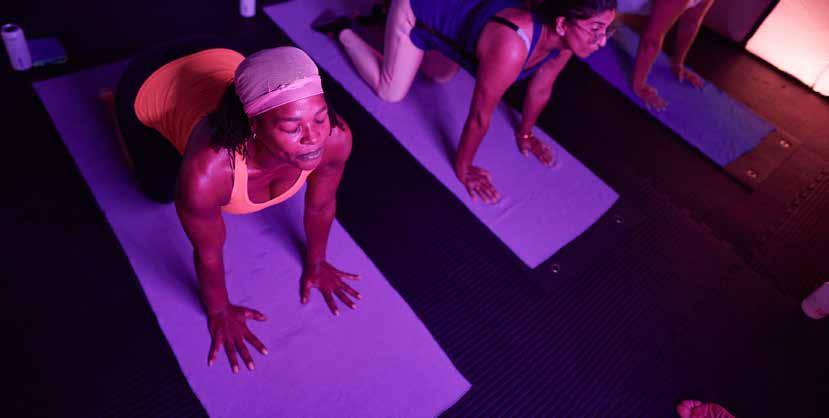
Hi Alex, what would Yoga bring to our events and the people participating?
Adding yoga creates an immediate shift in atmosphere. The movement, slowed pace, and guided breathing help people decompress quickly so they return to sessions feeling more focused, creative, and present.
That translates into better conversations and sharper thinking. Rather than powering through fatigue, delegates feel refreshed and genuinely engaged. It also creates a shared experience that’s memorable, which is exactly what event organisers are aiming for.
Can yoga sessions easily be built into packed event schedules?
Yoga is surprisingly easy to weave in without disrupting the flow. Even a 20 to 30-minute session mid-morning or just after lunch can completely reset the room. It’s enough time to get people moving, breathing, and re-energised without eating into valuable agenda time.
Alternatively, yoga sessions can be adapted for any setting whether it’s outdoors in a garden area, in a breakout room, or even chair-based for conference environments. All you really need is an instructor and a small amount of space. It’s low effort to implement, but it keeps energy levels high and helps prevent the afternoon slump that’s so common at long events. Ultimately, integrating yoga elevates an event from purely informational to experiential. It shows care for attendee wellbeing, improves feedback scores, and encourages stronger word-of-mouth. For busy, high-pressure industries, that mental reset can make a huge difference to how the entire event is experienced.
With International Day of Yoga on 21st June, we talk to Alex Hurley, Co-Owner of Hotpod Yoga Newcastle, about how the ancient Indian practice can benefit clients as events move towards more wellness content.
Yoga is one of the most inclusive team building activities available. It’s lowpressure, accessible to all levels, and removes the awkwardness that often comes with traditional icebreakers. With Hotpod Yoga, the shared environment of our cocoon-like pod naturally brings people together and stepping inside creates a sense of collective experience from the start. Sessions can be kept simple and restorative, or made more interactive with light partner work, breathing exercises, or group mindfulness. The aim isn’t performance; it’s connection.
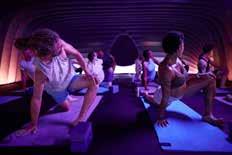
Companies that introduce these wellbeingfocused initiatives often see stronger cohesion, reduced tension, and a more supportive and open culture. It helps people slow down, be present, and interact in a more relaxed way – something that’s often missing in high-intensity workplaces.
Yoga is one of the most effective tools we have for managing workplace stress and preventing burnout. The combination of movement, breathwork, and, in the case of hot yoga, gentle heat helps lower stress hormones, improve mood, and clear mental clutter.
For organisations, that means more resilient teams, better focus, and improved emotional regulation – all essential in clientfacing and high-pressure roles. Even short sessions can help reset nervous systems and reduce the cumulative stress that builds across long events or busy project cycles.
Over time, embedding such practices into events or company culture shifts wellbeing from being a ‘nice-to-have’ perk into a strategic investment. It signals that performance and wellbeing go hand in hand. We’re seeing more companies build yoga into their events and internal programmes with great results. Some firms running weekly hot yoga sessions with us have reported noticeable reductions in stress levels and improved productivity.
One consulting firm introduced biweekly lunchtime sessions and saw improvements in posture, fewer tension headaches, and stronger team relationships. Event organisers who’ve added short yoga sessions into multi-day conferences often tell us it gives attendees a second wind. Delegates return more open, conversations flow more naturally, and networking becomes more genuine. Yoga is a practical, high-impact addition for the events world enhancing the immediate success of an event and contributing to longer-term workplace wellbeing.
Hotpodyoga.com
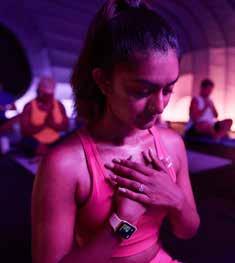
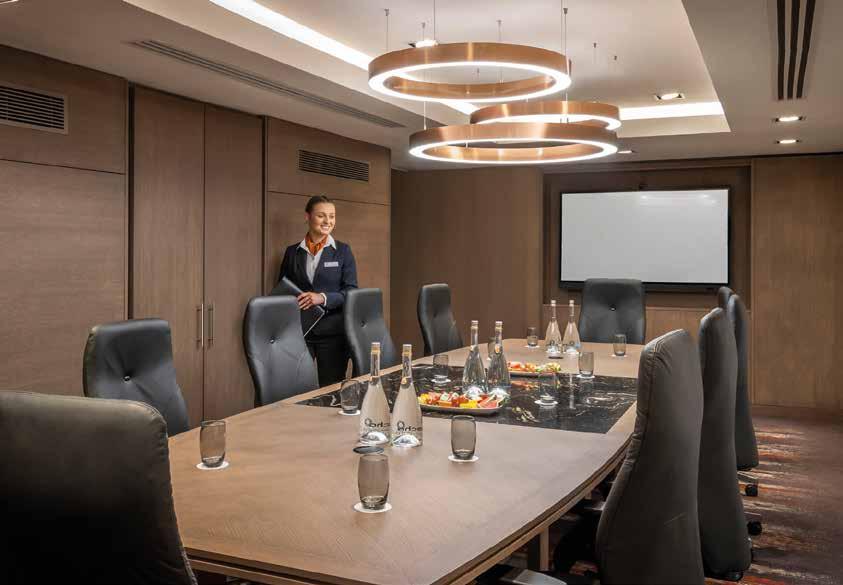
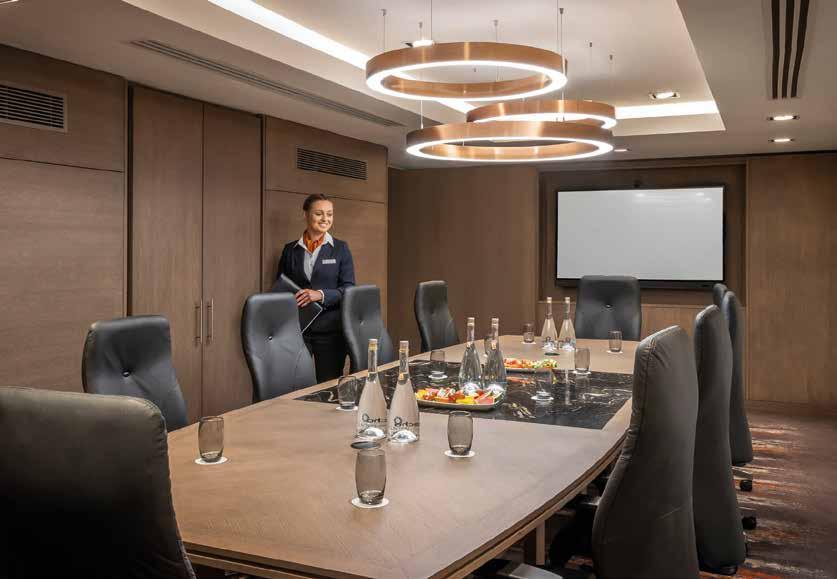
Email: events.bristolcity@claytonhotels.com and quote Clayton2026 to book
Email: events.bristolcity@claytonhotels.com
Receive free meeting room hire on a Friday if you spend on food and beverage
Receive free meeting room hire on a Friday if you spend on food and beverage
Meet Mondays
Meet Mondays
Book a Monday meeting and 1 in 10 delegates go free when booking a day delegate rate
Book a Monday meeting and 1 in 10 delegates go free when booking a day delegate rate
First round’s on us
More dates better rates
More dates better rates
First round’s on us
Book
Benefit from a reduced day delegate rate if booking a series of meetings with us
Book
Benefit from a reduced day delegate rate if booking a series of meetings with us
For many independent hospitality and events business, marketing has become something that sits at the end of along list. Often inconsistent, often rushed, and rarely delivering the results it should. Melissa Magson is a Marketing and Design Consultant whose work focuses on changing that.
Having spent years working within hospitality, Melissa understands the pace, the pressures, and the reality of running a business where time is limited and priorities shift quickly. Marketing needs to work within that, not add to it.
Rather than focusing on constant content creation, Melissa supports clients with a more structured and considered approach. That might involve shaping a clear marketing plan for the year ahead, refining how different channels are used, or bringing consistency to how a brand shows up day to day.
The aim is always the same – to create marketing that feels manageable, aligned with the business, and commercially effective. Melissa works with a small number of clients at a time, offering strategic support that fits around how their business actually operates. Because good marketing shouldn’t feel overwhelming; it should feel like it’s working.
Melissamagson.co.uk
melissa@melissamagson.co.uk
Doctor’s Orders
1599 at the Royal College is Glasgow’s most distinguished events venue, proudly operating as the commercial arm of the Royal College of Physicians and Surgeons of Glasgow (RCPSG). Located in an iconic A listed building in the heart of the city, 1599 blends historic grandeur with contemporary facilities, offering a unique and inspiring setting for exceptional events.
Designed to host a wide range of occasions, 1599 is a sought after destination for national and international conferences, board meetings, and strategic away days, complemented by flexible spaces equipped with state-of-the-art tech features. Beyond conferencing, the venue is equally renowned for hosting elegant private dinners, drinks receptions, and high profile awards ceremonies, all delivered with meticulous attention to detail and outstanding hospitality. The venue is also proud to support charity events and fundraising galas, working closely with organisations to deliver impactful and seamless experiences.
As part of RCPSG, income generated through events at 1599 directly supports
the college’s charitable mission, advancing education, training, and professional development for clinicians around the world. Choosing 1599 is not only a statement of quality and prestige, but a meaningful investment in global healthcare excellence.
Whatever kind of event you’re looking to host, 1599 offers heritage, elegance, and purpose without compromise.
1599.co.uk
This year marks a remarkable milestone for Lumley Castle – 50 years as a hotel. Half a century of welcoming guests through the historic doors and turning a medieval fortress into a place of celebration, comfort, and unforgettable memories.
Generations of guests have stayed beneath the battlements, dined in the grand halls, and slept in rooms steeped in centuries of history. From romantic escapes and family celebrations to corporate gatherings and milestone events, Lumley Castle has become a setting for life’s most special moments.
One of its proudest traditions, and a true cornerstone of the Lumley experience, is the medieval banquets. Still going as strong as ever, these iconic evenings transport guests back in time, complete with feasting, entertainment, and a sense of theatrical fun that has delighted visitors for decades. Few experiences capture the spirit of Lumley Castle quite like the sound of laughter echoing through the Barons Hall as guests raise a goblet and step into history.
Over the last 50 years, Lumley Castle has been constantly evolving. Thoughtful restorations, sensitive modernisation, and a commitment to exceptional hospitality have ensured that while the castle remains rooted in its past, it continues to meet the expectations of today’s guests. Here’s to the past, present, and many years still to come at Lumley Castle.
Lumleycastle.com
Silent Seminars returned to International Confex and the Event Production Show at ExCeL London, delivering wireless headset technology across a busy and content rich seminar programme.
Supporting 16 theatres across the show floor, the team enabled organisers to run multiple sessions side by side without sound clash, ensuring every presentation, panel, and workshop could be heard clearly despite the pace and noise of a live exhibition environment.
Alongside clarity, the technology also played a key role in improving accessibility, giving attendees control over their own listening experience through adjustable volume and focused audio, creating a more inclusive space for those with hearing challenges, sensory sensitivities, or anyone who benefits from reduced background noise.
With full on-site support throughout, Silent Seminars ensured seamless delivery across all theatres, contributing to packed sessions, strong engagement, and a conference environment where content, conversation, and connection could thrive without compromise.
Silentseminars.com
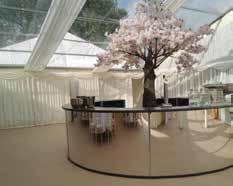
Run by husband-and-wife team Tony and Chrysta Newman, Village Farm Marquees is celebrating its 15th anniversary.
The business was founded in January 2011 after Tony and Chrysta moved from London to Yorkshire. Tony had worked in the marquee industry in the South of England, and Chrysta had managed the recruitment team for a US investment bank. Setting up a business in area where they didn’t know anyone in the middle of a recession was a tough call but 15 years later, Village Farm Marquees is thriving, working with some of its corporate clients throughout the time. The company operates mainly across Yorkshire and North Lincolnshire, and even further afield for some clients.
Founded on the principals of personal service, reliability, attention to detail, and value for money, the company offers exceptional event experiences whether it’s a small garden party for 20 guests or a corporate event for 300.
Tony and Chrysta have delivered some truly remarkable projects, driven by a passion for creativity and a desire to push the limits of what’s possible for their clients. From constructing marquees around existing trees to installing trees within them, they’ve consistently embraced bold ideas. Their work also includes immersive, ski-inspired interiors, complete with wood panelling, Christmas trees, and even snow machines.
Yorkshiremarquees.com

The Meetings Show brings together thousands of event professionals and hundreds of global suppliers for two days of insight, inspiration and connections – all under one roof at Excel London.
With direct rail routes from across the UK, getting there is faster and easier than ever.
If you organise meetings or events, you may also qualify for our hosted buyer programme. Designed for event decision-makers, it offers a

VIP experience, including a dedicated diary for meetings with exhibitors from all over the world, valuable networking opportunities, and complimentary travel and accommodation to make attending even easier.
Come south for two days. Leave with everything you need for your next event.
For travel and accommodation options, head to: themeetingsshow.com/about-us

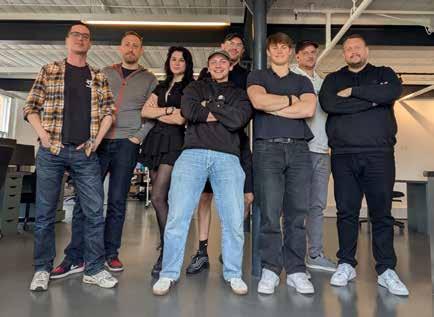
Ideas Fest markets itself as the ‘Glastonbury for entrepreneurs’ – an open-air festival bringing founders, investors, and operators together for innovation and exchanging ideas.
The branding is strong and the community is engaged but, as with many fast-growing events, the team was small and stretched thin.
Marketing activity relied on social media, organic channels, and internal email lists. This approach-built community but couldn’t scale quickly enough to hit ambitious ticket sales targets. The challenge was accelerating revenue without resorting to mass email blasts that might backfire, damaging the event’s reputation.
The brief
Go Live Data was tasked with driving measurable ticket revenue while reaching the right entrepreneurial audience and protecting inbox trust. The objective was clear – create an ethical, dataled outreach campaign that prioritised relevance over volume.
Go Live Data developed an eight-week intent-led email programme designed around precision targeting rather than mass outreach.
The campaign focused on founders, operators, and decision-makers most likely to engage with Ideas Fest, using firmographic filters and behavioural indicators to refine the audience.
Only 30-day refreshed data was used to ensure accuracy, deliverability, and ethical outreach. This commitment to data freshness meant higher engagement rates and fewer bounces – crucial for maintaining sender reputation and inbox placement.
Messaging followed an 80/20 approach, delivering insight and inspiration before promotion. Rather than leading with ticket sales pitches, emails provided value
How Go Live Data optimised intent-led email marketing to generate £126,000 in ticket revenue in just eight weeks.
first – industry trends, entrepreneurial perspectives, and Ideas Fest content previews – to establish credibility before asking for commitment.
Campaign cadence was controlled carefully to avoid inbox fatigue and maximise engagement. Weekly reporting allowed segments, timing, and messaging to be refined throughout the campaign, responding to what was working and quickly adjusting what wasn’t.
In eight weeks, the campaign generated £126,000 in ticket revenue directly attributed to email outreach. Ideas Fest went on to sell 4,260 tickets overall, with the campaign contributing a significant share of demand from targeted entrepreneurial audiences.
Beyond revenue, the campaign delivered strong engagement from highly relevant audiences, meaningful replies from founders and operators, and higher-intent attendees arriving at the event. These qualitative outcomes mattered as much as ticket numbers – Ideas Fest isn’t just about selling seats but curating the right community.
Following the campaign’s success, the model is now being expanded to support future Ideas Fest promotions by scaling the most responsive audience segments and amplifyingpartner communities. The eightweek campaign proved the approach works – the challenge now is making it sustainable and repeatable.
• Marketing campaign
Eight-week email programme
The campaign succeeded by prioritising precision over scale. Instead of mass outreach hoping for percentage conversions, the programme focused on reaching the right people with the right message at the right time.
By combining fresh data, disciplined targeting, and a value-first messaging approach, inbox trust was maintained while delivering measurable commercial results. The 80/20 value-to-promotion ratio meant recipients saw emails as useful rather than spam, building receptiveness before making asks.
The model demonstrates that email marketing for events doesn’t require choosing between ethics and effectiveness. When data quality, audience precision, and messaging discipline align, email can drive significant revenue without compromising brand reputation or inbox relationships.
• Target audience Founders, operators, and decision-makers
• Platform
Targeted emails
• £126k revenue generated
Directly attributed to email outreach
• 4,260 total tickets sold
Directly attributed to email outreach

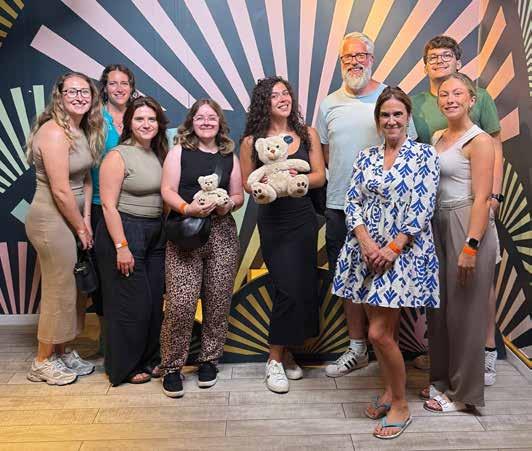
The four-day week is a workplace idea that splits opinion. For some, it represents a rethink of how we approach a healthy work-life balance. For others, it sounds like a theory that would collapse the moment a client calls at 4pm on Friday asking where the revised proposal is.
The issue isn’t whether shorter working weeks sound appealing, it’s whether an industry built on delivery and client responsiveness can make them work. There is a growing argument that it can, if businesses stop confusing hours with output. Robert Kenward, Fitability Recruiter and Founder of Jigsaw Talent Solutions, believes too much of the industry measures commitment by time spent rather than results delivered: “I actually think 100% of the work could be done in four days. We only use five days because we’ve got five days.”
The industry may have traditionally worn overwork as a badge of honour, but burnout is no longer something professionals are willing to accept. Jackson Clark, Managing Director of Patch Marketing, noticed a difference in how people felt and performed when the agency reduced to four-day weeks during
“Everyone had a spring in their step; they were producing better work and motivation was tangibly improved.”
Rather than moving permanently to a four-day week, Patch settled on a 4.5day model, with the team finishing at 1pm on Fridays. Jackson feels that strikes a balance between staff wellbeing and client expectations: “The rest of the world doesn’t operate on four-day weeks. If a client emails at 3pm on a Thursday, not getting a response until Monday of course isn’t acceptable.”
Lizzie Eaton, Founder and Director of Oddity Events, remains unconvinced. Though she works a four-day week because of childcare, she says the principle is appealing but the practicalities are hard to ignore: “We have to be so reactive, and our clients don’t necessarily work to the same schedule that we would if we were to condense our hours.” For Lizzie, the bigger question is what happens when something urgent lands on a team member’s desk on their day off: “I’d need to know – if something came up on one of their accounts or projects – are they willing to be on call?”
Industry professionals weigh in on whether the time-sensitive, deadline-driven events sector can adapt to shorter working weeks.
This matters in an industry where last-minute changes are part of the job. A blanket model where nobody works on a given day is unlikely to work for many agencies, venues, or organisers. But that doesn’t mean shorter weeks are impossible – it means they need structure.
Neil Woodward, Chief Vision Officer at Dancing Squirrel, says his agency introduced a four-day week trial in 2023 using a staggered model, ensuring the business remained staffed Monday to Friday: “While everyone gets their threeday weekend, our clients never feel a dip in service. When you have less time, you waste less time.”
Robert makes the point that flexibility can’t be a one-way street: “If businesses are going to trust people with shorter weeks, they need clear handovers, better planning, and the understanding that in a genuine emergency someone will be reachable.”
Perhaps that is where this debate is heading – not towards a one-size-fits-all solution, but smarter working patterns that protect both people and performance. Expectations have changed and the next generation of talent is rejecting burnout culture. As Robert says: “If we don’t start thinking differently about how we work, how can we expect to attract new talent or people from other creative industries? We must be smarter about what we’re offering, because if we want this industry to be a career of choice, we can’t expect that tomorrow’s talent will accept yesterday’s culture.”
With thanks to Jill Hawkins at Aniseed PR.
TRACKSIDE EXCELLENCE FOR YOUR CORPORATE EVENT
We have over 10 onsite venues to hire for your corporate event. From tradeshows, to conferences. From 10 to 700 delegates. Free parking and catering provided - bring your team together at the oldest racecourse in the worldWe’re in the Guinness world records, look it up. Be a part of history and plan for your future success.
Book today and quote HEN2026 for an exclusive price for HEN readers only.
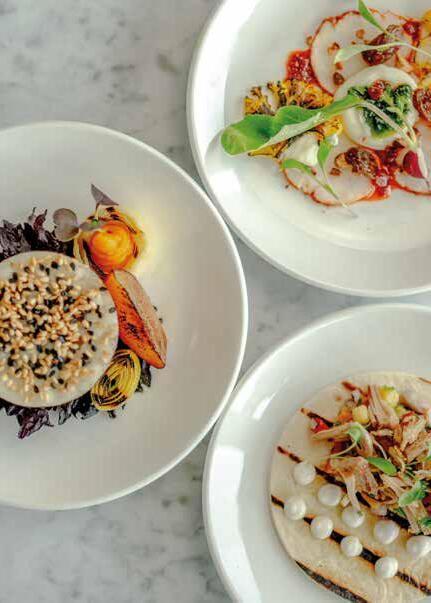
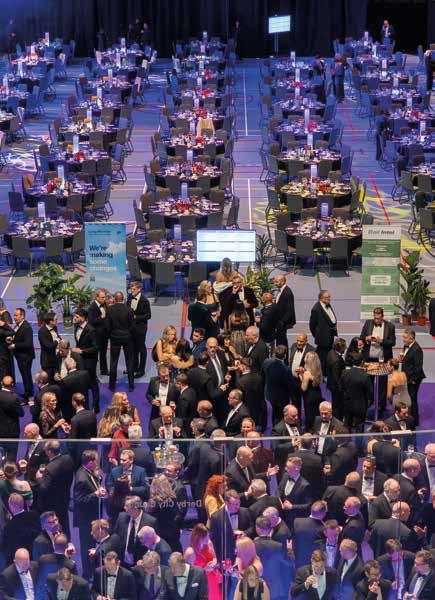
Glasses clinking. A plate placed in front of you at just the right moment. When catering is done well, you don’t notice the details. You just enjoy the experience.
Let’s create something remarkable together.
The Event Supplier and Services Association (ESSA) has announced Air Business as its new strategic partner. Air Business is an awardwinning global logistics and technology company, trusted by many leading organisations within the publishing, events, and e-commerce sectors and widely recognised for delivering precise, reliable, and frictionless logistics solutions.
This new partnership reflects a shared commitment to raising standards, improving operational efficiency, and supporting a more sustainable and professional events ecosystem.
Andrew Harrison, CEO of ESSA, said: “Air Business combines deep operational expertise with a clear commitment to sustainability and continuous improvement. Their approach aligns strongly with ESSA’s focus on raising standards and supporting our members in delivering high-quality, responsible event services. We are pleased to welcome them as a strategic partner at a time when the industry is increasingly focused on efficiency, transparency and long-term value.”
Through this partnership, ESSA and Air Business will work collaboratively to support members with practical insight, thought leadership, and enhanced visibility of best practice across logistics and supply chain operations.
beam will host its Spring All Members Meeting on 28th April at The Cumberland London, bringing together professionals from across the business events, travel, and hospitality sectors for a day focused on insight, discussion, and practical learning.
The meeting is open to all beam members and designed to be relevant at every stage of a career whether attendees are shaping strategy or building their knowledge and
confidence within the industry. It will offer a valuable opportunity to step back from dayto-day roles, gain a clearer view of the wider landscape, and hear directly from peers across agencies, venues, and suppliers.
David Tremmil, Chair of beam, commented: “Our All Members Meetings bring the whole community together for the conversations that matter. It’s where different perspectives are shared, experiences are exchanged, and we openly discuss what’s really happening across our sector. That mix of voices is what makes these events so powerful.”
Alongside keynote sessions, attendees will receive updates on market trends, economic and legislative developments, as well as updates from the beam board. As always, there will be space for open and constructive discussion.
Register at Beam-org.uk/events/beamspring-all-members-meeting
After scouring the events industry for the UK’s best up-and-coming talent, The Meetings Show is thrilled to reveal the 10 future leaders who have wowed judges in this year’s Tomorrow’s Talent programme.
Championed for their drive, ambition, ability to face challenges, and engagement with the wider industry, 2026’s rising stars are: Connie Arnold, DRPG; Louise Balderson, Project Manager; Oscar Easton, Blank Canvas Entertainment; Katie Gallagher, Crowne Plaza Newcastle; Lewis Hine, A World with Friends; Kimberley Knight, TTA; Annabelle Lynch, DRPG; Katie Percival, Climate Group; Lily Shackleford, Foxhills Club & Resort; and Olivia Wilkie, asembl..
Having opened the doors for 70 industry trailblazers since the programme began in 2019, Tomorrow’s Talent, run in partnership with M&IT, is an invaluable opportunity for emerging event professionals to gain exposure, build connections, and enhance their careers.
Samme Allen, Knowledge Director at The Meetings Show, said: “The next generation of event professionals are overflowing with ideas, ambition, and enthusiasm. Their voices and energy are crucial to futureproofing the power and potential of this amazing industry, which is why we want to give them not just the chance to shine, but the tools to do so brightly.”
The National Outdoor Events Association (NOEA) has confirmed a new group of sponsors for this year’s NOEA Convention and Awards, with THE·TEAM, Training 4 Resilience, GL events, and NCASS all backing the industry celebration.
The announcement marks the launch
of this year’s NOEA Convention and Awards, which returns once again to Bath in November, and signals a moment for organisers, suppliers, and event professionals across the sector to start bookmarking the people, businesses, and experiences they believe deserve recognition.
“Across the country teams will be planning and delivering incredible experiences for audiences and communities,” commented Susan Tanner, CEO of NOEA. “The awards give us the opportunity to recognise that work, the people behind the scenes, the businesses driving innovation, and the events that capture the imagination.”
Together, the sponsors reflect the breadth of expertise that supports the outdoor events sector and reinforce the collaborative spirit that has long defined the industry. With entries expected to open soon, NOEA is encouraging professionals across the sector to start noting the projects, teams, and individuals who demonstrate excellence throughout the season.
The Live Recruitment Diversity Report 2026 has provided a second year of insight into representation, pay, and progression across the UK events industry. Drawing on data from over 48,000 professionals within Live Recruitment’s network, the findings highlight both encouraging signs of representation and clear areas where inequality remains.
The industry continues to demonstrate strong female representation overall, with females making up 59% of the workforce but this balance is not reflected consistently across senior leadership roles. Pay disparity also remains a significant issue – data shows that male professionals earn on average around £4,000 more than females. While white/ Caucasian professionals also earn more on average than those from ethnically diverse backgrounds.
The data also reveals notable patterns around age. The majority of professionals fall within the 32 to 45 age bracket, while representation declines significantly in older age groups.
Despite these challenges, the report highlights that the events industry demonstrates comparatively strong representation in several areas when viewed alongside other sectors. Increasing industry awareness of diversity, equity, and inclusion – alongside greater transparency in reporting – suggests positive momentum for future progress.
The full report can be downloaded at Liverecruitment.co.uk/diversity-report-2026

www.keyreservations.co.uk sales@keyreservations.co.uk 0333






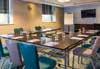

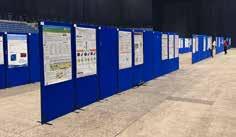
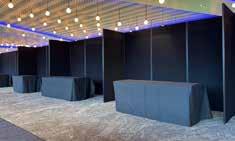
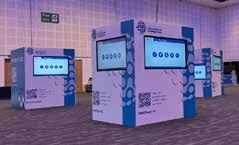
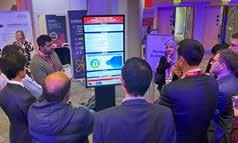
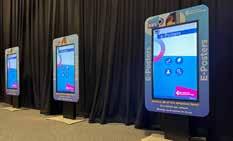
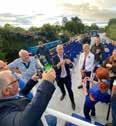
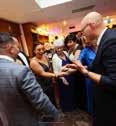















Not just another crewing company, our team brings creativity, qualifications, training, attention to detail and our above and beyond commitment to all of our clients and events. Telehandlers, forklift, plant operators, HGV drivers, crew, and carpenters.


01903 372773 | Littlehampton BN17 5LR www.MLD.events

SK Copywriting skcopywriting.co.uk | 07792 685508 skirk1@hotmail.co.uk
Clear, compelling copy written by a real human. I write website pages, blogs, and newsletters, conducting email marketing and SEO for hotels, B&Bs, campsites, and more.
Seren Ventures provides adventure activities, outdoor skills courses and guided mountain walks in Snowdonia, The Lake District and Scotland. Our guides at Seren Ventures are highly experienced instructors who work, play and live in the outdoors. Our approach is relaxed but professional, whichever adventure you choose, you’re guaranteed to be safe, learn and have FUN!! Whether you have experience already or you’re starting from scratch, we have something for you.
andy@serenventures.com 01690 710754 www.serenventures.com


Teambuilding

Teambuilding Works brings exciting, inclusive, and fun experiences to energise your team, spark connections, and create unforgettable moments that boost morale and teamwork in any workplace or venue.
wwww.teambuildingworks.co.uk | 07888 870703 Contact Andy at info@speedkix.co.uk

The Crichton is an 85-acre heritage estate found in the heart of Southwest Scotland. Within the estate stands Easterbrook Hall, the largest entertainment and event venue in Dumfries and Galloway. The Crichton events@crichton.co.uk | www.crichton.co.uk 01387 219090


www.venuehire.spacecentre.co.uk




01525 552559 | contact@utac.com www.utacmillbrookevents.com
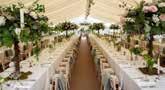
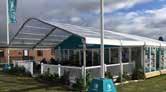
Based in Yorkshire, Village Farm Marquees provide bespoke marquee solutions that support your corporate goals, elevate your brand and help you stand out from the crowd. From show stands to a sit down for 300 guests, we work with you as an event partner offering end-to-end personal service with exceptional communication, planning and execution.

Off the back of National Stress Awareness Month in April, wellness expert Sarah Campus is exploring how slow and soft living can reduce the stressors of everyday life.
Sarah Campus is a highly experienced women's personal trainer, nutrition coach, wellness expert, marathon-running mum of three, and the founder of LDN MUMS FITNESS.
After years of global uncertainty, digital overload, economic pressure, and an always-on work culture, stress seems to have become normalised. Slow living and soft living are two mindful responses to stress, each focusing on a different layer of wellbeing. Slow living is about pace and intention; it goes about structuring your life in a way that priorities presence, sustainability, and alignment with your values rather than constant urgency. It’s less about doing everything slowly and more about removing unnecessary rush so your nervous system and cortisol levels can settle.
Soft living is more about mindset and selftreatment. It emphasises self-compassion, emotional gentleness, and letting go of harsh productivity standards, encouraging you to rest without guilt and to approach yourself with kindness instead of pressure. Both ways of life complement each
other. Slow living reshapes how you move through your day, while soft living reshapes how you relate to yourself within it. Together, they create both external calm and internal ease, which are key to managing stress.
These concepts are resonating strongly right now because many people are feeling stretched to their limit. Slow living and soft living offer language for what people are actually craving – relief and a more humane way to exist. People are
Instead of trying to eliminate stress, focus on managing your nervous system, setting boundaries, and recovering well.
recognising that constant productivity isn’t sustainable and that success without wellbeing feels empty. Slow living pushes back against external pressure to rush and achieve at all costs, while soft living challenges the internal pressure to be endlessly self-critical.
A completely low stress life isn’t realistic because stress is a natural and sometimes helpful part of life. The more sustainable goal is better regulation which means building the capacity to respond to stress without becoming overwhelmed by it.
Instead of trying to eliminate stress, focus on managing your nervous system, setting boundaries, and recovering well. Changing your relationship with stress starts with seeing it as information, not failure. Stress is your nervous system signalling that something feels demanding or important. When you respond with curiosity instead of self-criticism, you can ask what needs adjusting – it could be your pace, your boundaries, or the expectations you set on yourself.
Regulating your body also shifts your experience. Simple practices like slowing your breathing, resting properly, and reducing overload help your nervous system feel safer, which makes stress more manageable. Over time, stress becomes less of an enemy and more of a signal. Micro-boundaries also matter such as not checking emails first thing or creating a short wind-down ritual at night. Even brief moments of presence, such as drinking your coffee without multitasking, signal safety to the body. It’s less about doing more and more about creating small pauses that allow your system to reset throughout the day.
Instead of packing your schedule with rules, choose a few small habits that genuinely make you feel steadier like a short walk or a mindful coffee. Build in flexibility and think of it as a framework, not a script; if a day shifts, you adjust without guilt.
One simple habit people can start straight away to live more softly is to schedule a short daily pause, just five minutes to check in with yourself. During that time, notice how you’re feeling, breathe slowly, and offer yourself a gentle thought like: “It’s okay to rest.” Doing this once a day but consistently trains your mind and body to slow down and respond to stress with kindness.