
Spoon Magazine Winter 2026

Page 1


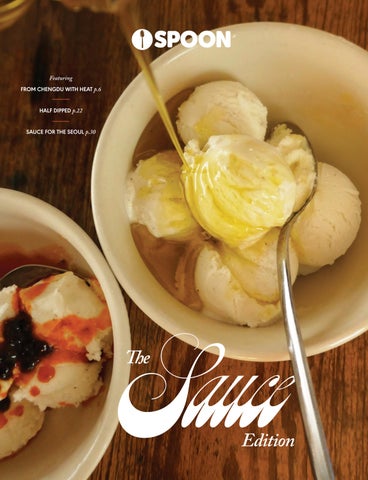
Featuring FROM CHENGDU WITH HEAT p.6

HALF DIPPED p.22

SAUCE FOR THE SEOUL p.30

PRESIDENTS

EDITOR-IN-CHIEF

VICE PRESIDENTS

DESIGN DIRECTORS

CONTENT DIRECTORS

DIGITAL EDITORIAL DIRECTORS

BUSINESS & EVENTS DIRECTORS

SPOONFEST DIRECTORS

TREASURER

Liv McAllister-Nevins, Lara Weissmann

Gillian Nieh

Evelyn Ahdieh, Ashley Xue

Clare Kirwan, Lavanya Subramanian

Zoe Chao, Viviana Seibold, David Sun

Olivia Brown, Jack Greenspan, Maya Wong

Natalie Morro, Jaimie Walsh

Evelyn Ahdieh, Isabel Bhasin

Mia Song, Maya Westra

EDITORIAL

Sophia Bateman, Josie Belfer, Maya Benjamin, Kalista Cao, Uma Couchman, Abby Cowan, Greta Cunningham, Annie Fingersh, Clara Freeth, Josiah Hankerson, Asher Joseph, Marisa Lin, Jack Murdock, Jonah Rand, Sarah Serota, Isaac Speyer, Zoey Sternoff, Cassie Sun, Catherine Tang, Melody Xu, Elise Yee, Victoria Yi

DESIGN

Jordan Balousek, Sophia Bella, Scarlet Chang, Jaimie Chun, Alden Farrow, Maeve McAuley, Sydney Newton, Kate Perez, Sahana Unni, Yitao Wang, Grace Wu

CONTENT

Katie Chang, Ari Globerman, Toby Goldfarb, Grace Herzog, Marcus Kim, Celina

Lee, Claire Markstein, João Martins, Sofia Mercier, Sophia Ortiz, Sarai Quintanar, Mia Rios, Jason Stokes, Liyan Sun, Michelle Wang, Yhonatan Yehudai, Sylvia Zeltzer

BUSINESS RELATIONS & EVENTS

Daniela Aves, Alex Boyarski, Jacqueline Emerson, Gabriella Egozi, Francesca Fischer, Mateo Garcia-Bryce, Jaxson Glowacki, Izzy Hasson, Selina Jiang, Haley Kleinman, Baylee Krulewitz, Dylan Lanier, Sophia Memon, Rebecca Rodriguez, Annika Subrahmanian, Georgia Unger, Katie Weber, Annie Winick, Skye Witmer, Julia Zhao

ISSUE

Dear Readers,

As Editor-in-Chief of Spoon Northwestern University's print publication, I’m so excited to share our 29th edition magazine, The Sauce Edition. Sauce is more than a topping or a finishing touch. It’s the chili crisp your roommate puts on everything, the passion your dad has for traditional hummus, the condiment that transforms a meal or sparks debate at the table. This issue explores sauce as experimentation, tradition, and how food connects us — to each other and to our identities.

In these pages, you’ll find stories that dive into bold flavors, unexpected pairings, and the people behind the sauces we know and love. From cultural histories and personal essays to recipes, this issue celebrates sauce in all its forms: messy, comforting, nostalgic, and expressive.

Our Editor In This A LETTER FROM 16

Sauce also invites play. It breaks rules and sparks debate. There’s no “right” amount, no universal favorite — just preference, memory, and instinct. In this issue, we hope to celebrate sauce as both a finishing touch and the main character.

Whether you’re turning through these pages for inspiration, flavor, or familiarity, we hope these pages leave you craving both food and the stories behind it.

Never forks,

EDITOR-IN-CHIEF

THE SAUCE TOO

HOT TO OWN

Nearly a century after its creation, the true ownership of Sriracha, the iconic hot sauce, remains a mystery. Does it belong to its inventor in Thailand? Or to those who brought it fame from across the Pacific?

In her small kitchen in Thailand, Thanom Chakkapak experimented with a homemade chili sauce meant for family and friends in her hometown, Si Racha — utterly oblivious to the global phenomenon it would soon ignite beyond her kitchen.

Before long, David Tran, the soon-to-be founder of Huy Fong Foods, discovered the sauce during a trip to Thailand. From there, the original recipe was tasted, adjusted, and reproduced. After tasting the original Thai sauce, Tran tweaked the recipe according to his own taste and created a sauce that helped fill the spice void in the United States. This marked the birth of Tran’s sauce empire. Distinguished by the iconic rooster and greennozzled cap, the homemade sauce made its way to millions of homes, but at the cost of distorting the original recipe and its history.

The tale of a geographical name turning culinary is no stranger to the gastronomic world. Where Italy prides itself in its parmesan hailing from Parma, or even champagne reigning from the Champagne province in France, Si Racha follows suit. Duly, the sensational sweet, tangy chili sauce we’ve come to know and love was born: Sriracha. But who truly deserves the crown as the Sriracha-mpion? The small-scale originator, or the billion-dollar company that made it a household name?

First, what does the law say? According to the U.S. Patent and Trademark Office, Sriracha is merely a generic name for a type of sauce and isn’t privately owned. Historically, it has proved difficult for a company to obtain a name based on a geographic location.

However, I believe the moral answer is simultaneously the beauty of this heated sriracha ownership crisis. Looking back on the global development of sriracha, one thing is clear: Chakkapak was the reason we know it, but Tran made us love it.

lies in ourselves. Whether it’s Tran’s American sriracha paired with the famous depiction of his rooster, Chakkapak’s original sriracha recipe, or even contemporary variations like yuzu-infused sriracha hailing from Japan or chili-garlic sauces in the same style from China, food is meant to be enjoyed. This yearning for enjoyment also invites innovation. The tale of Sriracha, the sauce too hot to own, is no different.

A BRIEF HISTORY OF

Tomato Sauce

When Spanish conquistadors brought tomatoes from South America to Europe, the inhabitants of present-day Italy feared the strange fruit. Though they named it pomo d’oro, the golden apple, they offered it none of the affection they had for the apples that had

that was poisonous. Or maybe it was simply the suspicion humans have for the foreign or unfamiliar.

The tomatoes took to the land–though they were far from the Andes, where their wildest ancestors first sprang up, and Mexico, where the Aztecs had domesticated them–even if the people didn’t take to them. Over a thousand years before their arrival, the eruptions of volcanoes like Mount Vesuvius laid waste to human life but vitalized the land, enriching it with minerals. These minerals, paired with the warm Mediterranean climate, allowed tomatoes to flourish. For centuries, they were propagated as ornamental curiosities (golden apples, after all) fit for gardens and centerpieces. However, their enthusiastic growth made them cheap and plentiful, so it was the poor who first dared to try them, and with no pewter plates to eat

A kind of culinary alchemy happens when constraints force creativity and resourcefulness, producing polenta or cassoulet or barbecue–meals born of limited choices that are now favorite ones.

Tomatoes were an inexpensive way to add flavor, so the people of Naples experimented with how to maximize their tangy sweet and sour. The first recorded tomato sauce recipe was published in 1692. In 1790, the first recipe combined it with pasta. In the 19th century, tomato sauce finally caught mainstream popularity, spurred by its incorporation in pasta and the new phenomenon of pizza, along with the Italian immigrants who brought it back to the Americas. What had once been scraps for the poor became the identity of a nation–immortalized in Italian cuisine as if it was made of Hercules’ golden apples after all. But though it came to define a nation, tomato sauce’s roots are much more complex than the boundaries drawn on a map can contain.

How a South American fruit came to define Italian cuisine
design by Sophia Bella photos by Liyan Sun

YOU

CAN GET IN THE SAUCE LOST

While the White Boy of the Year award went to Timothee Chalamet, my grandmother’s sourcream chicken takes the cake for the White Sauce of the Year.

Grammy Mom’s Sour Cream Chicken

Ingredients:

- 4 Chicken Breasts (skinless)

- Garlic

- Two cans of Cream of Mushroom Soup

- 16 oz. sour cream

Directions:

1) Preheat oven to 350 degrees Fahrenheit

2) Mix soup, sour cream, and garlic in a bowl

3) Pour ¼ of the mixture into a “pammed” casserole dish

4) Lay the chicken breast in the dish

5) Pour the remaining mixture over the chicken

6) Bake the chicken for 1 hour

pon winning the White Boy of the Year award, the great Timothée Chalamet said, “You can get lost in the sauce, but without the sauce, you are lost.” My grandmother’s sour cream chicken, much like Timothée Chalamet, may lack in spice, but not in flavor, with its creamy delicacy.

My Grandmother (Grammy Mom) and grandfather (Pop) were living in an off-post townhouse stationed in Ft. Bragg, North Carolina, where my Pop was a lieutenant and paratrooper. Their next-door neighbor, Debbie Scott, became a good friend of my Grammy, providing her advice and support after having her first baby. They quickly became best friends, doing everything together as new moms (including trying new dishes!) When Debbie had her over for dinner one night, she prepared a delightful white sauce chicken recipe. My Grammy recalled it being so easy and delicious that she adopted it as her signature “company dish.”

The dish provides a perfect mix of melt-in-your-mouth chicken, and was usually my first request upon arriving at my Grammy’s house growing up. The sauce blends three ingredients that can be found at any grocery store: cream of mushroom soup, sour cream, and garlic. It sounds simple, but it results in a creamy and warm sensation that your taste buds are sure to thank you for. Not to mention, it’s an easy “college-kid living” recipe.

My Grammy has been making her classic white sauce for the last 52 years. Though she has lost track of her friend, she thinks of her often when preparing the recipe at the request of her many children and grandchildren.

The only requirement in making my Grammy’s “Signature Sour Cream Chicken” is to make it with a whole lot of love!

Caramel, Grow UP!

The secret ingredient is a dollop of miso

Salted caramel is great, don’t get me wrong. But as our tastes mature, sometimes we crave something more complex, something that truly pops. Enter miso. Just a spoonful of this fermented soybean paste, a staple in Japanese cuisine, transforms the classic salted caramel into something extraordinary. Miso acts as a substitute for the salt, adding a new layer of savory, umami-rich flavor that perfectly balances the sweetness of caramel. A little bit of miso paste goes a long way, so a whole tablespoon and and a half gives this caramel a hefty punch. Drizzle this caramel over apple slices, swirl it into lattes, or toss it with popcorn- it makes even the simplest desserts feel more sophisticated.

Ingredients:

1/2 cup (100 grams) granulated sugar

2 tbsp (28 grams) unsalted butter

1/3 cup heavy cream

1 1/2 tablespoons white miso paste

Instructions:

1. In a small bowl, whisk the heavy cream and miso together until smooth.

2. In a medium-sized heavy-bottomed saucepan over medium-low heat, add the sugar into an even layer. Do not stir; let the sugar sit and slowly melt. This will take a few minutes.

Tips and Tricks!

1. Use a candy thermometer to be exact; aim for ~220230° F.

2. Don’t stir too much or else the sugar will crystallize and you’ll be left with a grainy caramel!

3. Once the sugar clumps up and starts to slowly melt, you can occasionally swirl the pan. Once the sugar fully melts and turns an amber brown, remove from the heat.

4. Stir in the butter until combined. The mixture should be bubbling.

5. Gradually add the heavy cream and miso mixture, and stir until combined. Let boil for about 1 minute. Remove from the heat. Let cool slightly; the caramel will thicken as it cools.

3. Use a heavybottomed saucepan to ensure the sugar melts evenly.

Popcorn Pairing!
Pair with any saltysweet snack!

MY FOREVER PLUS-ONE: SAMOSAS AND THEIR CHUTNEYS

Golden, crisp, and always dressed to impress, this duo is the life of the party

Like that one very welladjusted friend, samosas are perfect alone: golden, flavorful, a brilliant embodiment of simplicity’s power. But coupled with fresh mango, sour tamarind, or sweet date chutney, samosas are whole in an entirely new way, glazed in these colorful coats. Samosas and chutney are the life of the gathering, welcoming you inside and bringing you along on their exciting adventures.

Samosas are a staple, not unique to my household but certainly special to me. They have an ongoing reservation at every dinner party I’ve hosted, an appetizer to each biryani friends and I share, and a go-to in my summer apartment: easy to prepare and impossible to be bored by. Samosas with coconut

and samosas with tomato chutney cater to entirely different moods, adapting to the seasons and the vibes.

When you think about it, samosas are a profound reminder that the smallest things in life can carry the most joy. They’re palm-sized, often just potatoes and peas within fried pastry, but so flavorful and well-loved regardless. And when you don’t think about it, they’re just a perfect snack, a font of warmth connecting us across the world.

The samosas I come across are always accompanied by, at least, two kinds of chutney: the green and the red. Here are two simple recipes to add color to your plate in shades of spice and vibrancy.

1) CILANTRO-MINT CHUTNEY

Ingredients:

• 2 cups fresh cilantro, chopped

• 1-2 green chilies (I’d say the more, the better, but adjust to taste)

• 1-2 garlic cloves

• 1 cup fresh mint leaves

• 3 tbsp fresh lime or lemon juice

• 1 tsp ground cumin

• Salt (to taste)

• Water as needed for blending

Combine ingredients in a blender, gradually adding water to reach a pourable consistency. Add more salt, lime juice, and chilies (I always add more chilies) as desired. As with most Indian food, flavors develop further when left to set for a few hours; cool in the fridge before serving.

2) CHILI CHUTNEY

Ingredients:

• 3-4 dried red chilies (soaked in hot water for 10 minutes)

• 2 tomatoes (the fresher the better)

• 1-2 garlic cloves

• 1 tsp tamarind paste (can sub with lemon juice)

• 1 tsp cumin seeds

• Salt to taste

• 1 tsp sugar or jaggery (optional to balance spice)

• Water as needed for blending

Blend into a smooth paste, adding water as needed. Adjust spice, salt, and tang to your taste. Chill briefly before serving (until slightly thickened).

THE GRAND OLE EVANSTON SALSA AND GUAC CRAWL

From chain-restaurant classics to local favorites, we sampled three of Evanston’s go-to spots for chips, salsa, and guac so you don’t have to

Longing for a taste of our roots in the Southwest and West Coast (we’re from Phoenix and Los Angeles, respectively), we decided 9 weeks at school had been too long without our favorite Mexican appetizer: chips, salsa, and guacamole in Evanston. What better way to do this than to do a salsa crawl? With fresh snow, freezing temperatures, and stomachs longing for some of the west’s finest, we made our way to find what reminded us the most about home.

Chili’s

We made our first stop at Chili’s, as we had to know if the viral chain was at all reminiscent of the chips, salsa and guacamole we knew from home. Not even five minutes after sitting down, our waiter brought us a platter of chips, a huge tub of guac and a bowl of red salsa. The portions pleased us. We dug in immediately. The chips were warm, perfectly salted and went well with the tangy red salsa, but we found the chips to be a little too flimsy a vessel and let us down when scooping our dips. The guacamole was flavorful, though less mashed than we would have liked. Overall, Chili’s provides a great experience for us to catch up and snack, but definitely not the hometown taste we set out for. Onto the next!

Pro Tip:

Free refills on chips and salsa!

Taco Diablo

A couple of blocks west, we found ourselves with the appetite for only one more spot. After being seated quickly, our friendly waitress brought us out their complimentary chips and salsas. The chips came out perfectly warm and salted with the perfect amount of crunch and stability to aid our dipping. Both salsas were extraordinary. The red salsa had a delicious, smoky, garlic flavor. The salsa verde reminded us of salsas from authentic Mexican restaurants back home. The guacamole was good, not great, but probably the best on our list–for $13.95, we felt that it needed more salt and lime. But, for the most authentic and flavorful salsa, we recommend Taco Diablo!

Hot take from Isaac:

Although I enjoyed Taco Diablo’s guacamole, I strongly dislike tomatoes in guac. In my opinion, if you’re doing it right, the guac should be so flavorful that it doesn’t need tomatoes!

Big Wig Tacos

A block south, and we were already at the selforder kiosk ordering ourselves another round. Again, the service was quick and came out in no time. The chips were the perfect size and shape for dipping and were firm enough not to break, though they were cold and a bit on the oilier side. The red and green salsas came in enormous portions. While the red salsa was pretty spicy and reminiscent of our times back home, it lacked flavor. The salsa verde was smoky, and though it had more flavor than the red, it was still missing that tomatillo flavor we were looking for. The guacamole, however, was controversial at our table.

Mia’s Take:

It just wasn’t guacamole. It was way too mashed and had an off flavor, so it didn’t hit the spot for me.

Isaac’s Take:

Although not the flavor I was expecting, I found the guacamole to be decent and thought it went well with the tortilla chips. My biggest tell was that I kept going back for more.

Overall, our salsa crawl was a success. We were both so full that we could barely muster the strength to put on our winter coats and walk outside again. While Taco Diablo won with their chips and dips, the ambiance in Chili’s and the service at Big Wig Tacos were both worthy of praise. With our bellies full of familiar food, we made our way back to campus, savoring the trace of heat on our tongues and debating which neighborhood deserves our next salsa deep dive.

KETCHUP

The Chicago-style hot dog is a sacred tradition and an enduring symbol of Chicago pride, complete with the signature pillowy poppyseed bun, briny sport peppers, celery salt, onions, pickles, tomatoes, bright green relish, and of course, mustard.

More than just a condiment to Chicagoans, mustard has come to represent the city’s identity: bold, vibrant and unmistakable. Adding ketchup to a Chicago hot dog is not just a faux pas–it’s unforgivable. Ask any Chicagoan, and they’ll be

clear that no ketchup is allowed on their hot dog.

But what makes a Chicago dog so exquisite? The tangy brightness of the mustard ties everything together. Alongside the heat of the peppers, the sharp acidity of the pickles and relish and the soft bun, mustard is the perfect condiment–and the only one necessary. Add ketchup, and the hot dog’s signature edge is drowned out by its sweet and sugary profile.

With both my parents and their families from Chicago, I

Why is ketchup not permitted on Chicago-style hot dogs?

was taught from a young age the proper way to enjoy a hot dog. So naturally, when looking for a reliable source for this story, I turned to an expert: my dad.

When asked about ketchup on Chicago hot dogs, he declared ketchup is simply “not an appropriate condiment.” He was raised to reject ketchup on hot dogs at all costs. If someone were to order a hot dog with ketchup on it in Chicago, “you’d get a little side eye” for sure. Mustard is in, ketchup is out, and that “certainly is the Chicago tradition.”

One Chicagoland institution, Devil Dawgs, has been serving Chicago-style hot dogs for more than a decade. Sam Hernandez has resided in the Chicago area for over 40 years and works at Devil Dawgs’ Evanston location. When asked about the Chicago hot dog, Hernandez proclaimed it as “iconic” and “the best hot dog anybody has ever made.”

When I asked why only mustard is acceptable, he said: “For the

simple fact that you want to actually taste the dog. What ketchup does is it hides that taste.” And historically, that is where this whole debate began.

Hernandez explained that before certain food regulations were enforced, specifically for meat products, hot dog sellers started putting ketchup on “their nasty sausages and selling them as hot dogs. They used ketchup to kill that bad taste.” When sellers started sourcing higherquality meat, they stopped using ketchup to indicate that their product was good quality. This is where pride comes into play–Chicagoans were proud of what they were selling and did not want to mask the complex and delicious flavors. They had nothing to hide.

The moral of the story is that next time you order a hot dog, make it Chicagostyle. Don’t overwhelm it; put just a little of everything so you can taste every ingredient. And stay away from the ketchup. Whether you are getting it from Wrigley Field, D&Ds or a dining hall, remember it’s not just any hot dog–it’s a taste of tradition, community and pride.

Mustard has come to represent the city’s identity: “ bold, vibrant & unmistakable. ”

ALLOWED!

photos by Olivia Brown & Michelle Wang

From Chengdu

With Heat

When Fly by Jing’s Jing Gao talks about chili crisp, it sounds like she’s describing memories. “Chili crisp was the first sauce I ever fell in love with,” she says. “It was a staple on our table for every meal.”

Growing up in Chengdu, the capital of China’s Sichuan province, Gao remembers the deep red jars on every dinner table–heated, slightly crunchy, and full of spice. Even as her family moved from China to Canada, Austria, and Italy, “chili crisp was a constant throughout it all, adding texture and flavor to any dish and

making every bite memorable.”

Years later, her memory became the heart of Fly by Jing, the cult-favorite brand that brought chili crisp to the mainstream. The turning point came at Expo West–the trade show for buzzing food and beverage brands–where Gao realized how little Asian representation there was. “I wanted to change the narrative,” she says. “To show people the bold, unapologetic flavors I grew up with.”

Gao didn’t ever think she’d end up in the food industry. She studied business in Canada, returned to China for work, and soon found herself eating and writing her way

through the country. “I was taking celebrity chefs around China on food shows,” she laughs. She took a leap and opened a restaurant called Baoism, but soon realized what excited her about food was storytelling and creating. After interning with a Chinese master chef and diving deeper into the ingredients behind her favorite flavors, she took her chili-filled creations and opened Fly By Jing, a supper club in Shanghai.

Fly By Jing takes its name from the “fly” restaurants of Chengdu–tiny, hole-in-the-wall spots that sizzle with life and flavor. What began as a series of supper clubs

Fly
Jing’s Jing Gao on bringing the soul of Sichuan to tables everywhere

evolved into global pop-ups in collaboration with chefs around the world. During those events, she started bottling sauces for her own convenience, but soon friends–and their friends–asked to buy them. As the demand outgrew her home kitchen, she decided to launch Fly By Jing as a brand.

“For a long time, I felt caught between cultures. I saw how Chinese food, and by extension, Chinese identity, was often misunderstood or flattened into stereotypes. Starting Fly By Jing was my way of honoring the flavors I grew up with, but also expressing them in a way that felt modern, creative, and true to my experience as a Chinese woman in the world today.

”But not everyone got the hype of chili crisp right away. “Investors didn’t know where to put it on the shelf. Consumers didn’t know what chili crisp was. Even people in China wondered how I’d make something so rooted in Sichuan culture global,” she recalls. “There’s still this tendency to see Chinese cuisine as one-dimensional or

‘cheap takeout,’ rather than a vast, diverse culinary world with incredible depth and regionality.”

Gao brings intentionality into her brand, and it quickly became her signature recipe: a unique blend of Sichuan heritage, authenticity, and care. Every jar is made with ingredients sourced directly from Sichuan, grounded in heritage recipes but elevated by Gao’s own travels and instincts. Even their non-spicy Classic Soy Noodles reflect this balance–a gateway for those who can’t handle spice but seek to experience Sichuan flavors.

Her creative process is a blend of intuition, memory, and constant experimentation–plus an ear attuned to her fans are craving. “Sometimes we make something just because it makes us smile,” she admits. (Case in point: Chili Crisp Ketchup, tested over and over to make sure it was perfect for a squeeze bottle.)

Now stocked everywhere from Target to Walmart and Whole Foods, Fly By Jing has proven that authenticity can both be aspirational and delicious.

“Reclaiming your story isn’t a one-time act,” Gao says. “It’s an ongoing process.”

And for Jing Gao, it will always start with a jar of chili crisp–spicy, bold, and unmistakably Jing. photos courtesy of Fly by Jing

Guide to Chili Crisp Pairings Jing’s

Pour over

Rotisserie

chicken

Mix into

Pasta or mayo

Drizzle onto

Swirl into Chicken wings

Spoon onto

BUT THe most Ice cream

“The crunchy heat against the sweet creaminess is unbeatable. Don’t overthink it, just use it! There’s no wrong way to enjoy chili crisp; it makes everything unforgettable with almost no effort.”

The Jar Rule

Why homemade always wins

Basil Pesto Ingredients

• 2 cups fresh basil leaves

• ½ cup olive oil

• Juice from ½ lemon

• 2–3 garlic cloves

• 1 tsp salt

• 1 cup freshly grated parmesan

• ½ cup pine nuts

Instructions

1. Heat a pan over medium-low heat and toast the pine nuts for 5–7 minutes, until golden brown and fragrant.

2. In a food processor or blender, combine all ingredients. Pulse until smooth but still slightly

photos

by Grace Wu photos courtesy of Hamburger America

don ’ t p U

KE t C h U p ON MY BURGER

A burger expert breaks down his sauce philosophy

George Motz has traveled the country studying hamburgers (from Wisconsin’s Butter Burger to Missouri’s Guber) and has perfected the smashburger at his restaurant Hamburger America. I was honored to interview this hamburger historian to learn about his philosophy. His ultimate rule? Ketchup does not belong on a quality burger.

Q: What are somE great burgEr saUces you have tried aroUnd the coUntry?

Some of the best burger sauces out there are simple, not too complicated. I need to preface this by saying I generally don’t like sauce on a burger.

Q: Elaborate on your philosophy that a quality burgEr doesn’t need ketchup.

I gave my hairstylist a burger the other day and he said, “All I care about on my burger is ketchup.” And I said, “Have you ever tried without it?” And he said, “No.” Well, that’s part of the problem.

There are some significant sauces out there. One of the best I’ve had out there by far is called Johnnie’s Sauce. This exists on a burger called the Theta burger. It’s just a griddled patty with shredded American cheese and this sauce, which is a cross between a marinara without the anchovy and barbecue sauce.

This goes back to childhood. Biting into a beefy ketchupy burger has nothing to do with anything but nostalgia. I take nostalgia when it comes to flavor very seriously — I mean, I have it too. But at some point, I realized I wasn’t enjoying the burger as much with the ketchup than without it.

If you go back to the history of ketchup on the burger, a lot of the great food historians believe the only reason ketchup ended up on a burger was so that shops could sell more burgers to kids, because it was sweet. And eventually it morphed into being on all burgers all the time. That might have been done by what became the fast food giants like McDonald’s. An old school way to enjoy a burger is nothing but onions, beef and beef grease and that’s it. Obviously, grease is a condiment for that reason.

I went to my friend’s restaurant the other day that had a really good sauce, but he had a perfect burger and he kind of dumbed it down by putting the sauce on it. You know, the sauce was so good I’d rather eat it as a pudding with a spoon, or on fries.

They know I’m a hater but it’s okay: “George, would you like to try my sauce?” I’m like, “On a burger? No. On my finger? Yeah.”

Visit George at his restaurant Hamburger America in NYC and look out for his new book coming this spring!

“A condiment technically should be one ingredient. There should be a known list of basic defined condiments (mustard, ketchup, mayo etc…) but the mixing of condiments is a sauce.”

design

design by Lavanya Subramanian illustrations by Zoe

MY DAD’S PERFECT JAMMY TEA EGGS

You’ve never had eggs like these…

Content Warning: Raw eggs, nearraw eggs, the best thing you’ve ever had, and that’s it.

茶叶蛋, Cha Ye Dan, marinated tea eggs, are hard-boiled eggs soaked in an umami broth of soy sauce, tea, five spice, and sugar, found at street stands, 7-Elevens, on the side of beef

INGREDIENTS

6 to 12

Grade AA eggs (okay to consume raw)

• Water (enough to cover your eggs in your chosen pot)

noodle soup, or on top of rice. While every province in China has their own variation of tea eggs, my favorite comes from the most convenient place of all: my fridge.

Over many trials, my dad has perfected his tea egg recipe. With a crystal orange yolk, a savory

• 3 cups water

• 3 tbsp light soy sauce

• 1 tbsp dark soy sauce

ZOE’S NOTES

You can replace the spices with a spice pouch (茶叶蛋卤包), which can be easily found at Chinese supermarkets. Be sure to use this recipe as a base and adjust the flavor to satisfy your family’s perfect egg! My dad likes to add 4 to 5 rock sugars for sweetness, a little more soy sauce, and sometimes half of a chili for a little kick. “Good luck,” my dad texts me after sending me this recipe. And “good luck,” I now say to you.

exterior, and a shine from the softboiled nature of the egg, this egg sits perfectly on top of rice, with ramen, or my preferred way — on its own.

Be warned: the secret is in the boiling time. Every extra second in the pot makes the egg a little less jammy…

INSTRUCTIONS

THE BASE *Optional ingredients

• 3 tbsp granulated sugar

• 4-5 rock sugars*

• 1 cinnamon stick

• 2 star anises

• 2 bay leaves

• 2 black tea bags (Lipton is always good)

• 1 tsp Chinese loose-leaf tea*

• 1 tsp Sichuan peppercorn

• 1/4 dried mandarin peel*

1. First, boil water in a small pot on low heat and add the marinade ingredients. Once the sauce has simmered for 5 minutes, take the pot off the heat and let it sit.

2. In a separate large pot, boil water on medium heat. When the water reaches a boil, put in the eggs carefully and fill a large bowl with ice and water on the side.

3. Cook the eggs between six minutes and 15 seconds and six minutes and 45 seconds. The extra 30 seconds will determine if your eggs are runny or not. If you prefer a more cooked egg, boil it up to seven minutes and 30 seconds.

4. Take the eggs out and place them immediately in an ice bath for five to 10 minutes. This will set the yolk and stop the cooking process.

5. After 10 minutes, peel the eggs meticulously and place them in a separate container with the cooled marinade.

6. Place the container of marinated eggs in the fridge and set it overnight. Enjoy!

design by Scarlet Chang photos courtesy of Hewn Bakery

Sticky By Design

Desserts that linger for a living

It’s impossible not to drool at the sight of a sticky bun— enrobed in caramel syrup that glistens under the lights of a pastry case like a jewel. Clinging to everything, the bun leaves a web of thick, glossy syrup on the spatula, the plate and even your fingers as you sink your teeth into its fluffy spirals of bread and syrup. Warm and gooey, it gives easily: melting in your mouth, hugging your insides and leaving you with a smile—and a good memory.

Sticky buns and their equally sticky cousins—like toffee pudding, baklava, etc.—are engineered to absorb, not avoid. Both their flavor and structure rely on some form of syrup, sauce or custard. While many desserts seek textural complexity, the greatest strength of sticky, gooey desserts is that they succumb to moisture. They don’t just play up their softness, but rather, the moisture gives them a rich, luscious mouthfeel that feels indulgent, generous and incredibly welcoming.

While their crispy counterparts may flaunt their layers in both patisseries and digital spaces, sticky desserts exist quietly, shying away from the spotlight. They refuse to provoke or stun. Rather, they live to comfort and soothe Sticky desserts welcome imperfection in every syrup leak and soggy edge. It’s the mark of something shaped by loving, human hands.

Every day, we’re surrounded by perfection, especially in online food spaces, where clean lines and crispy, visible layers reign supreme. And while these creations are beautiful in their own right, sticky comfort desserts manage to accomplish something that these desserts cannot. They reject distance, demand closeness and accept that their sticky, messy presentation isn’t an imperfection, but a mark of their amazing, irreplaceable identity.

Even after you’ve polished off the sticky bun, you can still taste it—the sweetness that stays behind. Like an old birthday card that sits in the bottom of your drawer or a Polaroid that’s starting to fade. While these desserts may not be at the forefront of our minds, they’ve left bits of syrup on our hearts that refuse to be washed away by time. And that’s why these desserts are sticky by design.

Sophisticated

How the simple ice cream sundae is receiving a major upgrade

SAUCES

The beloved ice cream sundae has received a promotion. Once characterized by squeeze-bottle chocolate syrup and bright, waxy sprinkles, the classic dessert now finds itself on a shelf with glossy olive oil, acidic balsamic glaze, and nutty bourbon. Thanks to social media influence, the concept of romanticizing or elevating everyday recipes has taken off. Sundaes are not immune to this trend, where sweetness now shares the stage with mature flavors such as spice, salt, and bitterness.

These elevated toppings are about bringing depth to this classic dessert. For example, olive oil on gelato has taken TikTok by storm, but it has a much richer history than you might imagine. Olive oil has been a dessert staple for centuries in Italy, and in recent years has penetrated the American dessert scene. With the primary flavor characteristics of olive oil being fruity, bitter, and pungent, the topping adds significant intensity to an otherwise simple scoop. Although fat on fat may seem redundant, the olive oil strikes a balance between unsaturated and saturated fats, adding some health benefits to

an otherwise indulgent treat. Olive oil has received unprecedented attention, but other grown-up sauces deserve recognition as well. Take bourbon caramel, for instance. What was otherwise an overly sweet and rich topping now brings an oaky, smoky complexity, elevating the entire sundae. Although the true alcohol cooks out of the caramel, the name itself — “bourbon caramel” — gives the topping a more mature status than its cousin, simple caramel. Another place we see this unexpected elevation is with strawberries and balsamic glaze. What may’ve once seemed like an odd pairing is now seen as an elegant combination of tartness and acidity that complements creamy vanilla ice cream perfectly. What makes these grown-up sauces so special is the complexity they add to the nostalgic classic. Without overpowering the ice cream, olive oil, bourbon caramel, balsamic glaze, and other sophisticated sauces add dimension to the dish in a new way. But do not fret, the sundae is not losing its sense of fun. It has simply grown up a bit. Just like people, dishes evolve. In this case, we are giving the sundae a chance to blossom.

design by Sahana Unni photos by João Martins

3 Sauces That Should NOT Exist

Three chili-forward sauces, kimchi-maple, coffee -cocoa and pickled-lemon marmalade, that make dorm food wildly unexpected and delicious

Smoky Maple Kimchi Sauce

Kimchi gets blended with roasted garlic for the base. Throw in a spoonful of gochujang next. Add just a hint of maple syrup. Finish with a splash of soy sauce. The result turns sticky and tangy, full of strong flavor that packs a punch. Add a teaspoon right into your noodle cup, as this combination pairs nicely with instant ramen during late nights! You won’t regret it! It also works for bagel spreads in the early morning. The sauce’s glossy, clingy texture comes from the chopped kimchi, whose fermented juices and softened cabbage create a natural emulsion. It coats noodles or bread without much effort. When it comes to the taste, funky notes hit first. Sweet follows quickly, along with salty and umami layers. A kick of gochujang wraps it up at the finish.

2. Coffee-Chili Cocoa Glaze

Coffee-Chili Cocoa Glaze shifts things toward a bittersweet, older-style glaze. The depth comes from espresso and unsweetened cocoa in the mix. Brown sugar and chili add a glossy, umami-rich sauce. That defines the Coffee-Chili Cocoa Glaze. Instant espresso starts the process, mixed with brown sugar and chili flakes. Reduce everything down to a shiny, mole-like shine. Stir in a teaspoon of soy sauce for balance. Adjust to taste with sweetness and heat levels. The glaze thickens into a slick, syrupy form that clings well. It sets just a little as it cools down. The flavor starts with roasted and bittersweet elements up front. Dark cocoa warmth builds next. Chili provides a lift that adds seriousness to each bite. Perfect for over microwave popcorn, a protein finish, or an extra layer on take-away dining hall food! The sauce elevates dorm-style meals to something more savory and top-notch.

Pickled Lemon Marmalade Chili

Pickled Lemon Marmalade Chili brings in something bright and sticky. Acidity leads, where marmalade citrus offers sweet and tangy undertones, with a kick from chili spices. That’s the Pickled Lemon Marmalade Chili. Lemon zest and slices get quick-pickled first. Fold them in with maple syrup, cayenne, and a hint of chili oil. The blend offers a bright, bitter counterpoint that satisfies the palate and cuts through the dish’s richness. It boosts hummus without overpowering and airs easily with crackers, too. The sauce even upgrades a simple three-minute rice and beans bowl. The sauce appears glossy and jammy overall. Soft citrus ribbons add a pleasant chew to it. Pickling keeps the whole thing lively, far from being cloying. Tasting the sauce reveals zippy and bittersweet qualities. Its heat stays bright instead of heavy. A clean, citrusy note lingers after.

The Michelin guide defines au jus as a sauce made from the juices of a meat roast that is then served alongside the very meat it was derived from. The term translates to “with juice” in the original French, but the concept was adopted by some of Chicago’s Italian immigrants in the early 1900s with the invention of the Italian beef sandwich.

Like so many modern-day delicacies, the sandwich was dreamt up as a bang-for-your-

buck meal. In order to make the most of beef’s cheaper, tougher cuts, Italian-American households would use the au jus as a means of softening up the meat. Over time, the sandwich evolved, and nowadays it’s best known to feature thinly sliced beef and giardiniera stuffed into a roll that may or may not fall apart due to the jus.

Admittedly, not everyone loves a soggy sandwich, so that’s where the stylistic choices can come in: Dipped. Half dipped.

How au jus became a Chicago classic

Dry. Wet. The Italian beef is a customizable meal—patrons can get their sandwich dipped in the accompanying au jus as much as they’d like. The art of the dip is crucial to the Italian beef-making process, and to the sandwich’s structural integrity.

Any regional specialty is bound to have its local institutions, and Chicago’s Italian beef is no exception. Big names like Portillo’s and Al’s Beef are scattered across the city’s landscape, bringing convenience and accessibility to the Italian beef game. However,

one name has recently leapt into the spotlight of the field: River North’s Mr. Beef.

A Chicago institution since 1979, Mr. Beef’s recent fame can be attributed to a smashing Hollywood success. The restaurant’s owner, Chris Zucchero, is a childhood friend of director Christopher Storer. While you may not be familiar with Storer himself, there’s a good chance you know his work. Namely, Storer is the mastermind behind the hit show The Bear, and thus, the reason for Mr. Beef’s recent celebrity status.

The shop self-identifies as a “Chicago favorite for its nononsense attitude, and one hell of a tasty Italian beef sandwich.” Regimented, affordable and widely decorated, Mr. Beef has all the makings of a lunch spot that’s as iconic as it is approachable. One quick visit made it clear why the hype around Mr. Beef has extended out to Evanston, and why I would grant the shop the coveted label of worth the trip—and not just because I’m a fan of Jeremy Allen White.

design and photos by Mia Song

Imagine your favorite smooth, thick sauce that gives your salad, meat or sandwich delectable textures and rich flavors. I bet your mouth’s already watering. But how did this sauce come to be from scratch? Let’s dive into.....

THE BEHIND THE Sauce Science WHO ARE WE TO FIGHT THE A lchemy?

An emulsion is a consistent mixture of two immiscible liquids, or two liquids that typically don’t mix. There are two main types of emulsions: oil-inwater (oil droplets dispersed in water) and waterin-oil. Oil-in-water examples include mayonnaise and hollandaise, whereas some water-in-oil emulsions are vinaigrettes and butter.

Emulsion stabilizers help prevent the oil and liquid from separating. A common emulsion stabilizer is lecithin, which is found in egg yolk and soy. This is what keeps your mayonnaise together or your chocolate bar in one piece. Another popular emulsifier is mustard, which is often used to fix a broken

To emulsify a cold sauce, vigorously whisk the oil and liquid components together. For heated sauces, turn the stove off and gradually whisk in cold or room temperature butter oil so that the sauce doesn’t break. Blenders and food processors are also great tools for

Lemon Pepper Vinaigrette

overly-thin sauce — the best sauces have a consistency that is a mixture of both viscous and watery. The base of most sauces comes from a liquid, so how can one improve the texture of their sauce and make it thicker?

Reduction is the simplest way to concentrate flavor and thicken sauce consistency. Simply simmer the sauce without a lid so that the excess liquids evaporate, and remove it from the heat once it’s your desired consistency. The process of evaporating liquid will make the sauce denser.

Turning up the heat can help expedite this process. It might also help to constantly stir the sauce to increase surface area and coax more liquid to evaporate.

Reduction Thickening

The difference between reducing and thickening sauces is that reduction works to evaporate liquid, whereas thickening works to make existing liquids more viscous.

One way to thicken a sauce is by using starch. Through a process called gelatinization, starch absorbs water and swells up, making a sauce more viscous. Common starches used in sauces are cornstarch, potato starch, arrowroot and tapioca. In order to thoroughly disperse the starch, many chefs will use a slurry, which is a combination of starch and water. As the starch heats up, it will undergo gelatinization and thicken the sauce.

Have you ever heard of roux? This technique, originally from France, is a heated mixture of equal parts flour and fat (typically butter) that is the starting phase of a whole host of various dishes and sauces. Gumbo, béchamel, gravy, casseroles, and bisques are among the many foods that begin with this simple blend. Because starch is one of the main carbohydrate types found in wheat, it is only natural that flour undergoes gelatinization, as well.

This is also the case with pasta. Many recipes call for cooks to reserve about a cup of pasta water, and for good reason — adding a dash of pasta water into a pasta sauce introduces residual starch. Heat from the stove will both help evaporate liquids from the sauce and thicken the starch from the pasta water, giving a sauce that will adhere well to pasta.

ingredients

•    1/3 cup olive oil

•    1/4 cup lemon juice

•    3 garlic cloves (grated)

•    2 anchovy fillets

•  1 tablespoon capers (chopped finely)

•    1 tablespoon mustard

•    pinch of salt

•    pepper to taste

instructions

1. Whisk together olive oil, lemon juice, and mustard until the oil has emulsified.

2. Whisk in anchovy fillets, making sure to break up evenly into barely-visible pieces.

3. Add garlic, capers, and mustard.

4. Salt and pepper to taste.

how to Fondue.

“ Life is like a box of chocolates — you never know what you’re going to get,” but that’s okay, because it doesn’t matter what you get when it’s all covered in chocolate.

As someone who survived a concerning number of cavities as a child, I know dessert. Of course, ice cream or brownies may take the cake when it comes to fan favorites, but anything can be dessert if you want it to be. Ribbons of chocolate across anything and everything? Yes, please.

Derived from the French word fondre, meaning “to melt,” fondue refers to small bites dipped in a communal sauce pot. Cheese acts as the centerpiece of the original dish, which donned its modern

reputation at après-ski parties on the slopes of Switzerland, after the country’s Cheese Union sought to elevate the homespun recipe with expensive Gruyère to encourage its consumption. Fondue first touched down in the United States in the 1960s.

Chocolate fondue originated at the corner of Fifth Avenue and

genius. Using the momentum of the city’s fondue frenzy, Egli dished out a sweet spin on the Swiss classic that instantly gained traction. Toblerone sales increased as patrons attempted to host their own chocolate fondue parties, a trend that quickly

found its way to Switzerland. Today, fondue persists in settings such as my tenth birthday party, where I insisted on an appropriately sophisticated activity to celebrate my entrance into the double-digits. My family will still occasionally break out the melting pot, even if without reason.

Marshmallows

reminiscent of a thoroughly cooked s’more, without the char.

Fondue’s versatility makes for the ideal snack, whether you’re hosting a swanky soiree or simply looking to make use of the assorted remnants of your last Whole Foods run. Truly, you can fondue whatever your heart desires — those three-monthold Biscoff biscuit packets your mom gifted you from her flight

Apples

adds a satisfying crunch to the smooth texture of melted chocolate

You can tailor the chocolate to your personal palate, whether you prefer a light milk chocolate or a rich dark. Semisweet chocolate

photos by Asher Joseph design by Scarlet Chang

into parents’ weekend? Go for it. Bacon? Totally. Chili peppers? Just fondue it! Over time, as you experiment with various combinations, you can develop your own foolproof charcuterie of fondue dippers. From popcorn to banana slices, my family’s personal favorites are consistently on hand and reliably satiating:

Strawberries

the saccharine juice pairs well with the bitterness of dark

Pretzels

the perfect crisp salty balance to milky, sweet chocolate.

chips are a safe bet for the indecisive, but more adventurous dippers may want to try fruitinfused chocolate.

At the end of the day, fondue is a FIY (fondue-it-yourself) dessert. So, take my advice. Or don’t. You fondue you.

CERTIFIED BIG MAYO GIRL

Why I’m always reaching for mayonnaise over any other condiment, and I’m not afraid to hide it!

“You always call yourself a big mayo girl!” was a sentence I did not think I’d ever hear. But when my best friend and roommate pointed it out to me this summer, as I slathered Hellman’s onto the turkey sandwich I had just made, I realized she was right. Not only did I possibly overuse the phrase (the overuse is still up for debate), but I always turned to mayonnaise over ketchup or mustard. On the topic of sauce, it only felt right to profess my love for mayonnaise, as a certified Big Mayo Girl.

So, where did mayonnaise even come from? As the name suggests, we have the French to thank for this creamy condiment, or at least how we know it today. According to Chefler, historians trace the earliest versions of mayonnaise to the Egyptians and Romans, who used a combination of olive oil and egg as a dietary supplement. However, French chefs are credited for

the current-day mayonnaise that I know and love: the thick sauce made from a combination of fat, eggs, vinegar, and seasonings.

Mayonnaise landed on American shores in the 19th century, and was first considered to be a luxury food item, only to be served at high-end restaurants in big cities. Then, in 1920, German immigrant Richard Hellmann opened Hellmann’s Delicatessen in the heart of New York City. First used as a binding agent in the salads the Hellmanns’ sold at the deli, they soon bottled it and sold it by the jar. Quickly, the American public was hooked, according to their website. Today, Hellmann’s joins a crowded market of mayonnaise brands as the condiment has become a common addition to sandwiches, salads, and spreads galore.

When evaluating the best condiment, it has to be one that can stand alone. And for me, mayonnaise does just that. I will always

choose it first to dip a french fry, slather on a burger, or add to a sandwich. But I recognize that this is not the universal opinion.

Mayonnaise can surely be a little intimidating. Eggs, vinegar and olive oil whipped together do not exactly make your mouth water, but it’s not limited to just those ingredients. I always have a bottle on hand, and rarely do I eat it as it comes.

The great thing about mayonnaise concoctions is that you really can’t go wrong –the mild taste of mayonnaise allows it to be built upon, added to, shaken up, or stirred around. Throw it on your favorite meal that’s lacking some zest, and it’s elevated.

Try some of these recipes, and then tell me if I’m still crazy for giving mayonnaise the gold medal. Either way, I will never apologize for being a Big Mayo Girl!

Some of my favorite mayonnaise concoctions

(to add to your next sandwich, salad, or bowl)

combine: Spicy Mayo

• your favorite mayo

• sriracha or hot sauce

combine: Kewpie/Japanese Style Mayo

• your favorite mayo

• a few drops of rice vinegar

combine: Russian Dressing

•yourfavoritemayo

•ketchup

• horseradish or worcestershire

•relishorchoppedpickles

•choppedonionorshallot

•seasoningstotaste

combine: Garlic Aioli

• your favorite mayo

• lemon juice

• ground garlic or garlic pepper

• black pepper

combine: FrySauce

•ketchup •yourfavoritemayo

S A UCE FO R TH E

Is there a standard sauce for Korean barbecue?

The first time I went to a Korean barbecue (KBBQ) restaurant, I remember a small tray being presented in front of me with three compartments, each filled with a distinct sauce. I can’t recall exactly what they were, but I remember the balance: one spicy, one sweet, and one that quickly became my favorite: sesame oil mixed

would dip every single cut of meat, whether it was marinated short rib (galbi) or pork belly, into the sweet, nutty concoction.

Over time, and especially during my trip to Seoul last summer, I became exposed to more KBBQ restaurants, and I noticed that the sauces that each restaurant served varied widely. While some restaurants presented a tray of sauces, some only had sesame oil or a specialty “secret” house sauce instead. I started to wonder: Is there a standard in Korea? Or do certain sauces simply pair better with certain cuts of meat?

A classic Korean barbecue involves three main elements: the meat, the banchan (side dishes), and the sauces. The classic sauce that most barbecue restaurants had, whether in America or Korea, was coincidentally my favorite: sesame oil mixed with salt. Weinberg junior Natalie Kim, who has been eating Korean cuisine all her life, says sesame oil is her most consistent choice.

“It pairs with any meat I end up getting, whether it’s beef brisket or pork belly,” Kim says. “I feel like it enhances the flavor.”

Kim specifically loves the taste of sesame oil combined with beef brisket (chadol), a thinly sliced, fatty piece of meat. As these pieces are so thinly cut, they cook

Yumi Tallud agrees with Kim that sesame oil goes with everything. She says the sauce is basic and accessible.

“As the sesame oil is sweet, it cuts through the fattiness of the meat, making it more palatable, so you can eat more of it,” Tallud says.

Tallud additionally lists ssamjang as a classic pairing. It’s more of a paste than a sauce made from fermented soybeans and red chilli paste, among other ingredients. Tallud says every

but upgraded,” Tallud says.

In Korea, however, both Kim and Tallud say sometimes even these classic sauces aren’t provided.

“It’s often self-serve. If you want a specific sauce, you might have to go to another location or store to get the sauce you want,” Kim says.

On the other hand, in America, restaurants may have more fun varieties or twists on traditional pairings. Tallud cites Iron Age in Glenview and Wicker Park as a non-traditional Korean barbecue

by

photos
Michelle Wang

design by

photos by Liyan Sun

Tear Swirl and

The breads that live to be dipped

Everything is better with friends, and every bread is better with dips! While crackers and chips are the go-to dip companion, breads are the unsung heroes. With so much variety in flavor and texture, if there’s a dip, there’s a type of bread to go with it. The pairings below highlight some especially stellar combos that are both scrumptious and easy to assemble. Give it a try and leave your days of eating plain-old bread behind you!

cia b atta, marin a r a & pesto

b r i e

m

A grown-up riff on pizza, ciabatta’s open crumb soaks up sauces like a dream, while pesto’s herbaceous touch keeps things from getting too heavy. Toast the ciabatta for a warm, satisfying crunch!

While it’s hard to go wrong with cheese and bread, brie’s creaminess marries well with a light and crispy baguette. Top it off with some blueberry or fig jam, and you’re practically in Paris!

cac c i a , p

Italy meets the spice aisle in this surprisingly addictive combination of fluffy focaccia, cooling burrata and fiery, umami-packed chili crisp. Truly a slow burn worth chasing.

fa t b read,baba g a n o u hs & pomegranate m o l a s s se

For thousands of years, flatbread in all forms has been the bread of choice for tearing and swirling. Baba ghanoush sets the tone here, with charred eggplants and tahini lending a rich smoky and earthy flavor only made better by the sweet and tart notes of pomegranate molasses.

Sweet, nutty cornbread gets an exciting twist with the addition of spice. While honey butter is a classic topping, the red pepper in the hot honey cuts through the cornbread’s sweetness and gives a satisfying kick.

cornb r e ad , hot ho n e y & butter

Fruit and cheese finally escape the charcuterie board and find a new home in the pastry case. This combo is sweet, savory, buttery and flaky — everything you’d want in a good pastry but can rarely find, this pairing delivers.

Red hot harissa meets its match against cool, tangy Greek yogurt in this pairing that’s all about contrast. Here, sourdough supports the yogurt’s flavor notes by being, well, sour — and the crushed chips keep textural boredom at bay.

Confidence in a bottle

We’ve all heard of hot girl walks and hot girl summer — but now, enter hot girl sauce.

The first time I reached for habanero salsa instead of mild, my tongue lit on fire, but somehow, I loved it. That’s the weird thing about spicy food — it hurts, but we keep coming back for more. According to psychologists, this phenomenon might actually reveal something about how we build confidence.

There’s actual science behind this spice-confidence connection. When you eat something spicy, the compound that makes peppers hot tricks your pain receptors into thinking you’re in danger. Your brain responds by releasing endorphins and dopamine, making you feel euphoric, like you can conquer anything.

The “hot girl” trend has taken over our social feeds in recent years, and now it’s making its way into the world of food. From @ goodgirlsnacks’ viral hot girl pickles to Fly By Jing’s glossy chili crisp jars, hot girl snacks have become the new flavor of confidence. They’re messy, loud and unapologetically bold.

So, looking to become the most fiery version of yourself on campus? Find a sauce that heats your plate and brings out the spiciest sides of you. At the top of our list is Truff’s hot sauce. Its distinctive truffle-infused flavor and iconic white bottle bring heat with sophistication. Truff’s hot sauce is expensive ($18), sure, but sometimes confidence is priceless. Drizzle it on scrambled eggs or pizza for a fiery boost. Find it at Whole Foods or Target.

Trader Joe’s Chili Onion Crunch is a versatile classic: crunchy, spicy and beautiful in its eye-catching glass jar. Use it while cooking pasta sauce or soups, or pile it on top of sandwiches and dips. At under $4, it’s confidence you can actually afford, perfect for those who like

their heat colorful and fun. Our list wouldn’t be complete without a mustard recommendation. Gulden’s Spicy Brown Mustard is a classic. Around since 1862, Gulden’s still brings the heat without trying to be trendy. Once you taste it, your deli sandwich or hot dog will finally feel complete. It’s available for under $3 at your local grocery store. Maybe the key to feeling like a hot girl isn’t in your skincare routine, your wardrobe or your morning affirmations. Maybe it’s been sitting right there in your sauce cabinet all along.

design by Alden Farrow

Hecky's Barbecue

It's The Sauce!

Anyone who’s worked in the Chicagoland food scene can tell you that it’s hard to keep a business open. With ever-increasing competition and changing community dynamics, even beloved spots eventually close their doors. But, since 1983, Hecky’s Barbecue has held down the same corner of Evanston, proof that whatever flavor they’ve been cooking up has stood the test of time.

Just a short walk from Northwestern’s campus, the carry-out restaurant serves ribs, brisket, chicken, pulled pork and other barbecue classics.

When it comes to its signature BBQ sauce, Hecky’s has never been shy about bragging.

You don’t have to wonder what’s kept the business alive for over four decades; the restaurant’s motto gives a straightforward answer: It’s The Sauce.

“Since 1983, Hecky’s Barbecue has held down the same corner of Evanston, proof that whatever flavor they’ve been cooking up has stood the test of time.“

Hecky’s BBQ sauce comes in two varieties, original and hot. I tried the original and was surprised to find that the sauce doesn’t have a smoky flavor, but rather, a sweet and tangy blend with subtle notes of citrus. If you’re someone with a low spice tolerance, this sauce is perfect for you. If you love a smoky, peppery taste, you should still give the classic sauce a try — and if you’re left craving more of a kick, the hot version of the sauce is always an option.

Hecky’s Owner Cheryl Judice said the sauce recipes were developed by her late husband, Hecky Powell, and his mother. Powell’s mother had experience as a caterer, and the two of them worked together to formulate the restaurant’s menu and the original sauce. You can’t go wrong with any of the restaurant’s smoked meats, but the BBQ rib tips are simply exceptional. Rib tips are a Chicago classic, made from the cutaway pieces of St. Louisstyle ribs. They’re soft, juicy, flavorful and

best when bathed in Hecky’s sauce. The result is a plate of soft nuggets of pork with a slightly chewy, caramelized outside. The one-pound portion is affordable and more than enough to make a filling meal.

The smoked brisket sandwich is another great item, though the first-bite experience wasn’t quite as mouthwatering as the rib tips. I found the sandwich didn’t have quite enough sauce, but the extra BBQ sauce I bought at the restaurant came to the rescue.

Aside from just having great food, Judice and her husband were always focused on making sure that Hecky’s was an institution that gave back to the community. Over the years, the restaurant has sponsored countless youth sports leagues and

Now, Hecky’s sauce is made at a plant in Melrose Park and sold at 23 independent locations. It’s served on most items on the restaurant’s menu, and can also be purchased by the bottle at the restaurant.

But Judice has bigger dreams when it comes to the brand’s next chapter.

“Because we sell so much sauce,” she said, “I would love to get to the point of having another food company buy my sauce from me, —and they manufacture and sell it.”

If Judice succeeds, it might not be long until Hecky’s Original Barbecue Sauce lands on grocery store shelves all over the country, from Evanston to El Paso.

“Aside from just having great food, Judice and her husband were always focused on making sure that Hecky’s was an institution that gave back to the community. Over the years, the restaurant has sponsored countless youth sports leagues and provided many Evanston teens with their first work experience.

photos by Yhonatan Yehudai

THAT'S NOT

Hummus isn’t just a side or a spread — it’s the dip that everyone gathers around

Nothing surpasses dipping a warm pita into perfectly creamy hummus after a beach day in Tel Aviv. The family is together on couches under an

HUMMUS!

through the air, and no one cares that the couch is covered in sand. Everyone is together, happy, and satisfied while enjoying pita with hummus.

My father moved to the U.S. from Israel when he was 33. Because hummus is a core part of Israeli cuisine, the dish was significant in his childhood. Hummus is a dish typically seen as an extra — but for my father, it’s front and center. He eats a sandwich of pita, hummus, pickles, and Israeli salad at least twice a week, occasionally adding a hardboiled egg or chicken cutlet. But there’s always hummus. In the States, my father has struggled to find “the perfect hummus” — not Americanized, but authentic.

Made from ground chickpeas, garlic, and cumin, hummus is typically served with a “well” inside it made from the back of a spoon in the center. Inside the well are pine nuts, olive oil, paprika, and occasionally, fava beans. The dish is typically placed in the center of the table in a decorated bowl for all to enjoy. Aside from the beach, hummus can be found in shuks (street

markets), inside sandwiches children take to school, as a salad dressing, and in every Israeli refrigerator.

In middle school, I saw my classmates eating Sabra hummusand-pretzel snacks and longed for one of my own. But I wasn’t allowed to buy them because, to my father, Sabra was “not real hummus.” “ סומוח אל הז! ” — “Ze lo choo-moos!” (“That’s not hummus!”) he would say to me in the grocery store. “We only buy hummus from Achla,” he’d say, the brand he claims is the closest packaged hummus to Israel’s. Even though my middle-school self would have loved to enjoy the Sabra snack, I understood where he was coming from. I had to admit that this hummus was nowhere near as tasty as the one from his home country.

Hummus is a dish that much of the Middle East has in common: Each country has its own way of making it, and they all claim ownership. Here in America, though, people have started incorporating strange ingredients. The idea of buffalo style, birthday cake, or chocolate hummus boggles my father’s mind. How could someone ruin his beloved hummus so brazenly? Perhaps these transgressions stem from mispronunciation of the word: “HUM-mus?” No. “CHOO-moos” — that guttural “CH” sound

should be your clue that buffalo and birthday cake have no place here. And a pita chip? Further sacrilege.

FOR MY FATHER, HUMMUS IS NOT JUST A DISH YOU ORDER AT A RESTAURANT TO TRY SOMETHING ‘ETHNIC.’ IT IS A TASTE OF HOME “ “

Thanks to my father’s fanaticism, I am hyper-aware of the different tastes of different types of hummus. As a result, my American friends always ask me: “Is this hummus authentic?” Sighing, I reply to them: “No, it’s too dry.” “No, it’s too grainy.” “No, it’s too chunky.” The closest we’ve found to the real thing was at the NYC branch of Michael Solomonov’s Philadelphia restaurant, Dizengoff. But, alas, the joint closed in 2018.

For my father, hummus is not just a dish you order at a restaurant to try something “ethnic.” It is a taste of home. My father wants his hummus: the one that transports him back to the beach with the sound of children playing, the smell of the salty Mediterranean Sea, and the sand on your feet after a hot day. My father finds warmth and safety in those creamy, perfectly blended chickpeas, the hints of cumin, the “well” that’s sprinkled pine nuts and paprika. Hummus is not just a side dish — it’s a comfort food, a reminder of home and happiness.

The Secrets of Sauce

Mysterious ingredients that bring flavor to life

a few standard base ingredients: tomato sauce, vinegar and a sweetener like brown sugar or molasses. However, some brands actually add two unique ingredients into the mix — chocolate and coffee! Coffee adds a bitter contrast to a barbecue sauce’s sweeter side, whereas chocolate deepens flavor with unique notes of earthy sweetness.

and sugar. However, ancient ketchup didn’t even use tomatoes; instead, it was a fermented fish sauce. Nowadays, most people have abandoned ketchup’s fishy origin, but some still choose to make umami ketchup, which is standard ketchup plus anchovies or fish sauce.

KEY INGREDIENTS:

KEY INGREDIENTS:

Sauce can seem rather simple when drizzled atop a complicated dish full of diverse flavors. Yet, we rarely know how complex many popular sauces are. What are some surprising ingredients used in common sauces?

only popular sauce that occasionally flirts with fish. Worcestershire sauce is a signature component in many meat dishes, broths and cocktails. It contains vinegar, molasses, tamarind extract and once again… anchovies! Unlike in ketchup, anchovies are a core part of Worcestershire sauce’s flavor profile, adding a salty, umami component.

Sriracha is a few people know that it’s actually full of sugar. While it’s hard to taste the ‘sweet’ beneath the heat, sriracha brands add sugar to the sauce’s core ingredients — chili peppers, vinegar, pickled garlic and salt — in order to balance out their intense spice. Just imagine how hot sriracha would be without the sugar!

KEY INGREDIENTS: KEY INGREDIENTS:

The next time you taste one of these common sauces, see if you can pinpoint the unique ingredients that make them special! Even though a sauce may appear simple, its flavor is the result of a harmonious combination of diverse ingredients.

sauce or kissing?

Do we crave flavor more than intimacy?

“No, this is actually putting me in distress.”

“I’m so glad this is hypothetical.”

“How joyful to live in a world with both.”

These are just a few of the thousands of comments on a viral video posted by actor and Tiktok creator Erin McMillen in June. The TikTok, which has surpassed 3.4 million views, shows footage of McMillen’s friends engaged in an animated debate over a deceptively simple question:

Would you, for the rest of your life, give up sauce or kissing?

Following McMillen’s video, the internet immediately split into two camps: Team Sauce and Team Kissing. Sauce loyalists argue that a world without ranch, mayo or sriracha would be flat and joyless. The romantics, however, insist that no condiment could possibly replace the spark of a good kiss with the love of your life.

Though this question appears entirely random, kissing is not as different from sauce as it seems. Both experiences sit at the

intersection of chemistry and craving. A kiss can stimulate your taste buds the same way a sauce can.

Kissing, for the purposes of this debate, refers exclusively to locking lips. Defining sauce, however, is surprisingly divisive. Take McMillen’s comment section, for example: “Is ketchup considered a sauce or a condiment?” one user asked. “Condiments are sauces,” another replied. “Olive oil????” someone wrote, clearly bewildered. “I googled it — dips and marinades are technically types of sauces,” one commenter insisted.

For me, this is no Sophie’s Choice; no matter the definition of sauce, the answer is simple and clear.

Chimichurri never ghosts you. Aioli doesn’t hit you with a “u up?” text at 2 a.m. Sauce is always there for you, to make things better and leave absolutely zero crumbs (literally). So yes, flavor does beat out intimacy — because it actually adds spice to my life, unlike my last situationship.

design by Alden Farrow photos by Celina Lee

Turn static files into dynamic content formats.
Create a flipbook