


Our city has grappled with the scourge of online sex trafficking,
youth. In response to this, the city government has announced
After all, the unfortunate truth is that the local government system—who will bear the responsibility of carrying out these efforts— and the Philippine justice system, are no strangers to corruption and systemic failures. As it goes to show, this record proves to be much larger than any promising project that will ever be.
The Tri-City Justice Zone, launched on September 2024 by the Justice Sector Coordinating Council (JSCC) is a pioneering initiative that seeks to battle online sexual abuse and exploitation of children (OSAEC). Justice sector institutions of three cities—Cagayan de Oro, Iligan, and Ozamiz—will adapt a system of coordination and communication to create an effective approach towards battling these atrocities. In the words of Department of Justice (DOJ) Secretary Jesus Crispin Remulla, “The Tri-City Justice Zone shall strengthen this resolve to combat these crimes using all resources at our disposal.”
Additionally, the three cities were chosen due to their titles of holding the highest incidences of OSAEC in the region of Northern Mindanao. Since 2003, they have also had the highest number of convictions for OSAEC, human trafficking, and other related offenses. In the United Nations Children’s Fund (UNICEF) statistics from 2016, it is reported that a total of 80% of Filipino children are vulnerable to online sexual abuse and exploitation. These cases worsened throughout the pandemic, with data from the US-based National Centre for Missing and Exploited Children (NCMEC) stating that




However, even with its air of praise, it remains bounded with skepticism.
compared to the 76,561 cases reported during the same period in 2019, the number of OSAEC cases in the Philippines grew by 264.6 percent, or 202,605 more reports, during the implementation of the enhanced community quarantine from March to May 2020. With all these alarming numbers on a constant rise, the need for immediate action is as evident as it is necessary. The Tri-Justice zone program, ostensibly robust and equipped with state-of-theart monitoring technologies, has been hailed as a significant leap forward in protecting at-risk individuals. It even gained so much as a firm support from the European Union (EU), emphasized by Ms. Ana Sanchez Ruiz, Charges d’Affaires and Deputy Head of the Delegation of the European Union to the Philippines. On paper, this initiative is everything the city has long needed: an alliance between law enforcement, social services, and technological oversight that promises a safer digital space for the city’s citizens, particularly its youth. However, this glimmer of hope should not outshine the history of injustices that speak for itself. Firstly, the country is no stranger to the countless cases of sexual exploitation within
schools. Since its launch in 2022, the Department of Education’s (DepEd) student safety hotline has received just 70 reports of sexual abuse. There is “no way” that just 70 occurrences happened over that time period, according to advocacy groups like Enough is Enough, who have disputed this figure as being wildly inaccurate of the incidents that actually happened in schools. This shows an alarming
the testimonies of numerous individuals and even deems it to be fabricated by disgruntled people. The judicial system somehow finds it a difficult feat to persecute a prominent name that is a scapegoat of a heinous crime.
“
Citizens have grown weary of empty promises and halfhearted attempts, and they are acutely aware that without rigorous oversight, this anti-trafficking endeavor might follow a disappointing and predictable course.
case of underreported incidents, implying a gap in accountability and transparency within school systems. Additionally, look into the case of Apollo Quiboloy, whose persecution has been drawn out despite cases of sexual abuse and human trafficking of the members of his own church. Unsurprisingly, he denies
The aforementioned cases are only a tiny fraction to the whole scope of sexual trafficking, and even cybersexual abuse. Historically, the Philippines does not have an appealing record when it comes to justice given to human trafficking cases. With this, it raises the pressing question of whether or not the Tri-City Justice Zone project will follow the trajectory of its predecessors, or somehow break free from the cycle of corruption that has stymied progress for years. Prior programs with similar noble goals have crumbled under the weight of bureaucratic inefficiency, misallocated resources, and outright mismanagement.
Quite frankly, taking initiative is the bare minimum in being a public official. However, talking about smooth and proper implementations of these programs are a whole new aspect to be acknowledged. Though it offers a realistic start to eradicating society’s menace, it will require unprecedented transparency, accountability, and a shift
in governmental culture to succeed - all of which have been nothing but futile goals throughout the years. Citizens have grown weary of empty promises and half-hearted attempts, and they are acutely aware that without rigorous oversight, this anti-trafficking endeavor might follow a disappointing and predictable course. For the city’s leaders, this is an opportunity to rebuild public trust and demonstrate that meaningful change is possible, but it must be backed by tangible results, not hollow assurances. The stakes are far too high for this to become yet another project whose funds are siphoned off or whose leaders falter under pressure, leaving vulnerable lives unprotected.
The burden lies with the government to prove that it can transcend its previous failings and truly prioritize the well-being of its citizens. The initiative has the potential to dismantle a vile industry that profits from exploitation, but only if those in power take their role seriously and resist the lure of complacency or corruption.
As this program takes shape, one can only hope it stands as a testament to positive transformation, not as yet another failed venture mired in controversy and disappointment. The future of the city’s most vulnerable rests upon the government’s ability to act with integrity, vision, and unwavering dedication to justice. After all, the point is not to dim the venture, but to reflect on the past and even present injustices that showcase the very incident of a faulty government.
art by VANESSA PINTOR


by MIKAH MABULAY
A country where millions of its houses are topped by metal roofs should know that the salvaging of a rusted roof is a lost cause, for no amount of new paint over rusty metal could restore it to its former strength and function.
For every administrative term, the winning presidential candidate always attempts to adhere to the campaign slogan that earned them the presidency.
Although in Ferdinand Marcos Jr.’s initiative of a ‘Bagong Pilipinas,’ he is not materializing a brand-new Philippines, but rather merely enforcing a new brand upon it.
52 years after Filipinos propel a dictator’s descendant into power, Marcos Jr.’s ceaseless attempts to perpetuate historical revisionism in our education systems are shrouding reality. As a false agenda of his father’s heyday promotes the brand of a ‘Bagong Pilipinas’ where reformed Philippine governance and leadership is apparent—it is an ironic claim for a country where
When education becomes more of a privilege than a right, equity is a heavier discussion in basic education.
declaiming slightly less regressive ideals are demanded recognition.
Albeit being cut out of the same cloth, the contrast bias between Duterte and Marcos Jr. paints the latter as some saint, reinforcing the reasons for his current performance appeal of over 69% to the general public. The six years of Duterte’s ironfisted tenancy in the Malacañang made way for political dynasties, corruption, media censorship, and human rights abuses to run rampant and thrive—shamelessly displaying his brand of violence under the guise of discipline and order..
Now, contrary to the previous ragged branding, Marcos Jr. strategized on paying homage
to his father’s nonexistent heyday as a dictator, branding the ‘Bagong Pilipinas’ as a medium to promote unity. In an uncanny parallel, the late dictator Ferdinand Marcos Sr. guised absolutistic initiatives for a ‘Bagong Lipunan,’ structured on campaign promises of national development. However, as he banked on the social unrest borne by his own incompetencies, he abruptly owed the Philippines an irreversible debt—one that a simple ideology could not resolve.
Recently, Marcos Jr. shunned one of the ripest reformable systems to avert focus on — concise education reforms and anchored planning to alleviate the education crisis. Then again, this field of neglect reflects on
the infringements he is guilty of: censoring and wiping the severity of the Marcos’ atrocities in textbooks, and ultimately, depriving future generations of a pivotal knowledge of our nation’s resistance to oppression.
To simply paint over a rusted roof, will not miraculously heal it of all its accumulated deterioration on the surface.
Endeavors of a ‘Bagong Pilipinas’ are only a piece of the puzzle. Until then, we will never live to see the day where our country would be in a better state than we began, and the aspirations of a ‘Bagong Pilipinas’ will continue to rust, added to a pile of unfulfilled politician campaign promises.
by MIKAH MABULAY
Kapag may tiyaga, may nilaga. (With perseverance, comes a reward.) On the surface, this proverb implies that goal is attainable through hard work and patience. However, even when every ingredient is present, one can infer that without any pot to cook it in, there is no nilaga to earn.

College education in the Philippines recently became a hot topic when the “burgis na nasa UP” discussion emerged. This debate started when a University of the Philippines (UP) student, Bethany Talbot, posted a TikTok video of her replying to a comment saying “burgis na nasa UP? lololol,” suggesting that the rich – the bourgeoisie or the “burgis” – studying in the University of the Philippines, a state university, is questionable and ironic. This sparked a heated debate among netizens, as state universities are public institutions that are funded by the government and have no tuition fees.
The University of the Philippines is known for its academic reputation and status as an academy providing free quality education for all. However, as UP gains more and more reputation, more students of different socioeconomic classes are eyeing on getting to become a UP student.
UP is recognized as the Philippines’ “national university” stated in the Republic Act No. 9500 entitled University of the Philippines Charter of 2008. In Section 9 (Democratic Access), it is expressed that the national university
We cannot deny that more opportunities are given to the privileged compared to the poor masses. So, instead of arguing with the rich, raising concerns regarding the accessibility of quality education in all public schools would be more productive and paramount.
shall strive to enhance the access of disadvantaged students to its programs and services.





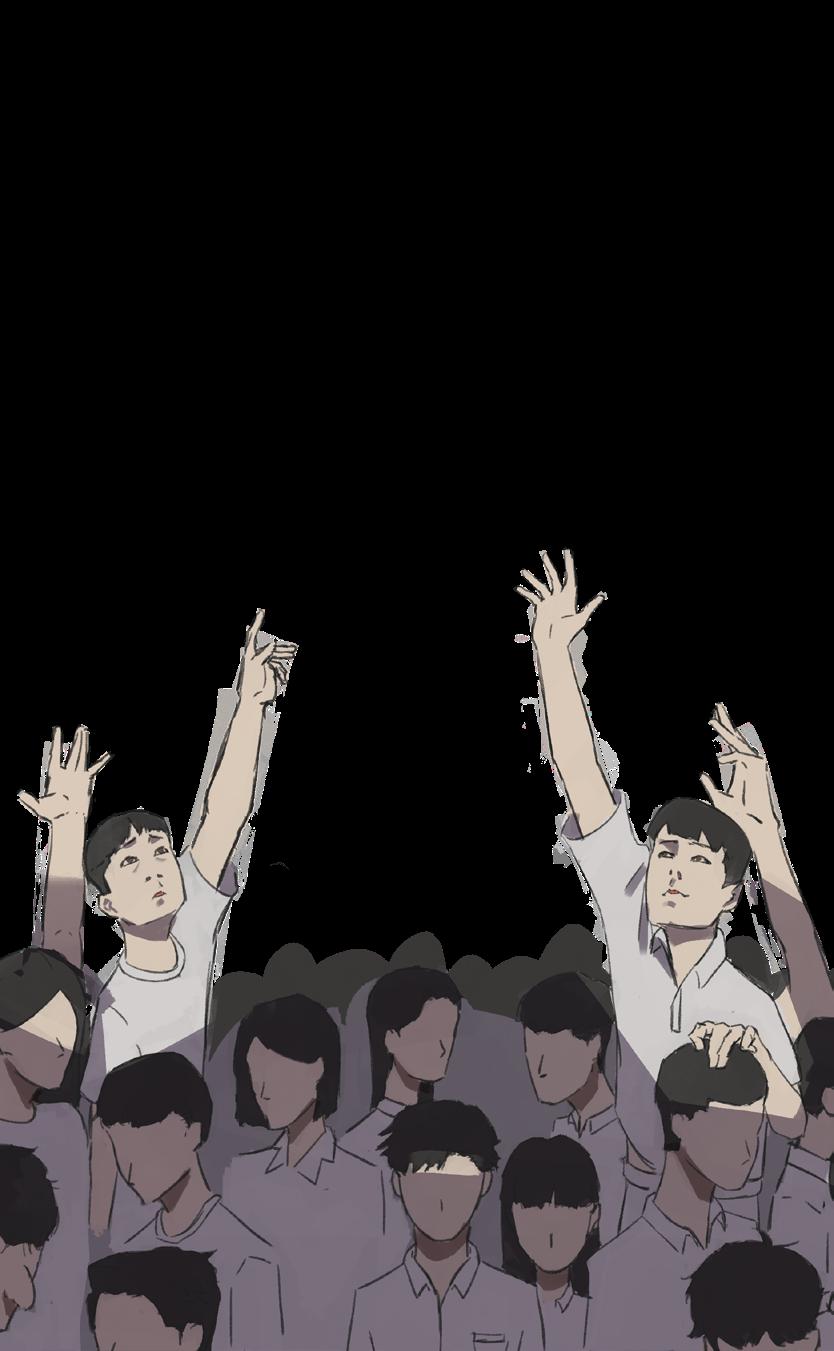
The idea of the rich entering a university that is more beneficial for a less-fortunate class can truly enrage the average person who is aware of the unfairness of offered opportunities. Some say that the wealthy should give up their slots in the UPCAT (UP College Admissions Test) for the underprivileged to take since they can afford other universities that are otherwise not accessible to those who cannot afford tuition. This also goes for all state universities, in accordance with Republic Act No. 10931 or the Universal Access to Quality Tertiary Education Act. However, deterring the rich from their right to choose UP as their college is unfair to them. The University of the Philippines does not favor any class, but only those who pass the UPCAT. They do not choose based on the socioeconomic statuses of the applicants, but their levels of intelligence based on the academy’s standards. Their status should not affect their worthiness to enroll in UP. On the other hand, an argument could be made that the rich yield higher results since they have better access to proper and superior quality education in private schools and easier access to review centers, rather than those in public schools with a lesser quality system and a less attainable means to afford additional education.
This fact puts upcoming college freshmen in a tight position. To do your best, knowing that there are students with more advantages giving lesser effort and still coming out on top, is downright draining and discouraging. The pressure that students from a public school, much more from a science high school, is very much present.
Overall, it is all a matter of accessibility. We cannot deny that more opportunities are given to the privileged compared to the poor masses. So, instead of arguing with the rich, raising concerns regarding the accessibility and quality of education in all public schools in order for the less fortunate to keep up with the students who can easily access tools to reach the opportunity would be more productive and paramount.
The issue is not with the rich, but with the unfair system that has the poor
by LHIAN BRANZUELA
As all sectors of the country now bear the brunt of every wrong vote, good governance is a farfetched possibility. At a time of sensationalized propaganda and idolatry, the epitome of a good politician is synonymous with a camera-friendly charm and a politically-inclined family tree. But even as the Philippines faces incompetence in their hands, it is evident that Filipinos just cannot get enough of novelties and dynasties in public office.
Television personalities and political dynasties have established their ground in Philippine politics. Previous terms have led to the further decline in almost all sectors in the community, especially in celebrities vying for positions without any experience in politics. According to a study in 2022, political families account for over half of all elected local government leaders and about 80% of members of Congress. Now, in the fast approaching 2025 elections, the Commission on Elections
(COMELEC) received 91 Certificates of Candidacy (COC) from Filipino celebrities running for positions in the local and national posts. With this growing trend, it is quite obvious that Filipino voters throughout the years have enabled them in the government. However, let us also remember that taking a closer look at it would prove that blaming the country’s misfortunes on poorly educated voters would result in nothing but discrimination and blindness to the bigger problem. After all, if the constitution grants us
the right to run for public office, let us not waste our vital right to make educated votes.
As Filipino citizens, we have only come so far as to let Philippine society become a playing field for families who are too focused on their dynastic machineries to regard the actual state of the nation. As the future of Philippine governance, let us forbid showbiz names and political dynasties forfeit promising qualifications. After all, public office is a public trust; one that should be heavily rooted on experience and


knowledge in the field of politics. Shifting the standards to vast family trees and huge social media followings have heightened the need for voter’s education all the more. In a country where the youth encompass 52% of the total registered voters, it is up to us to shift the dynamics. Our very right to vote gives us the power to suppress dynasties and novelties from turning politics into a huge circus — lesser than it already is today.
For a science high school that boasts of its exemplary performance, banking on the achievements of Regionalistas while overlooking potential for such talents to be exhibited is a hollow victory. This was epitomized by a plight wherein GRSHS-X’s Junior High Students failed to secure a bid to compete in the nationallevel eliminations for the PSO (Philippine Society of Youth Science Clubs Science Olympiad) due to a lack of financial support from the school’s admin.
Of course, these predicaments only implies causes that further entails problems within the DepEd’s system. DepEd’s mechanism and standards to ensure bureaucratic procurement remain dated despite recent national reforms, contradicted by the presence of habitually corrupt tactics—undermining the department’s said ideals of upholding transparency and accountability in educational governance.
Despite praise for its accelerative ideals, the New Government Procurement Act (NGPA), merely streamlines the procurement process by standardizing procurement forms and institutionalizing electronic procurement.
Ultimately, this overestimation of DepEd’s ability to immediately accelerate the procurement process sooner translates into negligence, undermining our leverage of the ingrained Filipino wit and intellect, and its capabilities to spearhead research, science, and further technological advancements.
It is time to let the nilaga’s steam hit DepEd’s procurement systems in the face—as circumstances of students being constrained by monetary assistance should not be overlooked and tolerated, even on local scales. In return, for the GRSHS-X admin to simply concede to its department’s efforts is not the defeatist attitude we wish for Regionalistas to idolize. With this, we should call on for increased support and guidance from our local stakeholders—for even with limited resources, with ingredients such as resiliency and resourcefulness, your stew will not cease to manifest.


by MIKAH MABULAY
The Philippine criminal justice system’s performance has long stayed afloat on performative recognition. As President Ferdinand Marcos Jr. solidifies a deluded idea of the country’s justice system being ‘well-functioning’, the government’s definition of justice grows obscure; for their brand of justice never favors those depending on it, but rather those who weaponize it.
In early February 2024, President Ferdinand Marcos Jr. remained firm in denying the International Criminal Court (ICC) permission to investigate former President Rodrigo Duterte’s ‘War on Drugs’ under the premise that the country’s justice system was ‘well-functioning.’ However, this only exposes the fragile, easily exploitable systems that only target
subjected to a common, monotonous fate: silenced.
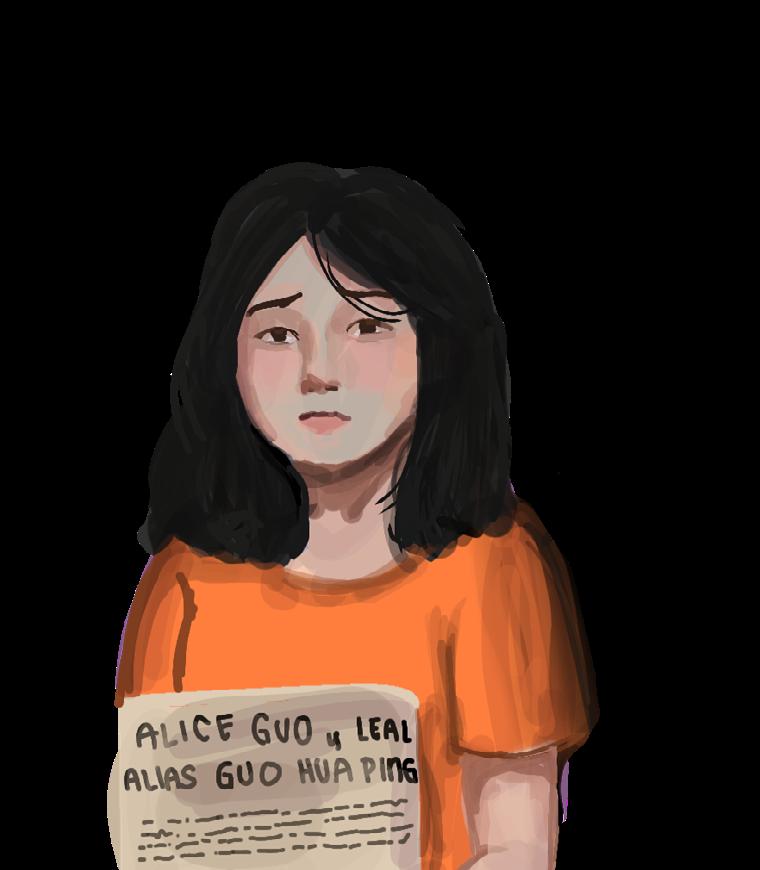
Judicial sentencing is a long winding process for most of those detained or indicted in the Philippines. Now when this process of evading prosecution is exploited, it not only limits justice to the elite, but in return reveals the backhanded methods that sustain these corrupted systems. Like the case of former Mayor Alice Leal Guo of Bamban revealed
able to materialize a legacy with forged legal documents, securing positions in government and ties to underground institutions.
She, like many fugitives of status in the Philippines, learned to profit off of an incohesive system, gaining leverage, and ultimately, bending the odds in her favor.



supported by
In a power-tripping spree, while underground government activity ceaselessly flew under the radar during Duterte’s term, administrative censorship of the free press heightened. This fueled numerous witch hunts against activists and critics; especially members of local campus publications and student activists. As a result, campus advisors have resorted to suppressing editorial freedom of most campus journalists, in efforts to dodge negative connotations that would perceive the school as a threat to the government.
Justice delayed is justice denied. For a criminal justice system claimed to be wellfunctioning, our nation’s security will remain vulnerable to manipulation—unless the current administration learns to acknowledge the flaws in its outdated approaches. Until then, justice in the Philippines will be wielded as a double-edged sword: a supposed savior for most, yet a weapon for the elite.
Over the last five years, the inflation rate has steadily increased, starting at 2.39% in 2019 and remaining unchanged in 2020. In 2021, it rose to 3.93%, followed by a jump to 5.82% in 2022, reaching 5.98% in 2023. The education sector has not been spared; school canteens, which serve as primary sources of meals and snacks for students, have been forced to adjust their prices to keep up with rising costs.
Students feel the brunt of inflation due to the overpriced canteen food, making it increasingly difficult for them to access nutritional options and manage their money effectively.
The recent National Economic and Development Authority (NEDA) declaration that a budget of ₱64 for three meals a day—approximately ₱21 per meal—is sufficient to avoid being classified as “food poor” is unrealistic and does not meet the proper nutritional needs of students.
The school canteen’s rice toppings cost ₱50 and when including the cheapest drink sold in the canteen which is an 8-ounce iced tea that costs ₱10 — it shows that NEDA’s declaration is not feasible as
it does not include snacks throughout the school day, with the cheapest filling snack being ₱20. The rising prices in school canteens are said to be justified due to increased operational costs and inflation. However, this perspective fails to recognize that many students are limited by their given allowance and depend on the school canteen as they are unable to purchase food outside of school premises.Furthermore, while operational costs may have risen, the significant markup on canteen prices often exacerbates food insecurity among students, particularly those from low-income families.
This situation underscores the urgent need for schools


to ensure that canteen prices remain affordable and that nutritious options are accessible rather than placing the burden of financial adaptation solely on students who have limited choices. The school canteen was created with the idea of catering to students as the target consumers. Thus, to ensure that all students have access to meals and snacks, it is essential for school administrations to regularly assess and adjust canteen pricing in line with economic conditions while also exploring different ways to reduce costs. By prioritizing affordability, schools can help alleviate the financial strain on students.
by AARON MOLDEZ
Cagayan de Oro City is worryingly steadfast in its plans to become the Philippines’ fourth metropolitan center by 2025, as outlined in its Philippine Development Plan (PDP) 2017-2022. Per the National Economic Development Authority (NEDA), the near future sees the city following in the footsteps of Manila, Cebu, and Davao as economic and administrative cores of the country. For CDOC to stand its ground alongside the nation’s top three, it cannot be without concerns for a future brimful of unmet needs and impending


by AARON MOLDEZ
Rooted in the Higaonon hinterlands and tribes of Cagayan de Oro are the mountains of unethical and unwarranted exploitation on their native grounds. Even amid the annual National Indigenous People’s Month celebration every October, the inability of the highest powers to respect those rights remains. What is now left of Indigenous Peoples (IP) are the remnants of forked ancestral lands–a byproduct of the country’s dismissive hands.
The Presidential Proclamation 1906, signed in 2009, mandates the “recognition and protection of the rights of Indigenous Cultural Communities (ICC).” Yet, once again, we are opposed by the government’s underlying hypocrisy in its incompetence to oppose landgrabbing acts that have stood the test of time. For example, the DENR (Department of Environmental and Natural Resources) facilitated the approval for agribusiness corporations to establish oil palm plantations encroaching on Higaonon
ancestral lands. In another case, DPWH (Department of Public Works and Highways) allowed for the development of Route 995, a highway from Villanueva to Gingoog City, to destroy several sacred sites and ancestral burial grounds. Such an exploit betrays the Certificate of Ancestral Domain Title they have held since 2009 and, on a wider scale, the faith IPs put in the agencies that are supposed to support them.
Governing powers tolerate these acts without their free, prior, and informed consent (FPIC). To arrive at such decisions without
acknowledging their approved filing for ancestral domain claims under the Indigenous People’s Rights Act (IPRA) of 1997 is a huge thwart in the name of welfare and cultural rights.
“There is no justice in quenching the thirst for water if it is at the expense of destroying communities,” stated Human Rights Commissioner Gwendolyn Pimentel-Gana on the human rights impacts of the Kaliwa Dam project back in 2019. Following such sugar-coated sentiments, however, are the targeted natives who are currently and still clearly unsatisfied with the system.
Less toleration of displacement and land-grabbing, in general, is necessary to save the IPs of our country on a larger scale. Until then, celebrations and festivities for our IPs are nothing more than facades of what hides beyond the roots. Surpassing the materialism of preserving culture is the extent of honoring the indigenous that the highest powers have yet to reach. Now is not the time to reshape mountains, but rather to reshape the narrative.

households in CDO need to be relocated, including those in high-risk areas near rivers, creeks, and landslide prone areas
barangays in Cagayan de Oro are susceptible to flooding, according to the Mines and Geosciences Bureau 72/80 34,898


enough to protect the lives that witnessed the area’s recent storms. These issues arose following tropical storm Kristine, which displaced people and destroyed numerous homes in Bicol last October 2024.
Students, for the most part, will experience the true weight of such circumstances. Floods will actively persist in terrorizing the lives of daily commuters made up of residents and learners alike. Cagayan de Oro City’s course towards metropolitan greatness is met with, without exaggeration, some of the most challenging tides and waves–a challenge requiring more than just paper boat initiatives. Despite all odds, CDO still has the capabilities of successfully transitioning into a metropolitan center. What it only lacks is a more serious initiative on the office’s part and acknowledging the areas the city is short of. Gold symbolizes more than just Cagayan de Oro City’s potential; it is also built off of the people’s faith in a better tomorrow. We may be sinking, but we have not sunken–a reminder that a rising and successful metropolis is still within reach, despite all odds.


Cagayan de Oro City’s course towards metropolitan greatness is met with, without exaggeration, some of the most challenging tides and waves–a challenge requiring more than just paper boat initiatives.
Dear Editor,
As we start a new academic year, Nudo Veritas has prevailed with its thirst for impartiality and showcasing stories that matter. Even with the newer trends, Gusa Regional Science High School - X proceeds with the same objectivity to be the voice of the studentry. We may have kicked off from the past year with heavy recognition, but that should never mean that we are writing for laurels. After all, the truth does not come with shining medal.
In every single community, there is a story worth writing, a perspective worth spreading, and the truth worth saving. Every day is one worth writing when the townspeople have voices that deserve to be heeded.
As campus journalists, we bring glory to our institution by winning; not with trophies, but with amplified voices and truthful sentiments.
To the studentry, may we never let any obstacle get in the way of speaking up in the first place. With us being the next generation of leaders, may we fuel the most important aspect in today’s world: truth.
Best Regards, Johnson Tan Grade 11
voxpopuli
At the precipice of all it dreams to be, Cagayan de Oro City (CDOC) teeters on the edge in its push for metro status. With limited infrastructure and frequent flooding, this “City of Gold” struggles to keep its head above troubled waters. Metaphorically and quite literally, the city may be sinking by the weight of its own problems.
The fact that they do not do anything to improve it, says a lot about their incompetent leadership. Its enhancement is very crucial as the Philippines is now more prone to typhoons which will affect many people in our city during floods.
Regala, G10 ORION
Flooding in the city has always been a challenge for me as a student. Imagine going to school dry but leaving soaked and wet. Heavy rains turn roads into rivers, causing delays and discomfort. This not only disrupts our routines but also highlights the need for better urban drainage systems.
Vasallo, G12 ALZONA
In textbooks and any social media platforms we learn of the battles, political alliances, and treaties that have shaped modern society. Yet, there is a dark, pervasive silence around the suffering endured by one vulnerable group throughout history: women. In particular, the horrors experienced by Filipina “comfort women” during World War II remain largely absent from mainstream education. This lack of representation is more than an oversight; it’s a profound injustice that perpetuates historical amnesia and denies young people a complete understanding of the past.
Recently, the television primetime series “Pulang Araw” received online praise for including this vital piece of Philippine history; even more so that it has exceeded the education system’s representation on student textbooks. However, it also revealed the general public’s lack of awareness on the plight of comfort women back then. Consequently, House Assistant Minority Leader and Gabriela Partylist Rep. Arlene Brosas heeded the calls to push for the establishment of House Bill 8564, or the Comfort Women Education Act. Filed in June 2023, this bill seeks for the inclusion of the heroic lives of comfort women in the K-12 and Tertiary Curriculum. In light of this, the issue does not only encompass
specific historical events but includes recognizing the systemic atrocities that have targeted women in nearly every conflict. By not addressing these realities, our educational system further implies that even heinous crimes committed against women are silenced and deprive future generations of the oppression we have suffered. The lack of representation of comfort women in education reflects a broader pattern in how the violence inflicted on women in conflict zones is often downplayed or ignored. The silence around such stories creates a distorted history, one that neither honors the sacrifices made by survivors nor encourages students to learn from past atrocities. Those who fought, survived
letsplayhouse
by JAZLYNN AYUBAN
When a child goes against a mother’s hand, the whole world reacts. But when a grown person of importance displays clear incompetence and immaturity, only the minority bats an eye.
Take for example
Senator Robin Padilla, who was recently criticized by the media for his concerning comments suggesting that a wife should be there to serve her husband and asked what a man should do if they are ‘in heat’ when their wife is not in the mood. This emerged from the topic of rape, to which lawyer Lorna Kapunan, said that “no means no, even between a marriage.”
Following this was when his wife, Mariel Padilla, remarked about what he said in the senate. She posted a photo of them kissing with a caption of “Oh may consent ‘yan ah.” Senator Robin Padilla then commented and used the term ‘in heat’ to express his desire. This shows unprofessionalism and the obvious lack of self-awareness. Endorsing an outdated mindset that objectifies women and suggests that they should submit to their husbands is a huge setback for all the legal discussions regarding women’s rights.
Mariel Padilla was also under fire for conducting a “gluta drip” session in the senate office of her husband. She publicized this by posting an image of her connected to an intravenous drip, with Sen. Robin and the senate seal in the background. The senator took this situation lightly and stated that he deemed this
In line with these inappropriate bearings is Vice President Sara Duterte’s comments on her association with President Ferdinand Marcos Jr. She mentioned that she imagined “cutting off the president’s head” as their relationship had become toxic.
Laughing off these concerning situations shows incompetence and ignorance, as the senate office should be taken seriously and formally. Knowing the right place and the right time to joke around is not a skill but an attribute that signifies maturity, which apparently, these people do not display.
Legally, nothing is done to punish these unruly actions, as only citizens in the social media realm recognize the faults of the politicians. It is apparent today that misconducts are not properly sanctioned. If these are the leaders of today, students like us are not exempt from the example
“
Knowing the right place and the right time to joke around is not a skill but an attribute that signifies maturity, which apparently, these people do not display.


and defended their dignity should be remembered, serving as a powerful educational tool for empathy and ethical reflection as well. Educational reform, supported by consistent and respectful media representation, could finally bring justice to comfort women by making their stories an essential part of history, rather than a footnote. Media and education hold a shared responsibility to ensure that future generations understand the full scope of wartime suffering, not just for accuracy but for humanity. This recognition is the first step toward healing and justice for survivors, their families, and society at large.
The lack of representation of comfort women in education reflects a broader pattern in how the violence inflicted on women in conflict zones is often downplayed or ignored.