ART EDITOR: XAVIER ROBLEDA (UK) AND LUKE SHADDOCK (AUSTRALIA)
WRITERS: CHRIS STEAD, PENNY JONES, EVE BOGGENPOEL, LOLA BIGGS, CHRISTINA KYNIGOS, OLIVIA FLETCHER, AMANDA GOETZ, LAURA CSORTAN, AIMEE FULLER, EMMA LEWIS
SOCIAL MEDIA: NOW SOCIAL CO
ADVERTISING SALES: SALES@NUCLEAR.COM.AU
NUCLEAR MEDIA MANAGEMENT
CEO: MICHAEL DOWNS
SALES: MONOGRAM MEDIA
PRINTED BY: IVE GROUP
DISTRIBUTED BY: ARE DIRECT
Published in Australia by Nuclear Media PO Box 230 Double Bay NSW 1360 +612 9363 1462
WOMEN’S FITNESS MAGAZINE (UK) KELSEY MEDIA, THE GRANARY, DOWNS COURT, YALDING HILL, YALDING, KENT, ME18 6AL, UK
EDITOR-IN-CHIEF: SARAH SELLENS
SUB-EDITOR: EVE BOGGENPOEL
ART EDITOR: XAVIER ROBLEDA
SOCIAL MEDIA & NEWSLETTERS: AMY DOWRICK
THANKS TO: NICKY MCBURNEY, SARAH CAMPUS, LOUISA DRAKE, JO EBSWORTH, LAUREN MAYBANK, LUCY MILLER, LOUISE PYNE, LILY SMITH
ADVERTISEMENT SALES: TALK MEDIA
HEAD OF INVESTMENT: TOM WHITMARSH-KNIGHT 01732 446725, TOM@TALK-MEDIA.UK
INVESTMENT EXECUTIVE:
DIMA BARBARA 01732 445155, DIMA@TALK-MEDIA.UK
AD PRODUCTION SUPERVISOR: GRACIE STANDEN 01732 445300
Kelsey Media takes your personal data very seriously. For more information of our privacy policy, please visit kelsey.co.uk/privacy-notice. If you have any queries regarding Kelsey’s data policy, you can email our Data Protection Officer at dpo@kelsey.co.uk. Information given is not a substitute for medical advice, so ensure you check with your GP, medical professional or other relevant qualified professional before making any changes to your healthcare, diet or exercise routine. Check the latest government guidelines before participating in the activities mentioned in this magazine and always adhere to coronavirus restrictions.
Longevity is a buzzword right now - it’s about living healthier, living longer and thriving at any age. The thing is - with so many fads out there, it’s hard to separate fact from fiction. It’s hard to know what actually works, what you should invest in, and what you should leave behind.
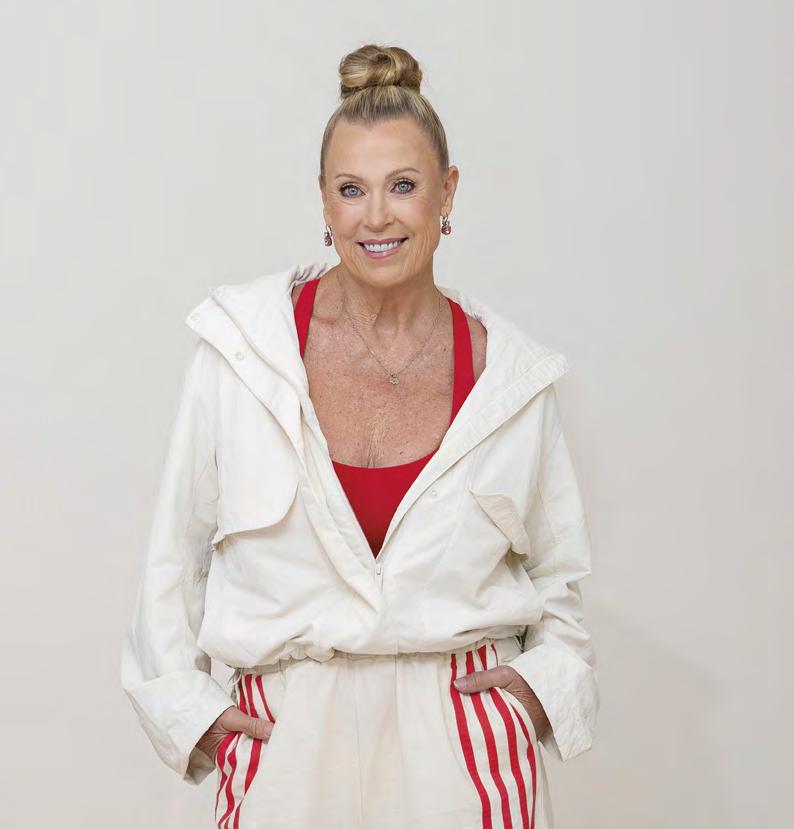
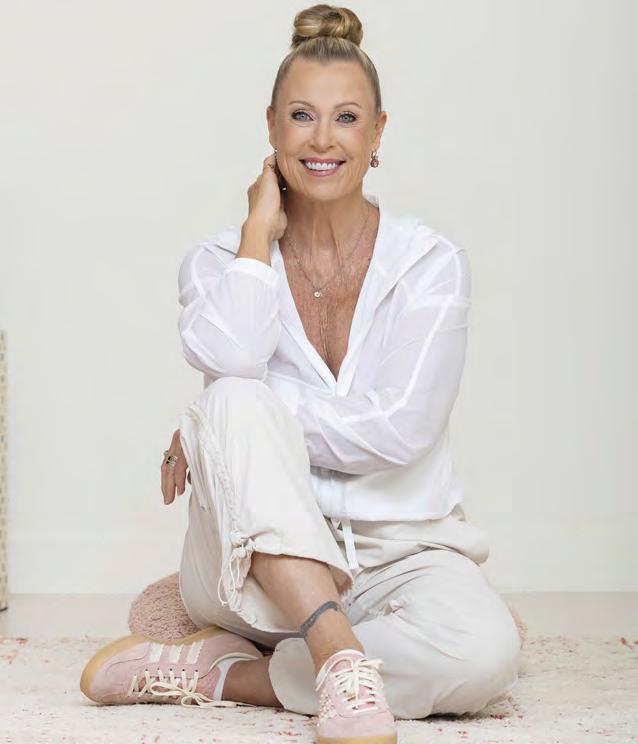
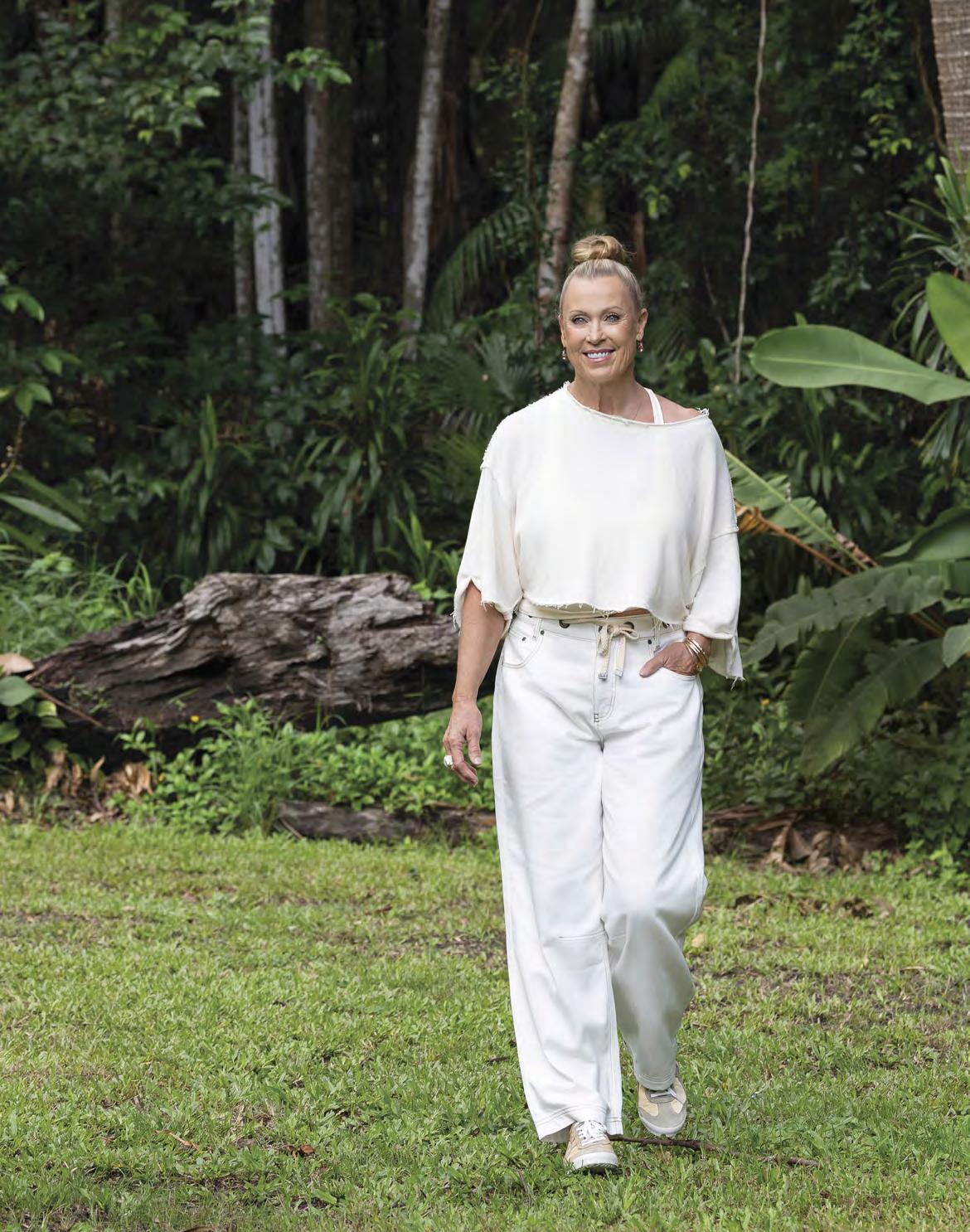
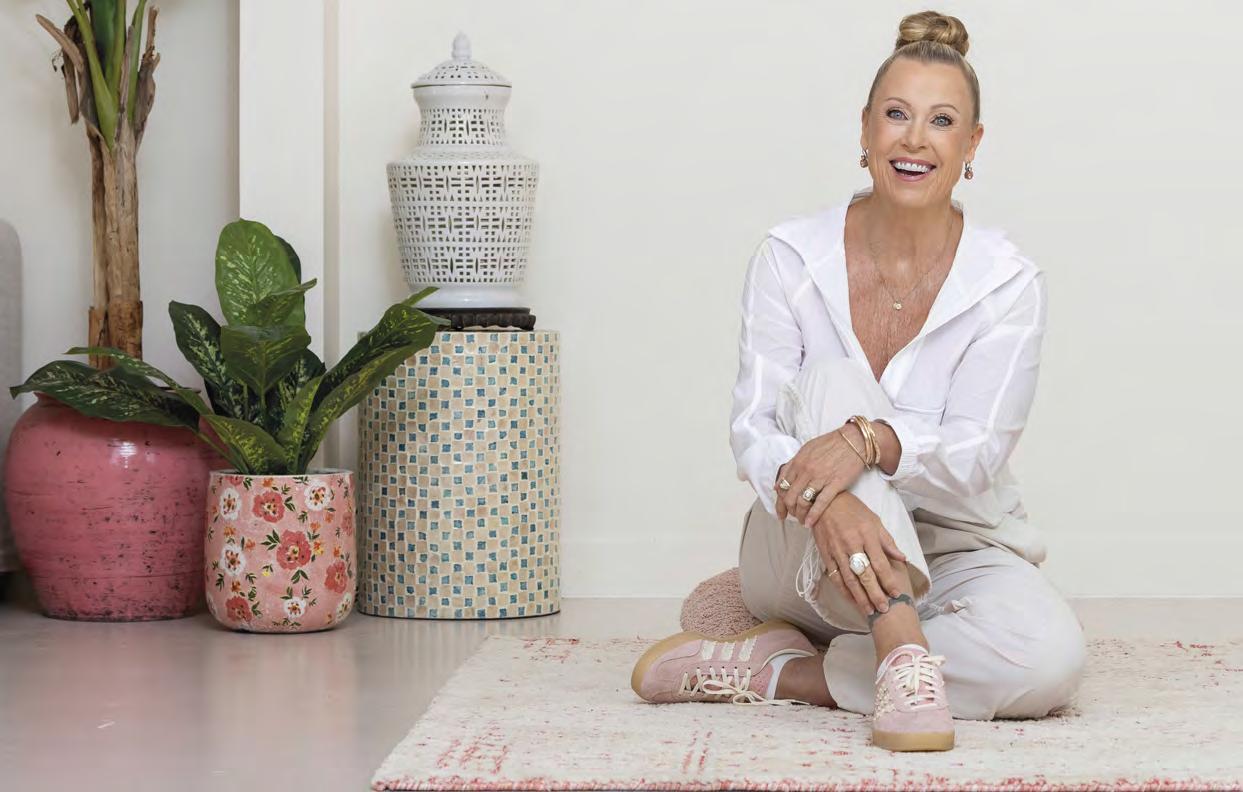
For this reason, we’ve dedicated this issue - and the rest of the year in fact - to highlighting the evidence based, expert endorsed longevity solutions you need to live fully, freely and without fear. And what better way to start, than with this issue’s cover star, inspirational triple-Olympian, Lisa Curry.
From our best-of-the-best picks (aka Editors List) to our feature story on sleep - “can lack of sleep ruin your sex life” - this issue is jammed with a-game advice you wish you knew yesterday. There is a call for celebration too - we announce our incredible Women’s Fitness Award winners - Woman of the Year and Expert of the Year. Voted by you, these women are changing the way we eat, move and nourish our bodies. Reminding us how good it feels o feel good, and to honour ourselves in every moment. They define what it means to be a trailblazer and we are so, so, SO excited to share them with you.
Dive in ladies - this is one issue you will not put down. Until next time,
Olivia Arezzolo
Editor-in-chief
Also in this issue...
Contents
FIT BUZZ
p12
Ask The Experts
Top advice from Women’s Fitness experts
p18
Editor’s Picks
Whether you’re chasing deep sleep, glowing skin, stronger energy, or a moment to reset — consider this your insider guide
p20
Women’s Fitness Award
Winners Our expert of the year –Sally O’neill and our Woman of the Year – Bec Miller
p27
Solace Saunas
Infrared saunas and the benefits to sleep and general wellbeing
p28
Sleep Is lack of sleep ruining your sex life?
p30
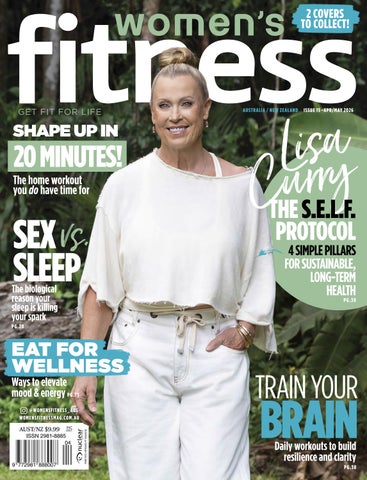
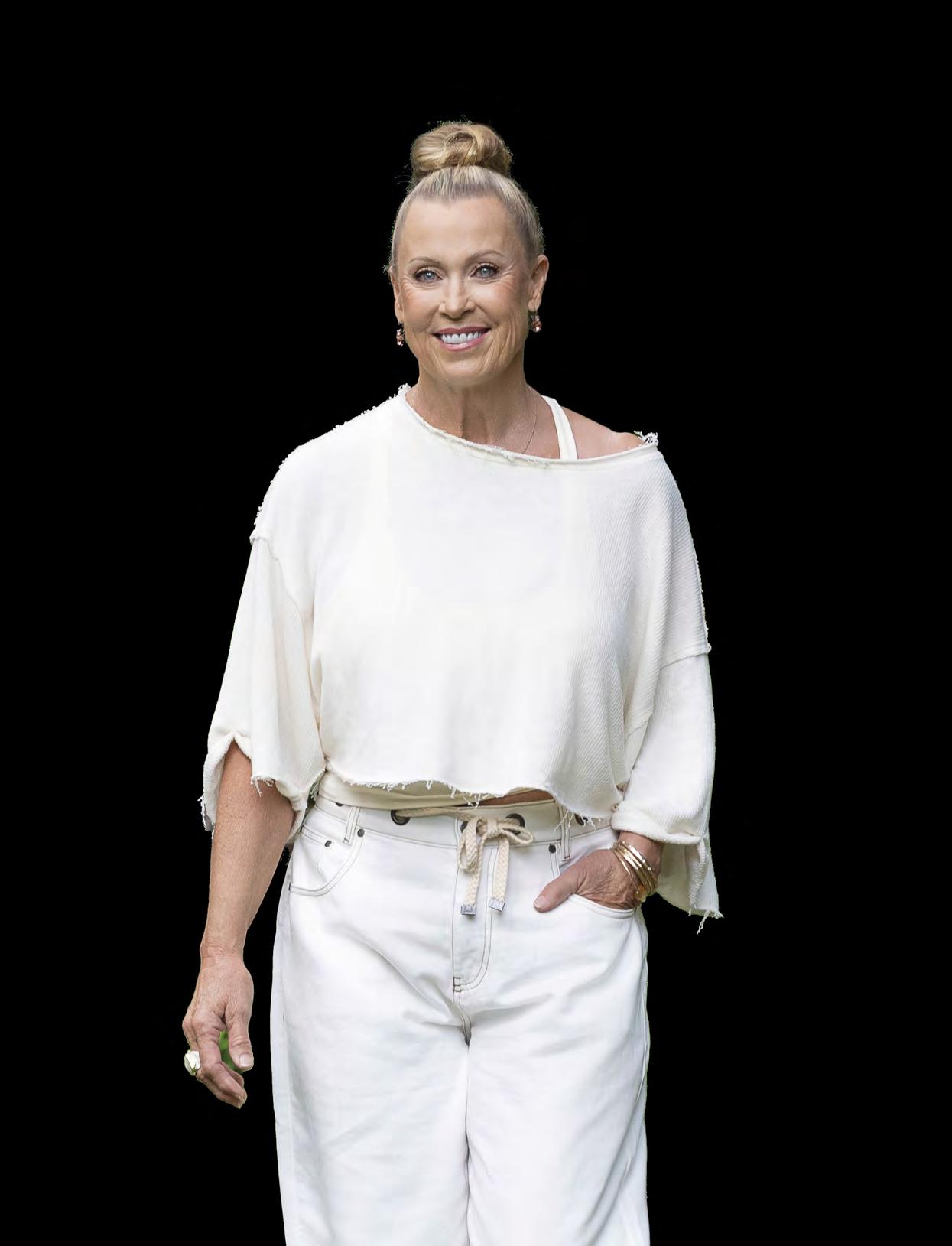
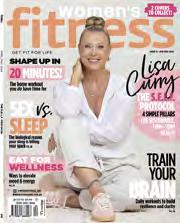
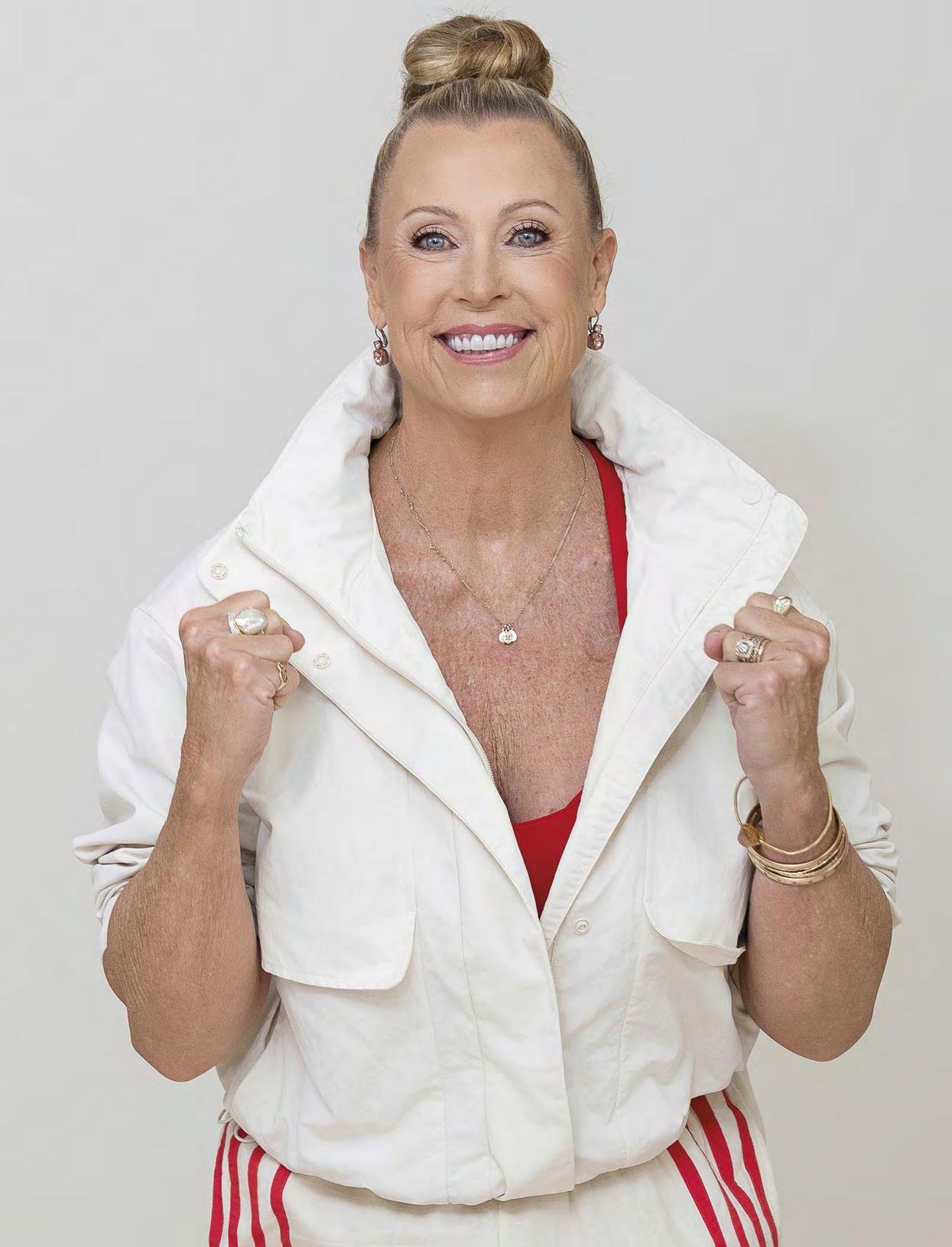
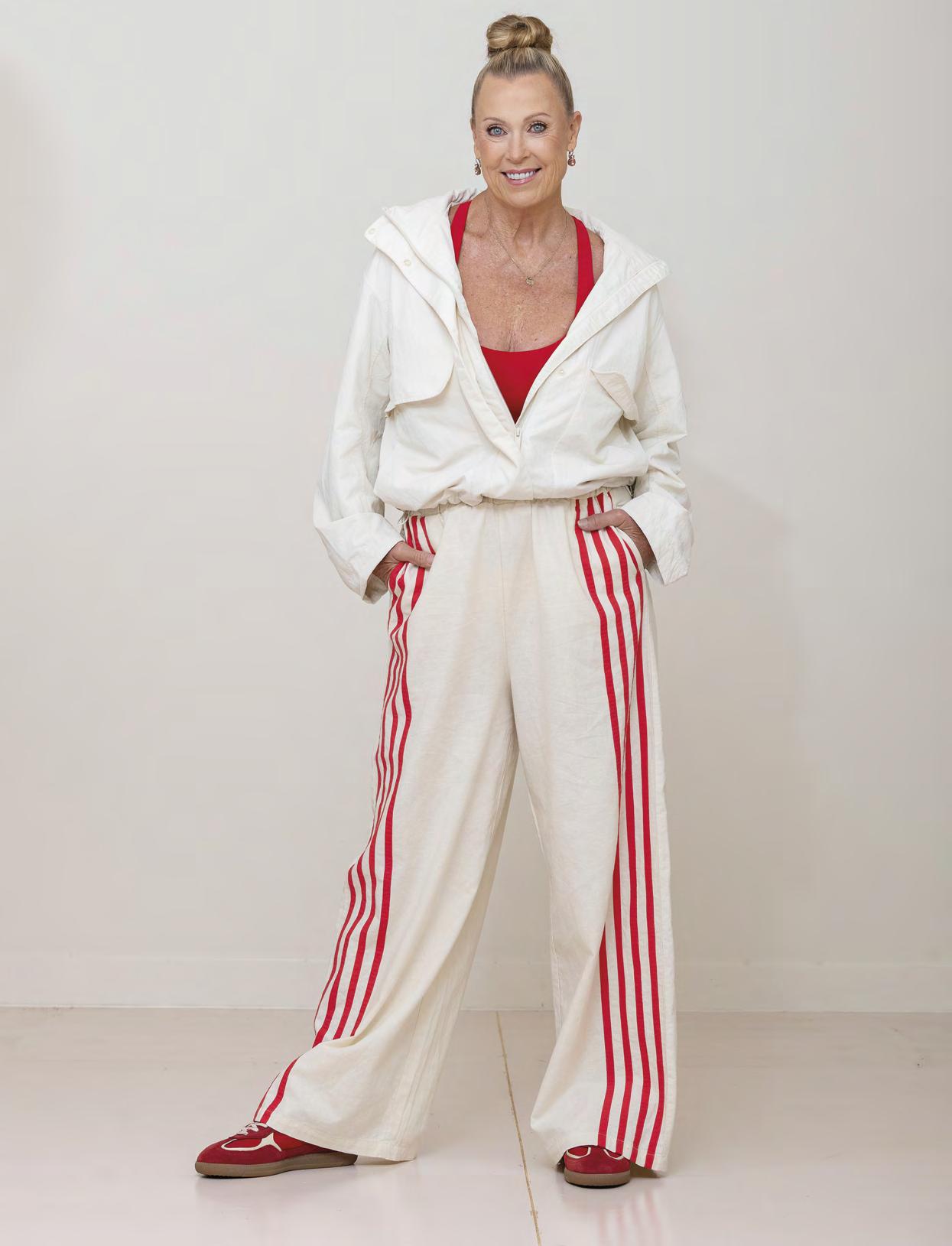
Lisa Curry You don’t have to wait for permission from anyone to do what you want to do, be who you want to be, and go where you want to go
p38
Train Your Brain
Like any muscle, your mind needs daily workouts to build resilience and clarity
p42
Atlantis: The Palm Dubai
Experience the ultimate Dubai stopover at Atlantis: The Palm
p44
Horse Country Reset
Slowing Down at The Barn Scone
p46
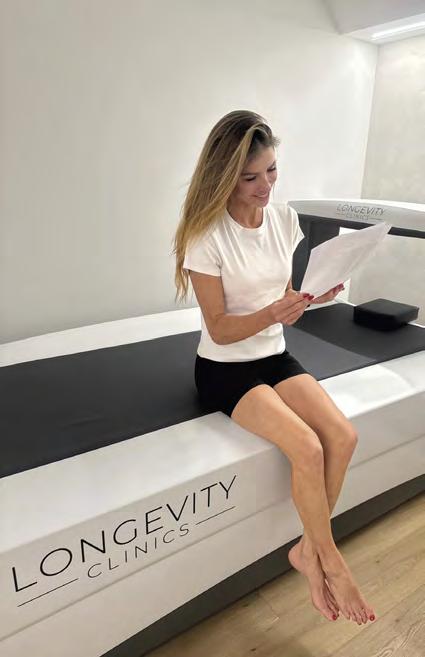
Longevity & Wellness, the Art of Biohacking in Woollahra
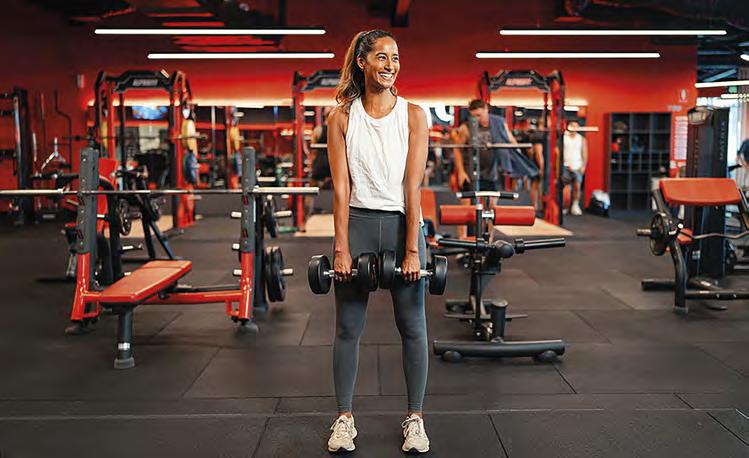
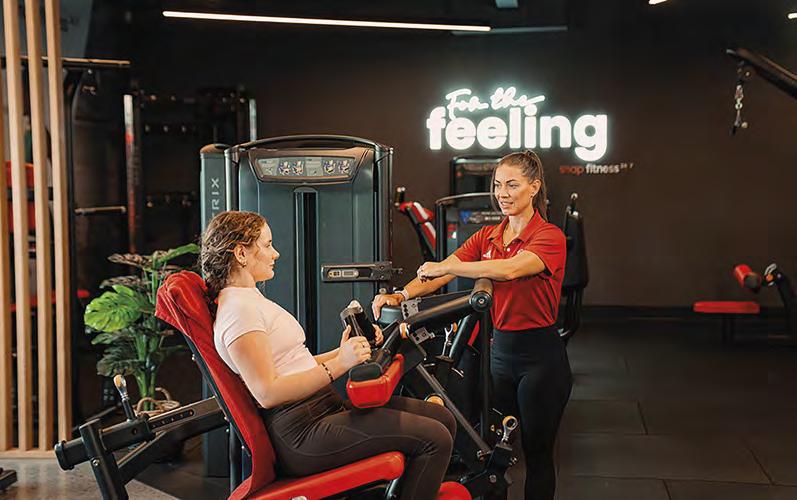
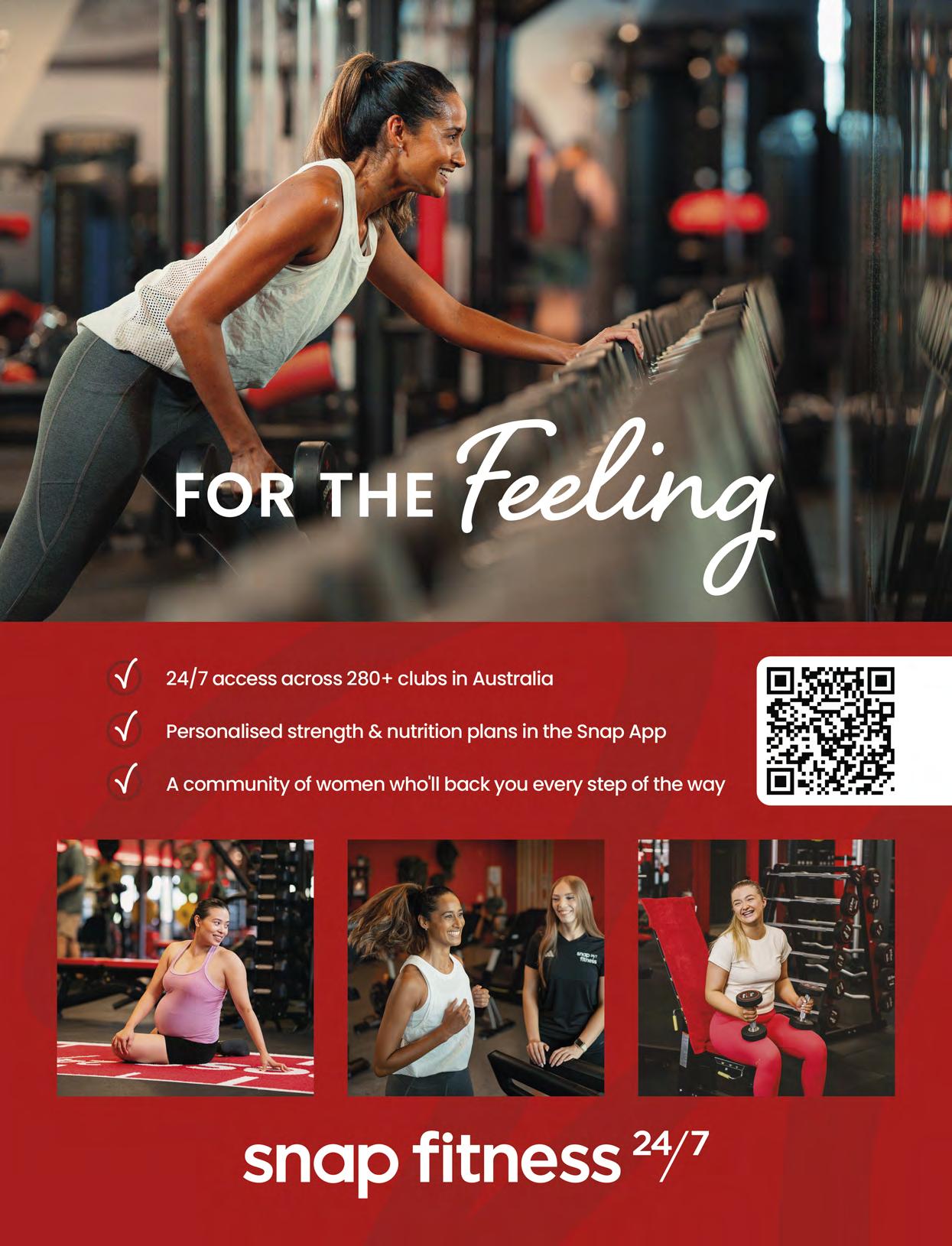
p50 Snap Fitness experts increasingly agree that building strength during this decade may be one of the most powerful investments women can make in their long-term health
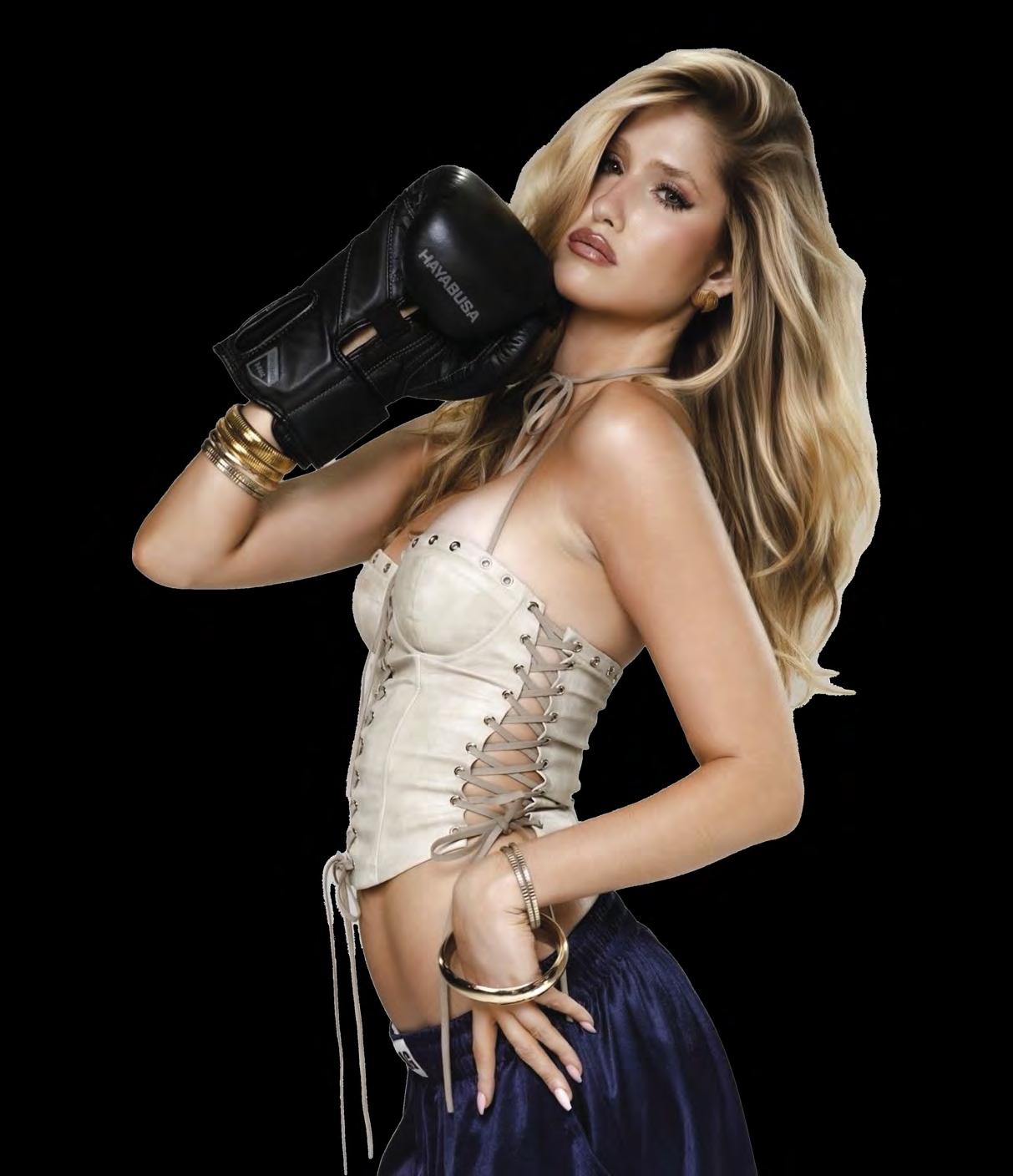
Cover star, Lisa Curry
40 Atlantis The Palm Dubai
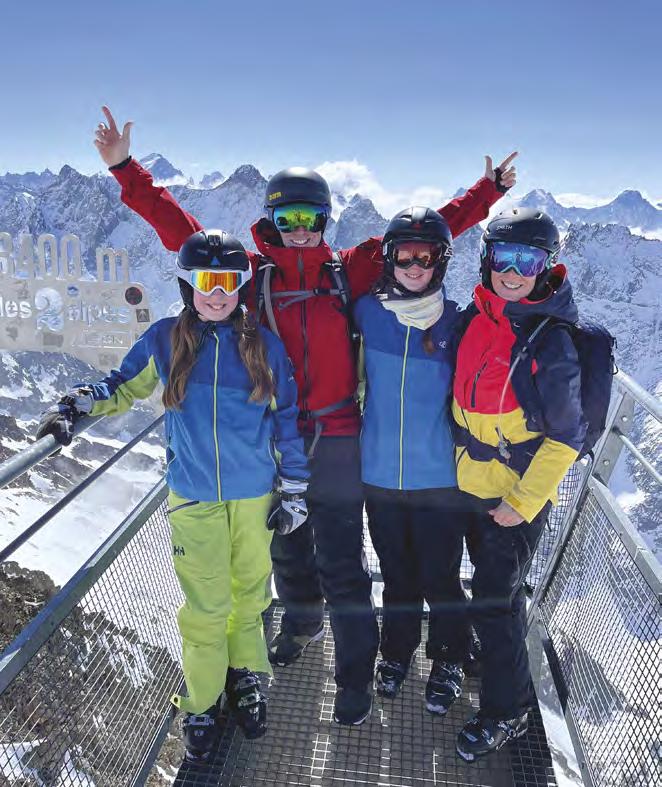
Ski with the family in the French Alps
70 Dumbbells for your lungs 64 Swimming the atlantic 56
76 Lock in protein with an airfryer
Friends –should be your secret weapon
FIT BODY
50 Fuller on fitness
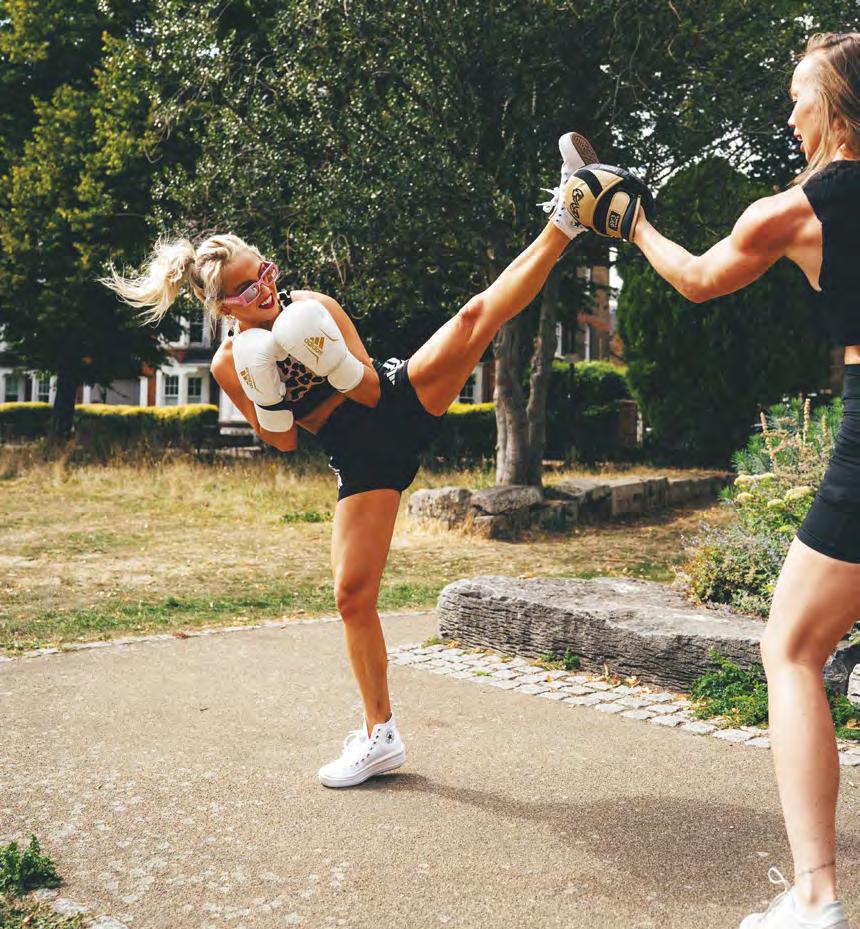
Columnist Aimee on martial arts for self-defence
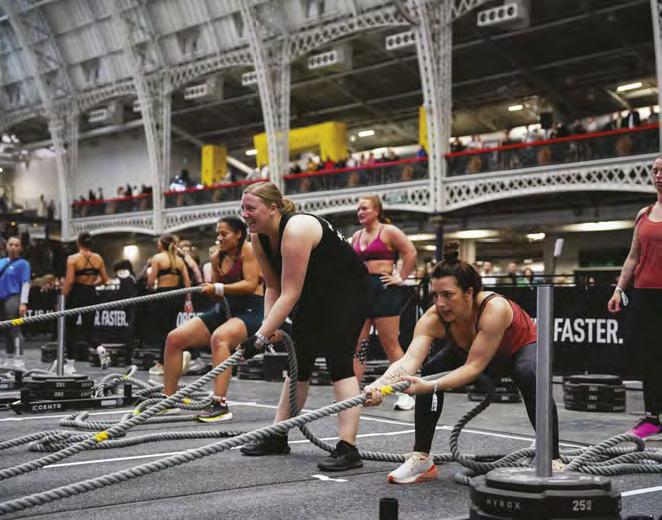
52 Your fitness fix for 2026 The future of workouts has arrived
56 Active travel
Keen skier Emma Lewis enjoys a trip to Les Deux Alpes
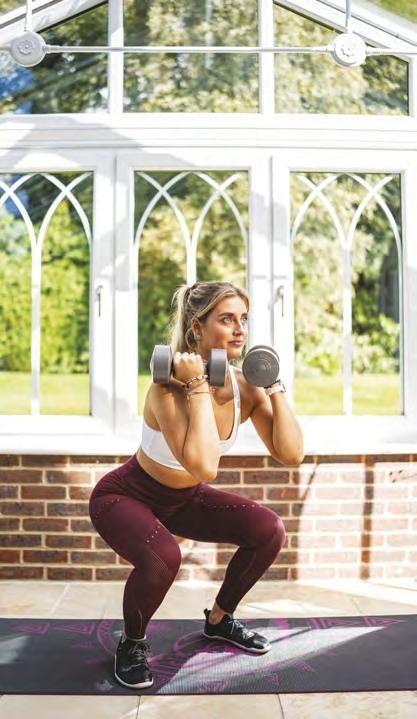
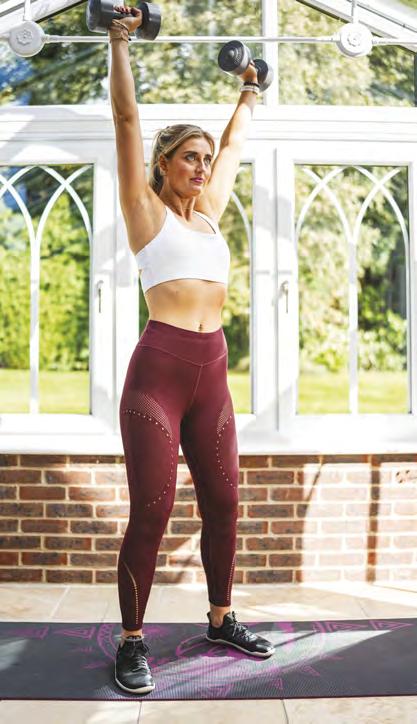
60 20-min shape-up
Total body moves to improve strength and fitness
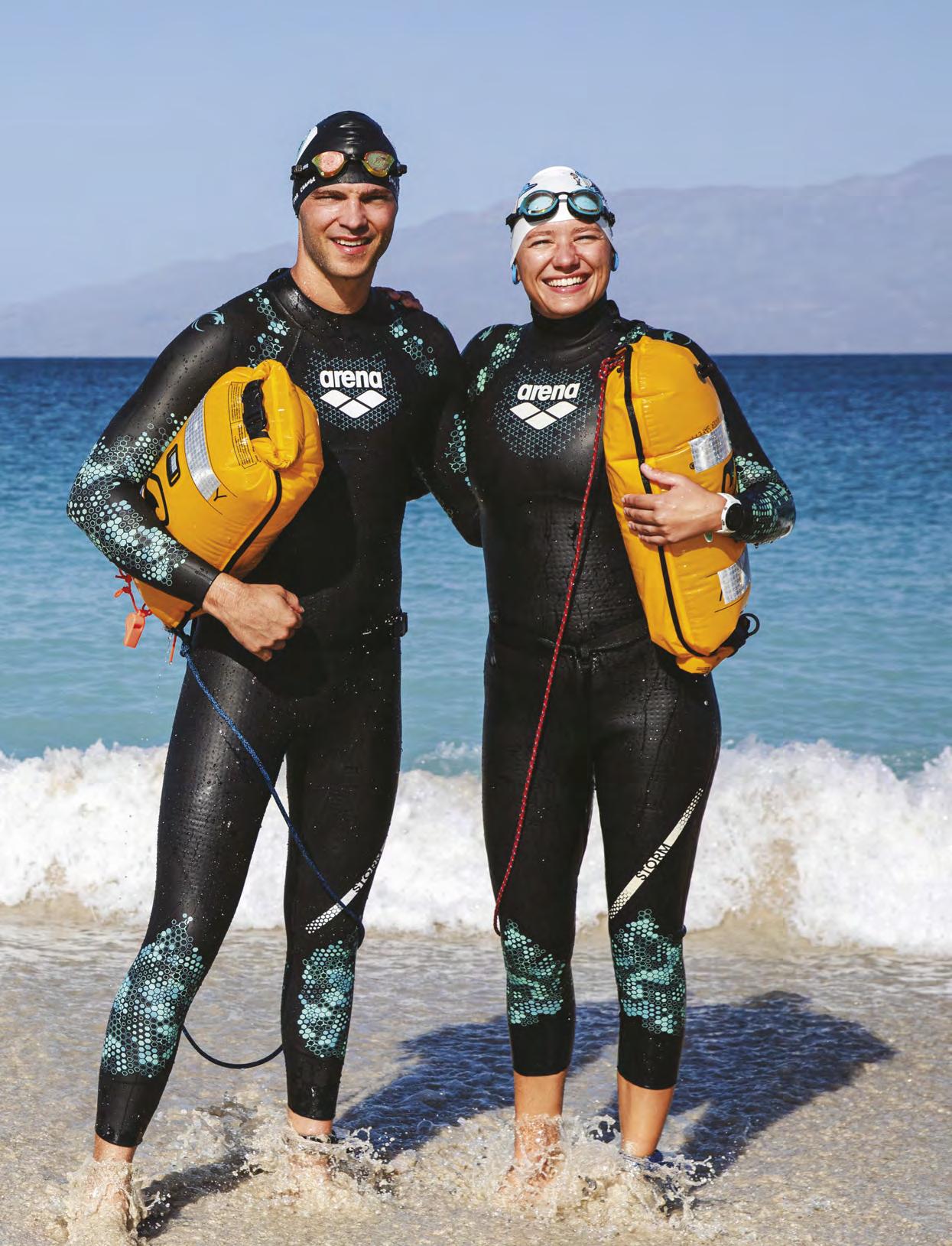
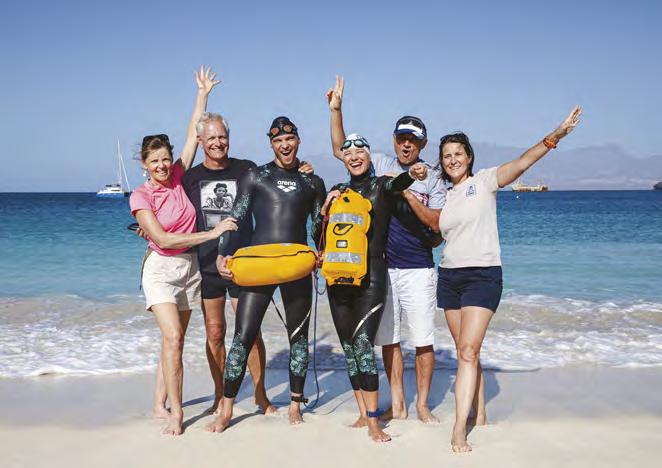
64 ‘I’m swimming the Atlantic’ Husband and wife duo, Chloe and Matt’s ultra-swim challenge
68 Dumbells for your lungs
Train your respiratory system for better fitness
FIT FUEL
76 Full on flavour
Air-fryer recipes that are high in protein
80 5 ways to eat well with low appetite
Expert advice from nutritionist Rob Hobson
84 10 ways to winter wellness
Dietary tips to boost your immunity, mood and energy
FIT MIND
90 Found a friend
How an ‘accountability partner’ could boost your health
94 Inner balance
Expert ways to regulate your nervous system
Model: Lisa Curry
Inspiring Women * Active travel * Wellness
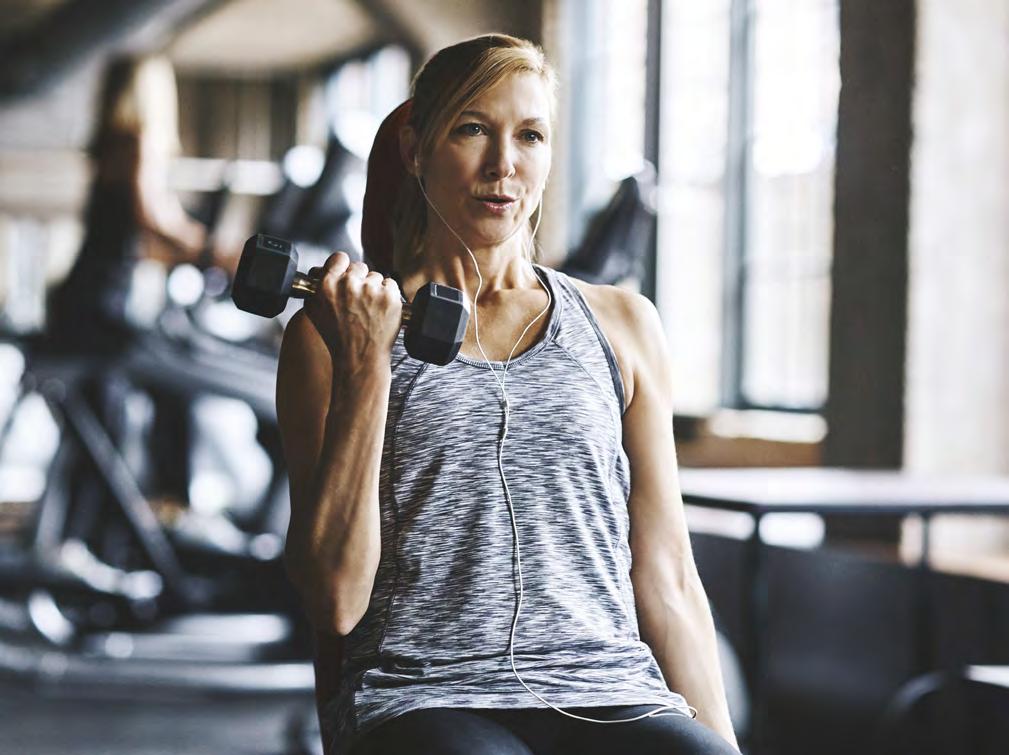
‘I’ve had mixed advice about whether HIIT is or isn’t good for menopausal women. Please help clear up what I should be doing!’
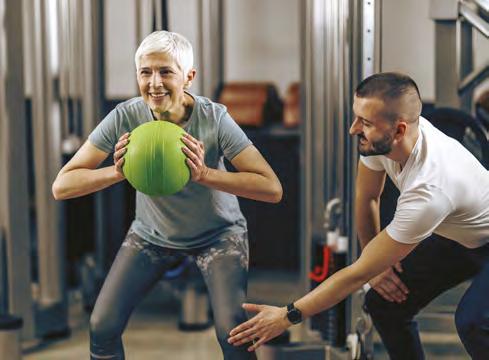
This month Sean Murphy, Ultimate Performance personal trainer, shines a light on how to HIIT train during midlife
Meet the expert
Sean Murphy is Ultimate Performance’s global chief personal training officer and oversees U.P.’s entire worldwide personal training team. He works closely with U.P. gym managers across the world, leading on recruitment, education, exercise execution, program design development, performance and client management to ensure the global training team produces world-class results. He was educated at Brunel University London, graduating with an MSc in Human Performance (Sports Science), and has built a long-term career at U.P., harnessing his knowledge of fitness and human performance. Visit ultimateperformance.com
Ten-to-15 minutes of HIIT is more than enough
There’s a lot of confusion about whether women should avoid high-intensity training during menopause, but it’s not as simple as saying yes or no. What matters is how often it’s done, how well recovery is managed and how it fits within a structured plan.
Hormonal changes through perimenopause and menopause can affect recovery, sleep and energy levels. That doesn’t mean highintensity work should be avoided, rather, it just needs to be programmed intelligently. When managed well, HIIT supports cardiovascular health, helps maintain muscle and improves metabolic control. Cortisol will always rise during harder sessions, but that’s a normal part of how the body responds to exercise. With good recovery and consistency, training helps regulate it across the day.
Strength training should sit at the centre of any programme at this stage of life. That is why Ultimate Performance has launched its ‘Stronger, for Life’ campaign – to encourage women who are either perimenopausa,l or approaching the perimenopausal period of their lives, to lift weights. Strength training is what drives meaningful change in strength, muscle, bone and long-term health. High-intensity and aerobic work have their place around that foundation, but they shouldn’t replace it. The goal isn’t to eliminate intensity, it’s to use it with purpose.
How often to do HIIT work
High-intensity training can be very effective during menopause, but it has to be used in the right way. Most women will get what they need from one HIIT session a week. Some can manage two, but only when sleep, stress and day-to-day energy feel steady. The goal isn’t to push yourself as hard as possible. It’s to apply intensity in a controlled way that supports the rest of your training.
Keep HIIT short – 10-15 minutes is more than enough. A simple approach works well. For example, 30 seconds hard and 60-90 seconds easy, or 45 seconds hard and two minutes easy. Aim for eight-to-10 rounds. The hard efforts should feel like an RPE of eight or nine [out of 10]. You’re breathing heavily and can only speak in short phrases. The easier parts should feel comfortable again.
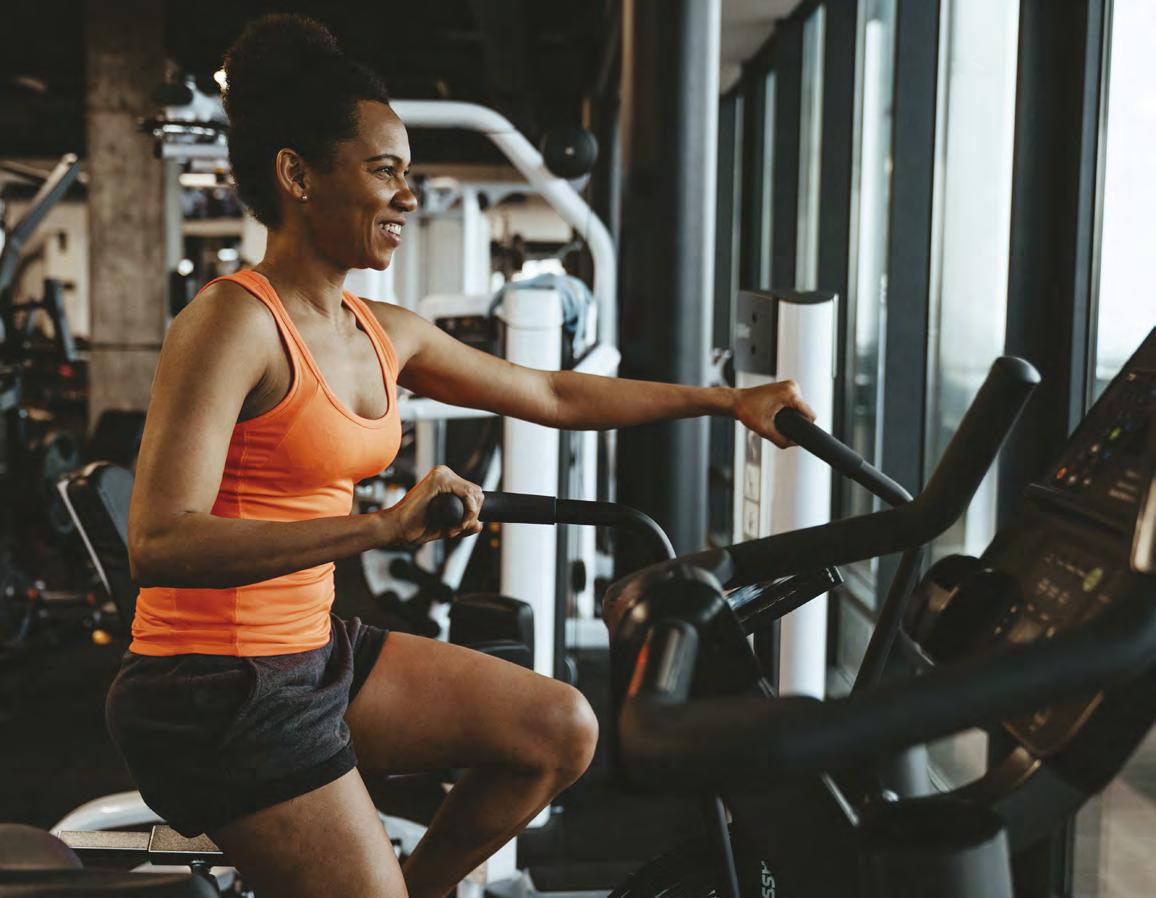
Choose low-impact machines such as the assault bike, bike, rower, SkiErg or incline walking on a treadmill. You’ll be able to work hard without putting unnecessary stress on your joints.
If you’re tired or haven’t slept well, keep the routine but make it easier. A walk or something steady will keep you moving without forcing an intensity your body isn’t ready for.
Low-impact machines will be kinder to your joints
How to manage your recovery
‘If training feels heavier or your sleep drops, keep the habit but lower the intensity’
How well you recover will shape the efficiency of your training. Menopause can make sleep and energy a bit harder to manage, so taking recovery seriously helps you feel better session-to-session. A few simple habits go a long way. Try not to do HIIT completely fasted. It usually makes the session feel tougher than it needs to be. A light snack – Greek yoghurt, a small protein shake, a boiled egg or fruit with something simple alongside it works well. Over the day, aim for around 2g of protein per kilogram of bodyweight, or just have a palm-sized portion of protein at each meal. Sleep is one of the biggest factors in how well you recover. Aim for seven
-to-nine hours when you can, but the most important thing is a consistent bedtime and wake time. Your body handles training better when your sleep rhythm is steady. Also, try to keep your HIIT session earlier in the day so it doesn’t interfere with winding down.
On other days, recovery activities such as Pilates, yoga, long walks or gentle cycling help regulate stress and will also make your harder sessions feel smoother. If training suddenly feels heavier, your mood shifts or your sleep drops, adjust your next session; keep the habit, but lower the intensity. Listening to your body will keep the progress moving.
How to fit it into your plan
Start with the basics. For women in midlife, a minimum of two full-body strength sessions a week, spaced roughly two-to-three days apart, makes the biggest difference.
Strength training supports your muscles, bones, metabolism and long-term health, so it’s the thing to plan your week around.
Once that feels consistent, place one HIIT session on a day when you’re rested and have the energy for something harder. You don’t need to overthink the details. What matters is that your strength sessions come first, and the higher-intensity work fits around them without affecting your energy or your sleep.
recovery and make your harder sessions more effective.
Aim for two full-body strength sessions a week
Fill the rest of the week with steady, repeatable movement. Walking, mobility work and low-intensity cardio all support
A good training week isn’t about fitting in as many sessions as possible. It’s about finding a rhythm you can keep up. Start with something you know you can stick to and build from there. Progress comes from stacking small wins. You need to feel good about the effort you’re putting in, not be hard on yourself when life gets busy. When you build on the days you show up, even in a small way, you move forward. Having someone in your corner, whether it’s a training partner, a friend or a personal trainer, makes that consistency easier. Begin, stay consistent, and let the momentum build. Action beats perfection every time. Do something now and you won’t regret it.
EDITOR’S LIST
At Women’s Fitness, we’re always on the lookout for what’s new, what’s next, and what’s truly worth your time. From wellness breakthroughs to beauty game-changers, cult fashion to cutting-edge tech, this month’s Editor’s List is all about helping you feel your best—inside and out. Each product, service, and experience featured here has been handpicked for its impact, intention, and feel-good factor. Whether you’re upgrading your skincare, levelling up your sleep, or refreshing your winter wardrobe, consider this your go-to list for curated goodness. Thoughtfully chosen, endlessly loved—these are the picks we’re raving about right now. Let’s dive in.
SKINCARE STAPLES
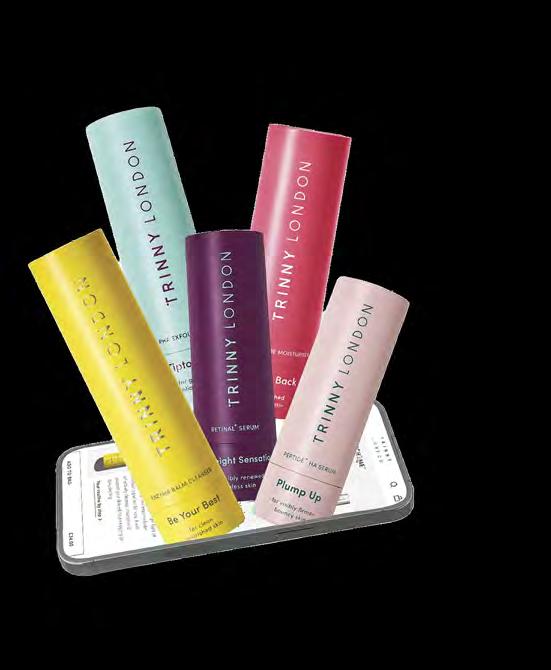
Trinny London Skincare
High-performance skincare from a global style authority
Style icon Trinny Woodall has built a global reputation on knowing what works — and her skincare range reflects that same philosophy.
While Trinny London is famous for its makeup stacks, the skincare is where the real magic happens.
The standout in my routine is the PM Retinol formula, which encourages healthy cell turnover to reveal brighter, smoother skin without the irritation often associated with traditional retinol products. After recently turning 36, it’s become a staple in my evening routine. Equally impressive are the peptide-infused serums, formulated to support collagen production while deeply hydrating the skin. Peptides are one of the most exciting ingredients in modern skincare, helping strengthen the skin barrier while improving firmness and resilience. The result is skincare that feels luxurious but delivers serious results.
Your new skin saviour: trinnylondon.com
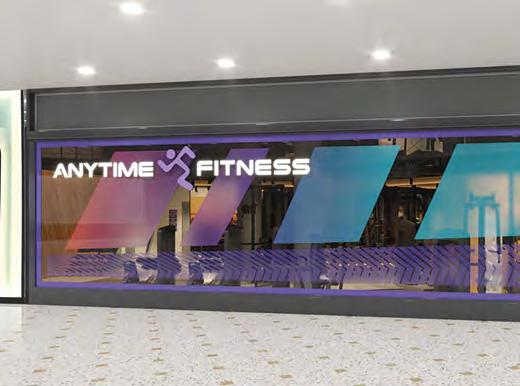
Anytime Fitness – Sydney International
The airport gym frequent travellers have been waiting for As a fitness devotee and frequent traveller, I didn’t think a gym opening could excite me — until Anytime Fitness opened inside Sydney International Airport.
For anyone who’s spent hours waiting for a flight or landed after a long-haul journey feeling stiff and jetlagged, the concept makes perfect sense. Reset with a quick workout before boarding, or decompress with a stretch and shower after you land. Even better, membership unlocks access to over 4,500 gyms worldwide, all open 24/7. For travellers, busy professionals and anyone with an unpredictable schedule, it’s one of the most flexible gym models around — workouts that fit around your life, not the other way around. Join the club: www.anytimefitness.com
WELLNESS STACK
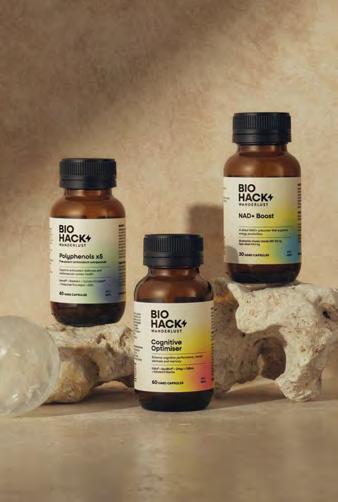
Wanderlust Supplements
Longevity support that works from the inside out
After turning 36, I’ve become far more intentional about how I support my body — particularly when it comes to skin, hair and longevity. That’s where Wanderlust Supplements comes in. This isn’t about fighting biology. It’s about understanding it — and giving your body the support it needs to thrive.
At the top of my stack is Hair, Skin & Nails, rich in silica, an ingredient widely studied for its role in collagen production and hair strength. Think stronger nails, healthier hair and that glow that starts from within. Next is Astaxanthin, one of the most powerful antioxidants in the supplement world. Known for supporting skin health and protecting cells from oxidative stress, it’s quickly becoming a favourite among those focused on longevity and skin protection. And finally, from Wanderlust’s award-winning Biohack range, NMN 500 High Strength — designed to support NAD+ production and cellular energy, helping the body maintain optimal function as we age. Three powerful additions to a routine designed to support longevity and radiant skin.
Experience the benefits: wanderlust.com.au
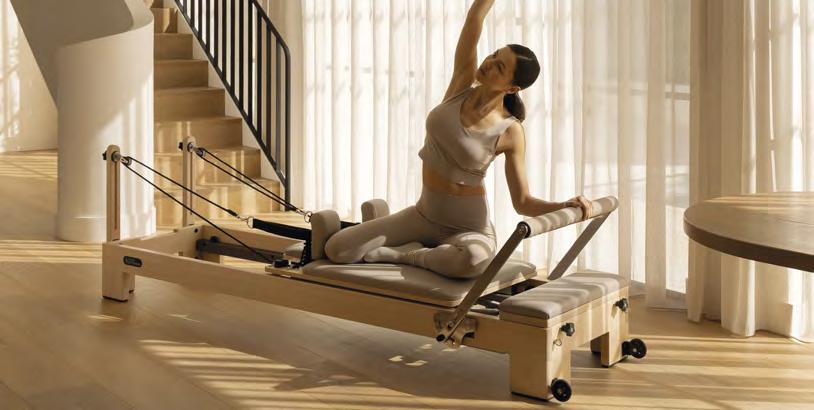
Your Reformer
The boutique Pilates studio — now in your living room
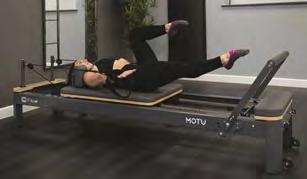
At-home Pilates — reformer bed and all — is a massive yes. While studio classes are fantastic, the reality is that life gets busy. That’s where Your Reformer steps in. The reformer bed pairs with an app offering over 1,000 on-demand classes, making it easy to strengthen your core, activate your glutes and build full-body strength whenever it suits your schedule. From quick 15-minute sessions to longer sculpt workouts, the variety keeps things fresh. The reformer itself is beautifully designed and comes complete with accessories including a Pilates ring, ball and dumbbells — essentially creating a boutique Pilates studio at home. The only challenge? Choosing which class to start with. Get yours today: yourreformer.com.au
LUXURY
Francesca Jewellery
Effortless Australian jewellery with everyday sparkle Effortlessly cool and undeniably chic — Francesca Jewellery strikes the perfect balance between accessible luxury and everyday wearability. These are pieces designed to elevate even the simplest outfit. The stackable rings are a standout, perfect for layering and mixing depending on your mood, while the earrings deliver just the right amount of statement. Even better, the brand is proudly Australian. What began as a small stall at Tasmania’s iconic Salamanca Markets has grown into one of the country’s most loved jewellery labels. Elegant, playful and endlessly wearable — the kind of jewellery you reach for again and again. Find your favourite: www.francesca.com.au
ACTIVE STACK
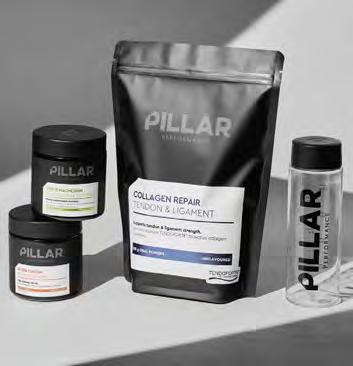
Pillar Performance
The golden three for strength, recovery and longevity
When it comes to performance and recovery, a strong supplement foundation makes all the difference.
My go-to trio from Pillar Performance is what I call the golden three: Creatine, Ultra Omega-3 and Collagen. Creatine supports both muscle performance and cognitive function, helping you train harder while staying mentally sharp.
Ultra Omega-3 supports brain health, heart health and inflammation control — something every active person benefits from. And Collagen supports muscle recovery, joint health and stronger hair, skin and nails. Simple, effective and powerful — the kind of stack that works as hard as you do.
Get your supplement stack: https://pillarperformance.shop/
PUBLISHER’S PICKS
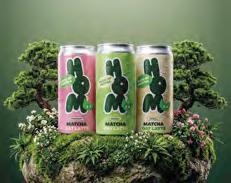
House of Matcha
House of Matcha is a premium matcha drinks brand founded by Va and Joy Barber Hua. House of Matcha is a ready-to-drink oat matcha latte that transforms an ancient ritual into a portable moment of clarity, focus, and calm
- a small daily ritual they’re excited to share with everyone.
Joy and Va’s goal is to make matcha feel modern, accessible and culturally relevant - less traditional tea ceremony, more clean caffeine for mood, movement and everyday life. The products included in the range:
• Ceremonial-grade Japanese matcha powder. Why matcha? It gives you a smooth, balanced lift thanks to L-theanine, an amino acid that works hand in hand with caffeine. HOM is made in Australia from 97% Aussie Ingredients using nothing but premium Japanese Matcha. A vegan-friendly, calm energy drink. Born in Byron Bay and manufactured in Brisbane, HOM drinks are made using 97% Australian ingredients.
All Saints
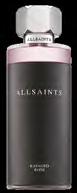
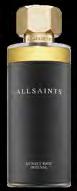
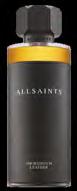
The All Saints fragrance trio collection captures effortless cool with unrivalled personality. Priced at $89.99 for 100ml. About the Collection:
• Sunset Riot – a warm, addictive blend of pink pepper, orange flower and creamy vanilla, inspired by golden-hour energy and late nights.
• Shoreditch Leather – bold and modern, combining leather, saffron and woods for a confident, urban edge.
• Ravaged Rose – a dark, contemporary rose with hints of pepper and musk, balancing softness with attitude. Available now at www.ultrabeauty.com.au
Miller Woman of The Year
Bec
“At the core of everything I do is watching women completely change their relationship with their bodies –and their lives.”
INTRODUCING OUR FIRST
Woman of The Year Winner BEC MILLER
Bec Miller has become a guiding voice for thousands of women learning to reconnect with their bodies, their confidence and their sense of self. Through her uplifting community and evidence-based nutritional guidance, she has created a space where women feel supported, inspired and empowered to approach health with compassion rather than pressure. What began as a mission to help women feel stronger in their own skin has grown into a remarkable membership platform now thousands of women strong — a powerful community built on encouragement, education and lasting wellbeing. Bec’s work is not just about transformation, but about guiding women to build a lifelong, positive relationship with their bodies. An inspiring leader and a truly deserving first Women’s Fitness Woman of the Year.
Bec, what drives your dedication and commitment?
At the core of everything I do is watching women completely change their relationship with their bodies – and their lives. Seeing a woman go from bloated, frustrated and stuck to confident, energised and in control of her health never gets old. The physical results are incredible, but it’s the emotional shift that drives me even more. When someone tells me she finally feels comfortable in her clothes again or has found freedom from the dieting rollercoaster, that’s what fuels me. I know that feeling personally. Before becoming a nutritionist, I struggled with severe bloating, gut issues and unexplained weight fluctuations. I tried every diet and protocol I could find, but nothing addressed the root cause. Instead, I felt inflamed, exhausted and disconnected from my body. When I finally learned how to nourish myself properly – supporting my gut, balancing my blood sugar and working with my hormones –everything changed, physically and mentally. I realised health isn’t about punishment. It’s about understanding how your body actually works. That experience is why this work is so personal to me and fuels me daily to help others. Helping women slim down, reduce bloating and feel free around food is what keeps me committed!
What is different about your approach
– why are your women successful?
For years, women have been told that shrinking their bodies requires shrinking their meals. But this is exhausting, and it rarely lasts. I take a more strategic approach.
Fat loss ultimately requires a calorie deficit, but the way I create it is different. I teach women to lower calories in a way that keeps them full and satisfied – prioritising protein, fibre and what I call “volume eating,” where meals are bulked up with low-calorie vegetables so portions feel generous, not restrictive. At the same time, I focus heavily on optimising gut health and stabilising blood sugar, because weight balance isn’t just about numbers. Chronic bloating, constipation, stress and hormonal imbalances can all block progress if they’re not addressed. Education is central to everything I do. When women understand how their body actually works, they stop blaming themselves and start making empowered, sustainable choices. The result is controlled calories without feeling deprived, improved digestion and fat loss that feels achievable rather than extreme.
Talk us through your business?
I am the founder of Health with Bec, an online nutrition platform dedicated to helping women lose weight and optimise their gut health - without restrictive dieting or hunger. What started as me sharing my own journey and recipes online has grown into a global community of women.
My signature program, the 3 Week Body Reset, is designed to reduce inflammation, support gut health and kickstart fat loss in a sustainable way. It gives women a clear structure – what to eat, how to build meals – while educating
them so they understand why it works. Then comes the Health with Bec Tribe, an ongoing membership where women continue their journey beyond the Reset with new meal plans, coaching support, education and community accountability. This is where long-term, sustainable weight loss and transformation really happens. I also host the Body Bites with Bec podcast! Here, I empower women with practical, evidence-based advice they can apply immediately. Behind the scenes, I’ve built an incredible team who share the same mission – to simplify nutrition and make women feel empowered rather than overwhelmed. Everything I create is designed to be realistic, educational and supportive. At its heart, my business is about giving women clarity - there’s so much noise in the health industry. My goal is to provide a clear, science-backed path that actually works.
Talk us through a day in the life?
No two days look the same, which I love! Every day is a mixed bag of tasks. I’m either recording a podcast, creating new resources for my members, mapping out coaching calls or refining my programs to make them even more effective. I spend a lot of time brainstorming with my team – developing recipes, planning content and thinking of creative ways to reach more women who feel stuck in the dieting cycle. There’s also lots of strategy and future planning happening behind the scenes. And I’m constantly learning, especially when it comes to using new tools and AI to streamline processes and improve efficiency in my team. I wake around 6am, sip my coffee and eat a small breakfast while watching the sunrise in stillness. I use that first quiet hour or two for focused work before heading out for a walk with my dog and a gym session. I then work through until late afternoon, go for another small walk and cook something nourishing for dinner. Then, it’s always lots of netflix and all notifications off to properly switch off from the day It’s a busy life, but it’s one I’ve intentionally designed to balance my ambition with wellbeing and keep me grounded!
If there is one message you want every woman to hear, what is it?
Put yourself first – and don’t apologise for it! So many women believe prioritising their health is selfish. They put everyone else first and squeeze themselves in last. But
3 NONNEGOCITABLES FOR YOUR OWN SELF CARE?
1
Movement. Training and walking daily keeps my mind clear, my stress under control and my energy stable. It’s as much for my mental health as it is for my body! It truly helps me feel so grounded for the day ahead.
2
Nourishing meals. I practise what I teach. Balanced, satisfying meals keep my blood sugar steady, my cravings low and my focus sharp.
3
Alone time to recharge. I protect my time to switch off – it’s essential, especially as someone who’s a mix of being an introvert and extrovert!
Most weeknights I’m on the couch with Netflix, and on weekends I make sure I have at least half a day with no plans at all. That space helps me reset so I can show up fully.
when your health isn’t a priority, everything suffers – your energy, confidence, relationships, career and mental wellbeing. Health isn’t a luxury. It’s the foundation. When you feel strong and confident in your body, you show up differently in every area of your life. I encourage women to be “selfish” in the best way – invest in your health, protect your time and make space for yourself.
What’s coming up for you?
The biggest thing on the horizon is the launch of my app, which I’ve been developing for nearly three years.
It’s easily the most challenging project I’ve taken on. Building something that truly aligns with my philosophy while making it simple, effective and accessible has stretched me in every way. But I’m incredibly proud of what it’s becoming. The app will bring everything into one place – structured guidance, education, recipes and ongoing support – designed to help women achieve sustainable results without confusion. Beyond that, I’m continuing to refine my programs, expand my reach and find smarter ways to deliver impact at scale.
What’s your morning mantra?
I don’t really have a set phrase, but I do constantly ask myself one question: “Is what I’m about to do aligned with the woman I’m becoming?”
I try to make decisions that move me closer to my long-term vision. It keeps me intentional and disciplined. And it keeps me growing!
Anything else to share?
Winning this award is such an honour, but what means the most to me is the impact behind it. Every message from a woman who feels confident in her body again, every story of someone breaking free from years of dieting, every shift in mindset – that’s what this is really about.
I truly believe women are capable of so much more than they realise. When we feel strong and energised in our bodies, we think bigger, act braver and stop playing small. If my work has shown women anything, I hope it’s this – you are not broken, and you are not behind. With the right support and the right approach, change is always possible. Connect with Bec!
www.healthwithbec.com @health_with_bec
“I truly believe women are capable of so much more than they realise. When we feel strong and energised in our bodies, we think bigger, act braver and stop playing small.”
Sally O’Neill Expert Of The Year
Our Expert Of The Year SALLY O’NEILL
Sally O’Neil is one of Australia’s most respected voices in nutrition, known for her ability to translate complex science into practical, empowering guidance for everyday life. As a nutritionist, author and educator, she has dedicated her career to helping people build a healthier, more balanced relationship with food. Through her nourishing recipes, evidence-based insights and refreshingly grounded philosophy, Sally has inspired thousands to move beyond diet culture and embrace food as a source of vitality, enjoyment and long-term wellbeing. Her work beautifully bridges science and simplicity, making healthy living feel achievable, sustainable and deeply rewarding. A trusted expert, inspiring educator and powerful advocate for a more positive approach to nutrition — a truly deserving Women’s Fitness Expert of the Year
What drives your dedication and commitment?
Watching high-performing women blame themselves for biology. I was one of those women… guilty as charged. We’re often quick to blame ourselves before we ever look at the data. The women I work with are intelligent, capable, accomplished. They run businesses, households, and teams. Yet when their bodies change in their late 30s and 40s - when estrogen shifts fat distribution, energy dips, sleep fragments, and cravings increase and they assume they’ve “lost discipline.” What’s actually happening is physiology. Hormones change. Insulin sensitivity shifts. Stress tolerance narrows. Muscle mass declines if we don’t train intentionally. Meanwhile, most women are still following advice designed for 25-year-old fitness competitors. My dedication comes from closing that gap.
What is different about your approach
- why are your women successful?
Most programs focus on motivation. I focus on structure and personalisation.
The Status8020 Method™ is built on three pillars: accountability, sustainable nutrition, and appropriate movement. Remove one and results don’t last. My clients succeed because we remove guesswork and use data including blood work, body composition, sleep, stress,
digestion - without dismissing symptoms just because labs fall within “normal” ranges. We design the plan together. This isn’t a templated prescription; it’s a strategy built around real life including school runs, board meetings, travel, caregiving. When a plan respects both physiology and schedule, adherence becomes natural rather than forced. The deeper work is identity. Many high-performing women believe they’re inconsistent or hormonally “broken.” When we replace that narrative with clarity and competence, change becomes sustainable. The framework is simple: 80% whole foods, 20% soul foods, lift heavy, regulate stress, protect muscle. The goal isn’t extremes - it’s building a body that works with a woman’s life, not against it.
Talk us through your business.
I often joke that I’m a “slashy” entrepreneur: Clinical Nutritionist slash founder slash author slash photographer slash product developer. It sounds chaotic, but every part connects. I’m the founder of Status8020™, a women’s health transformation platform for women aged 30 and over. I combine clinical nutrition, functional pathology interpretation, body composition analysis, intelligent strength training, and nervous system regulation into one cohesive strategy that’s both science-led and practical. My clients aren’t handed generic meal plans or told to rely on willpower. We build personalised systems that align with their hormones, schedules, families, and careers. Before Status8020™, many knew me as The Fit Foodie. I’ve released three cookbooks (the latest in February 2026) and worked as a commercial food photographer, contributing to three New York Times bestselling covers. Food has always been central to my philosophy. Sustainable transformation doesn’t happen without meals that are practical, delicious, and repeatable.
I’m also an investor in Hivita, an evidencebased supplement company, where I contribute to education and strategic direction, helping shape conversations around formulation integrity and responsible supplementation. My current focus is co-founding Intelligent Dose™ - a world-first creatine coffee blended with supportive cognitive ingredients, designed to enhance mental clarity, productivity, processing speed, and memory within a ritual we already know and love. Productivity isn’t about doing more; it’s about thinking clearly and executing effectively across long, demanding days. We launch in May, and the waitlist is open at www. intelligentdose.com.au. You can follow @ intelligentdose to watch the build.
Talk us through a day in the life?
My weeks are structured deliberately because structure creates freedom, especially for a brain that runs with 10,000 tabs open. Mondays are clinic days: reviewing pathology, body composition scans, refining personalised strategies. Tuesday, Thursday, and increasingly
3 NONNEGOCITABLES FOR YOUR OWN SELF CARE?
1
Strength training. Muscle is metabolic currency. Lifting protects my hormones, my confidence, and my long-term health. Sleep. Early wind-down, magnesium, consistent bedtime. Recovery isn’t optional — it’s foundational.
2
If there is one message you want every woman to hear, what is it?
You are not broken, you’re just under-supported. The changes women experience in their 30s and 40s are physiological, not a failure of discipline, and they require an evolved strategy rather than more restriction. When women build intelligent systems around their hormones, muscle, sleep, and stress, everything shifts - not just their bodies, but their confidence and capacity.
What’s coming up for you?
My third cookbook, Meal Prep Made Easy, has just launched, which feels like a full-circle moment - bringing practical, sustainable nutrition into even more homes. Now my focus shifts to building a major launch for Intelligent Dose™. We’re refining the welcome pack, finalising the website and app integration, and working through the operational details to ensure the launch is seamless and scalable. Having an amazing formula is one thing; execution and marketing is another! I’m deeply focused on building it properly from day one. It’s such an exciting project.
TAKE SOLACE
Resident Women’s Fitness Sleep expert Olivia Arezzolo, shares her experience with infrared saunas and the benefits to sleep and general wellbeing.
Can an infrared sauna really help you sleep better?
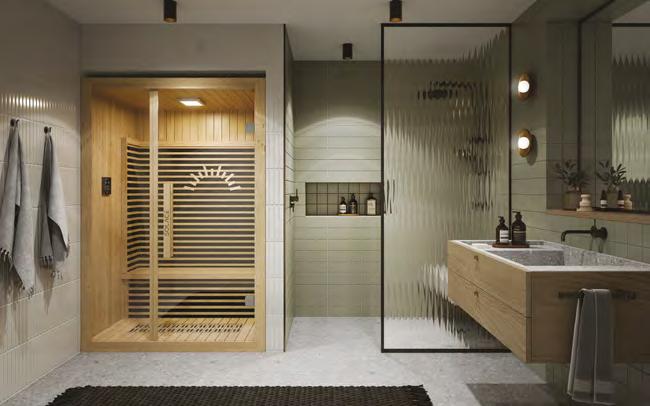
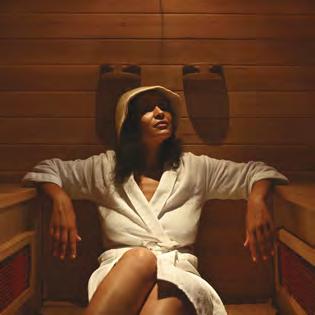
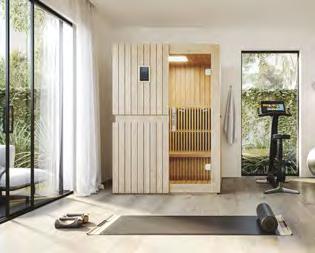
Infrared saunas are popping up all over the place - and as a leading sleep expert, I couldn’t be happier. Renowned for their benefits upon relaxation, detoxification and skin; another huge benefit is sleep - think falling asleep faster, sleeping deeper, feeling more refreshed upon waking. While this is supported by science, personal experience is equally - if not more - valuable. Needless to say, when premium, boutique Melbourne based brand Solace Sauna approached me to trial their range - I was stoked. Because I have been curious too: can an infrared sauna really help you sleep better? Let’s find out.
What the science says:
First, with your body working harder than normal to maintain a stable temperature, you naturally feel tired. Second, as your body instantly cools down when you emerge from the warm sauna to a cooler bathroom, this catalyses sleepiness hormone melatonin - again, increasing fatigue. Next, clinically demonstrated to reduce stress hormone cortisol, infrared saunas can help you sleep better from this aspect too - this can otherwise contribute to 3am wakings and light, unrefreshing sleep. Similarly, as noted in a 2015 Japanese study, infrared saunas can reduce anxiety and fatigue - two factors which can lead to sleeplessness. Important to note here though that these benefits were only found when used consistently - the sessions were 15 minutes, 5 days a week, over 4 weeks.
Lastly, as infrared sauna’s increase blood flow and circulation, sleep promoting nutrients like magnesium, and oxygen, are distributed with greater ease - increasing overnight recovery and following day energy.
My personal experience:
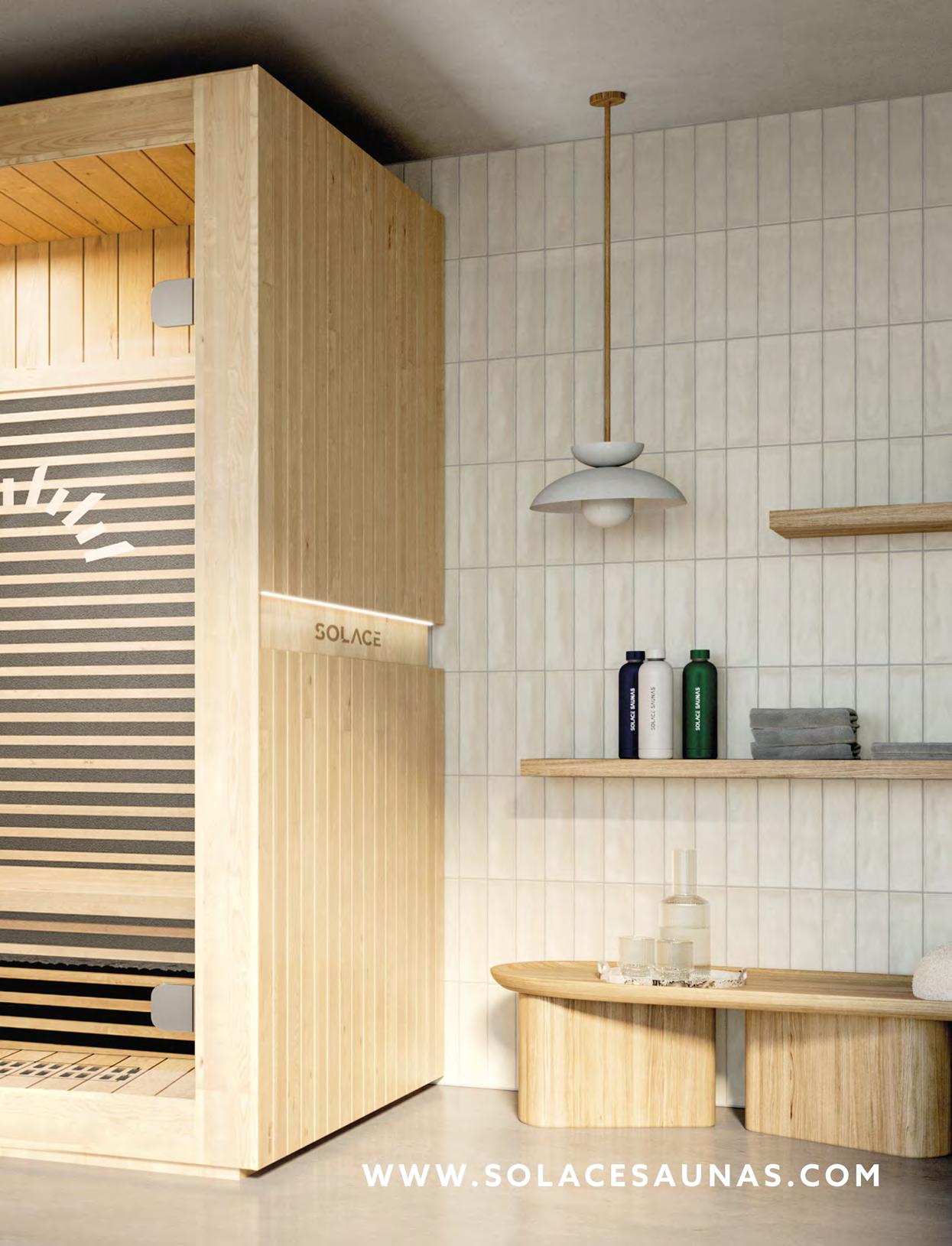
First thing is that Solace Sauna is no normal infrared sauna - designed with exclusive crystal carbon heating panels, the heat feels… different. Lighter. Breathable. Even… enjoyable! Compared to previous sauna experiences, where I’ve felt like I am about to combust at any given moment, this is a welcome change. And while I have been eager to try infrareds, I have been wary due to their typical high EMF emission - which I do not recommend, by any means.
Fortunately though, Solace Sauna’s are again, different here - with their bespoke design, they have a near zero EMF rating (the best possible) - so they can be part of your regular nighttime routine. And lastly, the results - as indicated by science, I too found that: yes, I was able to fall asleep faster; yes, I was able to sleep deeper; and yes, I was waking up more refreshed. Couldn’t recommend more.
Solace Sauna is kindly offering our Women’s Fitness community 10% off their infrared with the code WF10head to www.solacesauna.com.au now.
IS LACK OF SLEEP
Ruining Your Sex Life?
A thriving sex life — what we all crave, yet often don’t get. We blame busy schedules, stress and time constraints. All completely valid. However, there’s one factor that is often overlooked — and it can absolutely make or break your sex life: sleep.
The problem is, we’re simply not getting enough. And the issue becomes even more noticeable in the warmer months. Research commissioned by Shark found three in five couples struggle to sleep well during summer, while 59% say they have skipped or would skip bedtime intimacy due to heat and poor sleep.
Let’s unpack this together - both the biology behind sleeplessness and our sex life, and the practical, actionable and achievable solutions you and your partner can implement, starting tonight.
How Lack of Sleep Impacts Your Sex Life
More than ‘just not being in the mood’, lack of sleep biologically hardwires us to avoid having sex.
Elevated levels of cortisol, our primary stress hormone, mean we are more reactive, impatient and mentally drained. Minor concerns become major catastrophes, and we are prone to irriation, arguments and disagreement - hardly the conditions for making love. At the same time, sleep loss can reduce levels of oxytocin, the “love hormone.” Oxytocin plays a key role in affection, trust and emotional closeness between partners. When levels drop, feelings of connection can weaken.
Lastly, lack of sleep impairs cognition - our prefrontal cortex is impaired, leading to difficulties focusing, making decisions and regulating our emotions. Again, here, we are biologically hardwired against being intimate, and rather, we look for opportunities to validate our stress, as a confirmation bias. Often, partners are in the firing line - day and night.
Why It Gets Worse in Summer
The research by Shark also found 4 in 5 couples sleep apart and they spend an average of 92 nights apart - highly likely to be the warm summer nights, when sleeping together is even more difficult. Not just personal preference, to produce our key sleepiness hormone, melatonin, we require a 0.5-1 degree drop in core body temperature. Without this drop, we do not receive the biological signals to fall asleep. Similarly, through the night, if we overheat, we see spikes in cortisol, leading to lighter, broken and unrefreshing sleep.
Cooling bedding isn’t enoughespecially when stressed, we can see sharp temperature elevations around 3am, 4am, 5am, and if our bedroom temperature is also warm, we don’t have the capacity to cool down. Conversely, a cool room, if we overheat, allows heat to dissipate, and our core body temperature to cool down too - enabling us to return to sleep with greater ease. For couples, it’s even more complex - we often have different core body temperature levels, meaning one partner can be warm, the other, cool. As a result, a cool room becomes even more important, in the case that one does overheat and requires rapid cooling.
How to stay cool - and connected - all night long
Use a fan - not air con
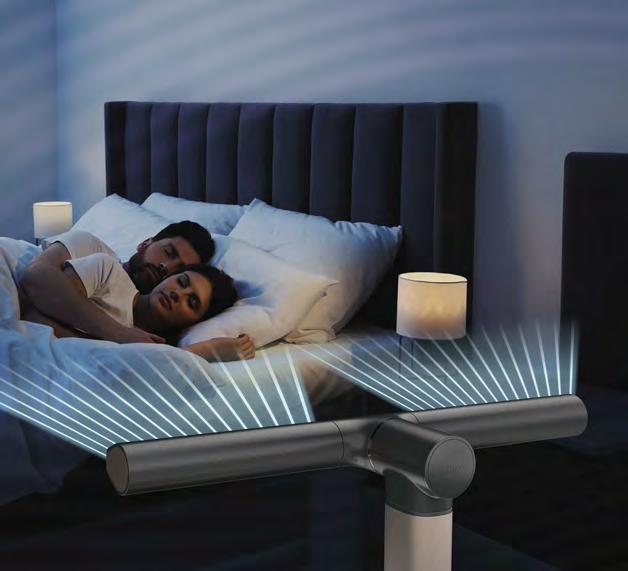
Air con seems the easy solution. However - aware of the expense and current budget considerations for almost all couples, keeping air con all night could be a hidden source of stress - even if it’s not said aloud. A fan though? Inexpensive and effective - perfect. That said, the fan must be quiet and evenly distribute airflow, as to ensure sleep quality for both partners. Highly recommended here is Shark’s TurboBlade fan, (https://sharkclean.com.au/) specifically designed to distribute airflow evenly, and provide a subtle background hum.
Take a warm evening shower
Sounds counterintuitive, but stay with me - a warm shower before bed heats you up, yes, however, when you move into the cooler bathroom, you rapidly cool down. This is the exact cue for melatonin production, sending a biological signal that it’s time to sleep.
Avoid thermogenic activities 3 hours within bed: eating and exercise
Large meals and vigorous exercise increase thermogenesis, meaning the body produces more heat. When this occurs close to bedtime, it can delay the body’s ability to cool down and fall asleep. Finishing intense exercise and larger meals at least three hours before bed can help the body prepare more effectively for sleep. The only exception here? Sex. Even if vigorous, because of the potent release of stress reducing hormones, while it does heat us up, the benefits outweigh the negatives - so don’t worry at all about that exercise. Improving your sex life doesn’t need to be complex. Start with sleep. When the brain and body are properly restored, stress falls, connection deepens and intimacy becomes effortless again. It’s not luck — it’s biology. And prioritising sleep may be one of the smartest relationship strategies you can make.
With 500+
on The
au, Body and Soul and more, 300+ keynotes with IKEA, Samsung, Audible, Medibank and more, and an bestselling book in 10 countries; Olivia is on a mission to help you use sleep as a strategy: for performance, leadership and longevity. Connect with Olivia on instagram@oliviaarezzolo
Written by Olivia Arezzolo, Australia’s Leading Sleep Expert and Keynote Speaker.
media features
Today Show, The Morning Show, News.com.
Lisa Curry
BECOMING THE SHE-EO OF YOUR OWN LIFE
Being the SHE-EO of your life means taking complete responsibility. You have to be the visionary, decision-maker and leader of your own wellbeing. It’s about setting boundaries, investing in growth and owning your choices. You don’t have to wait for permission from anyone to do what you want to do, be who you want to be, and go where you want to go. You don’t need to shrink to fit in. Finding your own courage, clarity and compassion helps to lead yourself.
PHOTOGRAPHER: PAULA BRENNAN
Was health and fitness important to you growing up, and how has your fitness philosophy changed over the years?
Sport and fitness was my life growing up, always in the water or on the water doing some kind of activity. Winning, losing, always trying to be the best I could have been. I swam for 23 years, and then paddled outrigger canoes for another 20 years, my team winning the 72km World Championships four times, and I was the first Australian to win the one man 66km solo race. So my fitness was always very good. My work ethic, mindset, goal setting and time management was always spot on. After that I became a personal trainer and coach so I learnt so much about women, what they need, when they need it and how to get the best out of them. I’m so grateful for all of that and the impact it had on my career and life. My fitness has had many evolutions over the years moving through my professional career, pregnancies, hormonal changes and menopause, I’ve been through it all. But my health and fitness have been a true constant in my life that I’ve always come back to, no matter what.
Tell us about your four pillars of health I always tell people that it’s important to look after yourself –
SELF = Sleep + Exercise + Lifestyle + Food
If you follow my four pillars of health, you can start to feel so much better and you’re likely able to cope with whatever challenges are thrown at you. Each day ask yourself these four questions:
S - What was my sleep like last night? If you’re experiencing hot flushes like I used to, they’re NASTY! Our Happy Hormones product will be your best friend, trust me.
E - Have I exercised enough today? Movement is the best way to improve your mental health, just a simple walk around the block can give you a fresh hit of endorphins!
L - Do I have a lifestyle that I love? Spending time around people that you love and enjoy spending time with is so important. You mould into those that you spend the most time around! Remember that! Look at your work, where you live, what you do –are you living a life that you love?
F - Have I eaten food that gives me energy and vitality today?
Food is medicine. You can use it to either heal or harm you. I understand all too well how difficult your diet becomes as you transition through menopause, utilise all of the fantastic meal plans and programs on our website at Happy Healthy You. If one pillar is neglected, the others have to compensate. But when thought about and actioned together, they can create sustainable long-term health, not quick fixes or extremes.
How did these pillars come about for you?
I’ve worked with women for a very long time since I started coaching 30 years ago, and menopausal women and women’s health experts for the last 12 years, this is my world and one of my biggest passions. Understanding the pain points and struggles of women in this stage of life, along with the clinical expertise of my team, I formulated these simple focus pillars. It can feel overwhelming out there and I love to make things simple and achievable for women. These pillars were also shaped
through burnout, hormonal shifts and trial and error. When perimenopause hit, what once worked stopped working. I had to rebuild from the foundations up. Research, lived experience and coaching thousands of women confirmed it: sustainable health requires a holistic, integrated approach. And…. CONSISTENCY.
You often speak about the “relay of life”, tell us about that. I love to relate things back to sport, and I really see our hormonal journey as the relay of life. We start at puberty, passing the baton onto our next self in our reproductive years, then perimenopause and then moving through to menopause and post menopause. There is so much that women carry through each of these chapters and we can positively come to the finish line with incredible wisdom around the magic that our hormones offer us throughout our life. The finish line is how well we truly live into our last third of life – from 60 to the end… not just exist but truly live.
Tell us about Happy Healthy You How did it come about, what is your back story with this?
Happy Healthy You was born through my own desperation, deep within my own perimenopausal struggles. Just ask my husband at the time! It was a deep and dark place and I didn’t want women to feel confused and alone like I did. Happy Healthy You is a dedicated women’s health platform that supports women through every hormonal chapter of their lives. With over 1.5 million women having completed our online hormonal assessment, we take a personalised, whole-body approach to women’s wellbeing — removing the shame, guilt, and stigma that so often surrounds hormonal health. Currently there are approximately 3.2 million women who are going through peri -menopause and menopause at the moment, and I want them to know that they’re not alone, and we are here for them. I also want to reinforce that these changes they are all experiencing are a natural transition, it’s biology, it’s what your body is meant to be doing, so work with your body, not against it. Our expert team of Nutritionists and Naturopaths provide tailored one-on-one support, complimented by a warm private
Facebook community where women can ask questions and feel truly heard. We also offer a range of TGA-approved natural supplements designed to support hormonal balance, energy, gut health, liver function, and overall wellbeing — making it a true one-stop shop for women wanting to thrive. www.happyhealthyyou.com.au (http:// www.happyhealthyyou.com.au)
What do you wish women knew about menopause / peri menopause?
I wish they knew that they didn’t have to struggle alone. There is support out there and there are things that can be done to manage symptoms. Our Practitioners are available 7 days a week to support women through the chat section of our website and also in the Happy Healthy You private Facebook community. I want women to know that being female is an honour. Females at all stages of life are extraordinary. We create life, and then carry families, careers, expectations, grief, joy, trauma, ambition, love – often all at once. We show up for everyone else, even when we are running on empty. We are strong, extraordinary, efficient, kind, and we matter. Yet, we still quietly question ourselves.
Do you have a morning routine that you swear by?
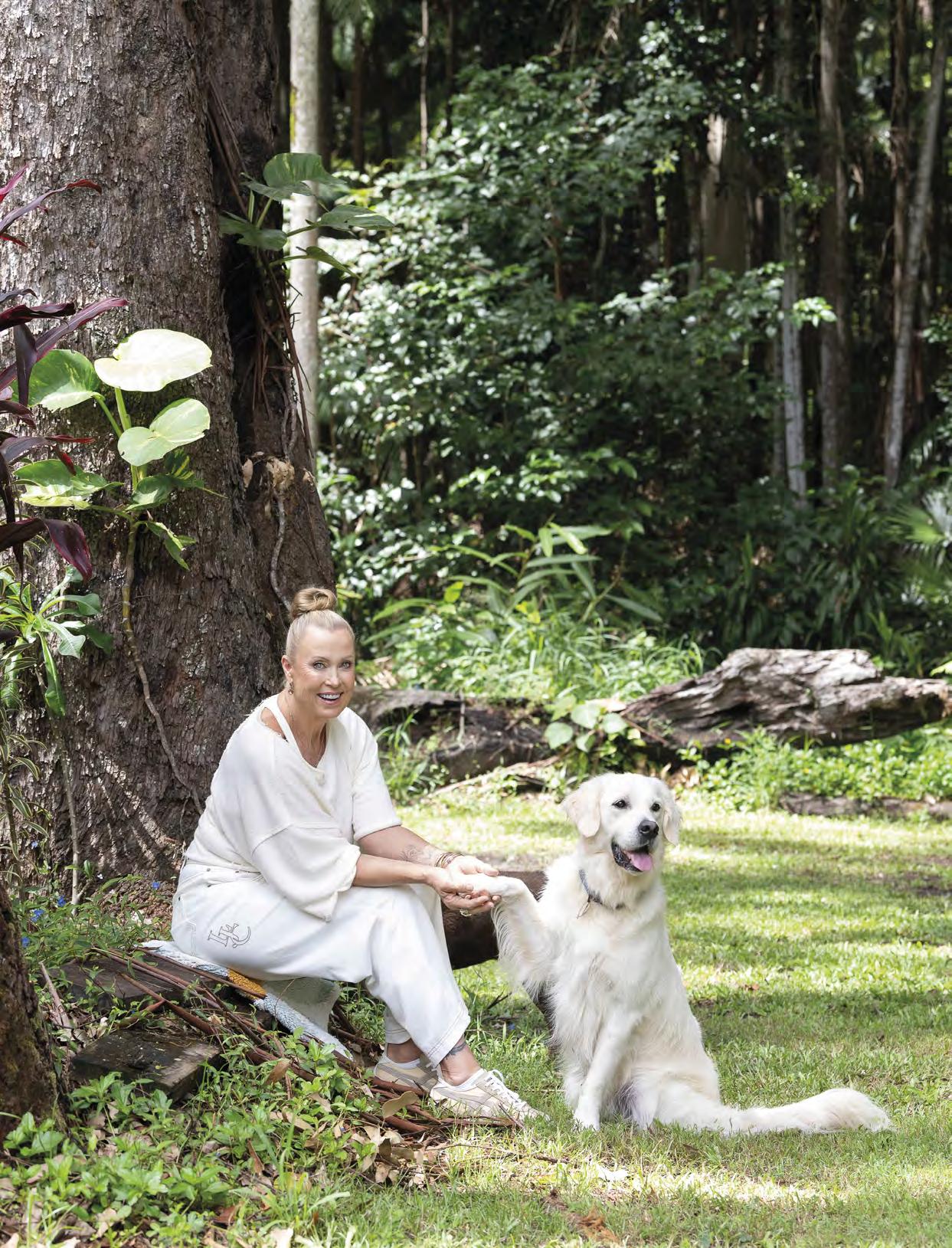
Yes. I wake early usually by natural sound, the kookaburras, if I have to wake for a plane , it’s by an annoying alarm on my phone ( I need to change it because it’s not a relaxing wake up !) i spend a couple of minutes activating muscles in my feet and legs to get the blood flowing. Usually the dog is on the end of the bed as she comes in with the kookaburras so I give her a rub and pat. I hydrate with warm water and fresh squeezed lemon juice, and then fill my drink bottle with our MSP, Happy Collagen and Happy Digestion products which assist with pain, recovery, skin and gut health. Then I make a nice coffee and go outside to get sunlight on my face and body and then gently move my body—often a 20 min walk around our property, picking up fallen tree branches and sticks and take them to the fire pit to burn later. Our dog Mali loves this routine too, dropping a ball in my path so I have to throw it of course. Or I go into my new wellness room and do 10
minutes of morning mobility. I’ve been very conscious lately of not picking up my phone until after breakfast. I had a bad habit of scrolling as soon as I woke up but realised all that could wait.
I prioritise protein at breakfast, my favourite breakfast is eggs of any sort on toast with Vegemite!
A few quiet minutes of writing my list of the most important things I have to do today.
My morning routine now sets the tone before the world makes demands of me.
Talk us through your weekly training routine.
I aim to stay active where ever I can, taking Mali on beach walks and working around the backyard doing lots of yard work on our property.
I like to train 3-4 times a week starting the session with 10-15 minutes of cardio and then having a larger focus on strength training for my bone health and muscle tone. 30 minutes of strength work is a good amount for me, then I finish off with 10 minutes of stretching. I’ve just started back at my favourite gym, Fernwood at Maroochydore, so now I feel better being around like minded fun, fit and healthy women. I just had a full body scan and I’m happy to report my muscle mass is very good, and it gave me a score of 79/100. So now I know where I am, and have all the figures, I know where I want to go. I’ve had many years away from the gym for many personal reasons, but I feel ready now to get back into it. You have to feel ready. You can’t force it.
Everyone has a great body, it’s just covered in a layer of “lifestyle”!!
That’s what I’m addressing that at the moment!
How do you stay motivated on days when you don’t feel like working out?
I often think when lacking motivation about how I want to feel as I get older. I want to be able to get up and down off the floor easily, I want to be able to run around with my grandchildren and have fun. These are big motivators for me!
I don’t rely on motivation; I rely on commitment and consistency. I remind myself how I want to feel afterwards. I remind myself that “nothing changes if nothing changes“, and that “strong women stay young”. I reduce the time barrier—ten minutes often turns into more. Discipline
The finish line is how well we truly live into our last third of life — from 60 to the end… not just exist, but truly live.
” “
Everyone has a great body, it’s just covered in a layer of ‘lifestyle’! That’s what I’m addressing at the moment.
” “
builds confidence. Some days are lighter, but consistency beats intensity when building lifelong health. My mantra is: Get Up, Dress Up, Show Up, Never Give Up.
If you’re not in activewear at the gym, where can we find you and what are you most likely to be doing?
I love gardening, being outside on the ride on mower is a place of bliss and serenity for me! I don’t need to think about anything else except making beautiful lines in our lawn. Then you’ll find me in my office on my computer working. Taking Mali to the beach in my pink Kombi, at a café with a delicious double shot mocha or immersed in learning, reading my old university textbooks. Outside of that, you’ll find me at a gig with my husband, running retreats, or with family… running around with my gorgeous grandchildren is one of my biggest joys.
I love personal development podcasts and meaningful conversations. I only
follow people or accounts on social media that really interest me.
Downtime matters for me. Being able to relax my mind is what allows me to keep going. But there are days when I can’t keep going and I recognise those days are just take a day off. No phone, no meetings. No nothing and I just do whatever the heck I want. I have a small tribe of really good friends and that’s all I need.
We often catch up for coffee and I always say a $5 coffee with your friends is better than any counselling!
We live in an age of social media where people have more access than ever to our lives and are quick to judge. How do you handle negative comments or criticism online and in real life?
I became great at blocking out external noise as an athlete in the public eye, doesn’t mean that it doesn’t get to me at times, but my health being in a good place allows me to stay strong mentally.
I filter feedback: Is it constructive or a reflection of their own insecurities?
I’m a very open person because I know that what I say helps others, but I do have boundaries to protect my peace. I certainly don’t engage with trolls anymore, I used to but it was so hurtful I had to learn to ignore it. People can be really cruel.
My mission matters more than opinions. In real life and online, I lead with honesty and integrity. Not everyone is my audience, and that’s okay.
What self-care strategies do you use to maintain positive mental health?
My pillars. Sleep, Exercise, Lifestyle & Food. Oh and Happy Hormones! Mark, my husband, calls these my Happy Pills!
Strength training is like an anti depressant. If you don’t believe me, try it.
I prioritise sleep, and time offline. Honest conversations with trusted friends keep me grounded. I protect my calendar from overload. Self-care isn’t indulgence; it’s maintenance and welcomed and needed recovery. When I’m regulated and rested, I lead better. If you can’t lead yourself, how can you lead others?
What’s a fitness myth that you wish would go away, and why?
That cardio in menopause and post menopause is the answer to weight loss. There’s so much more than an energy in and out concept at play when the body is transitioning through menopause. Strength training is absolutely imperative for maintaining muscle mass and bone health. And the myth that more is better. That used to be me but I’ve learnt from it. More cardio, fewer calories, longer workouts. Nope. Especially for midlife women, that approach backfires hormonally. Muscle is protective. Rest is productive. Sustainable results come from strategic training and adequate fuel, not chronic depletion or punishing routines.
What is your approach to nutrition?
How do you maintain balance and still enjoy your favourite foods?
A nutrition concept and philosophy we talk a lot about with our customers is JERF. Just Eat Real Food. We really don’t need to complicate things when it comes to our diet, if we focus on this simple principle we’ll be doing a good job most of the time! Also my longtime Personal Trainer always reinforced to me “protein and greens keep me lean”.
“
I don’t rely on motivation; I rely on commitment and consistency. I remind myself that ‘nothing changes if nothing changes,’ and that ‘strong women stay young.’ ”
So those 2 statements keep me focussed.
The most important factor of all is to stay CONSISTENT! Whether it’s taking my supplements, training, eating or sleep habits. It’s never about just doing one thing part of your life right. It’s about doing all of it.I use the 80/20 rule. It’s what you do “most of the time“ that matters. I love a good fish and chips or a sausage roll. But I have them every now and then and not all the time.
Protein, whole-foods, fibre-rich and dark chocolate is my norm. I eat to support muscle and hormones. I don’t label foods good or bad.
I enjoy social meals and treats. I do a 72 hour fast once a month. The first one was challenging but after that it was easier. I do it to initiate autophagy and mitophagy.
Restrictions of certain foods fuels obsession so I allow myself to have a little of what I like whenever I like.
What’s your go-to treat?
Dark chocolate and good coffee— simple and satisfying. I enjoy it without guilt. Pleasure is part of a healthy life.
When your foundations are solid, treats enhance balance rather than spoil it.
Who inspires you?
Women who rise through adversity and choose growth over bitterness inspire me. Leaders who speak truth with courage. Everyday women doing brave things quietly. My community inspires me constantly; their resilience reminds me why I do this work.
You’re working out in the gym – what are you listening to?
LOL. The Bee Gees - every time!! If I’m stretching or relaxing, then it’s Eva Cassidy. It depends on the session really. Bit of ELVIS is always fun too!
Reflecting on your whole journey to date, what are you most proud of – personally or professionally?
I’m most proud of evolving publicly. I’m still here and still relevant after 40 years of being in the public eye. I’ve reinvented myself when life changed. I learnt what to do when my body changed
instead of quitting. Professionally, building a community that truly helps women thrive means everything.
I love women. Women are totally extraordinary and each woman matters. She is loved and appreciated. Personally, showing strength, honesty, integrity and self-respect for my family and grand-children feels like the greatest achievement.
What is the best piece of advice you’ve ever been given?
“Depend on yourself”
I heard this when I was 16 and have lived by it ever since. If you want something, you have to make it happen, no one is going to do it for you.
Even when it’s uncomfortable. Especially when it’s uncomfortable. When the sun doesn’t shine and no one is watching, who are you?
Confidence isn’t the starting point; courage is. Waiting to feel ready keeps you small. Growth lives just outside your comfort zone.
Train Your Brain
“Were you dropped on your head at birth?” is a common insult used to imply that a person is acting foolishly. It suggests that the person’s poor judgment is the result of a, usually hypothetical, early childhood head injury.
BUT THIS WAS MY REALITY.
By: Livologist, Olivia Fletcher
At 18 hours old I was dropped on my head from my hospital bed. I sustained a fractured skull and a subdural haematoma. Doctors prepared my parents for my death. And if not death, long-term effects – learning difficulties, motor skill problems or epilepsy.
So yes… if you’ve ever met me and thought, “She’s special”, now you know why.
But somehow, I survived. I believe my life was spared for a reason and I decided my survival wasn’t something I would waste. And that’s where the training began, not only training my body but training my mind. It made me wonder why we put so much pressure
on perfecting our bodies, yet rarely invest the same care into our minds.
We spend hours training our bodies. Lift heavy, but don’t look masculine. Run fast, but don’t lose your curves. Grow your glutes, but starve yourself so your abs pop.
We’re taught how to tolerate physical discomfort for the pursuit of a “perfect” body. It’s normalised. It’s celebrated. We literally brag about it. We post it. #No pain, no gain.
But emotional discomfort? We avoid it. We do everything we can to distract ourselves from it.
And if we can’t distract ourselves, we doom scroll. We stalk. We judge. We ask for honesty but reject the truth. We listen
to psychics and read tarots. And that’s the part that never made sense to me. Because if our brains are trained by what we tolerate… what are you teaching yours?
What you tolerate consistently becomes familiar. And familiarity feels safe even when it’s toxic. Mental strength isn’t about pushing harder. It’s about knowing which discomfort is worth sitting with… and which is a signal to say bye-bye to.
But knowing isn’t enough. You need to practice it. Like any muscle, your mind needs daily workouts to build resilience and clarity. Not once. Not when your horoscope says it’s your day. Daily.
‘Like any muscle, your mind needs daily workouts to build resilience and clarity.’
Your mind, similar to your body, gets stronger with practice. Strength isn’t about perfection, it’s about choosing yourself, even when no one is watching. Start small. Choose growth. Repeat. Over time, your mind will become a muscle that can carry you through the toughest of workouts. And honestly? A situation-ship won’t break what a fractured skull couldn’t. Because yes, I was dropped on my head at birth. But I refuse to spend the rest of my life dropping myself.
HERE ARE FIVE SIMPLE WAYS TO START TRAINING YOUR MENTAL MUSCLES:
1. THE EGG
Growth rarely feels good. You might outgrow routines, relationships, even who you used to be, but this space makes room for what’s next. Grief and doubt may surface but sitting with them builds resilience. Try this today: Write a short letter to something you’re letting go and turn the page.
2. THE CRACK
Your mind becomes what it practices. If you practice distraction, you strengthen it. If you practice presence, you build clarity. Try this today: Pick one task and give it your full attention.
3. THE FIRST SHED
Each time you trust your instincts, you strengthen self trust. Ignoring them reinforces doubt. Notice what you need, act on it, and prove to yourself you can handle the outcome even when it’s uncomfortable. Try this today: Reflect on a decision when you ignored your instincts. What would be different if you trusted yourself?
4. THE SOFT SKIN
The voice in your head doesn’t have to be harsh to make you better. Choosing gentleness over shame builds real strength. Try this today: Write a note of kindness to yourself..
5. REBORN
Walking away from what drains you strengthens your mind. Staying in what hurts builds tolerance for discomfort. Small steps toward alignment train you to choose growth over pain. Try this today: Pause. Is this for your growth or your comfort? Act from alignment.
IMAGE BY KARMA GERMANOS
ATLANTIS:
The Palm
Experience the ultimate Dubai stopover at Atlantis: The Palm, a palatial desert oasis where world-class water parks, immersive aquariums, and luxury wellness facilities create a mythical playground for both energetic children and relaxation-seeking parents.
BY: CHRIS STEAD
The air is thick in Dubai. It’s not just the heat, but the sand that blows in from the desert. it sits like as an ever-present haze. “It only clears up after it rains,” the driver of our airport transfer reveals, as if hearing my inner voice ponder whether it was pollution. “It pushes the sand down from the air and for a moment, you can see for miles.”
It hasn’t rained, but glimpses of our destination still emerge from the haze between the tall buildings that dominate the journey. Like a mythical fortress, Atlantis: The Palm yanks your eyes to its unique shape and refuses to let go. Even at a distance it looks huge; it looks wonderous; it looks fun.
In truth, I’d seen it years earlier, during a work trip in 2009 close to Dubai’s city centre. There it was thrusting out of the Persian Gulf like a mirage. I knew then that I must see it for myself and that memory crossed my mind once more as we edged ever closer. Our transfer was a bubble of excitement, despite the sun still being many hours from waking up. The whole family a chatter of energythree kids, mum and dad. I already knew we’d made the right decision.
For years we had transferred through Dubai on our to-and-forth journeys to Europe. But it’s a long haul, especially with kids. It’s not good for your body to sit that long cramped in a seat, eating poorly and glued to a TV. So, this time, we had decided to get out and explore Dubai?
Could Atlantis: The Palm live up to the dream? We were about to find out.
Everything and more Atlantis: The Palm isn’t just a fancy five-star luxury waterfront hotel… as if that wasn’t enough, right? It’s also home to the biggest water park in the world. Aquaventure; the Lost Chambers aquarium, which holds some 65,000 animals in a 11-million-litre water tank; and some of the world’s best restaurants. There’s also the Awaken Spa and Awaken Fitness experiences, ready to wash the weariness of a long plane trip from your body. And countless activities that allow kids to be kids, leavings space and time for adults to
HOLIDAY HIGHLIGHT
Atlantis The Palm has a hot air balloon, which is tethered to the ground, but still gives you an incredible 360-degree over the hotel, it’s sister hotel The Royal, the water park and back towards the city CBD. Quite the thrill!
revitalise. The kind of stay where all the parenting is done for you; how good! It was all ahead of us as we pulled into the grandiose driveaway, past Bentleys and Lamborghinis.
Walking into the lobby of Atlantis: The Palm is a shock. You’re expecting opulence; you’re expecting scale; you’re expecting spectacle, but you’re still unprepared. A massive cylindrical room embraces you, dominated by a stunning coloured sculpture that connects the ceiling way above with the ornately tiled floor. Large spheres dot the room, acting like indoors water features, while huge glass windows peer out to the wonderland beyond; a series of huge pools leading to a beach.
To the left and right, two huge wings tower up into the sky laden with rooms that have water views regardless of the direction. It’s palatial. This is going to be fun.
INDULGE THE SENSES
Let’s be honest, looking after your figure at a five-star luxury resort can be tricky. So, if you’re going to indulge, I say eat well. The amount of food offerings at Atlantis: The Palm is staggering, from Michelin-starred fine dining to family-friendly burger joints and Asian noodle houses. We sampled as many as we could and it was nothing but a string of highlights. The atmosphere and premium feel of the Seafire Steakhouse certainly stood out. We loved the staff experience and diverse taste sensations of the Lebanesethemed Ayamna. For a fun, vibrant Mexican atmosphere, complete with live music and an incredible array of ornaments, En Fuego was a blast.
We all loved the Wavehouse, which is a kid-friendly pub-food style venue with lots of activities – from bowling to video games – and some of the best cocktails and desserts I’ve ever seen. While even Gordon Ramsey has a space, where we dared –given recent news – to go the beef wellington at the very British Bread Street Kitchen & Bar. This is just the tip of the iceberg, too. There’s plenty more to meet your desires, if you can fit anything in after the incredible buffet breakfast.
Keeping the kids happy…
You can never truly wind down when travelling if the kids aren’t entertained.
Great holiday destinations know that for you to have a good time, they need to be happy without you. Atlantis: The Palm delivers on this hope in spades.
As a guest, you get unlimited access to Aquaventure World, the enormous water
‘Inside the hotel itself, a massive kids club offers an impressive selection of themed rooms and activities.’
park literally accessed through the hotel. Every day our kids would run off into the park, happy to ride the huge number of slides and float the maze of lazy rivers on their own. From standing waves to a slide that shoots you through a sharkfilled aquarium and raft rides that climb multiple huge walls, it’s rather fantastic.
Obviously not all mums have kids that can do such things on their own, but even with youngsters, the design is smart enough to put the huge splash park right next to the hotel entrance and near a litany of sunlounges. But why not get amongst it? The experience is a lot of fun for the young at heart, too, and walking those steps up to the top of each tower is a great way to work off the buffet.
Back in the hotel proper, the pools are lovely. One is dedicated to families, with volleyball nets, beach bays, basketball
hoops and more. Surrounded by billiard and ping pong tables, a free mini-golf and, of course, sunlounges galore. Down on the beach there are more activities to be found. Our family went kayaking, getting the heartrate up while marvelling at the hotel’s enormity from the water.
Inside the hotel itself, a massive kids club offers an impressive selection of themed rooms and activities. From arts and crafts to Lego and videogames, this air-conditioned slice of kid heaven is another great way to handball the sprogs elsewhere once you’ve had your fill of parenting. Although, it’s only included for free in certain packages.
Then there is the wondrous aquarium. It’s free to enter for guests, but you can soak up its magic from within the hotel’s halls. The triple-height full glass walls that contain the majestic animals is right there – you feel like you can reach out and touch the sharks, stingrays, eels and more. We even went snorkelling though the tank, which was a truly memorable experience. Atlantis has been found indeed!
Makes Mum happy
Nothing quite frees the mind like having the space to just sit and soak. Soak in] the sun, breeze, water, jacuzzi… heck, even the cocktails. Atlantis: The Palm offers a great platform for that. I’d start my days down by the ocean, or gulf, more accurately. Lying on a sunlounge letting the heat get the blood
ROOM WITH A VIEW
Perched out on the edge of a man-made peninsula, almost every room at Atlantis: The Palm has water views. Either of the ocean, or over the pools back towards the Dubai centre. From our King Palm View room’s balcony, we could soak it all in and I particularly enjoyed the outlook at night, when the hotel, its grounds and the city beyond burst into lights, finding renewed life after the heat of the day.
HOLIDAY HIGHLIGHT
Jumping into the aquarium on the snorkelling experience will get you within arms reach of giant stingrays, huge fish and even sharks. Safe and great for all ages, it’s a bucket list experience.
As you’d expect, the rooms are spacious, elegant, comfortable and blissfully cool. There’s enough room for a couch, desk and free-standing bath alongside the King. We went with the interconnecting room setup, which was great for providing a physical barrier between our kids and our sanity – hey, we all need some space!
flowing. Alternating between dips in the salty water and nearby pool to cool down. There’s plenty of space for a few laps, too. You need the water; Dubai is hot, but a cool breeze just about keeps it under control. There are cabanas with fans you can organise for a cost, too.
You can escape the heat and keep on top of the buffet at Awaken, a multistorey space dedicated to fitness and wellness. On my first visit, I engaged a personal trainer and was impressed by how quickly he understood my body, my needs and what actions would help loosen the limbs after the plane trip. At his suggestion, I tried \ cryotherapy, chilling my body down to -160-degrees for a few heartbeats. It’s awesome. You feel like a million dollars afterwards.
The fitness centre itself is free for guests and it comes with all the modern equipment you could wish for. There are various classes on offer, including yoga, fitness and strength training. With so much amazing food at Atlantis The Palm, I appreciated a space that not only keeps you cool, but helps prevent those calories from doing their worst.
If your focus is more on wellness, the Awaken Spa that sits directly below the
IN DA CLUB
Atlantis: The Palm is great regardless of what package you get, but stepping up to the Imperial Club room does bring with it some great bonuses. You get access to a large lounge, which serves a full breakfast buffet (including mimosas), snack breaks, an afternoon tea and two hours of evening drinks and canapes, including cocktails.
Once you see the prices of food and drink in Dubai, this will sound even more appealing. You also get access to the Imperial Club Beach, which is a dedicated section on the sand just for VIPs. In truth, it’s not really a whole lot different from the rest of the beach, but you are much more likely to get the sunlounge you want, plus the free evening cocktails occur here, too! Then there’s some games credits for the arcades, kids club entitlements and more.
We really made the most of our Imperial Club and loved what it brought to the experience, especially at that evening happy hour.
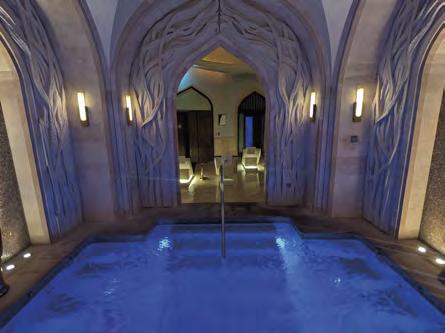
fitness centre is magic. Equally as opulent as the rest of Atlantis The Palm, it’s a tranquil place to focus on your mind in physically luxury. Yes, there are all your classic treatments – massages, facials, sound healing, mediation and even Reiki – but the wet room was my go to.
Looking like a Turkish bath, it offers hydrotherapy experiences such as a sauna, jacuzzi, cold plunge pool, steam room and stone thermal lounges. Quiet and seemingly miles away from the families frantically having fun above, it’s a haven all about you and your wellness. So good!
Stopover vs layover
We could have just wondered the long halls of Dubai Airport for a few hours and then gotten back on a plane. We would have arrived in Europe many hours later, broken, bloated, tired and sore. Instead, we ditched the layover and went with a stopover and it became the highlight of our whole trip.
Atlantis: The Palm did the unthinkable and lived up to the dream; the fantasy that had been in my mind for over a decade. Luxurious, gargantuan and with something to see, do or eat everywhere you look, it managed to not only offer the kids an endless well of fun, but gave us – the parents –space to relax, talk and reconnect.
Throw in an incredibly spa and fitness centre, and what more could you want? Believe the myth; Atlantis is real!
HORSE COUNTRY Reset
Slowing Down at The Barn Scone
BY: LAURA CSORTAN
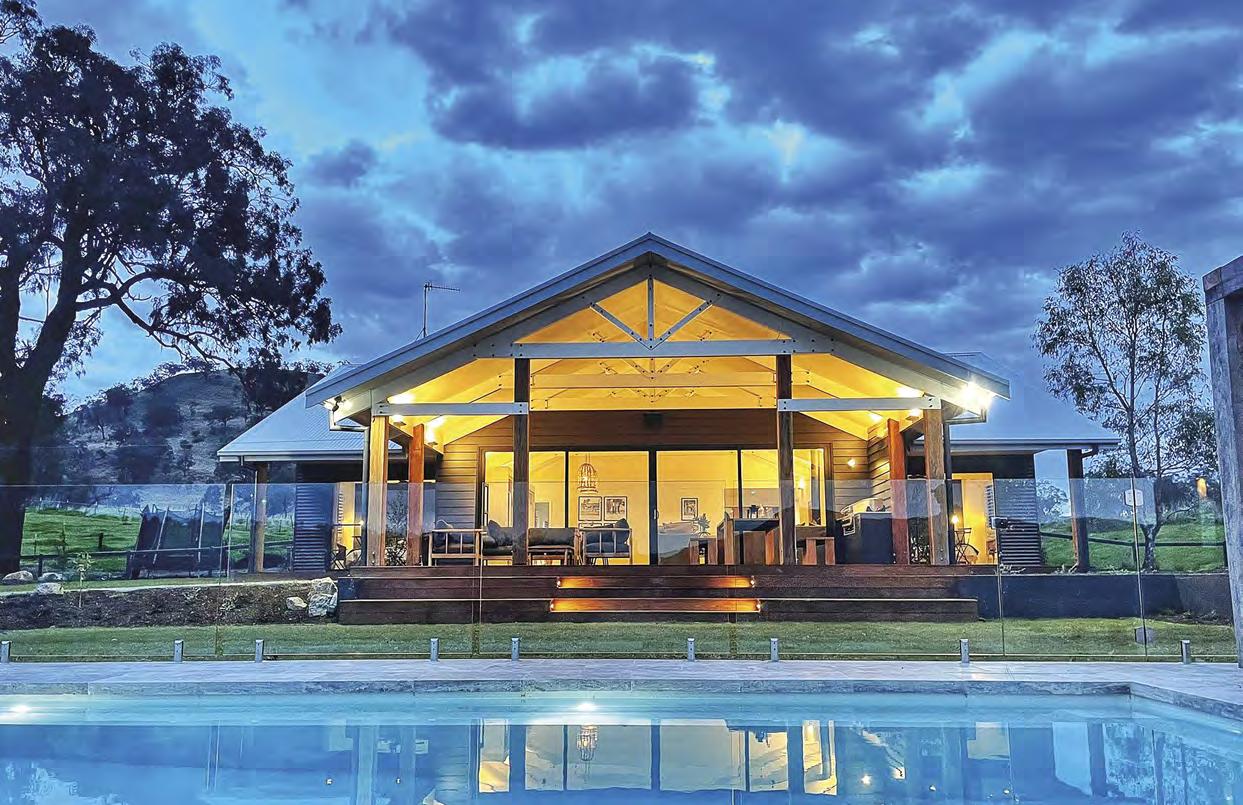
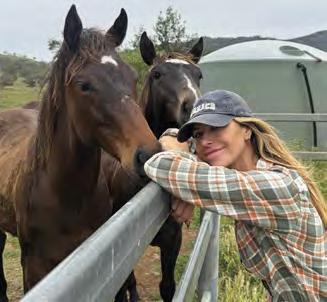
Floating in the infinity pool at The Barn Scone, paddocks stretch out ahead as mares wander quietly with their foals. Beyond them, the rolling Upper Hunter hills fade into the distance. My daughter surfaces briefly before diving under again, quickly claiming the pool as her favourite place. Within minutes of arriving, the pace of everyday life begins to fade. The Barn Scone is just under three hours’ drive from Sydney, making it an easy weekend escape from city life.
Set just outside Scone - widely known as Australia’s horse capital. The Barn Scone offers a rare opportunity to stay in the heart of thoroughbred country while enjoying the comforts of a beautifully designed rural escape.
Owned by the family behind Kitchwin Hills Stud, one of the Upper Hunter’s respected breeding operations, the property overlooks the surrounding stud land, where horses and foals form part of the everyday landscape.
Sleeping up to 14 guests, the accommodation is ideal for families or group getaways. My daughter immediately chose the bunk room,
which sleeps eight and quickly becomes a favourite for younger visitors.
A spacious rumpus room keeps kids entertained for hours, complete with darts, table tennis and its own television - the sort of space where children happily disappear while adults relax elsewhere in the house.
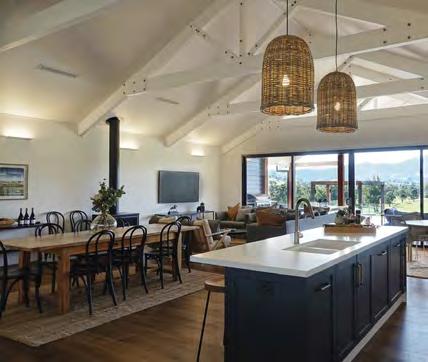
Outside, the infinity pool becomes the natural gathering point. Behind it sits the barn-style home with its relaxed open living spaces and generous kitchen,
perfect for preparing long, unhurried meals. In front, paddocks stretch toward the hills, with mares and foals moving quietly through the landscape.
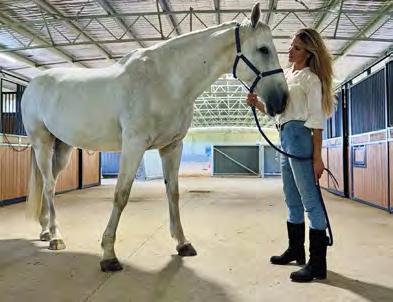
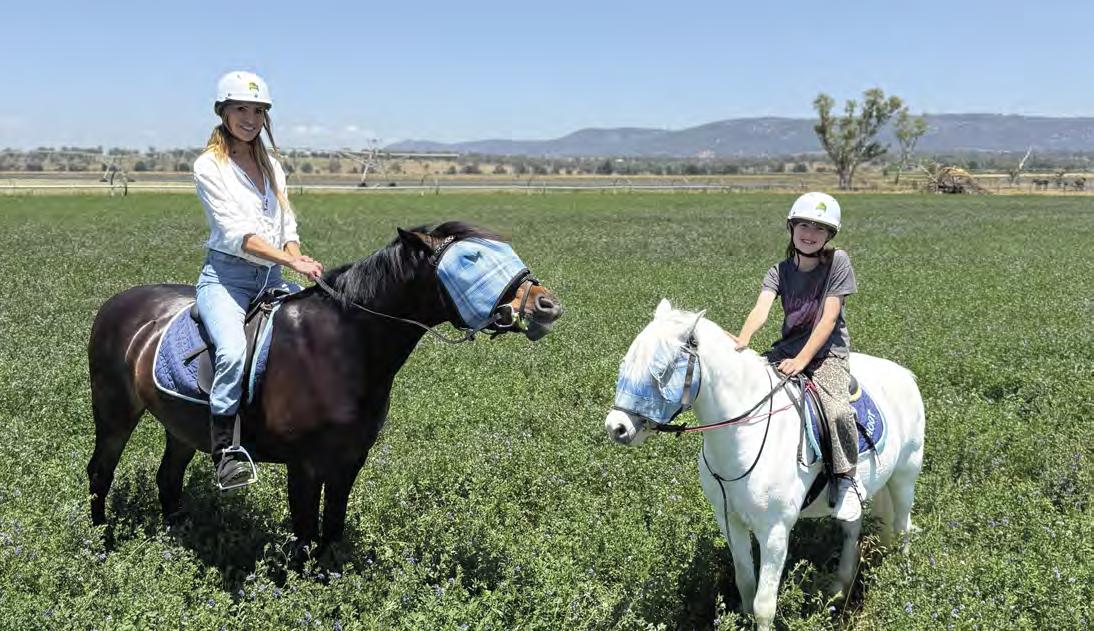
For animal lovers like us, the connection to the working horse stud becomes one of the most memorable parts of the stay. The family who run Kitchwin Hills Stud are incredibly welcoming and, when possible, offer guests a behind-the-scenes look at the operation, including guided interactions with the horses.
Watching the young horses up close offers a fascinating insight into the region’s thoroughbred heritage. The Upper Hunter’s limestone-rich soils are one of the reasons the area produces some of Australia’s finest racehorses, and seeing where those future athletes begin their journey adds another dimension to the experience.
Inspired by the setting, my daughter and I also spent time in the saddle at Scone Equestrian Centre, a familyrun riding school just outside town.
Our session included mounted exercises - even passing a large exercise ball between riders before heading off for a relaxed trot around
the property. The ride proved surprisingly physical, engaging balance, coordination and core strength in ways that linger the following day.
Back at The Barn Scone, the rhythm of country life quickly took over again.
As evening settled in, the barbecue fired up while the hills slowly shifted colour in the fading light. A wellearned gin and tonic in hand, the view stretched across the property while the day gently wound down. My daughter, meanwhile, returned to the pool and stayed there until darkness settled across the paddocks.
Some of the most memorable moments, however, were the quiet
more information go to: www.neequestriancentre.com.au and www.thebarnscone.com.au
ones. As huge animal lovers, simply being around the horses and their foals became our happy place. With staff supervising gentle interactions, we spent time up close with the mares and their young, a beautiful experience shared between mother, child, horse and foal.
Time around animals has a way of softening the pace of life. Without trying, the mind settles and the body relaxes.
After two nights and three days in the Upper Hunter, we returned home noticeably lighter - proof that sometimes the most powerful reset isn’t found in a wellness program, but in fresh air, wide country skies and time spent around horses.
Surrounded by mares and foals in the Upper Hunter, a mother–daughter escape to The Barn Scone proves that sometimes the best wellness retreat is simply fresh air, open space and time with horses.
LONGEVITY, WELLNESS, and the Art of Biohacking in Woollahra
In an era where wellness has moved from luxury to lifestyle, longevity clinic is becoming the go-to destination for those seeking to optimize their health at the cellular level. At the forefront of this movement in Sydney is the Woollahra clinic led by renowned plastic surgeon Dr. Jeremy Hunt
BY: LAURA CSORTAN
This clinic is a one-stop hub for the modern biohacker. From DEXA scans that reveal bone density and body composition, to revitalizing IV drips, and sessions in a hyperbaric chamber, the services here cover every corner of proactive health. Each treatment is designed not just to maintain wellness, but to enhance energy, vitality, and longevity in a way that feels both accessible and cutting-edge.
What sets this clinic apart, beyond the impressive technology and therapies, is
the friendly and knowledgeable team. Having experienced several sessions myself, I can attest to the seamless, welcoming environment that makes wellness not just effective, but enjoyable.
Situated in the elegant suburb of Woollahra, Sydney this clinic is a shining example of how modern medicine meets lifestyle optimization. Whether you’re a biohacking enthusiast or simply someone seeking to stay ahead in the wellness game, Dr. Hunt and his team deliver a level of care and innovation that truly stands out.
STRENGTH NOW, THRIVE LATER
For many women, their 30s mark a period of rapid momentum — careers grow, families expand, and life becomes busier than ever. Amid the juggling act, strength training can sometimes slip down the priority list. Yet experts increasingly agree that building strength during this decade may be one of the most powerful investments women can make in their long-term health.
WHY STRENGTH MATTERS EARLIER THAN YOU THINK
Establishing a strength routine before perimenopause begins can make the transition through your 40s and beyond far smoother. Strong muscles help support metabolism, protect joints and improve bone density — all factors that become increasingly important as hormonal changes begin to influence the body. The benefits extend well beyond the gym, helping women maintain energy, confidence and the physical resilience needed to keep doing the things they enjoy most.
FITNESS THAT FITS REAL LIFE
The good news is that meaningful results don’t require hours in the gym. Just two or
three strength sessions per week, lasting around 30 to 40 minutes, is enough to build muscle, improve tone and increase overall fitness. For women balancing careers, families and busy schedules, this realistic approach makes strength training both achievable and sustainable.
FUTURE-PROOFING YOUR BODY
From around the age of 40, hormonal shifts can accelerate muscle loss and slow metabolism. Strength training is one of the most effective ways to counter these changes, helping preserve lean muscle mass while supporting healthy weight management. The result is a body that continues to feel strong, capable and resilient well into midlife and beyond.
STRONG BODY, STEADY MIND
The impact of strength training isn’t only physical. Regular resistance exercise has been linked to lower stress and anxiety, improved sleep quality and sharper mental focus. Many women also report a deeper sense of capability and confidence — a reminder that strength built in the gym often carries into everyday life.
MAKING STRENGTH A HABIT
Like any healthy habit, consistency matters. Treating workouts as nonnegotiable appointments, training with a friend or coach, and choosing a welcoming gym environment can help remove the guesswork and build confidence over time. The key is finding a routine that fits comfortably into real life — and sticking with it.
Samantha Kirby, Head of Marketing APAC at Snap Fitness, believes more women should discover the benefits of strength training earlier. “Strength training is one of the most powerful tools in women’s health, and honestly, one I wish someone had told me about sooner. Building muscle in your 30s and beyond isn’t about aesthetics — it’s about supporting metabolism, protecting bones and maintaining the energy that can quietly start to slip away as your body moves through natural hormonal shifts. Beginning earlier makes the transition through midlife feel like something you’re moving through, rather than something happening to you. It’s never too early, and it’s never too late, to begin.”
READY TO START?
‘If you’re ready to invest in your fitness journey, Snap Fitness is here to support you. Simply search Snap Fitness and find your nearest club.
24/7 access, the best in strength and cardio equipment, functional and personal training, & more.
FIT BODY
FULLER on fitness
WF columnist Aimee Fuller likes to challenge her mental agility with martial arts. Here, she explains how it can transform your physique and mindset, plus asks double Olympian Jade Jones why she loves boxing
Three years ago, on the morning of a long haul flight to Australia, my friend suggested we try a new type of training, something completely different to keep ourselves motivated: boxing. If you’d said then that I’d still be loving boxing more than ever, I’d have said ‘No chance’.
We trained using two-minute rounds followed by active recovery, layering in the basics first: jab–cross–hook repeated again and again until the patterns started to land. After the first session, my arms were screaming – deep, honest muscle fatigue that I felt for the 18-hour trip to the other side of the world. My triceps, deltoids and core felt like they’d been switched on in new ways. It was a humbling but incredibly rewarding experience. I walked out drenched, buzzing and with that incredible cardio high.
MOVING MEDITATION
What surprised me most was how quickly boxing brought a sense of discipline and focus. There’s something incredibly grounding about wrapping your hands (I’ve still not got this dialled, much to the frustration of my boxing coach). Katya and I both found a real love for pad work, and fully tuning in. You can’t think about anything else because the repetition of combinations is almost meditative, but with sweat. And when you’ve got someone beside you, pushing you and laughing with you, that accountability keeps you coming back.
As we progressed, we moved into kickboxing, training with the incredible martial artist and MEET THE EXPERT Two-time Team
I’ve built a career out of hitting jumps in the mountains, so stepping into a boxing gym felt an alien but fun challenge. Boxing hit me quite literally in ways that I didn’t expect. After years of snowboarding, I’m used to big, powerful gross moves across a wide space. Boxing, on the other hand, is all about meticulous, micro-movements. Katya, my best friend and a dancer, picked up every technical detail instantly. Me? I felt like I was throwing punches with oven mitts on and couldn’t get to grips with remembering the fast movement patterns. The physicality of it all – a new kind of workout – and that natural exercise high intrigued me. But for the first time in a long time, I found myself frustrated and keen to challenge my mind, because that was the barrier.
Two-time Olympian Jade Jones says boxing is the ‘ultimate test’
fantastic coach, Katrina Durden (@katrinadurden). Having a woman lead the session instantly made the space feel empowering. Girly chats in between rounds? I’m in. Unlike boxing, which focuses on the upper body and core, kickboxing demands full-body engagement. The technical agility required to combine hands and feet is next-level. From power kicks to defensive
trains
footwork, and drilling the hip flexors, the coordination calls on your entire kinetic chain. Core strength, hip mobility, balance – it’s all there.
FIND YOUR STYLE
We love training outdoors, especially in summer, and we mix it up. With Ian Streetz, stunt performer and trainer to the stars of film, we fell in love with the focus and sequencing he taught us. Pads in the car park with Ian, blue skies and a fair bit of laughter – there’s something about martial arts in nature that brings people together. It’s energising, joyful and more than often attracts curious glances from dog walkers and other men and women who are curious to get involved. Why try it? Martial arts can give you a new confidence. Learning striking patterns and defensive techniques gives you a quiet sense of self-assurance when walking around town. It’s
not about aggression; it’s about control, clarity and knowing your body can respond when needed. From a mental standpoint, the focus is unmatched. Remembering sequences, adapting reactions and reading movements pushes your brain as much as your muscles. For women especially, I believe martial arts can be a game-changer. It inspires confidence, teaches self-defence, builds strength and creates strong, supportive communities. Whether in a gym or at a class in the park, it’s incredibly fulfilling.
CHALLENGE YOURSELF
If you’re looking for a fresh challenge in 2026, swap any hesitation about getting moving for hand wraps. It challenged my comfort zone and I want to encourage you to try it, too. So, I asked my friend Jade Jones, a double Olympian in Taekwondo, why she’s stayed in the game and made the transition to boxing.
Artful moves: ‘I just love all the flashy kicks and the spins of Taekwondo, and the fact that it’s a fight and you can get knocked out, but at the same time it’s very elegant. You have to be flexible, you have to be fast, you have to be dynamic – it’s a fighting sport, but it’s very much an art as well.’
In the spotlight: ‘I’m new to boxing but I love that it’s the ultimate test – it’s you verses someone else. You’re in a boxing ring and obviously one person is likely to get knocked out, so it’s the ultimate pressure as everyone is watching. It’s also the ultimate mental and physical test.’
Inner strength: ‘I think boxing is amazing for women – to know some sort of self-defence gives you a confidence that nothing else can give you. Obviously, the outside world can be scary and daunting, so if you can defend yourself by being strong and powerful, it gives you confidence.’
Give it a go!
Here are Aimee’s reasons to try kickboxing, plus things to look out for
‘If you find a friend to train with – to swap in and out of the rounds – the accountability will boost your motivation.’
‘Look for women-led classes or trainers, and follow our girl @katrinadurden’
‘Start with the basics by nailing the fundamentals before adding kicks. And stick with it – the first few rounds hurt but the results are worth it.’
‘Outdoor sessions are energising, so try doing martial arts in parks or car parks.’
‘Think of it as self-defence because it’s empowering to know your capabilities.’
Aimee
with coach Katrina and friend Katya
GET YOUR FITNESS FIX IN 2026!
The future of fitness has arrived! Here are the top workout and wellbeing trends that’ll soon be shaping your body, mind and soul...
The year 2025 was a strong one for anyone interested in fitness. It saw the rise (and rise) of reformer Pilates, HYROX and hybrid exercise went even more viral, and there was a growing obsession with recovery fitness activities such as contrast therapy and compression boots – and these things show no signs of slowing down in 2026. But there are some new fitness players in the exercise game – AI workouts are set to take centre stage, new recovery methods are coming to the fore and plenty of us will be heading overseas to challenge our fitness mettle. Read on to discover what else will be hot over the next 12 months.
Mobility services such as those at Stretched are in high demand
Stretch sessions when in the UK
With flexibility rating so highly (number five) on the American College of Sports Medicine’s (ACSM) 2026 Fitness Trends list, and recovery exercise still very much on our fitness radar, it’s no wonder that assisted stretching has exploded in popularity. Indeed, industry reports suggest an annual growth rate of more than 20 per cent for businesses offering stretch services. Already a hit overseas in America and Japan, you can expect to see more assisted stretch therapies popping up in the UK in 2026. Top of our list is the one-to-one assisted studio Stretched (stretched.uk), which now has locations in Manchester, Glasgow and Edinburgh. Each session begins with a full-body mobility assessment, using Stretched’s state-of-the-art motion analysis technology. Then comes a series of one-to-one, full body stretches with one of Stretched’s expert ‘stretch therapists’, who are trained in-house through the Stretched Academy.
‘We’re seeing a real demand for mobility-focused services,’ reports founder and clinical director Craig McHugh. ‘Good mobility is the foundation of healthy movement, and we are excited to bring the power of assisted stretching to Manchester – and beyond.’ Prices start at £40 for an express 25-minute session or £70 for a full-body 50-minute session with a mobility scan, plus group bookings are also available. Watch this space.
Pilates is becoming a go-to for recovery
Exercise as therapy
If you’ve ever danced around your kitchen to shake out some stress or shadow boxed to produce a little pre-workout pep, you’ll know just how therapeutic moving your body can be. This perhaps goes some way to explaining why exercising for mental health is rising in importance (it’s number six on the ACSM’s top fitness trends for 2026, rising from number eight in previous years). You can expect the mental health benefits to be a driving factor behind fitness programming in 2026, and we predict you’ll see a growing number of workout brands with therapeutic benefits at their core. Take Erica Hornthal’s US-based Chicago Dance Therapy (chicagodancetherapy.com), for example, which uses body psychotherapy and traditional talk therapy to address a myriad of issues, from anxiety to sensory-processing disorders. A licensed clinical counsellor and board-certified dance/movement therapist, Erica (also known as the ‘Therapist Who Moves You’) says how you move on the dance floor reveals who you are in life – and more importantly, how you can evolve. Are you stuck in the corner, waiting for permission to move? Or are you the one who takes over the floor but doesn’t leave space for anyone else? According to Erica, these aren’t just dance styles, they’re life patterns, but through movement, you can rewire how you show up in relationships, careers and more. Sign us up!
More brands will focus on the mental health benefits of workouts
Pilates as recovery
One of the most talked-about training trends of 2025, Pilates is evolving into a recovery routine that promotes core stability, improves flexibility, enhances muscle balance and supports joint mobility. Indeed, anecdotal evidence suggests a growing number of fitness fans and trainers are considering the health benefits of Pilates by incorporating appropriate moves into recovery routines. ‘Pilates is emerging as a go-to method for restoring mobility, improving muscle balance and preventing injury,’ agrees Will Broome, director at Gym Equipment (gymequipment.co.uk).
‘With a range of styles, from accessible mat pilates to resistance-based Reformer, there is an option for every recovery need.’
Featuring low-impact moves that can enhance blood flow to muscles and help speed up recovery, Pilates’ focus on core alignment can also help prevent injury by improving movement patterns. ‘More structured approaches such as classical and Stott Pilates offer precise, rehabilitation-friendly movements grounded in breathwork and core alignment,’ adds Will. ‘Whether easing back into movement or strengthening the body for future training, Pilates provides a customisable path to recovery that’s both restorative and performance-enhancing.’
The use of AI in fitness will expand even more
AI-powered training
Unless you’ve been off grid, you won’t have missed the sudden increase in AI-driven training content. Whether it’s an AI training programme on your wearable that offers personalised plans or an AI-powered coaching app giving motivating notifications, the market is expected to blossom into one that could reach as much as US$43 billion by 2029. Hot on the heels of this trend is forward-thinking home fitness brand, Peloton (onepeloton.com). ‘We’ve introduced Peloton IQ, an AI- and computer vision-driven intelligence centre for Peloton hardware and software,’ says instructor Ben Alldis. ‘It delivers personalised cardio and strength training with adaptive plans, progress tracking plus real-time insights.’ Already a Peloton member? You can benefit from this tech right now, as all members can receive personal guidance to support their fitness and wellness journey. But the most advanced features are available on the Cross Training Series Bike+, including real-time form correction, rep tracking and weight suggestions – all done with help from the movement-tracking camera on the Bike+.
‘Alongside this, the rise in tech is not slowing down,’ adds Will Pate, Third Space strength & conditioning master trainer (thirdspace.london). ‘More and more people are digging into the data that wearable techs now offer with their constant evolution. Ensuring that they are prioritising issues such as sleep, nutrition and wellness… AI is here and it’s not going anywhere.’
Alpine travel
Love to travelling? The good news is it’s destined to be a little bit active this year. That’s according to Travel Trends, the flagship annual report from leading travel app Skyscanner, which notes that travellers are heading to higher ground – not just for the ski season, but for serenity, too. Indeed, 71 per cent of travellers are planning or thinking about a mountain escape for summer or autumn 2026, so much so that hotel bookings using the ‘Room with a mountain view’ filter are up 103 per cent globally year-over-year.
Partnering with AllTrails to provide lists of the top summer hiking routes in the Northern and Southern hemispheres, the brand reveals that the Rob Roy Glacier Track in New Zealand and the Palm Jungle Loop Track in Australia are top of the list. But if you’re looking for something a little closer to home, why not join the 13 per cent of travellers who are considering visiting a lesser-known mountain range over a traditional one? Better pack those bags now, then!
Over 70 per cent of us are considering a mountain break
Active ageing
The ACSM notes that the baby-boomer generation will be over 65 by 2030, so it makes sense that there’s a growing demand for age-appropriate exercise. Indeed, a significant number of older adults are very physically active, with data from Age UK’s Exercise & Physical Activity Survey 2025 reporting that almost half (45 per cent) of their respondents did daily exercise.
‘The year 2026 will be all about longevity-focused movement – programmes that incorporate more mobility drills, light power plyometric drills and strength training to better support everyday activities such as lifting, climbing stairs or even reducing fall risk,’ says Will. ‘There’s a stronger link between functional fitness and injury prevention. Trainers are integrating physical therapy techniques such as corrective exercises into mainstream fitness.’
With evidence linking regular exercise to a better quality of life in our later years, the focus here is on weighted work for strength maintenance, balance and mobility exercise to prevent fall risk later on and low-impact cardio for heart and respiratory health. It’s not just for older adults, but it is all in how you sell it: according to a 2024 industry report, programmes labelled ‘low intensity, ‘functional’, or ‘active ageing’ attracted more participants than those called ‘senior fitness’ – something to bear in mind if you’re a trainer!
High-altitude hiking is seeing a resurgence
Functional fitness will focus on longevity
Female-first fitness
With the growth of data-driven exercise programming –more than 70 per cent of wearable users have reported applying their output data to inform exercise or recovery strategies, says the ACSM – there’s been an increasing amount of discussion around female-focused training approaches. This includes methods such as cycle syncing (mapping your training to the different stages of your menstrual cycle) and ‘meno fitness’ (exercise that supports the hormone changes associated with the peri/menopause).
‘Instead of pushing women into a one-size-fits-all model, training now aligns with fluctuating hormones, changing energy levels and physiological needs across different life stages,’ says Lucie Cowan, a Third Space master trainer. ‘It encompasses cycle-synced training, perimenopause- and menopause-specific programming, and female-focused recovery and nutrition support.
‘This shift is important because, for decades, women were encouraged to follow training plans that didn’t consider their biology. The result? Plateaus, burnout and unnecessary self-criticism,’ adds Lucy. ‘By embracing a female-first approach, we’re empowering women to work with their bodies rather than against them, helping them understand why certain workouts feel great during some weeks and exhausting in others.’
Expect to see more cycle-synced class programmes such as ‘High-Energy HIIT Week’ or ‘Deload & Mobility Week’, plus menopause-friendly strength, mobility and low-impact
Exercise is becoming more socially oriented
Personalised training will sync with your cycles
‘After years of hyper-individual goals, people are craving connection in person rather than online ’
conditioning sessions to support symptoms including joint stiffness, sleep disruption and hot flushes. Your gym’s app might even sync with menstrual cycle data, perimenopause symptoms and recovery metrics to recommend tailored training plans.
Connected conditioning
As an increasing amount of our lives play out online, fitness has come to the rescue with the antithesis of virtual living: connected conditioning, or the rise of exercise that encourages social connections. We’ve already seen it through hybrid sport, with many hybrid fitness competitions offering doubles/pairs or relay team options. In fact, according to hyroxuk.com, ‘the Doubles category has become the most popular format in HYROX races worldwide, with more than 50 per cent of competitors choosing to race as a team’. And padel, which hit participant figures of over 400,000 at the end of 2024, is well known for it’s social appeal and active community.
‘After years of hyper-individual goals, people are craving connection in person rather than online,’ says Celeste Blakey, founder of Revolt Cycling, London’s first sustainable Spin studio (revolt-cycling.com).
‘And 2026 will see fitness evolve into collective wellbeing – community challenges, local sustainability initiatives and cause-driven workouts that make movement meaningful.’
Watch this space for more running and walking clubs, even more hybrid competitions for teams and pairs, plus a growing number of communityfocused workouts in 2026!
NEW HEIGHTS
a
Emma Lewis and family enjoy
late-season skiing holiday in Les Deux Alpes, France
Les Deux Alpes is an hour and a half from Grenoble
It’s one of those precious familyholiday moments that’s now banked in my memory forever. The four of us are sitting on a cluster of rocks near the bottom of the Signal 2 chairlift, happily gnawing on cheese and ham baguettes, the warmth of the sun on our backs as we take in the dramatic view of the steep-sided snowy mountains below the deep blue sky that seems to go on forever. Our appetites are piqued by the fresh air that’s still crisply cold despite the sun’s presence, plus the exertion of exercising at altitude…
In fact, we enjoyed that lunchtime experience so much that we repeated it several times during our week’s skiing in the French ski resort of Les Deux Alpes at the beginning of April 2025. There was no need to battle with the crowds at the pricey mountain restaurants, as the sunny spring days allowed us to comfortably sit outside in the peace and quiet and be reminded of just how beautiful our natural world is.
HIGH AND MIGHTY
You’ll find the town of Les Deux Alpes in the mountains southeast of Lyon, at 1,650m altitude. With the ski area topping out at 3,600m, it lays claim to having the highest ski runs in France, and also boasts an impressively long vertical drop of 2,300m. Of the
resort’s huge 200km of slopes, over half of the 88 runs are blue, making it an excellent choice for the majority of skiers. Despite heading there very late in the season, we weren’t worried about lack of snow either, as a massive 75 per cent of ski area sits above 2,100m, allowing for a very long ski season (in 2024-2025, it ran from Nov
30 to May 4; then the high-altitude glacier area opened from May 5 to the start of July).
With 43 lifts, we were never queueing for long, either – especially now that the state-of-the-art Jandri 3S lift, brand new at start of 2024/25 season, is up and running from the centre of town. It can whisk you up to the top of the resort in just 17 minutes and replaces the old Jandri Express Gondola that took half the number of people and over twice as long. The new gondola system is much more energy-efficient than its predecessor, too – global warming is of particular concern to places like ski resorts for obvious reasons.
Beginners are well catered to as well, with free ski lifts right by the town for finding your feet on, plus easy-to-access runs higher up the mountain to progress to. For experts, there’s off-piste skiing to rival top-notch neighbouring La Grave, as well as plenty of challenging pistes. A large snowpark at 2,600m is filled with fun obstacles for all levels.
There’s nothing better than good snow, quiet slopes and blue skies, thinks Emma
Emma and family brave the Belvédère des Ecrins viewing platform at 3,400m
GREAT GLACIER
A huge part of the appeal of this resort is the glacier, which means you’ll be guaranteed skiing through the ski season. We enjoyed lovely piste conditions at the top of the mountain, even when temperatures allowed you to wear T-shirts down in the town. And the glacier should be there for many more years to come, thanks to year-round
‘Any time I’m feeling frazzled, I close my eyes and I’m back on that mountainside’
monitoring and management, its north-westerly exposure and its naturally domed shape that spreads the sun’s rays over a wider area than a glacier with a narrower shape. When you’re up at the top of the resort, make sure you take a selfie at the Belvédère des Écrins. The cantilevered metal platform, at 3,400m, is described as a ‘step into the void’, and is accessible to both
You can take a gondola down to the picturesque village of Venosc
The new lift now takes you from the resort up to the glacier area in just 17 minutes
skiers and walkers, giving massive views of the Écrins National Park. Don’t miss the nearby otherworldly ice cave in the glacier, either.
AMAZING ACTIVITIES
It’s always fun to shake up your trip with some other activities, so take a look at the resort’s calendar of events. The annual British-run Rise Festival, for example, took place from December 6-13, 2025, with music, skiing and all sorts of fun things to do. Or perhaps the Lumières de la Muselle night trail-running event with distances from 8-42km is more your thing? Then there are all sorts of exciting experiences such as glacier hikes where you’re roped together and wearing crampons, tandem paraglides and snowshoe hikes to spot chamois, plus evening ski touring or e-mountain biking trips including dinner at La Troïka mountain restaurant, which run regularly throughout the season. Night skiing also runs from Christmas until the end of the February holidays; and Snake Gliss sledging, where sledges are linked together to form a snake and is bound to be a holiday highlight for youngsters, runs regularly, too.
FOODIE FOCUS
We also enjoyed an afternoon trip to the picturesque village of Venosc in the Vénéon valley. You can use your ski pass to take an eight-minute ride down from the resort on the Venosc cable car, then wander the cobbled, pedestrianised streets littered with shops, cafés, restaurants and artisan workshops. Back up in Les Deux Alpes, stylish bar Ginette on the main street does a great cocktail (and has a lovely sun terrace). For coffee, head to Le Yonder Café where they roast the coffee in the resort. There are plenty of restaurants offering everything from pizza to fondu, and serious foodies could even treat themselves to Michelin starredrestaurant Le P’tit Polyte.
AND RELAX…
One evening, I was also lucky enough to have a session with fascinating psychotherapist Julie Chalvin, whose family has lived in Les Deux Alpes for several generations. She specialises in body-psychological techniques for emotional release at her studio Terres Almã (or ‘Lands of the Soul’; terresalma.fr) in the heart of town. After travelling to Mongolia, Nepal, Mexico and Amazonia to learn from shaman-
healers, she has created four themed areas that hark back to these experiences. She is dedicated to physical, mental and emotional wellbeing and helping to rebalance body and mind. I rarely take time for myself like this, and came away beautifully relaxed and determined to listen to and be kinder to my body, mind and soul.
HAPPY HOTEL
In our family, food’s a big part of any holiday, and the Hôtel Ibiza was perfect, with a huge array of items to tempt even the fussiest child at its breakfast and dinner buffets. We made use of the indoor pool and spa, played cards in the bar area, plus pool and air hockey in the games room, and appreciated the on-demand private shuttles to and from ski lifts, as well as a well set-up suite with separate rooms for adults and kids. Fast-forward to January in the UK, and it’s cold, dark and damp. But any time I’m feeling frazzled, I can close my eyes and transport myself back to that mountainside in the sunshine, the vast, empty mountainscape opposite, family by my side, as I inhale the tonic of happy holiday vibes combined with the invigorating Alpine air…
Les Deux Alpes is one of the top resorts in France
20-MINUTE SHAPE-UP
Work your body from head to toe at home, with just a single set of dumbbells and a mat
Sometimes the most effective workouts don’t require lots of kit or time. Instead a little resistance and some smart planning does the job. This is one of those workouts. Requiring dumbbells, mat and small amount of space, this total-body session from personal trainer and former WF cover model, Chloe Thomas, is the perfect workout to do at home. Taking just 20 minutes,
it will hit your glutes, quads, biceps, core, back, shoulder and tricep muscles. This makes it a great workout for those who are short on time or trying to build a base of strength, as it targets all of the major muscle groups. Aim to do it twice a week alongside your other workouts (tip: try to clock a cardio workout or two, plus a mobility/flexibility session) and you’re on to great things!
LET’S GET STARTED
Firstly, be sure to warm up before you start to avoid injury. Even if your home is warm, it’s important to warm up the muscles with some light activity. Then, spend 40 seconds on each exercise, taking 20 seconds of rest between moves. Do four rounds in total, then cool down and stretch. Got more than 20 minutes? Go for an extra round or two!
Get moving!
Reps: 40 secs
Rest: 20 secs
Rounds: 4
PUSH PRESS
• Hold the dumbbells at shoulder-height with palms facing the body.
• Bend your knees slightly into a mini squat (A), then drive through your legs as you press the weights overhead (B).
• Lower the weights back to your shoulders with control, and repeat.
TRICEPS EXTENSIONS
• Lie on your back on a mat with knees bent and feet flat on the floor.
• Hold the dumbbells above your chest with arms straight and hands facing inwards (A).
• Lower the weights slowly towards the top of your head, bending at the elbow (B), then press back up. Repeat.
LUNGE TO BICEPS CURL
• Start with dumbbells in each hand, arms by your sides, and step one foot backward into a lunge, lowering your back knee toward the ground while keeping your chest upright (A).
• Rise up out of the lunge and simultaneously curl the dumbbells towards your shoulders as you raise the back knee in front of you (B).
• Lower the weights as you step back to the starting position, then switch sides.
A B
RENEGADE ROWS
• Start in a high plank position, holding a dumbbell in each hand with wrists under shoulders (A).
• Keeping your body still, row the right dumbbell towards your waist by driving your elbow back (B), then lower it slowly.
• Repeat on the other side, continuing to alternate rows.
• Focus on engaging your core to avoid twisting, and maintain control throughout the movement.
PLANK TO CRUNCH
• Start in a high plank position, with hands under shoulders and body in a straight line.
• From here, drive one knee toward your chest, engaging your core, then return to the plank.
• Repeat on the other side, alternating knees.
‘I’M SWIMMING THE ATLANTIC WITH MY HUSBAND’
Exercise challenges provide a great platform for raising awareness of vital causes. Here, Chloé Witvoet explains how her love of long-distance swimming is helping to protect the oceans
Words: Katja Gaskell
‘After we swam across the Strait of Gibraltar, we realised that it is possible to swim from one continent to another,’ says Chloé Witvoet. ‘Something just clicked in our brains and, at some point, we thought, “Why not try the Atlantic?”’
In September 2025, 29-year-old Chloé and her 31-year-old husband, Matthieu (Matt) set sail from Marseille, France bound for Cape Verde off the coast of Africa. The island, best known as a winter sun destination, was the starting point for the couple’s latest challenge, an epic drift relay swim across the Atlantic ocean.
Starting on October 30, the couple took turns swimming up to six hours each per day, beginning at 6am and swimming in two-hour shifts until 6pm. Swimming every day, they estimated that it would take them three months to swim the 3,800km (2,360 mile) distance, and that they would arrive at their final destination, the Caribbean island of Guadeloupe, by January 2026.
By completing the epic challenge, they hoped that they could break the record for the world’s longest swim relay, but their main goal was to raise awareness about the importance of ocean conservation.
MEETING OF MINDS
Born to French parents, Chloé grew up overseas and learned to swim as a child, competing in her school swim team until she graduated. In 2015, while studying engineering at the University of Loughborough, she met Matt through the university’s triathlon club.
Shortly after meeting, her new boyfriend learned that he had been accepted to take part in the Strait of Gibraltar swim challenge and asked Chloé if she wanted to join him. ‘We had only been together for two months and he asked three friends before asking me,’ says Chloé. ‘Fortunately, his friends had all turned him down!’.
The swim across the body of
Cigarettes are the main polluter of oceans
The charity collected one million butts in Paris
water that links Europe and Africa is notoriously difficult, with strong currents, cold water temperatures and heavy shipping traffic. Its unpredictable nature means that swimmers regularly get blown off course and the distance ranges from 16-22km (10-12 miles). The duo took part in 2019, completing the challenge in five hours and 20 minutes.
‘We just loved it,’ says Chloé of the swim. ‘Already on the train back, we were looking on Google Maps for where else we could swim to.’
SWIM FOR CHANGE
Keen to combine their love of longdistance swimming with a force for good – Chloé had been working as head of sustainability for the UTMB World Series; Matt had been working in circular economies – the couple set up Swim for Change in January 2020. The not-for-profit organisation aims to raise awareness for ocean protection through swim events.
A few months later, they embarked on their first challenge under the Swim for Change banner: a relay swim along the Seine river to symbolise the
journey of a cigarette end from Paris to the sea.
‘Cigarette butts are the number one most-littered item that you find in the oceans,’ says Chloé. ‘In France, 40,000 cigarette butts are thrown on the floor every minute, which is madness. So we thought, let’s use our passion for swimming to talk about this.’
The couple enlisted the help of Chloé’s cousin and Matt’s brother, and together the four-person team took one week to swim the 380km length of the Seine. Prior to the swim, they organised the world’s biggest cigarette butt clean-up in Paris, and gathered nearly one million cigarette ends in just three hours.
‘The idea was never for us to just collect cigarette butts because we think that’s kind of useless,’ says Chloé. ‘But the national media picked the story up and showed pictures of us in our swim gear next to two huge towers filled with cigarette butts and our story reached millions of people.’
Buoyed by their success, the duo organised a second relay challenge and, in 2023, swam 500km over 12 days in the Mediterranean sea, swimming from Marseille in France to Barcelona in Spain.
‘One cigarette end can pollute up to 500 litres of water,’ says Chloé. ‘So, we chose the 500km distance to represent that.’
ATLANTIC AMBITIONS
Not long after completing the Marseille-to-Barcelona swim, the couple started thinking seriously about tackling the Atlantic ocean.
‘It’s something that we had both been thinking about,’ says Chloé. ‘But it was one night in 2023 when we had friends over who had sailed across the Atlantic, and we just asked them if they thought it would be possible to swim the distance and they said yes! And things just spiralled from there.’
The challenge has been two and a half years in the planning. ‘Doing this together has been so great,’ says
The couple swim in two-hour shifts
Chloé and Matt bond over swimming
‘Once confident their marriage would stand up to the challenge, Chloé and Matt started physical training’
Chloé, of taking on the challenge with Matt. ‘It helps so much with motivation. Plus, it really helps if you’re a couple and your partner has the same daily routine as you.’
But it was also the idea of tackling such a mammoth challenge as a married couple that the duo addressed first.
‘We didn’t even announce that we were going to do the challenge until we were sure that we were solid and aligned as a couple and ready to take it on,’ says Chloé.
She and Matt went to couple’s therapy, took a course on non-violent communication and interviewed lots of couples who work together before starting any other kind of training.
‘This was priority number one,’ says Chloé. ‘We are two very different personalities and we didn’t want to take this challenge on if it was going to threaten our relationship.’
TRAINING TIME
Once confident that their marriage would stand up to the challenge, Chloé and Matt started their physical training programme, which they divided into three sections starting first with technique.
‘We’d been swimmers for years,’ says Chloé. ‘But if you are doing the same movement thousands of times every day for three months it’s easy to injure yourself. So, for a few months we concentrated just on technique.’
Their dryland support team included Stéphane Lecat, head of the French national open-water swimming team, who videoed their technique underwater so they knew where to improve.
The second training block focused on building muscle, with Chloé hitting the gym three times a week to lift weights.
‘I had never done weights in my life before,’ says Chloé. ‘And my body just transformed.’
The final phase was getting their bodies used to the amount of swimming they would be doing per day, slowly building up to swimming 10km a day, five times a week.
‘It was so helpful having someone there to motivate me,’ says Chloé. ‘And usually it worked out that the day I wasn’t really feeling it, Matt was and vice versa.’
It wasn’t all plain sailing, however. ‘Matt is someone who likes to add a lot of fun and games to his training, whereas I’m the kind of person who just likes to get their head down and get on with it,’ says Chloé. ‘So, it’s been a balance between how
each of us copes mentally with the training sessions.’
LIFE ON BOARD
Accompanying Chloé and Matt on their eco-adventure is a catamaran, Papagayo, and a crew including skipper Symilien Lavigne, sailor Léa Payen, videographer Chloé Le Calvez, and nurse Laurène Meunier.
When not swimming, the couple will be preparing food (the team has to carry and store enough water and food for the duration of the threemonth transatlantic crossing) and keeping their more than 95,000 school-aged followers updated on their progress. They have created an interactive educational program called The Atlantic Swim that has been distributed free of charge to 4,000 schools across France, raising awareness on issues that affect the oceans from fishing to pollution.
‘There’s a figure that shows if you raise awareness in one child, you’ll reach seven adults,’ says Chloé. ‘Even if we don’t finish the challenge but we’ve raised awareness about the issues affecting our oceans, I think we will have achieved our goal.’
At the time of going to press, Chloe’s support boat had broken and the swim was being rescheduled. You can keep updated at @_swimforchange_
Working as a team to create awareness
Matt likes to add fun and games to training
DUMBBELLS FOR YOUR LUNGS
You train your skeletal muscles but have you thought about exercising your respiratory system? Here’s how it could lead to better fitness, recovery and resilience
Words: Penny Jones
Lung training can give you a performance edge
We track our steps, hit our macros, train our glutes and core, but how often do we think about exercising our lungs? Breathing might be automatic, but building a stronger respiratory system could be the missing link in boosting performance, preventing injury and speeding up recovery.
In most fitness circles, we talk endlessly about strength, flexibility, endurance and even mindset. But what’s often missing from the conversation is the one system driving all the above: your lungs.
‘Lung health is vital for all types of physical performance’, says personal trainer Joseph Webb (coachjosephwebb.co.uk). ‘When your respiratory muscles are weak, you tire more quickly, recover slower and your technique can suffer, increasing the risk of injury during training.’
WHAT IS LUNG TRAINING?
Inspiratory Muscle Training (IMT) is a sciencebacked way to strengthen the muscles you use to breathe. Think of it like resistance training for your diaphragm, chest wall and intercostals (the muscles between your ribs). It involves breathing through a handheld device like Powerbreathe, which adds resistance, forcing respiratory muscles to work harder.
‘It’s the equivalent of doing squats for your lungs,’ says Joseph. ‘The result is improved endurance, better oxygen delivery to your muscles and a noticeable improvement in how long and hard you can work out before tiring.’
WHY IT MATTERS FOR WOMEN
For women in their 40s, 50s and beyond, lung health is especially relevant. Not only do our respiratory muscles naturally weaken with age, but hormonal changes can also affect breathing patterns, sleep, blood pressure and energy levels.
‘At younger ages, women tend to have lower blood pressure than men. However, after menopause, blood pressure rises more rapidly in women, such that the prevalence of hypertension in women eventually meets and then exceeds that of men at older ages,’ says Daniel H Craighead, assistant professor at the University of
Minnesota in America. ‘This is largely due to the hormonal changes women experience during menopause. Breathwork and respiratory training can lower blood pressure in postmenopausal women, which can help improve cardiovascular health and decrease chronic disease risk.’
Respiratory muscle training doesn’t just support the lungs – it can influence the entire body. IMT has been shown to improve oxygen uptake and enhance parasympathetic nervous system activity, which may help counteract stress and anxiety, both of which tend to spike during perimenopause and menopause.
‘Breathing training has some surprising crossover benefits. It can improve sleep, reduce breathlessness during exercise and help regulate the nervous system – particularly helpful for women dealing with hormonal fluctuations or anxiety,’ adds Dr Sabrina Brar, a former NHS ENT surgeon and now medical officer at Powerbreathe.
PERFORMANCE AND PREVENTION
Whether you’re preparing for a half-marathon, planning an active holiday at altitude or just want to improve your HIIT-class stamina, strengthening your lungs can give you an edge. But there’s more: research also shows that better respiratory muscle function supports injury prevention and faster rehab.
‘If you’re heading into surgery – say for a knee or hip replacement – prehab that includes lung training can make a real difference,’ says Dr Tom Jenkins, a GP and musculoskeletal physician (drtomjenkins.com) based in Cheltenham. ‘You recover faster, are less prone to post-operative complications and regain mobility sooner.’
‘When it comes to joint surgery or bouncing
Breathwork is particularly helpful for dealing with hormonal fluctuations
back from injury, strengthening your lungs can be transformative – especially for active women in their 40s, 50s and beyond,’ Dr Jenkins adds.
Recent research highlights that prehab programmes, incorporating Inspiratory Muscle Training, can significantly boost recovery and resilience. ‘Think of IMT as Pilates for your lungs – training these muscles not only improves oxygen efficiency and endurance, but it also means you’re less likely to experience complications such as chest infections or delayed healing after surgery,’ reveals Dr Jenkins.
‘For women preparing for procedures such as hip or knee surgery, or returning to activity after injury, adding lung training into your routine helps
Lung training helps with cold-weather exercise
Daily abdominal breathing eases stress
you regain strength faster, reduces reliance on pain medication and supports better overall wellbeing,’ he adds. ‘It’s a simple, yet powerful way to ensure you’re back on your feet and feeling great sooner.’
BACKED BY SCIENCE
Lung training isn’t just for elite athletes or people with asthma – it’s for everyone, especially active women who want to feel more energised, perform better and age with power.
This portable device is designed for respiratory training.
‘You should feel more energised, recover faster, have improved performance and stronger foundations for life-long fitness’
Studies and applied work from the University of Kent’s Exercise Respiratory Clinic, led by Professor John Dickinson, show that IMT can significantly improve VO₂ max and endurance, and reduce fatigue across sports from football to cycling.
‘It doesn’t matter what level of fitness you have or what age you are, training your breathing muscles will lead to a stronger respiratory system,’ says Professor Dickinson. ‘As we become more aware of the benefits of training our respiratory muscles, it’s likely engaging with IMT will become as common as strength and flexibility training.’
‘When my clients use Powerbreathe, I notice they recover more quickly between sets and their breathing is far less laboured after intense weight training,’ concludes Joseph. ‘It’s especially beneficial for those with asthma, helping them breathe more easily during sessions. This not only improves performance but also boosts their confidence – and that increased self-belief makes them more likely to stick with their training.’
Incorporate breathing training into your routine and you will start to notice a difference in four-to-six weeks. You should also feel more energised, recover faster, have improved performance and stronger foundations for life-long fitness. So next time you hit the gym, remember: muscles may get the attention, but breathing could be your most important asset.
EASY WAYS TO TRAIN YOUR LUNGS
Here’s how to get started with Inspiratory Muscle Training (IMT)
1. Try a Powerbreathe device
Use it twice daily for four-to-six weeks. Start with low resistance and build gradually. It’s portable and takes just minutes a day.
2. Add breath holds to your workouts
Try holding your breath briefly after an exhale between strength sets. This mimics altitude training and boosts CO₂ tolerance.
3. Diaphragmatic breathing drills
Lie down and breathe slowly into your belly, not your chest. Practise daily to improve breath control and calm your nervous system.
4. Box breathing for recovery
Inhale for four seconds, hold for four, exhale for four, hold for four – great after a workout or to reset during a stressful day.
5. Use your PT or physio
More professionals now incorporate breathwork and lung training into personalised programmes. Ask yours to show you the techniques.
You should begin to feel a difference after four-to-six weeks
LUNG TRAINING BENEFITS
■ Improves endurance and reduces breathlessness on hills or longer distances.
■ Enhances bracing and core control through stronger diaphragmatic breathing.
■ Helps handle intense bursts of movement without gassing out.
■ Good altitude prep for skiing or cold-weather hiking.
FIT FUEL
p76
High-protein air-fryer recipes
p80 Ways to eat well with low appetite
p84
Top foods to fuel your winter health
FULL ON FLAVOUR
Whip up a high-protein meal in minutes with these simple air-fryer recipes from TikTok sensation Christina Kynigos
If there’s one thing that air fryers do well, it’s cutting the time it takes to create a flavoursome meal. Convenient and speedy, air fryers use significantly less oil than other methods such as frying, and are therefore considered to be a good option for healthy meal-making.
Enter Christina Kynigos’ new cookbook 20-Minute Air Fryer: Easy High-Protein Meals Under 600 Calories (DK RED), which offers up stress-free lunches, prep-ahead meals, satisfying fakeaways and more, all with Christina’s (known as @veryhungrygreek to over 1.5 million followers across TikTok and Instagram) trademark bold flavours.
Even if you don’t have an air fryer, these meals can be cooked using conventional cooking methods. Here are a few recipes from Christina for you to try.
Sticky paprika halloumi gyros
Being Greek-Cypriot, we have gyros at home very, very regularly. As I’ve shared gyros recipes in my other cookbooks, here’s a twist for you: sticky paprika-flavoured grilled halloumi, stuffed inside a pitta with fries and salad.
Prep: 5 mins Cook: 8 mins Serves: 4
Ingredients
160g shop-bought skin-on fries
25g honey
Squeeze of lemon juice
420g low-fat halloumi, sliced
Spray of oil
2 tsp paprika
4 pitta breads or flatbreads
2 tomatoes, sliced
20g red onion, sliced
For the tzatziki
150g cucumber, grated
200g fat-free Greek yogurt
Juice of ½ lemon
2 garlic cloves, minced
1 tsp olive oil
Salt and freshly ground black pepper
Method
1. Cook the skin-on fries according to the packet instructions. Meanwhile, prepare the tzatziki. Squeeze the grated cucumber to remove excess liquid, then add to the remaining tzatziki ingredients. Mix and set aside in the fridge.
2. In another bowl, combine the honey and lemon. Set aside.
3. Spray the halloumi with oil and scatter over the paprika. Air-fry at 200°C/ 390°F without the crisper plate for 6 minutes, then pour in the honey-andlemon mixture and air-fry for 2 minutes more at 220°C/430°F until wonderfully sticky. Take care not to overcrowd the fryer – work in batches or use the second drawer if you have one. Alternatively, spray a large frying pan with oil and fry the halloumi over a high heat for 4 minutes until golden, then flip and cook for a further 1 or 2 minutes on the other side. Pour over the honey-and-lemon mixture, and fry for 1 minute more until lovely and sticky.
4. Lightly toast the pitta breads, then spread each one with the tzatziki. Pile on the tomatoes, onion, halloumi and fries, and serve.
Triple-cheese lasagne
This no-fuss lasagne has all the cheesy goodness, and incorporates a garlic breadcrumb topping. Stunning. You can even batch cook it and stash in the freezer.
Prep: 5 mins Cook: 20 mins
Serves: 2
Ingredients
1 tsp paprika
1 tsp garlic granules
1 tsp dried parsley, plus a pinch to serve
200g chicken breast, butterflied
Spray oil
1 small onion, finely diced
½ red pepper, finely diced
350ml chicken stock
70g low-fat cream cheese
4 lasagne sheets, broken up 85g shop-bought béchamel sauce
40g grated mozzarella
1 tbsp grated Parmesan Salt and freshly ground black pepper
Freshly chopped parsley, to serve
For the garlic breadcrumbs
20g panko breadcrumbs
1 tbsp low-fat butter
½ tsp garlic granules
½ tsp dried parsley
Method
1. Combine the paprika, garlic granules, dried parsley, salt and pepper. Scatter half this mixture over the chicken. Spray a frying pan with oil and fry the chicken over a medium heat for 3 minutes. Add the onion and red pepper, then flip the chicken and cook on the other side for a further 3 minutes.
2. Shred the chicken using two forks, then return it to the pan, along with the rest of the seasoning mixture. Add the stock and cream cheese, and stir to combine, then submerge the lasagne sheets in the sauce. Cover and increase the heat to medium–high. Cook for 10 minutes until the pasta is al dente and most of the sauce has reduced.
3. Transfer the mixture into the air fryer with the crisper plate removed. Dollop the béchamel over the top, then scatter over the cheeses, along
Cals 526 | Carbs 48g | Protein 49g | Fat 16g
with a pinch of dried parsley.
4. Air-fry at 200°C/390°F for 4–5 minutes until golden. Alternatively, transfer to an ovenproof dish, top with the béchamel and cheeses, and cook in an oven pre-heated to 200°C/180°C fan/400°F/Gas mark 6 for 15–20 minutes.
5. Toast the breadcrumbs in a pan over a medium heat for 3–4 minutes until golden. Add the butter, garlic granules and parsley, and stir to melt the butter and combine.
6. Scatter the breadcrumbs over the top of the lasagne just before serving, along with the fresh parsley.
Crispy bacon bits burger salad
I could eat this salad every day and never get bored. All the joy of eating a burger while still getting in plenty of veggies.
Prep: 5 mins
Cook: 5-6 mins
Serves: 4
Ingredients
4 streaky bacon rashers
500g lean beef mince
Spray of oil
1 beef stock cube
2 tsp English mustard
40g tomato purée
200g iceberg lettuce, sliced
20 cherry tomatoes, chopped
80g low-fat Cheddar, grated
2 gherkins, sliced
1 tsp sesame seeds
For the smoky burger sauce
60g low-fat mayonnaise
2 tbsp tomato ketchup
2 tsp English mustard
1 tsp smoked paprika
1 tsp garlic granules
Dash of pickle juice (from the gherkin jar)
Method
1. In a bowl, mix together all the sauce ingredients and set aside in the fridge.
2. Air-fry the bacon at 200°C/ 390°F for 4 minutes or until crispy. Alternatively, grill for 6–8 minutes under a hot grill. Let the rashers cool, then dice and set aside.
3. Add the beef mince to the air fryer without the crisper plate, gently breaking it into big chunks using a spatula. Spray with oil and air-fry at 200°C/390°F for 5 minutes, stirring halfway. Crumble in the stock cube, then stir in the mustard, tomato purée and a dash of boiling water. Mix well and air-fry for a further 1–2 minutes. Alternatively, spray a frying pan with oil and fry the beef mince over a medium heat for 5–6 minutes until browned, then crumble in the stock cube. Add the mustard, tomato purée and a dash of boiling water. Mix well and cook for a further 2 minutes.
4. To assemble, divide the lettuce and tomatoes between 4 bowls. Add the beef mixture, then top with the cheese and gherkins. Sprinkle with the sesame seeds, then finish by adding the diced bacon and serve with the sauce.
20 Minute Air Fryer: Easy High-Protein Meals
Under 600 Calories by Christina Kynigos (DK RED) is available now.
Cals 331 | Carbs 10g | Protein 40g | Fat 14g
EAT WELL WITH LOW APPETITE
If your appetite is poor or you’re not eating as well as usual, these tips could help provide the energy and nutrients you need
1. Eat little and often
When your appetite is low, smaller, regular meals are easier to manage than large ones. Think of eating as topping up your tank rather than filling it. Grazing every few hours helps you meet your energy and nutrient needs without feeling uncomfortable. A small bowl of soup mid-morning or some hummus and rye crackers in the afternoon can make all the difference. Planning ahead is key: prep a few simple mini-meals so you’re never tempted to skip food completely. It’s a gentle way to support energy, recovery and overall health.
2. Prioritise protein
Start meals with protein. It’s the nutrient that supports lean muscle, recovery and energy – especially important if you’re training. Think eggs, fish, chicken, tofu or beans, and aim to include some in every meal or snack. You don’t need huge portions; a little well-placed protein goes a long way. Pair it with vegetables, grains or healthy fats for balance. This simple habit helps you get more from the food you do manage to eat and makes sure your body has what it needs to stay strong, even when you’re not eating much.
3.Pack in the nutrients
If you’re eating less, make every bite count. Focus on nutrientdense foods that give you more value for effort such as wholegrains, nuts, seeds, and colourful fruit and vegetables. These deliver vitamins, minerals and fibre to keep your body working well, even when portions are small. Add seeds to porridge, mix extra veg into pasta or drizzle olive oil over cooked grains for healthy fats and extra calories. When your appetite’s low, the goal isn’t eating more, it’s eating smarter by maximising nutrition in fewer bites.
4. Enjoy flavour and texture
When food feels unappealing, pay attention to what textures and flavours you actually enjoy. Soft, easy-to-digest meals such as soups, risottos or omelettes can be soothing, while bold flavours like lemon, herbs or spice can help wake up your palate. Sometimes, it’s not about eating bland ‘healthy’ food, it’s about finding food that excites you. Try something aromatic, crunchy or tangy to reawaken interest in eating. The more you enjoy your food, the easier it becomes to eat enough to fuel and nourish your body properly.
‘When your appetite’s low, the goal isn’t eating more, it’s eating smarter by maximising nutrition in fewer bites’
5. Reignite your hunger cues
If your appetite is blunted, whether from stress, hormones, illness or GLP-1 medications, it helps to gently retrain your body’s hunger rhythm. Begin by eating mindfully and slowly as this helps you tune into early signs of hunger and fullness again. Create a calm eating environment, free from distractions, so your body recognises eating as a cue rather than a chore. Gentle movement, such as a short walk before meals, can also help trigger appetite. It’s about consistency and awareness as, over time, regular eating paired with mindful habits can help your natural hunger signals gradually return.
Rob Hobson, registered and sports nutritionist, is the author of The Low Appetite Cookbook (Thorsons.
WAYS TO EAT FOR winter wellness
Nourish your body from the inside out this winter with nutrient-packed foods that will support the immune system and boost mood. Here are registered dietician Lola Biggs’ top eating tips
01. Embrace nutritious winter warmers
Hearty soups and stews aren’t just comforting, they’re nutritional powerhouses. Root vegetables such as carrots, sweet potatoes and parsnips are packed with beta-carotene, which your body converts to vitamin A to support immune function. Add protein-rich pulses such as lentils or chickpeas for sustained energy, and finish with a handful of leafy greens. The liquid base helps keep you hydrated when you might not feel like drinking cold water, and the warmth aids digestion during the colder months.
02. Fuel your immune system
With limited sunlight exposure in winter, it’s crucial to get vitamin D from your diet. Oily fish such as salmon, mackerel and sardines are excellent sources, alongside eggs and fortified dairy or plant-based alternatives. Vitamin D plays a vital role in immune function and mood regulation; many people experience low mood in winter partly due to vitamin D deficiency. Aim for at least two portions of oily fish per week as, while mushrooms provide some vitamin D, they contain D2 rather than the more effective D3 form. If you’re following a plant-based diet or struggling to get enough from food, Together Health’s Vegan Vitamin D3 is sustainably sourced from algae and provides the same form of vitamin D your body produces naturally from sunlight.
03. Spice it up
Winter spices do more than add flavour, they’re immunityboosting superstars. Ginger contains gingerol, a powerful anti-inflammatory compound that can help fight infections and soothe sore throats. Cinnamon helps regulate blood sugar levels, preventing energy crashes, while garlic has natural antimicrobial properties. Add these warming spices to everything from morning porridge to evening curries. Try grating fresh ginger into hot water with lemon for a soothing drink, sprinkle cinnamon on your breakfast or roast vegetables with crushed garlic for maximum flavour and health benefits.
04. Plate up with purple
Purple and deep red vegetables and fruits are loaded with anthocyanins, powerful antioxidants that protect cells from damage and reduce inflammation. Red cabbage, beetroot, blackberries, plums and purple-sprouting broccoli are all winter stars. These foods support cardiovascular health and may help improve memory and cognitive function. Try roasting red cabbage wedges with balsamic vinegar, adding beetroot to winter salads or blending berries into smoothies with oats and cinnamon.
05. Go with the grain
A bowl of warming porridge is the perfect winter breakfast. Oats are rich in beta-glucans, a type of soluble fibre that supports immune function and helps maintain steady blood sugar levels throughout the morning. They’re also a good source of B vitamins, essential for energy production and mood regulation. Top your porridge with nuts for healthy fats, seeds for minerals, and winter fruits such as stewed apples or pears. Adding a pinch of cinnamon or ginger brings extra immune-supporting benefits.
06. Feast on fermented foods
Your gut health directly impacts your immune system and mood, so nourishing your microbiome is essential. In fact, during colder months, studies have shown that your microbiome can be negatively altered, and there can be decreased diversity and shifts in bacterial types. Fermented foods such as natural yoghurt, sauerkraut, kefir, kimchi and miso are rich in beneficial probiotics. These good bacteria support digestion, help produce mood-regulating neurotransmitters and strengthen your immune response. Start your day with natural yoghurt topped with nuts and berries, add sauerkraut to salads, or use miso paste to create warming, probiotic-rich soups. If you find it challenging to include fermented foods daily, Together Health’s Multibiotic Fermented Food combines friendly bacteria strains with nutrient-rich fermented foods for comprehensive support.
08. Swap your snacks smartly
07. Embrace citrus season
Winter is peak season for citrus fruits – oranges, grapefruits, clementines and lemons are all abundant and bursting with vitamin C. This essential nutrient supports immune function, helps your body absorb iron from plant-based foods, and acts as a powerful antioxidant. We do not store or synthesise this vitamin in the body, so it is imperative to include foods that provide good amounts daily. Just one medium orange provides your entire daily vitamin C requirement. Keep a bowl of citrus fruit visible in your kitchen as a reminder to snack, add segments to salads for a zingy boost, or start your day with warm water and lemon to aid digestion.
When it’s cold outside, it’s tempting to reach for sugary treats, but these cause energy crashes that leave you feeling worse. Instead, opt for snacks that combine protein, healthy fats and complex carbohydrates. Try apple slices with almond butter, oatcakes with hummus, or a handful of mixed nuts with dark chocolate. Dark chocolate (70 per cent cocoa or higher) contains flavonoids that may boost mood, along with magnesium for energy production. These balanced snacks keep blood sugar stable and energy levels consistent.
09. Hydrate with some warming herbal teas
Staying hydrated is just as important in the winter as in the summer, but cold water is less appealing. Herbal teas are a warming, hydrating alternative with added benefits. Peppermint tea aids digestion, chamomile promotes relaxation and better sleep, ginger tea soothes upset stomachs and fights inflammation, and elderflower supports immune function. Green tea provides gentle caffeine plus L-theanine, which promotes calm focus. Aim to drink six-to-eight cups of fluid daily, alternating water with herbal teas to keep things interesting. No need to just enjoy at home, treat yourself to a flask and keep yourself hydrated and cosy wherever you go!
Meet the expert
Lola Biggs is a registered dietician at natural health supplement brand Together Health (togetherhealth.co.uk). She believes that eating a healthy and varied diet doesn’t have to be costly or difficult.
10. Think zinc for immunity
Zinc is crucial for immune function, wound healing and maintaining your sense of taste and smell. Winter foods rich in zinc include pumpkin seeds, cashew nuts, chickpeas, quinoa and lean meats. Sprinkle pumpkin seeds over soups and salads, snack on cashews or create hearty grain bowls with quinoa, roasted vegetables and chickpeas. If you feel a cold coming on, zinc-rich foods may help reduce the duration and severity of symptoms. Keep a jar of mixed seeds on your kitchen counter as a visual reminder to add them to your meals throughout the day.
FRIEND FOUND
Feeling burnt out? In her new book Toxic Grit, Amanda Goetz says ‘accountability partners’ – AKA friends – should be your secret weapon
When our cup is empty, how the hell are we supposed to pour into anyone else? If you are struggling to show up for those you love, you need to start by asking, ‘How am I showing up for myself?’.
This question hit me hard during my years as a single mum to three kids under five. I was pouring everything into my children and my career, but my own health had completely fallen off the radar. My inner doctor, the character driven by the goal of feeling good and healthy, focused on physical, mental and emotional health, had been written out of my script entirely.
Your doctor character is saving workouts and possible meditation retreats on TikTok, but this is not a second-generation almond mum. We all have an inner doctor that cares about us from a place of self-love, not self-hate. The problem is, when you’re in the thick of motherhood, this character often gets lost.
WHEN YOUR INNER DOCTOR GOES MISSING
When you find yourself struggling to access your inner doctor, when the idea of working out feels impossible or you can’t find motivation for any wellness routine, there’s one gateway that works better than any other:
your inner socialite. Accountability is the greatest lever in establishing a wellness routine. Grab a friend and make a plan to meet up at a yoga class, go for a long walk or even just sit outside together. If you’re in a wellness rut, your inner socialite will happily round up the troops and pull you out.
Being active releases endorphins and serotonin. These chemicals are the perfect social cocktail. Go to a class or outdoor meet-up with a focus on mental and physical health, and watch your social health increase as a by-product. Come for the workout, stay for the people. I love having a standing yoga date with my friend. Some days I don’t have the energy to
socialise but just by having the time and workout locked in, sometimes we grab coffee or lunch after. It takes way less energy to be social when the person is already in front of you.
THE MAGIC OF PROXIMITY
Working from home has led to a lot of lost socialising and, consequently, lost ‘doctors’. Proximity and ease are the grease to our social wheels, so use your ‘doctor’ to create more intentional social opportunities. When I first moved to Miami after
‘For every two hours of intense work or caregiving, I take one hour for some form of wellness’
eleven years in New York City, I found myself isolated from my usual fitness routine and support system. I had to actively rebuild both my wellness habits and my social connections simultaneously. The key was finding ways to combine the two of them. Instead of trying to force myself to go to the gym alone (which felt impossible with my schedule and energy levels), I started looking for group fitness classes where I could potentially meet like-minded people. Not only did this
Your high five list
give me the accountability I needed to actually show up, but it also introduced me to a community of women who became genuine friends.
THE 2:1 WELLNESS STRATEGY
From my years of testing different approaches, I developed what I call the 2:1 wellness strategy. For every two hours of intense work or caregiving, I take one hour for some form of wellness, and whenever possible, I make it social.
From 5-7am, I do my focused work. From 7-8am, I am either on kid duty or I go to the gym. In the afternoon,
after two hours of deep work, I will switch it up and just walk alone for emotional and social rest.
But the real gamechanger was my Thursday routine: to gear up for the weekend, I use Thursdays to get a workout in and then be lazy and binge a show and go to bed early. My kids are included in this Thursday ritual, but I’m more intentional about making sure I’m honouring my inner doctor.
YOUR HIGH-FIVE LIST
Whenever I feel myself wanting to go from bed-to-couch-to-bed for more than just a weekend, I create a High-Five list: five things that will make me feel a little higher when I’m feeling low. My list includes: a walk to a coffee shop getting two things done for work an afternoon walk taking at least one supplement a 9pm bedtime.
These things all feel manageable and start to force my wellness routine back into my life. But here’s the key: I share this list with my accountability partner. Take a moment to grab a journal and create your list of five easy, accessible things you can do in a day when it feels hard. When I’m struggling, she can remind me of these small wins and even join me for the walks.
The beautiful thing about accountability partners is that they help you see self-care doesn’t have to be elaborate or time-consuming. Sometimes it’s just having someone text you ‘Did you drink water today?’ or someone who will meet you for a walk around the block.
You can’t pour from an empty cup, but you also don’t have to fill it alone. Find your person, make your plan and watch how much easier it becomes to show up for yourself and everyone else who needs you.
Adapted from Toxic Grit: How to Have It All and (Actually) Love What You Have by Amanda Goetz (Sourcebooks)
The 2:1 wellness strategy
The magic of proximity
TRAIN YOUR NERVOUS SYSTEM LIKE A MUSCLE
Feeling wired all the time? Or maybe you’re simply exhausted day-in, day-out. Teaching your body to relax at will is a skill that can be learned. Here’s how…
Words: Eve Boggenpoel
We all know the classic pillars of wellness – regular exercise, a balanced diet, good sleep and a healthy work/life mix – but even with the best intentions, life rarely plays ball. Work deadlines, relationship niggles, sick children, ageing parents… it all adds up, leaving many of us feeling irritable, anxious or permanently tired. With so many people living in a nearconstant state of stress, our nervous system is increasingly at risk of running ragged. So how can we bring it back into balance?
NERVOUS SYSTEM 101
You’ve likely heard of the fight-or-flight response – part of the autonomic nervous system and designed to keep you safe from danger by ramping up heart rate, breathing and blood flow to the brain and muscles so you can react fast. But there are two
additional, and less well-known, stress responses that also play a part.
The ‘freeze’ response is a leftover from animals playing dead to avoid detection. Far from passive, it helps you take in information, assess a threat and plan your next move. Psychologically, though, it’s more intense. ‘Freeze is the emergency handbrake,’ explains psychiatrist Barbara Sparacino, ‘a state of immobility and collapse when the system is overloaded.’
Then there’s ‘fawn’, perhaps the least recognised but often the most damaging to our emotional wellbeing. Rooted in an animal’s attempt to avoid threat through appeasement, it shows up today through over-agreeing, people-pleasing or staying quiet to avoid conflict. ‘These aren’t character flaws,’ says Barbara, ‘they’re adaptive settings your body has learned.’
Your autonomic nervous system keeps you safe from threat
OUT OF SYNC
Problems arise when we get stuck in a single stress state, especially when it no longer fits the situation – a pattern known as nervous system dysregulation.
‘Dysregulation occurs when your body’s stress accelerator and braking systems are out of sync,’ says Barbara. ‘Clinically, that can show up as irritability, brain fog, sleep problems, GI issues and swinging repeatedly between overdrive (feeling anxious and wired) and shutdown (feeling numb).’ It can even hinder fitness. ‘Dysregulation quietly taxes your reaction time, decision-making and recovery, as your mind is spending energy on threat detection instead of performance.’
And the trigger? Unsurprisingly, prolonged stress. ‘Essentially, our body’s stress response gets stuck “on” or “off”, and our system becomes constantly braced for threat or shut-down,’ adds therapist Sienna Forest (siennaforesttherapy.com). Physically, this can manifest as insomnia, poor sleep quality, digestive issues, low energy and an inability to switch off even when exhausted.
Interestingly, it’s particularly relevant if you’re a keen exerciser. ‘For athletes, nervous system dysregulation can even trigger something called “post-exertion insomnia”, where the body stays in a heightened state of arousal after intense physical activity, such as an endurance bike ride or run. In this phenomenon, your nervous system remains “on” even though you are physically exhausted, leading to poor sleep quality and, occasionally, symptoms mimicking sickness,’ she adds.
RETRAINING THEORY
Here’s the good news: just like a muscle, your nervous system can be trained to work with you rather than against you, with the key player being the vagus nerve, a cranial nerve
‘ You can do small practices of expansion and rest by noticing activation then guiding the body back to regulation ‘
Nervous system dysregulation can leave you in a state of overstimulation
Find your Yojo
If you like the idea of nervous system training but struggle to fit in regular meditation or breathwork sessions, the Yojo Vagus Nerve Toner device (£399 a year, yojo.health) can help nudge your body into a calmer state.
How it works: Yojo creates a very gentle electronic pulse that activates the auricular branches of the vagus nerve, telling your brain to switch into rest state. This creates three reactions: one, anti-inflammatory cytokines are released, two, parasympathetic neurotransmitters (including serotonin and melatonin) flood your system and three, you are exercising these processes, so they happen naturally.
How to use it: The annual subscription includes a one-to-one introductory session and regular check-ins/tailored advice from your own dedicated wellbeing coach, while the app tracks and analyses data such as HRV and blood pressure, and offers targeted daily tasks and calming practices to follow while you use the device. Before you start your 30-minute session, you do a 30-second face scan for baseline biofeedback information, then choose one of four settings – Energy, Relax, Sleep, Stress – each with a different pattern of stimulation and strength range from one to 20. After the session completes, take another face scan to receive a report on the effects of the training.
Our verdict: While no gadget replaces foundational practices such as breathwork, movement and good sleep, the Yojo toner can be a useful add-on – particularly if you’re stuck in ‘on’ mode. In fact, we found it so successful for sleep that we never managed to complete the second face scan – we were deep in the land of nod before the 30 minutes was up. We did experience mild dizziness on use, although this should lessen as your body adapts to the stimulation.
that constantly relays information between brain and body. When stress is unrelenting, those signals weaken and recovery slows.
‘Think of the vagus nerve as your body’s calm-circuit,’ says Barbara. ‘Higher “vagal tone”, often reflected in healthy heart rate variability (HRV), tracks with resilience and social engagement. The theory is still evolving, but the core idea is practical: when we stimulate vagal pathways (especially through breath and rhythm), we make it easier to down-shift from threat to safety.’
Psychotherapist Erica Schwartzberg agrees. ‘Like strength training, it’s about progressive load, consistency, recovery – slowly expanding the body’s capacity to hold stress, emotion and connection without going into overwhelm. Essentially, you can do small micro-practices of expansion and rest by intentionally noticing activation (tension, agitation, a quickened heartbeat) and then guiding the body back to regulation through slow exhalation, grounding touch or gentle movement.’
One technique is titration – exposing yourself to manageable amounts of stress rather than avoiding it or overwhelming the system. ‘Titration helps the system strengthen tolerance, just like muscles adapt to incremental load,’ says Erica. ‘It fosters the ability to swing from discomfort to ease.’
After this – or after indeed any stressful experience, managed or not – calming activities such as walking, stillness, warm
baths, journaling or connecting with a loved one help your system integrate the experience. ‘Integration is where the learning “locks in”, the way muscles repair and grow during rest,’ Erica explains. ‘Over time, this approach turns stress into something the body can metabolise, not something it must escape. The goal isn’t to never get triggered, but to recover more quickly and trust that the system knows its way back to centre.’
Relaxation after managed exposure to stress helps you recover quicker from future challenges
Your nervous system training plan
Try this evidence-informed and clinic-tested programme from Barbara Sparacino to help you swiftly switch between a stress state and one of calm.
WARM-UPS (30-120 seconds; use when facing a challenge, e.g. a tough conversation)
1. Exhale/Heavy breathing Reps: 1-2 minutes
Benefits: Longer exhalations counteract the stress response Technique: Inhale for a count of 4, exhale for a count of 6-8
2. Physiological sigh Reps: 2-3
Benefits: Rapidly reduces fight or flight response Technique: Inhale, quick top-up inhale, long slow exhalation
3. Orienting + soft gaze Reps: 1
Benefits: Tells the brain, ‘We’re safe, pay attention’ Technique: Name 5 things you see, 3 you can hear, and 1 that you can feel
BASE TRAINING (5-10 minutes most days)
1. HRV/Breath pacing
Reps: 5 minutes
Benefits: Think of this as cardio for your calm-circuit Technique: Aim to take 6 breaths a minute (inhale for 5, exhale for 5)
2. Rhythm and voice Reps: 2-5 minutes
Benefits: Vibration and prolonged exhalations stimulate vagal pathways Technique: Hum, chant or sing
3. Gentle rocking Reps: 1-2 minutes
Benefits: Helps complete stress cycles Technique: Lie on your back and gently hug your knees to your chest. Slowly rock side to side, allowing the movement to softly massage your back against the floor
INTERVALS (U se when you are stuck in an ‘on’ (wired) or ‘off’ (shut down) mode)
1. Wired
Complete 3 rounds of Exhale/Heavy breathing (see above), then 60 seconds of slow nasal walks (slow walking while breathing through the mouth) and a brief stretch
2. Numb/shut down
Do 30-60 seconds of brisk marching in place, light shaking or splash cold water on your face (dive reflex), then settle with HRV/Breath pacing (see above)
RECOVERY (Where your nervous system becomes stronger and more adaptable)
1. Move
Aim for 10-20 minutes of easy movement post-stress (such as a walk or some mobility work) and ensure you get consistent sleep
2. Use mini scripts
Formulate a phrase you can use on a daily basis, as needed, e.g. ‘My body is in flight mode. I’m safe; I can use my breath to come back to a calmer state’
3. Set an intention
Create and implement intentions, as needed, e.g. ‘If the meeting triggers me, I’ll do two sighs – and then speak’