THE MAGAZINE FOR THE UK NUCLEAR INDUSTRY
AUTUMN / 2026
PAGE 2
PAGE 20
PAGE 10
PAGE 18
Landmark six figure total for Jobs Map 2026
Our Mission to Ukraine
Continuing a legacy of engineering excellence
A step change in gamma imaging: Seracam® arrives at Sellafield
3
Industry's leading conference returns at a defining moment for UK civil nuclear The past year has seen major progress across nuclear in the UK, from new build and SMR development to advances in technology, fuel, fusion and decommissioning. With government backing, private investment and regulatory reform driving momentum across the sector, the focus is now firmly on delivery. Bringing together leaders from industry, government, regulators, trade unions and the wider supply chain, Nuclear 2026 will explore opportunities and challenges facing the sector as it enters its next phase of growth. Whether you are already part of the industry or looking to engage with opportunities ahead, Nuclear 2026 is the place to understand where the sector is heading and the role your organisation can play in its future.
Register today!
Nuclear Industry Association is a company limited by guarantee registered in England No. 2804 518. Registered Office: 4th Floor, York House, 23 Kingsway, London WC2B 6UJ
WELCOME TO
NEWS FROM THE HUB.
W
elcome to the Autumn 2026 edition of Industry Link. NIA bade a fond farewell to Iolo James back in June as he moved on to a new adventure with Rolls-Royce SMR. We are still in the recruitment process—I’m sure those of you that got to work with Iolo appreciate he is a hard act to follow—so I’m stepping in to edit this issue. We’ve got a fantastic selection of stories for you in this edition, kicking off with another record breaking year for the NIA Jobs Map. Lincoln Hill breaks down the data, outlining what it means for regional growth and for the country as a whole. Later Lincoln gives a thoughtful piece on the recent mission to Ukraine, where he witnessed great courage in the face of great adversity. Back on the theme of jobs and skills, we have a stellar article from Nuvia on how changes to government procurement can drive growth across the UK. Elsewhere we celebrate the extensive histories of Springfields and the evolution of Exentec Hargreaves, learning how past experience can help shape future plans. And speaking of the future—Serac Imaging Systems introduce us to their groundbreaking gamma imaging technology, while LRQA provides an insight into AI-assisted cyber threats and what that can mean for industry. Rounding out the issue we’ve got our regular columns, including ones from Millie Beaver giving an update on NIA’s campaigning for a nuclear future for Scotland and Elisabeth Roden providing the highlights for our Advanced Nuclear Technologies conference. We hope you enjoy the excellent group of stories from members and the NIA team. If you’d like to contribute to our next magazine in December, please get in touch.
PAGE 4
Fight for Scottish nuclear
PAGE 28
RECORD PLASMA FOR FLAGSHIP MACHINE PAGE 12
CAN NUCLEAR KEEP PACE WITH AI-POWERED CYBER THREATS?
14
Dan Powney Head of Design Editor/Art Editor - Dan Powney Press & Advertisement Enquiries - press@niauk.org Membership Enquiries - membership@niauk.org
PAGE 22
LOOKING BACK AT ANT2026
Springfields Celebrates 80 years
Contributors - Lincoln Hill • Millie Beaver • Maya Seth • Elisabeth Roden • Rachel Westray, Westinghouse • Ryan Gorman, Exented Hargreaves • Anthony Long, LRQA • Richard Fearnside, Nuvia • Mark Rosser, Serac Imaging Systems • Mike Bridge, UKAEA • with additional thanks to World Nuclear News Nuclear Industry Association is a company limited by guarantee registered in England No. 2804518 Registered Office - 4th Floor, York House, 23 Kingsway, London WC2B 6UJ TEL +44(0)20 8629 4200 EMAIL info@niauk.org Cover image - Courtesy of Exentec Hargreaves exentec.net This magazine is printed on 100% post-consumer recycled paper, using vegetable based inks.
26
PAGE 16
8
How government procurement changes can drive jobs, skills and growth across the uk
LINCOLN HILL • DIRECTOR OF EXTERNAL AFFAIRS • NIA
Past 100,000: Jobs Map 2026 and nuclear’s unique contribution
T
hat’s our message from this year’s Jobs Map. For the first time since the NIA started doing the Jobs Map, our members are employing more than 100,000 people in the sector, 102,606 to be exact. It’s no secret why: more projects mean more jobs. In 2021, we sat just below 60,000. Now, with major government investment in Sizewell C helping get the project to FID last year, we have thousands more people on site and throughout the supply chain. With Hinkley Point C accelerating to peak construction, the workforce has grown dramatically, as has the imprint across the country. The revival of the fuel sector has sustained and boosted numbers there, and the selection of Rolls-Royce SMR as the partner for Great British Energy-Nuclear on the Gwyndod project has galvanised further investment. Numbers in advanced nuclear are climbing up as well as the Advanced Nuclear Framework gives welcome clarity there. Breaching the 100,000 threshold does let us stand back and appreciate 40,000 new jobs in five years, 70% growth. Not many industries have done as well over that last little stretch, but then again, nuclear makes a unique and irreplaceable contribution, as we often say, to this country. It provides energy security, environmental sustainability, and economic opportunity all in one. That gives this sector an ability to respond to the pronounced deterioration in the global geopolitical outlook, and a certain resilience against changing political circumstances and agendas. Over these past five years, we have had five Prime Ministers, but nuclear has only increased our political support and the level of public investment we have attracted. In many was, that is fundamentally because of what the Jobs Map represents: good jobs in places that need and deserve the opportunities, and that otherwise would have suffered the same wave of deindustrialisation that has affected so much of the country. Anyone who looks at the map can see nuclear provides jobs—jobs, investment, opportunity, and hope—the bedrock of communities, the chance for kids to stay and build their own lives and families in the places where they grew up, literally from one end of the country to the other. In the far north, Dounreay, on the south coast, Dungeness. Thousands of jobs at Sizewell far to the east, and more jobs coming to Wylfa all the way to the north-west tip of Wales, 30,000 in the South West around Hinkley, 30,000 in the North West of England anchored in Cumbria. A personal favourite of mine is watching MPs and others pick out unexpected bits of supply chain: in Stoke, in Stockton, or in Stroud: just because a project is at Sizewell, or in Somerset, doesn’t mean that the investment stays there. All across the country, that investment is creating new jobs. Now that we have a new Prime Minister talking about good growth in every postcode, nuclear’s
2 — SUMMER | 2026
national footprint is something we will emphasise at every opportunity. Our offer to the new Prime Minister is more of this job creation and investment, and the future foundation of energy security that it will provide, if we can work together to implement the recommendations of the Nuclear Regulatory Review in full and with vigour. There is no question that the biggest obstacle to the continued roll out of nuclear is the concern over cost and schedule. The Fingleton review provides a pathway to cut costs and deployment times across all parts of the nuclear sector, construction, operation, fuel, and decommissioning. As an industry, we have highlighted four key changes amongst a more comprehensive suite of reforms: 1. Mandating in law that regulators must
consider strategic factors (e.g. national security, energy security, climate change mitigation) in their decisions, where licensees believe they are relevant.
2. Defining “reasonably practicable” in law
under the Health and Safety at Work Act 1974, to ensure proportionate regulation.
3. Updating the UK Tolerability of Risk
framework to reflect modern scientific understanding, and the needs of the country from the national nuclear enterprise.
4. Ensuring proportionate application of
Habitats Regulations, recognising that the greatest threat to nature is climate change, not the deployment of clean energy.
The Government has a crucial role to play in reforming the legislative framework and as the sponsor of so many of the critical projects and programmes in the sector. But there is also an obligation on the industry to how it will cut costs and deployment times to continue receiving the investment that has spurred record job creation. The Fingleton recommendations are potentially transformative, but only if the industry seizes the opportunity to do things differently. The need to change behaviours, assumptions, incentives, and instincts runs right through the sector, as well as through Government and regulatory bodies. The law can change, but if the way we do business does not, then we won’t get any results. Everyone can see from the Jobs Map the value that this sector can generate. The question now is how to sustain and extend that. The key now, and our top priority now, is regulatory reform, but that is a two-way street. We ask for the reforms from Government, and we commit ourselves to doing everything possible to drive efficiency and deliver as a national nuclear enterprise on the strategic interests of the country.
The number of jobs in the UK nuclear industry is hitting a record high from record investment, and if we get reforms to nuclear regulation, that number can keep growing and growing.
2026 | SUMMER — 3
MILLIE BEAVER • PUBLIC AFFAIRS MANAGER • NIA
The fight for new nuclear development in Scotland continues
New YouGov polling shows public support for nuclear shows no signs of slowing down The NIA rarely backs down from a challenge, and the Scottish Government’s continued ban on new nuclear development falls into just that category. Despite the clear calls from Westminster and the other major parties in Holyrood, the Scottish government continues to dig in its heels that nuclear is on its way out and not needed in Scotland. I wonder how they will respond to our most recent YouGov polling, which sees Scots rank nuclear as the most important energy source for keeping the lights on at 32%, ahead of offshore wind (17%) and solar (15%). The polling also shows that 45% of Scots support building new nuclear power stations to replace those retiring while just 30% oppose and 40% across Scotland support the use of nuclear power generation. I for one would argue that these are rather compelling stats! This polling builds on the momentum from earlier this year when the Trade Unionists for Safe Nuclear Energy (TUSNE) launched its Scottish Nuclear Workers Petition. It was fantastic to learn that the petition received over 1,200 signatures, once again showcasing that the SNP continue to ignore what Scots want and need. Indeed, the NIA has previously highlighted that Scotland has missed out on around 5,000 highly skilled and highly paid nuclear jobs over the last decade, jobs that would’ve been happily and easily filled by the highly skilled and eager nuclear workforce. The benefits of nuclear energy for Scotland are widely recognised by many Members of Scottish Parliament (MSPs). It is well known that nuclear
4 — SUMMER | 2026
energy has saved more carbon than any other energy source in Scottish history, and Torness, Scotland’s last remaining nuclear station, is the single largest, cleanest, and most reliable energy source in the nation. The station has generated enough electricity to power every home in Scotland for over 30 years whilst avoiding 101m tonnes of CO2 emissions. It came as no surprise when, earlier this year, Great British Energy-Nuclear published a siting study which found areas of “high potential” for new nuclear development include Torness, Dounreay and Hunterston. With suitable sites, a highly skilled workforce, and decades of nuclear expertise, Scotland is waiting in the wings ready to benefit from the next generation of nuclear technologies. Taking it back to the start of the year, the NIA launched our Scotland Manifesto ahead of the devolved elections in May, which called for: ● Lift the ban on new nuclear in Scotland ● Back Scottish companies to win work on projects in England and Wales ● Include new nuclear in the Energy Skills Passport and invest in skills and training for Scottish workers Endorsed by MPs and MSPs from across the benches, including David Green MSP, Russell Findlay MSP and Irene Campbell MP, this manifesto highlighted that the ban goes further in its impact than often thought, and Scottish companies are
losing out on high value contracts in other parts of the UK. Proactively helping Scottish companies trying to secure nuclear contracts elsewhere is of particular interest to MSPs post-election, as a way to find a middle ground with the SNP Government. MSPs have been particularly interested in learning about the Welsh Government’s Memorandum of Understanding with the Sizewell C Consortium, which could see up to £900 million investment in the Welsh nuclear supply chain and up to 4,700 jobs across Wales. It serves as an excellent example of how, if the SNP are adamant no new nuclear will be built in Scotland under its governance, Scottish nuclear companies would still be able to secure lucrative contracts and reap the benefits of the nuclear renaissance in England and Wales. The same also applies to our third manifesto point on the Energy Skills Passport. The exclusion of nuclear within the passport benefits is, once again, blocking Scottish nuclear workers from any tangible benefits. There are significant similarities in the technical competencies, safety culture, engineering disciplines and project delivery skills across the oil and gas, offshore renewables and nuclear sectors. Even with the SNP’s nuclear ban, the inclusion of nuclear in the passport would enable experienced workers to move more easily into decommissioning roles, helping to retain highly skilled personnel within Scotland’s energy workforce rather than losing them to other industries or regions. So, where do we go from here? The pros are actively pushing the importance of the civil nuclear sector for Scotland, citing energy security, household bills, net zero and job creation. The NIA is working with MSPs from across the benches to mobilise their support and ensure Scottish nuclear workers and civil nuclear companies across Scotland have a voice within the Scottish Parliament. One part of this engagement is through the Scottish Cross Party Group on Civil Nuclear, which the NIA are looking forward to re-establishing later this month. We remain committed to championing the civil nuclear sector’s importance for the nation, and the livelihoods of local constituents.
2026 | SUMMER — 5
For full versions and more details on these and other stories visit www.world-nuclear-news.org.
Technology selection for the Netherlands
EDF and Westinghouse have been awarded contracts by the Nuclear Energy Organisation of the Netherlands to carry out design studies for two new power plants. Known as FrontEnd Engineering Design, the studies will be carried out in two phases so all non-site-specific activities can continue according to schedule. EDF and Westinghouse will assess how their reactor designs can be aligned with Dutch legislation and regulatory requirements. This includes compliance with construction regulations, licensing requirements, technical standards and the overall project schedule. Potential risks and key areas requiring attention will also be identified at an early stage.
Groundworks in China
Full-scale site levelling work for the State Power Investment Corporation (SPIC) Laiyang nuclear power plant in Shandong Province has begun. The construction of two Guohe One reactors as the initial phase of the plant was among eight units approved during a State Council executive meeting. SPIC is fully responsible for the investment, construction and operation for the eventual six units that will be housed on the site.
6 — SUMMER | 2026
Once all units are completed, the installed capacity of the plant will reach about 9.26 GW, making it the largest nuclear power base in China in terms of installed capacity, with an annual output of 74 TWh of clean electricity and a heating capacity exceeding 170 million square metres. SPIC officially launched the CAP1400 reactor design in 2020 following 12 years of research and development. The 1,400 MWe design is intended to be deployed in large numbers across the country, as well as for export. The CAP1400 is an enlarged version of the AP1000 reactor developed from the Westinghouse original, with consulting input from the USA-based company.
information from IEA, less than 1% of the global production of 97 million tonnes in 2023 was low-emissions hydrogen, although in its 2024 review, the agency said low-emission hydrogen could reach 49 million tonnes per year by 2030. The facility will provide operational experience and support future research aimed at scaling up nuclear-assisted hydrogen production for commercial deployment. Nuclear-coupled hydrogen production features in India’s nuclear energy strategy.
Hydrogen production facility for India
Australia’s nuclear science and technology organisation ANSTO is marking 20 years of operations for its multi-purpose nuclear reactor. The Open Pool Australian Lightwater reactor (OPAL) has supported the production of more than 10 million lifesaving nuclear medicine doses, irradiated over 900 tonnes of silicon ingots and created neutrons essential for enabling 8,000 cutting-edge scientific experiments. OPAL does not generate electricity: nuclear power reactors are currently prohibited in Australia under federal and state-level legislation. The unit is a research reactor which produces neutrons for scientific, medical and industrial uses.
A new facility at the Indira Gandhi Centre for Atomic Research integrates hydrogen production technology with advanced fast reactor expertise. Hydrogen is widely regarded as a key energy carrier for future energy systems and is expected to play a pivotal role in the global transition towards clean and sustainable energy systems—provided it can be made without carbon emissions. Industrial production of hydrogen is currently dominated by steamreforming methane from fossil fuels, and electrolysis: according to
Australian reactor marks 20 years of operations
PROVEN & PRECISE
Detection & Measurement Solutions HSE Approved
Decontamination & Decommissioning Radiation Measurement Surveillance and Visual Inspection Advanced Safety & Search Personnel Protection Aegis™ Portable HPGe Spectrometer
DMC 3000™ Personal Radiation Dosimeter
RDS-32™ Radiation Survey Meter
RC720™ HD-RAD High Definition Camera System
Hyperion® Compact Gen II Camera
Argos™-3 Compact Body Contamination Monitor
Connect with us: uksales@mirion.com
Protect What’s Next™ Advancing Radiation Safety.
Learn more: mirion.com Copyright © 2025 Mirion Technologies, Inc. or its affiliates. All rights reserved. Mirion, the Mirion logo, and other trade names of Mirion products listed herein are registered trademarks or trademarks of Mirion Technologies, Inc. or its affiliates in the United States and other countries. Third party trademarks mentioned are the property of their respective owners. MKTG-3742 - 03/2025
RACHEL WESTRAY • SITE COMMUNICATIONS MANAGER • WESTINGHOUSE
Springfields Celebrates 80 Years
In 2026, Springfields celebrates 80 years at the heart of the UK’s nuclear story. Set between Preston and Blackpool in Lancashire, it is the UK’s only civil nuclear fuel manufacturing facility and an important part of Westinghouse’s global fuel business. Since nuclear fuel production began there in 1946, Springfields has supported generations of UK reactors, supplied customers around the world and helped develop the skilled people who continue to serve the wider nuclear sector. The scale of that contribution is striking. Fuel manufactured at Springfields has generated enough electricity to meet UK demand for approximately 26 years and has helped avoid nearly three billion tonnes of carbon dioxide emissions. Over eight decades, the site has produced fuel for Magnox reactors, Advanced Gas-cooled Reactors and Pressurised Water Reactors, as well as uranium dioxide products for overseas customers. Its legacy is industrial, but it is also environmental, economic and deeply local.
Where, why and when it all began Springfields began as an ICI chemicals production site before the Second World War. In 1946, as Britain began developing its nuclear capability, the site came under the Ministry of Supply and was chosen to manufacture nuclear fuel. In many ways, this is where the UK’s nuclear fuel story began. Before the reactors at Windscale and Sellafield, there had to be a factory to make their fuel—and that factory was Springfields. The first fuel produced on site supported the Windscale Piles. Springfields later manufactured fuel for Calder Hall, which opened in 1956 as the world’s first commercial nuclear power station. Being in the North West placed the site close to the emerging centres of the UK’s early nuclear industry, and Springfields quickly became central to the country’s civil nuclear ambitions. The site’s role evolved again with the development of the UK’s AGR fleet. Springfields became home to ceramic uranium dioxide fuel manufacture, first supporting the Windscale Advanced Gas-cooled Reactor test facility and then commercial AGR stations. At its peak, more than 4,000 people worked on site, producing Magnox and AGR fuel side by side. As manufacturing became more automated 8 — SUMMER | 2026
and the focus moved increasingly towards oxide fuel, the Oxide Fuel Complex was built and opened in the late 1990s, placing Springfields among the most technically advanced nuclear fuel plants in the world. Following the restructuring of British Nuclear Fuels Limited, Springfields moved into Nuclear Decommissioning Authority ownership. Magnox fuel manufacture ended in 2008, but AGR fuel production continued, supporting the remaining stations as they moved towards the end of their generating lives. In 2010, Westinghouse secured a 150-year lease on the site, giving Springfields the platform for long-term planning and investment. Today, it is one of Westinghouse’s three major fuel manufacturing facilities and remains a key asset for both the company and the UK.
Springfields today Modern Springfields employs around 1,000 people, with apprentices making up around one in ten of the workforce. Its apprenticeship programme is one of the site’s proudest and most enduring achievements. For more than 75 years, the Apprentice Training Centre has opened doors into engineering, operations, maintenance and technical roles. More than 2,000 people have completed apprenticeships at Springfields, many building careers on site, elsewhere in nuclear or across Lancashire industry. That skills legacy is visible in the leadership of the site today. Managing Director Craig Boothby began his career at Springfields as an apprentice before progressing through the organisation to its senior role. His journey says something important about the site: Springfields does not only fuel reactors; it also fuels long-term careers. Springfields also has deep roots in its local community. Across decades of change in the UK nuclear industry, the site has retained broad local support through employment, environmental stewardship, safety performance and community engagement. Its contribution to the local economy is substantial, but its wider value is just as important: Springfields supports high-quality jobs, develops skills and creates opportunities for businesses and communities across the Fylde and wider Lancashire region.
The site is also home to more than one part of the UK’s nuclear story. Westinghouse operates Springfields, while the UK National Nuclear Laboratory maintains a fuel-focused presence there. Although both organisations emerged separately from the restructuring of BNFL, they continue to share an interest in supporting the UK’s clean energy and national security ambitions. Together, their work on fuel and fuel cycle research strengthens Springfields’ position as a centre of practical manufacturing and technical innovation.
The future of Springfields Springfields has a proud past, but its future could be just as important. The rationale for new nuclear in the UK is now widely understood and accepted: secure, reliable, low-carbon power will be essential to meeting the country’s energy, economic and industrial needs. For Springfields, that creates a clear opportunity to contribute to the next chapter of UK nuclear. That contribution is about much more than building reactors. A resilient nuclear programme also needs secure capability across the fuel supply chain. For the UK, that means keeping and growing domestic fuel manufacturing expertise. Springfields offers exactly that: an established, licensed site with decades of experience, a skilled workforce, strong safety and environmental performance, and the potential to manufacture fuels for the next generation of reactors. The site is already diversifying. It continues to support the remaining AGR reactors, manufactures PWR fuel for international markets and supplies high-quality uranium dioxide powder to fabrication facilities in countries including Japan, Korea and Spain. Its innovation record includes the Integrated Dry Route for fuel manufacture and the “cushion transfer” technology used to move fuel pellets through production while reducing damage. Recent developments continue that tradition. In 2024, Springfields manufactured the first Low Enriched Uranium Plus pellets for Westinghouse, now being tested in lead assemblies at the Vogtle 2 reactor in Georgia, USA. Work is also progressing on VVER1000 fuel capability, which could support Eastern European nations seeking alternatives to Russian fuel supply. In addition, options are being explored to bring conversion services to the site, including reprocessed uranium and natural uranium conversion. With more than 200 acres of site footprint, Springfields also has room to grow. It could support future advanced fuel opportunities, including fuels associated with high-assay lowenriched uranium. As advanced reactors, small modular reactors and new nuclear applications develop, the site’s combination of land, licence, capability and workforce could make it central to the UK’s next phase of nuclear growth. Springfields’ 80th anniversary also comes as Westinghouse marks 140 years of innovation. Both histories point to the same conclusion: longterm success in nuclear depends on technical excellence, investment in people and the ability to adapt. Springfields has shown all three. From early Magnox fuel to advanced fuel development, from local apprenticeships to global supply chains, the site has helped power the UK’s past and is well placed to help shape its nuclear future. 2026 | SUMMER — 9
RYAN GORMAN • MANAGING DIRECTOR • EXENTEC HARGREAVES
Continuing a Legacy of Engineering Excellence
10 — SUMMER | 2026
Ryan Gorman took over as Managing Director last year, after fulfilling a number of key leadership roles across the business. He’s clear on what comes next: growing the business while keeping engineering at the centre of its strategy. In the heart of the Industrial North, Bury is home to some of the UK’s most safety-critical engineered mechanical and HVAC systems. With a long and proud history, Exentec Hargreaves has been through a number of transformations over its 150 years in business. Now part of the global Exyte Group, the business, still known locally and across the industry simply as Hargreaves, has built its reputation on ventilation systems that sit at the sharp end of major UK infrastructure programmes. Engineering has always been at the core of what we do, and it’s what will keep driving us forward. I’ve worked on some of the most significant projects in Europe, and I want us to keep pushing into new areas without losing the approach to safety and quality that’s earned our clients’ trust, project after project. We’re investing heavily in our people, apprentices and experienced engineers alike, and we design, manufacture and install right across the lifecycle of our projects. Not many companies in the UK can say that, and having the backing of an established global parent gives our people opportunities well beyond Bury.
Forged in the Second Industrial Revolution The story starts in 1872, when a 21-year-old Henry Hargreaves set up shop in Bury making loaf tins and grass boxes for lawnmowers. By 1892 the company was making its first roof ventilators, and for a stretch in between, it was also assembling and selling bicycles, enough to earn Henry the nickname “the Cycle King” locally, before that side of things was sold off in 1903 so the business could focus fully on sheet metal work. The real turning point came in the late 1950s, when Hargreaves moved into the nuclear industry, supplying ventilation for the Dounreay Fast Reactor, the world’s first fast reactor to put electricity onto a national grid, completed in 1958. That project set the direction for what the company would become known for: safety-critical ventilation. A plastics division followed in 1963, and in a project that still gets mentioned around the business today, Hargreaves designed the airhandling system used to fatigue-test the prototype Concorde airframe, lightweight stainless-steel ductwork that put the aircraft through pressure and temperature cycles equivalent to 40 years of flying. In the early 1970s, working with Cambridge University, the company also helped pioneer the UK’s first CAD/CAM system for ductwork. By the end of the century, Hargreaves had become a trusted delivery partner across nuclear, transport and other highly regulated sectors. Sizewell B, Britain’s first commercial pressurised water reactor, was a defining project, giving Hargreaves what was then the largest single ventilation contract in the UK, and the high-integrity ductwork processes built for it went on to shape the company’s nuclear work for decades.
A Track Record Few Can Match It’s hard to find another UK engineering specialist with a project list quite like this one: Hinkley Point C, Sellafield, the Channel Tunnel Rail Link, Crossrail’s Elizabeth line, HS2, Urenco’s Capenhurst enrichment site and Rolls-Royce all feature. Among them, the work on Chernobyl’s New Safe Confinement stands out, Hargreaves designed and manufactured several thousand metres of seismically qualified ductwork, along with many tonnes of supports, all made in Bury, for one of the most complex engineering challenges of recent times. What sits behind all of it is a turnkey delivery model: Hargreaves handles the full lifecycle of safety-critical HVAC in-house, from design and engineering through manufacture, installation, testing and commissioning. Keeping that control end-to-end means the company can hold the line on safety, quality, certainty and cost. In environments where ventilation is directly tied to containment and life safety, that distinction between quality and safety doesn’t really exist, they’re the same thing.
Building Momentum at Sizewell C Sizewell C is shaping up to be a defining chapter. Building on its role as a Tier 1 contractor for the Conventional Island HVAC at Hinkley Point C, Hargreaves is now working across the equivalent CI/BOP scope at Sizewell C, drawing on lessons learned from Hinkley, including looking at where modularisation could help, to shape future workstreams. The company is also bringing digital tools into the mix: layout and setting-out technology, real-time as-built visibility and full asset traceability. Locally, it’s working with the Suffolk Chamber of Commerce and local suppliers to create apprenticeships and build something that outlasts the project itself.
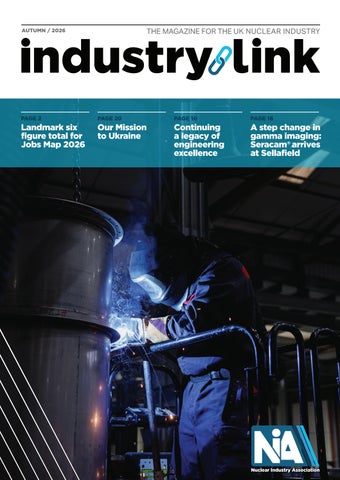
What’s Next Looking ahead, Hargreaves is investing in new product development, digital innovation and a careful diversification into adjacent sectors, while working more closely across the wider Exyte network. It’s a chance to shape not just where the company goes next, but the next generation of safety-critical infrastructure in the UK and beyond. Projects of this scale aren’t won on the strength of a single contract. They’re earned over years, through relationships, performance, innovation, collaboration and trust. My team and I will keep carrying that legacy forward for the next generation. Images: Clockwise from top - SHEVs from dome; Silver Street premises, 1892; Ductwork welding; Hinkley Point C team; Ductwork for concorde major thermal fatigue test. 2026 | SUMMER — 11
C
yber-attacks against energy and critical infrastructure are increasing, while artificial intelligence is changing the economics and speed of cyber-attack, allowing threat actors to automate reconnaissance, identify weaknesses more quickly and potentially coordinate activity across multiple attack paths. That creates a particular challenge for the nuclear sector. Nuclear assets, technologies and safety principles are designed to operate for decades, while the cyber threat environment can change in days. Recent reports of AI-assisted cyber activity targeting government and critical infrastructure in Taiwan, including organisations associated with energy and nuclear safety, illustrate how that gap could develop. The important point is not whether today’s attacks are fully autonomous. It’s that activities which previously required significant human effort—reconnaissance, vulnerability discovery, social engineering and attackpath analysis—can increasingly be accelerated or automated. Nuclear does not suddenly have a new cyber problem because of AI. It has a long-standing resilience challenge that AI has the potential to expose much faster.
Where the blind spots creep in
In my experience, some of the most significant cyber risks develop gradually through fragmentation. Ownership of digital assets can be split between engineering, IT, security, individual projects and third parties. Supplier decisions made years earlier, often for perfectly valid operational reasons, can quietly lock an organisation into a level of cyber risk that nobody consciously chose. Nuclear operators rarely build every technology on which they depend, creating complex supply chains across long operational lifecycles. If nobody can say who owns a system, what it depends upon, who supports it and what happens if it is compromised, the associated risk is difficult to manage. Recent warnings from international cyber authorities reinforce that critical infrastructure remains an active target for ransomware and exploitation of known vulnerabilities. AI does not 12 — SUMMER | 2026
create those weaknesses, but it has the potential to make identifying, prioritising and exploiting them faster and more scalable. In a typical commercial environment, a newly discovered vulnerability might be assessed and patched relatively quickly. In nuclear, applying an update or replacing a component can require testing, safety assessments, requalification and regulatory consideration. You cannot simply patch and reboot because a vendor bulletin says you should. This creates an important asymmetry: attackers may be able to change their techniques rapidly, while defenders may quite legitimately be constrained in how quickly they can change the underlying technology. Independent physical and passive safety measures provide an important backstop against compromise in digital systems. But operators also need to understand the dependencies around them: whether instrumentation can be trusted, if compromised digital systems could obscure the true state of the plant, and whether personnel can identify and respond safely to a cyber-induced condition. The objective should be to preserve genuine independence between layers of protection so that compromise of one does not undermine confidence in the others.
Compliance is a starting point
The EU’s Cyber Resilience Act (CRA) moves cyber security away from point-in-time compliance towards ongoing responsibility across a product’s lifecycle, including secure design, vulnerability handling and reporting obligations. Reporting requirements begin in September 2026, with the broader framework applying from December 2027. Many CRA obligations sit primarily with manufacturers and suppliers of technology. But those obligations do not displace the responsibilities nuclear organisations already have for understanding and managing their security risks. In the UK, nuclear duty holders operate within a sector-specific security regime under the Nuclear Industries Security Regulations 2003, supported by the Office for Nuclear Regulation’s Security Assessment Principles.
Can the nuclear sector keep pace with AI-powered cyber threats? “AS AI BEGINS TO FEATURE MORE HEAVILY IN SECURITY TESTING, ORGANISATIONS ALSO NEED CONFIDENCE THAT ITS USE REMAINS CONTROLLED AND PROFESSIONALLY GOVERNED”
The question is not only whether a supplier is compliant, but whether it can manage vulnerabilities, maintain critical technology securely and respond effectively when something goes wrong. A frame-work, certificate or passed audit provides useful assurance, but cannot tell you how an organisation will cope with a live incident. Effective board-level oversight must interrogate resilience as well as compliance: if a supplier-managed system were compromised tomorrow, would the organisation understand the impact, know who owns the decision and be able to continue operating safely?
Periodic assurance isn’t continuous confidence Penetration testing remains an important part of technical assurance, but it is a snapshot rather than a permanent statement of security. New vulnerabilities are disclosed. Suppliers change configurations. Systems evolve. Threat actors develop new techniques. A test performed several months ago may therefore provide valuable assurance about a particular point in time without necessarily reflecting today’s exposure. The answer is not to replace penetration testing with continuous monitoring. It is to create a broader assurance model. Appropriate technical testing should sit alongside asset visibility, vulnerability intelligence, configuration monitoring, threat intelligence and regular validation of compensating controls. Where a vulnerability cannot be patched because of operational or safety constraints, the alternative controls need to be understood, tested and evidenced rather than simply assumed to be effective. This is where an “assume breach” mindset becomes valuable. Assuming breach can sound like accepting defeat but it’s about recognising that prevention will never be perfect and designing the organisation so it can detect, triage, contain and recover when preventative controls fail. As AI begins to feature more heavily in security testing, organisations also need confidence that
Image by Tima Miroshnichenko on Pexels — pexels.com/@tima-miroshnichenko
ANTHONY LONG • VICE PRESIDENT, STRATEGIC SOLUTIONS ARCHITECT • LRQA
its use remains controlled and professionally governed. CREST’s new accreditation requirements for AI-enabled penetration testing are an important development, providing organisations with a means of assessing whether AI-assisted testing remains authorised, transparent and subject to appropriate professional oversight. AI can help security teams analyse information, identify patterns and prioritise vulnerabilities far faster than a human analyst. However, what AI cannot do is compensate for weak foundations. If an organisation does not know what assets it owns, how networks are segmented, who has privileged access or which suppliers support critical systems, adding AI may simply allow the same problems to move faster.
Building resilience across a multi-decade lifetime None of these challenges will be solved through a single technology upgrade. Nuclear assets are built to operate for generations, and the cyber threat an asset faces when it is commissioned may bear little resemblance to the threat environment it faces during operation or decommissioning. This requires a cultural and operating-model shift as much as a technical one. It also means creating an operating model capable of adapting as both threats and defensive technologies evolve, with clear ownership, reliable asset intelligence, tested controls, strong supplier governance and decisionmaking processes that can respond quickly without compromising safety. Nuclear cannot—and should not—adopt technology at the same speed as every other industry. Safety, assurance and regulatory rigour exist for good reason, but it cannot mean accepting a cyber security model that evolves more slowly than the threat. The organisations best prepared for the next decade will not necessarily be those deploying the most AI. They will be those that understand what they depend upon, know where their weaknesses are, can demonstrate that their layers of protection still work and can adapt when the threat changes. 2026 | SUMMER — 13
Sizewell B given lifetime extension to 2055
Consumers are set to benefit for decades to come, as the extended operation will reduce the costs of Britain’s energy system compared to building alternative generation, protecting billpayers and strengthening our energy security. Currently, Sizewell B provides approximately 3% of the UK’s total electricity needs. The extension of the plant will maintain a vital source of energy for Britain, powering 2.5 million homes and protecting billpayers from exposure to volatile fossil fuel markets through secure, reliable, clean power. Alongside the extension of Sizewell B, government is continuing to back nuclear projects across the UK, including Britain’s first small modular reactors in Anglesey, and the construction of Sizewell C, set to produce clean power for the equivalent of 6 million homes and support 10,000 jobs at peak construction. The government and EDF have agreed terms for a 20-year Contract for Difference at £70.50 per megawatt in 2025 prices starting from 2035, the original closure date, with support and investment from Centrica. Skilled workers in nuclear will be retained through the continued operation of Sizewell B, helping to sustain Britain’s expertise and strengthening homegrown supply chains. The Nuclear Industry Association estimates that nearly 100,000 people are employed in nuclear jobs across the country. New estimates suggest that had Sizewell B been operating under this agreement during the energy price crisis following Russia’s invasion of Ukraine, consumers would have saved around £2 billion.
14 — SUMMER | 2026
“GLOBAL EVENTS DEMONSTRATE TIME AND AGAIN HOW VITAL IT IS FOR THE UK TO SECURE LONG TERM, LOW-CARBON, HOMEGROWN ELECTRICITY WHICH PROTECTS BRITISH HOUSEHOLDS AND BUSINESSES FROM MARKET VOLATILITY. EXTENDING THE LIFE OF THE PLANTS WE ALREADY HAVE ALONGSIDE BUILDING NEW ONES IS CENTRAL TO EDF’S STRATEGY.” Simone Rossi, CEO, EDF
2026 | SUMMER — 15
RICHARD FEARNSIDE • CULTURE & PEOPLE DIRECTOR • NUVIA
How government procurement changes can drive jobs, skills and growth across the UK
“A SHORTAGE OF SKILLS ISN’T NEW; I’VE SEEN IT THROUGHOUT MY CAREER. WHAT HAS CHANGED IS THE SHAPE OF THE CHALLENGE.”
16 — SUMMER | 2026
L
ast month, the UK Government set out changes to procurement rules so that public spending better supports British jobs and skills. From next year, “social value”—with greater focus on the high-quality jobs, skills and training a business commits to delivering, alongside the contract itself —will count for 20% of the score on government contracts worth £5m or more, double its current weighting, while contracts under £1m will be exempt to keep the process simpler for smaller firms. In practice, this means that companies competing for a share of the roughly £90bn the Government spends with industry each year will be judged, and held to account, on the local jobs, apprenticeships and skills pipelines they create, not just on price and technical delivery. These changes are both welcome and long overdue. Too often, social value is a line to complete on a tender, important enough to matter for scoring but often not enough to change behaviour. The new weighting changes this, it gives the reforms real teeth, benefitting local communities, creating high-quality jobs, tackling local skills shortages, and supporting young people into apprenticeships and work placements. For a company like NUVIA which operates across nuclear, and fusion, this couldn’t be better timed. With the fusion STEP Programme, Hinkley Point C, Sizewell C, and a growing Small Modular Reactor (SMR) programme, we have critical projects across the country that will need a sizeable, skilled workforce for decades to come. The scale and visibility of these projects, taken together with procurement changes, matter enormously when we are trying to persuade a 17 or 18-year-old that engineering or an apprenticeship is where they should build a career, or entice those considering a career change or retraining to make the move. A shortage of skills isn’t new; I’ve seen it throughout my career. What has changed is the
shape of the challenge. The current workforce is often strong at the senior end—NUVIA gave out seven awards last year recognising 40 years of service—and increasingly strong at the entry level, thanks to a growing pipeline of apprentices and graduates. The real gap sits in the middle, the cohort we need to carry forward institutional knowledge and specialist skills over the next twenty years. Closing that gap means two things happening at once, continuing to invest in bringing people in early and being far more deliberate about transferring the expertise our most experienced colleagues hold before it walks out of the door. Much of what we need—project management, systems engineering, commercial and planning skills, and skilled tradespeople—transfers across energy, infrastructure and advanced manufacturing. Employers are often competing for the same small pool of people. The more we can build genuinely mobile career pathways between sectors, rather than each one trying to grow its own closed pipeline from scratch, the more resilient UK industry becomes. For that to happen, I would like to see these reforms align commitments on skills and job creation with industry and local workforce intelligence, understanding where the gaps are, rather than companies setting their own targets in isolation. The reforms should also widen who considers working in engineering and industry. Work experience, apprenticeships, and structured routes for young people not currently in education, employment or training (NEETs) all become things companies are expected, and checked, to deliver, not simply things companies like NUVIA are proud of doing anyway. The focus on NEETs really matters. This is a generation that lost formative years of school, work experience and social development to the pandemic, and we owe them more than
sympathy, we owe them a route into work. We also need to look at widening access. Engineering remains male-dominated, and part of that is inherited perception—well-intentioned parents and careers advisers who’ve never seen inside a modern facility and can’t picture it as a good career. We need to keep opening our doors and pair experienced colleagues with the next generation of talent coming through. We run reverse mentoring at NUVIA, and it’s remarkable how often it changes minds on both the senior and junior end of the business. A word on AI, because it comes up in every skills conversation now. I don’t think engineering and the sectors NUVIA works across are immune to it, but because much of the work is highly regulated and safety-critical, I do think it is more protected than other sectors. AI can bring efficiency, and we should take it, but I believe it supplements judgement, it doesn’t replace it. There has been concern, from some groups, that narrowing social value onto jobs and skills means squeezing out environmental ambition. I don’t see it that way. Long-term, well-paid careers in local communities, sustaining industries that are themselves central to net zero, aren’t in competition with environmental outcomes, they’re part of delivering them. If I could embed one change into the reforms, it would be guaranteed long-term commitment. The full benefit of these changes won’t be felt within one Parliament, and politicians from all parties need to commit to this agenda for the long term, while listening properly to industry, because that’s where the expertise actually sits. Get that right, and this becomes more than procurement reform. It becomes a powerful lever for creating high-quality jobs and skills, strengthening local communities and delivering economic growth across the UK. 2026 | SUMMER — 17
MARK ROSSER • CHIEF EXECUTIVE • SERAC IMAGING SYSTEMS
A Step Change in Gamma Imaging: Seracam® arrives at Sellafield
▲ From left: Seracam® a compact, portable hybrid gamma-optical camera; images courtesy of Sellafield Ltd including interior of glovebox and glove
R
adiation is invisible until you know how to look for it. That is precisely the problem Seracam, our gamma-optical camera for realtime radiation imaging, was built to solve, and it is now being introduced at a number of UK nuclear decommissioning sites. Seracam, made its first commercial nuclear sector deployment earlier this year at Sellafield, where it is now helping operators see radiation in real time, with a level of detail more familiar in surgical imaging than inside a nuclear glovebox. After watching detailed radiation levels appear live, co-aligned with the visual image in front of them, Sellafield’s plant operators summed it up when they called Seracam, “A small piece of tech with big potential for the future of decommissioning.” That is exactly the ambition: for Seracam to become an established, everyday tool, making decommissioning work faster, safer and more effective, at Sellafield, across the wider NDA group, and internationally. The introduction of Seracam at decommissioning sites in the UK marks the culmination of years of academic and engineering work moving into operational use from its origins amongst the stars.
Distant Origins
Seracam’s underlying detector approach derives from work on high sensitivity, lightweight detector systems developed for X-ray astronomy, specifically the instrumentation on board NASA’s Chandra and ESA’s XMM Newton observatories, where atmospheric absorption of X-rays from distant sources demands detectors capable of resolving very low photon flux in a compact form factor. Professor John Lees at the University of Leicester and Professor Alan Perkins at the University of Nottingham, experts in detector physics, recognised that the same principles of sensitivity, precision and compactness could be adapted into a handheld gamma camera capable of co-registering gamma and optical video at the point of use. That insight is the foundation on which everything we have built since rests. 18 — SUMMER | 2026
Since then, Seracam has been developed along two parallel tracks with convergent needs and design benefits. One, an industrial track to tackle nuclear decommissioning challenges in collaboration with Dr Sarah Bugby at Loughborough University and with early support from Sellafield Ltd’s Game Changers innovation scheme. The other, a medical track where Seracam has imaged more than 200 patients undergoing nuclear medicine procedures and is now being introduced in image-guided surgery.
Core Characteristics
Seracam is an operator-guided small field of view imaging system with a detector gamma energy range from approximately 20 to over 1 MeV. Its utility stems from four core characteristics: ● Highly versatile: lightweight (5kg), small form factor (15cm/6 inch diameter) and mobile; easily relocated across multiple environments. Seracam operates hand-held, hands-free, and can be integrated on robotic arms, on unmanned vehicles and aircraft, and in submersible configurations for underwater deployment ● Real-time hybrid video imaging: the automatic, fused overlay of gamma and optical images, with matched fields of view and alignment maintained at any imaging angle or distance, gives unprecedented precision even when camera or source are in motion. Images are displayed live for immediate user feedback ● Spatial resolution: allows the identification of multiple sources in the field of view, including the ability to distinguish hotspots even for adjacent sources. Multiple integrated collimators, selectable without change parts, allow for a unique “gamma zoom” capability ● Simple and intuitive: designed for practical application: plug-and-play set-up, low-burden training and maintenance; sealed and easily cleaned (sterilised or decontaminated); standalone operation with built-in cybersecurity; affordable, same-day installation and minimal service requirements
“It was exciting to see the areas of contamination within the gloveboxes with this level of detail. Seracam will enable us to better understand our environments and, by doing it in a safer way, the data we collect will better inform decommissioning.” Bill Johnson, Technology Demonstration Manager, Sellafield
port; NASA’s Chandra X-ray Observatory ©NASA/CXC & J. Vaughan
We are also developing machine-learning-based analysis, aimed at automated feature recognition and hotspot identification, which will extend the system’s role from real-time visualisation toward assisted data interpretation.
Workflow Optimisation
For a Post Operational Clean Out (POCO) team working inside a glovebox, Seracam changes workflow practices. A survey that would otherwise require a static measurement, a wait for reconstruction and potential subsequent measurements, is replaced by continuous, moving analysis. The operator pans the camera and sees the co-aligned gamma and optical picture update in real time, supporting faster decisions about required interventions with immediate visual feedback on the impact of their work. This ability to combine gamma and optical imaging to produce a live display, enables operators to see radiation in real-time with pinpoint accuracy while they are working. Seracam can localise focal areas and ‘hot spots’ even against background distributions. Still and video images can also be captured for review and archiving. Showing users what they are looking at, where the radioactivity is, what size and shape it is, and the relative activity, has the ability to make tasks safer, faster and more effective. For example, an operator involved in a clean-up activity will be able to continuously see the impact they are having on radioactivity, even in very small areas with poor visibility. For characterisation and POCO planning teams, the practical significance lies less in any single specification than in the combination of them: a camera that removes the reconstruction lag inherent to many gamma imaging methods, maintains gamma-optical co-registration without manual correction, even in motion, and is light and low-power enough to be carried by hand, mounted on an arm, or fitted to a robotic platform, changes workflow practice.
Validation and Integration At Sellafield, the initial application is indeed Post Operational Clean Out (POCO) of gloveboxes, one of the more constrained and hazard-dense stages of the decommissioning lifecycle. Visualisation data of this kind underpins much of what follows it in a decommissioning programme: it informs the safety case, determines waste routing and packaging decisions, and shapes how much shielding, remote handling or additional protective equipment a task requires. Quality and speed of data collection can optimise these operations. In an initial demonstration, Seracam located and characterised the sources in real time, demonstrating strong image clarity, fast response to movement, and stable co-aligned imaging throughout handheld operation. A 12-month structured integration programme is now underway at Sellafield. This will include additional testing against a wider range of point sources, pilot deployment across a number of selected facilities, and direct engagement with operational teams to establish practical deployment models and standard operating procedures.
Becoming Business As Usual
It is widely recognised that gamma imaging has been constrained by the trade-off between image quality, speed of imaging and display, and practical deployment. Seracam fundamentally changes that. Being selected initially by Sellafield, is a powerful validation that our technology delivers in realworld, high-complexity radiological environments, representing a genuine step change in gamma imaging capability for the decommissioning sector. Our goal is for Seracam to become a routinely available, ‘must have’ tool across the wider NDA estate and in decommissioning programmes globally. These initial orders give us real confidence that we are moving in the right direction. ▶ Visit www.seracimagingsystems.com/industrial
2026 | SUMMER — 19
LINCOLN HILL • DIRECTOR OF POLICY AND EXTERNAL AFFAIRS • NIA
“I have not seen my home in 13 years: Our mission to Ukraine
▲ Clockwise from left: Visiting the Khmelnytskyi Nuclear Power Plant; Ministerial meeting; Meeting the station director; Embassy reception.
V
isiting Ukraine in wartime is a surreal mixture of the mundane and the profound. The overnight train from Poland to Kyiv in the old sleeper carriages, slowing winds its way through countryside dotted with modest little villages. At the train station, men missing limbs, some still in uniform, make their way along the platform. At our hotel, and in the conference rooms, there is the familiar array of briefing packs, PowerPoint, and business cards. But after the conference, a visit to the most-bombed neighbourhood of Kyiv, Lukianivska, with the smell of explosives still hanging in the air. Our Ukrainian colleagues carry on with a quiet resolution and wry determination: business as normal during the days, nights punctuated by piercing air raid alarms and, sometimes, the crash of Russian missiles. On the streets in Kyiv, life gives an impression of normality, but nearly every billboard is for military recruitment and nearly every major public space is dedicated to remembering the fallen. Our colleagues in the nuclear sector carry a particular burden. Nuclear power now generates 70% of Ukraine’s wartime electricity, sometimes up to 80%. Ukraine’s survival depends on its three
20 — SUMMER | 2026
unoccupied plants running. And they do, despite Russian missile and drone attacks on substations, despite the Russian occupation of the largest plant, Zaporizhzhia, with its six reactors, and despite the vicious treatment and displacement of thousands of colleagues who worked at the plant. We went on our mission because of that special burden. Firstly, we wanted to show support to our Ukrainian colleagues, to let them know that we see their struggle and admire endlessly their courage and sacrifice. Secondly, we went to offer practical support and partnership to what is perhaps the most vital civilian sector of Ukraine’s wartime economy. UK nuclear already plays a critical role. Urenco, headquartered here, and onethird owned by our government, provides all of Energoatom’s enriched uranium. UK Export Finance has twice concluded loan guarantees to allow the Ukrainians to buy this essential supply. We hope this will continue, but there is room for further collaboration beyond fuel. For a start, the UK and Ukraine share challenges in complex decommissioning at Sellafiedl and Chornobyl. The Ukrainian State Agency for Exclusion Zone Management (SEZMA) believes there is fertile ground for collaboration on robotic
systems, remote handling solutions, digital monitoring and radiation mapping: all things to manage hazardous and uncertain environments, and to minimise human exposure in those conditions. We intend to arrange a visit for the Ukrainians to the UK, and they gave an open invitation to visit the Exclusion Zone in return. The Ukrainians have their eyes on the future as well. They have a target to have 24 GW of nuclear by 2050 and have produced a draft law to allow siting, private investment and operation of SMRs. Ukraine is looking at Rolls Royce SMR and Holtec’s SMR, among others. We met leading MPs from the nuclear energy sub-committee of Parliament and emphasised two points: international design standardisation will be essential, and they should drop the 300 MW capacity limit for SMRs currently in the legislation: 300 MW is not a magic threshold of safety, and they should be open to all designs that could work. The Ukrainians, like the UK, recognise the need for new large-scale nuclear as well as SMRs. That leads us down the road to Khmelnytskyi Nuclear Power Plant, the last stop of our mission. The trip there gave us the classic image of Ukraine, rolling in the fine summer sun through endless fields of
sunflowers, the sea of yellow against a clear blue sky. We passed two National Guard checkpoints before passing through what is an old-style company town of Netishyn. The plant is very neatly arrayed, the two reactor blocks decked in a fine Ukrainian blue, with traditional Ukrainian patterns embroidered near the top of the containment domes. The plant provides around 10% of Ukraine’s electricity at full power with two unfinished VVER-1000s next to them, where construction was suspended decades ago. We toured unit 2, and climbed through unfinished Unit 3, to witness the supremely difficult task of preserving equipment and structures in the open-air for a 40-year old design, awaiting the authorisation to resume construction. Next to that is a site designated for 2 AP1000s: Ukraine is clear-eyed and ambitious. But I have to say what struck me most was the outstanding hospitality, generosity, and courage of the plant staff. You should have seen the spectacular spread laid out in the Station Director’s office for us, just for the coffee break before the site tour. I thought that would be enough, but after the tour they sat us down for what I can only describe as a feast. We even ate herring caught in the cooling reservoir outside the plant: our colleagues who had never visited a nuclear plant before had to be reminded that the herring swam in tertiary water, very far from any radioactivity! But it is the stories of the plant personnel that break your heart and remind you of why we are in this industry. We asked about the importance of the plant to the local economy (it is the most important in the oblast) and how many of the staff were local. A good many are, but one of the senior engineering directors told us that he was from eastern Donetsk, displaced in 2013 by the first part of Russia’s war on Ukraine. He quietly reflected “I have not seen my home in 13 years.” On the unfinished units, hundreds of staff who fled the Russian occupation of Zaporizhzhia now maintain and monitor equipment. The engineering leader overwhelmed two interpreters with the speed and enthusiasm of his briefing to us. He stopped with a grin: “for 35 years, this stuff has been my life, but my life was called Zaporizhzhia Nuclear Power Plant.” The Station Director recalled the dark days of February 2022, when they knew they were a Week One target for Russia’s paratroopers. They did their duties with rifles in hand, making Molotov cocktails, all the while knowing their colleagues at Zaporizhzhia were facing Russian occupation. Again and again, they thanked us for coming to see them and praised us for our bravery in coming to visit in such circumstances, but the bravery is all theirs. This winter, the plant, our colleagues, and all of Ukraine are braced for another Russian onslaught against the energy system. They have already appealed for Western donations of equipment (diesel generators, pumps, electrical system components) to help patch, mend and restart the grid When the call comes to us, please listen to it and see if your organisations can help. Ukraine has laid down so many lives as the shield of Europe, and as warriors for freedom and democracy. Let me thank Amentum for joining us on the mission, the British Embassy in Kyiv for their unflagging support, and the Ukrainian Nuclear Forum, Energoatom, and all our Ukrainian colleagues for their warmth, conviction, and devotion to such a noble cause. 2026 | SUMMER — 21
ELISABETH RODEN • POLICY ANALYST • NIA
The NIA headed to Liverpool to host our second Advanced Nuclear Technologies (ANT26) conference in June, at what many will argue is a pivotal time for this part of the nuclear sector, both in the UK and globally.
It was motivating to reflect on what has changed since the first conference in 2023, as the UK has certainly seen significant progress in the ANT sector. Rolls-Royce SMR has partnered with Great British Energy–Nuclear for the deployment of its SMRs, the ongoing nuclear regulatory reform is streamlining regulatory and planning processes, and the Government has published the long awaited Advanced Nuclear Framework to enable growing interest in UK deployment from technology vendors internationally. There was a clear difference between the two conferences: ANT23 focused on opportunity, ANT26 on delivery & deployment. Lord Vallance, Minister for Nuclear at the Department for Energy Security and Net Zero, reinforced this focus on delivery in his keynote, stressing the urgency felt in government around advanced nuclear deployment for energy sovereignty and self-sufficiency, and assuring attendees that the Government is committed to making the UK the best place to invest in and build advanced nuclear. Throughout the day, technology vendors provided project updates and discussed international ambitions. X-energy, Holtec, and TerraPower discussed progress in ongoing US projects and presented initial plans for UK deployment. RollsRoyce SMR discussed international ambitions in Czechia and Sweden, alongside local deployment. Urenco provided an update on progress towards HALEU enrichment at Capenhurst, expected to become commercially available from 2031. The day started with a panel focused on financing mechanisms to bring projects to market in the UK, exploring what constitutes a bankable project, and applying learnings from Sizewell C to financing advanced reactors. Philip Haslam from the Department for Energy Security and Net Zero highlighted that the Government is focused on creating the right environment for privately led investment to flow, while the National Wealth Fund remains open to financing technologies on the Advanced Nuclear Pipeline, under the right conditions. Discussion around costs continued into the ‘Nuclear Solution for Energy Intensive Industries Panel’ as Arjan Geveke from the Energy Intensive Users Group highlighted that for end users, the economics of nuclear remain the main concern. In the afternoon, the opportunities and challenges of siting advanced nuclear in the context of EN-7, NESO’s Strategic Spatial Energy Plan, and regulatory reform were discussed, as well as the benefits of modularisation that Laing O’Rourke observed in the Everton Football Stadium Project. Panels concluded with a discussion on accelerating privately led advanced nuclear projects, where panellists reiterated the need to increase private investor confidence alongside developing supply chain readiness, to bring socioeconomic change to communities. Attendees also heard from the Director of Regulation for New Reactors, in a fireside chat on nuclear regulatory reform, who assured that the ONR is committed to leading the path towards international regulatory alignment with like-minded regulators to make a fleet approach to deployment easier. ANT26 highlighted that whilst the sector has seen major progress over the past 3 years, it is now vital to maintain momentum in improving the regulatory context and financing opportunities available to projects that are essential to driving forward decarbonisation, energy security, and economic growth across the country. 22 — SUMMER | 2026
MAYA SETH • DIGITAL COMMUNICATIONS EXECUTIVE • NIA
The Manufacturer reported that new polling conducted by YouGov on behalf of the Nuclear Industry Association shows that across the UK, nuclear energy is seen as the top energy source for keeping the lights on, job creation and investment. The report included a comment from NIA CEO Tom Greatrex on the need to replace retiring stations at pace and at scale, and to ensure proper implementation of the Nuclear Regulatory Review. The Herald announced that Scotland has “high potential” for new nuclear development, according to a technical study commissioned by the UK Government’s nuclear delivery body. NIA commentary highlighted that the political ban has already caused Scotland to miss out on 5,000 highly skilled and highly paid nuclear jobs. Tom Greatrex called for Scotland to embrace nuclear, as other European countries are, to ensure a future without an overreliance on the volatile gas market. The New Civil Engineer featured the NIA’s welcome of the news that Rolls-Royce SMR was selected to build Sweden’s first three small modular reactors. Tom Greatrex stated that this is another major endorsement of Rolls-Royce SMR’s technology and a significant boost for Britain’s nuclear export ambitions. Tom added this agreement shows that British nuclear expertise is not just attracting investment at home but also winning opportunities overseas. The BBC announced that Hartlepool Power Station and Heysham 1 will continue to generate electricity for two more years than previously announced. Underlining the importance of this announcement, Tom Greatrex said that the significance of this cannot be understated, given the UK’s exposure to volatile gas prices and the need to protect households by providing baseload power. NucNet announced Sizewell B had been granted a 20-year life extension. Tom Greatrex emphasised that this was one of the best things we can do to build an affordable and reliable clean power system, highlighting the essential role the power station plays in the UK’s energy mix. To date, Sizewell B has produced over 270 TWh of lowcarbon electricity, enough to meet the needs of every household in the counties of Suffolk and Norfolk for more than 100 years. The Times reported Hinkley Point C could be delayed again by demands to protect the local fish population. NIA reaction argued that environmental protection should always be based on evidence and proportionality. The NIA called for a more proportionate framework that recognises the UK’s strategic interests in energy security, lower bills and lower emissions, and allows them to be properly reflected in decisions like these.
2026 | SUMMER — 23
NEWS FROM THE HUB. Cambridge Atomworks opens new facility and laboratory Cambridge Atomworks announced the opening of its new light industrial facility, which includes a state-of-the-art laboratory, at Granta Park, Cambridge—a leased property from TWI. The team has already begun to put the new lab to good use by conducting experiments vital to the development of the ODIN micro-reactor. This includes experiments key to developing our understanding of our coolant’s properties and behaviour. These properties, relating to fuel performance, are being characterised utilising a state-of-the-art STA-MS system which enables simultaneous thermogravimetric, heat flow, and mass spectrometry analysis.
prototype air-cooling rig to test its passive reactor vessel cooling system. The initial results from these simulation tests have led to new understanding and quantitative insights which help demonstrate the effectiveness of the design, and complement its numerical modelling with real operational-type data. As well as the air-cooling rig, a corrosion testing rig will be put in place in the near future. This will enable the validation of materials selection for reactor critical components, such as the reactor vessel. In the longer term this facility will enable the testing of engineering critical systems for the operation and control of the ODIN micro-reactor.
“We are really delighted to get the High Bay facility at Granta Park up and running. It will allow us the space and height to build our demonstrator rigs and the chemistry facility will give us the analytical platform to investigate the chemical processes inherent in our reactor system, which will accelerate the completion of the ODIN design.” Ian Farnan, CEO, Cambridge Atomworks The new facility is proving to be an invaluable resource for testing the different elements of flow and heat transfer in the reactor, which is key to establishing the efficient and safe performance of ODIN. Non-nuclear rigs are already being built and are starting to be tested; the team has installed a
Boccard UK awarded contract for Sizewell C Boccard UK has been awarded a major contract to deliver critical Pools, Tanks, and Sumps (PTS) scope elements for the Sizewell C nuclear power station project. Over the four-year programme, Boccard UK, with the support of Boccard France, will be responsible for the fabrication and preassembly of high-integrity stainless-steel tanks for the 3.2GW Sizewell C power station. These components will be embedded within key reinforced concrete structures across the Nuclear Island and will play an essential role in the power station’s long-term operation. This award marks a new milestone in Boccard’s long-standing involvement in the UK nuclear sector and further strengthens its position as a key partner in the delivery of complex nuclear infrastructure, supporting one of the UK’s most strategically important lowcarbon energy developments. The tanks will be manufactured at Boccard UK’s fully digitalised facility in Deeside, North Wales, with technical and engineering support provided by Boccard’s expert teams in Roanne, France. The programme will draw on the
24 — SUMMER | 2026
expertise of more than 200 specialists while further reinforcing Boccard UK’s capabilities in the design, fabrication and delivery of highintegrity equipment for the nuclear industry. The project will leverage Boccard’s proven off-site modular fabrication model, delivering enhanced quality control, reduced on-site complexity, and greater programme certainty. Boccard continues to support the development of low-carbon electricity generation, skilled employment and the UK’s net-zero ambitions. “Winning this contract represents a major milestone for Boccard UK and reflects our strong track record in delivering highspecification nuclear systems. We look forward to working collaboratively with project partners to deliver safely, efficiently and to the highest quality standards.” Douglas McQueen, CEO of Boccard UK Sizewell C recently published its second Annual Sustainability Report, revealing the project had already invested just under £5bn with more than 1,000 UK suppliers, including £1.35bn across its host region alone.
Jacobs appointed by GBE-N to support planning Jacobs has been selected by Great British Energy–Nuclear (GBE-N) to provide planning and consenting services for proposed small modular reactors development in the UK. It will provide strategic planning, consent support and leadership to key land-use planning activities to help advance required project approvals. Initially, the focus will be on new nuclear development at the Gwyndod and Oldbury-on-Severn sites, with the potential to include additional sites that will support GBE-N’s future ambitions. Jacobs will help guide planning applications and post-application activities, including engagement with planning authorities, regulators, communities and other groups. The team will also contribute to socio-economic and traffic and transport assessments to help inform regional impacts and workforce considerations. This experience planning for SMRs will also have increasing relevance across the globe as the energy sector looks to keep pace with demand.
Mammoet becomes first in industry to obtain ISO 19443 Mammoet, the global leader in engineered heavy lifting and transport, has become the first company in its industry to achieve ISO 19443—the international quality assurance and management standard for organizations operating in the nuclear power sector. ISO 19443 was officially published in 2018 and is an international quality management benchmark specific to the nuclear power industry. It provides businesses with a framework covering different business areas, from sales and operations to HR and procurement. Mammoet holds several ISO certificates, including ISO 9001, ISO 14001, and ISO 45001. Its decision to obtain ISO 19443 was driven by Mammoet’s commitment to quality assurance and service, as it works with key players to develop efficient build strategies for next generation reactors. The journey to prepare for and achieve the certification has taken three years. The ISO audit assessed everything from culture and processes, to training, engineering and health-and-safety within the organization. The ISO certificate will be awarded to Mammoet by DNV France— the third-party certification body for ISO 19443. Mammoet has been working in the nuclear power sector for decades and has supported many high-profile projects for many of the world’s biggest companies working in the sector, including EDF, ITER, RWE, Framatome, Bruce Power and PreussenElektra, among many others.
Holtec and EDF submit new nuclear plans Holtec International and EDF have submitted a joint proposal to the UK Government for the deployment of Holtec’s SMR-300 small modular reactors at Cottam in Nottinghamshire. The two companies also signed Heads of Terms to establish a joint venture to advance the project’s development. The submission represents a significant milestone under the country’s Advanced Nuclear Framework, established to accelerate deployment of advanced nuclear technologies and encourage greater privatesector participation in new nuclear development. Through the proposed project, Holtec and EDF are advancing a market-led approach to deliver new nuclear generation by leveraging private investment, proven technology, existing infrastructure, and decades of UK operational experience. The project brings together two companies with a relationship spanning more than three decades. By combining EDF’s significant operating and development experience with Holtec’s walkaway-safe reactor technology, manufacturing knowhow, and project development expertise, the partnership plans for new nuclear power at the historic Cottam site. Located in Nottinghamshire, the former coal power station site will locate up to four SMR-300 units, representing approximately 1.3 gigawatts of clean, reliable generating capacity. The project demonstrates how former coal sites, with existing grid infrastructure, can be repurposed to support the next generation of nuclear energy while revitalizing the local economy and transforming the region. The proposal builds on Holtec’s recent completion of the UK Generic Design Assessment process for the SMR-300 which led to a regulatory confirmation of the SMR-300 fundamental safety, security, and environmental adequacy. Completion of the GDA has set the regulatory foundation to build at Cottam which will host a second-of-a-kind SMR-300 site, the twin Pioneer units in Michigan being the first being built by a JV by Holtec and Hyundai E&C. Holtec’s construction permit application for the twin Pioneer units is currently under review by the US Nuclear Regulatory Commission, while preconstruction activities continue at the site. Both projects will benefit from growing cooperation between the UK’s Office for Nuclear Regulation and the US Nuclear Regulatory Commission—with the aim of regulators working collaboratively to deliver benefits across the Pioneer and Cottam projects and help to ensue true second of kind deployment in the UK. 2026 | SUMMER — 25
ARCADIS CONSULTING UK LIMITED arcadis.com
SERCO serco.com
NUCLEAR LIABILITIES FUND LTD nfl.uk.net
Arcadis is a global design, engineering, and consultancy firm for natural and built assets. It supports clients across the full nuclear lifecycle, from uranium mining, processing, and enrichment through to new nuclear, operations, waste and spent fuel management, decommissioning, and land remediation.
Serco is a global provider of public services, working in partnership with governments and organisations to deliver essential services that support communities and national infrastructure. The company combines people, technology, and operational expertise to deliver services efficiently and safely at scale.
Established in 1996, the Nuclear Liabilities Fund is an independent ring-fenced fund, which exists to meet the costs of decommissioning eight nuclear power stations. Its primary purpose is to grow the fund over the long-term to be sufficient to meet liabilities as they come due.
CEA cea-team.com
WHITE & CASE whitecase.com
SGE SMR UK LIMITED sge.eu
CEA are leading the delivery of consents and permits for energy infrastructure that balance the needs of people and the environment. We support delivery of nuclear by providing strategic and technical knowledge of the policy, legislative and regulatory framework.
White & Case is a global law firm with longstanding offices in the markets that matter today. Our on-theground experience, our cross-border integration and our depth of local, US and English-qualified lawyers help our clients work with confidence in any one market or across many
A UK project company established by SGE to develop its Small Modular Reactor programme. It has announced plans to develop fourteen GE Vernova Hitachi BWRX-300 SMRs across three UK sites and has submitted an application under the UK’s Advanced Nuclear Framework.
GHD ghd.com
CERBERUS NUCLEAR cerberusnuclear.com
GREEN LEAF CONSULTING
GHD is a global, multidisciplinary professional services organisation providing clients with integrated solutions across advisory, engineering, digital, architecture, environmental and construction. Our futurefocused, innovative approaches connect and support communities around the world.
Cerberus Nuclear brings together specialist skills and industry-wide experience to offer comprehensive radiation shielding, criticality safety and nuclear characterisation services. In addition to a senior team with a wealth of experience, we have strong links to universities and a graduate training programme.
Greenleaf Consulting is an independent specialist EC&I consultancy focused on de‑risking complex nuclear control and instrumentation delivery. We support utilities, OEMs and integrators across the full lifecycle. Our work combines technical governance, standards interpretation and evidence planning to deliver right‑first‑time solutions.
26 — SUMMER | 2026
WALTERS CM walterscm.com
INDUSTRIAL SOLUTIONS HUB ishco.co.uk
NEWCASTLE TOOL & GAUGE LTD ntg-ltd.co.uk
Chartered surveyors providing specialist commercial management, advisory and assurance services to organisations delivering complex infrastructure, energy and nuclear projects. We help leadership teams protect value, mitigate contractual risk and make commercial decisions.
At iSH our mission is to empower West Cumbria’s doers, fixers and problem-solvers, to expand the region’s technical capability and drive opportunities for growth, through our industrial cluster development.
CNC machining of high-integrity precision components. Based in Gateshead, UK, Newcastle Tool & Gauge Ltd (NTG) is a precision manufacturing and engineering partner specialising in complex, high-integrity components for demanding applications.
MCT BRATTBERG LTD mctbrattberg.com
TELENT TECHNOLOGY SERVICES LTD telent.com
For more than 70 years, MCT Brattberg systems have been protecting people, assets and the environment across some of the world’s most demanding industries. Today its a global provider of high-performance, certified cable and pipe transit sealing systems.
At Telent, we combine decades of experience in Critical National Infrastructure with specialist expertise in mission-critical technology, enabling nuclear organisations to connect people, systems and assets across safety-critical environments.
Not a member? To find out about the NIA and benefits of membership scan the QR code. To discuss membership options available to your company email membership@niauk.org
WITH THANKS TO OUR SPONSORS
PLATINUM SPONSORS
A/V SPONSOR
WELCOME DRINK SPONSOR
GOLD SPONSORS
2026 | SUMMER — 27
MIKE BRIDGE • MEDIA & COMMUNICATIONS MANAGER • UK ATOMIC ENERGY AUTHORITY
▲ A MAST Upgrade plasma with nitrogen added to spread exhaust heat ©United Kingdom Atomic Energy Authority The United Kingdom Atomic Energy Authority (UKAEA) has completed its most ambitious series of experiments to date on its flagship fusion machine. The highest plasma pressure attained by the machine was achieved while overcoming control problems that are considered essential prerequisites for commercial fusion power. The fifth series of experiments conducted on the MAST Upgrade machine, at UKAEA’s Culham Campus in Oxfordshire, ran through 2025 and 2026 and produced more than 1,100 fusion plasmas. The scientific results were one of the flagship deliveries of UKAEA’s recently published 2026-2030 Strategy: building the scientific foundations needed to make fusion a deployable, low-carbon energy source. To create a plasma in a fusion facility, hydrogen isotopes must be heated, squeezed together and confined at extreme temperatures and pressures. Fusion reactions increase rapidly as density and temperatures rise. A higher-pressure plasma can produce more fusion power per unit volume, making it more representative of the conditions needed in a commercial power plant. The experiments conducted by the team demonstrated the highest pressure ever achieved in the MAST Upgrade machine without the plasma destabilising. The central challenge of MAST Upgrade’s experiments was to suppress instabilities known as Edge Localised Modes or ELMs. These are sudden bursts at the plasma’s outer edge that can cause a loss of plasma pressure and eject up to a tenth of its stored energy in a single event and, over time, damage a machine’s inner wall and exhaust components. Left unaddressed, ELMs are seen as a serious obstacle to fusion’s commercial viability, since frequent wall damage would drive up maintenance costs. Building on ELM-suppression results from previous plasma experiments, the MAST Upgrade team adopted the Quasi-Continuous Exhaust mode (QCE-mode) and Resonant Magnetic Perturbations (RMP) ELM suppression modes using coils that apply 3D magnetic fields to reduce the plasma pressure at the edge to keep it stable. The team also accessed two additional stable operating regimes known as Quiescent H-mode (QH-mode) and I-mode. QH-mode and I-mode are improved plasma confinement regimes that deliver better energy confinement while mitigating problems associated with large ELMs. They help manage pressure at the plasma edge without triggering these damaging bursts. Accessing these modes on MAST Upgrade under conditions significantly different from those on other machines marks an important step forward. 28 — SUMMER | 2026
It enables plasmas to operate with a more stable boundary, giving genuine confidence that fusion power plants can operate with fewer damaging energy surges. The MAST Upgrade team also developed a worldfirst technique for controlling the plasma’s position. By measuring visible light created by deuterium emitted from the machine’s upper and lower outer divertors, minute positional imbalances can be detected in real-time. This method advances fusion towards using automated, real-time control systems that future power plants will need to operate without constant manual intervention. These breakthroughs were achieved by exploring advanced techniques to suppress ELMs with innovative plasma control and heat-exhaust methods, such as MAST Upgrade’s Super-X divertor, which manages and spreads intense heat and particle exhaust loads more effectively. The MAST Upgrade team found that injecting small amounts of nitrogen into the plasma edge causes the plasma to emit a large fraction of the exhaust power as light. This dissipates excess heat volumetrically before it reaches the machine’s inner walls and divertor, lowering the peak heat flux and reducing wear and tear on the inner surfaces. This impurity-assisted method is expected to be essential in a fusion power plant, where even Super-X geometry alone would leave heat loads too high. MAST Upgrade’s work is the first detailed study of this interaction inside a tightly baffled Super-X, double-null geometry on a spherical tokamak. The experiments also explored “negative triangularity” plasma shapes that allow highpower operations without ELMs, an approach being closely watched by the international fusion community. The results of the experiments featured at the European Physical Society’s Plasma Physics Conference 2026, hosted by UKAEA in Edinburgh. They are now being shared with the international fusion community to inform the design and operation of STEP and ITER. MAST Upgrade will undergo further enhancements this year, including the addition of two new neutral beam injectors, doubling the machine’s neutral beam heating capacity, and the installation of an Electron Bernstein Wave (EBW) system that will provide an additional 1.6 MW of heating power. EBW technology is planned for use in STEP, the UK’s prototype fusion power plant to be based in West Burton in Nottinghamshire. The enhancement programme is expected to conclude in 2027 and a sixth series of experiments focused on STEPrelevant research planned for 2028.
LINCOLN HILL • DIRECTOR OF POLICY AND EXTERNAL AFFAIRS • NIA
“HOW DOES IT CUT BILLS?” REFLECTIONS ON A NEW GOVERNMENT
F
or the fourth time in my six years at the NIA, we have a new Prime Minister. That also means a new Secretary of State covering energy. The new Secretary of State, Miatta Fahnbulleh, comes from the consumers’ brief with DESNZ and prioritises people’s bills. Understandably, she faces a strong, short-term pressure to reduce people’s bills. Her first question is response to any request is likely to be, “and how will this cut bills?” The great issue neither of us can escape is that the UK is trapped in a very unhappy position on energy costs. Fossil fuels provide around 80% of our overall energy, and we rely on imported fossil fuels for the lion’s share. There is no prospect whatever of reducing that below 50% certainly for at least a decade, and likely very much longer. That leaves us exposed inevitably to global shocks. We should assume those shocks are the new normal. Four years ago, we had Russia’s full-scale invasion of Ukraine, which led to crushing spikes in energy prices, as well as the ongoing devastation of the war. At the beginning of this year, however, gas markets settled, and we were beginning to read prognostications about gas-fired electricity prices at £60-70/MWh. Then came the US’s and Israel’s war on Iran, and the closure of the Strait of Hormuz. Iran’s regime now recognises it can effectively close the Strait any time it wants. Houthi attacks on shipping heading toward the Suez Canal are escalating. In South-east Asia, geopolitical tensions could easily disrupt trade routes. The United States is indulging in trade wars. We would be fools to plan for and expect that “things will settle down.” The early 1920s were an intensely difficult time in Britain, but would we say that after 1926, “things settled down”? Some point to the North Sea as a source of energy security in these troubled times. I understand the argument on employment, investment, and tax revenues. However, we know that the business cases for further exploration, extraction, and investment will rest on selling the oil and gas at international market prices, not at sweetheart deals for ringfenced UK consumption. Even so, the North Sea cannot sustain the output required to reduce our energy costs significantly. That leaves electrification is the best way out of this bind, but the UK will likely be saddled with very high electricity costs. Our gas-fired stations are essential to the grid, but their fuel is expensive, and they are ageing. The first thing they will need to sustain production will be more capital investment, on top of high fuel costs. That will have to be paid for. Our nuclear stations are ageing and soon to retire. Due to years of dither and delay, the lost baseload of the AGRs will not be replaced by Hinkley Point C and Sizewell C, and other projects, until around 2040. The first thing we need to replace that lost baseload production will be capital investment. That will have to be paid for, and through the RAB for Sizewell C, it is. Our renewable capacity is growing dramatically, but it is proving very expensive to integrate into the grid. Balancing costs are running in the billions per year and projected to double or triple. Again, the first thing that integration requires is capital investment, and that has to be paid for. Transmission investment for the next five years alone is running into the tens of billions. And we are contracting new capacity now at
around £90/MWh for offshore wind, and guaranteeing those prices for 20 years, for intermittent power. Solar capacity is cheaper, but less reliable: we know when UK electricity demand hits its peak each year, that solar output will be 0. That power is also be guaranteed prices for 20 years. Given all this, there is a floor below which UK electricity prices will not be able to fall. EDF has projected that bills in 2030 will be around 13% higher than they were in Q4 2025. In the short-term, the only major thing that can be done to change that is to move various electricity costs from bills onto general taxation. That would be controversial, but defensible, as taxation is distributed more fairly than bills. It does not, however, solve the problem of how much the whole thing is costing overall. In the long-term, the only way out, in the midst of climate crisis and energy crisis, is cheaper and faster nuclear deployment. A recent report by the Onward think tank put it like this: “Britain must rediscover the ability to build nuclear power on time and budget, if it is serious about delivering affordable power and deep decarbonisation of its energy system.” We cannot make gas clean, and we cannot expect to be sovereign in gas production. We cannot make wind and solar firm, and we cannot expect that grid integration costs to go away. We can make nuclear cheaper through three key steps: 1. Aggressive and comprehensive implementation
of the recommendations of the Nuclear Regulatory Review. This should cut the baseline of time and cost of all nuclear projects, including new build.
2. Design efficiency, maturity, and control: a design
that isn’t ready when concrete is poured is the leading cause of cost overruns
3. Rigorous adoption and adherence to proven models
of project management. It is not a secret how to execute nuclear projects better. It is a matter of applying the lessons, and not seeing oneself as an exception. Project leadership must be empowered, contracting models must incentivise critical path delivery, and each project must have a strong and capable EPC function or integration function to keep such a complex task on track.
Our challenge is not only to implement the above, including the cultural changes necessary to make full use of the Fingleton review, but also to have the confidence to communicate those authoritatively and persuasively to government. Because if the only way out in the long-term is more nuclear investment, the first thing it will need, you guessed it, is capital investment, and that will have to be paid for. When the Secretary of State asks us, “how will this cut bills?”, we need to have our answer. This is not a shot in the dark. This is a call for a return to the proven models of past nuclear deployment, enlivened and improved by innovations in technology, design, and fabrication. I believe we can do it, because we have done it before, and our country is counting on us to do it again. 2026 | SUMMER — 29