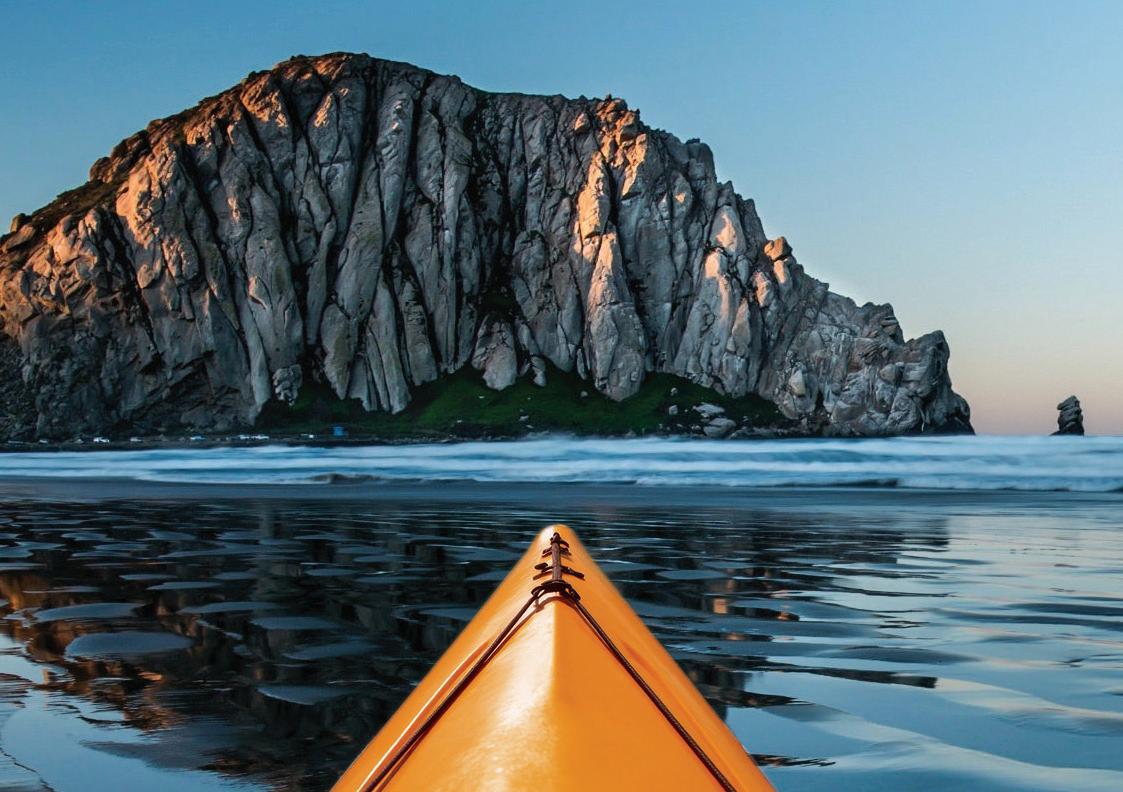
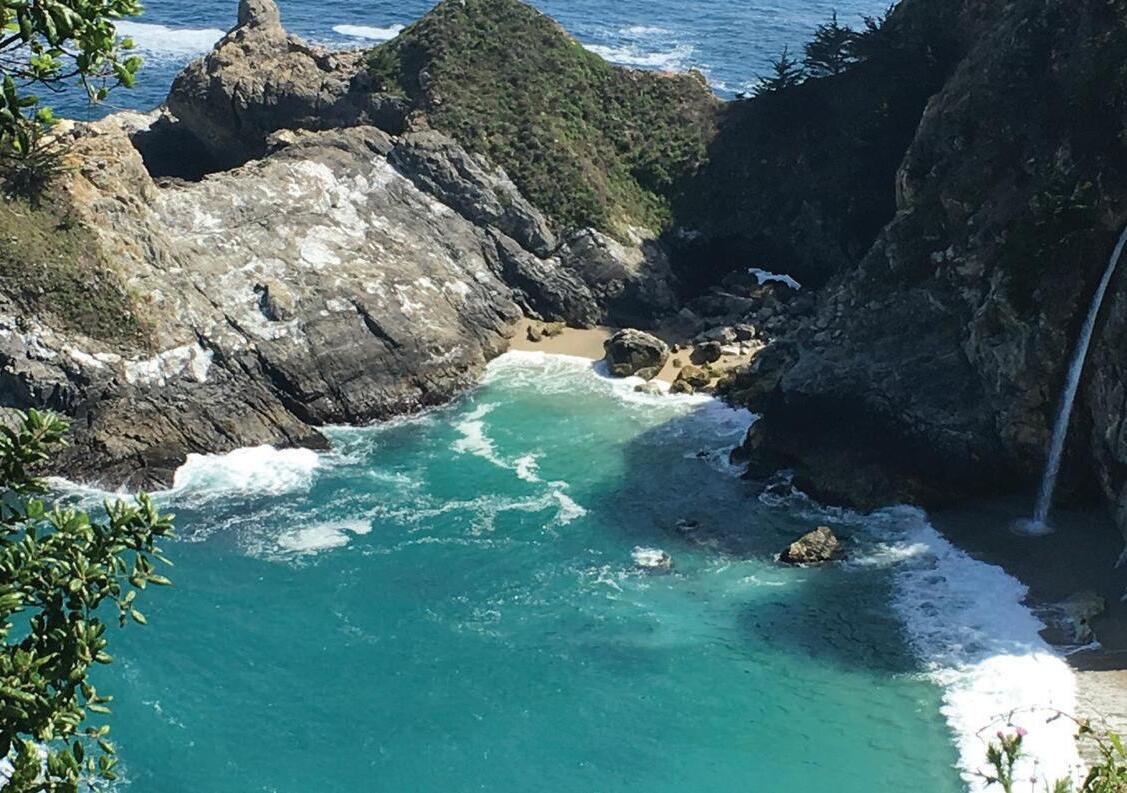
Backcountry rescues take manpower, resources, multiple agencies, and lots of training [26]
BY CAMILLIA LANHAM
Discover More... at Chukchansi Gold Resort & Casino!
Experience the luxury of our AAA Four Diamond hotel and enjoy the Central Valley’s most rewarding players program—where your points go twice as far. Savor world-class dining at eight exceptional restaurants, including Vintage Steakhouse, Nativos Italian Restaurant, and the California Market Buffet. Unwind at Serenity Springs Spa, enjoy live entertainment every week, or elevate your game at Topgolf Swing Suite.
Discover excitement. Discover luxury. Make your reservations today.
Feature Contents
Saving the public
If you get injured in the backcountry, you could get rescued via helicopter or a rescue litter—a long body-shaped basket with a wheel underneath it. How you get out depends on how dark it is, how hard you are to get to from the sky, and how injured you are. The rescue could take hours if fi rst responders have to hike you out. Your saviors will come from different agencies, and they have trained a lot to be able to save you, plus they cost money— although you won’t necessarily have to foot the bill. That’s our main story in this summer/fall issue of Get Outside, but we’ve got other fun stories too. Read about metal detecting on the beach, a guy who’s made foraging his main food source, what The Central Coast Astronomical Society is up to, and the power of feet-shaped minimalist shoes.
Camillia Lanham editor
ON THE COVER
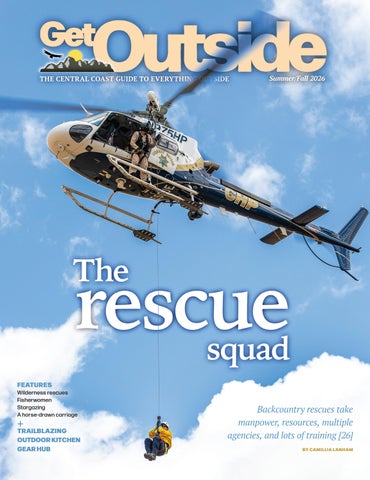
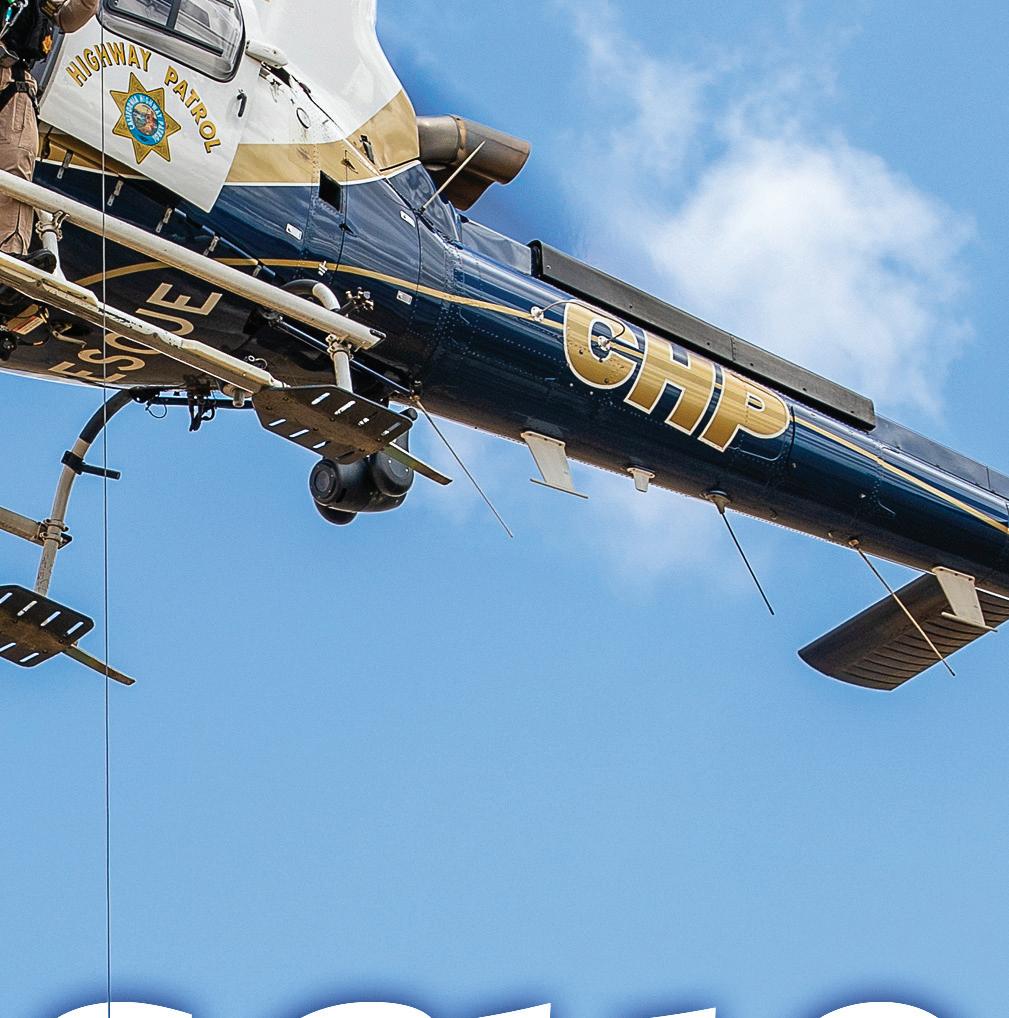
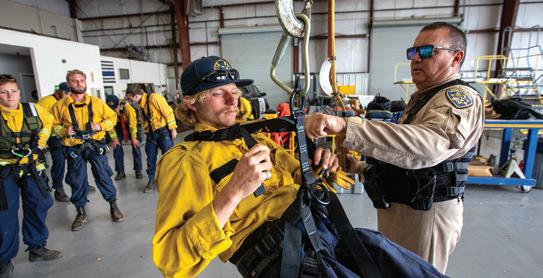
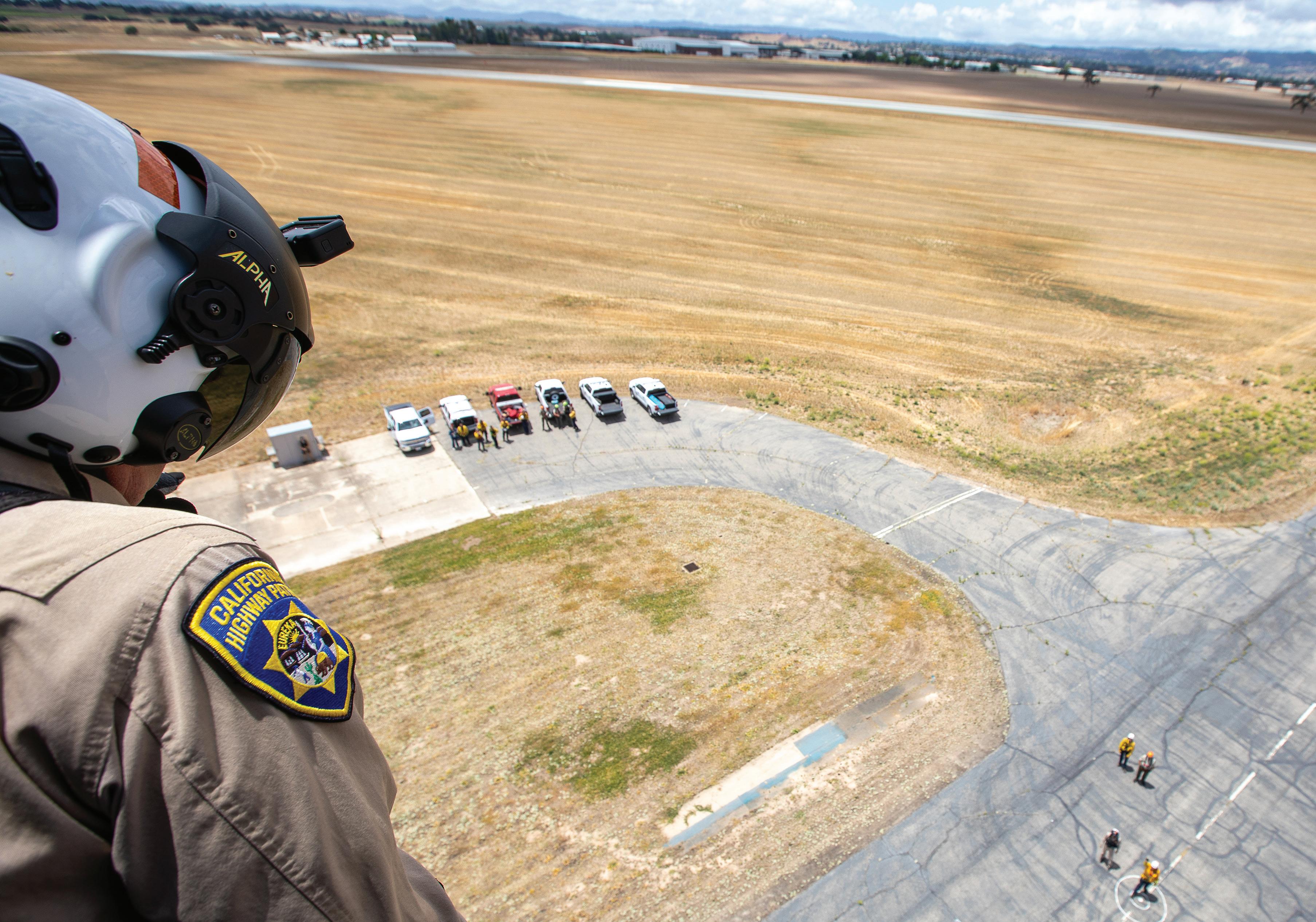
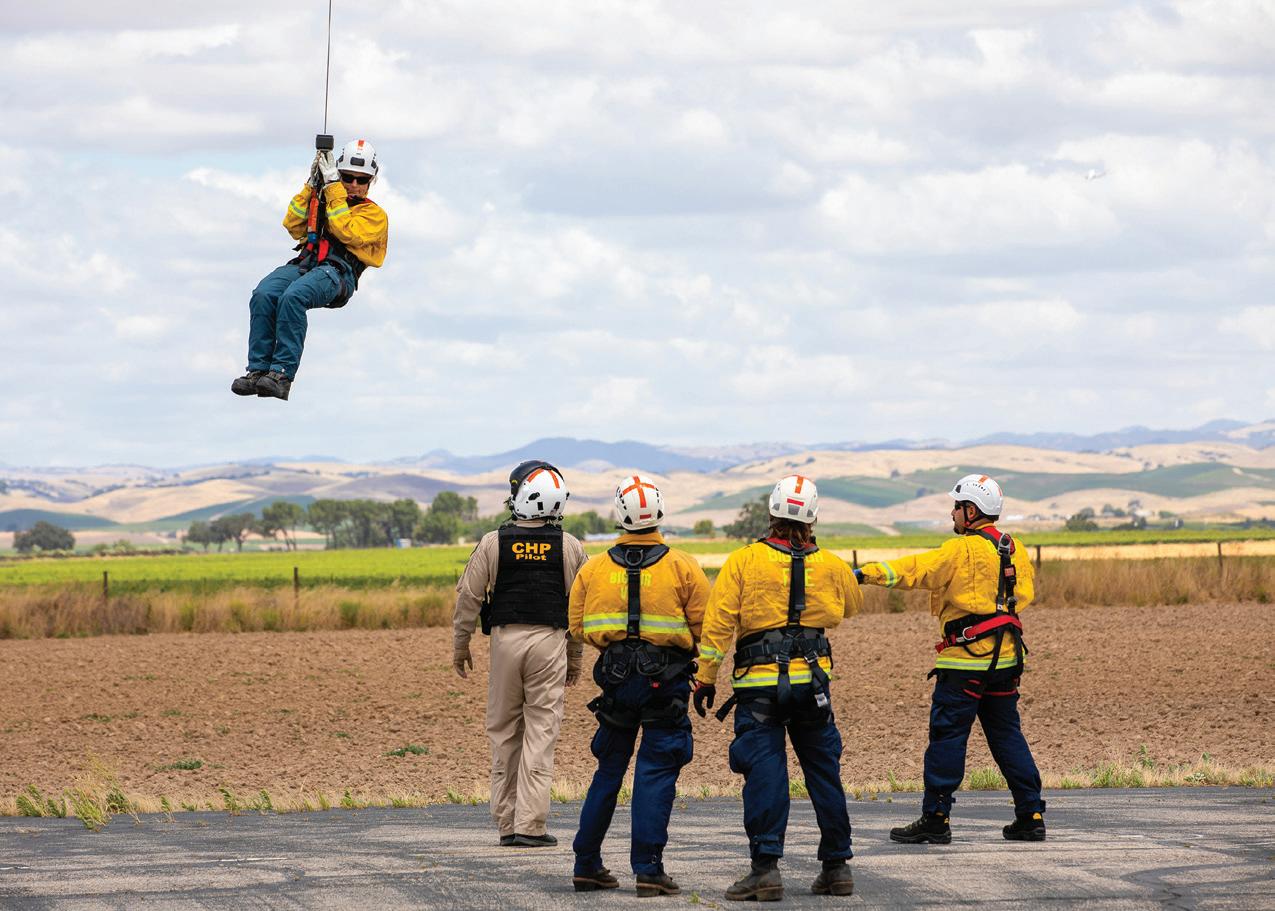
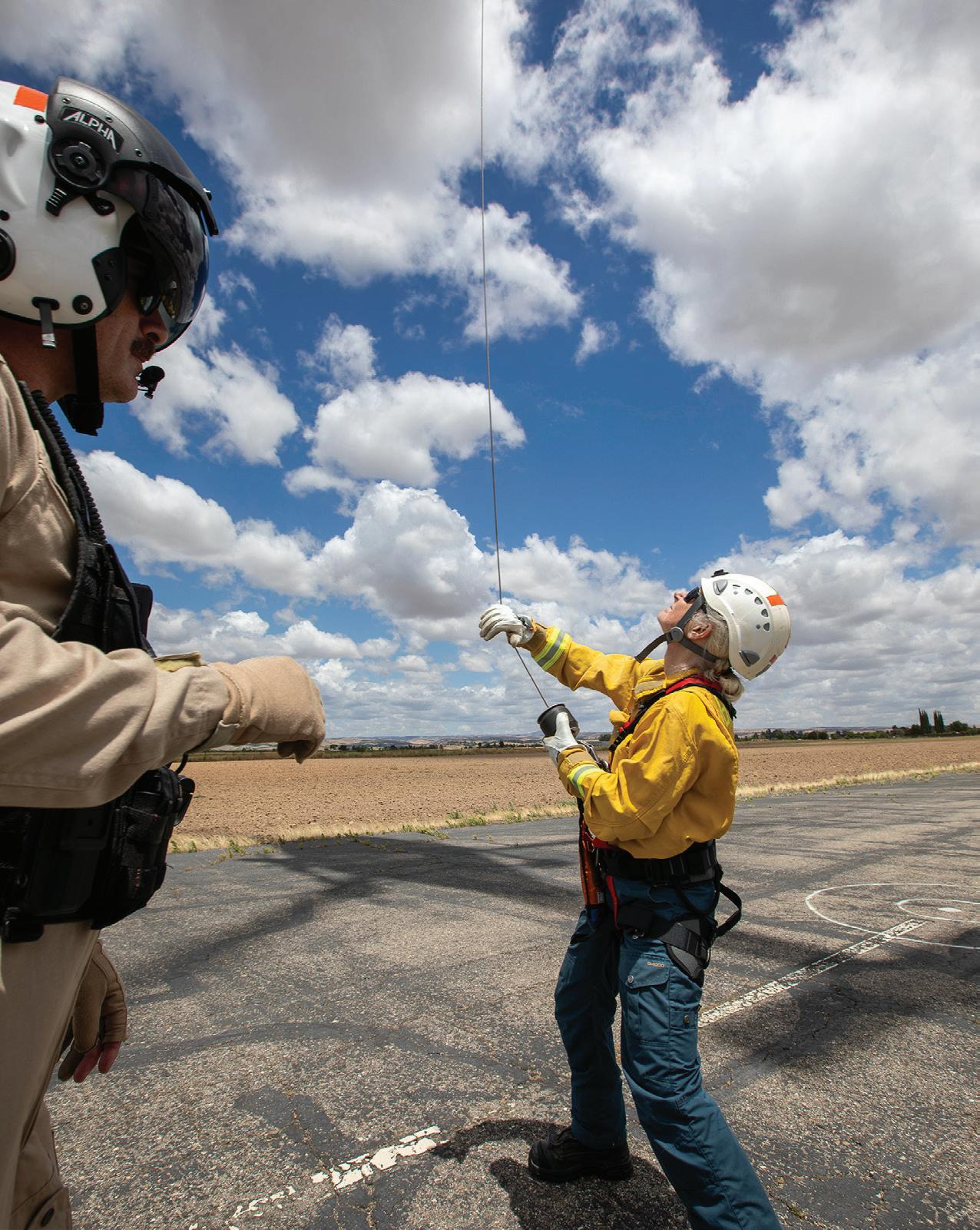
The California Highway Patrol’s Coastal Air Operations Division is based at the Paso Robles Airport, where it conducted hoist trainings with some of its allied agencies on May 27 so they can participate in rescues that use the CHP’s H-70 helicopter.
Detect the unexpected
BY CALEB WISEBLOOD
BY PIETER SAAYMAN
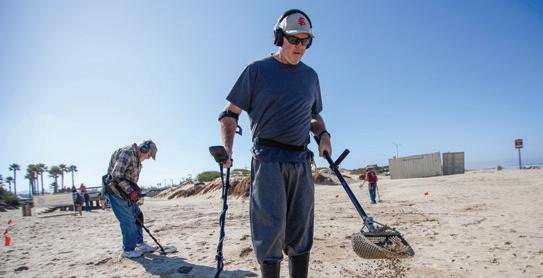
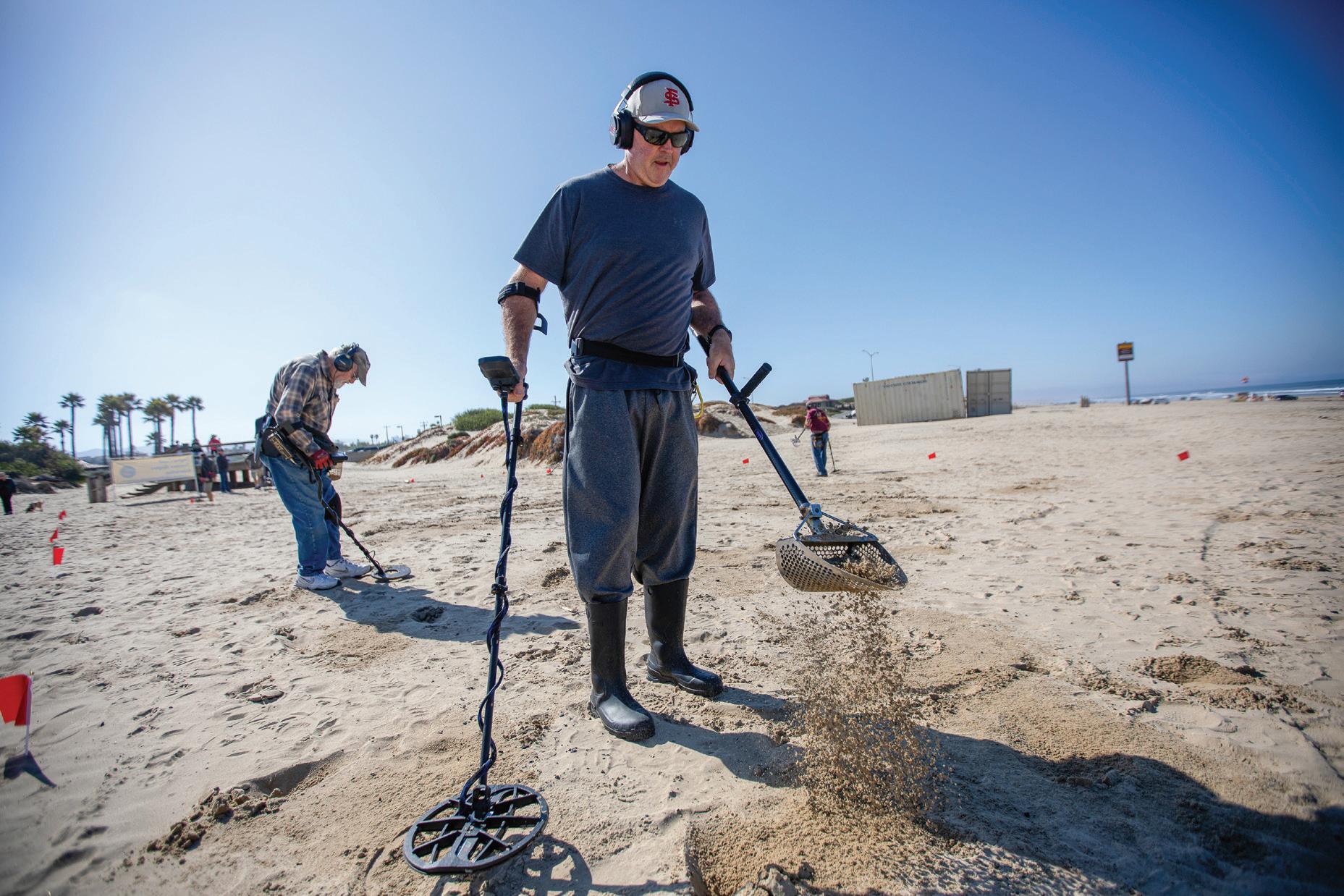
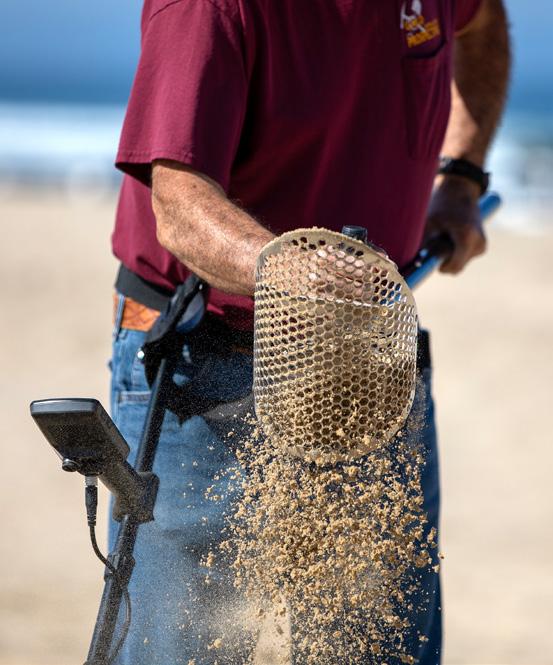
Whether it falls around sunrise or closer to the witching hour, low tide is when you’ll fi nd Los Osos resident Matt Andrews out on a beach looking for treasure, armed
with his metal detector.
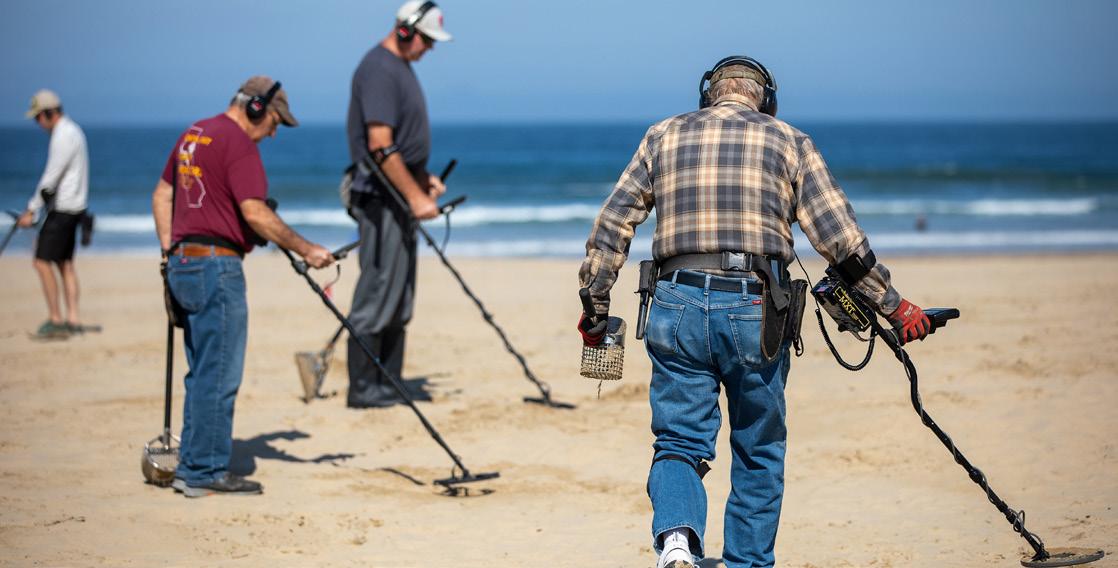
While drawing lines in the sand, Andrews grids the ground he covers to avoid missing a spot or scanning the same one twice.
“Sometimes, if you meander, you’re leaving it up to the fate of the gods,” Andrews said around 9 a.m.
detector extended a few feet ahead of him.
That Friday in late May, he came across what appeared to be a broken door handle from a boat and a hairclip, after his metal detector alerted him to a couple of spots for him to dig up.
His philosophy is: No matter what he digs up and fi nds— whether it’s someone’s “trash or treasure”—he takes it with him to reduce litter on the beach.
Andrews said it’s depressing to think about how many empty beer cans he’s found buried in the sand when trash cans aren’t far away.
Leaving the beach less cluttered with foreign objects also helps him
TREASURES continued page 6
on a Friday morning at Avila Beach.
He’s occasionally there as early as 3 a.m., ready to trek the shoreline with the round tip of his Manticore metal
PHOTOS
Sands of time
To find out more about the Central Coast Treasure Hunters Association, visit cctha.org or send an email to cctreasurehunters@gmail.com . The club holds monthly get-togethers at Equippers Church, located at 1052 E. Grand Ave., Arroyo Grande.
TREASURES from page 5
achieve “beach karma,” Andrews said with a laugh. That could be responsible for some of the most valuable items his metal detector has led him to, he explained— including a diamond ring he gifted to his wife for Christmas one year. Andrews first got into metal detecting about three years ago, after learning more about the hobby via YouTube videos. After getting a metal detector of his own, it wasn’t long before he joined the Central Coast Treasure Hunters Association. Founded in 1984 by a group of
metal detector enthusiasts, the collective offers hobbyists a way to meet kindred spirits and share stories about their respective finds.
The group meets up at least once a month at Equippers Church in Arroyo Grande. One of its previous meeting spots was the Oceano Train Depot.
The club also hosts periodic group treasure hunt events for members at local parks and beaches. Its most recent hunt took place at Grover Beach in June. For first-time metal detector users, longtime club member Chris Kennedy recommends starting at a
park for the first few rounds, before venturing closer to the coastline.
“Beaches are a lot more difficult. Salt and iron content leads to a lot more false positives,” Kennedy said in an email interview. “Detect parks and soil first.”
Kennedy joined the club about 15 years ago, around two to three years after becoming a metal detector enthusiast.
He’s owned several types of metal detector models over the span of his treasure hunting days, including detectors manufactured in Poland, Bulgaria, and Russia.
His current machine of choice is the Minelab Equinox 700.
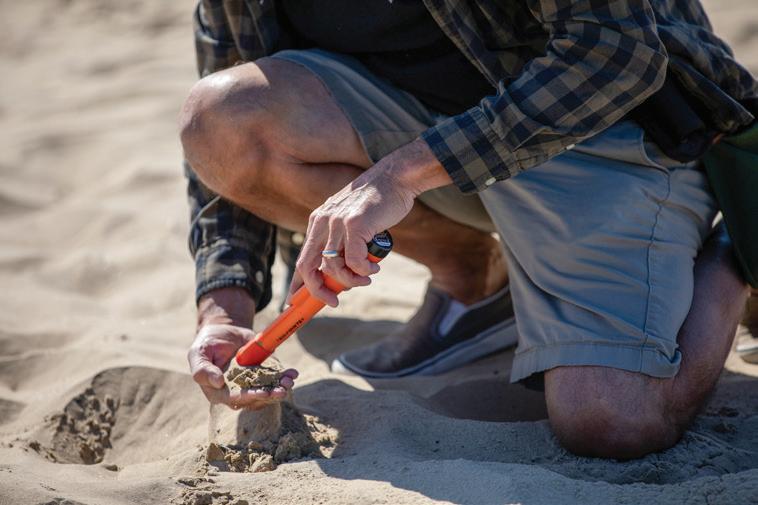
Club members’ detectors range from traditional long models like the Equinox 700 to short, handheld, wand-shaped detectors nicknamed “pocket detectors” or “pinpointers.”
Some of Kennedy’s favorite experiences as part of his membership with the Central Coast Treasure Hunters Association include occasional collaborations with local nonprofits, such as the Dana Adobe and Cultural Center.
Organizers behind a geology project at the historic Nipomo site once enlisted club members to help survey the area for relics.
“They wanted us to put flags by any metal signatures,” Kennedy said.
The club also collaborates with local law enforcement agencies on occasion, he added.
“We have been called out to locate guns, shell casings, knives, and other items at crime scenes,” Kennedy said, “and to help educate law enforcement on how to use metal detectors properly to find items at crime scenes.”
Take a hike (with dykes)
BY CHLOË HODGE
The first time Nixie Margiotta (they/them) told me they were starting a hiking group called Hikes and Dykes, I had two immediate thoughts.
First: That’s hilarious.
Second: Why didn’t I think of that?
The name alone feels like something dreamed up in a latenight conversation over cheap beer—cheeky, irreverent, and impossible to forget.
When I asked Margiotta where it came from, they didn’t overcomplicate it.
“It’s just funny,” they told me, laughing. “And it rhymes.”
Sometimes the best ideas really are that simple.
violence has continued to rise across the United States, with transgender and gendernonconforming people disproportionately targeted.
According to a March 2026 report from the Williams Institute at UCLA School of Law, anti-trans hate crimes in the United States rose from 184 in 2018 to 527 in 2024.
A separate tracker from GLAAD (Gay and Lesbian Alliance Against Defamation) recorded 932 antiLGBTQ hate crimes between May 2024 and May 2025 across 49 states and Washington, D.C.—about 2.5 incidents per day. More than half targeted transgender and gendernonconforming people.
Those numbers ripple into ordinary life in subtle ways, shaping how safe—or unsafe—something like a solo hike can feel.
Being visibly queer, a woman, and roughly 110 pounds with rocks in my pockets, walking into the wilderness alone can feel like a major risk—not because danger is guaranteed, but because I’m aware it could exist.
Margiotta understands the feeling.
Part of the spark for Hikes and Dykes came while listening to the true crime and outdoors podcast National Parks After Dark , which explores stories of crime, safety, and community in outdoor spaces.
“I remember one episode,” Margiotta said. “They were talking about these two lesbian hikers who were camping on their own and were unfortunately killed. I was like, ‘Oh my gosh, that could be me.’”
a community group. But it planted a question: What would it look like if queer people didn’t have to navigate outdoor spaces alone?
So in December 2025, Margiotta launched an Instagram account (@hikesndykes) with a great name and the hope that other queer folks might want to show up.
They did.
The group’s first hike, held in January at Reservoir Canyon, drew roughly 20 people.
“It kind of came out of nowhere, and people were excited,”
Margiotta said.
Like any grassroots project, there were growing pains. On that first hike, some hikers expected a leisurely stroll and a romp in the stream. Others approached the trail with the enthusiasm of a mountain goat.
Since then, the group has found its rhythm. Margiotta now posts detailed information before every outing, including mileage, elevation gain, and difficulty level, making it easier for newcomers to choose hikes that match their comfort level.
What started as a single meetup has quickly evolved into something larger. There have been potlucks. New friendships. Trail conversations that turned into text chains. People meeting people they otherwise might never have crossed paths with.
But beneath the tongue-incheek branding is a community built around the belief that queer people deserve to feel safe outdoors.
For a lot of LGBTQ-plus people, the great outdoors doesn’t automatically equal freedom. Sometimes it means vulnerability.
“I think a lot of people in the LGBTQ-plus community might feel unsafe going alone into outdoor spaces,” Margiotta told me over coffee in Estero Bay. “So I thought, if we go as one big group of queer people, and we’re all able to freely express ourselves however we want because we’re together, then it’s a lot more fun and safe.”
In recent years, anti-LGBTQ
It wasn’t the kind of inspiration most people associate with starting
Hikes and Dykes is a reminder that queer community doesn’t only exist in nightlife, Pride festivals, or designated spaces. Sometimes it exists halfway up a steep incline while everyone collectively complains about elevation gain.
& DYKES continued page 10
PHOTOS COURTESY OF NIXIE MARGIOTTA
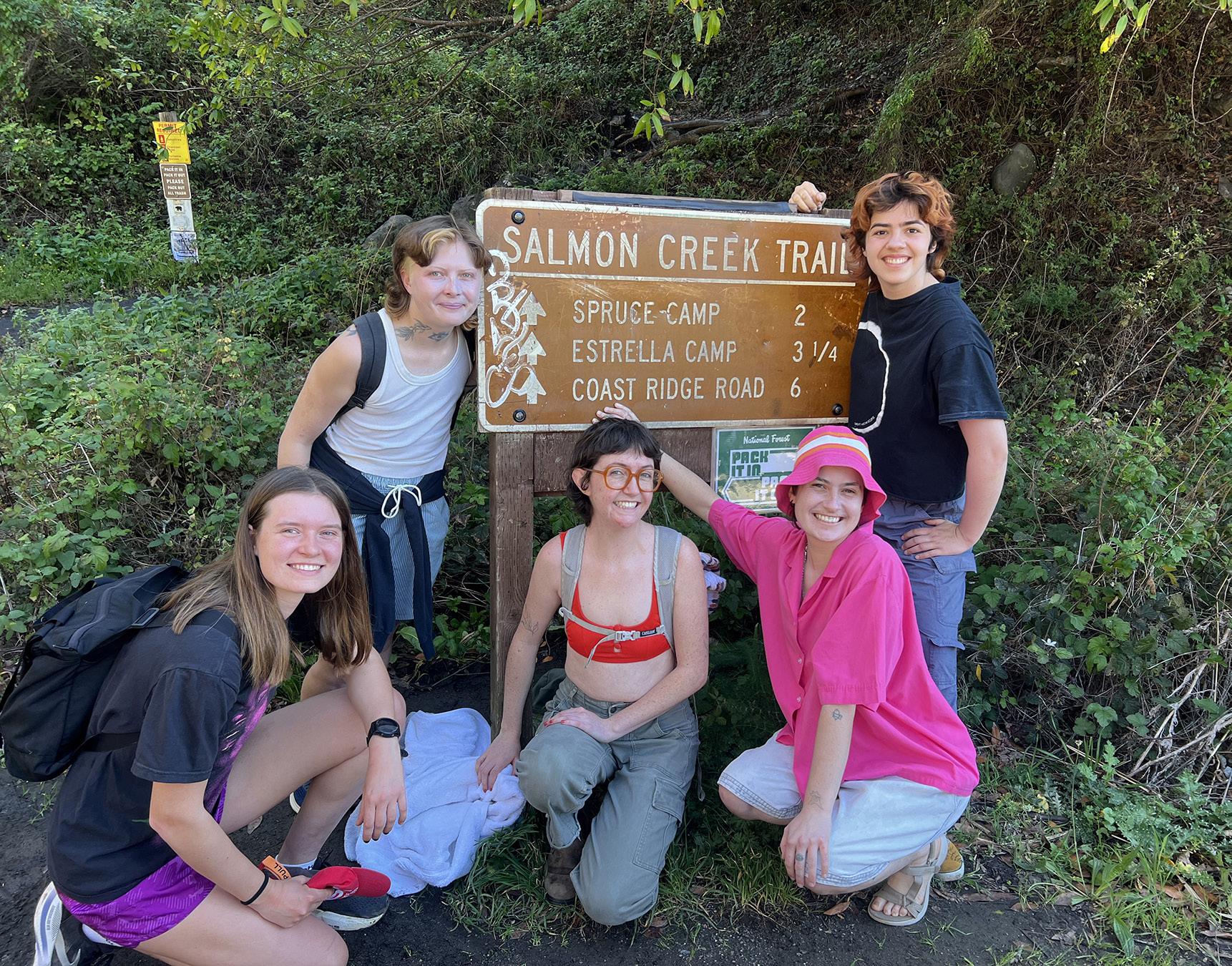
GET OUTSIDE A small outing in March to swim at Salmon Creek Falls.
HIKES
Bold. Beautiful. Built To Last.
Trailblazing
HIKES & DYKES from page 8
Sometimes it looks like sweaty strangers becoming friends between switchbacks.
Sometimes community is just knowing you’re not the only one looking around and asking, “Where are the people like me?”
Margiotta also sees intention in the group’s name beyond the punchline.
The word “dyke” has long been used as a slur against lesbians and queer people. By reclaiming it, they’re transforming a word once weaponized against the community into something joyful, visible, and proud.
Marigotta has future visions for Hikes and Dykes including camping trips, birding walks, native plant excursions, naturalist-led adventures, and eventually something resembling a queer outdoor camp—a space where LGBTQ-plus people can connect with both nature and one another.
The next Hikes and Dykes outing is scheduled for July 18 on Black Hill Trail in Morro Bay. Bring water, good shoes, and maybe a willingness to make a few new friends. More information is available on Instagram at @hikesndykes.
Horseback Riding at Sunset
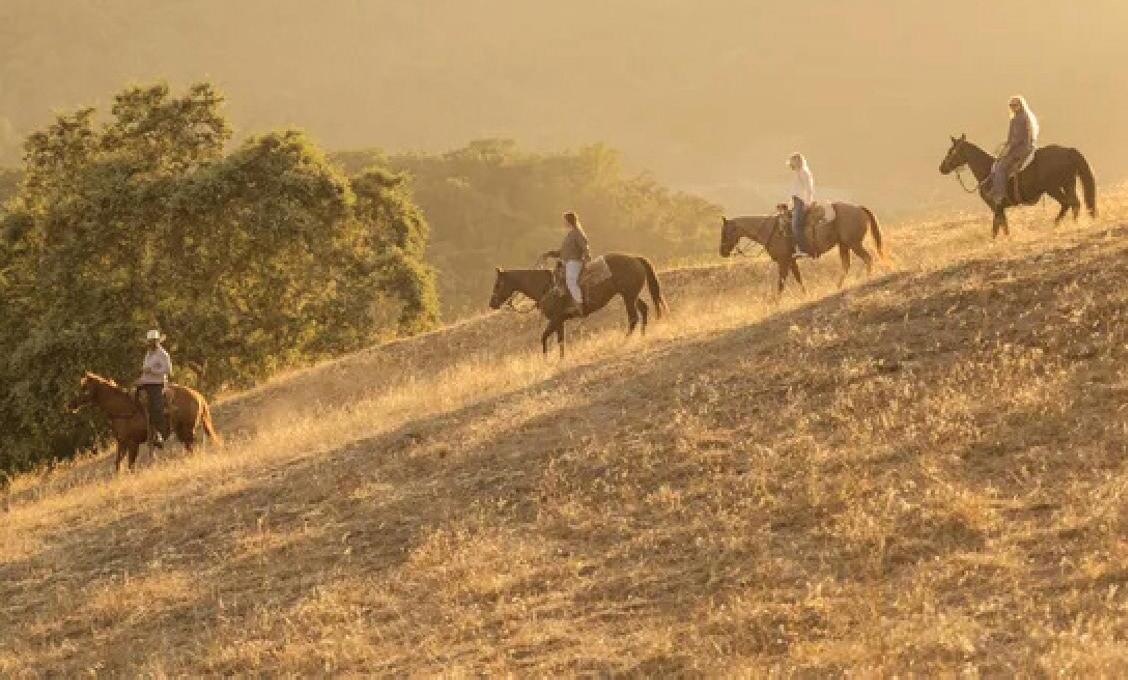
Central Coast Trailrides offers premier horseback riding adventures in San Luis Obispo County. Guided trail rides are available everyday on the Historic 14,000 acre Santa Margarita Ranch, a working cattle ranch with abundant wildlife, completely closed to the public. Come explore with us during the golden hour on one of our daily Sunset Rides. Create epic memories for a lifetime!
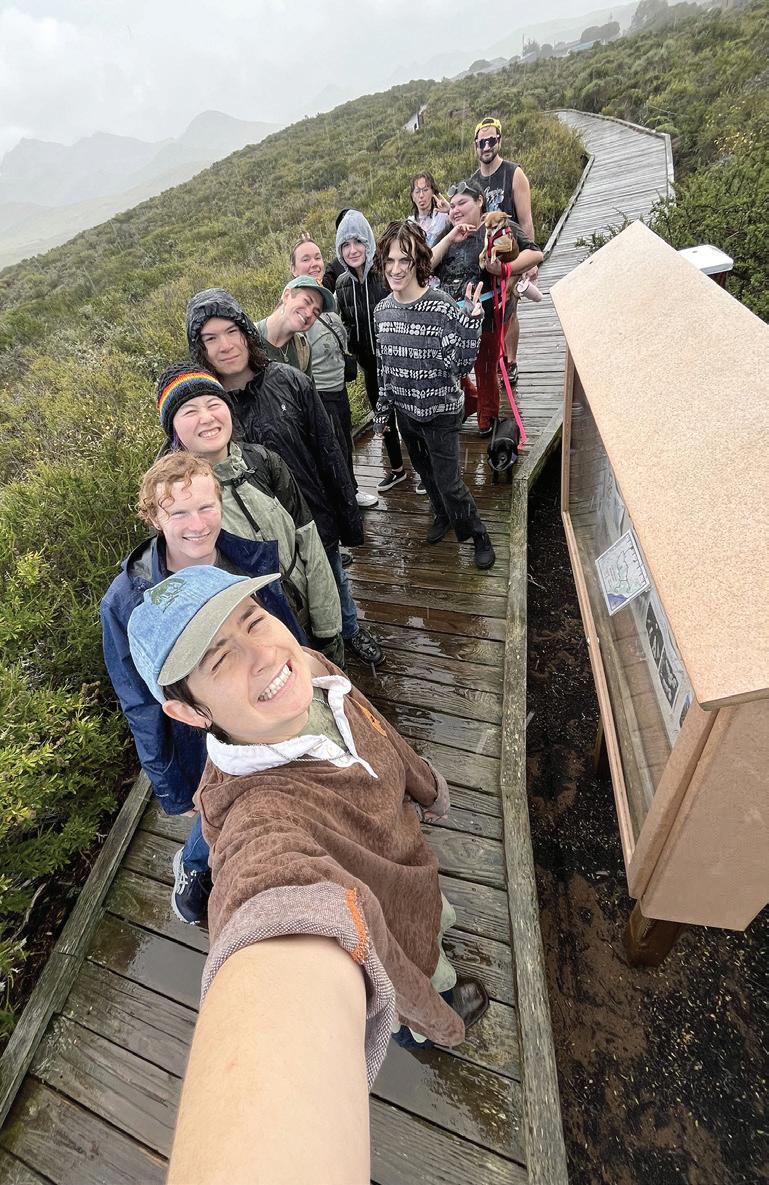
ELFIN FOREST Hikes and Dykes take a rainy day stroll through the Elfin Forest in Los Osos in April.
PHOTO COURTESY OF NIXIE MARGIOTTA
Wild connection
BY CHLOË HODGE
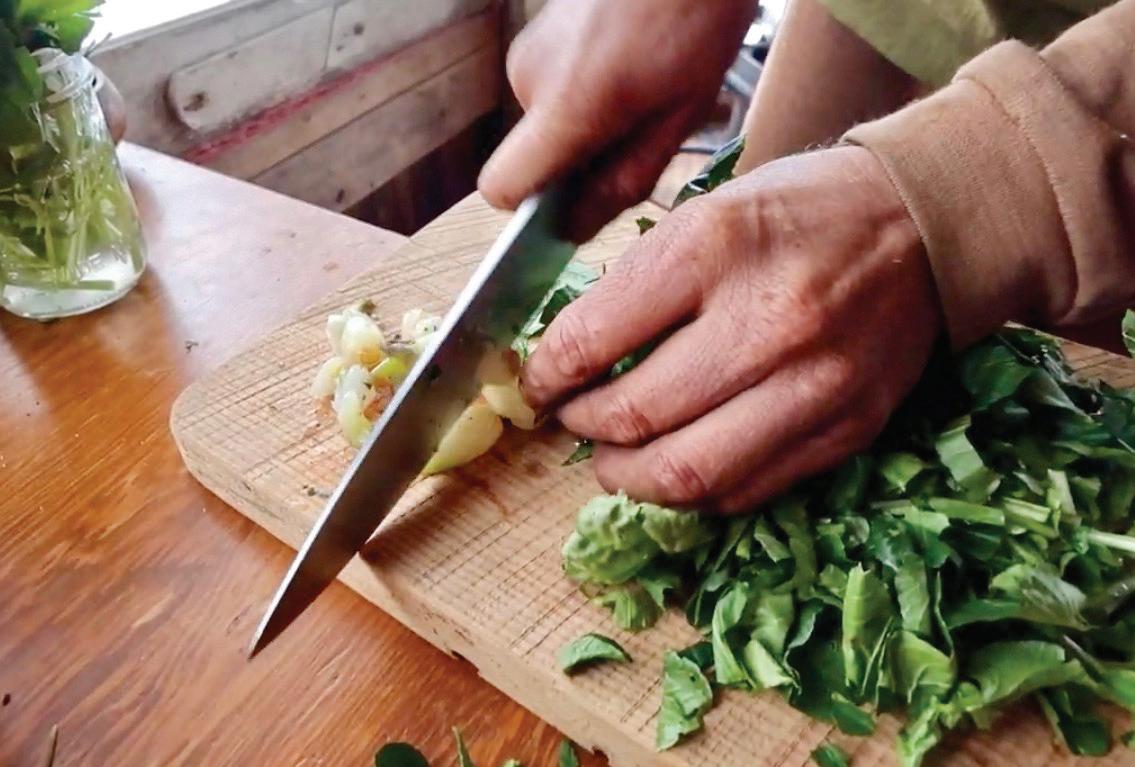
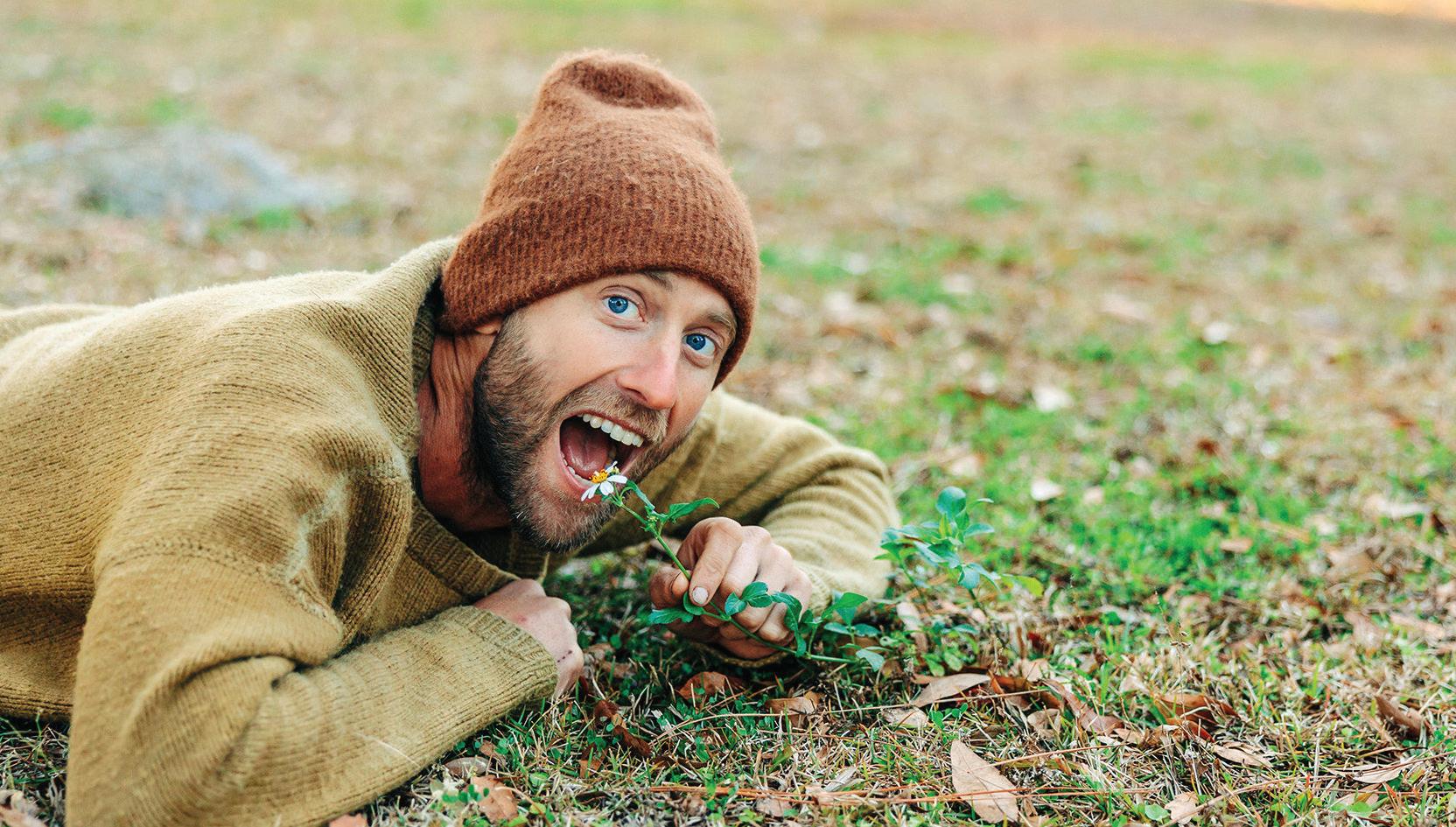
For most people, food comes from the grocery store. For environmental activist and educator Robin Greenfield, food come from forests, lakes, roadsides, and fields.
Greenfield is currently immersed in what he describes as “a year of foraging 100 percent of [his] own food and medicine.” There are no grocery stores, restaurants, gardens, supplements, or
pharmacies involved. Instead, wild rice, mushrooms, berries, fi sh, venison, seaweed, and foraged herbs make up his daily diet.
Speaking in San Luis Obispo as part of Ecologistics’ Critical Conversations series on June 2, Greenfield explained that his project is about much more than food. It is a personal experiment in “reconnecting with the natural world.”
“One of the greatest threats that
I believe we have as a humanity is this illusion of separateness,” he told the audience. “This idea that we’re separate from the earth, we’re separate from the plants and animals, we’re separate from one another.”
For Greenfield, foraging is a way to challenge that belief every day.
“In order to eat, I have to go outside,” he told New Times. “I have to build relationships with at least
100 different plants to be able to thrive in this way.”
The journey that led him to this lifestyle began far from the woods. Raised in northern Wisconsin, Greenfield grew up with a love of nature but also a strong desire to achieve fi nancial success. After studying biology and building a successful marketing business in San Diego, he set a goal of becoming a millionaire by age 30.
But documentaries and books changed his perspective.
“I just learned that the way that I was living was causing so much destruction,” he said. “The food I was eating, the car I was driving, the stuff I was buying, the money I was spending and investing.”
Rather than becoming discouraged, Greenfield was inspired by alternatives. He began making one positive change each week, gradually reducing waste, consuming less, and focusing on local foods and community connections.
After two years and more than 100 lifestyle changes, he decided to make activism his life’s work. Inspired by a call to “be the change you wish to see in the world,” Greenfield launched a series of
FORAGING continued page 14
PHOTOS COURTESY OF ROBIN GREENFIELD
highly visible environmental projects.
Among them was a month-long experiment in which he wore every piece of trash he generated. By the end of the month, his custom suit was stuffed with the waste produced by living like an average American.
But food remained at the center of his work.
In 2018, Greenfield undertook his first year-long challenge to grow and forage all of his food. Starting with no land and little practical experience, he transformed six residential lawns into productive gardens. The experience taught him valuable lessons about abundance and ecological stewardship.
Standing in one of the gardens after a year and a half, Greenfield noticed that the soil level had risen significantly due to mulch and organic matter.
“I realized that after a year and a half of harvesting hundreds of pounds of food and medicine, there’s not less to give. There’s
more to give,” he said.
Years later, he pushed the idea further. Instead of growing food, he decided to rely entirely on wild foods and medicines for a full year.
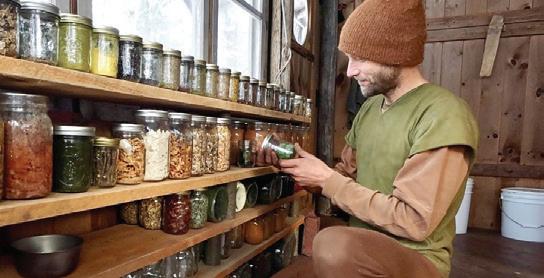
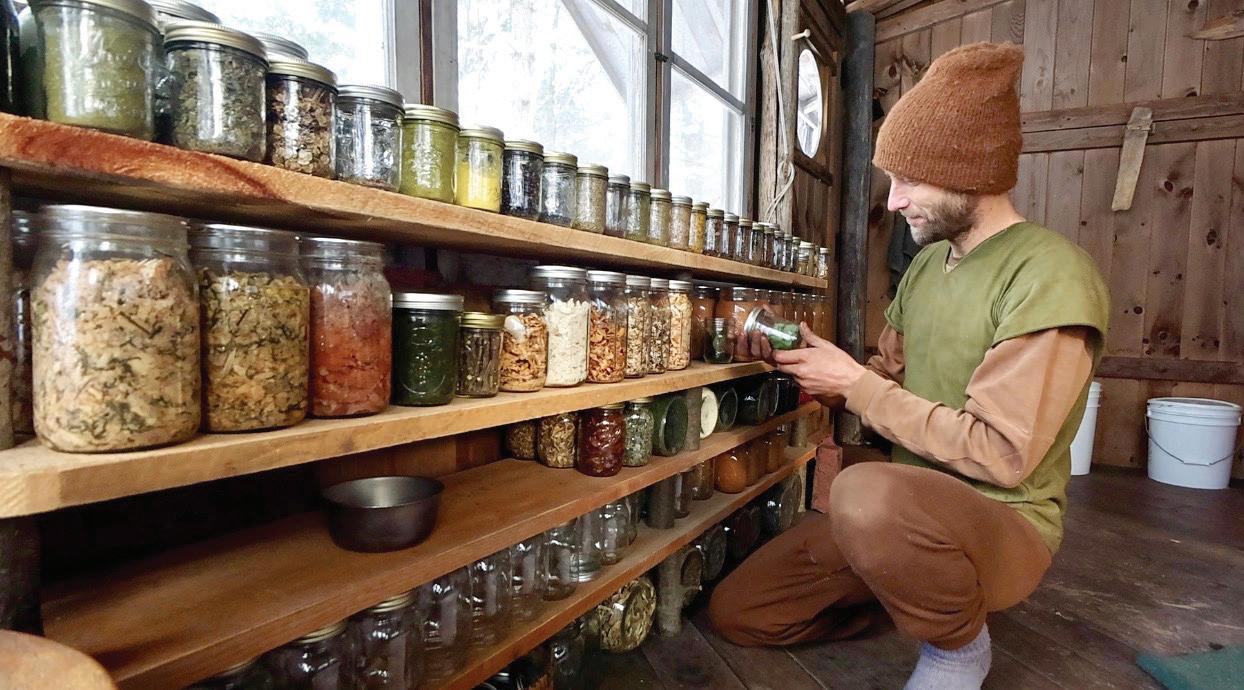
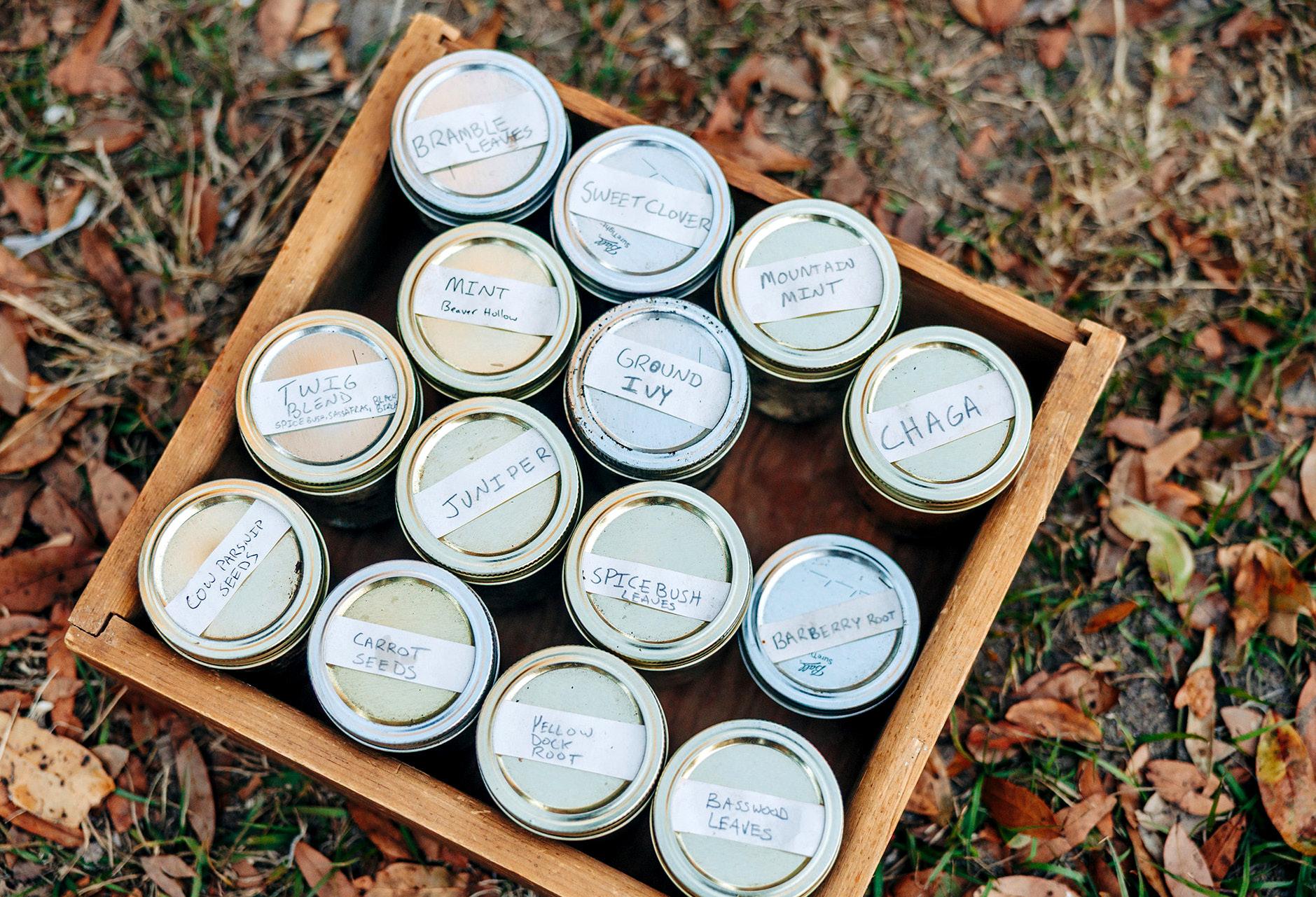
Today, his pantry contains jars of wild rice, venison, fish, mushrooms, herbal teas, berries, seaweed, maple syrup, salts harvested from the ocean, and fermented plants. Wild rice is one
of his most treasured foods.
“This is a plant that’s very dear to me because when I take part in this plant, I’m taking part in an unbroken relationship, human-plant relationship, of at least 700 years,” he said.
The project has transformed the way he sees the world. Where many people see an empty lot with weeds, Greenfield sees food.
“In the past, I would drive down the highway, and I would see the billboards for the fast food and the grocery stores,” he explained. “But now I saw the billboards of Mother Earth.”
That shift in perception lies at the heart of his mission. He wants people to recognize the abundance
FORAGING continued page 16
PHOTO COURTESY OF ROBIN GREENFIELD
that already exists around them and to rebuild relationships with local ecosystems.
Greenfield emphasized that foraging does not require all-ornothing commitment. Instead, he encourages beginners to start slowly and safely.
“The No. 1 rule of foraging is you only eat something if you are 100 percent certain you have identified it,” he said.
He recommends learning one plant at a time.
“If you learn one plant per month, for a year, that’s 12 plants,” he told the audience. “Imagine being able to walk out your door and to be able to harvest 12 different plants as food and medicine.”
Ultimately, Greenfield’s year of foraging is less about survivalism and more about belonging. Through daily interactions with plants, animals, and ecosystems, he hopes to cultivate a deeper sense of connection to the Earth.
“Theoretically, I know that I am not separate, that I am nature, that nature is me,” he said. “But I am
working to be able to feel that in every cell of my being.”
As his year-long experiment continues, Greenfield remains committed to living what he teaches. His goal is not sacrifice
Outdoor Kitchen
but enrichment.
“My activism and my work is not about sacrificing,” he said. “It’s about instead just finding a way to live on this earth in the most rich form that is enriching the world
around rather than pillaging and taking from the world.”
For Greenfield, every meal is both sustenance and a reminder that humans are not separate from nature but part of it.
PHOTO COURTESY OF ROBIN GREENFIELD
Downtown Events!
CALIFORNIA MID STATE FAIR
July 15-27
JULY 23 • 7:30am-10:30am
FREE PANCAKE BREAKFAST
Downtown City Park (Free Admission)
AUGUST 6, 13 & 20 • 6-8pm
Concerts in the Park
Downtown City Park (Free Admission)
AUGUST 22 • 9am-3pm
LET’S MAKE A DEAL, PASO!
Trading Day & Kid’s Flea Market
Downtown City Park (Free Admission)
SEPTEMBER 6
CLASSIC MOVIE NIGHT AT PARK CINEMAS
“The Sting” 1973 Classic, Tickets Required (parkcinemas.com)
SEPTEMBER 19 • 11am - 4pm
30TH ANNUAL TASTE OF DOWNTOWN PASO ROBLES
Tickets Required (my805tix.com)
Arte de Tiza 8am - Downtown City Park
OCTOBER 17 • 10am - 4pm
GOLDEN OAK, HONEY & PUMPKIN FESTIVAL & KID’S FLEA MARKET
Downtown City Park (Free Admission)
OCTOBER 24 • 10am - 7pm
DIA DE LOS MUERTOS
Downtown City Park (Free Admission)
OCTOBER 31 • 4pm-7pm
DOWNTOWN SAFE & FUN HALLOWEEN TRICK OR TREATING (Free Admission)
NOVEMBER 14 • 5pm-8pm
ELEGANT EVENING
Kick Off the Holidays Event, Downtown City Park (Free Admission)
NOVEMBER 27 • 5:30pm
40TH ANNUAL DOWNTOWN LIGHTING CEREMONY
Downtown City Park (Free Admission)
NOVEMBER 28 • 5pm-8pm SHOP SMALL SATURDAY
DECEMBER 5 • 5pm-8pm
65TH ANNUAL CHRISTMAS LIGHT PARADE
“Light Up Your Holiday” Santa Arrives 7pm
Downtown City Park (Free Admission)
DECEMBER 12 • 6pm-9pm
40TH ANNUAL VINE STREET
VICTORIAN SHOWCASE
DECEMBER 19 • 2pm-4pm
36TH ANNUAL TEDDY BEAR AFFAIR
Park Ballroom, Tickets Required (my805tix.com)
Outdoor Kitchen
Brew to
BY CAMILLIA LANHAM
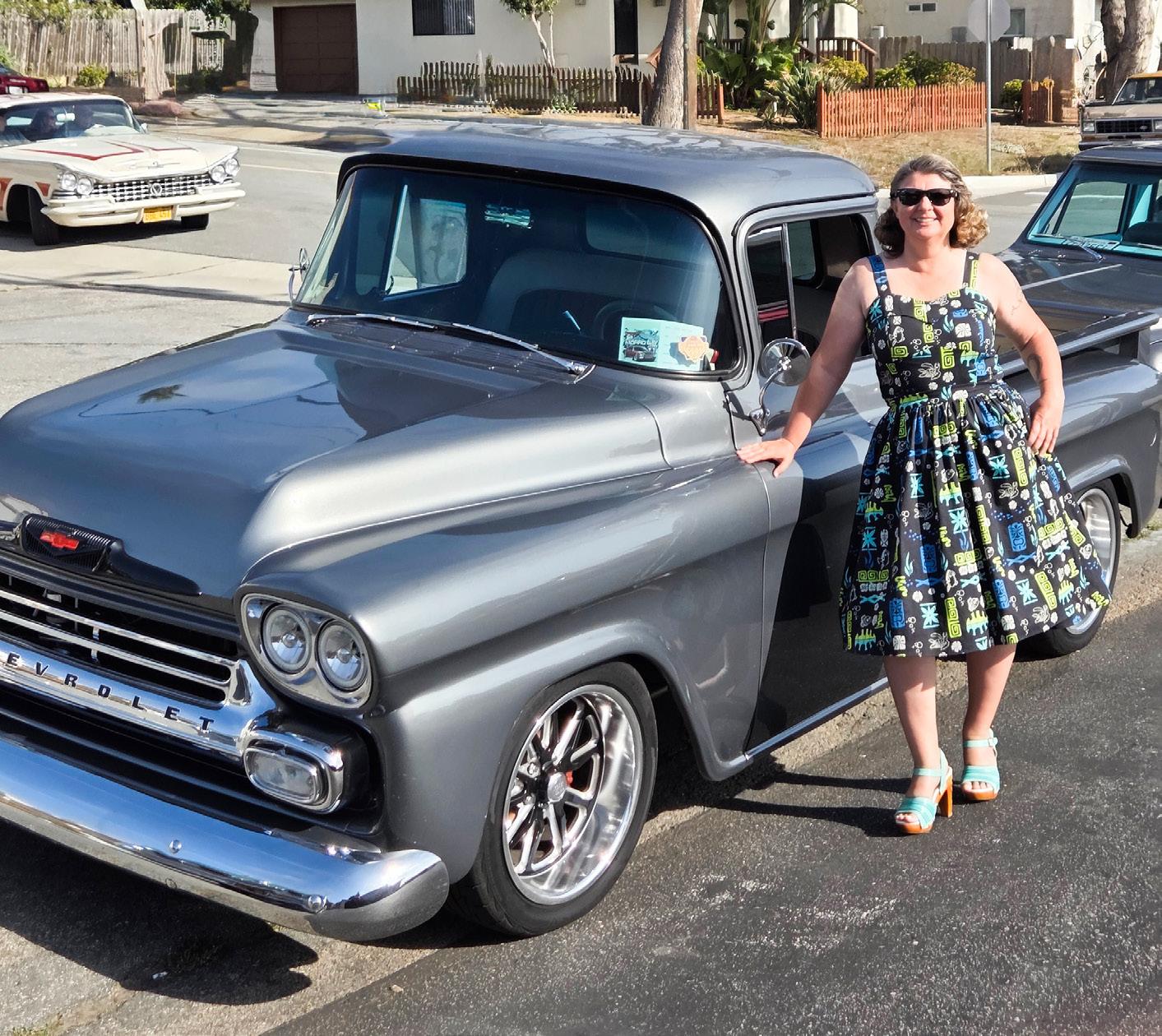
A1969 Chevy Camaro. A 1956 Ford pickup. A 1958 Chevy Apache.
A childhood spent around these old cars cemented Sharon Redwine’s love for vintage vehicles.
“As a kid, I just really loved the sound of those old engines,” Redwine said.
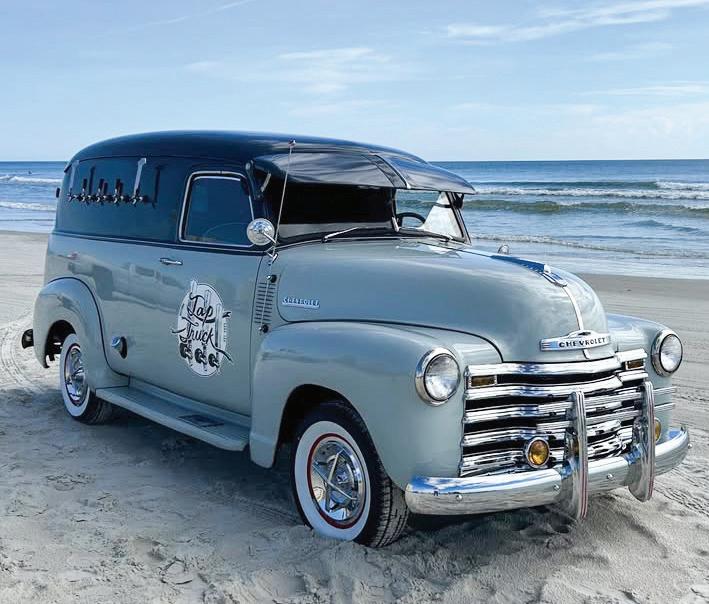
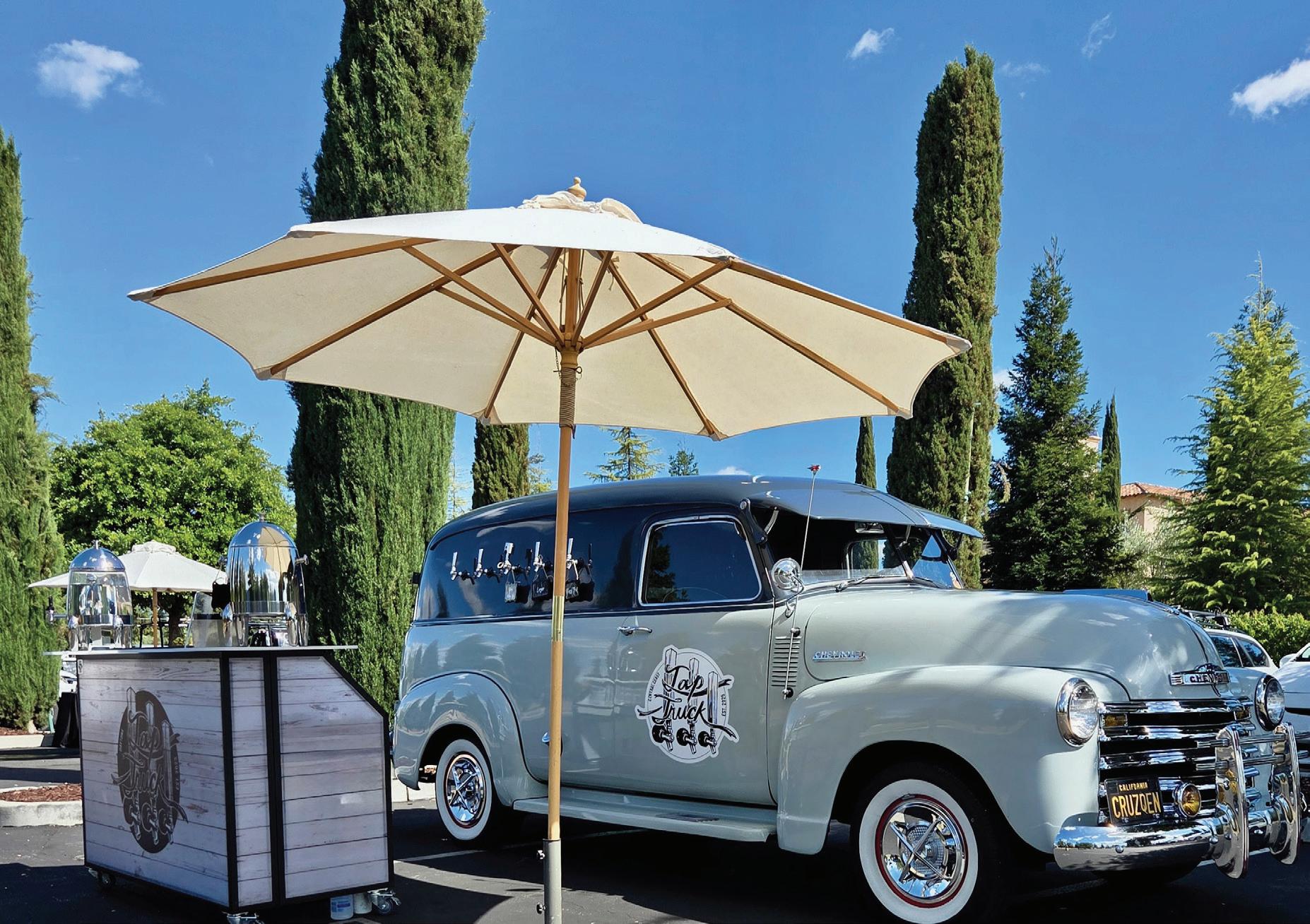
That love eventually drove her to hunt for one she could call her own: a 1951 Chevy panel truck that doubles as a tap wall to serve drinks at events in Northern San Luis Obispo County. She bought it about a year ago, sight unseen, from a guy in Florida and started Tap Truck Central Coast.
“I was like, wait, I can have a business and I can get an old truck?” she said.
She got the idea from Tap Truck USA, which was started in 2016 in San Diego by two guys who grew up in San Luis Obispo—Corbin O’Reilly and Taylor Steers. Now, the duo has a fleet of trucks all over
TAP TRUCK continued page 20
PHOTO COURTESY OF SHARON REDWINE
Jack and Winifred Malone
Clarence, Julia, and Winifred Magner
The Magners at our original Funeral Home on Lincoln Street
Joe and Ruth Ann Maloney Joe and Linda Maloney Ben Pirkl and Geri Coats
klondikepizza.com
ROADKILL
Pepperoni, Salami, Italian Sausage, Canadian Style Bacon, Ground Beef DENALI
Pepperoni, Salami, Sausage, Mushrooms, Black Olives, Bell Peppers, Onions
KODIAK KORN PIZZA
Garlic Sauce ( only ), Housemade Mexican Street Corn Relish with Sweet Corn, Onions, Red and Green Bell Peppers, Garlic, and Spices.
HOT HONEY PIZZA
Pepperoni, Onions, Bell Peppers, and a heavy drizzle of our secret Hot Honey Sauce
MAUI WOWIE PIZZA
Smoky Bacon Crumbles, Pineapple, Canadian Style Bacon, Red Onions, Red Bell Peppers. Drizzled with Teriyaki Sauce. C HICKEN CORDON BLEU PIZZA
Sauced with Ranch Dressing and topped with Mozzarella Cheese, Canadian Style Bacon, Grilled Chicken, Red Onions, Swiss Cheese, and Parsley
GRIZZLY BURGER
Served on Baked Garlic Cheese Bread. Topped with Smoky Bacon Crumbles.
PROSPECTOR BAKED SANDWICH
Pepperoni, Onions, Bell Peppers, Mozzarella, Mayo, Cheddar Cheese
TERIYAKI CHICKEN SANDWICH
Glazed with Ter iyaki and topped with Swiss Cheese
the country, and they allow others to license the brand to start their own tap trucks. They also own and run Tap Truck San Luis Obispo.
The truck Redwine purchased was restored by O’Reilly and Steers, she said. The pair also installed a kegerator draft system inside the panel truck, which is why it has five taps sticking out the side. The tap truck started its new life in Reseda, California, before heading to Daytona, Florida, where Redwine found it.
“Her name’s Frankie,” Redwine said with a laugh. “Kind of like Frankenstein because she’s got taps on her. … Depending on what crowd I’m in, sometimes it’s Frankenfurter.”
Frankie’s made an appearance at several car shows, including ones in Morro Bay, Atascadero, Cayucos, and at Barrelhouse in Tin City. Redwine said she and her father often go to the car shows together. He brings the ’58, which he restored into a hot rod, and she brings the tap truck.
One of the things she loves about car shows are the stories that people tell about their vehicles—where they got their cars, where they’ve broken down in them, the work they’ve done to them.
For instance, that ’58 has been in her family since its beginning. Her aunt and uncle bought it brand new before it was passed on to her father.
As a young adult, it was hers. Redwine learned to drive on it, learned to work on it, and learned to love all of its quirks.
She drove it between Cuesta College, where she went to school, and the Avila Market, where she worked.
“It was a stick shift, you know, four on the floor, and it was really difficult to drive,” she said. “I loved the sound of it, there was no radio, just those squeaky sounds and the sounds of the engine.”
One time, the brakes went out while she was driving to a friend’s house at 3 a.m. along Fredericks Street in SLO.
“It’s one of the gnarly hills,” she said with a laugh. “I was just downshifting and using the e-brake, running through the red lights.”
TAP TRUCK continued page 22
DUD LEY HOFFMAN
Dudley Hoffman Mortuary was founded in Santa Maria in 1876. This year we mark our 150th year serving the families of the Central Coast. We are deeply rooted in community and fully dedicated to care. dudleyhoffmanmortuary.com • 805.922-8463 • FD-56
TAP
PHOTO COURTESY OF SHARON REDWINE
styleb nch&
Outdoor Kitchen
Now, she’s making memories with a new-to-her truck. She changes Frankie’s oil, has adjusted the carburetor, and takes her to a professional if there’s something nitty-gritty that needs fixing.
Redwine dreams about swapping the Chevy 305 that powers Frankie with a Chevy
350, but for now, she’s content to bring the vintage party to private events, weddings, and more. Tap Truck Central Coast operates as a dry hire mobile bar.
“People purchase the alcohol for
Have Frankie over
Find Tap Truck Central Coast at taptruckcentralcoast.com or @centralcoasttaptruck on Instagram. Learn more about Tap Truck USA at taptruckusa.com.
their private event, and then I’m able to serve it as the bartender,” Redwine said. “I just provide the good time.”
That good time can be had by revelers in North SLO County, from San Miguel to Atascadero to the North Coast. Redwine can bring Frankie to a small backyard party (50 people or less) or event near you and pour cocktails, beer, or wine through those taps.
She recently took Frankie to Deadwood Revival Design’s open house in Paso Robles. Any event is a good excuse to take Frankie out for a spin.
“When you drive in my truck now, you hear every squeak and rattle. It’s just therapy for me. I love it,” Redwine said. “It’s like one of my passions. It really is. I have a lot, but this—the old cars—it’s so fun.”
TAP TRUCK from page 20
PHOTO COURTESY OF SHARON REDWINE
Playing Outdoors Helps Children Grow Healthy and Strong
Playing outdoors is important to the healthy growth and development of children. Research shows that children who play outside regularly are healthier and stronger. Taking play outside helps children connect with the natural world. It also improves coordination, encourages active imaginations and can help reverse childhood obesity rates. Starting a child’s appreciation of nature can begin early, with walks in a stroller. As the child grows, visit playgrounds and parks, or spend time exploring the backyard. Unstructured outdoor play can be especially beneficial because it encourages social skills, too. Children create games, take turns, make decisions together and learn about sharing as part of unstructured play.
Photo by Lotti Keenan
The rescuers
When lost or injured in the backcountry, several agencies respond to your call for help
STORY
BY CAMILLIA LANHAM
PHOTOS BY PIETER SAAYMAN
There’s no room for error on the Vicente Flat Trail.
In some places, slipping off the narrow path means tumbling hundreds of feet down into the canyon surrounding Hare Creek in southern Big Sur.
About 5 miles in and 1,800 feet up, the Vicente Flat Campground sprawls out under a redwood grove next to the creek. As the sun was beginning its descent one evening a couple of years ago, a man chopping wood there made a mistake he felt instantly: He swung the ax right into his foot.
An emergency call went out.
“The patient really needed to get off the hill,” Big Sur Fire Chief Matt Harris said.
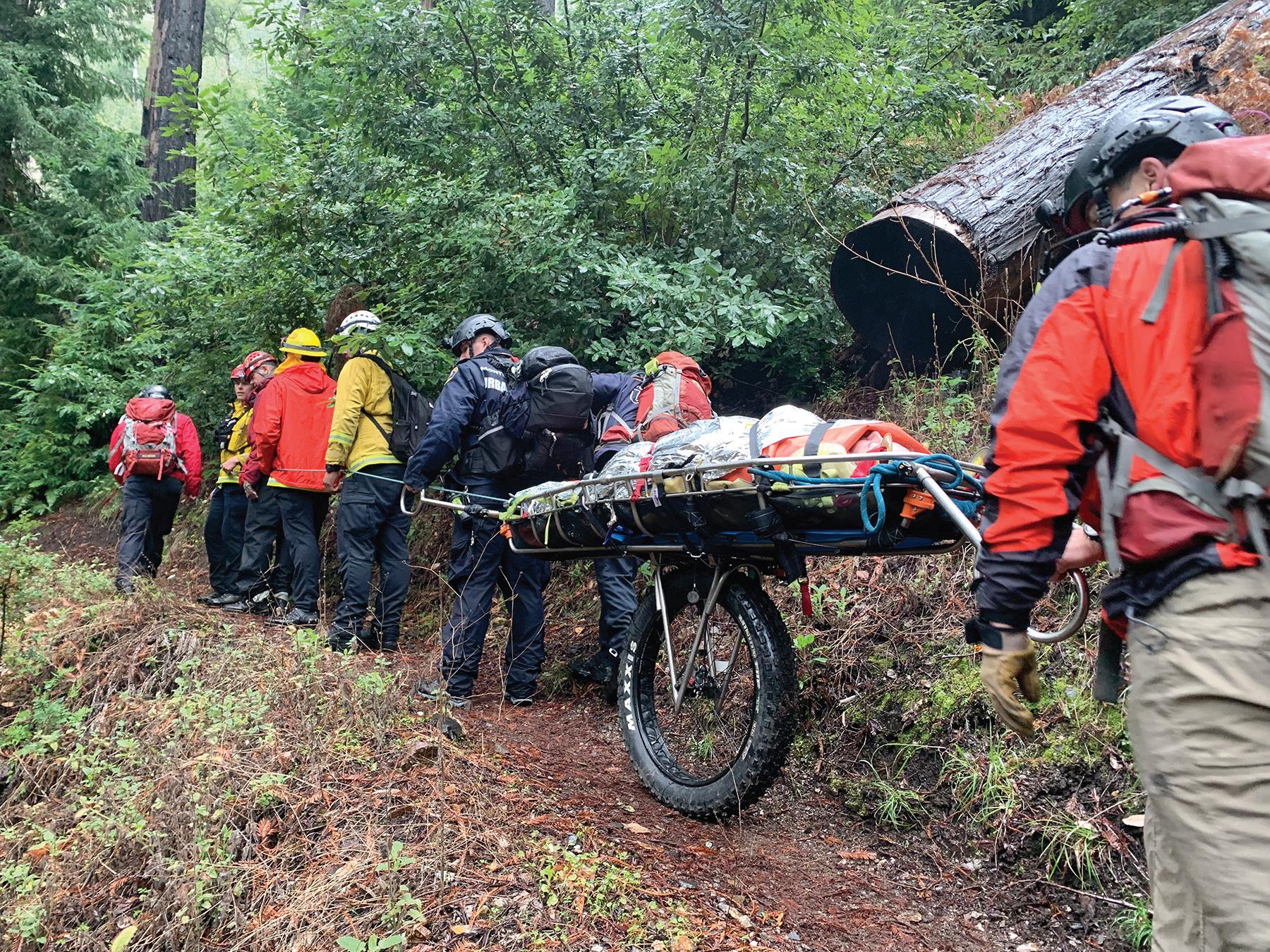
The rescue team arrived on foot about an hour after sunset. It was too dark to call in the helicopter for a hoist rescue, so Harris made the decision to strap the patient into the rescue litter—a flat basket that a body
can fit into with a single wheel at its balancing point—and wheel him out of the backcountry to Highway 1.
“Hiking out at night with a person’s life in your hands is extremely challenging and stressful,” he said. “It was maybe half a mile an hour.”
Two people at a time manned the litter in 15- to 20-minute increments, one on each end maneuvering it along a trail studded with rocks and roots, fallen trees, and the occasional rockslide with steep drop-offs on one side. Because of the potential blood loss, the team was also constantly monitoring the patient’s vital signs.
“The mental strain on the rescuers,” Harris said.
Responders experience physical fatigue, too, mixed with a little bit of fear, a sense of urgency, a need to collaborate well with the others, and the demand to push through, to keep going until the patient lands in an ambulance or a medevac. Which is exactly what happened as the sun came up.
“The euphoria that the team feels when they accomplish something like that, having gone through what they did, it’s hard to describe,” Harris said. “You defi nitely don’t want to do it again tomorrow, but the calls keep coming in.”
During the summer season, rescues like that happen multiple times a month in between other emergency and fi re calls. In 2024, 18 of the 230 calls Big Sur Fire responded to along the coast between Pacific Coast Highway post mile marker 58.3 and the San Luis Obispo County line were rescues.
But it’s not the only agency that responds when someone is lost or injured in the coastal wilderness.
Sometimes 15 to 20 responders are needed—from Big Sur Fire, Monterey County Search & Rescue, Monterey County Urban Search & Rescue, State Parks, the California Highway Patrol, and the U.S. Forest Service— depending on where the emergency situation is located. They all need to be ready to go and on the same page.
“Whoever is on duty, what team you assemble is sort of a roulette, a roll of the dice,” Harris said. “It’s a leadership challenge for me or for whoever is running the incident.”
Training together
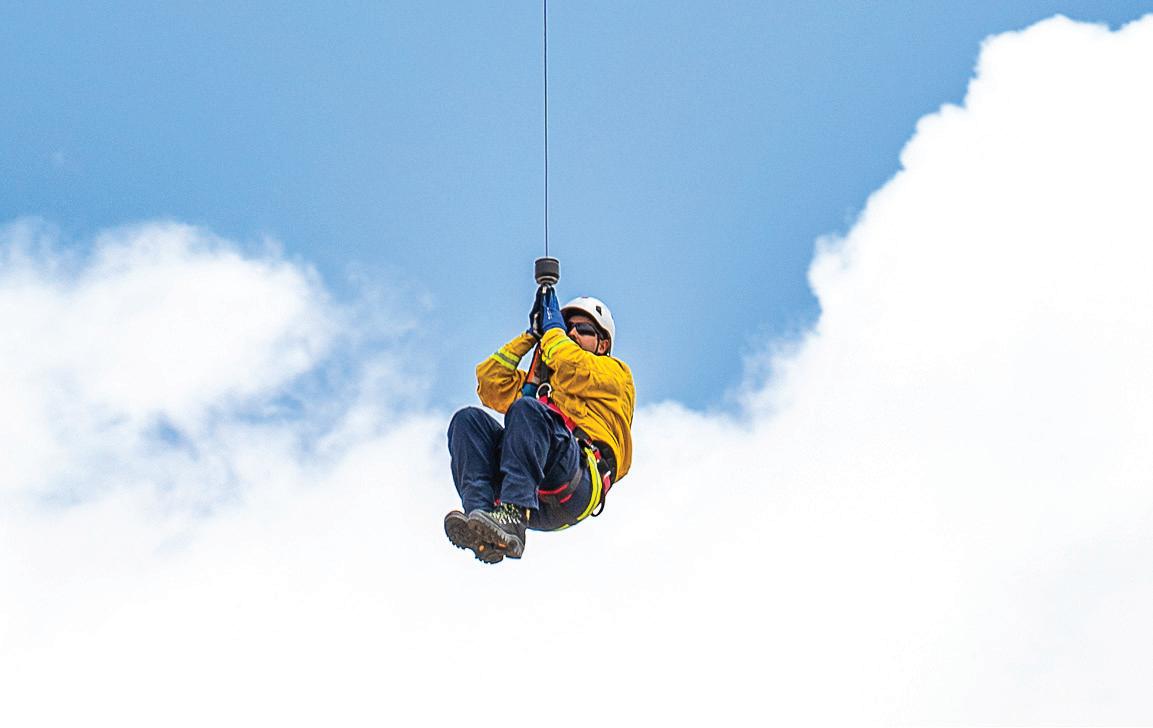
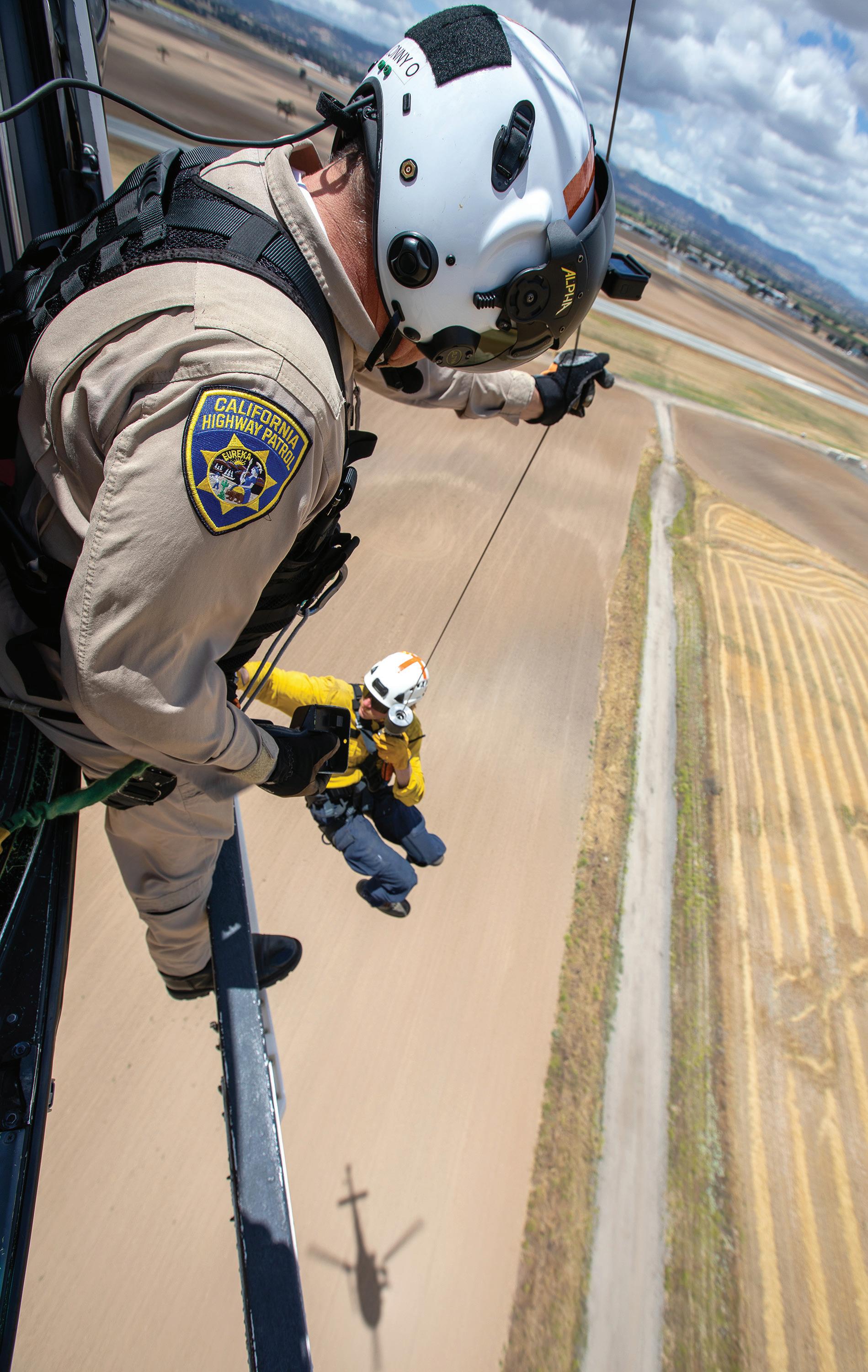
Big Sur Fire Lt. Martin Palafox looks up into the CHP’s H-70 helicopter on May 27. He holds onto the landing skids with both hands and hangs from the hoist hook connected to the harness at his waist.
CHP Helicopter Pilot Kevin Barter holds the bird steady above the small crowd gathered on the airstrip below as Palafox gets lowered to the ground—knees up to prevent spinning—and unhooks himself. Barter circles before heading back to pick up another trainee.
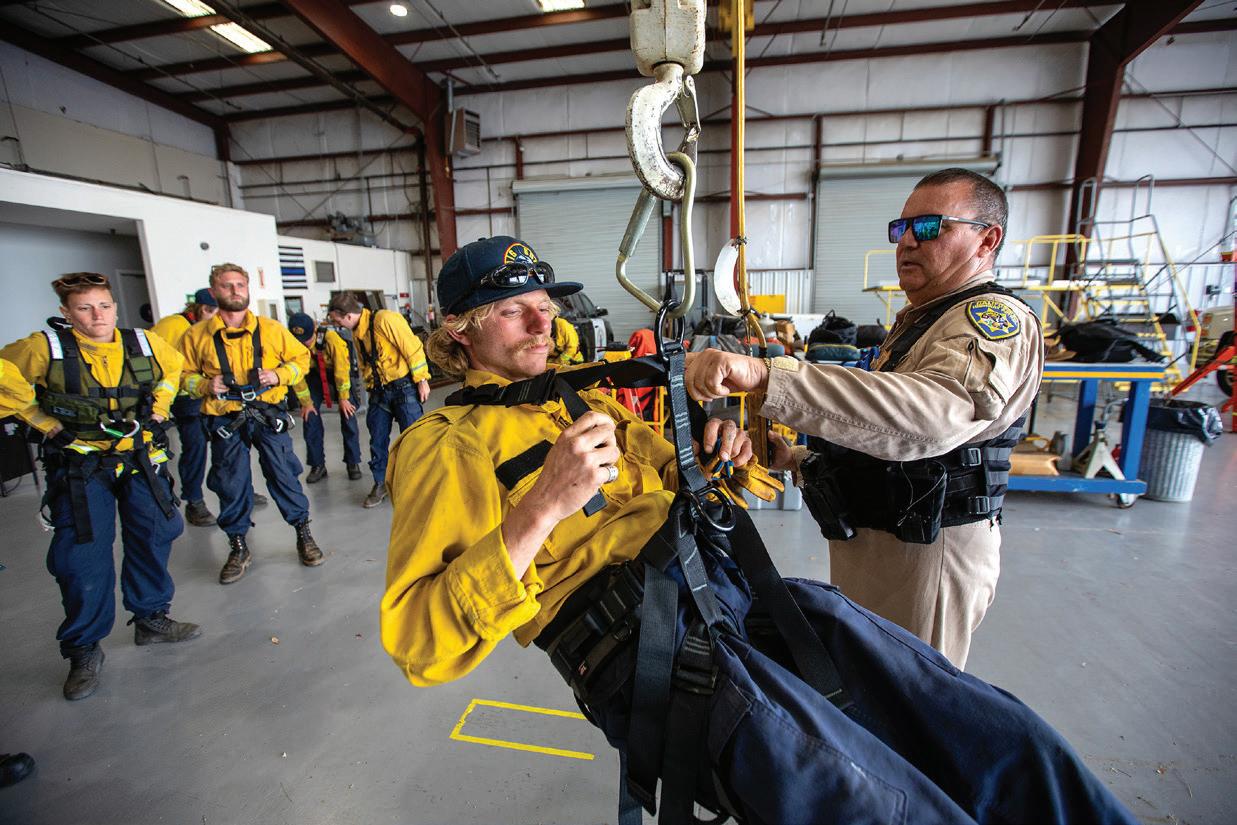
There are nine Big Sur fi refi ghters at the Paso Robles Airport that day and three California State Parks rangers, all on the hook to help in the future. If CHP’s Coastal Air Operations Division gets called to Big Sur to hoist someone out of a
precarious situation, these 12 will be trained enough to signal to the helicopter, ride the hoist up and down, and package the patient.
They will essentially act as the third CHP H-70 crew member in a rescue situation, as the helicopters are staffed with two officers—a pilot and a hoist operator who’s also a paramedic.
Trainings like this are an important piece of being prepared for anything. The CHP Coastal Division conducts hoist trainings with members of allied agencies throughout Monterey and SLO counties.
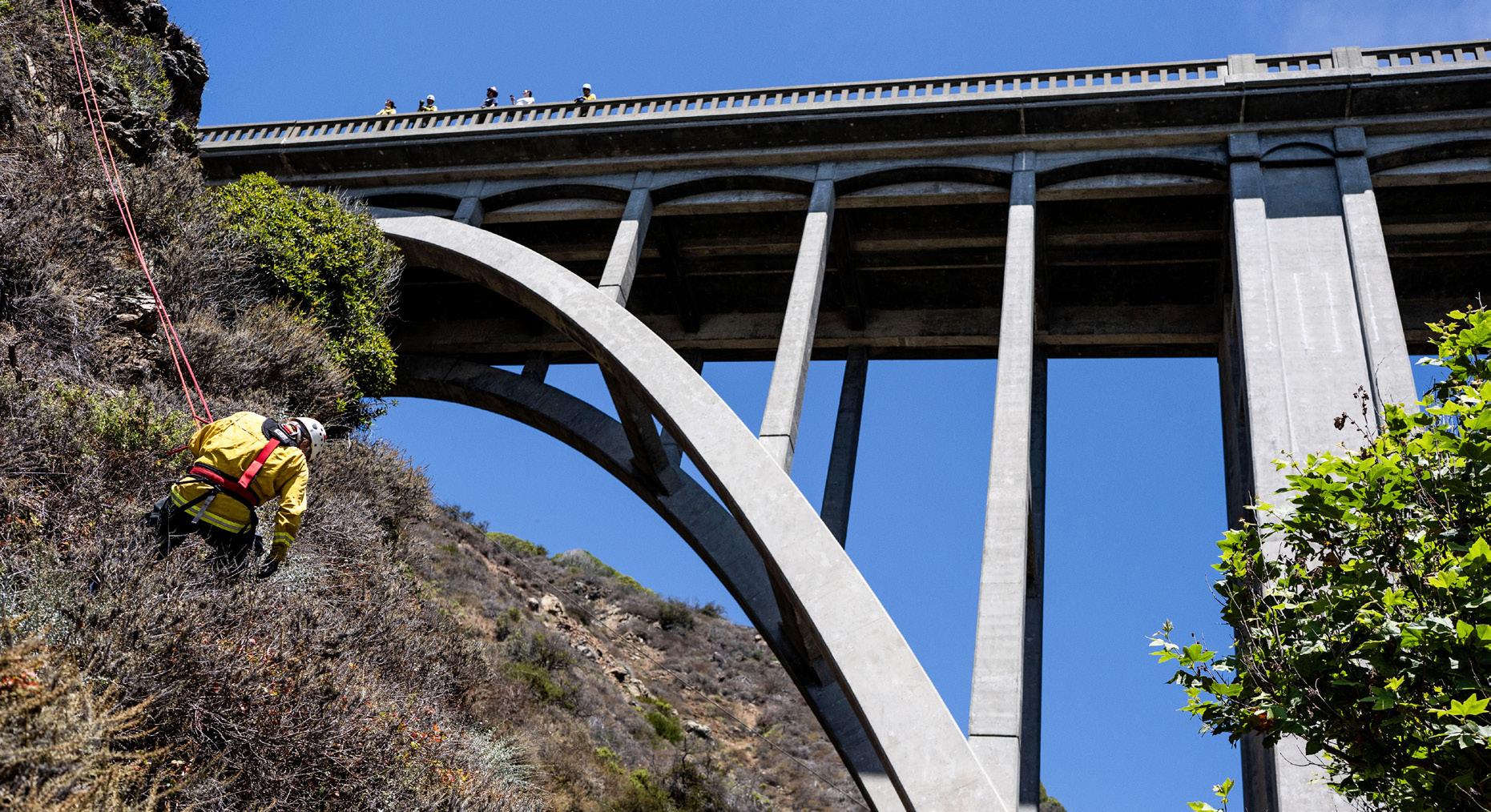
Big Sur’s volunteer crew of firefighters trains three to four times a month, varying the topics from refreshing medical skills to technical rescues on the cliffs to structure and wildland fires. Often the agencies train jointly, as they did on May 27.
“We all work together,” Palafox said, adding that it takes multiple rescuers in any given situation.
He’s been a volunteer with Big Sur Fire for 15 years and was
completing the last part of his hoist training, 40 hours that began in a classroom. The fieldwork part was “really fun,” he said.
“When you’re up there, it didn’t seem so high to me, which is surprising. It’s loud underneath the propellers, but not as loud as you might think,” he said. “That adrenaline rush kind of keeps you in that state of mind so you can focus.”
The adrenaline rush does fade a little with practice, CHP Flight Officer and Medic Tony Ramage said. He’s been doing the job since 2011.
The day before the training, Ramage was part of a crew that responded to an ankle sprain about 2 1/2 miles up the Boronda Trail.
The terrain was too steep for the helicopter to land near the injured hiker, so they landed elsewhere, hiked over to her, helped her hike out to the helicopter, and flew her to the Post Ranch Inn, which is accessible to both ambulances and medevacs.
Usually, though, there isn’t space for the helicopter to land in Big Sur, Ramage said.
“That’s probably our primary area for doing hoist rescues,” he said, adding that about 90 percent of CHP’s hoist rescues are in the Big Sur area. “Most of the time, it’s in huge 100-foot trees.”
Razor’s edge
Hovering between trees with a hoist stretched out to its limit puts the helicopter on the very edge of its capabilities, CHP Pilot Shayne Dickson said. He’s been with the CHP for 19 years, 13 of those in air operations.
With 165 feet of cable at its max, a helicopter may need to nestle between trees, ensuring that there’s enough motor clearance to stay safe. Sometimes the trees are too dense
and it’s all about picking the rightsized hole to hover in.
“If the rotors hit anything it’s game over,” he said.
On any given day, Dickson and his shift partner could respond to a trio of events: rescues, suspect searches, and pursuits.
“There are days where we run all three scenarios,” he said.
If the CHP gets called to a rescue, allied agencies are likely already on their way as well, Dickson said. If it’s very remote without a lot of places to land, the hoist gets used.
But weather, time of day, and altitude all play into the H-70’s performance abilities and whether the hoist can even be deployed. It’s challenging, he added, but that’s one of the things he likes about the work.
“These people are having literally the worst day of their lives, and we show up and get them out of there, get them the medical attention they need, get them out of a bad way,” Dickson said.
Pilots like Dickson and Barter, Ramage joked, are like “highly skilled taxi drivers.”
“No rescue is ever the same. The terrain’s always different, the condition of the patient,” Ramage said. “You’re figuring it out as you go.”
The day after Memorial Day, Barter flew out to a rescue at Lopez Lake, he said. A woman stuck on the side of a steep hill had broken her ankle and was in so much pain, she was vomiting.
Members from SLO County’s Urban Search & Rescue team (made up of firefighters from various local departments) were already there, as was Cal Fire, county park rangers, San Luis Ambulance, and the county Sheriff’s Office, Cal Fire Capt. and Public Information Officer Eva Grady said.
Rescuers had already hiked to the patient to determine how injured she was and the best way to get her out of the situation.
“There was a hiker and she fell down this steep terrain, she hit her head, she hurt her leg, she couldn’t walk,” Grady said. “It would be better to hoist her out rather than hike her out of that steep terrain.”
A firefighter from the Five Cities Fire Authority was dropped off at the spot by the CHP helicopter via the hoist. He packaged her up in a screamer suit—which you sit in with all the connections at your naval. The H-70 flew her down to the road, dropped her off next to the ambulance, then went back and picked up the firefighter while the rest of the responders hiked out.
“It’s such a team effort, just the way we respond,” Grady said. “What’s really important is being on the same channel, practicing these calls before we get them.”
Resource heavy
The helicopter is a luxury that’s not always available, Big Sur Fire Chief Harris said. On a nice sunny day, the CHP Air Operations Division can often respond to help. But when it’s dark, stormy, and/or windy, the H-70 can’t respond.
“It’s been proven to us that these rescues don’t happen on these perfect days,” he said. “It could be somebody who wasn’t well suited to be out in the backcountry either physically or mentally, and they end up putting the whole team at risk.”
Harris said that it takes 300plus hours of training to become a firefighter with the technical resource component needed to
RESCUERS continued page 28
Know your limits
Before you decide to trek into the front or backcountry, you should be prepared. Your bag should be packed with enough food, water, clothing, emergency supplies, and appropriate shelter to get you through the duration of your trip. You should know what you’re getting yourself into: How steep and long is the trail? Will there be water along the way? What is the weather going to be like? You should also know if you’re physically capable of tackling the hike safely. If you have any doubts about your abilities or the weather, maybe think about doing the hike another time. And, of course, you should know where you’re planning to go: Did you bring a map? Did you do research? Do other people know what your plan is?
Happy hiking.
private company’s air ambulance gets dispatched, a patient will get charged.
participate in these kinds of rescues. The backcountry is unforgiving. One of the biggest risks, Harris said, is that a rescuer may also need rescue.
“We like to rescue people, it’s challenging,” he said. “We do it out of a labor of love. The camaraderie, and the feeling of helping people, that’s just kind of an addictive thing.”
Every person who needs rescue has a cost associated with them for the responding agencies. Harris with Big Sur Fire estimates that responding to them could cost between $10,000 and $20,000 worth of resources per call.
Depending on the nature of the call, it’s a public service. But if someone is trespassing and needs a rescue—saw the signs on State Parks property, for instance, and ignored them—they could get a bill. Or if a
“Typically, there is no cost to the individual. They just get rescued, and it’s a service we provide,” Harris said. “A service that basically the public expects.”
While responding agencies like the CHP and Cal Fire are publicly funded with tax dollars, Big Sur Fire is a 501c3 nonprofit. It’s staffed with volunteer fi refi ghters and responds to every emergency call along that stretch of coastline.
Big Sur’s terrain—like that of Yosemite or the Santa Barbara front country—is challenging. Some of the trails are poorly maintained. Sometimes people get into trouble more than 10 miles in.
Even a fairly simple rescue takes a team of people. If they have to deploy the rescue litter, it takes a RESCUERS continued page 30
RESCUERS from page 27
PHOTO COURTESY OF BIG SUR FIRE
RESCUERS from page 28
minimum of 15 people from several agencies who all have to carry the equipment in on their backs, as well as their food, water, and appropriate clothing.
“We’re talking 12-hour-pluslong rescues. That’s just the extraction. It can take four to six hours to get into where the patient is, and to get the patient out can take twice if not three times as long,” he said.
SLO County’s Farmers’ Markets are open year round!
He remembers one rescue, where a person was 12 miles up the Pine Ridge Trail at Sykes Hot Springs. A leg injury prevented the 300-pound man from being able to walk. It was a full 24-hour ordeal, he said, and it included a shift change.
Contribute to the cause
Find out more about the Big Sur Fire Department at bigsurfire.org. You can donate to the organization there or send a check or money order directly to Big Sur Fire, PO Box 520, Big Sur, CA 93920.
WEDNESDAYS
Arroyo Grande Farmers’ Market* Smart and Final Parking Lot • 8:30 - 11:00
THURSDAYS
Morro Bay Farmers’ Market* Spencers Market Parking Lot • 2:00 - 4:30
SATURDAYS
SLO Saturday Farmers’ Market* World Market Parking Lot • 8:00 - 10:45
Arroyo Grande Farmers’ Market Village Swinging Bridge Parking Lot • 12:00 - 2:30
Casting wide nets
Central Coast Women for Fisheries spreads the word about life at sea
BY BULBUL RAJAGOPAL
PHOTOS BY PIETER SAAYMAN
Living like fi shermen isn’t for the meek. They tackle long hours at sea away from their families, risking catastrophic vessel disasters, element exposure, accidental falls overboard, and troublesome heavy deck machinery in unpredictable maritime settings.
The lives of the women close to them are no less devoid of sacrifice.
“Some of the women in this group have raised their kids when their husbands were gone for weeks at a time, and all they could do was talk to them on the radio once a week,” Arroyo Grande resident Lenore Ward said.
Ward is the president of Central Coast Women for Fisheries. It’s not a group of women who fish—a common misconception. It’s a support system and nonprofit comprising women who belong to commercial fishing families.
The organization took off in 2006 with the help of a grant from the Central Coast Joint Cable Fisheries Liaison Committee. For 20 years running, Women for Fisheries has been educating San Luis Obispo County about the value of locally caught seafood and the hard work that goes into bringing home the bounty.
Membership has swelled to 30 people.
They pool funds through fundraisers like the Morro Bay Harbor Festival every October, an annual albacore enchilada feast the day before the Super Bowl that often tops 500 trays, fi sh fry gatherings, rummage sales, and raffles.
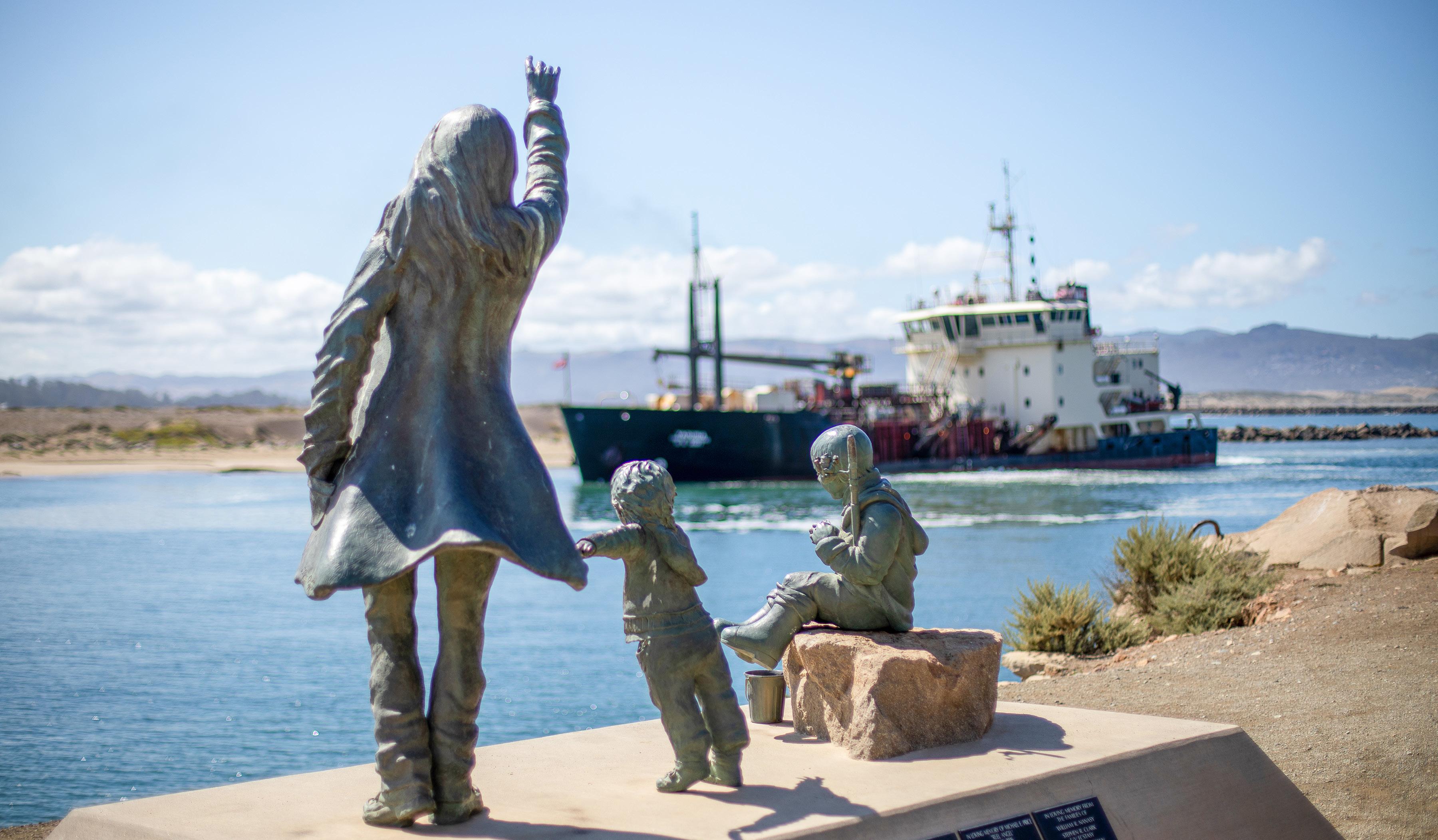
One of the outcomes is the For Those Who Wait statue next to Morro Rock. Designed and constructed by sculptor Elizabeth MacQueen, the bronze monument is a fi sherman’s family sculpture depicting a mother, Marie, and her son, Joseph Albert David, and daughter, Rita Michele, as they wait for their loved one to return from sea. These fi gures are named after some prominent fi shing families on the Central Coast.
Women for Fisheries eventually gifted the 5-year-old statue to the city of Morro Bay.
“It’s where the families would go out and wave goodbye because fi shermen are gone sometimes, like for albacore, from Fourth of July until Thanksgiving,” Women for Fisheries Secretary Sheri Hafer said. “I mean, they’re gone a long time.”
Funds raised by Women for FISHERIES continued page 34
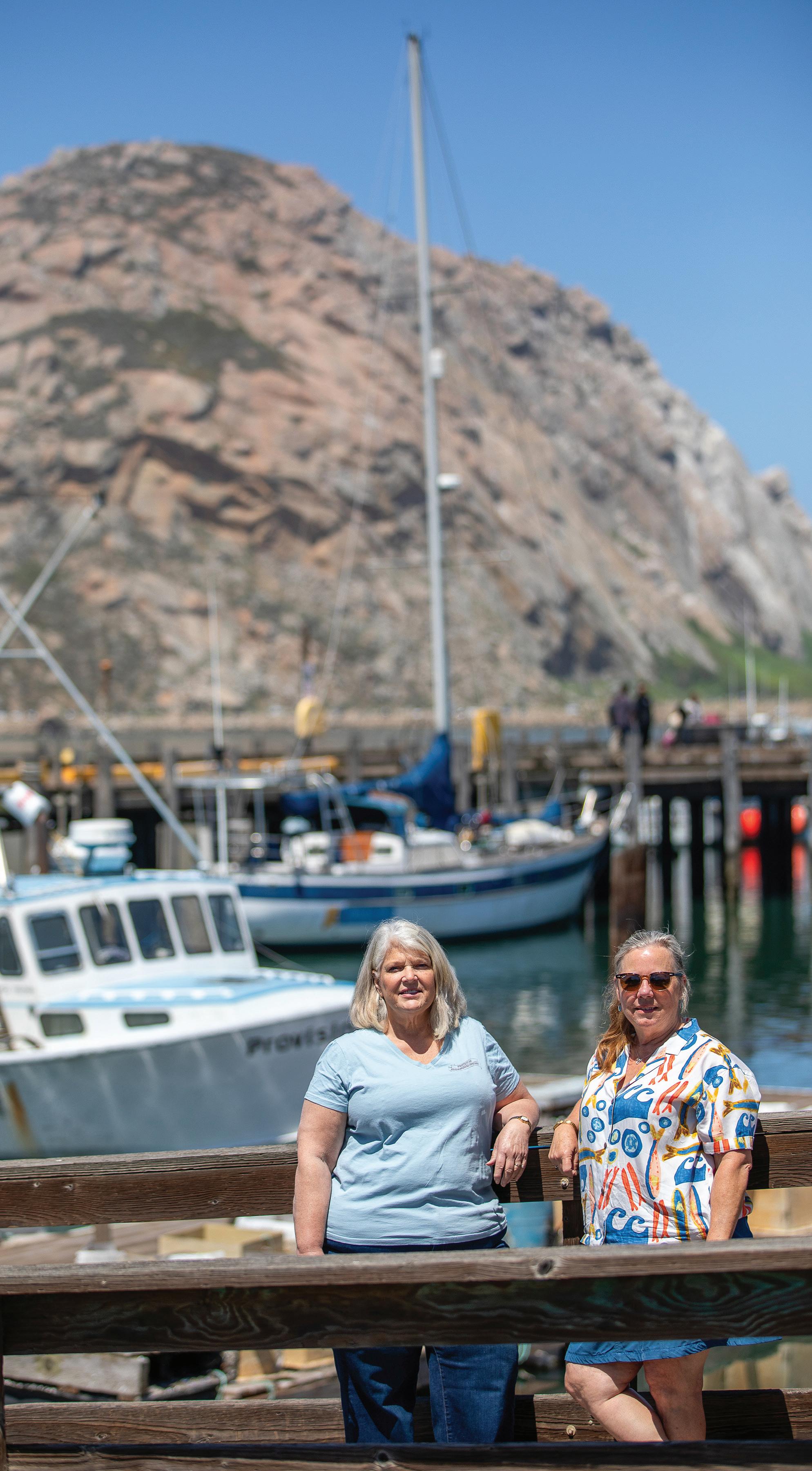
BANDING TOGETHER Through Central Coast Women for Fisheries, President Lenore Ward (left) and Secretary Sheri Hafer (right)—both wives of commercial fishermen—educate SLO County about the fishing community and support its members.
Get caught up
Send contributions or sign up for Central Coast Women for Fisheries’ newsletter by emailing ccwf@womenforfish. org with “Pelorus” in the subject line. Submissions and requests can also be mailed to CCWF Newsletter Committee at 785 Quintana Road #106, Morro Bay, CA 93442-1948.
Fisheries help both fishermen and their families. The Fishing Heritage Scholarship awards $1,000 every year for people wanting to enroll in community colleges and trade schools. They must be related to a commercial fisherman to qualify.
The Fisherman’s Relief Fund is a pot of money kept aside for fishermen who are unable to work for various reasons, including injuries or capsized boats, and for families who’ve experienced a tragedy like a death at sea. The group started the fund in response to the 2023 closure of commercial salmon fishing due to droughtaffected waterways that caused salmon population to plummet.
Commercial salmon fishing reopened this spring but with fewer fishing dates and harvest limits for both commercial and recreational fishing.
“A lot of our salmon fishermen were really starving to death because they just shut it down for three years,” Hafer said. “We started offering $100 grocery cards to people that were salmon fishermen. After that, we just decided to do this fund for anybody going through bad times.”
Fisheries Vice President Sharon Rowley, its quarterly newsletter Pelorus informs subscribers about happenings in the community.
A pelorus is a fixed compass used to take bearings relative to a where a ship’s headed. Its namesake newsletter gives group members the chance to weigh in through news stories, event reminders, featured articles on interesting community members, poems, short stories, and brief advertisements.
Women for Fisheries is also constantly thinking about the next generation. Hafer said that with the escalating costs of living and fishing permit prices, it’s hard to make a living in fishing.
“The education system has really pushed people to be marine biologists. … There are more marine biologists than there are fishermen,” she said with a laugh. “In some
places like Japan and Alaska, they have schools to become a commercial fisherman because there’s a lot to know. Engines, electrical, navigation, how to catch a fish.”
She pointed to California Sea Grant, which operates a fishing apprenticeship in San Diego, as the group’s inspiration for wanting to offer something similar on the Central Coast. But not enough people want to bite the hook.
Still, a learning avenue exists for local kids who want to cast their line into fishing: Women for Fisheries’ Kids at Sea program.
The group rents a commercial sportfishing boat and pays for 20 kids—those in fishing families get first preference—to experience how fishing works. This year, Women for Fisheries wants to take three such trips.
The first Kids at Sea session kicked off on June 9 aboard the
‘I think people get ideas that there’s overfishing … but fishermen have to be environmentally minded because California has the most highly regulated waters in the entire world.’
Black Pearl sportfishing boat in Morro Bay. The plan is to host events in Morro Bay in July and in Port San Luis in August.
“I think people get ideas that there’s overfishing … but fishermen have to be environmentally minded because California has the most highly regulated waters in the entire world,” Hafer said.
Her husband, Tom, used to fish for albacore and lobster when the couple lived in San Diego. On the Central Coast, he’s into live nearshore fishing, catching spot prawns and salmon off his 43-foot Nova Scotia boat docked in Morro Bay.
Ward’s husband, Bill, is 81 and still fishes occasionally even though his family threw him a retirement party last year. He used to fish crabs, salmon, halibut, and sea cucumbers out of Avila Beach.
Despite the push and pull of being married to fishermen, both women agree—it’s worth the fresh fish, working on boats with their husbands, and living off the coast.
“It’s a way of life. I’ve been fishing with Bill a few times and just really enjoyed being out there,” Ward said. “When we talked about retirement, one of his comments was, ‘What? Am I going to retire so that I can go fishing?’” FISHERIES from page 32
The group dabbles in education too. Under the care of Women for
—Sheri Hafer, Central Coast Women for Fisheries secretary
machines Time
BY MADISON WHITE
PHOTOS BY PIETER SAAYMAN
When Aurora Lipper looks through a telescope, she sees into the past. It takes light so long to travel to Earth that the faraway galaxies appearing in the lens may no longer be the same. Starry objects can be tens of millions of light years away. So far out that light spent millions of years traveling to Earth, making the objects visible to humans.
“I just want to know more,” Lipper said. “The longer you look, the more you see.”
She’s been fascinated with the sky since she fl ipped through pages in a fourth-grade science textbook and saw Saturn.
Still, after many years of practicing astronomy, looking up at space makes her feel small. She loves it.
The educator is an 18-year veteran with the Central Coast
Astronomical Society (CCAS) and has been the president for the past eight. A few Cal Poly professors started the group in 1979 to learn more about astronomy. Almost 50 years in, the club is still going strong.
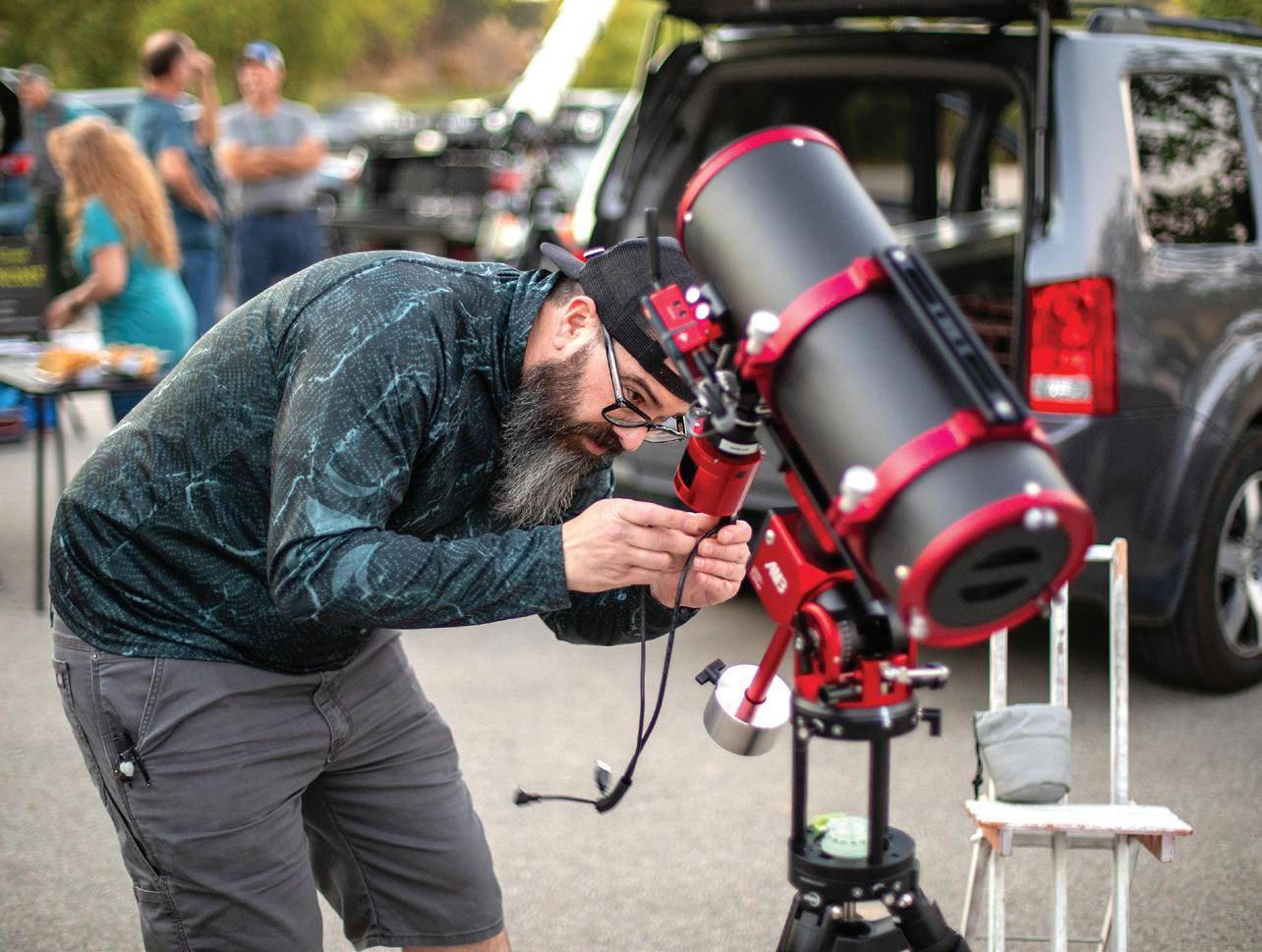
At its core, CCAS is a community of stargazers. First-timers are welcome, too. There’s no starting requirement for equipment or skills, just a curiosity for the night sky. If participants have a telescope that they’re not quite sure how to use, a member will be happy to help.
“People think astronomy is super hard and you have to be super smart,” Lipper said. “That’s not the case.”
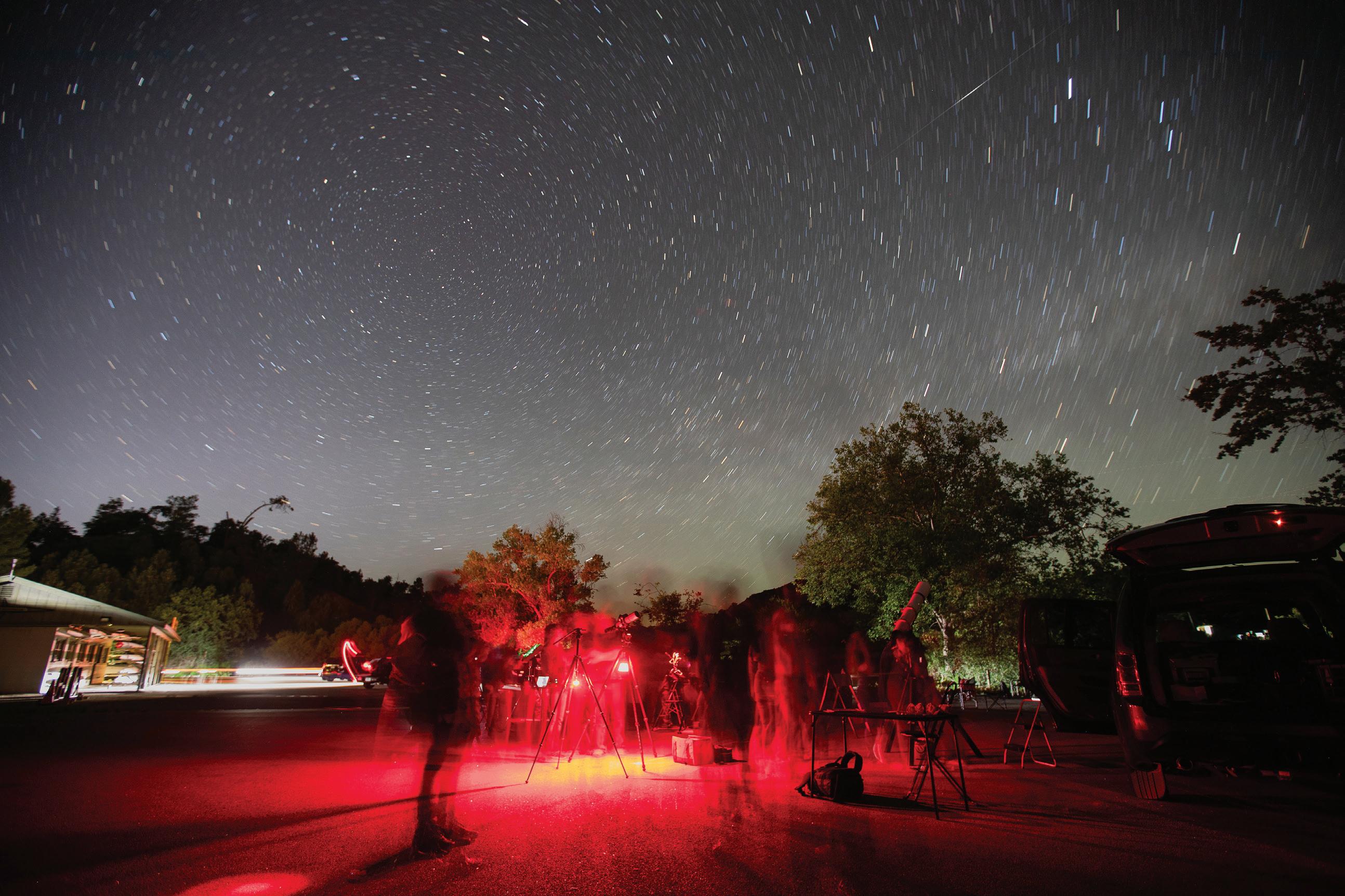
The organization’s main community engagement events are called star parties. Every month a small group of CCAS volunteers gathers at a spot free from too much light pollution, like Santa Margarita Lake, for the public viewing session. Between 40 and 100 participants join them right before sundown because once it gets dark, there are no white lights allowed. It takes
about 20 minutes for the human eye to readjust to darkness after a bright exposure.
After guests arrive, Lipper gives an introductory talk, allowing the members to share about their telescopes. Participants may grab a small red-light flashlight to make sure they can see. Kids are allowed as long as they can follow instructions.
As the sky becomes darker and darker, more stars come out. Volunteers help stargazers peer into telescopes and explain what they’re looking at.
“I love the look on their face,” Lipper said. “It’s one of those few things, you could go up to a telescope, and in under 10 seconds have this wow moment.”
Upcoming star parties are scheduled for July 11 and Aug. 8, weather permitting. For more details, visit centralcoastastronomy.org.
Star parties have been staple events for a long time, but Lipper is also introducing new ways for the club to engage with the community.
TIME MACHINES continued page 38
She recently started hosting a beginner astronomy night at the San Luis Obispo Botanical Garden. The next talk is set for Sept. 5.
The evenings start with a half hour discussion and then the group goes outside for a “constellation tour” to put their new knowledge to the test. Donations benefit the garden.
“It gives them a little bit of an
intro and then introduces them to the people running the telescope,” Lipper explained.
Not every volunteer must be an expert in the sky, however. Some are excited learners.
Despite all the knowledge Pete Roebber’s collected since becoming a member of CCAS in 1996, he maintains that it’s just a hobby.
“My daughter’s the astronomer,” he said at the June star party.
Ph.D. in astrophysics, and he has a whole lot of passion for the stars.
“It’s a rewarding hobby,” Roebber said.
When the Atascadero resident was younger, he was inspired by the Apollo missions and his brother who studied observational astronomy in college. When he was in his 40s, Roebber bought his first telescope.
“Before that I had binoculars, and before that I just had telescope lust,” Roebber said with a laugh.
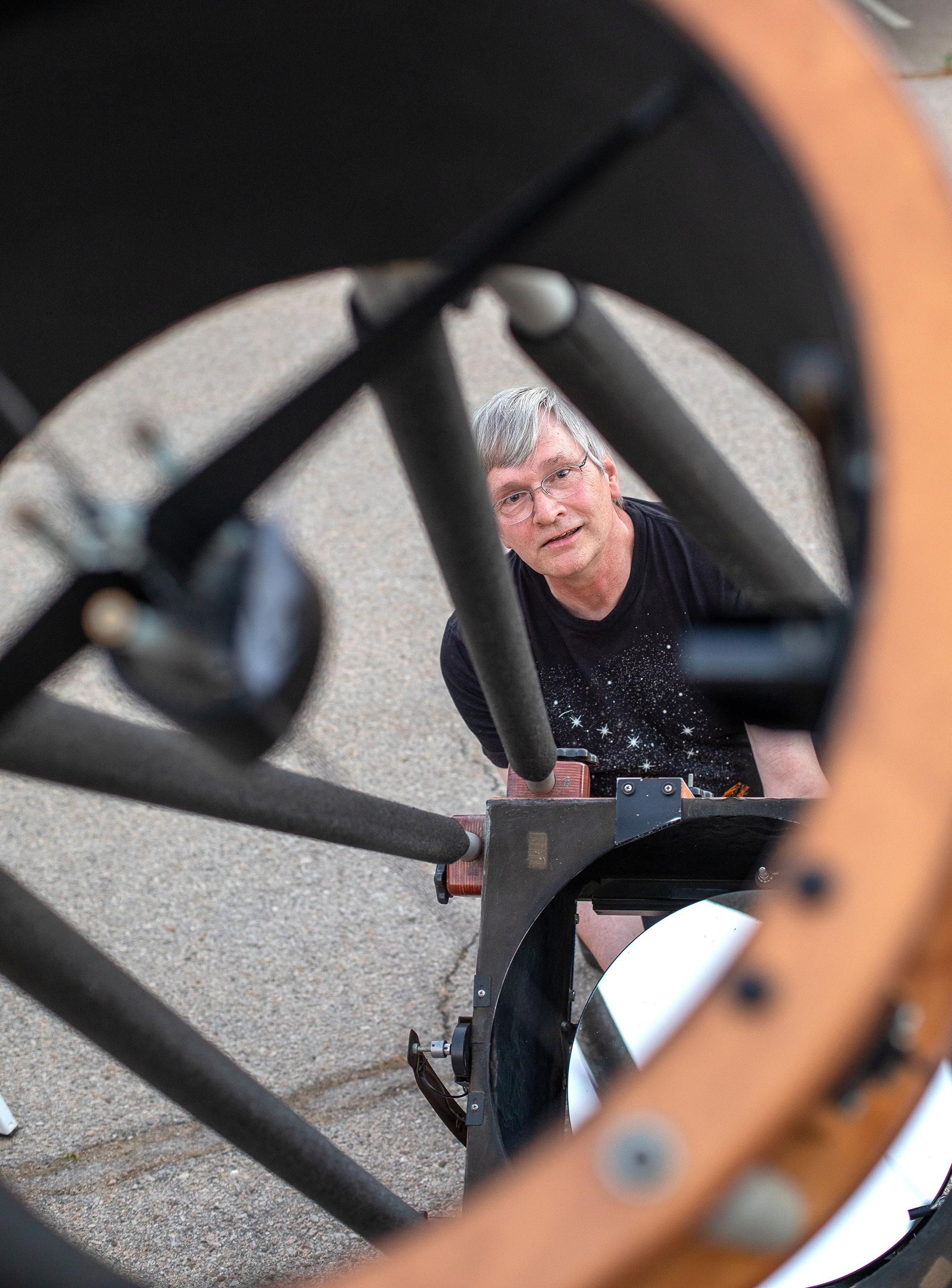
Ironically, a few other CCAS members might look at his equipment today with telescope lust. His setup is one of the largest in the group, a Dobsonian Newtonian reflecting telescope named Obsession that’s taller than he is. It’s named after the inventors of the optics and the mount, respectively. Wisconsin telescope maker Dave Kriege crafted the scope in 2001 especially for Roebber, as dedicated on a plaque at the bottom of the rig.
With one of the larger scopes in the club, Roebber usually draws a crowd of interested stargazers. He shows them right up to the eyepiece.
“I enjoy sharing with people,” he said. “Lots of people come out, and they say, ‘I’ve never seen that. What is that?’ And it’s kind of a teaching moment.”
During star parties, he points his telescope toward bright things because they’re easier to see. Right now, the sky is in a transitional period, he said, closer to revealing the center of our galaxy after spending the spring pointed away from the Milky Way. Globular clusters are prominent, big balls of thousands and thousands of stars that form a halo around the galaxy.
They initially joined the club together. Roebber thinks it’s one of the reasons his daughter became an expert in the subject. Now she has a
“As we move into summer, we get closer and closer to the center of the galaxy, or facing it, and there’s more and more really cool stuff,” Roebber said. “It’s like there are more things to look at than you have time to look at.”
‘People think astronomy is super hard and you have to be super smart. That’s not the case.’
—Aurora Lipper, Central Coast Astronomical Society president
Pete Roebber has been a Central Coast Astronomical Society member since the 1990s. His telescope stands taller than he does and requires about 15 minutes to set up after wheeling it down ramps from the trunk of his car.
TIME MACHINES from page 36
Hold your horses
Slow down and step into the yesteryear with Noland’s Horse Drawn Carriages
BY BULBUL RAJAGOPAL
PHOTOS BY PIETER SAAYMAN
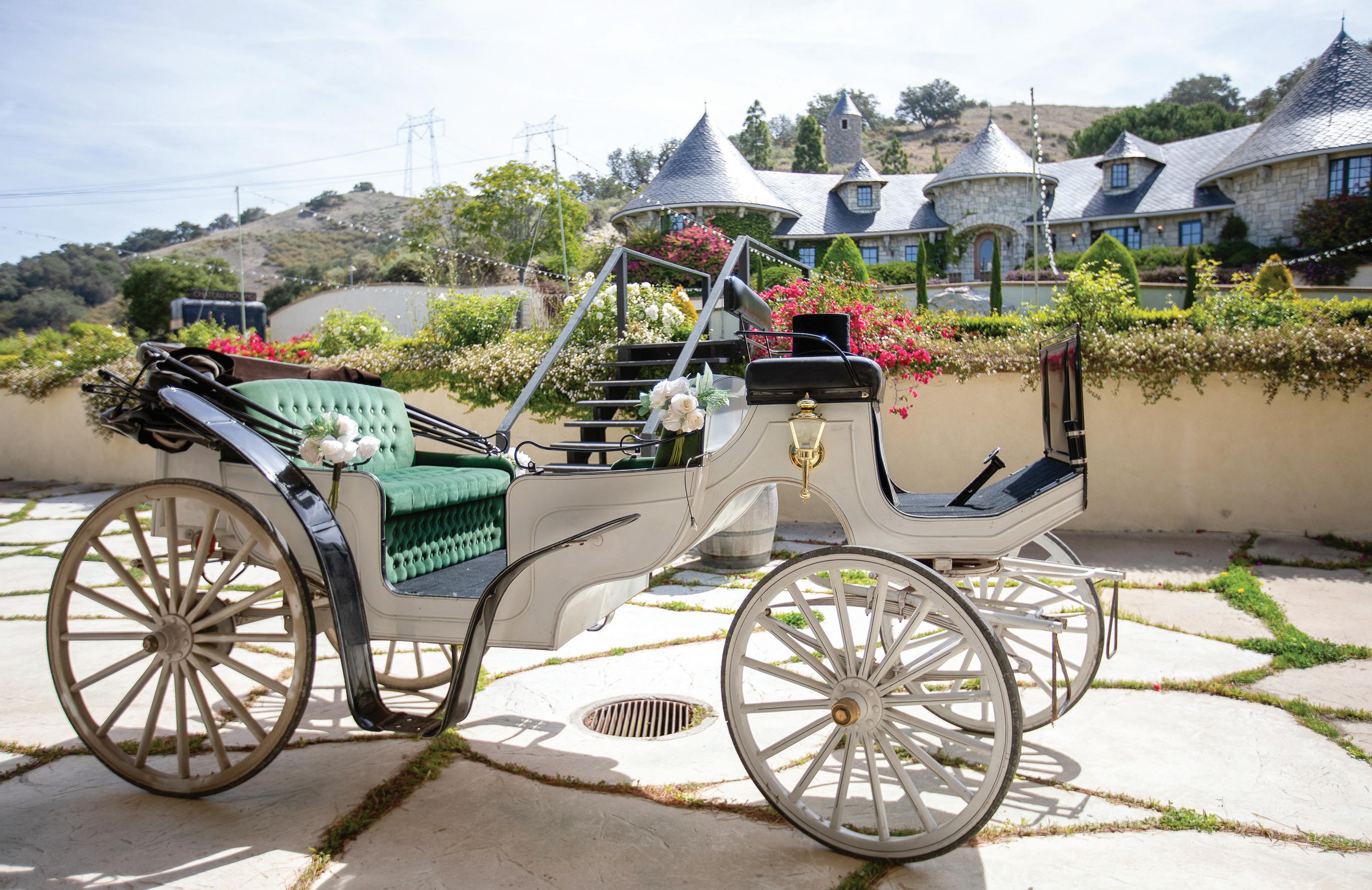
Before San Luis Obispo’s Château Noland was the luxe vacation rental it’s known as today, it was the home of Chad Noland and his family, complete with a carriage house to telegraph his first venture on the Central Coast—Noland’s Horse Drawn Carriages.
Noland rode horses all his life, and he found no reason to stop. Once he moved to SLO in 1988, he started his carriage business offering nightly rides at the Apple Farm Inn and the Madonna Inn, sometimes venturing out to Cambria, Cayucos, and Santa Barbara.
“We’ve just been here doing it the longest and are the most reliable,” Noland said. “I was pretty much born on the back of a horse. When I was a little kid, we would pull a wagon around and give 10 cent rides. So, we just kept going.”
At one point, Noland’s Horse Drawn Carriages had six carriages and 10 horses, often driven by Cal Poly students. The strong, docile draft horses were remnants of the time Noland spent in Colorado as a
cattle rancher, and he brought them with him to California. The existing carriage is from Colorado too and is a 40-year-old structure with parts sourced from Amish farmers.
Together, they used to pull the SLO antique fire wagon with volunteer firefighters, attending parades around the state like the Hollywood Christmas Parade and fairs like the one in Nevada’s Grass Valley. The team of horses and drivers have even helped at funerals, mainly in the Central Valley, where caskets were placed on top of the carriages.
“We’ve always used draft horses, and people are always impressed with a big horse,” he said. “It depends on the terrain you’re working in. If it’s flat, a regular light horse is fine. But if you’re going up and down some hills, you need a little more muscle.”
Now, the business is down to a single carriage and horse
specializing in weddings and the occasional quinceañera.
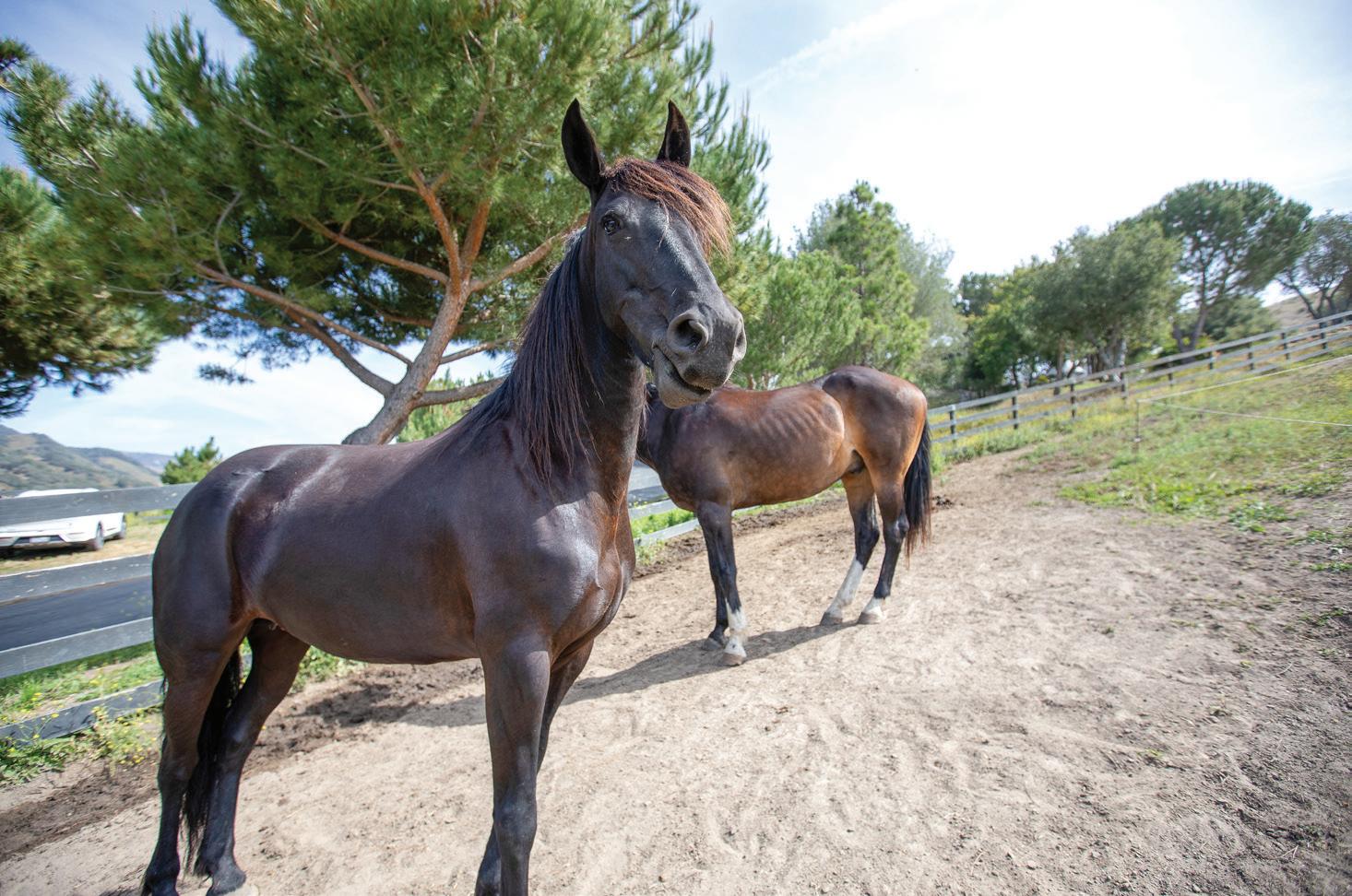
Noland’s remaining horse, Chantilly, an elegant black Friesian from the Netherlands, has been the conversation-starter at weddings along the Central Coast and beyond. She gets around thanks to his truck that hauls a trailer big enough for both horse and carriage. At one point, Chantilly was even joined by her foal as wedding fixtures.
For newly married Paso Robles resident Diane Wachs Swenk,
riding in the vintage white carriage through one of the Central Coast’s vineyards—with Chantilly and a tuxedo and top hat-clad Noland at the helm—was a dream come true.
“Oh my God, between him and horse, it was out of a fairy tale,” she said. “Not only was I brought in by horse and carriage before I walked down the aisle, which was all done outside, afterwards, everybody that wanted to, got to experience a horse and carriage ride through the vineyard.”
CARRIAGES continued page 42
CARRIAGES from page 40
Wachs Swenk’s wedding took place at the Guyomar estate vineyard in Templeton. She added that Noland quickly adjusted to its hilly terrain. He hauled Chantilly up the hill in his trailer and tucked her and the carriage in an area where none of the guests could spot them.
back, and the couple were sent off with personalized drinks made by their mixologist.
When Chantilly is off work, she enjoys her time away from the carriage. Like all of Noland’s horses before her, she stands out in the pasture on his property most of the time.
Trail trot
Visit chateaunoland. com, email info@ chateaunoland.com, or call (760) 805-8355 to book a ride in a vintage horse-drawn carriage for weddings and other special events. Keep up with Château Noland on Instagram @chateaunoland.
It was quite the surprise for Wach Swenk’s son who was supposed to receive her at the bottom of the hill but walked up because he forgot his sunglasses. He ended up riding in the carriage with his mother on her wedding day.
“I call it a God-wink,” she said. “It was magical, and when we pulled up, he helped me out of the carriage.”
Wach Swenk’s husband, David, got his chance to ride in the carriage with her right after the ceremony. This time, the carriage bore a “Just Married” sign on the
Parked in a separate space, the carriage doesn’t need much maintenance, according to Noland, and his main task is to keep it clean. At 70, he wants to keep his horse carriage business in the family. Some of Noland’s granddaughters have been learning from him, and he hopes one of them will take over when it’s time for him to retire.
“Horse carriage rides are pretty unique. Of course, they used to be common,” Noland said. “Princess Diana got married in a carriage. I mean, it’s a pretty special thing and it slows you down so you can appreciate the moment.”
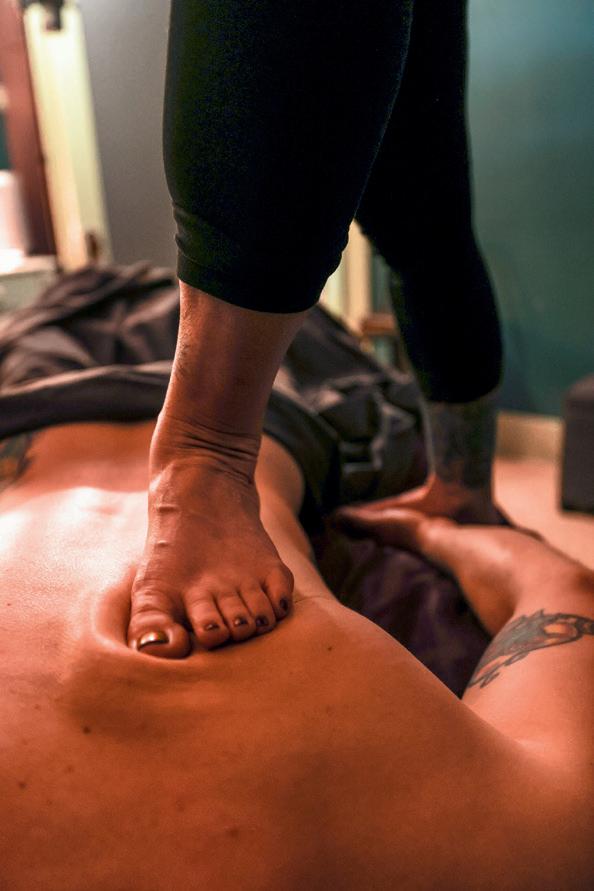
For 16 years, Barefoot Bodyworks SLO has been providing effective pain relief.
A local favorite for stress relief —try it once, and you'll become a loyal customer!
Enjoy $15 OFF your first 90-minute Barefoot Massage with the code “SUM26.”
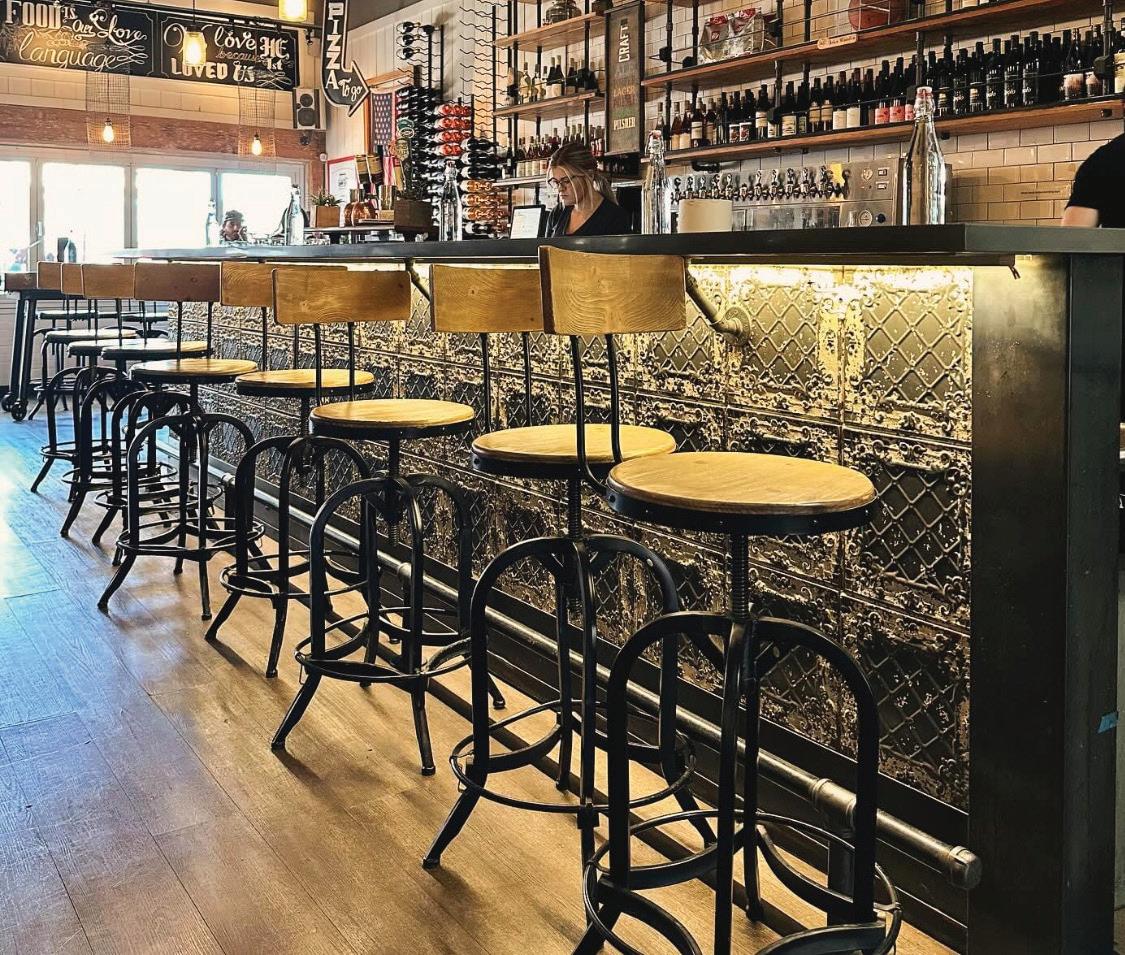
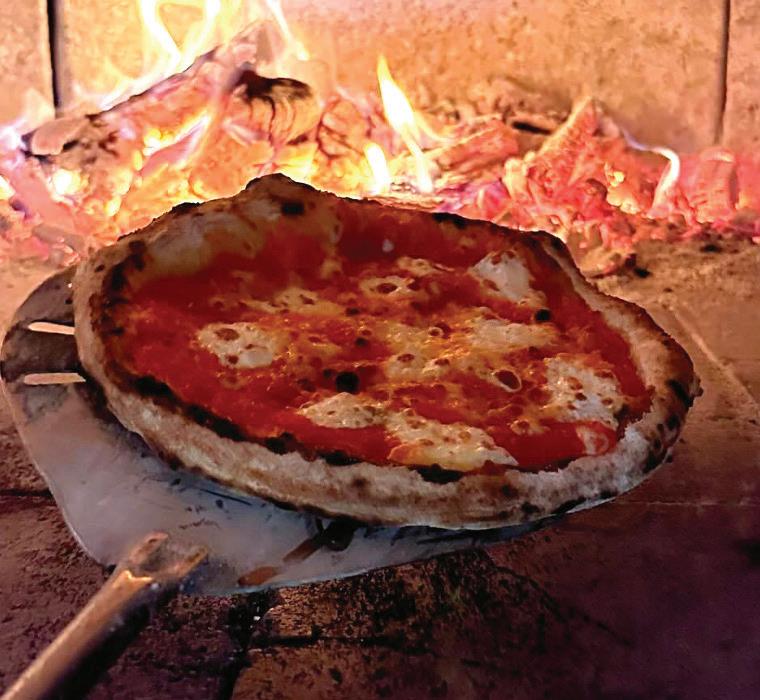
In the heart of charming Old Town Orcutt, and winner of “Best Pizza” in Northern Santa Barbara County six years in a row, Pizzeria Bello Forno is a local favorite and known for much more than creative and exceptional pizzas!
Enjoy house-made appetizers, salads, pastas, desserts, plus local and imported wine and beer.
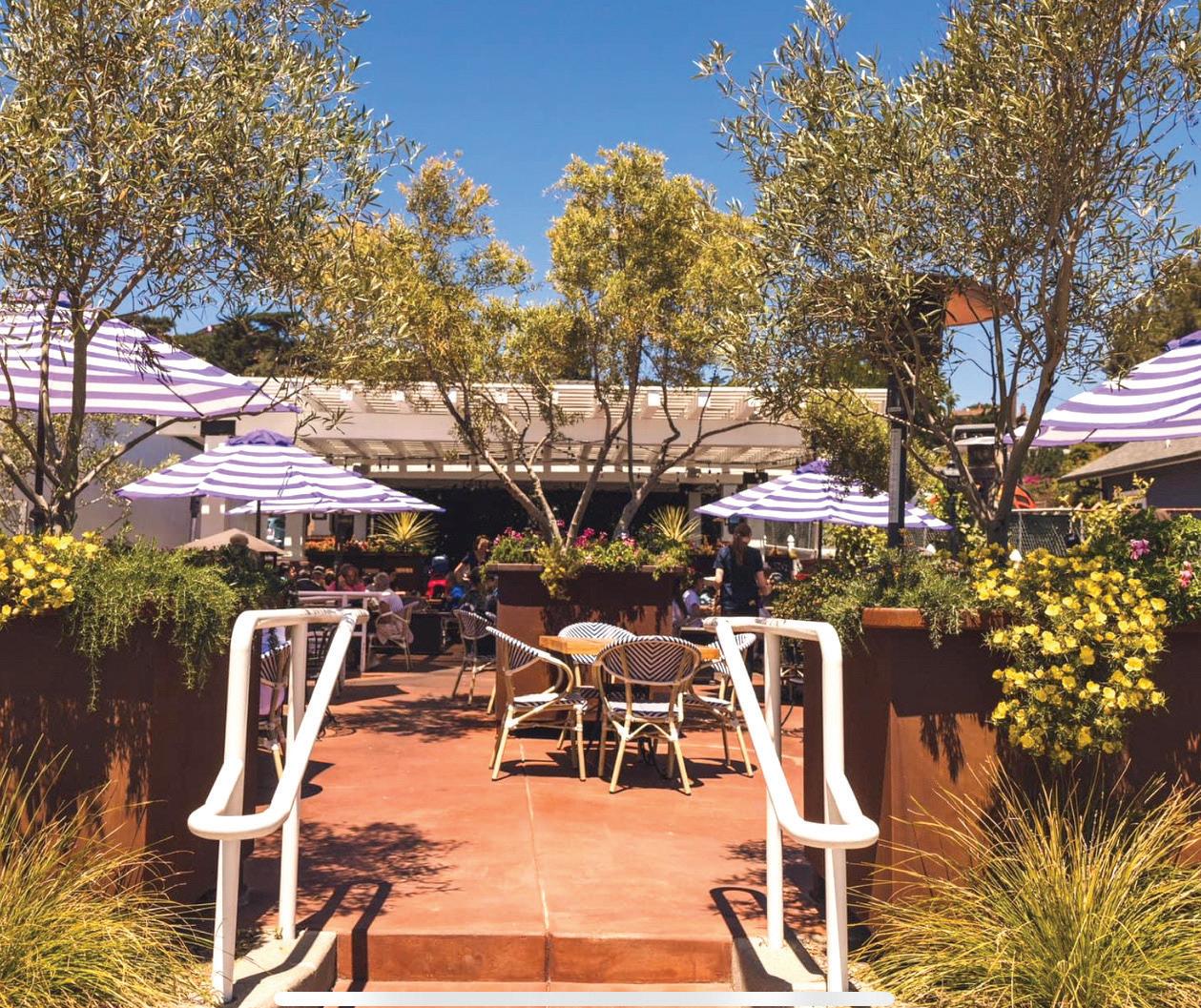
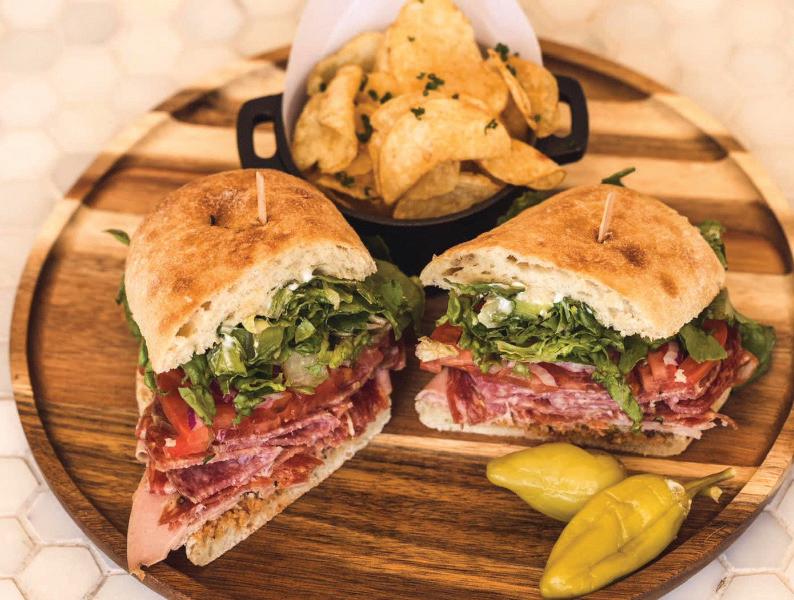
Located in the quaint Village of Arroyo Grande, Branch Street Deli and Pizzeria features a revamped menu and fresh remodel. Dine in one of the most beautiful al fresco patios on the Central Coast, and enjoy an array of sandwiches, salads, wood-fired pizzas and more, plus local and imported wine and beer. Live, “easy listening” music on the weekends.
Happy feet
BY ANDREA ROOKS
PHOTOS BY PIETER SAAYMAN
Going barefoot was just one piece of a puzzle.
A few months into the pandemic, I noticed how badly my shoulders ached after sitting at my desk. So I tried standing. I got adjustable risers for my desks at work and at home, but my shoulders still ached. Eventually I wondered if the problem began with my feet.
I’d been wearing Danskos for nearly 15 years. The stiff European shoes had ample support, which helped me through pregnancies and beyond. But now, especially at a standing desk, my posture felt off.
My brother and sister-in-law mentioned to me that minimalist shoes helped with some of their foot issues, so I kicked off my shoes at work one day and stood for as long as I could. I didn’t have a lot of hope for success. It had been years since I’d gone barefoot because a foot injury in my teens eventually left my hip
and leg prone to achiness.
But I stood barefoot for hours, and I liked it. So I kept doing it.
I could stand here all day and point to my happy feet, but I wanted to learn more about the structural benefits of walking like humans were intended to, so I asked my chiropractor, Dr. Sandy Sachs with Live Well SLO. He’s worn minimalist shoes since 2009 and said his motivation came from the book Born to Run , like many people at the time, plus his background in human performance.
“I did a deep dive into foot anatomy, function of the feet, and purpose of shoes,” he said over email, noting that there are 26 bones in each foot. “That means
52 bones of the 206 bones in your body are in your feet—25 percent of all your bones.”
As our foundation, he said, feet need to do two opposite things: be flexible and mobile, and be rigid during different phases of gait.
“It’s hard to find one shoe, but for someone who wants to support how the body works, minimalist shoes can be the right fit,” he said. “On my feet all day, I find I do better in terms of energy and endurance and less musculoskeletal achiness when I wear shoes without a heel (zero drop).”
Such shoes probably aren’t for everyone, but for anyone interested in trying, Sachs recommends common sense and progressing slowly.
‘It’s hard to find one shoe, but for someone who wants to support how the body works, minimalist shoes can be the right fit.’
—Sandy Sachs, chiropractor, Live Well SLO
“The amazing thing about our body is that it is resilient and ever adapting,” he said. “Given time and common sense, a minimalist shoe can be lifechanging for some.”
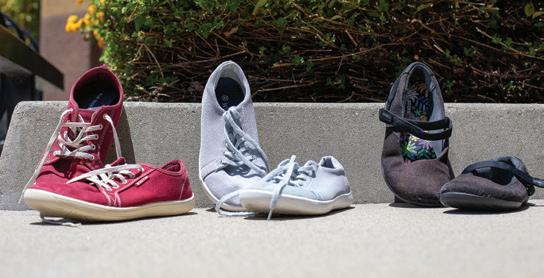
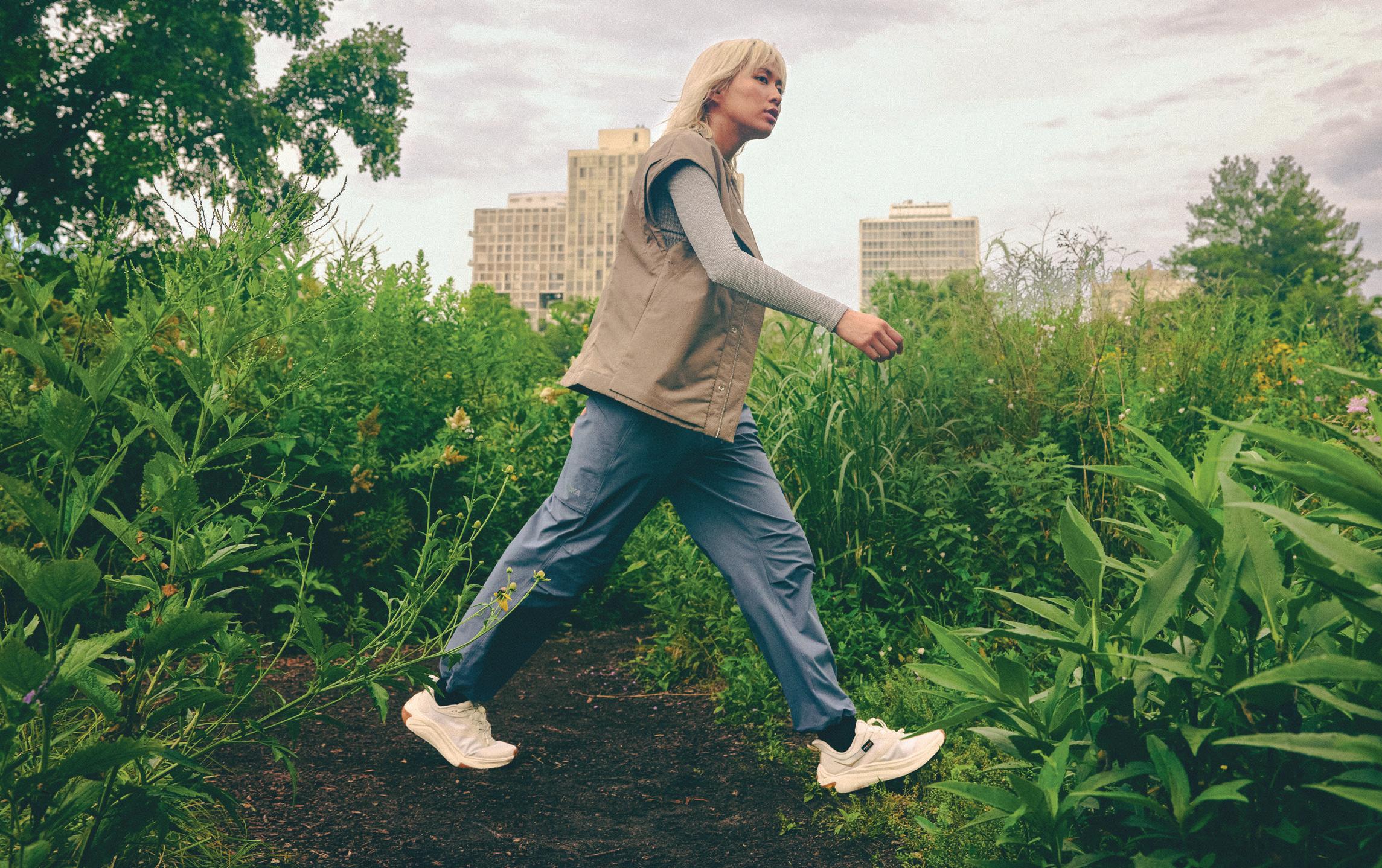
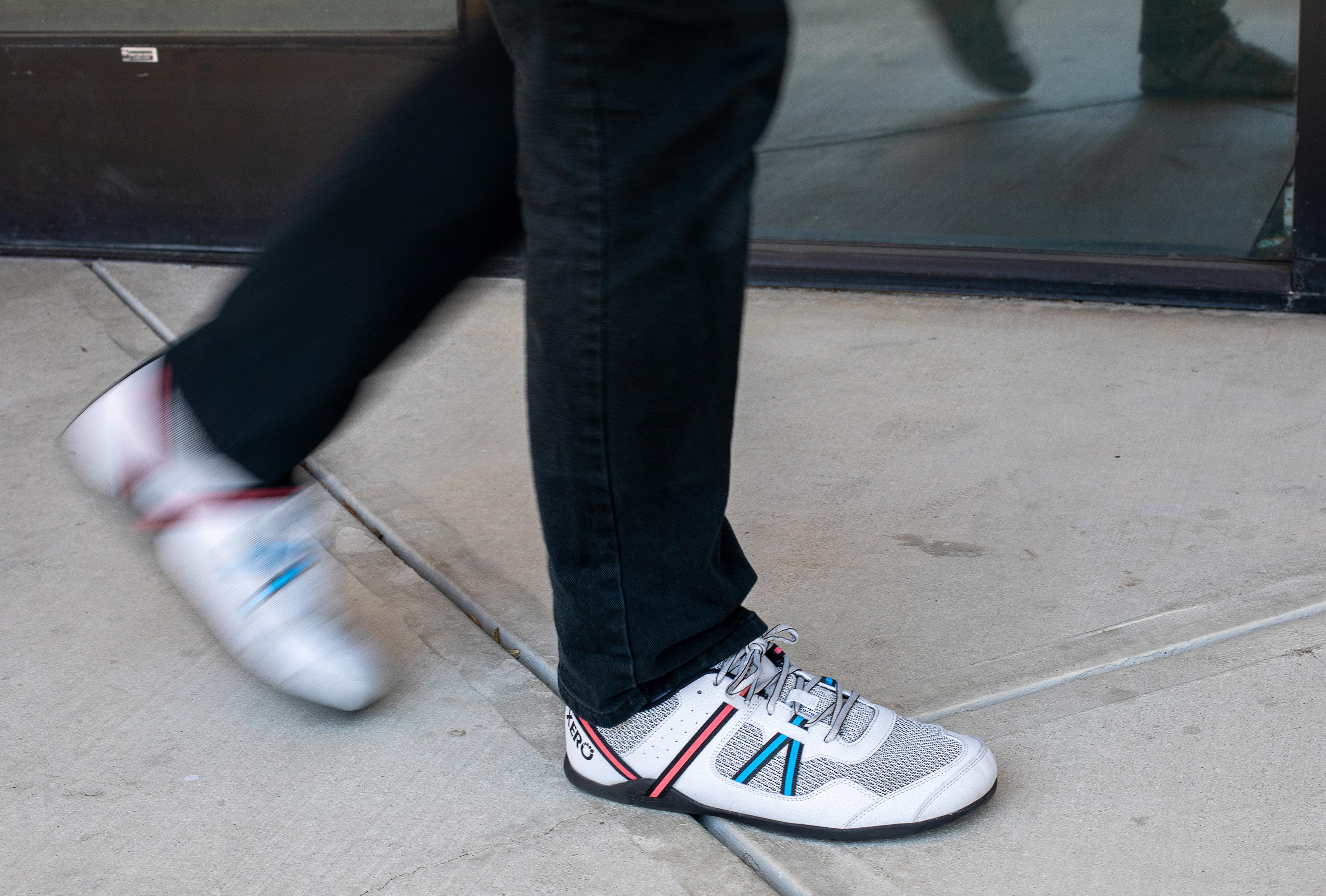
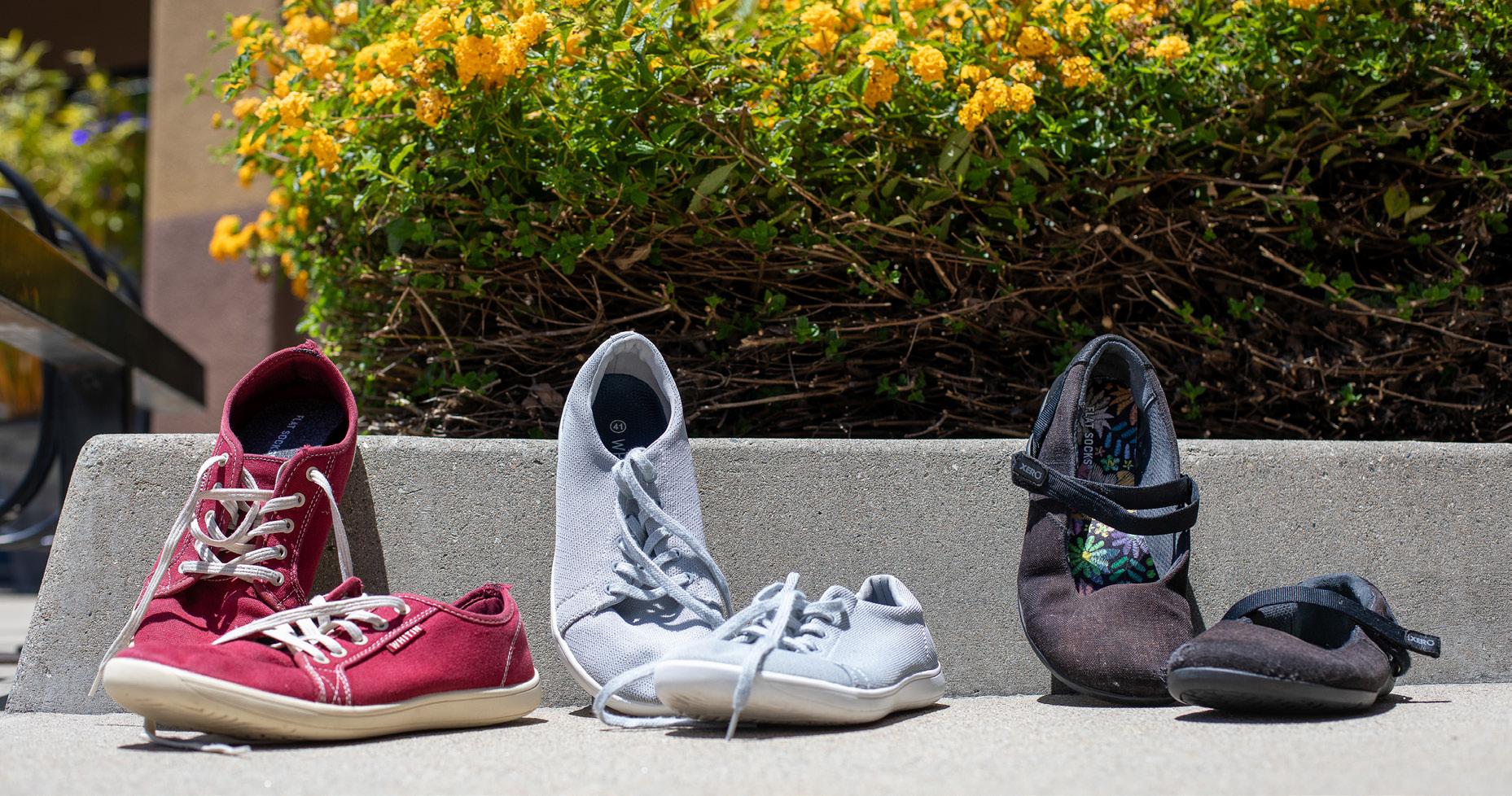
After increasing my tolerance for standing without arch support or padding, I bought a pair of Xero Shoes in 2022. Xero is just one brand among many, but I liked their look and the variety of styles.
All minimalist shoes typically have little to no arch support, wide toe boxes, and low or zero drop (meaning the heel is not raised much if at all). The soles are also relatively thin and more flexible than typical athletic shoes. The idea is to allow the foot to touch the ground evenly and move as naturally as possible without constraining the toes.
I have two styles of Xero Shoes: a Mary Jane for everyday and work wear and an athletic shoe that I walk, hike, and do archery in.
Occasionally my injured foot will ache after standing all day,
but overall, my feet feel stronger, I feel better balanced, and I don’t have the shoulder and neck aches I used to get at my standing desk.
After a year or so, I said farewell to my Danskos. I also got a pair of canvas Whitin shoes from Amazon. They’re inexpensive, nice looking, and fit the minimalist bill. I adjust the padding inside all my minimal shoes with Flat Socks, thin inserts with no arch support.
Sachs noted that to wear or not to wear barefoot-friendly footwear isn’t a black-andwhite issue. Rather, the question is: “When and where can wearing minimalist shoes help with human performance and overall health?”
As he’s gotten older, he said, he wears orthotics for extra support and cushion when he runs.
“For patients, I will recommend wider toe-boxed shoes, more minimalist shoes, when either they present with a foot condition or are looking for a more comprehensive approach to fitness
and performance,” Sachs said.
However, someone without much natural padding in their feet may not enjoy a minimalist shoe, he said. And someone who’s had chronic injuries may take more time to get used to the flatter, more flexible footwear.
For those who do step into a more barefoot-style shoe, they could notice fewer problems like bunions, plantar fasciitis, and hammer
toes, Sachs said.
“With shoes, the more that we engineer them, the less our feet are able to do the work themselves, leaving us more exposed to potential chronic injuries and less able to adapt
First steps
to the stressors of life,” he explained. “Working out with minimalist shoes allows us to ‘invite our feet to the workout,’ rather than having them hang out on the sidelines in a highly engineered shoe.”
For more information about minimalist shoes, check out these sites:
The Running Clinic, therunningclinic.com/minimalist-index The Foot Collective, instagram.com/thefootcollective REI’s Expert Advice, rei.com/learn/expert-advice/basics-of-barefoot-minimalist-running.html.
Gear Hub
What’s in my quiver?
BY ANDREA ROOKS
Last October, almost exactly a year after I got my wooden recurve bow, I packed a new quiver for my first archery competition.
I’d put a lot of thought and research into how to attach my arrows and other necessities to my waist ahead of the day-long outdoor shoot, but what would I really need to bring?
Before that competition, I’d used an Easton Flipside rangestyle quiver—it literally held only my half-dozen arrows. The minimal quiver is all a beginning archer needs and was great for practice on the indoor range in San Luis Obispo. For Central Coast Archery’s spring and summer shoots at Talley Field in Arroyo Grande, I also carried a water bottle and snacks in a fanny pack, which worked great for the couple of hours I was shooting. But for the Bug Shoot in
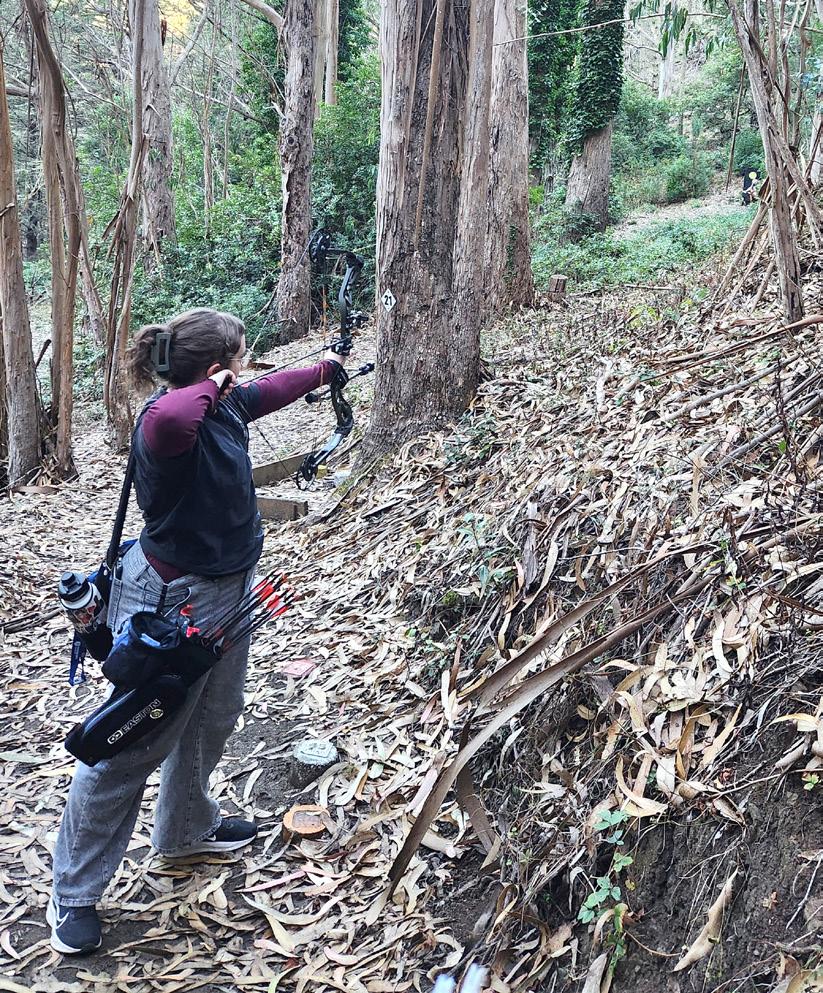
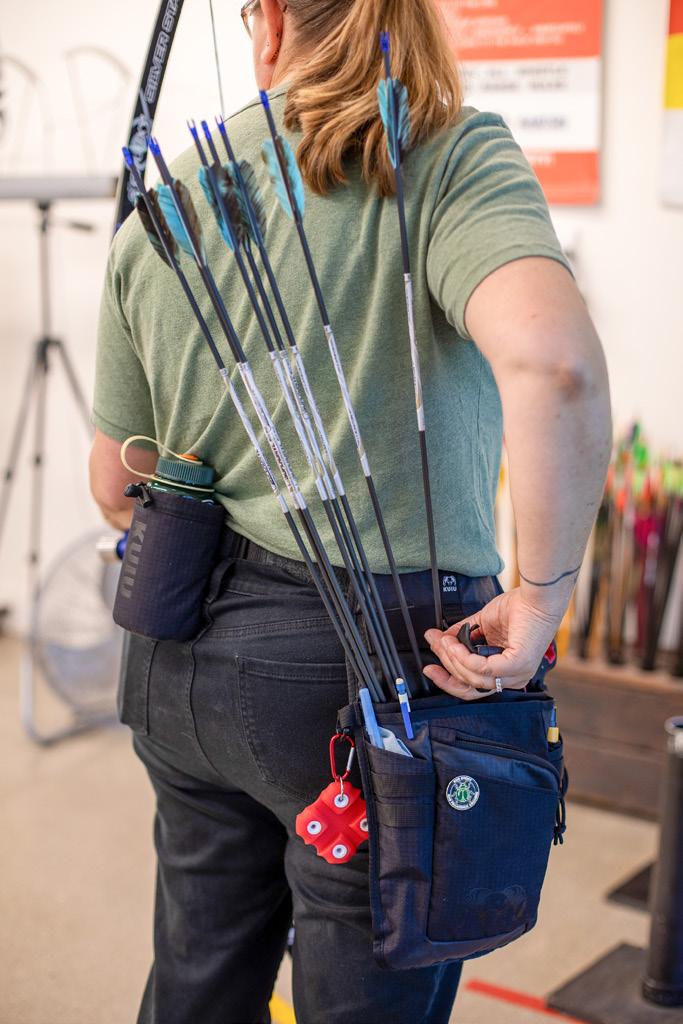
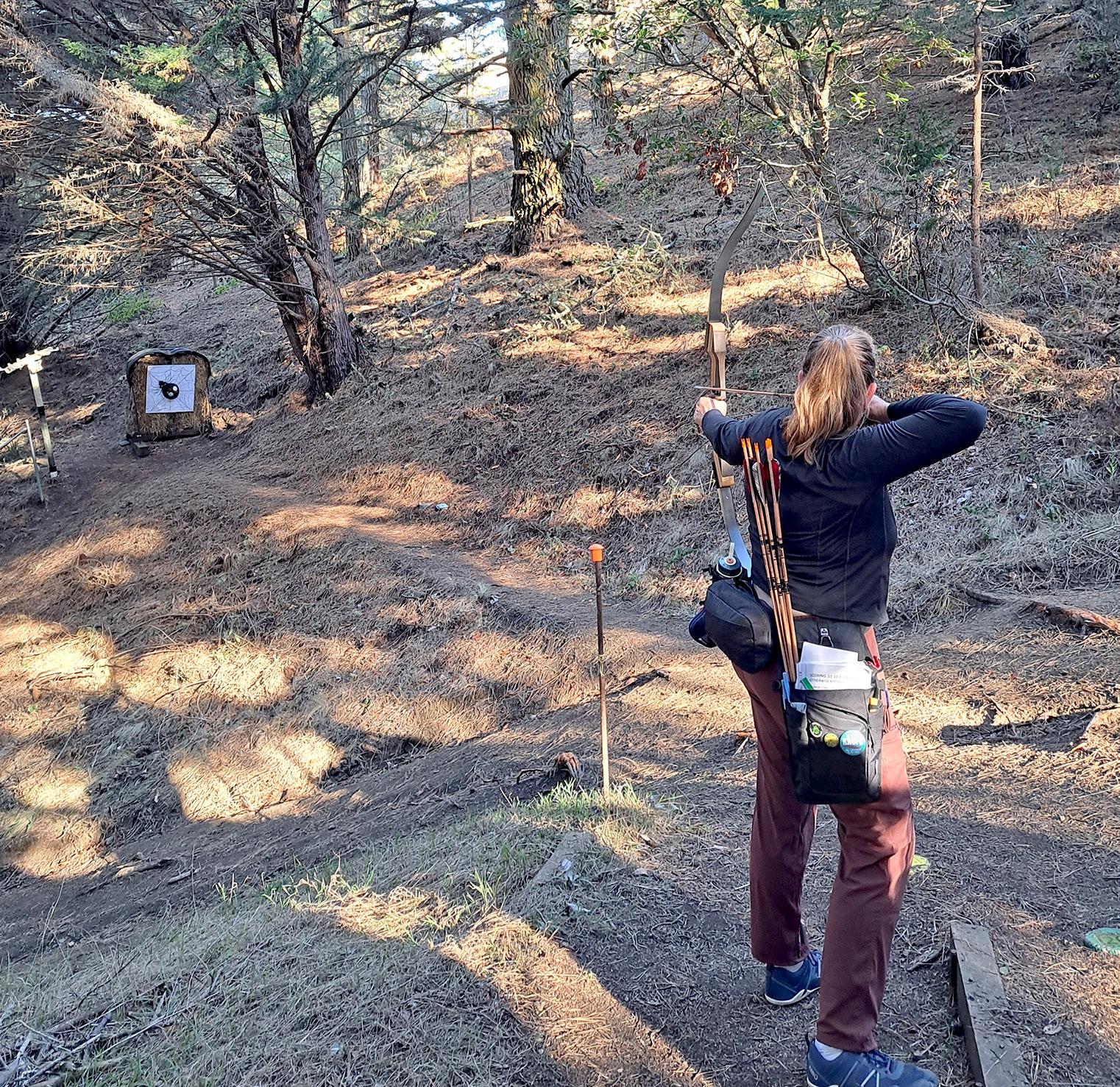
Pacifica, I needed to prepare for eight hours of hiking and shooting alongside my husband and daughter. I bought the Kuiu field-style hip quiver, which sits flat against my thigh and points the arrows toward my back. It doesn’t flap around when I walk, which was a must for me.
The Kuiu quiver also came with a water bottle pouch, a release pouch (which I gave to my daughter), and a waist pack that all attach to the quiver’s belt. There’s a slot for my phone and a clip for keys, but I usually keep those in my pants pockets.
Now I was able to carry more—which as a woman and a mom, I’m pretty used to.
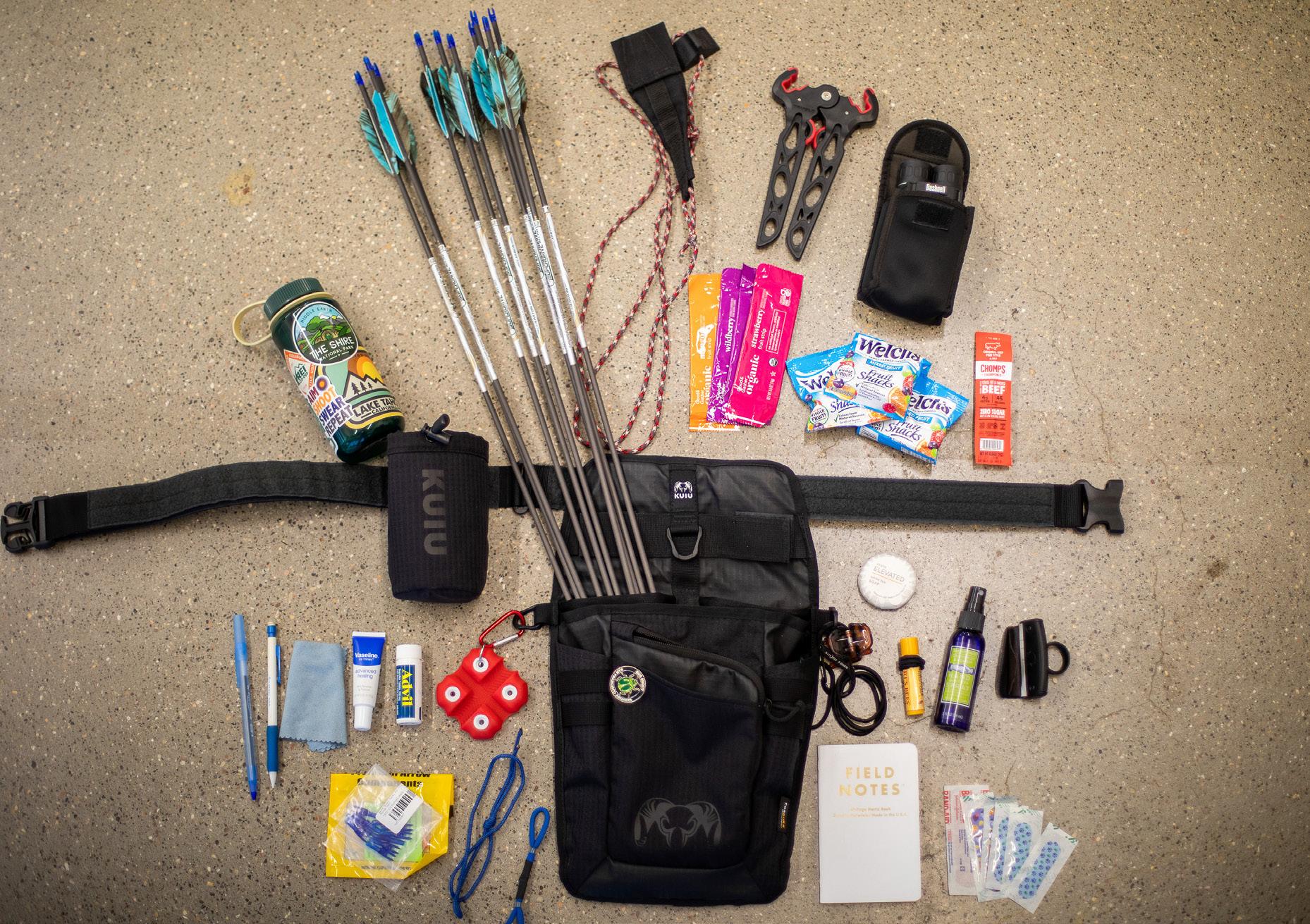
For indoor practice and shorter outdoor shoots, I don’t bring the waist pack. I just fill the quiver with archery necessities: arrows, bow stringer, leather tab for my fingers, bow stand (which acts as legs for setting my bow on the ground), bar soap (cheap,
out of my hand.
There’s also plenty of room for the stuff I normally carry in a purse or adventure bag: pens, lens wipe for my glasses, lip balm, hand sanitizer, bandages, hair ties (super important), snacks (fruit leather, gummy fruit snacks, and mini beef sticks), ibuprofen, and a small notebook.
For the day-long competition, I attached the water bottle pouch with a 16-ounce Nalgene and filled the waist pack with more snacks like cheese sticks, Corn Nuts, and trail mix, plus another water bottle and sunscreen. I also attached a small first aid kit.
I didn’t regret anything I brought. But I’m still relatively new to the sport and shoot only one type of bow, so what do other archers carry?
I started with my 16-year-old daughter, who for the last year has been shooting a compound— the higher-tech, typically more powerful bows with cams, sights, and stabilizers. In addition to the basics, she carries a pouch of powdered resin, which she uses to absorb sweat from her hands.
non-liquid arrow lube, which in theory makes arrows easier to pull from targets), and extra nocks (slotted plastic pieces that attach arrows to bowstrings). I’ve since added an arrow puller—basically a rubber gripper for grabbing the shaft of an arrow stuck deep in a target—and a finger sling, which keeps the bow from launching
On a sunny Monday in early June, I sat down at the counter in Central Coast Archery’s shop and chatted with several archers about the contents of their quivers. SLO resident Josh Erquiaga, who’s been into archery for about two years, had just finished shooting on the connected indoor range and walked me through his gear. He shoots both recurve and compound bows, and most of his supplies were similar to mine—bow stand, pens, snacks, arrow puller—but he also carries a release. Compound shooters clip this small tool to their bowstring to hold their draw instead of putting their fingers directly on the string.
Erquiaga also has a small clipboard for scoring sheets and tournament course maps, an Allen wrench/multitool, arrow lube, target pins, a screwdriver set, a resistance band for warming up, and a counter (for counting arrows shot in practice). His arrow puller is
My daughter added a pouch for her compound bow’s release to her range-style quiver.
PHOTO BY PIETER SAAYMAN
PHOTO BY ANDREA ROOKS
connected to his quiver on a retractable leash, and also dangling from his quiver is an Ironman plushie, which Erquiaga said is better than a towel for absorbing sweat from between his fingers.
Behind the counter, Scott Wilson, owner of Central Coast Archery, led off his list of quiver contents with plenty of arrows.
“Don’t show up to a six-arrow tournament with six arrows,” he said. “I usually have a dozen.”
PHOTO BY PIETER SAAYMAN
Chris Garcia, competitive archer and Central Coast Archery’s pro shop technician, chimed in from behind the counter.
“I’ve seen a lot of people putting unnecessary stuff on their quivers,” he said, like decorative keychains and doodads. “It’s actually affecting how they’re getting arrows out of their quiver and walking down the range.”
He and Wilson both said they carry serving string in case something goes wrong with the tough thread that binds parts of the bowstring.
Fellow archer Gary Lyman of Los Osos noted that he carries dental floss for
During my first all-day archery competition, the Kuiu field-style hip quiver held all my archery gear while the detachable waist pack contained more snacks, water, and sunscreen.
similar repairs.
Garcia and Lyman both said they carry a knife, and Garcia added that a Leatherman tool can come in handy for retrieving arrows stuck in logs or wooden target frames.
“It’s much better just not to miss,” Lyman quipped. Of course. But even the pros occasionally have arrows go astray. “I always like to be prepared,” Wilson said. “What could go wrong?”