4410 Fairway Boulevard
Wichita Falls, TX 76308
P: 940.692.2211
www.nthba.com





4410 Fairway Boulevard
Wichita Falls, TX 76308
P: 940.692.2211
www.nthba.com
NTHBA Members,
Every June, about the time the afternoon heat starts dictating the framing schedule, I find myself thinking about pace. Not speed -- pace. There's a difference, and anybody who's been on a job site in a Texas summer knows it. The crews that try to sprint through July burn out by two o'clock. The ones that find a rhythm, start early, and work smart are still standing at the end of the season with houses to show for it.
I think the same thing applies to how we run our businesses right now. There's a lot of noise out there -- rates bouncing around on headlines from halfway across the world, national builders making big strategic moves, economists arguing with each other about where the second half of the year is headed. It's tempting to either freeze up or floor it. I'd argue the right answer is neither. The builders who do well through the back half of this year will be the ones who keep a steady rhythm: start what you can sell, watch your carry costs, take care of your trades, and don't let somebody else's panic -- or somebody else's optimism – set your pace for you. Here in Wichita Falls, we've got more reasons than most to stay steady. The fundamentals of this market haven't changed, and the things coming down the pipeline for our region are real. Summer's here. Find your rhythm and keep building.
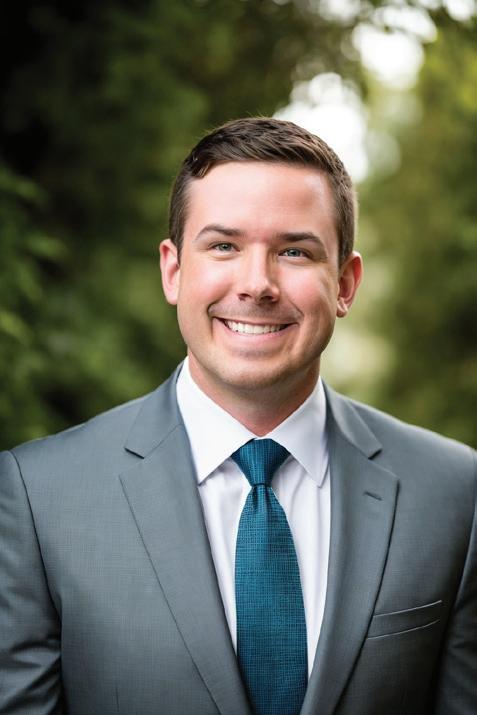
J. Tanner Wachsman President, North Texas Home Builders Association
P.S. As always, I've pulled together a few of the stories from the past month that I think are worth your time. My quick take on each is below.
Single-Family Starts
April housing starts came in at a 1.465 million annual rate -- down 2.8% from March but still ahead of expectations. The real story is underneath: single-family starts dropped 9% to 930,000 while permits jumped 5.8%. Builders are staying entitled and ready without committing dirt. As First American's deputy chief economist put it, builders are showing resilience and caution, not retreat.
• Single-family pulled back hard. The 9% monthly decline reflects deliberate throttling of spec starts in soft markets, not an inability to build.
• Permits tell a different story. Authorizations rose 5.8% -- builders are positioned, just timing the trigger pull.
• Completions keep delivering. Single-family completions ran at 903,000, so finished product keeps hitting the market even as starts slow.
The 30-year fixed averaged 6.48% in early June per Freddie Mac -- down from 6.53% the prior week and well below 6.85% a year ago. Rates started January near 6%, then surged on the Middle East conflict and oil-driven inflation. Now there's a potential turn: reports of a draft peace framework reopening the Strait of Hormuz have the bond market cautiously rallying.
• The Iran conflict has been the rate story of 2026. Higher oil feeds inflation, inflation feeds yields, yields feed mortgage rates -- that's the whole chain from January's sub-6% to today.
• Forecasts call for stability, not relief. The MBA sees rates near 6.50% through 2026; Fannie Mae says 6.3% -neither expects a dramatic drop on its own.
• A real peace deal changes the math. Falling oil could pull rates down faster than any Fed move -- the first genuinely hopeful rate signal in months.
D.R. Horton's latest earnings show how the country's biggest builder is managing the slowdown. After unsold completed homes spiked to 8,400 last year, Horton deliberately slowed spec starts -- hardest in soft Sunbelt pockets of Florida and Texas -- and has worked that number down to 5,500. Protect margin, don't chase volume.
• Spec discipline is the headline strategy. Horton cut unsold completed inventory roughly 35% by throttling starts, not by slashing prices across the board.
• Texas and Florida drove the caution. The softest Sunbelt pockets are exactly where the company pulled back hardest on new starts.

• The market is rewarding predictability over growth. Incen tives are now table stakes; managing margin while offering them is the differentiator.

There were 2 new home permits pulled in the month of May bringing the total permits pulled in Wichita Falls in May bringing the total to 23 with 1 being pulled by an NTHBA builder. This brings the total pulled by NTHBA builders to 18.




















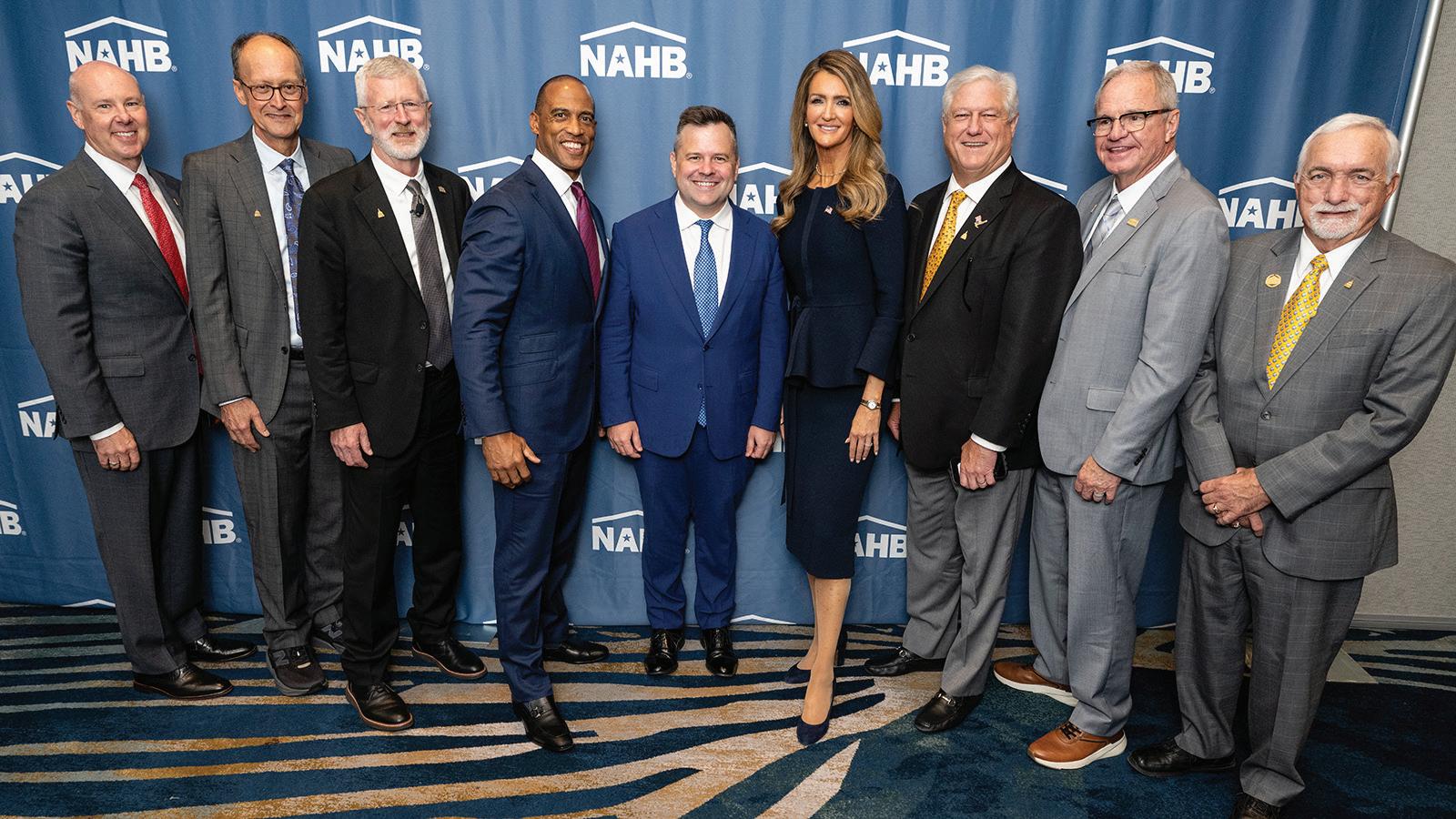
On June 11, Housing and Urban Development Secretary Scott Turner, Small Business Administration Administrator Kelly Loeffler, and Federal Housing Finance Agency
Director William Pulte participated in a forum on housing and small business regulatory issues moderated by NAHB Chairman Bill Owens during NAHB’s Spring Leadership Meeting.
Owens noted that HUD recently rescinded a requirement that set the 2021 International Energy Conservation Code (IECC) and the 2019 ASHRAE 90.1 as the minimum energy-efficiency standards for certain single-family and multifamily housing programs.
“The International Energy Conservation Code made it harder for builders to build,” said Turner. “Our mantra is to make it easier for builders to build and for buyers to buy. We rescinded the rule because it could add almost $30,000 to build, and that’s not sustainable. We don’t want home builders to go out of business. We want them to thrive.”
Loeffler highlighted the SBA’s Working Capital Pilot Program, which offers loans up to $5 million and is widely used by builders. “It is an option to lower the cost of capital, and we encourage you to reach out,” she said.


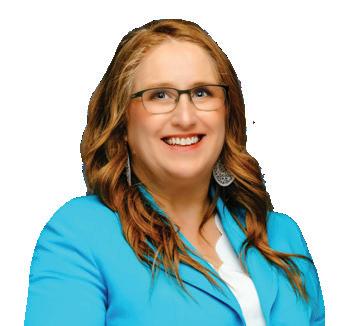
Pulte said that he and Turner are working together to align policy and reduce homeownership closing costs. “The cost of home building needs to come down and the two of us are tag-teaming” to help achieve this goal, said Pulte, who was recently appointed acting director of national intelligence by President Trump.
Drawing on his travels around the country, Turner said the “No. 1 thing I hear that is hurting home building is regulation.” He pointed to HUD’s State and Local Best Practices Report Best Practices for Home Construction report and told builders, “We don’t want to stifle you, we want to unleash you so you can build.” The report focuses on three priorities:
• Lowering home construction costs
• Unlocking land for new housing supply
• Accelerating construction timelines
Loeffler also reminded NAHB members that SBA helps small businesses address burdensome regulations. She encouraged members facing federal regulatory challenges to contact the agency’s red tape hotline at redtape@sba.gov.
Earlier in the day, Environmental Protection Agency Administrator Lee Zeldin told NAHB members that the agency is pursuing deregulation and wants to be “an ally of NAHB.”
“I want to know everything we can do to fix these problems,” Zeldin said. “No ask is too big or too small. We want to tackle the full list — permitting reform, NEPA, the Clean Water Act and more.”
He added that EPA is developing a simpler, clearer definition of waters of the United States (WOTUS) under the Clean Water Act. “You need to know if a water is a WOTUS without having to hire a consultant or attorney.” Zeldin said that effective permitting reform must reduce timelines, lower costs and provide greater certainty for regulated stakeholders.
“I came into an agency that chose to protect the environment instead of the economy,” said the EPA administrator. “It was viewed as a binary choice only one or the other. We chose both. To protect the environment and grow the economy.”
After Zeldin’s remarks, NAHB hosted three town hall sessions with senior administration officials. Members discussed environmental and water policy, immigration, and small business advocacy, including:
• Clarifying the definition of WOTUS under the Clean Water Act
• Improving the Clean Water Act’s nationwide wetlands permitting program
• Reauthorizing EPA’s construction general permit for stormwater discharges under the National Pollutant Discharge Elimination System
• Protecting employer rights during worksite enforcement actions
• Advancing deregulatory efforts


Some people retire and slow down. Mike Battaglino is not one of those people.Insert Picture #1 Here
After 21 years serving the Department of the Air Force — 8.5 years on active duty followed by 12.5 years in civil service, primarily in aircraft maintenance, logistics, and education and training — Mike officially retired at the end of March 2026. But rather than stepping back, he stepped into two of the most consequential roles in the Wichita Falls community: City Councilor and President & CEO of the Sheppard Military Affairs Committee (SMAC).
It started, by Mike's own admission, with a wild idea. In 2022, when District 4 City Councilor Tim Brewer chose not to seek re-election, Mike decided to throw his hat in the ring. He won the election in 2023 and has spent the last two years helping oversee a city with a $250 million annual budget and more than 1,100 employees. His focus has been straightforward: strengthen community partnerships, improve quality of life, and drive economic development.
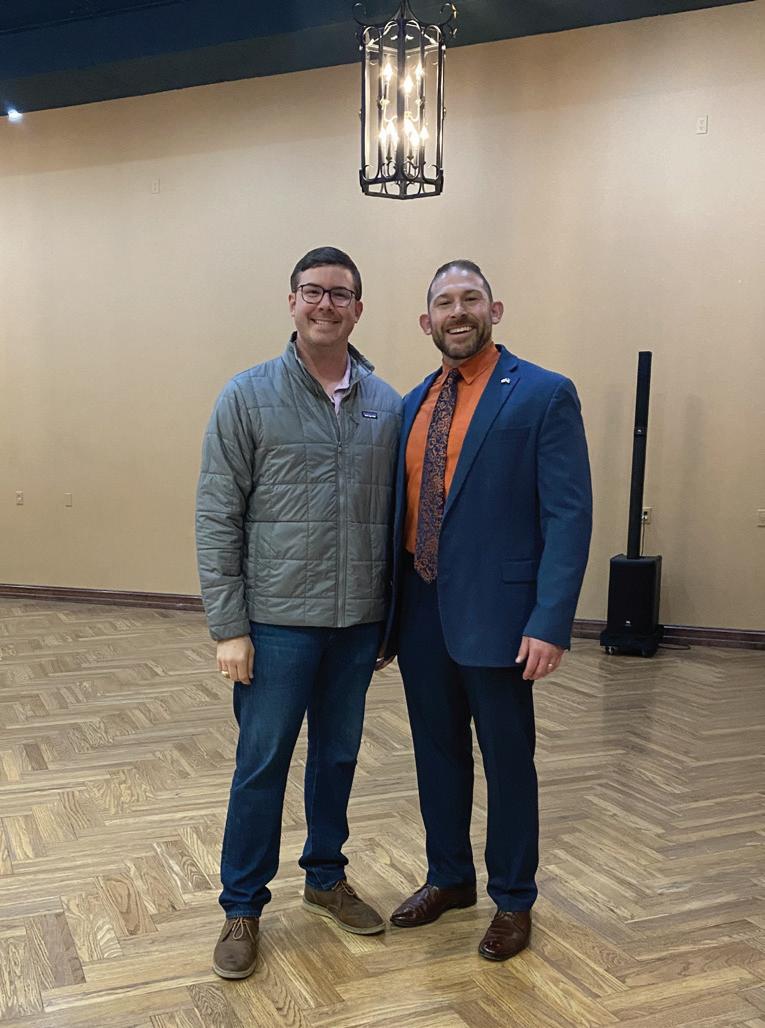
As a councilor, Mike fielded pointed questions from constituents on two hot-button issues — data centers and the future of Sikes Center Mall.
On data centers, he's heard the concerns, and the biggest one is water use. His message is clear: the city has not been approving data centers that don't have water recapture and reuse systems in place. Those that do qualify consume only the water equivalent of roughly five households per day. And the city isn't rubber-stamping everything — it recently rejected a rezoning request for a data center that didn't meet the bar.
On the mall, there's no done deal yet, but there is momentum. Developers have expressed interest in partnering with the city to purchase the property and surrounding acreage, with development plans that align with the city's vision — including the possibility of a new MSU stadium on a portion of the land. Mike is optimistic, though patient: a realistic timeline puts a sale to a developer a few years out.

When longtime SMAC President Glenn Barham retired, Mike was the natural successor. He now leads the nonprofit's mission to advocate for and support Sheppard Air Force Base, which represents nearly 40% of the local economy — a figure that makes clear just how much Wichita Falls and SAFB are bound together.
So what exactly does SMAC do? Mike explains it plainly.
Federal law prohibits Sheppard AFB from directly engaging with congressional staff on its own behalf. Like most military installa-
tions across the country, the base needs a civilian advocate — someone who can carry its priorities to local, state, and national leaders, and speak on behalf of what base leadership actually needs and wants. That's SMAC.
One of Mike's first major acts as SMAC President was the organization's annual trip to Washington, D.C., to meet with Pentagon leadership. The centerpiece of that trip was a forty-minute meeting with the Air Force Chief of Staff — the most senior uniformed officer in the entire Air Force.
Forty minutes doesn't sound like much. But in that window, Mike and his delegation were able to share the full story of what the Wichita Falls community does to support Sheppard AFB. The Chief of Staff's staff was visibly taking notes. They were, by Mike's account, astonished.
Among the highlights: what Midwestern State University does for the base, including military scholarships the institution provides. The reaction? "They thought that was incredible."
Before the meeting wrapped up, the delegation extended an invitation to the Chief of Staff to attend SMAC's Annual Banquet in October. The Chief of Staff won't be able to attend personally, but his office has committed to sending a representative — and that conversation is actively being worked out.
Why do these trips matter so much? It comes down to one simple principle: senior Air Force leaders need to put eyes on the facility. Sheppard currently has infrastructure needs — a new Civil Engineering Training Complex, an operations building, and updated dormitories — that represent more than $100 billion in required investment. Getting that money allocated requires working through the House, the Senate, and the appropriations committee to get an authorization signed and the funds placed into the defense budget. When senior officials have personally seen the facility and understand the needs, that advocacy carries far more weight.
Fingers crossed, Mike says, that the funding comes through.
Beyond advocacy, SMAC fills another critical gap. There are many things the Air Force simply cannot use appropriated funds for — and that's where community support becomes tangible. SMAC can obtain permission to donate items directly to the base: furniture for dormitories, equipment, and other quality-of-life improvements that don't fall within the federal budget.
It's not just practical. It's a signal. Every donated item is proof of how deeply a community values its military neighbors.
Mike's vision for SMAC isn't just about maintaining what's already working — it's about growing the organization's reach and visibility. He's focused on building a stronger social media presence, including a Facebook page, to tell SMAC's story more broadly and keep the community informed and engaged.
He's also planning to attend the Association of Defense Communities Conference, where he'll connect with Military Affairs Committees from across the country to learn what other communities are doing well — and identify anything
Wichita Falls can adopt or improve upon.
Currently, SMAC's two flagship events are the Euro-NATO Joint Jet Pilot Training Committee — where NATO members convene annually to map out the coming year's training program — and the Annual Member Banquet, a celebration for the community partners who make SMAC's work possible. Both events are free to members, a way of giving back to those who give so much.
Funding for SMAC comes through a partner program that has been in place since 2005, sustained by organizations and families who have quietly supported the mission for two decades. As for fundraisers — those are a future conversation, to be shaped by need when the time comes.
If Mike's professional schedule sounds relentless, it fits with who he is outside of work. He's a competitive strongman and endurance athlete, someone for whom discipline and resilience aren't just buzzwords — they're a way of life.
He's also a husband and father. He and his wife Crystal are raising their two children, Ella and Liam, in the community he serves every day.
Mike Battaglino came up through the Air Force, served the city, and now carries the banner for one of the most important institutions in the Wichita Falls ecosystem. He's the kind of leader who sees a gap and walks toward it, whether that's a city council vacancy, an aging infrastructure on base, or a community that needs to hear a clearer story about why Sheppard AFB matters.
His message for NTHBA members heading into the future: keep building, keep growing, and stay optimistic.
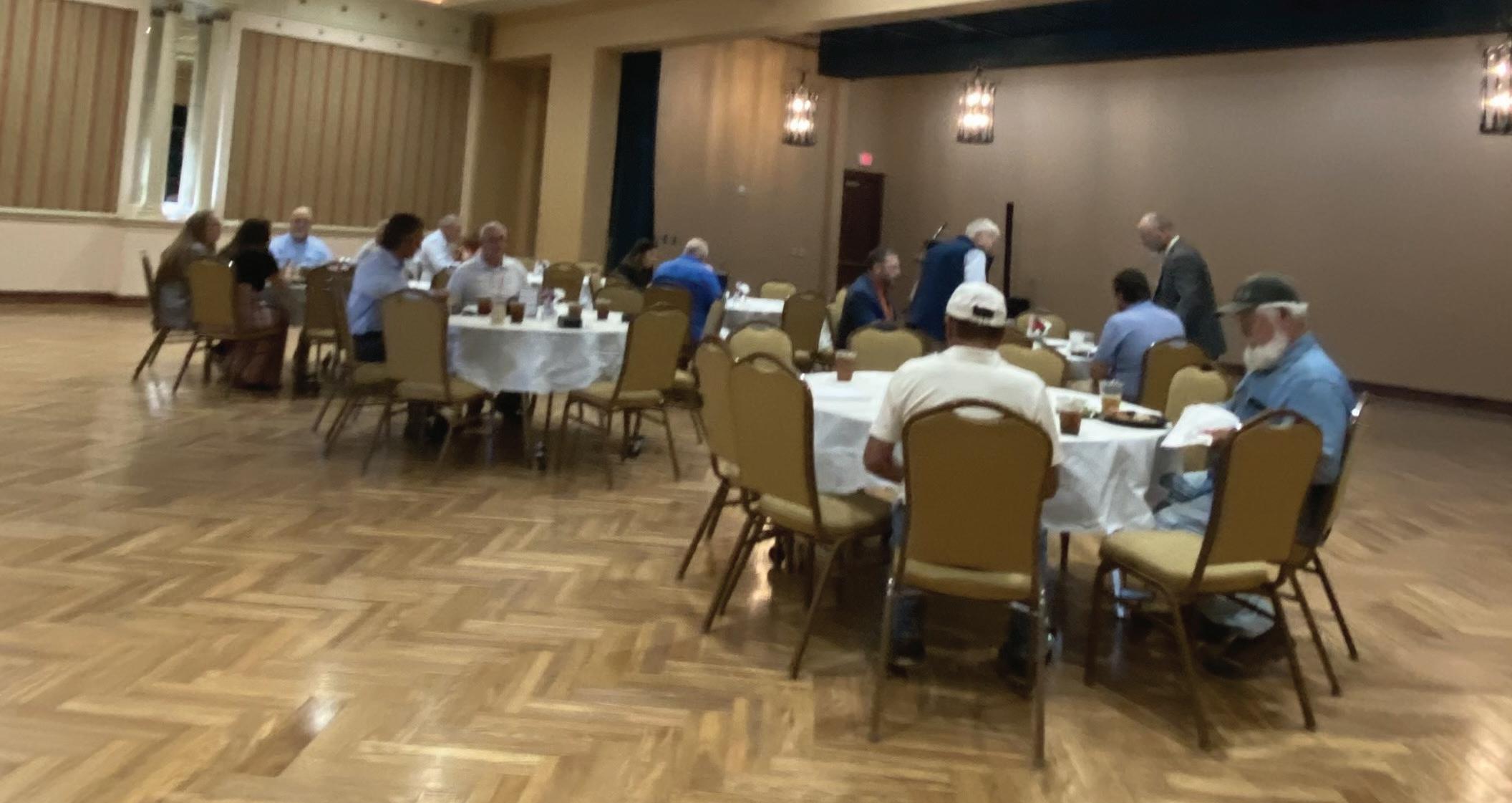
The city is listening.