August2026
4410 Fairway Boulevard
Wichita Falls, TX 76308
P: 940.692.2211
www.nthba.com
4410 Fairway Boulevard
Wichita Falls, TX 76308
P: 940.692.2211
www.nthba.com
I did two things last month that tell you where our business actually is: sitting across from a buyer running the numbers on a payment, and sitting in front of the city trying to get dirt approved. Neither one sounds much like the national headlines.




If you read the news, you'd think we were all going under. Builder confidence has been under 40 for fifteen straight months, the longest run since 2012. Four in ten builders cut prices in July, and two in three are buying down rates or paying closing costs just to get somebody to the table. Then Texas REALTORS® put out second quarter numbers and the picture changed -all four big metros down, Abilene up 13.6%, Texarkana up 16.6%, statewide median flat.
So the "Texas housing market" isn't one market. Austin and Dallas overbuilt entry-level product and are working through it. We never did. Our constraint isn't empty houses -- it's lots, trades, and how long it takes to get through the process. Different problem, different solution.
One more item worth your time: the 21st Century ROAD to Housing Act became law July 11, the first real housing bill out of Washington since the 1990s. Starting in 2029, it ties federal block grant money to how cities handle zoning and land use. Anybody who's spent an evening in front of P&Z over a plat knows what local process costs a project, and this is the first time in my career Washington has put real money behind that question. We have three years to help the city write that plan as a partner with data, rather than react to it later as a trade group with a complaint. I'd rather be at the table.
So while that is three years out, the item I'd watch closer to home … is how codes get interpreted, applied and adopted right here in our community. Code cycles have a way of moving forward on their own momentum, and there is a real difference between a change that makes a house safer and one that only makes it cost more. I worked through the second kind with different NTHBA leaders and City of Wichita Falls staff about seven years ago -- the redesigns, the resubmittals, the carrying costs, the weeks spent debating what was and was not actually changing -- and none of it made a single house safer. It just made them slower and more expensive.
And here's why the timing of code changes matters -- matters to me and matters to our community: our buyers are carrying about all the cost they can, and every dollar we add at the permit counter comes out of that same pocket. So from where I'm standing -- this town sitting flat for as long as it has, and finally in a position to get off the ground -momentum like that is easier to lose than it was to build. Our current codes are safe and workable, and I'd like the cost and timeline of building here to stay predictable while we focus on growth.
If there's something else you want covered in here, call or email me. I read every one of these before it goes out, and I'd rather write about what you're dealing with than what the national news says we're dealing with.
Have a good rest of the summer, and stay out of the heat where you can!!!
Best,
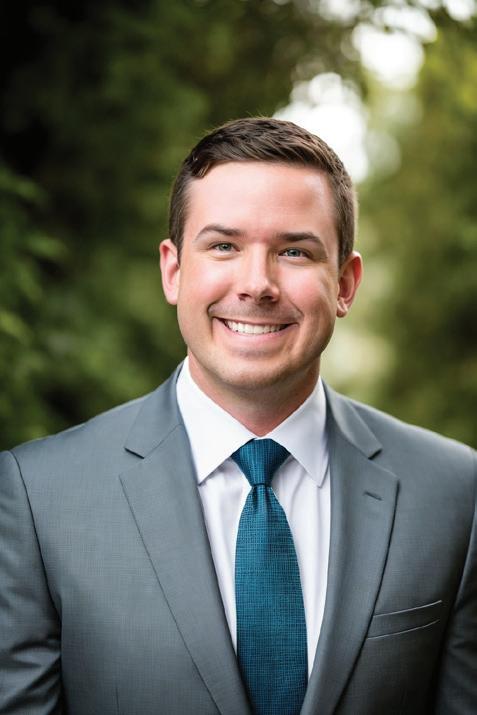
J. Tanner Wachsman | President, North Texas Home Builders Association
1. The 21st Century ROAD to Housing
• Became law July 11, 2026 after passing the Senate 85-5 and the House 358-32. The President neither signed nor vetoed it, so it took effect automatically at 12:01 a.m.
• First major federal housing bill since the 1990s, spanning dozens of provisions on housing supply, regulatory barriers, financing tools, and manufactured housing.
• Pressure on local zoning. Under the “Build Now” provision, cities and urban counties receiving CDBG entitlement money face funding conditions tied to zoning reform and local housing strategies. Those conditions don’t take effect until fiscal year 2029 and run through 2043 -- a three-year runway for local governments to prepare.
• CDBG money can now build. Previously those funds went to infrastructure, rehab of existing housing, and public services. The new law makes construction of affordable housing eligible, capped at 20% of a recipient’s allocation. Congress funded CDBG at $3.3 billion for FY2026.
• Opportunity Zones. HUD may now give extra weight in competitive grant scoring to projects located in or primarily serving OZ-designated communities. The OZ program was permanently extended with new 10-year designation cycles beginning July 1, 2026.

Why it matters
This is the first time in a generation that Washington has put real money and real conditions behind local land-use reform. Wichita Falls is a CDBG entitlement city, which means the Build Now provisions eventually become our conversation and not somebody else’s. We have three years to be at the table when the city writes its housing strategy rather than reacting to it after the fact.
• June new home sales came in at a 628,000 annual pace, up 1.6% from May’s revised 618,000 but down 5.6% from June 2025. Economists had forecast 610,000, so the number beat expectations.
• Median new home price fell to $398,300 -- the lowest reading since July of last year, down 3.3% from May and 2.7% year over year.
• Inventory sits at 485,000 new homes for sale, representing 9.3 months of supply. That’s down slightly from May’s 9.4 months but still well above a balanced market.
• The South carried the month, jumping to 412,000 from 375,000 in May and posting both the largest increase and the highest volume of any region. The West went the other direction, dropping from 134,000 to 104,000.
• Spring selling season underperformed. Builders entered 2026 with cautious optimism, but the conflict in Iran pushed rates and oil higher. Consumer sentiment fell from 56.6 in February to 44.8 in May before recovering to 54.4 in July.
Why it matters to us: A 9.3-month national supply is the number to keep in your head when you decide whether to pour another spec slab this fall. But notice the regional split -- the South is absorbing product while the West stalls. Our sub-market is nowhere near national inventory levels, and the median price falling to $398,300 is largely a shift toward smaller, cheaper product rather than a collapse in value. If you build to a price point our buyers can actually finance, the demand is still there. The buyer who disappeared is the one who needed a 5% rate to qualify.
• Final-cost indices are running roughly 5% year over year, with further acceleration expected in the second half of 2026 -- above earlier forecasts.
• Two cost channels are driving it. Trade policy exposure has widened beyond the original tariff list, and elevated global energy prices tied to the Iran conflict have raised embedded costs in energy-intensive materials.
• Tariff structure as of this spring: 50% on steel, aluminum, and copper items; 25% on derivatives; 15% on industrial and electrical equipment including transformers and panel boards; 10% on softwood lumber with derivative products at 25%.
• Labor is structural, not cyclical. Construction employment growth is tracking at 0.6% in 2026 against a historical average of 2.7%. ABC estimates the industry needs roughly 499,000 additional workers, and 61% of U.S. metro markets are currently supply-constrained -- projected to hit 72% by 2027.
• Data centers are distorting the market. There is a widening gap between data center and non-data-center project costs, with the biggest jumps in markets carrying heavy data center activity.
Why it matters to us: Two takeaways. First, if you are still writing fixed-price contracts twelve months out with no escalation or allowance mechanism on electrical gear and metals, you are carrying risk you are not being paid for. Transformers and panel boards are the specific items to watch. Second, that data center note deserves a look from all of us given what has been discussed for this region. Large capital projects pull electricians and concrete crews out of residential work and bid them up, and that shows up in our subcontractor pricing long before it shows up in any published index.
Questions, corrections, or something you want us to cover next month? Call me directly at 940.782.0992



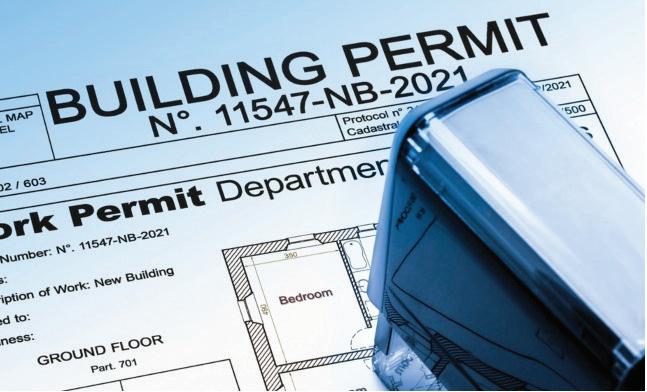
There were 7 new home permits pulled in July, bringing the total permits for the year to 34. Of the 7, 4 were pulled by NTHBA Builders bringing the total pulled by NTHBA Builders to 26.






AUGUST BIRTHDAYS
Jean
Bill
Eric
SEPTEMBER BIRTHDAYS
David Bedingfield............................................5
David Shoop.....................................................7
Scott Hollars ..................................................10
Bill Holstead ..................................................18
Justin
Shane Fitzhenry............................................20
Hayden Hansen.............................................26
Kolter Lukert..................................................29
August 18th
GM Meeting
September 8th
GM Meeting (change from the 15th).
September 11th
Eddie Holcomb Memorial Golf Tournament
October 20th
GM Meeting
November 10th-12th TAB Fall Meetings
Dallas Plano Marriott at Legacy Town Center
November 17th
GM Meeting
December 3rd Christmas Party
Wichita Theater - Stage 2 Dinner Theater







The North Texas Home Builders Association were honored to have Cory Edmondson the President and CEO of United Regional Health Care System as the guest speaker for the July 14th General Membership Meeting.
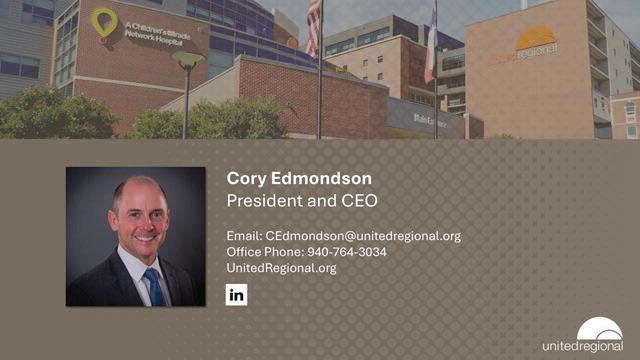
An outline of the topics that Cory spoke about consisted of:
1. About United Regional Health Care System
2. Biggest Misconceptions
3. Where We are Headed
4. Questions & Answers
Upon taking the position of President and CEO, Cory said he would not have considered leaving where he was for any other opportunity. What he knew about United Regional’s reputation (and is well-known across the state), is that we have something special here.
United Regional is a financially-strong, quality-driven, locally-governed health system – and that is hard to find! We are the second largest independent health system in Texas, with nationally recognized, high-quality care.
We play a vital role in supporting this community and have a strong Senior Leadership Team.
The Vision: To be a destination for World-Class Care
The Mission: Transform Lives through innovation, Wellness, and Trusted Care
The Values: Alignment, Compassion, Excellence, Growth and Integrity

When you combine the hospital, clinics and ER, we provide care to over 1,000 patients each day.
We are a Level II Major Trauma Center – we provide lifesaving treatment in severe trauma cases with immediate access to expert surgeons and specialists. We cover a 9-county region, so the helicopter flies in more than it flies out.
They are in the process of opening a Level III Neonatal Intensive Care Unit (NICU
Annual Volume consists of: 204,000 Clinic Visits | 94,000
Vistis | 68,000 ER Visits | 17,000 Hospital Admissions | 14,000 Surgeries | 1800 Births
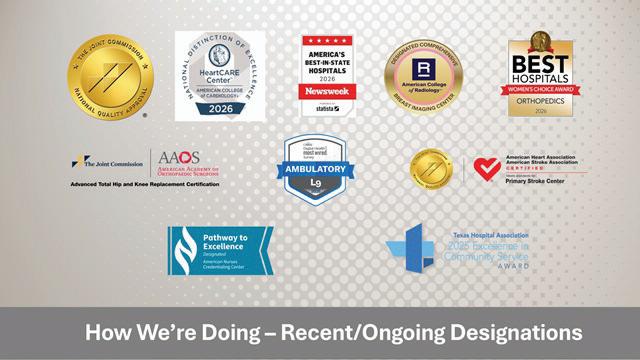
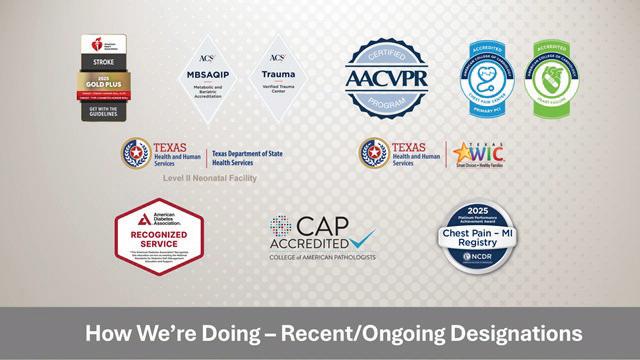
United Regional has many recent and outgoing designations:
United Regional is committed to recruiting physicians to the community – not just to work for United Regional. In some cases, that means we are paying to help bring in a physician that may go to work for a competitor. We do that because we understand that the only way United Regional will thrive, is if we have a healthy, constant stream of high-caliber physicians coming in, to succeed those who are retiring.
In the past five (5) years, United Regional has helped recruit over 100 new (permanent) physicians to the community. Only 20% of those physicians were recruited to URPG; 25% Hospitalists; 8% CNT; 6% Emergency; 49% Independent Physicians/OTHER. Other, includes places like CNT, Hospice, WF Heart Clinic, WF GI Associates, NSSNT, Red River, Texoma Urology Center, and many more.
Studies show that each office-based physician supports $3.1 million in per capita output. In addition, United Regional has onboarded over 110 new (permanent) advanced practice providers (Nurse Practitioners, Physician Assistants, CRNAs).
United Regional is fortunate to be home to best-in-class doctors, nurses and healthcare professionals – highly-skilled caregivers who have committed their lives and careers to making our patients and communities healthier.
United Regional is committed to keeping high-quality care close to home by investing resources in recruiting and retaining top-of-the-line health care providers. Through recruitment efforts and learning programs, we invest in the future professionals of our community and inspire providers to keep their talent close to home.
Below are examples of the high-quality doctors recruited.
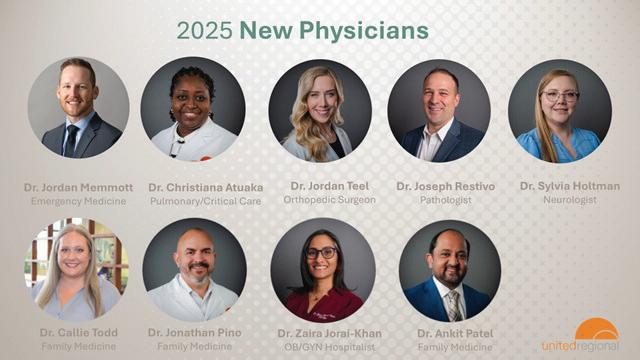

Dr. Jordan Teel (bottom left), attended Texas A&M University of Medicine in College Station and completed her residency at Baylor University Medical Center in Dallas. She pursued a fellowship in sports medicine at the world-renowned Steadman Clinic in Vail, Colorado where she served as the team physician for the United States Women’s Ski Team. | Dr. Callie Todd grew up in Graham, trained at Texas Tech Family Medicine and was part of our Future in the Falls program. | Dr. Jonathan Pino –whose dad was Willie Pino, long-time orthopedic surgeon in our community. | Dr. Ankit Patel is the son of Dr. Arti and Ash Patel. He was team doctor for WNBA Dallas Wings and came home late last year.
$30M/year in charity care costs | $3.5M annual investment in the Transition Clinic | With over $800,000 in food/supply assistance | $350,000 annual investment in Food Pantry | Over 75 community education classes provided free of charge | Support over 50 local non-profits
1. “United Regional is high cost” Historically, this may have been true
• Only four overall charge increases in the past 18 years
• Lowered prices on outpatient MRIs/CTs in 2013 & 2019; lowered prices on top 20 surgical procedures in 2021 Independent study every two to three years
• Inpatient rates are very comparable to benchmark hospitals
• Outpatient rates are 10% lower than benchmark hospitals
2. “United Regional makes too much money”
• United Regional remains strong and able to serve the community’s health care needs
• Profits are used to reinvest in people, technologies and facilities
3. “I must travel to Dallas/Fort Worth for specialty services.” Physicians in our community are highly credentialed…
• Trained at top ranked programs including Harvard, UT Southwestern and Mayo Clinic
• Many have worked with professional sports teams and D1 athletes
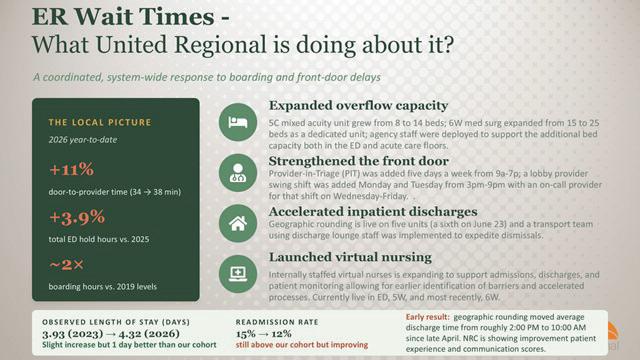
4.“Emergency Department wait times are too long; must be a staffing issue”
• ED patients are triaged based on severity
• Patients with medical emergencies waited on average one minute to see a doctor; Urgent patients waited on average 21 minutes
• Fully staffed
• Longer waiting times are often caused by higher inpatient admissions
ER Wait Times –
What United Regional is doing about it:
WHERE UNITED REGIONAL IS HEADED
Mission -Transform Lives through Innovation, Wellness, and Trusted Care
There are so many examples of advanced services we provide in Spine, Orthopedics, General Surgery, and others, some very recent advancements in cardiovascular services are.
Pulse Field Ablation (PFA) is a break-through technology to treat Atrial Fibrillation (AFib), the most common heart rhythm disorder. Prior to PFA, the primary methods for treating AFib included thermal energy (heat) or cryoablation (cold). While these treatments have been effective, the new PFA technology offers an extremely safe alternative with the same level of effectiveness, but with fewer risks. United Regional is the only hospital in North Texas, outside of the DFW area, to offer this. A remarkable innovation is the Left Atrial Appendage Occlusion (LAAO). This procedure is designed to reduce the risk of stroke in patients with atrial fibrillation (Afib)) who are unable to take long-term blood thinners. By sealing off the left atrial appendage with a device known as Watchman, blood clots are prevented from forming and potentially traveling to the brain, thus providing patients with peace of mind and a safer alternative to medication.
A pioneering technology now available at United Regional is the Dual Leadless Pacemaker. Traditional pacemakers require leads, or wires, to connect to the heart. The dual leadless pacemakers eliminate this need, offering a more streamlined, less invasive option for patients with heart rhythm disorders. These devices are small and placed directly in the heart, which reduces the risk of infection, minimizes recovery time and enhances overall patient comfort and quality of life.
In mid-March 2025, we celebrated a major milestone; we performed our 100th Transcatheter Aortic Valve Replacement (TAVR) procedure. TAVR is a minimally invasive alternative to open-heart surgery, offering renewed hope for patients suffering from Aortic stenosis – a life-threatening condition. Since performing our first TAVR in 2021, we have improved both quality of life and life expectancy for patients who may not have been candidates for open-heart surgery. United Regional is proud to be recognized for HeartCare Excellence!
Among the many doctors United Regional has welcomed, they are thankful to be welcoming Dr. Praven Reddy - Dr. Praveen Reddy is an Oncologist/Hematologist with United Regional Physician Group.
Dr. Reddy earned his medical degree in India before completing his internal medicine residency and hematology/oncology fellowship at LSU Shreveport, Louisiana. He brings decades of experience and strong community ties to his role at United Regional’s Cancer Center.
Dr. Reddy is passionate about the evolving nature of oncology, where new treatments and research offer real hope. He values building long-term relationships with his patients, offering not only expert care but also trust and continuity. Known for his clear communication and empathetic approach, Dr. Reddy ensures every patient feels heard, informed, and supported — treating each one as he would his own family.
Wichita Falls has been home to Dr. Reddy and his family for many years. It’s where they raised their children and built lasting connections. He considers it a privilege to provide cancer care to the very community that has given so much to him.
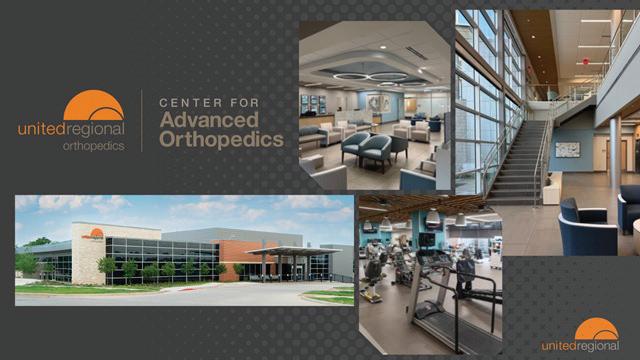
United Regional is dedicated to ongoing growth and advancement. This includes expanding our campuses and constructing new facilities, such as the recently opened Center for Advanced Orthopedics in 2023. We also launched our Master Facilities Plan in 2025, which will further enhance our facilities and resources. Research shows that patients experience better outcomes when they receive care close to home, highlighting the importance of access to high-quality care within their community. Therefore, providing patients with necessary services locally is prioritized. • In our nine-county service area, United Regional is the only Level II Trauma Center, providing educational outreach and prevention programs and assuming responsibility for trauma system leadership.
Building for the future of United Regional
Aside from the new NICU and six thousand sq.ft. renovated nursery space, the most significant addition you will see is a new Outpatient Imaging Center and a Retail Pharmacy. It was originally slotted at the corner of Holliday & 11th Street, but we have decided to move it to the South of the Bridwell Tower. Although not as visible, this location makes more sense from an operational standpoint. They will incorporate some of the elements of our other facilities with red brick, large windows and dark grey accents.
The other construction work that is happening will not be as visible to the public, but we are moving things around and finishing out the shell space in the Barnett Road Medical Building and Center for Advanced Orthopedics to make room for new physicians coming in to the community.
We will also be renovating areas within the existing Bethania Building including the basement (support services), a new discharge lounge, 3rd floor lobby, and Central Utility Plant. As well as some of the outlying business offices.
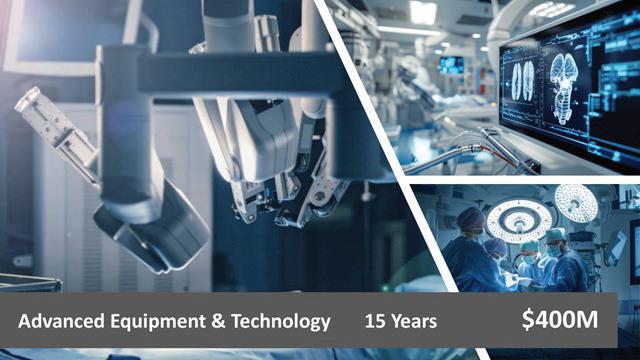
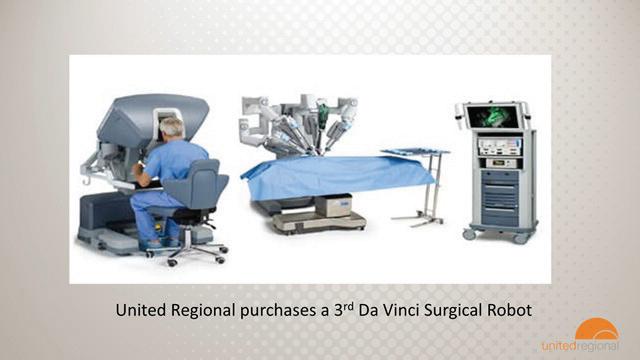
In addition, United Regional will spend $400 million over the next 15 years on advanced medical equipment and technology. Some of the advanced equipment United Regional has already been using and has purchased its 3rd is the Da Vinci Surgical Robot.
United Regional’s Vision – Destination for World-Class Care
The Impossible Future for URHCS
What does United Regional need to be seeking that seems impossible that will alter the course of history?
• Go above and beyond.
• Exercise imagination and innovate without fear of failure.
• Creating a better future for our community and organization
Being Independent requires more: More Skill, More Discipline, More Value. Being Independent isn’t something you hope for, it’s something you earn.
There were several questions from the audience Cory answered such as why a person would receive so many different invoices after a hospital stay after they had already paid the hospital.
Because a hospital stay or operation incorporates many professionals and services, lab work, surgeons, anesthesiologists, etc., those entities are independent and do not work for the hospital, therefore, each one sends their own invoices.
Another question was asked which was somewhat addressed during the presentation which was, “why is United Regional hiring up all the private doctors in the area”?
Cory said the doctors are pursuing United Regional to hire on or they cannot continue affording their practice and will be moving out of the area. In order to keep the doctors in the community and with their established patients, they hire them.
In conclusion, United Regional is keeping the community as it’s focus and want to do everything they can to make United Regional the preferred destination for the communities medical needs.