

By COLE KLEINWOLTERINK
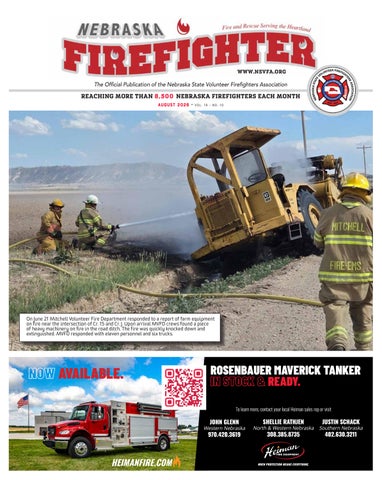
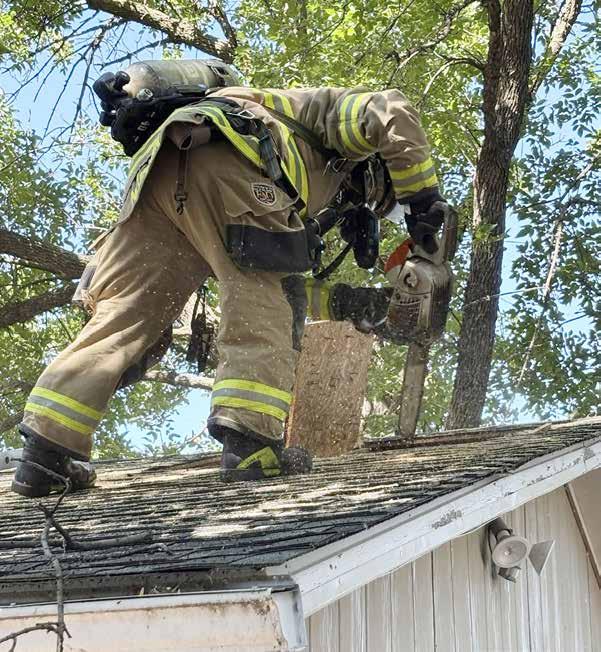
Attic fires can present a significant challenge for engine companies. Access is often limited, visibility is poor, and the structural components of the roof can prevent an exterior hose stream from reaching the burning materials. When crews are unable to quickly access the attic from the interior, an exterior eave sweep may provide an effective way to slow fire growth and improve interior conditions.
A common instinct is to direct a straight or solid stream through a gable vent. While this may appear to provide direct access to the attic, roof trusses and other structural components can block the stream. Water may strike the trusses, fall to the attic floor, and cool only a small portion of the space.
A better option may be applying water through the eave.
Using a straight or solid stream, direct the water upward toward the underside of the roof decking. Start in one truss bay and work from one end of the attic to the other. As the water strikes the sheathing, it spreads throughout the bay, wets a larger portion of the burning surfaces, and cools more of the roof structure. Moving the stream from bay to bay allows crews to coat the majority of the attic while reducing the need to create large ventilation openings before suppression is underway.
This tactic is especially useful when attic access is delayed or interior conditions prevent crews
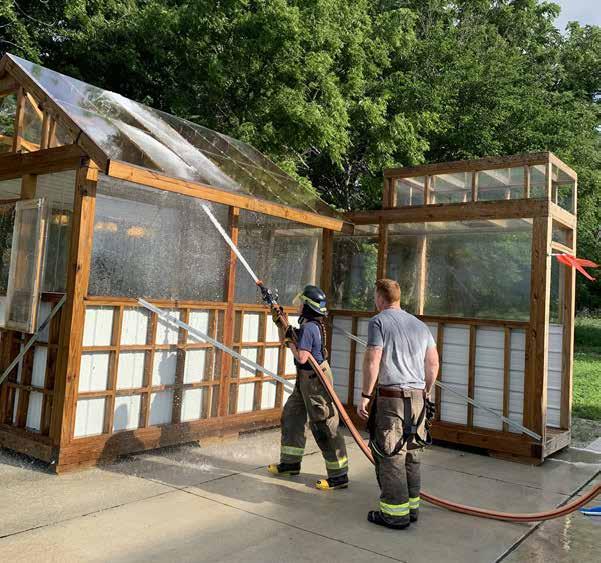
from immediately opening the ceiling. It is not intended to replace an interior attack or overhaul. Instead, it can serve as a rapid method of applying water to the involved space while crews prepare for interior access. Crews can practice this technique with a simple training prop or an acquired structure. Begin with a charged 1¾-inch hoseline equipped with a combination or smoothbore nozzle. First, flow water through a simulated gable opening and observe how the structural members limit stream penetration. Then apply the stream beneath the eave, moving from truss bay to truss bay while directing water toward the roof decking.
Water is only effective when it reaches the burning surfaces. Understanding how attic construction affects stream movement allows us to choose tactics that cool the space more efficiently, slow fire growth, and create safer conditions for interior crews. I encourage everyone to learn more by completing FSRI’s online course, Residential Attic and Exterior Fires, available here: https://tinyurl.com/378frfry
Cole Kleinwolterink is a member of the Waukee Fire Department, Granger Fire Department, and Fire Science instructor at Des Moines Area Community College. Feel free to reach out to him at kleinwolterinkc@gmail.com with any questions, comments or inquiries.
Email your Upcoming Event by the 10th of the previous month (ex. Aug. 10 for the September issue) to jeff@nebraskafirefighter.com . There is no charge.
AUGUST 2, 2026, 2026: Northeast Nebraska Volunteer Firefighter Association meeting, 3 p.m., Ponca State Park, 88090 Spur 26E, Ponca, NE 68770.
AUGUST 29, 2026, 2026: 4-9 p.m. Ponca Hills Volunteer Fire Department End of Summer Shindig, 12919 Ponca Road, live music, food trucks, kids’ activities, cash bar, raffles.
SEPT. 20, 2026: NSVFA Memorial Service, Nebraska Firefighters Museum and Education Center, Kearney, at 2 p.m.
OCT. 8, 2026: Scotts Bluff County Mutual Aid Association Meeting, Bayard.
OCT. 15-17, 2026: NSVFA Annual Conference, hosted by Dakota City Fire Department in South Sioux City.
OCT. 14-16, 2027: NSVFA Annual Conference, hosted by Battle Creek Volunteer Fire and Rescue in Norfolk.



As August arrives across Nebraska, families are busy preparing for another school year. While backpacks and school supplies are important, August is also an excellent time to make fire safety part of every family’s back-to-school routine.
START AT HOME
Before the first school bell rings, review your home fire escape plan. Every family member should know:
• Two ways out of every room whenever possible.
• A designated outdoor meeting place.
• Once outside, stay outside.
• Never re-enter a burning building.
CHECK SMOKE ALARMS
Test every smoke alarm, replace batteries if needed, replace alarms over 10 years old, and ensure alarms are installed inside every bedroom, outside sleeping areas, and on every level of the home.
TEACH CHILDREN
Encourage children to know how
to call 9-1-1, recognize the sound of smoke alarms, never play with matches or lighters, and report hazards to trusted adults.
COLLEGE STUDENTS
Students moving into dorms or apartments should locate exits, never disable smoke alarms, avoid overloaded outlets, and never leave cooking unattended.
FINISH SUMMER
Continue safe grilling by keeping grills away from structures, cleaning grease buildup, never leaving
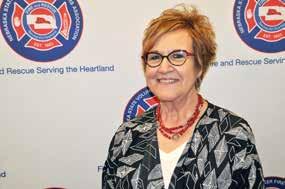
Rhonda Cerny, NSVFA Fire Prevention
“Fire prevention is not something we do only during Fire Prevention Week— it is a responsibility we share every day. The NSVFA Fire Prevention Team wishes everyone a safe and successful school year.”
grills unattended, and keeping children at least three feet away.
LOOKING AHEAD
August is also the perfect time for fire departments to begin planning Fire Prevention Week activities, school visits, open houses, and community outreach.
It is again time to start to plan on attending the Annual Northeast Nebraska Volunteer Firefighters Association Annual Meeting, which will be held on Sunday, August 2, in Ponca, NE, at the Ponca State Park. Registration will be from 2 p.m. to 3 p.m. The meeting will start at 3 p.m.
The program is being finalized at this time.
There will also be something planned for the ladies.
After the program there will be a social hour and the banquet will follow.
Items of importance for the day are:
• Association business
• Election of officers
• Host departments for the coming
• year
• Finances for the Association
• Goals for the upcoming year
Consider running for an office or hosting one of the quarterly meetings. We will also be awarding the years of service awards and the presentation of the Cox (Bill and Kreg) Award for the most members from a department attending this meeting. If you have sent a member or members in for the years of service awards, please have them in attendance if possible.
Your dues must be paid to vote, run for an office, or host a meeting. Send your department dues now if you have not done so already. The social hour allows time to reflect on the present and the good old times of the past.
If you have never attended one
ACTION FIRE PHOTOS NEEDED!
Please send them to jeff@nebraskafirefighter.com along with information to explain the photo.
of the meetings, please consider getting some of your department members together and attend. It is a way of meeting other department
members and having a great time. Keep in mind that together we can build a stronger association.
The social hour and banquet
prevention is not something we do only during Fire Prevention Week—it is a responsibility we share every day. The
Prevention Team wishes everyone a safe and successful school
will complete the day’s activities. Please mark your calendars and plan to attend the Northeast meeting on Sunday, August 2,
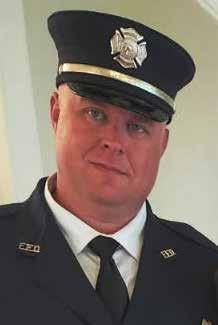
The Training Division of the State Fire Marshal’s agency would like to spotlight PT Instructor LeeVonn (Levi) Alley from Fremont, NE. Alley has been a parttime instructor with the Training Division beginning in 2018 and works under the supervision of Darin Lintner.
Alley began his fire service journey in 2006 as a volunteer with the Ashland FD and in 2010 began working with Fremont FD where he is a firefighter/Paramedic. He also volunteers with Fremont Rural where he is the Assis-
tant Chief and EMS Coordinator. During his time Levi has also served as a training and safety officer. Some areas that Levi enjoys teaching includes firefighter one, hazmat operations and technician, vehicle extrication and helping with the fire ground operations class at fire school. Alley’s hobbies include camping, hiking, hunting and spending time working in his garden and taking care of his property.
When asked about what he enjoys or finds interesting about working with the Training Divi-
By BOB HECKMAN
This month’s article is dedicated to the memory of all the fire department auxiliary members who are no longer with us, gone but not forgotten. This month’s fire prevention are the highlights from the Nebraska forest service 2025 annual report. Wildfire prevention continues to be the forefront of their work with pile burns still the leading cause of wildfires in Nebraska. They have made tremendous efforts to reach landowners and communities with practi-
cal tools, resources and education. At the same time continue to invest in equipment, training and partnership needed to prepare for large scale incidents. Their work extends far beyond fire, working with communities and helping Nebraskans plant and care for trees, restore windbreaks and manage forest health threats. Every tree planted and every forest managed contributes to Nebraska’s financial resilience and ecological health. None of this would be possible without our partners, volunteer fire depart-


sion Levi said; “getting to work with instructors and fellow firefighters to bring the passion out for the job and perfecting the craft, being with those that want to make the fire service better”.
When asked about a specific incident or experience that had an impact on his while working with the Training Division Levi shared the following; “there’s no one experience that stands out because my experiences continues to grow as I work with more and more firefighters. You work with firefighters in classes who just got
their gear last week and by doing this and you “fall” back in love with the job. Then you see them on mutual aid calls or see their names on social media and they are doing well and that is very satisfying to see others progress. That’s what I love about the TD is getting out there and bringing out the passion in the Nebraska fire service”.
The Training Division is grateful to have Levi helping the fire service of Nebraska in moving forward to build safer firefighters who serve their communities across the state.
ments, state and federal agencies, local governments. Working together we are making a measurable difference. Trees add up 3 to 15% to home values, 145 million to community wide benefits, 153 million direct economic footprint. Last of all, there are 95 Nebraska tree city communities. In 2025, 1084 trees were planted, 211 communities assisted with tree related projects and spent 139,000 in tree planting dollars. Staff have supported northern California Chester air attack. NFS personal stepped into leadership roles on fires in Alaska. Also, Dads Lake fire near Valentine coordinated both ground and aerial firefighting efforts. This shows Cornhusker States commitment to safety extends far beyond
our border. Mead, Nebraska forest service plays a critical role in wildfire response. They have delivered more than 400 engines, many to communities that could not otherwise afford updated equipment.
84% of Nebraska fire departments received support since 1996. 6.5
million awarded through Volunteer grants to date. 90% of Nebraska wildfires are sparked by people N.F.S. is working to cut that number by 10% in five years ...not by just fighting flames but by reaching people who can prevent them......FIREMAN BOB
Classified ads run $10 for the first 10 words, and 25 cents a word after that. A photo is $10 additional. Rates are the same in each state (Iowa, Minnesota, South Dakota, Nebraska and Kansas). Email the ad to jeff@nebraskafirefighter.com to place your personal or departmental ads.

Have you ever wondered how YOUR Nebraska Firefighters Museum got started?
The following account is one man’s recollection of his thoughts and ultimately the thoughts and dreams of several others that formed the seed of an idea which grew and resulted, many years later, in the opening of YOUR museum.
In the early 1960s, Bob Vogltance became a volunteer firefighter in his hometown of West Point, NE. It wasn’t long before he became keenly aware (as most firefighters do) of the history and antiquity of the fire service. As he attended meetings and training events, he saw not only the new and current fire apparatus and equipment in the fire stations that he visited, but he also saw the older apparatus and memorabilia. Things that were in display cases, items stored in the back of fire stations, fire trucks that were retired but still used in parades, and even equipment stored outside or other buildings. All things that held memories and history for the communities they had served. His love of artifacts such as these was, in his words, “Jolted when I found out that some of these things were being bought up and were leaving Nebraska.” He wondered “How could this be stopped. How can we save these things?”
Several years later, in 1969, Bob went to work for the Nebraska State Fire Marshal’s office. Now as he traveled throughout Nebraska, he was really exposed to a much larger picture of all of these things. Again, he thought, “How can we preserve this history for future generations?”
It didn’t take him long to find some help. It came in the form of two firefighter friends, Norm Hoeft of David City and Arthur “Pooch” Gulzow of Grand Island. Pooch had already started doing something about it, as he had already acquired two antique fire engines. After conversations with both men about seeing artifacts and fire trucks leaving the state and the need to preserve this history, Norm and Pooch agreed with Bob…. something needed to be done. From that day forward, they began talking with others in the fire service about the problem, the dream.
In 1972, Bob was appointed to the Nebraska State Volunteer Firefighter’s Association’s “Fire School” committee. Among the members of the committee were both Norm and Pooch. So, more traveling together and more discussions about Nebraska’s fire service heritage. What to do? We need a museum! Wherever they went the topic was talked about and they found many other interested “fire folks.” The big question arose, “How do we start? Where and how do we get the money? Where should it be located?” They needed help. They had a vision, but so far it was just a “talked about” vision. For 7-8 years they
drove hundreds of miles attending fire meetings, State Fire School, fire functions of all kinds, always talking about the idea of a Firefighters Museum. Bob even appeared on a television show in Omaha at the request of John Jones, a TV celebrity and Ralston firefighter to talk about our idea, the “Dream.”
Then something happened that got the vision “off center” and started movement. Fellow firefighter, Dr. Kreymborg of North Platte, NE, passed away in October of 1978. Dr. Kreymborg was a member of the North Platte Fire Department and a long-time instructor at the State Fire School and well known to the fire service in Nebraska. Bob, Norm and Pooch headed to North Platte for Doc’s funeral service.
First strange thing. When they entered the church, they were asked to remain standing and they stood through the entire service.
Second strange thing. While waiting for the service to start, Bob nudged Norm and said “Doc isn’t here “Norm’s reply was “what do you mean?” to which Bob answered “look in the coffin.” Doc was about 6’5” and they would have had to bend him in half to get him in to it. They later learned that Doc’s body had been donated to science and the coffin was just a symbol.
Third strange thing. After the service and during some fellowship and conversation before leaving, North Platte firefighter Jack Frieberg approached the three men with regard to a wide array of Doc’s awards, possessions and memorabilia and asked if they would take them for the museum they were talking about building. They couldn’t say “No” as they knew all those things would just disappear. Here they were with a lot of artifacts and no building to put them in. Needless to say, on their way back home the museum project was the main topic of conversation, mile after mile. How? Where? Grand Island seemed the best location.
The Stur Museum in Grand Island, was an established museum and was centrally located as a Nebraska Firefighter’s Museum needed to be… so “What are we waiting for?” Let’s talk to Jack Larned, Director of the Stuhr museum!”
A date was made to meet with Jack. They sat with Jack and both Norm and Pooch insisted that Bob do the talking. Bob laid out the idea for a Firefighter’s Museum and Education Center. Larned was impressed, and his first question was “How much money have you guys got?” The answer was “none but we have an idea, the plan, the resources, the equipment... all we need is a place to build it so we can make this dream come true.”
Jack’s response was “We have really got a lot of work ahead of us.”
Movement at last! The three, Bob, Norm and Pooch had no idea what
laid ahead. They needed help so the process of finding people began. Meetings were held in fire stations, mutual aid meetings, fire schools, where ever firefighters met, they were talking about the museum. Bob remembers the following well – “finally a small group met in David City fire station meeting room. Attorney Jim Egr was present and now became part of the group. After much discussion, we all agreed to take on the project. We all dug in our pockets for billfolds and money was tossed on the table for the first mailing and what ever else was needed. We were on our way! Little did we know what we were getting into. The hurdles, problems, setbacks, and heartaches were about to begin…but through it all we remained optimistic.”
EPILOGUE
The museums mission statement is four-fold:
• To PRESERVE Nebraska’s firefighting heritage
• To FOSTER public understanding of the impact and benefits of firefighting in regard to saving lives and property.
• To EDUCATE individuals about fire prevention and fire safety
• To MEMORIALIZE Nebraska Firefighters
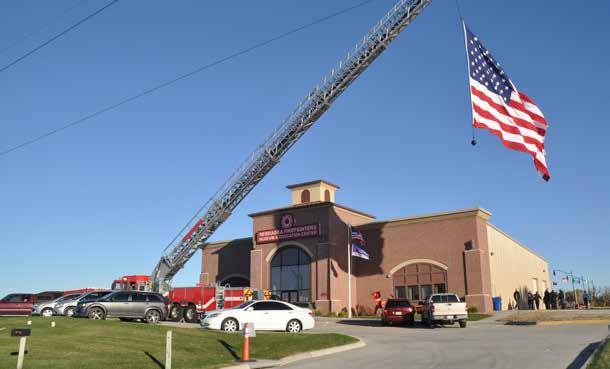
The museum was competed in August of 2009 in Kearney, NE.
The museum provides exhibit space for fire service apparatus and memorabilia, meeting rooms for educational and social events and a gift shop.
The Memorial Garden which is located to the rear of the building was completed in 2011. It is a peaceful area designed to honor and pay respect to those who have provided fire protection and emergency services to the citizens of Nebraska. This special place is the host site for the annual Nebraska Fallen Firefighter remembrance service held in September.
This information was provided by Bob Vogltance to George Teixeira, Past President of the NSVFA (2008-09) and current museum board member.
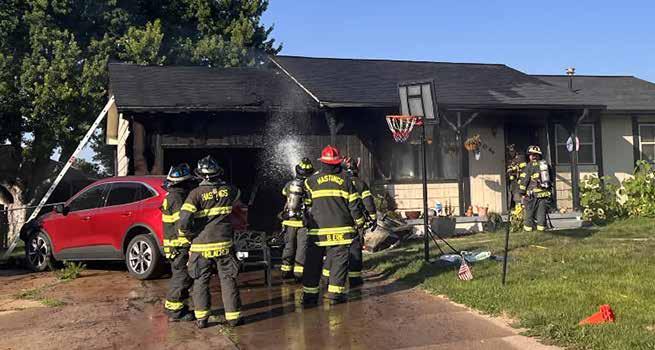
Hastings Fire & Rescue responded to a structure fire at 6:22 p.m., on Sunday, July 5, at 1004 Brentwood Ave. The occupants, a family of four, were home and evacuated safely. The family has two cats and a dog. The animals were also all safely evacuated. The cats received veterinary care following the incident. The dog did not need further assistance. No other injuries were reported. Firefighters had the fire under control in about 10 minutes and then worked to ventilate the house. The cause of the fire is under investigation. The majority of the fire damage was to the garage and a Ford Escape parked at the residence. While the garage was heavily damaged, a fire-rated wall limited damage elsewhere in the home. The Hastings Police Department, Hastings Utility Department, City of Hastings Street Department and Hastings Rural Fire Department responded to the two-alarm fire as well.
President
BRENDA JENNY 1767 Colfax Street, Blair, NE 68008 402.639.9647 bgolf2560@yahoo.com
1st Vice President
TROY SHOEMAKER 1433 Grove Ave Alliance, NE 69301 308-760-7682 tshoemaker@cityofalliance.net
2nd Vice President
KENNY KRAUSE 1229 D St. Fairbury, NE 68352 402-300-0097 krausechief@gmail.com
Secretary/Treasurer
MARK MEINTS
502 E H St, Wymore, NE 68466 402-806-7451 meints2@windstream.net
NSVFA Lobbyist
RYAN K. MCINTOSH PO Box 13 Nebraska City, NE 68410 ryan.mcintosh@stilmockmcintosh.com
NSVFA Legal Advisor
SCOTT SMITH P.O. Box 186 Syracuse, NE 68446 scott.smith@bhhslawfirm.com
Past President
SCOTT SCHREMMER 815 W 6th, Chadron, NE 69337 308-430-1494 buffhater@gmail.com
District Directors
#1 DARRELL VANCE 1415 Q St, Gering, NE 69341 308-631-0053 DarrellVance1230@gmail.com
#2 JOHN BOMAR P.O. Box 222, Battle Creek, NE 68715 402-992-1560 JBomar1970@gmail.com
#3 RON CHADA 1721 N Sheridan North Platte, NE 69101 308-520-2828 rmchada@winnelson.com
#4 KATELYNN LOVELL 515 E H St., Wymore, NE, 68466 402-806-5627 katelynn.lovell0916@gmail.com
NSVFA Representative
National Vol. Fire Council
JUSTIN SCAMEHORN 202 Hidas Ave. Waco, NE 68460 402-366-1939 jscamehorn@yahoo.com
Appointed NVFC Director
JOEL CERNY 1618 Denver St. Schuyler 68661 402-720-4100 cerny_j@hotmail.com Chaplain
MATTHEW MAU
Cell: 402-363-1540
E: pastormattwaco@gmail.com
One of the responsibilities your Board of Directors takes seriously is making sure our association’s governing documents continue to serve the needs of our members. At our special board meeting in February, we spent a great deal of time reviewing the NSVFA bylaws line by line. Our goal was simple: to make sure they accurately reflect how we operate today while making them easier to read and understand. After that thorough review, the board unanimously approved a series of proposed bylaw changes that were published in the July 2026 issue of the Nebraska Firefighter.
Most of the proposed changes are housekeeping items. We corrected typographical errors, removed repetitive language, and updated wording to improve clarity and consistency. These revisions won’t dramatically change
I would like to congratulate our first vice president, Troy Schoemaker, on a well-deserved opportunity to serve as assistant state fire marshal. It has been my honor to serve with Troy as elected officers of the Fire Chief’s Association. Then again to work along side him on the board of officers of the Nebraska Volunteer Firefighters Association. He is a great leader; I have no doubt his great leadership will shine in his new role at the State Fire Marshals office. Something I have learned working with Troy, is to be a good listener, to pay attention to detail, and to speak only when needed,
how the association operates, but they will help ensure our bylaws remain a clear, accurate, and useful guide for the future.
One of the proposed bylaw changes I’d especially like to highlight though involves our National Volunteer Fire Council (NVFC) Directors. During our February meeting, the board unanimously voted to recommend a bylaw amendment that would make the NVFC Directors official members of the NSVFA Board of Directors. Our NVFC Directors work hard to represent Nebraska at the national level while bringing valuable information, training opportunities, resources, and advocacy back to our members. Making them official board members recognizes the important role they already play and places them alongside our District Directors as equal members of the board. I believe it’s a change that better reflects how our association operates today.
These proposed changes belong to the membership. I encourage each of you to take a few minutes to review them before our October Conference. Your participation in the discussion and the vote is an important part of keeping our association strong and member-driven.
Thank you for your continued
and do so with conviction. I will never be able to do this at the level that he did, but this is how he approached many of our meetings, and helped us to make the right decisions on matters that came before us. Again, congratulations Troy! My heart broke a little to hear this news, but it is filled with excitement for you, and the good things you will continue to do for the fire service of Nebraska.
Hope to see as many of you as possible at the annual conference in Dakota city, October 15-17, 2026. Dakota City has proven themselves to be top notch at hosting this conference. I expect this
Nebraska’s budget picture continues to darken, with the state now facing a projected $223 million deficit driven by months of tax receipts falling short of expectations. This widening gap means lawmakers will enter the 2027 session confronting two separate shortfalls: the current deficit and an additional $631 million projected deficit in the next biennial budget. For the NSVFA, these numbers matter. Although the last biennium brought an increase to fee revenue, the State Fire Marshal’s Office, already operating with lean staffing, relies heavily on stable state appropriations. Any disruption in funding threatens the Marshal’s ability to deliver timely
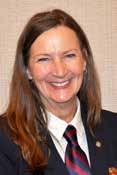
Brenda Jenny , Presi dent
“During our February meeting, the board unanimously voted to recommend a bylaw amendment that would make the NVFC Directors official members of the NSVFA Board of Directors. Our NVFC Directors work hard to represent Nebraska at the national level while bringing valuable information, training opportunities, resources, and advocacy back to our members.”
support of the Nebraska State Volunteer Firefighters Association. Whether it’s attending conferences, serving on committees, volunteering for events, or simply taking the time to vote, your involvement is what makes this association successful. I look forward to seeing many of you at the October Conference as we continue working together to strengthen the NSVFA and support Nebraska’s volunteer fire service.
As always, if you have a meeting or event, you would like me to attend, please reach out and I will make every effort to be there. Below are the upcoming events you don’t want to miss:
NSVFA Fallen Firefighters Memorial Service: September 20, 2026, Kearney, NE at Nebraska Firefighters Museum and Educa-
If your department lost a member in 2025, you are invited to submit their name for inclusion in the 2026 NSVFA Fallen Firefighters Memorial Service. To submit a member name, please visit the NSVFA website at https://www.nsvfa.org/ memorial-service. Names need to be submitted by August 31, 2026. 2026 Annual Conference: October 15-17, 2026, Hosted by Dakota City Fire Department. The deadline for early registration is September 15th, so take a few minutes today to complete the online registration here: https:// www.nsvfa.org/conference. Until next time, stay safe and healthy.
BRENDA JENNY President, NSVFA
services that local departments depend on.
Compounding the uncertainty, Governor Jim Pillen recently issued a memo directing all state agencies to immediately cut spending by at least 5%, raising questions about whether such reductions can be imposed without legislative approval. The directive includes restrictions on hiring, travel, and technology upgrades. While the Governor’s team frames the cuts as necessary “fiscal restraint,” critics argue the move oversteps executive authority.
The issue of funding to close the projected budget deficit is also occurring while Governor Pillen and many legislators continue to
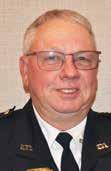
Kenny
“I would like to congratulate our first vice president, Troy Schoemaker, on a well-deserved opportunity to serve as assistant state fire marshal... He is a great leader; I have no doubt his great leadership will shine in his new role at the State Fire Marshals office.”
one will follow suit. Again, I would appreciate your support and look forward to seeing you at Dakota City.

As always, stay safe,
Ryan K. McIntosh, Lobbyist
“For the NSVFA, these numbers matter. Although the last biennium brought an increase to fee revenue, the State Fire Marshal’s Office, already operating with lean staffing, relies heavily on stable state appropriations. Any disruption in funding threatens the Marshal’s ability to deliver timely services that local departments depend on.”
discuss the need for significant property tax relief. As policymakers search for long-term solutions for property tax relief while also sustaining state funding, our association will continue advocating for the resources and stability the State Fire Marshal requires to support Nebraska’s fire service.
Volunteer departments cannot afford operational uncertainty when public safety is on the line. Thank you for all you do to help in this effort. Stay engaged and don’t hesitate to reach out with any questions.
RYAN
K. MCINTOSH, Lobbyist
Thank you to all of the fire departments and firefighters from across Nebraska who have responded to the large wildland fires our state has experienced this year. Your dedication, professionalism, and willingness to leave your families and communities to help protect others does not go unnoticed. Nebraska’s fire service continues to demonstrate the strength of mutual aid and the commitment we all share to serving our neighbors in their time of need.
As these incidents continue, it is also important to remember the critical role hydration plays during wildland firefighting operations. High temperatures, heavy protec-
Hello NSVFA Members,
First and foremost, I wanted to introduce myself. My name is Kat Lovell, and I recently had the privilege of being appointed as your District 4 Director with the Nebraska State Volunteer Firefighters Association. I am incredibly excited for the opportunity to serve the departments and firefighters throughout our district.
As I settle into this role, I would love to get to know more of you. If your department hosts mutual aid meetings, trainings, community events, fundraisers, or anything else you think would be beneficial for me to attend, please reach out. I want to learn about your departments, hear your concerns, celebrate your successes, and be a resource however I can.
Recently, I had an experience that reminded me of something I think every firefighter, EMT, paramedic, and officer should hear.
A few days ago, I was transporting a patient to a tertiary care hospital in Lincoln. For most people, it was just another hospital, but for me it brought back memories of my paramedic school clinicals. Like many students, I spent a lot of time feeling nervous, trying to learn everything I could while also hoping I didn’t get in anybody’s way.
For some reason that I still can’t explain, I always seemed to get paired with the same emergency room nurse. Her name was Amie. My clinical shifts were spread out over weeks and months, and there was no way I could have planned it, but somehow I always seemed to end up working alongside her.
Amie was one of those people who made an immediate impact.
tive equipment, and long operational periods can quickly lead to dehydration and heat-related illnesses. Firefighters should make hydration a priority before, during, and after every assignment, and officers should monitor crews for signs of heat stress and fatigue.
Stay safe, watch out for one another, and thank you again to everyone answering the call across Nebraska.
After five years serving as Secretary/Treasurer of the Nebraska State Volunteer Fire Fighters Association, I have made the decision not to seek re-election at this year’s Annual Conference.
I would like to sincerely thank the members of the Association
She was patient, encouraging, and always willing to answer questions without making me feel foolish for asking them. When she introduced me to staff members, she would often say, “This is Kat. She’s a student with me today, but we treat her like one of our own.”
As a student, that meant more than she probably ever realized. Over time, she trusted me to do more and more on my own. Nothing beyond what a student should be doing, but enough to build confidence. She would send me to start IVs, draw labs, collect specimens, and help care for patients. More importantly, she made me feel like I belonged there. Every shift I worked with her, I learned something new. She helped me gain confidence in myself and my abilities, and she showed me what a great healthcare provider looks like. She was kind to her patients, welcoming to her students, and genuinely invested in helping people succeed.
After transferring my patient the other day, I was cleaning up my cot near the registration desk outside the emergency department. On a whim, I asked the registrar what I thought was probably a silly question.
“Is there an Amie that works here?”
The registrar smiled and said, “Yeah, she’s here today. Do you need to see her?”
To my surprise, I suddenly got nervous.
I told the registrar about my time as a student and how much of an impact Amie had made on me, but when I was given the opportunity to actually go talk to her, I backed out. I thanked the registrar and headed home.
I’ve been kicking myself ever since.
I wish I would have taken those
for the trust and confidence you placed in me and for allowing me the responsibility of being fiscally responsible for the Association’s funds during my tenure.
I also want to express my appreciation to my fellow Board members for their camaraderie, support, and friendship over the past five years. Serving alongside all of you has been a privilege and an experience I will always value. A special thank you goes to Taylor and the entire staff at AAM for everything they do behind the scenes to keep the Association running smoothly and successfully. Your dedication and professionalism make a tremendous difference.
five minutes to tell Amie thank you. I wish I would have told her that five years later, I still remember the way she treated me. I wish I would have told her that she helped shape the provider I became. I wish I could have told her about the critically ill patients I now transport, the certifications I’m pursuing, the classes I’ve taught, and the opportunities I’ve had within the fire service. Most of all, I wish I could have told her that the time she invested in a nervous 18-year-old student paid off. The reason that experience has stuck with me is because I remember another person from my education as well.
During my paramedic internship, I was assigned to a medic who made it very clear that he did not enjoy having students. In fact, one day he told me exactly that. He said, “I don’t like students. You’re an inconvenience.”
To this day, I don’t remember much of what he taught me. I don’t remember any great lessons or memorable calls. What I do remember is how unwelcome I felt. I remember feeling like I was slowing him down and making his day harder simply by being there. As a result, I struggled to learn. I struggled to ask questions. Most importantly, I never developed the confidence that students need in order to grow.
Looking back, the contrast between those two people couldn’t be more obvious.
One of them invested time, patience, and encouragement into a student. Five years later, I still think about the impact she had on my career and the example she set for me.
The other taught me a lesson too, although probably not the one he intended. He showed me exactly the kind of preceptor, mentor,
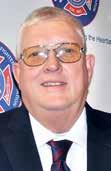
Mark Meints, Secretary/Treasurer
“I would like to sincerely thank the members of the Association for the trust and confidence you placed in me and for allowing me the responsibility of being fiscally responsible for the Association’s funds during my tenure.”
If you have any questions about the position or are considering running for Secretary/Treasurer, please feel free to reach out to me.
I would be happy to visit with you about the role and responsibilities.
I hope to see all of you at the Annual Conference in Dakota City this October.
Stay safe, and thank you again for the opportunity to serve.
Secretary/Treasurer
Nebraska State Volunteer Fire Fighters Association

Kat Lovell, District 4 Director
“When the next new member walks through your department’s doors, who are you going to be? Are you going to be the person they still talk about five years from now because you welcomed them, encouraged them, and helped them grow?”
and leader I never want to become. Whether we realize it or not, every one of us has opportunities to shape the people around us. Maybe it’s a new firefighter who just joined your department. Maybe it’s a cadet, an EMT student, a paramedic intern, or a probationary firefighter attending their first training. They may not remember every skill you teach them. They may not remember every drill, every meeting, or every call. What they will remember is how you made them feel.
So I want to leave you with one simple question. When the next new member
walks through your department’s doors, who are you going to be? Are you going to be the person they still talk about five years from now because you welcomed them, encouraged them, and helped them grow? Or are you going to be the person who made them feel like an inconvenience?
You never know who’s watching. You never know who’s learning from you. And you never know whose career you might be helping shape.
Stay safe,



Firefighters,
When going on calls, you intuitively know while on the call that you’re acting within the scope of your work as a volunteer first responder. But when do you start being “in the scope” of your duties? When does it end? This is an important question under state statute that has clear implications for workers’ compensation coverage for injuries incurred during your service.
Neb. Rev. Stat. § 48-115(3) states regarding volunteer firefighters:
“Such volunteers shall be deemed employees of such rural or suburban fire protection district, city, village or nonprofit corporation which
is the performance of their duties as members of such department and shall be considered as having entered into as acting in the regular course and scope of employment from the instant such persons commence responding to a call to active duty, whether to a fire station or the place where firefighting equipment that their company or unit is to use is located or to any activity that the volunteer firefighter may be directed to do by the chief of the fire department or some person authorized to act for the chief. Such volunteers shall be deemed employees of
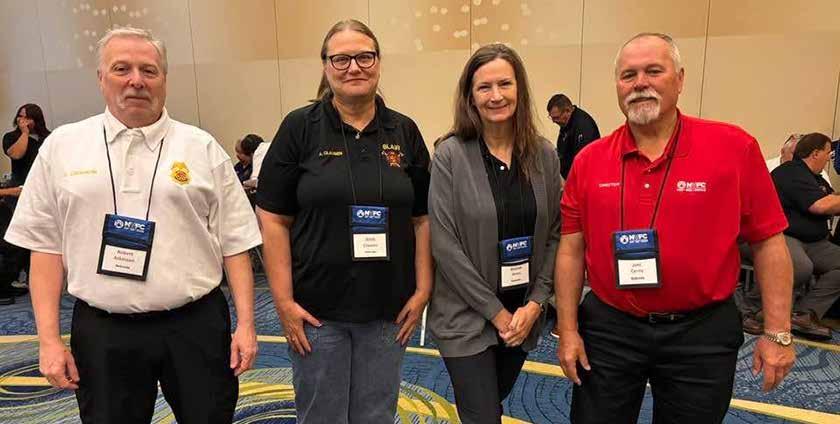
I want to take time this month to tell you about the National Volunteer Fire Council (NVFC) Training Summit, which was held June 26-27 in Arlington, Virginia. The signature event had the highest attendance yet, with over 200 attendees from 40 states. Training was provided along three tracks, including health and safety, recruitment and retention, and leadership. There were 26 exhibitors, which was another record high. Attendees including four of us from Nebraska, and we were able to choose from 18 sessions delivered by nationally-recognized subject matter experts. NSVFA President Brenda Jenny of Blair VFD, Amie Clausen, also from Blair VFD, and Robert Atkinson from Boys Town Fire and Rescue, all were able to secure one of the stipends offered by the NVFC to attendees to help them cover most of their expenses to attend.
Friday morning’s opening session started with a welcome from NVFC Health Safety and Training Committee Co-Chairman Quentin Cash, and then NVFC Chairman Steve Hirsch addressed the crowd. Also, welcoming us was Bocephus Bennett, the Deputy Chief of Emergency Services of the Arlington County Fire Department. The Keynote address was delivered by FDNY Battalion Chief Stephan Marsar. His talk was titled Retrospective Vigilance from Ground Zero: Prepare To- Protect From- Inspire Against- Complacency! He was truly inspiring, and for us, more seasoned firefighters, it’s hard to believe the attacks on September 9th 2001, happened 25 years ago.
The first class I attended was Doug Cline’s Developing a NFPA/OSHA Compliant Fire Department Training Programs. My biggest takeaway from Doug’s class was making sure we are training our firefighters
such rural or suburban fire protection district, city, village, or nonprofit corporation until their return to the location from which they were initially called to active duty or until they engage in any activity beyond the scope of the performance of their duties, whichever occurs first.” Similar language applies the same standard to EMS responders in Neb. Rev. Stat. §48-115(6).
I’ve heard it wrongly suggested that if an employer chooses to continue paying an employee who leaves work to respond to a call, the employer’s workers’ compen-
sation policy could somehow be responsible if that volunteer is injured on the call. This is incorrect under Nebraska Statutes.
Once a volunteer begins responding, they are legally considered an employee of the rural or suburban fire protection district, city, village, or nonprofit corporation — not the employer who allowed them to leave work. The employer’s decision to pay the volunteer for their time away from the job does not create workers’ compensation exposure for that employer.
It’s also important to take note of the importance of the directions given by the fire chief in the “in the scope” statute above. Generally, responding to a call according
on the things that the NFPA and OSHA expect us to. The second class I attended was Going Com bination & Preserving Your Vol unteers, taught by NVFC Mas sachusetts Director Joe Maruca. Now most of you know it will be a long, long, long time before Linwood VFD, my department, ever looks to going to a Combination Department, but there have been a few go recently, and there is probably more thinking about it here in Nebraska. Joe, as well as other instructors, made their PowerPoints available if anyone would like to see it just reach out to me. On Saturday morning, several of the NVFC Directors in attendance met with a team from the VCOS (Volunteer, Combination, Officers, Section) to discuss the two organizations’ work on easing the workload of departments going this direction.
Other classes I attended included “Is Your Department a Place You Would Join” by Lee Price,
to department SOPs is an activity that will be presumed to be at the direction of the chief. But be aware of non-duty related diversions in your service that could take you out of the scope of your service…think of an unrelated errand on your drive back to town following a call. The statute states you are “in the scope” until you return to the location from which you launched or you engage in any activity beyond the scope of your duty, whichever occurs first.
As always, stay safe and thank you for the important work each of you do! Respectfully submitted,
SCOTT G. SMITH, NSVFA Legal Advisor
J oel Cerny, NVFC Director
“he Keynote address was delivered by FDNY Battalion Chief Stephan Marsar. His talk was titled Retrospective Vigilance from Ground Zero: Prepare To- Protect FromInspire Against- Complacency! He was truly inspiring...”
“Successful Volunteer Retention and Recruitment in the Fire Service” by Dr. Candice McDonald, “Finding the Why: Passion-Driven Recruitment for Fire & EMS Volunteers” by Walter Campbell and Jen Elleraas of Minnesota taught “Igniting Purpose: Encouraging Women to Explore the Fire Service”. I thought this was a particularly interesting class when you stop and consider that women make up over 50% of our population, but nationwide, women make up only 9% of the firefighters.
The next NVFC Training
Summit will take place in Albuquerque, New Mexico, on June 25-26, 2027. You can sign up to receive updates as they become available at the website below. 2027 NVFC Training Summit Updates
One last thing happening with the NVFC in June was the Step Strong Challenge. While I’ll admit that I didn’t really go above and beyond to increase my normal walking, I did average just two miles a day, which placed me in 637th place. This year’s winner walked 1,873,728 steps or 870 miles. That computes to 29 per day. Two of the NVFC Directors, Quentin Cash and Kevin Quinn, finished in 6th and 9th place, and our NVFC Directors team finished in 19th place. This year’s Step Strong Challenge was moved up to June to coincide with Firefighter Safety Standdown, as keeping firefighters safe also includes keeping them physically fit. One of the things I thought about halfway through the challenge was that I wish I had challenged my department members to start our own team and start another in-house challenge just between us. And you know, I just might do that! I would also, highly encourage you to do the same and I’ll keep you informed when the 2027 step strong challenge begins next year Until next time, stay safe and enjoy the summer!
JOEL E CERNY, NVFC Director
t h a t p r o t e c t s o t h e r s

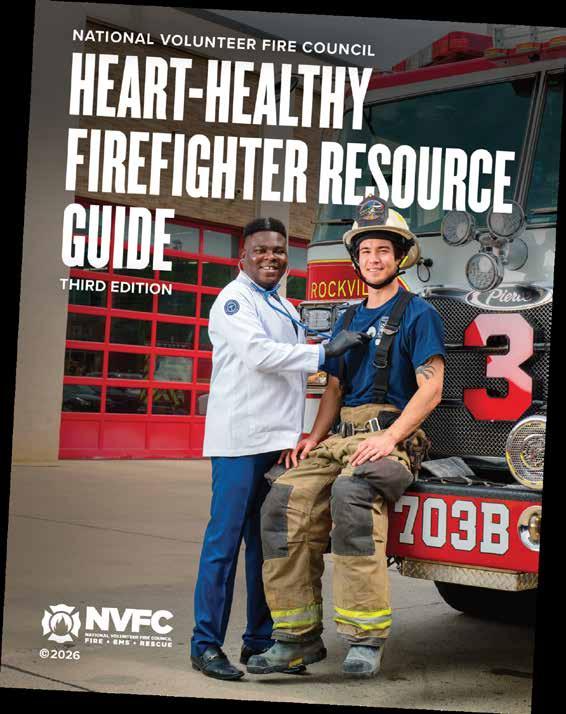
d o w n l o a d t h i s f r e e g u i d e t o :
• L e a r n d i s e a s e p r e v e n t i o n t i ps
• F i n d h e a l t h r e s o u r c e s
• K n o w t h e s i g n s

Continue serving your crew & community.

Scan to download or visit www.healthy-firefighter.org.
• As s e s s y o u r r i s k s
• An d mo r e !

By CARRIE PITZER
If you are involved with local fire or rescue, read this story. This will change response dramatically — and for the good. I’m sharing the entire story here because it’s that important.
***
An emergency page goes out.
Somewhere across Knox County, volunteer firefighters and EMTs climb out of bed. Rescue personnel head toward their stations. Inside the sheriff’s office, dispatchers often face a question no one can immediately answer.
Did enough people receive the page?
Who’s responding?
“A lot of times she sends a page out and honestly doesn’t know if anybody’s responding until they get on the radio saying they’re en route,” Bloomfield Fire Chief Ben Lauck said. “Dispatch doesn’t know who is coming until they call. But that’s changing. They can see it immediately now.”
For the past two months, first responders across Knox County have been testing Who’s Responding, an emergency response platform they believe will fundamentally change how departments communicate, coordinate mutual aid and respond to emergencies. The system allows dispatchers and incident commanders to see, in real time, who has received an emergency page and who is responding.
The system impressed county supervisors enough that they are expected to approve countywide funding next week after discussing the proposal at the June 23 meeting. Because the item was not listed on the agenda, the board could not take formal action during last week’s meeting.
And the price tag for what first responders describe as one of the biggest advances in countywide communication in years?
About $4,000 a year — or roughly $300 for each of the approximately 12 fire departments, rescue squads and dispatch entities that will use it.
“You spend more on Spotify,” Lauck said.
While the price drew raised eyebrows from county supervisors, the cost isn’t what makes the project unusual.
Local first responders aren’t simply adopting a new emergency response platform. They’ve spent time helping build the countywide framework that will make Knox County the first in Nebraska to use the system across an entire county. First responders have worked with the software company to build a structure that didn’t previously exist, one capable of connecting every fire department, rescue squad and Knox County Dispatch through a single system.
Lauck said the company modified portions of the software around Knox County’s needs to make that possible.
“They’ve changed some code in the program to fit certain things that we wanted because we’ve got seven towns,” Lauck said.
“Creighton pages rescue with fire independently. Crofton does the same thing. Traditionally there’s seven. We told them we’re probably going to have 12.”
“So they’re pretty much tailoring it for us,” he said. “Hopefully, it gets bigger and bigger.”
The idea didn’t begin with software. It began with the Knox County Task Force.
Nearly a year ago, fire chiefs, rescue captains and emergency responders from across Knox County began meeting regularly with a common goal: finding better ways to work together during major emergencies. Wildfires, structure fires and large-scale incidents were becoming increasingly dependent on mutual aid, but the county’s communication system hadn’t evolved with it.
“The task force originally got started because Creighton, Verdigre and those guys were primarily going west on mutual aid,” Lauck said. “If we’ve got a mutual aid wildfire, who goes? Your key guys. So now I’ve got 10 guys going to fight fire in Orchard, but if I get a call in town, I don’t have anybody.”
Instead of relying on one department to shoulder the burden, the task force developed a model that spread responders across the county while allowing each community to maintain adequate staffing at home.
“The task force idea came from the Holt-Boyd deal,” Lauck said. “If you take four or five guys out of each town and we’ve got seven towns, I still have 85 percent of my force at home if something happens.”
The task force meetings accomplished something else, too. Departments that had traditionally responded alongside one another only during emergencies were now sitting around the same table, solving problems together.
“I honestly feel a lot of this started with the task force,” Lauck said. “You get to know everybody else’s strengths. You know who to call.”
As the conversations continued, one issue surfaced repeatedly: Communication.
The county’s existing paging system still alerted firefighters and EMTs when emergencies happened, but once those pages were sent, dispatchers and incident commanders often had little immediate information about who had actually received the
alert or who was on the way.
That’s what led them to Who’s Responding.
Bloomfield volunteered to become Knox County’s test department.
“Somebody had to try it,” Lauck said. “Nobody jumped in, so I said, ‘We’ll do it.’”
Months later, Lauck said the trial has exceeded expectations.
“I honestly don’t know anything it can’t do,” he said.
TECHNOLOGY IN REAL TIME Dispatchers can immediately see who has acknowledged an emergency page. Incident commanders can watch responders make their way to the station or directly to the scene, send additional alerts if staffing is low and redirect mutual-aid departments to specific hydrants or staging areas before they arrive.
“If Creighton’s coming to mutual aid, I can pin that hydrant and say, ‘Hook to this one,’” Lauck said. “They get turn-byturn directions to it.”
The platform also allows responders to mark themselves unavailable because of vacations or other commitments, provides push-to-talk communication similar to a two-way radio and stores hydrant locations, building preplans and emergency contacts in one place.
“It’s tons of data,” Lauck said as he showed every fire hydrant’s location in the City of Bloomfield — all available on a Google-style map on his phone.
One feature, however, stood out above the rest.
Emergency addresses aren’t always perfect. A caller may report a fire at the wrong driveway. A grass fire may spread hundreds of yards from where it was first reported. A vehicle accident might be farther down the highway than the original 911 caller realized.
Instead of trying to describe the correct location over the radio, the first firefighter or EMT on scene can simply move the incident pin.
“I can move the incident,” Lauck said. “If somebody actually gets on scene and the location isn’t where dispatch originally pinned it, I can move the incident pin. Everybody else that’s coming sees the new location.”
If Bloomfield requests assistance from Creighton, Wausa or Crofton, responding crews no longer have to ask where they should stage equipment or which hydrant they should connect to.
“I can pin it,” Lauck said. “If Creighton’s coming to mutual aid, I can pin that hydrant and say, ‘Hook to this one.’ They get turn-by-turn directions to it.”
Lauck said that eliminates radio traffic at a time when incident commanders are juggling multi-
ple responsibilities.
“It frees up the incident commander,” he said. “I don’t have to spend all my time talking to every department that’s arriving.”
Sheriff Don Henery said one of the biggest improvements may be what dispatch knows before anyone ever keys a radio microphone.
“It will help,” Henery said. “Dispatch will be able to see that there are people responding.”
That immediate confirmation, he said, removes much of the uncertainty that exists today when emergency pages are first sent.
Henery said the current paging system has presented reliability issues in areas with limited cell service.
“The other thing is with the old system we had, if you didn’t have cell phone service, the pages were unreliable,” he said. “This should help too. We’re getting away from that.”
For Henery, the benefits extend beyond firefighters and EMTs.
He said the new platform simplifies emergency communications across the county by bringing departments together under a single system instead of relying on multiple methods of dispatch.
“Hopefully we will have one dispatching system for the whole county,” Henery said. “We do have one — one minor little difference with Santee where they use two-tone more than anybody else. But the simplicity of the whole thing should make things easier for dispatch.”
That simplicity is exactly what first responders say they’ve been working toward.
Rather than each department operating independently, Knox County’s fire departments, rescue squads, dispatch and emergency management would all be working from the same information at the same time.
By the time first responders finished demonstrating the platform, the discussion at the supervisors meeting had moved beyond technology.
Nobody questioned whether the platform worked. Instead, supervisors wanted to know what it would cost to make it available countywide.
Lauck estimated the annual cost at about $4,000 — roughly $300 for each of the approximately 12 fire departments, rescue squads and dispatch entities expected to use it.
Supervisor Dave Pierce spoke up first.
“My thoughts are whether it’s the fire and rescue departments paying it or the county board paying it, it’s all county money,” Pierce said. “Wouldn’t it streamline it if we just did it? That way
all those departments wouldn’t have to have that paperwork.” Before Lauck had a chance to answer, the representatives seated beside him answered for themselves.
“Yes,” they all said in unison. The conversation quickly shifted from whether the county should support the project to how it should be funded. Knox County Clerk Joann Fischer, who had quietly listened throughout the public comment time, spoke up with a suggestion.
“Jim, we do have keno funds, which are for community betterment,” Fischer told Board Chairman Jim Sokol. “I think this fits the bill.”
Because the proposal had not been listed on the agenda, Nebraska’s Open Meetings Act prevented supervisors from taking formal action that morning. Sokol told those gathered the proposal would instead return July 8. Creighton Rescue Co-Captain Jane Wilmes suggested holding a special meeting so departments could move forward sooner, while others discussed asking the company to extend the county’s trial period until a vote could be taken. The company later agreed to extend the trial another 90 days.
Before ending the discussion, supervisors turned to one more person — Sheriff Don Henery. They wanted to know whether the new platform would improve operations for his department as well.
“It seems to be working, especially with this T-Mobile switchover stuff,” Henery said. “We’re all having trouble with that, and it’s still working. I think it’d make it easier on dispatch.” With that, there were few questions left.
Lauck said the ride home felt different than he expected.
“When we were driving back, the fact that I didn’t have to beg . . . I didn’t even hardly ask,” he said. “They asked how much it was. Four thousand dollars. ‘That’s it?’ Yep. For the whole county.”
He laughed.
“Nobody balked at it,” Lauck said.
After the meeting ended, the Bloomfield fire chief didn’t celebrate. He went back to work.
The countywide system isn’t finished yet. Rosters from every fire department, rescue squad and agency still have to be entered before the platform can officially launch across Knox County.
Then, the next time an emergency page goes out somewhere in Knox County, dispatchers may no longer have to wonder whether enough people received it or who’s on the way.
They’ll know.
By JERRY KNAPP
You are dispatched to a working house fire. As you approach the scene you see the column of black smoke. Life safety is our job so you are thinking about search and rescue as a priority. Getting that first line in operation quickly is always, always a priority to protect searchers and give trapped occupants the best chance of survival. You think back to all the drills you did stretching then repacking making sure you and your crew can do this efficiently with a simple hose load that will deliver decisive amounts of water to the seat of the fire.
As you arrive on scene what surprises you is that the house and contents is not burning but the solar panels on the roof are burning furiously. You stretch your attack line and realize, ummm….a solid bore nozzle and 600 volts of direct current are something you don’t want to mix. But….If you don’t do something soon the attic will be on fire. If it gets in the attic, what the attic fire does not damage the water damage you will do will be very expensive for the homeowner.
We know solar panels aka photo voltaic systems are in widespread
use. Residential systems can be up to 600volts DC, clearly enough to kill us. We also know DC current causes our muscles to contract so if we contact the high voltage causing the current to continue to flow thru us. Wires running from the roof panels to the storage system or cut over panels are energized as long as there is light on the panels.
Many solar systems have battery storage systems in the garage or basement which if they get damaged can go into thermal runaway. But right now your priority is the fire on the roof.
I was faced with this situation and for a few moments, well many moments really, I was without a good tactic. Standing in the driveway with a solid charged 1 ¾” line with a 15/16th smooth bore, looking up at the roof I saw the burning panels looked much worse than it really was. The panels were raised off the roof by a few inches and despite the heavy black smoke and widespread flames, there is not much mass to burn on a solar panel. The roof shingles were not showing signs of being pyrolized by the heat, not melting and seemed to be a decent fire barrier
and the fire was all above it. Reports from inside indicated no extension into the attic and the chief had ordered the system isolated using the breaker and cut over panels. What to do….Think Tactical agility. It seemed on this bright sunny day if it rained it would extinguish the fire for us. I considered a rain dance but did not know the steps and needed to extinguish the fire sooner rather than later. So I made it rain. Pointing the nozzle up and toward the roof and burning panels I discharged water in short bursts so it rained down. Short bursts broke up the solid stream to insure I did not make a continuous path for electricity to follow back to me and ruin my day. After a couple of bursts the limited amount of fuel in the panels was extinguished. The large drops of water that came down on the flat panels spread out quickly extinguishing the fire. 180 gpm nozzle flows 3 gallons a second so a few 3 second bursts (9 gallons/burst) knocked the fire down quickly and permanently. New technology provides new challenges. We must use our tactical agility to overcome today and tomorrows fire suppression needs.
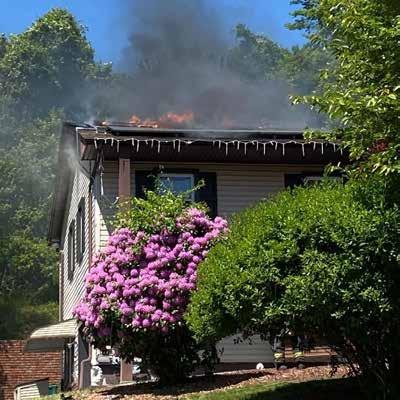
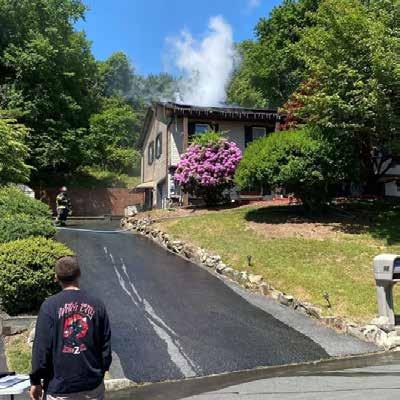
(Left) The week of June 22, Norfolk Fire Division crews conducted hands-on training in a home scheduled for demolition, giving firefighters the opportunity to practice search and rescue, ventilation, hose deployment, and other critical firefighting skills in a realistic environment. A special thank you to the Northeast Nebraska Regional Land Bank for making this training opportunity possible. Their partnership provides valuable, real-world training opportunities that help our firefighters stay prepared and strengthen public safety for our entire community. From the Norfolk Nebraska Fire Department Facebook page.



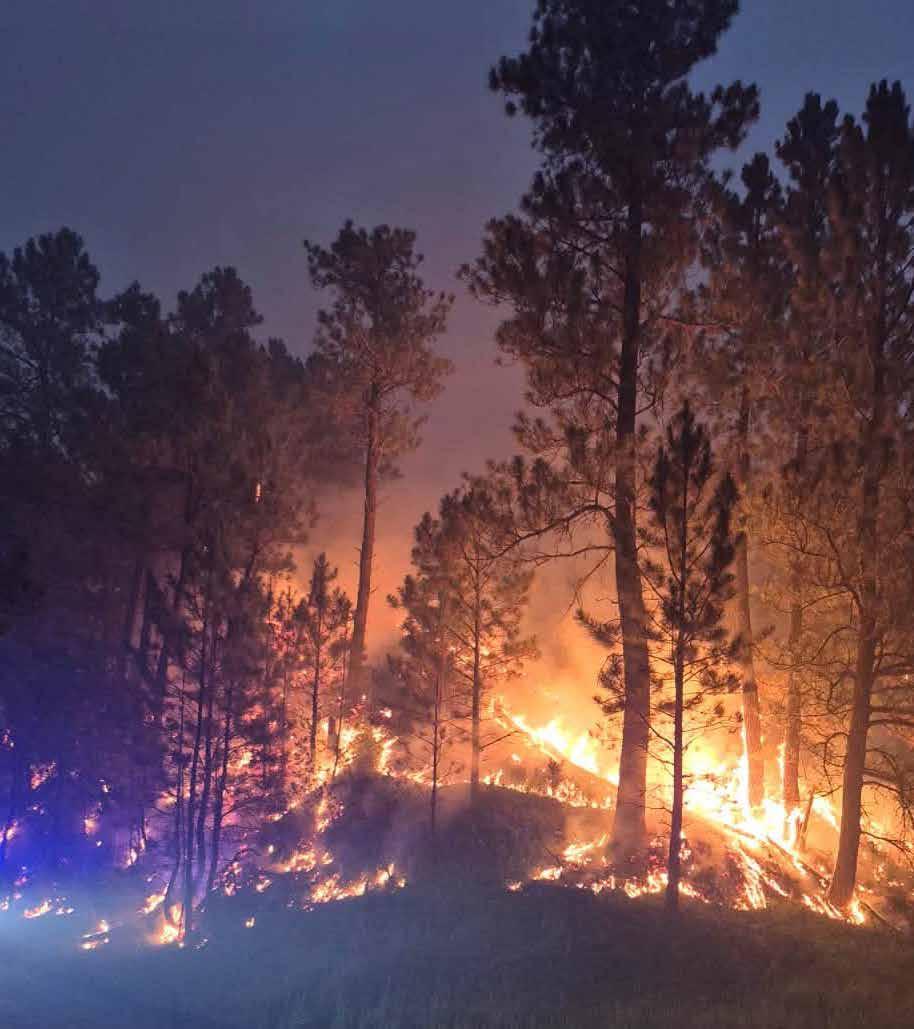
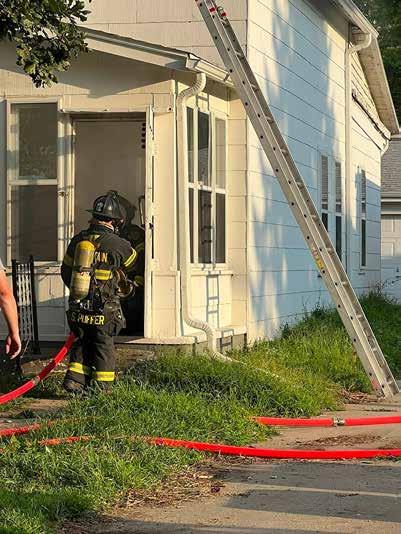
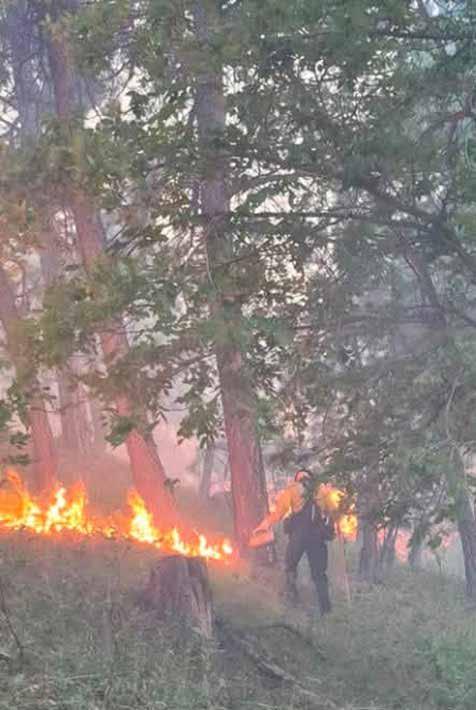
Photographs from our crew that was on the Log Road Fire near Crawford on June 29. From the Alliance Fire Department Facebook page.
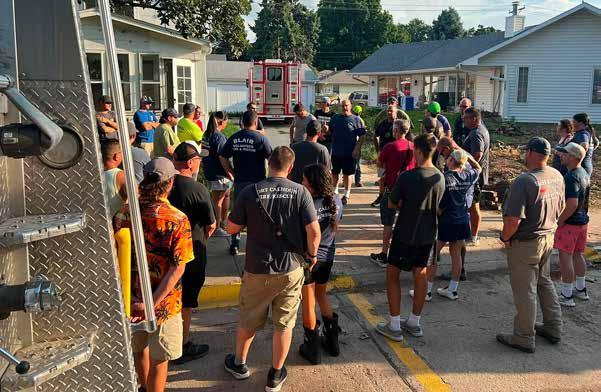
On July 16, members of the Blair Volunteer Fire Department had the opportunity to train alongside our mutual aid partners from Fort Calhoun Fire and Rescue and the Herman Fire Department during a realistic residential structure fire training exercise near 18th & Lincoln Streets. Crews focused on critical firefighting skills including multi-agency coordination and communication, and fireground safety and teamwork. These hands-on training opportunities are invaluable. They allow us to work together in a controlled environment, build relationships with neighboring departments, and refine the skills that are needed when real emergencies occur. From the Blair Fire and Rescue Facebook page.
Ricochet is partnering with the National Volunteer Fire Council (NVFC) to donate high-quality personal protective equipment (PPE) to volunteer fire, EMS, and rescue departments across the U.S. through the Ricochet PPE Award Program.
Having the right PPE for the right response is critical to the safety and effectiveness of emergency responders. Yet many volunteer departments struggle to find funding for EMS, wildland, and technical rescue gear. Ricochet and the NVFC are working to address this need by providing departments with gear packages designed for these specific responses.
The program includes three distinct application periods in August, September, and October. Five departments will be awarded five sets of gear (jacket and pants) after each application period, for a total of 15 departments and 75 sets of gear provided. The gear packages and application periods are as follows:
• AUGUST 3 TO AUGUST 31 at noon ET – Ricochet Out Front™ Technical Rescue Gear
• SEPTEMBER 1 TO SEPTEMBER 30 at noon ET – Ricochet Wildland Gear
• OCTOBER 1 TO OCTOBER 30 at noon ET – Ricochet Wildland + Technical Rescue Dual-Cert Gear
To be eligible, departments must annually respond to the type of calls corresponding to the gear they are applying for, have at least one NVFC member, be over 50 percent volunteer, serve a population of 25,000 or less, be located in the U.S. and legally organized under state law, and demonstrate a need for the gear. Departments can apply for any or all of the gear packages based on their operational needs; applying for one does not make you ineligible to apply for another.
“Too many volunteer fire, EMS, and rescue departments send their responders on calls wearing the wrong type of gear due to limited budgets and resources,” said NVFC Chair Steve Hirsch. “The Ricochet PPE Award Program will equip more volunteer responders with the right gear for the call, improving safety, effectiveness, and readiness. We thank Ricochet for their support of the volunteer emergency services and for helping our nation’s departments be ready for all types of calls.”
“Volunteer departments don’t have the luxury of wasted gear, wasted time, or wasted budget –and we don’t take that lightly,” said Laura Miller, Director of Marketing and Customer Service at Ricochet. “We’re proud to build systems based on real firefighter input – gear designed for how the job actually gets done today,
not how it used to be. The result is purpose-built protection that helps limit unnecessary exposure, improve mobility, extend the life of your turnout gear, and stretch every dollar further.”
Learn more about the program and the gear specifications at www.nvfc.org/ricochet. The first application period starts on August 3. Find tips for submitting a strong grant application in this video Learn more about the importance of having the right gear for the right response in this NVFC webinar sponsored by Ricochet.
At Ricochet, we know what volunteer firefighters face – tough calls, tight budgets, and the constant pressure to protect their communities. That’s why every set of gear we build is designed with real firefighter input – so it performs when lives depend on it, without unnecessary cost or complexity. From structural and wildland to technical rescue and EMS, our NFPA-compliant PPE is crafted with pride in Philadelphia and built to last. Making the switch to
non-PFAS gear? We make it easy – same protection, durability, and comfort, plus clear guidance and grant-friendly options – because your health matters as much as your safety. Volunteers choose Ricochet for trusted protection, budget-smart solutions, and gear that stands up to years of service. Because making it home matters most. Learn more or contact us at RicochetGear.com or call 215849-1971.
The National Volunteer Fire
Council (NVFC) is the leading nonprofit membership association representing the interests of the volunteer fire and emergency medical services. The NVFC unites and supports volunteer and combination fire and EMS organizations through education, advocacy, leadership development, and collaboration. Guided by professionalism and innovation, we provide the tools and resources needed to protect communities, advance responder health and safety, and prepare leaders for the future. Learn more and join at www.nvfc.org

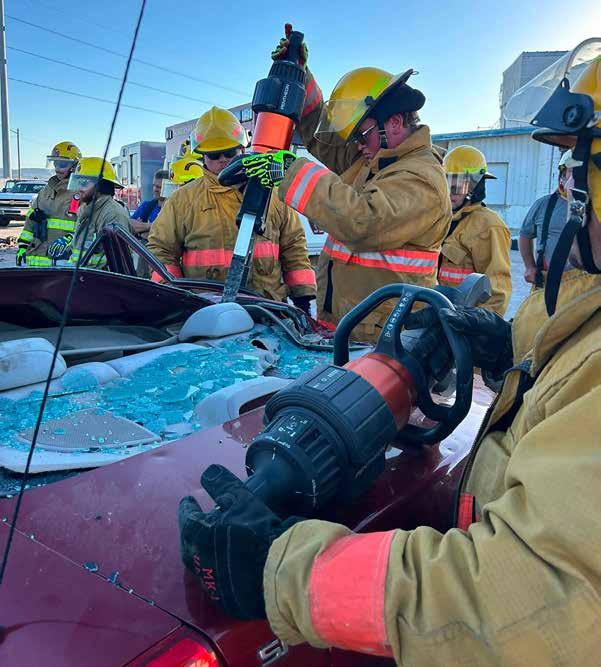
For training this month Mitchell Volunteer Fire Department was invited by the Scottsbluff Fire Department to practice extrication. Scottsbluff Rural Fire Protection District was also in attendance. It was a great opportunity to work with neighboring departments. Thank you to SFD for leading this and Langer Industrial Service LLC for the vehicles and space. From the Mitchell Volunteer Fire Department Facebook page.
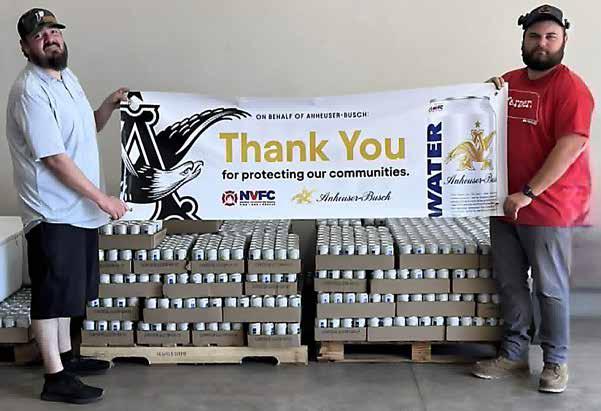
The Belden Volunteer Fire Department has been selected to receive the Anheuser-Busch Emergency Drinking Water Grant through the National Volunteer Fire Council (NVFC), providing the department with a supply of emergency drinking water to support firefighters during emergency responses and training.
The grant is part of Anheuser-Busch’s nationwide initiative to provide more than 1.5 million cans of emergency drinking water to over 630 volunteer fire departments across the United States. The program helps departments prepare for wildland fires, natural disasters, and other prolonged emergency incidents while allowing limited local budgets to be used for essential equipment and operations.
For the Belden Volunteer Fire Department, the donation will play an important role in firefighter health and safety. Firefighters often spend long hours battling fires and responding to emergencies in extreme weather conditions, mak-
ing proper hydration critical to maintaining physical performance and reducing the risk of heat-related illnesses.
“Volunteer departments rely heavily on grants and community support to provide the resources needed to protect both our firefighters and the citizens we serve,” said Lathan Ohlrich Assistant Fire Chief at Belden Volunteer Fire Department. “This generous donation helps ensure our members have access to clean drinking water during emergency operations, allowing us to focus on serving our community safely and effectively.”
The Belden Volunteer Fire Department extends its sincere appreciation to Anheuser-Busch and the National Volunteer Fire Council for their continued investment in volunteer fire departments across the country. Partnerships like these strengthen emergency preparedness and help ensure volunteer firefighters have the resources they need to answer the call whenever their community needs them.
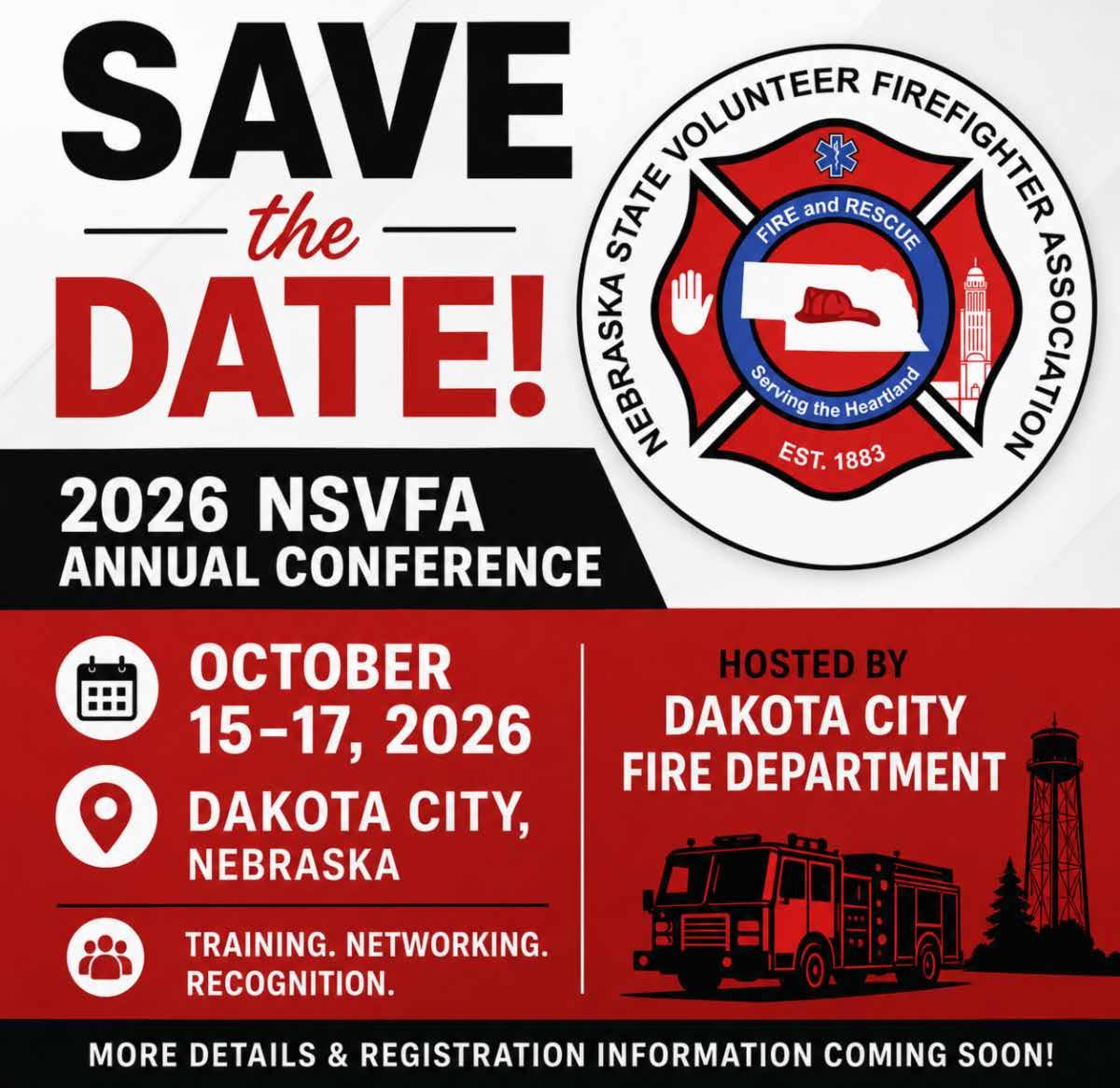
The Dakota City Fire Department is proud to host the 2026 Nebraska State Volunteer Firefighters Association Conference on October 15–17, 2026. We invite volunteer fire departments and firefighters from across Nebraska to join us for a weekend of training, networking, fellowship, and association business.
As we prepare to host this statewide event, we are seeking donations from fire departments to help offset conference expenses. Your support helps us provide a quality conference for Nebraska’s volunteer firefighters and is an investment in the future of Nebraska’s volunteer fire service.
As a token of our appreciation, your fire department’s name will be recognized on our Conference Sponsor Banner displayed throughout the event.
SPONSORSHIP LEVELS:
Gold Sponsor: $300+
Silver Sponsor: $150–$299
Bronze Sponsor: $50–$149
Donations of any amount are greatly appreciated.
PLEASE MAIL DONATIONS TO:
DAKOTA CITY FIRE DEPARTMENT
2026 NSVFA CONFERENCE COMMITTEE
P.O. BOX 46
DAKOTA CITY, NE 68731
Thank you for your support. We look forward to welcoming you to Dakota City this October!
Please send them to jeff@nebraskafirefighter.com along with information to explain the photo.
Around 10:15 Tuesday morning, the Holdrege Volunteer Fire Department responded to a house fire at the 800 block of 11th Ave. When crews arrived at the scene, they saw the attached garage had caught fire.
According to the Holdrege Police Department, the cause of the fire is still yet to be determined.
The Holdrege Volunteer Fire Department was joined by the Loomis and Funk fire departments after calling for mutual aid.
Deputies with the Phelps County Sheriff’s Office and Holdrege City workers were also at the scene providing aid.
The American Red Cross was called to assist the homeowners as well. No injuries were reported.
UPDATE (7/15): After working with the State Fire Marshal, the cause of the fire was determined to be electrical. The fire originated in the garage before moving into the home. Crews were able to
work quickly to reduce the damage in the home. While no human injuries occurred, some house pets were taken to the vet for treatment.
(KUVR News, July 14, 2026)
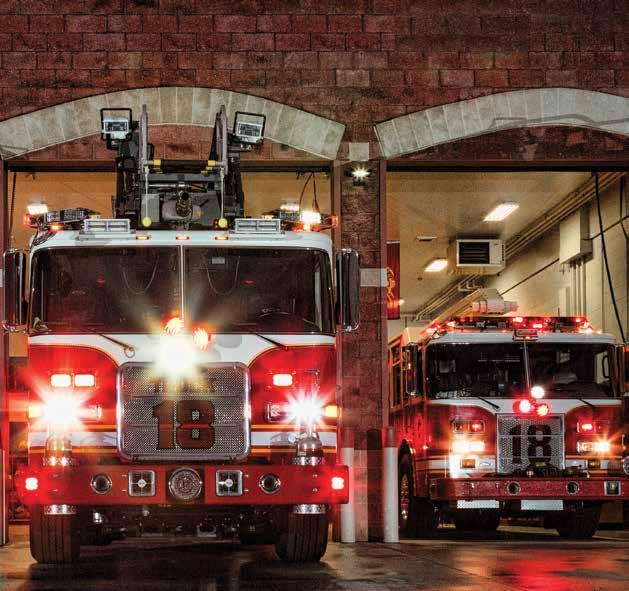

Maximum durability means maximum readiness. MacQueen delivers comprehensive fire apparatus solutions backed by expert service and support.

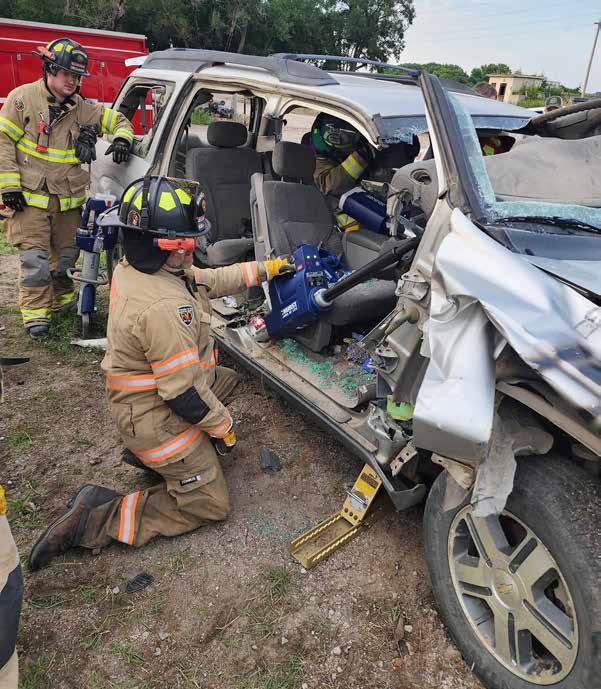
On June 30 , Pierce Fire Department conducted extrication training with their new tools.
After several large fires across the region this year, Cherry County firefighters are exploring the creation of a task force to improve emergency response
After several large fires across the region this year, Cherry County firefighters are exploring the creation of a task force to improve emergency response.
The idea follows a growing trend among rural communities to establish coordinated systems for mutual aid. Under a task force model, departments can request assistance through a single point of contact, streamlining commu-
nication and speeding up response times during a major fire.
In Cherry County, the proposed task force would include departments from Wood Lake, Valentine, Cody, Kilgore, Merriman and Springview. Cherry and Keya Paha County Emergency Manager Jessica Coyle would serve as the central coordinator for mutual aid requests.
Rural fire departments often form task forces or strike teams to share personnel and equipment across jurisdictions. The approach helps smaller, often volunteer-based departments respond more effectively to large-scale emergencies, such as wildfires or major structure fires, without leaving their own communities unprotected.
(By Casey Wonnenberg, News Channel Nebraska, July 16, 2026)
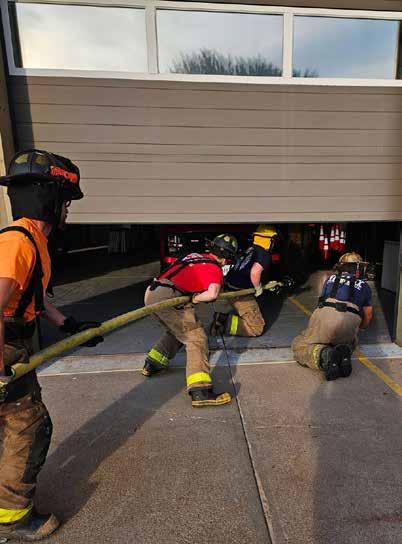

Excellent night of training (June 22) with pump ops, hose handling, initial entry with a hoseline, pulling hose and repacking hose repetitively. Practice makes us better for you! From the Grand Island Rural Fire Department Facebook page.
Action Fire Photos Needed!
Please send them to jeff@nebraskafirefighter.com along with information to explain the photo.
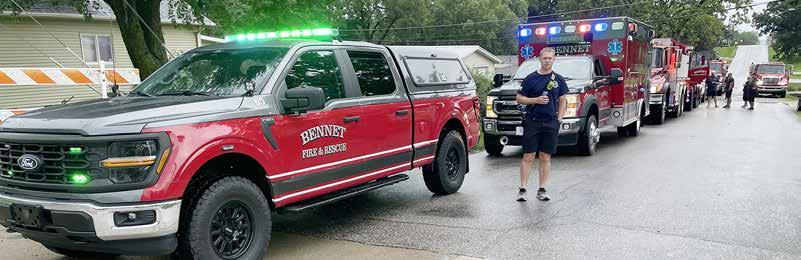
On July 4th, Bennet and Palmyra fire trucks lined up ready to kick off Bennet’s annual 4th of July parade. Photo by Evan King.
The community is coming through in a big way to support an injured South Dakota firefighter. John Jessen of the Interior Volunteer Fire Department suffered a serious accident while fighting the South Fork Fire near Crawford, Nebraska on June 14th. The injury was severe enough that his family was told he may lose the leg entirely. He was flown to Scottsbluff, NE, and later transferred to Loveland, CO for treatment.
(KOTA-TV ABC 7 Rapid City, June 26, 2026)
The Crawford Fire Department says the fire was caused by lightning and was first reported yesterday. It has burned approximately 30 acres.
Firefighters have made progress on the Corkscrew Fire burning southwest of Crawford, establishing a line around the entire perimeter. The Crawford Fire Department says the fire was caused by lightning and was first reported Friday. It has burned approximately 30 acres. Crews remain on scene Saturday, but fire officials say they are optimistic the fire will not grow further. The Crawford area has faced multiple fires in recent weeks due to dry conditions and extremely high fire danger.
At the end of June, the South Fork Fire near Crawford reached full containment after burning nearly 39,700 acres. Earlier this month, the Log Road Fire near Crawford was also fully contained after burning more than 1,500 acres.
(By Casey Wonnenberg, News Channel Nebraska, July 11, 2026)
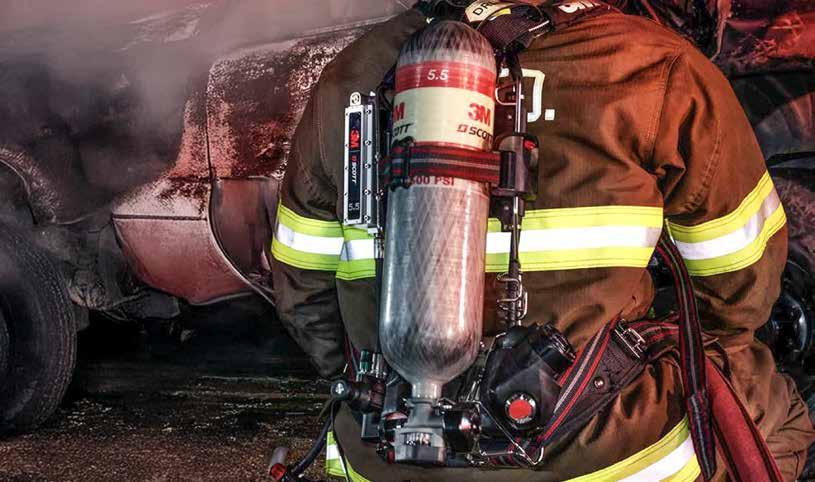
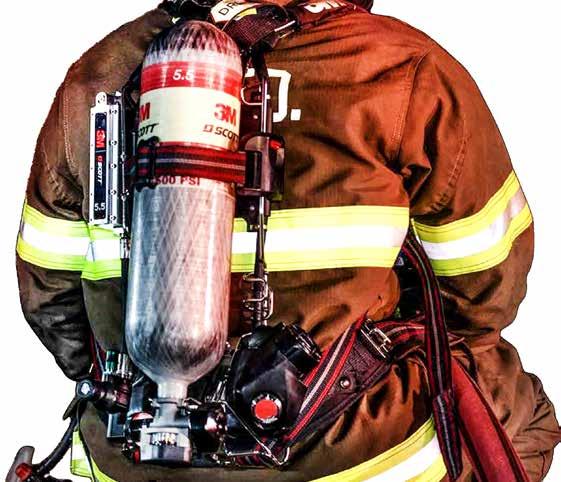

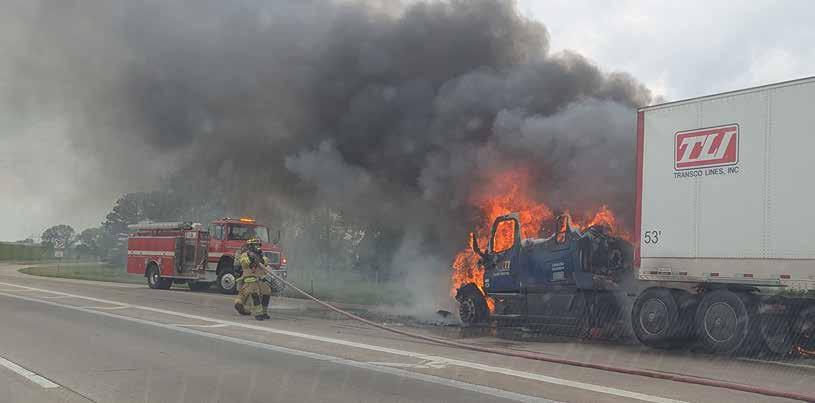
A semi -truck caught fire Friday afternoon, June 26, just off of the I-80 Odessa Interchange, on the westbound side. Kearney Volunteer Fire Department, Good Samaritan EMS, and the State Patrol responded to the scene at approximately 2:22 p.m. The scene was marked clear around 4 p.m.

Authorities say a juvenile setting off fireworks inside their home was responsible for a structure fire Thursday that caused about $50,000 damage.
Scottsbluff firefighters were called to the 500 block of West Overland around 3:30 p.m., finding moderate smoke coming from the residence, with all occupants having evacuated.
Fire Prevention Officer Chris Perales Jr. says the fire was extinguished within 10 minutes of arrival of two of the city’s fire engines.
Perales says throughout the course of the investigation, it was determined that a juvenile male who was home alone was discharging fireworks within the home, sparking a fire in a bedroom. As a result of the fire, the home sustained $50,000 in damages, including significant smoke damages, including property loss of around $25,000.
The home was a rental and unfortunately the parties involved did not have any renter’s insurance. Three occupants were displaced and have received assistance from the Firefighter’s Ministry.
Perales thanked Scottsbluff Police Department, and CERT for their assistance on the incident.
(KNEB Staff, July 10, 2026)
Please send them to jeff@nebraskafirefighter.com along with information to explain the photo.