MESSAGE FROM THE MAYOR
On behalf of the City of St. John’s, I am pleased to extend warm greetings to the Newfoundland Symphony Orchestra as you launch your 2025/2026 season, Obsessed, Onstage, Onfire.
This year’s theme reflects the passion, dedication, and energy the NSO brings to our community year after year. Through inspiring performances, meaningful education programmes, and steadfast community engagement, the NSO continues to ignite a love of music that enriches the cultural fabric of our city.
My sincere thanks go to the musicians, staff, volunteers, patrons, and sponsors who make each season possible. Your commitment ensures that the symphony not only thrives, but also continues to inspire audiences of all ages.
On behalf of Council, I congratulate the NSO on another exciting season and wish you every success as you share your extraordinary talent with our community.
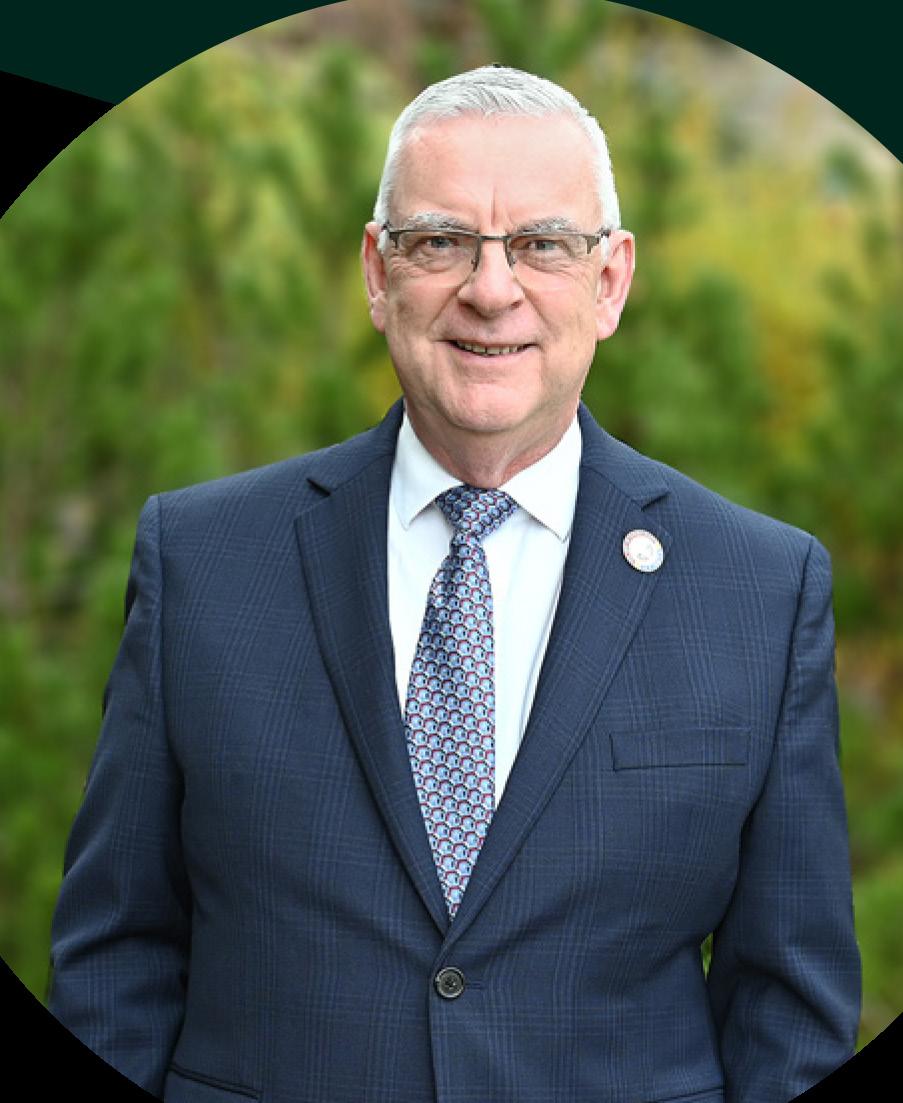
Warm regards, Danny Breen Mayor of St. John’s
Message from the Lieutenant Governor
As Honorary Patron of the Newfoundland Symphony Orchestra, it is my great pleasure to extend greetings and very best wishes for the 2025-2026 season.
The NSO is a wonderful orchestra, which has served to cultivate and profile many of the exceptional artists we have in our province. The gift of the NSO’s rich orchestral music has become an integral part of the cultural fabric of Newfoundland and Labrador. Again this year, a variety of performances are planned, sure to delight audiences and inspire us all.
This season is the first under the artistic leadership of Music Director Simon Rivard. Congratulations on your new role, and welcome!
I hope you will enjoy the performances the NSO has in store this year. To everyone involved: the musicians, staff, crew, and all who have a hand in producing this season, I thank you and wish you the best.
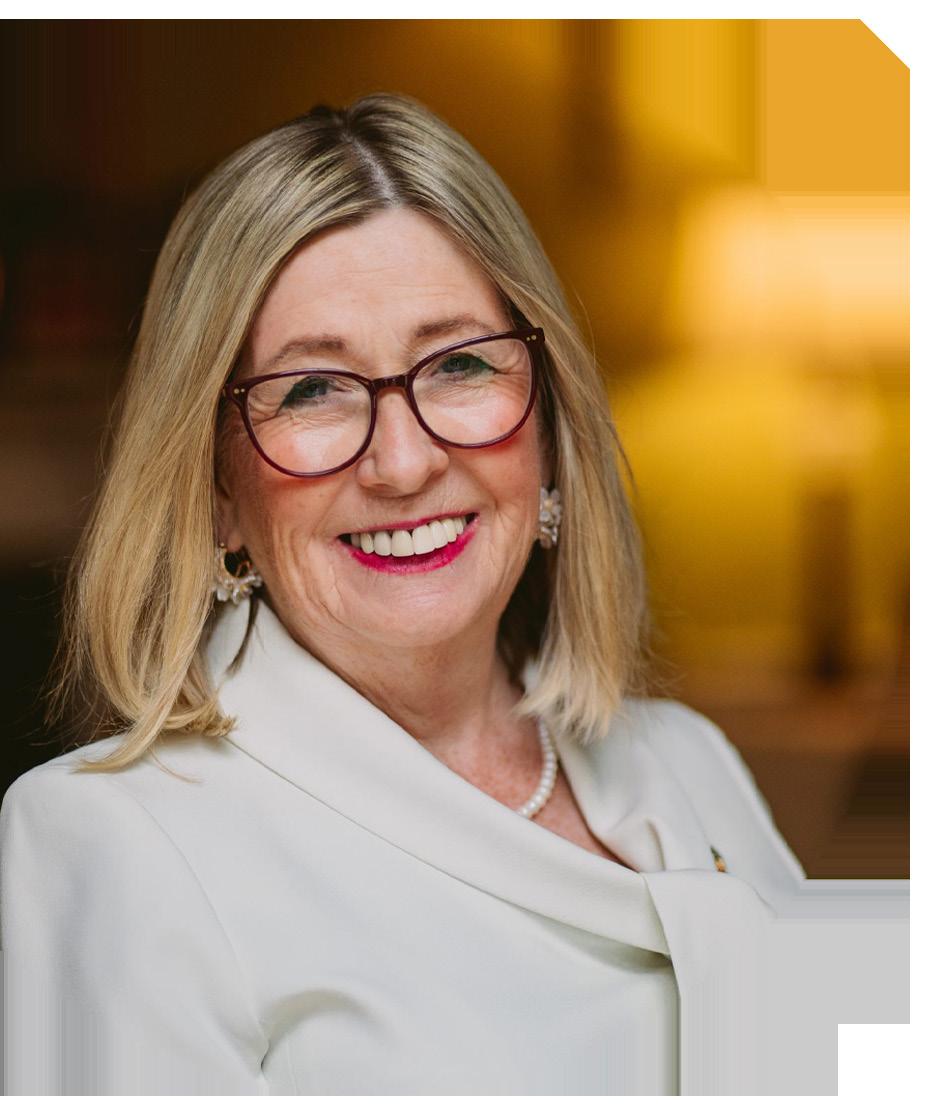
Joan Marie J. Aylward, O.N.L Lieutenant Governor of Newfoundland and Labrador
We acknowledge the province of Newfoundland and Labrador as the traditional territory of diverse Indigenous groups, and we acknowledge with respect the distinct histories and cultures of the Beothuk, Mi’kmaq, Innu, and Inuit of this province. We strive for respectful relationships with all the peoples of this province as we search for collective healing and true reconciliation and honour this beautiful land together.
SINFONIA
3 PULSE OF THE EARTH
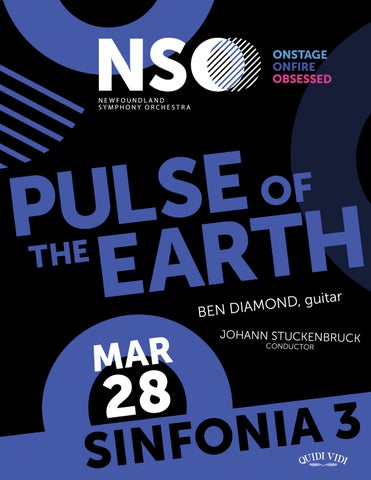
Saturday, March 28, 2026 • D.F. Cook Recital Hall Presented by Quidi Vidi Brewery
Johann Stuckenbruck, conductor • Ben Diamond, guitar
PROGRAMME
Ottorino Respighi Ancient Airs and Dances Suite No. 3, P.172 15 min.
I. Italiana
II. Arie di corte
III. Siciliana
IV. Passacaglia
Heitor Villa-Lobos Concerto for Guitar and Small Orchestra, A501 18 min.
I. Allegro Preciso
II. Andantino e andante
III. Allegro non troppo
Malcolm Arnold Serenade for Guitar and Strings 6 min.
Astor Piazzolla Sinfonietta, Op. 19 15 min.
I. Dramatico
II. Sobrio
III. Jubiloso
GUESTARTIST
BEN DIAMOND GUITAR
Described as “a natural performer who infuses his interpretations with energy, excitement, and a broad expressive range”, Canadian guitarist Ben Diamond is a well rounded musician who’s passion knows no limits. He is active as an educator, improviser, performer, and collaborator pursuing a wide variety of projects that contribute to the evolution of the 21st century guitar. A recent graduate from the M. Mus in performance program at Schulich School of Music (McGill University), Ben’s primary focus is the collaboration with composers to create new works for the guitar.
It is his success in premiering contemporary music and love for community building that has earned him many accolades such as the “CBC 30 under 30 hot classical musicians” in 2021, the 2021 ArtsNL Emerging Artist of the year award, and a nomination for the 2025 East Coast Music Award for Electronic Release of the Year. Ben has also placed in competitions such as the FCMF National Music Festival (SK), Twisted Spruce International Competition (Virtual), Domaine Forget International Guitar Competition (QC), Festival-concours de musique Sherbrooke, and the Classival - concours de musique classique (QC).
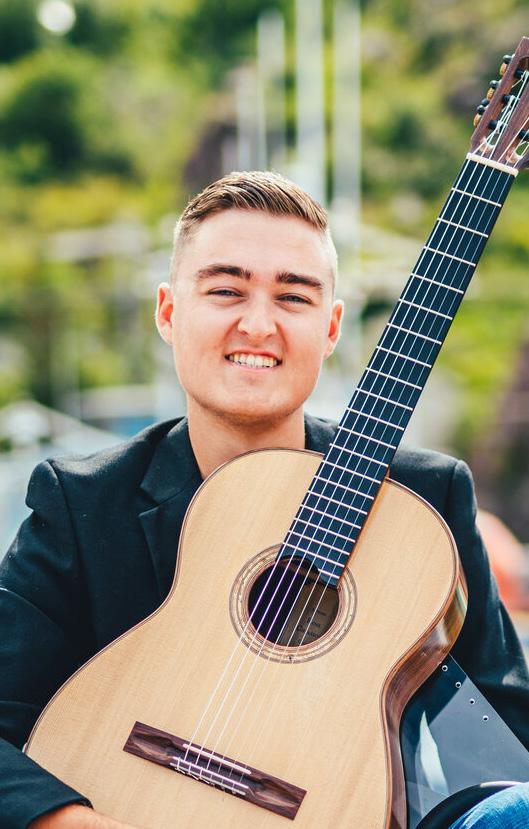
Ben released his debut solo album in 2020 titled PRIME. The album was nominated for the Music NL Classical Release of the Year award in 2021. That same year, Ben moved to Montreal in pursuit of graduate studies in performance at the Schulich School of Music. It was in Montreal that Ben would focus on expanding the electroacoustic catalogue for guitar. In combination with Ben’s previously commissioned works and his final recital repertoire, this newly curated programme of electroacoustic music would become his second album, VOYAGE, released in 2024. Published via RedShift Records, VOYAGE and its repertoire strive to tell relatable stories about personal journey, sacrifice, change, and triumph through adversity. It is with repertoire from PRIME and VOYAGE that Ben has performed in festivals including Sound Symposium, Newfound Music, 21st Century Guitar Conference, Codes d’acces, East Coast Music Awards and more.
An avid educator, Ben has given guitar lessons to a variety of students both in person and online. In St. John’s, Ben founded the classical guitar program with the Suzuki Talent Education Program (STEP), and also teaches at Dynamic Sounds Music Studio. He has given masterclasses for the students at Acadia University, Memorial University, the Connecticut Guitar Guild, Ottawa Guitar Society, and the Atlantic Guitar Society for which he co-founded in 2020. Ben has served as an adjudicator with the Federation of Canadian Music Festivals and Ontario Provincial Music Festivals Association.
Ben’s former teachers include Sylvie Proulx, Steve Cowan, Patrick Kearney, and Jérôme Ducharme. Outside of his musical endeavors, Ben enjoys spending time with family and friends, going outdoors, and exercising. He is an ambassador for Augustine strings, and plays guitars by Canadian luthier Ross Chiasson.
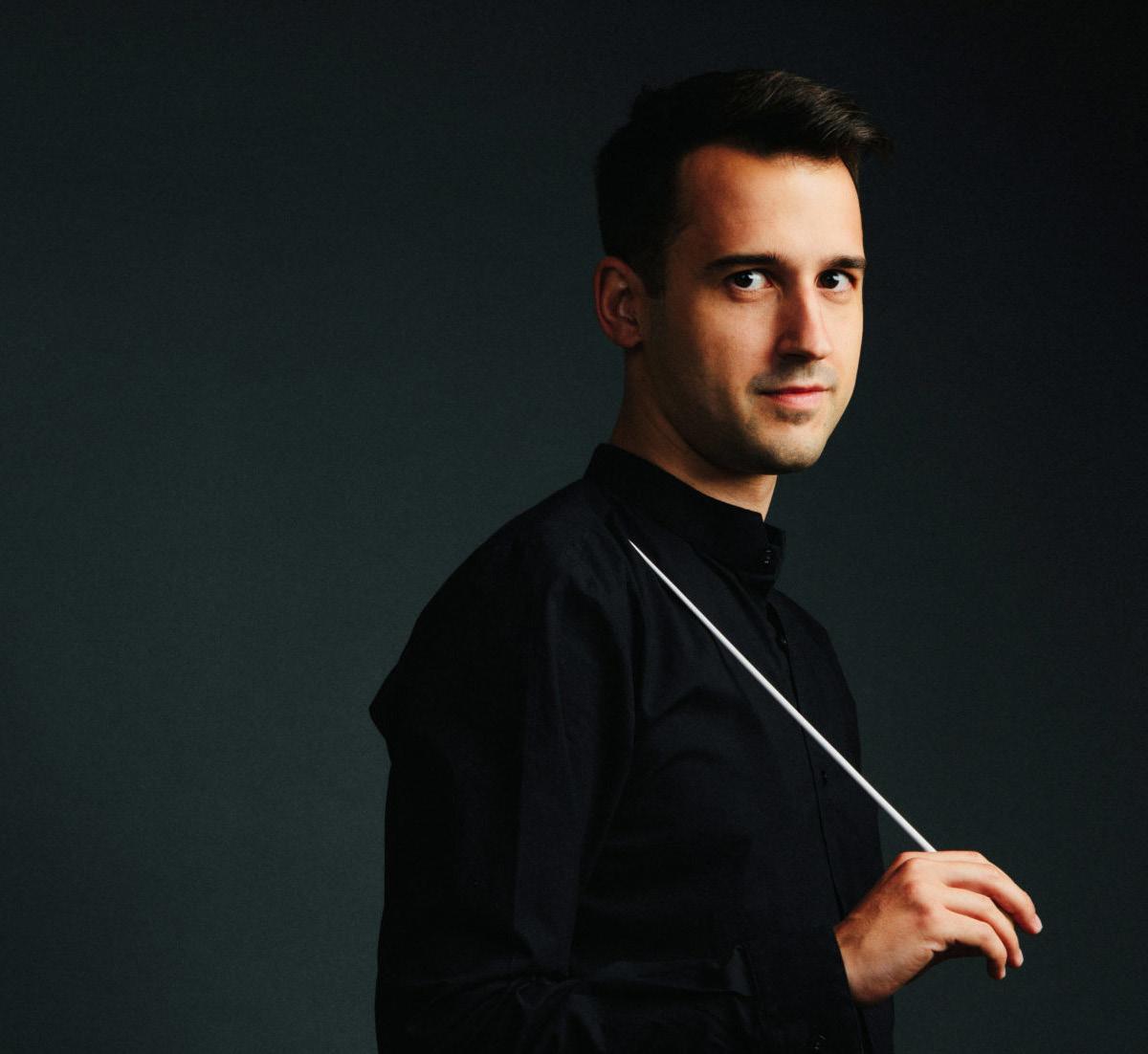
CONDUCTOR JOHANN STUCKENBRUCK
Music Director of l’Orchestre Symphonique du Saguenay-LacSaint-Jean, British-American conductor Johann Stuckenbruck is a rising star on the podium known for his technical excellence, versatility, and musical vision.
With his nomination as Music Director of l’Orchestre Symphonique du Saguenay-Lac-Saint-Jean (OSSLSJ), Stuckenbruck will begin his tenure in the 2025-26 season as the third Music Director in the orchestra’s history. Among his engagements with OSSLSJ, Johann will make guest appearances this coming season at the Opéra Royal de Wallonie-Liège, the Opéra National de Paris, the Orchestre Symphonique de Montréal, the Siletz Bay Music Festival, and the Newfoundland Symphony Orchestra.
Previous seasons in the opera house have included multiple appearances at Glyndebourne. In the 2021-22 Season, Stuckenbruck conducted the world premiere of Glyndebourne’s award-winning commission Pay the Piper and conducted Don Pasquale on the Glyndebourne tour. He has also assisted Glyndebourne music director Robin Ticciati on festival productions of Kát’a Kabanová and The Wreckers, including the subsequent performance at the BBC Proms. Stuckenbruck has also worked at Opéra National de Paris, Opéra Royal de Wallonie-Liège, Opera North, Opera de Tenerife, the Royal Academy of Music, and gave a critically acclaimed performance of Kurt Weill’s rare opera The Tsar Has His Photograph Taken at the Bloomsbury Theatre.
In the concert hall, Stuckenbruck has appeared regularly with the Orchestre Symphonique de Montréal, the San Diego Symphony, and the Romanian Radio Chamber Orchestra. Stuckenbruck has also conducted the Orchestre National de Bretagne, the Hallé, the Royal Northern Sinfonia, Conservatori Superior de Música de les Illes Balears, the Royal Academy of Music Symphony Orchestra, Salomon Orchestra, Covent Garden Chamber Orchestra, the Amadeus Chamber Orchestra, Orchestre Victor Hugo Franche-Comté.
Stuckenbruck has given numerous world premieres, including operas by Lewis Murphy, Joana Lee, Cecilia Livingston, Anna Appleby, Ninfea Cruttwell-Reade, and Ailie Robertson, and has collaborated on symphonic works with Ian Cusson, Ana Sokolovic, Maxime Goulet, Julien Bilodeau, Carlos Simon, Nancy Ives, and Samy Moussa.
Stuckenbruck graduated with distinction in Orchestral Conducting from the Royal Academy of Music, where he studied with Sian Edwards and participated in masterclasses with visiting conductors Martyn Brabbins and Mark Stringer. Abroad, he received mentorship from Daniele Gatti, Marin Alsop, Giancarlo Guerrero, Arvo Volmer, and Neil Thompson. Upon graduation, Stuckenbruck went on to assist Sir Mark Elder, Rafael Payare, Robin Ticciati, Speranza Scappucci, and Bernard Labadie in both opera and concert. In 2023, Stuckenbruck was conferred with an Associate of the Royal Academy of Music (ARAM) for his significant contributions to the musical landscape.
VIOLIN 1
Heather Kao
Dominic Greene
Andy Kao
Anastasia Kiseleva
Whit Fitzgerald
VIOLIN 2
Nancy Case-Oates
Elena Vigna
Ilyas Duissen
Jacquelyn Redmond
VIOLA
Kate Read
Ema Shiroma-Chao
Rosaura Aguilar
CELLO
MUSICIANS
Nathan Cook
Amy Collyer-Holmes
DOUBLE BASS
Frank Fusari
FLUTE
Michelle Cheramy
OBOE
Annie Corrigan
CLARINET
Glenn Rice
UPCOMINGCONCERTS
BASSOON
Grant Etchegary
HORN
Emily Dunsmore
TROMBONE
Darren McDonald
PERCUSSION
Rob Power
Etienne Gendron
HARP
Sarah Veber
PIANO
Jenny Griffioen
PROGRAM NOTES
SINFONIA 3: Pulse of the Earth
Ottorino Respighi (1879–1936) is one of a small handful of Italian composers who are better known for their instrumental compositions than their vocal music. Like many of his contemporaries, Respighi wrote lush, romantic tone poems (one of the most influential instrumental genres at the turn of the century). But Respighi was also something of a musicologist, and frequently incorporated the style and form of earlier music in his compositions. He composed three suites of Ancient Airs and Dances that borrowed tunes written by a variety of Renaissance and Baroque composers. Suite No. 3 (1932)—the only suite written for strings alone—borrows anonymous tunes for the “Italiana” and “Siciliana” of the first and third movement, while the second movement reimagines several airs by Jean-Baptiste Besard, forming a kind of miniature suite. The fourth movement’s passacaglia tune was originally written by Lodovico Roncalli. All of the pieces used by Respighi were originally written for lute or guitar.
Despite being himself a guitarist and writing many pieces now standard in the guitar repertoire, Brazilian composer Heitor Villa-Lobos (1887-1959) wrote just one concerto for the instrument. The version of Guitar Concerto (1951) known today differs from the original composition in the addition of an extended cadenza after the second movement. Rumors of how this cadenza came to be are contradictory. By some accounts, the original guitarist, Andrés Sogovia requested the addition of the cadenza; by others, Villa-Lobos added it against Segovia’s wishes. In either case, this extended, virtuosic passage for solo guitar is long enough that it essentially functions as its own movement.
Serenade for Guitar and Small Orchestra (1950) by British composer Malcolm Arnold (1921–2006) is a palindrome. The slow introduction (andante) introduces a kernel of the melodic ideal, which blooms into a slightly speedier version of the full melody (allegretto). The mid-section of the piece is both the fastest (allegro) and the most energetic, with a pizzicato, minor version of the melody. The piece then reverses back through the allegretto and the allegro, ending the piece in the same calm manner in which it started.
Argentinian composer Astor Piazzolla (1921–1992) is primarily known for his work in revolutionizing tango music, adding elements from jazz and classical music to create a style now known as nuevo tango. He began his career playing in tango bands, pursuing composition first with Argentinian composer Alberto Ginastera and later traveling to France to study with Nadia Boulanger, a devotee of Igor Stravinsky who taught many of the twentieth-century’s most prominent composers. Piazzolla composed Sinfonietta in 1953, just before beginning his studies with Boulanger, and while he had not yet solidied his personal style, the influence of tango is obvious. Movement one, “Dramatico” is built over a repeating, syncopated bass line, the melodies above suggesting the slow, sensuous movements of the dance. Movement two, “Sobrio” is, in contrast, more tense, almost evoking the soundtrack of one of Alfred Hitchcock’s contemporaneous films. Movement three, “Jubiloso,” returns to the vigorous rhythms of the opening movement though maintains the rather tense melodic drive of the second movement, leading to the work’s dramatic conclusion.
- Notes courtesy of Dr. Annalise Smith
OVATION A STANDING FOR OUR SUPPORTERS

NSO Staff
Simon Rivard, Music Director
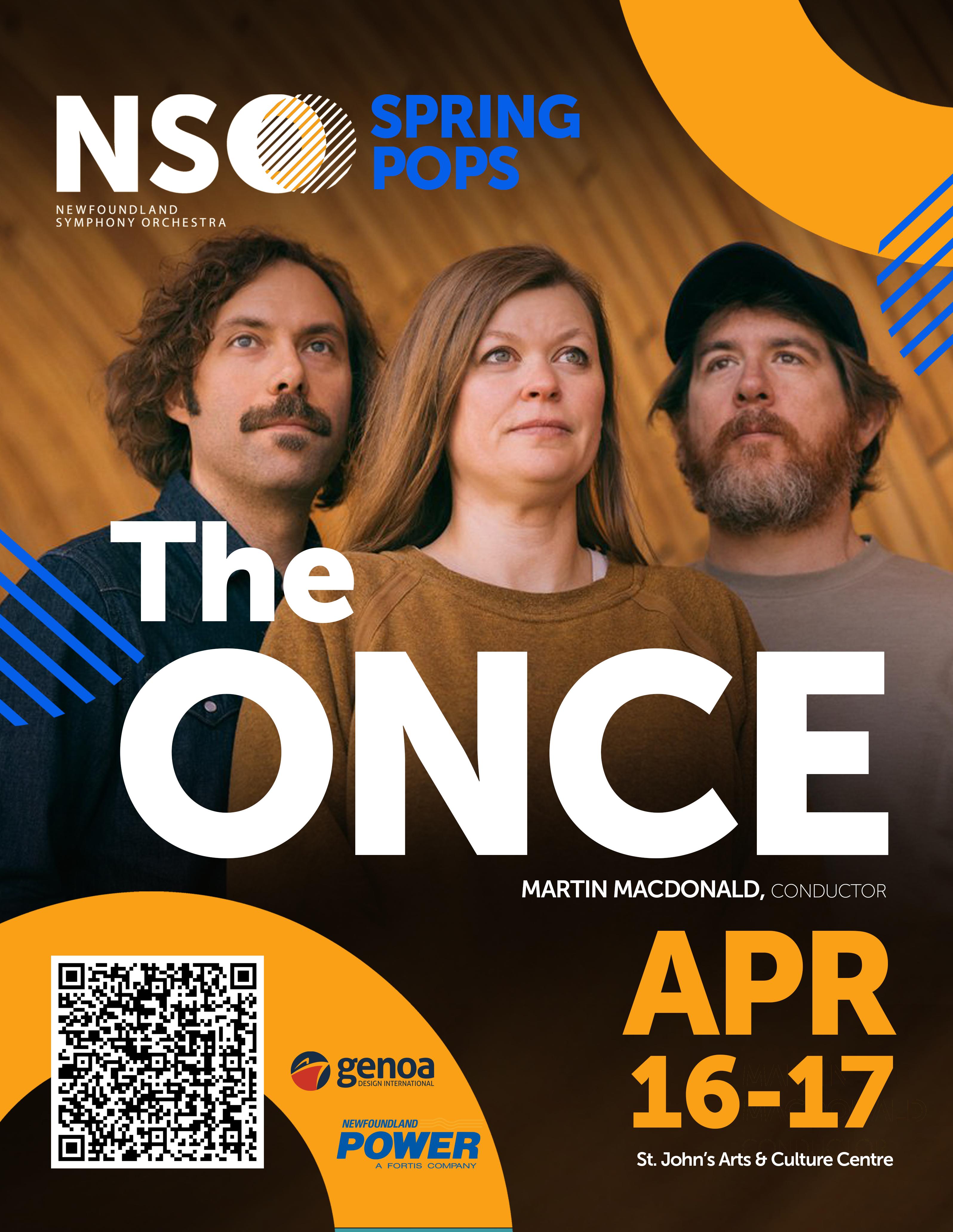
Martin MacDonald, Principal Pops Conductor
Hugh Donnan, CEO
Lynn Ann Pye, Patron Relations
Jennifer Brennan, Education & Outreach Coordinator
Susan Kelsey, Marketing & Event Manager
Dominic Greene, Personnel Manager
Steve Power, Production Manager/Video Production/Editing
Jenny Griffioen, Librarian
Kyle McDavid, Graphic Designer
NSO Board
Jessica Chapman (Chair)
Michelle Davis (Vice-Chair)
Tom Hickey (Past Chair)
Douglas Wright (Treasurer)
Robert Thompson (Corporate Secretary)
Philip Harrington
Eleanor Swanson
Heather McKinnon
Andrea Rose
Duncan Fitzpatrick
Glenn Colton
Alana
Aimee Letto
Robert
Jennifer Massey
Jing
Karen
Chris
Amanda
Charlie Byrne
Andrii Shyshkin
Beth Porter