Northland MP Grant McCallum has expressed support for new regulations requiring major electricity retailers to provide time-ofuse power plans, stating these changes offer households and small businesses greater control over their electricity expenses.
He noted that high power bills concern many Northland families and companies, so expanding consumer choice and lowering costs is a welcome move.
By enabling customers to benefit from reduced off-peak electricity rates, people can better decide when to use power and potentially cut their bills. With more Northland residents and businesses investing in solar energy, these rules will also encourage those generating their own electricity — especially individuals who export surplus power to the grid during peak times.
• Assessment
• RadiofrequencyAblation
• UltrasoundGuidedSclerotherapy
SportsInjuries
Mr McCallum emphasised that dependable and reasonably priced electricity is vital for local communities, including farmers and businesses. Initiatives promoting market competition, offering flexibility to consumers, and fostering renewable energy investment are crucial for New Zealand’s energy outlook.
• MusculoskeletalUltrasound
• UltrasoundGuidedSteroidInjections
He encouraged Northlanders to contact their electricity provider to see if a timeof-use plan might help them lower their power expenses or visit billy.govt.nz, a free comparison and switching service from the Electricity Authority.
The changes are part of broader reforms intended to strengthen the affordability, reliability and durability of New Zealand’s electricity system. Even modest drops in power bills can significantly impact some households, and these new pricing options give families another way to manage costs while improving network efficiency.
Government actions supporting abundant, affordable, and reliable electricity for homes and businesses include:
• Eliminating building consent requirements for rooftop solar installation on existing properties, contributing to a 16 per cent rise in solar connections over the past year
• Mandating the four largest gentailers treat competitors equally to their own retail divisions, enhancing fair competition
• Requiring these gentailers to demonstrate their prices accurately reflect expected electricity costs
• Accelerating consenting processes to stimulate energy investment, with four renewable projects already fast-tracked
• Securing an LNG facility to backup generation when hydro, wind and solar sources fall short, which is already reducing future wholesale prices
• Installing solar panels on as many as 500 schools
• Increasing the export limit from 5kW to 10kW, enabling those with solar systems to sell more generated power back to the grid
• Establishing plug-in solar standards so consumers can purchase ready-to-use solar units for direct household connection
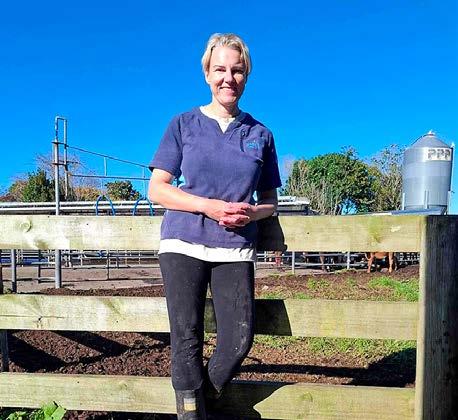
Northland MP Grant McCallum
International shearing tests underway
by Paul Campbell
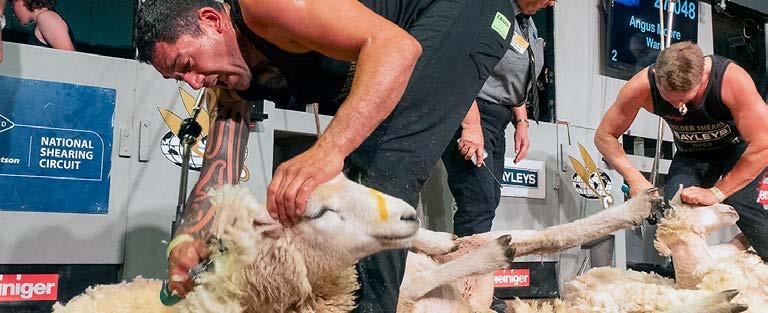
New Zealand Open and National Shearing Circuit champion Jack Fagan is on a four-week shearing test odyssey in the UK with his first encounter in the Scottish Blackface Shearing Championship Open final at Lochearnhead in Scotland.
Since his NZ Open win, he has shorn and instructed in the Basque Country in Spain, the US and Italy. Ahead of his arrival in the UK, Fagan was beaten only by Scottish ace Calum Shaw, who was last to finish but had the best quality points and claimed victory by 1.55 points. Fagan was also runner-up to Shaw at Lochearnhead in 2023.
The Scottish match is the traditional home of the annual first test of the Wools of New Zealand tour, but new team member Hemi Braddick, of Eketāhuna, was unable to travel in time.
series matches in October and March, as a result of winning the national shearing circuit final at the Golden Shears.
end on the first Saturday of March each year. The calendar for the 2026–2027 season will be considered at the Shearing Sports New Zealand annual meeting in August.
He will join Fagan in time for the first of four Wools of New Zealand team tests against Wales, at new fullwool ewes show the Epynt Shears, on July 11.
The full-tour opener at Epynt is thought to be the first on fullwool ewes in the annual UK legs of the series between the two countries, and restores it to a four-test contest, sandwiching a traditional test against England at the Great Yorkshire on July 15.
The remaining tests against Wales will be at the Cothi Shears on July 18, the Royal Welsh Show on July 22, and the Corwen Shears on July 25.
Fagan, who first shore for New Zealand as an injury replacement in the UK in 2017, gained selection for his third consecutive full tour of the UK when he won the New Zealand Shears Open final for the first time in Te Kūiti in April. He will also shear the trans-Tasman
He has had more than 30 open-class individual wins in the footsteps of father and global shearing legend Sir David Fagan. They include 13 overseas, the most recent in the US in a four-man final over 14 sheep in Roseburg, Oregon. While Fagan is yet to win the Lochearnhead final, the family name is on the trophy at least five times, with Sir David having won the event six times, in 1995, 1998, 2000, 2002, 2003 and 2015.
Meanwhile, the New Zealand Shears, one of only two Shearing Sports New Zealand shows to be held over three days or more, could be in for a change of date. Its committee is proposing advancing the event a fortnight on the calendar because of difficulty accessing the right sheep in the King Country area in the traditional timeframe of four to five weeks after the Golden Shears, which
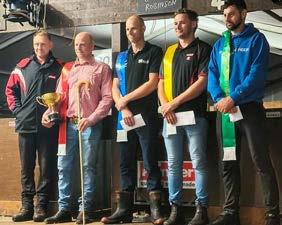
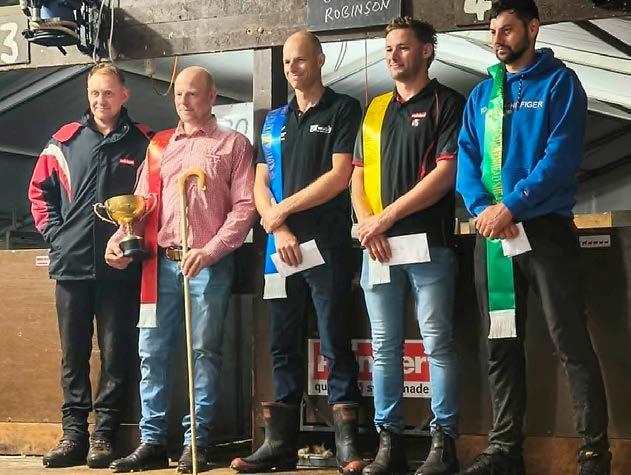
The line-up after the final of the Lochearnhead Shears Scottish Blackface Open shearing championship in Scotland with New Zealand shearer Jack Fagan (centre) the runner-up
Photo: SSNZ
CHRONICLING CALF REARING JOURNEYS
by Denise Gunn
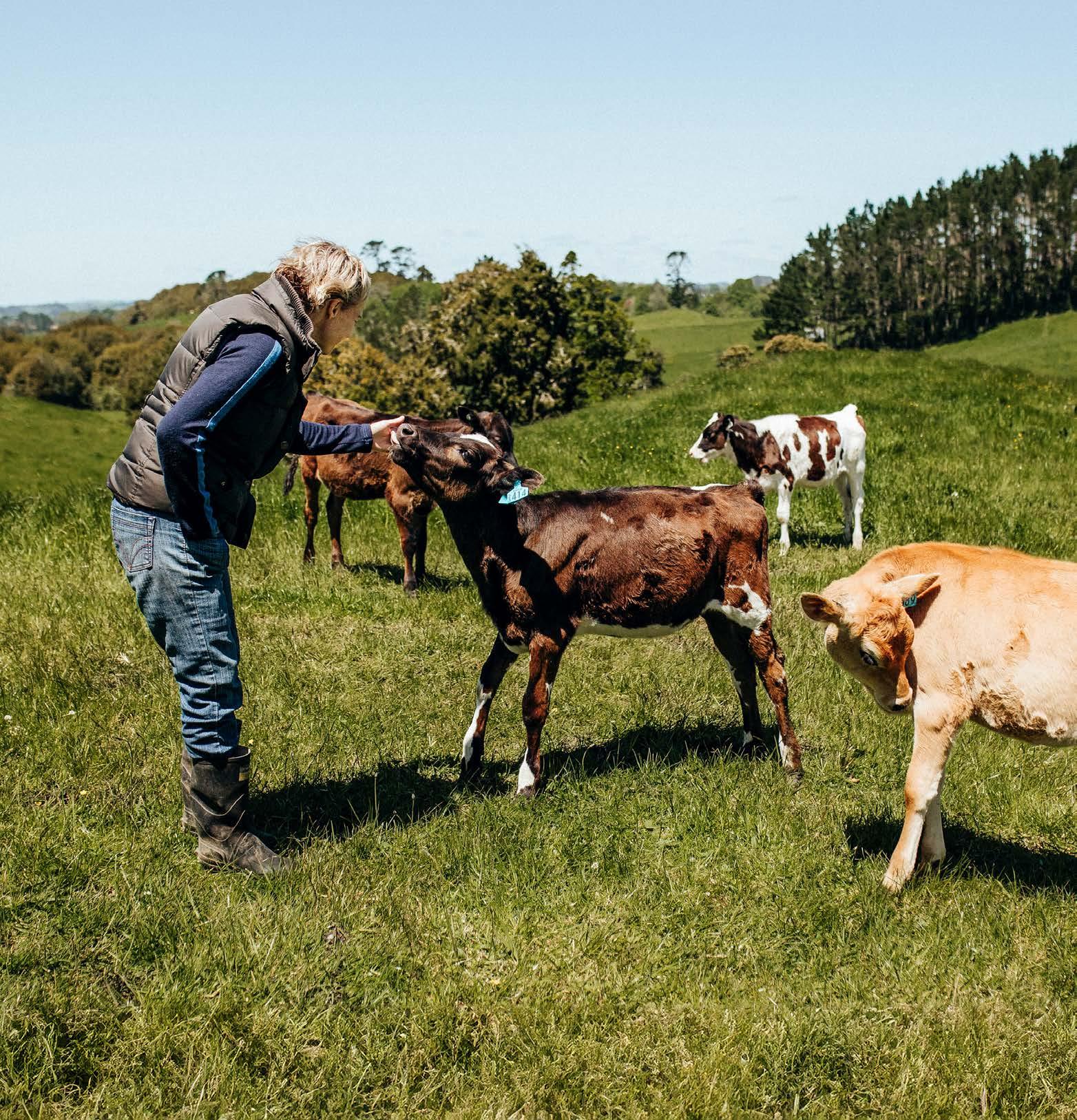
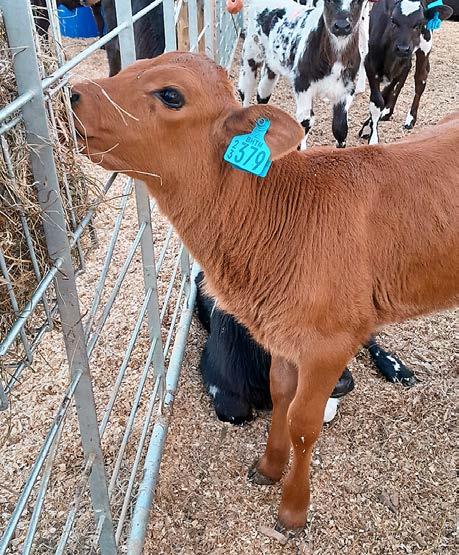
Interaction received on calf rearing posts on her personal Facebook page, led Taranaki dairy farmer LeAnne Blakelock to start a separate page, Calf Chronicles, dedicated to sharing her calf-rearing journey with others.
LeAnne and her husband Ian Powell are in an equity partnership with LeAnne’s parents, milking 320 cows on their Inglewood farm. LeAnne also has her own accounting practice.
Rearing the calves is one of LeAnne’s on-farm roles and although calf rearing information is available from different sources, she’s found it to be scattered.
“Some of it was technical, some of it was practical, some of it sat with vets or nutritionists or experienced calf rearers.
Very little of it was pulled together in a way that helped me apply it to my own shed, my own calves, and my own system,” said LeAnne.
“My early results weren’t very good. The calves got sick. More died than should have. I was working incredibly hard, but I
couldn’t reconcile the effort I was putting in with the outcomes I was getting.”
LeAnne recalls calf rearing felt like one of the loneliest, most stressful, and morally soul-destroying spaces for a few months every year.
As she began to learn more about the biology, nutrition, immunity, housing, hygiene, disease pressure and welfare side of calf rearing, she found the system complex and fascinating.
“The more I learned, the more I shared.”
Since setting up Calf Chronicles two years ago, there is now a following of nearly 7,000 people with some contributing their own information and different topics discussed.
“I have a very engaged audience, and people are often generous about sharing their own experiences, examples,
LeAnne posts information all year round, but during spring content is posted directly from the calf shed
questions and perspectives. That is hugely valuable because calf rearing is one of those areas where there is not just one farm, one system, one answer, or one perfect way of doing things.”
LeAnne said the aim of Calf Chronicles is to empower people to make better decisions for calves, for farms and for themselves. “At its heart, it is about welfare, understanding and confidence.
Not just saying do this, but helping people understand why it matters, what the science says, what the trade-offs are, and how the choices made in the calf shed reach much further than those first few weeks.
“A dairy heifer calf is the future herd. Her first feeds, colostrums, housing, health, growth and the way she is managed in those early weeks can shape
Calf Chronicles supports calf rearers, providing a place to chat about experiences
the cow she becomes. Her resilience, productivity, longevity and her ability to step into the milking herd all start long before she ever sees the platform.”
She also recognises the value chain of dairy beef calves.
“Calf Chronicles is about helping people see outside the farm gate. To understand that what happens in the calf shed does not stop at weaning. It follows that animal forward into welfare outcomes, beef performance, dairy productivity, industry reputation, and the value we are either creating or losing without always seeing it.”
Calf Chronicles supports calf rearers, too, as a place to chat about the pressure, hard calls, mistakes, mental load and learning.
“The bigger goal is industry improvement. Calf Chronicles is about helping dairy heifer and dairy-beef systems get even five per cent better productivity. Five per cent is a very achievable goal and across the industry, that is enormous.”
During spring, when LeAnne is directly rearing calves, she posts content that follows the everyday rhythm of the calf shed, capturing not just information, but also the mistakes, little wins, hard calls and funny moments.
Throughout the rest of the year, LeAnne finds a wide range of topical subject matters to post. Some posts are practical and science-based, and others may cover calf rearing issues or the human side of calf rearing.
“Sometimes there are bigger story arcs, like when I covered the New Zealand Mental Health Foundation’s Five Ways to Wellbeing as a five-part series.”
As the same basic calf rearing topics are naturally repeated each season, LeAnne often finds another angle, layer, season, science-based information or a practical example to add to the topic.
She thinks part of why Calf Chronicles has grown is that it’s real and doesn’t pretend that calf rearing is always easy, tidy or straightforward.
“If Calf Chronicles can help even a small number of people feel more confident, more supported, more curious, and better equipped to make good decisions, then it is doing something worthwhile.”
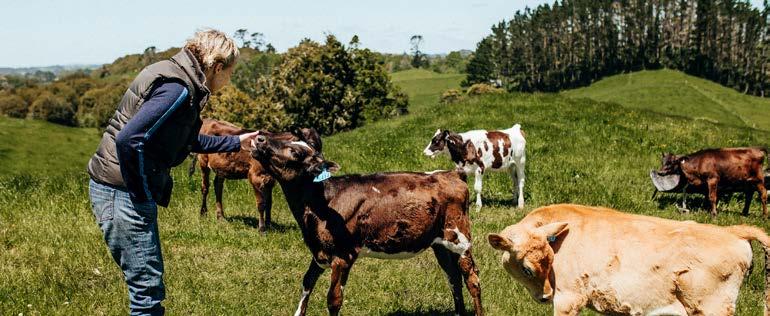
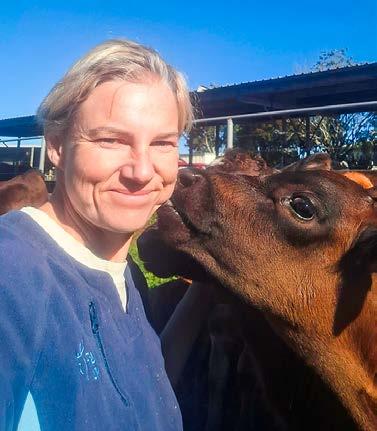
LeAnne Blakelock shares her calf rearing journey through the Facebook page she founded, Calf Chronicles
A wide range of calf rearing content is posted on Calf Chronicles
Recognising the value chain of dairy beef calves, LeAnne also rears bobby calves for Rose Gold Veal
Excellence in the blood
by Amy Fifita
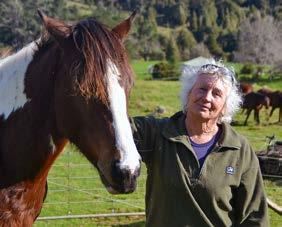
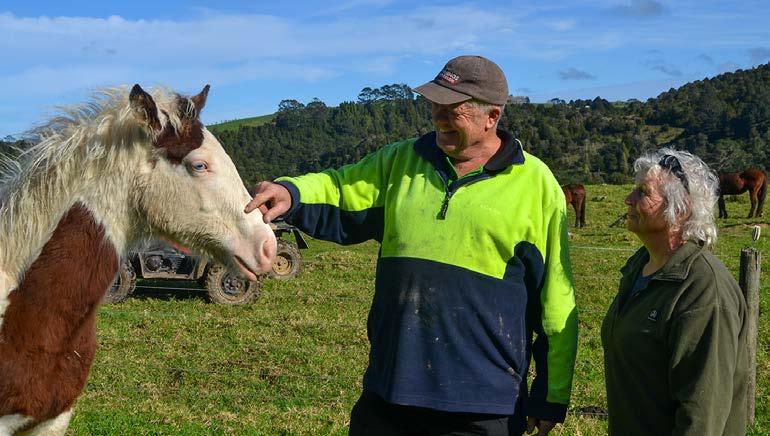
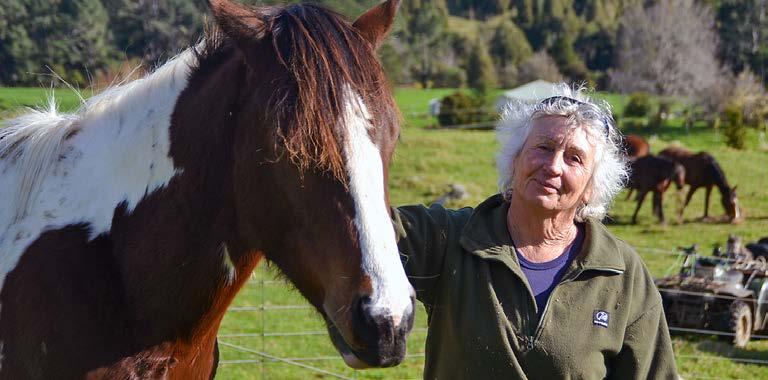
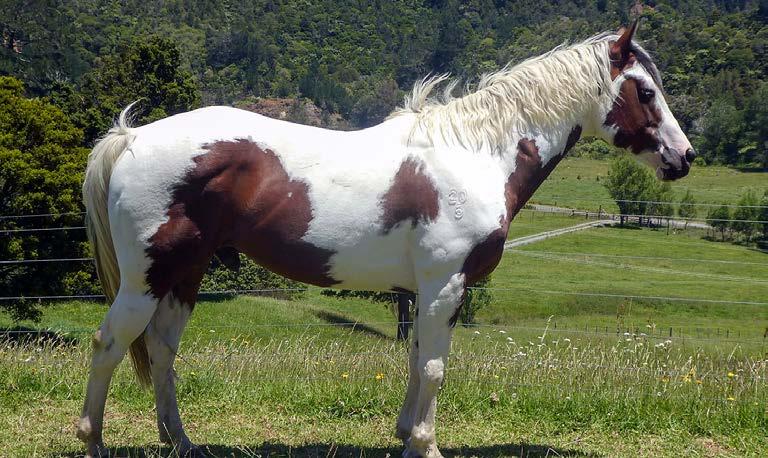
A love that began on her grandparents’ farm, Michelle Adlington breeds Paint horses that come from historical bloodlines on her Kaihū property.
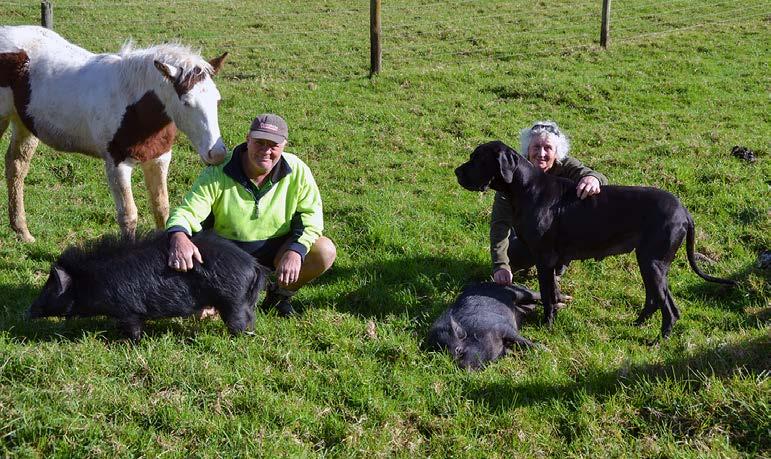
Having rubbed shoulders with prestigious breeders and notable horses in Waikato, Michelle relocated to Northland and acquired Docs Storm Cloud a decade ago. She works alongside her husband, Paul Dunnett, who helps care for their menagerie of Paint horses, chickens, pigs, dogs, cats and a magpie.
“My grandparents had a mare called Sally, whom I used to ride, and my love for horses progressed from there. I was always breaking in horses rather than competing. I received enjoyment from training something that has never been touched before and passing it on,” said Michelle.
When Paul isn’t running his Dargaville Bobcats and Digger Services business, he
is on the land, helping with maintenance and adding rescue animals to the mix.
Having always been interested in pedigrees and genetics, Michelle was fortunate enough to purchase an unbroken Paint named Storm Cat from renowned Taumaranui breeder Grey Siteman. At the time, Grey was standing Van Dee Bars, the first Paint stallion to be imported into New Zealand. His progeny went on to perform in all disciplines, were much sought after, and were sold by word of mouth.
“Van Dee Bars’ progeny did everything, from western to cutting and all disciplines in English, being extremely versatile with good elevation for dressage. Whatever you got, coloured or not, it was of great quality and sold for good money.
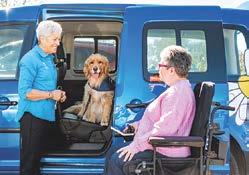
Call Driving Miss Daisy and ride with a friend.
Driving Miss Daisy is NZ’s number 1 friendly and reliable companion driving service
ACC registered vendor Total Mobility Cards Accepted
Bookings are essential.
Ph: (09) 407 9889 Mob: 021 503 226
and with the help of her husband, Paul, continues to keep the breed alive
“Paints were much sought after and sold by word of mouth. The one I bought ended up on the front page of the Franklin Times with its very happy new owner after cleaning up at the Horse of the Year.
“I then went on to purchase a colt by Australia’s number one Paint horse, A Touch of Hillbilly, who also produced lovely offspring, which excelled in all disciplines. I bred one that sold for $30,000 and won in-hand champion and grand champion
NORTHPOWER ELECTRIC POWERTRUST
The Annual Meeting of beneficiaries is to be held at the Vikings Lounge (West End, Level 2), Northland Events Centre, 51 Okara Drive, Whangarei, on Wednesday, 29th July 2026 at 1:00pm. A light lunch will be served at 12:30pm. Agenda
1 Minutes of last year’s Annual Meeting in July 2025
Email: kerikeri-farnorth@drivingmissdaisy co nz www drivingmissdaisy co nz
2 Matters Arising
The Annual Meeting of beneficiaries is to be held at the Vikings Lounge (West End, Level 2), Northland Events Centre, 51 Okara Drive, Whangarei, on Wednesday, 29th July 2026 at 1:00pm. A light lunch will be served at 12:30pm.
Agenda
3 Presentation of the Trust’s Annual Report to Beneficiaries for the year ending 31 March 2026.
Please contact us if you would like an info pack
1. Minutes of last year’s Annual Meeting in July 2025.
2. Matters Arising.
4. Appointment of an Auditor for the 2026/2027 Financial Year. Code of Practice usiness
3. Presentation of the Trust’s Annual Report to Beneficiaries for the year ending 31 March 2026.
with S100 of the Electricity Industry Act 2010 the Consolidated ments of the Trust for the year ended 31 March 2026 and the t on those financial statements are available for inspection, Monday een 8.30am and 5 pm at the office of the secretary (details below). mail nept@plusca co nz
4. Appointment of an Auditor for the 2026/2027 Financial Year.
5. Report on Code of Practice.
6. General Business.
In accordance with S100 of the Electricity Industry Act 2010 the Consolidated Financial Statements of the Trust for the year ended 31 March 2026 and the Auditors Report on those financial statements are available for inspection, Monday to Friday, between 8.30am and 5 pm at the office of the secretary (details below). For pdf copy email nept@ plusca.co.nz.
Accountants, 22 John Street, Whangarei Phone: 09 438 3322 with S102 of the Electricity Industry Act 2010 ficiary has one vote m for the annual meeting is 20 beneficiaries Trust consumer beneficiaries in the Kaipara and Whangarei e connected to the Northpower electricity network are encouraged ecretariat
Plus Chartered Accountants, 22 John Street, Whangarei.
Phone: 09 438 3322
In accordance with S102 of the Electricity Industry Act 2010 s(2) every beneficiary has one vote s(3) The quorum for the annual meeting is 20 beneficiaries.
All Northpower Trust consumer beneficiaries in the Kaipara and Whangarei Districts who are connected to the Northpower electricity network are encouraged to attend.
Brent Martin, Secretariat
When Michelle moved to Northland from Waikato, she acquired Docs Silver Cloud and began breeding Paint horses
Michellehas
bred horses for 30 years,
against imported horses. He became a superb jumper, and was featured in the Whakatāne paper.
“The stallion I have today, Docs Silver Cloud, is a mix of very old historical bloodlines, including the two above dating on paper back into the 1800s.”
With high-quality descendants in Docs Silver Cloud’s lineage, the fame extends beyond community newspapers; her horse’s bloodlines have also featured in books. Docs Silver Cloud holds bloodlines from prominent icons, including Painted Joe, and they have featured in books and are from Quarter Horse lines.
“Docs Silver Cloud is both overo and tobiano, has two blue eyes, stands about 15.1 hands high and has proven to produce quality offspring. There isn’t a lot out there competing, as I haven’t bred many, but it will only be a matter of time. He carries 12 generations of colour, which
would be hard to beat in NZ. Stallions from his pedigree are all deceased, so he is the last of this very old, proven, historical bloodline.”
While Docs Silver Cloud has prestige running through his veins, Michelle has the benefit of a lifetime of horsemanship behind her, but also valuable experiences. Michelle has worked with Sir Patrick and Lady Hogan at Cambridge Stud and also at The Oaks and Trelawny Stud.
“At the Cambridge Stud, I was in the foaling paddock and yearling preparation on and off for 20 years. I have been around horses all my life, breaking in and racing my own; one was sold for me by Donna Logan at Ruakākā.
“Pedigrees were foremost in producing top-quality thoroughbreds for racing, but they also excelled in other disciplines. Some of these famous bloodlines are in my offspring, as I use thoroughbred
mares to breed from, crossing well with my stallion.
“Offspring are brought up on hills, jump drains, plough through mud, have good minds and are very trainable. Services and youngstock are available at very reasonable prices — good homes are most important.”
Michelle is currently having the boundaries adjusted and has put five acres, including a two-bedroom house with two big sheds, on the market. With land and house shifted from her stewardship, there are still plenty of hills and farmland for Paint horses to graze and play on.
“I have bred horses for about 30 years, and love the history and genetics behind it all. I am a member of the Paint Horse Association of NZ and have a great mix of bloodlines — one of the last descendants, my 10-year-old Docs Silver Cloud.”
Paul Dunnett and Michelle Adlington care for the Paint horses and various other animals on the Kaihū property
Docs Silver Cloud’s lineage is a notable one, documented as far back as the 1800s, and produces progeny able to do all sorts of disciplines
Export prospects lift Northland’s outlook
by Paul Campbell
Northland has the potential to become an export breadbasket economy as ventures developing under Northland Inc and business and rural entrepreneurs gather momentum, at a time when national exports reach record levels and lead the economic outlook from out of the shadows.
The partnership between Massey University and Northland Inc is set to strengthen education, research and innovation opportunities across Northland’s food and fibre sector. Primary industries such as pastoral farming, horticulture, fishing and aquaculture, and forestry remain the economic backbone of the region, contributing more than $1.4 billion to Northland’s GDP each year and accounting for much of the value of Northland’s exports.
Northland Inc says the agreement represents an important step in unlocking the full potential of the food and fibre sector.
The recent National Fieldays also reflected a resurgence of rural confidence with more than 1,000 commercial and vendor sites sold out a month before gates opened and 73 international exhibitors, up from 66 in 2025. There
was more than $75,000 worth of prizes awarded to agritech innovators.
“The leadership drive in Northland correlates to a national optimism engendered by the latest national quarterly figures to June 2026, encouraging the Ministry for Primary Industries to focus on growing export demand to double the value of food and fibre exports to drive long-term sector growth and resilience.
“We were at the negotiating table for the recently-signed free trade agreement with India to secure outcomes for our food and fibre sector and will be heavily involved in leading its implementation,” said MPI head Ray Smith.
“Our trade teams in New Zealand and in key offshore markets continue to build and strengthen trade relationships to open further doors for exporters. MPI staff are also on the ground across New Zealand ensuring farmers and growers
•
•
•
•
•
have access to the practical support they need to drive their success.
“Our On Farm Support service provides the vital bridge between government and farmers and growers to help rural communities connect to services, respond to and recover from adverse events, and build resilience.
“Farmers, growers, foresters, fishers and processors continue to demonstrate
significant resilience and adaptability through tough global conditions and extreme weather events, and we will continue to stand beside them.”
For the year to June 30, national export revenue is expected to increase six per cent to a record $64.3 billion, supported by solid demand, strong dairy and red meat prices, growth in apple and kiwifruit exports, and a favourable NZD/USD
New Horticulture Fruit Crop Release
Crop Returns GOURMET QUEEN PINEAPPLES
fumigated with Methyl Bromide like the imported fruit.
Follow in Claud Switzer’s footsteps almost 70 years after this generous bequest in 1954. You, too, can leave your mark in the form of a legacy that helps us continue his good work beyond your lifetime. Your gesture of kindness and generosity means a great deal to the people we care for and will help ensure our service remains accessible to families in the Far North for years to come.
Talk to us about how your name and legacy might live on (as a memorial tribute in our beautiful Switzer gardens/grounds). DONATE
Wool receipts grow fibre sector
exchange rate. Food and fibre sector export revenue continues to perform strongly despite geopolitical uncertainty and its flow-on impacts on global markets.
Looking ahead, the year to June 30 2027 food and fibre sector export revenue is forecast to dip one per cent to $63.9 billion, before bouncing back the following year. Easing export returns in the dairy and forestry sectors are expected to more than offset continued strength in meat and wool, horticulture, seafood, arable crops, and processed food and other product sectors. The longer-term outlook for the food and fibre sector is bright, with export revenue forecast to reach $70.1 billion in 2029/30.
Growth over the remainder of the outlook period is set to be led by dairy and horticulture sectors. Strong fundamentals, growing global demand, and the sector’s adaptability position it well for continued growth and long-term success.
Leading the way this year, dairy export revenue is forecast to increase five per cent to a record $28.6 billion in the year
to June 30. This growth is supported by strong global prices, favourable exchange rates, and record milk production. Looking ahead in 2026/27, export revenue is forecast to ease slightly to $27.9 billion as global prices soften and domestic production normalises from record levels. While rising input costs will put some pressure on farmers’ margins, strong recent profitability and the Fonterra capital return leave the sector well positioned to absorb these pressures and maintain its trajectory.
Meat and wool export revenue is expected to increase 14 per cent to $14.1 billion. In 2026/27, strong beef demand and tight beef supply are expected to further lift export revenue to $14.3 billion. Horticulture export revenue is expected to grow with steady production growth for kiwifruit and apples combined with strengthening market demand forecast to support continued revenue increases through to 2029/30. Wine exports are expected to remain stable at $2.1 billion with growth in export volume offsetting
a lower average price. New Zealand’s wine industry continues to grow its global market share despite the global oversupply. Vegetable growers face pressure from higher input and freight costs as well as planned processing plant closures, affecting their production and profitability. Export revenue from fresh and processed vegetables is expected to ease three per cent to $710 million, with a further decline forecast in 2026/27 before recovery.
Forestry may be the odd one out though with export revenue forecast to ease with moderating demand in China. A further decline of two per cent is expected in 2026/27, reflecting the combined effects of ongoing cost pressures linked to the Middle East conflict and reduced harvest and production volumes in New Zealand and key export markets. Cost pressures will squeeze margins and are likely to affect operating decisions. Mediumterm conditions remain more favourable. Demand for sustainable products, investment in processing capability, and
market diversification support gradual recovery and a transition towards highervalue production.
Ray Smith, MPI director-general
Dairy farming has boosted export figures Forestry focus
by Paul Campbell
Kāeo project shuts down
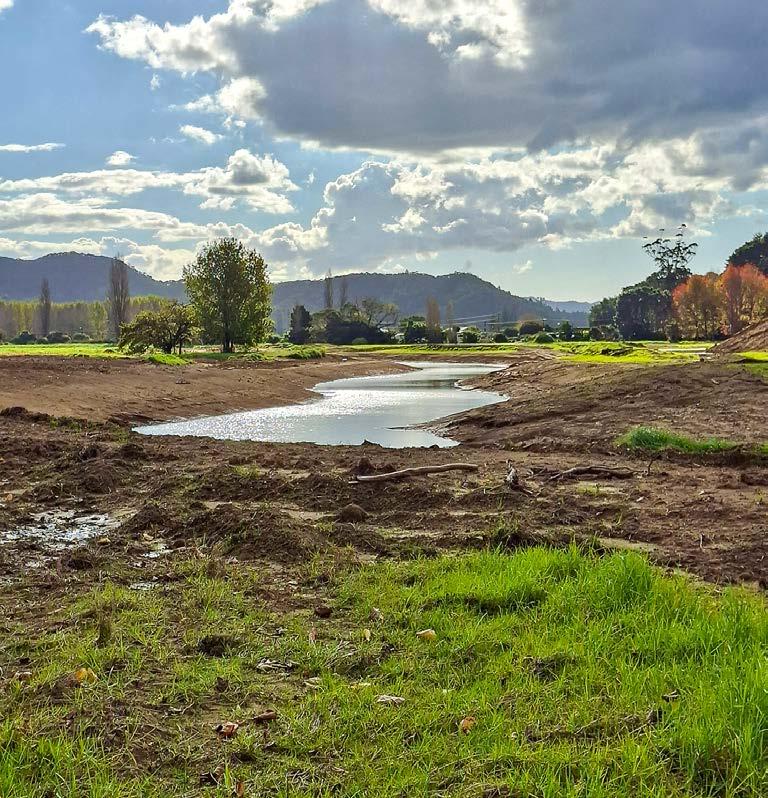
The project to reroute a 500-metre section of the Kāeo River to better protect Kaeo township from flooding has shut down for the wet winter months and will resume in spring.
Northland Regional Councillor Colin ‘Toss’ Kitchen says the $1.5 million project, begun last December, will resume in warmer, drier weather. Rainfall through March and last month resulted in multiple stand-down days and elevated groundwater levels, significantly slowing construction progress.
“Ground conditions prevented safe operation of heavy machinery without causing site damage.” There had also been a number of archaeological discoveries.
Despite the delay, the project was still due for completion before Christmas, weather permitting. The winter break would allow the newly-constructed channel to stabilise over winter and for grass to establish on banks. At this point it was hoped water would begin flowing through the new channel by Christmas.
Councillor Kitchen says the project involves the construction of flood protection works for Kāeo township and adjacent portions of State Highway 10 for resilience to home and business owners and main roading routes. It will shift the junction of the Waikara Stream and Kāeo River 500 metres downstream, with a new 500-metre-long deflection bank constructed alongside Kāeo township.
Once complete, the project is expected to reduce the depth of floodwaters in Kāeo during a one-in-a-hundred-year flood
The new Kāeo River channel regionwide flood infrastructure rates and central government funding.
New colours. Same crew. Same care. Same commitment to Northland.
From July 1, you may notice a different coloured helicopter in our skies
You’ll see more of our new red and yellow AW169 rescue helicopters join the fleet, before our long-serving white Sikorsky S-76s are retired after decades of service to our Northland communities.
We’re also welcoming Westpac to the Northern Rescue whānau They join principal sponsors Northpower and Top Energy alongside Northland Regional Council and Oxford Sports Trust and our family of loyal sponsors
We’ll be known as the Northland Westpac Rescue Helicopters, proudly community owned and locally
operated by Northern Rescue Formed in 2019 through a partnership between the Northland Emergency Services Trust and the Auckland Rescue Helicopter Trust, Northern Rescue brings together more than 90 years of combined rescue helicopter experience
Proudly operating both the Northland Westpac Rescue Helicopters and Auckland Westpac Rescue Helicopters, we continue a legacy of life-saving air ambulance service built over decades
However; while the helicopters may look different, what matters most has not changed The same highly trained pilots The same critical care paramedics The same trusted air crew The same 24/7 commitment to saving lives 365 days a year
Same at heart. northernrescue.org.nz
Pictured: Steve Couchman
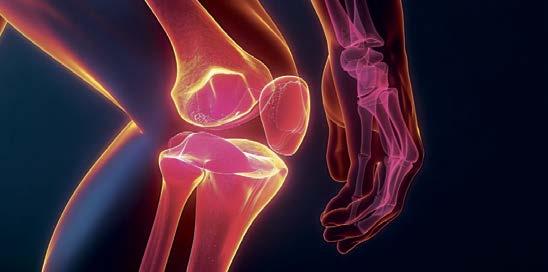
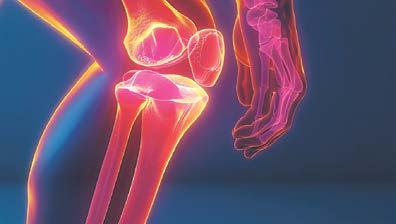
Farmers often develop sore joints (Part one)
by John Arts
New Zealand farmers often develop osteoarthritis due to the physically demanding nature of their work.
Farming involves repetitive movements, heavy lifting, prolonged standing, and frequent bending, all of which place significant strain on the joints, particularly the knees, hips and hands.
Over many years, these repetitive stresses can lead to the gradual breakdown of cartilage, which is the hallmark of osteoarthritis. The outdoor environment also exposes farmers to variable weather conditions, which may exacerbate joint pain and stiffness.
Additionally, farming is a year-round occupation with limited opportunities for rest or recovery, increasing the risk of chronic joint overuse. Many farmers also start working at a young age and continue well into older age, further compounding the wear and tear on their joints over decades.
The real question is what to do about it, especially if joint deterioration does not warrant surgery. While anti-inflammatory medications help relieve pain, they are hard on the body and do not address the main disease process behind cartilage loss.
Cartilage is dynamic tissue dependent on special cells called chondrocytes to
maintain and repair cartilage. They do this by making and secreting new cartilage matrix, which includes chondroitin sulphate. If these are damaged, or die, the tiny patch of cartilage they maintain soon disintegrates.
Adding 800–1,600mg of high-grade chondroitin can make a huge difference. Chondroitin is by far the most important compound available through supplements. While glucosamine is important, I regard this as a supporting therapy. Adding the latest water-soluble curcumin (from turmeric) can be helpful by reducing joint capsule inflammation.
My client files include many farmers who have had significant benefits of this type of therapy with most getting notable improvements in flexibility, mobility and comfort. To learn more, email me for a copy of my osteoarthritis programme and start your journey to better joint health.
John Arts (Adv.Dip.Nut.Med) is a qualified nutritional medicine practitioner. To read more by John and the Abundant Health products, visit healthhouse.co.nz, call 0800 140 141, or email john@ healthhouse.co.nz.
For many, joint health deterioration is the first obvious sign of aging. Gradual erosion of cartilage, is by far the most common issue.
What is Bettaflex?
Bettaflex is the most popular supplement in the Abundant Health range because of its positive support for joints affected by wear and tear, helping Bettaflex users to support mobility and quality of life.
How does Bettaflex work?
Bettaflex has been formulated to support joint comfort and mobility, making it an ideal supplement for those seeking support for joint comfort and stiffness. Bettaflex combines high-grade chondroitin sulphate,
Forecast is faire for mediaeval action
by Andy Bryenton
Word about Northland’s renaissance faire is spreading, and there’s a lot of excitement as groups of knights and other history enthusiasts make plans to head to Arapohue in January of 2027.
Co-organiser of the faire Kurt Richards says that the scene will be familiar to those who have watched medieval tournaments in films and on television, or seen depictions of renaissance faires from Europe and the US.
“It’s a lot of fun to take part, and just as much fun to come as a visitor and watch all the action, dress up in costume, and experience the closest thing we have to travelling back in time,” he says.
Those entering through the gates on January 23 and 24 will be able to watch the steel-crunching action of fullyarmoured knights battling in the arena, dazzling sword skills, and the thunder of jousting horses and lance-wielding riders. Most people have never seen armoured warriors clash in real life, and it’s an unforgettable experience.
There are ways to get hands-on with history — try your hand at archery, learn to throw axes, ride horses and even fight the knights in a kid-friendly bout with safe foam swords. There’s going to be a Viking village to explore, bouncy castles to besiege and, of course, plenty of medieval food to feast on. You can watch real blacksmiths forging swords,
Historical re-enactment, martial arts and combat clubs nationwide are coming to this big event, and there have even been requests from Australian clubs for more information.
As your skin cancer doctors, it is our mission to save lives by making skin cancer care affordable and accessible to all Northlanders Our focus is on the early diagnosis and effective treatment of skin cancer in a friendly and welcoming environment
hear about herbal lore and browse the merchants’ stalls for traditional arts and crafts as well.
Jousting knight Vikki Subritzky is one of the modern-day mediaeval enthusiasts who is headed to the faire
by Andy Bryenton
Chainsaw
Chainsaw safety in the spotlight
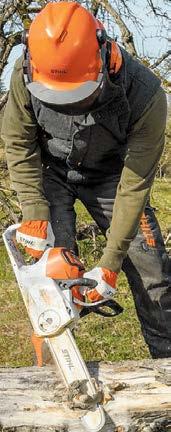
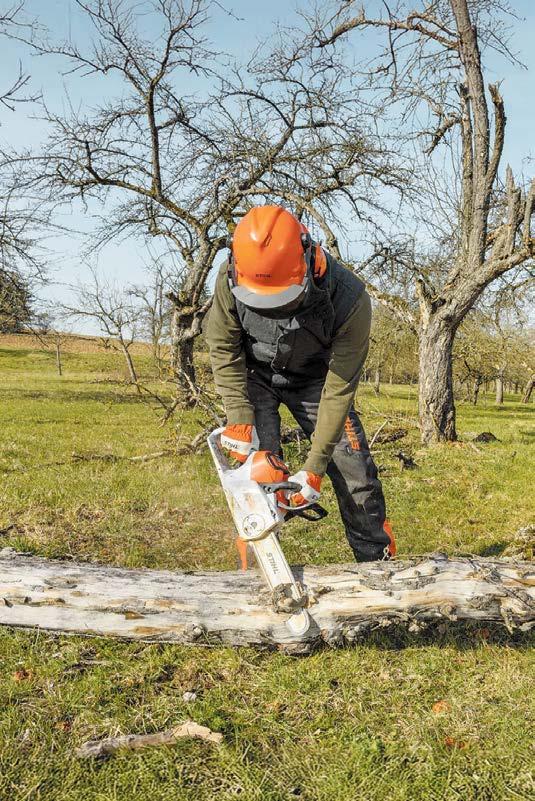
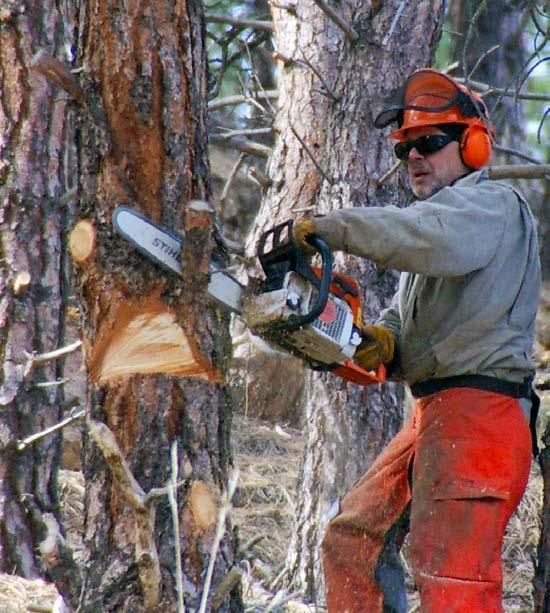
If you’re getting the chainsaw out of the shed this weekend, your work clothing should be snug-fitting, with no loose straps, belts or hems. It’s a good idea to invest in timberworker chaps filled with fibres that clog the blade and save your skin in an emergency. Your shoes should be protective, fully enclosed footwear with non-slip soles and steel toecaps. Protect your hands with heavy-duty nonslip gloves, preferably in leather. Don’t forget to wear proper head, face and eye protection, as well as hearing protection if you’re using a petrol saw.
Next, check the saw itself. A rattly, rusty old saw with the wrong parts, half-bodged repairs or a dull, poorly tensioned chain is an accident waiting to happen, and a hassle to work with. If in doubt, don’t use the chainsaw, especially if you were not the last one to operate it. After a year in the shed it’s likely to need a service in any case.
saw close to what you’re cutting. Plant your feet firmly and slightly apart for balance. Never try to adjust your chain or machine while the engine is running.
branches and questionable trees are cut back to prevent disasters. If a powerful storm blows through, it’s best to have foliage out of the way, and a safe, efficient saw is your best friend when calculating a pruning-back strategy.
If it looks like it’s a big, dangerous, high or complicated job, or if you’re unsure if your non-commercial chainsaw is up to the task, consult an arborist and stay safe.
Here’s what Stihl, the sponsors of Chainsaw Safety Awareness Week, say about proper chainsaw technique.
Keep two hands on the saw and hold it close to your body, with the body of the
Don’t forget to check your work area. Plan out your strategy when cutting limbs or trees. Look out for power lines and tripping hazards. If you’re working at height, be extra careful and consider drop areas, as well as getting help to stay steady and safe.
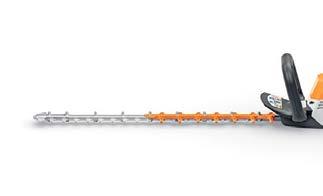
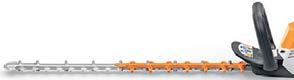
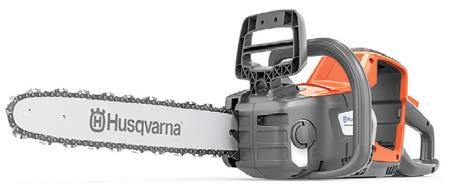
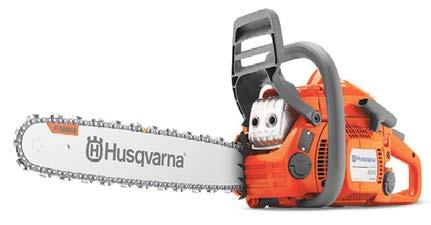
Good maintenance will extend the chainsaw’s life and ensure it’s always safe to use. When you finish a job make sure the air filters, sprocket cover and chain brake mechanism are free from sawdust; clean the guide bar groove; oil the holes and check everything is in place. Of course, if your old machine has passed its use-by date, the best thing you can do is send it off to the great hereafter and invest in new technology. If firewood and small tasks are your main chainsaw jobs, why not take a look at an electric saw? They’re just as powerful as their same-size petrol counterparts, but are quieter, have less vibration, and use no fuel. There’s a whole range available at your local mower and chainsaw specialists right now.
These tips and techniques are great not just for piling up firewood for a cozy winter, but also for that other cold-weather outdoor chore; making sure that dicey
From firewood chores to tall timber, chainsaw users who respect their tools know that safety gear comes first
by Amy Fifita
First for the post
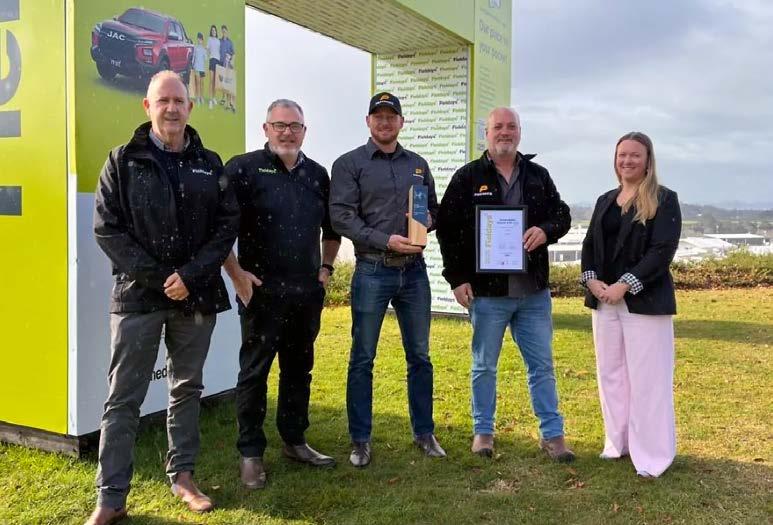
The PostMate has won the hearts of the crowd at the National Fieldays in Mystery Creek, with the company winning the People’s Choice at the 2026 Innovation Awards.
A story of three mates collaborating to fix farmyard problems, Harry Newey, Shawn Watson and Warren Storey have brought a safer and easier way to pull out fence posts to the market. A farmer himself, Warren invented the tool from his love of farming and engineering.
“An efficient fence post puller has clearly struck a chord, earning the title of crowd favourite and resonating strongly with farmers and contractors across the country and internationally,” said NZ National Fieldays Society programme manager Steve Chappell.
“The strong public support for The PostMate highlights the importance of practical, safety-driven innovation, particularly in the rural sector. The awards started in 1969, and continue to showcase the brightest new solutions for the primary sector.”
The 2026 Fieldays Innovation Awards People’s Choice Award, supported by King St Advertising. With farming being very much a practical lifestyle, it was the people who saw the benefit in the invention. It has gained
popularity in more than just the voting booths, though.
North and South America, and Australia have shown interest in the handy device, and they already have a distribution in Europe. As the already growing business continues to spread its wings, the cofounders aim to have their product on every farm.
“In a single week, our sales were five times higher than our usual weekly average,” said Harry Newey. “That momentum has reinforced what we already believed, The PostMate has the potential to become an essential tool for farmers. Our goal is that within 10 years, every farmer will have one.”
The trio received a $2,000 cash prize for the invention. The PostMate voter Dorothy M also won a $500 Prezzy card.
A celebration of the good-thinkers in the agriculture sector today, the audience got to see new and upcoming creators put their mark on the industry. Not the only winners at the Fieldays Innovation Awards with AWS, the Young Innovator of the Year Award went to Enivo; the Prototype Award,
supported by Sprout Agritech and Blender Design, was awarded to Scanabull.
The Early-Stage Award, highly commended, supported by Map of Ag was won by Elm Lab Skincare; the
Early-Stage Award, supported by Map of Ag to Elert; and the Growth and Scale Award, supported by PwC won by Trussed Systems. The Innovation Awards are also supported by AgriTech New Zealand.
Richard Lindroos, New Zealand National Fieldays Society CEO, Steve Chappell, society’s programme manager with Harry Newey, Shawn Watson, and Robyn Henwood, King St Advertising CEO
Rural Building
by Liz Clark
Boom town — Kohukohu
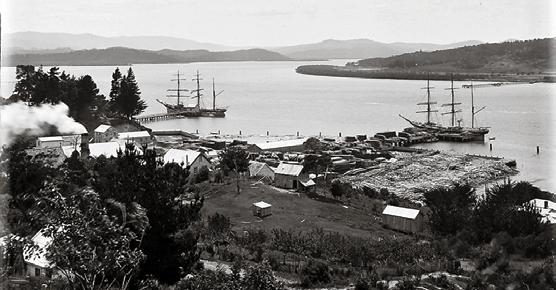
In 1878, a timber company came to the shores of the tiny settlement of Kohukohu on the shores of Hokianga with a plan to mill the vast tracts of kauri forest found in the region.
Brownlee and Company, along with several other partners, formed the Hokianga Timber Company Ltd and set about building a significantly important
site in the region’s postsettlement history.
After lease and royalty agreements were arranged between local iwi and the company, through the negotiations of John McFarlane, the construction of a substantial timber wharf was undertaken. Under the supervision of Auckland-based shipwright William Lowe, local Māori labour erected the structure using native timber, including squared tōtara piles and heart kauri for the planking and other components.
The wharf took shape as a substantial T-shaped structure 136 metres long and 9m wide into Kohukohu Bay. By September 1878, the wharf provided infrastructure support for the developing complex, enabling early access for materials and workers.
The company’s operations centred on a substantial mill complex built in stages from 1878–1879, featuring twin circular saws, a German breaking-down
saw for logs up to 2.4m in girth, planing machines, and a 50-horsepower steam engine, with an initial annual capacity of about 9,440 cubic metres of timber that later expanded.
The company’s export trade networks primarily extended to Australia, particularly Melbourne and Sydney, as well as southern New Zealand ports and markets in China.
Despite initial success with large monthly timber shipments, the company faced challenges, including a major machinery failure in 1882 that halted
production and the broader economic depression of 1879–1891. This led to liquidation in mid-1886 and an asset auction in January 1887.
The site, including the mill and wharf, was acquired by the Melbourne-based Kauri Timber Company in 1888. Operations were recommenced and expanded, which by 1892 encompassed around 3.34ha for trade activities through ongoing reclamation in the bay using sawdust, slabs, and ship’s ballast. Production had peaked by 1905, and afterwards, with kauri forests in scarce supply, it led to closure in 1913, after which the buildings were dismantled and the machinery removed.
Later, the KVR Box Company utilised the mill site until 1937, when the mill was burned to the ground. Today, a road runs over the edge of the former mill site and a park has replaced the buildings that once hummed to the sound of saws cutting native timber.
The former mill site at Kohukohu during demolition in 1913 Image credit: Auckland Libraries Heritage Collections
Rural Building Nanotech from 350BC
by Andy Bryenton
Modern fabricators can make almost anything out of steel, crafting machinery we rely on for everything from farming to flight, but the ancient smiths had some tricks of their own that are just as impressive.
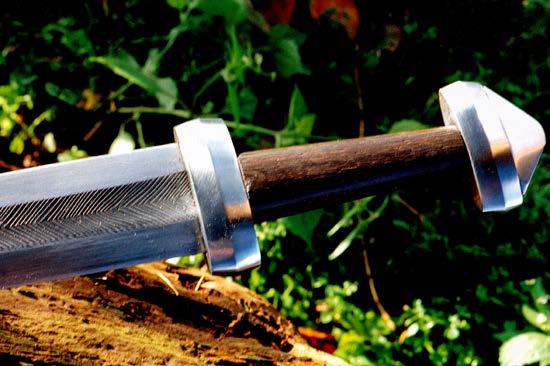
Invincible Samurai blades, the magic of Excalibur, and swords fit for Viking heroes — these are legendary tropes echoing from the past. However, the most mystifying and magical of weaponsmithing materials may very well be from Southern India, and its secrets have not truly been mastered, even with modern technology.
Alexander the Great knew about the steel smelters of India, where a material called wootz steel was created in strange clay ‘eggs’. The great general valued this metal more than gold, as it could be used to manufacture blades of legendary sharpness and durability. Some antiquarians have speculated that Alexander’s attempt to conquer the subcontinent was motivated by a desire to seize the means of wootz production.
Swordmakers in ancient times knew that the best steel of all came from Southern India, but to this day the exact process remains a mystery
the resulting metal was finished in crucibles, in a part of the process still not entirely understood.
What is known from ancient texts is that slow cooling was also important. Wootz has been examined under a modern electron microscope, and it’s observed to be full of carbon nanotubes. These tiny structures are at the cutting edge of modern material technology, but it seems that ancient Indian steelworkers accidentally worked out how to create them thousands of years ago, using them to make literal cutting edges.
Wootz steel began with porous iron, which was hammered while white-hot to release slag and impurities. Then
Broken-up iron and carbon, perhaps bone, or charcoal from rare exotic woods, was sealed into an egg-shaped clay vessel. Then it was heated in a powerful furnace made even hotter by its location, high on coastal cliffs where strong winds would roar through, effectively supercharging the fires with oxygen.
Those nanotubes add tensile strength, flexibility and the ability to be sharpened to a razor finish. Many stories of ‘magic’ swords in both the east and west may be attributed to this superior steel, which must have seemed divinely blessed to warriors in the age of Alexander. After all, a wootz sword might easily shatter one made of inferior metal — a huge bonus on the battlefield.
The widespread stories of ‘noble steel’ and of magically sharp, unbreakable blades show that the human imagination
loves a good tale, but also that ancient trade routes linked the south of India with places as far-flung as Britain, Japan and Africa.
Rural Building
by Andy Bryenton
Faster reports — faster builds
Waiting on a Project Information Memorandum can be frustrating, and the government
swing into action, leading for calls for maximum wait times to be slashed.
Rules changes proposed in Wellington will truncate the amount of time councils can take to issue Project Information Memorandums (PIMs), effectively cutting them in half. It’s another plan from a duo of parliamentarians who have been very visible and vocal in the ‘red tape busting’ space during the past triennium: Building and Construction Minister Chris Penk and Local Government Minister Simon Watts.
“Fixing the basics and building for the future for New Zealand means taking a close look at every part of the building system to identify delays, remove bottlenecks, and improve productivity,” Mr Penk says.
“Project Information Memorandums, or PIMs, are an important part of the building process. They give homeowners and builders greater certainty about site-specific requirements, like natural hazards and infrastructure constraints, before a building consent is requested and construction begins.”
“Right now, the system can also undermine competition in our building
consent market, with private building consent authorities required to obtain PIMs from councils before they can progress work. The government wants to ensure there is a strong incentive for councils to process those applications promptly.”
Councils can take 20 working days to process a PIM application, and that ‘working days’ appellation means that the reality is roughly one month. The slowest councils in the land are, on average, the biggest, according to MBIE’s quarterly figures, on issues of building consents in general. Kaipara, the Far North and Whangārei outperform Auckland in these metrics, for example. If the wait time should be cut back to just 10 working days, it’s likely that the smaller, more nimble councils of the north would adapt well, with minimal need for more staffing.
Mr Watts and Mr Penk say that such measures are necessary.
“To address these issues, the government will reduce the processing timeframe for all PIM applications from 20 working days to 10 working days,” they announced in mid-June.
“Faster processing times will help homeowners and businesses to get on with their projects sooner, improve competition in the building consent market, and reduce unnecessary delays and costs, as part of the government’s wider work programme to make building easier and more affordable for New Zealanders.
“Reducing PIM processing times will also particularly help our agriculture sector — by accelerating farm development, reducing costs, and improving investment certainty.
“It will help farmers and rural businesses to respond faster to market opportunities, environmental requirements, and operational needs.”
Building and Construction Minister Chris Penk wants faster reports and increased council efficiency to speed up building
Rural Building
Creating lasting value
it comes to delivering
the
Affordability isn’t achieved by cutting corners — it’s achieved through experience, efficiency, scale and a commitment to doing things the right way.
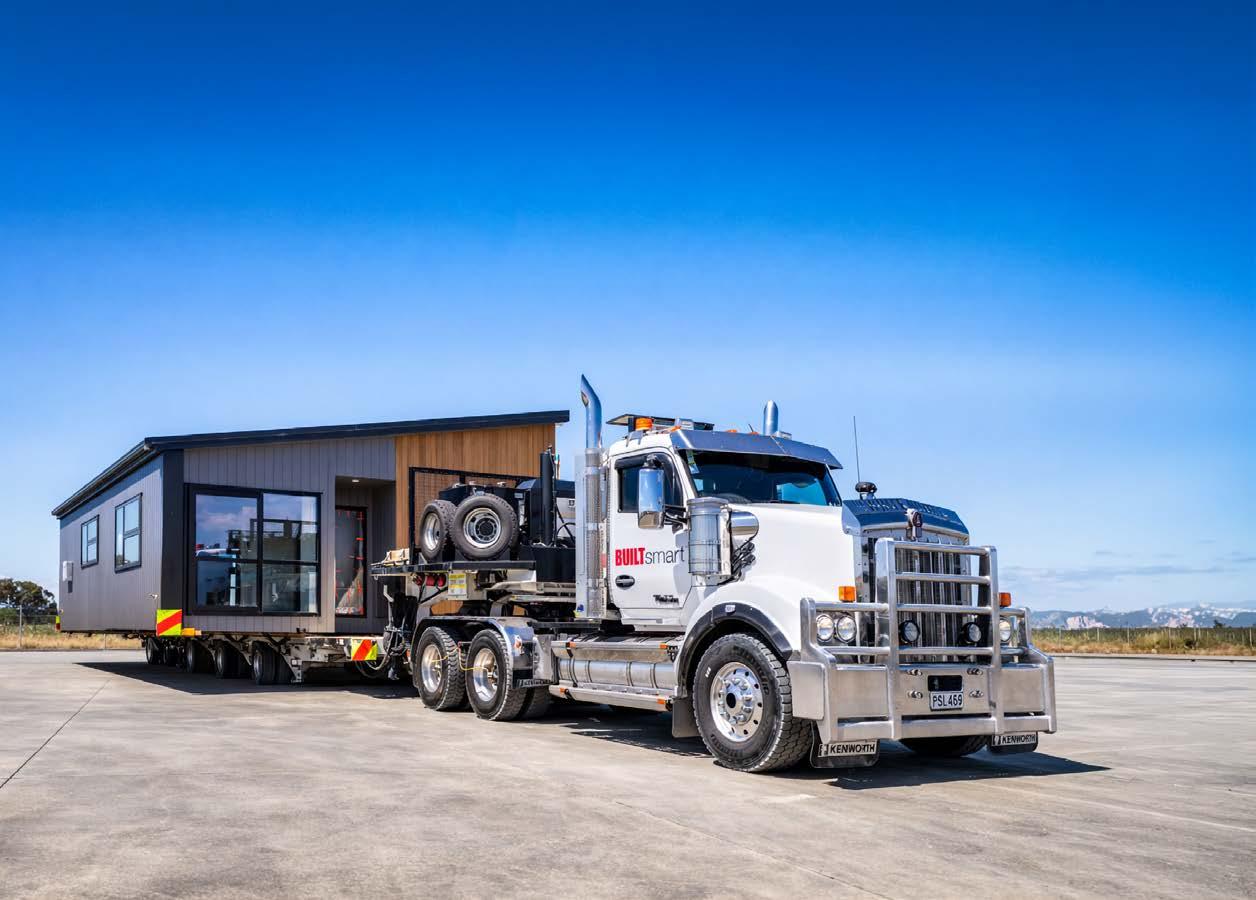
Builtsmart has invested heavily in purposebuilt manufacturing facilities designed specifically for efficient home construction. Unlike traditional building methods that can be affected by weather delays and site constraints, our custom factories allow homes to be built faster, with greater consistency and less waste. These efficiencies translate directly into savings for our customers.
One of the biggest advantages Builtsmart offers is capacity. With one of the largest production capabilities in the transportable housing sector and factories strategically placed around the North Island from Huntly, Gisborne to Feilding, we can take on projects of all sizes, from individual homes through to large-scale residential developments.
While many builders face long waiting lists and resource shortages, Builtsmart continues to grow its workforce and expand its operations to meet increasing demand.
At the heart of the business is a strong family culture. Builtsmart remains family-run through and through, with values centred on hard work, honesty, reliability and long-term relationships. These principles have helped build a trusted reputation throughout New
agencies, helping provide quality housing solutions where they are needed most. These projects demonstrate not only our ability to deliver at scale but also our commitment to supporting communities and creating lasting value.
By combining industry-leading capacity, efficient manufacturing, a growing and skilled team, and genuine family values, Builtsmart offers a range of exceptional homes at highly competitive prices. It’s a simple formula that has made us one of New Zealand’s most-trusted and affordable transportable home providers.
Zealand and have been a key factor in the company’s continued growth.
Our track record speaks for itself.
Builtsmart has successfully delivered multiple large housing developments in partnership with iwi organisations and government
Building
Keeping the north’s dairy industry cool
For dairy farmers across the northern region, milk quality starts the moment it leaves the cow — and cooling it fast is non-negotiable.
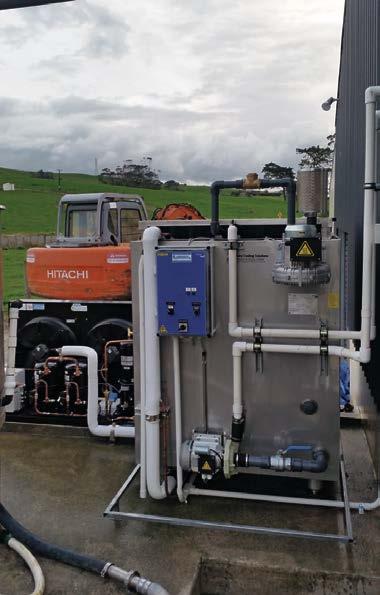
That’s where Kensington Refrigeration has built its reputation, delivering reliable chilled water and ice bank systems purpose-built for the demands of modern farm dairies.
Built for the realities of farm life
Milking sheds don’t run on convenient hours, and neither does Kensington Refrigeration’s service team. With a focus on farmer refrigeration services tailored to the region’s dairy operators, the team understands that a breakdown during peak milking isn’t just an inconvenience — it’s a threat to an entire vat of milk and a farmer’s bottom line.
“Farmers need refrigeration partners who understand the pressure they’re under, not just people who can fix a compressor,” says a Kensington Refrigeration spokesperson. “We design systems around the realities of farm life — variable herd sizes, seasonal peaks, and the simple fact that milk can’t wait.”
Chilled water systems that work as hard as you do
Chilled water systems remain one of the most efficient ways to bring milk down to temperature quickly and consistently, reducing bacterial growth and protecting milk grade.
Kensington Refrigeration designs, installs and maintains chilled water systems scaled to herd size — from smaller family operations to large-scale conversions — ensuring farmers aren’t paying for capacity they don’t need, or worse, running short during a big milking. Ice banks: reliable backup when it matters most
Ice bank systems continue to be a trusted solution for farms wanting a buffer against fluctuating loads or power interruptions. By building cooling capacity overnight when power demand and cost are lower, ice banks provide farmers with dependable, costeffective cooling support precisely when the shed needs it most. Kensington Refrigeration’s
ice bank installations are engineered for the northern climate, with servicing plans designed to keep systems performing through the peak of the season.
Local knowledge — regional reach
What sets Kensington Refrigeration apart is its regional focus. Technicians know the northern farming landscape — the roads, the seasons, the pressure points of calving and peak milk flow — and structure their servicing schedules and call-out response around them. For farmers, that means less downtime and more confidence that their refrigeration investment is in capable hands.
Get in touch
Whether it’s a new chilled water installation, an ice bank upgrade, or ongoing maintenance to keep an existing system running at its best, Kensington Refrigeration is ready to talk. Contact the team today to discuss a refrigeration solution built around your farm’s needs.
reasonable pricing.
Rural Building
Northland’s local home building experts
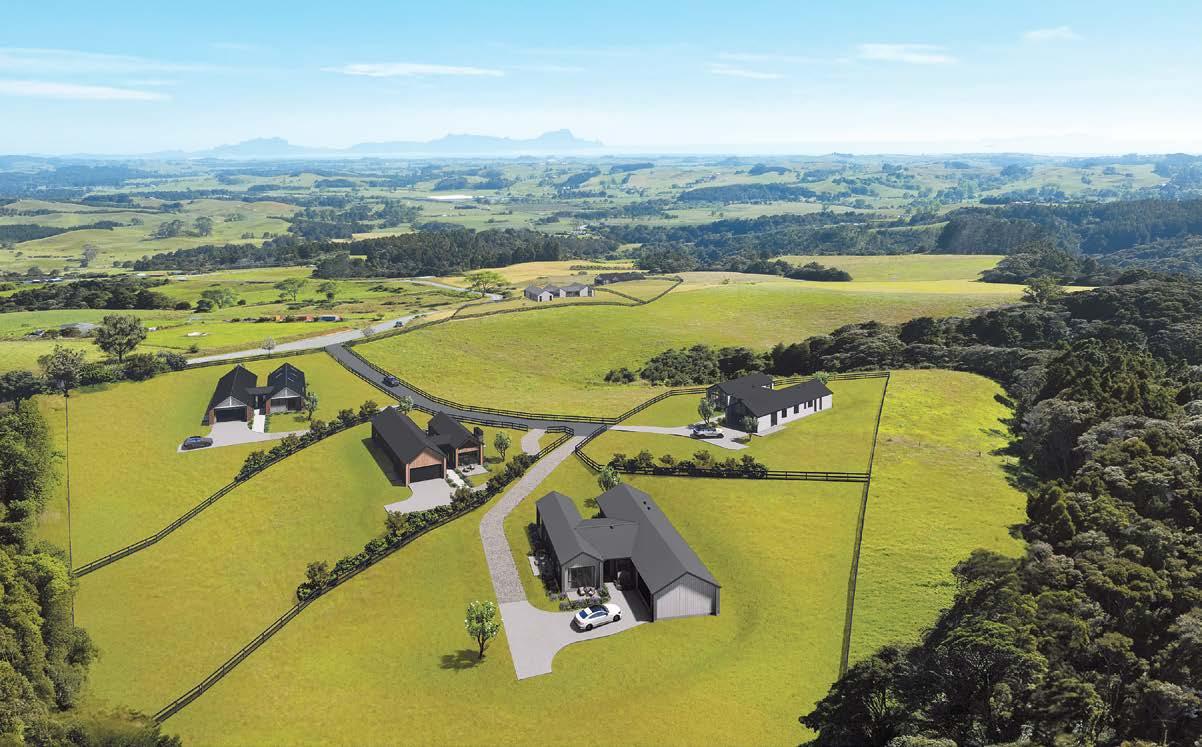
Meet the team behind one of Northland’s most exciting lifestyle opportunities — Generation Homes Northland, the experienced local specialists bringing Durham Grove, Waipū to life.
Leading the team is managing director Jacob Pille, whose 20+ years in the construction industry underpin the region’s reputation for quality, reliability and results. From his early days as an apprentice carpenter to leading large-scale residential projects, Jacob combines hands-on knowledge with strong leadership, ensuring every build meets the highest standards while staying on time and on budget.
Working alongside him is new home sales consultant Vynka Short, who brings more than a decade of industry experience and an in-depth understanding of the Northland market. Vynka is known for guiding clients seamlessly through the entire process — from navigating council requirements to helping buyers make smart design and investment decisions that suit both lifestyle and budget.
Also, part of the sales team is Kyle Pascoe, whose background in quantity surveying and construction provides clients with confidence from day one. With experience across dozens of residential builds, Kyle offers clear, accurate pricing and practical advice, ensuring a transparent and wellmanaged building journey.
Together, the Northland team is committed to delivering a genuinely stress-free building experience, backed by Generation Homes’ fixed-price guarantee and proven processes.
For buyers considering Durham Grove, this means more than just securing a premium section. It means partnering with a local team who understand the land, the market and how to bring your vision to life with confidence.
Our Generation Homes Northland sales team, from left: Vynka Short, Jacob Pille, Lucy Williams and Kyle Pascoe
Generation Homes Northland Show Home: 44 Kitemaunga Avenue, One Tree Point, Whangārei
Focus on social wellbeing and prosperity
by Colin Hannah, Northland Federated Farmers President
I want to acknowledge the three-year tenure of our outgoing Federated Farmers president Wayne Langford, who has worked exceptionally hard for the organisation and farmers
In saying that, we welcome former vicepresident and South Canterbury farmer Colin Hurst to the president’s role, keeping us in good hands once again.
Wayne held a strong interest in health and wellbeing and backed Northland Federated Farmers in its support for Northland Westpac Rescue Helicopters. With that in mind, it is great to see increasing sponsorship support for our rescue choppers.
As indicated last year, Westpac has come on board to join the Northern Rescue family of sponsors, alongside principal sponsors Northpower and Top Energy that put their hands up to get our air ambulance service flying in 1988.
I spend plenty of time with the organisation, and I am so impressed with the professionalism, humility, pride and genuine care of everyone involved — the engineers, pilots, fundraising and marketing team, paramedics, finance and administration staff.
Being one of the busiest air ambulance outfits in the country takes a fair bit of skill and planning. When I am out on the
farm it is great piece of mind knowing the Northland Westpac Rescue Helicopters are here for us all day and night.
That’s why I donate to this lifesaving charity every year because I see it as a form of insurance.
So, I encourage all farmers to donate as well, particularly with returns across the board being so strong for our products. Beef prices are at an all-time high and with American herd numbers at a 70-year low, it appears demand for our beef will be strong for a couple of years.
The Northland Westpac Rescue Helicopter team has to fundraise around $2 million a year to keep their choppers in the air and they need the support of the community through donations, which fund vital equipment, aircraft operations and the specialist crews providing critical care during emergencies.
Potential change to local body organisations and the RMA being overhauled are taking longer than we’d like. However, our Northland team and our colleagues in Wellington continue to work hard on the best possible outcomes for farmers.
On the weather front, the possible El Niño impact in spring could result in drier weather so we need to plan ahead — not that adverse weather events are anything new to Northlanders.
In recent weeks we have held two well attended community dinners, with more than 120 people at Tangiterōria and almost 100 locals at Broadwood.
Both were great family events with plenty of positivity.
While planning for a possible Foot and Mouth incursion in New Zealand is underway with relevant authorities, we also need to be mindful of the risk of Bird Flu making its way to our shores.
If you were to discover clusters of dead birds, do not touch them and let MPI know.
WHEELS
Plug-in powerhouse
by Andy Bryenton
At the 2025 National Fieldays, the JAC T9 amassed a lot of buzz from the farming audience, and that positive impression has carried over to its new petrol-and-plug-in incarnation.
Excitement alone wasn’t enough for the truck manufacturer, however, and in the following year a team of test-drivers, tradies and farmers gave the new ute a baptism by gravel and mud. JAC reports that they’ve driven long and lonely roads, hauled heavy loads and tackled trackless terrain to be prepared for a wintertime launch.
Factory figures tell a story borne out by the extensive testing the new JAC has gone through. To be competitive in its segment this new ute boasts a 3.5-tonne towing capacity, a 915kg payload, and enough space to comfortably seat grown adults in the front and back.
Moreover, the plug-in hybrid system helps to deliver exceptional fuel economy and 1,005 kilometres of range on a full tank and battery. You get the impression that the developers didn’t want to settle for a mere 1,000, and that the additional five acts like an exclamation point to drive home this tonic to range anxiety. More importantly, it’s got enough power to do the business on the farm — 482
horsepower, delivered by a two-litre petrol unit and two electric motors.
A plug-in boost to fuel economy could not come at a better time, with the volatile situation in the Strait of Hormuz showing that fuel security is never guaranteed. It’s a bonus on top of the already legendary fuel economy of the original T9. One of
these machines monstered the 24-hour endurance record in South Africa recently, going around the Gerotek raceway 1,350 times in a single day, and averaging 16.5 litres for every 100km. That’s a total of 4,084km, in a record which knocked the previous winner off its perch by a margin of 20km.
We’ve got to this point of the story without even mentioning that the just-under-$60,000 price of the T9 puts it at the sharp and affordable end of the market compared to similar offerings. Interest, as Fieldays 2026 has shown, is high for just this kind of ute, at this price point, in this fraught fuel market.
Of course, the JAC is helped along by two factors; firstly, it’s the product of a truck maker, so hard work is in its DNA. Secondly, it looks very much the part, without being too wildly different. The predilection for some companies to make their electric and hybrid offerings appear futuristic seems inept in an era when this technology is now mainstream, and the T9’s lines are definitive without being too avant garde.
It will be interesting to see how many of the die-hard diesel faithful are keen for a test drive. Early reviews suggest that leaving PHEV prejudices at the door and judging this new JAC on its merits is the savvy choice.
The JAC T9 PHEV: three motors work as one to deliver a powerful punch of torque and acceleration for this smart new ute
by Andy Bryenton
Rust busted by ‘winter woollies’
Rust never sleeps, or so the saying goes, but thankfully, there’s an equally tireless defender which
corrosion — and it comes right from ‘off the sheep’s back’.
Winter is here, and cold, wet weather, harsh driving conditions, flooding and rain all combine to hammer Kiwi vehicles. Farmers, tradespeople, boaties and motorcyclists are united in calling out for a solution that can stop this seasonal deluge from promoting rust, and it’s Kiwi ingenuity that has found one.
It’s called Prolan, a New Zealand-made lanolin-based lubricant and corrosion inhibitor. It uses the natural properties of lanolin, found in sheep’s wool, to stop corrosion in its tracks, outper-
BUY,EAT, WORK , PLAY
THANK YOU FOR CHOOSING LOCAL
forming other rust-beating life hacks hands-down.
If you want to guard your vehicles and machinery against rust this winter, here’s some top tips on how to get the best results.
Prolan is best applied on a warm day, so on cooler winter days the product tin should be warmed in a bucket of hot water before application. The beauty of Prolan being a natural product is that it’s safe and easy to apply.
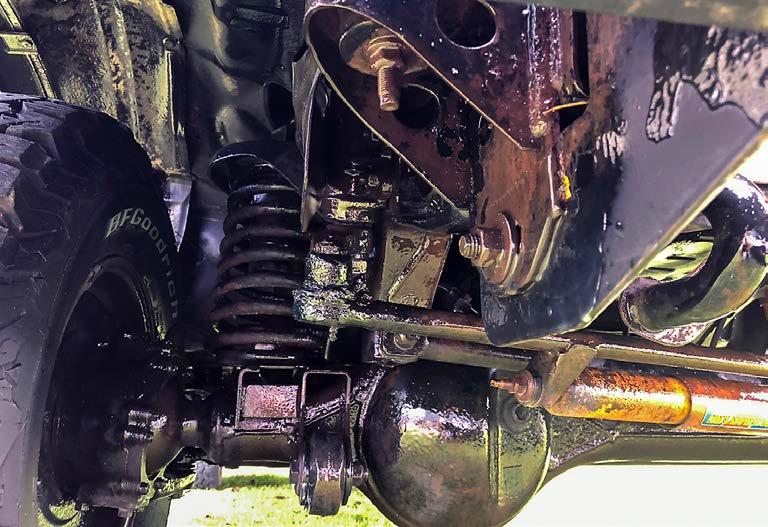
There’s minimal preparation required before coating; wash the chassis down, then allow it to dry off before coating with Prolan. A coating can even be applied over existing rust — just a quick brush-off if flaky rust is present.
For larger areas, Prolan is best applied using an airless spray gun or compressed air type system. Prolan is safe around electrical components, electronics and rubbers; it will not break them down or cause perishing.
In the past, chassis have been sprayed with used engine oil, fish oil and other things, inside the chassis rails and underneath. Prolan’s main ingredient, lanolin, adheres to metal surfaces, blocking off air and moisture to stop rust in its tracks. The ability of Prolan to creep
into hard-to-reach areas makes it a winner over a paint-type system, where if the paint cracks up, corrosion can creep in.
In coastal environments Prolan is excellent for hinges, tools, seized locks, bolts, chains, winch ropes, radio antennas, alternators, starter motors, squeaky door hinges, garage doors, lawn mower chassis, garden ornaments and
fishing gear. A spray on to a metal surface, with a quick wipe off with a rag, ensures the surface is well-coated and will prevent corrosion from the environment.
With a coverage rate of 1 litre for 8–10 square metres, Prolan is economically a winner protecting your assets, reducing maintenance and preventing expensive parts replacement down the track.
Protect your machinery from corrosion in the harsh winter months by applying a Kiwi-made lanolin product — Prolan
by Andy Bryenton
Just what the doctor
Suzuki’s new DR150 proves that a tool made for hard work can be elegant and simple as well as rugged and
With just about 12 horsepower, the little 150cc four-stroke is a masterclass in doing more with less, and a tonic to the overcomputerisation, overcomplication and size creep of off-road options for those working the land. While there’s a power and tech war at the top of the table in the world of ATVs, the little Suzuki doesn’t just make do with a single aircooled cylinder — it thrives.
That’s because it’s amazing where a small bike can go, with the right amount of skill and a good design. Suzuki has been putting the DR badge on clever, simple but punchy bikes since the 1990s, when the little DR125 with its Miami Vice paint scheme broke cover, and the big DR650 went head-to-head with Honda’s Dominator as the king of single-thumper off-road might.
Fast-forward to the present day, and the DR150 fills a niche farmers need: a small, easy to master off-road bike which is great for stock checks, flitting from paddock to paddock down the races, or nipping between blocks to take care of minor chores.
There’s only 11.8 horses, but there’s 11.6 Newton-metres of torque at
6,000rpm as well, meaning that there’s plenty of guts to handle mud and choppy terrain. Let’s face it, you don’t want to have superbike speeds at your fingertips when you’re shifting the herd, you want control, a good centre of gravity, and a light weight. The DR150 weighs less than some rugby players at 139kg fuelled up. With raw power off the table and irrelevant, let’s talk about the important numbers for a farm utility bike. The little
The new DR150 is a practical and precise small farm bike which punches above its weight motor sips fuel and the tank packs 12.5 litres, meaning more time between fillups. Ground clearance is set at 244mm, for long-legged terrain-tackling ability. There’s even a proper kickstart as well as an electric one, which is not just old school cool; it’s all part of the Dr150 being easy to use and maintain.
Don’t get it wrong — there’s a place for a big, powerful ATV on the modern farm. It’s just that there’s definitely always been a
niche for a small, economical and nimble farm bike, too. This one’s as handy as a proper old folding knife, a real stainless steel lighter or a pair of gumboots. The modern design looks sharp, too, which is a cheeky bonus.
Email: autoglassww@xtra.co.nz or autoglassww@gmail.com